Tokyo (TIP): A wild brown bear on the lose all night in a city in northern Japan wounded four people, entered a military camp and disrupted flights at an airport on June 17 before being shot and killed by authorities.
The bear was seen wandering through the streets of Sapporo in the early hours of Friday, triggering a number of calls to police. Over the next eight hours, Hokkaido prefectural police said the bear injured a woman in her 80s, a man in his 70s and a man in his 40s before attacking a soldier.
Police said the condition of those injured was not known, but the Asahi newspaper reported that the man in his 40s suffered serious injuries to his chest, back and limbs after he was mauled by the bear while walking on the street.
Footage on local television showed the bear wandering a street in Sapporo. Chased by a car, it crossed a busy road and forced its way into the Ground Self-Defence Force’s Camp Okadama. The bear knocked down a uniformed soldier on duty at the gate.
The soldier suffered cuts to his chest and stomach, but his injuries were not life threatening, according to the Defence Ministry.
Next the bear ran through the camp and intruded onto the runway at a nearby airport, causing several flights to be grounded.
The bear then ran into a forest, where it was shot by local hunters.
Toshihiro Hamada, an official at Sapporo city environmental department, said the bear’s presence in town was a surprise and officials were investigating how the animal ended up in town.
“We are sorry that four people were injured,” Hamada said.
Brown bears roam mainly in Hokkaido forests, but experts say they have been increasingly spotted in inhabited areas looking for food, especially during the summer. (AP)
Ottawa (TIP): Canadian Prime Minister Justin Trudeau on June 17 made history by nominating the first judge of colour to sit on the country’s Supreme Court, which has only ever had white justices in its 146-year existence.
Mahmud Jamal, who has been a judge on Ontario’s court of appeal since 2019, trained as a lawyer and appeared before the Supreme Court in 35 appeals addressing a range of civil, constitutional, criminal and regulatory issues.
“He’ll be a valuable asset to the Supreme Court – and that’s why, today, I’m announcing his historic nomination to our country’s highest court,” Trudeau said on Twitter.
Trudeau has frequently said there is a need to address systemic racism in Canada.
Jamal’s parents originally immigrated from Gujarat. He was born in Nairobi in 1967, emigrated with his family to Britain in 1969 where he said he was “taunted and harassed because of my name, religion, or the colour of my skin.”
In 1981, the family moved to Canada, where his “experiences exposed me to some of the challenges and aspirations of immigrants, religious minorities, and racialized persons,” he said in a document submitted to support his candidacy.
Canada is a multicultural country, with more than 22 per cent of the population comprised of minorities and another 5 per cent aboriginal, according to the latest census.
“We know people are facing systemic discrimination, unconscious bias and anti-black racism every single day,” Trudeau said last year.
Jamal will replace Justice Rosalie Abella, who is due to retire from the nine-person court on July 1. (Reuters)
Paris (TIP): French President Emmanuel Macron has kissed two World War II veterans on the cheeks, returning to a tradition that was abandoned at the beginning of the coronavirus pandemic. French authorities have recommended people to avoid “la bise,” the custom of giving kisses of greeting, to avoid spreading the virus. Macron kissed the veterans on June 18 while wearing a mask.
The president, who had Covid-19 in December and since been vaccinated against the disease, awarded the Legion of Honour to Leon Gautier, 98, a member of a French elite unite that took part in Normandy D-Day landings in 1944 and fellow World War II veteran Rene Crignola, 99, during a ceremony marking Gen. Charles De Gaulle’s June 18, 1940 appeal for the people of France to resist the Nazis.
The French government this week announced a relaxation of virus restrictions, including allowing people to forego masks outdoors. A night time curfew is set to end on Sunday. (AP)
London (TIP): Kate, Britain’s Duchess of Cambridge, launches a new centre for early childhood on June 18 with the aim of raising the importance of the first five years of children’s lives and seeking to “transform society for generations to come”, her office said.
The centre, set up as part of Kate and husband Prince William’s Royal Foundation charity arm, will focus on three main areas: promoting high-quality research; working with experts from all sectors to find solutions; and developing campaigns to raise awareness and inspire action.
“I’ve spoken to psychiatrists and neuroscientists, to practitioners and academics and parents alike, and what has become clear is that the best investment for our future health and happiness is in the first five years of life,” Kate said.
“By working together, my hope is that we can change the way we think about early childhood, and transform lives for generations to come.”
Kensington Palace said Kate, who has three young children with William aged from three to seven, had seen first-hand since becoming a royal over a decade ago how issues from addiction and violence to family breakdown and homelessness all had their roots in the earliest years of life.
To coincide with the launch, the centre has published a report ‘Big Change Starts Small’, written with help from the London School of Economics and The Center on the Developing Child at Harvard University. (Reuters)
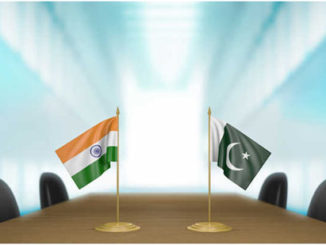
Islamabad (TIP): With India stepping up its diplomatic activities in Afghanistan’s peace process as the US prepares for the troops withdrawal, a jittery Pakistan has said that at times it feels that New Delhi’s presence in the war-torn country is perhaps “larger than it ought to be”.
Pakistan Foreign Minister Shah Mahmood Qureshi’s remarks to Afghanistan’s Tolo news channel comes days after External Affairs Minister S Jaishankar met US Special Representative for Afghanistan Reconciliation Zalmay Khalilzad in Qatar’s capital Doha on June 12 and exchanged perspectives on the war-ravaged nation and the region.
“Obviously, you have sovereign relations and you have bilateral relations and you have every right to have sovereign and bilateral relations with India. You have trade with India. They come and carry out development work there, that’s completely fine with us,” Qureshi said during the interview which will be telecast on Saturday.
“But at times we feel that their presence is perhaps larger than it ought to be because they…don’t share a border with you,” he said, according to the excerpts of the interview posted by the news channel on its Twitter handle.
When asked whether India’s presence in Afghanistan bothers Pakistan, Qureshi said, “Yes, If they use your (Afghan) soil against us, it bothers me.” Asked how India is using Afghan soil for anti-Pakistan activities, he alleged: “Yes, they are…By carrying out terrorist activities.” During the interview, Qureshi also sought to absolve the Taliban for the spike in violence in Afghanistan, saying it would be an “exaggeration” to blame the insurgent group for the bloodshed.
“Again, if you try and create this impression that the violence is high because of the Taliban…again, that would be an exaggeration. Why do I say that? Aren’t there other elements over there who are playing the role of a spoiler?” On a question on the forces responsible for the violence, Qureshi said: “Daesh (the Islamic State), like forces within Afghanistan…who gain from the war economy, who want to perpetuate their power, who are not seeing beyond their nose and just want to hang on to power.” The Taliban and the Afghan government are holding direct talks to end 19 years of war that has killed tens of thousands of people and ravaged various parts of the country.
The intra-Afghan began as the US and the Taliban signed a landmark deal in Doha on February 29, 2020 following multiple rounds of negotiations to bring lasting peace in war-torn Afghanistan and allow US troops to return home.
India has been keenly following the evolving political situation after the US signed the peace deal with the Taliban. The deal provided for the withdrawal of American troops from Afghanistan, effectively drawing curtains on America’s longest war.
India has been a major stakeholder in the peace and stability of Afghanistan. It has already invested close to USD three billion in aid and reconstruction activities in the country.
India has been supporting a national peace and reconciliation process which is Afghan-led, Afghan-owned and Afghan-controlled.
During his visit to Qatar, Jaishankar on Tuesday met US special envoy Khalilzad in Doha and exchanged perspectives on the war-torn nation and the region. Khalilzad briefed him on the recent developments in Afghanistan.
The minister also met senior members of the Qatari leadership and discussed the issue of Afghanistan among other matters as Doha is involved in the Afghan peace process.
In March, Afghan foreign minister Mohammad Haneef Atmar visited India during which Jaishankar conveyed to him India’s long-term commitment towards a peaceful, sovereign and stable Afghanistan.
India on Thursday said its vision for Afghanistan is driven by an approach of pro-development and pro-democracy and that it is for the Afghan people to judge each of their partners on the basis of past actions.
In early March, Jaishankar and Khalilzad spoke over the phone and discussed the developments pertaining to the Afghan peace talks.
In the same month, Jaishankar attended the 9th Heart of Asia Ministerial Conference in Tajikistan’s capital, Dushanbe, where he voiced ‘grave concern” over violence and bloodshed in Afghanistan and said that there is a need for a genuine ‘double peace’ in and around the war-torn country.
Jaishankar also said that India has been supportive of all the efforts being made to accelerate the dialogue between the Afghan government and the Taliban, including intra-Afghan negotiations. — (PTI)
Colombo (TIP): A container ship carrying chemicals sank off Sri Lanka’s capital on June 17 nearly a month after catching fire, raising concerns about a possible environmental disaster, officials said.
The ship’s operator said the wreck of the Singapore-flagged X-Press Pearl “is now wholly sitting on the seabed at a depth of 21 meters (70 feet).”
A salvage crew was at the site to deal with any debris and report any spill, X-Press Feeders said.
The head of Sri Lanka’s Marine Environment Protection Authority, Darshini Lahandapura, also confirmed that the ship had sunk.
The fire broke out on the vessel on May 20 when it was anchored about 9.5 nautical miles (18 kilometres) northwest of Colombo and waiting to enter the port.
The Sri Lankan navy believes the blaze was caused by its chemical cargo, which included 25 tons of nitric acid and other chemicals, most of which were destroyed in the fire. But debris including burned fibreglass and tons of plastic pellets have already polluted nearby beaches. There are concerns that a spill of remaining chemicals and oil from the ship could devastate marine life.
Authorities extinguished the fire last week, but the ship then began sinking and attempts to tow it into deeper waters failed when its stern rested on the seabed. The ship had remained partly submerged until Thursday.
The government has asked the United Nations and some other countries for help in assessing the damage to the marine environment and coastal areas.
The country has submitted an interim claim of USD 40 million to X-Press Feeders to cover part of the cost of fighting the fire. (AP)
Kathmandu (TIP): Nepal’s embattled Prime Minister KP Sharma Oli on June 17 defended his government’s controversial decision to dissolve the House of Representatives and told the Supreme Court that it was not up to the judiciary to appoint a premier as it cannot undertake the legislative and the executive functions of the state. President Bidya Devi Bhandari, at the recommendation of Prime Minister Oli, dissolved the lower house for the second time in five months on May 22 and announced snap elections on November 12 and November 19. Prime Minister Oli is heading a minority government after losing a trust vote in the House.
On June 9, the apex court issued a show-cause notice to the Office of Prime Minister and the President’s Office to furnish a written response within 15 days. Furnishing a written reply to the Supreme Court on Thursday as demanded by the Constitutional Bench, Oli said the court could not appoint a Prime Minister as it could not undertake the legislative and the executive functions of the state. The apex court received Oli’s response via the Office of the Attorney General. “The court’s duty is to interpret the Constitution and the existing laws, it cannot play the role of legislative or executive bodies,” 69-year-old Oli said in his response. “Forming governments on the basis of parties is the fundamental characteristic of the parliamentary system and the Constitution does not imagine party-less practices,” he added. (PTI)
Kathmandu (TIP): An Indian and two Chinese workers were killed after being swept away by the flood in central Nepal’s Sindhupalchok district, an official said on June 17.
The body of the Indian worker was found in Sunkoshi river in Sindhuli on Thursday, whereas two Chinese were found dead in Sindhupalchok, Chief District Officer Arun Pokharel said.
The victims used to work for the Melamchi Water Supply Project.
Meanwhile, two Indian and one Chinese worker were still missing, another official said. (PTI)
JOHANNESBURG (TIP): A young South African Indian-origin couple who were married just two weeks ago were found electrocuted in their bathroom here, after the shower tap was allegedly electrified. Zaheer Sarang and Nabeelah Khan had just returned from their honeymoon.
The bodies of the couple were found on Sunday afternoon. They were buried together on Monday.
It is believed that the wife was electrocuted when she touched the tap in the shower, while the husband who tried to come to her aid was also killed.
Police spokesman Capt Mavela Masondo confirmed the deaths but said that the results of postmortems were awaited to determine the exact cause of death.
The electricity authority in Johannesburg, City Power, has launched an urgent investigation into the incident as outraged resident blamed the daily power outages in the area and the alleged inability of City Power to maintain infrastructure.
City Power in turn has blamed the spate of illegal connections to the many homes and businesses in the area, which were overloading the system, especially during the bitterly cold winter weather currently being experienced.
“From Monday morning a team has been busy with a preliminary investigation to establish the facts, and we will provide the details later,” said City Power spokesperson Isaac Mangena as he shared condolences with the family of the deceased.
“It is true that there are illegal connections being made daily in broad daylight in our suburbs,” a neighbor who declined to be named said as he pointed out scores of illegal wires running from pylons to shacks in the area right opposite rows of factories and businesses.
“We have also heard that there are some residents in the area who have reported receiving shocks when touching taps, but this is the first sad incident of someone dying from that,” she added.
Singh & Singh Law Offices inaugurated simultaneously
The new Store is conveniently located at 134th Street on Liberty AvenueThe head priest of Gurdwara Baba Makhan Shah Lobana Sikh Center offering prayers for the success of the venture.The head priest of Gurdwara Baba Makhan Shah Lobana Sikh Center cutting the ribbon to inaugurate the Store.Fresh Vegetables in the StorePartner of APNA BAZAR Deepak Bharadwaj is speaking with a TV channel. Seen in the picture, from L to R: Prof. Indrajit S Saluja, Jaswinder Johl, Deepak Bharadwaj and Mohammed Farouqui (extreme right)Singh & Singh Law offices owners flanked by Japnit Singh (right), a candidate for New York City Council, and a lady (left) (Photos / BJ Video /646-403-7334)
I.S. Saluja
RICHMOND HILL, NY (TIP): The famous grocery chain APNA BAZAR opened its 5th location in Richmond Hill June 17th. The Store is conveniently located at 134th Street on Liberty Avenue.
The chain which started with a store in Jackson Heights has close to a dozen locations in New York area. Besides, there are more than half a dozen locations in the adjoining New Jersey State. Apna Bazar has spread wings beyond the East Coast and has a couple of locations in Midwest, California. The Indian Panorama has learnt that there are plans to open a few stores in Texas in the near future.
A prayer was offered before the inauguration of the new store at 134th Street on Libert Avenue. The head priest of Gurdwara Baba Makhan Shah Lobana Sikh Center offered prayers for the success of the venture and cut the ribbon to inaugurate the store.
The APNA BAZAR partners Deepak Bharadwaj and Jaswinder Johl, long time buddies were profusely congratulated by visitors and guests.
Speaking with the media, Deepak Bharadwaj said that APNA BAZAR takes pride in supplying the very best grocery and the freshest fruit and vegetables at the most competitive prices. He expressed the hope that like with other neighborhoods where APNA BAZAR is serving people, the neighborhood around the new location would patronize the store.
Jaswinder Johl expressed his gratitude to the head priest, guests, visitors and the media for their presence and support.
Also inaugurated was the Law Offices of Singh &Singh.
A large number of community members and media were present at the ceremonies.
The publication has endorsed Eric Adams for Mayor, David Weprin for Comptroller, and Jumaane Williams for Public Advocate
NEW YORK (TIP); The Indian Panorama publisher and chief editor Prof. Indrajit S Saluja has written to Eric Adams, David Weprin and Jumaane Williams conveying to them the endorsement of the publication for Mayor, Comptroller and Public Advocate respectively. Prof. Saluja has appealed to friends and the community to get out and vote for the endorsed candidates who are the best and will prove to be excellent elected officials committed to serving the great people of the City of New York.
AUSTIN, TX (TIP): Texas Democratic Party Chair Gilberto Hinojosa, welcoming the Supreme Court ruling on ACA said, “Today’s Supreme Court ruling further shows that the ACA is here to stay. It is shameful that our disgraced Texas Attorney General led the charge to strip millions of Americans of their health coverage during the worst health crisis in recent history.
“Democrats have consistently fought to defend the health and safety of fellow Americans by making healthcare more accessible and more affordable regardless of pre-existing conditions or a person’s ability to pay. President Biden’s American Rescue Plan further builds on the ACA by extending the enrollment period and reducing health insurance premiums for millions of American families who could not afford it under the original law.“Today is a great day for Texans and all Americans. Healthcare is a right, not a privilege, and we will make sure it stays that way.”
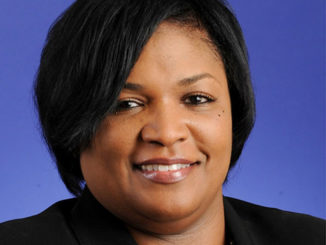
AUSTIN, TX (TIP): Texas Democratic Chair Gilberto Hinojosa, celebrating the appointment of Rep. Toni Rose, D-Dallas, as Chair of the Texas House Democratic Campaign Committee, said, “On behalf of the Texas Democratic Party, we congratulate a proven Texas leader, state Representative Toni Rose, D-Dallas, for breaking barriers as the first Black woman appointed as Chair of the Texas House Democratic Campaign Committee. Rep. Rose has for years fought tirelessly to improve the affordability and quality of health care in Texas, including mental health, as well as improving the quality of life for her constituents and those in underserved communities. Her experience and her leadership will be key in identifying key state House districts that will help us turn Texas blue.”
The CDC said the Delta variant shows increased transmissibility
WASHINGTON (TIP): The US Centers for Disease Control and Prevention has classified the Delta, a highly transmissible COVID-19 variant first identified in India, as a “variant of concern.”
“The B.1.1.7 (Alpha), B.1.351 (Beta), P.1 (Gamma), B.1.427 (Epsilon), B.1.429 (Epsilon), and B.1.617.2 (Delta) variants circulating in the United States are classified as variants of concern. To date, no variants of high consequence have been identified in the United States,” the CDC said in a statement on Tuesday. The CDC said the Delta variant shows increased transmissibility, potential reduction in neutralization by some monoclonal antibody treatments under emergency authorization and potential reduction in neutralization from sera after vaccination in lab tests.
The variant of concern designation is given to strains of the virus that scientists believe are more transmissible or can cause more severe disease. Vaccines, treatments and tests that detect the virus may also be less effective against a variant of concern.
Previously, the CDC had considered the Delta variant to be a variant of interest.
The World Health Organization classified the Delta variant as a variant of concern on May 10.
The CDC estimates it accounted for 9.9 per cent of cases in the US as of June 5.
By June 13, it accounted for 10.3 per cent of cases, according to the website outbreak.info, which tracks variants. The Delta variant could be the dominant strain in the US within a month, the CNN report warned.
US President Joe Biden and his Chief Advisor Dr Anthony Fauci last week have warned that the Delta variant of the novel coronavirus is highly infectious, which is now the dominant strain in the United Kingdom, spreading rapidly among young people between 12 and 20 years old.
COVID-19 cases have been declining over the past few months in the United States, but there’s concern that could change as the pace of vaccinations slows and the Delta variant spreads.
The US, the worst hit country by COVID-19 pandemic, has so far reported 33,498,155 confirmed cases and 600,649 deaths.
WASHINGTON (TIP): Attorney General Merrick B. Garland reversed on Wednesday, June 16, Trump-era immigration rulings that had made it all but impossible for people to seek asylum in the United States over credible fears of domestic abuse or gang violence, marking one of the Justice Department’s most significant breaks with the previous administration, says a New York Times report. His decisions came in closely watched cases where his predecessors, the former attorneys general Jeff Sessions and William P. Barr, broke with precedent to overturn decisions by immigration appeals judges that would have allowed such asylum claims.
The decisions — applicable to all cases in the system, including appeals — will affect tens of thousands of migrants. Hundreds of thousands of Central Americans fleeing gang extortion and recruitment and women fleeing domestic abuse have arrived in the United States since 2013, and many cases are still being adjudicated, given an enormous backlog in immigration courts.
In vacating the Trump administration’s stance, Mr. Garland said that the Justice Department should follow the earlier precedent.
In a closely watched case known as A-B for the initials of the woman seeking asylum. The department’s Board of Immigration Appeals found in 2016 that she was part of a particular social group, saying that the government of El Salvador does little to protect people in violent relationships. That assessment qualified the woman for asylum, but Mr. Sessions overruled the appeals board.
Attorneys general can overturn decisions made by immigration judges because immigration courts are housed under the Justice Department, not the judicial branch.
The move is one of the Justice Department’s most significant reversals of a Trump-era policy. Earlier it defended the constitutionality of the Affordable Care Act, a position that officials had abandoned during the previous administration. The department also sided with unions in a case that could affect restrictions on organizing workers.
Proponents of asylum seekers cheered Mr. Garland’s latest reversal.
“We’re really heartened by this decision,” said Karen Musalo, a lawyer representing one of the asylum seekers and a professor at the University of California, Hastings College of Law. “It restores the possibility of protection to those whose very lives are in the balance.”
Mr. Garland has also continued some Trump administration policies and case positions, prompting some Democrats to criticize him as overly cautious.
Mr. Garland has defended those moves, saying that it was important to uphold Trump-era positions on cases if they reflected an impartial reading of the law.
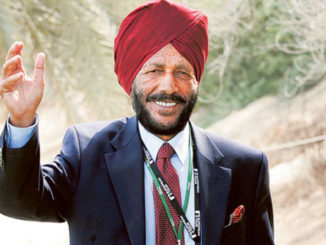
In 1958 when the then Prime Minister Pt Jawahar Lal Nehru asked Milkha Singh what he wanted for becoming the first Indian to win an individual gold medal in athletics in the Cardiff Commonwealth Games, the ace sprinter requested a “national holiday” in the country. And 63 years later, on Friday night, he himself embarked upon a long holiday leaving not only the entire nation but the whole sporting world sobbing and grieving.
He was christened “Flying Sikh” by the Martial Law Administrator of Pakistan, General Ayub Khan, after he set the stands of a Lahore stadium ablaze by defeating the local hero, Akhlaq, who was better known as “Ghorra” (horse), in a great sprint contest.
A victim of the 1947 partition, Milkha Singh, was successful in joining Indian Army at a recruitment rally in Srinagar. Running was his passion, and he would work hard to be the best. And true to himself, his training and his ambition, he remained the best to make sure that there could be no two “Milkhas”.
After winning a gold at Cardiff, Milkha went on to win a double in the 1958 Asian Games before his memorable record-smashing run at the 1960 Rome Olympic Games where he missed a medal by a whisker. And that remained his greatest regret. Ahead of all his competitors, Milkha, close to the finish line, made a mistake of looking back. And that cost him heavily. Instead of a podium finish, he was placed fourth.
When the then Punjab Chief Minister Partap Singh Kairon asked him to come out of Indian Army and join the State Government in its Sports Department, he reluctantly accepted the offer. Initially, he would travel between Delhi and Chandigarh every day before making the City Beautiful his permanent home.
In between he had met Nirmal Saini, an outstanding volleyball player, who was working as a Physical Education teacher in a Punjab college. Ultimately, they married.
Milkha Singh, who by then had become world famous as “Flying Sikh” took control of school sports in the Education Department of the State while Hockey Olympian Balbir Singh was in the State sports department.
It may be a mere coincidence that the three greats of Punjab Sports – Balbir Singh Sr, Flying Sikh Milkha Singh and Nirmal Milkha Singh – had worked together.
As luck would have it, Milkha Singh could not attend the cremation of his life partner as at that time he was fighting for his own life at the PGI. The end came five days after his wife had breathed her last at a private hospital in Mohali.
Known for their robust health and fitness, both great stalwarts were lost to Corona, sad indeed. While Milkha Singh was 91, Nirmal was 85.
Milkha Singh as Additional Director, Youth Services and Sports in the Education Department, used to take hundreds of schoolboys and girls to Srinagar every year for the summer (off season) coaching camps. That was the reason that Punjab remained at top in school sports.
A born runner, Milkha Singh was always a sportsman. After retiring from athletics, he took to golf and was an accomplished golfer. His son, Jeev, too, is a star golfer.
Besides Jeev, Milkha and Nirmal leave behind three daughters – Aleeza (she was with Air India), Dr Mona and Sonia – and their families.
HC bail orders are an indictment of attempt to portray Delhi protests as terrorist acts
Caught between a statutory bar on grant of regular bail and a judicial embargo on any close examination of available evidence at the bail stage, those arrested under the country’s main anti-terror law have been languishing in jails without trial for extended periods. The Delhi High Court orders granting bail to three student activists jailed for over a year for their alleged role in the February 2020 riots in Delhi represent a clear-headed effort to get around such impediments. Sound in legal reasoning and interpretation, the judgments of Justice Siddharth Mridul and Justice Anup Jairam Bhambhani have made a salient distinction between those accused of offences against the country’s integrity and security on the one hand, and protesters or dissenters roped in unjustifiably under the rubric of ‘terrorism’ on the other. The Unlawful Activities (Prevention) Act has been invoked by the Delhi Police against activists and others who were among those organizing the protests against the Citizenship (Amendment) Act, on the claim that they had also fomented the riots. Under Section 43D(5), there is a legal bar on granting bail if the court is of the opinion that there are reasonable grounds to believe that the accusation against those held is prima facie true. Adding to this onerous burden on the accused to demonstrate to the court that the accusation is untrue is a 2019 Supreme Court judgment that bars a detailed analysis of the evidence at the bail stage and rules that bail can be denied on “the broad probabilities” of the case.
The High Court has ruled that the bail court can look at the available evidence to satisfy itself about the prima facie truth of the case. In other words, there is no statutory invincibility to the prosecution case merely because the UAPA has been invoked. It has found that none of the three — Asif Iqbal Tanha, Natasha Narwal and Devangana Kalita — was specifically or particularly accused of any ‘terrorist act’, ‘funding of a terrorist act’ or an act amounting to a conspiracy to commit a terrorist act or something preparatory to it. Once the UAPA charges were not seen to be true, it was open to the court to admit them to regular bail until conclusion of the trial. Further, with 740 witnesses cited, there is no scope for early conclusion of the trial. Riots are matters concerning public order, and not the security of the state. The court’s observation that the state, in its anxiety to suppress dissent, has blurred the line between the constitutionally guaranteed right to protest and “terrorist activity”, is a stern indictment of the establishment. The Delhi Police has gone to the Supreme Court on appeal against the verdict, possibly in the fear that the ruling may foil its design to paint protesters as ‘terrorists’. If the High Court’s approach to grant of bail is upheld, it would help secure the liberty of other dissenters held under the UAPA elsewhere without sufficient basis.
The incandescent loathing Republicans felt for Obama and everything he produced has lessened a bit, given that he left office more than four years ago (four years that seemed like 40). The law has grown steadily more popular, which raises the political risks to the GOP of striking it down. Most important, in all its complexity the ACA is woven inextricably into nearly every facet of our health-care system.
Once again, Republicans have failed in their seemingly endless quest to have the Affordable Care Act wiped from the pages of history, this time with their third defeat at the Supreme Court. If they have any sense, this should bring that shameful crusade to an end.
The court did what it often does on complicated cases where a sweeping ruling might be politically and practically disruptive: It ruled only on a narrow legal question, in this instance whether the plaintiffs in the suit had standing to bring it in the first place.
Those plaintiffs were 18 Republican-run states, later joined by two individuals, who claimed that if you cover one eye and hold the ACA up to the light while turning it counterclockwise, it will appear to be unconstitutional.
But in order to have standing to sue, a plaintiff must establish that they were injured in some way. Seven justices ruled, quite properly, that they had not.
“Neither the individual nor the state plaintiffs have shown that the injury they will suffer or have suffered is ‘fairly traceable’ to the ‘allegedly unlawful conduct’ of which they complain,” wrote Justice Stephen G. Breyer for the 7-to-2 majority.
The question revolved around the ACA’s individual mandate, which initially required most Americans to carry health insurance or pay a fine. Congress later reduced that fine to $0; Republicans then claimed that since the mandate now effectively existed only on paper, that meant almost the entire law had to be declared null and void.
Serious people on all sides found this argument to be preposterous (even if not quite the most preposterous of the legal arguments conservatives had pulled out of the air to destroy the ACA). And the fact that even some of the court’s committed conservative ideologues (Clarence Thomas) and committed Republicans (Brett M. Kavanaugh) joined the majority in turning back this challenge says a lot about the state of the anti-Obamacare crusade.
This case is different from the prior ACA cases the court considered in an important way: You won’t see too many Republicans tearing their hair out over the fact that they lost, or declaring the conservative justices who voted with the majority to be traitors to their cause.
The desire to drive a stake through the heart of Barack Obama’s signature legislation simply does not feel as urgent as it did back when Republicans in the House were passing dozens of fruitless repeal bills. There are a number of reasons all of which have to do with the passage of time.
The incandescent loathing Republicans felt for Obama and everything he produced has lessened a bit, given that he left office more than four years ago (four years that seemed like 40). The law has grown steadily more popular, which raises the political risks to the GOP of striking it down. Most important, in all its complexity the ACA is woven inextricably into nearly every facet of our health-care system.
That means that if Congress or the Supreme Court snatched it away, the result would be nothing short of a cataclysm, with tens of millions losing coverage and the entire system thrown into chaos. All but the most foolish Republicans know this, which is why every time they fall just short of killing the ACA — with these challenges, and with their slapdash 2017 repeal bill that almost passed — they know they’re better off having failed, thereby avoiding the inevitable backlash.
So now they have to ask themselves a question: Can they finally just give up and accept the fact that the ACA is, and will remain, the law of the land?
That doesn’t mean they have to stop advocating for their version of health-care reform (though the truth is that plenty of Republicans would be more than happy to do just that; health care just isn’t a topic that interests most of them all that much). But it would do them, and the rest of us, a whole lot of good if they gave up on the dream of someone swooping in with a giant fist to crush Obama’s health-care law. We’re not going to stop debating health care — not in the short term, and probably not ever. We have what is almost certainly the most complicated system in the world, an assemblage of private and public elements that don’t quite fit together and produce staggering inefficiency and cost. Yet there may be almost nothing in American politics that would be more difficult to achieve than the kind of wholesale overhaul of the system that could fix most or all its problems all at once.
Which means that we’ll keep trying to expand coverage, to restrain costs, to limit the miserable suffering the system allows, and to generally try to make a bad situation better with piecemeal additions and changes and reforms. Every one of them will probably be the subject of intense political debate.
But after more than a decade of battles in courts and Congress and state legislatures, the Affordable Care Act has won. It’s long past time for Republicans to accept it.
(The author is a columnist with The Washington Post)
The Delhi court ruling is a way forward in finding a balance between civil rights and the imperatives of anti-terror laws
By Gautam Bhatia
“The Delhi High Court’s judgment indicates a pathway forward in the quest for finding a balance between citizens’ civil rights and the imperatives of anti-terrorism legislation such as the UAPA. A position under which citizens can be jailed for years on end just on the basis of police reports and case diaries, with courts precluded from granting them bail, is completely inconsistent with democracy, and redolent of authoritarian or tyrannical states. However, the court’s analysis shows how even within — and consistent with — the terms of the UAPA, there is an important role for a conscientious judiciary to play. By scrutinizing the police case on its own terms, and according a strict interpretation to draconian legislation such as the UAPA, courts can ensure that civil rights are not left entirely at the mercy of the state.”
The judgment of the Delhi High Court granting bail to activists Devangana Kalita, Natasha Narwal, and Asif Iqbal Tanha — they have been in jail for over a year (without trial) for their alleged role in the 2020 Delhi riots — is significant for many reasons. Most importantly, it brings to a close many months of jail time for three people who are yet to be proven guilty of any crime, something that should be anathema to any civilized justice system. What is also significant, however, is that the judgment represents an important judicial pushback to the authoritarian legal regime under the Unlawful Activities (Prevention) Act (UAPA).
The root of the issue
Ostensibly designed to check and address terrorism, the UAPA is perhaps one of the most abused laws in India today. The root of the problem lies in Section 43(D)(5) of this Act, which prevents the release of any accused person on bail if, on a perusal of the case diary, or the report made under Section 173 of the Code Of Criminal Procedure, the court is of the opinion that “there are reasonable grounds for believing that the accusation against such person is prima facie true”. It is important to break this down. Broadly speaking, India follows the adversarial system of criminal justice, where two sides to a dispute attempt to persuade the court that their version of events is true. At the heart of the adversarial system of justice is the testing of evidence through cross-examination. Each side is afforded the opportunity to scrutinize, challenge, and question the evidence produced by its opponent; and the best way for a judge to unearth the truth — or the closest approximation of it — is to consider which side’s evidence is left standing, and appears more persuasive, after the rigors of cross-examination.
Production of evidence, and cross-examination, involves witnesses, recoveries of incriminating objects, tests of handwriting or voice samples, and many other elements. It constitutes the bulk of a criminal trial. In India, with our overburdened courts and creaking justice system, criminal trials take years. In high-profile cases such as the Delhi riots case, where the record is bulky, and the witnesses number in their hundreds, trials can take many years — even a decade or more.
Importance of bail
For this reason, bail becomes of utmost importance. If an individual is not able to secure bail from the courts, they will languish as under-trials in prison, for the duration of the case, no matter how many years it takes (in recent memory, there are cases of people being found innocent in terrorism cases after 14 and even 23 years in prison). Bail, thus, becomes the only safeguard and guarantee of the constitutional right to liberty.
In ordinary circumstances, when considering the question of bail, a court is meant to take into account a range of factors. These include whether the accused is a flight risk, whether he or she might tamper with the evidence or attempt to influence witnesses, and the gravity of the offence. But it is here that Section 43(D)(5) of the UAPA plays such a damaging role. As we have just seen, under the classical vision of criminal justice, truth — about innocence or guilt — can only be determined after the evidence of both the prosecution and the defense has been subjected to the rigors of cross-examination. However, as lawyers and scholars such as Abhinav Sekhri and Anjana Prakash have also pointed out, Section 43(D)(5) short-circuits that core assumption. For the grant of bail, it only looks at the plausibility of one side’s evidence — that is, the Prosecution’s. It binds the court to look at only the case diary or the police report, which has not been challenged by cross-examination, and requires that bail be denied as long as the unchallenged prosecution case appears to be prima facie true.
One-sided
The perversity of Section 43(D)(5), thus, is that it forces the court to make an effective determination of guilt or innocence based on one side’s unchallenged story, and on that basis to deprive individuals of their freedom for years on end. In a democratic polity, which is committed to the rule of law, this is a deeply troubling state of affairs.
The effect of Section 43(D)(5), as one can see, is that once the police elect to charge sheet an individual under the UAPA, it becomes extremely difficult for bail to be granted. Even outlandish or trumped-up cases can sound convincing until people have a chance to interrogate and challenge them. In short, unless the police prepare an extremely shoddy case — that is riddled with internal contradictions, for example — a case diary or a report will invariably make out a “prima facie” case against an individual.
Finer points of the judgment
It is here that the Delhi High Court’s judgment becomes important. The Bench of Justices Siddharth Mridul and Anup Jairam Bhambani correctly note that even though Section 43(D)(5) departs from many basic principles of criminal justice, there are other fundamental principles that remain of cardinal significance. These include, for example, that the initial burden of demonstrating guilt must always lie upon the prosecution; and also, that criminal offences must be specific in their terms, and read narrowly, to avoid bringing the innocent within their net. On this basis, the court’s judgment notes that as the UAPA is meant to deal with terrorist offences, its application must be limited to acts that can reasonably fall within a plausible understanding of “terrorism”. “Terrorism” is a term of art, and not a word that can be thrown around loosely. Thus, to attract the provisions of the UAPA — the judgment holds — the charge sheet must reveal factual, individualized, and particular allegations linking the accused to a terrorist act.
The judgment then finds that even if the police’s claims are taken to be true, no such allegations exist. At the highest, the accusations against the activists involve calls for protests and chakka jams (road blockages). There is no act, overt or covert, attributed to the activists that could constitute a terrorist offence. And, importantly, inferences or hypotheticals drawn by the police do not count at the stage of granting bail. Coupled with the significance of the right to protest and to dissent under our constitutional scheme, the judgment therefore holds that even prima facie, a case under the UAPA has not been made out, and therefore, there is no question of the application of Section 43(D)(5).
The Delhi High Court’s judgment indicates a pathway forward in the quest for finding a balance between citizens’ civil rights and the imperatives of anti-terrorism legislation such as the UAPA. A position under which citizens can be jailed for years on end just on the basis of police reports and case diaries, with courts precluded from granting them bail, is completely inconsistent with democracy, and redolent of authoritarian or tyrannical states. However, the court’s analysis shows how even within — and consistent with — the terms of the UAPA, there is an important role for a conscientious judiciary to play. By scrutinizing the police case on its own terms, and according a strict interpretation to draconian legislation such as the UAPA, courts can ensure that civil rights are not left entirely at the mercy of the state.
At the time of writing, the High Court’s judgment has been appealed by the Delhi Police to the Supreme Court of India. It now remains to be seen whether the highest court will also endorse this crucial ruling, which restates the responsibility of an independent judiciary in checking executive impunity.
NEW YORK (TIP): Keen to connect Indian artisans with top American retailers, noted Indian -origin fashion designer and entrepreneur, Akshay Wadhwa once went knocking on their doors, but soon realized he was not being taken seriously.
Named one of the top ten designers of Vancouver Fashion Week in 2016 and covered in British Vogue, Wadhwa, then, created BlueRickhsaw.com (BR), a highly curated, digital, B2B, wholesale export platform. To make his dream a reality, Wadhwa joined hands with co-founder Krishan Chandak, whose 23 years of experience in technology and leadership resulted in the formation of the B2B platform, Launched in March, it connects verified small businesses, weavers and artisans across India to small and mid-size retailers, mom-and-pop shops and boutique stores in North America, according to a media release. Banking on the untapped potential of the Indian artisan market in a highly dysfunctional infrastructure, BR aims to provide international opportunities to undiscovered and unexposed talent.
The new platform helps everyone from small weavers to artisans to manufacturers, to make their products available across the world through a transparent ecosystem, it said.
Currently, small businesses in the US and Canada are unable to source products directly from India, due to high minimum order quantities (MOQs), trust and reliability issues and, now, strict travel restrictions in place post-Covid, the release said.
BR will serve as the only tech platform on which smaller retailers can personally select products from verified suppliers across various categories with minimum MOQs, in most cases, just one product per style.
Since most sellers and buyers are unable to produce or procure volumes during these uncertain times, BR serves as the perfect matchmaking service for these small-to-mid-size businesses looking for alternative avenues, the release said.
The platform has been built from the ground-up with a focus on artificial intelligence, machine learning and predictive filtering of products, so that buyers can ultimately purchase an item in less than 30 seconds, it said.
The long-term vision of BR is to help the small manufacturers, weavers and artisans of India expand in the international market without having to make investments in promotion or travel, while enabling retailers across North America create an inventory-free model to sell directly to their customers without having to invest in purchasing minimum orders. Other platforms like Etsy or Amazon are either seller-centric or buyer-centric, whereas Blue Rickshaw caters to both segments equally by espousing the values of trust, transparency and timeliness as part of its core philosophy, making it the new leader in tech-based, B2B wholesale export. “We just want to help small businesses get back on their feet, post-pandemic,” says Wadhwa.
Gays with kids. Credit: Courtesy, pridenyc.org Francois Clemmons’ book cover [Clemmons (right) with Fred Rogers]. Credit: Courtesy, mmjccm.orgLGBTQ+ celebrities (l to r and top to bottom): Victor I. Cazares; Taylor Mac by Little Fang; Treya Lam by Justin Wee; Dima Mikhayel Matta; MigguelAnggelo; The Illustrious Blacks by Dave Jeffers Credit: Courtesy, lincolncenter.org
By Mabel Pais
“NOW, THEREFORE, I, JOSEPH R. BIDEN JR., President of the United States of America, by virtue of the authority vested in me by the Constitution and the laws of the United States, do hereby proclaim June 2021 as Lesbian, Gay, Bisexual, Transgender, and Queer (LGBTQ+) Pride Month. I call upon the people of the United States to recognize the achievements of the LGBTQ+ community, to celebrate the great diversity of the American people, and to wave their flags of pride high.”
“This Pride Month, we recognize the valuable contributions of LGBTQ+ individuals across America, and we reaffirm our commitment to standing in solidarity with LGBTQ+ Americans in their ongoing struggle against discrimination and injustice.” – US President, Joseph Biden
In his speech on June 1, President Biden stated, “Nearly 14 percent of my 1,500 agency appointees identify as LGBTQ+,” Biden said, “and I am particularly honored by the service of Transportation Secretary Pete Buttigieg, the first openly LGBTQ+ person to serve in the Cabinet, and Assistant Health Secretary Dr. Rachel Levine, the first openly transgender person to be confirmed by the Senate.”
Biden also signed an Executive Order on his first day in office that directed all federal agencies to implement fully all federal laws that prevent discrimination on the basis of sex, to include sexual orientation and gender identity. To read his entire June 1 speech, visit whitehouse.gov/briefing-room/statements-releases/2021/06/01
+++++++++++++++
TRIBECA AND NYC PRIDE
“Tribeca’s collaboration with NYC Pride began in 2019 with an unforgettable day-long celebration of the 50th anniversary of Stonewall,” said Tribeca Festival Senior Programmer Lucy Jane Mukerjee. “I’m thrilled to see the relationship continue this year, extending beyond the LGBTQ+ cinema within the festival lineup, to meaningful conversations and community screenings that center the queer identity and will be accessible for folks across the country.”
On Friday, June 18th, in partnership with NYC Pride, Tribeca presents ‘Pride Presents’ (formerly known as OUTCINEMA), NYC Pride’s annual LGBTQIA+ Film Festival. The dynamic program will feature ground-breaking shorts, docs and a feature film, culminating with a live discussion.
Stories that illustrate the struggles, the strength and the successes of the LGBTQIA+ community are some of the most critical ones to tell, and Tribeca is more than proud to play an integral part.
The curated selections for Pride Presents fit the bill perfectly:
“Kapaemahu” is an animated short that chronicles the plight of the Mahu, extraordinary two-spirit beings, known for their unique powers of healing.
“P.S. Burn This Letter Please” is a documentary film where former 1950s drag queens, now in their 80s and 90s, discuss how they survived in a time when being yourself meant breaking the law and inviting unforeseen conflict.
These are just two of the handful of vibrant and thought-provoking films that will be featured within the ‘Pride Presents’ slate of cinematic works.
For more information, visit nycpride.org.
MORE NYC PRIDE EVENTS
FAMILY MOVIE NIGHT – JUNE 17, FREE
Family Movie Night is back with family-filled fun!
Family Movie Night will make its debut in the digital space on Thursday June 17, 2021, featuring a 40-minute pre-feature film segment with LGBTQIA+ families discussing surrogacy, adoption, foster care and tapping into other resources both Queer families and individuals seeking these resources can benefit from. Key speakers include Vernon Leftwich and Ricardo Cooper, parents of two-year-old twins Harper and Knox Leftwich-Cooper who appear in this year’s NYC Pride 2021 visual campaign. Other key appearances include Gays With Kids, Family Equality Council, XChange for Change, and Miss Richfield 1981.
Hosted by the charming Miss Richfield 1981 (missrichfield.com), the event culminates in a family movie screening for all to enjoy! To learn more, visit nycpride.org/event/family-movie-night
“I feel honored to be a part of an event that serves as an opportunity to unite a community that may at times feel so isolated,” said Leftwich.“My family in particular looks different, even within this community, yet events like this show that we still have a place and I’m sure can find others much like ours. Additionally, it is a beacon of hope for all LGBTQIA+ persons who desire to have a family of their own.”
This virtual conference, focuses on activism and issues impacting the community, streaming 3 days of riveting and important content June 21st, 22nd & 23rd.
3 DAY HUMAN RIGHTS CONFERENCE
NYC Pride presents the Human Rights Conference in its fourth consecutive year from June 21 through June 23, and the Rally on Friday, June 25. The Human Rights Conference, NYC Pride’s annual symposium of transformative changemakers in the queer community, focuses on developing new ideas and approaches to activism and community. Over the course of the three days, guests will experience a virtual gathering of creators, changemakers, historians, influencers, artists, and storytellers to explore the many intersections of the LBGTQIA+ community’s continued fight for equity and justice.
This year’s Human Rights Conference introduces a series of exclusive interactive Masterclasses, where guests join experts and tastemakers in the field of activism, fashion, culture, queer history, and more to share insight and expertise through live seminars. Powered by NYC Pride’s sponsors and community partners, these classes offer viewers a chance to learn and interact with presenters representing LGBTQIA+ excellence in their fields. To learn more, visit nycpride.org/event/humans-right-conference
+++++++++++++++
JCC NYC PRIDE
Thank You For Coming Out: Dr. François Clemmons, Officer Clemmons | Thurs, June 24 at 7:00pm
The second installment of the JCC Pride series follows François Clemmons. When he created the role of Officer Clemmons on the award-winning television series “Mister Rogers’ Neighborhood,” Clemmons made history as the first African American actor to have a recurring role on a children’s program. In his memoir “Officer Clemmons,” he details his incredible life story, beginning with his early years, through his studies as a music major at Oberlin College where Clemmons began to investigate and embrace his homosexuality, to a chance encounter with Fred Rogers that changed the course of both men’s lives—leading to a deep, spiritual friendship and mentorship spanning nearly forty years.
Pride Shabbat and Rooftop Open Bar | Fri, June 25 at 7:00pm
Join the Marlene Meyerson JCC Manhattan 20s + 30s, Tribe NY, and Aviv at B’nai Jeshurun for monthly in-person Shabbat experiences. On Friday evening, celebrate Pride with the LGBTQA+ community with an open bar happy hour, followed by Shabbat on the B’nai Jeshurun roof.
Virtual Jew York Pride | Sun, June 27
Jew York Pride, a collaboration between major Jewish LGBTQ+ organizations, including Marlene Meyerson JCC Manhattan, is going virtual this year on Sunday, June 27, making it even more inclusive and accessible to Queer Jews across the United States and around the world. For 15+ years, Jew York Pride has been the focal point for LGBTQ+ Jewish teens and young adults during Pride Sunday in New York City. For more information, visit mmjccm.org
++++++++++++++++++
LINCOLN CENTER SPOTLIGHT
Lincoln Center for the Performing Arts is proud to express its wholehearted commitment to the visibility, equality, and support of LGBTQIA+ communities—365 days of the year. For the month of June, it celebrates LGBTQIA+ stories, talents, and contributions by spotlighting artistic programming and vibrant campus activations. Stop by and experience the unwavering Pride flag colors light up a glowing Revson Fountain, shine bright across The GREEN, adorn the main stairs to Josie Robertson Plaza, and fly high in the sky.
From June 21-26, Restart Stages at Lincoln Center presents an array of gender-bending and genre-busting events, including the return of the sensational Taylor Mac and two new theater projects as part of National Queer Theater’s Criminal Queerness Festival, which supports the development and production of new works by international and immigrant theater-makers experiencing censorship and criminalization around the world. On June 25, be sure to come out and dance when DJ duo The Illustrious Blacks kicks off NYC Pride weekend with a silent disco on The GREEN! Formore, visit lincolncenter.org/lincoln-center-at-home/series/spotlight-on-lgbtqia-pride
Mabel Pais writes on Social Issues, The Arts and Entertainment, Spirituality, and Health & Wellness.
The other day, a friend who is in the election fray for New York City Council complained that he was not getting adequate support from the temple he belongs to. He alleged that another candidate was getting the support. I asked him how much it mattered if he did not get the support from the temple. He wasn’t sure. I asked him if the congregation voted on the advice and guidance of the temple management. To which, he said, in most cases, yes. So, now I could understand his worry.
The question of temples and social organizations wielding considerable influence has often been discussed. It has been found that these institutions hold a significant sway over their members. However, it is not always and in all matters that their members would oblige the officials.
With the New York City elections around, I decided to speak with a couple of community organization leaders to know how much they are involved in elections, and how they plan to go around helping candidates belonging to their community and group.
Mr. Gobind Munjal
Mr. Gobind Munjal is a senior community leader who has for long been associated with a number of community organizations. He was president of AIA which organizes the iconic South Street Seaport Diwali Mela. He was President, at one time, of the largest association of Indian Americans in Long Island- Indian Association of Long Island, said that he believed the community organizations are basically training grounds for people in various fields, including politics. “Participating in political processes is important”, he said. “If you have political clout, community is successful”, he added.
When asked about what the organizations could do when a number of candidates from the community face each other in a constituency, Mr. Munjal said, “The individual clashes is a worrisome issue. You are cutting yourself, dividing your votes. Much can be achieved through consolidation of votes”.
Mr. Munjal, referring to NY City Council District 23 where 4 Indian American are candidates among a total of 7, said,” I support enhanced participation of the Indian American community in the political process. However, I appeal to all contending candidates to evolve consensus on a single candidate and put up a united front to make an Indian American win, so that our community is well represented”.
I took Mr. Munjal’s suggestion to three of the four Indian American candidates. I have been requested not to quote them. So, I will not mention who said what. One said it was his right to be a candidate and try his luck. He also said he had put in quite a few years in community service, and that he was more qualified and had better claim than others.
Another candidate was willing to accept the consensus idea provided there was a formula which was fair. Now the question of a fair formula turned out to be ticklish. Someone suggested a lottery. Another objected. The end result was there could not be a consensus candidate.
Master Mohinder Singh
Another question came to my mind. Whether or not the community organizations could come together and discuss a formula to have consensus candidates with a view to putting up a strong challenge to contenders from other communities. Here, Master Mohinder Singh, a Queens County Community Board 9 member said that the idea of supporting and electing a community guy is a narrow one, given the fact that we live in a multicultural society, and we look for the best to represent us. However, as far as possible, we should support people from our community provided they are able to deliver.
When questioned if community organizations, including temples can play a role in helping out the candidates, Mr. Singh said, “The community has always been supportive of the Indian American candidates. As for funding them, the community has been generous. But on the question of consensus, not much can be done. There are various community groups, various faith groups, with different regional affiliations which make it almost impossible to even think of a consensus after the candidates have declared their candidacy.
Mr. Singh emphasized the need to vote. He asked The Indian Panorama to carry an appeal from him to the community that all eligible voters must vote. He said he feels ashamed that despite of being educated and well to do the Indian American community has a poor record of getting out to vote. “In a democracy, not only it is the right of every eligible voter to vote, but a civil duty to vote”, he said.
Renee Mehrra
Renee Mehrra who was the first South Asian American to contest a city council election spoke about the great support she had received from the Indian American community when she first contested in 2001. She said the community organizations play a great role in the success of any candidate. They provide volunteers and funds -both so essential for any political adventure. She hoped of the more than half a dozen Indian Americans contesting New York City elections, some will get elected to represent the community in the City Council, which till now has none from the Indian American community.
(The author is chief Editor of The Indian Panorama)
Though a mere drop in the ocean, the Sikh community in the US, numbering around 280,000, according to The World Religion Database at Boston University, has made its presence felt in the country. The community which began trickling into the US at the beginning of the century started to pour after 70’s, with trouble brewing in their home e State of Punjab in India. In the 80’s the Sikhs came in torrents in the US after the genocide of the community in the wake of the killing of the then Prime Minister Indira Gandhi.
They came, they saw, they conquered. Their immediate concern was having food at the table. In the last about 50 years, every Sikh who came to the US is in a position to claim that he enjoys a certain amount of financial security. Their next generation started getting education here. With a certain amount of financial security rose a desire to empower themselves through the political processes. They began to know and mix with the people of their community who were already involved in whatever way in the political processes.
However, the community organizations remained the first love. It was through the community organizations that many moved on to participate in the political process. The community has understood that real empowerment can come only when they have political power. They have also been reminded that back in 1955 one of them was elected the first Sikh Congressman. Dalip Singh Saund is remembered with reverence as a role model for the community.
Dalip Singh Saund was the first Sikh and first Indian American elected to Congress.
Since the time of Congressman Saund, a number of Sikhs have entered politics. But never before now, there ever was such an impressive gallery of the Sikhs taking part in electoral politics. I am not going to span the entire nation. I am inclined to confine myself to New York City where we are going to have the civic elections in November this year. The primaries a few days away will decide the fate of many aspiring candidates to various offices.
I spoke with a number of people from different walks of life about this newfound love for politics. To the question “why so many Sikhs, particularly the young ones, now aspire for political positions, the answer invariably was that they want to empower themselves; they want to be heard; they want a pie of the political cake. Most said that the economic prosperity has no meaning until they are politically empowered. For the November 2021 cycle New York City elections, we have quite a few Sikhs in the fray. They all are for City council.
Harpreet Singh Toor
For City Council District 23, we have two Sikhs. One is Harpreet Singh Toor, a senior community leader and a politician with a long standing. Having worked in City administration and with elected representatives, he has come to acquire a good understanding of various aspects of working on administration and political fronts.
Jaslin Kaur
Another candidate is Jaslin Kaur, a spirited young lady who is seeking to draw strength from the younger generation.
Amit Singh Bagga
Amit Singh Bagga is a Sikh candidate for Council District 26. He is pitted against 14 candidates, including Asians and South Asians.
Japneet Singh
Japnit Singh, a young Sikh is one of the 2 candidates in City Council District 28 where Adrienne Adams is a sitting council member.
Felicia Singh
Another young Sikh lady Felicia Singh is pitted against 5 others in City council District 32.
However, I have also wondered why the Sikh Community has so far failed to get a strong footing in the mainstream politics in the Northeast U.S.
Raghbir Singh Subhanpur
I asked the question to Mr. Raghbir Singh Subhanpur, a prominent businessman of Queens and President of Shiromani Akali Dal, America. He said, “There may be manifold reasons for that predicament. The first generation that came ashore to this great country focused on their economic well-being. We have come from an environment where there were shortages, joblessness, and heightened competition for basic human needs. Therefore, upon arrival, we have dug in focusing on our self-improvement by attaining educational qualifications, professional jobs, Houses, providing top-notch education to our children, and the time left was used for religious services or cultural expressions. Our economic insecurity became an obstacle to any progress in the political arena.”
“In addition, for the same reason as I stated above, we pushed our children to take up professions that have job security in fields such as Medicine, Engineering, or Information Technology. Political Science or International Relations were mostly shunned in favor of subjects that would reward a higher paycheck after graduation. Those who studied Law preferred to join a successful law firm or practice outside in a lucrative real estate business. Let us look at the composition of the forces at play at the higher echelons of power in the U.S. It consisted primarily of two groups: Lawyers and Businessmen (CEOs with MBAs from prestigious Institutions). Almost fifty percent of those running USA Inc. come from the top 15 Colleges or Universities in this country. In the final analysis, most of our young people ended up in professions that supported the Enterprise from behind rather than leading up in the front.”
“At the end of the day, Sikhs must come together to succeed”, said Mr. Raghbir Singh Subhanpur,
(The author is Chief Editor of The Indian Panorama)
“India values Secretary General’s leadership of the United Nations”: India’s External Affairs Minister Jaishankar
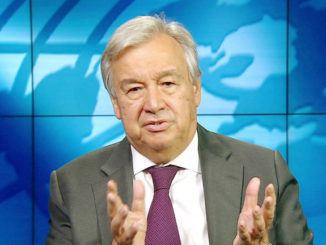
UNITED NATIONS (TIP): UN General Assembly on Friday, June 18, appointed Antonio Guterres as the UN Secretary-General for a second term beginning January 1, 2022, days after the powerful Security Council had unanimously recommended his name to the 193-member body for re-election.
President of the 75th session of the UN General Assembly Volkan Bozkir announced that Mr. Guterres “has been appointed by acclamation Secretary-General of the United Nations for the second term of office beginning on January 1, 2022, and ending on December 31, 2026.” Mr. Bozkir then administered the oath of office to 72-year-old Guterres at the podium of the UN General Assembly Hall.
On June 8, the 15-nation Council had held a closed meeting where it adopted by acclamation the resolution that recommended Mr. Guterres’ name to the General Assembly for a second five-year term as Secretary General from January 1, 2022-December 31, 2026.
Estonia’s Ambassador to the UN Sven Jurgenson, President of the Council for the month of June, had told reporters after the meeting: “We have all seen actually the Secretary General in action. I think he has been an excellent Secretary General. He’s a bridge builder, his views on the conflict zones in the world and he’s able to speak to everybody. And I think this is something that is expected from the Secretary General, and he has proven worthy of the post already with the five years that he has been in office,” Mr. Jurgenson said.
India had expressed its support for re-election of Mr. Guterres as UN Chief and welcomed the adoption of the resolution recommending his name.
India’s Permanent Representative to the UN Ambassador T.S. Tirumurti tweeted “India welcomes the adoption of @UN #SecurityCouncil resolution recommending a second term to #UnitedNations Secretary-General @antonioguterres.” Last month, External Affairs Minister S. Jaishankar met Mr. Guterres at the United Nations headquarters and expressed New Delhi’s support to him for his second term as the world’s top diplomat.
“India values UNSG’s leadership of the UN, especially in these challenging times. Conveyed our support for his candidature for a second term,” Mr. Jaishankar had said in a tweet after the meeting.
Later a press release issued by the Permanent Mission of India to the UN also stated that Mr. Jaishankar “conveyed that India values Secretary General’s leadership of the United Nations, especially in these challenging times. He conveyed India’s support for his candidature for re-election for a second term.” Under the UN Charter, the Secretary-General is appointed by the General Assembly upon the recommendation of the Security Council. Each Secretary-General has the option of a second term if they can garner enough support from Member States.
Mr. Guterres, the ninth Secretary-General of the United Nations, took over on January 1, 2017, and his first term ends on December 31 this year. Former Prime Minister of Portugal, Mr. Guterres served as the United Nations High Commissioner for Refugees for a decade from June 2005 to December 2015.
Mr. Guterres, nominated by the Government of Portugal, has been the only official candidate for the position of Secretary General and his re-election was a given. There has been no woman Secretary General in the UN’s 75-year history and Mr. Guterres’ re-election will mean that any possibility of having a female lead the world organization can come only after 2026.
In March, Mr. Guterres had circulated his vision statement and earlier in May, laid out his case for a second term to UN Member States during an informal interactive dialogue convened in the General Assembly Hall.
Mr. Guterres was elected after a reformed selection process that included a public informal dialogue session in the General Assembly, involving civil society representatives, aimed at ensuring transparency and inclusivity.
In his vision statement ‘Restoring trust and inspiring hope’, Mr. Guterres said that the imperatives for the next five years include mounting a massive and enduring response to the COVID-19 pandemic and its consequences in the short-term, leaving no stone unturned in the search for peace and security, making peace with nature and climate action, turbocharging the Decade of Action to achieve the Sustainable Development Goals and advocating for a more equitable world, ensuring the centrality of human rights, taking gender equality to the next level, focusing on people, rising to the challenge of digital transformation, advancing multilateralism and the common agenda, embarking on a ‘United Nations 2.0’ and rekindling shared commitment to enduring values.
“As we emerge from the pandemic, the UN is more relevant than ever…We must act as a catalyst and a platform for more inclusive, networked and effective forms of multilateralism. Our direction of travel is clear on peace and security, climate action, sustainable development, human rights and the humanitarian imperative. Our power to transform the current situation into a better world and future for all depends on everyone everywhere and can only be done successfully if we are resolute and resolved to combine our efforts towards our common agenda for the benefit of humanity and the planet,” Mr. Guterres said in his vision statement.
(Agencies)
Signup to our Newsletter!
Don’t miss out on all the happenings around the world