Month: October 2021

  • India in history this Week-October 29 to November 4, 2021

    India in history this Week-October 29 to November 4, 2021

    29 OCTOBER

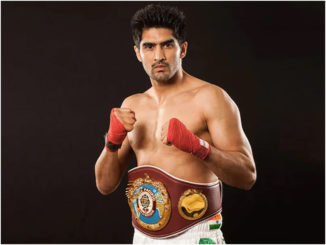
    1985       Boxer Vijendra Singh, who won India’s first Olympic medal in boxing, was born.

    1999       About 150 people died and five lakh people were affected by the Mahatufan, which came at a speed of 250 km on the east coast of India.

    2005       Two days before Deepawali in Delhi, 62 people died in the serial blasts in busy areas Paharganj and Sarojini Nagar.

    1920       Jamia Millia Islamia was established by the efforts of former President Zakir Hussain.

    2008       Asom bomb killed 69 people and injured 350 people.

    30 OCTOBER

    2008       Graded explosions occurred in several parts of Assam including Guwahati. More than 66 people died in it.

    1945       India joined the United Nations.

    1909       Famous scientist Homi Jahangir Bhabha was born.

    1883       The great thinker and social reformer Swami Dayanand Saraswati died.

    1956       India’s first five-star hotel ‘Ashoka’ opened.

    31 OCTOBER

    1875       The freedom fighter of India and the first Home Minister of independent India Sardar Vallabh Patel was born

    1984       The then Prime Minister of India Indira Gandhi was shot dead by her bodyguards.

    1966       India’s famous swimmer Mihir Sen floated and crossed the Panama Canal.

    1943       Indian scientist and former chairman of ‘ISRO’ G. Madhavan Nair was born.

    1960       The cyclonic storm in the Bay of Bengal killed about 10,000 people.

    1975       Sachin Dev Burman, a famous musician and singer of Bengali and Hindi cinema, passed away.

    01 NOVEMBER

    1950       The first steam engine in India was built at the Chittaranjan Rail factory.

    1984       After the assassination of Indira Gandhi, the then Prime Minister of India, Sikh protest riots broke out in the country.

    1858       The rule of India went from the East India Company to the ruler of Britain and now the Viceroy was appointed to replace the Governor General.

    1956       The state of Madhya Pradesh was formed on the basis of language.

    1956       The capital of the country, Delhi became a union territory.

    1960       Kalyani University was established in West Bengal India.

    1966       The state of Haryana was carved out of Punjab.

    1973       The name of Mysore was changed to Karnataka.

    2000       The state of Chhattisgarh was formed.

    02 NOVEMBER

    1833       Mahendra Lal Sarkar was born to promote social reformer and homeopath.

    1834       The ship named Atlas had reached Mauritius with Indian laborers. Which is celebrated as immigrant day there.

    1534       The fourth Sikh Guru Ramdas was born.

    2012       Indian-American mathematician Shriram Shankar Abhyankar died.

    03 NOVEMBER

    1917       Annapurna Maharana, a freedom fighter and advocate for women’s rights, was born.

    1933       Economist and Nobel Prize winner Amartya Sen was born in Birbhum district of West Bengal.

    1948       The then Prime Minister of India Jawaharlal Nehru gave his first speech at the United Nations General Assembly.

    2000       Direct to home broadcasting service launched for all by the Government of India.

    04 NOVEMBER

    1936       Birth of eminent mathematician Shakuntala Devi.

    1970       Famous Kathak dancer Pandit Shambhu Maharaj passed away.

    1822       Formal launch of water supply scheme in Delhi.

    1947       Major Somnath Sharma of Budgaon, Kashmir received the first Paramveer Chakra. However, he was given this honor posthumously.

    1954       The Institute of Himalayan Mountaineering was established in Darjeeling.

    1984       OB Aggarwal became world champion of amateur snooker.

    1997       In Siachen base camp, the army off-signal gave the highest STD in the world. Booth set up.

    1845       The famous revolutionary of India, Vasudev Balwant Phadke was born.

  • Diwali: The Hindu festival of lights

    Diwali: The Hindu festival of lights

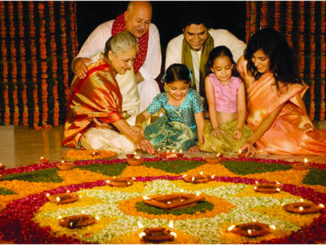
    Diwali is India’s most important festival of the year—a time to celebrate the triumph of light over darkness, knowledge over ignorance, and good over evil. Widely observed among more than a billion people from a variety of faiths across India and its diaspora, the five days of Diwali are marked by prayer, feasts, fireworks, family gatherings, and charitable giving. For some, Diwali is also the beginning of a new year.

    But Diwali is perhaps best known as a festival of lights. Derived from the Sanskrit dipavali, which means “row of lights,” Diwali is known for the brightly burning clay lamps that celebrants line up outside their homes.

    In some regions of the country, Diwali is marked as the day when Lord Ram, along with wife Sita and brother Lakshman, returned to Ayodhya after 14 years of exile. Diwali also coincides with Kali Pujo, celebrated across Bengal. Deepavali basically symbolizes the victory of “good over evil, light over darkness and knowledge over ignorance”. And people celebrate this day with much fun and fervor.

    Every year, Diwali falls in the month of Kartika, as per the Hindu lunisolar calendar (which is between mid-October and mid-November).

    Deepavali 2021: Date and time: This year, Diwali will be celebrated on 4th November.

    Diwali celebrations take place over 5 days with each day typically having different rituals and traditions. Below we have listed all the days of Diwali along with their calendar dates and a short description of what happens on each day:

    –              Day 1 — Dhanteras: November 2, 2021 (Tuesday) Dwadashi

    This is the first day of the festival when people clean their homes and prepare for the events ahead. This is also a busy shopping day, when it is considered lucky to go to markets and buy gold or new kitchen items.

    –              Day 2 — Choti Diwali: November 3, 2021 (Wednesday) Trayodashi

    The second day is when people start decorating their homes. Many families will put up string lights and start creating their rangoli, which are intricate designs placed on the floors of homes.

    Check more details about Diwali traditional decorations here.

    –              Day 3 — Diwali and Lakshmi Puja: November 4, 2021 (Thursday) Amavasya

    The most important part of the celebration is the ritual that takes place on this day.

    Clay oil lamps or diyas are lit and rituals worshipping the goddess Lakshmi are performed. The most auspicious time for worship (Puja) is from 6:09pm to 8:04pm. The worshipping can be done at temples or at home by placing a red cloth on the puja chowki (‘worship table’), putting the idol on it, and then offering flowers, fruits (water chestnuts, pomegranate, quince, and coconut) and sweets (notably kesari bhaat — semolina pudding with saffron, nuts, and sugar) to Goddess Lakshmi, then prostrating in front of the idol and joining your palms for prayers.

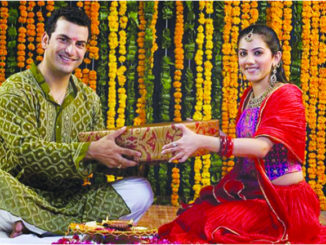
    On the day of Diwali, families get together to exchange gifts and have a large meal. Many people wear their nicest clothes on this day and say “Happy Diwali” to each other.

    –              Day 4 — Padwa: November 5, 2021 (Friday) Pratipada

    The fourth day of celebrations is dedicated to the love between husband and wife, and men will often buy gifts for their wives. Many businesses open new accounts on this day as it is considered auspicious.

    –              Day 5 — Bhai Duj: November 6, 2021 (Saturday) Dwitiya

    Bhai Duj (Bhaubeej), the last day of celebrations is dedicated to brothers and sisters. To celebrate their bond, sisters perform a special ceremony for their brothers for their protection. Brothers give presents to their sisters.

    The Origin of Diwali

    Historically, the origin of Diwali can be traced back to ancient India, when it was probably an important harvest festival. However, there are various legends pointing to the origin of Diwali or ‘Deepawali.’ Some believe it to be the celebration of the marriage of Lakshmi with Lord Vishnu. Whereas in Bengal the festival is dedicated to the worship of Mother Kali, the dark goddess of strength.

    Lord Ganesha, the elephant-headed God, the symbol of auspiciousness and wisdom, is also worshiped in most Hindu homes on this day.

    In Jainism, Deepawali has an added significance to the great event of Lord Mahavira attaining the eternal bliss of nirvana.

    The return of Lord Rama

    Diwali also commemorates the return of Lord Rama along with Sita and Lakshman from his fourteen year long exile and vanquishing the demon-king Ravana. In joyous celebration of the return of their king, the people of Ayodhya, the Capital of Rama, illuminated the kingdom with earthen diyas (oil lamps) and burst crackers. These Four Days Each day of Diwali has its own tale, legend and myth to tell. The first day of the festival Naraka Chaturdasi marks the vanquishing of the demon Naraka by Lord Krishna and his wife Satyabhama. Amavasya, the second day of Deepawali, marks the worship of Lakshmi, the goddess of wealth in her most benevolent mood, fulfilling the wishes of her devotees.

    The story of Lord Vishnu

    Amavasya also tells the story of Lord Vishnu, who in his dwarf incarnation vanquished the tyrant Bali, and banished him to hell. Bali was allowed to return to earth once a year, to light millions of lamps to dispel the darkness and ignorance, and spread the radiance of love and wisdom. It is on the third day of Deepawali – Kartika Shudda Padyami that Bali steps out of hell and rules the earth according to the boon given by Lord Vishnu. The fourth day is referred to as Yama Dvitiya (also called Bhai Dooj) and on this day sisters invite their brothers to their homes.

    All the simple rituals of Diwali have a significance and a story to tell. The illumination of homes with lights and the skies with firecrackers is an expression of obeisance to the heavens for the attainment of health, wealth, knowledge, peace and prosperity.

    According to one belief, the sound of fire-crackers are an indication of the joy of the people living on earth, making the gods aware of their plentiful state. Still another possible reason has a more scientific basis: the fumes produced by the crackers kill a lot of insects and mosquitoes, found in plenty after the rains.

    The tradition of gambling on Diwali also has a legend behind it. It is believed that on this day, Goddess Parvati played dice with her husband Lord Shiva, and she decreed that whosoever gambled on Diwali night would prosper throughout the ensuing year. Diwali is associated with wealth and prosperity in many ways, and the festival of ‘Dhanteras’ (‘dhan’ = wealth; ‘teras’ = 13th) is celebrated two days before the festival of lights.

    In each legend, myth and story of Deepawali lies the significance of the victory of good over evil; and it is with each Deepawali and the lights that illuminate our homes and hearts, that this simple truth finds new reason and hope.

     From darkness unto light – the light that empowers us to commit ourselves to good deeds, that which brings us closer to divinity. During Diwali, lights illuminate every corner of India and the scent of incense sticks hangs in the air, mingled with the sounds of fire-crackers, joy, togetherness and hope. Diwali is celebrated around the globe. Outside India, it is more than a Hindu festival, it’s a celebration of South-Asian identities.

    If you are away from the sights and sounds of Diwali, light a diya, sit quietly, shut your eyes, withdraw the senses, concentrate on this supreme light and illuminate the soul.

    Significance

    With all the lights and diyas eradicating dark shadows and evil, and all the prayers and love among people create a wonderful atmosphere full of goodness and purity. The festival of Diwali fills everyone’s hearts with an aura of purity and a happy, compassionate mood.

    Diwali is not just the lights, gambling, and fun-filled surprises and gifts; Diwali is also a time to reflect on one’s life, past deeds and making the right changes for the upcoming year.

    Diwali is also a celebration to give and forgive. It is a common practice in Diwali for people to forget and forgive the injustices and grudges. People celebrate with an air of freedom, festivity, and friendliness everywhere.

    Diwali marks the birth of a new and rejuvenated soul. A happy and refreshed mind during Diwali charges up a person to make changes as a healthy, ethical individual, who will be more efficient in their work, and will also be spiritually advanced.

    Diwali is a celebration that unites people from every corner, religion and caste. The simple smile and a kind, accommodating heart melt even the hardest of hearts. It is a time when people mingle about in joy and embrace one another.

    A celebration of prosperity, Diwali gives us the strength and the zeal to carry on with our work and goodwill for the rest of the year and thus, promising us success and prosperity. Thus, people give gifts to employees, family, and friends.

    Most importantly, Diwali illuminates our inner self. The lights of Diwali also signify a time to destroy all our dark desires, dark thoughts, and have a deeper, inner illumination and self-reflection.

    The history of Diwali can be traced back to ancient India, when it most likely began as an important harvest festival. However, there are several legends pointing to the origins of Diwali.

    There are many who believe Diwali to be the celebration to mark the wedding of Lakshmi, the goddess of wealth, with Lord Vishnu. Diwali is probably the commemoration of their blissful marriage. Others think it to be a celebration of Lakshmi’s birthday, as Lakshmi is said to have been born on the new-moon day of Kartik.

    In Bengal, the Deepavali, or Deepabali, is dedicated to the worship of the powerful goddess Kali, the dark goddess of strength. the elephant god Lord Ganesha is also worshipped in some homes on Diwali, because he is a symbol of auspiciousness and wisdom. In certain Jain homes, Diwali has the added significance of marking the great event of Lord Mahavira attaining the eternal bliss called nirvana.

    Diwali is not only important to Hindus, but, has is also celebrated among Jains, Buddhists, and Sikhs. For Hindus, it often signifies the return of Lord Rama to Ayodhya, after his 14 years of exile and victory over Ravana.

    Ram, on that special day, was welcomed to the kingdom of Ayodhya with rows of diyas, lightened throughout the kingdom. Thus, the tradition of lighting oil lamps on Diwali symbolizes the victory of good over evil and freedom from spiritual darkness.

  • How Diwali celebrations have changed over the years

    How Diwali celebrations have changed over the years

    Diwali is undoubtedly the favorite time of the year for most of us. Diwali traditions such as annual cleaning of the house, bursting of crackers and exchanging gifts make the festival special. In this ever-changing world, Diwali celebrations have also changed and have become modernized. While all of us respect the festival with the same feelings, here some ways celebrating Diwali has changed in past few years:

    Updating everything on social media

    No matter what people do, they want everything to be documented on social media. From eating, shopping, bursting crackers to doing Diwali Pooja, everything gets uploaded with proper hashtags now.

    Shopping stores have changed

    Earlier, people used to spend hours in markets trying to find the best gifts for their special ones and now, most of us just go online, type the keywords and order the gifts for our loved ones.

    Eco-Conscious Diwali

    Bursting crackers has become less popular. Today’s generation has become more aware of the harm that firecrackers cause. Things such as ‘green crackers’ are gaining popularity now.

    Celebrating together

    With busy lifestyles, people have found alternatives to coming home on Diwali as video calls have become easier to join in on the family in prayers and all the rituals.

    Changing countdown

    Remember the time when you started counting down the days to Diwali at the end of Dussehra – 20 days away from Vijaya Dashmi was the easy way to remember. Now, we don’t bother with all that, as Diwali countdown begins from the day Flipkart, Amazon or Snapdeal take over your newspaper’s front pages in screaming fonts. Each year, the big billion day online festive sale seems to start earlier than usual. The way things are going, don’t be too surprised if one day Diwali sales start smack in the middle of summer.

    Shrinking bonuses, bloating baksheesh

    Wherever did that big fat bonus that took care of one EMI or helped you plan an extravagant purchase vanish? “Honey, I shrank the bonus,” is the tune corporates sing today, while others do away with cash and give you coupons (which are bound to be lost), or offer to pick up house painting tabs (in a year when you wanted to skip the whitewashing ritual!). Meanwhile, the tribe of ‘baksheesh’ seekers bloats as even random temping helps turn up with bright smiles. The one face you miss, however, is the postman.

    WhatsApp wellwishers

    As telcos smartly hike SMS tariffs on festival days, India seems to en masse move to WhatsApp. On Diwali morning you wake up with 104 alerts – many from unknown souls who blithely assume you know who they are – wishing you Diwali in myriad ways, mainly unoriginal and forwarded. From animated videos, memes, selfies, to inspiring quotes, it’s a day’s job and more to get through the messages, which now start before Dhanteras and drag on through Govardhan Pooja and Bhai Dhooj. Your office gives you one measly day off for the festival, but the well wishers – who more often than not marketers – stalk you all five days, laying out an array of tempting suggestions to part with your money.

    The detox bug

    In the old days you spent hours scrubbing your home and ridding it of junk. Today, you get cleaning services to do that job for you. But wait, it’s not that easy. Once your house is sparkling, you need to detox your mind, body and soul, of course. From spas to spiritual retreats, the SMS offers chase you. But, hello, there is still the online clutter to be attacked – be it on your phone, your laptop, or your social media network (deweeding friends list is an annual Diwali ritual now).

    All wired up

     In the age of convenience, it’s the electric bulb, fairy lights and paper chandeliers that light up Diwali rather than the mud lamps with oil and wicks. From heart shaped bulbs to fruity illuminations, the lights strung over walls balconies make a flashy statement even as flowers vanish from Rangolis replaced by gaudy baubles and stars. Good may still triumph over evil, but good taste too has been vanquished.

  • Bandi Chhor Divas

    Bandi Chhor Divas

    The day marks the release of Guru Hargobind Singh, the sixth Sikh Guru, who was held captive by the Mughals

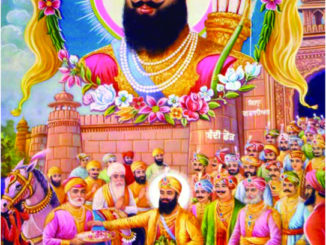
     As the country celebrates Diwali, for the Sikhs, the day holds significance for another reason. It marks the release of the sixth Guru of Sikhs, Guru Hargobind Singh, from incarceration by the Mughals in the 17th century — and is celebrated as “Bandi Chhor” Diwas across Punjab.

    This coincidence has resulted in similarity of celebration amongst Sikhs and Hindus. The Sikhs celebrate this day as Bandi Chhor Divas i.e., “the day of release of detainees”, because the sixth Nanak had agreed to his release on the condition that the other fifty-two detainees would also be released. These other fifty-two detainees were the vassal kings who had done something to annoy the emperor.

    Emperor Jahangir had imprisoned the sixth Nanak because he was afraid of the Guru’s growing following and power. The Sikhs on this day, which generally falls in october-November, hold a one-day celebrations in the Gurdwaras. So in the evening, illuminations are done with Deewé (earthen oil lamps) or candles and fireworks. The celebrations are held both in the Gurdwaras and in homes.

    The story of Diwali for the Sikhs is a story of the Sikh struggle for freedom. From the time of Guru Nanak (1469 – 1539), the founder of Sikhism, popular seasonal or folk festivals like the harvest festival of Vaisakhi, or ancient mythological festivals like Holi and Divali, or worship rituals like Aarti, began to take on a new significance for the Guru’s students, the Sikhs.

    The Guru used these festivals and special days e.g. first day of each lunar month, as symbols or pegs for his teaching themes. And so the Sikhs were slowly diverted from darkness of superstitious ritualism based on fear and ignorance to an enlightened ideology based on reason and belief in One Creator. The enlightened ideology of Guru Nanak gave new significance to ancient festivals like Divali and Vaisakhi So what about Divali, the festival of lights when, according to Indian lore, Lord Rama returned home after destroying the demon god Ravana who had taken away Rama’s wife, Sita?

    The story, of course, has no significance in the Sikh tradition. However, in the Sikh struggle for freedom from the oppressive Mughal regime, the festival of Divali did become the second most important day after the Vaisakhi festival in April. The Sixth Guru Hargobind, was freed from imprisonment in the famous fort of Gwalior by Emperor Jahangir in October, 1619.

    The reason for the young Guru’s imprisonment was no more than religious bigotry. The Guru’s father, Guru Arjan, had been martyred for the same reason. According to Sikh tradition, the Guru agreed to be freed only if the other Indian chiefs (rajahs) imprisoned with him were freed. Jahangir was under pressure from moderate but influential Muslim religious leaders like Hajrat Mian Mir, a friend of the Guru. So he relented grudgingly and ordained, Let those rajahs be freed who can hold on to the Guru’s coat tails and walk out of prison. He had in mind no more than four or five being freed with the Guru.

    However, the Guru was not to be outmanoeuvred in this way. He asked for a special coat to be made with 52 coat tails – same number as the rajahs in prison with him! And so the rajahs were freed and the Guru became known popularly as the Bandi Chhor (Deliverer from prison). He arrived at Amritsar on the Divali day and the Har Mandar (now known as the Golden Temple) was lit with hundreds of lamps i.e. he was received in the same way as the Lord Rama and the day came to be known as the Bandi Chhor Divas (the day of freedom). Guru Hargobind reached Amritsar on the eve of Diwali, after his release from Gwalior fort, during the reign of Jahangir.

    The People illuminated the Golden Temple and the city splendidly to celebrate the return of their Guru to the city.

    Thereafter, Diwali is being celebrated at Amritsar with great pump and show, and also with a lot of religious fervour. During the fair, religious congregations are held at Manji Sahib, Akal Takhat and Baba Atal which continue for three days. A large number of poets and singers also participate. Recitation of Granth Sahib is done at Darbar Sahib, Akal Takhat and various gurudwaras in the vicinity of Golden Tample.

    Early in the morning, pilgrims take a holy dip in the scared tank, while reciting Japji Sahib and thereafter, they go to the Golden Temple for paying their obeisance. They make offerings of various kinds both in cash and kind, such as flowers, candy-drops and parched-rice grains, but mostly the offerings are of karah parshad. which is prepared and sold to the pilgrims by the management. Circumambulation of the tank is considered sacred by the pilgrims. Illuminations and pyrotechnic display are the unique features of the Diwali celebrations.

    A mammoth gathering in the parikarma and on the adjoining buildings witness to their great delight the multicolored lights thrown up in the sky and their reflections in the water of the tank. Chain of the electric lights hang along the causeway and on the Darshani Deorhi.

    Small earthen lamps lighted and fed with sarson oil are arranged in lines all around the tank. All buildings in the compound are bedecked with coloured lights. Candles and small earthen lamps fed with pure ghee are floated in the tank. This fair is attended by people in the large numbers who come from far and near.

     A large number of visitors take shelter in the verandahs of the various buildings in the premises. All local inns, rest houses and other common places are packed to capacity. The free mess, called Guru Ram Dass Langar, remains open for all. The whole function is organised by Shiromani Gurudwara Parbhandhak Committee. During the fair, qualified doctors render free medical service to the pilgrims. Thenceforth, the Sikh struggle for freedom, which intensified in the 18th Century, came to be centred around this day.  In addition to the Vaisakhi day (now in April), when Khalsa, the Sikh nation was formally established by the Tenth Guru Gobind Singh, Divali became the second day in the years when the Khalsa met and planned their freedom strategy.

    On the occassion of Bandi Chhor Divas, Sikhs observe a one-day celebrations in the Gurdwaras. In the evening, illuminations are lighted with Deewé (earthen oil lamps) or candles and fireworks are also bursted. Such celebrations are held both in the Gurdwaras and in homes.

    Another important Sikh event associated with Diwali is the martyrdom in 1734 of the elderly Sikh scholar and strategist Bhai Mani Singh, the Granthi (priest) of Harmandar Sahib (Golden Temple). He had refused to pay a special tax on a religious meeting of the Khalsa on the Divali day. This and other Sikh martyrdoms gave further momentum to the Khalsa struggle for freedom and eventually success in establishing the Khalsa rule north of Delhi Bhai Mani Singh was a great scholar and he transcripted the final version of Guru Granth Sahib upon dictation from Guru Govind Singh ji in 1704. He took charge of Harmandir Sahib’s management on 1708. Diwali was not celebrated in Golden Temple at that time.

    In 1737, he received permission from Mogul emperor of Punjab, Zakaria Khan for celebrating Diwali at Golden Temple for a massive tax of Rs. 5,000 (some authors say it was Rs10,000). Invitations were sent to the Sikhs all over India to join Bandi Chhorh Diwas celebrations at Harmandir Sahib. Bhai Singh thought he would collect the tax-money from the Sikhs as subscriptions who would assemble for the purpose of Diwali Celebrations.

    But Bhai Mani Singh Ji later discovered the secret plan of Zakariya Khan to kill the Sikhs during the gathering. Bhai Mani Singh Ji immediately sent message to all the Sikhs not to turn up for celebrations. Bhai Mani Singh could not manage to arrange the money to be paid for tax.

    Zakariya Khan was not happy about the situation and he ordered Bhai Mani Singh’s assassination at Lahore by ruthlessly cutting him limbby-limb to death. Ever since, the great sacrifice & devotion of martyr Bhai Mani Singh Ji is remembered on the Bandi Chhor Diwas (Diwali) celebration.

  • Bhumi Pednekar joins Rajkummar Rao in Bheed

    Bhumi Pednekar joins Rajkummar Rao in Bheed

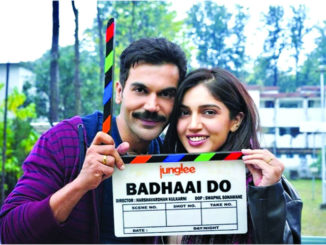
    Bhumi Pednekar has come on board with Rajkummar Rao for a movie titled Bheed. The film will be directed by Anubhav Sinha, and will be Bhumi and Rajkummar’s second movie together. They will be seen for the first time in Badhaai Do, which is currently in the making. Bhumi and Raj will join Anubhav Sinha in Lucknow soon after Diwali to begin the shoot. The filmmaker is currently busy with the post-production work on Ayushmann Khurrana-starrer Anek and pre-production of Bheed. The film is jointly produced by Bhushan Kumar’s T-Series and Anubhav Sinha, and is said to be a hard-hitting social drama. As for Badhaai Do, the movie has been directed by Harshavardhan Kulkarni. It is a sequel of Ayushmann’s 2018 film Badhaai Ho.

  • Shoojit Sircar terms decision to not send Sardar Udham for Oscars ‘very subjective’

    Shoojit Sircar terms decision to not send Sardar Udham for Oscars ‘very subjective’

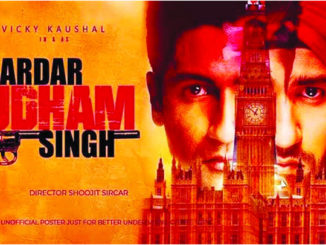
    Fans of Vicky Kaushal’s latest Sardar Udham have expressed their displeasure on the film not being selected as India’s official entry for the 94th Academy Awards. But the film’s director, Shoojit Sircar feels the jury’s decision to not select the film is “very subjective”. Interacting with the media recently, Sircar said, “It is a personal opinion, it is very subjective, I have no comment on that. I respect the jury and their decision. The film that was finally selected, I know about it, and I am glad that it was chosen. I go by the jury’s decision.” Sardar Udham is based on the Indian revolutionary Sardar Udham Singh who assassinated Michael O’Dwyer, the lieutenant governor of Punjab at the time of the Jallianwala Bagh massacre in Amritsar. The film stars Vicky Kaushal in the titular role. Stating why the film was not sent for the Oscars, one of the jury members, Indraadip Dasgupta said the film “portrays our hatred towards the British”. He also gave the length of the movie as one of the reasons for it losing out to Tamil drama Koozhangal (Pebbles) which has been announced as India’s official entry for the Oscars this year.

  • Australian opener David Warner does a Ronaldo

    Star Australian opener David Warner did a Cristiano Ronaldo during the ongoing T20 World Cup here as he removed Coca Cola bottles placed in front of him during a press conference for a brief while.

    Just before the start of the press conference after he guided Australia to a seven-wicket win over Sri Lanka here on Thursday, Warner grabbed the two soft drink bottles lying in front of him and said with a smile, “Can I remove these? Though I have to put it there.”  “If it’s good enough for Cristiano, it’s good enough for me. That’s right,” he added while putting the two bottles back.

    Ronaldo’s act of removing the soft drink during a European Championships press conference reportedly cost the global beverage giant a whopping US$ 4 billion.

    The footage of Warner removing the bottles attracted considerable social media attention but any financial fallout is not known yet.

    Di Maria shines, Messi injured as PSG beat Lille to go 10 points clear

    Angel Di Maria showed his worth as he set up the first and scored the winner to give Paris St Germain a 2-1 win against champions Lille in Ligue 1 after Lionel Messi limped off injured on Friday, Oct 29.

    In the absence of Kylian Mbappe, who is suffering from an infection, Di Maria shone throughout the game, providing captain Marquinhos with the equaliser after Jonathan David’s opener before finding the back of the net two minutes from time.

    After Messi left the pitch with a muscle problem, the Argentine winger found his range to put leaders PSG on 31 points from 12 games, 10 ahead of second-placed RC Lens.

    Lille, who deserved better after a convincing first half, are 11th with 15 points. Both teams went end-to-end in an entertaining opening half but Lille showed more poise and it took a superb save from Gianluigi Donnarumma to deny Burak Yilmaz in the first minute.

    Lille, looking more like the team that dominated the league last season, were rewarded in the 31st minute when David opened his right foot to deflect Yilmaz’s powerful cross into the roof of the net from point-blank range.

  • Bhai dooj: The bond between brothers and sisters

    Bhai dooj: The bond between brothers and sisters

    Bhai Dooj celebrates the bond between brothers and sisters and is a festival similar to Raksha Bandhan. It is observed on the Dwitiya Tithi, Kartik, Shukla Paksha (the second day of the waxing phase of the Moon in Kartik month as per the Purnimant calendar). In most regions, Diwali festivities conclude with Bhai Dooj and is often included as a part of the five-day-long festival of lights. On this day, siblings get together for the traditional ceremony, have a sumptuous feast and reminisce memories. Read on to know the Bhai Dooj 2021 date and other important details.

    This year, Bhai Dooj will be celebrated on November 6.

    The most important ritual of the celebration of Bhai Dooj is the aarti and tika ceremony. On the day of Bhai Dooj sister firstly puts does the aarti of her brother with the holy flame and does the tika on her forehead and then she prays to God for his long and healthy life. This is the way of expressing care and love to brother by a sister. In this return, sisters get a token of love from brothers. It’s a Bhai Dooj gift.

    Nowhere is the bond of brotherly-sisterly love glorified with such grandeur as in India. Hindus celebrate this special relationship twice every year, with the festivals of Raksha Bandhan and Bhai Dooj.

    After the high voltage celebrations of Diwali, the festival of lights and fire-crackers, sisters all over India get ready for ‘Bhai Dooj’ – when sisters ceremonize their love by putting an auspicious tilak or a vermilion mark on the forehead of their brothers and perform an aarti of him by showing him the light of the holy flame as a mark of love and protection from evil forces. Sisters are lavished with gifts, goodies and blessings from their brothers. Bhai Dooj comes every year on the fifth and last day of Diwali, which falls on a new moon night. The name ‘Dooj’ means the second day after the new moon, the day of the festival, and ‘Bhai’ means brother.

    Legends

    Bhai Dooj is also called ‘Yama Dwiteeya’ as it’s believed that on this day, Yamaraj, the Lord of Death and the Custodian of Hell, visits his sister Yami, who puts the auspicious mark on his forehead and prays for his well being. So it’s held that anyone who receives a tilak from his sister on this day would never be hurled into hell. According to one legend, on this day, Lord Krishna, after slaying the Narakasura demon, goes to his sister Subhadra who welcomes him the lamp, flowers and sweets, and puts the holy protective spot on her brother’s forehead. Yet another story behind the origin of Bhai Dooj says that when Mahavir, the founder of Jainism, attained nirvana, his brother King Nandivardhan was distressed because he missed him and was comforted by his sister Sudarshana. Since then, women have been revered during Bhai Dooj.

    In Bengal this event is called ‘Bhai Phota’, which is performed by the sister who religiously fasts until she applies a ‘phota’ or mark with sandal wood paste on her brother’s forehead, offers him sweets and gifts and prays for his long and healthy life. Every brother eagerly awaits this occasion that reinforces the bond between brothers and sisters and their affectionate relationship. It’s an opportunity for a good feast at the sister’s place, coupled with an enthusiastic exchange of gifts, and merriment amid the resounding of conch shells in every Bengali household.

    Significance

    Like all other Hindu festivals , Bhai Dooj too has got a lot to do with family ties and social attachments. It serves as a good time, especially for a married girl, to get together with her own family, and share the postDiwali glee. Nowadays, sisters who are unable to meet their brothers send their tika – the spot of protection – in an envelope by post. Virtual tilaks and Bhai Dooj e-cards have made it even easier for brothers and sisters, who’re far away from each other, specially remember their siblings on this propitious occasion.

    Uttar Pradesh

    In Uttar Pradesh, at first, sisters give a piece of cloth, knotted into a circular shape, full of batashas (sugar balls) to their brothers. This piece of cloth is called as ‘aabf’. For each brother, there are two aabf. After all the rituals, sisters apply a tika of roli and rice on the forehead of the brothers and then perform aarti, praying for the long and happy life of their brothers. At last, they offer sweets to them and then the story of Bhai Dooj is narrated.

    Bengal

    In Bengal this festival is called Bhai Phota. On this day, sisters observe fast till the time all the traditional customs have been performed. After this, they apply tika made of sandalwood paste, ghee and kohl (kajal) on their brothers’ forehead. Then the aarti is performed and sisters give sweets to their brothers to eat. Kheer and coconut laddus are the traditional sweets which are prepared on this day.

    Bihar

    In the Bihar, the festival of Bhai Dooj is celebrated in the most unique way. The sisters curse their brothers in order to keep the evil spirits and dangers away from them. At first, they say very bad things to their brothers and then prick their own tongue with a wild prickly fruit as a punishment. By doing this, they ask their brothers to forgive them for the ill behaviour and mistakes which they have done till the date. Besides this, there is a unique custom in which brothers eat grains of bajri with water, from the hands of their sisters.

    Punjab

    In Punjab, the day after Diwali is celebrated as tika and on this day, sisters make a paste with saffron and rice and apply tika on their brothers’ forehead to keep away all the difficulties and dangers from them. After this, they exchange gifts and sweets among each other.

    Gujarat

    Bhai Dooj in Gujarat is known as Bhai Beej and on this auspicious occasion, sisters get up early in the morning and then the traditional tilak ceremony is held. After this, they perform aarti of their brothers and pray for their good fortune and life. Then they offer sweets to their brothers and in return the brothers bless them and exchange gifts.

    Maharashtra & Goa

    Marathi communities call this festival as Bhav Bij. On this day, sisters draw a square on the floor in within the boundaries of which the brothers have to sit. After they are seated, it is a custom for to have a bitter fruit named Karith. After this, the rituals and applying the Tilak, traditional sweets such as Shrikhand Puri and Basundi Puri are served.

  • US economy grew just 2% in Q3 as consumer spending slowed: Govt

    US economy grew just 2% in Q3 as consumer spending slowed: Govt

    WASHINGTON (TIP): The US economic expansion slowed dramatically in the third quarter to an annual rate of just two percent as consumer spending moderated amid resurgent Covid-19 infections, the government said on Thursday. The spread of the Delta variant of Covid-19 over the summer combined with renewed restrictions and global supply snags including a shortage of workers took a toll on the economy, slowing growth from the 6.7 per cent annual rate in the prior quarter.

    The impact was most notable in the more than 26 per cent collapse in purchases of big-ticket manufactured goods in the latest three months, the commerce department reported.

    That drop was partly offset by the 7.9 per cent increase in spending on services, though that was slower than the gain in the prior quarter, according to the data.

    The report said the “resurgence of Covid-19 cases resulted in new restrictions and delays in the reopening of establishments in some parts of the country.”

    In addition, “Government assistance payments in the form of forgivable loans to businesses, grants to state and local governments, and social benefits to households all decreased.”

    But there was some good news as inflation as measured by the personal consumption expenditures (PCE) price index retreated in the July-September period to show a 5.3 per cent increase compared to 6.5 per cent in the second quarter. Excluding the volatile food and energy prices that have been spiking amid surging demand and supply bottlenecks, the closely watched inflation gauge fell to 4.5 per cent.

    GDP growth compared to the second quarter edged up 0.5 per cent, less than one-third the pace of the prior three months, the report said.               Source: AFP

  • US bans China Telecom over national security concerns

    US bans China Telecom over national security concerns

    WASHINGTON (TIP):  US regulators are expelling a unit of China Telecom Ltd., one of the country’s three major state-owned carriers, from the American market as a national security threat amid rising tension with Beijing.

    China Telecom (Americas) Corp. is required to stop providing domestic interstate and international service in the United States within 60 days, under an order approved Tuesday by the Federal Communications Commission. The FCC cited the danger that Beijing might use the company eavesdrop or disrupt U.S. communications and “engage in espionage and other harmful activities against the United States.

    The Biden administration has extended efforts begun under then-President Donald Trump to limit access to U.S. technology and markets for state-owned Chinese companies due to concern they were security risks or helping with military development. China Telecom is among companies that were expelled from U.S. stock exchanges under an order by Trump barring Americans from investing in them.

    The FCC said in 2019 that due to security concerns it planned to revoke licenses granted nearly two decades ago to China Telecom and another state-owned carrier, China Unicom Ltd. It rejected a license application by the third carrier, China Mobile Ltd.

    China Telecom Americas’ ownership and control by the Chinese government raise significant national security and law enforcement risks, said an FCC announcement.

    The company’s conduct and communications to U.S. government agencies demonstrate a lack of candor, trustworthiness and reliability, the FCC said, without giving details.

    The Chinese government has said it would take steps to protect its companies but has yet to announce any retaliation over their status in the U.S. market.

    The telecom companies are on a U.S. government blacklist of entities deemed by the Pentagon to be involved in military development. Others include state-owned oil companies, suppliers of processor chips and video technology and construction, aerospace, rocketry, shipbuilding and nuclear power equipment companies.

    China condemned the US’s latest overture toward Taiwan, warning that ties between the two count­ries faced “huge risks” just weeks after Presidents Joe Biden and Xi Jinping agreed to hold a video summit.           Source: AP

  • Paytm public offer, country’s biggest, to open on Nov 8

    Paytm public offer, country’s biggest, to open on Nov 8

    One97 Communications, which operates under Paytm brand name, will come out with the country’s biggest initial public offer on November 8 in the price band of Rs 2,080-2,150 per share, implying a valuation of around Rs 1.48 lakh crore. The Rs 18,300-crore offer will be the biggest in the country after Coal India’s IPO in 2010 wherein it had garnered Rs 15,200 crore. In a pre-IPO conference on Thursday,  October 28, One97 Communications MD and CEO Vijay Shekhar Sharma said he has received personal messages from investors who want to invest for the first time in the country and asserted that “this is the age of India”.

    The IPO — which will close for subscription on November 10 — comprises issuance of fresh equity shares worth Rs 8,300 crore and Offer for Sale (OFS) by existing shareholders to the tune of Rs 10,000 crore.

    “The price band that is set at Rs 2,080 to Rs 2,150 per share implies an enterprise value of $19.3 to $19.9 billion,” Sudarshan Ramakrishna, Managing Director of Goldman Sachs India Securities said during the IPO presentation.

  • Apple results hit by supply chain woes

    Supply chain woes cost Apple $6 billion (roughly Rs. 44,890 crore) in sales during the company’s fiscal fourth quarter, which missed Wall Street expectations, and Chief Executive Tim Cook said that the impact will be even worse during the current holiday sales quarter.

    Cook told Reuters on Thursday the quarter ended September 25 had “larger than expected supply constraints” as well as pandemic-related manufacturing disruptions in Southeast Asia. While Apple had seen “significant improvement” by late October in those Southeast Asian facilities, the chip shortage has persisted and is now affecting “most of our products,” Cook said. “We’re doing everything we can do to get more (chips) and also everything we can do operationally to make sure we’re moving just as fast as possible,” Cook said. Cook said the company expects year-over-growth for its quarter ending in December. Analysts expect growth of 7.4 percent to $119.7 billion (roughly Rs. 8,95,413 crore). “We’re projecting very solid demand growth year over year. But we are also predicting that we’re going to be short of demand by larger than $6 billion,” Cook said.

  • JioPhone to drive next wave of smartphone revolution: Pichai

    New Delhi (TIP): As Reliance Jio gets ready to launch its next handset soon in the festive season, Alphabet and Google CEO Sundar Pichai said that in three-five years, the affordable JioPhone Next device will have a lot of impact in connecting and helping millions take advantage of a smartphone.

    The upcoming JioPhone Next smartphone will house Pragati OS, powered by Android, which is touted as a world-class operating system built specifically for India.

    “People are looking for access and there’s definitely been a wave of them who have adopted smartphones (in India),” Pichai said during the earnings call after announcing robust quarterly results late on Tuesday.

    “There is still demand to shift from feature phones to smartphones. JioPhone Next is like building a phone beyond the English-speaking community and going local, doing it in a way that many more people can take advantage of a smartphone,” he elaborated.

    The device is built with exciting features like the Google Assistant, automatic read-aloud and language translation for any on-screen text, a smart camera with India-centric filters and much more.

    Pichai said that he views JioPhone Next as laying the foundation for the next wave of digital transformation.

  • NASA finds first signs of planet outside Milky Way galaxy

    NASA finds first signs of planet outside Milky Way galaxy

    WASHINGTON (TIP): NASA’s Chandra X-ray Observatory has for the first time spotted signs of a planet transiting a star outside of the Milky Way galaxy, opening up a new avenue to search for exoplanets at greater distances than ever before. The possible exoplanet—or planets outside of our Solar System—candidate is located in the spiral galaxy Messier 51 (M51), also called the Whirlpool Galaxy because of its distinctive profile, NASA said in a statement.

    Astronomers have, so far, found all other known exoplanets and exoplanet candidates in the Milky Way galaxy, almost all of them less than about 3,000 light years from Earth.

    An exoplanet in M51 would be about 28 million light years away, meaning it would be thousands of times farther away than those in the Milky Way, NASA said.

    “We are trying to open up a whole new arena for finding other worlds by searching for planet candidates at X-ray wavelengths, a strategy that makes it possible to discover them in other galaxies,” said Rosanne Di Stefano of the Center for Astrophysics at Harvard and Smithsonian (CfA) in Cambridge, Massachusetts, who led the study.

    The findings are published in the journal Nature Astronomy.

    The exoplanet candidate was spotted in a binary system called M51-ULS-1, located in M51. This binary system contains a black hole or neutron star orbiting a companion star with a mass about 20 times that of the Sun. The X-ray transit they found using Chandra data lasted about three hours, during which the X-ray emission decreased to zero.

    Based on this and other information, the team estimate the exoplanet candidate in M51-ULS-1 would be roughly the size of Saturn, and orbit the neutron star or black hole at about twice the distance of Saturn from the Sun.

    The team looked for X-ray transits in three galaxies beyond the Milky Way galaxy, using both Chandra and the European Space Agency’s XMM-Newton. Their search covered 55 systems in M51, 64 systems in Messier 101 (the “Pinwheel” galaxy), and 119 systems in Messier 104 (the “Sombrero” galaxy).

    However, more data would be needed to verify the interpretation as an extragalactic exoplanet. One challenge is that the planet candidate’s large orbit means it would not cross in front of its binary partner again for about 70 years, thwarting any attempts for a confirming observation for decades, NASA said.

    Named in honor of the late Indian-American Nobel laureate, Subrahmanyan Chandrasekhar, the Chandra X-ray Observatory is the world’s most powerful X-ray telescope. It has eight times greater resolution and is able to detect sources more than 20-times fainter than any previous X-ray telescope.

    Known to the world as Chandra (which means “moon” or “luminous” in Sanskrit), Chandrasekhar was widely regarded as one of the foremost astrophysicists of the twentieth century.

                    Source: IANS

  • Apple iPhone SE Plus could launch next year, iPhone SE 3 postponed: Report

    Apple iPhone SE Plus could launch next year, iPhone SE 3 postponed: Report

    Apple is expected to launch its latest smartphone in the SE series next year. As per a report by analyst Ross Young, the company may launch the iPhone SE Plus with 5G connectivity support in 2022. It was previously believed that Apple was working on releasing the successor to the iPhone SE (2020), next year with the launch of the iPhone SE 3.

    Now, as per the latest report by Young, the launch of the iPhone SE 3 is pushed back to 2024 and Apple could instead launch the iPhone SE Plus in 2022. The tipster has posted the same on Twitter.

    The iPhone SE 3 which is now expected to launch in 2024 will reportedly feature an LCD display between 5.7 and 6.1 inches. Another recent report has suggested that the third generation Apple iPhone SE is expected to feature a design that is similar to the iPhone XR.

    This could mean that the upcoming iPhone SE 3 would be the first iPhone to feature the bezel-less, notch-bearing design with FaceID.

    We do not know much more about the specifications and features of the upcoming iPhone SE Plus and iPhone SE 3. As per an earlier report by Nikkei Asia, which cited several sources, Apple is expected to launch a low-cost iPhone with an A15 Bionic SoC and Qualcomm’s X60 modem.

    As of know, we do not know the exact launch date of the upcoming iPhone SE Plus or the iPhone SE 3, but more details could surface in the months to come.

    These 3 Apple iPhones will lose WhatsApp support

    WhatsApp is all set to wield the knife on some phones just because they are old. They may be in perfect working order, but their owners will not be able to access their WhatsApp accounts on them. The problem is that WhatsApp is ready to roll out an update on November 1 and those phones that are not updated as per the messaging app’s requirements, they are toast, for all intents and purposes. On the chopping block are a huge number of Google Android phones like Samsung, LG, Sony and others as well as certain Apple iPhones.

    These are those Apple iPhones which do not have the required software that can run WhatsApp. WhatsApp list of phones that will lose support * Apple iPhone SE

    * Apple iPhone 6S

    * Apple iPhone 6S Plus

    These Apple iPhones have failed to meet the strict WhatsApp requirements, according to a list by Express.

    The iPhones that are safe and which will be able to run WhatsApp are those running iOS 10 and newer OS versions. What are the options open to phone owners under WhatsApp threat There are just a few days to go till November 1 when the WhatsApp update is rolled out. So, those users who have phones which will lose WhatsApp support, have 2 choices. One is buy a new phone. This is a very expensive proposition, of course.

  • 1 in 10 people clicking on phishing links on mobile devices

    Phishing has infiltrated every form of communication, from work and personal e-mail to SMS, social media and even advertising and now a new study has revealed that one in 10 people click on phishing links while on their mobile devices. This doesn’t mean simply receiving messages, but actually clicking on them, according to the analysis of phishing trends within a sample of 5,00,000 protected devices across 90 countries, including India.

    Among the key findings of the report by Cloud security firm Wandera (a Jamf company), the number of mobile users falling for phishing attacks has increased by 160 per cent (year-on-year).

    Nearly 93 per cent of phishing domains are hosted on a “secure” website with a padlock in the URL bar.

    “Today, 93 per cent of successful phishing sites are utilising HTTPS verification to conceal their deceitful nature. This number has increased dramatically from 65 per cent in 2018,” according to the report.

    Phishing is a type of social engineering where an attacker sends a fraudulent message designed to trick a human victim into revealing sensitive information to the attacker or to deploy malicious software on the victim’s infrastructure like ransomware.

    It is easier for an attacker to exploit a person and capture data via a phishing attack than it is to exploit a robust device operating system.

    “In fact, user credentials are far more valuable to an attacker in this age of cloud-enabled enterprises, as they provide access to sensitive data that is stored and managed beyond the device in software-as-a-service (SaaS) applications, online file storage repositories and data centre,” the report noted.

  • Madgaon: The commercial and cultural capital of Goa

    Madgaon: The commercial and cultural capital of Goa

    Being the commercial and cultural capital of Goa, Margao, also known as Madgaon, is the largest city of Goa by population. Margao is the centre of administration for the Salcete as well as the district of South Goa. Since the construction of the Madgao Railway Station, Margao has become a focal point for travellers as everyone who wishes to arrive in Goa by train has to enter through Margao.

    The origin of Madgaon’s name has various stories. Some say that it is derived from Sanskrit word Mathagram which would mean village towards the east and some say that Mathagram was the name due to the Vaishnavite Matha (cloister) located in the area. But a clear picture to the former name of Matha Gram was due to the Nine Mathas in the town. Raiders, however, destroyed these Mathas along with the Damodar Temple where the Holy Spirit Church now stands. The whole of Margao is a repository for the stories and history of Goa.

    With structures like the Braganza House, Fernandes House and Sat Burzam House that are nearly as old as the town itself, there is history in every old nook and corner of Margao. The Goa Chitra Museum will introduce you to the authentic traditions and culture of Goa. The Rachol Fort will transport you back in time to the battles between Vijayanagara and Bijapur Sultans. The Municipal Gardens are the pitstop for every traveller’s Imagination before continuing the journey into the festivities of the Sao Joao feast of St. John the Baptist Church.

    With all such heritage to keep its travellers indulged, Margao has earned its place as the Cultural capital of Goa. The shopping scene in Margao offers everything from local street markets to signature shopping malls. There are many restaurants and cafe’s that satisfy your hunger pangs, such as the Cinnamon, Pepper’s, Martin’s, Mircho-Go that serve multiple cuisines. The nightlife in Margao, however, is dull compared to North Goa as there are no pubs or bars that stay open until late in the night.

    Places To Visit

    Colva Beach

    The captivating Colva Beach, located in South Goa, is one of the most visited beach of Goa. The 2.5 km long beach is known for its powdery white sands flanked by swaying coconut trees that add to its beauty. It looks more stunning with shacks, nightclubs and souvenir stalls all around.

    Colva Beach is also popular for water sports like paragliding, jet-skiing, snorkelling, speed boat ride and banana boat rides. It is visited by tourists for its stunning sunset and calming blue waves. While the Colva Beach is serene for peace-lovers, it perks up at night for party-lovers. With the nonchalant ambience, mesmerizing view of the endless beach and spirited people, Colva Beach is one of the most loved beaches of Goa.

    Goa Chitra

    Goa Chitra Museum, located in Benaulim, is an ethnography museum displaying the traditional Goan way of life and culture. The museum was established by Victor Huge Gomez as a tribute to his Portuguese ancestors. He has collected over 4000 items such as woodwork, metalwork, weapons, furniture, religious Goa artefacts and other memorabilia. It also showcases an organic farm.

    Goa Chitra actively conducts workshops and activities to share their knowledge about the traditions with the public. It has been titled by the Archaeological Survey of India as the topmost contemporary museum in India.

    Our Lady Of Mercy Church

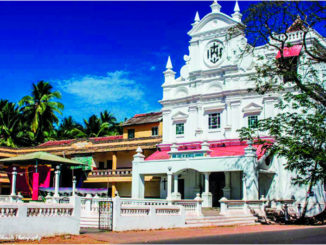
    Our Lady Of Mercy Church, located in Colva, is a colonial church founded in 1630. It was earlier known as Nossa Senhora de Merces. The church houses a statue of infant Jesus Christ which is believed to be found on the Mozambique coast by Fr Bento Ferreira who brought it to Goa and installed it in the church in 1648.

    Church Of the Holy Spirit Goa

    Church Of the Holy Spirit is a 17th century Portuguese church in Goa and one of the oldest churches in Margao. The site initially had a shrine dedicated to a Hindu deity, Lord Damodar, which was destroyed by the Portuguese before the church was erected. It was further destroyed a number of times by the Muslim Army till finally the structure that currently exists was built in 1675. The monument is famous for its splendid architecture and religious significance.

    Majorda Beach

    One of the more crowded beaches of South Goa, Majorda beach is a golden sand beach located between Utorda and Betalbatim Beach. Lined with swaying palms and calm azure water, this is one of the most gorgeous beaches in South Goa. Majorda Beach is usually crowded with Russian tourists and offers a wide range of water sports activities. Dotted with sunbeds the beach is ideal for sunbathing and relaxing.

    Streetside stalls can be found on Majorda Beach selling funky souvenirs that Goa is famous for. A large number of churches dot the map of Majorda, a great display of the Portugues architecture ever-present across Goa. Paintball and Go Karting facilities can be found closer to the highway. For those looking to do something truly offbeat, the Ashvek Vintage Car Museum is definitely worth a visit, displaying cars and related paraphernalia dating back to 1886. All in all, the charming Majorda has a little something for everyone who crosses its path.

  • ‘Rust’ AD admits he didn’t check rounds before handing gun to Alec Baldwin

    ‘Rust’ AD admits he didn’t check rounds before handing gun to Alec Baldwin

    The first assistant director on “Rust,” David Halls, acknowledged to investigators that he should have checked a weapon for live rounds before giving it to Alec Baldwin, according to a search warrant affidavit filed on Wednesday. Baldwin fired the weapon while rehearsing a scene last Thursday at the Bonanza Creek Ranch near Santa Fe, striking cinematographer Halyna Hutchins and the director, Joel Souza. Hutchins was airlifted to a hospital in Albuquerque, where she died. Detectives had earlier disclosed that Halls declared the weapon was a “cold gun,” before giving it to Baldwin, meaning it did not contain live rounds. The affidavit filed on Wednesday includes new details from Halls’ interview with detectives, as well as details from an interview with Hannah Gutierrez Reed, the armorer on the film.

  • Kristen says ‘it was nice’ that ‘The Crown’ existed while preparing for ‘Spencer’

    Kristen says ‘it was nice’ that ‘The Crown’ existed while preparing for ‘Spencer’

    It is a fictional take on what happened when Diana decided during a family Christmas that she wanted out of her marriage to Prince Charles. “We’re not trying to educate anyone, we’re not trying to solve anything,” Kristen Stewart told Variety at the film’s Los Angeles premiere.

    “We’re also not trying to like figure out whether or not we should have a monarchy. It’s what did it feel like to be her, think about what those nights were like, think about what those meals were like.

    “It’s the moments in between… They could have done the dinners and opening presents and the photo ops, but they didn’t. They did getting dressed, cleaning up dirty dishes, and you know, crumpled up wrapping paper, I just think that’s such an interesting way to tell the story that everyone thinks they know so well.”

    Stewart had four months to prepare before filming began.  “The script doesn’t profess to know anything, it doesn’t cover any black-and-white detail,” Stewart said.

    “But I read everything. And somehow, in a sort of abstract way, the script substantiated everything I learned in detail. So it was really nice that ‘The Crown’ existed. And it was really nice that we’ve had all these documentaries and this evolved relationship with what happened.”

    Writer and director Pablo Larrain said during the interview that the idea of casting Stewart came about because both women faced immense fame and unparalleled media scrutiny.

    Stewart trained with dialect coach William Conacher, who also worked with Emma Corrin for ‘The Crown’ and with Naomi Watts when she played the titular role in 2013’s ‘Diana’.

  • Priyanka Chopra’s audio book being considered for Grammy 2022

    Priyanka Chopra recently turned author as she published her book Unfinished earlier this year. The actress had also launched an audio version of the book simultaneously. Now, her audio book has been considered as the ‘Best Spoken Word Album’ at the Grammys 2022. The audio book is described as a collection of personal essays, stories and observations jotted down by the global superstar. Priyanka’s team took to the official Instagram account and shared the news: “The New York Times Best Seller, Unfinished by @priyankachopra is now being considered as the ‘Best Spoken Word Album’ at the #Grammys 2022.” Meanwhile, on the work front, Priyanka Chopra with her husband Nick Jonas has joined the production team of a Broadway Show called Chicken and Biscuits.

  • DRDO, Air Force successfully test India’s first indigenously developed long-range bomb

    New Delhi (TIP): An Indian Air Force (IAF) team and the Defence Research and Development Organisation (DRDO) on Friday, Oct 29, successfully flight-tested the country’s first indigenously developed long-range bomb (LRB) from a fighter jet over Balasore in Odisha.

    The bomb is part of the class of weapons with a range of 50 to 150 km. The government did not share details about the weapons, but mentioned that the LRB was tested from an aerial platform. The Defence Ministry said that the bomb, “after release from the IAF fighter aircraft, was guided to a land-based target at a long-range with accuracy within specified limits”. “All the mission objectives were successfully met,” it added.

    The flight of the bomb and the performance was monitored by a number of range sensors, including Electro Optical Tracking System (EOTS), Telemetry and radar deployed by the Integrated Test Range, Chandipur in Odisha, the statement read.

    The bomb has been designed and developed by DRDO’s Research Centre Imarat (RCI) laboratory in Hyderabad, in coordination with other DRDO laboratories. Defence Minister Rajnath Singh congratulated DRDO and the Air Force for the successful flight trial and stated that this will prove to be a force multiplier for the armed forces.

  • Barricade removal from Tikri, Ghazipur- Stand vindicated, but watching BJP moves closely, say farm unions

    Barricade removal from Tikri, Ghazipur- Stand vindicated, but watching BJP moves closely, say farm unions

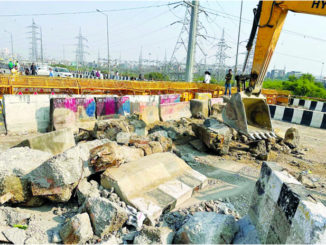
    New Delhi (TIP): As the Delhi Police started removing barricades near two farmer protest sites — Tikri and Ghazipur, farm union leaders Friday said the move vindicated their stand that they had never blocked roads at the city border points. The protesting unions, however, added a note of caution, saying that they were “watching BJP’s latest manoeuvres carefully”.

    The SKM is likely to discuss the matter at its November 2 meeting. Farmer leaders said that any decision to entirely clear both the carriageways at the protest sites will be taken by the SKM.

    The police move comes days after a Supreme Court hearing that saw farmer unions arguing that the police were responsible for the traffic blockade.

    BKU president Gurnam Singh Charuni said, “Traffic movement was allowed by the protesters in the past too and will be done even now.”

    Senior SKM member Dr Darshan Pal, who is also president of Krantikari Kisan Union, said, “Since Thursday, Delhi Police have been making special efforts to make a show of removal of barricades and various other obstacles that they had placed on the roads against protesting farmers. This is happening at Tikri border as well as Ghazipur border. It is well known that the police had behaved like protestors were enemies of India…They had fortified the morcha sites by placing huge cement boulders, multiple layers of metal barricades, placement of sand trucks across the roads and also fixing multiple layers of nails on the road.”

    Sukhdarshan Natt, state executive committee member of the Punjab Kisan Union, who was near Tikri border on Friday, said, “They have removed the concrete blocks, heavy vehicles like tipper, cranes etc. The iron railings are still there, which they can be removed manually anytime. Their actions have proved that they had blocked traffic…Now we will decide what to do next. We had wanted to move towards Delhi, but were stopped by barricading the roads. As they are being removed, we will think whether to go towards Jantar Mantar or stay here.”

    Farmer leader Rakesh Tikait said, “The future course of the ongoing farmers’ protest would be decided by the SKM, which is leading the movement against the three farm laws.”

    Dr Darshan Pal added: “So far, there is no call to go to Delhi. Any future course of action will be decided in a meeting of the Samyukt Kisan Morcha.”

    BKU spokesperson Saurabh Upadhyay too said farmers want to go to Delhi, but the SKM will take the final call.

    Union leaders also hoped that the Centre would invite farmers for a dialogue to break the logjam over the farm laws.

    “If the government wants the logjam to end, it should talk to the farmers now and we are ready for it. But if it wants the farmers’ movement to continue, we are determined to prolong it as it has already been 11 months since the protests began,” Upadhyay said.

    SKM member Sudesh Goyat said: “We are happy that roadblocks are being removed and now traffic will be able to move. It will also help in reviving economy here as petrol pumps, shops which are shut for 11 months due to road closure will now start functioning again.” Joginder Singh Ugrahan, president of BKU (Ugrahan) said, “Delhi police had put up multi-layered barricades at Tikri, Singhu and Gazipur borders to stop us moving ahead towards Delhi. However, in the Supreme Court, they have been mentioning that farmers have blocked the highway….As they are removing barricades, it is clear now that the blockade was done from their side.”

  • 178,000 women apply for NDA as forces lift gender barrier

    178,000 women apply for NDA as forces lift gender barrier

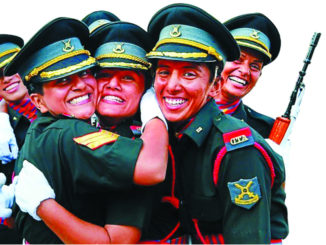
    New Delhi (TIP): A third of the candidates who will appear for the National Defence Academy (NDA) examination on November 14 for entry into the premier joint services training institution are women, government officials familiar with the matter said on the condition of anonymity.

    This will be their maiden attempt at cracking the entrance exam being conducted by the Union Public Service Commission (UPSC) at centres across India, after the Supreme Court, in a landmark order onAugust 18, 2021,opened the doors of the academy to women. “Nearly 570,000 applications have been received and of these 178,000 are women,” said one of the officials cited above.

    The apex court’s order making women eligible to join NDA, which was formally inaugurated 66 years ago and was thus far a male preserve, came almost three decades after they were allowed to serve in select branches of the army, air force and navy as short-service commission (SSC) officers. Ananyaa Madhur Sharma, a Class 12 student from DLF Public School, Ghaziabad, is among the 178,000 women applicants.

    “When the Supreme Court ordered that women be allowed to join NDA, I knew the decision was for me. Before that, I was confused about my career path but clarity came with that decision. I am excited about the possibility of joining NDA and later opting for the Special Forces (SF),” said Ananyaa whose uncle Major Mohit Sharma, an SF officer, was killed in action in 2009 and awarded India’s highest peacetime gallantry award, the Ashok Chakra. The army does not currently induct women in SF.

    A fortnight ahead of the exam, army chief General Manoj Mukund Naravane on Friday set the tone for welcoming female cadets into the Khadakwasla-based academy, which currently has a maximum training capacity of around 2,000 cadets every year.

    “As we open the portals of NDA to women cadets, I expect you all to welcome them with the same sense of fair play and professionalism that the Indian armed forces are known for the world over,” Naravane said, while addressing cadets during a passing out parade at the academy.

    Naravane said the induction of women will be the “first step towards gender equality” in the armed forces, and added that women officers will be in the same position 40 years later that he is in now.

    The army chief said he is confident that women cadets will perform better than their male counterparts. “Over the years, as we have grown and matured; as the curriculum has changed, training methodology has changed, the course content has improved. We have become more well-trained and better-equipped to meet whatever challenges that emerge. As we go ahead, we shall be inducting women cadets into the academy,” he said.

    “As a result of this, they will also get empowered. They will hold more challenging assignments.”

    The top court in September told the Union government that women aspiring to join the armed forces should be allowed to take the NDA entrance examination in November 2021, days after the government informed the court that the academy will be ready to welcome the first-ever batch of women cadets in January 2023, after they sit for the entrance exam in May 2022.

    The court, however, stressed that it “cannot belie the aspirations of young girls” and rejected the Centre’s request to delay the examination for women on the ground that much groundwork was still to be done.

    Captain Shalini Singh, a retired SSC officer, welcomed the decision to make women eligible for NDA. “At the same time, it’s not a very easy feat as NDA is a male-dominated academy,” she said. “There will be challenges, but as the army chief has said, they should be welcomed on an equal and fair footing.”     Source: HT

  • RBI Governor Shaktikanta Das gets 3-year extension

    New Delhi (TIP): The government has extended the term of Reserve Bank of India (RBI) Governor Shaktikanta Das by three years—a tenure that will make him the second longest serving head of the central bank.

    Das was appointed as RBI’s 25th governor on December 11, 2018, for a period of three years after the surprise resignation of his predecessor Urjit Patel. An official order dated October 28 said the government has reappointed Das as the governor of the central bank for a period of three years beyond December 10, 2021, that is till December 2024. The extension is longer than the norm of a two-year term in the last two decades.

    Das’ re-appointment will ensure continuity at a critical juncture for the economy that is emerging out of the devastation caused by the COVID-19 pandemic.

    He will be the fifth governor to get a tenure this long. Usually, RBI governors are given a five-year term.

    If completed, he will be the longest-serving governor after Sir Benegal Rama Rau, who was in office for 7 years and 197 days between July 1, 1949, and January 14, 1957. The other four governors who had a tenure of more than 5 years were Bimal Jalan (November 1997 to September 2003), James Taylor (July 1937 to February 1943), B P Bhattacharya (March 1962 to June 1967), and C D Deshmukh (August 1943-June 1949).

  • SAD, BJP corner Congress over Tytler’s appointment

    Shiromani Akali Dal (SAD) president Sukhbir Singh Badal on Friday slammed Congress president Sonia Gandhi for naming Jagdish Tytler, one of the main accused in the 1984 anti-Sikh violence, as a permanent invitee to Delhi Pradesh Congress Committee. “This is a brazen display of shocking insensitivity to the Sikh wounds by Sonia Gandhi and the Congress party. They have chosen the eve of the painful anniversary of the massacre of Sikhs to announce this decision. Could there be a worse way to rub salt into the deep, festering wounds of the Khalsa Panth than this decision and its timing?” said Sukhbir in a statement. October 31 will mark the anniversary of anti-Sikh violence that erupted following then Prime Minister Indira Gandhi’s assassination in 1984.

    Decision regrettable: BJP

    Punjab BJP general secretary Subhash Sharma said the Congress has reinforced that it stands behind leaders who had committed heinous crimes against Sikhs in 1984. In a statement, Sharma said it was regrettable that Channi and Sidhu have remained silent on Tytler’s appointment.

    Sharma said it was the BJP government that on coming to power constituted an SIT to give justice to the riot victims. “On the contrary the Congress safeguarded the guilty and is now promoting them,” he said.

    “Can one expect justice from a political party like the Congress on the sacrilege issue in Punjab? Unfortunately, no justice will be done under the Congress regime of Charanjit Singh Channi,” he said.

                    Source: HT