Month: October 2021

  • UK police charge 25-year-old man with lawmaker’s murder

    UK police charge 25-year-old man with lawmaker’s murder

    London (TIP): British authorities said October 21 a man has been charged in the stabbing of a Conservative lawmaker who was killed as he met constituents at a church hall last week.  Authorities say a 25-year-old British man with Somali heritage, Ali Harbi Ali, has been charged in the death of David Amess.

    The Crown Prosecution Service says it will “submit to the court that this murder has a terrorist connection, namely that it had both religious and ideological motivations”.

    The death of Amess, who had served in Parliament for almost 40 years and was knighted by Queen Elizabeth II in 2015, has shocked Britain, especially its politicians, who pride themselves on being accessible to their constituents. It has prompted conversations at the highest levels about how the country protects its leaders and grapples with extremism at home.

    The slaying came five years after Labour Party lawmaker Jo Cox was shot and stabbed to death by a far-right extremist. Cox was the first British lawmaker to be killed since a peace accord ended large-scale Northern Ireland violence almost 30 years earlier. AP

  • Indian American nominated as a Vice Chair of Nassau Republican Committee

    Indian American nominated as a Vice Chair of Nassau Republican Committee

    NEW YORK (TIP): Joseph Cairo, Chairman of Nassau Republican Committee on Oct. 18, 2021 has nominated Sharanjit Singh Thind, as a Vice Chairman of the party. Sharanjit Singh Thind, becomes the first, and the only Sikh American to hold this position in Nassau County Republican Committee.  After the nomination, an elated Sharanjit expressed, “I am thankful to Chairman Joe Cairo for bestowing such honor, approving his conviction and confidence in me. I ensure every assistance to help him in strengthening the Republican Party in Nassau County, serve my community and Nassau residents. I am also obliged to my political mentor, Zahid Syed, political & community activist, for introducing me to Chairman Cairo.”

    Of late, Sharanjit has served as a Commissioner, Nassau County Human Rights Commission. Born in a Sikh family from Kapurthala, Punjab, India, Sharanjit possesses an MBA degree and a Masters’ Program in Journalism.

    Settled in New York since 2000, Sharanjit is an established businessman, nature and fitness enthusiast. He is the founder and CEO of Media Partners Capital Inc., a digital media investment company, which owns a slew of popular South Asian media brands. Resident of Nassau County for long, he lives in Wantagh with his wife, two kids and parents. He serves a number of religious, non-profit and community action organizations on board.

    (Based on a press release)

  • Indian American Ravi Chaudhary nominated to a key position in Pentagon

    Indian American Ravi Chaudhary nominated to a key position in Pentagon

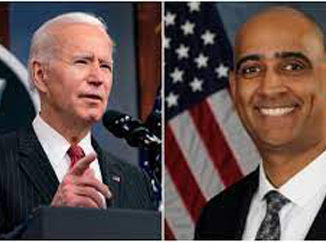
    WASHINGTON(TIP): US President Joe Biden on Thursday, October 14, announced his intent to nominate Indian American Ravi Chaudhary to a key position in the Pentagon. A former Air Force officer, Chaudhary has been nominated for the position of the assistant secretary of the Air Force for Installations, Energy and the Environment.

    He needs to be confirmed by the United States Senate before he can be sworn in for this key Pentagon position.

    Chaudhary previously served as a senior executive at the US Department of Transportation where he was Director of Advanced Programs and Innovation, Office of Commercial Space, at the Federal Aviation Administration (FAA), according to his bio released by the White House.

    In this role, Chaudhary was responsible for the execution of advanced development and research programs in support of the FAA’s Commercial Space Transportation mission.

    While at the Department of Transportation, he also served as the executive director, Regions and Centre Operations, where he was responsible for the integration and support of aviation operations in nine regions located nationwide.

    On active duty from 1993 to 2015 in the US Air Force, he completed a variety of operational, engineering, and senior staff assignments in the Air Force, the White House said.

    As a C-17 pilot, he conducted global flight operations, including numerous combat missions in Afghanistan and Iraq, as well as a ground deployment as Director of the Personnel Recovery Center, Multi-National Corps, Iraq.

  • Indian American economist Gita Gopinath to return to Harvard University in January

    Indian American economist Gita Gopinath to return to Harvard University in January

    BOSTON (TIP): Indian American Gita Gopinath, Chief Economist and Director of the Research Department at the International Monetary Fund (IMF), will resign in January 2022 and return to Harvard University, the Fund’s Managing Director Kristalina Georgieva announced on October 19.

    The IMF appointed the 49-year-old economist as Chief Economist in January 2019. When she joined the global lender, she was the John Zwaanstra Professor of International Studies and Economics at Harvard.

    The university granted her a one-year leave of absence on an exceptional basis, allowing her to work for the IMF for three years. Gopinath, who was born in Mysuru, is the IMF’s first female Chief Economist.

    She is the head of the IMF’s research department, which publishes the World Economic Outlook report every quarter, which contains the closely followed GDP growth estimates.

    “Gita’s contribution to the Fund and our membership has been truly remarkable —quite simply, her impact on the IMF’s work has been tremendous,” Georgieva said. “She made history as the first female Chief Economist of the Fund and we benefitted immensely from her sharp intellect and deep knowledge of international finance and macroeconomics as we navigate through the worst economic crisis since the Great Depression.”

    According to the IMF, Gopinath co-authored the Pandemic Paper on how to end the Covid-19 pandemic, which established universally recognized objectives for vaccination the world, as one of her major achievements.

    She is the third woman to hold a tenured post in Harvard’s prestigious economics department, and the first Indian to do so since Nobel Laureate Amartya Sen.

    Gopinath has been widely published in top economics journals and has received numerous honors, including election as a fellow of the American Academy of Arts and Sciences.

    Growing up in India, Gopinath did not know anyone who worked in economics, the profile noted. It was more common for children to aspire to become a doctor or an engineer.

    She studied science through high school and when her parents’ friends suggested that she would enjoy success working for the country’s administrative services, she went to Delhi to study economics.

  • 6-year-old Indian-origin sets Singapore record by memorizing 1,560 Pi digits

    6-year-old Indian-origin sets Singapore record by memorizing 1,560 Pi digits

    SINGAPORE (TIP): Six-year-old Indian-origin Ishani Shanmugam broke Singapore’s national record for most digits of Pi memorized by reciting 1,560 decimal places.

    Sitting in her living room on October 13, Ishani calmly recited the digits in about 10 minutes, with personnel from the Singapore Book of Records verifying the numbers.

    Her mother, Vennila Munusamy, 36, told The Straits Times on Saturday that her heart was pounding during the event.  The housewife said, “But Ishani was so calm and collected. (The people from Singapore Book of Records) were asking her if she was nervous, but she said, I’m so excited, we can start now.”

    In September last year, Ishani, who attends PCF Sparkletots (Kindergarten), could recite 409 digits of Pi. But she told her parents she wanted to learn more digits.

    Her father, Shanmugam V S, 42, a tech manager in an investment bank, said he and his wife started her training in April by introducing a few new digits each day.

    “We’re really proud of her. We didn’t expect her to get it on the first try as she had to get every single digit correct. After she broke the record, we shed some happy tears,” he said. Vennila said she and her husband realized Ishani had an exceptional memory and a hunger for learning when she was two.

    She said, “Ishani was able to read story books by herself – it was always one after another without stopping. We would show her flash cards of country flags and she would memorize all 195 of them.

    “Then we realized she had an interest in science and geography. She would grasp the details of geographical TV programs and explain them to us.”  Shanmugam said, “We never pushed her to do anything, we just want to hone her interests and we’ll help her out in whatever she wants to pursue.”

    Ishani’s latest hobby is playing the piano but this does not mean she has moved on from her Pi endeavors.

    Vennila added, “She wants to learn even more Pi digits now, to add more digits to her record.”   She beat memory trainers Sancy Suraj, who held the previous record with 1,505 digits in 2018. The current Guinness World Record is held by Rajveer Meena, who as a 21-year-old in 2015, recited 70,000 digits at the VIT University in India.

  • 3 Indian Americans appointed White House fellows

    3 Indian Americans appointed White House fellows

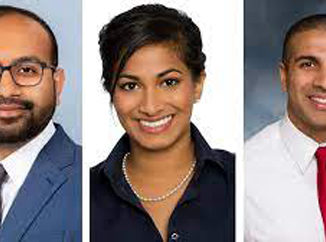
    WASHINGTON (TIP): The White House on Monday, October 18, named 19 young emerging leaders as its fellows for 2021-22, three of whom are Indian-Americans.

    The prestigious White House Fellowship programme embeds professionals from diverse backgrounds for a year of working as a full-time, paid fellow for White House staff, cabinet secretaries and other senior government officials.

    The Indian-Americans who made it to the list are Joy Basu and Sunny Patel from California; and Aakash Shah from New Jersey. Joy Basu from San Francisco has been placed at the White House Gender Policy Council.

    Placed at the Department of Homeland Security, Patel is a child and adolescent psychiatrist and public health physician with interests in building equitable health systems that serve children and families. Shah has been placed at the Department of Health and Human Services.

    (Source: PTI)

  • Indian American scientist gets Lifetime Achievement Award

    Indian American scientist gets Lifetime Achievement Award

    NEW YORK (TIP): Indian American scientist Dr Vivek Lall was presented with the Lifetime Achievement Award at Ritossa Family Summits in Dubai recently. “Your Lifetime Achievement Award is well-deserved and I congratulate you on your many accomplishments, which are making our world a much better place. I look forward to hearing more as you continue to make waves around the world through your incredible work,” said Sir Anthony Ritossa during the award presentation ceremony.

    Dr Lall, who is known for playing a key role in enhancing India-US defense trade and instrumental in some of the top deals between the two countries was presented with the award in recognition of his “outstanding vision, dedication and success,” a media release said. The award was given to Dr Lall in the presence of UAE Minister of State for Foreign Trade Dr Thani bin Ahmed Al Zeyoudi.

    Also present on the occasion were the emerging young business tycoon Sheikh Mohamed Bin Ahmed Bin Hamdan Al Nahyan, a member of the ruling family of the United Arab Emirates and princess Märtha Louise, daughter of King Harald and Queen Sonja of Norway.

    Ritossa Family Summits is the world’s leading family office investment conference, where world leaders and elite family office investors unite together to invest and create a brighter future.

    The event was attended by influential world leaders. Over 400 elite family offices, prominent conglomerate business owners, Sheikhs, royal families, private investment companies, sovereign wealth funds and industry professionals representing over USD4.5 trillion in investor wealth attended the event.

  • American Association of Physicians of Indian-origin’s women’s panel hosts conference on domestic violence

    American Association of Physicians of Indian-origin’s women’s panel hosts conference on domestic violence

    NEW YORK (TIP): Domestic violence is “a serious public health concern,” said Dr. Anupama Gotimukula, president of the Association of Physicians of Indian Origin (AAPI). Delivering welcome speech at a virtual conference on “Ways to Prevent Domestic Violence,” hosted by AAPI’s Women’s Committee on October 17, she pointed out that nearly “one in four women and one in seven men in the U.S. have experienced physical violence at the hands of their domestic partners.”

    The AAPI president said the conference, which was addressed by a number of prominent speakers from the United States and India addressed the conference, was “aimed at helping” her organization’s members “and the larger society to learn on ways to help promote healthy, respectful and nonviolent relationships.”

    “October is ‘Domestic Violence Awareness’ month,” said Dr. Seema Arora, chair of the Women’s Committee. “AAPI women’s physicians committee is trying to increase awareness towards this very prevalent but subdued age-old problem that can affect any gender, race, region & socio-economic strata in a panel discussion with renowned panelists from around the world,” she said.

    Lata Rao, a domestic violence survivor and activist shared her experience referring briefly to her past life and its impact on her physical, emotional and mental wellbeing.

    “I encourage women not to be what I went through” but to be more independent, Rao said. She told the audience how meeting with mentors and having a support system gradually changed her life, while forgiving and staying positive helped me start a new phase in her life. “Today, I use my experiences as a tool to support and educate other women,” she said.

    Dr. Pretti Saran, another domestic violence survivor and currently practicing Family Medicine & Obesity Specialist at RNJ Barnabas Hospital, in New Jersey, also shared her experience and pointed out that domestic violence is prevalent in all parts of the world. “Coming from a very traditional society back in India, initially I thought it was happening to me because of my background,” she said.

    Dr. Saran said she had suffered immensely from insecurity and complications of married life with intimidation and worry for her own life since she was married to a dominating person who was demanding yet suspicious and had trust issues. She was able to turn her life around, though, and has left a positive impact on society.

    Another speaker, Deanne Mazzochi, spoke about her work as a state legislator and an attorney who works with women and families in Illinois to ensure that people who are victims of domestic violence are protected. She went over the many statutes and legal systems that victims in Illinois have access to. She said that one should “ensure that you have a safe place to live,” if and when you want to leave an unhealthy relationship.

    Dr. Manju Sheth, an internist, practicing medicine at Beth Israel Lahey in Massachusetts, urged fellow physicians “to stay vigilant and collaborate” and look for signs and red flags to identify violence “as the patients can present with a multitude of unrelated symptoms that only compassionate questions can reveal clearly.” She requested her colleagues to be prepared to collaborate with medical and psychological professionals as “women are very reluctant to speak to you and we often notice PTSD, trauma, depression and anxiety.”

    Dr. Sheth is the chair and advisory board member of SAHELI and a member of Asian Task Force Against Domestic Violence. Dr. Nandita Palshetkar, the president of Federation of OB/GYN Society of India and chair of GAPIO Women’s Forum, provided a worldwide perspective on how the pandemic has influenced the rise in domestic violence incidences. “Nearly one third of women across the world face Shadow Pandemic Domestic Violence,” she said. Palshetkar also serves

    Jaya Nelliot, a board member and outreach director of the nonprofit ASHIANA, described domestic violence as a “pandemic”. “The best way is to create awareness and provide resources and help lead the victims of Domestic Violence to be strong and independent and safe,” she said.

    ASHIANA has been assisting South Asians in the United States for the past 25 years in empowering domestic abuse survivors to attain self-sufficiency via a culturally sensitive approach.

    Navneet Bhalla, executive director of Manavi, a nonprofit that campaigns against gender-based violence, spoke about how frequently abusers frame and wrongly accuse victims as criminals and threaten deportation, based on personal experiences.

    “Manvai supports such victims and help them gain justice and needed services. We take a survivor-center approach to understand and to provide support them holistically,” she said.

    Bhalla was introduced by Dr. Hetal Gor, a member of AAPI Women’s Committee.

    (Press release)

  • IRS, Security Summit partners remind families to make online safety a priority during National Cybersecurity Month

    IRS, Security Summit partners remind families to make online safety a priority during National Cybersecurity Month

    WASHINGTON(TIP): The Internal Revenue Service, on October 22, reminded families, teens and senior citizens about the continued importance of protecting personal and financial information (.pdf) online. Although the IRS and its Security Summit partners continue making strides in fighting identity theft and fraudulent tax returns, help is needed. The Security Summit works to protect taxpayers from criminals that file fraudulent returns for refunds. The Summit coalition includes representatives of the software industry, tax preparation firms, payroll and tax financial product processors as well as state tax administrators and the IRS, which work together year-round to protect taxpayers.

    During National Cybersecurity Month, the IRS is asking parents, families and others to be mindful of the pitfalls that can be found by sharing devices at home, shopping online and through navigating various social media platforms. Often, those who are less experienced can put themselves and others at risk by leaving an unnecessary trail of personal information for fraudsters.

    Staying safe online

    Here are a few common-sense suggestions that can make a difference for children, teens and other vulnerable groups to potential dangers to protect their personal data:

    Teach them to recognize and avoid scams. Phishing emails, threatening phone calls and texts from thieves posing as the IRS or legitimate organizations pose ongoing risks. Do not click on links or download attachments from unknown or suspicious emails. Remind them why security is important. Be careful not to reveal too much personal information. Keeping data secure and only providing what is necessary minimizes online exposure to scammers and criminals. Birthdates, addresses, age, financial information such as bank account and Social Security numbers are among things that should not be shared freely.

    Teach them about public Wi-Fi networks. Connection to Wi-Fi in a mall or coffee shop is convenient but it may not be safe. Hackers and cybercriminals can easily intercept personal information. Always use a virtual private network when connecting to public Wi-Fi.

    Always use security software with firewall and anti-virus protections. Make sure the security software is always turned on and can automatically update. Remember, to encrypt sensitive files such as tax records stored on computers. Be sure all family members have comprehensive protection especially if devices are being shared. Use strong, unique passwords for each account.

    Remember, the IRS does not use text messages or social media to discuss personal tax issues, such as those involving tax refunds, stimulus payments or tax bills. For more information, visit the Tax Scams and Consumer Alerts page on IRS.gov. Additional information about tax scams is also available on IRS social media sites, including YouTube videos. Also see Publication 4524, Security Awareness for Taxpayers (.pdf).

    (Press Release)

  • A Revolt against Vaccine: Police in crime-hit Chicago oppose Vaccine mandate

    A Revolt against Vaccine: Police in crime-hit Chicago oppose Vaccine mandate

    CHICAGO (TIP): A standoff in Chicago, where the head of the city’s largest police union is urging officers to defy a vaccine mandate, is the latest battle line being drawn in a nationwide fight over Covid-19 jabs, a BBC report said.

    Chicago, a city of nearly three million people, has seen more than 1,600 sexual assaults, nearly 3,000 shootings and 649 murders this year – a 14% increase over last.

    Just as violent crimes have risen, though, thousands of the city’s police force may not show up to work.

    Officers are weighing whether to resist a mayoral mandate requiring all public employees to report their vaccine status. City employees must now show proof of vaccination or submit to bi-weekly testing, unless approved for a religious or medical exemption. By the end of this year, all employees must be vaccinated.

    Nearly one-third of Chicago’s almost 13,000-member police department have so far refused to register their vaccination status, putting them on track for dismissal.

    Twenty-one have been officially removed from active duty so far, but some officials have warned that the mandate could leave Chicago’s police force dangerously depleted.

    During a CNN town hall on Thursday, October 21 night, President Joe Biden said US emergency responders who defy vaccine mandates should be fired.

    Chicago is not alone in facing this problem. Police departments across the US have been stymied in their efforts to coax officers into getting vaccinated against Covid-19 – now the leading cause of death for police in the US, according to the Officer Down Memorial Page, a non-profit that tracks police officer deaths.

    In the decade before the Covid-19 pandemic, an average of 166 US police officers died in the line of duty each year, according to the non-profit. Last year, 374 officers died – 245 of them due to Covid-19, more than any other cause combined.

    “This virus is no different than the gunfire we take as cops,” Chicago police superintendent David Brown said on Tuesday. “I will do everything I can and I will say anything I need to in order to convince officers to do everything they can to save their lives.”

    Yet vaccination rates among officers have mostly lagged behind the general public.

    “It’s hard to understand,” said Art Acevedo, who has served as chief of police in Miami, Houston and Austin, of vaccine hesitancy among police. “You’d think we’d be closer to 100% vaccination.”

    Mr Acevedo said he has urged reluctant officers to use their training and “look at the data”.

    “Every living president on both sides of the aisle has been vaccinated,” he said. “In my business, we call that a clue.” Mr Acevedo attributed the resistance to a mistrust in government. Others have expressed irritation with what they see as government overreach, as well as skepticism of the vaccines’ safety.

    In Chicago, the head of the city’s largest police union John Catanzara has called on its some 11,000 members to defy the city’s requirement to report their vaccination status.

    “It is the city’s clear attempt to force officers to ‘Chicken Little, the sky is falling’ into compliance,” he said last week. “Do not fall for it. Hold the line.”

    Mr Catanzara, who did not respond to the BBC’s request for comment, has compared the mandate to “Nazi Germany” and has suggested the vaccine requirements are an illegal violation of privacy.

    A judge last week granted the city’s request for a temporary order barring Mr Catanzara from making any public comments that encourage members of his union to resist the order. However, he has continued to post videos to the union’s public YouTube channel, in apparent defiance of the order.

    According to Mr Catanzara, as many as 50% of Chicago’s 13,000 officers would take unpaid leave rather than report their vaccine status – threatening to bring a public safety crisis to America’s third-largest city.

    Police resistance to vaccine mandates has been seen in at least a handful of other cities across the US.

    Los Angeles Sheriff Alex Villaneuva, who oversees the largest sheriff’s department in the country, has said he will not enforce the county’s vaccine requirements on his staff. Mike Solan, president of Seattle’s rank and file police union, described the city’s Covid-19 mandate as a “political betrayal”, and said this week that up to 350 of his officers could be out of a job.

    And in Massachusetts, the state police union is suing the governor over vaccine requirements.

    In Chicago, some say the divide between police and politicians has been widened by the mayor, Lori Lightfoot, a Democrat, whose 2019 campaign was animated by promises to reform the city’s force.

    Police feel “vilified” by city authorities, said Raymond Lopez, a city council representative. “There’s a general sense that our officers are not appreciated in the city they seek to serve and protect. Morale is low among the ranks.”

    Ms Lightfoot – who was criticized this month for breaking mask rules when she was photographed bare-faced at a Chicago basketball game – has held firm to her vaccine mandate.

    She has accused Mr Catanzara of trying to “induce an insurrection”. And she has dismissed concerns of widespread police shortages, insisting there has been no disruption to the force so far.

    Asked about the risk at a news conference, she said on Monday: “I don’t engage in a lot of hypotheticals.”

    The number of police who have continued to say “no” after being given opportunities to comply with the reporting requirement “is very small”, she said.

    Still, other city officials fear the mandate will ignite a public safety crisis.

    Last week, two city council representatives, Marty Quinn and Matt O’Shea, wrote a letter to Ms Lightfoot asking for the mandate to be delayed, citing “a dwindling police force and rising incidents of crime and violence”.

    Mr Quinn, who is vaccinated, told the BBC that a potential shortage of police is overwhelmingly the primary concern of his constituents.

    “Since last week, my phones have been burning up about what’s going on,” he said. “What I’m hearing loud and clear is we have to make sure that every single officer that’s capable of being on the job, is on the job.”

    Even before the mandate, Chicagoans had been left with a pared-down police force due, in part, to record levels of retirement and budget cuts which eliminated 614 vacant positions in the department this year.

    “We can ill-afford to lose any more police,” said Mr Quinn.

    “This is not about the mandate, it’s not about Mayor Lightfoot and John Catanzara. It’s about public safety”.

    The need for police is now at odds with another need of public safety: vaccinated frontline workers.

    Their resistance to vaccine mandates reflects a broader American trend, said Chief Acevedo. “Police officers don’t grow in petri dishes, they come from society.” But while battles over vaccines have broken out across professions, police officers and other frontline workers pose a particular threat.

    “The issue here is when you have interactions with police officers, it’s unpredictable,” said Dr Abraar Karan, an infectious disease expert at Stanford University. Like a doctor, EMT or nurse, police officers have to interact with “everyone”, including the elderly and immunocompromised – all of whom could be put at risk.

    Indeed for some, a meeting with an unvaccinated officer or other first responder could be deadly. “Not having police, especially in areas with high crime, will be a huge cost to citizens there,” he said. “But we know that vaccines are safe… I think the risk to others is something we need to consider more seriously.”

    BBC

  • Biden may address filibuster reform soon

    Biden may address filibuster reform soon

    WASHINGTON (TIP): The White House on Friday offered a strong signal that it is preparing to seek changes soon to a long-standing Senate tradition that has allowed Republicans to block voting rights legislation and other major Democratic initiatives, according to Reuters.

    Democratic President Joe Biden, who spent 36 years in the Senate, has previously opposed any significant overhaul of a Senate rule known as the filibuster, which requires 60 of the 100 senators to agree on most legislation.

    His opposition has angered Democrats and activists who say an arcane rule should not stand in the way of important issues such as voting rights and immigration.

    “I expect you’ll hear more from the president about it in the coming weeks,” White House spokesperson Jen Psaki told reporters on Friday, October 22, about the filibuster. Asked what more he would want to address with filibuster reform beyond voting rights, Psaki said to “stay tuned.”

    During a televised town hall event on Thursday, October 21, Biden said the Senate should “fundamentally alter” the filibuster process but did not offer specifics on how.

    The White House’s potential shift on the issue comes after the latest successful effort by Republicans to block Democratic legislation aimed at thwarting restrictive new voting laws enacted in Republican-led states. On Wednesday, Republicans used the filibuster to block beginning a debate on the measure. When Republicans control the White House and the Senate, Democrats have used the filibuster as well. Psaki suggested Biden had lost patience with Republican resistance to Democrats’ ideas on voting rights, saying the president is “frustrated” and “disappointed.” “When a hand has been extended by Democrats to work together to protect the fundamental right, Republicans have not only recoiled, but they have also blocked the … ability to make any semblance of progress,” Psaki said. While Democrats are united on voting rights, they are not unified in whether to overhaul the filibuster. U.S. Senator Joe Manchin, a moderate Democrat from West Virginia, has publicly opposed eliminating the filibuster, even for specific issues. With a 50-50 split in the Senate, Democrats would need all of its members to support changes.

  • Giuliani associate Lev Parnas convicted in campaign finance fraud case

    Giuliani associate Lev Parnas convicted in campaign finance fraud case

    NEW YORK (TIP): Lev Parnas, a Florida businessman who is an associate of Rudolph W. Giuliani, was found guilty on Friday, October 22, of using funds from a foreign investor to try to influence political candidates through campaign donations.

    It took the federal jury in U.S. District Court in Manhattan less than a day to find that Parnas committed fraud through donations to several state and federal candidates that were bankrolled by a Russian financier. Parnas was also found guilty on counts related to a $325,000 donation in 2018 to a joint fundraising committee that supported then-president Donald Trump.

    Prosecutors told the jury that the illegal fundraising efforts documented in text messages and other trial evidence gave Parnas access to elected officials and candidates. They showed photos of Parnas with Trump and Giuliani, who was the president’s personal lawyer, schmoozing at high-end political fundraisers.

    Prosecutors also said Parnas lied to the Federal Elections Committee about the source of the hefty 2018 donation, which he said in filings was from his start-up company Global Energy Producers. The company was in fact not profitable and not functioning as a real business, prosecutors argued. The donation was actually sourced through a mortgage refinance loan obtained by Parnas’s business partner, Igor Fruman, the jury found.

    Fruman — whose alleged role in the events was regularly discussed in testimony at the trial — pleaded guilty last month to one count of soliciting foreign campaign contributions. He’s due to be sentenced early next year.

    Parnas is also slated to face a second trial in U.S. District Court in Manhattan for charges related to defrauding investors in what prosecutors say was another sham company — Fraud Guarantee.

    The venture purported to offer a service to other companies that protected them from fraud. But prosecutors allege that Parnas and another man, David Correia, were actually stealing from their investors. Correia has pleaded guilty to charges related to his role in that case.

    Parnas’s ties to Giuliani when Giuliani was Trump’s personal attorney played prominently in the ex-president’s first impeachment trial. The Ukrainian native was recruited to help Giuliani seek damaging information on President Biden — and his son Hunter — before the 2020 election.

    Trump was accused of threatening to withhold badly needed aid to Ukraine if officials there did not announce a criminal investigation into the Bidens.

    In the campaign-finance trial, prosecutors argued Parnas knew that donations to candidates from outside the U.S. were illegal and took steps to conceal that a Russian investor was behind the funds that went to candidates in several states where cannabis had recently been legalized. Giuliani was not charged in the case.

    Prosecutors alleged that Parnas used money from Russian financier Andrey Muraviev to try to curry favor with candidates he believed could help him and Fruman win licenses to operate cannabis businesses.

    In his closing argument Thursday, Assistant U.S. Attorney Hagan Cordell Scotten noted that Parnas’s own former assistant, who testified under an immunity agreement with the Justice Department, said Parnas knew the laws he was skirting by concealing the true source of the funds.

    “Parnas was told again and again that he couldn’t donate someone else’s money, and he couldn’t donate except from a citizen or a legal resident,” Scotten said.

    One donation at issue in the trial was $10,000 in Fruman’s name that went to Adam Laxalt, the former attorney general in Nevada, who had ties to Trump and filed lawsuits on his behalf to try to overturn the election results in his state. Laxalt lost a race for Nevada governor in 2018. Prosecutors say Muraviev sent two $500,000 payments that were meant to be infused into campaign coffers for people seeking offices like governor and state attorney general. Parnas and Fruman allegedly used some of the money to pay bills. Parnas’s lawyer Joseph Bondy argued Thursday, October 21, in summations that the case was “absurd” and that Parnas wasn’t hiding his activities.

    Andrey Kukushkin, who was also on trial for allegedly conspiring to use Muraviev’s money to get licenses for marijuana businesses, was convicted on multiple counts.

    His attorney Gerald Lefcourt argued in summations that his client was unaware of Parnas’s maneuvering in politics circles and that he “never intended to do anything illegal.” Lefcourt said Parnas and Fruman thought Kukushkin was a “rube … someone they could get over on” to help them get to Muraviev’s money.

    Parnas and Kukushkin are both naturalized U.S. citizens.

    (Source: Agencies)

  • Meet the Forbes Seven richest Indian Americans

    Meet the Forbes Seven richest Indian Americans

    NEW YORK (TIP): Forbes recently released its list of 400 wealthiest Americans for the year 2021. Seven Indian Americans, with a combined net worth of $42.4 billion, have made it to the list — the same number as 2020. While six of the seven billionaires retained their positions on the list, Google investor Kavitark Ram Shriram fell off it. However, he was replaced by Baiju Bhatt, Co-founder of Robinhood. Here is the complete list:

    Jay Chaudhury
    CEO, Zscaler
    Rank: 45
    Net worth: $16.3 billion
    Age: 62

    The richest Indian American on the list the wealthiest 400 Americans, Chaudhury saw his net worth increase by nearly a whopping $10 billion in the past year. His ranking also increased from 85th in 2020 to 45th this year. Chaudhry founded Zscaler, a cyber security firm, in 2008. He, along with his family, owns 42 percent of the company’s shares. The firm went public in March 2018. Chaudhry moved to the United States to study in Nevada back in the 1980s. Zsclaer is not Chaudhry’s first venture. Along with his wife, he founded a number of companies which were subsequently acquired.

    Vinod Khosla
    Founder, Khosla Ventures
    Rank: 92
    Net worth: $8.6 billion
    Age: 66

    The net worth of Khosla, the co-founder of Sun Microsystems and the founder of Khosla Ventures, increased from $2.8 billion in 2020 to $8.6 billion. His ranking went up from 353 to 92.

    A graduate of IIT Delhi, Khosla grew up in the Indian capital before moving to the United States to do an MBA from Stanford, in 1980. He founded Sun Microsystems with his classmates from Stanford. He later left the company to become a venture capitalist. He founded Khosla Ventures, based in Menlo Park, California, in 2004.

    Rakesh Gangwal
    Co-founder, Interglobe Aviation
    Rank: 253
    Net worth: $4.5 billion
    Age: 68

    Co-founder and co-owner of India’s Indigo Airlines, Gangwal previously served as the CEO of US Airways group. His network increased from $2.3 billion to $4.5 billion in the past year. An IIT, Kanpur graduate, he earned an MBA from Wharton School of Pennsylvania. He has also served as the executive vice-president for Air France. He lives in Miami, Florida with his wife and a daughter.

    Romesh Wadhwani
    Founder, Symphony Technology Group
    Rank: 333
    Net worth: $3.5 billion
    Age: 74

    Founder and CEO of Symphony Technology Group, Wadhwani was born in Karachi before Indian independence. His net worth last year was $3.4 billion.

    A graduate from IIT Bombay, he earned his masters and doctorate from Carnegie Mellon University.

    He lives in Palo Alto, California with his wife and has a married daughter.

    Niraj Shah
    CEO, Wayfair
    Rank: 340
    Net Worth: $3.4 billion
    Age: 47

    At number 340 on the list, online retailer Wayfair CEO Niraj Shah grew up in Massachusetts. His net worth increased from $2.8 billion to $3.4 billion in the past year.

    He graduated from Cornell University and co-founded Wayfair in 2002 with his classmate.

    In 2017 he also became the director of Federal Reserve Bank of Boston and lives in Boston with his wife Jill Shah.

    Aneel Bhusri
    CEO, Workday
    Rank: 363
    Net Worth: $3.2 billion
    Age: 55

    Born in Pittsford, New York, Bhusri co-founded Workday with David Duffield.

    He became the vice chairman of the company in 1999, until the takeover by Oracle in 2004.

    He is also a partner at Greylock Partners which is a software investment fund. He is placed number 363 on the list.

    Baiju Bhatt
    Co-founder, Robinhood
    Rank: 389
    Net Worth $2.9 billion
    Age: 36

    At just 36, Bhatt is the youngest Indian American on the list. He is placed at number 389.

    He founded Robinhood, a financial services company, along with Vladimir Tenev.

    Son of Indian immigrants, Bhatt grew up in Virginia. He studied mathematics at Stanford University.

    He co-founded the trading platform in 2013. After a funding run in 2018, he became a billionaire along with his co-founder. He lives in Palo Alto, California.

  • Emmy – nominated Tirlok Malik’s motivational short film ‘To New India with Love’ Screened

    Emmy – nominated Tirlok Malik’s motivational short film ‘To New India with Love’ Screened

    The Indian Panorama and Indian American Forum host a panel discussion on the film

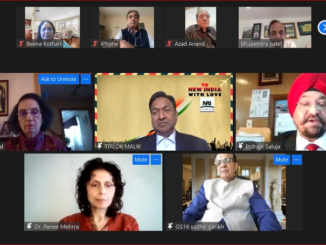
    NEW YORK (TIP): The Indian Panorama and the Indian American Forum, on October 17, hosted a panel discussion, virtually on Zoom, on the Emmy-nominated Indian-American filmmaker Tirlok Malik’s new short film ‘To New India with Love,’ which was also screened on the occasion. The short film examines the subject of youth aspirations. ‘To New India with Love’ is a non-commercial venture, produced with a public-service spirit, appealing broadly to Indians worldwide. It is presented by Padma Shri Dr Sudhir Parikh. The screenplay and dialogues are written by Murtaza Ali Khan and Rakesh Zharotia is the film’s editor and assistant director.

    While beginning the proceedings for the day, Indu Jaiswal, Chairperson, Indian American Forum introduced the moderators and the panelists while welcoming the guests and underlining the agenda of the event. She congratulated Trilok Malik on the success of ‘To New India with Love’ which has been praised worldwide by audience and critics alike for his inspiring and empowering message to the youth of India.

    The panel discussion was moderated by Prof. Indrajit S. Saluja, Chief Editor, The Indian Panorama and Dr. Renee Mehrra, a celebrated TV anchor. While congratulating Tirlok Malik on his latest film, Prof. Saluja reflected upon the overwhelming love for India that each and every film of Malik oozes with. Dr. Mehrra praised the film’s message and its relevance. The panelists included Padma Shri Dr. Sudhir Parikh, Tirlok Malik, Dr. Azad Anand, Dr. Bhupi Patel, Dr. Urmilesh Arya, Shashi Malik, and Animesh Goenka. Each of them praised the film’s subject and its timely message. Sudhir Vaishnav, Neeta Bhasin, Anju Sharma, Lal Motwani, and Andy Bhatia who were also present on the occasion appreciated the film while sharing their views about Malik’s remarkable contribution as a filmmaker over the last three decades. Pam Kwatra, Jyoti Gupta, Chitranjan Sahay Belwariar, and Anurag Sharma were also present.

    Murtaza Ali Khan who wrote the film’s screenplay and dialogues also joined the discussion and gave his comment.

    Talking about his association with the film, Dr. Sudhir Parikh praised the film’s inspiring message. While highlighting the positive changes that have taken place in India over the last five decades, he reminded that the India of today is very different from when he first came to the US. He asserted that the Indian youth today has so many opportunities while touching upon the new initiatives of the present Indian government which have been instrumental in empowering the youth. Sharing the vision behind the film, Tirlok Malik said that the film aims to inspire the youth of India to not give up on their dreams. Even if someone doesn’t have the means to realize his/her dreams, he/she can achieve success through their hard work and determination. My film ‘To New India with Love’ is an inspiring and motivational film that gives a message of hope to the youth to pursue their dreams.

    Tirlok Malik is best known for making films about Indian immigrants in the US, starting with his pioneering work, ‘Lonely in America,’ which was shown in 74 countries and as well as on HBO and participated in 37 film festivals, winning several awards. He subsequently made films such as ‘Love Lust and Marriage,’ ‘Khushiyaan,’ and ‘On Golden Years’. He has also acted in films like ‘Dr. Babasaheb Ambedkar,’ ‘Lajja,’ ‘Vettaiyaadu Vilaiyaadu,’ ‘Ta Ra Rum Pum,’ ‘Sivaji: The Boss,’ and ‘Mehbooba,’ among others.

  • Aryan’s case does not fit the bill for denial of bail  

    Inordinately prolonging his custody is uncalled for

    A special NDPS court had on Wednesday, October 20,  denied bail to Aryan, noting that his WhatsApp chats prima facie revealed that he was ‘dealing in illicit drug activities on a regular basis’ and therefore ‘it cannot be said that he is not likely to commit a similar offence if released on bail’.

    Arrested by the Narcotics Control Bureau (NCB) in a drugs case on October 3, movie star Shah Rukh Khan’s son Aryan Khan will have to wait till early next week for the hearing of his bail application in the Bombay High Court. A special NDPS court had on Wednesday denied bail to Aryan, noting that his WhatsApp chats prima facie revealed that he was ‘dealing in illicit drug activities on a regular basis’ and therefore ‘it cannot be said that he is not likely to commit a similar offence if released on bail’. Section 37 of the NDPS Act has the provision for bail, provided there are reasonable grounds to believe that the accused is not guilty of the offence in question and that he is not likely to commit any crime while on bail. The all-important term, ‘reasonable grounds’, seems to have been interpreted in a disproportionately harsh manner in Aryan’s case. As of now, the NCB appears to be banking solely on the WhatsApp chats as evidence against him.

    It had taken film actor Rhea Chakraborty a month to get bail in a drugs case allegedly linked to Sushant Singh Rajput’s death last year. The High Court had imposed stringent conditions while ordering her release: she was told to surrender her passport to the investigating officer; she could leave the jurisdiction of the special NDPS court in Mumbai only after submitting her itinerary; and she had to report to the NCB office on the first Monday of every month for six months. It’s reasonable to argue that Aryan can be set free with similar riders. If he thumbs his nose at the rule book, his bail can obviously be cancelled.

    Bail, not jail — this basic rule of legal proceedings was set forth in the Supreme Court’s landmark judgment in State of Rajasthan vs Balchand (1977). The order had also cited exceptions to the rule: cases ‘where there are circumstances suggestive of fleeing from justice or thwarting the course of justice or creating other troubles in the shape of repeating offences…’ Aryan’s case does not fit the bill for denial of bail.

    (Tribune, India)

  • The fading patriarch: On Congress and Amarinder Singh

    The Congress has set in motion a series of events in Punjab that it can no longer control

    Former Punjab Chief Minister Amarinder Singh has announced plans to launch a new political outfit and explore an arrangement with the BJP, ahead of next year’s Assembly election in the State. The BJP is warming up to the idea. The proposed new party and its partnership with the BJP is an act of expediency and opportunism of high order by both sides. The Congress had forced Mr. Singh to quit as the Chief Minister in September, bringing an abrupt end to his role at the helm of party affairs in the State. The reasons for his removal were not just, but his decision to quit the party that he has been associated with for four decades says something unflattering about Mr. Singh. That he could think of joining hands with the BJP without batting an eyelid also shows that there is little more than a sense of entitlement in his politics. The Captain has been a central character in Congress politics, particularly in the years following the rise of the BJP in 2014. He led the party to victory in Punjab in 2017, and in 2019, the Congress’s performance in the Lok Sabha polls in the State was outstanding. After all that, Mr. Singh has chosen to cap his long political career by sleeping with the enemy.

    The BJP is a marginal player in Punjab, and the ongoing controversy over three farm laws has further alienated it from the entrenched farming communities in the State. The debate on the merits of the farm laws apart, the BJP also questioned the patriotism of the protestors. The party is now hoping for an outreach to the Sikh farmers through a partnership with the Captain. Whether it can offer any compromise that the farmers might find palatable remains to be seen. The Congress high command cannot absolve itself of the mess in the State. It decided to unsettle its own government for no apparent reason, and elevated a turncoat to lead its State unit. The party appointed a Dalit Sikh as Chief Minister in place of Mr. Singh, which is a bold experiment that is fraught with fresh problems. If it can mobilize public opinion in favor of its social justice politics, the Congress can remain in the reckoning. The Akali Dal, having parted with its long-term ally, the BJP, is now hoping to gain from the confusion arising out of the crisis in the Congress. The Congress has set in motion a series of events that it is no longer in control of. It also appears incapable of recalibrating its strategy for the State. With an untested Chief Minister and a conceited party chief in command, the party finds itself in an unenviable position in Punjab. The desertion by Mr. Singh makes its prospects considerably worse. While it might be too late to keep the former Chief Minister in the fold, the least the Congress high command can do is to strengthen the hands of Chief Minister Charanjit Singh Channi and not give the impression that he is keeping the seat warm for the maverick Punjab unit chief of the party, Navjot Singh Sidhu.

    (The Hindu)

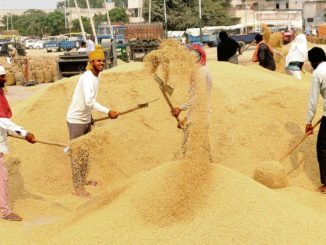
  • Farmers need assured price for sustenance

    Farmers need assured price for sustenance

    By Devinder Sharma

    “There is enough evidence to show how free markets have devastated farming across the globe. This has to change. It can only happen when we begin to treat farmers not simply as the primary producer but also as wealth creators and ensure their contribution in wealth generation is adequately compensated. To sustain billions of farm livelihoods across the globe, and to celebrate the role farmers play in wealth creation, a beginning has to be made by guaranteeing an assured and profitable price for farmers.”

    Though India is the second largest producer in the world of essential foods like wheat, rice, fruits, vegetables and crops like cotton and groundnut and the largest producer of milk, jute and pulses, the long strides taken by the farmers, however, have not translated into higher incomes. Growth, in this case, has not led to prosperity on the farm. The invisible hand that Adam Smith talked about has actually failed to provide living incomes for farmers, not only in India, but across the globe.

    We all know it by now. Agriculture was the savior during the gloomy days of the pandemic. Not only that, an individual household got its regular supply of food during the lockdown, and those who could not afford were supplied with free rations, but agriculture also kept the wheels of economy moving. At a time when the economy had slipped by 23.9 per cent in the first quarter of the 2020 financial year, agriculture was the only bright spot, registering a gross value added (GVA) growth of 3.4 per cent. All through the year, agriculture provided a solid foundation. Despite the Covid-19 disruptions, and at a time when all other sectors of the economy were struggling, desperately counting the emerging green shoots, the country achieved a record foodgrain production of 308.65 million tons. The bumper harvest reaped in 2020-21 was higher by 11.15 million tons over what was achieved in the previous year. In addition, the country also produced 329.9 million tons of fruits, vegetables and aromatic and plantation crops, including spices: around 204 million tons of milk, and 36.10 million tons of oilseeds.

    Simply put, farmers produced economic wealth for the country. Not only during the pandemic, but what needs to be appreciated is that year after year, farmers have toiled hard to bring food to our table. From a stage when India was living in a ‘ship-to-mouth’ existence, and that was not too far distant in the mid-1960s, the role Indian farmers have played in turning the country self-sufficient in food is widely recognized. Agriculture has taken a quantum jump, increasing food production six times in seven decades, between 1950-51 and 2020-21.

    A vibrant agriculture is what sustains a growing economy. But to believe that economic growth alone can address issues of hunger and malnutrition is nothing short of delusion. As the UN Food and Agriculture Organization (FAO) itself acknowledges that ‘economic growth is necessary but not sufficient to accelerate reduction in hunger and malnutrition’, a study published in the scientific journal The Lancet shows a reduction in malnutrition by a maximum of 6 per cent even if the economic growth soars by 10 per cent. On the contrary, a well-fed nation builds up an efficient and productive manpower which is required to attain a higher economic growth.

    Since 1950-51, if measured in terms of population growth, four times more Indians have been added. From 359 million in 1950-51, the country’s population has multiplied roughly four times to 1.4 billion. Agriculture not only kept pace, defying the predictions of the Malthusian catastrophe, but has also produced an unmanageable surplus. Not only producing enough to feed the nation, the rise in the per capita availability of foodgrains, fruits, vegetables and milk also helped in meeting the challenges of malnutrition and hidden hunger. That hunger still persists in some parts of the country is not because of any shortfall in food production but is the outcome of the twin problems of access and distribution.

    If growth and prosperity are the central theme of Adam Smith’s seminal work, an inquiry into the nature and cause of the Wealth of Nations, it has to be accepted that the remarkable transition in Indian agriculture is what has essentially not only added but led to the wealth of the nation. Though India is the world’s second largest producer of essential foods like wheat, rice, fruits, vegetables and crops like cotton and groundnut and the largest producer of milk, jute and pulses, the long strides taken by the farmers to shatter all records, however, have not translated into higher incomes. Growth, in this case, has not led to prosperity on the farm.

    The invisible hand that Adam Smith talked about has actually failed to provide living incomes for farmers, not only in India, but across the globe. One doesn’t need to apply sophisticated economic models to find out how farm incomes have actually been squeezed over the years, and how free markets have sucked income from farmers. Instead, as the citation for this year’s Nobel Prize in Economics admits: “Conclusions about cause and effect can be drawn from natural experiments.” Agreeing, I feel there is no need for economists to hold econometrics studies when conclusions can be drawn easily from the available evidences.

    The FAO has estimated India’s gross value of crop production in 2018 (report released in March 2021) at

    $289,802,032 million, and that of gross food production at $400,722,025 million. When it comes to the gross value of agricultural production at current prices, India stands second in the world, next to China, with a gross value of $418,541,343 million. Now before you get lost in the maze of production statistics, what is important to ascertain here is the enormous economic wealth that farmers produce and eventually what the agriculture sector generates. In other words, farmers too are wealth creators.

    It, therefore, requires a change in economic thinking, which has traditionally banked on the assumption that only businesses — small and big — are wealth creators. The obscene wealth inequality that prevails is the result of this outdated economic thinking. Otherwise, I see no reason why at a time when the gross value of agricultural production since 1999 has grown at an average annual rate of 8.25 per cent, farmers should be at the bottom of the ladder. In America, the share of a farmer in every food dollar in 2018 has plummeted to just eight per cent. In India, the latest Situation Assessment Survey for agricultural households computes income from crop cultivation at only Rs 27 per day.

    There is enough evidence to show how free markets have devastated farming across the globe. This has to change. It can only happen when we begin to treat farmers not simply as the primary producer but also as wealth creators and ensure their contribution in wealth generationis adequately compensated. To sustain billions of farm livelihoods across the globe, and to celebrate the role farmers play in wealth creation, a beginning has to be made by guaranteeing an assured and profitable price for farmers.

    (The author is a food &agriculture specialist)

  • In the cross hairs, civilians and Kashmiri harmony

    In the cross hairs, civilians and Kashmiri harmony

    By Radha Kumar

    “The Kashmiri Pandit tragedy has continued for 30 years now, and like all compounded tragedies requires a range of actions, from security to justice to reconciliation. Beginning with security, which is the first requirement to enable justice and reconciliation to follow, it is a mistake to imagine that gated enclaves alone will provide it, or even that stepped-up counter-insurgency operations will minimize the risk. Each measure is useful if accompanied by community support, but neither is a solution to the security dilemma by itself.”

    Over the past two weeks, more than 11 civilians and nine Army troops have been killed by militants in the Kashmir Valley. Most of the targeted civilians have been Hindus, though there have also been Muslims, and a Sikh. The Hindus killed include Kashmiri Pandits and migrant labor.

    Wave of fear, insecurity : The immediate reaction to these killings has been a flight of Pandits who had returned to the Valley under the 2006 Prime Minister’s programme for the return and rehabilitation of migrants, which offered jobs in the Valley to Pandit teachers. Pandit organizations say that as many as a third of the returnees have left; even those of the 800 families that stayed through the insurgency years have begun to leave. Though Kashmiri political parties and civil society, as well as Lieutenant-Governor Manoj Sinha’s administration, have pleaded with them to stay, their pleas are unconvincing given the very real insecurity created by the killings.

    The plight of migrant labor is equally grave. Most are attempting to leave the Valley and return to their home States. The administration has ordered that those who are not able to immediately return be sheltered in police stations and guarded camps. In other words, like refugees. Whether they will then be aided to return to their homes remains to be seen; likely they will.

    These two groups are not alone in wishing to flee. A fresh wave of fear has gripped the Valley, with most residents fearing they may be caught between the militants and the administration. Allegedly, over 700 people have been taken into detention by the police, under suspicion of supporting militancy. Meantime, according to intelligence agencies, potential militant targets include religious leaders, punches and the media.

    It was widely anticipated that Pakistani armed groups would be emboldened to revive cross-border infiltration following the Taliban’s takeover in Afghanistan. Now it seems that their strategy repeats elements of the insurgency of the 1990s. As happened then, the insurgency was prefigured by attacks on Pandits who were seen by Islamist militants as an arm of India because they were Hindus, and Muslims who worked in the State administration or central Indian agencies such as Door darshan.

    Attacks and the aim : The attacks were intended to both communalize the Valley and paralyze its administration, and over time succeeded in doing so, albeit only partially. The Prime Minister Atal Bihari Vajpayee’s ceasefire negotiations with cross-border armed groups in 2000 were shattered by the killing of over 100 Bihari laborers, but the years of peace building that followed, from 2002-2014, restored a large degree of administration and created conditions for the return of Pandits — sadly at far too gradual a pace — and of migrant labor.

    Whether cross-border and local militant groups succeed in once again communalizing the Valley is debatable. Much depends on the policy the Union administration adopts in response.

    There are two quite separate issues involved: one, reassuring the minorities in Kashmir as well as the wider public of the Valley; two, a rethink on counter-insurgency strategy, including its cross-border tentacles.

    Some reassurance : Hearteningly, every single opinion group in Kashmir has condemned the killings. Mosques have broadcast their criticism. Kashmiri political parties have voiced their opposition to such militancy, as have political leaders, including the Hurriyat and Mirwaiz Umar Farooq. Civil society groups have issued statements of protest. Local community leaders and neighbors have visited Pandit homes to offer aid and support. This wave at the ground level can provide a strong base for reassurance, if encouraged.

    Encouragement can begin with the Lieutenant-Governor. Thus far, Mr. Sinha’s administration does not appear to have consulted either the Kashmiri Pandit organizations, or the various groups that have condemned the killings, on which steps can be taken to restore a degree of confidence. This is surprising, given that these groups, added together, comprise a formidable cross-section of public opinion, and with their support, militancy can once again be socially marginalized, as it was during the peace-building years. From available information, it appears that the bulk of the recent civilian killings have been carried out by what the Army calls ‘hybrid militants’, because they are locally recruited and trained, have regular jobs and are part-time militants using basic weapons such as country pistols. The implications are that the field of militancy has grown more dispersed, with wider public support, despite counter-insurgency successes in degrading large armed groups such as the Lashkar-e-Taiba and the Jaish-e-Mohamed. In this context, any opportunity to marginalize militancy is vital.

    Setback for Kashmiri Pandits : Many have begun asking whether Kashmiri Pandits will ever be able to return to the Valley, as the Narendra Modi administration had promised in August 2019. There is no doubt that the recent civilian killings have been a major setback to prospects of return. It is also the case that Kashmiri Pandit organizations have increasingly complained of administrative neglect on returns over the past year. A recurring point that is made by some of them is that the administration, while focusing on returns, needs to simultaneously pay attention to securing Pandit families that never left. Their condition has worsened as their numbers have shrunk; though less covered by the media, the same problem has begun to affect the Sikh minority too, whose numbers have shrunk over the past decade-plus.

    The Kashmiri Pandit tragedy has continued for 30 years now, and like all compounded tragedies requires a range of actions, from security to justice to reconciliation. Beginning with security, which is the first requirement to enable justice and reconciliation to follow, it is a mistake to imagine that gated enclaves alone will provide it, or even that stepped-up counter-insurgency operations will minimize the risk. Each measure is useful if accompanied by community support, but neither is a solution to the security dilemma by itself. True, targeted killings will only cease when insurgency does. But peace-making combined with counter-insurgency has proved more efficient in ending insurgency in democratic countries than counter-insurgency alone, in our own experience as well as across the world. Thus far, the Union administration has not held out any olive branches; on the contrary, its implementation of the August 2019 decisions has added one cause for resentment after another, the latest being the multiple use of Article 311(2) to dismiss government employees without an enquiry or hearing. A policy for Pandit property recovery that had not been thought through did not help either; apparently it has now been corrected. Political science and sociology both tell us that an insecure majority is unlikely to protect vulnerable minorities; it is focused on its own survival. The arrest of over 700 people in the aftermath of the recent civilian killings has added to the majority’s sense of insecurity, because it raises questions about why police intelligence has not narrowed the field of suspects as should, surely, be professionally required.

    Approach to Pakistan : The Narendra Modi administration appears to have adopted a multi-pronged approach to Pakistan recently, beginning with a ceasefire and extending to an invitation to the Pakistani National Security Adviser for a regional meeting on Afghanistan, while giving the Army a free hand on cross-border infiltration. Why then is it not adopting a similarly multi-pronged approach in the Valley, where civil and human rights remain severely restricted and the administration lacks the transparency that oversight and grievance-redress commissions provided? Without overall civil and human rights, how can minority rights be protected or minority returns be encouraged?

    (The author is a writer and policy analyst)

  • Chinks in Yogi’s armor ahead of UP polls

    Chinks in Yogi’s armor ahead of UP polls

    By Arati R Jerath

    “For three consecutive elections since 2014, the BJP has managed to prove that Muslims can be made irrelevant to UP’s electoral paradigm if Hindus rise above caste differences and vote as a bloc. It stitched together a formidable coalition of Hindu social groups consisting of upper castes, non-Yadav backward castes and non-Jatav Dalits to win sweeping victories in the Lok Sabha polls of 2014 and 2019 and the Assembly polls of 2017.”

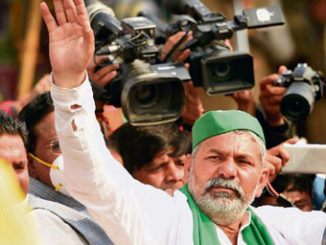
    Rakesh Tikait, who hails from Muzaffarnagar and is the son of the late founder of the BKU, Mahendra Singh Tikait, is at the forefront of the farmers’ agitation. He has managed to mend fences between his community and the Muslims of western UP and in panchayat after mahapanchayat, farmers have vowed to defeat the BJP in 2022.

    If there were any doubts about the BJP strategy for next year’s UP Assembly polls, RSS chief Mohan Bhagwat cleared the air in his annual Dasehra address. He set the stage for a polarized campaign by stoking Hindu insecurities about the minorities and flagging communally sensitive issues. He highlighted two measures which are likely to form prominent themes of the ground-level campaign. One is the compilation of a national register of citizens. The other is a population control law, which is already in circulation in UP in the form of a draft Bill. Bhagwat said that both are necessary to check the “vast differences in growth rates of different religious groups, infiltration and conversion resulting in religious imbalance of the population ratio, especially in border areas.”

    These are dog whistles to unite Hindus by invoking fears of being outnumbered by “others”. In the context of UP, the “others” are Muslims who constitute an estimated 19.3 per cent of the state population and can influence the electoral outcomes in roughly 130 of the 403 Assembly constituencies. It is hardly surprising that Bhagwat used his Dasehra address for a political speech, laying out a majoritarian agenda for the UP polls. A tough battle lies ahead, with the BJP fighting to win a second term amid widespread public disaffection which has given rise to fears that its carefully crafted rainbow caste coalition is unravelling.Yet, it’s an election the BJP must win at all costs, not just because of UP’s clout in terms of the Lok Sabha numbers but also because the Sangh Parivar hopes to replicate its successful Hindutva experiment in Gujarat in this populous heartland state which is home to important Islamic centers of theology and has large, concentrated pockets of Muslims.

    For three consecutive elections since 2014, the BJP has managed to prove that Muslims can be made irrelevant to UP’s electoral paradigm if Hindus rise above caste differences and vote as a bloc. It stitched together a formidable coalition of Hindu social groups consisting of upper castes, non-Yadav backward castes and non-Jatav Dalits to win sweeping victories in the Lok Sabha polls of 2014 and 2019 and the Assembly polls of 2017.

    Much water has flowed under the bridge since 2019, giving rise to deepening concern that this winning Hindu alliance may be coming apart as the 2022 polls approach. Four groups are a major source of worry for the BJP-RSS. One is the lower backward castes. They were a new catch in 2014 and have been a pillar of the BJP’s support base in UP since. Today, they seem to be drifting away for a variety of reasons. For instance, this section has been the worst affected by the increasing joblessness in a Covid-afflicted listless economy. It has also been hit the hardest by the pandemic which raged through UP villages that were ill equipped to handle medical emergencies.

    Pictures of bodies being washed up on the banks of the Ganga during the second wave continue to haunt as do photographs of mass cremations in open fields and on city pavements because overflowing crematoriums were hard pressed to offer a dignified farewell to the dead. A second worry is the Jats whose unstinted support since the 2013 communal violence in Muzaffarnagar has ensured the BJP’s domination of western UP. This support appears to be wavering because of the controversial farm laws. Rakesh Tikait, who hails from Muzaffarnagar and is the son of the late founder of the Bharatiya Kisan Union, Mahendra Singh Tikait, is at the forefront of the farmers’ agitation. He has managed to mend fences between his community and the Muslims of western UP and in panchayat after mahapanchayat, farmers have vowed to defeat the BJP in 2022.

    The recent tragedy at Lakhimpur Kheri, where four Jat Sikh farmers were mowed down by a vehicle belonging to union minister Ajay Mishra’s son has only heightened tensions between the farming community and the BJP.

    The alienation of non-Jatav Dalit groups is a third factor to contend with. Communities like the Passis and Koris have been committed voters, but there are signs that they too are doing a rethink because of a spurt in clashes and tensions between Scheduled Caste groups and UP Chief Minister Yogi Adityanath’s Thakur clan.

    In fact, the Yogi administration is seen as a return to Thakurvad. A Thakur-packed police force running riot in the state amid frequent reports of fake encounters and harassment of ordinary businessmen has served to reaffirm this perception. And, Yogi has done little to dispel it by continuing to protect Thakur police officers accused of various misdeeds. From this flows the fourth reason for anxiety: a perceptible disenchantment among Brahmins who have been core supporters of the BJP ever since the Ram Janmabhoomi movement was launched in the late 1980s. Although community members still dominate the administration, the free run given to a police force dominated by Thakurs has upset Brahmins used to controlling all the levers of power.

    The clouds darkening the electoral landscape leave the BJP with little choice but to follow Bhagwat’s prescription for a polarized campaign. The writing was on the wall when Yogi Adityanath won the tussle with the Modi-Shah duo some months ago and stayed on as UP CM. It is no secret that the top brass in Delhi wanted him out, or at least have his wings clipped by the induction of a former bureaucrat loyal to Modi.

    Yogi triumphed thanks to the backing of the RSS which had decided as early as then that Hindutva would form the main campaign plank in UP. And who better to do the job than a saffron-clad monk whose claim to being a Hindu icon almost rivals that of Modi?

    It is significant that after Bhagwat’s prod, Modi wove Hindu imagery into his speech at Kushinagar while inaugurating the first international airport in the region. The Opposition will have to think out of the box to counter what promises to be a high-pitched divisive campaign.

    (The author is a Political Commentator)

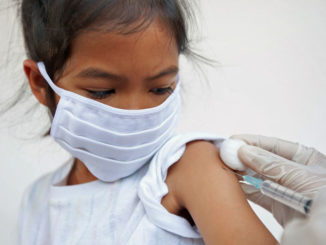
  • Federal Regulators Say Benefits Outweigh Key Risks in Vaccine for 5- to 11-Year-Olds

    Federal Regulators Say Benefits Outweigh Key Risks in Vaccine for 5- to 11-Year-Olds

    WASHINGTON (TIP): Federal regulators weighed in for the first time Friday on the safety and efficacy of a coronavirus vaccine for children 5 to 11, saying that the benefits of staving off Covid-19 with the Pfizer-BioNTech vaccine outweigh the risks of side effects in the age group, New York Times reported.

    The analysis came on the same day that Pfizer posted data showing that the vaccine had a 90.7 percent efficacy rate in preventing symptomatic Covid-19 in a clinical trial of 5- to 11-year-olds.

    The findings could add momentum for F.D.A. authorization of the pediatric dose on an emergency basis, perhaps as early as next week, opening up a long-awaited new phase of the nation’s vaccination campaign. The agency’s independent vaccine expert committee is set to vote Tuesday on whether to recommend authorization.

    In a briefing document posted on the F.D.A. website, the agency said it had balanced the dangers of hospitalization, death or other serious consequences from Covid-19 against the risk of side effects. That included myocarditis, a rare condition involving inflammation of the heart muscle that has been linked to the Pfizer-BioNTech and Moderna vaccines, especially among young men. “The overall analysis predicted that the numbers of clinically significant Covid-19-related outcomes prevented would clearly outweigh the numbers of vaccine-associated excess myocarditis cases,” regulators wrote. As is customary, the regulators took no stance on whether the new use of a vaccine should be authorized. If the F.D.A. rules in favor of authorization and the Centers for Disease Control and Prevention and its own panel of vaccine experts agree, the 28 million children in that age group could become eligible for shots in the first week of November. “There’s a lot of data to be encouraged by,” said Dr. Kathryn M. Edwards, a professor of pediatrics in the division of infectious diseases at Vanderbilt University School of Medicine. She said the results exceeded the protection offered by the best flu vaccine and could eventually lead to the easing of restrictions intended to prevent elementary school children from contracting the virus.

  • October 22 New York & Dallas E – Edition

    [vc_row][vc_column][vc_column_text]

    Edition

    [/vc_column_text][/vc_column][/vc_row][vc_row][vc_column width=”2/3″][vc_custom_heading text=”Dual Edition” font_container=”tag:h2|text_align:center” google_fonts=”font_family:Istok%20Web%3Aregular%2Citalic%2C700%2C700italic|font_style:700%20bold%20regular%3A700%3Anormal” link=”url:https%3A%2F%2Fwww.theindianpanorama.news%2Fwp-content%2Fuploads%2F2021%2F10%2FTIP-October-22-Dual-Edition.pdf|||”][vc_single_image image=”115872″ img_size=”full” add_caption=”yes” alignment=”center” onclick=”custom_link” link=”https://www.theindianpanorama.news/wp-content/uploads/2021/10/TIP-October-22-Dual-Edition.pdf”][/vc_column][vc_column width=”1/3″][vc_single_image image=”82828″ img_size=”medium” alignment=”center” onclick=”custom_link” link=”https://www.theindianpanorama.news/advertising-media-kit-portal-indian-panorama/”][/vc_column][/vc_row]

  • Trump announces launch of media company, social media site

    Trump announces launch of media company, social media site

    NEW YORK (TIP): Nine months after being expelled from social media for his role in inciting the January 6 Capitol insurrection, former President Donald Trump said on Wednesday, October 20, he’s launching a new media company with its own social media platform. Trump says his goal in launching the Trump Media & Technology Group and its ‘TRUTH Social’ app is to create a rival to the Big Tech companies that have shut him out and denied him the megaphone that was paramount to his national rise.

    “We live in a world where the Taliban has a huge presence on Twitter, yet your favorite American President has been silenced,” he said in a statement. “This is unacceptable.” In a release, the new venture announced it had been created through a merger with Digital World Acquisition Corp and said it seeks to become a publicly listed company.

    Trump has spoken about launching his own social media site ever since he was barred from Twitter and Facebook. An earlier effort to launch a blog on his existing website was abandoned after the page drew dismal views.

    In addition to the app, which is expected to soft-launch next month, with a nationwide rollout early next year, the company says it is planning a video-on-demand service that will feature entertainment programming, news and podcasts.

    (Agencies)

  • Indo-US relationship based on trust which is increasing: Ambassador Sandhu

    Indo-US relationship based on trust which is increasing: Ambassador Sandhu

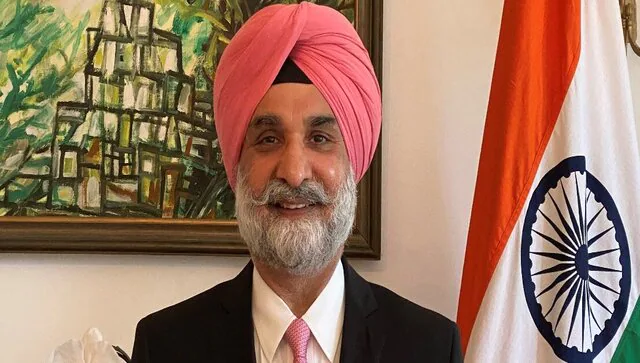
    WASHINGTON (TIP): India’s Ambassador to the US Taranjit Singh Sandhu has said that there is a very strong base between the Indo-US relationship which is of trust and that is increasing.

    Sandhu, during a reception he hosted at the India House for senior Congressional staffers, said that India and America not only have strong strategic and defense relations, but also a deep relationship in healthcare and pharma. “And that is going to deepen,” he said on Thursday, October 21.

    “Today, there is a very strong base between our bilateral relationship and that base is of trust. And that trust is increasing. And that’s very important in the number of partnerships which we share,” said Sandhu, who has been making special efforts with his Congressional outreach.

    As close aides of lawmakers both in the House and the Senate, Congressional staffers, a number of whom are of Indian-origin, play a key role in shaping the policies and legislative agenda of the US Congress.

    Many of them in the years to come climb up the ladder to even serve in presidential administration.

    India, Sandhu asserted, plays a significant role in affordable healthcare, affordable medicines and vaccines.

    “I’ll just give you one example. Six years ago, both the US and India collaborated for a vaccine. We partnered in bulk production of a vaccine for another virus called RotaVirus. That collaboration got the cost of a single dose down from USD 60 to USD 1. That is the kind of depth that is there,” he said.

    Reiterating that there is a huge potential between India and the US in the healthcare sector, Sandhu also referred to the cooperation in energy, climate change and renewables. Knowledge partnership and education sector is another key area of collaboration between the two countries, he said.

    “I know that all of you are involved in some way or another in our bilateral relationship. I’m only going to quote what President (Joe) Biden said in 2006 that this is going to be one of the most important bilateral relations. In fact, he said, the most important. I have only added one of the most important,” Sandhu said in his address to the senior Congressional staffers. As part of his engagement with Congress, a day earlier, the ambassador hosted the leadership of the Indian Caucus at India House.

    “Discussed deepening India-US relations incl, recent bilateral & QUAD Summits. Appreciate their strong support for India United States partnership (sic),” Sandhu said in a tweet.

    He had another “engaging conversation” at the US Capitol with Congressman Jason Crow, a member of the House Armed Services Committee on the multifaceted India-US relations, including in vaccines, climate change and emerging technologies. “Also discussed Quad partnership and other regional developments,” Sandhu said.

    The ambassador also had a substantive discussion with Senator Ben Ray Lujan on India-US partnership in health and vaccines; climate change and clean energy; education and research; Quad and deepening people-to-people ties.

    (Source: PTI)

  • ‘U.K.-India ties vital in coming decades’: U.K. Foreign Secretary Elizabeth Truss

    ‘U.K.-India ties vital in coming decades’: U.K. Foreign Secretary Elizabeth Truss

    NEW DELHI (TIP): Relation between the United Kingdom and India is vital over the coming decades, U.K. Foreign Secretary Elizabeth Truss said here on Friday, October 23. Ms. Truss who is on a three-day visit to India met External Affairs Minister S. Jaishankar and is scheduled to be a special guest at a ceremony to mark the visit of the U.K. Carrier Strike Group in Mumbai. “India is our great friend, an economic powerhouse and the world’s largest democracy. Our relationship will be vital over the coming decades,” said Ms. Truss after meeting Mr. Jaishankar where the two discussed closer collaboration. Ms. Truss said her visit will boost the partnership and pointed out technology and infrastructure, security and defense, and “building back after COVID” as the areas of collaboration between the two sides. “You are a fellow democracy; you believe in free enterprise and you believe in freedom. I think it’s very important that countries like ours work together on our shared plans for the future,” said Ms. Truss in her opening remarks in the meeting with Mr. Jaishankar.

    Ms. Truss and Mr. Jaishankar “welcomed the progress in delivering the Enhanced Trade Partnership” that was announced at the India-U.K. virtual summit held on May 4, said the Ministry of External Affairs in a statement after Friday’s meeting. Both ministers agreed on the need for launching FTA negotiations “at the earliest, with a focus on negotiating an interim agreement that can deliver quick gains to businesses in both India and the U.K.”.

    Ms. Truss’ visit comes in the backdrop of developments in Afghanistan after the departure of the U.S. and U.K. troops. There is a vocal section within the government of Prime Minister Boris Johnson that believes that the people of Afghanistan should not made to suffer while the world waits on the Taliban build an inclusive government in Kabul. “On Afghanistan, the need for full, safe and unhindered access for humanitarian assistance was discussed as also the need for Afghan territory not be used to threaten or attack any country or to shelter or train terrorists, or to plan or to finance terrorist attacks,” declared the press release issued by the MEA after the two ministers met.

    The visit provides an opportunity to both sides to lay the ground for the upcoming visit of Prime Minister Narendra Modi to Glasgow to attend the global climate summit.

    The Hindu reported earlier that PM Modi will travel to Glasgow on October 31. The COP26 summit has already drawn considerable attention as it will help create a blueprint of global climate action. The summit has also revealed deep divisions in the global community as Russia’s President Vladimir Putin and Chinese President Xi Jinping are not expected to attend it.

    The visit also marks a renewed focus of the U.K. on the Indo-Pacific region which is expected to receive greater maritime attention of London in the coming years.

    (Source: The Hindu)

  • PM Modi to visit Italy for G20: Focus on bilateral ties

    PM Modi to visit Italy for G20: Focus on bilateral ties

    NEW DELHI (TIP): Prime Minister Narendra Modi will visit Italy on October 30-31 for the G20 summit and, immediately later, he will visit the UK for the COP26 climate summit. The G20 summit to be held in Rome will be the first in-person meeting of this economic group ever since the pandemic broke out. The summit is important for India because it will join the new troika — the past, present and future chairs of the G20 summit. After Italy, Indonesia will organize the G20 summit and after that India will host the summit meeting of this group. Modi will attend several bilaterals but one meeting that is yet undecided is an audience with Pope Francis.