Month: October 2021

  • BJP Candidate with five members in family gets only one vote in Tamil Nadu local body polls

    BJP Candidate with five members in family gets only one vote in Tamil Nadu local body polls

    The local body polls in the state were held on October 6 and 9.  In all, 79,433 candidates had contested the polls for 27,003 posts

    ‘Chennai (TIP): In the recently held local body poll in Tamil Nadu, BJP candidate D Karthik secured only one vote, despite having five members in the family. He had contested for the post of a ward member in Periyanaickenpalayam union in Coimbatore district. His candidature became a mockery with the incident and the news spread through the media and went viral with #Single_Vote_BJP which went trending on Twitter.

    Writer and activist Meena Kandasamy tweeted saying, “BJP candidate gets only one vote in local body elections. Proud of the four other voters in his household who decided to vote for others.”

    One Ashok Kumar of INC noted, “Five members are his family and this BJP candidate who contested for ward member post got one single vote in Coimbatore!” This is how Tamil Nadu handles BJP. “Out Of Five members Of his Family, The BJP Candidate Could Secure Only Single Vote,” tweeted one Imman.

    The local body polls in the state were held on October 6 and 9.  In all, 79,433 candidates had contested the polls for 27,003 posts. Karthik heavily campaigned for the polls with his posters consisting of primary faces of the Central leadership like PM Modi and Home Minister Amit Shah, yet he could only secure one vote.

    Source: India TV

  • SIT takes Union Minister’s son, 3 others to recreate sequence of events

    SIT takes Union Minister’s son, 3 others to recreate sequence of events

    Lakhimpur Kheri (TIP): The SIT probing the Lakhimpur Kheri violence on Thursday, Oct 14,  took Union Minister Ajay Mishra’s son and three others arrested in the case to recreate the sequence of events leading to the incident in Uttar Pradesh’s Tikonia village.

    Amid tight security, the accused were taken to the site of the incident on the Tikonia-Banbirpur road, around 60 km from district headquarters Lakhimpur city, police said.

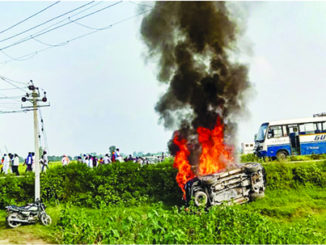
    Eight people died in the October 3 violence and of them, four were farmers, allegedly knocked down by a vehicle carrying BJP workers.

    Infuriated farmers then allegedly lynched some people in the vehicles. The other dead included two BJP workers and their driver. In the incident, a journalist was also killed.

    Farmers claimed that Union Minister Ajay Mishra’s son Ashish Mishra was in one of the vehicles, an allegation denied by him and his father who say they can produce evidence to prove he was at an event at that time.

    Ashish Mishra ‘Monu’ was arrested in the case on October 9 after 12 hours of questioning, and a court has accepted his police custody from October 12 to October 15.

    The other three — Shekhar Bharti was arrested on October 12, and Ankit Das and Latif alias Kale were arrested on October 13.

    Das, Latif and Bharti are in police custody from October 14 to October 17.

    On Thursday, investigators reached the district jail premises in the morning to take Das, Latif and Bharti into police custody.

    The trio were taken to the crime branch’s office at the Reserve Police Lines, which is near the district jail where main accused Ashish Mishra is lodged.

    They were taken to Tikonia village by the special investigation team (SIT) amid heavy security for further investigations, police said.          Source: PTI

  • JCO among 2 Army personnel killed in encounter with terrorists in J-K

    Two Army personnel, including a junior commissioned officer (JCO), were killed in an encounter with terrorists in Jammu and Kashmir’s Poonch district, officials said on Friday, October 14.

    According to a defence spokesperson, the JCO and a jawan were critically injured during a counter-terrorist operation in the Nar Khas forest area in Mendhar sub-division on Thursday evening. Both of them succumbed to their injuries subsequently.

    The operation is going on, he added. While the body of the jawan has been retrieved, that of the JCO is yet to be retrieved from the area, the spokesperson said.

    Efforts are on to retrieve the body, he said, adding that the area is mountainous and the forest is dense, which makes the operation difficult and dangerous.

    Jammu and Kashmir Police said terrorists involved in a recent attack on security forces in Poonch, in which five Army personnel, including a JCO, were killed, were present in the area for the last two to three months.

    Deputy Inspector General of Police (DIG) Rajouri-Poonch range Vivek Gupta told reporters that the terrorists had been confined to a particular area.

    “The group has been present in the area for two to three months,” he said.

    Several counter-terrorist operations and encounters have taken place in the twin border districts of Rajouri and Poonch this year.             Source: PTI

  • Rajasthan woman spends day as British envoy in Delhi

    Rajasthan woman spends day as British envoy in Delhi

    Jaipur (TIP): Twenty-year-old Aditi Maheshwari from Rajasthan has spent a full day leading the British High Commission in New Delhi after winning a competition.

    Aditi, who aspires to join the Indian Administrative Service, is the fifth winner of the India edition of the ‘High Commissioner for a Day’ competition, organised annually since 2017 to celebrate the International Day of the Girl Child on October 11, according to a British High Commission release.

    Hailing from Chittorgarh, Aditi is currently studying a Bachelor’s programme from Miranda House College of Delhi University and experienced the working of the British High Commission.

    As the UK’s top diplomat in India, Aditi experienced a broad variety of diplomatic activity. She observed the India-UK Energy for Growth Dialogue alongside Ministers Raj Kumar Singh and Kwasi Kwarteng. She met with beneficiaries of a leadership programme for aspiring female politicians funded by the Chevening Alumni Programme Fund; climate experts from the Council on Energy, Environment and Water (CEEW), who signed the UK in India Pledge for Progress, to show their leadership in gender equality; and young leaders from the not-for-profit Global Youth. Aditi’s packed day also included a hands-on demonstration of the I-PACE – Jaguar’s zero emissions, all-electric performance SUV to be used by world leaders at the COP26 climate conference in Glasgow next month.

    Aditi Maheshwari, High Commissioner for the Day, tells :

    I had applied for the competition last year as well and I’m really pleased that I got the opportunity. The interaction with senior diplomats and with women from ‘She Leads’ leadership programme were the two personal highlights of the day for me. I also enjoyed being driven around in an electric vehicle by the High Commissioner. The amount of work that both the UK and India are doing to tackle issues like climate change and gender inequality made me really hopeful as a young woman. I will cherish this day for a long time to come.

    Alex Ellis, Deputy High Commissioner for the Day (on other days, High Commissioner to India), said, ” It was a pleasure for me to work with Aditi throughout the day. Her confidence and thoughtfulness on important issues like climate change and women’s rights shone through. The UK is working with India to provide a platform for young women like Aditi to help them reach their potential. I am pleased that so many young girls sent in their entries for this year’s competition which focussed on climate change. Women are disproportionately affected by climate change and are often left out of decision making on it. The UK is committed to hosting an inclusive COP26 that advances gender equality by calling on all countries to implement the Gender Action Plan agreed at COP25.

  • Not just UK, over 30 nations now recognize India’s Covid vaccine certificate

    Not just UK, over 30 nations now recognize India’s Covid vaccine certificate

    New Delhi (TIP): Apart from Britain, more than 30 countries across the world have now agreed to mutually recognise India’s Covid-19 vaccine certificate, according to officials familiar with the matter cited by the PTI news agency on Thursday. The countries that have agreed on this mutual recognition with India include France, Germany, Nepal, Belarus, Lebanon, Armenia, Ukraine, Belgium, Hungary, and Serbia, in addition to the United Kingdom.

    However, there are a few countries—including South Africa, Brazil, Bangladesh, Botswana, China, and some others in Europe—from where travellers will have to follow additional measures, in addition to the mandatory Covid-19 protocols when they arrive in India. These measures include a post-arrival Covid-19 test in the country and screening, according to the officials cited by the agency.

    Hungary and Serbia are the latest additions to the list of countries who agreed to mutually recognise India’s Covid-19 vaccination certificate, informed ministry of external affairs (MEA) spokesperson Arindam Bagchi last week. Bagchi said that the recognition of the vaccination certificates will cater to help people move across countries for education, business, tourism, and other things in the post-pandemic world.

    The development comes days after the UK government decided to remove the requirement of mandatory quarantine for vaccinated Indian passengers after India voiced its displeasure regarding the decision and imposed travel requirements on passengers from Britain in a tit-for-tat move. Soon after, Alex Ellis, British high commissioner to India, said in a tweet, “No quarantine for Indian travellers to the UK fully vaccinated with Covishield or another UK-approved vaccine from 11 October.”

    Meanwhile, India on Thursday, Oct 14,administered more than 27 lakh doses of Covid-19 vaccines; with this, the number of vaccine doses given so far across the country has crossed 97 crore. The Union ministry of health and family welfare also said that the daily vaccination numbers are expected to increase as the day-long final report is collected late at night.

    On Wednesday, as many as 27,62,523 doses of Covid-19 vaccines were administered across the country. The ministry underlined that the vaccination drive is a tool to protect the most vulnerable population groups in the country from Covid-19 and that the campaign is being regularly reviewed and monitored at the highest level.             Source: HT

  • India backs fresh WHO probe into Covid origin

    India on Thursday, Oct 14,  backed the World Health Organization’s (WHO) decision to create an expert group to examine the origins of new pathogens, including the coronavirus that causes Covid-19, and said all countries should cooperate with the probe. WHO chief Tedros Adhanom Ghebreyesus announced the launch of the Scientific Advisory Group for the Origins of Novel Pathogens (Sago) at a news briefing on Wednesday, and Michael Ryan, executive director of WHO’s health emergencies programme, said this represented the “last chance” to determine the origins of Sars-CoV-2.

    Responding to WHO’s announcement, China warned against any “political manipulation” of the renewed probe into the origins of Covid-19.

    India has consistently backed all moves by WHO to establish the origins of the Covid-19 pandemic, which first emerged in Wuhan, China, and called on all stakeholders, including China, to cooperate with such efforts. External affairs ministry spokesperson Arindam Bagchi reiterated this position when he was asked about the new expert group at a regular news briefing on Thursday.

    “Let me just reiterate what we have stated till now – we have our interest in further studies and data on this issue of the origin [of the coronavirus] and the need for understanding and cooperation by all concerned,” he said, without naming China.

  • Lakhimpur Kheri: How violence broke and why

    Lakhimpur Kheri: How violence broke and why

    A violent-clash between farmers and BJP workers in Lakhimpur Kheri of Uttar Pradesh claimed eight lives of which four were claimed to be farmers and the rest, BJP workers.

    The incident took place ahead of UP Deputy Chief Minister Keshav Prasad Maurya’s visit. Protests were held all over Uttar Pradesh. Images of cars and other vehicles being set ablaze by an angry mob dotted the internet. While many opposition party members tried to reach the spot, they were blocked and detained. How did the events roll out at Lakhimpur Kheri on October 3? Why did clashes break out between farmers and BJP workers in the first place?

    Call For Protest

    Farmer unions such as the Samyukta Kisan Yojana had reportedly given a call for protest against the visit of UP Deputy Chief Minister Keshav Prasad Maurya and MoS (Home) Ajay Mishra Teni. They were on a visit to inaugurate a few government schemes in Banbirpur village.

    Car Hits Protesters

    When the convoy of SUVs carrying the Deputy CM and the union minister was crossing Tikonia, one of the vehicles mowed down protestors – as was alleged by farmers. As per reports of local bystanders and farmers, the SUVs arrived at high speed and hit the farmers, resulting in death and injury. The cars later turned turtle.

    SUVs Set Ablaze

    Following the incident, farmers allegedly set fire to two SUVs. Eight lives were lost in the incident. As per reports, four of the deceased were farmers while the other four were persons in the car. According to reports, farmers have alleged that the union minister’s son Ashish Mishra was driving the car that mowed down the protesting farmers. Ajay Mishra, however, has since denied the charges and said that his son was not present in the convoy but was instead at the inauguration event. As news of the incident broke on social media and videos of injured farmers went viral, Opposition leaders took up the issue.

    WHO DIED?

    The farmers’ bodies claimed that four farmers identified as Nakshatra Singh (55), Daljeet Singh (35), Lavepreet Singh (20) and Gurvendra Singh (18) died as vehicles mowed the protesters down on the Tikunia-Banbirpur road.

    Four other deaths were reported from the Bharatiya Janata Party’s (BJP) camp. They were travelling in a car and were allegedly dragged out of the car and lynched by the protesters.

    NINTH DEATH

    While the local administration, the farmers’ body and the BJP leaders have confirmed eight deaths in the Lakhimpur Kheri violence, reports have said a journalist identified as Ratan Kashyap died in the incident.

    Kashyap, working with a TV news channel, was covering the incident of violence. He was reportedly hit by a speeding vehicle.

    Heavy Security Deployment

    Monday, October 4,  saw a heavy deployment of security in Lakhimpur Kheri where internet services were snapped following Sunday’s incident. Normal life appeared affected, not only in Tikonia, but the entire Lakhimpur Kheri district. Prohibitory orders under Section 144 of CRPC has been imposed. Personnel from the Sahastra Seema Bal (SSB) and UP State Police were deployed in large numbers in Tinsukia to maintain normalcy.

    Politicians Detained

    Several political leaders were stopped from visiting Lakhimpur Kheri to meet the families of the deceased farmers.

    Congress leader Priyanka Gandhi Vadra headed toward Lakhimpur Kheri early on Monday but was detained by UP police en route. She was later detained at a guest house in Sitapur. Videos of her asking the police for a warrant or documentation went viral. In Lucknow, former UP CM and Samajwadi Party leader Akhilesh Yadav was put under house arrest and detained by UP police when he tried to stage a sit-in outside his house. Chhattisgarh CM Bhupesh Baghel was detained at Lucknow airport.

    State-wide Protests

    Protests and demonstrations were reported from various districts, including Banda, Chitrakoot, Mahoba, Hamirpur, Fatehpur, Jalaun and Lalitpur in the Bundelkhand region, besides Shahjahanpur, Pilibhit and Chief Minister Yogi Adityanath’s home turf Gorakhpur.

    Ex gratia

    The UP government has announced Rs 45 lakh compensation for families of farmers killed in Sunday’s violence.

    What triggered Oct 3 clashes?

    According to reports, the incident on Sunday was not isolated but the culmination of a series of incidents. Tension brewed last week after a video of Ajay Mishra Teni (who had visited Lakhimpur Kheri district earlier) warning protesters opposing the centre’s three farm laws to mend their ways went viral. He also allegedly threatened the protesters that he will make them mend their ways if they didn’t stop. The UP government on Monday grappled with the aftermath of violence. A case has been lodged against Union minister Ajay Mishra’s son.

    Ashish Mishra denied bail, two more arrested

    A local court in Lakhimpur Kheri on Wednesday, Oct 13,  denied bail to Ashish Mishra, the main accused in the murder of four farmers and a journalist who were allegedly run over by a convoy of SUVs, including a Thar jeep owned by his father and Union minister Ajay Mishra.

    The Special Investigation Team (SIT) of UP Police, meanwhile, arrested two more persons — 38-year-old Ankit Das and 37-year-old Lateef alias Kala — in connection with the incident, taking the total number of arrests in the case to six. Ankit Das, a resident of Lucknow, is a close aide of Ashish Mishra and nephew of former Rajya Sabha MP Akhilesh Das.

    Lateef alias Kala, a resident of Lakhimpur Kheri, is an accountant of Ankit Das, said police, adding that he and Ankit Das were in one of the three vehicles in the convoy that ran over the protesting farmers.

    Both were later produced before a local court which sent them to three-day police custody, beginning Thursday, 14.

    In a video that went viral in the aftermath of the incident, a man with head injuries was heard telling a policeman that he was in the vehicle with four other people, including Ankit Das. The man in the video provided the registration number of the vehicle — described as a Toyota Fortuner — and claimed that it belonged to Ankit Das. “Since police have arrested Ankit Das and Lateef we would request the court to expunge surrender application,” said advocate Awadesh Kumar Singh.

    What are the charges

    against Ashish Misra?

    In its FIR on the Lakhimpur Kheri incident, Uttar Pradesh Police has stated that Ashish Misra alias Monu was sitting in the car that mowed down protesting farmers on Sunday. However, Ashish Misra denied being present inside the car that mowed down protesting farmers in Lakhimpur Kheri last week.

    As per the FIR, four of the victims were mowed down by a vehicle allegedly being driven by Ashish Mishra.

    The FIR has been filed under Indian Penal Code (IPC) Sections 302 for murder, 304-A for causing death due to reckless driving, 120-B for criminal conspiracy, 147 for rioting, 279 for rash driving, 338 for causing grievous injuries to any person by doing any act so rashly or negligently as to endanger human life, along with other sections at the Tikunia police station.

    The FIR states that the whole incident was ‘premeditated’ and that the entire ‘conspiracy was hatched by the BJP minister and his son’, who committed the act in a display of ‘hooliganism’. The FIR also mentions 15-20 unnamed persons as accused.

    The FIR further read, “The incident took place at around 3 pm when Mishra, along with 15-20 others, who were armed with weapons, came to the protest site in Banbirpur in 3 speeding four-wheelers. Monu Mishra, who was sitting on the left side of his Mahindra Thar vehicle, opened gunfire, mowed down the crowd and went ahead. The firing led to the death of farmer Gurvinder Singh, son of Sukhwinder, a resident of Matronia in Nanpara.”

    The FIR also alleges that the vehicle of the BJP MP’s son overturned on the side of the road and this caused injuries to several other people present on the side of the road and thereafter Mishra opened fire, escaped from his car, and hid in the nearby sugarcane field.

    The FIR also states that a video has already gone viral on social media, in which the BJP minister could be allegedly seen warning protesters who were opposing the Centre’s three farm laws. In the video, he allegedly asked the protesters to mend their ways.

    On October 3, several farmers were holding protests against the visit of Uttar Pradesh Deputy Chief Minister Keshav Prasad Maurya to Lakhimpur Kheri, when four protesting farmers were killed after they were mowed down by an SUV.

    Allegedly, the SUV was part of the convoy of Union minister Ajay Mishra Teni.

    According to legal experts, the FIR has been lodged under the stringent sections of the Indian Penal Code, demanding immediate arrest of the accused. The sections levelled against Ashish Mishra are non-bailable.

    What lead to Ashish

    Mishra’s arrest

    Ashish Mishra’s arrest finally came on Oct 9 night, a day after the Supreme Court expressed dissatisfaction over the state government’s action in the case. The police reportedly questioned him for 11 hours to try and cornered him on the following four points:

    –              His claim that he was at the Banbirpur village wrestling event at the time of the incident

    –              Another contrasting claim by some of his supporters that he was at a sugar mill in the vicinity

    –              Why was his vehicle at the crime scene when police had diverted the movement of BJP leaders to another route

    –              Whether he or anyone in his team/security detail own a point .315 bore gun since empty cartridges were recovered from his vehicle

    Ashish was arrested after his replies on the above four counts failed to hold up to basic scrutiny or provide him a watertight alibi in the case.

    DIG Upendra Agarwal, who is heading the special investigation team (SIT) of Uttar Pradesh Police probing the case, told reporters that Ashish Mishra was not cooperating during the interrogation.

    “We are taking him in custody on grounds of non-cooperation and evasive replies. He will be produced in court and sustained custodial interrogation will follow,” he said.

    With reference to the first point, while Ashish had been maintaining that he was at a wrestling event around four to five kilometres from the scene of the violence, multiple witnesses and some video evidence placed him at the scene of the crime while statements of police personnel posted at the said wrestling event showed that the minister’s son was missing between 2 and 4 pm.

    Both Ashish and his father had claimed otherwise. “In the programme, there were thousands of people including police and administration. My son was there since 11 am and continued to stay there till the conclusion of the programme. So there is no chance of my son being present at the spot,” MoS Ajay Mishra was quoted as saying by ANI.

    On the second point, an NDTV report cited sources to claim that when Ashish was shown evidence that his phone’s mobile tower location at the time of crime indicated that he was in the vicinity of the crime scene, he changed his claims about his whereabouts. He told the police that he was in his rice mill at the time which is closer to the crime scene under the same tower, but contrasting claims regarding his alibi did little to help his case.

    Mishra also could not provide a satisfactory answer to justify why his vehicle was at the crime scene when the police had clearly re-routed the BJP leaders’ convoy.

    A farmer, who was undergoing treatment after the injuries he sustained after coming under the BJP leader’s vehicle, told News18, “We were told at 3 pm that their route has changed. We started going back peacefully. Suddenly, speeding cars hit us from behind. The car was at over 100 km/hour speed. They ran us over on purpose. Ajay Mishra’s son and his men were in the car. Then I lost consciousness.”

    Though the Union Minister’s son admitted that the SUV that ran over farmers belongs to him, he maintained that he was not in it. Aged around 35, Ashish Mishra looks after the political activities of his father in his Kheri Parliamentary constituency.

    While his son was facing questioning by the SIT, Ajay Mishra was in his MP’s office in Lakhimpur city with lawyers and later came out to calm his supporters, who had assembled in large number outside the house and were shouting slogans in favour of him and his son, The minister told them that Ashish was innocent and would come out clean. After two men were arrested  in the case, police had put up a notice outside Ashish’s house asking him to appear before it.

  • Dussehra: The victory of good over evil

    Dussehra: The victory of good over evil

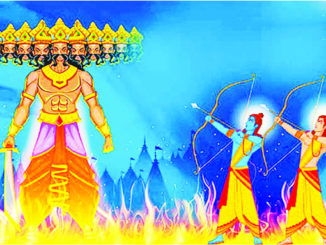
    Dussehra festival is round the corner. Also known as Vijayadashami, it is one of the major Hindu festivals celebrated across the country. Dussehra 2021 is falling on October 15, Friday. Dussehra marks the end of Navratri and signifies the victory of good over evil as Lord Ram had defeated Lanka king Ravana. People also celebrate this day to mark the victory of Goddess Durga over demon Mahishasur.

    SIGNIFICANCE OF DUSSEHRA

    The name Dussehra is derived from Sanskrit words dasha (ten) and hara (defeat). It signifies the victory of Ram over Ravan (the 10-headed demon king). Dussehra or Vijayadashmi is celebrated on the 10th day of Ashvin month (September-October) of the Hindu calendar. Dussehra also marks the culmination of the nine-day Navratri festival. Dussehra, for many, marks the beginning of preparation for the Diwali festival – when Lord Ram returned to Ayodhya – which falls 20 days after Dussehra.

    CELEBRATIONS AND RITUALS

    A precursor to Diwali, people celebrate Dussehra with all fanfare and full religious zeal. Hindu devotees in North India organise Ramleela – a theatrical enactment of Lord Ram’s life story – in the days leading to, and on Dussehra. On Dussehra, massive effigies of Ravan, sometimes along with his son Meghand and brother Kumbhkaran, are set ablaze in open grounds.

    In West Bengal, people celebrate the occasion as Durga Puja festival to mark the Goddess’s victory over demon Mahishasur. Devotees worship Durga at various theme-based pandals.

    In Gujarat, people celebrate the festival through garba – the famous folk dance of the state. Both during Navratri and on Dussehra, people wear colorful clothes and celebrate the festival to the max.

    In South India, people bring home idols of Goddesses Durga, Lakshmi and Saraswati. Married women also visit each other’s houses and exchange gifts like coconut, betel nuts and even money.

    MUHURAT TIME

    According to, the Vijay Muhurat time is from 2:02 pm to 2:47 pm, while the Aparahna Puja time will start at 1:16 pm and end at 3:33 pm.

    The Dashami Tithi begins at 6:52 pm on October 14 and ends at 6:02 pm on October 15.

    Mythological Significance

    Victory of Lord Rama over Ravana

    As per our Hindu mythology, the day Lord Ram killed Ravan who abducted Ram’s wife Sita is celebrated as “Vijaya Dashami”.

    The term Vijaya Dashmi is made from two words Vijay and Dashmi. As per our Hindu Calendar the day when Ram defeated and killed Ravana was Ashwin ( Hindi Month) Shukla Dashami (Tenth day of month). Hence the name originated. Many people perform “Aditya Homa” as a “Shanti Yagna” on the day of Dussehra.

    These Yagna performances are thought to create powerful agents in the atmosphere surrounding the house that will keep the household environment clean and healthy. These rituals are intended to rid the household of the ten bad qualities, which are represented by 10 heads of Ravana as follows:

    1. Kama vasana (Lust)
    2. Krodha (Anger)
    3. Moha (Attraction )
    4. Lobha (Greed)
    5. Mada (Over Pride)
    6. Matsara (Jealousy)
    7. Swartha (Selfishness)
    8. Anyaaya (Injustice)
    9. Amanavata (Cruelty)
    10. Ahankara (Ego).

    Victory of Durga Maa over Mahishasura

    This is again a well known reason for celebrating Dussehra. One Asura, Mahishasur, in the form of a buffalo, grew very powerful and created havoc on the earth.

    Under his leadership, the Asuras defeated the Devas. To fight against Mahishasura’s tyranny, the Devas joined their energies into Shakti, a single mass of incandescent energy.

    A very powerful band of lightning emerged from the mouths of Brahma, Vishnu and Shiva and a young, beautiful female with ten hands appeared.

    All the Gods gave their special weapons to her. This Shakti coalesced to form the goddess Durga. Riding on a lion, who assisted her, Durga fought Mahishasur.

    The battle raged for nine days and nights. Finally on the tenth day of Ashvin shukla paksha, Mahishasur was defeated and killed by Durga. Hence we celebrate this day as victory over evil.

    Homecoming of Parvati

    Do you know about this? I came to know about it recently when I was reading about Dussehra. Okay so Parvati was Sati in her previous birth. Sati was a great devotee of Shiva and prayed for getting Shiva as her husband. Being pleased with her worship, Shiva married her. Sati’s father was against this marriage but couldn’t prevent it.

    Dasksh arranged a Yagna in which he invited everyone except Shiva. Being ashamed of by his father’s act and seeing the insult of her husband by father Dasksh, she jumped in the fire of Yagna and killed herself. Lord Shiva was anguished when he came to know this. He lifted Sati’s body on his shoulders and started dancing. As the supreme power was dancing with wrath, the world was on the verge of destruction. Then Lord Vishu came forward as a savior and used his Chakra to cut Sati’s body into pieces. Those pieces fell from the shoulders of the dancing Shiva and scattered throughout the Indian subcontinent. Shiva was pacified when the last piece fell from his shoulder. In her next birth, Sati was born as Parvati, the daughter of Himavat, ruler of the Himalayas. Lord Vishnu asked Shiva to forgive Daksha. Ever since, peace was restored and Parvati visits her parents of previous birth each year during the season of Sharatkal or autumn, when Durga-Puja is celebrated.

    End of Agyatawas of Pandavas

    In the age of Dvapara Yuga, Pandavas lost to Kauravas in a game of dice, and spent twelve years of Vanawas, or exile to the forest, followed by one year of Agnyatawas(exile incognito).

    The brothers hid their weapons in a hole in a Shami tree before entering the Kingdom of Virat to complete the final year of Agnyatawas .After that year, on “Vijaya Dashami”, they recovered the weapons, declared their true identities and defeated Kauravas, who had attacked King Virat to steal his cattle.

    Since that day, Shami trees and weapons have been worshiped and the exchange of Shami leaves on Dussehra has been a symbol of good will and victory.

    Mysore Dussehra or Dasara : Mysore Dasara or Dussehra is the Nadahabba (state festival) of the state of Karnataka in India. It is a 10-day festival, starting with nine nights called Navaratri and the last day being Vijayadashami. The festival is observed on the tenth day in the Hindu calendar month of Ashvin, which typically falls in the Gregorian months of September and October.

    The Hindu festival of Dasara, Navratri and Vijayadashami celebrates the victory of good over evil. It was the day in the Hindu legends when Goddess Chamundeshwari (Durga) killed the demon Mahishasura. Mahishasura is the demon whose slaying by the Goddess gave the city the name Mysuru. The Mysuru tradition celebrates the warriors and the state fighting for the good during this festival, ritually worshipping and displaying the state sword, weapons, elephants, horses along with Hindu Devi goddess in her warrior form (predominantly) as well as the Vishnu avatar Rama. The ceremonies and a major procession is traditionally presided by the king of Mysuru.

    The city of Mysuru has a long tradition of celebrating the Dasara festival with grandeur and pomp to mark the festival. The Dasara festival in Mysuru completed 409th anniversary in the year 2019, while evidence suggests the festivities were observed in Karnataka state by the Vijayanagara Empire kings in the 15th century.

    History

    The Dasara festivities began with the Vijayanagar kings as early as the 15th Century. The festival played a historical role in the 14th-century Vijayanagara Empire, where it was called Mahanavami and the festivities are shown in the relief artwork of the outer wall of the Hazara Rama temple of Hampi.

    The Italian traveller Niccolò de’ Conti described the festival’s intensity and importance as a grandeur religious and martial event with royal support. The event revered Durga as the warrior goddess (some texts refer to her as Chamundeshwari). The celebrations hosted athletic competitions, singing and dancing, fireworks, a pageantry military parade and charitable giving to the public.

    After the fall of the Vijayanagar to Deccan Sultanates, these Hindu celebrations came to an end under Muslim rulers. The Wodeyars of Mysore formed a kingdom in Southern parts of the Vijayanagara Empire and continued the Mahanavami (Dasara) festival celebration, a tradition started initially by Raja Wodeyar I (1578-1617 CE) in mid September 1610 at Srirangapatna.

    Festivities

    The festivities included a special durbar (royal assembly). It was during the reign of Krishnaraja Wodeyar III in the year 1805, when the king started the tradition of having a special durbar in the Mysore Palace during Dasara; which was attended by members of the royal family, special invitees, officials and the masses. After the death of Srikanta Wadiyar in December 2013, this tradition has been continued by placing the “Pattada Katti” (royal sword) on the golden throne. The ninth day of Dasara called as Mahanavami is also an auspicious day on which the royal sword is worshipped and is taken on a procession involving elephants, camels and horses.

    Lightings in Mysore Palace

    The main attraction of the ten-day Mysore Dasara festival is the Mysore Palace which is lighted daily with nearly 100,000 light bulbs from 7 pm to 10 pm on all days of the festival. Various cultural and religious programs highlighting the dance, music and culture of the State of Karnataka are performed in front of the illuminated Palace.

    Procession

    On Vijayadashami, the traditional Dasara procession (locally known as Jumboo Savari) is held on the streets of Mysore city. The main attraction of this procession is the idol of the Goddess Chamundeshwari which is placed on a golden mantapa (which is around 750 kilograms of gold) on the top of a decorated elephant. This idol is worshipped by the royal couple and other invitees before it is taken around in the procession.

    Colorful tableaux, dance groups, music bands, decorated elephants, horses and camels form a part of the procession which starts from the Mysore Palace and culminates at a place called Bannimantap where the banni tree (Prosopis spicigera) is worshipped. According to a legend of the Mahabharata, banni tree was used by the Pandavas to hide their weapons during their one-year period of Agnatavasa (living life incognito). Before undertaking any warfare, the kings traditionally worshipped this tree to help them emerge victorious in the war. The Dasara festivities would culminate on the night of Vijayadashami with an event held in the grounds at Bannimantap called as Panjina Kavayatthu (torch-light parade).

    In Mysore, India, the Vijayadashami Elephant procession during Mysore Dasara is called Jumbo Savari (from the British during their control of Mysore State). The original name to this procession is Jumbi Savari (“going to the Shami (Banni) tree”). Now Goddess Chamundeshwari is taken in procession on an Elephant. But the “Jumbo” name is still intact.

    After the Jamboo Savari, a torchlight parade takes place in the evening at the Bannimantap Parade Grounds.

    Kullu Dussehra

    Kullu, the “Valley of Gods”, is one of the most breathtakingly beautiful parts of Himachal Pradesh. This serene hill town of Northern India is famous for attracting visitors from far and wide. Also known as “Kulanthapitha”, the valley has always been a favourite destination for travellers to experience the mystical land and rustic way of life.

    The valley is also renowned for its grand Dussehra celebrations; the festival of a triumph of good over evil. Kullu Dussehra was declared an international event in 1972 and is witnessed by around 4-5 Lac people from across the globe.

    Kullu Dussehra 2020 Dates

    Dussehra is celebrated on the tenth day of Navratri i.e. on Vijay Dashmi day, around the month of October according to the Gregorian calendar. Kullu Dussehra is slightly different because its celebrations begin when the rest of the country closes the nine-day long festival. This year, Kullu Dussehra would be organised from 15th October to 21st October, 2021. Dussehra in Kullu is a week-long festival, which is famous for its large number of visitors and grand celebrations.

    Processions and Celebrations

    Dussehra in Kullu valley is a much-awaited and celebrated festival. This week-long festival starts with a procession of Lord Raghunath, along with other deities, carried on a Ratha across the town. The village gods and minor deities are also a part of this celebration. The centre of the festivities is the Dhalpur maidan. The pleasant weather and breathtaking beauty of the valley along with the celebrations fill the visitors with eternal happiness and satisfaction. The festival gets merrier with dancing, drinking and feasting for a week. The Kala Kendra festival is held at night where several activities and cultural events take place. Thousands of people from all over the country and world visit this place during Dussehra. The festival is very well organized which only makes the experience worth remembering.

    Last Day of Celebrations of Kullu Dussehra Festival

    On the 6th day of the festival, an assembly of village Devtas takes place which is definitely a sight which one must watch. The last day of the celebrations is marked by sacrifices; a fish, a crab, a rooster, a buffalo and a lamb are sacrificed and a huge bonfire is lit. These mega-festival witnesses the worshipping of around 250-300 idols from the adjoining villages of Kullu. The idol of Ragunath Ji is brought back to its original place through a grand procession. Various cultural processions from different countries are invited, almost like the processions during our national festivals. Thus one can see the difference between the Kullu Dussehra and the Dussehra being celebrated in different parts of the country. The grandeur and celebration at Kullu Dussehra is something which every visitor here will always treasure.

  • At 7 feet 7 inches, 24-year-old Rumeysa Gelgim from Turkey named world’s tallest living woman

    At 7 feet 7 inches, 24-year-old Rumeysa Gelgim from Turkey named world’s tallest living woman

    Turkey  (TIP): 24-year-old Turkey’s Rumeysa Gelgim has been named as the tallest living woman by Guinness World Records with a height of 7 feet and 0.7 inches. Rumeysa was re-measured this year, after she was first awarded the title for the tallest teenager living (female) back in 2014, when she was aged 18, as per guinnessworldrecords.com.

    Rumeysa tall stature is a condition called Weaver syndrome. This is an extremely rare condition that causes accelerated growth amongst other abnormalities, including skeletal maturation, as per Guinness World Records The condition means that Rumeysa uses a wheelchair most of the time, but can move for short periods using a walker.

    Ever since her first record in 2014, Rumeysa has felt it was important to use her platform to educate others about rare medical conditions such as her own. She says that her height makes people intrigued when they pass her on the street, but most people are kind and supportive when they meet her for the first time.

    In her free time Rumeysa likes to go out for nice meals with her family and finds swimming really helps her to relax. Her family are very happy and proud of her for having the Guinness World Records title.

    It’s particularly fascinating that Rumeysa is from Turkey, as alongside Sultan Kösen (251 cm; 8 ft 2.8 in), both the tallest living male and female record holders are now from the same country – a rare occurrence in Guinness World Records history.

    The last time the two holders shared the same nationality was in 2009, when China’s Bao Xi Shun (236.1 cm; 7 ft 8.95 in) and Yao Defen (233.3 cm; 7 ft 7 in) held the tallest male and female records respectively.

    The previous record holder was Yao Defen (China) who recorded an average height of 233.3 cm (7 ft 7 in) when last documented back in 2010. (TNS)

  • Japan dissolves Parliament, setting stage for October 31 General Election

    Japan dissolves Parliament, setting stage for October 31 General Election

    Tokyo (TIP): Japan dissolved its Parliament on Thursday, setting the stage for an election at the end of the month that will pit new Prime Minister Fumio Kishida against unpopular opposition in a battle over who can better fix the pandemic-battered economy.

    Kishida enjoys reasonable public support 11 days into the job, polls show, boding well for his goal of maintaining a Lower House majority for his Liberal Democratic Party (LDP) and its Komeito party coalition partner.

    “I want to use the election to tell the people what we’re trying to do and what we’re aiming for,” Kishida told reporters gathered at his office.

    Reflecting on the last 11 days, Kishida said: “I’ve had a very busy schedule but strangely, I’m not feeling tired—I’m feeling fulfilled.”

    Voters will want to see a government with plans for decisive action to end the pandemic and rebuild the economy. A recent Sankei newspaper poll showed that about 48% say they want the Kishida administration to work on coronavirus most, followed by economic recovery and employment.

    Kishida’s party is promoting his push for coronavirus measures including supplying oral antiviral medication this year, as well as his vision of realising a “new capitalism” that focuses on economic growth and redistribution of wealth.

    The ruling party has also called for a sharp increase in defence spending to acquire the capability to destroy ballistic missiles, amid China’s increasingly assertive posture over Taiwan.

    The largest opposition party, the Constitutional Democrats (CDPJ), led by Yukio Edano, has highlighted issues such as its support for same-sex marriage and different surnames for couples.

    The LDP remains socially conservative and, while progress has been made on LGBTQ rights in society, Kishida has said he was not in favour of same-sex marriage.

    The biggest challenge for Constitutional Democrats is their low support ratings. A recent poll by the Asahi Shimbun daily found only 13% were planning to vote for them, far behind the LDP’s 47%; most other polls record support in the single digits.

    Also, Kishida’s focus on redistribution and economic growth has blurred policy differences between the LDP and CDPJ.

    Edano said his party, if it were to take power, would go straight to wealth distribution to kickstart growth.

    “’Wage hikes and distribution once growth is achieved.’ This is what (former prime minister Shinzo) Abe was saying. But there was no growth over the past eight, nine years and no wage hikes,” Edano told reporters. “If we don’t distribute wealth first, no growth is achieved. This is a rather clear difference (between the two parties).”

    Canvassing in many districts is already under way but formally the campaign will kick off on October 19, followed by the vote on October 31. Kishida is expected to hold a news conference on Thursday night. Reuters

  • From spy satellites to mobile networks, S Korea hopes new rocket gets space programme off ground

    From spy satellites to mobile networks, S Korea hopes new rocket gets space programme off ground

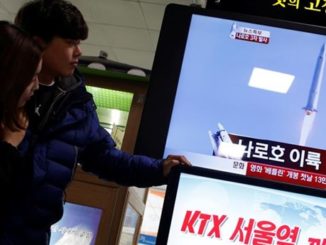
    Seoul (TIP): South Korea plans to test its first domestically produced space launch vehicle next week, a major step toward jumpstarting the country’s space programme and achieving ambitious goals in 6G networks, spy satellites, and even lunar probes.

    If all goes well, the three-stage NURI rocket, designed by the Korea Aerospace Research Institute (KARI) to eventually put 1.5-ton payloads into orbit 600 to 800km above the Earth, will carry a dummy satellite into space on October 14.

    South Korea’s last such booster, launched in 2013 after multiple delays and several failed tests, was jointly developed with Russia. The new KSLV-II NURI has solely Korean rocket technologies, and is the country’s first domestically built space launch vehicle, said Han Sang-yeop, director of KARI’s Launcher Reliability Safety Quality Assurance Division.

    “Having its own launch vehicle gives a country the flexibility of payload types and launch schedule,” he told Reuters in an email.

    Military and civilian benefits

    It also gives the country more control over “confidential payloads” it may want to send into orbit, Han said.

    That will be important for South Korea’s plans to launch surveillance satellites into orbit, in what national security officials have called a constellation of “unblinking eyes” to monitor North Korea. So far, South Korea has remained almost totally reliant on the United States for satellite intelligence on its northern neighbour.

    In 2020 a Falcon 9 rocket from the US firm Space X carried South Korea’s first dedicated military communications satellite into orbit from the Kennedy Space Center in Florida. NURI is also key to South Korean plans to eventually build a Korean satellite-based navigation system and a 6G communications network.

    “The program is designed not only to support government projects, but also commercial activity,” Oh Seung-hyub, director of the Launcher Propulsion System Development Division, told a briefing on Tuesday. South Korea is working with the United States on a lunar orbiter, and hopes to land a probe on the moon by 2030.

    Trial launch

    Given problems with previous launches, Han and other planners said they have prepared for the worst.

    The launch day may be changed at the last minute if weather or technical problems arise; the craft will carry a self-destruct mechanism to destroy it if it appears it won’t reach orbit; and media won’t be allowed to observe the test directly. At least four test launches are planned before the rocket will be considered reliable enough to carry a real payload.According to pre-launch  briefing slides, the rocket’s planned path will take it southeast from its launch site on the south coast of the Korean peninsula, threading its way over the ocean on a trajectory aimed at avoiding flying over Japan, Indonesia, the Philippines, and other major land masses. (Reuters)

    Norway killings being treated as act of terror

    Kongsberg (TIP): A Danish man suspected of killing five people with a bow and arrow and possibly other weapons while randomly shooting at strangers in a small Norwegian town appears to have committed an act of terrorism, authorities in Norway said on October 14. The Wednesday night attack at a supermarket and other locations in downtown Kongsberg, a town of about 26,000 residents not far from Norway’s capital, left the country stunned as police released some details, including that officers made contact with the 37-year-old suspect but he initially escaped.

    “From what we know now, it is reasonably clear that some, probably everyone, was killed after the police were in contact with the perpetrator,” regional police chief Ole B Saeverud said. The victims were four women and one man between the ages of 50 and 70. Three other people were injured, the police said. — AP

  • Pakistan airline suspends Afghan operations citing Taliban interference

    Pakistan airline suspends Afghan operations citing Taliban interference

    Islamabad (TIP): Pakistan International Airlines (PIA) suspended flights to the Afghan capital, Kabul, on Thursday after what it called “heavy handed” interference by Taliban authorities, including arbitrary rule changes and intimidation of staff.

    The suspension came as the Taliban government ordered the airline, the only international company operating regularly out of Kabul, to cut ticket prices to levels seen before the fall of the Western-backed Afghan government in August.

    “We are suspending our flight operations to Kabul from today because of the heavy handedness of the authorities,” a spokesman said.

    Earlier, the Taliban warned PIA and Afghan carrier Kam Air that their Afghan operations risked being blocked unless they agreed to cut ticket prices, which have reached levels increasingly out of reach for most Afghans.

    With most international airlines no longer flying to Afghanistan, tickets for flights to the Pakistani capital, Islamabad, have been selling for as much as $2,500 on PIA, according to travel agents in Kabul, compared with $120-$150 before.

    The Afghan transport ministry said in a statement prices on the route should “be adjusted to correspond with the conditions of a ticket before the victory of the Islamic Emirate” or the flights would be stopped.

    It urged passengers and others to report any violations.

    Flights between Afghanistan and Pakistan have been severely limited since Kabul airport was reopened last month in the wake of the chaotic evacuation of more than 100,000 Westerners and vulnerable Afghans following the Taliban victory.

    PIA said that ever since the new Taliban government was formed, its staff in Kabul had faced last-minute changes in regulations and flight permissions and “highly intimidating behaviour” from Taliban commanders.

    It said its country representative had been held at gunpoint for hours at one point and was only freed after the Pakistan embassy in Kabul intervened.

    With a mounting economic crisis adding to worries about Afghanistan’s future under the Taliban, there has been heavy demand for flights out and the main passport office in Kabul has been besieged by people trying to get travel documents since it reopened this month.

    Demand for flights has been further pushed by repeated difficulties at land border crossings into Pakistan. Reuters

  • Goons attack Hindu temples in Bangladesh during Durga Puja, 4 killed

    Goons attack Hindu temples in Bangladesh during Durga Puja, 4 killed

    Dhaka (TIP): Some Hindu temples in Bangladesh have been vandalised by unidentified Muslim bigots during Durga Puja celebrations, prompting the government to deploy paramilitary force in 22 districts after four people were killed and many others injured in riots, media reports said on Thursday.

    A home ministry spokesperson said the Border Guards Bangladesh (BGB) troops have been deployed in 22 districts across the country to stop the spread of violence. The elite anti-crime Rapid Action Battalion (RAB) and the armed police were also ordered to be on guard with the BGB in 22 of the 64 administrative districts and elsewhere to contain any violence, he said.

    According to media reports, three people were killed during clashes between Muslim bigots and the police at Hajiganj sub-district in Chandpur, bordering Cumilla on Wednesday while the fourth one succumbed to his wounds later.

    Authorities enforced a ban on rallies in Haziganj where officials confirmed the deaths of four people in gunshots, adding that two others were critically injured in the clashes. The police said that a couple of their officials were injured as the mob attacked them and vandalised their and local administrators’ cars. They, however, did not explain if the casualties were caused due to the police actions but media reports said that the police opened fire on a mob of over 500 people.

    According to the officials, the police were alerted about an alleged blasphemy incident at a Durga Puja pavilion in Cumilla, about 100 km from here, after which a probe was launched.

    However, violence erupted as bigots attacked temples in parts of Cumilla, neighbouring Haziganj, northwestern coastal sub districts of Hatia and Banskhali while social media was used largely to instigate the communal tensions.

    Hindu religious leaders called the violence as part of a plot to upset the Durga Puja celebrations and demanded action against the bigots and protection of Hindu temples and establishments.

    A particular group committed the blasphemy at the pavilion to stop the Durga Puja by staging protests, secretary of Cumilla district puja celebration committee Nirmol Pal said.

    The police said they have so far detained 43 people in connection with the violence. People who posted the first video on the Cumilla puja venue on social media were also under custody.

    “Investigations are underway and we are identifying the culprits also using security camera footage,” police’s deputy inspector general Anwar Hossain told the media in Cumilla.

    Ruling Awami League general secretary and road transport minister Obaidul Qader said that “fanatic elements” staged attacks on Hindu temples at 10 to 12 places with a political motive.

    “But our government led by (Prime Minister) Sheikh Hasina will not let them proceed with their evil design,” he told reporters visiting a Puja pavilion at the Ramkrishna Mission here.

    He cautioned people against spreading rumours to sever the interfaith harmony in the country, adding that Hasina has ordered stringent actions against the communal elements.

    “We will remain alert,” the minister said.

    The religious affairs ministry issued an emergency notice, urging members of the public not to take the law into their hands as it reiterated calls to maintain communal harmony and peace, it said.

    Hindus make up some 10 per cent of the Muslim-majority Bangladesh’s 169 million population. In the past several years, there have been reports of sporadic violence, mostly sparked by rumours spread on social media. PTI

  • UK’s Prince William says great minds should focus on saving Earth not space travel

    London (TIP): Britain’s Prince William has taken a thinly veiled swipe at the billionaires embroiled in a space tourism race, saying the world’s greatest brains should instead be focused on solving the environmental problems facing the Earth.

    During a BBC interview aired on Thursday, William appeared to criticise Jeff Bezos, the world’s richest person, Elon Musk and Briton Richard Branson, whose rival ventures are all vying to usher in a new era of private commercial space travel. “We need some of the world’s greatest brains and minds fixed on trying to repair this planet, not trying to find the next place to go and live,” William said of the space race.

    His comments come after Musk has spoken about missions to Mars, and Bezos described his inaugural space flight in July as part of building a road to space “so that our kids and their kids can build a future”.

    “We need to do that to solve the problems here on Earth,” said Bezos, who on Wednesday celebrated sending Star Trek actor William Shatner into space in his New Shepard spacecraft.

    Speaking out on green issues has become a major feature of the British royal family, and William, 39, is following in the footsteps of his late grandfather Prince Philip, Queen Elizabeth’s husband, and his father, Prince Charles.

    Charles, the 72-year-old heir to the throne, has for decades called for action to stop climate change and environmental damage, long before the issue became mainstream, often facing ridicule along the way.

    “It’s been a hard road for him. He’s had a really rough ride on that, and I think he’s been proven to being well ahead of the curve,” William said.

    “But it shouldn’t be that there’s a third generation now coming along having to ramp it up even more. For me, it would be an absolute disaster if George (his eldest child) is sat here … in like 30 years’ time whatever, still saying the same thing, because by then we will be too late.” In an echo of his father’s message earlier this week, William also said the upcoming U.N. Climate Change Conference COP26 summit in Scotland had to deliver.

    “We can’t have more clever speak, clever words but not enough action,” William said.

    The prince’s personal response to the issue has been to create the Earthshot Prize, which aims to find solutions through new technologies or policies to the planet’s biggest environmental problems.

    The first five winners, who will each collect 1 million pounds ($1.4 million), will be announced at a ceremony on Sunday. Reuters

  • Taliban delegation in Turkey for talks

    Ankara (TIP): A high-level delegation from Afghanistan’s new Taliban rulers has arrived in Turkey for talks with Turkish officials, the Foreign Ministry announced on Thursday. The meetings in the capital of Ankara would be the first between the Taliban and senior Turkish government officials after the group seized control of Afghanistan. The visiting delegation is led by Amir Khan Mutaqi, the acting foreign minister, according to a Taliban spokesman. — AP

  • Myanmar military won’t allow ASEAN envoy to meet Suu Kyi

    Myanmar (TIP): Myanmar’s ruling military has not blocked a special Southeast Asian envoy from visiting the country but will not allow him to meet detained former leader Aung San Suu Kyi, because she is charged with crimes, the junta’s spokesman said.

    A delay in the United Nations approving the military government’s UN ambassador nomination was politically motivated, spokesman Zaw Min Tun added, saying the UN and other countries and organisations “should avoid double standards when they are engaging in international affairs”.

    The spokesman’s remarks, issued by the military in a summary dated Wednesday, come as international pressure builds on the junta to implement a five-point peace plan its top general Min Aung Hlaing agreed to in April with the Association of Southeast Asian Nations (ASEAN)

    Myanmar has been in political and economic paralysis since the military’s February 1 coup, which triggered an outpouring of anger and protest that has not abated, with some civilians forming militias to take on the powerful army.

    The junta’s inaction on the ASEAN plan was “tantamount to backtracking” and some member countries were “deep in discussions” about excluding Min Aung Hlaing from a summit this month, Erywan Yusof, the bloc’s special envoy, said last week.

    Erywan earlier this week said he was in consultations with parties in Myanmar, does not take sides or political positions and looks forward to a visit.

    The junta spokesman also insisted Myanmar’s judicial system was fair and independent would handle Aung San Suu Kyi’s case accordingly, adding the chief justice was appointed by the previous government. Reuters

  • U.S. to lift Canada, Mexico land border restrictions in November for vaccinated visitors

    U.S. to lift Canada, Mexico land border restrictions in November for vaccinated visitors

    WASHINGTON (TIP): The United States will lift restrictions at its land borders with Canada and Mexico for fully vaccinated foreign nationals in early November, ending historic curbs on non-essential travelers in place since March 2020 to address the COVID-19 pandemic, two U.S. officials said on October 12.

    Foreign visitors crossing into the United States by land or ferry will need to be vaccinated but will not necessarily need to show proof of vaccination unless they are referred by U.S. Customs and Border Patrol

    The rules, which will be formally announced by Homeland Security Secretary Alejandro Mayorkas on October 13, will cover land borders and ferry crossings. They are similar but not identical to planned requirements announced last month for international air travelers, the officials said in a call with reporters.

    Lawmakers from New York State praised the move.

    “Since the beginning of the pandemic, members of our shared cross-border community have felt the pain and economic hardship of the land border closures. That pain is about to end,” Senate Democratic leader Chuck Schumer said in a statement.

    The officials from President Joe Biden’s administration emphasized that the White House would not lift the “Title 42” order put in place by former President Donald Trump’s administration that has essentially cut off access to asylum for hundreds of thousands of migrants seeking to enter from Mexico. The precise date in early November when the restrictions will be lifted will be announced “very soon,” one of the officials said.

    Canada on August 9 began allowing fully vaccinated U.S. visitors for non-essential travel.

    Once the U.S. curbs are lifted, non-essential foreign visitors crossing U.S. land borders, such as tourists, will be able to visit if they are vaccinated. In early January, the United States will require essential visitors, like truck drivers, to be vaccinated to cross land borders, the officials said.

    U.S. lawmakers have been pushing the White House to lift restrictions that have barred non-essential travel by Canadians across the northern U.S. border since March 2020, and many border communities have been hit hard by the closure. Mexico has also pressed the Biden administration to ease restrictions.

    The White House announced on September 20 that the United States in early November would lift travel restrictions on air travelers from 33 countries including China, India, Brazil and most of Europe who are fully vaccinated against COVID-19. Foreign visitors crossing into the United States by land or ferry will need to be vaccinated but will not necessarily need to show proof of vaccination unless they are referred by U.S. Customs and Border Patrol for secondary inspections.

    By contrast, all non-U.S. air travelers will need to show proof of vaccination before boarding a flight — and will need to show proof of a recent negative COVID-19 test. Foreign visitors crossing a land border will not need to show proof of a recent negative COVID-19 test. On October 8, the U.S. Centers for Disease Control and Prevention said the United States would accept the use by international visitors of COVID-19 vaccines authorized by U.S. regulators or the World Health Organization. The U.S. land border restrictions have not barred U.S. citizens from returning home.

    (Agencies)

  • A Big Indian Link to a Blood Pressure Pill Identified as Dangerous

    A Big Indian Link to a Blood Pressure Pill Identified as Dangerous

    The new chemicals are called azido impurities and regulatory authorities say they’re mutagenic, meaning they can change someone’s DNA and potentially increase cancer risk

    WASHINGTON (TIP): Over the past three years, millions of blood pressure pills that contain a probable carcinogen have been recalled around the world. As pharmaceutical companies have worked on finding a fix, they’ve discovered an entirely new problem: another potentially dangerous chemical is showing up in the same drugs.

    The new chemicals are called azido impurities and regulatory authorities say they’re mutagenic, meaning they can change someone’s DNA and potentially increase cancer risk.

    The impurities were found in blood pressure drugs which have been recalled in Canada as well as Europe earlier this year. U.S. officials helped lead the way in the 2018 recalls of the same type of drugs tainted with the probable carcinogen N-Nitrosodimethylamine, or NDMA, though they have yet to pull any for containing the azido impurities.

    Meanwhile, a U.S. Food and Drug Administration inspector has found at least one large manufacturer in India, Hetero Labs Ltd., has a flawed process for controlling the impurities, according to documents reviewed by Bloomberg. Hetero also hasn’t adequately ensured a residue of impurities aren’t building up on production equipment, which can cross-contaminate subsequent batches, according to the documents.

    The FDA inspector visited Hetero Labs Ltd.’s production plant in the Sangareddy district in south central India over 10 days in August. The plant makes the active ingredient for the blood pressure drug called valsartan, which it sells to other pharmaceutical companies to make a finished pill. Valsartan production can form azido impurities. The company did not respond to requests for comment.

    Drug regulator Health Canada announced recalls of valsartan, a type of drug called an angiotensin II receptor blocker or ARB, in May for elevated levels of azido impurities. Over the next few months, other drugs in the same class, losartan and irbesartan, were recalled for the same impurities. Companies implicated include Sanofi, Novartis AG’s generic-drug unit Sandoz and generic-drug giant Teva Pharmaceutical Industries Ltd.

    Teva also recalled ARBs in the U.K. in June followed by Sanofi in August, according to the country’s Medicines and Healthcare products Regulatory Agency. The MHRA is aware of three potential azido impurities in heart drugs, according to emailed answers to a list of questions from Bloomberg. Other European countries have also recalled ARBs containing azido impurities, including France, Switzerland and Ireland.

    Sanofi recalled certain drugs containing irbesartan in Canada in June for elevated levels of azido impurities and sold some of those same drugs in the U.S., a spokesperson said in an email response to Bloomberg. The drugmaker informed the U.S. FDA and didn’t receive any further feedback, the spokesperson said.

    Sanofi is close to completing testing of all batches of irbesartan-containing medicine produced between 2018 and 2020. Most have not contained levels of azido impurities above the threshold considered acceptable. The company plans to collaborate with health authorities in mid-October to propose recalls of any non-conforming batches, the spokesperson said. The impurities are a by-product of a previous manufacturing process and Sanofi’s irbesartan tested since January has not contained unacceptable levels of azido impurities, according to the spokesperson.

    Sandoz originally recalled 40 batches of ARBs in Canada in May and has since recalled 49 batches of certain losartan pills there. The active ingredient for the drugs was made by another company, according to an emailed statement from a spokesperson for parent company Novartis, though the company wasn’t named.

    Sanofi and Sandoz both were involved in another major recall in 2019 related to NDMA-tainted drugs that led the heartburn medication Zantac and its generics to be pulled from the market. The independent testing lab Valisure, based in New Haven, Connecticut, first discovered NDMA in the medication and flagged regulators. The active ingredient in Zantac, ranitidine, was found to form NDMA over time or when stored at high temperatures.

    Zantac wasn’t the last recall related to NDMA or chemicals like it, which fall under a class called nitrosamines. Last year, the widely used diabetes drug metformin was recalled for NDMA contamination and Pfizer Inc. recalled all lots of its smoking cessation pill Chantix last month after it was found to contain a nitrosamine.

    In 2018, Hetero supplied the active ingredient to some of the companies that had to pull their drugs because they contained NDMA and other similar chemicals. While the recalls started that same year, regulators and industry continued to find additional contamination from chemicals similar to NDMA in the blood pressure pills valsartan, losartan and irbesartan, resulting in recalls that stretched out over almost two years as tainted drugs were identified. The NDMA was likely formed as a part of the manufacturing process for the active ingredients, though drugmakers and regulators didn’t catch the problem for many years.  The FDA declined to address whether it has found drugs that contain azido impurities or if it anticipates any recalls in the U.S.

    “We have been closely evaluating this type of impurity, working with manufacturers and foreign authorities, and will continue to investigate and monitor the marketplace and manufacturing efforts to help ensure the availability of safe, quality products for U.S. consumers,” Jeremy Kahn, a spokesman said in an email.

    Hetero’s production plant in the Sangareddy district is one of the company’s 10 facilities in India registered with the FDA to help make drugs sold to the United States. It was last inspected in 2018 and received the agency’s worst classification, which means it’s likely the company would have a hard time getting FDA approval to make any new drugs there until it clears up its issues. But the agency typically allows companies with long lists of violations stemming from inspections to continue to make drugs they’re already allowed to produce at substandard plants while they work on fixing their problems. The documents also point out a material used early in the drug-making process plays a role in creating azido impurities. While Hetero’s production guidelines call for keeping that material to a certain level to avoid forming unacceptable impurity levels, the company’s study used to determine that safe level is faulty, according to the FDA documents.

    The FDA, spokesman Kahn said, cannot comment on whether it would take any action against Hetero.

    (Agencies)

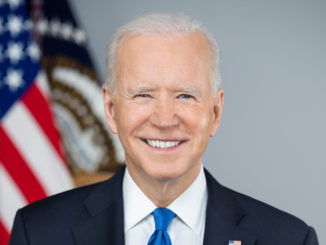
  • Biden and First Lady Jill to have audience with Pope Francis during trip to Rome

    Biden and First Lady Jill to have audience with Pope Francis during trip to Rome

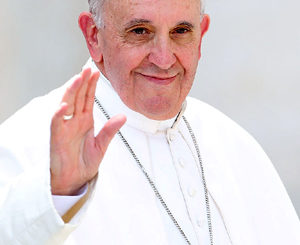
    WASHINGTON (TIP): President Joe Biden and first lady Jill Biden will meet with Pope Francis during their trip to Rome later this month for the G20 conference, White House press secretary Jen Psaki said in a statement. “The President and Dr. Biden will also visit Vatican City and have an audience with His Holiness Pope Francis on October 29. They will discuss working together on efforts grounded in respect for fundamental human dignity, including ending the COVID-19 pandemic, tackling the climate crisis, and caring for the poor,” Psaki said in a statement.

    CNN said that the meeting will come as there is a simmering debate within the US Catholic Church over granting communion to Catholic politicians who support abortion rights, including the nation’s second Catholic President. Biden had been denied the sacrament once in 2019 in the run-up to the election and the issue drew new attention in June when the United States Conference of Catholic Bishops proceeded with a plan that could deny communion to such public figures, setting up a potential public rebuke of the President.

    The Pope said last month that bishops debating whether to deny communion to public figures who support abortion rights should make their decisions from a “pastoral” viewpoint and not a political one.

    “The problem is not theological, it’s pastoral,” Francis told reporters. “How we bishops deal with this principle. We must be pastors, also with those who are excommunicated. Like God with passion and tenderness. The Bible says so.”

  • Joe Biden undercuts White House executive privilege shield

    Joe Biden undercuts White House executive privilege shield

    Courts have ruled that former Presidents are afforded executive privilege in some cases

    WASHINGTON, DC (TIP) It is a risky move by President Joe Biden that could come back to haunt him — and future Presidents — in the hyperpartisan world of Washington politics, a CNN report says.

    Democrat Biden has agreed to a request from the Congress seeking sensitive information on the actions of his predecessor Donald Trump and his aides during the January 6 insurrection, though the former President claims the information is guarded by executive privilege. The move by Mr. Biden isn’t the final word; Republican Trump says he will challenge the requests and a lengthy legal battle is likely to ensue over the information. Courts have ruled that former Presidents are afforded executive privilege in some cases.

    But the playbook for the legal world is different from the political world. And in the political world, “every time a President does something controversial, it becomes a building block for future Presidents,” said Saikrishna Prakash, a law professor at the University of Virginia who studies presidential powers. Mr. Biden’s decision not to block the information sought by the Congress challenges a tested norm — one in which Presidents enjoy the secrecy of records of their own terms in office, both mundane and highly sensitive, for a period of at least five years, and often far longer. That means Mr. Biden and future Presidents, as well as Mr. Trump.

    While not spelled out in the Constitution, executive privilege has developed to protect a President’s ability to obtain candid counsel from his advisers without fear of immediate public disclosure and to protect his confidential communications relating to official responsibilities.

    But that privilege has its limitations in extraordinary situations, as exemplified during the Watergate scandal, when the Supreme Court ruled that it could not be used to shield the release of secret Oval Office tapes sought in a criminal inquiry, and following the Sept. 11 terrorist attacks.

    The Jan. 6 insurrection belongs among those ranks, Mr. Biden’s White House counsel wrote to the keeper of records, the Archivist of the United States. An armed mob of Trump supporters stormed the building in an attempt to stop the certification of Mr. Biden’s election victory.

    “This committee is investigating a dark day in our democracy — an attempt to undermine our Constitution and democratic processes by the former President — and that context, I think, is important here, too,” White House press secretary Jen Psaki said of the congressional panel seeking the records.

    The argument that the special circumstances of the attack justify the extraordinary release should guard against the erosion of executive privilege for presidencies going forward, some experts said.

    “By ratcheting up how extraordinary and extreme it is, it limits the precedent going forward,” said Jonathan Shaub, an assistant professor of law at the University of Kentucky J. David Rosenberg College of Law and a former attorney-adviser in the Office of Legal Counsel in the Obama administration. But those other exceptions occurred in a pre-Trump world, where there were clear customs and norms, and generally, one set of facts. Today, a large part of the country believes Mr. Trump’s lies that he is the rightful winner of the 2020 election, even though there is no credible evidence to support his claims of mass fraud, and Mr. Trump and his allies have gone to great lengths to recast the events of Jan. 6 to make the rioters out to be warrior patriots.

    If history is any guide, once the door to reviewing past Presidential records is ajar, future Congresses and Presidents could swing it open further as politics warrant.

    It’s a path followed by other Washington norms in the increasingly rancorous capital. In 2013, Democrats deployed the so-called nuclear option to eliminate the filibuster that would require 60 votes to approve most Presidential appointments and nominations, but maintained it for legislation and Supreme Court picks. In 2017, when Republicans took control of Washington, they took the tactic further, and during the Trump years, they put three justices on the high court by simple majority votes.

    Presidents tend to be protective of their ability to keep White House documents private, both for themselves and their predecessors. But any White House move to deny the congressional request for records on Mr. Trump’s activities could antagonize Democratic legislators just when Mr. Biden needs their support to advance his agenda.

    The documents requested by the congressional committee are part of a lengthy and contentious investigation into how the Jan. 6 mob was able to infiltrate the Capitol and disrupt the certification of Mr. Biden’s presidential victory in the most serious assault on the Congress in two centuries. More than 630 people have been charged criminally in the attack, the largest prosecution in U.S. history.

    Thousands of documents have been sought from the Trump administration as they try to determine how the insurrection could have happened. Many of those requests went to the National Archives, where Mr. Trump’s correspondence during his time in office is held. According to an executive order on Presidential records, the archivist of the United States “shall abide by any instructions given him by the incumbent President or his designee unless otherwise directed by a final court order”.

    “Congress is examining an assault on our Constitution and democratic institutions provoked and fanned by those sworn to protect them,” White House counsel Dana Remus wrote in a letter to the archivist. “The constitutional protections of executive privilege should not be used to shield, from Congress or from the public, information that reflects a clear and apparent effort to subvert the Constitution itself.” Mr. Trump responded with his own letter to the National Archives formally asserting privilege over nearly 50 documents. Referring to the Presidential Records Act, Mr. Trump wrote, “I hereby make a protective assertion of constitutionally based privilege with respect to all additional records.” He said if the committee seeks other information he considers privileged information, “I will take all necessary and appropriate steps to defend the Office of the Presidency.”

  • Indian Americans in 2021 Forbes 400

    Indian Americans in 2021 Forbes 400

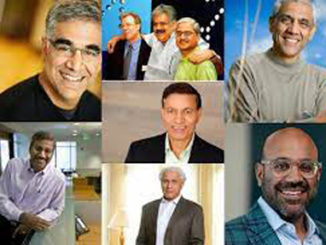
    JERSEY CITY, NJ (TIP): As former president Donald Trump fell off the Forbes 400 list of wealthiest Americans for first time in 25 years in what it called “a terrible year for many,” seven Indian-Americans made it.

    The 2021 Forbes 400 saw their collective fortune increase 40% over the last year, to $4.5 trillion. Nearly all are richer than they were a year ago.

    There are 44 new names on the list, which now requires a minimum net worth of $2.9 billion, up $800 million from a year ago. the biggest jump in cutoff.

    Topping the list of seven Indian American billionaires was Zscaler CEO Jay Chaudhry, 62, placed at 45 with a net worth of $16.3 billion.

    He was followed by Vinod Khosla (92), Rakesh Gangwal (253), Romesh T. Wadhwani (333), Niraj Shah (340), Aneel Bhusri (363) and Baiju Bhatt (389).

    The cybersecurity firm Chaudhry founded in 2008, went public in March 2018. He and his family own 42% of the Nasdaq-listed firm.

    Before Zscaler, Chaudhry founded four other tech companies that were all acquired: SecureIT, CoreHarbor, CipherTrust and AirDefense.

    In 1996, Chaudhry and his wife, Jyoti, both quit their jobs and used their life savings to start cybersecurity firm SecureIT, his first startup.

    His hometown, a village in the Himalayas in India, did not have electricity or running water until he was in the 8th and 10th grade, respectively.

    Chaudhry moved to the US in 1980 to attend graduate school and now lives in Nevada, after relocating from the Bay Area. Vinod Khosla, 66, Partner, Khosla Ventures, a Silicon Valley venture capital firm. follows at 92 with a net worth of $8.6 billion.

    The firm, which invests in experimental technologies such as biomedicine and robotics scored exits in 2020 and early 2021 with IPOs of Affirm and DoorDash and SPAC listings of QuantumScape and Opendoor.

    Khosla cofounded computer hardware firm Sun Microsystems in 1982 with Andy Bechtolsheim, Bill Joy and Scott McNealy. Khosla spent 18 years at venture capital firm Kleiner Perkins Caufield & Byers (now called Kleiner Perkins) before launching his own fund.

    Khosla earned a Master of Science at Carnegie Mellon University; Bachelor of Arts/Science, Indian Institute of Technology; Master of Business Administration, Stanford Graduate School of Business.

    Third richest among Indian Americans was Airline veteran Rakesh Gangwal, 68, placed at 253 with a net worth of $4.4 billion.

    Gangwal made his fortune from InterGlobe Aviation, the parent outfit of budget airline IndiGo, India’s largest by market share.

    Gangwal started his airline career with United Airlines in 1984 and went on to run US Airways Group as its chief executive and chairman.

    Gangwal cofounded IndiGo, headquartered outside Delhi, with pal Rahul Bhatia (also a billionaire) in 2006 with one aircraft. The Miami resident owns close to 37% of the company and serves as a board member.

    Gangwal and Bhatia had a bitter falling out in 2019 over corporate governance issues. Their dispute reached courts in London, Florida and Maryland, Forbes said.

    Gangwal has a Bachelor of Science in Engineering, Indian Institute of Technology, Master of Business Administration, University of Pennsylvania, The Wharton School.

    Romesh T. Wadhwani, 74, Founder and Chairman, Symphony Technology Group, ranked 333 on Forbes list with a net worth of $3.5 billion comes next.

    Wadhwani, whose Symphony Technology Group brings in $2.5 billion in annual revenues. combined nine of his companies that were AI-focused into a new group called SymphonyAI in 2017.

    After graduating from the Indian Institute of Technology, he went to Carnegie Mellon and received a PhD in 1972 in electrical engineering.

    The serial entrepreneur later founded Aspect Development. He sits on the boards of the Kennedy Center and the Center for Strategic and International Studies.

    He and his brother, Sunil, founded the Wadhwani Institute of Artificial Intelligence at the University of Mumbai in 2018, committing over $30 million.

    Niraj Shah, 47, cofounder and CEO of online home goods retailer Wayfair, was next ranked 340 with a net worth of $3.4 billion.

    He started the business in 2002 with Steve Conine, who is also a billionaire. The two met as high school students at a program at Cornell University, where he earned a Bachelor of Science in Engineering.

    Shah and Conine ended up living in the same dorm their freshman year at Cornell and became good friends.

    Wayfair, which now offers more than 18 million products, generated $14 billion in net revenue in 2020, up 55% from the previous year.

    Shah joined the board of the Federal Reserve Bank of Boston in 2017.

    Aneel Bhusri, 55, CEO and Cofounder of business software firm Workday, was ranked 363 with a net worth of $3.2 billion.

    He cofounded the firm with Dave Duffield, the founder of PeopleSoft, where he started his career in the early 1990s and he rose to become vice chairman.

    He also works as an advisory partner at venture capital firm Greylock Partners; he’s been on the Forbes Midas List six times since 2008. He studied electrical engineering at Brown University and has an MBA from Stanford.

    In May 2018, Bhusri joined the Giving Pledge, a commitment by the world’s wealthiest people to dedicate the majority of their wealth to philanthropy.

    Baiju Bhatt, 36, who cofounded no-fee stock trading app Robinhood in 2013 with his friend Vlad Tenev, rounds off the Desi list ranked 389 with a net worth of $2.9 billion.

    Bhatt was co-CEO of Robinhood until November 2020, when he stepped down from that position. Since its launch, Robinhood’s no-commission trading model has revolutionized the brokerage industry.

    In July 2021, Robinhood went public on the Nasdaq exchange at a $32 billion valuation. Bhatt owns around 8% of the company. He has a Bachelor of Science degree from Stanford University.

  • Indian American President of USIBC says Free Trade Agreement is the next Frontier in India-US Ties

    Indian American President of USIBC says Free Trade Agreement is the next Frontier in India-US Ties

    WASHINGTON, DC (TIP): – A Free Trade Agreement is the next frontier in the India-U.S. relationship,Nisha Desai Biswal, Indian American president of the U.S.-India Business Council and a former U.S. diplomat, said.

    Biswal, speaking at a dinner September 30th, hosted by Indiaspora, stressed that it is not tenable for the two largest economies of the world to not have a trade architecture in place between them, though its path is riddled with “all kinds of obstacles.”

    “The time has come for us to get serious about where the next frontier is in U.S.- India ties. And neither for the United States nor for India, is it tenable for two of the largest economies in the world to be outside of the TPP (Trans-Pacific Partnership) and to not have a trade architecture in place between the two of them,” Biswal.

    “We are starting to see real signals of interest from India to be able to explore that. So, I think the time has come to get serious. It’s not easy. It’s a path riddled with all kinds of obstacles, she said.

    It’s time for us to put down the knives, turn on the light, get down to business, she said in a lighter vein as she urged the powerful group of Indian Americans to engage the two governments on the issue, the report adds.

    Commerce and Industry Minister Piyush Goyal, while addressing the 4th Annual Leadership Summit of the US-India Strategic Partnership Forum Sept. 30, said that India and the U.S. should engage in a much bigger way and New Delhi is ready and willing to expand the economic partnership with America.

    He also called for setting an ambitious bilateral trade target of $1 trillion in the next 10 years, according to the report. In her brief remarks on the occasion, Neera Tanden, senior adviser to President Joe Biden, said it is critical to have Indian Americans at the table, contributing, involved and engaged in helping make decisions, the report said.

    Former U.S. Ambassador to India, Richard Verma said the recent successful visit of Prime Minister Narendra Modi shows the new chapter in this important bilateral relationship.

    U.S. Reps. Raja Krishnamoorthi, D-Illinois, and Dr. Ami Bera, D-California, also spoke on the occasion.

    “The sky’s the limit,” Bera said of the potential to grow elected leaders in government. Krishnamoorthi thanked the diaspora for their outpouring of support for pandemic relief, the report added.

    (Source: PTI)

  • Indian American Felicia Singh in historic battle in Queens Council District 32

    Indian American Felicia Singh in historic battle in Queens Council District 32

    QUEENS, NY (TIP): Felicia Singh, the first Guyanese and Punjabi person to win the Democratic Party primary in Queens Council District 32, is joining the battle for the prestigious seat to center equity and justice in the community. She will square off with Queens Republican Party Chairwoman Joann Ariola on Nov. 2 in the district which includes parts of the Rockaway peninsula, Howard Beach, Belle Harbor, Woodhaven, and South Ozone Park. Kenichi Wilson, chair of Queens Community Board 9, is also running on the Community First line. The growing South Asian and Indo-Caribbean population in the district has been largely excluded from local politics, Singh, a teacher told the local City Limits, and has not benefited from the status quo. “A lot of our community members have felt erased in the way that they’ve received services from the city,” she was quoted as saying.

    “The thing that I envision the most about winning this election and what I hope we’re able to give back to our community is centering equity and justice in District 32.” The election for District 32, one of the most contentious races on the November general election ballot, is set to be “historic.”

    “No matter what the outcome is in the 32nd, a woman will be going from the 32nd to City Hall,” Ariola, who is from Howard Beach, told City Limits.

    “I’m running in one of the most competitive general elections in the city,” Singh, who has netted endorsements from both the New York Working Families Party, the Sunrise Movement, and many labor unions, was quoted as saying in a recent interview. “In fact, it’s probably more competitive than the mayoral election.”

    Democrats still heavily outnumber Republicans in Queens, with 807,187 active members across the borough.

    And Singh, a lifelong resident of Ozone Park who would be the first South Asian representative in the Council, has pulled in more in contributions, campaign finance records show, with $74,965. Ariola has raised $43,231.

    Several weeks ahead of the start of early voting, both candidates said they are focused on what is at stake: An ethnically and culturally diverse district, one uniquely vulnerable to the accelerating impacts of climate change. Affordable housing, education, infrastructure and resiliency are critical voter concerns, both agreed, according to City Limits. The two lifelong residents of the district differ on their priorities, however.

    Singh has backed reallocating at least $1 billion from the NYPD, money to be redistributed to “social services, youth development, and ensuring every person has a safe and dignified place to live.”

    Ariola, on the other hand, said that public safety is one of the most important issues facing the district.

    “One of the other differences between my opponent and myself, is that I’m more community-based and motivated when choosing a position on a particular issue, where my opponent really kind of follows the leader on the movement,” she said.

    Ariola has also criticized Singh’s support of extending municipal voting privileges to lawful permanent residents who live in the city, calling Singh, who testified in support of the measure, a “radical.”

    “Voting is a sacred right that must remain tied to citizenship,” Ariola said in a Sept. 21 press release. “This bill would chip away at the value of citizenship and the incentive for new Americans to make the commitment to become citizens. Not surprisingly, my radical opponent wants this and testified in favor of it in the Council hearing.”

    Singh called Ariola’s “radical” comments “ironic.” “What’s heartbreaking about what my opponent said about non-citizens, and calling me a ‘radical,’ is that she goes to spaces where non-citizens celebrate, and pray, and live and have small businesses,” Singh said. “And she asks them for their vote. And that is heartbreaking to me, and actually disrespectful, because now she’s calling me a radical for wanting those same people to support her, to be able to participate in municipal elections. So, it’s ironic and hypocritical.”

    “I’m the first Guyanese and Punjabi person to win the Democratic primary for City Council,” Singh added. “Our communities have run before but we’ve never won a primary. This is a really huge race in so many ways.”

    (Source: City Limits)


  • Indian American Deven Parekh of Insight Partners wins 2021 Ripple of Hope Award

    Indian American Deven Parekh of Insight Partners wins 2021 Ripple of Hope Award

    NEW YORK (TIP):  Deven Parekh, Insight Partners’ Indian American managing director, is among the five winners of Robert F. Kennedy Human Rights’ 2021 Ripple of Hope Award.

    Parekh joins poet Amanda Gorman, entrepreneur, and author, Stacey Abrams; co-founder and managing partner of Clearlake Capital, José E. Feliciano; and chairman and CEO of Verizon, Hans Vestberg, the New York based not-for-profit organization announced Thursday, October 7.

    “Since joining Insight Partners in 2000, Parekh has been a vocal advocate for opportunity and inclusion, initiating efforts to promote women and minority leaders across Insight’s internal team, portfolio, and the wider software and investment ecosystems as a whole,” it noted.

    Parekh is a member of the board of directors for several institutions, including the US Development Finance Corporation, the Council on Foreign Relations, the Carnegie Endowment for International Peace, and NYU Langone.

    He is also chairman emeritus of the board of Publicolor, a nonprofit organization focused on New York City public schools. In 2006, Parekh was named a Henry Crown Fellow of the Aspen Institute, which seeks to develop the next generation of community-spirited leaders.

    “This year’s Ripple of Hope Award winners, united by their uncompromising integrity and resilience in striving for an inclusive America, have each championed the causes and concerns of the underrepresented and marginalized,” the announcement said. “Their tireless efforts in service of the public good—from within global companies to the national political stage—reflect Robert Kennedy’s passion for equality, justice, and the power of individual action to establish meaningful reform.

    All five laureates will be honored at a hybrid ceremony on, Dec. 9, featuring keynote speaker Vice President Kamala Harris, the announcement said.

    “As the first woman and first woman of color to serve as vice president, Harris has broken barriers and served as a leading voice on the impact of race on health care, access to voting, and the criminal legal system,” it said.

    “We’re honored that Vice President Harris and Amanda Gorman will join Stacey, Hans, José, and Deven in our Ripple of Hope Award ceremony for 2021,” said Kerry Kennedy, president of Robert F. Kennedy Human Rights.

    “Their leadership and poise have inspired countless people, especially young women of color, to rise up and make their voices heard and we are thrilled to recognize such extraordinary changemakers. We look forward to celebrating our five honorees and hearing the Vice President’s remarks.”

    Since 1968, the Ripple of Hope Award has celebrated exemplary leaders across business, government, advocacy, and entertainment who have demonstrated a commitment to social progress and advancing human rights.

    Previous winners of the Ripple of Hope Award include Barack Obama, Tim Cook, Dolores Huerta, Desmond Tutu, Colin Kaepernick, Hillary Clinton, John Lewis, Bono, Dr. Anthony Fauci, Nancy Pelosi, Robert F. Smith, Wyclef Jean, and Joe Biden. The RFKHR organization has worked to realize Robert F. Kennedy’s “dream of a more just and peaceful world since 1968,” the announcement said. “In partnership with local activists, we advocate for key human rights issues—championing changemakers and pursuing strategic litigation at home and around the world,” it said.

    “And to ensure change that lasts, we foster a social-good approach to business and investment and educate millions of students about human rights and social justice.”

  • Indian AmericanSatya Nadella, CEO of Microsoft, wins C.K. Prahalad Award

    Indian AmericanSatya Nadella, CEO of Microsoft, wins C.K. Prahalad Award

    AUSTIN, TX (TIP): Four of Microsoft’s top leaders have received the 2021 C.K. Prahalad Award for their collaborative leadership to transform it into a carbon negative company by 2030 and remove all its historical emissions by 2050.

    Besides the software giant’s Indian American CEO Satya Nadella, its President and Vice Chair Brad Smith, Chief Financial Officer Amy Hood, and Chief Environmental Officer Lucas Joppa have shared the award for Global Business Sustainability Leadership.

    The award for leadership by an individual executive went to Ecolab Chairman and former CEO, Douglas M. Baker, Jr. for his efforts to educate the business community about corporate responsibility and the business risks of global water scarcity and the need to account for the true value of water in financial decision making.

    The awards in the two categories were announced October 12 at the 2021 CEF Annual Leadership Retreat in Austin, Texas, attended by senior executives representing CEF members from Fortune and Global 500 companies with combined revenues of $4 trillion driving sustainability strategy and innovation worldwide. The Award created in 2010 to honor founding CEF Advisory Board member C.K. Prahalad recognizes winners for exemplifying the fundamental connection between sustainability, innovation and long-term business success in a globalizing world.

    CEF Founder MR Rangaswami explained what set the Microsoft team’s approach apart.

    “Nadella, Hood, Smith and Joppa have exhibited a remarkable level of joint ownership of this moonshot initiative,” he said. “This is the first time we’ve seen a CEO/President/CFO/Environmental Sustainability coalition like this.”

    “They’ve defined a new model for what corporate-wide climate leadership looks like while sending a clear message that sustainability is core to Microsoft’s business strategy for the decades ahead.”

    With this team at the helm, Microsoft is moving aggressively to advance its vision to make a positive impact globally on the climate, while proving that such steps can also be good for business, the citation noted.

    By 2025, the company will shift to 100% renewable energy for its data centers, buildings, and campuses, and it will protect more land than its operations use. By 2030, it will match 100% of its electricity consumption, 100% of the time, with zero-carbon energy purchases – and will push beyond that to actually become carbon negative: to remove more carbon from the environment than the company emits.

    “Their approach is holistic, connecting the dots to other aspects of planetary health – including a commitment to replenish more water than the company uses – a goal known as ‘water positive’ – and a pledge to achieve zero waste for its direct operations, products and packaging,” CEF noted. The team has led Microsoft to look beyond the company’s own walls to create the enabling environment for change at scale.

    The company has set up a $1 billion Climate Innovation Fund to help accelerate the global development of carbon reduction, capture, and removal technologies.

    It is also building a Planetary Computer platform to help monitor, model, and manage Earth’s natural systems.

    Beyond that, Microsoft has co-founded a new Green Software Foundation to help reduce emissions within the software industry by 45% by 2030, working with co-founders Accenture, GitHub, and ThoughtWorks to develop new standards, tools, and leading practices.

    Celebrating Baker’s leadership during his tenure as CEO from 2004 to 2021, CEF noted he believed business had an imperative to act to ensure the world’s future prosperity through sustainable innovation and collaboration.

    Under his leadership, Ecolab became one of the largest water management companies in the world and more than tripled its net sales, while focused on sustainability, water management and carbon reduction.

    Under Baker’s leadership, Ecolab joined the Business Ambition for 1.5⁰C, pledging to reduce its emissions by 50% by 2030 and to net-zero by 2050, and led the way in the formation of the Water Resilience Coalition, an initiative of the UN Global Compact CEO Water Mandate.

    Baker proved that foresight about water and climate risks was critical to business success. The company helped its customers in more than 170 countries conserve 206 billion gallons of water in 2020, equivalent to the annual drinking water needs of 712 million people.

    And Ecolab is on track to achieve its goal of saving 300 billion gallons of water—enough for one billion people—by 2030, CEF said.

    In 2020, Ecolab also helped customers avoid 3.5 million metric tons of GHG emissions, provide safe food for 1.3 billion people and prevent 1.8 million infections.

    Baker has received several awards for his leadership: In 2019, he was named one of the 100 best-performing CEOs by Harvard Business Review for the fifth year in a row.

    In 2018, he received the Deming Cup for Operational Excellence and accepted The World Environment Center’s Gold Medal for International Corporate Achievement in Sustainable Development on behalf of Ecolab. In 2014, Baker was named Responsible CEO of the Year by Corporate Responsibility Magazine.

    CEF’s Chair and Co-Founder P.J. Simmons expressed his appreciation for Baker: “Doug has always been a visionary leader, putting sustainability at the heart of his company’s growth strategy. He truly exemplifies the principles C.K. Prahalad espoused and offers an inspiring example of how to lead a company during these tumultuous times.”

    “Water is one of the world’s most precious resources and vital to the health of society and industry,” said Baker. “I am honored to receive this award from CEF, and I accept it on behalf of the entire Ecolab team and their vision and motivation to promote responsible water use.”