New Delhi (TIP) : Nudged by the Supreme Court to do a “high-level policy rethink”, the Union government has decided to review the Rs 8 lakh annual income limit to identify economically weaker section (EWS) for providing 10% quota in public jobs and educational institutions.
On Thursday, Nov 25, a Supreme Court bench, headed by justice Dhananjaya Y Chandrachud, was informed about the Centre’s decision by solicitor general (SG) Tushar Mehta, who submitted that the government will revisit the annual income criteria by constituting a committee for this purpose. “I have instructions to say that the government has decided to revisit the criteria for EWS. We will form a committee and decide within four weeks…,” Mehta, who represented the Centre, told the bench. The solicitor general’s submissions came following repeated grilling by the top court over the last two months as regards to the methodology adopted by the Centre in fixing the income criteria for EWS uniformly across the country. The 10% EWS quota was introduced under the 103rd Constitution (Amendment) Act, 2019, which is under challenge before a five-judge Constitution bench of the Supreme Court. The Act, however, has not been stayed by the apex court.
Brussels (TIP): Concerned by the misuse of political advertising to undermine elections, the European Union on November 25 unveiled plans to help people better understand when they are seeing such ads online and who is responsible for them. The proposals, aimed at ensuring fair and transparent polls or referendums, would also ban political targeting and “amplification techniques” used to reach a wider audience if they use sensitive personal data like ethnic origin, religious beliefs, or sexual orientation without a citizen’s permission.
“Digital advertising for political purposes is becoming an unchecked race of dirty and opaque methods,” European Commission Vice-President Vera Jourova said. “A myriad of data analytics and communication firms work daily with our data to try to figure out the best way to convince us to buy something or vote for someone or not to vote at all.”
She said people “must know why they are seeing an ad, who paid for it, how much, what micro-targeting criteria were used. New technologies should be tools for emancipation, not for manipulation”.
The commission, the EU’s executive branch, hopes that the 27 member countries and the European Parliament will have debated and endorsed the proposals in national law by 2023, in time for Europe-wide elections the following year. Companies like Facebook, Google and Twitter would face fines if they failed to comply.
Facebook, which has faced heavy criticism for its lack of transparency on political ads, welcomed the move.
“We have long called for EU-wide regulation on political ads and are pleased that the Commission’s proposal addresses some of the more difficult questions, in particular when it comes to cross border advertising,” the company, which recently renamed itself Meta, said in a press statement.
Under the plan, political ads would have to be clearly labelled, and prominently display the name of the sponsor, with a transparency notice that explains how much the ad cost and where the funds to pay for it came from. The material would have to have a direct link to the vote or poll concerned.
Information must be available about the basis on which a person, or group of people, is being targeted by the advertisement, and what kind of amplification tools are being used to help the sponsor reach a wider audience. Ads would be banned if such criteria cannot be met.
Jourova told reporters that “the sensitive data that people decide to share with friends on social media cannot be used to target them for political purposes”. She said that “either companies like Facebook are able to publicly say who they are targeting, why and how or they will not be able to do it”.
The system would be policed by data protection authorities in each of the EU member countries. National authorities would be required to impose “effective, proportionate and dissuasive fines” when the rules are broken.
The plans also received a cautious welcome from industry.
“Currently each state has its own approach for political ads, so more guidance at the EU level would help promote EU-wide efforts, which is particularly important for smaller companies,” said Victoria de Posson, senior manager at The Computer & Communications Industry Association.
But she said that clarification is needed “on definitions and targeting requirements” and wants the EU to consult “industry and civil society representatives to ensure that the new legislative framework sets effective rules and shared responsibilities among stakeholders, thus making the law work better in practice.” AP
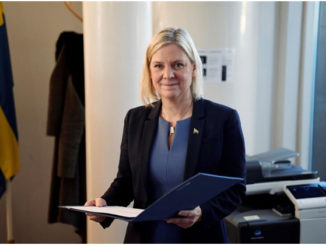
Stockholm (TIP) : Shortly after Social Democrat leader Magdalena Andersson was elected by Parliament as Sweden’s first female Prime Minister, she tendered her resignation after facing the harsh reality of having to lead a minority coalition government. Just hours after she was elected the Prime Minister on Wednesday, Parliament (Riksdag) passed the opposition’s budget proposal prompting Andersson’s coalition partner the Green Party to pull its support. This, in turn, forced Andersson to announce her resignation, reported Xinhua news agency.
November 24 events were a result of the inconclusive outcome of the 2018 elections, which led to a lengthy process of finding a government in a political landscape where certain parties do everything in their power to block their ideological opponents from having any form of influence.
In comparison, the election of Andersson was a breeze. To be elected prime minister, she only needed a majority of lawmakers in the 349-seat Riksdag not voting against her. She was backed by 117 but rejected by 174, with 57 deputies abstaining. One deputy was absent.
Andersson’s election followed an 11th-hour deal with the Left Party, which demanded a raise in pensions for around 7,00,000 of the poorest pensioners in return for not pressing the red button.
However, later in the day the ruling coalition’s budget proposal was voted down in favour of the budget proposed jointly by the Moderate Party, the Sweden Democrats and the Christian Democrats.
This came after the Center Party, which accepted Andersson as the prime minister in an attempt to shut out the anti-immigration Sweden Democrats, decided not to vote for the government’s budget proposal, as they saw the deal as too sharp a turn to the Left despite the fact that the government had also made concessions to appease the Center Party.
Andersson, who since 2014 has served as the finance minister under former Prime Minister Stefan Lofven, said that she could lead the country with the opposition’s budget, describing it as requiring only minor tweaks. However, the Green Party had a different opinion.
After the Riksdag passed the opposition’s budget, the Greens announced that they would leave the government as they could not stand behind a budget negotiated by the Sweden Democrats.
The Riksdag will now have to elect a new prime minister. The Green Party has said they would support Andersson, who in turn said she was prepared to lead a single-party government. IANS
Moscow (TIP): A fire at a coal mine in Russia’s Siberia killed 11 people and injured more than 40 on November 25, with dozens of others remaining trapped, authorities said.
Efforts to rescue those trapped in the mine were halted on Thursday afternoon because of an explosion threat, and rescuers were rushed out of the mine, administrators of the mine told the Interfax news agency.
The blaze broke out in the Kemerovo region in southwestern Siberia. Russia’s state Tass news agency reported, citing an unnamed emergency official, that coal dust caught fire, and smoke quickly filled the Listvyazhnaya mine through the ventilation system.
A total of 285 people were in the mine at the time of the incident, Kemerovo Governor Sergei Tsivilyov said on his page on the messaging app Telegram. He said 35 miners remained trapped underground, and their exact location was unknown.
Tsivilyov said in another Telegram post that a total of 49 people with injuries have sought medical assistance. He had earlier reported a toll of 60 injured people and hasn’t offered any explanation for the revision.
Earlier Thursday, Russia’s acting minister for emergency situations, Alexander Chupriyan, said 44 miners have been hospitalised with injuries. The difference in injury tolls reported by different officials couldn’t be immediately reconciled. Russia’s Investigative Committee has launched a criminal probe into the fire on charges of violating safety regulations that led to deaths.
President Vladimir Putin extended his condolences to the families of the killed miners and ordered the government to offer all necessary assistance to those who were injured.
The Russian leader on Thursday afternoon sat down for talks with his Serbian counterpart Aleksandar Vucic in the Russian Black Sea resort of Sochi, during which Vucic also offered condolences to the families of the victims. Putin noted that the situation at the mine, “unfortunately, is not getting easier.” “There is a danger to the life of the rescuers … Let’s hope that (they) will manage to save as many people as possible,” Putin said.
In 2016, 36 miners were killed in a series of methane explosions in a coal mine in Russia’s far north. In the wake of the incident, authorities analysed the safety of the country’s 58 coal mines and declared 20 of them, or 34%, potentially unsafe.
The Listvyazhnaya mine in the Kemerovo region wasn’t among them at the time, according to media reports.
The latest inspection of the mine took place on Nov. 19, Interfax reported, citing officials from Rostekhnadzor, Russia’s state technology and ecology watchdog. The report didn’t offer any details on the results of the inspection.
According to Tass, the regional branch of Rostekhnadzor also inspected the mine in April and registered 139 different violations, including breaching fire safety regulations. —AP
Mogadishu (TIP): An Islamist suicide bombing outside a school in Somalia’s capital killed eight persons and wounded 17, including 13 children, the latest in a string of deadly blasts this year in a country beset by political turmoil and drought. The bombing at around 7.30 am was claimed by al Shabaab militants, who said they were targeting a United Nations security convoy passing near the school.
A UN spokesperson in Mogadishu declined to comment. A staff member speaking on condition of anonymity said no international personnel from the UN were hurt but they had no information on whether Somali employees were hurt. — Reuters
UK MP told not to bring her 3-month-old baby to parliament chambers; shares email
Londn (TIP): British MP Stella Creasy has called for reforms to the parliament’s rule book after receiving an official email banning her three-month-old baby in the chambers.
Creasy shared the email she received. Deputy Prime Minister Dominic Raab said a baby in the chambers “certainly wouldn’t distract me or get in the way of me doing my job”.
The Speaker of the House of Commons on Wednesday announced a review of the rules around babies being allowed into the Parliament chamber after she complained she was banned from carrying her three-month-old into the House.
Opposition Labour Party’s Stella Creasy was informed it was against the rules to bring a child to a debate at Westminster Hall within the Parliament complex after doing so on November 23.
Speaker Sir Lindsay Hoyle asked the Commons Procedure Committee to look into the matter as he noted that it was “extremely important” for parents to be able to participate fully in the work of Parliament, which also has a nursery on the premises. Creasy, who took to Twitter after receiving an email informing her about the rule, has received the backing of British Prime Minister Boris Johnson on the matter.
“We completely understand the difficulties faced by MPs who are new mothers, new fathers or adopted parents and parliament has made some positive changes to becoming more family friendly in recent years, including on proxy voting,” a Downing Street spokesperson for Johnson said. “We want to make sure that all work places are modern, flexible and fit for parents. This is obviously a matter for the House. (TNS)
Lahore (TIP): A Muslim man and his three sons in Pakistan’s Punjab province have been booked under the tough blasphemy laws over an argument with a cleric who had refused to make an announcement about the funeral of a Christian neighbour from a mosque at a village bordering India.
The incident took place at Khodi Khushal Singh village, near Burki area bordering India, on November 18 and the first information report (FIR) was registered against the four men under the Pakistan Penal Code (PPC) on the complaint of a member of the mosque committee, officials said on Thursday.
The cleric alleged that asking for announcement from a mosque for a Christian deceased was an “insult to Islamic laws” besides the four men in question had allegedly also spoken against Islam.
According to the FIR, a copy of which is available with PTI, a woman visited Jamia Masjid Hashmatullah in the village and requested the cleric (prayer leader) to make an announcement from the mosque about the death of a Christian neighbour.
On this, the cleric told the woman that ‘Islam only allows to make announcements for funeral of Muslims from mosque’.
The woman went back home and told her husband about the incident.
“Her husband Umer Bakhsh and their three sons – Mazhar, Murad and Sahil – came to the mosque and questioned the Islamic laws over the matter of the announcement of funerals of Christians or non-Muslims from the mosque. They also used abusive language about the prayer leader and spoke against Islam,” the FIR says.
On the complaint of cleric Muhammad Mansha, the police registered a blasphemy case against Umer and his three sons. Three persons connected to Mansha have been made witnesses in the case.
A police team has been constituted to arrest the suspects who have gone into hiding after a case was registered against them, police officer Imran Hanif told PTI.
There has been tension among Muslims and Christians of the area after the incident and reportedly some Christian families left the village fearing for their lives.
The misuse of blasphemy laws is common in Pakistan and minorities are most vulnerable.
Aslam Pervaiz Sahotra, a Christian human rights leader, said that this is a rare incident in which a blasphemy case is registered only for seeking announcement for the funeral of a Christian man.
He demanded quashing of the FIR and provision of protection of the Christian families of the village.
Pakistan’s controversial blasphemy laws and their prescribed punishments are considered extremely severe. At least 1,472 people have been charged under the blasphemy law in Pakistan since 1987.
People accused of blasphemy are usually deprived of the right to a counsel of their choice as most lawyers refuse to take up such sensitive cases.
The blasphemy laws are colonial-era legislation but they were amended by former dictator General Ziaul Haq which increased the severity of prescribed punishments. —PTI
Berlin (TIP): Three German parties have reached a deal to form a new government that will end the era of longtime Chancellor Angela Merkel, according to Olaf Scholz, who is poised to replace her. Scholz, of the center-left Social Democrats, said he expects that members of the parties will give their blessing to the deal in the next 10 days. At a news conference, Scholz and other leaders gave some indications of how the coalition would govern. Among the first measures agreed: compulsory vaccinations in places where particularly vulnerable people are cared for, with the option of expanding that rule. — AP
Colombo (TIP): A ferry with 20 people board capsized in eastern Sri Lanka on November 23, killing at least six students, the Navy said. Six students drowned while 17 others survived by swimming at Kinniya’s Kurunnankenni village as they were travelling to attend school, the Navy said.
At least 3 more students were among the 17 who survived.
The Navy said it has commenced a dedicated rescue mission to locate the missing persons deploying rescue teams representing Rapid Action Boat Squadron (RABS), Special Boat Squadron (SBS), Marines and Divers and operations are underway to search missing persons, it said.
About 20 people were on board at the time of the accident.The ferry was travelling from Kurinchakeni to the town of Kinniya along the country’s eastern coast. It was in operation due to the construction delays of the new bridge being built in the area, the residents said.
The angry villagers conducted a protest opposite the government secretariat there.
The Naval search operations are underway to find people believed to be missing, the Navy added. PTI
Rome (TIP): National Geographic magazine’s famed green-eyed “Afghan Girl” has arrived in Italy as part of the West’s evacuation of Afghans following the Taliban takeover of the country, the Italian government said on November 25.
The office of Premier Mario Draghi said Italy organised the evacuation of Sharbat Gulla after she asked to be helped to leave the country. The Italian government will now help to get her integrated into life in Italy, the statement said.
Gulla gained international fame in 1984 as an Afghan refugee girl, after war photographer Steve McCurry’s photograph of her, with piercing green eyes, was published on the cover of National Geographic. McCurry found her again in 2002.
In 2014, she surfaced in Pakistan but went into hiding when authorities accused her of buying a fake Pakistani identity card and ordered her deported. She was flown to Kabul where the president hosted a reception for her at the presidential palace and handed her keys to a new apartment.
Italy was one of several Western countries that airlifted hundreds of Afghans out of the country following the departure of US forces and the Taliban takeover in August. AP
Colombo (TIP): Sri Lanka’s former police chief Pujith Jayasundera was on November 22 indicted with 855 charges of criminal negligence for failing to act despite receiving prior intelligence warnings in the 2019 Easter Sunday terror attack that killed nearly 270 persons, including 11 Indians. The Attorney General read out the charges when the case was taken up before a three-judge High Court bench comprising Justices Namal Balalle, Aditya Patabendige and Mohamed Irshadeen. A total of 855 charges of criminal negligence were levelled against Jayasundera, who pleaded not guilty. Jayasundera was present in the courtroom when the charges were read out against him in the case, which has over 1,200 witnesses, lawyers said. His lawyers insisted the former Inspector General was not guilty of ignoring prior intelligence. Former defence secretary Hemasiri Fernando, who was a key member in the defence ministry when the attack took place in April 2019, also faces similar charges. Jayasundera and Fernando were suspended from service and arrested in connection with the case. However, they were later released on bail.
Both were accused by the then President Maithripala Sirisena for negligence over alleged inaction to prevent attacks despite the availability of prior intelligence on the attacks. — PTI
SINGAPORE (TIP): A 26-year-old Indian-origin man was on Monday sentenced by a Singapore court to eight years of corrective training and 24 strokes of the cane for supplying weapons, including a baton and a samurai sword, that were used in a serious slashing incident in 2018. Arjun Retnavelu was also sentenced to an extra 360 days in jail for reoffending while on remission, TODAY newspaper reported. The court sentenced Arjun to eight years of corrective training. He was also sentenced to 24 strokes of the cane, the paper said. Corrective training is a more serious form of imprisonment imposed when a court finds that an offender needs training of a corrective character for a substantial period. It usually lasts between five and 14 years, and the offender is unlikely to be given early release for factors such as good behavior. Arjun pleaded guilty to several serious charges, including rioting with a deadly weapon, being a member of an unlawful assembly, carrying offensive weapons in public places, voluntarily causing grievous hurt by dangerous means and using criminal force on a public servant.
Deputy Public Prosecutor (DPP) Timotheus Koh told the court that Arjun had a “history of conflict” with the victim, Dhines Selvarajah, another Indian-origin man who is now 30. Aside from Arjun, four other people were involved in the slashing that happened in broad daylight along Serangoon Road on July 25, 2018. They spotted Dhines sitting at a bus stop opposite Broadway Hotel on Serangoon Road. Wanting revenge against Dhines, Arjun asked Dinesh Kumar Ruvy, who was at the wheel, to stop at the side of the road and open the car boot. Armed with a samurai sword, baton and chopper provided by Arjun, the group set themselves upon Dhines. He suffered serious injuries that included a partial amputation of his foot and deep cuts. The weapons have since been seized. Apart from the incident on Serangoon Road, the court heard on Monday that Arjun had a hand in several other offences. One of these cases happened on December 15 in 2018, months after his arrest for the incident along Serangoon Road. In this case, Arjun had been interfering in the arrest of two other people for disorderly behavior, despite being warned by the police not to get involved. Court documents stated that at some point, Arjun grabbed a police officer’s hand and refused to let go. When the officer tried to arrest him, he pushed the officer on the chest twice and shouted vulgarities at him, claiming that he was from the “Ang Soon Tong” Triad Society, according to the paper.
CHICAGO (TIP): Dr. Suresh Reddy, an Indian American neuro interventional radiologist and a past president of the American Association of Physicians of Indian Origin (AAPI), has assumed charge as the president of Indian American Medical Association, Illinois.
“I would like to stand on the top of shoulders of 39 Past Presidents so I can see farther,” said Dr. Reddy as he took charge during a colorful ceremony held in Oakbrook, Illinois on Nov. 13.
“As the president, one of my main goals is to revitalize local chapters that are the backbone for the national organization; help make the local chapters financially viable as funds have dwindled due to pharma support; and to bring in younger physicians into the fold,” he said.
The ceremony was attended among others by Consul General of India in Chicago, Amit Kumar, US Congressman Raja Krishnamoorthi, Illinois State representative Deanne Mazzochi, Dr. Ranga Reddy, past president of AAPI and Dr. Satheesh Kathula, secretary of AAPI, according to a media release.
Crediting his track record of almost six years as a foot soldier in IAMA, as it has laid the foundation for the upcoming year, Dr Reddy outlined his theme: “Ask what you can do for IAMA, and not IAMA can do for you.”
Dr. Reddy’s new executive committee: Dr. Piyush Vyas, president; Dr. Radhika Chimata, secretary; Dr. Dilip Shah, secretary-elect; Dr. Meher Medavaram, treasurer; Dr. Rajeev Kumar, treasurer-elect. The new committee chairs include Drs. Aparna Natarajan, Srilatha Gundala, Tapan Parikh, and Neetha Dhananjaya.
Dr. Reddy was educated, trained, and board certified in neuroradiology, interventional radiology and interventional neuroradiology at Beth Israel Deaconess Medical Center and Harvard Medical School, Boston, Massachusetts,
He has served as the chief of interventional neuroradiology at Beth Israel Deaconess Medical Center and on faculty at Harvard Medical School for almost a decade.
Dr. Reddy has been involved in the highly specialized techniques and art of treating aneurysms and strokes in the brain. He is also extensively trained to perform complex procedures in the most inaccessible regions of the spine.
Author of many international medical journal articles, Dr. Reddy has traveled extensively, giving specialty lectures on the complex procedures that he does. Active in teaching and mentoring many medical students and residents, Dr. Reddy has received numerous teaching and mentoring awards. He is a four-time recipient of “Faculty award for excellence in teaching” awarded by the Harvard medical students and residents.
Dr. Reddy MD, MHM (Health Management and Policy) completed his medical education in India at Kakatiya/Osmania Medical Colleges, before immigrating to the United States. He currently serves as the chief of radiology at Hines Medical Center, and associate professor of radiology at Loyola Medical Center in Chicago. Dr. Reddy resides in the Chicago area with his wife Leela and son Rohun. He is currently a Trustee of the Village of Oak Brook, Lead of chiefs of radiology for the states of Illinois and Wisconsin Veterans Administration. IAMA-IL is a non-profit organization comprised of Illinois physicians, fellows, residents, and medical students of Indian origin.
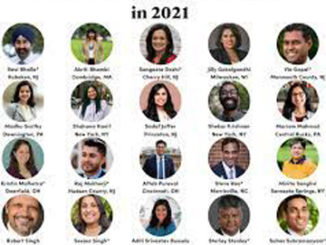
WASHINGTON, D.C. (TIP): As many as 20 South Asians, all but a couple of them Indian Americans, won in the November polls pulling off several historic victories from school boards to state legislatures. “We are thrilled to share that 20 of our endorsed candidates won their elections last month,” Neil Makhija, Executive Director of Indian American Impact, a leading community organization stated. “Many of them defied national trends and pulled off historic victories, building our community’s political power and representation in public service,” he said noting, “Ten (50%) of our winning candidates were women and eleven (55%) were challengers, elected to office for the first time.” “They will all be powerful advocates for their respective communities and give a voice to many that have been traditionally left out of the conversation,” Makhija said.
Six of the South Asian victories came in New Jersey, three each in New York and Pennsylvania, two in Ohio and one each in North Carolina, Massachusetts, South Carolina, Tennessee, Virginia and Wisconsin. Among the key victors were Aftab Pureval who won his election for Cincinnati mayor, becoming the first Indian American Mayor elected in Ohio. Shekar Krishnan, became the first Indian American elected to New York City Council with Shahana Hanif, the first Bangladeshi and Muslim woman elected to New York City Council. Dr. Aditi Srivastav Bussells won her election for Columbia City Council, becoming the first Indian American woman elected to municipal office in South Carolina. Akriti Bhambi, became the first AAPI school board member elected in Cambridge, Massachusetts. In New Jersey, Ravi Bhalla, who was elected State’s first Sikh mayor in 2017 won his second term in Hoboken unopposed. Vin Gopal was reelected to state Senate in Monmouth County, while Jabalpur born Sangeeta Doshi was reelected to Cherry Hill Township Council. Sadar Jaffar, daughter of a Pakistani mother was elected from Princeton to become the first female South Asian mayor in New Jersey and the first female Muslim mayor in the state. Raj Mukherji and Sterley Stanley were reelected to the state assembly from Hudson County and Edison (East Brunswick) respectively.
In New York state, besides Krishnan and Hanif, Minita Sanghvi, was elected City Council Commissioner of Finance in Sarasota Springs. In Pennsylvania, Madhu Gurthy, Robert Singh, and Dr. Mariam Mahmud won School Board elections in Downington, Tredyffrin, andCentral Bucks respectively.
In Ohio, besides Pureval, Kristin Malhotra was reelected Township Trustee in Deerfield.
In North Carolina, Steve Rao was reelected to Morrisville Town Council. In South Carolina, Aditi Srivastav Bussels was elected to Columbia, City Council. In Tennessee, Seema Singh was reelected to Knoxville City Council. In Virginia, Suhas Subramanyam was reelected to House of delegates in Loudoun County. In Wisconsin, India born Jilly Gokalgandhi was elected School Board director in Milwaukee.
“While not everyone was elected, we are so thankful to the dozens of talented and hard-working candidates who ran for office this year. We hope they too will run again,” Makhija said noting Impact is already working on its 2022 slate.
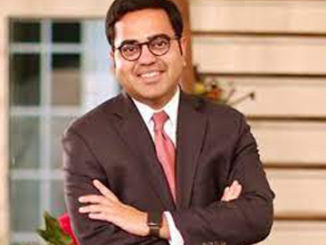
EDISON, NJ (TIP): Ishan Shah, government affairs manager at Quest Diagnostics, has become president of the New Jersey Leadership Program (NJ Lead) that seeks to encourage South Asian youth in the state to get involved in public service, government and politics. Shah, who previously served in the office of the then New Jersey governor Chris Christie and as chief of staff to New Jersey assemblyman Kevin Rooney, will succeed Amit Jani, according to a press release. “I thank Amit and the NJ Lead team for building such an incredible program and I am glad to be able to take over during a time of great interest and success in political engagement within the South Asian community,” said Shah. “It has never been more important to get the young people more involved. NJ Lead through its Summer Fellowship Program seeks to develop the next generation of South Asian political leaders.”
Jani was an original co-founder of NJ Lead and served as its president since its inception in 2015. He previously served as the National Asian American Pacific Islander (AAPI) Director for President Joe Biden.
“We are incredibly proud of helping to start this program with the help of a village and that we have had close to 60 alumni of South Asian descent in New Jersey graduate from our program over the past six years, many of whom decided to continue in public service,” said Jani.
“This new leadership will help to bring in fresh ideas and initiatives, helping NJ Lead to continue developing into the premier program it has become,” he said.
Jani will continue serving as a board member. Meet Patel, who currently serves in New Jersey Governor Phil Murphy’s Administration for the Office of Intergovernmental Affairs becomes the new vice president.
Kunal Papaiya, a co-owner and general counsel of USA Wine Traders Club, takes over as general counsel.
Darshan Jha, currently an aide to Senator-elect Jean Stanfield as well as outgoing Assemblyman Ryan Peters in New Jersey’s 8th Legislative District, and Aadi Kulkarni, NJLP Alumni Board chair, will join as board members.
NJ Lead plans to open applications for the 2022 Summer Fellowship Program on Dec. 1. More information about NJ Lead and its 2022 Summer Fellowship Program can be found at www.njlead.org.
SINGAPORE (TIP): An Indian-origin man in Singapore has been sentenced to 10 months and four weeks in prison for performing a sex act on a minor. P Asokan Pappu Pachan, 57, pleaded guilty to a charge of causing a minor to sexually penetrate him with a sex toy and of sending her obscene films on Telegram. Another two charges of possessing obscene films and sexual penetration of a minor were considered in sentencing, Channel News Asia reported. Pachan met the 15-year-old girl online and arranged to meet her for sexual activities in exchange for money. She lodged a police report after accepting Singapore dollars 250 from the man in exchange for performing a sex act on him with a sex toy. The court on Friday heard that Pachan came to know the student on a chat application. He asked the victim if she was working or schooling. When the victim said she was studying, Pachan replied that they would have to be “very discreet”. “Enticed by the monetary reward, the victim accepted the offer,” the report quoted the prosecutor as saying in the court.
She complied with Pachan’s request for a photo of herself, with a close-up of her face, and the accused said he would book a hotel. On September 1, 2020, he met the victim and they tried to enter two hotels. However, they were unable to get a room at both places, as they could not present the victim’s identity card.
They got to his home where they engaged in sexual activities. Pachan gave the girl the money and she left. Later that same day, she lodged a police report saying she was paid for sexual activities.
The prosecutor sought at least 11 to 13 months’ jail term, saying the victim was 14 at the time of sex engagement and Pachan was 56. By virtue of her young age and “inexperience in life”, sentencing principles for such minors are protective, she said. There was a large age gap of 41 years between the offender and the victim, and the victim’s consent here “is irrelevant as the law was designed to protect minors due to their immaturity”, said the prosecutor.
Defense lawyer asked instead for not more than 10 months’ jail, saying his client “deeply regrets his actions”.
“My client did not deliberately seek out minors on the app for sexual gratification or conduct. On the contrary, as an aged, unmarried bachelor, he was lonely and seeking intimacy. At best, this was a case where he gave in to lust and temptation,” he said. He asked for leniency, saying the accused had a stroke this year and has other medical conditions such as diabetes and hypertension. The judge allowed Asokan to begin his jail term in December, so he can serve out his notice period at work and sort out matters relating to his property as he lives alone, the report said.
On her maiden visit to Asia, U.S. Trade Representative Katherine Tai held bilateral meetings with Commerce and Industry Minister Piyush Goyal and relaunched the U.S.-India Trade Policy Forum (TPF). A lot has transpired in the Indo-U.S. economic partnership in the four years since the TPF was last convened — from machinations towards a free-trade agreement to the failure to even reach a mini-trade deal towards the latter half of the Donald Trump administration days. Instead of progress, there were setbacks, including raised import tariffs and the withdrawal of benefits to Indian exporters under the U.S.’s Generalized System of Preferences (GSP) which triggered retaliatory trade barbs. That marquee American businesses (Harley-Davidson and Ford) have left India has not helped optics, even if their motivations may not have been solely linked to difficult trade norms. With the Joe Biden administration shutting the door on new trade pacts and being cold to restoring the GSP status, India must be ruing the hard stances that scuttled the chances of sealing a deal in the Trump era. Ms. Tai’s visit offers a fresh reset chance. GSP restoration, she has said, could be considered, while nudging India to set targets for tariff reductions and easing market access across sectors. The TPF statement also outlines the sectors and goods and services that need quick attention. Whatever misgivings may have existed at the beginning of the Biden administration, Ms. Tai’s visit, that follows trips by key U.S. Secretaries, indicates U.S. interest in engaging with India in significant spheres. That it looks at India as a key partner in rebuilding critical supply chains in a post-pandemic world seeking to cut its dependence on China, is clear from its desire for integration in areas such as health, medical devices and pharma. India’s pharma exports account for 40% of the U.S.’s generic drugs supply and Ms. Tai has assuaged its concerns about delays in U.S. regulatory inspections of pharma units. Her plain-speaking that Indo-U.S. trade never really lives up to its potential and references to India’s unpredictable regulatory shifts, tariff- and non-tariff barriers as her priorities, suggests these talks have begun from a place more grounded in realism. This should serve as a wake-up call for the Government about its trade posture and spur a more open approach towards a market that will remain the most critical, irrespective of the trade deals it is seeking with other nations. While America’s stance on India’s proposal on IPR waivers for the COVID-19 vaccine and medicines will be watched at the upcoming WTO ministerial, India must seize this fresh initiative with the U.S. to cement its place in the new supply chains being envisaged. For starters, it must pro-actively steer away from the protectionism that is leading the globalized world adrift.
TMC is encroaching on the Opposition space at the national level as Mamata eyes a larger role
West Bengal Chief Minister Mamata Banerjee’s national ambitions are intriguing and daring. Soon after she led the Trinamool Congress (TMC) to a stellar victory in the Assembly election earlier this year — third time in a row — she set out on an extension scheme, though no coherent strategy is apparent. There is indeed a personal factor — she was savagely targeted by the BJP during the election. She triumphed over the BJP, still struggling to evolve a suitable politics for its Bengal foray, but it appears that the score was not settled. Ms. Banerjee had sensed the emerging confrontation between her politics and the BJP’s early on. In January 2019, she assembled leaders of 23 Opposition parties at a public meeting at Brigade Parade Grounds in Kolkata, where they pledged to defeat the BJP. Her victory over the BJP was conclusive, but the BJP is waiting in the wings to unseat her, having grown to about 70 seats in the Assembly from three in 2016. The Trinamool leader claims she is trying to take the fight to the enemy, her focus right now being Tripura and Goa, where the BJP is in power. There is a large Bengali population in Tripura, and the BJP is unnerved. In both States and beyond, the TMC is recruiting disgruntled leaders from other parties and free floaters.
The party is driven by Ms. Banerjee’s charisma rather than an ideology. The TMC has swung both ways — alternating between the BJP and the Congress in the past. The Bengal government run by the party does not shy away from celebrating the anniversary of Shyama Prasad Mookerjee, the founder of Jana Sangha, as a proud son of Bengal. Though the edge of her politics is anti-BJP at the moment for strategic considerations, it is the Opposition parties, particularly the Congress that is paying for her expansion spree. Between 2011 and 2021, the entire rank and file of the Congress shifted to the TMC in West Bengal, and the story is being repeated now in other States. On Wednesday, 12 of the 17 Congress MLAs in Meghalaya joined the TMC. Sushmita Dev and Luizinho Faleiro, defectors from the Congress, are central to the TMC plans in Tripura and Goa, respectively. The induction of Ashok Tanwar, a former Congress MP from Haryana, and a Dalit, may signify a broader plan for the Hindi States. Dalit politics is at a crossroads in the heartland as the BSP is facing extinction, and there is vacuum to be filled. Ms. Banerjee has been outspoken on questions regarding federalism, and the Centre’s unilateralism that undermines it. Whether all this is sufficient to catapult the TMC as the axis of anti-BJP politics nationally is an open question. At the moment, the TMC challenge is less to the BJP and more to the Congress.
“Though the agitation had nothing to do with Sikhs or Sikhism, yet the larger participation of Punjab farmers, who are mostly Sikhs, and the whole hearted support from various democratic organizations the world over, provided a lever to a strong vocal section of the ruling Bharatiya Janata Party, especially its IT Cell, to dub the peaceful agitators as “separatists”, “Khalistanis”, naxalites” or even “Maoists”. Even some Union Ministers were not far behind in heaping these allegations.”
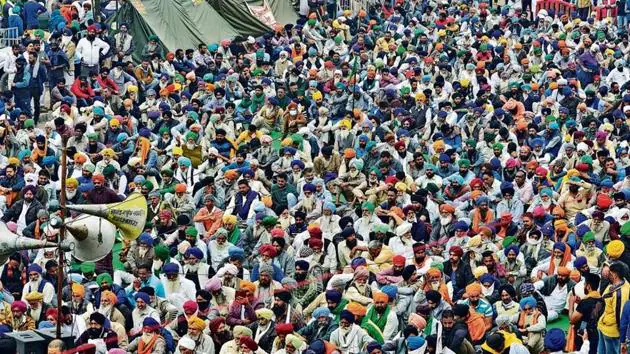
A massive and unprecedented agitation, exemplified by the unity and discipline of the agitators, forced the might of the majority government of the biggest democracy of the world to relent and take back the three controversial Farm laws. Besides there was an apology to the nation by the Government for not being able to convince the benefactors, the farmers, the real intent of these legislations.
The farmers, owing allegiance to the Samyukt Kisan Morcha (SKM) – an umbrella organization of 40-odd Kisan Unions – were understandably jubilant and cautious in assimilating the congratulatory retreat of the State. The farmers felt that the battle has been won but war of attrition would continue until their sworn demand of getting legal sanctity to the Minimum Support Price (MSP) was accomplished.
The agitation that started on November 26 at the Singha barrier on the outskirts of Delhi has already devoured 669 lives. The Samyukt Kisan Morcha (SKM) now wants a memorial to keep alive their sacrifices.
Dramatic turn of events on the Parkash Utsav of the founder of Sikhism, Sri Guru Nanak Dev Ji, not only came as a pleasant surprise for the agitators but also to the rest of the world as till that day there was no indication of asolution to the nearly year-long struggle for repeal of “Black Laws”.
The announcement held an emotional appeal for Sikh farmers as Sri Guru Nanak Dev ji spent last 17 years of his life as a farmer at Kartarpur Sahib in Narowal district, now in Pakistan. Reopening of the Sri Kartarpur Sahib corridor was also an additional softening factor.
Those who followed this agitation religiously link the November 19 unilateral announcement by the Prime Minister Narendra Modi to the earlier important events of the Sikh history.
On December 20 last year, a surprise visit of Prime Minister Modi to Gurdwara Raqabganj in New Delhi to pay obeisance to the ninth Sikh Guru, Sri Guru Teg Bahadur, was probably intended to assuage the hurt feelings of the Sikh community over the unsavory comments made by his party leaders during the ongoing stir. It was probably the time when the idea to repeal the Farm Laws germinated and took 11 months before culminating into a historic pronouncement for which even the consent of the Union Cabinet was overlooked. Even on the birth anniversary of Sri Guru Gobind Singh Ji in January this year, rapid developments had the Prime Minister on the verge of making a decision. The post-Independence history is punctuated with examples where farmers agitated peacefully and forced the State to concede their demands. Memories would still be fresh in the minds of those who witnessed the week-long siege of Punjab Raj Bhavan in 1984.
Farmers argue that agriculture was not a profession but a way of living and allowing its takeover by the corporates would sound its death knell. They maintained that if the laws had been made for their benefit then why they were not consulted or taken in confidence while drafting them.
Leading the agitators were some seasoned leaders. And one of them of the 1984 vintage, Balbir Singh Rajewal, who still holds the reins of the farmers movement in the country, while others in command, including Rakesh Tikait, have been second generation leaders. Leadership played a stellar role in keeping the agitators together, peaceful and disciplined even while negating the State moves to divide them.
The historic triumph of people’s struggle against a stubborn Government is not without its wide political ramifications as it propels a new phase of politics that may augur well for the future of democracy in the country.
Elections to five States, including Punjab and Uttar Pradesh, are due early next year. And the stakes for the ruling BJP are very high, especially in Uttar Pradesh and Uttarakhand. Though the agitation had nothing to do with Sikhs or Sikhism, yet the larger participation of Punjab farmers, who are mostly Sikhs, and the wholeheartedsupport fromvarious democraticorganizations the world over, provided a lever to a strong vocal section of the ruling Bharatiya Janata Party, especially its IT Cell, to dub the peaceful agitators as “separatists”, “Khalistanis”, naxalites” or even “Maoists”. Even some Union Ministers were not far behind in heaping these allegations.
One of the major casualties of this agitation has been the oldest political alliance between Shiromani Akali Dal and the Bharatiya Janta Party. After reorganization of the State in 1966, BJP had been playing junior partner to the SAD in contesting 23 of 117 Assembly seats of the State Legislature.
Now it wants to contest all 117 seats on its own unless it gets into a new alliance with a new political outfit – Punjab Lok Congress – of the displaced Punjab Chief Minister, Capt Amarinder Singh.
How the master stroke played by Prime Minister Modi to appease Sikhs works in the ensuing assembly elections will be watched with bated interest as a semi-final to the 2024 general elections.
Interestingly, the farmers refused to be lured by any politician or any political party and succeeded in keeping their agitation apolitical. Realizing that the elections were round the corner, the farmers resorted to aggressive tactics of opposing the BJP leaders space to campaign in Punjab, Haryana and western UP by resorting to ‘gherao’ of local leaders and state Ministers during their constituency or official visits.
The BJP’s image suffered a major setback after protests in Lakhimpur Kheri resulted in the death of seven people leading to the arrest of the son of a Union Minister. The Supreme Court had to intervene by ordering a judicial probe into the incident. With farmers also insisting on sending delegations towards Parliament, the situation could have stirred the cauldron of protest further. The immediate task before the SKM, that held a mahapanchayat in Lucknow on November 22, is to get its six demands conceded by the government. Besides the legal guarantee for minimum support price, the farmers are demanding the removal of Union Minister of State for Home Ajay Mishra, whose son is an accused in the Lakhimpur Kheri violence, withdrawal of cases against farmers, building a memorial to the protesters who lost their lives during the agitation and withdrawal of the Electricity Amendment Bill.
(The author is a senior journalist. He can be reached at prabhjot416@gmail.com)
“There is an urgent need for honest journalism to speak the truth to power in India and within the Diaspora. The primary function of journalism is to connect, inform and educate the public. Unless the media stands firm and refuses to be stifled and intimidated, there is very little hope in preserving freedom and justice and demanding accountability from power centers. The Indian ethnic press in the U.S. bears an even bigger responsibility in creating open space and helping to stop the spread of division and hatred within the community. Anything less would be tantamount to a total abdication of their moral responsibility to the public!”
In a recent exchange with a leading publisher of an ethnic Indian newspaper, I inquired why he hasn’t carried a news item on the Indian Americans protesting before the United Nations where Prime Minister Modi was addressing the General Assembly. The answer came swiftly back in a query whether the demonstration was anti-India! I responded in kind, saying protesting Modi policies does not constitute taking an anti-India stand. Unfortunately, that is the sad reality that the ethnic Indian media has fallen into.
A respected journalist recently told me that management chastised him for inviting me to an election debate before the 2019 elections in India to present an opposing point of view to the policies promoted by OFBJP leaders. Obviously, the forces who have taken control of the ethnic Indian media business using their money power, are under no illusion that there is a certain requiem in journalistic tradition to honor a diversity of points of view.
These forces do not misunderstand the role of the media, but rather, they appear to be deliberate in their efforts in promoting a particular agenda to influence the Diaspora in the U.S. Often, their agenda regarding India runs counter to the values and principles the United States holds dear, and oaths taken by many of them when they renounced their Indian citizenships.
Media which is also dubbed as ‘fourth estate,’ refers to the watchdog role it plays in a functioning democracy. In the United States, the first amendment to the constitution ‘frees’ the press from government control or oversight. However, that freedom carries with it great responsibility as a guardian of people’s interests. There is no doubt that the ethnic Indian media must be held under the same standard dealing with issues of concern to them, whether that happens in the U.S. or India.
‘Godi Media’ is a term coined by journalist NDTV’s Ravish Kumar, translating to “lapdogs’ because they “sit in the master’s lap, but they don’t’ bite as much as they yap”. The New York Times reported that “Modi has shrewdly cultivated the media to build a cult of personality that portrays him as the nation’s selfless savior.” Government officials appear to be complicit in controlling the media narrative, cutting government advertising, and ordering tax investigations on outlets that do not toe the line. The corporate ownership of the media has enabled these power centers to remove the editors and journalists they disagree with. According to reporters without borders, India is now ranked 142nd on the global press freedom index, with censorships and disinformation on the rise. Consequently, the current administration has succeeded in mostly controlling the narrative of the national discussions. Although the Diaspora is well-positioned to tap into as many available sources, including social media, Indian ethnic publications play a major role in disseminating news and information that directly impact the community. The community leaders rely on them greatly to promote events and celebrate various festivals.
According to the latest U.S. census, the Diaspora may account for five million Asian Indians who have come to these shores in the short span of the last five decades. If one looks at the demography based on religion, there is an even split between the number of Hindus and Non-Hindus who have settled down across the continent. Most Hindus profess to support democratic and pluralistic ideas and are opposed to a Hindu Rashtra for India. How, then, did we end up with a pro-Hindutva media that promotes the philosophy of V.D. Savarkar rather than of Jawaharlal Nehru. It is puzzling why the Indian Diaspora is nota vocal defender of freedom, democracy, and fraternity as it is the largest group of economic refugees living around the globe seeking fairness, justice, and equal opportunity. We do aspire for religious freedom wherever we live and promote our culture and cuisine at every opportunity. At this point in time, we are indeed delighted to see that a few leading Congressmen in the House of Representatives are submitting a resolution to make Diwali a federal holiday. However, when Prime Minister Modi renamed ‘Good Friday’ into Digital Day and ‘Christmas day’ into a working day for the federal government in a country where Christian history dates to the turn of the first century, it was met with deafening silence on the part of the Diaspora as well as the media.
The recent government action canceling the OCI cards of some who have participated in protests supporting the farmers of India is a case in point where the media, except for a handful of courageous editors, has gone AWOL. Some media outlets who would make such a hue and cry at the slightest provocation against Indians in terms of verbal attacks or disrespecting a religious symbol would easily turn a blind eye towards serious violations of human rights and religious freedom in India. This duplicity is not only protecting the perpetrators of those crimes but also undermining the very concept of the shared value system of these two democracies.
The non-resident Indians have a long history of expressing their opinion in support or opposition to the government’s policies of India as they have felt it as an obligation to help those they have left behind. That partnership has brought educational enlightenment and scientific advancement to a country in dire need of capital and technological skillset. Looking back in history, the Diaspora had vehemently disagreed with the government on occasions, such as the declaration of Emergency by then Prime Minister Indira Gandhi. The voice of its dissent reverberated across the globe, even resulting in sanctions against NRIs. If the Diaspora is counted on only to bring in the dough and then shut up, that partnership would soon vanish in the thin air. In a recent conference in Chicago by a group of media personnel, the visiting journalists were reported to have voiced their displeasure with the Modi government trying to control the narrative in explaining its various policies to the public. However, the discussion should have been focused on how the Indian ethnic media here in the U.S. has mostly failed to uphold the basic journalistic principles by blindly following the whims of a regime with very little tolerance for freedom of expression. If one examines the case of prime Minister Modi’s recent visit to the U.S., the following scenario will become evident to any keen observer of the US-India relationship. It appears that Modi was not accorded a warm reception in Washington, and the symbolism was not lost on anyone. There was neither a senior member of the U.S. government to receive Modi nor was the ceremonial carpet laid out for him as he set foot in the U.S. He was also treated as a problem child by Kamala Harris, the first Asian Indian Vice-President ever to hold the office, who lectured him on the need to protect democracy. Then he met with President Biden, where a low-level U.S. official received him to the oval office and the same official escorting him back to his limousine. One needs to go back to the pages of history to see how Indian prime Ministers were received to understand the contrast fully. However, suppose one reads the Indian ethnic media, an entirely different picture is painted with throngs of people waiting for him at every turn, with a little hint of getting a cold shoulder from the top brass in the U.S. during the visit.
ASIANET may be the most popular channel in Kerala for news and analysis. However, their U.S. outfit behaves as if they owe their allegiance somewhere else. The sentiment of most of the Kerala community in the U.S. that believes in pluralism and democracy rarely gets reflected on their news reporting, often obfuscating their real concerns as regards the regressive policies of the Modi administration and its real impact on the lives of their fellow citizens. They prefer to have the video clips filled with ‘feel good’ events rather than showing visuals of hundreds of members of the Diaspora in front of the U.N. demanding fair treatment for the farmers in India!
There is an urgent need for honest journalism to speak the truth to power in India and within the Diaspora. The primary function of journalism is to connect, inform and educate the public. Unless the media stands firm and refuses to be stifled and intimidated, there is very little hope in preserving freedom and justice and demanding accountability from power centers. The Indian ethnic press in the U.S. bears an even bigger responsibility in creating open space and helping to stop the spread of division and hatred within the community. Anything less would be tantamount to a total abdication of their moral responsibility to the public!
(The author is a former Chief Technology Officer of the United Nations and Vice-Chairman of the Indian Overseas Congress, USA. He can be reached at gta777@gmail.com)
Amid burning social issues, the farm laws repeal may not aid the BJP, while the Congress and AAP are in a tight contest
By Parakala Prabhakar
“Electorally, the Congress and AAP are in a tight contest, with a slight edge for the ruling Congress at the moment. The one who commits less errors will have more chances of winning. However, mistakes of AAP and the Congress do not have equal potential for damage. AAP’s mistakes are likely to be less damaging to it. Whereas even small mistakes by the Congress can drastically swing the mood of the State in favor of AAP which is seen as an alternative that deserves a chance. When they return home from the agitation, the mood of Punjab’s highly networked and well-informed farmers can be a clincher.”
Punjab is restless. It is in pain. It feels let down by the State’s politics, its leaders and political parties. A sense of its political alienation from Delhi is palpable. It desperately wants to trust somebody. It is looking for that somebody. Perhaps it also knows, at the back of its mind, that there is hardly anybody it can depend on. And that finally, when the time comes, it has to choose a political platform that is less undependable, and unwillingly settle for it for the next five years. Price rise, drug menace, joblessness, farm laws, fall in incomes, increase in thefts, lawlessness, insult to sacred text cause anguish to its people. What is more painful to them is the perception that its political leaders and successive governments are indifferent to these issues. There is hopelessness in the young of the State. Even in tiny villages, the walls have the screaming advertisements of agencies that offer visa and immigration help to Canada and Australia. So too for institutes that coach students for the International English Language Testing System (IELTS) tests.
Meeting a cross-section
A few short months before the elections to the State Assembly, this is the mood of the State that I gathered after a 10-day intensive tour. I clocked about 2,000 kilometers, traversing the three main regions of the State — Malwa, Doaba and Majha. I met over 500 people representing almost all sections of society: men and women, in villages and towns, the rich and the poor, the young and the old, farmers, laborers, the unemployed, students, employees. Some individually and some in small groups. They were all surprisingly forthcoming in expressing their views and generous with their time. I also had long conversations with academics in universities and research institutes. I deliberately avoided meeting political party leaders.
Impact of farm laws rollback
On the morning of the last day of my travel came the unexpected announcement by the Prime Minister declaring his intention to repeal the three farm laws. The immediate reaction of the man on the street was one of jubilation. However, I could not find signs of an abatement of anger against the Prime Minister, his party, and the Union government.
In Punjab, the repeal announcement is unlikely to fetch the Bharatiya Janata Party (BJP) political dividends. The anger is intense; the wound, raw. In many conversations the Prime Minister was referred to less than respectably. The recent reopening of the Kartarpur Sahib Corridor has not generated the kind of goodwill the State BJP leadership has expected. As things stand today, the BJP has little or no chance of being in the reckoning in the coming elections. The Shiromani Akali Dal is viewed with suspicion because of its association with the BJP. The Akali Dal’s quitting the National Democratic Alliance over farm laws has not helped the party recover its lost political ground. Its panthic support base too is unhappy on account of the party’s inaction in the case of tearing off pages from the holy book, the incident known as Bargari Kand. The Akali Dal government did not bring the culprits to book. Instead, it is seen as the government that fired on those who protested against the desecration. A large number of devout Sikhs are yet to forgive the party for the deaths of two people in the firing. Many who voted for the Akali Dal in the last Assembly elections intend to move away from it this time. There is a strong indication of a further erosion of its support base. Those who intend to remain with it lack passion and continue to extend support without enthusiasm.
Gauging the Congress
There is a widespread feeling that the Congress government under Captain Amarinder Singh did not deliver on its promises. Two things are held against the former Chief Minister. First, that he did not fulfil the promise he made to curb the menace of drugs. The fact that soon after he took office, he swore on the Gutka Sahib, the Sikh holy book, to assure the people that he would eliminate the drug menace and yet failed to take resolute action has earned him the wrath of the public. Second, he is seen as an inaccessible leader. Punjab is in no mood to indulge the Maharaja this time. Association with him adds no political value to the BJP even after the repeal of the three farm laws. Punjab refuses to see the Union government’s climbdown on the farm laws as anything but a victory for the agitation. And surely not as the Prime Minister’s generosity or an outcome of Captain Amarinder Singh’s pressure on the Union government. In the event, the yet-to-be-registered political party of the former Chief Minister is likely to be stillborn.
AAP’s prospects
The recent significant political development in Punjab is the replacement of Captain Amarinder Singh with Charanjit Singh Channi as the Chief Minister. The move, undoubtedly, has implications for the electoral fortunes of the Congress. By extension, it also is likely to impact the prospects of the Aam Aadmi Party (AAP). Until the change of guard, AAP has seen a huge surge in support. The State was disillusioned with the Congress government under Captain Amarinder Singh. In fact, the opinion that the Captain, the top leadership of the Akalis and the BJP’s central leadership are working in league has gained ground. Therefore, the Congress under Amarinder Singh was seen to be as unelectable as the Akali Dal and the BJP are. The sections who preferred the Congress to the Akali-BJP combine in the last polls began their shift to AAP. They wanted to give the untested party a try. That accounts for the massive surge in AAP’s support before the new Chief Minister, Mr. Channi, took over. With the change of guard, however, those sections are having second thoughts. It is evident that some of those sections are on their way back to the Congress. The change of guard maneuver has blunted the sharp edge of anti-incumbency to some extent. There is one remarkable thing in the political conversation in Punjab. Mr. Channi has managed to become a household name in a short time. He being the first Dalit Chief Minister of the State lends a social dimension to the discourse. People are prepared to watch him. They seem to have reserved their judgment about him and the Congress. The extent of damage the running battle between the Chief Minister and his State party chief can cause is yet unclear. But that it will cause damage is certain.
Weighing in
The biggest loser as a result of the Congress party’s repositioning is AAP. There is a lot of goodwill for the party at present among all sections of Punjab society. It is more pronounced among the young and first-time voters. It is able to attract erstwhile voters of both the Akali Dal and the Congress. Many women in remote villages too said they wanted to give the new party a chance. However, AAP lacks organization, cadre, and recognizable faces in many constituencies. Some people see it as a party with roots outside the State. Its biggest handicap, however, is its procrastination over announcing the Chief Minister face.
Electorally, the Congress and AAP are in a tight contest, with a slight edge for the ruling Congress at the moment. The one who commits less errors will have more chances of winning. However, mistakes of AAP and the Congress do not have equal potential for damage. AAP’s mistakes are likely to be less damaging to it. Whereas even small mistakes by the Congress can drastically swing the mood of the State in favor of AAP which is seen as an alternative that deserves a chance. When they return home from the agitation, the mood of Punjab’s highly networked and well-informed farmers can be a clincher.
(The author isa former Communications Adviser to the Government of Andhra Pradesh and is Managing Director of RightFOLIO, a knowledge enterprise based in Hyderabad)
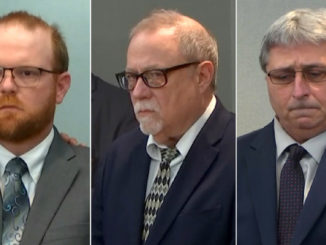
WASHINGTON, D.C. (TIP): Travis McMichael, who shot Ahmaud Arbery, his father Gregory McMichael, and their neighbor, William “Roddie” Bryan, who took part in the chase, were all convicted of multiple counts of murder, aggravated assault and false imprisonment. A predominantly white jury in Brunswick, Georgia, deliberated for less than 12 hours over two days before delivering their verdicts. Travis, 35, Gregory, 65, a retired police officer, and Bryan, 52, face potential life in prison for the February 2020 shooting of the 25-year-old Arbery.
The judge did not schedule sentencing today, but he said he plans to set a date in the coming weeks.
Here’s a breakdown of each of the counts that defendants were charged with in the case, along with the maximum penalties:
Count 1: Malice murder
Maximum penalty: Life without the possibility of parole
Count 2: Felony murder (Felony offense: Aggravated assault with a firearm)
Count 5: Felony Murder (Felony offense: Criminal attempt to commit a felony)
Maximum penalty for any of the four charges: Life without the possibility of parole
Count 6: Aggravated assault (with firearms)
Count 7: Aggravated assault (with pickup trucks)
Maximum penalty: 20 years
Count 8: False imprisonment
Maximum penalty: 10 years
Count 9: Criminal attempt to commit a felony
Maximum penalty: Five years
A crowd erupted in cheers outside the courthouse as the verdict was announced, chanting: “Say his name. Ahmaud Arbery!” “Today is a good day,” Arbery’s father, Marcus, told the gathering. “I don’t want to see no daddy watch their kid get lynched and shot down like that.”
President Biden reacted to the guilty verdicts in the trial of three men convicted of killing Ahmaud Arbery, saying that it “ensures that those who committed this horrible crime will be punished.”
“While the guilty verdict reflects our justice system doing its job, that alone is not enough,” Biden said in a statement.
“Instead, we must recommit ourselves to building a future of unity and shared strength, where no one fears violence because of the color of their skin,” the President said. Biden said Arbery “should be here today” celebrating the holidays with his family, pledging that his administration will continue to work for equal justice.
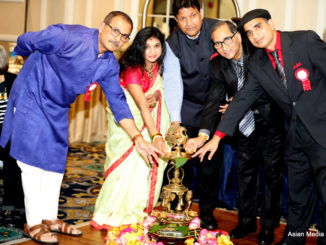
Dr. Subhash Pandey.Chief Guest, Mr. PK Mishra.A captivating dance performance.
Chicago IL: The Uttar Pradesh (UP) Association of Greater Chicago held a function for the annual day and Diwali celebration on Friday, Nov. 12, 2021, at the Ashyana Banquet Hall in Downers Grove, IL. Last year, Diwali was celebrated with a variety of virtual cultural programs because of the Covid pandemic, but this year, it was celebrated in person with a very impressive gathering and high-quality cultural programs highlighting the rich culture of India. Diwali or Deepavali, means deep (light) and avali (rows). It is an inner illumination from ignorance to knowledge; good defeats evil and bring happiness in family and community.
The event started with a Diya lighting ceremony by executive committee and board of trustmembers led by Dr. Subhash Pandey and Chief Guest, Mr. PK Mishra, and was followed by a beautiful sitar instrumental presentation of bhajan medley by Mr. Paneesh Rao. The program was organized and coordinated by Mr. Sunish Mittal and Mr. Raj Kumar Upadhyay, treasurer and president of the UP Association, respectively. Mr. Rajkumar Upadhyay, president of the organization, welcomed the audience on this occasion. Dr. Subhash Pandey, Chairman Board of Trustees of the UP Association, also welcomed the audiences and presented an explanation of the purpose of the association. He explained that the Association was established in 1991 and is celebrating its 30th anniversary as well. He highlighted that the main purpose of the Association is to keep our cultural heritage alive especially in new generations. UP Association also organizes Kavi Sammelan every year to promote Hindi, a national language of India. He concluded by thanking all past presidents for their hard work towards fulfilling the objectives of the organization. Chief Guest Hon. PK Mishra Consul & Head of Chancery (Counsel General of India, Chicago) conveyed the greetings of Consulate General of India (CGI), Chicago, on the occasion of Diwali and explained about the many services offered by CGI Chicago. He also congratulated the organization for completing 30 years.
The Association brought in several renowned artists from Chicago who presented a range of traditional, modern, and contemporary Indian performances, including an outstanding dance (Ganesh Vandana and Shri Ram stuti) by Mrs. Gauri Jog, director & teacher, India dance school. This was followed by several melodious songs by two well-known singers, Mrs. Ananya Ghosh and Mr. Sreepathy that were accompanied by an outstanding musician team. This was followed by a program called “Saaz aur Alfaaz” by Mr. Rakesh Malhotra, a famous poet, and Mr. Sunish Mittal, a well accomplished singer. Two children’s performers, Mr. Shlok Jaiswal and Ms. Anavi Ghosh also sang melodious songs for this occasion. The program ended with a presentation of a colorful group dance to a Bollywood movie song.
A variety of delicious foods and snacks were served by the Ashyana Banquet, and great hospitality was shown by Mr. Surendra Jain and his staff which was highly appreciated by all the guests. At the end, a vote of thanks was proposed by the UP-Association Vice President Mrs. Uma Agarwal. This event was a fun evening filled with several cultural items and delicious food.
(Photographs and Press release by Asian Media USA)
WASHINGTON, D.C. (TIP): A regular engagement between India and the United States under the bilateral Trade Policy Forum mechanism will help remove barriers to trade, facilitate higher levels of investment and increase two-way trade in goods and services, the US India Business Council said Tuesday, November 23. ”We’re encouraged with positive statements coming from both sides and are certain regular engagements under the Forum will help removing barriers to trade, facilitate higher levels of investment and increase two-way trade in goods and services,” the USIBC said. In a statement, the USIBC congratulated Commerce Minister Piyush Goyal and US Trade Representative (USTR) Katherine Tai for a successful reconvening of the US-India Trade Policy Forum and said that they are glad to see the robust agenda set forth by the leaders. ”Today’s meeting also confirms the widespread benefit of U.S.-India commercial partnership and the importance of innovation and investment, reaffirming the importance of collaboration on the Quad, climate, health, and labor issues,” the council said. ”We look forward to playing a significant role in guiding and advancing these issues on behalf of the USIBC membership and working in tandem with both governments,” it said.
NEVADA (TIP): Calling for accountability and respect, perturbed Hindus are seeking apology from Texas A&M University (TAMU) for failing to take any concrete action to resolve the issue of reported “harassment and discrimination” of its Hindu students. Hindu statesman Rajan Zed, in a statement said that it was shocking to observe the blatant apathy of taxpayer funded TAMU even after the reports of “harassment and discrimination” of its Hindu students became public knowledge. A resolution, reportedly acknowledging “harassment and discrimination” Hindu students faced, passed on October 20 TAMU Student Senate meeting. Few reports in The Battalion (student newspaper of TAMU) also recorded this “harassment and discrimination” issue.
Moreover Zed, who is President of Universal Society of Hinduism, also wrote to TAMU System Chancellor John Sharp, Board of Regents, Deputy Chancellor, Academic Affairs Vice Chancellor, Equal Opportunity & Diversity Director; besides TAMU President M. Katherine Banks, Provost, Vice President Student Affairs, Office for Diversity, Dean of Student Life, Ombuds Officer, etc.; highlighting the “harassment and discrimination” issue; but no tangible plan seemed to be in sight to resolve it. Rajan Zed sought urgent intervention of Texas A&M Board of Regents Chairman Tim Leach, Chancellor John Sharp and President M. Katherine Banks to provide safe environment for its Hindu students so that they could focus on their educational pursuits free from reported belittlement, condemnation, discrimination, efforts at demeaning, harassment (in person, social media, texts, etc.), hateful actions, ill-treatment, judgment, mockery, oppression, ridicule, unnecessary hardships, etc.; and feel accepted, included and welcomed; and not projected as outcasts. Like all other students, they should have the right to practice their religion freely, be respected for their beliefs and stick to their value systems. This “harassment and discrimination”, reportedly prevailing for some time, came into limelight in the TAMU Student Senate meeting of October six. How much more time the hefty TAMU bureaucracy (which claims of dedication to students’ well-being) would take to realize that Hindu students did have the right to exist without facing “harassment and discrimination”? Zed asked. TAMU, which aims to be a “world-class university of the future” and boasts of two Nobel Prizes, should have felt the pain of its minority Hindu students much earlier (who had been reportedly feeling quite uncomfortable in their day-to-day tasks around the campus for quite some time), and taken some definitive steps to provide safe environment for them so that they could focus on their educational pursuits (like all other students). Besides resolving it, TAMU needed to come out with a strategic plan so that no student groups had to live through such reportedly abhorrent circumstances in the future; Rajan Zed noted. According to reports, Resolution S.R.74-16 took two meetings to pass in the 74th Session of the Student Senate on October 20 after heated hours long debates, acknowledging the “harassment and discrimination” Hindu students faced.
Zed suggested TAMU, whose Core Values include “respect”, to send its staff for training in inclusivity, dealing with harassment of minority religions, effective listening skills, etc.; so, such an inappropriate behavior did not slip through in the future. TAMU officials should always keep their eyes and ears open to have a better feel of campus life, so that such issues never happen or get resolved before anybody complaining about these. Rajan Zed pointed out that Hindu students deserved the same respect and welcome as any other TAMU student. It was highly irresponsible for an eminent institution like TAMU (whose “Purpose Statement” included: “To develop leaders of character dedicated to serving the greater good”), which should have shown some maturity and noticed this unacceptable environment prevailing in the campus for quite some time, making life difficult for students belonging to a minority religion.
TAMU, a public research university, “opened its doors in 1876 as the state’s first public institution of higher learning”. Its total enrollment in Fall 2020 was 71,109. Its Mission Statement includes: “It welcomes and seeks to serve persons of all racial, ethnic and geographic groups…”
Hinduism, oldest and third largest religion of the world, has about 1.2 billion adherents, and “moksha” (liberation) is its ultimate goal. There are about three million Hindus in USA.
MUMBAI (TIP): Floral tributes were paid on Friday, November 25, to the martyrs who laid down their lives while fighting terrorists who attacked Mumbai on November 26, 2008. Maharashtra Governor Bhagat Singh Koshyari, Deputy Chief Minister Ajit Pawar and state Home Minister Dilip Walse Patil paid their respects at the memorial at the police headquarters in south Mumbai. The martyrs’ memorial has been relocated from the original site at Police Gymkhana in Marine Drive to the police headquarters at Crawford Market because of the ongoing work on the Coastal Road project, an official said. Chief Minister Uddhav Thackeray, who is recuperating in a Mumbai hospital after spine surgery, also remembered the 26/11 martyrs. The 13th anniversary of the deadly terror attack was attended by a limited number of people in the wake of the Covid pandemic. Family members of some of the martyred police personnel also paid tributes at the memorial. During the ceremony, the dignitaries met family members of some martyrs. On November 26, 2008, 10 Lashkar-e-Taiba terrorists from Pakistan arrived by sea route and opened fire, killing 166 people, including 18 security personnel, and injuring several others during the 60-hour siege in Mumbai. The then Anti-Terrorism Squad (ATS) chief Hemant Karkare, Army Major Sandeep Unnikrishnan, Mumbai’s Additional Police Commissioner Ashok Kamte, Senior Police Inspector Vijay Salaskar and Assistant Sub-Inspector (ASI) Tukaram Omble were among those killed in the attack. The Chhatrapati Shivaji Maharaj Terminus, the Oberoi Trident, the Taj Mahal Hotel, Leopold Cafe, Cama Hospital and the Nariman House Jewish community center, now renamed Nariman Light House, were some of the places targeted by terrorists. Nine terrorists were later killed by the security forces, including the NSG, the country’s elite commando force. Ajmal Kasab was the only terrorist who was captured alive. He was hanged four years later on November 21, 2012.
(Source: PTI)
Signup to our Newsletter!
Don’t miss out on all the happenings around the world