Month: December 2021

  • Eminent Indian American mathematician Nikhil Srivastava among 3 selected for inaugural Ciprian Foias Prize

    Eminent Indian American mathematician Nikhil Srivastava among 3 selected for inaugural Ciprian Foias Prize

    SEATTLE (TIP): Eminent Indian American mathematician Nikhil Srivastava has been jointly selected for the inaugural USD 5,000 Ciprian Foias Prize for the “highly original work” in Operator Theory by the American Mathematical Society (AMS). Along with Srivastava, who teaches at the University of California, Berkeley, the two other awardees are Adam Marcus and Daniel Spielman. Marcus holds the Chair of Combinatorial Analysis at the École Polytechnique Fédérale de Lausanne (EPFL) in Switzerland. Spielman is Sterling Professor of Computer Science, a professor of statistics and data science, and a professor of mathematics.

    The award recognizes their “highly original work” that introduced and developed methods for understanding the characteristic polynomial of matrices, namely the iterative scarification method (also in collaboration with Batson) and the method of interlacing polynomials, according to a media release.

    “Together, these ideas provided a powerful toolkit with many applications, notably in the trio’s breakthrough paper “Interlacing families II: mixed characteristic polynomials and the Kadison–Singer problem” (Annals of Mathematics, 2015), which solves the famous “paving problem” in operator theory, formulated by Richard Kadison and Isadore Singer in 1959,” AMS said.

    In a joint statement, the three awardees said they wish to accept it on behalf of the many people whose work contributed to the resolution of the Kadison–Singer problem.

    “Our involvement was the final chapter of an amazing story we hope will inspire similar solutions to difficult problems in the future,” they said.

    The prize will be presented to Professor Srivastava and his colleagues on January 5 next year at the 2022 Joint Mathematics Meeting in Seattle, described as “the largest mathematics gathering in the world.” The Ciprian Foias Prize is the third major prize won by Srivastava, who earlier jointly won the George Polya Prize in 2014, and the Held prize in 2021. The prize was established in 2020 in memory of Ciprian Foias, an influential scholar in Operator Theory and fluid mechanics. The current prize amount is USD 5,000 and the prize is awarded every three years.

  • General Rawat’s rich legacy will live on

    By Lt Gen Pradeep Bali (retd)

    Here was a Chief who would not hesitate to call a spade a spade and back the reforms needed for eradicating any wrong practices. While a high sense of probity is expected in any person holding that exalted office, what became starkly clear to all was his zero tolerance of moral or financial turpitude. This went a long way in enhancing the correct character traits expected in the forces.

    Gen Bipin Rawat passed into the annals of history on December 8. As the Chief of Defence Staff (CDS) and a former Army Chief, he epitomized the change in thinking and structuring of the armed forces which he was spearheading. The deeply saddening demise of the nation’s first CDS is a great tragedy, but it shall not stall the process of modernization and jointness of the three services which he set in motion. Having known the man both personally and professionally, I would like to reflect on his many stellar qualities and the legacy he leaves behind.

    Gen Rawat, son of Lt Gen Laxman Singh Rawat, a former Deputy Chief of Army Staff, carved out a brilliant career in uniform, starting out with the Sword of Honour, given to the best all round Gentleman Cadet at the time of commissioning from the Indian Military Academy. Having distinguished himself in all the important courses of training and acquiring educational qualifications up to the doctoral level, Bipin Rawat exhibited his leadership and military mettle while commanding Army formations in some of the most difficult and operationally challenging areas. He also commanded an Indian brigade group in Congo as part of the UN forces, under trying conditions. What made him stand out during these tenures was his uncanny ability to grasp any situation and get on top of it, a remarkable attribute for any leader of men.

    Talking about his generalship at higher levels, he was a man who could take the call when required and back his decisions to the hilt. Having commanded a formation directly under him, one can vouch for his unqualified support and decisive commitment, once he was convinced of the correctness of the chosen path. A remarkable attribute was the focused attention with which he would hear any proposal or presentation before giving out his mind in double quick time. Having soldiered in all the tough terrains on our borders, his heart was always with the troops and field commanders in the remotest areas.

    Gen Rawat came to the Army HQ as the Vice Chief of the Army in September 2016 and one saw an immediate change in the way that important office functioned. His accessibility for all subordinates and his passionate approach to resolving all nettlesome issues made a huge difference. I was heading the Directorate General of Perspective Planning and distinctly recall his positive interventions with a futuristic vision while finalizing perspective plans. While he had tremendous patience and mostly an affable demeanor, one could not put issues past him without a very well-informed scrutiny.

    The defining moment after he took over the mantle of the Army Chief was the customary media interaction at the Manekshaw Auditorium in January 2017. It was a very candid interaction but more than that it became amply clear that here was an Army Chief who was firm in his convictions, would not pull his punches when required and would definitely not shy away from speaking his mind in a forthright and erudite manner. His visionary qualities were always at the fore as he shaped and guided the restructuring and modernization of the Army. Here was also a Chief who would not hesitate to call a spade a spade and back the reforms needed for eradicating any wrong practices that unscrupulous individuals may indulge in. While a high sense of probity is expected in any person holding that exalted office, what became starkly clear to all was his zero tolerance of any form of moral or financial turpitude. This went a long way in enhancing the correct character traits expected in the forces. This may even have made him unpopular with disgruntled elements, both serving and retired, and who would use the anonymity of social media platforms to vent their misplaced ire. However, Rawat was not the man to be affected by such propaganda. Under Gen Rawat’s watch, I was assigned to command the Sikkim-based 33 Corps while the Doklam crisis was festering. True to his style, he was crisp and lucid in telling me: “You will have to mount a running horse.” His unspoken words, conveyed through his body language, were: “You have my confidence.” These were the defining traits which made Gen Rawat not only a soldier’s General but also a commander’s General! It was here that I saw what he was capable of while giving unambiguous directions to field formation commanders and then backing them to the hilt.

    The General could browbeat any person with a tirade of searching and pointed questions while discussing important military matters, whether operational or administrative. Once convinced, his decisions would be crystal clear with the organizational interests being at the forefront.

    Destiny had more in store for him as he assumed the high office of India’s first CDS. Given his career graph and qualities of head and heart, no one would have been better suited to hold this onerous appointment. Here again, Gen Rawat got to grips with the challenges and tasks ahead of him. His missionary zeal in structuring the thematicization model for the armed forces, was the need of the hour and in the past two years of his helmsmanship of the services, much ground has been covered in this direction. It’s a matter of short time now before the unified tri-services commands of the Army, Navy and the Air Force will be a reality and the legacy of Gen Rawat will live on through them.

    (The author is Ex-Commander, Sikkim-based 33 corps)

  • Russia, a legacy relationship with limitations

    Russia, a legacy relationship with limitations

    The India-Russia relationship stands deeply strained by larger geopolitical realities, but there is scope for improved ties

    By Happymon Jacob

    In a sense, the U.S. withdrawal from Kabul and India’s relationship with Moscow have helped New Delhi to adopt more flexible strategies vis-à-vis Afghanistan as well as the broader region. Given the close relationship that New Delhi enjoyed with Washington, American presence in Kabul had, in a way, limited India’s options as New Delhi was broadly encouraged to follow U.S. policy in the region. With the Americans gone, India can openly cooperate with Moscow and even Tehran, especially if the Joint Comprehensive Plan of Action (JCPOA) renegotiations succeed, and engage Afghanistan and the Central Asian region with their help.

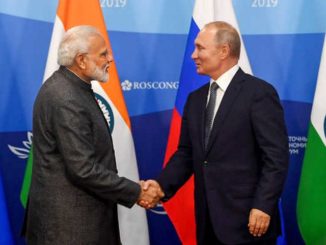
    The Russian President Vladimir Putin’s short visit to New Delhi and the inaugural 2+2 meeting between India and Russia — which is India’s fourth such engagement with another country — will help improve Moscow-New Delhi ties, currently fraying under the pressure of larger global power shifts. Of all the diplomatic balancing acts India has to play in this milieu of geopolitical uncertainty, the one with Russia is the most significant. And yet, let the ongoing flurry of activity between Moscow and New Delhi not blind us to the global forces that will pose formidable challenges for the partnership.

    There are constraints

    Russia, no doubt, is a friend in need to India; but Moscow’s friendship comes with limitations. Not only would the realities of the global balance of power shrink the robustness of the relationship over time, but, more crucially perhaps, a legacy relationship based on limited interaction might eventually lose the warmth given that there is little organic, people-to-people content to the relationship.

    To put it bluntly, unless the bilateral ties can move beyond arms sale/purchase, the phase of stasis will kick in sooner rather than later in India-Russia relations. Consider for instance, the India-Russia bilateral trade is around U.S.$10 billion, far lower than India’s trade with China and the United States, China’s trade with the U.S. and Russia, and even the U.S.’s trade with Russia. The Soviet-era cultural and people-to-people contacts have almost entirely evaporated. Arms sales alone won’t a relationship make.

    Today, the India-Russia relationship stands deeply strained by the larger geopolitical realities which neither of them is completely in control of. The quadrilateral dynamics among India, China, the U.S. and Russia have different implications of varying degrees for all four states in this relationship, in particular for India.

    The dynamics

    Let us use the concept of primary and secondary antagonisms to understand the dynamics of this quad better. To a great extent, if not entirely, the dynamics of this six-way relationship, at the apex, is a function of the U.S.-China rivalry. In this six-way matrix, China-U.S. antagonism is the first order relationship and the U.S.-Russia, China-Russia and Russia-India are the second order relationships. While the second order relationships in this quad are, to a great extent, a product of the primary antagonism, the second tier relationships also have their own unique dynamics and implications.

    For instance, India-China, a second order relationship in this quad, is both a product of the primary antagonism between the U.S. and China as well as a result of the regional geopolitical rivalry between India and China.

    Even though China remains its primary antagonism, Washington has not yet succeeded in divorcing its less challenging second order antagonism (rivalry with Moscow) from it. Washington’s parallel rivalries with China and Russia (albeit to a lesser extent) have complicated matters for New Delhi.

    What appears to be a near certainty in the medium to longer term is that the dynamics of the quadrilateral relationship, in particular India’s tense relations with China, will go on to complicate India’s time-tested partnership with Russia, a process that has already started.

    Even though Beijing has not aggressively attempted to damage India-Russia relations, there is little doubt that China will attempt to drive a wedge between New Delhi and Moscow since isolating India in the larger Asian region suits Beijing’s larger game plan.

    A few scenarios

    It gets more complicated if we were to examine the various potential scenarios in this quadrilateral relationship. For instance, the extent of Chinese aggression towards India will play a role in determining India’s relationship with Russia. Consider this. An aggressive China will push India towards the U.S., and even though Russia would be understanding towards India’s rationale behind such a pro-U.S. tilt in the medium term, India’s relationship with the U.S. will invariably create hurdles in India-Russia relations in the longer term. Russian Foreign Minister Sergey Lavrov’s warning to India should be read in that context: “We expressed our serious concern to our Indian friends over the U.S. activity there (Asia-Pacific region) under the slogan of so-called Indo-Pacific strategies and the creation of closed bloc-type structures”.

    Put differently, the more aggressive Beijing gets towards New Delhi, the more India would grow closer to Washington and Moscow. However, while Moscow would appreciate a close partnership with New Delhi, it may not be when it comes to a growing India-U.S. partnership. More so, if Moscow has to choose between Beijing and New Delhi, it would choose Beijing just as New Delhi would choose Washington over Moscow if it comes to that.

    This also implies that an aggressive China may also help increase India-Russia relations in the short to medium term, something we may already be witnessing. Recall Defence Minister Rajnath Singh’s visit to Moscow in June 2020 soon after the stand-off between Indian and Chinese troops on the Line of Actual Control to procure more weapons systems, among other things.

    In the meantime, the seemingly unresolvable first order antagonism (the U.S. versus China) also provides space for geopolitical hedges in the second order partnerships/antagonisms, i.e., India-Russia and even Russia-U.S. For instance, Russia’s dormant concerns about China’s rising influence in its traditional periphery, and Moscow’s relations with India in the broader context of Central and West Asia and the western Indian Ocean could prompt Moscow to maintain a certain degree of, albeit limited, geopolitical hedge vis-à-vis Beijing. India’s desire for a robust relationship with Russia will be more appreciated by the U.S. due to the Chinese aggression against India and the U.S.’s systemic and first order rivalry with Beijing. More so, once the reality of the rise of China becomes a concern for Moscow, it could potentially open conversations with Washington to create a balance vis-à-vis Beijing which suits Indian interests. At the same time, however, if there is a rapprochement between the U.S. and Russia or a reduction in the war of words between the U.S. and China, this may or may not have a direct and substantive impact on Sino-Indian relations since the strains in Sino-Indian relations are not just a product of global balance of power but, more fundamentally, a result of India-China dynamics in the Southern Asian region. Put differently, no matter what the state of global geopolitics is, the essential (adversarial) nature of India-China relations is unlikely to undergo a fundamental transformation. For New Delhi, the principal antagonism is China. Therefore, New Delhi must exploit strategies and partnerships that can help address the China challenge more effectively. This means that India has to carefully balance its growing partnership with the U.S. with its somewhat delicate relationship with Russia.

    Potential for cooperation

    Let us return to the India-Russia ties and examine the potential for cooperation between the two sides. In a sense, the U.S. withdrawal from Kabul and India’s relationship with Moscow have helped New Delhi to adopt more flexible strategies vis-à-vis Afghanistan as well as the broader region. Given the close relationship that New Delhi enjoyed with Washington, American presence in Kabul had, in a way, limited India’s options as New Delhi was broadly encouraged to follow U.S. policy in the region. With the Americans gone, India can openly cooperate with Moscow and even Tehran, especially if the Joint Comprehensive Plan of Action (JCPOA) renegotiations succeed, and engage Afghanistan and the Central Asian region with their help.

    If New Delhi plays its cards well, it can use Moscow to gain more geopolitical heft in the region — while the U.S. provided New Delhi status quo in the region, Moscow could provide India with more direct opportunities. Of course, New Delhi would need to be prepared for adverse reactions from Beijing and Islamabad.

    Yet another area of cooperation between Moscow and New Delhi is the Indian Ocean Region, especially the western Indian Ocean where Russia has been expanding its influence and India has significant interests. For New Delhi, located in an unstable and virtually friendless neighborhood, friendship with Russia is important notwithstanding the structural limits to such a friendship. It will, therefore, take a great deal of diplomatic agility from New Delhi to stay the course and improve the relationship with Moscow amidst high-stakes geopolitical contestations.

    (The author teaches at the Jawaharlal Nehru University, New Delhi and is the founder of the Council for Strategic and Defense Research)

  • A monumental mistake fomented by impunity

    A monumental mistake fomented by impunity

    The anguish over the Nagaland killings is inadequate, especially as there is no gesture to recommend the end of AFSPA

    By Pradip Phanjoubam

    The truth is that long decades of violent insurrections and draconian counterinsurgency laws, in particular the Armed Forces (Special Powers) Act (AFSPA) 1958, have ensured a climate of impunity among those fighting insurgency.

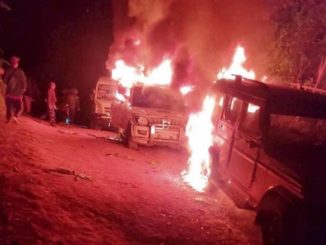
    There are no words to express the outrage and grief over the killing of 14 civilians (the toll so far) in Mon district of Nagaland, home of the Konyak Nagas. They lost their lives in firing by para commandos of the Indian Army based in Jorhat. According to information available, this was intended as an ambush on what Army intelligence had indicated was a group of insurgents moving in the area. This intelligence, or the fact that the Army commandos would be responding to it, was not communicated to either the local police or the Assam Rifles based in the area. It was in this sense, a continuance of the culture of ‘surgical strikes’ hyped up after the Pulwama incident in Jammu and Kashmir, and in the context of the North-east, the ambush by a combined group of militants led by the National Socialist Council of Nagaland-Khaplang (NSCN-K) in Chandel district of Manipur in 2015. The NSCN-K then was not as fragmented into factions as it is now. While the earlier ‘surgical strikes’ are understandable — though their success has been disputed — the Mon ambush is completely beyond comprehension. First, unlike the earlier strikes, which were in response to grave provocations, and the targets were outside Indian territory, the scenario was markedly different in the present. The ambush was unprovoked, and the target was well within India. This ian state. Obviously then, the Naga underground faction noted in this report must have been one which had still to enter into the ceasefire agreement. Reports indicate this is the faction led by Yung Aung, the nephew of NSCN-K founder, the late S.S. Khaplang. But Yung Aung’s support base is in Myanmar. So, could he still have been seen as a threat to India’s integrity?

    In a nutshell, when insurrection began in Nagaland, there was only one group — A.Z. Phizo’s Naga National Council. This group entered into a peace agreement with the Government of India in 1975 as the Shillong Accord. A group calling itself the National Socialist Council of Nagaland (NSCN), broke away in protest, in 1980. But the NSCN also split into two, violently, in 1988, with S.S. Khaplang, a Myanmar Naga, leading one faction and the other led by Thuingaleng Muivah and Isak Chishi Swu. While the latter remains more or less cohesive, the Khaplang faction splintered a number of times.

    Road to peace

    The pattern of these splits is also interesting. In all cases, the would have meant assault resources were much more in abundance. Again, an ambush — as those in the North-east with a history of violent insurgencies will understand — is the combat tactics of an inferior force against a far superior one; for this reason, it is also often summarized as hit-and-run warfare.

    Options that were missed

    The important question is, even if there was intelligence available about the movement of insurgents, why was this tactic resorted to? Why was no attempt made to have the targeted men who were in a single pickup truck, surrender to be captured alive, even if these men were insurgents and armed? From a superior pre-mediated position, and force strength precalculated to overwhelm, there should not have been much difficulty to block off the truck making its way along a winding narrow hill road, put the men in it in a hopeless position and force them to surrender. The intent obviously was to destroy and eliminate as would be done to hated enemies. But, as it turned out tragically, the victims were all innocent unarmed villagers; six of them were killed on the spot. More casualties resulted after outraged Konyak villagers attacked the ambushers first and then an Assam Rifles post later. One army trooper was also killed in the violence. The truth is that long decades of violent insurrections and draconian counterinsurgency laws, in particular the Armed Forces (Special Powers) Act (AFSPA) 1958, have ensured a climate of impunity among those fighting insurgency.

    In neighboring Manipur, this became evident even in a pocket where AFSPA had been removed after public agitation following another atrocious rape and murder of a woman insurgent suspect in 2004. Fake encounter killings soared in the area in the years that followed. The intuitive understanding of those tasked with counterinsurgency duty has come to be that action towards this cause will have little or no legal consequence. What happened at Mon is new evidence of this. It too reeked of the attitude that in these wild lawless territories, mistakes, even if they spell immense losses to civilian life, are part of the game.

    There must be ownership

    In an invisible way, this mindset seems to have pervaded among a larger section of the population nationwide, other than just the combatants directly engaged in counterinsurgency duty. Hence, there have been a flood of expressions of anguish. These include messages from Parliament, the Prime Minister, the Home Minister and more. But many have also brushed off the tragedy as collateral damage — an inevitable part of any conflict scenario. Obviously, it was a mistake, but an unpardonable one that culminated out of the uniquely oppressive climate of impunity which has been allowed to normalize.

    What is called for then is something beyond the expression of anguish or condemnation. It must instead be about repentance and ownership of responsibility for the tragedy. Therefore, it is about sharing the tragedy, represented by deeds and sacrifices that also pinch the giver; not just about buying truce at affordable prices. According to a report from Kohima, the central government has agreed to pay ₹11 lakh as ex gratia to each family of those killed. The State government is to pay ₹5 lakh each.

    Though commendable, this gesture would hardly make for a true language of repentance. If for instance the gesture was for ₹11 crore each, that would have been closer to saying sorry. It would also have sent out the message to those likely to commit them again that such mistakes come at immense costs. Saying sorry could have also been accompanied with a gesture such as declaring AFSPA, which has come to be seen as a symbol of oppression across the region, abrogated.

    The ceasefire structure

    What is also intriguing is the nature of the intelligence which led to the ambush. Almost all insurgent factions that matter in Nagaland are in ‘ceasefire agreement’ with the Government of India and engaged in peace talks. If there were still perfidies committed by these groups, such as extortion and intimidation, they should have amounted to breaches of ceasefire ground rules; not challenges to the Indseparations were broadly between the Indian and the Myanmar Nagas; the Indian Naga factions end up entering the ongoing ceasefire making observers suspect the influence of the Indian intelligence to be behind these splits. This is understandable too, for India could not have entered into any truce with Myanmar nationals. The last of these splits, in 2018, followed this pattern. After Khaplang’s death in 2017, the leadership mantle of the NSCN-K passed on to Khango Konyak, an Indian Naga. Then, in a bloodless coup in 2018, Khango Konyak was impeached and Yung Aung took over leadership. The former returned to India and entered the ongoing ceasefire.

    The question now is whether the tragic development would have any lasting impact on the ongoing peace talks now presumed to be in its final stage. Considering the combat fatigue of the Nagas, maybe not. But this would also depend greatly on the Indian state’s ability to say sorry from the heart and not just bargain for just another quid pro quo truce in the present tragedy.

    (The author is Editor: Imphal Review of Arts and Politics and the author of ‘The Northeast Question: Conflicts and Frontiers’)

  • Revisit AFSPA

    Scrap the law in states where it has outlived usefulness

    The 63-year-old Armed Forces Special Powers Act (AFSPA), which empowers security personnel to act with impunity, has come under sharp scrutiny after the killing of 14 civilians in Nagaland. The chief ministers of Nagaland and Meghalaya have demanded repeal of the controversial Act. Raising the issue in Parliament during the ongoing winter session, National People’s Party MP Agatha Sangma has termed the law ‘the elephant in the room which needs to be addressed’, while Naga People’s Front MP KG Kenye has stated that AFSPA is bringing ‘more animosity in the regions wherever it is enforced’. There is no denying that the Act is misused at times by the troops to commit criminal excesses, knowing well that they won’t be punished for their actions. Ironically, the fear and mistrust instilled by this law in the local population in the ‘disturbed’ areas often outweigh its utility in controlling insurgency. In 2016, the Supreme Court had told the Centre that due process needed to be followed while dealing with civilian complaints reported from areas under AFSPA, adding that the Act didn’t provide blanket immunity to Army personnel in anti-insurgency operations. Indeed, as observed by the court, the continuance of the Act in any region for extended periods underlines the failure of the civil administration as well as the armed forces. The Justice BP Jeevan Reddy Committee and the Administrative Reforms Commission, headed by Veerappa Moily, had recommended repeal of AFSPA a decade and a half ago. In the absence of checks and balances, the Act continues to unleash terror among civilians in several parts of the Northeast, even as it was withdrawn from Tripura in 2015 on the basis of a sensible risk assessment. A review of AFSPA every three months or so is a must to ensure that it is done away with in the states where it has outlived its usefulness. At the same time, violations of the special operating procedure for counter-insurgency operations should invite exemplary punishment. The law enforcers must not be allowed at any cost to become a law unto themselves.

    (Tribune, India)

  • India must realize Gen. Rawat’s plans for genuine tri-service operational capabilities

    India has lost a capable and experienced military leader in the tragic death of the country’s first Chief of Defence Staff (CDS), General Bipin Rawat, in a helicopter crash near Coonoor in the Nilgiris on Wednesday. His wife, Madhulika, and 11 others also perished when the Indian Air Force’s Mi-17V5 helicopter came down in a heavily wooded area. Defence Minister Rajnath Singh has announced in Parliament that a tri-service inquiry, headed by Air Marshal Manvendra Singh, Air Officer Commanding-in-Chief, Training Command, of the IAF, will take place into the incident. The IAF chief, Air Chief Marshal V.R. Chaudhari, has already visited the crash site; the cockpit voice and flight data recorders have been recovered, which would give investigators insights into how the crash occurred. It is imperative that the inquiry be done both thoroughly and speedily. Without speculating on the cause, it needs to be stressed that speedy course corrections in training or hardware are imperative given that these Mi-17VF choppers are being used to ferry top military leaders across the length and breadth of the country.

    Gen. Rawat had not even completed two years as CDS when the Coonoor tragedy happened. After completing his tenure as Army Chief on December 31, 2019, he slipped into his new role as CDS the very next day. Many of his plans to give India genuine tri-service operational capabilities are still to be realized. In such a situation, the Government should not lose time in appointing his successor to ensure that the plans on the drawing board do not suffer. An aggressive China and a still belligerent Pakistan define India’s security challenges. The situation along the Line of Actual Control (LAC) continues to be tense with Indian and Chinese troops staring down each other. Gen. Rawat, known to have been proximate to the ruling establishment, had never minced words while speaking about the challenges facing the country and had waded into political controversies. Though the concept of having a CDS was recommended by a Group of Ministers in 2000 after the Kargil war, it took another 20 years for one to be appointed. The CDS, who functions as Principal Military Adviser to the Defence Minister, is expected to work in tandem with the three service chiefs who continue to operate in their respective domains — a role and function that is still in the making. To ensure that the new CDS and the service chiefs function as a team, the Government would do well to keep in mind the principle of seniority while choosing Gen. Rawat’s successor.

    (The Hindu)

  • India-Russia bonhomie

    Moscow’s push for Delhi’s Afghanistan role commendable

    Old allies India and Russia managed to tick all the boxes during an in-person summit meeting between PM Narendra Modi and President Vladimir Putin, the inaugural ‘2+2’ foreign and defense ministerial dialogue and a sitting of the Inter-Governmental Commission on Military and Military-Technical Cooperation. The two nations signed an agreement for joint production of over six lakh AK-203 assault rifles at a manufacturing facility in Uttar Pradesh’s Amethi and also cemented a pact on military cooperation for a 10-year period. Besides strengthening defense and military ties, India and Russia are also putting their best foot forward to enhance collaboration in the fields of civil nuclear energy, space, transport and connectivity, energy, trade and health. The summit optics were good, the admiration was mutual. Putin called India a ‘great power, a friendly nation and a time-tested friend’, while Modi stated that India-Russia friendship had remained a constant amid all the geopolitical changes at the global level in the past decades. More importantly, the two nations’ readiness to go ahead with the S-400 missile deal despite the threat of US sanctions has underscored the durability of their bilateral relationship. Notwithstanding its growing closeness with the US, India has been asserting that it would go by its national interest while dealing with other countries, including Russia. It’s also significant that Russia sees a prominent role for India in the rebuilding of war-torn Afghanistan. Russian Foreign Minister Sergey Lavrov has rightly pitched for inducting India into the extended group on Afghanistan comprising the US, Russia, China and Pakistan. New Delhi has been kept out of meetings of this grouping earlier this year and it remains to be seen how Russia will tackle resistance from China and Pakistan to India’s presence at the high table. In any case, having all-weather friend Russia firmly by its side will give India greater confidence to deal with both hostile neighbors. The fact that this bonhomie is being witnessed in the golden jubilee year of the landmark Indo-Soviet Treaty of Peace, Friendship and Cooperation makes it all the more special.

    (Tribune, India)

  • Biden asks Democracy Summit participants to make “concrete commitments”

    Biden asks Democracy Summit participants to make “concrete commitments”

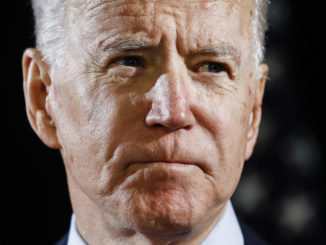
    WASHINGTON D.C. (TIP): Biden administration officials suggested that initiatives around corruption, election integrity and support for new and existing multilateral initiatives will emerge from the talks. U.S. President Joe Biden kicked off Day One of his Summit for Democracy, calling on countries to make “concrete commitments” to reaffirm their democratic values. Over 100 countries have been invited, as well as civil society actors, members of various parliaments and the private sector. “Democracy doesn’t happen by accident. We have to renew it with each generation,” Mr Biden, sitting beside his Secretary of State Antony Blinken, told over 50 world leaders who could be seen on a large screen. “We have to stand for justice and the rule of law for free speech, free assembly, a free press, freedom of religion, for all the inherent human rights of every individual,” the President said. The purpose of the gathering was not to assert that any of the participant countries were perfect democracies, Mr Biden said, but “to lock arms and reaffirm our shared commitment to make our democracy better” and to share ideas and make “concrete commitments” on combatting authoritarianism, fighting corruption and promoting human rights – the three themes of the summit. Mr Biden said he was launching the Presidential Initiative for Democratic Renewal, which, along with the U.S. Congress would commit $224 million toward various democracy related projects including transparency, fair elections and free and independent media.

    Calling a free and independent press the “bedrock of democracy”, Mr Biden said the U.S. was launching a multilateral effort to enhance independent media. He also described a recently announced defamation defense fund by the United States Agency for International Development (USAID) to protect journalists from “nuisance lawsuits designed to prevent them from doing their work and vital work around the world.”

    While the Summit is likely to see commitments, in addition to the launch of initiatives, plans to make these commitments binding appear not to be on the cards. Following the Summit, there would be “a year of consultation, coordination and delivery” a senior administration official told reporters on Monday.

    Last week U.S. officials had told reporters that there would be a “written, non-binding code of conduct” on human rights parameters for the export of technologies that could be used for repression.

    Additionally, this week, the U.S. released a strategy on countering corruption.

    There is a second summit planned for a year from now, where countries are expected to discuss progress on their commitments. However, the monitoring mechanism seems to rely on civil society actors holding governments accountable, rather than there being any binding mechanism that emerges from the discussions.

    “And our hope is that through the entirety of this process, we can really have a dialogue between participating governments and civil society, and that civil society will hold all of us accountable,” one official said during Monday’s briefing call.  Another official said that coalitions like the Open Government Partnership (India is not a member) or the Universal Periodic Review (a periodic review of human rights records of UN member states) could be leveraged for monitoring.

    “…We do intend to host this summit with humility,” one official said. “We see ourselves as a democracy not with all of the answers, but with openness and transparency about our efforts to overcome challenges at home…”

    Earlier this week, the White House released another ‘fact sheet’ saying the Biden administration is strengthening democracy at home, with details of its work on the infrastructure bill, Build Back Better (not yet passed), voting rights, strengthening unions and other themes Mr Biden also mentioned during his Thursday launch speech.

    Thursday’s agenda included two plenary sessions, one hosted by Mr Biden and the second, by European Commission President Ursula von der Leyen. Pre-recorded interventions by world leaders have been scheduled for Thursday and Friday, with Prime Minister Narendra Modi’s intervention scheduled for Friday.

  • Top priority is to streamline how Twitter operates: Parag Agrawal

    Top priority is to streamline how Twitter operates: Parag Agrawal

    The new Twitter CEO has already begun restructuring the company and two senior executives have already stepped down as part of the reorganization plan

    SAN FRANCISCO (TIP): New Twitter CEO Parag Agrawal has said that his top priority in the new role is to improve the company’s execution and streamline how the micro-blogging platform operates. Agrawal, appearing for the first time since replacing Jack Dorsey at the Barclays technology conference late on Tuesday, December 7, said the company was “operating previously in a functional structure where we had a single engineering organization, a single design research organization, and product teams that were matrixed into them.” The new Twitter CEO has already begun restructuring the company and two senior executives have already stepped down as part of the reorganization plan. According to The Verge, Agrawal rejigged the company under the key pillars of Consumer, Revenue, and Core Tech. “I believe we have set them up so they can really move fast,” he said at the conference. Along with the three new general managers — who are Kayvon Beykpour, Bruce Falck, and Nick Caldwell — Lindsey Iannucci was named VP of Operations at Twitter. “She’s (Iannucci) going to help us improve our operational rigor in this new structure to really get us to faster decision-making, clearer ownership, increased accountability, improved operations, which will result in faster execution overall and better results,” Agrawal added.

    (Source: IANS)

  • 22 Organizations Write to U.S. Secretary of State Over India’s CPC Designation

    22 Organizations Write to U.S. Secretary of State Over India’s CPC Designation

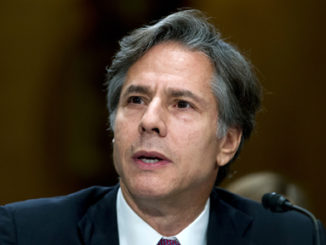
    WASHINGTON, DC(TIP):  A coalition of 22 human rights and faith-based organizations and 14 individuals have sent a letter to U.S. Secretary of State Antony Blinken over his refusal to designate India as a Country of Particular Concern (CPC). For the last two years, in 2020 and in 2021, the United States Commission on International Religious Freedom (USCIRF) has noted that the Indian government has been “engaging in and tolerating systematic, ongoing, and egregious religious freedom violations, as defined by the International Religious Freedom Act (IRA).” In recognition of this situation, the USCIRF recommended in its 2020 and 2021 annual reports that the U.S. Department of State declare India as a Country of Particular Concern (CPC). Despite these recommendations, Secretary Blinken refused to designate India as a CPC in his November 15 announcement.

    In response, Hindus for Human Rights and Indian American Muslim Council drafted a joint letter stating that “The national security and strategic imperatives of the United States are not strengthened but actually undermined if the U.S. government continues to ignore rising religious persecution and human rights abuses in India.”

    The letter urges Secretary Blinken to reconsider his decision and “designate India as a CPC at the earliest.”

    The letter was signed by leading human rights organizations, including Dalit Solidarity Forum in the USA, Genocide Watch, India Civil Watch International, and the Tom Lantos Foundation For Human Rights and Justice.

    The letter also received endorsements from religious denominations and faith-based organizations such as the Federation of Indian American Christians of North America, International Christian Concern, Islamic Circle of North America’s Council for Social Justice, Islamic Society of North America, New York State Council of Churches, and the Orthodox Public Affairs Committee.

    FULL LETTER

    December 9, 2021

    The Honorable Antony Blinken

    Secretary

    U.S. Department of State

    2201 C Street NW

    Washington, DC 20520

    Subject:Urging designation of India as Country of Particular Concern (CPC)

    Dear Secretary Blinken,

    We, the undersigned organizations and individuals, are deeply disappointed by your decision to not designate India as a Country of Particular Concern (CPC), as recommended by the United States Commission on International Religious Freedom (USCIRF) earlier this year.

    It is unfathomable that the United States does not recognize the Indian government’s systematic, ongoing, and egregious violation of religious freedoms, when the Department of State’s own report on religious freedom in India that you had released in May 2021 clearly described the escalating violence against India’s religious minorities, especially Muslims and Christians.

    The USCIRF’s annual reports, both in 2021 and 2020, have established beyond doubt that the Indian Government was “engaging in and tolerating systematic, ongoing, and egregious religious freedom violations, as defined by the International Religious Freedom Act (IRA).”

    The national security and strategic imperatives of the United States are not strengthened but actually undermined if the U.S. government continues to ignore rising religious persecution and human rights abuses in India. President Biden himself reminded Indian Prime Minister Narendra Modi of Mahatma Gandhi’s message of “tolerance, nonviolence and diversity” in their meeting at the White House in September.

    We, therefore, urge you to reconsider your decision and designate India as a CPC at the earliest.

    With greatest appreciation for your attention to these matters,

    Organizational Endorsements:

    American Muslim Institution

    Dalit Solidarity Forum in the USA

    Federation of Indian American Christians of North America

    Genocide Watch

    Greentree Global

    Hindus for Human Rights

    Islamic Circle of North America (ICNA) Council for Social Justice

    India Civil Watch International

    Indian American Muslim Council

    International Christian Concern

    International Society for Peace and Justice

    Islamic Society of North America

    Jubilee Campaign USA

    Justice For All

    Law and Liberty Trust

    New Wineskins Missionary Network

    New York State Council of Churches

    Parity

    Prayer Pioneers

    Red Eagle Enterprises

    The Orthodox Public Affairs Committee

    Tom Lantos Foundation For Human Rights and Justice

    Individual Endorsements:

    Institutional affiliation is provided for identification purposes only and does not constitute institutional endorsement.

    Amb. Islam Siddiqui, President, American Muslim Institution

    Ann Buwalda, Executive Director, Jubilee Campaign USA

    David Kimball, Humanist Chaplain, Cleveland Clinic, Vero Beach, FL

    Jennifer Noyes, Executive Director, New Wineskins Missionary Network

    Imam Saffet Catovic, Islamic Society of North America Office for Interfaith and Community Alliances

    Katrina Lantos Swett, President, Tom Lantos Foundation For Human Rights and Justice

    Lauren Homer, President, Law and Liberty Trust

    Rehan Khan, MD, President, International Society for Peace and Justice

    Rev. Marian Edmonds-Allen, Executive Director, Parity

    Rev. Susan Taylor, National Public Affairs Director, Church of Scientology National Affairs Office

    Scott Morgan, President, Red Eagle Enterprises

    Sunita Viswanath, Executive Director, Hindus for Human Rights

    Victor Begg, Interfaith Community Leader, Interfaith Alliance of the Treasure Coast

    Zahrah Mir, Communications Specialist, Islamic Circle of North America (ICNA) Council for Social Justice

  • Republicans help Senate Democrats approve bipartisan deal to avert debt ceiling crisis

    Republicans help Senate Democrats approve bipartisan deal to avert debt ceiling crisis

    Republicans joined Democrats in preventing a filibuster of the measure, setting up final adoption of a fast-track process to raise the borrowing cap

    WASHINGTON, D.C. (TIP): The Senate on Thursday, December 9, adopted a bipartisan deal that paves the way for lawmakers to raise the debt ceiling, a move that positions Congress to stave off a catastrophic default ahead of a fast-approaching fiscal deadline, a Washington Post report says.

    The compromise, which now heads to President Biden’s desk, essentially puts to rest a fierce, months-long battle between Democrats and Republicans and appears to postpone the next round of wrangling over the country’s financial health until after the 2022 midterm elections.

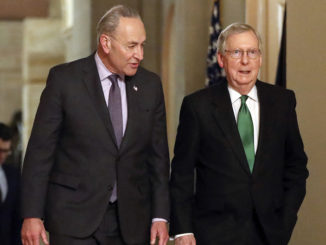
    The bill that lawmakers finalized Thursday does not actually raise the debt limit. Instead, it makes a one-time tweak to the Senate’s rules, allowing Democrats in the narrowly divided chamber to lift the borrowing cap without the risk of a Republican filibuster. Absent the unusual arrangement, GOP lawmakers would have blocked any increase as part of their broader protest of Biden’s economic agenda. In working out the deal, Senate Majority Leader Charles E. Schumer (D-N.Y.) and Senate Minority Leader Mitch McConnell (R-Ky.) ended a period of intense partisan sniping, as Democrats had faulted their GOP foes for putting the country at risk of recession as part of a political dispute. House and Senate lawmakers are set to complete the intricate process next week, raising the debt ceiling by trillions of dollars, in a move that could defuse the conflict into late next year.

    “The nation’s debt has been incurred on a bipartisan basis, so I’m pleased that this responsible action will be taken today to facilitate a process that avoids a default,” Schumer said in a speech that praised McConnell before the vote. “This is the responsible path forward: no brinkmanship, no default on the debt, no risk of another recession.”

    Fourteen Republicans including Sens. Mitt Romney (Utah), Joni Ernst (Iowa), Rob Portman (Ohio) and Lisa Murkowski (Alaska) joined Democrats in advancing the compromise, offering their votes earlier in the day to clear a key Senate procedural hurdle. A number of GOP lawmakers again aided Democrats in securing its final approval Thursday evening.

    Schumer expresses optimism on debt ceiling hike

    The arrangement left some Republicans uneasy, arguing they should not have provided any help to Democrats on the matter. “They have been spending money on a partisan basis without input from Republicans,” Sen. Mike Rounds (R-S.D.) told reporters before opposing the bill. The sharpest criticism came from former president Donald Trump, who attacked McConnell earlier this week for negotiating with his political foes — even though Trump himself had to rely on Democratic votes to raise the debt ceiling during his administration. “The Dems would have folded completely if Mitch properly played his hand,” Trump said. The bitterly divided Senate reached the compromise on Tuesday, resolving a protracted between Democrats and Republicans that carried immense financial stakes — threatening, in the case of inaction, to plunge the economy into a recession. McConnell initially had refused to supply GOP votes for a direct increase in the debt ceiling, which allows the United States to borrow money to pay its bills, as part of the party’s opposition to Biden’s broader spending agenda. Instead, he called on Democrats to address the measure on their own using the same legislative maneuver they intend to invoke to pass a $2 trillion initiative that aims to overhaul federal health care, education, climate and tax laws.

    But Schumer refused to take that route, arguing it was too politically risky so close to a deadline. Some Democrats also had hoped to suspend the debt cap, rather than raise it by a specific amount, to dodge political attacks entering the midterm elections. And many blasted Republicans for hypocrisy, since Democrats still aided Trump on the debt ceiling even when the former president pursued policies that his foes did not like.

    The political stalemate nearly pushed the country to the fiscal brink in October, raising the potential for a global economic disruption, until McConnell relented and Republicans supplied the necessary handful of votes to adopt a short-term increase. That bought the U.S. government until Dec. 15, at which point Treasury Secretary Janet L. Yellen has predicted the country may not have enough money to cover its financial obligations.

    Both sides consequently embraced the new arrangement as a political victory. Republicans won’t have to vote again on an actual, numerical increase to the debt ceiling, and Democrats can say they did so after some measure of bipartisanship and without risk of GOP obstruction. The fast-track procedure guarantees a vote on the increase set at a simple majority, with no opportunity for a filibuster.

    (Source: The Washington Post)

  • December 10 New York & Dallas E-Edition

    [bs_row class=”row”]
    [bs_col class=”col-xs-8″]

    [/bs_col]
    [bs_col class=”col-xs-4″]

    [/bs_col]
    [/bs_row]

    Lead Stories:

    1. FIA’s Dance Pe Chance 40th edition thrills and entertains FEBRUARY 10, 2024 TRENTON, NJ (TIP): FIA’s Dance Pe Chance competition, held on February 10, 2024, at Patriots War Memorial…
    2. The Indian Panorama’s 18th-year gala Celebrates Talent, Commitment, Community Four persons to be honored for their singular achievements February 16, 2024 By Parveen Chopra HICKSVILLE, NY (TIP):  The Indian…
    3. Tom Suozzi wins the special election for Congress The Indian Panorama was one of  the first newspapers to endorse Tom February 13, 2024 NEW YORK (TIP): Tom Suozzi…
    4. New York State Governor Hochul signs legislation making Diwali a holiday in NYC public schools Says “New York City is rich in different religions and cultures, and we’re taking an important step to recognize and…
    5. Biden’s asylum restrictions for migrants may remain in place, federal appeals court rules WASHINGTON D.C. (TIP): A federal appeals court panel Thursday, August 3, approved the Biden administration’s emergency request to keep its…
  • Sanyukta Kisan Morcha suspends protest aftergovt agrees to most of their demands

    Sanyukta Kisan Morcha suspends protest aftergovt agrees to most of their demands

    Experts call agitation ‘enriching of democracy’, but also term victory as one ‘forced due to political compulsions’

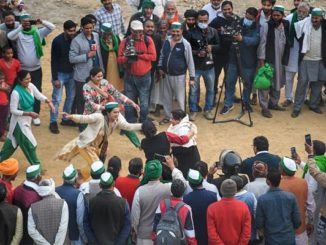
    NEW DELHI (TIP): As the leaders of the Samyukta Kisan Morcha on Thursday, December 9, formally announced the ending of their year-long agitation at the Delhi borders in the backdrop of now-repealed farm laws and the Centre’s outreach, according to some agriculture experts the story may be far from over yet. They called the farmers’ victory “reclaiming of democracy” and one that exposed “inability/limitations of RSS-BJP strategy/instrument to counter agitation/movement without any religious tinge”. However, it was also one resulting from “pure political compulsions of the ruling BJP”, they said. “Yes, it is a glorious victory, but forced due to UP/Punjab/Uttarakhand elections. The Narendra Modi Government conceded to farmers’ demands because of the fear of losing in 2022 Assembly elections,” said agriculture expert from Western UP Sudhir Panwar, who is also associated with the Samajwadi Party.

    “The compelling reasons for repeal was possibility of novel political alliance in Punjab and the growing support of farmers for political alliance of Akhilesh Yadav and Jayant Chaudhary (in Western UP),” he added.

    Also pointing to the words used by the Prime Minister while announcing the decision to rollback, Panwar called it a “clear indication of future”. “The PM said he felt sorry over his failure in convincing a small number of farmers of the benefits of new agriculture laws. It was not an apology on the manner of implementation and implications of laws. In future the BJP government can always claim that farmers are now convinced on benefits of repealed laws,” he said.

    Amid speculations of divisions among farmer groups, it seems BKU leader Rakesh Tikait, who infused life into the agitation with his emotional outbreak after the January-26 Republic Day violence, was not in favor of ending the agitation till the time there was a legal guarantee of Minimum Support Price.

    Panwar also said “farmers were divided”. While repeal was the main demand of those from Haryana and Punjab, for the rest of the country it was the legal guarantee of the MSP. “Rakesh Tikait was not as happy as farmer leaders of Punjab and Haryana. It also shows the dominant role of farmers from Punjab and Haryana in the agitation and subsidiary role of those from other regions,” he said. While there was “no real gain for farmers even after year-long agitation as issue related with electricity, burning of agriculture waste and legal guarantee of MSP handed over to committee”, the successful agitation exposed the inability/limitations of RSS-BJP strategy/instrument to counter agitation/movement without giving religious hues, Panwar said. “The BJP used all known strategies such as calling farmers anti-national, Khalistani, secessionist, anti-Hindu, etc. January 26 incidents were used to malign the image of farmer leaders and their organizations. The success of the agitation was clear records of its leaders and sustained food supply and shelters at agitation sites,” he said.

    (With inputs from Tribune, India)

  • India to allow full resumption of international flights only after Jan 31

    India to allow full resumption of international flights only after Jan 31

    NEW DELHI (TIP) Full resumption of international flights stands postponed at least till January 31, 2022, according to an announcement by the Directorate General of Civil Aviation on Thursday, December 9. Last week, days after announcing resumption of international flights from December 15, the Government postponed its decision indefinitely due to fresh concerns over the new COVID-19 variant, Omicron. An order from the DGCA on December 1 said that a new date would be announced in “due course of time”. On Thursday, the DGCA said, “the competent authority has decided to extend suspension of scheduled commercial international passenger services to/ from India till 2359 hours IST of 31st January 2022”. It added that international flights under air-bubble agreement with 32 countries would continue as before. In a relief for travelers arriving in India from Singapore, they will no longer be subjected to mandatory on-arrival RT-PCR test and seven-day quarantine, after the government removed the island city-state from its list of “at-risk” countries. Singapore had announced that it was restarting flight connectivity with India from November 29, after a gap of 20 months, and fully vaccinated Indian passengers could avail quarantine-free entry under its “Vaccinated Travel Lane” scheme. But later that month, in a setback to many planning to reunite with their families after a long time, India put Singapore on the list of at-risk countries requiring passengers arriving into the country to undergo additional health safety protocols.

    VDO.AI

    Singapore will now be classified with countries “not at risk”. Passengers arriving from these countries can enjoy quarantine-free travel within India and will only need to self-monitor their health for 14 days. In addition, a random selection of a mere 2% of passengers travelling from Singapore will need to undergo RT-PCR testing on arrival at Indian airports. The “at-risk” list of the Ministry of Health and Family Welfare now comprises Europe and 11 countries — South Africa, Brazil, Botswana, China, Ghana, Mauritius, New Zealand, Zimbabwe, Tanzania, Hong Kong and Israel.

  • New York City Extends VotingRights in Municipal Elections to Noncitizens

    New York City Extends VotingRights in Municipal Elections to Noncitizens

    City Council overwhelmingly approved legislation granting the right to more than 800,000 legal residents

    I.S. Saluja

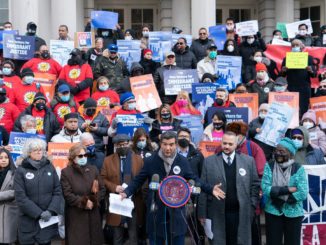
    NEW YORK CITY (TIP): New York City became the largest city in the country to allow noncitizens to vote in local elections after the City Council on Thursday, December 9 overwhelmingly approved legislation granting the right to more than 800,000 legal residents.The legislation passed by a vote of 33 to 14 with two abstentions.

    The legislation was approved over the objections of Mayor Bill de Blasio, who questioned whether the City Council has the power to grant voting rights to noncitizens. Legal experts expect that the bill could face a legal challenge, says New York Times. Under this legislation, any New Yorker who is a lawful permanent resident or authorized to work in the United States, who has been a resident of New York City for at least 30 consecutive days, and who meets all the qualifications for registering to vote under the Election Law other than U.S. citizenship, would be eligible to register to vote as a “municipal voter.” Registered municipal voters would be entitled to vote in any primary, special, general, or run-off election for Mayor, Comptroller, Public Advocate, Borough President, or Council Member, as well as on any local ballot initiative. The Board of Elections would implement this new system, which would include developing a new registration form specifically for municipal voters and giving them the opportunity to enroll in a political party so they can vote in local primary elections. Under this bill, eligible non-citizens would be able to start registering to vote on December 9, 2022, and once registered, could begin voting in local elections as of January 9, 2023. The bill would also create an advisory group to provide recommendations regarding the implementation of this new municipal voting system. Councilman Ydanis Rodriguez, the bill’s primary sponsor, said the law will give more people who live in New York City and pay taxes a say in how the city is run.

    “People who are looking to get elected to office will now have to spend the same amount of time in the communities affected by this legislation as they do in upper-class neighborhoods,” Mr. Rodriguez said.

    Americans for Citizen Voting, an organization that was founded in 2019 to oppose efforts to allow noncitizens to vote, sent a letter to the New York City Council this week urging council members to reject the bill.

    “We felt we needed to get involved because this is a growing movement across the country,” said the organization’s president, Christopher Arps. “We are not against immigrants — we believe immigrants have built this country. We just feel people should become citizens before they’re allowed to vote.”

    Mr. de Blasio has said he would not veto the bill. The bill automatically becomes law if it is not signed in 30 days.

    The mayor contended that noncitizen voting is a right that the state would have to grant, a position that many experts disagree with. Towns in Vermont and Maryland already allow noncitizens to vote in municipal elections. Noncitizens in San Francisco can vote in school board elections and several municipalities in Illinois, Maine and Massachusetts are also considering allowing noncitizen voting. In New York, the mayor-elect, Eric Adams, has said he supports the rights of green card holders to vote in local elections and has urged passage of the legislation. But he, too, has questioned whether the City Council has the ability to grant voting rights to noncitizens. A spokesman for Mr. Adams said he would review the legislation when he takes office. Experts say that the New York State Constitution grants voting rights to citizens but does not explicitly prevent noncitizen voting. Noncitizens were allowed to vote in New York City school board elections until the boards were abolished in the early 2000s.

    According to the Mayor’s Office of Immigrant Affairs, of the estimated 808,000 adult New Yorkers who are lawful permanent residents, or green card holders, or have work authorization, 130,000 are from the Dominican Republic and 117,500 are from China. Under the legislation, the New York City Board of Elections, which has faced scrutiny about its handling of elections, would issue a separate voter registration form and provide ballots for noncitizens that only include municipal offices.

    (With inputs from New York Times)

  • India pays homage to first CDS Gen Bipin Rawat, wife and 11 other chopper crash victims

    India pays homage to first CDS Gen Bipin Rawat, wife and 11 other chopper crash victims

    IAF has ordered a tri-service inquiry into the accident, Rajnath tells Parliament

    NEW DELHI (TIP): Prime Minister Narendra Modi on Thursday, December 9 evening paid last respects to Chief of Defence Staff (CDS) General Bipin Rawat, wife and 11 defense personnel who were killed in the Mi-17V5 helicopter crash in Tamil Nadu. He was joined by Defence Minister Rajnath Singh, Minister of State for Defence Ajay Bhatt, National Security Adviser Ajit Doval and the three Service Chiefs at the Palam Air Base. Earlier, the Defence Minister informed Parliament that the Indian Air Force (IAF) had ordered a tri-service inquiry headed by Air Marshal Manvendra Singh, Air Officer Commanding-in-Chief, Training Command, to investigate the crash. The mortal remains were moved by road from Wellington to Sulur around noon since the weather was not appropriate for air operations,and from there were flown in an IAF C-130J transport aircraft to Delhi.

    Gen Bipin Rawat’s daughters come to pay their respects to the mortal remains of the Chief of Defence Staff Gen Bipin Rawat, and his wife who were killed along with 11 other personnel in a helicopter crash in Connoor, at the Air Force Station Palam in New Delhi on December 9, 2021.

    Gen Bipin Rawat’s daughters come to pay their respects to the mortal remains of the Chief of Defence Staff Gen Bipin Rawat, and his wife who were killed along with 11 other personnel in a helicopter crash in Connoor, at the Air Force Station Palam in New Delhi on December 9, 2021.   | Photo Credit: Shiv Kumar Pushpakar

    The mortal remains of Gen. Rawat will be kept at his residence on Friday morning for all to pay their last respects and will be moved to the Brar Square Crematorium around 2 p.m., Army officials said.

    Identification process

    A defense official said the severity of air crash has led to difficulty in positive identification of mortal remains. “All possible measures are being taken for positive identification considering the sensitivities and emotional well-being of the loved ones,” the official said.

    Positive identification of only three mortal remains was possible till evening (Gen. Bipin Rawat, Madhulika Rawat and Brig. L.S. Lidder) and officials said their mortal remains will be released to the next of kin, for final rites.

    Process for positive identification of the remaining mortal remains is continuing, the official said adding, the remains will be kept at the mortuary of the Army Base Hospital till the completion of positive identification formalities.

    Close family members of all the deceased personnel have arrived in Delhi whose assistance would also be sought in the identification process. “Appropriate military funerals of all deceased are being planned and coordinated in close consultation with close family members,” the official added. The Defence Minister made a statement in the Parliament on the fatal helicopter crash. “With profound grief and heavy heart, I stand to convey the unfortunate news of the crash of the military helicopter in the noon of December 8, 2021, with India’s first CDS, Gen. Bipin Rawat onboard,” he said. “The CDS would be cremated with full military honors.” Mr. Singh said 13 of the 14 persons onboard the helicopter had succumbed to injuries. Group Captain Varun Singh is on life support in the Military Hospital at Wellington and all efforts are being made to save his life, Mr. Singh said, ending the statement by paying homage to the deceased persons and expressing condolences to the bereaved families.

    (With inputs from The Hindu)

    Also Read: Tribute to General Rawat (page 3) and Gen Rawat’s Legacy will live on (page 8)

  • Exemplary, legendary personality Anandi Lal Sharma Passes away

    Exemplary, legendary personality Anandi Lal Sharma Passes away

    Yash Goyal

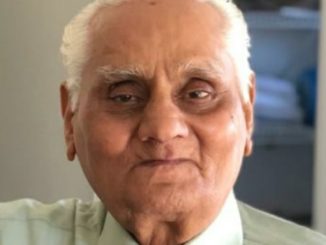
    JAIPUR/NEW YORK (TIP): Anonagenarian’s exemplary life that inspired many and his value system that shaped lives in the family and society has left for heavenly abode. The legacy of his vision guided all of us to the new frontiers every day but sadly to say that Anandi Lal Sharma, retiree IFS (Indian Forest Service), has passed away after a protracted illness in Pink City on December 5. Popularly called as Anandilal “Bauji” was the father of Dr Samin K Sharma, renowned interventional cardiologist and Chairman of Eternal Hospital, and father-in-law of Mrs Manju Sharma, Co-Chairperson of MD of EHCC in Jaipur. Out of a number of memorable events and incidents of his life, in one winter season, an elderly couple were out for a morning walk when they saw a poor man shivering from the cold on the side of the road, whose feet were also swollen due to the cold. When he saw the condition of that person, he took off his recently bought shoes and gave it to that person. This elderly man was none other than Bauji who had told his wife, “I will buy more, but if this man had stayed barefoot for some more time this winter, his condition would have deteriorated. At least now he will be able to walk on cold ground”.Bauji was always ready to help others, even if he had to use his personal resources for this. Punctuality is such that it lasts for life – Bauji had crossed 90 decades of life and was always strictly punctual. His priority was to complete the work on time. Even after retirement, he did not leave the habit of punctuality in his daily routine. If breakfast time was left in his routine, he would not have breakfast that day. He maintained his discipline and self-reliance throughout his life. His principle of honesty, grounding and big thinking was also unique. It has always been the principle of Bauji that whatever work you do, complete it honestly and on time. Stay connected to the ground and keep your thinking big. He passed the same principles to his children as well.  At the end of his life, when he was told that he was being put on ventilator support, he listed some tasks that were related to helping the needy. He loved being completely honest towards his work and he also liked people who had similar habits. Recalling an incident, his son Dr Samin said that in the initial days when I was in Jaipur, a patient came to the house for consultation on one day. I examined him and prescribed the necessary medicines. When the patient told that he was unable to pay the fee, I did not take the fee from him. While leaving, he was stopped by Bauji and started talking to him. When he came to know that the patient did not pay my fees, he asked him “Does there have money for some food or not?” When the patient expressed his inability for this too, he gave him some money from his pocket and said that “If you eat something and drink it, if you take medicine without eating it will not work.” He also made many efforts for the empowerment of women. The ‘Kamla Sharma Memorial Charitable Trust’ created by her for social upliftment, provided free sewing machines and free courses to women so that they could become self-reliant. Even during the Covid-19 pandemic, Bauji distributed free ration every month to many needy families. During this epidemic, he also took care of the marriage expenses of many girls, provided free medical facilities to the disabled girls. He always used to emphasize progressive ideology. He had also adopted this ideology in his normal routine. If he used to walk two thousand steps during the morning walk, then his effort was to walk a few steps more than the previous day, but he should be better than yesterday. About 75 years of continuous fasting on every Tuesday, He always had faith in God. Indeed, he left the family and friends on physical land, nevertheless Bauji is with the heavenly god now and will rest in peace.

  • Distinguished community leaders honored at Diwali celebrations organized at Nassau County

    Distinguished community leaders honored at Diwali celebrations organized at Nassau County

    The office of Asian Community Affairs, Nassau County Executive Laura Curran, Executive Director of External Affairs Farrah Mozawalla and Indian American Forum partnered for the impressive event

    Diyas were lighted in celebration of Diwali.
    A dance performance.

    MINEOLA, NY (TIP): The office of Asian Community Affairs, Nassau County Executive Laura Curran & Executive Director of External Affairs Farrah Mozawalla along with Indian American Forum Founding Member Dr. Bobby K. Kalotee & Chairperson Indu Jaiswal, celebrated Diwali honoring distinguished Indian American Community leaders. Hosted by Beena Kothari & EmCeed by Flora Parekh, the event highlighted the accomplishments of several prominent Indian American community leaders that included Jasbir (Jay) Singh (Board Member – Asian American Advisory Board of Nassau County), Anil Shah, (Trustee VTNY & Dunkin Donut Franchise Owner), Roopam Maini (BCB- Indus American Bank), Uday Dommaraju (President – TLCA), Harish Thakkar (President – AIA), Dilip Kumar (Regional Representative – TANA), Dr. Ravindra Goyal (Trustee & President – Hindu Center Inc. Flushing), Harshad Patel (President – Gujarati Samaj of New York), Mayur Parekh (JSLI & IDP), Manik Malhotra (SaReGaMa Desi Beats) & Krish Rudra (Mortgage Consultant).

    The tireless efforts of the county and founding members along with a dedicated Hosts committee of Dr. Bobby K. Kalotee, Chairperson Indu Jaiswal, Beena Kothari, Flora Parekh, Jasbir (Jay) Singh, Mukesh Modi, Shashi Malik, Sunita Manjrekar, Deepak Bansal, Indu Gajwani, Anju Sharma and several volunteers and supporters, contributed to the success of the event keeping up the spirit of Diwali.

    Starting with the American & Indian National Anthems by Abigail Varghese & Anjani Patel, the event followed a traditional Diya Ceremony. Beautifully choreographed Bollywood performances by young girls Yashswini, Sia and Sana was the highlight of the evening. The venue was traditionally decorated by Anju and Sanju Sharma. Mouthwatering dinner boxes were served by Sheetal Talati from Rajbhog.

    Several Indian American Forum Board members and community leaders including Mohinder Taneja, Rizwan Quereshi, Suhag Mehta. were in attendance. Indian American Forum has been instrumental in showcasing the Indian tradition in NY for several decades. Additional information can be found at www.indianamericanforum.org


  • George Abraham, Vice-Chair of IOCUSA, calls for the repeal of the ‘Armed Forces Special Powers Act.

    George Abraham, Vice-Chair of IOCUSA, calls for the repeal of the ‘Armed Forces Special Powers Act.

    NEW YORK (TIP): “The tragic killings of 14 innocent civilians in Nagaland once again shows the abusive nature of the ‘armed forces special powers act,’ and we are calling upon the Modi administration to repeal this law that gives armed forces deployed in internal conflicts broad powers to use lethal force while not being accountable for their actions,” said George Abraham, Vice-Chairman of the Indian Overseas Congress, USA. “An apology by the Home Minister for this horrific killing or simply ordering another inquiry would not suffice, but rather the government should permit prosecuting those who were responsible for this terrible deed,” added Mr. Abraham. The AFSPA was supposed to be a short-term measure enacted almost six decades ago to check separatist movement in the Naga Hills and is currently in use in other north-eastern states and the union territory of Jammu and Kashmir.

    According to Human Rights Watch, AFSPA gives armed forces broad powers to make arrests on flimsy pretexts, conduct warrantless searches, and demolish structures in the name of “aiding civil power.” The act violates international human rights law protections, including the right to life, the right to be protected from arbitrary arrest and detention. It also denies the victims and their families the right to a remedy.

    On December 4, 2021, soldiers from the 21 para special forces army unit shot and killed six coal miners in Nagaland’s Mon district. The deaths led to further violence, resulting in the loss of another eight lives.

  • Supreme Court refuses to interfere with Bombay HC order granting Sudha Bharadwaj bail

    Supreme Court refuses to interfere with Bombay HC order granting Sudha Bharadwaj bail

    NEW DELHI(TIP): The Supreme Court on Tuesday, December 7, refused to interfere with a Bombay High Court order granting default bail to advocate Sudha Bharadwaj in the Bhima Koregaon case, paving the way for her release from jail after a span of two years. A Bench of Justices U.U. Lalit, S. Ravindra Bhat and Bela M. Trivedi declined the arguments made by the NIA that the High Court on December 1 erred in concluding that the Pune Sessions Court, which took cognizance of its charge-sheet and extended the period of her detention under Section 43D (2) of the Unlawful Activities Prevention Act (UAPA), had no jurisdiction in the case. The Sessions Court was not notified as a Special Court under the NIA Act, the High Court had noted. The default bail order of Bharadwaj comes into effect from December 8. She has to appear before the Special Court on Wednesday for a hearing on the conditions of her bail.“We find no reason to interfere,” Justice Lalit said in the order. During the hearing, Justice Lalit said the moot question was whether the court that extended the detention was competent or not. “Within 90 days, you have to complete the investigation, unless you can show reasons not to have completed,” Justice Lalit said. The High Court had, in its order, upheld Bhardwaj’s indefeasible right to personal liberty. It had said the guarantee of personal liberty under Article 21 (right to life) of the Constitution cannot be thwarted on technical grounds that her plea for default bail was premature. That would be a “too technical and formalistic view of the matter”. The High Court had, however, denied bail to Rona Wilson, Varavara Rao, Sudhir Dhawale, Surendra Gadling, Shoma Sen, Mahesh Raut, Vernon Gonsalves and Arun Ferreira in the case. They are lodged in Taloja Central Jail. Bharadwaj was taken into custody by the Pune police in August 2018. The charge-sheet was filed in February 2019.

  • RBI initiates insolvency process against Rel Cap

    RBI initiates insolvency process against Rel Cap

    Mumbai (TIP): The RBI on Thursday, Dec 2,  filed an application for initiation of Corporate Insolvency Resolution Process (CIRP) against debt-ridden Reliance Capital at the Mumbai Bench of the National Company Law Tribunal (NCLT). The RBI had on November 29 superseded the Board of Anil Ambani-promoted Reliance Capital in view of payment defaults and serious governance issues.
    The central bank had also appointed Nageswar Rao Y (former executive director, Bank of Maharashtra) as the administrator of the company.
    In a statement on Thursday, the Reserve Bank said it has filed an application for initiation of CIRP against Reliance Capital Ltd under various sections of the Insolvency and Bankruptcy Code (IBC) before the Mumbai Bench of the National Company Law Tribunal (NCLT).
    As the RBI has moved NCLT, an interim moratorium would be applicable on Reliance Capital.
    The interim moratorium would also be on transferring, encumbering, alienating or disposing of by the corporate debtor any of its assets or any legal right or beneficial interest therein.
    As per the Financial Service Providers Insolvency Rules, an interim moratorium commences on and from the date of filing of the application till its admission or rejection.
    This is the third large NBFC against which the central bank has initiated bankruptcy proceedings under the IBC recently. The other two were Srei Group NBFCs and Dewan Housing Finance Corporation (DHFL). Source: PTI

  • Gita Gopinath to replace Okamoto as IMF’s No. 2

    Gita Gopinath to replace Okamoto as IMF’s No. 2

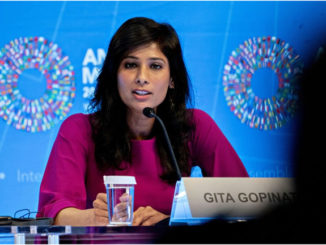
    International Monetary Fund Chief Economist Gita Gopinath is set to take over from Geoffrey Okamoto as the institution’s No. 2 official, the institution said Thursday, Dec 2. The move comes as a surprise because Gopinath, the first woman to serve as the IMF’s chief economist, had said in October she planned to rejoin Harvard University in January to retain her tenured facility post after three years of public service. The IMF said in a statement that “some realignment in the roles and responsibilities of the fund’s senior management team is being undertaken.”

    By tradition, the first deputy managing director is nominated by the U.S. and appointed by the IMF managing director. The Treasury endorses this choice and is pleased the job responsibilities of this role are being restored, according to a person familiar with the department’s position who asked not to be identified.

  • Jet in talks with Boeing, Airbus for $12-bn order

    Jet in talks with Boeing, Airbus for $12-bn order

    Bengaluru (TIP): Jet Airways is in talks with Boeing and Airbus for an order worth $12 billion, BloombergQuint reported on Thursday, citing Bloomberg News. The airline’s new owners — UAE-based businessman Murari Lal Jalan and UK investment firm Kalrock Capital — said Jet could buy at least 100 aircraft, BloombergQuint said on Twitter.

    The group is set to invest about $200 million through equity and debt in Jet over the next six months, it said. Jet, Boeing and Airbus did not immediately respond to requests for comment.

    The Jalan-Kalrock consortium’s resolution plan for Jet was approved by India’s bankruptcy court in June, with the airline poised for takeoff by the first quarter of 2022 as it gears up to resume domestic operations.

  • Asia markets mixed as Omicron, Fed taper keep traders on edge

    Asia markets mixed as Omicron, Fed taper keep traders on edge

    HONG KONG (TIP):  Asian markets have been blended Friday, Dec 3,  as merchants tracked developments within the Omicron virus pressure because it spreads around the globe, fuelling considerations concerning the financial restoration, simply because the Federal Reserve units the stage to withdraw its huge pandemic-era monetary assist.

    Hong Kong was among the many principal losers with a number of dual-listed tech giants taking a success after US officers adopted a rule permitting them to take away international companies from Wall Avenue until they offered sure data to auditors, a transfer primarily focusing on Chinese language entities.

    World markets have whipsawed because the Omicron variant hit headlines final Friday over considerations that it could be much more transmissible than the Delta pressure and that vaccines could also be much less efficient towards it.

    Whereas a few of the preliminary panic has died down, with some suggesting it may very well be milder and that inoculations could be efficient, specialists have mentioned it may take as much as three weeks to get a full image of the outlook and its doable financial affect.

    For now, governments are taking part in it cautiously, imposing contemporary containment measures together with journey curbs and a few lockdowns, which observers worry may knock the already shaky restoration off observe.

    In the meantime, central banks proceed to tighten their belts, having stumped up trillions of {dollars} to get by way of the preliminary jolt from the pandemic final yr with some having already lifted rates of interest twice as they face a battle towards hovering inflation.

    Eyes are actually on the Federal Reserve, which, after months of claiming the spike in costs was short-term, has now turned its give attention to maintaining them from working uncontrolled and is making ready to tighten its belt.

    Boss Jerome Powell advised this week the financial institution would probably velocity up the taper of its bond-buying programme after which give attention to lifting borrowing prices.

    Whereas the strikes have been nicely telegraphed, buyers are actually having to regulate to the tip of the age of low-cost money, which has been a key driver of the rally in world markets to report or multi-year highs in 2021.

  • Chinese ride-hailing giant Didi to de-list from New York exchange

    Chinese ride-hailing giant Didi Chuxing said Friday it would start the process of de-listing its shares from the New York stock exchange, shortly after US regulators adopted a rule that would allow them to remove foreign firms.

    Didi’s move comes in the wake of a sweeping Chinese regulatory crackdown in the past year that has clipped the wings of major internet firms— including Alibaba and Tencent— wielding huge influence on consumers’ lives, and just months after its mammoth New York IPO.

    “After careful consideration, (Didi) will start the process of de-listing from the New York stock exchange from today, and start preparations for listing in Hong Kong,” the company said in a statement on social media.The ride-hailing firm’s IPO in June had been quickly overshadowed by an investigation by the Chinese cyber watchdog on the grounds of cybersecurity, launched just days after the listing.