Tel Aviv (TIP): Residents of Israel’s seaside metropolis Tel Aviv have for years complained of how expensive it is, with living costs taking a chunk out of their paychecks. Now a new report affirms their quibbles. Tel Aviv has emerged as the most expensive city to live in, according to the Economist Intelligence Unit, a research group linked to the Economist magazine. The city, which was previously ranked 5th most expensive, has now surpassed other pricy places like Paris and Singapore. Economists attribute the jump to a strong appreciation of the shekel against the dollar. In its report Wednesday, the Economist Intelligence Unit also pointed to a rise in grocery and transport costs. The report did not include housing prices — another common complaint among young professionals and families trying to live in the bustling city. “It’s really hard to live here. You pay the rent and you pay for something small and you live, like, from paycheck to paycheck so it’s really hard,” said Ziv Toledano, a transplant from northern Israel. He said his expenses have nearly doubled in Tel Aviv. Israeli news outlets constantly compare the prices of basic goods in Israel to other Western nations, hammering in to audiences what has been clear to their wallets for years: that the country is far more expensive than others. AP
Month: December 2021
-
Russia deploys coastal missile system on island chain near Japan
Moscow (TIP) : Russia has deployed its Bastion coastal missile defence system to a remote part of the Kuril island chain in the Pacific near Japan, the Ministry of Defence’s Zvezda TV channel said on December 2. Japan lays claim to the Russian-held southern Kuril islands that Tokyo calls the Northern Territories, a territorial row that dates back to the end of World War Two when Soviet troops seized them from Japan. The dispute has prevented them signing a formal peace treaty. Reuters
-
Man who put razor blades in pizza dough sentenced to prison
Portland (TIP): A man accused of putting razor blades and screws in pizza dough at supermarkets in Maine and New Hampshire was sentenced on December 2 to four years and nine months in federal prison.
The sentencing of Nicholas Mitchell, 39, of Dover, New Hampshire, followed an agreement with prosecutors in which he pleaded guilty in June to one of two counts of tampering with a consumer product. He also must pay nearly $230,000 in restitution to Hannaford Supermarkets.
The hearing proceeded even though Mitchell was recovering from a recent bout of Covid-19 contracted in jail.
The judge told him the nature of the crime spread fear in the community and Mitchell tearfully apologised for his actions. Mitchell was arrested in October 2020 after razor blades were found in pizza dough sold at a Hannaford store in Saco. Three customers bought the tainted product in Saco and discovered the blades hidden in the dough, prosecutors said. Product tampering also occurred at Hannaford stores in Sanford, Maine, and Dover, New Hampshire, prompting investigations by police department in those communities, as well. Mitchell was a former employee of It’ll Be Pizza. The Scarborough, Maine, company makes several brands of dough, including the Portland Pie Co. dough that was allegedly tampered with. Court documents indicated that Mitchell’s life spiralled out of control during the pandemic when his girlfriend lost her hair salon and Mitchell was arrested following a domestic disturbance, leaving him homeless and living in his car. He was later fired from his job at It’ll Be Pizza.
Under the agreement, Mitchell agreed not to appeal a sentence that is no greater than four years and nine months, according to court documents. The maximum penalty for product tampering is 10 years in prison. —AP
-

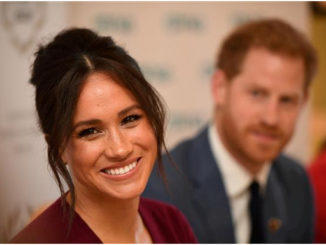
Meghan Markle wins new round of privacy legal battle in UK
London (TIP): Meghan Markle on December 2 won the latest round of her legal battle over privacy against the publishers of the ‘Mail on Sunday’ newspaper as a UK court turned down an appeal against a previous ruling in her favour, welcomed by the Duchess of Sussex as setting an important “precedent”.
The Court of Appeal judges rejected the Associated Newspapers Limited (ANL) attempt to have a trial over its publication of extracts from Markle’s letter to her father, which the judges concluded was “personal, private and not matters of legitimate public interest”.
Earlier this year, a UK High Court judge had already ruled in favour of the Duchess in the privacy and copyright case and rejected the need for a full trial. Now, that decision has been upheld.
“This is a victory not just for me, but for anyone who has ever felt scared to stand up for what’s right,” Markle, the wife of Prince Harry – the Duke of Sussex, said in a statement.
“While this win is precedent setting, what matters most is that we are now collectively brave enough to reshape a tabloid industry that conditions people to be cruel, and profits from the lies and pain that they create,” she said.
The 40-year-old, now based in the US with Harry and her two young children Archie and Lilibet, claimed that from “day one”, she had treated the lawsuit as an “important measure of right versus wrong” while the newspaper group had “treated it as a game with no rules”.
She added: “The longer they dragged it out, the more they could twist facts and manipulate the public (even during the appeal itself), making a straightforward case extraordinarily convoluted in order to generate more headlines and sell more newspapers – a model that rewards chaos above truth.
“In the nearly three years since this began, I have been patient in the face of deception, intimidation, and calculated attacks. “As far removed as it may seem from your personal life, it’s not. Tomorrow it could be you. These harmful practices don’t happen once in a blue moon – they are a daily fail that divide us, and we all deserve better.” In the judgment published on Thursday, the Court of Appeal assessed whether the previous judgment had been correct. It upheld the decision that the duchess had a “reasonable expectation of privacy in the contents of the letter”.
It notes: “These contents were personal, private, and not matters of legitimate public interest. The articles in the ‘Mail on Sunday’ interfered with the Duchess’s reasonable expectation of privacy.”
Referring to the decision made earlier in the year, the court said: “The judge had correctly decided that, whilst it might have been proportionate to publish a very small part of the letter for that purpose, it was not necessary to publish half the contents of the letter as ANL had done.”
The ruling follows a hearing last month when the Court of Appeal was told that the Duchess’ letter to her father, Thomas Markle, was written “with public consumption in mind”. Lawyers for ANL had produced a witness statement from Markle’s former communications secretary, Jason Knauf. In her written evidence, Markle denied she thought it likely that her father would leak the letter, but “merely recognised that this was a possibility”. PTI
-

Bomb threat on Dhaka-bound Malaysia Airlines plane turns out to be hoax: Airport official
Dhaka (TIP): A bomb threat, which forced a Malaysia Airlines flight with 135 passengers on board to make an emergency landing at the Dhaka airport, turned out to be a hoax, a senior airport official said on December 2.
The Dhaka-bound MH-196 flight from Kuala Lumpur landed at the Hazrat Shahjalal International Airport at 9.38 pm local time on Wednesday amid tight security at the airport and the runway, HSIA Executive Director Group Captain AHM Touhid-ul Ahsan told reporters. Following the threat call, commandos and security agencies were positioned at the airport along with firefighters and ambulances.
On landing, the plane was marshalled to the taxiway where the Air Force’s bomb squad conducted a thorough search of the aircraft after evacuating its passengers. However, no explosive or bomb-like object was found inside the aircraft or in any passenger’s luggage.
“The information we received over a phone call from Malaysia appeared unfounded…Nothing was found,” Ahsan said. The top HSIA official declined to identify the caller source but said the Rapid Action Battalion (RAB), an elite anti-crime and anti-terrorism unit of the Bangladesh Police, received the call.
Subsequent exchanges with the Malaysian authorities and intelligence reports suggested the aircraft faced no such threat, but the Bangladesh authorities did not take it lightly, Ahsan said. An intensive scanning of the aircraft cabin, passengers and their luggage were carried out as it was a security concern for all, he said. According to airport officials, of the 135 passengers on board the plane, 134 were Bangladeshis and one Malaysian national. After the suspension of flight operation for around three and a half hours from 9 pm last night, normal operation at the HSIA resumed around 12.45 am on Thursday, The Daily Star reported. “No one was detained in this connection, Morshedul Alam, Deputy Commissioner, Uttara Division of Dhaka Metropolitan Police, told the newspaper. PTI
-
Afghan air force commander calls on run-away pilots to return
Kabul (TIP): Afghanistan’s acting air force commander Mawlawi Amanudin Mansoor has called on the pilots who served under the previous government to return to work and join the current air force. The commander made the call in a recent military exercise conducted in the northern city of Mazar-i-Sharif, Xinhua news agency reported. Mansoor was quoted by local media Tolo News as saying the pilots who were trained and served under the previous government and the pilots who had fled the country should return and they would be recruited back into the air force. IANS
-
Bangladeshi court sentences 13 to death for lynching 6 students
Dhaka (TIP): A Bangladeshi court on December 2 sentenced 13 people to death and 19 others to life imprisonment for lynching six students suspecting them of being robbers on the outskirts of the capital ten years ago.
“They will be hanged by neck until they are dead,” Dhaka 2nd Additional District and Sessions Judge Ismat Jahan ruled. The judge said those given the death penalty would have to pay Taka 20,000 each.
Nineteen others were given life in prison. They were also slapped with a fine of Tk10,000 each.
A total of 60 people had been accused of the killings. Names of three people were dropped from the charge sheet as they died during the trial.
Prosecution lawyers said 40 out of the 57 defendants were in jail and one was on bail while the rest were tried as fugitives. The judge acquitted 25 of them.
Seven friends, who were studying at different schools and colleges of Dhaka, took a trip to Amin Bazar Bridge under Savar police station on the outskirts of Dhaka on July 18, 2011, the night of Shab-e-Barat festival.
Six of them were brutally beaten to death by a group of local people who accused them of being robbers.
“We repeatedly told them we are students, not dacoits…All the six victims were my close friends and students of different colleges in Dhaka,” lone survivor Al-Amin, who is now 32, later told reporters.
Police had filed a case with Savar police station accusing at least 500 unidentified villagers over the incident.
Elite anti-crime Rapid Action Battalion (RAB) was tasked to carry out the investigations in line with a High Court order. The RAB submitted a chargesheet mentioning 60 people in the case in January, 2013. PTI
-

Pakistan says model’s ‘bareheaded’ photoshoot at Kartarpur ‘isolated incident’
Islamabad (TIP): Pakistan on December 2 summoned a senior diplomat from the Indian High Commission here to the Ministry of Foreign Affairs to convey its view that a model’s “bareheaded” photoshoot at the revered Gurdwara Darbar Sahib was an “isolated incident”. On Tuesday, India had summoned the Charge d’Affaires at the Pakistan High Commission in New Delhi and conveyed its deep concern over Pakistani model Sauleha’s photoshoot at Gurdwara Darbar Sahib in Kartarpur, describing it as a “desecration” of the sanctity of the holy place.
Sauleha’s “bareheaded” photoshoot for a Pakistani clothing brand at Gurdwara Darbar Sahib set the social media abuzz on Monday as many people accused her of hurting the religious sentiments of the Sikh community.
The model later deleted her photos from her Instagram page and posted an apology.
Gurdwara Darbar Sahib, located in Pakistan’s Narowal district, is the final resting place of Sikh faith’s founder Guru Nanak Dev, who had spent the last 18 years of his life in Kartarpur.
In a statement, the Foreign Office said that a senior diplomat from the Indian High Commission was summoned to the Ministry of Foreign Affairs and told that it was “an isolated incident involving an individual at Gurdwara Darbar Sahib”. “It was conveyed to the Indian diplomat that the incident was swiftly addressed and clarified,” it said.
It said that Pakistan accords highest primacy to the rights of the minorities and sanctity of religious places and revered sites of every community is ensured in Pakistan.
Indian authorities must focus on ensuring effective protection of their own minorities and places of worship from instances of desecration, hate crimes and mob lynching, the FO said. PTI
-

Amid Omicron scare, India to supply Covid-19 vacines to African countries
New Delhi (TIP): Amid concerns over the omicron variant of the novel coronavirus across the world, India will soon supply Covid-19 vaccines to African countries, as per top government sources. As countries tighten travel protocols once again, the central government is looking to export a significant portion of Covid-19 vaccines to Africa. The government is already in talks with indigenous vaccine manufacturers regarding vaccine supplies to Africa, sources said. Supplies have already been cleared for countries such as Botswana, Malawi, Zambia, Ethiopia, Mozambique, Guinea and Lesotho. The ministry of external affairs had tweeted on Tuesday, “India stands ready to support the countries affected in Africa in dealing with the Omnicron Variant, including by supplies of Made-in-India vaccines. Supplies can be undertaken through COVAX or bilaterally.” This came soon after Chinese President Xi Jinping promised to supply another 1 billion doses of Covid-19 vaccines to African countries. The Centre recently approved the export of Covid-19 vaccine in view of sufficient stock available with the states.
South Africa, where the new strain B.1.1.529 or omicron was first detected, is only 25 per cent vaccinated against Covid-19. Only 7 per cent of Africa is inoculated, and there are a few countries in the continent where not even 5 per cent of the population has received a Covid-19 vaccine.
Bharat Biotech will export 108 lakh doses of Covaxin commercially, as per sources. The vaccine will be exported to eight countries — Paraguay, Botswana, Vietnam, Myanmar, Philippines, Singapore, Cameroon and United Arab Emirates. Pune-based Serum Institute of India (SII), too, was allowed to export 5 million doses of Covishield to the WHO-led vaccine initiative Covax, including to African countries such as Malawi, Zambia, Ethiopia, Mozambique, Guinea and Lesotho. Hyderabad-based vaccine maker Bharat Biotech is not a part of the Covax initiative yet. Sources said the quantity of Covid-19 vaccines to be exported will be decided by the Centre, based on domestic availability every month. While Bharat Biotech produced 55 million doses of Covaxin in October, it hopes to make 80 million doses in December. Serum institute has a capacity to produce over 200 million doses of Covishield per month.
Covaxin, the inactivated whole-virion vaccine that is the first indigenous Covid vaccine, was recently granted emergency use listing (EUL) by WHO on November 3. Serum institute’s Covishield was granted approval much earlier in January, paving the way for a global rollout through Covax.
-

Omicron scare: India puts on hold restart of regular international flights
New Delhi (TIP): The Centre has formally put on hold the resumption of scheduled international flights from December 15 in view of the global spread of the Omicron variant of the novel coronavirus.
Several countries have imposed travel bans on people who have visited countries with confirmed cases of the VOC, with some even shutting their borders to all foreign arrivals. India has instituted a mandatory test-on-arrival and seven-day home quarantine for people coming in from 12 regions, including all of Europe.
“In view of the evolving global scenario with the emergence of new variants of concern, the situation is being watched closely in consultation with all stakeholders. An appropriate decision indicating the effective date of resumption of scheduled commercial international passenger services shall be notified in due course,” read a circular issued by the Directorate General of Civil Aviation (DGCA) on Wednesday, December 11.
Prime Minister Narendra Modi first suggested the government reconsider the December 15 reopening when he held a meeting to review the threat from Omicron on Saturday.
The DGCA decision effectively means that international flights under the air transport bubble agreement will continue for now. India has signed air transport bubble pacts with 31 countries. On November 30, 536 international flights were operated — this is around 44 per cent of the capacity in 2019’s winter schedule.
Last week, the DGCA had announced resumption of scheduled international flights in a graded fashion, based on Covid transmission risk. Scheduled flights were suspended last March and
have since been replaced with flights under the air transport bubble arrangement.
The World Health Organisation on Friday classified Omicron as a VOC after initial analysis showed it to carry an unusually large number of mutations, which could make it more resistant, more virulent (leading to severe disease), and perhaps more transmissible. Scientists in several parts of the world are carrying out tests and monitoring epidemic trends, especially in South Africa where most of the cases have been found, to establish if this is indeed the case. The VOC designation came on the day India said it will allow the full schedule of regular international flights to resume with all countries considered “not at risk” from December 15.
The decision to put scheduled international flights in abeyance follows Prime Minister (PM) Narendra Modi’s meeting with top officials on Saturday to review health preparedness in view of the Omicron threat.
Apart from increased surveillance and the need to increase the second dosing of the Covid vaccine, the PM had asked officials to review plans for easing international travel restrictions.
-
India reports 9,216 infections; active caseload below 1 lakh
The Covid-19 tally in India was increased by 9,216 infections as the country battled the fresh threat of the Omicron variant of the coronavirus. The overall tally now stands at 34,615,757 including 470,115 deaths due to the viral disease, according to the numbers updated at the Union ministry of health and family welfare’s website. Said to be more contagious than its previous mutations, Omicron, the new coronavirus variant, has reached India with two men in Karnataka testing positive for the Omicron variant, making them the country’s first case of the new variant of concern. The number of active cases saw a slight rise but remained below the 1-lakh mark, the health ministry data showed. It currently stands at 99,976 and accounts for less than 1% of total cases (0.29%), the lowest since March 2020, according to the daily health bulletin. The recovery rate is currently at 98.35% with a total number of recoveries climbing to 34,045,666. The daily positivity rate (0.80%) has been less than 2% for the last 60 days, while the weekly positivity rate (0.84%) is less than 1% for the last 19 days.
-
Bengaluru doc with no travel history infected with Omicron
Officials of the health department and Bruhat Bengaluru Mahanagara Palike (BBMP) remain clueless about how a person got infected with the Omicron variant of the coronavirus any history of international travel. Unlike other infected person, who travelled from South Africa, where the variant was first detected, patient number two is a local resident and doesn’t have any history of international travel, Karnataka health minister Dr K Sudhakar said.
As per the chronology given by the BBMP, the first case of Omicron reported in Karnataka was that of the 66-year-old South African, who arrived in Bengaluru on November 20. He tested positive for the virus on the same day, and he was isolated. BBMP reports read that none of his 24 primary contacts and 240 secondary contacts tested positive for the virus. BBMP commissioner Gaurav Gupta told HT that patient number two didn’t have any contact with the South African national. The report on patient number two says that he is a 46-year-old resident of Bengaluru and was working as a health care worker.
-

Overdose Deaths Reached Record High as the Pandemic Spread
“Many people are dying without knowing what they are ingesting”: Dr. Nora Volkow, director of the National Institute on Drug Abuse
More than 100,000 Americans died from drug overdoses in the yearlong period ending in April, government researchers said.
Americans died of drug overdoses in record numbers as the pandemic spread across the country, federal researchers reported on Wednesday, December 1, the result of lost access to treatment, rising mental health problems and wider availability of dangerously potent street drugs. In the 12-month period that ended in April, more than 100,000 Americans died of overdoses, up almost 30 percent from the 78,000 deaths in the prior year, according to provisional figures from the National Center for Health Statistics. The figure marks the first time the number of overdose deaths in the United States has exceeded 100,000 a year, more than the toll of car crashes and gun fatalities combined. Overdose deaths have more than doubled since 2015.
Administration officials said on Wednesday that they will expand access to medications like naloxone, which can reverse an opioid overdose, by encouraging states to pass laws that will make it more widely available and promoting its use by Americans.
“I believe that no one should die of an overdose simply because they didn’t have access to naloxone,” said Dr. Rahul Gupta, director of the Office of National Drug Control Policy. “Sadly, today that is happening across the country, and access to naloxone often depends a great deal on where you live.”
Though recent figures through September suggest the overdose death rate may have slowed, the grim tally signals a public health crisis whose magnitude was both obscured by the Covid pandemic and accelerated by it, experts said. “These are numbers we have never seen before,” said Dr. Nora Volkow, director of the National Institute on Drug Abuse. The fatalities have lasting repercussions, since most of them occurred among people aged 25 to 55, in the prime of life, she added.
Did you know you can share 10 gift articles a month, even with nonsubscribers?
Share this article.
“They leave behind friends, family and children, if they have children, so there are a lot of downstream consequences,” Dr. Volkow said. “This is a major challenge to our society.”
The rise in deaths — the vast majority caused by synthetic opioids — was fueled by widespread use of fentanyl, a fast-acting drug that is 100 times as powerful as morphine. Increasingly fentanyl is added surreptitiously to other illegally manufactured drugs to enhance their potency.
Overdose deaths related to use of stimulants like methamphetamine, cocaine, and natural and semi-synthetic opioids, such as prescription pain medication, also increased during the 12-month period.
While some drug users seek out fentanyl, Dr. Volkow said, others “may not have wanted to take it. But that is what is being sold, and the risk of overdose is very high.”
“Many people are dying without knowing what they are ingesting,” she added.
People struggling with addiction and those in recovery are prone to relapse, Dr. Volkow noted. The initial pandemic lockdowns and subsequent fraying of social networks, along with the rise in mental health disorders like anxiety and depression, helped create the crisis.
So, too, did the postponement of treatment for substance abuse disorders, as health care providers nationwide struggled to tend to huge numbers of coronavirus patients and postponed other services.
Dr. Joseph Lee, president and chief executive of the Hazelden Betty Ford Foundation, said that community and social support that was lost during the pandemic, along with the closing of schools, contributed to the death toll. “We’re seeing a lot of people who delayed getting help, and who seem to be more sick,” Dr. Lee said.
The vast majority of these deaths, about 70 percent, were among men between the ages of 25 and 54. And while the opioid crisis has been characterized as one primarily impacting white Americans, a growing number of Black Americans have been affected as well.
There were regional variations in the death counts, with the largest year-over-year increases — exceeding 50 percent — in California, Tennessee, Louisiana, Mississippi, West Virginia and Kentucky. Vermont’s toll was small but increased by 85 percent during the reporting period.
Increases of about 40 percent or greater were seen in Washington State, Oregon, Nevada, Colorado, Minnesota, Alaska, Nebraska, Virginia and the Carolinas. Deaths actually dropped in New Hampshire, New Jersey and South Dakota.
Understand the Opioid Crisis During the Pandemic
The first months. As Covid-19 brought the U.S. to a standstill, the opioid epidemic took a sharp turn for the worse. More than 40 states recorded increases in opioid-related deaths in the first six months of the pandemic.
A reversal of progress. Despite modest gains against addiction — including a slight dip in deaths in 2018 — fatal overdoses were rising even before Covid arrived. But the pandemic unquestionably exacerbated the trend.
An unprecedented spike. U.S. overdose deaths rose nearly 30 percent in 2020 to 93,000, then the largest single-year increase recorded. Deaths peaked nationally in the spring amid the most severe period of shutdowns.
Fueled by fentanyl. The rise in deaths was fueled by increased use of fentanyl, a cheap and readily available drug that is 100 times as powerful as morphine. It is often added surreptitiously as a substitute to other drugs.
A grim threshold. Overdose deaths in the U.S. exceeded 100,000 for the first time in the yearlong period ending in April 2021. The figure is more than the death toll of car accidents and guns combined.
“If we had talked a year ago, I would have told you deaths are skyrocketing. But I would not have guessed it would get to this,” said Dr. Andrew Kolodny, medical director of the Opioid Policy Research Collaborative at Brandeis University’s Heller School for Social Policy and Management.
Most of those who died probably already suffered from addiction, or were in recovery and relapsed, an ever-present risk exacerbated during times of stress and isolation, Dr. Kolodny said. Many of those with an addiction to synthetic opioids very likely became addicted after being given prescription opioids by medical providers. “Teenagers are routinely being given opioids to this day when their wisdom teeth come out,” he said. The vast stimulus bill passed last spring included $1.5 billion for the prevention and treatment of substance use disorders, and $30 million to fund local services for people struggling with addiction, including syringe exchange programs.
Federal funds can also be used now to buy rapid test strips to detect whether illicit drugs have been laced with fentanyl. But critics say the federal response has been inadequate, given the magnitude of the public health emergency. They have called for new funding to provide universal access to treatment, and for treatment centers in every county that offer same-day access. For example, physicians still need federal permission to prescribe buprenorphine, a first-line treatment for opioid use disorder, which limits the number of providers. “If you really want to see deaths comes down, you have to make it much easier for someone who is addicted to opioids to access treatment, particularly with buprenorphine,” Dr. Kolodny said.
“It has to be easier to get treatment than to buy a bag of dope.”
-

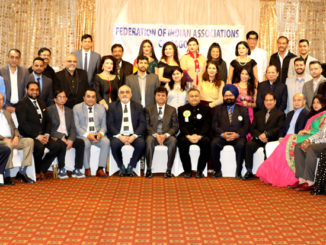
Federation of Indian Associations (FIA) unveils ambitious roadmap to undertake community-centric initiatives while celebrating its growth trajectory
CHICAGO, IL (TIP): Federation of Indian Associations (FIA) hosted a welcome reception to unveil its comprehensive roadmap for 2022 & beyond replete with meaningful events that seeks to compliment and celebrate a multitude of community-centric program initiatives with emphasis on India’s festivals, community outreach, charitable causes, social, cultural, business, medical and other community- oriented events including addressing the emerging pandemic challenges at its annual board meeting held on Sunday, November 28, 2021 at the Big Suchir Banquets in Westmont, IL. The meeting was attended by the entire FIA team as a well as the advisory board members. This year FIA Chicago unanimously elected its new leader Hitesh Gandhi and the new board. The event was presided by Founding Members Sunil Shah, Onkar Sangha, Neil Khot, Rita Singh, Mukesh Shah, Dhitu Bhagwakar and Current President Kamal Patel.
FIA’s General Secretary Richa Chand conducted the proceedings of the Annual Board Meeting for the year 2021-2022 and invited Founder President Sunil Shah for his opening remarks. Shah in his speech, outlined the successes behind the year 2021, listing the events conducted by the FIA and its team. He thanked the outgoing team for its hard work in putting together and conducting various India centric and Charitable events during the year. He also took the opportunity to welcome new members to team FIA. In a major announcement he declared that FIA would initiate an annual FIA Scholarship for deserving students starting from the year 2022.
Current President Dr. Kamal Patel in his speech, thanked the founding board, and the team 2021 for all the work put in to make the year a resounding success. From the Republic Day event in January 2021 albeit a Zoom Event attended by more than 350 guests headline by Kailash Kher the prominent Bollywood Singer, to the Holi Festival of Colors Event which was two pronged – one to celebrate the festival of Holi and two to collect funds to send to India as a donation for the fight against Covid and supply oxygen Concentrators, not to forget the grand Independence Day event to celebrate Azadi Ka Amrit Mahotsav.
Founding Members Onkar Sangha, Neil Khot, Rita Singh, Mukesh Shah, Dhitu Bhagwakar also took the stage thanking team 2021 and praising the work of the team in making the year a resounding success. Founding Member and Past President Neil Khot announced the formation of a Board of Trustees that would be seated with Past Presidents and announced the names of Ninad Daftari and Gurmeet Singh Dhalwan as the two past presidents being the trustees on this esteemed board.
Founder President Sunil Shah then announced Team 2022 , President Elect Hitesh Gandhi will spearhead the team for the year 2022 with the help of Executive Vice Presidents Shital Daftari and Vinita Gulabani and the entire board which include Vice Presidents – Altaf Bukhari, Pratibha Jairath, Anu Malhotra, Sonia Luther, Abir Maru, General Secretary – Richa Chand, Joint Secretary – Neelam Saboo, Treasurer – Vaishal Talati, Joint Treasurer – Ashwani Mahajan, Cultural Secretary – Pika Munshi, Joint Cultural Secretary – Ila Chaudhari, Directors: Harsh Shah, Mukesh Shah, Chetan Patel, Vibha Rajput, Varsha Visal, Jitendra Bulsara, Vidya Joshi, Jesse Singh, Bharat Malhotra, N Nagasubramaniam Iyyer, Hitesh Patel, Ashima Washington, Vikas Kalwani, Mir Ali, Dr. Afroz Hafeez, Chandni Kalra, Nirav Patel, Murugesh Kasilingam, Pratik Deshpande and Sujal Patel.
The incoming President Hitesh Gandhi offered his view for the year 2022 and the plans to take the organization to new heights with events planned for Celebrating India’s Republic Day, Independence Day and Cultural events like Holi and Diwali. This year FIA Chicago will also host Medical Wellness Checkup Camp, Blood Donation Drive, Food Drive and Toys of Kids during the holiday season. FIA Chicago was founded to bring Cultural awareness to the Chicagoland area and has now grown to serve the community by hosting many events for the community and helping the community grow and become one. FIA Chicago plans to take on projects like Job Fair, Entrepreneurship camps and Youth Leadership Development Skill Camps. Sunil Shah then took the opportunity to thank the new advisory board members for the year 2022 year including Deepakkant Vyas, Anil Loomba of HMSI, Suresh Bodiwala of Asian Media Broadcasting, Yogi Bhardwaj, Vinoz Chanamolu, Nag Jaiswal, Jasbir Suga, Syed Hussaini, Manish Gandhi, Brij Sharma (Power Volt), Asha Oroskar (Orochem), Smita Shah (Direct Floors), Amarbir Singh Ghoman, Pradeep Shukla (CPA) and Neal Patel (MedStar), Pinky Thakkar, Sanhita Agnihotri, Ajeet Singh, Aishwarya Sharma and Keerthi Reevori. We wish the new team all the best for the year 2022.
(Photographs and Press release / Asian Media USA)
-
Protect, don’t pander: On suppression of free speech
Suppression of free speech by yielding to threats has become an unfortunate norm
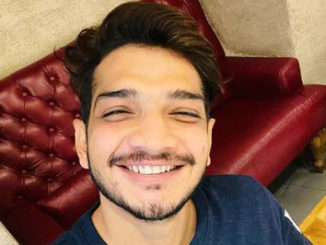
The ‘heckler’s veto’ seems to be winning repeatedly against stand-up comedian Munawar Faruqui. Bengaluru has joined the list of cities in which Mr. Faruqui cannot perform because right-wing Hindutva groups routinely threaten to disrupt his shows, wherever they are scheduled to be held. The Bengaluru city police asked the organizers to put off a show on November 28, alleging that allowing it to go on would create law and order problems and disrupt peace and harmony. Mr. Faruqui was unjustly arrested in Indore in January after a BJP functionary’s son complained that he was about to denigrate Hindu gods in a planned show. He had to spend 37 days in prison before obtaining bail from the Supreme Court for remarks that had not been made in a show that did not take place. It is this case, in which the police arrested even local organizers and those selling tickets for the show and had nothing to do with the content of his performance, that has been cited by the Bengaluru police while voicing fears about the consequences of allowing the show to be held. Earlier, programs in which he was due to perform in Raipur, Mumbai, Surat, Ahmedabad and Vadodara were called off for the same reason. It is a telling commentary on the state of free speech in the country that anyone can be silenced anywhere by the threats posed by violent and vociferous groups that no regime in the country seems to be able to rein in.
In a despairing reaction, Mr. Faruqui has said, “Goodbye! I’m done”, indicating that he has no further hope that he would be allowed to exercise his constitutional right to express himself. This is reminiscent of Tamil writer Perumal Murugan declaring his own “death” in a literary sense after being silenced by conservative and religious groups. In Mr. Murugan’s case, he was fortunate that the Madras High Court resurrected the author in him with a stirring verdict underscoring the duty of the state to protect free speech and to preserve law and order, instead of placating those who threaten to take the law into their own hands. It is a pity that the police authorities perfunctorily advise authors, speakers and artists to remain silent rather than take proactive steps to protect their fundamental rights. It is true that whenever such issues go before a court of law, the resulting judgments are speech-protective, but the proclivity of the authorities to pander to chauvinist groups is posing a serious threat to free expression in society. The Supreme Court’s observation in S. Rangarajan etc. vs P. Jagjivan Ram (1989) that suppressing free speech in response to a threat of demonstration or protest “would be tantamount to negation of the rule of law and a surrender to blackmail and intimidation” seems to have few takers among those in positions of power.
(The Hindu)
-
Omicron shadow on travel
Govt to review decision on resuming international flights
The Centre has decided to review its move to end the 20-month ban on scheduled international flights — imposed with the first lockdown in March 2020 — as alarm bells are ringing across the world over Omicron, a new variant of the coronavirus. Omicron, first detected in South Africa, has caused several nations to impose restrictions on flights from that country and its neighbors, and the World Health Organisation has labelled it a ‘variant of concern’. PM Narendra Modi had on Saturday directed officials to review plans to ease international travel restrictions. The decision to end the ban on international flights had come the week India posted the smallest rise in cases in 18 months, which was attributed to widespread vaccination and the presence of antibodies in a large section of the population. The PM rightly emphasized the need to be vigilant and proactive, and India must be rigorous in monitoring inbound and outbound travelers. Until now, under the air bubble arrangements, India has been allowing a limited number of flights with around 30 countries. The government had initially decided to allow full-capacity flights from mid-December onwards to and from countries deemed not at risk from the coronavirus infection, while some restrictions were to be placed on flights with nations in the ‘at risk’ category.
One key learning from our coronavirus experience is that life just cannot be brought to a standstill — doing this, we’ve seen, causes economic downturn, job losses, reverse migration of workforce and a sharp rise in poverty. The cruelest part is that despite the lockdowns and restrictions, the insidious virus still managed to infect tens of millions of people, causing a health crisis. The pandemic has endangered lives and livelihoods — we need to strike a balance between health security and financial security. On their part, the citizens must adhere strictly to the Covid-19 protocols and shed vaccination hesitancy — that would be the responsible thing to do.
(Tribune, India)
-

Comedians Point to the Sheer Absurdity of Hindutva – and That’s Why BJP Can’t Face Them

By Satish Bhatia To the long and growing list of people that the Bharatiya Janata Party appears to be intolerant or perhaps scared of, which includes students, activists, journalists, academics and human rights defenders, a new category can be added – comedians. For what else can explain the hounding of the young comedian Munawwar Faruqui, who shows are cancelled wherever he goes?
The organizers were compelled to cancel a show in Bangalore on Sunday following a letter they received from the city police the previous day, ‘suggesting’ that the show could create a law-and-order situation. This advice came after the Hindu Jagran Samiti and the Jai Shri Ram Sena — both right-wing Hindutva organizations — approached the police to cancel the show. This became the 12th time in succession that Faruqui couldn’t perform on stage because of similar reasons.
In normal circumstances, the police, sworn to uphold the Constitution, should have ignored this appeal and strengthened security around the auditorium. But these are hardly normal times and so the police told Faruqui to cancel his performance. It is a wonder the cops did not arrest the comedian. The irony is that he had performed the same set in Bangalore on three occasions in the past year. Karnataka is ruled by a BJP government – as is Madhya Pradesh, where Faruqui was jailed for a month for a joke he didn’t crack but allegedly intended to, and then, after the Supreme Court granted him interim bail, was still not released as there was a warrant against him in Prayagraj, for ‘hurting religious sentiments’. Uttar Pradesh too has a BJP government. What is about comedians, and Faruqui in particular, that the Hindutva warriors don’t like? After all, the vidushak is an inalienable part of the grand Indian tradition. Folk performances, such as tamasha in Maharashtra, always have a funnyman and even Ramleela plays are full of ribald jokes cracked by the village comedian. Not just argumentative, we Indians are also blessed with a robust sense of humor and the ability to laugh at power structures. In a country with hardships, a sense of humor is necessarily to keep one’s sanity. It is a safety valve or sorts.
So why is the Sangh system, self-proclaimed upholders of ‘Hindu civilization’, so anti-jokes and -joke tellers? An important part of attacking Faruqui is of course that he is a Muslim, and the Hindutva right wing is determined to marginalize Muslims from the national mainstream. That is not overtly stated but obvious to anyone who has seen bigotry grow and bloom during these past seven years. BJP administrations in various states have benignantly looked on and even backed the efforts of rabid organizations and freelancers. The police happily cooperate.
But comedians are feared because they ridicule, mock, taunt and, through that, point to the sheer absurdity of Hindutva. One of Faruqui’s jokes was about the people of Junagarh being so lazy they wouldn’t even participate in a riot; this at a time when the rest of Gujarat burned in 2002 and hundreds of people, mainly Muslim, were killed. Such lacerating jokes cannot but show the mirror of bigotry to communal elements and this they cannot face.
The Hindutva ecosystem does not like arguments or questions – consider the way in which Parliament debates on crucial issues are simply not held or how the independent media is shut out. The prime minister has not held a single press conference in seven years and was equally wary of journalists in Gujarat. BJP-friendly media, such as the noisy television channels and many print publications, is encouraged, the rest are debarred. The press has not been allowed to cover parliamentary proceeds for five sessions, including the present one, where the crucial farm laws were repealed — again without a debate. It all comes down to fear of being questioned and challenged. Opposition spokespersons on TV shows are shouted down. That a party with an overwhelming majority in Parliament has these insecurities is a mystery which social scientists will one day, it is hoped, will resolve.
Faruqui has already hinted he will not perform again, thus giving up his profession and his passion. He has said that hate has won. The treatment meted out to him will not just silence him but also have a chilling effect on other comedians; already many of them have stopped holding public performances and others have moved on to ‘safer’ subjects. And the joke really is on us all.
-

Is Punjab heading for a new ruling alliance?

By Prabhjot Singh “About two decades ago, as the country ushered into an era of coalition politics at the center, this political tool gained extra significance. Since the concept of minority governments has never been experimented in the country, demand to win over support of parties with smaller numbers of successful candidates has been escalating in situations of hung legislatures – State Assemblies or even Lok Sabha. Any party making a claim to form a government needs numbers. Though the 2019 Lok Sabha election saw BJP getting a clear majority, the numbers game in general and the coalition politics in particular, has been continuing with unabated vigor.”
History of the “coalitions” in Punjab is as old as the first elections to the State Assembly in 1952. Interestingly, a key participant in each coalition has been the Shiromani Akali Dal.
Punjab is different. Every time there are elections in the country, this border state, ravaged by several external and internal assaults, injects something new into the body politic. It has always been on the forefront. Be it fight against drugs, terrorist attacks from across the border or battle against the Centre to get farm laws repealed, Punjab remains on world focus.
Is Punjab heading for a new ruling alliance after the collapse of the oldest – SAD-BJP – coalition? Elections 2022 hold the answer.
Though elections are a natural democratic process that happens every five years, it is Punjab elections that generate considerate attention. It is why the battle lines for elections are drawn long before the announcement of the poll schedules. Realizing that no electoral battle could be won without numbers, leaders of all parties, national and regional, new and old, not only make a beeline to the State but also engage strategists and social media experts to win over the electors. Numbers, undisputedly, is one single tool to measure success in electoral politics. The number of votes polled, or number of seats won by a political outfit or alliance decide the new rulers of a State or a nation. Punjab has a mix of numbers. Its representation in national politics is miniscule. But even a small number of MPs has not diminished the political stakes of the State as it has already produced a President and a Prime Minister of the country. Punjab has less than two per cent of the country’s population, but its people have been successful in demonstrating how to use numbers to their advantage.
About two decades ago, as the country ushered into an era of coalition politics at the center, this political tool gained extra significance. Since the concept of minority governments has never been experimented in the country, demand to win over support of parties with smaller numbers of successful candidates has been escalating in situations of hung legislatures – State Assemblies or even Lok Sabha. Any party making a claim to form a government needs numbers. Though the 2019 Lok Sabha election saw BJP getting a clear majority, the numbers game in general and the coalition politics in particular, has been continuing with unabated vigor.
Punjab, with 13 members in the 547-member Lok Sabha – a little less than 3 per cent, that, statistically speaking may be miniscule in the national politics – has been playing an aggressive role, thanks to coalitions. The coalitions in Punjab have been a rare and successful model where one partner is a national party while the other a regional.
It is pertinent to mention how one Akali Dal MP Sukhdev Singh Libra, owing allegiance to BJP-led NDA, was lured to save the UPA government led by Manmohan Singh in Lok Sabha, when one vote saved the day for the then ruling alliance. Besides saving the blushes, Sukhdev Singh Libra’s defiance of party whip, was a watershed in coalition politics in which Punjab, where electoral battles for political supremacy have been fought with ferocity, remains credited as the pioneer of coalition governments in the country.
Now when the State is going to polls to elect its 16th State Legislature, the ruling Shiromani Akali Dal-Bharatiya Janata Party (SAD-BJP) alliance, perhaps one of the oldest in contemporary politics, has gone. In fact, the SAD-BJP alliance was running into rough weather over various contagious issues, especially those relating to farmers and other long-standing demands of Punjab, including the disputed SYL canal, merger of Chandigarh and other Punjabi speaking areas, besides others.
The SAD did not take long to forge a new alliance, this time with the Bahujan Samaj Party while its old partner BJP was hopeful of striking an accord with the new political outfit on the State horizon, the Punjab Lok Congress, which has been floated by the displaced Chief Minister, Capt Amarinder Singh. Incidentally, both these alliances – SAD-BSP and BJP-Punjab Lok Congress – will have tough opponents in the Indian National Congress, and also the Aam Aadmi Party (AAP). AAP did create waves by pushing the SAD to third position in the last Assembly elections five years ago. Congress scored over all its political rivals by naming Charanjit Singh Channi as the first Dalit Chief Minister after sidelining Capt Amarinder Singh.
It is not only Akalis who have been steadfast in their political alliances, even Congress had been forging alliances in the past, mostly with so-called secular forces, including the Communists. Intriguingly, when the last time Congress ruled Punjab, it had its alliance partners Communists legislators merge in it thus decimating the left challenge.
And the new entrant to State politics, AAP, also could not keep itself aloof from the coalition politics. In spite of its sworn policy of contesting elections alone, it has entered into poll adjustment with Lok Insaaf Party, another new outfit spearheaded by two Bains brothers, who sat in the last Assembly as Independents.
Interestingly, of the 33 different governments under different Chief Ministers in the State since 1952, at least 13 had more than one party legislator on the Treasury benches. Perhaps no other State has scripted such a success story of coalition governments. Incidentally the last three coalition governments in the State – all headed by the Akali Dal supremo Parkash Singh Badal – managed to complete a full five-year term in office.
History of the “coalitions” in Punjab is as old as the first elections to the State Assembly in 1952. Interestingly, a key participant in each coalition has been the Shiromani Akali Dal.
Initially, the Dal was in partnership with Congress, both in the 1952 and the 1957 elections, and subsequently it has partnered the erstwhile Jana Sangh and then the Bharatiya Janata Party (BJP). In between when the country was swept by the JP wave, Akalis had an alliance with the then Janata Party.
Though the avowed policy of the Congress – claiming itself to be a secular party – had been not to go for political tie-ups with any religious party (fundamentalists), it was able to win all three elections in Punjab (1952, 1957 and 1962) immediately after independence mainly because it had won over Akalis, its main opposition party, at least for the first two electoral battles. Twice, first in 1948 and again in 1956 Akalis merged with the Congress but walked out of the “friendship pact” in March 1960, as the then Akali supremo Master Tara Singh directed all his party men who had joined Congress in or after 1956 to return to their party fold.
Intriguingly, the reason given at that time, interference by the Government in the religious affairs of the Sikhs, has since then remained the main tool with the Akalis to do Congress bashing. Another reason given for leaving Congress in 1960 was the ruling party’s opposition to the Punjabi Subaof the 24 Akali MLAs in Congress party, only five returned to the Akali Dal fold. Though since then Akalis have remained sworn enemies of Congress, yet there had been “friendly electoral battles” in which the Congress-ruled Centre tried to appease its one-time political partners by facilitating their return to power.
The 1985 election after the infamous Rajiv-Longowal accord was an example when Akalis swept to power with an overwhelming two-third majority with Congress playing a friendly opponent. It was a different matter that the then Akali government of Surjit Singh Barnala could not complete its term in office as it was dismissed by the Centre.
(The author is a senior journalist)
(Courtesy/ theliberalworld.com)
-

The three farm laws were never a solution

By Sudha Narayanan True agricultural reform rests with local governments, and States need to go back to the basics and expert suggestions
“The central national challenge is that different States have different regulations and a different pace of reform in part due to the political stakes involved in tackling trader collusion in these markets. States need to go back to the basics and to the suggestions that many expert committees have proposed for agricultural market reform — for a start, delinking the regulatory and operational roles of the APMCs. The Centre for its part should turn its attention in the short term to offering a stable and predictable policy environment vis-à-vis imports and exports, the functioning of national commodity exchanges and futures markets, and providing inclusive platforms for discussions on State-level market reform, public procurement and price support, designing safeguards against consolidation of corporate interests and framing data policies.”
The recent announcement by the Prime Minister that the Union Government would seek to repeal the three Farm Laws in the winter session of Parliament has prompted diverse reactions. On November 29, the first day in Parliament, the Farm Laws Repeal Bill was passed in the Lok Sabha without discussion. These laws are the Farmers’ Produce Trade and Commerce (Promotion and Facilitation) Act, 2020; the Farmers (Empowerment and Protection) Agreement on Price Assurance and Farm Services Act, 2020, and the Essential Commodities (Amendment) Act (ECA), 2020. Regardless of how this specific step is viewed and the motivations attributed to it, the prolonged protests by farmers and extended impasse offer a rare teachable moment for policy making for Indian agriculture.
Purpose, ‘creation’, passage
To recall, the three laws each intended to remove constraints on buyers to stock, contract and purchase agricultural commodities. Whereas the Essential Commodities (Amendment) Act, 2020 (ECA) was largely the prerogative of the Centre, the Farmers (Empowerment and Protection) Agreement on Price Assurance and Farm Services Act, 2020 governing contract farming and the Farmers’ Produce Trade and Commerce (Promotion and Facilitation) Act, 2020 (henceforth, the APMC Bypass Act), focusing on the public regulated markets were hitherto issues that were under the State-level Agricultural Produce Marketing Committee (APMC) Acts, therefore under the purview of the States. The most troubling aspect of these laws was the way they were written and passed. First, little is known to the public even today on who authored these laws or who was consulted before their introduction as ordinances. Second, these were passed in Parliament in haste by voice vote, in what is viewed by experts as a violation of established procedures. That Acts with serious ramifications for States should be passed without deeper discussions even within Parliament, let alone with specific inputs from stakeholders and experts, is bewildering. Attempts by some to deflect such criticism by noting the long history of discussion on agricultural market reform only serves to shine a light on the departure from such a tradition in the case of these three laws. Such opaque processes increase the likelihood of poorly framed laws; indeed, many critics have pointed out serious flaws in these laws.
Centre-State agri-relations
Crucially, the APMC Bypass Act mandated that States can only regulate, via their respective APMCs, designated physical premises called the ‘market yards’. Via this Act, the Centre essentially wrested control of market areas outside these yards, now called ‘trade areas’, from the States. The dominant popular narrative was that the Centre was doing what the States had failed to do, i.e., free agricultural trade from the clutches of the APMCs, an idea that finds support in the Economic Survey 2014-15.
Yet, perversely, the APMC Bypass Act particularly hurt States that had the most deregulated systems. A State that had no APMC Act, for example, suddenly found that all deregulated areas within the State would now come under the Centre’s regulatory ambit and control, subjecting private players hitherto operating freely in a deregulated environment to the regulations of a whimsical Centre. Further, by absolving private players from adhering to any State law in agricultural marketing, it effectively nullified the power of States to shape the nature and functioning of agricultural markets. Such transfer of regulatory authority from the States to the Centre might in principle be justified if there was systematic evidence to suggest that the Centre was better informed and better equipped to regulate agricultural markets. Here, the Centre’s own actions following the three laws do not inspire confidence. For example, barely weeks after the ECA was amended, the Centre imposed restrictions on stocking, in October 2020 for onions and July 2021 for a range of pulses, apparently undermining the purported spirit of the reformed ECA it championed.
During the pandemic
Our analysis of COVID-19 lockdown management in the agricultural sector too found that the Centre was always a step behind, implementing relief measures for agricultural marketing reactively rather than proactively. In contrast, States, regardless of the ruling parties, offered a more timely, relevant and nimble response to manage the fallout of the COVID-19 lockdown on agriculture. Beyond agricultural marketing, the central government’s efforts in the past such as One Million Ponds, 10,000 FPOs and One District One Product are often disconnected from local needs for robust and sustainable solutions for agriculture. Another key concern is that to the extent that these Acts enable centralization of authority to influence the functioning of trade areas, this would facilitate consolidation of big business, a trend that is evident globally. The underlying premise of these three Acts was that freedom to operate in agricultural markets would attract capital-rich private players to a sector in sore need of rejuvenating investments; and that the proliferation of efficient value chains and competition would enable benefits to be passed on to the farmers in the form of higher, and perhaps more stable prices.
While it is hard to disagree with the purported goal of these Acts, many critics question the premise itself, pointing out that it was naive at best, and insidious at worst; the Acts in fact load the dice in favor of corporates with deep pockets who would now use this freedom, not to compete but to sidestep competition to gain control over supply chains at the expense of the farmer. Global evidence based on data from 61 countries between 2005-15, after all, suggests that farmers receive, on average, just 27% of consumer expenditure on foods consumed at home, the share falling significantly as national incomes rise.
Digital consolidation route
These fears of consolidation have been further stoked by recent memoranda of understanding that the Government of India has signed for building data stacks with Cisco, Jio, ITC, NeML, Ninjacart, Microsoft, Amazon, ESRI India Technologies, Star Agribazaar and Patanjali Organic Research Institute. While claiming to not involve private sector players, these select few have been granted limited access to “data from the federated Farmers’ database” for specific areas. This, it seems, might be the thin edge of a wedge. A “trade” area under full control of the central government would potentially offer big business a digital data consolidation route to controlling supply chains. The solution to the many problems of Indian agriculture and of Indian farmers was never going to be solved by the three farm laws, even within the realm of marketing. Nor is the repeal of these three Acts going to reverse or slow the rapid growth of private players in agricultural marketing in the past two decades, as seen by the 2019 Situation Assessment of Agricultural Households in India.
What needs to be done
The agricultural marketing space has seen significant reform in many States in the past decade, even if such reform has happened at a leisurely place and often piecemeal in its approach. While the Centre has the capacity to make landmark changes, true reform and action rests with local governments. States are better placed to assimilate and respond to the diversity of institutional and socio-economic contexts and agroclimatic regions. They are often better placed to incorporate local concerns for robust and sustainable solutions.
The central national challenge is that different States have different regulations and a different pace of reform in part due to the political stakes involved in tackling trader collusion in these markets. States need to go back to the basics and to the suggestions that many expert committees have proposed for agricultural market reform — for a start, delinking the regulatory and operational roles of the APMCs. The Centre for its part should turn its attention in the short term to offering a stable and predictable policy environment vis-à-vis imports and exports, the functioning of national commodity exchanges and futures markets, and providing inclusive platforms for discussions on State-level market reform, public procurement and price support, designing safeguards against consolidation of corporate interests and framing data policies.
(The author is Associate Professor at the Indira Gandhi Institute of Development Research, Mumbai)
-

Modi alone knows best
Propaganda claims PM doing everything for the good of country and its people

By Avijit Pathak Our existence should not depend on the mercy or compassion of the messiah. Instead, it requires the spirit of a creatively nuanced critical thinking. You and I must recover our agency, regain our voice, scrutinize the discourse of power, and make our representatives accountable: they are not our masters; they ought to be humble; and they must listen to us. Possibly, amid the cult of narcissism, the perseverance of innumerable unknown farmers arouses our hope in this democratic possibility.
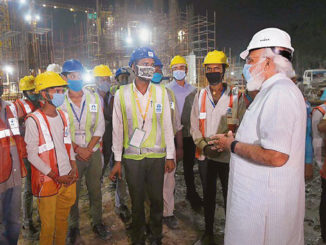
Amid a largely non-dialogic and personality-centric politics, we have been repeatedly asked to consume diverse images of the all-powerful Prime Minister, and accept that it is Modi who alone matters, and like a messiah, he is endowed with the extraordinary power to dictate the fate of the nation. Hence, in this age of media simulations and propaganda machinery, the spectrum of dramaturgical performances seems to hypnotize the captive audience. Yes, Modi is ‘unpredictable’; from demonetization to lockdown — his decision would surprise us, shock us, charm us, puzzle us; and we must accept it because he alone understands what is good for us. He is eternally energetic; he doesn’t rest; he only works and thinks of the nation. And hence, despite his busy schedule, he could be seen with the Army jawans in Kashmir, or construction workers engaged in the Central Vista project; and these images must be circulated with the speed of light. And he is all-pervading; the billboards in cities, small towns and even villages remind us time and again that his heart aches for us; he gives us free vaccines; he deposits money in the bank accounts of farmers; and he gives us all sorts of gifts — a temple at Ayodhya, an airport at Noida, and above all, a set of surgical strikes to give a tough lesson to the enemy of the nation. You and I are ‘safe’ because he is there to think for us. None should have any doubt of it!
We must regain our voice, scrutinize the discourse of power, and make our representatives accountable.
Think of it. Can a truly participatory/dialogic/democratic culture be reconciled with this sort of personality cult? Does democracy mean that we remain passive and lose our own voice, and keep waiting for the ‘supreme leader’ to decide our fate? Sometimes, I feel that we need not know the names and portfolios of the Union Cabinet. The reason is that we have been asked to believe that it is only Modi (or his deputy Amit Shah) who matters; and the other ministers exist only for condemning the Opposition, finding ‘Khalistanis’ or the brigade of ‘tukde-tukde gang’ in the farmers’ movement, and organizing press conferences to inform us of the ‘stupidity’ of Rahul Gandhi whenever he refers to the Rafale deal controversy, or pathetic handling of the Covid situation. It is sad that these days, we never say that it is our government; we regard it as ‘Modi government’. And this annihilates the very spirit of democracy. Well, personalities do matter; and even charisma has its role. However, a democratic leader is one who loves to sharpen the art of listening and respects the creative/critical faculty of ordinary people. A democratic leader is not God; instead, she/he walks with people, and collectively moves towards a better society. In other words, a democratic leader cannot afford to be a narcissist; she/he ought to be humble and dialogic. And this truth cannot be nullified by giving a counterargument: Indira Gandhi, too, behaved in a similar way!
See the way the historic farmers’ movement — characterized by intellectual clarity, people’s participation, and Gandhian endurance and moral power — was seeking to convey a message: we ought to be listened to; and Modi or his deputies cannot assume that they alone know what is good for the farmers. But then, for almost one year, we witnessed the rigidity of stubbornness on the part of the government resulting from the assertion of Modi’s image: almost like Friedrich Nietzsche’s ‘Superman’ driven by the will to power! He alone knows what is good for Indian agriculture and our farmers; he is, therefore, ‘firm’ and ‘determined’; and those who are against these farm laws are either stupid or misdirected. The irony is that even when he apologized, felt some shortcomings in his ‘tapasya’, and decided to repeal the farm laws with his characteristic monologue (no consultation with the farmers, no dialogue with the Opposition leaders, no parliamentary discussion, and just another dramatic surprise), he was not willing to accept that he was wrong; in fact, he thought that somehow, despite his best efforts, he could not convince a section of farmers of the efficacy of these three laws. Possibly, one’s egotistic pride does not wither away so easily.
We need not be surprised that if even this gesture of Modi is now used to construct yet another image of the ultimate messiah — ‘compassionate’/ ‘pro-farmer’ Modi! And the billboards throughout the country might remind us that we must thank Modi for his compassion. Furthermore, the propaganda machinery has already begun to popularize the idea that Modi withdrew the farm laws because the ‘anti-national’ conspirators were trying to exploit the situation and cause severe damage to the country. Nothing is more important to Modi than the interest of the nation! What else these ‘shiny’ anchors of toxic television channels could do as they were never tired of castigating and demonizing this historic movement? Now they must evolve their ways to handle Modi’s unpredictability (or is it a masterstroke for winning the elections in Uttar Pradesh?).
Our existence should not depend on the mercy or compassion of the messiah. Instead, it requires the spirit of a creatively nuanced critical thinking. You and I must recover our agency, regain our voice, scrutinize the discourse of power, and make our representatives accountable: they are not our masters; they ought to be humble; and they must listen to us. Possibly, amid the cult of narcissism, the perseverance of innumerable unknown farmers arouses our hope in this democratic possibility.
(The author is a sociologist)
-

The nonagenarian Punjabi litterateur Prof Bhogal bestowed with “Life-time Achievement Award”
By Jaswant Singh Gandam
PHAGWARA (TIP): The nonagenarian Punjabi litterateur Prof Piara Singh Bhogal was, on November 14, bestowed with “Life-time Achievement Award” by Punjabi Virsa Trust (Regd) Phagwara and Punjabi Lekhak Sabha (Regd) Palahi village for his outstanding contribution to Punjabi literature.The award carries a shawl, a citation, a memento and Rs 11,000 cash.Prof Bhogal is an eminent Punjabi writer, critic and columnist. Led by Trust’s and Sabha’s Presidents Prof Jaswant Singh Gandam and Gurmit Palahi respectively, the office-bearers of both the bodies presented the award to the nonagenarian Prof Bhogal at his Jalandhar residence owing to his age factor. Punjab Press Club Jalandhar President Satnam Singh Manak and Punjab Arts Council Secretary Dr Lakhvinder Singh Johal came specially to join the function. Both lauded the stellar contribution of Prof Bhogal for Punjab, Punjabi and Punjabiat.
They also praised his oratory and the unflinching stand for ‘haq-sach’ (righteousness and truth).
Manak, in particular, made a special mention of Bhogal’s memorable association with ‘Punjabi Jagriti Manch’, a body wedded to Punjab, Punjabi and Punjabiat.
In his interaction with writers, Prof Bhogal disclosed that he took to writing about 70 years ago.
“I was hardly 22–23-year-old when my first two books hit the stands,” he informed.
Prof Bhogal said,” I have so far written about 50-60 books, including 6 novels,5 books of short stories,4 plays,10 books of criticism, an auto-biography, besides some translated/edited works. I rate my recent novel ‘Nari’ as the best of all other novels while my book ‘Punjabi Sahit Da Ityihas’, whose 4 Editions have been published so far, is virtually a magnum opus. (‘Nari’ beautifully pictures the warp and woof of social relations and the position of woman). I have also written about 400 articles for Punjabi newspapers, both home and abroad. I regularly wrote for a decade political column for Ajit and Punjabi Tribune”. For a well-read and richly decorated Prof Bhogal, literature is everything. “Literature mirrors life as well shows mirror to it”, he quipped. He said,” Forwriting, you have to read good literature. I still read daily for one to one and a half hour even though I have crossed 90”. He said that Punjabi literature was rich but regretted that Punjabis lack book culture. Maintaining that books are enduring friends, Prof Bhogal pleaded for bridging gap between publishers and readers by developing a mechanism for distribution of books to readers in order to inculcate reading habit among Punjabis. Thanking the organizers for the honor, Prof Bhogal reminisced about his native historic village Palahi where he was born on 14 August in 1931
-

Congress Approves Spending Bill: Government Shutdown Averted
The vote to fund the government through mid-February came after lawmakers staved off a Republican threat to force a shutdown over vaccine mandates
WASHINGTON D.C. (TIP): With less than 36 hours before funding was set to lapse, lawmakers raced to unite behind a deal that would keep the government open through Feb. 18 and provide $7 billion for the care and resettlement of Afghan refugees. The House voted 221 to 212 to approve the measure, with just one Republican, Representative Adam Kinzinger of Illinois, joining Democrats in support. Congress on Thursday, December 2, gave final approval to legislation to keep the government funded through mid-February, after Republicans dropped a threat to force a shutdown over the Biden administration’s vaccine mandates. The Senate then cleared the bill on a 69-to-28 vote, sending it to President Biden’s desk for his signature. Nineteen Republicans joined all 50 Democrats in supporting the measure. The action came after senators voted down an amendment to bar funding to carry out Mr. Biden’s vaccine mandates for tens of millions of American workers, including many in the private sector.
Party leaders announced a deal on the bill on Thursday, December 2 morning after days of haggling. But the fate of the legislation remained in doubt for much of the day in the Senate, where unanimity was needed to expedite the bill’s passage before funding lapsed. A few Republicans had threatened to object until they were granted a vote on defunding the vaccine mandates.
“I’m glad that in the end, cooler heads prevailed — the government will stay open,” said Senator Chuck Schumer of New York, the majority leader. “I thank the members of this chamber for walking us back from the brink of an avoidable, needless and costly shutdown.” Leaders in both parties had warned against a government shutdown and had urged their colleagues to find alternative ways to register their opposition to the vaccine mandates. Multiple lawmakers and aides noted that the Senate was already on track to vote later this month on a Republican bid to roll back the rule for private sector employees. Senior Democrats and Republicans in Congress hailed the spending agreement, saying it would afford them more time to resolve outstanding disputes and approve longer-term legislation to fund the government next year. “While I wish the Feb. 18 end date were earlier, and I pursued earlier dates, I believe this agreement allows the appropriations process to move forward, toward a final funding agreement that addresses the needs of the American people,” said Representative Rosa DeLauro, Democrat of Connecticut and the chairwoman of the House Appropriations Committee.
(With inputs from New York Times)
-

Twitter CEO Parag Agrawal joins growing power club of Indian origin executives
NEW YORK (TIP): With his elevation as the CEO of Twitter, Parag Agrawal, in whom co-founder of the microblogging giant Jack Dorsey has “bone-deep” trust, joins the growing power club of Indian-origin executives helming US-based global multinationals.
Also Read:Parag Agrawal’s Ajmer Connection
Twitter’s outgoing CEO Dorsey announced on Monday, November 29, that 37-year-old Agrawal, an IIT Mumbai and Stanford University alumnus, will be the company’s new chief executive as he stepped down after 16 years at the company that he co-founded and helmed.
A report in The New York Times said Agrawal will receive an annual salary of USD 1 million, in addition to bonuses, restricted stock units and performance-based stock units. “After almost 16 years of having a role at our company…from co-founder to CEO to Chair to Exec Chair to interim-CEO to CEO…I decided it’s finally time for me to leave. Why?
“There’s a lot of talk about the importance of a company being ‘founder-led.’ Ultimately, I believe that’s severely limiting and a single point of failure. I’ve worked hard to ensure this company can break away from its founding and founders. There are 3 reasons I believe now is the right time.
“The first is Parag becoming our CEO. The board ran a rigorous process considering all options and unanimously appointed Parag. He’s been my choice for some time given how deeply he understands the company and its needs. Parag has been behind every critical decision that helped turn this company around. He’s curious, probing, rational, creative, demanding, self-aware, and humble. He leads with heart and soul and is someone I learn from daily. My trust in him as our CEO is bone deep,” Dorsey said.
Agrawal’s ascension as Twitter CEO puts him in the growing ranks of Indian-origin and Indian-born executives being named to the helm of global multinationals.
In January last year, Indian-born technology executive Arvind Krishna was named Chief Executive Officer of American IT giant IBM after a “world-class succession process”, succeeding Virginia Rometty, who had described him as the “right CEO for the next era at IBM” and “well-positioned” to lead the company into the cloud and cognitive era. Krishna, 59, had joined IBM in 1990 and has an undergraduate degree from the Indian Institute of Technology, Kanpur, and a PhD. in electrical engineering from the University of Illinois at Urbana-Champaign.
In August 2015, Sundar Pichai was named CEO of the newly organized Google, becoming only the third chief executive of the company after former CEO Eric Schmidt and co-founder Larry Page. In December 2019, Pichai became the CEO of Google’s parent company Alphabet.
Pichai wished Dorsey “the very best ahead” and congratulated Agrawal and Board Chair Bret Taylor, saying he is “excited for Twitter’s future!” In February 2014, Microsoft veteran Satya Nadella was named CEO of the technology giant. MasterCard CEO Ajay Banga, PepsiCo’s former CEO Indra Nooyi and Adobe CEO Shantanu Narayen are among the other Indian-origin executives who have climbed up the corporate ladder and helmed multinational giants. Mumbai-born Agrawal tweeted Monday “Deep gratitude” for Dorsey and the entire team.
In a note posted on Twitter, he said he is “honored and humbled” on his appointment and expressed gratitude to Dorsey’s “continued mentorship and your friendship.” Agrawal had joined Twitter 10 years ago when there were fewer than 1,000 employees.
“While it was a decade ago, those days feel like yesterday to me. I’ve walked in your shoes, I’ve seen the ups and downs, the challenges and obstacles, the wins and the mistakes. But then and now, above all else, I see Twitter’s incredible impact, our continued progress, and the exciting opportunities ahead of us,” he said.
“Our purpose has never been more important. Our people and our culture are unlike anything in the world. There is no limit to what we can do together,” he said.
“The world is watching us right now, even more than they have before. Lots of people are going to have lots of different views and opinions about today’s news. It is because they care about Twitter and our future, and it’s a signal that the work we do here matters,” he said.
A media report said Agrawal, who was Twitter’s chief technology officer since 2017, “is little known to the public, with even some Twitter insiders saying they were surprised by his appointment.” But behind the scenes, the India-born engineer has been a Twitter veteran and confidant of Dorsey who has been involved in many of the company’s biggest strategic initiatives, it said.
The report said that in 2005, Agrawal moved to the United States and pursued a doctorate in computer science while enrolled at Stanford University.
“Even among students at Stanford, Agrawal stood out for his strong grasp of the math and the theory that underpins computer science.” The report quoted Jennifer Widom, who led the research lab and served as his thesis adviser, as saying.
As CTO, Agrawal was responsible for Twitter’s technical strategy, leading work to improve development velocity while advancing the state of Machine Learning across the company.
“Even as chief technology officer, Agrawal has kept a low profile. He worked behind the scenes to rebuild Twitter’s technical infrastructure, which had been cobbled together over the years. That led to engineering problems and prevented the company from introducing new products and services as quickly as it wanted. Agrawal helped Twitter shift to using cloud computing services from Google and Amazon, streamlining its operations,” the report said.
Prior to being appointed CTO, he “had risen to be Twitter’s first Distinguished Engineer due to his work across revenue and consumer engineering, including his impact on the re-acceleration of audience growth in 2016 and 2017,” the company said.
Agrawal also managed Twitter’s effort to “incorporate cryptocurrencies into the platform, letting users send tips in cryptocurrency like Bitcoin. And he has supported efforts to be transparent about Twitter’s algorithmic mistakes, urging the company to go public with its findings that a photo-cropping algorithm it used was biased,” the media report said.
-

Congressman Tom Suozzi announces run for Governor of New York State
I.S. Saluja
HICKSVILLE, NY (TIP): Congressman Tom Suozzi took all by surprise last week when he announced via a video on social mediathat he was running for Governor of the State of New York. In the video he claimed that he was “a common-sense Democrat who has the experience to get the job done as Governor of New York”. Mr. Suozzi is currently a member of the powerful House Ways and Means Committee, the chief tax-writing committee of the House of Representatives. Tom was elected Glen Cove Mayor in 1993. At just 31, he was the youngest mayor in the City’s history. He restored Glen Cove’s ailing fiscal health, securing numerous record-breaking credit ratings. He revitalized the City’s downtown business district, spurred massive commercial development, and built a new courthouse, city hall, and police headquarters.
He spearheaded a $100 million clean-up of some of America’s most toxic superfund sites. That waterfront area is now a showcase of residential, commercial, and recreational development. Glen Cove was designated as a national Brownfields Showcase Community and recognized twice by Vice-President Al Gore for its environmental cleanup efforts. In January 1997 The New York Times said that “…Mr. Suozzi is widely seen as having done more to revitalize the North Shore community and reinvigorate its flagging economy in a few short years than the last several mayors combined.” Tom Suozzi was the first elected executive in the state of New York to address the problems of undocumented newcomers from Central and South America. As Mayor, he opened the very first “shape up center” on the east coast of the United States, a safe location where undocumented workers were able to find work, learn English, and receive job skills training. Later, Tom Suozzi was honored by the New York Immigration Coalition for “creating an environment of welcome and inclusion for immigrants.”
Suozzi was elected Nassau County Executive in 2001, the youngest in Nassau’s history. He was the first Democrat elected with a Democratic legislature since 1917.
When Suozzi took over, the County was on the brink of bankruptcy. The Maxwell School of Public Affairs at Syracuse University, named Nassau as “the worst run county in America.”
Tom Suozzi engineered what was heralded by public policy experts as one of the greatest government financial turnarounds in the country.
Governing Magazine named Suozzi one of its Public Officials of the Year, in 2005, calling him a “high-voltage transformer…the man who spearheaded Nassau County, New York’s, remarkable turnaround from the brink of fiscal disaster.”
He championed a $150 million Environmental Program to preserve open space, improve parks, protect groundwater quality, cleanup brownfields, and improve stormwater treatment, catch basins, and streams. He was named the 2008 New York State’s League of Conservation Voters “Environmentalist of the Year.”
Under Nassau County Executive Tom Suozzi, Nassau was ranked the safest place in the nation with a population over 500,000 and had its lowest crime rate in decades. Suozzi sponsored Gun-Buy-Back programs, created an Anti-Gang Task Force, and implemented a new ShotSpotter platform to deter crimes.
Suozzi introduced a revolutionary new “No Wrong Door” human services delivery system. It provided a single point of entry for residents requiring assistance to the County’s seven human services departments resulting in “one-stop shopping” and integrated case management. It was featured by Governing Magazine as a “next-generation” human services program.
Tom was determined to make sure that the people who worked for the County reflect the diversity of people who live in the County. He created the most diverse working force in the County’s history.
Suozzi became the first leader in the country to reimagine the future economic landscape of the suburbs. He outlined what he deemed the “New Suburbia” – a master plan designed for the County’s revitalization, a roadmap to a 2020 Vision.
Tom Suozzi was not constrained by his job description, or the traditional role given to Nassau’s chief executive. He spoke out loudly about the crushing state Medicaid costs forced onto local governments throughout the state.
He created “Fix-Albany.Com, a statewide political action committee to cap Medicaid costs and “to root out corruption in the New York State government, reform the Legislature and hold State legislators accountable for their non-action to help County and local governments.”
The NY Times praised “Suozzi’s Excellent Idea!” Newsday issued a call to ”Support Suozzi’s Challenge.” The Buffalo News lauded him for ”Going After Albany.” The Staten Island Advance said ”Right on to Suozzi’s Revolution.”
He became President of the State County Executives Association and started a grassroots movement of local elected officials to cap local Medicaid costs.
Suozzi’s relentless pressure, his “Fix-Albany” campaign, and his statewide leadership paid off big time for the taxpayers of New York State.
In 2005, New York passed a historic new statewide Medicaid cap, which has saved New York City and New York’s counties billions of dollars.
In 2006, Suozzi ran for the Democratic nomination for Governor. During the race, a New York Times editorial offered him the following praise:
“Suozzi was earlier (than Spitzer) in recognizing that New York’s state government is a mess and that its irresponsibility threatens local governments as well. And unlike the vast majority of politicians who complain that Albany needs fixing, he did something about it, risking his own political capital to back candidates against entrenched incumbent state legislators. That kind of gumption is rarer than any other political virtue in New York.”
In 2008, the Governor appointed Tom to serve as Chair of the New York State Commission on Property Tax Relief, which later led to the passage of the State Property Tax Cap which has also saved taxpayers and homeowners billions of dollars. In January 2017, he was sworn in as a member of the House.
In his very first days in Congress, Suozzi joined the Problem Solvers Congressional Caucus, now grown to an equal number of 29 Democrats and 29 Republicans who meet weekly to try to find common ground. Toms’ philosophy is to work with anyone to try and solve problems on behalf of the people he serves.
Suozzi has led the national fight to restore (SALT) the State and Local Tax Deduction that helps middle-class working families in high property taxed communities. The New York Daily News heralded Tom’s SALT record saying: “Congressman Tom Suozzi…is absolutely right to stick to his “No SALT, no deal” demand in refusing to support any changes to the federal tax code unless the horrendously unfair limitation on deduction of state and local taxes is repealed.” Tom was one of the first members of Congress to make delivering federal COVID aid to New York a top priority to revive our economy, protect unemployed workers, help fiscally save our hospitals, and get New Yorker’s the vaccines they need. As Vice-Chair of the Problem Solver’s Caucus, Tom helped negotiate the historic Infrastructure and Jobs Act, which will invest billions of dollars to improve New York’s roads and bridges, upgrade the LIRR, NYC subways and mass transit, modernize and improve our airports, support the construction of electric vehicle charging stations, and address the climate crisis. He’s been a fierce advocate for gun violence prevention, cosponsoring every major piece of gun violence legislation.
He was one of the first co-sponsors of the GREEN Act, fought to reverse the misguided decision to pull out of the Paris Agreement, and increased federal funding to preserve the Long Island Sound by almost 500%.
He fights every day to increase access to affordable health care, lower the cost of prescription drugs, and protect Medicare against Republican attacks. He has helped to secure tens of millions of dollars to provide housing for veterans, introduced legislation for all veterans to receive free mental health treatment, and has worked to improve the facilities at the Northport VA.
He championed and passed the Never Again Education Act to teach the horrors of the holocaust in American schools, supported the George Floyd Justice in Policing Act of 2020, and has used his position as a member of the Congressional-Executive Commission on China to fight China’s persecution of the Muslim Uyghur minority.
In addition to his years as an elected official, Tom has private sector experience as an auditor for Arthur Anderson & Co., a litigator for Shearman & Sterling, law clerk to the Chief Judge of the Eastern District of New York, a senior advisor to investment banking firm Lazard, and as of counsel at Harris Beach law firm. Tom is a graduate of Chaminade High School on Long Island, Boston College, and Fordham Law School where he helped create the Student Sponsored Fellowship and the Fordham Public Service Project. His work was honored at his graduation where he received special commendation for “the program’s significant contributions” to the law school.
Congressman Suozzi resides in Glen Cove with his wife Helene, a former teacher who graduated Wheaton College in Massachusetts and earned a master’s degree from the Bank Street College of Education, in New York City.
Married for 28 years, Tom and Helene have three children and a family dog, Gabby. Caroline, 26, who graduated from Fordham University and travelled 8,000 miles from home to volunteer for one year as a teacher at a Jesuit High School on the island of Yap, in the Federated States of Micronesia. She now works at the Rockefeller Philanthropy Advisors to help donors create thoughtful, effective philanthropy throughout the world. Joseph, 23, who graduated from Boston College, where he was the captain and played left field on the BC Eagles baseball team. In 2020, he was signed by the New York Mets, his home-town team, and is currently playing in their minor league system.Michael, 18, was an honor student at Chaminade High School and now is a freshman at Georgetown University.