Month: December 2021

  • UP girl gang-raped in moving car by Insta friend

    An 18-year-old girl from Firozabad was allegedly raped by two men in a moving car in the Sikandra area in Agra. The incident took place on Sunday, but the complaint was lodged on Thursday.

    According to the police, the girl had made friends with 24-year-old Krishna Baghel, one of the two accused, on Instagram six months ago.

    Baghel asked the girl to meet him and when she agreed, Baghel came with one Hemant Kumar, and both allegedly raped her in the car.

    She also alleged that they ‘forced her to consume beer and when she refused, they hit her head against the car door, forcefully putting beer in her mouth.’ She later narrated the incident to her younger sister, after which they approached the police.

    In her complaint, the girl stated that the two men recorded a video of the assault and threatened to make it viral if she tried sharing the incident with anyone. The girl’s brother said that his sister tried killing herself by consuming sleeping pills, but luckily, was saved.

    According to circle officer Lakhan Singh, the incident took place in the afternoon, as per the girl’s complaint. The two have been taken into custody for further interrogation, and an FIR has been registered under IPC section 376 D (gang rape).

  • FIR over hate speech at event in Haridwar

    The Uttarakhand Police filed a criminal case on Thursday, Dec 23, over a controversial religious event held in Haridwar last week where speakers allegedly made hate speeches against minorities, and called for violence against Muslims and Christians.

    The state police said a case was filed under Section 153A of the Indian Penal Code (promoting enmity between different groups on grounds of religion, race, place of birth, residence, language) against Jitendra Narayan Tyagi, the former chief of the Uttar Pradesh Shia Waqf board who was earlier known as Waseem Rizvi, and unnamed people.

    “Taking into account videos going viral on social media that show provocative and hate speeches against particular religions, a case has been filed in Kotwali Haridwar under section 153A against Waseem Rizvi, or Jitendra Narayan Tyagi, and others,” the police said.

  • J’khand boy’s hands, legs chopped, body dumped

    A 14-year-old boy was killed over a fight with one of his friends who slit his throat, chopped off his hands and legs, stuffed the body in sacks and dumped it in a jungle in Jharkhand’s Deoghar district, police said on Thursday, Dec 23. One person was arrested in this connection, while the police also detained a minor friend of the deceased.

    The victim’s family filed a complaint on Wednesday, alleging that he went missing mysteriously the previous night, said subdivisional police officer Pawan Kumar. During the course of the investigation, police detained the victim’s friend, who is also 14 years old, the officer said.

    He told the police that he met the victim outside his house at Rohini village in Jasidih police station area around 8.30pm on Tuesday and went to Kumrabad Station Road, where another friend, identified as Avinash (19), joined them, Kumar said.

    All the three were going towards Palanga Pahad Jungle when an altercation broke out between Avinash and the victim, he said.

    Soon, Avinash allegedly took out a knife and stabbed him, and then slit his throat, the officer said. After allegedly killing him, Avinash chopped off his hands and legs, then stuffed the body parts in three sacks and dumped it in the jungle, Kumar said. Police have recovered the body and arrested Avinash, he said. Avinash confessed to the crime, Kumar claimed, adding that the weapon used in the crime and the mobile phone of the victim have been recovered.

  • Tradition of Happy Holidays in the US

    Tradition of Happy Holidays in the US

    The Christmas season, also called the holiday season (often simply called the holidays), or the festive season, is an annually recurring period recognized in many Western and other countries that is generally considered to run from late November to early January.

    It is defined as incorporating at least Christmas Day, New Year’s Day, and sometimes various other holidays and festivals. It also is associated with a period of shopping which comprises a peak season for the retail sector (the “Christmas (or holiday) shopping season”) and a period of sales at the end of the season (the “January sales”).

    Christmas window displays and Christmas tree lighting ceremonies when trees decorated with ornaments and light bulbs are illuminated are traditions in many areas.

    In the denominations of Western Christianity, the term “Christmas season” is considered synonymous with Christmastide, which runs from December 25 (Christmas Day) to January 5 (Twelfth Night or Epiphany Eve), popularly known as the 12 Days of Christmas, or in the Catholic Church, until the Baptism of the Lord, a Christmas season which can last for more or fewer than twelve days.

     As the economic impact involving the anticipatory lead-up to Christmas Day grew in America and Europe into the 19th and 20th centuries, the term “Christmas season” began to become synonymous instead with the liturgical Christian Advent season, the period observed in Western Christianity from the fourth Sunday before Christmas Day until Christmas Eve. The term “Advent calendar” continues to be widely known in Western parlance as a term referring to a countdown to Christmas Day from the beginning of December, although in retail the countdown to Christmas usually begins at the end of the summer season, and beginning of September.

    Beginning in the mid-20th century, as the Christian-associated Christmas holiday and liturgical season, in some circles, became increasingly commercialized and central to American economics and culture while religio-multicultural sensitivity rose, generic references to the season that omitted the word “Christmas” became more common in the corporate and public sphere of the United States, which has caused a semantics controversy that continues to the present.

    By the late 20th century, the Jewish holiday of Hanukkah and the new African American cultural holiday of Kwanzaa began to be considered in the U.S. as being part of the “holiday season”, a term that as of 2013 had become equally or more prevalent than “Christmas season” in U.S. sources to refer to the end-of-the-year festive period. “Holiday season” has also spread in varying degrees to Canada; however, in the United Kingdom and Ireland, the phrase “holiday season” is not widely synonymous with the Christmas-New Year period, and is often instead associated with summer holidays.

    Happy Holidays compared to Merry Christmas

    While “Merry Christmas” has been a largely common greeting during the holiday season, many have begun to transition to a new phrase, “Happy Holidays.” There are many different holidays that fall during the month of December such as: Hanukkah, Kwanzaa, New Years and Christmas. The adjustment to “Happy Holidays” has been done out of respect for those celebrating holidays besides Christmas.  The term “Happy Holidays” has become more popular in use to promote a more inclusive culture, although the transition has caused friction and added to the “War on Christmas” debate. “The idea of a “War on Christmas” has turned things like holiday greetings and decorations into potentially divisive political statements. People who believe Christmas is under attack point to inclusive phrases like “Happy Holidays” as (liberal) insults to Christianity,” according to The New York Times.

    Each holiday celebrated during the month of December has its own traditions, celebrations and principles. There are over 320 million people in the U.S. that celebrate different holidays and partake in different traditions.

    Hanukkah is an eight-day Jewish celebration beginning this year the evening of Dec. 22 and ending Dec. 30. The holiday celebrates the overthrow of the Syrian Greeks, as well as the rededication of the Second Temple of Jerusalem. After the overthrow of the Syrian Greeks, the Jewish citizens attempted to relight the menorah. In every home, on each night of the eight nights of Hanukkah, a new candle is lit on a menorah. It is celebrated with holiday songs, games, gift-giving and food.

    A popular game played during the celebration is dreidel, which involves the spinning of a four–sided dreidel, winning and losing pennies, raisins, chocolate pieces, or whatever is chosen to be put in the “pot”. The food prepared during the holiday consists of fried food, another reminder of the lasting oil. Fried potato latkes and sufganiyot are popular items commonly seen in Jewish households during the holiday.

    Kwanzaa is a holiday that is reflective of African cultures and begins on Dec. 26 and lasts until Jan. 1. The holiday is a celebration of family, community, and culture. Kwanzaa was created by Doctor Maulana Karenga in 1966, after the Watts riots in Los Angeles as an attempt to unite African American communities. Each night of the seven celebratory days, a candle is lit on the Kinara (candleholder). After the candle is lit, the family gathers to discuss one of the seven principles Kwanzaa is based around.

    Each household celebrates Kwanzaa in their own way, usually involving songs, dances, storytelling, poetry reading and a large feast on the sixth day.

    Another holiday celebrated during the winter is Chinese New Year. Chinese New Year is celebrated in January and is known as the most important Chinese holiday. The holiday goes by many names including Lunar New Year or Spring Festival. Jan. 25 is the first day of the first month on a traditional Chinese lunisolar calendar. This calendar is different than the Gregorian Calendar because it uses both the phase of the moon and the solar calendar. In order to “catch up” with the solar calendar, an extra month is added every few years. This makes the Chinese New Year fall on a different day every year.

    Typical celebrations are done beginning on New Year’s Eve and last around 15 days. The celebrations include: decorations, dinners with family, fireworks, and public ceremonies with dragon dances and imperial performances. Red is the main color for the festival because it is said to bring good luck. It can be seen on every building and decoration. The New Year’s “reunion dinner” is said to be the most important meal of the day celebrated with family. The common foods that are considered good luck and eaten during the meal include fish, dumplings, and rice cakes.

    Christmas is celebrated on Dec. 25, to commemorate the birth of Jesus Christ. The holiday is celebrated by exchanging gifts, putting Christmas trees in the home, decorating with lights, caroling and hanging stockings. Modern traditions for Christmas also include, visiting and receiving gifts from Santa Claus, hanging of the Mistletoe and ringing bells.

    The reasoning behind the evergreen tree was introduced by Martin Luther, explaining they were a symbol of eternal life. Candles during the holiday reason represent a picture of Christ being the light of the world. Holly is another symbol used around Christmas time, showing the thorns in Jesus’s crown. The color red is a large staple in Christmas traditions as well, representing Christ’s blood and death.

    With all the different holidays celebrated during the month, “happy holidays” is an all-encompassing greeting that covers holidays celebrated throughout many different cultures.

  • Christmas

    Christmas

    Christmas is both a sacred religious holiday and a worldwide cultural and commercial phenomenon. For two millennia, people around the world have been observing it with traditions and practices that are both religious and secular in nature. Christians celebrate Christmas Day as the anniversary of the birth of Jesus of Nazareth, a spiritual leader whose teachings form the basis of their religion. Popular customs include exchanging gifts, decorating Christmas trees, attending church, sharing meals with family and friends and, of course, waiting for Santa Claus to arrive. December 25 — Christmas Day — –has been a federal holiday in the United States since 1870.

    AN ANCIENT HOLIDAY

    The middle of winter has long been a time of celebration around the world. Centuries before the arrival of the man called Jesus, early Europeans celebrated light and birth in the darkest days of winter. Many peoples rejoiced during the winter solstice, when the worst of the winter was behind them and they could look forward to longer days and extended hours of sunlight.

    In Scandinavia, the Norse celebrated Yule from December 21, the winter solstice, through January. In recognition of the return of the sun, fathers and sons would bring home large logs, which they would set on fire. The people would feast until the log burned out, which could take as many as 12 days. The Norse believed that each spark from the fire represented a new pig or calf that would be born during the coming year.

    The end of December was a perfect time for celebration in most areas of Europe. At that time of year, most cattle were slaughtered so they would not have to be fed during the winter. For many, it was the only time of year when they had a supply of fresh meat. In addition, most wine and beer made during the year was finally fermented and ready for drinking. In Germany, people honored the pagan god Oden during the mid-winter holiday. Germans were terrified of Oden, as they believed he made nocturnal flights through the sky to observe his people, and then decide who would prosper or perish. Because of his presence, many people chose to stay inside.

    SATURNALIA

    In Rome, where winters were not as harsh as those in the far north, Saturnalia—a holiday in honor of Saturn, the god of agriculture—was celebrated. Beginning in the week leading up to the winter solstice and continuing for a full month, Saturnalia was a hedonistic time, when food and drink were plentiful and the normal Roman social order was turned upside down. For a month, slaves would become masters. Peasants were in command of the city. Business and schools were closed so that everyone could join in the fun. Also around the time of the winter solstice, Romans observed Juvenalia, a feast honoring the children of Rome. In addition, members of the upper classes often celebrated the birthday of Mithra, the god of the unconquerable sun, on December 25. It was believed that Mithra, an infant god, was born of a rock. For some Romans, Mithra’s birthday was the most sacred day of the year.

    In the early years of Christianity, Easter was the main holiday; the birth of Jesus was not celebrated. In the fourth century, church officials decided to institute the birth of Jesus as a holiday. Unfortunately, the Bible does not mention date for his birth (a fact Puritans later pointed out in order to deny the legitimacy of the celebration). Although some evidence suggests that his birth may have occurred in the spring (why would shepherds be herding in the middle of winter?), Pope Julius I chose December 25. It is commonly believed that the church chose this date in an effort to adopt and absorb the traditions of the pagan Saturnalia festival. First called the Feast of the Nativity, the custom spread to Egypt by 432 and to England by the end of the sixth century. By the end of the eighth century, the celebration of Christmas had spread all the way to Scandinavia. Today, in the Greek and Russian orthodox churches, Christmas is celebrated 13 days after the 25th, which is also referred to as the Epiphany or Three Kings Day. This is the day it is believed that the three wise men finally found Jesus in the manger.

    By holding Christmas at the same time as traditional winter solstice festivals, church leaders increased the chances that Christmas would be popularly embraced, but gave up the ability to dictate how it was celebrated. By the Middle Ages, Christianity had, for the most part, replaced pagan religion. On Christmas, believers attended church, then celebrated raucously in a drunken, carnival-like atmosphere similar to today’s Mardi Gras. Each year, a beggar or student would be crowned the “lord of misrule” and eager celebrants played the part of his subjects. The poor would go to the houses of the rich and demand their best food and drink. If owners failed to comply, their visitors would most likely terrorize them with mischief. Christmas became the time of year when the upper classes could repay their real or imagined “debt” to society by entertaining less fortunate citizens.

    AN OUTLAW CHRISTMAS

    In the early 17th century, a wave of religious reform changed the way Christmas was celebrated in Europe. When Oliver Cromwell and his Puritan forces took over England in 1645, they vowed to rid England of decadence and, as part of their effort, cancelled Christmas. By popular demand, Charles II was restored to the throne and, with him, came the return of the popular holiday.

    The pilgrims, English separatists that came to America in 1620, were even more orthodox in their Puritan beliefs than Cromwell. As a result, Christmas was not a holiday in early America. From 1659 to 1681, the celebration of Christmas was actually outlawed in Boston. Anyone exhibiting the Christmas spirit was fined five shillings. By contrast, in the Jamestown settlement, Captain John Smith reported that Christmas was enjoyed by all and passed without incident. After the American Revolution, English customs fell out of favor, including Christmas. In fact, Christmas wasn’t declared a federal holiday until June 26, 1870.

    IRVING REINVENTS CHRISTMAS

    It wasn’t until the 19th century that Americans began to embrace Christmas. Americans re-invented Christmas, and changed it from a raucous carnival holiday into a family-centered day of peace and nostalgia. But what about the 1800s peaked American interest in the holiday?

    The early 19th century was a period of class conflict and turmoil. During this time, unemployment was high and gang rioting by the disenchanted classes often occurred during the Christmas season. In 1828, the New York city council instituted the city’s first police force in response to a Christmas riot. This catalyzed certain members of the upper classes to begin to change the way Christmas was celebrated in America. In 1819, best-selling author Washington Irving wrote The Sketchbook of Geoffrey Crayon, gent., a series of stories about the celebration of Christmas in an English manor house. The sketches feature a squire who invited the peasants into his home for the holiday. In contrast to the problems faced in American society, the two groups mingled effortlessly. In Irving’s mind, Christmas should be a peaceful, warm-hearted holiday bringing groups together across lines of wealth or social status. Irving’s fictitious celebrants enjoyed “ancient customs,” including the crowning of a Lord of Misrule. Irving’s book, however, was not based on any holiday celebration he had attended – in fact, many historians say that Irving’s account actually “invented” tradition by implying that it described the true customs of the season.

    A CHRISTMAS CAROL

    Also around this time, English author Charles Dickens created the classic holiday tale, A Christmas Carol. The story’s message-the importance of charity and good will towards all humankind-struck a powerful chord in the United States and England and showed members of Victorian society the benefits of celebrating the holiday. The family was also becoming less disciplined and more sensitive to the emotional needs of children during the early 1800s. Christmas provided families with a day when they could lavish attention-and gifts-on their children without appearing to “spoil” them.

    As Americans began to embrace Christmas as a perfect family holiday, old customs were unearthed. People looked toward recent immigrants and Catholic and Episcopalian churches to see how the day should be celebrated. In the next 100 years, Americans built a Christmas tradition all their own that included pieces of many other customs, including decorating trees, sending holiday cards, and gift-giving.

  • India in history this Week-December 24 to December 30, 2021

    India in history this Week-December 24 to December 30, 2021

    24 DECEMBER

    1894       First medical conference organized in Calcutta.

    1889       The first amusement park in India was opened in Essel World Mumbai.

    2000       Vishwanathan Anand became world chess champion.

    2002       The Delhi Metro was launched by Shahadra Tis Hazari Line.

    2008       55% votes were cast in the last phase of Jammu and Kashmir assembly elections.

    2014       It was announced that Bharat Ratna was awarded to Atal Bihari Vajpayee and Madan Mohan Malaviya.

    1973       EV Ramaswamy Naikar died in Vellore, Tamil Nadu.

    25 DECEMBER

    2008       One of 11 payloaders of Chandrayaan-1 sent by India to space sent a new picture of the moon.

    1861       Madan Mohan Malaviya, an educationist of India and honored with Bharat Ratna, was born.

    1924       Former Prime Minister of the country and honored with Bharat Ratna, Atal Bihari Vajpayee was born.

    1643       William Myers, captain of the ship of the East India Company, Ryall Mary, landed on a deserted island and named it Christmasland.

    1665       The French East India Company was formed in India to compete with Britain in political, economic and imperialist matters during the reign of Louis XIV.

    1763       Maharaja Surajmal of Bharatpur was killed.

    1771       The Mughal ruler Shah Alam II sat on the throne of Delhi under the patronage of the Marathas.

    1800       Christmas Day was first made a public holiday on an international scale.

    1972       Chakravarti Rajagopalachari, the last Governor General of India, died in Madras (now Chennai), the capital of Tamil Nadu.

    1968       In Tamil Nadu, India, the families of striking Dalit workers were led by a gang allegedly by their landlords.

    1994       The 7th President of India, Giani Zail Singh, died in Chandigarh.

    26 DECEMBER

    2004       Two and a half million people died due to tsunami in the Indian Ocean. A 9.15 magnitude earthquake in the ocean caused a tsunami wave. People from many countries including India, Sri Lanka and Indonesia were killed.

    1904       Inauguration of country’s first cross country motorcar rally between Delhi and Mumbai.

    1925       Establishment of Communist Party of India.

    1978       Former Prime Minister of India Indira Gandhi was released from prison. Morarji Desai’s government arrested Indira Gandhi on 19 December.

    1977       Naveen Patnaik, son of Odisha’s prominent leader Biju Patnaik, founded the Biju Janata Dal (BJD).

    1666       Sikhism Guru Govind Singh was born.

    27 DECEMBER

    1797       Famous Urdu poet Mirza Ghalib was born in Agra, Uttar Pradesh.

    1861       The first public bid for tea was concluded in Calcutta (now Kolkata).

    1911       ‘Jana Gana Mana’ was sung for the first time at the Calcutta session of the Indian National Congress.

    1975       372 people died in the Chasnala coal mine accident in Dhanbad.

    2008       ‘Taare Zameen Par’ won the Best Film Award at the V. Shantaram Awards ceremony.

    28 DECEMBER

    1668       Sambhaji, son of Maratha ruler Shivaji, died due to imprisonment and torture by Mughal ruler Aurangzeb.

    1855       The first session of the Indian National Congress took place in Bombay, in which 72 delegates attended.

    1928       The speaking film Melody of Love was screened for the first time in Kolkata.

    1984       The Congress won the Lok Sabha elections under the leadership of Shri Rajiv Gandhi.

    2000       An illustrated postage stamp of Rs 3 in a set of five postage stamps was released by the Indian Postal Department in honor of the gallantry award winners.

    2013       The Aam Aadmi Party formed the government in Delhi with the support of the Congress.

    1932       India’s famous industrialist Dhirubhai Ambani was born.

    29 DECEMBER

    1530       Humayun, son of Mughal emperor Babur succeeded him.

    1983       Indian cricketer Sunil Gavaskar scored a maximum of 236 runs in Test cricket against the West Indies.

    1984       The Congress won the parliamentary election with the largest majority in the history of independent India. Telugu emerged as the largest opposition party in the country by winning 28 seats in this election.

    1985       Sri Lanka granted citizenship to 43,000 Indians.

    1917       Ramanand Sagar, the famous Indian film director and producer of the famous serial ‘Ramayana’, was born.

    1977       The world’s largest open air theater ‘Drive’ opened in Bombay (now Mumbai).

    2008       Famous painter Manjit Baba died.

    30 DECEMBER

    1975       Death of Hindi poet and ghazalkar Dushyant Kumar.

    1971       Renowned scientist Vikram Sarabhai died in Trivandrum.

    1943       Freedom fighter Subhash Chandra Bose waved India’s independence flag at Port Blair.

    1706       Martin, the founder of Puducherry and the first Governor General of the French colony in India, died.

    1803       Britain’s East India Company controlled Delhi, Agra and Bharuch.

    1906       The All India Muslim League was established in Dhaka (now Bangladesh).

  • MAYOR DE BLASIO APPOINTS 1 JUDGE TO FAMILY COURT, 4 JUDGES TO CRIMINAL COURT, 7 JUDGES TO CIVIL COURT

    MAYOR DE BLASIO APPOINTS 1 JUDGE TO FAMILY COURT, 4 JUDGES TO CRIMINAL COURT, 7 JUDGES TO CIVIL COURT

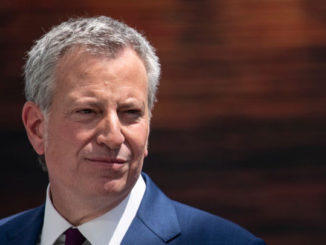
    NEW YORK CITY (TIP):  Mayor Bill de Blasio announced, December 23, one appointment to Family Court, four appointments to Criminal Court, and seven appointments to Civil Court. “These judges have evidenced their commitment and sharpness by managing some of the most difficult cases our city has ever seen. I am proud to appoint these individuals who have fought for fairness and equity at every step of their career,” said Mayor Bill de Blasio. “I have no doubt they will continue to do what they have always done: dedicate their careers to making our city, state, and nation more fair and just.”

    Family, Criminal, and Civil Court are part of the New York State Unified Court System. Family Court judges hear cases related to adoption, foster care and guardianship, custody and visitation, domestic violence, abused or neglected children, and juvenile delinquency. The City’s Criminal Court handles misdemeanor cases and lesser offenses and conducts arraignments. One of the judges newly appointed to Civil Court will be presiding in Family Court. Six judges newly appointed to Civil Court are expected to preside in Criminal Court.

    Judge Jonathan H. Shim Appointed to Family Court: Judge Jonathan H. Shim was first appointed as an Interim Civil Court Judge in February 2018 and has been serving in Family Court.  Judge Shim began his legal career as an associate at several firms and started his own practice in family and matrimonial law which he maintained for nine and a half years, prior to his appointment to the bench. He is a graduate of SUNY at Albany and received his law degree from Albany Law School.

    Judges appointed to Criminal Court: Judge Giyang An formerly served with the Bronx County District Attorney’s Office in the Criminal Court, Intake, and Narcotics Bureaus, and the Gun Readiness Unit of the Trial Bureau. She most recently served as an Assistant Attorney General with the Office of the New York State Attorney General in the Torts Section of the Claims Bureau, Division of State Counsel. She also teaches as an Adjunct Professor of Law, Lawyering, and Legal Writing at the Benjamin N. Cardozo School of Law, Yeshiva University. She is a graduate of the University of California, Irvine and received her J.D. from the Benjamin N. Cardozo School of Law, Yeshiva University.

    Judge Carolina Holderness began her legal career as Law Clerk to the Honorable Lawrence M. McKenna in the U.S. District Court, Southern District of New York. She subsequently joined the New York County District Attorney’s Office and has served in various capacities for the last 14 years, including as Criminal Court Supervisor, Chief of the Human Trafficking Response Unit of the Special Victims Bureau and most recently, prior to her appointment, as the Deputy Chief of the Special Victims Bureau. She is a graduate of the University of North Carolina at Chapel Hill and received her J.D. from Columbia Law School. Ms. Holderness’s appointment will be effective at the end of this month.

    Judge Biju J. Koshy formerly served with the Bronx County District Attorney’s Office in the Criminal Court and General Crimes Bureaus. He went on to serve in the Richmond County District Attorney’s Office as a Supervisor, then Deputy Chief of the Criminal Court Bureau before joining the New York State Unified Court System as a Senior Court Attorney to a Criminal Court judge. He subsequently opened his own practice in Richmond County handling felony and misdemeanor cases, as well as serving as a court evaluator and appointed counsel on Guardianship cases in Supreme Court. He is a graduate of Pace University and received his J.D. from Seton Hall Law School.

    Judge Melissa T. Lewis began her legal career with the Nassau County District Attorney’s Office where she remained for 14 years serving in the District Court Misdemeanor Trial Bureau, County Court Felony Trial Bureau, and Major Offense Bureau. She last served as a Deputy Bureau Chief of the County Court Felony Trial Bureau and as Director of Recruitment.  Prior to her appointment to the bench, she served with the New York State Unified Court System as Deputy Chief of Staff to former Deputy Chief Administrative Judge George J. Silver. She is a graduate of St. John’s University and received her law degree from New York Law School.

    Judges appointed to Civil Court: Judge Anthony M. Battisti was a former Queens County Assistant District Attorney for four years assigned to the Intake, Criminal Court, Grand Jury, and Supreme Court Bureaus. He subsequently entered into a law partnership and shortly thereafter started his own practice. He was a private practitioner in Queens for over 27 years specializing in criminal defense. Judge Battisti received both his undergraduate and his law degree from St. John’s University. Judge Battisti is appointed to Civil Court and is expected to be assigned to Criminal Court.

    Judge Diego A. Freire formerly served with The Legal Aid Society, Criminal Defense Practice in Queens County for 14 years. He was most recently Senior Staff Attorney and Adolescent Intervention and Diversion Attorney prior to his appointment to the bench. Judge Freire is a graduate of Queens College and received his law degree from Temple University, Beasley School of Law. Judge Freire is appointed to Civil Court and is expected to be assigned to Criminal Court.

    Judge Simiyon S. Haniff began his legal career with the Queens County District Attorney’s Office serving in the Intake, Domestic Violence, Appeals and Trial Bureaus. After two partnerships, he opened his own practice which he maintained for seven and a half years. He returned to the Queens County District Attorney’s Office serving most recently as Supervising Attorney of the Criminal Court Bureau’s Part AP-2. He is a graduate of St. John’s University and Brooklyn Law School. Judge Haniff is appointed to Civil Court and is expected to be assigned to Criminal Court.

    Judge Marty J. Lentz was a former Law Clerk in the Superior Court of the District of Columbia in Washington, D.C. She went on to serve with The Legal Aid Society for the last 18 years as a Staff Attorney assigned to the Brooklyn Criminal Defense Practice, Misdemeanor Brooklyn Treatment Court, and most recently at the Red Hook Community Justice Center. She is a graduate of Loyola University in Chicago and received her J.D. from the University of Michigan Law School. Judge Lentz is appointed to Civil Court and is expected to be assigned to Criminal Court.

    Judge Srividya Pappachan began her legal career as a Staff Attorney with The Legal Aid Society, Criminal Defense Practice where she remained for over nine years. She thereafter became Court Attorney to the Honorable Josh E. Hanshaft, New York County Criminal Court and briefly in Kings County Family Court. Judge Pappachan is a graduate of the University of Massachusetts – Amherst and received her law degree from Hofstra University School of Law. Judge Pappachan is appointed to Civil Court and is expected to be assigned to Criminal Court. Judge Rachel S. Pauley was a former Kings County Assistant District Attorney and a Principal Court Attorney in Supreme Court, Criminal Term. She also served with the New York State Attorney General’s Office and the New York State Inspector General’s Office. Most recently, she was Director of Government Programs, Social Justice Initiatives and a Lecturer-in-Law at Columbia Law School. She received her dual bachelor’s and master’s degrees from Columbia University’s Barnard College and School of International and Public Affairs, and her J.D. from Fordham University School of Law. Judge Pauley is appointed to Civil Court and is expected to be assigned to Criminal Court.

    Judge Stephanie Schwartz began her legal career with The Legal Aid Society, Criminal Defense Practice and later served with the New York City Administration for Children’s Services in New York and Bronx Counties for over nine years. Prior to her appointment to the bench, she was a Court Attorney-Referee in New York County Family Court for five years. She is a graduate of the University of Wisconsin – Madison and received her law degree from CUNY School of Law. Judge Schwartz is appointed to Civil Court and will be assigned to Family Court.

  • GOPIO-CT holds Annual Holiday Party; Raises funds for local charity Grassroots; Elects new team

    GOPIO-CT holds Annual Holiday Party; Raises funds for local charity Grassroots; Elects new team

    STAMFORD, CT (TIP):  GOPIO-CT organized its General Body Meeting (GBM) and elected a new team on December 5th held at the Hampton Inn suite in Stamford. In its report to the GBM, President Ashok Nichani said, “In spite of the Corona Virus pandemic, GOPIO-CT did several virtual programs in the beginning of the year on Zoom including a New Year Party which served as a fundraiser in support of soup kitchens, a Holi Celebration, interactive meetings with CT lawmakers and raising funds for sending Oxygen Concentrators to India.”

    “As the pandemic was coming down in the year, the chapter organized several programs with physical presence participating with other ethnic communities celebrating Stamford’s founding, and organizing Indian and American flag hoisting at Govt. Center in Stamford to celebrate India’s 75th Independence Day which was followed by an India Festival at the Mill River Park, hosting UConn Indian students for a Networking Welcome Dinner, an interactive session with India’s Minister of State for External Affairs V. Muraleedharan, Hosting a Conversation with Indra Nooyi and a Diwali fundraiser for local charities,” added President Nichani.

    Secretary Prachi Narayan listed all major activities for the year which included major initiatives for serving the local community and institutions during the pandemic and lockdown. These included donating cash and replenishing food items for the homeless and needy at the New Covenant House in Stamford and Food Bank of Lower Fairfield. Two other service organizations were supported by GOPIO-CT in 2021, Future 5 which helps and counsel needy students at Stamford High Schools and Building One Community which serves new immigrant communities. The chapter also held a virtual interactive meeting with Connecticut Attorney General William Tong.

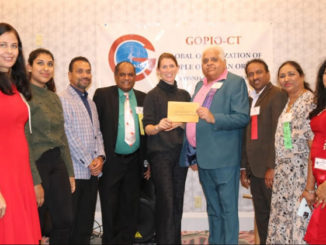
    IT Serve Alliance official Prasad Chintalapudi presenting a check to Grassroots.
    From L to R: Jayashri Chintalapudi, Samantha Hayes and Prasad Chintalapudi.

    The GBM also conducted its annual election for 2021. Mr. Ashok Nichani was re-elected as the President for one more term. Other elected officials are Mr. Prasad Chintalapudi as Executive Vice President, Dr. Jaya Daptardar as Vice President, Ms. Prachi Narayan as Secretary, Ms. Mahesh Jhangiai as Joint Secretary and Mr. Srinivas Akarapu as Treasurer. GBM also reelected two trustees, Mr. Joseph Simon and Mr. Shailesh Naik. Following the GBM, Annual Holiday Party was held which served as a fundraiser for a service organization.

    The fundraiser netted $5,500 to give to the local service organization Grassroots Tennis and Education, a youth development non-profit organization that uses sports of tennis to engage youth in out-of-school time programming in Norwalk and Stamford. The group’s volunteers teach tennis and helps students in education. Grassroots’ representative Ms. Samantha Hayes spoke about the organization and thanked GOPIO-CT for its generosity in raising funds for Grassroots. Another organization IT Serve Alliance also presented a check of $2,000 to Grassroots.

    Singers and organizers at the GOPIO-CT Holiday Party Fundraiser.
    From L to R: Shree Kanaskar, Dhilan Shah, Trupti Shah, Shilpa Kulkarni, Dr. Jaya Daptardar, Dr. Thomas Abraham, Srinivas Gunupuru, Kashyap Jani and Mike Patel.

     A musical evening followed and was organized by GOPIO-CT Vice President Dr. Jaya Daptardar. Singers at the evening were Srinivas Gunupuru, Kashyap Jani, Shilpa Kulkarni, Trupti Shah, Mike Patel and Dhilan shah. GOPIO-CT Executive Vice President Prasad Chintalapudi concluded the program and thanked everyone for making the program a success.

    Dr. Thomas Abraham, Chairman of GOPIO International said that GOPIO-CT is the most active chapter among over one hundred GOPIO chapters worldwide.

    About GOPIO-CT

    Over the last 14 years, GOPIO-CT, a chapter of GOPIO International has become an active and dynamic organization hosting interactive sessions with policy makers and academicians, community events, youth mentoring and networking workshops, and working with other area organizations to help create a better future. GOPIO-CT – Global Organization of People of Indian Origin – serves as a non-partisan, secular, civic and community service organization – promoting awareness of Indian culture, customs and contributions of PIOs through community programs, forums, events and youth activities. It seeks to strengthen partnerships and create an ongoing dialogue with local communities.

  • MAYOR DE BLASIO ANNOUNCES 200,000 AFFORDABLE HOMES BUILT OR PRESERVED DURING THIS ADMINISTRATION

    MAYOR DE BLASIO ANNOUNCES 200,000 AFFORDABLE HOMES BUILT OR PRESERVED DURING THIS ADMINISTRATION

    • Administration sets record for affordable housing production and meets its 10-year goal in just eight years
    • 500,000 New Yorkers served, nearly half of whom earn less than $42,000 per year
    • City-financed affordable housing projects bring more than $1 billion to M/WBE businesses

    NEW YORK CITY (TIP):  Mayor Bill de Blasio, along with Deputy Mayor Vicki Been, the New York City Department of Housing Preservation and Development (HPD) and the New York City Housing Development Corporation (HDC), announced, December 22, that the de Blasio administration has financed the preservation or new construction of 200,000 affordable homes, the most in one administration in New York City history. The administration achieved the original goal established in Housing New York on budget and two years ahead of schedule.

    Making good on the Mayor’s commitment to reach deeper affordability, 46 percent of the homes serve New Yorkers earning less than $42,000 per year or $54,000 for a family of three. The Mayor’s signature housing plan remains on pace to reach its ambitious goal of creating or preserving 300,000 affordable homes by 2026.

    “There’s no fight more fundamental to the future of our city than the one to keep it affordable for working families. In 2014, we set the most ambitious goal in this city’s history to build and preserve affordable housing – and today, thanks to eight years of hard work, we met it,” said Mayor Bill de Blasio. “Those affordable units have done more than just keep working families stably housed amid unprecedented challenges. They will help ensure a fairer, more diverse, and more vibrant New York City for generations to come.”

    “At the core of today’s announcement are two critical parties: community leaders who fought to advance equity across the five boroughs and several generations of public servants who worked day and night to make it happen,” said Deputy Mayor for Housing and Economic Development Vicki Been. “Undeniably, over the past 8 years, the City worked through Mandatory Inclusionary Housing, a number of path-breaking, collaborative neighborhood rezonings—such as Gowanus, SoHo/NoHo, and East New York, and many other fundamental improvements to make the city we love fairer, more resilient, and more diverse. I am proud to say that we delivered on what was first heralded as impossible: the promise to create and preserve 200,000 affordable homes.”

    “This Administration’s historic achievement is a testament to the City’s workforce and its partners, but the real legacy lives with the thousands of families who now have an affordable home to raise families, work hard, and pursue their dreams,” said HPD Commissioner Louise Carroll. “Housing New York has placed the City in its strongest position yet to tackle the affordability crisis ahead, leaving behind an impressive production pipeline able to secure, on average, 25,000 units each year while deepening affordability to reach the lowest income New Yorkers and laying out a blueprint for fair housing and equity through the Where We Live NYC initiative. Since 2014, the plan has evolved into an all-around and all-hands-on-deck approach to helping New Yorkers afford rent, buy a first home, fight tenant harassment, maintain safe living conditions, help families stay in their neighborhoods, house the most vulnerable families, and build stronger neighborhoods. The plan has generated more than 200,000 affordable homes in 8 years, and trailblazed a path for a fairer New York City.”

    “I want to thank Mayor de Blasio, Deputy Mayor Been, Commissioner Carroll, and all our colleagues and partners across the affordable housing industry for their triumphant effort in bringing the Housing New York plan across the finish line. I am incredibly proud of the dedicated teams at HDC and HPD whose hard work made this milestone achievement possible,” said HDC President Eric Enderlin. “HDC contributed critical bond financing to support the ambitious goals of the Housing New York plan, and never ceased in the pursuit of innovative solutions in order to stretch our limited resources further and secure the tools needed to create more affordable housing at a time it is needed most. As we look ahead, there is more work to be done to ensure greater opportunity for New Yorkers; it’s imperative we continue to work together and advocate for the tools needed to ensure our city is a more equitable and secure place to live.”

    To commemorate Housing New York’s success, City leaders visited 50 Penn, a 218-home affordable development in East New York Brooklyn co-developed by Pennrose and RiseBoro Community Partnership, a nonprofit service provider. The nine-story multifamily building includes 42 homes for formerly homeless households and will house a health foods grocery store on the ground floor. The building complies with Enterprise Green Community design standards, including green roofs, rooftop photo-voltaic panels, a highly insulated exterior wall system for energy efficiency, and landscaped outdoor space for the residents.

    “Over the past couple of years, East Brooklyn has seen an increase in population, making the need to build quality affordable housing a top priority,” said Congresswoman Nydia Velázquez. “50 Penn is the newest development that will offer safe housing to working families in East Brooklyn and help to accommodate the growing population. I would like to thank all of the community leaders and stakeholders whose hard work and dedication ensured that real affordable housing was built in this community.”

    “The need for affordable housing in New York City is an undeniable reality,” said Dylan Salmons, Regional Vice President with Pennrose. “We are pleased to have been able to support Mayor de Blasio’s administration in achieving this record and look forward working with our partners to continue delivering much needed housing throughout the city.”

    “As an organization dedicated to housing New York City’s low to moderate income families for almost 50 years, RiseBoro is committed to community development that engages diverse stakeholders and meets the needs of residents,” said Scott Short, CEO of RiseBoro Community Partnership. “We commend Mayor Bill de Blasio for reaching the goals set out by his Housing New York plan two years ahead of schedule. It is our honor to celebrate with the Mayor, Deputy Mayor Vicki Been, the NYC Department of Housing Preservation and Development and the NYC Housing Development Corporation, this milestone achievement for a city Administration, which centers affordable housing at the heart of community development.”

    About Housing New York : When this Administration took office in 2014, the City’s housing agencies were on pace to build and preserve 15,000 affordable homes per year through public-private partnerships. In Housing New York, the Mayor set an ambitious goal of financing the preservation or new construction of 200,000 affordable homes over ten years. With new funding and new tools, the City’s housing agencies quickly ramped up to finance 20,000 affordable homes per year.

    In 2017, the Mayor committed to achieving deeper affordability and expanded the plan with Housing New York 2.0, which laid out a sustained goal of 25,000 affordable homes preserved or constructed per year. In 2020, as part of YOUR Home NYC, the City’s comprehensive approach to helping New Yorkers get, afford, and keep housing, the Mayor further committed to ensure all new housing produced reached New Yorkers earning less than $42,000 per year or $54,000 for a family of 3.

    As a result, the City has financed more than 66,000 new affordable homes and preserved more than 134,000 homes to create and secure affordability for the next generation of New Yorkers. Through Housing New York, the City financed affordable units in every single New York City community district and the plan remained on budget.

    Housing New York fundamentally shifted the paradigm for how, where, when, and for whom affordable housing is built in New York City. By expanding the range of tools available to build and preserve housing and protect tenants; advancing innovative policies and programs to address a broad range of housing needs and serve more of the most vulnerable New Yorkers; expanding and diversifying the pool of partners who participate in this work; and streamlining existing processes to make them more efficient; the City not only secured 200,000 affordable homes, but also advanced an agenda designed to make this a more equitable and inclusive city.

    Highlights include : Deepened affordability of the housing created or preserved: By revising existing housing financing programs, introducing new ones, and infusing even more capital, 46% of our total production – more than 90,200 affordable homes – serve New Yorkers earning less than $42,000 (or 50% AMI), far exceeding the original 25% target.

    Increased housing for the most vulnerable New Yorkers: Through targeted efforts and extensive inter-agency coordination, the City financed 12,937 homes specifically for seniors and set aside 16,015 affordable homes for homeless New Yorkers, including 7,802 supportive homes with on-site services, delivering on the Mayor’s NY/NY15 plan to build 15,000 new supportive homes.

    Preserved affordability at a record number of homes: New and revised programs helped owners stabilize buildings, rehabilitate properties in distress, save costs through energy efficiency and sustainability improvements and protect affordable buildings at risk of being lost to the private market. For example, HPD preserved the affordability and facilitated renovations at the Park Affordable portfolio in Borough Park, Brooklyn, with 229 residential homes, including 30% that will be available for formerly homeless households with services provided through a collaboration with Health & Hospitals.

    Safeguarded the affordability of the city’s Mitchell-Lama stock: HPD and HDC revamped programs to shore up the financial and physical health of the Mitchell-Lama portfolio, which continues to face rising maintenance and operating costs. As a result, the City preserved 67,116 Mitchell-Lama apartments, including Electchester, a State-supervised development in Pomonok, Queens with 2,400 affordable co-ops that locked in affordability and installed solar photovoltaics that will save hundreds of thousands in energy costs every year.

    Advanced policies for equitable neighborhood growth: The City launched the strongest Mandatory Inclusionary Housing (MIH) program in the nation to ensure that permanently affordable apartments are included in new developments in areas zoned for growth. To date, MIH has driven the creation of more than 4,000 permanently affordable homes.

    Spearheaded neighborhood plans and rezonings: The City advanced neighborhood rezonings in East New York, Downtown Far Rockaway, East Harlem, Jerome Avenue, Inwood, Bay Street, Gowanus, and SoHo/NoHo that will introduce tens of thousands of new homes supported with investments in schools, parks, open space and other neighborhoods amenities. As a part of the Administration’s vision for stronger neighborhoods, the City developed a Neighborhood Planning Playbook to guide comprehensive community planning efforts and to engage residents about the development of affordable housing on public land.

    Transformed public sites with placemaking projects: Since January 2014, HPD, EDC, and NYCHA, working with DCP and other agencies, have developed a pipeline of over 13,000 affordable homes and apartments on City-owned sites. To guide the development and selection of proposals, the City established a community vision for the various sites, resulting in dynamic projects such as Bronx Point, a mixed-use project along the Harlem River waterfront that will bring 542 permanently affordable homes, a new Universal Hip Hop Museum, an early childhood and outdoor science programming space, and 2.8 acres of public open space to the South Bronx; and Gowanus Green, a project that will create nearly 1,000 homes, a 1.5-acre public park along a revitalized Gowanus Canal, and space for a new public school.

    Prioritized M/WBE and non-profit partners: HPD and HDC have advanced numerous initiatives to grow and diversify the affordable housing community, including most recently the creation of a Pathways to Opportunity program to train and build the capacity of M/WBE and non-profit marketing agents. In 2017, the City created the M/WBE Build Up program to increase contracting opportunities for certified M/WBEs in projects where HPD or HDC contributes $2 million or more in subsidy. Since its launch in 2017, the program has delivered more than $1.1 billion in spending toward M/WBEs across 239 projects. Earlier this year, the administration announced that the NYC Acquisition Fund, a $210 million public-private affordable housing loan fund, will exclusively finance projects led by M/WBEs and nonprofits with at least 51% ownership stake.

    Launched Where We Live NYC: The culmination of a two-year planning process engaging hundreds of residents, over 150 community-based and advocacy organizations, and dozens of partner agencies, Where We Live NYC lays out a series of strategies to build more integrated neighborhoods and break down barriers to opportunity. Already, the City has advanced key commitments in the five-year plan, including the rezoning of Gowanus and SoHo/NoHo, neighborhoods that have exceptional access to transit, schools, and job centers.

    Increased support for homeownership: The administration strengthened support for homeowners through the launch of programs like HomeFix, which funds critical repairs for lower income homeowners, and the expansion of HomeFirst, which increases the amount of down payment assistance available to low-income first-time homebuyers to $100,000. Through Open Door, a new program to finance the construction of co-ops and condos for first-time homebuyers, HPD completed Sydney House, which brought 56 affordable homeownership opportunities to the Williamsbridge neighborhood of the Bronx.

    Promoted healthy, sustainable affordable housing: The City has updated design guidelines to raise bar for designing quality, healthy, sustainable, and equitable affordable housing. Sendero Verde, a project selected through the City’s SustainNYC RFP, will become the largest fully affordable Passive House building when complete, as well as provide more than 700 affordable homes, extensive community and retail space, a school, and outdoor gardens to the East Harlem community in Manhattan. And through the Green Housing Preservation Program, projects such as 256 Martense, a 6-home rental property in the Prospect Lefferts Gardens neighborhood of Brooklyn, addressed capital renovations, including a high efficiency boiler and an oil-to-gas conversion, higher efficiency windows, and numerous energy-efficiency improvements expected to reduce the project’s energy usage by 23%.

    “From the Bronx to the Far Rockaways, from Hudson Yards to the North Shore of Staten Island, we have been laser focused on bringing affordable housing to New Yorkers,” said DCP Director Anita Laremont. “I congratulate City Hall, HDC and HPD for their leadership, the housing advocates who help us get it right, and my incredible DCP team for crafting zoning policies and practices that supercharged the creation of new and permanently affordable housing. We are a city for all, and this work speaks clearly to that.”

    “It is critical to preserve our existing housing stock and create affordable housing, and NYCHA’s partnerships with the Mayor and the City of New York are necessary to achieve that,” said NYCHA Chair & CEO Greg Russ. “Today’s achievement was made possible by the sizable investment this Administration has made to increasing the City’s stock of low-cost, high-quality homes and it will resonate for generations to come.”

    “We are proud to have worked with this administration to bring affordable housing to New Yorkers across the city,” said NYCEDC President and CEO Rachel Loeb. “Our work repurposing vacant or underutilized city-owned sites into affordable housing developments ensures New York City remains a place where New Yorkers can live, work, and thrive.”

    “I am delighted to join you this week to celebrate the milestone of 200,000 affordable homes financed,” said Council Member Darma V. Diaz. “The right to safe, quality, affordable housing is an essential human right for the 37th Council District.”

    “We applaud the de Blasio administration for its incredible progress advancing its ambitious affordable housing plan despite tremendous challenges caused by the pandemic,” said Rachel Fee, Executive Director of the New York Housing Conference. “Creating more affordable housing is helping to make New York affordable and equitable, and now the Adams administration will need to build on that progress to create the city New Yorkers deserve.”

    “As the pandemic continues to take a toll on New Yorkers and housing insecurity remains on the rise, ensuring access to safe, stable, and affordable homes has never been more important. We applaud the City for reaching this historic milestone ahead of schedule and demonstrating its commitment to addressing the affordability crisis head on,” said Baaba Halm, vice president and New York market leader, Enterprise Community Partners. “We would also like to celebrate the City’s partnerships with nonprofits and community organizations and recognize their crucial role in advancing the Housing New York plan and fighting for the vulnerable populations they serve.”

    “Commissioner Carroll and the HPD staff have worked tirelessly before and during the pandemic to ensure New Yorkers in need have a place to call home,” said Laura Mascuch, Executive Director, Supportive Housing Network of NY. “We are especially grateful for HPD’s commitment toward creating supportive housing for the most vulnerable New Yorkers which has resulted in nearly 8,000 new units funded. On behalf of the Supportive Housing Network’s more than 100 New York City nonprofit members we extend our heart-felt congratulations to HPD for its accomplishments under the Housing New York plan.”

    “Over the course of the last eight years, the de Blasio administration and the hardworking affordable housing industry have collaborated to make New York City as affordable as possible,” said Jolie Milstein, president and CEO of the New York State Association for Affordable Housing. “As a result of those efforts, more than 200,000 affordable homes have been financed despite considerable roadblocks, and it is every day New Yorkers benefitting the most.” “We join the city in celebrating this significant milestone, which will ensure that many families have access to affordable housing opportunities,” said Christie Peale, CEO/Executive Director, Center for NYC Neighborhoods. “In particular, we want to congratulate and thank HPD Commissioner Louise Carroll for her support of homeownership initiatives throughout the five boroughs.”

    (Press Release)

  • Indian Consulate in Chicago organizes “Heart Health Awareness And Community Bystander CPR” Program

    Indian Consulate in Chicago organizes “Heart Health Awareness And Community Bystander CPR” Program

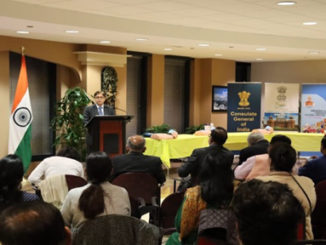
    Consul General Amit Kumar, Congressman Danny K Davis, PBSA Dr. Bharat Barai and Dr. Vemuri Murthy released the community bystander CPR Informational brochure.
    Doctors explaining Global Heart Disease, Heart Attacks and Sudden Cardiac Arrests.

    CHICAGO (TIP): During the Azadi Ka Amrit Mahotsav (AKAM) week, the Chicago Indian Consulate organized a Heart Health Awareness and Community ‘Saving Lives’ Bystander Cardiopulmonary Resuscitation (CPR) program at the Indian Consulate in Chicago on December 15,2021.

    The Indian American community-focused program was jointly developed by Dr. Vemuri S Murthy, Chairman of the Board of Chicago Medical Society and Founder of the Chicago Medical Society Community Bystander CPR project “SMILE” (Saving More Illinois Lives through Education) in association with Dr. Srinivas Ramaka, an eminent Cardiologist from Telangana, India. The program was attended by several members of the Indian diaspora, leaders of Medical Organizations, and Diplomats of the Indian Consulate, staff, and families.

    Inaugurating the program, Consul General Amit Kumar spoke on the importance of Indo-US healthcare partnerships to reduce morbidity and mortality due to heart disease and the major role of the Indian diaspora in strengthening these affiliations through jointly developed innovative projects. As an example, he referred to the Heart Rescue India (HRI) project, recently implemented successfully with Indo-US collaboration, involving the University of Illinois College of Medicine and UI Health, Chicago, and Ramaiah Medical College in Bengaluru with a grant from Medtronic. He congratulated the Indian Physician community for their ongoing contributions to the Indian and US Healthcare sector. In his address, CongressmanDanny K. Davis stressed the importance of taking care of one’s health. He commended the significant role of the Indian American doctors in contributing to the general health and well-being of US communities. In a virtual message, Honorable Congressman Raja Krishnamoorthi congratulated the Indian Consulate and Dr. Vemuri Murthy for organizing the program and their efforts to enhance outcomes after cardiac arrests among the communities.

    Consul General Amit Kumar, Congressman Danny K Davis, PBSA Dr. Bharat Barai and Dr. Vemuri Murthy released the community bystander CPR Informational brochure in three languages – English, Gujarati, and Spanish for the Indian and US communities. Brochures in other Indian languages will be available soon.

    Dr. Murthy gave a presentation on Global Heart Disease, Heart Attacks and Sudden Cardiac Arrests with a special focus on Indians and Indian diaspora in the USA. He spoke of theprograms needed to improve the survival and outcomes during cardiac emergencies via. community awareness, prevention, early recognition, and timely intervention. He also brought to the attention of audience the need to seriously address “Women’s Heart Health” issues. A Hands-only CPR demonstration and training of the participants followed.

    Efforts to raise awareness of heart disease and promote “Healthy Heart” lifestyles is essential. Heart disease is the number one Global Public Health problem. South Asians are at a four-times greater risk of heart disease than their western counterparts and have a greater chance of having a heart attack before 50 years of age. Heart attacks strike South Asian Men and Women at younger ages, and as a result, both morbidity and mortality are higher among them compared to any other ethnic group. They tend to develop heart disease ten years earlier than other groups. Dr. Vemuri S. Murthy, an Adjunct Faculty in the Department of Emergency Medicine @ The University of Illinois College of Medicine, Chicago, Illinois, USA and Visiting Professor in India, is an Advocate of Resuscitation education, training and research in USA and India. His current work involves Cardiac Arrest Registries and Cardiac Health-promoting Projects with Indo-US collaborations.

    (Report and pics/Ajay Ghosh)

  • Living the American Dream while holding on to the Traditional Indian Family Values: Kothari Family

    Living the American Dream while holding on to the Traditional Indian Family Values: Kothari Family

    CHICAGO, IL (TIP):  For Most people, the Immigrant American Dream meansbetter opportunities to find work, better living conditions, to be with their American spouses/families and to get the best education. Recent census data shows that the Diverse and Growing Asian Population in the United States nearly tripled in the past three decades, and Asians are now the fastest-growing ethnic minority of the United State of America. Incredible success of the Indian American diaspora can be attributed to the fact that we are one of the best educated groups with over 80% having college degrees, in addition to the uptick, the Asian population has become geographically diverse with the wide distinctions in income, citizenship and political preference. It is extremely difficult to achieve both the American Dream and holding on to the Traditional Indian Family Values. The Kothari family led by Hasmukh Kothari is a living example of how a blend of traditional values with modern and progressive thinking can help create a harmonious family life. Born in the historical year of India’s Independence, 1947, to Shri Govind Lal Kothari and Smt. Sharda Kothari, in a small town of Gujarat called Kadi, Hasmukh finished his education with a degree in Civil Engineering, after which he procured a job as an assistant lecturer in Mumbai. In 1968, Hasmukh married Usha to start a blissful family life.

    In 1980, Hasmukh Kothari, armed with a degree in Civil engineering, landed on the US soil with an empty wallet but a heart full of dreams. He was the first one from his family to make this transition. He worked very hard to reach the goals that he had set for himself and his family. He started his career here as a Life Insurance salesperson, progressively transitioning into real estate income tax, mortgage and insurance industry. In the past, he has played an active part in Gujarati Samaj of Chicago and is a prominent community leader. He truly believes in giving back to the community and uplifting the society as a whole, keeping alive our culture and heritage. After working with a variety of companies, Hasmukh started his new venture KMS Realty in 2004 which is very well known in the industry now.  Today he has a thriving business and a wonderful family, complete with his two sons, older one, Bobby, his wife Shobhana, younger son, Bunty, his wife Ranna and one daughter Pinki, her husband, Pranav and the grandkids- which he considers, is his real wealth. In addition to the United States of America, he has an Extended family of more than 50 members back home in India as well, who respect him for the accomplished man he is now.

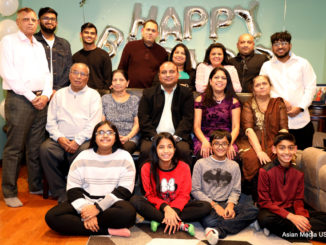
    Almost every weekend, members of the Kothari family gather. And recently on December 17th, 2021, the family gathered again to celebrate older son Bobby’s 50th birthday. Bobby is also a successful businessman running his Construction & Remodeling Company, while his wife Shobhana Kothari is a professional licensed cosmetologist. Along with the entire family, Shobhana wishes her husband a very happy, healthy and prosperous life.

    Mostly we hear about the two regrets the dying people express the most: 1) I wish I’d had the courage to live a life true to myself, not the life others expected out of me. 2) I wish I had spent more time with my family. When asked, Hasmukh Kothari, said, “100% I have no such regrets, because for me, I have always made my family my first priority and always made sure to spend substantial and quality time with my loved ones.”

    Hasmukh’s message to the immigrants today is that the United States of America is the land of opportunities, but everyone needs to work hard, work smart with ethics endowed at every step, not to forget the big part education plays in one’s life! He added,” We are all Stars, but we must learn how to Shine!”. Today, living a content and happy life with his family, Hasmukh Kothari is an inspiration to the young immigrants who have same dreams and passions.

    (Text and photograph/ Asian Media USA)

  • United and Delta Cancel Around 200 Christmas Eve Flights

    United and Delta Cancel Around 200 Christmas Eve Flights

    • Airline schedules affected by fast-spreading omicron strain
    • Delta says move due to reasons including omicron and weather

    NEW YORK (TIP): United Airlines Holdings Inc. is canceling over 100 flights on Friday, the day before Christmas, while Delta Air Lines Inc. has cut about 90.United said in an email Thursday, December 23 that a jump in omicron Covid-19 cases is affecting the availability of flight crews and ground personnel. Delta said its cancellations were due to a combination of reasons, including but not limited to potential inclement weather in some places and the impact of omicron.

    “Delta teams have exhausted all options and resources — including rerouting and substitutions of aircraft and crews to cover scheduled flying — before canceling around 90 flights for Friday,” Delta said in an emailed statement Friday. The airline is still operating nearly 3,100 flights Friday.

    The holidays are among the heaviest times for travel. The Transportation Security Administration was estimating Dec. 22 and 23 would be the busiest pre-Christmas travel dates nationally and locally, with Jan. 2 and 3 as the most crowded for post-holiday travel.

    “We’ve unfortunately had to cancel some flights and are notifying impacted customers in advance of them coming to the airport,” United said. “We’re sorry for the disruption and are working hard to rebook as many people as possible and get them on their way for the holidays.”

  • Biden signs bill banning goods from China’s Xinjiang over forced labor

    Biden signs bill banning goods from China’s Xinjiang over forced labor

    WASHINGTON, D.C. (TIP): US President Joe Biden on Thursday, December 23, signed into law legislation that bans imports from China’s Xinjiang region over concerns about forced labor, the White House said, provoking an angry Chinese condemnation.

    The Uyghur Forced Labor Prevention Act is part of the US pushback against Beijing’s treatment of the China’s Uyghur Muslim minority, which Washington has labeled genocide.

    The bill passed Congress this month after lawmakers reached a compromise between House and Senate versions. Key to the legislation is a “rebuttable presumption” that assumes all goods from Xinjiang, where Beijing has established detention camps for Uyghurs and other Muslim groups, are made with forced labor. It bars imports unless it can be proven otherwise.

    Some goods – such as cotton, tomatoes, and polysilicon used in solar-panel manufacturing – are designated “high priority” for enforcement action. China denies abuses in Xinjiang, a major cotton producer that also supplies much of the world’s materials for solar panels.

    Its Washington embassy said the act “ignores the truth and maliciously slanders the human rights situation in Xinjiang.” “This is a severe violation of international law and norms of international relations, and a gross interference in China’s internal affairs. China strongly condemns and firmly rejects it,” embassy spokesperson Liu Pengyu said in an emailed statement.He said China “would respond further in light of the development of the situation,” but did not elaborate.

    Nury Turkel, Uyghur-American vice chair of the US Commission on International Religious Freedom, told Reuters this month the bill’s effectiveness would depend on the willingness of Biden’s administration to ensure it is effective, especially when companies seek waivers.

    U.S. Secretary of State Antony Blinken said Biden’s approval of the law underscored the “United States’ commitment to combatting forced labor, including in the context of the ongoing genocide in Xinjiang.””The State Department is committed to working with Congress and our interagency partners to continue addressing forced labor in Xinjiang and to strengthen international action against this egregious violation of human rights,” he said in a statement.

    One of the bill’s co-authors, Democratic Senator Jeff Merkley, said it was necessary to “send a resounding and unequivocal message against genocide and slave labor.” “Now … we can finally ensure that American consumers and businesses can buy goods without inadvertent complicity in China’s horrific human rights abuses,” he said in a statement. In its final days in January, the Trump administration announced a ban on all Xinjiang cotton and tomato products.

    The U.S. Customs and Border Protection agency estimated then that about $9 billion of cotton products and $10 million of tomato products were imported from China in the past year.

  • Covid-19 testing in colleges linked to lower case numbers, but relationship is “complex”: Study

    Covid-19 testing in colleges linked to lower case numbers, but relationship is “complex”: Study

    Higher Covid-19 testing rates on residential university and college campuses may be linked to lower case numbers but the relationship is complicated, a new study published Thursday, December 23, in the open-access medical journal JAMA Network Open found.

    In the schools studied, researchers found both high and low levels of testing correlated to lowered case numbers, while moderate testing rates produced higher case numbers.

    To do this research, study authors examined data from 18 colleges and universities in Connecticut that had students living on campus in the 2020-2021 school year. All schools had some form of Covid-19 testing requirement for residential students, ranging from testing between 5-10% of the population each week to requiring each student living on campus to get tested each week.

    The study authors defined low testing as less than 0.5 tests per student per week, moderate testing as between 0.5 and 1.5 tests per student per week, and high testing as more than 1.5 tests per students per week. The researchers found what they described as a “complex” relationship between testing rates and case rates on campus.Schools with low testing numbers also saw low case rates, which the researchers said meant schools likely detected fewer asymptomatic infections which may have fueled asymptomatic spread but kept case numbers low. Schools with higher testing also saw low case rates. The study authors said those schools likely caught the most cases and students were quickly isolated, which lowered case rates.

    Schools with “moderate” testing rates saw the highest student case counts.

    “Moderate testing rates are sufficiently frequent to detect many prevalent infections but not frequent enough to stop most forward transmission and outbreaks,” the study authors wrote.

    “Institutions that tested students infrequently detected few cases but failed to blunt transmission, whereas institutions that tested students more frequently detected more cases and prevented further spread,” the authors wrote.

    “In fall 2020, each additional test per student per week was associated with a decrease of 0.0014 cases per student per week,” they added.

    The researchers tracked contact between students using mobile device proximity data.

     The authors also found a connection between higher student case rates and higher case rates in the surrounding community.

    “However, it is not possible to determine whether on-campus infections were transmitted to the broader community or vice versa,” they wrote.

    More on the study: Researchers noted several limitations to the study including that they used diagnosed Covid-19 cases, so “cases may be a poor proxy for infections in institutions where testing rates were low or where asymptomatic testing was infrequent.”

    Another limitation was the introduction of vaccines.

    “Connecticut residents 16 years or older became eligible for vaccination on April 1, 2021, but we do not have information on vaccination rates on Connecticut campuses. It is likely that rising vaccination rates on campus mitigated transmission during the remaining weeks of spring 2021,” the authors said.

    (Source: CNN)

  • December 24 New York & Dallas E – Edition

    [vc_row][vc_column width=”2/3″][vc_custom_heading text=”Dual Edition” font_container=”tag:h2|text_align:center” google_fonts=”font_family:Istok%20Web%3Aregular%2Citalic%2C700%2C700italic|font_style:700%20bold%20regular%3A700%3Anormal” link=”url:https%3A%2F%2Fwww.theindianpanorama.news%2Fwp-content%2Fuploads%2F2021%2F12%2FTIP-December-24-Dual-Edition.pdf”][vc_single_image image=”118176″ img_size=”full” add_caption=”yes” alignment=”center” onclick=”custom_link” link=”https://www.theindianpanorama.news/wp-content/uploads/2021/12/TIP-December-24-Dual-Edition.pdf”][/vc_column][vc_column width=”1/3″][vc_single_image image=”82828″ img_size=”medium” alignment=”center” onclick=”custom_link” link=”https://www.theindianpanorama.news/advertising-media-kit-portal-indian-panorama/”][vc_single_image image=”82829″ img_size=”medium” alignment=”center” onclick=”custom_link” link=”https://www.theindianpanorama.news/advertising-media-kit-portal-indian-panorama/”][/vc_column][/vc_row][vc_row][vc_column][vc_custom_heading text=”Lead Stories This Week” font_container=”tag:h2|text_align:center” google_fonts=”font_family:Istok%20Web%3Aregular%2Citalic%2C700%2C700italic|font_style:700%20bold%20regular%3A700%3Anormal” link=”url:https%3A%2F%2Fwww.theindianpanorama.news%2F%20″][vc_wp_posts number=”8″][/vc_column][/vc_row]

  • Indian American diplomat Uzra Zeya is America’s Special Coordinator for Tibetan Issues

    Indian American diplomat Uzra Zeya is America’s Special Coordinator for Tibetan Issues

    WASHINGTON, D.C. (TIP): The US has designated Indian-origin diplomat Uzra Zeya as its Special Coordinator for Tibetan Issues and she has been tasked with promoting “substantive dialogue” between China and the Dalai Lama or his representatives in support of a negotiated agreement on Tibet. Zeya, who was once posted in New Delhi during her diplomatic career, had quit the foreign service in 2018 in protest against the policies of then president Donald Trump.

    She is also the Under Secretary for Civilian Security, Democracy, and Human Rights.

    As the US Special Coordinator for Tibetan Issues, Zeya will coordinate the US government policies, programs and projects concerning Tibetan issues, consistent with the Tibetan Policy Act of 2002, as amended by the Tibetan Policy and Support Act of 2020.

    “I have designated Under Secretary for Civilian Security, Democracy, and Human Rights Uzra Zeya to serve concurrently as the United States Special Coordinator for Tibetan Issues, an important role she will take on effective immediately,” US Secretary of State Antony Blinken said.

    She will also continue to serve as Under Secretary for Civilian Security, Democracy, and Human Rights, a position for which she was sworn in on July 14, 2021, he said in a statement.

    “Specifically, she will promote substantive dialogue, without preconditions, between the Government of the People’s Republic of China (PRC) and the Dalai Lama, his representatives, or democratically elected Tibetan leaders in support of a negotiated agreement on Tibet,” according to the US Department of State.

    China is accused of suppressing cultural and religious freedom in Tibet. However, China has rejected the accusations.

    Negotiations between China and the representatives of the Dalai Lama on the Tibet issue have not taken place in recent years.

    Since becoming China’s President in 2013, Xi Jinping has pursued a firm policy of stepping up security control of Tibet. Beijing has been cracking down on Buddhist monks and followers of the Dalai Lama, who despite his exile remains a widely admired spiritual leader in the remote Himalayan region. Beijing views the 86-year-old Dalai Lama as a separatist.

  • Indian Americans Ritwik Behera and Yasir Saeed Mohammad make international debut for the US T20 team

    Indian Americans Ritwik Behera and Yasir Saeed Mohammad make international debut for the US T20 team

    LAUDERHILL, FL (TIP): Indian Americans Ritwik Behera and Yasir Saeed Mohammad made their international debut for the U.S. national T20 team, as the Americans thrashed the visiting Ireland by 26 runs in Lauderhill, FL, on December 22. Behera, a middle-order batter, was out for a duck, falling leg before wicket to off-spinner Simi Singh in the fourth ball he faced.

    Mohammad, a right arm off break bowler, went wicketless in four overs, conceding 35 runs.

    The United States scored 188 for 6 in 20 overs. In response, Ireland could muster only 162 for the loss of 6. Left-hander Gajanand Singh, a former West Indies and Guyanese Under -19 player, top-scored for the U.S. with 65 off 42 deliveries. Behera and Mohammad, 19, were the only two American born players that took the field for the United States on Wednesday.

    The two were added to the squad on Tuesday, the day before the match. USA Cricket said in a press release on Tuesday that additional players were added “in light of the ongoing Covid challenges being experienced.”

    “[It] feels good to get the opportunity and hopefully I could contribute to the team as much as possible,” Behera told the American Bazaar in text message Wednesday evening.

    They joined the team on Tuesday, just hours before the match.

    A third Indian American on the team is the 17-year-old wicket-keeper batsman Rahul Jariwala.

    All the three are Under-19 US players.

    Behera, who lives in Bowie, MD, is a student at Poolesville High School. Mohammad, who was born in Edison, NJ, lives in Pennsylvania.

    The second match of the T20 series will begin at 7 pm Thursday at the same ground. The two teams are also scheduled to play a three-match ODI series, which will begin on the Boxing Day.

  • Eternal Gandhi Museum, Houston gets $457,000 grant

    Eternal Gandhi Museum, Houston gets $457,000 grant

    HOUSTON (TIP): The Eternal Gandhi Museum Houston, the first US museum dedicated to preserve and promote Mahatma Gandhi’s legacy and ideals, has received a grant of $475,000 from the Fort Bend County under the American Rescue Plan. The grant was announced by Fort Bend County’s Indian American judge KP George along with the county commissioners at a press conference on Dec 21. The Houston, Texas museum is expected to open sometime in 2023.vIts groundbreaking was conducted on July 3 this year in the presence of Congressman Al Green and Houston’s local community. The EGMH will be an interactive museum divided into three sections: ‘His Journey’ (Mahatma Gandhi’s Life), ‘Our Journey’ (Impact of Mahatma Gandhi’s legacy of nonviolent conflict resolution in the world featuring, Dr. Martin Luther King, Jr., Nelson Mandela and others around the world, and finally ‘My Journey’ where each visitor will be asked to make a commitment to make the community a better place to live in. “The Eternal Gandhi Museum Houston is delighted and truly grateful to the Fort Bend County Commissioners’ court for approving this grant,” volunteer, trustee and co-founder Atul B Kothari said.

    “Indian-American Fort Bend County judge KP George has offered unflinching support to the activities of EGMH from day one, when he was invited to the memorial service for Mahatma Gandhi in February 2019 at the Unity of Houston,” he said.

    “This grant will go a long way in bringing to life the first-ever museum in the US dedicated to Mahatma Gandhi,” Kothari added.

    EGMH has acquired 3 acres of land in southwest Houston to house the museum. The proposed budget for construction is $6.5 million.
    The proceeds from the capital campaign have touched $2.9 million, with the board of trustees committing another $1.1 million. The trust has also secured another $800,000 from private donor commitments. Recently, the Houston Endowment Foundation also awarded a capital grant of $500,000. A concerted fundraising campaign is currently underway through foundations, corporations and private donors to raise the remaining amount.

  • California-based Indian-origin poet Major Bhupinder Singh Daler’s collection of ghazals released

    California-based Indian-origin poet Major Bhupinder Singh Daler’s collection of ghazals released

    Parminder Aujla

    SACRAMENTO / AMRITSAR (TIP): A collection of ghazals by eminent California-based poet Major Bhupinder Singh Daler was released at Punjab Natshala, Amritsar.  The literary event was hosted by the Alfaz Theatre Organisation. Vishal Beas, editor of Akhar, while giving information about Daler, said that before this, two books of ghazals, hymns and songs, ‘Bhinni-Bhinni Khushboo’ and ‘Sochan De Sirnave’ have also been published. He said Daler had made significant contribution in the Indo-Pak war of 1971 for which he was awarded the Sangram Medal. Chief guest Shiromani Natakkar Jatinder Singh Brar congratulated Major Bhupinder Singh Daler and said that his poetry carves a picture for readers, that +of flowers peeking out from the point of a gun. Leading critic of Punjabi language, Hira Singh said Major Daler has a talent of bringing together ghazal and nazm, a subtle play with the words that adds multiple dimensions to simple words. “That is the reason most of his ghazals sound as nazms. Not only this, the recitation of his ghazals guides the reader on the path of contemplation and evokes feelings,” said Hira Singh. Mandeep Ghai and Jaswant Mintoo from Alfaz Theatre said more such literary programs would be held in the near future. The program was attended by eminent writers and artists, including Dr. Vikramjit, Indreshmeet, Dr Seema Grewal, general secretary of the Art Gallery Arvinder Chamak and many other theatre artistes.

  • Biden plans to name 4 Indian Americans to presidential body on AANHPI communities

    Biden plans to name 4 Indian Americans to presidential body on AANHPI communities

    WASHINGTON, D.C. (TIP: President Joe Biden plans to appoint 23 civic leaders, including four Indian Americans, from across the country as commissioners to the President’s Advisory Commission on Asian Americans, Native Hawaiians, and Pacific Islanders (AANHPI)

    Reflecting the rich diversity of AANHPI communities across the United States, the Commission will advise the President on ways the public, private, and non-profit sectors can work together to advance equity and opportunity for them, the White House announced Monday.

    Four Indian Americans whom Biden intends to appoint as commissioners are Sonal Shah, who created the White House Office of Social Innovation under President Barack Obama, Ajay Bhutoria, a Silicon Valley technology executive, Kamal Kalsi, a Bronze Star medal winner army physician, and Smita Shah, an engineer, entrepreneur, and civic leader.

    The Commission is also charged with advising the President on policies to address anti-Asian xenophobia and violence, ways to build capacity in AANHPI communities through federal grantmaking and policies to address the intersectional barriers that AANHPI women, LGBTQ+ people, and people with disabilities face. Social impact and innovation leader Sonal Shah served as Deputy Assistant to Obama and created the White House Office of Social Innovation and Civic Participation, according to the White House.

    She also worked on international development at the Department of Treasury and led social impact efforts at Google and Goldman Sachs. She serves on the boards of TAAF, Oxfam America, the Century Foundation, and the National Democratic Institute.

    Shah has launched and led social impact efforts in academia, government, and the private and philanthropic sectors for over 25 years.

    She is the Founding President of The Asian American Foundation (TAAF), starting the largest philanthropic effort to serve the Asian American, Native Hawaiian, and Pacific Islander communities.

    Prior to TAAF, Shah founded and led Georgetown University’s Beeck Center for Social Impact and Innovation, providing students a first-hand opportunity to work on social impact projects in the public, private, and social sectors.

    Bhutoria, a community leader, speaker, and author has been recognized for his work, the White House noted.

    He is a passionate advocate for the South Asian and AAPI communities in the areas of small businesses, educational opportunities, immigration issues, and technological advancement.

    Bhutoria’s expertise in the areas of organizational transformations and change management has supported critical advancements within the AAPI community, and he is committed to the creation of a compassionate and empowering environment for all.

    Dr. Kamal Singh Kalsi, LTC, USAR is an emergency medicine physician from New Jersey that has served in the Army for 20 years, the White House said.

    He was awarded a Bronze Star medal for his work taking care of hundreds of combat casualties on the front lines in Afghanistan.

    Kalsi has transitioned into the Army reserves, and now serves as a senior advisor for Policy Vets and a Fellow of the Truman National Security Project’s Defense Council.

    He founded the Sikh American Veterans Alliance (SAVA) in order to promote diversity, religious freedom, and service.

    Smita Shah is serving as President and CEO of Chicago-based SPAAN Tech, Inc, a multi-disciplinary firm with expertise in public and private infrastructure projects including transportation, aviation, and facilities.

    Shah serves in various roles with the Chicago Plan Commission, MIT, the Museum of Science and Industry, After School Matters, Delhi Chicago Sister Cities Program, YPO, the Lincoln Academy of Illinois, and the Harris School of Public Policy at the University of Chicago.

    She is a member of the board of MacLean Fogg Company and a member of the Commercial Club of Chicago and the Economic Club of Chicago.

    Shah earned her Bachelor of Science from Northwestern University, her Master of Science in Civil and Environmental Engineering from MIT, and a Post Graduate Certificate in Management Studies from Oxford University.

  • Punjab iswitnessing aboil

    Punjab iswitnessing aboil

    By Prabhjot Singh

    Punjab goes to polls in early 2022.  Prabhjot Singh, a former Chief of the Bureau, The Tribune analyses the Punjab political scenario. The US and Canada have a sizeable number of people from Punjab, and they are keenly watching the happenings there.Publication of this extremely informative and analytical article is an attempt to keep the Punjabi community informed of the emerging and evolving political situation in the State of Punjab.-EDITOR

    • Bedabi” at places of worship threatening to become an election issue
    •  Defections set the pace for political upheavals
    •  Malwa holds the reigns of Punjab politics
    •  69 of 117 Assemble seats are in the Malwa region
    • 13 of the 17 Chief Ministers come from the Malwa region
    • Will Majha have a successor to Partap Singh Kairon?

    A series of disturbing attempts to defile the sanctity of the places of worship, including the Golden Temple, and continuing political defections, have put Punjab on the boil. Change in command of the Punjab police and the subsequent registration of a case under the NDPS Act against Bikram Singh Majithia, a brother-in-law of SAD chief Sukhbir Singh Badal, are only a trailer of the events that are likely to unfold before the Election Commission formally announces the start of the battle of the ballot.

    Political pundits are not surprised at the developments on the administrative front, but attempted sacrileges are disturbing for everyone. Onus is on the ruling party to maintain law and order by keeping a check on activities of those who want to vitiate the atmosphere. People of Punjab are known for their faith in democracy as the history would corroborate that even at times of turmoil, ballot was preferred to bullet.

    Elections bring with them not only a hope of electing a new government but also a plethora of problems, including socio-economic and political, that put the statutory Election Commission to a litmus test. Political parties and candidates run to the commission claiming themselves to be the victims of vendetta and misuse of the official machinery by the ruling party.

    Political and social sensibilities get blunted in the propaganda wars and the demand for replacing the police by paramilitary forces gains momentum. Whatever be the reasons or developments, elections are a trying time for everyone, including the voter as it is the time for him or her to reward or punish a candidate or even pose a trust in a debutant or new political party or alliance.

    The battle lines get drawn and become sharper after the faces of the candidates and their party affiliations become clearer.

    Punjab finds itself in an unprecedented situation with a displaced Chief Minister quitting the party, the legislature unit of which he headed for more than four years, to float his own party and join hands with the ruling party at the Centre. Interestingly, some of his loyalists, including a Minister in his own government, prefer the alliance partner than the party of his previous mentor.

    Every battle of the ballot is different from the previous one. Each one brings up new issues besides some that remain evergreen. Major issues of the State, including transfer of Chandigarh, restoration of its riparian rights besides transfer of Punjabi speaking areas and the restoration of control of prestigious power projects, including Bhakra and Beas.

    Historically, Punjab witnesses a fierce fight for control of power among its three predominant regions – the Majha, the Malwa, and the Doab – and the new entrant Puaadh. Of the three major geopolitical regions – Majha, Doaba and Malwa – that divide Punjab, the Malwa region has been ruling the State. The region has produced 13 of 17 Chief Ministers of the State so far. Besides, the region takes pride for claiming one of its sons, Giani Zail Singh, to rise to the highest office of the country, the President. The fourth and the smallest region – the Powadh – has some segment each of Patiala, Mohali and Fatehgarh Sahib in it has its solitary representation in the Chief Ministers’ Club through Charanjit Singh Channi, who also happens to be the first Dalit Chief Minister of this border State. Broadly speaking, it remains a part of Malwa. The Doaba comes next by producing not only the lone Punjab-elected Prime Minister (Inder Kumar Gujral) but also two Chief Ministers (Darbara Singh and Ram Krishan). The only consolation for Majha has been Partap Singh Kairon, who remained Chief Minister of Punjab in early 60s.

    All major battles for political supremacy have been fought on the turfs of the Malwa region. The party that conquers the Malwa region takes over the reins of administering the State. Of 117 seats in the State Legislature, 69 – almost 60 per cent – are in the Malwa region while the other two regions – Majha (25) and Doaba (23) – share the remaining 48.

    If one looks back at the history of these regions, they were primarily separated by two major rivers – Sutlej and Beas. Since in earlier times it was not easy to cross rivers, they served as geographical barriers. Each of these regions had not only different dialects or languages, lifestyle and socio-economic distinctions but was also ruled by different kings. Even today these regions continue to retain their distinct identity.

    The Majha region mainly comprises of border districts of Amritsar, Gurdaspur, Pathankot and Tarn Taran while the Doaba has Jalandhar, Kapurthala, Hoshiarpur, Nawanshahr (Shaheed Bhagat Singh Nagar) and Ropar in it. The rest of the Punjab districts are in the Malwa region.

    Generally speaking, each of the 23 Punjab districts has five assembly segments while each of 13 Lok Sabha constituencies has nine assembly segments each.

    The dominance of Malwa in politics is reflected in the socio-economic progress the State has made since 1947 in general and after the 1966 re=organization in particular. Bathinda, the heartland of the Malwa, which was once tottered by sandy dunes, is now the fastest growing city in North India. Dotted with a multi-crore oil refinery, three thermal plants, a couple of universities, top of the shelf specialist hospitals including All India Institute of Medical Sciences, for treatment of cancer and other diseases, ultra-modern airport and several spinning, ginning and cotton mills, Bathinda, the cotton belt, has become the most vibrant political hub of the State.

    With development come the problems. It is the Malwa region that has also come to be known as the cancer belt where the incidence of this deadly disease has witnessed multifold increase. Growing indebtedness has resulted in an alarming increase in suicides by farmers and members of their families.

    Parkash Singh Badal, five-time Punjab Chief Minister, had been the tallest political leader who came from the Malwa region. His successor, Capt Amarinder Singh till recently of Congress, too, is a son of the Malwa belt. Incidentally, the lone woman Chief Minister of the State, Rajinder Kaur Bhattal, also hails from this politically dominant region.

    Other prominent political leaders produced by the Malwa region include Gian Singh Rarewala (Chief Minister of erstwhile Pepsu State), Surjit Singh Barnala, Sant Harchand Singh Longowal, Giani Zail Singh, Harcharan Singh Brar, Perneet Kaur, Sukhdev Singh Dhindsa, Balwinder Singh Bhunder, Bhagwant Mann   and Manpreet Singh Badal. It may be mere coincidence that no Akali CM has come from either the Doaba or the Majha region.

    The strength of both the Shiromani Akali Dal and the Congress lies in the peasantry of the Malwa region. Analysis of results of the previous Assembly elections would clearly bring out the political clout the region enjoys. Also interesting this time would be how the farmers owing allegiance to Samyukat Kisan Morcha (SKM) vote.

    In 2007, Congress won 37 of its 44 seats in the Malwa region alone while Akalis won only 19 of their 49 seats from here. The reason was that farmers in general and cotton growers in particular acknowledged some of the actions of the previous Congress government of Capt Amarinder Singh that benefitted them greatly. These included the introduction of BT Cotton.

    Subsequently in 2012, the Akalis wrested the initiative and got 33 of their 56 seats from Malwa. But Congress got it back in 2017.

    Coming to other regions, Majha, dominated by religiosity, has remained an Akali stronghold. In the 2007 elections, Akalis got 17 seats against just three by Congress while in 2012, Congress improved its tally and won eight seats against 12 by Akalis. The region went Congress way in 2017.  Sukhjinder Randhawa, Sukh Sarkaria, OP Soni,besides Navjot Sidhu all represented the Majha in the outgoing Assembly.

    Among the tall Akali leaders from the Majha belt include Jeewan Singh Umranangal (who later formed his own Dal), Mohan Singh Tur, Ranjit Singh Brahmpura and now Adesh Partap Singh Kairon – grandson of Partap Singh Kairon. It was this region that was hit by militancy most.

    Ranjit Singh Brahmpura quit the SAD and is now a senior leader in Sanyukt Akali Dal of Sukhdev Singh Dhindsa. It was Majha region that gave former IPS officer and head of a faction of Akali Dal, Simranjit Singh Mann, a massive win from Tarn Taran Lok Sabha seat. Subsequently, Mr Mann shifted his base to Malwa and represented Sangrur. The Doaba region that has a large population of overseas Punjabis, too, supported Akalis more than Congress in the past two elections. Akalis won 13 seats in 2007 and 11 in 2012 while Congress tally was four in 2007 and six in 2012. It went in a big way in favor of Congress in 2017. The Congress success in the Doaba region was mainly in seats reserved for the Dalits as it had thrown up Master Gurbanta Singh and later his sons Ch Jagjit Singh and Ch Santokh Singh (sitting MP) besides Joginder Singh Mann (belonging to former Union Minister Buta Singh). Prominent Akali Dalit leader to represent the Doaba region was former Deputy Speaker of Lok Sabha Charanjeet Singh Atwal while BJP has Som Parkash representing the region in Parliament now.

    (The writer is the former Chief of Bureau of The Tribune newspaper)


  • Changing the iconography of power

    Changing the iconography of power

    By Ananya Vajpeyi

    The hegemony of Hindutva can be gauged by its confident makeover of structures with a powerful symbolic significance.

    “The manufacturers of Mr. Modi’s vaunted image seem not to know that Banaras produced both Tulsidas and Kabir, the greatest poets of medieval north India who represent two alternative imaginations of divinity and use the languages of their region in radically dissimilar ways. They fail to acknowledge that from the weaving of Banaras’s famed brocades to the carving of its colorful wooden idols, the city is unimaginable without its Muslim artisans. They gloss over the fact that none of the defining work of Banaras — from religious rituals to learned scholarship, from making music to plying boats, from cooking to cremation — is possible without an intricate ecology of communities. Comprising all manner of religious, sectarian, caste and occupational identities, these groups have evolved a modus vivendi through the ages in defiance of the ham-fisted interventions of any state.

    With two massive electoral mandates in 2014 and 2019; with the meek popular acceptance of the economic setback created by demonetization in 2016; with the effective cancellation of Kashmir’s political aspirations and residual autonomy in 2019; with the inauguration of Ayodhya’s Ram Temple on the long-disputed ruins of the Babri Masjid in 2020; and finally, with the lack of any public outcry about the mishandling of the pandemic despite the loss of millions of lives in 2021, the Narendra Modi government is perhaps justified in proceeding as though it has a carte blanche, not least on the cultural front.

    One of the ways in which this regime’s apparently unshakeable confidence in its ideological plank of Hindutva can be gauged is by its systematic takeover and makeover of a number of spaces and structures that have powerful symbolic significance in the public life of the nation.

    Nationalism of refurbishment : From the Gandhi Ashram in Sabarmati to the Ram Mandir in Ayodhya, from the Parliament House on Raisina Hill to the Vishwanath Mandir in Varanasi, from Ahmedabad’s Sabarmati Riverfront to the capital’s Central Vista Avenue, from Jallianwala Bagh in Amritsar to Teen Murti House in Delhi, all kinds of historic sites, whether sacred or secular, ancient or modern are being subjected to extravagant renovation.

    As architect Bimal Patel, responsible for most if not all of the Modi administration’s most ambitious redevelopment projects in Gujarat, Delhi and Uttar Pradesh, said to a university audience in the capital recently: “We are interested in changing the iconography of power.” One could hardly ask for the agenda of the Hindu Right to be more explicitly spelt out.

    Patel and his Ahmedabad-based firm HCP Design, Planning and Management Pvt. Ltd., along with other Government functionaries and spokespersons, Ministers and bureaucrats, State and central officials, as well as right-wing culture warriors producing media commentary, have a uniform justification for these massive undertakings: India needs to transition from dilapidated Mughal grandeur, leftovers of the British Raj and remnants of Nehruvian socialist frugality, to its own 21st century self-image of a rising Asian Giant. The Chinese model is preferred, where the past is unsentimentally obliterated, differences are brutally homogenized, and so far as possible, things are made brand new, enormously large and technologically advanced. Special Economic Zones, Smart Cities, international airports, multi-lane expressways and glitzy malls have already erupted all over the country. Refurbished heritage structures are the latest emblem in this ideologically driven visual and aesthetic transformation of Modi’s India.

    People should visit Sabarmati not as Gandhians but as tourists; so too Kashi Vishwanath not merely as devotees of Shiva, nor the Janmabhoomi as just believers in Ram, but also as tourists; similarly, the National Museum or India Gate not only as citizens but also as tourists. Parliament itself needs to attract tourists, as the arena for debate and legislation. It is no longer enough to seek a functioning polity, society or religious community — we need a staging of Indian democracy.

    Citizenship as viewership : We should not see India for what it is — old, diverse, incoherent, complex, messy, inclusive, subtle and resilient — but instead be overwhelmed by the simulacrum of a Hindu Rashtra, an imposing edifice that has no space for the wretched of the earth. The relationship of the people to the nation is no longer that of participation and agency. Rather, we are reduced to passive awe-struck viewers of an impressive scene whose narrative we cannot question, much less determine through our choices. In exchange for “amenities” like toilets and parking lots, we should be ready to give up all ownership of our neighborhoods, places of worship, hubs of commerce, and the intricately woven fabric of our sociality, evolved organically over centuries. Residents of Sabarmati Ashram or Kashi Vishwanath for generations can simply be bought out of their ancestral homes and done out of their traditional livelihoods. Muslims have to fight for a legitimate dwelling, mosque, trade or locality — a form of state-led exclusion and marginalization perfected in Gujarat, now pervasive in Uttar Pradesh.

    The current dispensation’s taste for monumentality, spectacle and grandeur is reminiscent of imperialist and fascist regimes the world over. Gandhi’s ethic of service and humility embodied in the routines and rituals of his ashram; Nehru’s commitment to inculcating democracy and engendering secularism in the first years of the Indian republic; Ambedkar’s egalitarian campaigns to open temples, tanks and roads to all Indians regardless of caste and gender; the true seeker’s quest for liberation in a sacred city of prayer and pilgrimage like Banaras or Ayodhya — none of these habits and practices familiar to Indians is recognized as valid. Because all of these ways of being, for individuals and communities, require tolerance of difference, coexistence with others, respect for nature, accepting the finitude of life, and most importantly, remaining mindful of the evanescence of power.

    The same Ganga that bore away thousands of bodies of the Covid dead during the Delta wave just a few months ago, is without shame, irony or apology supposed to serve as a scenic backdrop for the ostentatious “Vishwanath Dham” inaugurated by the Prime Minister. The scriptwriters of his speeches, architects of his corridors, curators of his sound-and-light shows, and designers of his outfits forget that in the 17th century, Kashi bowed to neither Aurangzeb Alamgir nor Chhatrapati Shivaji. Even today, Banaras is no mere electoral constituency — from a truly Hindu perspective, infused with faith, it is the eternal stronghold of Shiva Tripurantaka, Destroyer of the Three Demon Cities.

    The manufacturers of Mr. Modi’s vaunted image seem not to know that Banaras produced both Tulsidas and Kabir, the greatest poets of medieval north India who represent two alternative imaginations of divinity and use the languages of their region in radically dissimilar ways. They fail to acknowledge that from the weaving of Banaras’s famed brocades to the carving of its colorful wooden idols, the city is unimaginable without its Muslim artisans. They gloss over the fact that none of the defining work of Banaras — from religious rituals to learned scholarship, from making music to plying boats, from cooking to cremation — is possible without an intricate ecology of communities. Comprising all manner of religious, sectarian, caste and occupational identities, these groups have evolved a modus vivendi through the ages in defiance of the ham-fisted interventions of any state.

    What is needed : Like all Indian cities, crumbling and collapsing Varanasi desperately needs better urban infrastructure. Like all Indian rivers, the highly polluted Ganga urgently requires cleaning up. One of the most revered and visited places on the subcontinent could certainly do with the governance, investment and development it has not had in decades. But bulldozing the very heart of Banaras, the Vishwanath Temple and Gyanvapi Mosque complex, to erase its historically multi-religious character and make an opulent display of Hindu pride, is contrary to the spirit of the Constitution, and shockingly insensitive and wasteful in a pandemic.

    The Bharatiya Janata Party leadership expects to reap the rewards of its blatantly communal messaging and magnification of Hindu symbols in the forthcoming Uttar Pradesh elections. But it should not underestimate the famed insouciance of the denizens of Kashi, their abiding skepticism about illusions and appearances, be it the magic of Modi or the chimera of the world. “Maya maha thugni hum jaani,” sang Kabir, that canny bard of the cynical city.

     (The author, an intellectual historian, is a fellow at the Centre for the Study of Developing Societies, New Delhi)

  • A bagful of promises

    A bagful of promises

    There are no big ideas in Uttar Pradesh’s pre-election discourse

    By Radhika Ramaseshan

    It’s a pragmatic dilemma before BJP: privileging Hindutva over bread-and-butter issues or doing a balancing act.

    “Given the huge investments made by PM Modi to ensure that UP does not slip from his grasp (80 Lok Sabha seats, including his own from Varanasi, are not to be trifled with), UP supposedly bolsters the party’s ‘double-engine’ story more than another state. A victory would be credited to Modi’s balance sheet; a defeat, and the buck stops on Adityanath’s door. The double-engine narrative did not work in Jharkhand, much less in West Bengal. But overfed as UP is on a diet of schemes and sops doled out in equal proportion by the Centre and the state, the Delhi dispensation is almost inseparable from Adityanath’s in popular imagination so that the BJP hoped to surmount the CM’s uneven standing (he is unpopular among large segments of Hindus) with Modi’s mass appeal. It’s really one engine which the BJP is banking upon to fuel a 2017 redux in UP.”

    Bynow, a playbook template is in place before every political party in UP, fighting to keep its place under the sun. The prototype is a distillation of the clichés emerging from the pre-poll stockpile of strategies and tactics which served the players well in the past: on top of the charts are promises that balloon with every election. Promises, of which a few are realized or partially redeemed by an incumbent government, which hope that the unfulfilled promises will keep the electorate’s hopes alive. Just in case, the BJP returns to power and—eureka— every town will be blessed with metro rail connectivity and a medical college/hospital. Do people remember the numbers that perished for want of basic attention from a primary health center during the pandemic? UP’s pervasive fatalism is a blessing for its politicians; almost involuntarily memory serves as a sheath to mask the unpleasant. Instead, it’s the promise of more All India Institute of Medical Sciences clones that lights up faces. It’s a pragmatic dilemma before BJP: privileging Hindutva over bread-and-butter issues or doing a balancing act.

    The BJP rolled out promises and projects like candies, although it needs to be seriously debated on how many of its mega schemes changed the quality of life of the less well-off. In 2019, CM Yogi Adityanath set up a five-member monitoring panel headed by the Chief Secretary to check on the implementation of 25 marquee projects before the elections. These included the gigantic expressways and their smaller offshoots, the defense corridor, metro rail in every city, AIIMS, a medical university named after Vajpayee (partly operational), a sports varsity and the Kashi Vishwanath temple corridor.

    The litany of pledges served a major objective for the BJP. Given the huge investments made by PM Modi to ensure that UP does not slip from his grasp (80 Lok Sabha seats, including his own from Varanasi, are not to be trifled with), UP supposedly bolsters the party’s ‘double-engine’ story more than another state. A victory would be credited to Modi’s balance sheet; a defeat, and the buck stops on Adityanath’s door. The double-engine narrative did not work in Jharkhand, much less in West Bengal. But overfed as UP is on a diet of schemes and sops doled out in equal proportion by the Centre and the state, the Delhi dispensation is almost inseparable from Adityanath’s in popular imagination so that the BJP hoped to surmount the CM’s uneven standing (he is unpopular among large segments of Hindus) with Modi’s mass appeal. It’s really one engine which the BJP is banking upon to fuel a 2017 redux in UP.

    The Samajwadi Party, the BJP’s most visible opponent, employs the same prototype. Promises and more promises at which it is adept. Think 2012, when the SP’s then putative CM Akhilesh Yadav created a wave on the back of an assurance to offer an unemployment dole for jobless graduates and laptops to high school-plus students. While polling was on, a record number of youths made a beeline to local government offices to claim the unemployment handout. This time, knowing there’s no engine in Delhi to power extravagant promises, Akhilesh scaled down the degree of expectations: Rs 25 lakh compensation to the families of farmers who died during the protests (a fact that the BJP is unwilling to acknowledge, let alone atone for), conducting a caste census to identify the population of each Backward Caste (an exercise fraught with uncertainty because the Yadavs, who have ruled the roost in the post-Mandal phase, might be unsettled at the prospect of sharing the pie with the more and extremely backward castes), 10 lakh jobs and free electricity up to 300 units for the poor.

    Priyanka Gandhi Vadra, the Congress general secretary supervising UP, has played by the rule book while making women the pivot of her agenda. Forty per cent tickets to women, Rs 10,000 honorarium to the unsung ASHA and anganwadi workers, smartphones for ‘inter-pass’ girls and an electric scooty for women graduates. Unlike the arcane debate initiated by Rahul Gandhi over ‘Hindutva versus Hinduism’, symbolized by the persona and politics of Mahatma Gandhi and Godse, Priyanka is more rooted and has understood what the electorate wants. Didn’t the Congress of yore for decades keep UP only on the opium of sops and promises?

    The tale has a twist. Switch back to 2017 and reflect on the BJP’s oration. It was predominantly about the ‘enforced’ ouster of Hindus from Muslim-dominated villages, ‘love jihad’, Romeos prowling outside girls’ schools and colleges to ensnare young women, a ban on animal slaughter and the Ram temple. Each one of these items on the Hindutva playlist was conceived to alienate the minorities and pursued vigorously. These issues stood out in relief on a larger canvas on which quotidian matters relating to welfare and well-being were relegated to the background. It’s a pragmatic dilemma before the BJP: privileging Hindutva over bread-and-butter issues or doing a balancing act. Modi’s inauguration of the Kashi corridor was as much of a spectacle, if not more ostentatious, than the launch of the Purvanchal Expressway, both in east UP. Hindutva is the sheet anchor of the BJP’s politics. While its opponents have lately been compelled to acknowledge, and even co-opt a more benign version of Hindutva in their political programs, they can calibrate its use without sounding belligerent. Not the BJP. For the party, being pious means sounding bellicose and communal. Aurangzeb-Salar Masud versus Shivaji and Suheldev. There’s a wispy quality to the BJP’s promises on welfare and infrastructure, as though its heart is not really in giving the subsidized rations and paving the highways. Does this mean that the pledges the SP and the Congress make may carry more conviction? Not necessarily. It’s a template they have universally adopted. It’s about jumping on the bandwagon. Over to the voters.

    (The author is a senior journalist)


  • Stay Safe and Healthy Over the Holidays

    By Dr. Dave A. Chokshi

    The holidays are here, and I know many New Yorkers are making difficult decisions on how to connect with family, friends and loved ones. This is a time of the year we all look forward to, and while this holiday may not be exactly what we wished for, we can still make it a safe and healthy one by taking a few precautions.

    COVID-19 cases are surging in New York City and across the country because of the Omicron variant, and we expect the steep increase to continue in the coming weeks. Hospitalizations will also follow, particularly among the unvaccinated. Now is the moment to make a difference in this next wave of the pandemic. We have the tools to shape our destiny. Here is my best advice to protect yourselves and your community in the coming weeks: First, plan your holidays around your most vulnerable family member. It may mean hosting a virtual gathering, moving activities outdoors, using masks, same-day tests, and staying home if you feel sick. I also advise older adults and others at higher risk to skip optional activities, particularly in crowded settings.

    For my own family, we’ve made some adjustments to holiday plans around my young daughter, who isn’t yet eligible for vaccination. We decided to postpone out-of-town travel for now—though we will still find ways to spend time with family, locally and virtually.

    Second, common sense precautions can help us lower the risk of COVID-19 and still enjoy holiday festivities. High-quality mask (like a KN95, KF94, or N95), social distancing, and testing add more layers of protection. Beyond meeting up outdoors, improving ventilation and limiting gatherings only to those who are fully vaccinated will also help. Third, the people I am most worried about are those who remain unvaccinated. Vaccination is vital—even against Omicron—because it can protect you from severe disease. Having nearly 6 million New Yorkers fully vaccinated built up our defense ahead of this Omicron wave. Boosters reinforce that protection. While the evidence is still emerging, Pfizer released preliminary, laboratory data showing a 25-fold increase in protective antibodies after a third dose, and Moderna released similar data showing a 37-fold increase. An additional dose will help keep your COVID-19 immunity up to date.

    If you’re at least six months out from your Pfizer or Moderna second-dose, or two months out from your Johnson & Johnson dose, get your booster today. This week, the Mayor announced the $100 incentive for booster shots across City sites. In total, over 1,000 sites are offering booster doses—just visit nyc.gov/vaccinefinder or call 877-VAX4NYC to get linked to one—or go to nyc.gov/homevaccine to schedule a booster dose at home.

    Unvaccinated New Yorkers should take extra precautions for themselves and for the safety of others—like avoiding travel—and remember that it’s never too late to get vaccinated. Regular testing is also particularly important for the unvaccinated. Since demand for testing is high, consider taking regular home self-tests, since supplies will increase. If you test positive after taking a home self-test, you should call your provider, or 212-COVID19, in order to be linked to care.

    New Yorkers have been through so much during the COVID-19 pandemic, and I know everyone is feeling anxiety and fatigue. But the virus is spreading every day, and we are still in an emergency. I urge everyone to follow our holiday guidance. It will undoubtedly be a challenging few weeks and months ahead, but I have faith that we will get through this together.

    (Dr. Chokshi is New York City’s Health Commissioner)

  • Omicron threat: Prevention, not travel ban, is required

    With the memory of past waves of Covid-19 still fresh along with their devastating effect on lives and livelihoods, the advisory issued by the ICMR to avoid non-essential travel and mass gatherings amid the rise in cases of the new variant Omicron can serve as a note of caution, but making it effective on the ground will deal a body blow to various sectors of the economy. The ban on international air travel that was extended after this outbreak was reported has not yet been revoked. International flights still have to operate air bubbles as many countries have reported fresh cases, with the aviation and hospitality sectors expected to take the hit. Even train services were restored to the pre-Covid level only recently.

    With elections to five Assemblies at hand, the observation that there is a need for ‘profound caution’ can hardly be disagreed with. It had taken a lot of effort to hold elections to the Assemblies in Assam, West Bengal, Kerala, Tamil Nadu and Puducherry in March-April, with detailed guidelines being issued to hold safe electioneering by the Election Commission of India, which has the responsibility of enforcing regulations. It will require similar coordination on the part of the administrative machinery to ensure that the democratic exercise is carried out smoothly this time too. With Christmas and New Year approaching, concerns are being voiced over the festivities aiding the possible spread of infection. What all this underlines is that prevention remains the best bet even as virus mutations keep rendering us susceptible to the disease. The push to the vaccination drive along with the testing and tracing protocol followed by states and the advocacy of Covid-appropriate behavior point out the need for adopting strict safeguards to keep the virus at bay amid the celebrations. Omicron is as much about the fatal nature of the disease as about the need to safeguard livelihoods and economic activities.

    (Tribune, India)