Month: December 2021

  • History of the Week – December 17 to 23

    History of the Week – December 17 to 23

    “Study history, study history. In history lie all the secrets of statecraft.” –Winston Churchill

    December 17, 1538 – Pope Paul III excommunicated King Henry VIII after he had declared himself supreme head of the Church in England.

    December 17, 1777 – At Valley Forge in Pennsylvania, the Continental Army led by General George Washington settled in for the winter.

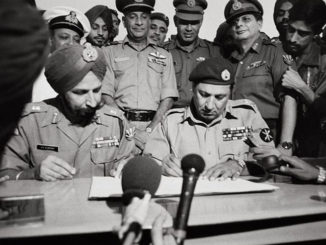
    (Photo H 1 here)

    December 17, 1971 – The war between India and Pakistan over East Pakistan (later Bangladesh) ended as 90,000 Pakistani troops surrendered. Pakistani General Niazi surrendered before Indian General Jagjit Singh Aurora.

    December 17, 1903 – After three years of experimentation, Orville and Wilbur Wright achieved the first powered, controlled airplane flights. They made four flights near Kitty Hawk, North Carolina, the longest lasting about a minute.

    Birthday -Deborah Sampson (1760-1827) was born in Plympton, Massachusetts. During the American Revolutionary War, she disguised herself as a man and enlisted in the Continental Army under the name Robert Shurtleff. Although she was wounded in battle, she was not discovered until a severe fever unmasked her identity. She was dismissed from the army in 1783. In later life, she lectured professionally on her wartime experiences.

    Birthday – Poet and abolitionist John Greenleaf Whittier (1807-1892) was born in Haverhill, Massachusetts. His books of poetry include Legends of New England and Snowbound.

    December 18

    December 18, 1916 – During World War I, the Battle of Verdun concluded after ten months of fighting in which 543,000 French and 434,000 German soldiers were killed.

    December 18, 1940 – Adolf Hitler ordered the German General Staff to begin planning Operation Barbarossa, the invasion of Soviet Russia.

    December 18, 1956 – Japan was admitted to the United Nations.

    Birthday – West German Chancellor Willy Brandt (1913-1992) was born in Lubeck, Germany (as Herbert Ernst Karl Frahm). During Hitler’s regime, he was an anti-Nazi exile. He returned to Germany after World War II, entered politics and was elected chancellor in 1969. He won the Nobel Peace Prize in 1971 for his efforts to improve East-West relations during the Cold War.

    December 19

    December 19, 1732 – Benjamin Franklin first published Poor Richard’s Almanac containing weather predictions, humor, proverbs and epigrams, eventually selling nearly 10,000 copies per year.

    December 19, 1946 – War broke out in French Indochina as Ho Chi Minh attacked the French seeking to oust them from Vietnam. This marked the beginning of a thirty-year conflict which eventually led to heavy U.S. involvement and ended with a Communist victory in April 1975 after U.S. withdrawal from South Vietnam.

    December 19, 1998 – The House of Representatives impeached President Bill Clinton, approving two out of four Articles of Impeachment, charging Clinton with lying under oath to a federal grand jury and obstructing justice.

    Birthday – British explorer William Parry (1790-1855) was born in Bath, England. He conducted Arctic expeditions and made three attempts to find a Northwest Passage.

    Birthday – Historian Carter Woodson (1875-1950) was born in New Canton, Virginia. He introduced black studies to American colleges and universities. His works included The Negro in Our History and The Education of the Negro Prior to 1861.

    December 20

    December 20, 1606 – The Virginia Company expedition to America began as three small ships, the Susan Constant, Godspeed and Discovery, departed London under the command of Captain Christopher Newport. In May of 1607, the royally chartered company established the first permanent English settlement in America at Jamestown (Virginia).

    December 20, 1699 – Czar Peter the Great changed the Russian New Year from September 1 to January 1 as part of his reorganization of the Russian calendar.

    December 20, 1860 – South Carolina became the first state to secede from the Union in a prelude to the American Civil War. Within two months Mississippi, Florida, Alabama, Georgia, Louisiana and Texas seceded. In April 1861, Virginia seceded, followed within five weeks by Arkansas, Tennessee, and North Carolina, thus forming an eleven state Confederacy with a population of 9 million, including nearly 4 million slaves. The Union had 21 states and a population of over 20 million.

    December 20, 1956 – The Montgomery bus boycott ended after the U.S. Supreme Court ruling integrating the Montgomery bus system was implemented. The boycott by African Americans had begun on December 5, 1955, after Rosa Parks was arrested for refusing to give up her seat on a Montgomery bus to a white man.

    December 20, 1989 – The U.S. invaded Panama attempting to capture Manuel Noriega on charges of narcotics trafficking. Operation Just Cause occurred seven months after Noriega had declared unfavorable election results in his country to be null and void. The invasion toppled the Noriega government and resulted in the installation of Guillermo Endara as president. Noriega temporarily eluded capture, but surrendered a few weeks later to U.S. troops. He was then tried, convicted, and imprisoned in the U.S.

    Birthday – American industrialist Harvey S. Firestone (1868-1938) was born in Columbiana County, Ohio. He founded Firestone Tire and Rubber Co. and was a close friend of Henry Ford and Thomas Edison.

    December 21

    December 21st – Winter begins in the Northern Hemisphere. In the Southern Hemisphere today is the beginning of summer.

    December 21, 1846 – Anesthesia was used for the first time in Britain during an operation at University College Hospital in London performed by Robert Liston who amputated the leg of a servant.

    December 21, 1945 – World War II General George Patton died in Germany following a car accident. He had been injured on December 9th near Mannheim and was taken to a hospital in Heidelberg where he died. He was buried in Luxembourg. Nicknamed “Old Blood and Guts,” he once stated during the war, “We shall attack and attack until we are exhausted, and then we shall attack again.”

    December 21, 1972 – East and West Germany established diplomatic ties, ending nearly two decades of Cold War hostility and paving the way for international recognition of East Germany.

    December 21, 1988 – Pan American Flight 103 exploded in midair as the result of a terrorist bomb and crashed into Lockerbie, Scotland. All 259 passengers and crew members along with 11 persons on the ground were killed.

    December 21, 1993 – The KGB (Soviet Secret Police) organization was abolished by Russian President Boris Yeltsin.

    Birthday – British statesman Benjamin Disraeli (1804-1881) was born in London. He led the Tory Party and twice held the post of prime minister. He was instrumental in the expansion of the British Empire into India and the Middle East during the reign of Queen Victoria. He also pioneered the concept of the political novel and produced such works as Vivian Grey, Coningsby, and Lothair.

    Birthday – Soviet Russia leader Josef Stalin (1879-1953) was born in the village of Gori in Georgia, Russia (as Iosif Vissarionovich Dzhugashvili).

    December 22

    December 22, 1783 – Following a triumphant journey from New York to Annapolis, Maryland, George Washington, victorious Commander-in-Chief of the American Revolutionary Army, appeared before Congress and voluntarily resigned his commission.

    Birthday – Italian composer Giacomo Puccini (1858-1924) was born in Lucca, Tuscany. Widely considered the greatest Italian opera composer, he is best known for popular works such as Madama Butterfly and La Boheme.

    Birthday – “Lady Bird” Johnson (1912-2007) was born in Karnack, Texas (as Claudia Alta Taylor). She was beside her husband Lyndon Johnson on board Air Force One when he was sworn in as the 36th U.S. President following the assassination of President John F. Kennedy. She proved to be a gracious First Lady, remembered for her anti-litter campaign, asking citizens to help “Beautify America.”

    December 23

    December 23, 1888 – Dutch painter Vincent van Gogh cut off his left ear during a fit of depression.

    December 23, 1913 – The U.S. Congress passed the Federal Reserve Act establishing the Federal Reserve System to serve as the nation’s central bank. Chief responsibilities include execution of monetary policy; influencing the lending and investing activities of commercial banks; and overseeing the cost and availability of money and credit.

    December 23, 1947 – The transistor was invented at Bell Laboratories by John Bardeen, Walter Brattain and William Shockley, who shared the Nobel Prize for their invention which sparked a worldwide revolution in electronics.

    December 23, 1948 – Hideki Tojo was hanged for war crimes. He had been Japanese prime minister from 1941-44. Following Japan’s defeat in World War II, he was arrested as a war criminal, tried by a military tribunal and sentenced to death. He was hanged along with six other Japanese wartime military leaders at Sugamo Prison in Tokyo, with the sentence carried out by the U.S. 8th Army.

    December 23, 1987 – Dick Rutan and Jeana Yeager set a new world record of 216 hours of continuous flight around the world without refueling. Their aircraft Voyager traveled 24,986 miles at a speed of about 115 miles per hour.

    Birthday – Mormon prophet Joseph Smith (1805-1844) was born in Sharon, Vermont. He founded the Church of Jesus Christ of Latter-day Saints.

    Birthday – Japanese Emperor Hirohito (1901-1989) was born in Tokyo. He was Japan’s wartime Emperor and was allowed to remain in his position after the war.

  • Fiji reopens to foreign tourists for first time in nearly two years

    Canberra (TIP): Fiji reopened its border to international travellers for the first time in nearly two years on December 1, as the Pacific Island country seeks to revive its dominant tourism industry.

    Fiji shut its border to all foreign nationals in March 2020 to curb the spread of COVID-19 in a desperate bid to stop its limited medical facilities being overrun. With about 90% of all Fijian adults now fully vaccinated, the Pacific Island reopened its border to tourists from a small number of countries – much to the relief of tourism operators. “To see the Fiji Airways plane full up and for us to welcome those tourists today was so amazing. It was a great, great feeling and I’m glad to have been there personally,” James Sowane, director of the Fiji tourism company, Tewaka, told Reuters. Tourists arriving will have to stay three nights in an approved resort and undergo rapid testing. They can move around designated areas, including bars and restaurants within the hotels, while they can embark on some day trips and activities.

    Although limited, the resumption of tourism is a boost to many of the island nation’s 1 million people. Tourism accounts for 40% of Fiji’s economy and the border closure saw an estimated 10% of the population unemployed. Still the reopening marks a risk to Fiji with Australia one of a few countries to record cases of the Omicron variant.

    Fiji Prime Minister Frank Bainimarama hailed the return of tourists, who have been vaccinated against COVID-19 and tested for infection.”Today, we are proud and most importantly prepared to welcome the first tourists to fly to Fiji in almost two years. Our message to every fully vaccinated, COVID-tested traveller who arrives to our shores is simple: Welcome Home,” Bainimarama said in a post on Facebook.  Reuters

  • China, Russia, Iran big threats: UK spy

    London (TIP): China, Russia, Iran and international terrorism form the “big four” set of security threats in an era of dramatic change, Britain’s chief spy said in a rare public speech on December 1.

    Richard Moore, who is the head of the UK’s foreign intelligence service MI6 and codenamed “C” as depicted in James Bond films, said countries such as China were using “debt traps, data exposure” to erode sovereignty and democracy. In his first public speech since taking charge last year, the spy chief explained that it was the changing nature of the threats requiring a greater degree of openness that prompted him to make the rare address entitled “Human Intelligence in a Digital Age” at the International Institute for Strategic Studies (IISS) think tank in London.

    “There are elements of continuity, Russia, China and Iran, for instance, have long been three of what I might informally call the ‘big four’ priorities within the intelligence community; the fourth being the threat from international terrorism,” said Moore. “But mostly, we are living through an era of dramatic change in the security landscape. We have to defend ourselves against a growing threat from state actors,” he said. — PTI

  • Russia says it arrested three suspected Ukrainian intelligence agents – Ifax

    Moscow (TIP): Russia has arrested three suspected Ukrainian intelligence agents and accused one of them of planning to carry out a bomb attack, the Interfax news agency cited the Federal Security Service as saying on December 2. The detentions come amid Ukrainian and western concerns over a buildup of Russian troops near Ukraine. The other two people in custody are suspected of gathering intelligence about strategic sites in Russia, the report said. Reuters

    Russia on build-up at border : The Kremlin said on December 1 it could not de-escalate tensions with the West over Ukraine due to a large concentration of Ukrainian forces near its border.

    US, NATO and Ukrainian officials have expressed concerns over unusual Russian troop movements near Ukraine. Moscow has said its posture is purely defensive.

    A Russian Foreign Ministry spokesperson earlier accused Ukraine of deploying half of its army or 1,25,000 troops at Donbass, a conflict zone in eastern Ukraine where government forces have been battling Russia-backed separatists since 2014.

    Kremlin spokesman Kremlin spokesman Dmitry Peskov repeated that accusation and said Moscow was seriously worried about the large number of Ukrainian troops near Russia.— AP

  • Construction site blast in Munich injures 3, disrupts trains

    Berlin (TIP): An explosion at a construction site next to a busy railway line in Munich on December 1 injured three people, one of them seriously, the police said. It wasn’t immediately clear what led to the blast at the site near the Donnersbergerbruecke station, after which a column of smoke was seen. Police said they had no immediate indication of foul play, news agency dpa reported. The site is located on the approach to Munich’s central station, which is a bit over a km (about a half-mile) to the east. Trains to and from that station, one of Germany’s busiest, were suspended. —AP

  • [vc_row][vc_column][vc_column_text]

    E-Editions

    [/vc_column_text][/vc_column][/vc_row][vc_row][vc_column width=”2/3″][vc_custom_heading text=”Dual Edition” font_container=”tag:h2|text_align:center” google_fonts=”font_family:Istok%20Web%3Aregular%2Citalic%2C700%2C700italic|font_style:700%20bold%20regular%3A700%3Anormal” link=”url:https%3A%2F%2Fwww.theindianpanorama.news%2Fwp-content%2Fuploads%2F2021%2F10%2FTIP-October-29-Diwali-Special-Edition.pdf”][vc_single_image image=”116289″ img_size=”full” alignment=”center” onclick=”custom_link” link=”https://www.theindianpanorama.news/wp-content/uploads/2021/10/TIP-October-29-Diwali-Special-Edition.pdf”][/vc_column][vc_column width=”1/3″][vc_single_image image=”82828″ img_size=”medium” alignment=”center” onclick=”custom_link” link=”https://www.theindianpanorama.news/advertising-media-kit-portal-indian-panorama/”][vc_single_image image=”82829″ img_size=”medium” alignment=”center” onclick=”custom_link” link=”https://www.theindianpanorama.news/advertising-media-kit-portal-indian-panorama/”][/vc_column][/vc_row][vc_row][vc_column][vc_wp_posts title=”Lead Stories this Week” number=”5″ show_date=”1″][/vc_column][/vc_row]

  • December 17 New York & Dallas E-Edition

    [bs_row class=”row”]
    [bs_col class=”col-xs-8″]

    [/bs_col]
    [bs_col class=”col-xs-4″]

    [/bs_col]
    [/bs_row]

    Lead Stories:

    1. FIA’s Dance Pe Chance 40th edition thrills and entertains FEBRUARY 10, 2024 TRENTON, NJ (TIP): FIA’s Dance Pe Chance competition, held on February 10, 2024, at Patriots War Memorial…
    2. The Indian Panorama’s 18th-year gala Celebrates Talent, Commitment, Community Four persons to be honored for their singular achievements February 16, 2024 By Parveen Chopra HICKSVILLE, NY (TIP):  The Indian…
    3. Tom Suozzi wins the special election for Congress The Indian Panorama was one of  the first newspapers to endorse Tom February 13, 2024 NEW YORK (TIP): Tom Suozzi…
    4. New York State Governor Hochul signs legislation making Diwali a holiday in NYC public schools Says “New York City is rich in different religions and cultures, and we’re taking an important step to recognize and…
    5. Biden’s asylum restrictions for migrants may remain in place, federal appeals court rules WASHINGTON D.C. (TIP): A federal appeals court panel Thursday, August 3, approved the Biden administration’s emergency request to keep its…
  • Indian-origin Leena Nair joins list of Indians abroad CEOs to head global giants

    Indian-origin Leena Nair joins list of Indians abroad CEOs to head global giants

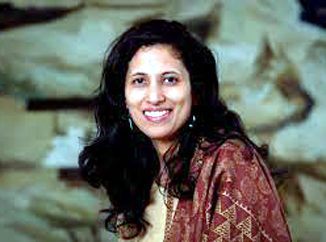
    PARIS (TIP): Leena Nair, who grew up in Kolhapur in Maharashtra, will next month-end take over as the Global Chief Executive Officer of French luxury fashion house Chanel, joining the ranks of Indian-origin corporate bosses who call the shots at Global Inc. Nair, 52, was the first female and youngest-ever Chief Human Resources Officer of Unilever—a position she resigned from to join the iconic luxury group. “I am humbled and honored to be appointed the Global Chief Executive Officer of @CHANEL, an iconic and admired company,” she said on Twitter. An industry outsider, she is not a part of the Paris fashion scene and is being hailed as a “serial glass-ceiling breaker”.

    An Electronics and Telecommunications Engineer from Walchand College of Engineering in Sangli, Maharashtra, she did her MBA in Human Resources from XLRI Jamshedpur in 1992 before joining as a trainee at HUL, where she advanced up the ranks, according to her LinkedIn profile.

    Nair is due to step into her new role at January-end. In her social media posts, Nair described India-born former PepsiCo CEO Indra Nooyi as a friend and mentor.

    She joins the ranks of Indian-origin executives like Sundar Pichai, Parag Agrawal and Satya Nadella who are at the helm of top global companies. In a statement, Unilever CEO Alan Jope thanked her for her “outstanding contribution over the last three decades” at the company and praised her as a “pioneer throughout her career.” French billionaire Alain Wertheimer, a 73-year-old who owns Chanel with his brother Gerard Wertheimer and had originally taken on the CEO job on a temporary basis, will move to the role of global executive chairman.

    A British national born in India, Nair is a rare outsider at the helm of the tightly controlled family fashion house which was founded in 1910 by fashion legend Gabrielle “Coco” Chanel as a hat boutique on rue Cambon in Paris and grew to become a byword for French chic.

    Today Chanel is known for its tweed suits, quilted handbags and No. 5 perfume.

    Nair, who at Unilever oversaw 150,000 people, would be based in London in her new role.

    “Overwhelmed by the love and support my appointment as @CHANEL CEO has got. Thank you! Please trust that I am reading every comment, even if I don’t reply to everyone individually,” she tweeted. “I am so inspired by what @CHANEL stands for. It is a company that believes in the freedom of creation, in cultivating human potential and in acting to have a positive impact in the world.” Prior to her, many India-born executives had climbed the global corporate ladder. IIT graduate, Parag Agrawal was recently appointed the new Twitter CEO. Other India-born executives include Sundar Pichai, CEO of Google’s parent company, Alphabet; Satya Nadella, CEO of Microsoft; Shantanu Narayen, chairman of Adobe and Arvind Krishna, chairman of IBM. Rajeev Suri was this year named CEO of Inmarsat while Punit Renjen heads Deloitte and Vasant Narasimhan is at Novartis. Ivan Manuel Menezes (Diageo), Niraj S. Shah (Wayfair), Sanjay Mehrotra (Micron), George Kurian (NetApp), Nikesh Arora (Palo Alto Networks), Dinesh C. Paliwal (Harman International Industries), Jayshree V. Ullal (Arista Networks), Rangarajan Raghuram (VMware), Ajay Banga (MasterCard) and Anjali Sud (Vimeo) are other India-born executives at global majors.

  • Indian American Tiara Abraham, 15, soprano prodigy, receives YoungArts award

    Indian American Tiara Abraham, 15, soprano prodigy, receives YoungArts award

    Parminder Aujla

    SACRAMENTO, CA (TIP): Tiara Abraham, an Indian American soprano prodigy from Sacramento, California, has received a 2022 YoungArts award in Classical Voice in recognition of her caliber of artistic achievement. A senior at University of California Davis, majoring in vocal performance, Tiara has received an Honorable Mention, the organization’s second highest honor.

    She joins 720 of the most accomplished young visual, literary and preforming artists from throughout the country, according to press release from YoungArts.

    The distinguished group includes Daniel Arsham, Terence Blanchard, Camille A. Brown, Timothée Chalamet, Viola Davis, Amanda Gorman, Judith Hill, Jennifer Koh, Tarell Alvin McCraney, Andrew Rannells, Desmond Richardson and Hunter Schafer.

    Tiara started singing at a young age and began classical voice lessons at seven. In May, she debuted her junior solo recital at UC Davis where she is a University Regents Scholar and also a University Honors Program (UHP) Scholar.

    Though her passion is singing, she also enjoys playing piano and violin, composing, orchestration and music theory. For her UHP project, Tiara has composed for voice and piano on a set of poems from the under-represented African American poet, Georgia Douglas Johnson.

    Tiara has performed nationally and internationally at venues like Carnegie Hall, Vatican, Musikverein (Vienna Austria), and for the San Francisco Giants. She also enjoys performing for the seniors at memory care and assisted living centers.

    Selected through the organization’s prestigious competition, YoungArts award winners, all 15-18 years old or in grades 10–12, are chosen for their caliber of artistic achievement.

    YoungArts award winners gain access to one of the most comprehensive programs for artists in the United States, in which they will have opportunities for financial, creative and professional development support throughout their entire careers.

    Executive Director Jewel Malone congratulated the “extraordinary group of promising, accomplished young artists on this exciting milestone in their artistic careers.”

    “YoungArts empowers artists to pursue a life in the arts beginning at the critical time when many are faced with decisions about life after high school,” said Malone.

    “We are proud to support these young artists at the beginning of their journeys and look forward to becoming a resource for them at all stages of their careers.”

    YoungArts award winners become eligible for exclusive creative and professional development support including a wide range of fellowships, residencies and awards; microgrants and financial awards; virtual and in-person presentation opportunities in collaboration with major venues and cultural partners nationwide; and access to YoungArts Post, a free, private online platform for YoungArts artists to connect, collaborate and discover new opportunities.

    YoungArts was established in 1981 by Lin and Ted Arison to identify the most accomplished young artists in the visual, literary and performing arts and provide them with creative and professional development opportunities throughout their careers.

  • Indian American policy advisor Gautam Raghav elevatedto key White House position

    Indian American policy advisor Gautam Raghav elevatedto key White House position

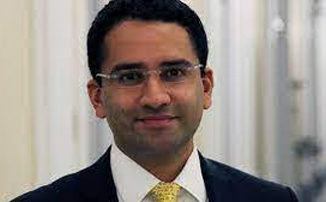
    WASHINGTON, D.C. (TIP): US President Joe Biden has elevated Indian-American political advisor Gautam Raghavan as the head of the White House Office of Presidential Personnel.

    White House Presidential Personnel Office (PPO), also written as Office of Presidential Personnel, is the White House office tasked with vetting new appointees. The PPO is one of the offices most responsible for assessing candidates to work at or for the White House. President Biden on Friday elevated Raghavan, who was currently posted as the PPO Deputy Director, to the key White House post after UN Secretary-General Antonio Guterres announced his intent to appoint Cathy Russell as the next executive director of UNICEF. Russell is currently the head of WH PPO. Under Cathy’s leadership, the PPO has broken records in both speed and diversity of hiring, working relentlessly to ensure that our federal government reflects America and delivers for the American people, Biden said. “I am also pleased that Gautam Raghavan, who has worked in tandem with Cathy from Day One, will become PPO’s new director — a seamless transition that will enable us to continue building a federal workforce that is efficient, effective, dependable and diverse,” he said in a statement.

    A first-generation immigrant, Raghavan was born in India, raised in Seattle and graduated from Stanford University. He is the editor of the book ‘West Wingers: Stories from the Dream Chasers, Change Makers, and Hope Creators Inside the Obama White House’.

    Raghavan, in his 40s, is openly gay. He lives with his husband and their daughter in Washington, DC.

    Raghavan has served as deputy assistant to the President and deputy director of the White House Office of Presidential Personnel since January 20, 2020. Previously, he was the first employee hired by the Biden-Harris transition team where he served as deputy head of Presidential Appointments.

  • Indian American filmmaker Karam Gill making big in Hollywood

    Indian American filmmaker Karam Gill making big in Hollywood

    LOS ANGELES (TIP): Changes are afoot in Hollywood as American sitcoms continue to emerge out of an era where brown faces were shown in blink-and-you-miss appearances as taxi drivers, nerds and doctors.Now encouragingly, a host of Indian-origin talents are making considerable difference behind the scenes in the fast-diversifying American entertainment industry. Recently Indian American Karam Gill was listed in the Forbes 30 under 30 list of 2022 under the Hollywood and Entertainment category. All of 25, Karam Gill grew up in Los Angeles idolizing musicians like Snoop Dogg, Warren G. Not a surprise then that he made his debut with a documentary about the icons.

    Gill was noticed in the notoriously uppity American entertainment circle for his 2017 debut documentary ‘G-Funk’ that traces the gripping journey of hip-hop stars Snoop Dogg, Nate Dogg and Warren G. The documentary not only beautifully documents the rise of these music stars, but also depicts hip-hop and rap music gaining global attention.

    G-Funk went on to receive critical acclaim soon after it premiered at the South by Southwest Film Festival. Soon becoming a festival circuit favorite the documentary was acquired by YouTube originals in 2018. This certainly isn’t Gills’ first laurel. Back in 2017 he was listed among Variety’s Top 10 Documentary Filmmakers to Watch. Gill has also founded a creative agency titled MGX Creatives and is a creative director for Marshmello, the popular EDM artist. Marshmello’s Biba music video that gained huge popularity in India also because Bollywood star Shah Rukh Khan featured in it, had creative inputs from Gill. Gill along with his co-founder has also worked on Marshmello documentary, part of which is shot in India. So, as Hollywood and American entertainment continues to get more diversity, faces like Gill are a welcome addition.

  • Biden nominates Indian American Errol Rajesh Arthur to be DC Superior Court judge

    Biden nominates Indian American Errol Rajesh Arthur to be DC Superior Court judge

    WASHINGTON, D.C. (TIP): President Joe Biden has nominated Indian American magistrate judge Errol Rajesh Arthur to be an associate judge of the Superior Court of the District of Columbia for the term of fifteen years. The White House sent the nomination of Arthur, son of Indo-Guyanese immigrants, who has served as a magistrate judge on the Superior Court since 2010, to the Senate for confirmation Wednesday.

    Arthur has served in the Criminal Division, Domestic Violence Division, and Family Court, according to his official bio released by the White House. He is currently presiding magistrate judge and serves on the chief judge’s judicial leadership team.

    From 2002 to 2010, Arthur was a solo practitioner and then a named partner at Arthur & Arthur, PLLC, where he represented clients in criminal, family, and civil matters.

    From 1999 to 2002, Arthur worked as a staff attorney at the Public Defender Service for the District of Columbia. Arthur served as a clerk for Judge Mary A. Gooden Terrell on the District of Columbia Superior Court from 1998 to 1999.

    A native Washingtonian, Judge Arthur graduated from St. John’s College High School in 1990, and he received a Bachelor of Arts degree in English from the University of Maryland in 1994.

    He received his law degree from the Howard University School of Law in 1998. Arthur has also served on numerous court committees, a visiting faculty member of Harvard Law School’s Trial Advocacy Workshop, and Chair of the Washington Bar Association’s Judicial Council, according to DC Judicial Nomination Commission.

    In 2008, Judge Arthur was appointed as Chairman of the District of Columbia Board of Elections and Ethics, and he served as an adjunct professor and supervising attorney with the Howard University School of Law’s Criminal Justice Clinic.

    Endorsing Arthur for the post last January, the South Asian Bar Association of Washington, DC (SABA-DC) noted that his appointment would enhance the diversity of the DC Superior Court bench. “As the son of Indo-Guyanese immigrants who moved to the United States to attend college and build their lives in the District, Arthur brings a unique perspective to the bench,” it said in a letter to the DC Judicial Nomination Commission.

    “In a city full of immigrants like the District, we can think of no more important perspective to the Court to increase access and acceptability of justice,” SABA-DC said requesting the commission to include Arthur in the list of judicial nominees sent to Biden.

  • Follow this three-step skincare routine

    Follow this three-step skincare routine

    You’ve heard a lot of contradicting advice on how to care of your skin. The fact is, one’s skin needs changes with the seasons. So let’s not forget the importance of caring for your skin type, too! After all, the last thing you want to deal with is acne, breakouts or allergies. More often than not, skincare seems a lot more complicated than it has to be. If you’re confused, and can’t figure out why your skin isn’t cooperating with you, we suggest you take a step back and get down to the basics.

    Sometimes, something as simple as 1-2-3 can be just what the dermatologist ordered! And when going back to the basics, it’s best to stick to one brand that’s ideal for your skin, and get the basic kit from there. A little goes a long way. You’ll see!

    Cleanse

    It’s no secret that cleansing is the first and most important step in a healthy skincare routine. If you’re living in a city, there’s little chance that you won’t encounter dust, grime and pollution on a regular basis. Hence, this is one step you shouldn’t skip out on. That said, understand your skin type also goes a long way in ensuring your skin gets exactly what it needs. After all, using a good cleanser is non-negotiable as it will do some heavy lifting, and suck off impurities to prevent clogged pores, irritation and acne.

    Tone

    While most of you will agree that cleansing is the most important step in your skincare routine, toning is perhaps the step that given the least importance. Think of toning as cleaning+. Why? It’s a sure-shot way to enhance the effects of your cleaner, as it serves to purify pores, reduce their appearance and maintain a healthy pH balance of your skin. What this basically means is that toning your skin will lead to no inflammation. Moreover, there won’t be excessive dryness or overproduction of sebum.

    Hydrate

    The key here, is hydrate. While your skin may already feel soft and supple after steps 1 and 2, in order to lock in moisture, make sure to hydrate your skin thoroughly. In fact, we think you should opt for a hydrating moisturiser to improve the water levels in your skin and restore your skin’s natural bounce. You really can’t go wrong with this. Besides, it’s the easiest way to get baby-soft skin.

  • Chicken Curry

    Chicken Curry

    Ingredients

    2 Tbsp Oil, 1 tsp Ghee, 1 Cup Onion paste, 1 Tbsp Garlic paste, 1 Tbsp Ginger paste, 1/2 tsp Turmeric powder, 1 tsp Salt, 1 Cup Tomato Puree, 2 tsp Coriander powder, 1/2 tsp Red chilli powder, 2 tsp Cumin powder, 1 tsp Garam Masala, 6 Nos Chicken leg pieces, 1 Cup Coriander leaves, 1/2 Cup Water

    Method

    –              In a large saucepan heat oil and ghee together over a medium flame.

    –              Add onion paste and cook for a minute or two to get a golden pink color.

    –              Then add ginger and garlic paste. Mix well.

    –              Cover the pan and let it cook for few minutes to get a little thick paste. Make sure the paste doesn’t burn.

    –              After it has cooked, open the pan and add turmeric powder along with salt. Stir well until it appears as a yellow thick paste.

    –              Add tomato puree and cook for a minute.

    –              Add coriander powder, red Chilli powder, cumin powder and Garam Masala.

    –              Put the chicken leg pieces in the gravy and cook for 5 minutes.

    –              Make sure that chicken is well coated and then add coriander leaves.

    –              Add some water to it and bring it to the boil for about 2 minutes.

    –              Transfer this curry to a pressure cooker.

    –              Give it 4-5 whistles for the chicken to get soft.

    –              Cook more if it is not cooked properly.

    –              Put the curry in a serving bowl. Garnish with fresh coriander leaves and serve hot.

  • Vicky gets asked ‘how’s the josh’ as he and Katrina return to Mumbai

    Vicky gets asked ‘how’s the josh’ as he and Katrina return to Mumbai

    Newlyweds Vicky Kaushal and Katrina Kaif returned to Mumbai on Tuesday, after enjoying a quick honeymoon. As they posed for the first time as a married couple, one photographer cheered them on and said ‘jodi hit hai (your pair is a hit)’. In a video shared online by a fan account, one person also addressed Katrina as ‘bhabhi ji (sister-in-law)’ while asking the couple to pose. A few paparazzi asked Vicky ‘how’s the josh’, referring to his line from Uri: The Surgical Strike. Vicky smiled and thanked the media persons for their wishes. He and Katrina held hands as they posed for pictures. She wore sindoor (vermilion) on her forehead as well as choodas (bridal bangles). Vicky and Katrina tied the knot in the presence of close friends and family members at the Six Senses Fort Barwara in Rajasthan on December 9. Their wedding was preceded by haldi and mehendi ceremonies. The functions were attended by only a select few from the film fraternity, including Kabir Khan-Mini Mathur, Neha Dhupia-Angad Bedi, Malavika Mohanan and Sharvari Wagh. Soon, Vicky and Katrina will move into their new home, in the vicinity of where Virat Kohli and Anushka Sharma stay. In her special post for Vicky and Katrina on Instagram Stories, Anushka confirmed that they will be her neighbours. “Congratulations to both you beautiful people! Wishing you guys a lifetime of togetherness, love and understanding. Also glad you are finally married so that now you can move into your house soon and we can stop hearing construction sounds,” she wrote.

  • Karishma Tanna to tie the knot with beau Varun Bangera

    Karishma Tanna to tie the knot with beau Varun Bangera

    Bigg Boss-fame Karishma Tanna is all set to tie the knot with her long-time boyfriend Varun Bagnera. Varun is a real estate businessman by profession. They got engaged earlier this year on November 12 during an intimate affair. The low-key engagement was only attended by their family members and close friends. As per reports, Varun and Karishma will tie the knot on February 5 in Mumbai. The pre-wedding rituals will begin a day prior to the wedding (February 4). Apart from that, the couple will host a reception for their friends on February 6. However, an official announcement about the wedding hasn’t been made yet.

  • Emma Watson thanks India’s Chipko movement for ‘protecting forests, trees’

    Emma Watson thanks India’s Chipko movement for ‘protecting forests, trees’

    Harry Potter actor Emma Watson took to her Instagram on Friday as she shared a photo of the Chipko movement. The photo shows women clinging to a tree. Emma shared in the caption, ” Thank you for protecting our forests and trees!” She added, “The women pictured here were part of the Chipko movement, a non-violent social and ecological moment by rural villagers, particularly women, in India during the 1970s. Here they are protecting a tree from government logging.? The Hindi word Chipko, means to “hug” or “cling to”, reflected in the demonstrator’s primary tactic of embracing trees to protect them from loggers.” The Chipko movement has inspired environmental activists around the world since then. Emma Watson will soon be seen in the upcoming Harry Potter reunion special on HBO Max along with her fellow actors in the franchise like Daniel Radcliffe and Rupert Grint. It will stream on January 1 on HBO Max. The reunion teases a “return to Hogwarts.” Helena Bonham Carter, Robbie Coltrane, Ralph Fiennes, Jason Isaacs, Gary Oldman, Tom Felton, James Phelps, Oliver Phelps, Mark Williams, Bonnie Wright, Alfred Enoch, Matthew Lewis, and Evanna Lynch will also appear in the reunion special.

  • Spider-Man 3 first reviews out, critics call it ‘hilarious and heartbreaking’

    Spider-Man 3 first reviews out, critics call it ‘hilarious and heartbreaking’

    Marvel Studios held a premiere for Spider-Man: No Way Home on Monday and the first reviews are in. Most critics are impressed, calling it the best entry in Marvel Cinematic Universe’s trilogy of solo Spidey movies. The film stars Tom Holland in the lead role as Peter Parker and brings back Benedict Cumberbatch as Dr Stephen Strange. Zendaya plays MJ and other stars such as Marissa Tomei and Jon Favreau are back as well. The USP this time, however, are the returning villains from the earlier versions of Spider-Man movies, such as Alfred Molina’s Doc Ock, Willem Dafoe’s Green Goblin and Jamie Foxx’s Electro. IGN’s Amelia Emberwing wrote, “There’s truly never a dull moment in Spider-Man: No Way Home. That’s due in no small part to stellar performances across the board.”

    Pete Hammond of Deadline.com said, “Jon Watts once again weaves his own magic on the series and creates, with the help of screenwriters Chris McKenna and Erik Summers, not just the best pic yet in the Spider-Man series, but truly one of the year’s best movies.”

    Variety film critic Peter Debruge called it “a clever meta-adventure” adding that “audiences who’ve tuned out (of the Spider-Man films) along the way will be rewarded for giving this one a shot.” Nick Schager of The Daily Beast called it “the MCU’s best Spidey movie by a mile.”

  • Ben Affleck admits he almost didn’t rekindle romance with JLo

    Ben Affleck said he doesn’t want to ‘do anything that is painful or destructive’ to his children and understands that his celebrity status gives them ‘a cross to bear,’ in an open and honest interview with Howard Stern.

    Ben Affleck, 49, is speaking out about how his rekindled flame with Jennifer Lopez, 52, almost didn’t happen. The actor made an appearance on The Howard Stern Show for an interview about his past and current life and admitted his three kids, including Violet, 16, Seraphina, 12, and Samuel, 9, who he shares with ex-wife Jennifer Garner, 49, are the reason he hesitated to strike up a relationship with the singer again.

    When asked if he had doubts before diving back into a serious romance, Ben, who got back together with J.Lo earlier this year -17 years after they ended their engagement -, told Howard, “It crossed my mind for sure. My responsibility to my children is the highest responsibility. I don’t want to do anything that is painful or destructive to them if I can help it.”

  • ‘Can’t deny non-Hindus right to do business near temples’: Supreme Court of India

    ‘Can’t deny non-Hindus right to do business near temples’: Supreme Court of India

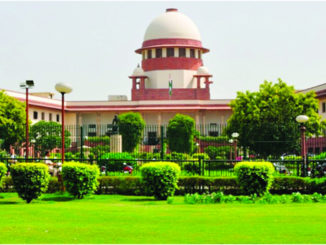
    New Delhi (TIP): People cannot be denied their right to carry out commercial activity on temple premises just because they are not Hindus, the Supreme Court observed on Friday, Dec 17, directing the Andhra Pradesh government to grant licence and lease for shops to non-Hindus as well at Srisailam’s Sri Bhramaramba Mallikarjuna Swamy Varla Devasthanam in the state’s Kurnool district. The court, in its brief order, clarified that any other order passed by the Andhra Pradesh high court against grant of licence or lease to non-Hindus shall cease to operate against the state government and the Devasthanam management.

    “We direct that none of the tenants or shop owners shall be excluded from participating in the auction or in the grant of leases, including in the shopping complex, solely on the ground of their religion,” ordered a bench of justices Dhananjaya Y Chandrachud and AS Bopanna.

    The bench, during the hearing, also expressed displeasure at the state government’s order which maintained that “no person professing other than Hinduism as his religion is entitled to obtain lease or licence either to tender-cum-public auction of the shops, malls, etc coming under the jurisdiction of AP Charitable and Hindu Religious Institution and Endowments Act, 1987.”

    “It is one thing to say that you cannot have a liquor shop or anything like this in a temple premises but to say that non-Hindus cannot conduct any commercial activity is too far-fetched. How can you say that a non-Hindu cannot even sell flowers or toys there? If the need arise, we will set aside such judgments,” the bench told senior advocate CS Vaidyanathan, who appeared for the YS Jaganmohan Reddy-led government.

    Vaidyanathan, on his part, said the temple at Srisailam is governed by statutory enactment, empowering the government to frame rules for employment in the temple as well as for regulating other ancillary activities there. “If that is the case, your rules will be in violation of Part III of the Constitution (the chapter on fundamental rights). No, we cannot allow this. We will say you will make allotments to all irrespective of their religion,” retorted the bench.      Source: HT

  • Chandigarh di kudi Harnaaz Sandhu crowned Miss Universe 2021

    Chandigarh di kudi Harnaaz Sandhu crowned Miss Universe 2021

    The coveted Miss Universe title has finally returned home — after 21 years — as Chandigarh-born Harnaaz Sandhu was declared the winner of the 70th edition of the pageant on Sunday night in Eliat, Israel.

    Actor Lara Dutta had last won the title in 2000.

    In second place was Miss Paraguay Nadia Ferreira, followed by Miss South Africa Lalela Mswane.

    The model, who’s Instagram bio reads, “Shine like the whole Universe is yours”, had previously won ‘Miss Diva Universe 2021’ title that paved her way to the Miss Universe 2021 pageant.

    After the historic win, Harnaaz expressed gratitude for everyone who believed in her. “We did it. I said in my final answer, that I believed in myself and that’s why I was on that stage. I also want to mention a few people who believed in me too. Firstly I would like to thank my family and friends who have been there with me no matter what.They have seen me fall and get up and they have been there supporting me throughout,” she mentioned in a post.

    As per her Miss Universe delegate bio, Harnaaz, a Punjabi, draws inspiration from her mother, who “broke generations of patriarchy to become a successful gynecologist and led her family”.

    “Driven to support other women the same way, Harnaaz grew up working with her mother at health camps addressing women’s health and menstrual hygiene. Deeply conscious of the privilege her mother’s struggles have gifted her, Harnaaz today is a strong advocate for women’s empowerment, particularly their constitutional rights to education, careers, and their freedom of choice,” the bio reads.

    Harnaaz, who is an actor by profession, is inspired by actor and Miss World 2000 Priyanka Chopra and her body of work.

    Former Miss Universe Lara Dutta also congratulated her on the win.

    “In her spare time, Harnaaz enjoys the company of friends, loves yoga, dancing, cooking, horse riding, and playing chess. She is a water baby and never misses a chance to jump into a pool to rejuvenate herself. She believes in the saying – “Great things happen to those who don’t stop believing, trying, learning, and being grateful,” reads her delegate bio.

    In the run up to the finale, the actor-model wrote how she is “already a winner” as she shared a video which shows her praying at Amritsar’s Golden Temple.

    “Faith is unseen. It’s felt. It’s the feeling I have in my heart today. I have faith in God, my family and the blessings you all have showered on me. I have enjoyed my journey and as we near the end of this beautiful pageant, I want to re-live memories with my family, my Punjab. I want you all to know, that I’m grateful for each and every one of you and for all the experiences I had in these 1.5 months. I’m already a winner. I have you all. See you at the Miss Universe 2021 Finale!” she wrote.

    Awards And Achievements

    –              In the year 2017, Harnaaz won the title of Miss Chandigarh.

    –              In 2018, she won the title of Miss Max Emerging Star India.

    –              In the year 2019, Harnaaz Sandhu has also won the title of Femina Miss India Punjab.

    –              India’s Harnaaz Sandhu has become Miss Diva Universe in the year 2021.

    –              Harnaaz Sandhu Miss Universe Pageant 2021

    –              Harnaaz Sandhu of India has won the Miss Universe pageant 2021 title.

    –              She was crowned by Andrea Meza, former Miss Universe 2020 of Mexico.

    Harnaaz Sandhu Career

    –              Since her teenage years, Sandhu started participating in pageants and won titles like Miss Chandigarh 2017 and Miss Max Emerging Star India 2018.

    –              Harnaaz won the title of Femina Miss India Punjab 2019 and hence she participated in Femina Miss India 2019 where she was eventually placed in the top 12.

    –              Sandhu was first confirmed as a top 50 semi-finalist and later as a top 20 finalist. During the preliminary contest, she also won the title of Miss Beautiful Skin and became a finalist for Miss Beach Body, Miss Beautiful Smile, Miss Photogenic, and Miss Talented.

    –              At the end of the Miss Diva 2021 pageant, Harnaaz Sandhu was crowned as Miss Diva 2021, with Adeline Castellino, the outgoing titleholder and also the third runner-up of Miss Universe 2020.

    –              In 2021, she acted in the Punjabi films “Yara Diya Poo Baran” and “Bai Ji Kuttange”.

    Wants to Work For Menstrual Hygiene

    The beauty queen in an interview with AP said that she wants to work towards menstrual hygiene. She said, “Well, I’m very passionate about menstrual hygiene as my mom is a gynecologist, and since I have been growing up, I’ve seen how careful she has been towards spreading the word regarding cleanliness amongst the youth who are the future of tomorrow, especially women all around the world who feel so uncomfortable talking about their health. So I want to break those stigmas, those stereotypes that your health is your priority, and there’s nothing beyond that. If you really want to achieve the purpose in your life and you really want to achieve the goals and you’re passionate about that, you need to be internally strong and than comes the time you’re open to talk about your health in front of the society.”

  • Parivar Vichhora and the martyrdom of Sahibzadas

    Parivar Vichhora and the martyrdom of Sahibzadas

    As the Sikh community across the world remembers the sacrifice of the ‘Chaar Sahibzade’, Parivar Vichora Gurdwara deserves a special mention, as this is where the family of Guru Gobind Singh’s family got separated. Unfortunately, this holy site situated on the banks of river Sarsa became the site where the family became estranged.

    After leaving Anandpur Sahib and the Anandgarh Fort, and after having fought tooth and nail with the Mughal forces and the Pahari Rajas, the Tenth Guru’s army reached the banks of Sarsa River. The Guru and his family were performing their daily rituals and offering prayers when the joint forces of the Mughal army and Ajmer Chand’s league of Rajput hill chieftains or the ‘Pahari rajas’ attacked the Sikhs, who were immersed in reciting Gurbani. Some Sikh soldiers, particularly the contingent of Bhai Uday Singh, and Sahibzada Baba Ajit Singh, marched ahead and confronted the enemy.

    It was there that upon the conclusion of the recital of ‘Asa di Var,’ a collection of 24 stanzas written by the founder of Sikhism Guru Nanak that Guru Gobind Singh ordered his followers to cross over to the other side of the Sarsa river.

    It is believed that Guru Gobind Singh had intended to march ahead with his family and his followers after crossing the river. But as Sirsa was in spate and the weather, too, was inclement, the family of the Tenth Guru got separated and dispersed in different directions. A large number of Sikhs have lost their lives fighting, while many others swept away by the rushing water of the Sarsa. While Guru Gobind Singh’s two wives, Mata Sahib Kaur and Mata Sundari accompanied Bhai Mani Singh to Delhi, his two sons, Sahibzadas Baba Ajit Singh and Baba Jujhar Singh, after successfully crossing Sarsa, reached a place near Ropar, which is now known as Gurdwara Bhathha Sahib. Moreover, Mata Gujari, the mother of Guru Gobind Singh, and his two younger sons Sahibzadas Baba Zorawar Singh and Baba Fateh Singh also got separated.

    Sahibzada Zorawar Singh and Sahibzada Fateh Singh

    The young and innocent boys, Sahibzada (Prince) Zorawar Singh and Sahibzada Fateh Singh attained martyrdom on 26, December, 1705, when they were brutally murdered by Wazir Khan the Mughal Governor of Sirhind.

    The month of December has a special significance for the Sikh community. It was in this month that the combined forces of the Mughals and the small hill principalities used perfidious deceit to draw out Guru Gobind Singh, his family and followers from the Anandpur Sahib fortress and then sought their destruction.

    These forces, under Wazir Khan, promised the Guru a safe passage from Anandpur Sahib but attacked them with overwhelming numbers when they came out. The two Sahibzadas’ aged nine years and seven years, along with their grandmother Mata Gurjar Kaur got separated from the main contingent as they left the fort.

    They were promised refuge by an old retainer named Gangu in his native village Sahedi, but were handed over to the Sirhind administration of the Mughals, in what can be termed as the worst possible breach of trust and faith. It is notable here that the main contingent of the Sikhs fought to the last man at Chamkaur where Guru Gobind Singh took up a defensive position with a handful of Sikhs. The elder sons of the Guru, Sahibzada Ajit Singh and Sahibzada Jujhar Singh attained martyrdom while fighting in the Battle of Chamkaur.

    The Guru lost his four sons and his mother in the ensuing tragic turn of events, but was saved in person by the bravery and sacrifice of his dedicated followers. Wazir Khan came back to Sirhind a defeated and frustrated man having failed to kill or arrest the Guru. He would have been filled with fear at the prospect of the Guru’s reprisal for the deceitful manner in which he had behaved. It was against the backdrop of this fear and frustration that he attempted to gain control over the young Sahibzadas’ by converting them to Islam and then keeping them captive in his custody.

    In order to achieve his evil objective Wazir Khan subjected the young princes to the worst form of torture and intimidation, he kept them and their grandmother in a Thanda Burj (a cold tower) that was designed to capture the cool night breezes of air drawn over water channels; a perfect place for the summers but very uncomfortable indeed in the middle of winters and that too at night, especially so for the very young Sahibzadas’.

    Wazir Khan subjected the princes to a trial in his court which lasted for two days. On the first day the princes were cajoled to embrace Islam and offered immense riches and power on agreeing to do so. The princes rejected the offer with absolute disdain which left Wazir Khan flustered and very angry. On the next day in court he tried to pass of the sentencing to Sher Mohd Khan, the Nawab of Malerkotla, whose two brothers had been killed in battle by Guru Gobind Singh.

    Sher Mohd Kahn exhibited the highest form of chivalry by refusing to take revenge from ladies and children and advised Wazir Khan to release the Sahibzadas’ and their grandmother. It was at this stage that Wazir Khan committed the most gruesome act which goes against all tenets of honor and principle. He declared the two innocent boys to be enemies of the Mughal Empire and ordered them to be bricked alive. The execution was slated for the next day.

    History chronicles other atrocities and torture being committed on the young boys even as last minute attempts were made to intimidate them into changing their mind and converting to Islam. The courageous princes refused and were incarcerated into the wall. The wall, however, broke down before the boys lost their breath and then was committed the most ghastly acts of all! Wazir Khan ordered the executioners to slit the throats of the young princes. On hearing the news of the martyrdom their grandmother Mata Gurjar Kaur also breathed her last.

    The manner in which the two Sahibzadas stood against injustice and discrimination has no parallels in the annals of history. The ruthless depravity of their prosecutors constitutes the other side of the spectrum. The courage and fortitude exhibited by the young princes galvanised the Sikh/Khalsa community into rising against persecution and injustice. Guru Gobind Singh Ji charged his disciple, Baba Banda Singh Bahadur, to avenge the murder of the Sahibzadas. Baba Banda Singh Bahadur came from Nanded (in modern day Maharashtra) to Punjab for the ordained task, Sikhs in large numbers joined him. He first took Samana and Sadhaura on the periphery of Sirhind and finally attacked Wazir Khan. The ensuing clash known as the Battle of Chappar Chiri took place on 22 May 1710. It witnessed the larger Mughal forces being crushed by the Sikhs. Wazir Khan was killed in the battle and Sirhind occupied in the next two days.

    The martyrdom of the Sahibzadas’ thus heralded the creation of the Sikh Empire from the debris of Mughal as well as the Afghan principalities, changing the very destiny of the South Asian region in general and Punjab in particular.

  • Navagraha – The nine influential heavenly bodies

    Navagraha – The nine influential heavenly bodies

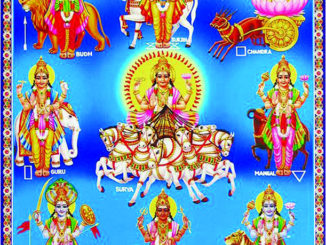
    Ancient Indian scholars extensively studied the stars and other celestial bodies in the never-ending spatial sky. This thorough study of astronomy and astrology eventually created the Jyotish Shastra which explained how the Navagraha, literally meaning the nine planets, influence the lives of the earth dwellers. Though not all members of the Navagraha are planets; Surya, the sun is a star; Chandra, the moon is the natural satellite of Earth; Rahu and Ketu are lunar nodes that are responsible for eclipses of the sun and moon.

    Depending upon where these planets are located at the time of a person’s birth, Hindus believe that the possibilities and potentialities of his life and energies are determined well in advance. Just as many other concepts in Hinduism, the word graha has multiple meanings. The Upanishads describe the senses as grahas, since they are the grasping (grahnam) ones. The deities that preside over them are called atigrahas, or their controllers. For example the mind and the breath are considered atigrahas because you can control your senses with their help.

    Who are Navagrahas?

    The nine planets are collectively known as Navagrahas. They are worshipped in Hinduism for good luck or to overcome adversity, bad luck or misfortune arising from past karmas or birth related defects (dhoshas). They are found in most Hindu temples either grouped together on a panel or on a pedestal in commonly visible areas of the temple. Devotees usually propitiate these gods before offering prayers to the main deity in the sanctum sanctorum of the temple. Of the nine deities, seven are named after the planets in the solar system, and correspond with the names of the seven days in the week of the Hindu calendar.

    Rahu and Ketu

    The remaining two deities are actually demons who managed to gain a place in the pantheon through an act of trickery. Their names are derived from either comets or from the dark and somewhat hostile planets of the solar system (Neptune and Pluto). Depending upon their location in the planetary system and their association with the remaining deities, they are deemed either auspicious or inauspicious.

    Significance in astrology

    The nine planetary gods have a great significance in Vedic astrology. Hindu astrologers draw the birth charts of individuals based upon the their position at the time of their birth. Depending upon where they are located in the astrological chart at a given time, they exert positive or negative influence upon people and their destinies. The position of Sani, Rahu and Ketu are especially considered important. If their positions are not favorable, astrologers suggest remedial measures to pacify the planets and ward off their negative influence.

    Navagraha temples

    While Navagrahas are usually found in many temples as subordinate deities, there are some temple which are exclusively built for them where they are worshipped as the main deities. One such temple is the Navagraha temple located on the banks of the river Kshipra in the outskirts of Ujjain, a famous pilgrim center of Saivism in central India. Some times we also come across temples built exclusively for only one of the Navagrahas such as the temples built for Surya and Sani in many parts of India. For example, there is a famous temple of Sani near Hindupur, which is frequented by many devotees.

    Description of Navagrahas

    A brief description of each of the Navagrahas is given below:

    Surya (Sun): He is the Sun god, also called Ravi. In the company of the other planets, he generally stands in the center facing east, while the other planets stand around him in eight different directions, but none facing each other. He rides a chariot that has one wheel and pulled by seven while horses. The seven horses symbolically represent the seven colors of the white light and the seven days of the week.

    Chandra (Moon): Also knows as Soma, and probably because of his waxing and waning qualities, in the images he is never depicted in full. We see him with only his upper body from chest upwards, with two hands holding one lotus each, riding upon a chariot drawn by 10 horses.

    Mangala (Mars): Also called Angaraka, Mangala is a ferocious god with four hands. In two hands he holds weapons, generally a mace and a javelin, while the other two are held in abhaya and varada mudras. He uses ram as his vehicle.

    Budha (Mercury): We generally see him depicted with four hands, riding upon a chariot or a lion. Three of his hands hold a sword, a shied and a mace respectively, while the fourth one is held in the usual varada mudra (giving gesture).

    Brihaspathi (Jupiter): Brihaspati also known as Brahmanaspati is the teacher of gods and is praised in many hymns of the Rigveda. He is generally shown with two hands, seated in a chariot driven by eight horses. The eight horses probably represent eight branches of knowledge.

    Sukra (Venus): Sukra is the teacher of the demons and the author of Sukraniti. He is generally shown with four hands, riding upon a golden or a silver chariot drawn by eight horses. Three of his hands hold a staff, a rosary, a vessel of gold respectively while the fourth one is held in varada mudra .

    Sani (Saturn): Sani is a turbulent and troublesome god who makes and breaks fortunes by his influence and position in the planetary system for which he is invariably feared and especially worshipped by those who believe in Hindu astrology. He is generally shown with four hands riding upon a chariot, or a buffalo or a vulture. In three hands he shown holding an arrow, a bow and a javelin respectively while the fourth one is held in varadamudra.

    Rahu: His image resembles that of Budha (Mercury) in some respects but both gods differ fundamentally in their nature and temperament. He is generally shown riding a dark lion, in contrast to the white lion of Budha. But just like the other god, he carries the same weapons, namely a sword, a javelin and a shield in his three hands, while his fourth hand is held in varadamudra.

    Ketu: In Sanskrit Ketu (Dhuma ketu) means comet. The scriptures describe him as having the tail of a serpent as his body, a description which very much matches with his connection to the image of a comet. However in the images, he is usually shown with a poke marked body, riding upon a vulture and holding a mace.

    Symbolism

    Of the nine planets, only seven are actually gods and the other two, Rahu and Ketu are demons. The seven are usually spoken as planets, while the two are compared to comets and the like, having a shadowy influence upon the destinies of people. The names for the seven days in the week are derived from the planetary gods. As can be seen from their names, some of the deities included in the Navagrahas are actually Vedic gods. Most likely, the concept of Navagrahas may be a later Vedic concept.

    The Navagrahas are not mentioned in the early Upanishads. The Brihadaranyaka Upanishad speaks of eight grahas and eight atigrahas in the body as the grasping deities (sense-organs) and overseeing grasping deities (sense-objects). The eight grahas who are mentioned in the Upanishad are the incoming breath (prana), speech, tongue, eye, ear, mind, hands and skin. Their overseeing grasping deities are apana (downward breath), name, taste, color, ear, desire and touch. We do not know whether this earlier Vedic concept of grahas in the body subsequently underwent a transformation to fit into the Puranic narratives. The Navagrahas are not actual planets in the modern sense, although they are called planets. They are deities in the Cosmic Person (Purusha), with corresponding presence in the microcosm of every living being. Their positions in the body as well in the world influence the course of events both at the universal and individual

    planes.

    The Navagraha concept justifies the idea that creation is a projection of God and its different aspects are interrelated and exert influence over each other. In the body they facilitate the working of individual karma, while in the macrocosm, the unraveling of collective karma as well as the fate of the world. Their association with the days in the week also suggest

    that they are manifestations or aspects of Time (Kala) only.

  • Darjeeling: The Queen of Hills

    Darjeeling: The Queen of Hills

    Darjeeling, nestled among rolling mountains, is a perfect destination for outdoor enthusiasts. Popular places to visit include Tiger Hill, Batasia Loop and the War Memorial, and the Himalayan Zoological Park and Snow Leopard Breeding Center. What should you bring home? Tea, tea, and more tea—and beautiful local handicrafts.

    Darjeeling Himalayan Railway

    The Darjeeling Himalayan Railway, also referred to as the DHR, and lovingly called the ‘Toy Train’, is a 2 feet narrow gauge train that runs between New Jalpaiguri and Darjeeling, in West Bengal, India. The construction of this 88-kilometre long railway line took place between 1879 and 1881, and a ride on this train route has been a coveted experience ever since. A journey in this Toy Train has amazing sights on display. Passengers on the train witness pleasing mountain views and pass by villages and local shops on the way, with children merrily waving at them. The pace of the train is so slow that local children often hop and off the moving train. Modern diesel engines that are now used are however faster and more powerful. A ride in the much-loved train is an opportunity only few would like to miss.

    The Darjeeling Himalayan Railway provides significant transport links between various parts of the Darjeeling hills and lower plains and is a piece of sheer engineering inventiveness and vision. How else can a small steam engine pull mini coaches up the steep mountains by overcoming almost unfeasible curves and gradients? This is perhaps why the Darjeeling Himalayan Railway was declared as a World Heritage Site on 2 December 1999 by UNESCO. Later on, two more railway lines were added, and the site came to be known as the Mountain Railways of India. A ride on such a heritage transport is no doubt a relaxing and charming one but is also prestigious because this train is what once provided the first and most important mountain transportation link in the country.

    The Toy Train Joyride

    The joyride from Darjeeling up to Ghum and back is a two-hour round trip that covers a total distance of 14 kilometres. Located at the height of 2225.7 metres above the sea level, Ghum is the highest altitude station on the entire DHR track. The train stops for 10 minutes at the Batasia Loop, where it makes a loop around a beautiful and well-maintained garden. From here, one can easily get a bird’s eye view of the Darjeeling town, and the snow-capped Kanchenjunga peaks. The War Memorial in honour of the Gorkha soldiers is also located here, in the centre of the garden. The train also stops for 30 minutes for a visit to the Darjeeling Himalayan Railway museum. This museum is located on the station premises and boasts of having the oldest toy train engine safely preserved here.

    Tiger Hill

    Lying at an altitude of 2590 meters and a distance of 13 kilometres away from the Darjeeling, Tiger Hill is most famous for its splendid sights of the morning sunrise from where you can see the peaks of Kanchenjunga illuminate before the sun is seen at lower elevations. The magnificent view of snow – capped mountains sitting amidst cotton clouds attracts tourists to Tiger Hill from all over the country. Interestingly, this is also the summit of Ghoom, which is the highest railway station in the Darjeeling Himalayan Railway, a UNESCO World Heritage Site.

    This vista point of Tiger Hill is a pristine natural beauty where you can enjoy the virgin charm of Darjeeling in its most endearing form. At sunrise, the peaks of Kangchenjunga are illuminated before the sun is seen anywhere else in the city, which is an amazing thing to experience. Another notable thing of beauty here is the pristine natural beauty of Tiger Hill, which is enveloped in gentle verdant foliage coupled with sublime clouds in the background. The fresh morning air as you make your way to the summit is a refreshing experience away from the banter of city life.

    Batasia Loop

    Perhaps one of the most picturesque train routes in all of Darjeeling, the Batasia Loop is a lush green toy train pathway that is meant to minimise the elevation of the Darjeeling Himalayan Railway. The unique design of this magnificent attraction allows the track to wrap around itself through a hilltop tunnel. One of the most enchanting aspects of the Batasia Loop is its unmatched natural beauty which is a wonderful sight to behold. Located on Hill Cart Road (NH 55), you can enjoy a panoramic view of the Darjeeling in all its verdant glory.

  • Ready to meet any requirement for Rafale jets, says French defense minister

    Ready to meet any requirement for Rafale jets, says French defense minister

    New Delhi (TIP): France stands ready to meet any requirement for more Rafale combat jets from India even as it works to bolster the Make in India initiative by integrating Indian manufacturers into global supply chains, French defence minister Florence Parly said on Friday, Dec 17.

    Parly noted China’s behaviour in the region is becoming “more and more aggressive”, and France seeks to find a “delicate balance” between addressing such behaviour and cooperating with China on issues such as climate change and trade.

    She made the remarks during a virtual conversation organised by Ananta Centre on India-France cooperation to defend a rules-based Indo-Pacific, before her meeting with defence minister Rajnath Singh. Defence industrial cooperation, including future collaborations and co-production, also figured in the discussions between the two ministers.

    “I am very happy that the Indian Air Force (IAF) is satisfied with its Rafales, and we are very proud that despite Covid the 36 aircraft will be delivered on time according to the contract. It’s a real achievement,” Parly said, responding to whether France would provide more Rafale combat aircraft to India.

    She described the use of Rafale jets by the air forces of both countries as a “real asset and strength” for bilateral cooperation, and said: “I am sure that there is room for new developments. We are ready to answer any additional needs [or] request that could be made by India.”