Month: December 2021

  • Channi Singh and farmers

    Channi Singh and farmers

    By Prabhjot Singh

    Moving firmly and steadily towards its goal of getting ploughers of land their due, the Samyukt Kisan Morcha (SKM), has yet another feather to its cap. With its major demand for the Minimum Support Price (MSP) being referred to an expert committee, other demands that cropped up during one of the longest and peaceful agitations in the history have been accepted by the Union Government.

    “This is not the end as the movement has only been suspended. We have decided to meet again on January 15 to ‘review’ the Centre’s assurances,” SKM core committee member Balbir Singh Rajewal said.

    The success of the current agitation puts another feather to the illustrious cap of the farmers organizations as they had been scripting triumphs since the start of their major agitations in 1907 in undivided India. The last after Independence was in 1984 when the farmers owing allegiance to the Bharati Kisan Union successfully gheraoed Punjab Raj Bhavan for seven days to demand withdrawal of hike in power tariff.

    Channi Singh

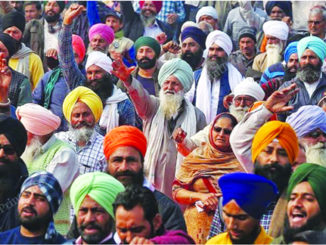
    Interestingly, farmers by staying apolitical and peaceful, and by building their protests and demonstrations in a democratic way, have developed the art of taking masses, even those remotely connected to their demands, along.

    It is one reason that like previous occasions, this time too, they not only had the support of the rural, but also of the urban traders, intellectuals, technocrats, bureaucrats, students, artists, including singers, sports men and women and others.

    When the SKM on Thursday announced that its 378-day-old agitation had been suspended, there were jubilations not only at Singhu but also all over Punjab, Haryana, Chandigarh and elsewhere. Receptions have been planned when farmers return home on or after December 11.  The protesters start returning home after a “victory procession” on December 11.

    On receiving a letter from the Ministry of Agriculture and Farmers’ Welfare, the matter was discussed by SKM’s five-member committee and then at the general house. Subsequently, SKM leaders Balbir Singh Rajewal, Darshan Pal, Yogendra Yadav, Rakesh Tikait, Gurnam Singh Charuni, Shiv Kumar Kakka and Hannan Mollah, announced suspension of the protests at Singhu, Tikri, Ghazipur, national highways and toll plazas. The letter by the Centre reportedly said the governments of Uttar Pradesh, Madhya Pradesh, Uttarakhand, Himachal Pradesh and Haryana have agreed to withdraw cases against farmers with immediate effect. “The boycott of the BJP and JJP in Haryana has been revoked,” a spokesman of the SKM said.

    “This is not the end as the movement has only been suspended. We have decided to meet again on January 15 to ‘review’ the Centre’s assurances,” SKM core committee member Balbir Singh Rajewal told media persons.

    The Morcha leaders had earlier accepted the Union Government’s revised draft proposals on key pending demands. Dedicating the “victory” to the farmers, who died during the course of the agitation, the SKM thanked local residents, the media and social organizations for their support.

    Even while farmers were in celebrations mode after the Prime Minister Narendra Modi had made unilateral announcement on the Prakash Utsav of Sri Guru Nanak Dev Ji, those standing by them were still showering their support to their agitation in whatever way possible.

    Channi Singh sings for farmers

    And one such effort came from the UK-based Channi Singh, who sang his own written song to eulogize the “ann dattas”. Channi, as his admirers call him, is known as the Godfather of modern Bhangra music, the man responsible for creating a new era in Punjabi music, getting it recognized all over the world.

    His graceful voice captivates you instantly, leaving you wanting to listen to more and his melodious compositions have become timeless classics. He is a true Ambassador of Punjabi music and culture. He is none other than Bhangra icon Channi Singh OBE, founder, and lead singer of legendary Bhangra band Alaap. Even after living in England for more than 45 years, he and his family, stays strongly connected to his roots.

    In 1976, when Channi moved to England, he soon realized that the Asian community, particularly the youngsters, had very few links with their cultural heritage. Channi believed that music would be the best approach in educating them about their cultural roots and due to this he thought of forming his own band. It was sheer destiny that soon after Channi arrived in England, he met a few talented musicians who later became his fellow group members. This was the beginning of a new era and the birth of Alaap.

    Formed in 1977, Channi and Alaap created a new modern sound by fusing eastern and western instrumentation and became responsible for changing the entire face of Punjabi music. They did not know that they were about to take over the world of Bhangra music by storm.

    During their illustrious career, Channi and Alaap have achieved much to be proud of. They have created history by breaking barriers and opening doors for Bhangra music in the mainstream, invited by world renowned figures, world music organizations and mainstream TV channels to represent Punjabi culture and performing at prestigious venues around the world where no Punjabi artist had performed before.Channi is also the first British Asian music artist to compose and direct music for big banner Bollywood films including Yalgaar directed by and starring Feroz Khan and Sanjay Dutt, Shaktiman directed by K.C. Bokadia and starring Ajay Devgan and Karishma Kapoor and Janasheen directed by and starring Feroz Khan and Fardeen Khan. Over the years, several Bollywood films have also plagiarized Channi’s hit compositions such as the famous song “Mujhe Neend Na Aaye” from Aamir Khan and Madhuri Dixit’s film Dil (1990), which is a copy of Channi’s original song “Chunni Ud Jae” (1986) and the song “Main Pyar Ki Pujaran” in the Govinda and Neelam starring film Hatya (1988), which is a copy of Channi’s original song “Pyar De Pujari” (1986).

    In addition to his successful music career, Channi has been actively involved in charity and community work for over 30 years. He runs a Community Centre in Hounslow, West London, which provides a range of services for the elderly, disabled and chronically ill. Channi has also organized and performed at numerous charity concerts over his music career, helping raise funds and awareness for many needful causes.

    In June 2012, a prestigious honor was bestowed on Channi when he became the first Punjabi music artist to be appointed an OBE (Officer of the Most Excellent Order of the British Empire) by Her Majesty the Queen for his services to Bhangra music, charity, and community work.

    Credited for pioneering modern Bhangra music around the globe for over 40 years and recognized in The World Guinness Book of Records as “the most successful and longest running Bhangra band” and for “most Bhangra recordings produced”, Channi and Alaap are in true sense leaders of the modern Bhangra music scene, who paved the way for many others to follow.

    Having received countless awards from all over the world for extraordinary achievements and invaluable service and contribution to the Asian music industry, Channi and Alaap are Bhangra idols who remain evergreen through their music and live performances.

    https://youtu.be/PqVxJabT4kA

    (The author is a senior journalist. He can be reached at prabhjot416@gmail.com)

  • Modinomics or Madonomics?

    Modinomics or Madonomics?

    By Rajendar Dichpally

    Since May 2014 Narendra Modi government has been in power and we have seen Modinomics for about seven and a half years. Modi government took many big economic decisions as part of its economic policies known popularly as Modinomics. If we assess the results from economic benefits perspective to the masses and for the country as a whole, it sounds like Madonomics. Let’s analyze the important economic decisions of Modi government and see why it is Madonomics, as such decisions would not be taken by any sane person and definitely not by government economists who are supposed to take the best decisions for the government.

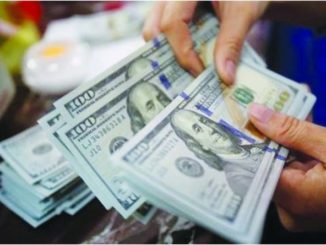
            Demonetization: This first great policy advocated by Modi government was Demonetization brought in November 2016 when all 500 and 1000 denomination notes contributing about 86% of exchange were declared invalid as a means of exchange. The advocated aim by Mr. Modi was to establish a cashless economy which would eliminate black money, improve payments system, reduce the cost of transactions and boost the economic growth. The results achieved however have been completely disastrous. Instead of increasing GDP growth rate, it kept falling continuously quarter after quarter since then. Many people died in ques standing to exchange the rupee before banks. No black money was recovered. After five years, the cash supply within the Indian economy has been more than what it was on 8th November 2016, the day demonetization was announced.

    The government announcement of demonetization on November 8, 2016, had taken even most policy makers by surprise. The lack of preparedness as people rushed to exchange the demonetized Rs 500 and Rs. 1000 currencies created chaos across the country for several weeks as not just people but also businesses faced cash crunch. Five years later, the impact of demonetization on the economy still lingers while experts argue that black money is back in circulation. This was most noticeable during the two waves of Covid as people rushed to get scarce life-saving drugs and oxygen for their dear ones. Income tax raids in recent months have also uncovered fraudulent transactions and unaccounted incomes from many businesses.

    According to Reserve Bank of India (RBI) data, currency with public for the fortnight ended October 8, 2021, stood at a record high of Rs. 28.30 lakh crore, up 57.48% or Rs. 10.33 lakh crore, from a level of Rs. 17.97 lakh crore on November 4, 2016. Cash with the public has shot up 211% from Rs 9.11 lakh crore, recorded on November 25, 2016. It rose by 8.5%, or Rs 2.21 lakh crore, on a year-on-year basis. The jump was primarily driven by a rush for cash by the public in 2020 as the government announced a stringent lockdown to tackle the spread of the Covid pandemic.

    To sum up, the policy sounds like the policy of Muhammed bin Tughlaq who had, when found it difficult to maintain the supply of gold (dinars) and silver (adlis) coins on a large scale, introduced a token currency system and minted vast quantities of new copper and brass coins (tankas) that could be exchanged for fixed amounts of gold and silver. He has historically been known as a “Mad Emperor” and that makes me conclude this policy as Madonomics.

    The economics of fossil fuel price hike: Modi government has been continuously raising fossil fuel prices even when they had fallen internationally. This brought a lot of discontent amongst consumers. So, on the eve of Diwali, the Central government had cut excise duty on petrol and diesel prices by Rs 5 and Rs 10, pronouncing this as “Diwali Gift”. This brought relief to customers, who were reeling under inflation and skyrocketing fuel prices. Following this, at least 22 states and UTs cut VAT in different proportions. The petrol price was cut in the range of Rs 5.7 to Rs 6.35 per liter and diesel rates by Rs 11.16 to Rs 12.88 across the country on November 4. The BJP-ruled states have slashed VAT rates on petrol and diesel by Rs 8 and 9, respectively.

    Making minor tweaks to fuel prices don’t make an impact. Center first raised the price of petrol and diesel by up to Rs 30 and then decreased it by Rs 5. Since transport is a necessary input for almost all final output, raising fuel prices has cascading impact on inflation. When India is reeling under inflation, raising fuel prices is Madonomics when government plans to curb inflation by first raising fuel prices and then withdrawing that raise partially.

    Withdrawing the Farm Act: Modi government first brought Farm Act in September 2020 withthe declared aim that it was farmer friendly. However, farmer realized the mad element in it and they vehemently protested for over a year. Finally, because looming state elections, Modi government withdrew it. This is nothing but Madonomics as 700 farmers died in protest, wasted their time over more than a year in protest and then Modi government shamefully withdrew it. Farmers proved that Farms Laws part of Modinomics were Madonoimcs and by withdrawing this law Modi government acknowledged that it was indeed Madonomics which should be removed.

    Failures on Death Rate from COVID Pandemic: When we compare COVID related deaths and death rates of India Vs. the second largest democracy, the USA and other neighbors we find that India of India has failing badly in saving Indian lives. From the New York Times latest statistics, India’s COVID related deaths have been significantly higher when compared with similar other countries and in the nearby region. At the peak, the number of weekly average death was 4454 on May 23, 2021. On June 12, this has been 3303. The sad part is it increased after June 9 when this average was 2177. For the USA, this average has been 370 on June 121. Since the population of India is roughly 4 times of the USA, the death rate in India should have been 4×370 or around 1600. This means the death rate in India has been twice of that of the USA despite aid coming from all over the world to save Indian lives. The weekly average death rate in Bangladesh has been just 30 on June 121. India’s population is about 8.7 times larger than Bangladesh which implies that India’s weekly average death rate should have been just 330. At the peak death rate in Bangladesh on April 23, the average figure was just 981 which implies that the peak weekly average death rate in India should have been 850. For Pakistan, the peak weekly death rate was 140 on April 28 and on June 12 it was 61.  Since population of India is 6 times that of Pakistan it implies that even per Pakistan’s standard, the peak weekly deaths in India should have been 850 (140×6) and on June 12 it should have been 360 (61×6)1.  It is really shameful, that with population adjustment made, India has been performing 10 times worse than its immediate neighbors Bangladesh and Pakistan in handling Covid death rates and at the peak (worst time of both the countries compared) also India was 5 times worse than them.

    GDP: On GDP also India’s performance has been dismal. As per the latest data, the growth rate of India has been -7.3% for the fiscal year 2021 (4/20 to 3/21). US and China are much bigger economies than India and they also had COVID almost on the same scale as India. However, their economies grew at the rate of 2.6% and 8.4% respectively. It is clearly the failure of Modi government because of their regressive economic policies.

    Alarming Balance of Trade Deficit with China as a Cause of sluggish GDP growth of India: The news is being touted that “Trade between China and India soared 70.1% in US dollar terms in the first five months of this year to $48.16 billion, according to Chinese customs data released on Monday. Specifically, Chinese exports to India grew 64.1% year-on-year from January to May, while imports surged 90.2%,” the tabloid Global Times reported. The trade deficit during the same first five months of 2021 has been$45 billion, which is 1.5% of India’s GDP. Since GDP = Consumption + Investment + Government Expenditure + Balance of Trade, India’s GDP is down by 1.5% in just five months of trade with China. This implies that for the whole year at this rate of trade deficit with China, 3.6% of India’s GDP would be taken away by China. It is very surprising that Modi Government is not realizing this drain on India’s economy. President Trump imposed heavy import duties on China in the year 2018 and that has been continued under Biden administration, but the Indian Government is not even realizing this problem. What kind of Finance and Commerce Ministers this government has that they are not even understanding that with this kind of trade deficit, India’s GDP can’t grow? Only under this government with India-China trade volume of $87.6 billion in 2020, China overtook the US to become India’s largest trading partner despite a bloody conflict along the Line of Actual Control (LAC) and the rising anti-China sentiment. All Asin tigers and both China and Japan achieved miracles because of trade surpluses, but Modi government does not even realize that India’s wealth is being drained by China! Even one of the richest and the most powerful country, the USA could not survive the economic drain on US GDP caused by trade deficit with China. This problem must be discussed in Parliament. This is urgent.

    Failure on Inflation: India’s inflation for the year 2020 was 6.2% which is far above the stated goal of 4%.

    Failure on Unemployment reduction: Over 10 million (1 crore) Indians have lost their jobs because of the second wave of Covid-19, and around 97 per cent of households’ incomes have declined since the beginning of the pandemic last year, Centre for Monitoring Indian Economy (CMIE) chief executive Mahesh Vyas said on Monday4. The total figure of unemployed has been 3.5 crores or 350 million labor force.

    The Problem of Stagflation: India has experienced the worst of both the worlds during the current regime. Since the relationship between inflation and unemployment has historically been inverse in many parts of the world including India under Dr Man Mohan Singh’s government (also known as Phillips Curve), India under Modi government has seen higher inflation and higher unemployment as discussed above. This means stagflation is the special feature of this government because of its wrong economic policies.

    Failure on reducing inequality:India’s inequality had increased. Only two business houses of Gautam Adani and Mukesh Ambani have been accumulating wealth by exploiting the rest of India. As already discussed, that 97% of Indians have become poorer while the wealth of Mukesh Ambani has tripled since the formation of this government in 2014 and Gautam Adani’s wealth has increased by about 30 times. As per Forbes records, Gautam Adani’s wealth was just $3.5 billion in March 2016 which jumped to $75 Billion on June 13, 2021. This kind of immense richness over just 5 years is not possible without government (Prime Minister in particular) favoring him.

    Since all the economic policies of Modi government have failed, and some have been fully or partially withdrawn like Farm Act and fossil fuel price hike, I rightly name the Modinomics to Madonomics.

    (The author is General Secretary of IOCUSA)

  • Coping with democratic slide

    Coping with democratic slide

    Democracies must find a way to address growing inequality and polarization

    By Shyam Saran

    “PM Modi said India’s message to the world was that “democracy can deliver, has delivered and will continue to deliver.” This was an uplifting message, but the fact is that over the past decade and more, democracies have been perceived as less successful than authoritarian states, communist or otherwise, in delivering the most basic services that ordinary citizens expect of the state, namely, public security, education and health. One cannot deny that across the world, the Chinese experiment under an authoritarian regime has been acknowledged as a spectacular success, lifting hundreds of millions out of poverty, creating the world’s most modern, state-of-the-art infrastructure and delivering improved standard of living to its people. That this has been achieved at the cost of pervasive violation of human rights and the degradation of its ecology is not always apparent. There is what one may term as ‘dictator envy’ or the yearning for a strong and powerful leader who could cut through all human and material barriers to deliver peace and prosperity. Like it or not, there is pessimism about democracy within democracies and this is a greater challenge to democracy rather than the machinations of authoritarian states and their leaders.”

    The US President, Joe Biden, hosted a Summit for Democracy last week in the virtual mode. The summit will kick off a whole year of action for the promotion of democracy worldwide with a follow-up summit — in person this time — to be convened in Washington with Biden again playing the host. There is no doubt that democracy has been in decline across the world since the beginning of the current century, both in well-established democratic states as well as among latecomers and aspiring ones. It will take more than a couple of summits to address the underlying causes but the initiative is still a laudable one. It may help shift the global political narrative in support of liberal democracy.

    Democracies do not always work together to promote democracy in other countries.

    Democracies do not always work together to promote democracy in other countries. When the interests of any two states converge, shared democratic values may reinforce relations between them. But shared democratic values do not over-ride the pursuit of divergent interests. During the Cold War, being democratic nations did not prevent India and the US from being on opposite sides of the geopolitical fence. Shared interests may lead democracies to work even as allies of non-democratic states. In order to contain the then Soviet Union, the US was more than willing to ally itself with Communist China even when the latter was in the throes of the ultra-radical Cultural Revolution in the 1970s. India and the Soviet Union maintained a strong strategic partnership over three decades (1960-1990) despite being on opposite sides of the ideological divide. One should be mindful of the fact that for Biden, the Summit for Democracy serves as an instrument to put its main geopolitical rivals, Russia and China, on the defensive, but this is of limited utility.

    The geopolitical dimension came to the fore in the inevitable controversy over which countries were to be invited and which were to be shunned. Judged by their democratic credentials, it is difficult to justify the exclusion of Bangladesh and Bhutan while Pakistan was invited. Pakistan’s geopolitical utility, particularly in managing the turbulence next door in Afghanistan, may have weighed in. But it must have been embarrassing to have Pakistan decline the invitation. Earning brownie points from long time benefactor China was more important for Islamabad than the once much valued certification from the American superpower.

    The objectives of the summit were three-fold: Counter authoritarianism; addressing and fighting corruption; promoting respect for human rights.

    From reports received so far, the only tangible result is the Export Controls and Human Rights Initiative, launched by the US, Australia, Denmark and Norway, which seeks to prevent authoritarian governments from misusing dual-use technologies to survey and hack into communications of political opponents, journalists, activists and minority communities. I would have expected India to be in this group, particularly after Prime Minister Modi drew the attention of the summit to the need for global norms for the use of digital technologies for social media or for cryptocurrencies which had the potential to undermine democracies. While he did not spell this out, it is a fact that digital technologies can strengthen democracy by enabling the wide diffusion of information, increasing transparency and accountability.

    PM Modi said India’s message to the world was that “democracy can deliver, has delivered and will continue to deliver.” This was an uplifting message, but the fact is that over the past decade and more, democracies have been perceived as less successful than authoritarian states, communist or otherwise, in delivering the most basic services that ordinary citizens expect of the state, namely, public security, education and health. One cannot deny that across the world, the Chinese experiment under an authoritarian regime has been acknowledged as a spectacular success, lifting hundreds of millions out of poverty, creating the world’s most modern, state-of-the-art infrastructure and delivering improved standard of living to its people. That this has been achieved at the cost of pervasive violation of human rights and the degradation of its ecology is not always apparent. There is what one may term as ‘dictator envy’ or the yearning for a strong and powerful leader who could cut through all human and material barriers to deliver peace and prosperity. Like it or not, there is pessimism about democracy within democracies and this is a greater challenge to democracy rather than the machinations of authoritarian states and their leaders.

    The survival of democracies needs introspection among its champions. Why have the people turned their faces away from what once seemed, self-evidently, as the best and most evolved political dispensation in human history? To my mind, at the end of the Cold War, liberals lost their way. They acquiesced in the calculated bid to equate liberal democracy with free markets, selling the dubious proposition that free markets inevitably led to democracy. The role of public policy in ensuring equity in access to basic services and to opportunities for advancement was progressively diminished while market orthodoxy increasingly took hold. A smaller and smaller cluster of winners cornered the growing cake, while the ranks of the losers expanded relentlessly. These inequalities are not the consequence of globalization or the nature of technological change. They are the result of the failure of public policy. The democratic state has abdicated its responsibility to ensure the fair distribution of the fruits of globalization and technological advancement. We have ended up with levels of inequality in income and wealth which are simply not compatible with democracy. Populism is rooted in this frustration with growing inequality and polarization is inherent in such a situation. Democracies must find a way to address this growing inequality, otherwise they are unlikely to survive. Or they may morph into what are now described as electoral autocracies. PM Modi spoke about India’s policy of inclusion. This is indeed an important feature of democracy and needs to be expanded. Only an empowered citizen can be a stakeholder in democracy.

    India is the world’s largest democracy and in many ways a unique experiment in celebrating plurality within a democratic polity. Its success as a democracy may well determine the fate of democracy itself.

    (The author is a former Foreign Secretary and Senior Fellow, Centre for Policy Research)

  • Birthday Horoscope-Dec 13 to Dec 19, 2021

    By Astro Friend Chirag – Son of Astrologer Bejan Daruwalla

    Ganesha says you will have the most amazing day ever today. You will be very lucky in achieving whatever you want today. You will be also generous and spend your money unreasonably but you should be careful in spending on the right things only. Little gestures made by your loved one will keep you happy and satisfied throughout the day. Your health is on its way to improving as well today. Try to relax as much as you can. Meditation and yoga will help you a lot today.

    December 14

    Ganesha says luck is on your side if you follow your intuitions today, your business will require you to keep working continuously throughout today. Hence you need to have patience and have control over your work schedule. Even though you want to spend today with your partner you won’t have much time today especially till the evening as an unexpected and huge amount of workload will be piled up on you due to the absence of a colleague.

    December 15

    Ganesha says today will be simple yet serene. No new exciting prospects or projects will arise, but you’ll fall in love with your work and fall in even more love with your partner today. You will feel like an agile person today as you go through the day full of energy and enthusiasm. Your health has finally healed and it is very likely to stay better. You will have immense support from your business partner today. They will work throughout the day today and won’t be in your way today.

    December 16

    Ganesha says your day will go positively if you go through the day with a casual approach and avoid anything and everything that causes you anxiety and worry today. Make sure you’re aware of your surroundings and whereabouts today. You have to stay focused and do not get involved in unproductive activities. Today luck is by your side in terms of work and finances hence to reap the full benefits of your good luck getting a lot of work done today.

    December 17

    Ganesha says you will feel very refreshed today. Going out to meet your friend will be a very good idea for you today. You will feel like today will be the day that things start to get brighter for you. Expect positive surprises and a lot of appreciation from your partner. Just having an open conversation with your partner will make your day positive. You will meet some amazing people today. You will experience a great social life today, which will keep you occupied throughout the day.

    December 18

    Ganesha says you will feel like a new person today as you go through the day full of love light and energy. Your health has finally healed from the consequences of all the bad habits you’ve had for the last few years. You will have a great time with your loved ones and your partner today. You will make great progress by learning in your business as well hence all in all a good day today for your health as well.

    December 19

    Ganesha says with more time at your hands you’re going to spend a lot of quality time getting to know your partner better today. You’re usually someone who always goes the extra mile and puts in a lot of hard work which won’t be the case today because your partner will force you to take the day off today.  The possibility of taking the next step in your relationship is quite high today. You will have a day full of doing things you love and spending time with your favorite person in the lap of nature.

  • Weekly Horoscope- December 13 to Dec 19, 2021

    Shree Ganeshaya Namah!!!

    By Astro Friend Chirag – Son of Astrologer Bejan Daruwalla

    Aries : Ganesha says this week is going to be fascinating. Everything will happen at its natural rate, and you will conquer any obstacles that arise. The Moon’s influence of gravity is trying to sway you away from your goal, but you must remain firm. There’s a risk you and one of your workers will have a business conflict. Your strong base may no longer be as strong as it once was, and your supervisors may decide against promoting anybody. Performing long periods and maintaining a calm temperament, on the other hand, will benefit you. Share market and IPOs will generate revenue this week. Your romantic life will be good this week. the first half of the week will be more fortunate for the people who are looking out for love. The health of your loved ones and you will be well maintained and there is nothing to worry about.

    Taurus : Your profits will increase significantly this week. you will have to be more concerned about your investments in the share market this week. you will have to make significant changes in your schedule in the second half of the week. this week will help you in your love endeavors. Make arrangements for Friday with your companion. Appreciate a day out from the workplace with your significant other; it will undoubtedly boost your relationship. This is not going to be a good week for you. There will undoubtedly be some highs and lows, as well as some minor losses and wastage. Whatever the case may be, the conclusion of the week will offer you joy. Aside from that, you should be in great shape this week.

    Gemini : There’s a strong chance you’ll run into some old and long-lost pals, which will make you very pleased. You’re existing and potential relationships will be significantly strengthened. This week, you’ll have to put in extra effort on all of your assignments. That may appear unsettling at first, but the end result will be well good enough to justify it. This will occur as a consequence of astronomical changes this week, which will have a significant impact on your academic performance. Your firm will not grow or progress considerably this week, but those who wish to start a modest business will have a nice beginning. Your love life will flourish this week. you will earn good personal time away from your work in the weekend. Your health will need attention this week.

    Cancer : Your work fronts will be all okay this week. you will get a chance to make money from various other sources. You will have to be very vigilant of the loopholes in your planning this week. Wednesday and Friday will be lucky for you to earn good profits if you are into the business of sales. This week, you’ll be ready to achieve so much in your relationship aspects. In terms of your relationship, you’ll have to be particularly careful about a few issues. Jupiter will travel through your sign this week. In the second half of the week, you will be able to make marriage obligations. In regards to fitness, you’ll be OK this week.

    Leo : This week, keep a strong grip on your horses. You can be doing great this week, but you could also fall into a trap. This week, every decision you make will be crucial, and each one will have a long-term impact. If something goes wrong, it will have a negative impact on your company, and you will be obliged to cope with major repercussions. Aside from that, you may anticipate a quiet and routine week. Having extra contact with old colleagues might result in the uncovering of a variety of new ideas. Tuesday and Friday are critical days in your week since your actions on those weekdays will determine your career.Your week will be filled with love on romantic fronts but it is not fortunate enough to plan out engagements and marriages. Your health will be all fit and fine throughout the week. avoid a heavy workout.

    Virgo : This week will be exciting in terms of romance. There will be benefits and drawbacks to your relationship, but you’ll check it up over time. On the bright side, the couples will have a fantastic week. It’s conceivable that your folks have been helping you for a lot longer and are anticipating a reward this week. your professional fronts will demand energy. You will have to be more specific about what matters you give more priority. If you are in the field of real estate, make sure you do not invest haphazardly. You might have to go through some issues related to licensing of your new business, therefore, make sure you are guided by the right person. Students will find themselves in the dilemma of joining new courses but advice from good friends will help.

    Libra : Dear Libra natives, you’ll be posed and austere. You will be glad and pleased as a result of the moonlight. This week is shaping up to be a fun. The only danger is that some bad repercussions may occur, resulting in a slew of issues, not only in regards of your wellness but also in regards of your financial status. Each day, worship to Lord Krishna for relief from this condition, and he will shield you from all negative energy. Apart from that, any judgments you make between Thursday and Friday should be taken with utmost caution, as they may backfire and have disastrous effects. This week will be excellent for you if you indulge oneself. Your romantic life will be bothered a little bit you will get back to normal with your partner as Venus will bless you soon. Your health needs some attention this week. if you are diabetic, make sure you look after your diet.

    Scorpio : Your week will bring you amazing things. You will be entering a new partnership this week if you are doing business. You will have to be careful regarding your involvement in any activity which is not legal. Try to control your temper in the second half of the week or you might hurt few good relationships at your office.This week, it’s better if you ease up on your adoration. It’s not a good week to formulate a strategy, and it’s certainly not a good week to be a parent. This week, couples will face disagreements, but they will be resolved with time. This week, your body will be in horrible condition. You’ll be facing a lot of hard stress this week, and you may assist yourself by doing mindfulness and meditation every day.

    Sagittarius : This could be a good week for you. This week, fortune may be on your edge. Generally speaking, this week may introduce you to monetary benefit that you wished. Bullying and confrontation should be avoided by practitioners. This week, you may receive cash assistance from a business manager, or your company partner’s proposal is likely to succeed. Pupils are more likely to do well in their exams. Their parents and instructors may notice their diligent effort. This week, your odds of winning in schooling are really good. In regards of your personal connection, you might astonish your partner by planning a trip together. You must make a visit to your Ganesha temple if your wedding plans fall within this week. Your health will be OK, and nothing will bother you, but this week, make sure you take care of your eyesight.

    Capricorn : Work and job-related traveling are likely to keep you occupied this week. You may be given some excellent possibilities, but you must also be prepared to confront some difficulties. This week, you must prioritize your healthcare. It’s best to resist getting into a fight with a business associate. There might be an invisible anxiety of the workplace or employment. Chance to visit a foreign country is possible. Make no hasty decisions about quitting your career. In the family company, there may be some dissension. You should focus on your matrimonial partnership this week. When dealing with your mate, be kind and modest. Acknowledge your partner for being in your world; this will help to enhance your bond. This week, your romantic life might take a surprising direction.

    Aquarius :  This week is going to be very crucial for you on all the frontiers as many good things will take turns. On the work front, you’ll be able to build a fresh relationship with your associates this week. Your eighth house forecasts some volatility in the workplace, but everything will calm off by the end of the week. Whatever you undertake this week in regards to your professional endeavors will be successful. Be on the alert for deceptive discounts this week. Productivity will be significantly improved. In regards of romance and relationships, this week is likely to be favorable to you. Your romantic life may be strengthened if you communicate and spend meaningful contact with your companion. With the correct knowledge, marriage may go well. You may have an unexpected monetary outlay on healthcare this week, so take attention of yourself and attempt to engage in wellbeing items that will benefit you in the ahead.

    Pisces :  This week, you’ll be grateful for everything. You’ll have a hard time finding time for yourself this week. You’re likely to earn profits this week. You’ll be overjoyed since you’ll be able to see beyond toxic substances. Your friendly demeanor will most likely assist you in making fresh acquaintances. Your warm and compassionate behavior may give them the impression that you are a strong supporter. It might be beneficial to you.  Your inventive spirit might assist you keep up the heat and add additional excitement to your life at work and in personal relations.This week, you may make progress in your romantic life, and the rest of the week will be good. You should be in good shape this week, other from that. Your wellness will also be steady and flawless this week. However, be extremely careful on Tuesday and Friday. Apart from that, you can expect a decent time this week.

  • General Rawat’s rich legacy will live on

    General Rawat’s rich legacy will live on

    Lt Gen Pradeep Bali (retd)

    Here was a Chief who would not hesitate to call a spade a spade and back the reforms needed for eradicating any wrong practices. While a high sense of probity is expected in any person holding that exalted office, what became starkly clear to all was his zero tolerance of moral or financial turpitude. This went a long way in enhancing the correct character traits expected in the forces.

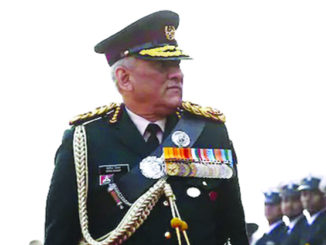
    Gen Bipin Rawat passed into the annals of history on December 8. As the Chief of Defence Staff (CDS) and a former Army Chief, he epitomised the change in thinking and structuring of the armed forces which he was spearheading. The deeply saddening demise of the nation’s first CDS is a great tragedy, but it shall not stall the process of modernisation and jointness of the three services which he set in motion. Having known the man both personally and professionally, I would like to reflect on his many stellar qualities and the legacy he leaves behind.

    Gen Rawat, son of Lt Gen Laxman Singh Rawat, a former Deputy Chief of Army Staff, carved out a brilliant career in uniform, starting out with the Sword of Honour, given to the best all round Gentleman Cadet at the time of commissioning from the Indian Military Academy. Having distinguished himself in all the important courses of training and acquiring educational qualifications up to the doctoral level, Bipin Rawat exhibited his leadership and military mettle while commanding Army formations in some of the most difficult and operationally challenging areas. He also commanded an Indian brigade group in Congo as part of the UN forces, under trying conditions. What made him stand out during these tenures was his uncanny ability to grasp any situation and get on top of it, a remarkable attribute for any leader of men.

    Talking about his generalship at higher levels, he was a man who could take the call when required and back his decisions to the hilt. Having commanded a formation directly under him, one can vouch for his unqualified support and decisive commitment, once he was convinced of the correctness of the chosen path. A remarkable attribute was the focused attention with which he would hear any proposal or presentation before giving out his mind in double quick time. Having soldiered in all the tough terrains on our borders, his heart was always with the troops and field commanders in the remotest areas. Gen Rawat came to the Army HQ as the Vice Chief of the Army in September 2016 and one saw an immediate change in the way that important office functioned. His accessibility for all subordinates and his passionate approach to resolving all nettlesome issues made a huge difference. I was heading the Directorate General of Perspective Planning and distinctly recall his positive interventions with a futuristic vision while finalising perspective plans. While he had tremendous patience and mostly an affable demeanour, one could not put issues past him without a very well-informed scrutiny.

    The defining moment after he took over the mantle of the Army Chief was the customary media interaction at the Manekshaw Auditorium in January 2017. It was a very candid interaction but more than that it became amply clear that here was an Army Chief who was firm in his convictions, would not pull his punches when required and would definitely not shy away from speaking his mind in a forthright and erudite manner. His visionary qualities were always at the fore as he shaped and guided the restructuring and modernisation of the Army. Here was also a Chief who would not hesitate to call a spade a spade and back the reforms needed for eradicating any wrong practices that unscrupulous individuals may indulge in. While a high sense of probity is expected in any person holding that exalted office, what became starkly clear to all was his zero tolerance of any form of moral or financial turpitude. This went a long way in enhancing the correct character traits expected in the forces. This may even have made him unpopular with disgruntled elements, both serving and retired, and who would use the anonymity of social media platforms to vent their misplaced ire. However, Rawat was not the man to be affected by such propaganda. Under Gen Rawat’s watch, I was assigned to command the Sikkim-based 33 Corps while the Doklam crisis was festering. True to his style, he was crisp and lucid in telling me: “You will have to mount a running horse.” His unspoken words, conveyed through his body language, were: “You have my confidence.” These were the defining traits which made Gen Rawat not only a soldier’s General but also a commander’s General! It was here that I saw what he was capable of while giving unambiguous directions to field formation commanders and then backing them to the hilt. The General could browbeat any person with a tirade of searching and pointed questions while discussing important military matters, whether operational or administrative. Once convinced, his decisions would be crystal clear with the organisational interests being at the forefront.

    Destiny had more in store for him as he assumed the high office of India’s first CDS. Given his career graph and qualities of head and heart, no one would have been better suited to hold this onerous appointment. Here again, Gen Rawat got to grips with the challenges and tasks ahead of him. His missionary zeal in structuring the theaterisation model for the armed forces, was the need of the hour and in the past two years of his helmsmanship of the services, much ground has been covered in this direction. It’s a matter of short time now before the unified tri-services commands of the Army, Navy and the Air Force will be a reality and the legacy of Gen Rawat will live on through them.

  • Barcelona out of Champions League after loss to Bayern Munich

    Barcelona will not play in the knockout rounds of the Champions League for the first time in 18 years after a 0-3 loss to Bayern Munich on Wednesday ensured the Catalan club was eliminated from European soccer’s premier competition. Barcelona drops into the Europa League playoffs after finishing third in Group E, thanks to Benfica’s 2-0 win over Dynamo Kyiv in the other game of the evening.

    That ended a Barcelona campaign which would have been unthinkable in the club’s heyday with Lionel Messi up front and Pep Guardiola as coach from 2008 through 2012. The group stage began with a 3-0 loss to Bayern at the Camp Nou and got worse with a 3-0 defeat and 0-0 draw against Benfica. Barcelona scored only two goals in six games, both against last-place Dynamo, and conceded nine.

    “We start a new era, from zero, from here, to work hard and to recover Barca and to put Barca in the place that we deserve, that is in the top of the Champions League,” coach Xavi Hernández told broadcaster DAZN. “This is our reality. We are out of Champions League, we are in Europa League, but this is not the place of Barcelona.”

    The five-time European champion last failed to make the Champions League last 16 in 2003-04. That season, Barcelona missed the Champions League entirely and played in what was then the UEFA Cup, thanks to a poor Spanish league finish the season before.

  • Season of change: Rohit takes over ODI captaincy

    New Delhi (TIP): Virat Kohli was on Dec 8 removed as India’s ODI captain and Rohit Sharma has been made the sole white-ball leader of the team until the 2023 50-over World Cup.

    Rohit had been appointed the T20I team captain in November after Kohli had stepped down from the role at the end of the T20 World Cup. In another significant development, Ajinkya Rahane was removed from Test vice-captaincy, a position which was also given to Rohit.

    The BCCI announced the 18-member squad for the three-Test series for the tour of South Africa, and it doesn’t include all-rounder Ravindra Jadeja, spinner Axar Patel and opener Shubman Gill due to various injuries.

    Hanuma Vihari has made a comeback in the main squad while Ishant Sharma has been able to retain his place despite poor form. “One of the reasons for Rahane being able to keep his place is the fact that even Cheteshwar Pujara and Virat Kohli are not scoring runs for a long time,” a senior BCCI official said.

    Test squad

    Virat Kohli (capt),Rohit Sharma (v-c), KL Rahul, Mayank Agarwal, Cheteshwar Pujara, Ajinkya Rahane, Shreyas Iyer, Hanuma Vihari, Rishabh Pant (wk), Wriddhiman Saha (wk), R Ashwin, Jayant Yadav, Ishant Sharma, Mohammed Shami, Umesh Yadav, Jasprit Bumrah, Shardul Thakur, Mohammed Siraj Standby Players: Navdeep Saini, Saurabh Kumar, Deepak Chahar, Arzan Nagwaswalla

                    Source: PTI

  • UK plans diplomatic boycott of Beijing Winter Olympics

    British Prime Minister Boris Johnson on Wednesday said no UK government minister will attend the Beijing Winter Olympics, calling it “effectively” a diplomatic boycott.

    Johnson was asked in the House of Commons whether the UK will join the United States, Australia and Lithuania in a diplomatic boycott of the Winter Games in February over Beijing’s human rights record.

    He said he opposed boycotts involving athletes, but Britain would effectively be boycotting the Olympics diplomatically.

    “There will be effectively a diplomatic boycott of the Winter Olympics in Beijing,” Johnson told lawmakers. “No ministers are expected to attend and no officials.”

    “The government has no hesitation in raising these issues with China, as I did with President Xi the last time I talked to him,” he added. The White House confirmed Monday that it was staging a diplomatic boycott of the upcoming Winter Olympics in Beijing to protest Chinese human rights abuses. China has vowed to react with “firm countermeasures.” Australia announced a diplomatic boycott of the 2022 Games earlier Wednesday.

    Prime Minister Scott Morrison said it was “in Australia’s national interest,” and referred to the worsening relations between his country and China — including a spat over Australia’s decision to acquire nuclear-powered submarines — as well as human rights concerns.

    Western governments, including the US, Australia and Britain, have increasingly criticised Beijing for human rights abuses against its Uyghur minority in the northwest Xinjiang province, which some have called genocide.

  • Scientists developing chewing gum that could cut Covid transmission

    Scientists are developing a chewing gum laced with a plant-grown protein that serves as a “trap” for the SARS-CoV-2 virus, which causes COVID-19, reducing viral load in saliva and potentially lowering transmission.

    The researchers noted that people who are fully vaccinated can still become infected with SARS-CoV-2 and can carry a viral load similar to those who are unvaccinated.

    “SARS-CoV-2 replicates in the salivary glands, and we know that when someone who is infected sneezes, coughs, or speaks some of that virus can be expelled and reach others,” said Henry Daniell at the University of Pennsylvania in the US.

    “This gum offers an opportunity to neutralise the virus in the saliva, giving us a simple way to possibly cut down on a source of disease transmission,” said Daniell, who led the study published in the journal Molecular Therapy.

    Prior to the pandemic, Daniell had been studying the angiotensin-converting enzyme 2 (ACE2) protein in the context of treating hypertension.

    His lab had grown this protein, as well as many others that may have therapeutic potential, using a patented plant-based production system.

    This system has the potential to avoid the usual obstacles to protein drug synthesis: an expensive production and purification process, the researchers said.

    The receptor for ACE2 on human cells also happens to bind the SARS-CoV-2 spike protein, which the virus uses to infect the cells, they said.

    Previous research has shown that injections of ACE2 can reduce viral load in people with severe infections.

    Another line of work by Daniell and colleague Hyun Koo has involved research to develop a chewing gum infused with plant-grown proteins to disrupt dental plaque. Pairing his insights about ACE2 with this technology, Daniell wondered if such a gum, infused with plant-grown ACE2 proteins, could neutralise SARS-CoV-2 in the oral cavity.

    To test the chewing gum, the team grew ACE2 in plants, paired with another compound that enables the protein to cross mucosal barriers and facilitates binding.

  • Doctors advise to keep body active to bat winter joint pain

    Doctors advise to keep body active to bat winter joint pain

    With the onset of winters, chances of developing painful knees, hips and back become quite high. Doctors advise to keep the body active and wear plenty of layers while stepping out.

    More than 50 percent of the people feel less motivated to step outside and rather feel more inclined to stay home, where it is cozy and warm when the outside temperatures drop.

    “When stepping out in winters, ensure that you have worn plenty of layers and keep yourself bundled up. Warm clothing will help you feel more comfortable going outside,” they say.

    Shubhang Aggarwal, Director and Orthopaedic and Robotic Joint Replacement Surgeon, NHS Hospital, Jalandhar says cold weather generally causes muscles to stiffen up, joint cartilage nutrition decreases and in general metabolism slows down. Therefore, it becomes mandatory to keep your body active, even in the winter months, to maintain flexibility and burn those calories that we all take in, he said.

    “While you should not workout in significant joint pain without the assistance of a medical professional, stiff or achy joints should not mean cancelled gym membership,” Aggarwal says.

    Shuchin Bajaj, Founder Director, Ujala Cygnus Group of Hospitals, says during the winter season, joint pain, back pain, and stiffened muscles are the most common health issues plaguing the lives of older people.

    “We have seen a spike in the number of senior citizens seeking treatment for bone and joint problems during winter. But nowadays, we can see younger people are also facing the same problem due to work from home and consuming a diet high in trans fats and sugar, which makes them prone to obesity at an early age,” he says.

    Vivek Logani, Chief of Joint Replacement and Sports Injury Centre at Paras Hospitals, Gurgaon says those with long-standing disease and poor blood sugar control have the highest fracture risk.

  • 5 bone-building nutrients apart from calcium

    5 bone-building nutrients apart from calcium

    We all know the importance of calcium for strong bones, a key part of human anatomy. But have you ever taken out the time to think if calcium alone can keep your health on track or not? And if not, then what are the other nutrients that your body needs to keep your bones fit and healthy? First of all, we’re not saying that calcium is not important, but calcium is not the only nutrient that your body needs. It may be the most vital to keep your bones strong and healthy, but you need more nutrients as well.

    Vitamin D

    Vitamin D, also known as a sunshine nutrient, is one of the most important vitamins your body requires to stay healthy. Dr Yogesh says, “Vitamin D is necessary for calcium to be absorbed in the intestine.” Not just that, it helps to increase bone density and maintain healthy bone health. To increase your vitamin D intake, you can add these foods like fatty fish (swordfish, salmon, sardines, mackerel), fortified foods (dairy, cereal) and egg yolks.

    Magnesium

    Like all vitamins, minerals also play an extremely important role in maintaining our health and magnesium is one of them. “It regulates proper calcium and vitamin D levels in the body, and can improve bone density and bone crystal formation,” says Dr Yogesh. In fact, magnesium also reduces the risk of osteoporosis in females after menopause. Magnesium is found in green vegetables (collards, kale, bok choy, okra), seeds (poppy, sesame, chia), nuts, legumes, whole grains, avocado.

    Phosphorus

    Phosphorus is another important nutrient for bone health. “It is a part of bone mineral and important for neutralizing acidic foods that would otherwise be harmful to the bone,” says Dr Yogesh. Phosphorus-rich foods are protein foods (soybeans, fish, meat, milk, eggs), legumes, and whole grains.

    Vitamin A

    Vitamin A nutrient can improve your eyesight, maintain your neurological functions and ensure healthy skin, but guess what? It is also important for your bone health. “Vitamin A influences osteoblasts (bone-building cells) and osteoclasts (bone breaking down cells) to help improve your bone and teeth strength,” according to Dr Yogesh. Foods rich in vitamin A are sweet potato, beef liver, spinach, carrots, cantaloupe, mangoes, fortified foods, and eggs.

    Zinc

    Zinc is an essential dietary micronutrient because of its fundamental role in gene expression, cell development, and replication during all life stages particularly pregnancy, childhood, and adolescence. For bone health, Dr Yogesh says, “Zinc is responsible for mineralizing bone and stabilizing receptor proteins for vitamin D, and protein synthesis.” It is present in shellfish, beef, pork, seeds, beans, whole grains, and yogurt.     Source: HT

  • Getting roached? Here’s how to save yourself

    The newest dating trend — roaching involves a partner, who keeps their parallel intimate relationships secret. Many believe that the moniker, roaching originated from ‘roach’ — the slang for cockroach. Though you may see just one, it usually means that there are many more hidden out of view.

    Ruchi Garg, an analyst at TCS, explains, “The signs of roaching were pretty evident in my last relationship. My partner was always distracted during our phone calls and even on our coffee dates, when all I could see was him scrolling through his phone endlessly. We ended up having a heated discussion which ended with him confessing that he was seeing other people. That was the end of our relationship, ”

    Signs to look out for

    A sense of emotional distance, where your partner keeps you at arm’s length is a sign of roaching and should be taken seriously. “When you are in a relationship with someone who is roaching, there will usually be a lack of an emotional connection. It would be hard to share emotions like love, anger or joy and the relationship might only be sustained on physical needs,” says life coach, Anamika Yaduvanshi.

    If someone is roaching you, they won’t share any personal details about themselves or introduce you to their family and friends. Also, they would avoid talks about the future. Yaduvanshi adds,

    ”When your partner is roaching, there is no commitment. Since the roacher is also involved with other people, they would not get committed to anyone.”

    It is this absence of commitment that makes the future of the relationship uncertain and you should get out of the relationship before it is too late.

    What can you do? Take the high road

    It is best to be mature and have a conversation with the person concerned so as to end the relationship and move on.

    Forgive, forget and move on

    No number of apologies and emotional melodrama is worth staying in a toxic relationship.

    This will only leave you with a constant feeling of insecurity along with trust issues making the relationship a toxic whirlpool which you might regret later on.

    Don’t over obsess and over think

    Do not try to delve into the ‘whys and hows’ of it. It will only make you feel worse and stepping out of the relationship will become even more difficult.

    Take steps to ensure mental, emotional stability

    Stepping out of a relationship especially after being roached can prove to be disastrous for one’s mental health. Take steps such as booking an appointment with a therapist, confiding in your confidant and keeping yourself occupied.     Source: HT

  • Manage hair fall with these Ayurvedic tips

    Winter and hair fall go hand-in-hand, don’t they? Well, it’s time we break their friendly bond and stop letting our favourite season ruin our most precious hair,” Ayurvedic expert Dr Dixa Bhavsar said, as she shared tips to keep hair fall at bay during winter. Follow these simple tips to save yourself from hair fall this winter season, as suggested by Dr Bhavsar.

    Consume amla daily

    You can have amla shot in the morning, or just bite into amla. You can also have it in powder form. Chyawanprash and amla juice are other ways you can consume this beneficial food item.

    Oil your hair

    While a lot of us end up avoiding it, it’s important to oil our hair, the expert said. Your hair needs nourishment just the way your body does. Oil your hair at least once/twice a week.

    She suggested using coconut oil, amla oil, bhringraj oil, castor oil, sesame oil or a mixture of all of these.

    Consume jaggery

    Jaggery is best consumed in the winter season. It helps with digestion issues, low haemoglobin, sweet cravings and keeps you warm. Replace sugar with jaggery. Have a piece of jaggery after meals or just make healthy energy balls using it.

    Consume sesame energy balls

    Sesame seeds are best for hair fall, especially when consumed during the winter months.

    Watch your diet

    Since it is winter season and your digestion is at its peak, it doesn’t mean that you can binge on all junk and fried foods whenever you feel hungry. Try to have warm, fresh and home-cooked meals. Don’t forget to exercise.

    Consume ghee

    It is the best moisturiser for your gut and skin in this dry weather.

    Foot massage

    Massaging foot during bedtime helps with sound sleep and nourishes your body and mind.

    Nasya

    Putting ghee drops in nostrils at night is best for everything — from hair fall and grey hair to stress and insomnia.

                    Source: The Indian Express

  • Aloo keema

    Aloo keema

    INGREDIENTS

    2 medium onions, chopped, 450 g beef or 450 g ground chicken, 1 teaspoon gingerroot, minced, 1 teaspoon garlic, minced, 1 teaspoon chili powder, 1 teaspoon coriander powder, 1 teaspoon turmeric powder, 1 teaspoon salt, 2 tablespoons yogurt, 2 -3 tomatoes, chopped, 300 g potatoes, peeled and diced, 1 teaspoon garam masala, 2 green chilies, chopped, 3 tablespoons coriander leaves, chopped.

    Method

    –              Fry onions in a heavy based pan over medium heat.

    –              when onions are soft but not brown, add meat, garlic and ginger and cook over medium heat about 3-5 mins or until all the moisture has dried from the minced meat.

    –              Add spices + 3 tbsp water and stirring constantly, cook another 2 minutes.

    –              Add chopped tomatoes and yogurt and cook for about 10 mins, stirring constantly.

    –              Add potatoes, mix well.

    –              Add 1 cup of water, cover andcook 30 mins over low heat or until potatoes are tender.

    –              Add garam masala , chillies and coriander right before serving.

    –              Mix well.

    –              Serve hot with naan,chapati or rice.

  • How year-long farmer protest on Delhi borders ended

    How year-long farmer protest on Delhi borders ended

    The Union government and farmers’ groups have broadly reached a settlement on five out of the six pending demands of protesting farmers, following which the year-long protest at Delhi’s borders were called off Thursday, Dec 9. The Samyukt Kisan Morcha (SKM), an umbrella body of farmers’ groups leading the protests, received a letter Thursday from the government with revised proposals to resolve their pending demands. The letter was signed by Sanjay Agarwal, secretary to the Union Ministry of Agriculture and Farmers’ Welfare.

    However, the government letter is silent on the SKM’s demand for the removal of Union Minister of State Ajay Mishra in connection with the Lakhimpur Kheri incident on 3 October.

    The SKM said in a statement Thursday that it “formally announces the lifting of the morchas at Delhi borders on national highways and various other locations”.

    “The current agitation stands suspended… The SKM dedicates the fabulous and historic victory of the struggle to around 715 martyrs of the movement, including those in Lakhimpur Kheri. SKM congratulates all the protesting farmers and citizens, and their supporters, wholeheartedly for waging an unprecedented struggle and for the glorious gains of the movement,” it added.

    Yogendra Yadav, a social activist and member of the SKM, told reporters, “In some form or the other, farmers will have to continue their struggle. The issue of MSP is alive, the fear of (increasing) electricity bills is also real, Ajay Mishra still continues to be a member of the Cabinet. All these issues are there. So, we will continue our struggle but for some time we are suspending everything (demonstrations).”

    Bharatiya Kisan Union leader Rakesh Tikait, also a member of the SKM, said that there would be a review meeting on 15 January in which all unresolved issues would be assessed — including the unfulfilled demand regarding the removal of Mishra.

    The three controversial farm laws that primarily triggered the protests were repealed by the Modi government in the ongoing winter session.

    Farm laws and six demands

    The three controversial laws were the Farmers’ Produce Trade and Commerce (Promotion and Facilitation) Act, 2020, the Farmers (Empowerment and Protection) Agreement on Price Assurance and Farm Services Act, 2020, and the Essential Commodities (Amendment) Act, 2020. When they were enacted, the Opposition had accused the government of pushing them through without discussion.

    While the Union government said the laws sought to open up the country’s food market to greater participation of private players and bring much-needed reforms to the agriculture sector, farmers’ groups said they would favour big corporations and affect the livelihoods of farmers.

    Protests against the laws started in Punjab and eventually spread to Haryana, Uttar Pradesh, Uttarakhand, Maharashtra, and several other states. Large groups of protesters gathered at Delhi’s borders — Singhu, Tikri and Ghazipur — and remained there for a year. The SKM said Thursday that the farmers at Delhi’s borders would return home on 11 December. Prime Minister Narendra Modi announced the withdrawal of the three contentious farm laws on 19 November. Parliament passed a Bill to repeal them on 29 November without any debate.

    However, the farmers continued their protests after the laws were repealed. They maintained their demand for a law guaranteeing MSP. This is the minimum rate at which the government is supposed to procure foodgrains (applicable on 23 crops) from farmers. It currently operates broadly as a policy measure without statutory backing.

    Farmers’ groups also demanded the withdrawal of cases registered against farmers across states during the agitation. Most of these involved charges such as rioting and unlawful assembly.

    Additionally, they demanded exemption from criminal liability under anti-pollution laws for burning crop stubble, compensation for the families of farmers who died during the protests, and the withdrawal of the Electricity (Amendment) Bill, 2021, scheduled to be tabled in Parliament in the ongoing session. In addition, the farmers demanded the sacking of Union Minister of State Ajay Mishra in connection with the Lakhimpur Kheri incident. On 3 October, a convoy that included a vehicle owned by the minister with his son as one of the suspected passengers, allegedly ran over a group of protesting farmers, triggering violence. A total of 8 people were killed.

    The SKM and the Union government, farmer leaders and government officials told ThePrint, had negotiated for the past two days before they reached a settlement. The proposals were sent back and forth several times between the government and a five-member negotiating team from the SKM, they added.   Source: The Print

    How the events unfolded

    June 5, 2020: The Farmer’s (Empowerment and Protection) Agreement on Price Assurance and Farm Services Act, 2020; the Farmers’ Produce Trade and Commerce (Promotion and Facilitation) Bill, 2020; and the Essential Commodities (Amendment) Bill, 2020 – These three farm laws were promulgated by the Centre as ordinances.

    September 14, 2020: All three ordinances were brought to the Parliament.

    September 17, 2020: The three ordinances were passed in the Lok Sabha.

    September 20, 2020: The ordinances were passed in the Rajya Sabha despite protest by the Opposition.

    September 24, 2020: Three-day rail roko agitation was announced by the farmers in Punjab.

    September 26, 2020: The Shiromani Akali Dal (SAD) quitted the National Democratic Alliance over the farm bills.

    September 27, 2020: President Ram Nath Kovind gives his assent for the three acts passed in the Parliament.

    October 4, 2020: Supreme Court sought a response from the Centre over a bunch of pleas that challenged the constitutional validity of the three acts.

    November 25, 2020: Farmers – mainly from western Uttar Pradesh, Punjab, and Haryana – call for the ‘Delhi Chalo’ movement.

    November 26, 2020: Farmers, who were marching towards Delhi, face police on the borders of the national capital. After being not allowed to enter the city-state, the farmers staged a sit-in on Delhi borders.

    November 28, 2020: Union Home Minister Amit Shah offered the farmers to hold talks with the Centre.

    November 29, 2020: In Mann Ki Baat, PM Modi asked farmers to end their agitation, and said his government has “fulfilled their promises”.

    December 3, 2020: Centre and farmers held the first round of talks, but it failed to end the deadlock.

    December 5, 2020: Second round of talks between the government and Farmers was held.

    December 9, 2020: Farmers rejected Centre’s proposal to amend the farm laws.

    December 11, 2020: Bharatiya Kisan Union (BKU) moves Supreme Court against the acts.

    December 16, 2020: The Supreme Court said that it may form a committee to end the deadlock between the Centre and the farmers.

    December 30, 2020: Sixth round of talks was held between the Centre and farmers.

    January 4, 2021: Seventh round of talks was held between the Centre and farmers.

    January 12, 2021: The Supreme Court stays implementation of the farm laws.

    January 26, 2021: Delhi turned into a battlefield on Republic Day after clashes erupted between farmers and Delhi Police personnel.

    January 28, 2021: At the Delhi-Ghazipur border, the Ghaziabad district administration issues an order to the farmers to vacate the site by night.

    January 29, 2021: The government proposed to suspend the farm laws for one-and-half years and set up a joint committee to discuss the legislation. The farmers rejected the proposal.

    February 6, 2021: Farmers hold a nationwide ‘Chakka Jam’.

    February 18, 2021: Farmers call for nationwide ‘rail roko’ agitation.

    March 06, 2021: Farmers complete 100 days at Delhi’s borders.

    March 8, 2021: Gunshots are fired near the Singhu border protest site. No one is injured.

    April 15, 2021: Haryana Deputy CM Dushyant Chautala writes to Prime Minister Narendra Modi urging him to resume talks with farmers.

    May 27, 2021: Farmers observe ‘black day’ as their protest completes six months.

    June 5, 2021: Farmers observe Sampoorn Krantikari Diwas.

    June 26, 2021: Farmers march to Delhi to mark seven months of protest against the farm laws.

    July 22 2021: Farmers started protesting in parallel ‘Monsoon Session’ of Parliament

    August 7, 2021: Leaders of 14 opposition parties meet at Parliament House and decide to visit Kisan Sansad at Delhi’s Jantar Mantar.

    September 5, 2021: Months to go for the Uttar Pradesh election, challenging the BJP-led NDA, farmer leaders stage a major show of strength in Muzaffarnagar.

    October 22, 2021: Supreme Court says that farmers have the right to protest but roads cannot be blocked indefinitely causing hindrance to public movement. It also asked the farmer unions to file a reply on the plea seeking removal of the protesting farmers from roads.

    October 29, 2021: The Delhi Police starts removing barricades from the Ghazipur border where farmers have been protesting against the Centre’s agri laws.

    November 19, 2021: PM Modi announces Centre’s decision to repeal the three farm laws. Farmers still remained firm on their agitation.

    November 29, 2021: A bill was passed in Parliament to repeal the three contentious farm laws, one of the main demands of the protesting farmers.

    December 7, 2021: Centre sends a draft proposal to farmers agreeing to some of their demands.

    December 8, 2021: Farmers send back proposals citing flaws, demanding that a formal communication of government letterhead to be sent to them.

    December 9, 2021: Centre sends a fresh proposal, farmer leaders meet and decide to call off protest, set December 11 deadline for vacating borders.

  • Chief of Defence Staff Bipin Rawat – A Saga Of valor and excellence

    Chief of Defence Staff Bipin Rawat – A Saga Of valor and excellence

    Chief of Defence Staff Bipin Rawat died in a helicopter crash near Tamil Nadu’s Coonoor on Wednesday. The Indian Air Force (IAF) aircraft was known to carry other Army officials as well.

    CDS Bipin Rawat’s wife Madhulika Rawat died in the accident as well.

    Death of 13 out of 14 passengers have been confirmed so far.

    General Bipin Laxman Singh Rawat holds the status of a four star general of the Indian Army. He was appointed as the first tri-service chief with effect from December 31, 2019, a few days after the Centre announced induction of the Chief of Defence Staff (CDS) post. Holding the prestigeous designation of being the first sitting Chief of Army Staff to be appointed to the top post is one amongst his many accolades.

    Before becoming the fourth officer from the Gorkha Brigade to become the Chief of Army Staff (COAS), he was designated to the position of the Vice-Chief of Army Staff. General Bipin Rawat took over as the  27th Chief of Army Staff (COAS) on December 17, 2016 succeeding General Dalbir Singh Suhag. After graduating from the National Defence Academy (NDA) and the Indian Military Academy (IMA), Rawat was recruited into the Indian Army in December 1978 and was enlisted in the same unit as his father, the fifth battalion of 11 Gorkha Rifles.

    Rawat is widely revered for his extensive expertise in the field of counterinsurgency warfare and has been known to have served in some of the most perilous terrains of India, including the northern and eastern commands.

    In his four decades long service, Rawat has served as a Brigade Commander, General Officer Commanding-in-Chief (GOC-C) Southern Command, General Staff Officer Grade 2 at the Military Operations Directorate, Colonel Military Secretary and Deputy Military Secretary in the Military Secretary’s Branch and Senior Instructor in the Junior Command Wing.

    He has also been an integral part of the United Nations Peacekeeping Force and has spearheaded a multinational brigade in the Democratic Republic of Congo.

    Neutralising militancy in the Northeast is one of the most significant accomplishments of General Bipin Rawat’s decorated career in Indian Army and the 2015 cross-border operation into Myanmar in which the Indian Army successfully retaliated to an ambush by NSCN-K militants is the best embodiment of his excellence.

    During his service, General Rawat has been adorned with the Param Vishisht Seva Medal, Uttam Yudh Seva Medal, Ati Vishisht Seva Medal, Vishisht Seva Medal, Yudh Seva Medal, and Sena Medal.

    INDIA’S FIRST CDS

    General Bipin Rawat became the first officer of the Indian armed forces to hold the post of the Chief of Defence Staff (CDS) in 2019. The post was newly created as part of the government’s efforts to restructure India’s armed forces to meet present-day challenges.

    General Bipin Rawat was named CDS just a day before he was to retire as the Indian Army chief, a position that he held for a full three-year term.

    General Bipin Rawat was an officer from the Gorkha Regiment. General Rawat was the fourth officer from the Gorkha Regiment to become the Chief of Army Staff.

    As the CDS, General Rawat was the single-point advisor to the government on matters related to the military. In this role, General Rawat focused on better synergy among the three wings of the armed forces the Indian Army, Indian Air Force and the Indian Navy.

    JOURNEY FROM NDA TO IMA TO INDIA’S TOP ARMY OFFICER

    General Bipin Rawat was an alumnus of Shimla’s St Edward School before joining the National Defence Academy at Khadakwasla in Maharashtra. He trained at the Indian Military Academy in Uttarakhand’s Dehradun.

    General Bipin Rawat commanded an infantry battalion along the Line of Actual Control (LAC) that separates India’s position from the Chinese in the Eastern Sector. He also commanded an infantry division in the Kashmir Valley and a corps in the Northeast.

    General Rawat was appointed the Chief of Army Staff on December 31, 2016. A four-star military officer, General Rawat was appointed the Chief of Defence Staff on December 30, 2019.

    As the CDS, General Rawat headed the Department of Military Affairs that was created along with the position of the CDS within the Ministry of Defence.

    A DECORATED MILITARY CAREER

    General Rawat spent four decades in service holding positions of a Brigade Commander, General Officer Commanding-in-Chief (GOC-C) Southern Command, General Staff Officer Grade-2 at the Military Operations Directorate, Colonel Military Secretary and Deputy Military Secretary in the Military Secretary’s Branch and Senior Instructor in the Junior Command Wing. He was also part of the United Nations Peacekeeping Force (UNPF) and commanded a multinational brigade in the Democratic Republic of Congo.

    Among his career highlights were playing an instrumental role in containing insurgency in the Northeast, supervising 2015 cross-border operation in Myanmar and monitoring the 2016 surgical strikes.

    In 2015, the Indian Army successfully responded to an ambush by the National Socialist Council of Nagaland-Khaplang (NSCN-K) militants. General Rawat had supervised the mission that had been conducted III-Corps.

    In 2016, General Rawat was part of the planning for the surgical strikes following terrorist attack on the Uri base camp of the Indian Army. In response, a team of the Indian Army crossed the Line of Control (LoC) into Pakistan-occupied Kashmir. General Rawat monitored the developments from South Block in New Delhi.

    Decorated with the Param Vishisht Seva Medal, Uttam Yudh Seva Medal, Ati Vishisht Seva Medal, Vishisht Seva Medal, Yudh Seva Medal and Sena Medal, General Bipin Rawat had a distinguished service in the Indian Army.

  • Gita Jayanti

    Gita Jayanti

    Gita Jayanti is a celebration of the gift of the Bhagavad Gita by Lord Krishna to the people of the world. It is celebrated on the Ekadashi or 11th day of the bright half of the lunar month in December/January every year.  This year, Gita Jayanti falls on 14th December. The occasion is celebrated with special readings of the Bhagavad Gita in temples and hindu organizations across the world. Some organizations also distribute copies of the Gita for free to promote the message of this holy scripture.

    The Universal Message of the Gita

    The Bhagavad Gita is considered by many Hindus to be the holiest of all the scriptures in Hinduism. It is one of the most often quoted Hindu scriptures within Indian (and perhaps even Western) literature. The Gita is a central treatise of the expansive epic, the Mahabharata. It is often referred to as the jewel in the crown of hindu philosophy and religious thought. The Gita consists of 18 Chapters and 700 verses that formed the discourse given to Prince Arjuna of the Pandava dynasty by Lord Krishna on the battlefield of Kurukshetra.

    While the Bhagavad Gita is considered by some to be the Bible of Hinduism, “the teachings of the Gita are broad, sublime and universal. They do not belong to any particular cult, sect, creed, age, place or country. They are meant for all. They are within the reach of all. The Gita has a message for the solace, peace, freedom, salvation and perfection of all human beings.”

    The four Yogas explained in the Gita

    Prince Arjuna was overcome by doubt and fear as he faced the prospect of doing battle with his half-brothers, gurus and friends. Lord Krishna, an incarnation of Lord Vishnu, removed his doubts by teaching him about the four-fold yogas of karma (action), bhakti (devotion), gyana (devotion) and prema (love).

    International Gita Mahotsav

    The festival is celebrated mainly in Kurukshetra, Haryana. The venue of the festival adds to the sacredness of the event. Kurukshetra is the land where celestial song ‘Bhagwad Gita’ is believed to have been delivered by Lord Krishna to Arjuna. The place also holds significance as the famous sage Manu wrote Manusmriti here. The Rig Veda and the Sama Veda were also composed here. Apart from Lord Krishna, the land was visited by divine personalities like Gautama Buddha and eminent Sikh Gurus.

    Srimad Bhagwad Gita has since its inception, been the philosophical guide and spiritual teacher for Hindus. In Gita, Lord Krishna has taught numerous lessons to Arjuna, which are considered to be ideal means of living one’s life. The holy scripture of Hindu mythology provides all the solutions for any problem of life.

    During the Gita Jayanti Samaroh devotees and pilgrims from all over India gather at Kurukshetra. A ritual observed to be followed by everyone is to take bath in holy water of the sacred tanks – Sannihit Sarovar and Brahma Sarovar. The whole environment becomes divine and spiritual with numerous activities being organised.

    The weeklong festival is celebrated with major attractions like shloka recital, dance performances, Bhagwad Katha reading, Bhajans, Dramas, Book Exhibitions and free Medical check-up camps. The Samaroh is organised by Kurukshetra Development Board, Haryana Tourism, District Administration, North Zone Cultural Centre Patiala and Information and Public Relations Department Haryana.

    Jyotisar – The Birthplace of Gita

    Jyotisar is the place where the sacred Jyotisar, the birth place of Gita, is the most venerated tirtha of Kurukshetra. It is believed that Mahabharata battle started from Jyotisar, where on the eve of the battle deluded Arjuna received the eternal message of Gita from its propounder Lord Krishna. It is said that Adi Sankaracharya has identified the place during his sojourn to Himalaya in the 9th centenary of Christian era. In 1850 A.D. King of Kashmir constructed one Shiva temple at the tirtha. Again in 1924, King of Darbhanga raised a stone platform around the holy banyan tree, which according to devouts is the evidence of the song celestial i.e Gita. In 1967 Sankaracharya of Kanchi Kama Koti Peetha. Installed the Chariot showing Gita Updesha on the platform facing east. The tirtha in the past might be comprising the ancient temple, but they could not sustain because of the fury of the invaders in medieval times. Architectural member of one such temple of 9th-10th century is placed on the main platform of the temple.

    Mahabharta museum

    The project includes the hi-tech digital and virtual reality Bhagavad Gita and Mahabharta theme museum at Jyotisar, with a 100,000 sq feet new constructed area which will cater for 10,000 pilgrims expected every day.

    Marble Chariot at Jyotisar

    In 2021, a 40 feet tall statue of Lord Krishna, made of ashtadhatu (eight metals) in viratswaroop (universal form), was installed at the cost of INR10 crore (INR100 million or US130,000 at 2021 prices) at Jyotisar where Lord Krishna revealed Bhagavad Gita to Arjuna. The structure is of 50 ft as the 40 ft statue stands on a 10 ft plinth.  This statue weighs 33 tons, has 20 feet deep underground pillars below the plinth, will be situation in front of light and sound with statue’s face towards southeast. The statue has nine heads, including Lord Krishna, Lord Shiva, Ganesha, Narsimha avatara of Lord Vishnu, Sugriva, Lord Hanumana, Lord Parshurama, and Agni Deva (fire god), which will be covered with a canopy in the form of Sheshnaga. below the torso are nine feet tall two feet, underneath those is a sacred lotus flower and Shehnaga’s tail.

    Abhimanyu Chakravyuha statue at Abhimanyupur

    A 18-ft tall statue of Abhimanyu at Abhimanyupur, with a chariot wheel carried in both hands above his head depicting his stance during the Chakravy?ha battle of Mahabharata war, is installed at Abhimanyupur at the place where he was killed.

  • Mount Abu: Rajasthan’s only hill station

    Mount Abu: Rajasthan’s only hill station

    Surrounded by verdant forests and perched at an altitude of 4000 feet, Rajasthan’s only hill station is an oasis of respite from the scorching heat. The charming hill town is an eclectic mix of experiences that you do not expect in a state which is mostly known for its arid desertscapes. Watered by the serene Nakki Lake and close to the famous Dilwara temples and centuries-old forts, the hill station has enough to keep visitors busy for two to three days. Mount Abu’s beautiful landscape, quaint heritage hotels, bustling street markets, restaurants and cafes make it one of the most popular getaways in western India.

    SUNSET POINT

    One of the most well-known spots in Mount Abu, Sunset Point is located to the south-west of Nakki Lake. Best visited at dusk, this picturesque point commands magnificent views of the Aravali ranges. Thronged by travellers throughout the year, it is surrounded by numerous food stalls and souvenir shops. To get to Sunset Point, grab your camera and walk up the cobblestone pathways along the Nakki Lake for about a km. Those who do not wish to take a walk can also opt for pony rides.

    DILWARA TEMPLES

    The five marble temples of Dilwara are a sacred pilgrimage place for the Jain community, and rank among India’s finest temple architecture. Located in the northern part of the hill-station, these Jain temples are about two-and-a-half-kms away from the bustling town of Mount Abu. They comprise of five temples—Vimal Vasahi, Luna Vasahi, Pithalhar, Parshvanath, Mahavir Swami—each of which is dedicated to a revered Jain guru. Built in 11th and 13th centuries, the temples boast of opulent entrances, minutely-carved ceilings, doorways, pillars and panels and intricately-designed domes. Mahavir Jayanti, the most important festival of Jains, is celebrated with full vigour here and many Jain pilgrims visit the temples during the festival each year.

    NAKKI LAKE

    Believed to be have been dug out by a god using his nails, the sacred Nakki Lake is one of the landmarks of the hill town of Mount Abu. About half a mile long, the lake is deeper towards the dam on the west. Carry your picnic hamper, a book and camera and spend a peaceful afternoon on the banks of the lake. Boat riding is another activity that interests visitors here. A pleasant stroll around the lake will lead you to Toad Rock, a boulder that looks just like a toad about to hop into the lake. The 14th-century Raghunath Temple stands near the lake’s southern shore.

    ACHALGARH FORT

    Bordered by massive walls that enclose a few beautiful temples inside, the Achalgarh Fort offers interesting glimpses of Mewar architecture. Built in the year 1452 by the famous Rajput ruler of Mewar, Rana Kumbha, the fort is situated 11 kms to the north of Mount Abu. Various viewpoints from the fort offer scenic lookouts onto the hill town, the Aravali ranges and the picturesque sunset views.

    ADHAR DEVI TEMPLE

    Situated atop a cliff in a cave, a visit to the Adhar Devi Temple, also known as Arbuda Devi Temple requires you to climb 365 steep steps, but the strenuous journey is worth the effort. Offering a bird-eye-view of the hill-station from the top, the temple is constructed out of a large rock, and visitors have to stoop and crawl to enter the inner shrine. Located 3 km away from Mount Abu, the temple is dedicated to Goddess Durga and is considered as one of the prominent religious spots in the hill town. The temple is visited by hordes of Hindu pilgrims during Navratri, a nine-day Hindu festival that is celebrated with full gusto.

    Adhar Devi Temple is quite old and legend has it that ‘Adhar’ of the Goddess fell here. It is also believed that goddess’s image hangs in the mid air. Besides, the temple has a number of gorgeous statues that you can admire and looking at those arts will make you praise the artists from the bygone era. And the view of mountains and forests you get to see after climbing those hundreds of stairs will make you forget all the tiredness and fatigue. It is recommended you wear proper and comfortable clothes and footwear because the climb uphill is really tiring.

  • Dollar stays soft, with Omicron still top of mind

    Dollar stays soft, with Omicron still top of mind

    HONG KONG (TIP): The dollar failed to pick up ground on most major peers on Thursday as markets saw optimism in early data hinting the Omicron variant of the new coronavirus may not be as bad as feared, even as new COVID-19 restrictions in Britain hurt the sterling.

    The euro was at $1.1338, after gaining 0.7% on Wednesday, Dec 8,  to a week high of 1.1354, and the Aussie dollar was at $0.7168 just off Wednesday’s week high, after a midweek rally in risk assets such as equities had helped the currency.

    MSCI’s all-country world index is back in sight of all-time highs, having had its best day in more than a year on Tuesday and rising further on Wednesday.

    Markets were roiled late last week by news of the new strain of COVID-19, which drove investors to safe havens, but have since taken heart from signs that the worst fears may not be realised.

    BioNTech and Pfizer said on Wednesday a three-shot course of their COVID-19 vaccine neutralised the new Omicron variant in a laboratory test, an early signal that booster shots could be key to protection against infection from the newly identified variant.

    “It’s very ‘virus-on’ ‘virus-off’ in the FX market, and I think we are going to be stuck with this for a while,” said Paul Mackel, global head of FX research at HSBC. “The headline risk associated with Omicron is very high, it’s very confusing, and it’s making the intraday moves fairly volatile.”

    Illustrating this, the pound dropped to a year low on Wednesday after British Prime Minister Boris Johnson imposed tougher COVID-19 restrictions in England, ordering people to work from home, wear masks in public places and use vaccine passes.

    The pound rebounded a little to last trade at $1.3202.

    Also on traders’ minds is the U.S. Federal Reserve’s December meeting next week, at which it could announce an acceleration of tapering of its bond-buying programme.

    Before the arrival of the Omicron variant, the different paces at which global central banks would raise rates had been the major factor shaping currency markets.

    The Canadian dollar was largely unchanged after the Bank of Canada held its key overnight interest rate at 0.25%, as expected, and maintained its guidance that a first hike could come as soon as April 2022, having gained to its highest in around three weeks ahead of the meeting along with higher oil prices.

                    Source: Reuters

  • RBI keeps lending rate unchanged, to continue with accommodative monetary policy

    RBI keeps lending rate unchanged, to continue with accommodative monetary policy

    The Reserve Bank of India decided to keep the benchmark lending rate unchanged at 4 per cent for the ninth time in a row and maintain the accommodative policy stance in view of the lingering impact of the Covid.

    Announcing the decision of the RBI’s Monetary Policy Committee (MPC), apex bank chief Shaktikanta Das said there was unanimity on keeping the repo rate unchanged, and the decision to maintain an accommodative policy stance was approved by a majority of 5-1. Though several high domestic performance indicators had shown promise, the main risk was from the “accentuation of headwinds emanating from global developments,” said Das.

    The RBI chief especially mentioned rural demand as showing resilience by a strong start to the rabi sowing, continuing direct transfers under the PMKisan scheme and extension of the free foodgrains scheme till March 2022. Capital outlays will be bolstered by the Centre’s relaxation of additional market borrowings by states and the decision to front-load tax devolution.

    Considering all these factors, the MPC retain the projection for real GDP growth at 9.5 per cent in 2021-22 consisting of 6.6 per cent in Q3 and six per cent in Q4. Real GDP growth is projected at 17.2 per cent for Q1 of 2022-23 and at 7.8 per cent for Q2.

    Inflation, however, will trouble consumers though the RBI chief said it was within the projected upper limit. CPI inflation is projected at 5.3 per cent for 2021-22 but will be 5.7 per cent in the fourth quarter (January to March 2022).

    On the issue of excess liquidity, the RBI decided to provide one more option to banks to prepay some of the 1.12 lakh crore taken under the Targeted Long-Term Repo Operations (TLTRO 1.0 and 2.0). The Banks have already prepaid Rs 37,348 crore in November. But it decided to continue till March 31, the on-tap liquidity windows of Rs 50,000 crore for Covid-related health care infrastructure and Rs 15,000 crore for certain contact-intensive sectors.

    In a separate step, it gave operational flexibility to banks for infusing capital in their overseas branches. “The Indian economy is relatively well-positioned on the path of recovery, but it cannot be immune to global spillovers or to possible surges of infections from new mutations including the omicron variant.”

  • Fitch slashes India’s GDP growth forecast to 8.4%

    Fitch slashes India’s GDP growth forecast to 8.4%

    New Delhi (TIP): Fitch Ratings on Wednesday, Dec 8,  cut India’s economic growth forecast to 8.4% for the current fiscal ending March 31, 2022, saying the rebound after the second wave of Covid infections has been subdued than expected. Fitch, which had previously forecast a GDP growth of 8.7% in 2021-22 (April 2021 to March 2022), however, raised the economic growth projection for the next financial year (FY23) to 10.3% from previously forecast 10%.

    The economy had contracted by 7.3% in the 2020-21 fiscal as restrictions imposed to curb spread of coronavirus pummelled business activity. “India’s economy staged a strong rebound in 3Q21from the Delta variant-induced sharp contraction,” Fitch said in its Global Economic Outlook.

    The GDP rose a sharp 11.4% when compared to the preceding April-June quarter when it had slumped 12.4%. “However, the bounce was more subdued than we expected in our September GEO. The rebound in the services sector was weaker than hoped for,” it said. Nevertheless, business surveys and mobility data point to activity growing robustly in 4Q21. Growth in the manufacturing sector is constrained by ongoing supply shortages, but the supply bottlenecks are expected to ease in the coming months.   Source: PTI

  • Ford invests $900m to modernise Thai auto plants

    Ford invests $900m to modernise Thai auto plants

    Ford Motor Co is investing $900 million to upgrade factories in Thailand that build its Ranger pickup truck and Everest SUV, its largest-ever investment in the country. The plan includes a near doubling of the number of robots at its Thai manufacturing plant and at AutoAlliance Thailand, a venture with Mazda Motor Corp, while $400 million of the investment will go towards its supply chain network. It will also add a second shift to the Ford plant which will result in as many as 1,250 new jobs, bringing its workforce in Thailand to more than 9,000. In Thailand, Ford is able to produce around 270,000 vehicles annually, Director of Communications Thailand and ASEAN Markets, Kamolchanok Prasertsom, said. About 60% is exported Asia-Pacific markets like Australia, New Zealand and the Philippines where its pickup trucks are popular.

    Source: Reuters

  • This humanoid robot makes perfect human-like faces

    This humanoid robot makes perfect human-like faces

    London (TIP): As robots evolve to do more work around us, the UK-based humanoid robot manufacturer Engineered Arts has infused more human-like facial expressions into one of its robots, which may leave you with an eerie feeling.

    In a video posted on YouTube, the robot called ‘Ameca’ displays various human expressions, like appearing to “wake up” from sleep, as its face shows confusion and frustration when it opens its eyes.

    Once awake, ‘Ameca’ starts looking at its hands and arms, opens its mouth and raises its eyebrows, just like a human does. At the end of the video, Ameca smiles and holds a welcoming hand out towards the viewer.

    According to Engineered Arts, the humanoid bot is currently unable to walk and it is working towards giving it the ability in the near future.

    “Designed specifically as a platform for development into future robotics technologies, ‘Ameca’ is the perfect humanoid robot platform for human-robot interaction,” says the company. The ‘Ameca’ hardware is a development based on its own research into humanoid robotics and built on its advanced ‘Mesmer’ technology.

    Engineered Arts is slated to put ‘Ameca’ on display at the CES 2022 conference in Las Vegas in the US in January.

    “Human-like Artificial Intelligence needs a human-like artificial body. Artificial Intelligence and Machine Learning systems can be tested and developed on Ameca alongside our powerful ‘Tritium’ robot operating system,” the company posted on its website.

                    Source: IANS

  • What’s this ‘mystery house’ that Chinese rover found on Moon?

    What’s this ‘mystery house’ that Chinese rover found on Moon?

    A few days back, photos of a cube-shaped object spotted on the surface of the Moon was relased by China’s Yutu-2 moon rover. It is now the talk of social media. According to Space.com, the rover spotted the object as it made its way across the Von Karman crater on the far side of the Moon.

    The Yutu-2 rover is part of the Chinese Chang’e 4 mission to the Moon since 2019.

    Andrew Jones, a journalist for Space.com, highlighted the unusual sighting in a series of tweets shared Friday. “Image of a cubic shape on the northern horizon – 80m away from the rover in Von Karman crater,” he wrote.

    According to CNET, the object has been dubbed “mystery house” and scientists are likely to drive the rover closer to it in order to get a better look.

                    Source: TNS