Month: February 2022

  • Doctors at Delhi hospital remove 3 live botflies from eye of American woman

    Doctors at Delhi hospital remove 3 live botflies from eye of American woman

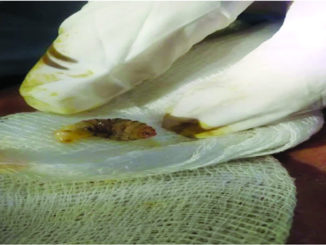
    An American woman, who had recently visited the Amazon forests, was diagnosed with a rare case of myiasis, a type of tissue infection, in her eye and underwent a “successful surgery at a private facility here, hospital authorities claimed on Monday, Feb 21. During the operation, “three live human botflies almost 2 cm in size” were removed from the 32-year-old woman, they said. Myiasis is the infection of a fly larva (maggot) in human tissue. This occurs in tropical and subtropical areas. The patient visited the emergency department with complaints of swelling in the right upper eyelid along with redness and tenderness. She also revealed that she had been feeling something moving inside her eyelids once in a while for the past 4-6 weeks, Fortis hospital, Vasant Kunj, said in a statement. She had consulted doctors in the US, but the myiasis (botfly) could not be removed and doctors discharged her on a few symptomatic relief medications, it said. Dr Mohammad Nadeem, consultant and head emergency department, at the hospital, said, “It was a very rare case of myiasis. Therefore, these cases need to be evaluated in detail urgently”.

    “The US national is a traveller and had a history of visiting the Amazon jungle two months back. Suspecting foreign body from her history of travelling, and noticing movements inside her skin, diagnosis was done,” he said.

    Dr Narola Yanger from the surgery department proactively managed to remove “three live human botflies almost of 2 cm in size — one from the right upper eyelid, second one from back of her neck and third from her right forearm,” the statement said.

    The surgery was completed in 10-15 minutes with all aseptic precautions, without any anesthesia. The woman was discharged on symptomatic prescribed medicines from the emergency department, it said.

    Myiasis burrow into delicate membranes and feed on underlying structures. Such cases have been reported earlier too from tropical and subtropical areas like Central and South Americas and Africa, the statement said.          Source: PTI

  • DIY lip scrub: How to make a homemade lip scrub

    DIY lip scrub: How to make a homemade lip scrub

    Since lip scrubs have so few ingredients, you can test a few before you find your favorite. The general rule of thumb is to have half exfoliant and half nourishing agent, but you can play around with adding raw honey and essential oils as well. Here are a few recipes based on popular ingredients in natural lip scrubs:

    Coconut oil lip scrub

    This is one of the most popular ingredients for moisturizing with a lip scrub. The recipe is 1 tablespoon of coconut oil, 1 tablespoon of honey, and 2 tablespoons of brown sugar. After these ingredients are thoroughly mixed in a small bowl, add in half a teaspoon of warm water.

    Coffee lip scrub

    Mix together one tablespoon of ground coffee and one tablespoon of honey for an invigorating and exfoliating lip scrub. Other spices also work well in lip scrubs and provide a different flavor.

    Brown sugar lip scrub: One tablespoon of honey and one tablespoon of brown sugar is all you need for this sugar scrub. This recipe is great for adding in a few drops of essential oils such as lavender, peppermint, or citrus.

    Olive oil lip scrub

    Since olive oil is so moisturizing, it works with ingredients like cinnamon and will balance out the spice. For this recipe, combine half a tablespoon of olive oil, half a tablespoon of raw honey, and half a teaspoon of cinnamon powder. DIY lip scrubs are easy to make at home and fun to test. They will leave your lips soft and plump, so you no longer have to worry about chapped lips and dry skin.

  • Ways to use baking soda for skin and hair

    Baking soda is great for skin and hair. It’s a natural exfoliant, teeth whitener, skin soother, complexion improver, scalp clarifier, and odor blocker. Baking soda is a naturally occurring substance that is safe for plumbing and harmless to ecosystems and animals (at least in small amounts).

    Wash Your Face With It

    Baking soda is great to use on your face, albeit not frequently. The powder is mildly abrasive, which helps to remove oils, grime, and dead skin cells that can clog pores and cause acne. It also helps tighten pores and relieve inflammation.1

    The easiest way to use baking soda on your face is to mix it with just enough water to form a milky consistency, then scrub skin gently. To up the soothing factor, combine baking soda with honey and colloidal oats until you get a thick masklike consistency. Massage it in, rinse clean, and repeat once per week.

    Exfoliate Your Underarms

    You may notice a darkening of the skin under your arms if your deodorant contains harsh ingredients like alcohol and aluminum. Shaving (especially on dry skin and/or with a dull blade) can also cause skin to darken and thicken over time.

    You can improve underarm darkness by removing some of the product buildup and dead skin. Do this by combining coconut oil and baking soda into a thick, creamy paste. Apply to your armpits, gently massaging it in, and leave on for five minutes before rinsing. As a bonus, baking soda itself acts as a natural deodorant.

    Clean Stained Hands

    You may be left with stained hands after working with berries, walnuts, beetroot, or turmeric. Most things that can stain skin are acidic in nature, and using baking soda on the stain should neutralize it and help your hands—or the carpet, etc.—return to their normal color. Just add a dash of baking soda to some liquid castile soap. Scrub, rinse, and voila!

    Use Baking Soda as a Spot Treatment

    Washing the whole face with baking soda is too much for some sensitive skin types. If that’s the case, you can still reap the inflammation-fighting rewards of baking soda by targeting pimples instead. Make a thick paste by adding a drop of water to a teaspoon of baking soda. Feel free to add a drop of tea tree oil for extra fighting power, too. Apply the thick paste to your blemish and allow it to dry. This will take 10 to 15 minutes. Rinse, pat dry, and moisturize the area to prevent overdrying.

    Swap Your Dry Shampoo With It

    Baking soda is a hygroscopic substance, meaning it attracts and absorbs moisture. That includes hair grease, which is why many use the powder as a natural alternative to chemical-based dry shampoo. Just add a dash to your scalp and rub in with your fingers for a fresh, just-washed feel.

    Soothe Skin After Shaving

    Baking soda has a refreshing cooling effect on skin—hence why it’s often used to soothe sunburns. It can also reduce some of the irritation caused by shaving. Treat your razor bumps and burn with the same solution you’d use on blemishes: a simple baking soda and water paste. Apply it to clean skin and allow to dry for about 10 minutes. Repeat this twice a day as needed.

    Make a Brightening Face Mask

    While baking soda works to cleanse and purify skin, lemon aims to brighten the complexion.  Together, they deliver all the things you look for in a face mask. Mix freshly squeezed lemon juice from half a lemon with one to two tablespoons of baking soda, depending on your desired consistency. Mix in a teaspoon of honey to balance out the acidity and protect your skin’s barrier. Apply the mixture to clean skin and leave on for 10 minutes.

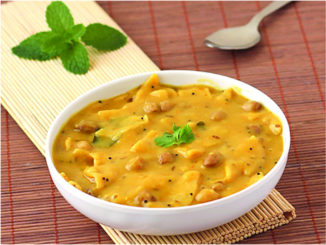
  • Dal Dhokli

    Dal Dhokli

    Dal Dhokli is a famous Gujarati dish. Served as a curry during lunch or dinner, it is also a meal in itself and is popularly known as Indian style Pasta in a dal curry.

    Ingredients:

    For Gravy

    Split Green Gram (GreenMoong Dal) – 1 cup, with skin

    Turmeric Powder – 1/4 tsp

    Chilli Powder – 1 tsp

    Jeera Powder – 1/2 tsp

    Coriander Powder – 1 1/2 tblsp

    Salt as required

    Bay Leaf – 1

    Curry Leaves – few

    Asafoetida Powder – little

    Cumin Seeds – 1/2 tsp

    Oil – 2 tblsp

    Ghee – 2 tblsp Garam Masala Powder – 1/2 tsp

    For Dhokli

    Wheat Flour – 1/2 cup

    Turmeric Powder – 1/4 tsp

    Jeera Powder – 1/2 tsp

    Coriander Leaves – 1 tblsp, chopped

    Oil – 1 tsp Powdered

    Salt – 1 tsp

    Method

    –              Mix turmeric, jeera powder, chopped coriander, salt and little oil with wheat flour.

    –              Add enough water and knead like a chappathi dough.

    –              Roll out like chapatis and cut into even sized square pieces (1 inch thickness)

    –              Heat plenty of water in a broad vessel. When it stars boiling add the dhokli pieces and cook till just soft.

    –              Strain excess water through a colander and keep dhokli pieces separately.

    –              Pressure cook the dal in enough water till just soft (one whistle).

    –              Heat oil and ghee in a kadai. When it becomes hot add bayleaf, curry leaves, cumin seeds, asafoetida powder.

    –              Stir for a minute and add coriander powder, red chilli powder, jeera powder, turmeric powder.

    –              Mix quickly and pour the cooked dal and salt.

    –              Cook for a few minutes, add dhokli pieces at the end and boil for 1-2 minutes.

  • Ishan Kishan, Shreyas Iyer star as India beat Sri Lanka by 62 runs to take 1-0 lead

    Ishan Kishan, Shreyas Iyer star as India beat Sri Lanka by 62 runs to take 1-0 lead

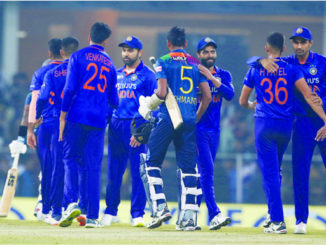
    Lucknow (TIP)-Ishan Kishan gave a glimpse of his enormous potential with a 56-ball-89 before the bowlers joined the party in India’s clinical 62-run demolition of Sri Lanka in the first T20I to take a 1-0 lead in the three-game series here on Thursday, Feb 24.

    This was also India’s longest winning streak in T20Is which has now gone up to 10 matches. Asked to take first strike, Kishan was unstoppable at the top as he blasted a blistering 56-ball 89, while Shreyas Iyer provided the late charge with an unbeaten 57 as India racked up a massive 199 for 2. The Indian bowlers, led by Bhuveshwar Kumar (2/9 in 2 overs) and Venkatesh Iyer (2/36), then provided the finishing touch, limiting Sri Lanka to 137 for 6 in 20 overs.

    Yuzvendra Chahal (1/11) and Ravindra Jadeja (1/28) also claimed one wicket each.The victory extended India’s winning streak to 10 T20 games.

    For Sri Lanka, Charith Asalanka regained some confidence with an unbeaten 47-ball 53 but he didn’t get any support from the other batters.

    Indian captain Rohit Sharma became the highest scorer in all T20Is after his innings of 44 as he surpassed Martin Guptill (3299) to now go onto 3307.

    Leg-spinner Yuzvendra Chahal (67 wickets) have now gone past Jasprit Bumrah as India’s top wicket-taker in T20Is.

    Defending the total, Bhuvneshwar provided India the perfect start as he cleaned up in-form opener Pathum Nissanka (0) of the first ball of the innings before returning to remove the other opener Kamil Mishara (13) cheaply.

    India’s fielding was not up to the mark with ventakesh Iyer and Shreyas Iyer spilling chances off Kamila and Charith Asalanka in 3rd and 6th overs respectively but it didn’t matter as the Lankan batters couldn’t use the chances.

    Ventakesh got rid of Janith Liyanage (11), while comeback man Ravindra Jadeja had Dinesh Chandimal (10) stumped in the 10th over as Sri Lanka were down 51 for 4 in 10th over.

    Skipper Dasun Shanaka’s (3) stay lasted six balls as Chahal overtook Bumrah to become India’s leading wicket taker (67) in T20Is.

    With the required run-rate hovering over 20, Asalanka then provided some respectibility to the chase.

    Earlier Kishan, who failed to capitalise on his starts in the preceding white-ball series against West Indies, finally lived up to his multi-million dollar IPL tag with a whirlwind innings studded with 10 hits to the fence and three sixes.

    The 23-year-old from Jharkhand forged a 111-run innings for the opening wicket with his skipper Rohit Sharma (44 off 32) to put India on course for a formidable total after being invited to bat first.

    Iyer then grabbed the opportunity with both hands, smashing five fours and two sixes in 28 balls to take India to a huge total.

    Ishan Kishan was the aggressor among the two openers as he exploded in the third over, making Chamika Karunaratne pay for erring in his line and length with three boundaries as India amassed 15 runs from the over. Lahiru Kumara bowled with a lot of pace but Ishan came up with two good-looking shots — one a pull on the front foot which went over the ropes and the other one a flick across the mid-wicket boundary.

                    Source: PTI

  • IPL to start on March 26, only 40% crowd to be allowed in Maharashtra stadiums

    IPL to start on March 26, only 40% crowd to be allowed in Maharashtra stadiums

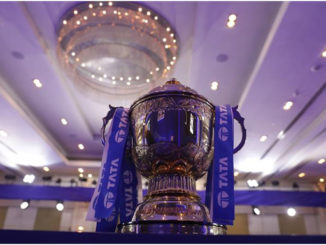
    The 10-team Indian Premier League will start in Mumbai on March 26 and end on May 29 with around 40 percent crowd being allowed at the start of the tournament. “The IPL will start on Saturday, March 26,” IPL chairman Brijesh Patel told PTI after the governing council meeting on Thursday, Feb 24.

    With two new teams Lucknow Super giants and Gujarat Titans added to the roster, there will be 74 matches that will be played at Mumbai’s Wankhede Stadium and Brabourne Stadium along with Navi Mumbai’s DY Patil ground and Gahunje Stadium in Pune.

    “Spectators will be allowed as per guidelines set by the Maharashtra government and to start with, it will be 40 percent. If the Covid situation remains under control and cases decline, it might be full house at the business end,” a source said.

    There has been no decision with regards to play-offs but Ahmedabad’s Narendra Modi Stadium is likely to host the final.                 Source: PTI

  • Djokovic loses world number one ranking to Daniil Medvedev

    Novak Djokovic will fall from No. 1 in the ATP rankings and be replaced by Daniil Medvedev after losing 6-4, 7-6 (4) to Czech qualifier Jiri Vesely in the quarterfinals of the Dubai Championships on Thursday, Feb 24. Djokovic’s latest stay atop the rankings began on Feb. 3, 2020, and his total of 361 weeks there are the most for any man since the tour’s computerized rankings began in 1973.

    On Monday, Medvedev will move up from No. 2 for the first time and become the 27th man to reach No. 1. He won the U.S. Open last September and was the Australian Open runner-up each of the past two years.

    Djokovic congratulated Medvedev on Twitter, saying the Russian was “very deserving” of the No. 1 spot.

    Medvedev is the first man other than Djokovic, Roger Federer, Rafael Nadal or Andy Murray to be No. 1 since Feb. 1, 2004.

    “It’s great for tennis, I think, to have somebody new at world No. 1 again,” Vesely said in his on-court interview. “Tennis needs, of course, new No. 1s. A new generation is coming up. I think it’s just great.”

    Source: AP

  • Barcelona sweep Napoli aside to make Europa League last 16

    Barcelona cruised into the last 16 of the Europa League on Thursday, February 24, after comfortably seeing off Napoli 4-2 to go through 5-3 on aggregate in a serious show of force. The Catalan giants were on top almost from the off in Naples thanks to Jordi Alba expertly finishing a lightning counter-attack from a Napoli corner, and Frenkie de Jong’s superb long range effort effectively ended the tie with three quarters of the match to play. Xavi’s thrilling side could have had more before Lorenzo Insigne briefly gave the hosts hope from the penalty spot mid-way through the first half, and Gerard Pique made absolutely sure there would be no Napoli comeback on the stroke of half-time. A sobering night for Napoli, who are chasing a first Serie A title in three decades, was capped just before the hour mark by Pierre-Emerick Aubameyang, impressive up front for a dynamic Barca team which looks like it can go all the way in the competition. “We dominated we for 90 minutes and that’s the first time we’ve done that since I became coach,” Xavi told reporters. “It’s a win over a team which I repeat is a Champions League-level team, one which does not concede many goals and is fighting for the league title.”

    -Source: AFP

  • Australia announces first tranche of sanctions on Russia over Ukraine crisis

    Australia announces first tranche of sanctions on Russia over Ukraine crisis

    Sydney (TIP): Australia on February 23 joined the United States, the European Union, Canada, Germany and Britain to impose sanctions on Russia after Moscow ordered troops into separatist regions in Ukraine and recognised them as independent entities.

    Australia will immediately begin placing sanctions on Russian individuals it believes were responsible over the country’s actions against Ukraine, Prime Minister Scott Morrison said during a media briefing. “Australians always stand up to bullies, and we will be standing up to Russia, along with all of our partners,” he said. “I expect subsequent tranches of sanctions, this is only the start of this process.”

    Japan sanctions Russia, separatist Ukraine areas

    Tokyo: Japan’s prime minister has announced sanctions targeting Russia and two separatist Ukrainian regions recognised as independent by Russian President Vladimir Putin, joining an international effort seeking to pressure Russia to return to diplomatic solutions.

    Prime Minister Fumio Kishida said Wednesday that his government will ban new issuance and distribution of Russian government bonds in Japan in response to the “actions Russia has been taking in Ukraine.”

    He said Japan will also suspend visa issuance to the people linked to the two Ukrainian rebel regions and freeze their assets in Japan, and will ban trade with the two areas. Kishida repeated his “strong condemnation” of Russia for violating Ukrainian sovereignty and territorial integrity as well as international law.

    He added: “We strongly urge Russia to return to diplomatic process in resolving the development.” — Agencies

  • CHANCELLOR BANKS ANNOUNCES END OF OUTDOOR MASK MANDATE

    CHANCELLOR BANKS ANNOUNCES END OF OUTDOOR MASK MANDATE

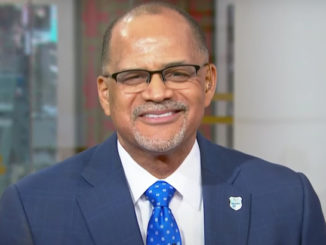
    NEW YORK(TIP): Schools Chancellor David C. Banks  announced on Friday, February 25, that beginning Monday, February 28, 2022 masks or face coverings will no longer be required when outside on school grounds. Masks will still be required for all students, staff and visitors inside schools. “Throughout the pandemic, our schools have remained some of the safest spaces for our students and staff, thanks to our gold standard health and safety protocol,” said Schools Chancellor David Banks. “I am so pleased that we are able to make this exciting announcement and safely allow students and staff to remove their masks when outdoors at NYC public schools.” The safety of our students and staff continues to be the top priority of the Department of Education, and this decision follows the success of our ‘Stay Safe, Stay Open’ plan, which led to the decrease of cases by 99 percent and brought the in-school positivity rate under one percent – far below the citywide average. At this time, in-door masking will continue. We will continue to work in close partnership with the Department of Health & Mental Hygiene and Health + Hospitals to monitor case rates, vaccination rates and other data points.

    The Department of Education continues to maintain stringent COVID protocols, including increased ventilation, distancing when possible, a daily screener to make sure those with symptoms do not come to school and the distribution of test kits—all designed to identify persons with COVID rapidly for isolation and reduce possible transmission of COVID in schools.

  • Row over Japan diplomat’s detention

    Row over Japan diplomat’s detention

    Tokyo (TIP): Japan’s Foreign Ministry said on February 23 it has lodged a strong protest and demanded an apology after its diplomat was detained and questioned by authorities in Beijing. The diplomat from the Japanese Embassy was seized while on duty and held for several hours on Monday, the Foreign Ministry said. The diplomat was carrying out his legitimate work and the detention violated the Vienna Convention on Diplomatic Relations, which stipulates the immunity of diplomats from civil and criminal jurisdiction of the host nation, the ministry said. The diplomat, whose name and other details were not disclosed, was released later Monday, a ministry official said on condition of anonymity, citing protocol. — AP

  • Canada’s protests settle down, but could echo in politics

    Canada’s protests settle down, but could echo in politics

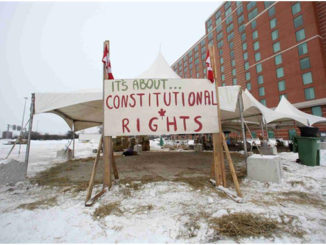
    Toronto (TIP): Most of the streets around the Canadian Parliament are quiet now. The Ottawa protesters who vowed never to give up are largely gone, chased away by policemen in riot gear. The relentless blare of truckers’ horns has gone silent.

    But the trucker protest, which grew until it closed a handful of Canada-US border posts and shut down key parts of the capital city for weeks, could echo for years in Canadian politics and perhaps south of the border. The protest, which was first aimed at a Covid-19 vaccine mandate for cross-border truckers but also encompassed fury over the range of Covid-19 restrictions and hatred of Prime Minister Justin Trudeau, reflected the spread of disinformation in Canada and simmering populist and right-wing anger.

    “I think we’ve started something here,” said Mark Suitor, a 33-year-old protester from Hamilton, Ontario, speaking as police retook control of the streets around Parliament. Protesters had essentially occupied those streets for more than three weeks, embarrassing Trudeau and energizing Canada’s far right. Suitor believes the protests will divide the country, something he welcomes.

    “This is going to be a very big division in our country,” he said. “I don’t believe this is the end.” While most analysts doubt the protests will mark a historic watershed in Canadian politics, it has shaken both of Canada’s two major parties.

    “The protest has given both the Liberals and the Conservatives a black eye,” said Nelson Wiseman, a political science professor at the University of Toronto. Trudeau’s Liberals look bad for allowing protesters to foments weeks of chaos in the capital city, he said, while the Conservatives look bad for championing protesters, many of them from the farthest fringes of the right.

    The conservatives “have to be careful not to alienate more moderate voters, who are generally not sympathetic to the protesters or right-wing populism more generally,” said Daniel Béland, a political science professor at McGill University in Montreal.

    The self-styled Freedom Convoy shook Canada’s reputation for civility, inspired convoys in France, New Zealand and the Netherlands and interrupted trade, causing economic damage on both sides of the border. Hundreds of trucks eventually occupied the streets around Parliament, a display that was part protest and part carnival.

    Authorities moved quickly to reopen the border posts, but police in Ottawa did little but issue warnings until the past couple days, even as hundreds and sometimes thousands of protesters clogged the streets of the city and besieged Parliament Hill. (AP)

  • China could invade Taiwan after seeing West’s response to Ukraine invasion: Oxford Professor

    Beijing (TIP): China could invade Taiwan after seeing the West’s response to Russia’s brutal war in Ukraine, a leading historian has warned, Daily Mail reported. Professor of European studies at the Oxford University, Timothy Garton Ash, said that Xi Jinping taking over the island militarily would be a ‘worst case scenario’, the report said. The political writer claimed that the Communist leader will be thinking: “If comrade Vladimir (Putin) can get away with it in Ukraine, maybe I’ll have a go.” He also warned Putin’s ‘minimal aim’ is to bring a new iron curtain down over eastern Europe because he wants to create a new empire, Daily Mail reported. Ash’s warnings came a day after Taiwan’s air force scrambled its fighter planes to warn away nine Chinese aircraft in its air defence zone. At the same time, Putin’s forces continued to sweep across Ukraine and reached the outskirts of Kiev by Friday morning. Ash said the devastating conflict – which has already seen hundreds slaughtered – is just the beginning of Russia’s plans. He told BBC Question Time: “He (Putin) has effectively already invaded Belarus, which is just next to Ukraine. Because he put all his forces in there and they’re there for as long as he wants them to be there. “So I think the minimal aim of Vladimir Putin is to create a new iron curtain down the Eastern frontier of NATO so that countries like Belarus, Ukraine, Moldova and Georgia will be stuck in the Russian empire whether they like it or not,” as per the report.

    -IANS

  • Global warming speeding up world’s water cycle: Report

    Sydney (TIP): Rising temperatures are accelerating the world’s water cycle and triggering natural disasters such as droughts and floods, according to a new report led by Australian researchers. The report, published in Nature journal, released to the public on february 24, said that the hotter temperatures are speeding up the constant cycle of freshwater between the clouds, the land and the ocean, leading to more extreme weather conditions with the world’s wetter areas becoming even more soaked and the dry regions becoming even more parched. TaimoorSohail, the lead author and a mathematician from the University of New South Wales (UNSW), said the findings “paint a picture of the larger changes happening in the global water cycle,” Xinhua news agency reported. Previously, changes to the cycle had been difficult to directly observe, as about 80 per cent of global rainfall and evaporation occurs over the ocean.

    Sohail said his team had instead analysed historical data from 1970 to 2014 to monitor the changing patterns of salt in the ocean, to estimate how much ocean freshwater had moved from the equator to the poles during that time.

    Their new findings showed that between two and four times more freshwater had moved than climate models had anticipated.

    The researchers believe the amount of freshwater that was transported from the equator to the poles during those years had exceeded predictions by up to 77,000 cubic km. “We already knew the global water cycle was intensifying,” Sohail said. “We just didn’t know by how much.” Jan Zika, co-author of the report and associate professor of UNSW School of Mathematics and Statistics, said evaporation in warmer regions removed freshwater from the oceans making those bodies of water saltier.

    In contrast, Zika said the “water cycle takes that freshwater to colder regions where it falls as rain, diluting the ocean and making it less salty.” “Changes to the water cycle can have a critical impact on infrastructure, agriculture, and biodiversity,” Sohail said. “It’s therefore important to understand the way climate change is impacting the water cycle now and into the future.

    “Establishing the change in warm-to-cold freshwater transport means we can move forward and continue to make these important projections about how climate change is likely to impact our global water cycle,” Sohail said. –IANS

  • 2 Chinese, 115 Nepalese held in online loan scam

    Kathmandu (TIP): Two Chinese and more than 100 Nepal nationals have been arrested for their involvement in running an online fraud loan scheme targeting Indians, police said on February 23. The Nepal Police said in a press release that they arrested two Chinese and 115 Nepalese in two separate raids conducted in Kathmandu and Bhaktapur districts in Kathmandu valley on Monday and Tuesday for their involvement in fraudulent cyber activities. Acting on a tip-off, Kathmandu Metropolitan Police Range first detained a group of 37 individuals, including a Chinese from Old Baneshwor on Monday night. The Chinese national, identified as Chang Hu bao, operated illegal business activities targeting Indians with the help of Nepalese youth. “They had officially registered the company called Lewan Group to provide IT services for business houses in the capital,” police said. The Nepalese arrested from Kathmandu include 23 boys and 13 girls. After their arrest, the police also busted a larger racket in Sano Thimi Municipality of Bhaktapur district from where they arrested 80 persons, including a Chinese national named Wang Zinao in the second raid carried on a three-storey office building.A total of 48 laptops and 14 desktop PCs were also confiscated from the office. — PTI

  • Myanmar opposition protests mark general strike anniversary

    Bangkok (TIP): Opponents of military rule gathered February 23 for protests in Myanmar’s cities, defying threats by the authorities to arrest anyone joining demonstrations against the army’s takeover a year ago. The protests on Tuesday marked the anniversary of last year’s ‘Five-Twos Revolution’, a massive nationwide general strike against army rule just weeks after the military seized power.

    Activists often call for actions—usually dubbed strikes—on significant occasions or anniversaries, and opposition activists had designated Tuesday’s protest ‘222222’ or ‘Six-Twos’, derived from the digits in the date.

    Photos and videos on social media showed scattered small groups of people marching in Yangon, the country’s biggest city, and elsewhere. Because of the risks of arrest or injury, urban street protests are usually carried out by flash mobs, which can dissolve before the security forces crackdown. Protesters in Yangon held banners with slogans such as “Gathering together again for the Six-Twos Revolution” and “Revolt in the countryside, defiance in the cities”, referring to the armed resistance carried on against the odds in rural areas, and the marches and other actions in urban areas.

    They also shouted anti-military chants and raised the three-finger salute of their movement, adopted from the ‘The Hunger Games’ movie series. Buddhist monks in the central city of Mandalay participated in a protest while collecting alms. Young people there hung banners with anti-military slogans in public areas in the early morning hours.

    The military seized power on February 1, 2021, ousting the elected government of Aung San SuuKyi, whose National League for Democracy party won the 2020 general election by a landslide and was about to begin a second term in office. Nonviolent protests were met with lethal force by the authorities, escalating the crisis into violence that now includes armed resistance in many parts of the country.

    More than 1,560 civilians have been killed and thousands of others arrested by the security forces according to a detailed tally compiled by the Assistance Association for Political Prisoners, an independent organization founded in 2000 to track political repression in Myanmar. Tuesday’s strike was designed to encourage public involvement with minimal risk of confrontations with security forces, said PhaungYoe, a leader of the Labor Alliance group and the General Strike Coordination Body. “Today’s strike is a powerful medicine for all the young people on the ground, the militants in the jungle, and all the Civil Disobedience Movement staff. Those in the prisons also know that the people are on their side and aim to continue to overcome difficulties,” she told The Associated Press. (AP)

  • Protests in Nepal over $500-million US grant

    Kathmandu (TIP): The police in Nepal fired rubber bullets and tear gas as hundreds of people protested over a $500 million US grant going before parliament, BBC reported. Nepal signed the Millennium Challenge Corporation pact to fund infrastructure projects in 2017 and it has been a bone of contention between the US and China. Several people were injured in the demonstrations outside the Parliament in Kathmandu. Groups opposing the US funding have said it undermines Nepal’s sovereignty, the report said.

    Protesters were also targeted with water cannon in an attempt to disperse Sunday’s demonstration. Police had stones thrown at them.

    The Nepal Parliament has until February 28 to ratify the deal, which has been delayed by divisions within political parties, including the ruling coalition. Nepalese media has reported that the US administration has held conversations with Nepali politicians urging them to endorse the pact by the end of the month or face the ties between the countries being reviewed. — IANS

  • Pakistan PM Imran Khan’s step-son among three booked on charges of possession of liquor

    Pakistan PM Imran Khan’s step-son among three booked on charges of possession of liquor

    Lahore (TIP): Prime Minister Imran Khan’s step-son was among the three booked on charges of possession of liquor, only to be released after orders from “higher authorities,” police said on February 23.

    According to the FIR, Musa Maneka, the First Lady BushraBibi’s son from her previous marriage, and two of his friends were arrested near Gaddafi Stadium on Monday after police found alcohol in the car they were travelling in.

    “The three youths, including the First Lady’s son, were released the same day after orders from the top. Some legal formalities like personal guarantee from the families of the suspects were met,” a police official told PTI on Tuesday.

    He added that when Maneka was picked up for possessing liquor, he threatened security officials with dire consequences as he was the son of Pakistan’s First Lady, the official said. “The Punjab police chief started receiving calls from the top soon after a case was registered against them. However, the police made no further legal action and released them after a few hours in custody,” he added.

    The sale and consumption of alcohol is illegal in Pakistan, a Muslim-majority country. Last week, reports began to circulate on social media about differences between Prime Minister Khan and his wife. Farah Khan, a close friend of Bibi took to Twitter to announce that the First Lady was living with her husband at the Bani Gala residence. “Fake propaganda was being spread through Whatsapp messages about the first couple,” she said. “The First Lady is not living in my house but at Bani Gala in Islamabad,” she added. Earlier this month, Pakistan’s Federal Investigation Agency arrested five people as part of the nationwide crackdown against those involved in running a “malicious campaign” against Khan, his wife Bibi and the Army on social media. (PTI)

  • Shaking up Europe’s security architecture

    Shaking up Europe’s security architecture

    An order that does not accommodate Russia’s concerns through genuine negotiation cannot be stable in the long term

    By P.S. Raghavan

    It is too early to say what Mr. Putin’s endgame is, and how costly this adventure will be, in terms of lives and destruction, as well as in its political and economic impact. Without justifying the manner in which Russia has chosen to “right” the perceived “wrongs”, it has to be said that this crisis results from a broken security architecture in Europe. A sustainable security order has to reflect current realities: it cannot be simply an outgrowth of the Cold War order, and it has to be driven from within. Also, a European order that does not accommodate Russia’s concerns through genuine negotiation cannot be stable in the long term. France’s President Emmanuel Macron has been making this point forcefully, arguing for Europe to regain its strategic autonomy. He has called NATO “brain-dead” and said that Europe, as a “geopolitical power” should control its own destiny, regaining “military sovereignty” and re-opening a dialogue with Russia, managing the misgivings of post-Soviet countries.

    The commencement of Russian military action in Ukraine brings down the curtain on the first act of a bizarre drama that has been playing out over the past eight months. At the heart of it is the instability in the post-Cold War security order.

    The first act began with a meeting between U.S. President Biden and Russia’s President Vladmir Putin in June last year, promising to reverse seven years of relentless U.S.-Russia acrimony. Mr. Biden’s decision to reach out to Mr. Putin signaled a U.S. geopolitical rebalancing, seeking a modus vivendi with Russia and disengagement from conflicts in Europe and West Asia, to enable a sharper U.S. focus on domestic challenges and the external challenge from its principal strategic adversary, China.

    These were Putin’s terms: Mr. Putin saw this reengagement as an opportunity to revive Russia’s flagging economy and expand its freedom of political action globally. However, he wanted this engagement on equal terms. Russia would cooperate in this geopolitical rebalancing if its concerns are met, so that it does not constantly have to counter moves to probe its territorial integrity and constrain its external influence – which is how Russia sees the strategic posture of the North Atlantic Treaty Organization (NATO) and U.S. policies. Russia has repeatedly articulated its grievances: that NATO’s expansion violated promises made prior to the breakup of the Soviet Union; that Ukraine’s accession to NATO would cross Russia’s red lines; and that NATO’s strategic posture poses a continuing security threat to Russia. NATO’s expansion as a politico-military alliance, even after the dissolution of the Soviet Union and the Warsaw Pact, was at the U.S.’s initiative. It was intended to temper European ambitions for strategic autonomy from the sole superpower and to counter Russia’s resurgence. Recent experience shows it may not be succeeding in either goal.

    NATO’s weakened glue: NATO countries today span a geography of uneven economic development and a diversity of political traditions and historical consciousness. Moreover, the original glue that held NATO together — ideological solidarity (free world against communist expansion) and an existential military threat — dissolved with the collapse of communism and the Warsaw Pact. There is no ideology to oppose and threat perceptions vary, depending on geographical location and historical experience. This heterogeneity means a diversity of interests. American leadership has normally succeeded in papering over differences, but the growing ambitions of countries is making this increasingly difficult. The current crisis in Ukraine has illustrated the divisions and exposed the limitations of the U.S.’s ability to bridge them. The irony is that the divisions are of the U.S.’s making. Its pressure on NATO in 2008 to recognize Ukraine’s membership aspirations and its encouragement for a change of government in Kyiv in 2014, provoked the Russian annexation of Crimea. The subsequent armed separatist movement in eastern Ukraine (Donbas) led to the Minsk accords of 2014-15, which provided for a special status for this region within Ukraine.

    Ukraine considers this an unfair outcome, and the U.S. has supported its efforts to reinterpret the accords to its advantage. While some European countries supported this line, France and Germany — which brokered these agreements — have periodically tried to progress implementation, in the effort to break the impasse and resume normal engagement with Russia, which serves their economic interests.

    In recent months, the U.S. signaled that it would support the full implementation of the Minsk accords, but apparently found it difficult to shake the entrenched interests sufficiently to make it happen. This may have finally convinced Mr. Putin that his concerns would not be met through negotiations.

    Energy security: U.S. interests have also divided NATO on energy security. For Germany, the Nord Stream 2 (NS2) Russia-Germany gas pipeline is the cheapest source of gas for its industry. Others deem it a geopolitical project, increasing European dependence on Russian energy. This argument masks self-serving interests. Ukraine fears the diminution of gas transit revenues, and also that if its importance for gas transit declines, so will Europe’s support in its disputes with Russia. The U.S.’s “geopolitical” argument against NS2 dovetails neatly with its commercial interest in exporting LNG to Europe, reinforced by U.S. legislation for sanctions against companies building gas pipelines from Russia. Increasing LNG exports to Europe is explicitly stated as a motivation for the sanctions. European countries that oppose NS2 are ramping up their LNG import infrastructure to increase imports from the U.S.

    The manner in which NATO countries implement the promised harsh sanctions against Russia will demonstrate whether, how much and for how long, this crisis will keep them united.

    It is too early to say what Mr. Putin’s endgame is, and how costly this adventure will be, in terms of lives and destruction, as well as in its political and economic impact. Without justifying the manner in which Russia has chosen to “right” the perceived “wrongs”, it has to be said that this crisis results from a broken security architecture in Europe. A sustainable security order has to reflect current realities: it cannot be simply an outgrowth of the Cold War order, and it has to be driven from within. Also, a European order that does not accommodate Russia’s concerns through genuine negotiation cannot be stable in the long term. France’s President Emmanuel Macron has been making this point forcefully, arguing for Europe to regain its strategic autonomy. He has called NATO “brain-dead” and said that Europe, as a “geopolitical power” should control its own destiny, regaining “military sovereignty” and re-opening a dialogue with Russia, managing the misgivings of post-Soviet countries.

    Outlook for India: India has to brace itself for some immediate challenges flowing from the Russian actions. It will have to balance the pressure from one strategic partner to condemn the violation of international law, with that from another to understand its legitimate concerns. We were there in 2014 and managed the pressures. As Russia-West confrontation sharpens further, the U.S. Administration’s intensified engagement in Europe will inevitably dilute its focus on the Indo-Pacific, causing India to make some tactical calibration of actions in its neighborhood. Geopolitics, however, is a long game, and the larger context of the U.S.-China rivalry could, at some point in the not-too-distant future, reopen the question of how Russia fits into the European security order.

    (The author  is a former Ambassador to Russia and former Chairman of the National Security Advisory Board)

  • Corporate margins aiding rising inflation curve

    Corporate margins aiding rising inflation curve

    By Devinder Sharma

     “Simply put, corporates never had it so good. From groceries to pharmaceuticals, from coffee to consumer products to fuel, so much so that even Netflix and Amazon Prime have increased subscription despite logging a huge increase in net profits and paying the lowest tax. When it comes to fuel, all major oil companies – Exxon Mobil, British Petroleum, Shell, and Chevron – have recorded highest profits in past seven years, and still have expressed helplessness when it comes to high petrol and diesel prices consumers are being made to pay.As retail inflation swings out of proportion, the world is witnessing a new phenomenon. In lot many ways, it was known to exist earlier, but not so starkly. As inflation rises, so does the profit of companies, this time recording a historic increase. While the company’s profits soar, the CEOs and other top executives walk away with hefty salary increases, stock buybacks, and rise in dividend payments.

    Although the companies say there is nothing they can do, consumers are being told that “off the chart” inflation they are faced with is the outcome of higher wages, and a crazy rise in production costs. There is no denying that the pandemic had caused supply chain disruptions, but the high and steady rise in inflation the world encounters defies the simple logic of supply-demand distortions. It hides more than what it reveals.

    In January, retail inflation in the US has hit the highest in 40 years, rising to a peak of 7.5 per cent. In the UK, inflation has already touched a 30-year-high at 5.4 per cent, and the Bank of England warns of inflation further rising to 7.1 per cent by April. As the retail inflation in India soars to 6.1 per cent, fears are already being expressed that imported inflation may drive the consumer prices high. “India does need to be wary of imported inflation, especially from elevated global energy prices,” Economic Survey 2022 had warned.

    In the midst of rising inflation, a headline in international business newspaper The Financial Times (February 7) caught my attention: ‘Tyson Foods loves Inflation’. And left me wondering, whether the high inflation rate the world is witnessing is because of economic reasons beyond control or more so by simply repackaging and marketing corporate greed as inflation.

    The more I researched, the more it became clear as to how greed is very conveniently being packaged as inflation. To understand, let’s first begin with Tyson Foods, one of the four livestock companies controlling 85 per cent of the US meat market, and whom US President Joe Biden had earlier accused of “pandemic profiteering”. Another explainer in Forbes pointed to how Tyson Foods is spending less to earn more. Even agreeing that the feed and shipping costs have risen, but the fact is that operating profit margins for Tyson Foods too has almost doubled since the pre-pandemic days.

    While the profits of the four livestock companies jumped 300 per cent, the retail meat prices too recorded a steep hike, touching almost 20 per cent for beef. This is happening at a time when prices being paid to livestock farmers are the lowest in the past 50 years.

    If you are a beer drinker, here is some bad news. The Guardian reports the sale of the popular Heineken beer brand in Europe to have increased by 4.3 per cent, recording 80 per cent jump in overall profits. With profits touching a record $2.26 billion in 2021, the company has announced that its beer prices will go up significantly in the months to come. This is despite already having raised the beer prices a couple of times during the two years of the pandemic. Meanwhile, another popular beer brand Cobra has also announced that consumers should be ready to shell out extra given the “vicious cycle” of increase in its production costs.

    Now, let’s take the case of Starbucks. Surely, it’s more than just coffee, it’s also about the price you pay. While its profits increased by 31 per cent in the last quarter of 2021, it has also announced plans to further hike coffee prices. This is despite Starbucks turnover exceeding $8.1 billion in 2021. Interestingly, the compensation package of its CEO grew by 39 per cent, reaching a total of $20.4 million. While coffee bean growers are among the lowest paid, the rise in salary packets and bonuses for the top executives remains limitless. It’s like privatizing the profits andsocializing the costs.

    Senator Bernie Sanders cites another example. In a tweet, he says: “Corporate greed is Chipotle increasing its profits by 181 per cent last year to $764 million, giving its CEO a 137 per cent pay raise to $38 million in 2020 and blaming the rising cost of a burrito on a minimum wage worker who got a 50 cent pay raise. That’s not inflation. That’s price gouging.” Chipotle is a restaurant chain.

    In another tweet by Dan Price, the founder of the Seattle-based credit card processing company Gravity Payments, quoting a New York Times report, asks: “Why are groceries so expensive? Kroger (US-based retail company) profits are at record highs. Its stock is up 36 per cent in a year. Its CEO got a 45 per cent raise to $22 million and makes 909 times the median worker. 75 per cent of its workers are food insecure. 63 per cent can’t pay their bills. Many are on food stamps.” Simply put, corporates never had it so good. From groceries to pharmaceuticals, from coffee to consumer products to fuel, so much so that even Netflix and Amazon Prime have increased subscription despite logging a huge increase in net profits and paying the lowest tax. When it comes to fuel, all major oil companies — Exxon Mobil, British Petroleum, Shell, and Chevron — have recorded highest profits in past seven years, and still have expressed helplessness when it comes to high petrol and diesel prices consumers are being made to pay.

    Surprisingly, despite increased production costs, reports say US corporate profits soared to a record $2.8 trillion in the second quarter of 2021. So did the corporate profits in India. But while the working class and the poor bear the brunt of increasing inflation, the top 1 per cent has gained. A whopping increase by

    77 per cent in the sale of super yachts this year and an increase in chartered flights bear testimony to the trend. While a section of market economists will not like to draw any link between inflation and corporate greed, it shouldn’t surprise us anymore.

    (The author is a Food & Agriculture specialist)

  • Indian origin Sikh Students in UK dish out over 500 free meals as part of annual Sikh celebration

    Indian origin Sikh Students in UK dish out over 500 free meals as part of annual Sikh celebration

    Over 500 people from across the city enjoyed the hot meal and gained a greater insight into the Sikh faith

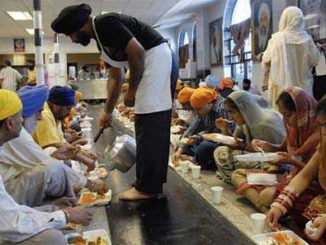
    LONDON (TIP): Students in UK’s Birmingham city have served up more than 500 free meals as part of an important Sikh tradition. Birmingham City University Students’ Union and its Sikh Society hosted the ‘Langar on Campus’ in the Atrium at Millennium Point on Tuesday, February 22. ‘Langar’, which means kitchen in Punjabi language, is an important institution in Sikhism, where free food is offered to anyone who attends. ‘Langar on Campus’ is an event organized by Sikh students in universities all across the world, where students, staff and community members from all backgrounds come together and eat.

    This was the fifth time a large-scale langar has been held at Birmingham City University and the first in over two years since the outbreak of the pandemic. Over 500 people from across the city enjoyed the hot meal and gained a greater insight into the Sikh faith, the university said in a press release on Thursday. President of Birmingham City University’s Sikh Society, Rajveer Singh, said: “Our Sikh Society was delighted to hold our fifth ‘Langar on Campus’ Event. It is always a joy to welcome people of all backgrounds to this communal celebration of oneness and equality. “But this year’s event was particularly poignant as it is the first time we have gathered in such numbers since the outbreak of the Covid pandemic. We sincerely hope everyone enjoyed the event as much as we did.”

    (Source: PTI)

  • Indian American student Jaskaran Singh wins $250K prize in college quiz contest

    Indian American student Jaskaran Singh wins $250K prize in college quiz contest

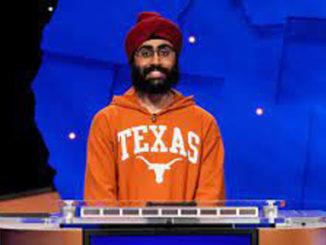
    AUSTIN, TX  (TIP): In a three-contest winning streak by Indian American students, Jaskaran Singh has won the premiere quiz tournament for students, the National College Championship Jeopardy with a prize of $250,000. The 22-year-old red-turbaned Sikh studying at the University of Texas at Austin on Tuesday beat out 35 other students selected from about the 26,000 who competed for a chance to be on the tournament held over two weeks.  Singh was modest about his success.

    “I just sort of just buzzed fast and know things, pretty much. I don’t think there’s much more,” he told an interviewer from the show.

    The quarter million dollars win will pay for his college fees “and a lot more”, he said.

    The college tournament is an offshoot of Jeopardy, the most popular daily quiz show, which uses the unusual format of the quizmaster or host stating an answer for which the contestant has to frame the right question.

    The puzzle given by the host, TV actor Mayim Bialik, in the final round of the contest was, “An 1873 book title gave us this phrase for the period in the late 1800s of growth & prosperity & also greed & corruption”.

    Singh gave the correct solution in the form of a question: “What is the gilded age”?

    Nibir Sharma from the University of Minnesota won the 2019 tournament and was a semi-finalist in the Jeopardy Tournament of Champions going again the big winners in the main Jeopardy program  next year.

    Dhruv Gaur from Brown University bagged the championship in 2018 and there were no collegiate contests in the last two years because of the Covid-19 pandemic. Before them, Vinita Kailasanath had won the championship in 2001.

    This time four of the students contesting against Singh were of Indian origin and one was of Sri Lankan heritage.

    Singh who is in the final year studying finance and economics said on the show that he had worked for a civil rights organization in Washington after his first year of college.

    He credited his parents for his victory, telling the Austin Statesman newspaper that they “are really amazing. They supported me throughout the whole thing”.

    He said that his mother had made him sign up for the Jeopardy Teen Tournament when he was 13.

    Although he didn’t make it to the teen competition, she kept encouraging his to try for the college championship, he said.

    Congratulating Singh, his university president Jay Hartzell said the university’s tower would be lit up in orange, the university’s colors to honor the victory. Avi Gupta won the last Jeopardy Teen Tournament with a $100,000 prize held in 2019 before the Covid pandemic suspended it. Four other teens of Indian origin had also won the championship in the 36 tournaments held so far.

  • Indian American Rajeev Aluru is New President of  Ekal’s Houston Chapter

    Indian American Rajeev Aluru is New President of  Ekal’s Houston Chapter

    HOUSTON, TX(TIP): Rajeev Aluru is all set to lead Ekal Vidyalaya’s educational initiatives as its Houston Chapter President. Ekal’s youngest president is clearly energized about his new role which he describes as “a divine opportunity that knocked on my door.” A relatively new Houstonian (he moved from North Carolina in 2020), Rajeev, 41, outlined his vision for Ekal with the leadership in Houston. Rajeev’s journey with Ekal began in 2014 in North Carolina when he accepted an invitation to a fundraiser dinner from a colleague. Rajeev became an active volunteer and developed a keen understanding of the foundational impact Ekal was making in rural India’s education. Today the Ekal movement, started in 1989 with one village and one school, has the distinction of overseeing over one lakh schools offering free schooling, vocational training, digital competence, agricultural education and much more. After his engineering degree in India, Rajeev enrolled in Auburn University, Alabama. As we face a post Covid world, Rajeev realizes the need to rewrite Ekal’s outreach strategies. His team is drafting a model to facilitate entrepreneurship, jobs, avenues to profits and an approach that will empower villages to a point where “they don’t need us anymore.” He intends to create a program to encourage donors to visit Ekal schools in India to witness first-hand how their contributions are benefiting millions of underprivileged children. The organization will also leverage digital marketing to augment Ekal’s presence beyond the traditional fundraising events. The new president has an ambitious one million dollar benchmark for this year’s fundraising.

  • Indian American economic advisor Daleep Singh leads Biden admin in executing sanctions on Russia

    Indian American economic advisor Daleep Singh leads Biden admin in executing sanctions on Russia

    WASHINGTON, D.C. (TIP): Russian President Vladimir Putin on Monday, February 21,  signed decrees to recognize Ukraine’s regions of “Donetsk and Luhansk People’s Republics” as “independent”, escalating the tension in the region and increasing fears of Moscow’s invasion of Ukraine. He also ordered Russian troops into eastern Ukraine in what the Kremlin called a “peacekeeping” mission in the Moscow-backed regions.

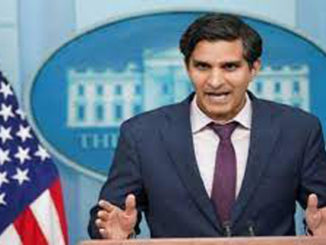
    Singh, who is Deputy National Security Advisor for international economics and Deputy Director of the National Economic Council, made his second appearance in the White House Press Room in a matter of days.

    White House Press Secretary Jen Psaki said that he is “back by popular demand” given the key role Singh is playing in this Russia policy of the administration. “Russia’s long previewed invasion of Ukraine has begun and so too has our response. Today, the president (Joe Biden) responded swiftly and in lockstep with allies and partners. The speed and coordination were historic… It took weeks and months to mount a decisive response,” Singh told reporters in his opening remarks.

    Singh said that after consultations overnight with Germany, Russia’s Nord Stream 2 natural gas pipeline will not become operational.

    That is a USD 11 billion investment in a prized gas pipeline controlled by Russia that will now go to waste, and it sacrifices what would have been a cash cow for Russia’s coffers, he said.

    It is not just about the money, this decision will relieve Russia’s geostrategic chokehold over Europe through its supply of gas, and it’s a major turning point in the world’s energy independence from Russia. “Second, we’ve demonstrated the potency of our financial sanctions and make no mistake, this is only the sharp edge of the pain we can inflict.

  • Hillside Avenue and Homelawn Street in  Queens co-named “ Little Bangladesh Avenue”

    Hillside Avenue and Homelawn Street in  Queens co-named “ Little Bangladesh Avenue”

    QUEENS, NY (TIP): Queens County District Attorney Melinda Katz, on February 20,  joined  Councilmember Jim Gennaro and members of the Jamaica Bangladeshi-American community for a street co-naming ceremony at the corner of Hillside Avenue and Homelawn Street. This intersection is now co-named “Little Bangladesh Avenue” in honor of the residents and business owners of this vibrant community. The event coincided with International Mother Language Day and also marked the hard-fought efforts of community members on behalf of Bengali speakers in the neighborhood.