Month: February 2022

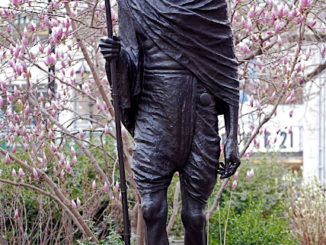
  • Indian Americans condemn vandalization of Gandhi statue in New York

    Indian Americans condemn vandalization of Gandhi statue in New York

    NEW YORK (TIP): Indian-American community leaders on Monday, February 7, condemned the vandalism of a statue of Mahatma Gandhi in New York and said this is disrespect to Gandhi and Martin Luther King, two leaders who sought to eradicate hate. A life-sized bronze statue of Mahatma Gandhi was vandalized in Union Square, New York City on Saturday, February 5. The incident was strongly condemned as ‘despicable’ by the Consulate General of India. The eight-foot-high statue, located in Manhattan’s Union Square, was defaced by unknown persons, the Indian Consulate in New York had said. “As an African-American practitioner of the Hindu dharma, I am deeply offended that anyone would disrespect Mahatma Gandhi, who inspired MLK (Martin Luther King) to take up the mission of non-violence, which inspired major changes in society that are still positively impacting our lives today,” said Balabhadra Bhattacharya Dasa (Benny Tillman), president of the Vedic Friends Association. Utsav Chakrabarti, executive director of the HinduPACT said that this is not the first time that a statue of Gandhi had been vandalized in the US. “In the past few years, statues of Mahatma Gandhi have been vandalized by groups aligned with radical Islamists and their sympathizers in South Asian communities,” he claimed.

    (Source: PTI)

  • U.S. urges Canada to use federal powers to end bridge blockade

    U.S. urges Canada to use federal powers to end bridge blockade

    The Ambassador Bridge is the busiest U.S.-Canadian border crossing, carrying 25% of all trade between the two countries, and the effects of the blockade there were felt rapidly.

    WASHINGTON, D.C. (TIP): The Biden administration urged Prime Minister Justin Trudeau’s government Thursday, February 10, to use its federal powers to end the truck blockade by Canadians protesting the country’s COVID-19 restrictions, as the bumper-to-bumper demonstration forced auto plants on both sides of the border to shut down or scale back production, according to an AP report.

    For the fourth straight day, scores of truckers taking part in what they dubbed the Freedom Convoy blocked the Ambassador Bridge connecting Windsor, Ontario, to Detroit, disrupting the flow of auto parts and other products between the two countries.

    The White House said Homeland Security Secretary Alejandro Mayorkas and Transportation Secretary Pete Buttigieg spoke with their Canadian counterparts and urged them to help resolve the standoff.

    Federal Public Safety Minister Marco Mendicino said Royal Canadian Mounted Police reinforcements are being sent to Windsor, Ottawa and Coutts, Alberta where another border blockade is happening.A federal government official said they are not ruling out any options. The official spoke on condition of anonymity as they were not authorized to speak publicly.

    Mr. Trudeau met virtually with leaders of Canada’s opposition late Thursday and said he spoke with Windsor’s mayor. He said it is causing real harm to workers and economies on both sides of the border.

    Conservative Ontario Premier Doug Ford, meanwhile, moved to cut off funding for the protests by successfully asking a court to freeze millions of dollars in donations to the convoy through crowd-funding site GiveSendGo. Ford has called the protests an occupation.

    Canadian officials previously got GoFundMe to cut off funding after protest organizers used the site to raise about 10 million Canadian dollars ($7.8 million.) GoFundMe determined that the fundraising effort violated the site’s terms of service due to unlawful activity.

    With political and economic pressure mounting, Windsor Mayor Drew Dilkens announced the city will seek a court injunction to end the occupation. “The economic harm is not sustainable, and it must come to an end,” he said.

    In the U.S., authorities braced for the possibility of similar truck-borne protests inspired by the Canadians, and authorities in Paris and Belgium banned road blockades to head off disruptions there, too. The U.S. Department of Homeland Security said in a bulletin to local and state law enforcement agencies that it has received reports that truckers are planning to “potentially block roads in major metropolitan cities” in a protest against vaccine mandates and other issues.

    The agency said the convoy could begin in Southern California as early as this weekend, possibly disrupting traffic around the Super Bowl, and reach Washington in March in time for the State of the Union address, according to a copy of Tuesday’s bulletin obtained by The Associated Press. The White House said the department is “surging additional staff” to the Super Bowl just in case.

    The ban on road blockades in Europe and the threat of prison and heavy fines were likewise prompted by online chatter from groups calling on drivers to converge on Paris and Brussels over the next few days.

    The Ambassador Bridge is the busiest U.S.-Canadian border crossing, carrying 25% of all trade between the two countries, and the effects of the blockade there were felt rapidly.

    Ford said its Windsor engine plant reopened Thursday after being shut down on Wednesday because of a lack of parts. But the factory and the company’s assembly plant in Oakville, Ontario, near Toronto, were operating at reduced capacity, the automaker said.

    On the U.S. side, GM sent the first shift home two hours early Thursday at its Flint, Michigan, heavy-duty pickup truck plant due to parts shortages. Stellantis cut short the first shift Friday at its Jeep plant in Toledo, Ohio, due to parts shortages

    Also, Honda will temporarily stop production on one assembly line during the day shift Friday at its plant in Alliston, Ontario. It’s because of border delays. U.S. Plants are scheduled to run normally Friday. Toyota said three of its plants in Ontario closed for the rest of the week because of parts shortages, and production also had to be curtailed in Georgetown, Kentucky.

    Michigan Gov. Gretchen Whitmer urged Canadian authorities to quickly resolve the standoff, saying: “It’s hitting paychecks and production lines. That is unacceptable.” Hundreds of demonstrators in trucks have also paralyzed the streets of downtown Ottawa for almost two weeks now and have now closed three border crossings: at Windsor; at Coutts, Alberta, opposite Montana; and at Emerson, Manitoba, across from North Dakota.

    The protesters are decrying vaccine mandates for truckers and other COVID-19 restrictions and are railing against Mr. Trudeau, even though many of Canada’s precautions, such as mask rules and vaccine passports for getting into restaurants, theaters and other places, were enacted by provincial authorities, not the federal government, and are already rapidly being lifted as the omicron surge levels off.

    Mr. Trudeau continued to stand firm against lifting vaccine mandates, including a requirement that all truck drivers entering the country be fully vaccinated. But because an estimated 90% of the nation’s truckers are already inoculated, some conservatives have called on the Prime Minister to drop the mandate.

    The convoy has been promoted and cheered on by many Fox News personalities and attracted support from the likes of former President Donald Trump and Texas Sen. Ted Cruz.

    The Associated Press identified more than a dozen Facebook groups encompassing roughly a half-million members that are being used to drum up support for the Canadian protests or plan similar ones in the U.S. and Europe.

    To get around the blockade and into Canada, truckers in the Detroit area have had to drive 70 miles north to Port Huron, Michigan, and cross the Blue Water Bridge, where there was a two-hour delay leaving the U.S.

    The blockade is happening at a bad time for the U.S. auto industry. Supplies of new vehicles already are low across the nation because of the global shortage of computer chips, which has forced automakers to temporarily close factories. “The disruptions we are seeing at the U.S.-Canada border — at the Detroit-Windsor Ambassador Bridge and at other crossings — are adding to the significant supply chain strains on manufacturers and other businesses in the United States,” The U.S. Chamber of Commerce, National Association of Manufacturers and Business Roundtable said in a joint statement. “We respectfully urge the Canadian government to act swiftly to address the disruption to the flow of trade and its impact on manufacturers and other businesses on both sides of the border.”

  • Supreme Court refuses to intervene on Karnataka hijab row

    Supreme Court refuses to intervene on Karnataka hijab row

    NEW DELHI (TIP): The Supreme Court on Friday, February 11, refused to intervene in the Karnataka hijab controversy, saying “We will take it up at an appropriate time.” “You should think if such issues should be brought at the national level,” a Bench led by CJI NV Ramana told senior advocate Devdatt Kamat.

    Seeking to challenge the Karnataka High Court’s interim order restraining students from wearing religious dress till it decided the issues arising out of the hijab controversy, Kamat urged the top court to take up the matter on Monday.

    But the CJI refused to oblige him. “We are also watching what’s happening in the state… Constitutional rights are for everybody, and this court will protect it. We will list at appropriate time,” the CJI said.

    Solicitor General Tushar Mehta opposed Kamat’s submission, saying the issue shouldn’t be politicized. The high court order was not available, he pointed out.

    One of the advocates pointed out that examinations were scheduled to commence from February 15 and the petitioners had to choose between the examinations and their faith. But the Bench wasn’t impressed.

    This is the second time in as many days that the top court has refused to intervene.

    On Thursday, February 10, senior advocate Kapil Sibal had urged CJI Ramana to take up a petition filed by Fatima Bushra – a student of Government PU College, Udupi – in view of its pan-India ramifications.

    “The problem is that schools and colleges are closed…Girls are being stoned. It’s spreading across the country,” Sibal had said.

    “Please wait…let the high court decide… They’re hearing it,” the CJI had told Sibal, refusing an urgent listing.

    After hearing the matter on Thursday, a three-judge Bench led by Karnataka High Court Chief Justice Ritu Raj Awasthi had asked students not to go to educational institutes in religious dress.

    “It’s a matter of a few days. Please cooperate, Chief Justice Awasthi had said, posting the matter for Monday. “We will restrain everyone from adopting religious practices while we are hearing…But till the matter is pending consideration…these students and all the stakeholders shall not insist on wearing religious garments, may be headdress or saffron shawl. We will restrain everyone. Because we want peace and tranquility in the state,” the high court had said.There are three petitions filed in the top court. The petitioners have contended that despite the freedom of conscience and the right to religion guaranteed by Article 25(1) of the Constitution, she and other girl students were not allowed to wear hijab.

    They said there was a direct infringement of fundamental rights and also as events are happening in multiple states and likely to spread further, it would be better and proper that the apex court took cognizance of the issue.

    They wanted the top court to decide the issue to avoid conflicting decisions by different high courts.

    (With inputs from agencies)

  • Russia launches Belarus military drills as West fears Ukraine invasion

    Russia launches Belarus military drills as West fears Ukraine invasion

    NEW YORK (TIP): The United States has said Russia is also dispatching some 30,000 troops to Ukraine’s neighbor Belarus for the exercises that started on Thursday, February 10.

    Russia and Belarus launched joint military drills on Thursday, February 10 that heightened tensions and added urgency to diplomatic efforts by NATO leaders to avert a feared invasion of Ukraine.

    The war games, set to run until February 20, are the latest point of contention between Russia and the West over Ukraine. Kyiv quickly denounced the maneuvers as “psychological pressure”.

    French Foreign Minister Jean-Yves Le Drian called the exercises “a very violent gesture”, while British Foreign Secretary Liz Truss used a visit to Moscow to accuse Russia of attempting “to undermine Ukrainian sovereignty”.

    NATO Secretary General Jens Stoltenberg said the buildup was “a dangerous moment for European security”.

    Western leaders have been warning for weeks that Russia could be preparing to  escalate an eight-year separatist conflict in east Ukraine after building up of some 1,00,000 troops around the former Soviet state.The United States has said Russia is also dispatching some 30,000 troops to Ukraine’s neighbor Belarus for the exercises that started on Thursday.

    Columns of Russian missile systems rolled across snow-carpeted fields on the eve of the start of the drills in footage released by the Defense Ministry. Russia has also sent six warships through the Bosphorus for naval drills on the Black Sea and the neighboring Sea of Azov.Kyiv denounced their presence as “unprecedented” attempt to cut off Ukraine for both seas.

    Moscow and Minsk have not disclosed how many troops are taking part in the military exercises in Belarus.“The objective of the exercises is to practice suppressing and repelling external aggression with a defensive operation,” the Russian Defense Ministry said in a statement.

    Answering Western concerns, the Kremlin has insisted the Russian troops in Belarus will go home after the exercises.

    But Ukraine’s President Volodymyr Zelensky said “the accumulation of forces at the border is psychological pressure from our neighbors”. Kyiv has launched its own military drills expected to mirror Russia’s games in Belarus, but officials have said little about them out apparent fear of escalating tensions.

    The diplomatic crisis has spurred weeks of talks between Russian, Western and Ukrainian officials.

    Those efforts have drawn cautious optimism for negotiated solution, with French President Emmanuel Macron saying he had secured a pledge from Russian leader Vladimir Putin that Moscow “would not be the source of an escalation”.

    Russia has put sweeping security demands to the United States and the Washington-led NATO military alliance with the aim of reducing their role in eastern Europe and former Soviet states.

    Britain’s Ms. Truss was the latest Western diplomat to travel to Moscow to sound on Russia’s latest stance.

    Ms. Truss told her counterpart Sergei Lavrov in opening remarks that Britain “cannot ignore” Russia’s troop buildup or “attempts to undermine Ukrainian sovereignty”. “There is an alternative route, a diplomatic route that avoids conflict and bloodshed,” she said. “I am here to urge Russia to take that path”.

    Mr. Lavrov replied that Western threats towards Moscow would do nothing to ease tensions over Ukraine.

    “Ideological approaches, ultimatums, threats — this is the road to nowhere,” Mr. Lavrov said.

    Ms. Truss’s trip comes just days after Macron conducted a round of shuttle diplomacy between Moscow and Kyiv, and then briefed German Chancellor Olaf Scholz about his progress in Berlin.

    The German chancellor will travel to Kyiv and Moscow next week for separate meetings with the Ukrainian and Russian leaders, including his first in person meeting with Putin.

    Mr. Scholz is due to meet Baltic leaders in Berlin on Thursday. British Prime Minister Boris Johnson will meanwhile meet with NATO officials before travelling to Warsaw to hold talks with Polish President Andrzej Duda.

    Pentagon spokesman John Kirby warned on Wednesday that Putin has continued sending troops to the border.

    The United States has been sending a steady supply of ammunition to Ukraine, delivering its tenth shipment by a military cargo jet on Wednesday night.

    Ukrainian officials have used more cautious language to describe the immediacy of the threat of the Russian build-up.

    Deputy Defense Minister Ganna Malyar said Wednesday the Russian forces on the frontier were being used primarily “for political pressure and blackmail”. Fighting between Kyiv’s army and Russian-backed separatists who control parts of two breakaway regions has claimed more than 14,000 lives since breaking out in 2014.It began weeks after Russia annexed Ukraine’s Crimea peninsula, sparking a wave of economic penalties from the West, which the United States and the European have said they will expand if Russia escalates again.

    (Agencies)

  • India slams UN terror report for ‘ignoring’ JeM, Lashkar links

    India slams UN terror report for ‘ignoring’ JeM, Lashkar links

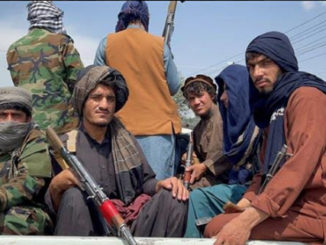
    UNITED NATIONS (TIP): India has expressed dismay at the failure of the UN Secretary General’s report on ISIS to take note of the close links between proscribed terrorist groups, such as Pakistan-based Lashkar-e-Toiba and Jaish-e-Mohammad, despite New Delhi repeatedly flagging these concerns. India has been consistently highlighting the threat of terrorism in its neighborhood. It has said these security fears have been further exacerbated by the changed political situation in Afghanistan. The ‘14th report of the Secretary-General on the threat posed by ISIS to international peace and security and the range of United Nations efforts in support of member states in countering the threat’ notes that the security landscape in Afghanistan changed dramatically on August 15, following a Taliban military campaign that took control in the country, including Kabul. The report says the dreaded Islamic State terrorist group aims to position itself as the “chief rejectionist force” in Afghanistan, expands into neighboring Central and South Asian countries and is viewed by the Taliban as its primary armed threat. Speaking at the Security Council briefing on ‘Threat to international peace and security caused by terrorist acts’ that took up the UNSG report, India’s Permanent Representative to the UN Ambassador TS Tirumurti said on Wednesday, February 9, that India had been reiterating the close links between proscribed terrorist entities such as Lashkar-e-Toiba and other terror groups, including the Jaish-e-Mohammad. “It is essential that we don’t lose sight of the ease with which the proscribed Haqqani Network, with support from their patron state, have worked along with prominent terrorist organizations like Al-Qaida and ISIS-K in South Asia,” he said, in a reference to Pakistan.

    (Source: PTI)

  • Indian-origin cop Neil Basu in short-list to be Scotland Yard chief

    Indian-origin cop Neil Basu in short-list to be Scotland Yard chief

    LONDON (TIP): Neil Basu, an Indian-origin British police officer, is widely believed in political and media circles to be in a short-list of candidates who could become the next London Metropolitan Police Commissioner or chief of the hallowed Scotland Yard.

    But his plain-speaking in the past may have rubbed decision-makers Prime Minister Boris Johnson and Home Secretary Priti Patel the wrong way. The post of police commissioner of the British capital became vacant on Thursday after the incumbent Cressida Dick, the first woman to occupy the position, resigned after London Mayor Sadiq Khan lost confidence in her.

    Son of an Indian doctor father from Kolkata and Welsh mother, Anil Kanti ‘Neil’ Basu, 53, assistant commissioner rank, has been a rising star at the Yard, a highly rated officer, for some time. An economics graduate from Nottingham University, he joined the Met Police in 1992 and was head of counterterrorism and specialist operations, before becoming director of the College of Policing. The widely read Mail on Sunday in a profile of him said he is “well-liked within the force and by intelligence officials at MI5 (Britain’s internal intelligence gathering body)”. The Guardian wrote: “He is widely seen as capable and is mostly well thought of.’ If appointed, he will be the first ethnic minority person to become London’s police commissioner, one of the most coveted jobs in policing in the world.”   But the paper said he may not be in Johnson’s good books after he told this publication as counter-terrorism chief in an August 2019 interview that a no-deal Brexit would mean Britain’s safety and security would suffer. At that point there was considerable danger of the UK crashing out of the European Union (EU) without an agreement, which it later avoided, but not without a frictionless relationship. Basu had warned key crime-fighting tools developed in the EU, such as biometric sharing, would be lost. According to The Times, Basu last year also clashed with Patel after he urged the home office in Britain to introduce positive discrimination to make the police more diverse. He said equality laws in the UK may need to be changed if police forces are to boost ethnic minority recruits.

    On paper, the Home Secretary and London Mayor choose by consensus the city’s police commissioner. In practice, Patel is unlikely to take a decision without consulting Johnson. Ed Davey, leader of the Liberal Democrats, has called on Johnson to “publicly recuse” himself from selecting Dick’s successor, because the prime minister is being investigated by the force for allegedly violating Covid-19 lockdown laws by hosting or attending barred social gatherings.

    (Source: IANS)

  • Ambassador Sandhu meets officers of Indian descent at US Naval Academy

    Ambassador Sandhu meets officers of Indian descent at US Naval Academy

    WASHINGTON, D.C. (TIP): India’s Ambassador to the United States Taranjit Singh Sandhu met a group of officers of Indian descent serving in the US Navy during a rare visit to the US Naval Academy in Annapolis, describing them as a “firm anchor” of India-US ties. There are a number of Indian-origin midshipmen at the Naval Academy, the second oldest of the five US service academies. “It was a delight to meet young officers of Indian descent at the US Naval Academy, proudly serving in the US Navy. A firm anchor of India US ties,” Sandhu tweeted along with pictures of him interacting with the officers. The ambassador held discussions with Superintendent Vice Admiral Sean Buck and had an interaction with some of the midshipmen of Indian descent on Friday.

    Established on October 10, 1845, under Secretary of the Navy George Bancroft, the Naval Academy educates officers for commissioning primarily into the United States Navy and the United States Marine Corps. The entire campus (known to insiders as “the Yard”) is a National Historic Landmark and home to many historic sites, buildings, and monuments. It replaced Philadelphia Naval Asylum, in Philadelphia, that served as the first United States Naval Academy from 1838 to 1845, when the Naval Academy was formed in Annapolis, Maryland’s capital city. Candidates for admission generally must both apply directly to the academy and receive a nomination, usually from a member of Congress. Students are officers-in-training with the rank of midshipman. Tuition for midshipmen is fully funded by the Navy in exchange for an active-duty service obligation upon graduation. Approximately 1,200 “plebes” (an abbreviation of the Ancient Roman word plebeian) enter the academy each summer for the rigorous Plebe Summer. About 1,000 midshipmen graduate. Graduates are either commissioned as ensigns in the Navy or second lieutenants in the Marine 2 | Naval Attache, Washington DC Corps, but a small number can also be cross commissioned as officers in other US services, and the services of allied nations.

    (Source: PTI)

  • US lawmakers urge Biden admin to ensure global supply of COVID-19 vaccines

    US lawmakers urge Biden admin to ensure global supply of COVID-19 vaccines

    WASHINGTON, D.C. (TIP): A group of prominent American lawmakers wrote to President Joe Biden to ensure global supply and distribution of COVID-19 vaccines. Global health experts have identified an array of needs where the United States leadership can have a real and immediate impact to save lives and slow the spread of COVID-19. Most important is to continue to help countries manage and deliver the vaccines, especially given the generous investment by the United States in purchasing the doses, four top American lawmakers wrote in the letter.

    The letter was written by Barbara Lee; Judy Chu, chair of the influential Congressional Asian American Pacific Caucus; Raul Ruiz, chair of the Congressional Hispanic Caucus; and Joyce Beatty, chairman of the Congressional Black Caucus. In the letter dated January 23, these powerful Congressional caucuses urged the Biden administration to invest in the global supply and manufacture of vaccines as well as therapeutics and medical equipment to fight the pandemic. The development follows focused outreach by India’s Ambassador to the US, Taranjit Singh Sandhu, and the embassy to these important caucuses which represent over 170 members of the US Congress and include several members of the Senate. During these outreach programs, Indian diplomats have been emphasizing on strong healthcare partnership between India and the US, and the potential for India-US collaborations to provide affordable vaccines/medicines, including to the developing, especially Africa and Latin America.

    Notably, Sandhu has spoken to all the chairs of the three caucuses, and they expressed strong support for the collaboration with India for global good. Other important members of the caucus have also expressed their support for India. Earlier, the Black Caucus had separately written to the ambassador on vaccine cooperation and delivery of vaccines to Africa in 2021.

    In the letter, the lawmakers also wrote that the American leadership is needed on expanding access to diagnostic, therapeutic and other health needs like oxygen and personal protective equipment. Not least, as the pandemic stretches into its third year, assistance is needed to address related harms such as hunger, school closure, growing strains on health system and other related health efforts, the letter added.

    (Source: PTI)

  • Kamala Harris administered oath of office to members of Presidential Advisory Commissionon Asian Americans, Native Hawaiians and Pacific Islanders

    Kamala Harris administered oath of office to members of Presidential Advisory Commissionon Asian Americans, Native Hawaiians and Pacific Islanders

    WASHINGTON, D.C. (TIP): Co-chaired by Health and Human Services (HHS) secretary Xavier Becerra and US Trade Representative Ambassador Katherine Tai, the commission complements the White House Initiative on Asian Americans, Native Hawaiians and Pacific Islanders (WHIAANHPI), both of which were established by President Joe Biden last May. Members of the commission were announced recently. Of the 23 members, four are Indian Americans – Ajay Jain Bhutoria, Sonal Shah, Kamal Kalsi and Smita Shah. Bhutoria is a Silicon Valley technology executive, community leader, speaker and author who has been recognized for his work, the White House said.

    A social impact and innovation leader, Sonal Shah is the founding president of The Asian American Foundation (TAAF), which has started the largest philanthropic effort to serve the Asian American, Native Hawaiian and Pacific Islander communities. Smita N Shah is an engineer, entrepreneur and civic leader serving as president and CEO of Chicago-based SPAAN Tech, Inc, a multi-disciplinary firm with expertise in public and private infrastructure projects, including transportation, aviation and facilities.

    Kamal Kalsi is an emergency medicine physician from New Jersey who has served in the Army for 20 years. He was awarded a Bronze Star medal for his work, taking care of hundreds of combat casualties on the front lines in Afghanistan, it said. The commission will advise the President on ways the public, private and non-profit sectors can work together to advance equity, justice and opportunity for Asian American, Native Hawaiian, and Pacific Islander (AA and NHPI) communities.

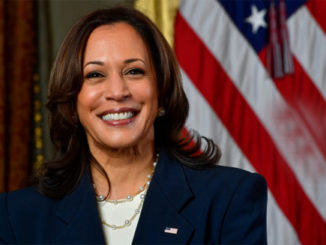
    “We know there is still a lot of work to do in an affirmative, purposeful and intentional way about ensuring that people are engaged, and that we are relevant to the way that they are experiencing and living life, and that we are connected with their goals and their dreams for themselves, their families and community,” Harris said during the swearing-in ceremony on Thursday.

    “And that is why it is so important to have you all as the leaders that you are together in this advisory group because the work that you will do is to give us candid feedback,” she told the commissioners.

    “On behalf of the President and myself, I thank you yet again for the life that you have chosen to live, which has been a life of leadership and service,” Harris said.

    HHS secretary Becerra noted, “The commissioners you see today represent not only subject matter experts who are recognized in their fields, but also visionary leaders who reflect the strength and diversity of the Asian American, Native Hawaiian and Pacific Islander community.”

    “From addressing anti-Asian hate and bias, to COVID-19 recovery, to the need for better data on AA and NHPI communities and resources for limited English proficient individuals, the needs of our AA and NHPI communities are wide-ranging, unique, and urgent for us to address.

    “Together, with the leadership of our commissioners, we will work to ensure that our nation lives up to its founding ideals, and that the American dream is within reach for every AA and NHPI family,” she said.

    US Trade Representative Ambassador Katherine Tai said unfortunately, the past two years have underscored and exacerbated long-standing inequities in the country. “The pandemic has had significant economic and social impacts on AA and NHPI workers — particularly in the hospitality and leisure, retail, and other service industries that employ one in four workers from our communities,” Tai said.     “Meanwhile, small business owners have faced xenophobia, harassment, vandalism and targeted threats. This is why the Biden-Harris administration is prioritizing the values of equity, equality and opportunity in the Build Back Better agenda – and why our pandemic recovery must bring along all communities,” she added.

    (Source: PTI)

  • Relationship with India stands on its own merit, not impacted by tensions with Russia: US

    Relationship with India stands on its own merit, not impacted by tensions with Russia: US

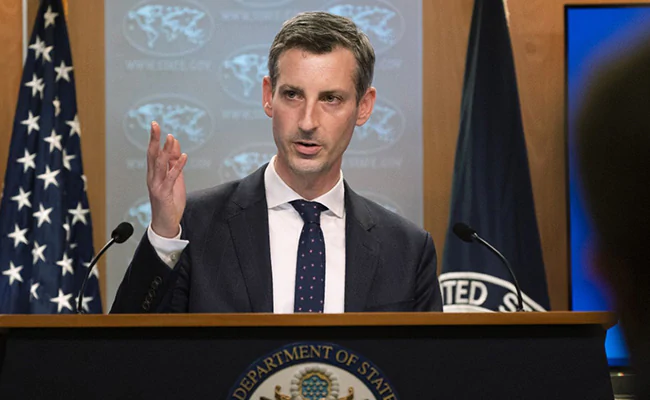
    WASHINGTON, D.C. (TIP): America’s relationship with India stands on its own merit and has not been impacted by the ongoing tension with Russia, the Biden administration said. “We have a relationship with India that stands on its own merits,” State Department spokesperson Ned Price told reporters at his daily news conference on Thursday, February 3. He was responding to a question if the US ties with India have been impacted due to the tension with Russia over Ukraine crisis. For the second time this week, the State Department spokesperson refrained from responding to questions related to India’s position on Ukraine in the United Nations Security Council. “I will leave it to our Indian partners to discuss their stance in the UN Security on this particular issue,” Price said. “We have been in touch with literally dozens of countries around the world, including our Indian partners, on our concerns regarding Russia’s military buildup and its unprovoked potential aggression against Ukraine,” he maintained. These are conversations that the United States is having at different levels, he said. “As I was saying in a different context earlier, Russian aggression against Ukraine and a Russian invasion of Ukraine would have implications for the security environment well beyond that neighborhood. Whether it is the PRC or India or countries around the world, the implications would be far-reaching. And I think there is a broad understanding of that,” the official added.

    (Source: PTI)

  • General Motors cancels two shifts at Lansing plant following Canadian trucking protests

    General Motors cancels two shifts at Lansing plant following Canadian trucking protests

    Automaker said it had canceled a shift on Wednesday, Feb 9 and a shift Thursday, Feb 10

    WASHINGTON (TIP): General Motors Co said on Thursday, February 10, it was forced to cancel two production shifts at a plant in Michigan where it builds sport utility vehicles after Canadian trucking protests.The automaker said it had canceled a shift on Wednesday, February 9 and a shift Thursday, February 10, at its Lansing Delta Township plant. Both Ford Motor Co and Toyota Motor Corp said on Wednesday they had been forced to halt some operations because of supply chain disruptions stemming from protests that have snarled traffic at a key bridge connecting Detroit and Windsor, Ontario.

  • February 11 New York & Dallas E – Edition

    [vc_row][vc_column][vc_column_text]

    [/vc_column_text][/vc_column][/vc_row][vc_row][vc_column width=”2/3″][vc_custom_heading text=”Dual Edition” font_container=”tag:h2|text_align:center” google_fonts=”font_family:Istok%20Web%3Aregular%2Citalic%2C700%2C700italic|font_style:700%20bold%20regular%3A700%3Anormal” link=”url:https%3A%2F%2Fwww.theindianpanorama.news%2Fwp-content%2Fuploads%2F2022%2F02%2FTIP-February-11-Dual-Edition.pdf”][vc_single_image image=”120280″ img_size=”full” add_caption=”yes” alignment=”center” onclick=”custom_link” link=”https://www.theindianpanorama.news/wp-content/uploads/2022/02/TIP-February-11-Dual-Edition.pdf”][/vc_column][vc_column width=”1/3″][vc_single_image image=”82828″ img_size=”medium” alignment=”center” onclick=”custom_link” link=”https://www.theindianpanorama.news/advertising-media-kit-portal-indian-panorama/”][vc_single_image image=”82829″ img_size=”medium” alignment=”center” onclick=”custom_link” link=”https://www.theindianpanorama.news/advertising-media-kit-portal-indian-panorama/”][/vc_column][/vc_row][vc_row][vc_column][vc_custom_heading text=”Lead Stories This Week” font_container=”tag:h2|text_align:center” google_fonts=”font_family:Istok%20Web%3Aregular%2Citalic%2C700%2C700italic|font_style:700%20bold%20regular%3A700%3Anormal” link=”url:https%3A%2F%2Fwww.theindianpanorama.news%2F%20″][/vc_column][/vc_row][vc_row][vc_column][vc_wp_posts number=”8″][/vc_column][/vc_row]

  • Veteran Community leader Gobind Munjal is inaugurated as President of The Association of Indians in America

    Veteran Community leader Gobind Munjal is inaugurated as President of The Association of Indians in America

    National Executive Committee takes oath of office at a virtual ceremony

    AIA Officers take oath of office
    Clockwise: AIA National President Gobind Munjal, Dr. UrmileshArya , the outgoing President, Dr. Samin Sharma, Congressman Tom Suozzi
    Clockwise: Dr. Sameen Sharma, Satish Khanna, Dr. Jagdish Gupta, Nilima Madan, Asmita Bhatia, Mukesh Modi

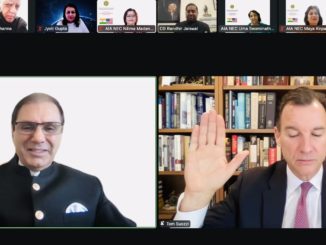
    LONG ISLAND, NY (TIP): Gobind Munjal, the newly elected National President of The Association of Indians in America (AIA), was sworn-in along with his National Executive Committeein an exciting Inauguration ceremony arranged virtually on Sunday February 6,2022.

    The occasion was graced by the chief guest Honorable Consul General Randhir Jaiswal, Hon.Congressman Tom Suozzi, and Hon.New York Senator Kevin Thomas.The Inauguration and Oath ceremony was attended by well over one hundredattendeesand their families. This included AIA founding members, board of Trustees, AIA National Past Presidents, AIA current and past chapter Presidents, community leaders, AIA members, friends, and all the media partners.

    Bharat Ratna legendary singer Lata Mangeshkar was given homage by observing a moment of silence. It was followed by melodious singing of American and Indian National Anthem by Gita Setia. The Chairman Board of Trustees,Dr Samin Sharma initiated the program and spoke briefly about AIA. Chief Guest Hon. Consul General of India in New York, Randhir Jaiswal. in his opening Remarks, praised AIA for all that it has done for the community during its 55 years of history and commended the organization for sending oxygen concentrators to India in 2021. He also pledged to work with AIA for outreach to the community.

    National President Gobind Munjal was sworn-in by Honorable Congressman Tom Suozzi, who also administered the oath to Vice Presidents Uma Swaminathan(NJ), Nilima Madan(NY), Santosh Pandey (IL), Uma Eniasivam (Fl), Secretary Gunjan Rastogi (NY) and Treasurer Dr. Bal Gilja (NY). Honorable NYS Senator Kevin Thomas had the honors for swearing-in the members at large from all the states, namely Anil Sharma (IL),Aridaman Jain (NJ),Ashish Sen (IL),Dr. Bharti Palkhiwala (NJ),Dr Binod K. Verma (NY),Gobind Bhatija (NY), Manoranjan Mishra (IL),Maya Kirpalani (FL), Neelam Modi (NY),OM Dhirgra (IL), Pradeep Tandon (NY), Prem Mehrotra (IL), Rajeev Chaudhary(NY)Ram Khanna (NY), Santosh Khera (NY),Sharmistha Dutta (FL),Shashi Malik (NY),Sujata Seth (NY),Sushma Kotahwala (NY),Usha Bansal (NY).

    In his speech, National President Munjal welcomed everyone and shareda glimpse of his vision.

    In pursuing the AIA’s moto of “Indian Heritage and American Commitment”, he emphasized that:

    “We are here to serve the community needs. As we continue to direct our help to the people in India, our homeland, we should equally remain committed to the community right here in the United States, our adopted homeland. We hope to work towards increasing that commitment.

    As the demographic profile of the Indian American Community has changed in past 5 decades since the founding of AIA, so are their needs. We remain committed to understanding the changing requirements of the community, and then will develop Programs to help both – the Youth and the Elderly. NEC pledges support to all the Chapter Presidents and its members, so they all can build and expand on these programs across the nation. This way together, we can make the next two years most productive”.

    A plaque was presented to the outgoing National President Dr. Urmilesh Arya for her splendid service and all the contributions to the organization and the community.All AIA leadership extended their good wishes and support. The program concluded with a traditional vote of thanks by the secretary.The program on Zoom was very well planned and executed and was appreciated by all.It was mentioned that as soon as the covid conditions improve,an in-person event will be planned in the near future.

    The Association of Indians in America (AIA) is the oldest not-for-profit organization of Asian Indians in America founded on August 20, 1967. It is the grassroots national organization of Asian immigrants in United States. With chapters and membership spread across the United States of America, AIA represents the hopes and aspirations of those immigrants who are united by their common bond of Indian Heritage and American Commitment.

  • Legislator Mulé Attends Nassau County PBA Leadership Breakfas

    Legislator Mulé Attends Nassau County PBA Leadership Breakfas

    ROSLYN HEIGHTS, N.Y. (TIP):  Nassau County Legislator Debra Mulé (D – Freeport) joined her colleagues in local government at the Nassau County Police Benevolent Association (PBA) Government Leadership Breakfast on Monday, Feb. 7. Held at 388 Restaurant in Roslyn Heights, the breakfast was hosted in honor of new PBA President Tommy Shevlin and the organization’s Executive Board. “I was heartened by President Shevlin’s passion for improving access to mental health care in police departments and diffusing the stigma in our society that inhibits people from seeking the help they need and deserve,” Legislator Mulé said. “It was a pleasure to hear directly from him at this event, and I look forward to continuing to work closely with our partners in law enforcement to keep Nassau County the safest in the nation.”

  • Culture of hate: Bigotry, communalization are having a free run

    The hijab controversy in Karnataka’s educational institutions and the attack last week on Asaduddin Owaisi during electioneering in Uttar Pradesh cannot be wished away as incidents without any link. Both represent the outcome of patronage to rabid communal messaging that appears to celebrate bigotry, while making a boisterous jump from subtleties to brazenness. If the political class still chooses to be blind to the consequences of normalization of a culture of hate and otherization, the country will have to bear the brunt, and at a terrible cost. A narrative of manufactured insecurities that wants the conversation to be centered around ‘us’ versus ‘them’ is being allowed to seep its way into the delicate social fabric. The free run for the militant mutation of prejudices poses a grave threat.

    All-round condemnation of violence and vitriol in any form can be construed as tokenism at best in the absence of any substantial and visible action that shows the intent to clamp down on radicalization. Owaisi’s speech in the Lok Sabha, a day after he escaped unhurt when his car came under attack in Hapur, is a reminder of how minds are being polluted, with no counter-efforts forthcoming. The four-time MP’s rejection of the Z-category security cover can be seen as political positioning but offering a posse of security personnel ignores the larger issue. The talk of two Indias, one based on love and the other being created on hatred, is no more some fictional construct.

    Polarization has not raised its ugly head for the first time in UP elections, but the efforts at crass communalization of the campaign call for urgent attention of the Election Commission. How and why all sorts of boundaries have been crossed is acutely disturbing and needs answers. Not acting is not an option. At stake is not only the credibility of the institution, but all that the Constitution stands for.

    (Tribune, India)

  • National icon, an emblem of excellence, Lata Mangeshkar united us all

    National icon, an emblem of excellence, Lata Mangeshkar united us all

    Zara aankh mein bhar lo paani… as iconic Lata Mangeshkar passes into eternity, citizens of India have every reason to mourn. A two-day national mourning in her honor, befitting the Bharat Ratna recipient, however, will not be enough to fill the gnawing void she leaves behind. Indeed, once we recover from the immeasurable loss, we will find many more reasons to cherish her legacy and hum her countless songs. For here was a timeless voice which could melt the heart of India’s first Prime Minister Jawaharlal Nehru, and her demise makes the current one ‘anguished beyond words.’ Beyond political affiliations, caste, creed, class and religion, even borders, she united music lovers of all hues, not just Bollywood aficionados. Singer of thousands of songs in umpteen languages and many genres, she was that rare artiste who could connect with all of India and bridge the chasm with its neighbor Pakistan too.

    Born on September 28, 1929, in a family steeped in classical musical tradition, her singing talent was both spotted and honed by her father Pandit Deenanath Mangeshkar. His early demise propelled her towards the world of acting and later singing — she rendered her first song at 13. Soon, she was to become not just the voice but also the soul of Hindi film music. So exalted was her stature that legendary composer SD Burman famously said, ‘Give me a harmonium, give me Lata, and I will make music.’

    Her passion for music was best exemplified in her songs, a wellspring of emotions, and her zest for life was reflected in her love for movies, cricket, cars and Mozart. Clearly, her passions were as diverse as her melodious repertoire. Singers may come and go, Lata’s place in the annals of musical history is irreplaceable. An emblem of excellence, as we recall her song Ek pyar ka nagma, the lines Kuch kho kar paana hai kuch paa kar khona hai… jeevan ka matlab toh aana aur jaana hai acquire a profound meaning. In her we have lost a precious gem and in her again we found a timeless treasure.

    (Tribune, India)

  • Deluge of freebies: Parties vie with each other to woo voters at any cost

    Barely two days before the first phase of polling in Uttar Pradesh, the Samajwadi Party (SP) and the BJP released their election manifestos. With large-scale unemployment being a pressing issue, the SP has promised to bring in an ‘Urban Employment Guarantee Act’, while the latter has announced that it will provide at least one job or self-employment opportunity to every household. Freebies figure prominently in the Samajwadi Vachan Patra as well as the BJP’s Lok Kalyan Sankalp Patra, even as the Supreme Court recently gave four weeks to the Centre and the Election Commission of India (ECI) to submit their replies on a petition seeking directions to freeze the election symbol or deregister a party that promises or distributes ‘irrational’ freebies in the run-up to the polls.

    Both parties have gone all out to woo the farming community, which is a make-or-break vote bank, especially so in the wake of the year-long agitation against the three farm laws. The SP has promised that all small and marginal farmers owning less than two acres of land will get two bags of DAP fertilizer, five bags of urea, electricity for irrigation and interest-free loans. The other sops include two LPG cylinders every year to BPL families, one liter of petrol to all two-wheeler owners and three liters of petrol and 6 kg of CNG per month to auto-rickshaw drivers. The BJP’s manifesto mentions free electricity for irrigation; free scooty for meritorious girl students under Rani Laxmibai Yojana; two crore tablets and smartphones under the Swami Vivekanand Yuva Sashaktikaran Yojana; and two free LPG cylinders (one each on Holi and Diwali) to every beneficiary of PM Ujjwala Yojana.

    Late last month, the apex court had expressed concern that the politics of freebies was depriving the elections of a level playing field. However, it’s obvious that various political parties cannot resist the temptation of reaching out to voters through allurements. The so-called vision documents are mostly aimed at short-term gains. The onus is on the ECI to frame specific guidelines on poll-time competitive populism to prevent the deluge of sops from vitiating the poll process.

    (Tribune, India)                    


  • MAYOR ADAMS ANNOUNCES COMMISSIONER OF DEPARTMENT OF CONSUMER AND WORKER PROTECTION

    MAYOR ADAMS ANNOUNCES COMMISSIONER OF DEPARTMENT OF CONSUMER AND WORKER PROTECTION

    Vilda Vera Mayuga has been appointed Commissioner of Department of Consumer and Worker Protection
    José Ortiz, Jr. has been appointed Senior Advisor for Workforce Development.

    NEW YORK (TIP): New York City Mayor Eric Adams, on February 8 announced two new appointments to fill out his economic development team and deliver on his vision for uplifting and protecting working New Yorkers. Vilda Vera Mayuga will serve as commissioner of the Department of Consumer and Worker Protection (DCWP). As commissioner, Mayuga will deepen the agency’s mission of ensuring there are robust protections in place for city workers and consumers, and that such protections are fairly and equitably applied. Jose Ortiz, Jr. will serve as senior advisor for workforce development. In that role, he will advise Deputy Mayor for Economic and Workforce Development Maria Torres-Springer on strategies for better coordinating the city’s workforce development programs to aid the city’s recovery from COVID-19 and ensure people from underserved communities have access to good-paying jobs. “As a blue-collar mayor, I am focused on building a team that serves the needs of working New Yorkers throughout the five boroughs,” said Mayor Adams. “From preparing workers for jobs in emerging industries to ensuring dignity and economic justice in the workplace, my administration has an ambitious agenda to ‘Get Stuff Done’ for the hard-working people of this city. Vilda and Jose have been doing this work for a long time, and I am thrilled to have them join our economic development team as we work to build an equitable recovery.”

    “The city’s economic recovery depends on our ability to propel multiple sectors of our economy, protect workers and consumers, and connect New Yorkers to family-sustaining jobs,” said Deputy Mayor for Economic and Workforce Development Maria Torres-Springer. “I am therefore thrilled we have incredibly talented and devoted leaders like Vilda Vera Mayuga and Jose Ortiz Jr., who will work every day to ensure our economic and workforce development policies lift up families across the five boroughs and power an inclusive recovery for our city.” “I am thrilled to join the outstanding team at the Department of Consumer and Worker Protection,” said incoming DCWP Commissioner Vilda Vera Mayuga. “Thank you to Mayor Eric Adams for entrusting me with such an important agency. In New York City, everyone is a consumer, and I am committed to ensuring all have the necessary tools to avoid falling prey to fraud and deceit. Similarly, our workers need our systems to work for their betterment, and we will do that in conjunction with our businesses so we can all be winners in this great city.”

    “It has been my honor to serve as an advocate for developing talent in every corner of this great city,” said incoming Senior Advisor for Workforce Development Jose Ortiz, Jr. “I’m thrilled to begin this next chapter as senior advisor for Workforce Development, and thank Mayor Eric Adams and Deputy Mayor Maria Torres-Springer for the opportunity to continue this important work in service to the city.”

    “It has been a tremendous privilege to serve my fellow New Yorkers as commissioner of DCWP and inspiring to work alongside the committed team at this agency,” said DCWP Commissioner Peter A. Hatch. “Together we settled the city’s largest paid safe and sick leave law investigation, returning millions in restitution to more than 11,000 home health aides, reached more than one million families with assistance in claiming the Child Tax Credit; added paid leave specifically for caregivers to get their children vaccinated; and provided new protections for more than 65,000 delivery workers, and relief for more than 20,000 hard-hit restaurants and millions of consumers as the first agency in the nation to license and regulate the growing number of third-party food delivery apps. I congratulate incoming Commissioner Mayuga and offer all my support. Under Mayor Adams and Commissioner Mayuga, DCWP will thrive —making New York City more business, consumer, and worker friendly.”

    “The Department of Consumer and Worker Protection is a crucial partner in protecting the workers and consumers of our city,” said Theo Oshiro, co-executive director, Make the Road New York. “Our community members depend on DCWP to enforce their workplace rights and to access key resources, like financial literacy counseling and know-your-rights information. As commissioner of DCWP, Vilda Mayuga will be a steadfast partner in protecting the rights of New York City’s workers and consumers; she has the experience, vision, and true connection to the community that is needed for this vital post. We look forward to working with Vilda Mayuga to strive for a city where every New Yorker can thrive.”

    We are thrilled that the mayor is bringing in a tireless advocate and leader with such a strong record on economic justice” said Debra-Ellen Glickstein, executive director, NYC Kids RISE, and former executive director, DCWP’s Office of Financial Empowerment. “We look forward to collaborating to support community wealth building throughout New York City neighborhoods and building on the successful work of the Department of Consumer and Worker Protection.”

    “Hispanic Federation congratulates Vilda Vera Mayuga on her appointment as commissioner of the Department of Consumer and Worker Protection. As a Latina who has vast experience across all levels of government, we are proud of this achievement. She has set incredible precedents throughout her career, and we look forward to working with her in her new role,” said Frankie Miranda, president and CEO, Hispanic Federation.

    “Understanding the importance of investing in the people who make up the workforce of our great city has always been paramount to Jose Ortiz Jr.,” said Kathleen Culhane, president, Nontraditional Employment for Women, and board chair, New York City Employment & Training Coalition. “We commend the Adams administration for embracing Jose’s expertise and dedication to connecting New Yorkers to the career skills, education, and relationships that can result in thriving communities and a more robust economy. Jose’s four years of leadership and advocacy at the New York City Employment & Training Coalition have resulted in a stronger, more extensive association of professionals united in a shared purpose that elevates working New Yorkers, while tackling persistent challenges through inclusion and innovation. We look forward to continuing to work with Jose and Mayor Adams in pursuit of this critical mission to support our workforce.” “Jose has deep knowledge of workforce programs, service providers, and needs. He is a perfect choice for this critically important position,” said Kathryn Wylde, president and CEO, Partnership for New York City.

    “New York City faces one of the gravest unemployment crises in recent memory,” said Jason Cone, public policy officer, Robin Hood. “It is a crisis that has created tremendous pain for low-income communities throughout the city and it cannot be confronted by government or business alone. Jose Ortiz has been at the forefront of fostering partnerships between government, business, civil society, and philanthropy for his entire career to extend opportunity to New Yorkers and empower them to transform their lives through workforce training and development. Robin Hood was proud to recognize Jose’s vital work as part of its first group of Power Fund leaders, driving change for communities of color. We look forward to continuing to partner with him as he supports and advises Deputy Mayor Torres-Springer in the months and years to come to help get tens of thousands of New Yorkers back to work and on the path to economic opportunity.”

    “I’m excited to hear that Joey Ortiz has been named New York City’s senior advisor for Workforce Development,” Steve Choi, executive director, One for Democracy. “Joey brings smarts, innovation, a wealth of private and public-sector relationships and, above all, a passion for lifting up New York City’s workers and businesses to bring greater prosperity for all. Kudos to Mayor Adams for this pick.”

    About Vilda Vera Mayuga

    Vilda Vera Mayuga is a seasoned public servant across all levels of government. Since July 2018, she has served as deputy secretary for Economic Opportunity at the New York State Department of State. In that capacity, she oversees the Office for New Americans, the Division of Consumer Protection, the Division of Community Services, and the Address Confidentiality Program. Mayuga is also the secretary of State’s designee to the Committee on Open Government.From 2014 until June 2018, she served as chair of the New York State Industrial Board of Appeals. She was the first Latina to hold the position.

    Previously, Mayuga was deputy commissioner for Worker Protection at the New York State Department of Labor, overseeing the divisions of Labor Standards, Safety and Health, and Immigrant Policies and Affairs. She started at the Department of Labor in February 2011 as executive director of the Division of Immigrant Policies and Affairs, where she implemented the agency’s first U-visa certification protocol and expanded the agency’s role and presence in the fight against human trafficking. Under her direction, the Agriculture Labor Program was started to provide services to both agricultural employers and workers. Mayuga also played a critical role in ensuring the agency’s compliance with language access requirements and worked heavily on the drafting of the statewide policy resulting in Executive Order 26.Mayuga also served as an assistant attorney general in the Civil Rights Bureau of the Office of the New York Attorney General. There, she managed a diverse caseload of civil rights cases and handled every stage of litigation. Mayuga tried and settled numerous immigration services fraud cases that resulted in multimillion-dollar judgments. As a result, she received the 2009 Special Award for achievement in the Immigration Fraud Initiative.

    Before that, Mayuga served as an agency attorney and investigated Equal Employment Opportunity (EEO) complaints within the Fire Department of New York (FDNY). She also conducted on-site inspections of FDNY premises, such as firehouses and EMS stations, to ensure compliance with the FDNY EEO policy. Mayuga also worked in the U.S. Attorney’s Office for the Southern District of New York, where she analyzed, processed, and monitored requests for evidence from foreign countries. Mayuga graduated magna cum laude with a Bachelor in Arts in International Relations from Boston University in Boston, Massachusetts. She received her law degree from the University of Puerto Rico School of Law in Rio Piedras, Puerto Rico. Mayuga is a member of the New York Bar.

    Mayuga will report to Deputy Mayor for Economic and Workforce Development Maria Torres-Springer.

    About Jose Ortiz, Jr.

    Jose Ortiz, Jr. was appointed chief executive officer of the New York City Employment and Training Coalition (NYCETC), the nation’s largest city-based membership association for the workforce development industry, in February 2018. Immediately prior to joining NYCETC, Ortiz served as the managing director of External Affairs, Partnerships, and Business Development at Pursuit, a Queens-based workforce nonprofit that prepares underserved and underprivileged individuals without college degrees for software development jobs at some of the world’s most innovative companies. Ortiz spent more than a decade at 92Y, a world-class cultural and community center, where he led youth and family programs, leadership initiatives, and conferences, and was a founding member of the Belfer Center for Innovation and Social Impact, which created Giving Tuesday.

    Ortiz has served on the board of directors of The Regional Plan Association, SkillUp, and the Human Services Council of New York, in addition to serving on a number of advisory boards. Ortiz has been invited to testify before the United States Congress’ Joint Economic Committee on the subject of “Connecting More People to Work” and has been covered by numerous media outlets, including The Wall Street Journal, The New York Times, and NY1. Ortiz attended Baruch College and Milton Academy.

    Ortiz will report to Deputy Mayor for Economic and Workforce Development Maria Torres-Springer.

  • Punjab elections and Deras

    Punjab elections and Deras

    Region is dotted with Deras that are known to influence elections

    PUNJAB ELECTIONS

    • Biggest of these Deras is of Radha Soamis based out of Beas in the Majha region
    • Among major sects or Deras are Namdharis and Nirankaris,Dera Sacha Sauda with headquarters in Sirsa remains most controversial
    • Other major Deras are Sachkhand Ballan, Swami Jagat Giri Ashram and Noor Mahal
    • Various Sikh sects, including Nanaksar, Dhadrian, Harian Bellan, Hansali and others, represent Sant Samaj
    • Damdami Taksal too has been hawking media headlines
    By Prabhjot Singh

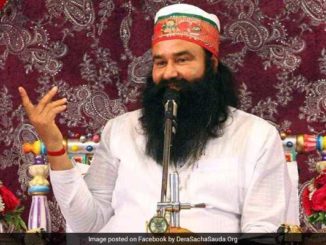
    Release of Ram Rahim of Dera Sacha Sauda on parole a fortnight before the February 20 poll in Punjab has set in motion an animated debate over the timing of his “Furlow”. There are many who view it as a political master stroke played by the BJP government in Haryana to influence elections, both in Uttar Pradesh and Punjab, others are dismissing it as an administrative or procedural relief to a convict. Whatever be the reasons or the background of his release, it has stirred a controversy that may have far reaching political implications.Deras in general, and Dera Sacha Sauda in particular, have generally played a decisive role in many of previous electoral battles. One of the major factors believed to influence the outcome of battles of the ballot in Punjab are Deras that dot not only the entire State but also the catchment areas, including neighboring Haryana.

    Baba Gurinder Singh Dhillon, head of Radha Soami Satsang Beas wields considerable influence in the Majha region of Punjab

    Important and major Deras or sects like Radha Soamis, Nirankaris and Namdharis generally stay clear of politics and elections, same cannot be said of many others, especially Dera Sacha Sauda, that wield considerable influence in the Malwa belt and some parts of Western Uttar Pradesh.A few months before the 2017 elections to the Punjab assembly were announced, the then Congress Vice-President Rahul Gandhi visited Dera Radha Soami at Beas. Incidentally, the President of the All-India Namdhari sect is H S Hanspal, who headed the Punjab Pradesh Congress Committee when Capt Amarinder Singh was Chief Minister of Punjab (2002-2007). Hanspal also represented Congress as Member of Rajya Sabha. This time, Hanspal, upset over the denial of a party ticket to his grandson, decided to leave Congress and join hands with the Aam Aadmi Party. A substantial section of Sant Samaj that has in its fold various Sikh sects, including revered Nanaksar, used to support the ruling Shiromani Akali Dal. The situation has changed this time. The Damdami Taksal, an influential sect of Sikhs, caused a big flutter when some of its top leaders declared support for Bharatiya Janata Party. While there has been no corroborative evidence of followers of one Dera or the other voting enmasse for a particular party or a candidate, yet no party of substance misses an opportunity to appease these socio-religious organizations. In the past, State Governments have been doling out concessions and special treatment to them in an endeavor to have their leadership on their side. So much so that at times they even enjoy immunity from the law of the land.  Law enforcement agencies face a harrowing time as and when these Deras or their chiefs get mired in controversies linked to serious criminal offences, including rape, murder or illegal confinement. Some of these cases are handled by the prime investigation agency, the Central Bureau of Investigation. It is in one of such cases that the chief of Dera Sacha Sauda, Ram Rahim, was convicted and sentenced for life. His earlier pleas for release on parole were dismissed for security reasons.

    In fact, before his arrest, a big drama took place that led to arson and violence in Panchkula as a lot was said about the CBI case against the Dera Sacha Sauda chief. There were allegations that the case was being pushed to cold storage after BJP came to power on its own in the 2016 Assembly elections in the State. Earlier, the Dera was believed to have supported Congress in the 2007 Punjab Assembly elections. Some political pundits go to the extent of saying that the Dera was playing the role of a King maker.

    It is why his 21-day parole and physical presence in the region is being followed with abated interest.

    Looking back at electoral battles of the past two decades, it can be safely inferred that Deras have been the most sought-aftercenters when it comes to ensuring a victory in the elections. Undoubtedly the Deras have been playing King Makers, though discreetly. Their influence has been growing steadily and may not be impacted by the Apex court verdict on restraining political parties from seeking a vote in the name of caste, creed, religion or language.

    If Akali Dal suffered reverses in the 2007 Assembly elections in the Malwa belt – it got only 19 of 65 seats – it was suspected that Dera Sacha Sauda followers voted for Congress. Though Congress led by Capt Amarinder Singh failed to return to power, it gave a lesson to the power incumbents Shiromani Akali Dal-Bharatiya Janata Party (SAD-BJP) alliance a lesson in Dera politics.

     The message of the 2007 elections was loud and clear.

    Subsequently, every party, including the Congress, the Shiromani Akali Dal (SAD), Aam Aadmi Party, and Bahujan Samaj Party — have been bending backwards to seek the blessings of these deras and their chiefs before or during elections.

    Even the latest entrant to Punjab politics, Aam Aadmi Party, too, also tried to garner the support of Deras. In the 2017 elections, the Bahujan Samaj Party that had its base eroded considerably over the years also seriously considered seeking the support of at least five Deras that have a huge following of the Dalits.

     In Punjab, Scheduled Castes are the single largest vote bank as they are a little more than 32% of the State’s population. It is probably the reason for Congress to name the incumbent Chief Minister Charanjit Singh Channi as its Chief Ministerial face for the 2022 elections by overlooking the claims of its Punjab Pradesh Congress Committee chief Navjot Singh Sidhu.

    There have been instances when one Dera or the other openly pledged allegiance to a party, the party concerned made a significant dent in its rivals’ vote share. The success of Congress in the Malwa belt in the 2007 Punjab Assembly elections and the BJP success in the 2016 Haryana Assembly elections are points in order.

    Though the Apex Court gave a landmark verdict on the eve of 2017 Assembly elections to five States, including Punjab, that votes cannot be solicited in the name of religion, caste or language, the Deras remained high on demand.

    Intriguingly in the Assembly elections in 2012 and also the 2014 general elections, candidates close to the Dera Sacha Sauda chief, Gurmit Ram Raheem, failed to get voters’ verdict in their favor. They include Harminder Jassi, who in 2017 contested unsuccessfully from Maur in the Malwa belt on Congress ticket.

    The Deras play safe as they do not flout election laws and refuse to openly support one party or the other.  After all parties have approached them, they follow the same safe modus operandi of referring the matter to their respective political wings, who in turn direct the followers to vote according to their conscience.

     One of the prime reasons for growing the Dera cult is the failure of the State to curb caste distinctions. Discarded by upper castes, lower castes, coming from different religious backgrounds, form the bulk of Deras as they are treated at par and given respectability. Various political parties find Dera followers a heterogeneous voter base that once convinced can influence electoral fortunes.

     “How Deras impact the ensuing Assembly elections?”, only results will tell.

    (The author is a veteran journalist with over three decades of experience covering a wide spectrum of subjects and stories. He has covered Punjab and Sikh affairs for more than three decades besides covering seven Olympics and several major sporting events and hosting TV shows. For more in-depth analysis please visit probingeye.com or follow him on Twitter.com/probingeye)


  • Is Wearing Hijab on Campus A Law and Order Issue?

    Is Wearing Hijab on Campus A Law and Order Issue?

    By Brinda Karat

    “The confrontations being organized, and divisions created among the youth at a time when lakhs of students have suffered a loss of education because of online learning which they could not access, is nothing short of criminal. What is being played out is the open and blatant promotion of the Hindutva agenda extended to educational institutions. The Corona pandemic is being replaced by the communal pandemic, a virus created in the laboratory of the Hindutva forces, leading to a lockdown of educational institutions, ruining the lives of young people.”

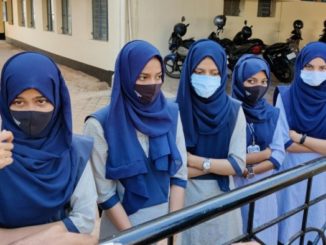
    There is nothing controversial about Muslim girls wanting to wear a headscarf, referred to (incorrectly) as a “hijab”. But describing the happenings in BJP-ruled Karnataka as the ” hijab controversy” is misleading. It is nothing of the kind. It is an outright assault on the right to education of young Muslim women, guaranteed to them by the law and the Constitution of India. It is significant that even the National Human Rights Commission, thought to be pro-government under its new chief, issued notice to the district authorities in Udipi on January 27after it received a complaint stating ” Facts of the case are disturbing. The allegations made in the complaint are serious in nature involving ‘Right to Education’. The case therefore involves grave violation of human rights of the victim students.”

    It is thus very disappointing that the single bench of the Karnataka High Court did not grant an interim stay against the Karnataka government’ s wholly unwarranted and misconceived order of February 5 which has jeopardized the future of hundreds of young Muslim women studying for their final Class 12 exams scheduled in just two months. The order wrongly invokes Section 133 (2) of the Karnataka Education Act, 1983, to state that students have to wear the dress chosen by the college Development Committee or the Appellate Committee of the Administrative Board of Pre-University Colleges, which come under the Pre-University Education Department. In the event of the Administrative Committee not selecting a uniform, “clothes which disturb equality, integrity and public law and order should not be worn. ” The use of this particular section 133(2) is itself questionable since it permits direct intervention by the state government in matters pertaining to ” development of education.” Uniforms surely do not fit into this category.

    The intent of this dubious phrasing is clear enough. In Karnataka, College Development Committees are headed by the elected MLA of the area in which the college is located. The PU college in Udipi district, where the issue first started, is headed by the BJP MLA on whose watch the decision was taken to impose the ban on entering campuses for girls wearing headscarves, even though the college has no such rules against the wearing of a headscarf. The Bajrang Dal Udipi district secretary Surender Koteshwar warned that “If the college allows students to wear hijab on campus, they would make all Hindu students put on saffron shawls inside the campus.”

    He put this plan into action with government patronage. First, the government, through its network of non-state actors like him and the Bajrang Dal mobilized aggressive young men wearing saffron scarves as a counter, then it allowed them to march to colleges where Muslim girls were being shut out at the gates, its police forces standing by as spectators as girls were heckled and harassed, and then, in the name of being “even-handed”, it issued an order which in effect held that the headscarf could cause a public law and order problem and was therefore prohibited, whether the college had such a rule or not. In fact, another college, the Bhandarkars Arts and Science Degree College, which is also in the Udipi district, had permitted girls to wear headscarves and specified that the coloring should be the same as the dupatta. But today, in spite of this rule, girls are being kept out of this college. Is this not blatantly unfair? This kind of targeting of Muslim girls leads to a counter-response among the community, and wearing a headscarf becomes a symbol of protest even for those who never wore one. This is also what we see developing in Karnataka. In such a situation, the grounds are laid for extremist Muslim organizations who are not in support of women’s freedom to promote their fundamentalist ideology.

    It is being presented as if the very concept of a uniform in educational institutions is being opposed by the girls. The Karnataka Education Minister BC Nagesh stated, ” I have appealed to all these students to honor the uniform prescribed by the government. I am also making it clear that those who want to defy the government’s school uniform regulations cannot enter their schools and attend classes. ” Muslim girls are wearing the prescribed uniform. They are, in addition, covering their heads with a headscarf. They are not replacing their uniform with a burkha. They are not using a veil to cover their face. When boys of the Sikh religion wear turbans. are they defying the government’s orders on uniforms? Are there any rules anywhere in India which prevent a Sikh boy or girl from covering their head? Why should there be double standards? No one is against uniforms in educational institutions. There is no defiance of uniform regulations in the case of a Muslim girl wearing a headscarf.

    The contention that this could be a law and order issue is absurd. All these years, it has never been a public law and order problem anywhere in Karnataka or indeed, India. In neighboring Kerala, Muslim students may if they choose, wear a headscarf. Many choose not to. There is no compulsion either way. There has been no law and order problem created by girls wearing headscarves in Kerala. It is a state which has the highest literacy rate among Muslim women and also the highest enrolment of Muslim girls in higher secondary schools. The reference to public order in the Karnataka government directive is deliberate. Article 25 of the Constitution states “(1) Subject to public order, morality and health and to the other provisions of this Part, all persons are equally entitled to freedom of conscience and the right freely to profess, practice and propagate religion.” By bringing in the issue of public order, the government is building a case that its stand is protected by the Constitution since in this case ” the right to profess, practice and propagate religion” is leading to a problem of public order.

    There is a specific case dealt by the Kerala High Court (Amnah Bint Basheer vs CBSE 2016) which has held that wearing a headscarf and long sleeves for a Muslim woman is “an essential religious practice” which has the protection of Article 25. The case concerned a Muslim female candidate who was offended by the CBSE dress code stipulating short sleeves for women and no head covering on the grounds that it violated her fundamental rights under Section 25. The court upheld her objection since the CBSE directive was to prevent the smuggling in of materials to cheat and was not connected to public order or morality. However, the judgement also instructed the candidate to subject herself to physical inspection by CBSE-appointed authorities. Thus, the integrity of the examination process was protected, as also her fundamental right. Earlier as well in 2015 in another case (Nadia Raheem vs CBSE), the court had upheld the petition of two Muslim female candidates to wear a head scarf and long sleeves on grounds of religious belief. The court noted that in a country with many religions and diverse customs, it cannot be insisted that a particular dress code be followed failing which a student would be prohibited from sitting for the examinations. In this case too, the court directed the candidate to subject herself to physical inspection to address CBSE’s concerns. It is to circumvent the implications of these judgements that the Karnataka Government has deliberately created a public law and order problem as a fait accompli before the court hearings.

    The focus should surely be on extending the right to education to more and more children. Girl students suffered disproportionately during these two years of online classes. According to the Right to Education Forum. ten million girls in India could drop out of secondary school due to the COVID-19 pandemic. A Karnataka survey, conducted by the Department of Rural Development and Panchayat Raj, whose findings were submitted to the state’s High Court in July 2021, found that 1.59 lakh children in rural Karnataka did not go to school. Yet this government is forcibly preventing girls from attending school, pushing a narrow agenda. It would seem that these Muslim girls are to be excluded as betis – daughters- in the” Beti Bachao, Beti Padao” slogan of the government.

    It is a tragedy to see young people’s emotions being manipulated so cynically by these forces. The confrontations being organized, and divisions created among the youth at a time when lakhs of students have suffered a loss of education because of online learning which they could not access, is nothing short of criminal. What is being played out is the open and blatant promotion of the Hindutva agenda extended to educational institutions. The Corona pandemic is being replaced by the communal pandemic, a virus created in the laboratory of the Hindutva forces, leading to a lockdown of educational institutions, ruining the lives of young people.

    (The author is an Indian politician)

    (Source: Wire)

  • Democracy should bridge economic chasm

    Democracy should bridge economic chasm

    By Neera Chandhoke

    “Defenders of the market forget that a society that is indifferent to the needs of the deprived breeds its own contradictions. We witnessed an instance of this frustration last month when thousands of restless, thwarted and angry people set train compartments on fire. Their rage is understandable. This is perhaps the beginning of a crisis. The crisis of unemployment will relentlessly exacerbate political discontent.

    The divide: Policy-makers should take into account that a substantial chunk of the population lives beyond the pale of market forces.”

    Poverty is not mere statistics. Statistics indicate that our people live in destitution. There is more, for poverty breeds multiple deprivations. The poor are not only denied access to basic needs, but they are also socially marginalized, politically insignificant in terms of ‘voice’ as distinct from the ‘vote’, dismissed and subjected to intense disrespect in and through the practices of everyday life.

    According to the 2022 Oxfam Report, ‘Inequality Kills’, in 2021, 4.6 crore Indians fell into extreme poverty. In the same year, the wealth of billionaires increased from Rs 23.14 lakh crore to Rs 53.15 lakh crore. The Centre for Monitoring Indian Economy reports that 95 per cent of 3.05 crore Indians, of which 95 per cent are below the age of 29, are unemployed. As many as 1.8 crore of this number is graduates. If we care about our fellow citizens and about how they live, we should take serious note of these numbers. Poverty is not mere statistics. Statistics indicate that our people live in destitution. There is more, for poverty breeds multiple deprivations. The poor are not only denied access to basic needs, but they are also socially marginalized, politically insignificant in terms of ‘voice’ as distinct from the ‘vote’, dismissed and subjected to intense disrespect in and through the practices of everyday life.

    There was a time when policymakers, charged by notions of redistributive justice, focused on progressive taxation, land redistribution, right to work, employment generation, quality of work, education and health of the working class. After the collapse of the socialist world in 1989, they casually abandoned grand visions of a decent society in which people encountered each other as equals, and not as members of two different worlds defined by garish wealth and mind-numbing poverty, respectively. We entered an era marked by the victory of political liberalism; a liberalism that had been pounded out of shape by the economics of neo-liberalism.

    Across the world, the state withdrew from commitment to the well-being of its citizens and transited to what has been called the ‘entrepreneurial’ state. The belief that citizens have to create their own jobs, irrespective of the quality of work, is integral to neo-liberalism. The ideology simply does not recognize that the state throws needy individuals onto the not so tender mercies of the market. Generations of socialist thinkers have told us that the market has place only for those who can buy, and for those who can find buyers for the commodities they offer. It has neither compassion nor need for those who are born into poverty, and who spend their time looking for a handful of grain. We forget these lessons. And defenders of the market forget that a society that is indifferent to the needs of the deprived breeds its own contradictions. We witnessed an instance of this frustration last month when thousands of restless, thwarted and angry young people set train compartments on fire. Their rage is understandable; they cannot find a place in the lower rungs of government services, while other young people drive past in flashy cars, live lives of luxury and inhabit opulent neighborhoods.

    This is, perhaps, the beginning of a crisis. The crisis of unemployment will relentlessly exacerbate political discontent. The former cannot be resolved by sops to reduce poverty. The latter can hardly be resolved by promises of cash transfers during elections. In the debate on equality, the philosophical school of sufficientarianism suggests that people should be given enough to eat; how does it matter if they are unequal? Egalitarians insist that the challenge is not only about giving people enough to eat; it is about the right of everyone to participate in social, economic and political transactions as equals. The objective of equality is to enable people to be authors of their own lives. People can hardly write their own history if they are told condescendingly during elections: ‘Give me your vote and I will give you a thousand or so rupees.’ Is this all India’s power elites owe the poor? Not structural change?

    It is time we take a once valued concept out of the closet, dust it, refashion it to suit our times, and present a picture of the world we should be living in, instead of the world we do live in. The concept is that of social democracy. Social democracy is, as all concepts in political theory are, contested. The most persuasive case for social democracy is offered by Polish philosopher Leszek Kolakowski (1927-2009). The concept, he said, offers no ultimate solution for humankind. It merely speaks of ‘an obstinate will to erode by inches the conditions which produce avoidable suffering, oppression, hunger, wars, racial and national hatred, insatiable greed and vindictive envy.’ These ills of the human condition have to be fought through forms of collective action. Collective action has to concentrate on the antidote to poverty and inequality: social democracy which promotes well-being. Leaders cast, but an occasional eye on the suffering, and charitably extend a thousand rupees here and a thousand there as a personal favor. In a democracy, citizens do not need charity, they have rights to freedom and equality. They do not need the largesse of a medieval monarch, nor do they need to thank him repeatedly. Social democracy lacks the fire and thunder of regressive right-wing politics. It lacks the romantic imagination of a post-revolutionary, perfectly egalitarian world. But it does tell us that a world where little children do not have to beg for cast-off food in bare feet and tattered clothes, is far, far better than the one in which people’s life chances are shaped by inequality. An individual who is unequal to others in society can hardly write her own history. Inequality fosters unfreedom. In history, revolutions have been inspired by freedom, but also equality.

    (The author is a Political Scientist)


  • An MSP scheme to transform Indian agriculture

    An MSP scheme to transform Indian agriculture

    A decentralized plan would aid price stabilization, offer income support, and also cope with the indebtedness of farmers

    By Amit Bhaduri, Kaustav Banerjee

    “A real breakthrough in the recurring problem of agricultural debt can be made by the linking of selling of grains under MSP to provision of bank credit particularly for small farmers. The farmer can get a certificate selling grains at MSP which would be credit points proportional to the amount sold; this will entitle them to a bank loan as their right and calibrate the fluctuations between good and bad harvest years by storing the certificates for later use. This mechanism would go a long way not only in addressing the indebtedness in the farming community but also has the virtue of great administrative simplicity in disbursing bank loans.”

    The ongoing struggle of farmers is not for political power. It is a struggle to transform Indian agriculture and the livelihoods of the farming majority which are in ruins in most parts of the country. The compulsion of our time is to give a new direction to a peaceful peoples’ movement to generate momentum in small peasant agriculture, which in turn could give real content to our democracy. Setting aside false promises of doubling the farmers’ income by the Government or pretending that market-friendly reforms will do the trick, we propose a different way of designing a minimum support price (MSP).

    A background

    The massive solidarity (despite deeply divisive social fault lines) seen in the recent farmers’ movement has already shaken the Himalayan arrogance of the Government. Maintaining that solidarity is essential, which means MSP must look especially into the requirements of farmers and the landless. MSP could serve, in principle, three purposes — price stabilization in the food grains market, income support to farmers, and also as a mechanism for coping with the indebtedness of farmers.

    The price stabilization policy for food grains in India evolved over time, first with the Essential Commodities Act in 1955 to counter price rise due to speculative private trading and then MSP in the 1960s. A buffer stock policy with the public storage of food grains for market intervention was developed over time to involve different kinds of mechanisms such as: setting cost-based minimum procurement price; paying the difference between procurement price and market price; storing the procured surplus for sale through the Public Distribution System (PDS) at issue price, and market intervention to stabilize price when deemed necessary. These induced farmers to shift to a high-yielding varieties cropping pattern during the Green Revolution, while ensuring food security for citizens. This task required interlinking procurement, storage and distribution with more centralized investment and control of each of these tasks.

    Partial coverage

    The procurement and PDS from the Green Revolution period provided assured price incentives for rice, wheat and sugar (the flagships of the Green Revolution) but left out some 20 crops now under discussion for MSP including millets, coarse cereals, pulses and oilseeds. As a result, this partial MSP coverage skewed the cropping pattern against several coarse grains and millets particularly in rain-fed areas. The area under cultivation of rice and wheat from the time of the Green Revolution till recently increased from 30 million hectares to 44 million hectares and nine million hectares to 31 million hectares, respectively, while that of coarse cereals plunged from 37 million hectares to 25 million hectares. Although part of the diet of many people across the country, these left-out crops (grown mostly in rain-fed conditions) were not made available in ration shops. Almost 68% of Indian agriculture is rain fed and the crops grown in these regions are usually more drought resistant, nutritious and staple in the diet of the poorer subsistence farmers. This has been a particularly vulnerable point of our food security system; greater coverage of all 23 crops under MSP is a way of improving both food security and income support to the poorest farmers in rain-fed regions.

    Economic cost

    The centralized mechanism for ensuring distribution of the procured stock of rice and wheat at MSP entails bringing the procured grains to centralized Food Corporation warehouses. Here they are milled, made ready for consumption and sent back to each district/province, and from there to villages/slums/wards for distribution through fair price (ration) shops at an issue price fixed by the government which is below the market price to make it affordable for poor households. The total economic cost involving subsidy for selling below market price along with procurement costs, distribution costs of freight, handling, storage, interest and administrative charges along with costs borne due to transit and storage losses would be around ₹3 lakh-crore. Sugarcane comes under a separate category because all this is organized through private sugar mills and is often plagued by delays. If price is charged in a range according to harvest conditions, the total economic cost will vary within a price “band”.

    As a band

    MSP has to be conceived as a list of some 23 crops with a more flexible arrangement. Each crop within a band of maximum and a minimum price depending on harvest conditions (i.e., higher price in a bad and lower price in a good harvest year in general) will have its price set in the band. The price of some selected coarse grains can be fixed at the upper end of its band to encourage their production in rain fed areas. In this way, the objectives of income support to farmers, price stabilization and food security and inducing more climate-friendly cropping patterns can be combined to an extent. Wide coverage of MSP through income support to farmers would generate massive positive economic externalities through raising industrial demand especially for the unorganized sector. This will help in extending solidarity among farmers and non-farmers while creating a chain reaction of demand expansion through multipliers for the whole economy.

    For estimating the additional cost of a wider MSP; of the total grains produced some 45%-50% is for farmers’ self-consumption and the rest is marketed surplus. This marketed surplus sets the upper bound of total procurement cost from which must be deducted the net revenue recovered through the PDS (if all these crops are sold through ration shops). Our preliminary estimate puts it in the range of ₹5 lakh-crore, far less than the ₹17 lakh-crore estimated by the government. It is of the same order of magnitude as DA to public sector employees (less than 5% of the population, and the total tax break and income foregone announced in the Budget for a handful of industrial houses (₹3 lakh-crore), not to speak of a willful default of bank loans by a handful of borrowers (well over ₹10 lakh-crore). This expenditure will benefit more than half the population directly and another 20%-25% of the population indirectly in the unorganized sector — over 70% of India’s citizens.

    A real breakthrough in the recurring problem of agricultural debt can be made by the linking of selling of grains under MSP to provision of bank credit particularly for small farmers. The farmer can get a certificate selling grains at MSP which would be credit points proportional to the amount sold; this will entitle them to a bank loan as their right and calibrate the fluctuations between good and bad harvest years by storing the certificates for later use. This mechanism would go a long way not only in addressing the indebtedness in the farming community but also has the virtue of great administrative simplicity in disbursing bank loans.

    It needs emphasizing that how effectively such an MSP scheme could be implemented would depend largely on decentralizing the implementing agencies under the constitutionally mandated supervision of panchayats. The near miracle we have witnessed in organizing and unifying the farmers’ movement across caste, class and gender through the panchayat and maha-panchayat system in Punjab, Haryana and West Uttar Pradesh raises hope that they will turn their attention to decentralizing the MSP implementation mechanism. The movement enabled massive and effective mobilization through these decentralized bodies. Therefore, they are capable of doing it again.

    (Amit Bhaduri has taught economics across various universities.He is internationally selected professor in Pavia University, Italy and also visiting professor in the Council for Social Development, Delhi.Kaustav Banerjee teaches at Dr. B.R. Ambedkar University Delhi)

  • Elon Musk’s Neuralink allegedly subjected monkeys to ‘extreme suffering’: New York Post

    Elon Musk’s Neuralink allegedly subjected monkeys to ‘extreme suffering’: New York Post

    NEW YORK(TIP): Elon Musk’s brain-chip company Neuralink is facing a legal challenge from an animal rights group that has accused the company of subjecting monkeys to “extreme suffering” during years of gruesome experiments, a New York Post report says.

    Neuralink’s brain chips — which Musk claims will one day make humans hyper-intelligent and let paralyzed people walk again — were implanted in monkeys’ brains during a series of tests at the University of California, Davis from 2017 to 2020, according to a compliant from the Physicians Committee for Responsible Medicine filed with the US Department of Agriculture on Thursday, February 3.

    In one example, a monkey was allegedly found missing some of its fingers and toes “possibly from self-mutilation or some other unspecified trauma.” The monkey was later killed during a “terminal procedure,” the group said in a copy of the complaint shared with The Post. In another case, a monkey had holes drilled in its skull and electrodes implanted into its brain, then allegedly developed a bloody skin infection and had to be euthanized, according to the complaint. In a third instance, a female macaque monkey had electrodes implanted into its brain, then was overcome with vomiting, retching and gasping. Days later, researchers wrote that the animal “appeared to collapse from exhaustion/fatigue” and was subsequently euthanized. An autopsy then showed the monkey had suffered from a brain hemorrhage, according to the report.

    Monkeys

    The experiments involved drilling holes in monkeys’ brains, leading to fatal infections and other deadly side effects, according to the complaint. Elon Musk’s Neuralink conducted gruesome tests on monkeys for years, according to a new complaint from an animal rights group. The experiments involved 23 monkeys in all. At least 15 of them died or were euthanized by 2020, according to the group, which based the report on records released through California’s open records law.

    “Pretty much every single monkey that had had implants put in their head suffered from pretty debilitating health effects,” Jeremy Beckham, the Physicians Committee for Responsible Medicine’s research advocacy director, told The Post. “They were, frankly, maiming and killing the animals.”

    The macabre report comes as Neuralink plans to begin its first human tests. Musk said in December that he wants to start human trials for the devices in 2022 and the company posted a job listing for a clinical trial director this January.

    The group behind the report, the Physicians Committee for Responsible Medicine, advocates for veganism and alternatives to animal testing — positions that have sometimes put the group at odds with the American Medical Association. It has also previously received funding from controversial animal rights group PETA, The Guardian reported.

    The group doesn’t currently have “any relationship with PETA” but sometimes works on overlapping issues, Beckham said.

    The organization is accusing Neuralink and UC Davis of nine violations of the federal Animal Welfare Act — a federal measure designed to reduce suffering during animal experiments.

    “Many, if not all, of the monkeys experienced extreme suffering as a result of inadequate animal care and the highly invasive experimental head implants during the experiments, which were performed in pursuit of developing what Neuralink and Elon Musk have publicly described as a ‘brain-machine interface,’” the group wrote in its complaint to the USDA.

    “These highly invasive implants and their associated hardware, which are inserted in the brain after drilling holes in the animals’ skulls, have produced recurring infections in the animals, significantly compromising their health, as well as the integrity of the research.”

    The group is also suing UC Davis in an attempt to make them release more photos, videos and information about the monkeys under California’s public records laws. The alleged abuses come in stark contrast to publicly shared materials from Neuralink. In a video posted on YouTube last April, the company showed a healthy and happy-seeming monkey playing the video game Pong with its brain.Neuralink and UC Davis did not immediately respond to requests for comment. A UC Davis spokesperson told Fortune that its work with Neuralink ended in 2020 and that the university’s Institutional Animal Care and Use Committee had “thoroughly reviewed and approved” its project with Neuralink. Elon Musk says Neuralink will one day cure paralysis and make humans smarter.“We strive to provide the best possible care to animals in our charge,” the spokesperson added. “Animal research is strictly regulated, and UC Davis follows all applicable laws and regulations including those of the U.S. Department of Agriculture.”

  • Weekly Forecast -14th February to 20thFebruary 2022

    Weekly Forecast -14th February to 20thFebruary 2022

    Shree Ganeshaya Namah!!!

     Aries: Ganesha says it’s going to be a productive week for you. This week, you’ll emerge from your challenges with a smile on your face. You think positively, which will benefit you in the long term. Important family traditions are passed down to you, and this will come in handy this week. In the second half of this week, you could feel worried. Deep breathing can help you relax. This week, concentrate on meditation every day.Is this week will start with an already romantic vibe around, your relationship will improve and your partner will try hard to overlook your past and build better bonding with you. Your health will demand just a little care this week. Try not to indulge in any unethical practices this week.

    Taurus: You will improve your interpersonal interactions this week. Your desire to mingle with strangers will eventually bear fruit. This week, you could get a token of gratitude. This week, you could learn about several economic strategies. In the midst of the week, setbacks might make you quite irritated. You could lash out at someone, so it’s best if you avoid engaging in fights with others. In the first half of the week, you will put financial issues under the rug. Your romantic fronts will thrive this week as you will start your week celebrating Valentine’s Day with your partner. Your relationship will stay stable this week. your health will suffer a minor setback by the end of the week. Overall, you will have a nice time spending this week.

    Gemini: This is a great week to get early and do anything that will keep you engaged as Sun will bless you throughout the week. Right now, any sort of physical exercise will benefit you greatly. You’ll receive fantastic results at the end of the week because you’ll be working a lot this week. You will feel sluggish of mind in the middle of the week, making it hard to accomplish tasks. You must get out and engage in some physical activity. You will expect a lot from your partner this week. you must try to lay a little low on your romantic fronts this week as Venus will not transit favorably for you this week. You might suffer from issues related to joint aches due to B12 deficiency.

    Cancer: This week, you could be in a flexible mood. This week, your consciousness will be reinforced. This week, you’ll be viewing everything in a favorable light. This week, you’ll emphasize spending time with the people you care about. This week will be enjoyable for you. This week, you should be extra cautious when traveling because there’s a possibility you’ll get into a mishap. Don’t be in a rush to be somewhere on time. As suggested by the seventh house of your zodiac, you will make major progress in your marital relationship. you will also prioritize your personal life over other obligations this week. Health will be fit and fine.

    Leo: This week, you’ll be focusing on your goals. This week, you’ll be more able to concentrate on your goals. It’s satisfying to concentrate on your goals when the effort is worthwhile. You may acquire knowledge that has a significant influence on your life. It’s possible that just when things are going well, something may go wrong. However, despite the setbacks, your future appears to be bright. Your partner and you we’ll spend a lot of time together in the first half of the week. You will need to forgive your partner’s mistakes in order to maintain stability in your relationship this week. your health will not go through even minor issues. Just keep exercising every day this week.

    Virgo: This week, you’ll be in the desire to interact. This week, socializing will be a part of your responsibilities. This week, you’re going to learn a lot of new stuff and learn a lot about people’s whereabouts. This week, you could be asked to a social gathering. This week, you’ll find yourself in the midst of a significant issue, and it’ll be tough to get out of it. Calm down and you’ll see what the best course of action is. Monetary issues will affect your marital relationship. giving your spouse some personal space throughout the week will improve things between you both. The adverse position of the moon will affect your mental health this week. try to keep yourself calm.

    Libra: This week, you’ll have plenty of vitality and will be able to handle all of the tough labor. Others will be greatly influenced by your attitude. This week, you’d be ideal for leading a company and coordinating everyone to operate together. This week, you’ll have extra obligations at home. You may not be taking your obligations seriously this week, and as a consequence, your work may suffer. Take your job seriously and put it into practice this week. As suggested by the transition of Venus in your zodiac, you will enjoy the romantic feel of Valentine’s festival in the first half of the week. do not rush into talks of marriage this week. Avoid eating cold food this week as your immunity will be a little weaker this week.

    Scorpio: This week’s subject is Commuqué. This week, you might be able to open up to your pal. This week, you’ll uncover remedies to your difficulties at the workplace. This week, there’s a possibility you’ll spend some time with animals. Because of your actions, you will feel more hopeful than previously. This is not a good week to invest income since there is a risk you could lose wealth. Before you purchase this week, get professional advice. You are more likely to find a romantic interest in your professional circle this week. avoid getting indulged in this relationship or you might regret it later. Venus does not motivate the base of this relationship. your health will be fine.

    Sagittarius: You’ve got a lot of abilities, and you’ll place them to excellent service this week. You are likely to motivate those near you to become more active. You’re brimming with creativity and ideas. This week, you will be of tremendous assistance to your older neighbors. You could receive an opportunity in the middle of the week, but you might blow it due to your lunacy. You must take matters properly and separate yourself from the enjoyment. You need to get serious about your profession this week. Your relationship will stay stable this week. your partner/spouse will motivate you a lot and their ideas will prove to be very advantageous for you. Your health will be fine. Do not overthink minor B.P. issues you might face.

    Capricorn: This week, you’ll be in an extremely forgiving mood. You will consider the recommendations of others. This week, you’re likely to be busy on a few instances. By the end of the week, your family will have pleasant news for you. This week, you will uncover weaknesses in the people around you and make them feel bad. This week, you could wind yourself hurting people’s feelings. Consider what you’re saying before you say it.Your partner will prove to be the lucky charm for you this week. Your new ideologies will improve your relationship. your health issues will need attention this week. Donations will bring you good luck this week.

    Aquarius: You’re probably going to devote most of your week focusing on yourself. You’ll improve and spend much of your time establishing your objectives. You’ll be more concentrated than you’ve ever been. You’ve learned a lot from life, and you’re an excellent student. You’ve learned valuable lessons from your blunders, and now it’s time to put those lessons into practice. It’s easy to lose hope. This has a significant influence on you and may even have an influence on your profession. This week, you must strengthen yourself and have trust in yourself. Your partner and you will get into an ugly fight in the first half of the week as your partner’s mental health will be affected by the transition of the Moon. Try to be supportive of them. Visit the temple on Wednesday and Friday this week.

    Pisces: This week is going to be an exciting one for you. You’ll get up early and eagerly anticipate each day. This week, you’ll be in the mood to accomplish anything. This week, you may host a dinner party with your pals. You’ll be brimming with energy, and you’ll have a fantastic week as a result. Someone’s intentions are likely to cause you harm this week. You will ponder about issues that are unimportant to you, but you will overlook them and go on. You will restrain yourself from getting into a relationship this week but your need to confide in someone will bring you closer to your friend. Make sure you take proper care of yourself this week.

  • Birthday Horoscope -14th February to 20th February 2022

    Birthday Horoscope -14th February to 20th February 2022

    Shree Ganeshaya Namah!!!

    By Astro Friend Chirag – Son of Astrologer Bejan Daruwalla

    Feb 14 : Ganesha says today you and your partner will both realize how important communication is in your relationships. Your partner will appreciate your generosity and help a lot today and will thank you many times. You will experience today how good it is to be the bigger person and to let go of issues and feelings that no longer create a positive impact in your life hence you will learn a lot of life lessons today which will play a crucial role in your feeling better with yourself today.

    Feb 15: Ganesha says you will be on the correct path in terms of your career today and your love life today. You will work very hard to impress the decision-makers at work as well as your partner today by bringing in gifts and being very diligent and caring. You will be given a lot of love and appreciation from your colleagues today. You feel appreciated for your efforts. You will have great confidence from today in your work and it will only keep getting better and better. Do not rush and get overwhelmed by today’s events.

    Feb 16: Ganesha says you will realize who your true people are today. You will receive a lot of help from those who genuinely care for you. Today might be a challenging day in the beginning but your well-wishers will help you get through today and be with you till you start feeling better. You will have a very positive day today. you will get what you’re trying to accomplish by practicing gratitude and staying content, a feeling of gratitude and love will be consistent throughout the day.

    Feb 17: Ganesha says love is in abundance for you today as the moon is in your sign today. This means today will go far better than the past few days for you. You will experience a new positive transition. You will enter into a beautiful phase today. You will experience a positive shift in your emotions. You will receive a lot of love and care from your family today. You will feel extremely secure regarding your connection with someone whom you can trust and count on to be there for you at any time.

    Feb 18: Ganesha says you will look at the world with a fresh new insight today. You will notice that if you lookout for the little good things that keep happening throughout the day. it is advised to not get into heated arguments with them as it may negatively impact the relationship which in turn will negatively impact your health as well. You will be awarded for your proficiency regarding a project that you have been working on for a long time. This will make you and your family super proud of you today.

    Feb 19: Ganesha says your hard work and dedication will prove fruitful to you in terms of business prospects as well as love interests today. Today will leave you feeling like the best person in the world and yourself worth and self-image will skyrocket today. You will feel a lot of love and care coming towards you from family friends as well as your partner. Your day will be a tough one today but you will feel supported and cared for in all ways, at the end of the day you will feel very satisfied with where you are in your life currently.

    Feb 20: Ganesha says luck is on your side when it comes to business and finances today. You will be relaxed in terms of your work to the point of being bored as things will simply work out without requiring your time or effort. Your bold and confident nature will come to your rescue in all circumstances.Today will be fruitful for students and professionals, provided they stay focused and do not get involved in meaningless relationships.