Month: March 2022

  • Tears, anger at airport as Indian students return from Ukraine

    Tears, anger at airport as Indian students return from Ukraine

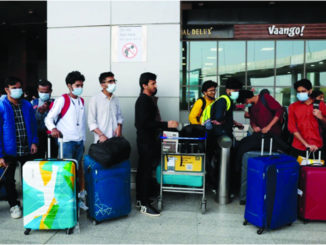
    Family members of Indians trapped in Ukraine wait for their arrival at Delhi airport. (Photo: [Bilal Kuchay/Al Jazeera])

    As soon as Chahat Yadav walked out of the airport and saw her family, she tossed away her luggage and ran towards them, crying inconsolably. Yadav’s father Narendra Kumar and other relatives had reached Delhi’s Indira Gandhi International Airport on Wednesday, March 2,  to receive the second-year medical student studying in Ukraine’s Ternopil city. The relieved family could not hold back their emotions as they saw Yadav and huddled around her, hugging, kissing and in tears. Yadav was among nearly 200 Indian students who had just landed in New Delhi from Poland on Wednesday after trying for days to escape the Russian invasion of Ukraine that began last Thursday, forcing nearly 20,000 Indian students to flee the former Soviet nation. “The Ukraine military was only letting the Ukrainians and Europeans across the border,” Chahat told Al Jazeera as she held a bouquet of red flowers handed to those returning from Ukraine by Indian authorities at the airport. “But I don’t know why Indians were being stopped and pushed back,” the young student said, alleging many Indians were beaten by the Ukrainian forces as they tried to cross the border.

    ‘Sleepless nights’

    When a Russian attack on Ukraine became imminent, Yadav’s father Kumar tried to book a ticket for her. But it was not easy with high demand and few flights. Kumar, who lives with his extended family in Gurugram on the outskirts of the Indian capital, bought an online ticket for Yadav for February 20 but the airline did not confirm the ticket. He later booked a transit flight to India via Qatar for February 23 at a steep cost of 50,000 rupees ($660). Yadav, who was double-vaccinated against coronavirus and was carrying her RT-PCR report along with her, was not allowed to board the flight to Qatar, Kumar said.

    The problem: Yadav had taken an Indian-made Covaxin shot, which, Kumar said, was only “partially approved [by Qatar]”. “They refused to consider her RT-PCR report… A serology antibody test [was required] to board the flight,” he said.

    When Russia invaded Ukraine the next day on February 24, Kumar said the thought of losing her daughter “gave him sleepless nights”.

    “I would be lying if I said the thought of losing my daughter in Ukraine did not cross my mind. It happened several times and took away my sleep,” Kumar told Al Jazeera. “When I saw my daughter today, I couldn’t believe that she was finally back.”

    Getting home was not easy for Yadav and other Indian students. On the evening of February 25, a day after Russian troops entered Ukraine, Chahat and her friends left Ternopil for Poland on a private bus they had hired for the trip.

    They reached the Poland border around midnight, only to find a 35km line of vehicles desperate to leave the country. They had no choice but to cover the remaining distance on foot. Many students threw away some of their luggage to be able to make the journey.

    They walked all night in bone-chilling cold and reached the border the next morning. But crossing into Poland was not easy, with thousands camped there. Yadav spent two nights at the border in sub-zero temperatures before she was allowed to cross.

    ‘Near-death experience’

    Another medical student, Rajarshi Shyam, 21, reached Delhi on Wednesday. He had travelled from Ukraine’s Vinnytsia to Romania. “We faced problems at the border. It was very crowded. It was a near-death experience,” he told Al Jazeera.

    Like Chahat, Rajarshi also had to walk for several kilometres on foot to reach the Romania border. He was also forced to dump some of his luggage, including his clothes, on the road.

    Still, says Rajarshi, he was lucky to have crossed the border in his first attempt, unlike many of his friends who were either turned back or forced to spend days at the border.

    Many Indian and African students have alleged facing racial discrimination and violence from Ukrainian officials at the borders.

    Meanwhile, thousands of Indians remain stranded in Ukraine as Russia escalates its attack on cities such as Kharkiv, Ukraine’s second-largest, where many Indian students study medicine.          -Source: Al Jazeera

    No food, water: Over 600 students stranded in Ukraine city cry for help

    Even as the Indian government has successfully evacuated thousands of citizens from war-torn Ukraine, over 600 students from the country stuck in the northeastern city of Sumy are crying for help. A student asserted that hope they will soon be evacuated as “continuous firing and bombing” by the Russian forces has left them completely terrified. They also complain of an acute shortage of food and water. Considering Sumy lies in the northeastern peninsula of Ukraine, it is difficult for the students to travel to the western border, from where they can reach neighbouring Poland, Hungary, Romania, Slovakia and Moldova, under the current circumstances.

    Not a single Indian student has been evacuated from the Sumy State University, located close to the Russian border has been evacuated. “More than 600 Indian students are stuck here in Sumy university. The embassy has neither evacuated us nor given any assurance to that effect. Since the last five days, there has been continuous firing, shelling and bombing in the city,” Viraj Walde, who hails from Nagpur in Maharashtra, told news agency PTI.

    “Before Russia’s invasion of Ukratine, temporary advisories were given to the students and the university informed us that those having exams can wait. Hence, we waited for the exams to start,” Walde added.

    “But now, the students are terrified and their mental state is deteriorating. Food and drinking water supplies are depleting. Even the banks and ATMs are running out of cash,” he said.

    Meanwhile, the Indian embassy has sent advisories asking them to use only the western border of Ukraine and reach the neighbouring countries of Poland, Hungary, Romania, Slovakia and Moldova. Since Sumy city is located in the north-eastern part of Ukraine, it is impossible for them to travel all the way to the western part of the country amidst the current situation.

    “The border in Ukraine’s western part is located almost 1,500 kms away from Sumy, whereas the Russian border is just 50 kms away. The railway station in Sumy has also been closed due to bombing, and traveling via road is like committing suicide since Russian and Ukrainian forces are fighting against each other at such places,” he told PTI.

  • International Women’s Day

    International Women’s Day

    Consider a world where men and women are treated equally. A world without bias, stereotypes, or discrimination. A diverse, equal, and inclusive world. A world in which diversity is valued and appreciated. We can achieve women’s equality by working together.

    International Women’s day is observed on March 8 every year on a global scale. It is all about celebrating the social, political, economic and cultural achievements of women around the world. It calls to arms all the women of the world to come together to fight against gender disparity and establish themselves as the invaluable members of society that they are. People all over the world are called to witness the incredible achievements of women and participate in activities and rallies that are targeted towards greater equality.

    History : In the modern world, it is easy to forget just how far we have come in the fight for equality and recognition, not just as women but as equal and productive members of society and the human race. Whether it was during times of economic depression or the world wars, women stepped to fill roles that they were previously denied. Agitated at being denied a seat at the proverbial table, Theresa Malkiel suggested to the ‘Socialist Party of America’ that they organise the first ever ‘National Women’s Day’ in 1909. A group of 15,000 women marched through the streets of New York, demanding shorter working hours, better pay and voting rights. Following this in 1910, an international conference for working women was held in Copenhagen. It was during this conference that Clara Zetkin, Kate Duncker, Paula Thiede and others proposed an annual commemoration of ‘Women’s Day’, in order to promote equal rights.

    In the following year, on March 19, 1911, the first ever ‘International Women’s Day’ was organised by over a million people from countries like Austria, Denmark, Germany, and Switzerland. Much later, in 1975, the United Nations finally acknowledged ‘International Women’s Day’ on a global scale and its celebration.

    Significance : International Women’s Day has become more than just a commemorative event over the years. It highlights the stories and extraordinary achievements of women that have on many occasions been erased. Each year, in celebration of this day, we look back to our mentors through history and work towards furthering the goal that they had set. Conferences, rallies, debates and discussions are organised and women from around the world participate in order to share their stories and make their voices heard.

    What is the theme this year for International Women’s Day?

    The theme for the International Women’s Day 2022 was announced by UN Women in December: “Gender equality today for a sustainable tomorrow.” A key mission this year is to advance gender equality in the time of the climate crisis through women’s leadership. The hashtag #BreakTheBias is a focal point for this year’s campaign to raise awareness and rally for gender equality.

    International Women’s Day 2022: Colors

    The colors of International Women’s Day are purple, green, and white. Purple is the color of justice and dignity. Green is the color of hope. White is a contentious concept that denotes purity.

    Status of Women in India

    Going back to our origins, we can see how vital women are to society, not only biologically, but also culturally. Women have been mentioned in our Vedas and ancient books since ancient times, and they have been assigned important positions. Because of the contributions of women, the texts of Ramayana and Mahabharat have been tremendously influenced and due to women, they may have become the most sacred of all. Previously, women were referred to as housekeepers. It was thought and passed down to others that women are meant to marry, take care of the house and their in-laws, and sacrifice all of their aspirations in order to realise the dreams of their husbands and children. Furthermore, women were kept out of school because families believed that only boys deserved to be educated and follow their aspirations. Women were married off at a young age, and occasionally without their consent. They have also been subjected to a slew of dehumanising practises, societal neglect, and rituals designed to limit them, and they are frequently considered commodities rather than human beings.

    However, things have changed over the years. Women today are eager to take up professions and work. Thus, they enjoy equal respect and dignity in the family. Women in free India also enjoy equal pay for equal work in comparison to men. Also, there are provisions for maternity leave for them. Furthermore, females are provided equality of opportunity under Article 16 of the Constitution of India.

    The girls in urban areas are almost at par in education with the boys. But there is a less educated female population in rural areas. This has also affected the social and economic development of rural India. The poor (hygienic facilities) facilities at school and lack of female staff have affected education. Kerala and Mizoram have a universal literacy rate.

    Following the development of the freedom movement across the nation, the ladies of the society began to emerge and burst through their shells. A larger proportion of women began to be given the opportunity to study and seek education. Currently, India does not have a shortage of women in the medical, technical, teaching, legal, or any other profession. India has seen an increase in the number of empowered women holding higher positions in various offices and organisations.

    Women are involved in a variety of occupations and compete alongside males in a variety of disciplines such as technology, law, administration, teaching, and so on. Apart from traditional occupations, we have women who thrive in sports, such as P.T. Usha, Sania Mirza, P.V Sindhu, Mithali Raj, Mary Kom, Saina Nehwal, Dipa Karmakar, and others, who have represented and inspired many aspiring sportswomen in India. We also have women who have had a significant impact on the art and entertainment industries since their inception, as well as cultural icons in many schools of art. Indira Gandhi, Vijay Lakshmi Pandit, Annie Besant, Mahadevi Verma, Nita Ambani, Sachet Kripalani, Amrita Pritam, Sushma Swaraj, Padmaja Naidu, Kalpana Chawla, Mother Teresa, Subhadra Kumari Chauhan, and others are some of the great Indian women leaders, social reformers, social workers, administrators, and literary personalities who have significantly changed the women’s status.

    There has been a steady transformation in the status of women in comparison to earlier periods. Women of today take part completely in areas such as politics, status, military sectors, economic, service, and technology sectors. Moreover, they have contributed wholly to sports too. Thus, they have occupied a dignified position in family and society.

    However, ending crimes against women is still a challenge. Even after significant advancements in women’s rights in India, they are still exploited, harassed, and abused in a variety of ways such as rape, sex discrimination, and so on. We can prevent ills by ensuring women’s autonomy, also increasing participation and decision making power in the family and public life.

  • India in history this Week-March 4, 2022, to March 10, 2022

    04 MARCH

    1879          Bethune College of Calcutta was established in 1879.

    1906          Hakim Abdul Majeed started the Hamdard dispensary in Delhi in 1906.

    1924          In 1924, Shyam Lal Gupta composed the song Raising the Flag.

    1951          Eleven countries participated in the first Asian Games in Delhi in 1951.

    1961          In 1961 I.N.S. Vikrant was brought to Belfast.

    05 MARCH

    1931          Mahatma Gandhi ended the Civil Disobedience Movement.

    1905          Sushila Didi, a freedom fighter who was instrumental in the revolutionary activities of Bhagat Singh, was born in Punjab.

    2010          GP, one of the famous entrepreneurs of India. Birla died.

    1783          Establishment of Geological Survey of India.

    2009          Indian industrialist Vijay Mallya bought Bapu’s legacy for Rs 18 lakhs

    1949          The Jharkhand Party was founded in India in 1949.

    1990          The government announced an interim relief of Rs 360 crore for the five lakh victims of the 1984 Bhopal gas tragedy.

    2002          The Commonwealth Summit was held in 2002.

    2008          India successfully test-fired the BrahMos missile from the sea into the ground.

    2009          IFFCO (‘Indian Farmers Fertilizer Co-operative Limited) became the first company in the world to make annual sales of 10 million tonnes of fertilizer in 2009.

    06 MARCH

    1886          The first nurses’ nightingale is published.

    1915          Mahatma Gandhi and Tagore had their first meeting in Shantiniketan in 1915.

    1947          The Economic Times started editing from Bombay.

    1962          The great revolutionary Ambika Chokrovarti died in 1962.

    1971          Sunil Gavaskar started his Test career in 1971.

    1990          India won the Indira Gandhi Gold Cup hockey tournament.

    1991          Chandrasekhar resigned as Prime Minister in 1991.

    2000          India and China first spoke in Beijing on the security issue.

    07 MARCH

    1956          A huge steel tube plant was opened in Jamshedpur on this day in 1956.

    1987          Sunil Gavaskar made history. Please tell that on this day, he scored 10,000 runs in a Test match.

    1994          India and Iraq signed three Memorandum of Understanding in Tehran.

    1998          Former Prime Minister Atal Bihari Vajpayee was given the leadership of BJP’s MP Party.

    1835          Proposal was made to promote the propagation of European literature and science in India.

    1985          The first antibody test for AIDS, the ELISA-type test, was started.

    2007          Pakistan and India prepared in 2007 to help investigate terrorism.

    1961          Renowned freedom fighter and senior leader Govind Ballabh Pant died in 1961.

    08 MARCH

    1909          International Women’s Day is started to celebrate.

    1948          Air India International was established.

    1535          Bahadur Shah found Fateh at Chittor Fort.

    1673          Chhatrapati Shivaji burst upon the fort of Panhala.

    1930          Mahatma Gandhi started the Civil Disobedience Movement.

    1986          BJP leader Advani was elected party president.

    1998          Indian Airlines flew with all women crew members.

    1833          The great journalist Vishwanath Narayan was born.

    09 MARCH

    1951          Famous tabla player Zakir Hussain is born.

    2007          Indian doctors in Britain get legal success on discriminatory migrant rules.

    1999          Indian-based, British-based industrialist Swaraj Paul was awarded an honorary doctorate by the University of Central Birmingham in 1999.

    10 MARCH

    1922          Mahatma Gandhi was arrested in 1922 on charges of treason.

    1969          The CISF Act was passed in Parliament.

    1985          India won the Bension and Hedges Cricket World Cup in 1985.

    2010          The Women’s Reservation Bill was passed in the Rajya Sabha, the upper house of the Indian Parliament.

    1932          Born in 1932 of Udupi Ramchandra Rao, a space scientist and former president of ISRO (Indian Space Research Organization).

    1945          Famous Congress leader Madhavrao Scindia was born on this day in 1945.

  • After Pandemic Corona JLF starts again in Jaipur from March 5

    After Pandemic Corona JLF starts again in Jaipur from March 5

    Jaipur Literature Festival to pick up topical issues of Ukraine-Russia Conflict, climate Change

    Dr. Yashpal Goyal,
    Special Correspondent

    JAIPUR (TIP): After Pandemic Corona outbreak since 2020 in India, Jaipur Literature Festival’s 15th edition beginning in Pink City from March 5 will pick up a some of the topical issues of Ukraine-Russia Conflict, Geo-politics of war, Climate Change, new world order besides holding a whole range of literary sessions.

    Sanjoy K Roy, Managing Director of Teamwork addresses the press conference in Jaipur on March 2.

    Sanjoy K Roy, its Managing Director of Teamwork, told a press conference here on March 2 that finally the JLF organizer has chosen a five star hotel by leaving the old heritage ‘Diggi Palace’ due to traffic problems and other administrative regulations. It will be in a hybrid mode, March 5 to 9 on virtual mode, and from March 10 to 14 the sessions would be on ground and visitors would be allowed to witness the live discussions among noted writers, Roy added.Like the previous years’ edition, JLF will have 500 speakers, including four Nobel laureates and will have sessions covering art of fiction, poetic imagination, travel, science, history etc. The prestigious festival will showcase a variety of exhibiting numerous dialects of Rajasthan-Centric literature.

    In a statement, Rajasthan Tourism Minister Vishvendra Singh said he was delighted to note that JLF was returning on-ground in the Pink City after two years. The festival will truly provide an exceptional platform for both Indian and global authors and thought leaders to engage and strengthen literary heritage and culture.

    This time both the literary sessions as well as music in the evening will be held in the hotel campus, Apurav Kumar, MD of the Clarks Group, told the joint press conference. On a question on the impact of the Ukraine-Russia war, they said, “We may lose a few good speakers as two writers have already cancelled their visits to India”.

    The rich programme will feature, among others, a session with Bruno Maçães, decorated author, international commentator and advisor to some of the world’s leading companies on geopolitics and technology, who will be exploring the study of an emerging world order that is competitive and driven by the need to adapt and survive in increasingly hostile natural environments. In conversation with former diplomat and author Navtej Sarna, Maçães will discuss book Geopolitics for the End Time: From the Pandemic to the Climate Crisis. On clean energy, Rahul Munjal, the Chairman & Managing Director at Hero Future Energies, one of India’s leading Independent Power Producer, is committed to positive environmental impact by increasing the share of renewables. Joining him will be, Amitabh Kant, the CEO of the National Institution for Transforming India (NITI Aayog) and a key driver of initiatives such as Make in India, Startup India, Incredible India and God’s Own Country and academician Siddharth Singh, author of The Great Smog of India. Munjal and Kant will discuss the future of clean energy and climate action. Simon Mundy, Financial Times journalist and author of Race for Tomorrow: Survival, Innovation and Profit on the Front Lines of the Climate Crisis, will speak on the question of what impact a single person can have in the face of the global climate crisis. The earth has witnessed five major mass extinction events over the last 500 million years – responsible for the erasure of nearly three-quarters of its species each time.  A series called The Urgency of Borrowed Time will feature Pranay Lal, natural history writer, biochemist and public health advocate who is also author of the celebrated books Indica: A Deep Natural History of the Indian Subcontinent and Invisible Empire: The Natural History of Viruses. The session will explore the fate of dinosaurs and species sealed by extinction events, and the role of humankind in the surging climate crisis.

  • NRIs worried as Russia-Ukraine conflict delaying flights

    NRIs worried as Russia-Ukraine conflict delaying flights

    AMRITSAR/TORONTO (TIP): While the conflict between Russia and Ukraine has worried the families of those stranded in Ukraine, it has also troubled the NRIs ready to return to Canada after spending their winter in Punjab. The NRIs said flights, especially those connecting via Montreal and Toronto were getting delayed. They, however, said that flights going via Vancouver were comparatively less troublesome.

    Kanwaljit Singh Sekhon of Wadala village, near Baba Bakala, who took the flight to Canada via Vancouver on Wednesday, March 2  morning, said he had to wait for six hours at the Delhi airport as the flight was late.” He said due to delay from Delhi, he would now have to spend eight hours extra at the Vancouver airport. Sekhon had to go to Edmonton, but now there was no flight available from Vancouver to Edmonton. So, he had booked a ticket for Calgary, from where he would take another flight. “Those travelling via Montreal and Toronto have to face delay of almost 25 to 26 hours,” said Gurjant Singh, who took a flight from Delhi on February 2 after a 24-hour delay. Gurjant said as the airlines did not provide boarding during the delay, they had to sleep at the airport itself. With such stories of hardships, those who had plans to return to Canada shortly are worried. Some are even planning to leave children and women behind.

    “It is very difficult to travel in such crisis especially with small children,” said Gurpreet Singh, who was scheduled to travel next week. He said he was making calls to his travel agent and co-travelers, but nobody had any concrete information.

    (Source: TNS)

  • Indian-origin BitConnect’s founder Satish Kumbhani disappears

    Indian-origin BitConnect’s founder Satish Kumbhani disappears

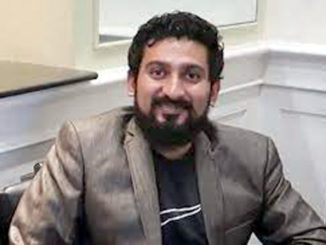
    WASHINGTON, D.C. (TIP): Bit Connect’s Indian founder Satish Kumbhani, who was indicted by a federal grand jury in San Diego Friday, February 25,  in a global $2.4 billion cryptocurrency Ponzi scheme, is reported to have vanished from India. Kumbhani, 36, of Hemal, India, was charged with orchestrating a global Ponzi scheme through BitConnect, an alleged fraudulent cryptocurrency investment platform that reached a peak market capitalization of $3.4 billion.

    Kumbhani is charged with conspiracy to commit wire fraud, wire fraud, conspiracy to commit commodity price manipulation, operation of an unlicensed money transmitting business, and conspiracy to commit international money laundering.

    If convicted of all counts, he faces a maximum total penalty of 70 years in prison, according to a Justice Department press release. “Kumbhani is at large,” the Justice Department said Friday.  February 25. However, according to Bloomberg, a Securities and Exchange Commission (SEC) attorney said in a court filing Monday, February 28 that he “has likely relocated from India to an unknown address in a foreign country.” “Since November, the commission has been consulting with that country’s financial regulatory authorities in an attempt to locate Kumbhani’s address. At present, however, Kumbhani’s location remains unknown,” attorney Richard Primoff said.

    Last September, the SEC separately sued Kumbhani, claiming he fraudulently raised more than $2 billion from investors in his cryptocurrency exchange platform, Bloomberg said. But the SEC didn’t know where he was and couldn’t serve him with the lawsuit. Primoff asked US District Judge John Koeltl for an extension until May 30. The SEC said it wants to look for Kumbhani and if it finds him in the US, serve him with the complaint. Prosecutors said Kumbhani created BitConnect in 2016 and the digital token, BitConnect Coin (BCC). He allegedly misled investors about BitConnect’s “Lending Program,” according to court documents.

    Under this program, Kumbhani and his co-conspirators touted BitConnect’s purported proprietary technology, known as the “BitConnect Trading Bot” and “Volatility Software,” as being able to generate substantial profits and guaranteed returns by using investors’ money to trade on the volatility of cryptocurrency exchange markets. As alleged in the indictment, however, BitConnect operated as a Ponzi scheme by paying earlier BitConnect investors with money from later investors. In total, Kumbhani and his co-conspirators obtained approximately $2.4 billion from investors. The indictment further alleges that, after operating for approximately one year, Kumbhani abruptly shut down the Lending Program. Kumbhani then directed his network of promoters to fraudulently manipulate and prop up BCC’ price to create the false appearance of legitimate market demand for it. Kumbhani and his co-conspirators also concealed the location and control of the fraud proceeds obtained from investors by commingling, cycling, and exchanging the funds through BitConnect’s cluster of cryptocurrency wallets and various internationally based cryptocurrency exchanges.

    According to the indictment, to avoid regulatory scrutiny and oversight of BitConnect’s cryptocurrency offering, Kumbhani evaded US regulations governing the financial industry, including those enforced by the Financial Crimes Enforcement Network (FinCEN).

    For example, although BitConnect operated a money transmitting business through its digital currency exchange, BitConnect never registered with FinCEN, as required under the Bank Secrecy Act.“Crime, particularly crime involving digital currencies, continues to transcend international boundaries,” said Assistant Attorney General Kenneth A. Polite Jr. of the Justice Department’s Criminal Division. “The department is committed to protecting victims, preserving market integrity, and strengthening its global partnerships to hold accountable criminals engaging in cryptocurrency fraud.”“Dressing up a tried-and-true fraud scheme with a new twist and basing it overseas will not deter the resolve and dedication of the FBI to meticulously investigate and bring such fraudsters to justice,” said Special Agent in Charge Eric B. Smith of the FBI’s Cleveland Field Office. “As cryptocurrency gains popularity and attracts investors worldwide, alleged fraudsters like Kumbhani are utilizing increasingly complex schemes to defraud investors, oftentimes stealing millions of dollars,” said Special Agent in Charge Ryan L. Korner of the IRS Criminal Investigation’s (IRS-CI) Los Angeles Field Office.

    Justice Department encouraged all investor victims of the BitConnect fraud to visit the webpage https://www.justice.gov/usao-sdca/us-v-glenn-arcaro-21cr02542-twr to identify themselves as potential victims and obtain more information on their rights as victims, including the ability to submit a victim impact statement.

  • Indian American Microsoft CEO Satya Nadella’s 26-year-old son passes away

    Indian American Microsoft CEO Satya Nadella’s 26-year-old son passes away

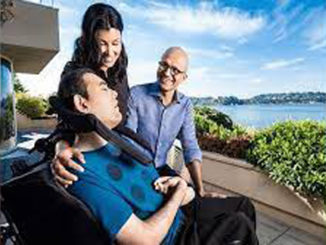
    SAN FRANCISCO (TIP): Tech giant Microsoft Corporation said that Zain Nadella, son of CEO Satya Nadella and his wife Anu Nadella, has died, media reported on Tuesday, March 1. The software maker told its executive staff in an email that Zain, who was 26 years old and had been born with cerebral palsy, passed away on Monday. February 28 morning.

    The message asked executives to hold the family in their thoughts and prayers while giving them space to grieve privately, the report said.

    In October 2017, the CEO talked about the birth of his son in a blogpost.

    “One night, during the thirty-sixth week of her pregnancy, Anu noticed that the baby was not moving as much as she was accustomed to. So, we went to the emergency room of a local hospital in Bellevue,” Nadella had said in the post. “We thought it would be just a routine checkup, little more than new parent anxiety. In fact, I distinctly remember feeling annoyed by the wait times we experienced in the emergency room. But upon examination, the doctors were alarmed enough to order an emergency cesarean section,” he added. The CEO mentioned that Zain was born at 11:29 p.m. on August 13, 1996, all of three pounds and he did not cry.

    “Zain was transported from the hospital in Bellevue across Lake Washington to Seattle Children’s Hospital with its state-of-the-art Neonatal Intensive Care Unit. Anu began her recovery from the difficult birth. I spent the night with her in the hospital and immediately went to see Zain the next morning. Little did I know then how profoundly our lives would change,” Nadella said.

    “Over the course of the next couple of years, we learned more about the damage caused by in utero asphyxiation, and how Zain would require a wheelchair and be reliant on us because of severe cerebral palsy. I was devastated. But mostly I was sad for how things turned out for me and Anu,” he added.


  • Indian American Democrat Raj Mukherji to run for New Jersey Senate

    Indian American Democrat Raj Mukherji to run for New Jersey Senate

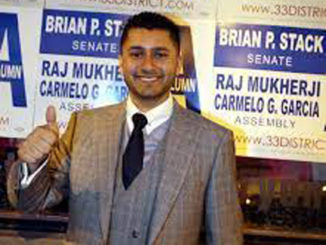
    JERSEY CITY, NJ (TIP): Indian American Democrat Raj Mukherji, who represents Jersey City in the New Jersey state assembly has announced that he will run for the state Senate in the 32nd district next year.

    Mukherji, 37, chairman of the Assembly Judiciary Committee, has already won endorsements from Gov Phil Murphy Jersey City Mayor Steven Fulop, State Sen Brian Stack, and Hoboken’s Indian American Mayor Ravi Bhalla.

    “The goal of securing a brighter tomorrow for my toddler son, Leo, and infant daughter, Liana, has strengthened my resolve to keep fighting for our state,” Mukherji said in a Feb 18 statement.

    “So, I’m humbly asking the people of Jersey City and Hoboken to return me to the legislature, this time in the Senate,” added the Marine Corps veteran and former Jersey City deputy mayor. Murphy gave the five-term assemblyman an endorsement less than one day after a new legislative redistricting map created a new open seat in Hudson County.

    “Raj represents a new generation of leadership and I know the people of Jersey City and Hoboken have no better representative, which is why I enthusiastically endorse his candidacy for State Senate,” said Murphy.

    “Over the past eight years, Raj Mukherji has been a tireless fighter for the people of Hudson County, representing some of the most diverse communities in our state,” he said.

    “Whether as a job-creating CEO, Deputy Mayor of his beloved Jersey City, local prosecutor, or as a prolific lawmaker, Raj has excelled and championed progressive values and helped shape a stronger and fairer New Jersey.”

    Murphy praised Mukherji’s legislative accomplishments during more than eight years in Trenton, where he served as Assembly Majority Whip before taking over the Judiciary chairmanship in 2020.

    “From investing in mass transit to expanding Medicaid to cover essential healthcare needs to increasing funding for our public schools to protecting open spaces, Raj has been an ally of mine in the Assembly and will no doubt continue building on his strong record of progress in the Senate,” the governor said.

    The newly-drawn 32nd district includes part of Jersey City and Hoboken, with an open Senate seat that became available after the new map pitted two veteran Democratic senators, Nicholas Sacco and Brian Stack, into the primary in the next-door 33rd district.

    Mukherji was first elected in 2013 in the 33rd district, which is currently represented by Stack in the Senate.

    The district, which is made up entirely of Hoboken and northern Jersey City, has a white plurality but includes the second-largest Asian American population of any district on the new map, at 32%.

    The endorsements from Fulop, Stack, and Bhalla, three of the most important figures in the district, make Mukherji the prohibitive frontrunner in the Democratic primary. “For the last eight years, Assemblyman Raj Mukherji has been a tenacious fighter for Hudson County,” Stack said. “I proudly endorse him for the State Senate, and we will work day and night for Raj to make sure our neighbors continue to be well represented in the new district.” Mukherji has been an invaluable partner in preserving open space, as well as moving forward resiliency and transportation projects in the Mile Square City, Bhalla said. “From securing funding for Hoboken’s open space and resiliency projects, helping preserve our waterfront at Union Dry Dock, and moving forward critical transportation projects, Raj Mukherji has been a steadfast champion for our community,” he noted. “And, as the son of South Asian immigrants and a successful small business owner, Raj has the real life experience that will serve him well in the State Senate,” Bhalla said. “I’m incredibly proud to support his candidacy so Hoboken can continue to have the representation it needs in Trenton.”

    The son of immigrants, Mukherji supported himself through high school, college, and grad school as an emancipated minor when economic circumstances forced his parents to return to their native India, according to his official bio.

    Raj had founded an Internet consulting and software development company while in middle school, grew it, and later sold it to a larger technology company to enlist in the Marines two weeks after 9/11 at age 17, where he served in military intelligence as a reservist.

    The young entrepreneur withdrew from high school after completing ninth grade to focus on his business endeavors and support himself after his parents were forced to move to India.

    At 15, he enrolled in an early college program at Bard College at Simon’s Rock and eventually earned a bachelor’s degree from Thomas Edison State University, an individualized Master of Liberal Arts focused on national security from the University of Pennsylvania, and a law degree (Juris Doctor), cum laude, from Seton Hall Law School, which he attended on a Chancellor’s Scholarship. At 24, Raj was appointed Commissioner and Chairman of the Jersey City Housing Authority, the youngest in city history. At 27, he was appointed Deputy Mayor of Jersey City, where he served from 2012-13. Next year he was elected to the state assembly.

  • Interpol issues Red Corner Notices against Atul and Rajesh Gupta

    Interpol issues Red Corner Notices against Atul and Rajesh Gupta

    JOHANNESBURG (TIP): The Interpol has issued red notices against Atul and Rajesh Gupta — two of the three Indian-origin Gupta brothers — who fled South Africa with their families amid investigations into their alleged looting of billions of rands from state-owned enterprises. However, the Interpol has declined a request from the South African government to issue red notices against their wives — Arthi and Chetali Gupta.

    A Red Notice is an alert to all Interpol member states that an individual is a wanted fugitive, but is not equivalent to an arrest warrant. However, it strengthens the case of a country negotiating the extradition of wanted criminals from another state.

    The Red Notice, which the South African government had applied for against the Gupta Brothers seven months ago, was issued on Monday. The three Gupta brothers- Ajay, Atul and Rajesh- are originally from Uttar Pradesh’s Saharanpur and now believed to be in self-exile in Dubai. Justice Minister Ronald Lamola has described the move as “a positive development” which he hoped would allow justice to take its course. South Africa’s National Prosecuting Authority (NPA) has been trying for several years to extradite the Gupta brothers.

    Although their exact whereabouts remains obscure, South Africa last year had concluded an extradition treaty with Dubai and applied for their extradition.

    The Guptas have been accused of misusing their proximity to former President Jacob Zuma to loot from parastatal companies, including the national electricity supplier Eskom, which is now severely cash-strapped, resulting in frequent load shedding across the country.

    The Guptas had previously stated that their extradition was politically motivated, which has been denied by the NPA.

    Zuma is currently fighting the revocation of his medical parole after serving just a few months of a 15-month jail sentence imposed by the apex Constitutional Court last year because he walked out of a hearing of the commission and refused to testify further.

    Lawyers for the Guptas have confirmed that they had been made aware that the NPA had “temporarily succeeded” in having red notices issued against the brothers, but stated that they would be challenging these notices on the basis of “material misrepresentations by the NPA,” according to media website.

    Outgoing head of the Investigating Directorate at the NPA, Hermione Cronje, who had led the process to get the Guptas back to South Africa, has described Interpol’s move as “bittersweet.”

    “This is my last day at the ID, so getting formal notification that these red notices have been issued – which paves the way for the Gupta brothers to be extradited – is bittersweet. So many people have worked very hard to make this a reality and my sincere [wish] is that their efforts translate, finally, into those allegedly responsible for state capture being held to account,” Cronje told media.

  • What is going oninside Vladimir Putin’s head? 12 experts weigh in

    What is going oninside Vladimir Putin’s head? 12 experts weigh in

    By Brendan Cole

    Nearly a week into the largest military campaign in Europe since World War Two, Russian forces have encountered fierce resistance from Ukraine while global condemnation has spurred sanctions that have roiled the Russian economy. Before the invasion, Putin humiliated his spy chief, Sergei Naryshkyn in a Russian Security Council meeting which showed the president relishing being in control. But now with the status of global pariah, Putin’s invoking of his country’s nuclear threat has raised alarm at what his actions might be if he felt cornered.

    Newsweek spoke to a selection of experts about what they believed could be going through Putin’s mind. Their responses varied widely—from those who said his apparent erratic behavior was part of a calculated grand strategy, to others who  believe his increased isolation since the COVID pandemic has made him more emotional and unstable.

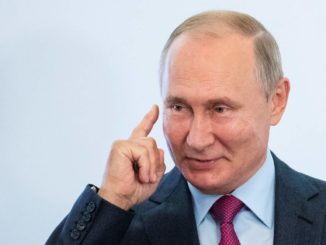
    Questions surround the state of mind of Russian president Vladimir Putin. After his invasion of Ukraine, there are concerns at how far he might go to secure victory.

     Michael McFaul, former U.S. ambassador to Russia

    “Putin listens to no one inside Russia. He’s been in power for over two decades, so does not take advice from anyone anymore. He also is very isolated. He is the only decision maker that matters. He alone can end this war.

    “[Chinese President] Xi is the only leader in the world he respects.”

    Rose Gottemoeller, ex-deputy Secretary General of NATO

    “Vladimir Putin has always cultivated a cool and calculating demeanor, but now he is showing increasingly erratic and emotional behavior—so there is a shift. “From our perspective, it certainly looks irrational, but no doubt that is not how Putin sees it. He’s considering himself a figure of destiny, to bring the Russian-speaking peoples together again. For him, it seems, it is a vital historical objective.”

    Steve Pifer, former U.S. ambassador to Ukraine

    “We are seeing a different Vladimir Putin from 10 or 15 years ago. He now seems more emotional, particularly when it comes to Ukraine, and he is taking a much larger risk with the invasion than one would have expected from him earlier.

    “One also has to wonder about the effect of the isolation in which he has lived and worked the past two years, apparently out of concern about COVID.”

    Gustav Gressel, senior policy fellow, European Council on Foreign Relations (ECFR)

    “He sees himself as the recreator of imperial Russia. The thing is with the ‘madman’ theory, he is playing a bit with that.

    “He is rational if you know his mindset and that is a social Darwinian mindset, where military power and military strength form the core essence of the state and the core momentum of Russian identity. “If you know his mindset, what he does is perfectly rational. It is not mad, is just that you have to adopt to this mindset. “Everything he does today, at some point, he has written or said. It is just that we have continuously excused him for doing so, in saying, “that’s just basically rambling, he’s a hobby historian, he meant that as a joke,’ etc. No, he didn’t. He was serious and we are seeing it now. “

    Douglas Page, assistant professor of political science at Gettysburg College, Pennsylvania

    “While evidence may emerge about Putin’s mental instability, we also should consider the persona that Putin may be willingly crafting during this intense crisis, even when that persona reflects desperation. “The idea that one’s opponent is irrational and crazy is enticing, but this idea also can serve an important purpose for an opponent like Putin. An irrational opponent is more unpredictable and can be viewed as more willing to incur absurdly high costs in a conflict. “For example, nuclear war would doom Russia, but an irrational Putin could raise more questions in the West about his willingness to use nuclear weapons. This perception in the West may follow Putin’s objectives regarding nuclear deterrence and limiting Western involvement in Ukraine.

    Ian Johnson, assistant professor of military history at the University of Notre Dame, South Bend, Indiana

    “His historical rhetoric suggested aspirations beyond Ukraine, restoring Russian primacy over areas formerly in Russia’s orbit across Eastern Europe. “Putin is well-versed in history. He clearly believes that he has an opportunity for a historic legacy, one that puts him in line with those figures he cites so frequently in his speeches—Peter the Great and Stalin, among them — both of whom expanded the borders of the Russian or Soviet state at the expense of their neighbors.”

    William Muck, political science professor, North Central College, Naperville, Illinois

    “It does appear that Putin has shifted how he understands and engages with the international community. The tone and language from his recent speeches are particularly telling. Putin has been much more aggressive, provocative, and nationalistic. “One gets the sense that he now sees himself as a historic figure. That his war in Ukraine is about rewriting the end of the Cold War and making Russia great again. “People talk of Putin as this brilliant chess player who skillfully outplays his rivals in the international system. That may have been the case in the past, but I think the better current metaphor for his mindset is poker. Putin is a gambler, and his invasion of Ukraine suggests he is all-in on this hand.

    “If he wins, it is possible he goes down in history as the figure who restored Russian greatness. However, if he loses, this may be the beginning of the end of the Putin regime in Russia.”

    Matt Qvortrup, political science professor, Coventry University, U.K.

    “He is very out of touch and that is why he expected things to go differently.” “Rationality means you get what you want and what is good for you. For Vladimir Putin, what is good for him is not good for Russia, it is not what is good for the world, it is what will keep him in power. “He does not want to suffer the fate of [Ex-Serbian leader] Slobodan Milosevic, or [Ex-President of Zimbabwe] Robert Mugabe, and for that reason, he would want to use any available means. “The shocking thing is that he will be willing to go all the way. It is conceivable that he will use nuclear weapons if he is desperate and for him that might be a rational thing because that might keep him in power.”

    William Hague, former British Foreign Secretary

    “While it is clear that a great many Russian diplomats and officials think he has made a terrible mistake, there will be nothing they can do now to restrain their isolated, paranoid, obsessive and increasingly angry president.

    “Tragically for the people of Ukraine, he will have no doubts about what he must do. He will be telling his generals to go deeper, faster, more brutally and destructively if necessary.” — The Times of London

    ‘This Madness Must be Stopped’. – Lord Owen, former British Foreign Secretary

    “He is a very able, intelligent person, never underestimate people who you are dealing with who you don’t agree with…it’s easy to dismiss them as being mad. I don’t believe that is a reasonable judgement of him. But he does seem to be more imperious.

    “There is no check on this leader of Russia. In the old Communist days, there was a Politburo, in which you could see collective decision making. That’s all gone for Putin.

    “He’s one single autocratic dictator and he’s isolated for the last two years under COVID…you get the feeling there’s nobody to even argue with him, let alone contradict him.”— Channel 4

    Fiona Hill, former U.S. National Security Council advisor on Russia.

    “I think a lot of people are noticing that something seems to have flipped somewhat with Putin almost as if he’s made a rather emotional and, on the surface, a somewhat unexpected decision.

    “He’s usually pretty cynical and calculating and very calm. Always very sarcastic and kind of harsh in the way that he talks about things. But the announcement that he was basically going to invade Ukraine, he was viscerally emotional.

    “This is what happens if you have got the same person in power for 22 years, he’s been in a bubble, especially over the last two and a half years.” — MLive

    Tatiana Stanovaya, founder of analysis firm R.Politik firm.

    “There are people who go crazy and believe that they serve some higher power, God, or something else, perceiving themselves only as a…tool in the hands of great forces. “Putin is not there yet, but there is something in common. For him, this higher power is the State, as it has been historically understood and he sees himself as its servant.

    “The problem is that personal responsibility is diminished and you feel that you are acting on behalf of history.

    “With such a vision you can go very far without remorse.”— Telegram

    (Source: Newsweek)

  • Hard times for the state of the union

    Hard times for the state of the union

    Foreign policy challenges and domestic hurdles confront U.S. President Biden in his quest for a policy legacy

    By Narayan Lakshman

    “At the end of the day the old adage of “It’s the economy, stupid”, continues to resonate deeply across the country as the tagline for the American Dream. The realization of this — the Biden administration appears to concede — will require the adoption of strong self-interest as a guiding value for policymaking even when it comes at the cost of a gradual erosion of the global rules-based order and the globalization consensus, and the repudiation of older, constitutional values such as equal protection of the laws.”

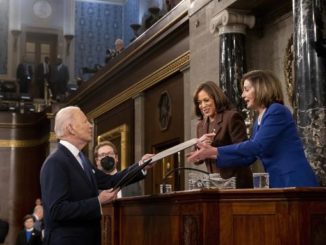
    When U.S. President Joe Biden stepped up to the podium to deliver his first State of the Union address before both houses of Congress this week, it was a historic moment for several reasons. Not only have none of his successors since 1945 delivered this address during an ongoing ground war of a similar magnitude to Russia’s invasion of Ukraine, but the optics of his speech captured another rare event. The two top Congressional officials who stood behind Mr. Biden as he spoke, the Speaker of the House of Representatives and the Vice President, were both women for only the second time in the country’s history.

    The hurdles, Ukraine too

    Notwithstanding the epochal times marking this event, the reality is that Mr. Biden faces grim challenges on the foreign policy front and a steep upward climb to overcome domestic hurdles before he can claim credit for any policy legacy that purports to improve the lot of his fellow citizens. On the foreign policy side, Russian President Vladimir Putin’s move to call the West’s bluff and kick off a military assault of Ukraine has posed complex strategic questions to the Biden administration, which are difficult to explain away to a U.S. domestic audience. Why did Mr. Biden leave Kyiv hanging in the balance without North Atlantic Treaty Organization (NATO) membership and with a virtual target on its back vis-à-vis Moscow’s guns, when many among Ukraine’s neighbors are treaty allies of NATO? Why, despite so many explicit signs that Russia would invade Ukraine if NATO carried on expanding its footprint eastwards across Europe, did Mr. Biden’s administration not do more to either make it harder for Moscow to act in this regard or at least buy more time by persuading Mr. Putin to engage diplomatically?

    Shadow of midterm elections

    Now that the sweeping economic sanctions that Washington has slapped on Russian political elites and institutions associated with Kremlin have roiled the Russian economy and brought the rouble down to historic lows, how will the Biden administration contain the spill-over effects of economic collapse and prevent them from causing a broader global recession? With the conflict intensifying and the human toll rising fast as Russian troops march on Kyiv, the U.S.’s capabilities as a superpower nation will be scrutinized closely on the world stage in the days and weeks ahead. They will almost certainly be attacked by Republicans back home as the midterm election cycle gains momentum — former U.S. President Donald Trump has already set the tenor for the debate by describing Mr. Putin’s Ukraine invasion as “genius” and “savvy”.

    At home, much depends on the outcome of the midterm elections, especially regarding the prospects for a Democratic White House to carry out any meaningful policy reform in the two years that the Biden administration will have from the time the midterms are complete. Democrats and Republicans are evenly split in the Senate with 50 seats each, while Democrats are clinging on to a narrow 221-212 margin in the House of Representatives, both of which advantages could be lost to Democrats if the 2022 midterm election results do not favor them.

    Critical issues

    The keystone issues that Mr. Biden needs to convince voters on, if he is to stave off a deleterious shift in the balance of power on Capitol Hill this November, include jobs and economic recovery in the post-COVID-19 climate of uncertainty, preventing the pandemic from wreaking further havoc in future waves, if any, inflation, and social security and education reforms to ease the financial burden on middle class budgets. Almost without exception, Mr. Biden will need the support of Congress to get the heavy lifting done in these policy areas, particularly where budgetary apportionments require lawmakers’ sign off. Certainly, it will matter in the foreign policy space. A recent example demonstrating the importance of Congress here is the fact that negotiations over a $6.4 billion security and humanitarian aid package for Ukraine hit a stalemate in the Senate over the source of these funds — military spending allocation already agreed, or emergency provisions above and beyond that level. Similarly, on the domestic front, Mr. Biden’s omnibus mega-bill in late 2021, seeking $1.85 trillion for social security and climate change, came to naught in the face of cohesive opposition from Senate Republicans and some rebel Democrats who voted across the line.

    The Trump impact

    At the heart of the Democratic conundrum is the fact that the Mr. Trump’s term in office unleashed forces that have tectonically shifted the ground under Washington politics. Whatever the charges of criminality or wrongdoing by the 45th President of the U.S., whether in terms of tax evasion or his role in spurring on the January 6, 2021 assault on the buildings of Capitol Hill, Mr. Trump’s nativist call to white America to reassert its purported supremacy has firmly embedded itself in the broader discourse and heralded a new era where political correctness is eschewed, and facts sometimes matter less than opinion.

    Indeed, it is evident that Mr. Biden is seeking to walk a tightrope between traditional mainstream Democratic values and the new paradigm when he spoke at the State of the Union of “the rebirth of pride” and “the revitalization of American manufacturing”, which, if it materializes, could help his administration “Lower your cost, not your wages”, and ensure the U.S. builds “more cars and semiconductors in America. More infrastructure and innovation in America. More goods moving faster and cheaper in America. More jobs where you can earn a good living in America. Instead of relying on foreign supply chains, let’s make it in America”.

    At the end of the day the old adage of “It’s the economy, stupid”, continues to resonate deeply across the country as the tagline for the American Dream. The realization of this — the Biden administration appears to concede — will require the adoption of strong self-interest as a guiding value for policymaking even when it comes at the cost of a gradual erosion of the global rules-based order and the globalization consensus, and the repudiation of older, constitutional values such as equal protection of the laws.

    (The author is an editor with The Hindu)

  • The anatomy of India’s Ukraine dilemma

    The anatomy of India’s Ukraine dilemma

    New Delhi has taken a subtle pro-Moscow position on the question of Russian attacks against Ukraine

    By Happymon Jacob

    “New Delhi has taken a subtle pro-Moscow position on the question of Russian attacks against Ukraine. This pro-Russia tilt is not just the position of the Indian government, but is something, somewhat surprisingly, shared by much of the Indian strategic community as well. More notably, one is increasingly hearing subtle, though indirect, justifications of the Russian military actions from the doyens of the Indian strategic community. India’s Russia tilt should be seen not just as a product of its time-tested friendship with Moscow but also as a geopolitical necessity.”

    New Delhi’s response to the Russian aggression against Ukraine appears to have been shaped by harsh geopolitical circumstances, that it is in the middle of, than its normative beliefs or preferences. Late last week, India abstained from a United Nations Security Council (UNSC) resolution which called for condemning the Russian military action against Ukraine, but it went on to note its uneasiness of the Russian action in writing (a first).

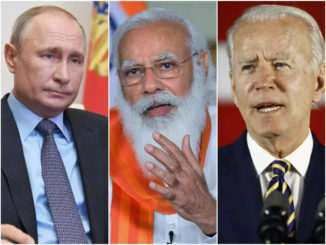
    Prime Minister Narendra Modi, who spoke to Russian President Vladimir Putin as the war broke out, called for an “immediate cessation of violence” and has so far refused to pay heed to Ukrainian Ambassador to India Igor Polikha’s impassioned pleas urging Mr. Modi to mediate with Mr. Putin to halt Russian military advances. With the UNSC deadlocked, friends with both the United States/West and Russia, and passionately urged by Ukraine, New Delhi is uniquely placed to undertake some much-needed mediation between the rival sides. But it has chosen to stay on the margins and do no more than the unavoidable minimum. New Delhi just wants this to be over with. Let us call it what it really is: New Delhi has taken a subtle pro-Moscow position on the question of Russian attacks against Ukraine. This pro-Russia tilt is not just the position of the Indian government, but is something, somewhat surprisingly, shared by much of the Indian strategic community as well. More notably, one is increasingly hearing subtle, though indirect, justifications of the Russian military actions from the doyens of the Indian strategic community. India’s Russia tilt should be seen not just as a product of its time-tested friendship with Moscow but also as a geopolitical necessity.

    The Russia tilt

    There are four potential options India can/could choose from: Condemn Russian aggression, support Russian aggression, stay silent on Russian aggression, or express displeasure (short of condemning) and call for diplomacy. The first option will pit India against Russia, the second will pit it against the U.S. and its allies, the third option will be read as pro-Russia, and the fourth option — which it has taken — is the least harmful. And yet, a position that does not condemn Russian aggression and one that abstains from voting on a UNSC resolution calling for “condemning Russian aggression and withdrawal of Russian forces from Ukraine” is indeed a pro-Russia position. There are understandable reasons for India’s (subtle) pro-Russia position. Let me put it this way: an aggressive Russia is a problem for the U.S. and the West, not for India. North Atlantic Treaty Organization (NATO) expansion is Russia’s problem, not India’s. India’s problem is China, and it needs both the U.S./the West and Russia to deal with the “China problem”. I would view India’s response to the crisis in Ukraine in the light of this rather simple logic.

    Let us look at the big picture first. There is today a sobering recognition in New Delhi about the weakening of the U.S.-led global order and the rise of China as a counter-pole, geographically located right next to India. U.S. withdrawal from the region and its decline as the principal system shaper has complicated India’s place in regional geopolitics. Neighboring China as the rising superpower and Russia as its strategic ally challenging the U.S.-led global order at a time when China has time and again acted on its aggressive intentions vis-à-vis India, and when India is closest to the U.S. than ever before in its history, throws up a unique and unprecedented challenge for India. Therefore, having Russia on its side is crucial for India, more than ever. Moscow may or may not be able to moderate Chinese antagonism towards New Delhi, but an India-Russia strategic partnership may be able to temper New Delhi’s growing isolation in a rather friendless region. Second, there is an emerging dualism in contemporary Indian strategic Weltanschauung: the predicament of a continental space that is reeling under immense pressure from China, Pakistan and Taliban-led Afghanistan adding to its strategic claustrophobia; and, the emergence of a maritime sphere which presents an opportunity to break out of the same. Herein lies the dilemma for India. New Delhi needs Moscow’s assistance to manage its continental difficulties be it through defense supplies, helping it ‘return’ to central Asia, working together at the Shanghai Cooperation Organization (SCO) or exploring opportunities for collaboration in Afghanistan. Russia, to put it rather bluntly, is perhaps India’s only partner of consequence in the entire Asian continental stretch.

    On the other hand, when it comes to the vast maritime sphere, the Indo-Pacific to be precise, Russia is not of great consequence to India. That is where its American and western partners come into play. India is simply not in a position to address the China challenge in the maritime space without the active support of American and western navies and, of course, the Quad. This unavoidable dualism in the contemporary Indian strategic landscape necessitates that India balances the two sides, but doing so without a subtle Russia tilt may not be feasible at this point of time.

    That said, the war on Ukraine could have major implications for India’s strategic calculus. For one, Russian action in Ukraine dismissing the concerns of the rest of the international community including the U.S. will no doubt embolden China and its territorial ambitions. Second, the new sanctions regime may have implications for India’s defense cooperation with Moscow. Third, the longer the standoff lasts, the closer China and Russia could become, which certainly does not help India. Finally, the more severe the U.S.-Russia rivalry becomes, the less focus there would be on the Indo-Pacific and China, which is where India’s interests lie.

    Impact on foreign policy

    India’s responses to the Russian aggression on Ukraine underline the fact that India is operating from a position of geopolitical vulnerability. While the Indian stand does reek of realpolitik, it reeks more of strategic weakness. Here is a country located in a hostile neighborhood trying to make the best of a terrible situation it finds itself in. This then means that, going forward, India’s ability to be a “swing state”, “major power” or a “leading power” stands diminished. So, we must expect more middle-of-the-road behavior from New Delhi rather than resolute positions on global strategic developments. India’s position also shows the unmistakable indication that when it comes to geopolitics, New Delhi will choose interests over principles. This is nothing new: New Delhi has chosen interests over principles even in the past — for instance, India has violated the principle of non-intervention in the domestic affairs of neighbors. The difference this time may be that India is choosing interests over principles even though the issue at hand is not directly pertaining to India. And yet, a careful reading of India’s statements and positions taken over the past few days also demonstrates a certain amount of discomfort in having to choose interests over principles. There is perhaps a realization in New Delhi that a dog-eat-dog world, where rules and good behavior do not matter, does not help India in the long run either.

    Going forward, if tensions between Russia and the West persist, balancing extremes will be a key feature of Indian diplomacy. India is perhaps already mastering the art. Consider India’s “explanation of vote” during the recent vote on Russia’s aggression against Ukraine: even though New Delhi abstained from voting on it (thereby siding with Moscow), it made its unhappiness about the Russian action clear in the written note.

    On strategic autonomy

    Finally, what does this mean for India’s ‘strategic autonomy’? For sure, India’s strategic autonomy has been under a lot of stress for some time now. However, New Delhi’s response to the recent crisis, especially its “explanation of vote” at the UNSC indicates a careful recourse to the principle of strategic autonomy: India will make caveated statements and will not be pressured by either party. In that sense, India’s indirect support to the Russian position is not a product of Russian pressure but the result of a desire to safeguard its own interests. Therefore, while we may witness a steady erosion of India’s strategic autonomy in the longer term – primarily as a function of the need to balance against China — we will continue to witness instances where Indian diplomacy will take recourse to the principle of strategic autonomy.

    (The author teaches India’s Foreign Policy at the School of International Studies, Jawaharlal Nehru University, New Delhi)