WASHINGTON, D.C. (TIP): Moderna said late Thursday, March 17, that it asked the Food and Drug Administration for emergency authorization of a second booster of its coronavirus vaccine for all adults, a significantly broader request than Pfizer and BioNTech filed for their shot this week, says a New York Times report. The request is likely to intensify the latest round of an ongoing scientific debate over how long protection from the two most-used vaccines in the United States lasts in the face of new variants.
On Tuesday, March 15, Pfizer and its German partner, BioNTech, asked for emergency authorization for a second booster for those 65 and older. The firm’s request was based heavily on data from Israel, where such shots are authorized for a somewhat broader group. Federal health officials have said they are concerned about waning potency of the booster shot that was authorized for both Moderna and Pfizer in the fall. But although there are indications that regulators could move swiftly on Pfizer’s request, it is unclear how favorably they will view Moderna’s more sweeping application. Moderna said its request covered all adults so the Centers for Disease Control and Prevention and health care providers could determine the appropriate use of a second booster, including for those at higher risk of Covid-19 disease because of age or underlying medical conditions. About 48 percent of eligible American adults, or 93 million people, have gotten booster shots, according to the C.D.C. More than two-thirds of those 65 or older have gotten the extra shot. Moderna said its request was partly based on recent data on how well its vaccine protected against the Omicron variant in the United States and Israel.
Outside scientists are sharply divided over whether another dose is necessary now, and if so, for whom. In an interview on Friday, Dr. Peter J. Hotez, a vaccine expert at the Baylor College of Medicine in Houston, said, “I’m a strong proponent of giving a second booster now.”
He said the first booster shot had “made a huge difference” in bolstering protection against hospitalization and even infection from the Omicron variant. “It’s also clear that protection is waning now pretty quickly a few months after your third dose,” he said. “So, it’s short-lived. The hope is that a second booster would restore it.” But Dr. Jesse L. Goodman, a former chief scientist for the F.D.A., said: “While protection is waning against mild infections, without more information we do not yet know to what extent, if any, protection is waning against severe disease.” Nor it is clear, he said, “to what degree and for how long another booster might help.” Among the data the companies cited was a study released last month by the Centers for Disease Control and Prevention that found the effectiveness of Pfizer’s and Moderna’s vaccines against hospitalization dropped from 91 percent two months after a booster shot to 78 percent after four months. The study presented a broad snapshot; it did not break down hospitalizations by age, presence of underlying conditions or other factors.
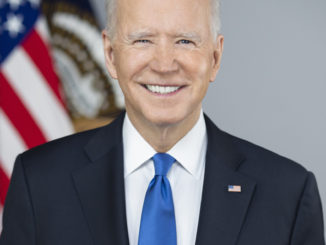
WASHINGTON, D.C. (TIP): US President Joe Biden Wednesday, March 16, called his Russian counterpart Vladimir Putin “a war criminal”, as Russia’s invasion of Ukraine continues with devastating consequences for civilians. “I think he (Putin) is a war criminal,” Biden told reporters at a White House event. He was responding to a question if Putin is a war criminal. In response to another question, he ruled out calling Putin. “No,” he said. Soon thereafter White House Press Secretary Jen Psaki said the president’s words speak for themselves.
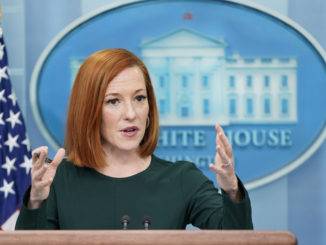
“I think the President’s remarks speak for themselves. He was speaking from his heart and speaking from what we’ve seen on television, which are barbaric actions by a brutal dictator through his invasion of a foreign country,” she said. Earlier in the day, Biden announced another USD800 million security assistance to Ukraine taking the total to USD1 billion in less than a week.
“Putin is inflicting appalling, appalling devastation and horror on Ukraine, bombing apartment buildings, maternity wards, hospitals. I mean, it’s God awful. I was speaking about this with our commander behind me here, General Milley. I mean, it just is amazing. Yesterday, we saw reports that Russian forces were holding hundreds of doctors and patients hostage in the largest hospital in Mariupol,” he said. “These are atrocities. They’re an outrage to the world, and the world is united in our support for Ukraine and our determination to make Putin pay a very heavy price. America is leading this effort, together with our allies and partners, providing enormous levels of security and humanitarian assistance that we’re adding to today, and we’re going to continue to do more in the days and weeks ahead,” Biden said. The United States, its allies and partners, he said, are crippling Putin’s economy with punishing sanctions.
“That’s going to only grow more painful over time with the entire NATO and EU behind us, and many other countries. What’s at stake here are the principles that the United States and the United Nations and across the world stand for. It’s about freedom,” he said.
“It’s about the right of people to determine their own future. It’s about making sure Ukraine will never be a victory for Putin, no matter what advances he makes on the battlefield. The American people are answering President Zelenskyy’s call for more help, more weapons for Ukraine to defend itself, more tools to fight Russian aggression, and that’s what we’re doing,” he said.
The new security package to Ukraine includes 800 anti-aircraft systems to make sure the Ukrainian military can continue to stop the planes and helicopters that have been attacking their people and to defend their Ukrainian airspace, he said.
“At the request Of President Zelenskyy, we have identified and are helping Ukraine acquire additional longer range anti-aircraft systems and the munitions for those systems. Our new assistance package also includes 9,000 anti-armor systems. These are portable high accuracy shoulder mounted missiles that the Ukrainian forces have been using with great effect to destroy invading tanks and armored vehicles,” he said. It will include 7,000 small arms, machine guns, shotguns, grenade launchers, to equip the Ukrainians, including the brave women and men who are defending their cities as civilians and around the countryside as well, he added. The security assistance also includes drones. “We are not doing this alone. Our allies and partners have stepped up to provide significant shipments of security assistance and will continue to help facilitate these deliveries as well,” he said.
CHICAGO, IL (TIP): Telugu Association of Greater Chicago (TAGC) the first Telugu organization in the USA, celebrated Women’s Day on March 6th,2022 at Monty’s Elegant banquets in Bensenville, IL. TAGC is devoted to the awareness and promotion of Telugu Heritage and Culture in the Midwest region headquartered in Chicago. The association was originally founded in 1971 and it recently completed its golden jubilee celebration and entered into its 51st year. Over 350 women of Indian origin participated in this women’s day event. Program started with a devotional song by Singer Ramya and lighting the lamp by Uma Avadhuta, President of TAGC 2022, Women’s Day Chairs Sirisha Madduri, Archana Podduturi and Co chairs Ramya Nagulavancha, Ramya Kapila and Deepa Gudipally. All the other women’s Bod’s Vinitha Podduturi, Manasa Lattupalli, Neelima Cheikicharla, Prasanna Kandukuri and Madhavi Konakalla were also present. This year’s theme was Retro Style where all the ladies came out in their best retro looks. All the ladies were excited to show off their beautiful outfits and style. Anchor Sahithya Vinjamuri was an addition to enthusiasm in ladies. Speaker Deepthi Suri provided very valuable information and great insight on the benefits of Ayurveda in our daily lives. Several fun filled activities were meticulously planned and executed to create a joyful atmosphere in the event that were thoroughly enjoyed by all the ladies after 2 years of pandemic situation. Special games like selfie Lele, Bomma blockbuster and Naari Shakthi by co-chairs engaged and entertained everyone. Continuing with the core values and traditions of TAGC, this year also the members raised money for a non-profit organization named Suguna Foundation with operations in west Godavari district of Andhra Pradesh, India which supports care and living for needy seniors. There was an overwhelming response and contribution this year which is among one of the top fundraising amounts. Regal Jewelers sponsored gold and silver coins for raffle tickets. Special gifts from India to attended TAGC members was an additional attraction of the event.
First time in the last 50 years TAGC conducted Mrs. TAGC competition which received a huge response from everyone. Judges Prachi Jaitly, Vasavi Chakka and Neelam Saboo coordinated talent and question rounds to finalize on winners. Swetha Chinnari was the title winner and Poonam Patil and Archana Ramakrishna were the first and second runners ups respectively.
All members enjoyed the sumptuous snacks and dinner sponsored by Hyderabad House in Schaumburg, IL. Food Chair Srinivas Adepu and Co.chair Rama Kanth Jonnala coordinated very well and organized the food. Membership chair Madhavi Konakalla with the help of Manasa Lattupalli helped at the front desk in registrations and took it very smoothly. Treasurer Santosh Konduri, Jt treasurer Sridhar Alavala and Secretary Pandu Ranga Reddy were also present to help in checking in all the ladies. Decoration team chair Neelima Cheikicharla did an excellent job in coordinating with the decoration team. Retro style photo booth was the highlight of the event. Event ended with cake cutting and DJ by Pranav Sai with technical help by Srikanth Bethi.
TAGC president Uma Avadhuta thanked Past President Venkat Gunuganti and President elect Parameshwar Yarasani and also involved Board members and Volunteers to make the event grand success and congratulated all the beauty contest winners. She also thanked all the sponsors for the event and donors who gave the donations for a great cause.
WASHINGTON, D.C. (TIP): The United States remains in touch with Indian leaders and continues to encourage them to work closely with it to stand up against the Russian invasion of Ukraine, the White House said Wednesday, March 16. “As you know, we remain in touch through a range of channels from our national security team with leaders in India and continue to encourage leaders to work closely with us to stand up against President Putin’s invasion of Ukraine,” White House Press Secretary Jen Psaki told reporters at her daily news conference. Over the past two weeks, the Biden administration has shown an understanding of India’s position on Russia given the complexity of its ties with Russia and over-dependence on Moscow for military and security needs.
During a Congressional hearing last week, Admiral John Christopher Aquilino, Commander of US Indo-Pacific Command, described India as a tremendous partner and said that the mil-to-mil relationship is probably at its highest point.
“From the US perspective, I think India is an absolutely essential partner as we think about our strategy in the Indo-Pacific, and both in terms of how we’re building coalition partners as well as dealing with potential adversaries.
“We recognize that India has a complicated history and relationship with Russia,” Ely Ratner, Assistant Secretary of Defense for Indo-Pacific Security Affairs, told members of the House Armed Services Committee during a separate hearing.
WASHINGTON, D.C. (TIP): The United States on Wednesday, March 16, welcomed an International Court of Justice order that asked Russia to immediately suspend its military operations in Ukraine. Describing it as a significant ruling, State Department Spokesperson Ned Price said that the ICJ “clearly and unequivocally” ordered Russia to immediately suspend its military operations. “The Russian Federation shall immediately suspend military operations that it commenced on 24 February on the territory of Ukraine,” presiding judge Joan Donoghue told the International Court of Justice, pending the final decision in the case.
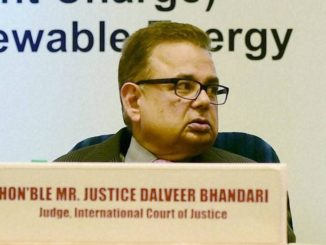
India’s judge, Justice Dalveer Bhandari, voted against Russia. The court order was supported by 13 judges while two voted against it. This includes Vice-President Kirill Gevorgian from Russia and Judge Xue Hanqin from China.
“We welcome the court order and call on the Russian Federation to comply with the order, immediately cease its military operations in Ukraine, and to establish unhindered humanitarian access in Ukraine,” Price said. In its ruling, the court – which plays a vital role in peaceful settlement of disputes under the UN Charter – stressed the need for States to act in conformity with their obligations under international law, including the laws of war, Price said. “And the Court expressed deep concern about the extreme vulnerability of the civilian population of Ukraine, the numerous civilian deaths and injuries that have resulted from the Kremlin’s actions, and the significant material damage, including the destruction of buildings and infrastructure,” he said.
The Court further noted its profound concern with the Russian government’s use of force and emphasized the Court’s acute awareness of “the extent of the human tragedy that is taking place in Ukraine as well as the “continuing loss of life and human suffering”.
The Court also observed that it did not possess any evidence substantiating Russia’s claims that genocide had been committed by Ukraine in the Donbas region, he said. Judge Xue Hanqin from China opposed the order.
Ukraine’s contention that the Russian Federation’s allegation of genocide against Ukraine is just “an excuse for Russia’s unlawful aggression” raises doubt that this is a genuine case about genocide,” she wrote in her dissent note. “It appears that the acts complained of by Ukraine namely Russia’s recognition of the independence of the Luhansk and Donetsk regions of Ukraine and Russia’s military operations in Ukraine cannot be directly addressed by the interpretation and application of the provisions of the Genocide Convention, as the issues they have raised are concerned with the questions of recognition and use of force in international law,” she said. Meanwhile, India’s Ministry of External Affairs on Thursday, March 17, said judges at the International Court of Justice vote in their individual capacity, a day after Indian judge Dalveer Bhandari voted against Russia at the United Nations’ highest court.
WASHINGTON, D.C. (TIP): “The International Commission for Human Rights and Religious Freedom (ICHRRF) welcomes Prof. Dr. Arvind Sharma to the International Advisory Board”, a press release announcing Dr. Sharma’s joining the ICHRRF said.
Dr. Arvind Sharma is the Birks Professor of Comparative Religion in the Faculty of Religious Studies at McGill University. His interest in the role of non-economic factors in economic development, especially religion, led him to obtain a Master’s in Theological Studies from Harvard Divinity School (1974) and then a Ph.D. in Sanskrit and Indian Studies from Harvard University (1978). He has also taught at the University of Queensland, Australia, in 1976. He brings with him tremendous scholarship, rigorous academic experience, knowledge and wisdom. He has hosted three global conferences on World’s Religions After September 11 ( 2006, 2011, 2016). These conferences culminated in the release of a Universal Declaration of Human Rights by the World’s Religions.
This marks the third new addition to ICHRRF’s team of volunteers and advisors this month.
“Those who fail to learn the lessons of history are doomed to repeat it”. Conversely, those who learn from history are most likely to succeed.
In politics, as in every other sphere, one looks for success. Narendra Modi who was not welcome in the United States of America for more than a decade got his opportunity to visit the greatest democracy of the world after he became the Prime Minister of India. And one of the first initiatives he took was to connect with the Indian Diaspora. He came to America and established a rapport with the Indian Diaspora, and in particular with the Gujarati Diaspora. His outreach to the Indian Diaspora helped him create his positive image here in America which resulted in his influence with the US administration and with the corporate sector which, of course, in due course resulted in significant investments and partnerships, giving fillip to Indian businesses and the nation’s economy. It is always a chain reaction. One step leads to another And Prime Minister Modi soon learnt how useful it is to connect with the Diaspora , and he traveled to many more countries to replicate his US experience. Today, the Indian Diaspora is one of his major strengths. The Indian Diaspora is his mouthpiece abroad. Taking cue from him, a number of chief ministers reached out to the Indian Diaspora and got many involved in contributing to the growth of their respective states. Maharashtra, Madhya Pradesh, Chhattisgarh, Haryana and Uttar Pradesh benefitted immensely.
Punjabi Diaspora has for too long been neglected. No government in Punjab seriously considered connecting with the Punjabi Diaspora to involve them in the development of Punjab. There have been a few chief ministers during the past few decades who visited the US, Canada and the UK, but the seriousness of purpose was missing. Their visits were more in the nature of tourism than in the serious business of a meaningful dialogue with the Punjabi Diaspora to secure their cooperation in the growth of the State.
Punjabis love their motherland as no other people may. The love of Punjabis for their lands and the people is unique. That is why even though the successive governments have not bothered to reach out to them many have on their own undertaken projects to help out their brethren in many ways. There are schools being funded by the NRI Punjabis. There are dispensaries and health centers being funded by the NRI Punjabis. There are many organizations that support widows and orphans, and organize mass weddings. They provide these services out of love for Punjab and its people.
It will be in the interest of the new government in Punjab to learn from Mr. Modi’s experience, even though they may not like the man himself, and connect with the Punjabi Diaspora on a priority basis. It is a strong Diaspora in terms of numerical strength, financial prowess, influence in the countries that they live in, and the willingness to give, which the Sikh Gurus have taught the people of Punjab.
The Punjabi Diaspora is ready to contribute to the development of the State of Punjab. Is the new chief minister of Punjab equally ready to seek their cooperation? Time, of course, is always of essence.
The rout of the Congress in the recent Assembly elections confirms the view that the grand old party is in terminal decline, and that the 2024 parliamentary election would pit the BJP not against the Congress but a coalition of regional parties, with or without the Congress. When the BJP won power at the Centre in 2014, the Congress ruled nine states — now, with the loss of Punjab, the number is down to two. In the last eight years, the Congress has won just five of the 45 elections held in the country. Its hope of wresting back Himachal Pradesh from the BJP later this year would be reduced in the absence of state supremo Virbhadra Singh, who died last year; the two states it still rules, Rajasthan and Chhattisgarh, go to the polls in 2023 and there is a real possibility that by the 2024 General Election, it may be in power in no state at all. The decimation of the Congress robs the voter of a centrist option at the national level, and makes the contest in national electoral politics multipolar, with various regional parties — with vastly different ideologies and ambitions — coming together to challenge the BJP. India must have a strong Opposition to hold the government to account.
However, a motley collection of parties — competing for prime ministership among themselves — may not be best suited to serve the interests of democracy. The Congress, despite its spectacular decline over the last decade, had seemed the most viable alternative to the BJP, but even veteran Congressmen are losing hope now. The Congress’ vote share in the last two General Elections was the second-best — at 19.31% and 19.46% — behind the BJP, and it has the potential to represent Indian citizens across the country. It still may be the biggest single challenger to the BJP, but it’s obvious that it has got stuck in a rut. There is confusion at the top — after Rahul’s resignation as president in 2019, Sonia Gandhi has been interim president — and panic in the ranks. Organizational reform is the need of the hour, in the interest of a strong Opposition — and, thus, in the interests of India.
The public discourse in the election campaign and the results have shown that the BJP is not invincible. The significant increase in the Samajwadi Party’s vote-seat share shows the limits of communal politics, which further indicates that communal consciousness was not the decisive factor for many voters, and such consciousness is subject to change. The BJP’s handsome victory cannot trump the economic challenges facing the people. The wider issues thrown up in this election — the bulldozer approach to dissent, communal polarization, economic inequality, agrarian distress, joblessness and public health — will not go away, but continue to influence public discourse in the longer run.
While we must not disregard the significance of economic relief provided to people through free ration, it doesn’t explain the BJP’s success in UP. This alone could not have defanged the effect of economic distress and massive unemployment. It appears that the people voted for something else: they voted for the political agenda of this government, fueled by a communal campaign.
The results of the 2022 Assembly elections indicate a reinforcement of the decisive rightward shift that India’s polity had embarked upon in 2014. Barring a few setbacks, notably the defeat in the West Bengal elections in 2021, the trend is not reversing. The BJP, the party of the Far Right, has, in fact, consolidated its primacy in most states, barring those where the regional parties hold sway and have kept it at bay. The recent poll results have set the stage for the General Election in 2024, with the ruling BJP retaining control of four states, including winning a two-thirds majority in the politically crucial state of Uttar Pradesh.
Numerous media reports exposed multiple sources of economic discontent in UP. Voters complained ceaselessly about the joblessness, price rise and stray cattle menace among the host of issues reported by journalists covering the election campaign from western to eastern UP. While employment, public health, education or industrialization were not on the BJP’s agenda, they were on the people’s agenda and, yet, economic dissatisfaction did not translate into a large enough vote to defeat the BJP.
That the BJP has held power and increased its vote share has to be seen in the light of the issues it campaigned on which seemingly matter more to large numbers of people in the state.
Importantly, economic frustration was not blamed on the government. Instead, the people commended the government’s handling of cultural and security issues, with economic distress taking a backseat. Hence, this couldn’t become a counterweight to Hindu majoritarianism. Even the disastrous impact of the Covid-19 pandemic didn’t figure in the voter calculus.
The BJP’s massive win in UP has sparked a discussion about the balance between economic discontent and voter choices, government subsidies and voting preferences, and hate politics and vote. The materialist understanding led many commentators (including this writer) to argue that the economic discontent and shift in public discourse could trigger an electoral change in UP. But the assumption that the need to maximize material well-being would drive voting preferences hasn’t transpired. Four factors signpost why this didn’t happen. The four things that set the narrative for the BJP were: Hindu majoritarianism, rashan, prashasan and induction of caste under the Hindu canopy (though not in this order). Put differently, the Hindu-Muslim divide, free ration and law and order were the mainstays of this canopy. Communalism was the ideological driving force of the campaign and nearly 44 per cent of those who voted approved of this slant. The overall thrust was dominated by the Chief Minister’s messaging and his statement in the beginning of the campaign that UP was facing an 80-20 election, denoting the Hindu-Muslim conflict and competition. This template framed the meta-narrative of the campaign, signaling the central role of communalism in this landmark election.
Arguably, the campaign was not overtly communal; it was disguised through dog whistles of ‘law and order’. This was a code for converting Muslims into a security threat and then claiming to control this threat. The ‘law and order’ platform echoed fears about the ‘Muslim criminality’, depicted through front-page advertisements in newspapers with two images of a young man with a kaffiyeh around his neck, symbolizing a terrorist; and the other without the kaffiyeh, seeking pardon. And the caption was: now we have established law and order in the state. The use of the bulldozer to demolish those seen opposing the ruling party, and placing them outside election rallies, was another unabashed signal of the same message. The ‘law and order’ rhetoric was explicitly meant to divide citizens into two classes: those who are lawful by nature, and those who are not, who are inherently lawless. This created a strong sense of community identity that required protection. Above all, it created a communalized common sense. As a consequence, people were willing to overlook the economic failures of the government. Economic discontent was cancelled out by the much greater cultural and ideological acceptance of the BJP as a protector of the Hindus.
The third issue is the impact of ‘welfarism’ or, more precisely, free ration on voter choices. Free foodgrains provided by the Central scheme to tide over the pandemic period, and additional items like cooking oil provided by the UP Government, is claimed as the key to the BJP’s electoral success. Undoubtedly, free ration at the time of the pandemic, with little prospect of getting a job, did count for a lot. However, the point is that even this minimal economic security was not provided as a matter of right to decent living but as largesse from the state. MGNREGA, which was instituted as an economic right has been whittled down, while the distribution of free ration, gas cylinders, toilets or houses as one-time benefits have become the main items on the welfare list closely identified with the political leadership hailed for its benevolence in helping the poor at a time of economic crisis. In return, the beneficiaries support the party offering these benefits. In the bargain, the beneficiaries have emerged as a new electoral category of labharthis linked to political choice. The political logic of this beneficiary category has profited the ruling party.
While we must not disregard the significance of the economic relief provided to the people through free ration, it doesn’t explain the BJP’s spectacular success in UP. This alone could not have defanged the effect of economic distress and massive unemployment and the vote against it. It appears that the people voted for something else which was non-economic reasoning, which is to say, they voted for the political agenda of this government, fueled by a communal campaign. Those who see the BJP’s victory as a vindication of its welfare policies ignore the compelling logic of communalism in UP politics today, as its impact is reflected in the poll results.
Last but not least is the caste question. The caste-oriented social justice plank as a mobilization strategy of the Opposition was superseded by religion, as in the 2017 and 2019 elections, pushing traditional notions of caste-based identity politics to the margins. Caste politics was effectively countered by the BJP’s campaign, uniting voters across caste lines by emphasizing the Hindu identity of the backward castes under the capacious Hindutva umbrella. That paid rich dividends for the BJP, making lower castes indifferent to the Mandal politics and this also underlined the problems of a single-minded focus on caste-based empowerment and representation. In sum, what worked for the BJP was religion plus caste plus ‘welfarism’.
The public discourse in the election campaign and the results have shown that the BJP is not invincible. The significant increase in the Samajwadi Party’s vote-seat share shows the limits of communal politics, which further indicates that communal consciousness was not the decisive factor for many voters, and such consciousness is subject to change. The BJP’s handsome victory cannot trump the economic challenges facing the people. The wider issues thrown up in this election — the bulldozer approach to dissent, communal polarization, economic inequality, agrarian distress, joblessness and public health — will not go away, but continue to influence public discourse in the longer run.
The impact of the Ukraine war on global interconnectedness is a cause for worry in the post-World War order
By Suhasini Haidar
Nearly three weeks into the Russian war on Ukraine, the cost to India is still to be counted. While some are focusing on how India’s refusal to criticize Russia’s actions, and the string of abstentions at the United Nations, would affect its relations with the West and its Quad partners (the United States, Australia and Japan), others are watching the economic costs that the unprecedented sanctions of the U.S. and the European Union will have on Indian trade, energy and defense purchases. However, the outcome that should worry New Delhi and other like-minded countries the most, apart from the devastating consequences for the Ukrainian nation, is the impact the Ukraine crisis is having on the global world order, which is fragmenting in every respect of global interconnectedness — in terms of international cooperation, security, military use, economic order, and even cultural ties.
The UN and Security Council
To begin with, the global order has broken down and events in Ukraine have exposed the United Nations and the Security Council for their complete ineffectiveness. Russia’s actions in Ukraine may, in terms of refusing to seek an international mandate, seem no different from the war by the United States in Iraq in 2003, Israel’s bombing of Lebanon in 2006 and the Saudi-coalition’s attacks of Yemen in 2015. But Ukraine is in fact a bigger blow to the post-World War order than any other. The direct missile strikes and bombing of Ukrainian cities every day, exacting both military and civilian casualties, and the creation of millions of refugees, run counter to every line of the UN Charter preamble, i.e., “to save succeeding generations from the scourge of war…”, “to practice tolerance and live together in peace with one another as good neighbors”, as well as Articles 1 and 2 of the ‘Purposes and Principles’ of the United Nations (Chapter 1).
The fact that Russian President Vladimir Putin broadcast his decision to “launch military operations” on Ukraine at the same time the Russian envoy to the United Nations was presiding over a UN Security Council discussion on the Ukraine crisis, speaks volumes for the respect the P-5 member felt for the proceedings. A vote of the international commons, or the UN General Assembly (UNGA), that decried Moscow’s actions, was brushed off in a way that was even easier than when the U.S. did when it lost the UNGA vote in 2017 over its decision to move the U.S. Embassy to Jerusalem.
Meanwhile, in their responses, other P-5 members such as the United States, the United Kingdom and France did not seek to strengthen the global order either, imposing sanctions unilaterally rather than attempting to bring them to the UN. Clearly, Russia would have vetoed any punitive measures, but that should not have stopped the attempt. Nor are the surge in weapons transfers to Ukraine a vote of confidence in the UN’s power to effect a truce.
Whither nuclear safeguards
The next point is Russian recklessness with regard to nuclear safety in a country that has suffered the worst impacts of poor safety and planning following the 1986 Chernobyl disaster (when Ukraine was part of the Soviet Union), which is a challenge to the global nuclear order. Russian military’s moves to target areas near Chernobyl and shell buildings near the Zaporizhzhia nuclear power plant ( also Europe’s largest), show an alarming nonchalance towards safeguards in place over several decades, after the U.S.’s detonation of atomic bombs over Hiroshima and Nagasaki in 1945 led to the establishment of the International Atomic Energy Agency (IAEA) in 1956. The world must also consider the cost to the nuclear non-proliferation regime’s credibility: Ukraine and Libya that willingly gave up nuclear programs have been invaded, while regimes such as Iran and North Korea can defy the global order because they have held on to their nuclear deterrents. There are also the covenants agreed upon during the global war on terrorism, which have been degraded, with the use of non-state actors in the Ukraine crisis. For years, pro-Russia armed militia operated in the Donbas regions, challenging the writ of the government in Kyiv. With the arrival of Russian troops, the Ukrainian President, Volodymyr Zelensky, has invited all foreign fighters who are volunteering to support his forces to the country. This seeks to mirror the “International Brigades” in the Spanish Civil War of the 1930s, comprising foreign volunteers from about 50 countries against forces of Spanish military ruler Francisco Franco.
However, the role of foreign fighters has taken on a more sinister meaning after 2001 and al Qaeda, when western recruits joined the Islamic State to fight Syrian President Assad’s forces. British Foreign Secretary Liz Truss’s recent statement that she would “absolutely support” British veterans and volunteers joining the Ukraine war against Russia has since been reversed by the British Foreign Office, and it is hoped that other countries around the world, including India, make firm efforts towards preventing such “non-state actors” from joining a foreign war.
Economic actions
Economic sanctions by the U.S., the U.K. and the European Union (EU) also point to a fragmentation of the global financial order. While analysts have pointed out that the sanctions announced so far do not include some of Russia’s biggest banks such as Sberbank and Gazprombank and energy agencies (in order to avoid the disruption of oil and gas from Russia), the intent to cut Russia out of all monetary and financial systems remains. From the eviction of Russia from SWIFT payments, to the cancellation of Mastercard, Visa, American Express and Paypal, to the sanctioning of specific Russian businesses and oligarchs and pressure on Western businesses (McDonalds, Coca-Cola, Pepsi, etc.) operating in Russia to shut down, the arbitrary and unilateral nature of western sanctions rub against the international financial order set up under the World Trade Organization (that replaced the General Agreement on Tariffs and Trade, or GATT).
The obvious fallout of this “economic cancel culture” will, without doubt, be a reaction — a pushback from Russia and an exploration of alternative trading arrangements with countries such as China, India and much of the Eastern Hemisphere which continue to trade with Moscow. For the S-400 missile defense deal, for example, New Delhi used a rupee-rouble mechanism and banks that were immunized from the U.S.’s CAATSA sanctions (or Countering America’s Adversaries Through Sanctions Act) for advance payments. Russian banks will now use the Chinese “UnionPay” for online transactions. Gradually, the world may see a “non-dollar” system emerge which would run banking, fintech and credit systems separately from the “dollar world”.
Isolation by culture
Finally, there is the western objective, to “isolate” Russia, socially and culturally, that rails against the global liberal order. While several governments including the U.S., the U.K. and Germany have persistently said that their quarrel is not with Russian citizens but with their leadership, it is clear that most of their actions will hurt the average Russian citizen. The EU’s ban of all Russian-owned, Russian-controlled or Russian-registered planes from EU airspace, and Aeroflot’s cancellation of international routes, will ensure that travel to and from Russia is severely curtailed. Some of this isolation of its citizens will work to the favor of an increasingly authoritarian Kremlin. Mr. Putin’s response to the banning of Russian channels in Europe and its allies has been to use the western media ban as a pretext to ban opposition-friendly Russian channels as well. The “isolation” extends to art and music: in the past two weeks the Munich Philharmonic fired its chief conductor and New York’s Metropolitan Opera let a Russian soprano, Anna Netrebko, go because they would not criticize the war. The Bolshoi Ballet’s performances in London and Madrid were similarly cancelled. The perils of this comprehensive boycott of Russia are not without historical precedent. Speaking to his Parliament this week, Mr. Zelensky invoked British Prime Minister Winston Churchill’s “Fight to the End” speech, delivered at the House of Commons in June 1940, to speak about Ukraine’s commitment to fight Russia. European onlookers would do well to also remember Churchill’s other famous speech, “The Sinews of Peace”, delivered in the United States in 1946, when he first referred to the “Iron curtain coming down” between Soviet Russia and Western Europe. “The safety of the world requires a new unity in Europe, from which no nation should be permanently outcast,” Churchill had warned, although his words went in vain, and the world suffered the consequences of the Cold War for the next four decades.
New Delhi needs to ponder
The events over the past two weeks, set in motion by Russia’s declaration of war on Ukraine, have no doubt reversed many of the ideas of 1945 and 1990, fragmenting the international order established with the UN, ushering in an era of deglobalization and bringing down another Iron Curtain. India’s abstentionist responses and its desire not to be critical of any of the actions taken by the big powers might keep Indians safe in the short term. But in the long term, it is only those nations that move proactively to uphold, strengthen and reinvent the global order that will make the world a safer place, even as this war that promises few winners rages on.
“Expectations of people of Punjab who voted out the two earlier ruling parties – Congress and Shiromani Akali Dal – are high as they expect that instead of subsidies, the delivery systems in education and health care should be reliable and affordable. Similarly, civic issues, which the people have been fighting since Independence, need to be tackled in a more professional and competent manner. Corruption in public offices is another irritant that people want the new Government to handle with a firm hand.”
After a landslide triumph in the just concluded Punjab Assembly elections, the Aam Aadmi Party (AAP) has set upon itself the onerous task of reviving not only the tottering economy but also in establishing the Rule of Law in this border State. After an impressive oath ceremony, attended by hundreds of thousands of the party workers and well-wishers at the historic Khatkar Kalan, the birthplace of Shaheed-e-Azam Bhagat Singh, the Chief Minister, Bhagwant Singh Mann, is faced among other things , a difficult challenge of not only naming members of his Council of Ministers but also in deciding who seven will sit in the Upper House of Parliament, Rajya Sabha, as representatives of AAP. These are ticklish issues as some loyalists workers and leaders tend to feel offended if their loyalty and sincerity to the party is not recognized. While some of the second time MLAs, including Harpal Cheema, Aman Arora and Baljinder Kaur look certain choices for inclusion in the Council of Ministers, there may be pressures on the Chief Minister from other quarters and groups also. There will be similar pressures for nomination to Rajya Sabha.
Though these party level decisions will be taken in consultation with the national convener Arvind Kejriwal, Bhagwant Mann will have to put his head down to go about the task of restructuring the State Administration while following the legislative requirements in a time bound manner. He has to tone up the civil administration by making it responsive to public needs.
Convening of the session of the newly constituted Punjab Vidhan Sabha with a Pro-Tam Speaker administering oath of secrecy to all members, election of Speaker will follow. A date has also to be fixed for passing a vote on account as the new ruling party may need time to finalize its budget for the current financial year. The new excise policy that must become effective from April 1, too, needs to be drafted and approved by the Council of Ministers. While Vote on account must be done before March 31, the new Budget may take a couple of months and a special session of Vidhan Sabha. In between, the AAP government must take policy decisions on several issues of public interest, including implementation of promised 300 units of free power in the power tariff from April 1.
The AAP national convener Arvind Kejriwal had been talking about replicating the Delhi model in Punjab with certain promises, including free 300 electricity units to all. Punjab has almost 1 crore electricity consumers, including 73 lakh domestic consumers, 14 lakh agriculture consumers, 11.50 lakh commercial consumers and 1.5 lakh industrial consumers. The State spends Rs 10,000 crores as electricity subsidy of which a major chunk – Rs 7180 crores – goes to the farm sector alone.
The AAP government will also become cynosure of all eyes as it takes on the battle to fight mafias. The first step of the battle will get initiated with the announcement of the new Excise policy. How the State reins in those controlling the liquor trade, both in retail and wholesale, besides tightening control over the running of distilleries and breweries – major sources of evasion of excise duty – will be watched with bated interest. Simultaneously, it will face an uphill task of controlling deeply entrenched sand and gravel mafia not only to bring down these essential building raw materials but also to check the massive drain of State resources. Illicit mining has also been posing a serious threat to the ecology and environment of the State.
Expectations of people of Punjab who voted out the two earlier ruling parties – Congress and Shiromani Akali Dal – are high as they expect that instead of subsidies, the delivery systems in education and health care should be reliable and affordable. Similarly, civic issues, which the people have been fighting since Independence, need to be tackled in a more professional and competent manner. Corruption in public offices is another irritant that people want the new Government to handle with a firm hand.
Equally challenging will be handling the problem of unemployment and drain of youth to developed nations. Not only the able-bodied young men and women, especially those belonging to the 18-15 age group are heading for green pastures overseas, they are also adding to the debt of their aging and helpless parents and guardians by taking huge sums of money with them. The faith of the people in governance needs to be restored. It can be done only when the new Government with an unprecedented mandate starts delivering by keeping its pre-election promises. Fortunately, the coffers of the State are neither empty nor do they have any pending bills needing clearance. All the State needs is an honest government with a vision. Will Bhagwant Mann and his team deliver? Time will tell.
(The author is a veteran journalist with over three decades of experience covering a wide spectrum of subjects and stories. He has covered Punjab and Sikh affairs for more than three decades besides covering seven Olympics and several major sporting events and hosting TV shows. For more in-depth analysis please visit probingeye.com or follow him on Twitter.com/probingeye)
For Jatin
Categories: Breaking News, Front page, Politics, India, Punjab,
MOSCOW (TIP): Russia’s foreign ministry said on Thursday, March 17 that giving Ukraine air defense systems, as requested by Ukraine’s president in the U.S. Congress a day earlier, would be a destabilizing factor that would not bring peace to the country, a Reuters report says. Ukrainian President Volodymyr Zelenskiy urged American lawmakers on Wednesday, March 16, to do more to protect his country from Russia’s invasion, pushing for the imposition of a no-fly zone and asking for aircraft and defensive systems.
“Such deliveries … would be a destabilizing factor which will definitely not bring peace to Ukraine,” foreign ministry spokeswoman Maria Zakharova told a news briefing. “In the long term, they could have much more dangerous consequences,” she added.
The United States and its allies want to avoid NATO being drawn into the Ukraine conflict, but they have supplied Kyiv with military aid since Russia invaded Ukraine on Feb. 24. Moscow calls its offensive in Ukraine a “special operation” to destroy its southern neighbor’s military capabilities and capture what it regards as dangerous nationalists.Slovakia’s Prime Minister Eduard Heger on Sunday said NATO could discuss sending his country’s Soviet-made S-300 air defense system to Ukraine.
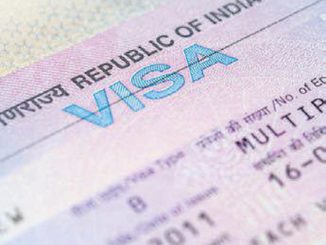
NEW DELHI/NEW YORK (TIP): India government has restored the electronic tourist visa (e-TV) facility for 156 countries, according to a Ministry of Home Affairs (MHA) order. This decision follows the announcement a few days ago of restoration of international flights from April 27. However, all land and riverine borders, including the Attari-Wagah post along Pakistan, will continue to remain shut, except for those with special permission. The Ministry said that the “instructions will not be applicable to Afghanistan nationals” who will continue to be governed by e-Emergency X-Miscellaneous Visa. “Order for opening of Land ICPs (Integrated Check Posts) and riverine routes will be communicated separately,” the order said. It said that in continuation with October 20 order and keeping in view the improvement in COVID-19 situation in India, the government has considered the need for further relaxation of visa and travel restrictions. “Currently valid e-Tourist Visa issued for five years, which was suspended since March 2020, shall stand restored to nationals of 156 eligible countries with immediate effect. Nationals of these 156 counties will also be eligible for issuance of fresh e-Tourist visa,” it said.
The order said that valid Regular (Paper) Tourist visa with validity of 5 Years, issued to foreign nationals of all countries shall also be restored. “Fresh Regular (Paper) Tourist visa up to 5 years validity may also be issued to the nationals of the eligible countries subject to the restrictions imposed from time to time,” it said. The Long duration (10 years) regular tourist visa for the citizens of the U.S. and Japan, issued before March 2020 has also been restored. “Fresh Long duration (10 years) tourist visa can also be issued to the nationals of the U.S. and Japan,” it said. The Ministry said that foreign nationals who have tourist/ e-tourist visas may enter India only through designated sea immigration check posts (ICPs) or international airports.
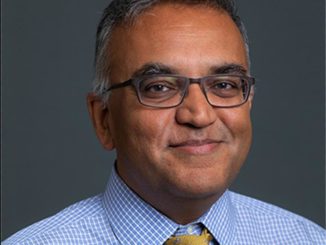
WASHINGTON D.C. (TIP): Ashish Jha, an Indian-origin physician and public health specialist from Brown University, has been appointed the new White House COVID-19 Response Coordinator. Dr. Jha will replace Jeff Zeints, who has led the Biden administration’s pandemic response thus far, U.S. President Joe Biden said in a statement on Thursday, March 17. “Dr. Jha is one of the leading public health experts in America, and a well-known figure to many Americans from his wise and calming public presence. And as we enter a new moment in the pandemic — executing on my National COVID-19 Preparedness Plan and managing the ongoing risks from COVID — Dr. Jha is the perfect person for the job,” Mr. Biden said. He also praised Mr. Zeints for his efforts in setting up the infrastructure to fight the pandemic.
“He is a man of service and an expert manager,” Mr. Biden said. Dr. Jha , who is the Dean of the Brown University School of Public Health has worked on Ebola and was a co-chair of a commission to tackle an outbreak of the disease in West Africa in 2014 , according to a biography from Brown University. Dr. Jha will take over the role at a time when close to a million Americans have died from COVID-19. The U.S. has just witnessed a wave of the Omicron variant, even as news of a new subvariant BA.2 — causing surges of the pandemic in Europe — is being watched closely. Two years into the pandemic and with three quarters of its population having received a single dose of the vaccine, the country is shifting to a different approach to managing COVID-19 as it shows signs of becoming endemic.“We still have important work to do to protect Americans’ lives and wellbeing,” Dr. Jha said on Twitter, as he acknowledged that “a lot” of progress had been made already.
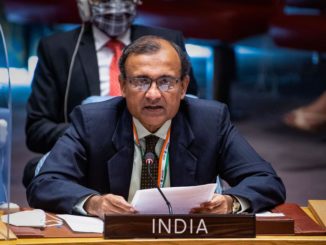
UNITED NATIONS (TIP): Amidst the ongoing crisis in Ukraine, the government has decided to extend the tenure of India’s envoy to the United Nations T.S. Tirumurti for three months. According to an announcement by the appointments committee of the Cabinet, Mr. Tirumurti, who was due to retire on March 31, will now remain in the position at the rank of Secretary to the government from April 1 to June 30, 2022. At least two officials aware of the decision said the extension was granted due to the government’s desire to keep a “steady hand” and “ensure continuity” in India’s presence at the United Nations Security Council during a crucial period with the Russian war in Ukraine, where India is completing its two-year tenure this year. Another official also cited a precedent, as India’s former UN envoy Hardeep Puri (now Union Minister for Petroleum and Housing) had been given a year’s extension by the previous UPA government led by then Prime Minister Manmohan Singh. At the time, India had completed a year in its two-year tenure at the UN Security Council (2011-2013), and Mr. Puri’s tenure was extended, so as to maintain continuity in India’s position at the UNSC. However, it is unclear why Mr. Tirumurti’s tenure has not been extended till December, when India’s current term at the UNSC will end. An official said the extension appeared to have been made in a “phased manner” and that a further extension could not be ruled out, if required.
Mr. Tirumurti, a 1985-batch IFS officer assumed the UN Permanent Representative post in May 2020 and has been a prominent voice on issues including the COVID-19 pandemic, the Taliban takeover in Afghanistan, Russian war in Ukraine, and more recently, for a strong speech criticizing a UN resolution adopting an “International day to combat Islamophobia”, which, he said, “elevated phobia against one religion” while ignoring other “non-Abrahamic” religions. In the past month, he has articulated India’s position on the Ukraine conflict, where despite considerable pressure from the U.S. and European allies, the government has refused to vote for any resolution criticizing Russia’s actions and abstained from three votes at the UNSC and two at the UN General Assembly on resolutions brought by them. In the next few days, the UNSC is also expected to vote on a resolution brought by Russia on humanitarian issues pertaining to Ukraine’s eastern provinces which are under Russian control, and India’s vote and the UN envoy’s Explanation of vote (EoV) will be watched closely.
During its present tenure at the UNSC, India has been asked to head two important committees, the Taliban Sanctions Committee and Counterterrorism Committee, which Mr. Tirumurti has chaired, and he also happened to be President of the UNSC in August 2021, during the Taliban takeover of Kabul, when an Indian-drafted UNSC resolution 2953 was adopted. India will again assume the rotating presidency of the UNSC for the month of December 2022.
March 11, 1918 – The ‘Spanish’ influenza first reached America as 107 soldiers become sick at Fort Riley, Kansas. One quarter of the U.S. population eventually became ill from the deadly virus, resulting in 500,000 deaths. The death toll worldwide approached 22 million by the end of 1920.
March 11, 1941 – During World War II, the Lend-Lease program began allowing Britain to receive American weapons, machines, raw materials, training and repair services. Ships, planes, guns and shells, along with food, clothing and metals went to the embattled British while American warships began patrolling the North Atlantic and U.S troops were stationed in Greenland and Iceland. “We must be the great arsenal of democracy,” President Roosevelt declared concerning the fight against Hitler’s Germany. The initial appropriation was $7 Billion, but by 1946 the figure reached $50 Billion in aid from the U.S. to its Allies.
Harold Wilson
Birthday – British prime minster and statesman Harold Wilson (1916-1995) was born in Huddersfield, Yorkshire. As a young boy he once posed for a photo in front of 10 Downing Street, the residence he occupied 40 years later as head of the Labor government.
March 12
March 12, 1609 – The island of Bermuda was colonized by the British after a ship on its way to Virginia was wrecked on the reefs.
March 12, 1888 – The Great Blizzard of ’88 struck the northeastern U.S. The storm lasted 36 hours with snowfall totaling over 40 inches in New York City where over 400 persons died from the surprise storm.
March 12, 1938 – Nazis invaded Austria, then absorbed the country into Hitler’s Reich.
March 12, 1994 – The Church of England ordained 32 women as its first female priests. In protest, 700 male clergy members and thousands of church members left the church and joined the Roman Catholic Church which does not allow women priests.
March 12, 1999 – Poland, Hungary and the Czech Republic became full-fledged members of NATO (North Atlantic Treaty Organization) less than ten years after exchanging communist rule for democracy and ending their Cold War military alliances with Soviet Russia.
Mustafa Kemal Ataturk
Birthday – The founder of modern Turkey, Mustafa Kemal Ataturk (1881-1938) was born in Salonika, Greece. Following World War I, he led the Turkish revolution and became Turkey’s first president.
March 13
March 13, 1943 – A plot to kill Hitler by German army officers failed as a bomb planted aboard his plane failed to explode due to a faulty detonator.
Joseph Priestly
Birthday – Scientist and clergyman Joseph Priestly (1733-1804) was born in Yorkshire, England. He discovered oxygen and advanced the religious theory of Unitarianism.
March 14
Albert Einstein
Birthday – Albert Einstein (1879-1955) was born in Ulm, Germany. His theory of relativity led to new ways of thinking about time, space, matter and energy. He received a Nobel Prize in 1921 and emigrated to the U.S. in 1933 where he was an outspoken critic of Nazi Germany. Believing the Nazis might develop an atomic bomb, he warned President Roosevelt and urged the development of the U.S. Atomic bomb.
Lucy Hobbs
Birthday – The first female dentist, Lucy Hobbs (1833-1910) was born in New York state. She received her degree in 1866 from the Ohio College of Dental Surgery and was a women’s rights advocate.
March 15
Julius Caesar
March 15, 44 B.C. – Julius Caesar was assassinated in the Senate chamber in Rome by Brutus and fellow conspirators. After first trying to defend himself against the murderous onslaught, Caesar saw Brutus with a knife and asked “Et tu, Brute?” (You too, Brutus?) Caesar then gave up the struggle and was stabbed to death.
Andrew Jackson
Birthday – Andrew Jackson (1767-1845) the 7th U.S. President was born in a log cabin in Waxhaw, South Carolina. As a boy he volunteered to serve in the American Revolution. Captured by the British, he refused an order to clean an officer’s boots and was slashed by his sword. Jackson later gained fame as a hero during the War of 1812. In politics he helped form the new Democratic Party and became the first man from an impoverished background to be elected President, serving from 1829 to 1837.
March 16
March 16, 1968 – During the Vietnam War, the My Lai Massacre occurred as American soldiers of Charlie Company murdered 504 Vietnamese men, women, and children. Twenty-five U.S. Army officers were later charged with complicity in the massacre and subsequent cover-up, but only one was convicted, and later pardoned by President Richard Nixon.
March 16, 1968 – New York Senator Robert Kennedy announced his intention to run for the Democratic presidential nomination.
James Madison
Birthday – James Madison (1751-1836) the 4th U.S. President was born in Port Conway, Virginia. He played an important role in the formation of the new U.S. Constitution following the American Revolutionary War. During the War of 1812, President Madison was forced to flee Washington, D.C. while the British attacked and burned the White House and other important public buildings.
March 17
Saint Patrick
March 17th – Celebrated as Saint Patrick’s Day commemorating the patron saint of Ireland.
March 17, 1776 – Early in the American Revolutionary War the British completed their evacuation of Boston following a successful siege conducted by Patriots. The event is still commemorated in Boston as Evacuation Day.
Roger B. Taney
Birthday – U.S. Supreme Court Justice Roger B. Taney (1777-1864) was born in Calvert County, Maryland. He became the 5th Chief Justice in 1836, best known for the Dred Scott decision.
1399 Taimur Lung crossed the Indus River in 1399, after committing a rampage in North India including Delhi.
1999 Infosys Company is the first Indian company to appear on the Nasdaq (NASDAQ) International Stock Exchange list in 1999.
2006 The Greek parliament passed a law allowing cremation in 2006 by a majority.
2007 Sunita completed the 2,012 km journey from Kolkata to Wagah in 2007 by driving in reverse gear.
12 MARCH
1913 Yashwantrao Chavan, the first Chief Minister of Maharashtra and the fifth Deputy Prime Minister of the country was born after the bifurcation of Bombay State in 1913.
1922 Mahatma Gandhi was arrested by the British for the movement against buying goods made from Europe and working with the machines of British rule.
1930 Mahatma Gandhi started the Dandi March from Sabarmati Ashram. The aim was to ‘break the salt law’ made by the British.
1993 There were 13 bomb blasts in Mumbai in which 257 people were killed and 800 people were injured.
1872 Sher Ali, the assassin of Lord Mayo, the then Viceroy of India, was hanged in 1872.
1954 The Government of India inaugurated the Sahitya Academy in 1954.
1958 In 1958, British Empire Day was named ‘Commonwealth Day’.
13 MARCH
1940 Indian revolutionary Udham Singh opened fire on General Dyer in London to avenge the Jallianwala Bagh from the British.
1997 Sister Nirmala was chosen as the leader in 1997 by Mother Teresa at the Indian Missionaries of Charity.
2009 The SAARC Literature Festival began in 2009 in Agra.
1971 Famous Hindi poet Atma Ranjan was born in 1971.
14 MARCH
1931 India’s first speaking film ‘Alam Ara’ was screened.
1998 Sonia Gandhi became the Congress president in 1998.
1983 OPEC, a group of oil producing countries, cut oil prices in 1983 for the first time in 23 years.
15 MARCH
1947 Riots erupted in Punjab in 1947.
2007 The agreement between Vodafone and Essar concluded in 2007.
2008 In 2008, Kiran Bedi, the country’s first female IPS officer, was selected for the German honor ‘Animation Medicine’ for her outstanding contribution to prison reform and human rights defense.
1564 Mughal emperor Akbar removed Jiziya tax in 1564.
16 MARCH
1846 According to the Amritsar Agreement, Kashmir was taken over in 1846 under Gulab Singh, the Hindu king of Jammu.
1942 The V-2 rocket was launched in 1942, but it exploded at the same time.
2012 India’s master blaster Sachin Tendulkar became the first player to score 100 centuries in international cricket in 2012.
1693 Born in 1693 to Malharrao Holkar, the promoter of the Holkar dynasty of Indore.
17 MARCH
1527 Rana Sangram Singh of Chittorgarh was defeated by Babur in the battle of Agra.
1782 Salbai’s settlement was signed between the East India Company and the Maratha rulers.
1959 The Buddhist religious Dalai Lama arrived in India from Tibet in 1959.
1987 Indian cricketer Sunil Gavaskar retired from Test cricket in 1987.
1962 Indian American astronaut Kalpana Chawla was born on 17 March 1962 in Karnal district of Haryana.
2000 On this day in 2000, Lalu Prasad Yadav was processed in case of possessing disproportionate assets.
1991 On this day in 1991, India’s first automated satellite IRS-IA became a successful test after completing its three years.
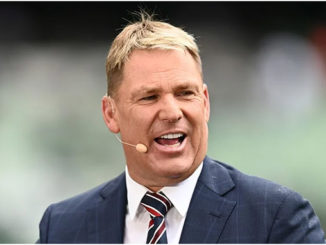
Late Australian spin legend Shane Warne’s body arrived at his home city Melbourne from Bangkok in a private jet on Thursday, March 10, almost a week after his shock death due to a suspected heart attack. Warne’s body was flown to Melbourne in a coffin wrapped in the Australian flag. The private jet landed at around 8:30pm local time. He will be given a state funeral on March 30 at the Melbourne Cricket Ground. “A private jet carrying the Australian cricket legend’s body touched down at Essendon Fields Airport in Melbourne at around 8.30pm on Thursday night. The charter flight was moved into a private hangar,” ‘new.com.au’ reported.
“Fans and friends, including Warne’s personal assistant Helen Nolan, were at the airport to greet the private plane,” the report added.
Warne, who is credited with reviving the art of leg-spin bowling by taking 708 wickets in 145 Tests in an illustrious career spanning 15 years, died at the age of 52 in Koh Samui, Thailand on March 4. The news of his death sent shock waves across the cricket fraternity.
Following his demise, Warne’s body had been taken to the mainland city of Surat Thani and then to the capital city of Bangkok. An autopsy confirmed he died of natural causes following a suspected heart attack and there was no foul play involved. His family will hold a private funeral before the public service, which is expected to have an attendance of over one lakh people. Source: PTI
Chelsea put their off-pitch worries to one side as they beat a plucky Norwich City side 3-1 to consolidate third place in the Premier League at Carrow Road on Thursday, March 10. The players at Chelsea, whose Russian owner Roman Abramovich has been placed under sanctions by the British government, did not appear to let the controversy affect them as they swept aside struggling Norwich who look headed for relegation. Chelsea took the lead after three minutes with a Trevoh Chalobah header and soon doubled the advantage when Mason Mount fired home before Kai Havertz wrapped up the win near the end. Norwich had pulled a goal back with a Teemu Pukki penalty. Chelsea, whose fans sang Abramovich’s name throughout the match, are on 56 points from 27 games and moved eight points clear of Arsenal, who are fourth but have two games in hand. Norwich stayed bottom on 17 points.
Chelsea future uncertain after sanctions against owner Roman Abramovich
European champions Chelsea are now effectively under the control of the British government after Russian owner Roman Abramovich was placed under sanctions on Thursday. Abramovich, who had been under scrutiny following Russia’s invasion of Ukraine, had announced he was selling the Premier League club last week. Yet that process is now on hold, leaving the club, ranked by Forbes as the seventh most valuable in world soccer at $3.2 billion, in a state of limbo. The Russian bought the West London team in 2003 for a reported 140 million pounds ($184 million) and his investment contributed hugely to the most successful era in the team’s history as they won five Premier League titles, five FA Cups and the Champions League twice. His purchase of the club helped transform the landscape of English football with Chelsea breaking the stranglehold of Manchester United, Arsenal and Liverpool. Abramovich had funded Chelsea via 1.5 billion pounds in total loans through Fordstam Limited, the entity through which he owns the club. In their most recent accounts in December, Chelsea who reported losses of 145.6 million pounds, said they were “reliant on Fordstam Limited for its continued financial support”.
LONDON (TIP): Custodian of cricket laws, the Marylebone Cricket Club (MCC), has decided to move the law relating to run-outs at non-striker’s end from its “unfair play” section besides completely banning the use of saliva to shine the ball in amendments to its 2022 code that will come into effect in October. Run-outs at non-striker’s end when batters back up too far have often triggered heated debates on the spirit of the game and several players like India’s premier off-spinner Ravichandran Ashwin have advocated for it as a fair mode of dismissal. “Law 41.16 – running out the non-striker – has been moved from Law 41 (Unfair play) to Law 38 (Run out). The wording of the Law remains the same,” the MCC said in a media statement late on Tuesday. It was in 1948 when the dismissal first came to be known. Indian legend Vinoo Mankad ran out Australian wicketkeeper Bill Brown at the non-striker’s end after duly warning him for backing up too far. The Australian media dubbed it as ‘Mankading’, a name that stuck in popular parlance but was vehemently opposed by legends like Sunil Gavaskar for being “disrespectful” towards Mankad. The MCC also said that using saliva to shine the ball would be treated as an unfair practice.
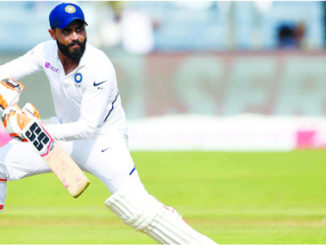
Dubai (TIP)- India’s Ravindra Jadeja climbed to the top spot in the ICC Test rankings for all-rounders today after his match-winning performance against Sri Lanka in the opening Test in Mohali. “Ravindra Jadeja’s performance at India’s recent Test win against Sri Lanka in Mohali has catapulted him to the No. 1 position in the MRF Tyres ICC Men’s Test Player Rankings,” the ICC said in a statement. His unbeaten 175 lifted him up to 17 places from 54th to 37th with the bat and he added nine wickets to move up to 17th with the ball. His all-round contribution was enough for him to regain the top all-rounder spot from Jason Holder, who had held the position since February 2021. Jadeja’s only previous time on top was in August 2017, when he spent a week at No. 1. Jadeja was named the Player of the Match for his show against Sri Lanka in Mohali, where India triumphed under three days by an innings and 222 runs. In the same list, Ravichandran Ashwin dropped a rung to third while Axar Patel was the next best Indian at 14th, after going down two positions. Patel did not play the Mohali Test due to an injury. Among the batters, Virat Kohli rose two spots to be fifth, followed by skipper Rohit Sharma. Rishabh Pant, who impressed with an explosive 96-run knock, entered the top-10 at 10th after gaining one spot. Australian Marnus Labuschagne occupied the top spot.
World championships silver medallist Kidambi Srikanth progressed to the men’s singles quarterfinals but PV Sindhu and Saina Nehwal crashed out of the women’s competition following second-round losses in the German Open Super 300 badminton tournament here on Thursday. Srikanth, a former world no 1 and seeded eighth here, prevailed 21-16 21-23 21-18 over China’s Lu Guang Zu in a second round match. He will next face Olympic champion and top seed Viktor Axelsen of Denmark, who beat France’s Toma Junior Popov 21-17 21-10 in another match.
The seventh seeded Sindhu, a 2019 World Champion, however, suffered a shock 14-21 21-15 14-21 loss against China’s Zhang Yi Man in 55 minutes in the women’s singles second round. Saina, who has been struggling with fitness issues, also proved no match against eighth seeded Thai Ratchanok Intanon, going down 10-21 15-21 in a lop-sided contest.
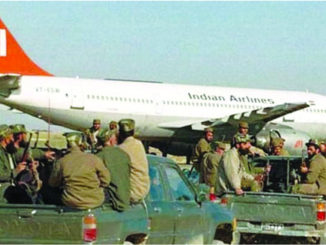
New Delhi (TIP)- Mistry Zahoor Ibrahim, deadliest of the five hijackers of the IC-814 Indian Airlines flight from Kathmandu to Delhi in 1999, was shot dead in Pakistan’s Karachi, government sources said. The Jaish-e-Mohammed terrorist, who was living under a false identity “Zahid Akhund” for many years, was shot twice in the head by unidentified gunmen at point-blank range in Karachi’s Akhtar Colony on March 1. Mistry, code-named “doctor”, was reportedly the one who had stabbed and killed a 25-year-old Indian man who was one of the hostages. Mistry was the owner of Crescent Furniture located inside Akhtar Colony in Karachi. According to reports, Rauf Asgar had joined the funeral procession of Akhund in Karachi. Rauf is the Jaish-e-Mohammed’s operational chief and brother of the terrorist organisation’s founder Masood Azhar.
The IC-814 aircraft of Indian Airlines, with 179 passengers and 11 crew members on board, was hijacked by five terrorists from Nepal on December 24, 1999. The plane made a long arduous journey to Amritsar, Lahore and Dubai before making a strategic stop at Kandahar in Afghanistan which was then under the Taliban’s control.
The hijackers had executed one passenger, 25-year-old Rupin Katyal, and finally negotiated the release of dreaded Islamist terrorists Masood Azhar Alvi, Syed Omar Sheikh and Mushtaq Ahmad Zargar from Indian jails on December 31, 1999, in exchange for the hostages.
The Kandahar hijacking was one of the most dramatic hostage crises the country has ever seen.
Washington (TIP)-India has been very good at managing its finances but the surge in global energy prices is going to have a negative impact on its economy, said Kristalina Georgieva, the Managing Director of the International Monetary Fund. During a media roundtable on Thursday, March 10, on the Russian invasion of Ukraine and its global impact, Gita Gopinath, who is the First Deputy Managing Director of the IMF, observed that the war had posed a challenge to economies around the world, including India. “India relies heavily on energy imports and the price is going up. That has implications on the purchasing power of Indian households. “If you’re looking at headline inflation numbers, inflation in India is close to around six per cent, which is the upper end of the inflation band for the Reserve Bank of India,” Gopinath said. This has implications on the monetary policy in the country and it is a challenge in many parts of the world, not just India, she said.
New Delhi (TIP)- The Congress has ended up on the losing side in nine of the 10 assembly elections held over the past two years — the only exception being Tamil Nadu where it was a junior partner of the DMK-led alliance that won.
It has lost at least five key young leaders in the recent past and has been reduced to ruling just two states on its own. Its inability to win elections has stoked defiance and dissent within the party hierarchy. The latest drubbing in the state elections comes just months before the Congress is set to elect a new president.
The party now faces two imminent dangers, said four leaders. “Its leadership space in the opposition quarters will come under stiff challenge from a parallel formation led by the TMC (Trinamool Congress) or the AAP (Aam Aadmi Party) and within the party, the G23 ( the leaders who wrote a letter to Sonia Gandhi in 2019 seeking an overhaul), will grow stronger,” said one, asking not to be named.
While the Congress is still grappling with how to take on the Narendra Modi-led Bharatiya Janata Party (BJP), it has ceded space to AAP in states such as Punjab. Former president Rahul Gandhi said the Congress “humbly accepts the people’s verdict” and added that it “will learn from this and keep working for the interests of the people of India”. The party also announced that a meeting of its working committee will be called soon to analyse the results.
This is not the first time the Congress failed to win a state in a series of assembly polls. Last year it lost in four of the five states where elections were held, but joined the ruling dispensation in Tamil Nadu as an ally of the Dravida Munnetra Kazhagam (DMK).
Congress’s chief spokesperson Randeep Surjewala indicated foul play within party ranks. “All party leaders must seriously introspect and see if fight over positions, difference of opinion was so strong that it is cutting the tree (Congress) itself.”
He also blamed the anti-incumbency of four and a half years (Amarinder Singh’s tenure in Punjab) and said: “We offered the people of Punjab an alternative in the form of Charanjit Singh Channi, but could not overcome the four-and-a-half-year anti-incumbency sentiment.”
Source: HT
Signup to our Newsletter!
Don’t miss out on all the happenings around the world