Month: July 2022

  • Aishwarya Rai Bachchan looks etheral as Queen Nandini

    Mani Ratnam’s Ponniyin Selvan has been in the news ever since the makers released the first look with Chiyaan Vikram and Karthi’s character posters. The makers released Aishwarya Rai Bachchan’s poster and she looks ethereal as she has morphed effortlessly into her character. The former Miss World will be seen in the role of Nandini, the Queen of Pazhuvoor, who is on a mission of vengeance. This is a period drama that’s based on Kalki Krishnamurthy’s popular 1995 historical novel Ponniyin Selvan (The Son Of Ponni). Lyca Productions took to Instagram to share the poster of Aishwarya Rai Bachchan, decked up in a red ensemble and jewellery.

  • India, China ties show ‘momentum of recovery’: Wang Yi tells Jaishankar

    India, China ties show ‘momentum of recovery’: Wang Yi tells Jaishankar

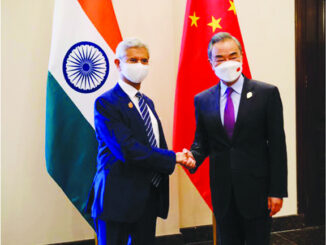
    Beijing (TIP)- The ties between China and India have generally shown a “momentum of recovery” as the two countries have maintained communication and effectively managed their differences, Chinese Foreign Minister Wang Yi told his Indian counterpart S Jaishankar during their meeting in Bali on Thursday, July 7. During the one-hour meeting on the sidelines of a conclave of foreign ministers of the G20 nations, Jaishankar conveyed to Wang the need for an early resolution of all outstanding issues along the Line of Actual Control (LAC) in eastern Ladakh, and asserted that bilateral ties should be based on mutual respect, mutual sensitivity and mutual interest. Wang said that since March this year, China and India have maintained communication and exchanges, effectively managed differences, and the bilateral relations have generally “shown a momentum of recovery.” China and India, he said, share common interests and similar legitimate claims. On the bilateral issues, Wang said the two countries should take practical actions to implement the important consensus of the leaders of the two countries that “the two countries are not each other’s threats, but cooperation partners and development opportunities.” He also said the two countries should push for the early return of the bilateral relations to the right track and light up the bright future of the relations together. China and India, Wang said, share common interests and similar legitimate claims, state-run Xinhua news agency reported, quoting a press release on the talks issued by the Chinese Foreign Ministry here. Apparently referring to independent stand struck by both the countries on the Ukraine issue, Wang said as the world is undergoing profound changes unseen in a century, major countries like China and India will definitely not go with the flow but are destined to uphold strategic determination, achieve their respective development and revitalisation in accordance with the established goals, and make greater contributions to the future of mankind.

    Source: PTI

  • Expedite student visas, MEA urges foreign missions

    New Delhi (TIP)- The Indian government is in touch with several diplomatic missions urging them to expedite student visas and the result is that the average waiting time has gone down, according to MEA spokesperson Arindam Bagchi. Senior MEA officials dealing with Australia, Canada, Czech Republic, Germany, New Zealand, Poland, the UK and the US have been engaged with their corresponding Heads of Missions/senior diplomats about streamlining student visas to Indian nationals. According to diplomatic sources, three aspects are turning out to be time consuming.

    The first one is about fake papers put up by students with the MEA receiving about 50 complaints per month in this regard. The second issue is that developed countries are circumspect of universities using students as cover to help them work in low-pay jobs.

    The third is the huge surge worldwide as elite from developing countries are sending their children to study in developed nations as macroeconomic fundamentals in these countries have deteriorated after Covid.

  • Education system created by British not part of Indian ethos: PM Narendra Modi

    Education system created by British not part of Indian ethos: PM Narendra Modi

    New Delhi (TIP)- The education system developed by the British was not a part of the Indian ethos and created a “service class”, and the National Education Policy (NEP) will open doors to take education out of narrow thinking towards modernity, Prime Minister Narendra Modi said on Thursday, July 7.

    The PM was speaking at a three-day education summit in Varanasi, also attended by Union education minister Dharmendra Pradhan, Uttar Pradesh chief minister Yogi Adityanath and governor Anandiben Patel. Later in the day, Modi spoke about empowerment of the poor at a rally in the city, interacted with schoolchildren and inaugurated projects worth Rs 1,774 crore. “The basic premise of the NEP is to take education out of narrow thinking and connect it with the modern ideas of the 21st century. There was never a dearth of intellect and talent in the country, however, the education system created by the Britishers was never part of the Indian ethos. The British provided this education system to prepare a servant class for themselves to meet their needs,” he said at the Akhil Bharatiya Shiksha Samagam, organised by the Union education ministry to discuss the successful implementation of the NEP.

    The NEP, which was launched in 2020, aims to enhance the quality of the education system which must provide to all students, irrespective of their place of residence, with particular focus on historically marginalized, disadvantaged, and underrepresented groups. It also aims to create higher performance standards for teachers by way of clearly outlining their roles and required competency. The policy envisions an education system rooted in Indian ethos that contributes directly to transforming India sustainably into an equitable and vibrant knowledge society, besides developing among the students a conscious awareness of one’s roles and responsibilities in a changing world. The PM stressed that the education system should not create only degree holders. “We should not only create degree-holder youth but give our education system to the country, whatever human resources are needed for the country to move forward. Our teachers and educational institutions have to lead this resolution,” he added.

    For creating a “New India”, the PM stressed that a new system and modern processes were critical. “What was not even imagined earlier is a reality now. Not only did we recover so fast from the big epidemic of Corona, but today India is one of the fastest-growing large economies of the world. Today we are the third-largest startup ecosystem in the world,” Modi said. Before the programme began, Modi interacted with a group of children, who showcased for him skills ranging from yoga asanas to playing the drum. Dressed in their school uniform, the students surrounded the PM as he sat in a chair. A student sang the Shiv Tandav stotram while another played a drum. One of them performed yoga while another recited a poem on the importance of cleanliness. “Many congratulations to all of you. You all have different talents. You are very talented people,” Modi told the young students.

              Source: HT

  • CBI arrests Power Grid executive director, top Tata Projects officials in bribery case

    THE CBI has arrested the executive director of Power Grid Corporation of India Ltd (PGCIL) and five officials of Tata Projects Ltd, including its executive vice president and assistant vice president, in a case of alleged bribery. The arrests were made following searches at 11 locations across the country, during which Rs 93 lakh was reportedly recovered from the residence of B S Jha, executive director of Power Grid Corporation of India, in Gurugram. Sources said some employees of Tata Projects were found to be offering bribe to Jha for granting favours. The Tata Projects’ officials who have been arrested are: Desh Raj Pathak, Executive VP and & Head (Transmission & Distribution); R N Singh, Assistant VP & Business Head (Distribution); Nafeej Hussain Khan, regional project manager; and employees Randheer Kumar Singh and Sandeep Kumar Dubey. “It was alleged that the public servant (Jha) in conspiracy with others was involved in extending favours to the said private company for various works viz. preparation of inflated bills, early clearing of bills, PVC (Price Variation Clause) etc. related to contracts of Power Grid Corporation of India Ltd., in lieu of demand and acceptance of illegal gratification. It was further alleged that the said company has bagged tenders, pertaining to a comprehensive scheme for Arunachal Pradesh and Sikkim, from Power Grid Corporation of India Ltd,” said a CBI spokesperson. CBI has booked Tata Projects Ltd in the case. PTI quoted a Tata Projects spokesperson as saying: “We adhere to strong norms in all our business transactions and have zero tolerance to any compromise on the same. We would extend our complete support to the relevant authorities.”

  • TMC leader Mahua Moitra’s controversial remarks on ‘Kaali’ sparks outrage, booked for hurting religious sentiments

    TMC leader Mahua Moitra’s controversial remarks on ‘Kaali’ sparks outrage, booked for hurting religious sentiments

    Bhopal (TIP)- Trinamool Congress (TMC) MP Mahua Moitra has been booked for allegedly hurting religious sentiments after her comment on Goddess Kali stirred a controversy. An FIR has been registered in Bhopal against Moitra under section 295A of the Indian Penal Code (IPC) for hurting religious sentiments. She had called Kali “meat-eating” and “alcohol-accepting”. Madhya Pradesh Chief Minister Shivraj Singh Chouhan said that Hindu religious sentiments have been hurt by Moitra’s statement and that insult to Hindu deities will not be tolerated at any cost. Reacting to the complaints against her by the BJP leaders, the TMC MP said: “Bring it on BJP! Am a Kali worshipper. I am not afraid of anything. Not your ignoramuses. Not your goons. Not your police. And most certainly not your trolls. Truth doesn’t need back up forces.”

    Soon after she made those remarks on Kali, the TMC distanced itself saying the comments were made in her personal capacity. In a tweet, the TMC said the comments made by Mahua Moitra and her views expressed on Goddess Kali have been made in her personal capacity “and are NOT ENDORSED BY THE PARTY in ANY MANNER OR FORM”. “All India Trinamool Congress strongly condemns such comments,” the party tweeted. Moitra’s remarks came after a controversy erupted over a poster of filmmaker Leena Manimekalai’s documentary ‘Kaali’. The poster of the film depicted a woman dressed in a costume portraying the goddess and smoking.

    Source: ANI

  • Punjab CM Bhagwant Mann gets married to doctor from Kurukshetra

    Punjab CM Bhagwant Mann gets married to doctor from Kurukshetra

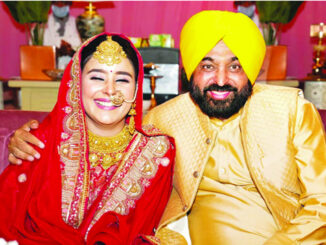
    New Delhi (TIP)- The regular ‘band, bajaa, baraat’ were missing but the festivities seemed intact as Punjab Chief Minister Bhagwant Mann turned groom for his wedding with a doctor from Kurukshetra at his home on Thursday, July 7. It was a private ceremony without the usual crowds, so much a part of the big, fat Punjabi wedding. Though few details were available, visuals on television and Twitter showed Mann and his bride at the Anand Karaj ceremony. Aam Aadmi Party colleague Raghav Chadha also shared some images on Twitter showing Mr. Mann, in his yellow turban with ‘kalgi’ and a gold coloured kurta-pyjama while Kaur donned a red coloured dress. There were also pictures of the groom at his festooned home, walking under a ‘phulkari dupatta’ held up by Chadha among others, and at the ceremony. Both Mann and Kaur could be seen smiling in one of the pictures while another showed them sitting together for lunch post the wedding rituals. One of Mr. Chadha’s post showed Mr. Mann and himself on a sofa. He quoted a Punjabi song of celebration, “Saade veer da vyah, Saanu gode gode chah”, as the caption.

    Delhi Chief Minister Arvind Kejriwal, Chadha, AAP MP Sanjay Singh and other leaders were also present at the ceremony. Kejriwal played the role of an elder from Mann’s family and actively participated in the wedding rituals. Later in a tweet, Kejriwal congratulated the couple. “Wishing Bhagwant Mann and Gurpreet Bhabhi for marriage,” said Mr. Kejriwal. Mann (48), the first Chief Minister of the State to get married while in office, is tying the knot with Dr. Gurpreet Kaur from Pehowa in Kurukshetra in Haryana.

    This is Mann’s second marriage. He separated from his first wife in 2015 — they have two children, daughter Seerat Kaur (21) and son Dilshan (17). The wedding menu consisted of Dal Makhni, Chana Masala, Karahi Paneer, Navratan Biryani, Jeera Onion Pulao, Kalonji Wale Aloo and Continental dishes for main course and Moong Dal Halwa, Fresh Fruit Trifle, and Ice Cream for dessert. Tight security arrangements were in place at the Chief Minister’s home in Sector 2.

    Gurpreet Kaur (30) shared a picture of herself on Twitter and wrote, ” Din Shagna Da Chadya (the day of marriage has arrived)”. She also thanked AAP leaders for their congratulatory messages. According to party insiders, the wedding, being solemnised according to Sikh rituals, was attended by Mr. Mann’s mother and sister and just a few guests, including Mr. Kejriwal and his family.

    Mann’s sister Manpreet Kaur was dressed in a magenta coloured dress. Before the wedding, Kejriwal told reporters at the airport, “Today is a day of immense happiness that my younger brother and Punjab Chief Minister Bhagwant Mann ji is getting married and is making a new beginning.

    “May God bless him with a happy married life and both (the couple) always remain happy. Chadha said, “A new chapter in CM Bhagwant Mann’s life is going to start today. I congratulate Mann saab’s family, his mother and sister. It will be a small function. Only family members will attend.””We all are happy that happiness has returned to Mann saab’s family after a long time. It was his mother’s dream to see her son getting settled again. Today, that dream is going to come true,” he told reporters. Gurpreet Kaur completed her MBBS from a private university in Haryana in 2018. She has two elder sisters who are settled abroad. AAP leader and Minister Harjot Singh Bains in a tweet said, “God Bless the Sweet Couple. I am happy for @BhagwantMann ji and Dr Gurpreet ji.” BJP leader Tarun Chugh also congratulated Mann on this occasion.

    Source: PTI

  • 9 tourists from Punjab killed as car falls into river in Uttarakhand

    Nine tourists from Punjab drowned on Friday, July 8, morning as a car fell into the Dhela river in Uttarakhand’s Ramnagar and was washed away by its strong current, news agency PTI quoted the police as saying. While four bodies have been recovered, five are still trapped in the car, they added. The incident occurred after a heavy flow of water was induced by rains early on Friday, Anand Bharan, DIG of Kumaon Range, was quoted as saying by news agency ANI.

  • Moga Sacrilege case: 3 Dera followers jailed for 3 years

    A Moga court on Thursday, July 7,  sentenced three Dera Sacha Sauda followers to three years imprisonment for desecration of Guru Granth Sahib at Malke village in 2015. The court of Judicial Magistrate First Class Rahul Garg also imposed a fine of Rs 5,000 each on Prithvi Singh, resident of Baghapurana who was a member of the Sirsa-based dera’s state committee, and followers Mithu Singh Maan and Amardeep Singh of Malke village. It also acquitted two more accused, Satnam Singh of Baghapurana and Davinder Singh Harie Wala village, for want of evidence. In November 2015, torn pages of ‘bir’ (copy) of Guru Granth Sahib were found strewn on the streets of Malke village in Moga. A police case was subsequently registered.

    In October 2018, a special investigation team (SIT) of Punjab Police arrested the five Dera followers in connection with the incident. “Three of the five persons named in the FIR have been convicted in the case. The trio have been awarded three years of imprisonment. Both punishments will run parallel,” inspector Dalbir Singh, a member of the SIT, said.

  • NJ company gifts essential commodities to Poland for the Ukrainian refugees

    NJ company gifts essential commodities to Poland for the Ukrainian refugees

    Indo-American Quartz, distributors of natural and artificial stones in Kearny, New Jersey has shipped over 3300 lbs. of essential commodities to Poland for the refugees, the president of the company Mr. Devraj Aiyar told The Indian Panorama.

  • New York’s  COVID-19 Positivity Rate rises

    New York’s  COVID-19 Positivity Rate rises

    Seven counties statewide are now once again at high risk for COVID-19 community transmission, the CDC says

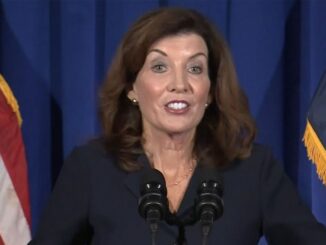
    NEW YORK (TIP): New York’s COVID-19 positivity rate is rising again. According to Gov. Kathy Hochul, on Thursday, July  7,  the state’s 7-day average positivity rate stood at 8.89 percent, up from 4.68 percent on June 27,  an increase of 89.96 percent. On Long Island, the positivity rate surpassed 10 percent Thursday for the second day in a row, at 10.13 percent Thursday and 10.15 percent Wednesday.

    And, since June 27, when only one county in New York State, Nassau County on Long Island, remained at high risk for COVID-19 community transmission — on Thursday, seven counties statewide, including, Nassau, Bronx, Kings, New York, Queens, Richmond and Westchester, were once again at “high” COVID-19 community level risk, according to data provided by the Centers for Disease Control and Prevention. Suffolk County remained at medium risk Thursday. Individuals in counties where the risk is high are urged to wear a mask indoors in public and on public transportation, the CDC said.

    “As we continue to monitor the numbers, I encourage all New Yorkers to keep using the tools we know that work to protect against and treat COVID-19,” Hochul said. “Stay up to date on your vaccine and booster doses. If you’re a parent or guardian, talk to your pediatrician about getting your children vaccinated. Stay home if you feel sick and if you do test positive, talk to your doctor about the best treatment options for you.” The uptick comes after COVID-19 was on the decline statewide, after an increase in May: According to a report by NBCNewYork, in May, all counties in New York except for eight were designated high risk. In May, New York’s number of new COVID-19 cases escalated, with positivity rates up more than 50 percent in 30 days. Reported case totals provided by state officials don’t include results from at-home test kits, which aren’t reported. While the rise in at-home testing has made it easier for many to see if they’re positive for the virus, some experts believe the testing at home has led to an undercount of cases.

    With vaccinations for babies and toddlers under 5 recently given the green light in New York State, Hochul said parents needed to move to get shots in arms for their younger children.

  • Indian Embassy Organizes Event held in honor of Indian defense force veterans in US

    Indian Embassy Organizes Event held in honor of Indian defense force veterans in US

    WASHINGTON, D.C. (TIP): Recognizing the importance of Indian armed forces’ veterans, the Indian Embassy here on Monday, July 4, Indian Embassy organized ‘Varishtha Yoddha’, an event to honor the ex-servicemen who are now living in the United States. More than 140 people, including some distinguished veterans who had fought in various wars and their families, attended the event here. “Friends, you have served and sacrificed for Mother India, with utmost sense of duty and selflessness. You and your family members as a part of 4 million-strong Indian community are instrumental in strengthening India-US ties across a diversity of sectors,” Taranjit Singh Sandhu, India’s Ambassador to the US, said.

    “While no recognition and award can do justice to your contributions, today’s event in a small way expresses our respect and gratitude and tells you that we are here for you,” he said in his admiration to the veterans. “It’s a matter of pride, privilege and honor for me to be a part of this special gathering.” There are people in this room, who have fought for India in 1948, 1962, 1965 or 1971, 1985, the Kargil war in 1999 and in numerous other operations, he said. “Today’s Varishtha Yoddha event is our humble effort to recognize the sacrifice and service of our veterans and honor them for the patriotism, dedication and willingness to serve and sacrifice all for the nation.

    “We remain committed to taking care of our veterans in the same way as they have taken care of the security of our country,” he said. Sandhu said Indians veterans, wherever they go, carry the highest standards of duty, discipline and professionalism for which Indian armed forces are known.

    “Our veterans living in USA remain the flag-bearers of the traditions of our armed forces and continue to inspire the Indian community,” he said. India-US strategic partnership is enriched by their wisdom, hard work and high moral values, he added. In his address, Sandhu said the defense partnership between the US and India has been instrumental in intensifying a variety of pacts between them, including those related to sharing of defense technology and cooperation in maritime security and counter-piracy.

    India has been designated as a ‘Major Defense Partner’ by US, and conducts more military exercises with the US, than with any other country. Currently, an Indian naval contingent, including a naval ship, is in Hawaii for participation, in RIMPAC naval exercise, Sandhu told the veterans.

    Over the last decade, he said, India has procured defense-related acquisitions from the US worth over $20 billion. “Today, Indian forces are operating US defense platforms, including transport planes, helicopters, howitzers, ships and a number of other light equipment many of which have been fully deployed in operational and humanitarian uses, including during the COVID pandemic to deliver aid and transport medical supplies,” said the Indian envoy. “In line with ‘Atmanirbhar Bharat’, we are moving forward leveraging our comparative advantages and the opportunity for defense industrial collaboration, especially to innovate, co-develop and co-produce for India and for the world,” he said.

  • 12 US lawmakers urge Biden to hold India accountable in WTO for its ‘trade-distorting practices’

    12 US lawmakers urge Biden to hold India accountable in WTO for its ‘trade-distorting practices’

    Congressmen Tracey Mann

    WASHINGTON, D.C. (TIP): A group of US lawmakers have urged President Joe Biden to file a formal request for consultations with India at the World Trade Organisation (WTO) over its “dangerous trade-distorting practices”. The 12 Congressmen, in a letter to Biden, stated that current WTO rules allow governments to subsidize up to 10 per cent of the value of commodity production. However, the Indian government continues to subsidize more than half of the value of production for several commodities, including rice and wheat, they said. India’s “lack of rule-following” and the Biden administration’s “lack of enforcement” have reshaped the global agricultural production and trade channels by driving down prices, depressing production of rice and wheat commodities, and putting American producers at a disproportionate disadvantage, the Congressmen alleged in the letter.”India’s practices are dangerously trade-distorting on a global scale and impact US farmers and ranchers,” the letter read. The lead in the letter was taken by Congressmen Tracey Mann and Rick Crawford. “We urge the administration to file a formal request for consultations with India at the WTO and to continue monitoring other WTO members’ domestic support programs that undermine fair trade practices,” they said. The US must not yield for the sake of reaching a consensus. Instead, America must work to promote solutions that will alleviate the global supply chain and food shortages. It must take actions that will address those consumers most impacted by inflation and rising food prices, the lawmakers demanded. “It is up to the American agriculture to contribute to building resilient conditions for food security for the US and throughout the world, they said. India has defended its stand at the WTO. Several countries and organizations across the world have applauded India for taking a firm stand in protecting the interests of its farmers.

    (Source: PTI)

  • New York Times lists Mass Shootings in the United States in 2022

    New York Times lists Mass Shootings in the United States in 2022

    The Gun Violence Archive has counted more than 300 mass shootings through early July

    NEW YORK (TIP): A gunman killed seven people and wounded dozens more during a Fourth of July celebration in Highland Park, Ill., on Monday, July 4. It was one of several shootings on the holiday around the United States, according to the Gun Violence Archive, a nonprofit research group that tracks gun violence using police reports, news coverage and other public sources. The group defines a mass shooting as one in which at least four people were killed or injured. The deadliest mass shooting in the country so far this year was the massacre in which 19 children and two teachers were killed at an elementary school in Uvalde, Texas, on May 24. It happened 10 days after 10 people were shot and killed in a supermarket in Buffalo. There is no consensus on what constitutes a mass shooting, complicating the efforts of government, nonprofits and news organizations to document the scope of the problem. Different groups define mass shootings differently, depending on circumstances including the number of victims, whether the victims are killed or wounded, and whether the shooting occurs in a public place.

    The Gun Violence Archive has counted more than 300 mass shootings through early July. Of those shootings, 15 involved four or more fatalities, including the one in Highland Park on Monday, July 4. The group recorded 692 mass shootings last year, with 28 involving four or more fatalities.

    Here is a partial list of mass shootings so far this year.

    July 4: Highland Park, Ill.

    Robert E. Crimo III, 21, was taken into custody several hours after the shooting in Highland Park, a suburb north of Chicago, and charged with seven counts of first-degree murder. Seven people were killed and dozens more, ranging in age between 8 and 85, were wounded.

    More on the Highland Park Shooting

    Seven people were killed and many more wounded in a mass shooting at the Fourth of July parade in Highland Park, a Chicago suburb. The Limits of Restrictions: The 21-year-old gunman was able to buy several weapons despite Illinois’s relatively strict state laws and alarming police encounters.

    Highland Park: The small town was designed as a leafy retreat for people seeking safety and quiet. In planning the attack, the gunman exploited the intimate setting.

    A Violent Weekend: The Chicago attack was the largest and highest-profile shooting, but far from the only one over the Fourth of July weekend. The police said the gunman had climbed onto a rooftop with a rifle and begun firing into a crowd gathered for a Fourth of July parade.

    June 30: Newark

    Nine people were shot and wounded in what the police said appeared to be an incident related to a stolen car. The youngest victim was 17 and the oldest was 68. All were treated at local hospitals.

    June 20: Harlem

    A 21-year-old college basketball player was killed and eight people were wounded in an early-morning shooting at a popular picnicking area. After surging during the pandemic, the rate of shootings in New York has begun to fall, although it is still above pre-pandemic levels.

    June 4: Philadelphia

    Three people were killed and 12 injured in a shooting in downtown Philadelphia, the police said. An officer fired at one of the gunmen, the police said, but it was unclear whether the gunman had been hit.

    Another six people were killed and dozens were injured in several other shootings over the same weekend, including in Arizona, South Carolina, Tennessee and Virginia.

    June 1: Tulsa, Okla.

    Several people were shot and five were killed at a medical building next to Saint Francis Hospital in Tulsa, Okla., the Tulsa police said. The police said the gunman was believed to have killed himself.

    May 24: Uvalde, Texas

    A gunman killed 19 children and two teachers at Robb Elementary School in Uvalde, Texas, about 80 miles west of San Antonio.

    Law enforcement officers fatally shot the gunman, identified as Salvador Ramos, 18, but not until well over an hour after he walked into the school, raising questions about whether lives could have been saved if they had acted sooner. The U.S. Justice Department has said that it would review the law enforcement response.

    May 15: Laguna Woods, Calif.

    A gunman killed one person and critically wounded four other members of the Irvine Taiwanese Presbyterian Church in Laguna Woods, Calif. The congregation, which holds services at the Geneva Presbyterian Church, overpowered the gunman and hogtied him, preventing further bloodshed, the authorities said. The suspect, David Chou, 68, is a Las Vegas man with a wife and child in Taiwan who had traveled to Orange County with a grievance against Taiwanese people, the authorities said. He was charged with murder and five counts of attempted murder in what the Orange County sheriff, Don Barnes, called a “politically motivated hate incident.”

    May 14: Buffalo

    A gunman armed with an assault-style weapon killed 10 people and wounded three others at a Tops supermarket in a predominantly Black section of Buffalo, the authorities said. The suspect, Payton S. Gendron, 18, is white, and the 10 people who died were all Black. Before the attack, Mr. Gendron had posted a nearly 200-page racist screed online. He has pleaded not guilty. He faces life in prison if convicted.

    May 13: Milwaukee

    At least 16 people were wounded by gunfire in a shooting in downtown Milwaukee, in a popular nightlife area block from the arena where an N.B.A. playoff game ended hours earlier, the authorities said.

    April 12: Brooklyn

    A gunman opened fire inside a crowded subway car during the morning rush, wounding 10 people, the worst attack on New York City’s subway system in decades. More than a dozen other people were also injured, with some choking on smoke from the two devices the police said the gunman detonated before he started shooting. No one was killed.

    A suspect, Frank R. James, was arrested the next day and charged with carrying out a terrorist attack on a mass transit system. If convicted, he could face life in prison.

    April 3: Sacramento

    As revelers spilled out of nightclubs in a two-square-block area of downtown Sacramento, a barrage of gunfire killed six people and wounded 12, the authorities said. Days later, the Sacramento Police Department said “gang violence” was at the center of the shooting, which involved at least five gunmen.

    March 19: Dumas, Ark.

    Two people engaged in a gunfight and sprayed a crowd with gunfire, killing one bystander and injuring 27 other people, including six children, at a community event and car show in the small Arkansas farming community.

    Jan. 23: Milwaukee

    Law enforcement officers were called to a Milwaukee home for a welfare check and found six people who had been fatally shot. The victims — five men and one woman — had been shot, the police said, and evidence early in the investigation suggested that the killings had been targeted.

  • Indian American Business Council & Art of Living Host Mega Peace Festival with  Sri Sri Ravi Shankar in Chicago

    Indian American Business Council & Art of Living Host Mega Peace Festival with Sri Sri Ravi Shankar in Chicago

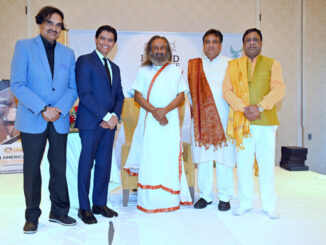
    Global Humanitarian spiritual leader Sri Sri Ravi Shankar with Congressman Danny Davis 9D, IL-7th Dist.), Congressman Raja Krishnamoorthi (D, IL-8th District), Cook County Board President Toni Preckwinkle and community leaders

    CHICAGO,  IL (TIP) : Global Humanitarian spiritual leader  Sri Sri Ravi Shankar led the convergence of large gathering ‘I Stand for Peace’ – a Peace Festival in Chicago that attracted a large attendance including ranking United States Congressmen, Local, County and State elected officials and a great host of business and community leaders on June 26, 202 at the University of Illinois Forum Auditorium. The Peace Festival “I Stand for Peace”  elicited inspiring remarks from the ranking elected officials in the backdrop of growing unrest, violence, crime in Chicago and all across the globe and the compelling imperative to usher peace, harmony, love and brotherhood. The Peace Meet attracted the attendance of Ranking Congressman Danny Davis 9D, IL-7th Dist.), Ranking Congressman Raja Krishnamoorthi (D, IL-8th District), Cook County Board President Toni Preckwinkle Representative Jim Durkin (R, 82nd District), Adarsh Shastri, Grandson of former PM of India Sri. Lal Bahadur Shastri, Hoffman Estates Police Chief Kasia Cawley and a host of State Senators, State Representatives, Suburban Mayors and other prominent faith leaders.

    Amidst the series of remarks, State Representative Jim Durkin (R,82nd District) said that he would table a resolution on the floor of the Illinois General Assembly to declare June 26th as the World Peace Day and celebrate its observance in the State of Illinois every year – which elicited sustained applause. Mayor Lori Lightfoot also sent a proclamation to the event, which was read by Alderman David Moore in which she declared June 26 each year to be “I Stand for Peace” Day.

    Dr. Sreenivas Reddy, Chair of the event & Chair of the Illinois Medical Board welcomed the large gathering and emphasized on the significance of meditation as a proven effective tool by which we can purify and quieten our minds, thus rejuvenating the body.” Dr. Reddy said, as a Physician, I can attest to this medical reality as to the compelling correlation between peaceful mind and healthy body. Dr. Sreenivas Reddy said Sri Sri Ravi Shankar has come to Chicago at this critical juncture in time to reflect and address ways we can advance peace, harmony and love in the city, nation and indeed across the globe teeming in unrest.

    Ajeet Singh, President, Indian American Business Council President – in a statement – said this Peace Meet fostered a robust interaction to advance peace, harmony, happiness, amity and goodwill and added “I Stand for Peace” campaign endeavors to strengthen and channel individuals’ commitment to peace holistically during these turbulent times. Ajeet Singh profusely thanked Sri Sri Ravi Shankar for paying a visit and described his visit as historic.

    Vinesh Virani of the Art of Living in Illinois – in his statement – said the worldwide sense of helplessness and hopelessness caused by the pandemic, war, and inflation has weighed heavily on the human psyche and therefore took a toll on mental health. He added Sri Sri Ravi Shankar’s visit represents hope in these turbulent times. Adarsh Shastri, grandson of former Prime Minister of India Sri. Lal Bahadur Shastri and a former minister in Delhi government addressing the audience said “  Sri Sri Ravi Shankar is a humanitarian and spiritual leader, an ambassador of peace and of human values and added that he provides techniques and tools to live a deeper, more joyous life.

    Taking the stage amidst the deeply permeated silence Sri Sri Ravi Shankar addressed “In this polarized society, we need more people who can bring peace, who can bridge the gap from conflict to proper communication and celebration; and outlined advancing peace and goodwill through the World Culture Festival next year and bring people together of all backgrounds and all ideologies. We want to give the message, ‘Wake up,we are one family”,  said Sri Sri Ravi Shankar.  Later, Sri Sri Ravi Shankar led the participants in a half-hour guided meditation and spoke about what he has experienced while on this worldwide tour and how it can help Chicagoans achieve meaningful peace and amity. “Meditation makes you emotionally strong, mentally sharp intuitively more alert, and mindful in your work, whatever you are doing. It has incredible list of benefits, including physical health benefits. It can help with hypertension, depression, digestive issues  and many others it can help with,” Sri Sri added.  He further said, “When you share your misery, it will not diminish. When you fail to share your joy, it diminishes. Share your problems only with the Divine, not with anyone else, but share your joy with everyone.

    Indian Americans Physicians held another exclusive event on June 27, 2022 at the Double Tree Hotel in Oakbrook where Sri Sri Ravi Shankar addressed the Physicians and held a half-hour meditation. The event brought a host of Indian American physicians converged to engage in a solemn interactive session with Sri Sri Ravi Shankar.  Several prominent physicians spoke in admiration of Sri Sri Ravi Shankar’s exemplary contribution in advancing peace amidst the growing turmoil in contemporary human life. At the event, Sri Sri Ravi Shankar honored Dr. Bharat Barai, Chair of Indiana Medical Board, Dr. Sreenivas Reddy, Chair of Illinois Medical Board, Dr. Suresh Reddy, Trustee of Oakbrook Village, Ravi Kolli, AAPI President, Dr. Vishnu Chandy and Adarsh Shastri.

    Earlier, Dr. Sreenivas Reddy, Chair of the event welcomed the physicians, acknowledged several key organizers of the event, and thanked them for their tireless efforts in hosting such a mega event for peace and subsequently invited Sri Sri Ravi Shankar who honored Ajeet Singh, President of Indian American Business Council, Vines Virani of the Art of Living for their tireless hard work and able leadership in putting together an event of this magnitude. Dr. Radhika Chimata and Trisha served as the moderators of this event. In conclusion, IABC President Ajeet Singh thanked the host committee for their unstinted hard work and dedication in making the peace festival a grand success. He publicly thanked and expressed highest appreciation to Dr. Anuja Gupta, Dr. Suresh Reddy, Keerthi Ravoori, Nag Jaiswal, Mrs. Santosh Kumar, Rita Singh, Anu Malhotra, Harish Kolasani, Johnny Patel, Mitesh Kamdar, Sanjay Shah, Subu Iyer, Sunil Shah, Vibha Rajput, Vijay Muralidharan, Ajai Agnihotri,  Anil Oraskar,  Dr.Vijay Prabhakar, Vinita Gulabani, Alli Dhanraj, Nick Verma & Satish Dadepogu

    Indian-American Business Council, a non-profit organization that promotes business opportunities, forums, networking, trade delegations and productive exchanges between India and the United States and hosted the mega event in partnership with the Art of Living.

    (Photographs and Press release /  Asian Media USA)

  • Indian-origin Scotland Yard officer dismissed for ‘offensive’ and ‘discriminatory’ behavior

    Indian-origin Scotland Yard officer dismissed for ‘offensive’ and ‘discriminatory’ behavior

    LONDON (TIP): An Indian-origin officer is among two dismissed from Scotland Yard without notice for their highly offensive and discriminatory behavior following a professional standards investigation examining a year’s worth of social media messages, including a racist jibe about Meghan Markle, the Duchess of Sussex. Police Constable (PC) Sukhdev Jeer and PC Paul Hefford, both attached to Forensic Services in the Metropolitan Police, faced a misconduct hearing which concluded this week that allegations against them of exchanging vile messages was proven. The tribunal heard details of several racist posts, including reportedly one containing a racist slur about Markle, shortly before her marriage to Prince Harry in 2018.

    “These vile messages were shared in 2018 within a closed WhatsApp group between a small group of officers. I hardly need to say it is completely unacceptable for anyone, let alone a police officer, to behave in such a manner. The actions of these three are inexcusable,” said Commander Jon Savell, Professional Standards. “The whole of the Met is focused on rooting out anyone who displays this type of behavior and lets down the Met and the public we serve. Behavior like this will absolutely not be tolerated and we are driving that message home to our officers and staff at every opportunity,” he said.

    The officers faced an allegation at the level of gross misconduct that between December 2017 and December 2018, while working at Central East Command Unit, they were part of a WhatsApp group on their private phones. They used the group to exchange messages, memes and other content which was inappropriate, highly offensive and discriminatory. The content was discriminatory on the grounds of sex, race, religion, sexual orientation and disability.

    “This repulsive behavior understandably damages that trust and I want to apologize to every single member of the public we serve in this area,” said Chief Superintendent Marcus Barnett, who leads the Central East division of the Met Police.

    “These officers have, rightly, been sacked. I do not want any officer who would engage in this sort of behavior anywhere near your community. I will be personally emailing everyone who works at Central East to reinforce the message that words matter, respect matters, and every time someone sends this sort of message they cause real hurt,” he said. PCs Jeer and Hefford will now be added to the Barred List held by the College of Policing. Those appearing on the list cannot be employed by police, local policing bodies (PCCs), the Independent Office for Police Conduct or Her Majesty’s Inspectorate of Constabulary and Fire and Rescue Services. The officers also faced an allegation at the level of misconduct that they each failed to challenge or report the other members of the group for their behavior.

    The messages came to light when another former officer, Richard Hammond’s phone was examined as part of an unrelated criminal investigation. He was dismissed without notice in October 2021 following his conviction for perverting the course of justice. The Met Police said it was “working hard to rebuild trust in the country’s largest police force and recognize we have a lot to do.”

    Every Met employee has been spoken to about responsible use of social media, absolute adherence to professional boundaries and actively intervening and challenging wrongdoing.

                                                                                  (Source: PTI)

  • Indian-origin woman cancer-free after experimental drug trial in UK

    Indian-origin woman cancer-free after experimental drug trial in UK

    LONDON (TIP): A 51-year-old Indian-origin woman who was given just months to live a few years ago is celebrating on Monday, July 4,  after doctors say she is showing no evidence of breast cancer following a clinical trial at a UK hospital. Jasmin David from Fallowfield in Manchester is now looking forward to celebrating her 25th wedding anniversary in September after the successful National Health Service (NHS) trial. David’s two-year trial at the National Institute for Health and Care Research (NIHR) Manchester Clinical Research Facility (CRF) at Christie NHS Foundation Trust involved an experimental medicine combined with Atezolizumab, an immunotherapy drug administered intravenously which she continues to have every three weeks. “I was 15 months down the line after my initial cancer treatment and had almost forgotten about it, but then the cancer returned,” recalls David.

    “When I was offered the trial, I didn’t know if it would work for me, but I thought that at least I could do something to help others and use my body for the next generation. At first, I had many horrible side effects including headaches and spiking temperatures, so I was in hospital over Christmas and quite poorly. Then thankfully I started to respond well to the treatment,” she said.

    The previously fit and healthy mother of two grown-up children, worked as a clinical lead at a care home for the elderly. She discovered she had an aggressive triple negative form of breast cancer in November 2017, when she found a lump above the nipple. She underwent six months of chemotherapy and a mastectomy in April 2018, followed by 15 cycles of radiotherapy which cleared her body of cancer. Then in October 2019 the cancer returned, and scans showed multiple lesions throughout her body meaning she had a poor prognosis. The cancer had spread to the lungs, lymph nodes and chest bone and she was given the devastating news that she had less than a year to live. Two months later, and with no other options left, David was offered the opportunity to be part of research by participating in a Phase I clinical trial.

    “I celebrated my 50th birthday in February 2020 while still in the middle of treatment and not knowing what the future held. Two and a half years ago I thought it was the end and I now feel like I’ve been reborn,” said David. “There is a change in my life after returning from India to see family in April and I have decided to take early retirement and to live my life in gratitude to God and to medical science. My family have been very supportive of this decision. I will be celebrating my 25th wedding anniversary in September. I have so much to look forward to,” she said.

    “My Christian faith helped me a lot on this journey and the prayers and support from family and friends gave me strength to face the challenge,” she added. By June 2021, scans showed no measurable cancer cells in her body and she was deemed cancer free. She will remain on treatment until December 2023 but continues to show no evidence of the disease.

    “We are really pleased that Jasmin has had such a good outcome. At The Christie we are continually testing new drugs and therapies to see if they can benefit more people,” said Professor Fiona Thistlethwaite, medical oncologist and clinical director of Manchester CRF at The Christie.

  • Indian American Vin Gupta in line for FDA Principal Medical Adviser

    Indian American Vin Gupta in line for FDA Principal Medical Adviser

    WASHINGTON, D.C. (TIP): Indian American public health expert Vin Gupta, a pulmonologist and frequent NBC and MSNBC guest, is the leading candidate to become the Food and Drug Administration’s principal medical adviser. FDA is eyeing media-savvy Gupta to shore up the agency’s public messaging amid missteps over the coronavirus crisis, baby formula shortage and abortion access, a media report stated. As part of the gig, Gupta would manage a broad portfolio ranging from the agency’s Covid-19 response to its aggressive crackdown on vaping and nicotine, it said citing three unnamed people with knowledge of the matter. Gupta is also expected to take a lead role in guiding the FDA’s communications strategy, serving as its public face on high-profile issues and trying to bolster trust in the agency’s health recommendations, the report said. Currently the chief medical officer for new products at Amazon, Gupta raised his national profile over the last two years as a medical analyst and frequent TV commentator on the Covid pandemic.

    He was also part of a group of health experts advising President Joe Biden’s presidential campaign and transition on the pandemic response. An FDA spokesperson as also Gupta declined to comment on media.

    The search for a top adviser comes as the FDA has taken a central role in simultaneous efforts to battle the pandemic, ease a shortage of infant formula and protect abortion access.

    Gupta would be charged primarily with improving the FDA’s image and boosting public trust in the agency as a public health authority, as well as serving as a top adviser to FDA Commissioner Robert Califf on various policy issues, according to the report. The principal medical adviser role could continue to evolve following the expected retirement of Principal Deputy Commissioner Janet Woodcock, a longtime health official who Biden once considered to run the FDA, it said.

  • 100 Sikh security guards lost their jobs for not being clean-shaven as required by Toronto’s mask rules

    100 Sikh security guards lost their jobs for not being clean-shaven as required by Toronto’s mask rules

    TORONTO (TIP): As many as 100 Sikh security guards have lost their jobs because of Toronto’s mask mandate. The rules required them to be clean-shaven. The World Sikh Organization (WSO) has urged the city administration to change its rules. Meanwhile, Punjab minister Harjot Singh Bains tweeted: “Beard and Moustaches are identity of a Sikh and of upmost value to his faith. Urge @cityoftoronto to rollback the decision which is against the faith of Sikhs, as it has hurt sentiments of Sikhs worldwide.” According to CBC News, the city has been mandating that security guards wear N95 masks while on the job at settings such as homeless shelters since January. The city confirmed that employees working within the Shelter, Support, and Housing Administration (SSHA) department must wear N95 masks at all times and be clean-shaven so that the masks provide effective protection against Covid-19. In Sikhism, ‘kesh’ is the practice of allowing one’s hair to grow naturally out of respect for the perfection of God’s creation and it is a vital part of their faith. In an email statement, the City of Toronto said, “It’s aware of the WSO’s complaint and said all of the workers affected are employed by contractors and not its own corporate security division.”

    (Source: PTI)

  • Indian American Former Theranos executive Ramesh Sunny Balwani is convicted of fraud

    Indian American Former Theranos executive Ramesh Sunny Balwani is convicted of fraud

    SAN JOSE, CA  (TIP): Ramesh “Sunny” Balwani, a former high-ranking executive at Theranos, was convicted of fraud Thursday, July 7,  for misleading investors about the financial health of the now-defunct health care startup. Balwani, who was convicted on all 12 counts of wire fraud and conspiracy to commit wire fraud, was president and chief operating officer of Theranos, a blood-testing company that claimed its technology could detect a multitude of diseases with just a few drops of a patient’s blood. Balwani and the company was accused of defrauding investors and patients, in part by misrepresenting the efficacy of Theranos’ product and lying about the company’s finances. Balwani began working at Theranos in 2009 while he and founder Elizabeth Holmes, his alleged co-conspirator, were secretly dating. Holmes was convicted in January on four of 11 counts of fraud. Each count carries a potential maximum sentence of 20 years in prison. Holmes is awaiting sentencing. In May, she asked a judge to toss out her conviction.

    Holmes’ attorneys in her trial accused Balwani of misleading investors and lying about how much money the company was making. Prosecutors accused Balwani of overstating Theranos’ revenues while pitching investors for new cash infusions for the company. Balwani’s lawyers took the same stance against Holmes, accusing her of controlling all aspects of the business at Theranos, including allegedly providing false data on its blood-testing technology. Ramesh Balwani was born in Pakistan to a Sindhi upper middle-class farming family. He attended Aitchison College, a prestigious boarding school in Lahore. He stayed there until 1984, receiving an education the British colonialists had designated for “youths of good family.” Balwani speaks Urdu, Hindi and English. The family eventually moved to India “because being a Hindu in a mostly all-Muslim country of Pakistan was very difficult” according to Balwani’s personal lawyer. Later they immigrated to the United States. In the Spring 1987 semester, Balwani began undergraduate studies at the University of Texas at Austin as an international student where he was a member of the Pakistani Students Association. “He was very patriotically Pakistani,” said one friend of Balwani’s at the time, “He was one of us.” Balwani left the campus sometime after 1991 to begin working; he would eventually complete a degree, but not until 1997 with a bachelor’s degree in information systems. In the 1990s, Balwani worked for Lotus Software and Microsoft. During Balwani’s tenure at Microsoft he worked in sales.[6] He claims to have written thousands of lines of code, however independent investigations could not verify this, and numerous Microsoft managers who were asked about him could not remember him. While at Microsoft, he met a Japanese artist, Keiko Fujimoto, who became his wife. In late 1999 he joined CommerceBid.com as President. It was a software development company that helped businesses buy and sell items via auctions over the burgeoning Internet. In 1999, the company was purchased by Commerce One, another business development software company with a high valuation. The buyout was done entirely with stock, and Balwani joined the board of the new company. In July 2000, Balwani sold his shares in Commerce One, netting nearly $40 million shortly before the company went out of business, just before the dot com bubble burst. He later went back to school and received a Master of Business Administration from the University of California, Berkeley in 2003. He spent another four years in a computer science graduate program at Stanford University but dropped out in 2008. While enrolled at Berkeley, Balwani, who was 37 at the time, met Elizabeth Holmes, who was 18 and in her senior year of high school. Holmes pursued an undergraduate degree in chemical engineering at Stanford, but later dropped out to focus full-time on Theranos.

    (With inputs from DOJ and Wikipedia)

  • Bargrari, Burj Jawahar Singh Wala sacrilege cases: SIT report blames Dera Sacha Sauda

    Bargrari, Burj Jawahar Singh Wala sacrilege cases: SIT report blames Dera Sacha Sauda

    CM Bhagwant Mann hands over the SIT report to eminent Sikh leaders

    By Prabhjot Singh

    It was Dera Sacha Sauda that hatched a conspiracy to cause unrest in Punjab. The provocation was a ban on screening of a feature film of the Dera Chief  Ram Rahim Singh. This is the major finding of a Special Investigation Team headed by Inspector-General of Police, Border Range, SPS Parmar. The 497-page report of the SIT was released on Saturday by Punjab Chief Minister Bhagwant Singh Mann to a select group of Sikh leaders. The release of the report has already set in motion an animated debate not only about its select release but also about its findings. The Shiromani Akali Dal, which had been at the receiving end for the three incidents of sacrilege committed in Faridkot district at Bargari and Burj Jawahar Singh Wala villages, however, gets a clean chit in the report. The Sikh leaders who were given copies of the report include  Major Singh Pandori, Chamkaur Singh, Bhai Rupa, Resham Singh Khukhrana and Baldev Singh Joggewala. Never before has any such sensitive inquiry report been released only to a select  group of people or leaders. The State had an opportunity to release it by placing it on the floor of the Punjab Vidhan Sabha at the just concluded Budget session. However, the AAP government preferred to avoid tabling it in the State legislature. This is the first time that a report has been made public in this manner. Though the investigation of the sensational sacrilege cases that were on the center stage both in the 2022 Assembly elections and also the recent Sangrur Lok Sabha bye-election have remained mired in controversies, its findings have generated yet another animated debate. The case, besides being investigated by different Special Investigation teams, was also entrusted to the Central Bureau of Investigation (CBI) before it was  withdrawn from the central agency. Kunwar Vijay Pratap Singh, now a member of Punjab Vidhan Sabha from Amritsar North, also remained associated with one of the Special Investigation Teams, before he quit after the Punjab and Haryana High Court made some  observations. Kunwar Vijay Pratap Singh quit as Inspector-General of Police and joined Aam Aadmi Party. The report released on Saturday by Chief Minister Bhagwant Mann was  of the SIT headed by Inspector-General Border Range SPS Parmar. The five-member SIT constituted on April 4 last year on the directions of the Punjab and Haryana High Court  had submitted its final report to DGP VK Bhawra and DGP Intelligence Prabodh Kumar on April 21 this year.

    Dera Sacha Sauda chief Gurmeet Ram Rahim Singh hatched a conspiracy to cause unrest in Punjab, says the report.

    The 467-page report counters several claims made by the Central Bureau of Investigation (CBI) in its investigation. The CBI had found no evidence of the Dera Sacha Sauda’s involvement and had filed a closure report. The investigation report was also submitted in a challan before a Faridkot court earlier. The Parmar Committee squarely blamed the Sirsa-based Dera Sacha Sauda behind all the three sacrilege cases. The report  has named Dera head Gurmeet Ram Rahim Singh as the conspirator besides naming several followers, including the three who have been absconding. The first case related  to theft of Sri Guru Granth Sahib from Burj Jawahar Singh Wala gurdwara on June 1, 2015. Subsequently on September 25, two posters containing derogatory remarks against Sikh religion, Sikh preachers and Guru Granth Sahib were found pasted outside Dhodha Peer Gate at Burj Jawahar Singh Wala. The third incident was reported on October 12, when the “aangs”  of Guru Granth Sahib were found strewn outside the Bargari gurdwara as well as in the village streets.

    The SIT report said accused Sukhjinder Singh alias Sunny, Shakti Singh, Baljit Singh, Randeep Singh alias Neela, Ranjit Singh alias Bhola, Nishan Singh, Narinder Sharma and Gurmeet Ram Rahim Singh (undergoing sentence at Sonaria Jail, Rohtak) were involved in the theft incident and later in throwing around the sacred “aangs” of Sri Guru Granth Sahib.

    According to the report, Sukhjinder Singh alias Sunny, Shakti Singh, Baljit Singh, Ranjit Singh alias Bhola and Gurmeet Ram Rahim Singh were involved in the second incident regarding pasting of sacrilege posters. Three other Dera followers — Harsh Dhuri, Pardeep Kler and Sandeep Bareta — were involved in the conspiracy and were still  to be arrested. They have been declared proclaimed offenders. The investigation report said there was a direct link with the Dera Sacha Sauda, Sirsa, and the accused, who are followers of the Dera. “It is evident from material/evidence collected by the SIT of Punjab Police that the accused had direct nexus with the management of the Dera.

    The report said prime accused Mohinder Pal alias Bittu (later killed in Nabha jail by inmates) and his companions were upset due to the non-release of the film ‘MSG-2’, following which Bittu organised a three-day dharna at Moga.

    The accused were agitated at the non-release of the film and hatched the conspiracy to take revenge. Accused Nishan Singh and Baljit Singh stole the holy Sri Guru Granth Sahib and later the accused used two cars and a motorcycle to carry out their operations.

    What action the AAP government proposes to take on the report is still not clear. How the government now takes this report to its logical conclusion will be watched with tremendous interest.

    (Prabhjot Singh is a veteran journalist with over three decades of experience covering a wide spectrum of subjects and stories. He has covered  Punjab and Sikh affairs for more than three decades besides covering seven Olympics and several major sporting events and hosting TV shows. For more in-depth analysis please visit probingeye.com  or follow him on Twitter.com/probingeye. He can be reached at prabhjot416@gmail.com)

  • Russia’s Brutal War in The Donbas Proves Ukraine Can’t Win

    Russia’s Brutal War in The Donbas Proves Ukraine Can’t Win

    Methodical and Relentless: Russia’s war Donbas likely to continue through the summer

    The idea that by next month the UAF could both halt Moscow’s offensive and then launch its own counteroffensive has no realistic basis. It is therefore time to consider the unthinkable: Ukraine may not be able to stop the Russian offensive and could lose the war. Overwhelming numbers of Ukrainian citizens tell pollsters they do not want Zelensky to trade territory for peace. That sentiment is certainly understandable; any people who were the victims of unprovoked invasion would detest the idea of surrendering any of their land to the aggressor. But the leadership in Kyiv and its Western backers must now face the sobering realities that diplomacy and a negotiated settlement may be the only way to prevent even more Ukrainian territory from falling to Russia.

    By Daniel Davis

    The General Staff of the Ukraine Armed Forces (UAF)  confirmed that President Volodymyr Zelensky’s troops have withdrawn from Lysychansk. In the face of Russia’s superiority “in artillery, aviation, MLRS, ammunition, and personnel,” the General Staff reported, “the continuation of the defense of the city would lead to fatal consequences.” The UAF, the General Staff spokesperson continued, would nevertheless “be back and we will definitely win!” They are almost certainly wrong, however, and it is time to face an increasingly unavoidable reality: In all likelihood, the Ukrainian Armed Forces will continue to suffer loss after loss, surrendering more territory to the Russians. If Kyiv and the West continue ignoring combat reality long enough, Ukraine may suffer an outright military defeat. Based on the public statements by senior Kyiv and Washington leaders, however, one might be forgiven for thinking Ukraine was actually winning.

    U.S. retired general Ben Hodges said in late June that he is “convinced that the Ukrainian army will be able to push the Russians back to their Feb. 24 positions by the end of this year.” Last Friday, Zelensky reiterated Ukrainian Armed Forces would continue fighting, saying that step by step, “we will drive [Russia] out of our sea, our land, and our sky.”

    But that is almost the opposite of what is actually happening on the battlefield. Despite what the Ukrainian president and American general say, there is no valid military basis on which to support the hope that Ukraine will win its war. Consider the situation that has unfolded in the eastern part of the country. As I outlined in detail at the outset of the Battle of Donbas in mid-April, Russia started with substantial advantages in manpower, tanks, personnel carriers, artillery, rockets, and combat aviation. Russia has exploited its advantages over the past two-plus months grinding down the Ukrainian defenders. Many in the west routinely describe Russia’s progress as “tiny advances” and “plodding,” but when viewed over time, the more accurate terms should be: methodical and relentless.

    Since April, Russia has captured major towns and cities such as Izyum, Rubizhne, Kreminna, Poposna, Zolotoe, Severodonetsk, and as of Sunday, Lysychansk. In some ways, however, the biggest setback for Ukraine hasn’t been the loss of territory so much as the loss of its best-trained and experienced troops. Russia has been imposing up to 1,000 total Ukrainian casualties per day in the Donbas. Reports suggest that Ukrainian troops evacuated Severodonetsk and Lysychansk by rubber boats. Because the Ukrainian General Staff waited too late to order the evacuation, their forces left without their equipment, abandoning large quantities of tanks, personnel carriers, and most critically, artillery pieces. The sum total of all heavy weapons delivered or promised by the West to Ukraine has been only a small percentage of what’s actually needed but will not likely be enough to offset the substantial losses Ukraine suffered in its recent defeats, much less enable a counteroffensive in mere weeks from now. A senior Ukrainian military official admitted that even before the twin defeats in Severodonetsk and Lysychansk, the UAF had lost approximately 50% of its pre-war stocks of heavy weapons. Even the arrival of a few modern Western rocket launchers will not come close to replacing these losses.

    Russia, meanwhile, also suffers losses in the Donbas fight, but likely at a lower rate for two key reasons. First, they learned from their initial debacles of the invasion in February in which they made large scale advances with armor that were not adequately supported. Now, Russia prioritizes heavy bombardment, rockets, and air strikes and only brings in ground forces to fight Ukrainian troops when Russian commanders believe their enemy has been sufficiently ground down.

    Second, Russia enjoys at least a 10 to 1 advantage in artillery and rocket ammunition – and a dramatic advantage in air sorties over the Donbas – and the Kremlin’s troops are able to hit the Ukrainian troops with a far greater density of bombs. The New York Times reported on Tuesday that the “artillery war in Ukraine’s east is seemingly never-ending,” noting that “the shelling is constant — wounding and killing and driving those soldiers cowering in trenches and foxholes slowly insane.”

    These Russian advantages have proven decisive in allowing Putin’s forces to capture large swaths of Ukrainian territory in the Donbas. It is important to acknowledge, however, that these advantages still exist. The Slavyansk/Kramatorsk grouping of Ukrainian troops appears to be next in the Russian firing line, as both are already being relentlessly shelled. Military fundamentals imply strongly that Russian troops will continue their methodical drive west.

    The idea that by next month the UAF could both halt Moscow’s offensive and then launch its own counteroffensive has no realistic basis. It is therefore time to consider the unthinkable: Ukraine may not be able to stop the Russian offensive and could lose the war.

    Overwhelming numbers of Ukrainian citizens tell pollsters they do not want Zelensky to trade territory for peace. That sentiment is certainly understandable; any people who were the victims of unprovoked invasion would detest the idea of surrendering any of their land to the aggressor. But the leadership in Kyiv and its Western backers must now face the sobering realities that diplomacy and a negotiated settlement may be the only way to prevent even more Ukrainian territory from falling to Russia.

    Today Kyiv still controls Kharkiv, Odessa, and still large portions of the Donetsk region. If the fighting continues, however, it is possible that by the end of the summer, some or all of those territories could fall to Russia. As anguishing as it may be for Kyiv to negotiate with Russia from its current disadvantaged position, it could well prove to be the best chance Ukraine has to maintain control over the majority of its territory over the long term.

    No one but the Ukrainian people and government can make such a choice, but the harsh reality is that the more the UAF keeps fighting, the more likely it is that Russia expands its territorial control.

    (The author  is a Senior Fellow for Defense Priorities and a former Lt. Col. in the U.S. Army who deployed into combat zones four times. He is the author of “The Eleventh Hour in 2020 America.” Follow him @DanielLDavis)

  • The meaning of a ‘dynasty-mukt Bharat’

    The meaning of a ‘dynasty-mukt Bharat’

    The BJP’s clarion call for a dynasty-free Bharat reflects its desire for a meaningful opposition-free Bharat

    By Asim Ali

    In the Bharatiya Janata Party (BJP)’s political strategy, opposition to dynastic politics has gradually moved from the periphery to the center. This sharpened focus on a ‘dynasty-mukt (dynasty-free) Bharat’ was at the heart of the party line propounded at the BJP’s national executive meet in Hyderabad. Dynastic politics is becoming the meta narrative under which all the proclaimed ills of the opposition parties – corruption, misgovernance, secularism etc. – are sought to be encoded.

    Discourse on dynastic politics

    At the outset, it is important to note a shift in emphasis in the BJP’s discourse on dynastic politics. The charge of “ parivarvaad” (dynastism)” is now levelled as much against regional parties as the Congress. Post 2019, the BJP has hit a ceiling in its project of national dominance. It has struggled to expand its footprint in eastern and southern States such as Odisha, West Bengal, Telangana, Andhra Pradesh, and Tamil Nadu. The dominant force which has checked the BJP’s rise in all these States happens to be, in varying degrees, dynastic parties. Hindu majoritarianism alone hasn’t been able to propel the fortunes of the BJP in these States; thus, the need to put dynastic politics at the forefront. The Prime Minister said he wants a strong opposition, liberated from the “clutches of dynasty”, which he termed a “disease” that is hollowing out Indian democracy. The recent splitting of the Shiv Sena, apparently orchestrated from New Delhi, was hence presented as a rare and salutary development of a party freeing itself from the stranglehold of a family and returning to its true ideals.

    Functions of discourse

    There are two main functions of the BJP’s discourse on dynastic politics, both of which highlight the nature of the party’s political mobilization. First, the discourse helps the BJP maneuver formidable ideological challenges. In U.P., for example, the BJP does not contest the ideology of Mandal/socialist politics or contrast it with the ideology of Hindu nationalism. Instead, it tries to discredit the claim of the Samajwadi Party (SP) to Mandal/socialist politics, while simultaneously assuming part of that space. “I am for the society. When I say fake socialism, it is ‘ parivarvad’,” the Prime Minister had told an interviewer during the U.P. campaign. Recently, U.P. Chief Minister Yogi Adityanath used the floor of the Assembly to chastise SP leader Akhilesh Yadav to learn more about Ram Manohar Lohia’s vision, lamenting how “ samajwad (socialism)” had degenerated into “ mrigtishna (mirage)”.

    The same dynamics inform the BJP’s political strategy against the linguistic-based parties in the east and south. The BJP wants to avoid a competition between regional identity and nationalism — a contest it knows would be difficult to win. The success of regional parties such as the Trinamool Congress in Bengal, the Jharkhand Mukti Morcha in Jharkhand, and the Biju Janata Dal in Odisha against the BJP in Assembly elections after 2019 was because of the effective articulation of a distinctive cultural identity, subsumed in the brand of the party leader. The BJP’s discourse of dynastic politics, therefore, seeks to depoliticize the tangled question of primacy of identity. It does this by trying to make the brand of the opposition party leader synonymous with a family rather than a regional-linguistic identity.

    Thus, the BJP’s reliance on the discourse of dynastic politics is necessitated by the ideological constraints placed upon it, especially in newer political terrains. Insofar as electoral competition is concerned, the BJP’s Hindu nationalism is articulated less as an ideology (with definite views on subjects such as caste, class and language) and more as a stance of Hindu majoritarianism vis-à-vis Muslims.

    Second, the party’s anti-dynastic discourse is geared towards the long-term objective of deepening the fragmentation of the opposition space. Even in the Nehruvian era, the Congress was never quite the ideological hegemon in much of the country but controlled the vast majority of the States due to an intensely fragmented opposition space. The BJP hopes for a return to a similar paradigm, but dynastic parties present certain challenges in that regard. Consider the BJP’s dominance in Assam, where the party seamlessly executed its strategy of expansion in a State with a history of regional assertion. This was done by capturing the space previously dominated by its ally, the Asom Gana Parishad (AGP). The BJP inducted AGP leaders and appropriated many of their demands. A major reason why the BJP was able to seize the Assamese nationalism space was because this space was not guarded by a dynastic or personalistic party. There wasn’t a single leader who owned the brand of Assamese nationalism, particularly not in the faction-ridden AGP. This helped the BJP circumvent its traditional problem of weak State leadership, even as it bolstered its ranks through defections from the AGP and the All Assam Students’ Union, which included the previous Chief Minister Sarbananda Sonowal. At present, the regional Assamese party space is divided between the AGP, the Assam Jaitya Parishad and the Raijor Dal. Not even the emotions provoked by the anti-Citizenship (Amendment) Act protests could help these disparate forces challenge the supremacy of the BJP under the plank of Assamese identity. In Bihar, the BJP is waiting for the exit of Nitish Kumar from the stage to deliver a similar coup de grâce on the Janata Dal (United).

    This strategy of fragmentation and appropriation runs aground in States where the BJP faces a regional dynastic party, especially when the brand of the dynasty is anchored to a linguistic-based identity. For all their faults, dynastic parties are designed to build up the personas of their leadership as well as to resist fragmentation in the long run.

    In order to avoid a leadership challenge, particularly in phases of succession, dynastic parties construct their organizations to be closely controlled from the top and restrict any independent structures within the party. Further, they make the ruling family the living emblem of the party values. Hence, potential challengers lack either the organizational clout or the legitimacy to topple the leadership or split the party. After the Janata Party underwent a series of fatal splits in the 1980s and ’90s, the political space vacated by it was occupied by a string of dynastic regional parties which consolidated themselves into stable political formations. Or take the case of the famously fractious Akali Dal, which united under the Badals to turn into the pre-eminent political force in Punjab and might now splinter again with the decline of the Badal dynasty.

    The Shiv Sena exception

    The recent rupture within the Shiv Sena is the exception that proves the norm. Not only has the Eknath Shinde faction required the careful logistical and political support of the country’s dominant party to engineer the split, the BJP has also felt it important to hand the rebels the Chief Minister’s Office to ensure the success of the split. Taking apart a dynastic party is hard work.

    The nurturing of the Shinde faction is, after all, not a benevolent plan to nurse the Sena back to health under a democratic leadership. It is merely the final phase of the scheme, which has been in the works for a decade, to take over the space of the Sena. The recognition of this existential threat was the reason why Shiv Sena president Uddhav Thackeray had moved to the Congress-Nationalist Congress Party camp. In splitting the Sena and damaging the Thackeray brand, the BJP hopes to deliver a mortal wound to its erstwhile Hindutva partner. Without the Thackeray face, the BJP realizes, the Shinde faction will always remain a dependent, fledgling one that can be gobbled up at leisure once it finishes its purpose of weakening the parent Sena.

    The argument being made is not that dynastic parties represent a resolute shield to the dominance of the BJP. In many respects, the BJP’s dominance has been enabled by the political pathologies that are often fueled by dynastic politics: decaying organizations, the erosion of ideological resources, and de-linking of party structures from socio-political movements. Yet, in this BJP dominant phase, a post-dynastic future might not lead to a strengthened opposition, as the BJP claims, but to a hopelessly disarrayed opposition made up of rump parties. In effect, the call for a dynasty-mukt Bharat is also a desire for a (meaningful) opposition-mukt Bharat.

    (The author  is a political researcher and columnist based in Delhi)

  • Disorderly exit: On Boris Johnson

    Instead of delivering a smooth Brexit, Boris Johnson leaves Britain worse off than before

    For a leader who led the Conservative party to an 80-seat majority three years ago with a Thatcher-like charisma, Boris Johnson’s fall from grace was so steep that a host of his Ministers, including those who were appointed days earlier, publicly called for his resignation on Wednesday, July 6. Mr. Johnson, a journalist-turned-politician who rose to the pinnacles of power riding the Brexit wave, tried to cling on to his position till the last minute. But despite Downing Street’s fightback, the intra-party rebellion spread like wildfire, engulfing even the loyalist inner circle. Faced with no other choice, he agreed on Thursday to stand down as the Conservative Party leader immediately and resign as Prime Minister in October when the party chooses a new leader. His position within the party became untenable in June when 41% of lawmakers expressed no-confidence in his leadership in a vote. Signs of the rebellion had emerged much earlier as his government was rocked by the “partygate” scandal — the Prime Minister was fined by police for attending a birthday gathering at Downing Street in the midst of a nation-wide COVID-19 lockdown. The resignation of Chris Pincher as Deputy Chief Whip last week over allegations of sexual misconduct came as the final straw. As chaos prevailed, two of his senior Ministers — Chancellor Rishi Sunak and Health Secretary Sajid Javid — announced their resignations, triggering the disintegration of the government.

    Mr. Johnson won the 2019 elections promising a quick, orderly Brexit. But the best he could deliver was a chaotic, painful divorce with the EU whose economic pains continue to haunt ordinary Britons and businesses. There is still no clarity on the post-Brexit trade relations with the EU,  and the Northern Ireland protocol remains a mess. As scandals began to hit his government, his moral authority within the party started slipping. Mr. Johnson could still argue that he got a colossal mandate and that he remained a vote-getter for the Conservatives. But even that position became untenable as a serious economic crunch began to bite. Last month, the Conservatives suffered humiliating defeats in two by-elections — Wakefield and Tiverton and Honiton — which practically sealed Mr. Johnson’s fate. The rest was only a matter of time. His successor will inherit a crisis-ridden economy and polity. Inflation rose to 9.1% in May, the highest in 40 years, which, according to the Bank of England, could hit 11% this year. Some economists predict a recession. Brexit remains an unfinished business, which, if not resolved properly, could threaten peace in Northern Ireland. And the government in Scotland is demanding another referendum on independence. Mr. Johnson, who came to power offering a new post-Brexit future for the U.K., is leaving the country in economic pain and political disarray.

    (The Hindu)

  • Convenient lies: On sharing of fake news through social media

    The BJP should not feed the fake news ecosystem to score political points

    Congress leader Rahul Gandhi’s comments about SFI activists, where he forgave those who had vandalized his office in his Lok Sabha constituency, Wayanad in Kerala, were an act of sagacity that is rare. In a disturbing, but recurring sign of the toxicity that pervades the country’s public space, his comments were presented by a TV channel as condoning the Islamist bigots in Udaipur who ruthlessly killed a man they suspected of supporting blasphemy. The channel and the anchor in question issued an apology, but only after the malicious act blew up as an indefensible scandal. BJP leader and former Union Minister — for Information and Broadcasting, no less — Rajyavardhan Singh Rathore, and some other party leaders who shared the same doctored video on social media did not feel any compulsion to retract their endorsement of the fake news. The doctored video clip flagged ‘out of context’ by Twitter, remains on their timelines. Mr. Gandhi could be seen and heard as saying that it was children who did that, and while it was a mistake, the issue could be put to rest. The malicious misrepresentation of these words by the news channel and the BJP leaders is an extremely irresponsible act in a country that is deeply polarized. The Congress wrote to BJP President J.P. Nadda to take action against these leaders for spreading fake news, and get the doctored video removed. The BJP has not responded.

    The police in Chhattisgarh, a State that is under Congress rule, have registered an FIR on the fake news video and complaints have been filed in other States as well. A police team from the State was prevented by the police in Uttar Pradesh — a BJP-ruled State — from taking the accused TV anchor into custody, adding yet another layer to the controversy. The BJP claims to be a party with a strong leadership that is serious about internal discipline. If its leaders are not expected to talk out of line from the official position of the party, the question that begs an answer is whether Mr. Rathore is acting in accordance with it. If his position is not the BJP’s position, the party must immediately clarify that and consider action against Mr. Rathore and other leaders who are brazenly spreading misinformation that could ignite more violence. The fact is that communally provocative statements are an easy route to popularity in the BJP ecosystem, and the party is either helpless or has no capacity to contain the malaise. By scripting an outright lie, the channel and the anchor further exposed the deep crisis of journalism in the country; as the ruling party at the Centre, the BJP must distance itself from Mr. Rathore’s act.

    (The Hindu)