Month: July 2022

  • GST rates revised: What gets cheaper, what gets costlier?

    Already reeling under high inflation, the common man is likely to suffer more with the GST Council deciding to increase rates on some products and services, besides bringing more items under its ambit. Come July 18, 18 per cent Goods and Services Tax (GST) will be applicable on bank cheque book/loose leaf cheques and 12 per cent on maps, atlas, and globes.

    Similarly, unbranded but pre-packed curd, lassi, butter milk, food items, grains etc will be brought under the GST net from the exemption list. Writing, printing, or drawing ink will also become costlier. The rate rationalisation decision was taken at the two-day 47th GST Council Meeting, chaired by Union Finance Minister Nirmala Sitharaman.

    On the other hand, the GST rates on medical items like ostomy and orthopaedic appliances – splints and other fracture appliances, artificial parts of the body, other appliances which are worn or carried, or implanted in the body, to compensate for a defect or disability, and intraocular lens- has come down to five per cent from 12 per cent.

    The GST for transport of good and passengers by ropeway is down to five per cent from 18 per cent and the renting of truck/goods carriage where cost of fuel is included brought down by six per cent to 12 per cent.

    The other items for which GST rates has been increased are printing, writing or drawing ink (12 per cent to 18 per cent), knives with cutting blades, paper knives, pencil sharpeners and blades therefor, spoons, forks, ladles, skimmers, cake-servers etc (12 per cent to 18 per cent), power driven pumps primarily designed for handling water such as centrifugal pumps, deep tube-well turbine pumps, submersible pumps; bicycle pumps (12 per cent to 18 per cent). The rate on machines for cleaning, sorting or grading seed, and grain pulses, machinery used in milling industry or for the working of cereals etc, ‘pawan chakki’, or air-based atta chakki, wet grinder goes up from five per cent to 18 per cent.

    Machines for cleaning, sorting or grading eggs, fruit or other agricultural produce and its parts, milking machines and dairy machinery will have rates going up from 12 per cent to 18 per cent. LED lamps, lights and fixture, their metal printed circuits board, drawing and marking instruments move up from 12 per cent to 18 per cent and solar water heater and systems, prepared/finished leather/chamois leather/composition leathers from five per cent to 12 per cent.

    In respect of the services, the rates have been revised upwards in the case of services supplied by a foreman in a chit fund, job work in relation to processing of hides, skins and leather, leather goods and footwear, manufacture of clay bricks, and works contract for roads, bridges, railways, metro, effluent treatment plant, crematorium and others.

  • New developed artificial photosynthesis to help make food production more energy-efficient

    New developed artificial photosynthesis to help make food production more energy-efficient

    Researchers found a way to bypass the need for biological photosynthesis altogether and create food independent of sunlight by using artificial photosynthesis. The study was published in the journal, “Nature Food.”

    Researchers used a two-step electrocatalytic process to convert carbon dioxide, electricity, and water into acetate, the form of the main component of vinegar. Food-producing organisms then consume acetate in the dark to grow.

    Combined with solar panels to generate the electricity to power the electrocatalysis, this hybrid organic-inorganic system could increase the conversion efficiency of sunlight into food, up to 18 times more efficient for some foods.

    “With our approach, we sought to identify a new way of producing food that could break through the limits normally imposed by biological photosynthesis,” said corresponding author Robert Jinkerson, a UC Riverside assistant professor of chemical and environmental engineering. In order to integrate all the components of the system together, the output of the electrolyzer was optimized to support the growth of food-producing organisms. Electrolyzers are devices that use electricity to convert raw materials like carbon dioxide into useful molecules and products. The amount of acetate produced was increased while the amount of salt used was decreased, resulting in the highest levels of acetate ever produced in an electrolyzer to date. “Using a state-of-the-art two-step tandem CO2 electrolysis setup developed in our laboratory, we were able to achieve a high selectivity towards acetate that cannot be accessed through conventional CO2 electrolysis routes,” said corresponding author Feng Jiao at the University of Delaware. Experiments showed that a wide range of food-producing organisms can be grown in the dark directly on the acetate-rich electrolyzer output, including green algae, yeast, and fungal mycelium that produce mushrooms.

    Source: ANI

  • Cybersecurity experts warn of emerging threat of ‘Black Basta’ ransomware

    Cybersecurity experts warn of emerging threat of ‘Black Basta’ ransomware

    The Black Basta ransomware-as-a-service (RaaS) syndicate has amassed nearly 50 victims in the U.S., Canada, the U.K., Australia, and New Zealand within two months of its emergence in the wild, making it a prominent threat in a short window. “Black Basta has been observed targeting a range of industries, including manufacturing, construction, transportation, telcos, pharmaceuticals, cosmetics, plumbing and heating, automobile dealers, undergarments manufacturers, and more,” Cybereason said in a report. Evidence indicates the ransomware strain was still in development as recently as February 2022, and only started to be used in attacks starting April after it was advertised on underground forums with an intent to buy and monetize corporate network access for a share of the profits. Similar to other ransomware operations, Black Basta is known to employ the tried-and-tested tactic of double extortion to plunder sensitive information from the targets and threaten to publish the stolen data unless a digital payment is made. A new entrant in the already crowded ransomware landscape, intrusions involving the threat have leveraged QBot (aka Qakbot) as a conduit to maintain persistence on the compromised hosts and harvest credentials, before moving laterally across the network and deploying the file-encrypting malware.

    Furthermore, the actors behind Black Basta have developed a Linux variant designed to strike VMware ESXi virtual machines (VMs) running on enterprise servers, putting it on par with other groups such as LockBit, Hive, and Cheerscrypt.

    The findings come as the cybercriminal syndicate added Elbit Systems of America, a manufacturer of defense, aerospace, and security solutions, to the list of its victims over the weekend, according to security researcher Ido Cohen.

    Black Basta is said to be comprised of members belonging to the Conti group after the latter shuttered its operations in response to increased law enforcement scrutiny and a major leak that saw its tools and tactics entering the public domain after siding with Russia in the country’s war against Ukraine.

                Source: Thehackernews

  • Meta launches Instagram Reels APIs for developers

    Meta launches Instagram Reels APIs for developers

    Reels APIs will be made available to a number of endpoints on the Instagram Platform for developers, according to a statement from Meta. According to TechCrunch, the firm claims that after learning that Reels is a top priority from its developer community, it is providing the new Reels APIs. Reels’ assistance from Meta is now also available for posting content, insights, comment moderation, hashtag search, company discovery, mentions, and more. The APIs will allow developers to schedule Reels and obtain Reels’ social engagement stats. Using the new APIs, developers can publish Reels on Instagram Business accounts. Developers will also be able to respond to comments, delete them, hide or reveal them, and allow or deactivate comments on Reels using the APIs. Developers will also be able to locate publicly accessible Reels that have been marked with specific hashtags. The Instagram Graph API, which enables developers to connect their apps to Instagram’s features and functionalities, will be available for both the current version and all previous versions. Reels will reportedly become automatically accessible for developers who already have access to the relevant APIs, according to Meta. If an app’s permission access levels have already been authorised, developers won’t need to submit it for another round of App Review.

  • Facebook app for Smart TVs may no longer be available on Apple TV

    The Facebook app for smart TVs, which allows users to tune into various videos, shows and live streams on the platform, may no longer be available on Apple TV, as first reported by 9to5Mac. Meanwhile, some users report that they can no longer access the app after its latest update. In a thread on MacRumors, one user shares an image of the notice they received after attempting to open Facebook Watch on their Apple TV 4K: “The Facebook Watch TV app is no longer available, but you can still find lots of videos on Facebook at www.facebook.com/watch.” Several other users report having the same experience, as per The Verge. Facebook launched its Watch app on Apple TV in 2017 after first launching on Samsung Smart TVs. The app is also available on several other smart TVs and consoles, as well as Facebook’s mobile app and desktop site. Users who are willing to continue using the Watch app on Apple TV should be able to cast Watch from their phone to their TV, but obviously, this isn’t as convenient as simply opening an app, reports The Verge.

  • Mutton sukka

    Mutton sukka

    Ingredients

    Mutton – 500 gms, boneless, chopped, Water – 3 cups (750 ml), Onions – 2, small, finely sliced, Green Chilli – 1, slit lengthwise, Tomato – 1, sliced, Urad Dal – 1/2 tsp, Cinnamon – 1 one inch stick, Cloves – 4, Cardamoms – 5 to 6, Star Anise – 1, Curry Leaves – handful, chopped, Red Chilli Powder – 2 tblsp, Coriander Powder – 1/2 tblsp, Cumin Powder – 1/2 tsp, Garam Masala Powder – 1 tsp, Turmeric Powder – 1/2 tsp, Salt as per taste, Oil – 1 1/2 tblsp, Black Pepper Powder as per taste,

    For the marinade

    Garlic – 5 to 6 cloves, peeled. Small (Sambar) Onions – 100 gms, peeled, Ginger – 2 two inch piece, peeled, Green Chillies – 2 to 3, Saunf – 1 tsp, Water – 1/2 cup

    Method

    1. Grind together the marinade ingredients until smooth.
    2. Add turmeric powder and mix well.
    3. Marinate the mutton pieces in this for 1 to 1 1/2 hours.
    4. Bring a pan of water to a boil.
    5. Add the marinated mutton pieces and boil until half-cooked.
    6. Add red chilli powder, coriander powder, cumin powder, garam masala powder and salt.
    7. Cook till the mutton pieces are tender and water has almost evaporated.
    8. Keep aside.
    9. Heat oil in a different pan.
    10. Fry the dal until golden.
    11. Add cinnamon, cardamom, cloves and star anise.
    12. Fry for a minute or two.
    13. Add the onions and green chillies.
    14. Fry until onions are golden brown.
    15. Add the tomatoes and curry leaves.
    16. Cook for another 2 minutes and add the mutton pieces.
    17. Add pepper powder and increase flame to high.
    18. Cook until oil starts to separate and the mixture becomes dry.
    19. Transfer to a serving dish.
    20. Serve hot with rice or roti.
  • Benefits of living in a joint family

    Benefits of living in a joint family

    Some people think that nuclear families are more peaceful as compared to joint families. However, this assumption is not always correct. Of course, living in a big family may result in quarrels among people. However, living in a joint family has its advantages as well. Let us explore what those advantages are: You learn more about family values: Living in a joint family helps you inculcate important family values and learn something new every day from each member of the family.

    Support for Working Couples: Taking care of home and children is the biggest problem for most working couples. Living in a joint family, you do not have to worry about all that as there are enough people at home to do so. Social and economic security: Living in a joint family also gives you a kind of social and economic security. If needed, you can without hesitation seek immediate help from your family members. All the members of the family are always ready to help each other. Work is less: Due to the number of people in the family, the workload also reduces to a great extent. Whatever household work you may have to do alone, in a joint family, all the people finish the work together. This leads to everyone sharing the responsibilities of the house. Every occasion will be memorable: From a birthday party to small and big functions, everything seems like a festival in a joint family. The children of the house as well as the elderly leave no stone unturned to make each occasion spectacular. Celebs Biggest Inspiration: Many famous stars of the film industry prefer to live in a joint family. From the Kapoor family to the Bachchans, stars like Govinda, Anil Kapoor and Shatrughan Sinha are often seen giving importance to living in a joint family.

                Source: News18

  • Home remedies to remove sun tan

    Home remedies to remove sun tan

    If you’ve been out in the sun way too much in this scorching heat, then chances are your skin is probably a shade or two darker. Excessive exposure to the sun can cause hyperpigmentation, roughness and suntan. To get rid of tanning, people try various remedies. We can rejuvenate the desired skin tone from sun damage with the help of easy home remedies.

    Lemon juice and honey

    Lemon juice is a natural bleaching agent that helps in removing suntan. For this take fresh lime juice and add a tablespoon of honey. You may also add some sugar and gently scrub your skin in order to slough off dead cells. Get it dry for 20-30 minutes and wash it off.

    Gram flour, turmeric and yoghurt

    Bengal gram flour (besan) helps in lightening skin tone while turmeric is a great skin brightening agent. Yoghurt contains lactic acid that smoothens your skin. Make a paste of gram flour, yoghurt and turmeric and apply to the skin. Let it dry for 15 minutes and gently scrub while washing it off.

    Papaya, tomato, watermelon, potato and cucumber

    Papaya is rich in exfoliating properties and contains natural enzymes. It is also a very good natural bleaching agent. Potato juice is not just a bleaching agent but also lightens dark circles around the eyes. Tomato is known for its antioxidant properties and also helps in skin brightening. Cucumber is a sensational cooling agent and helps in removing tan. Take 4-5 cubes of ripe papaya, watermelon, potato, tomato, and cucumber and blend to make a jelly-like paste. Refrigerate the paste for 15 minutes. Now apply the paste to the skin and keep it rubbing till it gets absorbed in the skin.

    Lentils, turmeric and milk

    Soak lentils (masoor dal) in raw milk overnight. Grind the soaked lentils with turmeric to make a paste. Apply over the skin and leave till it dries. Then wash it off gently.

    Coffee and coconut oil and sugar

    With the goodness of caffeine, coffee has multiple skin benefits. Besides de-tanning properties, coffee helps in removing acne. It also helps in visibly reducing fine lines. Coconut oil on the other hand moisturizes the skin.

    Make a thick paste of coffee powder, coconut oil and sugar and scrub for 10 minutes. Leave it for 10 minutes and wash.      Source: ANI

  • Next 007 movie after two years, makers says it’s time to reinvent James Bond

    Next 007 movie after two years, makers says it’s time to reinvent James Bond

    Charming and stylish British secret service agent James Bond won’t be returning to the silver screen for at least two years as the character is getting a revamp as per the franchise producer Barbara Broccoli, reports ‘Deadline’. The producer told ‘Deadline’ at a star-studded private event in central London to honour Broccoli and her brother Michael G. Wilson for their BFI Fellowships, that it will be “at least two years” before the next 007 movie begins filming. He said that the task of finding an actor to replace Daniel Craig hasn’t begun “because it’s a reinvention of Bond”. Broccoli wouldn’t be drawn on who would play Bond next, but did offer an update on the decision-making process.

    She said, “Nobody’s in the running. We’re working out where to go with him, we’re talking that through. There isn’t a script and we can’t come up with one until we decide how we’re going to approach the next film because, really, it’s a reinvention of Bond. We’re reinventing who he is and that takes time. I’d say that filming is at least two years away.” ‘Deadline’ further stated that the night was a Bond love fest, peppered with warm-hearted and witty video messages from Bond luminaries, including Daniel Craig, Dame Judi Dench, Lea Seydoux, Rami Malek and Sam Mendes, director of ‘Skyfall’ and ‘Spectre’. EON duo Broccoli and Wilson were presented their BFI Fellowships by Bond regulars Ralph Fiennes, who plays spy chief M, and Naomie Harris, who plays no-nonsense Miss. Moneypenny.

      Source: IANS

  • Kate Winslet to star in and produce HBO limited series Trust

    Kate Winslet to star in and produce HBO limited series Trust

    Kate Winslet and HBO are reteaming for another project titled Trust, a limited series based on Hernan Diaz’s best-selling novel. As shared by The Hollywood Reporter, Diaz’s novel unfolds using four different voices and in four genres. The HBO project will follow a wealthy financier who reads a novel based on his life and is upset with how he and his wife are portrayed. He hires a secretary to ghostwrite a memoir in hopes of setting the record straight. She, however, becomes aware that he’s trying to rewrite history, and his wife’s place in it. In addition to starring, Kate Winslet will also executive produce the feature alongside Diaz. Moreover, the series will be the third collaboration between Winslet and HBO. The previous two, last year’s Mare of Easttown and the 2011 miniseries Mildred Pierce, earned Winslet a pair of Emmys for best lead actress in a limited series.Kate Winslet is also known for her seven Oscar nominations, including those for films like Titanic, Iris, and Little Children. She won the Oscar for best actress for her work in the film The Reader in 2009.

                Source: Bollywoodhungama

  • Cameron Diaz is returning to silver screen with a Netflix drama

    Hollywood star Cameron Diaz is leaving retirement behind as she is set to star alongside ‘Django Unchained’ star Jamie Foxx in an OTT action-comedy film ‘Back in Action’. The two actors have earlier worked together on 1999’s sports drama ‘Any Given Sunday’ and 2014’s ‘Annie’ remake, which was Diaz’s final film role before “retiring”, reports ‘Variety’.

    Foxx made the announcement on Twitter, sharing audio from a phone call with Diaz, who can’t seem to find the words to tell the world that she’s returning to the silver screen. “I don’t know how to do this, you know?” she said.

    As per ‘Variety’, Foxx brought in someone who knows a thing or two about returning to work after hanging up their hat: Tom Brady, who earlier this year retired from the NFL only to re-join the Tampa Bay Buccaneers 40 days later.

    Diaz confirmed the news on her Instagram Story, writing, “Jamie Foxx, only you could get me back in action!!! I can’t frickin wait it’s gonna be a blast! (sic).” Seth Gordon is directing the movie from a script he wrote with Brendan O’Brien. Plot details are being kept under wraps. According to Foxx, production is expected to begin later this year. ‘Variety’ further states that Foxx is executive producing the Netflix movie ‘Back in Action’ with Datari Turner, O’Brien and Mark McNair. Producers are Beau Bauman for Good One Productions and Gordon via Exhibit.

    One of the most bankable stars in the late 1990s and early 2000s, Diaz shot to fame after making her film debut in 1994’s ‘The Mask’ opposite Jim Carrey. She later starred in a string of successful romantic comedies, including ‘My Best Friend’s Wedding’, ‘There’s Something About Mary’, ‘Charlie’s Angels’ and ‘Shrek’. She announced her retirement in 2018.

  • Gauahar Khan lost out on Slumdog Millionaire because she was too ‘good looking’

    Gauahar Khan lost out on Slumdog Millionaire because she was too ‘good looking’

    Gauahar Khan has worked in films like Rocket Singh: Salesman of the Year with Ranbir Kapoor and Begum Jaan with Vidya Balan. However, when the actor was asked in a new interview if she ever lost out on a role because of how she looked, Gauahar said one of the ‘biggest projects she lost’ was because she was ‘too good looking for it’. She said Danny Boyle auditioned her multiple times for his film 2008 Slumdog Millionaire, that won eight awards at the 81st Academy Awards, including best picture. Freida Pinto and Dev Patel starred together in Slumdog Millionaire.

    Gauahar said there was ‘no formula’ for getting good roles. She said being good looking did not guarantee success. She also narrated her experience with Danny Boyle, and how he could not ‘place her’ in a slum with her ‘face’. “One of the biggest projects I lost in my life was because I was too good looking for it, and it was Slumdog millionaire. I have met Danny Boyle, and I have done five rounds of auditions for it. After the fifth round he said ‘you’re a fantastic actor, are you sure you’re trained in India?’ At that time, I had hardly an experience, and I said ‘I’ve trained in India’. He said, ‘you speak like an actor who is from out of India, not from India, so how do you have this experience?’ I said ‘sir I don’t know, I just try and do it every single day’. He said ‘you are such a fab actor but somehow I won’t be able to cast you here because I have to match three age groups and I can’t place you in a Slumdog Millionaire with your face. I said, ‘I can be in a slum’,” Gauahar told Film Companion.

    Source: HT

  • Sushmita Sen says her not getting married ‘has nothing to do with’ her kids

    Sushmita Sen says her not getting married ‘has nothing to do with’ her kids

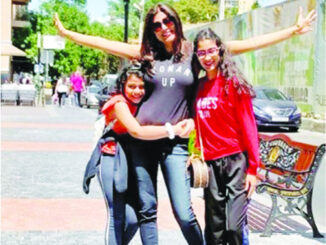
    Sushmita Sen has made it clear that her two daughters Renee Sen and Alisah have never been the reason for her not getting married. The Miss Universe 1994 is the mother of two adopted daughters and made her acting comeback with the web series Aarya. She has now revealed that she came close to getting married thrice, and all three times ‘God saved’ her. She recently broke up with her boyfriend Rohman Shawl. The two seem to be on cordial terms as they react to each other’s social media posts; he even joined her to celebrate the 28 years of her beauty pageant win. Sharing the thumb rule for her relationships after adopting her first child Renee, Sushmita told Twinkle Khanna in a Tweak India interview, “I don’t want anybody to come and share the responsibilities but never try and ask me to step away from it.”

    Source: HT

  • Vaani Kapoor chuffed to collaborate with Ranbir Kapoor for ‘Shamshera’

    Vaani Kapoor chuffed to collaborate with Ranbir Kapoor for ‘Shamshera’

    Bollywood actress Vaani Kapoor, who is gearing up for the release of her upcoming film ‘Shamshera’, is extremely happy to collaborate with Ranbir, and feels that Karan Malhotra, the director of the film, is a visionary story-teller.

    Elaborating the same, Vaani said, “‘Shamshera’ is a dream project for me. To be directed by someone like Karan Malhotra, who is a visionary story-teller, is an opportunity that no actor would ever miss out on. I’m fortunate that he felt I was apt for the part. Karan is obsessed with his craft and the story that he is trying to tell. I’m a director’s actor so I had an amazing time soaking in his vision and plan to make ‘Shamshera’ a truly larger than life big screen spectacle.”

    Talking about her pairing opposite Ranbir Kapoor, the actress added, “I’m also teaming up with one of the best actors of our generation, Ranbir Kapoor in the film. This is the first time that we have been paired together on screen and I’m keeping my fingers crossed that people love our chemistry in the film. Our characters have an amazing graph and I hope people love and root for it.”  “Set in the fictitious city of Kaza, the period actioner will see Ranbir playing the titular character. Sanjay Dutt plays Ranbir’s arch-enemy in this huge casting coup.”

    About working with Sanjay Dutt, Vaani shared, “I got an opportunity to work with Sanjay Dutt and I have been a big fan of his over the years. I loved him in ‘Agneepath’. You have to wait and watch out for him in ‘Shamshera’ because he is again going to give us a villain for the ages in Hindi cinema. He is just menacing and cunning and pure evil.”

    Produced by Aditya Chopra under the banner of India’s premier studio conglomerate YRF, ‘Shamshera’ is set to release theatrically in Hindi, Tamil and Telugu on July 22.

                Source: IANS

  • ‘We are not Hindu’: Tribals from 5 states urge Centre to recognise religion

    ‘We are not Hindu’: Tribals from 5 states urge Centre to recognise religion

    New Delhi (TIP)-A large number of people from various tribal communities of five states, including Jharkhand, Odisha and Assam, staged a demonstration here on Thursday, June 30, demanding that the Centre recognise their religion as ‘Sarna’ and ensure their enumeration under this category during the upcoming census. The agitators also took a pledge to intensify their struggle in order to get the government recognition to the ‘Sarna dharma code’ and held a mass prayer at Jantar Mantar, seeking blessings of their deities and revered leaders. The agitation was organised to mark the anniversary of the beginning of the Santhal Rebellion against the British on June 30, 1855.The members, majority of whom belonged to the Santhal tribe, raised their demands under the aegis of the Adivasi Sengel Abhiyan (tribal empowerment campaign) from as many as 250 scheduled tribes-dominated blocks from 50 districts of Jharkhand, Bihar, Odisha, West Bengal and Assam.

    “We are here to demand that the government recognises our religion as ‘Sarna’ and include a provision in the upcoming census for enumeration of Adivasis under this category,” Salkhan Murmu, a prominent tribal leader from Jharkhand, who is spearheading the movement, told PTI.

    “We wanted to call on President Ram Nath Kovind to convey our feelings and urge him to recognise our religion as Sarna, but could not get an appointment with him. So, we submitted a memorandum of our demands to the President through the police,” he added. Murmu, who was a BJP MP from Odisha’s Mayurbhanj Lok Sabha constituency for two consecutive terms from 1998-2004, said tribals in the country have their own religion, religious practices and customs, but it has not yet been recognised by the government.

    “We Adivasis are neither Hindus nor Christians. We have our own way of life, religious practices, customs, culture and religious thoughts, different from any other religion. We worship nature and not idols. There is neither Varna system in our society or any sort of inequality,” he said.

    In absence of the government’s recognition to the tribals’ religion, the members of the Scheduled Tribe communities in the country are misled to embrace other faiths, he claimed. “India is home to over 12 crore tribal people. They have been recognised as Scheduled Tribes but unfortunately their religion has not been recognised even as it is fundamental under the Constitution,” he said. “Since all the tribal people worship nature and their religious thoughts, practice, culture and customs are way different from any other religion, we demand that our religion be recognised as Sarna,” Mr Murmu said.

    Sarna can be accepted as a common name for the religion of all ‘adivasis’ in the country as it means place of worship in Santhali language, he pointed out. As many as 1,000 people had arrived from the five states in trains, but not all could join the protest as police denied them permission citing some court order and restrictions imposed due to Covid-19, he said.    Source: PTI

  • Ek Villain Returns: Disha Patani And John Abraham Are Killing It In New Poster

    After Arjun Kapoor and Tara Sutaria dropped the first poster of Ek Villain Returns; their co-stars in the upcoming film John Abraham and Disha Patani have also raised temperatures on Instagram. John and Disha have shared their looks from the film in a newly unveiled poster and their chemistry is unmatchable! In the poster, John is seen holding Disha from behind as they look straight into the lens of the camera. Flexing her abs in the poster, Disha looks oh-so-stunning in it. Although John’s body isn’t very visible, the poster does give a sneak peek into how he prepped for the film. Looking fit like always; John is seen sporting a rough look with a grown beard. Both the actors shared the poster on their Instagram handles and wrote, “Hero aur heroine ki stories toh bohot hain, ab baari hai Villain ki kahani jaan ne ki!#EkVillainReturns, trailer out tomorrow. In cinemas this Villaintines Day – 29th July 2022.”

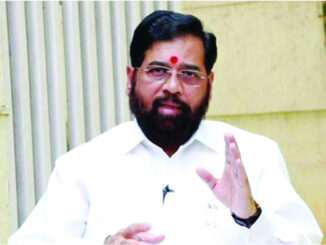
  • SC to hear Sena plea seeking suspension of rebel leaders on July 11

    SC to hear Sena plea seeking suspension of rebel leaders on July 11

    New Delhi (TIP)- The Supreme Court on Friday declined a plea by the Uddhav Thackeray-led Shiv Sena faction for an urgent hearing to restrain rebel party leader Eknath Shinde from functioning as the Maharashtra chief minister. Senior advocate Kapil Sibal mentioned Thackeray loyalist Sunil Prabhu’s application before a vacation bench of justices Surya Kant and JB Pardiwala. He pointed out that there would be a lot of confusion regarding the issuance of a whip since both sides may claim to be Shiv Sena and issue their own to the respective factions. “There is no merger. The moment he [Shinde] was sworn in, he violated the Tenth Schedule [anti-defection law]. So, he is not the party. It is ex facie not a dance of democracy,” said Sibal. The bench responded saying it is conscious of what has been happening while the issue is pending before the court. “We are not shutting our eyes. Whatever is happening is happening. We will take it up on July 11. Let it also come with the other matter.” When Sibal asked whose whip will count, the court said the procedure of the state legislature shall have to be looked into, and listed Prabhu’s plea for hearing on July 11.

    On July 11, the court is scheduled to hear three petitions related to the political turmoil in Maharashtra. The Shinde camp filed the first two petitions seeking to restrain the deputy speaker from disqualifying the 16 of the Sena’s dissidents until his own motion of removal was decided. On June 26, the court issued an interim order virtually restraining the deputy speaker from conducting disqualification proceedings till July 12.

    Prabhu filed the third petition challenging the governor’s direction to Thackeray to prove his majority on June 30. Following a protracted hearing on Wednesday, the court declined to stay the governor’s order, even as it issued notices on Prabhu’s petition. Minutes after the court order, Thackeray resigned as the chief minister. Within 24 hours, Shinde succeeded him. Prabhu, in his latest plea, has sought suspension of the 16 lawmakers, including Shinde, from the assembly until their disqualification proceedings are decided. He has also sought an order restraining them from entering the assembly.

    Source: HT

  • SC slams Nupur Sharma, says he is ‘single-handedly responsible for what is happening in country’

    SC slams Nupur Sharma, says he is ‘single-handedly responsible for what is happening in country’

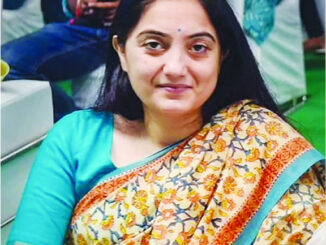
    New Delhi (TIP)- The Supreme Court on Friday, July 1, came down heavily on former BJP spokesperson Nupur Sharma as it said: “She is single-handedly responsible for what is happening in the country”.  Nupur Sharma had moved Supreme Court seeking transfer of the FIRs against her to Delhi. FIRs against her have been registered across several states, including Mumbai and Pune. The former BJP spokesperson has told the SC that there is a threat to her life.

    The SC has said that Sharma’s comments are “disturbing”. Senior advocate Maninder Singh questioned, “What is her business to make these remarks?” adding that she apologized for remarks and withdrew the comments.

    “She should have gone to the TV and apologized to the nation. If you are a spokesperson of a party, it is not a license to say things like this. If there is a misue of the debate, the first thing she should have done was to file an FIR against the anchor.”

    “The way she has ignited emotions across the country… This lady is single-handedly responsible for what is happening in the country” : Justice Kant. “What is the business of the TV channel to discuss the matter which is sub-judice, except to promote an agenda?”, the SC bench said while hearing Sharma’s plea to club FIRs over remarks on Prophet Muhammed. “There was provocation from the other debator”, sr adv Singh for Nupur Sharma submits. Singh submitted, “Kindly see, before anchor, the debator on the other side makes statements. Within the same community, there are serious debates on this issue. It is not something taken out of box.” Singh refers to the orders passed by the apex court in Arnab Goswami case, where the relief of clubbing FIRs was granted.

    Prophet row

    Sharma was part of the news debate on the Gyanvapi mosque issue, which was aired last month, during which she made certain comments about Islam and the Prophet Mohammed that sparked off widespread outrage in the Muslim community.

    Accordingly, the police have booked Sharma for promoting enmity between different groups on grounds of religion and committing acts intended to outrage religious feelings of any class under the Indian Penal Code.

    BJP denounces Sharma’s statements

    Issuing an official statement, Arun Singh, National General Secretary and Head Quarter Incharge of the BJP stated that the party ‘strongly denounces’ insult of any religious personalities of any religion.

    “The Bharatiya Janata Party is also strongly against any ideology which insults or demeans any sect or religion. The BJP does not promote such people or philosophy. India’s Constitution gives the right to every citizen to practise any religion of his/her choice and to honour and respect every religion. As India celebrates the 75th year of its Independence, we are committed to making India a great country where all are equal and everyone lives with dignity, where all are committed to India’s unity and integrity, and where all enjoy the fruits of growth and development,” the statement read.

    Medical professional ‘beheaded’ in Maharashtra for ‘sharing post in support of Nupur Sharma’

    A medical professional was reportedly beheaded in Maharashtra’s Amravati for allegedly sharing a social media post in support of now suspended BJP spokesperson Nupur Sharma who had made controversial remarks against Prophet Muhammed. The incident took place on 21 June but was reported on June 29.

    “Umesh Kolhe, a Medical professional in #amaravati , Maharashtra was beheaded on June 21 night allegedly for sharing a social media post in support of #NupurSharama,” read a post on the official Twitter handle of Organiser Weekly.

    It further stated that four people have been arrested in connection with the incident. These include Abdul (24), Shoaib Khan (22), Mudassir Ahmed Sheikh Ibrahim (22) and Shah Rukh Pathan Hidayat Khan (24).

    Taylor lynched in Udaipur

    In a similar incident, a tailor was lynched by two men in broad daylight in Udaipur, after he had recently shared a tweet in support of Nupur Sharma.

    On Tuesday, June 28, two men, identified as Riaz Akhtari and Ghouse Mohammad, were arrested for the murder of the tailor in Udaipur. In a video clip, Akhtari declared that they had “beheaded” the man and went on to threaten Prime Minister Narendra Modi, saying their knife will get him as well.   Source: Firstpost

  • UP: Miscreants stalking minor for several days chop off her nose for resisting rape

    UP: Miscreants stalking minor for several days chop off her nose for resisting rape

    Kanpur Dehat (TIP)- In a shocking incident in Uttar Pradesh’s Kanpur Dehat district, a minor girl’s nose was chopped off by miscreants who had barged into her house and were trying to pull her away with them.

    The incident took place on Thursday evening and the girl was attacked her with a sharp weapon when she tried to raise an alarm. The miscreants had been stalking the girl for several days. The girl, profusely bleeding, was first taken to the district hospital and was then refereed to the Hallet hospital in Kanpur for treatment.

    According to doctors, her condition is said to be critical due to excessive loss of blood.

    The girl’s father told reporters that when he informed the police about the incident, they advised him to get her treated first.

    He said that he feared for his daughter’s life since the accused were roaming free. Source: IANS

  • Days after Kabul Gurdwara attack, 11 Afghan Sikhs arrive

    Delhi- More than 10 days after two persons died in a terror attack on Gurdwara Dashmesh Pita Guru Gobind Singh Karte Parwan in Kabul on June 18, a batch of 11 Afghan Sikhs arrived in Delhi on Thursday, June 30.

    Speaking to The Indian Express, SGPC president Harjinder Singh Dhami said that a group of 11 Afghan Sikhs landed in Delhi and the Sikh gurdwara body paid for their travel expenses. SGPC is paying for their air travel as it is very important to evacuate Afghan Sikhs safely from Afghanistan, he said. The transfer of Afghan minorities to India is being facilitated by the Shiromani Gurdwara Parbandhak Committee (SGPC) in coordination with us, said Puneet Chandhok, president, Indian World Forum.

    The ashes of Sawinder Singh, who was killed in the attack on June 18, were also transported to Delhi where his family lives. Raqbir Singh, who was injured during the attack, was among the group of 11.

    Among the group of 11 that arrived in Delhi was Ajmeet Singh, 28, who lost his father and paternal uncle in the March 2020 attack on Gurdwara Har Rai Sahib, when an Islamic State gunman had stormed the gurdwara in Kabul killing at least 25 Afghan Sikhs. Ajmeet, who had shifted his mother and siblings to Delhi after his father Soorjan Singh and uncle Sardar Singh died, told The Indian Express: “It feels really bad when you are forced to leave your own country, but everything is over for us in Afghanistan. I lost my everything there, my father and uncle both were shot dead in 2020 attack… even then I kept staying there thinking things will be better but now I couldn’t have waited to lose myself because had I died, what would have happened to my mother, brother and sister… how would they survive?”

    Ajmeet Singh has arrived in Delhi after abandoning his medicine shop in Kabul. “We don’t know what will happen to our shops and businesses back home in Kabul but right now it was most important to save our lives and come as soon as visa was issued. Seeing the current situation, I have no plans to return to Afghanistan,” said Ajmeet, adding that he has no idea of how he would be surviving in Delhi and start a new life. The representatives of SGPC and Afghan Hindu and Sikh community leaders were present at the airport to welcome the group.

    As of March 2020, there were around 650-700 Afghan Sikhs and Hindus in Afghanistan. However, since the attack on Gurdwara Har Rai Sahib in Kabul on March 25 that year, when 25 Afghan Sikhs were killed, most members of the community have been evacuating to India in batches.

                Source: The Indian Express

  • Exit Uddhav, enter Eknath

    It was a day of reckoning for first-time former Chief Minister Uddhav Balasaheb Thackeray, as he calls himself. The day and date will remain etched in his memory: Thursday, June 30, 2022. The day he saw his government, his CM’s post, and, most tragic of all, the party his father founded slip out of his power, so to speak.

    Like the Greek tragic emperor Julius Caesar, Uddhav seems to be the fallen hero in the Maharashtra drama, let down by his own partymen. “Brutus”, Eknath Shinde pulled the rug from under his feet and co-conspired with Devendra Fadnavis, the former CM from the Bharatiya Janata Party. But that is for another time.

    Today is all about the tragic fallen hero, Uddhav and the widely held belief among analysts that Eknath Shinde will most likely be a puppet chief minister. For the ‘remote’ has slipped out of the clutches of the Thackeray family. The reference to ‘remote control’ is central to the founder of Shiv Sena, the late Balasaheb Thackeray. Balasaheb wielded full control over his party and moreover, the BJP-Shiv Sena government. National leaders danced to Thackeray’s whims and fancies.

    In fact, on November 22, 1995, then Enron International chairman Kenneth Lay and the company’s chief executive officer Rebecca Mark visited India to negotiate with the BJP-Sena government. During the visit, they completely ignored the then CM Manohar Joshi (from the Shiv Sena) and instead met with Bal Thackeray. And that wasn’t all. A miffed Joshi also had to hear Thackeray saying: “Yes, I am the remote control.”

    Today, Uddhav saw this very remote slip out of his hands. And worst of all, that remote seems to have gone into the hands of BJP leader Devendra Fadnavis, something which the late Thackeray would not have taken kindly to. A rather unforgiving BJP, which likely has not overcome the insults of all those years, will want to ensure that the remote is never given back to the Thackerays, and Uddhav risks losing the reins of the party.

    This is a double tragedy for Uddhav, who is the first member of the Thackeray family to dare to become a CM and, moreover, win a trust vote on the Assembly floor (when he took oath as CM). For the man who is the son of Bal Thackeray, this seemed like a courageous move. What is even more interesting is how most of the elite and middle-class citizens who would not have touched the Thackeray family with a barge pole were heard paying rich tributes to Uddhav Thackeray on the night he resigned.

    WHAT’S NEXT FOR UDDHAV?

    So is Uddhav Thackeray a villain or a fallen hero? Only time will tell. But right now, it is evident that despite the earlier confidence, he was not able to win back the rebels who broke away from Shiv Sena. Till the time he tendered his resignation to the Governor, it seemed he still held the reins of his party. But the minute he resigned it was evident he had resigned to his fate, unlike his father who always held the remote in his hands. That was also the reason Thackeray never contested elections and created fear in the minds of the Shiv Sainiks. What is the sentiment on the ground level? Will the ordinary Shiv Sainik accept the new CM Eknath Shinde as their party chief? And what about the speculation making the round that Uddhav allowed all of this to happen? Much of these questions will have clearer answers only after the initial euphoria is settled.

    What, however, is clear is that certain qualities once associated with Sainiks are no longer seen. Many who have left the party, among them the hardcore Sainiks such as Chhagan Bhujbal and Narayan Rane, had the aggressive qualities honed by the late Bal Thackeray, which extended to at times holding the city for ransom, something Uddhav’s cousin Raj Thackeray adopted.

    Uddhav managed to win over the larger public sentiment with the way he spoke and handled the outbreak of Covid-19 pandemic. Women felt at ease as he addressed the state, feeling included in the decisions he took. This was his winning card. However, the rebel leaders blame Uddhav for killing the old Sena spirit and deviating completely from their Hindutva ideology. All of these ended up being reasons given to pull this political coup.

    There is speculation over the future of Uddhav, the Shiv Sena party, and whether the Thackerays will keep a hold of their power over this party. Right now, it is a dark tragedy for the first Sena politician who is known not to be aggressive. A fear among his party men also is that he, along with his advisors, will be on the radar of central agencies.

    Uddhav, who thought he had paved the way for his son, in all probability will step away from politics, but may negotiate something to ensure son Aaditya has a prominent role to play in the future.

     Who Gets Shiv Sena?

    After wresting the state government, the question rankling supporters of former Chief Minister Uddhav Thackeray is – will the new chief minister Eknath Shinde now go all out to grab control over the 56-year-old Shiv Sena?

    A subtle indicator of this came this evening when hoardings went up in his home district of Thane showing the late Shiv Sena founder Balasaheb Thackeray, the late Thane strongman and the new CM’s mentor Anand Dighe, Shinde and his MP son Shrikant Shinde, and the party logo of a Tiger, the vehicle of Goddess Bhavani Mata.

    Significantly, the picture of Shiv Sena President Uddhav Thackeray was conspicuously missing, though barely 10 days ago, Shinde was the de facto No 2 in the state cabinet, and most party banners, hoardings usually carry Thackeray’s photos prominently. Several party leaders like MP Sanjay Raut and Kishore Tiwari have made it clear that it is not so easy for “anybody to walk out” or “take away the party” and said mere claims mean nothing as there are a lot of other legal issues involved.

    Other leaders pointed out that claiming the support of majority Sena MLAs will not guarantee that the Shinde faction can be treated as the ‘real Shiv Sena’ and get to keep the trademark party logo or its recognisable election symbol of Bow & Arrow.

    In a situation of a vertical split – though the Shinde faction has repeatedly asserted they have not quit the Sena and they are the real party – despite having the higher numbers of lawmakers like MLAs or MPs will not automatically entitle them to be recognised as a separate party or its vote-catching assets.

    Other aspects like the party’s different decision-making bodies, the other elected branches like its trade union, women’s wing, youth wing, the number of party members, active members, etc, would also come into play besides the number of lawmakers.

    Later, the rival claims would go to the Election Commission of India which would ultimately decide which of the split faction deserved to be the ‘original party’ and be alloted the party assets, after examining precedents in such disputes. However, if the two parties are not satisfied then they would be free to approach the appropriate court for a legal solution.

                Source: India Today and IANS

  • Fourth of July: US Independence Day

    Fourth of July: US Independence Day

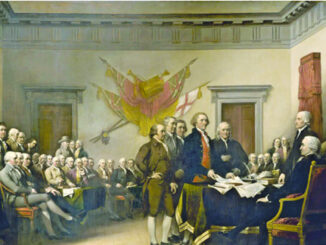
    Independence Day, also called Fourth of July or July 4th, in the United States, the annual celebration of nationhood. It commemorates the passage of the Declaration of Independence by the Continental Congress on July 4, 1776. Independence Day is celebrated on Monday, July 4, 2022 in the United States. The Congress had voted in favour of independence from Great Britain on July 2 but did not actually complete the process of revising the Declaration of Independence, originally drafted by Thomas Jefferson in consultation with fellow committee members John Adams, Benjamin Franklin, Roger Sherman, and William Livingston, until two days later. The celebration was initially modeled on that of the king’s birthday, which had been marked annually by bell ringing, bonfires, solemn processions, and oratory. Such festivals had long played a significant role in the Anglo-American political tradition. Especially in the 17th and 18th centuries, when dynastic and religious controversies racked the British Empire (and much of the rest of Europe), the choice of which anniversaries of historic events were celebrated and which were lamented had clear political meanings. The ritual of toasting the king and other patriot-heroes—or of criticizing them—became an informal kind of political speech, further formalized in mid-18th century when the toasts given at taverns and banquets began to be reprinted in newspapers.

    In the early stages of the revolutionary movement in the colonies during the 1760s and early ’70s, patriots used such celebrations to proclaim their resistance to Parliament’s legislation while lauding King George III as the real defender of English liberties. However, the marking of the first days of independence during the summer of 1776 actually took the form in many towns of a mock funeral for the king, whose “death” symbolized the end of monarchy and tyranny and the rebirth of liberty.

    During the early years of the republic, Independence Day was commemorated with parades, oratory, and toasting in ceremonies that celebrated the existence of the new nation. These rites played an equally important role in the evolving federal political system. With the rise of informal political parties, they provided venues for leaders and constituents to tie local and national contests to independence and the issues facing the national polity. By the mid-1790s the two nascent political parties held separate partisan Independence Day festivals in most larger towns. Perhaps for this reason, Independence Day became the model for a series of (often short-lived) celebrations that sometimes contained more explicit political resonance, such as George Washington’s birthday and the anniversary of Jefferson’s inauguration while he served as president (1801–09).

    The bombastic torrent of words that characterized Independence Day during the 19th century made it both a serious occasion and one sometimes open to ridicule—like the increasingly popular and democratic political process itself in that period. With the growth and diversification of American society, the Fourth of July commemoration became a patriotic tradition which many groups—not just political parties—sought to claim. Abolitionists, women’s rights advocates, the temperance movement, and opponents of immigration (nativists) all seized the day and its observance, in the process often declaring that they could not celebrate with the entire community while an un-American perversion of their rights prevailed.

    With the rise of leisure, the Fourth of July emerged as a major midsummer holiday. The prevalence of heavy drinking and the many injuries caused by setting off fireworks prompted reformers of the late 19th and the early 20th century to mount a Safe and Sane Fourth of July movement. During the later 20th century, although it remained a national holiday marked by parades, concerts of patriotic music, and fireworks displays, Independence Day declined in importance as a venue for politics. It remains a potent symbol of national power and of specifically American qualities—even the freedom to stay at home and barbecue.

    How Did Our Founders Envision Independence Day Celebrations?

    John Adams described the way Americans should celebrate their independence each year. He envisioned the celebration to be one filled with fun, games, and fireworks—not an occasion for displaying military strength (as one might expect). On July 3, 1776, he wrote these words to his wife Abigail, capturing the spirit of the times:

    “Yesterday the greatest Question was decided, which ever was debated in America, and a greater, perhaps, never was or will be decided among Men. A Resolution was passed without one dissenting Colony ‘that these united Colonies, are, and of right ought to be free and independent States, and as such, they have, and of Right ought to have full Power to make War, conclude Peace, establish Commerce, and to do all the other Acts and Things, which other States might rightfully do…’

    The second day of July, 1776, will be the most memorable  Epocha, in the History of America. I am apt to believe that it will be celebrated, by succeeding Generations, as the great anniversary Festival… . It ought to be solemnized with Pomp and Parade, with Shews, Games, Sports, Guns, Bells, Bonfires and Illuminations from one End of this Continent to the other from this Time forward forever more.”

    On July 18, 1777, an issue of the Virginia Gazette describes the July 4 celebration in Philadelphia:

    “The evening was closed with the ringing of bells, and at night there was a grand exhibition of fireworks, which began and concluded with thirteen rockets on the commons, and the city was beautifully illuminated. Every thing was conducted with the greatest order and decorum, and the face of joy and gladness was universal.”

    A number of years would pass until celebrations of the Fourth of July became more common. Interestingly, it was the death of John Adams (and Thomas Jefferson) that seemed to promote the idea of July 4 as an important date to be celebrated. And it was almost a century later (in 1870) that Congress declared July 4 a national holiday.

    What’s really special about America’s celebration of freedom is it was quite different for its time, focusing on the joys of freedom. Many countries have emulated this spirit of celebration ever since.

    The Declaration of Independence

    The Declaration of Independence is one of the most important documents in the history of the United States. It was an official act taken by all 13 American colonies in declaring independence from British rule.

    The document was originally written by Thomas Jefferson, but Benjamin Franklin and John Adams, along with Jefferson then worked together to make changes. The final draft of the Declaration of Independence was adopted on July 4, 1776, but the actual signing of the final document took place on August 2, 1776.

    Here is an excerpt from the Declaration of Independence (U.S. 1776):

    We hold these truths to be self-evident, that all men are created equal, that they are endowed by their Creator with certain unalienable Rights, that among these are Life, Liberty and the pursuit of Happiness. That to secure these rights, Governments are instituted among Men, deriving their just powers from the consent of the governed. That whenever any Form of Government becomes destructive of these ends, it is the Right of the People to alter or to abolish it, and to institute new Government, laying its foundation on such principles and organizing its powers in such form, as to them shall seem most likely to effect their Safety and Happiness.

    Celebrating the Fourth of July

    In the United States, Independence Day is a federal holiday traditionally observed with parades, concerts, outdoor food, and fireworks. Here are five ways to prep for the Fourth of July!

    Raise the Flag

    If you don’t have a flagpole, consider a front-entry flag! Before you hang Old Glory, check the American Flag Guidelines so that you can proudly and properly display your flag.

    Stay Casual: Remember, this isn’t a “fancy” dinner. A summer cookout or picnic food is the way to go for the Fourth. Take a look at our Fourth of July recipes to have a delicious picnic or barbecue—and for a list of patriotic desserts!

    Play Games

    We don’t care if you’re young or just young at heart. Get out the cornhole and horseshoe games, the croquet, or just a backgammon set if you’re hanging out on the porch! If you’re going to a 4th of July party, bring your own games, as it can be a few hours until fireworks start.

    Fireworks

    Whether it’s simply poppers, snaps and snakes, OR a bigger fireworks display, keep up the tradition. Kids LOVE sparklers. Hand them out one by one to enjoy the magic. Of course, always have adults nearby for safety, as well as a fire extinguisher.

    Beat the Heat and the Bugs

    Don’t forget to have sunscreen, sunshades, lots of drinking water, and bug spray on hand if you’ll be outside.

    Key events

    War of Independence

    1774 – Colonists form First Continental Congress as Britain closes down Boston harbour and deploys troops in Massachusetts.

    1775 – American Revolution: George Washington leads Continental Army to fight against British rule.

    1776 4 July – Declaration of Independence endorsed by Congress; colonies declare independence.

    1781 – Rebel states form loose confederation after defeating the British at the Battle of Yorktown.

    United States profile

    1783 – Britain accepts loss of colonies by virtue of Treaty of Paris.

    1787 – Founding Fathers draw up new constitution for United States of America. Constitution comes into effect in 1788.

    1789 – George Washington elected first president of USA.

    1791 – Bill of Rights guarantees individual freedom.

    1803 – France sells Louisiana territories to USA.

    1808 – Atlantic slave trade abolished.

    1812-15 – War of 1812 between the US and Britain, partly over the effects of British restrictions on US trade during the Napoleonic Wars.

    19th century – Residual resistance by indigenous people crushed as immigration from Europe assumes mass proportions, with settlers moving westwards and claiming “manifest destiny” to control North America; number of states in the union rises from 17 to 45.

    1846-48 – US acquires vast tracts of Mexican territory in wake of Mexican War including California and New Mexico.

    Civil War

    1854 – Opponents of slavery, or abolitionists, set up Republican Party.

    1860 – Republican candidate Abraham Lincoln elected president.

    1860-61 – Eleven pro-slavery southern states secede from Union and form Confederate States of America, triggering civil war with abolitionist northern states.

    1863 – Lincoln issues Emancipation Proclamation, declaring slaves in Confederate states to be free.

    1865 – Confederates defeated; slavery abolished under Thirteenth Amendment. Lincoln is assassinated.

    1898 – US gains Puerto Rico, Guam, the Philippines and Cuba following the Spanish-American war. US annexes Hawaii.

    World War I and the Great Depression

    1917-18 – US intervenes in World War I, but rejects membership of League of Nations in its aftermath.

    1920 – Women given the right to vote under the Nineteenth Amendment.

    1920 – Sale and manufacture of alcoholic liquor outlawed. The Prohibition era sees a mushrooming of illegal drinking joints, home-produced alcohol and gangsterism.

    1924 – Congress gives indigenous people right to citizenship.

    1929-33 – More than 13 million people are unemployed after the Wall Street stock market crash of 1929 triggers the Great Depression. President Herbert Hoover rejects direct federal relief.

    1933 – President Franklin D Roosevelt launches “New Deal” recovery programme which includes major public works. Sale of alcohol resumes.

    World War II and the Cold War

    1941 – Japanese warplanes attack US fleet at Pearl Harbour in Hawaii, leading to US joining World War II against the Axis powers.

    1945 – US drops two atomic bombs on Hiroshima and Nagasaki. Japan surrenders.

    1947 – US enunciates policy of aid for nations it deems threatened by communism in what became known as the Truman Doctrine. Cold War with Soviet Union begins.

    1948 – America’s programme to revive ailing post-war European economies – the Marshall Plan – comes into force. Some $13bn is disbursed over four years and the plan is regarded as a success.

    1950-54 – Senator Joseph McCarthy carries out a crusade against alleged communists in government and public life; the campaign and its methods become known as McCarthyism. In 1954 McCarthy is formally censured by the Senate.

    1950-53 – US forces play leading role against North Korean and Chinese troops in Korean War.

    Desegregation and the Vietnam war

    1954 – Racial segregation in schools becomes unconstitutional; start of campaign of civil disobedience to secure civil rights for Americans of African descent.

    1960 – Democratic Party candidate John F Kennedy elected president, narrowly defeating his rival Richard Nixon.

    1961 – Bay of Pigs invasion: an unsuccessful attempt to invade Cuba by Cuban exiles, organised and financed by Washington.

    1962 – US compels Soviet Union to withdraw nuclear weapons from Cuba in what has become known as the Cuban missile crisis.

    1963 – President John F Kennedy assassinated; Lyndon Johnson becomes president.

    1964 – US steps up its military intervention in Vietnam. Civil Rights Act signed into law; it aims to halt discrimination on grounds of race, colour, religion, nationality.

    1968 – Black civil rights leader Martin Luther King assassinated.

    1969 – Republican Party candidate Richard Nixon elected president amid growing public opposition to Vietnam war. US military presence in Vietnam exceeds 500,000 personnel.

    US astronaut Neil Armstrong becomes the first person to walk on the Moon.

    1972 – Nixon re-elected and makes historic visit to China that leads to recognition of the communist government .

    1973 – Vietnam ceasefire agreement signed. The campaign had claimed some 58,000 American lives.

    1974 – President Nixon resigns in the Watergate scandal over a 1972 break-in at the Democratic Party headquarters.

    1976 – Democratic Party candidate Jimmy Carter elected president.

    1979 – US embassy in Tehran, Iran, seized by radical students. The 444-day hostage crisis – including a failed rescue attempt in 1980 – impacts on President Carter’s popularity and dominates the 1980 presidential election campaign.

    Global assertiveness

    1980 November – Republican Party’s Ronald Reagan elected president, and goes on to adopt a tough anti-communist policy abroad and tax-cutting policies at home.

    1986 January – Space shuttle Challenger explodes shortly after take off from Cape Canaveral. All seven crew members are killed. Manned space flights are suspended until September 1988.

    1986 – US warplanes bomb Libyan cities. “Irangate” scandal uncovered, revealing that proceeds from secret US arms sales to Iran were used illegally to fund Contra rebels in Nicaragua.

    1988 – Reagan’s vice-president, George Bush, elected president.

    1989 – US troops invade Panama, oust its government and arrest its leader, one-time Central Intelligence Agency informant General Manuel Noriega, on drug-trafficking charges.

    1991 – US forces play dominant role in war against Iraq, which was triggered by Iraq’s invasion of Kuwait and ended with the expulsion of Iraqi troops from that country.

    The Clinton years

    1992 – Democratic Party candidate Bill Clinton elected president.

    1992 – Congress passes North American Free Trade Agreement, or Nafta, intended to create free-trade bloc among US, Canada and Mexico.

    1995 – Oklahoma bomb by far-right activists kills more than 160 people in worst ever incident of its kind in US.

    1998 – Scandal over Clinton’s sexual impropriety with White House worker Monica Lewinsky dominates domestic political agenda, and leads to impeachment proceedings in Congress.

    1999 March-June – US plays leading role in Nato bombardment of Yugoslavia in response to Serb violence against ethnic Albanians in the province of Kosovo.

    2000 November – Republican Party’s George W Bush wins presidency.

    11 September attacks

    2001 11 September – Co-ordinated suicide attacks by al-Qaeda terror group prompts the US to embark on a ”war on terror” that includes invasions of Afghanistan and Iraq.

    2001 October – US leads massive campaign of air strikes against Afghanistan and helps opposition forces defeat the Taliban regime.

    2002 November – President Bush signs into law a bill creating a Department of Homeland Security, the biggest reorganisation of federal government in more than 50 years.

    2003 February – Space shuttle Columbia’s 28th mission ends in tragedy when the craft breaks-up while re-entering the atmosphere. The seven astronauts on board are killed.

    Iraq war

    2003 March – Missile attacks on Baghdad mark the start of a US-led campaign to topple the Iraqi leader Saddam Hussein. US forces advance into central Baghdad in early April.

    2004 May – Furore over pictures showing the abuse of Iraqi prisoners in US custody.

    2005 August – Hundreds of people are killed when Hurricane Katrina, the most destructive storm to hit the US in decades, sweeps through gulf coast states. Much of the city of New Orleans is submerged by flood waters.

    2006 March – Congress renews the USA Patriot Act, a centrepiece of the government’s fight against terrorism, after months of debate about its impact on civil liberties. The government agrees to some curbs on information gathering.

    2007 January – President Bush announces a new Iraq strategy; thousands more US troops will be dispatched to shore up security in Baghdad.

    2008 September – Turmoil in the US and international financial markets as major Wall Street investment bank Lehman Brothers collapses and other big US financial players face growing troubles as a result of the “credit crunch”.

    Obama elected

    2008 November – Democratic Senator Barack Obama becomes the first black president of the United States.

    2009 January – First “Tea Party” rally held in protest at Obama administration’s plans to bail out banks and introduce healthcare reform. The populist and libertarian movement acts as focus for conservative opposition to the president’s reform plans.

    2010 March – Democrats in Congress succeed in passing a bill on health care reform, despite strong Republican opposition.

    US and Russia announce agreement on a new nuclear arms reduction treaty to replace the 1991 Strategic Arms Reduction Treaty. The pact was to be signed on 8 April.

    President Obama unveils a new defence policy significantly curtailing the circumstances in which the US would use nuclear weapons.

    2011 May – US forces kill Al-Qaeda leader Osama Bin Laden in an operation in the Pakistani city of Abbottabad.

    2011 July – The final Space Shuttle mission is completed with the landing of Atlantis on 21 July, bringing about the end of the 30-year programme.

    2012 September – The US ambassador in Libya is killed when armed men storm the consulate in Benghazi.

    2013 April – Twin bomb blasts targeting the Boston marathon kill three people and injure more than 170. Soviet-born Islamic extremist Dzhokhar Tsarnaev is charged after a manhunt in which his elder brother and suspected co-conspirator Tamerlan is killed.

    2013 May – Former National Security Agency (NSA) contractor Edward Snowden flees to Russia via Hong Kong after revealing leaking information on extensive internet and telephone surveillance by US intelligence.

    2014 August-November – The shooting of an unarmed black teenager by a white policeman sparks a weeks of riots the Missouri town of Ferguson. In November, a grand jury’s decision not to charge the officer with murder sets off new unrest.

    Republican resurgence

    2014 November – Republicans win a Senate majority in mid-term elections, gaining control of both houses of Congress and further reducing President Obama’s room for manoeuvre.

    2014 December – US and Cuba begin steps to normalise diplomatic relations after more than 50 years of stand-off.

    2015 March – President Obama announces that 10,000 US troops will remain in Afghanistan as advisors and trainers until 2016.

    2015 June – US accuses Chinese hackers of massive breach of personal data of nearly four million government workers. China denies any role.

    White supremacist shoots dead nine African-American worshippers in a church in Charleston, prompting nationwide revulsion and demands for end to public display of Confederate Civil-War-era symbols.

    2015 December – FBI say Muslim couple who shot dead 14 people and wounded 21 others at office party in San Bernadino, California, were Islamist extremists who had prepared the attack, the worst on US soil since September 2001, in advance.

    Trump elected president

    2016 November – Republican candidate Donald Trump wins presidential election, defeating Democratic candidate Hillary Clinton in one of the biggest political upsets in US history. He is inaugurated in January.

    2017 January – President Trump signs executive orders restricting visas for people seeking to enter the US from certain Muslim-majority countries, and barring funding for cities that shelter illegal immigrants. Both policies are blocked by the courts.

    2017 May – President Trump sacks FBI Director James Comey, prompting a public row about whether the White House was trying to derail an inquiry into alleged collusion between Russian efforts to influence the 2016 election and the Trump campaign.

    2017 August – A woman is run over and killed by a suspected far-right sympathiser amid protests in Charlottesville, Virginia. President Trump is widely criticised for blaming both sides for violence, rather than the neo-Nazis and White supremacists.

    2017 December – US recognises Jerusalem as capital of Israel and announces plans to move embassy there, prompting anger in Arab countries. In March 2019 the US recognises Israeli sovereignty over the Golan Heights.

    North Korea diplomacy

    2018 April – China imposes 25% tariffs on a range of US goods in response to similar US measures.

    2018 June – After months of hostile rhetoric, President Trump and North Korean leader Kim Jong-un meet in Singapore and agree to continue dialogue aimed at reducing tensions on the Korean peninsula.

    2018 October – The US, Canada and Mexico reach a new trade deal to replace the current North American Free Trade Agreement (Nafta).

    The US announces plans to withdraw from the 1987 Intermediate-Range Nuclear Forces (INF) treaty, which restricts US and Russian short- and medium-range nuclear missiles, accusing Moscow of having violated its terms.

    Road to impeachment

    2018 November – Opposition Democrats take control of House of Representatives in mid-term elections, making it harder for President Trump’s Republicans to pass legislation.

    2019 February – US and North Korea talks in Vietnam break down over pace of nuclear disarmament.

    2019 March – Mueller Report finds no evidence of collusion between Russian efforts to influence the 2016 election and the Trump campaign.

    2019 October – US withdraws troops from northern Syria, which prompts Turkey to occupy Kurdish-run parts of the north in an attempt to create a buffer zone.

    2019 December – President Trump is impeached by the House of Representatives on charges of abuse of power and obstruction of Congress. His trial is set to begin in the Senate the following month.

    2020 January – US drone strike kills leading Iranian commander Qasem Soleimani at Baghdad Airport, promoting Iranian threats of retaliation.

    2020 March – National emergency declared over the Covid-19 pandemic.

    2020 May – Nationwide protests break out following the killing of African-American George Floyd by Minneapolis police.

    2020 November – Democrat former Vice-President Joe Biden defeats Donald Trump in the presidential election.

    2021 January – Joe Biden inaugurated president amid unprecedented security, a week after Trump supporters stormed the Capitol in Washington DC.

    Source: Britannica, BBC and Almanac.com

  • G-7 leaders end summit pledging to hurt Russia economically

    G-7 leaders end summit pledging to hurt Russia economically

    PM Narendra Modi with US President Joe Biden and Canadian PM Justin Trudeau on Monday. Photo credit: Reuters

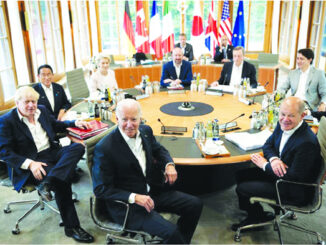
    Elmau (TIP)- Leaders of the world’s wealthiest democracies struck a united stance to support Ukraine for “as long as it takes” as Russia’s invasion grinds on, and said they would explore far-reaching steps to cap Kremlin income from oil sales that are financing the war. The final statement Tuesday, June 28,  from the Group of Seven summit in Germany underlined their intent to impose “severe and immediate economic costs” on Russia. It left out key details on how the fossil fuel price caps would work in practice, setting up more discussion in the weeks ahead to “explore” measures to bar imports of Russian oil above a certain level. That would hit a key Russian source of income and, in theory, help relieve the energy price spikes and inflation afflicting the global economy as a result of the war. “We remain steadfast in our commitment to our unprecedented coordination on sanctions for as long as necessary, acting in unison at every stage,” the leaders said.

    Leaders also agreed on a ban on imports of Russian gold and to step up aid to countries hit with food shortages by the blockage on Ukraine grain shipments through the Black Sea. The price cap would in theory work by barring service provides such as shippers or insurers from dealing with oil priced above a fixed level. That could work because the service providers are mostly located in the European Union or the UK and thus within reach of sanctions.

    To be effective, however, it would have to involve as many consuming countries as possible, in particular India, where refiners have been snapping up cheap Russian oil shunned by Western traders. Details on how the proposal would be implemented were left for continuing talks in coming weeks. Before the summit’s close, leaders joined in condemning what they called the “abominable” Russian attack on a shopping mall in the town of Kremechuk, calling it a war crime and vowing that President Vladimir Putin and others involved “will be held to account”.

    The leaders of the US, Germany, France, Italy, the UK, Canada and Japan on Monday pledged to support Ukraine “for as long as it takes” after conferring by video link with Ukrainian President Volodymyr Zelenskyy. The summit host, German Chancellor Olaf Scholz, said he “once again very emphatically set out the situation as Ukraine currently sees it.” Zelenskyy’s address came hours before Ukrainian officials reported a deadly Russian missile strike on a crowded shopping mall in the central city of Kremenchuk. From the secluded Schloss Elmau hotel in the Bavarian Alps, the G-7 leaders will move to Madrid for a summit of NATO leaders, where fallout from Russia’s invasion of Ukraine will again dominate the agenda. All G-7 members other than Japan are NATO members, and Japanese Prime Minister Fumio Kishida has been invited to Madrid.

    Zelenskyy has openly worried that the West has become fatigued by the cost of a war that is contributing to soaring energy costs and price hikes on essential goods around the globe. The G-7 has sought to assuage those concerns.

    While the group’s annual gathering has been dominated by Ukraine and by the war’s knock-on effects, such as the challenge to food supplies in parts of the world caused by the interruption of Ukrainian grain exports, Scholz has been keen to show that the G-7 also can move ahead on pre-war priorities. Members of the Group of Seven major economies pledged Tuesday to create a new climate club for nations that want to take more ambitious action to tackle global warming.

    The move, championed by Scholz, will see countries that join the club agree on tougher measures to reduce greenhouse gas emissions with the aim of keeping global temperatures from rising more than 1.5 Celsius (2.7 Fahrenheit) this century compared with pre-industrial times. Countries that are part of the club will try to harmonise their measures in such a way that they are comparable and avoid members imposing climate-related tariffs on each others’ imports. Speaking at the end of the three-day summit in Elmau, Germany, Scholz said the aim was to “ensure that protecting the climate is a competitive advantage, not a disadvantage”. He said details of the planned climate club would be finalised this year.           Source: AP

    Modi lavishes gifts for G7 leaders

    Gulabi Meenakari brooch, cufflink, Black Pottery, Platinum painted hand painted Tea Set, and Zari Zardozi box were among the few specialised items gifted by Prime Minister Narendra Modi to Group of Seven leaders during his two-day visit to Germany. PM Modi was the senior most global leader holding country’s top office at the G7 summit and carried special gifts for all the leaders made under UP one district one product scheme. He has already attended three G7 summits on invitation, highlighting India importance in global scheme of things.

    PM Modi gifted US President Joe Biden Gulabi Meenakari brooch, a piece of pure silver which is moulded into a base form, and the chosen design is embossed in the metal. It is a GI tagged art-form of Varanasi in Uttar Pradesh. The cufflinks were prepared for Biden with a matching brooch for the First Lady, Jill Biden. French President Emmanuel Macron received a carrier box crafted in Lucknow. The Zari Zardozi box was hand embroidered on khadi silk and satin tissue in the three colours of the French National Flag, which has its origin in the French Revolution. The box included Attar Mitti – a unique attar produced in UP’s Kannauj – Jasmine Oil, Attar Shamama, Attar Gulab, Exotic Musk, and Garam Masala.

    Prime Minister Modi gifted platinum painted hand painted tea set from Bulandhshahr district to British Prime Minister Boris Johnson. According to Prime Minister’s Office, the crockery has been outlined with platinum metal paint in honour of Queen Elizabeth’s platinum jubilee being celebrated this year.

    Source: HT

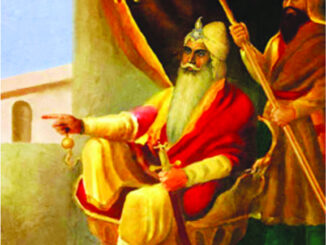
  • Maharaja Ranjit Singh: The lion of Punjab

    Maharaja Ranjit Singh: The lion of Punjab

    Maharaja Ranjit Singh, renowned as the Lion of the Punjab or Sher-e-Punjab was born on November 13, 1780, in Gujranwala, (now in Pakistan). The great ruler and great warrior was the founder of the Sikh kingdom of Punjab. He was the first Indian in a millennium to turn the tide of invasion back into the homelands of India’s traditional conquerors, the Pashtuns (Afghans). His holdings stretched from the Khyber Pass in the northwest to the Sutlej River in the east, and from Kashmir, the Indian subcontinent’s northernmost area, southward to the Thar (Great Indian) Desert. Punjab state is the only state which has defeated Afghanistan. He founded the Sikh kingdom and led it from 1801 to 1839.  It is widely acknowledged that an attack of smallpox deprived him of his left eye in childhood. As a boy, he was sent to Bhagu Singh’s Dharamshala at Gujranwala to learn Gurumukhi, but he was more interested in warfare. He was pretty matchless in that art.

    When his father died in 1790, the young Ranjit Singh was only ten years old. When most boys that age would be busy playing, Ranjit Singh found himself in the centre of the political scenario and became the heir to his father’s legacy.

    The court historian Sohan Lal Suri in Umdat ut- Tawarikh describes an event about the courage of Ranjit Singh as a young boy of 13 years. Once Ranjit Singh got separated from his companions and reached the outskirts of Ladewali, which then was under the rule of Nawab Hashmat khan Chatha. The Nawab, who opposed the Sukerchakia MISL, was out for a hunt. Seeing the young boy alone, he attacked him. In the confrontation, Ranjit Singh not only single-handedly managed to ward off the attack but chopped the Nawab’s head off. The Chatthas never opposed him ever again In 1795 at the age of 15, Maharaja Ranjit Singh married Mehtab Kaur, the daughter of Rani Sada Kaur, the widow of the chief of the Kanhiyas misl, Sardar Gurbaksh Singh. Rani Sada Kaur handled Maharaja Ranjit Singh’s administrative affairs for many years.

    It’s important to know that during the period from about 1750 to about 1810, Afghan invaders had been attacking India. Several times. Ahmad Shah Durrani, who WAS ruling Afghanistan, had shot India nine times.

    In 1796 Shah Zaman-grandson of Ahmad Shah Abdali entered Punjab – no ruler in Punjab was in a position to oppose him or his 30,000 troops and heavy artillery. Maharaja Ranjit Singh realized the need for joint resistance and approached several Sikh chiefs who accepted his leadership. The collective army under the supervision of Maharaja Ranjit Singh forced Shah Zaman to return to Afghanistan. Maharaja Ranjit Singh’s fame as a courageous leader spread.

    When Shah Zaman left Lahore, three Sardars of the Bhangi Misl re-occupied it. The Prominent citizens of Lahore were aware of the weaknesses of their Bhangi rulers. They invited Maharaja Ranjit Singh to take over Lahore. Maharaja Ranjit Singh planned the attack with his mother-in-law Sada Kaur. The Two jointly moved towards Lahore with their armies. And without much resistance, the city was wrested away from the Bhangi Sardars.

    Maharaja Ranjit Singh’s rise to power as the leader of the Sikhs was evident by 1801, and he was invested with the title “Maharaja”. The inauguration was conducted by Baba Sahib Singh Bedi, a spiritual patriarch of the Sikhs, on Baisakhi day, establishing him as the leader of the Sikhs. However, Maharaja Ranjit Singh, in his modesty, refused to wear any emblems of royalty. Even the government seal made no personal reference to him. It was of “Sarkar Khalsa Ji” (of the people). His government, too, was known as ‘Sarkar-i-Khalsa’. He is reported to have preferred the simple title of”Singh Sahib” ” to any grandiose soubriquets. The coins issued by him bore the name of Shri Guru Nanak Ji. He remained faithful to the guidelines of the last Guru. He was indeed the leader of the Khalsa as opposed to becoming an autocratic ruler. In 1802, Maharaja Ranjit Singh was again requested by the citizens to save the city of Amritsar– the most sacred city of the Sikhs from the Bhangi Sardars. Once again, Maharaja Ranjit Singh took the Fort of the Bhangies and named itGobindgarh Fort -after the name of the tenth Sikh Guru –Shri Guru Gobind Singh Ji.

    He also captured the Zamzama Cannon, an enormous cannon of Asia at the time. After winning the Gobindgarh Fort, Maharaja Ranjit Singh went to Harmandir Sahib for darshan as a thanksgiving. He vowed to cover the temple with gold, turning the revered Harmandir Sahib Gurudwara into the “Golden Temple.”

    After Winning the Amritsar and Lahore, Maharaja Ranjit Singh turned his ambitions in other directions.

    The British soon became vary of Maharaja Ranjit Singh’s growing power. On 1 January 1806, Maharaja Ranjit Singh signed a treaty with the East India Company. The Company agreed that it would not even attempt to cross the Sutlej River into the Sikh territory. Maharaja Ranjit Singh agreed that his Sikh forces would not expand south of the Sutlej River.

    However, Maharaja Ranjit Singh was busy expanding west and northwards.

    By 1807, Maharaja Ranjit Singh’s forces attacked Misl of Kasur and, after a month of fierce fighting, defeated the Afghan chief Qutb-ud-Din- allowing Maharaja Ranjit Singh to expand his empire towards Afghanistan.

    In December 1809, the aid Raja Sansar Chand of Kangra asked for his help, and after defeating the Ghurka forces, Maharaja Ranjit Singh acquired Kangra. In 1810, he annexed Multan after a long siege.

    However, as history turned, infighting broke into the family of the Durranis, with brothers killing, blinding and overthrowing each other in 1812; one of the brothers was Shah Shuja. He was dethroned by another stepbrother and was trying to flee Kabul with his entourage when the British captured him and sent him to Kashmir to his brother, where he was imprisoned!

    His wife, Wafa Begum, then came to Maharaja Ranjit Singh to ask for help. Thus, the “Afghan royal family- the very same people who had been invading and looting Punjab for years, arrived at Maharaja Ranjit Singh’s doorstep pleading for help” in getting the release of Shah Shuja from the clutches of the British. Maharaja Ranjit Singh obliged, and it was then that he acquired the Koh-i-Noor – In exchange for helping Shah Shuja get back the throne of Afghanistan.

    In 1819, he successfully annexed Srinagar and Kashmir by defeating the Afghan Sunni Muslim rulers. His rule thus now spread to the Jhelum valley in the north beyond the foothills of the Himalayas.

    By 1820 he had consolidated his rule over the whole of Punjab between the Sutlej and Indus rivers.

    Early in his career, he observed how the British troops had defeated Indian forces that were superior in numbers with their discipline and training. Their well-drilled infantry and artillery were very impressive. But Maharaja Ranjit Singh did not trust the British. Instead, he used the French and Italian generals to modernize his army- many of these Generals had served under Napoleon. Accordingly, he restructured and trained his army.

    It is important to note that Maharaja Ranjit Singh was a considerable secularist. His armies were composed of Sikhs, Muslims and Hindus. Even his commanders, as well as his ministers, were from different religious communities. The Maharaja never forced Sikhism on his subjects. This was in sharp contrast with the ethnic and religious cleansing of past Muslim rulers – Afghani or Mughal. His modernized artillery and infantry army fought very well in campaigns in the North-West. Maharaja Ranjit Singh spent the following years fighting the Afghans, driving them out of western Punjab. In 1823 a treaty brought the province of Peshawar under his rule. This was the first time that non-Muslims ruled Pashtuns. From a historical perspective, this event was a landmark event. “For more than a thousand years’ invaders had come down from the Khyber Pass and ruled eastern lands. Maharaja Ranjit Singh reversed this trend.”

    But by 1834, Mohammed Azim Khan again attempted an attack on Peshawar with an army of 25,000 composed of Khattak and Yasufzai tribe members. The Maharaja defeated the forces.

    In 1837, the Battle of Jamrud became the last confrontation between the Sikhs led by him and the Afghans led by Dost Muhammad Khan. His victory over a succession of Afghan warlords culminated in a victory march past Kabul in 1838. Shortly afterwards, Maharaja Ranjit Singh was taken ill, and he died at Lahore in June 1839—almost exactly 40 years after he had entered the city as a conqueror. In a little more than six years after his death, the Sikh state he had created collapsed because of the internal strife prodded by the British. However, this great Maharaja is well known and respected as the creator of Punjab.

    His foreign minister best highlights the respect shown by those who worked for the Maharaja: a Muslim named Fakir Azizuddin, who, when meeting with the British Governor-General George Eden, had enquired as to which of the Maharajah’s eyes was missing. Said Fakir Azzizudin. “The Maharajah is like the sun, and the sun has only one eye. The splendour and luminosity of his single eye are so much that I have never dared to look at his other eye. “

  • Eknath Shinde: From auto-rickshaw driver to Maharashtra chief minister

    Eknath Shinde: From auto-rickshaw driver to Maharashtra chief minister

    Eknath Sambhaji Shinde, who on Thursday, June 30,  became the 20th Chief Minister of Maharashtra, once drove auto-rickshaw to earn a living before rising as a formidable Shiv Sena leader.The 58-year-old leader who hails from western Maharashtra’s Satara district shifted to Thane, a Sena bastion adjacent to Mumbai, in his young days and started his political career in the same city. The four-time MLA, who held the urban development and PWD portfolios in the previous Maha Vikas Aghadi (MVA) government led by Uddhav Thackeray, never hid his humble origins. On the contrary, he made it a point to mention it to underscore how he has been indebted to the Shiv Sena and its founder, late Bal Thackeray for his rise in Maharashtra politics.

    Born on February 9, 1964, Shinde dropped out of college before completing graduation. After moving to Thane, he soon found his calling as one among thousands of Shiv Sena cadres who were ever-ready to hit the streets at the command of Bal Thackeray. Thackeray formed Shiv Sena in 1966 as a party fighting for the rights of the ‘sons-of-the-soil’ Marathi-speakers, and later aggressively championed the cause of `Hindutva’. As Shinde joined the Sena in Thane, he found a mentor in local party stalwart Anand Dighe. He became Dighe’s deputy and strengthened the party in Thane-Palghar region after Dighe’s sudden death in 2001. The sitting MLA from Kopri-Pachpakhadi in Thane city, Shinde was once a quintessential Shiv Sena street-fighter. He faces dozens of criminal cases for charges such as `voluntarily causing hurt by dangerous weapons’ and rioting, registered during various party agitations. He became a corporator in the Thane Municipal Corporation in 1997 and won his maiden Assembly election in 2004. In 2005 he was made the Sena’s Thane district chief.

    Currently he is in his fourth term as an MLA, while his son Dr Shrikant Shinde is the Lok Sabha MP from Kalyan in the district.

    Shinde was appointed the Leader of Opposition in the Maharashtra Legislative Assembly for a brief period in 2014 when the Sena initially refused to join the Devendra Fadnavis cabinet. The party later joined the BJP-led government, and Shinde became a cabinet minister. His closeness to Chief Minister Fadnavis set tongues wagging. It was also noted that the BJP contested elections to all civic bodies in Maharashtra in 2016 against the alliance partner Shiv Sena, except in Thane, Shinde’s home turf. When the Shiv Sena snapped ties with the BJP, and Sena president Uddhav Thackeray became chief minister of the Maha Vikas Aghadi (MVA) government with the NCP and Congress as allies after the 2019 elections, Shinde became a cabinet minister for the second time. During the COVID-19 pandemic, despite the NCP handling the health ministry, it was Shinde-controlled Maharashtra State Road Development Corporation that set up healthcare centres in Mumbai and its satellite cities to treat coronavirus patients. His closeness to Fadnavis apparently made the Sena leadership suspicious. Shinde was made guardian minister of the Naxal-hit Gadchiroli district (along with Thane), which was seen as a put-down. Shinde, however, remained a key Sena leader, as he had developed a strong support base of his own. He is known to be always accessible to party workers and colleagues, and visits the homes of ordinary party workers often. After managing to take away majority of Sena MLAs with him and becoming chief minister, Shinde’s next challenge would be to wrest control the party organization from Uddhav Thackeray and his loyalists.

    Eknath Shinde Political career

    –           Anand Dighe, President of Thane Shivsena, introduced Shinde to politics in early 1980. Shinde took over Dighe’s legacy after he died in 2001. Since 2004, he has served in the Legislative Assembly for four consecutive terms.

    –           1997: First elected to Thane Municipal Corporation as a corporator.

    –           2001: Elected to the post of Thane Municipal Corporation’s House Leader.

    –           2002: Elected for the second time to Thane Municipal Corporation.

    –           2004: First elected to the Maharashtra Legislative Assembly.

    –           Shiv Sena Thane district head appointed in 2005. First MLA in the party to be appointed to such a coveted position

    –           2009: Elected for the second time to the Maharashtra Legislative Assembly.

    –           2014: Elected for the third time to the Maharashtra Legislative Assembly.

    –           From October to December 2014, he was the leader of the opposition in the Maharashtra Legislative Assembly.

    –           Cabinet Minister of Public Works (PU) in the Maharashtra State Government from 2014 to 2019.

    –           Thane District Guardian Minister from 2014 to 2019.

    –           Appointed Shiv Sena Party Leader in 2018.

    –           Cabinet Minister of Public Health and Family Welfare (Marathi: ) in the Maharashtra State Government in 2019.

    –           2019: Elected to the Maharashtra Legislative Assembly for the fourth time on November 28th. 2019: Appointed as Cabinet Minister under Maha-Vikas-Aghadi, led by Maharashtra Chief Minister Uddhav Thackeray.

    –           Appointed Minister of Urban Development and Public Works (Public Undertakings) in 2019.

    –           2019: Appointed Acting Minister of Home Affairs (28 November 2019 – 30 December 2019).

    –           2020: Appointed Thane district guardian minister.