Zubair’s arrest is another instance of the Centre’s characteristic intolerance
Mohammed Zubair, co-founder of fact-checking website Alt News, is being made to pay for his role in drawing wide attention to the vile remarks made on live television by a ruling party spokesperson that caused international embarrassment to the Government. The inherent absurdity of the charge — that he sought to incite enmity between groups and insult religious feelings by sharing four years ago an image from a 40-year-old film — and that the complainant is a pseudonymous Twitter handle — make it clear that this is nothing but the establishment’s vengeance playing out as a criminal case. Mr. Zubair’s arrest is yet another instance of the regime’s characteristic intolerance, and its resentment towards fact-checkers who frequently expose its claims. This reflects its well-demonstrated antipathy to anyone seeking to counter majoritarian bigotry. It is also consistent with the ongoing trend of targeting minority activists, ranging from administrative excesses such as demolition of houses of protesters and imprisonment of activists based on charges conjured up by the police and investigative agencies. Mr. Zubair and his website have been active in highlighting flagrant instances of hate speech, and the genocidal tenor of some rants at anti-minority conclaves. The objective, it appears, is not merely his prosecution for an alleged slur against the Hindu god Hanuman, but to embark on a lengthy spell of persecution.
The case itself will be seen in most jurisdictions as a prank rather than a prosecution. The image he had shared is from a film sequence that shows a couple finding to their dismay that ‘Honeymoon Hotel’ had been revised to ‘Hanuman Hotel’, apparently conveying a message that it is not open to couples. The idea that this is an insult to Lord Hanuman is breath-taking in its absurdity, as there is no insinuation against the deity. That a magistrate entertained the FIR as well as granted police custody might seem shocking. But in times when even constitutional courts are seen as cooperating with the executive when it comes to restrictions on the freedom of citizens, it would have been a miracle if the magistracy had not followed suit. However, any judicial examination of the FIR would show that neither Section 153A nor Section 295A is attracted. How something said four years ago will incite enmity is beyond anyone’s comprehension. The Supreme Court has laid down that Section 295A punishes only insults to religion that are made with deliberate and malicious intention, and anything said unwittingly or without malice is not an offence. Mr. Zubair’s arrest has invited condemnation even beyond India. It is unfortunate that the Government wants to be seen as protective of free speech and democratic values abroad but does not mind the odium that the hounding of or crackdown on activists and journalists invites. Instead of perpetuating this travesty of justice, the Government should see reason, drop the spiteful case and release him.
The death of 50 people, believed to be illegal immigrants, in San Antonio in the USA is the latest in a string of migration tragedies that have left humanity badly shaken. At least 46 bodies were found in an abandoned tractor-trailer in a remote back road in San Antonio, Texas, some 240 km from the border with Mexico. They faced a horrible death, confined into a non-cooled tractor-trailer without water for an unspecified period of time, in temperatures nearing 38°C. Though the nationalities of the victims and the survivors were not officially confirmed, reactions from Mexico suggest that they were Mexicans. Indeed, over the past few months, there has been a spurt in migrant crossings at the US-Mexico border. As the mayor of San Antonio said, the people who died “were likely trying to find a better life” — migrants are driven towards the USA or Europe due to conflict or lack of opportunities in their home countries. Hope and desperation make them disregard the very real risks they undertake, the least of which is being arrested by the US Customs and Border Protection (CBP) force. The arrests have been surging, with 2,39,416 individuals nabbed along the Mexico border in May. Among those arrested were 2,438 persons from India, a rise of 55 per cent since April. The CBP also arrested 2,310 individuals from Turkey and 3,394 from Russia — it’s obvious that the relatively porous US-Mexico border attracts a high number of illegal immigrants, who are at the mercy of ruthless human smugglers. Often, migrants must hike miles of difficult desert terrain, in extreme summer heat, endangering their lives.
Human beings have migrated from place to place for thousands of years, trying to ‘find a better life’. In the modern context, overpopulation and greater pressure on the natural resources have led to stricter border controls — yet, desperation will make people gamble their very lives. There are no easy solutions to the vexed issue of illegal immigration — except justice, stability and more equitable distribution of global wealth. These ideas could be termed utopian — yet these are the very ideas that are worth working and hoping for.
“Is there no virtue among us, if there be not, we are in a wretched situation?” – James Madison
The bond between the world’s most powerful democracy and the world’s most populous democracy is so deep and enduring that while Columbus obviously made a mistake in thinking that he had discovered India when he landed on the shores of America, it was a mistake of symbolic significance. The United States and India are indentured to the same ideals and aspirations. The founding fathers of Indian constitution drew largely upon USA’s fundamental law and liberty – the external frame lights Indian constitution as luminously as it does in USA.
Is United States heading into its greatest political and constitutional crisis since the Civil War?(1/6 capitol insurrection and most recent Roe v. Wade overturn). The warning signs maybe obscured by the distraction of politics, pandemic, the economy and global crises. Liberal democracy requires acceptance of adverse electoral results; a willingness to countenance the temporary rule of those with whom we disagree. As historian Richard Hofstadter observed, it requires that people endure error in the interest of social peace. The participants of January 6 proved and preferred to define constitutional and democratic norms. I never ever thought that Americans can support a violent assault on the Capitol.
The people of India and the United States have always had sentiments of friendship and goodwill towards each other, the governments of the two countries a few years ago found it difficult to be on the same wavelength.
These recent events bear witness to the shaping and molding of a new world order marked by raising awareness of the need of justice and moral values. This doom and gloom shall pass when the leaders have the wisdom to perceive the truth and the courage to say it to the people.
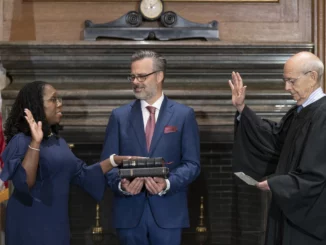
WASHINGTON, D.C. (TIP): Ketanji Brown Jackson has been sworn as the 116th Supreme Court justice and the first Black woman to serve on the high court. She was sworn in on Thursday, June 30. The ceremony caps a months-long process that essentially began February, when President Biden, fulfilling a campaign promise to nominate the first Black woman to the Supreme Court, announced Jackson, 51, as his pick to replace Justice Stephen Breyer, 83. Breyer — whom Jackson clerked for after she graduated from Harvard Law School in 1996 — officially retired Thursday, paving the way for her to be sworn in.
“For too long, our government, our courts haven’t looked like America,” Biden said when he nominated her. “And I believe it’s time that we have a court that reflects the full talents and greatness of our nation with a nominee of extraordinary qualifications and that we inspire all young people to believe that they can one day serve their country at the highest level.”
At the noon ceremony at the Supreme Court, Jackson, took two oaths: a constitutional oath, administered by Chief Justice John Roberts, and a judicial oath, administered by Breyer. A formal investiture for Jackson will follow in fall.
Jackson will have to contend with significant cases next term, including those involving affirmative action (which she may recuse herself from), the independent legislature theory, and religious freedom. Jackson has been confirmed since April, when the Senate voted 53 to 47 on her nomination. “It has taken 232 years and 115 prior appointments for a Black woman to be selected to serve on the Supreme Court of the United States, but we’ve made it! We’ve made it — all of us,” Jackson said in remarks at a White House event the day after the Senate vote.
US Supreme Court demonstrates feudal retrogression
As I See It
“The constriction of liberty has disastrous consequences for women who wish not to deliver an unwanted child due to therapeutic reasons or because the fetus is the result of a crime against her or because she is a minor or her own life is in danger if she delivers. Roe and Casey judgments gave her a choice up to a particular stage. Justice Alito takes it away.”
By Rakesh Dwivedi
America’s Republican states, keen to ban abortion or impose severe restrictions on it, were the ones pleading for the reversal of Roe vs Wade, a 7:2 judgment delivered back in 1973. Laws in some cases had been stayed by lower courts on the basis of this judgment. The Trump administration, supporting orthodox Christian views, had ensured a packed court for the reversal of Roe vs Wade. At issue was whether American women had the constitutional right to seek abortion before fetal viability, which had been affirmed as part of liberty and equality, including autonomy and bodily rights, in Roe vs Wade and reaffirmed in Planned Parenthood vs Casey (1992). The majority in Dobbs vs Jackson (2022), gripped by feudal retrogression, overruled both Roe and Casey judgments. The ‘pro-abortionists’ have been told that they should fight their battle in the legislature.
Some US states have forthwith imposed a ban on abortion by invoking trigger provisions. Others would follow soon. But women will not sit quietly.
Fundamental rights are stated generally in constitutions. The US Constitution talks of liberty, equality and due process, just as Article 21 of the Indian Constitution speaks of life and personal liberty and Article 14 talks of equality with the injection of ‘fair, just, and reasonable procedure’ for their deprivation. All courts recognize that these rights have a penumbral sphere; the courts have expanded the ambit of these rights from time to time. Justice Brett Kavanaugh, speaking for the majority, agrees ‘that the Constitution does not freeze the American people’s rights as of 1791 or 1868’. And that ‘the Constitution authorizes the creation of new rights…’ But, he says the court cannot rewrite the Constitution to create new rights and liberties based on our moral or policy views. While he finds the US Constitution ‘neutral’ regarding abortion, Justice Samuel Alito, speaking for the majority, says ‘liberty’ is a capacious term and new rights can be included only if they are ‘deeply rooted in our history and traditions’ or text. And since the text was, before Roe vs Wade, never understood as including the right to abortion, the majority delved into history, as far back as the 13th and 18th centuries, to hold that the right to abortion was not rooted in their history, and hence, could not be given recognition. Justice Alito criticized the Roe judgment for not adopting the historical approach, though the three dissenting judges disagreed on this point. The real divergence was on whether the constitutional approach has to be ‘originalistic’ or ‘dynamic’. Originalism implies acceptance of a construction which accords with the understanding of the framers of the Constitution. It means a static approach frozen in the past. On the other hand, a dynamic approach looks at the past but does not stop at that and proceeds to comprehend the developments and evolution of society and envelopes all that is integral to the full and effective enjoyment of the given rights. It treats the rights as fundamental and the State’s power to restrict as secondary. It imposes a positive duty on the State to protect the rights of individuals. In the Aadhaar case, Justices DY Chandrachud and R Nariman endorsed the dynamic approach and rejected ‘originalism’. But Justice Alito, deviating from the past approach of the US Supreme Court, made a volte face and rooted out the right to abortion from the ambit of ‘liberty’, saying that it was concerned with ‘ordered liberty’ and not ‘liberty’ as such. Liberty, he said, meant different things to different persons. This was just a deceptive subterfuge.
Justice Alito’s historical approach is also faulty. He looks at the position of the right to abortion in the remote past, but does not examine what sort of society the US and UK had in the 13th/18th centuries and what were the rights granted to women. The majority ignores the dynamic spirit of the US Constitution and the developments in society in consequence of it.
No one says, and Roe/Casey did not, that the State has no legitimate interest in regulating the exercise of the right to abortion or that the right is absolute. The dissent also does not deny the legislature the power to regulate. But when the right to abortion is recognized, there is a need to balance the right of women with the State’s interest in the potential life of a fetus in accordance with the doctrine of proportionality. There remains a space where women’s autonomy and choice are allowed to prevail. But if this right is derecognized, it is up to the State to either ban it or to regulate stringently and courts become virtual bystanders. Notably, the right to individual autonomy, choice and privacy have been recognized as part of liberty by the Supreme Court of India in the Aadhaar case, and even by European courts. US Supreme Court judgments expanded privacy in the public sphere and their judgments were noted in the Aadhaar case.
The constriction of liberty has disastrous consequences for women who wish not to deliver an unwanted child due to therapeutic reasons or because the fetus is the result of a crime against her or because she is a minor or her own life is in danger if she delivers. Roe and Casey judgments gave her a choice up to a particular stage. Justice Alito takes it away.
According to the Roe judgment, the weight of the State’s interest grows with the growth of the fetus and the balance tilts against abortion after fetus viability (the ability of a fetus to survive outside the womb; generally considered to begin at 23 or 24 weeks’ gestational age). This line of balance gives enough time to women to decide if they want to deliver. But Dobbs vs Jackson destroys this balance and the right itself.
LGBT rights, the right to solemnize inter-racial and gay marriages, to marry in prison and to decide on a child’s education have been recognized on the strength of the Roe judgment and they too have no deep-rooted basis in history and traditions. But they do not involve the destruction of ‘potential rights’. But they do destroy the ‘originalism’ approach and accept dynamism in recognizing new rights. The Dobbs judgment goes against the global drift. By looking backwards, it has pushed back American women, nay society, into feudal, medieval times. Some states have forthwith imposed a ban on abortion by invoking trigger provisions. Others would follow soon. Women will not sit quietly. The Dobbs judgment will not be the last word on the matter.
(The author is a senior advocate, Supreme Court of India)
FIACONA (Federation of Indian American Christian Organizations of North America) has compiled a list of 761 attacks with a large percentage of those being mob attacks. As a Christian in India today, there is an increasing possibility that while at Church practicing his/her ancient tradition and worshipping Jesus through prayers and songs and communion, a screaming mob of hundreds of angry young men, many armed with iron rods and other weapons could barge into the peaceful prayer hall thrashing worshippers and dragging them out of sanctuary while they smash everything in sight. This is not some fantasy but has become a reality in present-day India under the BJP rule.
By George Abraham
Indian Christian Community in the Tri-state area is getting ready to celebrate Indian Christian Day on July 3.It may also be a good time to revisit its relevance and related history. July 3 is observed as St. Thomas day, the world over. The New Testament reckons Thomas – who is also known as “Didymus” (meaning “Twin” in Greek) – as one of the twelve apostles of Jesus Christ. He was born in Galilee, Israel, and died on December 21, 72 A.D. According to Christian tradition, Thomas was killed with a spear at St. Thomas mount (Parangi Malai), and his body was interred in Mylapore at the St. Thomas Cathedral Basilica.
St. Thomas was one of Jesus’ disciples. He is perhaps best known as “doubting Thomas,” who wanted proof of Jesus’ resurrection. As Christianity was being spread to the west by apostles like St. Paul, the mission to the East was undertaken by St. Thomas. Tradition says that it is St. Thomas who brought Christianity to India in the first century, making the religion older in India than Sikhism or Islam. The ancient Syrian Christian community of India traces its origin to St. Thomas. Christianity is the third largest religion in India after Hinduism and Islam. There are around 28 million adherents in India, making up 2.3% of the population of the country. The early Portuguese built the present St. Thomas Cathedral Basilica in 1523 A. D. Long before the present building was built over his tomb, Marco Polo visited the tomb in 1292. He wrote of the Christians of India going on pilgrimage to the shrine to be miraculously healed by the saint.
Of late, there is a lot of speculation about the story of St. Thomas, and a concerted effort is underway to discredit the entire episodic history and call it nothing but a myth. The entities closely associated with the current government are busy in their efforts to paint the history of Christianity in India as simply concocted in a backroom conspiracy. They are eager to link Christianity’s whole history to the infamous colonial legacy characterized as a dark period in Indian history.
Of course, at present, there is no way to prove or disprove this tradition scientifically. However, one thing is sure: ever since the discovery of the monsoon winds in 45 A.D by Hippalos, an Alexandrian ship-captain, the land, and sea routes were open from the Mediterranean via the Persian Gulf to India, and there was intense contact between these areas. The mere fact that Roman coins of the first century are unearthed in several parts of South India simply adds credibility to those historical contacts. Many historians have also acknowledged that Jewish settlers existed in Cragnanore even before the Christian era. There is a general presumption that St. Thomas may have visited this flourishing colony of Jews in Murziris (Cragnanore). Those Jews are said to have arrived with King Solomon’s first fleet.
With historical debate aside, why there must be a controversy now about the origins of Christianity in India and who is driving this debate? Obviously, this debate is orchestrated as part of the propaganda campaign by the Hindutva group as 2021 became the most violent year for Indian Christians. FIACONA (Federation of Indian American Christian Organizations of North America) has compiled a list of 761 attacks with a large percentage of those being mob attacks. As a Christian in India today, there is an increasing possibility that while at Church practicing his/her ancient tradition and worshipping Jesus through prayers and songs and communion, a screaming mob of hundreds of angry young men, many armed with iron rods and other weapons could barge into the peaceful prayer hall thrashing worshippers and dragging them out of sanctuary while they smash everything in sight. This is not some fantasy but has become a reality in present-day India under the BJP rule.
Although the Indian constitution guarantees the freedom of religion to all its citizens, the political dogma of RSS (Rashtriya Swayamsevak Sangh), the parent organization of BJP, enunciated by its erstwhile leader and theoretician M S Golwalkar is still mostly the guideline for many of its loyal adherents. In fact, he argued in the book ‘our nationhood defined’ that as long as the Muslims and the Christians failed to abandon their own religion and culture, they cannot but be only foreigners in this country, and if they stayed here without losing their “separate existence” they might be treated as “enemies,” at best as “idiots.” His arguments tilt more favorably towards treating all Christians as “hostiles” who are agents of the international movement for the spread of Christianity. In Modi’s India, Christian Institutions are being strangled by denial of FCRAs, freezing of the bank accounts, unending investigations, frequent auditing, and harassment of the principal in charge. These moves appear to be consistent with the Hindutva philosophy that the Modi government has embraced to advance the saffron agenda that challenges the very idea of India as a multi-cultural and pluralistic society. Modi appears to pay lip service to Gandhiji’s concept of India during his visits abroad but remains silent when Institutions that are supposed to promote those principles come under attack back home. Asfirst-generation immigrants to this country, we demand that our culture and traditions are respected here and never hesitated in our quest for equal treatment whenever there is any violation. Currently, we are pressing the lawmakers to make Diwali, rightfully so, a state holiday here in New York. However, back in India, Modi hit on the idea of replacing Christmas Day with an anniversary to commemorate the late Prime Minister Atal Bihari Vajpayee’s birth anniversary and renamed it as a ‘Good Governance Day’. The festive season holiday was made a working day for the bureaucrats.The great irony is that the deed has been done to a minority religion that has been in existence in the land for almost 20 centuries. Therefore, the purpose of these attackswhether physical or symbolic along with their efforts in rewriting the origins of Christianity could be multi-fold. Christians, though a fraction of the population of India, wield enormous influence in the social, educational, and healthcare arena. Many of the charitable institutions in India are pioneered by Christian missionaries and still run with foreign funding. Many at the extreme right of the Hindutva philosophy dream about creating a Hindu Rashtra. In order to fulfill their dream, Christians, along with other minorities, need to be marginalized. The way to accomplish that is by diminishing their contributions, thereby reducing their visibility to the public. It is a concerted effort that appears to be succeeding.
I am not sure Indian Christians have the wherewithal or theology to stand against the Modi juggernaut and fight. However, they may come together in unity and proclaim that to judge the Indianness of its nationals only through the prism of one’s faith is not only just unfair but preposterous. By celebrating Indian Christian Day globally on July 3, they may be not only reasserting their identity through the renewal of their faith and conveying to the world that their cherished heritage is real, and they are forever committed to proclaiming it.
(The author is a former Chief Technology Officer with the United Nations, and is the Vice Chairman of IOC USA)
Putting behind the Sangrur Lok Sabha bye-election debacle, three-month-old AAP Government has tried to salvage some of its prestige by presenting the State’s first ever “paperless”. Tax free and please all Budget in Punjab Vidhan Sabha on Monday, June 27. While the ruling party claimed “it is a historic Budget” – drafted in consultation with the people of Punjab, still members of the Treasury Benches were hard pressed to hide their disappointment over rejection by voters of their own citadel a day earlier. Calling it the Janata budget (people’s budget), AAP claimed that it was drafted after receiving 20,384 suggestions on the government portal and through e-mails. Drawing its consolation from Monday, as a new day, marking the start a new week, the Finance Minister Harpal Singh Cheema was upbeat in presenting his maiden budget of Rs 1.55 lakh crore without proposing any new taxes. Interestingly, some of the major initiatives or schemes announced in the Budget are replicas of similar schemes being run in Delhi. These include giving 300 units of free power, “Farishtey” scheme for victims of road mishaps, and “Mohalla” clinics for boosting health care. Even proposed reforms in education and distribution of essential commodities, including “atta”, are modelled on Delhi lines. Cheema said out of five, four “guarantees”—giving 300 units of free electricity, quality education, improving health infrastructure and raising compensation to families of martyred soldiers—have been fulfilled.
Providing 300 units of free power will put an additional burden of Rs 1,800 crore on the state exchequer, said Cheema. The AAP government had announced giving 300 units of free power to every household from July 1.
Only one guarantee of Rs 1,000 to each woman is yet to be fulfilled. Mr Cheema said this would also be done in due course of time. Cheema presented the first paperless budget in the ongoing assembly session and said this step was expected to save Rs 21 lakh per annum. Instead of huge bundles of Budget documents, entire information was made available through an App. Setting up of modern digital classrooms in 500 government schools to bring quality education to villages, upgrading 100 existing schools as “schools of eminence” and posting estate managers for a cluster of schools for the upkeep of their premises are among the proposals. The Government has also drawn a comprehensive scheme for installation of roof top solar panel systems in government schools. To encourage students to plan their careers, a Punjab Young Entrepreneur programme is also being launched. Students of class 11 will be encouraged to propose their business ideas for which the state would provide seed money of Rs 2,000 each.
To further professional education and to discourage students from going abroad for medical education, the Punjab Government has decided to set up 16 new medical colleges over five years, taking the total number of colleges in the state to 25. The first of these medical colleges will come up in Sangrur, the home district of both the Chief Minister and the Finance Minister. The government will also establish 117 “Mohalla Clinics”, for which Rs 77 crore has been earmarked.
To counter its criticism for deterioration in law and order and rapid growth in heinous crime, the Government has resolved to strengthen the police force and equip it the with latest gadgets, technology and tools to tackle crime, maintain law and order with an allocation of Rs 108 crore.
Further, cyber-crime control rooms shall be set up in all districts with an outlay of Rs 30 crore. The Government also intends to bring the entire State under the CCTV network to check the crime and tap criminals.
The stubble burning issue too has been put on priority list. To explore available possibilities and solutions, a sum of Rs 200 crore has been earmarked for the project.
Noting that the agriculture sector is at a crossroad, Cheema stressed on increasing farmers’ income and promoting crop diversification and earmarked Rs 11,560 crore for the agriculture sector. Seeking to put all speculations to rest, Cheema said the AAP government pledges to stand by its farmers and shall continue providing free power for the agriculture sector and allocated Rs 6,947 crore for the same.
Door-to-door delivery of well packaged ‘atta’ in place of wheat to 1.58 crore beneficiaries under National Food Security Act has been promised by the State. It will cost Rs 457 crore. A bailout package of Rs 350 crore for state-owned Punsup has also been mooted. Also among new initiatives is replication of ‘Farishtey’ scheme on the pattern of Delhi whereby the road accident victims will be given free treatment and the helper would be felicitated.
The focus in the first year of its rule, claimed AAP, would be to restore deteriorating fiscal health, deliver on the promises of good governance by ensuring effective use of public funds and concentrate on health and education.
The state’s effective outstanding debt was expected to be Rs 2,84,870.03 crore by end of current fiscal as against Rs 2,63,265.41 crore (revised estimates) for 2021-22.
The state government borrowed Rs 8,000 crore in the last three months besides contributing Rs 1,000 crore to the Consolidated Sinking Fund (CSF) of the state within the first two months.
The revenue deficit and fiscal deficit stood at Rs 12,553 crore and Rs 23,835 crore, respectively.
A total power subsidy, after 300 units concession, has been worked out at Rs 15,845 crore as against Rs 13,443 crore in 2021-22. The Punjab’s AAP government was hoping to generate revenue worth Rs 95,378.28 crore this fiscal, against an expenditure of Rs 1,55,859.78 crore. This would lead to a revenue deficit of Rs 12553.80 crore.
Since no new tax has been announced and the revenue receipts are projected to increase by almost Rs 14,000 crore over 2021-22, the increased revenue would be primarily through excise earnings that would yield an additional revenue of 56 per cent. Buoyancy in GST collection will get the state 27 percent additional revenue compared to last year. The State is also expecting an 11 percent increase in non-tax revenue.The government will fill 24,400 posts in the government sector besides regularizing 36,000 contractual employees. This will cost Rs 450 crore. The Government also reiterated its commitment to implement One MLA one pension scheme. Among various new schemes planned to be launched by the Government this year include Sardar Bhagat Singh Haryali Project under which 50,000 saplings would be planted in each of the 117 assembly segments. While no new taxes have been proposed, revenue receipts are expected to go up by 17.08%.
Another proposal says that 25,000 EWS houses would be constructed. The Budget also makes an allocation of Rs 780 crore for the relining of Rajasthan feeder and Sirhind feeder canal. To meet its financial needs, the state government proposes to raise Rs 31804.99 crore as market loans, up from Rs 27362.74 crore raised by the state last year. The State expects to spend Rs 20,122 crore on payment of interest. However, the total debt servicing will take Rs 36,068.67 crore of the state’s earnings. The State also proposes to set up a Traders commission and Fintech city to come up for IT companies in Mohali. The budgetary allocation for social security pensions is proposed to be increased from ₹4,071 crore during 2021-22 (BE) with coverage of 28.12 lakh beneficiaries to ₹4,720 crore in FY 2022-23 with a target of covering 31.23 lakh beneficiaries.
Rs 3,003 crore is being proposed for development of rural areas in the state. To promote direct seeding of rice, the State is keeping apart Rs 450 crore as financial assistance to beneficiary farmers.
A new Quick Freezing Centre is proposed to be established at Verka, Amritsar, at a cost of Rs 7 crore. Further, an Integrated Hi-tech Vegetable Production-cum-Technology Dissemination Centre at Malsian, Jalandhar, will come up at a cost of Rs 11 crore. For the cooperatives sector, Rs 1,170 crore allocated, which is an increase of 35.67% compared to the last financial year. Punjabi University, Patiala, will get Rs 200 crores as a special grant. An amount of Rs 30 crore has been earmarked for providing infrastructure facilities in libraries of government colleges of 9 districts – Tarn Taran, Barnala, Ludhiana, Fazilka, Malerkotla, Moga, Pathankot, Muktsar Sahib and Shaheed Bhagat Singh Nagar. The State would start a CM scholarship with an allocation of Rs 30 crores to general category students for giving them concessions in university. Students of poor families, especially of general category studying in government colleges, will get concession in the fee, based on the marks obtained by the student. But do these schemes of a government meet the hopes and aspirations of the people of Punjab who chose their new rulers just three months ago? Some of the new schemes look cosmetic with allocations that can best be described as “symbolic”. Allocations like Rs 35 crore or Rs 50 crore to deal with issues like career development of jobs-starved State may have good intent but not the all-out support.
(Prabhjot Singh is a veteran journalist with over three decades of experience covering a wide spectrum of subjects and stories. He has covered Punjab and Sikh affairs for more than three decades besides covering seven Olympics and several major sporting events and hosting TV shows. For more in-depth analysis please visit probingeye.com or follow him on Twitter.com/probingeye.He can be reached at prabhjot416@gmail.com)
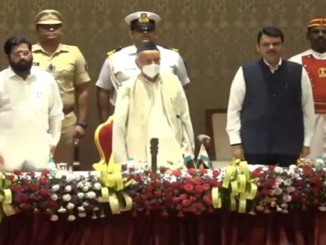
MUMBAI (TIP): In what could be termed one of the biggest political surprises in the history of Maharashtra politics, the BJP on Thursday, June 30 announced that it will support rebel Shiv Sena leader Eknath Shinde as the new Chief Minister, who took oath in a simple ceremony in the Raj Bhavan on Thursday evening, officiated by Governor Bhagat Singh Koshyari. Former Chief Minister and BJP leader Devendra Fadnavis, who all believed was set to become Chief Minister for the third time, joined him as Deputy Chief Minister. The trust vote of the new government will be held on Saturday.
At a press conference prior to the swearing-in ceremony, Mr. Fadnavis announced that the BJP would support Mr. Shinde as Chief Minister and claimed that he would not be the part of the Cabinet. Hours after his announcement, sensing discontent within the State unit of the party, BJP national president J.P. Nadda said the party had taken a decision to support Mr. Shinde, and Mr. Fadnavis too would join the government. Union Home Minister Amit Shah too tweeted that Mr. Fadnavis would join the government. Mr. Fadnavis replied to him saying he would follow the orders as an honest party worker. “I will obey the order of a party which gave me the topmost post,” he tweeted.
Initially, only two chairs were kept at the Darbar Hall where the swearing-in ceremony took place. Following tweets from the BJP’s central leadership, three chairs were placed. Mr. Shinde took the oath invoking Sena founder the late Bal Thackeray and his mentor the late Anand Dighe. This was followed by sloganeering from his supporters. Mr. Fadnavis too was greeted by loud sloganeering as he asked people to remain calm to continue with the oath taking. Following the ceremony, slogans of ‘Jai Shree Ram, Bharat Mata ki Jai’ and praising King Shivaji were shouted by supporters of both the leaders.
Mr. Shinde, who revolted against former Chief Minister Uddhav Thackeray on June 20, was joined by around 39 Sena MLAs and 11 independents. The rebel MLAs had demanded that Mr. Thackeray quit the tripartite Maha Vikas Aghadi (MVA) and snap ties with the Congress and the Nationalist Congress Party (NCP) to return to the path of Hindutva. Earlier in the day, Mr. Shinde returned to Mumbai from Goa where all rebel MLAs have been kept. He visited ‘Sagar’, the official residence of Mr. Fadnavis. Later, both, along with BJP leaders, visited the Governor to stake claim to form the government. Mr. Thackeray had resigned as the Chief Minister on Wednesday, June 29 night. There was no word about when the expansion of ministry will take place.
NEW YORK (TIP): Gov. Kathy Hochul of New York took a crucial step toward winning a full term on Tuesday, easily fending off a pair of spirited primary challengers and cementing her status as the state’s top Democrat less than a year after she unexpectedly took office, says a New York Times report. The runaway victory by Ms. Hochul, the state’s first female governor, sets the stage for what could be a grueling general election contest against Representative Lee Zeldin, a conservative congressional ally of former President Donald J. Trump who beat out three fellow Republicans in a gritty race for his party’s nomination. Ms. Hochul enters the November contest with deep structural advantages: She has the power of the governor’s office and overflowing campaign accounts, her party enjoys a more than two-to-one registration advantage and Republicans have not won statewide in New York since Gov. George E. Pataki secured a third term in 2002. But with warning signs flashing red for Democrats nationally and New Yorkers in a dour mood over elevated crime and skyrocketing prices for housing, gas and a week’s groceries, both parties were preparing to run as if even deep blue New York could be in play this fall. The general election contest promises to have sweeping implications that ripple well beyond New York in the aftermath of two recent landmark Supreme Court decisions that ended the federal right to an abortion and curtailed New York’s ability to regulate firearms. The state has long been a safe haven for abortion and until the decision had one of the most restrictive gun laws, positions Mr. Zeldin opposes and issues he could influence if he wins. With that fight looming, Democratic primary voters on Tuesday chose Ms. Hochul, a middle-of-the-road incumbent who spent the campaign’s final weeks casting herself as a steady protector of the state’s liberal values — if not the firebrand or soaring orator who have found success in other races. “We cannot and will not let right-wing extremists set us backwards on all the decades of progress we’ve made right here, whether it’s a Trump cheerleader running for the governor of the State of New York or Trump-appointed justices on the Supreme Court,” Ms. Hochul told supporters at a victory party in TriBeCa in Manhattan. Standing, symbolically, under a glass ceiling, a jubilant Ms. Hochul added that she stood “on the shoulders of generations of women” in her effort to become the first to win the governorship.
Ms. Hochul planned to quickly return to Albany, where she has called the Legislature back for a rare special session to respond to the Supreme Court ruling invalidating a century-old state gun control law.
The race was called by The Associated Press 25 minutes after the polls closed in New York. Ms. Hochul had won 67 percent of the Democratic primary vote, with 55 percent of the expected vote counted. Jumaane D. Williams, the left-leaning New York City public advocate, had won 20 percent of the vote. Representative Thomas R. Suozzi, a Long Island moderate who ran an aggressively adversarial campaign focused on cutting crime and taxes, won roughly 13 percent of the vote.
Democratic voters also rewarded Ms. Hochul’s handpicked lieutenant governor and running mate, Antonio Delgado, who survived a spirited challenge from Ana María Archila, a progressive activist aligned with Mr. Williams. Mr. Suozzi’s running mate, Diana Reyna, was also on track to finish third. Mr. Delgado, a former Hudson Valley congressman, was only sworn in a month ago after the governor’s first lieutenant, Brian A. Benjamin, resigned in the face of federal bribery charges and after Ms. Hochul pushed for a legal change to get him on the ballot.
His victory was the night’s second significant disappointment for progressives, who saw Ms. Archila as their best shot at winning statewide office this year. Ultimately, she could not overcome the vast financial and institutional advantages that helped Mr. Delgado blanket TVs and radios in advertising. Primaries in other statewide races — for U.S. Senate, state attorney general, comptroller and the Republican nominee for lieutenant governor — were uncontested.
Turnout dipped somewhat across the state, especially compared with 2018. Combined with President Biden’s slumping approval ratings, Ms. Hochul’s relative newness to office and strong Republican performances last fall in Virginia, New Jersey and on Long Island, the figures were enough to give Democrats some cause for concern as they pivoted toward a general election. “Democrats better not take this for granted because Lee Zeldin is a wolf in sheep’s clothing,” said Isaac Goldberg, a New York Democratic strategist not working on the race. “He will appeal well to his fellow suburbanites who don’t know how far right he truly is.” Mr. Zeldin, 42, defeated Andrew Giuliani, who had captured far-right support based on his connections to Mr. Trump, his former boss, and the former New York City mayor Rudolph W. Giuliani, his father. Mr. Zeldin had 44 percent of the vote, with 75 percent of expected votes reported.
He also beat Harry Wilson, a corporate turnaround specialist who burned more than $10 million of his own money into his campaign, and Rob Astorino, the party’s 2014 nominee for governor.
The victory was a triumph for the state’s Republican establishment, which threw money and support behind Mr. Zeldin early — a wager that a young Army veteran with a track record of winning tight races on eastern Long Island could appeal to the independents and disaffected Democrats that Republicans need to sway in New York to have a path to victory.
Mr. Zeldin has tried to orient his campaign around bipartisan fears about public safety and inflation, promising to open up the state’s Southern Tier to fracking natural gas, reverse the state’s cashless bail law and end coronavirus vaccine requirements, while accusing Ms. Hochul of doing too little to restore public safety.
“This isn’t just a red wave, this is a common-sense wave that reaches out to everybody across this state in all counties, in all regions,” Mr. Zeldin said during a victory speech in Baldwin on Long Island that included explicit overtures both to his conservative base and Asian American, Black, Latino and Jewish voters in New York City who tend to vote Democratic.
“This November in the State of New York, one-party rule will end, Kathy Hochul will be fired, we will restore common sense and balance to Albany,” added Mr. Zeldin, who took the stage to the sound of DJ Khaled’s “All I Do Is Win.”
But Democrats have already started amplifying Mr. Zeldin’s more conservative positions on guns (Mr. Zeldin once said he opposed New York’s red-flag law), abortion rights (he celebrated last week’s Supreme Court decision overturning Roe v. Wade), and, above all, his embrace of Mr. Trump and vote on Jan. 6, 2021, to overturn the results of the presidential election in key swing states. No Republican candidate who opposes abortion rights has won New York’s top office in the half-century since the state legalized abortion. For Ms. Hochul, 63, Tuesday’s vote was the first major test of electoral strength since she unexpectedly came to power last August, when Mr. Cuomo resigned as governor in the face of sexual harassment allegations.
A Buffalo native in a party dominated by New York City Democrats, Ms. Hochul had spent much of career toiling in relative obscurity, briefly as a congresswoman from western New York and for nearly six years as Mr. Cuomo’s lieutenant governor.
She moved quickly to establish herself as a political force as much as a governing one, leaving little doubt that she was the Democratic front-runner.
She won the endorsement of nearly every major Democrat and labor union, assembled a $34 million war chest to vastly outspend her opponents on TV and glossy mailers and took pains to balance the concerns of Black and progressive lawmakers and New Yorkers fearful of crime when pushing for a set of modest changes to the state’s bail laws this spring.
She had to withstand aggressive critiques from Mr. Suozzi on her right and Mr. Williams on her left, who argued that she was doing too little to address soaring housing prices or crime and portrayed the governor as another creature of Albany’s corrupt establishment. Polls also showed that Ms. Hochul’s decision to spend hundreds of millions of taxpayer dollars on a new stadium for the Buffalo Bills was especially unpopular with voters. Like fears about public safety, the deal could re-emerge as a campaign issue this fall. But in the primary contest, at least, it did not matter. Ms. Hochul’s winning margin and coalition closely resembled the ones that sent Mr. Cuomo to Albany for three terms: a strong showing in the New York City suburbs; upstate strongholds in Albany, Buffalo and Rochester; and among Black and Latino voters in New York City.
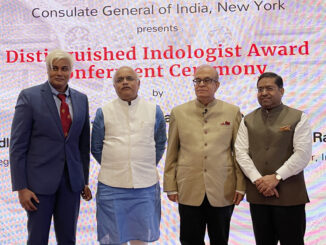
Consul General Randhir Kumar Jaiswal giving his remarks.Dr. Vishwa P. Adluri receiving the award from Dr. Saharsabuddhe.Shri Rajiv Malhotra receiving the award from Dr. Saharsabuddhe.Shri Rajiv Malhotra receiving the award from Dr. SaharsabuddheDr. Saharsabuddhe said that the field of Indology is not just for scholars and academicians, but for all Indians and India lovers.Ms. Pallavi Degwekar who gave a superb performance of Kathak in an attractive mudra.Shri Vipul Dev, Consul (Pol & IPC) gave a good account of himself as an efficient master of ceremonies
NEW YORK (TIP): President of the Indian Council for Cultural Relations (ICCR) Dr. Vinay Sahasrabuddhe conferred the ICCR Distinguished Indologist Award for 2019 on Dr. Vishwa P. Adluri and for 2020 on Shri Rajiv Malhotra at the Consulate General of India in New York. The ICCR Distinguished Indologist Award was set up in 2015 by the Indian Council for Cultural Relations to recognize and honor scholarly works on India undertaken abroad, one that illuminates her civilizational wealth and knowledge. The Awards for 2019 and 2020 were declared but could not be conferreddue to the Covid-19 pandemic.
In his special address, President ICCR Dr. Vinay Sahasrabuddhe congratulated the awardees and paid compliments to them for enriching the field of Indology. Speaking on the discipline, he said that the Indian tradition does not see development and environment; or individualism and collectivism as binaries and can strike a balance which ensures everyone’s welfare. Dr. Sahasrabuddhe emphasized that we need ‘’New Indology’, which connects India’s past, present and future with the spirit of nitya nootan, chira puratan (new everyday yet ancient). He concluded his address by reminding that the field of Indology is not just for scholars and academicians, but for all Indians and India lovers.
Replying to a question from The Indian Panorama editor Prof. Indrajit Saluja as to whether the philosophy of Indology is only a theory or it can be practically lived, Dr. Saharsabuddhe said it has always been a practiced philosophy, and that efforts to be redoubled to take it to people.
In his acceptance speech, Dr. Vishwa P. Adluri thanked his mentors, colleagues,and students. He expressed confidence that the field of Indology has a bright future and that the upcoming young scholars are full of promise and shall take the discipline to newer heights. Dr. Vishwa P. Adluri, the recipient for 2019, is an accomplishedscholar with three PhDs, a lifetime of distinguished service to the profession, and publications that have changed the field of Indology.
In his acceptance remarks, Shri Rajiv Malhotra, the recipient for 2020, underlined that study of India must be undertaken with Indian Drishti, or from the Indian point-of-view. Shri Malhotra is a trained physicist and computer scientist who had a successful career in corporateAmerica at the highest levels. In the mid-1990s, he decided to quit and dedicate his time to the study of Indian thought. He has written eight popular yet scholarly books on the state of Indology worldwide. The event began with a welcome address by Consul General Shri Randhir Jaiswal, where he spoke about how the discipline of Indology developed in the United States. His address was followed by a Kathak recital by Ms. Pallavi Degwekar on the Shiva Panchakshara Stotra. The ceremony saw participation from members of mediacommunity, academia including students, diaspora, cultural organizations, and American thought leaders.
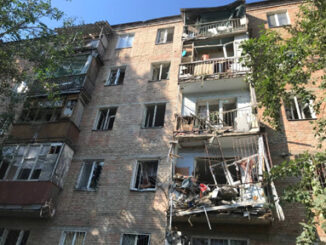
KYIV (TIP): Russian forces struck at targets in the Mykolaiv area of southern Ukraine on Wednesday and intensified attacks on fronts across the country as NATO members met in Madrid to plan a course of action against the challenge from Moscow. Reuter quoted the mayor of Mykolaiv City saying a Russian missile strike killed at least three people in a residential building there, while Moscow said its forces had hit what it called a training base for foreign mercenaries in the region. In the east, the governor of Luhansk province said there was “fighting everywhere” in the battle around the hilltop city of Lysychansk, which Russian troops were trying to encircle. The governor of Kryvyi Rih in central Ukraine said Russian shelling had increased there too in the past few days. “Several villages have been wiped from the face of the earth,” Kryvyi Rih governor Oleksander Vilkul said. The stepped-up attacks took place as Russian President Vladimir Putin’s forces make slow but inexorable progress in a conflict now in its fifth month and followed a missile strike on a shopping mall that killed at least 18 people in central Ukraine on Monday. Nonetheless, Western analysts say the Russians are taking heavy casualties and running through resources, while the prospect of more Western weapons supplies reaching Ukraine, including long-range missile systems, made Moscow’s need to consolidate any gains more urgent. Far from the fighting, leaders of NATO countries were meeting in the Spanish capital Madrid to thrash out policy in response to Russian actions, and also to any Chinese threat.
German Chancellor Olaf Scholz said members of the military alliance would supply Ukraine with weapons for as long as necessary. U.S President Joe Biden told the summit the United States was strengthening its forces in Europe based on threats from Russia. NATO was also due to invite Sweden and Finland to become members, having overcome objections from Turkey.
Russia has long complained about a perceived expansion of Western blocs towards its borders, but its invasion of Ukraine – which it calls a “special military operation” – has served to give new impetus to NATO. The European Union has also awarded Ukraine candidate status in light of the invasion.
CIVILIAN CASUALTIES
The mayor of Mykolaiv, Oleksandr Senkevych, said eight Russian missiles had struck the city, including hitting an apartment block. Photographs showed smoke billowing from a four-story building with its upper floor partly destroyed.
Russia’s defense ministry said its forces carried out strikes on a military training base for “foreign mercenaries” near the city and also hit eight ammo depots and a fuel dump. Reuters was not able to independently verify the reports.
A river port and ship-building center just off the Black Sea, Mykolaiv has been a bastion against Russian efforts to push West towards Ukraine’s main port city of Odesa.
The Mykolaiv strikes took place just two days after a Russian missile hit the shopping mall in Kremenchuk. Rescuers were still searching for dozens of missing on Wednesday. The Kremenchuk attack drew international condemnation. Moscow denied targeting the mall and said it had struck an arms depot nearby, which exploded.
Ukrainian President Volodymr Zelenskiy’s office said the Russians had also fired missiles at civilian infrastructure in Sumy region in the past 24 hours, killing two civilians. Britain’s Ministry of Defense, in its regular assessment on the conflict, said it expected Russia to continue making strikes in an effort to hamper the resupplying of Ukrainian forces on the frontlines. “Russia’s shortage of more modern precision strike weapons and the professional shortcomings of their targeting planners will highly likely result in further civilian casualties,” it said. Ukrainian armed forces commander General Valery Zaluzhny said Russia had fired around 130 missiles on Ukraine within the last four days – an indication of the intensification of attacks. Russia has denied targeting civilian areas but the United Nations says at least 4,700 civilians have been killed since Russia invaded Ukraine on Feb. 24. Zelenskiy addressed the U.N. Security Council remotely on Tuesday, June 28 describing Russia as a “terrorist state” and urging the Security Council, where Moscow has a veto, to expel it from the United Nations.
EASTERN FRONT
Fighting meanwhile raged further east in Luhansk province, a key battleground in Russia’s assault on the industrial heartland of the Donbas region. “There is fighting everywhere. The enemy is trying to break through our defenses. And since they don’t succeed, they fire with all the weapons they have, erase all the villages from the face of the earth,” Luhansk governor Serhiy Gaidai said on television.
The battle for Lysychansk in Luhansk follows the fall of Sievierodonetsk, its sister city across the Siverskyi Donets River on Saturday. Its capture would expand Russian control of the Donbas, one of Moscow’s strategic objectives since its failure to seize Ukraine’s capital Kyiv in the early stages of the war.
REFERENDUM
The Moscow-imposed military-civilian administration in Kherson region said it had begun preparations for a referendum on joining Russia, Russian state news agency TASS reported.
Kherson, a port city on the Black Sea, sits just northwest of the Russian-annexed Crimean Peninsula. Russia-installed officials said their security forces had detained Kherson city mayor Ihor Kolykhayev on Tuesday after he refused to follow Moscow’s orders. A local official said the mayor was abducted.
(Source: Reuters)
Signup to our Newsletter!
Don’t miss out on all the happenings around the world