Month: July 2022

  • Meet the 2022 Class of Asia 21 Young Leaders

    Meet the 2022 Class of Asia 21 Young Leaders

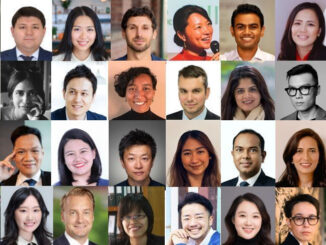
    Forty young leaders from across the world to join the venerable Asia Society network

    NEW YORK (TIP): Asia Society  announced on July 13 that 40 young leaders from across the world will form the newest class of the Asia 21 Young Leaders Network, joining an unparalleled network of over 1,000 individuals in politics, business, arts, education, sustainability, and technology. The Class of 2022 features a diverse mix of leaders representing 26 different countries and includes journalists, human rights advocates, entrepreneurs, fiction writers, politicians, and more. Together, they will form an integral part of the Asia Society family as the newest cohort of its signature young leaders initiative, embodying the organization’s mission to navigate shared futures, and actively contributing to taking the network to new heights. “Drawing on their personal expertise and leveraging the collective power of the Asia 21 network, the class of 2022 will actively contribute to shaping a more peaceful, prosperous, and secure future for all,” said Asia Society President and CEO Kevin Rudd. “We are delighted to play our part in connecting individuals who share common values and desire to make this world a better place.”

    About Asia 21

    Established in 2006, the Asia Society Asia 21 Young Leaders Initiative is the Asia-Pacific’s foremost young leaders’ network of diverse change-makers under the age of 40, united by a shared commitment to making their communities and the world a better place. Created to promote mutual understanding and effective collaboration among the next generation of leaders, the Asia 21 network comprises nearly 1,000 influential individuals from a wide variety of professions including politics, business, arts, media, and the nonprofit sector, representing over 40 countries and regions. Asia 21 provides a catalytic platform where young leaders form lasting relationships and enrich each other’s endeavors through mutual learning, collaboration, and a shared commitment to values-based leadership and public service. The annual Asia 21 Young Leaders Summit brings together these dynamic young professionals to generate creative, multidisciplinary approaches to problem-solving. Through workshops, special Asia 21 “Action Labs,” and leadership masterclasses, they develop imaginative ways to address Asia’s most pressing issues and innovative approaches to solving global challenges. For more information, follow @Asia21Leaders on Twitter and Asia 21 Young Leaders on Facebook, or contact asia21@asiasociety.org.

    Asia Society Communications | 725 Park Ave, New York, NY 10021 | Tel 212-327-9271 | Email pr@asiasociety.org

    Members of the incoming class include Hajra Khan, captain of Pakistan’s national football team and founder of the Fortis Sports Academy; Fumino Sugiyama, a restaurateur and LGBTQ activist and co-representative of Tokyo Rainbow Pride; Si Thura, executive director of Myanmar’s Community Partners International; Mandovi Menon, a creative director, writer, and media entrepreneur from India; Sopheak Chak, executive director of the Cambodian Center for Human Rights; Alexandre Chenesseau, managing director at Evercore; Guo Dong, associate director of the Research Program on Sustainability and Management at Columbia University; and James Griffin, minister of the environment, New South Wales, Australia. You can access biographies of all 40 members of the Class of 2022 at AsiaSociety.org/Asia21.

    After a two-year hiatus caused by the coronavirus pandemic, the annual Asia 21 Young Leaders Summit will resume this year with an in-person convening hosted by Asia Society Japan from December 2 to December 4, 2022. The conference, centered around the theme of “leading in a world of competing values,” will include panel discussions, lectures, and special events in Tokyo, and will feature members of the new class as well as Asia 21 alumni. They will share best practices in leadership and explore opportunities to work collaboratively across borders and sectors to create positive impact. The sessions will also address diversity, equity, and inclusion through art, education, policy, leadership opportunities, and entrepreneurship.

    For more information about the Asia 21 Young Leaders Summit, please reach out to Matt Schiavenza at pr@asiasociety.org

    (Based on a press release)

  • Community mourns the death of 3 young men killed in a fiery car crash on Northern State Parkway, Sunday, July 24

    Community mourns the death of 3 young men killed in a fiery car crash on Northern State Parkway, Sunday, July 24

    NEW YORK (TIP):  Indian – American community is shocked at the death of three young men in a fiery car crash on Sunday, July 24. According to the Nassau Police, the three were  killed in fiery crash on Northern State Parkway in Long Island. Police said the driver veered off the road and hit several trees before the car burst into flames. The driver and two passengers died. State police say a vehicle veered off Northern State Parkway, hit several trees, and burst into flames. It happened around 5 a.m. on  Sunday, July 24  near Exit 30 in North Hempstead. The cause of the crash is under investigation.

  • UNSC calls for action on killing of UN peacekeepers in Congo

    UNSC calls for action on killing of UN peacekeepers in Congo

    Mortal remains of two Indian and one Moroccan peacekeeper transferred to Beni city

    NEW YORK (TIP): Members of the UN Security Council (UNSC) called on the Congolese authorities to swiftly investigate the killing of three UN Peacekeepers, including two BSF troopers, by a mob in Congo on Monday, July 25. A UNSC statement, piloted by India and France, also asked the UN Secretary-General Antonio Guterres for an update on Monday’s attack on a UN Peacekeepers’ base in Goma. The violent attackers had snatched weapons from Congolese police and “fired upon” the UN personnel. The two BSF personnel killed in the attack have been identified as Head Constables Shishupal Singh and Sanwala Ram Vishnoi.

    Two days back, while condoling the deaths of the peacekeepers, External Affairs Minister S Jaishankar had demanded that the perpetrators of the “outrageous attacks” must be held accountable and brought to justice. The UNSC statement requested the Secretary-General for an update consistent with paragraph 4(a) of Security Council resolution 2589 (2021) on measures undertaken to promote accountability for such acts. The relevant paragraph asks the Secretary-General to update on measures undertaken to promote accountability within a country’s domestic justice systems, consistent with applicable international obligations. The UN mission in Congo (MONUSCO) Acting Head Khassim Diagne also said, “we will not leave any stone unturned to get to the bottom of it, to the investigation. This was clearly a hostile act against our troops. This may be a war crime.’’ India is a non-permanent member of the UNSC and also among three troop contributing countries to the UN peacekeeping missions.

  • FIA Chicago is celebrating 75 years of Independent India under the banner of “The Azadi Ka Amrit Mahotsav

    FIA Chicago is celebrating 75 years of Independent India under the banner of “The Azadi Ka Amrit Mahotsav

    CHICAGO, IL (TIP): : Federation of Indian Association, Chicago is celebrating 75 years of Independent India under the banner of “The Azadi Ka Amrit Mahotsav”. Independence Day is always memorable – the day to rejoice in the glory of what India has been able to achieve and to remember the contributions, battles, and sacrifices of all the people who helped achieve it. During the past 75 years, India has emerged as a mature democracy. This is very special for all of us as INDIA completes 75 years of independence. FIA celebrations include the grand India Day Parade at the Devon Ave, Chicago on Saturday, 6th August at 11 pm. The Indian National flag rising will be on 15th August at the prestigious Daley Center in Chicago Downtown, and there will be a patriotic Gala Banquet on Friday, 12th August to commemorate and recognize the people who have been serving the community selflessly. “The entire Indian diaspora living the United States is very excited and looking forward to FIA annual India day Parade and celebrating Azadi Ka Amrit Mahotsav”, said Rakesh Malhotra, President of the Federation of Indian Associations, Chicago

    Celebrating Indian Independence Day 2022

    FIA has been organizing these events for the past forty years here in Chicago, in which the spirit of the freedom movement, honor to the martyrs, and their vow to develop India can be experienced. “It is important to make the new generation aware of India’s freedom struggle and the contributions made by the freedom fighters to get India its independence. Our goal is to inspire the young generation to connect with their roots, values, and rich heritage and work hard to make India Vishwa Guru Again”, said Rakesh Malhotra, President of the Federation. Miss India Worldwide Khushi Patel has been invited to India Day Parade. Indian diaspora living from Chicago land are excited about participation in the Grand Parade. Multiple community-based organizations representing various Indian states like Bengal, Punjab, Uttar Pradesh, Madhya Pradesh, Chhattisgarh, Maharashtra, Telangana, Andhra Pradesh, and Kerala will be showcasing their decorative floats during the grand parade to commemorate 75 years of Independence. Consul General of Chicago Amit Kumar, US Congressman Danny Davis, Congressman Raja Krishnamurthy, Congressman Brad Schneider, Alderman Debra Silverstein, Alderman Shweta Baid, Prominent Community leaders including Dr Bharat Barai, Dr Darshan Sigh Dhaliwal,  Mr Santosh Kumar, Executive Director MAFS , Dr. Ram Chakroborty, founder of Chicago Kali Bari and Mrs. Smita Shah President & CEO of Spaan Tech. are likely to attend the FIA India@75-day events.  Aparna Chakravarty, Mrs India Worldwide 2ndRU will be joining the Chicago Kali Bari colorful float to reflect the spirit of community and festivity

    Connecting with the roots

    To engage the young students, a poster and painting contest on the theme of “My Idea of India” is being organized so that the younger generation can express their impression and vision of India. Likewise, a “Rangoli Making” competition for all age groups has also been organized.  Participation in these contests is free and entries can be submitted digitally. FIA Chicago proudly shares that all plaques and trophies to be given during its annual India@75 Gala are handmade in India by Tribal from the State of Chhattisgarh.

    Federation of Indian Associations, Chicago will be also releasing India@75 souvenir on this momentous occasion to commemorate the glory of India. “Souvenir will capture iconic moments that shaped India”, informed Rakesh Malhotra. Young students, women and professionals are amongst the contributors.

    About the Federation of Indian Associations, Chicago

    Federation of Indian Associations (FIA), Chicago is the largest non-profit Indian American organization. It was established in 1980 to primarily serve the community and promote and educate Indian Cultural Heritage while making meaningful contributions to America’s growth. More than 50 Illinois-based community organizations and nonprofits are members of the Federation. Besides engagement with various organizations across Chicago land, the FIA also takes a lead role in bringing the community together to celebrate various events of historical importance to both the United States and India.

    (Press release and photo /Asian Media USA)

  • Joe Biden, Xi Jinping hold  talks  for over two hours

    Joe Biden, Xi Jinping hold talks for over two hours

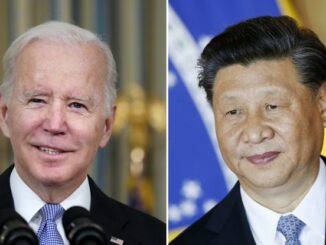
    WASHINGTON, D.C. (TIP): Chinese President Xi Jinping on Thursday, July 28,  warned US President Joe Biden against “playing with fire” over Taiwan, as Beijing’s concerns mounted over a possible visit to the Chinese-claimed island by US House Speaker Nancy Pelosi. Quoting Chinese state media, Reuter  said Xi told Biden in their fifth call as leaders that the United States should abide by the “one-China principle” and stressed that China firmly opposed Taiwanese independence and interference of external forces. Beijing has issued escalating warnings about repercussions should Pelosi — a Democrat like Biden — visit Taiwan, which says it is facing increasing Chinese military and economic threats. A visit by the House Speaker would be a dramatic, though not unprecedented, show of US support for the island.

    “Those who play with fire will only get burnt,” Chinese state media quoted  Xi as telling Biden. “(We) hope the US side can see this clearly.” China has given few clues to specific responses it might make if Pelosi, a longtime critic of Beijing, particularly on human rights issues, makes the trip. The Presidents’ call lasted over two hours. US officials had said it would have a broad agenda, including discussion of Russia’s invasion of Ukraine, which China has yet to condemn. At its core though, US officials said they saw the exchange as another chance to manage competition between the world’s two largest economies, whose ties have been increasingly clouded by tensions over democratically governed Taiwan, which Xi has vowed to reunite with the mainland, by force if necessary. Washington does not have official relations with Taiwan and follows a “one-China policy” that recognizes Beijing, not Taipei, diplomatically. But it is obliged by US law to provide the island with the means to defend itself.

    (With inputs from agencies)

  • Indian Americans charged with insider trading

    Indian Americans charged with insider trading

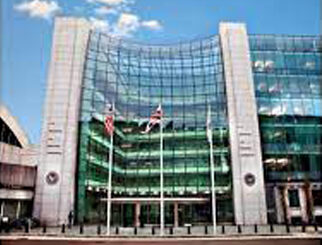
    WASHINGTON, D.C. (TIP): The US Securities and Exchange Commission (SEC) has filed insider trading charges against several Indian Americans in connection with three separate schemes that together yielded more than $6.8 million in illicit gains. The SEC alleged that Amit Bhardwaj, the former chief information security officer (CISO) of Lumentum Holdings, along with his friends, Dhirenkumar Patel, Srinivasa Kakkera, Abbas Saeedi, and Ramesh Chitor, traded ahead of two corporate acquisition announcements by Lumentum, thereby generating more than $5.2 million in illicit profits. In addition, the SEC’s complaint sought disgorgement of illicit profits with prejudgment interest from relief defendants Gauri Salwan, the Kakkera Family Trust, All US Tacos Inc, and Janya Saeedi.

    In another action, the SEC alleged insider trading by investment banker Brijesh Goel and his friend Akshay Niranjan, who was a foreign exchange trader at a large financial institution.

    Late Monday night, the SEC said in a statement that the two men, close friends from business school, made more than $275,000 from illegally trading ahead of four acquisition announcements in 2017 that Goel learned about through his employment. “If everyday investors think that the market is rigged at their expense in favor of insiders who abuse their positions, they are not going to invest their hard-earned money in the markets,” said Gurbir S. Grewal, Director of the SEC’s Enforcement Division. The SEC’s complaints charge all nine defendants with violating the antifraud provisions of the securities laws and seek permanent injunctive relief, disgorgement with prejudgment interest, and civil penalties. At Lumentum, Bhardwaj learned material nonpublic information (MNPI) about the company’s plans to first acquire Coherent, Inc. and later acquire NeoPhotonics Corporation. Based on this inside information, Bhardwaj allegedly purchased Coherent securities ahead of the January 2021 announcement of Lumentum’s agreement to acquire Coherent and tipped his friend Patel, with the understanding that Patel would later share some of his ill-gotten gains.

    During October 2021, Bhardwaj shared the inside information about Lumentum’s planned acquisition of NeoPhotonics with his friends Kakkera, Saeedi, and Chitor, who then amassed large positions of NeoPhotonics based on Bhardwaj’s tips. “After the November 2021 announcement of the NeoPhotonics acquisition, Chitor indirectly transferred funds to Bhardwaj’s relative in India, as instructed by Bhardwaj,” said the SEC.

  • Indian American Amit Kumar Kanubhai Patel convicted of international parental kidnapping

    Indian American Amit Kumar Kanubhai Patel convicted of international parental kidnapping

    CAMDEN, NJ  (TIP): A 38-year-old Indian American has been convicted of international parental kidnapping after he took his US-born child to India and later failed to bring the kid back to the mother in the United States. Amit Kumar Kanubhai Patel from Vadodara, who formerly lived in Edison, New Jersey, was convicted last week of one count of international parental kidnapping following a five-day trial before US District Judge Renee Marie Bumb in Camden federal court in New Jersey. The international parental kidnapping offence of which Patel stands convicted carries a maximum penalty of three years in prison and a maximum fine of USD 2.5 lakh. He will be sentenced in November this year. Patel is a naturalized US citizen who had been living in India. He was convicted of obstructing the parental rights of his child’s mother by kidnapping the child and failing to return the child to the United States when ordered to do so, US Attorney Philip R Sellinger said on Monday, July 25.

    According to documents filed in this case and the evidence at trial, the child’s mother and Patel were in a relationship and resided together in New Jersey from August 2015 through July 2017.

    The two never married. In November 2016, they had a child, who was born in Edison Township. According to the child’s mother, Patel wanted to take the child to India to introduce him to Patel’s parents and obtain DNA testing, which Patel claimed was necessary for the child to claim property that Patel’s family owned in India.

    Patel also told the child’s mother that in order to obtain an Indian visa for the child, he would need to secure sole custody, which required them to go to court. Patel instructed the mother to tell the court that they had a mutual understanding regarding the custody of their child. He also instructed the mother to state that she did not have a work permit, and since she was unemployed, she could not care for her child. In May 2017, Patel took the child’s mother to New Jersey Superior Court, Chancery Division Family Court, in order to obtain the sole custody of the child. According to the mother, the majority of the hearing was conducted in English with no translator. At the time of the hearing, the mother spoke limited English. The mother answered the court’s questions as she had been instructed by Patel and was not represented by an attorney during the hearing.

    The New Jersey Superior Court granted Patel sole legal custody of the child premised on the consent of the child’s mother to the arrangement, but specifically reserved for the mother the ability to file for joint legal custody if she so chose in the future. Upon receiving the court order, Patel obtained visas to India for himself and the child, and booked air travel, telling the child’s mother that they would only be gone for two weeks to a month.

    Patel took the child to India in July 2017 and after several days in India, called the mother and said that he was never bringing the child back to the United States. The child’s mother obtained legal counsel and returned to the New Jersey Superior Court. In October 2018, the New Jersey Superior Court entered an order directing Patel to return the child to the United States immediately. The mother’s counsel emailed the family court order to Patel, who did not return the child to the United States. In October 2020, Patel and the child flew from India to the United Kingdom. Upon arrival, Patel was arrested based on a provisional arrest request submitted by the United States. After a custody hearing in London pursuant to the Hague Convention, the London Court ordered it was in the best interest of the child that the child be returned to his paternal grandparents in India. Patel was extradited to the United States in September 2021 from England to stand trial in the case.

  • Indian American Aruna Miller likely to be Maryland’s next Lt. Governor

    Indian American Aruna Miller likely to be Maryland’s next Lt. Governor

    MARYLAND (TIP): With opinion polls heavily favoring Democrats, Indian American Aruna Miller is likely to be elected as the next Lieutenant Governor of Maryland in November as best-selling author Wes Moore’s running mate.

    In a competitive race for the nomination, army veteran Moore bested former Labor Secretary and DNC Chairman Tom Perez in addition to the Maryland Comptroller Peter Franchot in the Democratic gubernatorial primary on Saturday, July 23. Moore and Miller will face Republican candidate Dan Cox — who was endorsed by former President Donald Trump — and his running mate Gordana Schifanelli in the November election. If the pair wins, Moore will become the first African-American governor of Maryland and Miller the first Indian American to be elected lieutenant governor of any state. Moore, who is also the former CEO of Robin Hood Foundation, said he was “absolutely ecstatic and humbled to go on this journey with Aruna Miller.” “On behalf of my family and my incredible running mate @ArunaMiller, THANK YOU,” he tweeted. “The stakes could not be higher, but together, we’ll meet this moment with urgency and leadership. Maryland WILL be a state where we leave no one behind.
    #MooreForMaryland”

    The Cook Political Report suggests that the Maryland governor’s race would be solidly Democrat, according to NBC News. If opinion polls hold, Moore would most likely succeed Republican Governor Larry Hogan.

    Moore, who has never held or run for public office, has found a seasoned campaigner in Miller who has not only had unsuccessful runs for the party nomination for the US Congress in 2017 but also served two terms in the Maryland General Assembly. Both Moore and Miller have impeccable credentials outside of politics. Moore was a Rhodes Scholar, author, and entrepreneur while Miller is an engineer by training.

    According to Moore, Miller “is a seasoned legislator who has fought for families in Montgomery County and across the entire state of Maryland in the House of Delegates.”

    Born in Hyderabad, Miller immigrated to the United States when she was seven years old. She became a US citizen in 2000. Miller represented District 15 in the Maryland State House from 2010 to 2018 with four years on the House Ways and Means Committee and four years on the Appropriations Committee.

    As a delegate, she worked to invest in STEM education, streamline the regulatory process for small businesses and was a champion for working families, survivors of domestic abuse, and the environment.

    She worked for over 30 years as a civil and transportation engineer in Montgomery County helping improve the safety of the public and alleviate traffic, and creating equitable transportation access to connect people to opportunities. In her 2018 bid for Maryland’s 6th Congressional District, Miller came in second out of eight candidates and earned endorsements from EMILY’s List, the National Education Association, Sierra Club, CASA of Maryland, 314 Action, End Citizens United, and others.

    She lives in the 6th District with her husband David, and her mother Hema. Aruna and David have three adult daughters — Meena, Chloe, and Sasha.

  • Indian – origin Rishi Sunak trailed Liz Truss in TV debate in poll of electoral college-Survey Report

    Indian – origin Rishi Sunak trailed Liz Truss in TV debate in poll of electoral college-Survey Report

    LONDON (TIP): Liz Truss, the incumbent caretaker Foreign Secretary in deposed UK Prime Minister Boris Johnsons government, beat her rival Rishi Sunak, the Indian-origin former Chancellor, according to a survey of ruling Conservative party members, the electoral college to choose the winner. Forty-seven per cent of respondents to pollster Opinium sounding them out felt Truss performed better versus 38 per cent who thought likewise about Sunak. However, Sunak marginally defeated Truss, again according to Opinium, in a poll of regular voters who watched the debate. Thirty-nine per cent said Sunak won, while 38 per cent stated Truss did. The debate held at Stoke-on-Trent, a town in the west midlands of England, was hot-tempered and combative in which Sunak was noticeably aggressive, often talking over his opponent.

    Sunak was trailing 62 per cent to 38 per cent in YouGov’s poll of Conservative members, who will begin voting next week and will have time up to September 2 next to do so. It would appear he did not make up sufficient ground with this constituency as yet to turn the tables on Truss. Clearly, Sunak’s strategy was to attack. Several viewers interviewed after the debate thought his constant interruptions were ‘rude’ and they sounded as if they were displeased by such behavior. It was certainly un-British tactics.

    The two contenders clashed on tax cuts — Sunak sticking to doing so later, Truss promising it will be as soon as she comes prime minister. On British policy towards China, both agreed this should be tough. Sunak said Truss was on a ‘journey’ when it came to China, alleging she had previously argued in favor of a ‘golden age’ in the UK’s relations with the country. Ultimately, they concurred on a clampdown on companies like TikTok.

    Regarding loyalty to Johnson, Sunak resigned as chancellor of the exchequer thereby precipitating Johnson’s end, while Truss remained as a caretaker foreign secretary. Both attempted to justify their opposite stances.

    The debate took place against the background of the London Metropolitan Police, which fined Johnson for partying during the Covid pandemic in violation of prevalent laws, not apparently sending a questionnaire on the matter to the Prime Minister. In effect, it did not investigate him as thoroughly as it ought to have. On Monday, the Met, popularly known as Scotland Yard, effectively admitted in court that it had not fully probed Johnson.

    The Good Law Project, a non-profit campaign group which petitioned a judicial review of the case, said: “We don’t think the Met’s response is consistent with their legal duty of candor.” Johnson’s troubles escalated with media scoops making public last December that socializing had taken place rampantly at his office-cum-residence during the Covid lockdown. He seems to be backing Truss rather than Sunak in the race to replace him.

  • Indian American Apoorva Mehta, Instacart co-founder, calls it quits

    Indian American Apoorva Mehta, Instacart co-founder, calls it quits

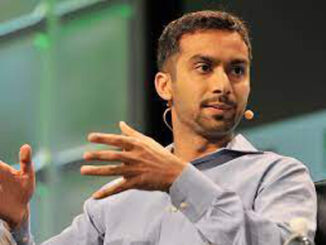
    SAN FRANCISCO (IP): As Instacart prepares to IPO, its Indian American co-founder Apoorva Mehta says he will be stepping down as executive chairman and transitioning off the board of directors once the company goes public.

    A year ago, Mehta left his role as chief executive of the grocery delivery unicorn he started nearly a decade ago and took on an executive chairman position. “Today I’m announcing that once @instacart becomes a public company, I’ll be stepping down as Executive Chairman and transitioning off the board of directors,” Mehta tweeted Friday, July 22.

    “Since I transitioned from CEO to Executive Chairman a year ago, I realized that I want to pursue a new mission and I want to do it with the same singular focus that I had while building Instacart,” he wrote. “Stepping off the board will allow me to do just that.” Instacart confirmed the news in a press release and said that Fidji Simo, a former Facebook executive who took over as CEO of Instacart when Mehta departed the role, will be the future executive chairman of the board. Simo “tweeted Mehta’s announcement and thanked him “for all he has done for Instacart over the last decade.” In a press release, she said that “as CEO and future Chair, I look forward to working alongside our retail partners to shape the next decade of grocery’s evolution.” Mehta’s plan to leave an already distant role may mean competitive dynamics are afoot between Instacart and his “new mission” that he alluded to, TechCrunch commented. Instacart did not address questions related to competitive dynamic at play. Mehta’s departure could also just be a clean break after rising tensions between him and the board he once appointed, it said. Instacart is clearly having an executive reshuffling of sorts, it said. Prior CTO Mark Schaaf is leaving the company.

    Additionally, the US grocery-delivery giant recently promoted Daniel Danker and Laura Jones, vice presidents of product and marketing, to chief product officer and chief marketing officer, respectively. Instacart also promoted its vice president of engineering, Varouj Chitilian, to the CTO role.

  • July 29 New York & Dallas E – Edition

    [vc_row][vc_column][vc_column_text]

    [/vc_column_text][/vc_column][/vc_row][vc_row][vc_column width=”2/3″][vc_custom_heading text=”Dual Edition” font_container=”tag:h2|text_align:center” google_fonts=”font_family:Istok%20Web%3Aregular%2Citalic%2C700%2C700italic|font_style:700%20bold%20regular%3A700%3Anormal” link=”url:https%3A%2F%2Fwww.theindianpanorama.news%2Fwp-content%2Fuploads%2F2022%2F07%2FTIP-July-29-Dual-Edition.pdf”][vc_single_image image=”127854″ img_size=”large” add_caption=”yes” alignment=”center” onclick=”custom_link” link=”https://www.theindianpanorama.news/wp-content/uploads/2022/07/TIP-July-29-Dual-Edition.pdf”][/vc_column][vc_column width=”1/3″][vc_single_image image=”82828″ img_size=”medium” alignment=”center” onclick=”custom_link” link=”https://www.theindianpanorama.news/advertising-media-kit-portal-indian-panorama/”][vc_single_image image=”82829″ img_size=”medium” alignment=”center” onclick=”custom_link” link=”https://www.theindianpanorama.news/advertising-media-kit-portal-indian-panorama/”][/vc_column][/vc_row][vc_row][vc_column][vc_custom_heading text=”Lead Stories This Week” font_container=”tag:h2|text_align:center” google_fonts=”font_family:Istok%20Web%3Aregular%2Citalic%2C700%2C700italic|font_style:700%20bold%20regular%3A700%3Anormal” link=”url:https%3A%2F%2Fwww.theindianpanorama.news%2F%20″][vc_wp_posts number=”8″ show_date=”1″][/vc_column][/vc_row]

  • Surge in ED raids

    Financial probe agency’s credibility is at stake

    Amid the Opposition’s allegation that government agencies such as the Enforcement Directorate (ED) are being misused, the Centre has told the Rajya Sabha that raids carried out by the ED during 2014-2022 saw a nearly 27-fold increase as compared to the searches conducted between 2004 and 2014, when the Congress-led UPA was in power. The ruling NDA has attributed the surge to its ‘commitment to prevent money laundering’ and ‘improved systems for gathering financial intelligence as well as better inter-agency cooperation.’ It is commendable that the Centre’s twin purposes — disposing of pending investigation in old cases and completing the probe in new cases in a time-bound manner under the Prevention of Money Laundering Act (PMLA) — have led to 3,010 searches in the past eight years, resulting in the attachment of proceeds of crime to the tune of about Rs 99,356 crore and the filing of prosecution complaints in 888 cases. What’s worrying is the poor rate of conviction. Only 23 accused persons/entities have been convicted during this period, clearly pointing to investigative lapses and legal loopholes. The ED’s failure to build airtight cases in most instances gives room to allegations of ulterior motive and settling of political scores. It can’t be mere coincidence that these searches are largely confined to non-BJP-ruled states. The ED also owes an explanation for going slow in the Kerala gold smuggling case, which came to light in July 2020. It’s only now that the agency has approached the Supreme Court to seek transfer of the case to Karnataka; the long delay gave rise to speculation that political convenience prompted the Centre to spare the Congress’ arch-rival in Kerala.

    With the apex court backing the ED’s powers under the PMLA and upholding the constitutional validity of provisions dealing with the arrest and attachment of property of persons involved in money laundering, it has become even more important for the premier financial probe agency to ensure that its credibility is not undermined. The directorate’s functioning must be above board and the notion that it adopts a pick-and-choose approach should be firmly dispelled by letting it act freely and fairly.

    (Tribune, India)

  • Rajya Sabha ticket racket

    Audacity reflects the social sanction to corruption

    How else to describe it but as the audacity of the corrupt when a racket promising a Rajya Sabha seat or a governorship for up to Rs 100 crore is busted by the Central Bureau of Investigation? The four accused were arrested over phone intercepts offering appointments as chairpersons of government organizations, ministries and departments. One of the accused posed as a CBI officer and flaunted his connections with senior officials. While it is for the investigative agencies to unravel the intricacies of the scam and prove whether any one did end up falling for the con job, the worrying part of the episode is what it says about the political culture, and the social sanction to corruption. Moneybags who really do believe that positions of high office are available for a price, find nothing unusual about it and are willing to fork out any amount. The revelation about the racket came just two days after West Bengal’s Industry Minister was taken into custody following the recovery of over Rs 21 crore in cash from his aide’s house. The Enforcement Directorate has not exactly covered itself with glory in the recent past, but the allegations of targeting the Opposition fly in the face of a seizure of such magnitude. In Punjab, the anti-graft helpline has logged nearly three lakh complaints since its launch by the AAP government in March-end. As many as 3,750 of them are buttressed with video or audio recordings. A minister was sacked and he figured among the over 50 persons, including government and police officials, arrested on charges of corruption. Corruption has deep roots, but the undeniable takeaway over the past four months in Punjab has been the rise in the risk involved and the chances of being caught. Time will tell whether it is a temporary lull before new facets of cheating emerge, or, at last, corruption is being denied the social acceptability that allows its sustenance.

    (Tribune, India)

  • Now Andrea Horwath, Sukh Dhaliwal to run for Mayor, Ravi Kahlon is not in run for BC Premier

    By Prabhjot Singh
    Former Ontario NDP leader Andrea Horwath announces bid for Hamilton mayor while Sukh Dhaliwal is to run for mayor of Surrey

    Politics is a game of beautiful uncertainties. Essentially mandated to serve people at large, politicians are known for  sudden shifts in their roles. The shifts are mostly induced by denial of roles they wanted to perform. Being a Federal or a Provincial Minister once, some find it little hard to subsequently adjust  as an elected representative alone. There may be other reasons for changing priorities or offices they want to hold in a system full of opportunities for those who have enjoyed electoral success at some level. It keeps them moving ahead, eyeing new opportunities. It is perhaps the dynamics of politics that has seen many senior parliamentarians opting to serve their local communities as Mayors. Most recent example has been  Andrea Horwath, who until  last month was in the running  for Premiership of Ontario as the leader of the NDP,  is  now running for mayor in Hamilton to help the city “realize its potential.” In British Columbia, long time MP from Surrey Newton, Sukh Dhaliwal, has also announced his candidature for Mayor of Surrey. Another former MP and MPP, Jinny Sims, too, is in the running for Mayor of Surrey, the second biggest city of British Columbia.

    Mayoral elections are due in October.

    Andrea Horwath, the former leader of the Ontario New Democratic Party (NDP) has  announced to quit her post as  Member of Provincial Parliament (MPP) for Hamilton Centre to enter the mayoral race. She says the work she has done all her political life is for her city of Hamilton. It would be a really exciting time to be part of the realization of the great opportunities that are ahead,  she told select media ahead of her public announcement. Horwath joins three others in the race for the job: former mayor Bob Bratina, newcomer to politics Keanin Loomis and labor advocate Ejaz Butt. Current Mayor Fred Eisenberger announced last month he would not be seeking re-election.

    Horwath, born and raised in the city, was Ward 2 city councilor from 1997 to 2004 before becoming Hamilton East MPP for the NDP. In 2007, she became Hamilton Centre MPP and eventually leader of the Ontario NDP.

    During her time as leader, she helped the NDP go from not having official party status to being official opposition twice. The party won 40 seats in 2018 but the recent election in June saw that number decrease to 31. She announced her resignation as party leader the evening of June 2 within hours of the declaration of the results.

    If she wins the Mayoral election, she will be the first woman in 175 years to do so. Many believe that change of course followed Horwath’s unsuccessful attempt to become Ontario premier. Coming to British Columbia, where the leadership race has been thrown open by Premier Horgan deciding to quit before next leadership election for which  eight of Ministers have said  no to join the race, decks are almost clear for the Attorney General David Eby to be the next Premier.

    Olympian-turned politician and Job Minister Ravi Kahlon who was considered a possible choice for Premiership has already  said he would not  run . He has, instead, supported his cabinet colleague David Eby for the top spot.

    After Ravi Kahlon made clear his position, several other Ministers including Finance Minister Selina Robinson, Health Minister Adrian Dix,  Lands Minister Josie Osborne, Municipal Affairs Minister Nathan Cullen, Tourism Minister Melanie Mark, Minister of State for Infrastructure Bowinn Ma and Minister of State for Childcare Katrina Chen, have said they will not run for leadership.

    This leaves the field open for David Eby. His election may be unanimous as of today there appears to be no other candidate willing to join the leadership race. Since no one was coming forward, the announcement  made by David Eby about his candidature for the Premiership ended weeks of speculation over who might replace John Horgan as party leader and premier of British Columbia. Interestingly  all other high-profile New Democrats have bowed out of this fall’s leadership election. As of now, David Eby  looks the frontrunner and perhaps  the only candidate for the leadership to be decided on December 3.  Born in Kitchener, David Eby will turn 46 on Thursday (today).

    Yet another Member of Parliament has decided to run for Mayoral post. This time, it is none other than Sukh Dhaliwal, the sitting MP from Surrey Newton. He made his decision known on Monday that he will be joining the race for the position of Mayor of Surrey, the second largest city of British Columbia. Before him, three MPs, including ex-MPs, have moved from federal to local politics. One of them, who was a cabinet minister in the previous Justin Trudeau Government, Amarjit Sohi, is Mayor of Edmonton.

    Another ex-MP, Jinny Sims, who after a stint in the House of Commons, moved to provincial politics, has now decided to opt for local politics. She had announced her candidature for the post of Mayor of Surrey last month.

    Bal Gosal, who incidentally was one of the first MPs, to try his luck in Mayoral politics, was unsuccessful in the Indian-immigrant rich city of Brampton from where Patrick Brown was elected Mayor in the last elections.

    Incidentally, Patrick Brown, who was in the run for the Conservative Party leadership but faced “disqualification” on grounds of violating the election laws, has announced his decision to re-run for the Mayoral post in October.

    The race for Surrey mayor, however, has assumed special importance as it is set to witness a quadrangular contest involving a former NDP MP, Jinny Sims, current sitting MP Sukh Dhaliwal, Councilor Brenda Locke and incumbent Mayor Doug McCallum.

    Sukh Dhaliwal’s decision to move back from Ottawa to Surrey came after months of deliberations and speculation. “Over the last four years, we have seen divisive politics, unprecedented division, partisanship, no focus on the citizens of Surrey,” he said.

    Calling Surrey’s current council “secretive” and “biased,” Dhaliwal added that he plans to “repair a divided city,” media reports quoting him from his Monday’s Press Conference said. Dhaliwal has run against Sims in three federal elections and was a key organizer for McCallum when he was first mayor in the 1990s. Dhaliwal  announced his action plan while setting his election campaign in motion.

    If elected, he says, there will be a roll back of a $200 increase to the yearly parcel tax that Surrey council enacted in 2020, besides “an immediate one-year tax freeze.” This will help the people that need the help now, because we are going through unprecedented uncertainty, he said. To meet the loss on account of tax cut, Dhaliwal hopes to meet it through Surrey’s accumulated surplus  that would facilitate the changes. “We have accumulated wealth, almost $300 million and we can use that money that we have accumulated to make sure that we are able to help the ones that need the most by freezing those taxes,” he told a section of media.

    Dhaliwal said he has no intention of reversing the biggest development of McCallum’s tenure — the transition to an independent municipal police force from the Surrey RCMP. While Locke is promising to overturn the transition and Sims has promised to study the details before making a decision, Dhaliwal says the move is too far underway to reverse now.

    “It is my understanding that almost 300 people are already hired in the city police. We have come a long way.”

    With Sukh Dhaliwal joining the race, it could split the strong Indo-Canadian community in the second largest city of British Columbia. If it happens, the chances of incumbent McCallum winning another term in office may brighten up.  Academicians and other experts also hold that Surrey residents may also want a clean slate after McCallum dominated news headlines for many years in controversial ways, including a criminal charge for mischief that won’t be fought in court until after the election. The field is still open for more candidates to join the Mayoral race  as a former White Rock mayor, MLA and MP Gordie Hogg, may also throw his hat in the ring.

    (Prabhjot Singh is a veteran journalist with over three decades of experience covering a wide spectrum of subjects and stories. He has covered  Punjab and Sikh affairs for more than three decades besides covering seven Olympics and several major sporting events and hosting TV shows. For more in-depth analysis please visit probingeye.com  or follow him on Twitter.com/probingeye. He can be reached at prabhjot416@gmail.com)

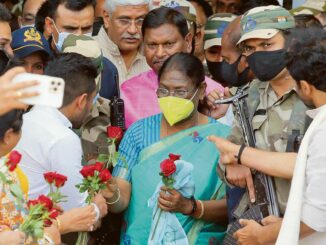
  • How to celebrate President Droupadi’s election

    How to celebrate President Droupadi’s election

    The report observes that the ‘development paradigm’ has aggravated the difficulties of the ‘marginalized’ as the benefits have been ‘disproportionately cornered by the dominant sections at the expense of the poor, who have borne most of the costs.’ In the case of the ‘tribes’, it resulted in their loss of cultural identity, destruction of their resource base and made them increasingly vulnerable to exploitation and daily violence.

    By Vappala Balachandran

    It is very unfair to link the election of President Droupadi Murmu with the anticipated future electoral gains of the BJP, as some commentators have done. They had cried hosanna to the BJP leadership for flummoxing the Opposition by selecting the ‘first tribal’ and ‘second woman’ as the presidential candidate. This is not the way to hail the election of such a remarkable lady from a backward region who has braved personal and social difficulties to reach this high office. And, that too, at a time when India has slipped from 112 to 140 among 156 countries on the 2021 Global Gender Gap index compiled by the World Economic Forum (WEF), which conducts the annual Davos Conference. In Asia, only Pakistan and Afghanistan are behind India. The WEF attributed this slippage to inadequate political and economic woman empowerment in India.

    Those opposed to the linking of electoral factors with her selection say that the new President would not be able to make much personal contribution for solving the deep-rooted problems faced by tribals or undo the wrongs done to them over centuries. This is because of the limitations built into her high constitutional position. Also, hyperbole or symbolic steps do not result in solving such underlying problems. This is true if history is any indication. An important milestone in their journey to correct these wrongs came in 1946 when attempts were made while drafting our Constitution on the eve of Independence. On December 11, 1946, Dr Rajendra Prasad, Chairman of the Constituent Assembly, introduced Jaipal Singh Munda as the “representative of the aboriginal tribes of Chhota Nagpur”.

    In the Assembly records, Munda mentioned his religion as ‘Adibasi’ and caste as ‘nil’ as opposed to the others, including Jawaharlal Nehru, who wrote religion ‘Hindu’ and caste ‘Brahmin’. The only other representative who recorded as ‘Adibasi’ was L Sahu from Orissa. Their presence gave voice to that underprivileged section of our society in the Constitution-making body which gave special protection to them. Munda said that the dispossession of Adivasis did not begin with the arrival of the British, nor would it end with their departure. He said that “for the real rehabilitation and resettlement of the original people of India”, it was necessary that not only the British should quit, but also the others who had been exploiting and dispossessing Adivasis for thousands of years.

    However, subsequent events would prove that independent India was not able to achieve even a modicum of reforms in this direction. Whatever we had attempted was diluted by political crosscurrents generated by upper classes, leading to frustration among this section, numbering 10.43 crore (8.6 per cent of our population) and divided among 705 notified tribes.

    On the other hand, there is an increasing tendency by the government to treat such frustrations as ‘law and order’ problems during which the ‘dispossessed’ become the ‘accused’. The second milestone in their quest for justice came on January 5, 2011 when the Supreme Court (SC) sharply criticized the ‘historical injustice’ done to the tribals by the governance system and how these protections were not implemented even by a high court. This was during the SC verdict overturning an Aurangabad (Maharashtra) High Court’s acquittal of accused persons on technical grounds in which a young Bhil woman was stripped naked and beaten publicly. The SC also said: “Despite this horrible oppression on them, the tribals of India have generally (though not invariably) retained a higher level of ethics than the non-tribals in our country.” We have produced thousands of official pages on what needs to be done to improve the situation. However, no government has sincerely implemented the reforms suggested. One such good report is that of 2008, titled ‘Development Challenges in Extremist Affected Areas’. It is the result of the deliberations by a 16-member ‘expert group’ convened by D Bandopadhayay, which was constituted by the now defunct Planning Commission. The report covered not only the problems of Adivasis but also of Dalits and women in the vast landscape of land reforms, access to basic resources, forests, common property resources, harm done to them by the Special Economic Zones, mining and displacement of the poor due to big projects and how they could be rehabilitated. Development, which is insensitive to the needs of these communities, has invariably caused displacement and reduced them to a sub-human existence: “The poor have depended upon common property resources such as forests, pastures, and water sources for the satisfaction of their basic survival needs. With the increasing tendency to see all such resources as sources of profit, the poor are being deprived of whatever access they had to such resources.”

    The report found that no government had seriously studied the underlying and foundational causes leading to unrest, discontent and extremism among the tribals nor had these subjects been “the subject matter of administrative or academic discourses in India.”

    An important chapter of the report is on the ‘Political marginalization of Scheduled Castes and Scheduled Tribes’. It lists several ways in which SCs and STs are marginalized by the dominant classes, resulting in ‘tokenism’ of their political presence and leading to the suppression of their voice or empowerment. The report makes an important observation that the ‘development paradigm’ since Independence has aggravated the difficulties of the ‘marginalized’ as the benefits have been “disproportionately cornered by the dominant sections at the expense of the poor, who have borne most of the costs.” In the case of the ‘tribes’, it had resulted in their loss of cultural identity, destruction of their resource base and made them increasingly vulnerable to exploitation and daily violence.

    Chapter 5 lists several important recommendations. Among them are an effective implementation of protective legislation, land-related measures, land acquisition for development and rehabilitation of those affected, livelihood security, standardization of social services and extension of the Panchayati Raj to Scheduled Areas Act and other administrative measures. No government since 2008 has done an open audit on how far these recommendations have been implemented. Thus, the best way to celebrate the election of President Murmu is that the Centre and the states should sincerely implement these recommendations as well as those made in other such reports.

    (The author is Ex-Special Secretary, Cabinet Secretariat, Government of India)

  • Black Sea deal to ease global food challenge

    Black Sea deal to ease global food challenge

    “There has been rise in food and fuel prices, as well as supply chain issues, as the mountains of grain stocks remained stuck in silos. It shows the enormous cost of allowing the conflict to rage on, supplying arms to Ukraine as well as using the sanctions to isolate Russia, a permanent member of the UN Security Council. As rival egos took center stage and crippling sanctions and geopolitics took priority in place of peace, the world has paid a heavy price.”

    By Bharat H Desai

    On July 22, in an unprecedented thaw, the Black Sea Grain Deal was signed in Istanbul (Turkey) by the Russian and Ukrainian ministers in the presence of UN Secretary-General Antonio Guterres and Turkish President Recep Tayyip Erdogan. It shows that if negotiations are given a chance, any contentious issue can be resolved. The seed was sown by Guterres’ visit to Russia and Ukraine in late April. It underscores the role of the ‘good offices’ of the UNSG for the peaceful settlement of international disputes among the UN member-states. It also provides a pathway for finding an amicable compromise on the Russia-Ukraine stand-off after the “special military operation”. The Russian action in Ukraine has entered the sixth month. The UNSG has aptly described the Black Sea deal as the “agreement for the world” since it paves the way for food exports from the three key Ukrainian ports in the Black Sea — Odessa, Chernomorsk and Yuzhny. The deal offers prospects for a new window of peace monitored through the Joint Coordination Centre in Istanbul comprising representatives of Ukraine, Russia and Turkey.

    The Black Sea agreement will immediately lead to easing of the global food prices and help in reducing global hunger. The shipments of food and fertilizers reaching the markets will control spiraling food prices and stave off global famine affecting millions of people. “Today, there is a beacon on the Black Sea…a beacon of hope, a beacon of possibility — a beacon of relief — in a world that needs it more than ever,” the UN Secretary-General optimistically said.

    There has been unprecedented rise in food and fuel prices, as well as supply chain issues as the mountains of grain stocks remained stuck in silos. It shows the enormous cost of allowing the conflict to rage on, supplying arms to Ukraine as well as using the sanctions stick to beat and isolate Russia, a permanent member of the UN Security Council. As rival egos took center stage and crippling sanctions and geopolitics took priority in place of peace, the world has paid a heavy price. Russia has remained central in the last four centuries for the European peace and stability. “Failure to restart negotiations with Russia and the further alienation of the Kremlin would have dire long-term consequences for stability in Europe,” Henry Kissinger (98), former US Secretary of State, warned in his May 23 iconoclastic video address to the World Economic Forum in Davos.

    Russia, a Eurasian nuclear and space power, has a 20% share (2020) in the global wheat exports. Ukraine also accounts for 8% of the wheat supply. It annually supplies 45 million tons of wheat and some 20 million tons are already stuck in Ukrainian warehouses and containers. It is no less significant that some 50 countries around the world import 30% of their wheat requirements from Russia and Ukraine. Ukraine also exports 16% corn (fourth largest) and grows 46% of sunflower seed and sunflower oil (world’s largest).

    In was no coincidence that early in July 2022, a report on the state of world hunger and nutrition was released at an online event. It has been a multi-agency laborious task coordinated by five UN agencies: Food and Agriculture Organisation (FAO), International Fund for Agricultural Development (IFAD), UN Children Emergency Relief Fund (UNICEF), World Food Programme (WFP) and World Health Organisation (WHO). Similarly, the UN Security Council (UNSC) held an unprecedented ministerial-level open debate on May 19, 2022, on conflict and food security. It took place amidst reports that conflicts have been the primary driver of hunger for 139 million people in 24 countries and territories. It grew from 99 million in 2020. The situation is expected to worsen in 2022 due the conflict in Ukraine. “A sharp increase in global food insecurity threatens to destabilize fragile societies and exacerbate armed conflicts and regional instability,” the concept note by the US Presidency of the UNSC (May) ominously stated.

    On April 12, 2021, the UNSG reported to the UN General Assembly (UNGA) on ‘Implementation of the United Nations Decade of Action on Nutrition (2016-2025)’. The report highlighted the underlying drivers of all forms of malnutrition. It called upon the states to act with urgency for elimination of “all forms of malnutrition and achieving the SDGs by 2030”. In the 2021 report, the five UN agencies graphically noted that in 2020, “between 720 and 811 million people in the world faced hunger” and nearly “2.37 billion people did not have access to adequate food”.

    The large part of the problematic on hunger, inadequacy of food and nutrition has been contributed by various kinds of armed conflicts that rage across the world. They place a large part of the 7.9 billion (2022) global population to live in misery. According to FAO, the vicious cycle of hunger is largely fueled by extreme climatic events, economic slowdowns and the Covid-19 pandemic. With the world population expected to reach the staggering figure of 10 billion in 2050, it presents a monumental challenge to sustainably feed the growing population on earth. The 2021 Global Hunger Index forecast shows 47 countries with alarming levels of hunger and 47 others will fail to reach ‘zero hunger’ by 2030. The use of food as a weapon to starve people presents a global challenge. It is used by the armed groups as ‘scorched earth’ strategy. Such aggressive methods of warfare have been prohibited under the four 1949 Geneva Conventions as well as the 1977 Additional Protocols thereto. Still, there is a beacon of hope. “These destructive forces are not invincible,” International Committee of the Red Cross (ICRC) president Peter Maurer said in a conversation with this writer. We need to stamp out the use of food as a weapon of war. It presents a global ideational challenge to all.

    (The author is Jawaharlal Nehru Chair and Professor of International Law, JNU)


  • Former Republicans and Democrats to form new third US political party

    Former Republicans and Democrats to form new third US political party

    LOS ANGELES (TIP): Dozens of former Republican and Democratic officials will announce on Wednesday a new national political third party to appeal to millions of voters they say are dismayed with what they see as America’s dysfunctional two-party system.

    The new party, called Forward, will initially be co-chaired by former Democratic presidential candidate Andrew Yang and Christine Todd Whitman, the former Republican governor of New Jersey. They hope the party will become a viable alternative to the Republican and Democratic parties that dominate US politics, founding members told Reuters.

    Powered By VDO.AI

    Party leaders will hold a series of events in two dozen cities this autumn to roll out its platform and attract support. They will host an official launch in Houston on September 24 and the party’s first national convention in a major US city next summer. The new party is being formed by a merger of three political groups that have emerged in recent years as a reaction to America’s increasingly polarized and gridlocked political system. The leaders cited a Gallup poll last year showing a record two-thirds of Americans believe a third party is needed. The merger involves the Renew America Movement, formed in 2021 by dozens of former officials in the Republican administrations of Ronald Reagan, George H.W. Bush, George W. Bush and Donald Trump; the Forward Party, founded by Yang, who left the Democratic Party in 2021 and became an independent; and the Serve America Movement, a group of Democrats, Republicans and independents founded by former Republican congressman David Jolly.

    Two pillars of the new party’s platform are to “reinvigorate a fair, flourishing economy” and to “give Americans more choices in elections, more confidence in a government that works, and more say in our future.”

    The party, which is centrist, has no specific policies yet. It will say at its Thursday launch: “How will we solve the big issues facing America? Not Left. Not Right. Forward.” Historically, third parties have failed to thrive in America’s two-party system. Occasionally they can impact a presidential election. Analysts say the Green Party’s Ralph Nader siphoned off enough votes from Democratic presidential candidate Al Gore in 2000 to help Republican George W. Bush win the White House. It is unclear how the new Forward party might impact either party’s electoral prospects in such a deeply polarized country. Political analysts are skeptical it can succeed.

    Forward aims to gain party registration and ballot access in 30 states by the end of 2023 and in all 50 states by late 2024, in time for the 2024 presidential and congressional elections. It aims to field candidates for local races, such as school boards and city councils, in state houses, the US Congress and all the way up to the presidency.

    ‘THE FUNDAMENTALS HAVE CHANGED’

    In an interview, Yang said the party will start with a budget of about $5 million. It has donors lined up and a grassroots membership between the three merged groups numbering in the hundreds of thousands. “We are starting in a very strong financial position. Financial support will not be a problem,” Yang said. Another person involved in the creation of Forward, Miles Taylor — a former Homeland Security official in the Trump administration — said the idea was to give voters “a viable, credible national third party.”

    Taylor acknowledged that third parties had failed in the past, but said: “The fundamentals have changed. When other third party movements have emerged in the past it’s largely been inside a system where the American people aren’t asking for an alternative. The difference here is we are seeing an historic number of Americans saying they want one.” Stu Rothenberg, a veteran non-partisan political analyst, said it was easy to talk about establishing a third party but almost impossible to do so.

    “The two major political parties start out with huge advantages, including 50 state parties built over decades,” he said. Rothenberg pointed out that third party presidential candidates like John Anderson in 1980 and Ross Perot in 1992 and 1996 flamed out, failing to build a true third party that became a factor in national politics. Reuters

  • US economy shrinks again sparking recession fears

    US economy shrinks again sparking recession fears

    WASHINGTON,D.C.(TIP):  The US economy has shrunk for the second quarter in a row, a milestone that in many countries would be considered an economic recession. That is not the case in the US, which uses additional data to make that call. But the contraction, at an annual rate of 0.9% in the three months to July, has drawn widespread attention as worries about the economy grow. Prices for groceries, petrol and other basics are rising at the fastest pace since 1981. As the US central bank raises borrowing costs quickly to try to cool the economy and ease price pressures, fears are rising that a recession is coming – if it has not officially started already.

    Faced with sinking public confidence, US President Joe Biden has tried to make the case that the economy remains sound, noting that the unemployment rate remains at a low 3.6% and hiring has remained strong. “If you look at our job market, consumer spending, business investment – we see signs of economic progress,” Mr. Biden said Thursday, noting the historic post-pandemic gains the US experienced last year. “There’s no doubt we expect growth to be slower than last year …. That’s consistent with a transition to stable, steady growth and lower inflation.” This week, ahead of the data from the Commerce Department, he told reporters that the economy was “not going to be in a recession”. That prompted his opponents in the Republican party to accuse the White House of trying to redefine the term.

    “White House recession ‘rebrand’ won’t reduce Americans’ suffering,” they said. In the first three months of the year, the US economy shrank at an annual rate of 1.6%. At the time, economists attributed the decline in gross domestic product (GDP) to quirks in trade data.

    But Thursday’s report showed more marked slowdown, with growth weighed down by declines in the housing market, business investment and government spending. Consumer spending grew at a slower annual rate of 1%, as people spent more on healthcare, accommodation and dining out, but cut back on goods and groceries. Harvard professor Jeffrey Frankel previously served on the National Bureau of Economic Research committee, the group of academics that is charged with making the official declaration of recession.

    He said he did not think a recession started at the beginning of the year, noting the strong jobs growth. But after that he was less confident. “Things have already slowed down, so I’m not saying that everything is great,” he said. “Odds of a recession going forward are substantially higher than for a random year.” Inflation in the US hit 9.1% in June, the fastest pace of price appreciation in more than four decades. On Wednesday, July 27, the US central bank responded to the problem with another unusually large increase to its key interest rate, its second 0.75 percentage point rise since it started raising rates in March. By making borrowing costs more expensive, the Federal Reserve is hoping to reduce spending on items such as homes and cars, in theory easing some of the pressures putting up prices. But lower demand also means a decline in economic activity.

    Recent reports have shown consumer confidence falling, the housing market slowing, and the first contraction in business activity since 2020. The US stock market has sunk since the start of the year, and companies from social media giant Meta, the owner of Facebook and Instagram, to carmaker General Motors have said they plan to slow hiring. Some other firms, especially in the property sector, have announced job cuts. Federal Reserve chairman Jerome Powell said this week that he did not think the US economy was in recession, but he noted that some slowdown had begun, and more was likely to be necessary for inflation to return to more normal levels.

    Just how severe the expected downturn will be remains a matter of heated debate. “The last time we saw inflation this high, in the 1980s, we had a pretty deep recession,” said Laura Veldkamp, finance professor at the Columbia Business School. She said policymakers have learned from that experience, raising hopes for a milder downturn.

    But slowdowns in China and in Europe, which has been hit harder by the surge in energy prices from the war in Ukraine, raise risks from abroad. Nor is the US alone in raising interest rates. “Many other countries have more serious problems… and they will very likely get hit and that could spill over to us,” Prof Frankel said. He said it was important to consider factors such as the labor market to determine the start of a recession, noting that some downturns, like the burst of the dot com bubble in 2001, would not qualify as a recession under the two-quarters-in-a-row-of-contraction rule, despite the many jobs lost. Estimates of output in the large US economy often get updated significantly as more data comes in. Even in the UK, there are cases of recessions getting revised away. Politics, he added, has nothing to do with it, at least historically. “Every knowledgeable macroeconomist knows that recession in the US is not defined by a mechanical rule,” Prof Frankel said. “But given the polarization of politics, there are people who are going to be cynical about it and assume the worst.”

    (Source: BBC)

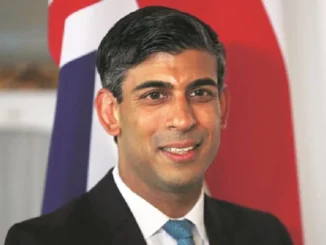
  • Rishi Sunak pledges major crackdown on sex offenders

    Rishi Sunak pledges major crackdown on sex offenders

    LONDON (TIP): The Indian origin contender for UK Prime Minister’s post Rishi Sunak has vowed to hunt down and stamp out grooming gangs who prey on children and young women, and make their ringleaders subject to maximum life sentences as part of his campaign pledge. Under a government headed by him, the Ready4Rishi campaign team said on Wednesday, July 27 evening that members of grooming rings will automatically face criminal charges for belonging to or facilitating the activity of the gang, with those at its heart facing life sentences. In a further crackdown on sex offenders, the former chancellor will ban so-called “down-blousing”, where perpetrators take photos down a woman’s top without their consent to curb abuse targeted at women and bring more offenders to justice. “Sexual violence against women and girls should be treated as a national emergency until it has been defeated. As a father of two girls, I want them to be able to go for a walk in the evening or to a shop at night without any fear of threat,” said Sunak, father to schoolgirls Anoushka and Krishna.

    Sunak said as chancellor he boosted support for victims to record levels – quadruple those under Labour – and a ground-breaking new approach to policing which is helping drive up prosecutions of sex offenders. “As the Prime Minister I will go further. I will make it a criminal offence if you harass women by taking intimate images of them without their consent and will introduce a major crackdown on grooming gangs,” he said. “We cannot let sensitivities over race stop us from catching dangerous criminals who prey on women and I will not stop until we live in a society where women and girls can go about their daily lives feeling safe and secure,” he said.

    The British Indian former finance minister, who is married to Akshata Murty – the daughter of Infosys co-founder Narayana Murthy, said he would set up a new emergency taskforce working at the heart of the UK’s National Crime Agency (NCA) to launch an investigation into any town or city where significant grooming gang activity has been found and root it out.

    If elected to succeed Boris Johnson at 10 Downing Street, Sunak promises to force suspects to explain why they have the phone numbers or contact details of children. They will also have to reveal their ethnicity or nationality for the purposes of crime prevention.He also plans to launch a National Grooming Gangs Whistleblower Network to gather intelligence on gangs and create a dedicated database to help the police monitor suspects. Besides, the focus will be on boosting training for frontline police to help them identify victims of grooming gangs and remind officers to serve without fear or favour, including the fear of being accused of racism.

    “Rishi will give the Justice Secretary a final say over parole decisions for dangerous criminals. His government will personally review and consider denying parole for any gang member convicted of rape who still posed a risk after serving their sentence,” reads his campaign statement. “He will pass the Bill of Rights to help prevent any foreign perpetrators using the Human Rights Act to frustrate their deportation orders,” it said. The former frontline Cabinet minister said he would build on the support for victims he funded as Chancellor – 192 million pounds a year by 2024-25, including funding 1,000 sexual violence advisers – by extending mental health support for rape victims to be available to them for life. He will also ensure all survivors of sexual violence have access to same-sex spaces, his campaign said.

    (Source: PTI)

  • Commonwealth Games Begin in Birmingham

    Commonwealth Games Begin in Birmingham

    • The biggest and the most expensive sporting event in the U.K. since the 2012 London Olympics
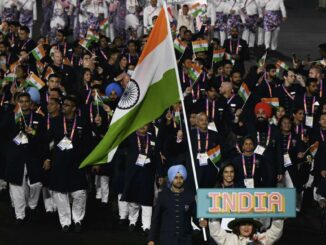
    • P.V. Sindhu, Manpreet Singh Lead Indian Contingent at Birmingham Commonwealth Games  Opening Ceremony

    BIRMINGHAM (TIP): The opening ceremony of the 22nd Commonwealth Games began here on Thursday, July 28,  amid much fanfare and in front of an estimated 30,000 spectators, showcasing the very best of Birmingham and the whole of the U.K. The Games is set to be the biggest and most expensive sporting event in the U.K. since the 2012 London Olympics. Drummer-percussionist Abraham Paddy Tetteh started things off at the Alexander Stadium, and then, Indian classical vocalist and composer Ranjana Ghatak took the lead, the section intended to showcase the diversity of the city. The Games, set to be the biggest and most expensive sporting event in the U.K. since the 2012 London Olympics, have had to deal with the adverse impact of the COVID-19 pandemic. It comes almost 10 years to the day since the much-acclaimed opening ceremony of the London Games. The opening act marked the beginning of 11 days of sporting action in the city, with 19 events over 15 venues in the West Midlands. Seven of those events will be contested in Birmingham, the UK’s second-largest city with a population of 1.15 million. More than 5000 athletes from 72 countries will compete in 280 events across 19 sports. The U.K. is hosting the mega event for the third time in the last 20 years with the Commonwealth Games Federation (CGF) unable to attract new bidders out of the 56 countries that make up the sporting body due to cost constraints. Having stepped up to host the Games after South African city Durban pulled out because of financial constraints, the organizers went ahead without any change in the original schedule at a time when both the 2020 Tokyo Olympics and this year’s Asian Games were postponed by a year owing to COVID-19. As far as India is concerned, its double Olympic medalist badminton ace PV Sindhu and Indian men’s hockey team captain Manpreet Singh were chosen as the country’s flag bearers for the opening ceremony.

    (With inputs from PTI )

  • 2 pilots killed in Mig-21 aircraft crash near Barmer in Rajasthan

    2 pilots killed in Mig-21 aircraft crash near Barmer in Rajasthan

    BARMER (TIP): Two Indian Air Force pilots were killed when their twin-seater Mig-21 trainer aircraft met with an accident near Barmer in Rajasthan on July 28  night. The IAF said the accident took place around 9:10 pm. “A twin seater Mig-21 trainer aircraft of the IAF was airborne for a training sortie from Utarlai air base in Rajasthan this evening,” it said. “Around 9:10 pm, the aircraft met with an accident near Barmer. Both pilots sustained fatal injuries. The IAF deeply regrets the loss of lives and stands firmly with the bereaved families,” the IAF said in a statement. A Court of Inquiry has been ordered to ascertain the cause of the accident. Defense Minister Rajnath Singh spoke to Air Chief Marshal V.R. Chaudhari following the crash. “Deeply anguished by the loss of two Air Warriors due to an accident of IAF’s Mig-21 trainer aircraft near Barmer in Rajasthan,” Mr. Singh said on Twitter. “Their service to the nation will never be forgotten. My thoughts are with the bereaved families in this hour of sadness,” he said. IAF has some 70 MiG 21 jets which are a 1960s design but the ones being flown are 30-35 years or more in age. The IAF announced it intends to phase out the MiG 21 fleet by 2025.

    (With inputs from  PTI)

  • Use amla for dull, dandruff-prone scalp and weak hair

    Use amla for dull, dandruff-prone scalp and weak hair

    Amla is the gift that never stops giving to your hair. In easy-to-understand terms, it only knows how to treat your hair. Backing its charm for centuries now, ask your elders about its unmatchable benefits. Famously called, Indian Gooseberry, it holds a surprise package. The green fruit although sour for your taste buds, it’s what shiny and healthy hair dreams are made of. Let’s take a look at a few miracles it can bring to life for us whether used in a powder, juice, or oil form.

    Goodbye dandruff

     Packed with all of the good things, vitamin C, anti-inflammatory, and anti-bacterial properties, it tackles dry scalp problems and lowers the intensity of your scalp’s itchy behaviour. Heat both coconut and amla oils spread it evenly on your hair, and give it a good massage for an effective anti-dandruff treatment.

    Hair fall? Worry no more

    The mix of minerals, amino acids, phytonutrients, and vitamins present in amla aid in enhancing hair growth and strengthening your roots. From promoting blood circulation to collagen, amla can easily give a good boost to volume. For better results, add onion juice to amla hair oil and apply it to your hair. Follow this once a week for healthy and lustrous locks. Premature greying is the way of life and so is healthy black hair

    With its powerhouse of nutrients, amla can help fight the appearance of premature greying. Whether you’d love to consume these or simply permit your hair to soak ints goodness through hair masks, you’re in for something stellar. Take one tablespoon of amla juice, and one tablespoon of shikakai powder and mix it well. You can add aloe vera as well. Adjust the quantity as per your preference, watery or thick in texture.

                    Source: Pinkvilla

  • Women experience higher rates of depression than men: Research

    Women experience higher rates of depression than men: Research

    Despite the fact that there are treatments for depression, many people find these treatments to be ineffective at times. In addition, women are more likely than males to have depression, but the cause for this difference is unknown. This makes treating their disorders more challenging at times. The findings of the study were published this month in the journal Biological Psychiatry. University of California, Davis, researchers teamed up with scientists from Mt. Sinai Hospital, Princeton University, and Laval University, Quebec, to try to understand how a specific part of the brain, the nucleus accumbens, is affected during the depression. The nucleus accumbens is important for motivation, response to rewarding experiences and social interactions — all of which are affected by depression. Previous analyses within the nucleus accumbens showed that different genes were turned on or off in women, but not in men diagnosed with depression. These changes could have caused symptoms of depression, or alternatively, the experience of being depressed could have changed the brain. To differentiate between these possibilities, the researchers studied mice that had experienced negative social interactions, which induce stronger depression-related behavior in females than males.

    “These high-throughput analyses are very informative for understanding long-lasting effects of stress on the brain. In our rodent model, negative social interactions changed gene expression patterns in female mice that mirrored patterns observed in women with depression,” said Alexia Williams, a doctoral researcher and recent UC Davis graduate who designed and led these studies. “This is exciting because women are understudied in this field, and this finding allowed me to focus my attention on the relevance of these data for women’s health.” The study “Comparative transcriptional analyses in the nucleus accumbens identifies RGS2 as a key mediator of depression-related behaviour.” After identifying similar molecular changes in the brains of mice and humans, researchers chose one gene, regulator of g protein signaling-2, or Rgs2, to manipulate. This gene controls the expression of a protein that regulates neurotransmitter receptors that are targeted by antidepressant medications such as Prozac and Zoloft. “In humans, less stable versions of the Rgs2 protein are associated with increased risk of depression, so we were curious to see whether increasing Rgs2 in the nucleus accumbens could reduce depression-related behaviors,” said Brian Trainor, UC Davis professor of psychology and senior author on the study. He is also an affiliated faculty member with the Center for Neuroscience and directs the Behavioral Neuroendocrinology Lab at UC Davis.

    When the researchers experimentally increased Rgs2 protein in the nucleus accumbens of the mice, they effectively reversed the effects of stress on these female mice, noting that social approach and preferences for preferred foods increased to levels observed in females that did not experience any stress. “These results highlight a molecular mechanism contributing to the lack of motivation often observed in depressed patients. Reduced function of proteins like Rgs2 may contribute to symptoms that are difficult to treat in those struggling with mental illnesses,” Williams said. Findings from basic science studies such as this one may guide the development of pharmacotherapies to effectively treat individuals suffering from depression, the researchers said. “Our hope is that by doing studies such as these, which focus on elucidating mechanisms of specific symptoms of complex mental illnesses, we will bring science one step closer to developing new treatments for those in need,” said Williams.

                    Source: ANI

  • Chikar Chole

    Chikar Chole

    Chikar Chole is a Punjabi chickpea curry. The word Chikar (pronounced chik-kar) is a Punjabi word that means soft and mushy chole or chickpeas.

    Ingredients

    1 Cup Chickpeas (Soaked overnight)

    1 Boiled Potato, 1 Onion Paste, 1 tsp Ginger Paste, 1 tsp Garlic Paste

    1 cup Curd

    1 Stick Cinnamon

    5-6 Black Peppercorns

    1 Black Cardamom

    1 tsp Red Chilli Powder

    1 tsp Coriander Powder

    1 tsp Cumin Powder, 1/2 tsp Turmeric

    1 tsp Black Pepper Powderto taste Salt

    1 tsp Dry mango powder

    1 tsp Kasoori methi

    2-3 Green Chillies chopped4 tbsp Oil

    Method

    In a pressure cooker, add water to the chickpeas and cook till it gets completely dissolved. Now sieve the chickpeas, keep the water aside. Separate a little bit from the boiled chickpeas. Take boiled potatoes and chickpeas and make a smooth paste by adding some water in a blender. Heat four tablespoons of oil in a pan. Add ginger garlic paste and all the whole spices and fry for two minutes. Add onion paste and fry it till it turns light golden in color. Simultaneously, add the prepared paste of potatoes and chickpeas and fry them.

    Now add red pepper, coriander, turmeric, salt and cumin powder and fry it while mixing the spices. Add curd and mix it well with spices. After a while, add boiled chickpeas to this mixture and cook for 2 minutes. Add the remaining water of chickpeas to it and cover and cook for five minutes. Add amchur, black pepper and kasoori methi and mix. Mix finely chopped green chilies and green coriander and take it out in a serving dish and serve it with naan or rice.

    Source: NDTV

  • Scientists reveal vitamin B6 supplements may reduce anxiety, depression

    Scientists reveal vitamin B6 supplements may reduce anxiety, depression

    According to a recent study, using high-dose vitamin B6 supplements will lessen anxiety and depressive symptoms. The findings of the research were published in the journal ‘Human Psychopharmacology Clinical and Experimental’. Scientists at the University of Reading measured the impact of high doses of Vitamin B6 on young adults and found that they reported feeling less anxious and depressed after taking the supplements every day for a month.

    The study provides valuable evidence to support the use of supplements thought to modify levels of activity in the brain for preventing or treating mood disorders.

    Dr David Field, the lead author from the School of Psychology and Clinical Language Sciences at the University of Reading, said: “The functioning of the brain relies on a delicate balance between the excitatory neurons that carry information around and inhibitory ones, which prevent runaway activity.

    “Recent theories have connected mood disorders and some other neuropsychiatric conditions with a disturbance of this balance, often in the direction of raised levels of brain activity.

    “Vitamin B6 helps the body produce a specific chemical messenger that inhibits impulses in the brain, and our study links this calming effect with reduced anxiety among the participants.” While previous studies have produced evidence that multivitamins or marmite can reduce stress levels, few studies have been carried out into which particular vitamins contained within them drive this effect.

    The new study focused on the potential role of Vitamins B6, which is known to increase the body’s production of GABA (Gamma-Aminobutyric Acid), a chemical that blocks impulses between nerve cells in the brain.

    In the current trial, more than 300 participants were randomly assigned either Vitamin B6 or B12 supplements far above the recommended daily intake (approximately 50 times the recommended daily allowance) or a placebo and took one a day with food for a month. The study showed that Vitamin B12 had little effect compared to placebo over the trial period, but Vitamin B6 made a statistically reliable difference.

    Raised levels of GABA among participants who had taken Vitamin B6 supplements were confirmed by visual tests carried out at the end of the trial, supporting the hypothesis that B6 was responsible for the reduction in anxiety. Subtle but harmless changes in visual performance were detected, consistent with controlled levels of brain activity.

    Dr Field said, “Many foods, including tuna, chickpeas and many fruits and vegetables, contain Vitamin B6. However, the high doses used in this trial suggest that supplements would be necessary to have a positive effect on mood.

    “It is important to acknowledge that this research is at an early stage and the effect of Vitamin B6 on anxiety in our study was quite small compared to what you would expect from the medication. However, nutrition-based interventions produce far fewer unpleasant side effects than drugs, and so in the future people might prefer them as an intervention. “To make this a realistic choice, further research is needed to identify other nutrition-based interventions that benefit mental wellbeing, allowing different dietary interventions to be combined in future to provide greater results.

    “One potential option would be to combine Vitamin B6 supplements with talking therapies such as Cognitive Behavioural Therapy to boost their effect.”

                    Source: ANI