Month: July 2022

  • NJSO & MUSEUM OF ART INVITE YOU TO CONCERTS IN THE PARK

    By Mabel Pais

    The New Jersey Symphony, in partnership with the Newark Museum of Art, presents four chamber music concerts in the museum’s Alice Ransom Dreyfuss Memorial Garden in July and August, in partnership with the Museum. The concerts are part of the NMOA Summer Series (njsymphony.org/museum).Resi dent Artistic Catalyst Daniel Bernard Roumain curates a pair of chamber music programs; Principal Bassoon Robert Wagner and Principal Bass Ha Young Jung each curate an evening of music in the garden.

    SCHEDULE

    New Jersey Symphony Chamber Players Concerts ‘Winds in the Garden’

    Wednesday, July 13, at 7 pm

    ‘Winds in the Garden.’ Photo : njsymphony.org

    Wagner’s program features music by Mozart, Hummel and Gounod alongside wind music of the 20th and 21st centuries, with works by Amanda Harberg, Svend S. Schultz and Stacy Garrop.

    Robert Wagner bassoon & curator

    Hummel Allegro con spirito from Octet Partita in E-flat Major

    Mozart Serenade No. 12 for Winds in C Minor

    Amanda Harberg Hall of Ghosts

    Schultz Divertimento for Wind Octet

    Stacy Garrop Bohemian Café

    Gounod Petite Symphonie

    * * *

    ‘Moving, Believing and Being Together’

    Wednesday, July 27, at 7 pm

    Daniel Bernard Romain Photo / njsymphony.org

     Daniel Bernard Roumain violin & curator

    New Jersey Symphony Chamber Players

    Romain curates the program that speaks to the moment through music. The concert features work by Florence Price, Mozart, Farrenc, Terry Riley and Aleksandra Vrebalov; Roumain’s Hip-Hop Study & Etude in F Major and E-Flat Major and arrangement of “Lift Every Voice and Sing,” and the Ukrainian national anthem.

    Verbytsky “State Anthem of Ukraine”

    Johnson/arr. Daniel Bernard Roumain Lift Every Voice And…

    Farrenc Selections from Nonet in E-flat Major

    Mozart Overture to The Marriage of Figaro

    Terry Riley In C

    Aleksandra Vrebalov Echolocations

    Price Adoration

    Daniel Bernard Roumain Hip-Hop Study & Etude in F Major and E-flat Major

    * * *

    ‘Summer, Time and Jazz’

    Wednesday, August 3, at 7 pm

    Daniel Bernard Roumain violin & curator

    New Jersey Symphony Chamber Players

    The program brings jazz and jazz-inspired classical music to the garden. Roumain’s program features Paquito D’Rivera’s Lecuonerías and selections from Aires Tropicales, Tania León’s De Memorias and Saóko, Valerie Coleman’s Red Clay & Mississippi Delta and Roumain’s Hip-Hop Study & Etude in G Minor. Prior to the concert, attendees can explore the jazz-themed exhibits inside the Museum from 6–7 pm.

    Valerie Coleman Red Clay & Mississippi Delta

    Paquito D’Rivera Selections from Aires Tropicales

    Tania León De Memorias

    Paquito D’Rivera Lecuonerías

    Paquito D’Rivera Selections from Four Pieces for Brass Quintet

    Tania León Saóko

    Daniel Bernard Roumain Hip-Hop Study & Etude in G Minor

    * * *

    ‘Bass & Flute Extravaganza!’

    Wednesday, August 17, at 7 pm

    ‘Bass and Flute.’ Photo / njsymphony.org

    Ha Young Jung bass & curator

    New Jersey Symphony Chamber Players

    Jung’s ‘Bass & Flute Extravaganza!’ features classic works from Bach, Rossini and Schulhoff and modern sounds from Dorothy Rudd Moore, Morton Gould and Valerie Coleman.

    Dorothy Rudd Moore TRANSCENSION (“I have been to the mountaintop”)

    Bach Selection from Cello Suite No. 1 in G Major, BWV 1007

    Gould Benny’s Gig

    Rossini Selections from Six String Sonatas

    Schulhoff Concertino for Flute, Viola and Double Bass

    Valerie Coleman Maombi Asante

    The New Jersey Symphony (NJSO)

    The New Jersey Symphony will redefine what it means to be a nationally leading, relevant orchestra in the 21st century.

    Through adventurous performances, hands-on educational experiences and robust community programming, the organization encourages everyone to enjoy the power and creativity of orchestral music in all its forms. Across genres and venues, for audiences of all walks of life, it strives to bring music that’s meaningful to you.

    As NJSO looks toward celebrating its centennial, it renews its deeply rooted commitment to diversity, equity and inclusion by championing new, and often local, artists; engaging audiences for whom the inspiring depth and breadth of classical music will be new; and incorporating the broadest possible representation in all aspects of the organization—all to better reflect and serve its vibrant communities.

    NJSO’s expansive educational offerings — including its youth orchestras, masterclasses and virtual learning opportunities — will build the next generation of listeners and musicians and help students grow, both musically and personally. And it will continue to seek new ways to connect with all New Jerseyans, through programs that resonate with a variety of cultural and musical backgrounds, as well as digital innovations that make the orchestra accessible to anyone, anywhere, anytime.

    CONNECT WITH NJSO:

    njsymphony.org

    @NJSymphony on Facebook, Twitter and Instagram

    @NewJerseySymphony on YouTube

    Email: information@njsymphony.org

    REFRESHMENTS

    Food and drinks will be available for purchase.

    TICKETS

    General-admission tickets are available online at njsymphony.org or by phone at 1.800.ALLEGRO (255.3476). Symphony subscribers and Museum members pay a discounted price.

    SAFETY PROTOCOLS

    All New Jersey Symphony performances follow safety measures in partnership with the venues and based on the guidance provided by the CDC and the State of New Jersey.

    For more information, visit njsymphony.org/museum.

    For more information on the NMOA Summer Series, including the full event schedule, visit newarkmuseumart.org.

    The Newark Museum of Art

    Founded in 1909, The Newark Museum of Art is the largest art and science education institution in New Jersey and one of the most influential museums in the United States. Its renowned global art collections, supported by significant holdings of science, technology and natural history, rank 12th among North America’s art museums. The Museum is dedicated to artistic excellence, education and community engagement with an overarching commitment to broadening and diversifying arts participation. As it has for over a century, the Museum responds to the evolving needs and interests of the diverse audiences it serves by providing exhibitions, programming and resources designed to improve and enrich people’s lives.

    The Museum also encompasses the Victoria Hall of Science, the Alice and Leonard Dreyfuss Planetarium, the 1885 Ballantine House, the MakerSPACE, the Billy Johnson Auditorium, the Alice Ransom Dreyfuss Memorial Garden, an authentic 1784 Schoolhouse and the Newark Fire Museum. To learn more, visit newarkmuseumart.org.

    (Mabel Pais writes The Arts and Entertainment, Social Issues, Health & Wellness, Cuisine and Spirituality)

  • The new ‘normal’ of political splits and shifts

    The new ‘normal’ of political splits and shifts

    ‘The current phase is bizarre when compared to the past because dominant parties appear to be actively encouraging splits and shifts and having no respect for the basic rules of the game’

    K.K. Kailash

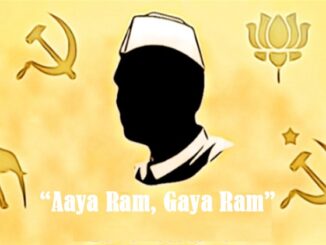
    Political parties sometimes break up like marriages, and like remarriages, individual legislators switch parties. In both cases, the consequences can be severe. When individual legislators or a group decide to leave a party, form another party, or join another party, it could have repercussions in terms of government formation, maintenance, and termination. In Maharashtra, recently, and in Madhya Pradesh, a while ago, splits in the ruling party and a subsequent realignment of legislators inaugurated new governments.

    Distinct waves

    Splits and switches are commonplace in legislatures across the globe, and India has witnessed at least three distinct waves. The first wave occurred towards the latter half of the 1960s when challengers to the Congress attempted to displace it in the States. There was literally great shoving and pushing and a quick turnover of governments due to the free movement of legislators across political parties. The next phase was inaugurated with an attempt to end the free movement and regulate the behavior of legislators through the anti-defection law. While the law discouraged individual movement, it incentivized a collective movement of legislators since it laid down specific numbers to legitimize and validate party switches. When legislators switch in groups, the costs are shared, and the move also appears less opportunistic, which in many ways defeats the purpose of the legislation. Though the law has placed hurdles before splits and switches, the activity has continued. To make matters worse, the implications of the law now influence the strategies of legislators and parties.

    The third phase was inaugurated in 2014 with the Bharatiya Janata Party (BJP) on the ascendance when already-dominant parties began to use splits and switches to weaken and destroy their competitors. Aided by friendly Governors, the BJP, like the Congress did earlier, benefited from a string of governmental changes, including Arunachal Pradesh (2016), Bihar (2017), Karnataka (2019), Madhya Pradesh (2020), and Maharashtra (2022), which were brought about by legislators switching sides. In Puducherry (2021), switches led to fresh elections, bringing a BJP alliance to power. In Goa (2022) and Manipur (2017), though the Congress was returned as the single-largest party, it was outmaneuvered by the BJP soon after. It was only in Uttarakhand that a Supreme Court of India intervention saved the Congress government.

    A regional example

    It is not the BJP alone, as around the same time, ruling parties had a field day in Telangana and Andhra Pradesh. In Telangana (2014), the Telangana Rashtra Samithi (TRS) decimated the Congress and the Telugu Desam Party (TDP) by encouraging shifts. In 2018, the Congress again crumbled under pressure. Likewise, in Andhra Pradesh, first, the TDP did the same to the Yuvajana Shramika Rythu Congress Party (YSRCP) after 2014, and subsequently, when the YSRCP came to power in 2019, it paid the TDP back in the same coin. In all these cases, the ruling party already had a comfortable majority of its own and did not necessarily need additional support.

    Therefore, the current phase is bizarre when compared to the past because dominant parties appear to be actively cheering splits and shifts and having no respect for the basic rules of the game. The anti-defection law and control of institutions are now weaponized by dominant parties to intervene in the internal working of Opposition parties, and sometimes make and break them. Furthermore, legislators are switching support even if it does not count to the making or maintenance of governments.

    A perspective

    So, what do we make of the splits and switches? Much of our discussion is dominated by the morality of splits and switches, and this revolves around the damage it causes to the foundations of representative democracy. And these are undoubtedly reasonable arguments. First, switchers violate the trust relationship with their constituents as voters get something other than what they bargained for. Second, assuming voters vote for parties and not candidates, the argument is that uncohesive parties make it difficult for voters to draw definitive lines of responsibility. Consequently, it is difficult for voters to hold party governments accountable for their actions during elections.

    Despite sound arguments about the despicable nature of splits and switches, they continue to happen routinely. The question then arises: Why do legislators split from and switch parties without fearing the negative connotations? We cannot answer this question as long as our perspective of political parties is dated. While we keep track of party system change, we ignore the point that the component parts, parties which make up the system, too,  change and transform. Our conceptualization of parties is static and is drawn from an era long gone by. Parties constantly adapt new modes to sustain and find success for themselves.

    Our popular image of a party is that of the classical mass party, which rises from societal movements and is essentially internally democratic. They are linked to mass organizations and groups that share a common goal encompassing different dimensions of societal life. The leadership comes from the organization, is accountable to it and is committed to the goal. Our normative posturing comes from this ideal type. This is what even the Election Commission of India imagines a party should be since many of its guidelines lay stress on the ‘democratic spirit’ and the need for transparency and participation in internal decision-making.

    However, in reality, parties are anything but this. While they mobilize and compete around identity and group solidarity issues such as mass parties, the internal democracy element is missing, and their links with society and mass organizations are at best tenuous. Today’s parties are centralized vote-getting machines which primarily work to ensure the return of political leaders to office. Mass inputs and ideas do not matter, and it is the central leadership that counts. All party activities begin and end with elections.

    In this model, it is not surprising that paid professionals occupy a central place. They pick strategies, run campaigns and are sometimes involved in ticket distribution. New forms of communication and campaign methods have displaced traditional campaign modes. Consequently, the vast pool of voluntary unpaid laborwhich traditionally formed the backbone of parties and linked parties with the grass roots are no longer as closely involved as they were in the past.

    Leaders are “elected unanimously” and party conferences are choreographed events where ordinary members meet and greet leaders. These events are used to enhance the profile of the leadership elite and are indeed not a forum for intra-party debate and discussion. Since parties are mainly concerned with electoral success, anyone who enjoys the confidence of the top leadership and can help increase the seat share is likely to get a ticket. Moreover, we now know that parties prefer candidates who bring in their own money, fund other candidates and raise resources for the party. All this puts the party on the ground in the shade.

    New alignment

    Finally, the most significant change is that parties are more closely aligned with the state rather than civil society. Parties exchange material and psychological rewards, and goods and services the state provides for electoral advantage. Voters also see parties as a supplier of services. This connection pushes legislators and parties to be in government or at least close to the government. This was one of the most common reasons for Members of Legislative Assemblies who switched parties in the two Telugu-speaking States. As a corollary to this shift, the party has become a shadow of what it once was and has been reduced to an instrument to defend policies and programs of the government.

    On the supply side, the party on the ground no longer calls the shots; parties are election vehicles and a supplier of services. The party bond exists only as long as it ensures success for the legislator. On the demand side, the voter does not appear to have any problem, whether it is ‘A’ or ‘B’, as long as “services” are available. Consequently, splits and switches are not seen as objectionable by legislators and are not punished by voters as well. Legislators will, therefore, be willing to do anything if the benefits exceed the costs.

    (The author is with the Department of Political Science, University of Hyderabad)

  • Draupadi Murmu: will she be the guardian of Adivasi interests?

    Draupadi Murmu: will she be the guardian of Adivasi interests?

    “Apart from all the political maneuvering, one needs to look at the story of the Adivasis and make one’s own conclusions whether this nomination by BJP is part of a genuine effort to recognize the aspirations of a backward community or simply a charade slyly weaponizing its diversity, equity, and inclusion program. The upper caste politics have long realized that they can no longer control the people under ‘Chaturvarnya,’ the caste system. Today’s Hindutva agenda includes carefully crafted strategies to attract Scheduled Castes and Scheduled Tribes into their fold.”

    By George Abraham
    By  George Abraham

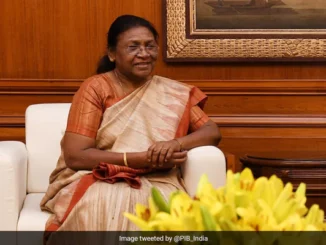
    It is almost a foregone conclusion that Draupadi Murmu will be the next President of India. She belongs to the Scheduled Tribes and hails from the Santhal community in the district of Mayurbhanj in Odisha. When elected, she will be the first tribal woman to be the President of India. It is indeed a triumph for the community, and she deserves all the accolades that come her way. However, one cannot help but be dismayed by the blatant politics the BJP has employed to elect their favored candidate. BJP clearly lacked the necessary votes to elect someone outright. It is believed that they might be short of 2% votes to get their candidate over the hump. In the meantime, the divided opposition parties tried to line up behind a single candidate. A united opposition might have thwarted the BJP’s desire not to have a consensus candidate. However, with the selection of Murmu, the BJP appeared to have outplayed the opposition.

    The selection of a Tribal candidate has just disarmed the opposition and has placed them in a precarious position, where any criticism could be construed as anti-tribal, anti-woman, or even anti-poor. Biju Janata Dal (BJD)  has declared their early support stating that Murmu belongs to Odisha while expressing their pride and joy on the nomination. The selection has forced the Jharkhand Mukti Morcha (JMM) Hemant Soren to announce support for Draupadi Murmu, calling it a proud moment for tribals. Even Mamata Banerjee’s commitment to the opposition unity in this regard may be in doubt. As the opposition is in disarray and the support for Yashwant Sinha is fast vanishing,  the die is cast that she will emerge victorious on the voting day. Apart from all the political maneuvering, one needs to look at the story of the Adivasis and make one’s own conclusions whether this nomination by BJP is part of a genuine effort to recognize the aspirations of a backward community or simply a charade slyly weaponizing its diversity, equity, and inclusion program. The upper caste politics have long realized that they can no longer control the people under ‘Chaturvarnya,’ the caste system. Today’s Hindutva agenda includes carefully crafted strategies to attract Scheduled Castes and Scheduled Tribes into their fold.

    Sri Aurobindo’s lights on the system of Indian culture compiled the following, “There are, first and highest, the man of learning and thought and knowledge; next, the man of power and action, ruler, warrior, leader, administrator; third in the scale, the economic man, producer and wealth-getter, the merchant, artisan, cultivator: these were the twice-born, who received the initiation, Brahmin, Kshatriya, Vaishya. Last came the more undeveloped human type, not yet fit for these steps of the scale, unintellectual, without force, incapable of creation or intelligent production, the man fit only for unskilled labor and menial service, the Shudra.” The BJP certainly realizes that they need the votes of the last category to attain and keep them in power. That begs the question of whether the RSS-BJP’s effort is simply vote-bank politics or points to a genuine transformation from their original feudalistic-caste designs. Their record speaks an entirely different story. BJP’s idea of “sabka Saath, sabka vikas” runs entirely contrary to the tribal interests and their wellbeing as they are repeatedly told they must sacrifice their lands and resources for other people’s vikas. Media reports state that under the BJP rule in Chhattisgarh, 2003-18, villages were burnt, and thousands were killed in Salwa Judum and subsequent operations. The forest act of 2006 has been further diluted by the Modi regime, making the Scheduled tribe consent the last requirement for forest diversion to industry rather than the first.

    For  long the Modi Government has wanted to diminish these rights in favor of corporates or other vested interests. In May 2016, the BJP Government passed two legislations that enabled the transfer of tribal land to commercial interests. That legislation set in motion a struggle (Pathalgadi movement) between the tribal people and the government, resulting in a brutal crackdown by the authorities. Moreover, the movement was branded as anti-national, and hundreds of people were arrested and charged under the sedition laws. The government went a step further and linked the movement to ‘Maoists,’ which is labeled as anti-national and dedicated to the overthrow of the elected governments.

    At this point, it is worth remembering the late Fr. Stan Swamy, who has been a vocal critic of the government policies and defender of the tribal rights over these lands. Sadly, he died in prison awaiting trial, being charged with plotting the government’s violent overthrow. To bolster their case, NIA, in their charge sheet, accused Fr. Stan as responsible for the violence in Bhima Koregaon in Maharashtra in 2017. He was not present at the rally celebrating British and Dalit forces’ victory over Brahmin Peshwas. Bhima Koregaon was an incident where Dalits were taught another lesson for daring such a celebration.

    Historically, the BJP/RSS strategy resisted real enlightenment for the oppressed people. The feudalistic and casteist mindset under which they operate detests any individual or group that educates and inspires people from those impoverished conditions of their rights and privileges. Their anti-conversion campaign is often seen as camouflage to prevent the Tribal population from ever learning of their true worth as human beings but condemning them forever in a subservient role to the upper echelons of society. What Fr. Stan has done was to help this vulnerable population demand equal justice and freedom from servitude.

    The RSS also refuses to recognize the Adivasi religion as distinct and deserving of the nation’s respect. Those who have been converted to Christianity often suffer attacks on their worship places. What happened to Fr. Stan Swamy is a harsh reality in today’s India and a lesson to anyone who dares to defend the rights of the Adivasis. Some would argue that RSS fronts like Vanavasi Kalyan and Vidya Bharati run schools filling a critical need. But in the process, the Adivasi children are converted into Hindutva followers and foot soldiers against Muslims and Christians, as in Gujarat in 2002 and Kandhamal, Odisha, in 2008, respectively. It has also been said that Adivasis in prisons are much higher than their percentage of the population.

    To her credit, as Governor of Jharkhand, Murmu returned bills proposed by the BJP government that aimed at changing the land tenure legislation – CNTA (Chhota Nagpur  Tenancy Act) and SPTA (Santhal Pargana Tenancy Act), which were intended to make it easier to take over the Adivasi land. However, under apparent pressure, she passed the anti-Adivasi changes in the Land Acquisition Act and the Freedom of Religion bill 2017, which criminalizes conversion. She appeared to be only a pawn in the BJP’s political game than a conscientious defender of the rights of her own people. Fr. Stan Swamy may not belong to the Adivasis; however, his legacy in defense of those impoverished and defenseless people will outshine forever any tokenism employed by the current regime.

    (The author is a former Chief Technology Officer, the  United Nations, and is Vice Chairman of the Indian Overseas Congress USA. He can be reached at gta777@gmail.com)

  • Fleeing, quitting

    With Gotabaya quitting, new leadership should heed people’s aspirations in Sri Lanka

    Sri Lanka’s President Gotabaya Rajapaksa has resigned at last, but not before keeping the country guessing for two days. In a not-unexpected turn of events, the beleaguered executive head of Sri Lanka fled by an Air Force plane, reached the Maldives and thereafter went to Singapore, presumably on his way to another country. Evidently hedging against the possibility of being turned back by any of these countries, he did not submit his resignation on July 13 as promised. As he sent in his resignation Thursday evening, it was clear he was holding out so that he would not lose his presidential immunity from prosecution until he reached safe haven. Given the widespread wrath against him, being in Colombo without the shield of office was not an option for him. Instead, he appointed Prime Minister Ranil Wickremesinghe to discharge the President’s functions in his absence, using a provision in the Constitution which allows such an arrangement if the incumbent has to leave the country or is otherwise unable to perform his duties. Mr. Wickremesinghe is now unlikely to respond to calls for his resignation, as the country’s Constitution provides that the current Prime Minister shall act as President until a new one is elected. While the legislature is to be convened soon for formally electing a new President, there are questions over whether the mass uprising will abate, as its protagonists have been asking for Mr. Wickremesinghe’s resignation too, seeing him as equally discredited. It is perhaps in anticipation of an intensification of the protest that Mr. Wickremesinghe has asked the military to do whatever is needed to restore order. But order is not born of bloodshed; confrontation must be avoided, and efforts made to heed the demands of the people.

    The world has been amazed by the unprecedented display of righteous anger and courage by the citizens of Sri Lanka, as they channeled the widespread fury against the devastation caused by the economic crisis on their day-to-day existence. As civil society came together, it is apt to see this as a revolutionary moment in which an avaricious and apathetic political class has been humbled by people united by suffering. While external observers see this as a moment of truth for authoritarian leaders, power-hungry politicians and their ilk, it remains to be seen if political leaders in Sri Lanka themselves have drawn any lesson from it. Reports suggest that jockeying for power is going on on one side even as images of protesters overwhelming offices and residences associated with the rulers are going viral. Sri Lankans may expect that a change of regime will mean a new order that would usher in constitutional changes, policy reforms and reverse the trend of public interest being sacrificed for political ends. The next President should recognize this legitimate aspiration and refrain from any attempt to maintain the status quo, cover up the misdeeds that led the country to the current crisis or preserve the ill-gotten gains of office.

    (The Hindu)

  • Population milestone

    India needs to be well prepared for challenges

    India is on course to become the world’s most populous country. The ‘World Population Prospects 2022’ report says that India’s population is projected to be 1.429 billion next year, when China would have 1.426 billion people. By 2050, it is estimated that India will have 1.668 billion people, far ahead of China’s population, which will drop to 1.317 billion. The UN has credited India with bringing down the fertility rate slowly and smoothly, in stark contrast to China’s strict policies that have produced rapid results.

    The report of the fifth round of the National Family Health Survey (NFHS-5), released in May this year, stated that India’s total fertility rate — the average number of children per woman — had ‘further declined from 2.2 to 2 at the national level’. One of the survey’s key findings was that there were only five states whose fertility rate was above the replacement level of 2.1 (the rate at which a population exactly replaces itself from one generation to the next) — Bihar, Meghalaya, Uttar Pradesh, Jharkhand and Manipur. Notably, these states are among the laggards in terms of per capita income. This makes it obvious that population growth adversely impacts economic prosperity. The fact that Jains, Sikhs and Buddhists have fertility rates well below the national average can be largely attributed to economic security among members of these communities. Overtaking China as the most populous nation will pose a new set of challenges for policymakers. The government’s welfare schemes will have to factor in the rising numbers and the availability of resources to ensure that all eligible beneficiaries are covered. Healthcare, housing and education sectors, in particular, will come under greater strain. India might have made significant strides in population control in recent years, but there is no room for complacency. The overall contraceptive prevalence rate has risen from 54 per cent to 67 per cent; the aim should be to improve it substantially through an intensive and extensive awareness programme about the use of modern methods of contraception. Once population growth reaches an unmanageable level, socio-economic development will be derailed. India can’t afford to let that happen.

    (Tribune India)

  • India’s top court has sentenced tycoon Vijay Mallya to four months in jail

    India’s top court has sentenced tycoon Vijay Mallya to four months in jail

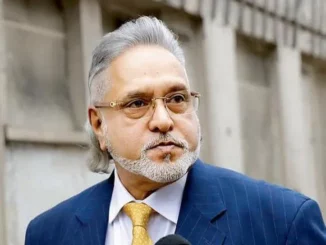
    NEW DELHI (TIP): On Monday, July 11, India’s Supreme Court found Mallya guilty of contempt and sentenced him to four months in jail. He was found guilty of the same offence in 2017 for allegedly transferring $40m to his children, even as loans to Kingfisher Airlines remained unpaid, the court said at that time. Known as the “king of good times”, in a reference to his lavish lifestyle,  Mallya has fought extradition from the UK to India, where he faces charges including fraud.

    Mallya who left India in 2016 after defaulting on debts of more than $1bn (£842m), has denied fleeing the country. Late in 2018, a court in London ruled that he could be extradited from the UK to India to face charges there. In 2020,  Mallya lost his final appeal against his extradition at the High Court in London. However, he is still believed to be living in London. Mallya faces a number of charges related to alleged financial irregularities at Kingfisher Airlines. The carrier was wound down in 2012 amid reports that pilots and cabin crew had worked unpaid for 15 months.

  • SGPC facilitates evacuation of distressed Afghan minorities

    SGPC facilitates evacuation of distressed Afghan minorities

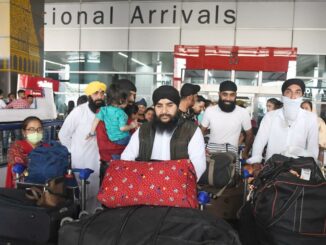
    NEW DELHI (TIP): The Shiromani Gurdwara Parbandhak Committee (SGPC) continues to facilitate the transfer of Afghan Hindus and Sikhs to India in coordination with the Indian World Forum and the Centre. A special flight from Kabul arrived in Delhi on Thursday, July 14. Twenty-one Afghan Sikhs, along with an infant who has been facilitated without a visa, arrived in Delhi. The SGPC has assisted them with airfare and will also provide financial aid to those seeking rehabilitation in the country. SGPC officials and Afghan-Hindu and -Sikh community leaders were present at the airport to receive them. After their arrival, they proceeded towards Gurdwara Sri Guru Arjan Dev in the city. About 130 Afghan-Hindus and -Sikhs are still there in Afghanistan and about 60 applications remain pending with the government.

    (Source: TNS)

  • An Indian Origin Man in 10 Downing? Rishi Sunak Tops Second Round of Voting to Succeed Boris Johnson as UK PM

    An Indian Origin Man in 10 Downing? Rishi Sunak Tops Second Round of Voting to Succeed Boris Johnson as UK PM

    LONDON (TIP): Rishi Sunak tightened his grip on the race to replace Boris Johnson as Conservative Party leader and British prime minister as he bagged 101 votes to again emerge as the winner of the latest voting round on Thursday, July 14. There are now five candidates left in the Tory leadership contest after Suella Braverman, the Indian-origin Attorney General in the fray, was knocked off the shortlist with the least votes at 27. Trade Minister Penny Mordaunt (83 votes), Foreign Secretary Liz Truss (64 votes), former minister Kemi Badenoch (49 votes) and Tory backbencher Tom Tugendhat (32 votes) remain on the ballot in the narrowing race after the second round of votes were cast by lawmakers. The next few rounds of voting among Conservative Party members of Parliament to whittle this list down to just two by next Thursday, July 21 is scheduled for early next week. Rishi Sunak has been the frontrunner among Conservative lawmakers despite being blamed by some for his role in Boris Johnson’s downfall.

    Sunak, whose exit from the Treasury last week was one of the first in a cascade of resignations that forced Johnson to quit, has been the frontrunner among Conservative lawmakers despite being blamed by some for his role in Johnson’s downfall. After maintaining his lead Sunak thanked his supporters and said on Twitter: “I am prepared to give everything I have in service to our nation. Together we can restore trust, rebuild our economy and reunite the country.”Earlier, he took to the airwaves to say his first economic priority would be tackling high inflation, not the tax cuts pledged by his rivals.

    Sunak, like his former boss, was criticized and fined for breaking pandemic lockdown rules to attend Mr. Johnson’s birthday party in Downing Street in June 2020. The former Chancellor, who is married to Akshata Murthy, daughter of Infosys founder N.R. Narayana Murthy, was also in the spotlight because his wife had saved on paying tax on her foreign income, as an expat living in Britain. He was also criticized for holding on to his U.S. ‘green card’ , despite being a public servant in the U.K. If elected to lead the Tories, Sunak will be Britain’s first non-white and Indian origin Prime Minister.

  • First ‘I2U2’ summit zeroes in on food security, clean energy

    First ‘I2U2’ summit zeroes in on food security, clean energy

    Focus on maximizing crop production; UAE to invest $2 bn in India

    NEW DELHI / WASHINGTON, D.C. (TIP): The first ‘I2U2’ summit on Thursday, July 14,  zeroed in on two specific projects with initial investments of $1.33 billion to give Indian farmers guaranteed access to Middle East markets and set up a clean energy project in Gujarat to make India the supply chain hub of renewable energy. A four-nation grouping with “I” standing for India and Israel and “U” for the US and the UAE.

    The projects are among half a dozen identified by the Sherpas of the four countries at the virtual summit between Prime Minister Narendra Modi, US President Joe Biden, UAE President Mohammed bin Zayed Al Nahyan and Israel PM Yair Lapid.

    The vision and agenda of the ‘I2U2’ is progressive and practical. We can accelerate our agenda and contribute significantly to the global economy. Narendra Modi, Prime Minister

    The UAE will invest $2 billion to develop food parks in India. The larger aim of the programme is to help tackle food insecurity in South Asia and the Middle East.

    The leaders discussed innovative ways to ensure long-term and more diversified food production and food delivery systems that can better manage global food shocks. To this end, the UAE will invest $2 billion to develop food parks in India with expertise from the US and Israel to maximize crop yield and, in turn, help tackle food insecurity in South Asia and the Middle East. A joint statement issued after the summit said the “unique grouping of countries” aims to harness the entrepreneurial spirit to tackle some of the greatest global challenges through joint investments in water, energy, transportation, space, health and food security. The inaugural summit focused on the food security crisis and clean energy.

    Madhya Pradesh and Gujarat have started exploring options and have identified banana, potato, rice, spices and onions for the food parks. “We will use this as an opportunity to export perishable food products grown in this corridor to the strategic markets of the Gulf through the UAE. It will enable significant job creation in India,” explained Foreign Secretary Vinay Kwatra. The second is a hybrid renewable energy project in Gujarat consisting of 300 MW of wind and solar capacity complemented by a battery energy storage system. The US Trade and Development Agency funded a feasibility study for the $330 million project and UAE companies will be investment partners. Such projects have the potential to make India a global hub for alternate supply chains in the renewable energy sector, said the Foreign Secretary.

    “The vision and agenda of ‘I2U2’ is progressive and practical. By mobilizing the mutual strengths of our countries-capital, expertise and markets-we can accelerate our agenda and contribute significantly to the global economy,” the PM observed while addressing the summit.

    (Source: TNS)

  • Singer Daler Mehndi’s appeal dismissed, sent to jail

    Singer Daler Mehndi’s appeal dismissed, sent to jail

    PATIALA (TIP): Additional Sessions Judge HS Grewal, on July 14, dismissed  Daler Mehndi’s appealagainst two-year jail sentence in a 2003 human trafficking case, following which he was taken into custody and sent to jail. As per an FIR registered in 2003 at the Sadar police station, it was alleged that Mehndi brothers had taken 10 persons to the US as their troupe members in 1998 and 1999. These persons were “dropped off” illegally in the US. On September 19, 2003, the Patiala police registered a case against Mehndi and Shamsher on a complaint filed by one Bakshish Singh. Later, 35 more complainants levelled charges of fraud against the brothers. The complainants had alleged that the brothers had taken “passage money’ from them to help them immigrate to the US illegally but had failed to do so. In 2006, the Patiala police filed two discharge petitions claiming Mehndi to be innocent, but the court said the singer must be prosecuted as there was “sufficient evidence against him on the judicial file and scope for further investigation”.

    (Source: TNS)

  • Canada-based Ripudaman Singh Malik, acquitted in Air India Kanishka bombing case, shot dead

    Canada-based Ripudaman Singh Malik, acquitted in Air India Kanishka bombing case, shot dead

    SURREY (TIP): Canada-based Sikh leader and businessman Ripudaman Singh Malik, who was acquitted in the 1985 Air India Kanishka bombing case, was shot on Thursday, July 14,  his family said.

    The Surrey Royal Canadian Mounted Police said in a press release that at 9.26 am, they responded to a report of firing and located a man suffering from gunshot wounds. The injured succumbed to his injuries on the spot, they said. In his seventies, Malik was the head of Khalsa schools across Canada. Investigators believe it was a targeted crime. Earlier this year, Malik had heaped praise on Prime Minister Narendra Modi for his “commendable gesture” towards the Sikh community.

  • LI Dentist Charged In 73-Count Indictment Over Multiple Illegal Guns

    LI Dentist Charged In 73-Count Indictment Over Multiple Illegal Guns

    MASSAPEQUA, NY (TIP): A Massapequa dentist was arraigned on July 7 on a 73-count indictment related to his possession of more than 30 guns, multiple high capacity magazines, thousands of rounds of ammunition and more than a dozen “ghost guns” that were found in a search of his house in February. Paul Carey, 62, was arraigned on charges including first-degree criminal possession of a weapon, 18 counts of second-degree criminal possession of a weapon, 36 counts of third-degree criminal possession of a weapon, and 18 counts of criminal possession of a firearm. He pleaded not guilty and is currently out on bail. Carey is due back in court on Aug. 11. If convicted of the top charge, he could face up to 25 years in prison. “The surge we have seen in illegal and untraceable weapons into Nassau County since the new year is unlike anything I have experience in my more than 30 years as a prosecutor,” said Nassau County District Attorney Anne Donnelly. “This defendant’s alleged arsenal of assault weapons, ammunition, and even machinery to mill further ‘ghost guns,’ is truly shocking, and the source of the stockpile – inside of a home that also functions as a dental practice – is disturbing. The dedicated team of prosecutors in my Firearms Suppression and Intelligence Unit will continue to pursue these cases, find the suppliers of these dangerous weapons, and stop them from entering our county.”

    According to Donnelly, on Feb. 16, police received a call from an employee at Carey’s in-home dental practice that he had brought a gun into the office, and that the employee feared for their safety.

    When police arrived, Carey refused to leave the home, Donnelly said. His wife was able to talk to him over the phone and convince him to come out, at which point he was placed under arrest and taken to a hospital for evaluation, Donnelly said. Police searched the home with written consent from Carey’s wife and found 30 guns, 20 of which violated state law and are considered assault weapons, Donnelly said. Of those, 16 are “ghost guns” which have no serial number, according to Donnelly. Officers also recovered 61 high-capacity magazines, seven silencers and thousands of rounds of ammunition, officials said. On Feb. 18, police received a call from a neighbor who said that Carey had received a large package, which was sitting outside his home. Donnelly said police obtained a search warrant and found the package contained a drill that is usually used to assemble ghost guns. Police also recovered a shotgun, rifle and handgun magazines, laser sights, ghost gun parts, rifle bayonets and more high-capacity magazines, Donnelly said.

  • RITESH SHAH CHARITABLE PHARMACY HOSTS FOUNDERS’ GALA

    RITESH SHAH CHARITABLE PHARMACY HOSTS FOUNDERS’ GALA

    Aryan, Padmasana & Deepa – dance performers
    NJ State Assemblyman Raj Mukherji from NJ Leg. District 18 & keynote speaker at the gala.
    NJ State Assemblyman Raj Mukherji from NJ Leg. District 18 & keynote speaker at the gala.
    NJ State Senator Vin Gopal from NJ Leg. District 11
    A View of the gathering (Photos : courtesy Chirag Patel – Universal Photography)

    ABERDEEN, N.J. (TIP): Over 200 guests gathered Sunday, June 26 at Addison Park for the first annual gala supporting New Jersey’s first charitable pharmacy – Ritesh Shah Charitable Pharmacy. With partners from across the public policy, business, social service, health care, and pharmaceutical sectors, the Founders’ Gala raised over $150,000 for the organization that opened its doors to the public in April. “I would like to thank each of our supporters for making the health of our community a priority,” said Founder and Trustee Ritesh Shah. “Together, we are making a difference by providing no-cost prescriptions to New Jersey’s most vulnerable population.” The evening began with classical Indian music played on the sitar and drums. Guests proceeded to the main function space, which featured the presentation of proclamations by Marlboro Mayor Jonathan Hornik and State Senators Vin Gopal and Declan O’Scanlon. Traditional Indian dances paying tribute to the Gods of service, healing, and virtue entertained the audience throughout the night. Assemblyperson Raj Mukherji was the evening’s keynote speaker, addressing the audience on the growing racial and ethnic disparities in health and wellbeing.

    He told several stories including how his life could have been changed by the existence of a charitable pharmacy two decades earlier. Mukherji closed out his remarks with a challenge for the audience saying, “Let’s celebrate New Jersey’s first charitable pharmacy and make certain it is not the only.” With the funds raised, the pharmacy will continue providing prescription drugs to patients. The organization places an emphasis on education and availability of prescriptions for diabetes, high blood pressure, and mental health that can have a profound impact on long-term health.

  • INDIAN CHRISTIAN DAY: A DAY OF UNITY AND SPIRIT TO CELEBRATE INDIAN CHRISTIAN HERITAGE

    ELMONT, NY (TIP): The Indian Christian Day (Jesus Bhakti Divas) organized to celebrate the Indian heritage and Christian spirit to show solidarity with persecuted Christians in India, has made history. As Christians from all Indian states gathered, read the Bible in their own language and sang prayer songs, it became a bright union of fervent faith.  The program was attended by Indian Christians from New York, New Jersey, and Connecticut. The event was organized by the Federation of Indian American Christian Organizations of North America (FIACONA), a forum of Christian organizations in response to the insidious attempts to alienate and attach the Christians through the propaganda that the Christian faith was left behind by British colonialism in India, despite its two thousand years of tradition. The event also coincided with the 1950th anniversary of the martyrdom of Saint Thomas.  Historically, July 3rd is celebrated as St. Thomas day by Christians across India. However, starting from 2021, the day is being celebrated as Indian Christian Day in India and among the global Diaspora of Christians. In the United States, it is estimated that Christians from India constitute about 20% of the Diaspora, which amounts to close to a million non-resident Indians and people of Indian origin.

    The gathering, which was blessed with the presence of bishops and priests from various churches, began with a chendamela and a procession. St. Vincent de Paul Malankara Catholic Church in Elmont became a platform for Christian unity. The conference started with the bishops lighting the lamp as a symbol of Indian heritage and patriotism. Fiacona President Koshy George pointed out  in his welcome speech that our established belief is that Saint Thomas has brought the gospel to India and was martyred in AD 72.  To mark its 1900 years, the government of India issued a postage stamp in 1972. So, this year marks the 1950th anniversary of the martyrdom of Saint Thomas. Mr. Koshy also expessed his deep concern growing persecution of Christians in India as the fundamental religious freedom guaranteed under India’s constitution is no longer guaranteed under the BJP rule under the Indian Courts’ eyes.   Last year alone 761 cases of persecution have been identified which have been published in a book form by FIACONA.  He said that the purpose of the meeting is to express our pain against such atrocities. Rt. Rev. Dr. Dharmaraj Rasalam, the Moderator of the Church of South India, spoke about how the arrival of St. Thomas not only impacted the lives of Christians and paid tribute to the sacrifices of the Christian community to the nation in uplifting the poor and oppressed. Rev. Dr. Ruben Mark, the Deputy moderator Bishop spoke about the love Indian Christians in the Diaspora have for India and encouraged them to continue with the unity they have exhibited at the gathering. He described how the arrival and activities of St. Thomas influenced India. The work of St. Thomas is crucial in the Christian faith. He also extolled the diaspora’s love for India.  He said that we are proud to be Indian Christians.  He said the willingness to sacrifice for the faith was part of the Christian faith.  Despite being a persecuted community, Christians are not united.  But today, all the sects of Christians are happy to attend this event.

    Bishop Johncy Itty, Bishop of the Episcopal Church in Long Island, New York, said that India, along with the rest of the world, is going through a serious crisis today.  However, our faith should sustain us in such a time as this.  He pointed out that India and the world are in various conflicts. There is no time in life without conflict. But now it is too much. But God leads us by the hand. We may not be able to change the times, but we can make changes. Rev. Dr. Itty Abraham of the Indian Pentecostal Church, in his speech, encouraged Christians to be steadfast and said, “It is Christ that built the Church, and no forces would be able to undo it. The propaganda to paint Christianity in India as part of the colonial legacy is ill-conceived and will not gain footing.” Father John Thomas representing Orthodox Church, urged his fellow Christians to follow the path of St. Thomas in taking the message of Christ across the people.Christ had many followers. But in the end only a few remained. Faithful men like St. Thomas did not hesitate to sacrifice themselves. The situation can be dire. But trust in God. Let the cross of Jesus guide us, he said. The persecution against Christians is increasing Rev. Dr. Itti Abraham pointed out. But it won’t break us. Christ builds the church. No evil shall prevail against it. Jesus himself said that there will be such persecutions. In such situations, we need to move forward with unity. He said that it is wrong to think that the Indian Christianity is a faith arisen from British colonialism.

    CSI Church General Secretary Adv. Fernandez Rathinaraja pointed to Saint Thomas as a social reformer.  It was work against human sacrifice and caste system that led to his martyrdom.  Secularism is enshrined in the preamble of the Indian Constitution. There have been concerted efforts to undermine it. Religion should not be a part of political life. The state should be neutral in religious matters. Protests against these are taking place in the states of Tamil Nadu, Andhra and Kerala. He pointed out that the administration is able to suppress the voice of protest in other states. Fr. John Thomas  pointed out that we should be able to preach the gospel and bear witness like St. Thomas. Bishop Mar Joy Alappatt who has just been elevated to the head of Syro Malabar Eparchy of Saint Thomas the Apostle of Chicago expressed his thrill to participate in the program which he thought he had participated in ecumenical functions in New York and Chicago, this was the first time he was participating in one of this kind.   just been elevated to the Bishop of the Syro Malabar diocese of Chicago.   This gathering on St. Thomas Day is significant. We become Christian people through the mission work of Thomas. The contribution of Christians to the development of India is inestimable. We are saddened that Christians are being persecuted not only in India but all over the world. Prayer is our weapon against it. Christian faith strengthens us for martyrdom. Jesus himself has said that there will be such persecutions. But He has also assured that He will always be with us. So don’t be afraid. We do not hesitate to suffer. But persecution caused by injustice is unacceptable. We must question it. Through his own life and death, Thomas has shown us the way. So, we must strengthen our faith.

    Saint Thomas is one of the strongest characters in the Bible. Especially in the Gospel of John. St. Thomas is mentioned there three times. In Chapter 11, Thomas arrives to comfort Martha and Mary’s family. They are mourning the death of their brother Lazarus. Thomas forces Jesus to visit Bethany. Thomas also witnessed a miracle when Jesus came. We see the bravery of St. Thomas in the Bible. But today’s Christians have lost that courage. We dare not bear witness to Christ.Likewise, we must strive for our unity should be willing to testify to Christ with prayer – he said. The General Secretary of Church South India, in Chennai, Adv. Fernandas Rathaniraja, in his speech, warned the audience about the concerted efforts vested interests are making to remove the word secularism from the constitution and transform India into a Hindu Rashtra and urged vigilance.George Abraham, one of the leading organizers of the program began his vote of thanks by repeating from Bible “how good andpleasant it is when God’s people live together in the unity”.  He said that we have witnessed an extraordinary manifestation of unity, unit of Christians from India, across regions and languages despite the denominational differences. The program was enriched Bible readings in Malayalam, Telugu, English, Tamil, Punjabi, Kannada, Hindi, and Gujarati and prayer songs by choirs from Saint Mary’s Syro Malabar Catholic Church, St. Paul’s International Lutheran Church, CSI Jubilee Memorial Church, Immanuel Lutheran Church, and Bethlehem Punjabi Church. A group of nurses from Saint Mary’s Syro Malabar Church entertained with a Marggam Kali, a traditional Christian dance from Kerala.  The program was moderated by Shre John and Leno Thomas.

  • Egg yolk is way healthier when compared to egg white: Expert

    Egg yolk is way healthier when compared to egg white: Expert

    The egg is consumed across the world in myriad ways — from boiled to sunny side up and even as a gravy. But, many people avoid having the yolk, the yellow part, thinking it is fattening, contains cholesterol, and hence, can affect heart health. But is it true?

    According to dietitian Mac Singh, egg yolks are extremely nutritious. “An egg yolk is way healthier when compared to egg white. Egg yolks, besides having a relatively good amount of protein, also contain heart-healthy unsaturated fat, including omega-3 fats,” he wrote on Instagram.

    He added that egg yolks are also enriched with many good-for-you nutrients, such as riboflavin (needed for growth and overall good health), vitamin D (extremely important for maintaining healthy bones), and vitamin B-12 (which plays a vital role in helping your body produce red blood cells). “Whereas, egg whites do have a considerable amount of protein but are low in everything else,” he mentioned.

    How many egg yolks should you eat?

    To make sure the cholesterol present in the yolk does not affect your heart, a healthy individual (with no cardiac disease) can have two egg yolks a day. “A person suffering from any cardiac disease can consume 1 egg yolk a day,” he suggested.       Source: The Indian Express

  • Probiotics are inefficient in improving poor vaginal health: Study

    Probiotics are inefficient in improving poor vaginal health: Study

    The likelihood of pregnancy in IVF can be affected by many factors, including the type of bacteria that naturally colonize the reproductive tract. “Good” bacteria in the form of probiotics are of increasing interest in treating women with vaginal microbiota imbalances.

    However, a new study from The ReproHealth Research Consortium Zealand University Hospital suggests that probiotics do not improve unhealthy vaginal flora when administered vaginally in a daily capsule to patients for 10 days before fertility treatment. No significant difference was observed between these women and those taking a placebo. However, more than a third (34%) of all women who took part in the trial showed an improvement between a month to three months later, regardless of whether they took a probiotic or not. On this basis, the authors suggest that it may be worthwhile to postpone fertility treatment among patients with an ‘unfavourable’ vaginal microbiome until a normal balance is achieved. Principal investigator Ida Engberg Jepsen from The Fertility Clinic at Zealand University Hospital, Denmark, will present the findings today at the 38th Annual Meeting of ESHRE. She said that the ‘spontaneous’ improvement rate observed among patients may provide grounds for a change in approach towards IVF timing. She added: ‘The study indicates that administering vaginal lactobacilli probiotics may not improve a suboptimal vaginal microbiome. ‘However, a spontaneous improvement rate over a period of one to three months may provide the basis for an alternative therapeutic approach. The strategy would involve postponing fertility treatment until spontaneous improvement occurs, but further research is needed. The specific vaginal probiotic tested in this study had no effect on the favourability of the vaginal microbiome before IVF. But probiotics, in general, should not yet be discounted.’ Research has shown that pregnancy and live birth rates are higher among women whose vaginal microbiota is dominated by lactobacillus, a genus of lactic-acid-producing bacteria. Conversely, those with an imbalance – or dysbiosis – where the lactobacillus concentration is too low may have a lesser chance of an embryo implanting in the uterus.

    The study was carried out at a university fertility clinic between April 2019 and February 2021. A total of 74 women referred for IVF treatment were recruited. All had an abnormal lactobacillus profile which varied from low to medium quality. The women were randomly assigned either to receive vaginal probiotic capsules (n=38) or a placebo (n=36). Samples were taken to determine the effect on the vaginal microbiome following the 10-day course of probiotics, and again in the subsequent menstrual cycle (on cycle day 21 to 25). Improvement in the vaginal microbiome was defined as a shift in receptivity profile from low to medium; low to high; and from medium to high.

    Results showed that the vaginal microbiome improved by 40% in the placebo group and by 29% in those taking the lactobacillus probiotic. This did not represent a significant difference. Similar outcomes were observed in the menstrual cycle after the intervention.

    The authors advise that only two strains of lactobacilli were contained in the probiotic samples. In addition, they say the broad categorisation of the vaginal microbiome profile may not capture ‘more subtle changes’ that could affect fertility.

              Source: ANI

  • Monkeypox symptoms in UK patients differ from previous outbreaks: Lancet study

    Monkeypox symptoms in UK patients differ from previous outbreaks: Lancet study

    Symptoms of monkeypox patients in the UK differ from those observed in previous outbreaks elsewhere in the world, according to a study published in The Lancet Infectious Diseases journal. The researchers looked at 54 patients who attended sexual health clinics in London, UK and were diagnosed with monkeypox during a 12-day period in May this year. The finding suggests that patients in this group had a higher prevalence of skin lesions in the genital and anal area and lower prevalence of tiredness and fever than in cases from previously studied outbreaks of monkeypox. Based on these findings, the researchers suggest current case definitions for ‘probable cases’ of monkeypox should be reviewed to help identify cases. They also predict that the high prevalence of genital skin lesions in patients and the high rate of co-occurring sexually transmitted infections means that sexual health clinics are likely to see additional monkeypox cases in the future. The researchers call for additional resources to support services in managing this condition. “Currently, the UK and several other countries are seeing a rapid increase in monkeypox cases among individuals attending sexual health clinics, with no apparent links to countries where the disease is endemic,” said Nicolo Girometti, from the Chelsea & Westminster Hospital NHS Foundation Trust. “Monkeypox is a novel diagnosis within the sexual health setting and our study, the first to publish on cases from this UK outbreak, will support future case finding and clinical care,” Girometti said. The researchers collected data from monkeypox patients at four sexual health centres in London, UK. Confirmed cases were defined as individuals with laboratory-confirmed infection using a RT-PCR test. They recorded data about the patient’s travel history, sexual history, and clinical symptoms.

              Source: PTI

  • Prez polls: It’s Draupadi Murmu Vs Yashwant Sinha

    Prez polls: It’s Draupadi Murmu Vs Yashwant Sinha

    National Democratic Alliance’s (NDA) presidential candidate Droupadi and joint opposition nominee Yashwant Sinha are the only two contesting candidates left in the race for the election to the Office of the President after the last day for the withdrawal of candidature ended last week. The Returning Officer for the presidential polls, Rajya Sabha Secretary General PC Mody informed that the polling for the Presidential election will take place on July 18 from 10 am to 5 pm in Room Number 63 of the Parliament House and in notified rooms in state assemblies. The Electoral College for election to the Office of the President consists of the elected Members of both Houses of Parliament and the elected Members of the Legislative Assemblies of all states including Delhi and Puducherry. The Members of Parliament normally exercise their vote in Parliament House, New Delhi, and Members of State Legislative Assemblies including the Members of the Legislative Assemblies of the NCT of Delhi and the Union Territory of Puducherry in their respective capitals at the places notified by the Election Commission in this behalf. However, a Member of Parliament may vote in any State Capital and Union Territory Capital if he/she has obtained the prior permission of the Election Commission. Similarly, a Member of any State Legislative Assembly who has obtained the prior permission of the Election Commission, may, vote in Parliament House, New Delhi or at any State capital other than his/her own State. With several regional parties including the BJD, BSP and SAD extending their support to Murmu, the numbers seem to be in the favour of the NDA nominee.

    Draupadi Murmu

    Draupadi Murmu was born on 20 June 1958 in Baidaposi village of Mayurbhanj district in Odisha. Her father’s name is Biranchi Narayan Tudu. She belongs to Santal family, a tribal ethnic group. Murmu was married to Shyam Charan Murmu. The couple had two sons and a daughter. Draupadi Murmu’s life has been marked by personal tragedies and the loss of husband and two sons. During the Bharatiya Janata Party and Biju Janata Dal coalition government in Odisha, she was the Minister of State with independent charge for Commerce and Transport from March 6, 2000 to August 6, 2002 and Fisheries and Animal Resources Development from August 6, 2002 to May 16, 2004. She was former Odisha Minister and an MLA from Rairangpur assembly constituency in the years 2000 and 2004. She is the first woman Governor of Jharkhand. She is the first woman and tribal leader from Odisha to be appointed a governor in an Indian state.

    Achievements

    –        The year 1997 marked the beginning of Draupadi’s political career when she was elected to serve as a councilor for the Rairangpur district in Odisha. During the same year, she was also Rairangpur’s Vice-Chairperson. Her tenure there lasted one year.

    –        Following her victory in the assembly elections held in the Rairangpur seat in 2004, she was subsequently elected to a ministerial position in the BJP. She began working at the department of transport, trade, fisheries, and animal husbandry in 2000, and she remained employed there until 2004.

    –        She was victorious in the assembly elections in 2004, and this time she was chosen to represent the BJP in the Rairangpur seat.

    –        In 2006, she won the election to serve as the State President of the BJP Scheduled Tribe Morcha and the District President of the BJP in Mayurbhanj. Between the years 2006 and 2009, she held the position.

    –        She was chosen to serve as the ninth Governor of Jharkhand in May 2015 and remained in that position until May 2021.

    –        She was nominated by the Bharatiya Janata Party (BJP) to run for the presidency of India in the 2022 elections.

    Yashwant Sinha

    Yashwant Sinha, the form IAS officer who worked for the Janata Party, then the Bharatiya Janata Party, has been named as the the candidate for the post of the president of the nation by the Opposition parties. Sinha, who got sidelined by the BJP, has been a vocal critique of the Narendra Modi-led National Democratic Allliance government. Opposition parties came together and picked him to contest against NDA candidate Draupadi Murmu. While there were several other named being floated for Opposition’s candidate, Sinha’s name came late into discussion and got unanimous nod from all parties.

    From the Indian Administrative Services (IAS) to the Janata Party, then the Bharatiya Janata Party (BJP), and then slipping into oblivion — Yashwant Sinha’s professional career has been a roller-coaster ride. As a long-time member of the BJP, Sinha served in several ministries but finance was known to be his forte.   Before becoming the Union finance minister in the BJP-led National Democratic Alliance’s (NDA’s) first full term government, which took office in 1998, Sinha had held that portfolio in Chandra Shekhar’s Cabinet as well (from November 1990 to June 1991). Later, he was the finance minister in the first three years of the Atal Bihari Vajpayee (1998 to 2002).   Among changes to his credit as finance minister is breaking the colonial-era tradition of presenting Union Budgets in evenings. Sinha’s 1998-99 Budget was the first to have been presented in the morning, a practice that has been followed since. He is also credited with boosting the funding of the National Highway Authority of India (NHAI) through a petroleum cess. That helped push the construction of highways across India, and kick-start the ambitious Golden Quadrilateral project. During his tenure as finance minister, he deregularised the petroleum industry and helped the telecom industry expand. He was written extensively about his stint as the finance ministry in his book Confessions of a Swadeshi Reformer.   An ardent critic of Narendra Modi and his government’s policies, Sinha quit the BJP on April 21, 2018.  Yashwant Sinha had joined active politics as a member of the Janata Party after resigning from the IAS in 1984. He had been appointed the party’s all-India general secretary in 1986 and was elected a member of the Rajya Sabha in 1988. When the Janata Dal was formed in 1989, Sinha, a founding member, was appointed the party’s general secretary. He later joined the BJP and held important portfolios in the Vajpayee government.

  • Get rid of dark circles and puffy eyes

    Get rid of dark circles and puffy eyes

    Cucumber

    First, grate a cucumber, and make potlis by placing it in a cotton gauze cloth. Let the potlis sit in the fridge for 30 minutes. You can place them on top of your eyes for 10 minutes and then wash them with water. This will not only relax your tired eyes but also lighten the under-eye skin.

    Green tea bags

    Tired of waking up to puffy eyes? Along with taking a good night’s sleep, carry out this hack. Wet two tea bags and place them in the refrigerator for 20 minutes. Place the chilled tea bags on your eyes for 10–15 minutes. Now, wash your face. The nutritionist explains that the goodness of caffeine and antioxidants in the green tea bags assist in lightening dark circles and reducing under-eye puffiness.

    Potato

    Our mothers swear by this easy peasy hack for keeping dark circle problems at bay. “Cut thick potato slices and place them over your dark circles for about 10–15 minutes,” the expert instructs. Potato is loaded with starch which assists with lightening dark circles.

    Tomato juice

    Squeeze a tomato and take out its juice. Tap it onto the dark circles with cotton. Rinse off your eyes after 10 minutes. The health expert also suggests adding a few drops of lemon to the tomato juice as according to her “Lycopene in tomato combined with Vitamin C in lemon helps lighten the dark circles under the eyes.”

    Almond oil

    Last but not the least, almond oil will provide you with the right amount of moisturizer. Take a small amount of almond oil and massage the skin under and around your eyes. The almond oil massage will not only increase blood circulation but will also keep the delicate skin under your eyes smooth.

              Source: News18

  • Wash your hair the right way to avoid damage

    Wash your hair the right way to avoid damage

    Healthy hair is a result of following the proper hair care rituals. From preparing your hair to applying conditioner after the wash, each step matters. Lathering up your hair roughly or drying your hair too quickly can leave you with dull hair. Bhavya Sharma, beauty expert at UrbanClap.com, and Ragini Bharatram, founder, Beauty Source, show you the right way to wash hair:

    Prepare your hair

    Oil your hair two to three hours beforehand. An oil massage opens pores and enables better absorption of oil nutrients. Oil your hair from roots to tips and don’t massage too hard. You can use coconut, mustard or olive oil and even a combination for your pre-shampooing routine.

    Rinse gently

    Start by rinsing your hair with lukewarm water. This will remove extra oil from hair and scalp and wash off dry skin on the scalp. It will further help open the cuticles and soften the hair. When rinsing, keep in mind to not start rubbing hair immediately but wait for your hair to be soaking wet.

    Shampoo your hair

    Choosing the right shampoo is important if you want your hair’s natural shine and moisture to stay intact. For dry and damaged hair, it’s best to opt for sulfate and paraben-free shampoo. Whereas for thin hair, go for a volumising shampoo. In any case, avoid shampoo with synthetic ingredients so that your hair doesn’t get damaged. Don’t rinse off the shampoo with warm water.

    Apply conditioner

    Hair conditioner is applied after you have rinsed out the shampoo completely. It helps in retaining moisture and binding hair cuticles. Apply it evenly along the length of hair (but not the scalp). Leave it on for a minute or so and then rinse it off with cold water.

    Other tips to keep in mind:

    –        Wash your hair with lukewarm water as hot water can damage your hair.

    –        Apply a conditioning mask once a week — a hair mask can offer deeper hydration and repair, leaving hair lush and shiny.

    –        Take a small amount of shampoo and work it up to lather. Start from the scalp and gently move on to the body straight down to the tip.

    –        Let your hair dry gradually. The best way is to take a towel and wrap it around your head and soak all the extra water.

    –        Understand your hair type. Go to a professional if need be and find out if you have a combination scalp, an oily one or the one that is prone to dryness.

  • Lauki Kofta

    Lauki Kofta

    Bottle gourd, known as lauki (ghiya) in Hindi and Dudhi in Gujarati, is generally not a popular vegetable in every household but it makes one of the best Indian curries – Lauki Kofta Curry in which deep-fried koftas (round shaped deep fried spicy dumplings) made of grated bottle gourd, gram flour, rice flour and ginger-garlic paste are cooked in spicy gravy of tomato and cashew nuts.

    Ingredients

    2 Cups Lauki, grated, 1 tsp Salt, 1 tsp Red Chilli Powder, 1/2 Cup Besan, Tamarind,

    1 1/2 Cups Onion , finely chopped, 1 tsp Salt, 1 tsp Turmeric Powder, 1 tsp Red Chilli Powder, 2 tsp Coriander Powder, Tbsp Lauki Water, 5 Nos Tomato, pureed, 2 Tbsp Coriander Leaves, 2 Cups Water

    Method

    –        Grate Lauki and squeeze out the excess water and keep that water in a separate bowl to use in gravy. Now keep the grated Lauki in a deep bowl.

    –        Add salt, red chilli powder and besan to it. Mix the ingredients well. If it is watery then add little more besan for a thick consistency of the mixture.

    –        Apply oil on your palms and make flat ball to stuff 1 piece of tamarind in each ball.

    –        Cover the stuffing properly and make round shaped ball. Repeat this process with rest of the balls.

    –        Now deep fry the balls on medium heat till golden brown and crisp. Heat oil in a heavy bottomed pan and add the chopped onion to it. Stir fry until onion is well cooked.

    –        Now add salt and turmeric powder. Stir well and cover the saucepan with a lid for 4-5 minutes. Keep checking the mixture to avoid overcooking.

    –        Now add red chilli powder and coriander powder. Mix well adding the Lauki water. Again cover the saucepan and cook further for few minutes. Then pour the tomato puree along with coriander leaves and stir fry for 5 minutes.

    –        Add fresh water and bring it to boil on medium heat. Stir in between occasionally. Add the fried koftas to the gravy and cook for few more minutes.

    –        Turn off the flame and transfer the Lauki kofta curry in a serving dish. Garnish with coriander leaves.

  • Harmanpreet, Pooja shine as India win series against Sri Lanka

    Harmanpreet, Pooja shine as India win series against Sri Lanka

    Pallekele (TIP)- Skipper Harmanpreet Kaur and Pooja Vastrakar produced solid all-round performances as Indian women cantered to a 39-run victory over a clueless Sri Lanka in the final ODI on Thursday, July 7,  to complete a 3-0 rout. Harmanpreet (75 off 88 balls and 1/21 in 5 overs) and Vastrakar (56 not out off 65 balls, and 2/32) first bailed the team out with a 97-run seventh wicket stand that ensured a decent total of 255 for 9 for the visitors. The bowlers then executed the plans perfectly to shot out the hosts for 216 in 47.3 overs with both Harmanpreet and Vastrakar chipping in with crucial breakthroughs.

    With this series win, the Indian women clinched their fourth consecutive bilateral series victory against the island nation. The women’s side had earlier won ODI series in 2013, 2015, and 2018.Having already sealed a series win, Harmanpreet’s unit came into the final game as a confident bunch, something which the Lankans distinctly lacked from the very onset. With nothing to lose, Sri Lankan skipper Chamari Athapaththu won the toss and sent the Indians to bat on a surface that is mostly known to favour teams batting first.

    Buoyed by the outstanding performances in the second ODI, openers Shafali Verma and Smriti Mandhana, however, failed to make a big impact. Mandhana was the first to depart (6 off 20 balls) as she fell victim to a length delivery from Kavisha Dilhari after her attempted cut landed in keeper’s gloves. With a half-century under her belt, Shafali, continued her good form getting to 49 off 50 balls with some crisp shots. She missed on her second half-century on trot by a whisker, after Rashmi Silva trapped her leg before. With 155 runs from three matches and with an impressive average of 77.50, Shafali finished as the leading run scorer in the three-match ODI series. With Shafali departing at a crucial juncture, India suddenly had a middle-order collapse as they were left tottering at 124 for 6 before Harmanpreet turned the tables around in style.

  • Hardik’s all-round heroics power India to 50-run win in first T20I

    Hardik’s all-round heroics power India to 50-run win in first T20I

    Southampton (TIP)- Hardik Pandya reigned supreme with one of the finest all-round performances in recent times as India bossed England to emerge winners by 50 runs in the first T20 International here. The swashbuckling all-rounder led India’s aggressive batting display with a blistering 33-ball 51, propelling the visitors to 198 for eight after they opted to bat first. Hardik then finished with excellent figures of 4/33, destroying England’s batting with his full quota of four overs. He became only the fourth player from full member nations to score a fifty and take four wickets in a T20I match.

    England’s innings ended at 148 in 19.3 overs. This was Hardik’s first T20I half-century, helping India score at a brisk pace in the middle overs after Rohit Sharma (24 off 14 balls), Deepak Hooda (33 0ff 17) and Suryakumar Yadav (39 off 19) set it up with their enterprising knocks.

    Motoring along at 178 for five at the end of 17th over, India failed to finish their innings with a flourish on a belter of a pitch. But that did not matter in the end, despite India spilling a few catches.

    Defending 199, India had a dream start as Bhuvneshwar Kumar bowled skipper Jos Buttler with a beautiful inswinger, having tested Jason Roy with four outswingers. Coming off his fine show with the bat, Hardik delivered with the ball in his very first over not once, but twice, removing Dawid Malan and Liam Livingstone to leave England in a disarray at 29 for three in the fifth over.

    Hardik was not done yet as he ended Roy’s painstaking stay in the middle when he had the opener caught at third man after a thick edge. He capped off a memorable outing by taking the wicket of Sam Curran.

    Earlier, seeking to make up for the lost time after missing the fifth Test against England owing to COVID-19, Rohit got India off to a brisk start. First up, Rohit charged down the track to smash Sam Curran towards mid-off and while a diving Chris Jordan got a hand to it, the ball was hit too hard and all the fielder could do was deflect it to the fence. Reece Topley strayed down the leg and Rohit whipped it off his pads for his second boundary. That was followed by another four as the India captain played it through point, forcing his English counterpart Jos Buttler to introduce spin as early as the third over. Unperturbed, Rohit went after Moeen Ali straightaway and collected two boundaries off him by employing the sweep shots on both occasions. However, the experienced off-spinning all-rounder came back strongly to dismiss the India skipper just when he was beginning to look ominous, with a delivery that drifted away for Rohit to snick it to Buttler. Coming off his maiden century against Ireland, Deepak Hooda started from where he left off in the previous game at Malahide, smashing Moeen high over long-on for two massive sixes. That he opened his account with a maximum showed the kind of confidence that the man from Rohtak carried into Ageas Bowl. And even though Moeen enjoyed his second breakthrough in the form of Ishan Kishan, who did not look to be in control of his pull shots, India continued with their attacking approach. While Hooda started with a six, Suryakumar Yadav began his innings with a four, sweeping Moeen over backward square leg.

    The man in form, Hooda continued to deal in boundaries, hitting Topley for three fours in the innings’ sixth over as India galloped to 66 for two in the powerplay. Surya dispatched Tymal Mills over fine leg for a six, and then, comfortably got two fours on the off-side off Matt Parkinson’s innocuous leg-spinners.

    Amid the flurry of boundaries, India lost Hooda — a rather soft dismissal — as he failed to connect to a Jordan delivery that was going down leg. One big-hitter was replaced by another, as Hardik Pandya joined Suryakumar in the middle to continue the aggression. In no time, Hardik started dealing in boundaries and even though Suryakumar got out, after getting a six and a four off Mills and Jordan respectively, there was no stopping India’s charge. Hardik kept finding the fence with ease and a missed stumping off Parkinson, when the batter was on 37, compounded England’s woes. But they did manage to dismiss Hardik after he had got to his fifty.

    Source: PTI

  • Apple to add ‘lockdown’ mode on iPhones, iPads, Macs against spyware

    Apple to add ‘lockdown’ mode on iPhones, iPads, Macs against spyware

    Apple said it will roll out a “lockdown” option for iPhones, iPads and Mac computers intended to protect against spyware unleashed by state-sponsored hackers — although enabling that protection will also make these devices less useful. The safeguard announced Wednesday, July 6,  is a tacit acknowledgement that not even Apple — the world’s most valuable company — has been able to adequately shield the iPhone and its other products against intrusions from state-backed hackers and commercial spyware. Governments have used these tools to violate the privacy of journalists, political dissidents and human rights activists.

    The new feature, called “lockdown mode”, will initially be offered as a test version so that security researchers can help Apple identify any bugs or weaknesses. Apple usually releases its major updates to its device operating systems in late September. While only a handful of countries appear to have the resources to develop in-house mobile phone hacking tools, private companies like Israel’s NSO Group have been selling phone hacking software to government agencies around the world for years.

    The growing hacker-for-hire problem prompted Apple to file a federal lawsuit late last year against NSO Group for breaking into iPhones and other Apple products. In its complaint, Apple accused NSO Group employees of being “amoral 21st century mercenaries who have created highly sophisticated cyber-surveillance machinery that invites routine and flagrant abuse.” NSO, which has been blacklisted by the US Commerce Department, has denied any wrongdoing and said its products have been used to thwart child abusers and terrorists. Unlike the security features that Apple builds into most of its software, the company’s lockdown feature is meant to serve as an emergency button that Apple expects will only be needed by a small number of its users. The lockdown measure is considered a last resort for people targeted by spyware, since activating lockdown will disable many popular features. That includes sending attachments and links in texts, as well as the ability to receive FaceTime calls from new numbers. Web browsing will also be limited. Source: AP

  • Personal data of 1 billion Chinese people up for sale on Dark Web

    Personal data of 1 billion Chinese people up for sale on Dark Web

    In what could be the biggest-ever data breach, sensitive personal information about more than a billion people has been leaked from a government agency, possibly from China, and put up for sale on Dark Web for 10 Bitcoins. Changpeng Zhao, CEO of cryptocurrency exchange Binance, tweeted that their threat intelligence detected 1 billion resident records for sale on the Dark Web. “It includes name, address, national ID, mobile, police and medical records from one Asian country. Likely due to a bug in an ElasticSearch deployment by a government agency,” Zhao claimed in his tweet. “This has an impact on hacker detection/prevention measures, mobile numbers used for account takeovers, etc. It is important for all platforms to enhance their security measures in this area,” he further posted. Binance has already stepped up verifications for users potentially affected, Zhao said. Media reports claimed that this leaked data may belong to Chinese citizens as a user on an underground hacking forum claimed to be selling a 23TB database for 10 Bitcoins of billions of Chinese citizens. The information may have been leaked from the Shanghai National Police (SHGA) database, although the Chinese government was yet to react to this.