Month: October 2022

  • Ajay Devgn’s Maidaan to release in 2023

    Ajay Devgn has announced that his highly-anticipated film “Maidaan” will now arrive in theatres on February 17, 2023.

    Based on the golden years of Indian football, the movie tackles the true story of Syed Abdul Rahim (Devgn), who served as a coach and manager of the Indian football team from 1950 until his death in 1963.

    Devgn, who recently won his third National Award for best actor for his performance in “Tanhaji: The Unsung Warrior”, shared the new release date of “Maidaan” on Twitter.

    “Experience the true story of an unknown hero, Syed Abdul Rahim who brought glory to India. #Maidaan releasing on 17th February, 2023,” the 53-year-old wrote. The sports drama has been postponed multiple times due to the COVID-19 pandemic. It was previously set for release in June this year.

    The film is directed by Amit Ravindernath Sharma of the “Badhai Ho” fame with screenplay and dialogues by Saiwyn Quadras and Ritesh Shah, respectively. “Maidaan” also features Priyamani, Gajraj Rao and noted Bengali actor Rudranil Ghosh.

  • TRS now BRS as Telangana CM eyes entry into national politics

    TRS now BRS as Telangana CM eyes entry into national politics

    Hyderabad (TIP)- Seeking to expand its electoral footprint beyond Telangana, the ruling Telangana Rashtra Samithi (TRS) on Wednesday changed its name to Bharat Rashtra Samithi (BRS). Over two decades after the founding of the party with the objective of carving out a separate Telangana from Andhra Pradesh, the party adopted a unanimous resolution at its general body meeting here, rechristening it as BRS. Now, the goal is to take on the BJP and emerge as a national force to reckon with, bringing together like-minded parties. The decision was announced by TRS chief and Telangana Chief Minister K Chandrashekar Rao in the presence of special invitees, including former Karnataka Chief Minister HD Kumaraswamy.

    Rao released a letter that has been sent to the Election Commission of India (ECI) informing it of the development. It was earlier decided that the announcement on the name change and character of the party would be made on the occasion of Dasehra at 1.19 pm, the time considered “auspicious” for the new beginning.

  • India’s Maiden pharma, under WHO scanner for Gambia kids’ deaths, flouted norms in 4 states

    India’s Maiden pharma, under WHO scanner for Gambia kids’ deaths, flouted norms in 4 states

    New Delhi (TIP)- Ever since Maiden Pharmaceuticals has come under the scanner of the World Health Organisation (WHO) after being flagged for the four cough syrups manufactured in India and exported to Gambia that led to the death of 66 children, it has come to light that the company has in the past flouted countless norms but was allowed to operate with impunity. While the statements from the Indian government state that the four cough syrups found to have dangerously high levels of ethylene glycol and deithylene glycol that led to kidney injuries were only licensed by the state drug controller for export and sale in Gambia, the company has been flagged in many Indian states over the years for their medicines failing the quality and safety parameters.

    FRAUDULENT TRACK RECORD

    Previous reports suggest that the company has been a serial offender on quality control standards in the past as many state governments, and authorities have flagged it. Dinesh thakur, a public health activist based in St Petersburg has published a long Tweet thread on the matter and has also raised questions over the functioning of the Central Drugs Standard Control Organisation (CDSCO) in India as well as the pre-qualification process of the WHO.

    “Usually the CDSCO simply passes the buck in these cases to the state drug controller who issues the manufacturing licence. Except in this case Maiden Pharmaceuticals was certified by the CDSCO through the CoPP process. The national drug regulator, CDSCO provides assurance via the CoPP (Certificate of Pharmaceutical Product) to buyers overseas that it has inspected and ensured that the exporting pharma company complies with WHO cGMP standards. A pharma manufacturer has to provide this certificate (and the certification is not worth the paper it is written on) to the buyer overseas. Given the wonderful track record above of this company, does it not beg the question on what basis does the CDSCO issue this piece of paper,” Dinesh Thakur tweeted.

    PREVIOUS MEDICAL RED FLAGS RAISED IN INDIA

    In 2011, the government of Bihar also blacklisted Maiden Pharmaceuticals for supplying substandard drugs. A drug named Methylergometrine tablets which were provided to the civil surgeon in Munger was found to be spurious. Another batch of drugs, Erythromycin Sterate Syrup 125mg/5 ml was found to be of unsatisfactory quality. In states like Kerala, in 2017, a Judicial First-Class Magistrate Court in Kerala fined this company a small ransom of Rs 1,000 in a prosecution filed by a Drug Inspector in Kerala in 2005. EVEN Jammu and Kashmir has raised an alarm over substandard products. A central government drug inspector prosecuted the company in Sonipat, Haryana for quality violations under the Drugs & Cosmetics Act. The company was charged under sections of the drugs and cosmetics act, for offences related to adulteration.

    According to the extended licensing, Laboratory and Legal Node (XLN) database maintained by the Government of India, at least two state governments Kerala and Gujarat have repeatedly warned of the company’s illegal practices. Several calls and messages to the company promoter Naresh Goyal, have gone unanswered.

    COMPANY CLAIMS WHO-GOOD MANUFACTURING PRACTICES CERTIFICATE

    The company website also says that it is a WHO-GMP (Good manufacturing practices) certified company that holds an international presence in many countries. “WHO-GMP Certified Formulations Company Manufacturers in India brings the best quality products.” The company carries more than 30 years of experience in the niche manufacturing of WHO-GMP Certified Formulations Company,” states the website. A WHO GMP holds credibility in the international market, and allows any company to enter into agreements with other countries for export as the company now has a WHO credibility tag on it.

                    Source: India Today

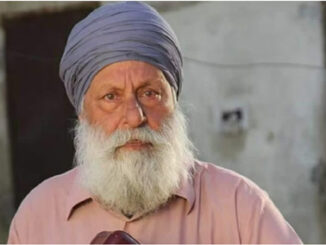
  • Veteran actor Arun Bali dies at 79

    Veteran actor Arun Bali dies at 79

    Veteran actor Arun Bali, best known for his work on TV show “Swabhimaan” and blockbuster hit “3 Idiots”, died on Friday morning at his residence in suburban Mumbai. He was 79. Bali’s son Ankush said his father was suffering with Myasthenia gravis, an autoimmune disease caused by communication failure between nerves and muscles, for which he was admitted to a hospital early this year. Ankush said his father was responding well to the treatment but passed away at around 4.30 am.

    “My father left us. He was suffering from Myasthenia gravis. He had mood swings for two-three days. He told the caretaker he wanted to go to the washroom and after coming out he told him he wanted to sit down and he never got up then,” he told PTI. Bali made his acting debut with noted filmmaker Lekh Tandon’s TV show “Doosra Keval” as superstar Shah Rukh Khan’s uncle and went on to work in TV shows such as period drama “Chanakya”, “Swabhimaan”, “Des Mein Niklla Hoga Chand”, “Kumkum – Ek Pyara Sa Bandhan”, and “P.O.W. – Bandi Yuddh Ke”.

    Some of his popular films include “Saugandh”, “Raju Ban Gaya Gentleman”, “Khalnayak”, “Satya”, “Hey Ram”, “Lage Raho Munna Bhai”, “3 Idiots”, “Ready”, “Barfi”, “Manmarziyaan”, “Kedarnath”, “Samrat Prithviraj”, and “Laal Singh Chaddha”.

    His last film “Goodbye”, also featuring Amitabh Bachchan and Rashmika Mandanna, released on Friday.                Source: PTI

  • Congress President Election

    Congress President Election

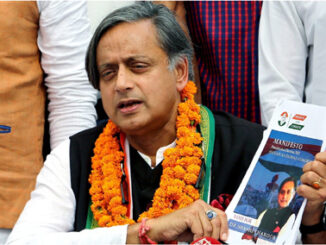
    ‘Not going to withdraw’: Shashi Tharoor dismisses rumours of him opting out

    Chennai (TIP)-Shashi Tharoor on Thursday, October 6, rejected rumours that he’s going to withdraw his nomination from contesting for the Congress’ top post. “Rumours I am going to withdraw (nomination) are false. I am receiving so much support that if I wouldn’t have been democratically inclined, I would have asked the other candidate to withdraw,” Tharoor said. “I’m here to fight for a strong Congress party that can take on the formidable machine of BJP in 2024. This (upcoming election for Congress President) is not a battle between rivals but a friendly contest between different approaches,” Tharoor added. Tharoor also favoured limiting the term of office for state presidents in the party and called for Congress to be revived and re-energised to take on BJP in the 2024 general elections. “My message is revive the party, re-energise it, empower workers, decentralise authority and be in touch with the people. This, I believe will make Congress politically fit to take on Prime Minister Narendra Modi and his BJP in the 2024 general election,” Tharoor said during his interaction on Thursday with media persons at Sathyamurthy Bhavan, the Congress state headquarters.

    Stating that he has respect and great regards for party veteran Mallikarjun Kharge, Tharoor said the contest was friendly based on different approaches to face the BJP and not ideological, as both hailed from the same party. “We need to reform the way our party functions. We need to bring young people in the party and give them real authority. At the same time, we should give greater respect to hardworking and long-serving karyakartas,” he said releasing his poll manifesto.

    Decentralising powers, strengthening party at the booth level, utilising general secretaries for nation building activities while dispensing their services as state in-charges, and trusting state presidents by giving them a free hand in decision making besides limiting their term of office, are among the 10 points highlighted in the manifesto.

    “We need to reiterate the core convictions of the Congress. We are the party of inclusive India, a party that believes in equal rights and is against oppression. This is the idea we stood and fought for and we must reiterate it,” he said. If elected as president, he has promised to revive certain institutions like the parliamentary board. The manifesto focuses on the need for the Congress to return to the ethos of social work, Tharoor added.

    “The party is not a machine to fight elections once in five years, but it should live along with and serve the people…we should connect with the people and work with them,” the Thiruvananthapuram MP said.

    Popular connect with people is fundamental and this was being illustrated by the successful Bharat Jodo Yatra of party leader Rahul Gandhi, he said. Tharoor also said he was getting enormous amount of feedback from ordinary party workers, especially the youngsters. He said it was very gratifying for him that the youth who are the future and also the majority in our country, back him in the polls. Those aged 35 years and below account for 65 per cent of our population.

    “It is their country, this is a young India,” he said.

    “I want Congress to be the party of young India. I want to represent the aspirations, dreams and hopes of young India, just as (former prime minister) Rajiv Gandhi attempted to do 40 years ago and succeeded in his initiation of telecom and IT revolution.          Source: Agencies

  • Jaishankar holds talks with NZ counterpart on Indo-Pacific and Ukraine conflict

    Jaishankar holds talks with NZ counterpart on Indo-Pacific and Ukraine conflict

    Auckland (TIP)- External Affairs Minister S Jaishankar on Thursday, October 6,  held “warm and productive” talks with his New Zealand counterpart Nanaia Mahuta during which the two leaders exchanged views on issues of international concerns such as the Indo-Pacific and the Ukraine conflict. It is Jaishankar’s first visit to New Zealand as External Affairs Minister.

    “Warm and productive talks with New Zealand Foreign Minister @NanaiaMahuta this afternoon. Two societies, respectful of tradition and culture, are seeking to forge a more contemporary relationship,” Jaishankar tweeted after the meeting.

    “Appreciated the exchange of views on (issues of) international concerns such as the Indo-Pacific and the Ukraine conflict. Value our working together in multilateral forums including the UN and Commonwealth,” he said.

    India, the US and several other world powers have been talking about the need to ensure a free, open and thriving Indo-Pacific in the backdrop of China’s rising military manoeuvring in the resource-rich region.

    India has repeatedly emphasised on the immediate cessation of hostilities in Ukraine and the need to resolve the ongoing conflict through dialogue and diplomacy. Jaishankar also took up the issue of Indian students impacted by covid measures in New Zealand and urged expeditious visa processing of those desirous of studying in New Zealand now.

    India is the second largest source of international students in New Zealand pursuing higher education in various disciplines such as information technology, hospitality, science, engineering and architecture.

    He also met Associate Minister for foreign affairs Aupito William Sio during his meeting with Mahuta.

    “Pleasure to meet Associate Minister for foreign affairs @AupitoWSio_MP during my talks with FM @NanaiaMahuta Benefitted from his insights on Pacific Islands,” Jaishankar tweeted.        Source: PTI

  • Delhi excise policy: ED conducts fresh raids at 35 locations

    The Enforcement Directorate (ED) on Friday, October 7,  launched fresh raids in connection with its money laundering investigation into alleged irregularities in the now-scrapped Delhi excise policy, official sources said.

    The searches are being carried out at about 35 locations in Delhi, Punjab and some places in Hyderabad, they said.

    Delhi Chief Minister Arvind Kejriwal said hundreds of raids by central agencies to find evidence against his deputy Manish Sisodia have yielded nothing as he didn’t do anything.

    Time of hundreds of sleuths of the Enforcement Directorate and the Central Bureau of Investigation (CBI) is being wasted for “dirty politics”, he said. Deputy Chief Minister Manish Sisodia is an accused in an FIR registered by the CBI in connection with alleged irregularities in the formulation and implementation of the Delhi Excise Policy 2021-22. “Over 500 raids, more than 300 officials have been working round the clock for three months to find evidence against Manish Sisodia.

  • India skips vote on China’s ‘rights abuses’

    India on Thursday, October 6,  abstained from voting on two separate draft resolutions pertaining to the situation in China as well as Sri Lanka. India’s abstention was crucial in a West-led motion to hold a debate about alleged human rights abuses in China’s Xinjiang region after a UN report found possible crimes against humanity.

    The hall burst into a rare applause when it was announced that the motion had been defeated by 19 against 17 in favour with 11 abstentions. The US, Canada and the UK were among the countries that called for the motion. China’s ambassador had warned shortly before the vote that the motion would create a “dangerous shortcut” for examining other countries’ human rights records. “Today China is targeted. Tomorrow any other developing country will be targeted,” said Chen Xu.

    This is the second time in 16 years of the UNHRC’s inception that a resolution on China has been rejected.

    India also abstained from a draft resolution on “Promoting reconciliation, accountability and human rights in Sri Lanka” adopted at the 51st Session of Human Rights Council in Geneva, with 20 nations voting in favour in the 47-member Council. There were seven against. The resolution was passed and India said it would work with Sri Lanka and the international community to attain the related objectives of legitimate aspirations of Tamils of Sri Lanka and prosperity for all Sri Lankans, said India’s Permanent Representative of India to United Nations in Geneva Indra Mani Pandey.             Source: TNS

  • NCB seizes mephedrone worth Rs 120 cr from Mumbai, Gujarat; Air India ex-pilot among six held

    Mumbai (TIP)- The Narcotics Control Bureau (NCB) has seized 60 kg mephedrone drug worth more than Rs 120 crore from Mumbai and Gujarat and arrested six persons, including a former Air India pilot, a senior official said on Friday, October 7.

     The action was taken based on specific information received by the Naval Intelligence unit at Jamnagar in Gujarat, said Sanjay Singh, Deputy Director General of the NCB in a press briefing here.

     “Following the tip-off, the officials from the NCB headquarters in Delhi and its Mumbai zonal unit conducted a raid at Jamnagar on October 3 and seized 10 kg mephedrone,” he said.

     The NCB team had arrested one person from Jamnagar and three more were held from Mumbai in this connection, Singh added.  “On Thursday, the NCB team raided a godown located on S B Road in Fort area of south Mumbai and seized 50 mephedrone,” he said.  After that, the anti-drug agency arrested two persons, including the kingpin of the cartel, he said, adding that one of the accused, Sohail Gafar Mahida, is a former Air India pilot.

     Mephedrone, also known as ‘meow meow’ or MD, is a synthetic stimulant and psychotropic substance banned under the Narcotic Drugs and Psychotropic Substances (NDPS) Act.

                    Source: PTI

  • Shri Guru Ram Das, the founder of Shri Harimandir Sahib

    Shri Guru Ram Das, the founder of Shri Harimandir Sahib

    Guru Ram Das was the fourth Sikh Guru of the 10 Gurus of Sikhism. He is founder of Ramdaspur, later known as Amritsar, the centre of Sikhism and the site of the Sikhs’ principal place of worship—the Harimandir Sahib, or Golden Temple. Guru Ram Das composed 638 hymns or about 10 percent of hymns in the Guru Granth Sahib. While Guru Amar Das introduced the manji system of a religious organization, Ram Das extended it by adding the Masand institution.

    The masand were Sikh community leaders who lived far from the Guru, but acted to lead the distant congregations, their mutual interactions, and collect revenue for Sikh activities and temple building.

    Born as Bhai Jetha on 9 October 1534 — according to the Nanakshahi calendar — in Lahore, he lost his parents at the age of seven and was brought up by his grandmother, who later took him to Goindval in Punjab’s Tarn Taran district. It was here that he met Guru Amar Das and decided to become the latter’s disciple. He quickly rose in the ranks to emerge as his Guru’s favourite, and even married the latter’s younger daughter — Bibi Bhani — and eventually, was appointed Ram Das, the fourth Guru of the Sikhs. His bani, or set of songs, contained more than 600 hymns that held various teachings for followers of the faith. But his teachings went far beyond the books. When a group of Brahmins in Goindval raised objections to langar — that ostensibly ignored distinctions of the four castes — Amar Das dispatched his son-in-law to meet Emperor Akbar and address the grievances. Ram Das’s strikingly simple statement at the royal court, that all were equal in the eyes of god, led Akbar to dismiss all objections.

    In the years to come, Ram Das also stepped up efforts to strengthen the practice of commensality and even proclaimed that “kings and emperors are all created by God; they come and bow in reverence to God’s humble servant”.

    But he had to leave Goindval soon after his coronation in 1574 when he was faced with rivalry from Amar Das’ sons. As advised by his father-in-law, Ram Das and Bibi Bhani then moved to a new place.

    An ‘autonomous’ Amritsar

    It is this new place, the chief feature of which was its human-made sarovar (tank), that was to become Amritsar in the years to come. Guru Ram Das had laid the foundations of Ramdaspur, later renamed to Amritsar, when he inaugurated the pool’s excavation in 1577. The sarovar later became the nucleus of Amritsar when Ram Das’ youngest son and successor, Guru Arjan Dev, built a temple complex around it and placed a copy of the Adi Granth at Harmandir Sahib in 1604.

    Ramdaspur or Amritsar was also perhaps one of those few towns that remained autonomous in the context of a larger Mughal rule. Arjan Dev’s proclamation that the town had no collector of taxes was a testimony to this fact. He had pointed toward a reality that the town was under the “authority of the Guru, not the Mughal state”.

    Charting roadmap for a marriage law

    Among Guru Ram Das’s most famous compositions, the most well-known is his wedding hymn that formed the basis of the Sikh wedding ceremony called Anand Karaj. This ceremony is centered on the laavaan — four stanzas that the fourth Guru had composed. The hymn also emerged to be the focal point on which the British-era Anand Marriage Act of 1909 was later formed. In the years after Independence, however, the Act garnered controversy when Sikh marriages were brought under the fold of the Hindu Marriage Act. After years of protests, in 2012, several states, including Delhi, decided to allow Sikhs to register their marriages under the Anand Marriage Act.

    As Bhai Jetha grew up, he began to appreciate the simple things in life. He wanted to know more about God and the different religions of the world. He would often ask his parents all sorts of questions about things he could not understand such as the racist hindu caste system, the scriptures, the creation of the world and the like.

    When his parents were unable to provide satisfactory answers, Bhai Jetha would turn to the learned men who could. The search for answers led Bhai Jetha to priests, to scholars, and other holy men who happened to pass Chuna Mandi. He began finding their discourses so intersting that he would spend more and more time with them.

    At first his parents encourged him hoping that he would become a better person through his association with holy men. But as he grew up they began to get worried. They realised that Bhai Jetha was spending more time with these men than on his vocation. They feared that he would become an reclusive sadhu, if he continued mixing with the holy men. Thus, they asked him to take up some work so that he could earn a living, and get involved in household affairs.

    Though Bhai Jetha was not interested in establishing a trade, he nevertheless obeyed his parents. He asked them what he was supposed to do. His mother thought hard. It so happened that their neighbour used to peddle roasted grams in the nearby market, and earn reasonably well from it. Daya Kaur decided that her son could do the same. When they told Bhai Jetha about it, he agreed dutifully.

    Helping The Needy

    On the very next day, Daya Kaur prepared a bagful of roasted grams and gave it to Bhai Jetha to sell. After leaving home, Bhai Jetha went on his errand with his food. But as he passed by the bank of the river Ravi he happened to see a group of holy men. Pleased to see them he decided to stop by, and pay his respects. During the course of their conversation he gathered that none of them had eaten anything since the morning, and had no hope of finding anything to eat for the rest of the day. Bhai Jetha was so pained after hearing this that he decided not to go to the market at all. Instead he offered the holy men his bag, of grams. As the hungry holy men began eating the grams they thanked young Bhai Jetha, and blessed him. It pleased Bhai Jetha to have fed the hungry holy men who otherwise would have gone to sleep on an empty stomach. But then he suddenly realised that his parents would be very upset when they would hear that instead of selling the grams, he had donated it to a group of holy men. He was still wondering what to do when he spotted a group of Sikhs passing. He learned that they were heading towards Goindwal to pay their respects to Guru Amar Das, who was the third Guru of the Sikhs.

    When Bhai Jetha heard this he was so thrilled at the prospect of meeting the Guru that he immediately decided to join the group, instead of going back home. To him, nothing seemed more important than seeing the Guru in person, and seeking his blessings. He left Lahore without giving it a second thought, and eagerly looked forward to meeting the Guru in search of God.

    Selfless Service

    Bhai Jetha used to be either cleaning the utensils in the kitchen or sweeping the house or something else. He was always around to help other people. He was loved by one and all, including the Guru and his family. Soon, Guru Amar Das became so fond of him that he began guiding him spiritually. When he realised that the young boy was truly a slave of God, he began to dote on him. Bhai Jetha, on the other hand, took it upon himself to serve Guru Amar Das in every way, and he began looking after the Guru’s personal comforts by himself. He would clean the dharamsala, serve the food, press the Guru’s feet, massage his body, and sometimes even wash his clothes with great pleasure. All this endeared him greatly to Guru Amar Das, and he grew really fond of Bhai Jetha. The boy too felt very happy and content when he was with Guru Amar Das, in his service.

    When the whole party returned to Lahore, Bhai Jetha stayed back in Goindwal to serve the Guru. He knew his parents would initially be upset at his decision, but he also knew that with time they would accept his decision, and even appreciate it. They were as religious minded as he was, and lived by the teachings of the Gurus. He decided that one day he would go himself and explain his decision to them, but for now he had to stay by his Guru’s side.

    He continued to perform all sorts of tasks without any consideration for himself. He was always doing something either for Guru Amar Das or for the other people, and also the dharamsala. It was not long before he actually became part of their family.

    The Necklace

    One day, a very rich banker arrived in Goindwal to visit Guru Amar Das. As a mark of respect he presented a very expensive pearl necklace containing precious stones to the Guru. The man wanted to put the necklace on Guru Amar Das, but the Guru said he was too old for such ornaments. Instead, he asked the man to put it the necklace on one who was the Guru’s image, that resembled him the most. The puzzled devotee did know what to do so he handed the necklace to Guru Amar Das asking him to give it to the one he thought was his mirror image. The gathered Sangat started speculating whether it would be one of the Guru’s two sons, Mohri and Mohan, others again thought of other faithful and obedient Sikhs.

    Guru Amar Das surprised them all when he asked Bhai Jetha to approach him. Then, placing the necklace, with all its beauty and splendour on him, he declared that no one resembled him more in looks and nature than Bhai Jetha. This was an open indication to the people that Bhai Jetha would succeed Guru Amar Das.

    The Faqir’s Slander

    On an occasional afternoon Guru Amar Das used to go with his retinue to the bank of the river Beas. On the way a filthy naked muhammadan faqir, who was almost always under the influence of intoxicants, took up his position. The faqir wanted to maliciously slander the Guru.

    As Guru Amar Das passed, he said, in a voice loud enough for the Guru to hear, “He consumes the wealth of the whole world. The older he grows the more miserly he becomes. He only makes gifts to those from whom he desires something in return. He takes no notice of faqirs, and has never remembered me who am a beggar like others. I take opium and bhang, and he never offeres me any, though he ought sometimes to think of the poor. I care for no one, be he king or emperor; I speak the truth to his face. When a man gives me anything I pray for his welfare.”

    The faqir often used such offensive language in reference to the Guru. The Guru, who was patience incarnate, used to remain silent and pass on. One day Bhai Jetha accompanied the Guru, and on hearing the graceless faqir spluttering and discharging, as it were, the sediment of his bhang, said to the faqir, “Why participate in sin by slandering the true Guru?”

    The Faqir’s Gratitude

    The faqir replied, “Why should I not? He has never given me alms. Give me the necklace you wear.” On this Bhai Jetha took off his precious necklace, and put it on the faqir. Upon this the faqir began to sing aloud the Guru’s praises, “You are more generous than Raja Harishchandra, than Raja Karan, and than Raja Vikramadit (these Rajas were renowned for their generosity).”

    As the party returned from the river in the evening, and while the Guru was still distant, the faqir began to shower further praises and blessings on him. “You save the world; may your sons and grandsons prosper and flourish!” The Guru on hearing this remarked that somebody must have been generous to the faqir, otherwise he could have altered his tone and language so quickly. After making enquiries, Guru Amar Das learned what had occurred. Bhai Jetha confessed, “Guru Sahib, I gave the faqir my necklace. You have given me God’s name as a necklace; I keep it by me. This perishable necklace, I offered in your name.” On hearing this the Guru Amar Das was very pleased and blessed Bhai Jetha.

    Ramdaspur

    The City of Amritsar (literally “pool of nectar”) was originally called Ramdaspur (Guru Ram Das’s city) and Chakk Ramdas, or Chakk Guru, or simply Guru Ka Chakk. The habitation was started by Bhai Jetha (the future Guru Ram Das) when Guru Amar Das asked him to establish a new colony of Sikhs.

    Guru Nanak’s Visit

    At that time there was no habitation nearby Ramdaspur. A few kilometers away were the villages of Sultanwind, Tung, Chattiwind and Khaparkheri. Guru Amar Das knew that Guru Nanak stayed at the bank of the small natural lake and the berry trees. Guru Nanak rested at night and in the early morning throughout the day, sang Gurbani (kirtan). Guru Nanak sang of his thirst only for the nectar of the God’s Name, to be engrossed in devotion to Waheguru. After staying near the pond for sometime, Guru Nanak then travelled towards the west. Bhai Jetha was tasked with finding the location that Guru Nanak had visited. Bhai Jetha searched, and found an open uninhabited tract of country some twenty-five miles from Goindwal, and there he established himself.

    Santokhsar Sarovar

    Bhai Jetha, with the help of Sikhs and labourers began to excavate the earth for the construction of a sarovar (tank or pool of water). This first sarovar was not Amritsar, it was Santokhsar. When Bhai Jetha began the work on digging Santokhsar sarovar, he found a yogi, meditating nearby. After sometime the yogi opened his eyes and told Bhai Jetha that he had been meditating here for a long time, waiting for a Guru to give him salvation. He disclosed his name as Santakha and then breathed his last. The sarovar was then named as Santokhsar however Bhai Jetha was not sure the location of Santokhsar was the correct site that Guru Nanak had visited.

    Return To Goindwal

    After some time, when a portion of the work was accomplished and several people had built huts for themselves on the new site, Bhai Jetha, suffering from the pain of separation from the Guru, returned to Goindwal to report the extent of the work he had performed.

  • Putin and M.B.S. Are Laughing at Us

    Putin and M.B.S. Are Laughing at Us

    By Thomas L. Friedman

    Wars bring together surprising alliances. Today, we have America and its NATO allies backing the brave Ukrainians fighting to save their country from being torn to shreds by Vladimir Putin. And we have Russia, Saudi Arabia, Iran, Bernie Sanders, the House progressive caucus and the whole G.O.P. all working — deliberately or because they are dupes — to ensure that Putin has more oil revenue than ever to kill Ukrainians and freeze the Europeans this winter until they abandon Kyiv.

    In another dark corner, Putin and Saudi de facto ruler Crown Prince Mohammed bin Salman are also probably hoping that the soaring energy inflation since Russia’s invasion helps the Donald Trump-led Republicans to regain control of at least the House of Representatives in next month’s elections. That would be icing on the cake for both, who view Trump as a president who still loves black crude over green solar and knows how to look the other way when bad things happen to good people.

    Too cynical you say? No, sorry, you can’t be too cynical with this cast of brutes, bandits, and useful idiots. Just look at the facts.

    On Wednesday, with the world already heading toward recession and with the global oil and natural gas market already tight, the OPEC Plus cartel, which includes Russia, agreed to collectively reduce its output by two million barrels a day — to ensure oil prices don’t retreat, but instead go back over $100 a barrel and stay there.

    While the actual cut in output will most likely amount to close to one million barrels a day, because many smaller OPEC producers are already pumping below their quotas, in today’s market it will still pinch. As The Financial Times noted: At roughly $90 a barrel today, “crude is well below levels reached soon after Russia’s invasion of Ukraine but higher than at any point between 2015 and early 2022.”

    Putin’s motivation for this price hike is no mystery. With his army in Ukraine suffering steady loses of territory — and his having annexed portions of Ukraine that he doesn’t even control — Putin has one hope before he’s forced to do something really reckless: squeeze the supply and jack up the price of oil and gas high enough to force the European Union to abandon both Kyiv and Washington and accept his annexations in return for a cease-fire and resumption of Russian energy exports.

    Putin’s strategy is neither crazy nor without hope because of two decades of Western nations’ failing to think strategically about energy. They willed the ends — a world no longer dependent on fossil fuels as soon as possible. But they did not will the means to reach that goal in a stable way — by maximizing their climate security, their energy security, and their economic security all at the same time.

    Instead, they pretended.

    In Europe they pretended — with Putin’s covert encouragement — that they could abandon large-scale, largely emissions-free energy like nuclear power, as the Germans did, and just jump directly to intermittent wind, solar and other renewables and everything would be just peachy. Oh, my goodness. The Germans felt so virtuous in doing so — without acknowledging that the only reason they were getting away with this pipe dream was that Putin was selling them cheap gas to make up the difference. When Putin ended the charade, here’s what happened: On Sept. 28, Reuters reported from Frankfurt, “Germany’s cabinet on Wednesday passed two decrees to prolong the operation of sizable hard coal-fired power generation plants up to March 31, 2024, and to bring back idled brown coal capacity up to June 30, 2023, to boost supply.”

    In America, we did our own version of this green virtue signaling. Green progressives demonized the oil and gas industry — for good reasons in some cases because of how much the industry worked to deny the reality of climate change and refused to clean up its own act — and basically told it to please go off and die somewhere quietly, while we moved to wind and solar. Oil and gas investors and bankers got the message and began delaying or stopping investment in new oil and gas production at home, and instead focused on reaping as much profit as they could from existing wells.

    As a Goldman Sachs newsletter in April put it: “How much future production have we lost because of all the delays in investment decisions on new oil and gas projects? The answer is 10 million barrels per day of oil, which is the equivalent of Saudi Arabia’s daily production and three million barrels per day of oil equivalent in liquefied natural gas (LNG), which is more than the equivalent of Qatar’s daily production. If we had not kept delaying new investment decisions in oil and gas since 2014, we essentially could have had a new Saudi Arabia and a new Qatar.”

    While America can still theoretically take care of most of its own needs for oil and gas today, unlike Europe, we do not have enough to export at the scale required to make up for Putin’s and OPEC Plus’s cutbacks and ease Europe’s transition to a decarbonized future. But the green progressives never got that message. At a House committee hearing two weeks ago, Representative Rashida Tlaib demanded to know if JPMorgan Chase C.E.O. Jamie Dimon and other banking executives appearing before the panel had any policies “against funding new oil and gas products.”

    Dimon answered, “Absolutely not, and that would be the road to hell for America.” Tlaib then told Dimon that any students who had student loans and bank accounts with JPMorgan should retaliate by closing their accounts. Have no doubt: This kind of juvenile moral preening by Tlaib surely made Vladimir Putin’s day. She’s nowhere nearly as bad as the G.O.P. senators who were inspired for years by ExxonMobil lies that climate change is a hoax, and then used that to block our transition to clean energy. But Tlaib still made Putin’s day.

    What lifted Putin even more was when he watched Bernie Sanders, House progressive Democrats and the whole G.O.P. last week come together to kill a bill backed by President Biden and the Democratic leadership to streamline the permitting process for domestic energy projects, particularly permitting for gas pipelines and wind and solar transmission lines — one of our biggest impediments to a stable green transition.

    Hard to know who is worse, the progressives who did not understand how much solar and wind energy require quicker transmission permitting to safely scale clean energy or the Republicans, who knew oil and gas companies need quicker pipeline permitting to grow gas production but killed it so Biden would not have another success. As Joe Manchin, a fossil fuel-friendly Democrat who championed the bill, put it: “What I didn’t expect is that Mitch McConnell, my Republican friends, would be signing up with Bernie or trying to get the same outcome by not passing permitting reform.” All in all, Putin had a bad month in Ukraine — but a good month in the U.S. Congress. This is not complicated, folks: Do you want to make a point, or do you want to make a difference? If we want to make a difference, we need to maximize our energy security, natural security and economic security, all at once. The only way to do that effectively is to incentivize our market to produce a stable and secure supply of energy, with the lowest possible emissions at the lowest possible costs as fast as possible.

    The only truly effective way to do that is with a strong price signal — either taxes on dirty stuff or incentives for clean stuff — plus steadily increasing clean energy standards for power generation along the lines proposed by Hal Harvey and Justin Gillis in their new book “The Big Fix: Seven Practical Steps to Save Our Planet.”

    As long as we are not ready to do that, we’re just faking it, indulging in virtue signaling on the left and the right — and Putin and M.B.S. are laughing all the way to the bank.

    (The author writes on foreign affairs, globalization and technology)

    (Source: New York Times)

  • Putin and North Korea’s Kim forge closer ties amid shared isolation

    Putin and North Korea’s Kim forge closer ties amid shared isolation

    Seoul (TIP): North Korean leader Kim Jong Un sent a birthday greeting to Russian President Vladimir Putin this week, congratulating him for “crushing the challenges and threats of the United States”, the latest sign of deepening ties between the two pariah states. As Russia’s isolation over its war in Ukraine has increased, it has seen increasing value in North Korea. For North Korea’s part, relations with Russia haven’t always been as warm as they were during the heady days of the Soviet Union, but now the country is reaping clear benefits from Moscow’s need for friends. Here’s how North Korea-Russia relations began, and how they are becoming closer:

    Political backing

    Communist North Korea was formed in the early days of the Cold War with the backing of the Soviet Union. North Korea later battled the South and its U.S. and United Nations allies to a stalemate in the 1950-1953 Korean War with extensive aid from China and the Soviet Union.

    North Korea was heavily reliant on Soviet aid for decades, and when the Soviet Union collapsed in the 1990s it helped spark a deadly famine in the North. Pyongyang’s leaders have tended to use Beijing and Moscow to balance each other. Kim Jong Un initially had a relatively cold relationship with both countries, which both joined the United States in imposing strict sanctions on North Korea over its nuclear tests. But after his country’s last nuclear test in 2017, Kim took steps to repair ties.

    In 2019 Kim and Putin met for the first time in a summit in the Russian city of Vladivostok.

    Since then, Russia has joined China in opposing new sanctions, vetoing a US-led push in May and publicly splitting the UN Security Council (UNSC) for the first time since it started punishing Pyongyang in 2006.

    Ukraine war support

    North Korea has reciprocated with public support for Moscow after Russia invaded Ukraine. It was one of the only countries to recognise the independence of breakaway Ukrainian regions, and this week it expressed support for Russia’s proclaimed annexation of parts of Ukraine. “Moscow’s ‘special military operation’ in Ukraine has ushered in a new geopolitical reality in which the Kremlin and (North Korea) may become increasingly close, perhaps even to the point of resurrecting the quasi-alliance relationship that had existed during the Cold War,” ArtyomLukin, a professor at Far Eastern Federal University in Vladivostok, wrote in a recent report for 38 North.

    It is notable that Pyongyang has begun using the new phrase “tactical and strategic collaboration” to describe its relationship with Russia, he added. The United States has said that Russia approached North Korea about buying millions of rounds of ammunition and other weapons to refill its stockpile depleted by the war. Both Russia and North Korea have denied that claim.

    Economic ties

    The vast majority of North Korea’s trade goes through China, but Russia is a potentially important partner as well, particularly for providing oil, experts said. Moscow has denied breaking U.N. sanctions, but Russian tankers have been accused of helping evade caps on exporting oil to North Korea and sanctions monitors have reported that labourers remained in Russia despite the ban. (Reuters)

  • ‘Date’ of Chinese doctor’s death who warned of Covid remains mystery

    Beijing (TIP): The death mystery of a China-based ophthalmologist who had warned his colleagues about early Covid-19 infections in early 2020, went more tricky after the latest report showing a discrepancy in the timing of the doctor’s death came to light by the US-based media outlet, The New York Times.

    Dr Li Wenliang, a 34-year-old doctor from Wuhan died of a Covid-19 infection in February. According to the hospital at 4 am, Dr Li died on February 7 at 2:58 am, but conflicting messages about Li’s condition had surfaced on media outlets from February 6, the day when he went into cardiac arrest at around 7.20 pm.

    Some media outlets released the information which later deleted, as per The New York Times. State-run publication Life Times said that he had died at 9:30 pm, while another said that he died at 10:40 pm on February 7.

    In an exclusive interview with one of Dr Li’s colleagues, the New York Times’s Visual Investigations team highlighted several aspects of the time duration when Li was in the hospital.

    “I think Dr. Li Wenliang had already died by the time I saw him around 9 pm on February 6,” Li’s colleague said during the interview. “They dragged their feet for so long over the announcement. It’s like the hospital really did not treat us as human beings,” he said. Li was widely regarded in China as a heroic truth-teller. He had been punished by the authorities for trying to warn others about the virus, and then, in a terrible turn, had become severely sickened by it. Weeks later, he would become China’s most famous fatality of the emerging pandemic. He was 34, according to The New York Times. In early 2020, the virus was spreading rapidly in Wuhan, the city in China where the pandemic first took hold. Dr. Li checked into the hospital on January 12 with a fever, a lung infection and other symptoms. According to several of the doctors who reviewed his medical records for The Times, by the third day, Dr. Li was seriously ill and required oxygen support. “He was infected with an early variant of the virus, so the illness started acutely, its course was life threatening and it developed very fast,” said Dr Wu Yuanfei, a virologist at UMass Chan Medical School in Worcester, Massachusetts, said, reported The New York Times. (ANI)

  • Russian rockets hit city near Ukrainian N-plant

    Kyiv (TIP): Seven Russian rockets slammed into residential buildings in the southern Ukrainian city of Zaporizhzhia before dawn on October 6, killing a few persons and trapping at least five in the city close to Europe’s biggest nuclear power plant, the governor of the mostly Russian-occupied region said. The strikes came just hours after Ukraine’s President announced that the country’s military had retaken three more villages in one of the regions illegally annexed by Russia, the latest battlefield reversal for Moscow. Governor OleksandrStarukh said many people were rescued from the multi-storey buildings. Photos provided by emergency services showed rescuers scrambling through rubble in the wreckage of a devastated building.

    The deputy head of the Ukraine President’s office, Kyrylo Tymoshenko, said 10 persons had been killed in the latest Russian attacks in the Dnipro, Donetsk, Zaporizhzhia and Kherson regions. Zaporizhzhia is one of the four regions of Ukraine that President Vladimir Putin-led Russia annexed recently. (PTI)

  • Two ships sink in Greece, 21 dead

    Kythira (Greece) (TIP): Bodies floated amid splintered wreckage in the water off a Greek island on October 6 as the death toll from the sinking of two migrant boats rose to 21, with many missing. The boats went down hundreds of miles apart, in one case prompting a dramatic overnight rescue effort, as residents and firefighters pulled shipwrecked migrants to safety up steep cliffs. The coast guard on the eastern island of Lesbos said 16 bodies of young African women and one young man were recovered there after a dinghy carrying about 40 people sank. – AP

  • N Korea fires missiles amid military show by Seoul

    Seoul (TIP): North Korea fired two short-range ballistic missiles toward the sea off its east coast on Saturday, hours before South Korea staged a large military show, displaying stealth fighters and its own missiles. Pyongyang’s fourth launch in a week comes amid a flurry of military muscle-flexing by countries in the region, including joint anti-submarine exercises on October 7 by the navies of South Korea, the US and Japan. US Vice President Kamala Harris visited the region this week, meeting with South Korean President Yoon Suk-yeol in Seoul on October 6. The rival Koreas are in a regional arms race that has seen a major increase of weapons and military spending. Marking South Korea’s 74th Armed Forces Day, Yoon condemned what he called recent military provocations by the North and vowed to strengthen joint military drills with the US. “The government will further strengthen the Korea-US joint exercises,” he said. — Reuters

  • Complainant testifies about Australian Parliament House rape

    Complainant testifies about Australian Parliament House rape

    Canberra (TIP): A government staffer testified on October 4 about being raped by a colleague in the Australian Parliament House and described her fears of not being believed because of the disparity in their workplace statuses.

    Brittany Higgins became the first witness to testify against Bruce Lehrmann, 27, who has pleaded not guilty in the Australian Capital Territory Supreme Court to a charge of sexual intercourse without consent in a minister’s office in March 2019.

    He faces a potential 12-year prison sentence if convicted. Higgins said she was a 24-year-old staffer in an administrative role in then-Defence Industry Minister Linda Reynolds’ office while Lehrmann had a more senior role as a ministerial adviser.

    The pair had gone back to Parliament House early one Saturday morning after a night of heavy drinking with colleagues.

    Higgins said she thought Lehrmann wanted to collect documents from Reynolds’ office, where she fell asleep on a couch and was awoken by Lehrmann raping her.

    Higgins said she felt “trapped, not human” as Lehrmann hovered over her, grunting and making noise. She said she started crying and told him to stop but he continued. Higgins decided to have Lehrmann charged last year and the jury on Wednesday heard her video-recorded police interview from February 2021.

    She told police that when she returned to work on Monday, two days after the alleged rape, she feared she would be fired because she and Lehrmann entering the minister’s office was flagged as a security breach.

    “I knew what had happened to me was wrong, I knew I hadn’t consented,” she said. She told police she didn’t think anyone would believe her story and figured Lehrmann’s words carried more weight than hers because of his more senior role. “He was in the office on Monday. He didn’t seem ashamed (or) upset,” Higgins said. “It just didn’t feel like something he wanted to address.” She told police when she identified the incident as a sexual assault to her former chief of staff, “the gears shifted”.

    “It became less about me and more political, in a sense,” she said. Defence lawyer Steven Whybrow told the jury Higgins’ allegations had not been tested or proven and Lehrmann denied having sex with her.

    Prosecutor Shane Drumgold flagged more than 50 witnesses who could be called to give evidence during the trial, which is expected to last between four and six weeks.

    Among the witnesses are Reynolds as well as former government ministers Michaelia Cash and Steven Ciobo. The Associated Press does not usually identify alleged victims of sexual assault, but Higgins has chosen to identify herself in the media.  (AP)

  • Pakistan government focused on completing CPEC linked projects on priority basis: PM Shehbaz Sharif

    Pakistan government focused on completing CPEC linked projects on priority basis: PM Shehbaz Sharif

    Islamabad (TIP):  Prime Minister Shehbaz Sharif said on October 6 that his government was focused on completing the China-Pakistan Economic Corridor linked projects on priority basis.

    Sharif made the comments during a meeting with a delegation of China Road and Bridge Corporation headed by its Vice President Ye Chengyin in Islamabad, state-owned Radio Pakistan reported. During the meeting, the Prime Minister was given a detailed briefing on the ongoing and completed projects. It was informed that the Havelian-Thakot section of Karakorum highway has been completed while work is in progress on its second phase from Thakot to Raikot. The meeting was also apprised of the progress made on other projects including Karachi Coastal Development, Rashakai Special Economic Zone, Karachi-Hyderabad Motorway (M-9) Babusar Tunnel and railway corridor from Karachi Port Trust to Pipri.

    Prime Minister Sharif directed the authorities concerned to complete all the CPEC related projects in the stipulated period. “The government is ensuring transparency in development projects and those relating to public importance will be completed on an urgent basis,” he said. The China-Pakistan Economic Corridor (CPEC) is a flagship project of China’s Belt and Road Initiative (BRI) – a multi-billion-dollar initiative launched by President Xi Jinping when he came into power in 2013. The BRI aims to link Southeast Asia, Central Asia, the Gulf region, Africa and Europe with a network of land and sea routes.

    The Chinese delegation was appreciative of the steps taken by the government for timely completion of the CPEC projects. In addition, China Road and Bridge Corporation showed interest in investing in Pakistan’s 10,000 megawatts solarization project.

    Sharif said both Pakistan and China are longstanding friends and their relations date back to decades. The Prime Minister said China has always stood by Pakistan in difficult times. He said the entire Pakistani nation is grateful to the Chinese leadership for their assistance to the flood victims. Ye presented a cheque of USD 100,000 to the Prime Minister for the relief and assistance of flood victims. (PTI)

  • 22 children among 37 killed by ex-cop at Thailand daycare centre

    Bangkok (TIP): A former policeman killed 37 persons, including 22 children, in a knife-and-gun rampage at a daycare centre in Thailand on October 6. He later shot dead his wife and child at their home before turning his weapon on himself, the police said, identifying the suspect as 34-year-old PanyaKamrap. In one of the world’s worst child death tolls in a massacre by a single killer in recent history, most of the children who died in UthaiSawan, a town 500 km northeast of Bangkok, were stabbed to death, the police said. The age range of children was from two to five years, a local official said.

    The police said the attacker was a former member of the force who was dismissed from his post last year over drug allegations and he was facing trial. The man had been in court earlier in the day and had then gone to the daycare centre to collect his child, said police spokesperson PaisalLuesomboon. When he did not find his child there, he began the killing spree, Paisal said. “He started shooting, slashing, killing children.” Videos posted on social media showed sheets covering what appeared to be the bodies of children lying in pools of blood in the garden of the daycare centre. When the attacker arrived, about 30 children were at the facility, fewer than usual, as heavy rain had kept many of them away, district official JidapaBoonsom said. “The shooter came in around lunch time and shot four or five officials at the centre first,” Jidapa said. The attacker forced his way into a locked room where the children were sleeping, Jidapa said, adding that a teacher who was eight months pregnant was also stabbed to death. The massacre is among the worst involving children killed by one person. In Norway, Anders Brevik killed 69 persons, mostly teenagers, at a summer camp in 2011, while the child death toll in other cases include 16 at Dunblane in Scotland in 1996 and 19 at a school in Uvalde, Texas, this year. The Beslan school hostage crisis in Russia in 2004 saw 186 children killed by a group of hostage takers. Prime Minister Prayuth Chan-Ocha, in a statement on Facebook, called Thursday’s shooting a “shocking incident”. Gun laws are strict in Thailand, where possession of an illegal firearm carries a prison sentence of up to 10 years. But ownership is high compared with some other countries in Southeast Asia. The police, however said the gun used in the shooting had been obtained legally. Mass shootings in Thailand remain rare, although in 2020, a soldier angry over a property deal gone sour killed at least 29 persons and wounded 57 in a rampage that spanned four locations. — Reuters

  • UNHRC adopts resolution against Sri Lanka’s rights record; India abstains from voting

    Colombo (TIP): India on October 6 abstained on a draft resolution in the UN Human Rights Council in Geneva on promoting reconciliation, accountability and human rights in Sri Lanka which was adopted. While abstaining, India stressed that it will work with Sri Lanka and the international community to attain the related objectives of legitimate aspirations of Tamils of Sri Lanka and prosperity for all Sri Lankans. The draft resolution on ‘Promoting reconciliation, accountability and human rights in Sri Lanka’ was adopted at the 51st Session of Human Rights Council in Geneva, with 20 nations voting in favour in the 47-member Council, seven against, including China and Pakistan, and 20 abstentions, including by India, Japan, Nepal and Qatar.

    The 20 countries that voted in favour of the resolution included, the United Kingdom, the United States, Argentina, Finland, France, Germany, Mexico, the Netherlands, Paraguay, Poland, Republic of Korea and Ukraine. In a statement during the adoption of the resolution, Ambassador Indra Mani Pandey, Permanent Representative of India to UN & other International Organisations, said while India has taken note of the commitments by the government of Sri Lanka on issues of implementation of the commitments in the spirit of the 13th Constitutional Amendment, meaningful devolution and the early conduct of provincial elections, “we believe that the progress towards the same remains inadequate.”

    “Achieving prosperity for all Sri Lankans and realising the legitimate aspirations of Tamils of Sri Lanka for prosperity, dignity and peace are two sides of the same coin,” Pandey said.

    He stressed that as an immediate neighbour, India has substantially contributed to the relief, rehabilitation, resettlement and reconstruction process in Sri Lanka after 2009. More recently since January this year, India has stepped up and provided unprecedented assistance to the people of Sri Lanka to face the challenges of the recent economic crisis.“In finding a lasting and effective solution for peace and reconciliation in Sri Lanka, India has always been guided by the two fundamental principles of support to the aspirations of the Tamils for equality, justice, dignity and peace and unity, territorial integrity and sovereignty of Sri Lanka,” he said. The significant feature in the resolution is its call to investigate the on-going economic crisis and prosecute those responsible. It also “calls upon the government of Sri Lanka to address the ongoing economic crisis including by investigating and where warranted prosecuting corruption including where committed by public and former public officials and stands ready to assist and support independent impartial and transparent efforts in this regard”. (PTI)

  • ‘Kidnapped’ Sikh family found dead in orchard in California: Sheriff

    ‘Kidnapped’ Sikh family found dead in orchard in California: Sheriff

    MERCED, CA (TIP): The sheriff of Merced County in California has said a baby girl and three other Sikh family members who were kidnapped at gunpoint have been found dead. Sheriff Vern Warnke announced on Thursday, October 6, 2022, that the bodies were found in a Merced County orchard and told reporters: “Our worst fears have been confirmed.”

    The announcement came after authorities released surveillance video of a man kidnapping 8-month-old Aroohi Dheri, her parents and uncle from their business Monday, October 3in Merced in the San Joaquin Valley southeast of San Francisco.

    A four-member Sikh family, including an 8-month-old child were originally from Harsi Pind in Hoshiarpur, Punjab. They were kidnapped in Merced County, California, on Monday. The family was identified as 8-month-old Aroohi Dheri, her 27-year-old mother Jasleen Kaur, her 36-year-old father Jasdeep Singh, and her 39-year-old uncle Amandeep Singh.

    A vehicle owned by oe of the family members was found on fire late Monday, which led law enforcement to determine that the four had been kidnapped. According to a news release, detectives received information on Tuesday, October 4 morning that one of the victim’s bank cards was used at an ATM in Atwater in Merced County.

    “There’s a special place in hell for this guy,” the Sheriff of Merced County in California has said of the suspect who is believed to have abducted the family of four, including an eight-month-old baby girl, found dead in an orchard.

    “There are no words right now to describe the anger I feel and the senselessness of this incident,” Merced County Sheriff Vern Warnke said on Wednesday, October 5 night after authorities confirmed the death of four members of the family, who were missing since Monday, October 3. “There’s a special place in hell for this guy,” Warnke said of suspect Jesus Manuel Salgado, who was convicted of armed robbery in 2005 and spent 11 years in prison. The 48-year-old on Tuesday, October 4, attempted suicide in the town of Atwater after being arrested for the murder.

  • Indian American Vivek Lall gets lifetime achievement award in US

    Indian American Vivek Lall gets lifetime achievement award in US

    WASHINGTON, D.C. (TIP): Vivek Lall, an Indian-origin General Atomics CEO, is honored with the Lifetime Achievement Award by US President Joe Biden with citation of ‘With Grateful Recognition’. The citation was given to Lall, who has done PhD in Aerospace Engineering from Wichita State University in Kansas, by the AmeriCorps and the Office of the President. It was also personally signed by the President of the United States, as per the official statement.

    AmeriCorps is a part of the US Government. The organization aims to foster activities that bring Americans closer together to “serve communities.” Dr Lall, an industry leader and scientific community titan works as Chief Executive at General Atomics. The company is a global leader in the specialized fields of nuclear technology and has developed state-of-the-art Unmanned Aerial Vehicles (UAVs) like the Predator, Reaper and Guardian drones.

    Lall, a son of an Indian diplomat, was one of the handfuls of individuals with Indian origins to have been invited to meet Indian Prime Minister Narendra Modi, the past year during his Washington visit.

    Notably, before his leadership position in General Atomics, Dr Lall worked at other leading organizations like NASA, Raytheon, Boeing and Lockheed Martin; his experience and accolades have been considered unparalleled by many in the scientific community and by long-term industry watchers alike. He is serving as a US Technical Team Member to the Noth Atlantic Treaty Organization (NATO) Science and Technology (STO) with the Pentagon.

    He was appointed in a critical advisory role to the US Cabinet Secretary heading the Department of Transportation, encompassing entities like the Federal Aviation Administration (FAA), in 2018.

  • Indian origin Amrapali Ami Gan among ‘Time 100 Next’

    Indian origin Amrapali Ami Gan among ‘Time 100 Next’

    LONDON (TIP): Indian origin Amrapali ‘Ami’ Gan, CEO of content-sharing website OnlyFans, is one of this year’s “Time 100 Next,” honoring 100 rising stars from various fields across the world.

    Along with her, Pakistani singer, songwriter, composer, and author Ali Sethi famed for his song ‘Pasoori,’ British-Pakistani actress Nida Manzoor, and Indian tycoon Akash Ambani, chairman of telecom major Jio have also made it to the list.

    Ami Gan was appointed to handle the London-based media firm into a billion-dollar business that porn stars, singers, and fitness enthusiasts use to share material with their fans in December of last year.

    “OnlyFans hit rough waters in 2021 when it announced, and then walked back, a plan to ban the sexually explicit content the subscription-based social platform was increasingly known for. When Amrapali Gan took over as CEO that winter, she had a decision to make,” according to Gan’s profile in media. “I’m very proud to embrace our adult-content creators, and also all of our other creators,” Gan told the media. “Under her leadership, OnlyFans launched a safety and transparency center, and the platform’s popularity has continued to boom,” it said. Gan, a Mumbai native, joined OnlyFans, a rapidly expanding subscription-based content business, as Chief Marketing and Communications Officer in 2020. Since its founding in 2016, OnlyFans has built a reputation as a platform for hosting adult material. The company gained attention during the pandemic when many adult content producers switched to it as a result of lockdown.

    Prior to joining OnlyFans, the 36-year-old communicator earned expertise in the quickly evolving consumer products and services sector. She was an advisor for the Arcade Agency. Earlier she served as vice president of marketing at Cannabis Café in the US, where she played a crucial role in rebranding and opening the country’s first cannabis restaurant.

    Born in Mumbai, Gan earned an Associate of Arts degree in Merchandise Marketing from the Fashion Institute of Design & Merchandising (FIDM), Los Angeles. She has a BA degree in Public Relations and Organizational Communication from California State University. Later she joined Harvard Business School for a Certificate in Entrepreneurship Studies.

  • Indian-American student killed by his roommate

    Indian-American student killed by his roommate

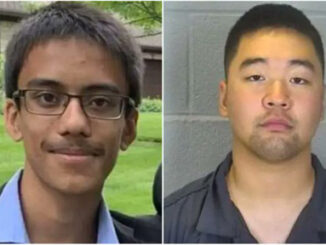
    NEW YORK (TIP): Varun Manish Chheda, a 20-year-old Indian-American student at Purdue University, was killed in his dorm room by his roommate, who has been arrested on a preliminary murder charge, police said.

    Ji Min Sha, a 22-year-old junior cybersecurity major from Seoul, South Korea, has been held as the prime suspect in the case, Purdue Police Chief Lesley Wiete said. Wiete called the crime “unprovoked and senseless”. Chheda died of “multiple sharp force traumatic injuries” and the manner of death was a homicide, according to preliminary autopsy results, an NBC report said. A university spokesperson told the media that a 911 call came into the Purdue University Police Department at 12:44 a.m. on Wednesday, October 5, fromMcCutcheon Hall on the western edge of the campus. The call was made by Sha himself.

    Purdue University President Mitch Daniels said in a statement that the Purdue University Police Department is conducting a thorough investigation into the incident. “This is as tragic an event as we can imagine happening on our campus and our hearts and thoughts go out to all of those affected by this terrible event… I assure you that the safety and security of our students is the single highest priority on our campus,” Daniels added in his statement. This was Purdue’s first on-campus homicide since January 2014, according to the University. Chheda was just 10 days away from his 21st birthday, the Indianapolis Star reported. He graduated from Park Tudor High School in 2020 and was a semifinalist in the National Merit Scholarship Programme the year he graduated.

  • Five Indian Americans on Business Insider’s list of ‘Rising Stars of Wall Street’

    Five Indian Americans on Business Insider’s list of ‘Rising Stars of Wall Street’

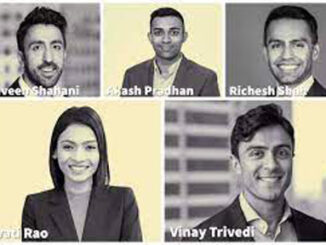
    NEW YORK (TIP): Five Indian American are on Business Insider’s list of ‘Rising Stars of Wall Street,’ 25 young professionals under 35 rising up despite the challenges and grasping opportunities as they see them. As Wall Street navigates volatile markets, fewer deals, and plummeting company valuations, they are “on the runway to success,” as the business magazine puts it. “Some up-and-comers are pushing their teams to the top of industry rankings, and many are immigrants climbing the ranks at major institutions infusing diverse ideas into their decision-making,” it says.

    The five Indian American rising stars of Wall Street from in or around New York City, who “distinguished in some way from the pack” are: Akash Pradhan, Swati Rao, Naveen Shahani, Richesh Shah and Vinay Trivedi.

    Akash Pradhan, 33, principal at TPG

    Pradhan joined the boutique-investment bank The Raine Group in 2011 “despite not knowing what the firm did because of The Raine Group’s focus on sports, media, and entertainment,” he told Insider. The UC Berkeley graduate left Raine for TPG in 2013 and has been with the $127 billion private-equity firm ever since, aside from a stint at Harvard Business School to get his MBA.

    Promoted to the role of principal in January 2022, Pradhan leads investments in software and enterprise technology, working across funds including TPG Capital, TPG Growth, and the impact-oriented sector of TPG, The Rise Fund.

    Over the past five years, Pradhan has been involved in or helped lead deals that total roughly $3 billion in invested capital.

    He was part of TPG’s investments in the software unicorns Nintex and Catalis. Nintex represents Pradhan’s interest in workflow automation, facilitating, for instance, automatic emails about benefits to new employees once they submit a signed offer letter.

    Swati Rao, 34, director at Citi

    Rao is a director within the banking, capital markets, and advisory division at Citi, focusing on deals mainly for companies handling transportation, logistics, and the supply chain. In just the past year, she has been involved in trades and transactions worth more than $8 billion in total value, spanning tech, logistics, and transportation. Rao, who relocated from India to the US about a decade ago, studied engineering but came to finance via an internship at Citi in 2012. She’s gone on to work with clients including FedEx, UPS, Google, and other big names throughout her career in banking.

    Naveen Shahani, 32, principal at Apollo Global Management

    Shahani has spent the past eight-and-a-half years at Apollo Global Management and is currently a principal, working within the firm’s private-equity division. The Wharton graduate helped found and spearhead Apollo’s special-purpose acquisition company or SPAC in 2021. A native of Long Island and the son of two entrepreneurs, Shahani told Insider he was drawn to private equity in part through the inspiration of seeing his father run multiple businesses, starting with a retail store in Manhattan in the 1980s.

    Before working at Apollo, he worked in the financial-sponsors group of Credit Suisse.

    Richesh Shah,33, director at PJT Partners

    As a director at PJT Partners, Shah “doesn’t preach the value of toiling late into the night unnecessarily,” Insider says.

    He is part of the boutique bank’s structured-products team, which develops bespoke financing and capital solutions for big investors. They’ve worked on a variety of projects for clients such as Blackstone, Yum! Brands, and Madison Square Garden.

    Previously, Shah was an investment-banking analyst covering financial institutions and media-and-telecoms companies at Citi.

    He was part of the original team that spun out of Blackstone’s M&A group in 2015, forming PJT Partners.

    Vinay Trivedi, 31, vice president General Atlantic

    During his time at Harvard studying computer science, Trivedi spent most of his free time building apps and “pretending I was the next Mark Zuckerberg,” he told Insider. This passion for technology is what ultimately led him to the investment industry. He is now a vice president at General Atlantic focusing on the sector.

    Since joining General Atlantic in 2019, he has been involved in several deals totaling $3.3 billion in invested capital.

    He was also involved in General Atlantic’s deal-making with the biometric-security firm Clear Secure, from its initial 2019 investment to Clear’s June 2021 IPO. He previously worked at Blackstone and SoftBank. Trivedi is on the advisory council for the think tank Center for Democracy and Techno. He was part of TPG’s investments in the software unicorns Nintex and Catalis. Nintex represents Pradhan’s interest in workflow automation, facilitating, for instance, automatic emails about benefits to new employees once they submit a signed offer letter.