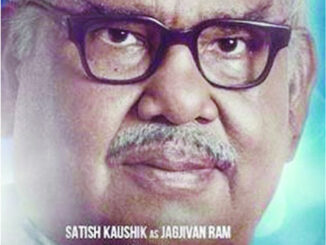
Actor Satish Kaushik has been roped in to play activist and politician Jagjivan Ram in the upcoming film ‘Emergency’, where actress Kangana Ranaut will be seen essaying the role of former Indian Prime Minister Indira Gandhi. Talking about Satish Kaushik joining the film’s cast, Kangana says: “Jagjivan Ram was a very popular leader. One of the most loved and revered leaders of his times. When Mrs Gandhi refused his request of relaxing Emergency, he quit the Congress and there were grave consequences for her.” “That was his relevance. I needed somebody for this role who has his strength, his wit and his sarcasm. Satishji was an obvious choice for this role. I am looking forward to my scenes with him as an actor. They are some of the most engaging, entertaining and strong scenes in the film.” Directed by the actress, the film’s array of actors are a force to reckon with. Anupam Kher will be seen as the revolutionary leader J P Narayan, Shreyas Talpade essays the role of late politician Atal Bihari Vajpayee, Mahima Chaudhry will be seen playing the role of author Pupul Jayakar, Milind Soman will essay Field Marshal Sam Manekshaw, Vishak Nair will be seen as Sanjay Gandhi.
Month: October 2022
-

Spanish court formally sends Shakira to trial for tax fraud
A Spanish court has formally ordered Colombian superstar Shakira to stand trial on accusations that she failed to pay 14.5 million euros ($14.31 million) in income taxes, a court document released on Tuesday showed. The ‘Hips Don’t Lie’ singer, 45, whose full name is Shakira Isabel Mebarak Ripoll, rejected in July a deal to settle the case, which meant she would have to stand trial in a case that could see her sent to prison for eight years. The Esplugues de Llobregat court on Tuesday confirmed the trial will go ahead on a date still to be announced. The prosecutor is seeking an eight-year prison term for the singer, who is accused of failing to pay taxes between 2012 and 2014, a period in which she said she was leading a “nomadic life” because of her work.
-

Ashton Kutcher recalls drunkenly professing love for Mila Kunis
Ashton Kutcher was very drunk the first time he professed his love for Mila Kunis. The Vengeance actor began dating his former That ’70s Show co-star in 2012, with the pair tying the knot in July 2015.
During a recent workout session filmed for his Our Future Selves interview series, Ashton told guest Kenny Chesney that it was his 2010 song, You and Tequila, was what inspired him to express his feelings for Mila. “The first time I told my wife that I love her, was while listening to You and Tequila. I might have had a little too much tequila,” he confessed. “I showed up drunk at her house, at like two in the morning, and I just started screaming, ‘You and tequila make me crazy.’ And I told her I love her, and she said, ‘Don’t say it if you don’t mean it. Are you gonna love me in the morning when you wake up from this hangover?’”
The next day, Ashton called Mila and reaffirmed his feelings.
“And I woke up the next morning and said, ‘I still love you,’” he remembered. In response, Kenny noted that he was thrilled to be a part of the couple’s love story.
“Well, I had no idea that me and (collaborator) Grace Potter were such a part of the really intimate detail for you and your wife,” he said, to which Ashton replied, “You and Grace Potter brought it home.” The star is currently training for the New York City Marathon and has partnered with bosses at Peloton on Our Future Selves to help him train for the event and also raise money and awareness for Thorn, his nonprofit dedicated to defending children from online sexual abuse.
Source: IANS
-
Gwyneth Paltrow poses nude for birthday shoot, adding she’s not scared of 50
Lifestyle brand founder Gwyneth Paltrow has turned 50 – and celebrated in a unique way. The Marvel star marked her special day by painting herself a shimmer gold and posing naked, stunning her social media following with her flawless look.
In one image posted to Instagram, the Goop founder looked sultry as she held her head in her hand. She posed with her body turned away from the camera, pressing against a block, popping her leg in front of the white furnishing.
People rushed to wish Paltrow a happy birthday.
“I mean!!!!! BEYOND! ? Happiest Birthday ever to such a beautiful soul,” one said.
Another added: “Happy birthday!!! Hotter than ever!”
A third said: “GORGEOUS. HAPPIEST AND HEALTHIEST MOTHER F’ing 50th GP!!”
One said the best was yet to come, while another said: Happy Birthday, beautiful light-filled one! You shine! May the next 50 be even more spectacular!
“Sending so much love – from this side and the other side!”
Sitting down with Vogue ahead of the momentous day, the 50-year-old said she felt great about her new age and era.
“I remember turning 30 and feeling like there was so much pressure to be married and have a baby. I was not in a serious relationship when I turned 30, and I remember just thinking, I’m disappointing my parents.
“I haven’t married my stockbroker or a lawyer, and I’m this weird artist,” she said, adding in her 20s she felt like such a kid.
But, she said, she did freak out when she turned 40 because she’d placed an importance on her image and relevancy, as that impacted her livelihood. She said she remembered going to a doctor and getting Botox, but felt embarrassed and cliche.
“And then turning 50, it’s been a lot smoother than I thought. For the last year or so leading up to it, I have been ruminating on these different chapters in a woman’s life,” she said. “What does it mean to go through perimenopause and then later menopause? And why is that a taboo, and why are we put out to pasture?” She said she’s happy with the people her children are, and was in a fantastic relationship. The Thanks for Sharing star said her work, even though it was full of challenges, was incredibly rewarding. She added that she was grateful that in her mid-20s she implemented things such as yoga and healthier food, and now that has set her up for feeling good now.
Source: News.com.au
-

India-China relationship to be built on ‘mutual sensitivity’: S Jaishankar
New Delhi (TIP)- India strives to have a relationship with China that is built on mutual sensitivity, respect and interest, External Affairs Minister S Jaishankar has said as he asserted that the betterment and strengthening of the Indo-Pacific is a shared objective of New Delhi and Washington, amid Beijing’s growing military muscle-flexing in the region.
China, which has territorial disputes with many countries in the strategic Indo-Pacific, has been opposing the US’ proactive policy specifically in the disputed South China Sea. “We continue to strive for a relationship with China, but one that is built on mutual sensitivity, mutual respect and mutual interest,” Mr Jaishankar told a group of Indian reporters on Wednesday as he concluded his four-day visit to Washington and held talks with top US officials, including Secretary of State Antony Blinken and Defence Secretary Lloyd Austin. The relations between India and China have soured over the incursion by Chinese troops in eastern Ladakh in May 2020, leading to a prolonged military standoff that is still unresolved.
India has made it clear to China that peace and tranquillity along the Line of Actual Control (LAC) were key for the overall development of the bilateral ties. Responding to a question on how India and the US are planning to handle a belligerent China, Jaishankar said the two countries have a shared objective of betterment and strengthening of the Indo-Pacific region.
“Where Indian and US interests converge, and they do, I think, is on the stability and the security, the progress, the prosperity, the development of the Indo Pacific. Because you have seen, even in the case of Ukraine, a war fought a great distance away, has the potential, has the capability of actually creating turbulence across the world in terms of implications for the daily lives of people,” he said. Jaishankar said the world today is very globalised, extremely interlocked, and interdependent.
“It is therefore to say that we have skin in the game is an understatement. I think we have vital stakes today in ensuring that the larger region is stable, that it is secured; that there is cooperation and that the focus is on the right things,” he said. “To my view, what we have seen in recent years, is an India whose interests and inclinations extend sufficiently eastwards into the Pacific and the United States, which is open enough to work flexibly and comfortably with partners going beyond the orthodox limitations in the past of treaties and alliances,” he said.
Jaishankar said the world has changed and everyone appreciates that no single country by itself can shoulder the responsibilities or the burdens of international peace and common good.
“To me, in a globalised world, countries are conscious today that the world is not unipolar, it’s not bipolar, they need there to be multiple players, they need to work together, there are common interests at stake out here. The rest of the region actually looks at the more capable countries to pull their weight and work together. I think that’s the kind of situation,” he said.
“India-US is one part of it, we have a bigger gathering, coordination in terms of the quad, but there are still bigger ones. If you look at two new initiatives, the Indo Pacific Economic Framework and the Indo Pacific initiative for maritime domain awareness, they extend beyond them. They are open and they have multiple players out there,” he noted. In November 2017, the US, Australia, India and Japan gave shape to the long-pending proposal of setting up the Quad to develop a new strategy to keep the critical sea routes in the Indo-Pacific free of any influence, amidst China’s muscle flexing in the region.
China claims nearly all of the disputed South China Sea, though Taiwan, the Philippines, Brunei, Malaysia and Vietnam all claim parts of it. Beijing has built artificial islands and military installations in the South China Sea. Beijing is also involved in a maritime dispute with Japan over the East China Sea. Source: PTI
-

RBI hikes repo rate by 50 bps to 3-year high of 5.9%, GDP expected to grow at 7%
New Delhi (TIP)- RBI Governor Shaktikanta Das on Friday, September 30, announced that the central bank’s Monetary Policy Committee (MPC) has hiked the repo rate – or the key lending rate – by 50 basis points (bps) to a three-year high of 5.9 per cent. In the next financial year, the country is expected to have a real GDP rate of 7 per cent. “We are wakeful, ever vigilant, ever-striving,” the RBI Governor quoted Mahatma Gandhi during his address, while highlighting the measures taken to tackle the global challenges. “The global economy is in the eye of storm but India has withstood shocks over the last two years,” RBI governor said, adding that the inflation is hovering around 7 per cent and is expected to remain around 6 per cent in the second half of the year. “Daunting challenges face us. A series of measures have been taken since April 2022 in the backdrop of geopolitical tensions, which also hampered the global supply,” he said, referring to the Ukraine War, which began in February. “The inflation rate is projected at 6.7 per cent,” he said. “The MPC has to remain alert and nimble in the wake of current conditions.” The GDP grew by 13.5 per cent year-on-year in the first quarter, he highlighted. “While the real GDP growth in the first quarter of this year turned out to be lower than expectations, nonetheless it was 13.5 per cent, and perhaps the highest among the major global economies,” he further stressed.
Ahead of the statement, markets opened in red with Sensex at 56,254. The National Stock Exchange (NSE) Nifty 50 index was down 0.3 per cent at 16,776. A Reuters poll showed a slim majority of economists – ahead of the statement – were expecting a 50 basis point hike and some others expected a smaller 35 basis point rise.
Last month, the Monetary Policy Committee (MPC) of the RBI had announced an increase of the repo rate by another 50 basis points – one basis point is one hundredth of a percentage point taking it to 5.4%, a level last seen in September 2019. It was the third consecutive rate hike by the MPC since its unscheduled May 2022 meeting.
The key committee had also retained its inflation and GDP growth projection for the fiscal year 2022-23 at 6.7 per cent and 7.2 per cent, respectively. The MPC, since May, has already raised the key policy rate by 140 bps to 5.4 per cent to cool off domestic retail inflation, which has stayed above the RBI’s upper tolerance limit of 6 per cent since January.
-
PFI had ties with Qaida-linked Turkish group: Intel to MHA
New Delhi (TIP)- The Popular Front of India (PFI) has been maintaining close ties with a radical Turkish group accused of supplying arms to Al-Qaida-affiliated jihadists in Syria, states a dossier presented to the MHA by intelligence agencies. Two top leaders of the now-banned outfit were hosted by the group, officials said today. The Foundation for Human Rights and Freedoms and Humanitarian Relief (Insan Hak ve Hurriyetleri ve Insani Yardim Vakfi, commonly known as IHH) projects itself as a Turkish human rights organisation involved in constructive work benefitting the society. However, intelligence agencies found that it is an Al-Qaida-linked Turkish charity organisation, which was accused of smuggling arms to Al-Qaida-affiliated jihadists in Syria in January 2014, the officials said, adding that the IHH has also been identified as an organisation that closely works with Turkish intelligence service MIT. The officials said that according to reports, EM Abdul Rahiman and Prof P Koya, members of PFI’s national executive council, were privately hosted in Istanbul by the IHH. The officials said the PFI appeared to be a perfect match for the IHH as both organisations have been advocating the jihadist ideology.
-
Adultery in armed forces: Supreme Court says disciplinary actions must
New Delhi (TIP)- Stating that adultery creates pain in a family and should not be treated lightly, the Supreme Court on Thursday, September 29, said that the armed forces must have some kind of mechanism for disciplinary proceedings against officers for adultery. A five-judge constitution bench headed by Justice KM Joseph said, “This (adultery) is going to shake the discipline in the armed forces. Armed forces must have some kind of assurance that they will take action. How can you cite Joseph Shine (judgement) and say it cannot be?” The top court, in 2018, struck down Section 497 of the Indian Penal Code, dealing with the offence of adultery while holding it unconstitutional.
“Adultery creates pain in a family. We have held so many sessions as judges in the high courts and seen so many families being torn. We are telling you do not treat this in a lighter manner,” the bench said.
“In uniformed services, there has to be discipline. If a private employer can be permitted to do it, then why not the forces? If it concerns, possibly, the breaking up of a family,” the bench observed.
ASG Madhavi Divan appearing for the Ministry of Defence (MoD) had moved the top court saying that the September 27, 2018 judgement striking down adultery as an offence could come in the way of armed forces personnel being convicted for adulterous acts and said, “We have to stand up for our officers, who are fighting for us on ground.”
“I am only saying that there is a large number of cases in Aft and so many disciplinary actions have been started and we have to keep the confidence of the armed forces high,” she said. However, the bench said there is nothing in the 2018 judgement which precludes the armed forces and it can challenge the individual orders of the AFT. ASG Diwan sought time to go through the 2018 judgement in detail and slated the hearing for December 6.
Source: India Today
-
Interest rates on some small savings schemes increased
After keeping small savings rates unchanged for nine consecutive quarters, the Finance Ministry Thursday hiked interest rates on some of the small savings schemes for October-December. Interest rates were marginally hiked for 2-year and 3-year time deposits, senior citizens savings scheme and Kisan Vikas Patra, while rates for other schemes remained unchanged.
The changes have come amid higher inflation rate and a rising interest rate cycle. The recent retail inflation print for August came in at 7 per cent, marking the eighth month above the upper threshold of the RBI’s target of 4 +/- 2 per cent, and almost three years (35 months) of staying above 4 per cent. The repo rate currently stands at 5.4 per cent, after a raise of 140 basis points since May. The view within the ministry for hiking rates is to “balance the interests of senior citizens, persons saving in instruments without tax benefits along with keeping the interest rate for small savings in check”, which essentially translates into a higher interest cost for the government when it borrows against the National Small Saving Fund. Interest rates on small saving schemes are reset on a quarterly basis, in line with the movement in benchmark government bonds of similar maturity.
Typically, small saving rates are linked to yields on benchmark government bonds but despite the movement in G-sec yields, the government had not reduced the interest rates over the last two years.
SC quizzes Centre over delay in framing data privacy law
The Supreme Court on Thursday, September 29, questioned the Centre over its delay in framing a law to protect the data privacy of its citizens despite right to privacy being declared a fundamental right by the top court in 2017. The Centre, however, claimed that the new law would be introduced in the coming winter session of Parliament. The issue came up before a five-judge Constitution bench, headed by Justice KM Joseph, which was discussing WhatsApp’s 2016 privacy policy that allowed the sharing of user data with Facebook and its other group companies for the purposes of advertising and marketing. This policy was challenged by two law students, Karmanya Singh Sareen and Shreya Sethi, as being violative of their fundamental right to privacy. Solicitor General Tushar Mehta, appearing for the Centre, told the court that the concerns of the petitioners would be met by the law to be brought by government, saying that the Personal Data Privacy Bill was tabled in Parliament in 2019, scrutinized by a joint committee of Parliament, and later withdrawn in August this year to make way for a more comprehensive law based on suggestions and amendments proposed by the House panel.
-

Gen Anil Chauhan assumes charge as new CDS
New Delhi (TIP)- Gen Anil Chauhan on Friday, September 30, became India’s new Chief of Defense Staff. “I will try to fulfill the expectations from the three defence forces,” said Chauhan as he assumed charge, over nine months after the death of former CDS, General Bipin Rawat. “I’m proud to be assuming the responsibility of the highest rank in the Indian Armed Forces. I will try to fulfill the expectations from the three defence forces as the Chief of Defence Staff. We will tackle all challenges and difficulties together,” the new CDS said. Chauhan received the Guard of Honour at the South Block, Delhi and visited the National War Memorial with his father, Surendra Singh Chauhan.
A decorated Army officer, 61-year-old Chauhan will also function as Secretary in the Department of Military Affairs.
The government on Wednesday announced appointing Chauhan as the new Chief of Defence Staff (CDS), after the post fell vacant following the death of Gen Bipin Rawat in a helicopter crash.
Lt Gen Chauhan (retd) is from the 11 Gorkha Rifles, the same regiment of Gen Rawat.
The newly-appointed CDS was also the Director General of Military Operations (DGMO) of the Army during the Balakot air strikes in 2019 when Indian airplanes pounded a Jaish-e-Mohammed terrorist training camp deep inside Pakistan in response to the Pulwama terror strike. He will assume the rank of the four-star General once he takes charge as India’s second Chief of Defence Staff. He will be the first retired three-star officer to return to service in four-star rank. After his retirement as the Eastern Army Commander last year, he has been serving as the military adviser in the National Security Council Secretariat headed by NSA Ajit Doval.
In a career spanning nearly 40 years, Lt Gen Anil Chauhan (retd) held several command, staff and instrumental appointments and had extensive experience in counter-insurgency operations in Jammu and Kashmir and northeast India. Lt Gen Chauhan retired from the service in May last year when he was serving as the eastern Army Commander.
Source: Indian Express
-
Dussehra: The triumph of good over evil
The festival of Vijayadashami or Dussehra is celebrated on the tenth day of Shukla Paksha of Ashwin month. This day is considered a very important day in Hinduism.This year, the festival falls on October 5, 2022.
The word ‘Dussehra’ signifies the meaning of the festival itself. The word is formed from two words – Dus and Ahara. ‘Dus’ means ten and ‘Ahara’ means day, so tenth day. Another meaning comes from the mythology of the festival where ‘Dus’ signifies the ten heads of Ravana or bad or evil and ‘hara’ means to defeat or removal. In the northern and western states of India Dussehra is celebrated in the honour of Lord Rama who was an avatar of Lord Vishnu. Plays based on Ramayana and Ramcharitmanas called Ramlila are performed at outdoor fairs by theatre troupes. Dussehra is also celebrated as Vijayadashami and also signifies the killing of demon Mahishasura by Goddess Durga on the tenth day of Navratri.
Dussehra related to Lord Rama
According to Hindu mythology, Ravana was a demon king of Lanka, a territory to the south of India who desired Lord Rama’s wife Sita. Ravana kidnapped Sita and took her to his kingdom Lanka where he held her captive. Lord Rama traveled to Lanka with an army of monkeys and with the support of his brother Lakshman and Lord Hanuman he killed Ravana on the tenth day of the battle. The first nine days are celebrated as Navratri and the tenth day when Ravana is killed Dussehra is celebrated. The Navratri festival is concluded by burning huge and gigantic effigies of the demon Ravana. The killing of Ravana signifies the triumph of good over evil.
Vijayadashmi related to Goddess Durga
In another mythology which is prevalent in the eastern and northern states of India, Goddess Durga kills the demon Mahishasura to bring peace to Earth. The festival of Navratri is celebrated because here also the battle between the Goddess and the demon spans ten days. On the tenth day, the Goddess Durga kills Mahishasura and the day are celebrated as Vijayadashmi meaning the ‘victory that was attained on the tenth day’. Each of the preceding nine days of Vijayadashami is dedicated to a specific powerful manifestation of Goddess Durga and people in Northern and Western parts of the region fast while worshipping the nine forms of the Goddess. The eastern and north-eastern parts of India do not fast during Durga Puja as it is a celebratory time for them and they enjoy the festival with much pomp and fervour. Goddess Durga is worshipped for five days in eastern and northeastern parts of the country and on the tenth day, the idol is immersed in water bodies marking the end of festivities.
Dussehra or Vijayadashami or even Bijoya (as Bengalis call it) is one of the most popular and fervently celebrated festivals in India. People play dandiya and garba during the nine days of Navratri while praying to the Goddess. Dussehra and Vijayadashami both celebrate the win of good over evil and signify the man’s need to overcome fear, greed and negative thinking and move towards positive thoughts and deeds.
Homecoming of Parvati
Parvati was Sati in her previous birth. Sati was a great devotee of Shiva and prayed for getting Shiva as her husband. Being pleased with her worship, Shiva married her. Sati’s father was against this marriage but couldn’t prevent it.
Dasksh arranged a Yagna in which he invited everyone except Shiva. Being ashamed of by his father’s act and seeing the insult of her husband by father Dasksh, she jumped in the fire of Yagna and killed herself. Lord Shiva was anguished when he came to know this. He lifted Sati’s body on his shoulders and started dancing. As the supreme power was dancing with wrath, the world was on the verge of destruction. Then Lord Vishu came forward as a savior and used his Chakra to cut Sati’s body into pieces. Those pieces fell from the shoulders of the dancing Shiva and scattered throughout the Indian subcontinent. Shiva was pacified when the last piece fell from his shoulder. In her next birth, Sati was born as Parvati, the daughter of Himavat, ruler of the Himalayas. Lord Vishnu asked Shiva to forgive Daksha. Ever since, peace was restored and Parvati visits her parents of previous birth each year during the season of Sharatkal or autumn, when Durga-Puja is celebrated.
End of Agyatawas of Pandavas
In the age of Dvapara Yuga, Pandavas lost to Kauravas in a game of dice, and spent twelve years of Vanawas, or exile to the forest, followed by one year of Agnyatawas(exile incognito).
The brothers hid their weapons in a hole in a Shami tree before entering the Kingdom of Virat to complete the final year of Agnyatawas .After that year, on “Vijaya Dashami”, they recovered the weapons, declared their true identities and defeated Kauravas, who had attacked King Virat to steal his cattle. Since that day, Shami trees and weapons have been worshiped and the exchange of Shami leaves on Dussehra has been a symbol of good will and victory.
Celebrations
A precursor to Diwali, people celebrate Dussehra with all fanfare and full religious zeal. Hindu devotees in North India organise Ramleela – a theatrical enactment of Lord Ram’s life story – in the days leading to, and on Dussehra. On Dussehra, massive effigies of Ravan, sometimes along with his son Meghand and brother Kumbhkaran, are set ablaze in open grounds.
In West Bengal, people celebrate the occasion as Durga Puja festival to mark the Goddess’s victory over demon Mahishasur. Devotees worship Durga at various theme-based pandals. In Gujarat, people celebrate the festival through garba – the famous folk dance of the state. Both during Navratri and on Dussehra, people wear colorful clothes and celebrate the festival to the max. In South India, people bring home idols of Goddesses Durga, Lakshmi and Saraswati. Married women also visit each other’s houses and exchange gifts like coconut, betel nuts and even money.
-

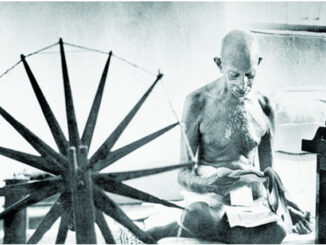
Mahatma Gandhi – the unarmed warrior
Mohandas Karamchand Gandhi, popularly known as Mahatma Gandhi, was born on October 2, 1869, at Porbandar in Gujarat. He was an Indian lawyer, politician, social activist, and writer who led the independence movement against British rule. And during this process, people started to call him the father of the nation (Bapu). Mahatma Gandhi died on January 30, 1948.
Regarded as the Father of Nation, Gandhi was a social reformist and leader of Indian Independence Movement who introduced the idea of non-violent resistance called Satyagrah. After organising a civil disobedience movement for Indians living in South Africa, he returned to India in 1915. In India, he set out on a train journey to different parts of the country trying to understand problems of farmers, peasants and urban labourers and organising protests for them.
He assumbed the leadership of Indian National Congress in 1921 and rose to become its most prominent leader and an iconic figure in Indian politics. He organised the Dandi Salt March in 1930 and Quit India Movement in 1942.
He also worked for the upliftment of untouchables and have them a new name ‘Harijan’ meaning the children of God. Gandhi also wrote extensively for various newspapers and his symbol of self-reliance – the spinning wheel – became a popular symbol of Indian Independence Movement. Gandhi played a key role in pacifying people and averting the Hindu-Muslim riots as tensions rose before and during the partition of the country. He was shot dead by Nathuram Godse on January 31, 1948.
Gandhi was a warrior leader, with a vision of free India, who conceived a shrewd strategy of using peace and non-violence, as the chief weapons, to achieve the objective of liberating India from the clutches of the most powerful colonial power of the time. Training his weapons of non-violence and non-cooperation at the enemy’s mind, with a view to disinfecting it from its unjust rule, he declared that he loved the English people but abhorred their despicable way of governance.
He could throw the British into the shade in argument, in tactics and, the most important of all, to make them feel embarrassed in the cherished field of morality. He galvanized the Indian public to rally behind him to fight the war of freedom, with the superior non-war weapons of peace, thus rousing the enemy’s conscience and the world opinion in favor of the Indian cause, which ultimately forced the enemy to quit the battlefield. According to a historian, “Gandhi’s mystique consisted of a union of original ideas, with remarkable knack for tactics and the uncanny insight into the mass mind.”
Gandhi had indeed read the pulse of his age right, had the vision of selecting the best suited plan of action and was able to realize the dream of his people. True to the Hindu principle of avatar (Incarnation), “When religion declines and the evil doers are to be destroyed, I shall be born, from time to time,” (Gita), Gandhi came as the divinely inspired leader to inject a spark of nationalism, and the will to fight against foreign oppression and social evils, that had infected the society. His army came from all sections of the society – the majority came from its lower strata. In his personal code of conduct of high ethics, and the burning passion for universal well-being, he was an incarnation of Rama, which gave him ready acceptability as a leader. His belief in human rights often led him into collision, not only with the British and South Africa but also with the attitude of several Hindus towards the untouchables.
Gandhi advocated and effectively employed the superior weapons of resistance with peace and ‘non-cooperation’ against the enemy’s unrighteous ways. Hard to believe that Gandhi’s school of resistance could generate such a moral strength in his teeming unarmed soldiery, who fell with their cracked skulls, but got up and surged forward repeatedly, with wounded bodies, fighting the white terror, “Kill us, but we shall not quit.” That he could inspire and elevate his followers to such a degree of physical, mental and spiritual strength will remain a wonder of human race for times to come.
The turning point came on April 13, 1919, when Brigadier General Dyer (British) ordered firing on a peaceful rally in which 1,650 rounds were fired, killing 1,516 peaceful protestors at Jallianwala Bagh (Amritsar). Gandhi said, “I love the British people but henceforth, I am the deadliest enemy of the wrong form of government that the British may impose upon India.” It is erroneous to call Gandhi’s strategy of non-violence as passive or inactive. Gandhi was a strong-willed realist, who adopted a strategy of proactive non-violence against the British, because he had no wherewithal to fight the colonial power.
As a national leader, a number of commendable leadership traits were found in Gandhi, but two innate soldierly attributes for which he stands apart, were: One, his strength of courage lay both in the physical and moral planes. Two, forever he led from the front. In Gandhi, Indians saw a ray of hope to alleviate them from the age-old political and social suffering. The intrinsic nobility of his cause, the grand vision of a free India and the will to sacrifice all for the fulfillment of this dream, despite myriad problems, raised him to the stature of a prophet, and a successful one. It was the grandeur of Gandhi’s dream, which galvanized Indians. For centuries, no one had talked of a liberated and united India. The fantasy of freedom caught every Indian’s aspiration and dream, for which one was prepared to pay any price. After all, he was talking of the Indian nation, which had almost relapsed from the Indian mind. As the momentum of the Independence Movement gained strength, his dream seemed to be a winning vision, which drew to his following columns even the fence sitters. Soon the common person started perceiving the nation’s vision as tall as the Himalayas and as deep as the ocean. Where the centuries-old resistance and revolts had failed, the crown of ultimate victory to win freedom was to adorn Gandhi’s head. What truly characterizes this saint leader is the leadership trait firmly rooted in spirituality. Spirituality entails belief in universal goodwill and sensibility to a common thread running through the entire humankind. It was Gandhi’s Himalayan determination and Ganga-like purity of purpose, which shook the British Empire. Natural faith in the Hindu Dharma had inspired in him the spirit of fighting for the righteous cause, and that tolerating injustice was as much a sin as inflicting it. In his fight for the national cause, Gandhi transformed non-violence into his main weapon to resist injustice and violence. Gandhi had rightly symbolized India’s love for freedom and its inherent guts to fight to win, and indeed was one of the most amazing paradoxes of history. “Coming generations will scarce believe that such a man, in flesh and blood, lived upon this earth,” said Einstein about Gandhi.
-
AIIMS orders security guards not to fetch tea, snacks for doctors, staffers
The All India Institute of Medical Sciences, or AIIMS, has asked its security staffers not to fetch tea and refreshments for doctors and other staff during duty hours and said they should be used only for the purpose they are engaged for.
New AIIMS director, M Srinivas, on Thursday took a strong stand against senior staffers asking security guards to fetch tea and snacks for them during working hours and issued an advisory barring the practice. According to the statement, any security staff found taking refreshments or eating food during duty hours will be removed from the rolls of the AIIMS.
This decision was made after the director noticed one of the security staff carrying tea in a tray on the orders of hospital staff while visiting the Cardiothoracic and Neurosciences Center. “Such incidents not only compromise the security for which the staff has been deployed but also portray an adverse image of security services,” the memorandum read.”It is hereby directed that the security staff deployed for security and assistance of patients will not be used for any purpose other than for which they are engaged. The in-charge of the concerned office to which the security staff is posted as well as the respective cafeteria/canteen in-charge will be held responsible if any security staff is found carrying refreshments/tea/coffee, etc. during their duty hours,” it stated. “It will also be ensured by the respective faculty-in-charge and officer-in-charge of security that the security staff perform the duties as specified in the tender agreement for watch and ward services,” the memorandum added.
-

Chinese tycoon Richard Liu faces civil trial in alleged rape
Minneapolis (TIP): A Chinese billionaire, one of the richest people in the world, is heading to trial in Minneapolis to defend himself against allegations that he raped a former University of Minnesota student after a night of dinner and drinks in 2018.
Richard Liu, the founder and former CEO of e-commerce giant JD.com, has denied raping the woman, and prosecutors did not file criminal charges. The woman, Jingyao Liu, sued in civil court, alleging she was coerced to drink before Richard Liu groped her in a limousine and raped her in her apartment.
Both are expected to testify, and it will be up to a jury to decide who is telling the truth.
The woman alleges the attack happened in 2018 while Richard Liu was in Minneapolis for a week-long residency in the University of Minnesota’s doctor of business administration China program, geared towards high-level executives in China.
Jingyao Liu, a Chinese citizen, was at the university on a student visa and was a volunteer in the program at the time. Richard Liu and Jingyao Liu are not related. Jingyao Liu was 21 at the time; Richard Liu was 46. Richard Liu, who stepped down as the CEO of JD.com this year amid increased government scrutiny of China’s technology industry, was arrested on suspicion of felony rape, but prosecutors never filed criminal charges, saying the case had “profound evidentiary problems.”
Jingyao Liu sued Richard Liu and JD.com in 2019, alleging sexual assault and battery, along with false imprisonment.
She seeks compensatory damages to cover medical bills, emotional distress and pain and suffering. She is seeking more than USD 50,000. According to the lawsuit, on the night of the alleged attack, Richard Liu and other executives went to a Japanese restaurant in Minneapolis, and one of the men invited Jingyao Liu at Richard Liu’s request. Jingyao Liu felt coerced to drink as the men toasted her, she said in her lawsuit.
According to text messages reviewed by The Associated Press and Jingyao Liu’s interviews with police, she said that after the dinner, Richard Liu pulled her into a limousine and groped her despite her protests. She said he raped her at her apartment. She texted a friend: “I begged him don’t. But he didn’t listen.”
Officers released Richard Liu because “it was unclear if a crime had actually taken place,” according to police. In an interview later with an investigator, Richard Liu said that it was consensual. (AP)
-

Europe vows retaliation if energy network attacked
Brussels (TIP): Suspecting that the damage to two underwater natural gas pipelines was a sabotage, the European Union has warned of retaliation for any attack on Europe’s energy networks, a senior official said on September 28. “All available information indicates those leaks are the result of a deliberate act,” EU foreign policy chiefJosepBorrell said on behalf of the bloc’s 27 members. Seismologists in Denmark and Sweden said they had registered two powerful blasts on Monday in the Baltic Sea before unusual leaks were discovered on two underwater natural gas pipelines running from Russia to Germany. According to reports, the CIA had warned weeks ago that the Nord Stream pipes could be attacked.
The incidents came as the EU struggles to keep a lid on soaring gas and electricity prices. Some European leaders and experts pointed to possible sabotage given the energy standoff with Russia provoked by the war in Ukraine.
The pipelines allow gas to be piped to Germany without transiting through Ukraine or Poland. Borrell said the European Union will support any investigation into the damage, and “will take further steps to increase our resilience in energy security.”
Danish PM Mette Frederiksen has said that “it is the authorities’ clear assessment that these are deliberate actions”. Russia also said sabotage was a possibility. The EU has not named a potential perpetrator behind it. Denmark’s defence minister met NATO General Secretary Jens Stoltenberg in Brussels. Both NATO and the EU stressed the need to protect the critical infrastructure after the “sabotage”. — Agencies
-

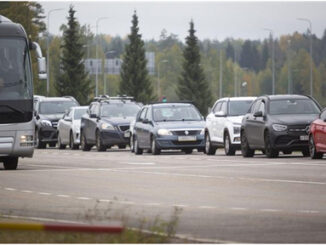
Finland will shut border to Russian tourists from midnight
Helsinki (TIP): Finland will close its border to Russian tourists from midnight local time (2100 GMT), which is expected to lead to a significant drop in cross-border traffic, the government said on September 29. The inflow of Russians is now seen as endangering Finland’s international relations, Foreign Minister PekkaHaavisto told a news conference. Entry for family visits, as well as for work and studies, will still be permitted, he added. The Finnish government, wary of being a transit nation into western Europe’s passport-free Schengen zone, on Friday said it planned to halt tourism from Russia and that a decision would be finalised in the days that followed. Reuters
-

Western leaders fear Putin planning huge escalation of Russia’s faltering invasion of Ukraine
London (TIP): Western leaders fear that Vladimir Putin is planning a huge escalation of Russias faltering invasion of Ukraine with a deadly nuclear strike or an attack on European interests, media reports said.
British and American spies believe there is ‘credible intelligence’ to suggest that the Russian President is preparing an attack that will turn the war effort in his favour, after coming to the realisation that the war was ‘a colossal mistake’, Daily Mail reported. It comes as the US Embassy in Moscow is urging citizens to flee Russia amid fears that dual nationals could be drafted into its war efforts, The Mirror reported. Embassy officials have said Russia may ‘refuse to acknowledge US nationals’ dual citizenship’, deny their access to consular assistance and ‘prevent their departure from Russia’.
The Embassy also warned that leaving Russia has become increasingly difficult with flights filling and Putin’s troops shutting down borders. Putin is understood to be planning land-grab of four regions said to have voted overwhelmingly to join Russia after sham referendums in which residents were marched to the ballot box at gunpoint, Daily Mail reported.
Hastily arranged votes had taken place over five days in the four areas – Donetsk, Luhansk, Zaporizhzhia and Kherson – that make up about 15 per cent of Ukrainian territory.
But there is concern that Putin is planning a nuclear attack west of the regions that would create a radiation dead zone and put a halt to Ukraine’s so far successful counter-offensives, Daily Mail reported.
Another fear is that Russia is preparing a strike on western interests such as maritime communications cables. Officials in the UK believe that Putin, as well as the Russian population, now understand the war was a ‘colossal mistake’, Daily Mail reported.
They also fear the partial mobilisation of 300,000 conscripts may be con to deceive the West into concentrating on Ukraine while he tried to leverage against support for Kiev. It comes amid fears that Kremlin frogmen are responsible for the ‘deliberate’ sabotage of the Nord Stream gas supply pipeline in the Baltic Sea that has sent energy prices soaring.
Security sources told The Mirror that the leaks could act as a warning of similar assaults on communications cables.
They added: “Putin has almost run out of options which makes a tactical nuclear strike possible west of the four regions he is claiming. “It is possible he believes this will be enough as a show of intent to get the west to back off, create a dead zone to halt the Ukrainian counter-offensive and claim victory in the east.
“But another possibility is an attack on the communication cables between the UK and America, many of which are European links to the States.” Damaging internet communication cables could be ‘very damaging’ for the world’s financial markets. IANS
-
UK may fine TikTok $29 million for failing to protect children’s privacy
London (TIP): Britain could fine TikTok 27 million pounds ($28.91 million) following an investigation that found the short-form video app may have breached UK’s data protection law by failing to safeguard privacy of children using the platform.
The investigation found that TikTok could have processed data of children under the age of 13 without appropriate parental consent and failed to provide proper information to its users in a transparent way.
The Information Commissioner’s Office (ICO) has issued TikTok and TikTok Information Technologies UK Ltd with a “notice of intent”, the regulator said in a statement.
“Companies providing digital services have a legal duty to put those protections in place, but our provisional view is that TikTok fell short of meeting that requirement,” Information Commissioner John Edwards said.
“While we respect the ICO’s role in safeguarding privacy in the UK, we disagree with the preliminary views expressed and intend to formally respond to the ICO in due course,” a TikTok spokesperson said in a emailed statement to Reuters.
ICO’s provisional view suggests that TikTok breached UK data protection law between May 2018 and July 2020. In July, the U.S. Senate Commerce Committee voted to approve a measure that would raise the age children are given special online privacy protections to 16 and bar targeted advertising to children by companies such as TikTok and Snapchat without consent. Reuters
-
Northern Kenya faces hunger crisis as drought wipes out livestock
Lodwar, Kenya (TIP): In a dry river bed in Kenya’s arid northwest, pastoralists dig ever-deeper pits in an anxious search for water, as the region suffers its worst drought in 40 years, which has wiped out livestock and crops, deepening a hunger crisis.
For the last four years the annual rains have failed across Kenya, Ethiopia and Somalia and forced 1.5 million people to flee their homes in search of food and water elsewhere. The impact of hunger is etched on the faces of children filling the “stabilization room” for serious health problems of the Lodwar County and Referral Hospital in northwest Kenya.
“I have three grand-children who have been affected by hunger,” said Agnes Ekereru, sitting on a bed with her four-year-old grandson EkaiEbei. “All my livestock have died because of the drought.”
Almost two million children in the Horn of Africa require urgent treatment for life-threatening severe acute malnutrition, according to UNICEF estimates.
The hunger problem is compounded by the war in Ukraine and the fallout from the coronavirus pandemic, which has pushed up the price of cooking oil, bread and wheat flour to record highs at local markets, UNICEF says.
Scientists at the National Aeronautics and Space Administration (NASA) say the drought has been caused by climate change and the La Niña weather pattern in the Pacific Ocean.
Aid groups and authorities predict the next rains in the Horn of Africa are likely to fail too, hurting communities whom a UNICEF official in Kenya said are some of the least responsible for global carbon emissions.
“It’s not the (countries) ironically that are contributing more to that global emission that are paying the heaviest price,” said Mohamed Malick Fall, UNICEF regional director for eastern and southern Africa.
“And here comes the notion of equity and justice: why should I pay such a heavy price for something for which I have not contributed so greatly.” With each passing season, the inhabitants of Turkana County, mostly nomadic herders famous for their colourful beadwork and cloth, have fewer resources to fall back on, pushing them closer to the brink.
Earlier this month Kenya’s president declared the crisis a national disaster. “I have lost so much,” said Loudi Lokoriyen, a goat-herder searching for water outside the town of Lodwar.
(Reuters)
-

Pakistan’s former PM Nawaz Sharif’s daughter Maryam, her husband Safdar acquitted in corruption case
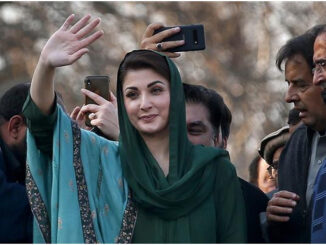
Islamabad, (TIP): In a big legal victory for the ruling Pakistan Muslim League-Nawaz (PML-N) party, its vice-president Maryam Nawaz was on September 29 acquitted by a high court in a corruption case which will allow her to contest elections.
The Islamabad High Court (IHC) accepted the appeal of Maryam, daughter of former Prime Minister Nawaz Sharif, and that of her husband Muhammad Safdar who had challenged their convictions by an anti-corruption court in the Avenfield property case in July 2018. The Avenfield case refers to the purchase of four posh flats in Avenfield House, Park Lane in London.
A two-judge bench comprising Justice Aamer Farooq and Justice Mohsin Akhtar Kayani hearing their appeals said the opinion of the investigating officer could not be considered as evidence.
“The joint investigation team did not present any facts, it just collected information,” Justice Kayani observed.
At the conclusion of the case, the bench held that the National Accountability Bureau (NAB), the prosecutor in the case, failed to establish the charges of corruption. The NAB had accused the Sharifs of purchasing the flats with money over and above their known sources of income. The Sharifs rejected the accusation of wrongdoing but were unable to show where the money for the flats had come from. The NAB in September had admitted before the IHC that the PML-N leader had no direct role in purchasing the Avenfield properties. Thursday’s verdict has paved the way for Maryam, 48, to be eligible to contest elections.
Lawyer Mirza MoizBaig said: “A person who has been convicted of a crime involving corruption or moral turpitude is disqualified from contesting elections unless a period of five years has lapsed since their release.”
Maryam in a brief chat with the media outside the court said they had been “vindicated”.
As she talked to the media, she also spoke to her father Nawaz Sharif in London and also received another call from her uncle Prime Minister Shehbaz Sharif, who congratulated her on her acquittal.
The Prime Minister later in his reaction to the verdict said the “edifice of lies, slander and character assassination” had come crumbling down. “Maryam’s acquittal in the Avenfield reference is a slap in the face of the so-called accountability system that was employed to target the Sharif family. My congratulations to Maryam beti (daughter) and Safdar,” he tweeted.
“Maryam Nawaz and Nawaz Sharif’s connection to the assets beyond means has not been proven,” remarked the court on Thursday. “How do Wajid Zia’s statement and the material presented to prove the prosecution’s case?” the court inquired.
Zia was the investigating officer who headed the joint investigation team (JIT) that probed the Panama gate, leading to the disqualification of Nawaz Sharif. While Maryam and her husband were convicted along with the PML-N supremo, the elder Sharif was handed down 10 years in jail, his daughter sentenced to seven years in prison, and her husband was sentenced to one year in prison. They had filed appeals against their conviction before the IHC in the second week of August 2018 and the court had on September 18 the same year suspended their sentences and released them on bail. The elder Sharif’s appeal is still pending as has been living in London and failed to appear before the court despite being given several opportunities. Overturning the conviction of his daughter, however, opens a window for him to come back and get his bail processed with the hope to get relief. (PTI)
-

Indian climber among 12 injured as avalanche hits Nepal’s Mt. Manaslu
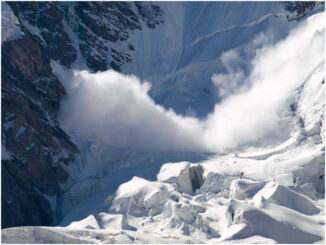
Kathmandu (TIP): Indian climber Baljeet Kaur was among 12 climbers who were injured when an avalanche struck them at the base camp of Mt. Manaslu in Nepal on September 25, according to media reports. Out of the 12 mountaineers, three were critically injured, The Himalayan Times newspaper reported. The Department of Tourism confirmed that the avalanche hit at 11:30 am on Monday. Sources told local media that Sherpa climbers from Seven Summit Treks, Satori Adventure, Imagine Nepal Treks, Elite Expedition, and 8K Expeditions, among others, were injured. Pemba Sherpa from 8K Expedition said Indian climber Kaur and her Sherpa guide both suffered minor injuries and were safe, the report said.
The Tourism Department is yet to establish contact with the officials at the incident site, The Kathmandu Post newspaper reported, quoting the Director of the department. The avalanche struck the route just below Camp IV of Mount Manaslu when the climbers were ferrying logistics to the high camps. Rescue operations are under way and various helicopter services are conducting aerial searches. Government official for expeditions on Mt. ManasluYashoda Acharya said that bad weather conditions at Mt. Manaslu Base Camp were hindering rescue efforts.
Mt. Manaslu, the world’s eighth highest mountain and considered the fifth most dangerous peak, has claimed 53 lives of mountaineers from 297 attempts, according to Australian website 9News.com. (PTI)
-
Earthquake of magnitude 5.2 strikes Myanmar
Naypyidaw (TIP): An earthquake of magnitude 5.2 jolted Myanmar on September 30, according to the National Centre for Seismology. The quake hit around 03:52:37 (IST) at a depth of 140km. According to the data by National Centre for Seismology, the quake struck about 162km NW of Burma, Myanmar. The epicentre was monitored at 23.09 degrees north latitude and 95.01 degrees east longitude. (PTI)
-
Model fearing Myanmar military heads to asylum in Canada
Bangkok (TIP) : A fashion model from Myanmar who feared being arrested by the country’s military government if she was forced back home from exile has arrived in Canada, which she says has granted her asylum. Thaw Nandar Aung, also known as Han Lay, left on a flight from Bangkok’s Suvarnabhumi Airport early on September 28 morning, according to ArchayonKraithong, a deputy commissioner of Thailand’s Immigration Bureau. Thaw Nandar Aung wrote on Facebook she had arrived in Canada and thanked her fans for their support. “I will do my best to help my beloved Myanmar and the people of Myanmar as much as I can,” she wrote in the post seen on Thursday. Thaw Nandar Aung had told Radio Free Asia, a US-government-funded broadcaster, on Tuesday that she was headed to Canada, after having been granted political asylum there with the assistance of the UN refugee agency and the Canadian Embassy in Thailand. (AP)