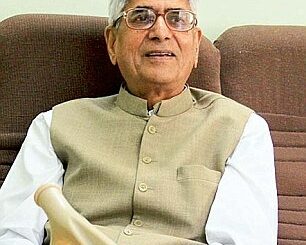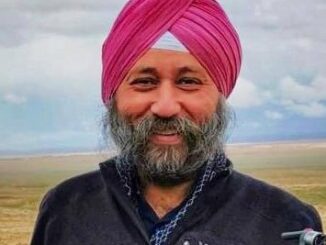
NEW YORK (TIP): Amardeep Singh, a Singapore-based researcher, writer, and documentary filmmaker is the recipient of ‘The Guru Nanak Interfaith Prize’ for the year 2022. The ceremony will be hosted on Monday, November 14, 6 PM onwards at Crest Hollow Country Club Emerald Room, Woodbury, New York.
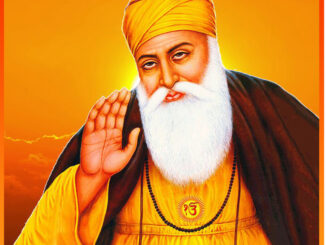
The Guru Nanak Interfaith Prize recognizes and supports the efforts of those individuals and organizations that work to advance the vision of Guru Nanak, the founder of Sikhism, who taught that we discover our oneness with humanity by exploring our differences.
The Guru Nanak Interfaith Prize was established with a gift from the family of the late Sardar Ishar Singh Bindra and Sardarni Kuljit Kaur Bindra, prominent Sikh Americans who lived in Brookville, New York. In September 2000, the Bindra family endowed the Sardarni Kuljit Kaur Bindra Chair in Sikh Studies at Hofstra University in honor of the family’s matriarch. The family’s company, Jeetish Group of Companies, based in New York City, is a major distributor of apparel, and the family has substantial interests in real estate as well. The Bindras are deeply involved in philanthropic activities that benefit both the Sikh and non-Sikh communities. The Guru Nanak Interfaith Prize is an expression of Sardar Ishar Singh Bindra’s longstanding dedication to interfaith harmony.
Amardeep Singh after studying at the Doon School in Dehradun, India, went on to receive his degree at the Manipal Institute of Technology. He later obtained his MBA at the University of Chicago. He worked in the financial sector for over 25 years, serving as head of the Asian Pacific Region at American Express for Revenue Management. He authored two books, Lost Heritage, The Sikh Legacy in Pakistan and The Quest Continues. Lost Heritage, The Sikh Legacy in Pakistan describes the culture, history, and legacy of Sikh history. Amardeep has also produced two documentaries on the forgotten Sikh legacy remnants in the five states of Pakistan. He and his wife, Vininder Kaur, have produced and directed a 24-episode documentary series titled Allegory, A Tapestry of Guru Nanak’s Travels, which was filmed across nine different countries including Pakistan, Afghanistan, Iran, Iraq, Saudi Arabia, Tibet, India, Bangladesh and Sri Lanka.
The past recipients of the award are:-
His Holiness the 14th Dalai Lama, Tenzin Gyatso in 2008,
Rabbi Arthur Schneider and Religions for Peace in 2010, Dr. Eboo Patel in 2012, Bhai Sahib Mohinder Singh Ahluwalia and The Rev. Dr. Katharine Rhodes Henderson in 2014, The Pluralism Project and Serve2Unite in 2016, Tanenbaum Center for Interreligious Understanding in 2018, and Karen Armstrong and The Interfaith Center of New York (ICNY) in 2020.
NEW YORK (TIP): Devendra Raj Mehta, former SEBI chairman and deputy governor of Reserve Bank of India (RBI), and founder and chief of Bhagwan Mahaveer Viklang Sahayata Sami (BMVSS), parent organization of Jaipur foot USA is arriving in NY next week. Mr. Mehta will bethe chief guestat a Seminar- India for Humanity- at the Indian Consulate in New York on November 15, 2022. He will also attend RANA Deep Mahotsav at Crest Hollow Country Club in Long Island on November 20, as a very special guest, according to the information given to The Indian Panorama by the Jaipur Foot USA Chairman Prem Bhandari.
HICKSVILLE, NY (TIP): The once extremely active organization Nargis Dutt Memorial Cancer Foundation, has had some internal dissensions preventing the Foundation from being functional for a couple of years. To top it came the harrowing period of Covid-19 during which all activity of almost all organizations had to take a back seat.
The Nargis Dutt Memorial Cancer Foundation is now back in action and are holding a gala and fundraiser on November 6 at Marriott in Uniondale, Long Island. As usual , the Foundation is honoring this time six eminent personalities. They include Dr. V. K Raju – Ophthalmologist, Dr. Asad Sadiq – Dentist, Dr Nilesh Mehta – Gastroenterologist/Hepatologist, Mr. Sunny Singh – Entrepreneur Philanthropist, Mr. Andy Mansukhani, and Late Mr. Peter Bheddah.
Nargis Dutt Memorial Foundation, a dream of late Nargis Dutt and her husband Sunil Dutt, has served cancer patients in India for 40 years now. It was founded in 1981 in the city of the world-New York. It has been a long but satisfying journey for the organization that has believed with Albert Schweitzer, a German theologian, philosopher, and physician that “There is no higher religion than human service. To work for the common good is the greatest creed.”
During the period between 1982 and 2022, the NDMF has completed around 60 projects valued at more than 6 million dollars, sponsored Indian doctors for specialized training in treatment of cancer in prestigious Medical Institutes in the US and recognized excellence of scores of achievers and contributors. The introduction to the Foundation, as carried out, in a Foundation brochure reads: “Nargis Dutt Memorial Foundation was established in 1981 in memory of Nargis Dutt, a famous Bollywood movie star of India. She gave numerous memorable performances in movies including Mother India, which was nominated for an Oscar in 1957. She was a very caring human being whose dream was to see that the best available medical care can also be provided to under privileged and needy people in India. “While undergoing specialized medical treatment in New York for cancer, Mrs. Dutt articulated her dream and repeatedly expressed her regret that the medical care that she was able to receive was unavailable in her Motherland. Her deep concern for the sick and disabled led her to set definite goals towards making improved medical services available to the poorest in India. She already had considerable work to her credit in rehabilitation, and education of handicapped children in India. Unfortunately, she did not live long enough to see the evolution of her dream. After her demise, her husband Sunil Dutt established the Nargis Dutt Memorial Foundation and through various projects worked to keep Nargis Dutt’s dream alive.”
And, after Sunil Dutt’s demise on 25 May 2005, his illustrious daughter Priya Dutt took upon herself the responsibility of guiding the destiny of an organization that has become synonymous with the late Dutts and cancer.
It will be of interest to our readers to know as to how the idea of forming NDMF came up. In 1981 Nargis Dutt who was suffering from pancreatic cancer was treated at Sloane Kettering Institute in New York. In spite of best efforts of doctors and the loving care of her husband, Sunil Dutt, cancer ultimately snuffed life out of the legendary cine artist.
According to the information given by one of the nine founding members, Mr. Inder Bindra, Sunil Dutt had come to New York in April/May 1981 to settle the bill for Nargis Dutt’s treatment at Memorial Sloan- Kettering Cancer Center. They were together in the Bahamas when the idea of forming Nargis Dutt Memorial Cancer Foundation came to their mind. It was later that he, along with 8 other persons with philanthropic disposition (some of whom have since withdrawn or have migrated to the other world) held a meeting with Sunil Dutt and discussed the issue of forming the organization. Sunil Dutt felt mightily pleased and said he was obliged for the offer to form Nargis Dutt Memorial Cancer Foundation. Thus, the embryonic idea took a shape in 1981. And soon, the first formal meeting took place in the month of May 1981 itself. The NDMF was registered as 501-C 3 Not-for Profit corporation on 25th February 1982. Ranjit Ghura and Russel Rosen in Wall Street who was the attorney helped in the formation of the corporation.
There were nine incorporating members-Nicole Beattie, Inderjit S. Bindra, Edward Beattie, M. D., Shashi Patel, M. D., Suresh Patel, Jas Ghura, Amar Jit Singh, M. D., Bhupendra R. Patel, M. D., and Manu Savani.
NEW DELHI/NEW YORK (TIP): The Election Commission on Thursday, November 3, announced two-phase assembly polls in Gujarat, as voting for the first-leg will take place on December 1 and for the second on December 5. The counting of votes will be taken up on December 8 along with Himachal Pradesh. Announcing the decision of the poll panel Chief Election Commissioner (CEC) Rajiv Kumar said, 89 assembly segments will go to the polls in the first phase on December 1, and 93 seats in second phase on December 5. The CEC said there are over 4.9 crore electors eligible to vote this year. There will be more than 51,000 polling stations, which are going to be set up, including more than 34,000 in rural areas. Ahead of the polls, the Centre has deployed 160 companies of the Central Armed Police Forces to the state. The term of the 182-member state assembly ends on February 18, 2023. With the announcement of the election schedule, the Model Code of Conduct has (MCC) come into effect in the state. The much awaited, high-stake polls are seeing a three-cornered contest among the BJP, the Congress and the AAP. The BJP has been in power in the state – Prime Minister Narendra Modi’s home turf — for over two decades.
WASHINGTON, D.C. (TIP):US Secretary of the Treasury Janet Yellen will visit India to participate in the US-India Economic and Financial Partnership on November 11 and discuss how the two countries can work together to deepen their economic ties, according to an official announcement here on Friday, November 4. In New Delhi, Yellen will highlight the strength of America’s partnership with India, which continues to deepen, the Treasury said in a statement. Yellen will meet with technology sector leaders and visit the Microsoft India Development Centre, where she will deliver remarks on the United States’ economic partnership with India, it said. She would also hold a bilateral meeting with Union Finance Minister Nirmala Sitharaman. Following the US-India Economic and Financial Partnership (EFP) dialogue, Yellen will join Sitharaman for a fireside discussion with executives from major Indian companies and American companies operating in India. To conclude the day, Yellen and Sitharaman will sign a joint statement on the EFP dialogue. “Yellen will highlight the close ties between American and Indian people and businesses, and note ways we can further our bilateral economic relationship, including through the Indo-Pacific Economic Framework and stronger supply chains through friend-shoring,” it said.
“She will reaffirm America’s and India’s shared democratic values and commitment to upholding a rules-based international order as the world’s largest democracies,” it said. Yellen will also welcome India’s assumption of the G20 presidency next month and discuss opportunities to make progress on global challenges through global climate action, evolving the multilateral development banks (MDBs), further strengthening global health architecture, and advancing debt relief for low-income countries and emerging markets, the Treasury said. Yellen will be travelling to Bali from New Delhi to represent the US at the G20 Joint Finance and Health Ministers’ Meeting on November 12 and accompany President Joe Biden at the G20 Leaders’ Summit on November 15 and 16. In Indonesia, Yellen will also participate in other events and bilateral meetings, including with Italian Minister of Economy and Finance Giancarlo Giorgetti. Throughout these events and meetings, she will join Biden in rallying the global coalition to hold Russia accountable for its brutal war in Ukraine and to support the people of Ukraine. Yellen will also help lead the global response to macroeconomic challenges, including economic disruptions and elevated global inflation from the COVID-19 pandemic and Russia’s illegal war against Ukraine, which are particularly harmful to low- and middle-income countries, the Treasury said.
“Guru Nanak’s environmentalism upholds the ethical objectives of contemporary eco-theologians—their concern with justice based on care pertaining to our present lives. We cannot be waiting for the future ‘kingdom’ of God, caution feminist scholars. The love of life extends to our immediate families, to our primary communities, and to other species. Guru Nanak’s profound verses have the potential to generate ‘a new synthesis, a new creation in which human nature and nonhuman nature become friends in creating of a livable and sustainable cosmos’.”
Nikky-Guninder Kaur Singh
With the earth’s climate changing faster than ever and the oceans getting hotter and more acidic, we face the gravest environmental challenges today. Guru Nanak would not have been privy to our daily news reports about unprecedented hurricanes, floods, wildfires, health threats, depletion of agriculture, extinction of plant and animal species, and other such hazards. Nevertheless, his open-ended sublime melodies have a profound impact as they move us out from our narrow selves towards appreciating nature’s rhythms, earth’s abundant gifts and the cosmic beauty surrounding us. Guru Nanak’s reverence for our planet is infectious. The more we read and hear him, the more we question our economic, profit-making, capitalist attitude.
Even the few biographical facts we have about Guru Nanak’s life underscore his consanguineous relationship with nature. Apparently, as a youngster, he did not like the confines of school, and opted to commune with nature. The Janamsakhis repeatedly illustrate his at-homeness in nature. We even see young Nanak grazing cows, and when he falls asleep, a cobra shades him while the sun smiles from above; in another narrative, the shade of the tree stands still while he is asleep. The terrestrial and the celestial, the spheres human, animal and vegetation, are all integrated into a harmonious whole. The Guru travelled to many different places and acquired a deep knowledge of and appreciation for the abundant diversity of flora and fauna. As we know, the first Sikh community developed in Kartarpur, the village he founded by the rippling river Ravi. Men and women who gathered around the Guru to hear and recite his hymns were in sync with the soil and spirit of its natural landscape. Planting, irrigating, ploughing, harvesting, rotating crops, cooking and cleaning—all with their own hands—were their daily practices. This fundamental nature orientation subsequently led to the Sikh institutions of seva (service for the larger community), langar (eating together without social segregations) and sangat (sense of fellowship)
An enchanting plurality of trees, plants, flowers, animals, birds and elements forms the script of Guru Nanak’s literary repertoire. It is very much with them, in them, that Guru Nanak rejoices inthe wondrous presence of the divine One in this very world of ours. His hymns like ‘BarahMah’, ‘Pahare’ and ‘Thiti’ manifest the correlation between cosmic and human rhythms, physical and spiritual currents. Guru Nanak’s theology does not posit ‘God’ above or apart from the cosmos: the sole infinite Creator creates everything, is present in everything, watches over each and all with care and joy. All of natural phenomena is the Divine’s household (eco from the Greek word for household: ekos). Guru Nanak reveals this very cosmos as the dwelling place of the divine One and our life together with fellow beings, biotic or abiotic, in an interlinking web. He approves of neither Western anthropocentricism nor an instrumentalist attitude to nature. We must absorb his lyrics so we value the natural world and work together to sustain its precious wealth for future generations.
In heartwarming ways, Guru Nanak establishes a familial relationship with the environment:
Air is our guru, water is known as our father
The unifying womb, our mother earth
Night and day are the two male and female nurses
This is how You keep the play of the world playing.
—GGS: 1021
Indeed, this wholistic scenario holds enormous import in Sikh scripture as it appears with slight variation in the epilogue of the Japji. The elements are our parents, without whom we would not even be here. Earth is the mother, the matrix from which we all originate, and the father is water which is approximately 80 per cent of our bodies. The air we breathe every second is our teacher from whom we learn about our utter reliance on the infinite One, who keeps up the momentum of worldly play. Night and day are our male and female nurses who look after us. Thus, all planetary beings are children belonging to the same family. The verb ‘playing’ (khelai) intimates our delightful movements in the rhythmic lap of night and day—with the awareness of the infinite One each moment as we breathe (air is our guru!).
In a host of images Guru Nanak solidly situates the divine One in this world. He exuberantly says, ‘All that exists exists in You—jetihaitetitudhandar’(GGS: 1034). A short passage celebrates the immediacy of the infinite One in nature and its elements. It connects and affirms human architectural, domestic and economic activities as well.
Your room above in four directions
Has land on one side, water on the other
This whole world is a coin
Minted with Your face alone.
—GGS: 596
The architectural construction (caubara) indicates an airy space on the roof of a double-storey house. Its location between the land and the waters evokes the traditional hand mill that women used to grind corn and grains till very recent times. Guru Nanak’s Punjabi term for ‘side,’ puṛ,refers to the two sides of a chakki (hand mill), which brings to mind Sufi devotional songs (chakki-namahs) sung by mothers as their hand spun around grinding flour while their babies slept in their laps. And the whole universe (sagal bhavan) for the Sikh Guru is a single coin imprinted with the face of the transcendent One. If only our society would see the world through Guru Nanak’s eyes! Would we be so money-centric? Would we be so self-indulgent? Economic wealth belongs to all of us equally. How can we have such massive disparities in our global world? How can billions of our siblings be denied access to basic food, health, education and sanitation standards?
Guru Nanak’s environmentalism upholds the ethical objectives of contemporary eco-theologians—their concern with justice based on care pertaining to our present lives. We cannot be waiting for the future ‘kingdom’ of God, caution feminist scholars. The love of life extends to our immediate families, to our primary communities, and to other species. Guru Nanak’s profound verses have the potential to generate “a new synthesis, a new creation in which human nature and nonhuman nature become friends in creating of a livable and sustainable cosmos.”
(Nikky-Guninder Kaur Singh is Chair of the Department &Crawford Family Professor of Religious Studies, Colby College, Waterville, ME.http://www.colby.edu/directory_cs/nksingh/)
Rahul Gandhi hugging two old women during Bharat Jodo YatraRahul Gandhi with a little girl, and on the right, helps a girl with her shoes.
“Bharat Jodo Yatra is a timely initiative to bring Indians together. It does not matter who took the lead, but it is the right thing to do. India is a great nation and will remain one, and a few transitory individuals cannot wipe out its 5000-year-old history. It is foolish to think Hinduism is in danger; who are you to save it? Sanatana Dharma does not need greedy defenders to take advantage of it. Its eternal values of pluralism and coexistence will outlive all the small men that have come and gone.”
Bharat Jodo Yatra is in the interests of Indians to sustain democratic institutions and democracy in India. The freedom that we have had for 75 years is gradually waning.
By Mike Ghouse
Are we not happy when we function together, work together, study together, eat and live together with fewer conflicts and tensions? Aren’t we most pleased with each other in a family, neighbors, and community if we do not hate each other?
We were born to live in harmony. God has created everything in balance except our interactions with each other. Look around you. Look at the Sun and its planets arranged to go in circles with precision. The earth goes around the Sun in 24 hours, and it has been doing this for millions of years; not only that, it tilts at certain angles to give us the needed seasons of sustenance. Our body is programmed to function together, provided we feed it right. We can do the right thing with our freedom and live in peace or screw it up and live in tension. What creates disharmony? It is our interactions with each other that create discord, conflicts, and divisiveness in society. It is taking a toll on all Indians. Most Indians live in tension; the threateners and the threatened feel insecure. It has to change.
Bharat Jodo Yatra is a timely initiative to bring Indians together. It does not matter who took the lead, but it is the right thing to do. India is a great nation and will remain one, and a few transitory individuals cannot wipe out its 5000-year-old history. It is foolish to think Hinduism is in danger; who are you to save it? Sanatana Dharma does not need greedy defenders to take advantage of it. Its eternal values of pluralism and coexistence will outlive all the small men that have come and gone.
We are all Indians and created equal, and no one is more privileged than the other. Together as Indians, we are Hindus, Dalits, Muslims, Sikhs, Christians, Jains, Atheists, Nastiks, Buddhists, Bahá’í, Tribals, Jews, Bo’s, Qandharis, Bakarwals inclusive of every group of Indians. Anyone who breathes the air of the land, drinks the water, eats the food, and or chooses to be an Indian is an Indian.
We should not allow any evil force to pit one Indian against another. If patriotic, they must work for an exemplary. We should ask them to join us and build a cohesive India where authentic sab ka Saath, sab ka vikaas ho. Sab ka Samman ho, aur sab ko nyay mile.
The divisive Hindu-Muslim rhetoric has got to go. The politicians are the ones who gained from this nonsense. Did the average Indian gain anything from it other than being fooled?
We have to figure out how to co-exist with the least friction. It is in your interests, my interest, and everyone’s interest to have justice, which gives birth to sustainable peace and prosperity. Our motherland is sliding down on scales of poverty, economic growth, and social cohesion, and we must put brakes to this slide.
We need Bharat to be mukt from bad governance. Good governance is being accountable to the public. The top leader must hold press conferences, answer questions in the parliament, and fearlessly put himself to give difficult interviews to the pressmen like Karan Thapar, Ravish Kumar, and Arfa Khanum. True democracy is when the leaders are open to criticism and welcome it instead of harassing the critics. If Modi had children, he would have enriched them. However, he has enhanced his friend’s wealth by giving away profitable public businesses to them without offering bids to the public.
Modi’s lust for power and control is shameful and is worse than any dynastic rule. He chooses to remain silent when the nation is burning with hate and calls for genocide are made relentlessly. All this corruption and destruction has to come to an end.
Bharat Jodo Yatra reminds me of the Bharat Choro Yatra initiated by Mahatma Gandhi in 1942. Its demand was an immediate end to British rule over India. It was known as the Quit India Movement that led the British to run away.
Bharat Jodo Yatra is in the interests of Indians to sustain democratic institutions and democracy in India. The freedom that we have had for 75 years is gradually waning.
Watching the Bharat Jodo Yatra and Rahul Gandhi meeting ordinary Indians on the walk is a joy. No one other than Mahatma Gandhi was this fearless. These men are born once every 100 years to restore Dharma in society. Rahul has no fear even though he lost his grandmother and father to terrorism. He has set the movement to bring Indians together, and the momentum will pick up on its own. The Indians are reasonable people, and harmony is in their DNA even though momentarily they are lost following the pied piper.
After Mahatma Gandhi’s abrupt death, Indians were looking for another Mahatma who was unselfish and did not lust for power but cared for fellow Indians to live in harmony.
We may have that Mahatma reincarnated in Rahul and we wish great success to the yatra to bring Indians together to common good.
Jai Hind!
(Mike Ghouse is the CEO and founder of the Center for Pluralism and an interfaith wedding Officiant. He offers pluralistic solutions on issues of the day to the media, policymakers, and others. More about him at www.TheGhouseDiary.com)
There is a striking verse in Sri Guru Granth Sahib (SGGS), the Sacred Sikh Scripture. Its author, Guru Nanak was the founder of Sikhi-sm:
ਗੁਰੂਸਮੁੰਦੁਨਦੀਸਭਿਸਿਖੀਨਾਤੈਜਿਤੁਵਡਿਆਈ॥– Guru Nanak Dev. SGGS, p. 150
Gurū samunḏ naḏī sabẖ sikẖī nāṯai jiṯ vadi▫ā▫ī. Guru, the Divine Wisdom, is the bottomless Ocean, and all of its WISDOM is in the form of teachings from this Ocean. Those who take a dip in those achieve greatness.
Ocean and rivulets here are metaphors;an ocean for Guru’s Wisdom and rivulets for institutions of dissemination. The Ocean of sacred Knowledge is depthless. The water of Knowledge vaporizing from this Ocean creates clouds, raindrops, and snow. In turn, they descend on earth. Finally, they give birth to brooks, rivers, and sometimes, puddles all over the world. When they are in the format of shabad using the language of Sikh tradition, they are said to form rivulets of Wisdom.
Thus, the rivulets are metaphors describing the practices of the Guru’s teachings.
As rivulets vary in shape, size, speed, and quality of water they distribute, so are Guru Nanak’steachings. They adapt to numerous variations depending on the terrains of particular geographical or cultural expanses. Their shape and external formats are widely differing landscapes and linguistic temperaments. But their purpose is to nourish humanity with ONE Universal consciousness.
Guru’s Wisdom originating from Shabad Guru or the Wisdom imbibed in the Guru’s hymns(composed in 22 languages) applies to diverse populations and cultures. The recipients may be of various mindsets, varying from place to place. Guru Nanak’s Wisdom is applicable irrespective of religion, culture, or nationality.
Thus, Guru Nanak’s teachings would overtly look and feel diverse, but inside they are universal and carry the same fundamental doctrines and Wisdom. Their purpose is to nourish the human mind with one universal Knowledge towards ONE Universal Consciousness and ultimately take all humanity back to their source, the OCEAN, the Creator.
Cloud Burst
Sikh historian Bhai Santokh Singh reported a beautiful story from the Guruship of Guru Ram Das.
A delegation of religious scholars under the leadership of Pundit Mohan Lal came to visit the Guru. The members were well-known Pundits or leaders of Brahminical tradition. Their mission was to express their concern with the language and mode of propagation the Guru used to freely spread the Gurmat message among the people. The Guru rebuked the suggestion and used the same metaphor of rain as related above to make his point forcefully. Bhai Santokh described it as
Vedas and Puranas, the scriptures of ancient religions written in Sanskrit, are like water kept in a well. The divine message of Gurus’ hymns, the Guru said, waslike rain waters thatreach every thirsty person or every germinating plant.
Divine Knowledge in classical languages like Sanskrit or Arabic is like water kept in deep wells. It takes effort to draw it and then quench the thirst of the person drawing it out to irrigate crops of only those who possess the means of taking out water in this manner. No sharing was possible as the quantity thus drawn maybe sufficient only to satisfy the needs of the bucket holder.
In contrast, the Guru’s Wisdom must be in a language that served as a cloud burst. It turned the crops of everyone and in every field green; it reached mountains and valleys alike, birds and mammals alike, animals and humans alike, educated and uneducated alike, poor and rich. (See Santokh Singh, Sri Gur Partap Suraj Granth, Raas 1, Part 46, p. 1518. Reprinted Amritsar, Khalsa Samachar, 1954.)
The Guru’s verdict was akin to a biblical parabola.
Jesus is known to say that when you light a lamp, place it on a higher pedestal so that the light can reach everyone.
Diversity to be Welcome
The metaphor from the Guru Granth, as described above, also implied the appreciation of the great diversity observed in all civil societies and faiths. For example, As Guru Granth says, Diversity is Divine Order.
ਮੇਰੈਪ੍ਰਭਿਸਾਚੈਇਕੁਖੇਲੁਰਚਾਇਆ॥ਕੋਇਨਕਿਸਹੀਜੇਹਾਉਪਾਇਆ॥
My Timeless Creator has staged a play. He has created no one like anyone else.
Guru Amar Das, SGGS, p. 1056.
Without anappreciation of diversity, one fails to practice universality. Only diversity provides a necessary opportunity to practice universality.
Guru Nanak’s Religion Is Universal
The purpose of elucidating Guru Nanak’s metaphor above is to illustrate the universal nature of Guru’s message, Gurmat, or Sikhi.
What is universal? Universal applies universally, that is, for “all similarly situated individuals,” regardless of culture, race, gender, religion, nationality, sexuality, economic rank,or any other distinguishing feature.
There is a dynamic relationship between identity, community, and grace-awakened values, which are authentic when universal. Let us examine what exactly one means by “operationalizing Sikh universals.”
Let me begin by defining what is universal.
A universal is a concept, an idea, a feeling, etc.-across different cultures and languages. Its validity is beyond the domain in which it originated. For example, Christians have exported the idea of “God, or ‘religion’ beyond its origins in the Middle-Eastern and Greece-Roman context. Further, western secularists have exported the notions of democracy beyond its European and American context. Buddhists and Hindus have exported the concepts of dharma, karma, meditation, yoga, even Gandhi-ism, etc., beyond India. There are many more examples. But to take root in new soil, a concept must alter the relations between itself and other notions native to that new soil. To take root in a new ground is to transformconnections between the words and concepts of a new culture.
There is a firm conviction that Guru Nanak did not want his message confined to a narrow ethnic context. He traveled across cultures and religions. His teachings may have emerged within theNorth-West soil of India. Indeed, the teachings of every great spiritual master began their lives in a particular area.
But the message of Guru Nanak is such that all humanity shares it.
Guru Nanak himself traveled widely beyond his native place of birth, nearly 38 thousand kilometers. The universality of his teachings applied to many cultures across the areas of his visits. There was a purpose forthe Guru going much further than the borders of this lingua-franca. Guru Nanak’s teachings go well beyond the narrow meaning of ‘religion.’ It radically disrupts the Western religion-secular binary, on the one hand, to eliminate egoand, on the other hand, its intimate connection to the shabad as poetic consciousness.
In this way,SABD-guru may appeal to and be experienced beyond the Punjabi domain by all humanity because it also connects to shared humanity through our shared philosophy. The teachings of shabad-guruare both secular and religious. Thus, to operationalize shabad-guru is to release it from the traps of religious hegemony and allow it to create new relations with whatever soil it encounters and sets roots in. Thus, we see Guru Nanak’s mission as universal.
Conclusion
Several centuries ago, Guru Nanak used the Ocean metaphor for the divine Wisdom that serves humanity as the nourishing water of creeks all over the earth. Thus, Guru Nanak’s teachings would never formally alignwith one denomination, political party, geographical area, or ethnicity or allow someone to ignore laws of civil societies, sciences, or of colors and diversities of the same institutions. As far as we know, that was the intent of Guru Nanak.
Describing divine Wisdom as the Ocean of Truth and rivulets as routes of its dissemination Guru Nanak continued to tell all those who bathe in those rivers of Divine Wisdom will evolve to higher awareness.
ਨਾਨਕਸਾਹਿਬੁਮਨਿਵਸੈਸਚਾਨਾਵਣੁਹੋਇ
Says Nanak, an authentic cleansing bath, is experienced when the Divine dwells within human consciousness.
Guru Nanak, SGGS, p. 146
ਅੰਤਰਿਨਾਵਣੁਸਾਚੁਪਛਾਣੈ॥
One who takes an internal bath in Divine Wisdom comprehends the Truth.
Guru Nanak, SGGS, p. 414
Guru Nanak’s institutions and scholarship carry the responsibility to ‘operationalize and export’ the Wisdom to all civil societies. The specifics of ‘operationalization and exporting’ need extensive discussions. Here it suffices to conclude as follows. Don’t just be satisfied with the place on the library shelf provided for Guru Nanak’s teachings by the West. Similarly, don’t blindly worship it like a totemic object, as most Punjabis do. DO SOMETHING WITH IT. Do that which the Gurus wanted you to do with it. Experience it and be transformed by it. Those who bathe in those rivers of Divine Wisdom will evolve to higher awareness and recognition of the Divine within. Then, change the culture around you so others may seek Guru Nanak’s message.
(Author is a scholar of Sikhism and has authored hundreds of scholarly articles and written dozens of books. He can be reached at Japji2050@gmail.com)
As a society and polity, holding these godmen accountable is of the utmost importance. But the criminal justice system is not enough to systemically redress the issue of power exercised by these godmen over their followers.
“Expectedly, most of these crimes are against women, especially minor girls. In our society, patriarchy is often the only constant across divergent religions and the ideological-political spectrum. Women are identified as sexual objects and in relation to a male figure, according to the three Bs, “biwi, beti, and bahu”. I say “and”, not “or” because, as the numerous cases of marital and incestuous rape reveal, the identification of women according to the three Bs does not in any way preclude their identification also as sexual objects.”
By Namita Wahi
Gurmeet Ram Rahim, serving a life term following his conviction for the heinous crime of rape of female devotees and the murder of journalist Ram Chander Chhatrapati who published the rape allegations, is out on a 40-day parole. While on parole, he recorded a music video released on Diwali, which garnered 40 lakh views in a single day. He has also held satsangs where various BJP political leaders like Karnal Mayor Renu Bala Gupta, and Himachal Pradesh cabinet minister Bikram Thakur have sought his blessings. Outraged by the Haryana government’s patronage for a convicted rapist and murderer who has been out on parole thrice this year just before crucial elections, Delhi Commission for Women Chief Swati Maliwal has appealed to Haryana Chief Minister Manohar Lal Khattar to cancel Gurmeet Ram Rahim’s parole. Trinamool Congress MP Mahua Moitra has called for the codification of parole rules to prevent arbitrariness and misuse of parole powers for political reasons.
Gurmeet Ram Rahim is not the only self-styled godman convicted of heinous crimes enjoying such patronage. Asaram Bapu is serving a life term for raping a minor girl. Both he and his son Narayan Sai, also serving a life term for rape, evaded conviction for a long time due to political protection. Enjoying the following of lakhs of devotees, and owning property worth crores of rupees, the blind faith enjoyed by these godmen gives them enormous moral and social power, which is perhaps more significant than any political patronage they may enjoy. In fact, political patronage is the result of their mass popularity. What explains this astonishing popularity, which despite criminal convictions for the most serious offences known to humankind, fails to diminish?
In his classic work, Phenomenology of Spirit, the German philosopher GWF Hegel wrote about “spirit” or consciousness, which is inherently universal. But as manifested in particular physical forms, in the minds of particular people, it is not aware of its universal nature. That is, particular people do not see themselves as all part of one universal spirit. Hegel describes this situation as one in which “spirit” is alienated from itself, that is, people who are manifestations of this universal spirit regard other people who are also manifestations of the same universal spirit, as something foreign, hostile and external to themselves, whereas they are in fact part of the same whole. In its description of brahman and atman, the Bhagwad Gita also embodies this understanding of the universal spirit manifesting in different individual physical forms (atman) but remaining eternal and indestructible as part of the universal whole (brahman).
Hegel believed that people divide human nature between its essential nature, which is immortal and heavenly, and its non-essential nature, which is mortal and earthly. Building on Hegel’s idea of alienation, Ludwig Feuerbach, another German philosopher, in The Essence of Christianity, argued that it was human beings who had created the idea of God, by externalizing and projecting their own essential nature to a higher divinity. But this Christian God now seemed to have an independent existence from them, which made it impossible for humans to regard themselves as having the highest divinity within their selves. Wisdom, love, and benevolence are really intrinsic attributes of the human species, but human beings have attributed them in a purified form to God. The more we enrich our concept of God in this way, the more we impoverish ourselves.
In the context of Hinduism, this alienation of the universal spirit from the individual human spirit, and its projection onto god goes two steps further — because of our multiple gods, and because of self-professed interpreters of those multiple gods, the godmen. As a result, even though human beings are fully capable of alleviating their own distress by accessing the power of their human divinity, they continue to feel powerless, seeking relief from the teachings and ministrations of these godmen. It is a cliché that power corrupts, and absolute power corrupts absolutely. Therefore, the enormous moral power exercised by godmen over their followers almost inevitably corrupts them into committing crimes that are antithetical both to human divinity and to the moral fabric of organized political society.
Expectedly, most of these crimes are against women, especially minor girls. In our society, patriarchy is often the only constant across divergent religions and the ideological-political spectrum. Women are identified as sexual objects and in relation to a male figure, according to the three Bs, “biwi, beti, and bahu”. I say “and”, not “or” because, as the numerous cases of marital and incestuous rape reveal, the identification of women according to the three Bs does not in any way preclude their identification also as sexual objects.
As a society and polity, holding these godmen criminally accountable is of the utmost importance. But the criminal justice system is not enough to systemically redress the issue of power exercised by these godmen over their followers. For that, we have to end the alienation of human beings from their inner divinity that allows the proliferation of such godmen. Above all, as the Constitution mandates, we need to realize our fundamental duties as citizens “ to develop scientific temper, humanism, and the spirit of inquiry and reform”. Only then can our outer reality be at peace with our collective conscience.
(Namita Wahi is a Senior Fellow at Center For Policy Research (CPR), where she leads the Land Rights Initiative, and a Visiting Fellow at the Centre for Law and Social Transformation in Bergen)
“India, too, had its share of political assassinations. Two of Indian Prime Ministers, Indira Gandhi, and her son, Rajiv Gandhi, were assassinated while in power. Similarly, Chief Minister Beant Singh was killed outside his fortified Punjab Civil Secretariat office. Before him, Punjab’s Finance Minister Balwant Singh, too, was ambushed and killed in a terrorist attack in Chandigarh.”
Difference of opinion is an accepted aspect of a democratic process. But extending this differentiation of opinion to liquidation is extremely deplorable. Unfortunately, political assassinations have refused elimination as democracies, both controlled and liberal, face new and uphill challenges.
By Prabhjot Singh
When an attempt on the life of former Pakistan Prime Minister Imran Khan was made on Thursday, October 27, it was a revival of an unfortunate and gory aspect of Pakistan’s recent political history. After Pakistan came into existence in 1947, similar attempts, including a few fatal, have dotted the history of this trouble-torn nation. Cricketer-turned politician Imran Khan was shot in the shin during his anti-government protest last Thursday. Imran Khan’s convoy was attacked in the east of the country in what his aides said was a clear attempt on the life of the immediate past Prime Minister of Pakistan. Pakistan has a long history of political coups and unrest. Rawalpindi has been notorious for its history of political assassinations. At least two former Prime Ministers had been assassinated on the streets of this twin city of capital Islamabad. It all started in 1951 when the country’s first Prime Minister Liaquat Ali Khan, after the 1947 partition of India, was shot dead at a political rally in Rawalpindi.
Another Prime Minister to be assassinated during a political event in Rawalpindi was none other than Benazir Bhutto.
Two-time Prime Minister Benazir Bhutto was assassinated in a gun and bomb attack after holding an election rally in Rawalpindi. A few months before her death, she had survived a suicide bomb assassination attempt in Karachi, where at least 139 people were killed. It was one of Pakistan’s deadliest attacks at a political rally.
In 1988 Military ruler President Mohammad Zia ul Haq was killed in an air crash. He was travelling in a Hercules C-130 aircraft that crashed in mysterious circumstances. Several conspiracy theories shrouded the crash. Some of these theorists suggested a case of mangoes being loaded in the plane shortly before its take-off. The box of mangoes was suspected to contain a timer device that released gas to knock out the cockpit crew. Besides attempted political assassinations, Pakistan’s history is also dotted by political bosses abandoning country’s shores after being thrown out of power.
Former army chief-turned President Pervez Musharraf annexed power in a bloodless coup. He was sworn in as president and head of state in June 2001. He resigned in 2008 and Asif Ali Zardari, Benazir Bhutto’s husband, succeeded him as president.
Zulfiqar Ali Bhutto, the father of Benazir who was elected as Prime Minister in 1970, was hanged following conviction that remained mired in controversies.
In 1977, Zia ul Haq seized power after a coup against the Bhutto government. He put Bhutto under house arrest, imposed martial law, suspended the constitution and put a blanket ban on political parties. It was not the first military coup in Pakistan.
Pakistan’s first military coup was in 1958 when Governor-General Sikander Mirza enforced martial law with General Ayyub Khan as chief martial law administrator. Ayyub Khan later assumed the presidency and sacked Mirza, who later exiled as was subsequently done by Parvez Musharraf and Nawaz Sharif.
India, too, had its share of political assassinations. Two of Indian Prime Ministers, Indira Gandhi, and her son, Rajiv Gandhi, were assassinated while in power. Similarly, Chief Minister Beant Singh was killed outside his fortified Punjab Civil Secretariat office. Before him, Punjab’s Finance Minister Balwant Singh, too, was ambushed and killed in a terrorist attack in Chandigarh.
Difference of opinion is an accepted aspect of a democratic process. But extending this differentiation of opinion to liquidation is extremely deplorable. Unfortunately, political assassinations have refused elimination as democracies, both controlled and liberal, face new and uphill challenges.
Tail piece : Now when Imran Khan is in the news again, it may not be way off the context to recall my interaction with him (that appeared in The Tribune) during the 1989 World Cup Cricket Tournament:
My piece: On meeting a Sikh journalist
On professional assignments outside Chandigarh, whenever I introduce myself as Prabhjot Singh from The Tribune, the question comes to me: “Are you from Punjabi Tribune?” Perhaps implying thereby that a Sikh cannot write: English. I often laugh away such queries. There could be many reasons for such a question. There were not many Sikhs who took to newspaper reporting, especially as Staff Correspondents of The Tribune.
I had gone to Pakistan to cover the World Cricket Tournament for the Reliance Cup. Accompanied by other Indian and foreign journalists. I went to the National Stadium at Lahore on the eve of Pakistan’s match against England.
Pakistani players were at the nets.
We were engrossed in a discussion when I found someone touching my shoulder. I looked back. It was none other than Pakistan’s freak leg spinner, Abdul Qadir. “Sardarji, sada kaptan tuhanu bulanda je” (Sardarji, our skipper is calling you), said Abdul Qadir, pointing towards the Pakistani tent where Imran Khan sat in a chair.
I told Qadir that I would come in a few minutes.
Imran Khan was all smiles as he admired me from head to toe. He enquired: “Sardarji, Punjabon aye ho?” (Sardarji, have you come from (East) Punjab?)
“Ji”, I replied.
“Match dekhan aye ho ke ghuman phiran aye ho?” (Have you come to watch matches or for sightseeing?)
“Matchan layi aya haan”. (I have come for the matches).
“Ki kam karde ho?” (What do you do?)
“Main ik akhbar wich kam karda haan”. (I work on a newspaper).
“Aacha; tusee taan te pher ik sahafi ho?” (I see, then you are a journalist), he said, and started laughing. He hugged me and said: “Kasam Khuda di aaj main pehli var koi Sikh sahafi takya je”. (By God, I have seen a Sikh journalist for the first time).
“Sikh lok te vaise ve kaat hi cricket khed de ne. Par Sikh Sahafi dekh ke tan barri hairangi hoi je. Koi sewa hoi taan dasna”, he said. (Not many Sikhs play cricket.
But seeing a Sikh journalist is a greater surprise. Let me know if I can be of any help.)
Afterwards, throughout the tournament, whenever Imran Khan would see me he would wave and shout; “Sardarji, Sat Sri Akal.”
(Prabhjot Singh is a veteran journalist with over three decades of experience covering a wide spectrum of subjects and stories. He has covered Punjab and Sikh affairs for more than three decades besides covering seven Olympics and several major sporting events and hosting TV shows. For more in-depth analysis please visit probingeye.com or follow him on Twitter.com/probingeye)
Social media giant Meta on Thursday, November 3, said its India head Ajit Mohan has resigned from the company. “Ajit has decided to step down from his role at Meta to pursue another opportunity outside of the company. “Over the past four years, he has played an important role in shaping and scaling our India operations so they can serve many millions of Indian businesses, partners and people,” Meta’s Global Business Group vice-president Nicola Mendelsohn said. “We remain deeply committed to India and have a strong leadership team in place to carry on all our work and partnerships. We are grateful for Ajit’s leadership and contribution and wish him the very best for the future,” Mendelsohn said.
Edtech giant Byju’s has roped in soccer superstar Lionel Messi as the first global brand ambassador of its social impact arm Education For All, PTI reported. Messi plays for Paris Saint-Germain and captains the Argentinian football team, and has signed an agreement with BYJU’S to promote the cause of equitable education.
Reliance Retail, a unit of Indian oil-to-chemicals conglomerate Reliance Industries, plans to enter the salon business and is in final stages to buy a roughly 49% stake in Naturals Salon & Spa, the Economic Times newspaper reported on Friday, November 4. However, Naturals’ Chief Executive CK Kumaravel said “the talks are at a nascent stage,” according to the report, which cited executives aware of the development.
A jump in U.S. monthly job openings has thrown the Federal Reserve another confounding bit of data for its policy meeting this week, with more evidence that rapid interest rate increases have yet to bite hard in the real economy.
New data released by the Bureau of Labor Statistics on Tuesday showed firms had 10.7 million job openings at the end of September, a jump of about half a million from August in a number the Fed expects to see move lower as demand in the economy slows. Yields on U.S. Treasury bonds rose after the release of the data, as did bets that the Fed may raise its target policy rate higher than anticipated. With the central bank widely expected to lift that rate yet again by three-quarters of a percentage point to a range of 3.75% to 4.00% at the end of a two-day meeting on Wednesday, traders are now leaning to a fifth straight hike of that size at the Fed’s final meeting of the year in December, with the target policy rate seen exceeding 5% in March. Stocks were lower in early afternoon trading.
DIFFICULT TO PIVOT
The job openings data “will make it very difficult for the Fed to pivot” towards a slower pace of rate hikes, as many have expected, Jefferies economists Aneta Markowska and Thomas Simons wrote. “In order to slow the pace of hikes, the Fed needs to be able to make a compelling case that slowing labor demand will take pressure off of labor costs, ultimately slowing inflation. It’s difficult to make that case after today’s report.” The new data means there were more than 1.85 jobs available for each person estimated to be formally unemployed in September, an increase from August in a data point that Fed Chair Jerome Powell has said he watches closely for evidence U.S. labor markets are becoming better aligned between the number of workers firms want to hire and the number of jobseekers.
In the months before the COVID-19 pandemic, when the unemployment rate was also around the current 3.5%, the figure was roughly 1.2. The Fed has been hiking interest rates aggressively to slow the worst outbreak of inflation in 40 years. Yet prices, as measured by the central bank’s preferred gauge, have continued to rise at about triple its 2% target, while a resilient labor market has strengthened policymakers’ faith that they can continue to push borrowing costs higher if needed without a major hit to jobs.
Another closely watched number from the monthly Job Openings and Labor Turnover Survey showed more than 4 million people quit their jobs in September, roughly half a million more than the levels seen just before the pandemic.
Quits are seen as a sign of labor market strength, evidence that people either have a more attractive option in front of them or are confident of finding one. The number of people laid off declined in September.
Since the start of the year “there has been some cooling,” in the labor market, with measures like the quits rate coming off of historic highs, said Nick Bunker, head of economic research at Indeed Hiring Lab. But “how much has it moderated? One degree? A couple? Either way it has not dropped fast enough” for an “impatient” Fed.
The Bank of England has announced its biggest interest rate increase in three decades as it tries to beat back stubbornly high inflation fuelled by Russia’s invasion of Ukraine and the disastrous economic policies of former Prime Minister Liz Truss.The bank boosted its key rate by three-quarters of a percentage point Thursday, to 3%, after consumer price inflation returned to a 40-year high in September.
The aggressive move to prevent inflation from becoming embedded in the economy was in line with market expectations after a more cautious half-point increase six weeks ago. The interest rate decision is the first since Truss’ government announced 45 billion pounds ($52 billion) of unfunded tax cuts that sparked turmoil on financial markets, pushed up mortgage costs and forced Truss from office after just six weeks.Her successor, Rishi Sunak, has warned of spending cuts and tax increases as he seeks to undo the damage and show that Britain is committed to paying its bills.
The rate increase is the Bank of England’s eighth in a row and the biggest since 1992. It comes after the U.S. Federal Reserve on Wednesday announced a fourth consecutive three-quarter point jump as central banks worldwide combat inflation that is eroding living standards and slowing economic growth. The Bank of England is expected to announce its biggest interest rate increase in three decades Thursday as it seeks to beat back stubbornly high inflation fueled by Russia’s invasion of Ukraine and the disastrous economic policies of former Prime Minister Liz Truss.
Economists expect the bank to boost its key rate by at least three-quarters of a percentage point, to 3%, after consumer price inflation returned to a 40-year high in September.
Plus, wholesale natural gas prices, while down from their August peak, are likely to rise again this winter, driving up energy bills and further fuelling a cost-of-living crisis.
Twitter has announced to discontinue ad-free articles for its premium Blue subscribers under Elon Musk as the new CEO. The micro-blogging platform said that it made the decision “to discontinue Ad-free Articles, effective as of close of business, on October 31, 2022”. Twitter included ad-free articles when it rolled out its Blue subscription last year for $4.99. A portion of the revenue from Twitter Blue subscription fees went directly to publishers within their network.
The feature was based on the platform Twitter acquired from Scroll, a service that specialised in removing ads from news sites.
“We will stop displaying the ‘Twitter Blue Publisher’ label on any tweets containing your articles. We will no longer be sending a Twitter Blue token when people on Twitter access articles from your properties,” the micro-blogging platform said in an email sent to publishers. “This will prevent the ad-free experience on your site from loading. There is no change required from your end, but feel free to remove any Twitter Blue code from your site,” said the company. The features let Blue users view ad-free articles on participating websites. “This is just the beginning for Ad-free Articles with much more ad-free content to come as we continue to build more partnerships, with more publishers, in more markets,” the company had said in November last year. “Our goal is to help each publishing partner make 50 per cent more per person than they would have made from serving ads to that person,” it added.
Qualcomm Inc. will continue to provide the modem chips for the “vast majority” of iPhones in 2023, a turnabout for a company that had expected to lose the business to Apple Inc.’s homegrown components. Qualcomm had planned to only provide about 20% of the 5G modem parts for the new iPhones in 2023, but now expects to retain its current foothold, according to comments that accompanied its earnings report Wednesday. The statement confirmed that Apple won’t be moving to its own in-house modem design for next year’s models. Since settling a lawsuit with Qualcomm in 2019 and agreeing to use that company’s technology inside iPhones for the foreseeable future, Apple went to work on building its own cellular modem, Bloomberg News has reported. Apple’s chip development chief told staff in 2020 that development of the part was underway.
But earlier this year, Bloomberg News reported that Apple’s efforts have been stymied by prototype versions of the modems overheating and that the company wouldn’t begin a switch until 2024 at the earliest. Qualcomm continues to assume it will only receive minimal revenue contributions from Apple in fiscal 2025.
Apple didn’t immediately respond to a request for comment.
The reprieve provided little comfort to Qualcomm investors Wednesday. The company is grappling with a broader slump in smartphone demand and delivered a far weaker forecast than expected. The shares slid as much as 8.4% in late trading.
Apple’s new iPhones struggle even with deep discounts in China
Apple Inc’s latest iPhone generation is having a tough time in the world’s biggest smartphone market, where its most recent weekly sales were down by a third compared with last year, according to Jefferies.
China sales of the four iPhone 14 models over their first 38 days on the market are down by 28% compared to the iPhone 13 family of products, with the most recent data showing that deteriorating to 33%, according to a note Friday by analysts led by Edison Lee. The pricier Pro variants, which had proven more resilient this year, also lost steam.
The global smartphone market, and China especially, has been among the most heavily hit by this year’s decline in consumer spending. Samsung Electronics Co., the world’s biggest maker of phones, displays and memory, called out falling handset sales in China as a drag on its components business. The country is also posing potential challenges for Apple on the supply side, where the key iPhone assembly plant in Zhengzhou was this week put under an abrupt Covid-19 lockdown.
Meta Founder and CEO, Mark Zuckerberg on Thursday, November 3, announced the global roll out of a 32-person video calling feature called ‘Communities’ on WhatsApp. Zuckerberg posted a video on Facebook to announce the new feature, calling it a “major evolution for WhatsApp”. “We’re launching Communities on WhatsApp. It makes groups better by enabling sub-groups, multiple threads, announcement channels, and more. All secured by end to end encryption so your messages stay private,” he said.
The new feature will allow admins to better organise the conversations “under one umbrella”, Zuckerberg added. Besides Communities, WhatsApp also released more features to “improve the group chat experience”, including in-chat polls, larger file sharing, reactions, groups with up to 1,024 users and shareable call links. Meanwhile, as Meta doubled down on its monetisation drive across its family of apps, Zuckerberg had said that JioMart on WhatsApp in India was going to be a big opportunity for the paid messaging market. During the company’s Q3 earnings call, the CEO said that paid messaging was another opportunity that we were starting to tap into.
“We launched JioMart on WhatsApp in India, and it was our first end-to-end shopping experience that showed the potential for chat-based commerce through messaging,” Zuckerberg told analysts.
After nearly four years spent on the Martian surface, NASA’s InSight lander is coming to the end of its life as the spacecraft’s power generation continues to decline because of dust blown on the lander’s solar panels. The InSight team is now taking steps to make sure the lander continues working as long as possible with what power remains. One of the most important final steps of the InSight mission is to make sure that the treasure of data with the lander is stored properly and made accessible to researchers around the world. The InSight lander has gathered data about the interior layers of Mars, its liquid core, the remnants beneath the surface of its nearly-extinct magnetic field, Martian weather, and on marsquakes. “Finally, we can see Mars as a planet with layers, with different thicknesses, compositions. We’re starting to really tease out the details.
Now it’s not just this enigma; it’s actually a living, breathing planet,” said Bruce Banerdt of NASA’s Jet Propulsion Laboratory in a press statement. Banerdt is the principal investigator of the mission.
Earlier this year, the lander’s power reserves were so low that NASA turned off all the science instruments on board so that they can keep the seismometer running.
A team of researchers has found a sharp increase in the incidence of stroke in young adults, especially among the working professionals. Among young people who had a stroke, there was a significant increase in the proportion who were in more skilled occupations, particularly for professional or managerial jobs. This could suggest a role for work-related stress, low physical activity, and long working hours, each of which were more strongly associated with risk of stroke than heart attack. The findings from the study published in the journal JAMA on the ‘World Stroke Day 2022’, which analysed the rate of new stroke cases in Oxfordshire in the UK over the last 20 years, reflect emerging evidence that young stroke is a growing problem in high-income countries.
“Establishing the importance of known risk factors in young stroke will help to raise general awareness of the need for better control. We also need better ways of identifying young people at high risk of stroke, as current risk models are based on predictors of stroke in older people,” said Medical Research Foundation Fellow, Dr Linxin Li, from the University of Oxford. Stroke is a major health problem that can have devastating consequences. It happens when the blood supply to the brain is cut off, causing the death of brain cells and dysfunction in one or more parts of the brain. The restricted blood supply can be the result of an artery supplying blood to brain becoming blocked, a blood vessel rupturing causing a bleed inside the brain, or a brief reduction in the blood supply to the brain.
The traditional view is that vascular risk factors, such as high blood pressure, diabetes and obesity, play a minor role in young stroke, but recent studies have begun to contradict this view. Dr Li’s research focuses on multiple types of stroke, such as ischaemic strokes, caused by a blockage of arteries, ‘mini-strokes’ (transient ischaemic attacks) and bleeding in the brain (intracerebral haemorrhage and subarachnoid haemorrhage).
The researchers found that between 2002-2010 and 2010-2018, there was a 67 per cent increase in stroke incidence among younger adults (under 55 years), and a 15 per cent decrease among older adults (55 years or older). A similar divergence in incidence was not found for other vascular events, such as heart attacks. “Historically, we’ve thought of stroke as only affecting older adults, but studies like this suggest a growing problem in young adults,” said Dr Angela Hind, Chief Executive of the Medical Research Foundation.
“Stroke in young adults can have a huge impact, often occurring when they are starting a family or already have young children to look after, and have yet to reach the peak of their careers. The economic, social and personal consequences can be devastating,” Hind added.
An international team of researchers has identified a pan-variant and ultra-potent neutralizing antibody that can offset Omicron variants. Named ‘S2X324’, its neutralising potency was largely unaffected by any of the Omicron variants tested, said the study published in the journal Science. The scientists suggested that combining this antibody with others in a cocktail might reduce the chances of the virus becoming antibody-treatment resistant. The team looked at several aspects of the effects of exposure to earlier forms of the SARS-CoV-2 spike antigen — or immune-provoking protein — on the immune system’s reaction to the Omicron variants.
Past studies from the same team have noted that the BA.1 Omicron variant emerged as a “major antigenic shift due to the unprecedented magnitude of immune evasion associated with this variant of concern”.
They explained that mutations in two of the main antibody targets in the virus explain why there is markedly reduced antibody neutralising ability against these variants, especially in people who have not received booster doses.
“As a result, an increasing number of reinfections are occurring,” the researchers wrote, “even though these cases tend to be milder than in infections of immunologically naA-ve individuals”. The recent scientific studies in this area have been led by the labs of David Veesler, associate professor of biochemistry at the University of Washington in Seattle and Howard Hughes Medical Institute Investigator, and Davide Corti of Humabs BioMed SA of Vir Biotechnology in Switzerland.
The Omicron variants appeared at the end of 2021 and have marked genetic differences from the ancestral SARS-CoV-2. The many, distinct mutations in their infection machinery have enabled them to escape from antibodies elicited from the original series of vaccines, from a history of infection, or from both of those two immune-system training events. Source: IANS
According to new research from Tulane University, a low-carb diet can assist people with uncontrolled diabetes and decrease the blood sugar levels of those who are at risk of developing it. The study, published in the journal JAMA Network Open, compared two groups: one assigned to a low-carb diet and another that continued with their usual diet. After six months, the low-carb diet group had greater drops in hemoglobin A1c, a marker for blood sugar levels, when compared with the group who ate their usual diet. The low-carbohydrate diet group also lost weight and had lower fasting glucose levels.
“The key message is that a low-carbohydrate diet, if maintained, might be a useful approach for preventing and treating Type 2 diabetes, though more research is needed,” said lead author Kirsten Dorans, assistant professor of epidemiology at Tulane University School of Public Health and Tropical Medicine. Approximately 37 million Americans have diabetes, a condition that occurs when the body doesn’t use insulin properly and can’t regulate blood sugar levels. Type 2 diabetes comprises more than 90 per cent of those cases, according to the Centers for Disease Control and Prevention (CDC).
Type 2 diabetes can severely impact quality of life with symptoms such as blurred vision, numb hands and feet, and overall tiredness and can cause other serious health problems like heart disease, vision loss and kidney disease. The study’s findings are especially important for those with pre-diabetes whose A1c levels are higher than normal but below levels that would be classified as diabetes.
Approximately 96 million Americans have pre-diabetes and more than 80 per cent of those with pre-diabetes are unaware, according to the CDC. Those with pre-diabetes are at increased risk for Type 2 diabetes, heart attacks or strokes and are usually not taking medications to lower blood sugar levels, making a healthy diet more crucial. Source: ANI
Cut off all the leaves and the stem of the cauliflower and chop it up into smaller pieces. Wash thoroughly in case of any dirt or worms.
Add the cauliflower bits in batches into your food processor or a dry grinder. Blitz till they become crumbly. Do not add any water at all to the cauliflower this is a dry grind or else it will be a disaster.
Once you have the cauliflower into this fine crumbly rice or cous cous like texture leave it aside and chop all the other vegetables and ingredients.
Heat some oil in a pan or wok and add the cauliflower so you can cook/roast it for about 5-7 minutes. Keep stirring. The cauliflower won’t take very long to cook.
Add the chopped garlic and let it cook a bit, then add the spring onions, the whites and some of the greens, keep some greens to garnish later and mix it all together.
To this add the peppers and baby corn. Sprinkle a little salt n pepper on the peppers and baby corn to season them. Mix all the ingredients and cauliflower together.
Add the mushrooms and again season them with salt n pepper before they cook. Once they cook and start to release their water mix it into the other ingredients. The reason we season the ingredients separately first is because we don’t add salt to the cauliflower as eventually we will add the soy sauce that has plenty of salt but the vegetables will not catch the flavour so we need to season them slightly.
Mix everything together and lastly add the soy sauce. As mention since we’ve added the soy sauce there is no need to add extra salt but if you taste it and feel you need to please go right ahead.
9 Once it’s all mixed together, garnish with the leftover spring onions, serve hot and enjoy!
If you are a makeup enthusiast you must also have an abundance of lipstick in every shade. As per latest trends,glossy lipsticks are out and matte ones are in. However, this doesn’t mean that you should throw out all your glossy lipsticks or let them dry out. You can easily use them by turning them into matte lipsticks. Apart from preventing wastage, another benefit of turning your glossy lipstick into matte is that it won’t dry your lips and you will have more shades to choose from. Using matte lipstick can dry out lips but this won’t be the case if you turn your glossy lipstick to matte. Read on to learn how to use your glossy lipstick as a matte one.
Prep Your Lips
The first step is to prep your lips. Start by applying lip balm or any type of lip conditioner on your lips. This will make your lips soft and moisturise them, allowing an easy application for your lipstick. Then, use a lip liner to line your lips. You can choose a shade lighter or darker or similar to your lipstick. Using a lip liner will add more finish to your lips, thus giving you a cleaner look.
Apply Lipstick
Take a lipstick that you want to apply and either use a brush or directly swipe it on your lips.
Blot Your Lips
Once you have applied the lipstick on your lips, take a tissue paper and put it between your lips. Press your lips lightly on the tissue paper. You can also substitute the tissue paper with blotting paper which will soak up the moisture from the lip colour without fading it.
After blotting your lips with a blotting paper, reapply the lipstick. Then, blot again using clean tissue paper.
Along with blotting out the excess colour, this technique will also mattify your lipstick.
Powder Your Lips
Take a sponge applicator and dip it in loose powder. Pat off the excess powder from the applicator.
Apply the powder evenly and set it with the sponge.
A skin detox doesn’t need to be part of your daily skincare ritual, but it’s a good idea to perform a week-long skin detox cycle every 3 months or so in the evening. Prioritizing your skin health is self care; enjoy this relaxing ritual while enjoying a brighter, healthier, glowing complexion.
Step 1: Drink Lots of Water
Drinking water helps flush your pores of toxins and promote healthy, clearer skin. According to the Institute of Medicine, you should drink around 91 ounces of water a day (or about 10 glasses of water a day) if you’re aiming to flush toxins from your system. During your detox, drink plenty of water and try to steer away from alcohol and sugary juices.
Step 2: Make a Morning Detox
The use of apple cider vinegar for detoxification goes back thousands of years. Apple cider vinegar is known to help your pH balance get back to an alkaline zone, which gets your digestive system back in order, keeps your energy higher from natural resources, and is naturally stimulates the detox of your liver. Swap out your morning cup of coffee for a morning detox elixir; you may miss that cup of joe, but your body will adjust and you will eventually feel healthier and cleaner.
Step 3: Double Cleanse
Double cleansing might be a change from your typical skincare routine, but it’s extremely important during a skin detox. To start, cleanse with an oil-based cleanser. Next, cleanse with a high quality cleansing cream. The first part of your double cleansing routine will help remove makeup, dirt, excess oils, and pollution from your skin, while the second part will remove any remaining impurities that are left on the surface of your skin.
Step 4: Exfoliate Gently
Gentle exfoliators help to slough away all the pollution, makeup, oil, bacteria, dead skin cells, and toxins that you are purging from your skin. Just be careful not to use a harsh, abrasive exfoliator that will irritate sensitive skin. Instead, use a gentle exfoliating formula like an enzymatic powder in your daily skin care ritual to remove pore-clogging agents while protecting you from skin damage.
Step 5: Steam Your Pores With Hot Water
After your double cleansing and exfoliating skincare routine, expose your skin to steam to allow skincare products to penetrate and clean out your pores. To steam your pores, bring a pot of water to boil, then transfer the water to a bowl. Hover your face above the bowl and drape a towel over your head to concentrate the steam to your facial pores for about 10 minutes.
Step 6: Add in Your Boosters
Now that your pores are open, clean, and ready to absorb the active ingredients in some targeted skincare products, start layering products proven to nourish and repair your skin. We’d recommend products like a vitamin c booster, natural retinol serum, and tea tree oil face serum. Vitamin C especially is a great detoxing agent.
Rich in antioxidants, vitamin C scavenges free radicals—pesky environmental aggressors that can cause things like fine lines, wrinkles, dull skin, and other premature signs of aging to occur on the skin. So, protecting—and detoxifying—the skin from free radicals can help prevent premature skin aging.
Source: us.comfortzoneskin
Signup to our Newsletter!
Don’t miss out on all the happenings around the world