Year: 2022

  • Samajwadi Party retains Mainpuri Lok Sabha seat; BJP wins Rampur

    Samajwadi Party retains Mainpuri Lok Sabha seat; BJP wins Rampur

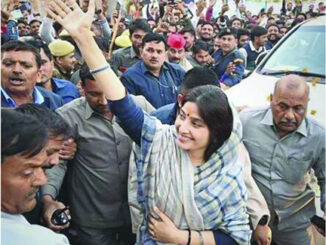
    Lucknow (TIP)-The Samajwadi Party (SP) on Thursday, December 8,  won the by-election from the Mainpuri Lok Sabha constituency, retaining the legacy seat of its founder Mulayam Singh Yadav, while the BJP secured the Rampur assembly constituency, a long-time stronghold of former state minister Azam Khan, for the first time.

    The saffron party, however, received a setback in the Khatauli assembly seat that went to the Rashtriya Lok Dal (RLD), an SP ally. In Mainpuri, SP candidate Dimple Yadav, Mulayam’s daughter-in-law, won by 2.88 lakh votes, three times the party patriarch’s victory margin in the 2019 Lok Sabha elections when he secured the seat for the fifth time. While the bypoll to the Mainpuri parliamentary seat was necessitated by Mulayam’s death in October, the disqualification of SP’s Azam Khan and BJP’s Vikram Singh Saini as MLAs from Rampur and Khatauli led to the by-elections on these two assembly seats. Azam lost his Assembly membership from Rampur, which he won in 2022 for 10th time, following his conviction in a hate speech case.

    Dimple led in all the five assembly segments, including the Lodh-dominated Bhongaon where Mulayam lagged behind by 25,510 votes in 2019. The Lodhs are largely BJP supporters. Dimple bagged 6.18 lakh votes (64 per cent) followed by BJP’s Raghuraj Singh Shakya (3.29 lakh) and NOTA (6,125). The BJP’s vote share declined in the by-poll in comparison to 2019 when its candidate Prem Singh Shakya had got 4.30 lakh votes (44 per cent). But the BJP replaced Prem Singh Shakya with Raghuraj Singh Shakya, a former two-time SP MP.

    In Rampur, BJP’s Akash Saxena defeated SP’s Asim Raja with a margin of 34,136 votes by getting 62 per cent of votes. In the 2022 assembly polls, Azam had defeated Saxena with a margin of 55,141 votes .

    The SP is attributing the low turnout of Muslim voters as the main factor behind its defeat in the constituency that the community comprises 56 per cent of the total electorate.

    Raja’s defeat is a setback for Azam, his political mentor. In the Rampur Lok Sabha elections in June this year, Azam got SP ticket for Raja who had lost the seat to the BJP. The Lok Sabha by-poll was held as Azam had resigned as MP after he was elected to the Assembly. The Suheldev Bharatiya Samaj Party (SBSP), an SP ally in the 2022 assembly polls, got only 169 votes, behind 726 NOTA votes.

    The BJP for the first time tried to woo Muslims by reaching out to the community by deploying Pasmanda Muslims among others. “That tactic did not work much. But the BJP got majority of the Dalit votes in Rampur in the absence of the BSP and that helped in win,” said a party leader.

    In the Khatauli assembly constituency (Muzaffaranagar district), RLD candidate Madan Bhaiyya defeated BJP’s Rajkumari by a margin of 22,143 votes. While Bhaiyya got 54 per cent of the total votes, Rajkumari polled 41.72 per cent.

    In 2022, Rajkumari’s husband Vikram Singh Saini had won the seat for second consecutive term after getting 45.34 per cent vote whereas RLD got 38 per cent votes. Vikram was disqualified as MLA after his conviction in a case related to the 2013 Muzaffarnagar riots. Source:      The Indian Express

  • December 9 New York & Dallas E – Edition

    [vc_row][vc_column][vc_custom_heading text=”E-Edition” font_container=”tag:h2|text_align:center” google_fonts=”font_family:Istok%20Web%3Aregular%2Citalic%2C700%2C700italic|font_style:700%20bold%20regular%3A700%3Anormal” link=”url:https%3A%2F%2Fwww.theindianpanorama.news%2Fwp-content%2Fuploads%2F2022%2F12%2FTIP-December-9-Dual-Edition.pdf”][vc_single_image image=”134126″ img_size=”full” add_caption=”yes” alignment=”center” onclick=”custom_link” link=”https://www.theindianpanorama.news/wp-content/uploads/2022/12/TIP-December-9-Dual-Edition.pdf”][/vc_column][/vc_row][vc_row][vc_column width=”2/3″][vc_custom_heading text=”Lead Stories This Week” google_fonts=”font_family:Istok%20Web%3Aregular%2Citalic%2C700%2C700italic|font_style:700%20bold%20regular%3A700%3Anormal” link=”url:https%3A%2F%2Fwww.theindianpanorama.news%2F”][vc_wp_posts title=”” number=”8″ show_date=”1″][/vc_column][vc_column width=”1/3″][vc_single_image image=”82828″ img_size=”large” alignment=”center” onclick=”custom_link” link=”https://www.theindianpanorama.news/advertising-media-kit-portal-indian-panorama/”][vc_single_image image=”82829″ img_size=”large” alignment=”center” onclick=”custom_link” link=”https://www.theindianpanorama.news/advertising-media-kit-portal-indian-panorama/”][/vc_column][/vc_row]

  • SC shuts last window for probe into 1989-90 Pandits’ killings

    The Supreme Court has dismissed a curative petition seeking a probe by a central agency or any other court-appointed agency into the alleged mass murders and genocide of Kashmiri Pandits in Jammu and Kashmir during 1989–1990. “In our opinion, no case is made within the parameters indicated in the Supreme Court decision in Rupa Hurra vs Ashok Hurra case,” the apex court said while dismissing the petition.

    A curative petition is the last legal recourse in the Supreme Court and it is generally heard in the chamber unless a case is made out for reconsideration of the verdict. The petition was dismissed by a three-judge bench headed by Chief Justice DY Chandrachud and comprising Justices SK Kaul and SA Nazeer and the court said that no case was made out of the curative petition. The petition filed by a body of Kashmiri Pandits, ‘Roots in Kashmir’, stated that the Supreme Court was not justified in dismissing the curative petition at the admission stage in 2017 merely on the presumption that the instances referred to in it pertained to 1989-1990. It stated that no significant purpose would emerge as evidence is unlikely to be available at this late juncture.

  • No plan yet to reintroduce NJAC, govt tells House

    The Centre told the Parliament on Thursday that it currently has no plan to reintroduce the National Judicial Appointments Commission (NJAC), which was struck down by the Supreme Court in 2015. Responding to a question by Leader of Opposition Mallikarjun Kharge and CPI(M) MP John Brittas, Law Minister Kiren Rijiju in a written response said, “at present, there is no such proposal.” Kharge and Brittas had asked if the government proposed to reintroduce NJAC with suitable modifications. The Centre’s response comes at a time when it is at loggerheads with the judiciary over the process of appointment of judges.

    Last week, Vice-President Jagdeep Dhankar had remarked that it was “never too late to reflect” on the NJAC, while underlining the “primacy of the will of the people.”

    The Constitution (99th Amendment) Act, which established the NJAC and the NJAC Act, were passed by the Parliament in 2014 to set up a commission for appointing judges, replacing the Collegium system. The NJAC would give the government a foot in the door on appointment of judges. The laws were repealed in October 2015 after the Supreme Court struck them down.

  • Himachal Pradesh elections: Congress secures 43.9% vote share, BJP close behind with 43%, AAP gets only 1.1%

    Himachal Pradesh elections: Congress secures 43.9% vote share, BJP close behind with 43%, AAP gets only 1.1%

    Shimla (TIP)- The Congress secured 43.90 percent vote share as it wrested Himachal Pradesh from the BJP, winning 40 seats in the 68-member Assembly in the hill state which maintained its tradition of voting incumbent government out of power since 1985. Despite getting 43 percent vote share, the BJP could only manage to win 25 seats, with many segments witnessing lower victory margins. Three Independents also emerged victorious in the assembly polls, results for which were declared on Thursday, December 8.

    The vote share was up for the Congress as against previous assembly elections.

    The BJP and the Congress contested on all 68 constituencies, while the Aam Aadmi Party (AAP) fielded its candidates on 67 seats, the Bahujan Samaj Party (BSP) on 53 and the Communist Party of India-Marxist (CPI-M) on 11 seats. The AAP failed to open its account and the CPI-M also did not win any seat while its sitting MLA from Theog also lost.

    The AAP received 1.10 percent votes, the CPI-M 0.66 percent, the BSP 0.35 percent, and Independents and others got 10.39 per cent, while 0.59 percent went to NOTA.

    The gap of less than one per cent between Congress and BJP vote shares was highlighted by both Prime Minister Narendra Modi and BJP chief J P Nadda in their address to party workers in Delhi after the poll results were declared.

    The BJP had given the slogan of “Raj nahin, riwaz badlega”, which translates to “the convention will change, not the government”, but failed to buck the trend. Himachal Pradesh has not voted any incumbent government back to power since 1985.

    Nadda thanked the BJP workers for their hard work in his home state Himachal Pradesh and asserted “raj may have changed, but ‘riwaz’ also changed as there was a gap of less than 1 percent in the vote share of the top two parties”.

    In the 2017 state elections, the BJP had won 44 seats, the Congress 21, the CPI(M) one and Independents two. The BJP had then got 48.8 per cent votes, the Congress 41.7 per cent, Independents 6.3 percent and the CPI(M) had got 1.5 per cent, while NOTA attracted 0.9 per cent votes.

    Congress leader Rahul Gandhi thanked the people of Himachal Pradesh for the “decisive win” of his party and assured them that every promise made by the party will be fulfilled.

    Conceding defeat, Chief Minister Jairam Thakur said he respected the mandate of the people and submitted his resignation to the governor.

    Source: PTI

  • Sikh History This Week- 9th December to 15th December

    1710       Baba Gurbakhash Singh (Banda Bahadur) escapes Mughal forces.

    1946       Nehru introduces assurances for Sikhs in Constituent Assembly.

    1979       The Dal Khalsa in its first annual conference at Gurdaspur passed a resolution demanding the declaring of Amritsar as a “Holy City.” The Youth (Dal Khalsa and the Sikh Students Federation) had long since been demanding the declaration that Amritsar was a Holy City. The SGPC chief, G. S. Tohra,’ had met the Indian Prime Minister, Indira Gandhi, on September 24, 1980, and had asked her to make a declaration to that effect. When more than six months had passed and there was no movement in that case, the Sikh Youth decided to organise a procession to press the Sikh demand. A joint meeting of the Dal Khalsa and the Sikh Students decided to take out such a procession on May 31, 1981.

    10th December

    1710       Bahadhur Shah issued the orders to kill Sikhs.

    1841       Battle for the conquest of Tibet by Sikhs.

    1988       Conference on Sikh Studies, Long Beach

    11th December

    1705       Guru Gobind Singh escapes Mughal forces in Macchiwara.

    1710       Baba Gurbakhash Singh (Banda Bahadur) escaped unhurt from the fort Lohgarh.

    1836       Sardar Zorawar Singh captured Ladakh.

    1845       Sikhs cross Sutlej River and surprise British, causing outbreak of Anlo-Sikh War.

    1991       Khalistan Flag was hoisted at CSU Chico.

    12th December

    1704 SHAHEEDHI, Chotae Sahibjadhae, Sakka Sirhind.

    1762 Abdali left Sikh Homeland after defeat. Sikhs became de facto rulers of their land.

    1841 Zorawar Singh dies while fighting the Lhassa force.

    1844 Dogra Hira Singh attempted to escape to Jammu. Sham Singh and Jawahar Singh with 6000 troops caught up with and killed the fleeing Dogras.

    1920 Inaugral meeting of SGPC at Sri Akal Takhat.

    1921 Master Dalip Singh of Gossal attended a diwan at Rukha Kalan and delivered a lecture.

    1922 Shahadat of Sardar Banta Singh and Juyala Singh Babbar.

    1923 Munder carnage takes place.

    1987 Akalis refuse to talk with Goverment of India unless their 5 points were fulfilled.

    13th December

    1845 Lord Hardinge, the Governor General of British forces, issued tne proclamation of War against the Sikhs.

    1923 Maharaja Ripudaman Singh Nabha passed away.

    1924 Sardar Sundar Singh Babbar of Hayatpur dies during trial.

    14th December

    1705       Imperial forces give solemn assurances of safe conduct at Anandpur. Subsequent events proved these promises to be hollow.

    1920       Shiromani Akali Dal was established to assist the Shiromani Gurdwara Prabandhak Committee and launch Gurudwara Sudhar (Restitution) Movement.

    15th December

    1887       Maharani Bamba, wife of Dalip Singh, passed away in London.

    1923       Bhai Pheru Morcha.

    1924       14th Shaheedhi Jatha of 500 Akalis marched from Amritsar to Jaito.

    1941       Independent Hind Forces were established.

    1983       Jarnail Singh Bhindrawalae moved his resident into the building neighboring Sri Akal Takhat.

    1990       International Conference on Sikh Studies held in New York.

  • Long-term plan needed for Punjab’s progress

    Long-term plan needed for Punjab’s progress

    “To regain a leading position, Punjab’s economy needs to enter high-growth trajectory and attain a double-digit rate by 2047 and 8 per cent growth of per capita income. These targets are achievable in view of strengths of the economy such as sizeable market, skilled and entrepreneurial human capital, diasporic social capital and industrial peace. The double-digit growth should be accompanied by social safety nets to make growth equitable.”

    By BS Ghuman

    The Economic Advisory Council to the Prime Minister released the ‘Competitiveness Roadmap for India@100’ earlier this year, envisioning guiding principles for putting India on the trajectory of becoming a middle-income country and beyond by 2047. To achieve this vision, state-specific roadmaps need to be worked out.

    The most important markers of Punjab’s growth story of 75 years are the glorious journey during the implementation of the state-led model and the slide under the aegis of the market-driven model. The policy advice based on the economic journey and the theory of ‘market failure’ suggests reinvention of the development model to rejuvenate Punjab’s economy. Can it happen when the market is dominating the economy? The answer is yes, but in the form of a hybrid model developed on the strengths of the triad — the state, the market and the social forces. Theoretically, the state and the market are dichotomous institutions, but, in reality, the border between the two is blurred. Social forces play a soothing role in the state-market mix. In the hybrid model, the state, however, will play a leading role. The roadmap’s vision is to restore the economic glory of Punjab based on sectoral strategies, linkages among sectors, investment, fiscal health, infrastructure, human resources, employment and zero-waste economy. Punjab’s economy registered a growth rate of 4.6 per cent per annum from 2011-12 to 2020-21, occupying the 20th position among states. The per capita income grew at 3.05 per cent. Leading states are growing at more than 7 per cent and registering around 6 per cent growth in per capita income. To regain a leading position, Punjab’s economy needs to enter the high-growth trajectory and attain a double-digit rate by 2047 and 8 per cent growth of per capita income. These targets are achievable in view of strengths of the economy such as a sizeable market, skilled and entrepreneurial human capital, diasporic social capital and industrial peace. Double-digit growth should be accompanied by social safety nets to make growth equitable. To facilitate high growth, the structure of the economy also requires rapid structural transformations.

    Currently, the service sector contributes 46 per cent to the state’s income, followed by primary (31 per cent) and secondary sectors (23 per cent). By 2047, the structure of the economy should resemble that of industrial states by making the primary sector’s share 16 per cent, secondary sector 30 per cent and tertiary 54 per cent. An intersectoral strategy of strengthening backward and forward linkages among sectors will help bring structural transformations. Agriculture is riddled with four types of crises/challenges — economic, environmental, efficiency-related and equity-linked. In the next 25 years, the agenda is to take agriculture to the next level (Agriculture 2.0), driven by precision/satellite agriculture.

    The industrial profile of the state is relatively weak. A two-pronged strategy can enable Punjab to become an industrial hub by 2047. The state’s industry is dominated by small units, mostly employing old technologies. Therefore, the first strategy is to upgrade the technology of the existing industry. The second is the steering of high-tech agro-based industries and the industries led by knowledge and smart technologies. To develop high-tech industries and promote innovations, the government, the industry and universities need to join hands on the pattern of the triple helix model of innovation.

    Thriving on selling ideas, intangible/abstract products and professional services, the tertiary sector can become an epicenter of development in Punjab; firstly, by making service delivery more efficient. Secondly, by according priority to services such as information technology, social media, cybersecurity, environmental services, financial services, consultancy services and quinary services steered by ‘gold-collar’ professionals.

    Punjab’s performance on account of investment has deteriorated during the implementation of the market-led model. The investment-GSDP (Gross State Domestic Product) ratio declined from 32.27 per cent in 1995-96 to half (16.4 per cent) in 2019-20. To achieve the double-digit growth rate, the ratio should be scaled up to 40 per cent by 2047. The fiscal health of Punjab is worrisome. The fiscal roadmap comprises reducing public debt-GSDP ratio from 50 per cent to 32.5 per cent and fiscal deficit from 5 per cent to 3 per cent of the GSDP, reducing committed expenditure from 78 per cent to 50 per cent of the total revenue receipts, increasing capital expenditure from 6 per cent to 20 per cent of the total expenditure and mobilizing resources by doubling the tax-GSDP ratio from 6.1 per cent to 12.5 per cent by 2047.


    The state’s performance in the field of infrastructure is impressive. However, to attain double-digit growth, there is a need to improve the quality of economic, social and physical infrastructure and invest heavily in digital infrastructure. In Punjab, investment in human resources is very low. On education, the state is spending only 2.5 per cent of the GSDP — less than half of the 6 per cent norm suggested by the Kothari Commission on education. Expenditure on health being 4 per cent of the state income is also inadequate. To improve human capital, Punjab should spend at least 6 per cent and 10 per cent of the GSDP on education and health, respectively, by 2047.

    Punjab has a relatively high unemployment rate of 7.8 per cent. It should strive to attain a rate of around 4.5 per cent by 2047. The roadmap for reducing unemployment comprises skill development programs with ‘apprenticeship’ in vocations, including animal husbandry, electricity, driving, plumbing, computer courses, hospitality and healthcare. Long-term measures for generating employment include promoting industry and services, incentivizing startups and entrepreneurship, and developing synergy between educational institutions and the industry.

    Guided by these parameters, the roadmap should incorporate inputs from experts and stakeholders. Political consensus on the roadmap should be arrived at by deliberating on it and giving it the go-ahead in the Assembly. It may be treated as a ‘living document’, which can be modified as and when the need arises.

    (The author is a former Vice-Chancellor, Punjabi University, Patiala)


  • Punjabi-origin woman shot dead at a gas station in Brampton

    Punjabi-origin woman shot dead at a gas station in Brampton

    BRAMPTON (TIP): A 21-year-old Sikh woman was shot dead at Brampton in Canada. Peel Regional Police said the incident occurred at a Petro-Canada at Creditview Road and Britannia Road West around on December 3 at 10.40 pm. Life saving measures were attempted however the victim succumbed to her injuries, a Peel Regional Police statement said. Police are on a lookout for the suspect who was dressed in all dark clothing and was observed leaving the scene on foot following the incident.  Calling it a targeted incident, the police have launched a homicide investigation. No weapon has been recovered so far from the crime scene, police said. They have asked anyone with information or dashcam footage that may have captured the moments leading up to, during, or after the incident to contact the investigators, adding that there is no threat to public safety. The incident comes just days after 18-year-old Indian-origin Sikh Mehakpreet Sethi was stabbed to death at the parking lot of a high school in Surrey.


  • Indo-Canadian Jagrup Brar among 4 Punjabis inducted as minister in Canada’s British Columbia govt

    Indo-Canadian Jagrup Brar among 4 Punjabis inducted as minister in Canada’s British Columbia govt

    VANCOUVER, BC (TIP): Punjabi-origin Jagrup Brar, New Democratic Party (NDP) leader, has been inducted as Minister of State in the NDP government of British Columbia (BC) in Canada on Wednesday, December 7. The new Council of Ministers of British Columbia was sworn in at the Government House in Victoria. Brar was born at Deon, a remote village of Bathinda. Apart from him, Harry Bains, Rachna Singh and Ravi Kahlon- all Punjabi-origin men- were also inducted as ministers while Nikki Sharma- a Punjabi-origin woman- was appointed as Attorney General of the BC government. Brar is a Member of the Legislative Assembly in BC. He represents the Surrey-Panorama Ridge constituency.

  • Britain’s King Charles III inaugurates the new  Guru Nanak Gurdwara in eastern England

    Britain’s King Charles III inaugurates the new Guru Nanak Gurdwara in eastern England

    LONDON (TIP): Britain’s King Charles III has officially inaugurated the new Guru Nanak Gurdwara and interacted with the volunteers who prepare the ‘langar’ and work within the local community during his first tour as monarch of Luton in Bedfordshire, eastern England. The 74-year-old King toured the gurdwara’s kitchen on Tuesday, December 6,  and was shown where hot vegetarian meals are prepared daily and was also briefed on the work coordinated with a pop-up Covid vaccine clinic during the pandemic. He also sat together with community leaders in the Diwaan Hall of the gurdwara to hear the ‘kirtan’ (devotional song) and ‘hukamnama’ from the ‘Guru Granth Sahib’. “At the newly built Guru Nanak Gurdwara, His Majesty met volunteers who run the Luton Sikh Soup Kitchen Stand. The kitchen provides vegetarian hot meals seven days a week, 365 days a year at the Gurdwara,” Buckingham Palace said. “During the pandemic, the Gurdwara ran a pop-up COVID vaccine clinic, which was one of the first of its kind in the UK. The Gurdwara also encouraged other places of worship to tackle misinformation regarding vaccine hesitancy,” it said.

    Indian-origin Professor Gurch Randhawa, a member of the local Sikh congregation and Director of the Institute for Health Research at the University of Bedfordshire who greeted the King at the gurdwara, described the visit as “hugely auspicious”. “His Majesty the King Charles III, respecting Sikhism, entered and exited Diwaan Hall with kirtan playing live, sat down and listened to the hukamnama from ‘Guru Granth Sahib Ji’,” said Randhawa.

    “He met our humble volunteers who cook 500 meals per day during the week, and 1,000 meals per day during weekends, our healthcare volunteers who ran pop up Covid vaccine clinics, our Luton Sikh Soup Kitchen volunteers who serve 150 meals outside Luton Town Hall every Sunday – all these services are accessed by all faith and ethnic communities. “The king also met children who are learning kirtan and heard them play a Shabad. All in all, a joyous occasion which I was honored to host,” he said. While on the royal tour of Luton, the King also took a ride on the city’s Direct Air-Rail Transit (DART) service.

    “The DART is an energy-efficient, electric cable car that will transport train arrivals at Luton Parkway to the airport, reducing carbon emissions by 70 per cent…the King met staff and apprentices who work on the DART, before taking the short four-minute ride to the airport,” Buckingham Palace said. There was also an egg throwing incident in the area at the start of the royal tour when Charles was on a walkabout of Luton town center. The monarch was briefly steered away from crowds by his security staff before continuing the tour.

  • Indian-origin Veena Nair wins PM’s prize for Excellence in science teaching in Australia

    Indian-origin Veena Nair wins PM’s prize for Excellence in science teaching in Australia

    MELBOURNE (TIP): An Indian-origin teacher in Australia has received the 2022 Prime Minister’s Prize for Excellence in science teaching in secondary schools. Melbourne-based Veena Nair, who is ViewBank College’s Head of Technology and STEAM project leader, has been awarded for demonstrating practical application of STEAM to students, and how they can use their skills to make a real impact in the world. “To be recognized in the Prime Minister’s prizes for science, I am deeply humbled. I am very grateful to my school, to my colleagues, to my students, and to my family,” Nair said in a video message. “Many people know about STEM — science, technology, engineering and math, but STEAM is with an A, which is for Art. Art brings in out-of-the-box thinking, and it brings in creativity because students need steam skills to innovate, to become resilient and to take risks,” she said.

    As a leading educator in STEAM, Nair has more than 20 years of experience in teaching science-based subjects across India, the United Arab Emirates, and now Australia. Through her work, she has increased the number of students who receive first-round offers to study engineering and technology subjects at university, especially young women and students from diverse backgrounds. Nair began her teaching career in Mumbai, where she provided computers to low socio-economic schools and taught students how to code. Nair’s students participate in the Swinburne Youth Space Innovation Challenge — a 10-week program that sees secondary students compete to create the best experiment to launch into space. The winning project is then sent to the International Space Station. She also supports the Young Persons’ Plan for the Planet program, a STEM-based enterprise development program that gives students the opportunity to engage with the UN’s Sustainable Development Goals as changemakers at a global level. Via this program, she has led a team of Australian teachers to conduct STEAM workshops for teachers in low socio-economic schools in Mumbai. She won the Educator of the Year Award by the Design and Technology Teachers’ Association of Australia in 2018.


  • Indian-origin businessman and charity worker, Mohan Mansigani collects honor from Buckingham Palace

    Indian-origin businessman and charity worker, Mohan Mansigani collects honor from Buckingham Palace

    LONDON (TIP): An Indian-origin businessman and charity worker has collected his Officer of the Most Excellent Order of the British Empire (OBE) honor at an investiture ceremony at Buckingham Palace in London. Mohan Mansigani, who is from north London, was conferred the honor for charitable services to health care in the late Queen Elizabeth II’s 2021 Birthday Honors list in June last year. The trustee of the St John Ambulance charity collected the OBE from Princess Anne, the Princess Royal, St John’s Ambulance Commandant-in-Chief (Youth).

    “I have been lucky enough to give something back to the country that has given me so much through my work at St John and the Migration Museum,” said Mansigani, who is also a Fellow of the UK’s Institute of Chartered Accountants and joined St John Ambulance’s board six years ago.

    “As the son of immigrants and as a boy from Islington, being honored in this way is beyond my wildest dreams. I would like to dedicate this award to my wife Renu Mansigani who has selflessly taught young children’s human values over the last 20 years through the Mill Hill Sai Centre and is truly worthy of recognition,” he said.

    Mansigani is known as a creative finance director with extensive private equity experience who has played a key leadership role in establishing Casual Dining Group, previously known as Tragus, which operated popular UK restaurant brands such as Café Rouge and Strada.

    “My father came to London in 1951 with the aim of supporting his family back in India, thinking that he would return as soon as he achieved this goal. In the event he stayed and, from humble beginnings, built a successful business and raised a young family,” Mansigani tells St John Ambulance – a charity providing first aid and emergency medical services primarily through volunteers.

    “I was the first in my family to go to university and went on to qualify as a chartered accountant. From there I had a career as finance director of several restaurant chains including Costa Coffee and Cafe Rouge,” he said.

    Following the successful sale of his last business, Mansigani has been able to work with not-for-profit groups and he has been finance trustee at St John Ambulance since July 2016. The charity said his expertise was critical when St John Ambulance’s main sources of income were halted by the covid-19 pandemic in March 2020.

    The businessman played a key role in securing funding to maintain St John’s financial viability and enable the charity’s teams – including almost 30,000 new vaccination volunteers – to support the state-funded National Health Service and local communities by delivering more than 1.6 million hours of activity.


  • Indian origin  Ramesh Balwani sentenced to 13 years in prison for fraud

    Indian origin Ramesh Balwani sentenced to 13 years in prison for fraud

    SAN JOSE (TIP): Theranos’ former chief operating officer, Indian-origin Ramesh ‘Sunny’ Balwani, has been sentenced to nearly 13 years in prison for fraud that prosecutors said risked patient health and defrauded the blood-testing company’s investors of millions of dollars. Fremont’s Balwani, 57, was sentenced on Wednesday. December 7,  in California to 12 years and 11 months in federal prison for fraud that risked patient health by misrepresenting the accuracy of Theranos blood analysis technology and defrauded the company’s investors of millions of dollars, US Attorney Stephanie Hinds said.

    In addition to the 155-month prison term, US District Judge Edward Davila sentenced Balwani to three years of supervision following release from prison. A hearing to determine the amount of restitution to be paid by Balwani is to be scheduled in the future. Balwani was ordered to surrender on March 15, 2023, to begin serving his prison sentence. Hinds said Balwani, in a desire to become a Silicon Valley titan, valued business success and personal wealth far more than patient safety. “He chose deceit over candor with patients in need of medical care, and he treated his investors no better,” Hinds said in a statement. Trial evidence showed that the fraud brought “spectacular personal wealth” to Balwani, who owned nearly 30 million shares of Theranos – over six per cent of the company – which were worth hundreds of millions of dollars at the peak of the fraud.

    Balwani was born in Pakistan but his family is said to have moved to India. He moved to the US from India during the 1980s. FBI Special Agent in Charge Robert Tripp said Balwani not only deliberately concealed defects in Theranos’ blood-testing technology to mislead investors, but he also knowingly put patients’ health at risk. During his employment at the now defunct Theranos, Balwani held the positions of board member, chief operating officer and president.

    (Source: PTI)

  • It wasn’t just masjid that fell

    It wasn’t just masjid that fell

    30 years ago, Ayodhya issue shook India’s secular foundations & conscience

    “The Ayodhya campaign was designed to produce an image of Hindus suffering at the hands of minorities, even though they formed an overwhelming majority and dominated diverse spheres of life. Nonetheless, a large section of Hindus began, consciously or subconsciously, embracing the idea of a Hindu state where centuries of suppression by Muslim invaders would now be corrected. The politics of revenge and targeting of minorities, a hallmark of many right-wing authoritarian regimes worldwide, became central to the political discourse in India too. Hindu unity was thus sought to be created not by what they share but through the common opposition to the ‘enemy within’.”

    Even if Ayodhya is not an election issue today, the polarization it engendered is more toxic than before and poses an existential threat to India’s pluralist democracy.

    By Zoya Hasan

     It’s been 30 years since the demolition of the Babri Masjid on December 6. Torn down by a mob in full public view, the destruction of the mosque occurred on the back of a massive mobilization that shook India’s secular foundations. This act of political defiance testifies to the mobilizational power of religious identities and symbols in shaping the growth of majority sentiment in politics and public affairs and the systematic way in which priority has been given to these interests. Any separation of religion and the state, which was always weak in India, became even weaker after this; consequently, sectarian politics has gained new adherents. Even if Ayodhya is not an election issue today, the polarization it engendered is more toxic than before and poses an existential threat to India’s pluralist democracy. The Ayodhya dispute tested India’s resilience as a secular democracy. Constitutionally, it opened the prospect of changing both the ideological discourse and institutional politics in favor of a majoritarian idea of India, in contrast to the pluralist, non-parochial idea of the nation held in high regard earlier. Much of the dominance of the Hindu right in India’s politics today can be traced back to the movement to destroy the Babri Masjid and build a Ram temple where the mosque once stood in the city of Ayodhya. The systematic push for political power wouldn’t have succeeded as it has in the last 30 years without the ground prepared by the Ayodhya movement.

    The Congress contributed significantly to this process by getting involved in the controversy, and that too at a time when Hindutva politics was on the rise. Even though it refrained from riding the tiger of communalism, it ended up creating a space for religious politics to play a more central role in public life. It changed the dynamics of electoral politics which undermined its own monopoly over power. The end of Congress dominance paved the way for the emergence of BJP’s brand of majoritarian politics as increasing numbers of the middle classes bought into the idea that the Hindu majority has been denied its rightful place in the public sphere.

    The Ayodhya campaign was designed to produce an image of Hindus suffering at the hands of minorities, even though they formed an overwhelming majority and dominated diverse spheres of life. Nonetheless, a large section of Hindus began, consciously or subconsciously, embracing the idea of a Hindu state where centuries of suppression by Muslim invaders would now be corrected. The politics of revenge and targeting of minorities, a hallmark of many right-wing authoritarian regimes worldwide, became central to the political discourse in India too. Hindu unity was thus sought to be created not by what they share but through the common opposition to the ‘enemy within’. The BJP replaced the Congress as the central pole of Indian politics after its spectacular victories in 2014 and 2019. The Supreme Court expedited the Ayodhya case with daily hearings and delivered its verdict in November 2019. Terming the demolition of the mosque an ‘egregious violation of the law’, the court nevertheless awarded the disputed site to the Hindu nationalist litigants.

    The ruling was a huge legal and political victory for the BJP. Many had thought that victory in the Ayodhya case would settle conflicts over disputed sites and communal mobilization will abate. But things did not stop there. This has become clear from subsequent events in the Gyanvapi case. Claims to Gyanvapi mosque in Varanasi are a reenactment of events in Ayodhya despite the existence of the Places of Worship Act (Special Provisions) 1991 which prohibits the conversion of the religious character of any place of worship, as existing on August 15, 1947. The law is hardly an impediment when powerful forces decide to rake up these disputes. As in the case of Ayodhya, this dispute is not about law, nor even history, but about pushing the majoritarian political agenda.

    Beyond these developments, the verdict gave a new fillip to the ruling dispensation to pursue the remaining key elements in the larger Hindutva plan — abrogation of Article 370, removing the special status accorded to J&K; construction of a Ram temple at Ayodhya; and imposition of a uniform civil code. Even as there was no prospect of punishment for those who planned and orchestrated the demolition of the masjid, the Bhumi Pujan for the Ram temple, though organized by the Ram Janmabhoomi Trust, became an official-cum-political function, with the PM laying the foundation for the temple. Merging of state, politics, and religion in the construction of the temple marked an important stage in the progress of Hindutva and its strategy of converting India into a majoritarian republic. The Ayodhya issue had a deep impact on other political parties too. It forced a number of parties to acknowledge the primacy of the Hindu majority while putting them on the defensive vis-à-vis the promotion and protection of minority interests. Opposition parties have been wary of defending pluralism and secularism. The Congress’s Bharat Jodo Yatra is the first serious attempt to counter the majoritarian turn in politics and improve public dialogue against division and intolerance.

    Ayodhya caused a profound rupture in the political realm, thus underlining the success of religious nationalism in establishing a markedly majoritarian ethos and ethnic state, enshrined in law and policy. Furthermore, it accentuated fault lines in the social realm. This has meant narrowing of democracy, rise of a stronger authoritarian system at a political level, replacement of inclusive nationalism with religious nationalism, and decline of mutual respect and tolerance. Even if Ayodhya is not an election issue today, the polarization it engendered is more toxic than ever before, posing an existential threat to India’s pluralist democracy.

    (The author is Professor Emerita, Jawaharlal Nehru University)


  • A stable bi-party system, a nod to ‘Himachaliyat’

    A stable bi-party system, a nod to ‘Himachaliyat’

    By Devender Sharma

    “Himachaliyat” encapsulates the idea that the region and its people will decide their future without outside interference. It also exemplifies a diverse, harmonious culture, evident in the local festivals, language dialects, cuisine and clothing. It is clear, as Vishal Sharma, the researcher and analyst coordinator of HPCC, emphasized, that the idea of Himachaliyat has scored over Hindutva in the State, with the Congress winning the war of the narrative.”

    For the common man in Himachal Pradesh, being rooted as a ‘Himachali’ as a way to resolving a number of local issues was prime, in turn shaping the Congress’s win

    The Congress’s win in Himachal Pradesh can be attributed to a series of factors which includes its promise of an old pension scheme for 1,50,000 government employees, anti-incumbency linked to the poor performance of the Jai Ram Thakur government, and also intra-party factionalism within the Bharatiya Janata Party (BJP). The result becomes more mortifying for the BJP as its national president, J.P. Nadda, is from the State.

    The elections were fought on the fascinating narrative of “Riwaj Badlega versus Raaj Badlega (change of tradition versus change of government”). Speculation by a number of political analysts and the media, of a BJP win with an absolute majority, has been proven wrong. Of the 68 Assembly seats, the Congress won 40, forming an absolute majority. What has been established is that the State has a stable bi-party system. And despite its propaganda and large-scale canvassing, the Aam Aadmi Party did not emerge as the influential third force.

    The winning factor

    The State, till 2017, was governed on largely centrist lines but with a slight shift towards regionalism. After 2017 and Prem Kumar Dhumal’s shocking defeat, things changed and Himachal Pradesh got a Chief Minister, Jai Ram Thakur, who had been handpicked by the Rashtriya Swayamsevak Sangh to take forward a Hindutva narrative that has not been really touched upon by earlier BJP governments. Mr. Dhumal, for instance, did not have an RSS background, but took a regional approach. Shanta Kumar, another BJP Chief Minister with an RSS touch, believed that Hindutva would not work in the State.

    “Himachaliyat” encapsulates the idea that the region and its people will decide their future without outside interference. It also exemplifies a diverse, harmonious culture, evident in the local festivals, language dialects, cuisine and clothing. It is clear, as Vishal Sharma, the researcher and analyst coordinator of HPCC, emphasized, that the idea of Himachaliyat has scored over Hindutva in the State, with the Congress winning the war of the narrative.

    For the BJP, while anti-incumbency, crime and corruption and a strong national leadership and organization were the guiding factors that led to its victory in 2017, it was a different story this time. For the people, it was a choice between the narrative of Hindutva and the counter-narrative of the Opposition, which they found in the promise of an old pension scheme for government employees, unemployment, price rise, and Himachali sub-nationalism. Being rooted as a “Himachali” as a way to resolving local issues appears to have struck a chord rather than being divided into castes and communities (Brahmins, Thakurs, Punjabi refugees, Khatris, Soods, Mahajans, Gaddis, Gujjars, Scheduled Castes and Scheduled Tribes) and religious identities. The BJP’s narrative was about a Uniform Civil Code, Ram Mandir, Article 370 and ST status for the Hatti community to oblige the upper castes of Sirmour district.

    ‘Agnipath’, unemployment and graft

    In Himachal Pradesh, a comparatively larger portion of its population is in government service and the public sector (about 4.15 lakh employees and pensioners, or about 10% of the population), thus playing a significant role in any election. Another major issue was the recently launched ‘Agnipath recruitment scheme’ in the defense services. The State is estimated to have around 2.8 lakh people in the defense services or who are ex-servicemen. Of them, 80% are from the Kangra, Una and Hamirpur districts. There are also eight lakh people who are unemployed and registered in employment exchanges across the State.

    Corruption also had an impact where in the past five years, there has been the university recruitment scam, the police recruitment scam and the sanitizers scam (during the COVID-19 pandemic). A Shimla-based civil society organization, the “Forum Against Corruption”, has been in the forefront in highlighting discrepancies in university professors’ recruitment, where merit and excellence were ignored. It was because of the police recruitment scam that the BJP faced youth resentment as well. There was also the handling of the apple growers’ protest by the BJP. The fruit growers of Himachal Pradesh constitute a powerful pressure group in the apple growing regions of Shimla, Kullu, Kinnaur and Madi districts. In August, under the “Sanyukt Kisan Manch”, fruit growers and farmers convened in Shimla to push for a resolution of their long-pending demands which include an increase in the minimum support price (based on the quality of the fruit and the formula in Kashmir), restoration of subsidies on fungicides, insecticides, and other chemical fertilizers, reduction in Goods and Services Tax on packaging material, and a ban on imported apples. The apple growing regions cover nearly 17 Assembly segments, in Kinnaur, Kullu and Mandi, with Shimla being a major apple-growing region. They play and have played a significant role in shaping the State’s political contours, especially in old Himachal. Apple sales — the apple economy is valued at ₹6,000-crore — contribute to 13.5% of the State’s GDP. Farmers are exploited by commission agents in mandis, even as the Agricultural Produce Market Committees (APMCs) remain a mute spectator.

    Himachal Pradesh will retain its tag as a ‘Riwaj’ of change provided there is no split in the Congress. The win has opened the contest for chief ministership in the Congress, which is going to be a difficult task for the central Congress committee and the Pradesh Congress Committee to resolve.

    (Devender Sharma is Assistant Professor in Political Science, Government College, Shimla, Himachal Pradesh)

  • AAP bags MCD, too

    • Faces the uphill task of clearing mounds of garbage

    Consolidating its position in the Capital with a ‘double engine’, the Aam Aadmi Party on Wednesday secured its maiden victory in the Municipal Corporation of Delhi (MCD) elections, though barely, with 134 of the 250 wards falling in its kitty. The BJP put up a spirited fight, bagging 104 seats despite the anti-incumbency of three terms, while the Congress was reduced to nine seats and Independents won three seats. This was the first election after the MCD’s reunification earlier this year. The verdict shows that the public was fed up with the corruption-ridden and non-performing local body over civic issues such as sanitation, cleanliness, maintenance of parks and roads. Delhi Chief Minister and AAP chief Arvind Kejriwal now has the onerous task of resolving these vexing problems.

    The foremost challenge confronting him relates to waste management. Delhi has three mountains of waste — in Ghazipur, Bhalswa and Okhla — oozing polluted water and toxic gases. A byproduct, methane gas, renders the dump yards inflammable, leading to frequent fires. Despite the National Green Tribunal’s orders for biomining (separating discarded plastic, paper, cloth, sand, bricks etc. by passing them through a trommel) the waste dumps, umpteen extensions of deadlines to flatten the landfills and crores of rupees spent, these sites have only grown vertically in the past couple of decades.

    What makes matters worse is that the garbage sites that were initially on the outskirts of the city have become eyesores in the middle of residential areas as the National Capital Region has expanded, with newer townships coming up over the years. All this has had a devastating effect on the people’s health as they are left struggling with increasing respiratory, skin and other ailments. With both the Congress and BJP at the helm of MCD affairs during their long tenures having failed to come up with effective waste management solutions, the AAP would, indeed, stand out if it can find a way out of this polluting mess. The key lies in promoting the philosophy of waste reduction, reuse and recycle, as also waste segregation at source and household levels.

    (Tribune, India)

  • Winning formula: On BJP’s strategy

    While the Bharatiya Janata Party’s strategy works across regions, the Congress needs State-specific tactics

    The Bharatiya Janata Party’s victory in Gujarat eclipses its loss in Himachal Pradesh: not only is Gujarat a bigger State, but the scale of the party’s sweep in the western State also overshadows its narrow loss in the hill State. For the Congress, its victory in Himachal Pradesh is meagre consolation against the backdrop of its decimation in Gujarat where it had to be content with 17 of the 182 Assembly seats, as compared to 77 in 2017. With another five-year term now, the BJP will rule Gujarat for 32 years, almost matching the Left Front’s 34-year rule in West Bengal that ended in 2011. The BJP increased its vote share, from 49% in 2017 to 53% now. AAP finished a distant third in Gujarat, but its furious foray into the State gained it a 13% vote share, and also national party status. AAP’s entry triangulated the Gujarat contest, which worked to the BJP’s advantage. The BJP made inroads into tribal regions and rural constituencies which constituted patches of the Congress’s strength, after AAP’s generous promise of welfare schemes succeeded in seeding a new kind of class politics in the State. It was Prime Minister Narendra Modi leading the campaign all the way for the BJP, and his popularity, which was unlinked to the performance of the State government, helped power the BJP to a historic victory.

    The Himachal Pradesh outcome is instructive of the latent anti-incumbency that the BJP faces, and the Opposition’s occasional capacity to harness it. The Congress ran a sedate campaign in both States. In Gujarat it did not work at all for the party, but in Himachal Pradesh, it did because of the anti-incumbency factor. In Gujarat, the combined vote share of Congress and AAP hovers around 40% — less than the Congress’s alone in 2017. In Himachal Pradesh, Mr. Modi’s extensive campaigning was not enough. In Gujarat, the BJP had pulled out all the stops after it faced setbacks in 2017, while the Congress has lost steam since then. With renewed vigor, AAP will now try expanding to new territories, potentially muddying the waters for the Opposition, and aligning with the BJP’s Hindutva ideology. The outcomes of Gujarat and Himachal Pradesh demonstrate that the BJP’s status as the hegemon remains unchallenged in Indian politics, Mr. Modi is more popular than his party, and the Opposition is unable to create the politics or programs that can challenge the BJP. While the BJP has a universal formula that is largely successful across regions, the opposition to it can sustain only with State-specific strategies.

    (The Hindu)

  • Russian airfields damaged in drone attack

    Kyiv (TIP): A third Russian airfield was ablaze on Tuesday from a drone strike, a day after Ukraine demonstrated an apparent new ability to penetrate hundreds of kilometers deep into Russian air space with attacks on two Russian air bases. In a new display of defiance from Kyiv, Ukrainian President Volodymyr Zelenskyy traveled to an eastern city near the front line Tuesday, while Russia reported that strategic sites inside the country were hit by drone attacks for a second day.

    A fire broke out at an airport in Russia’s southern Kursk region that borders Ukraine after a drone hit the facility, the region’s governor said Tuesday. In a second incident, an industrial plant 80 kilometers (50 miles) from the Ukrainian border was also targeted by drones, Russian independent media reported, apparently missing a fuel depot at the site. Federal authorities did not immediately blame Ukraine. But Tuesday’s reported strikes were carried out a day after Moscow blamed Kyiv for unprecedented, similar attacks on two air bases deep inside Russia. The attacks on the Engels base in the Saratov region on the Volga River and the Dyagilevo base in the Ryazan region in western Russia were some of the most brazen inside Russia during the war. In the aftermath, Russian troops carried out another wave of missile strikes on Ukrainian territory struck homes and buildings and killed civilians. Ukrainian officials have not formally confirmed carrying out the drone attacks, maintaining their apparent policy of deliberate ambiguity as they have done in the past when it comes to high-profile attacks on Russian targets. Kremlin spokesman Dmitry Peskov said that Russian authorities will “take the necessary measures” to boost protection of key facilities in view of the Ukrainian attacks.

    Speaking in a conference call with reporters Tuesday, Peskov said that “the Ukrainian regime’s course for continuation of such terror attacks poses a threat.” Peskov reaffirmed that Russia sees no prospects for peace talks now, adding that “the Russian Federation must achieve its stated goals.”

    Russia and Ukraine said on Tuesday they had exchanged 60 prisoners of war (POWs) on each side in the latest of a series of such swaps. Russia’s defence ministry said the freed Russian soldiers would be flown to Moscow to receive medical care. In a video shared by the ministry, men in military clothing were shown walking off a bus and making phone calls. “All is well, alive and well. I’ll be home soon,” one freed prisoner said. — AP

  • Amnesty International Canada says it was hacked by Beijing

    Amnesty International Canada says it was hacked by Beijing

    Toronto (TIP): The Canadian branch of Amnesty International said December 6 it was the target of a cyber attack sponsored by China. The human rights organisation said it first detected the breach October 5 and hired forensic investigators and cyber security experts to investigate.

    Ketty Nivyabandi, Secretary General of Amnesty International Canada, said the searches in their systems were specifically and solely related to China and Hong Kong, as well as a few prominent Chinese activists. The hack left the organisation offline for nearly three weeks. US cyber security firm Secureworks said there was no attempt to monetise the access, and “a threat group sponsored or tasked by the Chinese state” was likely behind the attack because of the nature of the searches, the level of sophistication and the use of specific tools that are distinctive of China-sponsored actors. Nivyabandi encouraged activists and journalists to update their cyber security protocols in light of it. “As an organization advocating for human rights globally, we are very aware that we may be the target of state-sponsored attempts to disrupt or surveil our work. These will not intimidate us and the security and privacy of our activists, staff, donors, and stakeholders remain our utmost priority,” Nivyabandi said.

    Amnesty is among organisations that support human rights activists and journalists targeted by state actors for surveillance. That includes confirming cases of activists’ and journalists’ cellphones being infected with Pegasus spyware, which turns the devices into real-time listening tools in addition to copying their contents.

    In August, the cyber security firm Recorded Future listed Amnesty and the International Federation for Human Rights among organisations that Chinese hackers were targeting through password-stealing schemes designed to harvest credentials. It called that particularly concerning given the Chinese state’s “reported human rights abuses in relation to Uyghurs, Tibetans and other ethnic and religious minority groups.” Amnesty has raised alarms about a system of internment camps in China that swept up a million or more Uyghurs and other ethnic minorities, according to estimates by experts. China, which describes the camps as vocational training and education centers to combat extremism, says they have been closed. The government has never publicly said how many people passed through them. (AP)

  • Far-right plot to overthrow state, Germany arrests 25 suspects

    Far-right plot to overthrow state, Germany arrests 25 suspects

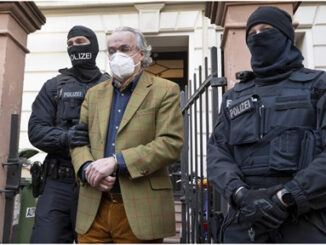
    BERLIN (TIP): German authorities on December 7 detained 25 members and supporters of a far-right group that the prosecutor’s office said were preparing a violent overthrow of the state, with some members suspected of plotting an armed attack on Parliament. One active soldier and several reservists are among those being investigated, a spokesperson for the military intelligence service said. The active soldier is a member of the Special Forces Command, it said. A former parliamentary lawmaker from the far-right Alternative For Germany (AfD), who serves as a judge in Berlin, was also among those detained, along with a former member of a German royal family.

    Investigators suspect individual members of the group had concrete plans to storm the Bundestag lower house of Parliament in Berlin with a small armed group, the prosecutor’s office said.

    One of the suspects, identified as Heinrich XIII PR under Germany’s privacy law, had reached out to representatives of Russia, whom the group saw as its central contact for establishing its new order, the office said. It said there was no evidence the representatives had reacted positively to the request. Heinrich, who comes from the royal House of Reuss, which had ruled over parts of eastern Germany, was seen as the designated leader in the group’s future state while another suspect, Ruediger vP, was the head of the military arm, the office said.

    The House of Reuss had previously distanced itself from Heinrich, calling him a confused man who pursued conspiracy theories, according to local media. The house did not immediately respond to request for comment.

    German Interior Minister Nancy Faeser said the government would respond with the full force of the law against such endeavours against the state and said further investigations would reveal how far the group’s coup plans had progressed. Prosecutors said the raids were conducted by more than 3,000 police officials and security forces across 11 German federal states. The suspects are accused of preparing, since the end of November 2021 at the latest, to carry out actions based on their ideology, according to the office. — Reuters

  • German police set to make more arrests after thwarted coup plot

    German police set to make more arrests after thwarted coup plot

    Berlin (TIP): The German police plan further arrests as they investigate a far-right group that prosecutors say was preparing to overthrow the state and install a former member of a German royal family as national leader. Investigators have said the group, many of whom were members of the Reichsbuerger (Citizens of the Reich) movement, planned to install aristocrat Heinrich XIII Prinz Reuss as leader of a new state and found evidence that some members planned to storm the Bundestag and arrest lawmakers. Heinrich is a descendant of the Royal House of Reuss in the eastern state of Thuringia. Aged 71, he has been working as a real estate developer and was arrested in the financial capital Frankfurt on December 7. Nineteen of the alleged plotters were remanded in custody on Wednesday, while another six were set to go before a judge on Thursday, prosecutors said. Many of the suspects are over 50, and they encompass right-wingers, Covid deniers and people who reject the modern German state. Holger Muench, head of the federal police office, told broadcaster ARD on Thursday that the number of suspects in the case now stood at 54, and that that figure could rise. “We have a dangerous mixture of people who are following irrational convictions, some with a lot of money, others in possession of weapons and a plan to launch attacks and expand their structures,” Muench said. The discovery of the alleged plot came as a shock in one of Europe’s most stable democracies and largest economy. “It’s not really comprehensible: you hear about such plans from other countries but for this to happen outside my front door?” said Melanie Merle, who lives close to the apartment in the financial capital Frankfurt where Heinrich was arrested. “The government we have is not ideal but probably better than what they had planned,” she laughed. Neither the House of Reuss nor Heinrich’s office responded to requests for comment. — Reuters

  • Report reveals wage theft problem for migrant workers in Australia

    Sydney (TIP): A new union report found on December 5 that migrant workers in Australia are facing a disturbing wage theft problem and called for reforms to strengthen protection for the group. Union NSW, the peak body for the state of New South Wales (NSW) trade unions, surveyed 7,000 job advertisements in foreign languages across more than 10 industries, reports Xinhua news agency. Over 1,000 migrant workers also shared their experiences when working or applying for work in Australia. It revealed that over 60 per cent of the job ads audited offered illegal rates of pay, below the relevant award wage. The retail industry was the worst offender, with around 85 per cent of foreign language ads surveyed offering below the minimum award, followed by cleaning, transport, building and construction, hospitality and hair and beauty. More than one-third of migrant workers surveyed also reported being paid or offered a lower salary because of their visa type, while more than one-quarter received lesser salaries because of their nationality. Unions NSW Secretary Mark Morey said it is disturbing that employers were still targeting workers from culturally and linguistically diverse backgrounds. “It’s alarming that employers unashamedly exploit and underpay vulnerable migrant workers, all while Australia experiences lagging migration rates and deals with claims of labour shortages. (IANS)

  • Ukrainian President Zelenskiy named Time’s 2022 ‘Person of the Year’

    Kyiv (TIP): Time magazine named Ukrainian President Volodymyr Zelenskiy 2022’s “Person of the Year” on Wednesday, saying he inspired Ukrainians and won global accolades for his courage in resisting Russia’s devastating invasion. Refusing to leave Ukraine’s capital of Kyiv at the outbreak of the war as Russian bombs rained down, the former comedian rallied his compatriots in broadcasts from the capital and traveled across his war-torn nation, the publication noted in bestowing its annual title.

    On Tuesday, Zelenskiy visited Ukrainian troops near the front lines in eastern Ukraine.

    “Zelenskiy’s success as a wartime leader has relied on the fact that courage is contagious. It spread through Ukraine’s political leadership in the first days of the invasion, as everyone realized the president had stuck around,” Time wrote in acknowledging the 44-year-old leader. Tesla Inc Chief Executive Officer Elon Musk was named Time’s “Person of the Year” in 2021, a year that saw his electric car company become the most valuable carmaker in the world. Time began this tradition in 1927. (Reuters)

  • Five sentenced to death in Iran for killing soldier

    Cairo (TIP): Iranian authorities sentenced five persons to death for allegedly killing an officer affiliated with Iran’s Islamic Revolutionary Guard, state media said December 6. Eleven others received lengthy prison sentences.

    The 13 men and three minors had been charged with killing Ruhollah Ajamian, an official from the Basij, a paramilitary volunteer branch of Iran’s elite Revolutionary Guard, according to the report from IRNA, Iran’s state news agency. The five individuals sentenced to death Monday were charged by Iran’s Revolutionary Court, along with eight others. Three boys were charged by Iran’s criminal court, according to the official reports.

    Iran’s judiciary spokesperson, Masoud Setayeshi, who is cited in the report, provided no official evidence to support any of the mentioned accusations. — AP

  • Will continue to be ‘steadfast friend’ of Sri Lanka: India

    Colombo (TIP): India on December 8 said it will continue to be a “steadfast friend” of Sri Lanka and is committed to strengthening the bilateral economic partnership for mutual benefit, as it thanked President Ranil Wickremesinghe for holding “successful” talks on debt restructuring. Wickremesinghe during the inaugural session of the Sri Lanka Economic Summit 2022 on Monday said that it held “successful” talks with India on debt restructuring and will also begin discussions with China, as the island nation scrambles to get assurances from major bilateral creditors to close a crucial deal with the IMF. Sri Lanka, which is trying to secure a USD 2.9 billion bridge loan from the International Monetary Fund (IMF), is also looking at financial assurances from its major creditors—China, Japan and India—which is the requisite for Colombo to get the bailout package.

    Replying to Wickremesinghe’s tweet on holding the “successful” talks on debt restructuring, the Indian High Commission here tweeted, “Thank you H.E President @RW_UNP. #India will continue to be a steadfast friend of #SriLanka and stand by our brethren. We are committed to strengthening the bilateral economic partnership for mutual benefit.” Sri Lanka has large debt rollover volumes (Gross Financing Need) running up to 37 per cent of GDP in 2022, which the IMF wants to bring down. The exact GFN target is not known, but other countries under restructuring have levels around 15 per cent, and some less, the EconomyNext reported.

    China, however, continues to be ambivalent about its stand on loans to Sri Lanka as it is set for talks with the IMF for debt restructuring of several recipient countries of Chinese finances, which are defaulting on their external debt. Sri Lanka, which went bankrupt earlier this year, had announced a default on over USD 51 billion in foreign loans, including that of China. China has also announced assistance of 500 million RMB (about USD 74 million) for the supply of essential goods, but it remained silent about former Lanka president Gotabaya Rajapaksa’s request to defer the loan repayment. India has rushed about USD 4 billion in assistance in the form of line credit and other modes to help Sri Lanka this year, which has virtually declared insolvency and defaulted on all foreign loans. (PTI)