Indians across the globe celebrate the Republic Day with patriotic fervor, unfurling the tricolor and holding cultural events to mark the occasion.
I am obliged and honored to write for Republic Day on January 26th. Republic Day has a special significance in the history of India. We all know that India gained its independence on August 15th, 1947. However, the nation didn’t have any constitution of its own. After numerous discussions and considerations, a committee submitted a draft of the Indian constitution, which was adopted on November 26th,1949, and became officialon January 26th, 1950.
But beyond it all, the constitution declares that India is a sovereign, socialist, secular, and democratic republic. The privilege of electing a leader for this country assures its peoples justice, equality, and liberty. Additionally, this gives us our rights and duties as people of India. No matter who we are, rich or poor, politician or citizen,or a person of Indian origin, we continue to respect these basic principles and values given to us by our amazing constitution, so that when we move forward and continue to build this nation, we do not leave behind the foundation on which our country was built.Although there has been a lot of improvement with our country, there are still multiple challenges remaining such as corruption, discrimination pollution, and poverty. However, we hope that our leaders have enough skills to resolve these challenges.I now end my columnby paying my respects and tributes to those great revolutionaries. Jai Hind.
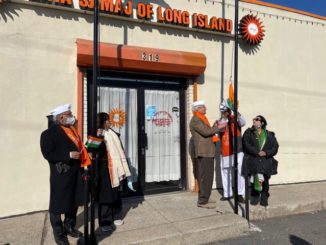
Arya Samaj and community members at the celebration.
HICKSVILLE, NY (TIP): Arya Samaj of Long Island celebrated 73rd Republic Day by unfurling the Indian National Flag at the Arya Samaj premises 319, Hicksville, NY on Sunday, on January 23, 2021 in the presence of the community leaders and Samaj members. On this occasion, Dr. Yashpal Arya, Trustee Chairman addressed the congregation. He said, India got its independence on 15th August 1947 and did not have its own constitution until 26th January 1950. Republic Day is celebrated to remember the historic moment when our nation became an independent republic country. Dr. Vijay Arya, President Arya Samaj, reminded not to forget our duties enjoined with the independence we got, so the Country’s sovereignty is maintained. Captain (Retired) Surinder Kade, Indu Jaiswal Chairperson, Indian American Forum, Dr. Urmilesh Arya, past President Association of Indians in America, Dr. Azad Anand, past President, India Study Center, Stony Brooke University and Veer Mukhi, Secretary addressed and reminded of the golden era of United India and its glory. Netaji Subash Chandra Bose was also remembered, and tributes were paid to Netaji’s contributions in India’s Independence.
ASLI was established in 2006 to extend Vedic Heritage and Vedic Teachings to the Hindu community at large. Its objectives and mission are to encourage adults and children to study the Vedas and other religious teachings. Samaj performs and conducts prayers and worship (Vedic Yajna & Pravachans) services to foster, advance and promote the practice of the religious belief of the Hindu faith.
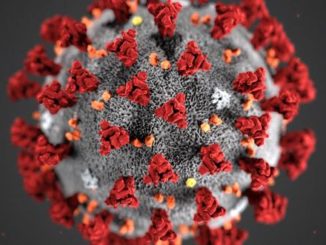
Since January 2020, life in the US has revolved around the “coronavirus” AKA COVID-19. While our lives have been greatly altered after the emergence of this virus, there still seems to be a lack of basic knowledge surrounding COVID-19 and just what exactly it is. Thus, I’m hoping after reading this article, you’ll leave with a bit of an understanding about the basics of COVID-19.
Before we can understand more about COVID-19, we need to first learn a little about viruses. Viruses are tiny infectious agents (even smaller than bacteria), which need to be inside of living cells to replicate. Viruses contain 2 major parts which make them whole: their capsid and their genetic material. The viral capsid is the outside shell of the virus. The main purpose of this shell is to protect the genetic material within it. The shell is usually coated with various proteins on its surface which are used to interact with and invade their target cells. Once inside their target cells, the virus uses its genetic material to divide and grow. But the virus cannot do this alone, it actually takes over the machinery and systems of the target cell and uses them to help it replicate and grow. Once mature viruses are made, they leave the cell to infect other cells. Infected cells basically become little virus factories manufacturing large quantities of viruses. This is basically how the “coronavirus” infects each one of us as well.
Now that we have a little background on viruses in general, lets circle back to COVID-19. To start off, the name “coronavirus” is the name of a group of viruses which cause a wide range of diseases. Coronaviruses are quite common, some cause very minor infections like the common cold.But the virus we think of when hearing the term “coronavirus” is actually named SARS-CoV 2, which stands for Severe Acute Respiratory Syndrome-Coronavirus 2. This virus is a close relative of the infectious SARS virus, thus the name SARS-CoV 2. The term COVID-19 is the name for the disease caused by SARS-CoV 2. The term COVID-19 specifically stands for “coronavirus disease 2019”.So, to sum this up, SARS-CoV 2 is the virus which causes the disease COVID-19 and is part of a group of viruses called coronaviruses. To make things easier to understand, I will refer to the virus as COVID-19 for the rest of the article.Now let’s talk about the COVID-19 and vaccines. You may be hearing a lot on the news about the spike protein of COVID-19. The spike protein is extremely important to the virus, as it is what the virus uses to stick onto our cells. Once it sticks onto the surface of our cells and gets in, it hijacks it and takes it over like other viruses do. Thus, scientists developed a vaccine which helps our body target this important spike protein of COVID-19.Normally, when you hear the word “vaccine” you probably think you are being injected with a weaker or dead version of the virus. While this is one form of vaccines, the COVID-19 vaccine is NOT this. I cannot stress this enough, when you are vaccinated against COVID-19,there is absolutely no virus being injected in you. The COVID-19 vaccine is something called a synthetic mRNA vaccine. These new types of vaccines are very interesting because rather than injecting a patient with a weaker version of the virus, the patient is injected with a synthetic mRNA.
Before we go any further, let’s get a better understanding of mRNAs. To understand mRNAs, you first need to understand how proteins are made inside your cells. In your cells you have DNA, which are the blueprints to all the proteins in your cells. When your cell wants to make new proteins, it reads your DNA and then sends the blueprints of the specific protein it wants to make to your cellular protein factories (these are called ribosomes). Your cells usemRNA to send these blueprints from your DNA to the ribosomes. Fittingly enough the m in mRNA stands for messenger. Thus, mRNAs are basically little postmen which take specific blueprints on how to make specific proteins from your DNA and delivers them to your ribosomes (protein factories).
Now that we understand what mRNAs are, lets get back to the COVID-19 vaccine. These vaccines are synthetic mRNAs made by scientists in the lab. These mRNAs are the blueprints of the COVID-19 spike protein. When we are injected with a COVID-19 vaccination, all we are doing is giving our cells the blueprints to the COVID-19 spike protein. They can then take these blueprints and learn how to build antibodies against this spike protein. These antibodies can then target the spike protein of COVID-19 and stop the virus from attaching to our cells.
I hope after reading this, you have a better understanding of COVID-19 and the vaccines developed to help fight it. Stay safe everyone!
(Cody Kempen received his Bachelor’s and Master’s in Pharmaceutical Sciences from Albany College of Pharmacy and Health Sciences. He is currently a PhD Candidate in Microbiology and Molecular Genetics with a focus in mucosal immunology at Stony Brook University. He can be reached at cody.kempen32@gmail.com)
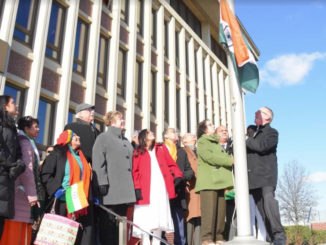
Hempstead Town Supervisor Don Clavin addresses the gathering.
Community members present at the celebration with Don Clavin.
Supervisor and Town Board recognize holiday to celebrate freedom in the world’s most populous democracy and honor the Indian-American community’s legacy in Hempstead Town
HEMPSTEAD, NY (TIP): Hempstead Town Supervisor Don Clavin, along with members of the Hempstead Town Board and leaders of the Indian American Forum, joined together to celebrate the 73rd annual India Republic Day. The event was held on the front steps of Hempstead Town Hall Wednesday, January 26 to highlight the transition of the highest populated democracy in the world to a republic. The National Flag of India was publicly raised to commemorate Indian-American residents and culture.
“Indian-American culture and tradition are vastly important in the greater Hempstead Town community,” Clavin said. “America’s largest township is thankful to be home to thriving community of Indian-Americans contribute to shaping the dynamic identity of our home. It is vital and right that we communally recognize and celebrate thefundamental parts of our neighbors’ history.”The New York-Newark-Bridgeport Area (NY-NJ-CT-PA) contains the largest concentration of the Indian-American population in the United States, with over 700,000 Indian-American residents. Nassau County itself holds the third-largest Indianimmigrant hub in the country.
Due to the persistence of the COVID-19 pandemic, the event was heldcompletely outdoors. The flag-raising proceedings included a cultural music selection, the singing of the United States and Indian national anthems, blessings from a local pandit, and keynote speakers explaining the history and significance of theIndianAmerican community to the town and country. Guests for the ceremony were served tea and coffee.
“The importance of India Republic day extends far beyond the Town of Hempstead,” said Hempstead Town Clerk Kate Murray, who began the tradition during her tenure as Supervisor. “Indian culture has had a profound influence on American culture over the course of many years, and I’m always glad to honor and celebrate the Indian-American neighbors in our town.”“We encourage all residents to join us in celebrating our Indian-American community,” Clavin said. “Happy India Republic Day!”
Mr. Makkar has made serious allegations against the Modi government, politicians and the big businesses which need a careful and honest probing. We call upon our readers to initiate the task of investigating in their own way whether or not they find the allegations worth believing. The Indian Panorama invites an open debate to unravel the truth. Please send in your comments to editor@theindianpanorama.com
EDITOR
The criminalization of politics is directly related to “Gangster Capitalism” that is being practiced in India since its independence in 1947. In India, politicians are selected & financed by the “New India Company” – NIC; voters play a part in the charade of voting for them!
These elites are also promoting and financing “Hindu Rashtra” a communal agenda, call it a “Majoritarian Rule” where Upper caste Hindus are more equal even than the lower caste Hindus. No one can ignore how the minorities especially Muslims & Christians are being treated under Modi Rule since 2014. Unfortunately, history tells us that such countries rarely progress much. Retd. Admiral Arun Prakash in an interview has observed that under the current rulers, “India is prone to a Civil War in the very near future”.
Since my student days every year on India’s Independence Day & Republic Day, I used to look back and compare the gradual deterioration in the functioning of democracy, the Master’s (Ruling Class & their Financiers) Ruling the Slaves (The Indian Public) Governance system getting more cruel witherosion in moral and social fiber of the society, year after years. This Masters & Slaves Governance system in India, implemented by East India Company &more strictly & violently enforced by British Crown; was later adopted by the Congress after independence in 1947.That is the reason India still has British time Sedition & UAPA laws.
1990 was a turning point in my life when Chandra Shekhar with 61 MP’s (out of 525-member Lok Sabha/lower house) from the breakaway group of Janta Dal was installed Proxy PM with the outside support of 195 Congress MPs under Rajiv Gandhi & 25 MPs of splinter groups by toppling the V P Singh government. The entire operation was financed by Dhirubhai Ambani with bribes to every MP across the party line because V P Singh government was pursuing money laundering, tax evasion, political & bureaucratic bribes and other wrong doings against Ambani group. That forced me to say publicly that from now onward the likes of Ambani’s whenever they feel like can install any one as Proxy PM in India.
After Chandra Shekhar, Indians have seen administration after administrations marred in corruption, criminals getting elected to public offices and MLAs &MPs for sale to the highest bidder; all under the facade of democracy.
Since 2014 this deterioration has been so fast that India can no longer be called a democracy and the most pathetic, it is inhibited by the world famous rich, highly educated and intelligent people that do not care about social and moral corruption that has infected every institution of their government while majority of their fellow Indians live subhuman lives in the ocean of poverty and hunger with no basic human rights.
The most disturbing is the large number of criminals in the BJP and in Modi’s Cabinet of Ministers. Out of 303 BJP MPs, 116 have criminal record including a bomb maker & a terrorism accused and 22 are in Cabinet and out of those 16 ministers have serious criminal cases registered against them. Most pathetic is, Home Minister Amit Shah was accused of having orchestrated the extrajudicial killings under CM Modi of Gujarat. Serious criminal cases include terrorism, treason, arson, murder, rape, robbery, burglary, communal disharmony/hate speeches, electoral violations, and kidnapping, among others. If that is the plight of India’s Parliament and government run by criminals; one can for sure say the states must be doing worse than this!
The criminalization of politics is directly related to “Gangster Capitalism” that is being practiced in India since its independence in 1947. In India, politicians are selected & financed by the “New India Company” – NIC; voters play a part in the charade of voting for them! It was Congress that gave their blessings to the formation of “New India Company” in 1947 to replace “The East India Company” with prominent shareholders of that time like Birlas, Sighanias etc. The current prominent Shareholders of “New India Company” are Ambani, Adani, Tata, Aggarwals, Jindals, Ruia’s & Fraud Religious Gurus Ram Dev, Ravi Shankar, Jaggi Vasudev with many other major names. NIC along with the Politicians they selectare the termites that have eaten up the public wealth along with the social and moral fiber of India. The NIC & politicians are directly responsible for acute poverty, illiteracy, un-employment, communalism, catechism, lack of basic civic & health care services and massive corruption at all levels of governance including judiciary & media in India. With the majority of the mainstream media owned by Ambani & Adani; the corruption, communalization bigotry against minorities & suppression of news uncomfortable for Modi govt in Media has reached to new level after 2014. Media owned by them decide what information is to be released for public consumption and anyone questioning the rulers or establishment of Hindu Rashtra is conveniently dubbed as “Anti-National”.
The most dangerous part is that NIC shareholders have no relevant experience or expertise or have never invented any product or an idea. None of them have any vision for a country of over 1.39 billion people with the majority of them being poor. Their expertise is in how to swindle and scam to get bank funding for their highly cost inflated projects. They buy/lease perpetually, public owned natural wealth like land, oil wells, spectrum, mining rights, airports, railway stations, National Monuments and more at highly undervalued cost & terms which is a fraud on the owners that is public. The other expertise they do have is in financing criminal, communal & corrupt politicians with no vision for the country; so that these shareholders can govern India through them. The example is coronation of Modi first as CM of Gujarat and later as PM of India. Adani and Ambani have prospered the most under Modi; Adani from $70 Million net worth in 1998 is now worth $92.2 Billion and Ambani who was Congress Party owner turned BJP owner in 2013, his net worth zoomed from $23.6 Billion to $ 95.3 Billion despite India’s GDP falling from 10% growth to -8% in 2021, amid 45 years high unemployment, poverty and hunger that may lead to a humanitarian crisis.
Recent report on inequality from Oxfam points out —one of the biggest increases in wealth was that of Gautam Adani, whose wealth multiplied eight-fold during the pandemic, and Oxfam notes that he made use of state connections to become the country’s largest operator of ports and its largest thermal coal power producer, wielding market control over power transmission, gas distribution, and now privatized airports — all once considered public goods.
World Inequality Report finds that India stands out as a poor and very unequal country, with an affluent elite. World Inequality Report estimates that the ratio of private wealth to national income increased from 290% in 1980 to 555% in 2020, one of the fastest such increases in the world, throughout history.
India had 102 billionaires last year, and now the number is 142. On the other hand, there are estimates that 150 to 160 million peopleslid into poverty during the same period. The income of poorest Fifth plunged 53% in last 5 years of Modi rule.All his Grand Schemes with Millions of Dollars for Advertising have proved a big disaster for India. The United Nations says that half of the new poor globally are coming from India. So, what we’re looking at is inequality reaching obscene proportions.
Modi government is notorious for suppressing inconvenient information and manipulate data, refusing to release the results of the 2017-18 national consumer expenditure survey. World Inequality Report finds that India stands out as a poor and very unequal country, with an affluent elite. These elites are also promoting and financing “Hindu Rashtra” a communal agenda, call it a “Majoritarian Rule” where Upper caste Hindus are more equal even than the lower caste Hindus. No one can ignorehow the minorities especially Muslims & Christians are being treated under Modi Rule since 2014. Unfortunately, history tells us that such countries rarely progress much. Retd. Admiral Arun Prakash in an interview has observed that under the current rulers, “India is prone to a Civil War in the very near future”.
People-to-people initiatives can help build goodwill between India and Pakistan
At a time when most other India-Pakistan exchanges are suspended, even a simple proposal by the Pakistan Hindu Council, forwarded by Pakistan to India, to allow pilgrims of both countries to travel by air to avoid cumbersome journeys seems a leap. Islamabad-Delhi ties now are possibly at their worst ever in peace times, with no political dialogue at a bilateral or multilateral level for over five years. After many terror attacks, India has stopped normal communications and cultural exchanges, and after the Government’s moves on Article 370 in Jammu and Kashmir, Pakistan stopped all trade ties. Both sides have downsized their diplomatic missions. In addition, the COVID-19 pandemic has ensured that the borders have been virtually sealed for two years, with few direct routes operating between them. Even the movement of pilgrims may have been cancelled but for the conscious attempt by the two governments to make an exception for faith-based travel — as was done for the Kartarpur corridor that came up in 2019, the same year the two countries nearly went to war over the Pulwama attack. Religious exchanges, of mainly Muslim pilgrims from Pakistan, and Hindus and Sikhs from India, are governed by a protocol signed in 1974, and allowed to continue.
While the routes for Sikh pilgrims, from Indian Punjab to the Pakistani Punjab province, are relatively easy, hundreds of Indian and Pakistani pilgrims crossing over at the Wagah/Atari border to travel further to the Hinglaj Mata Mandir in Balochistan, the Paramhans Mandir in Khyber Pakhtunkhwa, the Ajmer Sharif dargah in Rajasthan, the Nizamuddin Aulia in Delhi and other such shrines, face more circuitous routes. To avoid the extra time in travel, the Pakistan Hindu Council, which has now signed an MoU with Pakistan International Airlines (PIA) to facilitate faith-based tour groups, has asked that PIA charters from Karachi and Lahore be allowed to fly direct to Indian cities this week, with a view to also allowing reciprocal air charters from India. This would be the first time such air travel has taken place in years, and the first time ever that pilgrimages would be accorded this facility. As pilgrim groups on both sides are vetted before being allowed to travel, the precedent is unlikely to pose any additional security threat. In an atmosphere fraught with tensions, such people-to-people initiatives can only help build some modicum of goodwill. No evident harm to national interests has come from other such recent moves embarked on by the two governments, such as the LoC ceasefire announcement in February, or the decision to reopen the Kartarpur corridor in November, or the Government’s nod for cricket under the T20 World Cup as well as other sporting events. While the Government’s reflex position may be to deny the request, it may prove wiser to give the proposal some deliberate consideration.
India has come a long way during the last seventy-three years as a Republic, but India has a long way to go . India is not there yet. India always drew strength from its multi religious and multi-cultural mosaic .
India enriched itself with the wisdom coming from various faiths and the people following those faiths. A multiplicity of faiths and their followers – may they be Hindus, Christians, Jews, Muslims, Sikhs- they all contributed to the strengthening of the Indian nation. If today India stands tall in the comity of nations, it is because India is recognized as a nation of diversity – diversity of which India has always been proud. Indians proudly told the world how there was unity in diversity in this great land where we were told to keep the doors and windows open to the freshness of new ideas and welcome new guests.
Indians gave to themselves a constitution which guaranteedJustice- social, economic , political; which guaranteed Liberty of thought, expression, belief faith, and worship; which guaranteed Equality of status and opportunity, and to promote them Fraternity among all, assuring the dignity of the individual and unity and integrity of the nation.
But, unfortunately, over the years , the guarantees enshrined in the constitution of India are being eroded. India is slowly turning into a majoritarian state, through the backdoor. One can see today an undesirable exclusion of minorities from power and the blatant use of State power to suppress them. The Republic surely is in danger.
One gets reminded today of the midnight knocks during the times of the British and, even during free India in the times of emergency which was imposed by Mrs. Indira Gandhi when she was the Prime Minister.
The example of Prime Minister Indira Gandhi should open the eyes of the people of India that power hungry rulers can go to any extent to rob the people of their freedom. They use the power of the State to not only rob the people of their freedom and liberty but also to suppress them.
Today one sees similar situations evolving in India .Some call it an undeclared emergency. Because one sees the same old methods of suppression, the same old methods of creating fear in the minds of the people. But the rulers that create fear with the help of State power must remember that this fear not something permanent; it is only a fleeting feeling.
In the post emergency era when the elections were announced, onefound Congress flags fluttering atop every house in the state of Uttar Pradesh. But when the elections were held, Congress was routed in the State.
People were afraid and that’s why they put up those Congress flags atop their houses. But deep down in their minds and hearts , they were very clear that they were not going to tolerate an oppressive regime.And when they got an opportunity, they voted that regime out of power.
The rulers who are now trying to suppress the liberties of minorities, people who are now trying to subvert the constitution should better take a lesson from history.
As for the people of India, let them all take a pledge on this sacred Republic Day that they will uphold theConstitution of India , that they will ensure that nopolitical power in this country robs them of the rights guaranteed to the people in the Constitution
It would be well to remember that it had been a terrible struggle to win for ourselves those wonderful rights and privileges which the Constitution of India guarantees us.Let’s all pledge to protect them from being taken away through ballot or bullet. Let us celebrate Republic Day of India as one nation, one people, one fraternity, irrespective of the faith we follow, irrespective of the language we speak, irrespective of the State we live in.
Barring a few exceptions, most of sports stars were all introduced on the political horizon as “bold and big game changers”. Finding their wings clipped and sans all powers, they attempted to walk free to end up “loners” and “failures”. What they did on playfields, they could not repeat even one per cent of that in politics.
Politics in sports and sportspersons in politics are two diverse, interesting and highly debatable issues. Come elections and itch for getting into public life as a representative of one party or the other becomes uncontrollable for some of the former sports stalwarts. Latest on the list is the captain of the 1975 World Cup champion Indian hockey team and Olympian Ajitpal Singh Kular. He comes from Sansarpur, the famous nursery of hockey.
Ajitpal Singh, after a distinguished career in sports, left the Border Security Force (in Jalandhar), and moved to the union capital for a new innings by owning a gas station at a posh location. He is now looking for yet another innings and this time it is politics. He has chosen a constituency that is contiguous to his native village. Intriguingly, Sansarpur falls in the Jalandhar Cantonment area from where fellow Olympian and also a former Indian captain, Pargat Singh, will be contesting his third consecutive election to the State Assembly. Pargat represents the ruling Congress though his first election was as an Akali. Interestingly, Ajitpal has joined a party that has a hockey stick and a ball as its election symbol. What could be more ideal icon for a political party for its public campaign with Ajitpal Singh wielding a hockey stick. His joining politics is perhaps a part of the trend that has been luring eminent sports stars, artists, singers, Bollywood and Pollywood stars into politics.
Incidentally, the Chief Ministerial face of Aam Aadmi Party (AAP) is a comedian and small screen star Bhagwant Mann. Though sports stars joining politics has been there for decades, it got a big boost when a former Test cricketer rose to be the Prime Minister of Pakistan. Emergence of Imran Khan on the global political scenario in general and South Asian politics in particular had activated an animated discussion on whether sportspersons make better politicians or not. Never before in the history of the world had a Test cricketer been chosen to lead a country tormented by internal strife, economic turn down, corruption and armed conflicts.
For a sports person looking to build a career in politics on his or her athletic legacy may not be easy unless he or she had a high popularity profile as the shift from peak of a sports celebrity to a political bigwig may not be possible without a deluge of publicity and unconditional support from rank and file of the political outfit he or she intends to head or lead.
Even before Imran Khan emerged on the political horizon of Pakistan, there have been lots of Olympians and cricketing heroes who wandered into politics and made a name for themselves. Sportspersons turned politicians have held limelight not only in India but also in developed nations like the United States, England, Australia, Canada and Japan besides developing nations like Pakistan. Not only men, even women athletes have had successful second innings in politics. Sprinters Ralph Metcalfe and Jim Ryun, cagers Bill Bradley and Tom McMillen, decathlete Bob Mathias and judoka Nighthorse are some of the names who have had successful innings in US politics after their successful youth years in sports.
Dr Richard Charlesworth of Australia belongs to a rare category, who excelled not only in more than one sport but also hawked limelight and honor as a trainer, as a coach and also as a politician. A Test cricketer, Olympic hockey gold medalist and MP all made one Richard Charlesworth. Then there is Australian aboriginal Nova Perry, an Olympic gold medalist in hockey and Commonwealth Games gold medalist in athletics, she became the first indigenous woman to be elected to Australian Parliament and later to Senate.
Ryoko Tami of Japan, a renowned judoka, who won silver in the Barcelona Olympic Games and gold medals in Sydney and Athens and a bronze in Beijing turned to politics at the end of her career in sports. She won a seat in the House of Councilors of Japan. In Canada also, former hockey Olympian Ravi Kahlon is a member of the British Columbia Provincial Parliament.
Before Imran Khan made it to Pakistan’s National Assembly, his contemporaries in sports – Sarfraz Nawaz (cricket) and Akhtar Rasool (hockey) – also sat in Punjab provincial assembly and held Ministerial posts.
India has a much longer history of sportspersons in politics . This diminishes the role of conventional politicians and their families. In a way it may slow down a long debated issue of dynastic politics.
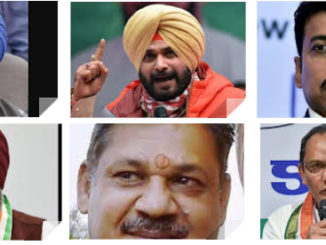
There have been numerous instances when eminent sports persons joined politics, both at State and national level. Olympian Jaipal Singh (hockey), Raja Karni Singh, Chetan Chauhan, Kirti Azad, Navjot Singh Sidhu, Sachin Tendulkar, Aslam Sher Khan, Mohammed Azharuddin, Pargat Singh, Dilip Tirkey and Rajyavardhan Singh Rathore have been among some of the sports stalwarts, who after or during their innings in sports, dabbled in politics. But their entry was either through established political parties or as independents.
Kirti Azad represented BJP in Lok Sabha, His long innings in cricket and then in politics almost brought him to the brink for alleging wrong doings in the DDCA. Ultimately, he had to quit BJP. Another cricketer to make it to Parliament in the last general elections was former Test opener Gautam Gambhir.
Why are sports stars damp squibs in politics? Or are they content with membership of Parliament or State Assemblies and do not look beyond?
Athens Olympic medalist Rajyavardhan Singh and Test cricketer Navjot Singh Sidhu may be exceptions. Rajyavardhan Singh Rathore remained a part of Narendra Modi ministry. And his portfolio was sports. And Navjot Singh Sidhu remained a cabinet minister in Punjab. But his portfolio did not include sports.
It is more than a question of political rehabilitation for those leaving sports and opting for a new career. If politicians are not a welcome to National Sports Federations how could sports stars expect warm welcome or assimilation in political administration, it may be the corollary to have the answer for the vexed question of sports into politics. The last election to the 15th Punjab Vidhan Sabha, was, however, different as not only a large number of sportspersons, bureaucrats, technocrats, small and big screen artistes, singers, academicians, realtors and others evinced extra interest in politics.
Besides Navjot Singh Sidhu (cricket) and Olympian Pargat Singh (hockey), who were successful in the last Punjab Assembly elections, Asian Games gold medalist Kartar Singh (wrestling), Sajjan Singh Cheema (Olympian, basketball) and Gulzar Singh (kabaddi) were in the fray while several others including Olympians Surinder Singh Sodhi and Hardeep Singh Grewal and internationals Jagdeep Singh Gill and Asian Games gold medalist Rajbir Kaur Rai (all hockey) did not get a chance to enter the electoral politics.
Sajjan Singh Cheema, now back again in AAP as its candidate from Sultanpur Lodhi, hopes to script success in his second attempt. In all previous instances, sportspersons may have stirred hornets’ nests here and there but in the longer run their actions remained far too small to impact national or provincial politics. Both Navjot Singh Sidhu and Pargat Singh played a pivotal role in getting the Punjab Congress Legislature Party’s leadership changed. If Capt Amarinder Singh had to quit Chief Ministership in September last year, it was primarily because of the flag of revolt raised by Navjot Singh Sidhu closely followed by Pargat Singh. Navjot Singh Sidhu has risen to head the Punjab Pradesh Congress Committee.
Barring a few exceptions, most of sports stars were all introduced on the political horizon as “bold and big game changers”. Finding their wings clipped and sans all powers, they attempted to walk free to end up “loners” and “failures”. What they did on playfields, they could not repeat even one per cent of that in politics. It is all the more intriguing that Indian sports is mired much deeper in politics than the politics of running world’s biggest liberal democracy, but our sports personalities have failed on that front too.
One may not be able to name a sport that is free from politics. Political affiliations apart, sports administrators defy rules, regulations and guidelines to monopolize State and National Sports associations. Governments come and go but our sports politicians, who have perfected the art of staying in office irrespective of the political party in power, remain indispensable. It is but natural to come to one’s mind that if our sports are so deep into politics, why sports personalities have been generally non-performers in the political scenario.
The Punjab Tableau- Martyrdom of Shaheed Bhagat Singh , Sukhdev and Rajguru celebratedThe defenders of India- a contingent of Sikh soldiers
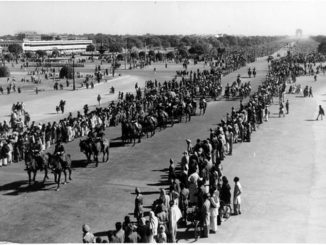
NEW DELHI (TIP): India displayed its military might and vibrant cultural heritage on Rajpath, with the ceremonial Republic Day parade this year being drastically scaled down in view of the Covid pandemic. Special Force Commandoes march during the Republic Day Parade 2022 at Rajpath in New Delhi on January 26, 2022. Photos: Manas Ranjan Bhui. Showcased at the Republic Day parade were the Centurion tank, PT-76 tank, 75/24 Pack howitzer and OT-62 TOPAZ armored personnel carrier that played a major role in defeating Pakistan in the 1971 war. India in 2021 celebrated the Swarnim Vijay Varsh (Golden victory year) to commemorate the country’s win over Pakistan in the 1971 war that led to the creation of Bangladesh. The mechanized columns of the Army showed one PT-76 tank, one Centurion tank, two MBT Arjun MK-I tanks, one OT-62 TOPAZ armored personnel carrier, one BMP-I infantry fighting vehicle and two BMP-II infantry fighting vehicles. The ceremony began with Prime Minister Narendra Modi leading the nation in paying homage to the martyrs by laying a wreath at the National War Memorial, a monument to the soldiers who have made supreme sacrifice for the country.
Defense Minister Rajnath Singh and the three service chiefs were present at the solemn ceremony. There was no chief guest at the parade this year. However, Swachhagrah, frontline workers, auto-rickshaw drivers, construction workers and laborers who prepared the majestic tableaus were among special guests invited this year to the Republic Day parade. The parade started at 10.30 am this year, half-an-hour later than usual for better visibility. Commanded by Lt Gen Vijay Kumar Mishra, with Maj Gen Alok Kacker as the second-in-command, the parade began with President Ram Nath Kovind taking the salute. The national flag was unfurled followed by the national anthem, synchronized with a 21-gun salute. Horse-mounted soldiers of the Indian Army’s 61 Cavalry Regiment, the only active horsed cavalry unit in the world currently, was the first marching contingent at the parade. This regiment’s contingent was led by Major Mrityunjay Singh Chouhan.
The parade saw the launch of ‘Shaheedon Ko Shat Shat Naman’ program by the National Cadet Corps and a display of 10 scrolls each of 75 meters prepared during the ‘Kala Kumbh’ event besides installation of 10 large LED screens for a better viewing experience of spectators.
The contingents of security forces were followed by tableaux from states that showcased India’s cultural diversity, with themes ranging from the freedom struggle to biodiversity. Several government ministries and departments also took out tableaux, highlighting flagship initiatives such as the Jal Jeevan Mission. The Central Public Works Development tableau paid tribute to Netaji Subhas Chandra Bose on his 125th birth anniversary. The Lok Adalat tableau made its debut on Rajpath this year. The theme of the float by National Legal Services Authority was ‘Ek Mutthi Aasman (Inclusive Legal System): Lok Adalat’. The front part of the tableau showcased ‘Nyay Sabke Liye’, a hand gesture of fearlessness, guarantee and protection.
Martyrs and independence movement was the theme of poll-bound Punjab’s tableau while the Department of Post’s tableau displayed the robust outreach and the modern face of India Post as well as all-women post offices to showcase the steps taken towards gender equality.
Dancers from the Kunbi community, the original inhabitants of Goa, and glimpses from the liberation struggle were the highlight of the tableau of the coastal state while Karnataka’s skillfully made pots, carefully sculpted sandalwood miniatures and rich tradition of handicraft were on display in the state’s tableau. Known otherwise to witness huge bustling crowds across many age groups, the annual ceremonial event at Rajpath was scaled down this time in view of the coronavirus pandemic, with spectators’ size drastically cut to 5,000 from the 25,000 last year. In the pre-pandemic times, over one lakh spectators used to witness the parade. From members of contingents to spectators, everyone wore masks. The audience maintained the mandated distance while sitting, and standing spectators were not allowed. Only double vaccinated adults and children above the age of 15 who have taken at least one dose of a Covid vaccine were allowed to enter the venue. Children below 15 were not permitted to attend.
There was tight security with personnel maintaining strict vigil. Chairs were placed at a distance to ensure social distancing. Participants also received a white cap with ‘Azadi ka Amrit Mahotsav’ printed on it.Delhi was brought under a heavy security cover as the city police had intensified patrolling and sealed the borders of the national capital in coordination with its counterparts from the neighboring states to thwart any untoward incident amid a terror alert by intelligence agencies. Over 27,000 police personnel were deployed on Republic Day security duties in Delhi and anti-terror measures intensified.
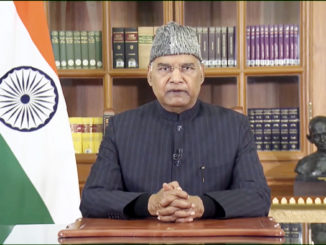
NEW DELHI (TIP): President Ram Nath Kovind on Tuesday , January 25, hailed the transformation of a Haryana village by its natives saying, “a new India, which is strong and sensitive, is emerging”.
Urging all successful people to work for the development of their birthplaces, the President said rights and duties were two sides of the same coin and doing one’s duty well was the foremost contribution to the nation.
In his address to the nation on the eve of the 73rd Republic Day, the President made a special mention of residents of Bhiwani’s Sui village who collaborated to transform the area under “Swa Prerit Adarsh Gram Yojana”. “I am sure other resourceful people will also contribute to the development of their villages and cities,” said the President, crediting his own native village Paraunkh in UP for his ascent to the Rashtrapati Bhavan,
President Kovind said Indians had transformed the Covid vaccination drive into a mass movement. Noting that India is better placed to meet future challenges, he said, In the first year itself, we raised healthcare infrastructure and also reached out to help others. By the second year, we had developed indigenous vaccines and launched the world’s biggest vaccination drive.” He, however, cautioned against lowering the guard. “It has become a sacred duty to follow precautions suggested by experts,” he said. He said the economy was projected to grow at an impressive rate. He lauded the self-reliance in defense and also spoke of women breaking the glass ceiling in the armed forces.
Governor of New York Ms. Kathy Hochul delivered her congratulatory message in a videoConsul General Randhir Jaiswal read out the President of India’s address to the NationA cultural program was presented by Bharatiya Vidya BhavanThe Consulate staff at the celebration
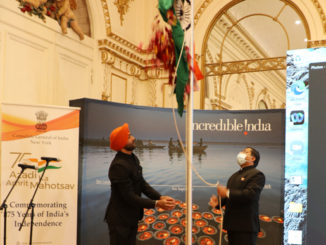
NEW YORK (TIP): The Consulate General of India here celebrated the 73rd Republic Day of India with a flag-hoisting ceremony on Tuesday, January 26th 2022. Consul General Randhir Jaiswal unfurled the national flag after which the national anthem was sung. Consul General then read out the address of the President of India. A video congratulatory message received from Governor of New York Ms. Kathy Hochul was played at the event. A short cultural program was presented by Bharatiya Vidya Bhavan, which included singing of patriotic songs and poetry recitation. Due to the pandemic, the number of participants attending the event was restricted. However, the event was telecast LIVE through the Consulate’s social media platforms, so that a larger audience could participate.
Local community and cultural organizations too are celebrating the Republic Day with much fanfare in virtual mode. Federation of Indian Associations (FIA), New England held a colorful virtual celebration supported by the Consulate General of India in New York on January 25th, 2022, at the iconic Worcester Union Station in Worcester, Massachusetts. Dignitaries including State Senator (Massachusetts) Mr. Michael Moore, former US Congressman Mr. Joe Kennedy III and former Rhode Island Assemblyman Mr. Robert Lancia participated in the event. Federation of Indian Associations Ohio held a Flag Hoisting ceremony at the Ohio State House, Columbus on January 26th 2022. Ohio State Senator Mr. Niraj Antani and prominent members of the Indian community were present at the event. The program was live streamed. Global Organization of People of Indian Origin (GOPIO) held a virtual event on January 26th 2022 in association with the Consulate General of India for celebration of the Republic Day. Several dignitaries including State Senators Mr. Kevin Thomas (New York), Mr. Vin Gopal (New Jersey), Ms. Kesha Ram (Vermont), Mr. Neeraj Antani (Ohio); and members of State Assemblies Mr. Raj Mukherjee (New Jersey), Ms. Latha Mangipudi (New Hampshire), Mr. Harry Arora (Connecticut) and Ms. Jennifer Rajkumar (New York) participated in the event.
Other community and cultural organizations such as the International Center for Cultural Integration (ICCI), Long Island; the Tri City India Association, Albany; the Indian Association of Buffalo (IAB); the Indian Cultural Heritage & Arts Awareness Club, New York; the Indian Association of Greater Boston (IAGB); the Indian American Community in Northern America, New Jersey; The Council of Indian Organizations (CIO) in Pennsylvania; and the Hindu Temple of North America, Queens NY are scheduled to hold their respective events in the coming days.
(Based on a press release issued by the Consulate General of India, New York)
NEW DELHI (TIP): Government of India announced Padma Awards 2022 on the eve of Republic Day on Tuesday, January 25. Late Gen Bipin Rawat has been chosen for Padma Vibhushan. Indian Americans Satya Narayana Nadella, Sundararajan Pichai, Madhur Jaffrey are among the recipients of the Padma awards. This year the President has approved conferment of 128 Padma Awards including 2 duo case (in a duo case, the Award is counted as one). The list comprises 4 Padma Vibhushan, 17 Padma Bhushan and 107 Padma Shri Awards. 34 of the awardees are women and the list also includes 10 persons from the category of Foreigners/NRI/PIO/OCI and 13 Posthumous awardees.
January 26 marks one of the most important days in our country’s history books. Republic Day is celebrated every year on this day. It was in 1950 when the constitution came into effect and India became a republic.
Every year, this day is celebrated with a grand parade that takes place in New Delhi. 72 years on, people still watch it with great interest, whether physically or on television.
The parade is also attended by a distinguished guest who happens to be a global political figure. However, due to COVID-19, no chief guest is invited for this year’s Republic Day. Initially, UK prime minister Boris Johnson was to be present but because of the rampant spread of the new coronavirus strain in the country, he cancelled his trip to India.
On this day, what better way to remember the first-ever Republic Day parade and celebrations that took place in 1950. The Indian constitution was adopted on November 26, 1949, but it was on January 26, 1950, when it officially came into effect. January 26 was chosen as it marked 20 years since it was decided that the sole aim will be to attain ‘Purna Swaraj’ or complete independence.
India got to witness the festivities of the first-ever Republic Day. The parade took place in Irwin Amphitheatre, that is now known as Major Dhyan Chand Stadium. The parade consisted of various kinds of performances as well as an army marching band. Many esteemed personalities in the country attended the event. The chief guest was the Indonesian president, Sukarno, who came with his wife. Overlooking the Purana Qila, the parade started from Irwin Amphitheatre and went on till the Red Fort.
Rajpath has become synonymous with Republic Day celebrations 68 years since, that majestic boulevard that runs from the Rashtrapati Bhavan through Vijay Chowk to India Gate. But it was not the venue of the first celebrations in 1950. Beyond India Gate lay, Irwin Amphitheatre (now Major Dhyanchand National Stadium), named after a former Viceroy where 15,000 people had gathered for the big parade, , still nascent compared to the gala it is today.
The new President took a slow, ceremonial ride from Rashtrapati Bhavan with President Sukarno to the amphitheatre in a 35-year-old open state coach bearing the Ashoka Emblem. It was drawn by six Australian horses along the five-mile road to the Amphitheatre, escorted by the President’s bodyguards.
The roads were lined with exuberant crowds with the tricolour in their hands, cheering and chanting “Jai” joined by those peering from neighbouring building roofs and treetops. Dr Prasad greeted them all with his hands folded and a modest but beaming smile. His arrival at the amphitheatre was marked by a resounding 31-gun salute, solemnising the event as a milestone in India’s “chequered history”: Our first Republic Day celebrations as an independent nation. Dr Prasad proceeded to take a round of the amphitheatre, this time in a jeep, while saluting the 3,000 armed forces that had gathered there, after which he hoisted the tricolour, our national flag for the very first time. Another memorable speech by him was in the offing.
As many as 29 Children have been conferred the Pradhan Mantri Rashtriya Bal Puraskar this year, selected from all regions of the country for their exceptional achievements in Innovation (7), Social Service (4), Scholastic (1), Sports (8), Art & Culture (6) and Bravery (3) categories. There are 15 Boys and 14 Girls among the awardees belonging to 21 States and UTs.
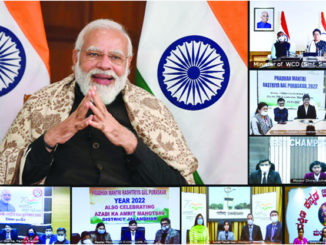
In view of the unprecedented circumstances emerging due to COVID-19 situation in the country, it was not possible to organize a physical ceremony at New Delhi. In order to felicitate and motivate the exceptional works of children, a function was held virtually on the occasion of National Girl Child Day today and also as part of Azadi Ka Amrit Mahotsav. The Awardees of PMRBP 2021 and 2022 along with their parents and concerned District Magistrate of their respective district joined the event from their district Head Quarters.
During the function, Prime Minister Narendra Modi gave digital certificates to the 61 winners of PMRBP 2021 and 2022 using a Block Chain-driven technology developed by IIT Kanpur under the National Blockchain Project.
The cash prize of Rs.1,00,000/- was given to the awardees of PMRBP 2022 which was transferred online to the respective accounts of winners during the program by the PM.
The Prime Minister interacted virtually with the winners of PMRBP 2022. Union Women and Child Development Minister Smriti Zubin Irani and Munjpara Mahendrabhai, Minister of State were among those present on the occasion.
Interacting with Master Avi Sharma of Indore, Madhya Pradesh the Prime Minister enquired about the secret of his prolific output with regard to various aspects of Ramayana. Master Avi Sharma said that he got the inspiration by the decision of broadcasting the serial Ramayana during the lockdown. Avi also recited some couplets from his creation.
Interacting with Remona Evette Pereira from Karnataka, the Prime Minister discussed her passion for Indian Dance. He inquired about the difficulties she faced in pursuing her passion. The Prime Minister complimented her mother for ignoring her own adversities to realize her daughter’s dreams. The Prime Minister said that Remona’s achievements are much bigger than her age and told her that her art is a way of expressing the strength of the great country.
Interacting with Puhabi Chakraborti of Tripura, the Prime Minister enquired about her COVID related innovation. She also informed the Prime Minister about her fitness app for sportspersons. The Prime Minister asked about the support she receives from the school, friends and parents in her endeavor. He asked about her balance in devoting her time to sports as well as developing innovative apps.
Interacting with Dhiraj Kumar from West Champaran, Bihar, the Prime Minister asked about the incident where he saved his younger brother from a crocodile attack. PM asked about his state of mind while saving his younger brother and how he feels after the fame he got now. The Prime Minister praised his courage and presence of mind. Dhiraj told the Prime Minister that he wants to serve the country as an Army soldier.
Interacting with Meedhansh Kumar Gupta from Punjab, the Prime Minister enquired about his achievement of creating an app for COVID issues. The Prime Minister said that in children like Meedhansh he feels that the government efforts to promote entrepreneurship are bearing fruit and a tendency to become job providers instead of being job seekers is becoming more pronounced.
Interacting with Tarushi Gaur from Chandigarh, the Prime Minister enquired about her opinion on the balance between sports and studies. The Prime Minister asked why Tarushi idolises Boxer Mary Kom. She informed the Prime Minister that she likes her because of her commitment to excellence and balance that she strikes as a sportsperson and as a mother.
The Prime Minister said that the government is committed to providing all the facilities to the sportspersons and creating a mindset of winning at every level.
Addressing the gathering, the Prime Minister noted that these awards become all the more significant in the light of the fact that they have been conferred during the important period when the country is celebrating Azadi Ka Amrit Mahotsav. He said this is the time to draw energy from the past and dedicate oneself to achieving great results in the coming 25 years of the Amrit kaal. He also greeted the daughters of the country on National Girl Child Day. The Prime Minister remembered the glorious history of the Freedom Struggle and the contribution of Birbala Kanaklata Barua, Khudiram Bose and Rani Gaidinilu. “These fighters had made the country’s freedom the mission of their lives at a very young age and had dedicated themselves for it” the Prime Minister noted.
AWARDEES OF PRADHAN MANTRI RASHTRIYA BAL PURASKAR-2022
Name Category State
Gauri Maheshwari Art & Culture Rajasthan
Remona Evette Pereira Art & Culture Karnataka
Deviprasad Art & Culture Kerala
Syed Fateen Ahmed Art & Culture Karnataka
Daulas Lambamayum Art & Culture Manipur
Dhritishman Chakraborty Art & Culture Assam
Gurugu Himapriya Bravery Andhra Pradesh
Shivangi Kale Bravery Maharashtra
Dhiraj Kumar Bravery Bihar
Shivam Rawat Innovation Uttarakhand
Vishalini N C Innovation Tamil Nadu
Jui Abhijit Keskar Innovation Maharashtra
Puhabi Chakraborti Innovation Tripura
Aswatha Biju Innovation Tamil Nadu
Banita Dash Innovation Odisha
Tanish Sethi Innovation Haryana
Avi Sharma Scholastic Madhya Pradesh
Meedhansh Kumar Gupta Social Service Punjab
Abhinav Kumar Choudhary Social Service Uttar Pradesh
India observes Republic Day on January 26, every year. Republic Day marks an important event in India’s history. It commemorates the enactment of the constitution of India which came into effect on January 26, 1950, and made the nation into a republic. The main attraction of the day is the Republic Day parade which begins at Rajpath, Delhi, and ends at India Gate. That year the country will be celebrating its 73rd Republic day.
On this day, the President hoists the flag at Rajpath, New Delhi. Ceremonious parades showcase India’s defence, cultural abilities, cultural and social heritage.
The president of India, who is also the Commander-in-Chief of the Indian Armed Forces, takes the salute.
Every year, the President distributes Padma Awards to the civilians of India, which is the second-highest civilian award in India after Bharat Ratna.
Republic Day 2022: History
Every year, since 1950, January 26 is celebrated as Republic Day in India. It was on this day, in 1950, that the Indian constitution came into existence.
The constitution was adopted by the Indian Constituent Assembly on November 26, 1949, and came into effect 1 year later, on January 26, 1950, with a democratic government system.
Republic Day 2022: Significance
The constitution of India is a huge document that lays down procedures, powers, duties, fundamental rights and directive principles of the Government of India & Indian citizens.
This day marks the celebration of the empowerment of Indian citizens to select their own government.It is a national holiday that commemorates the process of the establishment of the Indian Constitution. Only 5,000-8,000 people to be allowed in parade amid COVID-19
The number of people that would be allowed to attend the Republic Day parade this year would be curtailed by 70-80 per cent to approximately 5,000-8,000 due to the ongoing wave of COVID-19, senior officials of the defence ministry said on Tuesday.
Approximately 25,000 people were allowed to attend the last year’s parade. Moreover, the decision on whether chief guests will come or not for this year’s parade is yet to be taken by the Ministry of External Affairs, the officials mentioned. There was no chief guest at the parade last year.
Officials said the aim is to keep the people away and maintain social distancing at all times so that the parade should not become a super spreader event. Therefore, the numbers have been significantly curtailed, they added.m While the exact number is yet to be decided, it would be anywhere between 5,000-8,000 people this year, they mentioned. People would be encouraged to watch the parade on TV and livestreaming, they stated.
The decision regarding chief guests is being handled by the Ministry of External Affairs and we will wait for their decision in this regard, the officials said.
There will be no foreign chief guest on Republic Day this year due to the coronavirus crisis and the Omicron threat. The Government had reportedly sent invitations to the Heads of States of five Central Asian countries.
“There will be no foreign chief guest from Central Asian countries on Republic Day this year due to COVID-19. The government had sent invitations to the Heads of State of five Central Asian countries but the plans have now been cancelled,” government sources told news agency ANI.
Republic Day signifies the right spirit of Independent and individual India. The important symbols of the festival include the exhibition of military equipment, the national flag and military equipment.
Mohandas Gandhi struggled through decades of passive resistance before Britain finally accepted Indian independence. Self-rule had been promised during World War II, but after the war triangular negotiations between Gandhi, the British and the Muslim League stalled over whether to partition India along religious lines. Eventually, Lord Mountbatten, the viceroy of India, forced through a compromise plan. On August 15, 1947, the former Mogul Empire was divided into the independent nations of India and Pakistan. Gandhi called the agreement the “noblest act of the British nation,” but religious strife between Hindus and Muslims soon marred his exhilaration. Hundreds of thousands died, including Gandhi, who was assassinated by a Hindu fanatic in January 1948 during a prayer vigil to an area of Muslim-Hindu violence. Of Gandhi’s death, Indian Prime Minister Jawaharlal Nehru said, “The light has gone out of our lives, and there is darkness everywhere.” However, Nehru, a leader of the Indian struggle for independence and Gandhi’s protege, persisted in his efforts to stabilize India, and by 1949 the religious violence began to subside. In late 1949, an Indian constitution was adopted, and on January 26, 1950, the Republic of India was born.
With universal adult franchise, Nehru hoped to overcome India’s “caste-ridden” society and promote greater gender equality. Elections were to be held at least every five years, and India’s government was modeled after the British parliamentary system. A president would hold the largely ceremonial post of head of state but would be given greater powers in times of emergency. The first president was Rajendra Prasad.
Nehru, who won his first of three subsequent elections in 1952, was faced with staggering challenges. A massively underdeveloped economy and overpopulation contributed to widespread poverty. Nehru also had to force the integration of the former princely states into the Indian union and suppress movements for greater autonomy in states like Punjab. In his years of struggle against Britain, he always advocated nonviolence but as prime minister sometimes had to stray from this policy. He sent troops into the Portuguese enclaves of Goa and Daman and fought with China over Kashmir and Nepal. He died in 1964 and was succeeded by Lal Bahadur Shastri. Later, Nehru’s only child, Indira Gandhi, served four terms as a controversial prime minister of India. Republic Day is celebrated all over India with great gratification and joy. It’s a day to honour the Constitution of independent India. National flag hoisting in schools and colleges are regular. Cultural events advocating India’s struggle for freedom is held countrywide. In New Delhi, the national flag is hoisted by the President of India at India Gate. The gloriest of parades takes place at Rajpath, New Delhi. The parade is conducted by the Indian President and is arranged by the Ministry of Defence. Other than displaying its military prowess, the event also promotes India’s diverse culture. The event also colonizes to the martyrs who have sacrificed their lives for the country. The Prime Minister of India honours the martyrs by putting a ringlet at the Amar Jawan Jyoti at India Gate. It’s followed by a 21-gun salute, national flag hoisting, and national anthem. Awards are presented to the brave soldiers in the form of Paramvir Chakra, Ashok Chakra, and Vir Chakra. Even children and general citizens who have displayed courage in times of adversity are honoured with awards.
The winners of gallantry awards salute the President in military jeeps. This is followed by India’s display of its military power. March-past by the armed forces, police, and National Cadet Corps also takes place with the President of India receiving the salute from different regiments. The parade comes to an end when the Indian Air Force fighter jets flypast Janpath. The celebration takes place all over the country, however, Delhi being the capital of India, witnesses the largest of Republic Day celebrations. Live Webcast of the Republic Day Parade is made accessible every year to millions of people who wish to view the parade over the Internet. After the event is over, the exclusive footage is made obtainable as ‘video on demand’.Celebrations, though on a relatively smaller scale, are also held in all state capitals, where the Governor of the state unfurls the flag. Same celebrations are also held at district headquarters, subdivisions, talukas, and panchayats.
Dr. Bhimrao Ramji Ambedkar, popularly known as Baba Saheb, was the chief architect of the Indian Constitution. A veritable emancipator of Dalits, a great national leader and patriot, a great author, a great educationist, a great political philosopher, a great religious guide and above he was great himself without any parallel among his contemporaries. Born in a Mahar family of Ambavade, a small village in Ratnagiri in Maharastra on 14 April 1891, Dr. B.R. Ambedkar was the fourteenth child of his parents. Since he was from an untouchable community devoid of dignity and pride, his childhood was full of humiliations and deprivations, whether in classroom or in playground or in any public gathering. Surprisingly, he rose to be a highly qualified man with his academic degrees of M.A, Ph.D., D.Sc. and Barrister at law. Dr. Ambedkar was appointed as the first Law Minister of Free India. On 29thAugust, 1947 the Constituent Assembly appointed him as the Chairman of the Drafting Committee along with six other members to draft the Constitution of India.
Dr Ambedkar was appointed the Chairman of the Constitution Drafting Committee. The text prepared by Ambedkar provided constitutional guarantees and protections for a wide range of civil liberties for individual citizens, including freedom of religion, the abolition of untouchability and outlawing all forms of discrimination. Ambedkar argued for extensive economic and social rights for women, and also won the Constituent Assembly’s support for introducing a system of reservations of jobs for members of the SC and ST. Ambedkar kept the clauses of the Constitution flexible so that amendments could be made as and when the situation demanded. He provided an inspiring Preamble to the Constitution ensuring justice, social, economic and political, liberty, equality and fraternity. The creation of an egalitarian social order, however, remains an unfulfilled wishful thinking to this day.
Dr Ambedkar was not only a learned scholar and an eminent jurist but also a revolutionary who fought against social evils like untouch-ability and caste restrictions. Throughout his life, he battled social discrimination while upholding the rights of the Dalits and other socially backward classes. He was not only a great national leader but also a distinguished scholar of international repute. He not only led various social movements for the upliftment of the depressed sections of the Indian society but also contributed to the understanding of the socio-economic and political problems of India through his scholarly works on caste, religion, culture, constitutional law and economic development. As a matter of fact he was an economist and his various scholarly works and speeches indicate his deep understanding of the problems faced by the Indian society. He was appointed as the nation’s first Law Minister and was posthu-mously awarded the Bharat Ratna in 1990.1
On August 29, 1947 Dr. Ambedkar was appointed the Chairman of the Drafting Committee that was constituted by Constituent Assembly to draft a Constitution for independent India. The draft Constitution was the result of the collective efforts of a galaxy of great leaders and legal scholars in the Constituent Assembly such as Jawaharlal Nehru, Rajendra Prasad, B.R. Ambedkar, Sardar Patel, B.N. Rao, Alladi Krishnaswamy Ayyar etc. The purpose of this paper is to examine the contribution of Dr Ambedkar only to the Indian Constitution.
Dr Ambedkar played a seminal role in the framing of the Indian Constitution. He used all his experience and knowledge in drafting the Constitution. In his capacity as the Chairman of the Drafting Committee, he hammered out a comprehensive workable Constitution into which he incorporated his valuable views. He gave free India its legal framework, and the people, the basis of their freedom. To this end, his contribution was significant, substantial, and spectacular.2 Dr Ambedkar’s contribution to the evolution of free India lies in his striving for ensuring justice—social, economic and political—for one and all.
Fundamental Rights
Ambedkar was a champion of fundamental rights, and Part III of the Indian Constitution guarantees the fundamental rights to the citizens against the state. Some of the fundamental rights contained in Articles 15(2), 17, 23, and 24 are also enforceable against individuals as they are very significant rights relating to the prohibition of discrimination on grounds of religion, race, caste, sex or place of birth etc.3 The text prepared by Ambedkar provided constitutional guarantees and protections for a wide range of civil liberties for individual citizens, including freedom of religion, the abolition of untouchability and outlawing all forms of discrimination. Ambedkar argued for extensive economic and social rights for women.
According to Ambedkar, the most significant feature of the fundamental rights is that these rights are made justiciable. The right to move to the Supreme Court for enforcement of fundamental rights under Article 32 is itself a fundamental right. Article 32 authorises the Supreme Court to issue directions, orders or writs in the nature of habeas corpus, mandamus, certioraris etc. or any other appropriate remedy, as the case may be, for the enforcement of funda-mental rights guaranteed by the Constitution.
Parliamentary Democracy
Dr Ambedkar was a strong advocate of the parliamentary form of government right from the inception of the Government of India Act of 1935. He firmly believed that the parliamentary system of government alone can usher in an egalitarian society through the application of the principles of social democracy. Dr Ambedkar’s social democracy comprised politicians, political parties with high standards of political morality, honesty and integrity and strong and highly responsible Opposition party or parties committed to the cause of the downtrodden and depressed classes. The Preamble of the Indian Constitution echoes the principles of parliamentary democracy. It reads:
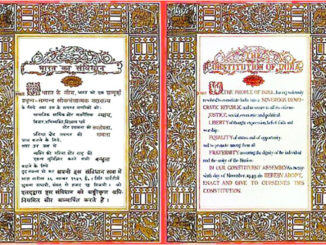
We the people of India, having solemnly resolved to constitute India into a Sovereign Socialist Secular Democratic Republic and to secure to all its citizens—Justice, Social, Economic and Political; Liberty of thought, expression, belief, faith and worship, Equality of status and of opportunity and to promote among them all—Fraternity, assuring the dignity of Individual and the Unity of the Nation, in our Constituent Assembly this 26th day of November, 1949 do hereby adopt, enact and give to ourselves this Constitution.
Dr Ambedkar was a strong advocate of the federal structure of the Union and States based on the principles of a strong Centre and independent States. Dr Ambedkar also did great service to the nation by proposing the institution of a unified judicial system and common All India Services with a view to strengthen national unity and integrity.
Protective Discrimination/Reservation
The real contribution of Ambedkar is reflected in the protective discrimination scheme or the reservation policy of the government envisaged under some provisions of Part III and many of Part IV dealing with the constitutional mandate to ameliorate the condition of the Scheduled Castes and Scheduled Tribes and the other backward classes. Provisions like Article 17 prohibiting untouchability, Article 30 dealing with the protection of minorities are some of the notable examples.
Articles 15(4) and16(4) of Part III and Part XI, and Schedule V and VI dealing with the upliftment of the Scheduled Castes and Schedule Tribes speak clearly about the substantial and significant contribution of Ambedkar for the development of untouchables.5 Ambedkar made it his life’s mission to uplift the untouchables and other downtrodden masses from the unequal position of inferiority to that of equal position of parity in socio-economic status with high-caste Hindus. For achieving this goal the reservation policy or the scheme of protective discrimination was advocated and implemented by him for ten years at least to ameliorate the conditions of the various depressed and down-trodden sections of Hindu society.
State Socialism
Dr Ambedkar advocated his economic doctrine of “state socialism” in the draft Constitution. He proposed state ownership of agriculture with a collectivised method of cultivation and a modified form of state socialism in the field of industry. But due to strong opposition in the Constitution Assembly, he could not incorporate his scheme of state socialism under the fundamental rights as a part of the Constitution.
In 1948, Dr Ambedkar presented the draft Constitution before the people of India; it was adopted on November 26, 1949 by the Constituent Assembly in the name of the people of India and came into force on January 26, 1950 marking the beginning of a new era in the history of India. Speaking after the completion of his work, Ambedkar said: “I feel the Constitution is workable; it is flexible and it is strong enough to hold the country together both in peace time and in war time.”6 It has been in effect since January 26, 1950, which is celebrated as the Republic Day in India.
The first President of India, Dr Rajendra Prasad, praised the services rendered by Dr Ambedkar in the making of the Constitution and said:
I have carefully watched the day-to-day activities from the presidential seat. Therefore, I appreciate more than others with how much dedication and vitality this task has been carried out by the Drafting Committee and by its chairman Dr Bhim Rao Ambedkar in particular. We never did a better thing than having Dr Ambedkar on the Drafting Committee and selecting him as its chairman.
The Columbia University at its Special convocation on June 5, 1952 conferred the LL.D. degree (Honoris Causa) on Dr Ambedkar in recognition of his drafting the Constitution of India. The citation read:
The degree is being conferred in recognition of the work done by him in connection with the drafting of India’s Constitution.
The University hailed him as “one of India’s leading citizens, a great social reformer and valiant upholder of human rights”.
January 26 marks the date on which the Constitution of India came into effect in 1950 and is celebrated as Republic Day. On this date, India became a sovereign nation free from the British Monarchy. On the 72nd anniversary of Republic Day, we look at some key facts about the Indian Constitution.
HISTORY
The Constitution of India became the supreme law of this nation, replacing the Government of India Act of 1935, adapted from the Parliament of the United Kingdom. After India’s independence from British rule in 1947, The Constituent Assembly of India got elected to create the Constitution of India. It was passed and adopted on November 26, 1949, and came into force on January 26, the following year.
The Drafting Committee was headed by its chairman, Dr. BR Ambedkar, the jurist, economist and social reformer who worked to uplift the Dalits of India. K.M. Munshi, Alladi Krishnaswamy Iyer, Muhammed Saadullah, N Madhava Rao and Gopala Swami Ayyangar were the other six members of the committee. Dr. Rajendra Prasad, the first President of India, was the president of the Drafting Committee.
FEATURES
The Indian Constitution is the longest one in the world and is the second-largest active Constitution. It has 470 articles in 25 parts and 12 schedules with five appendices. It had 395 articles in 22 parts and 8 schedules, originally. Additions took place through amendments or changes to the Constitution.
SEPARATION OF POWERS
The Constitution of India lays down the distinctions in the political power structure in the country between the Centre and the states. It provides for the checks and balances between the organs of the government, namely, the Judiciary, the Executive and the Legislature, to prevent the concentration of power in one particular branch.
DEMOCRACY
The preamble to the Constitution of India declares India to be a ‘Sovereign Socialist Secular Democratic republic,’ having a parliamentary governance system. Six fundamental rights, namely, the right to equality, liberty, right against exploitation, freedom of religion, cultural and educational rights, and right to constitutional remedies, are recognised by the Indian Constitution.
Background
The major portion of the Indian subcontinent was under British rule from 1857 to 1947. When the Constitution of India came into force on 26 January 1950, it repealed the Indian Independence Act. India ceased to be a dominion of the British Crown and became a sovereign democratic republic. The date of 26 January was chosen to commemorate the Purna Swaraj declaration of independence of 1930.
Articles 5, 6, 7, 8, 9, 60, 324, 366, 367, 379, 380, 388, 391, 392, 393 and 394 of the Constitution came into force on 26 Nov 1949 and the remaining articles on 26 Jan 1950.
Previous legislation used as sources
It is drawn from many sources. Keeping in mind the needs and conditions of India its framers borrowed different features freely from previous legislation viz. Government of India Act 1858, Indian Councils Act 1861, Indian Councils Act 1892, Indian Councils Act 1909, Government of India Act 1919, Government of India Act 1935 and the Indian Independence Act 1947. The last legislation which led to the creation of the two independent nations of India and Pakistan provided for the division of the erstwhile Constituent Assembly into two, with each new assembly having sovereign powers transferred to it, to enable each to draft and enact a new constitution, for the separate states.
Constituent assembly
It was drafted by the Constituent Assembly, which was elected by elected members of the provincial assemblies. The 389 member Constituent Assembly took almost three years (two years, eleven months and eighteen days to be precise) to complete its historic task of drafting the Constitution for independent India, during which, it held eleven sessions over 165 days. Of these, 114 days were spent on the consideration of the draft Constitution. On 29 August 1947, the Constituent Assembly set up a Drafting Committee under the Chairmanship of Dr. B.R. Ambedkar to prepare a draft Constitution for India. While deliberating upon the draft Constitution, the assembly moved, discussed and disposed of as many as 2,473 amendments out of a total of 7,635 tabled. Dr B.R. Ambedkar, Sanjay Phakey, Jawaharlal Nehru, C. Rajagopalachari, Rajendra Prasad, Sardar Vallabhbhai Patel, Kanaiyalal Munshi, Ganesh Vasudev Mavalankar, Sandipkumar Patel, Maulana Abul Kalam Azad, Shyama Prasad Mukherjee, Nalini Ranjan Ghosh, and Balwantrai Mehta were some important figures in the assembly. There were more than 30 members of the scheduled classes. Frank Anthony represented the Anglo-Indian community, and the Parsis were represented by H. P. Modi. The Chairman of the Minorities Committee was Harendra Coomar Mookerjee, a distinguished Christian who represented all Christians other than Anglo-Indians. Ari Bahadur Gurung represented the Gorkha Community. Prominent jurists like Alladi Krishnaswamy Iyer, Benegal Narsing Rau and K. M. Munshi, Ganesh Mavlankar were also members of the Assembly. Sarojini Naidu, Hansa Mehta, Durgabai Deshmukh, Rajkumari Amrit Kaur and Vijayalakshmi Pandit were important women members
The first temporary 2-day president of the Constituent Assembly was Dr Sachchidananda Sinha. Later, Rajendra Prasad was elected president of the Constituent Assembly.The members of the Constituent Assembly met for the first time on 9 December 1946.
Drafting
On the 14 August 1947 meeting of the Assembly, a proposal for forming various committees was presented. Such committees included a Committee on Fundamental Rights, the Union Powers Committee and Union Constitution Committee. On 29 August 1947, the Drafting Committee was appointed, with Dr B. R. Ambedkar as the Chairman along with six other members assisted by a constitutional advisor. These members were Pandit Govind Ballabh Pant, Kanaiyalal Maneklal Munshi (K M Munshi, Ex- Home Minister, Bombay), Alladi Krishnaswamy Iyer (Ex- Advocate General, Madras State), N Gopalaswami Ayengar (Ex-Prime Minister, J&K and later member of Nehru Cabinet), B L Mitter (Ex-Advocate General, India), Md. Saadullah (Ex- Chief Minister of Assam, Muslim League member) and D P Khaitan (Scion of Khaitan Business family and a renowned lawyer). The constitutional advisor was Sir Benegal Narsing Rau (who became First Indian Judge in International Court of Justice, 1950-54). Later B L Mitter resigned and was replaced by Madhav Rao (Legal Advisor of Maharaja of Vadodara). On D P Khaitan’s death, T T Krishnamachari was included in the drafting committee. A draft Constitution was prepared by the committee and submitted to the Assembly on 4 November 1947, which was debated and over 2000 amendments were moved over a period of two years. Finally on 26 November 1949, the process was completed and the Constituent Assembly adopted the Constitution. 284 members signed the document and the process of constitution making was complete. This day is celebrated as National Law Day or Constitution Day.
The assembly met in sessions open to the public, for 166 days, spread over a period of 2 years, 11 months and 18 days before adopting the Constitution, the 308 members of the assembly signed two copies of the document (one each in Hindi and English) on 24 January 1950. The original Constitution of India is hand-written with beautiful calligraphy, each page beautified and decorated by artists from Shantiniketan including Beohar Rammanohar Sinha and Nandalal Bose. The illustrations on the cover and pages represent styles from the different civilisations of the subcontinent, ranging from the prehistoric Mohenjodaro civilisation, in the Indus Valley, to the present. The calligraphy in the book was done by Prem Behari Narain Raizda. It was published in Dehra Dun, and photolithographed at the offices of Survey of India. The entire exercise to produce the original took nearly five years. Two days later, on 26 January 1950, the Constitution of India became the law of all the States and territories of India. Rs.1,00,00,000 was official estimate of expenditure on constituent assembly. It has undergone many amendments since its enactment. The original 1950 Constitution of India is preserved in helium cases in the Parliament house, New Delhi. There are two original versions of this – one in Hindi and the other in English.
Preamble to the Constitution of India
India on Sunday, Jan 23, kicked off its Republic Day celebrations with ‘Parakram Diwas,’ a day dedicated to iconic freedom fighter Netaji Subhash Chandra Bose. January 23 is also Netaji’s birth anniversary.
January 26th is significant for the country’s political history as it is the day when the country formally adopted its constitution in 1950. It replaced the Government of India Act (1935) as the governing document of India and thus, turning the nation into a newly formed republic.
What is Preamble to the Constitution of India?
The Preamble to the Constitution of India is an introductory statement that presents the key principles of the Constitution. It was adopted on 26 November 1949 by the Constituent Assembly and came into effect on 26 January 1950, celebrated as the Republic day in India.
Full text of Preamble to the Constitution
WE, THE PEOPLE OF INDIA, having solemnly resolved to constitute India into a SOVEREIGN SOCIALIST SECULAR DEMOCRATIC
REPUBLIC and to secure to all its citizens:
JUSTICE, social, economic and political;
LIBERTY of thought, expression, belief, faith and worship;
EQUALITY of status and of opportunity; and to promote among them all
FRATERNITY assuring the dignity of the individual and the unity and integrity of the Nation;
IN OUR CONSTITUENT ASSEMBLY this twenty-sixth day of November, 1949, do HEREBY ADOPT, ENACT AND GIVE TO OURSELVES THIS CONSTITUTION.
Preamble embodies Constitution’s vision
The Preamble manifests the vision of the draftspersons of the Constitution. In adopting it after the draft Constitution was approved, the Constituent Assembly ensured that the Preamble exhibited conformity with the provisions of the Constitution. Yet, the content of the Preamble traces its origins to even before the task of drafting the Constitution began. The foundations of the Preamble were laid down in the Objectives Resolution moved by Jawaharlal Nehru before the Constituent Assembly in December 1946.
The purpose of the resolution was to “proclaim India as an Independent Sovereign Republic and to draw up for her future governance a Constitution”, which would secure “to all the people of India justice, social, economic and political; equality of status, of opportunity, and before the law; freedom of thought, expression, belief, faith worship, vocation, association and action”, among other goals. Seconding the resolution, one member remarked that equality was “its underlying theme”. Another member supporting the resolution firmly believed that the Indian Republic would “be both democratic and socialist”. The resolution was enthusiastically supported by most of the members and was adopted in January 1947.
Later, Nehru pointed out that Objective Resolution could be adopted with certain changes as the Preamble. The Drafting Committee headed by BR Ambedkar felt that the Preamble should be restricted to defining the essential features of the new State and its basic socio-political objectives and that the other matters dealt with in the resolution could be more appropriately provided for in the substantive parts of the Constitution.
The Committee modified the content of the Objectives Resolution to formulate the Preamble, while clarifying that it followed the spirit and, as far as possible, the language of the resolution. The Committee adopted the expression “Sovereign Democratic Republic” instead of “Sovereign Independent Republic”, as it considered independence to be implied in the word “Sovereign”. The Committee introduced a clause on “Fraternity” to emphasize upon the need for fraternal concord and goodwill in India, which was specifically greater than ever, after the Partition.
The draft Preamble, as it is in current form, was tabled before the Constituent Assembly in October 1949. One member sought to include “In the name of God” in the beginning of the Preamble. The Assembly rejected the proposed amendment. Another member argued that inclusion of God would amount to compulsion of faith and violate the fundamental right to freedom of faith. Another member stated that invoking the name of God in the Preamble would resemble “a narrow, sectarian spirit, which is contrary to the spirit of the Constitution.” The Assembly adopted the Preamble as presented by the Drafting Committee.
The Preamble recognizes and proclaims that the Constitution has its root, its authority, and its sovereignty, from the people. “Sovereign Democratic Republic” reflects the establishment of a democratic form of government, where ultimate power is vested with the public and exercised through universal adult franchise. Commenting upon this aspect of the Preamble, Acharya Kriplani observed that “democracy is inconsistent with caste system”, and that we must do away with castes and classes. “Justice, social, economic and political” symbolizes the commitment of the framers to put an end to status quo of inequalities and historical injustices and to replace fundamental wrongs with fundamental rights. As Kriplani remarked, “Liberty of thought, expression, belief, faith and worship” can only be guaranteed on the basis of non-violence and mutual respect for each other. “Equality of status and of opportunity”, in Ambedkar’s words, means absence of glaring inequalities and discrimination in the society. The expression “to promote among them all” is linked with “Fraternity”. Ambedkar defined “Fraternity” as “a sense of common brotherhood of all Indians” and “an attitude of respect and reverence towards fellow men”, which give “unity and solidarity to social life”. The principles of liberty, equality and fraternity would ensure dignity of each individual, thus leading to unity of the nation. Ambedkar considered liberty, equality and fraternity to be forming “a union of trinity in the sense that to divorce one from the other is to defeat the very purpose of democracy”.
The addition of the words “Socialist” and “Secular” into the Preamble by the 42nd constitutional amendment during the Emergency in 1976 did not alter its nature or identity. It merely provided a label to what was already in existence. There are three key points in support of this contention. First, in support of Nehru’s Objectives Resolution, one member explained that the content of economic democracy and rejection of the existing social structure reflected through the phrases “justice, social, economic and political” and “equality of opportunity” represent the socialist aspect of the Resolution, without providing it with an open label. These phrases were later adopted into the Preamble. Second, by rejecting inclusion of any phrase on God in the Preamble, the Assembly adopted a secular document instead of a sectarian one. Third, the Preamble embodies the philosophy of the Constitution, which is reflected through its provisions and the basic structure. As Justice DY Chandrachud held in one of his judgments, the addition of the word “secular” solidified the basic structure of the Constitution, which enshrines secularism in the fundamental rights chapter.
The Court has often engaged with interpretation of the Constitution by relying upon the vision and values contained in the Preamble. While the flourishing of a constitutional order demands an active institutional role of courts, it also requires a responsive participation of the citizenry. The response of the citizens to their elected representatives has a powerful role in giving a meaning to the words of the Constitution. The content of the Preamble not only embodies events which predate the adoption of the Constitution, but also incorporates the citizens’ experiences in the unfolding of the Constitution over the past seventy years. The hopes and aspirations of the people enshrined in the Preamble have sustained due to years of practice, effort, and experience to make society work with those values. The recent events of claiming the Preamble and the Constitution by the citizens as their very own resemble a path towards the professed collective destiny of India.
In India, five days are declared as Martyrs Day in honour of those who laid down their lives for the nation. Of these, the first falls on January 30, the day when Mahatma Gandhi was assassinated by Nathuram Godse in 1948.
Mahatma Gandhi led the struggle for Independence that culminated in India getting freedom from British rule on August 15, 1947. Bapu, as he was lovingly called, played one of the most prominent roles in India’s freedom struggle through non-violence and peaceful methods.
Mahatma Gandhi was shot in Birla House compound in New Delhi at the age of 78. He was killed by Nathuram Godse, who had opposed Gandhi’s views on the Partition of India.
Mahatma Gandhi was born on 2 October, 1869 at Porbandar, Gujarat. Every year on 2 October, Gandhi Jayanti is observed. This year the day marks the 152nd birth anniversary.
Mohandas Karamchand Gandhi or Mahatma Gandhi was a renowned freedom activist and an authoritative or powerful political leader who had played an important role in India’s struggle for Independence against the British rule of India. He was also considered as the father of the country. No doubt, he had also improved the lives of India’s poor people. His birthday is celebrated every year as Gandhi Jayanti. His ideology of truth and non-violence influenced many and was also adopted by Martin Luther and Nelson Mandela for their struggle movement.
In South Africa for about 20 years, Mahatma Gandhi protested against injustices and racial discrimination using the non-violent method of protests. His simplistic lifestyle won him, admirers, both in India and the outside world. He was popularly known as Bapu (Father).
Early Life and Family Background
He was born on 2 October, 1869 in Porbandar, Gujarat. His father’s name was Karamchand Gandhi and his mother’s name was Putlibai. At the age of 13, Mahatma Gandhi was married to Kasturba which is an arranged marriage. They had four sons namely Harilal, Manilal, Ramdas and Devdas. She supported all the endeavors of her husband until her death in 1944.
His father was Dewan or Chief Minister of Porbandar, the capital of a small principality in Western British India (Now Gujarat State). Mahatma Gandhi was the son of his father’s fourth wife Putlibai, who belonged to an affluent Vaishnava family. Let us tell you that in his earlier days, he was deeply influenced by the stories of Shravana and Harishchandra as they reflected the importance of truth.
Mahatma Gandhi: Education
When Gandhi was 9 years old he went to a local school at Rajkot and studied the basics of arithmetic, history, geography, and languages. At the age of 11, he went to a high school in Rajkot. Because of his wedding, at least about one year, his studies were disturbed and later he joined and completed his schooling. He joined Samaldas college in Bhavnagar in 1888 at Gujarat. Later, one of his family friend Mavji Dave Joshi to pursue further studies i.e. law in London. Gandhiji was not satisfied with the studies at Samaldas College and so he became excited by the London proposal and managed to convince his mother and wife that he will not touch non-veg, wine, or women.
Off to London
In the year 1888, Mahatma Gandhi left for London to study law. Thereafter 10 days of arrival, he joined the Inner Temple, one of the four London Law colleges, and studied and practiced law. In London, he also joined a Vegetarian Society and introduced to Bhagavad Gita by some of his vegetarian friends. Later, Bhagavad Gita set an impression and influenced his life.
In South Africa
In May, 1893 he went to South Africa to work as a lawyer. There he had the first-hand experience of racial discrimination when he was thrown out of the first-class apartment of the train despite holding the first-class ticket because it was reserved for white people only and no Indian or black was allowed to travel in the first class. This incident had a serious effect on him and he decided to protest against racial discrimination. He further observed that this type of incident was quite common against his fellow Indians who were derogatorily referred to as coolies.
On 22 May, 1894 Gandhi established the Natal Indian Congress (NIC) and worked hard to improve the rights of Indians in South Africa. In a short period, Gandhi became a leader of the Indian community in South Africa. Tirukkural ancient Indian literature, originally written in Tamil and later translated into various languages. Gandhiji was also influenced by this ancient book. He was influenced by the idea of Satyagraha that is a devotion of truth and in 1906 implemented non-violent protest. He returned to India in 1915, after spending 21 years of his life in South Africa, and no doubt, there he fought for civil rights and at this time he was transformed into a new person.
Role in Indian Independence Movement
In 1915, Gandhiji returned to India permanently and joined the Indian National Congress with Gopal Krishna Gokhale as his mentor. Gandhi’s first major achievement was in 1918 when he led the Champaran and Kheda agitations of Bihar and Gujarat. He also led Non-Cooperation Movement, Civil Disobedience Movement, Swaraj, and Quit-India movement against the British government.
Satyagraha
Gandhi identified his overall method of non-violent action as Satyagraha. Gandhiji’s Satyagraha influenced eminent personalities such as Nelson Mandela and Martin Luther in their struggle for freedom, equality, and social justice. Mahatma Gandhi’s Satyagraha was based on true principles and non-violence.
NEW YORK (TIP): A 27-year-old Indian-origin “super rookie” NYPD officer is being hailed as a hero after he shot a convicted felon who killed his colleague and seriously injured another while investigating a domestic-violence call in the Harlem neighborhood of New York City. Sumit Sulan is still struggling to deal with Friday’s deadly ambush and “his brain is stuck on the situation”, his mother told the New York Post newspaper.
According to the police, 47-year-old crazed career criminal Lawshawn McNeil on Friday, January 21, ambushed the three policemen — Sulan, Jason Rivera, 22 and Wilbert Mora, 27, who visited the Harlem address to investigate a domestic-violence call. McNeil opened fire and killed Rivera while critically injuring Mora.
Officer Sulan fired back at McNeil and wounded him during the deadly mayhem. Accused McNeil, a convicted felon, is currently hospitalized in a critical condition. Speaking to the Post, the Indian-origin NYPD officer’s mother Dalvir Sulan, 60, said that her son is “shaken” and cannot get what happened out of his head. “I’m proud. Everyone says he did good,” she said. “I feel bad for the other (officer). He died. We really feel bad. We’re sorry. We’re hurt. The other guy is critical and we’re hurt,” she said from her Queens home. A law-enforcement source described Sulan as a “super rookie,” noting that he has been on the job since April and at Harlem’s 32nd Precinct for only two months.
“He did a great job,” Sulan’s mother said of her son, who emigrated from India about 15 years ago. “We’re proud of him, but we’re sorry for both of (the other officers),” she added. The media, citing a source, said that the call to the Harlem apartment appeared to be a routine run until things went sideways once the officers arrived. The expectation, he explained, was the situation could be resolved without an arrest after a chat with accused McNeil.
The accused’s mother never told the arriving officers that her son was armed, the report said, citing the source. Flags across the five boroughs of New York City flew at half-staff on Saturday to honor Rivera, a son of Dominican immigrants who once wrote that he joined the NYPD to make a difference in “this chaotic city.” Rivera, who was killed after just 14 months on the job, is survived by his wife.
WASHINGTON, D.C. (TIP): A family of four Indians from Gujarat — including a baby and a teenager — froze to death in -40F blizzard after walking for 11 hours through waist-high snow to illegally cross border into the US from Canada. Canadian police found the bodies Wednesday, January 19, 33 feet from the border near Emerson, Manitoba, after the arrest of a Florida man Steve Shand, 47, on charges of human smuggling in the US, according to media reports. Searching officers found three bodies – a man, a woman and a baby – together and a teen boy a short distance away. It is believed they all died from exposure to the cold.
Shand was arrested after a US Border Patrol in North Dakota stopped a 15-passenger van just south of the Canadian border and found him driving with two allegedly undocumented Indian nationals, the reports said.
Inside the vehicle, officers found cases of plastic cups, bottled water, bottled juice and snacks with one of the adults carrying items for a baby, but there was no infant with the group, reports said citing US court documents.
Later, the authorities came across another group of five Indian nationals who said they had walked across the border for an estimated 11 hours. A search was initiated immediately and Shand was charged with smuggling seven Indian nationals into the US. One of those people allegedly spent a significant amount of money to come to Canada with a fraudulent student visa, the reports said. Meanwhile, in New Delhi, Indian External Affairs Minister S Jaishankar said on Friday, January 21, he was shocked to hear about the incident and had asked the Indian ambassadors in the US and Canada to urgently respond to the situation.
“Shocked by the report that 4 Indian nationals, including an infant, have lost their lives at the Canada-US border,” he tweeted. “Have asked our Ambassadors in the US and Canada to urgently respond to the situation.”
In Ottawa, Canadian Prime Minister Justin Trudeau calling it a “mind blowing tragedy,” said on Friday Canada is doing all it can to stop people-smuggling across the US border.
“It was an absolutely mind-blowing story. It’s so tragic to see a family die like that, victims of human traffickers … and of people who took advantage of their desire to build a better life,” Trudeau told a news conference, according to Winnipeg Sun.
“This is why we are doing all we can to discourage people from crossing the border in an irregular or illicit manner. We know there are great risks in doing so,” he continued.
Canada, Trudeau said, was working very closely with the United States to stop smuggling and help people “taking unacceptable risks”. Meanwhile, a criminal complaint filed in the US District Court for the District of Minnesota charged Shand with human smuggling.
Shand, a “suspected smuggler of undocumented foreign nationals, was arrested near the US/Canadian border for transporting two Indian nationals, who were illegally present in the US,” the complaint said. The two Indian nationals have been identified as ‘SP’ and ‘YP’ in the complaint.
The complaint said that five Indian nationals illegally present in the United States were also identified and arrested around the time of Shand’s arrest.
All the foreign nationals spoke Gujarati, a language spoken in Gujarat in western India. Most had limited or no English language speaking ability, the complaint said. There are significant Gujarati populations outside of India, including in Canada and the US, it noted.
The family of four that was found dead was apparently separated from others while walking through blizzards and snow, according to one of the persons arrested on the US side of the border.
“It is an absolute and heartbreaking tragedy,” Royal Canadian Mounted Police (RCMP) Assistant Commissioner Jane MacLatchy said in Winnipeg on Thursday. “They were wearing winter clothing, she said, but it would not have been enough to save them with the freezing conditions” she said.
“The group was on its own in the middle of a blizzard and faced not only the cold weather, but endless fields, large snowdrifts and complete darkness,” MacLatchy added.
“At this early stage of the investigation, it appears that they all died due to exposure to the cold weather,” she said.
The RCMP said it was working with the US authorities on further investigation.
GREAT EXUMA, THE BAHAMAS (TIP): Indian-American golfer Akshay Bhatia has become the third-youngest player to win a Korn Ferry Tour event since the Tour’s establishment in 1990 when he secured a two-stroke victory at The Bahamas Great Exuma Classic at Sandals Emerald Bay, IANS reports. Bhatia, who shot a stunning bogey-free 7-under 65 in the final round on Wednesday, won the title 12 days shy of his 20th birthday, joining Australia’s former World No. 1 Jason Day and Korean star Sungjae Im as the only teenagers to win titles on the development circuit which is the pathway to the PGA TOUR.
Jason Day won the 2007 Legend Financial Group Classic at 19 years, 7 months, and 26 days old, and Im was 19 years, 9 months, and 17 days old when he won his Korn Ferry Tour debut at the same event. Bhatia finished the event with an aggregate score of 14-under 274 (69-72-68-65), ending ahead of Paul Haley II of the USA (74-67-67-68-276), who finished two strokes behind. After making birdie on 17, Bhatia closed out his win in style. With 156 yards to the pin on the par 5 18th hole, he wedged his approach to inside of a foot to secure the first victory of his career and cement his status as one of ‘he game’s young rising stars.
“I reflected back on (2021) U.S. Open (qualifying),” Bhatia said after his win. “I hit a pitching wedge to like three feet, four feet, so I was just trying to do the same thing. For it to hit the flag and have a tap-in was awesome. Golf is crazy.”
Bhatia, a native of California who plays from Wake Forest, North Carolina, produced one of three bogey-free scorecards in the final round, and one of three scores of 65 or better posted all week.
The riveting back nine, highlighted by birdies on three of the closing four holes (Nos. 15, 17, and 18), took Bhatia to 14-under par for the tournament. Bhatia began the day three strokes off the lead but ended it two strokes ahead of runner-up finisher Paul Haley II, who played alongside him all afternoon and carded a bogey-free 4-under 68.
Bhatia’s remarkable up-and-down birdie from a sidehill lie behind a greenside bunker at the par-5 14th may have been the key moment of his round, but his field-leading 22nd birdie of the week on the 72nd hole dazzled golf fans around the world. “I don’t know how I managed my emotions, but I did. I felt really calm. (No.) 15 tee, we were waiting a while, so I just sat and looked at the ocean,” Bhatia said. “This place is really calm, peaceful… the aura about this place leads into why I’m so calm.
“To play against these guys, guys who have been out here forever, past PGA TOUR winners and players” it’s just awesome,” Bhatia was quoted as saying the PGA Tour. “For me to be able to mentally and physically compete and win at one of the highest levels in golf, it’s something I’ll cherish for a while.”
Shortly after the 2019 Walker Cup, where Bhatia became the first golfer still in high school to represent the United States, he made an unorthodox choice and passed on collegiate golf opportunities, electing instead to turn professional at 17 years. Having made his first PGA TOUR start as an amateur at the 2019 Valspar Championship in March and made his Korn Ferry Tour debut a month later at the Robert Trent Jones Golf Trail Championship, Bhatia made six TOUR starts in 2019-20, and 11 last season.
Bhatia accrued enough non-member Fed Ex Cup points last season on the PGA TOUR for a spot in the 2021 Korn Ferry Tour Finals. Although Bhatia missed two cuts and finished T41 in the season-ending Korn Ferry Tour Championship, playing in the Finals gave him an exemption for the Final Stage of the 2021 Korn Ferry Tour Qualifying Tournament. A T63 finish there left him without guaranteed starts for 2022.
WASHINGTON, D.C. (TIP): Maju Varghese, the Indian American director of the White House Military Office, has quit his post, citing personal reasons. In a series of tweets on Saturday, January 22, Varghese said leading the White House Military Office (WHMO) was the honor of a lifetime. “Overcome with lots of emotion today as a 2.5-year journey comes to a close. Grateful to have served @POTUS and for the friendships that were forged in the tough days of the early primaries when we were counted out but bounced back to win it all. “Grateful to @BidenInaugural for giving the country a day to celebrate despite all the challenges we faced. Grateful to the men and women of the White House Military Office for taking me in and teaching me about service and sacrifice,” he said.
An Obama administration alum, Varghese joined the Biden White House after leading the president’s inauguration efforts and serving as a senior adviser and chief operating officer for Biden’s 2020 presidential campaign, the media reported on Friday. Varghese “is departing his post Friday after several years working in President Joe Biden’s orbit,” it said. The White House declined to say whether a replacement has been selected.
“One thing I learned during two tours here is it’s a demanding place to work and it’s because the work is really important, and we throw all of ourselves into this…Right now, it’s best for me and my family that I kind of just try to strike a little bit more of a balance,” Varghese, who is in his early forties, was quoted as saying to media.
He, however, did not detail his next endeavors.
As head of the military office, Varghese used to coordinate with the military branches responsible for supporting presidential operations at the White House and on the road domestically and abroad, including Air Force One missions, secure communications via the White House Communications Agency, food services, the medical unit and Camp David, the presidential retreat frequented often by the Biden family, the report said.
A lawyer by training, Varghese was born in the US to parents who immigrated from Thiruvalla, Kerala. He has a bachelor’s degree in political science and economics from the University of Massachusetts, Amherts.
ATLANTA, GA (TIP): Republican businessman Narender Reddy announced his candidacy Tuesday, January 18, for the newly drawn House District 50 in North Fulton. “I’m running for the State House because we need a leader who will stand up and fight those who would raise taxes, defund police and politicize our schools,” said Reddy.
“I’m a lifelong businessman and entrepreneur who has real experience in banking, finance, and in real estate. I’ll rely on that experience to effectively represent taxpayers,” said Reddy. “Our community needs a Representative at the Capitol who will effectively lead to put North Fulton first, and who won’t be afraid to ask hard questions.”
Reddy earned his M.B.A. from the University of Evansville, Indiana. He is a 35-year resident of Georgia, having been appointed by both Governor Sonny Perdue and Governor Nathan Deal to serve as a Board member of the Georgia Regional Transportation Authority (GRTA). As a GRTA board member, Reddy actively works to help Georgia communities with transportation. He is the owner and President of Sterling Realty Services, Inc., a commercial real estate firm, and was a Founding Director of Quantum National Bank where he used his experience in real estate to ensure successful loan screening of applicants. Reddy is the father of two grown children, both of whom graduated from Woodward Academy in North Fulton. Both of his children are medical doctors today.
By Gurmit PalahiEnglish translation by Amarjit Singh Anand
“The reality is that Punjab State has always stood up against the discriminatory misdoings of the Centre, whether it was during the black-era of the Emergency imposed by PM Indira Gandhi, or the current impasse created by PM Narendra Modi who wanted to crush the farmers by occupying their lands, in order to favor the billionaire-magnates. In the process, the present Delhi-elite also attempted to throttle the constitutional-rights of the States to enact and implement laws on certain subjects. Punjab has, always, proven to be a leader in showing the path to the Nation. Hence, Punjab has been constantly irking the Centre, who have been ignoring the hard-factsheet that despite suffering in every way, Punjabi community have made the maximum number of supreme sacrifices of life during all the wars thrust upon India, and Punjabis continue to man the borders, thwarting the evil-designs of other nations.”
Golden Temple, Amritsar
The State of Punjab has experienced the worst tortures, which have been inflicted on the body and soul, on the mind and spirit, consequently leaving it torn asunder and in a state of total shambles. It bore the maximum brunt of 1947 partition of India and was bruised by the genocidal pogrom of 1984, Punjab has borne ‘heat-waves and freezing-shivers’ of policies of the ‘powers-that-be’. Punjab has suffered the menace of drug-addiction, unemployment and massive migration. Since several decades, the appearance of Punjab has become devoid of color of enthusiasm and liveliness.
The 5 Rivers have vanished
Punjab, the land of 5 rivers, which once lived jubilantly in consonance with the Blessings of Guru Sahib, is currently ‘breathing with difficulty’, as the 5 rivers have ‘disappeared’, but a 6th river of drugs is flooding the State. The exuberant youth, both boys and girls are badly trapped in its grip, and they have forgotten their art, culture and heritage of ‘Gidda – Bhangra’. Many youngsters have taken wings and migrated abroad. The villages are deserted. Whatever remained has been swallowed by selfish politicians.
What has Punjab gained ?
With the rest of India, Punjab has lived through independent era, for 74 years and as part of the Republic of India, for 71 years but what has it gained ? There is no big industry worth its name, no infrastructure to mention, absence of medical amenities akin to neighboring States, and no educational facilities. Environmental pollution has touched a record low as the rivers are contaminated and air has been poisoned. Haryana State, carved out of Punjab, boasts of prosperous massive industry and neighboring Himachal Pradesh has benefitted from an industrial package from the Center, while Punjab has been reeling under a step motherly discrimination from New Delhi. For instance, Haryana has 12 government medical institutions, Himachal has 7 whereas Punjab is forced to remain content with only 4 medical colleges.
Fearing Punjabis !
Prime Minister Narendra Modi on recent Punjab visit said to a Punjab official that he was lucky to be alive, after his cavalcade was stranded because of protests by the farmers
On the 5th of January 2022, the Prime Minister came to Ferozepur, to gift 2 medical colleges to Punjab but realizing the flop attendance at the rally, he returned to Delhi without reaching the rally point and instead of gifting something, went on to label Punjabis as sort of criminals, from whom “he was lucky to save his life, in a providential escape, narrowly missing death at the hands of natives of Punjab, who were out to assassinate him”. What a derogatory and discriminatory attitude towards Punjab whose valiant sons defend the frontiers and whose brave farmers have, since time immemorial, been feeding the nation and saving Indians, especially after the advent of the Green Revolution. However, Punjab is, today, going downhill towards a barren desert. A fresh new survey aptly illustrates the plight of Punjab today. Environmental experts have published a report, as per which Punjab has, merely, adequate water resources for drinking and irrigation, so as to sustain itself, only for 9 or 10 years. The ominous danger lurks round the corner, as Punjab government remains conspicuous by its silence and the government of India is silent as a conspirator. So, ultimately, all that Punjab has gained is Memories of Warrior-Martyrs who offered the Supreme Sacrifice for India; and memories of the Farmer-Martyrs who set a world-record, by forcing the duo of the affluent and the mighty ruling elite, to revoke the 3 black-laws which were meant to completely annihilate Punjab and Punjabis.
Rural Punjab in dire straits
Let us, now, analyze the plight of small-farmers and laborers in the villages. Here’s an example of what Punjab gives to the nation and what it receives, in reciprocation, from the rulers.
There’s a really small village named Bambeli in Phagwara District. This is smaller than the normally small. Working class is migrating to other States and those born to their second generation shall never return to Punjab. The population here is 1500, approximately and there are 200 ration cards, thereby implying 200 household-units with 1000 voters. There is land of about 200 acreage, cultivable area. Let’s examine what the village offers to the country and what does the country give back to the village. Although the statistics are approximate, yet they are nearer to the reality. One acre yields a harvest of Rs,50,000. On an average, lets presume the amount to be Rs,100,000 for 2 or 3 yields. The Mandi-Board levies a tax of Rs.5,000 on every Rs,100,000, per annum. So, 200 acres gifts the government an amount of Rupees Ten lakh, every year.
The village has some 15 government employees who pay an annual tax of 2 lakhs. At an average, each family has an expenditure of 1 lakh annually, on household requirements and uses another 1 lakh on other sundry expenses. Some 18% GST implying Rs.36000 per family, goes to the government. So, 200 families give a total tax of Rs.72 lakh to the government which receives a grand total of annual taxes of 84 lakhs (10+2+72). Additionally, the villagers spend a lot, at regular intervals, on the maintenance of buildings especially during community events and special festivities. Some 16 lakhs is this amount spent. So, 84+16 lakhs= One crore rupees per annum goes to the government from the smallest village of 1500 people. In 5 years, it comes to 5 crore rupees. (Statistics Courtesy : Survey Vijay, Bambeli).
What is received from the government ?
In return, all that the village is reimbursed is the expenditure made on white washing of Dharamshaala and other sundry maintenance works. For 20 years, this village has been undergoing a scarcity of schoolteachers. For over 15 years there has been no doctor and compounder in the veterinary hospital. In the government hospital, there is no doctor for 10 years and no dispenser for 5 years. After paying all taxes and bills, they are mistreated as beggars and given only 2 kgs of grains and pulses as a gift and huge favor. This is an eyewash whereby the leaders and politicians snatch money from the squeezed people, by way of burdening them with taxes and inflation, only to tactfully return a fraction of it.The public is deprived of their rights to employment opportunities, free education and health facilities, adequate supply of water and electricity; seeds, manure, fertilizers, pesticides, oil, diesel etc.; clean environment and good roadway system. Everything is totally missing.
Polluted Political Scenario
This story of Bambeli village is the narrative applicable to the entire State of Punjab. The slum areas in cities are in the same condition as the huge garbage dumped in villages. Dilapidated government buildings, bad roads, shortage or total absence of requisite departmental offices, schoolteachers, workers, corrupt irresponsible administration structure along with the arrogant attitude of politicians and their supporters has made the overall atmosphere extremely suffocating. This time, the upcoming Punjab elections, after the Republic Day, have been turned into a quagmire, where the central clique and ruling elite are encouraging ‘horse-trading’ at an unprecedented scale, hitherto never observed in Punjab politics. The people are wondering how politicians are up for sale and have stooped so low as to become selfish beyond any imagination and comparison. People are also thinking loud about why they are just considered as mere voters whose loyalties can be purchased with some alcohol and a meager amount. The electoral drama would be witness to four or five-cornered wrestling-bouts, for time in the 71-year-old Republic. It is to be seen, now, whether people would grab money, succumbing due to sheer desperation and frustration or would they refrain from exercising their right to franchise !
Punjabis are no longer happy ‘Living in their own Punjab’.
Actually, in 74 years after independence, the rulers, politicians and cronies have created such miserably devastating conditions, that Punjabis feel devoid of any real joy and bliss living in their Punjab. They are putting their passports and pockets or bags and running away to unknown destinations in far-away lands. Rarely they become successful but often, after several years of struggle, they find themselves as having lost their all, including family, home, house, security, sleep, health, peace of mind and happiness et al.
Punjabi Youth’s flight to foreign lands
During the last session of Lok Sabha, it was stated that 4.7 lakh Punjabis have migrated to foreign shores, in search of employment, from the year 2016 until 26 March 2021. Another report mentions that around 2 lakh young students have been going, every year, to Canada, USA and UK among others, equipped with a course in IELTS. In 2019, this number went up to 1.5 lakh youth flying, only to Canada having spent Rupees 15 to 22 lakh as fee for the first year of education. This means that a staggering amount of 27000 crore rupees changed hands from Punjab to Canada. This is total reversal of the times when NRIs used to make massive remittances to their relatives in Punjab and all of them used to invest in businesses, properties in Punjab and for construction, renovations etc. All this is the consequence of mismanagement and corruption and indifference of the government.
Undivided Punjab had lost massively during 1947 partition when both sides lost millions of people and millions more were displaced from one country to the other. Women were dishonored and children were orphaned. Punjab lost two and a half rivers out of five and life and economy were adversely impacted.
Historian Saugata Bose writes about this in his book ‘The Nation as Mother and Other : Visions of Nationhood’. He says 10 lakh Sikh, Hindu and Muslims perished in the riots of 1947 and One Crore people were displaced crossing borders of the two newly carved countries.
In 1947 people of various religions, castes and classes were inhabitants of Punjab where all lived peacefully and merrily. The 1941 census the population was 3 crore 40 lakh wherein Muslims constituted 53.2%, Hindus and Dalits 29.1%, Sikhs were 14.9% and Christians 1.9%. The partition etched a borderline which made minorities run helter-skelter, displaced them, when women and young girls were raped or abducted, thereby shaming human-birth and the species of humanity itself. These riots or carnage were not spontaneous but rather they were orchestrated and maneuvered by the politicians of various hues and shades. Muslim League, Akali party, RSS, Hindu Mahasabha, all of these acted in self-interest and used armed hooligans, criminals, retired army-men and local cronies to incite and ignite extreme violence, leading to unfathomable destruction and massive bloodshed. According to Ivan Jenkins, Governor at that time, Hindus, Sikhs, Muslims all fought,and 29 Districts of Punjab suffered. Perhaps this was one of the most shameful tragedies, globally.
Time went by. People started heaving a sigh of relief. In 1966, Punjab was, yet once again, bifurcated on the basis of language and Haryana came into existence. Sectarian-minded rulers segregated Punjab from Chandigarh (then capital of Punjab) and also from many Punjabi-speaking areas.aq Now, the City-beautiful was made the capital of both Punjab and Haryana. Punjab was divested its legal and natural right to the natural-water resources. The issue of sharing of the rivers was referred to the courts, to keep it in a long-term suspended animation.
Dreams shattered
More time went by. People started relishing some relief. The Green Revolution of 1965 gifted Punjabis a great new dream to envision. However, excessive usage of fertilizers and pesticides and the cultivation of rice rendered the water of Punjab and the health of Punjabis unsafe to the extent of hazardous levels. Farmers were plunged into debts. Punjabis fed the nation but were, themselves, destroyed. The devastatingly excruciating results of Green Revolution were cancer, birth of weakened children and weakened procreation-power in mothers. This was evident in reduced physical prowess in the children and a less than earlier happier youthful-age and lessened lifespan.
Punjab suffered an Economic Backwardness
Currently, Punjab is at a very low ebb, economically. It stands at the 16th place and its ranking in GDP is 19th. In 2020 the rate of unemployment slumped from 30.7% to 33.6%. In India, the figures of the unemployed stand at 4.8% whereas it is 7.3% in Punjab which is the highest in our nation. Next comes Haryana at 6.4%, followed by Chandigarh at 6.3% and Himachal at 3.7%. These figures were stated on 27 July 2021. The reasons attributed to this rate of unemployment in Punjab are unprofitable farming-business, lack of diversification in cultivation of crops and scarcity of non-agricultural job-avenues. The education-policies of the government, in the past two decades, are the cause of all these miserable circumstances. The erroneous policies include the lack of vocational training facilities for various skills and the total indifference displayed by politicians in Punjab, towards providing good-quality higher-learning institutions, which should have immensely benefitted Punjabis. Politicians are, quite apparently, totally bereft of the truly real spirit of doing something noble and worthy for the impoverished and downtrodden. And so, Punjab continues going downhill in various spheres. Lack of efficient and honest officers in the administrative cadre and a visible total-rule of several types of mafia ruling the roost in Punjab are some other key-factors which have ruined Punjab and Punjabis. It is being estimated that Punjab would be reeling under a Himalayan debt of 2.82 lakh crore rupees, in the aftermath of the Assembly polling. This is the result of the Power-Politics of the Ruling-Party in Punjab who are busy handing-out some really unnecessary concessions to woo the voters to their camp.
The industrial sector is in the doldrums and is perched on the edge of a precipice. The foundries in Batala are finished. Sports industry in Jalandhar has been usurped people of other States. Steel-rolling factories in Gobindgarh-Mandi are in very poor shape. Hosiery sector in Ludhiana has become a victim of the fear of Corona-pandemic. The by-cycle industry in Ludhiana has been eclipsed. At this time, although there are 194,000 small-scale units and 586 large and medium-sized industries in Punjab, yet all these produce only 25 GDP, according to a report published in 2018-2019. Then, there is the cotton-industry in Abohar, Malout, Phagwara, Amritsar and other areas, which have provided direct and indirect employment opportunities to some two million of the populace. In stark-contrast, there is the reality 22 sugar-mills in the State (15 in the cooperative sector and 7 in private-ownership) of which 6 cooperative mills have been shut down. The remaining mills owe the farmers, really massive amounts running into crores of rupees. Statistics show that these loss-recording units owe to the farmers, an amount of Rupees 16,883 crores, as on 31 January 2021. The dairy-industry in Punjab took upon itself the responsibility of providing, not only for the people of Punjab but also the entire nation. However, the farmers have not been able to derive benefit from this endeavor.
The Woes of Punjabis.
Their heartfelt pain now openly trickles down from their eyes. They cannot view any easily navigational route towards recuperation. Delhi-Darbar has been, since long, conspiring to play very deceptive, manipulative games to harm the State of Punjab. Why doesn’t Delhi allow the Indian State of Punjab to trade with Punjab State in Pakistan ? This measure has the massive potential to increase productivity and prosperity in our Punjab. There is special need to provide additional basic requisite amenities in this border-State. Why isn’t the International Riparian Law implemented, in Letter & Spirit, to solve the water-dispute thereby giving justice to Punjab? Why doesn’t Delhi order and prevail upon the State of Rajasthan to pay billions of Rupees to Punjab, for the unjust consumption of water utilized free by Rajasthan? Why isn’t Delhi facilitating a stimulus-package to the agro-based big-industry, enabling a great fillip to Punjab-economy?
Step-motherly attitude
The reality is that Punjab State has always stood up against the discriminatory misdoings of the Centre, whether it was during the black-era of the Emergency imposed by PM Indira Gandhi, or the current impasse created by PM Narendra Modi who wanted to crush the farmers by occupying their lands, in order to favor the billionaire-magnates. In the process, the present Delhi-elite also attempted to throttle the constitutional-rights of the States to enact and implement laws on certain subjects. Punjab has, always, proven to be a leader in showing the path to the Nation. Hence, Punjab has been constantly irking the Centre, who have been ignoring the hard-factsheet that despite suffering in every way, Punjabi community have made the maximum number of supreme sacrifices of life during all the wars thrust upon India, and Punjabis continue to man the borders, thwarting the evil-designs of other nations.
Punjab sidelined and marginalized
Despite all of this, Punjab continues to be ignored thereby rendering it to become devoid of all colors, flavors, radiance and vibrancy, turning a once-flourishing State into a desert. This is the core-query pervading the minds of Punjabis. Would Punjabis be able to jubilantly sing, once again, the popular couplet “the most beautiful place among all places is Punjab, o’ my friends; like rose is the flower amongst flowers, o’ my friends”.
(The author is a retired Principal andwell-known columnist. He is President of Punjabi Columnists Patrakar Manch. He can be reached at Gurmitpalahi@yahoo.com
(Amarjit Singh Anand is a thinker and a writer. He can be reached at asa1ny@yahoo.com)
Signup to our Newsletter!
Don’t miss out on all the happenings around the world