Year: 2022

  • Republic Day, January 26, 1950: An Epic Journey of India’s  greatest generation

    Republic Day, January 26, 1950: An Epic Journey of India’s greatest generation

    By George Abraham

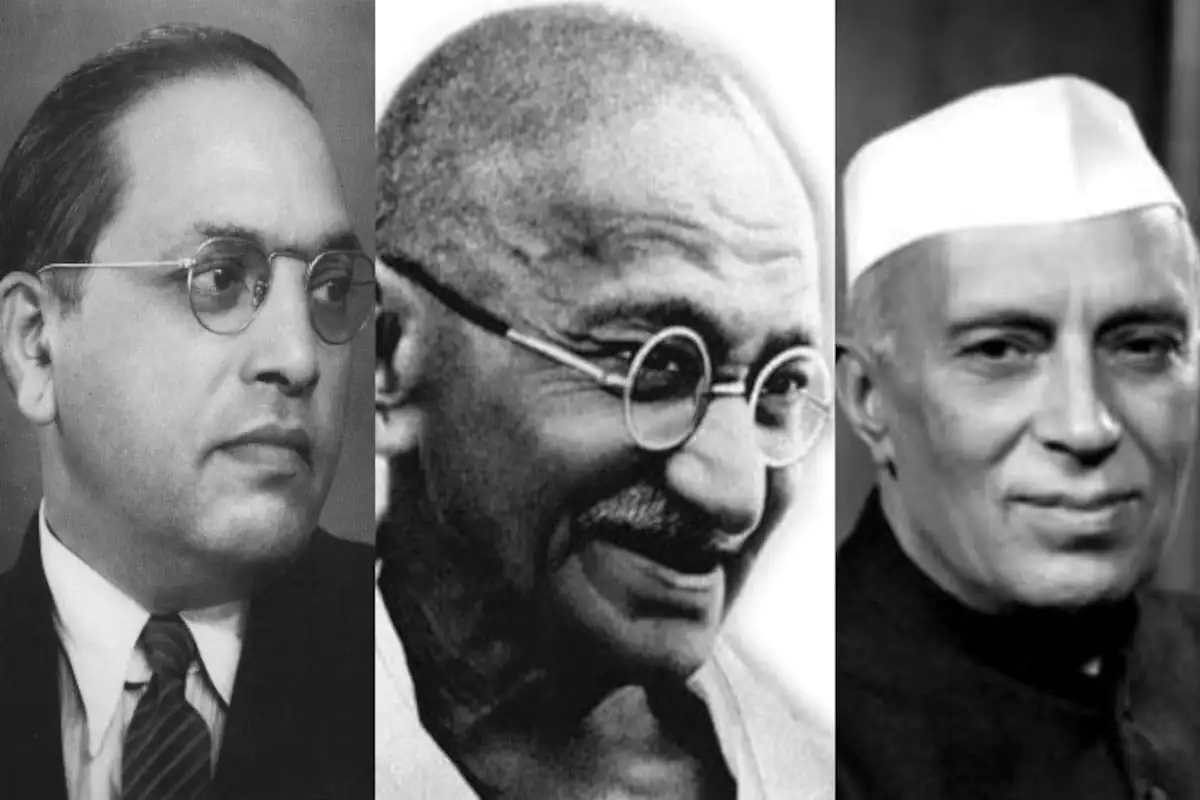
    “The India we witness today is what Ambedkar dreamed,  Nehru built, and Gandhiji paid the ultimate sacrifice for. It is an epic journey of brave men and women who went on to create an incredible constitution of such breathless ambition with great determination. The people who lived in those villages divided by caste, subcaste, and religion ruled by 600 or so primarily autocratic rulers were suddenly given a lease to build their own lives. As we celebrate this Republic Day, let us be mindful as well that the same noxious forces who were in control seventy-two years ago are back in the sheep’s clothing, readying for an opportunity to pounce again! Nevertheless, it will always remain a phenomenal day in history for rejuvenation and renewal.”

    As India celebrates its 73rd Republic Day with pomp, pride, and parades, it is also time to rethink whether the country is living up to its constitution. India became a constitutional republic on January 26, 1950, replacing the colonial government act of India of 1935. It was a memorable day for all Indians who transformed their lives from subjects to citizens and from oppression to liberty. Indeed, this changeover  instilled a sense of national pride in the heart of every Indian regardless of where he/she resides.

    India’s constitution lays down a broad framework structure, powers and procedures, and duties safeguarding its citizens’ fundamental rights and duties. On January 26, 1929, the Indian National Congress made the famous declaration of “Poorna Swaraj,” and the late Prime Minister Jawaharlal Nehru hoisted the tri-color flag on the banks of the Ravi river. Thus, when the constituent assembly approved the constitution draft by the committee chaired by B.R. Ambedkar, many felt it necessary to celebrate the document on that day associated with national honor, which was January 26. The constitution is very clear in its declaration “We the people of India, having solemnly resolved to constitute India into a Sovereign, Socialist, Secular, Democratic Republic and to secure to all its citizens: Justice, social, economic and political; Liberty of thought, expression, belief, faith and worship; Equality of status and opportunity; and to promote among them all Fraternity assuring the dignity of the individual and the unity and integrity of the nation”.

    What leaders like Mahatma Gandhi and Jawaharlal Nehru, with significant input from B. R. Ambedkar, have done to the populace of India was to introduce a new experience in freedom and democracy. The people of India were reeling from the oppressive rule under the British Raj and experiencing horrible discriminations from the feudalist/caste-driven policies of the powerful elites, who more often collaborated with the colonialists to control their own destiny.

    Today, Kerala is considered to be a progressive state, thanks largely to the Nehruvian vision and the reform-minded local leadership in the past sixty years. However, before that period, as narrated in ‘Kerala: an overview” by Titus George, laws were extremely cruel towards the lower castes in those provinces. Like the medieval Catholic Church clergy in Europe, the upper castes enjoyed all the benefits, including tax exemption. A system of slavery was practiced with impunity, at least in the form of bonded labor and there were designated places of the auction of slaves. The landowners had the power to put their slaves to death.

    The Brahmins enjoyed immunity from death penalty, and after all, they have made the laws and applied them differently to different castes. Lower castes were subjected to death penalty for theft and cow slaughter offenses. Capital punishment took the forms of being trampled to death by an elephant, being blown from the mouth of a cannon,  by hanging which lasted three days (Chitavadam), and by mutilation. Most tenants could not keep cows, wear fine clothes, live in a gilded house, use metal utensils, wear gold ornaments, or travel in trains or automobiles. Violators were often severely punished with fines.

    There was a marriage tax for the lower castes, probably preventing them from increasing and multiplying. The use of public roadways was forbidden to the outcastes, and anyone daring to pass within the polluting distance of a Brahmin, or a Nair would be cut down at once. Ezhavas had to keep 32 feet from Brahmins. Low castes could not wear shoes and carry umbrellas in public, even in heavy rains. The proper salutation from a woman to persons of rank was to uncover the bosom. The practice of untouchability was so widespread, even to the point that lower castes did not have the right to walk along the approach roads leading to temples. A hundred years ago, Swami Vivekananda was so appalled by Kerala’s rigid and cruel caste system that he called it a ‘lunatic asylum’. The British did not want to disturb the hierarchical caste system too fast and too radically, and the principle of ‘divide and rule’ always helped their cause. However, they gradually abolished blatant forms of slavery.

    Western education provided in missionary-run schools created a new sense of equality and awareness about injustices and caste discrimination among the lower castes and among the members of the higher castes. In addition, great reformers such as Chattampi Swamikal, the saintly Sri Narayana Guru and Ayyankali, and the freedom struggle led by Mahatma Gandhi provided additional impetus to fight and end caste discrimination and carve a path forward for societal reformation and progress.

    The story of Dr. Padmanabhan Palpu, which is available in the public domain, indicates the struggle even for a person who had the means for better education and a career. He was born in the Ezhava community and learned English from a Eurasian tutor at 12. Like his older brother, he seems to have used his family’s association with Christian missionaries to avoid the usual rule in the Kingdom that Ezhavas were forbidden from school attendance. He was subsequently refused admission to Travancore Medical College due to caste. However, he was able to attend a similar college in Tamil Nadu. Then he went on to further his medical training at London and Cambridge. However, back in India after obtaining a Licentiate in Medicine and surgery, he found that his caste status prevented him from securing employment in Travancore Health Service, which forced him to relocate to Mysore, where he became the Chief Medical officer.

    I am sure that some may be wondering about my reason in retracing some of these historical facts. Short memories often have a way of obscuring recent paths and not revealing how humanity has traveled and survived rough terrains of life. What I have elicited above is a microcosm of what India had been before 1950. Although Kerala has come a long way, the remnants of these age-old despicable practices are still alive and well in many States. Lately, there has been a  torrent of stories on the British legacy of exploitation and oppression, justifiably so, while obscuring or minimizing our own sins and shortcomings. Some authors may even succeed in convincing that if only the British hadn’t come, we would have been in a different orbit!

    The India we witness today is what Ambedkar dreamed,  Nehru built, and Gandhiji paid the ultimate sacrifice for. It is an epic journey of brave men and women who went on to create an incredible constitution of such breathless ambition with great determination. The people who lived in those villages divided by caste, subcaste, and religion ruled by 600 or so primarily autocratic rulers were suddenly given a lease to build their own lives. As we celebrate this Republic Day, let us be mindful as well that the same noxious forces who were in control seventy-two years ago are back in the sheep’s clothing, readying for an opportunity to pounce again! Nevertheless, it will always remain a phenomenal day in history for rejuvenation and renewal.

    (Author is a former Chief Technology Officer and the Vice-Chairman of the Indian Overseas Congress, USA. He can be reached at gta777@gmail.com)

    Preamble to the Constitution of India
  • Message

    Dr. T. V. Nagendra Prasad

  • Message

    Dr. T. V. Nagendra Prasad


  • Message

    Randhir Kumar Jaiswal Consul General New York

  • Message

    Dr. Swati V. Kulkarni

  • Aviation Industry in the Republic of India

    By Rishikant Singh

    At independence, the government had taken 49 percent stake and then full ownership in 1953 through nationalisation. The clock has turned a full circle and much more promises are in the air. The initial baby steps since sale announcement have now accelerated to deeper involvement of Tatas. Soon we expect the complete transition of Air India, Air India Express and AISATS ground handling subsidiary share of Air India to the Tata group heralding a new chapter in Indian aviation, Omicron and Deltacron and million variants notwithstanding.

    History : Erstwhile maharajas, nawabs, industrialists and businesspersons were keen sports enthusiasts. Many took to aviation very early with the first official airmail flight in the world flown from Naini to Allahabad, twin cities five miles apart on either side of the river Yamuna

    Frenchman Henry Pequet flew a two-seater biplane in India on Feb 18th, 1911

    This epic flight had taken 13 minutes by a two-seater biplane by Frenchman Henry Pequet on Feb 18th, 1911, within 8 years of the historic flight of Wright brothers on Dec 17th, 1903. Henry Piquet’s flight was part of promotion of an industrial exhibition during the festivities of Maha Kumbh held every 12 years. It had generated substantial interest among the Kumbh participants who historically form the largest human gathering at one place.

    JRD Tata was the first to establish a full-fledged mail service starting on Oct 15th, 1932

    Acting on the idea of Neville Vincent formerly of the Royal Air Force, JRD Tata was the first to establish a full-fledged mail service starting on Oct 15th, 1932 which carried 25kg of four anna airmail letters from Karachi to Bombay via Ahmedabad piloted by the young JRD and flew on to Bellary and Madras piloted by Capt. Neville Vincent. It was called Tata Air Services as a part of Tata Sons and in 1938 it was renamed as Tata Airlines.

    Tata Airlines

    The first transatlantic flight was on June 08th, 1948 to London via Cairo and Geneva carrying 35 passengers at the princely fare of Rs.1720. A documentary highlighting this maiden flight of “Malabar Princess” carrying royalty and dignitaries are part of national archives.

    Nationalisation
    The Republic of India came into being on 26th January 1950 with India getting its Constitution under which general elections up to block and village level continues to be held since 1952. Soon after in 1953 by ‘The Air Corporations Act’ enactment a wholly domestic Indian Airlines was created by merger and nationalisation of eight loss-making private carriers which required a bailout. The domestic routes of Tata Airlines were added to Indian Airlines with exclusive domain to operate within India. For international routes, under the same statute Air India International was formed by nationalisation of Tata Airlines with JRD continued as Chairman till 1978.

    Air India’s first flight

    The 50s and 60s were the golden period for Indian aviation with Air India International being consistently ranked in the top 3 airline brands in the world. By 1962 it had replaced all its aircraft with Boeing 707 making it the world’s first all jet aircraft fleet. It was the first cargo operator within Asia carrying everything including circus and zoo animals that would fit in its belly. The passenger cabin interiors with very pleasing and artistic Indian mythological figurines on the wallpaper set it apart from the rest in the industry. The domestic had similarly flourished and connected remote parts of India providing much needed impetus to economic development within the country, while Air India facilitated overseas cultural, social, employment, trade, and economic development. Ask any NRI or OCI of yesteryear and they will fondly recall the excitement of their first overseas flight to foreign land on India’s flag carrier. No yesteryear movie was complete without scene of the airport and arrival and departure as the lure of foreign lands and the glamour of flying was too compelling to be missed in tinsel town. The well-groomed inflight personnel received training from the very best, including hair do tips from none other than Vidal Sassoon and food preparation form the best international chefs.

    JRD Tata shaped the future of Air India

    The contribution in India’s development of both the national carriers’ can be gauged by simple economic valuation model that estimates it to trillions towards the Indian economy given that aviation is interwoven with 130-150 different industries as part of its business cycle.

    Open skies
    The US deregulated its air industry in 1978 bringing about tumultuous changes. Airlines like Braniff International Airways and Pan Am went out of business, and transformation of many others like TWA and numerous smaller ones. Compelling stories like Laker Airways which revolutionised airfares also bowed out eventually. Of all the airlines that were ever started under 5 percent continue to fly today.

    Both the airlines served the nation acting as second line of defence, besides furthering social and economic development policies of the government. In India relaxation of air transport policies in nineties allowed many private players like Modiluft, NEPC, East West, Jet Airways, Air Deccan, Sahara, Damania and Kingfisher bring vibrancy and competition to the staid skies. These eventually ran aground due to unsustainable financials with Jet Airways outlasting them all till recent years. An attempt to disinvest Air India in the early nineties was stillborn due to political and bureaucratic reluctance and national pride.

    International carriers had increased flights and the Gulf giants started dominating Indian skies with their capacity, frequency, and model of doing business operating through their own country capitals serving as aviation hubs and engines of growth to their own economies. Dubai which was a small desert town with an airport that opened for few hours and shut by lunch grew to an international hub given the immense foresight of the ruler who diversified his economy from oil to the vibrant economy it is today. Gulf Air formed as a collaboration of Gulf and Middle East nations was gradually eclipsed by individual state airlines following the model of Dubai. Later entrants like Qatar went on to fine tune their operations and marketing and continue to win international recognition and fame.
    Low-cost carriers
    Smart low-cost carriers made their entrance on the world scenario operating from lower cost regional airports, using modern small to medium jets, preferably operating a uniform fleet and configuration, used direct marketing and online sales, hosted their flights on much cheaper alternative platforms than the elaborate but expensive market leaders, and doing away with traditional ticketing altogether. While the lack of tickets and limited system functionalities reduced flexibility for interline travel capability and partnerships, with travel largely between two points on their own carrier, yet the low fares caught the attention of travellers looking to save money. Ridiculously low prices were announced on midnight sales even from established full-service carriers to compete and stay in business against the aggressive gain made by low-cost carriers. The British and European markets were the first to witness many new initiatives including unbundling of travel services like baggage and meals which had to be paid separately. Airlines with a complete bouquet of services in a single price providing full service were inching downhill with advent of low-cost options.

    Inorganic growth was the way forward across all industries by acquiring businesses through mergers and acquisitions. Airline industry was no exception. These trends came to India with Deccan and then Sahara getting acquired by Kingfisher and Jet Airways respectively which then launched their low-cost divisions, while Air India set up a new Air India Express of their own. The overlap of operations with parent full-service may have caused some cannibalising and the prices of low-cost carriers in monopoly or markets with lesser competition did not exactly bring revolutionary low fares. Smaller regional carriers touched distant corners of the heartland and the national, state, and economic capital cities saving substantial time where surface travel would take long through the difficult terrain as seen in the hilly regions, and were a boon for the residents and businesses.

    Amalgamation
    The government keen for economic reforms had adopted a complete open sky by 2011 a full 10 years after legislating it in 2001 giving time to carriers to adjust to new realities. As arms of the government with social objectives, the national carriers had been overcome by domestic and international competition with mounting losses despite loan subsidies and equity grants. By 2006 it was decided to merge Air India with Indian Airlines to reap many advantages to build a large company as measured by fleet size, network and turnover and return to profitability. Both airlines were individually getting marginalised and could very well be obliterated or face closure due financial unsustainability. It took a decade for internal synergies to develop and take advantage of the merger by reworking its systems, processes, and network for enhanced efficiency.

    Indigo and Spice Jet grew rapidly on the low-cost low-price proposition focussing on reliable schedules. They chose to saturate a city-pair with multiple frequencies growing steadily and increased market share in India. SpiceJet underwent bankruptcy proceedings and was revived with change of ownership and management leadership. Both airlines together dominated the Indian market despite presence of Go Air and Vistara and many smaller players. Indigo became the dominant player with over half the entire market till the pandemic wrecked global economies and the travel industry. Regional players like Star Air based in Bengaluru play a significant role in local connectivity while government owned Alliance Air a large regional airline whose operations are invaluable through most of India.

    The new government which had taken charge in 2014 was keen to revive all public sector units and institutions. Its priorities soon changed for the national carriers burdened with sagging interest payments on aircraft purchase loans, working capital requirements, and the staggering losses since merger, despite repeated change of top management to affect a turnaround. The government in need to stem the financial drain and keen to invest funds for social projects, concentrate on economic growth and required to prop up banks which too were showing signs of loan repayment stress chose to disinvest Air India instead, retaining only Alliance Air and a few subsidiaries at present.

    Pandemic
    Covid 19 knocked the sails off all airlines and the global economy. Air India got a lease of life as repeated attempts to divest minority and then majority stake had not fructified and closure was bandied about openly in the corridors of power and in the media. The decision in early stages of the pandemic was to operate national relief and rescue missions given that Air India had carried out numerous creditably over three quarters of a century with the record breaking 111,170 airlifted from Jordan fleeing from the Iraq Kuwait conflict of 1990-91 subject of a Bollywood movie. Evacuation of Indians from pandemic hit nations started with Wuhan, followed by Italy and a host of nations continued, while the privatisation cauldron was kept bubbling. These ongoing rescue flights were labelled Vande Bharat flights setting new records for repatriation of Indian nationals from severely affected areas and those stranded due discontinued air services.

    The pandemic has sunk all carriers even profitable ones like Indigo into record losses in 2021. The government finally succeeded in getting a suitor to win the Air India disinvestment tender after several twists and turns. It was celebrated by citizens touting it to be poetic that the airline was to return to the Tata fold from where it had originated. It was unclear if it was an emotional moment for the Chairman Emeritus Ratan Tata and executive leadership of N. Chandrasekaran in regaining the international flagship of India’s original multinational or was it an astute business decision, possibly both.

    Air India- a growth story

    At independence, the government had taken 49 percent stake and then full ownership in 1953 through nationalisation. The clock has turned a full circle and much more promises are in the air. The initial baby steps since sale announcement have now accelerated to deeper involvement of Tatas. Soon we expect the complete transition of Air India, Air India Express and AISATS ground handling subsidiary share of Air India to the Tata group heralding a new chapter in Indian aviation, Omicron and Deltacron and million variants not with standing.

    About the author

    Rishikant Singh, The Sage is author of ‘Lark’s Nest’ and currently penning the “Original Indian Multinational.” He is an airline industry veteran of 33 years in India who held key commercial positions in US, Middle East, and India, after completing his MBA from a New York institution in 1987. Indian American community will recognize Rishi as Air India Regional Manager at Chicago and New York He currently resides in Delhi and serves as a consultant for sales and marketing for an airline IT company based in Europe. He can be reached at rishikant.s@gmail.com)

    The return of the Native- the iconic Maharaja comes back home.
  • India’s Act West Policy

    India’s Act West Policy

    By Ambassador Anil Trigunayat

    “In the recent years, India’s engagement with the region (West Asia) has transcended from merely transactional and buyer seller relationship to a truly strategic one which is manifested through the accrued dividends in real time. It would not be a truism to say that West Asia is indeed India’s extended neighbourhood and possibly the most important ones for obvious reasons. Anything that happens there has a direct impact on India’s wellbeing. Again, going by the frequency of high-level engagements and quality of mutually beneficial outcomes, it would be safe to say that India’s Act West Policy is possibly the biggest success story of Prime Minister Narendra Modi’s government despite many intrinsic challenges and competing geopolitical interests.”

    In recent years India’s conscious outreach to the Islamic world has been exceptional. In this context West Asia, especially the Gulf countries, have acquired a strategic importance in India’s foreign policy matrix as it has responded to evolving regional dynamic and developments. In the recent years, India’s engagement with the region has transcended from merely transactional and buyer seller relationship to a truly strategic one which is manifested through the accrued dividends in real time. It would not be a truism to say that West Asia is indeed India’s extended neighbourhood and possibly the most important ones for obvious reasons. Anything that happens there has a direct impact on India’s wellbeing. Again, going by the frequency of high-level engagements and quality of mutually beneficial outcomes, it would be safe to say that India’s Act West Policy is possibly the biggest success story of Prime Minister Narendra Modi’s government despite many intrinsic challenges and competing geopolitical interests.

    West Asia is extremely important for India’s energy security, food security, diaspora welfare and maritime linkages and security. It is also one of the most volatile landscapes with simmering hotspots and historic enmities and rivalries. Wading through which by keeping relationships intact and expand is not an easy task. But India has been able to do just that in past few years. India’s nearly 9 mn diaspora in the region not only sends $50 bn in remittances annually back home but have emerged as the most trusted, liked and preferred work force as partner in their development. Their security and welfare, of course, are of paramount importance for which New Delhi has worked out special bilateral institutional mechanisms with respective countries.

    Energy bridge has been a major link for India with the region as it has emerged as a major destination for their energy and hydrocarbons supplies. India imports over 70% of oil and nearly 90% of natural gas requirements from the Gulf countries. India’s dependence on hydrocarbons is likely to last for another 30-40 years as it moves to reduce the fossil fuel use and diversify towards renewable and hydrogen energy which will become newer areas of collaboration with the gulf countries who themselves are diversifying their economies under Vision 2030 and beyond. Meanwhile, a qualitative change has occurred in their engagement with New Delhi as they have begun to not only invest in India’s strategic petroleum reserves, refineries and infrastructure but also inviting Indian companies to participate in exploration and upstream activities. UAE allowed 10% equity stake to an Indian consortium of OVL, IOC and BPCL in the lower Zakum concession for a consideration of $ 600mn that will accrue 2mn tonnes of crude per year for India.

    Similarly, trade and investments have continued apace across sectors in India and the Middle East. Over 5000 Indian companies operate out of UAE special economic zones as UAE has emerged India’s 3rd largest trading partner. Saudi Arabia is the 4th largest trade partner of India. Both Riyadh and Abu Dhabi have committed to investing $ 100 bn and $ 75 bn respectively in Indian opportunity. Likewise, several other countries are exploring opportunities as they are making it easier for Indian companies and investors to partake in the opportunities in their own countries. India’s food security is also incumbent upon supplies of phosphates, fertilisers and urea from several countries like Jordan, Morocco, Egypt and Tunisia.

    Security cooperation in all its ramifications including in the intelligence, counter terrorism, defence, cyber and maritime security have become centre stage in the bilateral collaborative matrix. Earlier, it was virtually impossible to get any fugitive offenders economic or terror related back to India. But that has changed significantly as these countries have understood India’s security concerns and have been at the forefront of complying with New Delhi’s requests in the fastest manner. India is also expanding its engagement in Space and other hi-tech areas as the major Gulf economies move towards AI driven Industrial Revolution 4.0.

    One of the biggest deficits in relationships with the region was absence of high-level visits from India. PM Modi changed that. His exceptional outreach to major Gulf countries including Iran led to several strategic initiatives. Not only that he became the first PM to visit many of the countries but he also became the most decorated foreign leader as many countries in the region conferred their highest State honours on him. This was also reflected in their public policy and attitudinal change as they began to understand India’s security concerns and sensibilities. During the Pulwama attacks by Pakistan based terror groups and India’s surgical Balakot strikes as well as during the revocation of Art 370 they were supportive of Indian position. For the first time, in 2019, the Indian Foreign Minister late Mrs Sushma Swaraj was invited to address the OIC Foreign Ministers by Abu Dhabi. Speaking about 185 million Indian Muslims, Sushma Swaraj said “They have diverse culinary tastes, myriad choices of traditional attire, and they maintain strong cultural and linguistic heritage of the regions they loved and have lived for generations. They practice their respective beliefs and live in harmony with each other and with their non-Muslim brethren. It is this appreciation of diversity and co-existence that has ensured that very few Muslims in India have fallen prey to the poisonous propaganda of radical and extremist ideologies.”

    Islamic countries, barring a few, do understand the threats from terrorism and extremism and its state sponsored sources as they are working to reform their own socio-economic landscape. But more needs to be done and India, representing the second largest Muslim community, and with its ‘Vasudhaiva Kutumbakam’ philosophy could be the pivot.

    (Article / courtesy Consulate General of India, New York)

    (Anil Trigunayat is a former Indian Ambassador to Jordan, Libya and Malta. Twitter @aniltrigunayat)


  • Tough times made me stronger but needed calm and clarity: Dhawan

    Paarl (TIP)-Shikhar Dhawan believes that every lean patch in his career has made him “stronger” but it is his clarity and calmness that has enabled him to ride over rough times. The oldest player in the Indian ODI set-up, there were lots of talks about Dhawan’s poor form in domestic cricket but as it has been with the 36-year-old, he was back with a bang in his favourite blue shirt with a top-score of 79 off 84 balls, albeit in a losing cause in the first ODI against South Africa. “I don’t listen to the media or don’t read newspapers or watch news, that way I don’t take all that information,” Dhawan said when asked how he keeps himself way from negativity.

    For him, neither the bad patch has affected him for the first time nor is it going to be the last time but one needs to have the self belief in one’s abilities. “I have full confidence in myself that what my game is and I have clarity on that and I stay quite calm. And this is part of life, this happens in life, everyone’s life has ups and downs, so it is nothing new and happening for the first time or for the last time in my career or my life, so it is all right, that only makes me stronger,” said Dhawan. Dhawan came into the series in the back of a poor run of Hazzare Trophy scores – 0, 12, 14, 18, 12 in five List A games.

    But if one carefully looks at Dhawan’s career, just when there has been calls to drop him, he has invariably responded with a big knock like he did in the first ODI, where he looked the best batter in his side.

    “These talks (to drop him) always are there and I am used to it and I just know how to give my best and I always make sure that my preparation is quite good and process is good and then I leave it to God.

    “….and I know that with my experience and my self-confidence, I’ll do good and I am happy that I did well today,” the flamboyant opener said. His endeavour is to remain fit and healthy for the last part of his career.

    “With my experience I’ll keep scoring lots of runs and yeah till the time I keep playing cricket I stay healthy and happy and I score lots of runs,” he said knowing well that he is reaching the business end of his career.

  • Birju Maharaj: An artist of rare caliber

    Birju Maharaj: An artist of rare caliber

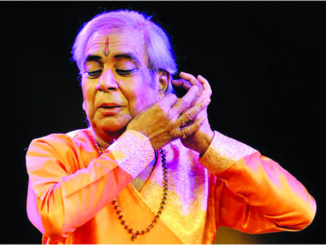
    Throughout his career, legendary dancer Birju Maharaj, who passed away in New Delhi on January 17, mesmerized people with speed, grace, skill, fluidity and technique of his steps. Born in Lucknow on February 4, 1938, he was the son of prominent Kathak master Jagannath Maharaj and became a leading exponent of the Lucknow Kalka Bindadin gharana. The young Birju was destined to follow in his father’s footsteps who trained him in his early years after recognizing the boy’s potential.

    However, his father died when the boy was just nine years old. He was then trained by his uncles, the legendary dance masters Shambhu Maharaj and Lacchu Maharaj. At age 13 he became a dance master at the Sangeet Bharati in New Delhi.

    He eventually became the Head of Faculty and director at the Kathak Kendra (a unit of Sangeet Natak Akademi) from where he retired in 1998. He then opened his own dance school, Kalashram.

    At the school he used the traditional parameters to choreograph new presentations to convey to the audience that even classical style can be very appealing, interesting and dignified. Well versed in Hindustani Classical, he was also a trained singer in Thumri and Dadra. In addition, he knew how to play the tabla, naal and violin.

    A master of his craft, each step he took to the sound of a musical note and varying rhythms was nothing short of precise and complex mathematical calculations.

    Known for his precision, grace, perfect rhythm/taal and expressive abhinayas, Birju Maharaj had the rare ability to create a whirlwind of emotions through his footwork and movements whether it be raw of simplicity of the human desire or the sheer complexity of the expression that is human society.

    His style was a blend of elements from different schools, inheriting the stylized fluidity from his uncles, and the precision of footwork and play of face from his father.

    He made his first foray into the world of cinema with Satyajit Ray’s 1977 film “Shatranj Ke Khilari” where he was asked to choreograph the dances in the court of Wajid Ali Shah, the last nawab of Awadh who was a lover of arts.

    Ray did not want any ‘filmi kathak’ rather ‘pure kathak’ was his ask from Birju Maharaj, who fulfilled his demand by being as meticulous as he could looking up to the body movements, eye glances, angles, expressions, footwork, twirls and head turns in order to capture the real life essence of the raw classical kathak so as to instill a sense of serenity in the nawab.

    The dance was done by Saswati Sen, one of his long time associates who was also one of his senior most disciples.

    He also choreographed other dances pieces in Bollywood such as the song ‘Kahe Chhede Mohe…’ from Sanjay Leela Bhansali’s film ‘Devdas’. In this song, Madhuri Dixit danced wearing a heavy lehenga. Birju Maharaj believed that Madhuri is also a great dancer like Meena Kumari and Waheeda Rehman.

    He choreographed the song ‘Mohe Rang Do Lal’ for another of Bhansali’s blockbusters “Bajirao Mastani” featuring Deepika Padukone. He taught Kathak to Deepika.

    One of his most celebrated choreographed performances was of the Roopmati-Baz Bahadur love affair of 16th century which he performed in both India and abroad. With only a few dancers, he orchestrated movement and pace and filled the stage creating a powerful and enthralling presence.

    Birju Maharj won several awards. He was honored with the Sangeet Natak Akademi Award in 1964, Padma Vibhusan in 1986, the Kalidas Samman in 1987, Soviet Land Nehru Award, the Lata Mangeshakar Puraskar in 2002, Honorary Doctorate from Indira Kala Sangeet Vishwavidyayla and from Banaras Hindu University.

    He won the 2012 National Film Award for Best Choreography for Unnai Kaanaathu (Vishwaroopam) and the 2016 Filmfare Award for Best Choreography for “Mohe Rang Do Laal” (Bajirao Mastani).

    Tributes pour in

    Tributes poured in from across the country on the dance veteran’s demise.

    Prime Minister Narendra Modi called Birju Maharaj’s death an “irreparable loss to the entire art world” and expressed his condolences to his family and fans.

    President Ram Nath Kovind said the dancer’s death leaves “a deep void in the Indian music and cultural space”. In a tweet, Kovind said that Birju Maharaj was an an icon who made “unparalleled contribution to popularize Kathak globally”.

    Vice President M Venkaiah Naidu said he was “deeply saddened” by the death of the Kathak dancer. “The world renowned Kathak exponent with his unique style was an institution and an inspiration across the globe,” Naidu tweeted. “His death is a huge loss to the world of performing arts.”

    Congress leader Rahul Gandhi offered his condolences to the dancer’s family and friends. “His contribution to the field of Indian classical dance is unparalleled and he will be remembered for it,” Gandhi tweeted.

    Actor Hema Malini tweeted: “The nation mourns the passing of a true legend, Shri Birju Maharaj,Kathak exponent par excellence. His ghungroos were on his ankles till he breathed his last.I always admired and respected him as a giant of the medium of Kathak & will miss his presence on the firmament of dance.”

    Sarod player Amjad Ali Khan said Birju Maharaj’s death was a personal loss to him. “He was loved immensely by my family and his memories live in our hearts forever,” Khan tweeted. “The heavens will dance for him today and everyday.”

  • Chicken in coconut milk with mango chutney

    Chicken in coconut milk with mango chutney

    Ingredients

                    2 mangos peeled and diced, 1 onion finely chopped, 1/2 a cup of water, 2 tablespoons of brown sugar, A pinch of curry powder, 1 tablespoon of freshly squeezed lime juice, A pinch of black pepper, Few crushed pieces of fresh ginger, 1/4 teaspoon of salt, 1 teaspoon of healthy olive oil, 2 minced garlic cloves, 1 bowl of boneless chicken breasts, diced, 1 cup of light coconut milk, 2 tablespoons of brown sugar, A pinch of salt, 2 teaspoons of red curry paste, A few drops of thai fish sauce, 7 to 8 pieces of broccoli florets, 7 to 8 pieces of cauliflower florets, 1 tablespoons of chopped green onions for garnishing

    Method

    –              In order to prepare the chicken, take a big non-stick pan and let it heat on a high flame. Add oil, garlic and chicken in the pan and saute it for 5 minutes. Now add brown sugar, salt, red curry paste and thai fish sauce in the pan and cook it through. After sauteing them thoroughly, make sure that the chicken is fully covered with the mixture. Add the coconut milk and simmer the flame.

    –              Now, add all the vegetables and let it cook for 7 to 10 minutes. Make sure you are stirring occasionally and keep on adding water to the dish if and when required. Garnish with green onions and you are good to go!

  • Ragi Paratha

    30 grams ragi flour (finger millet/nagli), 30 grams whole wheat flour, 1 teaspoon Oleev olive pomace oil, Salt as per taste, 30 grams paneer, grated,  1 green chilli, finely chopped,  Few mint leaves (pudina), finely chopped, ¼ teaspoon cumin powder (jeera),  1.5 teaspoon of Oleev olive pomace oil,

    Method

    –              Start with kneading the dough by mixing ragi and wheat flour. Knead paratha dough for a couple of minutes until it gets smooth and elastic.

    –              Next, add a teaspoon of oil to coat the dough and knead a little more.

    –              Cover the ragi paratha dough and allow it to rest until you get the filling ready.

    –              The next step is to make the paneer filling. In a mixing bowl, combine the grated paneer, green chillies, mint leaves, salt, cumin powder and mix all the ingredients well.

    –              Divide into equal portions.

    –              Finally, stuff the filling into the ragi paratha dough.

    –              Dust the ragi paratha dough in flour, flatten it with your finger and place it on a flat surface. Roll it out thin. Take a portion of paneer filling and place it in the centre. Next, gather the sides of the paratha dough and bring all the sides together.

    –              Dust the filled dough with some flour and roll it gently until you get desired thickness

    –              Preheat the skillet on medium heat and grease it with a little oil. Place the filled ragi paneer paratha. Allow it to cook on medium heat for 30 to 45 seconds and flip over. Spread a little oil over the paratha and keep pressing the ragi paneer stuffed parathas to cook it evenly from every side.


  • Indian-origin Scotland Yard chief Inspector dismissed for misconduct

    Indian-origin Scotland Yard chief Inspector dismissed for misconduct

    LONDON (TIP): An Indian-origin chief inspector in London’s Scotland Yard police force has been dismissed for “gross misconduct” without notice following an investigation by the Metropolitan Police’s Directorate of Professional Standards (DPS). Davinder Kandohla was found to have breached Standards of Professional Behavior, amounting to “gross misconduct”, in relation to honesty and integrity, authority, respect and courtesy, duties and responsibilities and discreditable conduct. “The breaches related to failing to declare a conflict of interest while taking part in his own promotion process, providing a misleading account to professional standards officers during an investigation into expenses he had claimed and conduct towards junior members of staff,” the Met Police said in a statement following a misconduct hearing on Sunday. —

  • Indian-origin CEO who fired 900 employees over Zoom last month is returning to his position

    Indian-origin CEO who fired 900 employees over Zoom last month is returning to his position

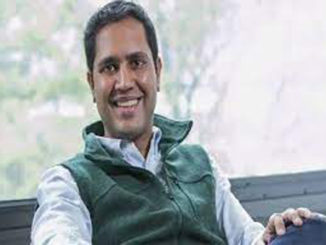
    NEW YORK (TIP): Vishal Garg, the Indian-origin CEO of US-based homeownership firm Better.com, who recently fired nearly 900 employees over a Zoom call and triggered widespread outrage, is returning to his position more than a month after “taking time off” from the job.

    Garg had fired almost 900 employees over a Zoom call just weeks before Christmas last year.

    “I come to you with not great news. If you’re on this call you are part of the unlucky group that is being laid off. Your employment here is terminated effective immediately,” Garg had said, drawing widespread criticism over the way he informed about 9 per cent of the company’s employees that they were being let go.

    Garg had later apologized for the way he handled the layoffs, saying, “I failed to show the appropriate amount of respect and appreciation for the individuals who were affected and for their contributions to Better. I own the decision to do the layoffs, but in communicating it I blundered the execution. In doing so, I embarrassed you.”

    It was announced on Wednesday that Garg is returning to his position, weeks after the company’s board had announced in a staff memo that he was “taking time off” following the “very regrettable events.”

    A report in The New York Times cited an email sent by the company’s board to staff that read, “As you know, Better’s CEO Vishal Garg has been taking a break from his full-time duties to reflect on his leadership, reconnect with the values that make Better great and work closely with an executive coach.”

    “We are confident in Vishal and in the changes he is committed to making to provide the type of leadership, focus and vision that Better needs at this pivotal time,” it said.

    A CNN report said that in a separate letter to employees, Garg said, “I understand how hard these past few weeks have been. I am deeply sorry for the angst, distraction and embarrassment my actions have caused. I’ve spent a lot of time thinking about where we are as a company and the type of leadership Better needs…and the leader I want to be.” After firing the employees, Garg had told them that they could expect an email from the Human Resource department, detailing benefits and severance. Garg had cited market efficiency, performance and productivity as the reasons behind the firings. 

  • Indian American soil scientist Rattan Lal up for a key role

    Indian American soil scientist Rattan Lal up for a key role

    WASHINGTON, D.C. (TIP): President Joe Biden intends to appoint leading Indian American soil scientist Dr. Rattan Lal as a member of Board for International Food and Agricultural Development (BIFAD). Established in 1975, BIFAD advises the United States Agency for International Development (USAID) on agriculture, higher education issues and food insecurity in developing countries.

    Biden’s intent to appoint Lal, a Distinguished University Professor of Soil Science and Director of the CFAES Rattan Lal Center for Carbon Management and Sequestration at The Ohio State University (OSU), in a key role was announced by the White House on Jan 14.

    Dr. Lal, 77, is also Adjunct Professor of the University of Iceland and of the Indian Agricultural Research Institute, as well as a Visiting Professor at Pontifical Catholic University, according to his White House profile. He is widely recognized as a pioneer in soil-centric agricultural management to improve food security globally and develop climate-resilient agriculture through soil carbon management and sequestration, sustainable management of soils, and soil health. Dr. Lal served as President of the World Association of the Soil and Water Conservation (1987-1990), the International Soil Tillage Research Organization (1988-1991), the Soil Science Society of America (2005-2007), and the International Union of Soil Sciences (2017-2018).

    He is Chair in Soil Science and Goodwill Ambassador for Sustainable Development Issues of the Inter-American Institute for Cooperation on Agriculture. Dr. Lal has received several awards for his work, including the 2020 World Food Prize for developing and mainstreaming a soil-centric approach to increasing food production that conserves natural resources and mitigates climate change. “His pioneering research on the restoration of soil health in Africa, Asia and Latin America led to revelations that impacted agricultural yields, natural resource conservation and climate change mitigation,” according to World Food Prize Foundation.

    “From his humble beginnings as a refugee growing up on a small subsistence farm in India, Lal’s determination to learn and succeed in school propelled him to become one of the world’s foremost soil scientists,” the Foundation stated in June 2020. Over his career spanning more than five decades and four continents, Dr. Lal has promoted innovative soil-saving techniques benefiting the livelihoods of more than 500 million smallholder farmers, improving the food and nutritional security of more than two billion people and saving hundreds of millions of hectares of natural tropical ecosystems, WFP said.

    Dr. Lal began his research career at the International Institute of Tropical Agriculture in Nigeria, developing soil health restoration projects across Asia, Africa and Latin America. In 1987, he returned to his alma mater, OSU, where his research showed how atmospheric carbon can be sequestered in soils. This breakthrough research led to soils being seen as not only the foundation for increasing the quality and quantity of food and preserving natural ecosystems, but an important part of mitigating climate change, as well. Three separate United Nations Climate Change Conferences adopted his strategy of restoring soil health as a means to sequestering carbon. In 2007, he was among those recognized with a Nobel Peace Prize Certificate for his contributions to the Intergovernmental Panel on Climate Change (IPCC) reports, when the IPCC was named co-recipient of the Nobel Prize.

  • Indian American chemical engineer Poornima Padmanabhan gets NSF CAREER Award

    Indian American chemical engineer Poornima Padmanabhan gets NSF CAREER Award

    ROCHESTER, NY (TIP): Indian American chemical engineer Poornima Padmanabhan, who is searching for the origins of life based on minute systems of molecules, has received a National Science Foundation Faculty Early Career Development (CAREER) award. An assistant professor chemical engineering at Rochester Institute of Technology (RIT), Padmanabhan was given the five-year, $478,476 award to discover how chiral structures—or mirror-image, entangled molecules—function, according to an RIT press release.

    This process is essential to understanding how different cell types are formulated in biochemical development, the Rochester, New York-based private research university said. The concepts can provide information about how synthetic materials can be further developed for use in the pharmaceutical industry, in agriculture or food analysis, and in the development of novel materials to enhance sensing and imaging applications, it said.

    Padmanabhan received the award from the NSF’s division of Materials Research for her study titled “Chirality and polymer thermodynamics: frustration and amplification.” Chirality means “handed-ness” and anything in nature that can be identified as right- or left-handed are essentially mirror images.

    Polymers are long molecules made from smaller entities that are bonded together. When these smaller entities are chiral, they form much larger chiral polymers, such as proteins which become the building blocks of life systems. In turn, hundreds or thousands of polymers can come together to form even larger structures.

    “We can think about how proteins fold, how life originated, we can think about how biology forms chiral structures and the reason the work is very exciting is we don’t know how these phenomena happen,” said Padmanabhan.

    In chemical systems where complex interactions lead to formation of molecular structures at a multitude of length scales, chirality may or may not result in each of those length scales.

    “We cannot predict when something will be frustrated or when something will be amplified. That is what we are trying to discover with this work,” she said.

    Understanding when and how chirality is transferred from the smallest to the largest length scale will be explored by studying the underlying thermodynamic principles and interrogating the molecular-level detail.

    A thermodynamic understanding of conditions when such transfer is amplified, or conditions when such transfer is hindered, remain unknown, but through discovery, the information can be used to build artificial systems that mimic biology for engineering applications, she added.

    “One cool part about chirality which was a total surprise—and we still don’t know why this is true—many of the biological molecules in our body are all of one type of chirality,” said Padmanabhan, who has been at RIT since 2017.

    “At some point early on, during evolution, something about the thermodynamics of the system led us down this one single path. We don’t know why. It’s so crazy how these amazing things are observed.” At RIT, she is co-director of the Computational Materials Research Nucleus Lab which researches development of “extreme” strength polymers, electrochemistry, and alternative energy resources. Prior to coming to RIT, she was a post-doctoral researcher at Cornell University and received its Alice H. Cook and Constance E. Cook Award, given by the Office of Faculty Development and Diversity for commitment to women’s issues and improving the climate for women at the university. Padmanabhan continues to be an advocate for gender diversity and increasing the pipeline of students in STEM degree programs, the release said. The CAREER program is an NSF-wide activity that offers awards in support of junior faculty who exemplify the role of teacher-scholars through outstanding research, excellent education, and the integration of education and research within the context of the mission of their organizations.

  • 5 Indian origin scientists among 45 American Mathematical Society Fellows in 2022

    5 Indian origin scientists among 45 American Mathematical Society Fellows in 2022

    PROVIDENCE, RI (TIP): Five Indian origin mathematicians are among 45 American Mathematical Society Fellows for 2022 from around the world chosen for their “outstanding contributions to the creation, exposition, advancement, communication, and utilization of mathematics.” “It is an honor to welcome a new class of AMS Fellows and to congratulate them for their notable contributions to mathematics and to the profession,” said Prof Ruth Charney, president of the American Mathematical Society, in a press release.

    “We extend our thanks to the nominators and members of the selection committee for their help in highlighting the outstanding achievements of their colleagues. Congratulations 2022 Fellows!”

    Jennifer Shyamala Sayaka Balakrishnan of Boston University was recognized “for contributions to arithmetic geometry and computational number theory and service to the profession.”

    She is known for leading a team that solved the problem of the “cursed curve,” a Diophantine equation that was “famously difficult” before their solution.

    Samit Dasgupta, a professor of mathematics at Duke University has been selected “for contributions to number theory, in particular the theory of special values of classical and p-adic L-functions.”
    Dasgupta’s research has focused on the Stark conjectures and Heegner points. In 2009, Dasgupta received a Sloan Research Fellowship. Santosh Vempala, a Distinguished Professor of Computer Science at the Georgia Institute of Technology has been chosen “for contributions to randomized algorithms, high-dimensional geometry, and numerical linear algebra, and service to the profession.”

    His main work has been in the area of Theoretical Computer Science. Vijaya Kumar Murty, an Indo-Canadian mathematician, has been selected for contributions to number theory, including the theory of L-functions associated to modular forms, and arithmetic geometry, and for service to the profession.

    He is a professor at the University of Toronto and is the Director of the Fields Institute.

    Malabika Pramanik, an Indo-Canadian mathematician who works as a professor of mathematics at the University of British Columbia has been selected “for contributions to complex and harmonic analysis and mentoring and support for the participation of under-represented groups in mathematics.” Pramanik studied statistics at the Indian Statistical Institute, earning a bachelor’s degree in 1993 and a master’s in 1995. She then moved to the University of California, Berkeley, where she completed a doctorate in mathematics in 2001.

    Her interests include harmonic analysis, complex variables, and partial differential equations.

  • Weekly Horoscope-January 24to Janto January 30, 2022

    Shree Ganeshaya Namah!!!

    By Astro Friend Chirag – Son of Astrologer Bejan Daruwalla

     Aries

    This week, Endurance is the answer; perseverance will pay off. This week, you’ll be patient and tranquil. This week, your troubles will not disturb you. You will dominate your coworkers at work. You will easily perform the assignment that has been assigned to you. This week, you’ll outperform your coworkers. Your compassionate side will take center stage during the second half of the week. You’re going to give some money to the underprivileged.This week, your romantic life will bloom for sure. Your partner and you are more likely to bond over the common professional difficulties you have been facing lately. You shall have a conversation regarding your marriage in the latter half of the week. Regarding your health will be alright throughout the week and you do not need to worry at all.

    Taurus

    You’ve made blunders earlier when it comes to your professional decisions, but this week you’ll correct them. This week, you’ll lay the framework by generating a list of employment prospects based on your academic talents and experiences. This week is all about planning and strategizing. By the end of the week, you’ll have a solid strategy in place. This week, you’ll pat yourself on the back and be pleased with yourself. This week, talk to your guide or idol about your worries, and they will assist you. This week your romantic facades are likely to suffer due to the negative transition of the Venus in your zodiac. Your partner will overreact to everything that goes wrong between you both. Don’t worry positive energies will make things better by the end of the week. Your health will not suffer a lot this week but, you must still be careful due to weather conditions.

    Gemini

    This is the week to stand firm in your decisions. Your judgment abilities are impetuous, but you will work on improving them this week. This week, you will provide monetary assistance to someone. You’ll be able to shoulder some of their weight. Your Jupiter will be delighted and move to a favorable position as a result of the person’s blessing. This step will help you grow as a person. The assistance will be returned to you in a greater and better method. This week your partner will make you feel proud of yourself and this will boost your morale. If you are a patient with blood pressure or diabetes, you must take extra care this week of yourself this week.

    Cancer

    This week, fortune plays a significant part in your life. You’ll handle a challenging circumstance with aplomb. For your efforts, you will be praised. This week, your family relationships will begin to improve. This week, your problems will take a back seat. Your first half of the week will be occupied by wonderful deep insights. Your family members will make you feel cherished and significant throughout the second part of the week. In your family’s life, it’s been a nice week. This week your relationship will flourish a little bit. You have to be more careful while taking any upfront decision regarding your marriage. Your health will have to be taken care of in the latter half of the week.

    Leo

    Your week will be dominated by religious activities. Your religious instincts will be satisfied this week. You’ll feel more connected to the cosmos and the all-powerful. The week will need you to be charitable. You will correctly allocate your task to your office workers. Your week will be productive and rewarding. Your relationship will be well set this week. if your parents are looking for a potential match for you, the latter half of the week is the right time to fix the meeting. Your health will not go through any issues this week. your children must stay away from dangerous sports.

    Virgo

    This week you’re feeling inventive! This week, you’ll spend your time creating and making. This will be a mental workout for you. To note down your thoughts and emotions, you’ll learn a new journaling style. Your loved ones will seek your advice on how to manage their finances, and you will be able to assist them appropriately. Your romantic life will not go through any issues this week. you will have to be extra careful while dealing with your children’s romantic issues. This week you must listen to your parental instincts a lot. Your health will be alright until the middle of the week, In the latter half of the week, you must take charge of your food habits.

    Libra

    Your astrological configurations this week will encourage you to take control of your life and environment. You’ll be optimistic for the entire week, and you’ll share it wherever you go. This week, you’ll brighten up your coworkers. This is the week in which you choose to be cheerful. Simple pleasures will bring you delight. You will treat everyone with respect. This week, you’ll show off your charitable side. Your workdays will be extremely efficient and satisfying this week. Your love life will be blessed throughout the week. you might not get a chance to meet your partner but you will stay connected to them and create a stronger bond. Your health facades will suffer a little bit; therefore, you must be really careful this week. Do not skip your daily routine.

    Scorpio

    This week, you’ll be treated to a pleasant and revitalizing get-together. You will meet folks who are agreeable and enthusiastic. You’ll discover something new and sights. Participate in the discussion, create friends, and connect with them. This event will expand your horizons in many ways. By the end of the week, all of your job tension will have dissipated, and you will feel more secure in yourself. There are chances of marital disputes this week as Venus will transit in an unfavorable position 4 wedded couples. If you are likely to meet someone you hold your romantic interest with, you must not plan this meeting in the first half of the week. As far as your health is concerned, minor back pain and occasional stomach issues will bother you this week. Try to keep yourself detoxed the entire week.

    Sagittarius

    This week, we’ll delve into all of the difficulties and concerns you’ve been pondering under your covers. This week, you’ll summon the guts to confront the facts. You’ll devise a strategy for dealing with each problem one at a time. Taking little steps toward each challenge can assist you in solving it. This week, you will make smart and essential life judgments. During the first part of the week, you will demonstrate your worth to your coworker. It’ll be a strategic victory. Your domination over your adversary will help you gain more ground at work. This week, you’ll be appreciative of yourself. You will behave a little bit more dominant with your partner this week. You must try to keep yourself calm discussing anything with your partner. In the latter half of the week, your partner and you both will ease out yourself a little in this will be good for your relationship. Your health will be sailing in a pink pot of wellness. Therefore, be carefree.

    Capricorn

    A new week comes with it new changes and adversities; the location of your new moon indicates that you will have some positive encounters this week. You have a full week of thrills and discovery ahead of you. It will be the successful first part of the week. At work, you will perform all of your tasks. The second half of the week is going to be fantastic. If you communicate with your family, you’ll be able to organize a fun activity at the conclusion of the week. In the second half of the week, you’ll hear some positive news from abroad. As far as your romantic life is concerned, you will be blessed with the transition of the Sun in the 7th House of your Zodiac and this could be the most fortunate event for your love life that could have happened in this month. Cold and cough might bother you in the latter half of the week, be careful.

    Aquarius

    This week, your main aim is to spend time in leisure. You’ll spend more time pondering and soaking up as much pleasant energy as possible. You’ll appreciate whatever the world has bestowed upon you. This week, pay attention to the smallest things. Nature will teach you important life skills in the most basic of ways. All of your time spent with yourself is preparing you for something large and excellent that is about to happen. It’ll be a quiet week as far as your love life is concerned. Your partner will be happy to give you out some personal space so that you can understand yourself better. As your 7th house will be influenced by Venus on Thursday, your romantic life will start to improve. You will enjoy yourself a lot this week this leisure time will have you act a little carefree regarding your health.

    Pisces

    This week will be a nice one for you. In your profession, you will see a lot of great changes. Your bosses will compliment you on the excellent work you’ve done. If you have invested in the share market in the last two weeks, this week will be a very fortunate period to sell your equity and profit. Your romantic life is maturing. It will become stronger if you give it enough time. Your desired job or college may respond positively to your application. This week, you are more likely to meet someone you might get married to in the future. Therefore, keep your heart open and nurture the emotions you feel this week. If you are facing any issues regarding breathing or any pulmonary issues you must take them seriously this week. Avoid traveling distant places this week.

  • Uttarakhand’s jaw-dropping Kumaon Valley

    Uttarakhand’s jaw-dropping Kumaon Valley

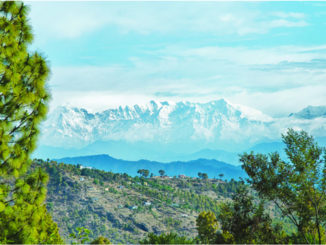
    Kumaon is home to the heavenly districts of Almora, Bageshwar, Champawat, Nainital, Pithoragarh and Udham Singh Nagar – each sustaining a plethora of hill stations, some maddeningly popular, the others unspoiled and waiting to be explored. So grab your camera, and your friends, hoard your car with chips and cola, and psych up for a journey through towering hills, pine forests, the bluest of skies and a brisk lingering mountain breeze.

    The route

    Our journey starts from Delhi. After seven hours and 305 kilometres, we reach Uttarakhand’s village of Pangot. We head to the town of Almora next and after an hour or so, arrive in the pristine valley of Binsar via the NH309A. Through Sheraghat and Berinaag, we reach Munsiyari and then drive towards the Pithoragarh district. Herein, lies Chaukori, two hours away from Kausani, in Kumaon’s Bageshwar district. Next up, is Mukteshwar and then, Ranikhet from where we head back to Delhi.

    This is a suggested route for the Kumaon region road trip:

    Delhi – Pangot – Almora – Binsar – Sheraghat – Berinaag – Munsiyari – Chaukori – Kausani – Mukteshwar – Ranikhet – Delhi

    Almora

    A small cantonment town in the scenic Kumaon Valley, a visit here will not leave any history buff disappointed. Its renowned and ancient Katermal Sun Temple and Jageshwar Temples, including the Archaeological Museum, offer an insight into its quaint scriptures. Spots such as Zero Point here are perfect for enjoying a splendid view of the Himalayas. Catering to every adventure seeker’s interests, many resorts and travel companies also organise treks to Pindari and Milam glaciers and also mountain-bike trips around the hills of Almora. Another attraction here is the Kumaon Regimental Centre Museum, dedicated to military mementos weapons, especially the decorated Indian Infantry regiment, Kumaon Regiment. One can also visit Lal Bazaar, adorned with sophisticatedly-carved traditional wooden shops from where one can shop for a variety of things. Places such as Kasar Rainbow Cafe, Baba Cake, Glory Restaurant and Bansal Cafe are known non-vegetarian, vegetarian and bistro dishes. Don’t forget to try the various kinds of milk sweets here – bal mithai, choklate (not chocolate) with a fudge-like consistency and singauri, a sweet wrapped in a green Malu leaf.

    Binsar

    A perfect refuge for those who crave for solace away from the humdrum of the cities and crowds, this picturesque and quiet little hamlet lies tucked away in the Kumaon Himalayas. Nestled in a beautiful valley, the village is a trekker’s paradise, where exploring meadows and dense pine flanked pathways is as dreamy as it sounds. Its main attraction is the Binsar Wildlife Sanctuary, spread over 300 kms, giving stunning views of renowned Himalayan summits such as Shivling, Kedarnath Peak, Trisul and Nanda Devi. It is a haven for bird enthusiasts, where species such as forktail, parakeets, nuthatches, blackbirds, laughing thrush, monal, magpies, eagles, koklas, woodpeckers and Eurasian jays can be observed. Its vast habitation of flora and fauna includes leopards, Himalayan goral, chital, musk deers, Sumatran serows, jungle cats, wild boars, black bears, red foxes, red giant flying squirrels and many more.

    Chaukori

    It is a small hill station located in the Kumaon region. to the north of which is Tibet and to the south in Terai. It’s 2010m with a picturesque view.

    Kausani

    In the last couple of years, this quiet hill station has become quite popular with tourists from across the world. Leaving behind crowded hill stations, travellers are now making their way to this retreat. Home to waterfalls, lush green meadows and stunning walking trails, there is not much to see or do besides enjoying nature in Kausani. Mahatma Gandhi stayed here for a brief period and penned down the memorable ‘Gita-Anashakti Yoga’ here. There is a museum dedicated to Gandhi’s life here and is a must visit. So is the lovely Baijnath Temple and the waterfalls next to it. Do visit the Kausani Shawl Factory and take back shawls as souvenirs. Besides this, there is not much to shop here at Kausani. Finding a place to stay here is also a little tricky since most hotels are usually booked and there aren’t too many options. If you are coming from Delhi, it should take you about 15 hours when travelling by bus. Alternatively, you can also take a train till Kathgodam and then take the bus till Kausani. Do remember that it can take about 2 to 3 hours extra depending on the conditions of the road.

    Mukteshwar

    Mukteshwar is a hill station in Uttarakhand that is popular for its wide assortment of adventure sports such as rock climbing and rappelling. Overlooking the peaks of Nanda Devi, Mukteshwar is also a celebrated scenic spot that is perfect for long walks and some quiet time in the closeness of nature. The Mukteshwar Temple is dedicated to Lord Shiva and is a revered shrine of the region. Located near this temple is the Chauthi Jaali, which is a picturesque precipice of lattice rocks. These rocks present an enchanting view of the green grasslands down below.

    Ranikhet

    Self-proclaimed Army brats will get a thrill out of this place, for it is home to one of the most badass regiments of the Indian Army, the Kumaon Regiment. The Military Museum is a must visit for an insight into the history of this highly-decorated infantry regiment and and the country’s brave warriors. This town in Almora is tailor made for those who simply wish to unwind in the hills. But still to keep its adventurous visitors busy, Ranikhet is home to many resorts which organise activities such as paragliding, camping, river-crossing and trekking. The forests encircling this cantonment town are home to several wildlife species such as leopards, Red-faced Monkeys, jackals, Red Foxes, Indian Hares and Pine Martens. The monastery in Ram Mandir is a quaint attraction where one can witness students being taught the long obliterated ancient Vedas and Vedic Mathematics. Take a blissful walk in the Chaubatia Gardens, which are abundant with fruit orchards and meadows adorned with flowers all around. Cuisines from Indian, international to simple cafe food are highly recommended from places such as Rainbow Restaurant, Glory Restaurant and Embassy.

                    Source: Tripoto

  • Sankashti Chaturthi

    Sankashti Chaturthi

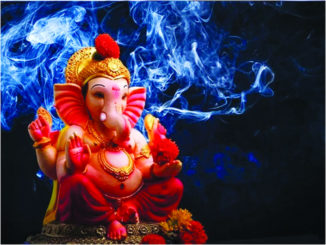
    If there is one god in the Hindu pantheon who is a marker of auspicious beginnings, it is Lord Ganesha. The elephant-headed god is worshipped at the beginning of seasons and rituals for this reason. And there is one day in every month of the year when this worship is said to be at its peak. Known as Sankashti Chaturthi or Sakat Chauth, this day is even more auspicious, especially if it falls on a Tuesday or Friday. Celebrated across India, Sankashti Chaturthi is observed on the fourth day, or chaturthi, of every month in the Hindu calendar. The day is also linked with the Krishna Paksha, or the waning phase of the moon. While people in many states of India celebrate this day, especially in Maharashtra, it is known by a number of different names. Known as Sankat Hara Chaturthi in Tamil Nadu, the day is also celebrated as Angaraki Chaturthi when it falls on a Tuesday.

    Sakat Chauth 2022

    Friday, 21 January 2022

    Chaturthi Tithi Begins: 21 January 2022 at 08:51 am

    Chaturthi Tithi Ends : 22 January 2022 at 09:14 am

    Did you know : This fast is famous by many names, such as Sakat Chauth, Sankta Chauth, Tilakut Chauth etc.

    The Sanskrit word “sankashti” means deliverance from troubled or difficult times, so worshipping Lord Ganesha on this day means you’ll be blessed with peace and prosperity in the coming times. Devotees usually keep a fast to be free of obstacles on this day.

     Rituals that are followed on Sankashti Chaturthi

    –              Devotees keep a partial or day-long fast on this day. They and eat only fruits, vegetables and root plants throughout the day. Peanuts, potatoes and sabudana khichdi are prepared especially to mark this day’s fasting. The day’s fasting is broken only after the main puja is done.

    –              The main puja of the day is done in the evening, after the moon is visible. The idol of Lord Ganesha is worshipped with Durva grass, fresh flowers and incense sticks. Lamps are lit, and devotees read the “vrat katha” specific to the month in shich the Chaturthi is. The rituals for this day end with the sighting of the moon.

    –              Special sweets or naivedya, including modaks, are offered to the deity during the puja. After the katha and aarti, these sweets are distributed as prasad.

    –              Apart from worshipping Lod Ganesha, the moon is also worshipped on Sankashti Chaturthi. Water, chandan or sandalwood paste, rice and flowers are offered in the direction of the moon.

    –              Reciting the Vedic hymns or mantras devoted to Lord Ganesha garners blessings on this day. Devotees chant the Ganesha Ashtothra, Sankashtnashana sthothra and Vakrathunda Mahakaya especially on Sankashti Chaturthi.

    Sankashti Ganesh Chaturthi Vrat Katha

    The katha of Sankashti Ganesh Chaturthi dates back to the time of Satyuga. However, the Pandava queen, Draupadi also listened to this katha. Once a rishi, who was known to be the guardian of the Kuru dynasty, visited the home of Pandavas when they were in exile. And, Draupadi, who went through the cheer haran by Dushasan and was humiliated by Duryodhana, was wondering about what kind of sin she had committed that she is getting a treatment like this. To answer her questions, Maharshi started telling her the story of king Chandrasena and his queen Ratnavali. According to the story, King Chandrasena and Ratnavali were going through a rough time as their enemies looted and plundered their kingdom and they were looking for a shelter in a forest. The royal couple was wandering in the woods for food and shelter. One day, they unknowingly entered Markandeya Rishi’s hermitage in search of water. And after learning about the place that they had accidentally visited, the king sought the blessings of the sage and narrated his ordeal. However, like Draupadi, he wondered if he had committed sins to endure such hardships. Hence, to help him find answers to his question, Markandeya Rishi reminded Chandrasena about his deeds during his previous birth In his previous birth, Kind Chandrasena went to a forest hunt. where he came across a few Nag Kanyas, who were dressed in red, and asked them what were they doing on the banks of the lake. To this, they replied that they were observing the Adhik Maas Sankashti Chaturthi Vrat that will help them in getting rid of all their problems. Inspired by the Nag Kanyas, the king decided to observe the vrat. However, after getting rid of all problems, the king no longer remained grateful to God and had turned arrogant and unjust.

    Subsequently, he died However, he once again took birth in a royal household and to reap the benefits and to endure the curse of the misdeeds of his previous birth. After listening to the story, Chandrasena realised that he made a huge mistake and he committed a crime and that he will not repeat such a mistake ever again. He observed a vrat along with Ratnavali on the day of Chaturthi, Krishna Paksha, Adhik Maas wholeheartedly. His devotion and faith worked wonders and he got his lost kingdom and glory back.

    However, with this story, Draupadi got all her answers and so did Pandavas and they realised that Karma plays an important role in one’s life as what you sow is what you reap.

  • Nod to equity infusion of Rs 1,500 cr in IREDA

    Nod to equity infusion of Rs 1,500 cr in IREDA

    New Delhi (TIP)- The government on January 19 approved Rs 1,500 crore for equity infusion in the public sector renewal energy lending company IREDA to enhance its capacity to offer financial support to the industry. Sharing the details of the decision taken at a meeting of the Union Cabinet, chaired by Prime Minister Narendra Modi, Information & Broadcasting (I&B) Minister Anurag Thakur said, the fresh equity infusion in the Indian Renewable Energy Development Agency (IREDA) Ltd., a PSU under the Ministry of New and Renewable Energy, would enable it to lend loans up to Rs 12,000 crores to the sector. Thakur further said, “The IREDA plays a big role in the field of renewable energy. This agency was established to finance renewable energy. Its portfolio has increased from Rs 8,800 crore to Rs 28,000 crore in the past six years.” The minister said, “But according to RBI, the loan can only be lent on 20% of the net worth.

  • FDI flows to India slip 26 per cent in 2021: UN report

    FDI flows to India slip 26 per cent in 2021: UN report

    United Nations (TIP)- Foreign Direct Investment (FDI) flows to India in 2021 were 26 per cent lower, mainly because large M&A deals recorded in 2020 were not repeated, the UN trade body has said.

    The UN Conference on Trade and Development (UNCTAD) Investment Trends Monitor published on Wednesday said global foreign direct investment flows showed a strong rebound in 2021, growing 77 per cent to an estimated USD 1.65 trillion, from USD 929 billion in 2020, surpassing their pre-Covid level.

    “Recovery of investment flows to developing countries is encouraging, but the stagnation of new investment in the least developed countries in industries important for productive capacities, and key Sustainable Development Goals (SDG) sectors – such as electricity, food or health – is a major cause for concern,” said UNCTAD Secretary-General Rebeca Grynspan. The report said developed economies saw the biggest rise by far, with FDI reaching an estimated USD 777 billion in 2021 – three times the exceptionally low level in 2020.

    FDI flows in developing economies increased by 30 per cent to nearly USD 870 billion, with a growth acceleration in East and South-East Asia (+20 per cent), a recovery to near pre-pandemic levels in Latin America and the Caribbean, and an uptick in West Asia.           Source: PTI

  • China cuts lending rates, boosting property firms

    China cuts lending rates, boosting property firms

    BEIJING (TIP) : China further reduced bank lending costs Thursday in the latest move to boost its stuttering economy, providing some much-needed support to the country’s beleaguered developers.

    Property firm shares and bonds surged on the fresh rate cut from People’s Bank of China — the second in two months — days after Beijing reported slower growth in the final months of 2021.

    The slowing real estate industry has put downward pressure on growth, with several large companies including debt-laden development giant Evergrande defaulting in recent months.

    The central bank said it had lowered the one-year loan prime rate (LPR) to 3.7 percent, from 3.8 percent in December.

    It had reduced the LPR — which guides how much interest commercial banks charge to corporate borrowers — in December, for the first time in 20 months, as the economy was threatened by the real estate crisis and coronavirus flare-ups. The launch of a regulatory drive last year to curb speculation and leverage had cut off avenues to crucially needed cash, sparking a crisis in the property sector.

    But investors regained confidence amid expectations of regulatory easing with shares in Hong Kong-listed Agile Group up more than six percent and Country Garden climbing 7.4 percent.

    Property developer bonds also surged Thursday on news of the rate cut, in what Bloomberg said was a record-breaking rally, highlighting the huge sums of money primed to flow into distressed securities if the property sector crackdown was eased. Thursday’s move comes after the world’s second-biggest economy reported strong 8.1 percent growth in 2021, but with the first half of the year accounting for much of that growth.

    The central bank also cut the interest rate on its one-year policy loans on Monday — the first drop in the key rate for loans to financial institutions since early 2020.

    China was the only major economy to expand in 2020, after quickly bringing the outbreak under control.

    But the country is now battling several localised virus clusters as it deals with the ongoing property market slump and fallout from a wide-ranging regulatory crackdown last year.

    “Today’s reductions to both the one-year and five-year Loan Prime Rates (LPR) continue the PBOC’s efforts to push down borrowing costs,” said Sheana Yue, China economist at Capital Economics.

    She said the cuts mean “mortgages will now be slightly cheaper, which should help shore up housing demand.”

    “Targeted support for property buyers does appear to be limiting one of the more severe downside risks facing the economy.” Hong Kong-listed China Aoyuan Group became the latest major developer to miss bond payments, saying in a filing it would be unable to pay two notes due Thursday and Saturday, amounting to $688 million in total.

    Source: AFP