Year: 2022

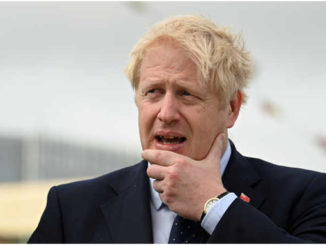
  • ‘Partygate’ allegations: UK PM Johnson’s allies accused of blackmailing rebels

    ‘Partygate’ allegations: UK PM Johnson’s allies accused of blackmailing rebels

    London (TIP): In the latest round of “partygate” allegations threatening Boris Johnson’s leadership, the British Prime Minister’s allies were on January 20 accused of blackmailing rebel members of Parliament expressing a lack of confidence in him as Conservative Party leader. William Wragg, a Conservative Party MP and Chair of the House of Commons Public Administration and Constitutional Affairs Committee, said a “number of MPs have faced intimidation” in recent days after declaring, or assumed to have declared, their desire for a vote of confidence in Johnson. Wragg claimed the reports “would seem to constitute blackmail” and advised his affected colleagues to contact the police or the Speaker of the Commons.

    “It is of course the duty of the government whips office to secure the government’s business in the House of Commons. However, it is not their function to breach the ministerial code in threatening to withdraw investments from members of Parliament’s constituency which are funded from the public purse,” said Wragg.

    Speaker Sir Lindsay Hoyle admitted these were “serious allegations” and told MPs with such concerns that they may write to him.

    “It is contempt to obstruct members in the discharge of their duty or to attempt to intimidate a member in their parliamentary conduct by threats,” said Hoyle.

    Asked about the allegations, Johnson told reporters he had seen “no evidence” of such incidents but that his office would look into any claims.

    “We are not aware of any evidence to support what are clearly serious allegations. If there is any evidence to support these claims, we would look at it very carefully,” a Downing Street spokesperson said.

    It comes a day after dramatic developments in Parliament, when a Tory MP walked across the floor of the Commons to join the Opposition Labour Party in protest against Johnson’s leadership.

    Besides the defection, a veteran Tory MP and former Brexit ally of Boris Johnson, David Davis, rose to demand that it was time for him to resign as prime minister amid a string of damaging allegations of lockdown rule breaches.

    However, the defection and rebel plots somewhat subdued on Thursday as the majority of Conservative Party MPs are hesitant to trigger a leadership crisis that could prove disastrous for the Tory government. Johnson, who announced an end to Plan B lockdown restrictions as he declared that the Omicron variant was in retreat, seems to have been galvanised by this mild reprieve within the party and seems determined to fight on. However, there are reports of some nervousness within Downing Street ranks amid fears that top civil servant Sue Gray, investigating the partygate scandal, may have found damning evidence against the UK prime minister which may show that he misled Parliament over how much he knew about parties being held in his office in apparent breach of lockdown rules. At the heart of these claims lies a May 20, 2020, garden party in Downing Street for which he apologised to the Commons last week. Johnson has said that he will return to Parliament to make another statement once the internal investigation into wider breaches of lockdown rules within government quarters files its report next week. — PTI

  • Mallya can be evicted from London home over unpaid loan, UK court orders

    London (TIP): Embattled businessman Vijay Mallya on Tuesday lost a legal battle to hold on to his plush London home after a British court refused to grant him a stay of enforcement in a long-running dispute with Swiss bank UBS. The 18/19 Cornwall Terrace luxury apartment overlooking Regent’s Park in London, described in court as an “extraordinarily valuable property worth many tens of millions of pounds”, is currently being occupied by Mallya’s 95-year-old mother Lalitha. Delivering his judgment virtually for the Chancery Division of the High Court, Deputy Master Matthew Marsh concluded there were no grounds for him to grant further time for the Mallya family to repay a GBP 20.4-million loan to UBS – the claimant in the case. “The claimant’s position was a reasonable one… further time is not likely to make any material difference,” Deputy Master Marsh ruled. “I would also add from my review of the correspondence, I can see no basis whatever for the suggestion that has been made that the claimant has misled the first defendant [Vijay Mallya]… in conclusion, I dismiss the first defendant’s application,” he said.

    The judge also declined permission to appeal against his order or to grant a temporary stay of enforcement, which means UBS can proceed with the possession process to realise its unpaid dues. “I will refuse permission to appeal and therefore it follows that I will not be granting a stay,” said Marsh. Mallya’s barrister, Daniel Margolin QC, indicated that the 65-year-old businessman plans to pursue an appeal before a High Court Chancery Division Judge as it has “serious consequences” for his clients, including Mallya’s elderly mother who currently resides at the address. (PTI)

  • Russia moves more troops westward

    Moscow (TIP): Russia is sending troops from the country’s far east to Belarus for major war games, officials said on January 18, in a deployment further beefing up Russian military assets near Ukraine amid Western fears of an invasion. Deputy Defence Minister Alexander Fomin said the drills are intended to practice a joint response to external threats by the alliance of Russia and Belarus, which have close political, economic and military ties. Fomin didn’t say how many troops and weapons were being redeployed for the exercises, or give the number of troops that will be involved in the war games. Ukrainian officials have warned that Russia could launch an attack from various directions, including from the territory of its ally Belarus. — AP

  • Will Punjab Model be the Key Issue in Assembly Elections 2022?

    Will Punjab Model be the Key Issue in Assembly Elections 2022?

    Kejriwal is promising justice in sacrilege cases, jobs to youths and corruption-free governance.
    Sukhbir Singh Badal has not yet come up with any model
    By Prabhjot Singh

    In the last 55 years, politics in Punjab has mainly revolved around politics of doles and appeasements that in turn wreaked havoc with the economy of the State bringing it down from the top spot in the country to the also ran category.

    “After witnessing two partitions since 1947, the State is without its own capital, besides it has lost control over the prestigious hydel projects like Bhakra and Beas, its rivers waters are being diverted in utter violation of the conventional Riparian laws and several other prestigious institutions the State either acquired as a part of partition settlement or built on its own after 1947 like Panjab University, Postgraduate Institute of Medical Education and Research, Punjab Engineering College, etc., etc. are managed by the Union government or the Centre.”

    For those, who are worried about the deteriorating fiscal health and social fabric of this border agrarian State, yes, “Punjab Model” should be a guiding factor for its electors in determining their future ruling political parties or leaders.

    But then what is the “Punjab Model”?

    Both the Punjab Pradesh Congress Committee chief Navjot Singh Sidhu and the Aam Aadmi supremo Arvind Kejriwal are going around with their “Punjab Model” in soliciting support of the worried voters as the State is on the verge of both political and financial bankruptcy.

    Their models may not be in line or consonance with what Punjab needs today. They are mostly talking about models broadly to appease some sections of voters without dealing with the issues that have scripted tormenting history of the State since the 1947 partition in general and the reorganization in 1966 in particular.In the last 55 years, politics in Punjab has mainly revolved around politics of doles and appeasements that in turn wreaked havoc with the economy of the State bringing it down from the top spot in the country to the also ran category.

    After witnessing two partitions since 1947, the State is without its own capital, besides it has lost control over the prestigious hydel projects like Bhakra and Beas, its rivers waters are being diverted in utter violation of the conventional Riparian laws and several other prestigious institutions the State either acquired as a part of partition settlement or built on its own after 1947 like Panjab University, Postgraduate Institute of Medical Education and Research, Punjab Engineering College, etc., etc. are managed by the Union government or the Centre.

    In addition, there are other issues, like inclusion of Punjabi speaking areas, that prompted the State to demand “autonomy” through the Sri Anandpur Sahib resolution. Many elections have come and gone but these core issues or demands never made it to the top of the agenda or election manifesto of any political party. The coming elections are no different.

    When and who is going to fight for these long-standing demands of Punjab?

    Looking through the history of the State after Independence in general and reorganization in 1966 in particular, grabbing power has been the only agenda of the political parties or their leadership.

    None other than Darshan Singh Pheruman of Akali Dal (Pheruman) made a sacrifice to press for acceptance of these demands. His sacrifice, however, went waste for lack of support from the mainstream parties.Unfortunately, these issues still do not figure in any of the “Punjab Models” being projected by Congress or AAP leaders. Should voters presume that these issues stay consigned to the history books and would not be raised or fought for.

    Let us talk about the Kejriwal or AAP’s “Punjab Model” of governing the state after polls. Like Sidhu’s model, it is primarily about the current issues facing the State. He is promising justice in sacrilege cases, jobs to youths and corruption-free governance. With his model, he asserts, will help hard working people of the State to bring his party to power to break the friendly “partnership” between the Badals and the Congress. He maintains that his Punjab model will have a 10-point agenda that will include free power to people up to 300 units per billing cycle and controlling the drug menace. The AAP, while trying to lure women voters, also wants regular financial support for them saying each woman above the age of 18 would be given Rs 1000 each every month.

    On the other hand, Navjot Sidhu had been going around and promising Punjab with his 13-point Punjab model. His mainstay is restructuring the economy of the State by pulling it out of debt trap. His concept of a healthy fiscal model is to use internal resources in not only generating new revenue channels but also solving the problem of unemployment. For Sidhu, liquor, sand and bajri (gravel) could serve as wonder commodities in filling the empty coffers of the State. He has been promising to set up state-owned liquor besides sand and bajri corporations for mobilizing revenue enough to make the State cut its annual borrowing and be on its way to great financial recovery. Sidhu feels convinced that from liquor alone, Punjab could generate about Rs 25,000 crore of revenue. His model also includes setting up a regulatory commission to control the cable sector.

    Other major contestants, including the Shiromani Akali Dal-Bahujan Samaj Party alliance, Bharatiya Janata Party-Punjab Lok Congress-Sanyukta Shiromani Akali Dal alliance, and the Samyukat Samaj Morcha have so far refrained from making public their “Punjab Models”.

    Even if all the contestants – political parties or alliances – make public their models, what legal sanctity these pronouncements will have in the post-election scenario remains a million-rupee question.

    (The author, a former editor of The Tribune, is a senior journalist. He can be reached at prabhjot416@gmail.com)

  • Governor Murphy Signs Legislation Ensuring AAPI-Inclusive Curriculum is Taught in New Jersey Schools

    Governor Murphy Signs Legislation Ensuring AAPI-Inclusive Curriculum is Taught in New Jersey Schools

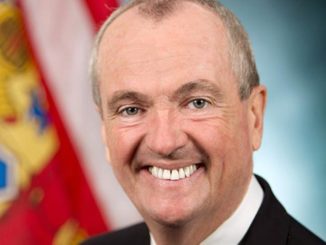
    TRENTON, NJ (TIP): Governor Phil Murphy , on January 18,  signed legislation (S4021/A6100 and S3764/A3369) that will ensure that the contributions, history, and heritage of Asian Americans and Pacific Islanders (AAPI) are included in the New Jersey Student Learning Standards for Social Studies for students in kindergarten through Grade 12. S4021 will create an AAPI curriculum requirement for schools and S3764 will establish the Commission for Asian American Heritage within the Department of Education.

    “The members of our Asian American/Pacific Islander community have contributed so much to our state and nation,” said Governor Murphy. “By teaching students about the history and heritage of our AAPI community, we can ensure that the diversity of our state is reflected in our curriculum and create a more tolerant and knowledgeable future for New Jersey. I am proud to sign these bills into law.”

    “By incorporating instruction on the history and contributions of Asian Americans and Pacific Islanders, New Jersey schools can provide a curriculum that reflects the diversity of our state,” said Dr. Angelica Allen-McMillan, Acting Commissioner of Education. “In addition, the establishment of the Commission on Asian American Heritage will serve as an invaluable resource to enhance classroom instruction throughout the state.”

    “Though Asian Americans and Pacific Islanders continue to make significant and positive contributions to our state, they remain misunderstood and are often targeted for race-based violence and bigotry,” said Senator Vin Gopal. “With these new laws, and implementation of learning standards that do more to highlight the history and achievements of Asian Americans and Pacific Islanders, I am confident we will be able to better educate students about Asian American culture and foster greater understanding across the many diverse communities of our state.”

    “Members of the Asian American and Pacific Islander community have made countless contributions to our state and country, yet they are made virtually invisible by our history books. This erasure of AAPI history is unacceptable and incredibly harmful for young people who are being robbed of valuable representation that could have a positive impact on their lives,” said Assembly sponsors Raj Mukherji , Mila Jasey, Britnee Timberlake, and Sterley Stanley in a joint statement regarding S4021/A6100. “Excluding the rich history of the AAPI community from our schools’ curriculum not only prevents students from gaining a full understanding of our nation’s history, but also opens the door for racial biases that can turn into violence and hatred. One of New Jersey’s best qualities is its diversity, which we should be highlighting in our schools. By expanding the K-12 curriculum to include lessons on the history and contributions of the AAPI community, we can help break down persisting negative stereotypes and show the over 140,000 Asian American and Pacific Islander students in our state that their stories and experiences matter.” “People of Asian descent experienced discrimination long before 2020, but the COVID-19 pandemic clearly exacerbated acts of hatred and bigotry,” said Assemblyman Gordon Johnson, prime sponsor of S3764. “Even more frightening is the fact that many incidents go unreported, leaving open the question of just how many people have experienced harassment, or even violence. Hate has no home in New Jersey, and we have a responsibility to teach our children the importance of tolerance and acceptance.”

    “The Asian American and Pacific Islander community has enriched every corner of New Jersey’s culture, economy, schools, arts, businesses, and so much more,” said Assemblyman Sterley Stanley, the first person of South Asian descent from Middlesex County to join the New Jersey General Assembly and sponsor of S3764. “The programs developed under this bill will reinforce to students that our state’s diversity is our strength.”

    “Representation matters. This bill will ensure people of Asian descent are included in our students’ curriculum, potentially bringing in-depth Asian history to some classrooms for the first time,” said Assemblyman Rob Karabinchak said of S3764. “There’s never been a more important moment for us to broaden children’s understanding of the world around them and promote inclusivity and respect.”

    “The New Jersey Asian American community applauds Governor Murphy and the Legislature for their bold and timely leadership incorporating the Asian American experience as part of our public-school curriculum,” said Dr. Kani Ilangovan of Make Us Visible NJ. “All children deserve to know they belong. All children deserve to feel safe. This law will help ensure Asian Americans are represented in our great American story. According to the latest Stop AAPI Hate report, 1 in 3 AAPI parents stated that their child experienced a hate incident in school in this past year. With the rise of anti-Asian violence, education is the best antidote to hate.” “I am looking forward to having New Jersey schools include Asian American history and contributions in the public-school curriculum. We will be able to feel more visible and safer, and that we are valued in our shared history, in the country we have built and continue to build together. The most important result of these legislations, moving forward, is that it will set the stage for inspiring more younger students to participate and contribute to the movement,” said Russell Fan, Cofounder of Livingston AAPI Youth Alliance.

    “The Sikh community is excited to see the State of New Jersey leading the country by passing this legislation. According to SALDEF’s National Sikh Survey, 58% of the Sikh community has experienced bullying or harassment and this is a positive step to help reduce that discrimination,” said Amman Deep Singh Seehra, Vice Chair of SALDEF. “Students now will start to learn about the contributions of the AAPI community in the United States, which better reflects our true history and showcases the contributions by everyone.”

    “These laws exemplify our New Jersey values and we are so grateful to Governor Murphy and the Legislature,” said Amber Reed and Jeffrey Chang of AAPI Montclair. “Amidst the tide of anti-Asian hate, we found hope in joining a diverse coalition of parents, advocates, students, and legislators to use the best tool we have to fight hate: education. All children deserve to know they matter, that they belong, and they too are part of our country and state’s history. In our own community we have seen how swiftly the lives and mental health of children can improve when their stories are taught in their classrooms. We will continue to work with our partners to ensure that the promise of these laws is realized and that all New Jersey children grow up with acceptance, belonging, and love.”

  • NJ based Global Indian Trade and Cultural Council, USA, (GITCC) Team visits India to promote trade and business ties between the US and India

    NJ based Global Indian Trade and Cultural Council, USA, (GITCC) Team visits India to promote trade and business ties between the US and India

    Mr.Ravi Nandan Sinha – Director, MSME Delhi welcomes Mr. H.S. Panaser with a bouquet
    GITCC team in meeting with Dr.HG Koshia along with IDMA – Indian Drug Manufacturers Association at Ahmedabad, Gujarat

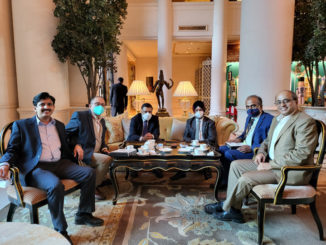
    NEW YORK (TIP): The U.S.-Indian relationship is fast building a strategic partnership  and the two sides working together with  regional groupings as highlighted by the Indian Prime Minister and the US President including ASEAN and Quad members, to promote shared interests in the Indo-Pacific region and beyond; developing a trade and investment partnership that increases prosperity for working families in both countries; finishing the fight against the COVID-19 pandemic and other health challenges; galvanizing global efforts to scale up climate action;  strengthening democratic values and institutions in support of our respective peoples; and enhancing people-to-people ties that have made both countries stronger, Mr. H.S. Panaser said in a press note to The Indian Panorama.

    President Joe Biden has created history by appointing about 60 Indian Americans to key positions in his administration. The latest is the senate approval of The White House Office of National Drug Control Policy, Dr. Rahul Gupta. It was a great pleasure joining him during his first visit to India after his taking over the position.

    As President of Global Indian Trade and Cultural Council, USA, (GITCC) Mr. Panaser visited India with Advisors on Board  Mr. Suresh Khanna,  Chairman of M/s. Stabicon Life Sciences Pvt. Ltd and Member of the Board of Millipore Pvt. Ltd. India, a JV company of Millipore Corporation USA. Mr. Anand. Krishnamurthy,  CEO of Coolsoft LLC, USA, Gen. Dilawar Singh. The group visited, Delhi, Bangalore, Ahmedabad, and Chandigarh respectively. They had an opportunity to meet bureaucrats overseeing healthcare,  IT and irrigation in the  states of Haryana and Punjab.They  had meeting and discussions with Industry leaders and Indian bureaucrats on Pharmaceutical and Medical devices manufacturing emphasizing on joint ventures, mergers both for generic and prescription products and API. The visiting  team also discussed about new software and usage of AI and ML in the healthcare sector.

    Mr. Panaser has a strong network of Angel Investors, Venture Capitalists and other Financial Consultants. India has very experienced and qualified pool of people who can assist in Formulation Product Development, Compiling dossiers for product registration for markets worldwide, API DMF, SOP Writing, Clinical Data Management, Validation protocols etc. at a very competitive cost. These costs will be affordable by many small and medium scale companies, thereby making them competitive commercially., Mr. Panaser’s press note said.

    Mr. Panaser also talked to Dr. Rahul Gupta about starting a government private partnership for spearheading campaigns on Drug awareness in border states to fight widespread drug menace in India under corporate social responsibility following the US model. The visiting team had a fruitful meeting with Mr. Ravi Nath Sinha, Director, MSME Business Forum of India  and General Dilawar Singh, Director General Skill Development, Member Consultative Committee for New Educational Policy · Member, National Committee on Management of Youth.

  • Indian-origin Sikh taxi driver’s hate crime attacker charged

    Indian-origin Sikh taxi driver’s hate crime attacker charged

    NEW YORK (TIP): Authorities in the US have arrested and charged with hate crime a man, who attacked an Indian-origin Sikh taxi driver at JFK International Airport here, knocked off his turban and yelled at him “turbaned people, go back to your country”. Mohamed Hassanain was arrested on Thursday, January 13,  for the January 3 attack on the Sikh taxi driver, who is being identified only as Mr. Singh out of respect for his request for privacy. It’s not enough to say that we need to fight AAPI hate. We actually need our elected officials to get involved with consequences for those who commit acts of violence against our community. @GregMeeksNYC @NYCMayor@AdrienneToYou @yuhline @rontkimpic.twitter.com/Dkk23lQw0g

    — Navjot Pal Kaur (@navjotpkaur) January 4, 2022

    The Port Authority of New York and New Jersey Police Department (PAPD) confirmed on Friday that Hassanain was arrested for the attack against Singh, said community-based civil and human rights organization The Sikh Coalition. The incident is being considered a hate crime, given that Hassanain shouted “go back to your country” and called Singh “turbaned people” in a derogatory manner while repeatedly punching and shoving him, it said.

    Hassanain is being charged with Assault in the Third Degree as a Hate Crime, Assault in the Third Degree, and Aggravated Harassment in the Second Degree, and will be arraigned on Saturday, it added.

    “I am thankful to law enforcement, the Sikh Coalition, and all those in the community who have offered their strength in this difficult time,” Singh said in a statement to The Sikh Coalition.

    “No one should experience what I did–but if they do, I hope they receive the same overwhelming amount of support and quick, professional action by the authorities in response,” he said.

    On January 3, New York City resident Singh was physically attacked and berated near his cab at JFK International Airport. Singh had parked his cab at the Terminal 4 taxi stand when another driver blocked his vehicle.

    When Singh picked up a customer, he stepped out of his car to ask the other driver to move. The other driver attempted to hit Singh with his own car door; he then began repeatedly punching Singh in the head, chest, and arms, causing his turban to become unraveled and fall off, the statement said. The other driver called Singh “turbaned people” and shouted at him to “go back to your country,” according to the statement issued by the organization. Sikh Coalition Legal Director Amrith Kaur Aakre said the organization was grateful to the Port Authority Police Department and Queens District Attorney’s Office for their prompt action in this case, and for recognizing that the attack on Singh included clear anti-Sikh bias.

    “This case underscores the importance of sharing all of the details of these kinds of attacks with law enforcement. Holding perpetrators accountable for both their actions and their hateful motivations is the clearest way to show that bigotry, and the violence that it fuels, have no place in our communities,” Aakre said.

    Singh had filed a report with the Port Authority Police Department immediately after the incident.

    The Sikh Coalition worked to ensure that the report “paints an accurate picture of the attack given the language barrier during the initial conversations.” The organization’s staff had accompanied Singh to a meeting with a detective to provide language assistance and legal support.

    The organization said that in its experience, taxi and rideshare drivers from the Sikh community are at a heightened risk of hateful assault.

    Navjot Pal Kaur had posted the 26-second video of the attack on January 4 on Twitter and it soon went viral. Kaur had tweeted, “This video was taken by a bystander at John F. Kennedy international Airport. I do not own the rights to this video. But I just wanted to highlight the fact that hatred continues to remain in our society and unfortunately I’ve seen Sikh cab drivers get assaulted again and again.” Simran Jeet Singh, author and Director for the Aspen Institute’s Inclusive America Project, tweeted “Another Sikh cab driver assaulted. This one at JFK Airport in NYC. So upsetting to see. But it’s crucial that we don’t look away…What I am sure of is how painful it is to watch our fathers and elders get assaulted while they’re just trying to live an honest life.” “For those who aren’t Sikh, I can’t put into words what it means to have your turban knocked off — or to see someone else’s turban knocked off. It’s visceral and gut-wrenching and just so disheartening to witness,” Singh tweeted.

    India’s Consulate General in New York had termed the assault on the Sikh taxi driver as “deeply disturbing” and said it has taken up the matter with US authorities and urged them to investigate this violent incident.

    The US State Department also said it was “deeply disturbed” by reports of the attack on the Sikh cab driver at JFK International Airport, captured on video.

    “Our diversity makes the U.S. stronger, & we condemn any form of hate-based violence,” the State Department’s Bureau of South and Central Asian Affairs (SCA) had tweeted.

    “We all have a responsibility to hold perpetrators of hate crimes accountable for their actions, no matter where such crimes occur,” it said in the tweet.

  • Senate Committee Confirms Garcetti nomination as US Ambassador to India

    Senate Committee Confirms Garcetti nomination as US Ambassador to India

    WASHINGTON, D.C. (TIP): Los Angeles Mayor Eric Garcetti, who played a key role in the city landing the hosting rights for the 2028 Olympic and Paralympic Games, has moved a step closer to being appointed the United States Ambassador to India. The Senate Foreign Relations Committee this week confirmed the nomination of Garcetti to the role. It now needs to be approved by a majority of the US Senate, which is expected to be a formality.

    Garcetti had been widely tipped to be appointed as the US Ambassador to India before President Joe Biden announced the nomination on July 9. The 50-year-old had considered standing for President last year but decided against putting his name forward and instead threw his support behind Biden, becoming part of his inner circle.

    It had been expected that Garcetti would be rewarded by Biden with a role in his White House Cabinet.

    Garcetti, however, stepped back from accepting such a position because he claimed he could not leave his role as Mayor when Los Angeles was struggling to recover from the effects of the COVID-19 pandemic. Under election rules, Garcetti has to step down in November 2022 after completing two terms as Los Angeles Mayor.

    The White House credited Garcetti with leading the city’s successful bid to host the 2028 Olympics when announcing the proposed appointment.

    Helping Los Angeles secure the Games for a third time, following 1932 and 1984, will be considered a highlight of Garcetti’s time as Mayor.

    But he has faced criticism for failing to tackle Los Angeles’ homelessness problem, despite the Federal Government releasing funds to help address it during the pandemic. Garcetti has also come under fire for failing to tackle the problem of many streets and sidewalks remaining cratered and crumbling, despite his early pledge to make fixing them a cornerstone of his administration.

    Under Garcetti, the murder rate in Los Angeles has also continued to climb. Garcetti was last month questioned by Senators over the alleged sexual harassment committed by his former adviser, Rick Jacobs.

    “I want to say unequivocally that I never witnessed, nor was it brought to my attention, that behavior that has been alleged,” Garcetti said during an appearance in front of the Senate Foreign Relations Committee.

    “And I also want to assure you that if it had been, I would have immediately taken action to stop that.” Los Angeles was given the right to stage the 2028 Olympics by the International Olympic Committee in September 2017 in an historic double award, which saw Paris allocated as hosts of the Games in 2024.

    (Agencies)

  • CDC moves 22 new destinations into its highest-risk level for travel

    CDC moves 22 new destinations into its highest-risk level for travel

    WASHINGTON, D.C. (TIP): The US Centers for Disease Control and Prevention moved a whopping 22 nations into its highest-risk travel category for Covid-19 on Tuesday, January 18. By contrast, it moved only two nations to Level 4, or “very high” risk, last week, according to a CNN report. Adding to the impact: The CDC also moved 22 additional  nations to its Level 3 category, which is considered “high” risk for Covid-19.

    Among the nations moved to Level 4 this week were Argentina and Australia, which have maintained some of the strictest borders controls during most of the pandemic. The CDC places a destination at Level 4 when more than 500 cases per 100,000 residents are registered in the past 28 days. The CDC advises travelers to avoid travel to Level 4 countries. Egypt, where the Giza Pyramids are a huge tourist draw, moved into the CDC’s highest-risk category for travel on Tuesday.

    The 22 new destinations, with at least one entry from every continent but Antarctica, at Level 4 are:

    • Albania
    • Argentina
    • Australia
    • Bahamas
    • Bahrain
    • Bermuda
    • Bolivia
    • British Virgin Islands
    • Cape Verde
    • Egypt
    • Grenada
    • Guyana
    • Israel
    • Panama
    • Qatar
    • Saint Kitts and Nevis
    • Saint Lucia
    • São Tomé and Príncipe
    • Sint Maarten
    • Suriname
    • Turks and Caicos Islands
    • Uruguay
  • Major airlines cancel, change flights to United States over 5G dispute

    Major airlines cancel, change flights to United States over 5G dispute

    5G service uses a segment of the radio spectrum that is close to that used by radio altimeters, which are devices that measure the height of aircraft above the ground and help pilots land in low visibility

    DUBAI/ NEW YORK (TIP): Major international airlines cancelled flights heading to the US or changed the planes they’re using Wednesday, the latest complication in a dispute over concerns that 5G mobile phone service could interfere with aircraft technology. Some airlines said they were warned that the Boeing 777, a plane used by carriers worldwide, was particularly affected by the new high-speed wireless service. The aircraft is the workhorse for Dubai-based Emirates, a key carrier for East-West travel, and its flight schedule took one of the biggest hits.

    It was not clear how disruptive the cancellations would be. Several airlines said they would try to merely use different planes to maintain their service.

    The cancellations and changes came a day after mobile phone carriers AT&T and Verizon said they would postpone new wireless service near some US airports planned for this week.

    The US Federal Aviation Administration has cleared a number of aircraft to fly into airports with 5G signals, but the Boeing 777 is not on the list.

    Similar mobile networks have been deployed in dozens of other countries — sometimes with concessions like reducing the power of the networks near airports, as France has done.

    But in the US, the issue has pitted the FAA and the airlines against the Federal Communications Commission and the telecoms companies. The 5G service uses a segment of the radio spectrum that is close to that used by radio altimeters, which are devices that measure the height of aircraft above the ground and help pilots land in low visibility. The FCC, which set a buffer between the 5G band and the spectrum that planes use, determined that it could be used safely in the vicinity of air traffic. AT&T and Verizon have said their equipment will not interfere with aircraft electronics.

    But FAA officials saw a potential problem, and the telecom companies agreed to a pause while it is addressed.

    On Wednesday, Emirates announced it would halt flights to several American cities due to “operational concerns associated with the planned deployment of 5G mobile network services in the US at certain airports.” It said it would continue flights to Los Angeles, New York and Washington.

    “We are working closely with aircraft manufacturers and the relevant authorities to alleviate operational concerns, and we hope to resume our US services as soon as possible,” the state-owned airline said.

    Of particular concern appears to be the Boeing 777. Emirates only flies that model and the Airbus A380 jumbo jet.

    Japan’s All Nippon Airways said that the FAA “has indicated that radio waves from the 5G wireless service may interfere with aircraft altimeters.”

    “Boeing has announced flight restrictions on all airlines operating the Boeing 777 aircraft, and we have cancelled or changed the aircraft for some flights to/from the US based on the announcement by Boeing,” ANA said.

    It cancelled 20 flights over the issue to cities such as Chicago, Los Angeles and New York.

    Japan Airlines similarly said that it had been informed that 5G signals “may interfere with the radio altimeter installed on the Boeing 777”.

    It said it will stop using the model in the continental US for now. Eight of its flights were affected Wednesday — three passenger trips and five for cargo. Taiwan’s EVA Air also said the FAA specifically said 777s may be affected, but it did not spell out how it would adjust its schedule.

    But Air France said it planned to continue flying its Boeing 777s into American airports. It did not explain why it didn’t change its aircraft as many other carriers have.

    Chicago-based Boeing Co. did not immediately respond to a request for comment.

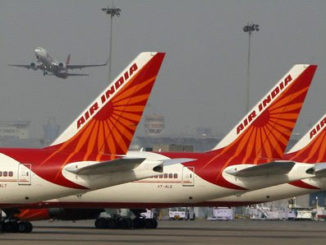
    Air India also announced on Twitter it would cancel flights to Chicago, Newark, New York and San Francisco because of the 5G issue.

    But it also said it would try to use other aircraft on US routes — a course several other airlines took.

    Korean Air, Hong Kong’s Cathay Pacific and Austrian Airlines said they substituted different planes for flights that were scheduled to use 777s. Korean Air spokeswoman Jill Chung said the airline was also avoiding operating some kinds of 747s at affected airports.

    Germany’s Lufthansa also swapped out one kind of 747 for another on some US-bound flights.

    British Airways cancelled several planned US-bound Boeing 777 flights and changed aircraft on others.

    The FAA has said it will allow planes with accurate, reliable altimeters to operate around high-power 5G. But planes with older altimeters will not be allowed to make landings under low-visibility conditions.

    Part of the problem, according to the FAA, are the signal strength of the 5G towers and the orientation of their antennae. “Base stations in rural areas of the United States are permitted to emit at higher levels in comparison to other countries which may affect radio altimeter equipment accuracy and reliability,” the FAA said in December.

    The FCC’s chairwoman said in a statement that the 5G “deployment can safely co-exist with aviation technologies in the United States, just as it does in other countries around the world.” However, Jessica Rosenworcel urged the FAA to conduct its safety checks with “both care and speed.” AT&T and Verizon spent tens of billions of dollars for the 5G spectrum known as C-Band in a government auction last year.

    Choi Jong-yun, a spokeswoman of Asiana Airlines, said the company hasn’t been affected so far because it uses Airbus planes for passenger flights to the US However, Choi raised a new wrinkle, saying airlines have also been instructed by the FAA to avoid automatic landings at affected US airports during bad weather conditions, regardless of plane type. Asiana will redirect its planes to nearby airports during those conditions, she said.

    (Agencies)

  • Expert CEO Forum at 15th AAPI Global Healthcare Summit 2022 Urges Modi Govt. to Appoint an Indian Preventive Task Force (IPTF)

    Expert CEO Forum at 15th AAPI Global Healthcare Summit 2022 Urges Modi Govt. to Appoint an Indian Preventive Task Force (IPTF)

    HYDERABAD / NEW YORK (TIP): The Healthcare industry in India and worldwide is rapidly changing, leading to many describing the healthcare environment as dynamic, complex, and highly uncertain. How the health care environment is perceived and characterized is vital for several reasons.  In this context, continuing with the traditions on the successful experiences of the past Global Health Summits, the largest ethnic medical organization in the United States, The American Association of Physicians of Indian Origin (AAPI) organized the next edition of the influential Healthcare CEOs Forum on January 7th in Hyderabad during the 15th annual Global Healthcare Summit 2022.

    During the much anticipated CEOs Forum, a panel of healthcare experts, health industry leaders, opinion makers, and community organizers discussed the significance of promoting Preventive healthcare in India.

    The CEO Forum Unanimously approved “An Appeal by AAPI to the Government of India to initiate efforts for creating an Indian Preventive Task Force (IPTF) and conduct annual preventive healthcare screenings nationwide,” benefitting the 1.4 billion people in India.

    “We are excited to welcome you to the 15th Global Healthcare Summit and this elite panel of experts and physicians and healthcare industry leaders from India and the United States, offering an excellent platform to brainstorm and explore ways to focus on the theme, “Transformation of Healthcare through Telehealth and Technology usage during this post-Covid Era,” and to have an opportunity to recommend possible ways to plan and implement preventive medicine that will save resources and precious human lives,” said Dr. Anupama Gotimukula, President of AAPI.

    Prof. Joseph Chalil, Chair of AAPI’s CEO Form, who organized such an elite panel of healthcare leaders, said, “AAPI, under the guidance of President Dr. Anupama Gotimukula, would like to collaborate with the Healthcare leaders in proposing the creation of an Indian Preventive Task Force (IPTF). IPTF guidelines should be promoted and implemented as part of the annual physical exam or telemedicine visit at government hospitals and primary care centers. We envision a great future for our country with the direct result of complex interactions at this forum with your assistance, guidance, and experience.”

    Analyzing and assimilating the diverse and expert views expressed by the renowned speakers at the CEO Forum regarding the current state of healthcare in India, the CEO Forum provided a great stage to interact with a varied and distinct group of individuals and corporations and comprehend the complex dynamics of the commerce of health care enterprise.

    “At the CEO forum, AAPI is excited to perceive, debate, and walk towards a common goal of “Preventive medicine is better than Cure.”  We intend to promote preventive care guidelines in India by collaborating with Indian Physicians, Pharmaceutical companies, modern diagnostic labs, medical device companies, robust hospital chains, and public health experts,” Prof (Dr) Joseph M. Chalil, Chair of the Complex Health Systems advisory board at Nova Southeastern University’s School of Business; Chairman of the Indo-American Press Club and The Universal News Network publisher, added.

    In her eloquent keynote address, Dr. Sangita Reddy, a Global Healthcare Leader, Indian Entrepreneur, and Humanitarian, is the Joint Managing Director of Apollo Hospitals Enterprise Limited – Asia’s largest and most trusted healthcare group, shared her passion for the care of the masses, using technology to reach out. Her conviction in using the Internet for patient management was substantiated by an MOU signed between Apollo Hospitals and AAPI for Telemedicine for Second Opinions. “Healthcare is in the center stage as never been before. Let us work together to bring about the transformation in healthcare. Technology is the great growling engine of change and transformation. It transforms quietly and silently,” she said.

    Attended by a record 17 senior leaders from the healthcare industry, several challenges were addressed by multiple renowned speakers from the healthcare field, deliberating on the healthcare delivery system in India. Expert panelists who were part of the CEO Forum included: Prof. MD Nalapat, Vice-Chair of Manipal Advanced Research Group; Prof. (Dr.), Joseph M Chalil

    Global Healthcare Strategist & Best Selling Autor; Dr. Sangita Reddy, Joint Managing Director of Apollo Hospitals Enterprise Limited; Dr. Juby A Jacob-Nara, Vice President, Head of Global Medical- Respiratory Allergy & Gastroenterology (Sanofi-Genzyme); Dr. Anuj Maheshwari, the current Governor of the American College of Physicians India Chapter and the Vice President of Research Society for Study of Diabetes in India (RSSDI); Dr. Gurava Reddy, Founder & Chairman, Sunshine Hospitals; Dr. Karthik Anantharaman Chief Operating Officer, Karnataka cluster of Roche India; Dr. Vikas Bhatia, Director of All India Institute of Medical Sciences, Hyderabad, and the founder, Dean of AIIMS Bhubaneshwar; Gaurav Agarwal, Managing Director of IITPL and co-founder of Involution Healthcare Pvt. Ltd; Shekhar Sattiraju, Senior Director – Takeda Pharmaceuticals, USA; Dr. Aarti Shah, Trustee, SRLC-USA; former senior VP of Eli Lilly; Dr. Neyas Mohammed, Chairman, AEC GROUP; Dr. Murthy Gokula, CEO & Founder, Global Tele Clinics; Dr. Venkat Ramana Sudigali, Founder-Director Excell Multispeciality Hospital, Hyderabad; Mr. Narayana Rao Sripada, Founder/CTO, Salcit Technologies Pvt. Ltd; and Ravi Gopalan, President & CEO of Argusoft India Ltd.

    The CEO Forum unanimously approved “An Appeal by AAPI to the Government of India to initiate efforts for creating an Indian Preventive Task Force and conduct annual preventive healthcare screenings nationwide.” And an appeal was signed by the panelists to be submitted to the Honorable Prime Minister of India, Shri Narendra Modi, and India’s Ministry of Health.

    “We urge the Government of India to appoint an expert panel of nationally recognized experts in the disciplines of preventive medicine and primary care, including Internal medicine, Family medicine, Geriatrics, Pediatrics, Preventive medicine, Behavioural, Critical Care medicine, public health, mental health, obstetrics and gynecology, and nursing to create an Indian Preventive Task Force (IPTF),” the Panelists on the CEO Forum wrote to the Government of India.

    Urging the Government of India to encourage private hospitals and insurance companies to provide Annual Physical exams, or Telehealth visits at an affordable cost to patients, the CEO Forum members stated, “many routine lab tests, vaccinations, blood pressure checks, and some cancer screenings like self-breast examination can be done remotely and even at patients’ homes with the help of Asha workers.”

    “We believe, the largest democracy in the world needs urgent investment in the preventive health of all its citizens and grassroots level reforms of the public healthcare system,” the letter to the Government of India, pointed out. “AAPI will be happy to collaborate with the appropriate authority of the Government of India to support India in its efforts to provide one of the best healthcare systems in the world.”

    With the changing trends and statistics in healthcare, both in India and US, we are refocusing our mission and vision, AAPI would like to make a positive and meaningful impact on the healthcare delivery system both in the US and in India,” said Dr. Gotimukula.

    American Association of Physicians of Indian Origin (AAPI), the largest ethnic physician organization in the United States, representing over 100,000 Indian American Physicians, has initiated preventive healthcare screenings in 75 Indian villages to diagnose any silent diseases, which are causing premature deaths from Diabetes, Hypertension, Renal disease,  Coronary heart disease and cancers like Breast cancer, cervical cancer, which are preventable if diagnosed early through these annual screenings.

    For more information on Global Health Summit, please visit: https://summit.aapiusa.org/ceo-forum/  CEO Forum Video: https://youtu.be/t1cw1toalAQ

    (Based on a press release issued by  Ajay Ghosh)

  • Federation of Indian Associations Chicago elects Sunil Shah as Chairman

    Federation of Indian Associations Chicago elects Sunil Shah as Chairman

    FIA Team (Photographs : courtesy Asian Media USA)

    CHICAGO, IL (TIP): FIAFounder President Sunil Shah has been conferred the title of the Chairman of the FIA Board in recognition of his services to the organization.

     The meeting was a significant one, not just because it was the first meeting under the leadership of President Hitesh Gandhi, but it also marked a new beginning for the entire Team FIA, as it passed a long pending motion, and unanimously appointed Sunil Shah as FIA Chairman.

    (Based on a Press release by FIA)

  • India’s watchwords in a not so bright 2022

    India’s watchwords in a not so bright 2022

    By M.K. Narayanan

    There are risks that could be both domestic and geopolitical and New Delhi must take care to read the signals properly.

    Diplomatically, in 2022, India may find itself vulnerable in dealing with the turmoils which have occurred in two areas of strategic interest to it, viz. Central Asia and West Asia. Both areas are undergoing a churn — not all of it to India’s liking.

    An intense debate is on among political strategists and commentators about what is in store in 2022. Most hew to the view that a rules based international order is a remote possibility. Instead, uncertainty and impermanence are likely to be the dominant aspect in world affairs.

    Risks in 2022 could be both domestic and geopolitical, with many precepts that the world has been accustomed to being at risk. Democracy itself could face serious headwinds this year.

    A paramount issue as 2022 begins, is the future of democracy. Admittedly, the world has recently seen the rise of authoritarian rulers in many countries — though by itself this can hardly be viewed as a new phenomenon. What is worrisome is that democratic tenets which have been under attack in recent years appear set to face more onslaughts this year. Adding grist to concerns about democracy’s future, is that the United States, which was widely viewed as a major bulwark for democracy, appears to have developed certain pathological infirmities. This situation does not augur well for the future of democracy worldwide.

    China as disruptor

    Equally daunting as we enter 2022 are the geopolitical challenges and risks. The role of China is possibly the most disrupting one, given the challenge it poses to the existing international order. With a GDP of $15.66 trillion in 2020, its net worth today is estimated to be higher than that of the U.S.; and, hence, it demands to be recognized as much. Militarily, China is openly challenging U.S. supremacy in many areas, including ‘state-of-the-art weaponry’ such as hyper-sonic technology.

    China has abandoned the ‘one country two systems’ policy, stripping Hong Kong of its freedom and inviting international opprobrium. It is now threatening Taiwan, which could well become one of the flash points of conflict in 2022. The West meanwhile does not realize what could happen if the stakes of ‘cross-strait relations’ between China and Taiwan get higher in 2022. It might well be that in order to ‘save face’ with regard to Taiwan (which China regards as its territory); China could provoke a serious conflict.

    The dip in China’s economic profile in the past year and more (which China hardly acknowledges) could also lead to new tensions in the Asia-Pacific region in 2022. To outsiders, the Chinese economy has entered a period of relative uncertainty and is looking more vulnerable. Under Chinese President Xi Jinping, however, China is unlikely to acknowledge that this would entail any reduction in its military capabilities, at least as far the Asia-Pacific is concerned. Instead, it might well be tempted to demonstrate that it still has the ability to get the better of the U.S. in the Pacific region — where it holds more cards than the U.S. — and also demonstrate that it has the ability to ramp up its military capabilities, while the U.S. is reducing its forces in the Indo-Pacific region. Uncertainty per se, could constitute a serious risk.

    Russia-Ukraine conflict

    The other major risk of a war in 2022, stems from the ongoing conflict between Russia and Ukraine — the latter being backed by the U.S. and North Atlantic Treaty Organization (NATO) forces. It is difficult to discern as to which side is indulging in provocation, but what is not contested is that during the past three decades, NATO has expanded its reach almost 1,000 miles to the east in violation of an earlier tacit understanding. Russian President Vladimir Putin appears determined that Ukraine should be the ‘last frontier’ and, if need be, ensure this through military force. The situation has grave possibilities and could result in a series of cyclical outcomes with considerable damage potential.

    Apart from the grave risk of a possible war or conflict, what is also evident is that ‘peace is not at hand’ across vast regions of the globe in 2022. The current unrest in Kazakhstan, which till recently was one of the more stable Central Asian nations, is perhaps symptomatic of what is in store. Whether recent events in Kazakhstan reflect a new round of ‘color revolutions’ or not, it demonstrates a sharper cleavage between the U.S.-led West and its principal opponents, Russia and China. This bodes ill for a world already wracked by a series of coups or internecine strife as in Ethiopia, Libya and certain regions of West Asia and North Africa.

    Return of the Taliban

    Of particular significance to India is that the Taliban’s return to power in Afghanistan has led to a material shift in the balance of power in an already troubled region on India’s periphery. Notwithstanding the general belief that the Taliban’s return to power represents a significant victory for Pakistan, it has become evident, more lately, that this comes with a great deal of baggage — both for Pakistan and much of Asia. Developments in Afghanistan have fueled the ambitions of quite a few ‘anti-state militant groups’ across the region. Even in Pakistan, the Tehrik-e-Taliban Pakistan (TTP) has become energized and is enlarging its sphere of action to other parts of Asia, notably Kazakhstan. More important is that it is well known that the TTP is a by-product of al Qaeda jihadi politics and still has covert links with the al Qaeda. This will have an unsettling effect across large parts of Asia.

    Adding to such concerns is new evidence that on India’s eastern flank, viz. Indonesia, a resurgence of radical Islamist activities is taking place. The Jemaah Islamiyah has reportedly become more active in Indonesia. All this provides fertile ground for other radical Islamist terror groups to enlarge their activities across the Asian region, providing a fillip to groups like the Islamic State, especially the Islamic State of Khorasan.

    Border issues for India

    As 2022 dawns, India’s problems are only likely to intensify. The most serious issue that India confronts today is how to deal with a China that has become more confrontational. The transgressions across the Line of Actual Control in different sectors in Ladakh — which were till now seen as merely an attempt by China to restrict and limit India’s options — could well be expanded in 2022. India’s membership of the four nation Quad (the U.S., Japan, Australia and India) still rankles as far as China’s psyche is concerned, and during 2022, may well result in China embarking on new adventurist actions at many more points on the Sino-Indian border compelling India to react. Hence, 2022 is unlikely to see any reduction in tensions across Ladakh, Arunachal Pradesh and the Middle Sector.

    Additionally, India will need to determine how best to respond to China’s saber-rattling. India will need to develop a strategy on how to counter the publicity given by China to its low-yield nuclear weapons meant for battlefield use even during conventional military operations and against conventional targets. India would need to strengthen its military posture, both as a means to deter China and also to convince India’s neighbors that it can stand up to China. Simultaneously, India cannot avoid, in 2022, suitably positioning itself on how best to deter China’s naval force projection in the Indian Ocean Region and the publicity it has given to the additions made of new type nuclear power ballistic missile submarines to their existing fleet. In the battle of wits and strength, much will depend on how India responds to the situation.

    Diplomatically, in 2022, India may find itself vulnerable in dealing with the turmoils which have occurred in two areas of strategic interest to it, viz. Central Asia and West Asia. Both areas are undergoing a churn — not all of it to India’s liking. In Central Asia, India will be challenged on how best to manage its traditional friendship with Russia with the pronounced tilt seen more recently in India-U.S. relations. In West Asia, the challenge for India is how to manage its membership of the Second Quad (India, Israel, the United Arab Emirates and the U.S.) with the conflicting interests of different players in the region. Membership of the Quad makes India a key player in a region which has become a quagmire of intense rivalries notwithstanding the 2020 Abraham Accords. Indian diplomacy will be under severe test to manage the extant situation in both regions.

    Path to tread

    It is easy to say that what India and India’s foreign policy need to do is to demonstrate more flexibility to manage the contradictions that exist. However, this is hardly feasible in practical terms, in most instances. There is a limit to the kind of balancing act that India can perform, whether it be with regard to buying S-400 missile systems from Russia, risking potential sanctions from Washington under Countering America’s Adversaries Through Sanctions Act (CAATSA) or maneuvering between the Arab States, Israel, Iran and the U.S. in West Asia.

    For India, the outlook is, hence, not particularly bright in 2022. No grand strategy is evident as of now but it is important that India finds rational answers to a rash of problems that it cannot keep on the back burner for much longer. What India must do is avoid blind spots that arise due to cognitive bias and take care to read the signals properly. Facing a host of unprecedented challenges, India’s leaders and diplomats must not only take stock of the dangers that exist but also be ready on how to manage the risks that are well evident.

    (The author is a former Director, Intelligence Bureau, a former National Security Adviser and a former Governor of West Bengal)

  • India’s N-project going strong

    India’s N-project going strong

    Capable of meeting challenges faced by national security

    By G Parthasarathy

    China now possesses 350 nuclear warheads, while Pakistan has 165, and India 156, according to the latest assessment of the Stockholm International Peace Institute (SIPRI). Apart from its land-based nuclear missiles, India launched its third nuclear submarine barely a month ago. It is said to have a capability to launch eight ballistic missiles. The two earlier submarines can reportedly launch four missiles each. India now has the capability of ‘canisterising’, or storing the missiles in a sealed, climate controlled tube to protect them during transportation. This would apply to the entire range of missiles, including the recently tested Agni-P and the Agni-V, which has a range of 5,500 km. Many studies allude to an important role of the French-built Mirage 2000 and Rafale, as carriers of India’s nuclear weapons.

    An important feature of India’s nuclear deterrent has been the calibrated secrecy surrounding its growth. This is essential, as India’s nuclear weapons and missile programs have a large involvement of dedicated scientists and engineers from the DRDO, the Department of Atomic Energy, academic institutions, and commercial organizations from the public and private sectors. India’s nuclear weapons programme is under continuing worldwide scrutiny, including by specialist organizations like the Federation of American Scientists and similar organizations in the UK, France, Russia, and doubtless, China and Pakistan.

    India has produced three nuclear-powered submarines, and could induct the fourth next year.

    While Indian scientists have made discreet statements about our ballistic missile tests, one finds more details of our nuclear weapons and ballistic missiles in studies by American scientific publications like the Bulletin of Atomic Scientists and other organizations like the MacArthur Foundation. Such studies are carefully researched and counterchecked. These are not significantly different from what one periodically finds in writings in India.

    According to the Bulletin of Atomic Scientists, India has enough weapons grade plutonium to produce 150 to 200 nuclear weapons, with a current estimated stockpile of 150 nuclear weapons. There is potential to step up production of fissile material significantly through the growing numbers of fast breeder and other plutonium reactors. According to the infamous Dr AQ Khan, Pakistan provided China with the centrifuge technology for enriched uranium, whose details he had purloined in Europe in the 1970s and 1980s. China, in turn, provided Pakistan the knowhow to utilize enriched uranium produced in Pakistan for nuclear weapons. The then US President Jimmy Carter looked the other way at these developments after he was swept off his feet by his ‘friendship’ with Chinese leader Deng Xiaoping.

    China now possesses 350 nuclear warheads, while Pakistan has 165, and India 156, according to the latest assessment of the Stockholm International Peace Institute (SIPRI). Apart from its land-based nuclear missiles, India launched its third nuclear submarine barely a month ago. It is said to have a capability to launch eight ballistic missiles. The two earlier submarines can reportedly launch four missiles each. India now has the capability of ‘canister sing’, or storing the missiles in a sealed, climate controlled tube to protect them during transportation. This would apply to the entire range of missiles, including the recently tested Agni-P and the Agni-V, which has a range of 5,500 km. Many studies allude to an important role of the French-built Mirage 2000 and Rafale, as carriers of India’s nuclear weapons.

    China has provided Pakistan with the designs for its nuclear weapons and a wide range of missiles. The missiles provided by China to Pakistan extend from the short range (320 km) Ghaznavi missiles to Shaheen 2 (2,500 km) and Shaheen 3 (2,750 km). The Chinese nuclear weapons designs given to Pakistan were transferred by AQ Khan to Islamic countries with nuclear ambitions, like Libya and Iraq. While India now has produced three nuclear-powered submarines, there are reports that a fourth submarine could be inducted next year. There are also reports that India is developing the technology for multiple warheads on its missiles. A recent report by the Federation of American Scientists noted that India carried out the second test of its Agni-P missile. The first test of the missile was reportedly carried out in January 2020. This could lead to the missile being berthed in the growing fleet of India’s nuclear submarines. This would be complemented by submarine-launched Agni-V missiles with multiple warheads.

    China will inevitably continue to pretend it has no interest in having any nuclear dialogue with India. India is, in the meantime, also developing a K-4 submarine-launched missile, with a 3,500-km range. It is a naval version of Agni-3, an intermediate-range ballistic missile (IRBM). The K-4 has undergone a number of tests but it has yet to be deployed. The missile was tested in January 2020. Though the DRDO did not confirm the test, media reports, quoting officials, claimed that the launch was successful. While Pakistan has not formally enunciated a nuclear doctrine, the long-time head of the Strategic Planning Division of its Nuclear Command Authority, Lt Gen Khalid Kidwai, told a team of physicists from Italy’s Landau Network in 2002 that Pakistan’s nuclear weapons were ‘aimed solely at India’. Kidwai added that Pakistan would use nuclear weapons if India conquers a large part of Pakistan’s territory, or destroys a large part of Pakistan’s land and air forces, or if India tries to ‘economically strangle’ Pakistan, or pushes it to political destabilization.

    This elucidation, by the man who has been the de facto custodian of Pakistan’s nuclear arsenal for over a decade and a POW in India in 1971-73, was a precise formulation of Pakistan’s nuclear thresholds. It is now clear that a bankrupt Pakistan facing pressure from international finance organizations will have to think carefully before resorting to support for terrorists seeking to destabilize India. With the Taliban supporting Pashtun aspirations on issues like the Durand Line, India’s readiness to provide essential economic assistance to Kabul should be taken forward. Defense Minister Rajnath Singh recently noted that while India presently stood by its commitment of ‘no first use’ of nuclear weapons, ‘what happens in future depends on the circumstances’.

    The nation needs to always remember the contribution of Dr APJ Abdul Kalam, his team of engineers and scientists, and the distinguished scientists in the Department of Atomic Energy for developing the country’s nuclear and missile potential to meet the challenges to national security, posed jointly by China and Pakistan. There is also need to remember those in the private sector, who discreetly played a key role in this effort.

    (The author is Chancellor, Jammu Central University & former High Commissioner to Pakistan)

  • Election Commission of India’s Gesture

    Putting off Punjab polls welcome, but Covid concerns persist

    The Election Commission of India (ECI) deserves praise for accepting a genuine demand by the state government and various political parties to postpone the Punjab Assembly polls in view of Guru Ravidas Jayanti. Chief Minister Charanjit Singh Channi and other leaders had appealed to the poll panel to reschedule voting, which was initially slated for February 14, so that followers of Guru Ravidas — a revered poet-saint of the Bhakti movement — could travel from Punjab to Uttar Pradesh to celebrate his birth anniversary on February 16. Lakhs of devotees converge on Varanasi, the birthplace of Guru Ravidas, to pay obeisance on Magha Purnima every year.

    Unanimity among political parties is rare, especially during the election season. What has made all stakeholders speak in one voice in this case is the importance of the Ravidasia community as a vote bank. Doaba, which sends 23 MLAs to the 117-seat Punjab Assembly, accounts for lakhs of followers of Guru Ravidas. No party can afford to ignore the interests of this influential group, considering that this is apparently a ‘no wave’ election which might throw up a hung House. The bottom line is that every seat counts. However, amid the electoral compulsions, various parties have conveniently chosen to ignore the fact that the celebrations in Varanasi will witness a huge congregation under the shadow of the pandemic. The event could become a coronavirus superspreader if the third wave does not subside by mid-February. Varanasi is represented in the Lok Sabha by PM Narendra Modi, who has been repeatedly urging citizens of the country to follow Covid protocols. It will be a big challenge for the BJP government in poll-bound UP to make large crowds toe the line, particularly since cancellation of the festivities is not an option in view of the religious sentiments at stake. Last year, the Kumbh Mela in Uttarakhand was one of the contributory factors to the massive surge in infections during the devastating second wave. It remains to be seen whether adequate steps will be taken this time to ensure a Covid-safe pilgrimage.

    (Tribune, India)

  • Technology tangle: On 5G services and flight disruptions

    The roll-out of 5G services near airports is posing a challenge to airlines

    Almost 11 months after the United States’ leading telecommunications companies won bids for $81 billion worth of C-band radio spectrum to roll out 5G services, the much-awaited introduction hit a major snag this week after the country’s leading airlines warned of massive flight disruptions if the wireless technology was put into operation, especially around the nation’s airports. In a compromise on the eve of the planned roll-out on January 19, AT&T and Verizon agreed to delay introduction of the new wireless service near key airports. The two major telcos’ commitments notwithstanding, several domestic and international airlines flying to the U.S. have announced major rescheduling as well as the possibility of cancellation of flights to several destinations citing warnings from the Federal Aviation Administration (FAA) and aircraft makers that accurate functioning of radar altimeters in some aircraft may be affected by the 5G radio frequencies. The altimeters provide information on an aircraft’s altitude and are a crucial part of flight operations for pilots, particularly while seeking to make low-visibility landings in inclement weather. At the heart of the impasse lies the fact that both the 5G services and some flight equipment operate on the same C-band radio spectrum, with only the frequencies varying. The FAA has said it is working with altimeter manufacturers to evaluate data from the wireless companies to determine how robust each model is, and, if required, have the devices retrofitted or replaced.

    The fact that the world’s largest economy is now faced with the risk of large-scale domestic and international air travel disruptions as a result of the relatively belated roll-out of 5G telecom services points to the peculiar problems of the U.S. market, including the particular frequencies allotted there for 5G. South Korea, China and Japan and several European nations have already successfully rolled out 5G services and the U.S. telcos have cited the lack of problems in these jurisdictions as evidence that the FAA and airlines need to do more to find solutions to the deployment of the wireless technology near airports. The FAA on its website has pointed to the specifics of the proposed 5G roll-out in the U.S. with a comparison to the situation in France and asserted that some key differences pose challenges. For one, the aviation regulator contends planned buffer zones for U.S. airports only protect the last 20 seconds of flight, while in France the last 96 seconds of flight are protected from any interruption from 5G signals. Also, 5G power levels are lower in France, with even the planned temporary nationwide lower power levels in the U.S. still expected to be 2.5 times more powerful. U.S. President Joe Biden and his administration will have their task cut out in pushing to hammer out a long-term solution to this impasse so as to minimize any further disruption to the already pandemic-hit global travel and trade sectors.

    (The Hindu)

  • Neglecting cultural czar Munshi’s efforts

    Neglecting cultural czar Munshi’s efforts

    By Vappala Balachandran

    “A massive effort of rewriting Indian history from our traditional perspective was done between 1951 and 2003. This was by the doyen of cultural renaissance, the late Dr KM Munshi, who was also a noted litterateur, educationist, historian, freedom fighter and close associate of Patel. In 1938, Munshi founded the Bharatiya Vidya Bhavan, which has done much to spread awareness of our culture.”

    On February 17, 2021, Prime Minister Narendra Modi said that the ‘injustice’ perpetrated by historians “against those who made history” was being corrected by the ‘new India’. The occasion was the Maharaj Suheldev memorial foundation stone-laying ceremony in Uttar Pradesh, which is going to the polls next month. He added that history is not just what was written by those “who enslaved the country” or who wrote it with the “mindset of slavery”. Several RSS leaders, too, had called for ‘rewriting our history’ to free us from the distorted narration that is being taught in schools. They wanted our history to “study evolution of Indian culture from 12,000 years ago.” On March 6, 2018 Reuters reported that a committee of scholars was “quietly appointed” by the government “to use evidence such as archaeological finds and DNA (tests) to prove that today’s Hindus are directly descended from the land’s first inhabitants many thousands of years ago and make the case that ancient Hindu scriptures are fact not myth.”

    Reuters interviewed nine of the 12 members who confirmed that they were tasked with “matching archaeological and other evidence with ancient Indian scriptures or establishing that Indian civilization is much older than is widely known.”

    Lack of transparency on the composition and working of this committee gave rise to needless controversies. A report on October 18, 2020 said that 32 Members of Parliament had written to the President to disband the committee which “has no South Indians, Northeast Indians, minorities, Dalits, women and experts in languages other than Sanskrit.”

    Confirmation on the committee came on September 14, 2020 when the then Culture Minister Prahlad Singh Patel said that an expert panel was set up for the “holistic study of origin and evolution of Indian culture since 12,000 years ago.” However, a reply to an RTI query on October 11, 2021 conveyed that the committee had not submitted any report to the ASI.

    The present government and its theologians seem to be embarking on this Sisyphean task, being ignorant that a massive effort of re-writing Indian history from our traditional perspective was already done between 1951 and 2003. This was by the internationally acclaimed doyen of Indian cultural renaissance, the late Dr Kanhaiyalal Maneklal Munshi, who was also a noted litterateur, educationist, historian, freedom fighter and close associate of Sardar Vallabhbhai Patel.

    In 1938, Munshi founded the Bharatiya Vidya Bhavan, which in the course of time, has done much more than government organs to spread awareness of our traditional culture at the grassroots level in India and abroad. Presently, the Bhavan has 119 centers in India, including 100 schools, seven foreign branches and 367 associated institutions.

    Munshi set up the Bhavan for “the propagation of Bharatiya Vidya (education), which in essence is Dharma in its triple aspects of Satyam, Shivam, Sundaram (truth, goodness and beauty), as his closest colleague, the late S Ramakrishnan, would say. Munshi initiated the process by retelling Krishnavatara (Lord Krishna’s lives) in eight volumes. He set up a ‘Book University’, with the first book written by Bharat Ratna C Rajagopalachari, his peer, on the Mahabharata and the Ramayana.

    Millions of Indian children have grown up reading these classics and Munshi’s fortnightly messages in Bhavan’s Journal since 1954. The journal is published even now.

    In 1951, Munshi released ‘The Vedic Age’, the first part of Bhavan’s Book University’s 11-volume series ‘The History and Culture of the Indian People’. He said that although efforts to prepare this massive history-writing had started in 1938, it could assume concrete shape only in 1944 with generous help from GD Birla and the Shri Krishnarpan Charity Trust. The last volume was released in 2003, 32 years after Munshi’s death. Each volume is nearly 1,000 pages. Some of these volumes had gone for seven to eight reprints,

    Munshi enlisted the services of renowned historian RC Majumdar, former Vice-Chancellor of Dacca University, as full-time editor to the series. Others who wrote chapters were famous archaeologist HD Sankalia and renowned Advaita scholar TMP Mahadevan, to mention a few.

    The 11-volumes series are the ‘Vedic Age’, ‘The Age of Imperial Unity’, ‘The Classical Age’, ‘Imperial Kanauj’, ‘The Struggle for Empire’, ‘The Delhi Sultanate’, ‘Mughul Empire’, ‘The Maratha Supremacy’, two volumes on ‘The British Paramountcy — Indian Renaissance’ and, finally, ‘The Struggle for Freedom’.

    Munshi felt that the central purpose of history is to investigate and unfold the values of the people which had inspired age after age their collective will. Also, “to be a history in the true sense of the word, the work must be the story of the people inhabiting a country.” He also explained the difficulties in this enormous endeavor.

    For example, in the past, “Indians laid little store by history.” Munshi felt that the works of ancient Indian authors throwing light on history ‘were few’. At the same time, the Puranas and Kavyas had not “yielded up their chronological or historical wealth.” On the other hand, observations by foreign visitors like Megasthenes, Hiuen Tsang, Al-Masudi, Manucci and Bernier, although ‘superficial’, had “immense value in reconstructing the past”. Thus, he was of the firm opinion that we cannot ignore the foreigners’ writings.

    At the same time, our history books did not explain how India resisted the Turkish, Afghan and Moghul incursions and how a “renaissance sprang up out of the impact of Indian with Persian and Turkish cultures.” In the same way, the British period read like an ‘unofficial report’ of their conquest and not how we resisted and suffered nor how we reacted to foreign influences or “of the values and organization’s we created out of the impact with the West.”

    Perhaps, one reason why our present government is ignoring this massive collection by such credible archivists is because of Munshi’s theory of cultural assimilation in his foreword to Volume 1 (‘The Vedic Age’). Also, while discussing the existing history on the Delhi Sultanate, he had said: “Gruesome stories of Muslim atrocities are narrated, but the harmony which was evolved in social and economic life between the two communities remains unnoticed.”

    (The author is Ex-Special Secretary, Cabinet Secretariat)

  • Ven Parameswaran Bereaved; pays Tribute to his Dear Departed Sister

    Mr. Ven Parameswaran, a former Indian diplomat with the United Nations and a regular contributor to The Indian Panorama lost his younger sister Bhagyalakshmi on January 16, 2022. She was 90. The staff at The Indian Panorama are grieved at the loss of Mr. Parameswaran. They pray for eternal peace to the dear departed soul. Mr. Parameswaran in the tribute to his sister said:” Bhagyalakshmi was born immediately after me and we grew up and played together.  I have many everlasting memories of Bhagyalakshmi.

    ”Bhagyalakshmi was very loving and affectionate always to relatives and friends.  She was a creative cook and enjoyed entertaining them.  She took immense pleasure in preparing varieties of food liked by her guests, relatives and friends.  Even when she was physically unable to cook, she would sacrifice her health and entertain her guests any time of the day or night.  Whenever Bhagyalakshmi visited us, she would bring all our favorite food.

    “ Immediately after marriage, Bhagyalakshmi lived with her husband and family in Payyannur, Kerala for a year or so.  When I visited her, I found she was not happy in that environment.  At my suggestion, she moved to Calcutta with her husband, Krishnan.  She lived in Calcutta till 1978, when she immigrated to the USA.  She has two children, Balu ( mentally handicapped) and Raju.  Raju had a successful career at the U.N. and retired as Dy.Director.  Unfortunately, stroke hit Raju six years ago and living in his house with his wife Jayanthi.    Although my sister’s name represents good luck and prosperity, her life has been full of misfortune.

    “My brother-in-law expired in 1998.  Who would have expected Raju would not become normal 6 years after the stroke hit him?   Poor Bhagyalakshmi was attacked by liver cancer and her suffering especially during the last six months was pathetic.  My dear sister, Bhagyalakshmi suffered physically and psychologically for too long.   Under these circumstances, I am glad God decided to take my sister Bhagyalakshmi away so that she does not have to suffer more pain.

    “Bhagyalaskhmi lived in the US for 43 years.   Compared to her life in Payyannur and Calcutta, living in the USA was a heaven.  We used to visit Bhagyalakshmi very frequently and enjoyed her affection and love.  We were also in daily contact by phone irrespective of my location.  I had the closest relationship with my dear sister, Bhagyalakshmi, who always gave me courage when I was in distress.

    “Life is real, life is earnest; and the grave is not its goal.  I pray for Bhagyalakshmi’s soul.  As long as I live, for me she is not dead because her values and spirits stay alive always. “

    In Mourning

    Ven Parameswaran (Brother)

    Priscilla Sister-in-law)

    Prem (nephew) Bhumika (niece -in-law) Trinity, Kayla and Hudson (Grandchildren to Ven and Priscila) join me in saluting my sister Bhagyalakshmi

  • Foreign investment flow into India down 26% in 2021: UN

    Foreign investment flow into India down 26% in 2021: UN

    UNITED NATIONS (TIP): Foreign Direct Investment (FDI) flows to India in 2021 were 26% lower, mainly because large M&A deals recorded in 2020 were not repeated, the UN trade body has said. The UN Conference on Trade and Development (UNCTAD) Investment Trends Monitor published on Wednesday said global foreign direct investment flows showed a strong rebound in 2021, growing 77% to an estimated $1.65 trillion, from $929 billion in 2020, surpassing their pre-Covid level.

    “Recovery of investment flows to developing countries is encouraging, but the stagnation of new investment in the least developed countries in industries important for productive capacities, and key Sustainable Development Goals (SDG) sectors — such as electricity, food or health — is a major cause for concern,” said UNCTAD Secretary-General Rebeca Grynspan.The report said developed economies saw the biggest rise by far, with FDI reaching an estimated $777 billion in 2021 — three times the exceptionally low level in 2020.

    FDI flows in developing economies increased by 30% to nearly $870 billion, with a growth acceleration in East and South-East Asia (+20%), a recovery to near pre-pandemic levels in Latin America and the Caribbean, and an uptick in West Asia.

    (Source: PTI)

  • Recognize ‘Hinduphobia’ and violence against Buddhists, Sikhs too: Ambassador Tirumurti

    Recognize ‘Hinduphobia’ and violence against Buddhists, Sikhs too: Ambassador Tirumurti

    NEW YORK (TIP): India’s Ambassador to the United Nations says global terror strategy is selective, urges against adding right wing extremism, violent nationalism to anti-terror resolutions. Callingon the United Nations to recognize ‘Hinduphobia’ along with other acts of religious hatred against Buddhism and Sikhism, India’s U.N. envoy T.S.Tirumurti said that the U.N.’s latest Global Counter-Terrorism strategy passed last year is full of flaws and is selective, and could reverse gains from the global consensus in the “war on terror” post 9/11. In remarks indicating the government’s discomfort with new terms being added to the definition of terrorism, he also said that terms like “violent nationalism” and “right wing extremism” must not be included to resolutions on terrorism, as they would “dilute” them.

    “In the past two years, several member states, driven by their political, religious and other motivations, have been trying to label terrorism into categories such as racially and ethnically motivated violent extremism, violent nationalism, right wing extremism, etc. This tendency is dangerous for several reasons,” Mr. Tirumurti said, delivering a keynote address at a virtual conference organized by the Delhi-based Global Counter-Terrorism Centre (GCTC), where he said he spoke as Ambassador of India to the U.N. and not in his capacity as Chair of the Counter-Terrorism Committee (CTC) at the U.N. Security Council for 2022.

    India assumed the chair of the CTC this month, and Mr. Tirumurti’s strong remarks suggest that India will oppose any expansion of the terms that are included in the UNSC’s discussions on terrorism, until it demits the UNSC seat in December this year. Mr. Tirumurti pointed out that only religious phobias against “Abrahamic religions”: Islam, Christianity and Judaism had been named in the “Global Counter Terrorism Strategy’s” 7th review passed by the U.N. General Assembly in June 2021. “The emergence of contemporary forms of religiophobia, especially anti-Hindu, anti-Buddhist and anti-Sikh phobias is a matter of serious concern and needs attention of the U.N. and all member states to address this threat,” Mr. Tirumurti said, without pointing out any examples.

    In comments that appeared to counter recent criticism in western press of “right-wing” ideology in India, the envoy said that putting “labels” to “so-called” threats was “misleading and erroneous”.

    “It is important to understand that in democracies right-wing and left-wing are part of the polity primarily because they come to power through the ballot reflecting the majority will of the people and also since democracy by definition contains a broad spectrum of ideologies and beliefs,” Mr. Tirumurti said, adding that national or regional narratives must not become part of global narratives.

    Mr. Tirumurti said that attempts to characterize the motivation behind terror groups were another danger that could take the world “back to the pre-9/11-era” where groups were labelled as “your terrorists and my terrorists”. At the UNSC, India also chairs the 1988 Taliban Sanctions Committee, and would have to preside over any requests on easing or waiving sanctions against Taliban leaders.

    “Terrorists are terrorists; there are no good and bad ones. Those who propagate this distinction have an agenda. And those who cover up for them are just as culpable,” he said, calling on the Security Council “to be on guard against new terminologies and false priorities that can dilute our focus”.

    (Source: The Hindu)

  • 19-year-old woman sets record for solo global flight

    19-year-old woman sets record for solo global flight

    Rutherford will find herself in Guinness World Records book after setting the mark that had been held by 30-year-old American aviator Shaesta Waiz

    NEW YORK (TIP): A 19-year-old Belgian-British pilot, Zara Rutherford, set a world record as the youngest woman to fly solo around the world, touching her small airplane down in western Belgium on Thursday — 155 days after she departed. Rutherford will find herself in the Guinness World Records book after setting the mark that had been held by 30-year-old American aviator Shaesta Waiz since 2017. The overall record will remain out of Rutherford’s grasp, since Briton Travis Ludlow set that benchmark last year as an 18-year-old.

    Her global flight in her ultralight Shark plane was supposed to take three months, but relentless bad weather and visa issues kept her grounded sometimes for weeks on end, extending her adventure by about two months. In her trek of more than 52,000 kilometers (28,000 nautical miles), she stopped over in five continents and visited 41 nations.

    “It is an adventure, definitely,” she said.

    (Agencies)


  • President Joe Biden warns Russia against invasion of Ukraine

    President Joe Biden warns Russia against invasion of Ukraine

    WASHINGTON, D.C. (TIP): U.S. President Joe Biden also said he believes that Russia is preparing to take action on Ukraine, though he doesn’t think Putin has made a final decision

    President Joe Biden said he believes Vladimir Putin doesn’t want full blown war in Ukraine and would pay a “dear price” if he moves forward with a military incursion. Mr. Biden, speaking at a news conference on January 19 to mark his one-year anniversary in office, also said he believes that Russia is preparing to take action on Ukraine, though he doesn’t think Putin has made a final decision. He suggested that he would limit Russia’s access to the international banking system if it did further invade Ukraine.

    “I’m not so sure that he is certain what is he going to do,” Mr. Biden said. He added, “My guess is he will move in.” With critical talks approaching, the United States and Russia on Wednesday showed no sign either will relent from entrenched positions on Ukraine that have raised fears of a Russian invasion and a new war in Europe.

    Speaking in Kyiv, U.S. Secretary of State Antony Blinken accused Russia of planning to reinforce the more than 1,00,000 troops it has deployed along the Ukrainian border and suggested that number could double “on relatively short order.” Mr. Blinken did not elaborate, but Russia has sent an unspecified number of troops from the country’s far east to its ally Belarus, which also shares a border with Ukraine, for major war games next month.

    Ukraine, meanwhile, said it was prepared for the worst and would survive whatever difficulties come its way. The President urged the country not to panic.

    Mr. Blinken’s visit to the Ukrainian capital came two days before he is to meet in Geneva with Russian Foreign Minister Sergey Lavrov. That follows a series of inconclusive talks last week that failed to ease rising tensions.

    Russian military activity has been increasing in recent weeks, but the U.S. has not concluded whether President Vladimir Putin plans to invade or whether the show of force is intended to squeeze the security concessions without an actual conflict.

    In Kyiv, Mr. Blinken reiterated Washington’s demands for Russia to de-escalate the situation by removing its forces from the border area, something that Moscow has flatly refused to do. And, Mr. Blinken said he wouldn’t give Russia the written response it expects to its demands when he and Mr. Lavrov meet in Geneva.

    Meanwhile, a top Russian diplomat said Moscow would not back down from its insistence that the U.S. formally ban Ukraine from ever joining NATO and reduce its and the alliance’s military presence in Eastern Europe.

    Deputy Foreign Minister Sergei Ryabkov said Moscow had no intention of invading Ukraine but that its demands for security guarantees were non-negotiable.

    The U.S. and its allies have said the Russian demands are non-starters, that Russia knows they are, and that Mr. Putin is using them in part to create a pretext for invading Ukraine, which has strong ethnic and historical ties to Russia.

    The former Soviet republic aspires to join the alliance, though has little hope of doing so in the foreseeable future.

    Mr. Blinken urged Western nations to remain united in the face of Russian aggression. He also reassured Ukraine’s leader of NATO support while calling for Ukrainians to stand strong.

    Mr. Blinken told Ukrainian President Volodymyr Zelenskyy that the U.S. and its allies were steadfast in backing his country and its democratic aspirations against Russian attempts to incite division and discord through “relentless aggression.” “Our strength depends on preserving our unity and that includes unity within Ukraine,” he told Mr. Zelenskyy. “I think one of Moscow’s long-standing goals has been to try to sow divisions between and within our countries, and quite simply we cannot and will not let them do that.” The Mr. Biden administration had said earlier it was providing an additional $200 million in defensive military aid to Ukraine. Mr. Blinken said more assistance is coming and that it would only increase should Russia invade.

    Mr. Zelenskyy thanked Mr. Blinken for the aid, which was approved in late December but not confirmed until Wednesday. “This [military] support not only speaks to our strategic plans of Ukraine joining the alliance, but more importantly to the level of our military, our military supplies,” he said, referring to Kyiv’s desire to join NATO.

    “Your visit is very important,” Mr. Zelenskyy said. “It underlines once again your powerful support of our independence and sovereignty.” Mr. Zelenskyy released a video address to the nation on Wednesday evening, urging Ukrainians not to panic over fears of a possible invasion. But he said the country has been living with the Russian threat for many years and should always be prepared for war. “Ukraine doesn’t want a war, but must always be prepared for it,” Mr. Zelenskyy said.

    From Kyiv, Mr. Blinken plans a short trip to Berlin for talks with German and other European allies on Thursday before meeting with Lavrov.

    On Wednesday, French President Emmanuel Macron called on the European Union to draw up a plan to ease tensions with Russia. “We should build it among Europeans, then share it with our allies in the framework of NATO, and then propose it for negotiation to Russia,” he said.

    Washington and its allies have kept the door open to possible further talks on arms control and confidence-building measures to reduce the potential for hostilities.

    (Agencies)

  • January 21 New York & Dallas E – Edition

    [vc_row][vc_column][vc_column_text]

    [/vc_column_text][/vc_column][/vc_row][vc_row][vc_column width=”2/3″][vc_custom_heading text=”Dual Edition” font_container=”tag:h2|text_align:center” google_fonts=”font_family:Istok%20Web%3Aregular%2Citalic%2C700%2C700italic|font_style:700%20bold%20regular%3A700%3Anormal” link=”url:https%3A%2F%2Fwww.theindianpanorama.news%2Fwp-content%2Fuploads%2F2022%2F01%2FTIP-January-21-Dual-Edition.pdf”][vc_single_image image=”119373″ img_size=”full” add_caption=”yes” alignment=”center” onclick=”custom_link” link=”https://www.theindianpanorama.news/wp-content/uploads/2022/01/TIP-January-21-Dual-Edition.pdf”][/vc_column][vc_column width=”1/3″][vc_single_image image=”82828″ img_size=”large” alignment=”center” onclick=”custom_link” link=”https://www.theindianpanorama.news/advertising-media-kit-portal-indian-panorama/”][vc_single_image image=”82829″ img_size=”medium” alignment=”center” onclick=”custom_link” link=”https://www.theindianpanorama.news/advertising-media-kit-portal-indian-panorama/”][/vc_column][/vc_row][vc_row][vc_column][vc_custom_heading text=”Lead Stories This Week” font_container=”tag:h2|text_align:center” google_fonts=”font_family:Istok%20Web%3Aregular%2Citalic%2C700%2C700italic|font_style:700%20bold%20regular%3A700%3Anormal” link=”url:https%3A%2F%2Fwww.theindianpanorama.news%2F%20″][/vc_column][/vc_row][vc_row][vc_column][vc_wp_posts number=”8″][/vc_column][/vc_row]

  • Tonga issues tsunami warning after undersea volcano erupts

    Wellington (TIP): The Pacific nation of Tonga issued a tsunami warning January 15 after an undersea volcano erupted.

    Video posted to social media showed large waves washing ashore in coastal areas. The Tonga Meteorological Services said a tsunami warning had been put in force for all of Tonga. The eruption Saturday was the latest in a series of spectacular eruptions from the Hunga Tonga Hunga Ha’apai volcano.

    A Twitter user identified as Dr. Faka’iloatonga Taumoefolau posted video showing waves crashing ashore.

    “Can literally hear the volcano eruption, sounds pretty violent,” he wrote, adding in a later post, “Raining ash and tiny pebbles, darkness blanketing the sky.” Earlier, the Matangi Tonga news site reported that scientists had observed massive explosions, thunder and lightning near the volcano after it started erupting early Friday.

    The site said satellite images showed a 5-kilometer (3 mile) -wide plume of ash, steam and gas rising up into the air to about 20 kilometers (12 miles). More than 2,300 kilometers (1,400 miles) away in New Zealand, officials were warning of storm surges from the eruption.

    The National Emergency Management Agency said some parts of New Zealand could expect “strong and unusual currents and unpredictable surges at the shore following a large volcanic eruption.” (AP)

  • ‘Partygate’ pressure builds on UK PM Boris Johnson’s leadership

    ‘Partygate’ pressure builds on UK PM Boris Johnson’s leadership

    London (TIP): The UK Opposition is leading the charge to pile pressure on British Prime Minister Boris Johnson on Saturday as a picture of a boozy culture at the heart of Downing Street emerges, with new reports of so-called “wine-time January 14” by staff during the Covid-19 lockdown.

    Opposition Labour Party Leader, Sir Keir Starmer, used a major speech to say the so-called “partygate” scandal shows that Johnson is guilty of “deceit and deception” and unable to lead the country.

    Starmer’s latest salvo comes as a poll for the ‘The Times’ found that seven out of 10 British voters think Johnson has not been honest about his account of attending a lockdown breaking party in Downing Street.

    The YouGov survey found that 70 per cent of voters, including over half of those who voted for Conservative in the 2019 election, did not believe Johnson’s account to the Commons. Eight out of 10 said they did not think the gathering, as described by the prime minister in Parliament earlier this week as a work event, was acceptable under lockdown rules. “We are witnessing the broken spectacle of a Prime minister mired in deceit and deception, unable to lead,” Starmer said in an address to the Fabian Society conference.

    Besides the Opposition raising the pitch of its attacks on the UK PM, Johnson is said to have gone into hiding this weekend amid a near-mutiny from many of his own members of Parliament and activists. ‘Sky News’ says there are reports that he is plotting a fightback to save his premiership, which he is calling “Operation Save Big Dog”.

    Meanwhile, the ‘Daily Mirror’ claims Johnson encouraged his aides to “let off steam” despite being banned from socialising in big groups under his own lockdown rules at the peak of the pandemic. It is even claimed that the regular events were so popular that staff invested in a GBP 142 drinks fridge to keep their bottles of white wine, prosecco, and beer cool for so-called “wine-time Fridays”.

    It is alleged that Downing Street aides took turns on Fridays to visit a local supermarket with a wheelie suitcase to fill up the 34-bottle fridge. It was this suitcase that was used on the night before Prince Philip’s funeral on April 16 last year, the latest “partygate” allegation that led to Downing Street apologising to Queen Elizabeth II.

    It was followed by another damaging revelation, with the former head of the government’s Covid Taskforce apologising for having farewell drinks in the UK Cabinet Office when she left the civil service on December 17, 2020, when strict restrictions were in place in England. Kate Josephs, who is now the chief executive of Sheffield City Council, said she was “truly sorry” for “the anger that people will feel” and said the gathering was now part of the ongoing internal investigation by senior civil servant Sure Gray.

    Andrew Bridgen, Conservative MP for North West Leicestershire, said: “I don’t need to see what Sue Gray says to know that for me Boris Johnson has lost the moral authority to lead the country.

    “If there’s another emergency where he has to call on the public to make sacrifices, he doesn’t have that authority. That makes his position in my book, as Prime Minister, completely untenable.” Bridgen is among a growing number of Tory MPs speaking out against their leader. Many say their email inboxes have filled up after No. 10 apologised to the Queen for staff parties the night before the Duke of Edinburgh’s funeral.

    Johnson was not at this gathering last April, but he is now battling against a growing tide of alleged Covid rule-breaking at the very place where these rules were being made. (PTI)