Year: 2022

  • Anniversary of Attack on Capitol

    Anniversary of Attack on Capitol

    Biden accuses Trump and his supporters for holding a “dagger at the throat of democracy”

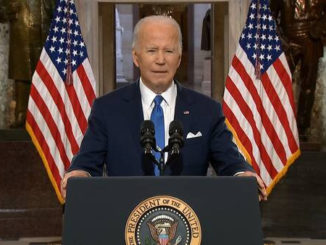
    WASHINGTON D.C. (TIP): President Joe Biden forcefully blamed Donald Trump and his supporters for holding a “dagger at the throat of democracy” with election lies that sparked last year’s deadly assault on the US Capitol, using the anniversary of the attack to warn that America’s system of government remains under urgent threat.

    The president Thursday, January 6, set the tone on a day of remembrance that brought fiery speeches, moments of silence and anguished accounts from lawmakers recalling the terrifying hours of Jan 6, 2021, when the Trump mob laid siege to the Capitol and rioters tried to stop the routine, ceremonial certification of election results.

    Notably, almost no Republicans joined Biden and the Democrats in what some hoped would be a day of reconciliation. Instead, it was a fresh and jarring display of a nation still deeply torn by the lies that led to the riot, by its unsettled aftermath and Trump’s persisting grip on a large swath of the country.

    “For the first time in our history, a president not just lost an election, he tried to prevent the peaceful transfer of power as a violent mob breached the Capitol,” Biden said. “You can’t love your country only when you win.” Biden’s criticism of the defeated president was rife with condemnation for the assault that has fundamentally changed Congress and the nation, and has raised global concerns about the future of American democracy.

    His voice booming at times, reverberating in the ornate Statuary Hall where rioters had laid siege, the president called on Americans to remember what they saw Jan 6 with their own eyes: the mob attacking police and breaking windows, a Confederate flag inside the Capitol, gallows erected outside amid calls to hang the vice president — all while Trump sat at the White House watching on TV.

    “The former president’s supporters are trying to rewrite history,” Biden said. “They want you to see Election Day as the day of insurrection and the riot that took place here on January 6 as a true expression of the will of the people. Can you think of a more twisted way to look at this country, to look at America? I cannot.” Until the anniversary, Biden had mentioned the attack only sparingly but he aggressively weighed in Thursday and coupled his message with a call for voting rights legislation that Democrats have long been urging.

    The president’s remarks drew a stark contrast with the false narratives that persist about the Capitol assault, including the continued refusal by many Republicans to affirm that Biden won the 2020 election. Five people died in the Capitol siege and its immediate aftermath.

    “We must be absolutely clear about what is true and what is a lie,” Biden said. “The former president of the United States of America has spread a web of lies about the 2020 election.” Yet even as the president spoke, the vanquished Trump gave no signs of letting go, a show of the division in the country emphasized by the silence and absence of most Republicans to join Biden at the Capitol.

    From Florida, Trump revived his unfounded attack on the elections. He accepted no responsibility for sending the thousands of supporters to the Capitol that day when he told them to “fight like hell”. By Thursday evening, he was sending out a fundraising appeal.

    Even among congressional Republicans who condemned the attack in the days afterward, few spoke that way now — some joining in Trump’s false portrayals. “What brazen politicization of January 6 by President Biden,” tweeted Senator Lindsey Graham of South Carolina, a sometimes Trump confidant who had initially said he had abandoned Trump after the riot only to quickly embrace him again.

    Senate Republican leader Mitch McConnell — who at the time said Trump was “practically and morally” responsible the attack — issued a statement that highlighted the gravity of that day, but also said some Democrats were trying to exploit it for other purposes. He was absent, with a contingent attending the funeral of former colleague Sen. Johnny Isakson in Georgia.

    Rep. Liz Cheney, vice chair of the House committee investigating the attack and one of the few GOP lawmakers attending the Capitol ceremonies, warned that “the threat continues.” Trump, she said, “continues to make the same claims that he knows caused violence on January 6.” “Unfortunately, too many in my own party are embracing the former president, are looking the other way or minimizing the danger,” she told NBC’s “Today” show. “That’s how democracies die. We simply cannot let that happen.” She was joined by her father Dick Cheney, the former vice president and now a Republican Party elder. They were the only members of the GOP seen for a moment of silence on the House floor.

    Dick Cheney was greeted by several Democrats and said in a statement: “I am deeply disappointed at the failure of many members of my party to recognize the grave nature of the January 6 attacks and the ongoing threat to our nation.” Throughout Thursday, lawmakers shared their experiences of being trapped in the House or rushed away from the Senate, as the siege raged for hours. Rep. Dan Kildee of Michigan showed a shard of glass from one of the Capitol’s broken windows he carries in his pocket.

    “January 6 is not over,” he said, choking up. “The threat, and the lie that fuels that threat, continues to rear its head.” He said: To truly protect our democracy we need truth.” The House panel investigating the insurrection plans to spend the coming months exploring and revealing what happened with public hearings.

    Biden and his administration have come under criticism from some in his party for not adequately explaining how they believe democracy is at risk or pushing Congress hard enough to pass election and voting rights legislation that is stalled by a Republican filibuster in the Senate.

    Barack Obama, the former president, said “nothing is more important” on the anniversary than ensuring the right to vote.“Our democracy is at greater risk today than it was back then,” Obama said in a statement.

    Biden’s address, and that of Vice President Kamala Harris who is leading the administration’s efforts on the voting and elections legislation, appeared as a direct response to critics.

    “We must pass voting rights bills,” Harris said in her address. “We cannot sit on the sidelines.” House Speaker Nancy Pelosi drew on history with a hope that Americans would turn to their “better angels” to resolve differences. Lawmakers held an evening vigil on the Capitol steps.

    (Source: Agencies)

  • Veteran Indian American diplomat Atul Keshap is the President of US-India Business Council

    Veteran Indian American diplomat Atul Keshap is the President of US-India Business Council

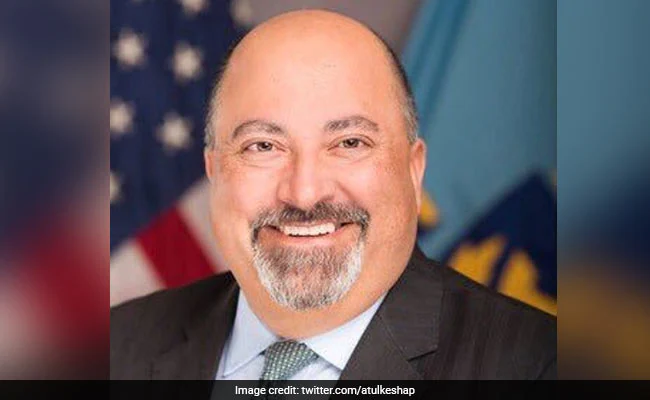
    WASHINGTON D.C. (TIP): Veteran Indian American diplomat Atul Keshap is set to lead the US-India Business Council (USIBC) as President from Wednesday, January 5 taking over from another former Indian American diplomat Nisha Biswal. Keshap, who most recently served in New Delhi as US Chargé d’Affaires to India, leading the US Embassy team has joined the US Chamber of Commerce, the chamber announced Jan 4.

    A 28-year veteran of the US Department of State, he has held a number of senior US government positions including Deputy Assistant Secretary of State for South Asia in Washington, DC and US Ambassador to Sri Lanka and Maldives.

    A part of the US Chamber USIBC represents top global companies operating across the United States, India, and the Indo-Pacific. Amid dynamic growth within the US-India commercial partnership, it serves as the premier voice of industry and create connections between businesses and governments across both countries, a chamber release said.

    Through its flagship Washington, DC and New Delhi offices and presences across both countries, USIBC works with members to identify and advance key policy priorities, it said. Recognizing that US-India trade is increasingly driven by new business hubs, USIBC is also focused on strengthening connections between cities and states.

    Keshap’s predecessor Biswal, a former US Assistant Secretary of State for South Asia, will remain deeply involved with USIBC as the US Chamber’s Senior Vice President of International Strategy and Global Initiatives and South Asia.

    “The US-India Business Council is a critical and vital voice in driving ever closer commercial cooperation between the world’s two largest democracies,” said Myron Brilliant, Executive Vice President and Head of the International Division of the US Chamber of Commerce.

    “We’re ecstatic to have Ambassador Keshap as USIBC’s next President. His deep expertise, and deep global network will empower the organization to even greater heights and serve our members well.”

    “As the next President of USIBC, I’m honored and excited to continue my involvement in shaping and strengthening the robust relationship between the United States and India. I’m thrilled to join the US Chamber’s international powerhouse team and be part of the world’s largest and most influential advocacy organization,” said Keshap.

    “India and its inspired citizenry hold a special place in my heart, and I believe there is no better place to continue this journey than serving as President of USIBC, which is committed and dedicated to enhancing commercial ties between the two countries,” he added. “With the two countries on the cusp of entering an even more robust era in our strategic partnership, I feel privileged and honored to lead USIBC.”

    “I’m thrilled to welcome my former State Department colleague to the US Chamber family,” said Biswal. “Ambassador Keshap brings a wealth of experience and knowledge of India and the Indo-Pacific to his new role.”

    “Across multiple US administrations, he has been instrumental in expanding US-India strategic and economic cooperation and growing commercial ties across multiple sectors,” she said.

    “I look forward to working with Atul and the entire USIBC team to deliver to our members and leaders in both countries unmatched experience, advocacy, and networks to further deepen the US-India partnership.”

    Keshap’s previous positions included Principal Deputy Assistant Secretary of State for East Asia and Pacific Affairs and US Envoy for Asia Pacific Economic Cooperation.

    He has also served in a number of distinguished roles at the National Defense University, the White House National Security Council, and in diplomatic postings in Washington and abroad, including in India from 2005-2008.

  • Tarrant county Fort Worth has Coronavirus Positivity Rate over 35%

    Tarrant county Fort Worth has Coronavirus Positivity Rate over 35%

    FORT WORTH, TX (TIP):  In case you missed it, here are four COVID updates from the first Tarrant County Commissioners’ meeting of 2022, which was held Tuesday, January 4.

    The County’s positivity rate is at a record high

    Data shows the positivity rate in Tarrant County is just over 35%, a number Public Health Director Vinny Taneja said is “a record high for the pandemic.” “(Of the) people that are getting tested, one in three are coming back positive,” Taneja said. “That’s a huge number in our community.”

    No surprise: Demand for COVID testing has skyrocketed

    Before Christmas, testing sites were seeing 10 to 15 people a day on average, according to Taneja. Now, the public health director said some sites are seeing close to 1,000 people a day. “I did hear quite a few complaints about people waiting four, five, six days for test results,” Tarrant County Commissioner Devan Allen told the court Tuesday.

    Taneja said plans are in the works to open more testing sites, including possibly one in White Settlement next week.

    The Tarrant County Sheriff’s Office is getting some help

    The Tarrant County Sheriff’s Office accepted a donation of 10,000 rapid COVID tests from the Texas Army National Guard for the second year in a row.

    This week, TCSO announced 173 inmates have tested positive in the Tarrant County jail. The county is encouraging residents to use its website — not Google — to find testing locations. Taneja said he’s aware of the long wait times people have experienced at various testing sites recently — a problem that’s not unique to Tarrant County.

    He said the county keeps its website updated, which can be a more effective tool than Google when trying to find an available and convenient testing location. Once on the website, scroll down and click on “Additional Testing Sites” to view more links and a Google map showing more locations.

  • Indian Origin Harpreet Chandi reaches South Pole after trekking 700 miles

    Indian Origin Harpreet Chandi reaches South Pole after trekking 700 miles

    She is “the first woman of color” to have done so.

    Nirpal Singh Shergill

    LONDON (TIP): Indian origin woman Harpreet Chandi, a 32-year-old captain with the British army, reached the South Pole on Monday after trekking 700 miles solo and unaided across the Antarctic wilderness.

    She reported journey’s end in her blog: “Hello everyone, checking in from day 40. I made it to the South Pole where it’s snowing. Feeling so many emotions right now. I knew nothing about the polar world three years ago and it feels so surreal to finally be here. It was tough getting here and I want to thank everybody for their support.

    “This expedition was always about so much more than me. I want to encourage people to push their boundaries and to believe in themselves, and I want you to be able to do it without being labelled a rebel. I have been told no on many occasions and told to ‘just do the normal thing’, but we create our own normal. You are capable of anything you want. No-matter where you are from or where your start line is, everybody starts somewhere. I don’t want to just break the glass ceiling; I want to smash it into a million pieces.”

    Known as Preet to her friends and now nicknamed “Polar Preet”, she began her journey on November 24 when an aircraft dropped her off at the starting point on the Union Glacier.

    Preet, who has been filing a regular blog, reported on Sunday, her 39th day: “It definitely feels colder in the last degree where I’m at higher altitude…. And now I’m 15 nautical miles from the South Pole. I can’t believe I’m almost there. “It has been a long few days but I’m doing well and I’m super close now as well. So, the weather can change so quickly here, it was so cold yesterday, I think about minus 45 degrees with wind chill and then in the afternoon there was hardly any wind at all which was amazing.”

    She hoped her example would break the stereotype of the Asian woman.

    “Don’t get me wrong: Shackleton, Amundsen, Scott, they’re huge polar names and they’re incredible people. But they’re not names that I was familiar with, it wasn’t something that I could personally relate to. I am excited to add some diversity to that, and Preet is actually quite a common Indian name. I’ve had people say to me, ‘Oh my daughter’s name is Preet, and they’re so excited to have the same name as you,’ and that is very powerful.”

    She explained her decision to undertake such a hazardous trip: “Antarctica is the coldest, highest, driest and windiest continent on Earth. Nobody lives there permanently. I didn’t know much about the continent when I first started planning and that is what inspired me to go there. Hopefully doing something that pushes me so far out of my comfort zone will inspire others to believe in themselves and push their boundaries. There are only a few female adventurers that have completed a solo, unsupported trek on this continent. It is time to add some more names, diversity and to make history.”

    In her November 24 blog, she had begun: “So I’m on day 1. I can’t believe I’m finally on the ice and I have started the expedition. The Twin Otter (plane) dropped me off around 4pm and I just did a few hours today. I weighed my Pulk (sled) just before leaving and its 87kg. Conditions were windy but visibility was good today.”

    This was her post on December 5: “So tough day today, terrain was icy. I fell over a few times in just the first hour. The first time I fell I was frustrated and then the next few times I laughed it off and got up and kept going. Just taking one step in front of the other.”

    En route she has faced 70mph winds, whiteouts and temperatures as low as minus 50 degrees Celsius. The Daily Telegraph has reported that “skiing for up to 11 hours a day, she has kept herself entertained along the way by listening to Bhangra music which reminds her of her Punjabi roots”.

    The newspaper added: “But the trek has not been all plain sailing and she has also been forced to endure sickness and diarrhea and has only been able to change her socks once a fortnight.”

    As for her career, “She joined the Army Reserves aged 19 and signed up with the regular Army five years ago, operating as a Clinical Training Officer, helping to train military medics. To prepare for her trip to the South Pole, she undertook a 27-day expedition to the ice cap in Greenland.”

    When Preet returned from Greenland, she had a mild case of frostbite on her nose.

    “I remember somebody saying to me they’ve never seen an injury like that on somebody of my color skin before,” she said. “I am an Asian woman, I’m not the image that people expect to see out there.”

    She trained by dragging tires around the streets of her hometown of Derby to prepare for pulling her sled — a two-meter-long pulk carrying all her food and equipment.

    Just before leaving she got engaged to David Jarman, an army reservist with the Honourable Artillery Company. He is due to meet her in Chile after she returns from the South Pole.

    Her last message was to her friends: “I read somewhere that when you ask people to be your bridesmaids it’s nice to do it in a special way, so all the way from Antarctica I would love nothing more than for you to be my bridesmaids. Sonia Chandi, Rachel Tucker-Norton, Kamal Dhamrait, Tig Bridge, Hannah Sawford (or Hannah Smith now) and Collette Davey. I love you all and would love you to be my bridesmaids.”

    Her first blog was dedicated to her grandfather: “This one goes out to my Baba Ji (my Grandad), who lived an incredible long life up to the age of 99. He moved to the UK when I was born and raised me. He always made me feel just as important in a community where I sometimes felt as though I was less. “I always used to think he looked like an Indian Santa Claus, he had crystal blue eyes, a white beard and the best heart. Thank you Baba Ji for letting me know that I was just as important. I hope you’re watching down on me for this journey.”

  • Oscar winner and groundbreaking star Sidney Poitier dies

    Oscar winner and groundbreaking star Sidney Poitier dies

     Before Poitier, few Black actors were permitted a break from the stereotypes of bug-eyed servants and grinning entertainers 

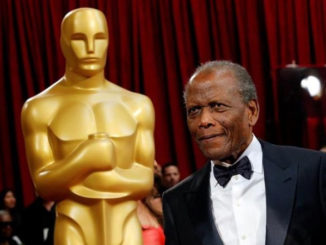
    NEW YORK (TIP):  Sidney Poitier, the groundbreaking actor and enduring inspiration who transformed how Black people were portrayed on screen, became the first Black actor to win an Academy Award for best lead performance and the first to be a top box-office draw, has died. He was 94.

    Poitier, winner of the best actor Oscar in 1964 for “Lilies of the Field,” died Thursday, January 6he Bahamas, according to Eugene Torchon-Newry, acting director general of the Ministry of Foreign Affairs in the Bahamas.

    Few movie stars, Black or white, had such an influence both on and off the screen. Before Poitier, the son of Bahamian tomato farmers, no Black actor had a sustained career as a lead performer or could get a film produced based on his own star power.

    Before Poitier, few Black actors were permitted a break from the stereotypes of bug-eyed servants and grinning entertainers. Before Poitier, Hollywood filmmakers rarely even attempted to tell a Black person’s story.

    Messages honoring and mourning Poitier flooded social media, with Whoopi Goldberg writing on Twitter: “He showed us how to reach for the stars.” Tyler Perry on Instagram wrote: “The grace and class that this man has shown throughout his entire life, the example he set for me, not only as a Black man but as a human being will never be forgotten.” Poitier’s rise mirrored profound changes in the country in the 1950s and 1960s. As racial attitudes evolved during the civil rights era and segregation laws were challenged and fell, Poitier was the performer to whom a cautious industry turned for stories of progress.

    He was the escaped Black convict who befriends a racist white prisoner (Tony Curtis) in “The Defiant Ones.” He was the courtly office worker who falls in love with a blind white girl in “A Patch of Blue.” He was the handyman in “Lilies of the Field” who builds a church for a group of nuns.

    In one of the great roles of the stage and screen, he was the ambitious young father whose dreams clashed with those of other family members in Lorraine Hansberry’s “A Raisin in the Sun.” Debates about diversity in Hollywood inevitably turn to the story of Poitier. With his handsome, flawless face; intense stare and disciplined style, he was for years not just the most popular Black movie star, but the only one.

    “I made films when the only other Black on the lot was the shoeshine boy,” he recalled in a 1988 Newsweek interview. “I was kind of the lone guy in town.” Poitier peaked in 1967 with three of the year’s most notable movies: “To Sir, With Love,” in which he starred as a school teacher who wins over his unruly students at a London secondary school; “In the Heat of the Night,” as the determined police detective Virgil Tibbs; and in “Guess Who’s Coming to Dinner,” as the prominent doctor who wishes to marry a young white woman he only recently met, her parents played by Spencer Tracy and Katharine Hepburn in their final film together.

    Theater owners named Poitier the No. 1 star of 1967, the first time a Black actor topped the list. In 2009 President Barack Obama, whose own steady bearing was sometimes compared to Poitier’s, awarded him the Presidential Medal of Freedom, saying that the actor “not only entertained but enlightened … revealing the power of the silver screen to bring us closer together.” His appeal brought him burdens not unlike such other historical figures as Jackie Robinson and the Rev. Martin Luther King Jr. He was subjected to bigotry from whites and accusations of compromise from the Black community. Poitier was held, and held himself, to standards well above his white peers.

    He refused to play cowards and took on characters, especially in “Guess Who’s Coming to Dinner,” of almost divine goodness. He developed a steady but resolved and occasionally humorous persona crystallized in his most famous line — “They call me Mr. Tibbs!” — from “In the Heat of the Night.” “All those who see unworthiness when they look at me and are given thereby to denying me value — to you I say, I’m not talking about being as good as you. I hereby declare myself better than you,’” he wrote in his memoir, “The Measure of a Man,” published in 2000.

    But even in his prime he was criticized for being out of touch. He was called an Uncle Tom and a “million-dollar shoeshine boy.” In 1967, The New York Times published Black playwright Clifford Mason’s essay, “Why Does White America Love Sidney Poitier So?” Mason dismissed Poitier’s films as “a schizophrenic flight from historical fact” and the actor as a pawn for the “white man’s sense of what’s wrong with the world.” Stardom didn’t shield Poitier from racism and condescension. He had a hard time finding housing in Los Angeles and was followed by the Ku Klux Klan when he visited Mississippi in 1964, not long after three civil rights workers had been murdered there. In interviews, journalists often ignored his work and asked him instead about race and current events.

    “I am an artist, man, American, contemporary,” he snapped during a 1967 press conference. “I am an awful lot of things, so I wish you would pay me the respect due.” Poitier was not as engaged politically as his friend and contemporary Harry Belafonte, leading to occasional conflicts between them. But he participated in the 1963 March on Washington and other civil rights events, and as an actor defended himself and risked his career. He refused to sign loyalty oaths during the 1950s, when Hollywood was barring suspected Communists, and turned down roles he found offensive.

    “Almost all the job opportunities were reflective of the stereotypical perception of Blacks that had infected the whole consciousness of the country,” he recalled. “I came with an inability to do those things. It just wasn’t in me. I had chosen to use my work as a reflection of my values.” Poitier’s films were usually about personal triumphs rather than broad political themes, but the classic Poitier role, from “In the Heat of the Night” to “Guess Who’s Coming to Dinner,” was as a Black man of such decency and composure — Poitier became synonymous with the word “dignified” — that he wins over the whites opposed to him.

    His screen career faded in the late 1960s as political movements, Black and white, became more radical and movies more explicit. He acted less often, gave fewer interviews, and began directing, his credits including the Richard Pryor-Gene Wilder farce “Stir Crazy,” “Buck and the Preacher” (co-starring Poitier and Belafonte) and the Bill Cosby comedies “Uptown Saturday Night” and “Let’s Do It Again.” In the 1980s and ’90s, he appeared in the feature films “Sneakers” and “The Jackal” and several television movies, receiving an Emmy and Golden Globe nomination as future Supreme Court Justice Thurgood Marshall in “Separate But Equal” and an Emmy nomination for his portrayal of Nelson Mandela in “Mandela and De Klerk.” Theatergoers were reminded of the actor through an acclaimed play that featured him in name only: John Guare’s “Six Degrees of Separation,” about a con artist claiming to be Poitier’s son.

    In recent years, a new generation learned of him through Oprah Winfrey, who chose “The Measure of a Man” for her book club. Meanwhile, he welcomed the rise of such Black stars as Denzel Washington, Will Smith and Danny Glover: “It’s like the cavalry coming to relieve the troops! You have no idea how pleased I am,” he said.

    Poitier received numerous honorary prizes, including a lifetime achievement award from the American Film Institute and a special Academy Award in 2002, on the same night that Black performers won both best acting awards, Washington for “Training Day” and Halle Berry for “Monster’s Ball.” “I’ll always be chasing you, Sidney,” Washington, who had earlier presented the honorary award to Poitier, said during his acceptance speech. “I’ll always be following in your footsteps. There’s nothing I would rather do, sir, nothing I would rather do.” Poitier had four daughters with his first wife, Juanita Hardy, and two with his second wife, actress Joanna Shimkus, who starred with him in his 1969 film “The Lost Man.” Daughter Sydney Tamaii Poitier appeared on such television series as “Veronica Mars” and “Mr. Knight.” His life ended in adulation, but it began in hardship. Poitier was born prematurely, weighing just 3 pounds, in Miami, where his parents had gone to deliver tomatoes from their farm on tiny Cat Island in the Bahamas. He spent his early years on the remote island, which had a population of 1,500 and no electricity, and he quit school at 12 1/2 to help support the family.

    Three years later, he was sent to live with a brother in Miami; his father was concerned that the street life of Nassau was a bad influence. With USD 3 in his pocket, Sidney traveled steerage on a mail-cargo ship.

    “The smell in that portion of the boat was so horrendous that I spent a goodly part of the crossing heaving over the side,” he told The Associated Press in 1999, adding that Miami soon educated him about racism. “I learned quite quickly that there were places I couldn’t go, that I would be questioned if I wandered into various neighborhoods.” Poitier moved to Harlem and was so overwhelmed by his first winter there he enlisted in the Army, cheating on his age and swearing he was 18 when he had yet to turn 17. Assigned to a mental hospital on Long Island, Poitier was appalled at how cruelly the doctors and nurses treated the soldier patients.

    In his 1980 autobiography, “This Life,” he related how he escaped the Army by feigning insanity.

    Back in Harlem, he was looking in the Amsterdam News for a dishwasher job when he noticed an ad seeking actors at the American Negro Theater. He went there and was handed a script and told to go on the stage. Poitier had never seen a play in his life and could barely read. He stumbled through his lines in a thick Caribbean accent and the director marched him to the door.

    “As I walked to the bus, what humiliated me was the suggestion that all he could see in me was a dishwasher. If I submitted to him, I would be aiding him in making that perception a prophetic one,” Poitier later told the AP.

    “I got so pissed, I said, I’m going to become an actor — whatever that is. I don’t want to be an actor, but I’ve got to become one to go back there and show him that I could be more than a dishwasher.’ That became my goal.” The process took months as he sounded out words from the newspaper. Poitier returned to the American Negro Theater and was again rejected. Then he made a deal: He would act as janitor for the theater in return for acting lessons. When he was released again, his fellow students urged the teachers to let him be in the class play. Another Caribbean, Belafonte, was cast in the lead. When Belafonte couldn’t make a preview performance because it conflicted with his own janitorial duties, his understudy, Poitier, went on.

    The audience included a Broadway producer who cast him in an all-Black version of “Lysistrata.” The play lasted four nights, but rave reviews for Poitier won him an understudy job in “Anna Lucasta,” and later he played the lead in the road company. In 1950, he broke through on screen in “No Way Out,” playing a doctor whose patient, a white man, dies and is then harassed by the patient’s bigoted brother, played by Richard Widmark.

    Key early films included “Blackboard Jungle,” featuring Poitier as a tough high school student (the actor was well into his 20s at the time) in a violent school; and “The Defiant Ones,” which brought Poitier his first best actor nomination, and the first one for any Black male.

    The theme of cultural differences turned lighthearted in “Lilies of the Field,” in which Poitier played a Baptist handyman who builds a chapel for a group of Roman Catholic nuns, refugees from Germany. In one memorable scene, he gives them an English lesson.

    The only Black actor before Poitier to win a competitive Oscar was Hattie McDaniel, the 1939 best supporting actress for “Gone With the Wind.” No one, including Poitier, thought “Lilies of the Field” his best film, but the times were right (Congress would soon pass the Civil Rights Act of 1964, for which Poitier had lobbied) and the actor was favored even against such competitors as Paul Newman for “Hud” and Albert Finney for “Tom Jones.” Newman was among those rooting for Poitier. When presenter Anne Bancroft announced his victory, the audience cheered for so long that Poitier momentarily forgot his speech. “It has been a long journey to this moment,” he declared.

    Poitier never pretended that his Oscar was “a magic wand” for Black performers, as he observed after his victory, and he shared his critics’ frustration with some of the roles he took on, confiding that his characters were sometimes so unsexual they became kind of “neuter.” But he also believed himself fortunate and encouraged those who followed him. “To the young African American filmmakers who have arrived on the playing field, I am filled with pride you are here. I am sure, like me, you have discovered it was never impossible, it was just harder,” he said in 1992 as he received a lifetime achievement award from the American Film Institute. “Welcome, young Blacks. Those of us who go before you glance back with satisfaction and leave you with a simple trust: Be true to yourselves and be useful to the journey.”

    (Agencies)

  • Santos Sworn in as New Census Bureau Director

    Santos Sworn in as New Census Bureau Director

    WASHINGTON, D.C. (TIP): Robert Santos was sworn in today as the U.S. Census Bureau’s 26th director, becoming the first Latino person to serve in the role. This appointment follows the U.S. Senate confirmation Nov. 4, 2021, with Santos’ term set to last for five years. “Mr. Santos is a tremendous leader and I have full confidence that he will lead the Census Bureau with integrity in the years ahead,” said Secretary of Commerce Gina M. Raimondo. “The Census Bureau is an invaluable asset to our government and the American people, providing essential data for businesses, government leaders and policymakers to make informed decisions. I look forward to working with Mr. Santos and congratulate him on his appointment.”

    Santos’ career spans more than 40 years in survey research, statistical design and analysis, and executive-level management. He specializes in quantitative and qualitative research design, including program evaluation, needs assessments, survey methodology and survey operations. He also has expertise in demographic and administrative data, decennial censuses, social policy research and equity issues in research.

    “I’m deeply honored and humbled to lead the federal government’s largest statistical agency,” Santos said. “I’ve spent the majority of my career with organizations dedicated to delivering credible and informative statistical analysis for the public good. Census Bureau data have been essential to that work. It is such an immense privilege to join the Census Bureau and its very talented team.” Santos previously served for 15 years as vice president and chief methodologist at the Urban Institute and directed its Statistical Methods Group. He was executive vice president and partner of NuStats, a social science research firm in Austin, Texas.

    Santos has held leadership positions in the nation’s top survey research organizations, including the National Opinion Research Center (NORC) at the University of Chicago, where he served as vice president of statistics and methodology and director of survey operations; the Institute for Social Research at the University of Michigan, as director of survey operations; and Temple University’s Institute for Survey Research, as senior study director and sampling statistician.

    Additionally, Santos served as the 2021 president of the American Statistical Association (ASA) and is an ASA Fellow and recipient of the ASA Founder’s Award in 2006. He was the 2014 president of the American Association for Public Opinion Research (AAPOR) and received the 2021 AAPOR Award for Exceptionally Distinguished Achievement. Santos is also an elected member to the International Statistical Institute, and he served from 2017 to 2020 as a member of the Board of Scientific Counselors for the National Center for Health Statistics at the Centers for Disease Control and Prevention. He was a longtime member of the editorial board of Public Opinion Quarterly.

    Santos was born and raised in San Antonio, Texas. He earned a B.A. in mathematics from Trinity University in San Antonio and an M.A. in statistics from the University of Michigan at Ann Arbor.

    (United States Census Press Release)

  • Ganga Sagar Snan

    Ganga Sagar Snan

    Ganga Sagar Snan, also famous as ‘Ganga Sagar Mela’ or ‘Ganga Sagar Yatra’ is a significant gathering of the Hindu pilgrims during the auspicious time of ‘Makar Sankranti’. It is an annual observance that takes place at the Sagar Island or ‘Sagardweep’ in the state of West Bengal. Hindu devotees in thousands of number gather at this place to take a holy dip in Ganga River before She merges in the Bay of Bengal. During the Ganga Sagar Snan, a biggest fair is organized that fetches devotees from each and every corner of the country. The Ganga Sagar fair starts few days before and ends one day after Sankranti.

    Ganga Sagar Snan is a very religious and important ritual for Hindu devotees. This festival is celebrated with great enthusiasm and zeal in the culturally rich state of Bengal. Ganga Sagar Snan is only done during Makar Sankranti (an astrological event that marks the transition of Sun from Sagittarius to Capricorn Zodiac sign) and falls on the 14th of January, every year. On this day, devotees from various parts of the country and abroad, come to take a dip in holy water of Ganges. It is believed that by performing this ritualistic bath, all the sins of the person will be washed away. Ganga Sagar Snan is observed with great fanfare all over the country. The festivities may vary from region to region, but the spirit of this festival remains unchanged.

    Ganga Sagar Snan 2022 is on January 14 Friday Rituals during Ganga Sagar Snan

    Hindu devotees gather at around 3am on the day of Ganga Sagar Snan to perform the worshipping ceremony of legendary Kapil Muni. After the completion of Kapila puja, the Yagna and Maha Puja are performed.

    On the day of Ganga Sagar Snan, devotees get up very early to take the holy dip at the time of sunrise. They offer ‘arghya’ to the rising Sun and offer prayers to Sun God. While taking the holy dip, devotees express their gratitude towards Goddess Ganga and pray for Her divine blessings.

    Devotees also keep a strict fast on the day of Ganga Sagar Snan and abstain from eating or drinking anything till the time of completion of puja rituals.

    After completing the Ganga Snan rituals, devotees also visit the Kapilmuni Temple, located nearby. It is a unique and one-of-its-kind temple in India that is dedicated to Saint Kapil

    Significance of Ganga Sagar Snan

    Ganga Sagar Snan is one of the most important annual events for people of Hindu community. This day is dedicated to worshipping Goddess Ganga and Sun God. The observance of Ganga Sagar Snan on the day of Makar Sankranti also holds a special relevance. Makar Sankranti is an auspicious day in the Hindu calendar that is dedicated to worshipping Lord Surya. On this particular day, Sun transits to Capricorn from Sagittarius and it marks as the beginning of the good times in the Hindu culture, when all auspicious activities can be performed. According to the Hindu legends it is believed that one who perform the sacred Ganga Sagar Snan will be pardoned for all sins and in the end attain ‘moksha’ or salvation.

    Mythological Story of Gangasagar

    GangaSagar, the sacred place of India is primarily important for the temple of Kapil Muni, the great saint who as per the myth was Lord Vishnu. According to the Mythology Kardam Muni had to go through his marital Kardam Muni agreed on this under a condition that Muni wished to Lord Vishnu to have him as his son. To fulfill Muni’s wishes, Lord Vishnu had taken birth on this earth as the son of Debahuti and Kardam Muni. They used to name their son Kapil. Soon the boy completed his education, he became famous for the introduction of the doctrine “Sankhya Philosophy“.

    Kapil Muni’s mythological ‘story is related to the story of bringing the holy river Ganga at this place. On the suggestion of the sage Aurva, King Sagara started to perform ‘Ashvamedha Yagna’ which is supposed to be a vehicle to propitiate Lord Hari himself. The sacrificial horses were set out to roam free around the country before closing the “Yagna’. Debraj Indra hid one of the sacrificial horses. With a view to concluding the sacrifice, King Sagara commanded his sixty thousand sons to go, search and locate the lost horse. The sons of Sagara were deluded as Indra (the Lord of the senses) destroyed their sense of discrimination. Finding the horse tied close to the hermitage of sage Kapila, the sons of Sagara started abusing the sage of stealing the horse and in fact wanted to kill him with their weapons.

    History of Gangasagar Mela

    At this point, the sage opened his eyes and blaze of anger came out of his eye-balls, which burnt King’s sons & consigned their soul into hell instantly. Sagara was very sad at the death of his sons. He wanted to bring back the horse and purify the soul of his sons. Then Raja Sagar sent his grandson Anshuman in search of his 60, 000 sons and the lost horse. He traced his uncles’ footsteps and arrived at Kapil Muni’s Ashram‘. He saw the lost horse and mound of ashes near the hermitage. He brought the horseback from the sage. He also begged him to redeem the soul of the 60,000 sons of King Sagar. Kapil Muni suggested he bring the Ganga on ‘Prithvi” so that her holy water can only give them ‘Mukti’ (emancipation). So King Anshuman and thereafter his son Dilip started to perform ‘Tapasya’ (penance) to bring the Ganga on earth. Neither Anshuman nor his son Dilip was successful In this task. They died before finishing the ‘Tapasya’. Bhagirath, the son of Dilip and great-grandson of Sagara was determined to get their task done. Vishnu, the preserver when prayed by Bhagiratha agreed to allow the heavenly Ganga issuing from his big toe to come down on earth. Ganga apprehended the devastation of the earth by the pressure of her flow. Only Shiva’s powerful hair could control the force of Ganga. Bhagiratha requested Shiva to help him. As soon as Ganga flowed down, Lord Shiva collected her water in his hair in the form of many small streams. Ganga then followed Bhagiratha to the place where the ashes of his ancestors were lying. Holy water flowed on and purified the ashes of Bhagiratha’s ancestors. Thereafter Ganga is also called ‘Bhagirathi’ after the name of Bhagiratha. The ocean becomes popular as ‘Sagar’ after the name of King Sagara. This island as the estuarine of Sagara and Ganga comes to be known as “Sagardwip“.

  • European Southern Observatory releases new image of Orion’s Flame Nebula

    European Southern Observatory releases new image of Orion’s Flame Nebula

    The European Southern Observatory has released a new image of Orion’s Flame Nebula. Named NGC 2024, the Flame Nebula is a large star-forming region located in the Orion constellation situated about 1,400 light-years from Earth. The Orion constellations is easily visible high in the night sky. You can spot Orion’s “belt” consisting of three bright blue stars. The image was taken using the ESO-operated Atacama Pathfinder Experiment (APEX), located in the Atacama Desert. The team used radio waves to capture the fiery picture.

    Former ESO astronomer Thomas Stanke and his team used the new SuperCam instrument at APEX to make the observations. “As astronomers like to say, whenever there is a new telescope or instrument around, observe Orion: there will always be something new and interesting to discover!” says Dr Stanke in a release.

    The results of his observations are now accepted for publication in the journal Astronomy & Astrophysics.

    In addition to the Flame Nebula, the team also observed reflection nebulae Messier 78 and NGC 2071.

    A reflection nebula is created when light from a star is scattered by nearby dust clouds. In 2018, Hubble’s Near Infrared Camera and Multi-Object Spectrometer (NICMOS) captured a colorful image of M78. The team also found a new small, spherical cloud to the north of NGC2071 and named it the ‘Cow Nebula’ globule. Studying nebulae can help astronomers understand how stars form and evolve during its lifetime.

  • This TV remote uses radio waves from router for charging

    This TV remote uses radio waves from router for charging

    Samsung at the CES 2022 has showcased a new TV remote that uses radio waves from the home router to stay charged. The company had earlier introduced a solar-powered Eco Remote for its 2021 TVs at the CES event last year.

    This year, Samsung has added RF (radio frequency) harvesting capabilities that let the remote preserve its charge by “collecting routers’ radio waves and converting them to energy,” reports The Verge. The new Eco Remote can also be charged from both outdoor and indoor light or over USB-C. The TV remote “is meant to better complement Samsung’s ‘lifestyle’ TVs like The Frame, Serif, and Sero. Samsung’s Visual Display Business is making its TVs more sustainable by adopting eco-friendly packaging and solar-cell-powered remote controls.

    The remote control is made using renewable plastic and powered by photovoltaic energy rather than disposable batteries. “Supposing that a typical TV is used for around seven years, changing the batteries in its remote just once a year would mean that 14 batteries would get used and thrown out,” according to Kwanyoung Kim, a Samsung engineer. “If we apply that number to Samsung Electronics’ expected annual global TV sales, it amounts to approximately 99 million discarded batteries. If we apply it to annual TV sales overall, it adds up to nearly 3.1 billion batteries,” the company said last year.

                    Source:  IANS

  • NASA nails trickiest job on newly launched James Webb Space Telescope

    NASA nails trickiest job on newly launched James Webb Space Telescope

    NASA aced the most complicated, critical job on its newly launched space telescope Tuesday: unrolling and stretching a sunshade the size of a tennis court. Ground controllers cheered and bumped fists once the fifth and final layer of the sunshield was tightly secured. It took just 1 1/2 days to tighten the ultra-thin layers using motor-driven cables, half the expected time.

    The 7-ton James Webb Space Telescope is so big that the sunshield and the primary gold-plated mirror had to be folded for launch. The sunshield is especially unwieldly — it spans 70 feet by 46 feet (21 metres by 14 metres) to keep all the infrared, heat-sensing science instruments in constant subzero shadow.

    The $10 billion telescope is more than halfway toward its destination 1 million miles (1.6 million kilometers) away, following its Christmas Day send-off. It is the biggest and most powerful observatory ever launched — 100 times more powerful than the Hubble Space Telescope — enabling it to peer back to almost the beginning of time.

    Considered Hubble’s successor, Webb will attempt to hunt down light from the universe’s first stars and galaxies, created 3.7 billion years ago. “This is a really big moment,” project manager Bill Ochs told the control team in Baltimore. “We’ve still got a lot of work to do, but getting the sunshield out and deployed is really, really big.”

    Engineers spent years redoing and tweaking the shade. At one point, dozens of fasteners fell off during a vibration test. That made Tuesday’s success all the sweeter, since nothing like this had ever been attempted before in space.

  • Samsung may replace Galaxy Note 22 with Galaxy S22 Ultra: Report

    Samsung may replace Galaxy Note 22 with Galaxy S22 Ultra: Report

    South Korean tech giant Samsung is gearing up to launch its Galaxy S-series flagship lineup, and now a new report has claimed that unlike the Galaxy S21, Ultra will have a Galaxy Note design. The successor will come with a built-in S Pen, just like all the Galaxy Notes that house their S Pens, reports GSM Arena. Galaxy S22 Ultra is also expected to come with 1TB internal storage. It is likely that the 1TB internal storage model will come packed with 16GB RAM. There will also be a 12GB RAM model and three other internal storage options — 128GB, 256GB, and 512GB.

    This won’t be the first time Samsung will offer a 1TB storage version for its smartphone. A couple of years back, in 2019, the company had launched the Galaxy S10 Plus with 1TB of internal storage as well as a microSD card slot, the report said. In addition, the Galaxy S22 Ultra, will be better at stabilising videos. An AI-assisted Wide Shift OIS feature will help in achieving better stabilisation of videos, effectively reducing camera shake by four times when compared to the S21 Ultra.

  • Railway lamb curry

    Railway lamb curry

    Try this spicy lamb curry, so named as it was once cooked by the chefs working on the Indian railways in the 1900s. Lamb on the bone gives loads of flavour

    Ingredients

    –              8 garlic cloves , crushed, thumb-sized piece ginger finely grated, 2 tsp turmeric

    –              800g leg of lamb on the bone, cut into bite-sized pieces, 3 tbsp vegetable oil

    –              10-12 curry leaves, 1 onion , finely chopped

    –              450ml lamb stock, 1 medium potato , peeled and cut into chunks, 250ml coconut milk

    –              2 tsp tamarind paste, rice or roti, to serve

    For the spice mix

    –              1 tbsp coriander seeds

    –              2 tsp fennel seeds

    –              1 tsp cumin seeds

    –              6-7 dried Kashmiri chillies (or mild dried red chillies), stalks removed

    Method

    STEP 1

    Mix the garlic, ginger, turmeric and lamb together in a large mixing bowl, then leave the lamb to marinate in the fridge for 1 hr or preferably overnight.

    STEP 2

    Toast the spice mix ingredients in a dry frying pan for 12 mins over a low heat, stirring occasionally, until they release their aroma. Leave to cool, then grind to a fine powder using a spice grinder or pestle and mortar. Set aside.

    STEP 3

    Heat the oil over a medium heat in a heavy-based, large saucepan. Add the curry leaves and onions, and fry for 15-17 mins, stirring well. As the onions begin to change colour, add the lamb and fry for 10 mins. Add the spice powder and turn the heat up slightly. Stir continuously for 5 mins. Pour in the stock and season to taste. Bring to the boil, then turn down to a simmer. Put the lid on and cook for 40 mins. Stir halfway through cooking.

    STEP 4

    Tip in the potato and continue cooking for 15 mins. Add the coconut milk along with the tamarind paste and simmer for 10 mins with the lid off to reduce. Serve warm with rice or roti.

  • Anushka-starrer ‘Chakda Xpress’ on Jhulan Goswami to release on Netflix

    Anushka-starrer ‘Chakda Xpress’ on Jhulan Goswami to release on Netflix

    Bollywood actress Anushka Sharma is all set to make her comeback after three years with the film ‘Chakda Xpress’ based on the life of female Indian cricketer Jhulan Goswami. The movie will have an OTT release on Netflix.

    Anushka calls ‘Chakda Xpress’ a really special film because it “is essentially a story of tremendous sacrifice.” “Chakda Xpress is inspired by the life and times of former Indian captain Jhulan Goswami and it will be an eye-opener into the world of women’s cricket. At a time when Jhulan decided to become a cricketer and make her country proud on the global stage, it was very tough for women to even think of playing the sport,” she said.

    Anushka shared that the film is a dramatic retelling of several instances that shaped her life and also women’s cricket. “From support systems, to facilities, to having a stable income from playing the game, to even having a future in cricket – very little propelled women of India to take up cricket as a profession. Jhulan had a fighting and extremely uncertain cricketing career and she stayed motivated to make her country proud.

  • Sanya Malhotra recalls putting extra pressure on herself for Dangal

    Sanya Malhotra recalls putting extra pressure on herself for Dangal

    In a span of five years, Sanya Malhotra has delivered acclaimed performances featuring in a record-breaking blockbuster, a National Award-winning dramedy and a series of well-received films- all while battling crippling self-doubt as a performer, which she says didn’t let her celebrate her success. Malhotra burst onto the scene as wrestler Babita Kumari in her 2016 debut Dangal. The global success of the Aamir Khan-headlined sports drama was followed by Vishal Bhardwaj’s boisterous Pataakha, where she played one half of the quarrelling sister duo.

    The actor then balanced the quirk of Delhi-set Badhaai Ho with the silence of Ritesh Batra’s quaint Photograph.

    In an interview with PTI, the 29-year-old actor said all her best-reviewed performances were a result of a maddening pressure to not make a single misstep. “Earlier, I was too harsh on myself as an actor. I would get mad at myself for making mistakes, which was definitely not helping me with anything. I was harsh on myself because maybe I was still trying to learn about so many things, about the industry, the job. Even a small mistake used to tick me off. I was trying to be perfect in everything,” Malhotra said. Malhotra recalled how she would never like her work despite the critical acclaim that came her way. The dislike was so intense, she would cry herself to sleep, she said.

    “Whenever a film used to come out, I would not listen to anyone and first give myself a report- ‘I didn’t do this well’, so that if next time I got an opportunity like that, I should work harder. After every release, I would go back home and cry myself to sleep. My family has seen it so much.”               Source: PTI

  • Squid Game star Lee Jung Jae to boycott Golden Globes 2022

    Squid Game star Lee Jung Jae will not attend the Golden Globes 2022, despite being nominated for the awards. The actor, who starred in the dystopian drama, has been nominated for Best Performance By An Actor in a television series. Squid Game was also nominated for Best Television Series – Drama and O Yeong Su was nominated for Best Supporting Actor – Television. On January 5, Lee Jung Jae’s management company, Artist Company, released a statement that read, “He is immensely grateful to have been nominated in the Best Actor category at the Golden Globes, but he has decided not to attend the ceremony. He recognizes that Netflix is not participating in the Golden Globes, as has been widely reported around the world. He also made the decision considering other factors like the COVID-19 situation and the quarantine requirements.”

    While the Golden Globes is precursor to the Academy Awards, it came under fire for allegations of corruption and lack of diversity among the members of the HFPA (Hollywood Foreign Press Association). As a result, Hollywood called for a boycott of the award ceremony, and studios like Netflix, Warner Media and Amazon declared that they will not participate in the ceremony, till HFPA has new reforms in place.

  • Money Heist’s Stockholm aka Esther reveals Lord Ganesha’s painting at her house

    A picture of Spanish actor Esther Acebo’s house with Lord Ganesha’s pianting in the background is doing rounds on the internet. Esther is known for playing the character of Stockholm in the hit show Money Heist.

    On Wednesday, Jan 5, many Internet users posted screenshots from a video that Esther posted on social media. One person shared the picture on Twitter and wrote, “Proud moment for India Spanish actress @EstherAcebo to international fame for her role as Mónica Gaztambide aka #Stockholm in the hit @netflix series #MoneyHeist. who is proudly displaying vedic pictures of lord #Ganesha at her home in one of her video.”

    Another one tweeted, “Money Heist fame @estheracebo unveils painting of lord Ganesha in her home and pictures is going viral Spanish actress Esther Acebo rose to international fame for her role as Monica Gaztambide aka Stockholm in the hit Netflix series La Casa de Papel aka money heist #Ganesha.” While one said, “So proud of it.”

    Esther is known for playing the role of Mónica Gaztambide (Stockholm) in Money Heist. She has also starred in Ángel o Demonio, Antes de perder and in the film Los Encantados. Last year, the Hindi remake of Money Heist, titled Three Monkeys was announced. Actor Arjun Rampal will be playing the role of the professor, which is essayed by Álvaro Morte in the original series.

    Arjun posted a picture of himself from the sets in November and captioned it, “Lights camera action. On set again. A new journey begins. #ThreeMonkeys #abbasmustanhusain #Mumbai #filmset #Avpictureproductions”

  • Red-faced Kartik Aaryan says he isn’t a ladies’ magnet

    Actor Kartik Aaryan spoke about his reputation as a ladies’ man, and chalked it down to his ‘fun-loving’ nature and approachability. The actor has been linked with several past co-stars, and was responding to high praise given to him by his new co-actor, Aalaya F. The two will be seen together in the upcoming film Freddy. He will also reunite with his Lukka Chuppi co-star Kriti Sanon in the film Shehzada. In an interview to Bollywood Hungama, a red-faced Kartik was asked about being a ‘magnet’ for the ladies. He said, “This isn’t something that I’ve decoded. Nor do I think I’m any sort of magnet. I’m single, after all.”

    He continued, “Maybe I’m fun to hang with. I’m a fun-loving guy, I like to enjoy myself, crack jokes. I’m honest with my work also. It’s not just about girls, it’s about girls and guys. I love hanging out with people who I work with. So, that’s how it is, to sum it up. The ‘magnetisim’ applies to all sorts of people, not just one gender.”

    Kartik broke out after the back-to-back box office success of Pyaar Ka Punchnama 2 and Sonu Ki Titu Ki Sweety, both directed by Luv Ranjan. He has since appeared in the commercially successful films Luka Chuppi and Pati Patni Aur Woh. His last release was the Netflix thriller Dhamaka, directed by Ram Madhvani. It was a change of pace for the actor, who was best known for his romantic comedies.

    Besides Shehzada and Freddy, he has Captain India, Bhool Bhulaiyaa 2 and Satyanarayan Ki Katha in the pipeline.                 Source: Indian Express

  • Not married yet! Tanishaa Mukerji quashes secret wedding rumours

    For some actors, relationships or movie offers make buzz, but for actor Tanishaa Mukerji, her toe ring did the job. On Tuesday, Mukerji, who is in Goa currently, posted a picture of her feet with toe rings, which left the internet users wondering if the actor had tied the knot secretly. Many comments mentioned that toe rings are an essential ornament that married woman adorn. An “amused” Mukerji was not “aware” of all the conjectures spinning on the net, courtesy of being in a no network area.

    “I like wearing toe rings and I thought it looked good. That’s why, I took a picture and posted it. There’s nothing more to it. Do I need to justify my fashion sense to people? (laughs)” questions Mukerji. Talking about marriage, the former Bigg Boss contestant admits it is indeed on her mind. “Of course, everybody thinks about it. My dream wedding keeps changing till I find the dream man to get married,” she quips, and adds, “I’m not breaking all the hearts yet. If and when I tie the knot, I will let the world know it. I’m not a quiet person. It’ll (the wedding) be a fanfare.”

    So does that mean she has not found her dream man yet? She reverts, “The whole world knows that I’m single. There’s no need to keep it ambiguous. And I’m happy being single.”             Source: HT

  • India’s daily Covid-19 tally crosses 1-lakh mark, Omicron count at 3,000

    New Delhi (TIP)- India saw a massive spike of over 1 lakh (1,17,100) Covid-19 cases, as per the date released by the Union health ministry on Friday, Jan 7. The last time India had reported more than 1 lakh daily Covid cases was on June 6 last year. The new Omicron variant is believed to be behind this exponential rise. Meanwhile, the World Health Organization (WHO) said that a record 9.5 million Covid-19 cases were tallied over the last week. However, the number of weekly recorded deaths declined. The country’s count of the highly transmissible Omicron crossed the 3,000-mark (3,007 to be exact) with 1,199 patients having been cured as well.

    With 302 patients dying due to related complications, the toll touched 4,83,178. As many as 30,836 people recovered from the disease in the last 24 hours, taking the cumulative tally to 3,43,71,845.

    125 passengers of Italy-Amritsar flight test Covid positive

    The international airport at Amritsar witnessed chaos on Thursday as a chartered flight from Rome landed with 179 passengers, of whom 125 tested positive for Covid-19.

    While 13 of the passengers were from Amritsar, the biggest group of 26 was from Hoshiarpur in the state, 10 from Haryana and one each from Rajasthan and Jammu and Kashmir.

    The situation at the airport turned tense as a war of words ensued between the administration and the passengers, who said that all of them had produced negative Covid-19 reports before boarding the flight and that it was highly unlikely that so many of them had tested positive on arrival.

    The chartered flight, owned by New Delhi-based SARC Aviation, landed at Amritsar airport at 4.20 am on Thursday.

    Outside the airport, relatives of the passengers raised slogans against the Punjab government and the Centre, alleging a “conspiracy” behind the high number of Covid cases on board the flight.

    Gurinder Kaur, who had come to pick up her husband, said, “They were negative for Covid when they boarded the flight. How could they have turned positive during the eight-hour-long flight? It was mandatory to procure Covid negative reports not older than 72 hours before boarding the flight in Italy. This is impossible.”

    Tempers flared further as ambulances arrived at the airport to take passengers to the Guru Nanak Dev Hospital in Amritsar.

    “We have taken all the 13 passengers to the hospital. There have been instructions from the government to not allow home isolation for international passengers who test positive. They will be observed and treated at the hospital,” said Amritsar Chief Medical Officer Charanjit Singh.

  • India dismisses Pakistan’s fresh offer to host SAARC summit this year

    New Delhi (TIP)- India on Thursday, Jan 6,  dismissed Pakistan’s fresh offer to host the long-pending summit of the South Asian Association for Regional Cooperation (Saarc), saying there is no consensus that will allow the holding of the meeting. The last summit of the eight-nation grouping was held in Nepal in November 2014. India and other countries had pulled out of the 19th summit that was to be held in Islamabad in November 2016 following the Uri terror attack that was blamed on Pakistan-based terrorists.

    On Monday, Pakistan foreign minister Shah Mahmood Qureshi had reiterated his country’s offer to host the summit in 2022, saying India could attend the meet virtually if it does not wish to participate in-person.

    “We have seen media reports regarding the Pakistan foreign minister’s remarks about the Saarc Summit. You are aware of the background as to why the Saarc Summit has not been held since 2014,” external affairs ministry spokesperson Arindam Bagchi told a regular media briefing.

    “There has been no material change in the situation since then. Therefore, there is still no consensus that would permit the holding of the summit,” he added, without giving details.

    Responding to a question on Pakistan Prime Minister Imran Khan’s comments calling on the world community to take action regarding the situation in Jammu and Kashmir, Bagchi said: “Let me make two points. First, the Union territory of Jammu and Kashmir is an inalienable and integral part of India.”

    “Two, the remarks you have referred to were made by the prime minister of such a country that openly supports cross-border terrorism, which gave refuge to [al-Qaeda chief] Osama bin Laden, and whose shocking human rights record the world is familiar with.”

    India-Pakistan relations are currently at an all-time low following a string of terror attacks on Indian military facilities and troops in recent years that were all blamed on Pakistan-based terror groups, mainly the Jaish-e-Mohammed (JeM). Following back channel talks between intelligence officials of both sides, the two countries agreed in February last year to strictly adhere to the 2003 ceasefire along the Line of Control (LoC) in Jammu and Kashmir.

                    Source: HT

  • Hate app arrests: DU student Mayank Rawat held

    Dehradun (TIP) : A Delhi University student pursuing graduation in science, he was in his hometown Kotdwar in Pauri Garhwal district when Mumbai Police arrested him in connection with the web-based hate app case. Mayank Rawat, 21, was picked by the police which tracked his cellphone. It was this cellphone that he used to allegedly share links of extreme posts. According to Additional SP (Kotdwar) Manisha Joshi, Rawat was arrested from Rajendra Nagar colony in Kotdwar. Son of an Army officer posted in Jammu, Rawat was considered a bright student. Investigators are checking his possible links with extreme elements that may have involved him in the case.

  • Made-in-India test kit to detect Omicron gets ICMR nod

    Bengaluru (TIP) : India’s home-grown testing kit OmiSure, developed by the Tata Medical and Diagnostics (Tata MD) to identify the Omicron variant of Covid-19 in samples taken from the nose and throat, was approved by the Indian Council of Medical Research (ICMR) Wednesday and will be available for commercial use from January 12. Apart from identifying the B.1.1.529 (Omicron) variant, the kit can also detect any other circulating SARS-CoV-2 variant.

    The company said the unique test design developed by scientists at Tata MD is a single tube, fully multiplexed test (provisional patent application filed). Therefore, it has two checks in place for Omicron detection without compromising the ability to detect other SARS-CoV-2 variants.

    The kit evaluated in partnership with the ICMR reported 100 per cent sensitivity and 99.25 per cent specificity for detection of variants of SARS-CoV-2, including Omicron.

    OmiSure is the first test to use a combination of two S-gene viral targets to identify Omicron. The first target is based on S-gene dropout or S-gene target failure (SGTF) and the second target is based on S-gene mutation amplification (SGMA). The company said that they have begun working to scale up the production capability, supply chain and raw material inventory to deliver two lakh OmiSure tests per day. “It can help cut half the cost and complexity of first-line Covid-19 testing and Omicron screening,” the company said.

  • Lohri: The harvest festival

    Lohri: The harvest festival

    Lohri is a popular winter folk festival celebrated in the northern region of the country, particularly in Punjab. Every year, it falls on January 13. This is the time the Sun starts moving towards the northern hemisphere marking the auspicious period of Uttarayan. Lohri is observed a night before Makar Sankranti, a festival that marks the end of the winter solstice and the beginning of longer days and shorter nights.

    Significance of Lohri : For the people of Punjab, the festival of Lohri holds great significance as it marks the beginning of the harvest season of Rabi crops in the state and the end of winter. It is celebrated by making a huge bonfire that symbolises the Sun bringing in warmth. The significance of the festival is both as a winter crop season celebration and a remembrance of the Sun deity. Other legends explain the celebration as a folk reverence for fire or the goddess of Lohri.

    Lohri puja : On the day of Lohri, place the picture of Mahadev on a piece of black cloth. An earthen lamp must be lit in front of the deity and people make several offerings and puja to the deity. People usually turn to the West during this puja. After doing puja to Sri Mahadev, people go around the bonfire made of wood and cow dung cakes — singing, dancing and throwing in food items like sugarcane, jaggery and other eatables they have got as part of the puja offering.

    Lohri history and beliefs : As per the Punjabi folk tradition, Lohri’s original can be traced back to the time when a legendary Punjabi hero, Dulla Bhatti rescued innocent girls from the clutches of lecherous men. It is enshrined in folk poetry that is sung during the winter festival of Lohri. The chieftain is believed to have rescued two Brahmin girls, Sundri and Mundri, from Akbar, who wanted them in his harem. Dulla Bhatti became their godfather and is believed to have married them off on Lohri with much pomp and festivity, directly challenging the authority of the emperor. The tale of Sundri and Mundri was turned into a song that is sung during Lohri celebrations every year.

    Lohri celebrations : Just like many other Indian festivals, Lohri is celebrated in its own unique way. The festival is celebrated by lighting up a bonfire. People dance and sing around it. They eat and also throw popcorn, gur, rewaries, sugar-candies and sesame seeds into the fire. In traditional Punjabi families, dinner is served with gajak, sarson da saag and makki di roti on the day of Lohri festival. Lohri holds special significance for the newly-married couple or the new-born child in the family and is celebrated with great enthusiasm on these occasions as it symbolises fertility.

    Punjabi farmers observe the day after Lohri (Maghi) as the beginning of the financial New Year.

    What is Happy Lohri? : Happy Lohri is the conventional greeting on Lohri. Rather than go to each other’s homes to exchange sweets or mithai, like during Diwali, Lohri calls for everyone to meet at a common place. The community comes together and wishes each other a ‘Happy Lohri’ signifying the beginning of a new season. The word Lohri is derived from two words til (sesame) and rorhi (jaggery), which are traditionally eaten during the festival. The terms til and rorhi together used to sound like ’tilohri’ earlier in history, gradually morphing into the term ‘Lohri’. One the fire dies out, dinner includes crowd favorites like makki di roti te sarson da saag (cornflour pancakes and mustard spinach) and lassi (buttermilk).

    Lohri celebrations mark the beginning of the harvest season. It is celebrated to offer thanks for making a bounteous harvest possible. Lohri night traditionally falls on the longest night of the year known as the winter solstice. Lohri festival indicates that the biting cold of the winter is ending and happy sunny days are arriving.

    What do we do on Lohri? : Bonfire is the top highlight of Lohri. Traditionally, families used to gather around bonfires and sing folk songs like Sundariye Mundariye Ho. Nowadays, most people plug in a speaker to play songs off of YouTube or other music apps.Dishes made of rewri, gajak, peanuts and other seasonal products are snacks — as well as bonfire fodder.

    What do you put on a Lohri fire? : People sing and dance around the Lohri fire and throw foods like gajak, popcorn, puffed rice and others into the fire as ‘tributes’ to the gods in exchange for blessings. Lohri is also considered especially auspicious for newlywed couples and parents with newborn babies.

    Why do we burn fire on Lohri? : Folklore of Punjab believes that the flames of the bonfire lit on the day of Lohri carry the messages and prayers of the people to the sun god to bring warmth to the planet to help crops grow. In exchange, the sun god blesses the land and ends the days of gloom and cold. The next day is celebrated as Makar Sankranti. For some, the bonfire symbolically indicates that the bright days are ahead of the people’s lives and acts as the carrier of people’s prayers to the sun god — it’s just a really good excuse to party.

  • India in history this Week-January 7, 2022, to January 13, 2022

    India in history this Week-January 7, 2022, to January 13, 2022

    07 JANUARY

    1967       Irrfan Khan, who rejuvenated the characters of Hindi cinema world, stepped into the world.

    1980       After less than three years of the overthrow of power due to emergency, the people of India once again handed over the reins of the country to Indira Gandhi.

    08 JANUARY

    1965       The first Indian cinema film to win internationally acclaimed filmmaker Bimal Roy. On this day, he said goodbye to the world.

    1984       The first Indian woman pilot Sushma Mukhopadhyay died.

    09 JANUARY

    1982       The first Indian scientific expedition reaches Antarctica.

    1915       Mahatma Gandhi arrives in Mumbai after returning from South Africa.

    1934       Mahendra Kapoor, the famous playback singer of Hindi cinema, was born.

    10 JANUARY

    1916       British Ambassador Sir Thomas Roe meets Jahangir in Ajmer.

    11 JANUARY

    1922       The first insulin was given to patients with diabetes.

    1954       Nobel laureate Kailash Satyarthi was born who raised a voice against child labor.

    1966       Lal Bahadur Shastri, who won hearts with his simplicity, died in Tashkent.

    12 JANUARY

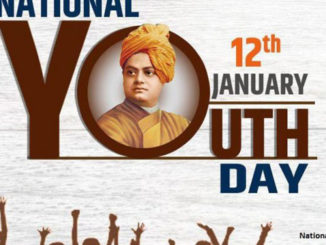
    1863       Swami Vivekananda, who brought India to Gyan Prakash, was born.

    1948       Mahatma Gandhi gave his last speech and decided to go on a hunger strike against communal violence. He was deeply saddened by the partition of India in 1947.

    13 JANUARY

    1709       Mughal ruler Bahadur Shah I defeated his brother Kambakhsh in Hyderabad in a power struggle.

    1849       The famous Battle of Chillianwala started during the Second Anglo Sikh War.

    1910       Radio was broadcast for the first time. The broadcast could also be heard on a ship 20 km away in the sea.

    1923       Famous film producer and director Shakti Samanta was born.

    1938       Renowned santoor player Pandit Shivkumar was born.

    1949       India’s first astronaut Rakesh Sharma is born.

    1976       Death of the famous tabla player of India Ahmed Jan Thirkwa.

  • The multifaceted persona of Swami Vivekananda

    The multifaceted persona of Swami Vivekananda

    By Amarjit Singh Anand

    Vivekananda, original name Narendranath Datta, Datta also spelled Dutt, (born January 12, 1863, Calcutta [now Kolkata]—died July 4, 1902, near Calcutta), Hindu spiritual leader and reformer in India who attempted to combine Indian spirituality with Western material progress, maintaining that the two supplemented and complemented one another. His Absolute was a person’s own higher self; to labor for the benefit of humanity was the noblest endeavor. -Encyclopedia Britannica

    Early Life and Education

     The Young Vivekananda 

    Born Narendranath Dutta, into an affluent Bengali family in Calcutta, Vivekananda was one of the eight children of Vishwanath Dutta and Bhuvaneshwari Devi. He was born on January 12, 1863, on the occasion of Makar Sankranti. Father Vishwanath was a successful attorney with considerable influence in society. Narendranath’s mother Bhuvaneshwari was a woman endowed with a strong, God-fearing mind who had a great impact on her son. As a young boy, Narendranath displayed sharp intellect. His mischievous nature belied his interest in music, both instrumental as well as vocal. He excelled in his studies as well, first at the Metropolitan institution, and later at the Presidency College in Calcutta. By the time he graduated from the college, he had acquired a vast knowledge of different subjects. He was active in sports, gymnastics, wrestling and body building. He was an avid reader and read up on almost everything under the sun. He perused the Hindu scriptures like the Bhagvad Gita and the Upanishads on one hand, while on the other hand he studied western philosophy, history and spirituality by David Hume, Johann Gottlieb Fichte and Herbert Spencer.

    He did his schooling at Ishwar Chandra Vidyasagar’s Metropolitan Institution (1871). Then he attended Presidency University (Kolkata) and General Assembly’s Institution (Scottish Church College, Kolkata). Swami Vivekananda died at an early age of 39 years on July 4, 1902, due to rupture in the blood vessel of his brain. His disciples say that he attained Mahasamadhi (the act of consciously and intentionally leaving one’s body at the moment of death) while meditating.

    Swamiji was never married, as He considered all women to be the manifestation of the Divine Mother of the Universe. All women were his Mother in that sense. When Swami Vivekananda went to America, a woman expressed his desire to marry him. When Swami Vivekananda asked the woman about the reason for her intention. Then the woman said she was very fascinated with the wisdom of Swamiji and wished for such a wise child from him. On this, Swamiji told the woman that since she is fascinated only by his wisdom, there is no problem. Swami Vivekananda said “I understand your wish. It will take a long time to get married and bring a child into this world and then to know whether he is intelligent or not. There is no guarantee that this would happen. Instead, I can give you a suggestion to fulfill your wish immediately. You accept me as your child. In this way, you will become my mother and thus your desire to have a wise child like me will also be fulfilled”.

    Spiritual Crisis and Relationship with Ramkrishna Paramhansa

    Although Narendranath’s mother was a devout woman and he had grown up in a religious atmosphere at home, he underwent a deep spiritual crisis at the start of his youth. His well-studied knowledge led him to question the existence of God and for some time he believed in Agnosticism. Yet he could not completely ignore the existence of a Supreme Being. He became associated with Brahmo Movement led by Keshab Chandra Sen, for some time. The Bramho Samaj recognized one God unlike the idol-worshipping, superstition-ridden Hinduism. The host of philosophical questions regarding the existence of God roiling through his mind remained unanswered. During this spiritual crisis, Vivekananda first heard about Sri Ramakrishna from William Hastie, the Principal of the Scottish Church College.

    Earlier, to satisfy his intellectual quest for God, Narendranath visited prominent spiritual leaders from all religions, asking them a single question, “Have you seen God?” Each time he came away without a satisfying answer. He put forward the same question to Sri Ramkrishna at his residence in Dakshinewar Kali Temple compounds. Without a moment’s hesitation, Sri Ramakrishna replied: “Yes, I have. I see God as clearly as I see you, only in a much deeper sense.” Vivekananda, initially unimpressed by the simplicity of Ramkrishna, was astonished with Ramakrishna’s reply. Ramakrishna gradually won over this argumentative young man with his patience and love. The more Narendranath visited Dakshineshwar, the more his questions were answered.

    Spiritual Awakening

    In 1884, Naredranath underwent a considerable financial distress due to the death of his father as he had to support his mother and younger siblings. He asked Ramakrishna to pray to the Goddess for the financial welfare of his family. On Ramakrishna’s suggestion he himself went to the temple to pray. But once he faced the Goddess he could not ask for money and wealth, instead he asked for ‘Vivek’ (conscience) and ‘Bairagya’ (reclusion). That day marked the complete spiritual awakening of Narendranath and he found himself drawn to an ascetic way of life.

    Life of a Monk

     Vivekananda, the monk 

    During the middle of 1885, Ramakrishna, who had been suffering from throat cancer, fell seriously ill. In September 1885, Sri Ramakrishna was moved to Shyampukur in Culcutta, and a few months later Narendranath took a rented villa at Cossipore. Here, he formed a group of young people who were ardent followers of Sri Ramakrishna and together they nursed their Guru with devoted care. On 16 August 1886, Sri Ramakrishna gave up his mortal body. After the demise of Sri Ramakrishna, around fifteen of his disciples including Narendranath began to live together in a dilapidated building at Baranagar in North Calcutta, which was named Ramakrishna Math, the monastic order of Ramakrishna. Here, in 1887, they formally renounced all ties to the world and took vows of monkhood. The brotherhood rechristened themselves and Narendranath emerged as Vivekananda meaning “the bliss of discerning wisdom”. The brotherhood lived on alms donated voluntarily by patrons during holy begging or ‘madhukari’, performed yoga and meditation. Vivekananda left the Math in 1886 and went on a tour of India on foot as a ‘Parivrajak’. He travelled the breadth of the country, absorbing much of the social, cultural and religious aspects of the people he came in contact with. He witnessed the adversities of life that the common people faced, their ailments, and vowed to dedicate his life to bring relief to these suffering. Vivekananda says “knowing God is a deep human necessity. Those who deny this fact have been proven wrong. Therefore, so long as there is fear of death in the world, there shall be faith in God. The concept of God is a fundamental element in the human constitution. In the Vedanta, Sat-chit-ananda (Existence-Knowledge-Bliss) is the highest concept of God”.

    Swami Vivekananda was a Hindu monk, a spiritual leader and reformer in India who attempted to combine Indian spirituality with Western material progress, maintaining that the two supplemented and complemented one another. To him, The Absolute was a person’s own higher self; and to labor for the benefit of humanity was the noblest endeavor. Born on January 12, 1863 in Calcutta, he died July 4, 1902 near Calcutta). His original name was Narendranath Datta.

    Swami Vivekananda on The Philosophy of Life.

    He was a youth icon who was well respected even by much older wiser people. He says everyone has a philosophy to apply in their life. Due to lack of proper education and consequent ignorance about whether such chosen philosophy is good or not, many people go astray. Many are not inquisitive and so remain content with their situations, howsoever crude or selfish. Then, some philosophies may not be adaptable in modern times and some may be too far-fetched, thereby unattainable.The majority set sensual pleasures as their goal. Some would do anything to gain position, power, name, fame, and so on because they think these are the greatest objectives to attain. Each group has a set of arguments to justify their views. However, we are shown by sages and saints that the path to express our infinite possibilities and reach a state that is universally valued and respected. Swamiji says “The lives of Buddha, Mahavira, Christ, Sri Ramakrishna, and many other great persons have demonstrated this truth”.

    While conducting a ‘Bhakti-Yoga’ class in New York, on 20th of January 1896, Swamiji narrated the incidents pertaining to Guru Nanak Sahebji whereby Guruji emphasized upon the paramount significance of mindful honest prayer, when the Guru visited the Arabic world and exposed the hypocrisy during the prayer service led by preachers.

    Swami Vivekananda and his 1893 Lecture

    https://www.artic.edu/swami-vivekananda-and-his-1893-speech

     Swami Vivekananda in Chicago in 1893 with the handwritten words “one infinite pure and holy—beyond  thought   beyond qualities I bow down to thee” 

    Swami Vivekananda burst upon the global stage because of his famed speech on September 11, 1893, at the first World Parliament of Religions in Chicago. In his groundbreaking speech to the 1893 World’s Parliament of Religions, he introduced Hinduism to America and called for religious tolerance and an end to fanaticism. He was the chief disciple of the 19th-century mystic Ramakrishna and the founder of Ramakrishna Mission. Swami Vivekananda is also considered a key figure in the introduction of Vedanta and Yoga to the West and is credited with raising the profile of Hinduism to that of a world religion. 

    Speech delivered by Swami Vivekananda

     Swami Vivekananda at the first World Parliament of Religions in Chicagoon September 11, 1893,

    Sisters and Brothers of America, it fills my heart with joy unspeakable to rise in response to the warm and cordial welcome which you have given us. I thank you in the name of the most ancient order of monks in the world, I thank you in the name of the mother of religions, and I thank you in the name of millions and millions of Hindu people of all classes and sects.

    My thanks, also, to some of the speakers on this platform who, referring to the delegates from the Orient, have told you that these men from far-off nations may well claim the honor of bearing to different lands the idea of toleration. I am proud to belong to a religion which has taught the world both tolerance and universal acceptance. We believe not only in universal toleration, but we accept all religions as true. I am proud to belong to a nation which has sheltered the persecuted and the refugees of all religions and all nations of the earth. I am proud to tell you that we have gathered in our bosom the purest remnant of the Israelites, who came to Southern India and took refuge with us in the very year in which their holy temple was shat­tered to pieces by Roman tyranny. I am proud to belong to the religion which has sheltered and is still fostering the remnant of the grand Zoroastrian nation. I will quote to you, brethren, a few lines from a hymn which I remember to have repeated from my earliest boyhood, which is every day repeated by millions of human beings: “As the different streams having their sources in different paths which men take through different tendencies, various though they appear, crooked or straight, all lead to Thee.”

    The present convention, which is one of the most august assemblies ever held, is in itself a vindication, a declaration to the world of the wonderful doctrine preached in the Gita: “Whosoever comes to Me, through whatsoever form, I reach him; all men are struggling through paths which in the end lead to me.” Sectarianism, bigotry, and its horrible descen­dant, fanaticism, have long possessed this beautiful earth. They have filled the earth with vio­lence, drenched it often and often with human blood, destroyed civilization and sent whole nations to despair. Had it not been for these horrible demons, human society would be far more advanced than it is now. But their time is come; and I fervently hope that the bell that tolled this morning in honor of this convention may be the death-knell of all fanaticism, of all persecutions with the sword or with the pen, and of all uncharitable feelings between persons wending their way to the same goal.

     New Path to Perfection

    Great saints and prophets have taught that becoming divine or perfect is the highest goal of human life. All have declared that humankind is heir to immortal life, infinite knowledge, love, and bliss. Though this is very much true according to the Indian ethos, it is also echoed by other great personalities, as Christ says: “Be ye therefore perfect, as your Father which is in heaven is perfect”.

    This goal of perfection is attained gradually after realizing the futility of lower goals such as sense enjoyment and socioeconomic power. We see that people once addicted to sensual pleasures become, by middle age, disillusioned and disappointed with those so-called pleasures. Similar is the case with those who run after wealth and power. Therefore, the wise ones counsel us against the pursuit of temporal goals: “Be spiritual; realize that you are divine and you will attain the highest perfection by knowing that you are spiritually immortal, possessing infinite knowledge and bliss.’ They also declare that this goal is achievable and open to everyone. They boldly proclaim that there is no other way to blessedness than consciously choosing and struggling to actualize our real nature. And this spiritual struggle is described in the Upanishads: ‘As difficult as impassable as a razor’s edge,’ and ‘this soul is not attained by the weak”. This struggle is more adventurous, thrilling, and inspiring than the conquest of external nature.

    Guided by his Master Sri Ramakrishna, he traversed this difficult path of discipline and prolonged struggles, and showed us its validity. Swamiji expressed this through a unique philosophy of life that promised us peace and happiness in temporal life, as well as lasting spiritual peace and joy.

      Swami Vivekananda in Kashmir  

    Swamiji wanted his monastic brothers to educate the masses of India in secular and spiritual matters. He writes in a famous letter of 1894 from the US to his brother disciples at the Alambazar monastery: ‘I am giving you a new idea. If you can work it out, then I shall know you are men and will be of service. … get together a number of poor, indigent folk … teach them astronomy, geography, etc., and preach Sri Ramakrishna to them.’ 4 Centuries of suppression and exploitation had rendered people helpless. Now, instead of depending on petty rulers and kings or the British to do something, Swamiji wanted the regeneration of India for the people and by the people. He first wanted to eradicate poverty through technical and other secular education, which had to go along with the instilling of spiritual culture, the backbone of India since ancient times. Swami Vivekananda speaks about teaching history, geography, astronomy, and modern social sciences in order to awaken the Indian masses. He knew that individual happiness rests on the happiness of others, and awakening people was the first step towards an all-round national development. His ‘new idea’ was far ahead of even the much later communist movements in some parts of the world, which failed because they could not understand the spiritual dimension of the human being. His novel idea was initially not well received by his own brother disciples! But Swami Vivekananda, a born leader, was charting a new path for humanity while spiritually extending the old ideal of ‘bahujana hitaya bahujana sukhaya; for the good of the many, for the happiness of the many’. In a poignant letter written to the Maharaja of Mysore he says: ‘My noble Prince, this life is short, the vanities of the world are transient, but they alone live who live for others, the rest are more dead than alive’. Spiritual life, in the hands of Swamiji, was made proactive and practical through service of the Atmaa in all.

    Swamiji wanted a healthy exchange of ideas between the East and the West. Western technology must be used to uplift the poor masses, and values cherished by the orient for thousands of years taught to the West in exchange. He spoke of mass education going from door to door using the magic lantern, maps, charts, and so on. Today primary education in India, after all these years, is a right and a reality. Unfortunately, the gap between the rich and the poor has not been bridged, but a big start has been made for the poor to rise and stop being exploited. We also need to effectively use all the technological developments such as electronic media, computers, and the Internet to bring the masses into the mainstream. Swamiji was always positive and modern in his approach, and his followers will also have to be so. Distance education can be used to ‘reach the unreached’, even in remote forest and hill tribes and communities.

     Spiritual Awakening:Need of the Hour

     The Spiritual Vivekananda 

    Swamiji wanted to eradicate poverty, but he wanted even more the eradication, through spiritual awakening, of selfishness, disunity, jealousy, and corruption, which can happen. These stumbling blocks of human progress could be neutralized by propagating the character, teachings, and religion of Sri Ramakrishna, who preached the divinity of humankind, of the universe, and the harmony of all religions. ‘This’, Swamiji said, ‘is the only spiritual practice, the only worship, this verily is the means, and this the goal’.

    Swamiji’s call for a national consciousness was unique. In his essay ‘Aryans and Tamilians’, he showed the essential unity of the nation and refuted the Aryan invasion theory. He said that the whole of India was of one race only, called Aryan in the North and Dravidian in the South, both originating from the race that inhabited India from prehistoric times.Next, he wanted to arouse the dormant spiritual consciousness of the nation through the repropagation of moksha, spiritual freedom, and the temporal ideal of intellectual and economic development based on dharma. He wanted everyone to strive for one’s self-realization through service, renunciation, and sacrifice. This path would lead to concentration, meditation, and realization, which the rishis of old attained through years of tapasya, austerities. Therefore, Swamiji exhorted: ‘They had hundreds of Rishis in ancient India. We will have millions—we are going to have, and the sooner every one of you believes in this, the better for India and the better for the world’. Sainthood, that is, the ideal of an all-round development of the personality can be attained by keeping before us the fourfold goals of human life: righteousness (dharma) wealth (artha) sensual pleasure (kaam) and emancipation (moksh). This quest can transform the powers of the body and the mind into healthy channels of expression, helping thus to reduce distortions arising from selfishness.

    Dharma, Artha, and Kama : Artha and Kama are interconnected. Wealth enables one to enjoy pleasures through the senses; pleasures in turn create the need for more wealth. Thus, a circle is created of wealth leading to enjoyment, and thirst for more enjoyment leading to more wealth. But the thirst for enjoyment has to be controlled for the following two reasons: (i) The senses have their limitations and therefore overstretching them brings in diseases and premature death; and (ii) sense enjoyment invariably leads to possessiveness and selfishness affecting others’ freedom. Therefore, these clashes and struggles would not be conducive to happiness.

     Who is to control this thirst for enjoyments? The individual has to do it through his or her own conscience. There is no other way. Dharma should form the basis for the acquisition of wealth and enjoyment. The modern argument that there is no need for dharma or values in procuring wealth or enjoyment seems absolutely shallow. Besides, one soon learns the harsh truth that wealth and enjoyment destroys oneself. The Bhagavadgita says that God incarnates again and again to guide humanity along the lines of a new dharma to suit a new age. Such an avatara has come again in the form of Sri Ramakrishna. In a glorious tribute to his Master, Swamiji declares: ‘Sri Ramakrishna, the fulfilment of the Indian sages, the sage for the time, one whose teaching is just now, in the present time, most beneficial. And mark the divine power working behind the man. The son of a poor priest, born in an out-of-the-way village unknown and unthought of, today is worshipped literally by thousands in Europe and America, and tomorrow will be worshipped by thousands more. Who knows the plans of the Lord!’.

    By glorification of the human being, Swamiji reiterates that one’s caste is not a barrier for the highest secular or religious achievement. This is also the message of the Mahabharata, which says that neither birth, sacraments, ancestry, or studies make a person dvija, twice born, but character and conduct alone does. Swamiji describes how we can achieve happiness in this world: ‘Man thinks foolishly that he can make himself happy, and after years of struggle finds out at last that true happiness consists in killing selfishness’ (1.84). This happiness can be at the physical, mental, moral, or spiritual level, the durability and intensity increasing at each succeeding level. This happiness is directly proportional to freedom, and spiritual joy is the highest because it gives freedom.

    Food, Education, and Happiness : Food is an important aspect of human happiness. Swamiji advises us: ‘Certain regulations as to food are necessary; we must use that food which brings us the purest mind’. But fanaticism regarding choice of food—vegetarian, non-vegetarian, vegan, or ‘vegetarian’—should be eschewed. The food that one is habituated to from one’s childhood should be good for that aspirant, though after an increase of spirituality that too changes accordingly. Education plays a vital role in making a person happy. Hence Swamiji often called good education ‘man-making’, because it promoted a person’s all-round growth: physical, intellectual, emotional, moral, and spiritual. He defined education as ‘the manifestation of perfection already in man’.An educated person should develop a strong will power, which comes from the power of knowledge and emotions coming together. This will power should guide one along the right path, to work efficiently, and achieve the maximum with a minimal expenditure of energy. Education should make people good-natured, kind, philanthropicand courageous to fight for just causes.

     As the whole of creation has issued out of the supreme Soul, and the jiva is a part of this supreme Soul, a person has the knowledge of everything ‘hidden within one’s mind’. Education is ‘uncovering’ this dormant knowledge. This concept of education, as an inside-out manifestation, gives everyone the opportunity and hope to reach very high, provided one struggles hard enough. Proper education develops an enlightened society in which, necessarily, the majority have to be householders. Swamiji speaks about how men and women can live happily in their families: ‘The householder is the basis, the prop, of the whole society. A good householder is expected to earn well and spend well. Swamiji calls this a ‘worship’, equivalent to a monastic’s spiritual practices, because behind both is the same virtue of self-surrender and self-sacrifice, prompted by the feeling of devotion to God and to all that is his. Again, the householder has to be a person of character. Swamiji says: ‘Chastity is the first virtue in man or woman’. The husband should look upon all other women as his mother, daughter, or sister. The wife has the greater responsibility of bringing back a wayward husband through the power of her love and chastity.

    A householder should behave towards his or her family members as a ‘nurse’ in a rich man’s house, believing that all of them are not one’s own but really God’s! A householder, to his enemies, must be a hero; he must resist them and never talk of non-resistance. To his friends and relatives he should be gentle. He should eschew bad habits like gambling, company of the wicked, and soon and struggle to earn a good name. The householder’s life is a training in selflessness, service, sacrifice, and renunciation, to become ‘a sannyasin without a garb’ and quickly attain moksha.

    Ethics : Morality in both individual life and social life is mostly based on fear of societal censure. But Vivekananda gave a new theory of ethics and new principle of morality based on the intrinsic purity and oneness of the Atman.Ethics, according to Vivekananda was nothing but a code of conduct that helps a man to be a good citizen. He said we should be pure because purity is our real nature, our true divine Self or Atman.Similarly, we should love and serve our neighbors because we are all one in the Supreme Spirit known as Paramatma or Brahman.

    Religion : One of the most significant contributions of Swami Vivekananda to the modern world is his interpretation of religion as a universal experience of transcendent Reality, common to all humanity.This universal conception frees religion from the hold of superstitions, dogmatism, priest craft and intolerance.He believed that every religion offered a pathway to the eternal supreme – supreme freedom, supreme knowledge, supreme happiness.This can be accomplished by realizing one’s Aatma as part of Paramaatma.

    Education : Swami Vivekananda laid the greatest emphasis on education for the regeneration of our motherland.According to him, a nation is advanced in proportion as education is spread among the masses.He said that our process of education should be such that it helps the students to manifest their innate knowledge and power.He advocated a man-making character-building education.He said that education must make the students self-reliant and help them face the challenges of life. He was highly critical of the so-called educated who do not care for the poor and downtrodden.

    He was in complete agreement with the methods and results of modern science. He did not discard reason in favor of faith. He recognized intuition or inspiration as a higher faculty than reason. But the truth derived from intuition had to be explained and systematized by reason.

    Though growth of Nationalism is attributed to the Western influence but Swami Vivekananda’s nationalism is deeply rooted in Indian spirituality and morality.His nationalism is based on Humanism and Universalism, the two cardinal features of Indian spiritual culture.Unlike western nationalism which is secular in nature, Swami Vivekananda’s nationalism is based on religion which is life blood of the Indian people.The basis of his nationalism are:deep concern for masses, freedom and equality through which one expresses self, spiritual integration of the world on the basis of universal brotherhood. “Karmyoga” a system of ethics to attain freedom both political and spiritual through selfless service.His writings and speeches established motherland as the only deity to be worshiped in the mind and heart of countrymen.

    Youth Icon A Message to Youth 

    Swamiji believed that if our youth is determined, there can be nothing impossible for them to achieve in the world. He urged youth to have dedication to the cause to attain success. Pursuing a challenge with utmost dedication is really the road to success, for our youth. His birthday on January 12 is celebrated as National Youth Day and the week commencing from that day is known as the National Youth Week. As part of National Youth Week celebrations, the Government of India holds the National Youth Festival every year. The youth festival aims to propagate the concept of national integration, spirit of communal harmony, brotherhood, courage and adventure amongst the youth by exhibiting their cultural prowess in a common platform.

    Swami Vivekananda belonged to the 19th century, yet his message and his life are more relevant today than in the past and perhaps, will be more relevant in future. Persons like Swami Vivekananda do not cease to exist with their physical death – their influence and their thought, the work which they initiate, go on gaining momentum as years pass by, and ultimately, reach a fulfilment which they envisaged.

    (Amarjit Singh Anand is a thinker and writer. He is a regular contributor to The Indian Panorama. He can be reached at amar1ujagar1pritam@gmail.com)