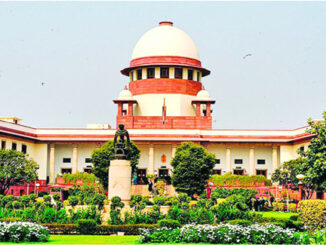
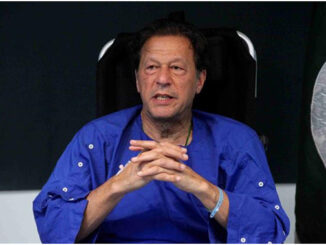
New Delhi (TIP)- The Supereme Court on Thursday , November 10 allowed the Centre more time to submit its written response to a plea to declare the Ram Setu a national heritage monument even as it questioned the delay. “Why are you dragging your feet?” Chief Justice of India D Y Chandrachud asked the Centre’s counsel as he sought time, saying the affidavit is ready but was awaiting the sanction from the relevant ministry. Rajya Sabha MP Subramanian Swamy, who filed the petition, pointed out to the bench, also comprising Justices Hima Kohli and J B Pardiwala, that the government was yet to file the affidavit despite many directions in the past. He said the matter has been going on since long but the government is not taking a stand. “They only have to say yes or no,” he added.
Swamy had filed a PIL against the Centre’s Sethusamudram Canal project, initiated when the UPA-1 was in power at the Centre. The project envisaged creation of a 83-km-long deep water channel, linking Mannar with Palk Strait, by dredging and removing the limestone shoals that formed part of the Ram Setu. The SC had stayed the work for the project in 2007.
In March 2018, the Union Shipping Ministry in an affidavit told the court that the government “does not want to implement” the proposed “alignment…considering” its “socio-economic disadvantages”.
The affidavit added that “the Government of India intends to explore an alternative to the earlier alignment of Sethusamudram Ship Channel project without affecting or damaging the Adam’s bridge/Ram Sethu in the interest of the nation.”
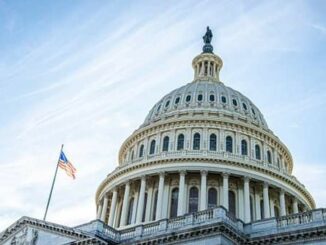
WASHINGTON, D.C. (TIP): Who will control the Congress and capture the Senate is a question to which answer lieswith Arizona and Nevada. All eyes in the political world were trained on Friday, November 11, on Arizona and Nevada, where hundreds of thousands of uncounted votes held the key to control of the U. S. Senate three days after Americans cast their final ballots in midterm elections. Either Democrats or Republicans can capture a Senate majority by sweeping the contests in both states. A split, however, would transform a December 6 runoff Senate election in Georgia into a proxy battle for the chamber, which among other powers holds sway over President Joe Biden’s judicial appointments. Meanwhile, Republicans were slowly inching closer to wresting control of the House of Representatives from Mr. Biden’s Democrats, which would effectively give them veto power over his legislative agenda and allow them to launch a bevy of investigations into his administration.
Republicans had secured at least 211 of the 218 House seats they need for a majority, Edison Research projected late on Thursday, while Democrats had won 197. That left 27 races yet to be determined, including a number of close contests. The Republican House leader, Kevin McCarthy, has already announced his intention to run for speaker if Republicans take over, an outcome he described as inevitable on Wednesday. Mr. Biden told reporters on Thursday he and Mr. McCarthy had spoken but said he had not yet abandoned hope that Democrats could still prevail in the House, despite the tough odds. “It’s still alive,” he said of their chances.
The outcome of the Arizona and Nevada Senate races, where Democratic incumbents were trying to fend off Republican challengers, may not be known for days yet. Officials in both states have said it could take until next week to finish tallying uncounted mail ballots.
No ‘red wave’
Tuesday’s results fell far short of the sweeping “red wave” that Republicans had expected, despite Mr. Biden’s anemic approval ratings and deep voter frustration over near-unprecedented inflation. Democrats portrayed Republicans as extremist, pointing to the Supreme Court’s decision to eliminate a nationwide right to abortion and the hundreds of Republican nominees who promoted former President Donald Trump’s false claims that the 2020 election was fraudulent.
Some of Trump’s most high-profile endorsed candidates lost pivotal races on Tuesday, marring his status as Republican kingmaker and leading several Republicans to blame his divisive brand for the party’s disappointing performance.
The outcome may increase the chances that Florida Governor Ron DeSantis, who routed his Democratic challenger on Tuesday, opts to challenge Mr. Trump for the 2024 presidential nomination. While Trump has not officially launched a third White House campaign, the former president has strongly suggested he will do so and is planning a “special announcement” at his Florida club on Tuesday. Mr. Trump lambasted Mr. DeSantis in a statement on Thursday, taking credit for the governor’s political rise, while attacking critics on his social media site, Truth Social. Even a narrow Republican House majority would be able to demand concessions in exchange for votes on key issue such as raising the nation’s borrowing limit. But with few votes to spare, Mr. McCarthy might struggle to hold his caucus together – particularly the hard-right faction that is largely aligned with Trump and has little interest in compromise.
Prime Minister Narendra Modi on Friday, November 11, flagged off the inaugural special of south India’s first Vande Bharat Express at Krantiveera Sangolli railway station here. The train connects Mysuru and Chennai via Bengaluru. The Prime Minister also flagged off the ‘Bharat Gaurav Kashi Darshan’ train, which is operated by Karnataka’s Muzrai Department, under the ‘Bharat Gaurav’ train policy of the railways. “It will fulfil the dream of numerous travellers intending to undertake Kashi Yatra,” according to the South Western Railway.
The train offers an eight-day tour package at discounted rates for pilgrims. Official sources said the Karnataka government gives cash assistance of Rs 5,000 to the Kashi Vishwanath Yatra pilgrims. This train covers holy places, including Varanasi, Ayodhya and Prayagraj
New Delhi (TIP)- The Supreme Court on Friday, November 11, refused to ask the Centre to respond to an affidavit filed by Delhi Deputy Chief Minister Manish Sisodia levelling certain ‘political’ allegations against the Centre with regard to control over bureaucracy in the national capital. “We will not ask the Centre to file a response to this affidavit. We will deal with the constitutional issues. We will step back from the actual arena of conflict,” a Bench led by CJI DY Chandrachud said after Additional Solicitor General Sanjay Jain vehemently objected to filing of an affidavit on the ongoing political slugfest. “We will freeze the pleadings (filing of documents/affidavits) now and let the Constitution Bench take up the matter now. The opposite side (Centre) need not file a reply to the affidavit,” the Bench said. A five-judge Constitution Bench led by CJI Chandrachud is to take up the dispute on control over ‘services’ in the national capital on November 24, Jain pointed out. Other judges on the Bench are Justice MR Shah, Justice Krishna Murari, Justice Hima Kohli and Justice PS Narasimha. On behalf of the Delhi government, senior advocate Abhishek Manu Singhvi submitted that it was necessary to show how bureaucrats were refusing to obey orders of the elected government and the administration was getting paralysed on the ground.
The Constitution Bench is expected to make an authoritative pronouncement on the scope and ambit of legislative and executive powers of the Centre and the government of the NCT of Delhi with regard to control over the bureaucracy in the national capital.
The Delhi government has challenged the validity of amended Government of NCT of Delhi Act, 2021, and Rule 13 of the Transaction of Business Rules, 1993, which allegedly gave more powers to Lieutenant Governor.
This is the third round of litigation before the top court on the power tussle between Lt Governor of Delhi — appointed by the Centre — and the elected government led by AAP leader Arvind Kejriwal. The tussle between Delhi Lt Governor and the elected government of NCT has remained unresolved despite two earlier verdicts – one each by a Constitution Bench and a two-judge Bench of the Supreme Court. In July 2018, the top court had ruled that the Delhi Lt Governor of Delhi did not have independent decision-making powers. A five-judge Constitution Bench had said the L-G was generally bound to act on the aid and advice of the Council of Ministers, except on three subjects reserved for him or where he differs with the decision of the elected NCT government and decides to refer an issue to the President. All decisions of the NCT Council of Ministers have to be communicated to the L-G. However, such communication does not mean L-G’s concurrence is required, it said.
On February 14, 2019, the court had delivered a split verdict on the issue of control of administrative services. A Bench of Justice AK Sikri and Justice Ashok Bhushan had different views as to who had powers to appoint and transfer officers of State Public Services under Entry 41, List II of the Constitution. In view of the split verdict, the issue of “services” was referred to a three-judge Bench.
Defence Minister Rajnath Singh said today that the country was facing new dimensions of threats, making it difficult to categorise these into internal and external ones. He was addressing officers of the armed forces and civil services at the convocation of the 60th course of National Defence College (NDC). “Terrorism, which is generally considered part of internal security, is now classified in the category of external security because the training, funding and arms support of such organisations is being carried out from outside the country,” said the minister. Rajnath called on international community to counter “grave” emerging security threats such as cyberattacks and information warfare. “Information war has the potential to threaten the political stability of a country. An organised use of social media and other online platforms is engineering the opinion of the masses,” he said.
New Delhi (TIP)- India and Singapore are all set to link their respective fast payment systems, Unified Payments Interface (UPI) and PayNow, to enable easy fund transfers between the countries at the lowest possible cost, India’s High Commissioner in Singapore P Kumaran said. According to the news agency ANI, through this initiative, money can be transferred from India to Singapore using mobile phone numbers and from Singapore to India using UPI virtual payment addresses under the proposed linkage (VPA).
Both countries’ central banks, the Reserve Bank of India (RBI) and the Monetary Authority of Singapore (MAS), will collaborate on the move. “Singapore wants to connect its PayNow with UPI and that project will finish sometime in the next few months when that happens anybody sitting in Singapore will be able to send money to their family members in India,” Kumaran said.
PayNow is similar to RuPay, India’s own card payment network. It has linkages with other Asean countries, so India can be connected to those through Singapore if the UPI-PayNow link is maintained.
“Most Indian tourists who come here do not have a RuPay card and even if they have it they might have the domestic RuPay card so it is a bit complicated. So in future, we see a lot of people leaning to digitalisation not carrying a lot of cash, not dependent on international credit cards which have very high fees,” the Indian High Commissioner further said. UPI-PayNow will benefit workers who come to Singapore for a brief period of time and typically sacrifice about 10% of the amount as bank fees for money transfers.
New Delhi (TIP)- The BJP on November 10 nannounced the first list of 160 candidates for the forthcoming elections to the 182-member Gujarat Assembly, dropping, among others, Morbi MLA Brajesh Merja. Merja is among the 38 sitting MLAs who have been dropped in the first list released by Union minister Bhupender Yadav. The party has repeated 69 sitting legislators. Yadav said the names of the 38 candidates were dropped after “having arrived at a consensus”. From Morbi, the BJP has fielded five-time MLA Kantilal Shivlal Amrutiya, who reportedly jumped into the Machchu river to save people following a bridge collapse that resulted into the death of 135 persons.
Political observers believe the BJP may have turned the tide in the constituency by fielding Amrutiya, who lost to Congress’ Brijesh Merja in the 2017 elections. Merja had switched sides and won on a BJP ticket in the 2020 byelection. Gujarat will go to polls on December 1 and 5. The result will be out on December 8. The list also includes several Congress turncoats such as Hardik Patel from Viramgam and Bhagwan Barad from Talala. Barad, who is the Talala MLA, joined the BJP on Wednesday. Cricketer Ravindra Jadeja’s wife Rivaba Jadeja has been fielded from Jamnagar (North). Gujarat Chief Minister Bhupender Patel will contest from Ghatlodia. Opposition Congress has fielded Rajya Sabha member Amee Yagnik from the CM’s constituency. “Of the 160 nominees, 24 are from the Scheduled Tribe community, 13 are Scheduled Castes and 14 are women,” said Yadav, who announced the names in the presence of state BJP chief CR Patil, Union minister Mansukh Mandaviya and general secretary Tarun Chugh. The names were decided by the Central Election Committee (CEC) headed by party president JP Nadda, though Prime Minister Narendra Modi and Union Home Minister Amit Shah are said to have “discussed and scrutinised” each name. Source: TNS
Ailing Rashtriya Janata Dal (RJD) patriarch Lalu Yadav’s Singapore-based daughter will donate a kidney to her father, a close family member said on Thursday, November 10. Yadav (74) returned last month from Singapore where he had gone for treatment of his kidney problems. The RJD president, who has been suffering from multiple health problems, has been advised a kidney transplant. His daughter Rohini Acharya, based in Singapore, has stepped in to give her father a new lease of life, a family member said. Yadav, currently in Delhi, is out on bail in a case related to fodder scam. He was hospitalised several times in Delhi and Ranchi. It is not clear where the transplant surgery would happen and when. Doctors at AIIMS, New Delhi, where he was treated earlier, said they were not aware of the development.
Prime Minister Narendra Modi will visit the Indonesian resort of Bali during November 14-16 to attend the G20 summit and to hold bilateral meetings with some of his counterparts on the margins, the external affairs ministry said on Thursday, November 10. US President Joe Biden, UK Prime Minister Rishi Sunak, French President Emmanuel Macron and German Chancellor Olaf Scholz are among the leaders expected to attend the summit. Russia announced on Thursday that President Vladimir Putin would not attend, reflecting the global tensions over the Ukraine conflict. “During the Bali summit, G20 leaders will deliberate extensively on key issues of global concern under the summit theme of ‘Recover Together, Recover Stronger’.
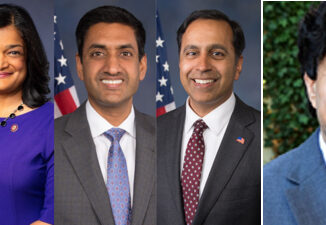
WASHINGTON, D.C. (TIP); As predicted by The Indian Panorama in the publication’s editorial by Chief Editor Prof. Indrajit S Saluja, November 4, five Indian-American politicians from the ruling Democratic Party, including Raja Krishnamoorthi, Ro Khanna, Ami Bera and Pramila Jayapal, are headed to the US House of Representatives on Wednesday. November 9, following the highly polarized midterm elections. The new US Congress will begin in January next year. Apart from these five politicians, many others from the community won across the country for state legislatures. The current House of Representatives has four Indian-American lawmakers, and they all are Democrats – Bera from the sixth Congressional district of California, Khanna from the 17th Congressional District of California, Raja Krishnamoorthi from the eighth Congressional District of Illinois and Pramila Jayapal from the seventh Congressional District of Washington State. For his fourth consecutive term, Khanna swept the 17th Congressional District with more than 70 per cent of the votes polled against his Republican rival, Indian American Ritesh Tandon.
Krishnamoorthi, 49, won his fourth consecutive term by defeating Republican candidate Chris Dargis by a margin of over 12 per cent of the votes. Krishnamoorthi, who was attacked by right-wing Muslim fundamentalists during the election campaign, in his victory speech called on all candidates everywhere to “denounce violence and bigotry” and “focus on what we share in common as Americans.” “Whatever side you’re on in this election, those on the other side are not your enemy,” he continued. “We are all Americans, and we must work together on behalf of a better and stronger nation,” he said in his victory speech.
He serves on the House Permanent Select Committee on Intelligence, the House Committee on Oversight and Reform, and the Select Subcommittee on Coronavirus. “My parents came to this country with little more than a dream for their family’s future and the faith that they could achieve it here in America,” Krishnamoorthi said. “And despite some hard times, we did. Now, we need to make sure that those opportunities continue for all of our people, whether they’ve been here for generations, or are relatively new to our shores,” he said. Chennai-born Jayapal, 57, the first and the only Indian-American woman in the House of Representatives, swept the seventh Congressional district of Washington State with more than 85 per cent of the votes polled against her Republican rival Cliff Moon, who received just 15 per cent of the votes. She has won for the fourth consecutive term. Joining them in the next Congress would be Shri Thanedar, 67, from the 13th Congressional District of Michigan. Making his maiden entry into the House of Representatives, Thanedar who came to the US with just 20 dollars in his pocket and later on became a successful entrepreneur, received 72 per cent votes in the 13th Congressional District of Michigan against his Republican rival Martell Bivings with 23 per cent of the votes polled. Thanedar, who wants to make health care mandatory for every American citizen and plans to focus on issues like immigration and human rights in the House, is the fifth member of the so-called Samosa Caucus, an informal grouping of Indian-Americans in the Congress. “We did it! …. I’m honored to be the next Representative in Congress for the 13th District!” Thanedar said in his early comments after results started coming in. Bera, 57, the seniormost among the Indian-American politicians of all who is seeking his sixth consecutive term was leading by more than 12 per cent of the votes against his Republican rival Tamika Hamilton as per the latest reporting when 25 per cent of the votes polled were counted. Indian-American candidates picked up seats in State legislatures also.
In Maryland, Aruna Miller scripted history by becoming the first Indian-American politician to win the race of Lieutenant Governor.
Miller, 58, a former delegate to the Maryland House, was on the Lieutenant Governor ticket along with Wes Moore — the Democratic Governor-elect. However, Indian-American Sandeep Srivastava lost from Texas’s third Congressional district to Keith Self, the former Colin County judge. The emergence of a large number of young Indian-American candidates reflects the growing desire of this small ethnic community comprising just one per cent of the US population of 33.19 crores. Ahead of the November 8 elections, the Democrats and the Republicans reached out to the Indian-American community. The Washington Post newspaper on Friday said that Indian-Americans can play an important role in some of the tightly contested races.
“Ahead of mid-term elections that could be decided by razor-thin margins, Democrats are hoping to capitalize on some of the optimism felt by Indian Americans, a growing and increasingly vital bloc of voters,” the daily wrote.
President Joe Biden’s Democratic Party strongly pushed back against Donald Trump-led Republican Party’s expected ‘red wave’ on Wednesday, preventing it from sweeping the House of Representatives and other elected bodies across the US which the pollsters and political pundits were predicting before the crucial midterm elections.
Learning to live without a partner of 63 long years
My wife differentiated easily between right and wrong and ensured that her husband and two daughters followed the same path. twitterBy Julio Ribeiro
On October 31, I lost my friend and companion of 63 years, my dear wife Melba. She was a gentle, unassuming woman with no craving for material things. She differentiated easily between right and wrong and ensured that her husband and two daughters followed the same path. She was endowed with good looks but that was something she never flaunted. Melba provided and guarded the moral compass that public servants belonging to the All India Services need to follow in their dealings with politicians and the public. Ours was an arranged marriage, as was the custom in those days. The husband of one of my mother’s sisters and cousin of Melba’s mother met and decided to broach the topic to her parents and my mother. The cultural background being the same, there was not much to decide except arranging a meeting of the boy and girl and obtaining their consent to the union.
I was stationed at Parbhani as SP and she was in Pune, teaching in a Convent school. I took three days’ leave and met Melba for the first time at the flat of her mother’s cousin. Descending the steps of the building, my mother asked me if I had liked the girl. When I answered in the affirmative, she said she had anticipated my reply. We were unofficially engaged. The official engagement was effected after a couple of months and marriage five months later, on April 25, 1959. I was a few days shy of 30 and she a month short of 21 when we tied the knot at Gloria Church at my mother’s parish in Byculla, Mumbai.
After the wedding, Melba came to Parbhani with me. It was a small district without electricity. Light was provided by a petromax. Socializing was confined to the district’s officials — the Collector and District Magistrate, District and Sessions Judge, Civil Surgeon, Executive Engineer and District Forest Officer. Among the local gentry there was just one couple we could relate to — a local Parsi businessman named Feroze Parakh and his Sindhi wife, Janki. They provided company to my new bride. Life in a non-descript district headquarters was different from that in a big city like Pune, as Melba quickly learnt.
The District Magistrate was Manu Dhavale, the son of a former ICS officer from the Bihar cadre. His wife, herself from a ‘service’ family, took Melba under her wing and introduced her to a life different to the carefree one she was accustomed to. Even before our first daughter was born in February 1960, I was transferred to the adjoining district of Nanded. There was more ‘life’ in Nanded and that pleased Melba, though she missed Nalini Dhavale, who was like an elder sister to her. The new district headquarters had electricity. It solved many problems, especially since our daughters were born during our over two years’ stay there.
There was a Parsi family whose household head was employed in the town’s Osmanshahi Mills. His son, Jamsheed Kanga, was an IAS officer of the 1956 seniority, posted at Parbhani soon after we left that district. His sister, a little older than Melba, stayed with her parents in Nanded. Melba soon developed a friendship with Ava, for that was her name. In the districts it is important to befriend one or two of the same sex to whom you can relate. Soon, Melba was kept occupied with our two babies. That in itself was enough to ensure that in an interior district she had always something to do. She was a voracious reader. In small districts like Parbhani and Nanded books were not easy to come by. In my next charge, Sholapur, accessing books was easier, and in Pune, where I was sent after Sholapur, Melba was at home, though her parents had shifted back to Goa just a couple of months before we arrived in the city.
The outpouring of grief at the news of her death was very real. Whoever had occasion to meet her, was impressed by her humility and sincerity. She had taught at various schools in Pune, Mumbai, Hyderabad and Delhi, where I was posted during the course of my service. There were numerous pupils and teachers who remembered her with love.
Since I was married to Melba for 63 years, I would be forgiven if I eulogized her qualities of mind and heart. Yet, I will deny myself that privilege. I will only mention what friends said or wrote, mainly wrote as words speak more loudly when put down on paper.
‘Melba leaves you with happy memories but with a hole in your heart,’ wrote one dear lady. She went on to say that it was not easy to lose one’s life companion. Stay with your activities and your pro bono work, she advised. ‘Her kindness and ready smile will remain in our memories,’ wrote another dear lady. This sentiment was a constant refrain in most letters I received. ‘I still turn to say something to Conrad only to realize he is no longer there,’ wrote a dear lady from New Zealand.
A retired IAS officer, who is presently chairman of an NGO with which I have been associated for the past two decades, mentioned to me that the Club of Elders, comprising mostly former IAS officers in Mumbai, had all remarked on Melba’s commitment to the values that they themselves valued and lived by. I can add my two-penny bit at this stage. She provided and guarded the moral compass that public servants belonging to the All India Services need to follow in their dealings with politicians and the public at large.
When I was growing up in Byculla, there was a girl next door on who I had a crush. She married a professor and settled in the US. Her husband died a few years ago. She wrote, ‘Having been through the loss of a lifelong companion myself, I know what you must be going through.’ So very true. It will take some time for me to adjust to a life without the woman I loved!
(The author is a retired IPS Officer, and a former governor)
THE INDIAN PANORAMA MOURNS THE SAD DEMISE OF MELBA REBEIRO, OFFERS HEARTFELT CONDOLENCES TO JULIO REBEIRO AND THE ENTIRE FAMILY AND THEIR FRIENDS, AND PRAYS FOR ETERNAL PEACE TO THE DEAR DEPARTED SOUL
The Shiromani Akali Dal chief Sukhbir Singh Badal must have heaved a sigh of relief after his hand-picked Harjinder Singh Dhami won his second term in office as the President of the Shiromani Gurdwara Parbandhak Committee. His once loyalist and the first woman chief of the Apex Sikh body controlling affairs of historic Sikh Gurdwaras of Punjab, Haryana, Himachal Pradesh, Bibi Jagir Kaur, had given him hard times as his repeated requests failed to convince the Bibi from Bholath to relent. Bibi Jagir Kaur stood firm in her fight against what she described as “lifafa culture” of which she herself remained a beneficiary. She was least remorseful in her defeat. Open revolt against the party that had been running the affairs of the SGPC for decades, Bibi Jagir Kaur’s bold initiative, was nothing new. There have been several instances that saw powerful Sikh politicians, including longest serving SGPC chief Gurcharan Singh Tohra, standing up against the Shiromani Akali Dal (SAD) leadership for wresting top position in the Sikh temporal body.
The apex Sikh Gurdwaras management committee has a history of witnessing dissensions and factional politics. Now when Shirormani Akali Dal, fighting for its revival, has successfully met the revolt and challenge of Bibi Jagir Kaur, it has to chart out its future line of action. Will Sukhbir Singh Badal repeat what his father and patron of Shiromani Akali Dal, Parkash Singh Badal, did in 2003 or go aggressively against those raising their heads?
Going by my experience of covering Sikh affairs and Akali politics for more than four decades, Sukhbir Singh Badal finds himself in the same piquant situation as his father was 20 years ago. Will he wait or ride the recent and first major political success after several debacles to stem the further revolt in the party aggressively?
There are numerous precedents when those revolting in the Shiromani Akali Dal go about seeking the tacit help of foes, both old and new, to loosen Badal family’s stranglehold over the SGPC. In 2002, no one would have even imagined that Punjab Chief Minister Amarinder Singh and Gurcharan Singh Tohra, who had remained poles apart in the State politics, would actually join hands to oust Badal from the control of the SGPC. It is the SGPC that manages the affairs of the cash-rich and historical gurdwaras in Punjab, Haryana, Himachal Pradesh and Chandigarh. Now that jurisdiction, too, stands challenged following the Apex Court’s grant of recognition to the Haryana Sikh Gurdwaras Management committee. The SGPC has already decided to challenge the recent verdict before a bigger bench.
The decision may have added to the problems of Sukhbir Badal and his SAD as members elected from Haryana were generally supportive of the Apex Court directions. Besides the rebels led by Bibi Jagir Kaur, the SAD leadership also had to tackle these SGPC members from Haryana in a crucial executive committee election held in November every year.
The sequence of events followed those 20 years ago. In the month before the elections, the then Punjab Chief Minister Captain Amarinder resorted to all possible tricks to keep at bay Badal’s supporters in the 176-member SGPC. All of them, elected to the committee during Badal’s tenure, were still solidly behind him. When Amarinder found he could not convince them to shift loyal ties, he reportedly resorted to force. To help Gurcharan Singh Tohra, the chief minister allegedly the state police to scare the Badal loyalists into joining the Tohra camp. There was tension in and around Amritsar. The Golden Temple complex was under a virtual police siege.
There were fears of violence before and during the meeting. At that time Badal nominee Professor Kirpal Singh Badungar, was re-elected SGPC chief, defeating Tohra’s nominee, Sant Bir Singh by 23 votes. After the elections, Parkash Singh Badal ascribed the peaceful voting to the intervention of Congress President Sonia Gandhi. “She realized that Amarinder’s actions were offending the Sikhs and she did not want to lose their votes in the Lok Sabha elections,” he was quoted saying in media afterwards.
Subsequently, Parkash Singh Badal was very careful in his statements about Gurcharan Singh Tohra. He avoided heaping any direct criticism of the former SGPC chief. Less than seven months later, the then SGPC chief, Professor Kirpal Singh Badungar, quit his post to make room for Gurcharan Singh Tohra to head the SGPC again. In 1986, too, GS Tohra got back to head the SGPC with the tactic support of Parkash Singh Badal and his men. At that time, the then Shiromani Akali Dal President and Punjab Chief Minister Surjit Singh Barnala was supportive of Kabul Singh for the key SGPC position. Senior Badal was at the back of Gurcharan Singh Tohra who won 75-58 against Kabul Singh. Now it is for Sukhbir Singh Badal to decide how to tackle the outburst and defiance of Bibi Jagir Kaur.
NOIDA, INDIA (TIP): The United States is committed to strengthening our bilateral economic relationship with India and to deepening our level of cooperation and collaboration, U.S. Treasury Secretary Janet Yellen said in her opening remarks at the Ninth U.S.-India Economic and Financial Partnership Meeting on November 11, 2022. “As the world’s two largest democracies, these annual gatherings are an opportunity to deepen the economic bonds between our two countries,” she said, adding that the collaboration in this forum can not only promote both economies’ growth and stability, but can also be instrumental to supporting economic prosperity across the Indo-Pacific region. “Today, we face global headwinds and divergent economic pressures. The world economy was still recovering from the COVID-19 pandemic when Russia launched its brutal, unjustified invasion of Ukraine. This generated an unwelcome shock to fuel and food prices and greatly exacerbated inflation pressures,” Ms. Yellen noted in the presence of Finance Minister Nirmala Sitharaman. “But challenges like this help strengthen partnerships like the one that exists between the U.S. and India by demonstrating the necessity of cooperation and clear and open communication. Our strong trade, investment, and people-to-people ties make the bilateral economic and financial relationship a critical element of that partnership,” she said. India’s membership in the Indo-Pacific Economic Framework and efforts to make the two countries’ supply chains more resilient through what she called ‘friend-shoring’ are tightening bilateral ties further, the Treasury Secretary said, expressing eagerness to discuss shared priorities with India as it assumes the G20 presidency in coming weeks.
Mooting open, frank and productive bilateral discussions at the meeting, Ms. Yellen said she also hoped that the mutual understanding ‘we build will help us work together to advance our shared goals, including mitigating the existential risk of climate change, evolving multilateral institutions, and addressing the debt burden faced by many developing countries.’ India will continue to rely on close cooperation of the United States to address the global economic challenges in more coordinated manner and in strengthening multilateralism, Union Finance Minister Nirmala Sitharaman said. “India deeply values its relationship with the United States as a trusted partner. We share a traditionally strong bilateral relationship underpinned with shared values, convergence of interests on wide ranging issues,” the minister said at the meeting of the India-U.S. Economic and Financial Partnership. “The Quad and the Indo Pacific Economic Framework have further expanded our cooperation and serve as an important forum for stronger collaboration in developing sustainable economies, ensuring global health security, resilient supply chains, clean energy technologies, green infrastructure, and climate finance,” she said.
“Our substantial, multi-faceted cooperation through the economic and financial partnership forum remains a key cornerstone of our bilateral engagement,” Ms. Sitharaman said, hoping today’s meeting will lend greater rigor to the economic relationship, strengthen businesses to business links, and facilitate coordinated policy stance to address the pressing global economic challenges.
Central agencies should reflect about the way they are used for political ends
A Special Court dealing with cases under the Prevention of Money Laundering Act (PMLA) in Mumbai has made some extraordinarily scathing observations about the way the Enforcement Directorate (ED) functions. While granting bail to Sanjay Raut, Shiv Sena (Uddhav Thackeray) MP, the court has termed his arrest not only illegal but also one recorded for “no reason” at all. The grant of bail and the observations made by Special Judge M.G. Deshpande have galvanized the ED to file an immediate appeal before the Bombay High Court, but the lengthy order contains enough material to substantiate the charge by Opposition parties that central agencies are being utilized to hound political opponents. The judge has found that the underlying criminal case of cheating concerned another set of people who had committed misdeeds, but they were not arrested. As far as Mr. Raut and his associate, Pravin Raut, who has also been given bail, were concerned, it was essentially a civil dispute, and there was nothing to show that money involved in their transactions were “proceeds of crime.” Their arrest under the PMLA was illegal, the court said, because there was no underlying scheduled offence. The ED has alleged that the proceeds of the fraudulent sale of tenements pertaining to a re-development project at Patra Chawl in Mumbai, amounted to ₹1,039 crore. It had further alleged that Mr. Pravin Raut was a proxy for Sanjay Raut, and that the latter and his wife had utilized ₹95 crore out of the proceeds to buy assets.
The misuse of agencies seems to be an unlaundered truth, going by the court’s remarks. There has indeed been a disproportionate targeting of non-BJP political leaders by investigating agencies of the Union government. While lawyers and activists have been arrested under anti-terrorism laws, mainstream political opponents often see tax raids and money-laundering cases. The latter class of cases is made possible by the PMLA that permits the ED to register a money-laundering case whenever there is an FIR by the police involving a given list of offences. In a sardonic comment, the Special judge has noted that the ED works at great speed while making an arrest, but proceeds with the trial at a snail’s pace. ED officers seem to be aware only of Section 19 (power to arrest) and Section 45 (stringent conditions for bail), but not the fact that they should also hold a trial. The judge’s remarks also drive home the fact that money-laundering prosecutions have an abysmally low rate of convictions. Instead of rushing to file appeals against adverse orders, central agencies ought to reflect on the manner in which they are being utilized for political ends.
The number of States where the Governor-Government relationship is taking a turn for the worse has been on the rise. After Punjab, it has spread to Tamil Nadu, Kerala and Telangana. Issues may be varied but the outcome is the common, the growing rift between the government and the governor. Such rifts may be nothing new to the concept of liberal democracy the country chose at the time of independence. But the pace at which these rifts or conflicts are growing, the need for studying the procedure of appointment and the role of governor has become more relevant than ever before.
The growing incidence of differences between Governors and non-BJP governments have been hawking media headlines for some time, especially in the last few months. Many see a pattern in unsettling the elected governments, especially those belonging to non-BJP parties, while others feel that the elected governments may be attempting to unsettle the Governors to conceal flaws.
The institution of Governor is nothing new to India. It has been there since the Mughals ruled the country. The British, too, supported the institution of Governor as the Constitutional head of the State.
Tamil Nadu. Kerala and Telangana are some of the States that are up in arms against their Governors for various reasons. Punjab and Bengal governments too had problems with their Governors. These conflicts leave a common man baffled. Interestingly, these conflicts are conspicuous by their absence in the States ruled by the Bharatiya Janata Party. Many subscribe to the school of thought that such conflicts are instigated by some vested forces to needle the non-BJP governments. Whatever the reason or provocation, such conflicts are detrimental to the health of a vibrating democracy. Such rifts only affect governance and a common man. To minimize such rifts and make sure that Governors and the governments do not work at cross purposes, efforts have been made to clearly define the roles each party has to play in a democracy. Justice RS Sarkaria Commission, which was set up by the Central Government in 1983, on a demand by Shiromani Akali Dal, to study Centre-State relations, had among its various recommendations suggested that the Chief Minister of a State should be consulted at the time of appointment of a Governor.
Under Article 155 of the Constitution, the Governor is appointed by the President. The Sarkaria Commission felt that the Chief Minister should be consulted before appointing the Governor for proper functioning of the parliamentary system.
However, the general impression is that the appointment of Governors is directly in the hands of the ruling party at the Centre. There is some substance in oft-made allegations that Raj Bhavans act as extensions of ruling party offices as they take directions from the Centre in general or the Union Home Ministry in particular.
In a democracy like India, the Governor is supposed to be an independent, non-affiliated person, who is mandated to keep the interests of the State uppermost in his/her mind besides making sure that the Centre-Sate link functions in a smooth and amiable manner.
Recent cases of rifts between Governors and the Governments, however, have lowered the prestige of the Constitutional head of the State. Other than Sarkaria Commission, the national Commission to Review the Working of the Constitution, too, has taken cognizance to these unsavory controversies between the Governor and the State Governments. Among various suggestions made by the Commission is also setting up a committee comprising the Prime Minister, the Home Minister, the Speaker of the Lok Sabha, and the Chief Minister of the State concerned to finalize the name of the Governor. There was yet another suggestion that wanted the Vice-President and Leader of the Opposition to be included in the Committee.
The counter argument given against the inclusion of the Chief Minister has been that the Governor should not get a feeling that the Chief Minister was part of his selection for the Constitutional post. Instead, the Governor should be an independent person who should act in a non-partisan way and should not be beholden either to the ruling party or the Chief Minister or anybody else except for the President of the country. Ideally the Governor should be loyal to the Constitution and not to the ruling party at the Centre. Once the Constitution becomes sacrosanct for the Governor, the rifts with the government would automatically dimnish.
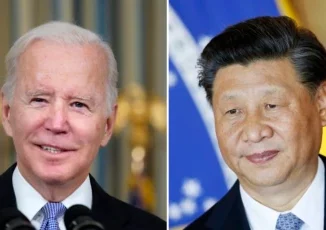
WASHINGTON, D.C. (TIP): United States President Joe Biden will meet on November 14 with China’s President Xi Jinping on the sidelines of next week’s Group of 20 Summit in Bali, Indonesia. President Joe Biden will meet Monday, November 14with President Xi Jinping on the sidelines of next week’s Group of 20 Summit in Bali, Indonesia, a face-to-face meeting that comes amid increasingly strained U.S.-China relations, the White House announced Thursday, November 10. It will be the first in-person meeting between the leaders of the world’s two biggest economies since Mr. Biden became president in January 2021 and comes weeks after Mr. Xi was awarded a norm-breaking third, five-year term as the Chinese Communist Party leader during the party’s national congress.
White House Press Secretary Karine Jean-Pierre said in a statement the leaders will meet to “discuss efforts to maintain and deepen lines of communication between” the two countries and to “responsibly manage competition and work together where our interests align, especially on transnational challenges that affect the international community.”
The White House has been working with Chinese officials over the last several weeks to arrange the meeting. Mr. Biden on Wednesday told reporters that he intended to discuss with Mr. Xi growing tensions between Washington and Beijing over the self-ruled island of Taiwan, trade policies, Beijing’s relationship with Russia and more. “What I want to do with him when we talk is lay out what each of our red lines are and understand what he believes to be in the critical national interests of China, what I know to be the critical interests of the United States,” Mr. Biden said. “And determine whether or not they conflict with one another.”
A senior administration official, speaking on the condition of anonymity to discuss the summit, sought to downplay expectations for the meeting, telling reporters on Thursday that there was no joint communique or deliverables anticipated from the sit-down. Rather, the official said, Mr. Biden aimed to build a “floor for the relationship.” Mr. Biden and Mr. Xi traveled together in the U.S. and China in 2011 and 2012 when both leaders were serving as their respective countries’ vice presidents, and they have held five phone or video calls since Mr. Biden became President in January 2021. But the U.S.-China relationship has become far more complicated since those getting-to-know-you talks in Washington and on the Tibetan plateau a decade ago.
As President, Mr. Biden has repeatedly taken China to task for human rights abuses against the Uyghur people and other ethnic minorities, Beijing’s crackdowns on democracy activists in Hong Kong, coercive trade practices, military provocations against self-ruled Taiwan and differences over Russia’s prosecution of its war against Ukraine.
Weeks before Vladimir Putin launched his invasion of Ukraine, the Russian president met with Mr. Xi in Beijing and the two issued a memorandum expressing hopes of a “no limits” relationship for their nations.
China has largely refrained from criticizing Russia’s war but thus far has held off on supplying Moscow with arms.
“I don’t think there’s a lot of respect that China has for Russia or Putin,” Mr. Biden said Wednesday. “And in fact, they’ve been sort of keeping the distance a little bit.”
The leaders were also expected to address U.S. frustrations that Beijing has not used its influence to press North Korea to pull back from conducting provocative missile tests and to abandon its nuclear weapons program. Mr. Biden was set to discuss threats from North Korea with the leaders of South Korea and Japan a day before sitting down with Mr. Xi.
Mr. Xi’s government has criticized the Biden administration’s posture toward Taiwan — which Beijing looks eventually to unify with the communist mainland — as undermining China’s sovereignty and territorial integrity. The Chinese president also has suggested that Washington wants to stifle Beijing’s growing clout as it tries to overtake the U.S. as the world’s largest economy.
Tensions over Taiwan have grown since House Speaker Nancy Pelosi visited Taiwan in August.
Biden said that he’s “not willing to make any fundamental concessions” about the United States’ Taiwan doctrine.
Under its “One China” policy, the United States recognizes the government in Beijing while allowing for informal relations and defense ties with Taipei. It takes a stance of “strategic ambiguity” toward the defense of Taiwan — leaving open the question of whether it would respond militarily were the island attacked. Mr. Biden caused a stir in Asia in May when at a news conference in Tokyo, said “yes” when asked if he was willing to get involved militarily to defend Taiwan if China invaded. The White House and Defense Secretary Lloyd Austin were quick to clarify that there was no change in U.S. policy. Beijing sees official American contact with Taiwan as encouragement to make the island’s decades-old de facto independence permanent, a step U.S. leaders say they don’t support. Ms. Pelosi is the highest-ranking elected American official to visit since then-Speaker Newt Gingrich in 1997.
Mr. Xi has stayed close to home throughout the global COVID-19 pandemic, where he has enforced a “zero-COVID” policy that has resulted in mass lockdowns that have roiled the global supply chains.
He made his first trip outside China since start of the pandemic in September with a stop in Kazakhstan and then onto Uzbekistan to take part in the eight-nation Shanghai Cooperation Organization with Mr. Putin and other leaders of the Central Asian security group.
U.S. officials were eager to see how Mr. Xi approaches the meeting after being newly empowered with a third term and consolidating his position as the unquestioned leader of the state, saying they would wait to assess whether that made him more or less likely to seek out areas of cooperation with the U.S. They emphasized that party congress results reinforced the importance of direct engagement with Mr. Xi, rather than lower level officials whom they’ve found unable or unwilling to speak for the Chinese leader.
We do not, however, live in a moral vacuum. The international environment has become challenging as the world grapples with the consequences of Covid-19 and a state of global uncertainty.
This year is special for India as we are celebrating Azadi Ka Amrit Mahotsav; commemoration of the 75th Anniversary of India’s Independence. Mahotsav is being celebrated as a Jan-Utsav in the spirit of Jan-Bhagidari. The Prime Minister said that India’s achievements are giving hope to humanity in its entirety and added that her developmental will provide momentum to the development journey of the whole world.
India is a nation on the move. It is evolving and progressing along multiple axes at a very rapid rate. It is on the cusp of a major transformation. India has regained its position as the fastest growing large economy in the world. This is highly commendable. However, to meet the rising aspirations of our young population, India needs to achieve and sustain a high rate of GDP growth for the next three decades. There will be several milestones in this long and arduous journey.
Today, India is one of the most open economies in the world with a transparent and predictable tax regime. We have implemented the Goods and Services Tax – our biggest tax reform since independence. We are rapidly improving and creating infrastructure for railways, roads, ports and airports. We have created a National Infrastructure Pipeline to provide world-class infrastructure.
We are a country with global interests. We have one of the largest and most able Diasporas. Our economy, and therefore our material well-being, is plugged on to global supply chains. We are a powerhouse in the services sector. We look at the world as a borderless economy with an interlinked marketplace. The Modi Government has launched several historic reforms to improve the ease of doing business in India in the last several years. India has now emerged as one of the top destinations for foreign investments.
We have greatly liberalized our FDI regime and opened up previously restricted sectors such as space, defense and atomic energy to greater private participation. We have implemented groundbreaking reforms in the agriculture sector. The Government has also recently launched Production Linked Incentive schemes for several sectors including mobile & electronics, medical devices and pharma. More such schemes in other sectors will follow in the coming days.
The Digital India programme is creating a knowledge economy through universal provision of digital infrastructure and platforms for cashless economic transactions. The JAM trinity – Jan Dhan – the world’s biggest financial inclusion initiative; Adhaar – again world’s biggest biometric project; and Mobile connectivity – pioneered by this government – has set the stage for a fintech revolution in India.
The pandemic has focused our attention on improving and augmenting our healthcare systems. In India, the Government had earlier launched Ayushman Bharat – one of the world’s largest health insurance initiatives. The Prime Minister also launched the National Digital Health Mission with the aim of providing efficient and affordable healthcare to our people through digital tools. With annual growth of over 22 per cent, the healthcare sector in India has become very promising for investments and joint ventures.
In building our renewable energy capacity and in keeping with our climate change commitments, the Prime Minister has focused on solar energy. He has spoken about “One Sun, One World, One Grid” to leverage solar energy. India has done exemplary work in the renewable energy sector and has played an instrumental role in the formation of the International Solar Alliance. Similarly, India’s success in the wind energy sector has been noted globally. Of course, conventional energy as well as hydropower will continue to play a dominant role in our energy mix for some time to come. The Prime Minister has also emphasized the message of LIFE or lifestyle for environment through sustainable living and consumption patterns powered by a global movement of Triple-P or Pro-Planet People.
Atmanirbhar Bharat Abhiyaan
Many of the flagship initiatives of the Government of Prime Minster Narendra Modi have been designed to promote the well-being of society. The Swachh Bharat Mission, increased spending on programs like MGNREGA is enhancing employment generation to rejuvenate the rural economy, Aadhaar, with its present reach of over 110 crore people, is helping in direct transfer of benefits, plugging leakages and improving transparency.
Initiatives like Start-up India and Atal Innovation Mission are fostering innovation and new-age entrepreneurship. The ‘Smart Cities’ program has the vision of our Prime Minister to renew and develop more than 100 cities across the country through sustainable, state of the art and modern technologies. It is an initiative to drive economic growth and improve the quality of life of people by enabling local development and harnessing technology as a means to create smart outcomes for citizens.
Our young and thriving population can be the pivot of our growth if empowered through skills and education. Under the leadership of our Prime Minister, India has launched a Skills India Campaign with the aim to skill and train over 400 million people in India by the end of this year. The onus is on us to create an enabling environment for our youth to grow and contribute productively to the future. The Indian government also places great emphasis on the need to transform India into a globally competitive manufacturing hub powered by ‘Skill, Scale and Speed.’
To achieve this, the government is setting up world class investment and industrial regions, particularly along Dedicated Freight and Industrial Corridors spanning the country. In addition, to increase India’s share in global trade, the government is simplifying procedures and strengthening trade infrastructure to reduce transaction time and costs. PM GatiShakti shall guide ‘big public investments’ for modern infrastructure to be benefitted by the synergy of Multi-Modal Approach.
We do not, however, live in a moral vacuum. The international environment has become challenging as the world grapples with the consequences of Covid-19 and a state of global uncertainty.
To deal with the economic challenges posed by the pandemic and bring our economy back on track, Prime Minister Narendra Modi has enunciated a forward-looking economic approach under the rubric of Aatmanirbhar Bharat Abhiyaan. The stimulus package of nearly USD 270 billion (Rs 20 Lakh Crores) launched by the Prime Minister under the Abhiyaan aims to both reinvigorate the economy and provide a social safety net to our vulnerable sections. Over the entire period of the pandemic, Government has extended food support to as many as 800 million of our citizens. The vision of Aatmanirbhar Bharat, as the Prime Minister said, will stand on five pillars of: economy; infrastructure; our system driven by technology; demography; and demand. Achieving rapid growth and development will depend substantially on successful integration and assimilation of all of these factors.
India’s aspirations are not just material in nature. India has been a constructive actor in developing an international system that is human-centric. We have worked together with partner countries in sharing our developmental experience. We have undertaken humanitarian assistance and disaster-relief operations over a geographical area spanning from the Pacific to the Atlantic. We have assisted a number of our friends and partners during the current pandemic. We have been a net security provider.
Right from the beginning of the pandemic, India has been committed to sharing its experiences, expertise and resources with the global community. Under the Prime Minister’s able leadership, India was able to turn the Covid-19 crisis into opportunity. At the extraordinary summit of the G-20 convened by Saudi Arabia to discuss the COVID-19 pandemic, Prime Minister Modi underlined that COVID had demonstrated the limitations of the existing international system. Rather than being a purely economic agenda, he called for a new template of ‘human-centric globalization’ based on fairness, equality and humanity in the post-COVID world. In line with the Prime Minister’s vision of placing humanity at the centre of global prosperity and cooperation, India went out of its way to be a net provider of health security. India lived up to its reputation as the pharmacy of the world by supplying medicines and COVID vaccines to countries all over the world. In doing so, the country delivered on the Prime Minister’s commitment at the UN General Assembly to make Indian manufactured vaccines affordable and accessible to all of humanity.
We have been guided by Prime Minister’s vision of ‘One Earth, One Health.” We have conducted online training sessions for our neighboring countries to develop capacity in clinical trials and clinical practices.
Over two-thirds of India’s Lines of Credit in the past decade have been offered to African countries. India offers support to infrastructure development and institution building to countries in South and Southeast Asia and Africa and other developing regions, spending over US$ 1 billion annually on development partnership activities. Through its technical assistance programs, India extended training opportunities to nearly 10,000 persons annually from 161 countries in diverse disciplines conducted by 47 institutions.
Additionally, India also offers 2300 scholarships to students from other developing countries. Some of the support that India extends to fellow developing countries includes sharing of its capabilities and capacity-building support in high technology areas such as remote-sensing and space applications for disaster-risk reduction.
The Prime Minister underscored the need for reorienting globalization to focus more on human welfare in the post-COVID world. He also highlighted how global initiatives such as the International Solar Alliance or the Coalition for Disaster Resilient Infrastructure launched by India in the last few years have been aimed at fostering a more human centric international system.
The Prime Minister has referred to the next 25 years “from India @75 to India @100” leading up to our 100th anniversary as Amrit Kaal. This is a period for collective efforts of the 130 crores people of India to see India realize its fullest potential.
The President of India SmtDroupadi Murmu also reiterated PM’s vision when she spoke of India’s strong democratic credentials in her Independence Day message to the citizens of the country. Hailing India’s rich democracy, she stated that it not only grew roots in this soil, it was enriched too. India is a vibrant and resilient democracy which will carve her developmental story in the next 25 years as it enters the Amrit Kaal.
As India prepares to preside over the G20, one of the most influential groupings in the world, we are looking to lead by example. India has not only proven its resilience in the face of COVID-19 and other daunting challenges but has emerged stronger and better prepared to meet the future. In this process, India will continue to play a constructive role in developing an international system that is human-centric. We believe not just in “VasudhaivKutumbakam”- our world is one family – but also in the principle of ‘Nishkama Karma,’ that good needs to be done for its own sake.
(The author is Chief Coordinator of India’s G20 Presidency and former Foreign Secretary of India)
By a strange coincidence, I happened to read Japanese-American writer Nina Li Coomes’s article on jet lag when I was going through one of my own. I read it in the online version of The New York Times, on October 25, 2022. It’s titled “The Strange Comfort of Jet Lag.” I envy that Ms. Coomes finds strange comfort in jet lag. I am one of those who, in her words, “dread and deride” it. As I grow older, dreading by me and deriding by others have been getting worse. Born in Nagoya, Japan, to a Japanese mother and American father 29 years ago, Ms. Coomes says she “has made the round trip” between Nagoya and Chicago at least 40 times. I live in New York and visit my ancestral home in India at least once, and sometimes twice, a year. Since I have been living in the U.S. longer than Ms. Coomes has been living in this world, the number of round trips I made between the U.S. and India is much higher than 40. Like her, I too have had “dayslong battle with insomnia and fatigue” – with an important difference that she went through the battle when she was a baby and I am going through it even now, at more than twice her present age. When I was young, I would get back to my work in publishing, in New York, the very next day of my return from India. The jet lag would make me doze off now and then, to the amusement of my co-workers. To the mischievous few, the dozing would also give grist for derisive comments. But never did the jet lag reach the “debilitating, dizzying” level Ms. Coomes describes in her article. It did, though, after my latest trip.
I am retired now. A visit to the New York Public Library in mid-Manhattan has been an essential, most enjoyable, part of my daily routine since retirement. Since I had been missing it during my two-month stay in India, I resumed it with great enthusiasm the day after I returned from the trip. This time, the most enjoyable part of my daily routine turned out to be one of the most unforgettable experiences in my life. After reading for a while, I fell asleep. I didn’t know how long and deep the sleep had been until I woke up and saw three security guards from the library approaching me, one of them pointing to me and saying, “This is the guy.”
Another one pulled a chair and sat in front of me. He held his palm in front of my face and said, “Can you see this? Are you OK?”
Confused and embarrassed, I asked, “What’s going on here?”
The guard who had said “This is the guy,” which I had mistaken to be accusatory, answered my question: “I came and tapped on your shoulder three times. When you didn’t respond, I thought you had passed out and needed medical help.”
When I saw a three-member emergency medical crew from the nearby hospital walking toward me, one of them pushing a gurney, I realized that he genuinely thought I needed medical help.
“Your concern is much appreciated,” I told him. “But I am fine. It may be the jet lag from my flight across half the world that caused it.”
“Are you sure you are fine?” one on the medical team asked. “We can take you to the hospital and get you checked up.”
“I am touched by your concern,” I told him. “But I am OK. Thank you.”
The unusual scene in the library drew the attention of others around. Some of them threw a suspicious look at me. Yes, jet lag can be debilitating and dizzying. It can also be very embarrassing.
MELBOURNE (TIP)- New Zealand became the first team to reach the T20 World Cup semifinals with a victory over Ireland on November 4 but Australia face a wait to see if they will be staying in the tournament despite a nervy win over Afghanistan. A Kane Williamson half-century and a spin-bowling assault fired the Black Caps to a 35-run victory at the Adelaide Oval which sealed one of the top two spots in Group 1 and a place in the last-four stage. Glenn Maxwell scored an unbeaten half-century and spinner Adam Zampa took a crucial 2/22 as defending champions Australia later joined New Zealand on seven points after a win by just four runs over the Afghans at the same venue. It was not, however, enough to raise their net run-rate above that of England, who now need only to beat Sri Lanka in their final Super 12 match in Sydney tomorrow to take the other semis berth from the group. At one stage in Afghanistan’s response to Australia’s 168/8, it looked like the home side might not even get the win they needed to keep their tournament alive.
Three wickets in Zampa’s fourth over — the first a run out from a Maxwell direct hit — broke a 59-run stand between Gulbadin Naib (39) and Ibrahim Zadran (26) and took the Afghans from a comfortable 99/2 to 99/5.
Rashid Khan revived the innings with four sixes in a battling 48 to keep his team in the chase but he came up just short in the final over and Afghanistan finished on 164/7 to remain winless in the tournament.
Earlier, New Zealand’s batsmen posted an imposing 185/6 after Ireland elected to field before the Black Caps’ bowlers restricted the Irish to 150/9.
Ireland bow out of the World Cup but head home with pride after a solid tournament capped by a sparkling hat-trick from paceman Josh Little.
Left-armer Little had captain Williamson caught for 61, then trapped both James Neesham and Mitchell Santner lbw for no score in the 19th over to bring up Ireland’s second hat-trick in T20 Internationals.
However, the damage had already been done by Williamson and middle-order batsman Daryl Mitchell (31 not out). Paul Stirling and Andy Balbirnie gave Ireland a fighting chance but left-arm spinner Santner broke the 68-run partnership when he had Balbirnie chopping onto his stumps.
Nabi stirs storm before stepping down
Mohammad Nabi stepped down as Afghanistan captain today after the his team were eliminated from the World Cup without winning a single match. Nabi said he was resigning due to differences with the selectors after Afghanistan lost their final T20 Super 12 match to Australia. They finished as the only team without a win. “In some of the last tours the team management, selection committee and I were not on the same page which had implications on the team balance. Therefore, with due respect, effective immediately I announce to step down as a captain,” he wrote on Twitter.
New Delhi (TIP)- Down 1-3 in the first quarter, India brilliantly turned it around by playing fast, attacking hockey for a 7-4 win against New Zealand in their Pro Hockey League encounter in Bhubaneshwar on Friday, November 4. It hardly took a minute for New Zealand to expose the weak Indian defence. After receiving a cross from his right, a calm Simon Child made enough space in a scattered defence to slot home. Jolted by the early goal, India pressed ahead and earned a penalty corner. Harmanpreet’s first shot was saved by the New Zealand goalkeeper but the captain converted the third PC, firing a low flick to level the score.
But India’s defensive frailties were exploited again as New Zealand scored two quick goals through Lane Smith (8min) and Jake Smith (13th). As the first quarter came to an end, the Kiwis led 3-1.
India came back a rejuvenated side in the second quarter, injecting pace into their play and making individually brilliant moves. The seasoned Manpreet Singh split open the New Zealand defence with a pass and young Karthi Selvam (16th) showed good skills to score. Two minutes later, Harmanpreet (18th) converted another penalty corner to make it 3-3. India, then, proceeded to dominate the match. The start of the second half saw Pal Raj Kumar (30th) giving the finishing touch to an excellent dribble from Abhishek. The hosts were suddenly dictating the flow of the game with some exquisite play and the New Zealand defence looked to be in shambles. An opportunist strike by Karthi (37th min), who incredibly intercepted a defender’s overhead shot with his raised stick before beating the goalkeeper, piled on the agony. Source: HT
World number one Carlos Alcaraz retired injured against Holger Rune at the Paris Masters on Friday, sending his fellow 19-year-old through to the semi-finals, while Novak Djokovic and Felix Auger-Aliassime also sealed their places in the last four. Rune outclassed Alcaraz to win the opening set 6-3 and held firm in the second when the top seed raised his game before the Spaniard retired at 3-1 down in the tiebreak having received medical treatment for an abdominal strain at 6-5. “I cannot stretch. I couldn’t serve well, I couldn’t hit the forehand well said Alcaraz. “I preferred to retire and see it and take care of it.”
Alcaraz was hopeful of making a full recovery for his debut at the ATP Finals in Turin, which begin on Nov. 13, despite the quick turnaround. “I have some tests on how it’s going to be before Turin,” he added. “But right now I’m focused on trying to get better in the abdominal and trying to be at 100% in Turin.”
Holder and sixth seed Djokovic made light work of Italian youngster Lorenzo Musetti in a 6-0 6-3 win and will next meet Greek fifth seed Stefanos Tsitsipas, who cruised past American Tommy Paul 6-2 6-4 in about 77 minutes. A six-times winner in Paris, Djokovic served Musetti a 24-minute bagel and dropped only eight points in the first set before overcoming a brief wobble in the second, when he went a break down, to ease to victory. Danish teenager Rune, bidding to reach four finals in a row, advanced to his first ATP Masters 1000 semi-final and earned his third top 10 win in as many days after seeing off Hubert Hurkacz and Andrey Rublev.
Islamabad (TIP): Cash-strapped Pakistan has secured about USD 13 billion in additional financial support from its traditional allies China and Saudi Arabia, Finance Minister Ishaq Dar has said, as the government tries to steady the country’s weak economy.
Dar said that under the new financial support Pakistan would be getting about USD 9 billion from China and USD 4 billion from Saudi on top of assurances for about USD 20 billion in investments, the Dawn newspaper reported.
He said that during Prime Minister Shehbaz Sharif’s recent visit to Beijing, the Chinese leadership promised to roll over USD 4 billion in sovereign loans, refinance USD 3.3 billion commercial bank loans and increase currency swap by about USD 1.45 billion — from 30 billion yuan to 40 billion yuan. The total worked out at USD 8.75 billion.
“They promised the security of financial support,” Dar, who recently took over as the new finance minister of Pakistan from his predecessor Miftah Ismail, said and quoted Chinese President Xi Jinping as telling Sharif, “don’t worry, we will not let you down”.
These would be rolled over whenever they reach maturity, the minister said, adding that about USD 200 million worth of commercial loans had already flowed in a few days back. Responding to a question, Dar said the Chinese side had also agreed to fast-track the processing for a USD 9.8 billion high-speed rail project (Main Line-1) from Karachi to Peshawar and both sides would immediately activate their respective teams. The minister said he had also suggested a part of the outstanding dues of Chinese power producers to be converted into overall debt stock and had already cleared about Rs 160 billion in recent months. Responding to another question, Dar said Saudi Arabia had also “given a positive response” to Pakistan’s request for increasing its financing by another USD 3 billion to USD 6 billion and doubling its deferred oil facility of USD 1.2 billion, the report said. The two heads worked out at USD 4.2 billion and the finance minister said there was no delay except a month or so of processing time, the report said.
Dar said Saudi Arabia had also agreed to revive the USD 10-12 billion petrochemical refining project at Gwadar, for which he had been assigned by the prime minister to coordinate with respective ministries for finalisation. On top of that, the minister said Pakistan was engaging Saudi Arabia in privatisation transactions like in LNG power projects and shares in other entities to ensure non-debt creating foreign inflows. (PTI)
Colombo (TIP): The Sri Lankan government has formally decided to initiate the process of divesting the ownership of the loss-making national carrier, SriLankan Airlines, to select investors, a cabinet note released on November 3 said.
During a cabinet meeting on November 2 the decision to restructure the airline’s management was taken. A considerable number of shares would be handed over to select investors through a transparent procurement process, the note said.
The State-Owned Enterprises Restructuring Unit has been given the task to study the methodology for the handover and make recommendations to the cabinet for the same, the note added. The Lankan government in August announced that it was looking to sell a 49 per cent stake in the catering and ground-handling units of the national carrier in order to restructure it.
The government is now looking to hand over the management of the airline in addition to selling its shares, Aviation minister NirmalSiripala de Silva said. President RanilWickremesinghe, also the finance minister, had stressed the need to restructure loss-making state enterprises. “I propose that the loss making SriLankan Airlines be privatised,” Wickremesinghe said in an address to the nation in May. In the 20/21 year alone its loss was Rs 45 billion. By March 31, 2021, its total losses were Rs 372 billion.
Even if the government privatised the airline the country will have to bear the loss, he said. “You should note that this loss has to be borne by the poorest of the poor who have not set foot in an aircraft,” the president said in May.
Formed as Air Lanka in 1979, the management control of the airline was sold to the Emirates in 1998.
The national carrier has accumulated a loss of Rs 372 billion since 2009 when the island nation’s government acquired back the management control from the Emirates. (PTI)
Lahore (TIP): Pakistan’s former Prime Minister Imran Khan who survived an assassination attempt has hailed the man who foiled the attack and apprehended the shooter during his long march in Punjab province as the country’s “hero”.
Khan, 70, suffered a bullet injury in the right leg on Nov 3 when two gunmen fired a volley of bullets at him and others mounting on a container-mounted truck in the Wazirabad area of Punjab province, where he was leading a protest march against the Shehbaz Sharif government. A day later on Nov 4, Khan met with Ibtisam, who foiled the attack and apprehended the shooter during the march, at the ShaukatKhanum Hospital here where he is being treated for the bullet wounds which pierced through his lower limbs, causing a fracture, the Geo News reported.
“You are Pakistan’s hero. You showed immense courage. It felt very nice,” Khan told Ibtisam.
The Pakistan Tehreek-e-Insaf (PTI) chairman also signed an autograph for his saviour on the same shirt that he wore while apprehending the shooter who is currently in the custody of Punjab Police.
Meanwhile, Khan’s ex-wives have also condemned the assassination attempt.
The cricketer-turned-politician has married thrice. His previous two marriages have ended in divorce.
His first marriage was with Jemima Goldsmith, daughter of a British billionaire, in 1995, which lasted 9 years. Khan has two sons from her. His second marriage with TV anchor Reham Khan in 2015 ended after 10 months.
In 2018, Khan married for the third time with his “spiritual guide” BushraManeka. Goldsmith, the ex-wife of Khan, expressed relief as her former husband is stable after the assassination attempt. She also called Ibtisam a “hero”.
She also conveyed their sons’ gratitude to the man who caught the attacker.
“The news we dread… Thank God he’s okay. And thank you from his sons to the heroic man in the crowd who tackled the gunman,” 48-year-old Goldsmith, who separated from Khan in 2004, tweeted.
Reham Khan tweeted, “Firing on PTI chairman Imran Khan & other party members is shocking & condemnable. Security for public events for all our politicians must be ensured by provincial/federal law enforcement & our agencies.” (PTI)
Signup to our Newsletter!
Don’t miss out on all the happenings around the world