Year: 2022

  • Mark Zuckerberg announces 32-person video call on WhatsApp

    Mark Zuckerberg announces 32-person video call on WhatsApp

    Meta Founder and CEO, Mark Zuckerberg on Thursday, November 3,  announced the global roll out of a 32-person video calling feature called ‘Communities’ on WhatsApp. Zuckerberg posted a video on Facebook to announce the new feature, calling it a “major evolution for WhatsApp”. “We’re launching Communities on WhatsApp. It makes groups better by enabling sub-groups, multiple threads, announcement channels, and more. All secured by end to end encryption so your messages stay private,” he said.

    The new feature will allow admins to better organise the conversations “under one umbrella”, Zuckerberg added. Besides Communities, WhatsApp also released more features to “improve the group chat experience”, including in-chat polls, larger file sharing, reactions, groups with up to 1,024 users and shareable call links. Meanwhile, as Meta doubled down on its monetisation drive across its family of apps, Zuckerberg had said that JioMart on WhatsApp in India was going to be a big opportunity for the paid messaging market. During the company’s Q3 earnings call, the CEO said that paid messaging was another opportunity that we were starting to tap into.

    “We launched JioMart on WhatsApp in India, and it was our first end-to-end shopping experience that showed the potential for chat-based commerce through messaging,” Zuckerberg told analysts.

                    Source: IANS

  • Time to say goodbye to NASA’s InSight Mars lander

    After nearly four years spent on the Martian surface, NASA’s InSight lander is coming to the end of its life as the spacecraft’s power generation continues to decline because of dust blown on the lander’s solar panels. The InSight team is now taking steps to make sure the lander continues working as long as possible with what power remains. One of the most important final steps of the InSight mission is to make sure that the treasure of data with the lander is stored properly and made accessible to researchers around the world. The InSight lander has gathered data about the interior layers of Mars, its liquid core, the remnants beneath the surface of its nearly-extinct magnetic field, Martian weather, and on marsquakes. “Finally, we can see Mars as a planet with layers, with different thicknesses, compositions. We’re starting to really tease out the details.

    Now it’s not just this enigma; it’s actually a living, breathing planet,” said Bruce Banerdt of NASA’s Jet Propulsion Laboratory in a press statement. Banerdt is the principal investigator of the mission.

    Earlier this year, the lander’s power reserves were so low that NASA turned off all the science instruments on board so that they can keep the seismometer running.

  • Young working professionals now at high stroke risk: Study

    Young working professionals now at high stroke risk: Study

    A team of researchers has found a sharp increase in the incidence of stroke in young adults, especially among the working professionals. Among young people who had a stroke, there was a significant increase in the proportion who were in more skilled occupations, particularly for professional or managerial jobs. This could suggest a role for work-related stress, low physical activity, and long working hours, each of which were more strongly associated with risk of stroke than heart attack. The findings from the study published in the journal JAMA on the ‘World Stroke Day 2022’, which analysed the rate of new stroke cases in Oxfordshire in the UK over the last 20 years, reflect emerging evidence that young stroke is a growing problem in high-income countries.

    “Establishing the importance of known risk factors in young stroke will help to raise general awareness of the need for better control. We also need better ways of identifying young people at high risk of stroke, as current risk models are based on predictors of stroke in older people,” said Medical Research Foundation Fellow, Dr Linxin Li, from the University of Oxford. Stroke is a major health problem that can have devastating consequences. It happens when the blood supply to the brain is cut off, causing the death of brain cells and dysfunction in one or more parts of the brain. The restricted blood supply can be the result of an artery supplying blood to brain becoming blocked, a blood vessel rupturing causing a bleed inside the brain, or a brief reduction in the blood supply to the brain.

    The traditional view is that vascular risk factors, such as high blood pressure, diabetes and obesity, play a minor role in young stroke, but recent studies have begun to contradict this view. Dr Li’s research focuses on multiple types of stroke, such as ischaemic strokes, caused by a blockage of arteries, ‘mini-strokes’ (transient ischaemic attacks) and bleeding in the brain (intracerebral haemorrhage and subarachnoid haemorrhage).

    The researchers found that between 2002-2010 and 2010-2018, there was a 67 per cent increase in stroke incidence among younger adults (under 55 years), and a 15 per cent decrease among older adults (55 years or older). A similar divergence in incidence was not found for other vascular events, such as heart attacks. “Historically, we’ve thought of stroke as only affecting older adults, but studies like this suggest a growing problem in young adults,” said Dr Angela Hind, Chief Executive of the Medical Research Foundation.

    “Stroke in young adults can have a huge impact, often occurring when they are starting a family or already have young children to look after, and have yet to reach the peak of their careers. The economic, social and personal consequences can be devastating,” Hind added.

                    Source: IANS

  • Scientists identify ultra-potent antibody that can offset all Omicron variants

    Scientists identify ultra-potent antibody that can offset all Omicron variants

    An international team of researchers has identified a pan-variant and ultra-potent neutralizing antibody that can offset Omicron variants. Named ‘S2X324’, its neutralising potency was largely unaffected by any of the Omicron variants tested, said the study published in the journal Science. The scientists suggested that combining this antibody with others in a cocktail might reduce the chances of the virus becoming antibody-treatment resistant. The team looked at several aspects of the effects of exposure to earlier forms of the SARS-CoV-2 spike antigen — or immune-provoking protein — on the immune system’s reaction to the Omicron variants.

    Past studies from the same team have noted that the BA.1 Omicron variant emerged as a “major antigenic shift due to the unprecedented magnitude of immune evasion associated with this variant of concern”.

    They explained that mutations in two of the main antibody targets in the virus explain why there is markedly reduced antibody neutralising ability against these variants, especially in people who have not received booster doses.

    “As a result, an increasing number of reinfections are occurring,” the researchers wrote, “even though these cases tend to be milder than in infections of immunologically naA-ve individuals”. The recent scientific studies in this area have been led by the labs of David Veesler, associate professor of biochemistry at the University of Washington in Seattle and Howard Hughes Medical Institute Investigator, and Davide Corti of Humabs BioMed SA of Vir Biotechnology in Switzerland.

    The Omicron variants appeared at the end of 2021 and have marked genetic differences from the ancestral SARS-CoV-2. The many, distinct mutations in their infection machinery have enabled them to escape from antibodies elicited from the original series of vaccines, from a history of infection, or from both of those two immune-system training events.                 Source: IANS

  • Reducing carbohydrates in diet can decrease risk of diabetes: Study

    According to new research from Tulane University, a low-carb diet can assist people with uncontrolled diabetes and decrease the blood sugar levels of those who are at risk of developing it. The study, published in the journal JAMA Network Open, compared two groups: one assigned to a low-carb diet and another that continued with their usual diet. After six months, the low-carb diet group had greater drops in hemoglobin A1c, a marker for blood sugar levels, when compared with the group who ate their usual diet. The low-carbohydrate diet group also lost weight and had lower fasting glucose levels.

    “The key message is that a low-carbohydrate diet, if maintained, might be a useful approach for preventing and treating Type 2 diabetes, though more research is needed,” said lead author Kirsten Dorans, assistant professor of epidemiology at Tulane University School of Public Health and Tropical Medicine. Approximately 37 million Americans have diabetes, a condition that occurs when the body doesn’t use insulin properly and can’t regulate blood sugar levels. Type 2 diabetes comprises more than 90 per cent of those cases, according to the Centers for Disease Control and Prevention (CDC).

    Type 2 diabetes can severely impact quality of life with symptoms such as blurred vision, numb hands and feet, and overall tiredness and can cause other serious health problems like heart disease, vision loss and kidney disease. The study’s findings are especially important for those with pre-diabetes whose A1c levels are higher than normal but below levels that would be classified as diabetes.

    Approximately 96 million Americans have pre-diabetes and more than 80 per cent of those with pre-diabetes are unaware, according to the CDC. Those with pre-diabetes are at increased risk for Type 2 diabetes, heart attacks or strokes and are usually not taking medications to lower blood sugar levels, making a healthy diet more crucial.   Source: ANI

  • Cauliflower Fried Rice

    Cauliflower Fried Rice

    Ingredients

    1 whole cauliflower ( try to pick a large one )

    1 chopped red bell pepper

    1 packet of baby corn

    1 packet of mushrooms

    3 spring onions

    1 tablespoon of soy sauce

    6-7 pods of chopped garlic

    salt and pepper to taste

    Method

    1. Cut off all the leaves and the stem of the cauliflower and chop it up into smaller pieces. Wash thoroughly in case of any dirt or worms.
    2. Add the cauliflower bits in batches into your food processor or a dry grinder. Blitz till they become crumbly. Do not add any water at all to the cauliflower this is a dry grind or else it will be a disaster.
    3. Once you have the cauliflower into this fine crumbly rice or cous cous like texture leave it aside and chop all the other vegetables and ingredients.
    4. Heat some oil in a pan or wok and add the cauliflower so you can cook/roast it for about 5-7 minutes. Keep stirring. The cauliflower won’t take very long to cook.
    5. Add the chopped garlic and let it cook a bit, then add the spring onions, the whites and some of the greens, keep some greens to garnish later and mix it all together.
    6. To this add the peppers and baby corn. Sprinkle a little salt n pepper on the peppers and baby corn to season them. Mix all the ingredients and cauliflower together.
    7. Add the mushrooms and again season them with salt n pepper before they cook. Once they cook and start to release their water mix it into the other ingredients. The reason we season the ingredients separately first is because we don’t add salt to the cauliflower as eventually we will add the soy sauce that has plenty of salt but the vegetables will not catch the flavour so we need to season them slightly.
    8. Mix everything together and lastly add the soy sauce. As mention since we’ve added the soy sauce there is no need to add extra salt but if you taste it and feel you need to please go right ahead.

    9              Once it’s all mixed together, garnish with the leftover spring onions, serve hot and enjoy!

  • Guide to turn your glossy lipstick matte

    Guide to turn your glossy lipstick matte

    If you are a makeup enthusiast you must also have an abundance of lipstick in every shade. As per latest trends,glossy lipsticks are out and matte ones are in. However, this doesn’t mean that you should throw out all your glossy lipsticks or let them dry out. You can easily use them by turning them into matte lipsticks. Apart from preventing wastage, another benefit of turning your glossy lipstick into matte is that it won’t dry your lips and you will have more shades to choose from. Using matte lipstick can dry out lips but this won’t be the case if you turn your glossy lipstick to matte. Read on to learn how to use your glossy lipstick as a matte one.

    Prep Your Lips

    The first step is to prep your lips. Start by applying lip balm or any type of lip conditioner on your lips. This will make your lips soft and moisturise them, allowing an easy application for your lipstick. Then, use a lip liner to line your lips. You can choose a shade lighter or darker or similar to your lipstick. Using a lip liner will add more finish to your lips, thus giving you a cleaner look.

    Apply Lipstick

    Take a lipstick that you want to apply and either use a brush or directly swipe it on your lips.

    Blot Your Lips

    Once you have applied the lipstick on your lips, take a tissue paper and put it between your lips. Press your lips lightly on the tissue paper. You can also substitute the tissue paper with blotting paper which will soak up the moisture from the lip colour without fading it.

    After blotting your lips with a blotting paper, reapply the lipstick. Then, blot again using clean tissue paper.

    Along with blotting out the excess colour, this technique will also mattify your lipstick.

    Powder Your Lips

    Take a sponge applicator and dip it in loose powder. Pat off the excess powder from the applicator.

    Apply the powder evenly and set it with the sponge.

    Press your lips against each other lightly.

    Now, you have your perfect matte lips.

                    Source: HerZindagi

  • Steps to detoxing your skin

    A skin detox doesn’t need to be part of your daily skincare ritual, but it’s a good idea to perform a week-long skin detox cycle every 3 months or so in the evening. Prioritizing your skin health is self care; enjoy this relaxing ritual while enjoying a brighter, healthier, glowing complexion.

    Step 1: Drink Lots of Water

    Drinking water helps flush your pores of toxins and promote healthy, clearer skin. According to the Institute of Medicine, you should drink around 91 ounces of water a day (or about 10 glasses of water a day) if you’re aiming to flush toxins from your system. During your detox, drink plenty of water and try to steer away from alcohol and sugary juices.

    Step 2: Make a Morning Detox

    The use of apple cider vinegar for detoxification goes back thousands of years. Apple cider vinegar is known to help your pH balance get back to an alkaline zone, which gets your digestive system back in order, keeps your energy higher from natural resources, and is naturally stimulates the detox of your liver. Swap out your morning cup of coffee for a morning detox elixir; you may miss that cup of joe, but your body will adjust and you will eventually feel healthier and cleaner.

    Step 3: Double Cleanse

    Double cleansing might be a change from your typical skincare routine, but it’s extremely important during a skin detox. To start, cleanse with an oil-based cleanser. Next, cleanse with a high quality cleansing cream. The first part of your double cleansing routine will help remove makeup, dirt, excess oils, and pollution from your skin, while the second part will remove any remaining impurities that are left on the surface of your skin.

    Step 4: Exfoliate Gently

    Gentle exfoliators help to slough away all the pollution, makeup, oil, bacteria, dead skin cells, and toxins that you are purging from your skin. Just be careful not to use a harsh, abrasive exfoliator that will irritate sensitive skin. Instead, use a gentle exfoliating formula like an enzymatic powder in your daily skin care ritual to remove pore-clogging agents while protecting you from skin damage.

    Step 5: Steam Your Pores With Hot Water

    After your double cleansing and exfoliating skincare routine, expose your skin to steam to allow skincare products to penetrate and clean out your pores. To steam your pores, bring a pot of water to boil, then transfer the water to a bowl. Hover your face above the bowl and drape a towel over your head to concentrate the steam to your facial pores for about 10 minutes.

    Step 6: Add in Your Boosters

    Now that your pores are open, clean, and ready to absorb the active ingredients in some targeted skincare products, start layering products proven to nourish and repair your skin. We’d recommend products like a vitamin c booster, natural retinol serum, and tea tree oil face serum. Vitamin C especially is a great detoxing agent.

    Rich in antioxidants, vitamin C scavenges free radicals—pesky environmental aggressors that can cause things like fine lines, wrinkles, dull skin, and other premature signs of aging to occur on the skin. So, protecting—and detoxifying—the skin from free radicals can help prevent premature skin aging.

                    Source: us.comfortzoneskin

  • First voter of independent India, Shyam Saran Negi passes away

    First voter of independent India, Shyam Saran Negi passes away

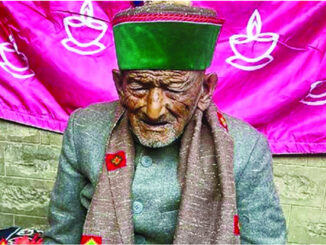
    Kinnaur (TIP)- Shyam Saran Negi, 106, the first voter of independent India passed away at his native place in Himachal Pradesh’s Kalpa on Saturday, November 4.  Earlier he cast his 34th vote for the 14th assembly elections in the state through postal ballot. Negi cast his first vote on October 23, 1951, in Kalpa polling station. Negi has voted almost 16 times in the Lok Sabha elections. Last year also, he cast his vote for the Mandi parliamentary bypolls. On the day he cast his last vote Negi had asked the people of the country to exercise their right to franchise to strengthen democracy. “The young voters should consider their duty to vote and contribute to strengthening the nation,” said Negi. Talking about the departed soul, PM Modi tweeted, “This is commendable and should serve as an inspiration for the younger voters to take part in the elections and strengthen our democracy.” CM Jairam Thakur too offered his condolences and said, “Saddened to hear the news of the demise of Shyam Sharan Negi Ji, the first voter of independent India and who belonged to Kinnaur. While performing his duty he cast his postal vote for the 34th time on November 2, this will always be emotional.”

  • Perusal of SIT report shows ‘sham’ trials conducted in 1984 anti-Sikh riots, SC told

    Perusal of SIT report shows ‘sham’ trials conducted in 1984 anti-Sikh riots, SC told

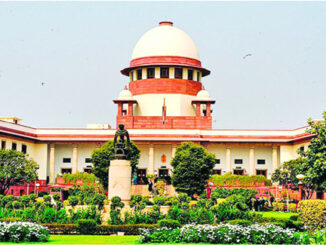
    New Delhi (TIP)- The Supreme Court was told on Thursday, November 3,  that a perusal of a report filed by a Special Investigation Team (SIT) shows that “sham” trials have been conducted in the 1984 anti-Sikh riots. Senior advocate H S Phoolka, appearing for petitioner S Gurlad Singh Kahlon, referred to the SIT report filed on November 29, 2019, and stated that the manner in which trials have been conducted shows that the whole system has failed. Citing the report, Phoolka said a perusal of cases shows that in one of the FIRs while police after clubbing various cases sent a challan regarding the killing of 56 people. However, the trial court framed charges only in the killing of five persons and no charge was framed in respect of the remaining, he said. “It is not known why charges were framed only for five murders and not 56 murders and why trial court did not order separation of trial for each incident of crime,” Phoolka read from the report. The top court said it will go through the report and posted the matter for hearing after two weeks. It had earlier issued notice to parties on a plea of Kahlon, a member of the Delhi Sikh Gurdwara Management Committee, seeking inquiry into role of 62 policemen named in the riots. The apex court had constituted the SIT headed by former Delhi High Court judge Justice S N Dhingra to supervise further probe into the 1986 riots’ cases, in which closure reports had been filed earlier. The SIT also has its members retired IPS officer Rajdeep Singh and IPS officer Abhishek Dular. However, it currently has only two members as Singh had declined to be a part of the team on “personal grounds”. Large-scale riots had broken out in the national capital in the aftermath of the assassination of the then prime minister Indira Gandhi by her two Sikh security guards on the morning of October 31, 1984. The violence had claimed 2,733 lives in Delhi alone.

  • Punjab politician shot dead during protest in Amritsar

    Punjab politician shot dead during protest in Amritsar

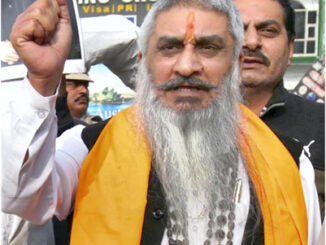
    A controversial Punjab politician was shot dead on Friday, November 4,  by a local shopkeeper in the middle of a public protest in Amritsar with police present at the spot, ratcheting up tensions and sparking a political row. Sudhir Suri, a 58-year-old who headed a Punjab-based right-wing outfit called Shiv Sena (Taksali) was staging a protest outside a temple in Amritsar’s Kashmir Avenue when he was shot at five times by Sandeep Singh, who ran a garment shop outside the same temple, according to police officials. Singh was later arrested. Police didn’t immediately attribute a motive but said that they will swiftly move to investigate all aspects of the crime.

    “We will not allow the situation to be disturbed. We will unveil the entire conspiracy behind the murder and all those who are behind it will be arrested,” said director general of police Gaurav Yadav in a hurriedly called press conference. A car was also parked near the crime spot with stickers on its windows that appeared to be linked to Waris Punjab De Chief Amritpal Singh, who has courted controversy in the past for his comments backing the creation of Khalistan. But the police refused to confirm if the crime was linked to the outfit. “The accused told the police that he had never met Suri before. What triggered the accused to kill the Shiv Sena leader is part of the investigation. We are probing the case from all angles and interrogation of the accused is underway,” the DGP said.

    Canada-based gangster Lakhbir Singh Landa takes responsibility

    Canada-based gangster Lakhbir Singh Landa has taken the responsibility for the  murder of  Hindu leader Sudhir Suri. He claimed responsibility in a social media post. Though the police officials were tightlipped over any further development in the case, a police official said they were checking the authenticity of the social media post. Meanwhile, the situation in Amritsar remained peaceful.Heavy police security was deputed near the postmortem house. A medical board was formed for his autopsy.

  • Meet ex-journalist Isudan Gadhvi, the Aam Aadmi Party’s chief ministerial candidate for Gujarat assembly elections

    Meet ex-journalist Isudan Gadhvi, the Aam Aadmi Party’s chief ministerial candidate for Gujarat assembly elections

    Delhi Chief Minister and Aam Aadmi Party (AAP) chief Arvind Kejriwal announced Isudan Gadhvi, 40, as Gujarat’s Chief Ministerial candidate for the AAP on Friday, November 4, at a public gathering in Ahmedabad, Gujarat. “Last week we invited public opinion, and 16,48,500 responses were received and 73 per cent of them named Isudanbhai Gadhvi”, Kejriwal said.

    Last week, Kejriwal urged people to contact the party through SMS, WhatsApp, voice mail and e-mail to give their views about who should be the CM candidate from the party in the state for the elections, due to be held in two phases – on December 1 and 5.

    After the announcement, Gadhvi embraced party colleagues Manoj Sorathiya and Yuvrajsinh Jadeja and got down the stage to seek the blessings of his mother. In a tweet, he thanked Kejriwal and the people of Gujarat.

    Who is Isudhan Gadhvi?

    Born to a farmer in Pipaliya village of Dwarka district in Gujarat on January 10, 1982, Isudan Gadhvi belongs to the community of other backward classes.

    He graduated from Gujarat Vidyapeeth, Ahmedabad in 2005 where he pursued a Master’s degree in Journalism and Mass Communication and then worked as a journalist. He began working with Doordarshan and started as a field journalist in Porbandar with ETV Gujarati from 2007 to 2011. Gadhvi’s reporting helped bring focus on a 150-crore illegal deforestation scam in the Dang and Kaprada districts of the state, and the Gujarat government subsequently took action in the case. His reporting on farmers’ issues helped earn him a substantial following in rural areas.

    In 2015, Gadhvi joined the Gujarati TV channel VTV as a prime-time show anchor. In his show called Mahamanthan, Gadhvi discussed national and state issues with panellists in the studio, as well as with the public via ‘phone-ins’ and organised debates. At VTV, he went on to become the youngest channel head in the regional media. He quit as the channel’s editor last year to join the AAP. The former journalist joined the Aam Aadmi Party on June 14, 2021, in presence of Arvind Kejriwal. He was among the first influential figures to join the party in Gujarat as AAP made a debut in BJP’s stronghold for 27 years.

    Gadhvi began his foray into politics when he joined AAP last year. He was made the AAP’s national joint general secretary after his inclusion in the party.

  • Opinion poll: BJP may win absolute majority in Gujarat, Himachal Pradesh

    Opinion poll: BJP may win absolute majority in Gujarat, Himachal Pradesh

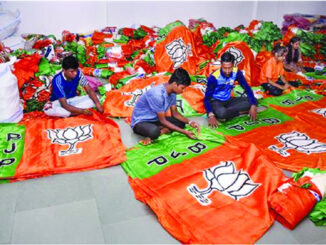
    New Delhi (TIP)- The ruling Bharatiya Janata Party (BJP) may win absolute majority in both the Gujarat and Himachal Pradesh assembly elections, with Congress coming second in both states, says India TV-Matrize opinion poll.  According to the opinion poll, BJP may win a huge majority of 119 seats in the 182-member Gujarat assembly, while Congress may win 59 seats and Aam Aadmi Party may win only three seats. In 2017 assembly elections, BJP had won 99 seats, Congress had won 81 seats and ‘Others’ had won two seats. Voting percentage wise, the opinion poll says, BJP may get 51.3 per cent, Congress 37.2 pc, and AAP may get only 7.2 pc votes. In 2017 assembly elections, BJP had got 48.8 pc votes, Congress 42.3 pc and ‘Others’ 8.9 per cent votes.

    Region wise

    In Central Gujarat having 61 seats, BJP may get 43, Congress 17 seats and AAP nil. In Saurashtra-Kutch having 54 seats, BJP may get 32 seats, Congress may get 20 seats and AAP may get only two seats. In South Gujarat having 35 seats, BJP may get 27, Congress may get 7 seats, and AAP only one seat. In North Gujarat having 32 seats, BJP may get 17 seats, Congress 15 seats and AAP nil.

    The sample size taken in India TV-Matrize opinion poll was 91,000 respondents (54,600 males and 36.400 females) spread in 182 assembly constituencies of Gujarat. The Random Sampling Quantitative Data Collection was done from October 15 to November 2, with at least 500 samples from each constituency. The margin of error being plus/minus 5 per cent.

    The opinion poll shows, BJP may get 48 pc scheduled caste votes, 49 pc scheduled tribe votes, 58 pc Kadwa Patel votes, 53 pc Leuva Patel votes, 52 pc OBC votes, 48 pc upper caste Hindu votes and 14 pc Muslim votes. Congress may get 41 pc SC votes, 42 pc ST votes, 34 pc Kadwa Patel votes, 37 pc Leuva Patel votes, 39 pc OBC votes, 41 pc upper caste Hindu votes, and 62 pc Muslim votes.

    On Chief Minister Bhupendra Patel’s performance, 31 pc said ‘very good’, 38 pc said ‘average’ and 29 pc said ‘very poor’. Asked whether they wanted change, 32 pc said they were unhappy and wanted change, 44 pc said they were unhappy but wanted no change, while 22 per cent said, they were happy and do not want change.  Price rise remained the topmost issues for voters with 28 per cent, Unemployment came second with 22 pc, Basic facilities emerged the third issue with 16 pc, and Corruption the fourth issue with nine per cent.

     Will Narendra Modi become the game changer in elections, 42 per cent said ‘Yes’, 33 per cent said ‘To some extent’, and 21 pc said, ‘it won’t affect’. Asked who will form the government, 66 per cent said ‘BJP’, 28 per cent said ‘Congress, and only two per cent said ‘AAP’.  Asked whose election campaign will have maximum effect, 64 per cent said Narendra Modi, 22 per cent said Rahul Gandhi and only eight per cent said Arvind Kejriwal.  What will save BJP from anti-incumbency? To this question, 46 per cent said Narendra Modi, 21 per cent said change of non-performing MLAs, 12 pc said better election management, 7 pc said strong candidates, and 6 pc said ‘poll promises’.

     Himachal Pradesh

    In the 68-seat Himachal Pradesh assembly elections, BJP may retain power by winning 41 seats, Congress may win 25 seats and ‘Others’ may win two seats. In 2017 elections, BJP had won 44 seats, Congress had won 21 and ‘Others’ had won  three seats. Voting percentage wise, BJP may get 46.2 pc, Congress may get 42.3 pc, AAP may get 2.3 pc and Others may get 9.2 pc votes.

     In Himachal Pradesh, India TV-Matrize Random Sampling Survey was done among 13,600 respondents (8160 males, 5440 females) across 68 assembly constituencies from October 15 till November 2. The margin of error being plus/minus 5 per cent.  29 per cent respondents said, Chief Minister Jairam Thakur’s performance was ’Very Good’. 37 per cent said it was ‘Average’ while 31 per cent described his performance as ‘Very Poor’.  43 per cent respondents said government will change this time, 48 per cent said the present government will stay, while nine per cent had no opinion.  The topmost issues before voters were: Unemployment (26 pc), Price rise (14 pc), corruption (11 pc), Unhappy with MLAs (9 pc) and Old Pension Scheme (6 pc).  Which party will suffer most because of groupism? To this question, 38 pc said ‘BJP’, 27 pc said ‘Congress’, and 33 pc said ‘Both parties’. Among the best CM candidate, Jairam Thakur topped the list with 26 per cent, former CM Virbhadra Singh’s widow and Congress leader Pratibha Singh with 17 per cent, and Leader of Opposition (Congress) Mukesh Agnihotri with nine per cent.  To the question, will Narendra Modi become a game changer in elections, 32 per cent said ‘to a large extent’, 43 pc said said ‘to some extent’, and 23 pc said ‘will not have any effect’.

                    Source: India TV

  • Bollywood actress is ‘lot more than being just size zero’: Huma

    Bollywood actress is ‘lot more than being just size zero’: Huma

    In an industry focussed on body image what a female actor ought to look like, Huma Qureshi is one of the few to have bucked the trend. Not only has the actor experimented with roles but often gained weight and looked a certain way for many of her projects. In a recent interview, the actor took a slight dig at the size zero obsession in Bollywood, saying there was much more to being a Bollywood heroine than that. Huma Qureshi’s next film Double XL is a humourous take on body image issues and body shaming, in which Huma and Sonakshi Sinha play two plus-sized women. The film, directed by Satramm Ramani, also stars Zaheer Iqbal and features cricketer Shikhar Dhwan in a cameo in what is his first film appearance. Sonakhi and Huma have been promoting the film in various interviews of late.

  • Hrithik Roshan pens love-filled birthday wish for girlfriend Saba Azad

    Hrithik Roshan pens love-filled birthday wish for girlfriend Saba Azad

    Bolllywood actor Hrithik Roshan, on Tuesday,  November 1, dropped an adorable birthday wish for his girlfriend Saba Azad. Taking to Instagram, Hrithik shared a picture which he captioned, “The rhythm of you, the voice of you, the grace of you, the heart of you..and oh that insanely amazing mind of you.. melody in motion girl, that’s what you are. Thank you for existing you quirky crazy nutty anomaly of a human being! Happy Birthday. 1/11/2022.”  Hrithik and Saba have been dating for quite a long time and frequently get spotted hand-in-hand at various events. Soon after the ‘Krrish’ actor shared the post, fans swamped the comment section and dropped heart and fire emoticons. ‘Ishq Vishk Rebound’ actor and Hrithik’s cousin sister Pashmina Roshan wrote, “Awwww Happy birthday sabzi.” ” So cuteeee,” a fan commented. Rumours about Hrithik and Saba’s relationship started when they were spotted out on a dinner date together in February. Later, Saba also joined Hrithik’s family for a get-together. The rumours came to an end after the two walked hand-in-hand at actor Karan Johar’s 50th birthday bash. Meanwhile, on the work front, Hrithik was recently seen in an action thriller film ‘Vikram Vedha’ alongside Saif Ali Khan and Radhika Apte. Helmed by the director duo Pushkar-Gayatri, the film received positive feedback from the audience.

    Source: ANI

  • Amber Heard quits Twitter after ex Elon Musk takes over as CEO

    Amber Heard quits Twitter after ex Elon Musk takes over as CEO

    After Elon Musk acquired Twitter and took charge as CEO after finalising a $44 billion takeover, many Hollywood celebrities along with Amber Heard deleted her Twitter account. Recently, she lost lost her defamation trial against ex-husband Johnny Depp. After which, she was supposed to pay $10.35 million to Johnny. Taking to Twitter, an account named, ‘That Umbrella Guy’ shared a picture of Amber’s Twitter account which read, “This account doesn’t exist.” The screenshot was captioned, “Amber Heard has deleted her Twitter.” Reacting to this information, one person wrote, “So glad she is taking care of herself.” Second person commented, “Ex-boyfriend Elon told her to delete it.” Third person wrote, “She can’t afford the monthly fee to keep her checkmark now.” Many people posted their speculations around deleting her Twitter handle. It is still not clear why she left Twitter.

  • Janhvi Kapoor on ex Ishaan Khatter: ‘Part of us will always root for each other’

    Janhvi Kapoor on ex Ishaan Khatter: ‘Part of us will always root for each other’

    Janhvi Kapoor and Ishaan Khatter made their Bollywood debut together in 2018 with Dhadak and ended up being a part of a box office clash on Friday. Talking about him, Janhvi has said that a part ‘of us will always root for each other’. She added that they have wished each other luck for their new film releases. Janhvi’s thriller Milli released in theatres on Friday while Ishaan stars in Phone Bhoot that hit theatres the same day. Phone Bhoot also stars Siddhant Chaturvedi and Katrina Kaif in lead roles. Mili has Sunny Kaushal and Manoj Pahwa among the lead cast. Talking about Ishaan, Janhvi told News18, “He messaged me recently wishing me luck for Mili and I wished him back saying, ‘Right back at you!’ I think there was an undercurrent of competitiveness. I’m just kidding! We really wish the best for each other dil se (from the heart). We started out together. A part of us will always root for each other.” She also talked about his new film and said, “I’ve seen the trailer and I think it looks like a lot of fun. We had spoken briefly when he was about to sign the film. I know a little bit about it, and it sounds like a very exciting premise.”

    Source: HT

  • Julia Roberts feels ‘cringed’ by Friends’ ‘Chandler’ Matthew Perry’s romantic confessions

    Julia Roberts feels ‘cringed’ by Friends’ ‘Chandler’ Matthew Perry’s romantic confessions

    Hollywood diva Julia Roberts needs no special mention. Her acting skills, and her hit movies are enough to tell us who she is. Julia is known for her versatile acting mettle, however, the actress had met with Matthew Perry aka Chandler Bing, on the sets of Friends, and as per reports, they had a fling for a short period of time. Matthew has shared their fiery “3-month relationship” in detail in his memoir and now, Julia has reacted in the same. Scroll below to get the scoop. In Perry’s book, Friends, Lovers, and The Big Terrible Thing, he revealed that Julia and his relationship began after she was cast in one of the episodes of Friends as Susie Moss in 1995.

    Now, a close source to Julia Roberts shared how the actress felt after reading about Matthew’s confessions in his book Friends, Lovers, and The Big Terrible Thing. The source revealed to Closer magazine, “Julia is embarrassed and disappointed that Matthew has detailed their fling. It smacks of Matthew looking for glam soundbites to fill his book and that’s not how Julia rolls.”Julia Roberts is now married to Daniel Moder and is a mother to three children. The insider further claimed, “She’s very old school about her privacy – you never see her kiss and tell about her exes. It made her cringe.” The source further explained that Julia Roberts is very happy to know that Matthew is now healthy and sober. The insider added, “She knows how badly he struggled and applauds that he’s shown the courage to get help and encourage others to learn from his own cautionary tale. Julia just wishes he hadn’t dragged her into his life story.”

    On the other hand, Matthew wrote a very detailed version of their short-term relationship. As per his book, when Matthew learned from the producers that Julia had accepted the role if only Chandler’s character gets involved, he had sent her three dozen red flowers. Then following a five-hour long phone call, Julia turned up at his door, and their relationship began, which lasted only for 3 months.

    Matthew Perry further recorded that he had dumped Julia Roberts as he was “certain she was going to break up with [him]”. Source: Koimoi.com

  • Priyanka Chopra’s It’s ‘All Coming Back to Me’ delayed again

    Priyanka Chopra’s It’s ‘All Coming Back to Me’ delayed again

    Priyanka Chopra fans will have to wait a little longer for her next Hollywood movie It’s All Coming Back to Me. The film which stars Sam Heughan alongside Priyanka was scheduled to hit the theaters in February next year. But now, it has been pushed to May. Sony Pictures India on Thursday announced that the film will now hit the screens on May 12, 2023. The release of the American romantic drama, written and directed by Jim Strouse, has been delayed several times. It was last scheduled to be released on February 10. Sony Pictures India shared the new release date of the movie on its official Twitter handle. “It’s a date. @PriyankaChopra, @SamHeughan and @CelineDion star in the romantic comedy #LoveAgainMovie, coming exclusively to movie theaters May 12 and featuring new music from Celine Dion,” the studio said in a tweet.

    Based on the 2016 German film “SMS fur Dich” by Karoline Herfurth, “It’s All Coming Back to Me” was previously titled “Text for You”.

  • DiCaprio, Gigi Hadid seen together at star-studded Halloween bash

    Hollywood star Leonardo DiCaprio and supermodel Gigi Hadid seemingly had fun together at a Halloween party. Leonardo and Gigi were seen together at CircoLoco’s massive Halloween party at the Brooklyn Navy Yard. According to eyewitnesses, the Titanic star and the model, along with her sister Bella Hadid, model Irina Shayk and art dealer Helly Nahmad arrived aboard the party bus. “Leo wore a scary mask most of the night unless he was drinking,” a source said. The source added that the Don’t Look Up actor’s mask was “half monster, half zombie”. Leonardo was seen with Gigi for the first time, since news of their reported romance broke in September. This is the first time the Oscar-winner has ever dated a woman older than 25, and Gigi would also be the first woman Leonardo has dated who is a mother. In October, Leonardo reportedly joined Gigi for her modelling jobs, at Milan Fashion Week and Paris Fashion Week. The rumoured couple was even spotted at the same hotel, the luxurious Le Royal Monceau Hotel in Paris. However, Gigi’s sister Bella reportedly warned her older sibling against dating playboy Leo, telling that they’re ‘ill-suited’.

                    Source:  IANS

  • SRK unveils ‘Pathan’ teaser; gifts fans with perfect return gift on 57th birthday

    The teaser of Shah Rukh Khan’s upcoming film ‘Pathan’ was unveiled on Wednesday, November 2, on the occasion of the actor’s 57th birthday. The teaser laced with action and adrenaline-boosting chase sequences see SRK in the role of an Indian spy, who refuses to give up and claws his way out of any given situation attributing to his survival instincts. The teaser begins with a voice-over, presumably of Ashutosh Rana, introducing the titular character. It then spirals into full-blown action saga with SRK beating the baddies. Bollywood actor Deepika Padukone also makes a stunning appearance in the teaser followed by John Abraham, whose character is introduced as he fires a grenade launcher. The film, directed by Sidharth Anand of ‘War’ fame, has all the elements of a classic Yash Raj Films action movie. The teaser features evident sequences which remind of the best YRF action films over the years, be it the aquatic chase sequence (Bang Bang), the acrobatics induced fight sequences (War), the bird eye view of cities (War and Fan) or the fight sequence atop a moving vehicle (Dhoom climax). And it also voices a dialogue from SRK, “Kursi ki peti baandh lijiye, mausam bigadane waala hai”. ‘Pathaan’is the first of SRK’s three films after a hiatus of over four years for the actor. Earlier, he was seen in the 2018 movie ‘Zero’ which tanked badly at the box-office. ‘Pathaan’ will drop in theatres on January 25, 2023.

    Source: IANS

  • ED arrests Mukhtar Ansari’s MLA son in money laundering case

    The Enforcement Directorate has arrested Abbas Ansari, Suheldev Bharatiya Samaj Party MLA from Mau and son of gangster-turned-politician Mukhtar Ansari, in a money laundering case, officials said on Saturday, November 5. Abbas Ansari, 30, was arrested after a long questioning session at the federal agency’s office in Prayagraj, Uttar Pradesh, they said. He has been arrested in the money laundering case being investigated against his father and family, they said. Last month, the ED had attached seven immovable assets of Mukhtar Ansari worth Rs 1.48 crore (registry value). Mukhtar Ansari, a five-time former MLA, is currently lodged in jail in Uttar Pradesh’s Banda. The 59-year-old was questioned by the ED in this case last year. The agency had also raided the official residence of his elder brother and BSP MP Afzal Ansari in Delhi and some locations in Ghazipur, Mohammadabad (in Ghazipur district), Mau and Lucknow in August. The money laundering case against Mukhtar Ansari stems from multiple FIRs registered by the Uttar Pradesh Police apart from two lodged against a company called Vikas Constructions (a partnership firm) that was run by his wife, two brothers-in-law and others.

    Mukhtar Ansari is under the ED scanner in connection with at least 49 criminal cases against him including those on charges of land grabbing, murder and extortion.

    He is facing trial in several cases, including attempt to murder and murder, in Uttar Pradesh.

  • Guru Nanak: The first master of the Sikhs

    Guru Nanak was the founder of Sikhism, one of the youngest religions. Guru Nanak became the first Sikh Guru and his spiritual teachings laid the foundation on which Sikhism was formed. Considered a religious innovator, Guru Nanak travelled across South Asia and Middle East to spread his teachings. He advocated the existence of one God and taught his followers that every human being can reach out to God through meditation and other pious practices. Interestingly, Guru Nanak did not support monasticism and asked his followers to lead the life of honest householder. His teachings were immortalized in the form of 974 hymns, which came to be known as ‘Guru Granth Sahib,’ the holy text of Sikhism. With more than 20 million followers, Sikhism is one of the important religions in India. Nanak was born in a middle-class Hindu family and raised by his parents, Mehta Kalu and Mata Tripta in Talwandi on 15th April 1469. However, Sikhs now celebrate this auspicious event each year on the full moon day in November.

    He spent most of his childhood with his older sister, Bebe Nanaki, as he was fond of her. As a child, Nanak went on to astound many with his intelligence and his interest towards divine subjects. For his ‘upanayana’ ritual, he was asked to wear the sacred thread, but Nanak simply refused to wear the thread. When the priest insisted him, a young Nanak took everyone by surprise by asking for a thread that is sacred in every sense of the word. He wanted the thread to be made of mercy and contentment, and wanted continence and truth to hold the three sacred threads together.

    In 1475, Nanak’s sister got married to Jai Ram and moved to Sultanpur. Nanak wanted to stay with his sister for a few days and hence went to Sultanpur and started working under the employer of his brother-in-law. During his stay in Sultanpur, Nanak would go to a nearby river every morning in order to bathe and meditate. One fine day, he went to the river as usual but did not return for three days. It is believed that Nanak went deep inside the forest and stayed there for three days. When he returned, he looked like a man possessed and did not utter a word. When he finally spoke, he said, “There is no Hindu and no Musalman.” These words were the beginning of his teachings which would culminate in the formation of a new religion.

    Sikhism

    Nanak then came to be known as Guru Nanak (teacher) as he travelled far and wide to spread his teachings. He founded Sikhism, one of the youngest religions, through his teachings. The religion emphasizes on the importance of leading a spiritual life without embracing monasticism. It teaches its followers to escape the clutches of ordinary human traits, such as lust, rage, greed, attachment and conceit (collectively known as the ‘Five Thieves’). Sikhism is a monotheistic religion, which believes that God is shapeless, timeless and invisible. It also teaches the concepts of worldly illusion (Maya), Karma, and liberation. Some of the key practices of Sikhism are meditation and the recitation of Gurbani, the hymns composed by the Gurus. The religion also advocates justice and equality and urges its followers to serve mankind.

    Teachings

    Among the many philosophical foundations laid by Guru Nanak, his characterization of God is most recognizable. It forms the opening lines of Guru Granth Sahib. The translation is as follows:

    –              There is but One God, The Supreme Truth; The Ultimate Reality, The Creator, Without fear, Without enemies, Timeless is His image, Without Birth, Self Created, By His grace revealed.

    –              Guru Nanak’s teachings can be found in the Sikh scripture Guru Granth Sahib, as a vast collection of revelatory verses recorded in Gurmukhi. Guru Nanak describes the dangers of the Egotism and calls upon devotees to engage in worship through the word of God. The word of God, cleanses the individual to make such worship possible. Guru Nanak warned against hypocrisy and falsehood saying that these are pervasive in humanity. Through popular tradition, Guru Nanak’s teaching is understood to be practised in three ways:

    –              VAND CHHAKKNA: Sharing with others, helping those with less who are in need

    –              KIRAT KARNA: Earning/making a living honestly, without exploitation or fraud

    –              NAAM JAPNA: Chanting the Holy Name and thus remembering God at all times (ceaseless devotion to God)

    –              Guru Nanak put the greatest emphasis on the worship of the Word of God (Naam Japna). The crux of his teaching was

    –              “Equality of Humans” without distinction of caste or creed. Guru Nanak preached against discrimination and prejudices due to race, caste, status, etc. He didn’t only preached these concepts he also took practical steps to acheive it. He started the institution of langar, where people have to sit together to eat without any distinction.

    –              Guru Nanak believed in equality of men and women. He elevated the position of women by spreading this message: “From woman, man is born; within woman, man is conceived; to woman he is engaged and married. Woman becomes his friend; through woman, the future generations come. When his woman dies, he seeks another woman; to woman he is bound. So why call her bad? From her, kings are born. From woman, woman is born; without woman, there would be no one at all. O Nanak, only the True Lord is without a woman.” Besides rejecting the Hindu caste system, idolatry, and ritualism, Guru Nanak preached universal equality. In consistence with his message of equality, Guru Nanak scorned those who considered women to be evil and inferior to men by asking: Why should we call her inferior, when it is she who gives birth to great persons?

    Guru Nanak’s Journeys

    Guru Nanak was determined to spread the message of the God. He was saddened by the plight of mankind as the world was fast falling prey to the wickedness of Kaliyug. Hence, Guru Nanak decided to travel across the subcontinent to educate the people. It is said that he undertook five journeys (udasis) in his lifetime. Before beginning his first journey, Guru Nanak is believed to have visited his parents to explain them the importance of his journeys. During his first journey, Guru Nanak covered most parts of present day India and Pakistan. This journey lasted for seven years and is believed to have taken place between 1500 and 1507 AD. In his second journey, Guru Nanak visited most parts of present day Sri Lanka. This journey too, lasted for about seven years.

    In his third journey, Guru Nanak travelled through the difficult terrains of the Himalayas and covered places like Kashmir, Nepal, Tashkand, Tibet and Sikkim. This journey lasted for about five years and took place between 1514 and 1519 AD. He then travelled to places like Mecca and most parts of Middle East in his fourth journey. This lasted for about three years. In his fifth and final journey, which lasted two years, Guru Nanak focused on spreading the message within the region of Punjab. He was accompanied by Bhai Mardana in most of his journeys. Though the authenticity of these journeys is challenged by scholars, it is believed that Guru Nanak spent 24 years of his life in his journeys, covering a staggering distance of 28,000 kilometers by foot.

    Contributions to Humanity

    Guru Nanak’s preaching came at a time when there were conflicts between various religions. Mankind was so intoxicated with pride and ego that people had started fighting against each other in the name of God and religion. Hence, Guru Nanak began his teachings by saying that there are no Hindus and no Muslims. This implies the fact that God is one and that He is only seen differently through various religions. Guru Nanak’s teachings, although not intended, contributed to the unity of Hindus and Muslims to an extent. He also emphasized on the importance of equality of mankind. He condemned slavery and racial discrimination and said that all are equal.

    Guru Nanak is one of the most important religious figures to have contributed to women empowerment in India. Guru Nanak appealed to his followers to respect women and to treat them as their equal. He said a man is always bound to women and that without women there would be no creation on earth. He also restored the faith in God by saying that the Creator is deeply involved in what man is trying to achieve on earth. While most of the major religions including the sects of Hinduism and Buddhism advocated monasticism in order to achieve salvation, Guru Nanak came up with a religion that supports the lifestyle of an average householder. Most importantly, he also taught his followers the methods to attain salvation while leading a normal life within the society. He, in fact, stressed on the importance of leading life with one’s family members. Not only did he teach his ideals, but he also served as a living example. When Guru Nanak left for the heavenly abode, nine other Gurus followed his teachings and continued to spread his message.

    Last years

    Through his teachings, Guru Nanak had become extremely popular among both the Hindus and the Muslims. His ideals were such that both communities found it ideal. They both claimed Guru Nanak to be one of their own and needless to say, Guru Nanak’s ardent followers who called themselves the Sikhs (disciples) were also in the race along with the Hindus and the Muslims. According to the legend, when Guru Nanak approached his final few days, a debate between Hindus, Muslims, and the Sikhs arose as to who should be given the honor to perform the last rites. While Hindus and Sikhs wanted to cremate the mortal remains of their Guru as per their custom, the Muslims wanted to perform the last rites according to their beliefs. When the debate failed to conclude amicably, they decided to ask Guru Nanak himself as to what needs to be done. When they all approached him, Guru Nanak asked them to bring flowers and lay them next to his mortal remains. He asked the Hindus and the Sikhs to place their flowers on the right side of his body and the Muslims to place theirs on the left. He said that the honor of performing the last rites would go to the party whose flowers remain fresh for a night. When Guru Nanak breathed his last, the religious communities followed his instructions. When they came back the next morning to see whose flowers remained fresh, they were surprised to see that none of the flowers had wilted, but the biggest surprise was that Guru Nanak’s mortal remains had disappeared and all they could see in place of his body were fresh flowers. It is said that the Hindus and the Sikhs picked up their flowers and buried it, while the Muslims did the same with their flowers.

    Guru Nanak Jayanti celebrations

    Celebrations start in Gurudwaras two days prior to the day of Guru Nanak Jayanti.  A 48-hour non-stop recitation of the Guru Granth Sahib , called Akhand Path, is held. A day before Guru Nanak’s birthday, a procession called Nagarkirtan is organised. The procession is led by five men, referred to as the Panj Pyare, holding the Sikh triangular flag, Nishan Sahib. The holy Guru Grant Sahib is placed in a palanquin during the procession. People sing hymns in groups and play traditional musical instruments and also display their martial art skills. The joyful procession passes through streets decorated with flags and flowers.

    Langar

    Originally a Persian word, Langar translates as ‘an almshouse’ or ‘a place for the poor and needy’. In the Sikh tradition, that is the name given to a community kitchen. The concept of Langar is to provide food to anyone in need – irrespective of their caste, class, religion or gender – and always welcome them as the Guru’s guest. It is said that Guru Nanak, when he was a child, was given some money and told to visit the market by his father to do ‘Sacha Sauda’ (a good bargain). His father was a well-known trader of his village and wanted young Nanak to learn the family business when he was just 12 years old. Instead of doing a worldly bargain, the Guru instead bought food with the money and fed a large group of saints who had been hungry for days. That is what he said was the “true business”. On Guru Nanak Jayanti, the processions and celebrations are followed by a langar arranged at Gurudwaras by volunteers.

    Sikhism and community service

    In recent times, we have seen many gurdwaras come forward and provide food and shelter to those in need. Whether in India or abroad, wherever the need arises, the Sikh community can be seen helping people out in the best ways possible.

  • Margao – Goa’s Cultural Marvel

    Margao – Goa’s Cultural Marvel

    Spice it up. That remains Margao’s mantra. The town, located on the banks of River Sal in Salcete Taluka serves as the administrative headquarters of South Goa district, celebrates arts, films, festivals, food, music, sports and theater like no other in Goa, thus earning itself the tag of the cultural capital of the state. Just as the colonizers left a mark on local culture, Goa, too, made a dent on their lifestyle. In Portugal today, people buy Margao, a brand of spices and aromatic herbs. For soccer fans, a visit to FC Goa’s home stadium in the town is a must. Like the other parts of Goa, the history of Margao is laced with pogroms and destruction of ancient heritage by the Portuguese raiders. And yet, like elsewhere in Goa, the social harmony amongst its communities sets an incredible benchmark. Mario Miranda, the famous cartoonist and one of the biggest icons that Goa has gifted to the world, lived and died near Margao. Take a moment to soak in Margao’s aroma even if you are headed to the nearby popular beaches of Benaulim, Betalbatim, Colva, Cansaulim, Majorda or Utorda.

    TOWN CENTER

    Margao city centre is crowned with one of the most prominent colonial-era tiled-roof buildings that serves as the municipal council office. Earlier known as Camara Municipal de Salcete, referring to Salcete taluka, the Margao Municipal Council oversees its operations from this imposing central landmark. The exterior walls, once red and white in color, don a bright yellow and white outlook that make it ‘fit-in’ the overall color scheme of the city. Besides offering regular administrative services such as taxation and registration certificates to life events, the municipal council also runs an extremely popular public library that marked its centenary celebrations in 2014.

    Just across the street from this Municipal Council building are the other two central landmarks of the city—Municipal Garden and Aga Khan Children’s Park at the northern end. Separated by a narrow walkway frequented by vendors, an aerial view would make these two appear as one big garden. The children park was constructed in 1959 by a local businessman named Abdul Javerbhai Mavany in the honor of visiting HH Aga Khan, the Imam of Nazari Ismaili Muslims and the leader of the Khoja (Khwaja) community in India. Situated next to the market bus terminal, the green patch is often dubbed as ‘lungs of Margao’.

    NEW MARKET AND DAMODAR MANDIR

    Prepare your senses for an onslaught if you plan to visit the New Market. Flowers and garlands, bottled pickles, heaps of spices neatly stacked up, bakeries, juice corners, restaurants, vendors selling local delicacies, jewelry, colourful footwear, lingerie and clothes hung on display in tiny outlets—all this and more awaits you in an incredible maze of narrow lanes of this canopy-topped New Market. While at it, look for the local Goan delicacy of Bebinka or Bibik, a type of pudding, made from flour, clarified butter, eggs and coconut milk. You may also want to buy its famous mango pickles or indulge in souvenir shopping. This could be a fun place to practice your bargaining skills. Depending on your interest, you can easily spend 30 minutes to half a day, shopping or simply moving around the labyrinth. Though some may dismiss it as a regular market, this is a must-visit if you wish to get a picture of everyday life of residents and traders in the vicinity.

    OUR LADY OF GRACE CHURCH

    Mary, the mother of Jesus, is known by many titles. A few names are dogmatic while others are derived from popular art and poetry. Our Lady of Grace Church, referred to as Nossa Senhora da Graca in Portuguese, sings the hymn of ‘Ave Maria Gratia Plena’ or ‘Hail Mary Full of Grace’, based on Sir William Scott’s famous poem ‘The Lady of the Lake’ from the early 19th century. This church was once a military chapel and was known as Capela de Batalhao. If you have been to St Augustine’s Tower in Old Goa, you would remember the ruins of its church that was known by the same title. While those ruins date back a few centuries, this church in Margao is modern (built in 1970) and celebrates its annual feast on the first Sunday of February.

    The Our Lady of Grace Church is located opposite the walkway dissecting the Municipal Garden and the Aga Khan Park. Given its unassuming entrance, a gated staircase flanked by retails outlets, it may easily be overlooked; especially if you are walking on the same eastern side of the garden. As you scale the stairs, observe a statue of Mary with folded hands to the right (south) and a large colorful mural on the exterior wall of the church.

    GOMANT VIDYA NIKETAN

    This is yet another living legacy near the town center on Faria Road. In the year 1910, when Portugal became a republic, it marked the end of religious discrimination in Goa. The residents of Margao used the newfound liberty to establish Gomant Vidya Niketan. It started off as a humble library known as Saraswat Brahman Samaj 1912 and then diversified. The library continues on the ground floor with an amphitheater upstairs. It grew to its peak as an epicenter of all cultural activities (primarily Konkani and Marathi language) for later half of the 20th century, hosting various talks, exhibitions and classical music concerts. Though Ravindra Bhavan, given its size and modern amenities, is now the new address for most of the large scale events in Margao, Gomant Vidya Niketan continues to enthrall its audience with regular performances and events of national significance. Housed in a multi-storeyed this site, right at the northern end of Market bus terminal, it now also hosts private events such as weddings and receptions. If you are lucky on the dates of your travel in Margao, you may be able to enjoy a Konkani music concert, a Marathi play or simply gate crash to experience a traditional Konkani wedding at Gomant Vidya Niketan and click a few pictures with the bride and groom!

    MARUTI MANDIR

    Maruti is another name for Lord Hanuman, the legendary God from the Hindu epic Ramayana. Also known as Mahavira or the mighty warrior, this Vayuputra (the son of God of Wind) is believed to the symbol of strength and energy. Lord Maruti was blessed that his followers will be safe from the wrath of Mangal and Shani, the personification of planetary powers of Mars and Saturn. Hence, Tuesdays and Saturdays are observed as special days for the worship of this deity.       Source: Happytrips

  • Tulsi Vivah

    Tulsi Vivah

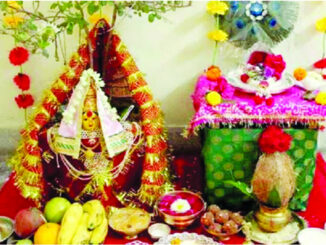
    Tulsi (the Holy Basil), the sacred plant of the Hindus symbolizes purity and is famous for its medicinal properties and can be found in almost every Hindu house. “Tulsi Vivah” festival is a traditional wedding (vivah) ceremony of the Tulsi plant to Lord Vishnu. It is celebrated on the day of “Dev Uthani Ekadashi, also known as Prabodhini Ekadashi” of Hindu month Kartik. It is believed that Tulsi is an incarnation of Goddess Lakshmi, consort of Lord Vishnu. She is often referred to as “Vishnu Priya” literally meaning “the beloved of Vishnu”.

    The Legend

    The story of the “Tulsi Vivah” is found in the Padma Purana. There was a woman named Brinda. She was a great devotee of Lord Vishnu. She was a very pious woman and was devoted to her husband Jalandhar (the demon king). Jalandhar was very powerful and he wanted to fight and defeat all the gods including the Trinity, Brahma, Vishnu and Mahesh. There was no way to kill Jalandhar as long as his wife Brinda remained faithful to him (Pativrata). At the request of gods, Lord Vishnu decided to take the form of Jalandhar and went to meet Brinda. Brinda was not able to recognize the disguise and spent a night with Lord Vishnu in her husband’s disguise.

    The devotion and the chastity (Pativrata dharma) of Brinda was thus destroyed by this act of Lord Vishnu. Brinda got extremely upset and angry to know what the Lord had done to her. She cursed him that he would become black stone known as “Shaligram” since he had the heart of stone in destroying her chastity. Even today we find that the “Shaligram” stone found only on the bed of river Gandak near Muktinath, Nepal, is used by devout Hindus (mainly the Vaishnavas) to worship Lord Vishnu, Jalandhar lost the battle with the gods and was eventually killed as his wife could no longer protect him. Brinda jumped into the funeral pyre of her husband.

    Transformation to Tulsi Plant and Tulsi Vivah

    Lord Vishnu wanted to compensate for what he had done to Brinda. This is why he transformed her soul to the Tulsi plant. Lord Vishnu also said that he would marry Brinda in her next birth to make up for the wrongful act that he did to Brinda. Vishnu in the form of the “Shaligram” stone got married to the Tulsi plant on the day of Prabodhini Ekadashi of Hindu month Kartik. This is the day celebrated in the form of the Tulsi Vivah Festival by the Hindus.

    Spiritual significance of the marriage of Tulsi with Vishnu

    Holy basil (Tulsi) is the symbol of spiritual purity (sattvika). The marriage (Vivah) of Tulsi with Lord Vishnu means that God likes purity as a quality. The meaning of the word marriage is the merging and oneness of the embodied soul (Jiva) and God .

    Tulsi: The Holy Basil

    The ‘tulsi’ plant or Indian basil is an important symbol in the Hindu religious tradition. The name ‘tulsi’ connotes “the incomparable one”. Tulsi is a venerated plant and Hindus worship it in the morning and evening. Tulsi grows wild in the tropics and warm regions. Dark or Shyama tulsi and light or Rama tulsi are the two main varieties of basil, the former possessing greater medicinal value. Of the many varieties, the Krishna or Shyama tulsi is commonly used for worship.

    Tulsi As A Deity

    The presence of tulsi plant symbolizes the religious bent of a Hindu family. A Hindu household is considered incomplete if it doesn’t have a tulsi plant in the courtyard. Many families have the tulsi planted in a specially built structure, which has images of deities installed on all four sides, and an alcove for a small earthen oil lamp. Some households can even have up to a dozen tulsi plants on the verandah or in the garden forming a “tulsi-van” or “tulsivrindavan” – a miniature basil forest.

    The Holy Herb

    Places that tend to inspire concentration and places ideal for worship, according to the ‘Gandharv Tantra,’ include “grounds overgrown with tulsi plants”. The Tulsi Manas Mandir at Varanasi is one such famous temple, where tulsi is worshiped along with other Hindu gods and goddesses. Vaishnavites or believers of Lord Vishnu worship the tulsi leaf because it’s the one that pleases Lord Vishnu the most. They also wear beaded necklaces made of tulsi stems. The manufacture of these tulsi necklaces is a cottage industry in pilgrimages and temple towns.

    Tulsi As An Elixir

    Apart from its religious significance it is of great medicinal significance, and is a prime herb in Ayurvedic treatment. Marked by its strong aroma and a stringent taste, tusli is a kind of “the elixir of life” as it promotes longevity. The plant’s extracts can be used to prevent and cure many illnesses and common ailments like common cold, headaches, stomach disorders, inflammation, heart disease, various forms of poisoning and malaria. Essential oil extracted from karpoora tulsi is mostly used for medicinal purposes though of late it is used in the manufacture of herbal toiletry.

    A Herbal Remedy

    According to Jeevan Kulkarni, author of ‘Historical Truths & Untruths Exposed,’ when Hindu women worship tulsi, they in effect pray for “less and less carbonic acid and more and more oxygen – a perfect object lesson in sanitation, art and religion”. The tulsi plant is even known to purify or de-pollute the atmosphere and also works as a repellent to mosquitoes, flies and other harmful insects. Tulsi used to be a universal remedy in cases of malarial fever.

    Tulsi in History

    Prof Shrinivas Tilak, who teaches Religion at Concordia University, Montreal, has made this historical citation: In a letter written to ‘The Times,’ London, dated May 2, 1903 Dr George Birdwood, Professor of Anatomy, Grant Medical College, Mumbai said, “When the Victoria Gardens were established in Bombay, the men employed on those works were pestered by mosquitoes. At the recommendation of the Hindu managers, the whole boundary of the gardens was planted with holy basil, on which the plague of mosquitoes was at once abated, and fever altogether disappeared from among the resident gardeners.”

    Tulsi In Legends

    Quite a few myths and legends found in the Puranas or ancient scriptures point to the origin of importance of tulsi in religious rituals. Although tulsi is regarded as feminine, in no folklore is she described as the consort the Lord. Yet a garland solely made of tulsi leaves is the first offering to the Lord as part of the daily ritual. The plant is accorded the sixth place among the eight objects of worship in the ritual of the consecration of the Kalasha, the container of holy water.

    According to one legend, Tulsi was the incarnation of a princess who fell in love with Lord Krishna, and so had a curse laid on her by his consort Radha. Tulsi is also mentioned in the stories of Meera and of Radha immortalised in Jayadev’s Gita Govinda. The story of Lord Krishna has it that when Krishna was weighed in gold, not even all the ornaments of Satyabhama could outweigh him. But a single tulsi leaf placed by Rukmani on the pan tilted the scale.

    In the Hindu mythology, tulsi is very dear to Lord Vishnu. Tulsi is ceremonially married to Lord Vishnu annually on the 11th bright day of the month of Karttika in the lunar calendar. This festival continues for five days and concludes on the full moon day, which falls in mid October. This ritual, called the ‘Tulsi Vivaha’ inaugurates the annual marriage season in India.

                    Source: Speakingtree