Year: 2022

  • Assassination of Indira Gandhi and its violent aftermath

    Assassination of Indira Gandhi and its violent aftermath

    On the morning of October 31, 1984, Indira Gandhi,’ the Iron Lady’ of India, was assassinated. She was India’s then Prime Minister. The assassination was carried out by Satwant Singh and Beant Singh, her ‘Sikh bodyguards.’ The assassination was the result of the ‘Blue Star’ operation carried out at the behest of Prime Minister Indira Gandhi by the Indian Army.

    The attack on the Golden Temple in Amritsar by the Indian Army in June 1984 left the Sikh temple heavily damaged. Hundreds of people lost their lives, including the terrorists as well as the Army. What followed the assassination, however, was brutal, and the recovery was huge. The nation was engulfed in the flames of riots for the next four days. The capital of the nation bore the majority of its brunt. More than 3000 Sikhs have been killed nationwide. The anger against the Sikh community was evident after the assassination.

    Indira Gandhi was the country’s first lady prime minister. She was popular among the masses, despite the emergency and Operation Blue Star. “There were scores of people grieving her loss, the loss of a great leader who should have avoided the mistakes just the way that Rajiv Gandhi could have avoided making the famous line,”The earth shakes when a large tree falls”.

    WHY WAS INDIRA GANDHI ASSASSINATED?

    Between 1 and 8 June 1984, Operation Bluestar was an Indian military operation ordered by Indira Gandhi to evict leader Jarnail Singh Bhindranwale and his armed followers from the buildings of the Amritsar Harmandir Sahib Complex.

    Due to her role in the operation that destroyed portions of the Akal Takht and caused casualties, Indira Gandhi was unpopular among Sikhs. In the temple, library that caught fire caused the alleged destruction of Sikh scriptures and manuscripts. Consequently, out of fear of assassination, Sikhs were removed from her private bodyguard by the Intelligence Bureau. She also ordered her Sikh bodyguards to be reinstated by the Special Protection Group, including Beant Singh. He was considered her personal favorite.

    WHAT WAS OPERATION BLUE STAR?

    –              It is a code name given to an Indian military operation to remove the separatists hiding within the Amritsar Golden Temple on June 5, 1984.

    –              Indira Gandhi, the then Prime Minister, ordered the operation, primarily to take possession of the Amritsar Harmandir Sahib Complex (popularly referred to as the Golden Temple).

    –              To drive out the Sikh extremist religious leader, Jarnail Singh Bhindranwale, and his armed followers, the Indian military entered the premises of the temple.

    –              There were two components to the operation, Operation Metal, which was the invasion of the temple complex, and Operation Store, which was restricted to the state’s countryside.

    –              Jarnail Singh Bhindranwale wanted the Indian government to pass the Anandpur Resolution, and thereby agree to the formation of a separate state of Khalistan for Sikhs.

    –              This radical leader of Sikhism had managed to gain ample support for his cause since 1982 and had set up a base with ammunition and his followers within the Golden Temple complex by mid-1983.

    –              Operation Blue Star was then launched to get rid of Bhindranwale and his demands between 1 June and 6 June 1984.

    –              This operation helped to eradicate Khalistani extremism, resulting in the death of Bhindranwale.

    Indira Gandhi was the Prime Minister of India from 1966 to 1984. She entered office with grand ideas to promote Indian autonomy through the establishment of the Green Revolution. She also joined the fight to create what would be known as Bangladesh (then part of Pakistan). Despite her achievements, there was much opposition to her regime. The Sikh minority wanted their own nation which Gandhi rejected. Tensions rose and led to Operation Blue Star, which sought to stop the Sikh rebellions that Gandhi asserted inspired much terror throughout India. Several Sikhs were killed in the operation. Months later, on October 31, 1984 Indira Gandhi was assassinated by her Sikh bodyguards, Satwant Singh, and Beant Singh. Why did Gandhi’s bodyguards assassinate her and what was the impact of her murder? Satwant and Beant Singh assassinated Indira Gandhi as a result of political and religious grievances, and that her murder led to much retaliation and bias against the Sikhs.

    There has been much debate over whether Operation Blue Star, which Indira Gandhi ordered, was justified. The Sikhs developed nationalistic movements to create their own nation. In some cases, they used terror to scare the Indian government into granting them a separate Sikh nation. Some historians argue that Operation Blue Star was necessary to put down Sikh nationalistic movements that were causing turmoil in India.  Conversely, other historians argue that the operation was not justified and that it was an exhibition of Gandhi’s misuse of power and discriminatory action towards the Sikhs. Following her assassination, there were several anti-Sikh riots that plagued the country. Hindus participated in mass killings of Sikhs as an act of revenge.  The riots lasted for months and the death toll rose to thousands. There seemed to be no effective ways to stop the violence. There was fear all over. Also, there was speculation that the government was purposefully not doing anything because they hated the Sikhs for killing Gandhi.

    However, this was proven to be false because they had several members in the government that were Sikhs, so the argument had gotten shut down as well. Many nations had no idea how bad the situation was until the numbers were displayed. At this point in time, Sikhs were being blamed for almost everything, even things that were not related to Gandhi.

    The divide between Sikhs and Hindus grew at an exponential rate as was the amount of Sikh deaths in India. Rajiv Gandhi, Indira’s son took office as Prime Minister following her assassination and found that he could not keep the situation under control. However, it was becoming apparent that the police would not intervene to save the Sikhs that were being tortured, and killed. So, he had decided to attempt to hide the events that were taking place. Despite his efforts, eventually other nations had discovered what had happened and expressed their disgust towards the events but did not take much action in doing anything to remedy the issue.

    Throughout the period of anti-Sikh riots,  thousands of them killed, raped, tortured and more. Homes and holy places of the Sikhs were also destroyed. It was a dark time for the people of India especially the Sikhs.

  • “Political will, professional will, and peoples’ will together can do anything”

    Dr. V.K.Raju, Founder-President of the Eye Foundation of America.

    Dr. V.K. Raju is the Founder and president of the Eye Foundation of America and a clinical professor of ophthalmology at West Virginia University in Morgantown. He received his medical degree from Andhra University in Visakhapatnam, India. He completed both his ophthalmology residency and fellowship at the University of London. Dr. Raju is a fellow of the Royal College of Surgeons and the American College of Surgeons.

    The Eye Foundation of America he founded has been rendering services since 1977 in India and 21 other developing countries. The mammoth work the EFA team has done could be the envy of any humanitarian organization. Close to 400,000   eye surgeries, 2.5 million + outpatients- it is a colossal work. It helped found 2 Eye Institutes – Goutami and Srikiran in AP, India in 2005.  These institutes have committed to provide innovative and compassionate care to the patients, by incorporating new technology and through patient education. His mission was to protect, preserve and restore the treasured gift of sight for improving quality of life by providing caring service, irrespective of the socio-economic status, with due emphasis on education and research.

    Dr Raju has received numerous awards, including the Academy’s Outstanding Humanitarian Award, the Melvin Jones Fellowship from the International Lions Foundation, the Paul Harris Fellow Award from Rotary International, the Distinguished Community Service Award from the American Association of Physicians of Indian Origin and the Dr. Martin Luther King, Jr., Achievement Award from West Virginia University. Dr. Raju has published over 300 presentations, articles and chapters. He has authored 2 books , and more are in the pipeline. Along with his clinical work, his interests include medical history, establishing lectureships to enhance teaching and the prevention of blindness in children through teaching, service and research.

    The Indian Panorama editor Prof. Indrajit S Saluja caught up with Dr. Raju who was in New York as a guest at the Diwali at Times Square, and had a conversation with him on his favorite subject of prevention of blindness among children. 

    TIP: What is your message to readers of The Indian Panorama? 

    I was born in India but lived in West Virginia most of my life. People often say that I am working so hard for a long time. Actually 45 years now since this work began. When you like and do the work, it’s not work anymore. I do believe in that. Today we are living in an incredible age with the advancement of medicine. But for children, I think it’s not fair. I have worked in 30 countries but our main nucleus is India. As my mentor used to say in London ‘there are three solutions for every problem involved – first is education, second is education, and third is education.’  So, if you educate people, problems will be minimum. If we can give education and health to  children, they will build the nation. I feel there is need for charities for them.

    Dr. V.K. Raju examines children at Goutami Hospital in Rajahmundry in Andhra Pradesh. 

    TIP: What is your vision and mission about Goutami?

    Our work starts with ‘eye camp’ which is a wonderful concept. The concept is:  screening, seeing the patients outside the hospital. In rural areas people don’t want to come to the hospitals because it’s threatening. Even today, even in the United States, people are somehow concerned about coming to the hospitals. We treat people outside the hospital. Screen them, advise them and some of the treatments we give outside the hospital. In 1979 we started a temporary facility outside the hospital with screening, advising the patients and giving minor treatments which are quite safe outside the hospital. You have heard about health fairs where we set up all facilities by screening people and if needed ultimately sending them to the hospitals to complete the procedure. But 30-40 years back there was a problem. After you finish the camp where will patients go for follow up?  So, we started two institutions – and the latest one is Goutami. Giving continuous care is the main thing. Our priority is children, children, and children. We talk about education and 80% of our education is through vision and if the children miss that chance, it’s not only problem to the child, it’sa problem to the community, society, and to the country. In eyecare, if you catch them early, treat them early, problems can be resolved. Goutami has excellent telemedicine facility – biggest program in Andhra Pradesh. We screen every baby who is prematurely born – 8% to 10% of them need special attention. Fifteen to thirty minutes treatment can save them from blindness.

    The Rotary Clubs helped us a lot in organizing the eye camps. Goutami does a camp a day. Anything can be done today but we have to do it together. If the will is there it can be done. Political will, professional will, and peoples’ will togethercando anything.

    TIP: Have you launched a project on eyecare in Rotary Club in Morgantown?

    Yes we did. In United States there is a problem with nutrition. What people eat in West Virginia is not good for health, and obesity is the major issue. We really try to educate  parents and their children in the farmers market  about what to eat properly. In ancient Ayurvedic system of India, it is not the medications. The principles of Ayurveda are – eat right, exercise right, fix your lifestyle  and then if it’s not enough then take medication. We are trying to make people conscious about that. Mindset is important. Forget what you have done. Think about what you have to do.

     TIP: The lifestyle in America, does it cause any eye ailment?

    Yes. Children spending too much time with cellphone or video game can suffer from Myopia. But we can check that. They should take a break from screens every 30 or 45 minutes. It’s up to the parents because children learn what they live.

    TIP: Do you have any plans to extend the work of Eye Foundation of America  in Central American countries?

    I am so glad you have asked this question. The Eye Foundation of America will go where the need is the highest. We’re planning to go to Guatemala  end of this year or early next year. The Green Goutami project is coming up. Once the new building starts we will extend our reach in Guatemala.

    Children receive expert care at Goutami Hospital.

    TIP: Tell us about the new Goutami Building

    We have all facilities with the latest and greatest equipment. There will be treatment for a rare cancer of the eye  called ‘Retinoblastoma.’ Cancer in the eye is very rare but important aspect of eye cancer is tumor in the eye in the back of retina. We want to make people aware of this. We are planning to do some projects with Nargis DuttMemorial Cancer Foundation. 

    TIP: What’s your call on Govt of India’s child welfare programs?

    Indian government has done incredible job in this regard but after getting about 80% success there is relaxation. They have achieved whatever, but there are problems in implementation. In villages and rural areas there is still vitamin deficiency and vitamin A deficiency is not only bad but it can make you blind. There is a problem of immunity. If a vitamin A deficient child gets measles, it can cause death.  Not a single child be left behind.That should be the attitude. We should not stop until we reach the last post.

  • Astronomers make discovery that can ‘dramatically narrow’ search for aliens

    Astronomers make discovery that can ‘dramatically narrow’ search for aliens

    Red dwarf stars or M dwarf stars are the most common type of stars in the universe. Recent research into an Earth-like planet orbiting such a star discovered that it has no atmosphere. According to the researchers behind the study, this discovery could create a major shift in the way we look for alien life. Since these stars are so common, the discovery of GJ 1252b—the planet in question—having no atmosphere could mean that a large number of planets orbiting such stars would probably not be able to host any life. This Earth-like planet is slightly larger than ours and is much close to its star than we are to our Sun. This makes GJ 1252b intensely hot and pretty much inhospitable. “The pressure from the star’s radiation is immense, enough to blow a planet’s atmosphere away,” said Michelle Hill, UC Riverside astrophysicist and co-author of the study published in The Astrophysical Journal Letters, in a press statement.

    How planets lose their atmosphere

    The Earth also loses some of its atmosphere over time due to the intense radiation from the Sun. But on our planet, a combination of volcanic emissions and other carbon cycling processes replenishes what is lost for the most part. But for a planet like GJ 1252b, which has a much tighter orbit with its star, it is nearly impossible to replenish the atmosphere being lost.

    This is exactly what happens with Mercury in our solar system. The planet closest to the sun does technically have an atmosphere but it is an extremely thin one made up of atoms that the sun’s radiation blasted off its surface. The extreme heat on Mercury means that most of these atoms escape into space.

    How do scientists know GJ 1252b doesn’t have an atmosphere

    A secondary eclipse is when a planet passes behind a star, blocking the light from the planet and the light that is reflected from its star. Astronomers measured infrared radiation from GJ 1252b when it was obscured by such an eclipse.

    This infrared radiation revealed that the planet’s temperatures are scorching hot during its daytime, tipping the scales at around 1227 degrees Celsius. This is hot enough to melt all the gold, silver and copper on the planet. Based on this heat and the low surface pressure on the planet, scientists concluded that there is no atmosphere there.

    “The planet could have 700 times more carbon than Earth has, and it still wouldn’t have an atmosphere. It would build up initially, but then taper off and erode away,” said Stephen Kane, UCR astrophysicist and study co-author, in a press statement.

    All of the above factors, combined with the fact that M dwarfs tend to have more flares and activity than the sun, means that it is extremely unlikely that planets closely surrounding such planets can hold on to their atmosphere.

                    Source: The Indian Express

  • Facebook’s bitmoji-style avatars now coming to WhatsApp

    Facebook’s bitmoji-style avatars now coming to WhatsApp

    Social media giant Facebook’s Bitmoji-style avatars, which earlier invaded Instagram and Messenger, are now also coming to Whatsapp. According to The Verge, a report from WABetaInfo suggests that WhatsApp is rolling out support for customizable avatars in the latest 2.22.23.9 beta on Android, but only for some users. Those with access to the feature will see a new ‘Avatar’ category in their settings menu that they can use to customise the digital version of themselves.

    Similar to Meta’s other apps, WhatsApp will then generate a sticker pack with the avatar in various poses, which users can use to express themselves when messaging family and friends. This feature was first spotted by WABetaInfo last month but now it’s actually rolling out to users. It’s unclear when WhatsApp will roll out the feature to all users on Android, or when it plans on bringing the feature to iOS, reported The Verge. Meta first introduced avatars on Messenger and the News Feed in 2019 before they became available to use in Facebook comments and stories in 2020. Earlier this year, the company gave its avatars a new 3D look and started letting users add them to feed posts, Facebook profile pictures, and Instagram Stories.

    As per The Verge, at the time, Meta’s general manager for avatars and identity, Aigerim Shorman, touted the update as part of Meta’s efforts toward building out its idea of the metaverse, which not only includes virtual and augmented reality, but also bridges “more familiar platforms like your phone and computer.”            Source: ANI

  • Windows 11’s new features make file sharing more easier

    Windows 11’s new features make file sharing more easier

    With an aim to enhance user experience, tech giant Microsoft has rolled out several new features, including files sharing, to help users share files and photos easily to Windows 11. To make sharing files even more accessible, the company has enhanced the Windows Share experience so that users can share files with more discoverable devices nearby directly from their desktop, File Explorer, Photos, Snipping Tool, Xbox and other apps.

    “Today, we are excited to announce the availability of new features in Windows 11 along with some exciting new experiences to help you be your most productive and creative, while also having fun,” the company said in a statement.

    “Announced in September, these new features and experiences begin to be available today and are a continuation of our commitment and journey to deliver continuous innovation in Windows to inspire and empower you,” it added.

    The taskbar is getting two highly requested enhancements. First, if you like to pin a more extensive selection of apps to your taskbar than space allows, Taskbar gives you an entry point to an overflow menu that will enable you to view all your overflowed apps in one space. Second, when you right-click on the taskbar, in addition to Taskbar Settings, you will also see an option to jump directly into your Task Manager. “These improvements have been made in direct response to your feedback and to give you access to what is important with a single click,” the company said.

    The company also announced the Memories feature, which resurfaces pictures’ users have saved on OneDrive, making revisiting life’s magical moments simple and effortless.

    Through its partnership with Amazon, you can now access Android apps and games from the Amazon Appstore, generally available in 31 countries, including Australia, Canada, France, Germany, Italy, Japan, Spain, the UK, the US, among others.

    With more than 50,000 titles to choose from, it’s easy to discover and download your favourite apps and games on your Windows device.             Source: IANS

  • When Kim Kardashian decked up in desi outfits for

    When Kim Kardashian decked up in desi outfits for

    Kim Kardashian celebrated her birthday on October 21. The reality TV star and businesswoman turned 42 on Friday. A few years ago, when Kim Kardashian had landed on an Indian magazine’s cover it was all anyone could talk about. Kim had worn sarees and lehengas from India’s top designers for the magazine photoshoot, and called them ‘beautiful’.

    For her magazine cover, Kim had posed in a saree dress that featured a sheer hoodie. For the inside photos featured in the magazine spread, Kim wore several outfits by Indian designers such as Anita Dongre, Anamika Khanna, and Sabyasachi. She wore a shimmery red saree by Sabyasachi, and a regal Anita Dongre lehenga, among other desi outfits.

    The reality star had graced the pages of Vogue India for the first time ever with the March 2018 issue. In her cover interview with the magazine, Kim had said about Indian outfits, “The sarees, the jewellery, the clothes — everything was so beautiful! I told my show (Keeping Up With the Kardashians) that we have to figure out how to get to India.”

    Soon after the pictures of Kim dressed up in traditional Indian clothes in an Indian magazine had come out, social media users had gone into a frenzy, with some arguing that the magazine should highlight Indian models rather than Western pop culture stars. Kim was not alone in facing this type of backlash from a section of Indians. Her sister, model Kendall Jenner, had also faced criticism, when she posed for Vogue India’s 10th anniversary. Late actor Sushant Singh Rajput had also posed with Kendall for the photoshoot.

    Kim and rapper-designer Kanye West had announced their separation in 2021, and their divorce is ongoing. They share four children – daughters North, 9, and Chicago, 4, and sons Saint, 6, and Psalm, 3. Kim briefly date actor-comedian Pete Davidson; the two ended their relationship recently.      Source: HT

  • Matthew Perry reveals why he broke up with Julia Roberts

    Matthew Perry reveals why he broke up with Julia Roberts

    Matthew Perry is divulging all about his short-lived romance with Julia Roberts! In his highly-awaited, upcoming memoir titled Friends, Lovers and the Big Terrible Thing, not only did the Friends star reveal the unique way he convinced the Oscar winner to cameo in the legendary sitcom, but Perry also confessed the reason why he broke up with Roberts after dating for just two months. In an excerpt from Friends, Lovers and the Big Terrible Thing, via The Times and Entertainment Weekly, Matthew Perry shared the reason behind splitting with Julia Roberts: “Dating Julia Roberts had been too much for me. I had been constantly certain that she was going to break up with me. Why would she not? I was not enough; I could never be enough; I was broken, bent, unloveable. So instead of facing the inevitable agony of losing her, I broke up with the beautiful and brilliant Julia Roberts. She might have considered herself slumming it with a TV guy, and TV guy was now breaking up with her. I can’t begin to describe the look of confusion on her face.” Julia Roberts’ reps didn’t immediately respond to request for comment. Furthermore, Matthew Perry revealed the elaborate way in which he convinced Julia Roberts to guest star in Friends Season 2 Episode 13 titled The One After the Superbowl, Part 2. Matthew explained that the 54-year-old actress was offered the Friends episode, to which she apparently stated she would do if “she could be in my storyline.” Perry reiterated Julia’s demand and quipped, “Was I having a good year or what?” However, he also added, “But first, I had to woo her.”

    Source: Pinkvilla

  • Pakistani filmmaker Sharmeen Obaid Chinoy to direct new Star Wars movie

    Pakistani filmmaker Sharmeen Obaid Chinoy to direct new Star Wars movie

    Ms Marvel director Sharmeen Obaid-Chinoy has been tapped to helm a new Star Wars film with Damon Lindelof attached as co-writer.

    According to entertainment website Deadline, the Lucasfilm project is currently under scripting stage. The movie is being touted as a first major big screen release for Lucasfilm after 2019’s Star Wars Episode IX: The Rise of Skywalker. The studio has been focusing on its TV projects — The Mandalorian, Obi-Wan Kenobi, Andor– over recent years since then. Obaid-Chinoy, best known for her Oscar-winning documentary shorts Saving Face, A Girl in the River and The Price of Forgiveness, recently directed several episodes of Disney’s hit series Ms Marvel.

    Source: PTI

  • Tamannaah Bhatia starts prep for Lust Stories 2

    Tamannaah Bhatia starts prep for Lust Stories 2

    Actress Tamannaah Bhatia was spotted in Mumbai as she stepped out for reading session of her upcoming project Lust Stories 2.

    With the reading that took place on Tuesday (October 25), the prep of the sequel to Netflix’s anthology Lust Stories has officially begun.

    The actress got papped at the same location as actor Vijay Varma who was spotted later in the day heading for the prep of the same. The Pan-India star is best known for her versatile performances coming from multiple genres and languages.

    While Tamannaah is busy conquering all the industries, Lust Stories 2 will highlight yet another range of her character and we can’t wait for her to surprise us soon in the Netflix’s popular anthology.

  • Katrina feels inspired to do southern films, thanks to ‘Ponniyin Selvan: 1’

    Katrina feels inspired to do southern films, thanks to ‘Ponniyin Selvan: 1’

    Katrina Kaif, who is currently awaiting the release of her upcoming horror-comedy movie ‘Phone Bhoot’, has shared that she would like to do movies from South India. The actress has done some films down south like the 2004 Telugu release ‘Malliswari’ and ‘Allari Pidugu’, which came out in 2005, and the Malayalam film ‘Balram vs. Tharadas’. Elaborating on the southward shift of her future plans, Katrina told IANS: “If ever there’s a script which is compelling enough and has a strong character, language won’t be a barrier for me. We have some phenomenal directors working in south India.”

    She went on to lavish praise on Mani Ratnam and his recent release, ‘Ponniyin Selvan: 1’. “The best and the most recent example is Mani Ratnam sir’s ‘Ponniyin Selvan: 1’. Such an amazing film, na? Such grandeur, beautiful frames and music. To make a film on such a big scale at this stage in his life, that proves the mettle of an iconic director.”

    ‘Phone Bhoot’, which is Katrina’s first film after her marriage with Vicky Kaushal, also stars Siddhant Chaturvedi and Ishaan Khatter. The film, produced by Excel Entertainment, is set to arrive in cinemas on November 4, 2022.

    Source: IANS

  • Akshay Kumar’s Ram Setu opens with a bang, rakes in Rs 15 crore

    Akshay Kumar’s Ram Setu opens with a bang, rakes in Rs 15 crore

    After a long wait, Akshay Kumar’s Ram Setu finally opened in the theatres on October 25. As expected, the film put up a decent total on its opening day as it collected around Rs 15 crore. Ram Setu gave a tough fight to Ajay Devgn and Sidharth Malhotra’s Thank God, which also released on October 25. It was mostly the Diwali fervour that also helped the Akshay Kumar-starrer in the theatres. It remains to be seen how Ram Setu performs hereon.

    After a series of flops, Akshay Kumar finally seems to have revived his Midas touch now. His film Ram Setu has been well received by the audience in mass centres. Ram Setu earned around Rs 15 crore nett on its first day, according to Box Office India. It earned over Rs 1 crore from Rajasthan while CP Berar also added Rs 1 crore nett to the total. The Akshay Kumar-starrer especially performed well in the UP, Bihar and CI and Gujarat /Saurashtra markets.

    Ram Setu has successfully managed to earn more than Thank God. Interestingly, Ram Setu also bagged the second biggest opening of the year, after Brahmastra.The film looks quite promising with these numbers.

    Ram Setu is directed by filmmaker Abhishek Sharma. Akshay is seen alongside Jacqueline Fernandez and Nushrratt Bharucha. Ram Setu is an action-adventure drama that follows an archeologist investigating whether Ram Setu is a myth or reality. According to the epic Ramayana, Ram Setu is a bridge built by the god Rama’s army of Vanara to reach Lanka to rescue his wife Sita, who was abducted by Lanka’s Rakshasa king Ravana. The film is co-produced by Akshay’s company Cape of Good Films along with Amazon Prime Video, Abundantia Entertainment, and Lyca Productions.                Source: India Today

  • Rejected sex comedies because they are derogatory to women: Radhika Apte

    Rejected sex comedies because they are derogatory to women: Radhika Apte

    Actor Radhika Apte, in a new interview, revealed how sex comedies came to her after starring in Varun Dhawan’s Badlapur. While she clarified that she has no issue with the genre, she rejected such films as these subjects can be derogatory to women. She said she won’t be a part of projects celebrating jokes about women. In Badlapur, Radhika Apte plays the role of Vinay Pathak’s wife. In a scene, she strips to nothing in order to save her husband’s life from Varun Dhawan. After the film released, Radhika said she was offered roles in sex comedies, which she denied. When asked about the reason why she would refuse a big-ticket film, Radhika told Bollywood Hungama, “I think a couple of sex comedies were offered to me after Badlapur. I don’t have a problem with sex comedies. Hunterrr (2015) could be called a sex comedy as well. But, the kind of sex comedies we had, in the past, can be very derogatory to women and can be very very objectified. They objectify women and I don’t like the humour. So, I don’t do it.” Source: HT

  • Amendment of intermediary guidelines aimed at protection of online users: IT minister

    Amendment of intermediary guidelines aimed at protection of online users: IT minister

    New Delhi (TIP)- IT Minister Ashwini Vaishnaw has said the latest amendment of intermediary guidelines is focused on protection of online users. The comment came as the government on Friday, October 28,  notified new rules under which it will set up appellate panels to settle grievances that users may have against decisions of social media platforms like Twitter and Facebook on hosting contentious content.

    The three-member Grievance Appellate Committee(s) will be set in three months, according to the gazette notification.

    Soon after the tweaks in IT rules were notified on Friday, Vaishnaw said, “The focus of the amendment of intermediary guidelines is on the protection of online users. “The law of the land is supreme. Intermediary to ensure accessibility of its services to all users and respect their rights under the Constitution of India,” he noted.

    According to the latest amendments, the appellate committees will be able to review content moderation and other decisions of social media companies such as Meta and Twitter.

    “The central government shall, by notification, establish one or more grievance appellate committees within three months from the date of commencement of the Information Technology (Intermediary Guidelines and Digital Media Ethics Code) Amendment Rules, 2022,” the notification said.

    Each grievance appellate committee will consist of a chairperson and two whole-time members appointed by the central government, of which one will be a member ex-officio and two will be independent members.                Source: PTI

  • India, EU discuss issues relating to mobility, migration of professionals and students

    India, EU discuss issues relating to mobility, migration of professionals and students

    New Delhi (TIP)- India and the European Union have explored ways to facilitate mobility and migration of talented professionals, students and skilled workforce for the mutual benefit of both the sides, the Ministry of External Affairs (MEA) said on Friday, October 28. The issues figured at the 6th High Level Dialogue on Migration and Mobility (HLDMM) between India and the European Union that took place in Brussels on October 27.

    The MEA said the discussions at the meeting covered a wide range of issues related to the promotion of safe, orderly and regular migration including prevention of irregular migration.

    “Both sides also discussed potential areas of cooperation to facilitate mobility and migration of talented professionals, students and skilled workforce for the mutual benefit of both partners,” it said in a statement.

    “Both sides expressed satisfaction at the successful implementation of India-EU Common Agenda on Migration and Mobility. As India and EU celebrate 60 years of diplomatic ties, the dialogue is an important dimension of the strategic partnership,” it added. The Indian delegation at the talks was led by Ausaf Sayeed, Secretary (Consular, Passport & Visa and Overseas Indian Affairs) in the MEA. Monique Pariat, Director General (Migration and Home Affairs), European Commission, headed the EU team.

    Besides the two delegations led by the co-chairs, the meeting was also attended by representatives of the diplomatic missions of EU member states in Brussels who were invited as observers.

    The representatives of the Ministry of Home Affairs, Ministry of Skill Development and Entrepreneurship and Ministry of Labour and Employment were part of the Indian delegation.      Source: PTI

  • Rahul Gandhi: No GST on handlooms if Congress is elected

    Rahul Gandhi: No GST on handlooms if Congress is elected

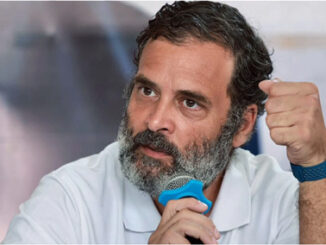
    Congress leader Rahul Gandhi on Friday, October 28,  assured that the party, once voted to power at the Centre, would do away with Goods and Services Tax (GST) on handlooms to provide succour to the weavers.

    He also promised to provide land rights to the tribal farmers of Telangana once the Congress comes to power in the state in the next year’s assembly elections. Gandhi, who was on the third day of his Bharat Jodo Yatra in Telangana, had an interaction with weavers and tribal farmers at Gopalpur Kalan village of Devarkadra block in Mahabubnagar district for more than an hour.

    “You do not have to wait for too long. We will come to power at the Centre and the state soon and solve these problems. We will ensure that GST is removed on handlooms. We shall also provide title deeds of the lands being cultivated by tribal farmers, once we come to power in Telangana,” he said.

    The weavers of Telangana have been protesting against imposition of GST on handloom textiles and their raw material. The Telangana government, too, recently wrote a letter to the Centre asking for removal of the GST on handloom products.

    A woman weaver brought to the notice of Gandhi that the GST on handlooms and raw materials would cripple the weaving sector. “During the Congress period, yarn subsidy used to reach the weaver. That system does not exist anymore. Similarly, the state cooperative organisation used to buy directly from weavers. That, too, does not happen anymore,” she said. Similarly, tribal farmers during their interaction with the Congress MP, spoke about the implementation of the Forest Rights Act, 2006. They explained to him about the status of assigned land and lack of title deeds for their lands where they take up Podu cultivation (shifting cultivation).

    Sunil Kumar of National Law School and Research (Nalsar) summed up the problem of the implementation of the Forest Rights Act. “Three major issues afflict the tribal farmers of Telangana. One, over 3 lakh applications are pending for recognition of forest land. Two, tussle between government departments, mainly forest and revenue departments, due to which 1 lakh tribal-farmers are suffering. Three, forest department is delaying recognition of forest land which is affecting approx. 25 lakh farmers in the state,” he explained to Gandhi.

                    Source: HT

  • Print deities’ images on notes, Kejriwal writes to PM

    Print deities’ images on notes, Kejriwal writes to PM

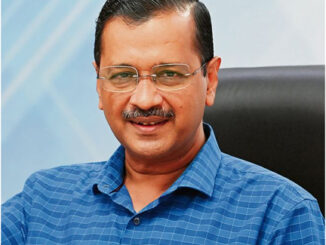
    Mumbai (TIP)- Delhi Chief Minister Arvind Kejriwal on October 28 wrote to Prime Minister Narendra Modi, urging him to include the photographs of Lord Ganesh and Goddess Lakshmi on currency notes. The AAP leader wrote the letter two days after he appealed to the Union Government to print new notes with the images of Hindu deities for country’s “economic prosperity”.

    “I have written to the PM on behalf of 130 crore Indians that the images of Laxmi-Ganesh ji should be put on the Indian currency along with Mahatma Gandhi’s,” Kejriwal wrote on Twitter while sharing the letter.

    Claiming that the Indian economy was not in a good shape, Kejriwal had on Wednesday said the country needed a lot of effort to get the economy back on track along with the “blessings of our gods and goddesses”. “Tremendous support has been received on this issue. There is massive enthusiasm among people and everyone wants this to be implemented immediately,” Kejriwal claimed in the letter, while adding: “On the one hand, all countrymen need to work hard and on the other, we also need blessings of the deities so that our efforts bear fruits.”

    Kejriwal’s demand has evoked sharp reactions from the BJP, which called it an unsuccessful attempt to hide the “ugly anti-Hindu face” of the AAP in view of the upcoming polls in Gujarat and HP. Addressing a press conference on Wednesday, the AAP leader said, “Our economy is not improving. We need to make multi-pronged efforts. Our efforts will bear fruit only when we have the blessings of God.”

  • Use of new technologies for terror activities a challenge: India at UN meet

    Use of new technologies for terror activities a challenge: India at UN meet

    New Delhi (TIP)- India on Saturday, October 29,  warned about the threat posed by the use of varied technologies for terrorist activities as they become “cheaper and more readily available”. India’s Permanent Representative to UN Ruchira Kamboj said the new and emerging technologies have helped fuel economic growth and offer the possibility to reduce existing inequalities, however, they have also thrown several challenges that demand our attention and urgent action.

    “The use of new technology for terrorist purposes is increasing, diversifying and evolving as varied technologies become cheaper and more readily available,” Kamboj said in her opening statement on Day 2 of the UN Security Council’s Counter-Terrorism Committee meeting.

    “Proliferation in online activities particularly during the pandemic has given terrorists the opportunity to spread their toxic narratives honing their propaganda, particularly targeting youth and children including through gaming platforms,” she added.

    India is hosting the two-day anti-terrorism meeting of the United Nations Security Council (UNSC). The ongoing meeting in Delhi is being held under India’s chair of the Counter-Terrorism Committee.

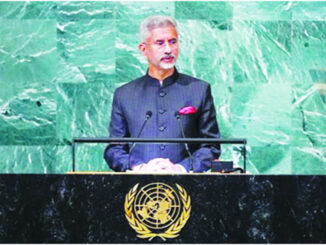
    Addressing the meeting, external affairs minister S Jaishankar underlined that the threat of terrorism is growing and expanding despite the UN Security Council’s significant efforts in the last two decades to combat the menace. Jaishankar said that the technologies have also thrown up new challenges for governments and regulatory bodies given the “very nature of some of these technologies and the nascent regulatory environment.”

    “UN Security Council, in the past 2 decades, has evolved an important architecture built primarily around the Counter-Terrorism Sanctions Regime to combat this menace. This has been very effective in putting those countries on notice that had turned terrorism into a state-funded enterprise,” the minister said.

    “Despite this, the threat of terrorism is only growing and expanding, particularly in Asia and Africa, as successive reports of the 1267 Sanctions Committee monitoring reports have highlighted,” he added.

    Jaishankar further stated that the internet and social media platforms have turned into potent instruments in the toolkit of terrorists and militant groups for spreading propaganda, radicalisation and conspiracy theories aimed at destabilising societies.

    “Another add-on to the existing worries for governments around the world is the use of unmanned aerial systems by terrorist groups and organised criminal networks,” he added.

  • ISRO carries out key test of its heaviest rocket’s engine

    The flight acceptance hot test of CE-20 engine has been carried out in the High Altitude Test facility of ISRO Propulsion Complex (IPRC) at Mahendragiri in Tamil Nadu. The engine is assigned for the LVM3-M3 mission identified for launching the next 36 OneWeb India-1 satellites, the Indian Space Research Organisation said.

    Sources said these satellites of OneWeb, the London-based satellite communications company, are expected to be launched by the NewSpace India Limited (NSIL), the ISRO’s commercial arm, aboard LVM3 early next year.

    Friday’s (October 28) flight acceptance test comes within days of the launch of the first set of 36 OneWeb satellites by the NSIL from the Satish Dhawan Space Centre (SDSC- SHAR) in Sriharikota on October 23.

    According to OneWeb, its partnership with NSIL and ISRO demonstrated its commitment to provide connectivity across the length and breadth of India by 2023.

    From Ladakh to Kanyakumari and Gujarat to Arunachal Pradesh, OneWeb will bring secured solutions not only to enterprises but also to towns, villages, municipalities and schools, including the hardest-to-reach areas across the country, it said.

    “OneWeb’s commitment to enhance connectivity in India is backed by Bharti Global, its largest investor,” the company said.

    NSIL Chairman-cum-Managing Director Radhakrishnan D had said: “We look forward to strengthening our partnership with OneWeb and utilising the potential that LEO connectivity has to deliver broadband services across India.”             Source: PTI

  • Gold smuggling case: Kerala is trying to derail probe, ED tells Supreme court

    Powerful persons in the Kerala government are misusing their power to thwart and derail proceedings in the gold smuggling case, the Enforcement Directorate (ED) told the Supreme Court in an affidavit filed on Thursday ahead of next week’s hearing on the agency’s plea seeking transfer of trial from Kerala to Karnataka.

    “The very fact that the state government constituted a commission of inquiry into an investigation conducted by a central investigation agency demonstrates that powerful persons involved in the case who are holding high offices in the government of Kerala are willing to misuse the state machinery and powers in order to thwart and derail proceedings in the case,” ED said in its affidavit, reubutting criticism that its request for transfer of the case is “politically motivated”.

    Kerala’s Pinarayi Vijayan government constituted the one-man judicial commission in May 2021 and a petition is pending in Kerala high court questioning its constitution.

    ED also cited accused Swapna Prabha Suresh’s testimony in June in which she accused several ruling Kerala politicians of involvement in the gold/currency smuggling scam through the UAE consulate, and rebutted that she was forced by ED to make the statement.

    “The very fact that the statement was given under Section 164 CrPC confirms that the statement was free and voluntary before an independent judicial forum. There is no basis on which it can be said that proceedings are politically motivated.”

  • PM proposes ‘one nation, one uniform’ for cops

    New Delhi (TIP)- Prime Minister Narendra Modi on October 28 mooted the idea of “one nation, one uniform” for police personnel during the ‘chintan shivir’ of state Home Ministers at Surajkund in Haryana’s Faridabad district. He asked the participating ministers to ponder over his suggestion, saying it would enhance the identity of the force.

    Addressing the event through video-conferencing, PM Modi warned against the forces “expanding their intellectual sphere to push the youth towards extremism and perverting the minds of the coming generations”.

    “Every form of Naxalism, be it the one with the gun or the pen, has to be uprooted to prevent it from misleading the youth of the country,” asserted PM Modi. He also noted that such forces get significant support internationally.

    About his “one nation, one uniform” suggestion, the PM said, “It is just an idea. I am not trying to impose it on you. Just give it a thought. It may happen in five, 50 or 100 years. But let’s give it a thought.” Noting that states can have their number or insignia on the uniform, PM Modi said, “Bulk production will lead to improvement in the quality of clothes. It will also give a common identity to law enforcement personnel as people will recognise them anywhere in the country.”

    He also urged the state governments to review old laws and amend these to suit the current scenario as he batted for coordinated action by all agencies to meet the emerging challenges of law and order and security.

    “Even though law and order is a state subject as per the Constitution, these are equally linked with the unity and integrity of the country,” the PM said, adding all police forces should learn and work together for internal security.

    Meanwhile, officials in the MHA said that at the conclusion of the event, it was agreed upon that internal security was a shared responsibility of both Centre and states and the two must work together.            Source: HT

  • Indian American community celebrated Diwali with Texas Governor at his official residence

    Indian American community celebrated Diwali with Texas Governor at his official residence

    AUSTIN, TX (TIP):  Governor of Texas, Greg Abbott, has extended his Diwali greetings to Prime Minister Narendra Modi, as he celebrated the joyous occasion with leaders of the Indian American community at his sprawling official residence in Austin.

    Diwali or Deepavali is a festival that marks the victory of good over evil, light over darkness and knowledge over ignorance.

    On Sunday, Governor Abbott and first lady Cecilia Abbott were dressed in traditional Indian attire, as they greeted leaders of the Indian American community and lit a lamp to commemorate the occasion.

    Abbott conveyed Diwali wishes to Prime Minister Narendra Modi, the people of India and Indian Americans living in Texas and other states in the US. “Tonight, Cecilia & I celebrated Diwali at the Governor’s Mansion. We welcomed friends as we lit Diwali lamps & celebrated the victory of light over darkness, goodness over evil, & hope over despair. Happy Diwali to those celebrating the Festival of Lights!” Abbott said in a tweet. He also lauded the Indian American community for their achievements in various sectors and participating in the prosperity of Texas.

    “Indian Americans are true partners in growth of Texas economy, and they are enhancing Texas values, we are glad they have called Texas as their home”, Governor Abbott said.

    “The growing similarity of shared values such as education, entrepreneurship, economic advancement, and compassion will continue to bring the communities of India, Texas and Indian Americans closer to each other,” he elaborated.

    The Diwali celebrations have become an annual fixture at Abbott’s official residence, with the only exception being in 2020, when the event was cancelled due to the pandemic. The guests at the ceremony included prominent heads of the community organizations from across the state of Texas, Consul General of India in Houston, Aseem Mahajan, Arun Agarwal from Dallas, who serves as Vice-Chair of Texas Economic Development Corporation and Dr Satish Nayak from Midland, who serves on Texas medical board as governors’ appointee, among others.

    “Diwali, the festival of lights symbolizes the triumph of good over evil and is a time for harmony, goodwill and affirming the bonds between family and friends,” Mahajan said, as he thanked Abbott and First Lady Cecilia for their warm gesture.

    Agarwal, who was instrumental in organizing Abbott’s maiden visit to India four years ago, thanked the Governor for supporting the Indian American community in Texas.

    Texas is home to the second-largest Indian American population in the US, behind only to the state of California.

  • Indian American Washington Post editor Neema Roshania Patel dies at 35

    Indian American Washington Post editor Neema Roshania Patel dies at 35

    WASHINGTON, D.C. (TIP): Neema Roshania Patel, a founding editor of The Washington Post’s news site for millennial women, The Lily, died on Monday at just 35 after a battle with gastric cancer, the paper announced.

    Born to immigrants from India in Maplewood, New Jersey, in 1987, Roshania Patel joined the Washington Post in 2016 as a digital editor before helping launch The Lily.

    On the podcast “Motherly,” Roshania Patel called The Lily “a stopping place on the internet where we could bring together the best stories on women and gender.”

    She spearheaded projects such as the “Anxiety Chronicles,” which documents mental health struggles, and a months-long project called “The Jessicas,” which looked at the most popular name for girls born in 1989 and examined their lives and evolving identities as they turned 30.

    She found 10 diverse subjects, worked with freelancers to tell the stories and oversaw a documentary short that was included in film festivals.

    She left her position as top editor at “The Lily” in 2009 to join the paper’s Next Generation initiative — aimed to widen the Post’s readership to younger demographics, which Roshania Patel was passionate about.

    “Younger audiences want to see their experiences and the experiences of their peers reflected in the journalism they consume,” she wrote in an op-ed to the Poynter Institute about diversifying sources.

    “They want to see how policy affects the lives of everyday people. And they want to feel personally connected to what they read. Diverse sourcing makes us more trustworthy arbiters of the news.” Amy King, The Lily’s founding editor in chief, who is now creative director and deputy managing editor at the Los Angeles Times, called Roshania Patel a “vibrant” colleague who “found our greatest stories and gave visibility to people and ideas who had long been ignored.”

    After working for her high school newspaper, Roshania Patel graduated Rutgers University in 2009 with a degree in journalism.

    Before the Washington Post, the married mother of one had previously worked at NPR member station WHYY in Philadelphia as a community editor.

  • Indian Americans Parag Agrawal and Vijaya Gadde fired by Elon Musk

    Indian Americans Parag Agrawal and Vijaya Gadde fired by Elon Musk

    WASHINGTON, D.C. (TIP): Two Indian Americans executives, Parag Agrawal and Vijaya Gadde were among the first two casualties of Elon Musk’s hostile takeover of Twitter after six months of a legal war over the $44 billion deal.

    “The bird is freed,” tweeted Musk, referencing Twitter’s bird logo in an apparent nod to his desire to put fewer limits on content that can be posted on the social media platform.

    Besides CEO Agrawal and the head of legal, policy and trust, Gadde, also freed or fired were Chief Financial Officer Ned Segal, and general counsel and Sean Edgett, according to media reports.

    “Agrawal and Segal were in Twitter’s San Francisco headquarters when the deal closed and were escorted out,” Reuters reported quoting sources. Twitter, Musk and the executives are yet to issue an official statement on the firings.

    IIT Bombay alumnus Agrawal was elevated to the top job at the microblogging site in Nov 2021 after founder CEO Jack Dorsey decided to step down. Agrawal who joined the company in 2011 became its Chief Technology Officer (CTO) in 2017.

    Elon Musk and Parag Agrawal started off great, but their relationship went south as the deal talks progressed as evidenced by a series of texts disclosed at Delaware court.

    “Hey Elon – great to be connected directly. Would love to chat,” Agrawal texted on March 27. He invited Musk to “treat me like an engineer” instead of a CEO as they worked through technical questions together. At one point, Musk wrote, “I love our conversations!”

    But things suddenly took a turn on April 9 when Musk publicly tweeted “Is Twitter dying?” and got a message from Agrawal calling the criticism unhelpful. Musk tersely responded: “This is a waste of time. Will make an offer to take Twitter private.”

    The collection of text messages also includes Musk’s conversations with Dorsey, who told him that while the board was “terrible,” Agrawal was an “incredible engineer.”

    However, Dorsey’s efforts to bring them back together after the deal was announced ended poorly. “At least it became clear that you can’t work together,” Dorsey texted Musk on April 26. “That was clarifying.”

    Agrawal and India born attorney Gadde who joined Twitter back in 2011, were seen as being instrumental in turfing former President Donald Trump out of Twitter, something Musk has indicated he will reverse.

    Trolling the very company, he is buying, Musk Thursday held out an assurance that Twitter will not become “a free-for-all hellscape where anything can be said with no consequences.”

    The message came hours after he walked into the Twitter HQ carrying a kitchen sink and tweeting “let that sink in.” He also changed his Twitter profile to refer to himself as “Chief Twit.”

    Many came out in the defense of Agrawal. “Parag Agrawal secured the bag for his shareholders and got fired, they should build a statue of him in the shareholder value hall of fame,” a user wrote. Many Indian Twitteratis reacted to the sacking of Agrawal with memes. One user shared a picture of an eatery ‘Aggarwal Sweets and Snacks’ along with a caption, “#ParagAgrawal is back with a bang in front of Twitter HQ.” Another wrote, “Elon Musk fires Twitter CEO, Parag Agrawal. Even the job of the Twitter CEO is not secure. That’s why Indian parents ask their children to do government jobs.” “A new day is dawning at Twitter. The new owner @elonmusk is in the building! What should he do about the two notorious Indians, Parag Agarwal and Vijaya Gadde? My advice: Throw the censors out, keep the chicken tikka masala!” tweeted Dinesh D’Souza, a Trump supporter.

  • Indian American Seattle City Council Member Kshama Sawant claims cops ignored poop-tossing attacks on her home

    Indian American Seattle City Council Member Kshama Sawant claims cops ignored poop-tossing attacks on her home

    SEATTLE (TIP):  Kshama Sawant, an Indian American Seattle City Council member has claimed local cops ignored a series of politically motived feces flinging attacks on her house. Sawant, 49, wrote in a letter that the Seattle Police Department has failed to properly investigate six incidents in which bags of human excrement have been thrown on the lawn of her private residence.

    “As a socialist City Councilmember who has participated in Black Lives Matter protests, I am being told that my case of six threatening incidents involving human excrement doesn’t merit even a serious investigation, let alone protection,” she wrote to city officials last week. One of the incidents was accompanied by a threatening email sent to Sawant’s office, in which someone called her “the queen of s–t” and invited her to “sit on your throne of human excrement,” according to the media. “The material used in these repeated attacks is classified as biohazardous waste. The police informed me the material can’t be sent to their lab for further investigation due to its hazardous nature,” she wrote, according to the media reports.

    “That seems quite odd considering that hospital labs do tests on human fecal matter all the time, but it does speak to the danger of having it repeatedly thrown in one’s yard,” Sawant added, noting she had to call poison control on one instance after her dogs got into the bag of waste.

    “Most concerning is the very high likelihood that this extreme and hostile behavior is politically motivated, and could turn into more serious and dangerous harassment,” she wrote, noting past threats made against her. According to Sawant, the police have failed to seriously investigate the incidents reported by her and her husband, including ignoring two witnesses, refusing to test the fecal matter, not taking video evidence collected by a neighbor. Sawant, a self-described “activist, organizer, and socialist,” claimed that when her husband informed the police about the fourth attack on Oct 8, they responded, “What do you expect us to do?” and did not open an investigation. She also said cops refused to put a police detail in front of her house for protection, a TV station reported.

    “There is obviously a glaring inconsistency between this approach and the way in which former Mayor [Jenny] Durkan, after a peaceful Black Lives Matter protest was held a short distance from her mansion, was provided with a 24-hour stakeout for a full year,” Sawant wrote.

    Police released a picture of the feces flinging suspect on Oct 20 and said they were taking the investigation “seriously.” Police called on the public to help them track down the poop-tossing suspect in an Oct 20 blotter post that identified the victim as a politician but left out her name.

    “Friends of the victim were watching the home when the suspect threw a plastic bag, containing several individual bags of suspected human feces, into the yard,” the report read. “The department takes incidents involving public officials seriously, and investigators have canvassed for evidence, gathered information from witnesses and reviewed everything collected thus far.”

    Sawant claimed that police tipped off “right-wing outlets,” including the police-run website Law Order, about the attacks and implied they were “justified,” the media reported. She blamed Seattle’s “Democratic Party establishment” for supporting the department’s purported apathy and said she was filing a complaint with the Office of Police Accountability.

  • Indian American police officer Sandeep Dhaliwal’s murderer sentenced to death

    Indian American police officer Sandeep Dhaliwal’s murderer sentenced to death

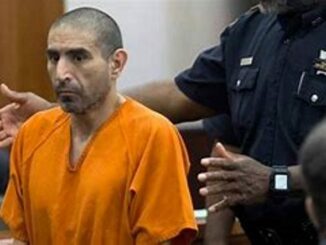
    HOUSTON (TIP): Robert Solis, the man convicted of murdering Sandeep Dhaliwal, the first turbaned Indian American Sikh police officer in the US state of Texas while making a traffic stop in 2019, has been sentenced to death, according to a police official.

    The verdict was handed down by the jury, a panel made up of citizens. Solis showed no emotion as the sentence was read on Wednesday. Jurors deliberated for just 35 minutes before recommending the death penalty in the punishment phase of the trial. They deliberated for 25 minutes in the guilt phase.

    “Verdict is in: Jurors sentence Robert Solis to death. We are extremely grateful that justice has been served,” Harris County Sheriff Ed Gonzalez tweeted.

    Solis, 50, was convicted by the jury of the Harris County Criminal Court in Houston of the capital murder of 42-year-old Dhaliwal, a 10-year-veteran of the Harris County Sheriff’s Office.

    Dhaliwal made national headlines when he was allowed to grow a beard and wear a turban on the job. He was gunned down in an ambush-style shooting while conducting a routine mid-day traffic stop in northwest Houston on September 27, 2019.

    Authorities said Dhaliwal was shot multiple times from behind after he had stopped Solis in a residential neighborhood and was walking back to his patrol car.

    “…Basically, just shot him in a very ruthless, cold-blooded way,” said Sheriff Gonzalez in 2019.

    Jurors saw multiple angles of the shooting and heard from 65 prosecution witnesses, who testified about a criminal history that goes back more than 30 years.

    During the trial, Solis testified in his own defense and told jurors he had accidentally shot Dhaliwal.

    But prosecutors argued Solis deliberately shot Dhaliwal because he didn’t want to go back to jail. At the time of the traffic stop, Solis had a warrant for violating parole, CBS News reported.

    During his closing argument, his last chance to address jurors, Solis merely said, “The only thing I have to say is that it’s your decision to make. My life is in your hands,” KTRK-TV Houston reported.

    Solis asked for several delays during the trial. He told the judge he was sick and said he had not been given proper time to prepare.

    His behavior throughout the trial stands in direct contrast to the life and legacy of Dhaliwal, who leaves behind a wife and three children.

    “Anybody I talked to, they say, ‘I wish we had a Dhaliwal at this time. How many people get justice today? How many families?” Dhaliwal’s older sister, Harpreet Rai, was quoted as saying in the report. “We should all aspire to be a Dhaliwal. He left such a legacy. He was a humanitarian and he helped so many beyond his work,” Sheriff Ed Gonzalez said. Just moments after Solis received the death sentence, a teenager gave a victim’s impact statement, speaking directly to Solis. “You’re a nobody, Robert. You’re the least powerful person in this room,” she told the court.

    Dhaliwal worked with United Sikhs, a global humanitarian relief and advocacy nonprofit, to help organize the donation of truckloads of supplies for first responders after Hurricane Harvey. A post office in west Houston has been renamed in his honor and Congresswoman Lizzie Fletcher, who brought the renaming legislation to the US House of Representatives, had said at the dedication ceremony: “I am honored to play a role in commemorating Deputy Dhaliwal’s remarkable life of selfless service.” “He represented the very best of our community: he worked for equality, connection, and community through his life of service to others. I was glad to work with a bipartisan delegation, our community partners, and those in the Sikh community, to pass legislation to rename this building the Deputy Sandeep Singh Dhaliwal Post Office,” Fletcher added. However, this wasn’t the first dedication for Deputy Dhaliwal. A year after his death, a portion of Beltway 8 near Highway 249 was renamed in his honor.