Year: 2022

  • STANDING IN SOLIDARITY: RACIAL HEALING

    By Mabel Pais

    Healing Circle (Photo / Courtesy NJPAC.)

    Throughout the past two years of NJPAC’s Standing in Solidarity virtual conversation series, the participants have examined tough topics, discussed possible solutions and taken action in the communities of influence. What made these conversations so moving, useful, insightful and effective was the public’s participation.

    Now, NJPAC invites you and other Standing in Solidarity participants to join for an in-person Racial Healing Circle.

    What’s a Racial Healing Circle?

    It’s an opportunity for people from diverse backgrounds to reflect and share in the same room. A safe place for real talk. A model for building mutual understanding. A revelation that we have more in common than we think.

    The experience is simple and unintimidating. You’ll have a conversation with a partner, and then with a larger group. You don’t need to bring anything other than your authentic self and an open spirit of participation.

    PROGRAM

    Join the panel as it brings its virtual conversation into a shared physical space.

    WHEN: September 26 @ 7PM

    CHECK IN: Must check-in by 6:30PM

    MODERATOR:SHARON STROYE, Director of the Truth, Racial Healing, and Transformation Center at Rutgers University-Newark

    Event begins promptly at 7PM, no late admission

    WHERE: Chase Room @ NJPAC, 1 Center Street, Newark, NJ 07102

    Limited seating available

    To RSVP, visit njpac.org

    RSVP Required by September 15

    Parking Information: njpac.org/visit/directions-and-parking

  • ROY CHOUDHURY MODERATES BUSINESS MEETING ON CRYPTO

    By Mabel Pais

    Cryptocurrencies, NFTs, blockchain and digital assets of all kinds — they’re all over the news, but how will they really affect banking, investing and consumer-facing businesses large and small in the long term? What advantages can they offer your business or nonprofit? And what is an NFT anyway?

    Join NJPAC’s next Business Partners Roundtable conversation at 8:30 AM Thursday, September 22 in the Chase Room, when a panel of experts offer a primer on digital assets and an insiders’ guide into how they are already shaping the way we do business, as well as what new applications are on the horizon.

    WHAT: BUSINESS PARTNERS ROUNDTABLE

    WHEN: September 22, 2022 at 8:30 AM

    WHO:PANELISTS

    Gavin Michaels, CEO of Bakkt

    Luca Cosentino, Head of Crypto at Cross River

    Foster Wright, President of CoinDesk

    Roy Choudhury, moderator (Photo : Courtesy NJPAC.)

    MODERATOR: Roy Choudhury, Managing Director and Partner at BCG

    To register, visit njpac.tfaforms.net/145?id=a2F8X000008Not1UAC

  • JOIN MUSEUM FOR INDUSTRIAL GIANT EXHIBITION OF 1872

    By Mabel Pais

    Join speakers Guy Sterling and Ezra Shales for a discussion on the Newark Industrial Exhibition of 1872. Halfway through its rise as one of America’s industrial giants, Newark put together an event America had never seen before – a showcase of locally-made products, including some by Thomas Edison and other leading inventors of the day.

    Initially feared as a risky undertaking, the Newark Industrial Exhibition of 1872 was so impressive that it brought the president of the United States to Newark to marvel at its display of goods. Praise for the exhibition spread Newark’s reputation as a major manufacturing center far and wide and ushered in an era of similar events. It also helped convince Newark to get serious about modernizing into a city not only worthy of the acclaim but one that could keep pace in an increasingly world market. Its impact resonates to this day. Learn more at npl.org.

    PROGRAM

    WHEN:  Thursday, September 22 @ 6 PM

    COST:   FREE

    WHERE: Newark Main Public Library,

              5 Washington Street, Newark, NJ 07102.

    RSVP:

    To join virtually, RSVP at njpac-org.zoom.us/webinar/register/WN_gV27ylYGT4ikKq7yLtx4lg

    To join us in-person, at the Newark Public Library, RSVP at njpac.tfaforms.net/145?id=a2F8X000008N07HUAS

    The New Jersey Performing Arts Center (NJPAC)

    Follow NJPAC Online:

    Website:      njpac.org

    Twitter:       @NJPAC

    Instagram:    @NJPAC

    Hashtag:      #NJPAC

    Facebook:     facebook.com/NJPAC

    YouTube:      NJPACtv

    Follow NJPAC’s Standing in Solidarity Series Online:

    Website:      njpac.org/takeastand

    Hashtag:      #NJPACTakeAStand Youtube: Standing in Solidarity playlist

    The Newark Public Library

    To learn more, visit npl.org

    (Mabel Pais writes on Social Issues, The Arts and Entertainment, Health & Wellness, Cuisine and Spirituality.)

  • JCC WELCOMES YOU TO WELLNESS OPEN HOUSE

    By Mabel Pais

    Do you want to check out some FREE health and wellness classes and workshops?

    Then head to the JCC Manhattan’s (MMJCCM) OPEN HOUSE for HEALTH & WELLNESS, a free hybrid event at the Davidson Fishberg Center on Sunday, September 18, 10 am-4 pm at 334 Amsterdam Avenue at 76th Street and on Zoom.

    Exercise class (Photo: Courtesy JCC.) 

    The annual Open House to the public will feature in-person and virtual samplings of JCC Health Club classes and workshops. The JCC will open its doors to current and prospective members to tour the 14-story building, sample fitness and wellness classes, and meet the JCC team. Highlights of the Open House line-up include sample workout classes on yoga, self-defense, Feldenkrais®, Nia Jam, Latin dance fitness, and more; conversations and lecture topics on personal development with Karen Salmansohn, nutrition, career coaching, and more. The Open House will conclude with a book signing event with positive psychology authors Scott Barry Kaufman and Dr. Jordyn Feingold.

    “We are thrilled to welcome our community back to the JCC for this special annual event,” said Melissa Donovan, Chief Operating Officer, Health & Wellness of MMJCCM. “Now more than ever, it’s vital for people to be connected to vibrant, informed, motivating programs and resources while on their wellness journey. During the Open House, we’re excited to share a sampling of the incredible classes and expertise that you can expect from the JCC year-round.” The Fall Fitness + Wellness Open House is free and open to the public. Discounts on JCC Health Club and Pool memberships will be offered for prospective members during the event. Pre-registration for the Open House is strongly recommended, with walk-ins welcome. For more information and to register, visit mmjccm.org/open house.

    THE MARLENE MEYERSON JCC MANHATTAN (MMJCCM)

    Since its inception, the JCC has been committed to serving the community by offering programs, classes, and events that extend beyond neighborhood boundaries, reaching people at all stages of their lives. Learn more at mmjccm.org

  • US skeptical of China resolving LAC row

    US skeptical of China resolving LAC row

    Since PLA’s multiple intrusions in May 2020, India chose diplomacy to achieve restoration of status quo ante in eastern Ladakh. Disengagement from all friction points except Depsang and Demchok has succeeded in creating buffer zones 2-10 km wide on the Indian side of the LAC.

    “India’s suspicion of Joe Biden administration’s revival of ties with Pakistan is being attributed to the US maintaining strategic balance between India and Pakistan, especially after the cross-border operations in 2016 and 2019. India is only one of the 14 countries that has walked out of the Indo-Pacific Economic Framework for Prosperity (IPEF) ministerial meeting in the US, which has Washington worried.”

    By Maj Gen Ashok K Mehta (retd)

    At London’s Frontline Club for journalists, American and British writers informed me that the US think tanks were concerned about India’s reliability as a partner to contain China. The worry, not new, was expressed on September 8, when perhaps unexpectedly, China agreed to disengage from another friction point — Patrolling Point (PP) 15 in the Gogra-Hot Springs area. The pullback resulted from the 16th round of Corps Commander-level talks (July 17), almost two months after what had appeared to be an inconclusive meeting at Moldo on the Chinese side of the border. Depsang, where the People’s Liberation Army (PLA) has intruded 18 km, and Demchok, where five patrolling points are blocked, remain unresolved.

    Last week in Delhi, US Assistant Secretary of State Donald Lu, while calming fears on the $450-million F-16 fighter jet fleet sustainment programme, noted that the US was not seeing “any sincere effort by Beijing to resolve the dispute” and expressed skepticism about the disengagement agreement at PP-15. Lu said that the US would stand by India resolutely as it faces “terrible threat from China”.

    India’s suspicion of Joe Biden administration’s revival of ties with Pakistan is being attributed to the US maintaining strategic balance between India and Pakistan, especially after the cross-border operations in 2016 and 2019. India is only one of the 14 countries that has walked out of the Indo-Pacific Economic Framework for Prosperity (IPEF) ministerial meeting in the US, which has Washington worried.

    Meanwhile, former Australian Prime Minister Kevin Rudd, currently President and CEO of Asia Society, while launching his book Avoidable War: The Dangers of a Catastrophic Conflict between the US and Xi Jinping’s China in Mumbai and Delhi, said in response to a question that China would not withdraw from Ladakh and the border dispute would continue. Pessimism about the disengagement process and de-escalation is rife among India’s strategic community.

    Combing through these events and statements (and ones earlier), it is clear that suspicion about mutual commitments by India and the US to their comprehensive strategic partnership have not gone away despite several positive indicators. The US has been extremely generous in granting or considering multiple waivers on Iran, Russia — arms and oil purchases from Moscow — and over Ukraine in order to promulgate its Indo-Pacific policy to counter China’s rise.

    India’s foreign policy’s crown jewel remains strategic autonomy and multi-alignment. By being at odds with China, border dispute et al, India cannot realize its full potential of comprehensive national power and has to rely on the US hard and soft power to hedge China. Since PLA’s multiple intrusions in May 2020, India chose diplomacy to achieve restoration of status quo ante in eastern Ladakh. But disengagement from all friction points except Depsang and Demchok has succeeded in creating buffer zones 2-10 km wide on the Indian side of the LAC and prevented control of areas which it previously patrolled.

    Diplomacy has been handicapped by self-goals: PM Modi’s statement that no Chinese intruded or is on Indian territory; in August 2020, the Ministry of Defense was forced to take down from its website details of intrusions contradicting the PM’s claim; withdrawal from Kailash heights for piecemeal disengagement surrendered a key advantage. Not only is the PLA ensconced on the Indian side of the LAC, it has also fortified battle positions and constructed military bases. A 5G network has come up along the LAC. Besides, five new heliports, a new bridge over Pangong Tso, five air bases with enhanced capacities and a new road G219 (in addition to the existing G619 from Kashgar to Lhasa) developed. Although not provoking China has been a feature of Indian diplomacy, pricks and jabs were par for the course. Conspicuously absent were statements on human rights violations in Xinjiang and Hong Kong. On Taiwan, India was on listening watch till the belated mild rebuke to desist from unilaterally altering status quo. The Dalai Lama spent a month in Ladakh and Modi wished him on his 86th birthday. Unsavory spats over Quad and Chinese spy ship Yuan Wang 5 in Hambantota and glacial pace of disengagement led External Affairs Minister S Jaishankar to reiterate India’s pet peeve about relations with China being in an extremely difficult phase and his rejection of the Chinese pleas about delinking bilateral relations from the border dispute. Complaints about China violating border protocols were bad for Beijing’s image.

    Strategic autonomy was in full view with joint high-altitude training with US personnel in ‘Yudh Abhyas’ at Alaska in 2021 and this year close to the China border in Uttarakhand. Last month, Indian and Chinese troops participated in the Shanghai Cooperation Organisation (SCO) exercises along with Pakistani soldiers. US Chief of Naval Operations Adm Mike Gilday, after a visit to India last month, affirmed at the Heritage Foundation that the US considers India a strategic partner to counter China.

    Jaishankar, responding to a question at Bangkok University on August 15, said, “The Asian century will happen when China and India come together, though at present relations are in a very difficult phase. It is in their interest to join hands.” Journalists at the Frontline Club were taken aback by India’s trapeze act. Jaishankar has maintained that India will always act in its self-interest.

    Xi congratulated President Droupadi Murmu on her appointment, the first direct message by him since offer of Covid-19 assistance during the second wave in April 2021. Xi added that he attached great importance to China-India relations. His third term as President is virtually assured even before the once in five-year 20th Party Congress in October. Is Xi ready to make further concessions on the border, if disengagement from PP-15 days before the Samarkand SCO summit is any indication? Later this week, Modi and Xi, who met 18 times between 2014 and 2019, but have not spoken since the LAC row in April 2020, would be seeing each other several times at the summit. While India’s bottom line of status quo ante in eastern Ladakh is not realizable, Xi — during a pull-aside — can extend his hand, paving the way towards the making of the Asian century, eliciting a chuckle from the US.

    (The author is a military commentator)

  • Freebies strain Punjab’s financial resources

    Freebies strain Punjab’s financial resources

    “The existing freebies and newly committed “guarantees”, including Rs 1,000 per month to every adult woman, by the Aam Aadmi Party (AAP) in Punjab will eat up Rs 28,962 crore in 2022-23. It is over and above the facility of free bus travel to all women given by the outgoing Congress government. The debt service will consume another Rs 36,009 crore, while Rs 46,317 crore will go to salaries, pensions and retirement benefits. The total comes out to be Rs 1,11,288 crore (116.68 per cent of the total budgeted revenue of Rs 95,378 crore), resulting into revenue deficit to the tune of Rs 16,000 crore. It necessitates efficient and full mobilization of latent financial resources and rationalization of freebies. But that would require strong and unequivocal political will and rational decisions.”

    Illogical freebies would neither be good economics nor good politics in the long term as they are bound to have an adverse impact on economic growth. Instead of spending the scarce and additionally mobilized financial resources on irrational freebies, the government must spend on education, skills, health and employment generation so that people get quality education and health services at an affordable cost.

    By Ranjit Singh Ghuman

    Given the acute financial crisis, debt trap, decelerating growth and huge unemployment in Punjab, freebies should be given only to the really deserving sections of the people. Illogical and untargeted freebies would neither be good economics nor good politics in the long term as they are bound to have an adverse impact on the economic growth, employment and development. However, investment in education, skill development and health is sine qua non for development of human capital and overall socio-economic development. Thus, instead of spending the scarce and additionally mobilized financial resources on irrational and indiscriminate freebies, the government must spend on education, skills, health and employment generation so that the people get quality education and health services at an affordable cost.

    The advocates of freebies, however, argue that if the government can write off outstanding debt of Rs 9.91 lakh crore of 10,306 willful defaulters during 2017-18 and 2021-22 (and Rs 1.84 lakh crore in 2019-20 and 2020-21 because of lowering the tax rate) in the corporate sector then what is wrong in giving freebies to other sections of the population. Critics of freebies, however, argue that there are huge (long-term) hidden costs of irrational freebies in terms of foregone opportunities. Experts, however, are broadly of the view that taking care of poor and marginalized sections of the population is the duty of the welfare state, yet, while giving freebies, fiscal capability of the government is a key factor. Not going into the rationality and irrationality of freebies, the subject needs an informed public discourse as it is turning into relentless competitive political populism with every succeeding election. Under such a scenario, people often are not in a position to take informed decisions about their interests. The White Paper issued by the Punjab Government in June 2022 admits that Punjab is passing through a serious financial crisis being reflected in ever-increasing debt, high revenue and fiscal deficit and increasing debt servicing. According to the RBI, the debt-Gross State Domestic Product (GSDP) ratio and revenue deficit in Punjab are the highest, while the fiscal deficit is the second highest among the 17 general category states. The outstanding debt of the government increased from Rs 83,099 crore (31.17 per cent of the GSDP) in 2011-12 to Rs 2.58 lakh crore (42.54 per cent of the GSDP; highest among all states, according to the RBI) in 2020-21 and to around Rs 2.82 lakh crore in 2021-22. This, along with the off-budget debt burden on public sector undertakings, adds up to 53 per cent of the state’s GSDP.

    It is approximately 4.4 times of the current account revenue of the Punjab Government in 2021-21. The per capita debt in Punjab is the highest among all 17 general category states of India. The budgetary provision of Rs 35,000 crore loans in financial year 2022-23 will further increase the debt burden. The amount of debt-servicing increased from Rs 8,955 crore in 2011-12 to Rs 32,080 crore in 2020-21. Debt-servicing consumed Rs 32,080 crore of the gross borrowing of Rs 32,258 crore in 2020-21; in 2021-22 it was Rs 36,512 crore.

    Clearly, the Punjab Government is in debt trap as the debt is being serviced by taking additional loans. The grossly under-mobilization of latent financial resources, coupled with irrational competitive political populism aimed at capturing votes, inter alia, have been mainly responsible for such a scenario. The stopping of GST compensation from July 1, 2022, will require an additional resource mobilization to the tune of Rs 12,000 to Rs 15,000 crore or will necessitate additional loans in 2022-23.

    The decelerating growth rate for the past 30 years is also a cause for worry. In terms of the GSDP growth rate, Punjab ranked between 13th and 17th during 1992- 2012 among the 17 general category states and between 18th and 24th among all 28 states during 2013-14 and 2017-18. In terms of the net per capita income, Punjab started lagging behind Maharashtra in 1995-96 and during 2011-12 and 2018-2019, Punjab oscillated between 11th and 12th position and slipped down to 19th rank in 2019-20.

    In terms of capital expenditure and per-capita capital outlay, Punjab ranks 11th and 17th, among the 17 general category states, respectively. During 2011-12 and 2020-21, capital expenditure remained only around 0.7 per cent of Punjab’s GSDP. Compared to the all-India average, Punjab’s investment-GSDP ratio (pre-requisite for economic growth) has been much below the national average since 1996-97. All this led to deceleration in the growth rate and increase in unemployment.

    The existing freebies and newly committed “guarantees”, including Rs 1,000 per month to every adult woman, by the Aam Aadmi Party (AAP) in Punjab will eat up Rs 28,962 crore in 2022-23. It is over and above the facility of free bus travel to all women given by the outgoing Congress government. The debt service will consume another Rs 36,009 crore, while Rs 46,317 crore will go to salaries, pensions and retirement benefits. The total comes out to be Rs 1,11,288 crore (116.68 per cent of the total budgeted revenue of Rs 95,378 crore), resulting into revenue deficit to the tune of Rs 16,000 crore. It necessitates efficient and full mobilization of latent financial resources and rationalization of freebies. But that would require strong and unequivocal political will and rational decisions.

    Punjab’s rank in terms of per capita own tax revenue is eighth among the 17 general category states. The share of non-tax revenue in the state’s total revenue declined from 28 per cent in 2008-09 to 9 to 12 per cent in 2020-21. Punjab’s own tax-GSDP ratio declined from 7.49 per cent in 2012-13 to 4.95 per cent (a decline of 2.54 percentage points) in 2020-21. This alone has led to an under-mobilization of latent financial resources to the tune of Rs 16,012 crore in 2020-21. My own estimates (now included in the sixth Punjab Finance Commission’s final report submitted to the government in March 2022) show that there is a scope for mobilizing additional financial resources to the tune of Rs 28,500 crore annually without imposing any additional tax. The break-up is as follows: Rs 5,000-crore excise duty, Rs 9,000-crore GST, Rs 2,000-crore stamp and registration, Rs 3,000-crore mining, Rs 3,000-crore property tax, Rs 1,500-crore professional tax, Rs 1,500-crore power theft, Rs 2,500-crore transport and cable and Rs 1,000-crore pilferage in social welfare schemes. Another Rs 10,000 crore can be added to it by moderately rationalizing the tax regime, freebies/subsidies and discretionary spending. The government and the people of Punjab have no option but to mobilize additional finances, use them judiciously and rationalize the freebies.

    (The author is Professor of Eminence, Punjab School of Economics, Guru Nanak Dev University) 

  • Bilkis and Joseph: Test cases for justice and living metaphors for what’s wrong with our society

    Bilkis and Joseph: Test cases for justice and living metaphors for what’s wrong with our society

    “Hopefully, the Supreme Court will soon review the remission granted by the Gujarat Government and offer a legal cure to this terrible injury to our body politic. Along with the Supreme Court, the BJP and the Sangh Parivar should adopt a civilizational view and analyze this act of injustice towards a woman and its impact on the practice and principles of law in India. The BJP will not remain in power for all times to come in all states or the Centre, but if the Supreme Court does not overturn this decision, it will become the law of the land: any executive could then let off any convicted criminal depending on his caste, religion or political affiliation. This will make a mockery of the Indian judiciary, within our country and all across the world. The victim always need not be a Muslim.”

    By Rajesh Ramachandran

    Bilkis Bano and TJ Joseph are two living metaphors that ought to become call signs or entry codes of public morality for politicians, activists, academics or journalists. The celebration of 75 years of India’s Independence was soiled by the release of 11 convicts who had gang-raped Bilkis Bano and killed her 14 relatives, including her three-year-old child. These rapists and murderers were feted outside the jail of their choice in Godhra and later at their village in Randhikpur, with relatives distributing sweets, bursting crackers and singing and dancing to the tunes of a disc jockey. The talisman for true journalism in India will have their names in it. We need to ask: Are we doing right by them?

    A momentous occasion was marred and a day of deep significance was defiled for a bunch of criminals who never deserved the remission in the first place. The Godhra train tragedy — criminal arson or terrorist attack — and the killing of 60 pilgrims cannot justify the release and public adulation of people who committed heinous crimes. And this one episode has made Bilkis a metaphor for all that is wrong with our sense of justice as a society.

    Worse, this episode sends a chilling message down the spines of all Indians: criminals will be pardoned for their worst transgressions if they are done in the name of a religion or a religious group. The next time around, won’t the people of Randhikpur repeat the gang-rape and murder, knowing well that they would be let off on an Independence Day and feted by their neighbors? Why just Randhikpur, will not this remission reassure criminals across the country? All that they need to do is to double-check their political and religious credentials — do they belong to the right religion and the right party? And the religion can get replaced by caste in certain cases. This was the BJP’s biggest grouse against caste-based parties in the Hindi heartland, yet it seems to have successfully replicated the model by replacing caste identity with religious identity, offering the same impunity.

    Hopefully, the Supreme Court will soon review the remission granted by the Gujarat Government and offer a legal cure to this terrible injury to our body politic. Along with the Supreme Court, the BJP and the Sangh Parivar should adopt a civilizational view and analyze this act of injustice towards a woman and its impact on the practice and principles of law in India. The BJP will not remain in power for all times to come in all states or the Centre, but if the Supreme Court does not overturn this decision, it will become the law of the land: any executive could then let off any convicted criminal depending on his caste, religion or political affiliation. This will make a mockery of the Indian judiciary, within our country and all across the world. The victim always need not be a Muslim.

    And that brings us to the case of Prof TJ Joseph of Newman College in a small town of Kerala. About 12 years ago, he was brutally attacked and his hand was chopped off in the presence of his family while he was returning from church. The intention of the attackers, in all likelihood, was to sever his hands and feet. This teacher of Malayalam was attacked for a reference to a character named Mohammed in a question paper that he set for a semester exam. Mohammed is the name of the Prophet, but it is also the most common Muslim name, and in the context of a passage referring to a Muslim character, the use of this name could only be considered a casual act of classroom indulgence. But the Islamist lawgivers of Kerala decided that Joseph had committed blasphemy and deserved severe punishment. So, they sent out their law-enforcement squad to chop off his limbs. After his right hand was severed and he was undergoing treatment, the Christian management of his college dismissed Joseph from service for setting a paper that ‘hurt religious sentiments’. Of course, the then progressive and secular Marxist government left it to the victim to appeal to the university tribunal, not taking any action against the college management. And Joseph was not spared homilies on good conduct by the minister concerned.

    Joseph suffered in silence the loss of his right hand and his livelihood, but his wife, the primary caregiver, was devastated and decided to end her life of misery and penury. The Popular Front of India (PFI), which keeps hitting the headlines for its murderous feuds with the Sangh Parivar — recently attracting attention for threatening Hindus and Christians in a public rally — is the fountainhead of Islamist radicalism that threatens free speech in Kerala. All the accused in Joseph’s case were identified as members of the PFI, but the prime accused is still absconding and the second accused, who was convicted, has already secured his release.

    Finally, this year, guilt-ridden Marxists have offered the Kerala Sahitya Akademi award for Joseph’s autobiography, which was recently published in English as A Thousand Cuts. But neither the state nor the Centre has chosen to ban PFI or its activists. Nor has the liberal intelligentsia called out the PFI Islamists who roam around in the garb of journalists and activists. Interestingly, a journalist who was arrested by the Uttar Pradesh Police while travelling to Hathras to report on the brutal rape and murder of a Dalit girl was earlier an employee of the now-defunct mouthpiece of PFI. His arrest and the legal fight for his release have become a cause celebre for activists, lawyers and journalist unions.

    The mouthpiece of PFI cannot be treated differently from those of some gauraksha dals that keep sprouting regularly to lynch cattle traders or murder innocents like Mohammed Akhlaq of Noida. Of course, a journalist, as a pure professional, can offer his services to a radical religious newspaper and all employees need not share the political or communal ideology of the newspaper owner. But in this case, nobody has even tried to examine whether this celebrated PFI-linked journalist is a radical Islamist propagating hand-chopping ideas. The talisman for true journalism in India from now on will have two names in it: Bilkis and Joseph. And the question we always need to ask ourselves is: Are we doing right by them?

    (The author is Editor-in-Chief, The Tribune)

  • India, China expressing concern about Ukraine war reflective of global concerns, says Blinken

    India, China expressing concern about Ukraine war reflective of global concerns, says Blinken

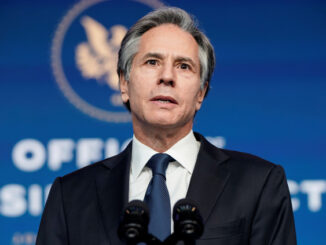
    WASHINGTON,D.C. (TIP): India and Chinese leaders expressing their concerns directly with the Russian leader about the war in Ukraine is reflective of global concerns about the effects of its aggression, US Secretary of State Tony Blinken said Friday. “What you’re hearing from China, from India, is reflective of concerns around the world about the effects of Russia’s aggression on Ukraine – not just on the people of Ukraine, devastating as that’s been, but on countries and people across the entire planet,” Blinken told reporters at a joint media availability with the Jordanian Foreign Minister Ayman Safadi. “It’s an aggression not just against Ukraine and its people, it’s an aggression against the very principles of international relations that help keep peace and security,” he said. He was responding to a question on leaders of China and India expressing their concern about the war in Ukraine directly to Vladimir Putin.

    “Do you see this as a significant shift for Russia on the international stage?” he was asked.

    Blinken argued that the United Nations Charter should be front and center. “The number one violator of the charter right now is Russia. So, there are real concerns that, I think, are being heard from countries around the world about that, and, of course, all of the impacts that this is having, including, for example, on food insecurity,” he said.

    “We’ve spent a lot of time and a lot of focus in recent months in trying to address the challenges to food security that have been exacerbated dramatically by Russia’s aggression. We already had Covid, we already had climate change that were having profound effects on food insecurity. Add to that conflict, we now have well over 200 million people who are severely food insecure,” Blinken said. “This is something that leaders in countries around the world are feeling because their people are feeling it. And so, I think what you’re seeing is just a manifestation of the fact that this aggression has been an aggression against the interests of people across the planet, and I think it increases the pressure on Russia to end the aggression,” Blinken said.

  • White supremacy, hate-fueled violence has no place in America: Biden

    White supremacy, hate-fueled violence has no place in America: Biden

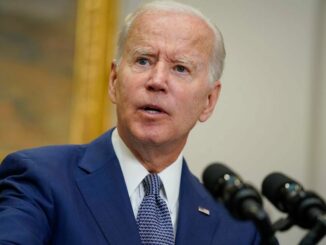
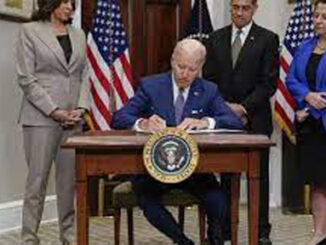
    WASHINGTON, D.C (TIP): US President Joe Biden has asserted that white supremacy, all forms of hate-fueled by violence have no place in America, amidst a spurt in hate-related incidents across the country, including those against the Hindus, Sikhs and Muslims. “Regardless of our backgrounds, our beliefs, we have to stand united against hate-fueled violence, which you know than anyone, that forever an attack on one group of us is literally an attack on all of us,” Biden said in his address to the “United We Stand” summit organized by the White House on Thursday. Addressing the participants who had gathered from across the country in the East Room of the White House, Biden said he decided to run for president after such incidents. “I had no intention of running. I give you my word. I was teaching and I thought that was the best thing for me to do, as Chris knows, my colleague from Delaware. But Charlottesville changed everything because I believed our story is to unite as people of one nation and one America,” he said. “When those folks came out of those — that field carrying torches, the United States of America, carrying torches, chanting the same anti-Semitic bile that was chanted in Germany in the early ’30s, accompanied by white supremacists holding Nazi flags, and I thought to myself, my God, this is the United States of America, said how could that happen?” said the president. In 2020, hate crimes in the US were the highest in more than a decade, and the Justice Department has pledged to increase efforts to counter it.

    The idea of America, he observed, guarantees everyone, everyone is treated with dignity and equality, an idea that ensures an inclusive, multiracial democracy, an idea that we give no safe harbor, none, to hate.

    “While we’ve never, as I said, fully lived up to the idea, we’ve never walked away from it before. Look, on the — Kamala (Harris) and I travelled to Atlanta to grieve with Asian-American residents, the violence against the community grew during the pandemic, too many people fearful just walking the streets of America,” he said.

    Noting that the summit is being joined by presidents of historic black colleges and universities, who should be able to focus on providing the best experience possible for their students, he said instead, they’re having to worry about more bomb threats against their institutions. Too often Native Americans, disabled Americans face harassment, discrimination, and violence and victimization.

    “Unfortunately, such hate-fueled violence and threats are not new to America. There is a through the line of hate, from massacres of indigenous people to the original sin of slavery, the terror of the Klan, anti-immigration violence against the Irish, Italians, Chinese, Mexicans, so many of those laced through our history,” he said.

    “There’s a through the line of violence against religious groups, anti-Semitic, anti-Catholic, anti-Mormon, anti-Muslim, anti-Hindu, anti-Sikh. Look, folks, that line of hate never fully goes away. It only hides,” Biden said.

    Hate, he observed, can be defeated. “It only hides. When you give it any oxygen, it comes out from under the rocks. And the last few years it’s been given much too much oxygen in our politics, in our media, and on the Internet, too much hate all for power and profit,” he said.

    “You need to say clearly and forcefully white supremacy, all forms of hate-fueled by violence, have no place in America. A barrier called out is complicity, my dad would say. If your silence is complicity, we can’t remain silent,” he said. Biden said his administration will use every federal resource available to help communities counter hate-fueled violence, build resilience, and foster greater national unity.

    For example, training on identifying, reporting and combating hate-fueled violence from local law enforcement agencies, workplaces and houses of worship. Partnerships with schools that help them address bullying and harassment. “And I’m calling for a new era of national service to organizations like AmeriCorps, to foster stronger communities and bridge divides in our society,” he said. Biden called on Congress to do its part and raise the living allowance for national service positions to include USD15 an hour. This would make national service an accessible pathway to success for more Americans of all backgrounds. “Pass my budget and increase funding to protect nonprofits and houses of worship from hate-fueled violence,” he said.

    “Hold social media platforms accountable for spreading hate and fueling violence. I’m calling on congress to get rid of special immunity for social media companies and impose much stronger transparency for crime on all of them,” said the president. Recently, Indian-American Congresswoman Pramila Jayapal said that she has been receiving abusive and hate messages over the phone from a male caller who even asked her to go back to India. Jayapal, 55, is the first-ever Indian-American Congresswoman who represents Seattle in the US House of Representatives.

    Typically, political figures don’t show their vulnerability. I chose to do so here because we cannot accept violence as our new norm. We also cannot accept the racism and sexism that underlies and propels so much of this violence, Jayapal, from the Democratic Party, said in a tweet. There have been hate-related incidents against the Indian-American community also in the US. On September 1, An Indian-American man has been racially abused by a compatriot in California who hurled racist slurs that he is a “dirty Hindu” and a “disgusting dog”, days after another hate crime was reported against four women from the community in Texas.

    Krishnan Jayaraman was verbally attacked by 37-year-old Singh Tejinder in the Taco Bell at Grimmer Boulevard in Fremont, California on August 21, NBC News reported. On August 26, four Indian-American women were racially abused and smacked by a Mexican-American woman in Texas who hurled racist slurs at them that they are “ruining” America and should “go back to India”. The incident took place in a parking lot in Dallas, Texas. The woman, identified as Esmeralda Upton, has been arrested.

  • At UNGA, US to focus on respect for core principles of international order: White House

    At UNGA, US to focus on respect for core principles of international order: White House

    WASHINGTON,D.C. (TIP): At the United Nations General Assembly session this year in New York, the United States would focus on respect for the core principles of the international order, which it says is needed now more than ever in view of the Russian invasion of Ukraine and the Chinese aggression against its neighbors, senior administration officials said. “As President Biden has made clear since taking office, the United States is committed to renewing our engagement with all regions of the world as we partner on tackling the most pressing challenges affecting us. The core message that I think you’re going to hear from leaders across the US government next week is that respect for the core principles of the international order is needed now more than ever,” Coordinator for Strategic Communications at the National Security Council in the White House John Kirby told reporters here. The UN General Assembly begins next Monday. US President Joe Biden will attend the UN general Assembly on Wednesday, September 21, he said.

    On September 20, Secretary of State Tony Blinken will co-chair the African Union, European Union, and Spain the Global Food Security Summit, which also will be co-hosted with Indonesia, Germany, Nigeria, and Colombia.

    The goal of the summit, he said, is to reaffirm the commitment of world leaders to act with urgency and at scale to respond to the pressing global food crisis and avert famine for hundreds of millions of people around the world.

    On September 21, Biden will host the seventh replenishment pledging session for the Global Fund to Fight AIDS, Tuberculosis, and Malaria. The fund enables programs that prevent, detect, and treat the deadliest infectious disease killers today, and will help make sure that they have the resources they need to build strong, resilient health systems within their communities, he said.

    “The president will also take this opportunity to encourage all nations to do more to help meet the proposed target of USD18 billion to be raised by 2025. And then lastly, on Wednesday evening, the president and first lady will host the heads of delegation and spouses at a diplomatic reception,” Kirby said.

  • Ahead of Nov mid-term elections, Trump coins India-US friendship slogan in Hindi

    Ahead of Nov mid-term elections, Trump coins India-US friendship slogan in Hindi

    WASHINGTON, D.C. (TIP): Former US president Donald Trump has coined an India-US friendship slogan in Hindi as part of his efforts to woo the influential Indian-American community before the mid-term elections in November.

    “Bharat and America sabse achhe dost” Trump is seen rehearsing and saying in a video released by the Republican Hindu Coalition (RHC). The slogan in English means “India and the United States are best friends”.

    In the short 30-second video, Trump is seen seated with his supporter Chicago-based businessman Shalabh Kumar from the Republican Hindu Coalition. The new slogan is inspired by the phenomenal success of the 2016 slogan of Trump in Hindi “Abki Baar Trump Sarkar” which had caught the imagination of the Indian-Americans then and had played a key part in his victories in some of the key swing states.

    Kumar, who has been instrumental in both Trump’s slogans “Abki Baar Trump Sarkar” and “Bharat and America sabse achhe dost”, told PTI in an interview this week that he and the RHC plan to run the former president’s latest slogan in the ethnic Indian media to gain Indian-American support and vote for Republicans in the November 8 mid-term elections. Political observers and the latest polls indicate that Republicans are most likely to regain the majority in the House of Representatives. “The end goal is to heavily support five (Republican) candidates for Senate” where the margin of victory is going to be “less than 50,000 votes. Some might be even 10,000 votes or 5,000 votes,” Kumar said. These Senate races are in the states of Pennsylvania, Ohio, Wisconsin, Arizona and Georgia, he said, adding that the small Hindu community in these states can make that difference. “The Hindu vote will make the difference. That’s the biggest block of independent voters,” Kumar said in response to a question.

    “We are going to have a (national) campaign (with focus on these states) which is going to be close to what the 2016 campaign was,” he said.

    Kumar and the RHC were an important part of Trump’s 2016 presidential campaign. However, the two fell apart in the 2020 presidential elections. Kumar says early this year he met Trump at his Mar-a-Lago residence in Florida on March 21. There have been a few meetings after that as well. Indian-Americans comprise slightly more than 1 per cent of the total US population and less than 1 per cent of all registered voters.

  • Farmingdale State College Receives $300,000 Grant from Senator John Brooks to Reinforce its Security Infrastructure

    Farmingdale State College Receives $300,000 Grant from Senator John Brooks to Reinforce its Security Infrastructure

    FARMINGDALE, NY  (TIP):  NY) Senator John E. Brooks (SD-8) presented a funding award of $300,000 to the State University of New York at Farmingdale – Farmingdale State College (SUNY Farmingdale) – to support an infrastructure project currently underway to address campus security issues and to improve communication and emergency preparedness training to ensure the safety and security of its faculty, staff, and students.

    In response to a spate of national gun violence tragedies – and in the event that such an attack were to occur on its grounds – Farmingdale State College (FSC) administration conducted town-hall forums, shelter-in-place training exercises, and tabletop scenarios, over the course of 18 months, to assess campus emergency preparedness. FSC leadership prioritized soliciting feedback regarding opportunities for improvement or any areas of potential risk.

    As a result of feedback provided, FSC is undertaking a comprehensive initiative to evaluate security in offices, classrooms, and laboratories in all of its campus buildings – with the proposed project including risk assessment, gap analysis of existing infrastructure, purchase and installation of locking mechanisms with improved functionality, and acquisition of hard-wired key-card access assemblies that will not only improve access control but will also provide key information in the event of a crime or other incident on campus.

    A strong advocate for gun violence reduction and prevention, Senator Brooks understood and shared the sense of urgency shown by FSC leaders in addressing these infrastructure concerns remarking, “These improvements will be vital in the ongoing effort to ensure the safety and security of faculty, staff, and students at Farmingdale State College. As we have unfortunately seen time and time again, there is a horrible gun violence epidemic sweeping our nation. Sadly, as we just recently saw in Uvalde, many of these tragedies could have been prevented if the appropriate steps had been taken to allow our public institutions to upgrade their security features to provide a safe and secure environment for all. After hearing about the steps that FSC leadership was undertaking to ensure that safety of its students and faculty, I was determined to do all I could to help, so it was an absolute honor to return to my alma mater and present this funding grant to FSC President Dr. John S. Nader.”

    The proposed project, coupled with continued communication and emergency preparedness training, will address interior security challenges, including purchasing new hardware for doorways unable to lock from the inside as well as replacing any wireless key-card access systems with hard-wired mechanisms.

    Upon receiving the funding grant on behalf of FSC, Nader reflected, “Thanks to Senator John Brooks’ efforts, we have made great strides in making one of America’s safest campuses even more safe. Senator Brooks has been a tireless advocate for the College and for college students. As always, we appreciate his work.”

  • Senator Brooks’ Funding Grant to Provide 28,000 Meals to Long Island Homeless Community

    Senator Brooks’ Funding Grant to Provide 28,000 Meals to Long Island Homeless Community

    HAPPAUGE, NY (TIP): Senator John E. Brooks (SD-8) was proud to present a funding grant of $25,000 to Long Island Cares – The Harry Chapin Food Bank to help support their Hope for the Homeless program. Since its creation in 1980 by the late Harry Chapin, Long Island Cares had been on a mission to feed Long Island’s community and to stamp out the root causes of hunger. Their Hope for the Homeless program currently provides mobile outreach, including emergency food, supplies, and linkages to other resources, to approximately 800 homeless individuals – many of them veterans – on a monthly basis. In August 2022 alone, the Hope for the Homeless program distributed nearly 1,000 meals throughout Nassau and Suffolk. When able, the organization also assists community members with securing housing or by providing housing referrals.

    Having been involved with Long Island Cares since they were first established, Senator Brooks stated, “We are exceptionally fortunate that we have an agency like Long Island Cares that is able to reach those most in need, and that is so in tune with the needs of the most vulnerable members of our community, including our pets. I have seen the work they do — how many people they are actually able to help — and I have been to many of their facilities and have worked in their warehouse to get items ready. I know the needs on Long Island are very high, so I just think it is a wonderful organization. I have seen firsthand the good work they do here, so I am very proud that I was able to secure this funding grant for them – anything I can do to help, I will do.”

    Because of the funding grant that Senator Brooks was able to secure, Long Island Cares will be able to provide 33,750 pounds of food, or 28,000 meals, to be distributed throughout the Long Island Community. Founded in 2011, Hope for the Homeless provides ready-to-eat food and personal care items to the street homeless on a weekly basis. For further information, please visit https://www.licares.org/.

  • New York State Economy Added 27,600 Private Sector Jobs in August 2022

    New York State Economy Added 27,600 Private Sector Jobs in August 2022

    NEW YORK (TIP): The Number of Private Sector Jobs in New York State Grew by 0.3% in August, Rising Faster Than the Nation. According to preliminary seasonally adjusted figures released by the New York State Department of Labor, on September 15, the number of private sector jobs in New York State increased over the month by 27,600, or 0.3%, to 8,054,900 in August 2022. The number of private sector jobs in the U.S. increased by 0.2% in August 2022.

        New York State’s private sector jobs (not seasonally adjusted) increased by 411,800, or 5.4%, over the year in August 2022, which exceeded the 4.4% increase in the number of private sector jobs in the U.S.

        New York State’s seasonally adjusted unemployment rate increased from 4.3% in July to 4.7% in August 2022. From August 2021 to August 2022, the unemployment rate (not seasonally adjusted) fell from 6.7% to 4.9%.

        From July to August 2022, New York State’s labor force (seasonally adjusted) increased by 32,500. At the same time, the labor force participation rate went up from 60.3% in July 2022 to 60.5% in August 2022, its highest rate since March 2020.The number of private sector jobs in New York State is based on a payroll survey of New York businesses conducted by the U.S. Department of Labor’s Bureau of Labor Statistics (BLS). Monthly payroll employment estimates are preliminary and subject to revision as more complete data become available the following month. The BLS calculates New York State’s unemployment rate based partly upon the results of the monthly Current Population Survey (CPS) of approximately 3,100 households in the State.

    Note: Seasonally adjusted data are used to provide the most valid month-to-month comparison. Non-seasonally adjusted data are valuable in year-to-year comparisons of the same month – for example, August 2021 versus August 2022.

    Read full story at www.theindianpanorama.news

    Statewide Industry Employment

    August 2022 – Seasonally Adjusted

    On a net basis, the total number of nonfarm jobs in the state increased by 25,600 over the month, while private sector jobs rose by 27,600, in August 2022. At the same time, the total number of nonfarm jobs in the nation increased by 315,000, while private sector jobs increased by 308,000.

    NYS Job Growth Exceeded the Nation’s

    Over-the-Month % Change in Total Nonfarm & Private Sector Jobs, July – August 2022

    NYS Job Growth Exceeded Nation’s

    Total Nonfarm and Private Sector Jobs Increased in August 2022

    Total Nonfarm and Private Sector Jobs (in 1000s), August 1990 – August 2022

    Total Nonfarm and Private Sector Jobs Increased

    Statewide Unemployment

    August 2022 – Seasonally Adjusted

    In August 2022, the statewide unemployment rate increased from 4.3% to 4.7%.

    New York City’s unemployment rate increased from 6.0% to 6.6%. Outside of New York City, the unemployment rate increased from 3.1% to 3.2%. The number of unemployed New Yorkers increased over the month by 33,600, from 413,400 in July to 447,000 in August 2022.

    NYS Unemployment increased in August 2022

    Labor Force Statistics,  August 2021, July – August 2022

    NYS Unemployment Rate Increased

    The Labor Force and Number of Unemployed Increased in August

    Total Labor Force & Number of Unemployed, August 2010 – August 2022

    The Labor Force and Number of Unemployed Increased

    NYS and US Unemployment Rate Increased

    Unemployment Rate, NYS & US, August 2010 – August 2022

    NYS and US Unemployment Rates

    Unemployment Rate Increased in NYC and Balance of State

    Unemployment Rate, NYC & BOS, August 2010 – August 2022

    Unemployment Increased in NYC and Balance of State

    Substate and Industry Employment

    August 2022 – Not Seasonally Adjusted

    New York State Exceeded Nation in Job Growth

    Over-the-Year Change in Total Nonfarm & Private Sector Jobs, August 2021 – August 2022

    New York State Exceeded Nation in Job Growth

    Note: The sum of sub-state area job estimates will usually differ from the New York State total. This is because the State total is calculated separately from the sub-state areas and is estimated based on an independent sample.

    The Number of Leisure & Hospitality Jobs Increased by 11.7% Over the Year

    Over-the-Year Change in Jobs by Major Industry Sector, August 2021 – August 2022

    The Number of Leisure & Hospitality Jobs Increased by

    *Educational and health services are in the private sector. Government includes public education and public health services. Note: The responsibility for the production of monthly estimates of state and metro area nonfarm employment by industry moved from the NYS Department of Labor’s Division of Research and Statistics to the U.S. Bureau of Labor Statistics (BLS), starting with the March 2011 estimates. More detailed information on the change is available on the BLS web site.

    Many economic data series have a seasonal pattern, which means they tend to occur at the same time each year (e.g., retail jobs usually increase in December). Seasonal adjustment is the process of removing seasonal effects from a data series. This is done to simplify the data so that they may be more easily interpreted and help to reveal true underlying trends. Seasonal adjustment permits comparisons of data from one month to data from any other month.

    In New York State, payroll jobs data by industry come from a monthly survey of 18,000 business establishments conducted by the U.S. Bureau of Labor Statistics. Data are preliminary and subject to revision. Jobs data by industry do not include agricultural workers, the self-employed, unpaid family workers or domestic workers in private households. Labor force statistics, including the unemployment rate, for New York and every other state are based on statistical regression models specified by the U. S. Bureau of Labor Statistics. The state’s unemployment rate is based partly upon the results of the Current Population Survey, which contacts approximately 3,100 households in New York each month.

    Table 1. Number of Nonfarm Jobs

    Revised Note

    Table 2. Number of Nonfarm Jobs by IndustryCap

    The number of private sector jobs in New York State increased by

    Private sector jobs increased by

    Professional and Business Services gained the most jobs over the year

    New York State Labor Force Statistics

     Jobs and Unemployment Fact Sheet

    This fact sheet conveys important technical information that will contribute to a better understanding of labor force data (“household survey”), including resident employment/unemployment rates, and jobs by industry data (“business survey”), which are presented in the New York State Department of Labor’s monthly press release.

    State Unemployment Rates Based on Regression Model

    Beginning with data for January 1996, unemployment rates for New York State and all other states (as well as New York City and the City of Los Angeles) have been estimated using time-series regression statistical models developed by the U.S. Bureau of Labor Statistics (BLS).

    Advantage of Regression Model

    Use of a time-series regression model reduces the month-to-month variation in unemployment rates and resident employment by reducing variation caused by sampling errors and other components of statistical noise (irregularities).

    Benchmarking of Estimates

    Once each year, labor force estimates, such as civilian labor force and the unemployment rate, are revised to reflect updated input data including new Census Bureau populations controls, newly revised establishment jobs data and new state-level annual average data from the Current Population Survey (CPS). As part of this procedure, all state figures are reviewed, revised as necessary and then re-estimated. This process is commonly referred to as “benchmarking.”

     Changes in Methodology

    Labor force estimates are now produced with an improved time-series regression model, which utilizes “real-time” benchmarking. “Real-time” benchmarking reduces end-of-year revisions, which also means that major economic events will be reflected in a more timely manner in state labor force estimates.

    In addition, the new methodology includes an updated way of estimating for sub-state areas (e.g., counties, metro areas) the number of unemployed who are new entrants or re-entrants into the labor force. This change in methodology will result in lower unemployment rates in some areas and increased rates in others.

    Unemployed and UI Beneficiaries

    The estimate of the number of unemployed includes all persons who had no employment during the reference week (the week including the 12th of the month), were available for work, except for temporary illness, and had made specific efforts to find employment sometime during the 4-week period ending with the reference week. Unemployment insurance (UI) beneficiaries include those who apply for and qualify for UI benefits. Consequently, the estimate of the number of unemployed and the number of UI beneficiaries do not necessarily move in tandem.

    Jobs Data

    Jobs data are obtained from a separate joint federal-state survey of business establishments. The survey, called the Current Employment Statistics of Establishments, has a sample size of 18,000 establishments in New York State. It excludes self-employed workers, agricultural workers, unpaid family workers and domestic workers employed by private households. This data represents a count of jobs by place of work. Data for each month is revised the following month as more complete information becomes available. The New York State Department of Labor is an Equal Opportunity Employer/Program. Auxiliary aids and services are available upon request to individuals with disabilities.

    (Press release)

  • Meet the Consul General of India at San Francisco Dr. T.V. Nagendra Prasad

    By Prof. Indrajit S Saluja

    Dr. T.V. Nagendra Prasad, Consul General of India at San Francisco.

    The Consul General of India at San Francisco, Dr.  T.V. Nagendra Prasad joined the Indian Foreign Service in the year 1993. He has served in various positions at Indian Missions abroad, including Tehran, London, Thimphu, Berne and Ashgabat. He was India’s Ambassador to Turkmenistan from July 2014 to January 2018.

    Within  India, he served as Regional Passport Officer, Bengaluru(1999-2001) and as Project Director of the Passport Seva Project, one of the Mission Mode Projects under e-Governance(2008-2011).

    Before taking over as the Consul General of India at San Francisco, Dr. Prasad served at the Ministry of External Affairs as Joint Secretary heading the Gulf Division. Dr. Prasad was born in the district of Warangal, Telangana. He graduated from the Andhra Pradesh Agricultural University and received his Doctorate from the prestigious Indian Agricultural Research Institute in New Delhi. He is married to Padmavathi and has one son.

    I had communicated with Ambassador Prasad quite a few times before I got to get an appointment to interview him at the Consulate in San Francisco on August 29, 2022.

    Pleasantries over, Ambassador Prasad  settled down for a formal interview which took over 45 minutes. Dr. Prasad was candid, frank and forthcoming which made my task easier and pleasanter than I had expected. My experience with bureaucrats tells me they, having been trained in diplomacy, are quite adept in the art of deflecting conversation. It was a pleasure to be with a polite, charming and elegant person.

    Here are excerpts from the interview.

    Consul General Dr. T.V. Nagendra Prasad is interviewed by The Indian Panorama Chief Editor Prof. Indrajit S Saluja.

    TIP: Your Consulate has an expansive jurisdiction. Have you been able to visit all States and territories in your jurisdiction?

    A.: I haven’t done because of COVID. Because I joined in the midst of COVID, I couldn’t travel for the first one year. But later on, I started whenever a governor gave  an appointment. I completed visiting almost all states.You see I have gone to most, and    I’m going next month to Arizona.  I want to see  whether or not there is some purpose to  a visit. For  example, the other day I went to Reno, Nevada, met  the community. There are a  couple of temples and Indian community is  growing there. And in Vegas, we have Las Vegas India Chamber of Commerce. That Chamber of Commerce was  organizing a meeting with the Governor and the Congressman.  So,  I went there. So,  most of the states  I visited. Still there are a  couple of states that I have to visit.

    TIP:What I understand is you are doing two things simultaneously. Maybe the embassy in Washington is concentrating only on its relationship with the government at the government level. But in your case, you’re dealing not only with the community, but also with  elected officials and the local government. What has been your experience with these elected officials?

    Dr. T.V. Nagendra Prasad, Consul General of India at San Francisco hoists the Indian National Flag to celebrate India’s 75 years of Independence in Milpitas. 

    A.: I will give you an example. The other day we were celebrating India’s 75 years of Independence in Milpitas.  I could see 20 elected officials  present. And an astounding 6000 enthusiastic Indian Americans were present. That shows the Indian community’s strong relationship with the elected officials. Not only that I received a letter from Governor Newsom saying that  we congratulate you on 75 years of India’s Independence. So, this shows that we are able to reach out and then at the same time they are reciprocating our sentiments. The City Hall was flying tricolor  and  the Mayor declared August 15 as US India Friendship and Heritage Day  and then they hosted a reception in the City Hall. We contact them and we continue our conversations with them. Our community is very  influential. Our community  commands respect with the elected members and that helps  in establishing rapport with them. And at the level which is not at the level of superior and inferior but at the level of equals and that is very, very important.You go to any state Arizona. You have a community that has connected very well  to the local government and  local elected officials. I see it  anywhere  I go, without exception.

    TIP: Don’t you think that the  love for the land oforigin we see today is going to wane  with the coming generations?

    A.: Whenever I meet the community, I say that children who are born and brought up here also must know an Indian language.  50 to 60  schools are teaching Indian classical dance to thousands  of children. One can  see them dancing. You see  them  singing whatever the   For example, even in case of language, these guys are teaching mother tongue on Saturday and Sunday. One is Telugu. I have seen one Tamil. I have seen Punjabi. It is basically to see that people don’t lose touch with their mother tongue.  This is where the thing comes. You’re right. They are born here they are educated here. They will do a job here. Through this  learning of language,  music and dance.    I think that is going to help us to keep them still attached.

    And I see a lot of effort on the part of the community.  That effort is very much continuing. But what happens to the current generation,  that is the question.

    We have to consistently follow up on whether  the mother tongue is really going very well. You  go to Seattle; you go to LA; Arizona, I saw the language schools are really doing well. And I can tell you some Institutes are there who  give you a certificate of graduation in the mother tongue.  So that is interesting.

    TIP: What has been your effort for some outreach programs, you know, like, going to various states and holding consular camps. Do you do that?

    A.: We hold camps. Like we had  in Seattle, one for the community, one for the IT people, and so on. And in LA, we had one, related just to visa,  passport and OCI card, or it is related to community issues. It all depends on the size of the community in that place, and the response.  Many people would like to have their  certificates and attestations. Many  old people came to stay with their children and they have to send some documents to India to manage their properties or Nowadays our camps are different, unlike in the past. Okay, now we take the service provider VFS also with us.

    TIP:So, during these camps did you ever find any people you know voicing their complaints against the VFS?

    A.: See the FS VFS complaints during the camps I have not seen but on the email. Sometimes we get but it’s an evolving thing we keep on feeding them. We have nothing serious. Nothing serious against this company. The main complaint I used to get was they’re charging  for the calls. And that was the main complaint. It was as per the agreement between government of India and VFS,  and after these complaints they  reduced  the charge a bit  but still I hear these complaints sometimes, and, mostly on the email. So, we also take note on a daily basis 300 to 400 emails. We keep on responding. We are trying to do our best. But  the number of 1.5 million in the jurisdiction is formidable.

    TIP: But you must have identified what  the main issues are  before the diaspora in your jurisdiction.

    A.: See, for example, last Saturday, Sunday, both days, we opened the office for someone needing  emergency services. We opened   We opened our office. That is number two. And then I have launched one app which  a chat box   to work on our website.

    TIP: When  did you launch it?

    A.: Last August. The chat box helps them on general queries and IT service, etc.

    .TIP: Do you think OCI is,  after passport and visa,  the most sought-after document?

    A.: I will give you an example. In our consulate’s  history the  highest number was around 27,000 in any year  that OCI cards were granted. Last year we issued double the number  because  the visas stood suspended during the  COVID time.  And people with OCI were able to travel. So,  people realizedthe value of OCI cards. That has increased number of OCI applications significantly in our consulate,  and I think it will be the same with other consulates.

    I see here huge rush for passport also because many people who come on H1etc. have to get their passports renewed. Even  visa applications have been on the rise. Then E visa was opened up. It was a very heavy task. Indeed, many people are also applying for the visa online. We  also get most attestations. People have property; people have parents who are writing their property in their name etc. That is also good rash we have.

    TIP: Could  you give us an idea of how many instruments or documents the consulate handles on a daily basis ?

    A.: I have calculated last year  we did about 140,000 services. This is minus emails,  minus phone calls,  minus just the documents.

    TIP: What is the size of your staff here?

    A.: I have around 38 or so , everyone, including local staff.

    TIP: There is a large number of Indian students studying here and they’re young. How do you manage to have contact with the Indian student community taking care of their problems and helping them out?

    A.: I meet them when I’m visiting a state. I make it a point to go to the university and meet all Indian students. I have done it  in every State I visited.

    We have a register of Indian students which is managed by the Embassy in Washington. Besides my regular contact with the students in different States, Ambassador Sandhu also meets them when he is on a visit to San Francisco Consulate jurisdiction. When Ambassador Sandhu came to LA last year, we had an interaction with students within UCLA and recently,  when he came about 15 days back, we had interaction with students  in San Diego

    TIP:Many Government of India programs that came up a couple of years ago, like Startup India, Make in India etc. are no more heard of  either from Indian politicians or from bureaucrats.

    A.: Startup India is very much a vibrant program. India has the third largest ecosystem for startups.  If you see government of India commerce ministryinventory,  there are 60 ,000 to 70,000 startups in all the districts in India. I will give you an example, Here in Bay Area, there are venture capitalists. I have seen Indian startups being funded by them  from here and mentored from here. Cross border collaboration in startups is really gaining.

    TIP:What are going to be your significant activities in  the coming months?

    A.: We are going to do some We want to go around to every state  at least once.  That is one. Number two,  cater investment techniques. So last year  we did in Arizona, in Seattle, in Portland and then again, we want to do some. Third one is, we want to encourage our Indian tech leaders here to look at the opportunities in India. We are fastest growing large economy in the world. And we came out of COVID  depression. So, we are trying to tell the people that opportunities are there. Please try and invest in India. So,  that  is a main objective.

    Dr. T.V. Nagendra Prasad, Consul General of India at San Francisco in his message for the Indian American community said: please don’t go to an agent and get into trouble. We are here to take care.

    TIP: What message you would like to give  to the Indian American community through The Indian Panorama?

    A.: I want to say that we provide services efficiently, number one. Number two, please don’t go to an  agent and  get into trouble. We are here to support the community and take care of their needs.

  • Ambassador Mohapatra with B&S Foundation Trustee J.K. Sharma  announces the Made in India Trade Show

    Ambassador Mohapatra with B&S Foundation Trustee J.K. Sharma announces the Made in India Trade Show

    A view of the press conference.

    GUATEMALA CITY (TIP): Ambassador Manoj Mohapatra along with Mr J. K Sharma, trustee, B&S foundation announces the ‘Weaves of India Fashion show’ to be held in Guatemala National Palace and Grand Made in India Trade Show in Cayala from 22-24 Sept, in a press conference attended by major Guatemalan media outlets.

  • Embassy of India in Guatemala & The Plastic Export Promotion Council (Plexconcil) organized Hybrid Buyer Seller Meet

    Embassy of India in Guatemala & The Plastic Export Promotion Council (Plexconcil) organized Hybrid Buyer Seller Meet

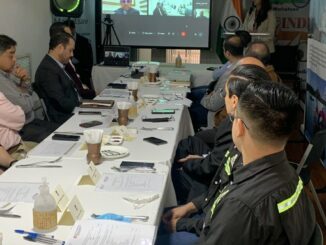
    GUATEMALA CITY (TIP): As plastic features in top ten Indian exports to Guatemala, El Salvador and Honduras, and to keep momentum in India’s exports to Central American countries of Guatemala, El Salvador and Honduras, on 7 September 2022, Embassy of India in Guatemala & The Plastic Export Promotion Council (Plexconcil) organized Hybrid Buyer Seller Meet in presence of Ambassador Dr Manoj Kumar Mohapatra and Chairman of the Plexconcil, Mr Arvind Goenka. The event was organized in hybrid mode to maximize its reach. The BSM featured physical participation from over 22 companies from Guatemala along with 15 participating companies from India who made presentations of their respective plastic products. The BSM was focused on to connect international buyers with appropriate suppliers and facilitates interaction that enables them to source their specific needs. Information was also provided on India’s competitive advantages, its export environment and updated position in the global marketplace. Efforts were made during the Meet to enable better understanding of Indian and International trade policies, emerging trade issues, social and environmental compliances, quality management and sustainable business practices.

    Ambassador Dr Manoj Kumar Mohapatra, in his inaugural speech highlighted the large scope for trade between India and Central America, especially in plastics sector. While delivering the Welcome Address, Shri Arvind Goenka, Chairman, Plexcouncil encouraged Indian companies to focus on Central American market and emphasized the importance of Guatemala to play an integral role in the plastic sector within the Central American region. Ms. Mellany Diaz, Coordinator of The Plastics Commission, AGEXPORT, Guatemala also address the BSM and assured full support of Guatemalan companies in enhancing the trade of plastic between two countries. Shri Suraj Ananta Jadhav, Second Secretary, EoI, Guatemala conveyed vote of thanks and conveyed that Embassy’s door are always open for Indian and Guatemalan companies.


  • Part of a pattern: On Varanasi court verdict in Gyanvapi case

    • Courts should be wary of giving a toehold to communal forces in religious disputes

    Hindu revanchism has found a way to use the legal route to record early success in its latest communal campaign. The district court in Varanasi has rejected objections to the maintainability of a suit filed by five Hindu devotees seeking the right of daily worship at a spot in the Gyanvapi mosque. Of particular significance is that the court ruled that the suit is not prohibited by the Places of Worship (Special Provisions) Act, 1991, which freezes the status of places of worship as it was on August 15, 1947 and bars suits that seek to change their character. On the fact of it, the ruling only paves the way for the suit to be heard and is in consonance with law. The plaintiffs have argued that the spot had the status of a Hindu temple on that day and ever since, and that the suit does not seek to convert a mosque into a temple; on the other hand, they are only demanding the right to worship deities in the complex. If limited to this assertion of a religious and customary right, the suit may indeed not be barred by the 1991 law. However, it is a matter of concern that the ruling is also grounded in other claims that appear to question the mosque’s status. For instance, the court says records produced by the Anjuman Intezamia Masjid Committee were not enough to show that the complex was Waqf property. This appears in concert with the Hindu side’s claim that Muslims were “encroachers”, an assertion that clearly makes it a dispute aimed at converting the property’s status.

    Courts should be wary of underhand designs behind the legal facade that such litigation builds to gain a toehold right that can be incrementally expanded. The mere pendency of some kinds of religious disputes can contribute to the vitiation of peace and harmony. It is now clear that the enactment of a special law to freeze the status of places of worship and prohibit litigation over inter-religious disputes over their location has not stemmed the Hindu right-wing’s obsession with targeting mosques and stoking communal passions. It is no surprise that the latest efforts to raise civil and legal disputes involving the Gyanvapi Mosque in Varanasi and the Shahi Idgah Mosque in Mathura are being made in tandem with a campaign against the Places of Worship Act. Several petitions have been filed challenging its validity. That such a campaign goes on despite the experience of communal frenzy through the 1990s shows the unregenerate nature of majoritarian forces. The abominable destruction of the Babri Masjid in Ayodhya, the communal riots that took place in its aftermath, the serial bomb blasts in Mumbai, and the fundamentalist violence that the sequence of events spawned cannot be forgotten. It is unfortunate that an atmosphere has been created in which the political leadership can encourage divisive litigation and exploit the process, if not influence the outcome.

    (The Hindu)

  • Adieu Mr. Bains; Rest in Peace

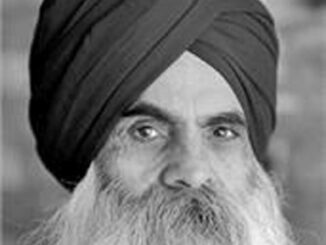
    One of the greatest sons of Punjab in the US, Didar Singh Bains is no more is a heartrending news. I regret not looking him up in Yuba City during  my visit to Fresno and San Francisco last month. I spoke to his youngest son Karam to inquire after Mr. Bains’s health which I knew was deteriorating, and I was keen to look him up on being told that he was not well, but the visit to Yuba City did not materialize. I regret now not having met him. I cherish the memories of more than three  decades of my association with him, beginning from the turbulent days in Punjab when he decided to lend his support to Khalistanis which he later withdrew in favor of the moderate Shiromani Akali Dal. A devout Sikh, to him nothing was dearer and more venerable than the Word of the Guru.He lived by the code prescribed by the Sikh Gurus which includes kirt kamayee, vand chhakna and naam japna(making an honest living , sharing with others, and meditating on God).

    He will be remembered as  a shining example of being a Guru da Sikh.

    I hope his departed soul finds place at the feet of the Guru.

    RIP, my friend.

  • End of the Federer era: A magical 24-year journey is over

    Roger Federer  broke a million hearts when he announced that he would retire from tennis after next week’s Laver Cup. The announcement wasn’t a surprise: the Swiss master is 41 and hadn’t played a match since his defeat in last year’s Wimbledon quarterfinals. Yet, hoping against hope, his fans wanted one final hurrah — maybe a 21st Grand Slam trophy, or even a lower-ranked ATP Tour tournament win, to add to his 103 titles. But realistically, the possibility of Federer holding another trophy aloft was minimal because he has endured several knee surgeries in the last six years, three of them in 2020-21. He was quickly running out of time as a top tennis player. Federer put it perfectly when he said: ‘My body’s message to me lately has been clear. I have played more than 1,500 matches over 24 years. Now I must recognize when it is time to end my competitive career.’

    The universal sense of sadness that has greeted his announcement is testimony to the love and respect he gained by playing the game with matchless elegance — and behaving with grace and modesty off the court. It could be argued that globally, he is the most-loved sportsperson of the 21st century — perhaps of the last 50 years. His game was marked by beauty that had vanished with the wooden racquets, which were replaced by power-generating, lightweight racquets in the 1980s. Federer’s court movement — economic, graceful, balletic — was a sight to behold, and it was matched by wonderful ball-striking. Using the graphite racquet to manipulate the ball in the manner of a wooden racquet, he made the greatest players gasp at his genius. Federer matched his beautiful game with immaculate conduct away from the sport, raising funds for charities across the world, and his interactions with fans and media were marked by grace, humility and respect.

    (Tribune, India)

  • Sikh priest attacked in UK ; Manchester police release video, man arrested

    Sikh priest attacked in UK ; Manchester police release video, man arrested

    MANCHESTER (TIP: A man has been arrested after last month’s attack on a Sikh priest in UK’s Manchester, which left the 62-year-old victim with serious brain injury, ANI reported, A 28-year-old man was arrested on Wednesday, September 9,  on suspicion of section 20 assault in connection with an attack on a Sikh priest in Manchester City Centre. “Following an appeal for assistance from the public, a 28-year-old man was arrested earlier today (September 7, 2022), on suspicion of section 20 assault in connection with an attack on a Sikh priest in Manchester City Centre,” Manchester Evening News quoted the police statement released on September 7. Last week, police released CCTV footage of an assault on a Sikh priest. The victim’s family said that the man was inflicted with “life-changing injuries”.

    “Just before 6.30 pm on Thursday June 23, 2022, officers were called by the North West Ambulance Service to a report of a man found unconscious in the road on Tib Street,” the police had said in an earlier statement.

    CCTV enquiries revealed that the victim had been assaulted by an unknown male close to the junction with Hilton Street. The offender then fled the scene on foot, turning left onto Oldham Street.

    The victim was left unconscious in the middle of the road, before being taken to hospital where he has since remained. Detective Inspector Mark Astbury, of Longsight CID, said: “We took the decision to release the CCTV footage with the family’s permission, simply to show the severity and mindlessness of this attack and why we need to make sure the offender is found and faces the consequences of his appalling actions”.

    In an earlier statement, the victim’s family last week said the Sikh priest’s life tragically altered forever when a thug attacked him. The family said they read horrific things in the news but never expect it to happen to one of their own.

    “On the 23rd of June 2022, our loving and caring husband/father, a 62-year-old Sikh priest, had his life tragically altered forever when a thug cowardly committed this heinous act, leaving him in a pool of blood with catastrophic permanent life-changing brain damage and walked away as if it was normal behavior.” “We will sadly never get the man back who left for work that day and thought he would walk home to enjoy the nice weather,” they added.

  • Indian American Shefali Razdan Duggal is US Ambassador to The Netherlands

    Indian American Shefali Razdan Duggal is US Ambassador to The Netherlands

    WASHINGTON, D.C. (TIP): After Richard Rahul Varma, who served as US Ambassador to India and Nikki Haley Randhawa, who represented the US at the United Nations as its Ambassador, Shefali thus joins the elite band of Indian Americans chosen for top diplomatic assignments. Between 2015 and 2018, High Commissioners of Australia (Ms Harinder Sidhu), and Canada (Nader Patel) besides US Ambassador (Richard Rahul Varma) all belonged to the Indian Diaspora. In between, Canada’s Consul-General in Chandigarh, Rajni Alexander, also belonged to this elite group. Shefali’s  appointment comes at a time when the number of Indian Americans holding top positions in the Biden Administration has crossed 130-mark.

    Though Shefali was born in Haridwar and moved with her family to Pittsburgh, Pennsylvania, at the age of two, she has her roots in Kashmir. “I was born in India, but I was made in the United States,” Duggal told members of the Senate Foreign Relations Committee during her confirmation hearing in July.

    A versatile political activist , Shefali Duggal, has also been a women’s rights advocate and human rights campaigner. She also remained a former presidential Appointee to the United States Holocaust Memorial Museum Council. She continues to serve as a Western Regional Advisor.

    She is  represented by a number of organizations, including  San Francisco Human Rights Watch, Wake Forest University Leadership and Character Council, and the National Board of Directors for Emily’s List.

    “I have full confidence that kindness, empathy, honesty and equity mean something in our country. It is the reason why people from all over the world see us as a beacon of hope and freedom. While my story is not unique, it is one that represents the infinite possibilities of the American spirit and the American dream,” Duggal said. During her confirmation hearing testimony, Duggal said as an immigrant, she represents the diverse face of the United States and the generations of people throughout its history who found an opportunity in the US. She served as National Co-Chair of Women for Biden, and as a Deputy National Finance Chair at the Democratic National Committee.

  • Indian American ‘Peach king’ Didar Singh Bains passes away

    Indian American ‘Peach king’ Didar Singh Bains passes away

    YUBA CITY (TIP): Didar Singh Bains, founder of Gurdwara Yuba City California, passed away after a prolonged illness in the US. He was 84. He passed away peacefully at his home, surrounded by family on Tuesday, September 13, 2022.

    Bains was known as a “Peach King” of California and was one of the richest Sikh farmers in North America.

    He was born in 1939 at Nangal Khurd village in Hoshiarpur district. He arrived in the US with only $8 and went on to own over 40 pockets of land in 13 counties, including 667 acres of land near Sacramento International Airport. He became one of the Northern California’s richest man, having assets worth USD 50 million. Bains worked as a laborer during his initial days in the US. He not only sponsored his own family members, but countless other people of the region to immigrate to the US since 1960.

    Shiromani Gurdwara Parbandhak Committee chief Harjinder Singh Dhami expressed deep grief on the demise of Bains. Expressing condolences to the aggrieved family, Dhami also remembered his work of preaching Sikhism in the US. Akal Takht Jathedar Giani Harpreet Singh said, “The report of his demise is very sad. Didar Singh Bains was a famous Sikh leader and an eminent farmer.”

  • Indian American Devika Bulchandani appointed Global President & CEO of Ogilvy

    Indian American Devika Bulchandani appointed Global President & CEO of Ogilvy

    NEW YORK (TIP): Just two years after becoming Global President and CEO of Ogilvy North America, Devika Bulchandani has been appointed Global CEO of New York City-based advertising, marketing, and public relations agency. In this role the Indian American executive will be responsible for all aspects of the creative network’s business across 131 offices in 93 countries and spanning its advertising, public relations, experience, consulting, and health units, Ogilvy announced Sep 7.

    Bulchandani takes the helm from Andy Main who is stepping down as Global CEO and will serve as a Senior Advisor until the end of the year. She will also join parent firm WPP’s executive committee as she takes on her new role.

    “Devika is a champion of creativity who brings passion, purpose, and an uncompromising focus on generating impact to everything she does,” Mark Read, CEO of WPP, said. “In partnership with Andy and Liz Taylor, she has been instrumental in Ogilvy’s recent growth and development,” he noted.

    “Her love for our industry, deep understanding of clients’ needs, and track record of delivering growth for agencies and brands, make her the perfect choice to lead Ogilvy to even greater success.”

    “David Ogilvy changed the industry 74 years ago when he founded this iconic agency,” said Bulchandani. “As we write the next chapter in the history books of Ogilvy, we will do it together with our clients, using creativity to push the boundaries of what’s possible.” “I am honored and humbled to take on this role, and to do it with all our incredibly talented people all over the world.” Prior to joining Ogilvy, Bulchandani spent 26 years at McCann in various leadership roles including President of McCann North America.

    As a leader who believes in the power of creativity to make a positive impact on society, Bulchandani’s proudest achievements have occurred at the intersection of the social causes she champions and brand-building efforts on behalf of clients, the release said. She was the driving force behind Mastercard’s long-running “Priceless” campaign as well as “True Name,” a first-of-its-kind feature launched in 2019 that empowers transgender and non-binary people to display their chosen name on their Mastercard.

    Known for ideas that capture the cultural zeitgeist, Bulchandani also helped launch “Fearless Girl,” an iconic and beloved symbol of women’s equality; the campaign became one of the most awarded campaigns in the history of the Cannes Lions International Festival of Creativity.

    Next month Bulchandani will be honored by New York Women in Communications (NYWIC) at the 2022 Matrix Awards, which honors women who are making a difference, building community, and inspiring the next generation of female leaders in their field. She has previously received a range of other honors including, NY Power Woman by Moves Magazine; US Advertising Agency Head of the Year by Campaign Magazine; Working Mother of the Year by She Runs It; and ADCOLOR Innovator.

    Bulchandani has been the recipient of multiple 4As Jay Chiat Awards for strategic planning. She also serves on the board of the ERA Coalition. She is also a founding member of Times Up Advertising and serves on the boards of the Ad Council, the 4A’s, and the Advertising Club.

    Over the last two years the creative network has deepened and grown relationships with current clients while winning new business with brands including Absolut, Enterprise Holdings, World of Hyatt, TD Bank, FEMA, New York Philharmonic, and Audi of America, according to the release. Ogilvy also played a key role in WPP being named as The Coca-Cola Company’s Global Marketing Network Partner. Recently Ogilvy earned the coveted position of Network of the Year at the 2022 Cannes Lions International Festival of Creativity for the first time since 2016 and secured the same honor from The One Show and Campaign magazine. Additionally, Ogilvy also became the only agency network to secure top rankings on both WARC’s Creative 100 & Effective 100 lists.

  • 130 Indian Americans appointed to key positions in President Joe Biden’s administration

    130 Indian Americans appointed to key positions in President Joe Biden’s administration

    WASHINGTON, D.C. (TIP): US President Joe Biden has appointed 130 Indian Americans to key positions in his administration so far, a senior White House official has said, the best representation from the community that makes up around one per cent of the American population.

    Representing the Biden administration at an event to celebrate ‘Azadi Ka Amrit Mahotsava’ at the US Capitol, Raj Panjabi, who is currently serving as Senior Director for Global Health Security and Biodefence on the White House National Security Council, read out a list of top Indian Americans in the US Government.

    Panjabi said that US President Biden has appointed 130 Indian Americans in his administration.

    “This is something to be proud of,” he said in his address to Indian Americans.

    As many as 75 Indian-American organizations came  together to observe the historic milestone of India’s journey after 1947. Prominent among these organizations include US India Relationship Council, Sewa International, Ekal Vidyalaya Foundation, Hindu Swayamsevak Sangh, GOPIO Silicon Valley, US India Friendship Council, and Sardar Patel Fund for Sanatan Sanskruti.

    The theme for Wednesday’s celebration was “Stronger Together: US-India Partnership.” “I’m proud to be part of an administration that is committed to diversity and building a government with leaders who look like and represent America,” Panjabi said.

    President Biden in his Independence Day message this year noted, that as people around the world, including nearly four million Indian Americans, celebrated the 75th anniversary of India’s independence on August 15, the US joined the people of India to honor its democratic journey guided by Mahatma Gandhi’s enduring message of truth and nonviolence, Panjabi said.

    “He said India and the United States are indispensable partners and the US India Strategic Partnership is grounded in our shared commitment to the rule of law and the promotion of human freedom and dignity,” Panjabi said.

    “In both India and America, the dreams of freedom and dignity could have been crushed. But today because of the efforts of those who fought for freedom, the dream of America, and the dream of India is alive. It remains alive in our shared work as President Biden said to continue to promote freedom and dignity and it remains alive, I believe in every one of you,” he added.

    Ajay Jain Bhutoria, member of the President’s Advisory Commission on Asian Americans, Native Hawaiians, and Pacific Islanders said, “India US relationship has been deepening in several past years.” According to the list prepared by Indiaspora, more than 40 Indian-Americans have been elected to various offices across the country. Four are in the House of Representatives — Dr Ami Bera, Ro Khanna, Raja Krishnamoorthi and Pramila Jayapal. This includes four Mayors. Led by Indian-Americans Sunder Pichai of Google and Satya Nadella of Microsoft, there are over two dozen Indian-Americans heading US companies. Among others include Shantanu Narayen of Adobe, Vivek Lall of General Atomics, Punit Renjen of Deloitte, and Raj Subramaniam of FedEx.