Year: 2022

  • Lakhimpur Dalit teens were raped, murdered, confirms autopsy report; 6 held

    Lakhimpur Kheri (TIP)- The police have arrested six people for the rape and murder of two Dalit sisters in Uttar Pradesh’s Lakhimpur Kheri district on Thursday, September 16. The autopsy report of the victims has confirmed that they were raped and strangulated to death before they were hanged to a tree by the accused men.

    The accused have been identified as Chotu, Junaid, Suhail, Kareemuddin, Arif and Hafeez-ur-Rehman. Junaid was arrested after an encounter with the police in which he was shot in the leg, the police said.

    Speaking to India Today TV, Superintendent of Police of Lakhimpur Sanjeev Suman said all the accused, other than Chotu, hailed from Lalpur village in Lakhimpur Kheri. Contrary to the victims’ family’s claim that the girls were kidnapped, SP Sanjeev Suman said the girls went with the accused with their free will.

    Chotu, who was a neighbour of the girls, had introduced the two girls to the accused. He too has been arrested.

    “Accused were friends with deceased girls. Girls were yesterday lured to farms and raped by Sohail and Junaid. After the girls forced the accused to marry them, Sohail, Hafizul and Junaid strangulated and killed them. They then called Karimuddin and Arif and hanged the girls to eliminate proof,” the SP said.

    All the accused have been booked under IPC Sections 302, 376 and the Pocso act, the SP said. The police will also add penalties under SC/ST Act in this case.

    A panel of three doctors conducted the post-mortem of the victims. According to the autopsy report, the teenage girls were raped and then they were strangulated to death.

  • PM releases eight cheetahs brought from Namibia at Kuno National Park in MP

    PM releases eight cheetahs brought from Namibia at Kuno National Park in MP

    Prime Minister Narendra Modi on Saturday, September 17,  released eight Cheetahs – brought from Africa’s Namibia – in the Kuno National Park of Madhya Pradesh. The arrival of the big cats in India – which has been dubbed as “historic,” considering Cheetahs went extinct in 1952 in the country – coincides with PM Modi’s 72nd birthday celebrations countrywide. “On his birthday, there can’t be a bigger gift for Madhya Pradesh,” chief minister Shivraj Singh Chouhan asserted while speaking to news agency ANI earlier. “Cheetah had gone extinct. This is the most remarkable achievement for wildlife in this century. This would boost tourism. We thank PM Modi on behalf of the state.” Five of the eight cheetahs are female, between 2 and 5 years of age, and three are males between 4.5 and 5.5 years of age. After a Boeing 747-400 aircraft landed in Gwalior at around 7:55 am on Saturday morning, the big cats were taken to the national park on Air Force choppers.

  • Asaram Bapu’s son Narayan Sai booked in 2015 attempt to murder case

    The court of Additional District and Sessions Judge, Panipat,  Nishant on September 16,  framed charges against Narayan Sai, son of self-styled godman Asaram Bapu and three others in an attempt to murder case registered against them in 2015. This followed the complaint of Mahender Chawla of Sanoli Khurd village, a former aide of Asaram Bapu. Mahender Chawla was the key witness in the rape case against Asaram Bapu. He was allegedly attacked by some unknown assailants on May 13, 2015. The police had booked Narayan Sai, Kartik and Neeraj under various Sections of the IPC.            Source: TNS

  • AIIMS Delhi to be renamed? Concerned faculty write to health minister

    New Delhi (TIP)- The Faculty Association of AIIMS has written to Union Health Minister Mansukh Mandaviya expressing concern over the proposal of assigning a new name to the All India Institute of Medical Sciences in Delhi, contending it will lead to a loss of the institute’s identity. The Faculty Association of AIIMS (FAIMS) had recently sought the opinion of faculty members over the government’s proposal to give new names to all the 23 AII India Institute of Medical Sciences (AIIMS) across the country.

    The faculty members opposed the changing of name of AIIMS, Delhi, according to the letter written by the FAIMS to the minister on Thursday. The letter further said AIIMS, Delhi was created in 1956 with a trinity of mission for medical education, research and patient care. “An identity is linked with the name. If the identity is lost, institutional recognition is lost both within the country and outside.” “That is why famous and established institutes have the same names for centuries – Oxford, Cambridge and Harvard universities,” the letter said. The FAIMS said if the proposal is accepted, the esteemed medical institute will face a huge loss of identity and demoralisation.

  • Marital Rape: Supreme Court notice to Centre on plea over High Court order

    Marital Rape: Supreme Court notice to Centre on plea over High Court order

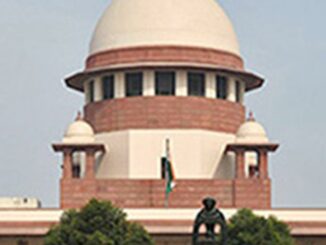
    New Delhi (TIP)- The Supreme Court on Friday, September 16,  issued notice to the Centre and others on a plea against the Delhi High Court’s split verdict on an issue related to criminalising marital rape. A bench of justices Ajay Rastogi and Justice BV Nagarathna agreed to examine the issue and listed the matter for further hearing in February 2023. All India Democratic Women’s Association (AIDWA) among others has moved the Supreme Court against Delhi High Court’s split verdict on issues relating to criminalising marital rape matters.

    Two- judges Bench of Delhi High Court on May 12 pronounced a split verdict on an issue.

    Delhi High Court’s Judge Justice Rajiv Shakdher ruled in favour of criminalising while Justice Hari Shankar disagreed with the opinion and held that Exception 2 to Section 375 does not violate the Constitution as it is based on intelligible differences. According to the order passed by Justice Rajiv Shakdher, husbands can be held criminally liable for sexual relations without the consent of the wife. Justice Hari Shankar expressed disagreement with this view. AIDWA was represented by advocate Karuna Nundy and the plea was filed through advocate Rahul Narayan.

    AIDWA, in its plea, said that the exception allowed to marital rape is destructive and in opposition to the object of rape laws, which clearly ban sexual activity sans consent. It places the privacy of a marriage on a pedestal above the rights of the woman in the marriage, the plea said. The petition said that the Marital Rape Exception is in violation of Articles 14, 19(1)(a) and 21 of the Constitution.

  • This era not of war: PM Modi tells Vladimir Putin at SCO meet

    This era not of war: PM Modi tells Vladimir Putin at SCO meet

    New Delhi (TIP)- Prime Minister Narendra Modi held talks with Russian President Vladimir Putin on the sidelines of the Shanghai Cooperation Organisation (SCO) summit in Samarkand and stated that this era is not of war but peace as the Ukraine war enters its ninth month. “Today’s era isn’t of war and I’ve spoken to you about it on the call. Today, we’ll get the opportunity to talk about how we can progress on the path of peace. India-Russia has stayed together with each other for several decades,” PM Modi told Vladimir Putin in a face-to-face meeting, the first since Russia invaded Ukraine in February. “We spoke on the phone several times about India-Russia bilateral relations and also on various issues. We should find ways to address the problems of food, fuel security & fertilizers. I want to thank Russia & Ukraine for helping us to evacuate our students from Ukraine,” PM Modi said.

    Both leaders discussed bilateral, regional and other global issues on the sidelines of the SCO summit.

    During the meeting, Russian President Vladimir Putin told PM Modi that Moscow will keep New Delhi informed about the developments in Ukraine.”I know about your position on the conflict in Ukraine and also about your concerns. We want all of this to end as soon as possible. We will keep you abreast of what is happening there,” Putin said. Putin also took time out to wish PM Modi who will be celebrating his birthday on Saturday, September 17.

    “My dear friend, tomorrow you are about to celebrate your birthday. As per Russian tradition, we don’t say happy birthday in advance. But we wish you all the best and to our friendly nation, India. We wish prosperity to India under your leadership,” Vladimir Putin said.

    No handshake, no smiles: PM Modi, Chinese President Xi Jinping share stage at SCO summit

    Even as Prime Minister Narendra Modi called for improving connectivity at the Shanghai Cooperation Organisation (SCO) summit held in Uzbekistan’s Samarkand, he maintained a safe distance from Xi Jinping, the President of India’s northern neighbour China.

    PM Modi and President Jinping shared the world stage for the first time after clashes in the Galwan Valley. The tension along the Indo-China border was evident from the distance that the two leaders maintained from each other at the summit. PM Modi is said to have missed the dinner meeting on Thursday evening and arrived just in time on Friday for the annual summit. During a photo-op, PM Modi and Chinese President Xi Jinping stood side by side but did not exchange smiles or shake hands.

    PM Narendra Modi, Pakistan Prime Minister Shehbaz Shariff, Russian President Vladimir Putin, Chinese President Xi Jinping and other leaders attended the SCO and deliberated on the regional security situation and ways to enhance trade and connectivity at the annual summit of the grouping.

                    Source: Agencies

  • China blocks proposal by US and India to blacklist Pak-based 26/11 LeT handler Sajid Mir by UN

    China has blocked a proposal by the US and India at the United Nations to blacklist top Pakistan-based Lashkar-e-Taiba (LeT) militant Sajid Mir, one of India’s most-wanted terrorists and the main handler of the deadly 2008 Mumbai attacks, in the third such move by Beijing within four months. It is learnt that Beijing put a hold on Thursday, September 15,  on the proposal moved by the US and co-designated by India to blacklist Mir under the 1267 Al-Qaeda Sanctions Committee of the UN Security Council as a global terrorist and subject him to assets freeze, travel ban and arms embargo.

    Mir is one of India’s most wanted terrorists and has a bounty of USD 5 million placed on his head by the US for his role in the 26/11 Mumbai terror attacks carried out by Pakistan-based LeT terrorists.

    In June this year, he was jailed for over 15 years in a terror-financing case by an anti-terrorism court in Pakistan, which is struggling to exit the grey list of the Paris-based Financial Action Task Force (FATF).

    Pakistani authorities had in the past claimed Mir had died, but Western countries remained unconvinced and demanded proof of his death. This issue became a major sticking point in FATF’s assessment of Pakistan’s progress on the action plan late last year. Mir is a senior member of the Pakistan-based LeT and is wanted for his involvement in the November 2008 terrorist attacks in Mumbai. “Mir was LeT’s operations manager for the attacks, playing a leading role in their planning, preparation and execution,” the US State Department has said.                  Source PTI

  • 10th SIIMA Awards witness the best of South Indian cinema

    By Murtaza Ali

    I havehad the pleasure of attending the10th edition of South Indian International Movie Awards (SIIMA), which was held in Bangalore on 10 – 11 September, 2022. The ambiance remained electrifying throughout the two days as the biggest names in Indian showbiz today made their presence felt at the 2022 SIIMA. No wonder, SIIMA holds such an important place in everyone’s hearts. It was launched in 2012 by Vishnu Vardhan Induri and Brinda Prasad Adusimilli to appreciate film makers from across the South Indian film industries. Over the last decade or so, SIIMA has only gone from the position of strength to strength to become one of the most sought after awards events in India.

    While the first day of the two day event focused on Telugu and Kannada cinema, the second day of the awards function was dedicated to celebrating the best Tamil and Malayalam cinema.Adding to the glitter and glamour of the 10th edition of SIIMA, Bollywood actor Ranveer Singh marked his scintillating presence at the event alongside some of biggest names of Telugu and Kannada cinema including the likes of Allu Arjun, Yash, Vijay Deverakonda, Pooja Hegde, Darshan Thoogudeepa, Arvind Swamy, Silambarasan TR, and Kamal Haasan at the opening night. The stars to grace the festival on the second day of SIIMA included AneesBazmee, Arvind Swamy, Hansika Motwani, Siva Karthikeyan, Silambarasan TR, NidhhiAgerwal, and Tovino Thomas, among others.

    Oozing with cinephilia and glamour, the star-studded extravaganza has been curated by Brinda Prasad Adusumilli and Vishnu Induri, for a span of two days in Bengaluru. Earlier, Brinda Prasad Adusumilli, who is also the chairperson of SIIMA, had announced the nominations for the films and music released in the 4 South Indian Languages viz. Telugu, Kannada, Malayalam and Tamil in 2021. Other than the regular awards, SIMMA also features some special honors for lifetime contributions and few special awards

    The winners for Telugu and Kannada cinema were announced on the first day of SIIMA and the winners for the Tamil and Malayalam films were announced on the second and final day of SIIMA. The Best Film (Telugu) went to Pushpa: The Rise and the Best Film (Kannada) went to Garuda GamanaVrishabha Vahana. While Minnal Murali bagged the Best Film (Malayalam), SarpattaParambarai won the Best Film (Tamil).

    As far as the top acting honors are concerned, the winners announced on the first day included Punneth Rajkumar, who was awarded Best Actor (Kannada) posthumously for Yuvarathnaa, AshikaRanganath, who won the Best Actress (Kannada) for Madhagaja, Pooja Hegde, who won the Best Actress award (Telugu), for Most Eligible Bachelor, Allu Arjun, who won the Best Actor award (Telugu), for Pushpa, Pramod, who bagged the Best Actor in a Supporting Role Award (Kannada) for RathnanPrapancha, Aarohi Narayan, who won the Best Actress in a Supporting Role (Kannada) for Drishya 2, Jagadeesh Prathap Bandari, who bagged the Best Actor in a Supporting Role Award (Telugu) for the film Pushpa – The Rise, and VaralaxmiSarathkumar, who won the Best Actress in a Supporting Role Award (Telugu) for the film Krack. The winners for Malayalam and Tamil cinema were announced on the second day of the festival. The winners included Kangana Ranaut, who won Best Actress (Tamil) for Thalaivii, Arvind Swamy, who won Best Actor in a Supporting Role (Tamil) for Thalaivii, Silambarasan TR, who won Best Actor (Tamil) for Maanaadu, Tovino Thomas, who bagged Best Actor (Tamil) for Minnal Murali and Kala, and Unnimaya Prasad, who bagged Best Actress in a Supporting Role (Malayalam) for Joji, among others.The winners had been chosen by an online voting system. As curtains come down on the 10th edition of SIIMA, my eyes are already set on the next edition which promises to be even bigger and grander.

    (The author is an Indian critic and journalist who has been covering cinema, art and culture for over 10 years. He tweets at @MurtazaCritic).

  • LAKE TRAVIS FILM FEST BRINGS THIRD EDITION

    By Mabel Pais

    The Ugly Truth

    Director: Krishna Ashu Bhati

    The Lake Travis Film Festival’s 3rd edition returns September 15-18 in beautiful Hill Country, just west of Austin. The film festival, whose independent personality and approach to the celebration of independent filmmaking is accentuated by its location in Lakeway and Bee Cave, just outside of the city known for independent film and music.

    The four-day in-person film festival will once again present a film lineup showcasing films featuring a wide assortment of genres, styles, and topics from the indie film community, both stateside and international. The festival will screen 92 films (8 Narrative Features, 11 Documentary Features, 45 narrative short films, 6 short documentaries, 9 music videos, and 13 student shorts).

    LTFF also will feature a pre-festival masterclass with screenwriter Owen Egerton (Mercy Black, Blood Fest), which requires a separate registration. Special events include a pitch party, live script readings, after parties and an awards brunch. Additional opportunities for film enthusiasts to meet and interact with the filmmakers will be announced daily. Screenings and events occur at various pop-up locations throughout the cities of Bee Cave and Lakeway, Texas. Some of the venues include Hill Country Galleria, High5, ContraCommon, La Quinta Inn & Suites by Wyndham Lakeway, Star Hill Ranch, Goga Yoga, and Bee Cave City Hall.

    Lake Travis Film Festival Founder and Executive Director, Kat Albert, shares, “The third year brings an opportunity to hone into what we do best…curating an overall cinematic experience. We do not sell individual tickets. The suburbs don’t have a traditional downtown, so we’ve worked to make our pop-up style festival work with three walkable hubs. Thursday and Friday are in the Oaks at Lakeway. Saturday is in the Hill Country Galleria and Sunday is Texas Film Industry Day at Star Hill Ranch. The festival is young but garnering a reputation as a unique experience for filmmakers, screenwriters, and the local community.”

    TICKETS

    For more information, Festival Passes or Individual Tickets, visit laketravisfestival.com

     FILM FESTIVAL 2022 LINEUP

    OPENING NIGHT

    Sweet Disaster

    Dir: Laura Lehmus l Germany l 1h 30m

    Sweet Disaster, Opening Night, LAFF 2022. (Photo: laketravisfilmfestival.com)

    When a 40-year-old art therapist finds herself unexpectedly pregnant, the father of her child, breaks up with her to reunite with his ex.

    CLOSING NIGHT

    Fabletown

    Dir: Jordan O’Neal l USA l 1h 22m

    A community of fairy tale characters live in hiding from the mundane, human world in New York City. But when one Fable’s true identity is exposed, a long-lost ally must return to face the community’s greatest threat, or their way of life will be forever lost.

    Ranch Water

    Dir: Sophie Miller l USA l 1h 20m

    Before their family ranch in Texas is sold, the Sterling sisters reunite with their once close-knit group of friends for a weekend where long simmering conflicts come to a head.

    ADDITIONAL NARRATIVE FEATURES

    Lucky Doug

    Dir: Eric Alan Rousseau l USA l 1h 22m

    Never Alone

    Dirs: Paul Francis Bunch, Albert Soratorio l USA l 1h 23m

    Route One North

    Dir: Isabelle R Farrell l USA l 1h 12m

    The Good Hearts Club

    Dir: William F. Reed l USA l 1h 41m

    The Ugly Truth, LAFF 2022. (Photo: laketravisfilmfestival.com)

    The Ugly Truth

    Dir: Krishna Ashu Bhati l Germany l 1h 36m

    DOCUMENTARY FEATURES

    Delivering Hope

    Dir: Jordan Orsak l USA l 1h 29m

    Exit

    Dir: Alison Jayne Wilson l Spain l 1h 7m

    Firestorm ’77 The True Story of the Honda Canyon Fire

    Dirs: Chris Hite, Dennis Ford l USA l 54m

    Forever Majestic

    Dir: Michael Stephen Schwarz l USA l 1h 26m

    Katia and Rimma

    Dir: Gulya Mirzoeva l France l 1h 30m

    Me To Play

    Dir: Jim Bernfield l USA l 1h 12m

    Never Had a Bad Day

    Dir: Matt Richmond l USA l 1h 6m

    The Birth & History of Western Swing

    Dir: Mike Markwardt l USA l 1h 14m

    The Graduates

    Dir: Dusan Gajic l Serbia l 1h 26m

    The Innocents

    Dir: Wojciech Lorenc l USA l 1h 2m

    In addition, there are 44 Narrative Shorts, 6 Documentary Shorts, 9 Music Videos, 12 Student Shorts.


    ——————————————–

    DOCUMENTARY FILMS

    By Mabel Pais

    Riotsville, USA. (Photo: magpictures.com)

    RIOTSVILLE, USA

    Dir: Sierra Pettengill l 2022 l USA l Doc l 1h 31m

    NEXT Innovator Award, Finalist, Sundance Film Festival

    RIOTSVILLE,USA is a poetic and furious reflection on the rebellions of the 1960s – and the machine that worked to destroy them.

    Riotsville, USA addresses the inequality and institutional racism perpetrated by the nation’s rulers – politicians, bureaucrats, police – revealed in the wake of the mid-1960s urban riots, LBJ tasked the Kerner Commission to study their causes, and among their findings: “Our nation is moving toward two societies, one Black, one white. Separate and unequal.” The Commission recommended that the US aggressively address income inequality and institutional racism. The government instead used federal funds to militarize local police forces. “Riotsvilles” were ersatz “towns” constructed by the military to train police in riot control tactics.

    Director Sierra Pettengill reveals stupefying archival footage featuring soldiers playing both the rioters and police. With trenchant narration written by Tobi Haslett, the film suggests that the opportunity to redress historic grievances was tragically and summarily abandoned, and that the blueprint for escalating police and community tensions was established more than 50 years ago.

    RIOTSVILLE, USA had its world premiere at the 2022 Sundance Film Festival where it was nominated for the NEXT Innovator Award. Pettengill’s work focuses on the warped narratives of the American past.

    OPENING – Friday, September 16 at The Film Forum (filmforum.org), New York.

    FOR TOMORROW

    Dir: An Tran l 2022 l Eng l Doc l 1h 12m

    For Tomorrow. (Photo: fortomorrow.org)

    Featuring grassroots innovators from around the globe and celebrated voices,

    such as TIME Magazine “KID OF THE YEAR” GITANJALI RAO

    For Tomorrow, the documentary tells the story of grassroots innovators who are fighting sustainability problems through real solutions. From climate change to social inequality, they are tackling these challenges on the ground while helping their community. Follow their inspiring journey on September 16th and discover the power of grassroots innovations. Filmed by invested and enlisted local crews in more than a dozen countries: Argentina, Azerbaijan, Guatemala, Guinea, India, South Korea, Nepal, Nigeria, Peru, Sierra Leone, the US (Colorado, Illinois, NY), Vietnam and Wales.

    OPENING: September 16 to VOD on Amazon.

    (Mabel Pais writes on Social Issues, The Arts and Entertainment, Health & Wellness, Cuisine and Spirituality)

  • Frances Tiafoe ends Rafael Nadal’s 22-match Grand Slam streak

    Frances Tiafoe ends Rafael Nadal’s 22-match Grand Slam streak

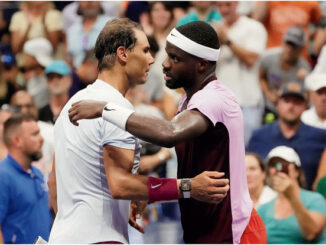
    Frances Tiafoe’s vision was blurry from the tears. He was thrilled — overwhelmed, even — when the last point was over and it hit him that, yes, he had ended Rafael Nadal’s 22-match Grand Slam winning streak and reached the US Open quarterfinals for the first time. “I felt like the world stopped,” Tiafoe said. “I couldn’t hear anything for a minute.” Then Tiafoe found himself “losing it in the locker room” when he saw that NBA superstar LeBron James gave him a Twitter shout-out. What meant the most to Tiafoe about his 6-4 4-6 6-4 6-3 victory over 22-time Major champion Nadal in the fourth round at Flushing Meadows, though, was looking up in his Arthur Ashe Stadium guest box and knowing his parents, Constant and Alphina, were there. “To see them experience me beat Rafa Nadal — they’ve seen me have big wins, but to beat those Mount Rushmore’ guys? For them, I can’t imagine what was going through their heads,” said Tiafoe, a 24-year-old American. “I mean, they’re going to remember this the rest of their lives.”

                    Source: Agencies

  • Messi ends 8-year streak at PSG; Mbappe achieves spectacular feat in Juve tie

    Messi ends 8-year streak at PSG; Mbappe achieves spectacular feat in Juve tie

    One of the most prolific goal-scorers in the UEFA Champions League (UCL), Lionel Messi failed to play the full 90 minutes of Paris Saint Germain’s (PSG) campaign opener against former champions Juventus on Tuesday at the Le Parc des Princes. Goal machine Messi was replaced by Carlos Soler in the 84th minute of PSG’s Group H clash with Juventus at Paris. For the first time in eight years, the former FC Barcelona captain was substituted off after starting a match in Europe’s biggest competition at the club level – the UEFA Champions League.

    The late substitution in the Champions League clash has ended Messi’s eight-year streak of completing all games in which he received starts by the club. Earlier, Messi had played the full 90 minutes of every game he started in the UEFA Champions League. Messi played 62 matches without being substituted off after starting a match in the Champions League. Messi kickstarted his lesser-known streak when the Argentine stalwart used to lead the attack of La Liga giants FC Barcelona back in October 2014.

    While Messi ended his unique streak in PSG’s Champions League opener, star forward Kylian Mbappe smashed another goal-scoring record in the elite tournament. Interestingly, Mbappe has surpassed Messi by becoming the youngest player to score 35 goals in the Champions League. At 23 years and 260 days, Mbappe has eclipsed Messi by becoming the fastest player to smash 35 goals in the Champions League.

    Mbappe managed to find the back of the net twice in the first half against Juventus. Making sure that Christophe Galtier’s men take an early lead, the French forward netted the opener for PSG in the 5th minute. Mbappe doubled his tally in the 22nd minute of the game. The first-half brace from the former AS Monaco star guided PSG to a 2-1 win over Juventus on matchday 1 of the Champions League.

                    Source: HT

  • India knocked out of Asia Cup after Pakistan beat Afghanistan in Super 4 thriller

    India knocked out of Asia Cup after Pakistan beat Afghanistan in Super 4 thriller

    Sarjah (TIP)-Team India’s campaign at the Asia Cup 2022 came to an end as Pakistan defeated Afghanistan by 1 wicket in a last-over low-scoring thriller in the Super 4 match at Sharjah on Wednesday. The fate of the Men In Blue, who endured consecutive defeats in the Super 4 stage, were completely dependent on the outcome of the clash between Pakistan and Afghanistan. Only an Afghanistan win would have kept India in the contention for the final, but that was not to be. With the win, Pakistan have qualified for the final and will battle Sri Lanka in the summit clash on Sunday. Afghanistan, like India, are out of the tournament even though the two teams will now engage in a dead rubber on Thursday. A win for any of the team will only give them 2 points while Pakistan and Sri Lanka have already secured four and cleared the path for the final. Ahead of the summit clash though, Pakistan and Sri Lanka will get one more chance to have a crack at each other and an opportunity to fine tune their team combinations in the last Super 4 match of the Asia Cup 2022 on Friday. Batting first, Afghanistan’s innings could never quite get going as barring Ibrahim Zadran, who contributed with 35 – no batter managed to put up a significant contribution, and they ended up with a lowly 129/6. All five Pakistan bowlers got among the wickets with Haris Rauf being the standout performer with 2/26. Defending a low total, Afghanistan got off to a dream start when Fazalhaq Farooqi dismissed captain Babar Azam second ball of the innings for a golden duck. Three overs later, Fakhar Zaman was run out and Pakistan were 18/2 in quick time.

    Mohammad Rizwan, who earlier in the day became the No. 1 ranked T20I batter continued his fine run in the Asia Cup, and along with Iftikhar Ahmed’s 30 and Shadab Khan’s 36 kept Pakistan in the hunt.

    However, drama unfolded when Rashid dismissed Shadab and then Farooqi followed with a brilliant two wicket over. With 21 needed off 12, Asif Ali smacked a six to settle some Pakistan nerves, but the next ball Fareed Malik foxed him with a slower bouncer. A heated exchange between the two did not take focus away from either team, and with nine wickets down and 11 to win off the last over, Afghanistan were favourites to pull off an upset, but it was not to be. Naseem Shah took two balls, smacking two back-to-back full tosses off Farooqi and dispatched the ball over the ropes to trigger euphoria in the Pakistan camp and heartbreak in the Afghan unit.

    India started their campaign in the continental tournament on a stellar note, beating Pakistan by five wickets in the Group A encounter. They then went to secure a 40-run victory over minnows Hong Kong to become the first team from their group to advance to the Super 4. However, they suffered two nail-biting defeats in the next round, as both games against Pakistan and Sri Lanka were decided in the final over.

    It all started with the contest against Pakistan, which India lost by five wickets as Babar Azam and Co. chased down the 182-run target with two balls to spare. Sri Lanka then stunned India in the following game, defeating them by six wickets in another humdinger. Chasing 174 to win, the Lankan outfit completed the run chase with one ball to spare.

                    Source: HT

  • Indian-origin Priti Patel resigns as UK Home Secretary

    Indian-origin Priti Patel resigns as UK Home Secretary

    LONDON (TIP): UK Home Secretary Priti Patel on Monday, September 5,  resigned from the Cabinet in a letter to the outgoing Prime Minister Boris Johnson and said she plans to support his successor Liz Truss from the backbenches of Parliament. The Indian-origin senior minister, a close ally of Johnson, was widely expected not to be included in the top line-up of Prime Minister elect Truss’ top team.

    In her resignation letter addressed to Johnson, 50-year-old Patel highlighted her many achievements in the post, including a Migration and Mobility Partnership signed with India, among other countries, to tackle illegal migration.

     “I congratulate Liz Truss on being elected our new leader and will give her my support as our new Prime Minister,” she wrote in her resignation letter.  “It is my choice to continue my public service to the country and the Witham constituency from the backbenches once Liz formally assumes office and a new Home Secretary is appointed. From the backbenches, I will champion many of the policies and causes that I have stood for both inside and outside of government,” she said.  “I have signed new international returns agreements with India, Albania, Serbia, Nigeria, and Pakistan, with work underway to negotiate more agreements and to remove more people who should not be in this country and who have abused our hospitality,” she wrote, with reference to some of her work as the head of the Home Office. Gujarati-origin Patel, who was appointed Home Secretary by Boris Johnson in July 2019, described it as “the honor of my life” to deliver reforms for the country’s police and immigration system and fighting terrorism.

    Her letter also references a controversial Rwanda asylum policy to deport illegal migrants to the African nation as part of a wider strategy to crack down on illegal migration.

     “It is vital that your successor backs all aspects of these policies on illegal migration to ensure full implementation and delivery of the New Plan for Immigration and Nationality and Borders Act,” she writes.

    The 50-year-old MP for Witham in Essex and Johnson loyalist was among a few frontline ministers who had chosen not to declare their support for either of the two finalists in the Tory leadership contest – Liz Truss or Rishi Sunak.

    Earlier on Monday, she praised her former boss in Parliament, telling interrupting Opposition MPs to “shut up”.

     “I’m proud to serve in this government and I’d like to thank the Prime Minister [Boris Johnson],” she said.

  • Indian-origin Laxman Narasimhan is the new CEO of Starbucks

    Indian-origin Laxman Narasimhan is the new CEO of Starbucks

    NEW YORK (TIP): Laxman Narasimhan is the latest in a long line of Indian-origin CEOs of global companies with Starbucks announcing his appointment as the company’s next chief executive officer and a member of the Starbucks Board of Directors. Narasimhan will join Starbucks as incoming CEO on October 1 after relocating from London. He will work closely with Interim CEO Howard Schultz, before assuming the CEO role and joining the Board on April 1, 2023, said a company announcement. A 30-year veteran of leading and advising global consumer-facing brands, most recently he served as CEO Reckitt, a consumer hygiene and nutrition company.

    The company in an announcement said during the transition period, Narasimhan will be fully immersed in the company, spending time with Schultz and the management team, partners and customers and gaining in-depth exposure to the brand, company culture, and Reinvention plan.

    Previously, Narasimhan was global chief commercial officer of PepsiCo where he served several stints that included headed the soft drink giant’s Latin America, Europe and Sub-Saharan Africa operations. Prior to PepsiCo, he was with McKinsey & Company. Narasimhan is also on several think tanks and holds a degree in Mechanical Engineering from Pune University besides an MA in International and MBA from the US.

    Prominent Indian-origin CEOs

    Satya Nadella is the executive chairman and CEO of Microsoft.

    Parag Agrawal is CEO of Twitter

    Arvind Krishna is Chairman and CEO of IBM

    Sundar Pichai is CEO of Alphabet and Google

    Manish Sharma is Global CEO of Accenture

    Rangarajan Raghuram is CEO of VMware

    Leena Nair is the youngest ever CEO of Chanel.

  • Indian-origin youth dies in Canada after truck caught fire

    Indian-origin youth dies in Canada after truck caught fire

    VANCOUVER, BC (TIP): A pall of gloom descended at Gholia Khurd village in Moga after the news of death of Jagsir Singh Gill, who lived in Canada, reached his family. On Sunday, Gill died in a road accident in Golden town of British Columbia. Gill was driving a truck on National Highway-1 when another trailer transporting animals collided with his vehicle and both the trucks caught fire. Kulwant Singh, father of the victim, said his son died of burns. Driver of the other vehicle also died of burn injuries. Gill used to live in Calgary along with his wife and two children.

  • Vedant Patel becomes the first Indian American to hold daily US State dept press briefings

    Vedant Patel becomes the first Indian American to hold daily US State dept press briefings

    WASHINGTON, D.C. (TIP): Vedant Patel, the Principal Deputy Spokesperson for the US Department of State, has created history by becoming the first Indian-American to hold the daily State Department news conference that his fellow colleagues said he did with the utmost professionalism and clear communication. With State Department Spokesperson Ned Price on vacation, the 33-year-old Patel from California on Tuesday took the briefing room in the Foggy Bottom headquarters of the State Department to represent the country on foreign policy issues before the media. During his briefing, Patel covered topics ranging from Russia’s unlawful invasion of Ukraine, negotiations around the JCPOA and Liz Truss becoming the Prime Minister of the United Kingdom. His next in-person briefing is scheduled for Wednesday. Vedant Patel made an impressive debut from the podium. “Kudos to” Vedant Patel on his podium debut, tweeted Matt Hill, senior Associate Communications Director at the White House.

    “Representing the United States on the world stage is a huge responsibility, and Vedant did it with the utmost professionalism and clear communication,” Hill said. Pili Tobar, former White House deputy communications director said: “It’s so great to see Vedant Patel at the podium.”

    “Congrats my friend on an amazing debut,” she tweeted.

    Patel, who was born in Gujarat, is a graduate from the University of California, Riverside, and previously served as an Assistant Press Secretary and Spokesperson for President Biden in The White House.

  • Indian American Congressman Ro Khanna introduces standalone bill in US House of Representatives for CAATSA waiver to India

    Indian American Congressman Ro Khanna introduces standalone bill in US House of Representatives for CAATSA waiver to India

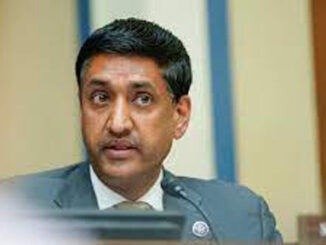
    WASHINGTON, D.C (TIP): Indian-American Congressman Ro Khanna has introduced a standalone bill in the US House of Representatives seeking a waiver to India against the punitive CAATSA sanctions, asserting that it is in the best interests of both countries to deter “aggressors” in light of Russia and China’s close ties.

    The Countering America’s Adversaries Through Sanctions Act (CAATSA) is a tough US law that authorizes the US administration to impose sanctions on countries that purchase major defense hardware from Russia in response to Moscow’s annexation of Crimea in 2014 and its alleged meddling in the 2016 US presidential elections.

    The resolution, which has also been endorsed by Congressman Brad Sherman and David Schweikert along with Khanna, has been sent to the House Foreign Affairs Committee for necessary action.

    “While India faces immediate needs to maintain its heavily Russian-built weapons systems, a waiver to sanctions under the Countering America’s Adversaries Through Sanctions Act during this transition period is in the best interests of the United States and the United States-India defense partnership to deter aggressors in light of Russia and China’s close partnership,” it said.

    A similar legislative amendment to the National Defense Authorization Act (NDAA) was introduced by Khanna, a Democrat, this summer and it was passed by the House with bipartisan support.

    “I first introduced this as an amendment to the National Defense Authorization Act and now I am proud to introduce it as a standalone bill to continue to build momentum and support for it. It is necessary for us to pass this in order to strengthen the relationship between the US and India and deter aggressors like China,” Khanna told media.

    The resolution asserts that India faces immediate and serious regional border threats from China, with continued military aggression by the government of China along the India-China border.

    While India has started importing the S-400 missile defense system from Russia, US President Joe Biden is yet to take a call on CAATSA waiver sanctions. Under the existing laws, the president can give a national interest waiver to countries. Khanna said that this is a strong bill to affirm the US and India defense partnership.

  • Indian American attorney Arun Subramanian nominated by Joe Biden to US District Judge in New York

    Indian American attorney Arun Subramanian nominated by Joe Biden to US District Judge in New York

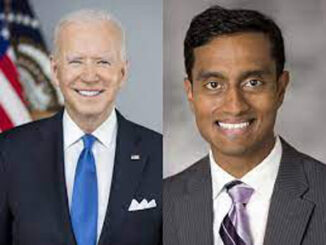
    WASHINGTON, D.C. (TIP): US President Joe Biden has nominated Indian-American attorney Arun Subramanian to be US District Judge for the Southern District of New York.

    A communication in this regard was sent to the Senate by the White House along with other judicial nominations.

    If confirmed by the Senate, Subramanian would be the first South Asian judge to serve on the United States District Court for the Southern District of New York.

    Currently a partner at Susman Godfrey LLP in New York, where he has worked since 2007, Subramanian served as a law clerk for Justice Ruth Bader Ginsburg on the Supreme Court of the United States from 2006 to 2007 and Judge Gerard E. Lynch on the United States District Court for the Southern District of New York from 2005 to 2006.

    He also worked as a law clerk for Judge Dennis Jacobs on the United States Court of Appeals for the Second Circuit from 2004 to 2005.

    Subramanian received his J.D. from Columbia Law School in 2004 and his B.A. from Case Western Reserve University in 2001.

    National Asian Pacific American Bar Association (NAPABA) congratulated Subramanian on his nomination.

    AB Cruz III, acting president of NAPABA said Subramanian is an experienced trial and appellate attorney with a strong track record of pro bono service.

    “A child of immigrants, he became the first lawyer in his family, and we are proud to see him represent our community. We urge the Senate to swiftly confirm him,” he said.

    Indian-American Impact has welcomed the nomination by describing it as a notable nomination.

    “South Asians and Asian Americans have long been underrepresented in the federal judiciary — with less than five per cent of Article III district judges being of AAPI descent — but in the past year we have made historic strides,” said Neil Makhija, Indian-American Impact executive-director.

    “We look forward to celebrating the ultimate confirmation of Subramanian and the ripple effect his presence will undoubtedly have on young South Asian Americans across the country who aspire to public service,” Makhija said.

  • Indian American cardiologist Dr. Tara Narula joins CNN as the medical correspondent

    Indian American cardiologist Dr. Tara Narula joins CNN as the medical correspondent

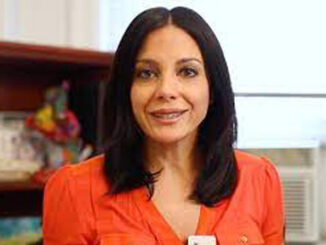
    NEW YORK (TIP): Indian American cardiologist Dr. Tara Narula has joined CNN as a medical correspondent within CNN’s award-winning Health, Medical and Wellness team. She will report across CNN platforms and is based in New York, the news channel announced. Currently a fellow of the American College of Cardiology (FACC), she joins CNN from CBS News where she was the senior medical correspondent reporting for all CBS News broadcasts and platforms, including CBS Mornings, the CBS Evening News with Norah O’Donnell, CBS Saturday Morning, CBS Sunday Morning and CBS Streaming Network.

    Dr. Narula also serves as a national spokesperson for the American Heart Association and the AHA’s Go Red for Women initiative. She is a recipient of the 2019 WomenHeart Nanette Wenger Award for Media and the Super Doctors Award for NYC 2014-2022. A board-certified cardiologist at Lenox Hill Hospital in New York City and an associate professor of cardiovascular medicine at the Zucker School of Medicine at Hofstra/Northwell, she also serves as the associate director of the Women’s Heart Program at Lenox Hill Hospital.

    She joined Lenox Hill Heart & Vascular Institute of New York in 2010 and provides outpatient consultative care. Additionally, she is board-certified in nuclear cardiology, echocardiography and internal medicine.

    After graduating from Stanford University with degrees in economics and biology, she was founder and CEO of her own small business, Sun Juice Inc. Subsequently, she obtained her medical degree at USC Keck School of Medicine where she graduated with Alpha Omega Alpha Society Honors.

    Dr. Narula completed her residency in internal medicine at Harvard University/Brigham and Women’s Hospital and her fellowship training in cardiology at New York Presbyterian-Weill Cornell Medical Center.

    Another Indian American Dr. Sanjay Gupta is the chief medical correspondent for CNN. A neurosurgeon, he serves as associate chief of the neurosurgery service at Grady Memorial Hospital in Atlanta, Georgia, associate professor of neurosurgery at the Emory University School of Medicine, member of the National Academy of Medicine and American Academy of Arts and Sciences.

  • Guilty without evidence

    Guilty without evidence

    “Not every policy is well thought out. Many policies may be well intentioned but will fail. The PM’s demonetization decision, for instance, was a great disaster. But no politician or bureaucrat was taken to task for that colossal blunder. It was soon forgotten as a mistake. But the intention of the accusers in Sisodia’s case is not to mourn the loss to the public but to remove a star performer of a small but upcoming opposition party from the political firmament.”

    By Julio Ribeiro

    The campaign to shatter the opposition parties by picking on their weak links with the help of the Enforcement Directorate had been conceived! Every political party, including the BJP, needs money to operate. The army of workers employed full-time keeps expanding with electoral successes. If success is elusive, inducements are offered to cross over. Inducements require money.

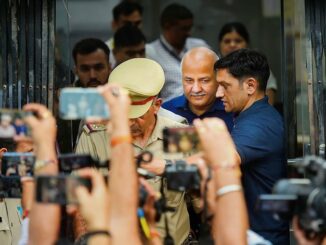
    What is the truth behind the hype about a ‘corrupt’ AAP leader, Manish Sisodia? I am as blank as any other thinking Indian. Only diehard BJP supporters and gullible members of the public will swallow the propaganda that is being proliferated to condemn the man. But where is the evidence?

    The intention of the accusers is not to mourn the loss to the public due to his policy, but to remove a star performer of a small but upcoming opposition party.

    Unlike the Bengal minister from whom crores were recovered, nothing was found in the CBI searches on Sisodia’s offices, home and bank locker. The charge against him seems to be that the policy adopted by him and his party on the sale of liquor had caused huge loss to the exchequer. This is a charge that can be made against governments and corporates in India and all parts of the world at various times.

    Not every policy is well thought out. Many policies may be well intentioned but will fail. The PM’s demonetization decision, for instance, was a great disaster. But no politician or bureaucrat was taken to task for that colossal blunder. It was soon forgotten as a mistake. But the intention of the accusers in Sisodia’s case is not to mourn the loss to the public but to remove a star performer of a small but upcoming opposition party from the political firmament.

    When the BJP succeeded in winning the UP Assembly elections and forming the governments in three other states, besides UP, Modi held a victory rally of his party’s committed workers outside the party office in Delhi. He voiced his intention of booking the corrupt as the next important mission of his regime. His supporters roared their approval. Little did they know what he meant. Even informed observers did not read his real intent.

    The campaign to shatter the opposition parties by picking on their weak links with the help of the Enforcement Directorate had been conceived! Every political party, including the BJP, needs money to operate. The army of workers employed full-time keeps expanding with electoral successes. If success is elusive, inducements are offered to cross over. Inducements require money. When the party has not succeeded at the ballot box and not succeeded in enticing greedy legislators of other parties in sufficient numbers, this novel use of Central agencies to ‘coax’ reluctant MLAs to join the bandwagon is activated. The ploy works in most places. It worked in Maharashtra. But where nuts are hard to crack, like in the case of AAP legislators, new ways have to be found.

    Is the alleged liquor scam in Delhi one such experimentation? At the moment, nothing is clear. It is true that the adage ‘there is no smoke without fire’ has a lot going for it, but we have not seen any sign of that smoke from all the Goebbels-like propaganda that has been dished out. A slight connection could be discerned in the purported association of the Telangana CM’s daughter in the raids carried out all over India in connection with the ‘scam’.

    This piece of possible evidence was not pursued, it seems. The conclusion independent observers will draw is that since the Telangana CM is another thorn to be tackled later, it could be that his daughter’s explanation published in the media was accepted by the CBI, which was the agency entrusted with this inquiry. Surprisingly, the ED was left out at the beginning, though the allegations involved skimming off vast amounts of money. On September 5, for the first time, it was announced that in the sting operation carried out on one of the many accused in the case, a beneficiary of the new policy had hinted that Kejriwal and Sisodia were given their share of the spoils. It is something like Rahul Gandhi calling Modi a chor in the Rafale matter. Nobody believed him. I do not know much about Sisodia but I refuse to believe that Kejriwal will accept tainted money for personal use. As for party funds, most politicians are complicit. Another thought that entered my police officer’s mind on reading about the Sisodia case is that no details of recoveries, if any, from the IAS and other officials of Delhi’s excise department were leaked to the media. This is quite unusual. If monies had been found in the searches, the propaganda could have acquired greater authenticity. It appears that the CBI drew a blank there, too!

    The effect of accusing IAS and assorted excise department officials in a case that has not been proved so far will not wear off easily. I learn that IAS officers are not readily available for deputation to the Centre these days. With the Sisodia case fresh in the mind’s eye, postings to the Delhi state administration also will be avoided. Officers will not like to get involved in the running spat between the BJP and the AAP. Any officer earmarked to serve the AAP government will be sure of being marked. Too many are the risks involved in associating even officially with a party that Modi and Shah want to dethrone by any means, fair or foul! Another game is being played by the BJP in Jharkhand. Hemant Soren, the CM of the tribal-dominated state, is said to have been found guilty by the Election Commission of awarding a mining contract to himself. The Governor has not disclosed the contents of the EC’s findings to the public. He has not moved against the CM, though a week has passed since he received the report. He has kept everyone guessing of his intentions, prompting the CM and his alliance partner, the Congress, to resort to ‘resort’ politics to safeguard their flock! Last Monday, Soren got his MLAs and those of the Congress to pass a vote of confidence in him in the Assembly. He must have got that idea from Kejriwal.

    It is reported in the print media that the Jharkhand Governor has dashed off to Delhi for ‘guidance and directions’. If this is how governance is going to be administered in the states, we as a people are condemned to non-existence. The government will not function till this matter is resolved. But the party at the Centre that pulls all the strings is keeping all parties guessing, awaiting a suitable time to strike.

    (The author is a retired IPS Officer)

  • Gujral doctrine for Modi darbar

    Gujral doctrine for Modi darbar

    “However, India under Modi seems to want to go it alone, preferring standalone bilateral relationships with its neighbors to a South Asian regionalism — a concept which is still in its infancy. The ‘Akhand Bharat’ idea does not jive with the concept of independent countries in cooperation, envisaged by the South Asian Association for Regional Cooperation (SAARC). Neither is it in consonance with the sub-regionalism promoted by the Bay of Bengal Initiative for Multi-Sectoral Technical and Economic Cooperation (BIMSTEC). The idea may be good for a centralized Indian polity run from New Delhi, but not for an India that seeks a federal devolution of powers.”

    By Kanak Mani Dixit

    Narendra Modi’s personalized, authoritarian conduct of foreign affairs leaves both India and its neighbors short-changed India is a humongous economic and geopolitical presence in South Asia. Yet, since Independence, it has maintained certain humility, in the knowledge that it houses some of the world’s largest pockets of poverty. It has been well-aware of its weaknesses in governance, and also that its smaller neighbors are ahead in of it many human development indices, including infant and maternal mortality rates.

    However, under Prime Minister Narendra Modi, there has been an abrupt shift towards adventurism. True, Mr. Modi had invited leaders from India’s South Asian neighbors to his inauguration in May 2014.  However, in retrospect, that looks more like the darbar (court) of George V, with local potentates having been brought together to applaud the King Emperor. As India becomes insular vis-à-vis its neighbors, it seems to forget that its neighbors are not going to compromise on their sovereignty. If ultra-nationalism gains ground in New Delhi, it will only escalate further in the neighboring capitals — where the easy path to ultra-nationalism has always been through opportunistic anti-Indianism. It is India that should be showing the self-confident path of soft nationalism, leading towards open borders and symbiotic economic growth. Before all else, this would benefit the densely peopled peripheral States in the country, in the arc from Rajasthan to Uttar Pradesh, Bihar, West Bengal and Assam.

    However, India under Modi seems to want to go it alone, preferring standalone bilateral relationships with its neighbors to a South Asian regionalism — a concept which is still in its infancy. The ‘Akhand Bharat’ idea does not jive with the concept of independent countries in cooperation, envisaged by the South Asian Association for Regional Cooperation (SAARC). Neither is it in consonance with the sub-regionalism promoted by the Bay of Bengal Initiative for Multi-Sectoral Technical and Economic Cooperation (BIMSTEC). The idea may be good for a centralized Indian polity run from New Delhi, but not for an India that seeks a federal devolution of powers.

    It increasingly looks like India’s foreign policy is being run as a personal ‘public relations crusade’ by Narendra Modi. As he clocks his frequent flyer miles between Madison Square Garden, Wembley Stadium and other venues, basking in the adulation of some applauding Indian nationals, Non-Resident Indians (NRI)s and Western leaders keen to rope in India as a counterweight to China’s power, does Mr. Modi realize that the South Asian neighborhood is getting increasingly dangerous?

    In this regard, one person whose thinking was far ahead of his times was ex-Prime Minister Inder Kumar Gujral, who in 1997, had propounded a policy to manage relationships with India’s neighbors . What came to be known as the ‘Gujral Doctrine’ was a policy which sought friendship on the basis of sovereign equality and non-interference, with ‘non-reciprocal magnanimity’ towards the smaller countries such as Bangladesh, Nepal and Sri Lanka.

    The doctrine drew ab initio skepticism from New Delhi’s national security establishment and today lies in the geopolitical dump. And yet, it was an earnest attempt to extricate India from ultra-nationalism and make regionalism work for peace and economic upliftment of people in the entire subcontinent. Indeed, the doctrine sought to reconcile our present reality of ‘nation states’ to the fluid and syncretic history of ‘South Asia’.

    A newfound nationalism But Gujral’s plan is anathema to the capital elites of the brand new nation-state, the kind of mandarins who revel in the newfound nationalism now being recharged in New Delhi. The think tanks, strategists and analysts, cheerleaders of the state when it comes to international affairs and unwilling to distinguish between next-door neighbors and the rest of the world, are more than willing to set the Gujral Doctrine adrift.

    While the ‘Gujral doctrine’ was empathetic, the ‘Modi Doctrine’ is a mix of political calculations, a complete control over diplomacy by the Prime Minister, and an enthusiastic willingness to ‘front’ for the Western world. It is totally uncaring towards the sovereignties and sensibilities of the neighboring countries and marked by a complete lack of historicity and economic foresight. Some of this may have to do with Mr. Modi’s previous tenures in State politics, which perhaps make him oblivious to what makes sovereign entities different, whatever their size.

    Mr. Modi seems in a rush to fit South Asia into the narrative of the great destiny of ‘Akhand Bharat’, thought to have been truncated by the rise of nation-states. As I write this, Nepal is facing the brunt of Mr. Modi’s ire and being made a testing ground for the new doctrine.

    There are also disturbing similarities between Mr. Modi’s personal style and that of Indira Gandhi, who too eschewed the collegial leadership of the party and the administration, and was not averse to adventurism, if it served to buttress her political career. This was reflected in the appropriation of Sikkim in 1975 and her repeated use of the self-serving ‘foreign hand’ trope. One wonders what would happen for South Asia policy if Mr. Modi’s losing streak continues in State elections beyond Delhi and Bihar.

    Mr. Modi’s record thus far belies the thinking that autocrats, like Richard Nixon and Pervez Musharraf, tend to be more likely to reach out to adversaries than liberals. He mouths platitudes on ‘a common destiny’, but reneges on his cooperation the moment it seems to go against his personal agenda. It is true that Pakistan has been a recalcitrant member of the SAARC, but Mr. Modi’s response has been to disengage with it altogether. The relationship between the two nuclear weapon powers has seen a freeze, with no constructive engagement, not even Track Two dialogues.

    The West, meanwhile, is cozying up to Mr. Modi in a bid to tap into India’s market and to prop up New Delhi as a bulwark against Beijing’s ambitions. A part and parcel of this is what looks suspiciously like an outsourcing of its South Asia policy to New Delhi — evident in the agreement between David Cameron and Mr. Modi last week that senior officials will hold annual dialogues to discuss South Asia, as if the region were functioning under the guardianship of India. The lack of cross-border empathy seems to epitomize Mr. Modi’s mindset. He talks about connectivity among South Asian countries in highways, energy and telecom. He even wants to launch a SAARC satellite, a welcome idea, yet thinks nothing about blockading a country which is, by far, the friendliest of India’s neighbors and with which India has had an open border for decades. The entire machinery of India’s Ministry of External Affairs (MEA) has been activated to convince the world that this is not ‘a blockade’. To be unhappy with Kathmandu is one thing, to do something this drastic about it is quite another.

    An exclusivist, know-it-all attitude Just as Mr. Modi seems not to recognize the cross-cutting demography and complex history of India and ‘Indians’, there is an exclusionary, know-it-all attitude he displays towards India’s neighbors. Mr. Modi thought that a rousing speech in the Nepali Parliament and summons to a couple of former Nepal Prime Ministers to his Delhi darbar for private talks were enough for New Delhi to get what it wanted in the Constitution – a ‘Hindu Rashtra’ in the text of the Constitution and plains-only province(s) in the federal set-up. That was naive. Nothing explains the demeanor and activism of Indian diplomats — acting like angry viceregal envoys to browbeat Kathmandu’s political leadership — than the fact that they have orders that cannot be second-guessed.

    How does this evident desire to evolve as a patron rather than as a member of the South Asian comity sit in with New Delhi’s great power ambitions? Surely, New Delhi’s intelligentsia realizes that a permanent seat in the Security Council cannot happen in this particular South Asian context, in the absence of a steady and optimal amity between the regional countries. The diplomats and academics at the think tanks surely realize this, but the Modi blunderbuss seems to have them cowed and cowering.

    In contrast, Narendra Modi’s trajectory seems one with the intent to foist a patron-client relationship on India’s smaller neighbors, and if that requires misinformation and a challenge to international law and basic decency, so be it. Meanwhile, India’s lack of empathy keeps it away from learning from the success stories of its smaller neighbors: like Bangladesh’s examples of service delivery and cyclone preparedness; Pakistan’s show resilience against sectarianism, political violence and impossible geopolitical odds; Sri Lanka’s fight against autocracy and its development indicators; and Nepal’s experiments with FM radio, local government and community forestry.

    The ultra-nationalism within the small neighboring countries tends to coagulate into anti-Indianism, but the civil society in each country tries constantly to shed this particular image. It does not help when New Delhi’s establishment speaks the language of jingoism and xenophobia; it is self-defeating and makes the region as a whole brittle and destruction-prone.

    Foreign policy should not in this day and age be a foil for the political ambitions of individuals. More importantly, the goal of regional and international policies has to involve promotion of economic growth and prosperity for one’s own citizens. For this reason alone, Narendra Modi must adjust the sails of his policy on South Asia. Had he been with us, Gujral the sage would undoubtedly have suggested a pullback.

    ( Kanak Mani Dixit, a writer and journalist based in Kathmandu, is founding editor of the magazine Himal Southasian.)

  • Migrants in Canadian Politics: Naranjan Grewall was the trend setter

    Migrants in Canadian Politics: Naranjan Grewall was the trend setter

    By Prabhjot Singh

    Seventy-two years ago, a young man from Punjab set a new trend in Canadian politics. He became the first ever South Asian to get elected to a public office. Now more than a hundred migrants of Punjabi descent are in the fray for Municipal elections in  five Canadian provinces in October/November this year.

    Municipal elections are due in British Columbia (October 15), Northwest Territories (October 17), Ontario (October 24), Manitoba (October 26) and Prince Edward Island (November 7).

    Municipalities in these provinces will not only elect Mayors and Councillors but also Regional Councillors and School Board Trustees. Those in the run now include Canada born young professionals who have now opted for life in the public domain. The municipal elections are for a term for four years.

    “Thank you all citizens of Mission City. It is a credit to this community to elect the first East Indian to public office in the history of our great dominion. It shows your broad-mindedness, tolerance and consideration, ” read a public notice (advertisement) given by Niranjan Grewal in a local newspaper in Mission in British Columbia in 1950.

    Known in his friends circle as “Giani”, Naranjan Grewall was the first Indian ever elected to any political office in North America. Born in Dhudike,  “Giani”  moved to British Columbia in 1925. In 1941, he made Mission City  in Fraser Valley as his hometown. Grewall worked as a millwright at Fraser Mills and was elected a union official.

    He owned and operated six sawmill companies  to emerge as one of the largest employers and most influential business leaders in British Columbia. In 1950, he decided to run for a political office in his home city. He entered into an electoral battle  against six other contestants  in  the board of commissioners election in Mission city.

    Popular as he was, “Giani”  finished at the top. Two years later, he was elected for his second successive term during which he was unanimously chosen chairman of the board by his fellow commissioners for the year 1954.

    When Mission City went to polls in 2018, it elected two Councillors – Ken Herar and Jag Gill. Now when it goes to polls again in October this year, there will be  no candidate of Punjabi origin in the line to become Mayor of the City of Naranjan Grewal. Though Mission may not have a Punjabi Mayor in 2022, many other municipalities in British Columbia, Ontario and Manitoba will witness candidates of Punjabi origin running for Mayoral posts.

    Trend set in motion by Naranjan Grewall in British Columbia has been carried forward by Jyoti Gondek (Calgary) and Amarjeet Sohi (Edmonton) who both were elected Mayors in October last year.

    Jyoti holds Doctorate in Urban Sociology while Amarjeet Sohi had an interesting political journey starting his career as a Bus Driver. He remained a Councillor as well as MP. He served as Federal Minister, both for Infrastructure and Communities as well as Minister of Natural Resources.

    Jyoti Gondek also happens to be the first woman Mayor of Calgary and first woman of Indian origin to hold this position. The growing enthusiasm of the Indo-Canadian community in municipal politics is reflected by the number of community candidates in the Mayoral run.In Toronto, there are three candidates of Indian origin in the fray. They are Sandeep Srivastava, Knia Singh and Arjuna Gupta.

    In Brampton, the Canadian Punjab, there are four candidates of Indian origin in the fray for Mayor’s post. Vidya Sagar Gautam, Nikki Kaur, Prabh Kaur Mand and Bob Singh will oppose the incumbent Patrick Brown in the October 24 election. Bob Singh who had earlier filed his nomination as a Councillor in Mississauga is now a Mayoral candidate.

    In Mississauga, another city with a substantial South Asian migrant population, there are at least  two candidates of Indian origin in the Mayoral run. They are Derek Ramkissoon and Jayesh Trivedi.

    In Vaughan, it is Parveen Bola, a trained Nurse, who will be opposing former Ontario Liberal leader, Stephen Del Luca. Also in the fray is Robert Gulassorian, a real estate agent.

    Besides Param Singh in Ottawa, another Indian migrant contesting as Mayor is Rajiv Dhawan from Milton.

    (Prabhjot Singh is a veteran journalist with over three decades of experience covering a wide spectrum of subjects and stories. He has covered  Punjab and Sikh affairs for more than three decades besides covering seven Olympics and several major sporting events and hosting TV shows. For more in-depth analysis please visit probingeye.com  or follow him on Twitter.com/probingeye)

  • Punjab Then and Now

    Punjab Then and Now

    By Prabhjot Singh

    Change is the only thing that is permanent. This has been my philosophy throughout. The other day Punjab Chief Minister Bhagwant Mann launched with great fanfare the Aam Aadmi Clinic. It leaves me wondering if it is all we have achieved in 75 years of Independence. Vivid are memories when as a child, 60 years ago,  I occasionally visited the local dispensary  primarily for  medical attention. I am not sure whether it was a Municipal Dispensary or a Primary Health Centre run by the State Health department. It had all the facilities that the Aam Aadmi Party Clinics are promising to have. Besides a Doctor, the Dispensary had a nurse, a midwife, a pharmacist and an attendant besides a safai karamchari.

    All basic needs of people of our locality – Model Town – were met by the Dispensary.

    As I grew older, the Dispensary started losing its usefulness. Sometimes it was either without a doctor or a nurse or both. Drugs were either scarce or there were no replenishments.  Routine tests, including the Malaria test,  too were discontinued. As the country started enjoying fruits of independence, services became the first casualty. For people belonging to my generation, “services”, including health care, education, streetlights, garbage collection and disposal, local transportation and maintenance of parks and open spaces were all “Sarkari”.

    It sounds amazing to hear the State Chief Minister talking of making primary health centers and government schools  as prime institutions to meet growing needs of the people.

    I went to a Government Model School in my area. Teaching of English with Punjabi or Hindi started from Lower Kindergarten (LKG) class. In 1968 when I sat in the Middle Standard Examination conducted by the District Education Office, my school had the district topper while I also figured among top 50 students of the district.

    Even after securing high first division  – 484 marks out of 700 – it was a tough competition to get into another “Sarkari” school, Government Model High School, Cemetery Road.

    Two years later when the Matriculation Examination was conducted by the Punjab School Education Board for the first time, my school  had the State topper. Incidentally, he was the same boy who had topped the Middle standard exam. I was once again among the top 100 students of the State. Those were the days when Government schools produced the toppers. The “sarkari” dispensaries sans  picture of the Chief Minister provided free basic treatment. Now after 60 years, the Chief Minister’s  assertion that the government was committed to rejuvenate the health care and  education system in the state left me wondering whether we were moving forward or going back.

    Who has  been at fault for the present plight of basic services that the State was mandated to provide?

    Of course, people have been electing their governments!

    (Prabhjot Singh is a veteran journalist with over three decades of experience covering a wide spectrum of subjects and stories. He has covered  Punjab and Sikh affairs for more than three decades besides covering seven Olympics and several major sporting events and hosting TV shows. For more in-depth analysis please visit probingeye.com  or follow him on Twitter.com/probingeye)

  • End of an era: On Queen Elizabeth II

    • The death of the Queen could have an impact on the mission and prospects of the Commonwealth

    The passing of Queen Elizabeth II, the United Kingdom’s longest serving monarch who reigned for over 70 years, marks the end of an era for British monarchy. Her tenure as Head of State began during the early post-War years and witnessed a paradigm-changing shift in the balance of political power from the British empire to the Commonwealth, and the emergence of free, post-colonial nations. During her time on the throne the Cold War came to an end and so too did the U.K.’s 47-year experiment as a member of the European Union. No fewer than 15 U.K. Prime Ministers came and went while she reigned, from Winston Churchill to Liz Truss. Her rule was not without controversy. On the personal front she suffered an “ annus horribilis” in 1992, when the marriages of three of her children broke down and Windsor Castle was damaged by fire. In the aftermath of the death of King Charles’ former wife, Diana, in a car accident in Paris in 1997, criticism was levelled at the monarchy for shying away from public response.

    Despite these occasional setbacks, Queen Elizabeth has consistently enjoyed a high favorability rating among the British public, 75% according to a recent poll. Observers attribute this to her stubborn silence on political issues, a “closed book” approach that allowed subjects, critics, and outsiders to project onto her and the royal family, whatever they wished to.

    Her passing however raises complex questions regarding the state of the monarchy vis-à-vis the Commonwealth realms and the prognosis for the latter’s continuing evolution in a vastly different socioeconomic milieu compared to the Elizabethan era. Consider, for example, the debate in Australia, where there is a popular movement to reposition the country as a Republic, particularly in the context of the administration of Prime Minister Anthony Albanese being keen to set up a treaty with the Aboriginal and Torres Strait Islander communities. In 2021, Barbados became the 18th country to remove the British monarch from the role of head of state. Other than these two nations and the U.K., the British monarch remains the head of the state in Antigua and Barbuda, Belize, Canada, Grenada, Jamaica, New Zealand, Papua New Guinea, St. Kitts and Nevis, St. Lucia, St. Vincent and the Grenadines, Solomon Islands, The Bahamas, and Tuvalu. At least six Caribbean nations have hinted at following the Barbados example. However, the broader Commonwealth group of 56 nations, of which India and other South Asian countries are members, remains intact, thanks in large part to the critical role that the Queen played in championing the organization and maintaining its relevance. As epochal was her rule, so too could the impact of her passing be on the mission and prospects of the Commonwealth.

    (The Hindu)

  • F-16 package

    • America’s Pak outreach an ominous sign for India

    The Biden administration’s approval of a $450-million F-16 fighter jet fleet sustainment programme for Pakistan heralds the resumption of major security assistance by Washington to Islamabad. Calling Pakistan an important counterterrorism partner, the US State Department has said that the programme will ‘sustain Islamabad’s capability to meet current and future counterterrorism threats by maintaining its F-16 fleet’. It was in 2018 that the then US President Donald Trump had suspended about $2 billion in security aid to Islamabad for not taking adequate action against the Afghan Taliban and the Haqqani Network terror groups.

    Pakistan has done precious little in the past four years to convince the international community of its commitment to counter terrorism. Islamabad needs to explain how it has been using its existing F-16 fighters, if at all, to break the back of terrorists operating from its territory. The undeniable ground reality is that Pak-based terror groups such as Jaish-e-Mohammad and Lashkar-e-Taiba are targeting India as well as Afghanistan and posing a threat to peace and stability in the region. Considering Islamabad’s lack of credibility on cross-border terrorism, Washington’s decision to bolster Pakistan Air Force’s F-16 prowess reeks of a sinister design to provoke India. America’s double standards are obvious: on the one hand, it sees a key role for India in strengthening the anti-China coalition in the Indo-Pacific region; on the other, it has no qualms about encouraging military muscle-flexing by China’s all-weather ally and India’s arch-enemy Pakistan.

    Pakistan’s F16s had taken on India’s fighter aircraft after the 2019 Balakot strike, which was carried out to avenge the Jaish-plotted Pulwama terror attack in which 40 CRPF soldiers had lost their lives. The upswing in America-Pakistan defense ties during Biden’s rule is an ominous sign for India, which should first safeguard its strategic interests and be wary of America’s ploy to use it as a pawn against China. New Delhi must call out Washington for its dubious policy of running with the hare and hunting with the hounds.

    (Tribune, India)