New Delhi (TIP)- Chief ministers and health ministers of several states on Thursday, December 22, reviewed preparations and protocols for Covid-19, with many deciding to make it mandatory for people to wear masks in crowded places, step up genome sequencing and nudge people who are yet to take their third doses to come forward. Meetings were held in Uttar Pradesh, Jharkhand, West Bengal, Madhya Pradesh, Karnataka, Tamil Nadu, Uttarakhand and Himachal Pradesh. Officials and ministers in many of these states advised alert, but added that there was no reason to panic.
In UP, the CM Yogi Adityanath asked officials to step up testing and genome sequencing and to ensure that people wear masks at crowded places. “Officials of medical education and medical health department has been asked to increase surveillance at airports and identify passengers with symptoms such as cold and flu. They have been asked to take samples of suspected patients and ask the patients to remain in home isolation,” said deputy chief minister and health minister Brajesh Pathak. In Agra, the district health officer was quoted by news agency ANI as saying that people will not be allowed at the Taj Mahal without testing.
In Karnataka, health minister K Sudhakar said an advisory will be issued making masks mandatory “in indoor areas, closed spaces and in areas with air-conditioning.” Random testing and screening passengers arriving at international airports will also be done,” the minister said, following a meeting with the CM.
Bengal chief minister Mamata Banerjee directed the state administration on Wednesday to step up surveillance, especially ahead of the Ganga Sagar mela in January, 2023, while in Kerala, health minister Veena George said a stock-taking was done and there was no need for panic.
Tamil Nadu’s chief minister MK Stalin led a consultative meeting on Thursday and directed officials to carry out genome sequencing of all positive samples. The state also asked the Union government to issue guidelines for mandatory testing of international passengers arriving from China and Hong Kong.
NEW BRUNSWICK (TIP): The Middlesex County Center for Empowerment, Sneh Arts & Manavi collaborated to host a very special community outreach event to increase awareness surrounding sexual violence. The Middlesex County Center for Empowerment (the Center) is the state designated sexual violence program for Middlesex County. They strive to support and empower survivors and significant others affected by sexual violence, and to help eliminate all forms of sexual violence through community awareness and education. Sneh Arts is a cultural organization promoting and presenting classical arts around the tri-state area that can have a positive impact in society. Manavi is a non-profit organization based out of New Jersey. Founded in 1985, Manavi was the first organization in the United States to specifically address the unmet needs of South Asian women affected by violence. The perpetration of sexual violence is preventable. However, it starts with awareness building and that was the purpose of this event – to bring this issue into community consciousness and raise awareness about the services offered by the Center and Manavi to support survivors in the South Asian community. Sunny Thakkar of Sneh Arts continues to be dedicated to working with organizations such as Manavi and the Center in organizing and curating outreach events like this to help bring the community together in support of survivors and prevention of the violence.
Representatives from Manavi, Shanti Shah & Amritha Sridhar, helped MC the event and spoke about Manavi’s services. Jennifer Kurdyla with the Middlesex County Center for Empowerment spoke about the Center’s services, before speaking more about the issue of sexual violence with Nahrin Khan. During this presentation, Nahrin Khan shared a survivor’s story to highlight how the experiences of violence and abuse can impact an individual at various points in their lives, from childhood to relationships to parenting. The presentation illustrated the impact survivorship has on individuals, relationships, communities, and society, and therefore the importance of preventing people from perpetrating on an individual, relational, communal, and societal level. Sexual violence prevention involves changing the existing harmful socio-cultural and gender norms that support power imbalance and allow perpetrators to exercise control over survivors. Sexual violence prevention is also about understanding and respecting consent and boundaries, and these concepts are easier to instill at an early age through education. Jennifer and Nahrin urged everyone in the audience to support survivors, to be advocates for change, and to break the silence around sexual violence through conversations and education.
Nahrin Khan, outreach consultant for the Center, said, “When it comes to the South Asian culture, it is important to recognize that there is deep rooted patriarchy that is functioning within the collectivist tradition. For instance, the traditional patriarchal attitude towards women not only contributes to but also maintains that power imbalance. In many instances, women are subjugated, subordinated and subservient, within our communities, and our world view encourages conformity to those traditional fixed gender-based roles creating unhealthy expectations that often lead to violence.”
Following the presentation, attendees were treated to soul stirring classical music and dances by artists from the Indian Diaspora. The presentation was first followed by a Kathak recital by Noah Damer and then followed by a soulful sitar and tabla recital by Abhik Mukherjee and Shivalik Ghoshal. The program ended with a very special Bharatnatyam dance recital by J. Maheshwari.
Dignitaries from the community, as well as music and dance world, graced the occasion to learn more about the grassroots work being done by the Center and Manavi, and also to enjoy the artistic presentation. Prominent community members present included Seema Jagtiani, Joyce Mehta, Minesh Patel, Hemant Bhatt and Dilip Bhatt and they congratulated the entire organizing team and artists. They were thrilled to see people from the community so enthusiastic to learn more about the work being done by the Center and Manavi and wanted to support their mission.
Guests in attendance were appreciative of the informative afternoon and voiced their desire to see more such community outreach events to take place discussing such important topics.
There were countless comments of support and appreciation pouring in during and after the event, not only from the attendees but also from artists that were performing and those who were not able to attend. There were common themes resonating from everyone’s comments: they were thrilled to learn about the work done by the Center and Manavi, and they wanted to know how they can be of help and get more involved. The event was supported by our media partners: TV Asia, World BBTV, Radio Zindagi, Divya Bhaskar & The Indian EYE, Jus Punjabi, The South Asia Times, The Indian Panorama, Hum Hindustani, Parikh Worldwide Media and ITV Gold.
DETROIT (TIP): A Reuters report says that a dangerously frigid arctic air mass gripped a vast expanse of the United States on Thursday, December 22, as a looming winter storm of historic proportions threatened to upend travel plans for millions of Americans. Leading into the holiday weekend, the impending storm was expected to bring blizzard conditions to the Great Lakes region, heavy rains followed by a flash freeze on the East Coast, wind gusts of 60 miles per hour (100 kph) and bitter cold as far south as the Mexican border.
As the storm took shape over the Great Lakes on Thursday, a weather phenomenon known as a bomb cyclone was likely to develop from a “rapidly deepening low-pressure” system, the National Weather Service (NWS) said.
The cyclone could spawn snowfalls of a half inch (1.25 cm) per hour and howling winds from the Upper Midwest to the interior Northeast, producing near-zero visibility, the weather service said.
Combined with the arctic cold, wind-chill factors as low as 40 degrees below zero Fahrenheit (minus 40 Celsius) were forecast in the High Plains, the northern Rockies and Great Basin, the NWS said. Exposure to such conditions without adequate protection can cause frostbite within minutes.
Power outages were likely from high winds, heavy snow and icy conditions, combined with overall higher energy demands, and the storm was expected to make travel virtually impossible at times.
The extreme cold posed a particular hazard to livestock in the ranching-intensive region. Tyson Foods Inc, the nation’s leading meat producer by sales, said it had scaled back operations to protect employees and animals.
“It’s dangerous and threatening,” President Joe Biden said at the White House, urging Americans with travel plans to not delay and to set off on Thursday. “This is not like a snow day, when you were a kid, this is serious stuff.” By afternoon, well over half of the Lower 48 states, from Washington state to Florida, were under wind-chill alerts and other winter weather advisories affecting more than 200 million people, or roughly 60% of the U.S. population, the weather service reported. The NWS map of looming weather hazards on Thursday, stretching from border to border and coast to coast, “depicts one of the greatest extents of winter weather warnings and advisories ever,” the agency said. The storm front could bring more than a foot (30 cm) of snow to some areas as it moves eastward out of the Plains and Great Lakes, weather service meteorologist Ashton Cook said. Snow squalls were expected from Illinois to Indiana and could produce white-out conditions. The American Automobile Association estimates 112.7 million people planned to travel 50 miles (80 km) or more from home between December 23 and January 2, up 3.6 million travelers over last year and closing in on pre-pandemic numbers.
More than 4,500 U.S. flights scheduled for Thursday and Friday have been canceled, with two major airports in Chicago accounting for over 1,200 of the cancellations, according to flight-tracking service FlightAware.
The frigid air mass that first enveloped northern states was pushing south through central Oklahoma and northwestern Texas, where the mercury plunged to single digits on Thursday.
Hundreds of Texans died in February 2021 after the state’s power grid failed amid wintry storms, leaving millions without electricity. The Electric Reliability Council of Texas (ERCOT), which has since worked to safeguard its grid, “expects sufficient generation to meet forecasted demand at this time,” spokesperson Christy Penders said.
Temperatures in the Southern Plains and Southeast could stay below freezing, 30-plus degrees less than normal, for multiple days, the NWS predicted.
Greg Carbin, chief of forecast operations at the NWS Weather Prediction Center in Maryland, said freezing or below-freezing cold would bisect central Florida, with temperatures about 25 degrees below normal.
Motorists in the Ohio and Tennessee valleys were warned that wet roads could instantly freeze over as temperatures fell. The NWS also warned of freezing rain in parts of Oregon and Washington in the Northwest, where a separate storm was forming on Thursday. Georgia on Wednesday joined North Carolina and Kentucky in declaring states of emergency. Temperatures in north Georgia were forecast to hit 10F (minus 12C) with subzero wind chills. “We are expecting weather we haven’t seen in a decade or more,” Georgia Governor Brian Kemp told a media briefing. Brandon Mattis, 24, said his flight from New York City to Atlanta was canceled on Thursday due to the coming storm, leaving him “flustered” at LaGuardia Airport in Queens. Mattis said he searched for alternate routes and was even considering a 21-hour bus ride to Atlanta.
“Anything we can do just to get there, we’re going to do,” he said.
The call between US Joint Chiefs of Staff Gen Mark A Miley and his Indian counterpart Chief of the Indian Defense Force Gen Anil Chauhan took place amidst increased tension between India and China on the border.
WASHINGTON, D.C. (TIP): Seeking to deepen US-India military ties, the defense chiefs of the two countries have shared their assessments of the regional and global security environment and discussed ways to deepen bilateral cooperation and interoperability. The call between US Joint Chiefs of Staff Gen Mark A Miley and his Indian counterpart Chief of the Indian Defense Force Gen Anil Chauhan took place amidst increased tension between India and China on the border.
“The two military leaders shared assessments of the regional and global security environment and discussed ways to deepen bilateral military ties and interoperability,” Joint Staff Deputy Spokesperson Joseph R. Holstead said on Wednesday in a readout of the call.
“The US and India share a strong military-to-military relationship under the US-India Major Defense Partnership,” Holstead said, adding that India plays a “key role” in maintaining a free Indo-Pacific. “India is a key regional leader and an important partner in maintaining a free and open Indo-Pacific,” he said. The US, India and several other world powers have been talking about the need to ensure a free, open and thriving Indo-Pacific in the backdrop of China’s rising military maneuvering in the resource-rich and strategically important region.
China claims nearly all of the disputed South China Sea, though Taiwan, the Philippines, Brunei, Malaysia and Vietnam all claim parts of it. Beijing has built artificial islands and military installations in the South China Sea. China also has territorial disputes with Japan in the East China Sea.
In 2017, the US, Australia, India and Japan gave shape to the long-pending proposal of setting up the Quad to develop a new strategy to keep the critical sea routes in the Indo-Pacific region free of any influence.
The Chinese and Indian troops were engaged in a fresh clash in the Yangtse area of Arunachal Pradesh’s Tawang sector on December 9, which is the first such major flare-up after the deadly hand-to-hand combat in the Galwan Valley in June 2020 that marked the most serious military conflict between the two sides in decades.
WASHINGTON, D.C. (TIP): A prominent US Senator has expressed support for Indian journalist Rana Ayyub, noting that her work is driven by a sense of purpose and a love for her country and the ideals for which it stands.
In a statement on Thursday, Democratic Senator Patrick Leahy said, “Rana Ayyub is an award-winning Indian journalist who has courageously reported on religious violence, extrajudicial killings, and other matters of public interest in India.” “Her important work is driven by a sense of purpose and a love for her country and the ideals for which it stands. Yet she faces online harassment and trolling, death threats, and baseless government retaliation for her reporting,” Leahy said. “Despite the immense pressure to silence her by government officials who should be protecting her, she continues to expose the abuses of those in power,” the Senator from Vermont added.
Citing the Committee to Protect Journalists, Leahy said that in 2022 alone at least 38 journalists were killed, 294 were imprisoned, and 64 are missing for simply doing their job. He added that countless others faced intimidation, harassment, legal persecution, and threats.
Leahy noted that freedom of expression is the cornerstone of democracy and in its absence, the fundamental differences between a democratic state and an authoritarian regime disappear. “Throughout my 48 years in the Senate, I have often been reminded that we each have a responsibility to defend press freedom and amplify the work of journalists who shine a light on corruption, injustice, discrimination, and impunity,” he said.
“We must stand up for freedom of expression and the rights of journalists, so Rana Ayyub and her brave colleagues around the world can do their essential work without fear of retribution,” Leahy said.
According to the Committee to Protect Journalists, Ayyub is an Indian investigative journalist, with a Washington Post column, a Substack newsletter, and a Twitter presence with an audience of 1.5 million.
In October 2022 the Enforcement Directorate filed a charge sheet against her under the anti-money laundering law, alleging that she utilized publicly raised funds of Rs 2.69 crore for herself and also contravened the foreign contribution law. Ayyub has said the funds raised by her for Covid-19 support were used with the sole aim of helping people in “dire need”. The Ministry of External Affairs has previously said that authorities in India act against violations of law strictly in accordance with established judicial processes. It has also said that labelling such legal actions as persecution for activism is misleading and unacceptable.
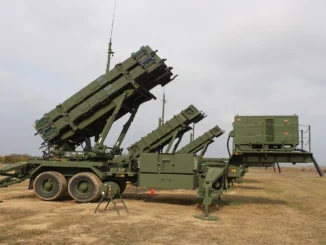
WASHINGTON, D.C. (TIP):An Associated Press report says the US will send US$ 1.8 billion in military aid to Ukraine in a massive package that will for the first time include a Patriot missile battery and precision guided bombs for their fighter jets, US officials said on Tuesday, as the Biden administration prepares to welcome Ukrainian President Volodymyr Zelenskyy to Washington.
US officials described details of the aid on condition of anonymity because it has not yet been announced.
The aid signals an expansion by the US in the kinds of advanced weaponry it will send to Ukraine to bolster the country’s air defenses against what has been an increasing barrage of Russian missile strikes.
The package, which was expected to be announced on Wednesday, will include about US$ 1 billion in weapons from Pentagon stocks and another US$ 800 million in funding through the Ukraine Security Assistance Initiative, which funds weapons, ammunition, training and other assistance, officials said. Zelenskyy and other Ukraine officials have pressed Western leaders to provide more advanced weapons, including the Patriots, to help their country in its war with Russia. The Patriot would be the most advanced surface-to-air missile system the West has provided to Ukraine to help repel Russian aerial attacks.
The timing of the military aid announcement — as Zelenskyy makes his first trip out of Ukraine since the war began — sends a strong message of continued US support for Ukraine as the war drags on.
The aid comes as Congress is poised to approve another US$ 44.9 billion in assistance for Ukraine as part of a massive spending bill.
That would ensure that US support will continue next year and beyond as Republicans take control of the House in January. Some GOP lawmakers have expressed wariness about the assistance.
During the quick trip, Zelenskyy is expected to meet with Biden at the White House, take questions from the press, and deliver an address before Congress. White House officials said the visit, which will come 10 months after the Russian invasion, is meant to help underscore Biden’s message that the US will be there for Ukraine for as long as it takes to repel Russian forces. Biden and Zelenskyy spoke about the possibility of the visit during their December 11 call and the White House formally extended the invitation three days later.
The decision to send the Patriot battery comes despite threats from Russia’s Foreign Ministry that the delivery of the advanced surface-to-air missile system would be considered a provocative step and that the Patriot and any crews accompanying it would be a legitimate target for Moscow’s military.
But the White House is pushing back against the notion that delivery of the Patriot amounts to an escalation of US involvement on behalf of Ukraine.
A senior administration official, who briefed reporters on the condition of anonymity, said that Biden has been clear that his administration would “lean forward” in supporting Ukraine but it is “not seeking to engage in direct war with Russia.” It’s not clear exactly when the Patriot would arrive on the front lines in Ukraine, since US troops will have to train Ukrainian forces on how to use the high-tech system.
The training could take several weeks, and is expected to be done at the Grafenwoehr training area in Germany. To date, all training of Ukraine forces by the US and the West has taken place in European countries. Also included in the package will be an undisclosed number of Joint Direct Attack Munitions kits, or JDAMs, officials said. The kits will be used to modify massive bombs by adding tail fins and precision navigation systems so that rather than being simply dropped from a fighter jet onto a target, they can be released and guided to a target.
US fighter and bomber aircraft use the JDAMs, and the Pentagon has been working to modify them so they can be used by Ukraine. The US so far has been reluctant to provide Ukraine with American fighter jets.
Russia has warned the advanced aircraft would be considered provocative, and the US to date has said other weaponry would be a better fit, citing the significant maintenance and training needs for those warplanes. So instead of providing Ukraine those US aircraft, the Pentagon is helping Kyiv find innovative ways to upgrade its fleet with the same capabilities it would get with a US fighter jet.
The aid package will also include an undisclosed number of rockets for the High Mobility Artillery Rocket System, thousands of artillery and mortar rounds, trucks, and HARM air-to-surface anti-radiation missiles.
According to officials, the urgent pleadings of Ukrainian leaders and the devastating destruction of the country’s civilian infrastructure, including loss of electricity and heat during winter, ultimately overcame US reservations about supplying the Patriots. White House and Pentagon leaders have said consistently that providing Ukraine with additional air defenses is a priority, and Patriot missiles have been under consideration for some time.
Officials said that as the winter closed in and the Russian bombardment of civilian infrastructure escalated, that consideration took on increased priority.
US officials had balked at providing the Patriots to Ukraine because they could be considered an escalation that would trigger a response from Moscow. In addition, there were concerns about the significant training that would be required and questions about whether US troops would have been required to operate it.
Biden has flatly rejected sending any US combat troops to Ukraine.
One Patriot battery routinely includes up to eight launchers, each of which can hold four missiles. It would be coming from Pentagon training stocks in the US. The entire system, which includes a phased array radar, a control station, computers and generators, typically requires about 90 soldiers to operate and maintain. However, only three soldiers are needed to actually fire it, according to the Army.
Mr. H S Panaser President GITCC and Dr. Rahul Gupta, US White House Director of National Drug Policy met with Chief Minister of Karnataka Shri Basavaraj Bommai and discussed issues of mutual interest.Mr. H S Panaser, Dr. Rahul Gupta and members of GITCC team met with Dr C N Ashwath Narayan, Minister for IT & BT, Science & Technology, Higher Education, Skill Development, Entrepreneurship & Livelihood, Government of Karnataka.GITCC team with Karnataka officials.
EDISON, NJ (TIP): The Global Indian Trade and Cultural Council USA (GITCC) is shaping into a Global Platform for Asian Indians to global market, will implement in September 2023, the first US-India Business and Healthcare Summit to bring global healthcare recognition to the region. It will help define India as a hub of innovation for training and research infrastructure in bringing to the region healthcare excellence through knowledge and technology transfers between the U.S. and India. US-India Healthcare Summit will increase commercial ties to implement enterprises tapping U.S.- India expertise to Indian pharmaceutical market expected to grow to US$ 100 billion by 2025.
Mr. H S Panaser President GITCC started meeting the leaders in the healthcare segment in India. He initiated his visit with Dr. Rahul Gupta the US White House Director of National Drug Policy. They Met the Chief Minister of Karnataka Sh. Basavaraj Bommai and Dr C N Ashwath Narayan, Minister for IT & BT, Science & Technology, Higher Education, Skill Development, Entrepreneurship & Livelihood, Government of Karnataka to deliberate on new avenues in anti-narcotics and manufacturing of medication to treat drug dependence for US and other markets in the backdrop of firms globally pursuing the China-Plus-One strategy.
Collaborative engagements in the areas of enforcement, regulatory frameworks, transparency through effective IT Systems, building of robust frameworks for the growth of the pharmaceutical industry were discussed. As per the New Education Policy (NEP), the government unveiled its ambitious ‘Twinning Programme’ in 2021. A first-of-its-kind in India, it aims to internationalize higher education. Cooperation in student exchange programs, educational twinning programs, curriculum building, upskilling and job growth in leading edge programs in Healthcare, Biotech, Tele-health, IT and Data Security were also discussed in detail.
A 2021 World Drug Report released by the United Nations Office on Drugs and Crime (UNODC) indicated that over 36 million people have suffered from substance use disorders (SUD). According to Global Data’s Clinical Trial Database, nearly 80% of clinical trials are being sponsored by academic institutions, the pharmaceutical industry is lagging behind in the clinical arena of addiction treatments.
Post the discussion, Dr CN Ashwath Narayan said, “India and the USA are already working on bolstering the India-US counter-narcotics agreement as India assumes G20 presidency from December this year. The Government of Karnataka is exploring partnerships with the USA to continue to strengthen this dialogue. Further, we will share best practices for monitoring the use of unregulated chemicals in drug manufacturing. We look forward to interacting with the White House and delegates from the US soon.”
With its robust ecosystem of IT, pharma R&D centers, manufacturing, academic institutions, and leading technology companies, Karnataka is the only state in India that maintains a country-to-state relationship akin to country-to-country bilateral relations
We were humbled to be invited by KDPMA, the Apex body of the Pharmaceutical Manufacturers in Karnataka with members from Small, Medium, and Large-Scale Units, Government Enterprises and Multinationals, to an event “Meet and Greet,” Dr. Rahul Gupta on 14th November 2022. Mr Harish Jain, President KDPMA and Mr. Suresh Khanna of IPA, welcomed the attendees and the GITCCs team consisting of the chief Guest Dr Rahul Gupta and Mr. H S Panaser A wide range of topics were addressed including API, Generic, Anti-Narcotics Medical Devices, AI and ML in Healthcare and Pharmacovigilance and Cyber Security. We talked about working as “We” not “I” on a global platform, The first such initiative of all coming to one platform as top manufacturers, MSMEs and SMEs will participate in the First US India Healthcare Summit 2023 in NY to be organized by Global Indian Trade and Cultural Council USA
Dr. Rahul spoke at the event, emphasizing the severity of Drug menace and advocated a campaign of Corporate Social Responsibility initiative as in being initiated by GITCC and other organizations in the US. Mr. Panaser emphasizing on deepening US India business relations and on the Drug menace. Dr Gupta appreciated the CSR initiative as in being initiated by GITCC It was humbling to have Dr. H. G. Koshia, Commissioner FDAC, Gujarat as an honorable speaker presenting the overview and economic snapshot, the regulatory framework along with other drivers for growth in Pharmaceuticals and Educational infrastructure of India and Gujarat and the US India initiations.
The event was attended by Food and Drug administration officials, ‘ business leaders’ bureaucrats and pharmaceutical manufacturers from Karnataka, Telangana, and Gujarat. Our special thanks to KDPMA, its President Mr. H Jain and Mr. S. Khanna for organizing this event. Our special thanks to Mr. A Surana of Micro Labs and Mr. U K Singh of Kumar Organics for sponsoring this event.
FIA Chicago Executive team.Dr Rashmi Patel addresses FIA members.Dr Rashmi Patel, President FIA Chicago.
CHICAGO (TIP): Chicago’s eminent physician and renowned hospitality entrepreneur Dr Rashmi Patel has been elected the President of the Federation of Indian Associations (1980) Chicago. He and his Executive Team was elected at the organization’s elections held on 18 Dec 2022. FIA Election Committee comprising three of the FIA Trustees Kanti Patel, Rajesh Patel, and Bhailal Patel presided over, and conducted the election process. Chairman of the Board of Trustees, Satish (Sunny) Gabhawala oversaw through videoconferencing. A Large number of Trustees, Past Chairs, and Past Executives were in attendance.
The elected Executive includes Dr Rashmi Patel, President; Mukesh Shah, Secretary; Nitin Patel, Exe Vice President; Cecil Joseph Vice President; Rajesh Singapori Vice President; Shrujal Patel Vice President; Jayantilal Patel Joint Secretary; Dr Hemant Patel Treasurer; and Hina Pandya Joint Treasurer.
In his acceptance speech, President Dr Rashmi Patel, outlined the goals that he would executive and achieve during his presidency. On behalf of his newly elected Executive Team, he thanked all the trustees and outgoing committee for their efforts and input in the FIA Chicago. He assured the community of all-inclusive initiatives under his tenure.
Dr. Rashmi Patel and his panel are eager to take the FIA to a new height and instead of few routine yearly programs, announced to conduct and do more programs to make the FIA strong by reaching out to all the Indian organizations, association members, and all the NRIs in the Chicagoland area. They want to have a routine health clinic, an open FIA office for routine communication, immigration help and Medicare and Public aid insurance advisors available routinely. There are many more programs being planned soon.
Dr. Rashmi Patel has been a practicing physician for the last 35+ years and has been a part of many different associations including FIA. He served as a President for the Care and Share organization for 2 years and helped lots of needy and destitute in the communities. He helped the Lions club in opening new blood banks in the state of Gujarat. Dr. Patel routinely conducts the Reiki treatment seminar and yearly holds the Reiki educational seminars. He is involved in philanthropic work. Should you have any questions, suggestions, ideas or concern please contact him or any board member by email at Fiachicago2023@gmail.com
The FIA Chicago’s elections attracted an impressive response with almost all of the member organizations turning up for the elections. The election hall was packed to seams as the election committee smoothly conducted the elections. The statement of the FIA account and finance was also presented before the member organizations.
AIA-National President Gobind Munjal addresses the gathering.Chief Guest Manish Kulhari, Consul (Trade) appreciated the AIA National for organizing the informational and educational seminar for the benefit of the community.the experts who spoke on the occasion.
GARDEN CITY, LONG ISLAND (TIP): The Association of Indians in America (AIA-National) held a Free Seminar on Tax Planning and Financial Seminar at Mint Restaurant in Long Island on Monday Dec 19, 2022 at 7 PM, which was quite a success. This Tax Seminar was attended by respected and eminent individuals, past National Presidents and Chapter Presidents of AIA, executive committee members, community leaders and dignitaries including members of the Media. Consul (Trade) Manish Kulhary from the Indian Consulate graced the occasion as Guest of Honor.
AIA National wanted to bring to the Indian Community such type of informational, educational and awareness seminars of public interest. Earlier in the year AIA National had arranged 2 very successful conferences on Awareness and Empathy. And now it arranged a seminar on Tax planning including Estate & Gift Tax and Business Insurance at Mint Restaurant in Garden City, Long Island on Monday Dec 19th 2022 said Mr. Gobind Munjal, National President of AIA. We brought renowned and eminent speakers CECIL NAZARETH ACA, CPA, MBA, who is expert on National and International Taxation and Accounting and have done many seminars all over the world. He has also authored the book titled International Tax & Compliance Handbook (with special emphasis on India-U.S. taxes). Whereas renowned Attorney MICHAEL MARKHOFF Esq. from White Plains addressed the audience on Estate and Gift taxes, Mr. Patrick Scanlon and Patrick Ryder of Enforce Coverage Group in New York spoke on Business Insurance and workmen’s comp, and Business Development officer at Jovia Financial Credit Union Kapila Datt spoke on Health and the various products that they offer at their bank.
Consul (Trade) Manish Kulhari in his speech appreciated the AIA National’s effort to do this type of informational and educational seminars for the benefit of the community.
The Association of Indians in America (AIA) is the oldest not-for-profit organization of Asian Indians in America founded on August 20, 1967. It is the grassroots national organization of Asian immigrants in the United States. With chapters and membership spread across the United States of America, AIA represents the hopes and aspirations of those immigrants who are united by their common bond of Indian Heritage and American Commitment.
NAMC Hall of Famers Nayan Parikh Nayan Parikh with New York Governor Kathy Hochul.New York Mayor Eric Adams is flanked by Nayan Parikh and Mrs. Parikh.Wendell R. Stemley, CMAA, NAMC National President.
NEW YORK (TIP): NAMC 53rd Annual Conference & Affirmation Gala held on November 2 and 3, 2022 at the Sheraton New York Times Square Hotel was a huge success, according to Wendell R. Stemley, CMAA, NAMC National President. The Gala, hosted by the NAMC New York Tri-State Chapter, was attended by nearly 700 guests, including New York Governor Kathy Hochul, New York City Mayor Eric Adams, NAMC Hall of Famers Nayan Parikh, Cheryl McKissack, Don Peebles, Vic Verma, Dan Moncrief, and James Posey, and many others. Mr. Stemley, in his address said : “Over the past several years, NAMC has been deeply involved in efforts to reform small business programs. We believe our efforts are making a difference and that real progress has been made. The bipartisan Infrastructure Investment and Jobs Act strives to provide 10 percent participation for small business concerns owned and controlled by minority socially and economically disadvantaged individuals doing work with all federal agencies. This is one important example of progress. In addition, there has been an increase in the size standard for DBE firms as well as an increase in personal net worth for owners. NAMC has been working towards these changes through the previous three administrations, and the fruition of that labor is being seen.”
“We ask that you continue the good work. Our industry could not have realized these changes alone and there is a real need to continue to recognize the strength of this organization— people like yourself and companies like yours– while NAMC strives to work towards a better future for its members by growing its support base.”
Mr. Stemley thanked U.S. Department of Transportation (USDOT) Secretary Pete Buttigieg and the USDOT team for an engaging and robust conversation with the Secretary about where we are and what we can achieve in business with USDOT. He also thanked U.S. Department of Energy (DOE) and the NAMC media partner, American DBE Magazine, led by Shelton Russell, who helped NAMC achieve a combined online and in person audience of over 500 people during the day panel sessions. National President’s award recipients included Vic Verma, Alpha Insulation & Waterproofing, and Yvette Stevens, Gilbane Building Company. They were honored for outstanding service on behalf of the organization and the minority construction contractor community.
Mr. Stemley recognized NAMC educational partners (Purdue University, Florida A&M University, University of Maryland, Virginia Tech, SUNY Dehli, Procore, and Excelsior University) as well as the two NAMC Student Chapter scholarship winners, Amy Fisher, University of Kansas, and Preston Jackson, Florida A&M University, for presenting.
NAMC’s 54th Annual Conference will be held in the Fall of 2023 in Dallas, Texas.
Dr. Jagdish Gupta addresses.Dr. Patrick O’ Shaughnessy Award (From L- R):Dr. Chuck Lucore-CEO of St. Francis Hospital, Dr. Abhay Malhotra-Immediate Past President, Mrs. Mamta Malhotra, Mrs. O’Shaughnessy, Dr. Patrick O’Shaughnessy- chief Guest, Hon. Bruce Blakeman-Nassau County Executive, Dr. Vinni Jayam-President AAPIQLI, Dr. Jagdish K. Gupta-Chairman Board of Trustees, Dr. Jagat Rawal – Convention Chair and Dr. Raj Jinna-President-Elect.VIP’s and Elected Officials.Entertainment by Atma Dance Company.
LONG ISLAND, NY (TIP): AAPIQLI (American Association of Physicians of Indian Origin Queens Long Island) celebrated their 26th Annual Convention at the Crest Hollow Country Club on Dec 17, 2022, at the behest of the President Dr. Vinni Jayam, Convention Chair, Dr. Jagat Rawal and Chairman Board of Trustees, Dr. Jagdish Gupta,
The ceremony was presided by the Chief Guest, Dr. Patrick O’Shaughnessy, CEO of Catholic Health Services. Studded with guests of Honor, Dr. Chuck Lucore, CEO of St. Francis Hospital and Hon. Bruce Blakeman, Nassau County Executive.
The Chair, Dr. Jagat Rawal welcomed the audience of over 550 attendees including Physicians, Entrepreneurs, Community Leaders, Industry Leaders. It was a day when AAPIQLI showcased their activities and accomplishments in the year. The President Dr. Vinni Jayam elaborated them as ‘Three Pillars’ – Educational, Service and Charitable endeavors. The chairman, Dr. Gupta, highlighted the success of AAPIQLI, being the largest chapter of National AAPI and congratulated all the patron members for its success. The Chief Guest Dr. Patrick O’Shaughnessy and the Guests of Honor Dr. Chuck Lucore, Hon. Bruce Blakeman delivered their appreciative remarks.
The day was about honoring some of brightest and most accomplished Physicians in the Greater NY area. The Honorees this year were
Richard Shlofmitz, Chairman of Cardiology at St. Francis Hospital and Service Line Director of Cardiology for the Catholic Health.
Meena Bansal, Professor of Medicine at Icahn School of Medicine and Director of Transplant Hepatology Fellowship and Translational Research in the Division of Liver Diseases at Mount Sinai Health center.
Rohan Ramakrishna, Chief of Neurosurgery at New York-Presbyterian/Brooklyn Methodist Hospital & Weill Cornell Medical College.
Bhavani Srinivasan, the Lifetime Service Awardee
The celebration included a scintillating dance performance by the AATMA Group and music by Dr. Biba Singh. The program was masterfully MCed by Dr. Sunil Mehra.
We would like to appreciate the efforts of the team including – Dr. Jagdish Gupta, Chair BOT, Dr. Abhay Malhotra, Immediate Past President, Dr. Devendra Shrivastava, Co-Chair, Dr. Venu Palla, Co-Chair, Dr. Raj Bhayani, Media Chair etc.
“As 2022 draws to a close, I wanted to take a moment to wish you and your family a happy and healthy New Year and joyous holiday season!
This past year saw New Yorkers finally begin to get back on track after two years of pandemic difficulties. Our children are now back in school and more and more workers are heading back to work.
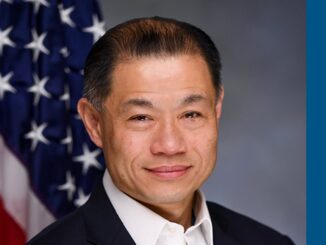
In 2022, boundaries of congressional and state senate districts changed significantly. Beginning 2023, I will represent Senate District 16 where my house of 30 years is now located. I am happy and excited to return to the district I grew up and lived in almost my entire life, and represented in the City Council, which includes Flushing, Bayside, Fresh Meadows, Auburndale, and Oakland Gardens.
As we enter 2023, we look forward to a year of continued recovery, and we look to chart a path forward so that we emerge a stronger community and a better New York for all. We will continue to remain vigilant and mindful of our responsibilities as New Yorkers and citizens of the world. As your New York State legislator, and the Chair of the Committee on NYC Education, I will continue to push for public policies that improve the quality of our public education system, and commit to supporting programs and services that uplift our diverse communities in the New Year and beyond.
Wishing you and your loved ones all the best in 2023!”
WASHINGTON, D.C. (TIP): Two Indian American lawmakers have urged their colleagues to make one more attempt to deliver long due immigration reform after the US House failed to pass the EAGLE Act eliminating 7% per country green card caps.
“Our immigration system is broken and antithetical to our moral values as a country,” tweeted Pramila Jayapal, House member from Washington. “There’s still time left in this session to deliver long-overdue reform. We have to get this done.” “Per-country green card caps create lengthy backlogs to secure permanent status. For immigrants from India, this wait spans 150+ years,” she wrote in another tweet. “As someone who’s been on an H-1B visa, I’m proud to support the EAGLE Act to create a first-come, first-served system.”
Ro Khanna, who represents Silicon Valley too was “disappointed to see that Congress has still not passed the EAGLE Act.”
“I urge House leadership to bring it up for a vote before we adjourn this Congress to end arbitrary per-country green card caps and bring down our decades-long backlog for immigrants,” he tweeted.
Rep Eric Swalwell was also “disappointed that the EAGLE Act, a bill to make our employment-based visa system fairer, hasn’t come for a vote in the House. Too many visa holders & their families are stuck in a green card backlog that arbitrarily discriminates against immigrants from certain countries.” Their comments were retweeted by Saurabh, a backlogged immigrant who tweeted his letter to Indian Foreign Minister, S Jaishankar and the Ministry of External Affairs “requesting them to issue a travel advisory for F1 & H1-B” – visa used extensively by Indian students and skilled workers.
“The environment in the US is not suitable for Indians and it is our moral duty to educate students and high-skilled workers against traveling & engaging with US institutions,” he tweeted
Coreena Enet Suares noted “700,000 Indian expats await Green Cards. Waiting time to receive a PR for an Indian applying today, is 90 years and around 80,000 children are expected to age out before their parents receive permanent residence.”
David J. Bier, associate director of immigration studies at the Cato Institute, a Washington think tank also urged the Biden administration “to act aggressively to prevent the depopulation of the United States by skilled Indian immigrants.”
“Now that EAGLE Act is dead, and Congress is dead for at least 2 years. The admin needs to act aggressively to prevent the depopulation of the United States by skilled Indian immigrants,” he tweeted.
DUBLIN (TIP): Indian-origin Leo Varadkar, former Irish deputy prime minister and leader of the Fine Gael party, has been elected as the new Prime Minister of Ireland following a vote in the lower House of the Irish Parliament. On Saturday, a total of 87 members of the House voted in favor of his nomination as the new prime minister while 62 members voted against it, a news agency reported.
Following his appointment as new prime minister by Irish President Michael D Higgins, Varadkar announced a reshuffle of the Cabinet.
According to a list of the Cabinet members, former Irish prime minister and leader of Fianna Fail Michael Martin will become the new Deputy Prime Minister and Minister for Foreign Affairs and Defense while former minister for foreign affairs and defense Simon Coveney will become Minister for Enterprise, Trade and Employment.
Former finance minister Paschal Donohoe will be the Minister for Public Expenditure and Reform while former minister for public expenditure and reform Michael McGrath will take Donohoe’s position as the new Finance Minister.
There are altogether 15 members in the Cabinet. All the positions held by other Cabinet members have remained the same.
After the nomination was approved by the lower House of the Irish Parliament, the new Cabinet held its first meeting on Saturday night.
This is the second time that Varadkar has been elected as Irish PM. According to an agreement reached by the three parties in setting up a coalition government, Fianna Fail party leader Michael Martin will first serve as the Irish Prime Minister until December 2022 and Fine Gael party leader Varadkar will replace Martin to be the new PM until the five-year term of the current government comes to an end.
WASHINGTON, D.C. (TIP): Indian American technocrat Rajeev Badyal, VP of Technology, Amazon Project Kuiper, is among 30 people selected to serve on the National Space Council’s revamped Users Advisory Group (UAG).
As Chair of the National Space Council, Vice President Kamala Harris announced the new membership on Dec 16 with changes reflecting a new emphasis on climate change and workforce issues.
Pending official appointment by the Administrator of the National Aeronautics and Space Administration, the selected members of the UAG will serve to enable the Biden-Harris Administration’s effort to maintain a robust and responsible US space enterprise and preserve space for current and future generations, according to a White House announcement.
The candidates, the announcement said “represent a cross-section of companies and organizations that support the United States’ large and highly skilled space workforce; users of space services, including climate scientists and agriculture providers; individuals focused on developing the next generation of space professionals; and leading experts in space.
The UAG will provide the National Space Council advice and recommendations on matters related to space policy and strategy, including but not limited to, government policies, laws, regulations, treaties, international instruments, programs, and practices across the civil, commercial, international, and national security space sectors.
The board will be chaired by Lester Lyles, a retired US Air Force general who also serves as chair of the NASA Advisory Council. Harris announced the selection of Lyles at the most recent National Space Council meeting Sep 8 in Houston. Lyles, who previously served on the UAG, succeeded James Ellis, a retired admiral who is no longer on the UAG. Of the 27 members who were previously appointed to the UAG during the Trump administration, only seven people, including Lyles, were retained.
The new UAG includes several people with expertise in climate science and the environment, reflecting a priority that Harris set at the first meeting of the council she chaired in December 2021, according to the report. The UAG does include executives of several other space companies, including Amazon Project Kuiper, Ball Aerospace, Boeing, Maxar and Planet.
“LEO (Low Earth Orbit) constellations like Project Kuiper play an important role in the growing space economy, and this is a great opportunity to help shape the nation’s long-term space policy and strategy goals,” said Rajeev Badyal, vice president of technology of Amazon Project Kuiper and a new member of the UAG, said in a statement according to the report.
Amazon’s Project Kuiper, a low Earth orbit (LEO) satellite network aims to provide fast, affordable broadband to unserved and underserved communities around the world. The earlier UAG included four former astronauts, none of whom are returning: Buzz Aldrin, Eileen Collins, Harrison Schmitt and David Wolf.
The new UAG includes Charlie Bolden, former astronaut and NASA administrator, as well as Sian Proctor, who was pilot of the Inspiration4 private astronaut mission launched by SpaceX in September 2021.
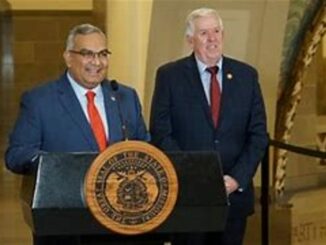
JEFFERSON CITY (TIP): Vivek Malek, a 45-year-old Indian-origin attorney, has been appointed as the first non-white treasurer of the US state of Missouri, according to an announcement made by Governor Mike Parson on Wednesday, December 21. Malek, who moved from Rohtak in Haryana to what’s called Missouri’s Bootheel in 2002 to get his master’s degree in business administration from Southeast Missouri State University, would replace fellow Republican Treasurer Scott Fitzpatrick, who is leaving the position to become state auditor in January. “I am appointing Vivek Malek as the next State Treasurer of Missouri. Vivek’s appointment will fill the vacancy created by the election of Treasurer Scott Fitzpatrick to the Office of Missouri State Auditor,” Parson said in a tweet.
Parson praised Malek’s style of working.
“The people’s money is in good hands with Vivek. He understands the incredible responsibility and privilege it is to serve the people of Missouri and appreciates the importance of true public service,” he said in his tweet.
Malek, who holds a bachelor’s degree from Maharshi Dayanand University in Rohtak, also pursued a Master of Law from the University of Illinois College of Law in Urbana-Champaign, Illinois.
He began practicing law in 2006 and opened a law firm in 2011, the governor’s office said in a statement. Malek was recognized by the Missouri Senate (2015) and Missouri House (2007) for his service and contributions to Missouri communities.
Malek, who is a father of three children, said he would give his best to the people of Missouri.
“It is my honor of life to be able to serve as the next State Treasurer of the state of Missouri, and I promise to give the job and the people of Missouri all and best,” Malek was quoted as saying in the statement.
In 2020, Governor Parson appointed Malek to the Southeast Missouri State University Board of Governors, where he has worked to promote fiscal responsibility. He will resign his position on the Board of Governors prior to being sworn as State Treasures, the statement added. As Parson instilled the responsibility of the State Treasurer in Malek, he showed his confidence in him.
“President Reagan once said immigrants are one of greatest sources of American greatness, and both Vivek and I agree. Through our shared values, Vivek helps legal immigrants embrace our nation and achieve their American Dreams too,” he said.
“Over the years, I have come to know Vivek as an accomplished attorney, successful business owner, proud husband, and father, and someone who truly embodies the American dream,” he added. He was awarded the Minority Business Leader Award by the St Loui Business Journal in 2010, earned the Up-and-Coming lawyers Award by Missouri Lawyers Media in 2010, and was recognized as Top 30 under 30 by Business Today magazine in 2007, among other awards and recognition, the statement said.
LONDON (TIP): A former Indian-origin family doctor in the UK has lost a bid to challenge his 12-year jail sentence for committing sexual offences against women patients between 1983 and 2018. Krishna Singh, 73, from North Lanarkshire, Scotland, was convicted earlier this year of 54 offences, involving 47 women, including a rape victim, teenagers and pregnant women.
Singh’s lawyers had sought to challenge the sentence but permission for an appeal to proceed was not granted by a judge.
“The court is not satisfied there are exceptional circumstances justifying the extension sought,” a judge at the Court of Appeal in Edinburgh said on Wednesday. The appeal judge said that Singh was convicted of a prolonged course of sexual offences against patients which had “a devastating impact on many of the victims”, the Glasgow Times reported.
He added that the proposed note of appeal against the sentence imposed on Singh did not disclose grounds that were arguable.
Singh, who was awarded an MBE in 2013, had denied the charges that he was a “sexual predator hiding in plain sight”.
The High Court in Glasgow heard earlier this year that Singh “kissed, groped, gave inappropriate examinations and made sleazy comments” targeting teenagers and pregnant women.
“You abused this position to carry out unnecessary physical examinations of a sexual nature including examinations without a chaperone and in circumstances where there were no clinical justifications for your actions.
“You undermined the standing of the medical profession and eroded the trust of the female patients,” Lord Armstrong told Singh while delivering the verdict. Detectives from Police Scotland began an investigation into Singh after a woman came forward in 2018 to report him. He was subsequently arrested and charged in April 2018.
“Krishna Singh was a doctor, and in a position of trust, at the time he carried out this sexual abuse. His predatory behavior was appalling for a man in his position,” Detective Inspector Stephen Morris, of the Specialist Crime Division, had said.
A hearing date has now been set by the Medical Practitioners Tribunal Service (MPTS) for January 4, which will finish two days later.
According to media reports, a hearing date has now been set for January 4 by the Medical Practitioners Tribunal Service, which will take decisions on Singh’s medical license and practice.
WASHINGTON, D.C. (TIP): As the architect of the sanction’s regime against Russian President Vladimir Putin, former Deputy National Security Advisor Daleep Singh figures among this year’s ‘Bloomberg 50,’ “the people who defined global business in 2022.”
In February, as a top national security adviser to the White House, Singh was central to US and European efforts to cut off Russia from the global financial system after Putin invaded Ukraine, freezing more than half of his $640 billion war chest, Bloomberg noted.
Besides the Indian American official, Bloomberg’s sixth annual list of “those in business, politics, science and technology, finance and entertainment whose accomplishments deserve recognition,” includes Indian tycoon Gautam Adani, Chairman, Adani Group.
“The Indian tycoon’s wealth has surged more than anyone else’s this year, making him the world’s third-richest person behind Bernard Arnault and Elon Musk,” Bloomberg noted.
Also listed among “Ones to Watch” who could be on next year’s Bloomberg 50, is Rohan Murty, founder and chief technology officer, Soroco India Pvt Ltd., Boston and Bengaluru, India
“Murty is trying to streamline office work via artificial intelligence. Soroco collects and analyzes data on how workers use software across teams and then suggests changes to boost productivity and reduce costs,” Bloomberg said.
Currently, Chief Global Economist, PGIM Fixed Income, Singh quickly became the public face of the administration’s sanctions against Moscow.
He was seen at the White House press briefings and his meetings and discussions with the president have been widely reported in the media. He is the great grandnephew of Daleep Singh Saund, the first Asian-American elected to the US Congress.
He was also deputy assistant secretary of the Treasury for international affairs and acting Assistant Secretary of the Treasury for Financial Markets in the Obama administration.
Singh came to the White House from the New York Federal Reserve, where he played a critical leadership role in the emergency facilities the Fed launched in response to Covid-19.
Before his tenure at the Treasury Department, Singh worked for Goldman Sachs, with a focus on US interest rates and currency markets, from 2003 to 2007, and again from 2008 to 2011.
He was also a partner at Element Capital Management from 2007 to 2008. He is a former adjunct senior fellow at the Center for New American Security and the Atlantic Council.
He was also an adjunct professor of geoeconomics at the Johns Hopkins School of Advanced International Studies. Singh left the government in April and is now overseeing research at PGIM Fixed Income, which has $759 billion in assets under management.
Animation Show of Shows. (Photo: Fusion Entertainment)
After a two-year hiatus, the ANIMATION SHOW OF SHOWS returns to the Quad Cinema in New York City, December 30. This 22nd edition comprises 10 films—nine recent, along with one restored classic—which deal with both the anxieties and hopes of a world faced with a seemingly endless series of existential crises. All are inventive, their tone ranges from the whimsical to the profound; their techniques, from stop-motion to hand-drawn to computer-aided. The nine new films come from Europe, Asia, and North America. The program culminates with a striking restored 4K digital remaster by the Academy Film Archive of Frederic Back’s classic 1987 Oscar-winner, “The Man Who Planted Trees.”
Beyond Noh
3m 55s, 1.78, color, Stop Motion Animation, No dialogue, US & Japan, 2020
Set to a driving percussive score, “Beyond Noh” rhythmically shows us 3475 masks in under four minutes, creating a constantly mutating, almost dancing image — moving from Japanese Noh masks to a variety of tribal ritual masks and on to every possible Halloween mask, from Guy Fawkes to Marvel Comics to the Simpsons.
World Premiere: Tribeca Film Festival, New York City 2020
Empty Places
8m49s, 1.78, color, 3D computer animation, No dialogue, France, 2020
Geoffroy de Crécy presents a portrait of a literally dehumanized world. A record player repeatedly plays Beethoven’s Moonlight Sonata. Elevator doors open and close. A luggage carousel goes round and round, a machine spits out tennis balls, a train mindlessly continues its route. But there is no one to pick up the bags, to hit the balls, to ride the train. It is as though everyone in the world has suddenly vanished without explanation, leaving our objects to futilely serve a non-existent populace. Director Geoffroy de Crecy describes his film as “an ode to the melancholy of machines,” and the melancholy is palpable.
First Public Performance: Annecy International Animation Festival, 2020
“So hard to think it’s gonna be good and better. It’s too complicated. So easy to think it’s gonna be bad and worse.” So goes Tova Gertner’s graceful, melancholy waltz. Director Gil Alkabetz presents us with a series of surreal vignettes, invoking famous works by (among others) Picasso, Dali, Magritte, Duchamp, and Saul Steinberg. Many involve distortions of the human form, in the manner of Bill Plympton, the result is unsettling (even when funny), bemoaning the human tendency toward pessimism.
First Public Performance: Animix Festival, Israel 2021
Zoizoglyphe
7m44s, minimal color, 2D hand drawn animation, France, 2021
This wildly inventive short is the work of Jeanne Apergis, who was born in 2000. A bunch of little bird-like figures pop up on screen. They organize themselves into phalanxes; one outlier joins them, setting off a chain reaction that drives them across the screen. Their movements generate the soundtrack. As they cascade, there is the illusion of watching an optical representation of the sound.
First Public Performance: Annecy International Animation Festival 2021
Rain (Deszcz)
5m13s, 1.78, color, 2D Hand Drawn Animation, no dialogue, Poland, 2020
A man stands on the roof of an impossibly tall skyscraper, having a smoke. Someone playfully sneaks up behind him, so startling him that he falls off the roof. This humans-as-lemmings scenario can be read any number of ways, all of them damning views of human nature.
First public performance: Annecy International Animation Festival 2019
Average Happiness
7m03s, 1.78, color, 2D Hand Drawn Animation, No dialogue, Switzerland, 2019
A statistics professor is delivering a very dry lecture on “Introductory Econometrics for Finance 1 & 7,” using “average happiness” as an example. It’s so dry that the graphs he’s explaining seem to get bored. Working from found footage, director Maja Gehrig alternately connects and disconnects the images from the real-world aspects they are meant to convey. “I took them out of their context to give a new context in my film.” Joy Frempong’s music and Peter Bräker’s sound-design make the diagram-world real and buoyantly express the mood of the diagrams.
First Public Presentation: DOK Leipzig, Germany 2019
Aurora
5m15s,1.77, color, 2D hand drawn animation, US, 2020.
Director Jo Meuris’s “Aurora” has the simplest of stories: Jojo is a pig-tailed little girl who falls in love with a horse named Aurora. When Aurora moves away, Jojo’s heart is broken. But, after a while, another horse comes into her life, and, while he’s definitely not Aurora, the girl comes to love him, and her heart begins to heal. The result is a charming, bittersweet expression of love lost, regained, and replicated — with a nod to the ways in which our lost loves live on in our memories and dreams.
First Public Screening: University Video and Film Association Conference July 2020
Yes-People (Já fólkið)
8m35s,1.77, color, 3D computer graphics animation, Iceland, 2019
In this Oscar-nominated short, Gísli Darri Halldórsson presents a day in the life of the residents of an apartment building, as they wordlessly go about their business…. or almost wordlessly: the one word we hear repeatedly is “Ja” (yes).
As is often the case in real life, these neighbors barely interact with anyone other than their own families. But the thin walls create a sort of vague community through sound. Music, TV, and lovemaking are all loud enough to breach the solitude of apartment living.
First public screening: Minimalen Short Film Festival Norway, 2020
As a young woman leaves for college, a thread from her skirt gets caught on her old swing. When she walks to the waiting cab, her skirt doesn’t unravel, but the swing does. All the lines that compose the swing pull away until it collapses. Only the actions of her mom are able to break the thread and stop this wholesale destruction. Mom is even able to reconstruct her husband out of the jumble of thread. Russian animator Dina Velikovskaya’s film converts the age-old notion of “family ties” into a graphic reality. The girl’s departure is a metaphor for “empty nest” syndrome. It unravels the family unit, which then has to find the strength to reformulate their lives in her absence.
First public performance: DOK Leipzig, Germany, September 2019
The Man Who Planted Trees
30m8s, 1.33, color, 2D Hand drawn, Canada, 1987
This year’s ANIMATION SHOW OF SHOWS ends with Frederic Back’s 1987 classic, “The Man Who Planted Trees,” presented in a striking restored 4K digital remaster by the Academy Film Archive and color corrected for ANIMATION SHOW OF SHOWS at Picture Shop Post by Sr. Colorist Kris Santa Cruz. The Oscar-winning film, narrated by Christopher Plummer, tells the story of a young man’s encounter with an isolated shepherd, Elzéard Bouffier, who is determined to renew his barren landscape by planting thousands of trees. Based on a possibly autobiographical 1953 fable by Jean Giono, it’s a beautifully hand-drawn epic — an environmental plea ahead of its time. As the shepherd’s efforts bear fruit, the film’s palette gradually moves from dusty browns to a range of colors, evoking memories of the great impressionist painters.
First public performance: Landmark Theater, Los Angeles, U.S.A. 1988
(Mabel Pais writes on The Arts and Entertainment, Social Issues, Health & Wellness, Cuisine and Spirituality)
Reiterating the Centre’s zero-tolerance policy on the drug menace, Home Minister Amit Shah has announced that big criminals involved in narcotic trafficking would be put behind bars in the next two years. He has admitted that profits from the drug trade are being used to finance terrorism, while expressing concern that the ‘dirty money’ thus generated is hurting the country’s economy. According to the minister, the mapping of drug routes has been done in 472 districts, even as narcotic contraband is entering the country from across the border through drones, tunnels, ports and airports. Shah’s statement in the Lok Sabha came hours after the Border Security Force (BSF) recovered around 26-kg heroin from a field in Fazilka, a border district of Punjab. Suspected Pakistani smugglers had abandoned the drug packets and escaped after the troops opened fire. On the intervening night of December 20-21, the BSF had shot down a drone near Amritsar and seized over 4 kg of narcotics.
Attempts by smugglers to push narcotics and weapons into India through drones and other means have increased during the ongoing winter season, when dense fog envelopes the region. The BSF says it has stepped up vigil near the India-Pakistan border in Punjab, but the frequent seizures don’t seem to be deterring drug traffickers. Most of the drugs smuggled into India originate from the ‘Golden Crescent’ (comprising Afghanistan and parts of Pakistan) and the ‘Golden Triangle’ (including areas of Myanmar, Laos, Vietnam and Thailand). There are reports that the illicit drug trade continues to flourish in Afghanistan under the Taliban regime, which had promised a crackdown on narcotics after it grabbed power in August last year. India has proactively used multilateral platforms this year to push for a joint fight against terror funding.
There is a need to up the ante and call out nations aiding or abetting narco terror. On the ground, the security forces should be equipped with state-of-the-art counter-drone technology to block the aerial route of drug supply. Synergy among agencies and governments holds the key to breaking the back of drug cartels.
The United States should push Ukraine to find a solution to the conflict with Russia
Ukraine President Volodymyr Zelensky’s visit to Washington, his first overseas travel since Russia’s invasion on February 24, and the Biden administration’s decision to send a new $1.8 billion military aid package, including Patriot missile defense systems and precision-guided missiles, are a testament to the deep relationship Ukraine and the U.S. share in the time of war. Ukraine has already received American financial and military funding from approved assistance worth around $54 billion. The U.S. supply of long-range missiles (HIMARS) has played a major role in Ukraine’s recent battlefield advances in Kharkiv and Kherson, after its heavy losses in Donbas. The Patriot missile system is expected to strengthen Ukraine’s air defenses at a time when Russia is bombarding the energy grid and water supplies. In Washington, President Joe Biden discussed a 10-point peace formula with Mr. Zelensky (the details are unknown) and also promised continued support “for as long as it takes”. Both leaders tried to send out a message of unity amid concerns of cracks in the western alliance as the war is continuing indefinitely with its massive economic costs.
The U.S. has gradually stepped up its supply of weapons to Ukraine, but is still wary of sending offensive weapons out of fears of escalating the conflict. Ukraine has relentlessly campaigned for more advanced weapons, including U.S. aircraft, tanks and long-range tactical missiles. While Mr. Biden said his administration would continue to back Ukraine, he also warned of the risks of sending offensive weapons to Ukraine, which could “break up NATO, the EU and the rest of world”. Currently, Ukraine has a battlefield advantage, recapturing swathes of territories in the northeast and south. But Russia has air superiority. The Patriot missiles could offer some protection to Ukraine but could also prompt Russia to carry out heavier attacks. This leaves Mr. Biden in a dilemma. He is ready to bolster Ukraine’s defense but does not want to provoke a wider war between Russia and NATO. His Ukraine policy should not be an open-ended weapons supply package. The U.S. could help its ally but it should also push for a sustainable solution to the conflict. It should use its continued support to Ukraine to mount pressure on Russia — as its weapons play a critical role in Kyiv’s counterattacks — and persuade Ukraine to resume direct negotiations. At this point, no military solution seems likely. Unless there is a credible push for talks, the war is likely to continue for the foreseeable future.
”The year 2018 could have marked a decisive shift for the Congress, if only the leadership had captured the zeitgeist it was leading to. The party had won Assembly elections in three states which were in the BJP’s thralldom. Madhya Pradesh, Rajasthan and Chhattisgarh were not easy states to wrest from the BJP. This was the juncture at which the Congress could have addressed the leadership question on a clean slate, without getting daunted by the entrenched provincial Old Guard. This was the juncture to spot and nurture younger leaders from the grassroots to helm the states instead of allowing a sclerotic hierarchy to work the system on rickety limbs.”
By Radhika Ramaseshan
The year 2018 could have marked a decisive shift for the Congress, if only the leadership had captured the zeitgeist it was leading to. The party had won Assembly elections in three states which were in the BJP’s thralldom. Madhya Pradesh, Rajasthan and Chhattisgarh were not easy states to wrest from the BJP. This was the juncture at which the Congress could have addressed the leadership question on a clean slate, without getting daunted by the entrenched provincial Old Guard. This was the juncture to spot and nurture younger leaders from the grassroots to helm the states instead of allowing a sclerotic hierarchy to work the system on rickety limbs.
The Congress displayed the spunk to shake up the system only in Chhattisgarh. It chose Bhupesh Baghel, then 57, as the chief minister in place of veteran TS Singh Deo, a running favorite, with a reported assurance to Singh Deo that the position was a rotational arrangement between him and Baghel. With just a year for Chhattisgarh to vote, the assurance, if real, never materialized. Baghel, a backward-caste Kurmi, not only survived internal challenges but also became a lynchpin of the national Congress organization. His ascendancy was a recognition and an acknowledgment on the Congress’s part that to survive and retain the base it is left with, strong state leaders were invaluable.
The Congress missed the bus in MP and Rajasthan. In MP, Kamal Nath, 72 in 2018 and remarkably agile, positioned himself as the frontrunner through deft footwork, leaving younger leaders, notably Jyotiraditya Scindia, to search for options.
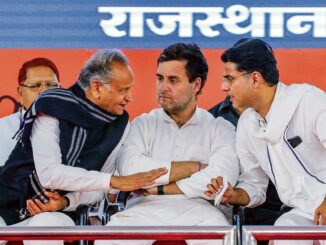
In Rajasthan, evidently intimidated by the perception that Ashok Gehlot, then 67, had a formidable organizational network of his own (which inevitably failed after he completed his five-year term as the Congress’s rout in 2003 and 2008 testified), the party played safe and rooted for Gehlot to helm a third term. Like Scindia, a much younger Sachin Pilot, projected as Gehlot’s closest rival, was left hanging. The Congress’s fear was that Gehlot could inflict considerable damage to the party if driven up the wall.
The grit displayed in Chhattisgarh — that was perhaps because Singh Deo was seen as less troublesome than Nath and Gehlot — evaporated in Madhya Pradesh and Rajasthan.
It need not have played out that way because out of this trio of states, Chhattisgarh is regarded as a sure-fire winner a second time. If re-elected, it will prove that the limited experimentation paid off for the Congress.
In Himachal Pradesh, the Congress top brass overlooked the time-honored metric of lineage and ‘stature’ when it went for Sukhvinder Singh Sukhu as the CM. Lok Sabha MP Pratibha Singh held on to her claim to the last, insisting that the victory symbolized a homage to her departed husband and former CM Virbhadra Singh. Hers was a contention whose emotional quotient might have worked in the old days but in an era in which ordinariness commands a higher premium over bloodline in politics, Sukhu, the son of a bus driver, pipped her to the post.
The Congress awaits its next big leadership test in poll-bound Karnataka, where it is caught in a welter of rivalry between the old warhorses, Siddaramaiah and DK Shivakumar, who refuse to forfeit their assumed prerogative to lead the party even on peril of losing an election. Will the high command have the mettle to call their bluff or let the party go adrift amid their strife? By now, the Congress should have developed a second line of leadership, but it passed up the opportunity.
Leadership transition in politics, as in every winner-takes-all venture, is painful. While change ushers in the arrival of the next generation, it also brings the possibility of a different functioning mode from what the elite and the rank and file are used to.
Unlike industry, the fear in politics is partially unfounded because the original structure in which parties exist is rusted and will not countenance, let alone implement, the radical changes its timeworn frames are called on to do. Politics is essentially conservative and change-averse.
The BJP under Prime Minister Narendra Modi is often described as unrecognizably different from the party that existed under Atal Bihari Vajpayee and LK Advani. That is not true. The BJP and Modi command a majority of their own and are, therefore, supremely well placed to execute the RSS’s agenda in almost every sphere of governance. A centralized political entity, allowing marginal latitude to the states, has been at the heart of the Sangh’s political philosophy. So, it is not surprising that the BJP’s command structures have been refashioned to enforce the might of the center in which the losers take nothing, not even the leftovers. The compulsions in the preceding dispensations were different. Vajpayee ran an unwieldy coalition because the BJP never gained the numbers to stand on its own. It had to contend with pesky allies as well as the Sangh’s incessant demands and could keep neither very happy.
Does this mean that the seemingly invincible central BJP always overrides the states? Himachal partially busted the myth because the BJP’s rebels refused to heed Delhi’s entreaties to back off and help the official candidates. The BJP is struggling to get its Chhattisgarh, Bihar and Rajasthan organizations in place because these states are bereft of credible leaders to replace the veterans in Chhattisgarh and Rajasthan, while Bihar never had a helmsman. The BJP leaned so heavily on the Janata Dal (United) that the state party was eviscerated. The BJP’s lacunae do not solve the Congress’s problems. A stated objective of Rahul Gandhi’s Bharat Jodo Yatra was to re-energize the party organizations in the states. The aftermath? Days after the walkathon traversed Telangana, there was a virtual revolt against the state Congress president, A Revanth Reddy, for allegedly patronizing the TDP defectors over the original leaders. There are no short cuts.
Scrutinizing declarations of a decline in levels of terrorism and reactivating the proposal for the Comprehensive Convention on International Terrorism are some of the steps needed
By M.K. Narayanan
M.K. Narayanan
The world has been witnessing a flurry of meetings and conferences on the issue of countering terrorism worldwide. The list resembles an alphabetic soup, viz., meetings of the United Nations Security Council Counter-Terrorism Committee, the No Money for Terror Conference, and an Interpol Conference in which terrorism figured prominently. The recurring theme has been the need to wage a coordinated fight against terrorism. Nothing much, however, seems to have changed. India and Pakistan, for instance, among the most affected by terrorism, have continued to hurl invectives at each other instead of finding ways to cooperate to deal with the terrorism menace. Much of the world is continuing on their paths. None of this augurs well for the fight against terrorism.
The relevance of past instances
An oft-repeated comment is, hence, worth recalling, viz., history is most relevant when it comes to ensuring a proper understanding of threats such as terrorism, which have a long-term impact. While there appears to be a lull as far as major terror incidents are concerned, it must not be lost sight of that it was as recently as at the beginning of this century that the world witnessed several landmark terror attacks. Two that stood out were the September 11, 2001 terror attack in New York, and the November 26, 2008 attacks on multiple targets in Mumbai. Both in their own way reflected the kind of paradigmatic changes that were taking place in the practice of violence. Both had profound strategic implications. The 9/11 attack heralded what came to be regarded as ‘new age terrorism’, while Mumbai underscored the dangers of state-sponsored terrorism. With these attacks the cognitive map of terrorism had changed.
This was confirmed by the series of major terror attacks that took place in 2015-16. The attacks on the Charlie Hebdo offices in Paris (January 2015) and on the Bardo Museum in Tunis (March 2015), were followed by the one in Istanbul (in which several were killed, in 2016) There was also the attack in Paris again, in November 2015 (in which at least 130 were killed, signaled not only the emergence of ‘new age’ terrorism but also the rise of new terrorist entities such as the Islamic State (IS) and the al Qaeda — each with their own caliphs. During 2016, the IS launched several more spectacular attacks (some with its allies) across Asia, Europe and North Africa. The intensity has since declined to an extent, but this is offset by indications of new complicated patterns of relationships among various terrorist conglomerates. It has provided a fillip to many fringe extremist organizations that nurse a terror mindset. Hence, it would be wise for those in authority to heed the warning that terrorism could well prove to be the defining threat of not merely the present, but to future generations as well.
Terrorism remains the omnipresent threat that it has always been. The locales may shift but the threat remains. While Europe and Asia remain in the cross hairs of different terrorist groups, Africa and northwest Asia appear to have become the main hunting ground of the al-Qaeda and IS terrorists. Linkages among terrorist groups, have if anything, become strengthened, and evidence of this was forthcoming very recently when al-Qaeda leader, Ayman al-Zawahiri (successor to Osama bin Laden) was identified as living in Kabul in a ‘safe house’ maintained by the Haqqani Network (which has ties with Pakistan’s intelligence). Zawahiri was eliminated in July 2022 in a U.S. directed ‘Hell Fire’ missile attack while he was still in Kabul. All this confirms, if confirmation was required, that al-Qaeda has both an advocacy and an advisory role, vis-à-vis, the Taliban in Afghanistan.
What is also becoming evident is that al-Qaeda’s activities in particular are becoming more decentralized. It is finding fertile grounds in the Sahel region of Africa and in Eastern Africa, apart from its salience in Afghanistan. Among the al-Qaeda’s firmest allies today is, undoubtedly, the Taliban. The Haqqani Network within the new Taliban government provides many an opportunity for al-Qaeda to find greater traction across the region.
A new mix
The belief that the growing ambit of terrorist activities was the primary reason for the recent spate of meetings on terrorism would, however, be misleading. Very little seems to have been discussed at these meetings on how to deal with the spate of newer terror groups, i.e., groups apart from al-Qaeda and the IS, whose ambit of activities had widened and become more widespread. There is again no indication that the meetings took stock of the fact that ideology intertwined with religious extremism had become an even more potent threat than previously. Instead, it would seem that the terrorist ‘handle’ had become a useful ploy for many governments to drum up support for their various initiatives, without much substance to their declarations.
Many of the past problems still remain. The declining level of serious terrorist incidents do not, however, translate into a decline in terrorism. No doubt, today’s scaled-down attacks of little-known targets do not attract public attention. But as in most other fields of human endeavor, it is the small incidents that portray what could happen in the near and the not-too-distant future. It would be unfortunate if counter-terrorism experts across India were not to read proper meanings into many recent terror attacks, such as the one in Coimbatore (Tamil Nadu) and Mangaluru (Karnataka) attacks. The incidents may appear relatively insignificant but are symptomatic of growing radicalization and suggestive of the fact that a sizeable base is being built in the southern region, which could lead to the creation of organizations on the model of the Indian Mujahideen (of the early 2000s). Constant and careful vigil by counter-terrorism experts is needed to keep track of not only these activities but also the kind of links that are being established (under the radar) by global terrorist outfits whose presence is not as widely advertised as that of al-Qaeda and the IS.
Measures needed
Hence, what is most needed by world leaders, at one level, is not to accept all declarations of a decline in levels of terrorism at face value and, at another level, not to treat some terrorists as good and others as bad, based on each nation’s predilections. The next step is to reactivate the proposal for the Comprehensive Convention on International Terrorism (CCIT) that has been languishing in the offices of the UN (since India first proposed this in the 1990s) and finalize the list of items needed to check terrorism globally. Acceptance of the CCIT would send signals far more potent than empty platitudes by world leaders at global conferences on the need to defeat terrorism. Once the CCIT is accepted by the UN, the war on terror would gain a new salience.
Additionally, counter-terrorism agencies the world over need to hone their skills and capabilities on how best to counter ‘new age terrorism’. There is also a clear need for counter-terrorism agencies across the world to function in a more coordinated manner, exchanging both intelligence and tactics. They need to take stock of the newer patterns of terror such as ‘enabled terrorism’ and ‘remote control terrorism’, viz., violence conceived and guided by controllers thousands of miles away, positing the dangers of Internet-enabled terrorism. Counter-terrorism experts will again need to enlarge their expertise to accommodate multi-domain operations, and undertake terror ‘gaming’, all of which have become essential in today’s day and age.
(The author is a former Director, Intelligence Bureau, a former National Security Adviser and a former Governor of West Bengal)
“Experienced in public affairs, Kejriwal should know that as long as the party concentrates only on him it will never be able to spread its wings to the rest of the country. Democracy imposes responsibilities on political parties in many ways, but, above all, a party cannot be democratic unless it practices inner-party democracy. The results in Himachal Pradesh and Gujarat show up the limits of a one-man party. A party needs cadres. It also needs ideology so that its members know what they stand for and what they stand against. Before we vote for a political party, we must know what its worldview is. A democratic party has to be committed to human emancipation from domination and oppression.”
Apart from service delivery, the AAP’s initiatives such as report cards and polls on who the CM should be, carry appeal. Untrammeled by any kind of ideology, the leadership adjusts its rhetoric according to the mood of the country — from publicly reciting Hanuman Chalisa to demonstrating patriotism through flags. The party should tell us unequivocally what it stands for or against.
By Neera Chandhoke
In the 1970s and 1980s, the reinvention of civil society in eastern Europe re-catalyzed a powerful debate on what was called the ‘crisis of representation’. Citizens turned their back on Stalinist states and began to connect with each other in civil society through organizations ranging from discussion groups to soup kitchens. The future belonged to citizen groups and social movements linked through coalitional politics and ideologies.
In India, the crisis of representation took hold of the political imagination after the Emergency and escalated in the years that followed. Indians looked for an alternative to a moribund party system. Over time, political disenchantment led to the consolidation of two sorts of political formations. In the 1980s, the Hindutva movement extended the ideological commitment of its parent organization — the Rashtriya Swayamsevak Sangh — into every arena of collective life.
In 2012, a new party was created out of the 2011 ‘India Against Corruption’ movement which took the country by storm. Interestingly, the campaign against corruption had a place for everyone — from the religious right to the left. Ideology was done away with.
After spectacularly winning the Delhi elections in 2015 and 2020, Arvind Kejriwal set his sights on transforming the Aam Aadmi Party (AAP) into a national party. In the recent elections in Gujarat, the AAP secured 12 per cent of the votes — after having got the required vote share in the Assembly elections in Delhi, Punjab and Goa. It has become a national party in 10 years. This is remarkable considering that experienced regional leaders from Lalu Prasad Yadav to Chandrashekar Rao have not been able to secure this status for their parties.
Apart from service delivery, the AAP’s initiatives such as report cards and polls on who the CM should be, carry appeal. Untrammeled by any kind of ideology, the leadership adjusts its rhetoric according to the mood of the country — from publicly reciting Hanuman Chalisa to demonstrating patriotism through flags.
We are caught between a highly ideological party and a party that disdains ideology. The cadres of the BJP intend to rework every institution/practice in the country, from marriage to schools, to universities, to renaming and restructuring of spaces, to rewriting of history, and to refashioning of the nationalist imagination. The AAP prefers to concentrate on pragmatic solutions to issues such as education and healthcare, reduction of power bills and promotion of mohalla clinics. Has the AAP failed to transcend its original avatar as a civil society organization? Perhaps. Consider the implications of concentrating on issues that are civic, rather than wholly political, such as democracy. Citizens have the right to well-being for which quality education, healthcare, employment, housing and income are essential components. More significantly, citizens have the right to civil liberties, the right to not be imprisoned without due cause, the right to freedom of thought and expression, the right to protest, and the right to not be harmed.
Whether it was the anti-CAA agitation in December 2019-January 2020, the assault on Jamia Millia Islamia and JNU faculty members and students in January 2020, communal violence in north-east Delhi in February 2020, protests at Shaheen Bagh or the indiscriminate arrests of journalists, academics, civil society activists and students, the AAP has preferred to sit on the fence. Presumably, the AAP does not support violation of rights, but acts of omission are as complicit with infringements of basic rights as acts of commission. As long as the AAP shies away from taking a stand on basic democratic rights, the party will remain a service provider which also fights elections.
Experienced in public affairs, Kejriwal should know that as long as the party concentrates only on him it will never be able to spread its wings to the rest of the country. Democracy imposes responsibilities on political parties in many ways, but, above all, a party cannot be democratic unless it practices inner-party democracy. The results in Himachal Pradesh and Gujarat show up the limits of a one-man party. A party needs cadres. It also needs ideology so that its members know what they stand for and what they stand against. Before we vote for a political party, we must know what its worldview is. A democratic party has to be committed to human emancipation from domination and oppression.
To argue that a political platform of a party intends to fix political predicaments through improving schools and hospitals — noble as these objectives might be — is to decontextualize the whole issue of what citizens want. We need healthcare and education, but we also need rights. Rights come in packages; they are indivisible. We also need freedom of thought, action and expression.
The AAP is a party many of us have invested in, but it must not stop at limiting its notions of a good life to schools and clinics. These are components of a good life, but ultimately it is rights that defend the dignity of human beings. It is rights that mark out the agenda of a party from cynical power-grabbing platforms. The AAP should tell us unequivocally what it stands for or against. It should not be reduced to a service provider. The party should restore its democratic credentials to avoid this fate.
LONDON (TIP): Britain’s first Indian-origin Prime Minister Rishi Sunak has defended the UK’s record on race amid a brewing row over controversial remarks by a columnist attacking Prince Harry’s wife Meghan Markle, who is of African-American heritage.
Sunak was addressing questions posed by reporters during a visit to the Latvian capital of Riga on Monday, December 19, when he spoke out against racism and highlighted his own heritage as carrying some weight on the subject.
“I absolutely don’t believe that Britain is a racist country. And I’d hope that as our nation’s first British Asian Prime Minister when I say that it carries some weight,” he told reporters.
“You know, I’m really proud of our country, its culture, its resilience, its beauty. And actually, it’s an enormous privilege to champion Britain and indeed, its institutions like the monarchy when I’m out and about on the world stage as I am here today,” said the UK-born politician, who has his family roots in Punjab.
Sunak was reacting to an ongoing row over former television presenter and columnist Jeremy Clarkson writing in ‘The Sun’ about loathing Meghan Markle, the Duchess of Sussex, “on a cellular level”, in the wake of the controversial ‘Harry and Meghan’ documentary being aired on Netflix recently.
Clarkson’s column received over 6,000 complaints to the Independent Press Standards Organisation (IPSO), resulting in an apology from the writer and the newspaper removing the column from its website. “For everyone in public life, language matters,” said Sunak, when asked about the furor. Meanwhile, more than 60 cross-party British MPs have written to the editor of ‘The Sun’, Victoria Newton, to demand action be taken against Clarkson.
In a letter, they said Meghan Markle had received credible threats to her life and that columns such as Clarkson’s contributed to an “unacceptable climate of hatred and violence”.
The letter, coordinated by the Conservative Party Chair of the Women and Equalities Select Committee in the House of Commons, Caroline Nokes, was signed by fellow Tory MPs as well as Opposition MPs from Labour, Lib Dem, Green and SNP.
“We cannot allow this type of behavior to go unchecked any longer. We welcome the Sun’s retraction of the article and we now demand action is taken against Mr. Clarkson and an unreserved apology to Ms Markle immediately,” they write.
(Source: PTI )
Signup to our Newsletter!
Don’t miss out on all the happenings around the world