Month: June 2023

  • Karisma Kapoor, Madhuri Dixit leave fans nostalgic with new dance video

    Karisma Kapoor, Madhuri Dixit leave fans nostalgic with new dance video

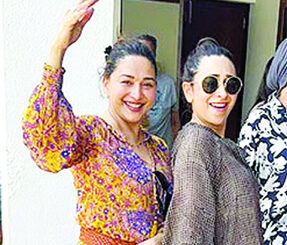
    Bollywood divas Karisma Kapoor and Madhuri Dixit, who have worked together in the film ‘Dil To Pagal Hai’, recently reunited and treated fans with their “dance of Friendship” video. On Wednesday, Karisma dropped a video featuring Madhuri and captioned it, “Dance of Envy Friendship.” In the video, Karisma and Madhuri can be seen grooving to Ranbir Kapoor and Deepika Padukone’s ‘Balam Pichkari’ from the film ‘Yeh Jawaani Hai Deewani’.
    Not only they danced but posed for selfies.
    In the pictures, Karisma can be seen dressed in a brown printed kurta pyjama set while Madhuri opted for a yellow printed summery dress enhancing the look with a belt. The video reminded fans of ‘Dil To Pagal Hai’ iconic face-off between Karisma and Madhuri. As soon as the videos and pictures were posted, the actor’s fans and industry friends chimed in the comment section. Kareena Kapoor wrote, “The OG SuperStars.” Tamannaah Bhatia commented, “Icons.” Seeing the reunion of ‘Dil To Pagal Hai’, one of the users wrote, “Sharukh ki kami hai bass beautiful to see them together.” Another commented, “dil to Pagal h” 2 ban jati”.

  • Farzi actor Bhuvan Arora to star in Kabir Khan’s next

    Farzi actor Bhuvan Arora to star in Kabir Khan’s next

    Actor Bhuvan Arora, who shot to prominence after starring in crime thriller series Farzi, is set to feature in director Kabir Khan’s upcoming film. Produced by Sajid Nadiadwala, the currently untitled movie is based on a true story and is fronted by Kartik Aryan. Arora said he is looking forward to working with the filmmaker, best known for Ek Tha Tiger, Bajrangi Bhaijaan and 83. “I am very excited and happy to work with Kabir sir. I have always admired his films and the selection of stories he wants to tell. “This one too is a very challenging film which requires a lot of prep work. The film is based on a true story with a larger-than-life canvas. I will also be seen in a new role that I have never played before,” the actor said in a statement.
    Prior to Prime Video’s Farzi, Arora featured in supporting characters in films such as Shuddh Desi Romance and Naam Shabana. In Farzi, the actor stars as Firoz, the slightly gullible but loyal friend to Shahid Kapoor’s Sunny, a talented painter who turns to currency counterfeiting.

  • Alia joins Julia Roberts, Idris Elba and more Hollywood stars in new Gucci video

    Alia joins Julia Roberts, Idris Elba and more Hollywood stars in new Gucci video

    Alia Bhatt joined some of the biggest Hollywood stars on a recent video by fashion house Gucci. The celebrities championed gender equality as part of a new campaign. Alia was recently announced as the face of the brand not just in India, but internationally. Alia took to Instagram and Twitter to share the Gucci video. With it, she wrote in the caption, “Excited to be chiming in for Gucci Chime’s 10th Anniversary Campaign! Gucci chime for gender equality. Chime in.” The video begins with Ozark star Julia Garner introducing herself, followed by Halle Bailey, John Legend and Salma Hayek Pinault, who says that she ‘chimes for gender equality’. Then Daisy Edgar Jones, Alia, Serena Williams, Julia Roberts and Idris Elba show their support for ‘education, strength, dignity’. “We chime as one,” Idris says in the end. Alia’s fans left comments for her on the Gucci video on Instagram. “Bollywood queen Alia Bhatt,” wrote one. “Alia and Salma, my favourite. Alia with someone of my nationality is my win,” wrote another. Alia got the most attention in the comment section compared to others. The actor recently attended the Gucci Cruise 2024 show in Seoul, South Korea. The Gangubai Kathiawadi actor donned a mini black dress with polka dotted cutout. She completed her look with black platform heels and a Gucci Jackie 1961 transparent bag. Last month, Alia was announced as the first Indian global ambassador of the luxury fashion brand, Gucci. Taking to Instagram, the fashion brand shared the news and captioned it, “Alia Bhatt is the House’s newest Global Brand Ambassador. To mark the occasion, the actress, producer, and entrepreneur were captured with the Gucci Bamboo 1947 bag.”

  • Keep sedition law, hike jail term: Law Commission

    Keep sedition law, hike jail term: Law Commission

    New Deilh (TIP)– The Law Commission of India has recommended that the 153-year-old colonial law on sedition in India be retained, insisting that “repealing the legal provision can have serious adverse ramifications for the security and integrity of the country”. Instead, the Commission favoured amending Section 124A of the Indian Penal Code (sedition law) “so as to bring about more clarity in the interpretation, understanding and usage of the provision”. The operation of Section 124A in the IPC – a non-bailable offence punishable with life imprisonment or up to three years in jail, and one that activists and jurists have alleged is often misused to muzzle dissent, is currently on hold due to a continuing interim order of the Supreme Court passed on May 11, 2022. The court said at the time the colonial-era law is not in tune with the social milieu.
    According to the Commission, headed by former Karnataka high court chief justice Ritu Raj Awasthi, Section 124A should be amended to align it with the Supreme Court’s 1962 verdict in the Kedar Nath Case, which underlined that the presence of a pernicious tendency to incite violence is a precondition to invoke the sedition clause, and that the penal provision cannot be used to stifle free speech.
    It added that the sedition law, which carries a maximum punishment of life imprisonment or a punishment of three years, should be further amended to enhance the alternative punishment to seven years, giving the courts greater room to award punishment for a case of sedition in accordance with the scale and gravity of the act.
    Hours later, Union law minister Arjun Ram Meghwal said the government will take an “informed and reasoned” decision on the report after consultations with all stakeholders. “The law commission report on Sedition is one of the steps in the extensive consultative process. The recommendations made in the report are persuasive and not binding,” Meghwal said on Twitter.
    “This report is one of the steps in the extensive consultative processes. The government’s priority is to protect the interest of all stakeholders. We will now consult all stakeholders so that a decision can be made in the public interest at an appropriate time,” he tweeted in Hindi.
    Law Commission of India is a non-statutory body, working under the aegis of the Union ministry of law and justice. Following definite terms of reference from the department of legal affairs, the Commission carries out research in the field of law and makes recommendations to the Centre in the form of reports. These recommendations are not binding on the government, though they may have some persuasive value.
    Considered by legal experts as among the vaguest of penal provisions, Section 124a was introduced by the British to stymie the freedom struggle. After independence, too, the provision has been misused by various administrations against citizens, fuelling allegations of intimidation. Conviction rates stagnate in low single-digits, underlining that many cases have little material evidence. This is why the authorities should consider scrapping the law. Source: HT

  • 98 killed, 310 injured in Manipur ethnic violence: Government

    98 killed, 310 injured in Manipur ethnic violence: Government

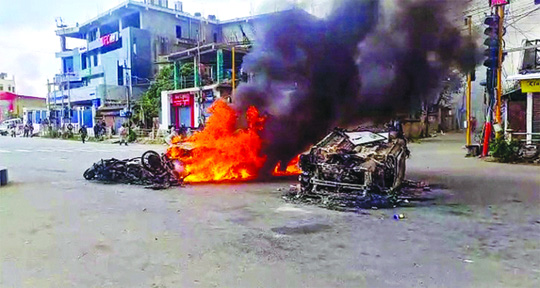
    At least 98 people lost their lives and 310 others were injured in the ethnic violence in Manipur that broke out a month ago, the government said in a statement on Friday, June 2.
    A total of 37,450 people are in 272 relief camps at present, said the statement, issued by the Chief Minister’s Office (CMO). In all, 4,014 cases of arson have been reported since the violence broke out in the state on May 3, it said.
    “The number of deaths is 98 and the number of injured reported is 310,” it said.
    Over the last one month, the state police has registered 3,734 cases and arrested 65 people for their involvement in the violence, the statement said.
    “Sporadic incidents of firing or torching of houses by miscreants are becoming rare now as coordinated effort is made by different security agencies,” it said. The Army, Assam Rifles, CAPFs and local police have been deployed in vulnerable places, it added. Till now, 84 companies of central armed forces have been deployed, the statement said.
    “More companies are being deployed. Flag march and area domination exercises are being carried out widely. Search operations will be conducted from today to recover snatched arms and ammunition,” it said.

  • Arrest WFI chief by June 9, Khap Mahapanchayat gives ultimatum to Centre

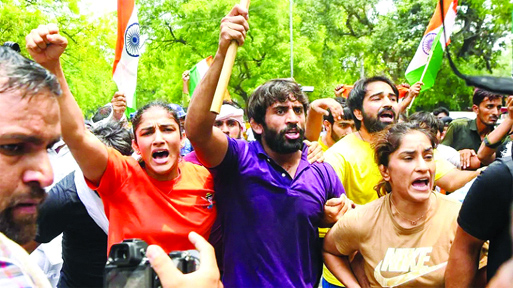
    Leaders of different Khaps from Haryana and Uttar Pradesh who held a meeting at Kurukshetra in Haryana on Friday, June 2, in support of the top wrestlers’ protest, gave an ultimatum to government to arrest wrestling federation of India’s (WFI) chief Brij Bhushan Sharan Singh by June 9 elsethey would launch a fresh agitation at Jantar Mantar in Delhi. “We have taken a decision that the government must address the grievances of wrestlers and he (Brij Bhushan Sharan Singh) should be arrested. Otherwise, we will go with the wrestlers to Jantar Mantar in Delhi on June 9 and hold panchayats across the nation,” farmer leader Rakesh Tikait, who led the meeting, said. “The cases against the wrestlers should be withdrawn and the arrest of Brij Bhushan Sharan Singh must happen,” Tikait said.
    Khap leaders said that they would wait till June 9 for the government to arrest Singh and that they would also hold talks with the government in the context.
    Bharatiya Kisan Union leader Rakesh Tikait said that the Khaps had taken five days’ time from the wrestlers who felt disappointed because of the inaction of the government on their complaints. Tikait said that the Khap leaders had also sought time from the wrestlers as the government wanted to talk to them (Khaps).
    Stating that their agitation would continue peacefully, the Khap leaders would also hold meetings with people across the country to unite the people on the issue.

  • 1983 cricket World Cup heroes back wrestlers

    1983 cricket World Cup heroes back wrestlers

    New Delhi (TIP)- India’s 1983 World Cup-winning squad extended its support to top wrestlers protesting against sexual harassment on Friday, June 2, the loudest endorsement of the ongoing stir and one that added to mounting pressure for action against six-time parliamentarian and former wrestling federation chief Brij Bhushan Sharan Singh after grisly allegations against the strongman by the complainants became public.
    In a joint statement, the world champions said they were distressed after seeing the visuals of wrestlers being manhandled but also hoped that the law of the land will prevail. The statement came on a day leaders from 170 khaps or clan-based bodies gave the government a week’s ultimatum to take action against Singh, and said they will march to Delhi and launch a fresh agitation.
    “We are distressed and disturbed at the unseemly visuals of our champion wrestlers being manhandled. We are also most concerned that they are thinking of dumping their hard-earned medals into river Ganga,” said the statement released by the players. “We urge them not to take any hasty decision in this matter and also fervently hope that their grievances are heard and resolved quickly. Let the law of the land prevail,” it added.
    The backing of the legendary team — led by Kapil Dev, and with Sunil Gavaskar, Mohinder Amarnath, K Srikanth, Roger Binny, Syed Kirmani, Yashpal Sharma, Madan Lal, Balwinder Singh Sandhu, Sandeep Patil, Kirti Azad, Dilip Vengsarkar, Ravi Shastri, Sunil Valson — is the most high-profile endorsement so far of the stir led by Tokyo Olympics bronze medallist Bajrang Punia, Rio Games bronze medallist Sakshi Malik, and double World Championship medallist Vinesh Phogat. “Wrestlers have done so much for the country. They deserve respect. We feel this issue should be resolved swiftly. Both parties should come together and resolve it amicably,” Roger Binny, a member of the iconic team who is also the Board of Control for Cricket in India (BCCI) chief, told HT.
    Madan Lal said the team decided to issue a statement after the dramatic developments on Tuesday, when the wrestlers made an emotional appeal and decided to immerse their medals in the Ganga. “Athletes should not be treated in this way. There has to be a better way to deal with this. To the wrestlers, I want to say, please continue your fight,” he added.
    Despite growing demand for the arrest of Singh on charges of intimidation, sexual harassment and assault, the Bharatiya Janata Party (BJP) leader has remained defiant. Source: HT

  • After HC grants interim relief, Sisodia reaches home to meet ailing wife

    Former Delhi deputy chief minister Manish Sisodia arrived at his residence from the Tihar jail on Saturday, June 3, after getting interim relief to meet his ailing wife. The Delhi High Court on Friday allowed the AAP leader, arrested in cases related to alleged irregularities in the city government’s excise policy, to meet his wife.
    Justice Dinesh Kumar Sharma directed the Tihar jail superintendent to take Sisodia to his residence where he has been allowed to meet his wife from 10 am to 5 pm.
    A senior jail official said Sisodia was taken to his residence around 9 am under security cover. He will have to report back at 5 pm.
    Sisodia was arrested by the Central Bureau of Investigation (CBI) on February 26 for his alleged role in the scam and has been in custody since.

  • Adani group pulls out of M&As; plans to focus on debt prepayments

    Apart from calling off buying Macquarie’s road assets, the Adani group has withdrawn from a series of acquisition opportunities, including of power plants, a retail firm, a power trader and road projects since January this year, say bankers. The focus of the group is to conserve cash and prepay debt rather than acquiring new assets.
    “Till early this year, bankers would pitch every asset for sale with the Adani group. But now, the group is keen to expand their existing businesses, rather than acquiring stressed assets, so it is going slow on new acquisitions,” an investment banker said.
    Since January this year, the group withdrew from the race to acquire SKS Power, a stressed coal-based power plant in Chhattisgarh. In February, the group called off a plan to acquire DB Power’s thermal power assets at an enterprise valuation of Rs 7,000 crore. In the same month, it pulled out to make an offer to PTC India, a power trader. Later, the group did not make an offer for Future Retail after submitting its expression of interest to buy the asset via a joint venture company. On Thursday, Adani Enterprises announced that it will not go ahead with acquiring Macquarie group’s two road companies at an enterprise valuation of Rs 3,100 crore.
    Bankers said the group’s absence from the acquisition race has given an opportunity to foreign private equity players, which are keen to buy into Indian infrastructure projects. Top officials of American private equity giants Blackstone and KKR said they were keen to invest in the Indian infrastructure projects which gives good returns.

  • 238 dead in triple train collision in Odisha

    238 dead in triple train collision in Odisha

    Balasore (TIP)- At least 238 people were killed and around 900 were injured in a horrific three-train collision in Odisha’s Balasore, officials said on May 3, the country’s deadliest rail accident in more than 20 years. Railway Minister Ashwini Vaishnaw said a high-level committee will be set up to investigate the train crash.
    The crash involved the Bengaluru-Howrah Superfast Express, the Shalimar-Chennai Central Coromandel Express, and a goods train. The accident saw one train ram so hard into another that carriages were lifted high into the air, twisting and then smashing off the tracks. Another carriage had been tossed entirely onto its roof, crushing the passenger section.
    “Everything was shaking and we could feel the coach toppling,” Sanjay Mukhia, a daily wage worker travelling to Chennai on the Coromandel-Shalimar Express, told NDTV, showing his injuries.
    According to another survivor, severed limbs were scattered over the ripped metal wreckage. “I was sleeping when the train derailed. Some 10-15 people fell over me. When I came out of the coach, I saw limbs scattered all around, a leg here, a hand there…someone’s face was disfigured,” the survivor said. “The rescue operation has been completed, now we are starting the restoration work,” Amitabh Sharma, Railways Spokesperson, said.
    Chief Minister Naveen Patnaik has declared one-day state mourning in view of the horrific train crash.
    The Railway Minister visited the accident site this morning to take stock of the situation. “Restoration work will take place immediately. Staff and equipment is ready for restoration work, but our first priority is rescue and medical aid to those injured. We will know details only after a detailed inquiry. An independent inquiry will be done,” he said.
    Vaishnaw has also announced compensation of Rs 10 lakh for those who have died, Rs 2 lakh for those seriously injured and Rs 50,000 for those who sustained minor injuries in the accident.
    Prime Minister Narendra Modi too expressed his distress over the accident, and announced a compensation of Rs 2 lakh for the family of the dead and Rs 50,000 for the injured from the PM’s National Relief Fund (PMNRF).
    48 trains have been cancelled, 39 diverted and 10 trains have been short terminated due to the accident, which happened on the Howrah-Chennai main line in the Kharagpur division of the South Eastern Railway. Source: NDTV

  • The Aftermath of Operation Blue Star

    The Aftermath of Operation Blue Star

    The operation was considered to be a controversial one as it had severe ramifications for many sections. In the long term, the Sikh community became more assertive about their identity and their place in Indian society. However, there was a series of violence across the country against Sikh people immediately after the incident.
    In 1985, the Shiromani Gurdwara Parbandhak Committee filed a damages suit for Rs 1000 crore in relation to Operation Blue Star. Operation Blue Star has been the subject of several inquiry commissions and investigations, including the 1984 Misra Commission and the 2005 Nanavati Commission, both of which sought to uncover the events leading up to the operation, deaths, and its aftermath.
    The aftermath of operation Blue Star also saw an increase in militant activities as well as violence in Punjab, leading to a decade-long insurgency followed by a brutal crackdown by the Indian security forces.
    The operation sparked widespread protests and anger among the Sikh community in India as well as abroad, who viewed it as an attack on their religious and cultural identity.
    Prime Minister Indira Gandhi who gave a nod to Operation Blue Star was assassinated by her Sikh bodyguards later in the year. The 1984 Sikh Riots broke out, which lasted for 3 days and led to a number of deaths which is estimated by various independent sources at around 8,000-16,000.
    In 1986, the Chief of Army Staff at the time of the operation- General AS Vaidya was assassinated by Sikh militants in revenge. The bombing of Air India Flight 182 from Canada to Delhi in 1985 is believed to have been another act of revenge for Operation Blue Star.
    Many Sikh army men in the Indian Army mutinied because of the operation. Many Sikhs resigned from administrative positions in the government.
    On July 24, 1985, the then-Indian Prime Minister Rajiv Gandhi and Punjabi Akali leader Harchand Singh Longowal signed the Rajiv–Longowal Accord or simply, the Punjab accord.
    Rajiv- Longowal Accord
    PM Rajiv Gandhi initiated negotiations with the Akali leaders in the belief that a settlement with them would provide a lasting solution to the Punjab problem. Finally, in Aug 1985, Rajiv Gandhi and Longowal signed the Rajiv-Longowal, or commonly the Punjab Accord.
    Under the agreement, it was agreed that Chandigarh would be transferred to Punjab.
    A commission was sought to be constituted which would then determine what Hindi-speaking territories would be transferred from Punjab to Haryana.
    An independent tribunal was to be set up which would adjudicate the river water dispute. Elections for the state assembly as well as the national parliament were to be held in September 1985. It stated that merit will remain the sole criterion for enlistment in the Indian army and except for the Sikh regiments, it would be open for all sections of the society.
    Compensation was sought to be provided to the families of the innocent persons killed in agitation or any related action after 1st August 1982.
    Jurisdiction of the Rangnath Mishra Commission enquiring into the 1984 Delhi riots was extended to Bokaro and Kanpur.
    The part of the Anandpur Sahib Resolution dealing with the Centre and State relations will be referred to the Sarkaria commission. Central Government was to take steps to promote the Punjabi language. An All-India Gurdwara Act was sought for structured governance of the Sikh shrines in India.

  • 39 years on : Wounds that never heal: Remembering Operation Blue Star

    39 years on : Wounds that never heal: Remembering Operation Blue Star

    The military action at the Golden Temple in 1984 has left a lasting impact on generations of Sikhs, leaving many to try and piece together fragments of painful pasts.

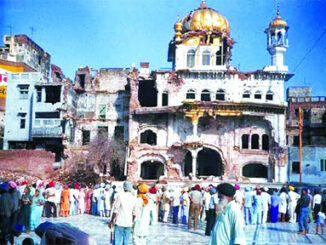
    It’s been 39 years since the Indian Army conducted an operation to flush out militants from the Golden Temple in Amritsar, in June, 1984. Operation Bluestar had a huge impact on Indian politics in the ’80s. It happened 39 years ago but it feels as if it was yesterday – the heart, body and mind still feel the tremors of the emotional earthquake it caused. The force of those tremors intensifies every year when June 6 approaches.
    Operation Blue Star (saka neela tara), a name given to a dreadful military action at the Sikhs’ holiest shrine, the Golden Temple in Amritsar, was launched on June 2, 1984, with a ‘national broadcast to the nation’ by then prime minister Indira Gandhi. It was claimed to have been completed successfully on June 6 with the ending of the last resistance by Sikh combatants to the army’s entry at the Temple. State media (TV and radio) and other non-state media outlets praised the operation for saving India’s ‘unity and integrity’ from ‘anti-national’ Sikh secessionism.
    The most reliable estimates of the total number of deaths during Operation Bluestar range from 5,000 to 7,000. It was a tragedy that could have been avoided if – and it is a big if – Indira Gandhi had had the vision to reach a political settlement with the moderate Akali leadership. Most Akali Dal demands – regarding federal decentralisation, river water rights, territorial readjustment and the transfer of Chandigarh to Punjab as its capital – could have been negotiated. Rajiv Gandhi did agree to each of these demands, and many more besides, in the 1985 Rajiv-Longowal Accord. He implemented none.
    Operation Blue Star was a military operation that was carried out in June 1984 to flush out armed militants who were holed up in the Golden Temple. The operation had to be carried out in order to get back the control of the Golden Temple (Harmandir Sahib) from the militants.
    The Harmandir Sahib, also known as the Golden Temple, is considered as the holiest site for Sikhs.
    In the first week of June, 1984, the Indian military carried out an operation within the premises of the Harmandir Sahib or Golden Temple. The operation, which was carried out under the orders of then prime minister Indira Gandhi, was done so to save the sanctity of the holy site by flushing out the Sikh extremist religious leader Jarnail Singh Bhindranwale and his armed militant group.
    Bhindranwale, who was reportedly backed by Pakistan’s ISI, had made his demands clear – he wanted the Indian government to pass a resolution which would allow India to be divided, thereby creating a new country for Sikhs called ‘Khalistan’. Radical separatist Jarnail Singh Bhindranwale had started laying the groundwork for his demand in 1982, and by mid-1983 managed to gain support for his plan to divide India. His operations and plans were reportedly supported by Pakistan’s ISI, which helped him in spreading militancy in the state, and also provided him with arms and ammunition.
    In mid-1983, Bhindranwale and his armed militant group entered the Golden Temple (Harmandir Sahib complex) and took over its control. They then set up a base inside. Taking back the control of the Golden Temple from armed militants and preserving its sanctity was not easy. Being the holiest site for Sikhs made the decision even tougher to take. But after nearly a year of consultations and trying to negotiate, then prime minister Indira Gandhi decided that the only option left was to carry out a military operation. This led to the Operation Blue Star.
    Late at night on June 2, 1984, the Indian Army carried out Operation Blue Star. Curfew was imposed across Punjab. No one was allowed to travel to or from the state. All channels of communication were blocked as well. The operation was considered a success, at the end of which Bhindranwale and his group of militants were killed. However, there were casualties among civilians and armed forces personnel as well.
    Though the Golden Temple was restored and made free of militants and arms, the operation was criticised by Sikhs the world over, since it was carried out at their holiest site of worship.
    Background of the Khalistan Movement
    Since the early 1970s, radical separatists spearheaded a bloody campaign to carve out an independent, radial Sikh state known as Khalistan or commonly as the “Land of the Pure” in Punjab and other parts of Northern India.
    The roots of the Khalistan movement lie back in the British colonial policies of the late 1800s as well as the early 1900s which sought to divide the Sikhs and Hindus. Sikhs were recruited into the British army in large numbers and were used against Hindu rulers that rebelled against the British Raj.
    After the Indian independence in 1947, tensions between the state of Punjab and the central Indian government started taking place, leading to grievances amongst many Sikhs against the Indian government.
    Punjab was trifurcated into the states of Haryana, Punjab, and Himachal Pradesh in 1966, along linguistic lines which created resentment amongst many Sikhs that the historic borders of Punjab were being further divided after it had already been divided between India and Pakistan in the partition of 1947.
    Many Sikhs also resented sharing the joint capital of Chandigarh with the nearby Haryana, and viewed the water-sharing agreements with Haryana as unjust and unfair and favoring farmers in Haryana to the detriment of those in Punjab.
    Sikh religious leaders were getting apprehensive about the Sikh community losing its identity and culture, and wanted a greater share of state powers for Punjab.
    These policies were perceived by the Sikh community as religiously motivated policies of discrimination against them and were further exploited by radical leaders, who built a perception that Sikh interests could only be in safe hands in an independent Sikh region of Khalistan.
    The Khalistan movement further peaked in the decades of 1980-1990s and the violent campaign included bombings, kidnappings, assassinations, as well as selective killing and massacres of civilians.
    In response to this movement, and in an attempt to end militancy in Punjab, the Indian security forces and local Punjab police responded with force.
    It left a deep scar on the political, social, and cultural landscape of Punjab.

    Key Points of Operation Blue Star
    Operation Blue Star consisted of a two-stage operation: the first one was known as Operation Metal, which was restricted to the elimination of the armed militants present inside the Golden Temple complex. This was followed by another operation called Operation Woodrose, which was carried out across the state to ensure that all suspects were either captured or killed. Following was the turn of events in the operation Bluestar:
    – The Golden Temple complex, or commonly the Harmandir Sahib, is a revered religious site for Sikhs and is considered the holiest shrine in the Sikh religion.
    – In 1984, a group of militants led by Jarnail Singh Bhindranwale took refuge inside the complex, along with a large number of armed supporters around him.
    – Operation Blue Star, which began on June 3, 1984, involved the deployment of thousands of Indian Army troops, tanks, as well as artillery around the Golden Temple complex. – Operation Blue Star was commanded by Lt. General Kuldip Singh Brar, operating under General Sundarji. – On 3rd June, a 36-hour curfew was imposed in Punjab, detaching the state from all modes of communication, electricity, and transport.
    – Thousands of Sikhs had gathered inside the complex of the Golden Temple to celebrate the martyrdom anniversary of Guru Arjan Dev, however, they all were trapped inside the Gurudwara after the said curfew was imposed on 3rd June.
    – The Indian Armed Forces stormed the Harmandir Sahib complex on the night of June 5, and operation Blue Star lasted for another 5 days, during which heavy gunfire and explosions rocked and affected the complex, causing significant damage to the temple and surrounding buildings.
    – The Akal Takht was heavily equipped with sandbags and gun emplacements in its windows and arches from where the dissidents were able to fire at any commandos who made their way in front of the Gurudwara.
    – The forces had full control of Harmandir Sahib by the morning of June 7. Sikh leaders JS Bhindranwale and Shabeg Singh were killed in the operation.
    – Operation Blue Star cleared terrorists from the Golden Temple compound but it received backlash from the Sikh community worldwide.

  • Wrestlers’ protest: Spotlight on rampant sexual abuse in sports

    Wrestlers’ protest: Spotlight on rampant sexual abuse in sports

    Indian wrestlers have been protesting since January after they accused the wrestling federation chief, Brij Bhushan Sharan Singh, of sexual harassment. Singh is a member of parliament from the governing Bharatiya Janata Party (BJP) and has denied the allegations.

    They should be practising for the Olympics scheduled for next year. But India’s ace wrestlers, led by Vinesh Phogat, Sakshi Malik and Bajrang Punia, are fighting the battle of their lives against Wrestling Federation of India (WFI) president and BJP MP Brij Bhushan Sharan Singh, who has been accused of sexual harassment by seven female wrestlers, including a minor.
    May 30 was another day of high drama for the protesting grapplers, who vowed they would ‘immerse’ their medals in the Ganga river. It was only after a talk with Bharatiya Kisan Union (BKU) president Naresh Tikait that they decided to defer their decision by five days.
    The wrestlers have been protesting since January, demanding that the government take action against the WFI chief. Their protest has also seen them being dragged and pulled and being detained by the Delhi Police last Sunday when they attempted a silent march to new Parliament building.
    The matter has gained the attention of the Supreme Court, which described the allegations as “serious” and ordered the police to register a case against Singh. And on Tuesday, the matter went international with the International Olympic Committee (IOC) stepping in. An IOC spokesperson, responding to a query from The Indian Express said, “treatment meted out to the athletes over the weekend, when they were manhandled and detained for hours, was very disturbing.” “We urge that the safety and well-being of these athletes is duly considered throughout this process and that this investigation will be speedily concluded.”
    The United World Wrestling (UWW) has also issued a statement condemning the detention of wrestlers during a march to the new Parliament building on Sunday. “UWW firmly condemns the treatment and detention of the wrestlers. It expresses its disappointment over the lack of results of the investigations so far. UWW urges the relevant authorities to conduct a thorough and impartial investigation into the allegations,” the world wrestling body said in a statement. The recent complaint, though shocking, isn’t new for women in sports in India. The Sports Authority of India (SAI) has recorded 45 complaints of sexual harassment between 2010 and 2020. Of these, 29 were filed against coaches.
    In fact, this is the fifth instance in the last nine months where cases of women athletes being sexually exploited have been publicly and formally recorded in India.
    In January, wrestlers gathered at Jantar Mantar in New Delhi, accusing Singh and other national coaches of sexual harassment that took place over several years. The Union Ministry of Youth Affairs and Sports took notice of these allegations and sought an explanation from the WFI. The Indian Olympic Association (IOA) was then informed, with a complaint letter being written by the wrestlers demanding Singh’s resignation as the president of the WFI. The working of the WFI was suspended till an oversight committee was formally appointed.
    An oversight committee was formed by the IOA to conduct an enquiry into the allegations. The members of the committee were sporting heavyweights including boxer and former Rajya Sabha member M.C. Mary Kom, wrestler and politician Babita Phogat, and badminton player Trupti Murgunde.
    Singh was to step aside till the inquiry was concluded. The protests, in that regard, were at least put off for the time being.
    What recent developments led to the filing of FIRs against Singh?
    With almost three months passing since the formation of the committee, it was announced that the WFI would be holding fresh elections, with Singh stating that he would not contest the president’s post. The waters got muddied when it turned out that the oversight committee had concluded its inquiry, but the sports ministry chose not to make the inquiry report public. This led to resumption of the protests at Jantar Mantar.
    It had also come to light that several complaints (by a total of seven wrestlers, including one minor) were filed with the Delhi Police against Singh. It was alleged that Singh had sexually harassed and molested them during both national and international tournaments. For some reason, the Delhi Police did not register a single first information report (FIR) against Singh.
    This led to the complainants approaching the Supreme Court with a petition seeking registration of the FIRs against Singh. The Supreme Court issued notice to the Delhi Police, terming the allegations as serious.
    The Delhi Police, on April 29, after the Supreme Court had issued notice, registered two FIRs against Singh, with the FIRs being registered under the Protection of Children from Sexual Offences Act, 2012 as well as for provisions regarding outraging the modesty of women under the Indian Penal Code, 1860. On May 4, the Supreme Court closed proceedings in the matter, taking note that FIRs had been registered against Singh.
    Investigation has commenced and the Delhi Police have recorded Singh’s statement. The Delhi Police have also informed a special court constituted to deal with the matter in Delhi that a special investigation team (SIT) has been constituted to look into the matter, with the Delhi Police purportedly visiting four different states to collect evidence against Singh.
    Singh, a five-time member of Parliament on a Bharatiya Janata Party ticket, for his part, has denied the allegations, going so far as to say that they are politically motivated and that he would hang himself if a single allegation was proved.
    He, however, has a history of being accused of criminal activities, having faced as many as 38 criminal cases so far. He has previously been charged for multiple offences, including theft, kidnapping, criminal intimidation and even attempted murder.
    What does all this mean, and what lies ahead?
    “Earlier, they were saying that I had sexually abused 100 children. Then they started saying that it happened to 1,000 children. Did I eat roti made of Shilajit?” Singh told ABP News Channel during a recent televised interview, as quoted by the Hindustan Times.
    This is a parliamentarian, and a man who has been entrusted with running a national sports federation in our country. Whether guilty or not, he seems to be trivialising an issue as serious as sexual offences against children.
    While the protests have been lauded, and rightly so, Indian athletes are severely handicapped when it comes to reporting such incidents against figures of authority. The British Broadcasting Corporation reported in February that as per the response to an application filed under the Right to Information Act, there had been 45 complaints of sexual misconduct against coaches and officials of the Sports Authority of India. From those, five coaches had suffered pay-cuts, one was suspended and later reinstated, and two had their contracts terminated. Most of India’s sports federations also do not have oversight committees, such as the one formed in the instant case, and which are also otherwise mandated by law.
    A lot of our national sports federations are headed by powerful people such as Singh, and so it is no surprise that athletes tend to back off when it comes to pursuing complaints against such people in power— out of fear of potential repercussions on their career, which they have worked tirelessly to develop.
    In the instant case, despite there being protests at a national and televised scale, things are moving at a snail’s pace, and it took intervention from the Supreme Court to get the Delhi Police to even file a complaint against the alleged perpetrator.
    Political parties, especially the ruling party (the ones who appoint these goons as presidents of national sports federations) tend to turn a blind eye towards issues plaguing those sections of society who do not constitute a vote bank. Sports and our athletes have historically been neglected and made to suffer at the hands of people not fit to be in administrative positions within sports.
    As this scandal unfolds, a lengthy battle awaits the wrestlers.
    If Singh is found guilty, it shall serve as a wake-up call to the top brass to appoint competent people who care for the well-being of sports to run national sports federations, rather than random politicians who only want to abuse positions of power. If he is acquitted, however, going by his statements, he is going to continue to serve as president of the WFI, which I believe is only going to be one step forward and two steps back for the sport.

    Khaps And Farmer Outfits Come Out In Support Of Wrestlers
    Haryana’s khaps and farmer organisations came out in support of protesting wrestlers and prevented them from immersing their medals in Ganga River.
    Bharatiya Kisan Union (BKU) chief Narseh Tikait reached Har ki Pauri at Haridwar on Tuesday, May 30, evening and intervened and prevented the protesting wrestlers from immersing their medals in Ganga River.
    Throwing their weight behind the protesting wrestlers, Phogat Khap leader Balwant Nambardar had said, “We request them that these medals are the results of their hard work, sacrifices of their families and support from society. They should not take this step.
    “It is unfortunate that those who represented the nation in top international tournaments are forced to take such decisions. The government should be ashamed and give justice to them in the case.”
    Nambardar also said Haryana’s khaps and farmer organisations stood with the wrestlers in their struggle for justice.
    “Charkhi Dadri is ready to spill its blood for them,” said Nambardar.
    Haryana BKU (Charuni) chief Gurnam Singh Charuni had also requested the protesting wrestlers not to immerse their medals, saying the awards were part of national heritage and future generations would take inspiration from these.
    Kandela Khap leader Ramphal Kandela had also appealed to the wrestlers not to immerse their medals.

    Vinesh Phogat

    Vinesh Phogat (born 25 August 1994) is an Indian wrestler. She became the first Indian woman wrestler to win gold in both Commonwealth and Asian Games. She is the only Indian woman wrestler to win multiple medals at the World Wrestling Championships. Phogat became the first Indian athlete to be nominated for Laureus World Sports Awards in 2019.
    Phogat comes from a successful family of wrestlers, with her cousins and being international wrestlers and Commonwealth Games medalists as well. She is one of the leaders of 2023 Indian wrestlers’ protest against BJP MP Brij Bhushan Singh.
    Vinesh is the daughter of wrestler Rajpal Phogat and cousin of wrestlers Geeta and Babita. Both her cousins have won gold in 55 kg category in Commonwealth Games.

    Sakshi Malik

    Sakshi Malik (born 3 September 1992) is an Indian freestyle wrestler. At the 2016 Summer Olympics, she won the bronze medal in the 58 kg category, becoming the first Indian female wrestler to win a medal at the Olympics. She is a part of the JSW Sports Excellence Program, along with fellow female wrestlers Vinesh Phogat, Babita Kumari and Geeta Phogat.
    Malik had previously won the silver medal at the 2014 Commonwealth Games in Glasgow, and the bronze medal at the 2015 Asian Wrestling Championships in Doha. She is one of the leaders of 2023 Indian wrestlers’ protest against BJP MP Brij Bhushan Sharan Singh.
    Malik was born at Mokhra village of Haryana’s Rohtak district to Sukhbir, a bus conductor with Delhi Transport Corporation, and Sudesh Malik, a supervisor at a local health clinic.

    Bajrang Punia

    Bajrang Punia (born 26 February 1994) is an Indian freestyle wrestler, who competes in the 65-kg weight category. At the 2020 Tokyo Olympics, Punia won a bronze medal by defeating Kazakhstan’s Daulet Niyazbekov with a 8–0 margin. Punia is the only Indian wrestler to win 4 medals at the World Wrestling Championships. He is protesting at Delhi Jantar Mantar against BJP MP Brij Bhushan Singh.
    Punia was born in Khudan, Jhajjar, Haryana, He began wrestling at the age of seven and was encouraged to pursue the sport by his father. Punia grew up in rural area. His family did not have money for traditional sports. Instead, he had to partake in free sports like Wrestling and Kabaddi Punia’s father was a wrestler as well and at a young age, his family enrolled him in a local mud wrestling school. Punia started to skip school to go to wrestling practice.

    Brij Bhushan Sharan Singh

    Brij Bhushan Sharan Singh (born 8 January 1957) is an Indian politician who is serving as Member of Parliament from Kaiserganj as a member of the Bharatiya Janata Party. He is the current president of the Wrestling Federation of India. His political career is marked by many controversies, as he was one of the prominent names who got arrested in the demolition of the Babri Masjid case and was also booked under the anti-terrorism law TADA for harboring shooters of the Dawood Ibrahim gang. However, he was later acquitted for lack of evidence.
    He is currently at the center of the accusations of sexual harassment by India’s top female wrestlers, including Sakshi Malik and Vinesh Phogat, in the ongoing wrestlers’ protest.
    As per police records, 38 criminal cases were lodged against Brij Bhushan Singh between 1974 and 2007.

  • Blinken says no Ukraine cease-fire without a peace deal that includes Russia’s withdrawal

    KYIV (TIP): U.S. Secretary of State Antony Blinken said on June 2 that there can be no cease-fire in the war in Ukraine unless it is part of a “just and lasting” peace deal that includes Russia’s military withdrawal.
    Blinken said that “a cease-fire that simply freezes current lines in place” and allows Russian President Vladimir Putin “to consolidate control over the territory he has seized, and rest, rearm, and reattack — that is not a just and lasting peace.” Russia must also pay a share of Ukraine’s reconstruction and be held accountable for launching its full-scale invasion of its neighbour in February 2022, Blinken said in a speech during a visit to Finland, which recently joined NATO and shares a long border with Russia.
    Allowing Moscow to keep the one-fifth of Ukraine territory it has occupied would send the wrong message to Russia and to “other would-be aggressors around the world,” according to Blinken.
    Washington is ready to support peace efforts by other countries, including recent overtures from China and Brazil, he said. But any peace agreement must uphold the principles of sovereignty, territorial integrity and independence.
    The United States is a leading Western ally and supplier of arms to Kyiv to help it push back against the Kremlin’s forces.
    China, which says it is neutral and wants to serve as a mediator but has supported Moscow politically, on Friday urged countries to stop sending weapons to Ukraine.
    In Ukraine, air defences shot down more than 30 Russian cruise missiles and drones Friday in Moscow’s sixth air attack in six days on Kyiv, local officials said.
    The Ukrainian capital was simultaneously attacked from different directions by Iranian-made Shahed drones and cruise missiles from the Caspian region, senior Kyiv official Serhii Popko wrote on Telegram.
    A 68-year-old man and an 11-year-old child were wounded in the attack, with private houses, outbuildings and cars sustaining damage from falling debris, according to Ukraine’s Prosecutor General’s Office.
    A recent spate of attacks on the capital has put a strain on residents and tested the strength of Ukraine’s air defences while Kyiv officials plot what they say is an upcoming counteroffensive to push back the Kremlin’s forces 15 months after their full-scale invasion. Kyiv was the target of drone and missile attacks on 17 days last month, including daylight attacks.
    Moscow’s strategy could backfire, however, according to the Institute for the Study of War, a Washington-based think tank.
    The air campaign aims to “degrade Ukrainian counteroffensive capabilities, but … the Russian prioritization of Kyiv is likely further limiting the campaign’s ability to meaningfully constrain potential Ukrainian counteroffensive actions,” it said in an assessment late Thursday.
    Ukrainian air defences intercepted all 15 cruise missiles and 21 attack drones, Ukraine’s chief of staff, Valerii Zaluzhnyi, said.
    Ukraine’s presidential office said Friday that at least four civilians were killed and 42 wounded over the previous 24 hours. (AP)

  • India, Nepal agree to tackle boundary dispute amicably; ink raft of pacts to broad-base ties

    India, Nepal agree to tackle boundary dispute amicably; ink raft of pacts to broad-base ties

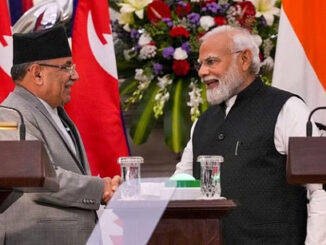
    KATHMANDU, New Delhi (Tip): Prime Minister Narendra Modi and his Nepalese counterpart Pushpakamal Dahal ‘Prachanda’ on June 1 vowed to resolve the vexed boundary dispute in the spirit of friendship even as the two sides signed several major pacts including one on increasing New Delhi’s import of power from the neighbouring country to 10,000 megawatt in the next 10 years from the current 450 megawatt.
    In the wide-ranging talks between Modi and Prachanda, the Indian side agreed to the first trilateral power trade from Nepal to Bangladesh through India for up to 40 megawatt of power, a move that is seen as a significant step towards ensuring greater regional cooperation.
    In his media statement, Modi said both sides will continue to strive in taking the India-Nepal partnership to the “Himalayan heights” and that the important decisions taken at the talks are to make the ties ‘superhit’ in the future. In total, the two sides signed seven pacts which included a revised treaty of transit that was described by Foreign Secretary Vinay Kwatra as “once in a generation kind of an agreement” as it would provide Nepal access to inland waterways of India for the first time and expected to contribute very significantly to the expansion of trade and investment linkages.
    The two sides also firmed up several new initiatives to expand cooperation in areas of hydroelectric power, petroleum infrastructure, railway connectivity, cross-border payment systems and trade and investment as part of a futuristic approach to strengthen the overall trajectory of ties.
    “We will continue to strive to take our relationship to Himalayan heights. And in this spirit, we will solve all the issues, whether it is of boundary or any other issue,” Modi said in his media statement in presence of Prachanda.
    In his comments, the Nepalese prime minister, who arrived here on Wednesday on a four-day visit to India, said he and Modi discussed the boundary matter. “I urge prime minister Modi-ji to resolve the boundary matter through the established bilateral diplomatic mechanism,” he said.
    The ties between the two countries came under severe strain after Kathmandu published a new political map in 2020 that showed three Indian territories — Limpiyadhura, Kalapani and Lipulekh — as part of Nepal.
    India reacted sharply, calling it a “unilateral act” and cautioned Kathmandu that such “artificial enlargement” of territorial claims will not be acceptable to it. (PTI)

  • Stop giving coverage to ex-PM Imran Khan, Pakistan govt tells media houses

    Stop giving coverage to ex-PM Imran Khan, Pakistan govt tells media houses

    LAHORE (TIP): The Pakistan government on June 2 urged the country’s media houses to refrain from publishing or broadcasting speeches, statements, tweets or pictures of former prime minister Imran Khan.
    The government said it was making sure that the 70-year-old Pakistan Tehreek-e-Insaf (PTI) chief’s social media activities are also blocked.
    According to a government official, both print and electronic media have been directed not to publish or broadcast Khan’s speeches, statements, tweets or display his pictures.
    ““We will make sure that media blackout of Imran Khan is completely enforced,”” the official said.
    An informed source told PTI that the Pakistani media houses have been categorically told by the ‘powerful circles’ to give no coverage to Khan.
    He said Khan’s media blackout was enforced from Friday.
    The government order comes a day after the Pakistan Electronic Media Regulatory Authority (PEMRA) directed all satellite TV channels not to promote the perpetrators of the May 9 violence.
    It also directed them to ensure that coherence and national harmony are promoted and “hate mongers, rioters, their facilitators and perpetrators” are completely blacked out from the media.
    Without naming Khan, PEMRA said: “Refrain from providing airtime to those who propagate hate speech and provoke public sentiments against the federation and state institutions”.
    It said the hate mongers, representing political outfits, are abusing their power against Pakistan and state institutions by instigating the public. “All such anti-state activities were orchestrated by the politically charged-up zealots of a political party behaving largely as hate mongers to instigate political activists,” it said.
    There has been a crackdown on the PTI leaders and workers after their alleged involvement in attacking army installations in the country following the arrest of Khan.
    Violence erupted across Pakistan on May 9 when cricketer-turned-politician Khan was arrested from the premises of the Islamabad High Court in a corruption case.
    Khan was released on bail two days later.
    Over 20 military installations and government buildings including military headquarters in Rawalpindi were damaged in the unrest that ensued. Over 100 vehicles of police and other security agencies were also set on fire in the violence that left more than 10 persons dead. Khan has said over 25 PTI workers were killed in the violence and that law enforcement agencies arrested over 10,000 PTI workers across Pakistan.
    As many as 4,000 of them are from Punjab. (PTI)

  • Sri Lanka drafting bill to curb growing incidents of religious slander on social media

    COLOMBO (TIP): Sri Lanka is drafting new legislation to curb the growing incidents of religious slander and online vitriol, according to the country’s religious affairs minister.
    The move comes after a stand-up comedian Nathasha Edirisooriya allegedly made certain derogatory remarks on religions, which she uploaded online.
    Edirisooriya offered an apology, but a complaint was filed and she was taken into custody on May 31 while trying to fly out of the country.
    Sri Lanka’s Minister of Buddhashasana, Religious, and Cultural Affairs Vidura Wickramanayaka on Sunday said the legislation would soon be passed to curb the growing incidents of religious slander in the country.
    “This will stop all incidents of demeaning religion on social media,” he asserted.
    The controversy surrounding Edirisooriya’s comments is not a one-off incident. Earlier this month, Pastor Jerome Fernando, a self-styled Godman, was accused of derogatory comments on Lord Buddha, which went viral on social media. On May 15, President Ranil Wickremesinghe ordered the Criminal Investigation Department to launch an immediate investigation into the matter, arguing that such statements could create religious conflicts in the country. Like Edirisooriya, Fernando also offered an apology. He has, however, fled to Singapore and filed a fundamental rights petition to block his impending arrest.
    In January, a popular Youtuber Sepal Amarasinghe was sent to police custody for making disparaging comments on the Sacred Tooth relic of Lord Buddha.
    The Temple of the Sacred Tooth Relic is a Buddhist temple in Kandy. It is located in the royal palace complex of the former Kingdom of Kandy, which houses the relic of the tooth of the Buddha. The arrest came after parliamentarians across the aisle unanimously condemned Amarasinghe’s comments on his YouTube channel.
    Amarasinghe’s YouTube channel has nearly 80,000 subscribers and the outspoken man is well-known on social media for his unorthodox views that challenge what he claims are parochial traditions and customs.
    Over 74 per cent of Sri Lanka’s 22 million population are Buddhists.
    Sri Lanka’s Constitution accords Buddhism as the “foremost place” among the country’s religious faiths and commits the government to protecting it, while also respecting the rights of other religious minorities. (PTI)

  • Boris Johnson offers unredacted WhatsApp messages to UK Covid inquiry

    Boris Johnson offers unredacted WhatsApp messages to UK Covid inquiry

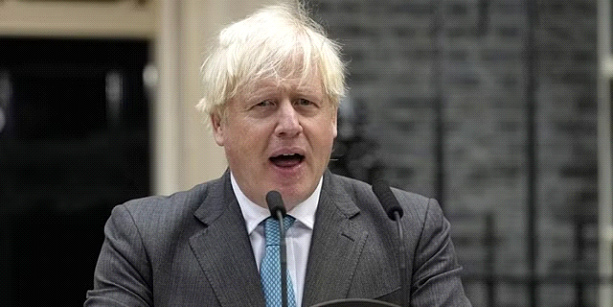
    LONDON (TIP): Boris Johnson, who was the British prime minister during the height of COVID, on June 2 offered to hand over all his unredacted WhatsApp messages to the public inquiry set up to investigate the government’s handling of the pandemic.
    The latest move further complicates matters as it bypasses the Rishi Sunak-led government’s decision to seek a judicial review into inquiry chair Baroness Heather Hallett’s order for all such messages to be handed over.
    After missing a deadline on Thursday for the handover of the documents which include Johnson’s messages, the UK Cabinet Office said in a statement that government officials should not be required to provide material that is “irrelevant”. “While I understand the government’s position, I am not willing to let my material become a test case for others when I am perfectly content for the inquiry to see it,” said Johnson in a letter addressed to Baroness Hallett. The 58-year-old former prime minister said he was handing over “all unredacted WhatsApps” he provided to the Cabinet Office and said he has asked it to hand over his notebooks, which he no longer has access to.
    He also said that he would “like to do the same with any material that may be on an old phone, which I have previously been told I can no longer access safely”.
    Johnson says he has asked the government for help to turn on the device securely to hand over the material. It relates to security concerns raised during his time as prime minister after it emerged that the particular phone number had been freely available on the internet for 15 years, which led to him acquiring a new phone. The Opposition Labour Party has accused the government of a cover-up over its refusal to hand over all the messages demanded by the public inquiry.
    The UK Cabinet Office has insisted that it is “fully committed” to its obligations to the inquiry, but that it was “firmly of the view that the inquiry does not have the power to request unambiguously irrelevant information that is beyond the scope of this investigation”.
    “It represents an unwarranted intrusion into other aspects of the work of government. It also represents an intrusion into their legitimate expectations of privacy and protection of their personal information,” the Cabinet Office said in its letter to the inquiry. (PTI)

  • Amid shrinking freedoms, Hong Kongers commemorate Tiananmen anniversary privately

    HONG KONG (TIP): As the 34th anniversary of China’s Tiananmen Square crackdown approaches on June 4, many in Hong Kong are trying to mark the day in private ways in the shadow of a law that prosecuted leading activists in the city’s pro-democracy movement.
    For decades, Hong Kong was the only place in China where people held large-scale commemorations about the 1989 crackdown on pro-democracy protesters in which tanks rolled into the heart of Beijing and hundreds, and possibly thousands, of people, were killed.
    People gathered in Hong Kong’s Victoria Park annually to mark the June 4 anniversary with a candlelight vigil.
    In 2020, thousands defied a police ban to hold the event.
    This Sunday, Victoria Park will be occupied instead by a carnival organised by pro-Beijing groups to celebrate Hong Kong’s handover to Chinese rule in 1997.
    Organisers say it will feature a bazaar with food from across China.
    As the government arrested activists, publishers and opposition politicians under the sweeping 2020 National Security Law, public shows of the opposition have mostly vanished. As authorities erase reminders of the massacre, some Hong Kongers are fighting to keep memories alive by distributing LED candles, writing about the crackdown, or buying books about it. In previous years, Richard Tsoi, a former vigil organiser, would have been having a busy week, preparing for the event and coordinating with police.
    This year, the 55-year-old says he has not decided what he’ll do on Sunday.
    “Over some 30 years, we carried on our work in a struggle of memory against forgetting,” said Tsoi, who wore a black T-shirt with the slogan “The people will never forget.” “Now, maybe we will have to think about how to keep this message from being drowned out in Hong Kong.” Asked whether it is legal to mourn the crackdown in public privately, Hong Kong leader John Lee said that if anyone breaks the law, “of course the police will have to take action.”
    The group that formerly organised the Victoria Park vigil disbanded in 2021, after police informed it that it was under investigation for working on behalf of foreign groups, an accusation the group denied, and three of its leaders were charged with subversion. The Tiananmen crackdown left a deep mark on a generation of liberal-minded Chinese people. Tsoi, who was in college during the 1989 democracy movement, said the protests gave him hope for the future of China. (AP)

  • China backs expansion of BRICS grouping with ‘likeminded partners’

    BEIJING (TIP): China on June 1 said Beijing views the BRICS as an “open and inclusive” platform and it backs moves to expand the five-member grouping with “like-minded partners.”
    Asked at a media briefing here about reports saying that India wants an agreement to be reached on the process of expanding BRICS (Brazil, Russia, India, China, and South Africa), Chinese Foreign Ministry spokesperson Mao Ning said she had not seen the report but “in principle, China always holds that BRICS is open and inclusive.”
    “We support BRICS expansion and welcome more like-minded partners to join the BRICS family,” she said.
    As BRICS countries proposed to hold the next summit in South Africa in August this year, media reports say several countries have evinced interest in joining the grouping of emerging markets.
    According to reports, 19 countries — Argentina, Nicaragua, Mexico, Uruguay, Nigeria, Algeria, Egypt, Senegal, Morocco, Saudi Arabia, the United Arab Emirates (UAE), Turkiye, Syria, Iran, Afghanistan, Indonesia, Thailand, Kazakhstan, and Bangladesh — have evinced interest in joining the BRICS grouping.
    The BRICS brings together five of the largest developing countries of the world, representing 41 per cent of the global population, 24 per cent of the global GDP, and 16 per cent of the global trade. (PTI)

  • Australian decorated hero resigned from Seven West Media after Afghanistan war crime revelations

    Australian decorated hero resigned from Seven West Media after Afghanistan war crime revelations

    CANBERRA (TIP): Australia’s most decorated living war veteran Ben Roberts-Smith quit his corporate job on June 2 after a civil court blamed him for unlawfully killing four Afghans, escalating calls for the tarnished national hero to be stripped of his revered Victoria Cross medal. Roberts-Smith, who retired from Australia’s elite Special Air Service Regiment a decade ago, quit his job as state manager of Seven West Media after losing a landmark defamation suit on Thursday against newspapers that had accused him of an array of war crimes.
    The 44-year-old had taken leave since 2021 to focus on his federal court case, which has been financed by the company’s billionaire executive chair Kerry Stokes.
    “Ben has been on leave whilst the case was running and today has offered his resignation which we have accepted,” chief executive James Warburton said Friday in a staff email.
    “We thank Ben for his commitment to Seven and wish him all the best,” Warburton added.
    Roberts-Smith has been fighting to salvage his reputation through a defamation suit in the federal court since Australian newspaper articles in 2018 accused him of an array of war crimes including culpability in six unlawful killings.
    A judge dismissed the defamation claims on Thursday, finding the articles were substantially true. The judge also found Roberts-Smith was responsible for four of the six unlawful deaths he had been accused of. Media lawyer Justin Quill said Roberts-Smith’s lawyers would have been shocked by the extent of his loss.
    “Ultimately there is a judge’s finding that he committed four murders and that’s about as bad as you could possibly get,” Quill said. “I’d say even in his worst nightmares he didn’t expect yesterday to go quite as badly as that.”
    Roberts-Smith remains under Australian police investigation for criminal prosecution for war crimes. A former SAS soldier March became the first charged with a war crime from Australia’s 20-year campaign in Afghanistan.
    Roberts-Smith’s SAS colleagues are among those calling for him to become the first of Australia’s Victoria Cross winners to be stripped of the highest award for gallantry in battle.
    The Australian government refused to comment on the case.
    Minor Greens Party Senator David Shoebridge said Roberts-Smith should be stripped of his honours and the Australian War Memorial should remove memorabilia including portraits, medals and a uniform display.
    “At a minimum, we should be seeing action by the Australian War Memorial to remove the display that is now there for Ben Roberts-Smith. His uniform and his medals, which thousands of people will attend tomorrow to view and witness,” Shoebridge said.
    “The Australian War Memorial has an obligation to tell the whole truth about Australia’s involvement in Afghanistan,” he added.
    The memorial said the civil court context could be added to the Roberts-Smith display. (AP)

  • How Turkiye’s President Erdogan has maintained a tight grip on power in the country

    How Turkiye’s President Erdogan has maintained a tight grip on power in the country

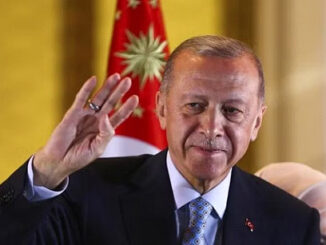
    ANKARA (TIP): Turkish President Recep Tayyip Erdogan, a populist with increasingly authoritarian tendencies, is scheduled to take the oath of office and start his third presidential term on June 3 following his latest election win. Erdogan, who has led Turkiye as prime minister or president for 20 years, prevailed in a runoff race last weekend despite the country’s ongoing economic crisis and his government’s criticised response to a February earthquake that killed more than 50,000 people.
    Known as “reis” or “the chief” among his fans, the 69-year-old Erdogan already is the longest-serving leader in the Turkish republic’s history.
    His reelection to a five-year term that runs until 2028 extends his rule into a third decade, and he could possibly serve longer with the help of a friendly parliament.
    Here is a look at Erdogan’s career and some of the reasons for his political longevity.
    It’s not the economy
    Many experts agree that Turkiye’s severe economic woes result from Erdogan’s unorthodox fiscal policies – most notably, depressing interest rates against rampant inflation despite the warnings of economists.
    However, the majority of voters – he received 52 per cent of the runoff vote – did not seem to hold it against him.
    Erdogan’s endurance amid the cost-of-living crisis – inflation in Turkiye hit a staggering 85 per cent in October before easing to 44 per cent in April – might have resulted from many people preferring stability over change as they struggle to pay skyrocketing prices for rent and basic goods.
    The president has demonstrated an ability to turn the economy around in the past.
    And he has never shied away from spending and deploying government resources to his political advantage.
    Over the past two decades, his government has spent lavishly on infrastructure to please constituents.
    In the period leading up to last month’s parliamentary and presidential elections, he increased wages and pensions to cushion the blow from inflation and disbursed electricity and gas subsidies.
    One point of pride for many voters is Turkiye’s ballooning military-industrial sector.
    Throughout the campaign, Erdogan frequently cited domestically made drones, aircraft and a warship touted as the world’s first “drone carrier”.
    On the world stage
    Erdogan has swayed many Turks to his side with the way he navigates the world stage.
    Supporters see in him a leader who has shown that Turkiye can be a major player in geopolitics while displaying an independent streak as it engages with the East and West.
    Turkiye is a key NATO member because of its strategic location at the crossroads of Europe and Asia, and it controls the alliance’s second-largest army. (AP)

  • Dr. Harbans Lal honored by Al-Noor International Texas

    Dr. Harbans Lal honored by Al-Noor International Texas

    By Sardul Singh, Ph.D.

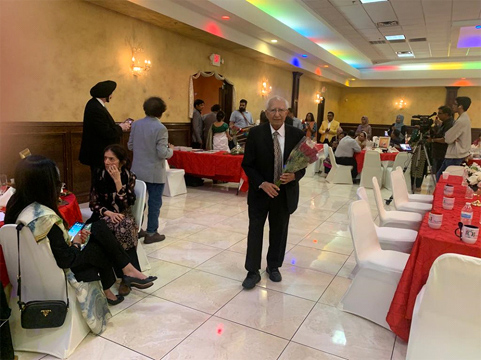
    Ek Shaam, Dallas ke Roshan Charaghon ke Naam. That was the evening of May 12, 2023 – filled with joy and excitement when over 200 guests gathered to honor Dr. Harbans Lal and eleven other luminaries (Roshan Charag), persons who act as beacons of light to the society around. These luminaries have attained outstanding achievements in their chosen fields and are involved in other community affairs and philanthropic efforts, in helping people in distress, and in advancing mutual understanding among people of diverse religious and cultural backgrounds, among others. Dr Harbans Lal was honored with Lifetime Achievement Award by the Al-Noor International Texas organization for his outstanding contributions to science as an internationally acclaimed pharmacologist and neuroscientist, for being an eminent scholar on Sikhism, and for promoting interfaith and multicultural understanding.
    Dr. Harbans Lal is an accomplished scientist in the field of pharmacology and neuroscience and has published over 400 research papers and 28 books. He has served on the advisory boards of several national and international institutions including National Institute of Health, National Science Foundation, US Food and Drug Administration, and National Institute of Aging. He has been involved in developing longevity drugs that lengthen human life-expectancy (I guess he has been using them judiciously to be healthy and fit at 92!) He was honored with the Distinguished Neuroscientist Award by the Society of Neuroscience.
    Besides being an eminent scientist, Dr. Lal is a well-known scholar on Sikhism. This is how he got his love for Sikhism. He says his parents told him that they got him as a gift from Guru Nanak and then raised him to serve the causes of Guru Nanak. So, from the childhood, he had deep interest in Sikhism and Gurbani. He served as the President of All India Sikh Students federation (AISSF) for 1954-56. For his contributions to the Sikh causes, he has been honored by the SGPC with the title of Bhai Sahib, and the Anandpur Sahib Foundation honored him with the Order of Nishan-e-Khalsa. He is the founder of Academy of Guru Granth Studies where effort is made to understand the true message of Gurbani, and a founding member of the School of Scientific and Logical Interpretation of Gurbani. In the new scientific age, it is imperative that the message of Gurbani is interpreted logically and correctly, and broadcast accordingly so that the new generation can relate to it and find sustenance from it. And Dr. Lal’s credentials of being a scientist with incisive insight, dispassion, and candor make him eminently qualified to do that. I have known Dr. Lal for nearly thirty years and benefited from his deep understanding of Gurbani. In his talks in our gurdwara, we often hear something from him that is new and provocative and something that relates Gurbani to real life. He believes that the planet earth will live or die as per the Cosmic Plan or Hukam. With the biggest telescopes available today, we are now discovering how little we know about Creation. Dr. Harbans Lal writes a blog, “Seeking Wisdom”, which I have found stimulating and insightful.

    Dr. Harbans Lal with his wife, family members and friends.

    Dr. Harbans Lal is also well known for his leading roles in Interfaith organizations. As such, he is a household name in the Asian community in Dallas; any adult you talk to seems to know him, whether he is a Sikh, Hindu, Muslim, or Christian. This is because he has been a true believer in the Guru’s saying “manas ki jaat sab ek hi pehchanbo” (Regard all humans as one race). Every so often there are interfaith gatherings where people of different religions mingle and pray together in order to foster harmony among people of diverse faiths. In one such gathering, he mentioned that Guru Nanak was the first religious leader who started interfaith dialog. We are aware that Guru Nanak travelled to Hindu and Muslim places of worship and had dialogs with religious leaders of those faiths in order to foster mutual understanding among the different faiths. Perhaps touched by Guru Nanak’s ideology, Dr. Lal always has a peaceful and smiling face; it seems hate and anger have not touched him! He can listen to and relate to people of different faiths and nationalities as if they were part of his family, as if there was no “otherness”. This is what Guru Nanak would have loved him and us to be like, and Dr Lal has been treading on that path– Guru Nanak’s path– his entire life. He has lived an honest life full of love for others and God – the life of a Sachiaar! He represents a true ambassador of Guru Nanak’s philosophy!
    The award ceremony took place in Roma Palace in the Dallas metroplex. The well-decorated hall had big round tables for awardees and their supporters. Each table had a beautiful picture of the awardee on some wooden surface. And there were specially designed mugs with “We Love You” messages. Each awardee was ushered into the hall to the beat of Dhol and excitement, while the organizers of the Al-Noor International Texas offered flower bouquets to the awardees. There was a slide show that showcased the achievements of the awardees, while the awardees themselves had time to say something about their personal lives. The event lasted about four hours.

  • Indian American math teacher Nikhil Bhatia to run for US Congress from Illinois

    Indian American math teacher Nikhil Bhatia to run for US Congress from Illinois

    ILLINOIS (TIP): Nikhil Bhatia, an Indian American math teacher from Illinois, has announced his run for the US Congress from the state 7th District challenging Democrat Representative Danny Davis who intends to seek a 15th term. “I’m excited to share a big new step in my life: I am officially a candidate for Congress in Illinois’ 7th Congressional District,” Bhatia stated LinkedIn. The district covers the South and West Sides of Chicago as well as the western suburbs.
    Bhatia, a teacher in Grand Crossing and an elected Local School Council member at Galileo Scholastic Academy on Chicago’s Near West Side, has “worked in urban education for 11 years, including five years as a middle school principal,” according to his website. He “recently received” his master’s from University of Chicago‘s Harris School of Public Policy “in order to study how we can tackle the systematic issues that oppress many of our communities,” it adds. “I would like to combine my passion for social justice and expertise in leadership and data analysis to make a social impact.”
    Explaining the reasons for running for the US Congress on his LinkedIn profile, Bhatia said that although he’s spent his “entire career in urban education, the obstacles all of our kids face — underfunded schools, gun violence, climate change, and rolling back rights for women and LGBTQ students — are overwhelming. We need a solution that goes well beyond the classroom. And to do that, we need to change who we are sending to Washington. Change can’t wait.”
    Bhatia notes that providing a better future for our children means “we can’t keep sending the same career politicians to Washington and hope for a different result. We need leaders who can relate to today’s challenges and have fresh ideas for creating a better tomorrow.”
    “My issue isn’t with Danny’s age (81 years), but with his lack of action,” he says of the long-term representative currently holding the seat. Bhatia’s parents moved from India to the US and worked as physicians. He and his wife Alison are parents of two young children.

  • ‘Will work on issue of immigration says Neera Tanden ahead of taking over as new White House Domestic Policy Advisor

    ‘Will work on issue of immigration says Neera Tanden ahead of taking over as new White House Domestic Policy Advisor

    WASHINGTON, D.C. (TIP): Indian-American public policy expert Neera Tanden has said her experience as a daughter of immigrants is akin to many immigrants in the US and she will work on the issue of immigration in her new role as the White House Domestic Policy Advisor.

    Tanden, 52, on Saturday, May 27 replaces former US National Security Advisor Susan Rice as the White House Domestic Policy Advisor, which is considered to be one of the most powerful positions inside the White House.

    “Currently I’m Staff Secretary, and tomorrow I’m going to…I’m extremely enthusiastic about taking over as Domestic Policy Council Advisor. My experience is like many immigrants in the United States as children of immigrants,” Tanden told PTI on Friday.

    “My father came here from India in the early 1950s, and my mother came in the 1960s. They moved to Bedford, Massachusetts, a suburb of Boston. They were the only Indian family in that community. So, I felt a part of that community, but also a little bit different,” she said.

    Tanden, a close confidant of President Joe Biden, was named by Biden as his Domestic Policy Advisor this month to help him craft and implement his domestic policy agenda, making her the first Asian-American to lead any of the three major White House policy councils in history.

    “My mom would occasionally wear sarees. I was different from other families in Bedford. I had that duality of being the child of immigrants. But also, being part of America.

    “What I’m really incredibly enthusiastic about in this role and excited about is one of the issues that I will take on as domestic policy advisor is the issue of immigration,” she said on the last day of her being senior advisor and staff secretary to President Biden. President Biden has a strong record of expanding legal immigration in the United States, as well as a whole host of other issues, she said.

    “I’m looking forward to working on those issues as well. And it really does feel like it comes full circle given the journey my parents made to come here, and to give me the opportunities I’ve had and that is effectuated now when I’m in this new role,” Tanden said. She said that the president has important principles which is to ensure that they are expanding legal immigration and legal pathways.

    “We have a lot of complicated issues on immigration at the border, other issues, but it’s a touchstone to ensure that America’s role as a beacon for the world, a place where there are people like my parents who made that great leap of faith to go to a place very different, live in a different world, a different culture, and try to really reach for the American dream,” she said.

    “And I know that 50, 60 years ago, 70 years ago, they would never imagine that their short daughter would be working at the White House one day. But that is one of the great aspects of our immigration policies, and we have to keep true to that, which is, fighting against efforts to restrict legal immigration and really ensure that our immigration policies reflect our values for the 21st century,” she said.

    Tanden began her career as an associate director for domestic policy in former president Bill Clinton’s White House and senior policy adviser to the first lady.

    She received her Bachelor of Science degree from the University of California, Los Angeles and her law degree from Yale Law School. She also served as legislative director in Clinton’s office and deputy campaign manager and issues director for Hillary Clinton’s 2000 Senate campaign.

    She was the director of domestic policy for the Obama-Biden presidential campaign, where she managed all domestic policy proposals.

    She also served as policy director for Hillary’s first presidential campaign, where she directed all policy work and oversaw the debate preparation process for then-Senator Hillary. During the Obama administration, she served as senior adviser for health reform at the US Department of Health and Human Services.

    In that role, she developed policies around reform and worked with Congress and stakeholders on particular provisions of then-President Barack Obama’s signature legislative achievement, the Affordable Care Act.

    She was also the president and CEO of the progressive think-tank, Center for American Progress (CAP).

    “What I’m particularly excited about is, there are so many issues that have been really part and parcel of the president’s longstanding views and principles,” she said.

    Tanden said the Domestic Policy Council champions issues around policing reform and reducing crime and ensuring that “we are working on both of those issues”. “As I just discussed, immigration, ensuring that we are improving our school’s education, is a key component and an area that I’ve worked on for a long time. I’m incredibly proud of the President’s record on the issue of healthcare. The president has dramatically expanded healthcare,” she said. For many young Indian Americans, in particular girls, Tanden has emerged as a role model.

    “My most important message is that, follow your dreams and work hard at what your dreams are. I truly believe that people will do their best work when they enjoy what they do. But I’d also say there are sometimes some really easier paths,” she said.

    “When I was growing up, a lot of our community pushed or prompted people, particularly girls to go into healthcare or a lot of family members thought it would be more successful for me to go into accounting or some, more traditional path,” she said.

    Tanden said there weren’t any role models for her among Indian Americans in government when she was a child, let alone Indian women. “I feel it is a real privilege to try to widen the path for others who come after me. This is always a marathon where we pass the baton. Many women leaders have widened the path for me. Many leaders of color have widened the path for me. Many Asian leaders have widened the path for me. And I feel like it’s part of my role to widen the path for others,” Tanden said.