Month: July 2023

  • History may be rewritten; however, tradition will live on – Isaac Mar Filoxenos

    History may be rewritten; however, tradition will live on – Isaac Mar Filoxenos

    From L-R Sibu Nair, Jacob George, Mark Mang, Rev. Bryan Nerren, Rev. Dr. Isaac Mar Philoxenos, Rt. Rev. Johncy Itty, Father John Thomas, Bishop C.V. Mathew

    Christian community sheds tears for Manipur

    NEW YORK (TIP): : Christians celebrated the Indian Christian Day with prayers and tears in light of the great calamity faced by the Christian community in Manipur. The celebration, which was supposed to be held on July 3, the day of St. Thomas, was held a day earlier at the Cathedral Hall of the Malankara Catholic Church in Elmont, New York. It was a rare gathering of Indian Christians from across denominations, regions, and languages who lived in greater New York. Church Fathers, priests, and dignitaries arrived with blessings and greetings.

    Bishop Joy Allapat of Syro-Malabar Catholic Church.

    Bryan Nerran, who had to spend seven and a half months in prison in India on trumped up charges, and Rev. Mark Mang, a native of Manipur whose cousin died at the hands of the militants and others, pointed to the rapid changes that are taking place as regards curtailing of religious freedom in India. Several choirs from various churches with their Singing made the ceremony more devotional.

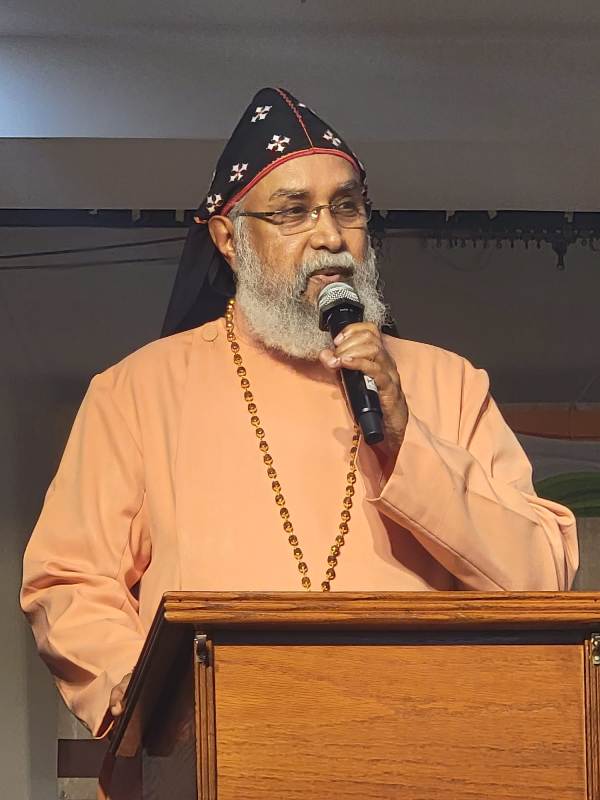
    Bishop of Marthoma Church, Isaac Mar Filoxenos Episcopa, who was the chief guest, mentioned the new trends by those in power to rewrite history. He went on to add that they may have political and social reasons to indulge in those efforts; however, the facts will not be erased from history. We should be proud of our history and heritage. The Bishop said, “Suffering and pain have also affected the people of Israel. They cried out while they were in captivity in Babylon. They lamented how we could sing God’s song in a foreign land. We are safe and content here in America. But we cannot accept the pains of our brothers in India. Let us pray for peace to be restored there. Let human rights be restored there. We may belong to different churches. But the important thing is that we stand together. We must stand together in the miseries facing humanity while accepting our differences. We owe it to ourselves to raise our voices. We must also be ready to die for the kingdom of God. As successors of St. Thomas the Apostle, we should be proud. The light of the gospel reached our country in the first century.”

    The Rt. Rev. Johncy Itty of Episcopal Church

    “Saint Thomas is mentioned three times in the Bible. In the eleventh chapter of the Gospel of John, Jesus decides to go to Bethany to comfort the family of Lazarus. But the disciples, knowing that there were people there who could kill him, asked if it was necessary. Once Jesus decided to go, Thomas said we could go and die with him. In the fourteenth chapter, Jesus speaks of himself and his departure. Then Thomas says: ‘We do not know the way you are going. How do we know that?’ To which Jesus replied: ‘I am the way, the truth, and the life. Those who know me know the Father.’ The third opportunity is to see Jesus after the ascension. Jesus sees Thomas, who says he will not believe unless he sees Jesus face to face and touches the wound in his hand. We always remember Thomas’s response looking at the hands, ‘My Lord and my God.’ We have the tradition of St. Thomas, who always stood firm in his faith. We should never miss it – Bishop exhorted.

    Bishop Mar Joy Allapat of the Syro-Malabar Church pointed out that even in America, there is no certainty of what will happen in the future. “After Manipur, some people said Kerala would be the next target. Christianity arrived in Kerala much before Europe Embraced it. However, today our brothers are facing difficulties back home in India. Historically we have faced persecution. However, Bible speaks about being strengthened in the face of persecution. As the Bible says, we are like sheep in the middle of wolves. Therefore, let us unite and encourage our brothers in Manipur,” the Bishop added.

    Rt. Rev. Dr. C.V Mathew of the Evangelical Church spoke about the Manipur situation and wondered aloud why the Indianness of Christians is being questioned. He implored the authorities to respect the constitution that guarantees the religious freedom of every citizen. He also encouraged the people to unite and support those in harm’s way. Rt. Rev. Johncy Itty of the Episcopal Church applauded the organizers of the Indian Christian Day, pointing out that we would never give up faith because of persecution.

    Rev. Mark Mang explained Manipur’s pain. He said he has been in America for eight years, currently serving as a Chaplain. We don’t know what heaven is like. But we think it’s all coming together, so as this gathering. His cousin and four others fell victim to the unlicensed gun of the assailants while defending the village. The riot could have been stopped in one day. It didn’t happen. Three hundred fifty-four churches were destroyed, and it continues. It is not even possible to go and bury the dead bodies in the hospital. More than fifty thousand people are refugees in different states. There will be torture and killings, but in the end, God’s glory will be revealed there. Pray for us and bring help. He said that he is thinking of going to Manipur soon.

    Federation of Indian American Christian Organizations President Koshy George (Fiacona) pointed out that it has been decided to celebrate St. Thomas’s Day, July 3, as Indian Christian Day everywhere. The day before, the celebration took place in Boston, and on July 3 across India as well. Efforts are being made to bring a new understanding that Christianity is two thousand years old in India, and St. Thomas came in A.D. 52 and was martyred on July 3, A.D. 72. There are thousands of denominations among Christians. But we all worship Jesus while believing in the Trinity. He asked if it would be best to set aside all our differences and meet at least for one day.

    Guests were given a history of the seven and a half churches founded by St. Thomas and a report on atrocities in India. State Senator John Lou, Sibu Nair of the Asian Outreach Officer in the N.Y. Governor’s Office, Rev. Jacob George, and others spoke.

    Rev. Wilson Jose offered the opening prayer, and Fr. John Thomas offered the closing prayer. Rev. N.K. Matthew offered a special prayer for the people in Manipur.

    George Abraham, who expressed a vote of thanks, pointed out that those who are from Kerala do not know much about civil wars. We don’t know the condition of being chased away from home and worried about the future in the corner of some school or abandoned building. He encouraged everyone to help those who are driven into such a situation in Manipur. FIACONA was formed when there was an attack on Christians in Dangs district of Gujarat. When Graham Staines and his children were burnt to death, we condemned such a heinous crime. Unfortunately, only a few people know about this organization. Many people from all spheres of life are working hard with dedication in defense of religious freedom everywhere. Some people have paid a heavy price for their advocacy. John Prabhudoss, the chairman, is currently barred from entering India. There is a fear that the OCI card is being weaponized to silence the critics abroad. He expressed hope that NRIs will be energized to defend human rights and religious freedom here in the U.S. as well as in India. CSI Jubilee Choir, New York Men’s Voices, IPC Jamaica Choir Rev. Milton James (solo), and Bethlehem Punjabi Church sang.

    Koshy George, Mary Phillip, Dr. Anna George, Koshi Thomas, Paul D. Panakkal, George Abraham, Raju Abraham, Matthew P Thomas, Matthew Eapan, Jerin Joe James, Pastor Jacob George, Shaimi Jacob, Koshi Thomas, Rev. Milton G. James (Sr.), George Chacko, John Joseph, Chuck Pillai, Don Thomas, Dr. Cynthia Prabhakar, Rev. Anadhasekhar Manuel, rev. Christer Solomon, Lona Abraham, and others led the way.

    Audience
  • World Bank President Ajay Banga to attend G20 meeting in India

    World Bank President Ajay Banga to attend G20 meeting in India

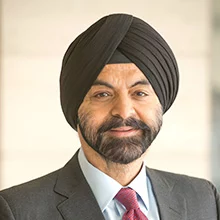
    WASHINGTON, D.C. (TIP): World Bank President Ajay Banga will travel to India next week to attend the G20 Finance Ministers and Central Bank Governors Meeting in Ahmedabad, Gujarat, according to the development lender.
    This would be Banga’s first trip to India after he took over as the World Bank president last month.
    Gujarat is hosting four meetings of G20 in the first two weeks of July. These meetings will provide an opportunity for business representatives to share their perspectives, insights and policy recommendations on various economic and business-related topics and will play a very significant role in shaping global economic agendas and policies, according to officials.
    (Source: PTI)

  • Hollywood Actors Strike

    Hollywood Actors Strike

    The combined strikes bring Hollywood to a standstill. SAG-AFTRA is the world’s largest labor union representing performers and broadcasters. (Twitter photo)

    TV and Movie Actors Vote for Biggest Walkout in Four Decades

    NEW YORK/LOS ANGELES (TIP): The Hollywood actors’ union approved a strike on Thursday, July 13, for the first time in 43 years, bringing the $134 billion American movie and television business to a halt over anger about pay and fears of a tech-dominated future. The leaders of SAG-AFTRA, the union representing 160,000 television and movie actors, announced the strike after negotiations with studios over a new contract collapsed, with streaming services and artificial intelligence at the center of the standoff. On Friday, the actors will join screenwriters, who walked off the job in May, on picket lines in New York, Los Angeles and the dozens of other American cities where scripted shows and movies are made.

    Actors and screenwriters had not been on strike at the same time since 1960, when Marilyn Monroe was still starring in films and Ronald Reagan was the head of the actors’ union. Dual strikes pit more than 170,000 workers against old-line studios like Disney, Universal, Sony and Paramount, as well tech juggernauts like Netflix, Amazon and Apple.

    “I am shocked by the way the people that we have been in business with are treating us!” Fran Drescher, the president of SAG-AFTRA, as the actors’ union is known, said at a news conference on Thursday in Los Angeles. “How far apart we are on so many things. How they plead poverty, that they’re losing money left and right when giving hundreds of millions of dollars to their C.E.O.s. It is disgusting. Shame on them!” Shaking her fists in anger, Ms. Drescher noted that “the entire business model has been changed” by streaming and that artificial intelligence would soon change it more. “This is a moment in history — a moment of truth,” she said. “At some point, you have to say, ‘No, we’re not going to take this anymore.’”

    Many of the actors’ demands mirror those of the writers, who belong to the Writers Guild of America. Both unions say they are trying to ensure living wages for workaday members, in particular those making movies or television shows for streaming services.

    Screenwriters are afraid studios will use A.I. to generate scripts. Actors worry that the technology could be used to create digital replicas of their likenesses (or that performances could be digitally altered) without payment or approval.

    The Alliance of Motion Picture and Television Producers, which bargains on behalf of Hollywood companies, said it had worked to reach a reasonable deal at a difficult time for an industry upended by the streaming revolution, which the pandemic sped up.

    “The union has regrettably chosen a path that will lead to financial hardship for countless thousands of people who depend on the industry,” the alliance said in a news release that outlined 14 areas where studios had offered “historic” contract improvements. Those included, according to the alliance, an 11 percent pay increase in the contract’s first year for background actors, stand-ins and photo doubles and a 76 percent increase in residual payments for “high-budget” shows that stream overseas.

    The alliance added in a separate statement: “We are deeply disappointed that SAG-AFTRA has decided to walk away from negotiations. This is the union’s choice, not ours.”

    Behind the scenes, studio executives responded to Ms. Drescher’s fury in varying ways. Some said they had underestimated her ability to lead the sometimes-fractious actors’ union — discounting her as little more than the cartoonish figure she played on “The Nanny” for six seasons in the 1990s. Others continued to mock her as giving an Academy Award-caliber performance at the union’s news conference. Though Hollywood had been bracing for a writers’ strike since the beginning of the year — screenwriters have walked out eight times over the past seven decades, most recently in 2007 — the actors’ uncharacteristic resolve caught senior executives and producers off guard.

    The actors last staged a major walkout in 1980, when the economic particulars of a still-nascent boom in home video rentals and sales was a sticking point. Their latest action is part of a resurgent labor movement, particularly in California, where hotel workers, school bus drivers, teachers and cafeteria staff have all gone on strike for some duration in recent months.

    The first distress signal for the studios came in early June when roughly 65,000 members of the actors’ union voted to authorize a strike. Almost 98 percent of the voters supported the authorization, a figure that narrowly eclipsed the writers’ margin.

    Still, studio negotiators went into the talks feeling optimistic. They were taken aback when they saw the list of proposals from the union — it totaled 48 pages, nearly triple the size of the list during their last negotiations in 2020, according to two people familiar with the proposals, who spoke on the condition of anonymity to discuss confidential talks.

    Then in late June, more than 1,000 actors, including Meryl Streep, John Leguizamo, Jennifer Lawrence, Constance Wu and Ben Stiller, signed a letter to guild leadership, declaring pointedly that “we are prepared to strike.”

    The Hollywood studios will now need to navigate a two-front labor war with no modern playbook to consult. There are many open questions, including whether the actors and the writers may demand that future negotiations with the studios be conducted in tandem. One guild that will not be included: the Directors Guild of America, which ratified a contract last month.

    The actors’ walkout will provide an immediate boon to the striking writers, who have been walking picket lines for more than 70 days; the Writers Guild has yet to return to bargaining with the studios. Now those picket lines are likely to be raucous and star-studded spectacles — struggling thespians still trying to get a foothold next to A-listers with bodyguards who are paid $20 million or more per movie role. The strikes are the latest monumental blow to an entertainment industry that has been rocked in recent years by the pandemic and sweeping technological shifts.

    The Hollywood studios have watched their share prices nose-dive and their profit margins shrink as viewership for cable and network television — as well as box office returns — has collapsed in the wake of the explosive growth of streaming entertainment.

    Many companies have resorted to layoffs, as well as purging series from their streaming services, all in the name of trying to increase profit margins and satisfy recalcitrant investors. Studio executives had already put the brakes on ordering new television series last year as their streaming services continued to burn through cash.

    In an interview on CNBC on Thursday morning, Disney’s chief executive, Robert A. Iger, said that given all the “disruptive forces” in the business, “this is worst time in the world to add to that disruption.” Barry Diller, the veteran media executive, said in an interview that the recent upheaval in the industry had caused distress for both sides.

    “You have a complete change in the underlying economics of the entertainment business that it previously held for certainly the last 50 years, if not the last 100 years,” he said. “Everything was basically in balance under the hegemony of five major studios, and then, oh, my God, along come the tech companies in Netflix, Amazon and Apple and the fast, transformative things that came out of Covid. The result of which is you have a business that’s just completely upended.”

    After the strike announcement, the union issued rules for its members. Along with not being able to work in front of the camera, they will not be permitted to promote current projects. That includes attending Comic-Con, film festivals and movie premieres.

    That means actors will not be able to promote movies during an all-important stretch for the summer box office, when big-budget films like “Barbie,” “Oppenheimer” and “Haunted Mansion” are released.

    Some of those promotional opportunities have already disappeared: Late-night shows like “The Late Show With Stephen Colbert” and “The Tonight Show Starring Jimmy Fallon” have been running only repeat episodes during the writers’ strike.

    The effects of the dual strikes should be noticeable to viewers within a couple of months. Unless there is an immediate resolution to the labor disputes, the ABC fall schedule, for instance, will debut with nightly lineups of reality series and game shows — including “Celebrity Wheel of Fortune,” “Dancing With the Stars” and “Judge Steve Harvey” — as well as repeats of “Abbott Elementary.”

    If the strikes drag into the fall, blockbuster films scheduled to be released next summer, like “Deadpool 3,” could be delayed. The actors’ strike has already begun to put a damper on the promotion of summer’s would-be blockbusters, and drawn fiery statements of support from movie stars. The film “Oppenheimer” started its London premiere an hour earlier than planned on Thursday in order to allow its cast to walk the red carpet before any strike was called, and then, before the film was shown, its director, Christopher Nolan, announced that its stars had left the building in solidarity with their fellow actors.

    “Unfortunately, they’re off to write their picket signs for what we believe to be an imminent strike by SAG,” Mr. Nolan told the audience, referring to SAG-AFTRA, the union representing screen and television actors. Not long after that it became official: The union’s leaders announced that the strike would begin at midnight.

    Matt Damon had telegraphed the possibility that the strike could cause a cast exodus, telling Variety from the premiere’s red carpet that “the second it’s called, we’re going home.”

    “This isn’t an academic exercise,” he said. “This is real life and death stuff. Hopefully, we get to a resolution quickly. No one wants a work stoppage, but we’ve got to get a fair deal.”

    The strike also came up at another major London premiere, Wednesday night’s star-studded screening of “Barbie,” when its star, Margot Robbie, told Sky News that she was “very much in support of all the unions” and would “absolutely” support the strike.

    The strike will halt red carpet appearances and other promotional activities, but will add a dose of star power to the unions seeking a better deal from the studios. Several took to social media. Yvette Nicole Brown, who only a day earlier had announced the Emmy Award nominations, posted a picture of herself holding a “SAG-AFTRA On Strike” sign on Instagram.

    And the actor Cynthia Nixon wrote on Twitter that she was proud to stand with writers to “demand a fair share of the record-breaking profits the studios have been reaping from our labor for far too long.”

    Jack Quaid, who was in “Scream,” wrote on Twitter, “If we must strike… THEN WE SHALL STRIIIIIIIIKEEEEEEEEE!!!!!”

    Some actors, like Kumail Nanjiani, who was nominated for an Emmy this week for his performance in “Welcome to Chippendales,” posted the strike placard on social media. And several, including Josh Gad, the voice of Olaf in the “Frozen” movies, praised the impassioned news conference by Fran Drescher, SAG-AFTRA’s president. The actors’ last big walkout against the studios was more than 40 years ago.

    In July 1980, members of the Screen Actors Guild and the American Federation of Radio and Television Artists were so fearful of what was to become of their jobs with the advent of pay television and other new “home video technologies” that they left their sets and hit the picket lines. Sound stages fell silent. Production on “9 to 5” stopped. “Little House on the Prairie” shut down.

    The unions were seeking a 40 percent increase in pay over three years. They also wanted a percentage of the profits when their work was licensed to pay television or home video. The studios were reluctant to share, fearful that the profits from the new home video markets would be too small to divide up and that putting too many resources into those markets would adversely affect theatrical attendance. An agreement was struck between the studios and the unions at the end of that September and ratified at the end of October. But during those three months the networks were forced to delay the start of their fall television programming.

    The 32nd Primetime Emmy Awards ceremony was also boycotted by the actors. (Powers Boothe was the only actor to show, for his role in the mini-series “Guyana Tragedy: The Story of Jim Jones.”). The industry lost an estimated $40 million a week, and shows without union actors, like Carl Sagan’s “Cosmos: A Personal Voyage,” gained popularity.

    In the end, the actors received a 32.5 percent increase in pay and a 30 percent increase in residuals. They also secured a health and pension plan, a fact brought up at the news conference on Thursday announcing SAG-AFTRA’s new strike by Duncan Crabtree-Ireland, the union’s chief negotiator.

    “This is not a strike-happy union,” he said. “This is a union that views strikes as a last resort, but we’re not afraid to do them when that’s what it takes to make sure our members received a fair contract.”

  • Olivia Chow becomes Toronto’s 66th mayor

    Olivia Chow becomes Toronto’s 66th mayor

    Prabhjot Singh

    TORONTO (TIP): Olivia Chow has become the first person of color to be sworn in as Mayor of Canada’s most populated city of Toronto. Her swearing-in ceremony, attended by councilors, guests of the elected mayor, former mayors, city staff and agency representatives was held at the city hall. The 66-year-old Olivia Chow, widow of former NDP leader Jack Leyton, was elected in the bye election held last month. Chow, a former NDP MP and past city councilor, defeated 101 other candidates to win last month’s mayoral election to replace John Tory. Her victory vaults a progressive into Toronto’s top job for the first time in over a decade.

    In her first address after the ceremony, Olivia Chow pledged to build what she calls a more caring and affordable city. She received a standing ovation from her colleagues on the council for her push for a better city.

    “Let’s build a Toronto that is more affordable, safe and caring, where everyone belongs,” she said after signing the declaration. “Together we can, and today we start.”

    The new Mayor has a host of issues on her plate. These include a massive budget shortfall, driven in large part by decreasing transit revenues and increased shelter costs.

    During her opening remarks as mayor, she chose to call on both the federal and provincial governments to step up and help refugees who are facing housing issues in the city. “Even in the face of those steep challenges, people have sent a clear message that change is not only possible, it’s absolutely necessary,” said Chow.

    Chow, known for her passion for cycling, elected to bike to work on her first day in office. Cycle Toronto hosted a group bike ride to City Hall to mark her inaugural day, with Chow joining the short ride and briefly addressing the group.

    Since the June by-election, she has been holding meetings with city staff, finalizing her team and holding transition engagements with civil service and non-profit groups on priority issues to get to her work.

    She made it clear that she will need cooperation from everyone in her endeavor to make Toronto the most livable city. She affirmed that city councilors will continue to do “what they love to do.”

    “They will be contributing the way they want to contribute,” she said, “and accomplish what they want to accomplish in these three years that we have in front of us.” Since John Tory’s resignation and departure in February, the role and responsibilities of mayor have been held by Deputy Mayor Jennifer McKelvie.

  • A significant milestone for the sport as Major League Cricket begins in US

    A significant milestone for the sport as Major League Cricket begins in US

    WASHINGTON, D.C. (TIP): Cricket is all set to hit a significant milestone this week with the launch of Major League Cricket in the US as Texas Super Kings face off against Los Angeles Knight Riders at America’s new premier venue in Dallas on Friday, July 14.

    All six teams comprising some of the major cricket players and local American talents would play 18 games, leading up to the first-ever championship final on July 30. Eleven matches will take place at Grand Prairie Stadium near Dallas in Texas, while seven games are scheduled to take place at Church Street Park in North Carolina.

    All the tickets for the first match, at the cricket-specific stadium featuring 7,200 seats and a grass wicket meeting the highest levels of international standards, have been sold off, the organizers said.

    The six teams are Los Angeles Knight Riders, MI New York, San Francisco Unicorns, Seattle Orcas, Texas Super Kings and Washington Freedom. Most of the teams are owned by Indian Americans who are venture capitalists, in the IT and start-up sector.

    The inaugural season will be played in a round-robin format with the four best performing teams competing in a multi-game playoff and final round to decide a champion, to be crowned on July 30, a media release said.

    Based out of Seattle Washington State, the Seattle Orcas are owned by an investor group including Microsoft’s CEO Satya Nadella, Soma Somasegar, Samir Bodas, Ashok Krishnamurthi, and Sanjay Parthasarathy – and the GMR Group.

    Los Angeles Knight Riders are based out of Los Angeles and is owned by Knight Riders Groups. San Francisco Unicorns is owned by Anand Rajaraman and Venky Harinarayan, co-founders of Cambrian ventures.

    Texas Super Kings are co-owned by the Chennai Super Kings, Ross Perot Jr., and Anurag Jain; while Washington Freedom team is owned by Indian American entrepreneur Sanjay Govil. ”It’s not only the Indian diaspora that is very excited, those from Australia, United Kingdom, Pakistan, Sri Lanka, Bangladesh, New Zealand are also excited about the start of the Major League Cricket in the United States,” said an avid cricket fan, M R Rangaswami from San Francisco, who is flying to Dallas to watch the opening match.

    Star players set to take part include Afghanistan T20 captain Rashid Khan, South African internationals Faf du Plessis, Quinton de Kock and David Miller, West Indians Kieron Pollard, Andre Russell and Dwayne Bravo, Australians Marcus Stoinis and Aaron Finch, England’s Jason Roy and Liam Plunkett, Sri Lankan Dasun Shanaka and New Zealand’s Trent Boult.

    Players have been drafted mainly from all major cricket playing nations except for India, because of the existing rules of the BCCI.

    ”The US media market is the largest in the world. So, at some point, they’ll realize that sending these (Indian) players is good for everybody,” Rangaswami told PTI. Ahead of the start of the games, Sameer Mehta, co-founder of Major League Cricket said fans will experience an unforgettable night for cricket in America, with a full house welcoming the world’s top players to Grand Prairie Stadium for the opening match. ”Since we arrived in Texas, it’s been incredible to see the support for the Texas Super Kings.

    ”We can’t wait to get out on the field at Grand Prairie Stadium and represent the Lone Star State in front of a full house and be part of a special night for cricket in America,” said Faf du Plessis, captain of the Texas Super Kings.

    ”It’s going to be a historic night at Grand Prairie Stadium, as the first ever Major League Cricket game unfolds in front of a packed stadium this Thursday night. I’ve always spoken about wanting to represent the Knight Riders wherever they play. ”We’ve long talked about coming to the United States and I’m glad it’s finally happening.

    ”It’s great to hear that the opening game has been sold out, and we can’t wait to bring our exciting brand of cricket to the cricket fans in America.” said Sunil Narine, captain of the Los Angeles Knight Riders. Anurag Jain, co-owner of the MLC Texas Super Kings Cricket, said. ”We look forward to having a professional team in Texas for the passionate local cricket community to root for and to introduce the sport to new fans across the country.
    (Source: PTI)

  • Trump reveals new details about $1 billion in earnings in revised filing

    Trump reveals new details about $1 billion in earnings in revised filing

    In a revision to an earlier filing, the Republican presidential hopeful showed specific income from foreign ventures, speaking fees and real estate

    WASHINGTON, D.C (TIP): Former president Donald Trump disclosed new details about roughly $1 billion in earnings in a revised financial filing covering much of his post-presidency, including money from foreign ventures, speaking fees and a Florida golf course, says a Washington Post report. Trump reported several hundred sources of income in an initial April financial disclosure but provided only broad ranges for the income he received from each source. The revised Trump filing provides new details, such as a dollar amount for nearly a hundred sources of income, including his largest ones, which sum to over $1.2 billion, according to a Washington Post tally.

    The polling leader for the Republican nomination in 2024 disclosed more specific earnings from speaking fees than previously known, including at least $2 million for speaking at events hosted by Hak Ja Han Moon and a group she co-founded with her husband Sun Myung Moon, the late leader of the Unification Church, and $2.5 million to comment on a boxing match. In addition, he disclosed that his wife, Melania Trump, earned $1.2 million from speaking fees.

    Under disclosure rules, candidates typically show a broad view of their finances by providing ranges of valuation for their income and liabilities, as Trump did on his initial filing. In the new filing, Trump provided ranges for some items but also put in a number of specific larger amounts. In two cases in the revised filing, Trump disclosed earnings outside the range he had previously indicated, according to the Post tally. In reporting income from a golf resort in Ireland, Trump went from saying his earnings were less than $201 to saying he received an amount in euros that today would be equal to $6.2 million. In another instance, Trump initially reported income between $1,001 and $2,500 from a carousel in New York’s Central Park, but revised the amount to $2,873 in the July filing.

    Trump also added in the new report that he paid off an additional loan held by Deutsche Bank, a mortgage on his Doral, Fla., golf club valued at between $25 million and $50 million.

    The revised filing was provided by the Office of Government Ethics after the agency noted the existence of the updated paperwork in an online database accessible to the public. The new filing was certified on July 6 by the office’s director, Emory Rounds, whose term expired on July 12. Rounds could not be reached for comment.

    Don Fox, former general counsel and acting head of the OGE during the Obama administration, said it’s not unusual for the office to ask for clarification from filers with complicated finances.

    But he said “the fact that Emory Rounds did not sign it in April would tell me that he was not satisfied that all the disclosures required by law had been made at that time. Those are pretty wild swings in valuation.”

    Patrick Shepherd, an OGE spokesman, asked to comment on the revised filing, said via email that the agency is “committed to transparency and citizen oversight of government. However, OGE does not respond to questions about specific individuals.”

    Fox said Trump, in revising the filing with specific amounts, went beyond the requirement of providing information in ranges by disclosing the exact amount he earned. It is not typical for a candidate to go beyond the ranges, and it is not clear why Trump went beyond the requirement. The report is required under guidelines from the Office of Government Ethics that say a presidential candidate is required to file within 30 days of becoming a candidate and on or before May 15 of each year of candidacy. Trump, after receiving two extensions, filed his initial report on April 14. The filing mainly covers part of 2021 and all of 2022, and at least one reference to 2023, for a payment of $100,000.

    The new filing contains an array of updates that offer further insight into Trump’s finances and his complex domestic and international business interests. In one of the most substantial revisions, Trump had reported in his April filing that he made more than $5 million in income from a golf course at his Doral resort in Florida, while the revised filing said he earned $159 million. While those statements don’t conflict, they do provide another example of why the new filing has a larger valuation. Trump’s detailing of the more than $1 billion came from sources including hotel sales, golf revenue and licensing fees in the July disclosure. His April filing, which did not provide exact numbers on his income, reported more than 25 sources of income over $5 million.

    In the July filing, Trump reports three sources of income over $100 million, including $284 million from the sale of the Trump International Hotel in Washington, $159 million from his Miami golf resort and $199 million across four partnerships with Hudson Waterfront Associates. Some of this income had been previously known but not described in detail in his initial filing. For example, while he reported in April that the Washington hotel sale brought in more than $5 million, it had already been widely reported that the sale price was around $284 million — the amount he declared in the July filing. But some of the other newly disclosed details had not been known. The new report says Trump Media & Technology Group, which runs the social network Truth Social, reported receiving about $1.2 million in advertising, a paltry sum compared with the ad revenue of Twitter and other social media rivals Trump has long said it would supplant.

    In late 2021, the company said a planned merger with a special purpose acquisition company would raise its value to up to $1.7 billion. That merger remains frozen amid a federal investigation, and in the financial disclosure, Trump said the company was worth no more than $25 million. The new filing also sheds light on the money that Trump received as part of fundraising events.

    In one example, Trump was paid $900,300 for participating in a Dec. 3, 2021, event in Florida, and his wife, Melania Trump, was paid $250,000 for what appears to be the same event, according to the filing. Before the event, the New York Daily News reported that Trump was “set to pose for 90 photos with guests” at $10,000 a pop.

    “Trump does get a piece of the pie, but the lion’s share will go to charity,” organizer Brad Keltner told the outlet. Keltner did not respond to a request for comment.

    Trump also reported more than a dozen speaking engagements, including two at Universal Peace Federation World Summits. The events, which amounted to $2 million, were hosted by the Universal Peace Federation and its co-founder Hak Ja Han Moon, whose late husband Sun Myung Moon co-founded the group and also founded the Unification Church. Church and federation spokesmen did not immediately respond to requests for comment.

    Trump’s single most lucrative speaking engagement was $2.5 million in fees from Triller Legends II LLC in Hollywood, Fla., on Sept. 11 and Sept. 12, 2021. After this story posted online, a lawyer for Triller confirmed that was Trump’s payment for commentating a fight between Evander Holyfield and Vitor Belfort on the 20th anniversary of the Sept. 11, 2001, terrorist attacks. Trump previously called the payment amount “obscene,” TMZ reported, but the exact amount does not appear to have been known until Trump’s new filing.

    Triller said in a statement that “The payment made to Trump for his commentary was consistent with the fees typically received by celebrity commentators,” and cited what it called Trump’s “successful hosting” of previous boxing events.

    Fox, the former acting OGE head, said such filings as the one Trump submitted are essential for voters to examine before the election. “It all comes back to the integrity of the executive branch and confidence that the person holding executive branch office is conducting the people’s business, not personal business,” Fox said. “As a president is not subject to conflict-of-interest laws, the only real remedy for dealing with potential conflicts is complete transparency.”

    Jordan Libowitz, a spokesman for the watchdog group Citizens for Responsibility and Ethics in Washington, applauded the OGE for pushing Trump to provide more detailed information, saying it is crucial for voters to understand potential conflicts of interest.

    “When we have exact numbers, you get a much better look of seeing what his actual net worth is, and where potential conflicts of interest exist,” Libowtiz said. “We haven’t had a president making millions of dollars from overseas business before. These disclosures show exactly where money is pouring in, and that’s something Americans need to know.”
    (Source: Washington Post)

  • July 14 New York & Dallas E – Edition

    [vc_row][vc_column][vc_custom_heading text=”E-Edition” font_container=”tag:h2|text_align:center” google_fonts=”font_family:Istok%20Web%3Aregular%2Citalic%2C700%2C700italic|font_style:700%20bold%20regular%3A700%3Anormal” link=”url:https%3A%2F%2Fwww.theindianpanorama.news%2Fwp-content%2Fuploads%2F2023%2F07%2FTIP-July-14-E-Edition.pdf”][vc_single_image image=”146896″ img_size=”full” alignment=”center” onclick=”custom_link” link=”https://www.theindianpanorama.news/wp-content/uploads/2023/07/TIP-July-14-E-Edition.pdf”][/vc_column][/vc_row][vc_row][vc_column width=”2/3″][vc_custom_heading text=”Lead Stories This Week” google_fonts=”font_family:Istok%20Web%3Aregular%2Citalic%2C700%2C700italic|font_style:700%20bold%20regular%3A700%3Anormal” link=”url:https%3A%2F%2Fwww.theindianpanorama.news%2F”][vc_wp_posts number=”5″ show_date=”1″][/vc_column][vc_column width=”1/3″][vc_single_image image=”82828″ img_size=”medium” alignment=”center” onclick=”custom_link” link=”https://www.theindianpanorama.news/advertising-media-kit-portal-indian-panorama/”][vc_single_image image=”82829″ img_size=”medium” alignment=”center” onclick=”custom_link” link=”https://www.theindianpanorama.news/advertising-media-kit-portal-indian-panorama/”][/vc_column][/vc_row]

  • Loot, intransigence, and the darkening of a colonial blot

    Loot, intransigence, and the darkening of a colonial blot

    Mr. Trudeau’s Willy Brandt moment needs to find its British echo

    “We must understand that the return of stolen property is not a substitute for the trauma and the horrors caused by colonialism, because the agony suffered can never truly be removed through such belated restitution. The same holds for financial reparations, since the value of the human lives lost because of colonial indifference or brutality can never be accurately computed. The return of cultural artefacts is rather a moral obligation which the West owes to its colonies, just as reparations can be morally justified as the wealth and the economic success of these former colonial powers were built on the broken backs of their colonies. The return of cultural items offers a semblance of justice as well as expiates a legal and moral obligation which cannot and should not be ignored.”

    By Shashi Tharoor

    The recent news that the Netherlands will return 484 valuable artefacts it looted from Indonesia and Sri Lanka during the colonial period — it includes the fabled “Lombok treasure” of precious stones, gold and silver jewelry to Indonesia and the exquisitely-decorated bronze-and-gilt cannon of Kandy to Sri Lanka — once again puts the focus on an issue that will not go away. Should colonial countries continue to hold on to cultural artefacts and precious objects that were stolen during the period of imperial domination, or acknowledge their misappropriation and return them to their original homelands?

    The British have stubbornly refused for decades to return the so-called Elgin Marbles, a collection of classical Greek marble sculptures purloined by Lord Elgin from the Parthenon temple in Athens, or the Rosetta Stone taken from Egypt in 1802. But they had shown more generosity in repatriating some of the Benin Bronzes (looted by British forces in 1897) to Nigeria. Yet, when it comes to their extensive treasure trove of Indian artefacts, from the Kohinoor diamond to the sculptures from the Amaravati stupa, they dig in their heels, fearful of starting a hemorrhage that, in the words of former Prime Minister David Cameron, would soon leave the British Museum empty.

    We cannot blame the British for everything that is wrong in our country today; nor should we see the return of such looted items as a panacea to cure all the ills and wrongs of colonialism. One can even accept that there is a statute of limitations on colonial wrongdoings, but there is none on human memory, especially living memory, for as I have pointed out in my book, An Era of Darkness, there are still millions of Indians alive today who remember the iniquities of the British Empire in India. History belongs in the past; but understanding it, and doing whatever we can about it, is the duty of the present.

    A trauma that lingers

    Equally, we must understand that the return of stolen property is not a substitute for the trauma and the horrors caused by colonialism, because the agony suffered can never truly be removed through such belated restitution. The same holds for financial reparations, since the value of the human lives lost because of colonial indifference or brutality can never be accurately computed. The return of cultural artefacts is rather a moral obligation which the West owes to its colonies, just as reparations can be morally justified as the wealth and the economic success of these former colonial powers were built on the broken backs of their colonies. The return of cultural items offers a semblance of justice as well as expiates a legal and moral obligation which cannot and should not be ignored.

    The return of some of the treasures looted from India in the course of colonialism is also a much easier solution than financial reparations would be. The money exacted by the British from India in taxes and exploitation has already been spent, and cannot realistically be reclaimed. But individual pieces of statuary sitting in British museums could be, if for nothing else than their symbolic value. After all, if looted Nazi-era art can be (and now is being) returned to their rightful owners in various Western countries, why is the principle any different for looted colonial treasures?

    Flaunting the Kohinoor on the Queen Mother’s crown in the Tower of London is a powerful reminder of the injustices perpetrated by the former imperial power. Until it is returned — at least as a symbolic gesture of expiation — it will remain evidence of the loot, plunder and misappropriation that colonialism was really all about. Perhaps that is the best argument for leaving the Kohinoor where it emphatically does not belong — in British hands.

    Need for true atonement

    Of course, the process should not end with a few pieces of statuary or jewelry alone. I have argued for some time that the question of retrospective justice for colonialism is not answered by financial reparations alone, but by moral atonement.

    This, in my view, should take three forms aside from the (still improbable) return of looted colonial-era artefacts: teaching unvarnished British colonial history in schools in the United Kingdom, setting up with British tax money a museum to the horrors and iniquities of colonialism in the Imperial capital. And, above all, expressing an apology to the victims of colonialism.

    When Willy Brandt was Chancellor of Germany, he sank to his knees at the Warsaw Ghetto in 1970 to apologize to Polish Jews for the Holocaust. There were hardly any Jews left in Poland, and Brandt, who as a Socialist was persecuted by the Nazis, was completely innocent of the crimes for which he was apologizing. But in doing so — with his historic ‘Kniefall von Warschau’ (Warsaw Genuflection), he was recognizing the moral responsibility of the German people, whom he led as Chancellor. That is precisely why, when I released my book, Inglorious Empire, in the United Kingdom, I called for atonement, rather than financial or other compensation for India.

    What Britain could do

    While no British government of 2023 bears a shred of the responsibility for the horrors of colonialism, as a symbol of the nation that once allowed it to happen, the British government could atone for the past sins of the nation. That is also what Canada’s Prime Minister Justin Trudeau did in 2016 when he apologized on behalf of Canada for the actions of his country’s authorities a century earlier in denying permission for the Indian immigrants on the Komagata Maru to land in Vancouver, thereby sending most of them to their deaths. Mr. Trudeau’s Willy Brandt moment needs to find its British echo.

    It is unlikely to happen. Britain continues to persist in its intransigence. The U.K. is still well behind the Dutch on the issue of the restitution of colonial artefacts. It shelters behind de-accessioning laws that prevent anything currently in a British Museum from being returned to the place it was looted from. Since pretty much every museum in London is a chor bazaar, the British do stand to lose a lot, from the Elgin Marbles in the British Museum to the mechanical tiger devouring a British redcoat (commissioned by Tipu Sultan) in the Victoria & Albert Museum. It is safer to say no to everything than to return one item and unwittingly prise open the floodgates.

    But while they say no, they are not prepared to say sorry. An apology — an act of genuine contrition at, ideally, Jallianwala Bagh, like Mr. Trudeau’s over Komagata Maru — might work best as a significant gesture of atonement. And building a Museum of Colonialism would show a determination, in the metropolitan country, to learn the lessons of the Empire — to teach British schoolchildren what sources of loot, pillage and profit built their homeland, just as German children are shepherded to concentration camps to see the awful reality of what their forefathers did.

    If all this is done, then true atonement — of the purely moral kind, involving a serious consideration of historical responsibility rather than mere admission of guilt or payment of money — might be achieved. Is that really too much to hope for?

    (Shashi Tharoor is third-term Lok Sabha Member of Parliament (Congress) from Thiruvananthapuram, and the Sahitya Akademi Award-winning author of An Era of Darkness and of The Battle of Belonging. His most recent book is Ambedkar: A Life)

  • The spirit of the university under threat

    The spirit of the university under threat

    Suspension of teachers reflects the crisis emanating from the virus of ‘anti-intellectualism’

    “When I chose to join the vocation of teaching in 1990, I was guided by a very noble idea of the university. The university, I thought, should function as a vibrant and living community of students and teachers walking together, and learning and unlearning through engaged pedagogy, meaningful research and constant debate and dialogue on culture, politics, and diverse modes of resistance for creating a just and humane world. And the administration, I thought, should play only an enabling role so that students and teachers can flourish in an environment of openness and freedom. I know this ideal is likely to be laughed at and ridiculed by the techno-managers who run our universities these days. The reason is that the instrumental logic of neo-liberalism seeks to depoliticize the university and, instead, transforms it into a ‘brand’ that cherishes the market-driven mantra of ‘productivity’ and ‘efficiency’, and transforms students into consumers and teachers into service providers.”

    By Avijit Pathak

    The other day, when I read news reports about the suspension of four teachers at Delhi’s South Asian University (SAU), I was shocked, but not necessarily surprised. Well, these professors, as I know, are quite good in their respective fields of specialization. But then, instead of defining themselves as purely ‘value-neutral’ professionals, they, it seems, behaved like true teachers with a conscience — and in communion with their students. Not surprisingly, when their students were opposing the reduction of their monthly stipend and demanding representation in certain statutory committees, they urged the university administration to talk to the students and find a dignified way (instead of reducing the entire struggle to a ‘law and order’ problem to be handled by the police) to resolve the issue. Students who raise their voice are seen as disruptive elements. Teachers in touch with these students are bound to suffer.

    One of them visited the hospital where a student was admitted after falling severely sick during the agitation. In a good society, these teachers should have been appreciated for these qualities or virtues. However, we live in altogether different times that transform everything into its opposite: virtue into vice, compassion into non-professionalism, and scholarship into cold indifference. Hence, as I thought, their suspension was inevitable because the university administration could not tolerate their ‘misconduct’!

    Well, it is not difficult to understand that this sort of disciplinary measure on the part of the university conveys two messages to the teaching community: (a) As a teacher, you should know your boundaries; draw your fairly attractive salary, remain silent and don’t bring ‘politics’ into the classroom; otherwise, be prepared for punitive action; and (b) Don’t underestimate the power of the surveillance machinery; it is continually monitoring you, observing your every move and action, and even recording whether you are taking part in ‘radical’ forums like the ‘Marxist Study Circle’. In fact, these twin messages will further intensify the psychology of fear, and most of the teachers will play it ‘safe’, remain diplomatic or through their silence encourage the administration to become more and more coercive.

    When I chose to join the vocation of teaching in 1990, I was guided by a very noble idea of the university. The university, I thought, should function as a vibrant and living community of students and teachers walking together, and learning and unlearning through engaged pedagogy, meaningful research and constant debate and dialogue on culture, politics, and diverse modes of resistance for creating a just and humane world. And the administration, I thought, should play only an enabling role so that students and teachers can flourish in an environment of openness and freedom. I know this ideal is likely to be laughed at and ridiculed by the techno-managers who run our universities these days. The reason is that the instrumental logic of neo-liberalism seeks to depoliticize the university and, instead, transforms it into a ‘brand’ that cherishes the market-driven mantra of ‘productivity’ and ‘efficiency’, and transforms students into consumers and teachers into service providers. Under these circumstances, it is exceedingly difficult to retain the spirit of critical pedagogy that the likes of Paulo Freire and bell hooks embodied. Instead, a teacher/professor is supposed to be ‘value-neutral’. Politics is a diversion; she/he should only publish papers, keep in mind the mathematics of the ‘citation index’ and the ‘impact factor’, and enhance the ‘ranking’ of the university! And a student should think only of his/her utilitarian objectives. Possibly, SAU, too, is imitating this logic. No wonder the students who raise their voice are seen as disruptive elements; and as the suspension of four teachers indicates, if you are seen to be in touch with these ‘problematic’ students, you are bound to suffer. In a way, the teachers’ suspension cannot be seen in isolation.

    Furthermore, as India is fast moving towards some sort of electoral autocracy, we are witnessing a new kind of crisis emanating from the virus of ‘anti-intellectualism’. Don’t think critically. Don’t question the establishment. Accept the dominant discourse of development, nationalism and religion. Is it, therefore, surprising that even the slightest trace of dissent is criminalized? Everywhere in India, the university administration is becoming overly cautious; it would not allow any activity, be it pedagogic, cultural or political, that questions the ruling regime or encourages critical thinking and radical life-practice. Well, for quite some time, I thought that SAU — a joint initiative by the eight SAARC countries — was of a qualitatively different kind. In fact, I visited this university on many occasions; my interaction with young students from Bangladesh, Nepal, Afghanistan and India gave me immense satisfaction; and the presence of bright and young teachers was a matter of great joy. Is the SAU losing its autonomy, receiving signals from the government and behaving like yet another Indian university producing a bunch of conformists and depoliticized careerists, or even hyper-nationalists?

    My heart aches for these four teachers. What worries me further is that as the members of the upwardly mobile Indian middle class hesitate to take any ‘risk’, and prefer to live with their narrowly defined concerns — ‘my job, my career, my safety, my family, my car, my apartment, my EMI’ — these four victims are unlikely to get solid and sustainable emotional and political support from the larger teaching community. With their solitary struggle, they will suffer — financially and psychologically. However, I tend to believe that this turning point in their lives will further intensify their conviction, give them the strength to remain firm and help them emerge as sources of hope in these dystopian times.
    (The author is a sociologist)

  • India put its foot down at SCO summit

    India put its foot down at SCO summit

    Refusal to endorse resolution on Belt and Road Initiative sent stern message to China

    During the SCO summit, India responded swiftly and strongly by abstaining from a Chinese-sponsored resolution praising China’s much-touted Belt and Road Initiative (BRI), which runs through Pakistan-occupied Kashmir.

    By G Parthasarathy

    Playing a significant role in Central Asia has been a complex but interesting task for India. This is primarily because India shares no common maritime or land border with any of the powers in the region, which extends from the eastern borders of China to the western borders of Russia. The only convenient route for access to Central Asia from India currently lies through Iran. Nevertheless, following the end of the Cold War and the disintegration of the Soviet Union, India have realized the importance of maintaining and expanding ties with the erstwhile Soviet republics of Kazakhstan, Tajikistan, Uzbekistan (homeland of Mughal ruler Babar) and Kyrgyzstan. Difficulties in access has been a major factor limiting India’s ties, especially economic, with these Central Asian countries.

    India made it clear that firm action needed to be taken against states sponsoring terrorism.

    The Shanghai Cooperation Organisation (SCO) was set up on June 15, 2001, in Shanghai. It includes Russia, China, India, Pakistan and the four Central Asian republics. Much to India’s satisfaction, Iran has now become a member of the SCO. The Chabahar port, built with Indian collaboration, gives India and other countries direct access to Central Asia through Iran, while bypassing Pakistan. Islamabad has, not surprisingly, been delaying or denying India access for trade with Afghanistan and Central Asia. This had compelled India to take time-consuming and expensive trade routes to Central Asia.

    Russia still wields substantial influence over some SCO countries, where Russian remains a very widely spoken language. China is, however, steadily but surely increasing its influence in Russia’s neighborhood, given its capabilities to undertake complex construction and transportation projects. Beijing also has a keen interest in developing the vast mineral and oil resources of the Central Asia region. Moreover, while China and Russia may have a ‘bhai-bhai’ relationship as of now, Russia would certainly not relish predominant Chinese influence either in the Central Asian republics or in its easy access to the mineral and oil resources of the region. The SCO summit has clearly brought to light the direction in which Sino-Russian relations are moving.

    From India’s point of view, the recent SCO summit was useful in terms of organizational practice before it hosts the G20 summit in New Delhi in September. The latter will, according to present indications, be attended by all five permanent members of the Security Council, and the major economic powers from North and South America, Australasia, Africa and the Gulf countries, apart from the European Union. It would be an interesting occasion for the world to see Presidents Vladimir Putin and Xi Jinping alongside President Joe Biden and his EU allies, unless Xi chooses to depute someone else for the summit.

    During the SCO summit, India responded swiftly and strongly by abstaining from a Chinese-sponsored resolution praising China’s much-touted Belt and Road Initiative (BRI), which runs through Pakistan-occupied Kashmir. The very next day, Taiwan announced that it will be setting up an Economic and Cultural Centre (ECC) in Mumbai to add to its ECCs in New Delhi and Chennai. This was in response to the praise China sought and got at the SCO summit for the BRI. The Taipei Economic and Cultural Centre in Chennai also caters to Sri Lanka and Maldives, along with the states and union territories in south India. What New Delhi is really interested in is obtaining Taiwan’s immense knowhow and potential to enable India to expand its semiconductor industry.

    The outcome of the SCO summit meeting was predictable. Quite naturally, India made it clear that given Pakistan’s continuing support for terrorism, firm action must be taken against states sponsoring terrorism. Prime Minister Narendra Modi himself came out strongly against state-sponsored terrorism.

    Interestingly, China and Russia came together in giving precedence to the Chinese and Russian languages, ignoring English. India, nevertheless, stuck to its international practice of conducting its business in English, while PM Modi delivered his address in Hindi. This summit was not an earth-shaking event, but a reflection of China and Russia sparing no effort to ensure that their views prevail on all regional and international issues.

    The Ukraine conflict and the relentless American and NATO pressures on Russia are inevitably compelling Russia to go along increasingly with Beijing’s wishes, in what is a Central Asian grouping, jointly controlled by Russia and China. This is certainly a far cry from the days when China was warned by Moscow not to get involved in the Bangladesh conflict. China was then described as an ‘expansionist’ power by Moscow. Russia and other world powers now recognize that the economically fast-growing India of 2023 is very different from India of the past. Putin’s Russia has, meanwhile, been facing huge pressures from the US and its NATO allies because of the Ukraine conflict. Significantly, the joint statement of the summit gave the names of countries supporting the BRI. Naturally, India’s name did not figure on this list. This was inevitable, given India’s concerns about the Chinese initiative compromising its national security across its northern borders in Jammu and Kashmir.

    Just prior to the New Delhi summit, President Putin spoke to PM Modi about the Wagner Group mutiny which he had crushed. He hailed PM Modi as Russia’s ‘big friend’, while also expressing praise for his economic policies. It is clear that while Putin’s Russia is appreciative of the understanding that India has shown during the Ukraine crisis, it is also highly dependent on China for military, diplomatic and economic support in the face of unrelenting American pressures. There is also a concern that American readiness to provide an ever-expanding range of weapons to Ukraine could compel Moscow to respond with low-yield tactical nuclear weapons. One hopes that all parties involved in the Ukraine conflict understand this.
    (The author is Chancellor, Jammu Central University & former High Commissioner to Pakistan)

  • Criminals in Indian Legislatures: Alarming Figures Reveal a Deep-Seated Challenge to Democracy

    In a troubling revelation that raises serious concerns about the state of Indian democracy, recent figures have unveiled a distressing trend of criminals finding their way into the hallowed halls of the country’s legislatures. The infiltration of criminal elements into the political sphere poses a significant threat to the foundations of democratic governance and calls for urgent action to address this persistent issue.

    According to the latest available data, a shocking number of lawmakers in the Indian legislatures have criminal backgrounds. The figures, compiled from various sources, paint a grim picture of the growing influence of individuals with criminal records in the corridors of power. It is estimated that nearly one-third of Members of Parliament (MPs) and Members of Legislative Assemblies (MLAs) across the country have criminal cases pending against them.

    Of the 4001 MLAs in the country, 1,136 or 28% have serious criminal cases against them. These are the cases that would lead to conviction of 5 years or more. 47 MLAs have murder cases, 181 with attempt to murder, 114 with crimes against women, and 14 with rape charges. The ruling BJP has the highest number with 337 MLAs with serious charges, followed by Congress Party with 194. Between 32% to 43% MLAs in smaller parties have serious criminal cases. Over 120 MPs have serious criminal cases against them. The chances of a candidate with a criminal record winning are 4 times higher than someone with a clean record. Average assets of MLAs are worth Rs 13.63 crore. ( $1,660,750) (Source: ADR).

    The presence of such individuals in positions of power not only erodes public trust in the political system but also raises concerns about the effectiveness of legislative bodies in upholding the rule of law.

    One of the primary reasons behind this disheartening phenomenon is the nexus between crime and politics. Many criminals see politics as a means to acquire power, influence, and immunity from prosecution. They exploit the loopholes in the system, including slow judicial processes and inadequate scrutiny during elections, to establish themselves as political figures. Moreover, some criminal elements use their ill-gotten wealth to fund their election campaigns, thereby ensuring their entry into legislatures.

    The repercussions of having legislators with criminal backgrounds are far-reaching. Such individuals often prioritize their personal interests over public welfare and governance, using their positions to further their own criminal activities. They can manipulate laws, obstruct justice, and undermine the very foundations of democracy. This not only impedes the delivery of justice but also perpetuates a culture of impunity, where the rule of law becomes subservient to the whims and fancies of the powerful.

    Although the issue of criminalization of politics is not new, it demands urgent attention and comprehensive reforms. There have been sporadic efforts by the judiciary and civil society to curb this menace, but they have not been sufficient to address the scale of the problem. It is imperative for political parties, law enforcement agencies, and the judiciary to work in tandem to tackle this issue effectively.

    First and foremost, political parties need to adopt stricter internal screening mechanisms to ensure that candidates with criminal records are not given tickets to contest elections. They should set a precedent of ethical conduct and take proactive steps to dissociate themselves from individuals facing serious criminal charges.
    Simultaneously, law enforcement agencies must expedite the investigation and trial of cases involving legislators. Timely justice is crucial not only for holding criminals accountable but also for deterring others from entering politics with nefarious intentions.

    The establishment of special courts to handle cases against politicians could expedite the judicial process and instill confidence in the public. Furthermore, electoral reforms are essential to maintain the integrity of the democratic process.

    The Election Commission of India should collaborate with other stakeholders to devise stringent guidelines for candidates, including mandatory disclosure of criminal records and their sources of funding. Transparency and public awareness campaigns can play a vital role in empowering voters to make informed choices.
    The judiciary also has a crucial role to play in combating the criminalization of politics. It should take cognizance of the gravity of the situation and ensure speedy disposal of cases involving politicians. Additionally, the courts must actively monitor the progress made in electoral reforms and provide necessary guidance to the government and other concerned agencies.

    Addressing the issue of criminals in Indian legislatures requires collective action and unwavering commitment from all stakeholders. It demands a multi-pronged approach that encompasses political will, legal reforms, and public awareness. By eliminating the influence of criminal elements in politics, India can reclaim the sanctity of its legislative bodies and restore public faith in the democratic process.

    The time for decisive action is now. The survival of democracy hinges on the ability to rid legislatures of criminal elements, and failure to act swiftly and effectively could have far-reaching consequences for the nation’s governance and social fabric. It is high time for India to reaffirm its commitment to democratic ideals and ensure that its legislatures are sanctuaries of integrity, transparency, and public service.

  • District of Columbia includes Sikhism in social studies standards

    District of Columbia includes Sikhism in social studies standards

    WASHINGTON, D.C (TIP): Over 49,000 students can now learn about Sikhism in the District of Columbia after the local education board voted in favor of new social studies standards that for the first time ever includes the Sikh faith in the school curriculum.

    The District of Columbia has adopted new social studies standards. The new standards, voted on by the District of Columbia State Board of Education on June 21, will give approximately 49,800 students the opportunity to learn about the Sikh community. The new standards will be implemented in local schools starting from the 2024-2025 academic year. The Sikh Coalition, which worked with local education authorities on this issue, said the District of Columbia joins 17 states across the nation to include accurate information about Sikhs in their public school social studies standards. “We are thrilled that the DC Office of the State Superintendent of Education has chosen to ensure that the Sikh community is represented and included in their standards,” said Harman Singh, Sikh Coalition senior education manager.

    “Inclusive and accurate standards are an important first step to combat bigotry and to reduce bullying, and they benefit all students by increasing baseline cultural competency and decreasing ignorance,” Singh said.

    Earlier in April, the US State of Virginia voted in favor of new social studies standards to include Sikhi, or the Sikh faith, in the school curriculum for the first time ever.

    Sikhism is one of the largest religions in the world and the members of the community have contributed to American society for over 125 years in the fields of civil rights, politics, agriculture, engineering, and medicine.

    (Source: PTI)

  • France bestows on PM  Modi Grand Cross of the Legion of Honor

    France bestows on PM Modi Grand Cross of the Legion of Honor

    UPI enters France, to start from Eiffel Tower

    NEW YORK / PARIS / NEW DELHI  (TIP): Marking a historic moment for India, France bestowed Grand Cross of the Legion of Honor on Prime Minister Narendra Modi. It is the highest French honour in military or civilian orders. Modi is  the first Indian PM to receive this honour.

    In the past, the Grand Cross of the Legion of Honor has been received by select prominent leaders and eminent personalities from across the world. These include Former President of South Africa Nelson Mandela, King Charles – the then Prince of Wales, Former Chancellor of Germany Angela Merkel, Boutros Boutros-Ghali, former Secretary General of the United Nations, among others.

    Modi was accorded a red-carpet welcome as he arrived in Paris on a two-day visit on Thursday, July 13.  He will join Macron for the French National Day celebrations on Friday, July 14 as the Guest of Honour.

    Ministry of External Affairs (MEA) spokesperson Arindam Bagchi tweeted photographs from the award ceremony that took place at the Elysee Palace here, saying, “A warm gesture embodying the spirit of partnership. PM @narendramodi conferred with the Grand Cross of the Legion of Honour, the highest award in France by President @EmmanuelMacron”.

    “Prime minister thanked President Macron for this singular honour on behalf of the people of India,” the MEA said in a statement.

    Earlier, the French President and First Lady Brigitte Macron hosted a private dinner for Modi at the Elysee Palace.

    On Thursday evening, Modi addressed the Indian diaspora here and announced an agreement for the use of UPI in France, opening a huge new market for the Indian innovation in cashless instant payment.

    In his nearly an hour-long speech to the enthusiastic crowd at the La Seine Musicale — a performing arts Center on an island in the river Seine — Modi outlined India’s fast-paced development and asserted that while the world is moving towards a new order, India’s strength and role is also changing very quickly.

    Modi announced the opening of a new Indian consulate in Marseille in France and told the cheerful audience that Indian students doing masters in the European country will now get five-year-long post-study work visas.

    Noting that France is celebrating its national day, in which he is the guest of honour, Modi said he has been to the country many a time but it was special this time, as he lauded its support to India and the strength of ties between the two countries, which mark 25th anniversary of their strategic partnership.

    Describing people-to-people connect as a key foundation of the India-France partnership, he also asked the diaspora members to invest in India, noting that global experts are recognizing the country’s attractiveness as an investment destination and the country is taking rapid strides in development.

    Meanwhile, in New Delhi, the Defence Acquisition Council (DAC), the apex decision-making body of the Ministry of Defence (MoD), today, July 13,  cleared two separate ‘Make-in-India’ proposals for manufacturing three additional Scorpene submarines and sourcing 26 marine version Rafale fighter jets.

    The key proposals are expected to come up when Prime Minister Narendra Modi meets French President Emmanuel Macron in Paris. The DAC, chaired by Defence Minister Rajnath Singh, granted the ‘acceptance of necessity’ (AoN) for procurement of the Rafale Marine aircraft along with associated ancillary equipment, weapons, simulator, spares, documentation, crew training and logistic support for the Indian Navy from the French Government based on the Inter-Governmental Agreement (IGA), the MoD said.

    The price and other terms of the purchase will be negotiated with the French Government after taking into account all relevant aspects, including comparative procurement price of similar aircraft by other countries. Further, integration of India-designed equipment and establishment of ‘Maintenance, Repair & Operations (MRO)’ hub for various systems will be incorporated into the contract documents after due negotiations, the MoD said. The DAC also granted the AoN for procurement of three additional Scorpene submarines, which will be constructed by Mazagon Dock Shipbuilders Limited (MDL). The submarines would be made in India under a ‘repeat clause’ of the existing project to make six of these under a joint venture between the MDL and the Naval Group France. These submarines, called “Kalvari class”, have been manufactured and the last one is in the process of sea trials.

    “The procurement of additional submarines with higher indigenous content will not only help in maintaining required force level and operational readiness of the Indian Navy, but also create significant employment opportunities in the domestic sector. It will also help the MDL in further enhancing its capability and expertise in submarine construction,” the MoD said.

    In addition, the DAC approved the proposal to lay down guidelines for achieving the desired indigenous content in all categories of capital acquisition cases.

    (With inputs from PTI and TNS )

  • G20 Summit in India opportunity to act on reforming global financial system amid crushing debt crisis: U.N. chief Guterres

    G20 Summit in India opportunity to act on reforming global financial system amid crushing debt crisis: U.N. chief Guterres

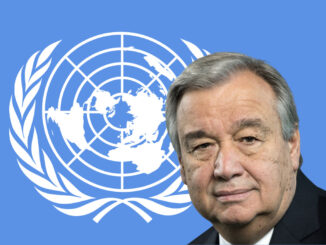
    UNITED NATIONS (TIP): U.N. Secretary-General Antonio Guterres has said that the G20 Summit to be hosted under India’s Presidency provides an opportunity to take action on debt relief and reform the global financial system, as he voiced concern over the “crushing debt crisis” in the world.

    Speaking at the launch of a U.N. report ‘A World of Debt’ here on Wednesday, July 12, Guterres said, “Some 3.3 billion people – almost half of humanity – live in countries that spend more on debt interest payments than on education or health. Half our world is sinking into a development disaster, fueled by a crushing debt crisis,” he said. Mr. Guterres said that because most of these unsustainable debts are concentrated in poor countries, they are not judged to pose a systemic risk to the global financial system.

    “This is a mirage,” he warned, adding that 3.3 billion people is more than systemic risk.

    “It is a systemic failure. Markets may seem not (to) be suffering – yet. But people are. Some of the poorest countries in the world are being forced into a choice between servicing their debt or serving their people,” the secretary-general said. Noting that deep reforms to the global financial system will not occur overnight, Mr. Guterres said that many steps can be taken now.

    “Our proposals include an effective debt workout mechanism that supports payment suspensions, longer lending terms, and lower rates, including for vulnerable middle-income countries,” he said.

    Mr. Guterres said that governments can agree to scale up development and climate finance by increasing the capital base and changing the business model of Multilateral Development Banks.

    “They can enable much stronger coordination between the banks, to transform their approach to risk without losing their triple-A credit rating, so that they can massively leverage private finance at an affordable cost to developing countries,” he added. “The Bridgetown Agenda led by Prime Minister Mia Mottley of Barbados and the recent summit hosted by President Macron of France generated other important proposals. The upcoming G20 Summit is an opportunity to take these ideas forward,” Mr. Guterres said.

    India assumed the year-long presidency of the G20 on December 1, 2022, and is hosting over 200 meetings and related events in cities across the country.

    These events will culminate in a Global Leaders’ Summit in New Delhi on September 9-10, later this year, to be attended by over 40 Heads of State, Heads of Government and international organizations.

    A G20 Leaders’ Declaration is expected to be adopted at the conclusion of the New Delhi Summit, stating “Leaders’ commitment towards the priorities discussed and agreed upon during the respective ministerial and working group meetings.”

    Global public debt reached an all-time high of $92 trillion in 2022, and this five-fold surge in public debt levels since 2000 demands immediate action to tackle the escalating crisis affecting developing countries in particular.

    Mr. Guterres underlined that, on average, African countries pay four times more for borrowing than the U.S. and eight times more than the wealthiest European economies. “A total of 52 countries – almost 40 per cent of the developing world – are in serious debt trouble,” he said.

    “It is one result of the inequality built into our outdated global financial system, which reflects the colonial power dynamics of the era when it was created,” he added.

    The U.N. chief said that the system had not fulfilled its mandate as a safety net to help all countries manage the present cascade of unforeseen shocks – the pandemic, the devastating impact of the climate crisis, and the Russian invasion of Ukraine.

    While noting that debt is an essential financial tool that can drive development and enable governments to protect and invest in their people, Mr. Guterres said that when countries are forced to borrow for economic survival, debt becomes a trap that generates more debt.

    Mr. Guterres said some of the poorest countries in the world are being forced into a choice between servicing their debt or serving their people.

    “They have virtually no fiscal space for essential investments in the Sustainable Development Goals (SDGs) or the transition to renewable energy. Levels of public debt are staggering – and surging,” he said, adding that as global public debt reached a record $92 trillion dollars in 2022, developing countries shoulder a disproportionate amount.

    In a press release, the U.N. urgently called for a comprehensive reform of the international financial architecture, including the debt architecture, to foster a more inclusive system that empowers developing countries to participate in the global financial system’s governance actively.

    The U.N. asserted that addressing the high cost of debt and the mounting risk of debt distress is of utmost importance. It added that establishing a debt workout mechanism is crucial to expedite progress under the G20 Common Framework for Debt Treatment. This has faced challenges due to creditor coordination issues and the absence of automatic debt service suspension clauses.

    Developing countries, especially those with high debt burdens, require increased liquidity during times of crisis, the U.N. said, adding that a liquidity crisis risks turning into a debt crisis otherwise.

    “This can be achieved by expanding contingency finance. The global safety net must work. Measures such as enhancing the use of Special Drawing Rights, temporarily suspending IMF surcharges, and broadening access to emergency financing through increased quotas must be pursued,” the press release said.

    (Source: PTI)

  • Visiting Indian  Minister G. Kishan Reddy accorded Civic Reception at the Indian Consulate in New York

    Visiting Indian Minister G. Kishan Reddy accorded Civic Reception at the Indian Consulate in New York

    Minister G. Kishan Reddy addressing the gathering at the Consulate.

    NEW YORK CITY (TIP):  Gangapuram Kishan Reddy,  Minister of Tourism, Culture and Development of North Eastern  Region of India was accorded a civic reception at the Indian Consulate in New York on Thursday, July 13.

    The visiting minister spoke about India as a great tourist destination, citing the history and beauty of the country. He called upon Indians to visit India with 5 non-Indians to familiarize their American friends with the rich variety of landscape, historical monuments  and culture of India. He also invited Indian Americans to invest in India tourism.Radha Katyal Narang , Director in the Ministry of Tourism gave a presentation on “Incredible India”.

    Earlier, the Consul General of India in New York, Randhir Kumar Jaiswal welcomed the minister and spoke highly about the contribution of Indian Americans in various fields here and in the growth story of India.

    Deputy Consul General Dr. Varun Jeph thanked the minister and the guests for their presence.

    A View of the gathering (Photos / Courtesy Tirlok Malik)


  • Vimeo’s Indian American CEO Anjali Sud leaving video sharing platform

    Vimeo’s Indian American CEO Anjali Sud leaving video sharing platform

    NEW YORK (TIP): Video-hosting platform Vimeo’s Indian American CEO Anjali Sud will leave the company next month to pursue a new opportunities.

    Sud, 39, a former Amazon executive, who joined the company nine years ago as director of marketing, was at the helm of Vimeo for the past six years. She will remain CEO through August 31, 2023, the company announced Wednesday. Board member Adam Gross, a former Salesforce and Dropbox executive, will take over as interim CEO, effective Sep 1, while the company looks for a permanent replacement.

    “We are grateful for Anjali’s impact over nine years at the company and a pivotal era of transformation at Vimeo, and I have no doubt she’ll continue to do big things,” said Glenn H. Schiffman, Vimeo’s chairman of the board.

    “I believe deeply in the company’s strategy, team, and future success, and will continue to be an enthusiastic supporter for every moment of what comes next,” said Anjali Sud. “I am excited for Adam and for Vimeo to benefit from his experience and leadership.”

    Sud, who was appointed to the position in 2017, said Vimeo had “a challenging road on the growth side.” The path forward, according to Sud, lies in continuing the company’s pivot from serving consumers to serving businesses in order to make video a strategic tool for companies. “The need for video is global,” Sud said in an interview with media, “and we want to be the platform of choice for the largest companies.” Sud is a designated Young Global Leader of the World Economic Forum and was listed as one of Fortune’s 40 Under 40 rising business leaders in 2018. She was also included on Adweek’s Power List in 2018.

    Sud was honored with a Muse Award by the New York Women in Film & Television, along with Gloria Estefan and Ann Dowd in 2019. She was named by Business Today as one of the most powerful women in business in 2021 and was named by Fortune as one of India’s most powerful businesswomen next year. In March 2023, Sud was named a Henry Crown Fellow at The Aspen Institute.

    Born in Detroit, Michigan, the daughter of Punjabi immigrants from India, Sud grew up in Flint, Michigan. In 1997, at age 14, Sud left Flint to study at Phillips Andover Academy, a private school in Andover, Massachusetts.

    Sud graduated from the Wharton School of the University of Pennsylvania in 2005, with a BSc in Finance and Management. In 2011, she received her MBA from Harvard Business School.

  • Indian-origin UK Royal Mail bullied employee awarded 2.3 million pounds

    Indian-origin UK Royal Mail bullied employee awarded 2.3 million pounds

    LONDON (TIP): In what is believed to be one of the largest compensation settlements for the UK’s Royal Mail, an Indian-origin employee has been awarded more than 2.3 million pounds after her bullying claim was upheld.

    Kam Jhuti had claimed before an employment tribunal dating back nearly eight years that she had been intimidated and harassed by her boss after she raised concerns that a colleague had secured their bonus illegitimately.

    The tribunal went on to find that there had been a “catastrophic” impact on her over her boss’ treatment of her, ‘The Daily Telegraph’ reports.

    “The tribunal makes a total award of GBP 2,365,614.13, payable by the respondent to the claimant,” reads an official remedy decision added to the long-running case this week.

    “Subject to the paragraph below, payment of the award is stayed pending the outcome of the respondent’s (Royal Mail) appeal against the tribunal’s original judgment on remedies which was sent to the parties on October 3, 2022. Both parties have the liberty to apply to lift this stay,” it reads.

    “Of that total award, the respondent (Royal Mail) will, however, make payment of the sum of 2,50,000 pounds gross to the claimant; the stay does not, therefore, apply in relation to this sum. The parties agreed that the respondent will pay this sum to the claimant within 14 days of the date of this hearing,” it adds.

    Earlier, the tribunal had concluded that the postal service had been “high-handed, malicious, insulting and oppressive” in how it had conducted the case.

    A 2019 Supreme Court hearing was told that Jhuti started work as a 50,000 pounds per year media specialist at the Royal Mail’s MarketReach unit based in London in September 2013.

    However, the following month, while shadowing a colleague, she began to suspect they were not following watchdog Ofcom’s guidance and also breaching the company’s policy in relation to bonuses known as Tailor-Made Incentives (TMIs), which she said helped the colleague to hit performance targets and directly securing a bonus for herself and “in effect defrauding the company”, the newspaper reports.

    Later that month, a TMI expert in the business confirmed Jhuti’s previous allegations had been correct by acknowledging that media specialists were offering TMIs “inappropriately”.

    As the process unfolded, Jhuti began suffering from stress and went on to express concern over her boss’s conduct.

    She was granted a new line manager but was told she was not making the expected progress and in March 2014 was signed off with work-related stress, anxiety and depression, and never returned to work.

    After taking Royal Mail to an initial employment tribunal in 2015, Jhuti’s claims of unfair dismissal proceeded after the Supreme Court ruled in her favor.

    As an appeal is pending in the case, the Royal Mail is expected to only make a payment of 250,000 pounds from the total compensation amount at this stage.

    (Source: PTI)

  • Indian-origin Indra Nooyi and Jayshree Ullal among America’s richest

    Indian-origin Indra Nooyi and Jayshree Ullal among America’s richest

    NEW YORK (TIP): Four Indian-origin women, including Jayshree Ullal and Indra Nooyi, have been named by Forbes among America’s 100 richest self-made women, with a combined net worth of a whopping USD 4.06 billion. President and CEO of Arista Networks, a computer networking firm; Jayshree Ullal, co-founder of IT consulting and outsourcing firm Synte; Neerja Sethi, co-founder and former chief technology officer (CTO) of cloud company Confluent; Neha Narkhede and PepsiCo’s former chair and CEO Indra Nooyi made it to Forbes list of ‘America’s Richest Self-Made Women’.

    “Bolstered in part by a rebound in the stock market, they are cumulatively worth a record USD 124 billion, up nearly 12 per cent from a year ago,” Forbes said last month at the release of its ninth annual list.

    Ullal, ranked 15th on the list, has a net worth of USD 2.4 billion. She has been president and CEO of the publicly-traded Arista Networks since 2008 and owns about 2.4 per cent of its stock. Arista recorded revenue of nearly USD 4.4 billion in 2022.

    She is also on the board of directors of Snowflake, a cloud computing company that went public in September 2020.

    The 62-year-old studied electrical engineering at San Francisco State University and engineering management at Santa Clara University.

    Sethi, 68, ranked 25th on the list, has a net worth of USD 990 million.

    Syntel, co-founded in 1980 by Sethi and her husband Bharat Desai, was bought by French IT firm Atos SE for USD 3.4 billion in October 2018. Sethi got an estimated USD 510 million for her stake.

    She did her Bachelor of Arts/Science and Master of Business Administration from Delhi University and Master of Science from Oakland University.

    Narkhede, 38, is ranked 50th on the list with a net worth of USD 520 million.

    As a LinkedIn software engineer, she helped develop the open-source messaging system Apache Kafka to handle the networking site’s massive influx of data. In 2014, she and two LinkedIn colleagues left to found Confluent, which helps organizations process large amounts of data on Apache Kafka.

    The USD 586 million (2022 revenues) company went public in June 2021 at a USD 9.1 billion valuation; Narkhede owns around 6 per cent, Forbes said.

    In March 2023, Narkhede announced her new company, fraud detection firm Oscilar, where she is co-founder and CEO.

    Nooyi, the former chair and CEO of PepsiCo, retired in 2019 after 24 years with the company, half of which she spent in the top job. The 67-year-old has a net worth of USD 350 million and is ranked 77th on the list.

    As CEO, the 67-year-old thwarted a bid to break up PepsiCo, nearly doubled sales and introduced healthier products and environmentally friendly practices. Her fortune stems from stock she was granted while working at PepsiCo. Nooyi joined the board of Amazon in 2019 and grew up in India. She received an MBA from Yale before becoming one of corporate America’s few female CEOs in 2006.

    For the 6th time in a row, Daine Hendricks, the co-founder of ABC Supply, topped the list. ABC Supply is one of the largest wholesale distributors of roofing, siding and windows in the US. Hendricks, 76, has a net worth of USD 15 billion, Forbes said.

    To compile net worths, Forbes valued individual assets including stakes in public companies using stock prices from May 12, 2023, and valued private companies by consulting with outside experts and conservatively comparing them with public companies.


  • Indian man killed in Singapore workplace accident

    Indian man killed in Singapore workplace accident

    SINGAPORE (TIP): A 33-year-old Indian worker died after being struck by a reversing vehicle at a worksite in Jurong West industrial region here. The man was preparing his tipper truck for unloading when he was hit by a reversing wheel loader, which is used to lift materials at construction sites, reported The Straits Times, citing the Ministry of Manpower (MOM) on Wednesday, July 12.

    He was a driver employed by BSN Tech Engineering, and was working at the site occupied by Star Ready-Mix.

    The Singapore Civil Defense Force said he was pronounced dead at the scene by a paramedic.

    The Ministry said the incident occurred at about 3.40pm at 1 Buroh Close, and it is probing the case. It has also instructed Star Ready-Mix to stop all vehicular operations there. “As a general safety measure, employers must implement a proper traffic management plan to minimize the risks from vehicles,” said the Ministry.

    It cited examples such as segregating access between vehicles and people, as well as ensuring that incompatible vehicular operations do not occur at the same time in the same place.

    The Ministry has raised the maximum fine for breaches of Workplace Safety and Health (WSH) laws that could result in death or serious injury – from SGD 20,000 to SGD 50,000.

    There had been 14 workplace deaths in Singapore as on June 21. In 2022, there were 46 – the highest number recorded since 2016, when 66 people died.

    (Source: PTI)


  • Indian-origin Raja Rajamannar among Insider’s most innovative CMOs of 2023

    Indian-origin Raja Rajamannar among Insider’s most innovative CMOs of 2023

    NEW YORK (TIP): Raja Rajamannar is among Insider Magazine’s Top 25 Most Innovative Chief Marketing Officers. “These CMOs are meeting the marketing world’s biggest challenges”, the magazine said announcing its annual list. “This year, they’ve been responsible for keeping consumers spending through the economic downturn, reaching coveted Gen Z audiences, and figuring out how new technology, such as generative AI, can transform advertising,” it said.

    Based on over 70 nominations and suggestions from their peers and industry experts, the picks represent a mix of big brands and smaller disruptor companies from a cross section of industries.

    With an MBA degree from the Indian Institute of Management, Bangalore, and a Bachelor of Technology degree in Chemical Engineering from Osmania University in Hyderabad, Rajamannar has been the CMO of Mastercard for 10 years. He helps keep Mastercard on the edge of innovation, Insider says. In April, he launched a Web3 program called Mastercard Artist Accelerator that helps consumers discover new music creators, who then monetize their work using Web3 and AI tools.

    Musicians also get access to resources, such as learning how to resell their work. More than 100,000 people signed up for the program, Rajamannar said. “There has been a rollercoaster in terms of Web3 technology — we’ve been trying to see the relevance of it within the context of our business,” he said.

    In May, Rajamannar launched a loyalty program in the Asia Pacific region called Mastercard Gamer XChange that gives consumers gaming points in exchange for unspent rewards points.

    Rajamannar said that the program is intended to reach consumers beyond the younger, male audiences that are typically considered gamers. “Gaming is a growing passion point,” he said.

    He joined Mastercard in 2013, after serving as chief transformation officer of the health insurance firm Anthem (formerly WellPoint). Prior to that, he also served as Chief Innovation & Marketing Officer and Chief Executive of International Operations at Humana.

    In his role as president of Healthcare, he has overseen the creation, development and successful scaling of Mastercard’s healthcare business across multiple regions.

    Earlier in his career, he held a number of leadership roles. Before that, he spent seven years with Unilever in sales and product management roles. He began his career with Asian Paints in India.

    Rajamannar is a member of the Board of Directors of PPL Corporation, a Fortune 500 power generation and distribution company, and Bon Secours Mercy Health, one of the major hospital systems in the US.

    He serves on the boards of Cintrifuse, a Cincinnati-based public/private startup catalyst organization, the ANA, and the New York City Ballet.


  • Indian-origin Dr. Geeta Rao Gupta sworn-in as envoy for global women’s issues

    Indian-origin Dr. Geeta Rao Gupta sworn-in as envoy for global women’s issues

    WASHINGTON, D.C. (TIP): : Dr. Geeta Rao Gupta, an Indian-born global leader on gender equity and women’s economic security, has been sworn as the Ambassador-at-Large for the Office of Global Women’s Issues in the State Department. Gupta, the first woman of color to hold the position, was administered the oath of office by Indian American Vice President Kamala Harris on July 10.

    After the US Senate confirmed President Joe Biden’s pick for the role by 51 to 47 votes in May, the State Department tweeted it “looks forward to her efforts to promote women and girls’ rights through US foreign policy.” Mumbai-born Gupta previously worked closely with many UN agencies and programs. She was the former Executive Director of the 3D Program for Girls and Women at the UN Foundation.

    Gupta also co-convened an international initiative commissioned by UNAIDS to plan the global response to HIV/AIDS over the next 25 years and was appointed by the Secretary-General to the role of Deputy Executive Director of UNICEF.

    According to Gupta, there are many inequities and indignities that women suffer around the world, which hold them back from participating fully in the economy. They are subject to threats to their safety and have a fear of violence even on a daily basis, and that determines their mobility.

    “In situations of conflict and emergencies and humanitarian crises they are particularly vulnerable, both in terms of their safety, but also in terms of their being able to look after their families and feed their families,” she said during her confirmation hearing last year.

    With over a decade of experience on gender and development, Gupta has also served on an oversight committee for the World Health Organization’s Health Emergencies Program, and co-chaired the World Banks’s Global Gender-based Violence Task Force.

    In addition, she has served as the President of the International Center for Research on Women, and has numerous awards to her credit, including Harvard University’s 2006 Anne Roe Award and the 2007 Washington Business Journal’s “Women Who Mean Business” Award. She earned a PhD in Social Psychology from the Bangalore University and an MPhil and MA from the University of Delhi in India.


  • Arjun Nimmala becomes first Indian American teen and second Indian American to make it into the Major League Baseball draft

    Arjun Nimmala becomes first Indian American teen and second Indian American to make it into the Major League Baseball draft

    NEW YORK (TIP): Arjun Nimmala has become the first Indian American teen and second Indian American ever to make it into the Major League Baseball draft after being picked by the Toronto Blue Jays on Sunday, July 2.

    Nimmala, 17, who originally played cricket, is a shortstop from Strawberry Crest High School in Dover, Florida. Standing 6-foot-1, he describes himself as a “patient-aggressive” hitter. He ranked 11th on the prospect rankings. In Sunday night’s first round, the Blue Jays selected Nimmala as 20th overall.

    No Indian American has ever played in the majors. While Nimmala is the first teen to be drafted from the Indian American community, Kumar Rocker was the first player to do so back in 2021 at the age of 21 by the New York Mets and again in 2022 by the Texas Rangers, according to a report.

    The 20th pick comes with an approximate slot value of $3.75 million. Shane Farell, the Blue Jays’ director of amateur scouting, described Nimmala as “an overall tool package, combined with the age and overall upside of the player.” Nimmala is set to attend Florida State University this fall, but the Blue Jays nonetheless expect to sign him. If all goes according to plan, Nimmala will kick off his new journey with a two-week orientation at the team’s minor-league complex in Dunedin, which sits just about an hour away from his home.

    Nimmala was born and raised in the US by parents who came from Andhra Pradesh, India and kept Indian traditions and customs alive in their home, while still trying to blend into their American surroundings.

    Nimmala has broken barriers by becoming the first first-generation Indian American to be drafted this high in any of the four major sports, according to MLB.com. Kumar Rocker was chosen third overall by the Texas Rangers in the 2022 Draft, but his mother is a first-generation Indian American, making Kumar the second generation born and raised in the US, it noted.


  • Indian origin Keeril Makan becomes associate dean of the MIT School of Humanities

    Indian origin Keeril Makan becomes associate dean of the MIT School of Humanities

    NEW YORK (TIP): Keeril Makan, a composer and professor of South African Indian and Russian Jewish descent, has become Associate Dean of the MIT School of Humanities, Arts, and Social Sciences. He began his term effective July 1. Makan will serve concurrently as Associate Dean and in his current role as section head of Music and Theater Arts, according to Agustín Rayo, Kenan Sahin Dean of SHASS.

    “Throughout my time as dean, I’ve been consistently impressed by Keeril’s leadership and insight as head of MTA. I look forward to working with him at the school level and relying on his advice,” Rayo said.

    Makan, who was raised in New Jersey by parents of South African Indian and Russian Jewish descent, says he’s looking forward to bringing his collaborative leadership approach to this new role.

    “One of the things that excites me about being head of MTA is working on larger projects that advance the mission of the unit, the mission of the Institute, and have a large impact on the community,” he said.

    “This involves getting a lot of people together from different parts of MIT, working towards a common goal, skills that I’ve developed through my work as a composer,” Makan said.

    “I look forward to working in this way at the SHASS-wide level, as well as finding common ground between SHASS and the STEM fields.”

    Makan started at MIT in 2006 and was named section head of MTA in 2018. In addition to being section head, Makan is currently the Michael (1949) and Sonja Koerner Music Composition Professor.

    Among the projects Makan has helped lead as section head has been the construction of the new Music Building, which is set to open in the Fall of 2024. He’s also worked to develop MTA’s music technology offerings, including the upcoming launch of a new master’s program, joined with the School of Engineering. Makan says one of his biggest challenges was leading Music and Theater Arts through the Covid pandemic.

    “Performance was particularly challenging in music and theater. But we worked collaboratively to create an educational experience for the students that was artistically meaningful. The experience of COVID taught the world the power of being in a room together, sharing an experience” he says. Rayo says Makan will lead special projects, and that they’ll work together over the summer to set an agenda for the new role.

    After training as a violinist, Makan received degrees in composition and religion from Oberlin and completed his PhD in composition at the University of California-Berkeley, with additional studies in Helsinki and Paris.

    He is a recipient of a Guggenheim Fellowship and the Luciano Berio Rome Prize from the American Academy in Rome, among other accolades. His music has been recorded by the Kronos Quartet, the Boston Modern Orchestra Project, and the International Contemporary Ensemble, and performed at the LA Opera, Carnegie Hall, Lincoln Center, and Tanglewood.


  • RELIEVE THE SWELTERING SUMMER WITH COMEDY

    By Mabel Pais

    HANNAH BERNER, comedian and actress, makes her way to the New Jersey Performing Arts Center (NJPAC) to bring the audience roaring laughter on Thursday, July 20, at 8 PM.

    Hannah Berner. (Photo / Courtesy NJPAC)

    One of Just for Laugh’s 2022 New Faces, the fearlessly funny Hannah Berner emerged on the comedy scene via social media—directing, editing and acting in videos on Instagram and writing hilarious viral tweets. Fans are obsessed with her two podcasts, ‘Giggly Squad’ and ‘Berning In Hell,’ with over 20 million downloads. She was a cohost on Bravo’s ‘Chat Room,’ as well as a member of Bravo’s ‘Summer House’ for three seasons. She currently performs standup in NYC and at clubs and theaters all around the country.

    Hannah Berner was born in Brooklyn, New York and played competitive tennis for the University of Wisconsin. She emerged on the comedy scene by directing, editing, and acting in videos on Instagram and writing viral tweets. She has two podcasts, ‘Giggly Squad’ and ‘Berning In Hell,’ with over 20 million downloads.

    She was a cohost on Bravo’s ‘Chat Room,’ as well as a member of Bravo’s ‘Summer House’ for three seasons and has over 2.8 million followers across her social media platforms. She currently performs standup in NYC and at clubs and theaters around the country. In 2022, she was named one of ‘Just For Laughs’ “New Faces Of Comedy” in Montreal. Hannah is an advocate for mental health, animals, and napping. Learn more at hannahberner.com.

    TICKETS

    Tickets can be purchased by visiting NJPAC.org or the NJPAC Box Office or by calling 888.GO.NJPAC (888.466.5722).

    ————————————-

    SHANE GILLIS, comedian, performs ‘Shane Gillis Live’ at the New Jersey Performing Arts Center on Friday, July 28th at 7:00 p.m.

    Shane Gillis. (Photo : shanemgillis.com)

    Shane Gillis is a stand-up comic, actor, and writer from Mechanicsburg, Pennsylvania. After winning Philly’s Funniest at Helium Comedy Club in 2016 Shane was named an “Up-Next” Comic at Comedy Central’s 2019 Clusterfest in San Francisco and a “New Face” at the prestigious ‘Just For Laughs’ Comedy Festival in Montreal. In 2021, Gillis released his debut comedy special ‘Shane Gillis: Live in Austin’ on YouTube which has been viewed over 6 million times.

    Gillis is one-half of the comedy fan favorite Matt and Shane’s Secret Podcast. He’s a regular guest on Sirius XM’s The Bonfire, Spotify’s The Joe Rogan Experience, and Barstool Sports KFC Radio. Shane was a writer on Comedy Central’s Delco Proper and co-created, wrote, and starred in the YouTube hit sketch series ‘Gilly & Keeves.’ In October of 2022, Shane and John McKeever partnered with Booklight Entertainment and Outback Presents to produce and release Gilly & Keeves: The Special on gillyandkeeves.tv

    Most recently, Shane can be seen playing ‘Gilly’ in the upcoming season of Peacock’s Bupkis opposite Pete Davidson, Joe Pesci, and Edie Falco. Learn more about Shane Gillis at shanemgillis.com

    TICKETS

    Tickets can be purchased by visiting NJPAC.org or the NJPAC Box Office or calling 888.GO.NJPAC (888.466.5722).

    ————————–

    MARLON WAYANS, sometimes outrageous, always audacious, stand-up comic returns to the New Jersey Performing Arts Center on Friday, August 11, for two performances at 7 PM and 9:30 PM.

    Marlon Wayans (Photo : marlonwayansofficial.com)

    Wayans has had a long career, from the small screen, notably ‘In Living Color’ and ‘The Wayans Bros.,’ to the big screen with ‘Requiem for a Dream,’ ‘White Chicks,’ and the first installments of the ‘Scary Movie’ series.

    Wayans has established quite a career. He can be seen in the hit series Bel-Air, a dramatic take based on the ’90s comedy series The Fresh Prince.

    Following his 2018 Netflix special Marlon Wayans: Woke-ish, he’s back on the comedy circuit with his “Microphone Fiend” tour.

    Together with his brothers, the actor-screenwriter-producer first entered the comedy hall of fame with projects like In Living Color, Scary Movie, and White Chicks—to name a few. He appears in the critically acclaimed film Air as Michael Jordan’s Olympics coach, George Raveling, alongside Matt Damon, Ben Affleck, Viola Davis, and Chris Tucker. Learn more at marlonwayansofficial.com

    TICKETS

    Tickets for Marlon Wayans can be purchased by visiting NJPAC.org or the NJPAC Box Office or calling 888. GO.NJPAC (888.466.5722).

    ———————–

    The New Jersey Performing Arts Center (NJPAC)

    Exterior of NJPAC (Photo : NJPAC)

    NJPAC, located in downtown Newark, N.J., is America’s most diverse performing arts center, and the artistic, cultural, educational and civic center of New Jersey – where great performances and events enhance and transform lives every day. NJPAC brings diverse communities together, providing access to all and showcasing the state’s and the world’s best artists while acting as a leading catalyst in the revitalization of its home city. Through its extensive Arts Education programs, which have reached almost 2 million children, NJPAC is shaping the next generation of artists and arts enthusiasts. NJPAC has attracted more than 10 million visitors since opening its doors in 1997, and nurtures meaningful and lasting relationships with each of its constituents.

    NJPAC is located at 1 Center Street, Newark, New Jersey; a short walk from the Newark Penn Station stop by Newark-bound PATH Train or Amtrak.

    Follow NJPAC Online:

    Website:      njpac.org

    Twitter:       @NJPAC

    Instagram:     @NJPAC

    Hashtag:      #NJPAC

    Facebook:      facebook.com/NJPAC

    YouTube:      NJPACtv

    Follow NJPAC’s Standing in Solidarity Series Online:

     Website:     njpac.org/takeastand

    Hashtag:       #NJPACTakeAStand

    Youtube:        Standing in Solidarity playlist

    (Mabel Pais writes on The Arts and Entertainment, Social Issues, Education, Cuisine, Health & Wellness, Spirituality, and Business)

  • Weekly Horoscope- July 10, 2023 to July 16, 2023

    Weekly Horoscope- July 10, 2023 to July 16, 2023

    Aries
    Ganesha says, this week, no trouble will be caused by something or somebody. Maintain remembering oneself of the things you’re supposed to get done this week. This week’s astronomical connections foretell that you may harbor some enmity. You are just as significant, and now is your chance to shine. You will be thinking a lot about oneself in the wee hours of this week. A turning point in the path is going to offer you sage advice and encouraging encouragement. This week, your love life will be a little odd. This week, your beloved will press you to make a decision, but you are hesitant. Expressing your thoughts is the best defense against any negative emotions. Keep your perspective broad when talking about the subject.

    Taurus

    Ganesha says the way your planetary energy develops will open the way for your financial independence. This week, there will be some dispute in your place of residence. You have rarely considered it easy to ask for assistance, but this week, you are going to discover yourself in a situation where you do. Jupiter will collect the power needed to fix the problem. despite the fact that you have been having an awful day spiritually, your work this week will go really well. You might be eligible to do a training programmed overseas. You will have a fantastic chance to advance in your field. You will reach an important juncture point in your love life this week! You will get what you have been hoping for a long time.

    Gemini

    Ganesha says, this week is going to be incredibly demanding for you. Your identity will be questioned, so confront old ideas. With your rigorous investigation and efforts, you will this week disprove everyone. You will outshine both your coworkers and competitors with the energy you generate this week. Everything relating to the economy this week should be kept in mind. To remedy the problem, immediate action is required. You will devise a strategy to address the issue. Moving your relationships along while talking about your love connections is not an intelligent concept. Allow your bond to deepen and flourish before making the following decision. Your astrological chart indicates that you will be in good health throughout the coming weeks.

    Cancer

    Ganesha says, this week, your bonds with friends, family, and coworkers will deepen. This week, you will allow whatever resentment or prejudice you may have against someone. The majority of your week will be devoted to honoring your connections and alliances. Additionally, you will feel more connected to the universe. Your heavenly motions provide a constant flow of positive power. There may be a few small difficulties beginning the week, but by the end of the week, everything will be in order. This week will not bring you any notable experiences, and your life will be tranquil. You will participate in community activities this week and give to charity. As a consequence, both your wellness and the health of those around you will be preserved.

    Leo

    Ganesha says, this week, you will have to address your problems head-on. Somebody you encounter at work will jump right into conversation with you. The love of others will surround you this week. Embrace every joyful emotion that comes your way. This week, you will rely on your gut and follow the wind. Matters will go smoothly and you will not feel pressured to get in touch with the individual in question. This week, you are likely to incur a few unforeseen costs. To better control your expenditures, make a strategy. Find new ways to make money right away. You will experience problems with your health this week as a result of spinal and vertebral discomfort. Your solutions to issues will make you an object of attention.

    Virgo

    Ganesha says, this week, a colleague will come to you with some personal information that will uplift your professional status. Try to comprehend the person’s viewpoint and provide as much support as you can. This week, you will put away your egocentric behaviors and focus on others. This week, your automobile will likely give you problems, which is going to render your week a little more challenging. This week, you and your spouse will have an interesting conversation that will help you see the problem from a new perspective. This week, you will change your thoughts as well as your mind on a few issues. This week, Jupiter will shift into a more favorable position, indicating that money will flow more freely into your way of life. This week, you will deal with a few health difficulties.

    Libra

    Ganesha says, this week, Jupiter will enter the fourth sector of your horoscope, bringing you a wealth of new responsibilities and opportunities. You can try something new this week while discovering a lot about your field of endeavor at the same time. This week, the moon will try to hurt you. Take whatever action that makes you feel strongest to work through any reactionary reactions you may be experiencing at the moment. If another zodiac is captivated by you, pay close attention to them and consider their characteristics to learn more about them. Your dietary habits might be the cause of your insomnia. You will be exhausted by the end of the week and could have trouble falling asleep.

    Scorpio

    Ganesha says, this week, you will put your powers to use. You will also gain an additional advantage. All of the detours you have taken to earn additional revenue have been effective thus far. It is possible that it will not last in the long run. If you are interested in succeeding in this competitive market, you need to have a solid plan in place. This week, if you are single, you will be quite enthusiastic regarding making an attempt to socialize with new people. If you are married or currently dating someone, you two could quarrel occasionally. Your boss will make an effort to haggle over your wages for what will appear to be a simple duty this week. However, you will not back down, and you will get what is coming to you. Your health has always been a priority.

    Sagittarius

    Ganesha says, this week, you and your coworkers will unite to challenge your superiors. You will decide as a group to engage in pursuits that will please your mind and heart. This week, you will make others grin and sprinkle a little shine in your path. This week, you will have a sparkling setting that inspires a lot of uplifting feelings. This week, your private affairs will be affected by your interior peace. You will like it a lot with your significant other. This week, there will be some challenges with the economy. You will have to conquer a small challenge, but you are up for the challenge. You will have a problem with puffiness of the face this week as a result of various medical conditions.

    Capricorn

    Ganesha says you ought to look for a new job this week and you will grab a good deal with a good firm. Even while it could be difficult initially, you will soon understand them. Despite the fact that you will have additional tasks to do, you have optimism. You are about to have a fight with your family over something you have been putting off. This week, you need to take some time to think about it and try to come to a choice. Your companion is thinking about ending your union. You choose to schedule some alone time. It is not a good idea to assess your love life right now. You are really passionate about what you do. This week, you will receive recognition for your commitment to your professional development. Software developers must be cautious not to become a target of something negative.

    Aquarius

    Ganesha says, recognize your talent and give your efforts significance this week. As a result, you will meet new people and develop creative concepts. Your week will be wonderful, and you are going to have time to oneself. Your week will be hampered by several unwelcome obstacles. It will make an effort to upset the inner part of your mind. This week, you are going to get acquainted with someone new. They might attempt to ruin your relationship, which would irritate your husband. They will understand if you are honest with them. You will have to decide between putting your career or your coworkers first. Do not make decisions right now; you will have them later. Making assets in the stock market at this time might not be wise.

    Pisces

    Ganesha says, you may unwind by interacting with your family. It is possible to get through the week by having fun with your family, friends, and coworkers. You will feel completely well, and your issues will be miraculously gone. You can encounter a problem from before. As a result, you will feel irritated. Appreciate the week with your compatible partner; their positivity will help you overcome your obstacles. Giving your lover a gift will make your relationship stronger. The first two days of the week on the job will be challenging for you. There can be tension at work between you and your superior. You will have to put in more effort than normal to finish your assignment. Keep your cool, and everything will be OK. When the week is through, there will be a lot of tranquility.