Month: July 2023

  • BBC gets fresh summons over Modi documentary

    BBC gets fresh summons over Modi documentary

    NEW DELHI (TIP): Delhi’s Rohini Court on July 7 issued fresh notices to the British Broadcasting Corporation (BBC), Wikimedia Foundation and U.S.-based digital library Internet Archive in a defamation case over the two-part documentary on Prime Minister Narendra Modi, repots Ishita Mishra. The summons was issued in a case filed against the three by Bharatiya Janata Party (BJP) leader Binay Kumar Singh.

    The order was served through the Union Ministry of Law and Justice after noting that both were foreign entities and thus subject to the rules formulated under the Hague Convention.

    In the previous hearing of the matter, on May 3, the lawyers of the two foreign entities had told the court that they have not served the notice on this case properly and that this court does not have the jurisdiction to deal with the defamation case against them.

    Additional District Judge Ruchika Singla, who is hearing the matter, said that it is clear that as per the rules formulated under the Hague Convention and by the Government of India, the summons/notices in foreign countries can be effected only through the Department of Legal Affairs, Ministry of Law and Justice, Government of India, which has admittedly not been done in the present case.

    “Hence, it is directed that the summons be issued afresh to the defendants [BBC, Wikimedia Foundation and Internet Archive] on the filing of process fee within seven days to be served through the Department of Legal Affairs, Ministry of Law & Justice as per rules,” the judge added.

    According to the defamation complaint of Mr. Singh, the BBC documentary, India: The Modi Question, has defamed organizations like the RSS, VHP and the BJP.

    The prayers made in the defamation complaint are that the court should pass an order restraining all the Defendants (including their agents, representatives, associates, heirs, relatives etc.) to cease the publishing of two-volume documentary series “India: TheModiQuestion” or any other defamatory material pertaining to the Plaintiff, (RSS and VHP) on their platforms.

    It is also prayed from the court to pass a direction to the defendants to tender an unconditional apology to the Plaintiff as well as to the RSS and VHP as well as pass a decree of damages of ₹10,00,000 in favor of the Plaintiff and against the defendants.

  • The depths to which politicians sink

    The depths to which politicians sink

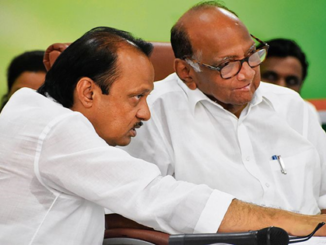
    Ajit Pawar’s revolt has put the NCP and the Maha Vikas Aghadi on a sticky wicket

    “Interesting also will be how the two new components of the functioning government will adjust to the new dispensation. The BJP has long since given up its self-description as ‘a party with a difference’. It will now have to adjust to the proclivities of its newfound friends. Their itching fingers will soon be on display. That should prompt our Prime Minister to amend his boastful proclamation, ‘Na khaunga na khane doonga’. The second half of the slogan may have to go. Unless, of course, he does not care and repeats things to himself for his own satisfaction to make himself believe what he speaks.”

    Our Prime Minister dubbed India as the ‘mother of democracy’. He should take the lead to ensure that this ‘mother’ is given due respect. He can request the Election Commission to disqualify from holding office for five years all members of political parties who defect en masse mid-term. Only then will the ‘mother of democracy’ survive.

    By Julio Ribeiro

    In his Rubaiyat, Persian poet Omar Khayyam wrote: “And pity Sultan Mahmud on his throne.” That was centuries ago. I pity the young Maharashtra Chief Minister, Eknath Shinde, who now sits uneasily on his chair in Mumbai’s Mantralaya. He had one powerful deputy to consult and worry about. He now has two!

    If the NCP is not able to stand on its legs, it will topple, unless Pawar defies his age and offers resistance, which he is trying to do.

    Ajit Pawar, nephew of old warhorse and Nationalist Congress Party (NCP) chief Sharad Pawar, joined hands with the BJP on Sunday along with a bunch of fellow NCP MLAs. While Ajit was sworn in as Deputy CM at the Raj Bhavan, eight of his associates were made ministers in the ‘BJP-oriented’ Cabinet. Pawar’s confidant Praful Patel had got himself photographed next to the Governor at the swearing-in. Another Pawar protégé, Dilip Walse-Patil, and a third one, Hasan Mushrif, surprised everyone by defecting. Chhagan Bhujbal, who spent two years as an undertrial in jail before being released on bail, was among the turncoats. He is accused of siphoning off funds earmarked for the construction of Maharashtra Bhavan in New Delhi. When he was Home Minister in the then Congress-NCP government, there were numerous complaints against him of ordering transfers of police officers for cash. I had accused him in this regard in an article and taken up the issue with Pawar, his party boss at that time.

    When Devendra Fadnavis was the Chief Minister, he had kept a sword hanging over Ajit’s head in the irrigation scam case involving Rs 35,000 crore. Param Bir Singh was the Director of the Anti-Corruption Bureau when the case against Ajit was finally closed. The Governor was woken up at the crack of dawn in order to checkmate Uddhav Thackeray’s attempt to become the Chief Minister in November 2019. Fadnavis and Ajit were sworn in as CM and Deputy CM, respectively, and they were in office for just three days before Pawar announced that the prodigal nephew had returned to the fold. Within those three days, the corruption case was closed! Many still doubt the tale spun around that defection and the subsequent ‘mea culpa’. Was it Pawar’s sleight of hand, as the old man now wants us all to believe, or was Ajit really carried away by the lure of office?

    This time, though, it appears to be for real, though many old Pawar admirers think that the ‘wily Maratha’ will have the last laugh! My view is that this time there is no such chance. The array of NCP bigwigs, many of them with skeletons in the cupboard, who accompanied Ajit to the Raj Bhavan and the obvious fact that the nephew was smarting from the slight of having being downgraded in the NCP hierarchy by his uncle — all this smacks of revenge.

    How will these developments play out finally? Shinde will find himself weakened. He will have two deputies breathing down his neck. Both exude more power and heft than he does. Fadnavis is certainly more cerebral. Ajit hails from a more recognized Maratha family compared to Shinde. In the majority Maratha community Ajit is likely to be a bigger draw. This leaves Shinde nowhere to go.

    I do not know the reasoning behind this step the BJP has taken to further strengthen its party and weaken the Opposition. It would have been child’s play for the BJP to deal with Shinde, but Ajit will be a different kettle of fish. Of course, if the BJP is thinking of the Lok Sabha elections of 2024, it will be easier for the party to take on the Congress, the NCP (Sharad Pawar) and the Shiv Sena (Uddhav), with the NCP (Ajit) and the Shiv Sena (Shinde) being on its side. This contest is now wide open.

    Pawar was one of the anchors of the Opposition parties uniting to fight the next Lok Sabha elections on a common platform. Arvind Kejriwal’s AAP and Telangana’s K Chandrashekar Rao are pulling in different directions compared to the Congress and the others. The promised unity is unraveling. And now, with Ajit’s revolt, the NCP will be considerably weakened. If it is not able to stand on its legs, it will topple, unless Pawar defies his age and offers resistance, which he is trying to do.

    If this calculation of fortunes in the Lok Sabha elections is what motivated the BJP to shore up its strength with rebellious NCP legislators, the long-term scenario may not be to its liking. The ‘inter se’ relations between the two Deputy CMs and between the Chief Minister and his new deputy are very likely to sour sooner than later. How this will play out would be interesting.

    Interesting also will be how the two new components of the functioning government will adjust to the new dispensation. The BJP has long since given up its self-description as ‘a party with a difference’. It will now have to adjust to the proclivities of its newfound friends. Their itching fingers will soon be on display. That should prompt our Prime Minister to amend his boastful proclamation, ‘Na khaunga na khane doonga’. The second half of the slogan may have to go. Unless, of course, he does not care and repeats things to himself for his own satisfaction to make himself believe what he speaks.

    The NCP MLAs who have joined forces with the BJP could constitute the insurance cover for possible second thoughts in the Shinde faction. The reduction in numbers in the MVA tally will certainly make that political combination look like a scarecrow instead of a mighty Opposition force which it was. Analysts and pollsters had given the Maha Vikas Aghadi an edge over the BJP-Shiv Sena (Shinde) combine in the Lok Sabha elections. With Ajit’s defection, the equations will surely change. But taking into account the mercurial politics of Maharashtra, more developments are not only possible but probable. Our Prime Minister dubbed India as the ‘mother of democracy’. He should take the lead to ensure that this ‘mother’ is given due respect. He can request the Election Commission to disqualify from holding office for five years all members of political parties who defect en masse mid-term. Only then will the ‘mother of democracy’ survive.

    (The author is a former governor and a highly decorated retired Indian Police Service (IPS) officer)

  • Corrupt political funding makes all capitalists crony

    Corrupt political funding makes all capitalists crony

    Indian democracy runs on the proceeds of corruption

    “Why does dirty political funding enter the picture while discussing subjects such as corporate governance and lending decisions of banks? Both take place far removed from the mire that is politics as practiced in India, where the wholesale price of legislators rises faster than the summer price of tomatoes, distinct from politics as described in classrooms.

    This is because most Indians do not contribute a paisa to support any political party. They think their contribution to democracy is made when they vote, forward WhatsApp messages and feel proud to be a part of the world’s largest democracy. This leaves political parties to mobilize their funding from moneybags with the capacity to contribute in cash.”

    Political funding remains unreformed in India. This makes all capitalists crony, to a lesser or greater degree. It also makes corruption in India systemic, rather than opportunistic as in most other parts of the world. Indian democracy runs on the proceeds of corruption.

    By TK Arun

    It might seem a stretch to argue that corporate governance and bank asset quality depend on cleaning up India’s political funding. But it is not. It is simply the cold, hard truth. And since that reform is yet to happen, all talk of a robust financial sector and SEBI’s incremental success in reforming corporate governance is as hollow as the claim that India, long driven by caste hierarchy and grossly unequal distribution of social and cultural power, has democracy in its DNA.

    Why does dirty political funding enter the picture while discussing subjects such as corporate governance and lending decisions of banks? Both take place far removed from the mire that is politics as practiced in India, where the wholesale price of legislators rises faster than the summer price of tomatoes, distinct from politics as described in classrooms.

    This is because most Indians do not contribute a paisa to support any political party. They think their contribution to democracy is made when they vote, forward WhatsApp messages and feel proud to be a part of the world’s largest democracy. This leaves political parties to mobilize their funding from moneybags with the capacity to contribute in cash.

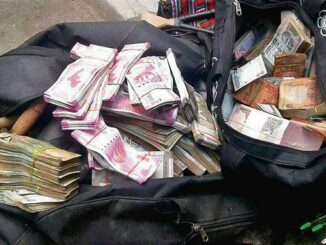
    Why talk about cash in these times of electoral bonds, you might ask. This is because politics is dirty in practice and that calls for payment in cash. If everyone, say nine candidates in a constituency, distributes booze to voters during elections, some even handing out wads of currency notes, can this expenditure be sourced from chaste donations entered into the party’s books, whether received by cheque or electoral bonds? If every MLA is paid, say Rs 20 crore, for crossing over to support the leader he or she had railed against during the election campaign, and you need to buy a couple of dozen MLAs, and repeat this operation in multiple states, that adds up to a tidy sum. Imagine an expenditure item in the party’s accounts submitted to the Election Commission, which says ‘Annual expenditure on buying Opposition MLAs’ with a footnote pointing to an annexure that gives details. Well, that money has to come from unaccounted sources.

    The fee paid to worshipful supporters who attend mammoth rallies of mass leaders varies from state to state. In prosperous states, it could be upward of Rs 1,500 per precious capita. Catch a party admitting that it paid to mobilize a crowd at a rally. The money has to be sourced in cash.

    Who pays this cash? Mostly owners of companies, big and small. The big guys do it expecting favors in return; the small ones pay up the way they pay protection racketeers in their town. Some consider it a part of their business transactions, if the business involves executing large state-funded projects and securing the contract means agreeing to share a part of the project cost with the minister in charge of the department implementing the project.

    How do companies get this unaccounted money in the first place, in this age of digital payments and wannabe Hindenburg’s sniffing around for a corporate scandal? When they raise loans from a bank for a new project, they exaggerate the project cost and secure a loan far in excess of what is actually required. The project is implemented by an assortment of companies, some of which are linked to the promoter. The money is siphoned out through these. Or else, when companies acquire other companies, the seller generously routes a part of the payment into a foreign bank account indicated by the promoter of the acquiring company. The acquiring firm, in effect, overpays.

    When inflated project costs are sanctioned and larger-than-warranted loans are disbursed, the groundwork is laid for potential default. To service that excessive loan before the project for which it was secured starts generating cash, the promoter starts a series of additional projects and secures loans for each one of them, using a portion of the loan proceeds to service the original loan.

    If everything goes according to plan, all projects come through and all loans are serviced. If, on the other hand, these plans are like the best laid plans of mice and men, the loans go awry and end up adding to the banks’ non-performing asset (NPA) burden.

    Political funding remains unreformed in India. This makes all capitalists crony, to a lesser or greater degree. It also makes corruption in India systemic, rather than opportunistic as in most other parts of the world. Indian democracy runs on the proceeds of corruption.

    The RBI’s recently released Financial Stability Report notes that gross and net NPAs have come down sharply, that the capital-to-risk-weighted asset ratio is in excess of 17 per cent, that provisioning against bad loans has risen sharply, and concludes, rather smugly, that the Indian financial system is relatively robust, with its principal threat coming from financial instability outside India.

    This ignores the fact that the formal financial sector does not lend to small and medium enterprises, which obtain at the most 25 per cent of their credit requirement from the banks. The rest comes from non-banking finance companies or informal channels such as chartered accountants who look after hordes of politicians and their financiers.

    Private infrastructure investment has collapsed since the pandemic because there are no lenders to private infrastructure developers. After the IL&FS, Dewan Housing and related frauds came to light, the RBI has cracked down on non-banking financial institutions (NBFCs) that lend for infrastructure projects. Now, minus infrastructure lenders, there is hardly any private infrastructure investment either. A vibrant market for corporate debt could fund infrastructure and MSMEs directly or via NBFCs that lend to these sectors. We have stunted the corporate debt market as well.

    The current state of wellness of the banking system is, in other words, a passing phase. When banks start lending aggressively again, given the absence of political funding reform, systemic forces would compel the creation of bad loans.

    (The author is a senior journalist)

  • Sobriety after the euphoria of the U.S. state visit

    Sobriety after the euphoria of the U.S. state visit

    India’s potential should be marshalled to act as a bridge between conflicting parties in the Indo-Pacific, in West Asia and in Europe. This could be the enduring legacy of the Prime Minister’s latest visit to the U.S., which has occasioned so much of interest not only in the U.S. and India, but across the world. It is for India to seize the moment and play its rightful role.

    By M K  Narayanan

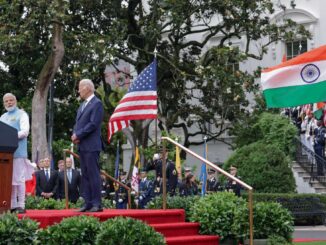
    The euphoria stemming from Prime Minister Narendra Modi’s state visit to the United States in June is yet to subside. All of India continues to savor the images that marked this highly publicized visit. Those with long memories of U.S.-India relations in the past are, hence, left to wonder whether this is the same U.S. that had let India down in the past at crucial moments.

    Two U.S. Presidents in particular, Lyndon B. Johnson in 1963 and Richard Nixon in 1971, are still remembered for their infamous roles in this respect. Johnson for denying aid to India in the wake of China’s perfidious attack on India in 1962, and Nixon during the India-Pakistan conflict in 1971 for sending the U.S. Seventh Fleet steaming up the Bay of Bengal in a show of force intended to deter India from supporting the ‘liberation struggle’ in East Bengal, which ultimately led to the birth of a new nation, Bangladesh.

    This time, there was no room, whatsoever, to doubt in which corner the U.S. stands in relation to India. The promise of the transfer of technology in several areas, most conspicuously in terms of producing fighter jet engines for the Indian Air Force, and holding out the promise of the initiative on Critical and Emerging Technology (iCET) marks a remarkable turn in the American attitude. All this, and with the many more agreements on critical technologies on the anvil, could lead to a quantum jump in India’s military and aerospace capabilities.

    Many are bound to view this as an attempt by the U.S. to persuade India to accept an alliance status, vis-à-vis, the U.S. The fine print on the recent negotiations does not, however, indicate this as a possibility at this time. Strategic ties are certain to attain a new dimension, and the U.S. side certainly hopes it could lead to “a deeper, more effective, and more diverse defense partnership”. Yet, and despite India’s attractiveness to the U.S. as a huge market for goods, and increasingly as a destination for state-of-the-art military items, there are ‘miles to go’ before India is viewed as an alliance partner.

    Perceptions on what constitutes a successful visit often vary, but all things considered, the Prime Minister’s visit to the U.S. this time should be deemed a major success, and as enhancing India’s position as a prime defense technological partner of the U.S. It is certain to not only favorably impact India-U.S. relations but also India’s standing in the world.

    Indian visits then and now

    Every Indian Prime Minister is, of course, entitled to his or her place in the sun. A good visit to the U.S. by an Indian Prime Minister is generally viewed as one clear index of India’s standing in the comity of nations. It is, hence, tempting to compare Mr. Modi’s latest visit with that of other Indian Prime Ministers since Independence. There were visits by Jawaharlal Nehru (he met with Harry S. Truman, Dwight D. Eisenhower and John F. Kennedy), and Lal Bahadur Shastri’s visit never happened in the end), while Indira Gandhi’s visit to Washington as Prime Minister was a disaster of sorts, with both India and the U.S. having their own versions of what transpired. Prime Minister Rajiv Gandhi’s visit was by all accounts deemed a success, breaking many previous shibboleths. Admittedly, none of them matched the euphoria created by the visit of two latter day Prime Ministers, Manmohan Singh and Mr. Modi.

    Only the most foolhardy would possibly attempt a comparison between the visits of Prime Minister Manmohan Singh during his tenure, specially the one in 2005, and Mr. Modi’s latest endeavor. The question uppermost in everyone’s minds would be whether ‘ending nuclear apartheid’ (imposed on India after the 1974 nuclear tests ‘Buddha is smiling’), or the defense technological breakthroughs achieved during the recent visit are more significant for India’s future.

    The civil nuclear deal marked a shift

    Admittedly, the opening up of civil nuclear cooperation between India and the U.S. marked the beginning of a tectonic shift in global affairs at the start of the 21st century, unmatched before or since. Securing a waiver under the Nuclear Non-Proliferation Treaty, and obtaining the approval of the U.S. Congress for the iconic 123 Agreement that paved the way for an India-specific Safeguards Agreement with the International Atomic Energy Agency (IAEA) subsequently, were not merely unprecedented, but one time achievements, the like of which have few equals in the annals of world history. As a result, India today has the freedom to maintain a select number of reactors outside IAEA Safeguards, enabling it to utilize them for military purposes. The freedom India currently enjoys for reprocessing and enrichment are other critical outcomes that stemmed from the visit.

    What is also interesting to note is that all this was achieved despite the entire U.S. Establishment (with the sole exception of President George Bush) being opposed to these concessions — a testimony to the nature of the personal relationship that existed between then U.S. President George W. Bush and Prime Minister Manmohan Singh. Seldom has such a shift been witnessed in the global arena, due solely to the personal chemistry between leaders of two countries — a testimony to the civilizational attributes of the two leaders at the time.

    During Dr. Manmohan Singh’s state visit to the U.S. in 2009, the pièce de résistance was the exchanges between two of the world’s most cerebral leaders at the time, viz., U.S. President Barack Obama and Dr. Manmohan Singh. Mr. Obama’s remarks at the start of his private meeting with Dr. Singh, ‘You are My Guru’, says it all. What followed was an avalanche of results, and there was no obvious quid pro quo expected or sought for. Both in 2005 and in 2009, it was evident that it was India’s reputation as a civilizational entity that seemed to weigh with U.S. leaders at the time.

    Be cautious, look at history

    The United States of the 21st century is certainly different in many respects from the U.S. in the late 20th century. In the euphoria that exists following Mr. Modi’s visit, it is, however, desirable for India to be cautious and heed the lessons of history. India certainly is not, at least at this stage, the kind of ally that the U.S. seeks or demands. Moreover, U.S. politics is currently in a state of flux — more so than at most times in the past. The individual preferences of the U.S. President in office and the ‘swing factor’ in U.S. foreign policy are other aspects that foreign countries, India included, can seldom comprehend adequately. India again is not unfamiliar with the way the U.S. changes its priorities, and friends.

    Consequently, and despite the warmth of the reception accorded to Mr. Modi in Washington, India should realize that it cannot at any time, be the kind of ally that the U.S. seeks. Sober leaders on both sides must also understand that the current euphoria in relations notwithstanding, the situation has been dictated due to circumstance rather than conviction. This must not be lost sight of by India in particular. For instance, India cannot possibly be part of an arrangement such as the AUKUS Pact that binds the U.S. with the United Kingdom and Australia. The fundamentals underlying the Quad (India, Japan, Australia and the U.S.) and AUKUS are very different.

    India must, instead, use the outcome of the Prime Minister’s visit to skillfully function as a ‘bridge power’. It is eminently suited to play such a role, and should not be inveigled — through blandishments such as defense ties — to play the role of a subordinate to the U.S. in the politics of the Asia-Pacific.

    India’s potential should be marshalled to act as a bridge between conflicting parties in the Indo-Pacific, in West Asia and in Europe. This could be the enduring legacy of the Prime Minister’s latest visit to the U.S., which has occasioned so much of interest not only in the U.S. and India, but across the world. It is for India to seize the moment and play its rightful role.

    (M.K. Narayanan is a former Director, Intelligence Bureau, a former National Security Adviser, and a former Governor of West Bengal)

  • ENJOY SUMMER WITH NJS PARK CONCERTS

    ENJOY SUMMER WITH NJS PARK CONCERTS

    Summer Concert, Chamber Music, Nimbus Dance. (Photo credit : njsymphony.org)

    By Mabel Pais

    The New Jersey Symphony (njsymphony.org) invites you to its free outdoor concerts in Newark, Jersey City, Toms River, South Amboy and Red Bank and a performance at the Giralda Music and Arts Festival in Madison.

    The family-friendly program features John Williams’ Theme from ‘Jurassic Park,’ selections from Leonard Bernstein’s ‘West Side Story,’ William Grant Still’s ‘Festive Overture’ and more.

    For the first time this season, the New Jersey Symphony will perform in Liberty State Park in Jersey City and Raritan Bay Waterfront Park in South Amboy. The Symphony will also return to Marine Park in Red Bank, as well as Ocean County College in Toms River and Essex County Branch Brook concert in Newark. The Essex County Branch Brook Park concert includes fireworks.

    The Chamber Players of the New Jersey Symphony are scheduled to perform a series of chamber music concerts at Hamilton Park in Jersey City. These concerts are free of charge and will feature a variety of repertoire, including a celebration of the best of Bollywood’s Hindi-language film genre and an exhilarating program curated by the orchestra’s Resident Artistic Catalyst, Daniel Bernard Roumain.

    Free concerts take place:

    Sunday, June 25, 6 pm at the Giralda Farms, Giralda Music and Arts Festival, Madison

    Tuesday, June 27, 8 pm at Ocean County College in Toms River

    Wednesday, June 28, 7:30 pm at Raritan Bay Waterfront Park in South Amboy

    Friday, June 30, 7:30 pm at Essex County Branch Brook Park in Newark (includes fireworks!)

    Saturday, July 1, 8 pm at Marine Park in Red Bank

    Sunday, July 2, 7:30 pm at Liberty State Park in Jersey City

    Free Chamber Series at Hamilton Park in Jersey City

    Thursday, July 13, 7 pm: Sounds of the Summer with Nimbus Dance

    Thursday, July 27, 7 pm: The Music of Bollywood with Kulture Kool

    Thursday, August 10, 7 pm: A Summer Evening with DBR

    Clarinetist Timothy Lien, winner of the New Jersey Symphony Youth Orchestra’s 2023 Henry Lewis Concerto Competition, joins the Symphony for the first movement of Ludwig Spohr’s Clarinet Concerto In C Minor, Op.26. for the Giralda Farms, Branch Brook Park, Marine Park and Liberty State Park concerts. José Luis Domínguez, the New Jersey Symphony Youth Orchestra Artistic Director, conducts.

    UPDATES

    For more information, updates, and changes owing to weather conditions, visit njsymphony.org/summer.

    ————————————————————–

    WINNING COMPOSERS GET FEEDBACK  FROM CONE INSTITUTE, NJ SYMPHONY AND OTHERS

    Cone Institute ‘New Scores’ Concert (Poster): NJS Orchestra, Host Steve Mackey, & Conductor Case Scaglione. (Photo credit : njsymphony.org)
    ‘New Scores’ Winners. (Photo credit : njsymphony.org)

    By Mabel Pais

    The New Jersey Symphony (njsymphony.org) announces the composers for the ninth Edward T. Cone Composition Institute. The 2023 Institute will take place from Sunday, July 9 to Saturday, July 15 in Newark, culminating in a performance of the composers’ works on Saturday, July 15, 2023. This year’s winning composers include Tom Morrison with his work ‘Messages in the Ground,’ Kory Reeder with his work ‘Walls of Brocade Fields,’ Sam Wu with his work ‘Hydrosphere’ and Yangfan Xu with her work ‘Bya.’

    The four composers will hear their music rehearsed and performed by the Symphony and participate in in-depth feedback sessions with Institute Director Steven Mackey, guest conductor Case Scaglione, New Jersey Symphony musicians and industry leaders.

    The Symphony and Maestro Case Scaglione will present the participants’ works along with the final movement, ‘Sphere,’ from Steven Mackey’s ‘Concerto for Curved Space’ in concert at NJPAC’s Victoria Theater in Newark on Saturday, July 15 at 8 pm.

    The Edward T. Cone Institute Experience

    By the conclusion of the Institute’s comprehensive experience, participants will have gained invaluable musical and practical feedback about composing for orchestra. They will also have participated in critical discussions about best practices for getting contemporary classical music funded, published and performed.

    The New Jersey Symphony Edward T. Cone Composition Institute grew out of musical score-reading sessions the Symphony has held with Princeton University graduate students biennially for more than a decade. The Institute celebrates its namesake Edward T. Cone’s legacy as both a composer and a Princeton University professor. This is a collaboration between the New Jersey Symphony and Princeton University Department of Music. Learn more at njsymphony.org/institute.

    Winning Composers

    Tom Morrison

    Tom Morrison is a composer of acoustic and electroacoustic music. Morrison is a graduate of The Juilliard School (MM); also a graduate of the University of Montana (BM) in Missoula where he cultivated his love for nature and the environment. He holds an MFA and Ph.D. from Princeton University, where he will be a Post Graduate Researcher in the fall 2023 semester. He won the 2016 Thailand International Composition Festival Competition and first place in the 2021 Symphonia Caritas Competition for first-generation college students. His work can be found at tom-morrison.com.

    Composer’s Program Note: ‘Messages in the Ground’

    ‘Messages in the Ground’ is inspired by Richard Power’s novel ‘The Overstory’ and the complex nature of trees and humanity’s complex relationship with them. The work is a meditation on the nature of trees and how they communicate with each other. The governing structural idea is simple: the piece begins at the higher end of the orchestra’s register and ends at the lower end—it goes from the leaves to the roots.

    Kory Reeder

    Kory Reeder is an American composer and performer whose music draws inspiration from the visual arts and political theory.

    Reeder is from Nebraska and currently resides in Texas where he is an active performer. He received his Ph.D. from the University of North Texas and holds a Bachelor of Music degree from the University of Nebraska at Kearney and a Master of Music from Bowling Green State University. Learn more at koryreeder.com.

    Composer’s Program Note: ‘Walls of Brocade Fields’

    In Lincoln, Nebraska, there is the International Quilt Museum and while walking through, I couldn’t help but feel a sense of duality: the richly decorated and ornate patterns combine with the somewhat nostalgic quality that can come with the medium. I’m particularly drawn to flowers and brocade fabrics; the fields of intricately designed flowers lining the walls and filling your vision. This piece is full of overlapping, repeated patterns laid across each other, at times interacting and sometimes more exposed. There are moments in the piece where sounds are encompassing and warm, wrapping the listener in a blanket of sound, others are sparse, open and nearly still. The overlapping tones and phrases create subtle, perhaps fleeting cadences and nearly tonal reminisces, but underneath all this harmonic wrapping is a unifying pulse that connects the material and keeps the threads together.

    Sam Wu

    Sam Wu’s music deals with the beauty in blurred boundaries. Many of his works center around architecture, urban planning, climate science and the search for exoplanets that harbor life.

    Besides receiving numerous awards and recognitions, Wu has also won an ASCAP Morton Gould Young Composer Award, First Prize at the Washington International Competition, Harvard’s Robert Levin Prize and Juilliard’s Palmer Dixon Prize.

    From Melbourne, Australia, Sam holds degrees from Harvard University and The Juilliard School, and is currently a DMA candidate in composition at Rice University’s Shepherd School of Music. His teachers include Tan Dun, Anthony Brandt, Pierre Jalbert, Chaya Czernowin and Richard Beaudoin. Learn more at samwumusic.com.

    Composer’s Program Note: Hydrosphere

    ‘Hydrosphere’ is inspired by the water cycle—a macroscopic, planetary process that shapes oceans and continents.

    Water is the source of life as we know it; its eternal cycle nourishes generations across the aeons. Despite its ubiquity, water is precious—we must protect Gaia’s lifeblood.

    Yangfan Xu

    Yangfan Xu is a Chinese-born US-based composer who comes from a musical family in Lanzhou, Gansu province. Xu was the winner of the Society for New Music’s 2021 Israel/Pellman Award. She won the 2021 New Juilliard Ensemble (NJE) Composition Competition, and her commissioned work Fantastic Creatures of the Mountains and Seas premiered at the Lincoln Center in a concert by NJE in 2022.

    Xu received a bachelor’s degree in composition at the San Francisco Conservatory of Music studying with Mason Bates. Before her undergraduate studies, she studied musicology at the high school affiliated with the Central Conservatory of Music in China. Xu earned her master’s degree in composition at The Juilliard School, studying under Robert Beaser. She is a current DMA candidate at the New England Conservatory of Music studying under studio teacher Kati Agócs. Learn more at yangfanxu.com.

    Composer’s Program Note: Bya

    “Bya”(བྱ) is from the Tibetan language. It means “birds.” The piece is inspired by my trip to Tibet in 2016. When the pandemic first broke out, the city was put on lockdown, and I started to have recurring dreams about my trip to Tibet. It is the most wonderful land I have ever seen; Tibet is said to be the closest place to heaven on earth. When I saw it with my own eyes, I couldn’t agree more. The landscape is so stunning that it feels like a place that is unreal. Yamdrok Lake was the name of the lake I visited. There’s a bird island in the middle of the lake where you can see hundreds of different kinds of birds—it was magnificent and mind-blowing.

    Bya’s opening section is about the general shock I felt when I first arrived in Tibet. The middle slow section, where you can hear the trumpet’s extended technique imitating a bird’s call, depicts the bird’s island and the Yamdrok Lake. The final section of the piece is about a Tibetan tradition known as the sky funeral. When people die, their bodies are placed on top of a temple and the birds eat them. I find the ritual very special to me because it represents an eternal bond between humans and nature.

    Steven Mackey

    Bright in coloring, ecstatic in inventiveness, lively and profound, Steven Mackey’s music spins the tendrils of his improvisatory riffs into large-scale works of grooving, dramatic coherence.

    As a teenager growing up in Northern California obsessed with blues-rock guitar, Mackey was in search of the “right wrong notes,” those heart-wrenching moments that imbue the music with new, unexpected momentum. Today, his pieces play with that tension of being inside or outside of the harmony and flow forward shimmering with prismatic detail.

    Today, Steven Mackey writes for chamber ensemble, orchestra, dance and opera—commissioned by the greatest orchestras around the world. He has served as professor of music at Princeton University for the past 35 years, and in fall 2022, he joined the composition faculty at the Curtis Institute of Music. He has won several awards from the American Academy of Arts and Letters, a Guggenheim Fellowship and a Kennedy Center Friedheim Award. He continues to explore an ever-widening world of timbres befitting a complex, 21st-century culture, while always striving to make music that unites the head and heart, that is visceral, that gets us moving. Learn more at stevenmackey.com.

    Case Scaglione

    Case Scaglione is currently in his fifth season as a Chief Conductor of the Württembergisches Kammerorchester Heilbronn in Germany and in his fourth season as a Music Director of Orchestre national d’Île de France. He has previously served as Associate Conductor with the New York Philharmonic and as Music Director of the Young Musicians Foundation Debut Orchestra of Los Angeles. Case was the driving force behind the artistic growth and diversification of the organization, founding their educational outreach initiative ‘360° Music.’

    Previously in North America, Case successfully collaborated with the New York Philharmonic and the Houston, Dallas, Detroit, San Diego and Baltimore symphony orchestras. In Asia, he has led concerts with the China Philharmonic Orchestra as well as the Shanghai and Guangzhou symphony orchestras, in addition to regular returns to the Hong Kong Philharmonic Orchestra.

    Case enjoys close relationships with many of the world’s leading soloists, including Joshua Bell, Yulianna Avdeeva, Jean-Efflam Bavouzet, Behzod Abduraimov and Khatia Buniatishvili. Case has been mentored by some of the most prominent conductors on the world stage today, including Alan Gilbert, Jaap van Zweden and David Zinman. Learn more at casescaglione.com.

    SAFETY MEASURES

    All New Jersey Symphony performances follow safety measures in partnership with the venues and based on the guidance provided by the CDC and the State of New Jersey.

    TICKETS & INFORMATION

    For more information about the New Jersey Symphony, visit njsymphony.org or email information@njsymphony.org.

    Tickets are available for purchase by calling 1.800.ALLEGRO (255.3476) or at njsymphony.org.

    New Jersey Symphony

    The Emmy and Grammy Award-winning New Jersey Symphony, celebrating its Centennial Season in 2022–23, is redefining what it means to be a nationally leading, relevant orchestra in the 21st century.

    Connect with New Jersey Symphony

    njsymphony.org

    @NJSymphony on Facebook, Instagram, Twitter and TikTok

    @NewJerseySymphony on YouTube

    Email: information@njsymphony.org

    (Mabel Pais writes on The Arts and Entertainment, Social Issues, Health & Wellness, Education, Cuisine, Spirituality, and Business)

  • Weekly Horoscope- July 3 to July 9, 2023

    Weekly Horoscope- July 3 to July 9, 2023

    Aries

    Ganesha says,this week, a lively mood will be welcomed. This week, you will give your professional life greater consideration. The enthusiasm this week can give you the courage and creativity to investigate all of the best options that are open to you. You will doubt your level of satisfaction this week no matter where you are. This week will reveal a lot about who you are. You will only get a little bit of money this week. This week, you will feel a little unsure about your profession, but exploring your possibilities might be beneficial. This week, you will be appreciative of your loved one’s companionship and enjoy thoughtful discussions. Now is the time to start working out aggressively.

    Taurus

    Ganesha says, Things will return to their usual state this week. This week, your inherent talents will improve. You will have a new perspective on the world as a result of this. Although you will be able to alter the circumstance, keep in mind that a novel strategy is required. Wise phrases will be indications for this week. On an individual level, you ought to use caution when speaking in the presence of your family. You will experiment with creative concepts in regards of affection, such as taking vacations to unwind from your stressful job. You worked very hard on your study, and this week you will get paid. Much of your dedication will be needed for your well-being. This week, try to limit your bad habits.

    Gemini

    Ganesha says,this week, you will discover that you are not supposed to be in charge of other people’s feelings. This week, you will also need to stick up and refuse requests for benefits, even if some individuals could abuse your generosity. You can begin again without your family’s problems. You are going to experience a few small intestinal problems in terms of your health. There will be discomfort for you. Unquestionably, you will need to make some adjustments to your working situation. People around you will be amazed by your unorthodox concepts if you apply them to your field of work. You will have to deny offering your time and resources to someone you know via your professional connections. Making time will need work on your part.

    Cancer 

    Ganesha says,this week, you are going to start accomplishing fantastic achievements. You will ask questions regarding each and every incident, both good and bad. If you let other people’s opinions to influence your everyday choices, your progress will be negatively impacted. Your week will also have other lovely aspects. You will get access to a personal area where you may enhance your professional abilities. Your superiors will not be as intrusive, allowing you to get the greatest results. Now is not the time for businesses to invest in commercial property. This week, on the romantic face, your significant other will seek your counsel on their job and enterprise. Put your reputation at danger to protect what’s important to them. You should not start making wedding arrangements at this point. Your health will be all well.

    Leo 

    Ganesha saysyou will be able to concentrate this week with a positive outlook. You will be informed of the outcomes of your prior efforts. You will be suggested as somebody to work with, which will result in the distribution of more possibilities than you are entitled to. This week you will close some nice sales, and the financial situation will be perfect. You will have a terrific week in terms of business this week. The benefits of investing in the bond portfolio are substantial. You could feel a little emotionally estranged from your significant other, but this is only a result of the strain their job is causing them. You will probably start to feel at ease right away. Overall happiness and success will surround you.

    Virgo

    Ganesha says, you will be given the credit you earn. Even if you will not get any aid, taking care of matters on your own will make you more disciplined. Your family will make you learn things the hard way this week. On the business boundaries, you will have plenty to cope with. Your managers are going to make heed of your abilities and efforts and could recommend you for advancement. In terms of your romantic life, a married couple will plan a leisurely outing this week but will not be able to go on it. Even though your health will significantly improve this week, you will still feel very tired. Your week will end on a positive note. 

    Libra 

    Ganesha says, this week will be the time when your determination will be put to the assessment, but you will be really brave this week, and it will work out just the way you anticipate it to. If you have faith in God Shiva, you can conquer all you encounter this week. This week, your partner will be a particularly important love ally. You will consider yourself fortunate to have them since they will be on your side at all times. In the business world, you will be given a terrific assessment, but you will not be overjoyed. The stock exchange is a terrific place for companies to put their money this week. This week, you will need to take more precautions for your health since you will be exhausted. The result might be that you will get inspired.

    Scorpio 

    Ganesha says, you will be admired by everybody in the business community for your abilities. You will talk openly about your money, and favorable circumstances will materialize for you. Those who handle collaborations between companies will prosper in their jobs more than those who handle solitary ventures. Those working in research and advancement will have to deal with severe strain and unpredictable workloads. This week, you will have the good luck to come across the person you have been looking for. Love will have a positive impact on your personal development this week. Your kids may have problems as a result of the adverse medical news.

    Sagittarius 

    Ganesha says, it is possible that you may run into some old pals by chance and that this will open up doors for you. The best part of your week will be talking to them, and you will miss them later. Your spouse could be anxious about the state of your relationship at the moment. It will not be an issue as long as you handle it with kindness and retain your calm. You could have a temporary setback in the relationship, but you will easily overcome it and continue on your initial path. It can be a hectic week in the Technology industry. People who work in the medical industry could experience small issues. Purchases made using indexes are likely to perform well. Your anxiousness might perhaps increase. a brief pause for rest will help you stay fit.

    Capricorn 

    Ganesha says, this week, you will experience a spiritual awakening. You will feel more positive as a result of it. Your genuineness might not be well received wherever you go. Think before you speak so that your words do not cause harm to anyone. You will get a thoughtful gift from your partner. You will find it simpler to approach if you do so. There may be some arguments between spouses and partners, but they will be resolved before evening. There will be a small cost, but it will be spent prudently. Maintain your thoughts to yourself at all times. Be ready for a sympathetic answer from your friend when you inquire about the previous conversations. You can experience mental health problems as a result of your love relationship, but your significant other will be there for you.

    Aquarius 

    Ganesha saysthere may be an exciting chance this week at work. It will aid in your professional development. Additionally, the business initial line will get better. Your coworkers will not appreciate it if your behavior in the workplace changes, which is likely to happen. Make sure you are aware of it and that it will not have an impact on your relationships. This week, enjoying the days with your significant other is a terrific option. It will facilitate calm for you. Furthermore, this is an excellent opportunity to talk about knots. The coming week’s job may be chaotic and stressful. Your interpersonal interactions will be hampered if you do not deal with it. Lack of sleep and nervousness might make you act in a risky manner.

    Pisces

    Ganesha saysthe fact that you are a good person will be recognized by everyone.  You have already made a commitment to something very remarkable, and you will now be awarded for it. Make this event a reminder that no one is flawless. Your business faces currently appear to be secure and stable.  Even though you may have to pull a few threads to make things go your way, the money you will make will nearly totally cover your expenses. Committed folks will have to deal with their partner’s propensity to become sidetracked from their love pursuits. For some folks, finding an acceptable network will be challenging. You should only accept the love you are now seeking.

  • Horoscope for the Month of July 2023

    Horoscope for the Month of July 2023

    Aries

    Ganesha says this month, Aries, you’ll be filled with a surge of energy and enthusiasm. Your confidence and assertiveness will be at an all-time high, propelling you forward in all areas of life. In your career, take advantage of your ambitious nature to pursue new opportunities and showcase your leadership skills. Finances look promising, but avoid impulsive spending. In relationships, your passion and charisma will draw others towards you. Single Aries might find love in unexpected places. Remember to balance you drive with self-care to avoid burnout. 

    Taurus

    Ganesha says this month brings a focus on stability and security. In your career, you may need to reassess your long-term goals and make necessary adjustments. Financially, it’s a good time to save and invest wisely rather than taking risks. In your personal life, relationships may require extra attention and communication. Nurture your emotional well-being by engaging in self-care activities. Stay grounded and patient as you navigate through any challenges that arise. 

    Gemini

    Ganesha says this month will be filled with intellectual stimulation and social opportunities. Your communication skills will be heightened, allowing you to express yourself with ease. In your career, you may find yourself juggling multiple projects or ideas. Embrace your versatility and adaptability to make the most of these situations. Financially, it’s a good time to seek advice and explore new investment opportunities. In relationships, open and honest communication will strengthen your connections. 

    Cancer

    Ganesha says your focus will be on emotional well-being and personal growth. Take time for self-reflection and explore your inner world. In your career, you may feel the need for a change or a new direction. Trust your instincts and don’t be afraid to make bold decisions. Financially, it’s important to budget and avoid unnecessary expenses. In relationships, deeper emotional connections can be formed. Nurture your loved ones and express your feelings openly. 

    Leo

    Ganesha says this month brings a surge of creativity and self-expression. Embrace your natural charisma and let your talents shine. In your career, new opportunities may come your way, allowing you to showcase your skills. Financially, it’s important to stay organized and avoid impulsive purchases. In relationships, your warmth and generosity will be appreciated. Single Leos may find romantic prospects entering their lives. Remember to balance your personal ambitions with the needs of others. 

    Virgo

    Ganesha says this month focuses on stability and practicality. In your career, attention to detail and a methodical approach will yield positive results. Financially, it’s a good time to create a budget and set realistic goals. Emotionally, take time for self-care and relaxation. In relationships, open and honest communication will deepen your connections. Single Virgos may find potential partners through shared interests or activities. Stay organized and focused on your long-term aspirations. 

    Libra

    Ganesha says your focus will be on balance and harmony in all aspects of life. In your career, collaboration and compromise will lead to success. Financially, seek stability and avoid unnecessary risks. Emotionally, strive for inner peace and maintain a positive mindset. In relationships, diplomacy and understanding will strengthen your connections. Single Libras may find love through social gatherings or group activities. Take time for self-care and pursue activities that bring you joy. 

    Scorpio

    Ganesha says this month brings intensity and transformation. In your career, you may need to let go of old patterns and embrace new opportunities. Financially, it’s important to be cautious and make informed decisions. Emotionally, confront any deep-seated issues and engage in self-healing. In

    relationships, loyalty and trust will be paramount. Single Scorpios may experience intense connections with potential partners. Embrace change and embrace your inner strength. 

    Sagittarius

    Ganesha says this month brings a sense of adventure and expansion. In your career, embrace new challenges and take calculated risks. Financially, it’s a good time to broaden your knowledge and seek new opportunities for growth. Emotionally, maintain a positive outlook and surround yourself with uplifting energy. In relationships, open communication and shared experiences will deepen your bonds. Single Sagittarians may meet someone intriguing while pursuing their passions. 

    Capricorn

    Ganesha says this month emphasizes discipline and responsibility. In your career, focus on long-term goals and stay committed to your path. Financially, it’s a good time to reevaluate your budget and make necessary adjustments. Emotionally, find balance between work and personal life. In relationships, trust and loyalty will be essential. Single Capricorns may need to be patient and allow love to unfold naturally. Stay determined and keep moving forward towards your aspirations. 

    Aquarius

    Ganesha says this month brings a sense of innovation and individuality. In your career, embrace your unique ideas and explore unconventional approaches. Financially, be mindful of impulsive spending and prioritize saving. Emotionally, express your authentic self and connect with like-minded individuals. In relationships, intellectual stimulation and freedom will be important. Single Aquarians may find themselves drawn to someone who shares their ideals. Embrace your true nature and follow your passions. 

    Pisces

    Ganesha says this month brings a focus on intuition and spiritual growth. In your career, trust your instincts and pursue opportunities that align with your values. Financially, it’s important to stay organized and seek advice when needed. Emotionally, create boundaries and practice self-care to maintain balance. In relationships, empathy and compassion will deepen your connections. Single Pisceans may meet someone who understands and appreciates their depth. Embrace your intuition and let it guide you on your path.

  • Birthday Horoscope- July 3 to July 9

    Birthday Horoscope- July 3 to July 9

    July 3

    Ganesha says that today is an excellent day for wisdom and introspection. You may find yourself making connections, understanding complex situations, and uncovering truths like never before. Use this day to learn new things and communicate effectively. Listening to others might hold the key to a question you’ve been pondering for a long time.

    July 4

    Ganesha says the day is urging you to embrace your dreams and ambitions. There is an energetic wave of motivation within you that could be used to progress on projects or ideas that you’re passionate about. You might face some challenges, but remember, they are there to make you stronger. Embrace them and turn them into steppingstones towards your goals.

    July 5

    Ganesha says today is a day of balance and harmony. You’ll find a way to harmonize different aspects of your life, be it work-life balance or aligning your actions with your values. You’ll feel a sense of equilibrium, and the harmony you achieve today will set the foundation for future success.

    July 6

    Ganesha says today calls for introspection and self-awareness. Delve into your mind and understand your true desires and motivations. Engage in activities that help you connect with your inner self. Whether it’s meditation, journaling, or simply spending time in solitude, wisdom and peace await you.

    July 7

    Ganesha says today is a day for expansion and growth. You’re on the cusp of a significant personal development phase. This could be learning a new skill, broadening your perspective, or stepping outside your comfort zone. Embrace the opportunities that come your way, as they’re steppingstones to your growth.

    July 8

    Ganesha says it’s a day of creativity and intuition. Your artistic abilities are amplified and your intuition is heightened. Express your creative side and trust your gut feelings. You might surprise yourself with the insights you gain and the artistic feats you achieve.

    July 9

    Ganesha says today is about discipline and determination. Focus on your goals and lay out a structured plan to achieve them. Whether it’s a professional objective or a personal dream, putting in effort and staying committed will bring you closer to your aspirations. Let your determination guide you and discipline anchor you.

  • America today: Economic and military superpower

    America today: Economic and military superpower

    Today, the United States of America is a world power: a country that holds significant influence over a large part of the planet. This influence comes in many forms; the United States holds economic, political, military, and cultural influence across the planet. Because of this influence, many have called the United States a superpower, a country with a dominant position over most other countries.
    The United States is a world power and a superpower for many reasons. For one, the United States has the best-equipped and best-funded military on Earth. Unlike other countries, the U.S. can project its military power across the world through its large air force and navy. The U.S. spends more money on this than a few countries with the next best militaries combined, and the U.S. operates nearly half of the world’s aircraft carriers. Economically, the United States has the greatest GDP (gross domestic product), and the U.S. dollar is the world’s reserve currency. American culture is consumed worldwide, and English today is the world’s lingua franca, largely due to American influence.
    America’s gross domestic product accounts for close to a quarter of the world total, and its military budget is reckoned to be almost as much as the rest of the world’s defence spending put together.
    The country is also a major source of entertainment: American TV, Hollywood films, jazz, blues, rock and rap music are primary ingredients in global popular culture. The United States originated in a revolution that separated it from the British Crown. The constitution, drafted in 1787, established a federal system with a division of powers that has remained little changed since its inception.
    Military Strength
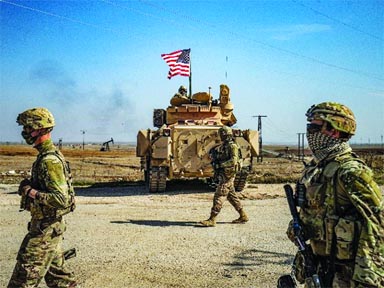
    The U.S. Armed Forces are considered the world’s most powerful military. The military expenditure of the United States was US$877 billion in 2022, the highest in the world, accounting for 39 percent of the world’s defense expenditures. The U.S. Armed Forces has significant capabilities in both defense and power projection due to its large budget, resulting in advanced and powerful technologies which enables a widespread deployment of the force around the world, including around 800 military bases outside the United States. The U.S. Air Force is the world’s largest air force, while the U.S. Army Aviation Branch is the second largest. The U.S. Naval Air Forces is the fourth largest air arm in the world and is the largest naval aviation service, while U.S. Marine Corps Aviation is the world’s seventh largest air arm. The U.S. Navy is the world’s largest navy by tonnage. The U.S. Coast Guard is the world’s 12th largest maritime force. The U.S. Space Force is the world’s only active independent space force.
    The United States Armed Forces are the military forces of the United States. The armed forces consists of six service branches: the Army, Marine Corps, Navy, Air Force, Space Force, and Coast Guard. All six armed services are among the eight uniformed services of the United States.
    Each of the different military services is assigned a role and domain. The U.S. Army conducts land operations, while the U.S. Navy and U.S. Marine Corps conduct maritime operations, with the Marine Corps specializing in amphibious and maritime littoral operations in support of the Navy. The U.S. Air Force conducts air operations, while the U.S. Space Force conducts space operations. The U.S. Coast Guard is unique in that it is a military branch specializing in maritime operations and also a law enforcement agency.
    From their inception during the American Revolutionary War, the U.S. Armed Forces have played a decisive role in the history of the United States. They helped forge a sense of national unity and identity through victories in the First Barbary War and the Second Barbary War. They played a critical role in the territorial evolution of the United States, including the American Civil War. The National Security Act of 1947, adopted following World War II, created the modern U.S. military framework. The Act established the National Military Establishment, headed by the secretary of defense; and created the United States Air Force and the National Security Council. It was amended in 1949, renaming the National Military Establishment the Department of Defense, and merged the cabinet-level Department of the Army, Department of the Navy, and Department of the Air Force, into the Department of Defense.
    The president of the United States is the commander-in-chief of the armed forces and forms military policy with the Department of Defense (DoD) and Department of Homeland Security (DHS), both federal executive departments, acting as the principal organs by which military policy is carried out.
    The U.S. Armed Forces are one of the largest military forces in terms of personnel. They draw their personnel from a large pool of professional volunteers. Although military conscription has been used in the past, it has not been used in the U.S. since 1973. The Selective Service System retains the power to conscript males, and requires that all male citizens and residents residing in the U.S. between the ages of 18 and 25 register with the service.
    Economy of the United States
    The United States is a highly developed mixed economy. It is the world’s largest economy by nominal GDP, and the second-largest by purchasing power parity (PPP) behind China. It has the world’s seventh-highest per capita GDP (nominal) and the eighth-highest per capita GDP (PPP) as of 2022.
    The U.S. accounted for 25.4% of the global economy in 2022 in nominal terms, and around 15.6% in PPP terms. The U.S. dollar is the currency of record most used in international transactions and is the world’s reserve currency, backed by a large U.S. treasuries market, its role as the reference standard for the petrodollar system, and its linked eurodollar. Several countries use it as their official currency and in others it is the de facto currency.
    The American economy is fueled by high productivity, transportation infrastructure, and extensive natural resources. Americans have the highest average household and employee income among OECD member states. In 2021, they had the highest median household income. The U.S. has one of the world’s highest income inequalities among the developed countries. The largest U.S. trading partners are Canada, Mexico, China, Japan, Germany, South Korea, the United Kingdom, Taiwan, India, and Vietnam. The U.S. is the world’s largest importer and second-largest exporter. It has free trade agreements with several countries, including Canada and Mexico (through the USMCA), Australia, South Korea, Israel, and several others that are in effect or under negotiation.
    By 1890, the United States had overtaken the British Empire as the world’s most productive economy. It is the world’s largest producer of petroleum and natural gas. In 2016, it was the world’s largest trading country as well as its third-largest manufacturer, representing a fifth of the global manufacturing output. The U.S. not only has the largest internal market for goods, but also dominates the services trade. U.S. total trade amounted to $4.2 trillion in 2018. Of the world’s 500 largest companies, 121 are headquartered in the U.S.
    The U.S. has the world’s highest number of billionaires, with a total wealth of $3.0 trillion. US commercial banks had $22.9 trillion in assets as of December 2022. U.S. global assets under management had more than $30 trillion in assets. During the Great Recession of 2008, the U.S. economy suffered a significant decline. The American Reinvestment and Recovery Act was passed by the US administration, and in the years that followed, the U.S. experienced the longest economic expansion on record by July 2019.
    The New York Stock Exchange and Nasdaq are the world’s largest stock exchanges by market capitalization and trade volume. In 2014, the U.S. economy is ranked first in international ranking on venture capital and global research and development funding. Consumer spending comprised 68% of the U.S. economy in 2022, while its labor share of income was 44% in 2021. The U.S. has the world’s largest consumer market. The nation’s labor market has attracted immigrants from all over the world and its net migration rate is among the highest in the world. The U.S. is one of the top-performing economies in studies such as the Ease of Doing Business Index, the Global Competitiveness Report, and others.

  • Constitution of the USA

    Constitution of the USA

    Constitution of the United States of America, the fundamental law of the U.S. federal system of government and a landmark document of the Western world. The oldest written national constitution in use, the Constitution defines the principal organs of government and their jurisdictions and the basic rights of citizens.
    The Constitution was written during the summer of 1787 in Philadelphia, Pennsylvania, by 55 delegates to a Constitutional Convention that was called ostensibly to amend the Articles of Confederation (1781–89), the country’s first written constitution. The Constitution was the product of political compromise after long and often rancorous debates over issues such as states’ rights, representation, and slavery. Delegates from small and large states disagreed over whether the number of representatives in the new federal legislature should be the same for each state—as was the case under the Articles of Confederation—or different depending on a state’s population (see New Jersey Plan and Virginia Plan). In addition, some delegates from Northern states sought to abolish slavery or, failing that, to make representation dependent on the size of a state’s free population. At the same time, some Southern delegates threatened to abandon the convention if their demands to keep slavery and the slave trade legal and to count slaves for representation purposes were not met. Eventually the framers resolved their disputes by adopting a proposal put forward by the Connecticut delegation. The Great Compromise, as it came to be known, created a bicameral legislature with a Senate, in which all states would be equally represented, and a House of Representatives, in which representation would be apportioned on the basis of a state’s free population plus three-fifths of its enslaved population. (The inclusion of the enslaved population was known separately as the three-fifths compromise.) A further compromise on slavery prohibited Congress from banning the importation of enslaved people until 1808 (Article I, Section 9). After all the disagreements were bridged, the new Constitution was signed by 39 delegates on September 17, 1787, and it was submitted for ratification to the 13 states on September 28.
    In 1787–88, in an effort to persuade New York to ratify the Constitution, Alexander Hamilton, John Jay, and James Madison published a series of essays on the Constitution and republican government in New York newspapers. Their work, written under the pseudonym “Publius” and collected and published in book form as The Federalist (1788), became a classic exposition and defense of the Constitution. In June 1788, after the Constitution had been ratified by nine states (as required by Article VII), Congress set March 4, 1789, as the date for the new government to commence proceedings (the first elections under the Constitution were held late in 1788). Because ratification in many states was contingent on the promised addition of a Bill of Rights, Congress proposed 12 amendments in September 1789; 10 were ratified by the states, and their adoption was certified on December 15, 1791. (One of the original 12 proposed amendments, which prohibited midterm changes in compensation for members of Congress, was ratified in 1992 as the Twenty-seventh Amendment. The last one, concerning the ratio of citizens per member of the House of Representatives, has never been adopted.)
    The authors of the Constitution were heavily influenced by the country’s experience under the Articles of Confederation, which had attempted to retain as much independence and sovereignty for the states as possible and to assign to the central government only those nationally important functions that the states could not handle individually. But the events of the years 1781 to 1787, including the national government’s inability to act during Shays’s Rebellion (1786–87) in Massachusetts, showed that the Articles were unworkable because they deprived the national government of many essential powers, including direct taxation and the ability to regulate interstate commerce. It was hoped that the new Constitution would remedy this problem.
    The framers of the Constitution were especially concerned with limiting the power of government and securing the liberty of citizens. The doctrine of legislative, executive, and judicial separation of powers, the checks and balances of each branch against the others, and the explicit guarantees of individual liberty were all designed to strike a balance between authority and liberty—the central purpose of American constitutional law.
    Provisions
    The Constitution concisely organizes the country’s basic political institutions. The main text comprises seven articles.
    n Article I vests all legislative powers in the Congress—the House of Representatives and the Senate. The Great Compromise stipulated that representation in the House would be based on population, and each state is entitled to two senators. Members of the House serve terms of two years, senators terms of six. Among the powers delegated to Congress are the right to levy taxes, borrow money, regulate interstate commerce, provide for military forces, declare war, and determine member seating and rules of procedure. The House initiates impeachment proceedings, and the Senate adjudicates them.
    n Article II vests executive power in the office of the presidency of the United States. The president, selected by an electoral college to serve a four-year term, is given responsibilities common to chief executives, including serving as commander in chief of the armed forces, negotiating treaties (two-thirds of the Senate must concur), and granting pardons. The president’s vast appointment powers, which include members of the federal judiciary and the cabinet, are subject to the “advice and consent” (majority approval) of the Senate (Article II, Section 2). Originally presidents were eligible for continual reelection, but the Twenty-second Amendment (1951) later prohibited any person from being elected president more than twice. Although the formal powers of the president are constitutionally quite limited and vague in comparison with those of the Congress, a variety of historical and technological factors—such as the centralization of power in the executive branch during war and the advent of television—have increased the informal responsibilities of the office extensively to embrace other aspects of political leadership, including proposing legislation to Congress.

    n Article III places judicial power in the hands of the courts. The Constitution is interpreted by the courts, and the Supreme Court of the United States is the final court of appeal from the state and lower federal courts. The power of American courts to rule on the constitutionality of laws, known as judicial review, is held by few other courts in the world and is not explicitly granted in the Constitution. The principle of judicial review was first asserted by Supreme Court Chief Justice John Marshall in Marbury v. Madison (1803), when the court ruled that it had the authority to void national or state laws.
    Beyond the body of judicial rulings interpreting it, the Constitution acquires meaning in a broader sense at the hands of all who use it. Congress on innumerable occasions has given new scope to the document through statutes, such as those creating executive departments, the federal courts, territories, and states; controlling succession to the presidency; and setting up the executive budget system. The chief executive also has contributed to constitutional interpretation, as in the development of the executive agreement as an instrument of foreign policy. Practices outside the letter of the Constitution based on custom and usage are often recognized as constitutional elements; they include the system of political parties, presidential nomination procedures, and the conduct of election campaigns. The presidential cabinet is largely a constitutional “convention” based on custom, and the actual operation of the electoral college system is also a convention.
    n Article IV deals, in part, with relations between the states and privileges of the citizens of the states. These provisions include the full faith and credit clause, which requires states to recognize the official acts and judicial proceedings of other states; the requirement that each state provide citizens from other states with all the privileges and immunities afforded the citizens of that state; and the guarantee of a republican form of government for each state.
    n Article V stipulates the procedures for amending the Constitution. Amendments may be proposed by a two-thirds vote of both houses of Congress or by a convention called by Congress on the application of the legislatures of two-thirds of the states. Proposed amendments must be ratified by three-fourths of the state legislatures or by conventions in as many states, depending on the decision of Congress. All subsequent amendments have been proposed by Congress, and all but one—the Twenty-first Amendment (1933), which repealed prohibition (the Eighteenth Amendment [1919])—have been ratified by state legislatures.
    n Article VI, which prohibits religious tests for officeholders, also deals with public debts and the supremacy of the Constitution, citing the document as “the supreme Law of the Land;…any Thing in the Constitution or Laws of any State to the Contrary notwithstanding.” Article VII stipulated that the Constitution would become operational after being ratified by nine states.
    The national government has only those constitutional powers that are delegated to it either expressly or by implication; the states, unless otherwise restricted, possess all the remaining powers (Tenth Amendment). Thus, national powers are enumerated (Article I, Section 8, paragraphs 1–17), and state powers are not. The state powers are often called residual, or reserved, powers. The elastic, or necessary and proper, clause (Article I, Section 8, paragraph 18) states that Congress shall have the authority “To make all Laws which shall be necessary and proper for carrying into Execution” the various powers vested in the national government. Thus, it follows that, in addition to the delegated powers, Congress possesses implied powers, a proposition established by Chief Justice Marshall in McCulloch v. Maryland (1819). The issue of national versus state power was not fully resolved by this decision, however, and many political battles in American history—including debates on nullification, slavery, racial segregation, and abortion—often have been disputes over constitutional interpretations of implied and residual powers.
    Competing concepts of federal supremacy and states’ rights were brought into sharp relief in questions about commercial regulation. The commerce clause simply authorized Congress “To regulate Commerce with foreign Nations, and among the several States, and with the Indian Tribes.” Particularly since a series of decisions in 1937, the court has interpreted Congress’s regulatory power broadly under the commerce clause as new methods of interstate transportation and communication have come into use. States may not regulate any aspect of interstate commerce that Congress has preempted.
    Civil liberties and the Bill of Rights
    The federal government is obliged by many constitutional provisions to respect the individual citizen’s basic rights. Some civil liberties were specified in the original document, notably in the provisions guaranteeing the writ of habeas corpus and trial by jury in criminal cases (Article III, Section 2) and forbidding bills of attainder and ex post facto laws (Article I, Section 9). But the most significant limitations to government’s power over the individual were added in 1791 in the Bill of Rights. The Constitution’s First Amendment guarantees the rights of conscience, such as freedom of religion, speech, and the press, and the right of peaceful assembly and petition. Other guarantees in the Bill of Rights require fair procedures for persons accused of a crime—such as protection against unreasonable search and seizure, compulsory self-incrimination, double jeopardy, and excessive bail—and guarantees of a speedy and public trial by a local, impartial jury before an impartial judge and representation by counsel. Rights of private property are also guaranteed. Although the Bill of Rights is a broad expression of individual civil liberties, the ambiguous wording of many of its provisions—such as the Second Amendment’s right “to keep and bear arms” and the Eighth Amendment’s prohibition of “cruel and unusual punishments”—has been a source of constitutional controversy and intense political debate. Further, the rights guaranteed are not absolute, and there has been considerable disagreement about the extent to which they limit governmental authority. The Bill of Rights originally protected citizens only from the national government. For example, although the Constitution prohibited the establishment of an official religion at the national level, the official state-supported religion of Massachusetts was Congregationalism until 1833. Thus, individual citizens had to look to state constitutions for protection of their rights against state governments.
    The Fourteenth Amendment
    After the American Civil War, three new constitutional amendments were adopted: the Thirteenth (1865), which abolished slavery; the Fourteenth (1868), which granted citizenship to those who had been enslaved; and the Fifteenth (1870), which guaranteed formerly enslaved men the right to vote. The Fourteenth Amendment placed an important federal limitation on the states by forbidding them to deny to any person “life, liberty, or property, without due process of law” and guaranteeing every person within a state’s jurisdiction “the equal protection of its laws.” Later interpretations by the Supreme Court in the 20th century gave these two clauses added significance. In Gitlow v. New York (1925), the due process clause was interpreted by the Supreme Court to broaden the applicability of the Bill of Rights’ protection of speech to the states, holding both levels of government to the same constitutional standard. During subsequent decades, the Supreme Court selectively applied the due process clause to protect from state infringement other rights and liberties guaranteed in the Bill of Rights, a process known as “selective incorporation.” Those rights and liberties included freedom of religion and of the press and the right to a fair trial, including the right to an impartial judge and to the assistance of counsel. Most controversial were the Supreme Court’s use of the due process clause to ground an implicit right of privacy in Roe v. Wade (1973), which led to the nationwide legalization of abortion, and its selective incorporation of the Second Amendment’s right to “keep and bear Arms” in McDonald v. Chicago (2010).
    The Supreme Court applied the equal protection clause of the Fourteenth Amendment in its landmark decision in Brown v. Board of Education of Topeka (1954), in which it ruled that racial segregation in public schools was unconstitutional. In the 1960s and ’70s the equal protection clause was used by the Supreme Court to extend protections to other areas, including zoning laws, voting rights, and gender discrimination. The broad interpretation of this clause has also caused considerable controversy.
    The Constitution as a living document
    Twenty-seven amendments have been added to the Constitution since 1789. In addition to those mentioned above, other far-reaching amendments include the Sixteenth (1913), which allowed Congress to impose an income tax; the Seventeenth (1913), which provided for direct election of senators; the Nineteenth (1920), which mandated women’s suffrage; and the Twenty-sixth (1971), which granted suffrage to citizens 18 years of age and older.In more than two centuries of operation, the United States Constitution has proved itself a dynamic document. It has served as a model for other countries, its provisions being widely imitated in national constitutions throughout the world. Although the Constitution’s brevity and ambiguity have sometimes led to serious disputes about its meaning, they also have made it adaptable to changing historical circumstances and ensured its relevance in ages far removed from the one in which it was written.

  • Making of America

    Making of America

    The Fourth of July—also known as Independence Day or July 4th—has been a federal holiday in the United States since 1941, but the tradition of Independence Day celebrations goes back to the 18th century and the American Revolution. On July 2nd, 1776, the Continental Congress voted in favor of independence, and two days later delegates from the 13 colonies adopted the Declaration of Independence, a historic document drafted by Thomas Jefferson. From 1776 to the present day, July 4th has been celebrated as the birth of American independence, with festivities ranging from fireworks, parades and concerts to more casual family gatherings and barbecues. The Fourth of July 2023 is on Tuesday, July 4.

    When the initial battles in the Revolutionary War broke out in April 1775, few colonists desired complete independence from Great Britain, and those who did were considered radical.
    By the middle of the following year, however, many more colonists had come to favor independence, thanks to growing hostility against Britain and the spread of revolutionary sentiments such as those expressed in the bestselling pamphlet “Common Sense,” published by Thomas Paine in early 1776.
    On June 7, when the Continental Congress met at the Pennsylvania State House (later Independence Hall) in Philadelphia, the Virginia delegate Richard Henry Lee introduced a motion calling for the colonies’ independence.
    Amid heated debate, Congress postponed the vote on Lee’s resolution, but appointed a five-man committee—including Thomas Jefferson of Virginia, John Adams of Massachusetts, Roger Sherman of Connecticut, Benjamin Franklin of Pennsylvania and Robert R. Livingston of New York—to draft a formal statement justifying the break with Great Britain.
    On July 2nd, the Continental Congress voted in favor of Lee’s resolution for independence in a near-unanimous vote (the New York delegation abstained, but later voted affirmatively). On that day, John Adams wrote to his wife Abigail that July 2 “will be celebrated, by succeeding Generations, as the great anniversary Festival” and that the celebration should include “Pomp and Parade…Games, Sports, Guns, Bells, Bonfires and Illuminations from one End of this Continent to the other.”
    On July 4th, the Continental Congress formally adopted the Declaration of Independence, which had been written largely by Jefferson. Though the vote for actual independence took place on July 2nd, from then on the 4th became the day that was celebrated as the birth of American independence.
    In the pre-revolutionary years, colonists had held annual celebrations of the king’s birthday, which traditionally included the ringing of bells, bonfires, processions and speechmaking.
    By contrast, during the summer of 1776 some colonists celebrated the birth of independence by holding mock funerals for King George III as a way of symbolizing the end of the monarchy’s hold on America and the triumph of liberty.
    Festivities including concerts, bonfires, parades and the firing of cannons and muskets usually accompanied the first public readings of the Declaration of Independence, beginning immediately after its adoption. Philadelphia held the first annual commemoration of independence on July 4, 1777, while Congress was still occupied with the ongoing war.
    George Washington issued double rations of rum to all his soldiers to mark the anniversary of independence in 1778, and in 1781, several months before the key American victory at the Battle of Yorktown, Massachusetts became the first state to make July 4th an official state holiday.
    After the Revolutionary War, Americans continued to commemorate Independence Day every year, in celebrations that allowed the new nation’s emerging political leaders to address citizens and create a feeling of unity. By the last decade of the 18th century, the two major political parties—the Federalist Party and Democratic-Republicans—that had arisen began holding separate Fourth of July celebrations in many large cities.
    The first fireworks were used as early as 200 BC. The tradition of setting off fireworks on the 4 of July began in Philadelphia on July 4, 1777, during the first organized celebration of Independence Day. Ship’s cannon fired a 13-gun salute in honor of the 13 colonies. The Pennsylvania Evening Post reported: “at night there was a grand exhibition of fireworks (which began and concluded with thirteen rockets) on the Commons, and the city was beautifully illuminated.” That same night, the Sons of Liberty set off fireworks over Boston Common.
    The tradition of patriotic celebration became even more widespread after the War of 1812, in which the United States again faced Great Britain. In 1870, the U.S. Congress made July 4th a federal holiday; in 1941, the provision was expanded to grant a paid holiday to all federal employees.
    Over the years, the political importance of the holiday would decline, but Independence Day remained an important national holiday and a symbol of patriotism.
    Falling in mid-summer, the Fourth of July has since the late 19th century become a major focus of leisure activities and a common occasion for family get-togethers, often involving fireworks and outdoor barbecues. The most common symbol of the holiday is the American flag, and a common musical accompaniment is “The Star-Spangled Banner,” the national anthem of the United States.

  • Sikh History This Week- June 30, 2023, to july 6, 2023

    30th June

    1813 Raja Karam Singh became Maharaja of Patiala. Raja Karam succeded Maharaja Sahib Singh at the age of 15. He helped the British in the conflict with the Gorkhas and was rewarded with 16 parganas (district sub-divisions) in Simla Hills as gifts.
    1984 Indian government presets its inquiry finding into the operation Bluestar in form of a White paper. Then Governor of Punjab, B.D. Panday resigns.
    1989 Babbar Khalsa International Conference, Montreal. Babbar Khalsa organization in Canada held its first conference in Montreal to commemorate the Sikh martyrs who laid their lives for the cause of the Sikh nation. The devout Babbars urged Sikhs to observe memories of their courage annually. About 500 Sikhs attended the conference.

    1st July

    1745 Martyrdom day of Bhai Taru Singh Ji, in Lahore. Bhai Taru Singh left his mortal remains. On Harbhagat Naranjania’s complaint, Bhai Taru Singh of his village was arrested and accused of providing rations to the Sikhs. Bhai Taru Singh admitted the facts. Nawab Zakaria Khan ordered the removal of his scalp. Bhai Taru Singh said that the Governor would suffer as much torture. And Bhai Taru would take Zakaria Khan along with him to the other world.The Nawab’s orders were carried out on June 27, 1745. The same day Zakaria Khan’s urinary system stopped functioning, puttiung him in great pain. The Qazi addressed Bhai Taru Singh Oh Kafir, what have you done? The Nawab can’t urinate. He is in great pain. Bhai Taru Singh told him to take his shoe and beat it on Zakaria’s head to make him urinate. On the fifth day of shoe beating, Zakaria Khan died on July 1, 1745. On hearing of that the same day Bhai Taru Singh left his mortal remains.
    1918 Maharaja Ranjit Singh conquered Kashmir and combined it with Sikh State.
    1983 By now Indian Government had given gallantry awards to over 50 policemen for killing Sikhs. This was done to boost the morale of the policemen as well as create terror among Sikhs.
    1984 Regional Conference at Kamloops.
    The attack on the Golden Temple by the Indian army struck the Sikh world like a thunderbolt. All shades of Canadian Sikhs came together at the desecration of the supreme emblem of their faith. Because of the shoratage of time, the Sikh institution’s executives decided to take the Canadian Sikhs into immediate confidence on the kind of action required. This was done by holding regional conferences at Kamloops and Toronto. The Kamloops conference was attended by representatives of all Sikh Societies from Western. While the Toronto Conference was attended by the socities of the eastern region. The Calgary Sikh Society, which was not on good terms with the federation, provided unqualified support for any action the Federation recommended.

    2nd July

    1978 Reorganisation Of The Sikh Students Federation. Amrik Singh elected the President of All India Sikh Federation.
    The Sikh Students Federation was reorganized in response to the Amritsar massacre in which Nirankaris kill 13 Gursikhs who protested their provacations against the Sikh faith. Since the elected official, while ruling Punjab, continually bowed before the Central (Hindu) Government and refused to ban the activities of this gang of bohemians. While simultaneously they addressed various Sikh congregations and spoke against the Nirankaris so that the Sikh masses should not become furious against them for their indifferent (or pro-Nirankari) attitude. Thus this became the starting point of the new phase of the struggle of the Sikh nation. The lead was given by the Sikh Youth under the guidance of the Sikh intelligentsia. They had to fight various platforms: the Hindus, the Communists and some of the pseudo-Akalis, who loved their office more than their nation.

    4th July
    1955 Indian police entered Darbar Sahib complex and arrested several Akali leaders.
    1965 Nalwa conference Ludhiana asserted Sikh’s right to self-determination.

    5th July

    1856 Nihal Singh, alias Bhai Maharaj Singh, died a hero’s death in the Singapore prison. His death was to the cancer that had developed as a result of his fast while in prison. Bhai MAHARAJ SINGH: Born in village Rabbon, near Malud, Ludhiana Dist. Parents named him Nihal Singh. As a young lad, he went to stay at Bhai Bir Singh’s Dera at Naurangabad. Did sewa for many years, took Amrit at the hands of Bhai Bir Singh, was given the name Bhagwan Singh, and eventually became his chela. The Dera was practically a military camp with 1200 musketmen and 3000 horsemen. It had always been a sanctuary for political refugees. It became the centre of the Sikh revolt against Dogra dominance over the Punjab.
    Hira Singh Dogra, the chief minister of the Punjab, attacked the Dera in 1844 with 20000 troops and 50 cannon. Several hundred Sikhs, including General Attar Singh Sandhanwalla, Prince Kashmira Singh and Bhai Bir Singh were killed. Bhagwan Singh became the head of the Dera.
    The British, who had been waiting for the right moment to intervene and establish their authority, made their move in 1847. They deported Rani Jinda. The Sikh chiefs revolted, including Bhagwan Singh. He was welcomed by Sikhs saying “Ah Wo Maharaj”, because of his sanctity, thus, soon he came to be referred to as Bhai Maharaj Singh.
    1973 Akali Dal initiates the Karnal Morcha.

    1984 Nine Sikhs hijacked an Indian Airliner to Lahore (1984).
    To protest against the invasion of the Indian army on the Darbar Sahib, nine Sikhs belonging to the Sikh Students Federation hijacked an Indian Airliner from Jammu to Lahore. On January 20, 1986, three of them were sentenced to death, two were sentenced to life-imprisonment and four were acquited. Later in 1989 the death sentence was commuted to life-imprisonment under the orders of a general amnesty. Two of the four acquited were killed by the Indian army while they were returning to India.

    6th July
    1946 Pandit Jawaharlal Nehru assured fruits of freedom for Sikhs. Pandit Jawaharlal Nehru, first prime minister of India, assured the Sikhs in Calcutta session that all steps will be taken to create a region in which Sikhs could enjoy the fruits of freedom. Such promises remain unfulfilled to date.

  • India in history this Week- June 30, 2023, to july 6, 2023

    30 JUNE
    1914 Mahatma Gandhi, the father of the nation, was arrested for the first time in 1914 while agitating for the rights of Indians in South Africa.
    1947 The members of the Boundary Commission for the partition of Bengal and Punjab were announced in 1947 after the partition of India.
    2008 Ravikant, Uma Shankar Chaudhary and Vimal Chandra Pandey were jointly conferred with the Navlakhan Award of Jnanpith in 2008.
    2008 Indian journalist Anisuddin Aziz was awarded the New Business of the Year Award of International Association of Book Keepers (IAB) in 2008.
    1903 Indian politician and member of Lok Sabha Mukut Bihari Lal Bhargava was born.
    1911 Indian litterateur Nagarjuna was born.
    1934 India’s famous scientist C.N. R. Rao was born.
    1917 India’s famous veteran politician, industrialist, educationist and thinker Dada Bhai Naoroji died.

    1953 Jana Sangh founder Shyamaprasad Mukherjee died while imprisoned in Kashmir.

    01 JULY
    1852 A stamp named ‘Sindh Dak’ was issued by the Chief Commissioner of Sindh, Sir Bertlefrore, for use only in the state of Sindh and on the Mumbai Karachi route.
    1862 Inauguration of Calcutta High Court.
    1879 Postcard debut in India.
    1955 The Imperial Bank of India was nationalized and named the State Bank of India.
    1964 Establishment of Industrial Development Bank of India
    1975 The then Prime Minister Indira Gandhi announced a 20-point program.
    1991 The Warsaw Pact was dissolved.
    2006 Chess player Parimarjan Negi became the youngest second grandmaster.
    2017 Goods and Services Tax (GST) was introduced as a significant reform of the economy in India.

    1938 The famous flute player Pandit Hariprasad Chaurasia was born on this day.
    1882 The second Chief Minister of West Bengal, Dr. Bidhan Chandra Rai was born on this day. His birthday is celebrated as Doctor’s Day in the country.
    02 JULY
    1934 Asit Bhattacharya, one of the great revolutionaries of India, died.
    1940 The British government arrested Subhash Chandra Bose on 2 July 1940 AD for inciting rebellion.
    1948 Famous Janakavi Alok Dhanwa was born.
    2004 The Foreign Ministers of India and Pakistan held mutual talks in Jakarta.

    2004 Chhatrapati Shivaji Terminus station was declared a World Heritage Site by UNESCO World Heritage Committee.
    1916 Geological Survey of India was established.

    03 JULY
    1972 Prime Minister of India Indira Gandhi and Pakistan’s JU Bhutto had a disarmament agreement on Kashmir.
    2018 A part of the Gokhale Road overbridge fell near Andheri station in Mumbai.
    1661 Portugal gifted Bombay to the British King Charles II.

    1996 Rajkumar, actor of Hindi films passed away.
    1760 The Maratha army occupied Delhi.
    1979 Construction of the famous Vidyasagar bridge in Kolkata, called the second Howrah Bridge, began.
    2005 Mahesh Bhupathi and Mary Pierce won the Wimbledon mixed pair title.

    04 JULY
    1789 Te East India Company entered into a treaty wit te Peswa and te Nizam against Tipu Sultan.
    1881 Start of toy train between Siliguri and Darjeeling.

    1902 Swami Vivekananda passed away.

    1963 Death of freedom fighter Pingali Venkayya who designed te Tricolor.

    05 JULY
    1954 Andhra Pradesh High Court was established.
    1968 India’s first submarine arrived from Soviet Russia.
    1981 Rajan Mahadevan made a world record by calculating 31 thousand 811 digits of ‘pie’ of mathematics.

    06 JULY

    1787 Establishment of Indian Botanic Garden at Shivpur, West Bengal.
    1901 The birth of Shyama Prasad Mukherjee, an acute nationalist politician, educationist and founder of the Bharatiya Jana Sangh.
    1944 Mahatma Gandhi was first addressed by Netaji Subhash Chandra Bose as ‘Father of the Nation’.
    1959 Vellore Hospital successfully underwent open heart surgery for the first time.
    2006 The Nathula Pass, which had been closed since the war between India and China, was opened for business after 44 years.
    1901 Birthday of Jana Sangh founder Shyama Mukherjee.

    2002 Dhirubhai Ambani died.
    1787 The Indian Botanical Garden was established in 1787 at Shibpur in West Bengal.

  • Ashes: Australia in cruise control after skittling out England tail at Lord’s

    Ashes: Australia in cruise control after skittling out England tail at Lord’s

    LONDON (TIP)– Australia dug out a hefty lead of 221 runs against England before drizzle prematurely ended day three of the second Ashes test at Lord’s on Friday. Usman Khawaja fronted Australia’s dogged fight in bowler-friendly conditions with an unbeaten 58 from 123 balls. His 60-odd partnerships with fellow opener David Warner then Marnus Labuschagne kept Australia on top. Khawaja had Steve Smith beside him on 6 when stumps was called at 130-2 in their second innings, and 25 overs left unused in the day.
    The Australians, 1-0 up in the series, would be aiming for a lead of around 450 and a chance to bowl at England before tea on Saturday. They will want to set a big target. Last summer, England chased down 378 against India at Edgbaston and 299 against New Zealand at Nottingham. “If we bowl them out, over two days, we think we can chase them,” England spin bowling coach Jeetan Patel said. “We have the courage to see how far we can take it.”
    Australia will also have to bowl without Nathan Lyon, its frontline spinner who was out injured after hurting his right calf running to the ball after tea on Thursday. He came to Lord’s on crutches and had a “significant” strain, Cricket Australia said. England squandered the gains it made on Thursday. The tone was set on the second ball of the day when captain Ben Stokes was dismissed by Mitchell Starc.
    The batters slumped to 325 all out, conceding a first-innings lead to Australia of 91 runs, then the bowlers couldn’t make the inroads that the Australians could earlier in the same conditions. Cool overcast conditions that turned gloomier after midday supplied swing and bounce to any bowlers who could find the right lengths. The Australians did so consistently and the English didn’t.The Australians picked up where they left off on Thursday, bowling short and hostile to defensive fields. They dismissed England before the new ball became available. England resumed on 278-4 in reply to Australia’s 416, and Stokes’ dismissal started a rout of six wickets for 47 runs in less than 90 minutes.
    Running up the slope, Starc got a leading edge off Stokes that was caught well by Cameron Green at third slip. Stokes didn’t add to his 17 overnight. Harry Brook resumed on 45. He took a hit on the helmet from Pat Cummins and proved he wasn’t concussed on the next ball when a single raised his eighth fifty in his ninth test.But 50 from 68 balls was all Brook managed. He baseball-batted a short ball straight to Cummins at cover and gave Starc his 313th wicket, tied with Mitchell Johnson for fifth on Australia’s all-time list. After a bad start by Starc, his three wickets led Australia. The last wickets fell in a heap after drinks. Jonny Bairstow chipped Josh Hazlewood to Cummins at mid on for 16, and Travis Head, the spin alternative to Lyon, got his eighth and ninth career test wickets.
    Khawaja and Warner showed how badly England batted in the morning by enduring 24 overs while crawling to 63 runs together. Lord’s grew quiet as the pair adapted superbly. “There was some good bowling, pressure built, but our guys got through that,” Starc said. “They put that pressure on us but our top order have been fantastic.”

  • Neeraj wins second straight Diamond League title in Lausanne

    Neeraj wins second straight Diamond League title in Lausanne

    Lausanne (TIP)- Olympic champion Neeraj Chopra continued his tremendous form as he came back from a one-month injury lay-off to clinch the top spot in the Lausanne leg of the Diamond League, his second straight win of the season in the prestigious one-day meeting series, here on Friday, June 30. The 25-year-old Chopra had skipped three top events due to a muscle strain he sustained while training last month but came back with a bang as he won the Diamond League title here with his fifth-round throw of 87.66m. He began with a foul and then had 83.52m and 85.04m throws. He had another foul in the fourth round before coming up with his winning throw of 87.66m next. His sixth and last throw was 84.15m. Germany’s Julian Weber was second with a best throw of 87.03m, while Jakub Vadlejch of the Czech Republic was third with an 86.13m effort.
    Chopra had won the Lausanne leg in August last year also for his maiden Diamond League title. He then went on to win the Diamond League trophy in the grand finale a month later. The Indian superstar had won the season-opening Diamond League meeting in Doha on May 5 with a throw of 88.67m. He has a personal best of 89.94m. In the men’s long jump, India’s Murali Sreeshankar finished fifth with a below-par jump of 7.88m which he achieved in the third round. Source: PTI

  • Pak to send delegation to India for inspecting World Cup venues

    Pakistan is set to send a security delegation to India for inspecting the venues before giving clearance for the national team’s travel to the neighbouring country for this year’s ICC ODI World Cup. An official source in the Inter-Provincial Coordination (Sports) Ministry said that the government, including the foreign and interior ministry, would decide when to send the security delegation to India once the new chairman of the Pakistan Cricket Board was elected after the Eid holidays.
    “The security delegation will go with representation from the PCB to inspect the venues where Pakistan will play and also the security and other arrangements made for them in the World Cup,” he said. He said the delegation would visit Chennai, Bengaluru, Hyderabad, Kolkata and Ahmedabad, the venue for the marque India-Pakistan match on October 15.

  • India beat Iran to defend men’s Asian Kabaddi Championships title

    The Indian men’s kabaddi team beat Iran 42-32 in a high-voltage final to defend its Asian Championships title on June 30.
    It was India’s eighth title in the continental championships. Iran started aggressively, but the Indians were up to their tasks. Captain Pawan Sehrawat helped India inflict the first All-Out with two touch points and gave his side a 10-4 lead.
    India kept building pressure on the Iranians and produced another All-Out. India were leading 23-11 at half time. Iranian all-rounder Mohammadreza Chiyaneh tried to lead his side make a comeback but they ended up conceding another All-Out to trail 14-33. India maintained their stranglehold and sealed the issue.

  • Dipika-Harinder crowned Asian mixed doubles champs

    The Indian duo of Dipika Pallikal Karthik and Harinderpal Singh Sandhu won the gold medal at the Asian Squash Mixed Doubles Championships at Huangzhou (China) on June 30.
    Overall, India ended its campaign with two medals as the duo of Anahat Singh and Abhay Singh secured a bronze after losing a close semifinal battle to Ivan Yuen and Rachel Arnold of Malaysia.
    Ivan and Rachel, however, were handed a defeat by Dipika and Sandhu, who won a hard-fought contest 11-10 11-8 to clinch the title.

  • Apple’s market value breaches $3 trillion mark again

    Apple’s market value breaches $3 trillion mark again

    Apple Inc’s market capitalisation on Friday, June 30, breached the $3 trillion mark for the first time since January last year, as investors bet on the iPhone maker’s ability to grow revenue even as it explores new markets such as virtual reality.
    Shares of Apple, which is also the world’s most valuable- listed company, were up 1.3% at $191.99 in morning trading. They have jumped nearly 46% this year and, at the current price, the company’s market value stands at $3.02 trillion.
    Apple’s market value briefly peaked above $3 trillion in intra-day trading on Jan. 3, 2022, before closing the session just below that mark. The gains in Apple shares come as technology stocks rebound on bets that the Federal Reserve may be slowing its pace of interest rate hikes as well as on the buzz around artificial intelligence. Apple’s less-than-expected fall in sales in its most recent quarterly report has highlighted the tech giant’s resiliency in an uncertain economy and reinforced its reputation among investors.
    Currently, four other US companies have a valuation of more than $1 trillion — Alphabet Inc, Microsoft Corp , Amazon.com Inc and Nvidia Corp. Source: Reuters
    India’s forex reserves drop by USD 2.9 billion to USD 593.1 billion
    India’s forex reserves dropped by $2.901 billion to $593.198 billion in the week ended June 23, reported the Reserve Bank of India on Friday. This reversed an increase in reserves by $2.35 billion last week.
    Foreign currency assets during the week decreased by $2.212 billion to $525.44 billion as the RBI sought to defend the value of the rupee by selling dollars in the open market. Gold reserves dropped $745 million to $44.304 billion and Special Drawing Rights (SDRs) increased by $85 million to $18.334 billion. India’s reserve position with the IMF was down by $29 million to $5.12 billion in the reporting week. Source: TNS

  • Misty landscape in Coorg

    Misty landscape in Coorg

    Located amidst imposing mountains in Karnataka with a perpetually misty landscape, Coorg is a popular coffee producing hill station. It is popular for its beautiful green hills and the streams cutting right through them. It also stands as a popular destination because of its culture and people. The Kodavas, a local clan specializing in martial arts, are especially notable for their keen hospitality.
    Coorg, officially known as Kodagu, is the most affluent hill station in Karnataka. It is well known for its breathtakingly exotic scenery and lush greenery. Forest covered hills, spice and coffee plantations only add to the landscape. Madikeri is the region’s centre point with all transportation for getting around starting from here. On a visit to Coorg, cover the beautiful towns like Virajpet, Kushalnagar, Gonikoppal, Pollibetta, and Somwarpet, and experience the beautiful concept of “homestays” to make your experience more memorable.
    RAJA’S SEAT
    Raja’s Seat is a prominent tourist spot in the centre of Madikeri town. It is a garden where the kings of Kodagu are believed to have spent their sunsets enjoying the scenic change of the sky colours. It was also their recreational space, where they spent time with their queens. It now stands as a big, open-air garden, overlooking the green hills and valleys of Coorg. Whether you want to walk around the space or sit and watch the spectacular changing colours of the low-hanging clouds, this is the perfect spot to enjoy a beautiful evening.
    HIKE AROUND MOJO PLANTATION
    Mojo Plantation is blessed with some of the best routes for hiking and treks. This part of the Madikeri witnesses more rainfall than the other parts and grows cardamom extensively. After two decades of organic farming, they have a thriving diverse rainforest which grows coffee, vanilla, pepper, pineapple, oranges, passion fruit, mango and kokam. The hike up to the beautiful Shola forests is just a few minutes away. In the correct season (and if nature approves), you can see the rare Nilgirikurinji blossom here. Other hikes include climbing to the Kaloor Ridge and crossing the Kaloor village and river (through scenic rice and spice fields). For more serious trekkers, the climb to Galibeedu forest towards the Sacred Grove may be worth a try. Covering a distance of approximately eight km, this stretch has a varied terrain, with a high probability of interacting with local communities.
    SHOP AT COORG GREENS
    Coorg is synonymous with coffee and chocolates. Due to its popularity as a tourist destination, shopping in Madikeri is a little more expensive than the other regions of the district, but you are sure enough to find everything you want. Coorg Greens has a number of branches across the district, and stocks miscellaneous products in their shop opposite the KSRTC Bus Stand. Here, you can buy Coorgi coffee, either filter or instant. They also have spices, dry fruits, oils and handmade soaps. If you want to take small souvenirs, their assorted box of spices is a good choice. The chocolates on the first floor come in many varieties. The flavours include coffee, vanilla, pan masala and nuts. They are homemade and come in a variety of packages and sizes.
    WALK AROUND THE COFFEE PLANTATIONS
    Coffee plantations are the most visited places in Coorg. Most homestays and resorts organise a walk around their own plantations where you can see the most popular type of coffee grown here—coffee robusta. The harvest season is in the first week of November, and in case, you would like to see and experience the processing of coffee, this is a good time to visit. Unlike tea plantations, coffee does not grow as disciplined and well-trimmed. Good shoes and good rain cover are definitely recommended. Many of these plantations also grow spices such as pepper and cardamom. Apart from the smaller homestays and lodges, Orange County, Tata Coffee and Bombay Burmah organise tours around their plantations.
    Abbey Falls
    Abbey Falls, also known as Abbi Falls, is located around 10 kilometres away from the town of Madikeri and is one of the most popular tourist attractions in and around Coorg. The water cascade coming down from the cliff from a height of 70 feet provides a spectacular scene to behold. The walk to the falls from the main entrance has around 200 steps downwards throughout and takes you through exotic coffee, cardamom, pepper and other spice plantations. Even though bathing is prohibited in the falls now, there is an over-bridge opposite the falls to witness the beauty.
    Iruppu Falls
    Iruppu falls is a picturesque waterfall cascading along the Brahmagiri Mountain Range in the Coorg district of South Karnataka. Also known as the Lakshmana Tirtha Falls, which is a name derived from the tributary of Cauvery River of the same name of which these falls are a part of. People come here to enjoy the blissful vicinity of nature, the grandeur of the falls and for also for its religious significance.
    En route to the magnificent falls stands the famous Shiva temple Rameshwara along the banks of the river. Both the river stream and the temple have folklore behind their existences which have roots in the story of the epic Ramayana. The pristine cold water of the Iruppu falls is considered to be holy and possessing powers to clean the past sins of the visiting devotees. A major tourist attraction, the falls attracts a large number of tourists every year, especially during the festival of Navaratri. Located on a lush, green mountain slope, a forest trail leads from these falls to the Brahmagiri Peak. The best time to visit the falls is during the monsoons when they are at their full capacity and hence become a breathtaking sight to behold.


  • Guru Purnima

    Guru Purnima

    Guru Purnima, also known as Vyasa Purnima, is observed and celebrated every year throughout India. This year, Guru Purnima will be observed on July 3. There is a law of worship of Guru on this day. The religious gurus of Hinduism are worshiped by their followers. Guru Purnima comes at the beginning of the rainy season. On this day all saints take bath in the Ganges river together.
    It is celebrated by Hindus, Jains and Buddhists as a festival in India, Nepal, and Bhutan. This festival is traditionally celebrated by Hindus, Buddhists and Jains to honor and express their gratitude to their chosen spiritual teachers Dharma Guru.
    This day is also the birthday of Krishna Dwaipayan Vyas, the author of Mahabharata. He was a Sanskrit scholar and also composed the four Vedas. For this reason, he is also named Ved Vyas. He is called Adiguru and Guru Purnima is also known as Vyasa Purnima in his honor. It is the day when Ved Vyas was born in the Mahabharata period by Sage Parashar, the daughter of a fisherman, Satyavati. Bhaktikal’s saint Gheesadas was also born on this day, he was a disciple of Kabirdas. The Sanskrit word Guru has been derived from two different words Gu and Ru. Gu means ignorance or darkness and Ru means elimination or removal. Thus, the term Guru means someone who removes all the darkness by enlightening and providing knowledge to the students. Read on to know more about Guru Purnima 2021 which is dedicated to our beloved and respected gurus or teachers.
    Observances
    The celebration is marked by ritualistic respect to the guru, Guru Puja. The Guru Principle is said to be a thousand times more active on the day of Gurupurnima than on any other day. The word guru is derived from two words, gu and ru. The Sanskrit root gu means darkness or ignorance, and ru denotes the remover of that darkness. Therefore, a guru is one who removes the darkness of our ignorance. Gurus are believed by many to be the most necessary part of life. On this day, disciples offer puja (worship) or pay respect to their guru (spiritual guide). In addition to having religious importance, this festival has great importance for Indian academics and scholars. Indian academics celebrate this day by thanking their teachers as well as remembering past teachers and scholars.
    Traditionally the festival is celebrated by Buddhists in honor of the lord Buddha who gave His first sermon on this day at Sarnath, Uttar Pradesh, India. In the yogic tradition, the day is celebrated as the occasion when Shiva became the first guru, as he began the transmission of yoga to the Saptarishis. Many Hindus celebrate the day in honor of the great sage Vyasa, who is seen as one of the greatest gurus in ancient Hindu traditions and a symbol of the Guru-shishya tradition. Vyasa was not only believed to have been born on this day, but also to have started writing the Brahma Sutras on ashadha sudha padyami, which ends on this day. Their recitations are a dedication to him, and are organised on this day, which is also known as Vyasa Purnima. The festival is common to all spiritual traditions in Hinduism, where it is an expression of gratitude toward the teacher by his/her disciple. Hindu ascetics and wandering monks (sanyasis), observe this day by offering puja to their guru, during the Chaturmas, a four-month period during the rainy season, when they choose seclusion and stay at one chosen place; some also give discourses to the local public. Students of Indian classical music, which also follows the Guru shishya parampara, celebrate this holy festival around the world.
    Hindu legend
    This was the day, when Krishna-Dwaipayana Vyasa – author of the Mahabharata – was born to sage Parashara and a fisherman’s daughter Satyavati, thus this day is also celebrated as Vyasa Purnima.Veda Vyasa, did yeoman service to the cause of Vedic studies by gathering all the Vedic hymns extant during his times, dividing them into four parts based on their use in the sacrificial rites, and teaching them to his four chief disciples – Paila, Vaisampayana, Jaimini and Sumantu. It was this dividing and editing that earned him the honorific “Vyasa”.
    “He divided the Veda into four, namely Rig, Yajur, Sama and Atharva. The histories and the Puranas are said to be the fifth Veda.”
    Yogic lore
    In yogic lore, it is said that Guru Purnima was the day that saw the birth of the Adi Guru, or the first Guru. The story goes that over 15,000 years ago, a yogi[9] appeared in the upper regions of the Himalayas. Nobody knew what his origins were. But his presence was extraordinary, and people gathered. However, he exhibited no signs of life, but for the occasional tears of ecstasy that rolled down his face. People began to drift away, but seven men stayed on. When he opened his eyes, they pleaded with him, wanting to experience whatever was happening to him. He dismissed them, but they persevered. Finally, he gave them a simple preparatory step and closed his eyes again. The seven men began to prepare. Days rolled into weeks, weeks into months, months into years, but the yogi’s attention did not fall upon them again.After 84 years of sadhana, on the summer solstice that marks the advent of Dakshinayana, the earth’s southern run, the yogi looked at them again. They had become shining receptacles, wonderfully receptive. He could not ignore them anymore. On the very next full moon day, the yogi turned south and sat as a guru to these seven men. The Adiyogi (the first yogi) thus became the Adi Guru. Adiyogi expounded these mechanics of life for many years. The seven disciples became celebrated as the Saptarishis and took this knowledge across the world.Guru Purnima is held sacred in the yogic tradition because the Adiyogi opened up the possibility for a human being to evolve consciously. The seven different aspects of yoga that were put in these seven individuals became the foundation for the seven basic forms of yoga, something that has still endured.
    Observances by Buddhists and Hindus Buddhists observe on this day uposatha i.e. to observe eight precepts. Vipassana meditators practice meditation on this day under the guidance of their teachers. Rainy season i.e. varsha vassa also starts with this day. During the rainy season lasting for three lunar months from July to October. During this time Buddhist monks remain in a single place, generally in their temples. In some monasteries, monks dedicate the Vassa to intensive meditation. During Vassa, many Buddhist lay people reinvigorate their spiritual training and adopt more ascetic practices, such as giving up meat, alcohol, or smoking.
    The Hindu spiritual Gurus are revered on this day by a remembering their life and teachings. Vyasa Puja is held at various temples, where floral offerings and symbolic gifts are given away in his honour and that of the cosmic satguru. The festivities are usually followed by feast for the disciples, shishya, where the prasad and charnamrita literally nectar of the feet, the symbolic wash of Guru’s feet, which represents his grace, kripa is distributed.

  • India excludes overseas credit card spends from LRS

    India excludes overseas credit card spends from LRS

    New Delhi (TIP)- The finance ministry on midnight Friday, June 30, amended foreign exchange management rules to exclude international credit card spends from the purview of liberalised remittance scheme (LRS) hours after issuing a CBDT circular that “no TCS shall be applicable on expenditure through international credit card while being overseas “till further order”.
    “Use of International Credit Card while outside India.— Nothing contained in rule 5 shall apply to the use of International Credit Card for making payment by a person towards meeting expenses while such person is on a visit outside India,” the notification issued by the Department of Economic Affairs (DEA) said. The notification is implemented with retrospective effect from May 16, DEA, an arm of the finance the ministry said in the order.
    LRS tweak is ill-conceived
    The Union finance ministry’s decision to include international spending on credit cards within the $250,000 which an individual is allowed to remit abroad annually under the liberalised remittance scheme (LRS) is a bureaucratic, self-defeating and regressive move that threatens to undo the gains made in formalising transactions and easing compliance.
    It means individuals will have to bear the burden of 20% tax collected at source (TCS; duly refundable when returns are filed) for transactions in a foreign currency, irrespective of whether this is being done abroad, or from India. There have been clarifications since, both on record and off, but some of these merely add to the complexity. And the emphasis that only HNIs (high networth individuals) will be affected seems to suggest it is fine to do this to the rich (even the well-off, given that an increasing number of Indians are now travelling overseas), a sentiment out of place in 21st-century India. Because this money will eventually be returned on filing tax returns — credit card issuers and banks must be quailing at the paperwork involved — there will be no significant boost to the government’s revenues. It will add avoidable friction to compliance and make an otherwise straightforward process nightmarish.
    Source: HT

  • Oil prices jump 3% on bigger-than-expected decline in US crude storage

    NEW YORK (TIP)- Oil prices climbed about 3% as the second straight weekly draw from U.S. crude stockpiles was bigger than expected, offsetting worries that further interest rate hikes could slow economic growth and reduce global oil demand.
    Brent futures rose $1.77, or 2.5%, to settle at $74.03 a barrel. U.S. West Texas Intermediate (WTI) crude rose $1.86, or 2.8%, to settle at $69.56, narrowing Brent’s premium over WTI to its lowest since June 9.
    The U.S. Energy Information Administration (EIA) said crude inventories dropped by 9.6 million barrels in the week ended June 23, far exceeding the 1.8-million barrel draw analysts forecast in a Reuters poll and also much bigger than the 2.8 million barrel draw a year earlier. It also exceeded the average draw in the five years from 2018-2022.
    “Overall, very solid numbers that kind of fly in the face of people who have been saying that the market is oversupplied. This report could be a bottom (for oil prices),” said Phil Flynn, an analyst at Price Futures Group. Investors remained cautious that interest rate hikes could slow economic growth and reduce oil demand. “If anybody is going to rain on the bull market it will be (U.S. Federal Reserve Chair) Jerome Powell,” Flynn said.
    Leaders of the world’s top central banks reaffirmed that they see further policy tightening needed to tame inflation. Powell did not rule out further hikes at consecutive Fed meetings while European Central Bank President Christine Lagarde confirmed expectations the bank will raise rates in July, calling such a move “likely”.
    The 12-month backwardation for Brent and WTI – a pricing dynamic indicating higher demand for immediate delivery – both at their lowest levels since December 2022. Analysts at energy consulting firm Gelber and Associates said that suggested “diminishing worries over potential supply shortages.”
    Some analysts expect the market to tighten in the second half, citing ongoing supply cuts by OPEC+, the Organization of the Petroleum Exporting Countries (OPEC) and allies like Russia, and Saudi Arabia’s voluntary reduction for July.
    In China, the world’s second-biggest oil consumer, annual profits at industrial firms extended a double-digit decline in the first five months as softening demand squeezed margins, reinforcing hopes of more policy support for a stuttering post-COVID economic recovery.
    Fed chair Powell hints at 2 more rate hikes to cool US inflation
    Federal Reserve Chairman Jerome Powell talked tough on inflation saying at a forum that he expects multiple interest rate increases ahead and possibly at an aggressive pace.
    “We believe there’s more restriction coming,” Powell said during a monetary policy session in Sintra, Portugal. “What’s really driving it … is a very strong labor market.”
    The comments reiterate a position taken by Powell’s fellow policymakers at their June meeting, during which they indicated the likelihood of another half percentage point of increases through the end of 2023.
    Assuming a quarter point per meeting, that would mean two more hikes.

  • Antarctic ‘landfast’ ice likely to reduce by end of century: Scientists

    Antarctic ‘landfast’ ice likely to reduce by end of century: Scientists

    Antarctica’s ‘landfast’ ice, the stationary sea ice forming around and remaining attached to the coastline or among grounded icebergs, is likely to reduce by the end of this century, in its season length, thickness and extent, according to a new review. A critical breeding habitat for emperor penguins and essential for their survival, landfast ice provides a key substrate for early-season primary production fuelling coastal marine food cycles.
    Along with documenting a recent dramatic crash in its extent, the first-ever broad review of Antarctic landfast ice highlighted its far-reaching importance in the Earth system and identified priorities for future research, scientists involved in the review said.
    “Landfast ice needs to be distinguished from other types of sea ice for the different roles it plays in the global climate system,” said Alex Fraser, an Australian Antarctic Program Partnership scientist who co-led the team of 23 international authors. He along with the other co-lead Pat Wongpan have published their review in the journal Reviews of Geophysics. “Our comprehensive review synthesises the current state of knowledge of Antarctic landfast ice, from its physical and mechanical properties through to its major roles in key glaciological, oceanographic, atmospheric, biogeochemical and biological processes,” said Fraser. However, because landfast ice is not currently represented in global climate models, projections were highly uncertain, they said.
    The review noted that the “incorporation of prognostic fast ice into regional and circum-Antarctic coupled sea ice-ocean models is a high priority.”
    “The formation of Antarctic fast ice results from complicated interactions between sea ice, ocean, atmosphere, coastal configuration, bathymetry and grounded icebergs (of which no large-scale dataset currently exists), and its accurate model representation is perhaps a more challenging problem than its Arctic counterpart,” the authors wrote.
    The researchers said that their analysis demonstrated the speed with which landfast ice can respond to environmental change. “From satellite records, we created a new yearly time-series of landfast ice from 2000-2022 which shows that the annual minimum circum-Antarctic fast-ice extent reached a dramatic record low in March 2022,” said Fraser.
    Landfast ice extent dropped to just 1,23,200 sqkm (square kilometres) in March 2022 (its normal March range is between 1,68,600 and 2,95,200 sqkm). “Regions where landfast ice was lost previously had fast-ice cover in early-mid March every year from 2000 to 2021,” he said. Source: PTI

  • James Webb detects carbon molecule in space

    James Webb detects carbon molecule in space

    NASA’s James Webb Space Telescope has discovered a key life-building block carbon molecule in space for the first time. The team of researchers found this compound in the Orion Nebula about 1,350 light-years away. According to a news release from NASA, these carbon compounds are known as methyl cation (pronounced cat-eye-on) (CH3+), the molecule is important because it aids the formation of more complex carbon-based molecules. Methyl cation was detected in a young star system, with a protoplanetary disk, known as d203-506- located about 1,350 light-years away in the Orion Nebula.
    Now astronomers are on a quest to find signals of carbon compounds in the greater universe.
    Carbon compounds form the foundations of all known life, and as such are particularly interesting to scientists working to understand both how life developed on Earth, and how it could potentially develop elsewhere in our universe. The study of interstellar organic (carbon-containing) chemistry, which Webb is opening in new ways, is an area of keen fascination to many astronomers.
    The team of researchers says that Webb’s unique capabilities made it an ideal observatory to search for this crucial molecule. Webb’s exquisite spatial and spectral resolution, as well as its sensitivity, all contributed to the team’s success. In particular, Webb’s detection of a series of key emission lines from CH3+ cemented the discovery.
    “This detection not only validates the incredible sensitivity of Webb but also confirms the postulated central importance of CH3+ in interstellar chemistry,” said Marie-Aline Martin-Drumel of the University of Paris-Saclay in France, a member of the science team. While the star in d203-506 is a small red dwarf, the system is bombarded by strong ultraviolet (UV) light from nearby hot, young, massive stars. Scientists believe that most planet-forming disks go through a period of such intense UV radiation since stars tend to form in groups that often include massive, UV-producing stars. Typically, UV radiation is expected to destroy complex organic molecules, in which case the discovery of CH3+ might seem to be a surprise. However, the team predicts that UV radiation might actually provide the necessary source of energy for CH3+ to form in the first place. Once formed, it then promotes additional chemical reactions to build more complex carbon molecules. Broadly, the team notes that the molecules they see in d203-506 are quite different from typical protoplanetary disks. In particular, they could not detect any signs of water.