Month: July 2023

  • Google to remove Canadian news links from searches in response to new media law

    Google to remove Canadian news links from searches in response to new media law

    Ontario (TIP) : Google on June 29 joined Meta in announcing that it will restrict news from Canada. The decision comes as a response to the new law (Online News Act) passed by the Canadian Parliament last week. As per the new law, tech firms have to pay news publishers for their content. The legislation was formed after complaints from various media associations and news outlets in Canada. Canadian media asked for strict regulation of tech companies to avoid the years-long tussle between them and tech giants over the sharing of advertising revenue from engagement with news articles.
    The Online News Act requires both Google and Meta to enter into agreements with news publishers to pay them for news content that appears on their sites if it helps them generate money.
    It aims to support a struggling Canadian news sector that has seen hundreds of publications close in the last decade. Since 2008, nearly 500 newsrooms have closed across Canada, Canadian Minister Pablo Rodriguez said
    In a blog post on Friday, Google said, “We have now informed the government that when the law takes effect, we unfortunately will have to remove links to Canadian news from our search, news and discover products in Canada.” It added that it will be “harder for Canadians to find news online” and “for journalists to reach their audiences.”
    Google also said that the new law is “unworkable” and that the government has not given it reason to believe “structural issues with the legislation” would be resolved during its implementation.
    “We don’t take this decision or its impacts lightly and believe it’s important to be transparent with Canadian publishers and our users as early as possible,” the statement added.
    Google concluded its blog post by saying “We plan to participate in the regulatory process and will continue to be transparent with Canadians and publishers as we move forward. We hope that the Government will be able to outline a viable path forward.”
    People in the country will, however, still be able to access news from Canadian sites by typing their respective web address directly into a browser or through apps.
    Google Canada’s policy team, as quoted by the BBC, said the government had “not given us reason to believe that the regulatory process will be able to resolve structural issues with the legislation”.
    While talking to CTV News, Pablo Rodriguez, the minister who was responsible for the file, said that he was surprised by Google’s move as they had had conversations with them recently.
    The Heritage Minister accused Google of trying to bully Canadians, but added that “big tech isn’t bigger than Canada”. “Big tech would rather spend money changing their platforms to block news from Canadians instead of paying a small share of the billions they make in advertising dollars.”
    However, legacy media and broadcasters have praised the bill, which promises to “enhance fairness” in the digital news marketplace and help bring in more money for shrinking newsrooms.
    The recent move by Google poses a serious threat to the business of the media in Canada as Google controls a significant amount of web traffic. Earlier this month, Justin Trudeau, the Canadian Prime Minister, said that tech companies are using various tactics to avoid paying for news. “The fact that these internet giants would rather cut off Canadians’ access to local news than pay their fair share is a real problem,” he added. Google did not say exactly when it would begin to remove news but indicated it would happen before the law takes effect by the end of the year.
    Tech giant Meta announced last Thursday that it too would block Canadian news on Facebook and Instagram. Meta is already running a test to block news for up to 5% of its Canadian users. Google ran a similar test earlier this year.
    Meta and Google, who dominate online advertising, have been accused of draining cash away from traditional news organizations while using their content for free.
    Canada’s measure builds on Australia’s New Media Bargaining Code, a world first, that made Google and Meta pay for news content on their platforms.
    (With inputs from AP and AFP)

  • Finnish minister resigns over pro-Nazi remarks

    HELSINKI (TIP): Finland’s new economic affairs minister Vilhelm Junnila, a member of the far-right Finns Party, announced his resignation on June 30 after only 10 days in office following an uproar over past alleged pro-Nazi remarks.
    The resignation came just two days after Junnila, 41, survived a no-confidence vote in parliament on the issue, garnering 95 votes in favour and 86 against. “Despite the confidence of the party and my parliamentary group… I see that it is impossible for me to continue as a minister in a satisfactory way,” Junnila said in a statement.
    The vote was called by three opposition parties — the Left Alliance, the Greens and the Social Democrats — because of Junnila’s previous controversial statements and links to far-right movements.
    Junnila has spoken at least at one event organised in 2019 by Kansallismielisten liittouma (Coalition of Nationalists), a far-right group with links to the anti-immigration group Soldiers of Odin.
    He also joked during this year’s parliamentary elections about the election candidate number 88 being a reference to “Heil Hitler”.
    On June 22, Junnila tweeted an apology for his earlier statements: “I hope it is clear to everyone that I strongly and absolutely condemn the Holocaust, anti-Semitism and all anti-Semitic acts.”
    More details emerged last Thursday, when Christian Democrat lawmaker Paivi Rasanen recalled a parliamentary question by Junnila in 2019, when he suggested that Finland should promote abortion in Africa as a measure to tackle climate change.
    (AFP)

  • Financially battered Pakistan reaches $3 billion stand-by deal with IMF

    Financially battered Pakistan reaches $3 billion stand-by deal with IMF

    ISLAMABAD (TIP): Pakistan could get temporary relief for its ballooning foreign debt with a new stand-by arrangement worth $3 billion announced by the IMF in Washington late June 29.
    The economy has been stricken by a balance-of-payments crisis as it attempts to service crippling external debt, while months of political chaos have scared off potential foreign investment.
    Inflation has rocketed, the rupee has reached a record low against the dollar, and the country can no longer afford imports, causing a severe decline in industrial output.
    “I am pleased to announce that the IMF team has reached a staff-level agreement with the Pakistani authorities on a nine-month standby arrangement in the amount of SDR 2,250 million (about $3 billion),” said IMF official Nathan Porter in a statement.
    The deal will need to be approved by the IMF’s executive board and will be considered by mid-July, Porter said.
    The figure represents 111 percent of Pakistan’s IMF quota.
    Pakistan’s negotiations with the IMF for the last tranche of a $6.5 billion bailout package agreed in 2019 stalled in November, with the government making last-minute changes to the national budget to meet the deal’s requirements.
    That package expires on Friday, and the new agreement builds on the IMF’s efforts under the previous deal, Porter said.
    Economy in crisis
    Pakistan’s Finance Minister Ishaq Dar celebrated the new potential deal by tweeting “AlhamdoLilah!”, meaning “praise be to God!”.
    But Michael Kugelman, director of the South Asia Institute at the Wilson Center, criticised Pakistan’s slow progress on meeting IMF requirements for a deal. “Islamabad waited until the very final hour to take the (politically risky) fiscal policy steps that the IMF had been hoping to see for months,” he tweeted.
    Years of financial mismanagement have pushed Pakistan’s economy to the limit, exacerbated by the Covid pandemic, a global energy crisis since Russia’s invasion of Ukraine, and record monsoon floods that submerged a third of the country in 2022.
    The grim data gave the government little room to introduce vote-attracting budget measures ahead of an election due in October.
    The IMF had told Pakistan it needed to secure additional external financing, scrap a swathe of populist subsidies, and allow the rupee to float freely against the dollar, before unlocking more funds.
    Mohammed Sohail, chief of Topline Securities, told AFP the IMF’s additional loan would restore some investor confidence.
    “This new programme is far better than our expectations. There were a lot of uncertainties on what will happen after June 2023 as there will be new government coming to power,” he said. Pakistan needs billions of dollars in financing to service staggering levels of external debt, and foreign exchange reserves have dwindled to just $3.5 billion, roughly enough for three weeks of imports.
    History of bailouts
    The crisis prompted the government to temporarily impose a months-long broad import ban, stalling multiple industries. Pakistan failed to meet any economic growth targets for the fiscal year 2022-23, with GDP growth at 0.3 percent, while the country’s standing on the global economic rank fell from 24th in 2017 to 47th.
    Inflation reached a record 38 percent in May, after more than a decade of declining real wages for working-class Pakistanis. The IMF acknowledged the external shocks to the economic system, “as well as some policy missteps”, in its deal.
    The stand-by deal would support government’s economic stability efforts and “provide a framework for financing from multilateral and bilateral partners”, the IMF said. (AFP)

  • Guru Nanak Dev Global University of Dallas Appoints Members of Advisory Board

    DALLAS (TIP): Guru Nanak Dev Global University (GNDGU) has announced  the appointment of four distinguished individuals to its esteemed Advisory Board. Dr. Daljit Singh, Dr. Jagbir Singh, Paramjit Singh, and Prabhjot Singh will bring their wealth of expertise and experience to enhance GNDGU’s commitment to academic excellence, sports, and journalism collaboration.

    Dr. Daljit Singh is an eminent academician, administrator, and renowned law specialist. With a distinguished career spanning several decades, he has made significant contributions to the field of legal education and administration. Dr. Singh’s experience includes serving as the founder Director of the Army Institute of Law, Patiala, and as a Professor and founder Head of the School of Legal Studies, Former Vice Chancellor of Rayat Bahra University. His visionary leadership and commitment to education will be invaluable to GNDGU.

    Dr. Jagbir Singh is a distinguished scholar and educator with a remarkable career in Punjabi literature and religious studies. Currently serving as the Chancellor of Central University of Punjab, Bathinda, he has made significant contributions to academia throughout his illustrious journey. Dr. Jagbir Singh’s deep knowledge and scholarly background will enrich the academic initiatives at GNDGU.

    Paramjit Singh, a trailblazing coach from Faridkot, Punjab, has transformed the Gwalior Women Hockey Academy into a powerhouse of talent and significantly contributed to the growth of women’s hockey in India. With over 25 years of experience, his coaching expertise has nurtured numerous players who have represented India in international competitions. Paramjit’s valuable insights and passion for sports will greatly enhance GNDGU’s sports programs.

    Prabhjot Singh, a highly accomplished journalist, brings his extensive experience spanning four decades to the Advisory Board. His outstanding work in investigative journalism, environment and business reporting, sports coverage, and feature writing has earned him accolades. Prabhjot Singh’s journalistic expertise and global perspective will contribute to the university’s focus on journalism and media studies. “We are thrilled to welcome Dr. Daljit Singh, Dr. Jagbir Singh, Paramjit Singh, and Prabhjot Singh to our Advisory Board,” said Dr. Shivinder Singh Gill, Founding Member of Guru Nanak Dev Global University of Dallas. “Their diverse backgrounds, exceptional achievements, and commitment to excellence will significantly strengthen our university’s position as a global leader in education, sports, and journalism. We look forward to their invaluable contributions and guidance in shaping the future of Guru Nanak Dev Global University.”

    With the addition of these accomplished individuals to the Advisory Board, Guru Nanak Dev Global University reinforces its commitment to fostering collaboration between academia, sports, and journalism, providing students with a holistic educational experience that prepares them for success in their chosen fields.

    About Guru Nanak Dev Global University:

    Guru Nanak Dev Global University (GNDGU) of Dallas is a prestigious educational institution founded with the vision to provide holistic education, promote research and innovation, and nurture the values of compassion, equality, and social responsibility based on Guru Nanak Dev’s teachings. The university strives to become a global leader in education, research, and positive social impact. By aligning its mission goals with the United Nations Sustainable Development Goals, GNDGU actively contributes to the achievement of these global objectives. By 2035, we strive to establish five world-class centers of excellence that prepare students to become enlightened global citizens, actively contributing to society.  For more information, please visit www.gndgu.com


  • Texas House Democratic Caucus on Second Special Legislative Session: Tax Cuts Should Not Be Hard

    Texas House Democratic Caucus on Second Special Legislative Session: Tax Cuts Should Not Be Hard

    AUSTIN, TX (TIP): The Texas House convened for the second special session of the 88th Legislative Session on June 28,, 2023.

    Rep. Trey Martinez Fischer (D-San Antonio) issued the following statement:
    “With one party in complete control of the legislative process and an unprecedented amount of money in our state treasury generated by working Texans, it’s unimaginable that Republican leadership can’t come together to cut property taxes for Texas families.

    “Tax cuts are not hard, and the solutions are well within our reach. What is lacking is the determination to enact meaningful tax policies that would provide much-needed relief to working families. From day one, Texas House Democrats have consistently championed proposals that increase the homestead exemption and have recently advocated for tying these exemptions to a cap on escalating property values. The time has come to stop squandering the people’s tax dollars on special sessions and immediately pass a tax cut policy that delivers the maximum savings to taxpayers. “Nevertheless, if the Governor is intent on forcing us into yet another special session, let us put aside politics and focus our attention on what Texans rightfully expect: a high-quality public education system that invests in our children. Looking at the State Budget, you wouldn’t realize that we have a record amount of money—nearly $33 billion in our checking and $25 billion in our savings. And in this time of prosperity, the State Budget does not dedicate a penny to raising salaries for teachers or funding our schools to catch up with crippling inflation. This budget has billions of dollars for boardrooms but little for classrooms. “So, what happened? At every step, the Governor and the Lt. Governor have been stopped in their efforts to ram through their extremist agenda to pass private school vouchers. In turn, they have taken funding for our teachers and our children hostage. The objective is clear: defund and destroy our public schools. “Our message to the Governor is clear: unless the Legislature acts and acts now before students return in the Fall: more teachers will leave the classroom, more children will be left without qualified educators, and more schools will be left neglected to the dismay of the thousands of families looking to start a new life in our state.”

  • 5G wireless signals likely to disrupt flights starting this weekend

    5G wireless signals likely to disrupt flights starting this weekend

    The airline plans to route the 190 planes carefully to limit the risk of cancelling flights or forcing planes to divert away from airports where visibility is low

    WASHINGTON, D.C.(TIP): Airline passengers who have endured tens of thousands of weather-related flight delays this week could face a new source of disruptions starting Saturday, July 1, when wireless providers are expected to power up new 5G systems near major airports, an AP report says. Aviation groups have warned for years that 5G signals could interfere with aircraft equipment, especially devices using radio waves to measure distance above the ground and which are critical when planes land in low visibility.

    Powered By VDO.AI

    Predictions that interference would cause massive flight groundings failed to come true last year, when telecom companies began rolling out the new service. They then agreed to limit the power of the signals around busy airports, giving airlines an extra year to upgrade their planes. The leader of the nation’s largest pilots’ union said crews will be able to handle the impact of 5G, but he criticized the way the wireless licenses were granted, saying it had added unnecessary risk to aviation.

    Transportation Secretary Pete Buttigieg recently told airlines that flights could be disrupted because a small portion of the nation’s fleet has not been upgraded to protect against radio interference.

    Most of the major US airlines say they are ready. American, Southwest, Alaska, Frontier and United say all of their planes have height-measuring devices, called radio altimeters, that are protected against 5G interference.

    The big exception is Delta Air Lines. Delta says it has 190 planes, which include most of its smaller ones, that still lack upgraded altimeters because its supplier has been unable to provide them fast enough.

    The airline does not expect to cancel any flights because of the issue, Delta said Friday.

    The airline plans to route the 190 planes carefully to limit the risk of cancelling flights or forcing planes to divert away from airports where visibility is low because of fog or low clouds. The Delta planes that have not been retrofitted include several models of Airbus jets: all of its A220s, most of its A319s and A320s and some of its A321s.

    The airline’s Boeing jets have upgraded altimeters, as do all Delta Connection planes, which are operated by Endeavor Air, Republic Airways and SkyWest Airlines, the airline said.

    JetBlue did not respond to requests for comment but told The Wall Street Journal it expected to retrofit 17 smaller Airbus jets by October, with possible “limited impact” some days in Boston. Wireless carriers including Verizon and AT and T use a part of the radio spectrum called C-Band, which is close to frequencies used by radio altimeters, for their new 5G service.

    The Federal Communications Commission granted them licenses for the C-Band spectrum and dismissed any risk of interference, saying there was ample buffer between C-Band and altimeter frequencies. When the Federal Aviation Administration sided with airlines and objected, the wireless companies pushed back the rollout of their new service. In a compromise brokered by the Biden administration, the wireless carriers then agreed not to power up 5G signals near about 50 busy airports. That postponement ends Saturday. AT and T declined to comment. Verizon did not immediately respond to a question about its plans.

    Buttigieg reminded the head of trade group Airlines for America about the deadline in a letter last week, warning that only planes with retrofitted altimeters would be allowed to land under low-visibility conditions. He said more than 80 per cent of the US fleet had been retrofitted, but a significant number of planes, including many operated by foreign airlines, have not been upgraded.

    “This means on bad-weather, low-visibility days in particular, there could be increased delays and cancellations,” Buttigieg wrote. He said airlines with planes awaiting retrofitting should adjust their schedules to avoid stranding passengers.

    Airlines say the FAA was slow to approve standards for upgrading the radio altimeters and supply-chain problems have made it difficult for manufacturers to produce enough of the devices. Nicholas Calio, head of the Airlines for America, complained about a rush to modify planes “amid pressure from the telecommunications companies.”

    Jason Ambrosi, a Delta pilot and president of the Air Line Pilots Association, accused the FCC of granting 5G licenses without consulting aviation interests, which he said “has left the safest aviation system in the world at increased risk.” But, he said, “Ultimately, we will be able to address the impacts of 5G.”

  • Judge rejects Donald Trump’s request to toss out defamation claims by columnist

    Judge rejects Donald Trump’s request to toss out defamation claims by columnist

    WASHINGTON, D.C. (TIP): Former President Donald Trump’s claims that absolute presidential immunity and free speech rights shield him from the defamation claims of a New York columnist were rejected on Thursday, June 29, by a federal judge.

    The writer, E Jean Carroll, can continue to press claims that Trump owes her at least $10 million in damages for comments he made before and after she won a $5 million sexual abuse and defamation verdict against him last month, Judge Lewis A Kaplan said in a written opinion. Trump tried to dismiss the lawsuit on grounds that he is entitled to absolute presidential immunity, his statements were not defamatory and that his statements were opinion protected by free speech rights.

    Kaplan said Trump surrendered absolute presidential immunity as a defense by failing to assert it years ago when the lawsuit was filed. The lawsuit was delayed until recently as appeals courts considered legal issues surrounding it. Trump countersued Carroll this week, claiming that she has libeled him by continuing to insist that he raped her even after a jury found otherwise.

    After a jury returned its verdict last month in Manhattan federal court, Trump made comments on a CNN town hall that prompted Carroll to assert new defamation claims in a 2020 defamation lawsuit.

    The jury award resulted from a sexual abuse and defamation lawsuit filed last November after New York state temporarily enacted a law allowing sexual assault victims to sue for damages resulting from attacks that occurred even decades earlier.

  • U.S. approves sale of ammunition worth $440 million to Taiwan

    U.S. approves sale of ammunition worth $440 million to Taiwan

    WASHINGTON, D.C. (TIP): The United States said on Thursday, June 29, it planned to sell $440 million in ammunition and parts to Taiwan, its latest effort to boost the self-ruling island’s defense.

    The sale is comparatively small in scale and does not expand the range of U.S. weaponry to Taiwan, but comes as the United States and China move delicately to stabilize their turbulent relationship. In a notification to Congress, the State Department said it would sell $332.2 million in 30mm ammunition and related equipment to Taiwan and $108 million in spare and repair parts for wheeled vehicles and weapons. The sales will help Taiwan “maintain a credible defensive capability” but “will not alter the basic military balance in the region,” it said. It “will help improve the security of the recipient and assist in maintaining political stability, military balance and economic progress in the region,” it said.
    Taiwan’s Defense Ministry on Friday, June 30, welcomed the planned sale for “providing the need for enhancing our defense capacity as well as maintaining regional stability,” it said in a tweet.

    The U.S. Congress has the right to reject the sale but such a move is highly unlikely, with lawmakers pushing for the United States to go further and directly provide weapons to Taiwan rather than approving its purchase requests.

    In a decades-long policy, the U.S. sells weapons to Taiwan to ensure its self-defense but only recognizes Beijing.

    China, which claims the self-governing democracy as its own territory and has not ruled out seizing it through force, detests any hint of diplomatic relations between Taiwan and other governments. Chinese Foreign Ministry spokeswoman Mao Ning reiterated China’s “firm opposition” to Washington supplying weapons to the island. “The United States should… stop creating new causes of military tension in the Taiwan Strait, and stop endangering peace and stability in the Taiwan Strait,” she told reporters Friday.

    Earlier in June, U.S. Secretary of State Antony Blinken paid a rare visit to Beijing in which his hosts vowed no compromise on Taiwan.

    But the two sides voiced hope at keeping up communication to keep tensions from boiling over.

    Twice in the past year, China has carried out huge military exercises in waters around Taiwan in response to gestures of support by top U.S. lawmakers. On Friday, June 30, Taipei said it detected five Chinese warships and 24 Chinese warplanes around the island, of which 11 crossed the median line of the Taiwan Strait.

  • Two Indian American candidates win Democratic primaries in Virginia

    Two Indian American candidates win Democratic primaries in Virginia

    LOUDON, VA (TIP): Two Indian American candidates Suhas Subramanyam and Kannan Srinivasan have won the Democratic primaries for the Virginia Senate and House of Delegates, respectively.
    Subramanyam, of Ashburn, a two-term delegate who currently represents the 87th House district, defeated former state delegate and dentist Ibraheem Samirah by a narrow margin in the June 20 primaries, according to preliminary results from the Virginia Department of Elections.
    “Thank you to every single volunteer, team member, and voter for the victory. We truly could not have done this work, or delivered this win, without each and every one of you,” Subramanyam tweeted.
    If elected, he will succeed state Senator John Bell, who has announced his retirement from the Senate.
    A resident of Loudoun County, Subramanyam became the first Indian American and South Asian to be ever elected to the Virginia General Assembly in 2019.
    A technology and regulatory attorney, Subramanyam served as a White House advisor to former President Barack Obama in 2015, where he led a task force on technology policy that addressed job creation, IT modernization, and regulating emerging technology.
    Prior to that, he earned his law degree with honors from Northwestern University School of Law, volunteering at the Center for Wrongful Convictions, where he was part of the legal team that freed a man who had spent 21 years in prison for a crime he didn’t commit. For his professional accomplishments and work in the community, he was named to the Loudoun Times-Mirror’s ‘40 Under 40.’ Meanwhile, Srinivasan of Potomac Falls, defeated fellow Indian American Sirisha Kompalli to grab the 26th District of the Virginia House of Delegates, which includes several Loudoun communities, including Brambleton, Stone Ridge and South Riding.
    The newly configured district lies west and south of Dulles Airport and stretches from the Dulles Greenway to the southeastern corner of Loudoun County.
    “Thank you to our amazing team and volunteers and everyone who gave your time and talents. Your work made this possible. And thank you to the voters of District 26 for putting your faith in me. It’s an honor to be your Democratic nominee,” Srinivasan tweeted after his victory.
    A Loudoun resident for almost 25 years, Srinivasan immigrated from India in 1993. He serves as vice chair of the Virginia State Medicaid Board, and on the Loudoun Economic Development Advisory Commission.
    “My experience in both the public and private sectors will serve the residents of Loudoun and Virginians across the Commonwealth well. I will fight for our public schools, stand up for gun safety, and protect abortion rights,” he had stated while announcing his run.
    He most recently worked as a director of finance at device warranty and insurance company Asurion and vice president for finance at celebrity chef José Andrés’s restaurant business, the José Andrés Group, according to Loudoun Now.
    Srinivasan said his values come from experience, including being hit by a truck as a young man and being denied Medicaid.
    In 2019, Srinivasan ran unsuccessfully against Republican Loudoun County Treasurer Roger Zurn.

  • Indian-origin satellite expert Holla-Maini appointed as Director of United Nations Office for Outer Space Affairs by the UN chief

    Indian-origin satellite expert Holla-Maini appointed as Director of United Nations Office for Outer Space Affairs by the UN chief

    UNITED NATIONS (TIP): UN Secretary-General Antonio Guterres has appointed Indian-origin satellite industry expert Aarti Holla-Maini as Director of the United Nations Office for Outer Space Affairs (UNOOSA) in Vienna.
    Holla-Maini of the United Kingdom will succeed Simonetta Di Pippo of Italy.
    UNOOSA works to promote international cooperation in the peaceful use and exploration of space and in the utilization of space science and technology for sustainable economic and social development. Holla-Maini brings to this position over 25 years of professional experience in the space sector including in managerial and advocacy functions. Most recently, she has held the role of Executive Vice-President Sustainability, Policy & Impact at NorthStar Earth & Space. Prior to that, she spent over 18 years as the Secretary-General of the Global Satellite Operators Association, a statement issued here said on Monday.

  • An intersection of roads in New York City co-named after Dr BR Ambedkar

    An intersection of roads in New York City co-named after Dr BR Ambedkar

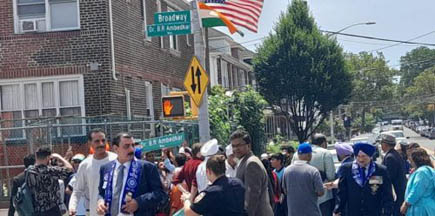
    NEW YORK (TIP) : An intersection of roads in New York City has been co-named after Dr BR Ambedkar in honor of the legendary Indian social activist and the architect of Indian Constitution. The intersection of 61st Street and Broadway in New York has been co-named as “Dr BR Ambedkar Way,” according to local media reports. The co-naming ceremony of the intersection on June 26 was hosted by Councilwoman Julie Won, and the Shri Guru Ravidas Temple of New York, which is located at the intersection of 61st Street and Broadway. Congresswoman Grace Meng, state Senator Michael Gianaris and Assemblyman Steven Raga were also present at the naming ceremony.
    During the event, Won said Ambedkar was an international symbol against caste discrimination.
    “As the district that’s home to Shri Guru Ravidass Temple of New York and thousands of Dalit community members, I’m honored that we as a community commemorated the life and contributions of Dr Ambedkar with this street co-naming,” Won said during the event as reported by the media.
    The official Twitter handle of Indian consulate general in New York wrote, “Grateful for the honor bestowed on the architect of Indian Constitution,” while sharing the images from the ceremony.
    Dr BR Ambedkar fondly known as Babasaheb was an economist, law expert and social reformer whose life work was dedicated to social equality and eradicating the caste system in India.
    He was appointed as the chairman of the Constitution Drafting Committee, and he also led the Dalit and minority rights movement in India after Independence. Born in Madhya Pradesh, Ambedkar had also lived in the United States to study at Columbia University in New York City where he earned a PhD in economics.
    Ambedkar’s life journey reflects his quest for the upliftment of the Dalit community. He published the book ‘Annihilation of Caste’ in 1936 to raise his voice against the caste system and discrimination.

  • 101-year-old Sikh World War II veteran honored by UK PM Rishi Sunak with Points of Light award

    101-year-old Sikh World War II veteran honored by UK PM Rishi Sunak with Points of Light award

    LONDON (TIP): British Prime Minister Rishi Sunak has honored Rajindar Singh Dhatt, one of the last surviving Sikh soldiers who fought in the Second World War with a Points of Light honor at a UK-India Week reception at 10 Downing Street. Dhatt, 101, was recognized on Wednesday for his service and his work running the “Undivided Indian Ex-Servicemen’s Association” to help bring together British Indian war veterans. Dhatt, based in Hounslow in southwest London since 1963, was born in pre-Partition India in 1921 and fought with the Allied forces during the British colonial period. “It is an immense honor to receive this recognition from the Prime Minister, to whom I would like to extend my deepest appreciation for acknowledging the importance and impact of the ‘Undivided Indian Ex-Servicemen’s Association’,” said Dhatt. “The journey of establishing this organization was driven by a deep sense of duty as an ex-serviceman and the vision of fostering unity, support, and camaraderie. This award serves as a testament to the tireless efforts of countless individuals who have contributed to the success and growth of the association over the years,” he said.

    “Their unwavering commitment and selfless service has played a pivotal role in bringing about positive change in the lives of our ex-servicemen and their families,” he added. Dhatt joined the British Indian Army during the Second World War and excelled up the ranks, being promoted to Havildar Major (Sergeant Major) in 1943. He was later drafted to the Far East campaign to fight in Kohima in northeast India to support the Allied Forces and help break through the Japanese defenses, Downing Street said. After the war, Dhatt returned to India before settling in London with his family.

    His association recently created an online community for veterans, sharing articles about personal stories and opportunities to connect. Dhatt also continues to speak at memorial events and work with war veteran charities, including the Royal British Legion and the Taxi Charity for Military Veterans, telling stories through teaching packs and online resources.

    Dhatt said the award is a “momentous occasion” that inspires him to continue making meaningful contributions to society, even as he nears his 102nd birthday. According to Downing Street, the Points of Light recognize outstanding people whose service is making a difference in their communities and whose stories can inspire others towards innovative solutions to social challenges in their own communities and beyond. Dhatt’s honor coincided with a Downing Street reception celebrating India Global Forum’s UK-India Week celebration of the bilateral relationship, where Prime Minister Sunak spoke of Dhatt as an “incredible man” and thanked him for his service as a member of the Indian diaspora “living bridge”.
    (Source: PTI)


  • Indian-origin, World Bank president, Ajay Banga named in ‘Great Immigrants’ 2023 list

    Indian-origin, World Bank president, Ajay Banga named in ‘Great Immigrants’ 2023 list

    NEW YORK (TIP): Ajay Banga, the President of the World Bank, has been named by a prestigious philanthropic organization to its annual “Great Immigrants” list of honorees who have enriched and strengthened America and its democracy through their contributions and actions.Banga, who became World Bank chief in June 2023, is the first-ever Indian American to lead the institution. He is the only honoree from India in this year’s list of ‘Great Immigrants’ by the Carnegie Corporation of New York.
    With over 30 years of experience in key positions, 63-year-old Banga is expected to usher in transformative policies at the World Bank to combat poverty and address climate change, opening opportunities for people around the globe, a statement issued by Carnegie on Wednesday said. During a fireside chat, Carnegie said Banga offered some reflections on how diversity helped him succeed as a leader: “At the end of the day, if you surround yourself with people who look like you, who walk like you and talk like you, and grew up in the same places you did and worked with you in your prior jobs, then you will have a sense of comfort of hiring people around you who have that familiarity. But you will also have the same blind spots. You will miss the same trends. You will miss the same opportunities.”
    Banga started his career in India, spending 13 years at Nestle India and two at PepsiCo. In 1996, he joined Citigroup, eventually leading the Asia-Pacific region as CEO.
    Later moving to the US, Banga served as president and CEO of Mastercard for 12 years before being named executive chairman. Under his leadership, Mastercard launched the Center for Inclusive Growth, which advances equitable and sustainable economic growth and financial inclusion around the world, the statement said.
    Prior to his appointment to the World Bank, Banga was the vice-chairman at General Atlantic. He is also a co-founder of the Cyber Readiness Institute and served as vice-chair of the Economic Club of New York.
    Among numerous honors, he was awarded the Foreign Policy Association Medal, the Padma Shri Award by the President of India, and the Ellis Island Medal of Honor.
    Every Fourth of July, which is celebrated as America’s Independence Day, the Carnegie Corporation of New York honors a group of “remarkable” Americans — all naturalized citizens — “who have enriched and strengthened our nation and our democracy through their contributions and actions”.
    This year, the corporation honors 35 individuals from 33 countries and a wide range of backgrounds. Among the honorees are individuals who have fostered opportunities for others through their work as educators, mentors, philanthropists, job creators, public servants, storytellers, and advocates.
    “The Great Immigrants initiative is a tribute to the legacy of Andrew Carnegie, a Scottish immigrant who, like these honorees, found success in America, contributed enormously to his adopted country, and inspired others to do the same,” said Dame Louise Richardson, president of Carnegie Corporation of New York. Carnegie Corporation of New York is a leading philanthropic foundation established by Scottish immigrant Andrew Carnegie and is now led by Irish immigrant Dame Louise Richardson. It celebrates the crucial role of naturalized citizens in making America a land of opportunity for all.

  • Indian festival Diwali to be school holiday in New York City

    Indian festival Diwali to be school holiday in New York City

    NEW YORK (TIP): Diwali, the festival of lights, will now be enshrined as a school holiday in New York City, authorities announced here and described it as a “victory” for the city’s residents, including the Indian community.
    New York City Mayor Eric Adams said he was proud that the State Assembly and the State Senate have passed the bill making Diwali a New York City Public School holiday.
    “And we feel confident that the governor is going to sign this bill into law,” he said at a special announcement from City Hall on Monday.
    “This is a victory, not only from the men and women of the Indian community and all communities that celebrate Diwali, but it’s a victory for New York,” Adams said.
    Diwali will be a public-school holiday in New York City beginning this year.
    New York Assembly Member Jenifer Rajkumar, the first Indian American woman ever elected to a New York State office, said for over two decades, the South Asian and Indo-Caribbean community has fought for this moment.
    “Today, the mayor and I are proud to stand before the whole world and say that from now on and forever, Diwali will be a school holiday in New York City.”  Rajkumar said the Diwali holiday is to be enshrined in law.

  • Indian American Attorney Neel Katyal scores a key victory for voting rights

    Indian American Attorney Neel Katyal scores a key victory for voting rights

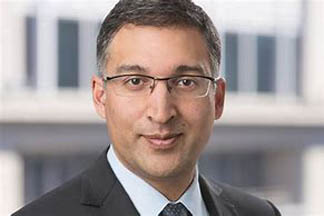
    WASHINGTON, D.C. (TIP): Neal Katyal, a leading Indian American attorney, is being celebrated for scoring a key victory for voting rights advocates with the Supreme Court rejecting the so-called Independent State Legislature theory.
    By a 6-3 judgment, the apex court on Monday rejected the controversial legal theory that state legislatures have almost unlimited power to decide the rules for federal elections and draw partisan congressional maps without interference from state courts.
    US-born son of immigrant parents from India, Katyal, 53, a former acting US solicitor general won the day for the watchdog group Common Cause, by pressing the justices to reject the election theory before the 2024 election.
    Chief Justice John Roberts wrote the opinion for the 6-3 majority in this case known as Moore v. Harper, which stems from a dispute in North Carolina. The North Carolina legislators were appealing a ruling by their state supreme court finding that the new congressional map they adopted after the 2020 census was a blatant partisan gerrymander that violated the state constitution.
    Even President Barack Obama, a legal scholar himself, hailed the Supreme Court decision. “Today, the Supreme Court rejected the fringe independent state legislature theory that threatened to upend our democracy and dismantle our system of checks and balances,” he tweeted. “This ruling rejects the far-right theory that threatened to undermine our democracy and makes clear that courts can continue defending voters’ rights—in North Carolina and in every state,” Obama wrote.
    As accolades rolled in, Katyal himself tweeted, “The truth is this was the victory of an incredible group of lawyers who worked at my side day and night for months. Everything you heard was them.”
    He also commended an article in law.com “about what really happened yesterday in Moore v Harper. All our supposed allies, including the Biden Administration’s Justice Dept, tried to get rid of the case, telling the Court, they couldn’t decide it. We stood alone.”
    “We were right. If the Court accepted those views, the nation would have never had this decision,” Katyal wrote.
    “While most respondents urged the court to deem the appeal moot, Common Cause’s attorney Neal Katyal pressed the justices to reject the election theory before next year’s election. The strategy paid off,” according to the author Jimmy Hoover.
    “The dispute over that theory must be resolved in time to prepare maps, ballots, and election rules well in advance of the 2024 elections,” Katyal wrote for Common Cause. “It is therefore exceptionally important that the Court address the Question Presented as quickly as possible.”
    Katyal told reporters as cited by law.com he thought it was “preposterous” that the North Carolina Supreme Court could effectively strip the US Supreme Court of jurisdiction over a pending case by ruling in underlying litigation. That, he said, “would open a terrible door for the Supreme Court in the future.”
    “I was quite surprised to see the other plaintiffs that were supposedly on our side agree that the North Carolina Supreme Court could do that,” Katyal added.
    Katyal said that, in addition to feeling the mootness question was not particularly close, he was confident after oral arguments that the Supreme Court would, if it reached the merits, reject the lawmakers’ election theory.
    The questioning showed a majority of the court was “solidly behind throwing out the independent state legislature doctrine,” he said.
    Reviewing the court’s decision Tuesday, Katyal seemed to take a victory lap, Law.com said. “This is as definitive a Supreme Court ruling as you can get,” he said. “I wasn’t surprised at all. I’ve always felt that this decision should have been 6-3 or even more.”
    Vice President Kamala Harris, who leads the administration’s voting rights efforts, also championed the Supreme Court opinion while continuing to call on Congress to pass bills that support the push.
    “Voting is the bedrock of our democracy. Today’s decision preserves state courts’ critical role in safeguarding elections and protecting the voice and the will of the American people,” she stated.
    “We know that more work must be done to protect the fundamental right to vote and to draw fair maps that reflect the diversity of our communities and our nation.
    “The President and I will keep fighting to secure access to the ballot box, but we cannot do this alone. We continue to call on Congress to do their part to protect voters and our democracy and pass the John Lewis Voting Rights Advancement Act and the Freedom to Vote Act,” Harris added.

  • Manipur needs a political solution

    Manipur needs a political solution

    PM Modi must focus his attention on the troubled northeastern state

    The tinderbox will keep smoldering until a political solution is found. The Army, which has been in the state for long periods to fight insurgent groups that have been involved in an armed revolt for decades, has told the government that this time a military response alone is not going to help. The politicians will have to put on their thinking caps to come up with a political solution.

    “Modi’s majoritarian Hindutva politics and his gift of the gab have captivated a substantially large slice of the electorate, the core of which resides in Gujarat and Uttar Pradesh. But it is not only his dedicated supporters but also persons like me, who are critical of his doublespeak and autocratic tendencies, who appreciate his dignity, his carriage and his ability to hold his own when interacting with more powerful, and hence more arrogant, world leaders. Their intelligence agencies, like our own, must have given them a candid picture of the man with whom they were going to interact. But finally, it would be their national interests that would dominate their thoughts and words, just like those interests would be paramount in our PM’s calculations.”

    By Julio Ribeiro

    Last week belonged to PM Narendra Modi. For the people of India, his visit to the US was a resounding success. It was cleverly structured by the External Affairs Ministry to give our Prime Minister maximum exposure as well as the maximum scope to exploit his communication skills. Twenty years ago, Modi had been blacklisted by the US and other western democracies for failing to do what his own party chief at that time, Atal Bihari Vajpayee, termed his ‘Raj Dharma’. The tide turned when Modi rode into Delhi with a massive mandate from the people. The US and the rest of the world were forced to acknowledge his undisputed leadership of the Indian nation.

    Modi’s majoritarian Hindutva politics and his gift of the gab have captivated a substantially large slice of the electorate, the core of which resides in Gujarat and Uttar Pradesh. But it is not only his dedicated supporters but also persons like me, who are critical of his doublespeak and autocratic tendencies, who appreciate his dignity, his carriage and his ability to hold his own when interacting with more powerful, and hence more arrogant, world leaders. Their intelligence agencies, like our own, must have given them a candid picture of the man with whom they were going to interact. But finally, it would be their national interests that would dominate their thoughts and words, just like those interests would be paramount in our PM’s calculations.

    The expanding markets in a rapidly developing country like ours and our geographic proximity to a resurgent and rapacious China, with its potential to unbalance the prevailing world order, will determine the thoughts and actions of the US, presently the leading world power. This world power unrolled the red carpet for Modi and we felt elated and honored.

    Not everyone in India nor in the US is blind to Modi’s doublespeak, as some critics term it. The US Congress published an open letter to President Biden, signed by 26 legislators — 13 each from the Senate and the Congress — asking him to remind Modi of the slippage in human, political and other rights during his nine years in office.

    Modi’s outreach to the Indian diaspora has been truly mind-boggling. It is something that no PM before Modi thought of doing. Indians of all creeds, castes and economic status flocked to the appointed meeting places at the appointed times. Even in Egypt, where the diaspora is small, Indians came to greet him. It warmed the cockles of Indian hearts at home and abroad.

    Former US President Obama felt that Modi had to improve on his country’s treatment of the minorities, especially Muslims. That remark upset Sitharaman and other BJP bigwigs, introducing the first real sour note into the outcome of the visit. The fact is that Muslims feel alienated under this regime and that is the truth.

    Modi’s trips to the US and Egypt will boost his support in the 2024 Lok Sabha elections. Unless, of course, the Opposition parties truly bury the hatchet and rise up as one to prevent further humiliation. With Rahul Gandhi and Arvind Kejriwal both adamant on leading the Opposition, the picture of unity is not only hazy but also warped. Arvind is a cleverer and more wily politician. Rahul is a better human being. Rahul’s party commands greater support in different corners of the country than AAP. The latter dominates only in Delhi and Punjab. In both places, it has displaced the Congress as the party of preference and that rankles with the Congress think tank. Sulking should not be an option. Smart thinking is what is needed.

    In Delhi, AAP has delivered on education and healthcare, the two core functions of any government worth its name. In Punjab, AAP has shown that grassroots corruption that hurts the common man can be tackled with political will and determination. Modi boasts of stopping corruption, but he only refers to big-ticket corruption by ministers and principal bureaucrats. Business houses are finding the atmosphere in the Central corridors of power easier to navigate, but the poorer citizens are still not rid of this perennial curse.

    The Modi government’s dislike for the Right to Information Act is being felt by RTI activists. Attempts to tinker with the Act by watering down its provisions or by delaying the appointment of Information Commissioners or, even worse, making wrong choices in their appointment should attract an immediate course correction. If Modi truly wants to include each and every Indian in the development paradigm, irrespective of caste or creed, as he himself often proclaims, he should ensure that the RTI Act is strengthened and enforced vigorously.

    After his triumphant return to his homeland from his US trip, Modi needs to apply his mind to Manipur. It’s known as that tiny piece of the North-East which produces some of India’s best sportspersons, prominent among them being boxer Mary Kom. She has been made an MP through nomination to the Rajya Sabha, though I doubt if she can pull her weight in that august House like she did in the boxing ring. If Mary could deliver a punch through her tongue, she would talk of the threat to life and property in her native state, posed by an incompetent government blessed by the BJP.

    The dispute between the plains people, belonging mainly to the Meitei tribe, and the hill people, hailing from Kuki and Naga tribes, is as old as the hills where they reside. The fire was lit a couple of months ago when the Manipur High Court told the state government to consider petitions on the Meiteis’ demand for the Scheduled Tribe (ST) status. Since this would eventually deprive the Kukis and Nagas of some of the seats reserved under the ST quota, the tinderbox was lit.

    The tinderbox will keep smoldering until a political solution is found. The Army, which has been in the state for long periods to fight insurgent groups that have been involved in an armed revolt for decades, has told the government that this time a military response alone is not going to help. The politicians will have to put on their thinking caps to come up with a political solution.

    An added complication is the factor of religion. The people in the plains are Hindus and have been Hindus for ages. The Kukis and the Nagas are Christians and have been Christians for two centuries since American Baptist missionaries converted them in colonial times. Many churches in the valley have been torched and the priests and their helpers killed or beaten. The communal twist could have been ascribed to Hindutva zealots, but the BJP, as a party, had won over the tribals in Nagaland and Meghalaya during this year’s Assembly elections. It should use that leverage with its own extremist elements to avoid further bloodshed.

    Above all, Modi needs to spend his personal capital and mediate.

    (Author is a former governor and a highly decorated retired Indian Police Service officer

  • Beleaguered community-being a Muslim in new India

    Beleaguered community-being a Muslim in new India

    Muslims have to wake up to a daily avalanche of hate on social media, political circles, and in real life

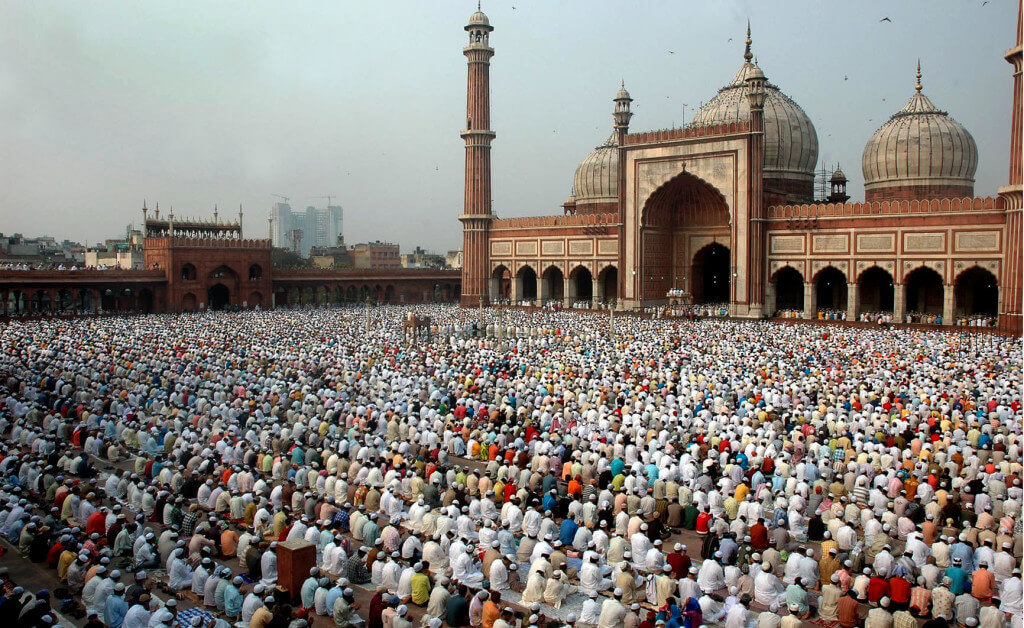
    To be a Muslim is to be voiceless in the new India. Almost all mainstream political parties refrain from using the word, Muslim, often preferring the euphemism of alpsankhyak or the minorities. The ruling Bharatiya Janata Party (BJP) fares worse. The party which abolished the Maulana Azad Fellowship for the minorities stands in denial of discrimination. Unsurprisingly, Prime Minister Narendra Modi claimed all was fair and fine in his media interaction at the White House on June 23. Responding to a question on the steps his government was taking “to improve the rights of Muslims and other minorities” in the country, he said, “We have always proved that democracy can deliver. And when I say deliver, this is regardless of caste, creed, religion, gender. There is absolutely no space for discrimination.” This denial came on the heels of former United States President Barack Obama expressing concern about the “protection of the Muslim minority in a Hindu majority India” in a televised interview.

    By Ziya Us Salam

    Mr. Modi side-stepped the systematic diminution in Muslim representation in all spheres of life. In the Karnataka Assembly elections in May, the BJP did not put up a single Muslim candidate in a House of 224 Members of the Legislative Assembly. It was the same in Gujarat; and before that, in Uttar Pradesh, Delhi and Bihar. At the Centre, for the first time since Independence, there is not a single Muslim Minister. The BJP is the first ruling party without a single Muslim parliamentarian. Of course, as Mr. Modi claims, it is not due to any discrimination.

    Pluralism is just talk

    The denial of representation to Muslims is not limited to the BJP. There is not a single Muslim Chief Minister in India today despite there being non-BJP governments in Himachal Pradesh, Punjab, Delhi, Rajasthan, Bihar, Jharkhand, Chhattisgarh, West Bengal, Odisha, Telangana, Andhra Pradesh, Tamil Nadu, Kerala, and now Karnataka. The parties talk of pluralism, but practice majoritarianism. A little before the 2019 Lok Sabha election when the seasoned (then) Congress leader, Ghulam Nabi Azad, complained of not being wanted as a campaigner by most candidates, it seemed to be the lament of a man yearning for his glory days. Subsequent events have proved him right, with the self-professed secular parties keen not to be seen aligning with either Muslim voters or leaders. They want their vote, but hush-hush, and furtively — like the Samajwadi Party leader, Akhilesh Yadav, did during the elections in Uttar Pradesh in 2022 where he minimized the appearance of Muslim leaders on stage.

    This deliberate anticivilization of Muslims is multi-pronged. Political parties that were vociferous in their condemnation of the lynching of Mohammed Akhlaq in Dadri, Uttar Pradesh, in September 2015, have now lapsed into silent mode when there are reports of the lynching of Muslim men, from Bihar, Jharkhand, Rajasthan and Maharashtra. What is being ignored is the fact that over 97% of the cases of lynching since Independence have been reported after 2014, with an overwhelming majority of victims being Muslims.

    Yet, no leader of any political hue has deemed it wise to visit the families of the dead. The absence of political noise over constant killings compelled the Jamiat Ulama-i-Hind to lead a delegation of Muslim leaders to meet the Union Home Minister in April. The Minister assured them of action within 72 hours if any specific instance was brought to his notice. The words rang hollow. Within hours of his assurance, cases of lynching were reported from Jharkhand and Haryana. The news was either ignored by the media or confined to a few sentences on the inside pages. The lynching of Muslims was reduced to a weather bulletin in the new India — pale and predictable.

    Harangued not long ago for refusing to say ‘Vande Mataram’ or ‘Bharat Mata ki Jai’, Muslims are now forced to shout ‘Jai Shri Ram’, the new slogan of the purveyors of hatred. Not long ago, some right-wing goons issued a warning at Jantar Mantar, barely a kilometer from Parliament: ‘Jab mulle kate jayenge, Jai Sri Ram chillayenge (When Muslims would be slaughtered, they would cry, Jai Sri Ram)’. When one of the participants surrendered to the police later, he did so sporting garlands while perched atop the shoulders of his supporters even as the policemen watched. He could have been an Olympic medal winner.

    Rise in hate speech

    Despite the Supreme Court of India’s order to the State governments to take suo motu action, there has been an exponential rise in hate speech targeted at the community. While the likes of Yati Narsinghanand and Kalicharan Maharaj have slandered not only Muslims but also the Prophet with impunity, we have had a Member of Parliament, Pragya Singh Thakur, urging Hindus to keep their knives sharpened at home. She has been at it for a long time.

    Recently, she attended the screening of The Kerala Story to tell the audiences that “they” are 32%, and if “they” become 40%, your daughters will not be safe. Similar bile was on display when The Kashmir Files released. There was a time when one looked forward to new cinematic offerings every Friday; now, many a venture comes wrapped with shades of Islamophobia. Gone are the days of a kind Khan Chacha or a pluralist Amar Akbar Anthony. The Kerala Story is the sign of the times.

    To be a Muslim today is to wake up to a daily avalanche of hate on social media, political circles, and in real life. The assaults at the very being of Muslims continue unabated. When film-makers are not producing their next pile of prejudice, politicians rename old towns to erase any association with Muslim rulers or Islam. Beyond the high-profile places such as Mughal Sarai and Aurangabad, we have had Islam Nagar and Ahmednagar being renamed in Madhya Pradesh and Maharashtra, respectively. There is a demand to rename Mohammadpur in Delhi too. Islam, Muhammad, Ahmed, all seem an anomaly in India today.

    More wounds

    It is the same with attacks on food, clothing and even sources of earning. During Navratri, a shopkeeper cannot sell meat nor can a consumer procure it in Delhi, Haryana or Uttar Pradesh, never mind if Navratri coincides with Ramzan. One faith is deemed superior to another. If in Karnataka, girls were barred from wearing the hijab to school, in Delhi, we had a Member of Parliament calling for the economic boycott of Muslims. He was playing catch up. A couple of years earlier, a party colleague had hit the political jackpot by insinuating that an entire community was full of traitors who deserved to be shot. Remember the hateful ‘Desh ke gaddaron ko….’? The young Member of Parliament understood what his boss wanted, and dished it out with relish.

    Add to this the annual attacks on mosques during Ram Navami and Hanuman Jayanti, and we have a picture of a beleaguered Muslim community, wounded, browbeaten and forsaken. The marginalized in the new India.

    (Author is an editor with The Hindu. He can be reached at ziya.salam@thehindu.co.in)

  • What the U.S. Supreme Court’s ruling on affirmative action means for colleges

    What the U.S. Supreme Court’s ruling on affirmative action means for colleges

    The landmark decision strikes down decades-old policies set up to boost diversity in U.S. college admissions

    The U.S. Supreme Court on June 29 struck down race-conscious policies in college admissions, ending decades of precedent that had allowed schools nationwide to use such programs to increase the diversity of their student bodies. Here is an explanation of the policies commonly known as affirmative action, their history and the possible consequences of the Court’s decision.

    What is affirmative action?
    In the context of higher education, affirmative action typically refers to admissions policies aimed at increasing the number of Black, Hispanic and other minority students on campus. Colleges and universities that take race into consideration have said they do so as part of a holistic approach that reviews every aspect of an application, including grades, test scores and extracurricular activities. The goal of race-conscious admissions policies is to increase student diversity in order to enhance the educational experience for all students. Schools also employ recruitment programs and scholarship opportunities intended to boost diversity, but the Supreme Court litigation was focused on admissions.

    Which U.S. schools consider race?
    While many schools do not disclose details about their admissions processes, taking race into account is more common among selective schools that turn down most of their applicants. In a 2019 survey by the National Association for College Admission Counseling, about a quarter of schools said race had a “considerable” or “moderate” influence on admissions, while more than half reported that race played no role whatsoever. Nine States have banned the use of race in admissions policies at public colleges and universities: Arizona, California, Florida, Idaho, Michigan, Nebraska, New Hampshire, Oklahoma and Washington.

    What is the current litigation about?
    The Supreme Court decided two cases brought by Students for Fair Admissions, a group headed by Edward Blum, a conservative legal strategist who has spent years fighting affirmative action. One case contended that Harvard’s admissions policy unlawfully discriminates against Asian American applicants. The other asserted that the University of North Carolina unlawfully discriminates against white and Asian American applicants. The schools rejected those claims, saying race is determinative in only a small number of cases and that barring the practice would result in a significant drop in the number of minority students on campus.

    How has the U.S. Supreme Court ruled in the past?
    Before Thursday, the Court had largely upheld race-conscious admissions for decades, though not without limits.

    A divided Supreme Court took up the issue in the landmark 1978 case, Regents of the University of California v. Bakke, after schools began using affirmative action in response to the Civil Rights era to correct the effects of racial segregation.

    The swing vote, Justice Lewis Powell, ruled that schools could not use affirmative action to rectify past racial discrimination and struck down the university’s practice of setting aside a certain number of spots for minorities.

    Nevertheless, Mr. Powell found that increasing campus diversity was a “compelling interest” because students of all races — not just minorities — would receive a better education if exposed to different viewpoints. Mr. Powell ruled that schools could weigh race in admissions as long as it remained only one factor among many.

    In 2003, the Court struck down the University of Michigan’s use of a system that awarded “points” to minority applicants as going too far but affirmed Bakke’s central finding that schools could use race as one of several admission factors.

    The Court in 2016 again upheld race-conscious admissions in a challenge backed by Blum to the University of Texas policies. But the Court has moved sharply to the right since then, with six conservative justices now and only three liberals.

    What will colleges do in response?
    The decision on Thursday will force elite colleges and universities to revamp their policies and search for new ways to ensure diversity in their student populations. Many schools have said other measures would not be as effective, resulting in fewer minority students on campuses. In briefs filed with the Supreme Court, the University of California and the University of Michigan — top public college systems from States that have outlawed race-conscious admissions — said they have spent hundreds of millions of dollars on alternative programs intended to improve diversity, but that those efforts have fallen far short of goals.
    (Source: CNN )

  • Indian American community in New York demands to stop violence in Manipur; asks Center for stern action

    Indian American community in New York demands to stop violence in Manipur; asks Center for stern action

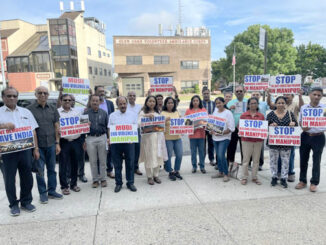
    NEW YORK (TIP): A group of concerned people from the Indian American Community met regarding the violence happening in Manipur, India on Saturday, June 24, 2023. Dr. Anna George, Associate Professor at Molloy University, led the meeting. The program was attended by about 23 eminent community leaders of various organizations and Humanitarians who expressed genuine concerns regarding Manipur violence and the fate of Christians in Manipur.

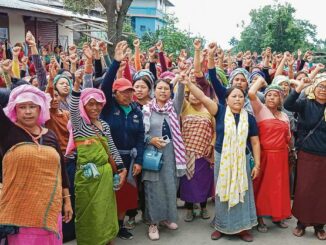
    After the self-introduction, Dr. George addressed the gathering and voiced her serious concerns regarding the violence happening in Manipur. She stated that regardless of whether the victims of these horrific riots are Christians or not, we should help them because of humanitarian concerns. “What is taking place in Manipur is horrible violations of human rights and religious freedom,” Dr. George added. She pointed out that over 200 churches were burnt down, about 100 or more people were killed, and about 80,000 people were displaced. “They are finding shelter in the forest; they have no homes to return to, so we must decide to do something to help the victims in Manipur .” Dr. George implored the gathering. Mr. George Abraham spoke in detail about the suffering of the Christians in the Kuki tribal community who have been primarily targeted. He also stated that the churches in the Meitei villages were burnt down, which shows that they specifically target Christians. He went on to say that the government appears to be neither helping to quell the riots nor providing adequate shelter, food, and medicines to those who have become refugees in their own homeland.

    Dr. Anna George requested all the participants to think and come up with ideas on how we can help the victims in Manipur and stop the violence by putting pressure on the government. Many who attended the meeting came up with suggestions to help victims of this horrific disaster. Ms. Annie Sabu stated that we should seek the help of legislature and political officials here to make Americans aware of the human rights violations happening in Manipur. Ms. Bessy Thangavelu stated that we should reach out to Indian Christian leaders and church officials in the US who will be able to mobilize supporters to raise awareness regarding this issue and together formulate a plan of action. The meeting passed a resolution condemning all the violence and noted that the rioters’ objective appeared to be the ethnic cleansing of Christians from their tribal land. Participants expressed their shock and surprise at the slow walk by the central government to arrest and punish these radical elements, which are on the loose. Most of the participants are convinced that the burning of the Churches in Meitei’s heartland proves that the destruction of properties belonging to Christians and ethnic cleansing appears to be part of the larger agenda of those who are perpetrating these heinous crimes in Manipur.

    The meeting also decided to create further awareness and influence decision-makers on the nature of these riots and expose the vicious agenda practiced by those in power today, violating the oath they have taken to uphold constitutional values. There will also be a fundraising effort to help the people in Manipur who have lost their homes and everything their own and will also cooperate with other organizations in joint efforts. Mr. Koshy George, the President of the Federation of Indian Christian Organizations in North America (FIACONA), lauded the initiative and appreciated those who have come forward and pledged his support to help the cause.

    Mr. V.M. Chacko, Raju Abraham, John Joseph, Biju Chacko, John Joseph, Joshua Jayasingh, Gajendran Ganesan, Mary Philip, Mathew P Thomas, and Dr. Leno Thomas also spoke. And voiced their concerns regarding the atrocities happening in Manipur and gave many practical suggestions to help the victims and combat the issues. For further information, contact Dr. Anna George @646-732-6143

  • Hochul celebrates federal green light for congestion pricing

    Hochul celebrates federal green light for congestion pricing

    The long-delayed road tolling program is set to start in Manhattan next year

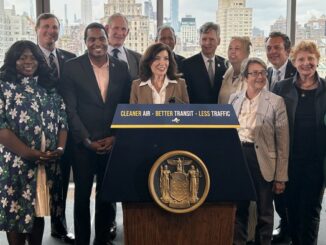
    NEW YORK (TIP): If Gov. Kathy Hochul drove to her press conference near Washington Square Park on Tuesday, June 27, she – along with nearly everyone else driving into Manhattan’s Central Business District – could owe as much as $23 under a congestion pricing program that is set to go into effect as early as next spring. In an address at New York University on Tuesday, June 27, Hochul celebrated the clearing of the final federal hurdle for the city to implement congestion pricing. “More vehicles have come back than we had even before the pandemic,” said Hochul. “These vehicles have an alternative – an incredible alternative – called public transportation.” Hochul was joined by Metropolitan Transportation Authority CEO Janno Lieber and officials including Bronx Rep. Ritchie Torres, Manhattan state Sen. Brad Hoylman-Sigal and New York City Transportation Commissioner Ydanis Rodriguez. New York City Mayor Eric Adams, who has said that he supports congestion pricing but also expressed frustration about some of its specifics, was not present. The state Legislature passed congestion pricing back in 2019, but a long federal approval process – slowed by former President Donald Trump – is wrapping up four years later.

    The goals of congestion pricing are twofold. The program is expected to generate $1 billion in annual revenue for the MTA – sorely needed cash for the agency to fund capital improvements like station accessibility upgrades and signal modernization. But it’s also meant to reduce traffic in the heavily congested streets of Manhattan south of 60th Street and improve air quality.

    The final approval from the Federal Highway Administration found that the program will not have a significant environmental impact and that further environmental reviews aren’t necessary.

    The approval for congestion pricing is also well-timed, as Hochul announced that the state is again expected to experience unhealthy and even hazardous air quality over the next few days due to traveling smoke from Canadian wildfires. Urging vulnerable New Yorkers to take health precautions as air quality deteriorates, Hochul linked the wildfires to congestion pricing’s goal of mitigating other effects of climate change. Congestion pricing has enemies in New York – and commuter states New Jersey and Connecticut – but some of the most fervent recent pushback has come from New Jersey lawmakers, including Gov. Phil Murphy and members of the state’s congressional delegation. With federal approvals locked up, an appointed board will come up with recommendations for some of the nuts and bolts of the program – including the price of tolls and possible carve outs. The congestion pricing law includes just three exemptions to the toll for emergency vehicles, vehicles carrying people with disabilities, and residents of the congestion zone who earn less than $60,000 a year. It’s possible that the board will recommend additional exemptions, though transit advocacy groups have warned against too many exemptions. The more exemptions, the higher the toll price would be.

    Tolls are expected to fall somewhere between $9 and $23, but exactly how much – including variations for peak and off-peak hours – is yet to be determined. The Traffic Mobility Review Board will make recommendations on those details to the Triborough Bridge and Tunnel Authority. As chair of the MTA, Lieber doesn’t usually have a lot to dance about. But Lieber did a little jig as he walked up to the podium to celebrate the coming implementation of the landmark tolling program. “Congestion pricing means less traffic, better transit, cleaner air and safer streets,” Lieber said.

  • Mayall appointed President of Board of Nargis Dutt Memorial Foundation

    Mayall appointed President of Board of Nargis Dutt Memorial Foundation

    EAST MEADOW, NY (TIP): Jaspreet S. Mayall, Partner in the Telecommunications and Bankruptcy Groups at Certilman Balin Adler & Hyman, was unanimously appointed as the next president of the board of the Nargis Dutt Memorial Foundation of New York on June 14. The Nargis Dutt Memorial Foundation, a New York based non-profit organization, was first established in 1981 in New York City by Sunil Dutt in memory of his wife and legendary actress Nargis Dutt, who died of cancer in 1981. The Nargis Dutt Foundation spreads cancer awareness and knowledge, organizing free screening camps in rural areas of the country. Earlier, Mayall was honored with the Nassau County Community Service Award as an Indian American Leader. He was also appointed to the board of the American Heart Association and is charged with helping the organization build awareness in the South Asian community.

  • CONTRACTS RESTORED AT RAINBOW CHILD DEVELOPMENT CENTER IN QUEENS AS PARENTS FLOCK TO RE-ENROLL

    CONTRACTS RESTORED AT RAINBOW CHILD DEVELOPMENT CENTER IN QUEENS AS PARENTS FLOCK TO RE-ENROLL

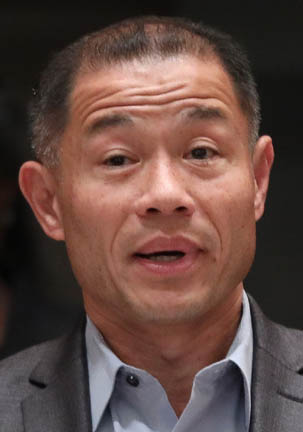
    FLUSHING, NY (TIP): State Senator John Liu, on June 30, proclaimed victory in the battle over the future of the Rainbow Child Development Center in Queens after it was threatened with closure by the Department of Education. The reversal follows weeks of discussions with the DOE and advocacy from families, educators and elected officials who held that the DOE was wrong to close the school and reassign families to other schools they never applied to, often to schools outside the borough.

    After meeting with the DOE this week, Rainbow informed parents that enrollment for the 2023-2024 school year at the Rainbow Child Development Center has been restored. Parents are now beginning the enrollment process.

    Rainbow has had its Pre-K and 3-K contracts with the Department of Education since 2010 and has rapidly become an early childhood learning center of choice serving bilingual and low-income Chinese/English-speaking families through its four schools in Flushing, Little Neck, Fresh Meadows and Long Island City. After a payment dispute between a handful of parents and Rainbow at the start of the pandemic, the Special Commissioner of Investigation opened an investigation into Rainbow that concluded in May 2023. For the last three years, Rainbow continued operations as usual without updates or the $2 million in reimbursements it was owed by the DOE for those operations. Instead, Rainbow’s operators were forced to use personal funds to stay afloat. It was only when Rainbow approached the City Comptroller to inquire about its lack of payments that the school suddenly learned it would be shut down for the next school year and parents were promptly reassigned to other schools.

    When approached by Rainbow in early June, Senator Liu rallied with Rainbow families and sent a letter (attached) to Chancellor Banks rebuking the DOE for false public statements regarding outstanding payments and demanding the DOE not close this desperately needed community school that serves about 400 children throughout Queens.

    This week, Rainbow at long last received an update from the DOE on enrollment indicating that it may continue to offer free Pre-K and 3-K for the upcoming 2023-2024 school year.

    State Senator John Liu stated, “The DOE has made the right decision and we thank the Chancellor for recognizing the importance of this early childhood learning center that serves hundreds of families throughout Queens with bilingual English/Chinese competency. The battle to keep the school open is won, but we will stay vigilant to make sure all reimbursements are forthcoming and that any future actions are conducted with fairness and transparency and in a manner that will not adversely impact the livelihoods of this important community school or the hundreds of families who are part of the Rainbow family.”

    Christine Ye, Owner of Rainbow Child Development Center stated, “We have always maintained that the accusations against our school were false and unfair and that we never even had a chance to respond before the DOE notified parents that our programs were closed. Rainbow has been long renowned for our commitment to providing a nurturing and inclusive environment for our youngest learners in the communities where they live. Today, we are so happy to say we are able to continue providing Pre-K and 3-K services to our families for the next school year, and I am eternally grateful to all of Rainbow’s families, educators and our community elected officials who spoke up on our behalf and never gave up on us!”

    Vanessa Dai, parent, stated, “As a bilingual Chinese and English school, Rainbow has been instrumental in the language development of my children. I have personally seen how the teachers and staff are able to bring out the best in all the kids in the school no matter their background or ability. My family has been extremely happy here, and we are so excited that we will be able to re-enroll for the next year.” Michael Perlmutter, parent, stated, “We are overjoyed that we will be able to send our daughter Savannah to her 3K program at Rainbow Child Development Center for the upcoming school year and are looking forward to enrolling immediately. This school means so much to our daughter, her friends and the community and it is so important that this caring, child-centered community school remains open and available to all.”

  • U.K. calls for U.N. reform with permanent Security Council seat for India

    U.K. calls for U.N. reform with permanent Security Council seat for India

    LONDON (TIP): The U.K. government has reiterated its call for reform of the United Nations as one of its top transnational priorities and supported India’s bid for permanent membership of the powerful Security Council. India has been at the forefront of the years-long efforts to reform the UN Security Council (UNSC), saying it rightly deserved a place as a permanent member of the United Nations.

    Currently, the UNSC has five permanent members — China, France, Russia, the U.K. and the U.S. Only a permanent member has the power to veto any substantive resolution. In a speech at a conference at the Chatham House think tank in London on Thursday, kune 29, U.K. Foreign Secretary James Cleverly called for a reinvigorated multilateral system that is more reflective of the times.

    He pointed out that the world’s economic center of gravity is shifting away from the Euro-Atlantic and towards the Indo-Pacific but the multilateral institutions are yet to catch up. “I have five transnational priorities. First, reform of the United Nations Security Council. We want to see permanent African representation and membership extended to India, Brazil, Germany and Japan,” said Mr. Cleverly.

    “I know this is a bold reform. But it will usher the Security Council into the 2020s. And the UNSC has grown before — albeit not since 1965. My second priority is reform of the international financial institutions. This matters for climate finance and, of course, for poverty reduction,” he said. The Minister also hailed India’s leadership role with its presidency of the G20 in pitching for representation of poorer nations on the world stage. “It seems obvious to me that the voice of the poorest and most vulnerable countries must be heard at the heart of the multilateral system. That’s why we support permanent membership of the G20 for the African Union and welcome India’s leadership on taking this forward,” he said. Among the other priorities for the U.K., Mr. Cleverly highlighted making finance easier and quicker to access and maximize the impact of that investment.

    He also stressed that the World Trade Organisation (WTO) desperately needs new rules that reflect today’s digital economy to make trade policy “free, fair, open and not manipulated or distorted”.

    He spelt out another top priority as artificial intelligence (AI) and quantum computing have the potential to transform humankind’s problem-solving capabilities. “I will chair the UN Security Council’s first-ever meeting on this issue, in New York next month. And the Prime Minister [Rishi Sunak] will host an AI summit this autumn,” said Mr. Cleverly.
    (Source: PTI)

  • Dr. V.K. Raju honored in London

    Dr. V.K. Raju honored in London

    LONDON (TIP): Dr VK Raju, President, Eye Foundation of America was honored by First lady Cherie Blair at a glittering function on Friday, June 23 evening at the House Of Lords commemorating the UN International Widows Day organized by the Loomba Foundation led by Lord Raj Loomba as a Loomba fellow for the mission work around the world on empowering widows.
    Dr. Raju was visiting London to attend the launch of the London edition of the Blitz. The publication in India is owned by Deepak Dwivedi. Dr. Raju met with fellow Rotarians in London to seek their support in his effort to have a world without childhood blindness.

  • Russian President Putin and PM Modi agree to further boost bilateral strategic ties, discuss Ukraine war

    Russian President Putin and PM Modi agree to further boost bilateral strategic ties, discuss Ukraine war

    The Shanghai Cooperation Organization and the G20 discussed

    NEW DELHI (TIP): A week after returning from a Summit meeting with US President Joe Biden, Prime Minister Narendra Modi on Friday, June 30, phoned Russian President Vladimir Putin and informed him on his “international contacts”, including ones during his recent visit to Washington, said a Kremlin readout.

    In connection with the events of June 24 (revolt by the Wagner chief) in Russia, PM Modi expressed understanding and support for the decisive actions of the Russian leadership to protect law and order, ensure stability in the country and the security of its citizens.

    The conversation came a day after National Security Advisor Ajit Doval spoke to his Russian counterpart Nikolai Patrushev.

    The situation around Ukraine was touched upon as well. The Russian President gave his assessment of the current state of affairs in the special military operation zone, having stressed Kiev’s utter refusal to undertake political and diplomatic steps to resolve the conflict, said the Kremlin read out. “While discussing the situation in Ukraine, PM Modi reiterated his call for dialogue and diplomacy,’’ said the Indian read out. When discussing topical issues of bilateral cooperation, they underscored the importance of further consistent implementation of the major joint projects in various areas and noted with satisfaction substantial growth in trade throughout 2022 and in the first quarter of this year, said Russia. They reviewed progress in bilateral cooperation and exchanged views on regional and global issues of mutual interest, said the PM’s Office here.

    Particular attention was paid to interaction within the Shanghai Cooperation Organisation and the G20, in which India currently holds the presidency, as well as in the BRICS format, said Kremlin.

    “The conversation was substantive and constructive. The leaders reaffirmed their mutual intention to strengthen the special and privileged strategic partnership between Russia and India and agreed to maintain contact,’’ said the Kremlin readout.

    A day earlier, Putin had praised PM Modi as a “great friend of Russia” and lauded his “Make in India” initiative during an event in Moscow on Thursday, June 29. The Russian President drew on India’s example to encourage domestic products and brands in his own country during his speech. He also highlighted how the initiative had a positive impact on the Indian economy.

    “Our friends in India and PM Modi, a great friend of Russia, a few years ago presented a concept—’Make in India’. And it had a very visible effect on the Indian economy,” said Putin.
    (Source; TNS)