Month: July 2023

  • July 28 New York & Dallas E – Edition

    [vc_row][vc_column][vc_custom_heading text=”E-Edition” font_container=”tag:h2|text_align:center” google_fonts=”font_family:Istok%20Web%3Aregular%2Citalic%2C700%2C700italic|font_style:700%20bold%20regular%3A700%3Anormal” link=”url:https%3A%2F%2Fwww.theindianpanorama.news%2Fwp-content%2Fuploads%2F2023%2F07%2FTIP-July-28-E-Edition.pdf”][vc_single_image image=”147800″ img_size=”full” alignment=”center” onclick=”custom_link” link=”https://www.theindianpanorama.news/wp-content/uploads/2023/07/TIP-July-28-E-Edition.pdf”][/vc_column][/vc_row][vc_row][vc_column width=”2/3″][vc_custom_heading text=”Lead Stories This Week” google_fonts=”font_family:Istok%20Web%3Aregular%2Citalic%2C700%2C700italic|font_style:700%20bold%20regular%3A700%3Anormal” link=”url:https%3A%2F%2Fwww.theindianpanorama.news%2F”][vc_wp_posts number=”5″ show_date=”1″][/vc_column][vc_column width=”1/3″][vc_single_image image=”82828″ img_size=”medium” alignment=”center” onclick=”custom_link” link=”https://www.theindianpanorama.news/advertising-media-kit-portal-indian-panorama/”][vc_single_image image=”82829″ img_size=”medium” alignment=”center” onclick=”custom_link” link=”https://www.theindianpanorama.news/advertising-media-kit-portal-indian-panorama/”][/vc_column][/vc_row]

  • Legislator Drucker Applauds Completion of Plainview-Old Bethpage Library’s Electric Car Charging Station

    Legislator Drucker Applauds Completion of Plainview-Old Bethpage Library’s Electric Car Charging Station

    PLAINVIEW, N.Y. (TIP): Nassau County Legislator Arnold W. Drucker (D – Plainview) joined with the leaders of the Plainview-Old Bethpage Public Library on Wednesday, July 26 to celebrate the grand opening of the facility’s newly installed electric vehicle chargers. The completion of this new public amenity comes at a time when Nassau County residents and drivers across America are embracing electric vehicles at a greater rate than ever before.
    “Electric cars are an essential component of ongoing efforts to reduce our reliance on fossil fuels and combat climate change, and charging stations like the one at the Plainview-Old Bethpage Library are key to supporting the increased daily reliance upon these zero-emissions vehicles,” Legislator Drucker said. “I applaud Library Board Chairperson Marilyn Leibowitz and Library Director Maryann Ferro for bringing this environmentally friendly project to fruition.”

  • Legislator Solages Welcomes Summer Interns to District Office

    Legislator Solages Welcomes Summer Interns to District Office

    MINEOLA, N.Y. (TIP): This summer, Nassau County Legislator Carrié Solages (D – Lawrence) has welcomed three young interns to his office and provided them with a first-hand look at the operations of local government and the law. Two of his interns, Michelle Prudencio and Danna Bermejo, are currently studying at Nassau Community College; and the third, Jamel Campbell, is a recent graduate from Elmont Memorial High School.

    “As a former Nassau County Legislature intern myself, I know how important first-hand experiences can be in shaping a young person’s professional future,” Legislator Solages said. “I am truly fortunate to have so many bright students working with me this summer to assist the residents of the Third Legislative District, and it is a privilege to offer them this opportunity.”

  • Bihar Industries Minister Mahaseth invites investment for the State

    Bihar Industries Minister Mahaseth invites investment for the State

    A view of the gathering.
    Organizers with Minister Shri Samir Kumar Mahaseth (9th from the left) and additional chief secretary Shri Sandeep Poundrik (8th from the left)Organizers with Minister Shri Samir Kumar Mahaseth (9th from the left) and additional chief secretary Shri Sandeep Poundrik (8th from the left)

    NEW YORK (TIP): Industries Dept, Govt of Bihar hosted the “Invest in Bihar” summit in New Jersey on 18th July 2023. The summit was hosted in alliance with Bihar Foundation USA, a diaspora cell of Govt of Bihar and Bihar Jharkhand Association of North America. A Delegation of Industries Ministry led by Minister Shri Samir Kumar Mahaseth and additional chief secretary Shri Sandeep Poundrik are in New Jersey USA intending to attract investors to Bihar. The summit was attended by 130 reputed entrepreneurs and professionals from the US who expressed their desire to invest in the state of Bihar. This includes companies related to food processing, manufacturing, IT, and Consulting Services.

    The event started with Welcome remarks by Bihar Foundation USA Chairman Shri Alok Kumar and BJANA President Shri Anurag Kumar. Both leaders thanked the visiting delegation for their great initiatives and assured their support in bringing investment to their home state Bihar. Smt. Nidhi Jha welcomed Minister Shri Samir Kumar Mahaseth with a Maithili folk song. The entire cultural presentation was curated by Santosh Jha.

    Speaking on the occasion, the Bihar Industries Minister Shri Samir Kumar Mahaseth said that through this summit, the government is encouraging investment in Bihar. He urged entrepreneurs from the United State, who have been “running businesses across India and the world over” to rise to the occasion and invest in Bihar”.

    Shri Sandeep Poundrik, Additional chief secretary, Industries Dept made a detailed presentation for the potential investors citing investment opportunities in Bihar. During the presentation, Poundrik said whether it is textile, manufacturing or IT, a large chunk of manpower is from Bihar, who are willing to return to the state. “Bihar government is acting proactively and taking all possible steps to make a conducive climate here. The government is developing plug-and-play stations where investors will be able to come and start work directly. They will not be required to go through situations like land acquisition and power shortages. This will speed up investment.

    Ajay Kumar Singh Founder & CEO of Slayback Pharma wanted to bring more business and opportunities in Bihar specially in Lukhisarai, Bihar whereas Dr. Pankaj Mohan, CEO & Chairman Sonnet Bio Therapeutics, Inc asked for more focus on Buxar, Bihar.

    Prashant Kumar, CEO – Mareana Inc , Princeton NJ asked about getting trained skillsets from Various IIT s and Engg colleges and Govt plan for retaining them after hire as well as provisioning some innovative recreational facilities so that hired resources stay back in the state. They could look at joint programs with dept of industries pitching in for continuous dishing out right skills.

    The other person was Amit Anand, Partner Deloitte Consulting looking for opportunities in putting up large centers in Bihar …they would like to explore outside of Patna too but within Bihar …was talking about possibility of large-scale offices with thousands of head counts.

    While answering a question from the audience Shri Poundrik pointed out that Bihar has suffered a lot due to the wrong perception created over the years that it does not have much to offer and is not a safe investment destination. Mr Poundrik assured that the state will provide the same ease of doing business that is associated with the developed states.

  • NY State Senator Kevin Thomas to run for US Congress from NY-04

    NY State Senator Kevin Thomas to run for US Congress from NY-04

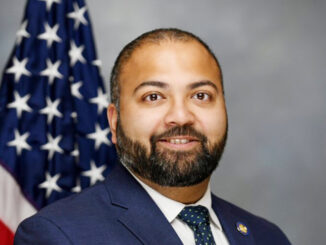
    NEW YORK (TIP): Indian American New York State Senator Kevin Thomas has launched his campaign for New York’s 4th Congressional District. He announced the bid in Elmont, NY, surrounded by family, friends, and supporters, to take on first-term Republican Rep. Anthony D’Esposito in the next year’s congressional election.
    Thomas, who has been representing New York’s 6th Senate district since 2018, said, “I’ve accomplished real results for Nassau County families – fighting to stop property tax hikes, clean up our drinking water, guarantee the right to an abortion under New York law, keep guns out of the wrong hands, and ensure our neighborhoods stay affordable and safe.” Thomas was quick to tie the incumbent to former President Donald J. Trump’s “Make America Great Again” movement.
    “I’ve proven I can get things done to make life better for folks on Long Island, while MAGA Republicans like Anthony D’Esposito offer up extremism and political games that only make things worse,” he said. “Now, more than ever, we need action. I’m ready to take this fight to Washington to be an effective voice for Long Islanders at a time when we need it the most!”
    The 4th district, covering central and southern Nassau County, is one of the wealthiest congressional districts in the country and the second wealthiest in New York.
    The Democratic-leaning district was narrowly won by D’Esposito.
    It has voted for every Democratic presidential nominee since 1992. In 2020, President Joe Biden won the district by 14 points, making it one of the 18 districts nationally that voted for Biden for president and a GOP candidate for Congress. Reportedly, it is the most Democratic district held by a Republican.

    In 2018, he became the first Indian American elected to the New York State Senate, when he defeated the incumbent Sen. Kemp Hannon, who had been a New York state lawmaker since January 1977.

    Currently, Thomas holds the position of Assistant Majority Leader in the state senate and serves as the chairman of its Consumer Protection Committee. Additionally, he is a member of several committees, including Rules, Finance, Health, Judiciary, Local Government, and Agriculture.

    24 hours after announcing his entrance into the race, state Senator Kevin Thomas has raised $109,000 against Republican Anthony D’Esposito in New York’s 4th Congressional District. Thomas announced his bid to defeat D’Esposito yesterday at his parents’ house in Elmont.

    “I’m incredibly grateful for the early and astounding support for our campaign. In Congress, I’ll never stop fighting to help Long Island families, tackle the gun violence epidemic, protect our environment, and defend a woman’s right to choose.”

    About Kevin

    Kevin Thomas’ story is a Long Island story. It’s a story of perseverance, defending the vulnerable, and giving back to his community. Kevin immigrated to the United States at 10 years old. His parents never forgot nor took for granted the freedom and opportunities the United States gave them and their children. Their experience motivated Kevin to be an active participant in our democracy, and to give back through public service.

    Knowing education was the key to success, Kevin worked hard, took out student loans he’s still paying off today, graduated college and then law school. Instead of joining a big, high-powered law firm, Kevin took a different path, becoming an attorney with the New York Legal Assistance Group, defending those too often pushed aside. He also served as an appointee of the U.S. Commission on Civil Rights to the New York State Advisory Committee, Kevin worked tirelessly to advance civil rights and expand opportunities for all New Yorkers. When the powerful tried to take advantage of regular New Yorkers, Kevin took up their fight – and won.

    In 2018, Kevin Thomas became the first Indian-American in New York history to serve in the State Senate. He is currently the Assistant Majority Leader and also serves as Chairman of the Consumer Protection Committee and sits on the Rules, Finance, Health, Judiciary, Local Government, and Agriculture committees. He has passed countless bills into law to make the lives of New Yorkers better. Kevin lives with his wife, Rincy, his daughter Layla, and their beloved family dog, Sirius.

  • NY INDIAN CONSULATE GEARS UP TO ORGANIZE  FIFTH INTERNATIONAL HINDI CONFERENCE IN OCTOBER

    NY INDIAN CONSULATE GEARS UP TO ORGANIZE FIFTH INTERNATIONAL HINDI CONFERENCE IN OCTOBER

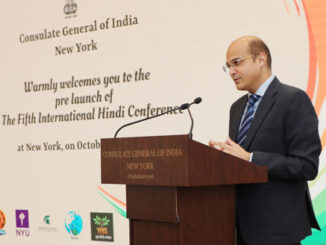
    Ashok Ojha, Coordinator, Fifth International Hindi Conference provided an overview of the conference at the pre-launch event. (Photo : courtesy Consulate General of India, New York)

    NEW YORK (TIP): The Consulate General of India in New York, the host of the Fifth International Hindi Conference scheduled to be held on October 20 and 21st, is fully geared up to successfully conduct the event.

    Reinforcing the commitment of the Consulate for promoting India’s languages and culture Dr. Varun Jeff, Deputy Consul General, commented, “It is not about promoting Hindi, it is about promoting India’s culture around the world”, he said while addressing a gathering of Hindi enthusiasts at the pre-launch event organized by the Consulate on July 20. Dr Jeff further said, “We consider all Indian languages very important for the progress of our nations. However, Hindi commands a special place in the Indian Diaspora and it must be supported by all people of Indian origin. Honorable Randhir Jaiswal, the Consul General, is the advisor of this conference. We are committed to make this conference a grand success.”

    He congratulated Hindi Sangam Foundation, the organizing body of the conference, for collaborating with leading US universities, such as, New York University, Michigan State University and a number of educational and cultural organizations including The World Hindi Secretariat, Mauritius, Shikshayatan, New York and more. “I am sure it will ensure a high quality of discussions over Hindi education around the world during the conference”, he said. “We encourage everyone interested in promotion of Hindi as a world language, to participate in the conference”, said Ashok Ojha, Coordinator of the conference, “The registration is free and can be done by submitting a form, which is published on the conference website: https://ihc2023.in/. One can also submit his/her proposal using the link on our site on the theme-Innovations in Hindi Instruction-which will be evaluated by our Academic Committee headed by Prof Gabriela Nik Ilieva, NYU.”

    “We want to reach out to the Indian-American community in order to convey the importance of promoting Hindi language through education,” commented Purnima Desai, Chairperson of Hindi Sangam Foundation, the organizing body of the conference, “Today we are enjoying the friendly relationship between India and the USA. It is natural that our language and culture should be promoted vigorously in this country.“

    Upendra Chivukula, former NJ Assemblyman and Chairperson, Yuva Hindi Sansthan, whose native language is Telugu, said that the new generation of Indian-American must learn the language and culture of India, especially Hindi, in order to remain connected to their roots. Dr. Bijoy Mehta, a NY Cardiologist and Hindi poet, who will preside over a Kavi Sammelan during the conference, demanded that the Government of India should consider building a Hindi Center in the New York metropolitan area on the lines of cultural centers of France, Japan and other nations. Others who spoke on the occasion included Mrs. Suman Singh, Head of Chancery, The Consulate General of India, NY; Neena Sarin, a Fulbright-Hays recipient; Akshay Charturvedi, Country Head, ICICI Bank, USA; Vijay Kumar, Bank of India, NY; Sushma Malhotra and Pradip Tandon, Queens, NY.

    The conference aims to provide a forum for Hindi professionals engaged in teaching Hindi from Kindergarten to College levels. The conference aims to provide a forum for Hindi professionals engaged in teaching Hindi from Kindergarten to College levels. It will attempt to create a road map for moving forward with teaching the Hindi language as a heritage language and a foreign language in countries other than India.

    About Hindi Sangam Foundation:
    HINDI SANGAM FOUNDATION, USA, a NJ, USA based non-profit organization, established in 2015 for the purpose of promoting Hindi in USA and beyond. HSF organized International Hindi Conferences in collaboration with GITAM, Visakhapatnam, India (2017), the Consulate General of India, New York (2016), Rutgers, NJ (2015), and New York University (2014).

  • IOCUSA leaders interact with Shri. K. Raju, National coordinator- SC, ST, OBC and minority Department of AICC

    IOCUSA leaders interact with Shri. K. Raju, National coordinator- SC, ST, OBC and minority Department of AICC

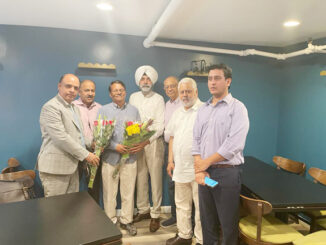
    NEW YORK (TIP): IOCUSA leaders met with Shri. K. Raju, who is the National Coordinator of the Indian National Congress for SC/ST/OBC and Minority Affairs and exchanged views on how to improve the messaging to the Diaspora while increasing the reach of the organization. Mr. Raju, formerly an IAS officer, resigned from service in 2013 to join the Congress party. Prior to his resignation from service, he served as Additional Secretary, Govt of India at the National Advisory Council (NAC) headed by Smt. Sonia Gandhi.
    IOCUSA team headed by President Mr. Mohinder Singh Gilzian and Vice-Chair George Abraham briefed him on the activities of the IOCUSA and assured him of our support and commitment as the Congress party is at the forefront of fighting for the cause of the common man. The meeting also assessed the deteriorating situation in India as regards democracy and religious freedom. Mr. Raju applauded the grand reception organized for Rahul Gandhi and said, “Rahul Gandhi spoke to the Diaspora from the depths of his heart.” He also urged the Diaspora to make use of the technologies available to counter the false messaging and propaganda emanating from the BJP circles.
    Mr. Phuman Singh, Chairman, Punjab Chapter, Rajeswar Reddy Gangasani, President, Telangana Chapter, Sharath Chandra and Baldev Randhawa also participated in the discussions.

  • Sikhs to serve langar to thousands at Parliament of World’s Religions

    Sikhs to serve langar to thousands at Parliament of World’s Religions

    CHICAGO (TIP): Displaying an important tenet of the Sikh faith, the Sikh community in Illinois is gearing up to feed thousands of delegates who will be congregating in Chicago next month.
    The event, which is a much needed and inclusive display of acknowledging and understanding different religions, faiths, and cultural practices, will be held in Chicago from August 14 to August 18.
    Entitled the Parliament of the World’s Religions, the 2023 edition will see thousands of attendees.
    The event kicks off with a Parade of Faiths that will be held on August 13. The parade in Chicago is accepting participation submissions. The inter-faith parade is a spectacular confluence of many different cultures and is open to the public. Showcasing Chicago’s rich diversity, there will be festivities, music, and dance. The parade will be held at the Museum Campus, The Welcome Garden, 1521 S. Linn White Drive, Chicago. Those who are interested can submit to participate in the parade by August 1.
    In a remarkable gesture, the Sikh community of Illinois, led by the Sikh Religious Society of Palatine, will be serving a daily langar to over 6,000 delegates of the event. According to Rajinder Singh Mago, trustee emeritus of the Council for a Parliament of the World’s Religions and community outreach and media coordinator for the Sikh Religious Society of Palatine, “The community meals will be vegetarian, wholesome, and free, and they will be served throughout the event.”
    Langar is a free, communal meal that is served to everyone regardless of their faith or culture. It is an important tenet of the Sikh faith. Traditionally, Sikh community volunteers have been serving vegetarian Sikh dishes to delegates, who sit on the floor and enjoy a serving of Indian-style curries and saag.
    Before this, the Sikh community has extended similar gestures during earlier editions of the Parliament of the World’s Religions as well. In 2018, they served thousands of delegates in Toronto, and prior to that, in Salt Lake City and Barcelona, Spain.
    The event will see participants from more than 200 religious, Indigenous, and secular beliefs coming together. More than 80 nations are expected to be part of the event. The interfaith event has a rich history of 130 years. The inaugural World Parliament of Religions was held in September 1893 in Chicago. The event would take place at the McCormick Place Lakeside Center, 2301 S. Jean Baptiste Point DuSable Lake Shore Drive.

  • “THE JOURNEY WITHIN: MEDITATION, WISDOM, AND THE ART OF LIVING JOYFULLY”

    “THE JOURNEY WITHIN: MEDITATION, WISDOM, AND THE ART OF LIVING JOYFULLY”

    Special Event with Globally Revered Spiritual and Humanitarian Leader, Gurudev Sri Sri Ravi Shankar on July 29, 2023

    PLANO, TX (TIP): The DFW Chapter of the Art of Living Foundation is excited to host “THE JOURNEY WITHIN: MEDITATION, WISDOM, AND THE ART OF LIVING JOYFULLY” featuring world-renowned spiritual leader Gurudev Sri Sri Ravi Shankar.

    Gurudev Sri Sri Ravi Shankar returns to the Big-D again after the successful “I Stand for Peace” event in May 2022, with almost 2.5K attendees. “The Journey Within” with Gurudev Sri Sri Ravi Shankar, will be a transformative event on the heels of his groundbreaking book which has recently been headlining on bestseller lists: Notes from the Journey Within.

    “THE JOURNEY WITHIN: MEDITATION, WISDOM, AND THE ART OF LIVING JOYFULLY” will be an empowering evening of meditation and wisdom starting at 6.30 pm on July 29,2023 at Plano Event Center, located at 2000 E Spring Creek Pkwy, Plano, TX 75074. Approximately 1500+ people are expected to attend this almost sold-out event. Dallas is one stop on Gurudev’s exhaustive multi-city U.S. speaking tour ahead of the Olympic scale, World Culture Festival happening on the historic National Mall in Washington, D.C. from September 29-October 1.

    Gurudev Sri Sri Ravi Shankar, founder of the Art of Living, shares wit and wisdom that distills life’s most complex issues into everyday truths. His words create a deep sense of peace and resonance that transcends the intellect and makes one smile. As a renowned humanitarian, his goal of a society free of stress and violence through personal and social transformation has ignited an unprecedented global movement uplifting life all over the world.

    “THE JOURNEY WITHIN: MEDITATION, WISDOM, AND THE ART OF LIVING JOYFULLY” will feature a powerful guided meditation, designed to access everyone’s inner source of joy, wonder, and true happiness. Attendees will discover practical tools to cultivate lasting happiness and well-being in their lives, and even people who have never meditated will find themselves dropping into a deep state of stillness. At the event we will have copies of his book, which is on USA Today’s bestselling booklist. Notes from the Journey Within: Essentials on the Art of Living, by Gurudev Sri Sri Ravi Shankar, is a powerful insight into the inner landscape and how best to navigate it with peace, joy and resilience.

    “The real purpose of life can only be found deep within yourself. Once that is found, nothing else matters and the smile on your face will never diminish.”

    — Gurudev Sri Sri Ravi Shankar

    Limited tickets for “THE JOURNEY WITHIN: MEDITATION, WISDOM, AND THE ART OF LIVING JOYFULLY” are now available FREE of cost with an option to pay for reserved seating. To secure a spot at this life-enhancing event, please register online: tiny.cc/dallasjourneywithin

    The Dallas Art of living Chapter is also hosting 500+ people In-Person SKY Breath Meditation Workshop, Live Sessions w/ Gurudev Sri Sri Ravi Shankar at the Plano Event Center, DFW Metroplex, 28-30 July (https://aolf.me/sky-dallas).This will be a wonderful opportunity to learn ancient meditation and breathing techniques for the modern day in this special workshop to help you find balance in your life and deal with any worry, stress, and anxiety that you may be facing.⁠

    About Gurudev Sri Sri Ravi Shankar

    Gurudev Sri Sri Ravi Shankar is a world-renowned global humanitarian, spiritual leader, and peace envoy. He has helped millions of people worldwide find peace and resilience in the face of adversity, learning not only how to excel in their own lives, but also how to become effective agents for social change.

    Gurudev has created numerous educational and self-development programs and tools that facilitate the elimination of stress and foster deep and profound inner peace, happiness and well-being for individuals. His flagship program is the SKY Breath Meditation, which has been tailored for special-needs groups, while his many other programs for self-care and self-improvement all together represent a comprehensive way to help deal with issues faced by the people of the world.

    As a proponent for the Gandhian principle of non-violence, Gurudev has mediated and progressed negotiations for peace in conflict-stricken areas such as Sri Lanka, Iraq, Venezuela, and Colombia, where he is credited for playing a central role in ending the violent 52-year conflict between FARC and the Colombian government. He has received 39 governmental awards, including the highest civilian awards from several nations. Twenty-four universities have awarded him with honorary doctorates for his peace-keeping and humanitarian efforts.

    About the Art of Living Foundation
    Operating in 180 countries, the Art of Living Foundation (AOLF) is a non-profit, educational, and humanitarian organization founded in 1981 by the humanitarian and spiritual leader Gurudev Sri Sri Ravi Shankar. AOLF’s programs help Gurudev’s goal of creating world peace through a stress-free and violence-free society. AOLF has touched over 500 million lives through numerous educational and self-development programs and tools that facilitate the elimination of stress and promote individual and societal well-being. https://www.artofliving.org/us-en

  • ‘Shocked and horrified’ by the video of extreme attack on two women in Manipur: US

    ‘Shocked and horrified’ by the video of extreme attack on two women in Manipur: US

    WASHINGTON, D.C. (TIP): The US is “shocked and horrified” by the video of an extreme attack on two women in Manipur and supports the Indian Government’s efforts to seek justice for them, a senior Biden administration official has said. The video showing two women being paraded naked and molested by a group of men on May 4 in Kangpokpi district surfaced on July 19, attracting condemnation countrywide.

    “We were shocked and horrified by the video of this extreme attack on two women in Manipur.

    We convey our profound sympathies to the survivors of this act of gender-based violence and support the Indian Government’s efforts to seek justice for them,” Vedant Patel, Deputy Spokesperson of the State Department, told reporters at his daily news conference on Tuesday, July 25.

    Patel was responding to a question asked by a Pakistani reporter on the violence in Manipur.

    Prime Minister Narendra Modi himself noted that such violence against women is shameful in any civilized society, Patel said. “And as we have previously stated, we encourage a peaceful and inclusive resolution to the violence in Manipur and encourage authorities to respond to the humanitarian needs and protect the lives and property of all groups,” Patel added.

    In his first public comments on the situation in Manipur, Prime Minister Modi last week expressed pain and anger over the incident, saying it has shamed 140 crore Indians and asserted that the guilty will not be spared even as the Congress Party termed his remarks “too little, too late”.

    More than 160 people have lost their lives, and several have been injured since ethnic violence broke out in the state on May 3, when a ‘Tribal Solidarity March’ was organized in the hill districts to protest against the Meitei community’s demand for Scheduled Tribe (ST) status.

    Meiteis account for about 53 per cent of Manipur’s population and live mostly in the Imphal Valley, while tribals, which include Nagas and Kukis, constitute 40 per cent and reside mostly in the hill districts.

    Meanwhile, the small Manipuri diaspora in the United States has sought an immediate end to violence in the state and the imposition of the president’s rule, which it said is important to restore law and order in Manipur.

    “I am so tired of talking about this issue. I am so exhausted talking about this issue. … What can we do? Why are we as a world, as people allowing this to happen? There is a very simple solution in India itself, which is the president’s rule. The government for reasons of their own have decided not to do or say anything about this,” Florence Lowe, president of the North Manipur Tribal Association told PTI in an interview.

    Adjunct Professor of Digital Production Management at the University of Texas at Dallas, Florence is the daughter of a former Indian Police Service Official of Uttar Pradesh cadre.

    Born in Manipur, Lowe spent most of her childhood in Uttar Pradesh. In May she formed the North American Manipur Tribal Association to bring the hill-tribe people from her state together under the banner of one platform to protest against the violence in the state of their origin.

    “They’re letting the fires burn. At least in the US what we are trying to do is to raise awareness with our Congress people and our Senators and with world organizations like the World Bank, the UN, the UNHCR (United Nations High Commissioner for Refugees) and so on,” Lowe said.
    (Source: PTI)

  • IRS invites public input on ways to improve dispute resolution programs; suggestions wanted

    IRS invites public input on ways to improve dispute resolution programs; suggestions wanted

    WASHINGTON, D.C. (TIP): The Internal Revenue Service , on July 27, invited public input on improvements to certain post-filing alternative dispute resolution (ADR) programs currently offered to taxpayers.

    “The IRS is greatly interested in examining ways to help to reduce the time, costs and administrative burden for taxpayers and the government in resolving tax disputes,” said Andy Keyso, Chief of the Independent Office of Appeals. “We’re open to all suggestions about how to better use ADR techniques to help expedite their fair resolution.” The IRS is committed to resolving disputes with taxpayers without a costly legal process whenever possible. The Inflation Reduction Act Strategic Operating Plan (initiative 2.4) emphasizes improvements to tax certainty programs that help taxpayers resolve compliance issues quickly and with finality.

    Available ADR programs
    ADR programs can be important tools for resolving tax disputes efficiently without litigation in a way that is fair and impartial to taxpayers and the government.

    Over the past two decades, the IRS has offered four principal post-filing ADR programs:

    Fast Track Settlement (FTS) – available to taxpayers under audit and in the jurisdiction of Large Business & International (LB&I), Small Business and Self Employed (SB/SE), or Tax Exempt and Government Entities Division (TEGE). Under FTS, an independent Appeals mediator assists the taxpayer and the IRS to try to reach an agreement on disputed issues, facilitating settlement discussions and offering settlement proposals.
    Fast Track Mediation – Collection (FTMC) – available for certain collection cases and issues to help taxpayers resolve disputes resulting from Offers in Compromise and Trust Fund Recovery Penalties. Collection Due Process cases and cases worked at a Collection Campus site are some of the cases excluded from FTMC. Under FTMC, an independent Appeals mediator assists the taxpayer and the IRS to try to reach an agreement on disputed issues.
    Rapid Appeals Process (RAP) – available to most LB&I cases or SB/SE estate and gift cases. It consists of a pre-Appeals conference in which IRS Appeals utilizes mediation techniques to try to resolve unagreed issues while the case is in Appeals’ jurisdiction. RAP enables taxpayers and Exam to work together to expedite the resolution of unagreed issues in Appeals and is meant to be completed in one conference.
    Post Appeals Mediation (PAM) – available if IRS Appeals settlement discussions are unsuccessful and the remaining disputed issues are fully developed. Cases for which tax disputes have been previously mediated through a different ADR program, such as through FTS, are ineligible for PAM. PAM is available to resolve disputed tax issues that originate from an IRS audit or to resolve disputed tax issues that originate through IRS tax collection actions.
    The IRS is interested in suggestions to improve the administration of these ADR programs and in proposals for other approaches to ADR that can increase the use and efficacy of ADR in the resolution of tax disputes.

    Public input sought on ADR programs
    The IRS welcomes comments on all aspects of alternative dispute resolutions practices to help inform IRS policies for improving taxpayer service and resolving issues and cases fairly and expeditiously.

    The IRS particularly welcomes thoughts on:

    Reasons taxpayers choose not to use these ADR programs (e.g., Fast Track Settlement – see LB&I FTS, SB/SE Examination FTS, and TEGE FTS; Fast Track Mediation – Collection; Rapid Appeals Process – see RAP; and Post Appeals Mediation – see PAM), and potential modifications to these programs that can remedy taxpayer concerns.
    Issues that are currently excluded from these ADR programs that should not be excluded.
    Other ways in which these ADR programs could be improved.
    Suggestions for how best to educate taxpayers and representatives about these ADR programs.
    Experiences with the use of mediators from the IRS Independent Office of Appeals, and suggestions for how Appeals can ensure that mediators promote an ADR engagement that is conducive to settlement.
    Suggestions for how best to extend the use of these or other ADR programs to taxpayer segments that may be less aware of, or familiar with, ADR, such as small business and low-income taxpayers, and whether any unique characteristics of these segments necessitate modified ADR procedures.
    Feedback about experiences with the IRS when ADR programs were offered or not offered by IRS personnel or were denied when requested by taxpayers.
    Feedback about whether there are types of cases where ADR has proven particularly useful (e.g., valuation cases) and, if so, how ADR use can be increased in these types of cases.
    Ideas to achieve tax certainty or resolution sooner beyond these existing ADR programs, including ideas for new ADR programs.
    All comments beyond the items listed above are welcome. Public comments can be sent to ap.adr.programs@irs.gov by Aug. 25, 2023.

  • Second lottery round for H-1B applicants to be conducted this year: US immigration service

    Second lottery round for H-1B applicants to be conducted this year: US immigration service

    The decision could benefit more Indian professionals

    WASHINGTON, D.C. (TIP): A second round of random lottery selection for the much sought-after H-1B visas for fiscal 2024 will soon begin after it was determined that “additional registrations” need to be selected to reach the numerical allocations, the US federal immigration agency has announced, a decision that could benefit more Indian professionals. The US Citizenship and Immigration Services (USCIS) said on Thursday that it will select the additional registrations from the previously submitted electronic registrations using a random selection process.

    In March, the USCIS conducted an initial random selection of properly submitted electronic registrations for the fiscal year (FY) 2024 H-1B cap, including for beneficiaries eligible for the advanced degree exemption.

    Only those petitioners with selected registrations for FY 2024 are eligible to file H-1B cap-subject petitions. The initial filing period for those with selected registrations for FY 2024 was from April 1, 2023, through June 30, 2023. The H-1B visa is a non-immigrant visa that allows US companies to employ foreign workers in specialty occupations that require theoretical or technical expertise. Technology companies depend on it to hire tens of thousands of employees each year from countries like India and China.

    “We recently determined that we would need to select additional registrations to reach the FY 2024 numerical allocations. Soon, we will select additional registrations from previously submitted electronic registrations using a random selection process,” the USCIS said in a statement.

    “We will announce once we have completed this second selection process and have notified all prospective petitioners with selected registrations from this round of selection that they are eligible to file an H-1B cap-subject petition for the beneficiary named in the applicable selected registration,” the statement said.

    Those with selected registrations will have their accounts updated to include a selection notice, which includes details of when and where to file, it added.
    As mandated by Congress, USCIS can issue a maximum of 65,000 H-1B visas in a year. It can also issue another 20,000 H-1B visas to foreign students who have completed higher studies from a US university in Science, Technology, Engineering and Mathematics (STEM) subjects.
    (Source: PTI)

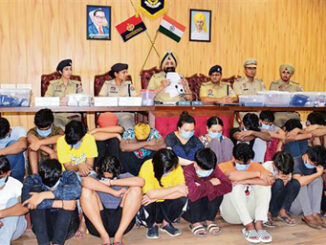
  • Call center duping US citizens busted in Ludhiana, India, 29 nabbed

    Call center duping US citizens busted in Ludhiana, India, 29 nabbed

    LUDHIANA/NEW YORK (TIP): The Ludhiana police have busted a fake call center and arrested 29 members belonging to Punjab, Himachal Pradesh, Uttar Pradesh, Gujarat, Nagaland and Meghalaya, according to a news report carried by Tribune. Those arrested are aged between 19 and 25 years. These persons would make American residents believe that their computer/laptop had been hacked and then swindle money from them on the pretext of fixing the issue.

    Eleven of them belong to Meghalaya. They were getting a monthly salary ranging between Rs 25,000 and Rs 45,000. On an average, around 20 US residents were duped of $500 each, thereby making around $10,000 daily.

    The call center was being run from a rental accommodation at Daad village. The police seized 14 tablets, 34 mobile phones, two laptops, Rs 1.17 lakh in cash and one scooter from the accused.

    Police Commissioner Mandeep Singh Sidhu said center manager Krishna of Gujarat and IT expert Sachin of UP were arrested acting on a tip-off yesterday. Following disclosures by them, a raid was conducted on a house at Daad village last night from where 27 more persons were held.

    Sidhu said their counterparts in the US would bombard pop-up messages on the computers of the US residents, showing warning that their device had been hacked or compromised. Once the user clicked on the link, a technical support number claiming to be from Microsoft and Apple headquarters would show up.

    Once the telephone call was initiated by the computer owner, the scammer would instruct the victim to download a remote desktop software and to allow the conspirator to connect to the victim’s computer to address the issue.

    Later, the accused would convince the victim that there were subscriptions that the victim would have to apply and only the Federal Trade Commission, US, could deal with that issue. After that, the call would be transferred to another team member who pretended to be a representative of the Federal Trade Commission. That person would then convince the victim that he would help secure his computer, but for that, a withdrawal of $500 would have to be made from his bank account. He would tell the victim that the amount would be converted into some traceable electronic mode (gift card ) and then credited to his account and his computer would also be secured.

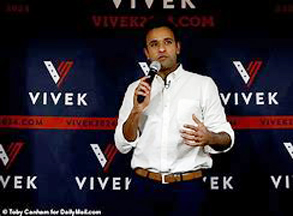
  • Indian American Republican Presidential candidate Vivek Ramaswamy criticizes affirmative action

    Indian American Republican Presidential candidate Vivek Ramaswamy criticizes affirmative action

    WASHINGTON, D.C. (TIP): Republican presidential candidate Vivek Ramaswamy, 37, has emerged as a prominent voice against affirmative action and what he terms “preferences” in college admissions and hiring. His campaign has revolved around the idea of promoting “pure merit” and ending race-conscious policies. However, it has come to light that Ramaswamy’s past reveals a significant contradiction in his stance, says Kali Holloway.
    Ramaswamy’s opposition to affirmative action has been one of the main pillars of his presidential campaign, alongside his fight against “wokeness.” He has criticized race-based admissions as a “cancer on our national soul” and pledged to end them if elected president. Curiously, Ramaswamy received substantial support from the Soros Fellowship for New Americans in 2011 during his time as a graduate student at Yale Law School, according to The Daily Beast. The fellowship, backed by the family of George Soros, is intended to provide opportunities and equity to immigrants and children of immigrants, aiming to level the playing field for historically marginalized groups.
    Despite receiving support from the fellowship, Ramaswamy seems to have attempted to distance himself from it. The media reported, citing a Mediate story by Isaac Schorr, that he paid to have information about the fellowship removed from his Wikipedia page. This move raises questions about the candidate’s discomfort with his own association with a program that aligns with the very principles he opposes.
    The fellowship’s selection process reflects a holistic approach, considering factors beyond just academic grades, aiming to support students who have overcome obstacles and demonstrated potential for success. This approach bears resemblance to the admissions process used by institutions like Harvard, which considers various aspects of applicants, including race, to create a more equitable environment, the media reported.
    Ramaswamy’s public criticism of affirmative action has been explicit, accusing such policies of perpetuating psychological slavery and anti-black racism. However, the fellowship he received appears to share similar objectives of creating a level playing field for underrepresented groups.
    When confronted with the inconsistency of his opposition to race-conscious policies and his acceptance of the Soros Fellowship, Ramaswamy’s campaign adviser emphasized that the fellowship is not based on a specific skin color or melanin content. This response appears to downplay the fact that Ramaswamy benefited from a fellowship explicitly intended for immigrants, a group that often faces systemic barriers to success.
    The irony lies in Ramaswamy’s failure to acknowledge how such support may have positively influenced his own journey. As he emphasizes the importance of a colorblind meritocracy, his past demonstrates the impact of opportunities aimed at leveling the playing field for marginalized groups, the Beast pointed out. This apparent contradiction in his stance raises questions about the sincerity of his opposition to affirmative action and his commitment to the ideals of a fair and equitable society.
    “Vivek is against race-based preferences in hiring and admissions,” a senior advisor to Ramaswamy’s campaign, Tricia McLaughlin, told Kali Holloway, the author of the piece, via email. “Immigrants are not defined by a certain skin color or melanin content.”

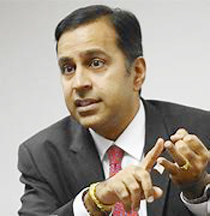
  • Indian American Congressman Raja Krishnamoorthi introduces bill to double H-1B intake

    Indian American Congressman Raja Krishnamoorthi introduces bill to double H-1B intake

    WASHINGTON, D.C. (TIP): Indian American Congressman Raja Krishnamoorthi has introduced a bill proposing to double the annual intake of highly skilled foreign workers on H-1B work visas coveted by Indian professionals.
    Introduced on July 17 by the Democrat from Illinois, HR 4647, the High-Skilled Immigration Reform for Employment (HIRE) Act, also seeks to Increase funding for American STEM education.
    The HIRE Act, according to a media release, would strengthen US competitiveness by helping to close the skills gap – the space between the skills required for jobs that employers need to fill, and the skills possessed by current prospective employees.
    It would help to close the skills gap by providing additional funding to strengthen US elementary and secondary school science, technology, engineering, and math (STEM) education programs.
    The bill also seeks to double the number of H-1B visas available annually from 65,000 to 130,000 to allow American employers, including in critical technology sectors, to draw the best talent from around the world. Currently nearly three fourths of H-1B visas go to Indian professionals.
    The bill is supported by ITServe Alliance, the largest association of IT Services organizations functioning across the United States.
    “Creating jobs and building the economy of the future requires us to lead the way in technology by developing our domestic workforce while drawing the best talent from around the world,” said Krishnamoorthi.
    “That is why I am proud to introduce the HIRE Act to increase investments in elementary and secondary school STEM education while doubling the number of available H-1B visas from 65,000 to 130,000. By investing in our homegrown talent while attracting the best minds from around the world, we can create better paying jobs and harness the technology of tomorrow.”
    “The US needs to maintain its leadership in technology and innovation,” Vinay Mahajan, ITServe Alliance President, said. “The startup Eco System needs to be supercharged. One critical component of both is highly skilled workers. The US has a large skills gap – availability of workers vs the openings for talent in IT.”
    “The HIRE Act focuses on reducing this gap through high-skilled immigration and funding for growing local STEM talent. We need the brightest minds from all over world to keep our wide lead in technology and innovation.”

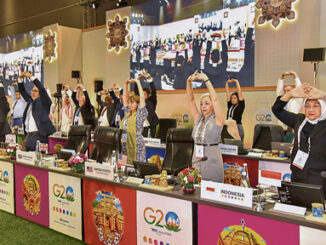
  • Ukraine shadow set to loom large over G20 meet

    Ukraine shadow set to loom large over G20 meet

    Negotiators are falling back on ‘Plan B’, which banks on emphasizing India’s achievements during its presidency

    “While no G20 member is likely to challenge India’s version of a successful summit, the western press would take a rather different view. Its main interest will be the Ukraine war and the statements of western leaders on that war. They will also observe the approach taken by China — if President Xi Jinping participates in the summit, what he would say on Ukraine, and on his possible interaction with US President Joe Biden and other western leaders. It will also focus on the summit’s approaches to the concerns of developed economies. Naturally, if Russian President Vladimir Putin attends the summit, all attention will be on his presence and the reaction it evokes among his western peers. Thus, the yardstick by which the West will judge the summit will be radically different from the way India may like.”

    By Vivek Katju

    The G20 summit is scheduled to be held in Delhi in a little more than six weeks. There is no doubt that India has the capability to ensure flawless and successful logistics for the summit. The government has also held numerous meetings in different parts of the country on various subjects and themes covered by the G20. It adopted this novel and unprecedented approach to ensure that most parts of the country get a sense of participation in India’s presidency of the group, even though it is only rotational in nature.

    The G20 summit is one of the most important multilateral events ever hosted by India. This is because this group of 20 —19 countries and the European Union — “represents around 85 per cent of the global GDP, over 75 per cent of the global trade and about two-thirds of the world population”, as India’s website on the summit notes. Modi would naturally be keen to do everything possible to have a memorable summit. The question, though, is what will actually constitute a successful summit.

    While such a question is germane to every multilateral summit, it becomes essential to ask it regarding the G20 summit because of the deep global divisions generated by the Russia-Ukraine conflict. There will inevitably be special attention on India, as the host country, for generally it is the host’s responsibility to find a way through the contentions to forge a consensus outcome document. If India is unable to do so, will this detract from the success of the summit?

    This question is also relevant because all previous G20 summits resulted in consensus documents. A Bali Declaration emerged from the last summit held in Indonesia in November 2022, following which India took over the group’s leadership. The declaration contained a paragraph dealing with the Russia-Ukraine conflict. It was carefully crafted. It referred to the statements already made by G20 members at the United Nations Security Council and General Assembly. It noted that the UNGA deplored Russia’s aggression against Ukraine. It also mentioned that most G20 members ‘condemned’ the Russian aggression against Ukraine. Thus, the paragraph was, all in all, critical of Russia.

    In all meetings at ministerial and other levels held under India’s presidency on different subjects, Russia and China have refused to endorse the Bali Declaration paragraph on Ukraine. To deal with their objections, India adopted a policy to issue ‘Outcome Document and Chair’s Summary’ for each of these meetings. While the ‘Outcome Document’ portion of the meetings’ reports relate to the agreements reached on the subjects under consideration in these meetings, the ‘Chair’s Summary’ is on the Ukraine conflict.

    The ‘Chair’s Summary’ repeats the Bali Declaration paragraph on Ukraine with a footnote that Russia and China did not agree with it. This stratagem has worked because India has the cover provided by the Bali Declaration but that will not be available for the Delhi summit declaration. A subsequent summit is naturally not bound by the formulations of previous summits. Till now, the negotiations led by Indian officials have not closed the gap on this difficult issue. If India adopts the ‘Chair’s Summary’ route at the Delhi summit, it has to ensure that its formulation is largely acceptable to all members. It cannot fly solo; it entails the risk of crashing and can lead to charges that the summit has failed.

    Indian negotiators are aware of the problems that the Ukraine issue will create, though they will try their best to find a language that is acceptable to all members. This process, howsoever difficult, cannot be ignored and will have to be undertaken at the next Sherpas’ meeting. Meanwhile, Indian negotiators are falling back on what can only be considered as ‘Plan B’. This banks on emphasizing India’s achievements during its presidency, especially giving primacy and voice to issues concerning the welfare of the Global South. It also involves making developed countries pay attention to the pressing problems relating to the debt burden of the Global South. In addition, India is keen to show how digital power can be harnessed for speedy development. The crowning part of ‘Plan B’ is India’s advocacy for the African Union becoming a member of the G20. There is a good chance that it will succeed in this endeavor.

    Thus, even if no consensus is reached on the Ukraine crisis, India will emphasize that its G20 presidency and the summit have been successful because it has emerged as the leading advocate of the Global South. This will be attributed to Modi’s international stature and the great position India has come to acquire globally under his nine-year stewardship of the country.

    While no G20 member is likely to challenge India’s version of a successful summit, the western press would take a rather different view. Its main interest will be the Ukraine war and the statements of western leaders on that war. They will also observe the approach taken by China — if President Xi Jinping participates in the summit, what he would say on Ukraine, and on his possible interaction with US President Joe Biden and other western leaders. It will also focus on the summit’s approaches to the concerns of developed economies. Naturally, if Russian President Vladimir Putin attends the summit, all attention will be on his presence and the reaction it evokes among his western peers. Thus, the yardstick by which the West will judge the summit will be radically different from the way India may like.

    Back in 1983, the Non-Aligned Movement (NAM) summit in India was overshadowed by the Iran-Iraq war. No consensus was reached on the paragraph on the war and a Chair statement was attached to the political declaration. But that Chair statement was acceptable to all and under Indira Gandhi’s stewardship, the summit was an acknowledged success. But those were different times for Indian diplomacy.
    (The author is a Former Secretary, Ministry of External Affairs, Government of India)

  • Questions for Manipur CM, DGP

    Questions for Manipur CM, DGP

    They must explain why it took the police so long to take action against perpetrators of May 4 crime

    It is not possible that the Chief Minister and the DGP did not know about the commission of this dastardly crime till a video clip of the incident went viral just before the start of the Monsoon Session of Parliament last week. It shows that patriarchy is deeply imbedded in the psyche of most BJP leaders. That is why champion women wrestlers were forced to come out on the roads to protest and why murderers and rapists in the 2002 Gujarat riot cases were released after only a few years in jail, though they were sentenced to life imprisonment.

    By Julio Ribeiro

    Two Kuki women were sexually assaulted on May 4. The disturbances in Manipur had started a day earlier, after the High Court’s direction to the government regarding the Meiteis’ demand for Scheduled Tribe (ST) status.

    A communal angle is sought to be introduced into the tragedy that has befallen Manipur.

    The court order that led to the violence was only an excuse to kill and maim. The enmity between the Kukis and the Meiteis is as old as the hills where the Kukis reside. The Kukis (and other tribes) occupy 90 per cent of the landmass in the state. The Meiteis, who reside in the plains, occupy the remaining 10 per cent. But the Meiteis are more numerous and economically better off since political power has been in their hands since the state came into existence.

    Yet, like Oliver Twist in the Charles Dickens novel, they want more — hence, the demand to be classified as an ST so that the Meiteis become eligible for tribal land, which at present cannot be owned by anyone other than a tribal. The court ruled in favor of the Meiteis. But is it for courts to say who is a tribal? That should be left to the elected government. If while deciding on the issue the government ignores the rules on the subject, only then should the judiciary intervene. I do not know if that state had been reached.

    The Meiteis appear to be of Indo-Burman stock, like the Nagas, Mizos, Khasis and the Garos of Meghalaya and the Bodos of Assam. But they have been Hindu Vaishnavites for centuries. I learn that the Kukis originally wanted to be included in the Hindu fold, but were not welcomed because they were not born Hindus. In Hinduism, a caste can be assigned only by the accident of birth. If that test was applied, the Meiteis could not claim tribal status.

    Tribal communities were basically animists. Most Kukis converted to Christianity two centuries ago in colonial times. Some Meiteis are Christians, converted from Hinduism much later. I learnt of their existence only when worshippers in my church began praying for them and for peace to prevail. It was said that some 300-odd churches in the valley were burnt or destroyed. I thought it was truly amazing that so many churches were built when believers counted for just over a lakh! I presume that Kukis staying in the plains added substantially to that number. A communal angle is sought to be introduced into the tragedy that has befallen Manipur. I would have rejected that charge off-hand, knowing well that the Meitei-Kuki animosity preceded the conversions to Christianity. But the hate campaigns propagated by rabid extremist elements in the last decade sowed in me a seed of doubt.

    Rajat Kumar Sethi had been appointed to guide the inexperienced N Biren Singh when he was installed as the Chief Minister of Manipur. What has happened to him? We have not heard of him nor read about him in the media for some time now. The complaint against Biren Singh is that, firstly, he is incompetent (that is proved) and secondly, he has aggravated the dissensions and distrust between the Meiteis and the Kukis by utilizing religion as a tool (that sounds plausible).

    Our Prime Minister said he was surprised when during his travels abroad he was asked about the ill-treatment of Muslims in India. He blamed critics of his government for his embarrassment. I refuse to believe that he is not aware of the fear generated in Indian Muslim minds due to the divisive hate politics that has taken root in our land in the last decade. His interest in consolidating Hindu votes for electoral gains and the parallel RSS agenda of doing the same to create a Hindu Rashtra necessitated the denigration of the minorities, forgetting that a country centered purely on religion could soon deteriorate into a failed state like our neighbor to our west.

    The disrobing of the two Kuki women involved a mob of Meitei men, egged on by their womenfolk! The husband of one of the two women had served in the Army for 28 years. He was sorely disappointed that his own people had dishonored his wife and he was not there to protect her. He had seen action in Sri Lanka and Siachen and this was what he got in return.

    There are questions that Biren Singh and the DGP of Manipur must answer:

    1. The incident occurred on May 4 in the presence of the police. When did the police party make its report? What did the party say?

    2. If it did not report the ghastly incident of stripping of the two women and the subsequent rape of the younger woman, what action was taken against the policeman, especially as it is now alleged that it was the police who handed over the women to the mob?

    3. A zero FIR of the incident was registered on May 18 at a nearby police station. Were the facts brought to the notice of the higher police authorities at least then? If not, who failed to inform them?

    4. The zero FIR was finally transferred a month later to the police station under whose jurisdiction the crime was committed. Why did that take so long?

    5. Why did the police not arrest the culprits earlier? They only acted when the Prime Minister and the Chief Minister were compelled to issue statements to condemn the perpetrators. Does it require the permission of the Chief Minister to prosecute or arrest such law-breakers?

    It is not possible that the Chief Minister and the DGP did not know about the commission of this dastardly crime till a video clip of the incident went viral just before the start of the Monsoon Session of Parliament last week. It shows that patriarchy is deeply imbedded in the psyche of most BJP leaders. That is why champion women wrestlers were forced to come out on the roads to protest and why murderers and rapists in the 2002 Gujarat riot cases were released after only a few years in jail, though they were sentenced to life imprisonment.
    (The author is a former governor, and a highly decorated retired Indian Police Service (IPS) officer )

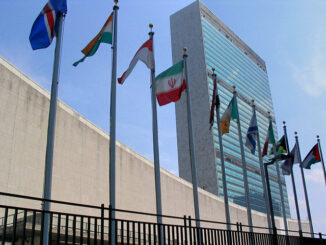
  • Why is the UN failing in its duties?

    Why is the UN failing in its duties?

    The UN’s failures in Nepal and the ongoing Russia-Ukraine war are indicative of its limited influence and resources. The UN’s efforts to prevent and resolve conflicts are often hindered by member states’ political agendas and lack of consensus. The UN must focus on addressing its shortcomings and strengthening its capabilities to maintain its relevance in today’s world. This includes addressing issues of inclusivity and representation, enhancing training and preparedness of peacekeeping missions, and finding innovative solutions to fund its operations. Once these parameters are fulfilled it is then a shared vision of international peace and security will materialize.

    By Sarbendra Khanal

    The United Nations, founded in 1945, was established with a vision to maintain international peace and security. It has played a critical role in addressing and resolving conflicts worldwide. However, despite its global influence and reach, the UN’s effectiveness in addressing conflicts has been widely debated. One such instance where the UN has failed to prevent a conflict is the ongoing Russia-Ukraine war. Additionally, the UN’s efforts in Nepal have also not been as robust as expected. With a staggering united front and with the participation of almost all the major nations of the world, why is the UN failing in its duties?

    The United Nations was instrumental in Nepal’s peace process, which ended the decade-long Maoist insurgency in 2006. The UN played a crucial role in monitoring the ceasefire agreement and overseeing the disarmament of the Maoist army. However, since then, the UN’s engagement in Nepal has been limited. The UN’s political mission in Nepal, established in 2007, was concluded in 2019, leaving behind a fragile political situation. The absence of the UN in Nepal’s political landscape has led to the government’s inability to address critical issues such as transitional justice, inclusion of marginalized communities, and governance. Despite the UN’s efforts, Nepal has been unable to establish a stable and democratic government.

    Similarly, the UN’s efforts to stop the Russia-Ukraine war have also been ineffective. The ongoing conflict between Russia and Ukraine had seeds sown back in 2014 when Russsia annexed Crimea. It also provided supprot to separatist rebels in eastern Ukraine. Since then, the conflict has claimed over 13,000 lives and displaced millions. The UN has been unable to stop the war and has been a mute spectator despite multiple resolutions and peacekeeping efforts. The UN’s inability to prevent the Russia-Ukraine war can be attributed to the veto power of the UN Security Council’s permanent members, including Russia. The UN’s limited influence and lack of consensus among member states have hindered its ability to resolve the conflict effectively. The UN relies on member states’ contributions to fund its operations, which can be unpredictable and insufficient. This limits the UN’s ability to provide essential services and support to countries facing conflict and instability. The UN’s peacekeeping missions have also been criticized for their lack of preparedness and inadequate training, leading to instances of sexual abuse and misconduct by peacekeepers.

    In many instances UN has not enforced its mandate whether it is article VI or article VII. UN has failed miserably to maintain peace and rule of law in countries like Rwanda, North and South Sudan although it has the executive mandate as a supreme international organization. Talking about my own experiences, the UN should avoid lengthy bureaucratic processes and be more assertive to keep the spirit of its objectives in the field. A lot needs to be done to cut red-tapism and make actionable changes on the ground.

    The UN’s failures in Nepal and the ongoing Russia-Ukraine war are indicative of its limited influence and resources. The UN’s efforts to prevent and resolve conflicts are often hindered by member states’ political agendas and lack of consensus. The UN must focus on addressing its shortcomings and strengthening its capabilities to maintain its relevance in today’s world. This includes addressing issues of inclusivity and representation, enhancing training and preparedness of peacekeeping missions, and finding innovative solutions to fund its operations. Once these parameters are fulfilled it is then a shared vision of international peace and security will materialize.

    The United Nations has been involved in Nepal’s humanitarian work since the Maoist insurgency, which ended in 2006. The UN has provided essential support to Nepal’s development and peace-building efforts. Its activities include humanitarian assistance, capacity building, human rights monitoring, and the promotion of inclusive and democratic governance. One of the UN’s significant engagements in Nepal is the Truth and Reconciliation Commission (TRC). The TRC was established in 2013 to investigate human rights violations committed during the Maoist insurgency and the conflict with the state. The UN has provided technical and financial support to the TRC. The UN’s involvement in the TRC aimed to ensure that the process was impartial, transparent, and credible.

    However, the TRC’s work has been slow, with limited progress made in the investigation and prosecution of those responsible for human rights violations. The TRC has been criticized for its lack of independence and transparency, which has led to mistrust and skepticism among victims and civil society groups. The TRC’s failure to deliver justice has also been attributed to the lack of political will and support from the government.

    The UN has been actively engaged in addressing these challenges and supporting the TRC’s work. The UN has advocated for the TRC’s independence and transparency, provided technical assistance and training, and facilitated dialogue among stakeholders. However, despite the UN’s efforts, the TRC’s progress remains slow, and justice for victims of human rights violations remains elusive.

    One of the reasons for the TRC’s slow work is the lack of political will and support from the government. The government has been criticized for its reluctance to address human rights violations and its failure to provide sufficient resources and support to the TRC. The TRC’s work has also been hindered by the lack of cooperation and information sharing from security forces, political parties, and other stakeholders.

    Another reason for the TRC’s slow progress is the complex nature of the conflict and the challenges of investigating human rights violations committed during the Maoist insurgency. Many victims and witnesses fear retaliation and intimidation, making it challenging to collect evidence and testimonies. The TRC also faces challenges in investigating crimes committed by the state, including the security forces, which enjoy immunity under the law.

    To be more robust and dynamic in Nepal, the United Nations (UN) must focus on addressing the country’s critical challenges and building on its strengths. The following are some ways the UN can be more effective in Nepal. Strengthening democratic institutions: The UN can support Nepal in strengthening its democratic institutions by promoting inclusive and participatory governance. This can include technical support for constitution-building, election monitoring, and capacity-building for political parties and civil society groups. Addressing social and economic inequalities: The UN can address social and economic inequalities in Nepal by supporting programs that promote access to education, healthcare, and economic opportunities for marginalized communities.

    The UN can also promote sustainable development initiatives that address poverty, inequality, and environmental degradation. Strengthening peace-building efforts: The UN can continue to support Nepal’s peace-building efforts by promoting conflict prevention, resolution, and reconciliation. This can include supporting community-based initiatives for conflict resolution, facilitating dialogue among stakeholders, and promoting transitional justice and reconciliation processes. Promoting human rights: The UN can promote human rights in Nepal by providing technical support for human rights institutions, monitoring and reporting on human rights abuses, and promoting accountability for perpetrators of human rights violations.

    Mobilizing resources, the UN can mobilize resources to support Nepal’s development and peace-building efforts by partnering with the government, private sector, and civil society groups. The UN can also encourage donor countries to increase their support for Nepal. Enhancing coordination: The UN can enhance coordination among its various agencies and programs in Nepal to ensure coherence and effectiveness in its work. This can include streamlining administrative procedures, sharing information, and promoting joint programming and resource mobilization.

    The UN’s engagement in Nepal’s humanitarian work and the TRC’s establishment demonstrate its commitment to supporting Nepal’s peace-building efforts. Stringent efforts for actionable changes are the need of the hour and Nepal is in dire need. The TRC’s slow progress highlights the challenges of addressing human rights violations in post-conflict societies, including political will, independence, and transparency. The UN must continue to support the TRC’s work, advocate for justice for victims, and promote inclusive and democratic governance in Nepal.

    (The author served as the 26th Chief of Nepal Police, holding a prominent position within the organization. In his professional journey, he contributed significantly to international peacekeeping efforts. At the United Nations headquarters in New York, he served as an Assessment Officer and Mission Manager in the Department of Peacekeeping Operations. Additionally, he demonstrated his leadership skills as a Formed Police Commander in Haiti. Moreover, his dedicated his expertise as a mentor and trainer to International Police Officers at the United Nations Mission in Bosnia and Herzegovina. Furthermore, he actively participated in the UNPROFOR mission in former Yugoslavia, fulfilling roles as a Police Monitor and Humanitarian Aid Officer)

  • U.S. announces $345 million military aid package for Taiwan

    U.S. announces $345 million military aid package for Taiwan

    The White House’s announcement said the package would include defense, education and training for the Taiwanese

    WASHINGTON, D.C. (TIP): The U.S. on Friday, July 28, announced $345 million in military aid for Taiwan, in what is the Biden administration’s first major package drawing on America’s own stockpiles to help Taiwan counter China, says an AP report.

    The White House’s announcement said the package would include defense, education and training for the Taiwanese. Washington will send man-portable air defense systems, or MANPADS, intelligence and surveillance capabilities, firearms and missiles, according to two U.S. officials who spoke on the condition of anonymity to discuss sensitive matters ahead of the announcement.

    U.S. lawmakers have been pressuring the Pentagon and White House to speed weapons to Taiwan. The goals are to help it counter China and to deter China from considering attacking, by providing Taipei enough weaponry that it would make the price of invasion too high. While Chinese diplomats protested the move, Taiwan’s trade office in Washington said the U.S. decision to pull arms and other materiel from its stores provided “an important tool to support Taiwan’s self-defense.” In a statement, it pledged to work with the United States to maintain “peace, stability and the status quo across the Taiwan Strait.”

    Taiwan’s Ministry of National Defense also expressed its appreciation in a statement Saturday morning that thanked “the U.S. for its firm commitment to Taiwan’s security.”

    The package is in addition to nearly $19 billion in military sales of F-16s and other major weapons systems that the U.S. has approved for Taiwan. Delivery of those weapons has been hampered by supply chain issues that started during the COVID-19 pandemic and have been exacerbated by the global defense industrial base pressures created by Russia’s invasion of Ukraine.

    The difference is that this aid is part of a presidential authority approved by Congress last year to draw weapons from current U.S. military stockpiles — so Taiwan will not have to wait for military production and sales. This gets weapons delivered faster than providing funding for new weapons.

    The Pentagon has used a similar authority to get billions of dollars worth of munitions to Ukraine.

    Taiwan split from China in 1949 amid civil war. Chinese President Xi Jinping maintains China’s right to take over the now self-ruled island, by force if necessary. China has accused the U.S. of turning Taiwan into a “powder keg” through the billions of dollars in weapons sales it has pledged.

    The U.S. maintains a “One China” policy under which it does not recognize Taiwan’s as an independent country and has no formal diplomatic relations with the island in deference to Beijing. However, U.S. law requires a credible defense for Taiwan and for the U.S. to treat all threats to the island as matters of “grave concern.”

    Getting stockpiles of weapons to Taiwan now, before an attack begins, is one of the lessons the U.S. has learned from Russia’s invasion of Ukraine, Pentagon deputy defense secretary Kathleen Hicks told The Associated Press earlier this year. Ukraine “was more of a cold-start approach than the planned approach we have been working on for Taiwan, and we will apply those lessons,” Ms. Hicks said. Efforts to resupply Taiwan after a conflict erupted would be complicated because it is an island, she said.

    China regularly sends warships and planes across the center line in the Taiwan Strait that provides a buffer between the sides, as well as into Taiwan’s air defense identification zone, in an effort to intimidate the island’s 23 million people and wear down its military capabilities.

    Liu Pengyu, a spokesman for China’s embassy in Washington, said in a statement Friday that Beijing was “firmly opposed” to U.S. military ties with Taiwan. The U.S. should “stop selling arms to Taiwan” and “stop creating new factors that could lead to tensions in the Taiwan Strait,” Mr. Liu said.

  • Supreme Court allows Sanjay Kumar Mishra to continue as ED Director till September 15

    Supreme Court allows Sanjay Kumar Mishra to continue as ED Director till September 15

    NEW DELHI (TIP): The Supreme Court on July 27, in a special hearing, extended Enforcement Directorate (ED) Director Sanjay Kumar Mishra’s tenure till September 15, 2023 to serve “public and national interest”.

    The court had declared Mishra’s continuation as ED Director “invalid and illegal” in a judgment on July 11. It had directed him to quit the office by July 31. However, just four days before the deadline, the Centre moved an urgent application in the Supreme Court, saying Mishra’s presence in the saddle was crucial for the country to effectively sail through the ongoing evaluation by the Financial Action Task Force (FATF). The government asked the court to allow Mishra, who is currently on his third extension and fifth year as ED chief, to continue till October 15. The country’s international image was at stake, the Centre pleaded.

    Stressing that the court would not have entertained the government’s request in “ordinary circumstances”, especially after declaring Mishra’s continuation as ED Director “illegal”, the Special Bench headed by Justice B.R. Gavai allowed him to carry on at the ED’s helm till mid-September.

    The Bench, also comprising Justices Vikram Nath and Sanjay Karol, made it clear that it would allow no further requests from the government for his extension. It said Mishra would cease to be ED Director from September 15-16 midnight. The hearing began at 3.30 p.m. with a sharp question from Justice Gavai to the government, represented by Solicitor General Tushar Mehta.

    “Are you not giving a picture here that your entire department is full of incompetent people except for this one person… Is it not demoralizing for the entire force that except for this one person, the entire department will collapse,” Justice Gavai asked.

    Justice Gavai said the court could have stopped this person from continuing as ED Director from the very day of the judgment on July 11. “We gave you time till July 31 for the sake of smooth transition,” the judge observed.

    Mehta agreed that no one was indispensable. He said a good FATF peer review was a five-year exercise. “Continuity in office would help the country and decide the country’s ability, help in international credit ratings, financial arrangements with the World Bank… It is a coincidence that the July 11 verdict came at the time of the FATF review,” he submitted.

    Additional Solicitor General S.V. Raju said there were hostile countries which wanted India to be in the “gray list”. “We are now in the FATF list of compliant countries. A new ED Director would take at least six months to look through and understand the files,” he said.

    Senior advocate A.M. Singhvi, for a petitioner, said the government’s application was a “review in disguise” of the July 11 verdict. “It is very sad to see the Centre saying the future of the country is on one man’s shoulders. It is the Ministry officials, the Secretary of Revenue, and not ED Director, who engages with the FATF,” Singhvi submitted.

    Senior advocate Anoop Chaudhary, also on the petitioner side, highlighted the incongruity of a man whose continuity was declared illegal by the top court engaging with the FATF. “Will this not affect the country’s image? The ED Director is only a small cog in the constitutional machinery. Let us not make him into a constitutional figurehead on whom the future of this country depends,” he said.

    Advocate Prashant Bhushan questioned the timing of the Centre’s application. He said any extension of Mishra’s tenure would be a “gross abuse”. “If the Supreme Court accepts this application, it will make mincemeat of the settled law,” he cautioned. Mehta countered that the petitioners represent various political parties. He said some of the submissions were intent to give the country a bad name. He clarified that what the government wanted to convey was that Mishra’s continuation in office would help the country make an effective presentation in the FATF review. Besides, he said the ED Director directly engages the FATF assessment team on the implementation of the Prevention of Money Laundering Act. “The nation is strong. We need that continuity to present that strong picture before the international community,” Mehta submitted.

  • Documentary on Ramon Magsaysay Award winner Indian journalist Ravish Kumar premiers in New York

    Documentary on Ramon Magsaysay Award winner Indian journalist Ravish Kumar premiers in New York

    NEW YORK (TIP) : The ongoing film screening festival, DOC NYC Selects is featuring six brilliant and critically acclaimed films including one about noted Indian journalist Ravish Kumar and his unabated journey towards bringing out news that matters.
    The festival which is an extension of DOC NYC’s Annual Fall Festival is currently being held at IFC Center in New York over a period of five consecutive weeks from July 11 -August 8.
    A documentary titled, “While we Watched,” by filmmaker and writer Vinay Shukla has been chosen as one of the selections to be showcased at the festival.
    The documentary features noted Indian journalist Ravish Kumar and his unabated journey towards bringing out news that matters without getting influenced or intimidated by the changing tides of time and power.
    The film is a cathartic portrayal of the state of newsrooms in India currently. The approximately 90-minute drama unfolds rare truths and bears a torchlight into how Indian journalism could thrive or survive.
    The showcase of working days of broadcast journalist Ravish Kumar is actually a portrayal for everyone who is or aspires to be in news media. It is also a significant watch for the public as it opens an arena of news coverage and the challenges that are seldom brought on the frontlines.
    The DOC NYC Selects offers discerning audiences advance premieres of most-talked about documentary features and series. The highlight of the screenings also includes a post-show talk with the filmmaker and the subject of the documentaries. “While we Watched,” opened on July 20 at the IFC Centre followed by a conversation with director Vinay Shukla and Ravish Kumar with Amy Goodman at the 7.00 pm show.
    Additionally, the film will be showcased with post show conversations with the creator, subject and a famous media personality throughout the week.
    Award-winning journalist Ravish Kumar has hosted one of the most popular prime time news shows in India. He has been variously recognized for his objectivity in the news and bravado.
    All the screenings between July 21-24 were held at IFC Center with in-person Q&A after select shows. The IFC Center in New York showcases the best in independent cinema.
    For ticket and show details: https://www.ifccenter.com/

  • CBI to take over Manipur sexual assault case, say officials

    CBI to take over Manipur sexual assault case, say officials

    NEW DELHI (TIP): The CBI will probe the case of sexual assault on two women who were stripped and paraded by a mob in Manipur and the government will seek its trial outside the state, officials said on July 27
    The trial would be sought to be held in a court in neighboring Assam, they said.
    The officials also said the Union Home Ministry is in touch with both Meitei and Kuki groups and talks are in an advanced stage to restore normalcy in Manipur. The nearly three-month-long ethnic violence in Manipur has claimed over 160 lives. A video of the May 4 incident involving the two women went viral over social media earlier this month, sparking nationwide outrage.

    The Opposition seized the opportunity to corner the Modi government over the issue which has rocked the Monsoon session of Parliament since it began on July 20.

  • Manipur incidents make Indians hang their heads in shame

    The horrifying & gruesome incident of Manipur has  put the whole nation to shame. The irresponsible  religious propaganda spread by media everyday will doom the whole nation one day. Society now has been brutally divided  in the name of religion to fulfill the vested interest of the ruling party. The insanity has reached its peak because of the hate messages being officially circulated on social media, which are turning us into intolerant human beings . If this continues,  after some time the whole country will be  sitting on the Time Bomb and anarchy will rule the Day. If we don’t stop here the results will be devastating. Tomorrow it can be one of us. It is high time we  recognize this game of dirty politics and refrain ourselves  from spreading hatred in the country. No one can manipulate us against our wish. So,  only the citizens of this country can stop the occurring of these incidents in future.  Let us stop ourselves from being fooled by dangerous politicians who are not even affected by the incident. Let the people suffer;  they are interested in their vote banks only. What goes out comes back, this is the law of nature. So, please spread love, affection and care and make India a place worth living in.

    Tript Kaur (Ludhiana)

  • Needless accommodation: On the judiciary and the term of the Enforcement Directorate head

    By allowing ED chief’s continuance, Supreme Court has undermined its own authority

    It comes no more as a shock or surprise if the Supreme Court is seen as deferring excessively to the government’s wishes. The order allowing Sanjay Kumar Mishra, head of the Enforcement Directorate (ED), to continue till September 15 at the Centre’s request is needlessly accommodative. It was only on July 11 that the Court declared illegal the extensions given to Mr. Mishra in 2021 and 2022. At the same time, he was permitted to continue till July 31 to ensure a smooth transition. Yet, without any submission that the process to select his successor has been set in motion, the Court has invoked an undefined “larger national interest” to allow him to go on up to September 15. It was a self-serving application in the first place. The ostensible reason that the government finds his services indispensable is that he is helming the country’s efforts to demonstrate its framework to counter money laundering and the financing of terrorism during a country review before the Financial Action Task Force (FATF). The multi-lateral body adopts a mutual evaluation system and India’s ongoing review will go on until June 2024, when the final evaluation report may be considered at a likely plenary discussion on its compliance status. The government sought an extension of his services until October 15, presumably because the country’s agencies and institutions may be ready by then for an on-site visit by an FATF delegation.

    As the agency that administers the law against money laundering, the ED may have a key role in preparing the country’s presentation, but it is difficult to believe that the process depends on one individual. Even if it were so, nothing prevented the government from utilizing Mr. Mishra’s services for FATF purposes alone, while leaving the directorate’s routine activities under his successor. In any case, various agencies and authorities are involved in framing the country’s policies on money laundering and terrorism financing. It is unfortunate that the Court did not countenance arguments that highlighted these points. It did raise questions as to how one person could be indispensable, but ultimately chose to allow him to continue for some more time. One can understand the argument that the country’s image depends on a positive FATF evaluation, but the claim that not giving Mr. Mishra an extension might result in a “negative image” is quite incomprehensible. India’s credentials will be evaluated on its laws, systems and compliance with global standards and not on who prepared the report. The Court’s permissiveness detracts from its resolve to hold the government to account for actions that it had itself declared illegal.

    (The Hindu)

  • Manipur & beyond

    Crisis imperils peace in entire North-East

    The Manipur crisis, which has reached a crescendo due to the nationwide outrage over a video clip showing two women being paraded naked, is spilling over to other states in the North-East. Dozens of Meitei people, who were residing in Mizoram, have fled to Assam following an ‘advisory’ issued by the Peace Accord MNF Returnees’ Association (PAMRA), an ex-militants’ group. The Meiteis — the majority community in Manipur — find themselves under threat because a Meitei mob was allegedly responsible for the horrifying assault on Kuki-Zomi women in early May. Meiteis are leaving Mizoram despite the state government’s assurances about their safety and security, even as PAMRA ‘clarified’ that it had only asked them to exercise caution in the light of ‘public sentiments’ regarding the ethnic conflict in Manipur. Some Mizoram-based Meiteis have even taken refuge in Manipur. What has caused anxiety and insecurity among Meiteis is a call given by Mizoram’s civil society groups to hold statewide demonstrations today (July 25) in protest against the violence unleashed on members of the Kuki, Hmar, Mizo and Zomi communities in Manipur. Notably, the immediate trigger for ethnic clashes in Manipur was a ‘Tribal Solidarity March’ taken out on May 3 in protest against the Meitei community’s demand for Scheduled Tribe status.

    (Tribune, India)