Year: 2023

  • US President Biden, VP Harris greet Jain community on Mahavir Jayanti

    US President Biden, VP Harris greet Jain community on Mahavir Jayanti

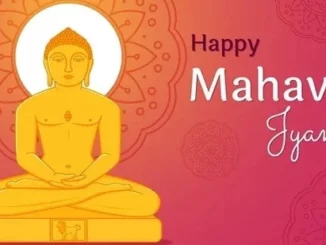
    WASHINGTON, D.C. (TIP): US President Joe Biden and Vice President Kamala Harris have extended their greetings of Mahavir Jayanti to the Jain community across the world and encouraged people to strive for peace and harmony. “(First Lady) Jill (Biden) and I wish a happy and prosperous Mahavir Jayanti to all those observing. Today, we recognize the values of Mahavir Swami and strive to live with peace, truth, and harmony,” Biden tweeted on Tuesday. Vice President Harris also sent her greetings on the occasion.

    “On Mahavir Jayanti, Doug and I join Jains around the world in celebrating the birth of Mahavir Swami, who taught that all living beings are equal. Today, let us recommit to upholding these universal values of respect and non-violence,” Harris tweeted. The greetings from the US president and the vice president were welcomed by an Indian American community leader.

    “We members of the Jain community thank President Biden and Vice President Harris for sending greetings on the occasion of Mahavir Jayanti, which no other president has done in the last,” said community leader Ajay Jain Bhutoria. “On this day, let us also take a pledge to work towards creating a more peaceful and harmonious world by following the path of Ahimsa, which was the core principle of Lord Mahavir’s teachings,” he said.

    Let us strive to create a society where there is no violence, discrimination, or hatred, and where everyone is treated with equal dignity and respect, Bhutoria said in a statement.

    “As we celebrate the birth of Lord Mahavir, let us also take a moment to reflect on his life and teachings, and to seek inspiration from his journey towards enlightenment. May this day bring us closer to our true selves and help us lead a life of purpose, compassion, and righteousness,” Bhutoria said.

  • India & US working to address ‘pressing challenges of our times’: Ambassador Sandhu

    India & US working to address ‘pressing challenges of our times’: Ambassador Sandhu

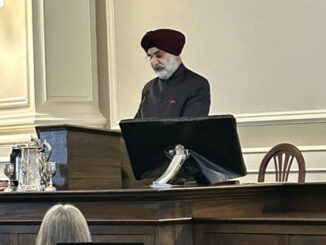
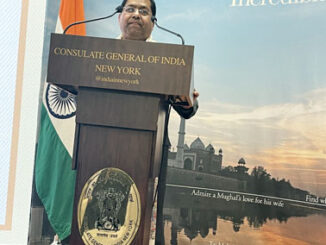
    WASHINGTON D.C. (TIP): As trusted global partners, India and the US are working to address the “pressing challenges of our times,” Indian Ambassador to the US Taranjit Singh Sandhu said on Thursday, April 6.

    Addressing the New Hampshire State Assembly, a rare privilege given to foreign diplomats, Sandhu said that India stands today as a “beacon of stability, amidst geopolitical uncertainties; an usher of global economic growth; a solution provider to some of the complex challenges of the times; and a consensus builder, in times of conflict and rising tensions.” “India remains interesting, important and incredible,” he said.

    President Joe Biden and Prime Minister Narendra Modi characterize India-US ties as a “Partnership for Global Good” and people call it the “most defining relationship of the 21st century,” he told the lawmakers.

    “Our partnership within the QUAD, IPEF and I2U2 frameworks is creating progress and prosperity for the world at large,” he added.

    Sandhu said that India and the US, as trusted global partners, are working to address pressing challenges of the times, the solutions to which would involve combining American technology and Indian talent, Washington’s strength to innovate and New Delhi’s ability to scale.

    “Some of this is already happening,” he said.

    American companies are manufacturing more in India than before, the two countries have launched a historic initiative on critical and emerging technologies, he said, adding, “The technologies that are driving tomorrow’s world, yesterday, – semiconductors, Artificial Intelligence, telecom, and quantum.” “We have active vaccine and medicine collaborations such as the Corbevax that are more affordable and accessible,” the Indian envoy said.

    Sandhu said, “From New Delhi to New Hampshire, there are several threads that bind us together.” “From the world’s largest democracy to the largest State Assembly, in the United States, we are guided by the same values and the vision, ‘we, the people’,” he said. Addressing the packed State Assembly, Sandhu said that he was convinced of the strength of the shared beliefs of the two countries and the deep-rooted friendship and partnership as he stood “in this temple of democracy, steeped in people’s hopes and aspirations.”

    Taking to Twitter after the address, the Indian Ambassador wrote, “A privilege to address the historic #NewHampshire House of Representatives & Senate Members this morning. Highlighted India’s transformative journey and its ever-strengthening partnership with the US.” During his address, Sandhu said that India is an ancient civilization but a young nation as 50 per cent of the population is below 25 years. He added that its talent can be a game-changer for innovation and research for the world.

    “We bring to the table our strengths and successes, and we are always ready to share it with the world: From vaccines to disaster relief, to our digital public goods, to our skills,” Sandhu said.

    Noting that India supplied vaccines to over 100 countries during the COVID-19 pandemic and it was the first country to send a humanitarian mission when disaster struck Turkiye, Sandhu said, “As India leads the G-20 this year, with the motto of ‘One Earth, One Family, One Future’, our approach to the global good, will resonate, far and wide.” “When our students seek education, in Dartmouth, or when a scholar from South New Hampshire University, pursues a Fulbright scholarship in India, we create a lasting friendship, between our peoples,” the top Indian diplomat in the US said.

    The Indian diaspora, he said, has been a vibrant and strong bridge connecting the two great nations.

    “The Bretton wood twins- IMF and World Bank- were born here in New Hampshire, at the Mount Washington Hotel- and here we are when the World Bank is soon going to be headed by a proud Indian-American!” he said, referring to Indian-American Ajay Banga who is poised to become the next President of the World Bank, adding that the second in command in IMF is already an Indian-American.

    He said that 40 per cent of the world’s digital payments come from India.

    “Be it the world’s largest biometric programme, Aadhar or world’s largest financial inclusion programme, ‘Jan Dhan Yojana’, or world’s largest Health Protection Mission, ‘Ayushman Bharat’, India has actively used technology as a tool for good governance,” he said. “We have more than 80,000 start-ups, out of which 115 are unicorns. Our rural internet users (USD 340 million), outnumber urban users (USD 290 million). IMF has forecast 15 per cent of global growth this year would come from India,” Sandhu said.
    (Source: PTI)

  • IRS wraps up 2023 Dirty Dozen list; reminds taxpayers and tax pros to be wary of scams and schemes, even after tax season

    IRS wraps up 2023 Dirty Dozen list; reminds taxpayers and tax pros to be wary of scams and schemes, even after tax season

    WASHINGTON, D.C. (TIP): The Internal Revenue Service wrapped up the annual Dirty Dozen list of tax scams for 2023 with a reminder for taxpayers, businesses and tax professionals to watch out for these schemes throughout the year, not just during tax season.

    Many of these schemes peak during filing season as people prepare their tax returns. In reality, these scams can occur throughout the year as fraudsters look for ways to steal money, personal information, data and more.

    To help people watch out for these scams, the IRS and the Security Summit partners are providing an overview recapping this year’s Dirty Dozen scams.

    “Scammers are coming up with new ways all the time to try to steal information from taxpayers,” said IRS Commissioner Danny Werfel. “People should be wary and avoid sharing sensitive personal data over the phone, email or social media to avoid getting caught up in these scams. And people should always remember to be wary if a tax deal sounds too good to be true.”

    Working together as the Security Summit, the IRS, state tax agencies and the nation’s tax industry, including tax professionals, have taken numerous steps since 2015 to warn people about common scams and schemes during tax season and beyond that can increase the risk of identity theft. The Security Summit initiative is committed to protecting taxpayers, businesses and the tax system from scammers and identity thieves.

    Some items on this year’s list were new and some made a return visit. While the list is not a legal document or a formal listing of agency enforcement priorities, it is intended to alert taxpayers and the tax professional community about various scams and schemes.

    2023 Dirty Dozen summary:

    Employee Retention Credit claims
    Taxpayers should be aware of aggressive pitches from scammers who promote large refunds related to the Employee Retention Credit (ERC). The warning follows blatant attempts by promoters to con ineligible people to claim credit. The IRS highlighted these schemes from promoters who have been blasting ads on radio and the internet touting refunds involving Employee Retention Credits. These promotions can be based on inaccurate information related to eligibility for and computation of the credit. Additionally, some of these advertisements exist solely to collect the taxpayer’s personally identifiable information in exchange for false promises. The scammers then use the information to conduct identity theft.

    Phishing and smishing
    Taxpayers and tax professionals should be alert to fake communications from those posing as legitimate organizations in the tax and financial community, including the IRS and the states. These messages arrive in the form of an unsolicited text (smishing) or email (phishing) to lure unsuspecting victims to provide valuable personal and financial information that can lead to identity theft. The IRS initiates most contacts through regular mail and will never initiate contact with taxpayers by email, text or social media regarding a bill or tax refund.

    Online account help from third-party scammers
    Swindlers pose as a “helpful” third party and offer to help create a taxpayer’s IRS Online Account at IRS.gov. In reality, no help is needed. The online account provides taxpayers with valuable tax information. But third parties making these offers will try to steal a taxpayer’s personal information this way. Taxpayers can and should establish their own online account through IRS.gov.

    False Fuel Tax Credit claims
    The fuel tax credit is meant for off-highway business and farming use and, as such, is not available to most taxpayers. However, unscrupulous tax return preparers and promoters are enticing taxpayers to inflate their refunds by erroneously claiming the credit. The IRS has seen an increase in the promotion of filing certain refundable credits using Form 4136, Credit for Federal Tax Paid on Fuels.

    Fake charities
    Bogus charities are a perennial problem that gets bigger whenever a crisis or natural disaster strikes. Scammers set up these fake organizations to take advantage of the public’s generosity. They seek money and personal information, which can be used to further exploit victims through identity theft. Taxpayers who give money or goods to a charity might be able to claim a deduction on their federal tax return if they itemize deductions, but charitable donations only count if they go to a qualified tax-exempt organization recognized by the IRS.

    Unscrupulous tax return preparers
    Most tax preparers provide outstanding and professional service. However, people should be careful of shady tax professionals and watch for common warning signs, including charging a fee based on the size of the refund. A major red flag or bad sign is when the tax preparer is unwilling to sign the dotted line. Avoid these “ghost” preparers, who will prepare a tax return but refuse to sign or include their IRS Preparer Tax Identification Number (PTIN) as required by law. Taxpayers should never sign a blank or incomplete return.

    Social media: Fraudulent form filing and bad advice
    Social media can circulate inaccurate or misleading tax information, and the IRS has recently seen several examples. These can involve common tax documents like Form W-2 or more obscure ones like Form 8944. While Form 8944 is real, it is intended for a very limited, specialized group. Both schemes encourage people to submit false, inaccurate information in hopes of getting a refund. Taxpayers should always remember that if something sounds too good to be true, it probably is.

    Spearphishing and cybersecurity for tax professionals
    Phishing is a term given to emails or text messages designed to get users to provide personal information. Spearphishing is a tailored phishing attempt to a specific organization or business. The IRS is warning tax professionals about spearphishing because there is greater potential for harm if the tax preparer has a data breach. A successful spearphishing attack can ultimately steal client data and the tax preparer’s identity, allowing the thief to file fraudulent returns.

    Offer in Compromise mills
    Offers in Compromise are an important program to help people who can’t pay to settle their federal tax debts. But “mills” can aggressively promote Offers in Compromise in misleading ways to people who clearly don’t meet the qualifications, frequently costing taxpayers thousands of dollars. A taxpayer can check their eligibility for free using the IRS Offer in Compromise Pre-Qualifier tool.

    Schemes aimed at high-income filers

    Charitable Remainder Annuity Trust (CRAT): Charitable Remainder Trusts are irrevocable trusts that let individuals donate assets to charity and draw annual income for life or a specific period. Unfortunately, these trusts are sometimes misused by promoters, advisors and taxpayers to try to eliminate ordinary income and/or capital gain on the sale of the property.
    Monetized Installment Sales: In these potentially abusive transactions, promoters find taxpayers seeking to defer the recognition of gain upon the sale of appreciated property. They facilitate a purported monetized installment sale for the taxpayer in exchange for a fee.
    Bogus tax avoidance strategies

    Micro-captive insurance arrangements: A micro-captive is an insurance company whose owners elect to be taxed on the captive’s investment income only. Abusive micro-captives involve schemes that lack many of the attributes of legitimate insurance. These structures often include implausible risks, failure to match genuine business needs and, in many cases, unnecessary duplication of the taxpayer’s commercial coverages.
    Syndicated conservation easements: A conservation easement is a restriction on the use of real property. Generally, taxpayers may claim a charitable contribution deduction for the fair market value of a conservation easement transferred to a charity if the transfer meets the requirements of Internal Revenue Code 170. In abusive arrangements, which generate high fees for promoters, participants attempt to game the tax system with grossly inflated tax deductions.
    Schemes with international elements

    Offshore accounts and digital assets: The IRS continues to scrutinize attempts to hide assets in offshore accounts and accounts holding digital assets, such as cryptocurrency. The IRS continues to identify individuals who attempt to conceal income in offshore banks, brokerage accounts, digital asset accounts and nominee entities. Asset protection professionals and unscrupulous promoters continue to lure U.S. persons into placing their assets in offshore accounts and structures saying they are out of reach of the IRS. These assertions are not true. The IRS can identify and track anonymous transactions of foreign financial accounts as well as digital assets.
    Maltese individual retirement arrangements misusing treaty: These arrangements involve U.S. citizens or residents who attempt to avoid U.S. tax by contributing to foreign individual retirement arrangements in Malta (or potentially other host countries). The participants in these transactions typically lack any local connection to the host country. By improperly asserting the foreign arrangement as a “pension fund” for U.S. tax treaty purposes, the U.S. taxpayer misconstrues the relevant treaty provisions and improperly claims an exemption from U.S. income tax on gains and earnings in and distributions from the foreign individual retirement arrangement.
    Puerto Rican and foreign captive insurance: U.S. business owners of closely held entities participate in a purported insurance arrangement with a Puerto Rican or other foreign corporation in which the U.S. business owner has a financial interest. The U.S. business owner (or a related entity) claims a deduction for amounts paid as premiums for “insurance coverage” provided by a fronting carrier, which reinsures the “coverage” with the Puerto Rican or other foreign corporation. Despite being labeled as insurance, these arrangements lack many of the attributes of legitimate insurance. Where appropriate, the IRS will challenge the purported tax benefits from these types of transactions and impose penalties. The IRS Criminal Investigation Division is always on the lookout for promoters and participants of these types of schemes. Taxpayers should think twice before including questionable arrangements like this on their tax returns. After all, taxpayers are legally responsible for what’s on their return, not a promoter making promises and charging high fees. Taxpayers can help stop these arrangements by relying on reputable tax professionals they know and trust.

    Help stop fraud and scams
    As part of the Dirty Dozen awareness effort, the IRS encourages people to report individuals who promote improper and abusive tax schemes as well as tax return preparers who deliberately prepare improper returns.

    To report an abusive tax scheme or a tax return preparer, people should mail or fax a completed Form 14242, Report Suspected Abusive Tax Promotions or Preparers and any supporting material to the IRS Lead Development Center in the Office of Promoter Investigations.

    Mail:
    Internal Revenue Service Lead Development Center
    Stop MS5040
    24000 Avila Road
    Laguna Niguel, California 92677-3405
    Fax: 877-477-9135

  • IRS unveils Strategic Operating Plan; ambitious effort details a decade of change

    IRS unveils Strategic Operating Plan; ambitious effort details a decade of change

    42 key initiatives, 190 key projects designed to help taxpayers, the tax community and the nation

    WASHINGTON D.C. (TIP): Following months of work, the Internal Revenue Service, on April 6, unveiled its Strategic Operating Plan, an ambitious effort to transform the tax agency and dramatically improve service to taxpayers and the nation during the next decade. The 150-page report to the Secretary of the Treasury outlines the agency’s historic plans to make fundamental changes following funding from last year’s Inflation Reduction Act. The plan makes clear that the resources to be deployed over the short and long term will be used to:

    Rebuild and strengthen IRS customer service activities, putting an end to long wait times on the phone, adding capacity to the in-person taxpayer assistance centers around the country, and providing new online tools for those who want to engage with the IRS digitally.
    Add capacity to unpack the complex filings of high-income taxpayers, large corporations and complex partnerships, addressing a growing chasm between the number of experienced compliance personnel at the IRS who audit high-income, high-wealth tax filings for compliance (about 2,600 employees) and the roughly 30,000 individuals making more than $10 million a year, 60,000 large corporations and 300,000 large partnerships and S corps. Update various outdated systems in IRS core operations to help ensure the agency has the most modern and robust security in technology to protect taxpayer data.

    In IRS customer service initiatives, taxpayers can already see important changes this tax season, and the plan provides a foundation for future efforts. In compliance initiatives, the IRS will ensure that the agency follows Treasury Secretary Yellen’s directive not to raise audit rates above historical levels for small businesses and households making less than $400,000. What this means is that over the next number of years, as the IRS moves to implement the Strategic Operating Plan, the agency is focused on pursuing high-income and high-wealth individuals, complex partnerships and large corporations that are not paying the taxes they owe. As a result, the IRS has no plans to increase the audit rate for small businesses and households making less than $400,000.
    “The plan is a bold look at what the future can look like for taxpayers and the IRS,” IRS Commissioner Danny Werfel said. “Now that we have long-term funding, the IRS has an opportunity to transform its operations and provide the service people deserve. Through both service and technology enhancements, the experience of the future will look and feel much different from the IRS of today. This plan charts the course forward for the IRS and tax administration.”

    The plan is organized around five objectives:

    Dramatically improve services to help taxpayers meet their obligations and receive the tax incentives for which they are eligible. Quickly resolve taxpayer issues when they arise. Focus expanded enforcement on taxpayers with complex tax filings and high-dollar noncompliance to address the tax gap.
    Deliver cutting-edge technology, data and analytics to operate more effectively.
    Attract, retain and empower a highly skilled, diverse workforce and develop a culture that is better equipped to deliver results for taxpayers.
    Each objective will be accomplished through specific initiatives outlined in the plan. The plan contains 42 initiatives designed to achieve IRS goals, each of which includes multiple key projects and milestones to measure progress. The plan covers more than 190 key projects and more than 200 specific milestones. The IRS will identify additional projects and milestones as work continues. The number of projects and milestones will grow significantly over time as the plan evolves to meet the needs of the nation and tax administration.

    For each milestone, the plan includes specific timeframes based on year.

    Following passage of the law last August, the IRS embarked on this effort to identify the highest-priority opportunities to deliver transformational change. In addition to working with the Department of the Treasury, the IRS received input from tax professionals, partner groups inside and outside of the tax community, taxpayer groups, IRS federal advisory groups and IRS employees. The planning process also built on prior IRS efforts that received feedback, including the Taxpayer First Act Report to Congress.
    In addition to the efforts outlined in the plan, the Inflation Reduction Act is already making a difference for taxpayers and tax professionals during the 2023 filing season.

    “People can see the first signs of change this filing season following this infusion of funding,” Werfel said. “Taxpayers and tax professionals can see the difference as we have dramatically improved our phone service thanks to more staff. More walk-in services are available across the country. New digital tools have been added. And these are just first steps.” The future will bring more improvements, with taxpayers able to get more online access to their tax accounts – simplifying their interactions with the IRS. Detailed information about refunds will be easier to track through improvements to the “Where’s My Refund?” tool. Many more service improvements are detailed in the plan.

    “For years, the agency has not had the resources to provide the service people deserve. Across all of our operations we’ve seen the impact. We’ve lost employees and seen our resources stretched thin with new mandates and an increasingly complex economy,” Werfel said. “The IRS looks forward to demonstrating how the actions under this plan will translate into real improvements for taxpayers. Technology as well as in-person assistance will be cornerstones of this effort.”

    The plan also highlights how the IRS will be working to ensure fair enforcement of the nation’s tax laws and compliance with existing laws while respecting taxpayer rights. The IRS will be solely focused on increased efforts on identified compliance issues involving large corporations, larger partnerships and high-wealth individuals.

    “Effective enforcement is an important component of this plan,” Werfel said. “Revenue collected by the IRS supports everything from the nation’s defense to education and roads.”

    As the IRS begins implementation of this plan, the agency will work with the public, partners and oversight groups to ensure the transformation work meets the needs of taxpayers and the nation.

    “This plan is only the beginning of our work,” Werfel said. “This is a unique opportunity for the IRS and the nation, and we will continue to work closely with our partners as this effort moves forward. This investment in the IRS is already helping taxpayers this tax season, and this plan shows that historic changes are coming.”


  • Resolution introduced in US House of Representatives to designate April 14 as National Sikh Day

    Resolution introduced in US House of Representatives to designate April 14 as National Sikh Day

    ‘It is altogether fitting and proper to celebrate the day of Vaisakhi alongside Sikhs throughout the world and to honor the lasting contributions made by the Sikh community to the US

    WASHINGTON, D.C. (TIP): A bipartisan group of lawmakers has introduced a resolution in the US House of Representatives to designate April 14 as National Sikh Day in a bid to honor and celebrate the important role played by the Sikh community in strengthening and inspiring the people of the United States.
    Observing that the US is enriched by the diversity of its residents, who have cultivated a climate of social tolerance and intellectual pluralism that has sustained the Nation throughout its history, the resolution said that Vaisakhi is a special occasion in which Sikhs remember the founding in 1699 of the Order of Khalsa, which played an important role in shaping the religion’s history and identity.
    Introduced by Congresswoman Mary Gay Scanlon, the resolution says that through leading charitable events, the Sikh community embodies the sense of public service that underlies the founding principles of the US.
    Stating that people of the US feel obliged to honor the Sikh community’s important role in supporting and enriching the social fabric of the Nation, the resolution said Vaisakhi is a special occasion in which Sikhs remember the founding in 1699 of the Order of Khalsa, a fellowship of devout saint-soldier Sikhs, by the 10th Sikh Guru to fight tyranny and oppression, which played an important role in shaping the religion’s history and identity. “It is altogether fitting and proper to celebrate the day of Vaisakhi alongside Sikhs throughout the world and to honor the lasting contributions made by the Sikh community to the US,” said the resolution.

    (Source: PTI)

  • Trump decries charges against him, accuses ”radical left lunatics” of election interference

    Trump decries charges against him, accuses ”radical left lunatics” of election interference

    PALM BEACH, FL (TIP): A defiant former president Donald Trump denounced the criminal charges against him in connection to hush money payments made to a porn star before the 2016 presidential election and said the US has now become a “failing nation” where the “radical left lunatics” want to interfere with the elections by using law enforcement. Trump, the first former US President to be criminally charged, has pleaded not guilty to 34 felony counts of falsifying business records at his arraignment in a Manhattan court on charges relating to hush money payments made to Stormy Daniels.

    The 76-year-old former Republican president ruled the country for four years till January 2021.

    Addressing his supporters hours after he was arraigned, Trump said: “The only crime that I committed is to fearlessly defend our nation from those who seek to destroy it.” “Incredibly, we are now a failing nation. We are a nation in decline. And now these radical left lunatics want to interfere with our elections by using law enforcement. We can’t let that happen,” Trump, who is eying the White House for a second time in 2024, told his supporters at his Mar-a-Lago resort in Florida, soon after he flew back from New York. “Our country is going to hell,” the 76-year-old Republican leader said in a roughly 25-minute speech. He described the time since his exit from office as “the most embarrassing time in our country’s history.” “With all of this being said, and with a very dark cloud over our beloved country, I have no doubt nevertheless, that we will make America great again,” he said in the address, marking the first time he has spoken publicly since being arraigned on Tuesday.

    Trump also attacked Manhattan District Attorney Alvin Bragg, the prosecutor whose office convinced a New York grand jury to bring the first criminal charges ever against a former US president.

    “But now we’re there. Spend time [in New York] today, as you possibly read, with a local failed district attorney, charging a former president of the United States for the first time in history on a basis that every single pundit and a legal analyst said, ‘There is no case; there’s no case.’ They kept saying, ‘There’s no case!’” Trump said of his arrest.

    “He knew there was no case. That’s why last week he delayed for a month and then immediately took that back and threw this ridiculous indictment together; it came out today. Everybody said, ‘This is not really an indictment. There’s nothing here.’ My lawyers came to me and they said, ‘There’s nothing here; they’re not even saying what you did,’” he continued.

    Trump went on to call for the prosecution of Bragg, claiming he leaked the grand jury documents to the public.

    He criticized the indictment levelled against him, saying he is “going through a fake investigation” that “turned out to be a sham.” “Let me be as clear as possible: I am Innocent. The only offence I have committed is to defend America from those who seek to destroy it. What we’ve witnessed is election interference in the highest order,” he said. “Let me assure you – I have never been more determined than I am right now. They will not beat me. They will not break me. They will not stop me from fighting to save this country. The more they try to frame me, slander me, and destroy me, the stronger my resolve to complete our mission,” Trump said.

    He did not even spare State Supreme Court Justice Juan M Merchan, who is overseeing his case.

    The former president alleged that he is a “Trump-hating judge” with a “Trump-hating wife” and family “whose daughter works for Kamala (Harris) house and now receives money from the Biden-Harris campaign”.

    Trump said the US is now in a mess.

    “Our economy is crashing. Inflation is out of control. Russia has joined with China. Can you believe that? Saudi Arabia has joined with Iran,” he said.

    “China, Russia, Iran and North Korea have formed together as a menacing and destructive coalition that would have never happened if I were your president it would never have happened. Nor would Russia attack Ukraine. All of those lives will be saved. All of those beautiful cities would be standing,” he said.

    “Our currency is crashing and will soon no longer be the world standard, which will be our greatest defeat frankly, in 200 years. There will be no defeat like that will take us away from being even a great power. If you took the five worst presidents in the history of the United States and added them up they would not have done near the destruction to our country as Joe Biden and the Biden administration have done,” Trump said.

    The former president said that there are open threats by various countries of the use of nuclear weapons, something which was never mentioned or discussed by other nations during the Trump administration.

    “This could very well lead under the Biden administration’s leadership to an all-out nuclear World War III can happen. We’re not very far away from it, believe it or not,” Trump said.
    (Source: PTI)

  • Richard Verma sworn in as Deputy Secretary of State for Management and Resources

    Richard Verma sworn in as Deputy Secretary of State for Management and Resources

    WASHINGTON, D.C. (TIP): Former US Ambassador to India Richard Verma has been sworn in as the Deputy Secretary of State for Management and Resources, making him the highest-ranking Indian-American ever in the State Department. “An honor to return to the State Department,” Verma said in a tweet after he was sworn into the top position in the State Department Wednesday, April 5. The Deputy Secretary of State for Management and Resources is often referred to as the Chief Operating Officer of the State Department.
    A lawyer, diplomat and executive, Verma, 54, was confirmed by the US Senate by a vote of 67-26 last month.
    Verma, who served as the US Ambassador to India from January 16, 2015, to January 20, 2017, was till now the Chief Legal Officer and Head of Global Public Policy at Mastercard.
    During the Obama administration, Verma also served as Assistant Secretary of State for Legislative Affairs.
    Earlier in his career, he was National Security Advisor to US Senator Harry Reid while he was Democratic whip, Minority Leader and then-Majority Leader of the United States Senate.
    He has served as Vice Chairman of The Asia Group, Partner and Senior Counselor at Steptoe & Johnson LLP, and Senior Counselor at the Albright Stonebridge Group. He is a veteran of the United States Air Force, where he served on active duty as a Judge Advocate.Verma, who was born in 1968 to an Indian immigrant, grew up in Pennsylvania. He attended a private college on a US Air Force scholarship. He earned a B S at Lehigh University, a J.D. cum laude at American University, an LLM with distinction at Georgetown University Law Center, and a PhD at Georgetown University.
    He is the recipient of numerous awards and decorations, including the Distinguished Service Medal from the Department of State, the International Affairs Fellowship from the Council on Foreign Relations and the Meritorious Service Medal from the United States Air Force.
    Verma was appointed to the President’s Intelligence Advisory Board and is a former member of the Weapons of Mass Destruction and Terrorism Commission. He serves as a trustee of The Ford Foundation and is on numerous other boards, including that of the National Endowment for Democracy and Lehigh University. He is a veteran of the United States Air Force, where he served as a Judge Advocate.

  • ‘An Independent Press is Necessary’, says Supreme Court; Lifts telecast ban on Malayalam news channel MediaOne

    ‘An Independent Press is Necessary’, says Supreme Court; Lifts telecast ban on Malayalam news channel MediaOne

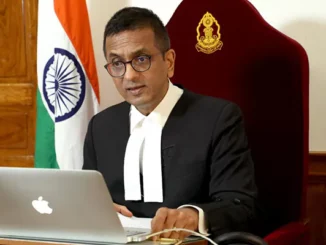
    NEW DELHI (TIP): The Supreme Court on Wednesday, April 5, quashed the Centre’s telecast ban on Malayalam news channel MediaOne and pulled up the Ministry of Home Affairs for raising national security claims in “thin air” without facts. Observing that the State can’t impose unreasonable restrictions on press as it would have a chilling effect on press freedom, a bench headed by Chief Justice DY Chandrachud set aside the Kerala High Court order which had upheld the Centre’s decision to ban the channel’s telecast on security grounds. The top court said critical views of the channel against government policies cannot be termed as anti-establishment as an independent press is necessary for a robust democracy. “Press has a duty to speak truth to power and present citizens with hard facts enabling them to make choices that propel democracy in the right direction. The restriction on freedom of press compels citizens to think along the same tangent. “Homogenized views on issues that range from socio-economic polity to political ideologies would pose great dangers to democracy,” the bench said, adding that non-renewal of license for a channel is a restriction on the right to freedom of speech. The top court said the alleged link of the channel’s shareholders to Jamaat-e-Islami Hind is not a legitimate ground to restrict the rights of the channel.
    It said the State is using national security as a tool to deny citizens remedies that are provided under the law.
    “National security claims cannot be made out of thin air, there must be material facts backing it,” the bench said.
    Here are the top 5 observations from the Supreme Court verdict.
    “There is nothing to show terrorist links. National security claims cannot be made on the basis of thin air. It is seen that none of the material is against national security or threatens public order,” the bench led by Chief Justice of India DY Chandrachud said. “National security can’t be raised to deny people their rights… it was raised by the MHA in a cavalier manner in this case,” the court added.
    “Government cannot be allowed to have a stand that press must support the government,” the court said, adding that criticism of government cannot be a ground to revoke license of a TV channel.
    “An independent press is necessary for the robust functioning of a democratic republic. Its role in the democratic society is crucial, for it shines a light on the functioning of the State,” the court said.
    “All investigation reports cannot be termed secret as these affect the rights and liberty of the citizens,” the court said, adding that there cannot be a “blanket immunity” to the government from disclosing information.

  • Open justice: On the Supreme Court verdict in the MediaOne case

    The Supreme Court verdict setting aside the denial of broadcasting permission to Malayalam channel MediaOne is one that protects the media against arbitrary action and bars the use of undisclosed national security considerations as a pretext to shut down an outlet. The Court has struck a blow for media freedom by ruling that the government could not term critical coverage or airing of critical opinions as “anti-establishment”, and so initiate action. It said: “The use of such a terminology… represents an expectation that the press must support the establishment.” The denial of security clearance to a media channel on the basis of views it was entitled to hold “produces a chilling effect on free speech and particularly on press freedom”. The Bench also cited substantive grounds to allow MediaOne’s petitions: that security clearance cannot be denied based on its alleged anti-establishment stance or a bald claim that its shareholders have links with the Jamaat-e-Islami. The Court has rightly found fault with the approach of the Kerala High Court, which had accepted material in a sealed cover on why the Home Ministry denied security clearance to the channel. It expressed surprise that the High Court did not explain how it felt the denial of security clearance was justified even after noting that the gravity of the issue was not discernible from the files.

    A significant aspect of the judgment is that it seeks to end the casual resort to ‘sealed cover procedure’ by courts by suggesting an alternative approach to state claims of immunity from publication in public interest. Drawing upon both Indian and foreign jurisprudence, the Bench has said it is now an established principle of natural justice that relevant material must be disclosed to the affected party, ensuring that the right to appeal can be effectively exercised. It acknowledges that confidentiality and national security could be “legitimate aims for the purpose of limiting procedural guarantees”. However, a blanket immunity from disclosure of all reports could not be granted and that the validity of the involvement of such considerations must be assessed by the use of relevant tests. It could be ascertained if there is proof that non-disclosure is in the interest of national security and whether a reasonable person would come to the same inference from it. In a bid to balance the public interest in non-disclosure with the one in ensuring a fair hearing, the Court has mooted alternatives such as redacting sensitive portions and providing a gist of the material given to the affected party. The Court could also appoint an amicus curiae, who could be given access to the material whenever the state claims immunity from disclosure.
    (The Hindu)

  • Winds of change: Haryana khap vows to promote girls’ education

    In a welcome softening of the khaps’ rigidly conservative and patriarchal posturing, the Sarv Jatiya Kandela khap of Haryana’s Jind area has taken the lead in doing away with the practice of issuing diktats for the social boycott of persons, families or even political leaders and parties over local issues they deal with. Acting as a pseudo-judicial body holding sway over a collective of 20-30 surrounding villages, a khap has been traditionally resolving disputes by announcing verdicts, which, at times, are at odds with the law. Khap leaders are notorious for inciting honor killings in cases of same-gotra marriages. It has often led to run-ins with law enforcement authorities and drawn reprimands from the judiciary and civil society activists.

    But the khaps’ regressive mindset and rules are widely accepted and have hobbled Haryana’s march towards an equitable society. This is evident from the state’s skewed sex ratio and literacy rate. With the latest overall literacy rate being 75 per cent, that of males is 84 per cent and females 66 per cent. Underlining the preference for boys by even educated families and the menace of female feticide are the births of 917 females per 1,000 males recorded in 2022 despite the government’s ‘Beti Bachao, Beti Padhao’ programme, which is being implemented since 2015.

    In this light, the Kandela khap’s decision to promote girls’ education and hold nukkad meetings against the social evil of female feticide is commendable. Importantly, this initiative of the village elders will also address the hugely unfair gap in the quality of education received by urban and rural students. Coupled with its resolve to curb extravagance at wedding functions — the practice that pauperises many a girl’s parents — Jind is on the path of progress. Other khaps, too, must embrace these norms and shed archaic and outdated customs. When a crusade arises from the grassroots, it has the power to transform society. These winds of change have been blowing for some time now. While progressive campaigns have suffered some setbacks, these should not deter khaps from achieving their new goals.
    (Tribune, India)

  • Landmark Act: Himachal women get landholding right like men

    In a commendable act, the Sukhvinder Singh Sukhu-led Congress government on April 4 set right a decades-old wrong through an amendment to an outdated landholding law that discriminates against women. Till now, in grave violation of the right to equality provided by the Constitution, the daughters of the state had been suffering gender bias. The Himachal Pradesh Ceiling on Land Holdings Act of 1972 allowed only an adult son to hold an additional 150 bighas (30 acres), taking the total permissible limit of land that a family could retain to 300 bighas. This right had been denied to his adult sister. Notably, religious outfits, tea estates, cooperative farming societies and land owned by state and Central governments are exempted from this Act.

    The Himachal Pradesh Ceiling on Land Holdings (Amendment) Act 2023 is a landmark legislation that rectifies the error by treating the daughter on a par with the son. Thus now, prospectively, the adult daughter of a family is entitled to retain up to 150 bighas as a separate unit. The new Act will benefit families that have only daughters.

    That it should have taken over half a century for the 1972 Act to be amended to bring the women on a parity with men underscores boldly the dominance of the patriarchal mindset. All these years, women have faced harassment and been forced to knock at the doors of courts to fight against glaring gender disparity. The unfair legislation of 1972 has been a big hurdle in them getting what should have rightfully been theirs all the while. Consequently, many families without sons have had to give up 150 bighas. Worse, this bigoted stipulation has had a regressive repercussion on the social attitude and outlook. In order to retain their properties, people have tended to have a preference for boys. The latest amendment also holds the promise of society shedding its traditional bias against girls. While being a case of better late than never, it does put the state on track to progress.
    (Tribune, India)

  • USA is a Nation of Laws: Trump Indicted

    USA is a Nation of Laws: Trump Indicted

    D.A. Alvin Bragg Unseals 34 Felony Counts

    “The task for politicians is to give politics a rest, as our nation is undergoing a stress-test the likes of which even Richard Nixon was exempted from. Our Republic need not have gotten to this day, as we ought not have had January 6th. It is time to be American first, and party-politician second. America is made up of all Americans, and we need political E Pluribus Unum more than ever to remain the United States of America, and not become, as Senator Joe Manchin recently said: divided States of America.”

    By Ravi Batra

    In our nearly 250 year history, since our exceptional birth and Constitution, we have proudly said: we are a nation of laws, not men. Today, on that secular alter of justice, Manhattan District Attorney Alvin Bragg held up former President Donald John Trump, duly indicted with 34 felony counts, as “Exhibit A” proving that truly “no one is above the law.” The Manhattan DA’s office has been occupied by Giants, each of whom made history: Tom Dewey, Frank Hogan, Robert M. Morgenthau (my dear friend and mentor), Cyrus Roberts Vance, Jr., and now Alvin Leonard Bragg, Jr.

    Leaving politics aside, there ought be no joy in the heart of any American that a former American President stands criminally charged – no matter whether you love Trump or hate him. Indeed, it’s painful, perhaps, even more than January 6th, that a former President violated his personal oath to honor the rule of law. That Justice will prevail, and Mr. Trump will be afforded every Constitutional right that every American gets, including, presumptive-innocence and the all-powerful right to confront the witnesses against him is something we, as Americans, are uniquely proud of. After all, these legal and constitutional rights protect citizens from preventing anyone in Government – who may seek to violate Lincoln’s promise that our government is “of, by and for” the people – run roughshod over any one of us.

    These 34 Felony Counts Are All about “Mens Rea” and the “Upgrade”

    The 34 counts are business record-based, which is to say that the “bad act” part of each crime is nearly incontrovertible, leaving open for advocacy only the “bad mind,” or “mens rea,” to prove the crime was committed beyond a reasonable doubt. Normally, the Prosecutor has to prove both the “bad act” and the “bad mind” beyond a reasonable doubt to a fair and impartial jury of twelve.

    The additional legal challenge for DA Bragg here is to prove the “upgrading” of normal misdemeanor business record-charges into felony charges due to: “with intent to defraud and intent to commit another crime and aid and conceal the commission thereof.” And, for that, DA Bragg, in his press conference post-plea, said the “other crime” was New York State election law violation as well as a violation of federal campaign contribution limits. He need not prove both; just proving one of the two will be enough to “upgrade” the misdemeanor into a “felony,” and unlike flying on a plane when the upgrade gets you more seat and leg-room for greater comfort, here, the upgrade provides the Sentencing Judge with the authority to order the then-convicted-defendant more pain and a longer sentence commensurate with the crimes convicted, while considering all mitigating factors, including, age and health, for a lesser sentence, including, no jail time. The political irony here is that New York State has been blasted by Republicans on being “soft” on defendants charged with crimes. Well, now, that very objected-to New York “softness” helps former President Trump, including, our state laws that insist upon expansive discovery production by prosecutors to help all defendants better prepare for trial.

    The legal battle, then, when it truly gets past the initial flurry of activity, will be hand-to-hand combat with the defense trying to raise doubt about Mr. Trump’s “intent” for each Count and the “upgrade” state or federal predicate.

    Justice Merchan Takes Charge

    Today, President Trump pled “Not Guilty,” and was warned by Justice Juan Merchan to “refrain” from social media posts with the potential to incite violence. This warning was not idle, and presents additional legal jeopardy for Mr. Trump – just like Justice Oliver Wendell Holmes, Jr. did by holding: you cannot yell “fire’ in a crowded theater, without being held liable for those who get trampled in the ensuing melee.

    While President Trump has enjoyed being a political or economic pugilist to-date, suddenly, there are legal risks now imposed by Justice Merchan, as the law is not a trifle, and the integrity of the profession must be maintained. As America’s greatest mayor Rudy Giuliani has learned, a title he earned by keeping all New Yorkers together after 9/11, when his law license was suspended by the NYS Supreme Court’s Appellate Division First Department for his over-zealous advocacy, which the Court held violated the core obligation imposed-by-law on every lawyer by the Rules of Professional Conduct: to maintain the integrity of the profession, and safeguard Judicial Independence. Lying by a lawyer is not allowed, and is surely not risk-free.

    Procedures and Timelines

    New York allows interlocutory appeals of Orders the aggrieved party wishes to appeal, and by doing so, there is delay of the trial. Federal cases, generally, do not have as-of-right appeal of every Order issued, and hence are quicker to try the case. Here, President Trump has more legal jeopardy as there is US DOJ Special Counsel Jack Smith (Confidential Documents etc.) and Georgia state DA looking into the “11,780 votes” Mr. Trump was desperately looking to find. And then, there are civil cases. Mr. Trump is going to be quite busy consulting with his lawyers or being in Court. The national convention will occur next summer, with a presidential election in November 2024. It’s quite likely that one or more trials may not have occurred before November 2024. Mr. Trump may well find that he needs to pay real close attention to exercising all of his legal rights, if he is to avoid, or at least, minimize, legal liability.

    E Pluribus Unum, Not Republicans or Democrats

    The task for politicians is to give politics a rest, as our nation is undergoing a stress-test the likes of which even Richard Nixon was exempted from. Our Republic need not have gotten to this day, as we ought not have had January 6th. It is time to be American first, and party-politician second. America is made up of all Americans, and we need political E Pluribus Unum more than ever to remain the United States of America, and not become, as Senator Joe Manchin recently said: divided States of America.

    America: Reveille!

    To close, I urge all Americans to recall the special wish of the Lion of the Senate, Pat Leahy: let America always have “Reveille”!

    (The author is the publisher of The America Times Company Ltd., and since January 2022, is the Editor-in-Chief. He is a member of the National Press Club, in Washington D.C., and a member of its “Freedom of the Press” and “International Correspondents” Teams/Committees. An eminent, he is a member of the bar since 1981. )

    (Originally published in America Times. Republished with abridgements, with publisher’s permission)

  • A very different conception of ‘Ram Rajya’

    A very different conception of ‘Ram Rajya’

    Mahatma Gandhi’s idea of Ram Rajya — the very idea of Gandhi, one might say — is in danger of being swept aside by prevailing ideological currents, ironically in favor of a very different conception of Rama. These days, when the standing of his historic detractors is at an all-time high, Gandhiji has been criticized for weakness, for having bent over too far to accommodate Muslim interests, and for his pacifism, which is seen by the jingoistic Hindutva movement as unmanly.

    By Shashi Tharoor

    It was the longest-serving Rashtriya Swayamsevak Sangh (RSS) sarsangchalak, M.S. Golwalkar, who famously spurned Gandhian ahimsa by observing tartly, “all Hindu gods are depicted carrying weapons”. Some of his acolytes this year have decided to emulate their gods on Ram Navami, as Hindu marchers, in what were ostensibly religious processions, turned up brandishing swords, maces, even knives and revolvers to advertise their strength. This weaponization of faith was a reminder of the derisive rejection of Gandhian ‘universalism’ and ‘non-violence’ by Hindutva’s original proponent, V.D. Savarkar, who considered them delusionary opiates. Instead of Mahatma Gandhi’s moral lessons in favor of peace, Savarkar advocated the “political virility” of Hindutva, an idea which seems to have found full flower in today’s foot-soldiers of that doctrine.

    Mahatma Gandhi’s idea of Ram Rajya — the very idea of Gandhi, one might say — is in danger of being swept aside by prevailing ideological currents, ironically in favor of a very different conception of Rama. These days, when the standing of his historic detractors is at an all-time high, Gandhiji has been criticized for weakness, for having bent over too far to accommodate Muslim interests, and for his pacifism, which is seen by the jingoistic Hindutva movement as unmanly. The Mahatma was killed, with the name of Rama on his lips, for being too pro-Muslim. Indeed, he had just come out of a fast he had conducted to coerce his own followers, the ministers of the new Indian government, to transfer a larger share than they had intended of the assets of undivided India to the new state of Pakistan. Gandhiji’s idea of Ram Rajya was arguably utopian — a vision of perfect social harmony, economic justice and political freedom. The Hindutva idea is one of unbridled Hindutva dominance, in which those who do not conform are firmly put in their place.

    Truth and the Mahatma
    The Mahatma was more than just the extraordinary leader of the world’s first successful non-violent movement for independence from colonial rule. He was also a philosopher who was constantly seeking to live out his own ideas, whether they applied to individual self-improvement or social change: his autobiography was typically subtitled The Story of My Experiments with Truth.

    No dictionary imbues ‘truth’ with the depth of meaning Gandhiji gave it. His truth emerged from his convictions: it meant not only what was accurate, but what was just and, therefore, right. Truth could not be obtained by ‘untruthful’ or unjust means, which included inflicting violence upon one’s opponent. To describe his method, Gandhiji coined the expression satyagraha — literally, ‘holding on to truth’ or, as he variously described it, truth-force, love-force or soul-force. He disliked the English term ‘passive resistance, because satyagraha required activism, not passivity. If you believed in the truth and cared enough to obtain it, Gandhiji felt, you could not afford to be passive: you had to be prepared actively to suffer for the truth.

    So non-violence, like many later concepts labelled with a negation, from non-cooperation to non-alignment, meant much more than the denial of an opposite; it did not merely imply the absence of violence. Non-violence was the way to vindicate the truth not by the infliction of suffering on the opponent, but on oneself. It was essential to willingly accept punishment in order to demonstrate the strength of one’s convictions.

    An ambivalence
    The attitude of the Hindutva-inspired government of Prime Minister Narendra Modi towards Gandhiji is deeply ambivalent. Many RSS pracharaks and other members of the Sangh Parivar were schooled in an intense dislike of the Mahatma, whose message of tolerance and pluralism was emphatically rejected as minority appeasement by the Sangh Parivar, and whose credo of non-violence, or ahimsa, was seen as an admission of weakness unworthy of manly Hindus. Hindutva ideologue Savarkar, whom Mr. Modi has described as one of his heroes, had expressed contempt for Gandhiji’s ‘perverse doctrine of non-violence and truth’ and claimed it ‘was bound to destroy the power of the country’. But the Prime Minister, for all his Hindutva mindset, his admiration of Savarkar and his lifetime affiliation to the Sangh Parivar, has embraced Gandhiji, hailing the Mahatma and even using his glasses as a symbol of the Swachh Bharat campaign, linking it to a call to revive Gandhiji’s idea of seva through the ‘Swachchta Hi Seva’ Campaign.

    The ambivalence speaks volumes: when many members of Mr. Modi’s Bharatiya Janata Party (BJP) call for replacing Gandhiji’s statues across the country with those of his assassin, Nathuram Godse, the Prime Minister seeks to lay claim to the mantle of his fellow Gujarati for his own political benefit. At the same time, there is also a dissonance between the official governmental embrace of Gandhiji and the unofficial ideological distaste for him privately expressed by members and supporters of the ruling party, some of whom have not hidden their view that his assassination was, in their eyes, a patriotic act. Even the Mahatma’s declared intention, shortly before his assassination, to spend his remaining days in Pakistan, sits uncomfortably with a party whose leaders’ favorite imprecation for its critics is ‘Go to Pakistan!’

    The difference
    It is well understood that the vision of Gandhiji, an openly practicing Hindu, differed greatly from that of his fellow Hindus Savarkar and Golwalkar, the principal ideologues of the Hindu Mahasabha and the RSS respectively (the forerunners of the BJP). His Hinduism, open, eclectic and accepting of difference, could have lent itself to a different form of ‘Hindu nationalism’, a liberal nationalism imbued with his Hindu values, and so well suited to managing the diversity of India. But Gandhiji was far too inclusive to have qualified his nationalism with a communal adjective. Savarkar, who had little use for Hindu religious beliefs and practices except as a label for identity formation, never thought much of Gandhi’s faith or the principle of non-violence that emerged from it. To the Hindutvavadi, nationalism cannot be non-violent because in order to succeed, it needs to be coercive and destructive of enemies, and when it succeeds it is expressed through the apparatus of the state, which has a monopoly over violence. Despite being a far more deeply rooted Hindu than Savarkar, Mahatma Gandhi has little place in the Hindutva imagination.

    Hinduism and Hindutva, as I have argued in my books, Why I Am a Hindu and The Battle of Belonging, represent two very distinct and contrasting ideas, with vitally different implications for nationalism and the role of the Hindu faith. The principles Gandhiji stood for and the way in which he asserted them are easier to admire than to follow. But their conception of Ram Rajya represented an ideal that is betrayed every day by those who distort Hinduism to promote a narrow, exclusionary bigotry.

    (Shashi Tharoor is Member of Parliament (Congress), Lok Sabha, for Thiruvananthapuram, Chairman of the Parliamentary Standing Committee on Information Technology, and Chairman, All-India Professionals’ Congress)

  • The age of toxic politics

    The age of toxic politics

    Death of critical thinking is what all authoritarian masters cherish

    “No meaningful teaching/learning is possible if the psychology of fear robs us of our voice. In fact, the toxic politics we see around has created an environment in which one can be censored, disciplined and punished for any critical voice that seeks to interrogate the logic of the Establishment, say, the reduction of the supreme leader of the ruling party into a non-questionable messiah; the legitimization of his every act, speech or policy through the logic of popularity and electoral statistics; and the simple equation that divides us into two categories or binaries — deshbhakts or nationalists and anti-national conspirators.”

    By Avijit Pathak

    The politics of critical pedagogy probes the discourse of power, interrogates all sorts of authoritarianism, promotes the ethos of dialogue and art of listening, sees education beyond the acquisition of mere market-friendly technical skills, and strives for enlightened/democratic citizenship. However, these days amid the all-pervading toxic politics, and cultural/psychic pollution all around, a sense of despair or pessimism seems to be preventing many of us from celebrating or practicing the art of critical pedagogy.

    It is vital to spread the ethos of critical pedagogy — the pedagogy of love, resistance and social transformation.

    To begin with, let us acknowledge a simple fact: no meaningful teaching/learning is possible if the psychology of fear robs us of our voice. In fact, the toxic politics we see around has created an environment in which one can be censored, disciplined and punished for any critical voice that seeks to interrogate the logic of the Establishment, say, the reduction of the supreme leader of the ruling party into a non-questionable messiah; the legitimization of his every act, speech or policy through the logic of popularity and electoral statistics; and the simple equation that divides us into two categories or binaries — deshbhakts or nationalists and anti-national conspirators.

    As this psychology of fear invades our campuses and classrooms through politically appointed academic bureaucrats, it destroys the soul of critical pedagogy. It becomes difficult to learn and unlearn through questions, conversations and dialogue. Imagine the intensity of the danger. A student or a teacher can be suspended or expelled if he/she dares to watch the much talked about BBC documentary on the 2002 Gujarat riots. Or, for that matter, a series of FIRs can haunt you if you print a poster revealing your unhappiness with the present regime. And you can be jailed if your critical reflections ‘hurt’ the sentiments of hyper-nationalists playing with the fire of religious fundamentalism.

    How is it then possible to create a culture of learning that promotes dialogue and art of listening, and encourages us to ask uncomfortable questions? The fact is that the cult of authoritarianism, and even electoral authoritarianism, needs either non-reflexive conformists or indulgent consumers as market fundamentalism and religious fundamentalism often go together. This is like annihilating the spirit of critical pedagogy.

    Likewise, critical pedagogy requires the cultivation of some mental/intellectual faculties, say, the quality of endurance and patience needed to examine an issue relating to politics, culture, religion or economy with alertness, facts and conceptual clarity; and the courage to amend and even alter one’s position through nuanced debates and conversations. However, the characteristic feature of toxic politics is that it is loud, noisy and abusive. And it has further been accelerated by the propaganda machinery and the instantaneity of social media. If your educator is primarily the noisy television news anchor who turns everything into its opposite, or if you continually see political spokespersons of different colors or even ministers spreading lies and false information without the slightest shame and guilt, or if anything beyond irresponsible and destructive messages disseminated through social media look ‘boring’, how is it possible to verify facts, think clearly and critically, and evolve an informed opinion?

    To take an illustration, let us ask a question: In his Cambridge speech, did Rahul Gandhi really plead for foreign intervention in India to save Indian democracy, as the spokespersons for the ruling party want us to believe? Or, is it that while emphasizing this ‘internal’ problem — the growing danger to our democracy — he only urged his audience to be aware of it as Indian democracy is a ‘public good’? You can verify facts and respond with moral responsibility only if you bother to see beyond ‘viral’ videos, aggressive press conferences, catchy Twitter messages, and listen to Rahul’s long speech carefully.

    Likewise, it is only through deep listening and alert thinking can you understand that if you are critical of Lalit Modi or Nirav Modi, you are not conveying a message that all those who bear the surname ‘Modi’ or belong to a particular caste are like these two corrupt persons. It is as simple as understanding that every Gandhi is not necessarily like Mahatma Gandhi, or, for that matter, every Savarkar is not necessarily a proponent of militant Hindutva. Imagine the damage that this intoxication with toxic politics and associated fake news has done to our collective psyche. Indeed, the death of critical thinking is what authoritarian/narcissistic masters all over the world cherish.

    And finally, critically pedagogy is related to the pedagogy of hope. However, this hope seems to be eroding fast as the toxic political culture is transforming even children, adolescents and youth into cynics, or dreamless ‘pragmatists’. Imagine what it means to live in a world where our political bosses, ministers and demagogues do not have the slightest hesitation in vomiting filthy words and nasty slogans to castigate their opponents. Are we normalizing hate speech, like ‘Yeh Congress ki kaunsi vidhwa thi, jiske khaate mein rupaya jaata tha?’, ‘Goli maaro saalon ko’, or ‘Apne kabhi dekha hai 50 crore ka girlfriend?’ Such vulgar language has entered every locality; and ironically, decency in public life is seen as ‘effeminate’ as we normalise authoritarianism, religious fundamentalism and hyper-masculine aggression as the order of the day. Can we recover the lost language — the language of sanity, or the language of ethically responsible and intellectually nuanced conversations?

    Yes, these are terribly difficult times. But then, those who believe in the efficacy of a truly transformative education ought to unite, raise their voice, interact with students and teachers, and spread the ethos of critical pedagogy — the pedagogy of love, resistance and social transformation.
    (The author is a sociologist)

  • Indian American Viraj Patel wins Illinois State University’s student teaching award

    Indian American Viraj Patel wins Illinois State University’s student teaching award

    ILLINOIS (TIP): Viraj Patel, a doctoral student and teaching assistant at Illinois State University‘s School of Communications has received its Outstanding University Graduate Student Teaching Award for 2022.
    The award for doctoral students who lead classes, recognizes graduate teaching assistants who demonstrate persistent, focused, and purposeful dedication to striving for excellence.
    Patel, a second-year doctoral student in the School of Communication, has taught COM 110 and COM 111. His favorite class to teach is COM 110 because he has a love for public speaking and finds a sense of accomplishment when guiding students through the class, according to a university press release.
    “Public speaking is so overwhelming, so I really like seeing those ‘a ha’ moments in students when they realize they can do this and that it isn’t as scary as they thought it would be,” said Patel.
    His motivations as a teacher have aided him in his time as an instructor, the release said.
    “The great teachers I have had in the past inspire me, they have helped me to think better, be a better member of society, and showed me through teaching we can all collectively learn and help others learn to be better people and better citizens in society,” said Patel.
    Patel has always been heavily involved in public speaking and communication, which became his way of defining himself, and teaching the public speaking course was an opportunity he enjoyed. “It’s amazing to receive recognition for teaching a subject that means so much to me and especially to be chosen by people who have seen and awarded incredible teachers throughout the years is an honor,” said Patel. According to his LinkedIn profile, Patel’s areas of teaching expertise include public speaking, rhetorical communication, and media theories. He recently served as the Program Coordinator in the Office of Orientation Services at Illinois Wesleyan University, helping plan summer and fall semester orientation programs for 400-plus first year students.

  • Indian American engineer to head NASA’s newly established Moon to Mars Program

    Indian American engineer to head NASA’s newly established Moon to Mars Program

    WASHINGTON, D.C. (TIP): Amit Kshatriya, a decorated Indian American software and robotics engineer was appointed as the first head of NASA’s newly established Moon to Mars Program that will help the agency ensure a long-term lunar presence needed to prepare for humanity’s next giant leap to the Red Planet.
    Kshatriya will serve as NASA’s first head of the office, with immediate effect, the agency announced on Thursday, March 30. The new office aims to carry out the agency’s human exploration activities on the Moon and Mars for the benefit of humanity, a NASA press release said.
    “The golden age of exploration is happening right now, and this new office will help ensure that NASA successfully establishes a long-term lunar presence needed to prepare for humanity’s next giant leap to the Red Planet,” said NASA Administrator Bill Nelson.
    “The Moon to Mars Program Office will help prepare NASA to carry out our bold missions to the Moon and land the first humans on Mars,” Nelson explained.
    The new office resides within the Exploration Systems Development Mission Directorate, reporting to its Associate Administrator Jim Free, it said.
    As directed by the 2022 NASA Authorization Act, the Moon to Mars Program Office focuses on hardware development, mission integration and risk management functions for programs critical to the agency’s exploration approach that uses Artemis missions at the Moon to open a new era of scientific discovery and prepare for human missions to Mars, according to the press release.
    This includes the Space Launch System rocket, Orion spacecraft, supporting ground systems, human landing systems, spacesuits, Gateway, and more related to deep space exploration. The new office will also lead planning and analysis for long-lead developments to support human Mars missions, it said.In his new role, Kshatriya will be responsible for program planning and implementation for human missions to the Moon and Mars.
    Kshatriya directed and provided leadership and integration for the Space Launch System, Orion, and Exploration Ground Systems programs, as well as associated Artemis Campaign Development Division initiatives linking the agency’s Moon to Mars objectives, it said.
    Previously, Kshatriya served as the acting deputy associate administrator for the Common Exploration Systems Development Division.
    Kshatriya began his career in the space program in 2003, working as a software engineer, robotics engineer, and spacecraft operator primarily focused on the robotic assembly of the International Space Station.
    From 2014 to 2017, he served as a space station flight director, where he led global teams in the operations and execution of the space station during all phases of flight.
    In 2021, he was assigned to NASA Headquarters in the Exploration Systems Development Mission Directorate as an assistant deputy associate administrator, where he was an integral part of the team that returned a spacecraft designed to carry humans to the Moon during the Artemis I mission.
    Son of first-generation Indian immigrants to the US, Kshatriya holds a Bachelor of Science in Mathematics from the California Institute of Technology in Pasadena, California, and a Master of Arts in Mathematics from The University of Texas at Austin. Kshatriya was born in Brookfield, Wisconsin, but considers Katy, Texas, to be his hometown. He was decorated with the NASA Outstanding Leadership Medal for actions as the lead flight director for the 50th expedition to the space station, as well as the Silver Snoopy — an award that astronauts bestow for outstanding performance contributing to flight safety — for his actions as lead robotics officer for the Commercial Orbital Transportation Services Dragon demonstration mission to the orbiting laboratory, the release added.

  • Five Indian American women among Barron’s 100 most influential women in US finance

    Five Indian American women among Barron’s 100 most influential women in US finance

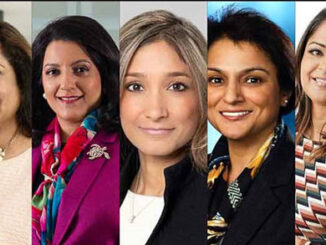
    NEW YORK (TIP): Five Indian American women figure in Barron’s fourth annual list of the 100 Most Influential Women in US Finance honoring “women who have achieved positions of prominence in the financial services industry and are helping to shape its future.” Chosen by a panel of Barron’s writers and editors based on external and internal nominations, the list includes executives at major US companies, investment managers and securities analysts, and public servants and policy makers.
    Indian Americans on the list are Anu Aiyengar, Global Head, Mergers and Acquisitions, JP Morgan, Rupal J Bhansali, Chief Investment Officer & Portfolio Manager, Global Equities, Ariel Investments, Meena Lakdawala-Flynn, Co-Head, Global Private Wealth Management, Goldman Sachs Group, Sonal Desai, Chief Investment Officer, Fixed Income, Franklin Templeton, and Savita Subramanian, Head of US Equity & Quantitative Strategy, Bank of America Securities.
    Anu Aiyengar has been in mergers and acquisitions from early in her career, according to her Barron’s profile. She is the only person of color and the sole woman to carry this position on Wall Street.
    Since 1999, she has advised both domestic and international clients on over $500 billion worth of transactions including mergers, acquisitions, divestitures/separations, leveraged buyouts, proxy contests, unsolicited transactions and special committee assignments. She also serves on JP Morgan’s fairness and valuation committee. As the co-chair of the Investment Bank’s women network Aiyengar is involved with several initiatives across JP Morgan and Wall Street to recruit, mentor and develop women.
    She is also co-chair of the Smith Business Advisory Network. Aiyengar lives in New York City with her husband. She has a BA in economics from Smith College and an MBA from Vanderbilt University.
    Rupal J. Bhansali, 55, broke through the glass ceiling and now uses her position as a senior leader to help other women succeed in finance. “My mantra is: I want women to earn money, learn money, manage money, and multiply money,” she told Barron’s. Bhansali manages more than $7 billion, including Ariel’s International Fund and Global Fund. This is her third appearance on Barron’s 100 list.
    After joining the board of the nonprofit 100 Women in Finance, she launched the webinar series “Candid Conversations with CIOs,” to give women an insider’s view of what it takes to become a chief investment officer and to show the impact that investors can have when managing billions of dollars in funds.
    “It’s said that women can’t be what they can’t see, so this is my effort of giving female CIOs more visibility and trying to showcase to our industry at large that this is what you can be,” she told the magazine.
    She earned a Bachelor of Commerce in accounting and finance, as well as a Master of Commerce in international finance and banking from the University of Mumbai. She later earned an MBA in finance from the University of Rochester, where she was a Rotary Foundation Scholar.
    Sonal Desai, 58, is responsible for overseeing Franklin’s Municipal, Corporate Credit, Floating Rate, Multisector, Global (including Emerging Markets), and Money Market Fixed Income teams.
    She is also a portfolio manager for a number of strategies. A member of Franklin Resources’ executive committee, a small group of the company’s top leaders responsible for shaping the firm’s overall strategy, she also serves on the firm’s Management and Investment Committees.
    Before her current role, she served as a portfolio manager with Dr Michael Hasenstab for the flagship Templeton Global Bond and Templeton Global Total Return strategies, as well as director of research for Templeton Global Macro.
    Desai started her career as an assistant professor of economics at the University of Pittsburgh and then worked for over six years at the International Monetary Fund in Washington, DC.
    Following this, she joined the private financial sector and worked for about five years as director and senior economist for Dresdner Kleinwort Wasserstein in London.
    Desai joined Franklin Templeton in 2009. She holds a Bachelor of Arts in economics from Delhi University and a PhD in economics from Northwestern University.
    Savita Subramanian, 50, is head of US Equity Strategy & US Quantitative Strategy and a managing director at Bank of America Merrill Lynch. She is responsible for determining forecasts for the S&P 500, recommending US sector allocations and themes, and developing and marketing the firm’s US equity strategy product to institutional and individual clients.
    Subramanian is also a member of the firm’s Research & Recommendations Committee and a member of the Bank of America Merrill Lynch Diversity & Inclusion Council.
    She has received high ranks in industry surveys including the Institutional Investor All America Research Team (ranked for the past 6 years) Greenwich Research survey, and Bloomberg Markets World’s Top Analysts.
    Subramanian frequently appears in television and print journalism and is a member/board member of Q Group, Chicago Quantitative Alliance, the Society of Quantitative Analysts and Women on Wall Street.
    Before joining Merrill Lynch in 2001, Subramanian was an analyst at Scudder Kemper Investments in New York and San Francisco. She received a Bachelor of Arts degree with a double major in Mathematics and Philosophy with Honors from UC Berkeley and an MBA degree from Columbia University. Meena Flynn’s career in finance began soon after a sports injury, according to Barron’s. A zealous gymnast who at one point wanted to compete in the Olympics, Flynn had to stay at George Washington University one summer to rehabilitate her knee.
    She did an internship at Friedman, Billings, Ramsey Group, working on the institutional equity sales desk. “The moment I stepped foot onto that trading floor, it was competitive juices flowing,” recalls Flynn, co-head of global private wealth management at Goldman Sachs Group. “I just loved the markets and how micro and macro come together from an investing perspective.” Flynn, 45, joined JPMorgan Chase in 1999. The following year, Flynn moved to Goldman Sachs, becoming a partner in 2014. Today she wears several hats, including co-chairing the global inclusion and diversity committee. She recently attended a marquee event in California for a program called In the Lead, which caters to ultrahigh-net-worth women.

  • The Indian Panorama Holi & Hola Celebrations receive huge appreciation of the guests

    The Indian Panorama Holi & Hola Celebrations receive huge appreciation of the guests

    Nassau County Executive Bruce Blakeman speaks on the occasion. To his right is Prof. Indrajit S Saluja, and to his left is Ragini Srivastava.
    Senator Kevin Thomas presents a proclamation from the NY Senate to Prof. Saluja.
    Assemblywoman Jenifer Rajkumar and Ragini Srivastava present proclamation on behalf of Nassau County Executive Bruce Blakeman to Ambassador Jaiswal who also received a proclamation for Dr. Abha Jaiswal.
    Crowning of “Mahamoorkh” Tirlok Malik. Crowning ceremony was performed by Ambassador Jaiswal, Ravi Batra, a former “Mahamoorkh”, and members of the organizing committee of Holi & Hola celebrations.
    County Executive Bruce Blakeman enjoying the Gatka performance.
    Ambassador Jaiswal watching a performance

    HICKSVILLE, NY (TIP): The Indian Panorama organized the fourth Holi & Hola celebrations at Antun’s by Minar here on March 19, 2023. Attended by over a hundred guests, the event exhibited the fraternal bonds between the diverse Indian diaspora. The very idea of celebrating Holi and the Sikh Hola Mohalla together is to promote brotherhood and amity among Indian Americans practicing diverse faiths and cultures.

    A display of the rich cultural heritage impressed the guests who included the chief guest Ambassador Randhir Kumar Jaiswal, Consul General of India at New York, Nassau County Executive Bruce Blakeman, New York State Senator Kevin Thomas, New York State Assemblywoman Jenifer Rajkumar, Town of North Hempstead Clerk Ragini Srivastava, Nassau County former Human Rights Commission chairman Zahid Ali, Ravi Batra, Chair, the National Advisory Council on South Asian Affairs, AK Vijaykrishnan , Consul, Community Affairs, among others.

    A thrilling display of the Sikh traditional martial art called Gatka by the Akal Gatka Gurmat Group led by Sardar Daler Singh, President of Gurdwara Baba Makhan Shah Lobana left everyone spell bound Before the Gatka performance. Master Mohinder Singh, a senior leader of the Sikh community, a founder President of Gurdwara Baba Makhan Shah Lobana, spoke about the traditional Sikh martial art.
    The Gatka performance evoked from County Executive Bruce Blakeman the comment that he had never ever witnessed such a thrilling performance. He was simply awe-struck. The other attractive performances included Holi Dance by the dancers from Rhythm Dance Academy, Bollywood Medley Dance by dancers from RS International group, and a Holi Song by a Florida based celebrated singer Kadambini.
    Prachi Makkar’s Punjabi songs and Bolian brought many to the dance floor. Surya Makkar on Punjabi Dhol was a great accompanist to his sister Prachi. Bollywood singer and director Vicky Kohli regaled with his lovely singing.

    The gathering

    One of the attractions of the celebrations was the selection of the traditional Holi “Mahamoorkh”. Emmy nominated film maker and actor Tirlok Malik was crowned Mahamoorkh through a draw of lots.

    Speaking on the occasion, County Executive Bruce Blakeman said:
    “On the occasion of Holi and Hola. I convey my warmest wishes to all our Indian American community members here in Long Island and we are thankful to Professor Indrajit Saluja for organizing a very beautiful function to get everybody together to celebrate our culture and heritage. We celebrate every race and every religion.

    “You are such an important part of the fabric of Nassau County. Think about what your contributions have been in medicine, law, business, finance, education, technology. Your contributions make this a better County and a better country.”

    In an interview to the TV channels Global Punjab and TV Asia Mr. Blakeman said: “I am glad to be here at Antun’s in Hicksville celebrating with all my Indian Sikh friends for The Indian Panorama Holi and Hola festival. We love the Indian Americans that live here in America. They contribute so much to our county and country- medicine, technology, education, business; Indian American community contributes so much. They make us a greater County and I’m so blessed to be here. Thank you all. God bless you and have a wonderful festival.”

    Gatka performance by Akal Gatka Gurmat Group. (Photos : Jay Mandal-on assignment)

    Ambassador Randhir Kumar Jaiswal, Consul General of India at New York who has always maintained a close contact with the Indian American community and taken keen interest in its various activities was the chief guest. In his brief address, he praised the Indian American community for preserving and promoting Indian culture.
    The Consul General said:
    “I convey my warmest wishes to all our Indian American community members here in Long Island and we are thankful to Professor Indrajit Saluja for organizing a very beautiful function to get everybody together to celebrate our culture and heritage.” Others who spoke on the occasion included Senator Kevin Thomas, Assemblywoman Jenifer Rajkumar and Town of North Hempstead Clerk Ragini Srivastava.

    A dance performance by the dancers from Rhythm Dance Academy.
    Bollywood Medley Dance by dancers from RS International group.

    Earlier, welcoming the guests, Prof. Indrajit S Saluja said the idea of organizing the Holi and the Hola Mohalla together was prompted by his desire to promote a feeling of togetherness, amity and brotherhood between the two major communities of Indian origin here. He thanked the gathering for their response and support.

    The organizing committee which worked real hard for the success of the event included Indu Jaiswal, Jyoti Gupta, Amita Karwal, Gunjan Rastogi, Shashi Malik, Anu Jain, Jag, Jaskiran Saluja, and Parveen Chopra. “A lot of thanks to the greatest team”, Prof. Saluja said.
    He also thanked his family for their support and advice always.
    The media persons were extremely supportive and deserve all thanks, said Prof. Saluja. TV Asia, PTC TV , ITV , Global Punjab deserve special gratitude for the extensive coverage of the event.
    Parminder was a great DJ , as usual, with excellent sound service.
    Anmol Dhawan was a great help with banners and publicity. The Indian Panorama is grateful to the young man who has always been supportive. Not to forget the great photographer Jay Mandal whose clicks will surely please our readers. Thank you, Mr. Mandal for your support.

    The food catered by Mr. Neetoo of Antun’s by Minar received approval and praise from all guests who looked forward to another attendance at the place.

    Kadambini sings a Holi song.
    Surya Makkar on Dhol and Prachi Makkar singing Punjabi songs and bolian.
    Vicky Kohli regaled with his lovely singing.
  • Bihar Foundation (East Coast Chapter) Celebrated ‘Bihar Diwas 2023’ at Consulate General of India New York

    Bihar Foundation (East Coast Chapter) Celebrated ‘Bihar Diwas 2023’ at Consulate General of India New York

    Performances depicting Bihar culture.

    NEW YORK CITY (TIP): Bihar Foundation of USA (East Coast) hosted the “Bihar Diwas Celebration” on Tuesday, March 21, igniting memories of home for the diaspora and members of the Indian American community gathered here. On the occasion, Bihar Chief Minister Nitish Kumar sent a special congratulatory message. CM lauded the efforts of Bihar Foundation USA in promoting the state’s heritage and traditions in America and for supporting a wide range of voluntary and philanthropic activities.

    Consul General of India in New York Randhir Jaiswal appreciated the contributions of the diaspora from the state in the US as well for their philanthropic activities. He said through their determination and eagerness to work for the betterment of their home state, the aim of Bihar 2.0 will be achieved and fulfilled in 2023.

    Consul General Jaiswal honors senior journalist Lalit K Jha.

    From the famous ‘Litti Chokha’ to the popular ‘Jhijhiya’ song and dance, traditional dialects, and textiles, the celebration was seeped in colors and vibrant traditions of  Bihar and invoked among those present memories of their homes and childhood.  Bihar Foundation of US (East Coast Chapter) Chairman and former President of the Federation of Indian Associations (FIA) Alok Kumar said the foundation aims to act as a bridge to support and guide members of the diaspora who wish to take up development and social projects in their state. It also seeks to offer assistance to those coming from Bihar, including students, as they navigate in the US.

    Vice Chairman Ranjeet Kumar congratulated and thanked Chandan Trivedi-Secretary, Alok Kashyap – Treasurer and Anand Gupta Joint Treasurer for their efforts in organizing this event successfully.

    Chandan Trivedi, Secretary of Bihar Foundation thanked executive committee members Mr. Santa Mishra, Mr. Rajnish Ojha, and Mr. Manish Kumar who drove from the enharbouring states to participate in the events. He conveyed special thanks to Mr. Sanjeev Jha and Mr. Pramod Kumar who drove all the way from Boston to attend the event.  On the occasion, three persons hailing from the state were honored with the ‘Bihar Vishwa Gaurav’ award for their achievements and contributions. The honorees were Padma Bhushan awardee renowned sociologist and social entrepreneur, founder of Sulabh International Dr. Bindeshwar Pathak; entrepreneur Ajay Singh who leads the Pokhrama Foundation and is the founder and CEO of Slayback Pharma and Washington-based journalist and member of the White House Press Pool Lalit Jha.  In a special video message for the occasion, Super 30 founder Anand Kumar congratulated the honorees.

    The Bihar Foundation officials.
    Alok Kumar addresses the gathering.
  • Plan is to stage entire 2023 ODI World Cup in India: ICC source

    Plan is to stage entire 2023 ODI World Cup in India: ICC source

    Mumbai (TIP)- While the formal announcement of the dates and venues for this year’s ODI World Cup in India is awaited, the International Cricket Council (ICC) has denied media reports that Pakistan will play their matches at a neutral venue. “As far as we are concerned, everything is full speed for a full event in India later this year,” an ICC official said.
    A final word may yet be heard on the matter.
    BCCI has had talks with the Pakistan board (PCB) over adopting a “hybrid model” for the Asia Cup in September – staging the tournament in Pakistan but holding the India games in neutral venues. Reports in the Pakistan media say the same model will apply for the World Cup and Pakistan’s matches will be relocated to a neutral venue. Bangladesh is being spoken of as a possible host nation for these matches.
    Some media reports have even quoted Wasim Khan, ICC GM and ex-CEO of PCB, as saying that Pakistan’s World Cup matches will be played at a neutral venue. ICC has distanced itself from any such comments.
    While negotiations may be on for the Asia Cup to stay in Pakistan with only the India games and the final to be moved out, BCCI are unwilling to let PCB use it to bargain for moving World Cup matches out of India.
    The World Cup will be played in the same format as the last edition in England in 2019. All 10 teams played against the other once before the semi-finalists were decided. That would mean nine Pakistan matches are to be hosted in India.
    BCCI’s long-standing position has been that they won’t be able to play cricket in Pakistan without government permission. Pakistan is known to be putting forth the same argument at the ICC forum.
    Source: HT

  • Fantastic 4 sparkle at World Championships, but Indian boxers have a long way to go

    Fantastic 4 sparkle at World Championships, but Indian boxers have a long way to go

    New Delhi (TIP)- The indomitable Nikhat Zareen continued to shine bright while Lovlina Borgohain rediscovered her winning touch as hosts India capped off a memorable campaign in the Women’s Boxing World Championships with four gold medals. With the Paris Olympics approaching, it augurs well that the Indian contingent matched its best performance in terms of gold medals.
    The highlight of the tournament was Nikhat becoming only the second Indian to win the world title twice after the legendary MC Mary Kom, who has an unprecedented six titles. The emergence of three new champions in Lovlina (75kg), Nitu Ghanghas (48kg) and Saweety Boora (81kg) and some promising performances from the likes of Preeti Pawar (54kg) were also key takeaways from the tournament.
    Nikhat had to battle through six exhausting bouts, including playing back-to-back pre-quarters, quarterfinals and semifinals. The 50kg field was one of the toughest with 35 boxers vying for the top honours. Several pugilists had either gained or cut down their weight to make the cut for the light flyweight class as it is an Olympics category.
    “These World Championships were tougher than last time as I had to manage my weight, and follow a strict diet,” Nikhat, who won the 52kg title last year in Istanbul, said. “I didn’t get seeding so I had to fight six bouts. I had back-to-back matches and my body was a bit slow in some matches. I will learn from these experiences and try to become stronger,” she added.
    Lovlina’s triumph is also an encouraging sign. For one, Lovlina has broken the ‘bronze jinx’ that she admitted ahead of the tournament was affecting her psychologically. The 25-year-old had three bronze — two at the World Championships and one at the Tokyo Olympics — coming into the event. The win at home following a series of underwhelming results, including the 2022 Commonwealth Games, will do a world of good to Lovlina’s confidence. However, both Nikhat and Lovlina are still adapting to their new weight categories and have several aspects to work on.
    Another boxer who impressed despite making a pre-quarterfinal exit was young Preeti. Competing in the 54kg category, the 19-year-old packed a punch in her three rounds as she toppled top seed and last edition’s silver medallist Lacramioara Perijoc of Romania before going down to two-time medallist Jitpong Jutamas of Thailand in a fiercely-contested bout.
    The performances of last edition’s bronze medallist Manisha Moun (57kg), Commonwealth Games bronze medallist Jaismine Lamboria (60kg) and Manju Bamboriya, all competing in Olympics categories, however, left a lot to be desired.
    Overall, India topped the medals tally, but it should be noted that the field was depleted. More than 10 countries boycotted the event after the International Boxing Association (IBA) went against the International Olympic Committee’s (IOC) recommendations and allowed Russian and Belarusian athletes to compete under their own flags.
    Source: PTI

  • Milestone Messi hits century for Argentina

    Milestone Messi hits century for Argentina

    Lionel Messi scored a hat-trick and surpassed 100 career goals for Argentina with three in the first half of Tuesday’s international friendly against Curacao. The World Cup winners beat the Caribbean side 7-0 in their second match since clinching the trophy in December. The 35-year-old Messi opened the scoring against Curacao in the 20th minute with a right-foot shot from the edge of the box to reach the 100-goal milestone. Nico Gonzalez added another three minutes later with a header from close range. Messi then scored his 101st for Argentina in the 33rd minute with a crossed shot to the right of the goalkeeper and his 102nd in the 37th after an easy run to score. Two minutes earlier he had assisted Enzo Fernandez’ blast from the edge of the box. Source: AP

  • Scotland take Spain scalp, Croatia win

    Scotland take Spain scalp, Croatia win

    Scott McTominay scored twice as Scotland upset Spain 2-0 in qualifying for the European Championship, their first win in 39 years over one of the football’s biggest heavyweights.
    McTominay’s goals came after he also scored two in a 3-0 win over Cyprus on Saturday and ended Spain’s 19-game unbeaten run in European qualifiers. The result also puts Scotland top of Group A with six points from two games. Mateo Kovacic also scored twice as Croatia defeated Turkey 2-0 away for their first win in Group D. Romania and Switzerland both won in Group I, continuing their perfect starts.
    Spain’s players were warned after McTominay scored two late goals in Scotland’s opening win over Cyprus in a Group A match. But few expected him to do it again Tuesday against a team that had not lost a European qualifying game since a 2-1 loss to Slovakia ahead of the 2016 tournament. Spain had not lost to Scotland since Maurice Johnston scored two and Kenny Dalglish added another in a 3-1 World Cup qualifier in November 1984.
    In Group D, Croatia were forced to rely on goalkeeper Dominik Livakovic to deny Turkey’s Cengiz Under and Kerem Akturkoglu early on in Bursa. Kovacic opened the scoring in the 20th and nabbed the second just before the break.

  • Wayanad: Nature’s abode

    Wayanad: Nature’s abode

    Replete with waterfalls, historical caves, comfortable resorts and homestays, Wayanad in Kerala is famous for its spice plantations and wildlife. Walking through the sprawling spice plantations, trekking to the pre-historic caves and experiencing a resort holiday are one of the many things you can do to get a taste of Wayanad.
    Wayanad is best known for the wildlife reserves – Wayanad wildlife reserve which is home to an exquisite variety of flora and fauna. Wayanad wildlife reserve is an integral part of the Nilgiri biosphere reserve peacefully located amidst the serene hills of Western Ghats. Wayanad homes a wide variety of wildlife like elephants, leopards, and bears. Wayanad is a perfect weekend idea from the cities of South India. If taking a road trip from Bangalore, you will drive through three national parks: Nagarhole, Bandipur and Mudumalai.
    Banasura Dam
    Lying in the lap of the Banasura hills in the Wayanad district is the picturesque Banasura Sagar dam. Banasura Dam is the largest earthen dam in the country and the second-largest in Asia. The view of the sprawling reservoir from the top of the dam is breathtaking. Adventures like speed boating are readily available, and a trek up to the Banasura Peak is filled with streams, diverse flora, fauna, lush tropical green and majestic waterfalls. An earthen dam, also known as an embankment dam is created by placing mounds of clay, sand, rock or soil. The view of Banasura Lake from the top of the hill is mesmerising.
    Wayanad Wildlife Sanctuary
    Wayanad Wildlife Sanctuary is the second largest wildlife sanctuary in Kerala and comprises of rare as well as endangered species of both flora and fauna. It is surrounded by the protected areas of Mudumalai in Tamil Nadu as well as Nagarhole and Bandipur in Karnataka. Founded in the year 1973, the wildlife sanctuary is an integral part of the Nilgiri Biosphere Reserve which was the first biosphere out of the 14 present in India. The sanctuary is spread over an area of 345 square km and comprises of two parts namely Upper Wayanad and Lower Wayanad. Eucalyptus, as well as bamboo trees, are grown in the region.
    Chembra Peak
    Located close to Meppady and just 8 km south of Kalpetta, stands the highest peak of the Wayanad Hill Range- the Chembra Peak at an altitude of 2000 meters above sea level. The Chembra peak offers a panoramic view of not only the entire Wayanad district but also a large chunk of Kozhikode, Malappuram and Niligiri districts. The peak, its surrounding lush greenery and the famed heart-shaped lake make it a paradise for travellers to explore.
    Banasura Dam
    Lying in the lap of the Banasura hills in the Wayanad district is the picturesque Banasura Sagar dam. Banasura Dam is the largest earthen dam in the country and the second-largest in Asia. The view of the sprawling reservoir from the top of the dam is breathtaking. Adventures like speed boating are readily available, and a trek up to the Banasura Peak is filled with streams, diverse flora, fauna, lush tropical green and majestic waterfalls. An earthen dam, also known as an embankment dam is created by placing mounds of clay, sand, rock or soil. The view of Banasura Lake from the top of the hill is mesmerising.
    Edakkal Caves
    Famous for its exquisite rock and wall carvings, the pre-historic Edakkal Caves are two naturally occurring alcoves located in the Wayanad district of Kerala. The caves measure at a massive length and width of 96 and 22 feet respectively and lie 1200 metres above the sea level. Owing to its precarious location, one needs to trek for one and half hour (around 4000 ft) to hit the cave entrance, and another 45 minutes to reach the mouth of the cave. The Edakkal caves are of historical and archaeological significance as it has carvings that date back to the Neolithic era, the late Stone Age. The stonework in the interior of the cave is estimated to be as old as 5000 BC to 1000 BC.
    Edikkal literally means ‘a stone in between’ and aptly describes its formation. A smaller rock has wedged in between 2 bigger ones to form a natural cave. In the truest sense of the word, it is not a cave but a natural fissure in the rock which has a heavy boulder on top. The cave thus has 2 levels. The first level of the cave can be explored through a small opening. Just opposite this is a passage that leads to another opening, this time in the roof. Here you come to the second level which is much bigger in size. To explore the caves visitors have to pass uneven boulders, an iron ladder and rock walls covered with fungi. The walls are covered with carvings of animal and human figures, some of which are hazy but are clear for the most part. The clarity of the carvings is even more surprising given the duration they have survived.
    Soochipara Falls
    Also known as Sentinel Rock Waterfalls, Soochipara Falls is a three-tiered waterfall situated in Vellarimala, Wayanad. Surrounded by deciduous, evergreen and montane forests, this waterfall is regarded as one of the best waterfalls. The drive from Meppadi to Sentinel Rock Waterfalls provides visitors with scenic views of some of the best tea estates in Wayanad.
    This enchanting waterfall is 200 meters high that also offer a cliff face, ideal for rock climbing. Also, since the water falling from the waterfall forms a large pool, one can enjoy swimming and bathing in it. The water falling from Soochipara later joins Chulika River aka Chaliyar River after hills from Kerela and Tamil Nadu.
    Stay in a Treehouse
    One of the best things to do in Kerala is to stay in a treehouse. And there is no better place in the state than Wayanad. You can find several packages in the city where you can stay in the pretty wooden house and as part of the package, you can also enjoy a bonfire and indulge in activities like rock climbing, rappelling, nature walks etc. Source: Holidify

  • Hanuman Jayanti

    Hanuman Jayanti

    Hanuman Jayanti is celebrated on the 15th day of the Shukla Paksha, during the month of Chaitra (the Chaitra Pournimaa). Hanuman, who is also known as Vanara God, was born on this day and Hanuman Jayanti is celebrated to commemorate the birth of Lord Hanuman.
    Hanuman avatar is considered as the 11th Rudra manifestation of the Lord Siva with great devotion, strength, knowledge, divine power, bravery, intelligence, spirit for selfless service and etc. He has devoted his life only for his Lord Rama and Mata Sita and never shows his bravery and intelligence without any purpose. Hanuman Jayanti is an important festival of Hindus and widely celebrated all over India. Lord Varuna is another name given to Lord Hanuman. Hanuman Jayanti is an occasion to remember Lord Hanuman’s unbridled devotion to Lord Rama and his feats of daring. In the epic tale of Ramayana, the extraordinary role of Lord Hanuman, an exemplary devotee of Lord Rama, is very well detailed out in situations requiring strength, will-power and courage. Lord Hanuman is considered a symbol of power and energy. The line ‘Bhoot Pisaach Nikat Nahi Aawe, Mahabir Jab Naam Sunave’ mentioned in Hanuman Chalisa, symbolizes that Mahavira takes away all the negativity from the life of his devotees. It is believed that is a person is supposed to get rid of all negativity or ghosts; should worship Lord Hanuman.
    There is a popular belief that worshiping Lord Hanuman will help in removing the hardship caused by Lord Shani or Saturn in astrology. When Lord Hanuman broke the boasting of Lord Shani then he apologized to Hanumanji and promised that he never ever create obstacles in Shri Ram and Hanuman work. To make Hanuman Jayanti, a fruitful day, you can visit Maruti’s temple and worship the deity. As a part of the tradition, red tilak (vermilion mark) is applied on the forehead of Lord Hanuman idol and Ladoos (sweet) are offered.Some of the important puja rituals include offering red vermillion with ghee to the idol of Hanuman. People are seen observing fast (Vrat) on this day. Worshiping Rudra (Bajrangbali) with these rituals will bestow you with blessings and glory of Hanuman or Anjaneya on Hanuman Jayanti. Thus, he will always stand by his sincere devotees.
    Significance of Hanuman Jayanti
    Hanuman Jayanti has immense significance for Brahmacharis, wrestlers, and bodybuilders. They consider Hanuman an ideal role model for physical strength and discipline due to his immense physical prowess. Special prayers, devotional songs, and the chanting of Hanuman Chalisa, a hymn dedicated to Lord Hanuman, mark the festival of Hanuman Jayanti.
    Devotees offer sweets, fruits, and flowers to the deity on this day. Some even fast to express their devotion and also to seek his blessings. As the 11th Rudra avatar of Lord Shiva, Hanuman dedicated his life to Lord Rama and Sita. His devotion and selflessness toward them inspire millions of Hindus worldwide.
    Moreover, people pray to Lord Hanuman for their bright future and widely regard him as a symbol of hope and optimism. Hanuman’s teachings and example of selflessness and devotion continue to inspire and guide people in their spiritual and personal lives. This also makes him a revered and beloved figure in Hinduism.
    Connection between Lord Hanuman and Rudraksha
    Hinduism considers Rudraksha beads sacred in Hinduism and believes them to possess divine powers. The seeds of the Rudraksha tree are the tears of Lord Shiva, which he shed while meditating for the welfare of mankind. Using Rudraksha beads during Hanuman Jayanti brings peace, harmony, and good health to the devotees.
    Additionally, as Hanuman is an avatar of Lord Shiva, using Rudraksha beads helps enhance the power and effectiveness of Hanuman worship. Many people wear Rudraksha beads as a necklace or bracelet while performing Hanuman puja. While some even use them to make a mala for chanting Hanuman mantras. Overall, using Rudraksha beads during Hanuman Jayanti is a way for devotees to connect with the divine energy and seek the blessings of Lord Hanuman.
    Hanuman Jayanti Vrat importance
    Fasting is an important tradition associated with Hanuman Jayanti among devotees. The belief is that by observing a fast on this day, one can purify their mind, body, and soul and seek blessings from Lord Hanuman. Devotees see fasting as a way to express their gratitude and devotion to the deity. While some people observe a complete fast, others consume only fruits or a simple sattvic meal.
    Fasting additionally helps develop self-discipline and control the senses. By observing Hanuman Jayanti Vrat, one can gain strength, courage, and wisdom. These are the qualities devotees associate with Lord Hanuman. In summary, fasting on Hanuman Jayanti is a way to strengthen the spiritual connection with the deity and seek his divine blessings.
    Astrological importance of Hanuman Jayanti
    Hanuman Jayanti is an important day in astrology, as it ought to significantly impact the planetary positions and the energy levels of the universe. Astrologers consider the recitation of Hanuman Chalisa during Hanuman Jayanti to be very powerful from an astrological perspective.
    The hymn can appease the planet Mars (Mangal), which associates with strength, courage, and victory. Chanting the Hanuman Chalisa reduces the negative effects of Mars in one’s horoscope and brings positive life changes.
    Many people perform pujas and rituals on Hanuman Jayanti, which has astrological benefits. The puja helps to connect with the divine energies of Lord Hanuman and seek his blessings. It brings positive changes in life, such as success in endeavors, good health, and protection from negative energies.
    How to perform Puja on Hanuman Jayanti?
    Hanuman Puja is a powerful way to connect with Lord Hanuman and seek his blessings for success, good health, and happiness. Devotees consider it one of the most sacred rituals to seek Lord Hanuman’s blessings and their gratitude towards him. Wake up early and take a bath: It is essential to wake up early and take a bath to purify your body and mind before starting the puja.
    Meditate and pledge to perform the puja sincerely: Before starting the puja, sit in silence and meditate for a few minutes to calm your mind. Take a pledge to perform the puja with devotion and sincerity.
    Place the idol or image of Lord Hanuman: Place the idol or image of Lord Hanuman on a wooden chowki covered with a fresh yellow cloth facing east. You can also use a picture of Lord Hanuman if you do not have an idol.
    Light an oil or ghee lamp and place it near the idol of Lord Hanuman. Seek blessings from Lord Ganesha for a hurdle-free puja.
    Sprinkle water on the idol or image of Lord Hanuman
    Sprinkle some water on the image of Lord Hanuman to purify it. Moreover, if the idol is of metal, use water, raw milk, honey, curd, ghee, etc., for doing the Abhishek.