Month: January 2024
-

Creating path to Palestinian state can isolate Iran: Antony Blinken
CAIRO (TIP): Israel working with the region and creating a path to a Palestinian state is the best way to isolate Iran, US Secretary of State Antony Blinken said on Thursday, January 11, as he ended a frenetic regional tour over the Gaza war in Cairo. Shuttling between Israel and Arab states, Blinken has been pushing for a way forward from the bloodshed in Gaza, even as the conflict threatens to spread further to Lebanon, Iraq and Red Sea shipping lanes, according to a Reuters report. Speaking to reporters after meeting Egyptian President Abdel Fattah al-Sisi, Blinken said the region faced two paths, the first of which would see “Israel integrated, with security assurances and commitments from regional countries and as well from the United States, and a Palestinian state – at least a pathway to get to that state”. “The other path is to continue to see the terrorism, the nihilism, the destruction by Hamas, by the Houthis, by Hezbollah, all backed by Iran,” he said. “The first path is the best way to isolate, to marginalize Iran and the proxies making trouble,” he added.
-

Cardiologists transform heart’s ‘Mitral Valve’ care through ‘Ring Replacement’ procedure in India
By Dr Yash Goyal
JAIPUR (TIP): For the first time, the specialized cardiologists at Eternal Heart Care Centre (EHCC) and Research transformed heart’s “Mitral Valve” care and treatment in young and old age patients through a novel ‘Ring Replacement’ procedure in India. They described the procedure as ‘Transcatheter Mitral Valve Replacement (TMVR) in Ring”. Surgery is no longer the sole solution for mitral valve replacement, thanks to techniques like TMVR. Cardiologist experts are pioneering this shift, providing alternatives for patients who couldn’t undergo conventional surgery.
“It is a revolutionizing milestone in heart care with the successful execution of the first ever TMVIR procedure in heart care”, Dr Prashant Dwivedi, In charge TAVR and Structural Heart Disease Program at Eternal Heart Care Centre (EHCC) and Research told The Indian Panorama.

Dr. Sameen K Sharma (Photos : courtesy Corporate PR Nitesh Tiwari) “Traditionally, open-heart surgery was the standard approach for mitral valve issues. However, the Transcatheter Mitral Valve Replacement (TMVR) procedure is a minimally invasive alternative, reducing trauma, risk and recovery time. This innovative technique deploys a new valve through a leg-inserted catheter, eliminating the need for large incisions,” Dr Dwivedi who expertised it with the group leader Dr Samin K Sharma said.
It eliminates chest incisions and cardiopulmonary bypass, leading to less pain and quicker recovery, Dr Dwivedi claimed.
If a young patient suffers from Mitral Valve complications he can go for open heart surgery where a devised ring is implanted for the cure. After 20-30 years, if the same patients develop any further complication in MV then the expert TAVR cure, replace or repair MV through the special ring implanted years ago. The open heart surgery of such patients with the MV seriousness is difficult, and if the Ring is there then the cure and treatment is easy and non-invasive, according to Dr Dwivedi.
Dr Dwivedi who performed this procedure in two patients, one at EHCC and another at a private hospital in Udaipur said the cost depends on the condition of the patient. However, the cost of treatment varies between Rs.14 to 15 lakh, and in the country it is dawning on the heart care.

Dr. Prashant Dwivedi Dr. Prashant Dwivedi rightly states, “With each stride made in cardiology, we come closer to ensuring a better quality of life for individuals grappling with cardiovascular conditions. India’s entry into TMVR resonates on the international stage, benefitting people worldwide.
According to medical science, “Transcatheter aortic valve replacement is commonly called TAVR . It’s done to replace a narrowed aortic valve, a condition called aortic valve stenosis. A doctor inserts a flexible tube called a catheter into a blood vessel and guides it into the heart”.
-

25 from Haryana paid Rs 85 lakh each for ‘donkey route’ trip
Were aboard flight grounded in France last month; ‘Unpopularity’ of Nicaragua gave plot away
CHANDIGARH (TIP): Over 25 men from Haryana were aboard the “dubious” Dubai-Nicaragua Legend Airways Airbus A340, grounded in France last month. Hailing from Ladwa, Pehowa, Yamunanagar and Kaithal, the men were aware that they were embarking on a “donkey route” to the US, but were assured that it was “legally” safe, and even if they failed, they would not go to jail.
Having paid around Rs 85 lakh, they were going on valid tourist visas to Nicaragua in Central America, and would then enter the US on boats through Mexico. A senior official from the Crime Investigation Department (CID), Mumbai, said they were trained for any exigency, and were assured of legal assistance if things went wrong. However, the “unpopularity” of Nicaragua gave the plot away.
“This was a near-perfect plan, which ensured all travelers were legally safe. They had valid visa and just the last leg was risky. They even had legal aid ready. Nicaragua is not popular among international and Indian tourists. A chartered plane going to such a destination raised doubts in France. The travelers, however, were trained well and stuck to the tourist story and were sent back,” he said.
“It was foolproof and we had seen several videos showing the successful landing of Gujaratis in the US, and that is what inspired us. I sold my shop and got money. They told us nobody could touch us till Mexico, and from there they said we would take an illegal route through boats to reach the US. Two lawyers had already been paid to take up our case in the eventuality that we are caught at the border. We were asked to travel light, but carry enough money for support survival. The officials at France didn’t believe that we were going to Nicaragua as tourists, and many of us developed cold feet when questioned. I think that gave us away. The Indian authorities also questioned us, but everything was legal,” said a traveler from Haryana.
Though no official investigations are on against them, the revelations have blown the lid off various private firms and touts who help people reach the US and Canada via stops in Europe and South American countries. To make the multi-hop journey, now known as the “donkey route”, the agents help create fake documents and paper trails.
Sanjay Kharat, SP, (CID), Gujarat, said at a press conference that the police had identified four kingpins in the case. “It is not easy for one person to arrange for over 300 tickets and to make such arrangements. There are many more in the racket, and transactions were made through the hawala route. The passengers, however, have recorded statements that they have not paid a penny, and the investment was made by agents. This is a highly specialized operation,” he said.
So far, 17 FIRs have been registered in the case in Gujarat. No communication has been received by the Haryana or Punjab police regarding the travelers.
Had valid tourist visa
With valid tourist visa for Nicaragua, they were to enter the US on boats through Mexico
Hailing from Ladwa, Pehowa, Yamunanagar and Kaithal, they were aware that they were embarking on a “donkey route”
They were assured that it was “legally” safe, and even if they failed, they would not go to jail -

Martin Luther King, Jr. the chief spokesperson in Civil Rights Movement in America
Martin Luther King Jr. Day is a federal holiday in the United States marking the birthday of Martin Luther King Jr. It is observed on the third Monday of January each year. Born in 1929, King’s actual birthday is January 15.
Martin Luther King, Jr., made history, but he was also transformed by his deep family roots in the African-American Baptist church, his formative experiences in his hometown of Atlanta, his theological studies, his varied models of religious and political leadership, and his extensive network of contacts in the peace and social justice movements of his time. Although King was only 39 at the time of his death, his life was remarkable for the ways it reflected and inspired so many of the twentieth century’s major intellectual, cultural, and political developments.
The son, grandson, and great-grandson of Baptist ministers, Martin Luther King, Jr., named Michael King at birth, was born in Atlanta and spent his first 12 years in the Auburn Avenue home that his parents, the Reverend Michael King and Alberta Williams King, shared with his maternal grandparents, the Reverend Adam Daniel (A. D.) Williams and Jeannie Celeste Williams. After Reverend Williams’ death in 1931, his son-in-law became Ebenezer Baptist Church’s new pastor and gradually established himself as a major figure in state and national Baptist groups. The elder King began referring to himself (and later to his son) as Martin Luther King.
King’s formative experiences not only immersed him in the affairs of Ebenezer but also introduced him to the African-American social gospel tradition exemplified by his father and grandfather, both of whom were leaders of the Atlanta branch of the National Association for the Advancement of Colored People (NAACP). Depression-era breadlines heightened King’s awareness of economic inequities, and his father’s leadership of campaigns against racial discrimination in voting and teachers’ salaries provided a model for the younger King’s own politically engaged ministry. He resisted religious emotionalism and as a teenager questioned some facets of Baptist doctrine, such as the bodily resurrection of Jesus.
During his undergraduate years at Atlanta’s Morehouse College from 1944 to 1948, King gradually overcame his initial reluctance to accept his inherited calling. Morehouse president Benjamin E. Mays influenced King’s spiritual development, encouraging him to view Christianity as a potential force for progressive social change. Religion professor George Kelsey exposed him to biblical criticism and, according to King’s autobiographical sketch, taught him “that behind the legends and myths of the Book were many profound truths which one could not escape” (Papers 1:43). King admired both educators as deeply religious yet also learned men and, by the end of his junior year, such academic role models and the example of his father led King to enter the ministry. He described his decision as a response to an “inner urge” calling him to “serve humanity” (Papers 1:363). He was ordained during his final semester at Morehouse, and by this time King had also taken his first steps toward political activism. He had responded to the postwar wave of anti-black violence by proclaiming in a letter to the editor of the Atlanta Constitution that African Americans were “entitled to the basic rights and opportunities of American citizens” (Papers 1:121). During his senior year King joined the Intercollegiate Council, an interracial student discussion group that met monthly at Atlanta’s Emory University.
After leaving Morehouse, King increased his understanding of liberal Christian thought while attending Crozer Theological Seminary in Pennsylvania from 1948 to 1951. Initially uncritical of liberal theology, he gradually moved toward Reinhold Niebuhr’s neo-orthodoxy, which emphasized the intractability of social evil. Mentored by local minister and King family friend J. Pius Barbour, he reacted skeptically to a presentation on pacifism by Fellowship of Reconciliation leader A. J. Muste. Moreover, by the end of his seminary studies King had become increasingly dissatisfied with the abstract conceptions of God held by some modern theologians and identified himself instead with the theologians who affirmed personalism, or a belief in the personality of God. Even as he continued to question and modify his own religious beliefs, he compiled an outstanding academic record and graduated at the top of his class.
In 1951, King began doctoral studies in systematic theology at Boston University’s School of Theology, which was dominated by personalist theologians such as Edgar Brightman and L. Harold DeWolf. The papers (including his dissertation) that King wrote during his years at Boston University displayed little originality, and some contained extensive plagiarism; but his readings enabled him to formulate an eclectic yet coherent theological perspective. By the time he completed his doctoral studies in 1955, King had refined his exceptional ability to draw upon a wide range of theological and philosophical texts to express his views with force and precision. His capacity to infuse his oratory with borrowed theological insights became evident in his expanding preaching activities in Boston-area churches and at Ebenezer, where he assisted his father during school vacations.
During his stay in Boston, King also met and courted Coretta Scott, an Alabama-born Antioch College graduate who was then a student at the New England Conservatory of Music. On 18 June 1953, the two students were married in Marion, Alabama, where Scott’s family lived.
Although he considered pursuing an academic career, King decided in 1954 to accept an offer to become the pastor of Dexter Avenue Baptist Church in Montgomery, Alabama. In December 1955, when Montgomery black leaders such as Jo Ann Robinson, E. D. Nixon, and Ralph Abernathy formed the Montgomery Improvement Association (MIA) to protest the arrest of NAACP official Rosa Parks for refusing to give up her bus seat to a white man, they selected King to head the new group. In his role as the primary spokesman of the year-long Montgomery bus boycott, King utilized the leadership abilities he had gained from his religious background and academic training to forge a distinctive protest strategy that involved the mobilization of black churches and skillful appeals for white support. With the encouragement of Bayard Rustin, Glenn Smiley, William Stuart Nelson, and other veteran pacifists, King also became a firm advocate of Mohandas Gandhi’s precepts of nonviolence, which he combined with Christian social gospel ideas.
After the U.S. Supreme Court outlawed Alabama bus segregation laws in Browder v. Gayle in late 1956, King sought to expand the nonviolent civil rights movement throughout the South. In 1957, he joined with C. K. Steele, Fred Shuttlesworth, and T. J. Jemison in founding the Southern Christian Leadership Conference (SCLC) with King as president to coordinate civil rights activities throughout the region. Publication of King’s memoir of the boycott, Stride Toward Freedom: The Montgomery Story (1958), further contributed to his rapid emergence as a national civil rights leader. Even as he expanded his influence, however, King acted cautiously. Rather than immediately seeking to stimulate mass desegregation protests in the South, King stressed the goal of achieving black voting rights when he addressed an audience at the 1957 Prayer Pilgrimage for Freedom.
King’s rise to fame was not without personal consequences. In 1958, King was the victim of his first assassination attempt. Although his house had been bombed several times during the Montgomery bus boycott, it was while signing copies of Stride Toward Freedom that Izola Ware Curry stabbed him with a letter opener. Surgery to remove it was successful, but King had to recuperate for several months, giving up all protest activity.
One of the key aspects of King’s leadership was his ability to establish support from many types of organizations, including labor unions, peace organizations, southern reform organizations, and religious groups. As early as 1956, labor unions, such as the United Packinghouse Workers of America and the United Auto Workers, contributed to MIA, and peace activists such as Homer Jack alerted their associates to MIA activities. Activists from southern organizations, such as Myles Horton’s Highlander Folk School and Anne Braden’s Southern Conference Educational Fund, were in frequent contact with King. In addition, his extensive ties to the National Baptist Convention provided support from churches all over the nation; and his advisor, Stanley Levison, ensured broad support from Jewish groups.
King’s recognition of the link between segregation and colonialism resulted in alliances with groups fighting oppression outside the United States, especially in Africa. In March 1957, King traveled to Ghana at the invitation of Kwame Nkrumah to attend the nation’s independence ceremony. Shortly after returning from Ghana, King joined the American Committee on Africa, agreeing to serve as vice chairman of an International Sponsoring Committee for a day of protest against South Africa’s apartheid government. Later, at an SCLC-sponsored event honoring Kenyan labor leader Tom Mboya, King further articulated the connections between the African American freedom struggle and those abroad: “We are all caught in an inescapable network of mutuality” (Papers 5:204).
During 1959, he increased his understanding of Gandhian ideas during a month-long visit to India sponsored by the American Friends Service Committee. With Coretta and MIA historian Lawrence D. Reddick in tow, King met with many Indian leaders, including Prime Minister Jawaharlal Nehru. Writing after his return, King stated: “I left India more convinced than ever before that non-violent resistance is the most potent weapon available to oppressed people in their struggle for freedom” (Papers 5:233).
Early the following year, he moved his family, which now included two children—Yolanda King and Martin Luther King, III—to Atlanta in order to be nearer to SCLC headquarters in that city and to become co-pastor, with his father, of Ebenezer Baptist Church. (The Kings’ third child, Dexter King, was born in 1961; their fourth, Bernice King, was born in 1963.) Soon after King’s arrival in Atlanta, the southern civil rights movement gained new impetus from the student-led lunch counter sit-in movement that spread throughout the region during 1960. The sit-ins brought into existence a new protest group, the Student Nonviolent Coordinating Committee (SNCC), which would often push King toward greater militancy. King came in contact with students, especially those from Nashville such as John Lewis, James Bevel, and Diane Nash, who had been trained in nonviolent tactics by James Lawson. In October 1960, King’s arrest during a student-initiated protest in Atlanta became an issue in the national presidential campaign when Democratic candidate John F. Kennedy called Coretta King to express his concern. The successful efforts of Kennedy supporters to secure King’s release contributed to the Democratic candidate’s narrow victory over Republican candidate Richard Nixon.
King’s decision to move to Atlanta was partly caused by SCLC’s lack of success during the late 1950s. Associate director Ella Baker had complained that SCLC’s Crusade for Citizenship suffered from lack of attention from King. SCLC leaders hoped that with King now in Atlanta, strategy would be improved. The hiring of Wyatt Tee Walker as executive director in 1960 was also seen as a step toward bringing efficiency to the organization, while the addition of Dorothy Cotton and Andrew Young to the staff infused new leadership after SCLC took over the administration of the Citizenship Education Program pioneered by Septima Clark. Attorney Clarence Jones also began to assist King and SCLC with legal matters and to act as King’s advisor.
As the southern protest movement expanded during the early 1960s, King was often torn between the increasingly militant student activists, such as those who participated in the Freedom Rides, and more cautious national civil rights leaders. During 1961 and 1962, his tactical differences with SNCC activists surfaced during a sustained protest movement in Albany, Georgia. King was arrested twice during demonstrations organized by the Albany Movement, but when he left jail and ultimately left Albany without achieving a victory, some movement activists began to question his militancy and his dominant role within the southern protest movement.
As King encountered increasingly fierce white opposition, he continued his movement away from theological abstractions toward more reassuring conceptions, rooted in African-American religious culture, of God as a constant source of support. He later wrote in his book of sermons, Strength to Love (1963), that the travails of movement leadership caused him to abandon the notion of God as “theologically and philosophically satisfying” and caused him to view God as “a living reality that has been validated in the experiences of everyday life” (Papers 5:424).
During 1963, however, King reasserted his preeminence within the African-American freedom struggle through his leadership of the Birmingham Campaign. Initiated by SCLC and its affiliate, the Alabama Christian Movement for Human Rights, the Birmingham demonstrations were the most massive civil rights protests that had yet occurred. With the assistance of Fred Shuttlesworth and other local black leaders, and with little competition from SNCC and other civil rights groups, SCLC officials were able to orchestrate the Birmingham protests to achieve maximum national impact. King’s decision to intentionally allow himself to be arrested for leading a demonstration on 12 April prodded the Kennedy administration to intervene in the escalating protests. The widely quoted “Letter from Birmingham Jail” displayed his distinctive ability to influence public opinion by appropriating ideas from the Bible, the Constitution, and other canonical texts. During May, televised pictures of police using dogs and fire hoses against young demonstrators generated a national outcry against white segregationist officials in Birmingham. The brutality of Birmingham officials and the refusal of Alabama’s governor George C. Wallace to allow the admission of black students at the University of Alabama prompted President Kennedy to introduce major civil rights legislation.

Martin Luther King Jr. in the march on Washington. King’s speech at the 28 August 1963 March on Washington for Jobs and Freedom, attended by more than 200,000 people, was the culmination of a wave of civil rights protest activity that extended even to northern cities. In his prepared remarks, King announced that African Americans wished to cash the “promissory note” signified in the egalitarian rhetoric of the Constitution and the Declaration of Independence. Closing his address with extemporaneous remarks, he insisted that he had not lost hope: “I say to you today, my friends, so even though we face the difficulties of today and tomorrow, I still have a dream. It is a dream deeply rooted in the American dream … that one day this nation will rise up and live out the true meaning of its creed: ‘We hold these truths to be self-evident, that all men are created equal.’” He appropriated the familiar words of “My Country ’Tis of Thee,” before concluding, “When we allow freedom ring, when we let it ring from every village and every hamlet, from every state and every city, we will be able to speed up that day when all of God’s children, black men and white men, Jews and Gentiles, Protestants and Catholics, will be able to join hands and sing in the words of the old Negro spiritual: ‘Free at last! Free at last! Thank God Almighty, we are free at last!’” (King, “I Have a Dream”).

“I have a Dream” – Martin Luther King’s speech which inspired millions and filled them with hope and faith. Although there was much elation after the March on Washington, less than a month later, the movement was shocked by another act of senseless violence. On 15 September 1963, a dynamite blast at Birmingham’s Sixteenth Street Baptist Church killed four young school girls. King delivered the eulogy for three of the four girls, reflecting: “They say to us that we must be concerned not merely about who murdered them, but about the system, the way of life, the philosophy which produced the murderers” (King, Eulogy for the Martyred Children).
St. Augustine, Florida became the site of the next major confrontation of the civil rights movement. Beginning in 1963, Robert B. Hayling, of the local NAACP, had led sit-ins against segregated businesses. SCLC was called in to help in May 1964, suffering the arrest of King and Abernathy. After a few court victories, SCLC left when a biracial committee was formed; however, local residents continued to suffer violence.
King’s ability to focus national attention on orchestrated confrontations with racist authorities, combined with his oration at the 1963 March on Washington, made him the most influential African-American spokesperson of the first half of the 1960s. He was named Time magazine’s “Man of the Year” at the end of 1963, and was awarded the Nobel Peace Prize in December 1964. The acclaim King received strengthened his stature among civil rights leaders but also prompted Federal Bureau of Investigation (FBI) director J. Edgar Hoover to step up his effort to damage King’s reputation. Hoover, with the approval of President Kennedy and Attorney General Robert Kennedy, established phone taps and bugs. Hoover and many other observers of the southern struggle saw King as controlling events, but he was actually a moderating force within an increasingly diverse black militancy of the mid-1960s. Although he was not personally involved in Freedom Summer (1964), he was called upon to attempt to persuade the Mississippi Freedom Democratic Party delegates to accept a compromise at the Democratic Party National Convention.
As the African-American struggle expanded from desegregation protests to mass movements seeking economic and political gains in the North as well as the South, King’s active involvement was limited to a few highly publicized civil rights campaigns, such as Birmingham and St. Augustine, which secured popular support for the passage of national civil rights legislation, particularly the Civil Rights Act of 1964.
The Alabama protests reached a turning point on 7 March 1965, when state police attacked a group of demonstrators at the start of a march from Selma to the state capitol in Montgomery. Carrying out Governor Wallace’s orders, the police used tear gas and clubs to turn back the marchers after they crossed the Edmund Pettus Bridge on the outskirts of Selma. Unprepared for the violent confrontation, King alienated some activists when he decided to postpone the continuation of the Selma to Montgomery March until he had received court approval, but the march, which finally secured federal court approval, attracted several thousand civil rights sympathizers, black and white, from all regions of the nation. On 25 March, King addressed the arriving marchers from the steps of the capitol in Montgomery. The march and the subsequent killing of a white participant, Viola Liuzzo, as well as the earlier murder of James Reeb dramatized the denial of black voting rights and spurred passage during the following summer of the Voting Rights Act of 1965.
After the march in Alabama, King was unable to garner similar support for his effort to confront the problems of northern urban blacks. Early in 1966 he, together with local activist Al Raby, launched a major campaign against poverty and other urban problems, and King moved his family into an apartment in Chicago’s black ghetto. As King shifted the focus of his activities to the North, however, he discovered that the tactics used in the South were not as effective elsewhere. He encountered formidable opposition from Mayor Richard Daley and was unable to mobilize Chicago’s economically and ideologically diverse black community. King was stoned by angry whites in the Chicago suburb of Cicero when he led a march against racial discrimination in housing. Despite numerous mass protests, the Chicago Campaign resulted in no significant gains and undermined King’s reputation as an effective civil rights leader.
King’s influence was damaged further by the increasingly caustic tone of black militancy in the period after 1965. Black radicals increasingly turned away from the Gandhian precepts of King toward the black nationalism of Malcolm X, whose posthumously published autobiography and speeches reached large audiences after his assassination in February 1965. Unable to influence the black insurgencies that occurred in many urban areas, King refused to abandon his firmly rooted beliefs about racial integration and nonviolence. He was nevertheless unpersuaded by black nationalist calls for racial uplift and institutional development in black communities.
In June 1966, James Meredith was shot while attempting a “March against Fear” in Mississippi. King, Floyd McKissick of the Congress of Racial Equality, and Stokely Carmichael of SNCC decided to continue his march. During the march, the activists from SNCC decided to test a new slogan that they had been using, Black Power. King objected to the use of the term, but the media took the opportunity to expose the disagreements among protesters and publicized the term.
In his last book, Where Do We Go from Here: Chaos or Community? (1967), King dismissed the claim of Black Power advocates “to be the most revolutionary wing of the social revolution taking place in the United States,” but he acknowledged that they responded to a psychological need among African Americans he had not previously addressed (King, Where Do We Go, 45–46). “Psychological freedom, a firm sense of self-esteem, is the most powerful weapon against the long night of physical slavery,” King wrote. “The Negro will only be free when he reaches down to the inner depths of his own being and signs with the pen and ink of assertive manhood his own emancipation proclamation” (King, “Where Do We Go From Here?”).
Indeed, even as his popularity declined, King spoke out strongly against American involvement in the Vietnam War, making his position public in an address, “Beyond Vietnam,” on 4 April 1967, at New York’s Riverside Church. King’s involvement in the anti-war movement reduced his ability to influence national racial policies and made him a target of further FBI investigations. Nevertheless, he became ever more insistent that his version of Gandhian nonviolence and social gospel Christianity was the most appropriate response to the problems of black Americans.
In December 1967, King announced the formation of the Poor People’s Campaign, designed to prod the federal government to strengthen its antipoverty efforts. King and other SCLC workers began to recruit poor people and antipoverty activists to come to Washington, D.C., to lobby on behalf of improved antipoverty programs. This effort was in its early stages when King became involved in the Memphis sanitation workers’ strike in Tennessee. On 28 March 1968, as King led thousands of sanitation workers and sympathizers on a march through downtown Memphis, black youngsters began throwing rocks and looting stores. This outbreak of violence led to extensive press criticisms of King’s entire antipoverty strategy. King returned to Memphis for the last time in early April. Addressing an audience at Bishop Charles J. Mason Temple on 3 April, King affirmed his optimism despite the “difficult days” that lay ahead. “But it really doesn’t matter with me now,” he declared, “because I’ve been to the mountaintop…. and I’ve seen the Promised Land.” He continued, “I may not get there with you. But I want you to know tonight, that we, as a people, will get to the Promised Land,” (King, “I’ve Been to the Mountaintop”). The following evening, the assassination of Martin Luther King, Jr., took place as he stood on a balcony of the Lorraine Motel in Memphis. A white segregationist, James Earl Ray, was later convicted of the crime. The Poor People’s Campaign continued for a few months after King’s death, under the direction of Ralph Abernathy, the new SCLC president, but it did not achieve its objectives.

MLK believed in speaking up rather than keeping quiet about things that matter Until his death, King remained steadfast in his commitment to the transformation of American society through nonviolent activism. In his posthumously published essay, “A Testament of Hope” (1969), he urged African Americans to refrain from violence but also warned: “White America must recognize that justice for black people cannot be achieved without radical changes in the structure of our society.” The “black revolution” was more than a civil rights movement, he insisted. “It is forcing America to face all its interrelated flaws—racism, poverty, militarism, and materialism” (King, “Testament,” 194).
After her husband’s death, Coretta Scott King established the Atlanta-based Martin Luther King, Jr., Center for Nonviolent Social Change (also known as the King Center) to promote Gandhian-Kingian concepts of nonviolent struggle. She also led the successful effort to honor her husband with a federally mandated King national holiday, which was first celebrated in 1986.
(Source: The Martin Luther King, Jr. Research and Education Institute, Stanford) -

India to field its biggest shooting contingent at Paris Olympics
New Delhi (TIP)- India will be fielding their biggest-ever shooting contingent at the Paris Olympics. Pistol shooter Rhythm Sangwan on Thursday, January 11, sealed India’s 16th Olympic quota with a bronze medal in 25m sports pistol at the Asian Olympic qualifying event in Jakarta.
At the Tokyo Olympics India had 15 shooters. With the qualifying events yet to be completed, India are expected to go well beyond the Tokyo mark. A maximum of 24 Olympic quota places can be secured. That said, the challenge will be to win a medal at the Olympics. Indian shooters have returned empty handed from the previous two Olympics. The dry run at the Tokyo Olympics was more disappointing, considering the impressive performances of the shooters in the run-up to the Games.
The focus will now shift on the preparation for the Paris Games, but before that, shooters will have to confirm their places in the squad during a domestic trial in May. After Tokyo, a new lot of youngsters have come through the ranks and national coaches will have to ensure that the Olympics first-timers are able to soak in the pressure that comes with it.
“There is a lot more emphasis on mental preparation in this Olympics cycle. A sports psychologist is part of the team now,” says Ronak Pandit, chief coach pistol (25m).
“Besides, the high-performance coaching team has been relying on data such as breathing pattern of shooters, skin conductance response and heart rate to determine when they are entering the zone. A lot of background work has happened after Tokyo that is showing results,” says Pandit, the former international who was also part of the support staff in Tokyo. “Before every major event, the shooters are being told by the coaches on the likely challenges they are going to face that might affect their performance.” Sure, these steps are being taken following the lessons from the Tokyo debacle. In the last three years several new faces have been performing well for India at the world stage. The big success has come in rifle, where India had all eight quotas secured even before the ongoing qualifying event. In pistol, India have now grabbed six of the eight spots. Only two have come in shotgun so far. -

India beat Afghanistan by six wickets in first T20
Mohali (TIP)- In a game where Virat Kohli was unavailable, captain Rohit Sharma got run out off the second ball of the innings and local favourite Shubman Gill went back to the dressing room inside four overs, Shivam Dube (40-ball 60*) and Jitesh Sharma (31 off 20) came to the fore to help India chase down a target of 159 in 17.3 overs in the first T20I at the PCA Stadium in Mohali on Thursday, January 11. India’s six-wicket win in biting cold conditions helps them take a 1-0 lead in the three-match series.
Known for their quality spin bowlers, Afghanistan toiled hard to defend the total but couldn’t stop the Indian batters from achieving the target with relative ease. India’s chase got off to a disappointing start due to a mix-up between Sharma and Gill in the very first over of the run chase. Off Fazalhaq Farooqi’s bowling, Rohit hit the ball to mid-off and ran to the non-striker’s end, only to find Gill ball-watching and not responding to the skipper’s call. A livid Rohit let his disappointment known before trudging back to the dressing room.
Gill went on to hit five fours but couldn’t stay long enough to make amends for his mistake. In the fourth over, he was stumped by Rahmanullah Gurbaz off Mujeeb Ur Rahman. At this stage, Afghanistan seemed to have a firm grip on the proceedings, but Dube and Tilak Varma did not allow the opposition bowlers to dominate during their brisk 44-run partnership for the third wicket. Dube’s first big shot came in the seventh over against off-spinner Mohammad Nabi, slog-sweeping a ball that was in his arc powerfully over the deep midwicket boundary. In the same over, Tilak charged down the track for an inside-out drive to the right of long off for four. With 14 runs coming off the next over by Naveen-ul-Haq, the momentum was clearly in India’s favour. It took a stunning catch by Gulbadin Naib to send Tilak back and reduce India to 72/3. In came Jitesh Sharma, who looked in complete control alongside Dube to take India to the cusp of victory. With Sanju Samson on the bench and uncertainty surrounding Ishan Kishan’s position in the team, this was an ideal opportunity for Jitesh to make an impression.
He made it count, smashing a 20-ball 31 that took the pressure off Dube during their partnership of 45 runs for the fourth wicket. With star spinner Rashid Khan ruled out of this series, it was Mujeeb who was the pick of the Afghanistan bowlers. Having dismissed Gill early on, Mujeeb came back to get the better of Jitesh too. In his four overs, he picked two wickets while conceding just 21 runs and squeezing in a maiden. Dube, however, ensured that he stayed through to the end, notching up his second half-century in T20Is to seal a comfortable victory for India. His innings included five fours and two sixes. Rinku Singh also chipped in with a useful cameo at the end, remaining unbeaten on 16 off nine deliveries. -
Hockey India announces 26-member men’s team for South Africa Tour
Hockey India has announced the 26-man sqaud for a Four Nation Tour in Cape Town, South Africa, starting January 22. The tournament will feature France, Netherlands, India and hosts South Africa. The Indian team will be led by Harmanpreet Singh and FIH Player of the Year winner Hardik Singh will shoulder the responsibilities of vice captain. Youngsters Araijeet Singh Hundal and Boby Singh Dhami have been included in the squad following an impressive outing with the junior side. Goalkeepers PR Sreejesh, Krishan Pathak and Pawan have been included in the squad along with defenders Jarmanpreet Singh, Jugraj Singh, Amit Rohidas, Harmanpreet Singh, Varun Kumar, Sumit, Sanjay and Rabichandra Singh Moirangthem.
Midfielders selected in the team are Vivek Sagar Prasad, Nilakanta Sharma, Rajkumar Pal, Shamsher Singh, Vishnukant Singh, Hardik Singh and Manpreet Singh. The forward line features Mandeep Singh, Abhishek, Sukhjeet Singh, Gurjant Singh, Lalit Kumar Upadhyay, Akashdeep Singh, Araijeet Singh Hundal, Boby Singh Dhami. Speaking about the South Africa Tour, Chief Coach Craig Fulton said: “We are quite excited to get on with the season in the Olympic year with the South Africa Tour where we will play quality teams. We have chosen a big squad in order to give players exposure and it will also give me an opportunity to see some of the players in competition mode ahead of the FIH Hockey Pro League.”
Squad: Goalkeepers: PR Sreejesh, Krishan Pathak, Pawan
Defenders: Jarmanpreet Singh, Jugraj Singh, Amit Rohidas, Harmanpreet Singh, Varun Kumar, Sumit, Sanjay and Rabichandra Singh Moirangthem
Midfielders: Vivek Sagar Prasad, Nilakanta Sharma, Rajkumar Pal, Shamsher Singh, Vishnukant Singh, Hardik Singh and Manpreet Singh
Forwards: Mandeep Singh, Abhishek, Sukhjeet Singh, Gurjant Singh, Lalit Kumar Upadhyay, Akashdeep Singh, Araijeet Singh Hundal, Boby Singh Dhami. -

Chennai: Gateway to South India
Chennai, formerly known as Madras, is the capital city of the state of Tamil Nadu, in the southern part of India located on the Coromandel Coast of the Bay of Bengal. Known as the “Gateway to South India,” Chennai is a major administrative and cultural centre.
This ‘capital of the south’, is one among the four metropolitan siblings of India, having a rich cultural history which it perfectly balances with its metropolis lifestyle. Chennai is worth visiting for its temples steeped in south-Indian culture, British-era museums and monuments, culinary delights and Marina Beach (Second largest urban beach in the world). Chennai’s skyline is famous for its towering skyscrapers, but the heart of Chennai has an old-world charm to it that refuses to be overshadowed.
Marina Beach
Situated in the city of Chennai in Tamil Nadu, Marina Beach is a natural urban beach along the Bay of Bengal. The beach is stretched out to a distance of 13 kilometres making it the longest natural urban beach in the country, second largest in the world and also the most crowded beach in India with almost 30,000 visitors a day. With a white sandy shore that looks as though extending to infinity, the landscape of Marina Beach is a mesmerising and serene sight to behold. The beach has a primarily sandy terrain and is dotted with plenty of merry-go-rounds and shops selling souvenirs. You could take a walk along the Marina beach with your near and dear ones or even all alone and enjoy the cool evening sea breeze along with a hot plate of crispy sundal and murukku. Watching the sun crawl upwards into the sky or even disappear into the ocean from the beach, is an awe-striking and enchanting experience.
Government Museum
Government Museum was established in 1851 and is the second oldest museum in the country after the Indian Museum in Kolkata. Situated in Egmore suburb of Chennai, it is built in the Indo-Sarcenic style and houses a rich collection of the works of Raja Ravi Varma.
MGR Film City
Having been established in the year 1994, a considerably new structure, the MGR Film city is managed by the Government of Tamil Nadu in loving memory of MG Ramachandran who was not only a crowd-pleasing tamil actor but also a longtime CM of Tamil Nadu.
Covering a massive 70 acres at Taramani in Chennai, the MGR Film City is a popular tourist hotspot and the place-to-be for several South Indian films directors. Besides being the best place to catch a glimpse of a popular Tamil actor and the film city also has a film school, indoor and outdoor shooting locations, replicas of village and urban areas, temple, church, mosque, post office, police station, prison, courtroom, and landscaped gardens in Italian, Japanese and Mughal styles. They recently opened the MGR Knowledge Park which has been adding to the attraction.
Breezy Beach
Breezy Beach lays in the remote and serene neighbourhood of Valmiki Nagar in Chennai. Being smaller and less polluted, its a perfect getaway for anyone looking for a peaceful evening.
This beach is not as popular and known as the Elliots beach, and is hence more quiet and peaceful. Evenings are very pleasant and breezy here, and in the recent years, lots of tourists have been attracted towards this beach for its beauty. Those looking for an amiable, refreshing and breezy place to chill out and have fun, the Breezy beach of Chennai is the place to be.
Marundeeswarar Temple
The magnificent Marundeeswarar Temple, in Tiruvanmiyur, near Chennai has the temple deity Shiva in the form of Marundeeswar or Aushadeeswarar, the God of Medicines. A fine specimen of Dravidian architecture, this temple is a must visit for anyone visiting Chennai or nearby cities.
Glorified in the 7th-8th century by Nayanars (Saivite Saints), Tirugnana Sambandar, and Appar, the temple was expanded by the Chola Kingdom in the 11th century. Moreover, given the name, Marundeeswarar Temple has been a place of worship especially for people with diseases and those facing various problems with their health. The prasadam here is a mixture of sacred ash, water, and milk which is believed to cure any ailments. One must visit the temple to encounter the miraculous power it is said to have.
Arignar Anna Zoological Park
One of the most popular picnic spots in Vandalur, the Arignar Zoological Park is an amazing place to discover the flora and fauna of the region. A favourite weekend spot with both children and adults alike, the Arignar Zoo is situated at a distance of 32 kilometres from Chennai city. It is the largest zoo of its kind in South East Asia and is sprawled over an area of 1260 acres. In addition to having an extensive collection of endemic and exotic animals, visitors can experience the wild first hand with a trip to safari parks where lions and deer can be easily spotted. -

Brahma Gauri Punam Fast
Brahma Gauri Punam fast is done on Tritiya of Shukla Paksha of Pausha month. On this day Jagjanani Gauri should do Shodashopachar Puja. This fast is observed by women. Therefore this fast is important for women. With the effect of Gauri worship, husband and son become Chiranjeevi and attain heaven.
Brahma Gauri Vrat Katha
A poor husband and wife lived in the village. Woman who believed in God and recited worship. Her husband did not do any work and consumes alcohol. Women used to work in people’s homes and this used to run their household expenses. The husband used to snatch the money that the woman earned from her, if the woman did not give the money, her husband used to beat her. The man used to rob the entire rupee in liquor.
Once that woman was sitting at home with a sad heart. The woman had nothing, no money and no food. Then a monk came and asked for alms from that woman. The woman said with a very sad heart, Baba ji, I have nothing, what can I give you.
The monk said to the woman that daughter, you are looking very sad, I may talk to you, maybe I can relieve some of your sorrow. The woman told her whole story to the monk. The woman told the monk that she has been married for 10 years but she has neither got husband happiness nor child happiness.
The monk asked the woman to observe Brahmagauri fast. By observing this fast, you will also get child happiness and husband will also get happiness. The woman told the monk that when and how to do this fast, please kindly tell the law of this fast.
This fast is done on Tritiya of Shukla Paksha of Paush month. In this fast one fasts for the whole day and meal is taken at one time.
The woman performed Brahmagauri Vrat according to the fast and law prescribed by the monk, due to which her husband started working and also stopped drinking alcohol. The woman also got the happiness of children. Now the life of the woman started living happily and peacefully.
About Goddess Gauri
Gauri is a female deity who is an incarnation of Goddess Parvati, the consort of Lord Shiva. Renowned for being gentle and nurturing, she is extremely fair and charming. Her radiance is in direct contrast to her alter ego Goddess Kali, who is dark and of fierce disposition. It is said that Lord Shiva, in a lighter vein, once rebuked Parvati for being too dark. This upset the Goddess and she resolved to do penance in a bid to acquire a fair complexion. To the chagrin of Shiva, she retired to the forest and performed severe austerities for hundreds of years. Shiva’s counterpart, Lord Brahma was immensely pleased with Parvati’s penance and granted her boon. Soon Parvati was blessed with a lustrous golden complexion and she came to be known as Gauri. This resplendent color of the Goddess came to be associated with fertility and plenty, while also representing a bountiful harvest. Devotees who come to worship her offer her pots of rice as a token of their gratitude.
Depiction of Goddess Gauri
Goddess Gauri is depicted with four arms, with two arms wielding a pellet drum and a trident in each. Her other two arms are in the Abhaya Mudra and Varada Mudra, which symbolize the boon giving gesture and the fear dispelling gesture respectively. She is also portrayed seated on a cow which serves as her mount. Milk and mirrors are the symbols associated with her and she is shown attired in green garments with ornaments draping her body. She is also portrayed with a huge head dress on her head and her charming face is always glowing with the radiance of youth. Lions serve as her attendants, while her golden complexion is suggestive of her connection with the Sun. The Goddess epitomizes the virtue of austerity, while signifying the importance of hard work and efforts in achieving our dreams and ambitions. She is the very embodiment of purity, indicative of her penance to win the approval of Lord Shiva. Her dedication and devotion to Shiva is unparalleled, and she is often depicted as a young unmarried maiden, willing to undertake severe austerities in a bid to win over her beloved Lord as her husband. She is thus the object of worship for many unmarried girls who wish to acquire a suitable groom. Many revere the Goddess as a symbol of growth and at the same time casting off the old, while also representing the life giving facet of nature.
Worship and Importance of Goddess Gauri
Gauri is deeply revered by everyone but particularly more so by women, who adore the Goddess for her feminine characteristics. Her importance is underlined by the fact that a festival is also celebrated in her honor known as Gauri Habba. This festival is celebrated for reaping a rich harvest and also for protecting her female devotees. The Goddess is also venerated during the hugely popular nine day Navratri festival. This benevolent form of the Goddess is kind and blesses her devotees with boons, while at the same time punishing evil doers. -
Microsoft dethrones Apple to become world’s most valuable company
Microsoft claimed the top spot as the world’s most valuable company, edging past Apple, whose shares faced a sluggish start in 2024 due to mounting worries about demand.
Microsoft’s shares, fuelled by its early lead in generative artificial intelligence, rose by 1.6 per cent, resulting in a market valuation of $2.875 trillion. Meanwhile, Apple experienced a 0.9 per cent decline, bringing its market capitalisation to $2.871 trillion—the first instance since 2021 that Apple’s valuation dipped below that of Microsoft. Apple’s stock has seen a 3.3 per cent slide in January, in contrast to Microsoft’s 1.8 per cent increase.
The decline in Apple’s stock value stems from a series of downgrades, raising concerns about sustained weakness in iPhone sales, particularly in key markets like China.
Furthermore, regulatory scrutiny of the arrangement that designates Google as the default search engine on iOS poses a threat to Apple’s services business, which has been a positive aspect in recent quarters. Apple, with a market capitalisation reaching its peak at $3.081 trillion on December 14, concluded the previous year with a 48 per cent gain, lagging behind Microsoft’s 57 per cent surge.
Microsoft, having aggressively introduced genAI-powered tools in 2023 through its collaboration with OpenAI, briefly outpaced Apple as the most valuable company several times since 2018, notably in 2021 during concerns about iPhone maker’s stock due to COVID-driven supply chain shortages.
“It was inevitable that Microsoft would overtake Apple since Microsoft is growing faster and has more to benefit from the generative AI revolution,” said D.A. Davidson analyst Gil Luria.
In related news, Microsoft’s $13 billion investment in OpenAI faces a potential investigation by European Union watchdogs, triggered by upheavals at OpenAI revealing deep connections between the two companies. The European Commission is evaluating whether Microsoft’s involvement warrants scrutiny under the bloc’s merger rules, potentially leading to a formal investigation and unwinding if it’s found to impede fair competition. -

US inflation exceeds forecasts as housing costs and energy prices rise
New York (TIP)- Higher energy and housing prices boosted overall U.S. inflation in December, a sign that the Federal Reserve’s drive to slow inflation to its 2% target will likely remain a bumpy one. January 11th report from the Labor Department showed that overall prices rose 0.3% from November and 3.4% from 12 months earlier. Those gains exceeded the previous 0.1% monthly rise and the 3.1% annual inflation in November. The December figures were slightly above economists’ forecasts. More than half the increase in prices from November to December reflected higher housing costs. Energy costs, along with food prices, also contributed to inflation.
Excluding volatile food and energy costs, though, so-called core prices rose just 0.3% month over month, unchanged from November’s increase. Core prices were up 3.9% from a year earlier — the mildest such pace since May 2021. Economists pay particular attention to core prices because, by excluding costs that typically jump around from month to month, they’re seen as a better guide to the likely path of inflation.
Inflation has cooled more or less steadily since hitting 9.1% in mid-2022. Still, despite the slowdown in price increases, along with steady economic growth, low unemployment and healthy hiring, polls show many Americans are dissatisfied with the economy
That disconnect, a likely issue in the 2024 elections, has puzzled economists and political analysts. A major factor is the lingering financial and psychological effects of the worst bout of inflation in four decades. Much of the public remains exasperated by higher prices. Prices are still 17% higher than they were before the inflation surge began and are still rising.
Pollsters and economists say there’s never been as wide a gap between the underlying health of the economy and public perception. Wage gains have outpaced inflation in recent months, meaning that Americans’ average after-inflation take-home pay is up. Yet a poll conducted in November by The Associated Press-NORC Center for Public Affairs Research, about three-quarters of respondents described the economy as poor. Two-thirds said their expenses had risen. Source: AP -

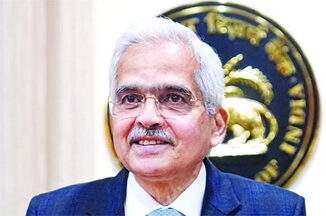
‘Can’t afford a crypto mania’: RBI governor Shaktikanta Das on cryptocurrencies
Mumbai (TIP)- The US may have green-lighted exchange-traded funds (ETFs) in bitcoin, but for India’s apex banking regulator, cryptocurrencies remain a strict no-no. “The way we look at crypto remains unchanged, irrespective of who does what,” Reserve Bank of India (RBI) governor Shaktikanta Das stated at the 16th Mint Annual BFSI Summit and Awards in Mumbai on Thursday, January 11. “Just because somebody is doing something, we are not here to emulate them.” The US Securities and Exchange Commission (SEC) on Wednesday approved the first US-listed ETFs to track bitcoin, marking a milestone for the world’s largest cryptocurrency and the broader crypto industry. The SEC approved 11 applications, including from BlackRock, Fidelity and Invesco. At the same time, the SEC said it does not endorse or approve bitcoin.
“RBI’s position on cryptocurrency remains unchanged. Travelling down that path will create huge risks. I don’t think the world or emerging markets (EMs) can take a crypto mania like the tulip mania,” Das said, referring to the 17th century boom and bust in Dutch tulip prices, regarded as one of the most infamous asset bubbles in history.
Delivering the keynote address at the event, Das pointed out that the US regulator itself has flagged the risks of cryptocurrency products. However, he noted that the blockchain technology, on which cryptocurrencies are built, has the potential to lend itself to many applications.
The governor has voiced his concerns on cryptocurrencies several times earlier as well, citing macroeconomic and financial stability risks. In June 2022, Das termed them a “clear danger”, and said anything that derives value based on make-believe, “without any underlying”, is just speculation under a sophisticated name.
The central bank has been focusing on strengthening governance and assurance in regulated entities, Das said. “The key is to identify risks early, monitor them closely and manage them effectively. In this context, instilling an appropriate risk culture in the organisation is important.” This needs to be driven by the board and senior management with effective accountability at all levels, Das said, adding RBI expects top officials and board members to play a more proactive role.
Source: HT -

WhatsApp’s new feature to let users share music audio during video call
Meta-owned WhatsApp is rolling out a new feature that will let users share music audio during a video call on Android. According to WABetaInfo, the ability to listen to video and music audio together is now available to some beta testers. “Specifically, when someone in the call shares their screen, audio they play on their device will also be shared with other people in the call. It’s important to note that this feature also works in individual calls, allowing users to enjoy a synchronised audio experience even in one-on-one video conversations,” the report noted.
According to the report, the new feature not only promotes a sense of togetherness in group interactions but also brings an added layer of intimacy to one-on-one conversations.
Moreover, users in a call can also watch videos together, experimenting with shared audio during their video calls, allowing participants to synchronise their video playback experiences, creating a virtual movie-watching or content-sharing session.
The feature will be rolling out to even more people over the coming weeks, the report mentioned. Meanwhile, WhatsApp is reportedly developing a feature that will allow users to search for others through their username. Users will now be able to search for others by entering their username into the search bar, in a future update of the web client. -
NASA delays mission to take humans back to Moon until 2025
The US space agency has pushed back its manned Artemis mission to the Moon to 2025 that will send the first woman and first person of colour on the lunar surface. NASA will now target September 2025 for Artemis II, the first crewed Artemis mission around the Moon, and September 2026 for Artemis III, which is planned to land the first astronauts near the lunar South Pole. Artemis IV, the first mission to the Gateway lunar space station, remains on track for 2028. The first mission, Artemis II, was supposed to take place later this year.
NASA Administrator Bill Nelson said in a statement that they have learned a lot since Artemis I, and the success of these early missions relies on “our commercial and international partnerships to further our reach and understanding of humanity’s place in our solar system”.
“Artemis represents what we can accomplish as a nation – and as a global coalition. When we set our sights on what is hard, together, we can achieve what is great,” he added.
The space agency said that ensuring crew safety is the primary driver for the Artemis II schedule changes. “As the first Artemis flight test with crew aboard the Orion spacecraft, the mission will test critical environmental control and life support systems required to support astronauts,” said NASA.
NASA’s investigation into unexpected loss of char layer pieces from the spacecraft’s heat shield during Artemis I is expected to conclude this spring.
The new timeline for Artemis III, said NASA, aligns with the updated schedule for Artemis II, which ensures the agency can incorporate lessons learned from Artemis II into the next mission, and acknowledges development challenges experienced by NASA’s industry partners. Source: IANS -

Vondy, the all-in-one AI platform: Things it does better than ChatGPT
There is a chatbot or an AI tool for just about everything now. Ever since ChatGPT was introduced, numerous AI tools have been developed that can perform an assortment of tasks. Among the sea of AI chatbots and tools, a recently introduced AI tool is making waves. Unlike ChatGPT, Bard or Claude 2, this tool offers more than just conversations.
Introducing Vondy AI, an all-in-one AI platform that can create content as well as enhance productivity. The application has been developed by New York-based software engineer Rohit Das and New Jersey-based software engineer David Laub. Those who have used this application claim it to be more powerful than OpenAI’s ChatGPT.
Here’s a deep dive into why Vondy AI could be the best AI tool:
It’s free
ChatGPT runs on the most powerful AI model GPT-4. However, to access this, users are required to subscribe to ChatGPT Plus which costs around $20. Meanwhile, Vondy is free and there are no message limits. It comes with a ready-made GPT store similar to the App store. It is to be noted that the tool offers over 100 AI assistants.
Create your own GPT assistant
OpenAI at its first-ever developer conference announced Custom GPTs, which allowed users to create their own AI chatbots. However, this too was limited to premium subscribers. Vondy AI lets you create the GPT of your choice. Users need to go to ‘Create Assistant+’, click on ‘Create your own app’, Upload a photo, name the agent and describe its purpose. Once the agent is ready users can further build it by asking questions, just the way it is done on ChatGPT Plus.
Save more time
Now that you have your own AI assistant, you will be able to save hours worth of work. Be it content creation, data analysis, building market strategy, education, or even graphic designing, an AI assistant created using Vondy AI will come to your rescue.
Premade AI Assistants/GPTs
While one is free to create their custom AI assistants, Vondy AI offers hundreds of pre-built AI assistants. The existing AI assistants on the platform are claimed to enhance productivity by 10 times.
Create viral content
Vondy AI also has an AI assistant that’s a social media influencer. The AI chatbot lets you create content for Instagram, Twitter, and YouTube. This is essentially an AI-powered social media manager who can take care of your social media. Source: The Indian Express -

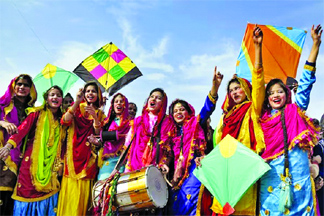
Lohri: The bonfire, harvest festival
Lohri is a famous festival of North India, especially the folk festival of the Indian state of Punjab. There are many significance and legends about Lohri festival. It is believed that this festival marks the passing of winter solstice. Lohri festival is considered to mark the end of winter. It is a traditional welcome by people in the northern region of the Indian subcontinent for longer days and the sun’s journey to the northern hemisphere. The festival of Lohri is celebrated a day before the Hindu festival of Makar Sankranti. Lohri is a celebration of the arrival of longer days after the winter solstice. Usually the festival of Lohri is celebrated on 12, 13 or 14 January every year.
Significance of Lohri
For the people of Punjab, the festival of Lohri holds great significance as it marks the beginning of the harvest season of Rabi crops in the state and the end of winter. It is celebrated by making a huge bonfire that symbolises the Sun bringing in warmth. The significance of the festival is both as a winter crop season celebration and a remembrance of the Sun deity. Other legends explain the celebration as a folk reverence for fire or the goddess of Lohri.
Lohri puja
On the day of Lohri, place the picture of Mahadev on a piece of black cloth. An earthen lamp must be lit in front of the deity and people make several offerings and puja to the deity. People usually turn to the West during this puja. After doing puja to Sri Mahadev, people go around the bonfire made of wood and cow dung cakes — singing, dancing and throwing in food items like sugarcane, jaggery and other eatables they have got as part of the puja offering.
Lohri history and beliefs
As per the Punjabi folk tradition, Lohri’s original can be traced back to the time when a legendary Punjabi hero, Dulla Bhatti rescued innocent girls from the clutches of lecherous men. It is enshrined in folk poetry that is sung during the winter festival of Lohri. The chieftain is believed to have rescued two Brahmin girls, Sundri and Mundri, from Akbar, who wanted them in his harem. Dulla Bhatti became their godfather and is believed to have married them off on Lohri with much pomp and festivity, directly challenging the authority of the emperor. The tale of Sundri and Mundri was turned into a song that is sung during Lohri celebrations every year.
Lohri celebrations
Just like many other Indian festivals, Lohri is celebrated in its own unique way. The festival is celebrated by lighting up a bonfire. People dance and sing around it. They eat and also throw popcorn, gur, rewaries, sugar-candies and sesame seeds into the fire. In traditional Punjabi families, dinner is served with gajak, sarson da saag and makki di roti on the day of Lohri festival.
Lohri holds special significance for the newly-married couple or the new-born child in the family and is celebrated with great enthusiasm on these occasions as it symbolises fertility.
Punjabi farmers observe the day after Lohri (Maghi) as the beginning of the financial New Year. Happy Lohri is the conventional greeting on Lohri. Rather than go to each other’s homes to exchange sweets or mithai, like during Diwali, Lohri calls for everyone to meet at a common place. The community comes together and wishes each other a ‘Happy Lohri’ signifying the beginning of a new season. The word Lohri is derived from two words til (sesame) and rorhi (jaggery), which are traditionally eaten during the festival. The terms til and rorhi together used to sound like ’tilohri’ earlier in history, gradually morphing into the term ‘Lohri’. One the fire dies out, dinner includes crowd favorites like makki di roti te sarson da saag (cornflour pancakes and mustard spinach) and lassi (buttermilk).
Lohri celebrations mark the beginning of the harvest season. It is celebrated to offer thanks for making a bounteous harvest possible. Lohri night traditionally falls on the longest night of the year known as the winter solstice. Lohri festival indicates that the biting cold of the winter is ending and happy sunny days are arriving.
What do we do on Lohri?
Bonfire is the top highlight of Lohri. Traditionally, families used to gather around bonfires and sing folk songs like Sundariye Mundariye Ho. Nowadays, most people plug in a speaker to play songs off of YouTube or other music apps.Dishes made of rewri, gajak, peanuts and other seasonal products are snacks — as well as bonfire fodder.
What do you put on a Lohri fire?
People sing and dance around the Lohri fire and throw foods like gajak, popcorn, puffed rice and others into the fire as ‘tributes’ to the gods in exchange for blessings. Lohri is also considered especially auspicious for newlywed couples and parents with newborn babies.
Why do we burn fire on Lohri?
Folklore of Punjab believes that the flames of the bonfire lit on the day of Lohri carry the messages and prayers of the people to the sun god to bring warmth to the planet to help crops grow. In exchange, the sun god blesses the land and ends the days of gloom and cold. The next day is celebrated as Makar Sankranti. For some, the bonfire symbolically indicates that the bright days are ahead of the people’s lives and acts as the carrier of people’s prayers to the sun god — it’s just a really good excuse to party.
Importance of first Lohri of baby, bride
A new bride is made to never forget her first Lohri in her new family. She needs to wear new and vibrantly colored attire, dress up in her best for the occasion wearing lots of bangles, and decorate her palms with Mehndi. You can say that she needs to get ready as a bride again. The husband also wears a new outfit and wears an elaborate turban. The new bride is gifted with beautiful clothes and jewelry for the occasion by her in-laws and other friends and relatives. As an old custom- she is made to savor special delicacies and she enjoys to the full while knowing other significant traditions.
Traditionally, the Lohri holy Bash is commemorated to welcome the bride in a warm and friendly way among all the family members and to introduce the new bride to one and all.
Lohri is also very important for a newly born baby. The mother is dressed up in new and gorgeous clothes and heavy jewelry, and Mehndi is applied on her hands in an elaborate pattern. She is asked to sit with the newborn baby in her arms and family, relatives, and friends gift her with fruits, sweets, clothes, jewelry, and money. On this noteworthy occasion, a group of people also perform Bhangra on the traditional songs around the fire in the ground. They also offer roasted peanuts, sesame ladoo, and other food items in the fire for the jollifications. The revelry goes on for the whole night along with dinner and soft drinks. These days Lohri has gained immense popularity and people not only in Punjab, but the whole of India, even in south India get together to celebrate the festival. -

Makar Sankranti
Makar Sankranti is an important Hindu festival celebrated in different forms in India and Nepal. The festival is celebrated when the sun enters into Makar rashi in Pausha month. It is celebrated every year either on 13, 14 or 15 january because on these dates the sun leaves Dhanu rashi and enters into maker rashi. The festival is also known as Uttarayni because on this day the sun starts to move towards north.
The festival is celebrated in different states of India in different ways. In south India, It is known as Pongal festival in Tamil Nadu while it is celebrated as Sankranti in Karnataka, Kerala and Andhra Pradesh. In north India, it is celebrated as Lohri in Punjab and Haryana. In Uttar Pradesh, it is a day of giving and donation.
The harvest festival is both a religious as well as seasonal observance, and is dedicated to Lord Surya, the Sun God and marks the sun’s transit into Makara (Capricorn) raashi (zodiac sign). The festival is majorly celebrated in the Indian Subcontinent and also by Indians and Hindus around the world.
The festivities related to Makar Sankranti have many names depending on the region it is being celebrated in. For example, by north Indian Hindus and Sikhs, it is called Maghi and is preceded by Lohri. It is called Makara Sankranti and also Poush sôngkranti in Maharashtra, Goa, Andhra Pradesh, West Bengal, Karnataka and Telangana, Sukarat in central India, Magh Bihu by Assamese, and Thai Pongal or Pongal by Tamils.
While festivities may not be at par as previous years on account of the coronavirus pandemic, usually on this day devotees take a dip in rivers like Ganga, Yamuna, Godavari, Krishna and Cauvery that are considered to be holy. For believers, taking a dip washes away their sins, it is also considered a time of peace and prosperity and many spiritual practices are conducted on this day. Sesame and jaggery ladoos or chikkis are distributed on this day. Popularly referred to as til-gud. The sweet signifies that people must stay together in peace and harmony despite their differences. In Gujarat, kite flying is organised as part of Makar Sankranti festivities. It is also believed that those who die on Makar Sankranti are not According to Hindu belief, if one dies on Makar Sankranti they are not reborn, but go straight to paradise.
The auspicious day of Makar Sankranti will fall Monday, 15 January 2024.
Believe goes that Makar Sankranti is the most auspicious day of the year and has a very sacred mythological story associated. It marks the end of an inauspicious phase that begins around mid-December. Further, it is also believed that any sacred Makar Sankranti ritual can be performed from this day onwards. The auspicious day of Makar Sankranti also marks the beginning of warmer and longer days as compared to nights. Now let’s know what mythology says about this lucky day.
Mata Mahishasurmardini – a powerful form of Goddess Durga, had descended with the purpose of destroying Mahishasur. The Goddess had first set foot on earth, in the Kataraaj ashram of Rishi Kardam and Devahuti.
It is also believed that on this day Lord Sun visits God Shani who is the owner of the constellation Makar. Since Shani is the foster child of Sun, they do not share a good relation. However, it is Shani’s responsibility to take care of his father. Hence, this day signifies the priority of responsibilities. Even in the epic of Mahabharata, an episode mentions how people in that era also considered the day as auspicious. Bhishma Pitamah even after being wounded in the Mahabharata war lingered on till Uttarayan set in so that he can attain heavenly abode inauspicious times. It is said that death on this day brings Moksha or salvation to the deceased.
History of Makar Sankranti
The great savior of his ancestors, Maharaj Bhagirath, did great Tapasya to bring Gangaji down on the earth for the redemption of 60,000 sons of Maharaj Sagar, who were burnt to ashes at the Kapil Muni Ashram, near the present-day Ganga Sagar. It was on this day that Bhagirath finally did tarpan with the Ganges water for his unfortunate ancestors and thereby liberated them from the curse. Thus Makar Sankranti marks the start of good luck and fortune for all endeavors.
Another legend says that any boy or girl who takes a bath at any of the holy places will be blessed with a charming and beautiful partner. Another belief associated with the holy dip is that Lord Vishnu himself comes down to take a dip in the Triveni Sangam and therefore anyone who bathes there is blessed with his grace.
Culture and Festivity
Makar Sankranti is celebrated differently at different places and has a variety of rituals associated.
Maharashtra
Maharashtra takes the limelight when it comes to the celebration of Makar Sankranti. People here come together to exchange sweets especially laddus made of Til (Sesame seeds) and Jaggery. Women who are married get together to exchange utensils and put Haldi Kumkum on their forehead. Hindus wear ornaments made of ‘Halwa’ on this day.
Orissa
In Orissa, families get together to prepare some authentic delicacies on the eve of Makar Sankranti. They prepare a special dish called ‘Ghantaa’ which is a curry made of different cereals and vegetables. They also prepare some sweet dishes. Many of Orissa celebrate the day of Sankranti by lighting bonfires, dancing and eating their particular dishes sitting together. The Bhaya tribals of Orissa have their Magh yatra in which small home-made articles are put for sale.
Uttar Pradesh
In Uttar Pradesh, Sankranti is called ‘Khichiri’. Taking a dip in the holy rivers on this day is regarded as most auspicious. A big one-month long ‘Magha-Mela’ fair begins at Prayag in Allahabad on this occasion. Apart from Triveni, ritual bathing also takes place at many places like Haridwar and Garh Mukteshwar in Uttar Pradesh, and Patna in Bihar.
Bengal
The famous Ganga Sagar river witnesses a huge Mela every year during Makar Sankranti. This is the place where river Ganga is believed to have divided into the nether region and vivified the ashes of the sixty thousand ancestors of King Bhagirath. This meal is attended by a large number of pilgrims from all over the country.
Tamil Nadu
Pongal is the festival which is very similar to Makar Sankranti and is one of the major festivities of South India. Rice and pulses cooked together in ghee and milk are offered to the family deity after the ritual worship. In this, they worship the Sun God.
Andhra Pradesh
The people of Andhra celebrate it for three long days and call it ‘Pedda Panduga’ meaning big festival. The whole event lasts for four days, the first day Bhogi, the second day Sankranti, the third day Kanuma and the fourth day, Mukkanuma.
Gujarat
For the Gujurati’s, the festival is more about socializing and show your love for your relatives. They exchange gifts, arrange dinners and perform Puja together. The Gujarati Pundits on this auspicious day grant scholarships to students for higher studies in astrology and philosophy. This festival thus helps the maintenance of social relationships within the family, caste, and community.
Punjab
Punjab celebrated this occasion as Lohri. This period being the coldest of the year they lit huge bonfires and participate in entertaining activities. Sweets, sugarcane, and rice are thrown in the bonfires, around which friends and relatives gather together. The following day, which is Sankrant, is celebrated as MAGHI. The Punjabi dance their famous Bhangra dance and eat sumptuous dinner together. -

Maghi Mela at Muktsar
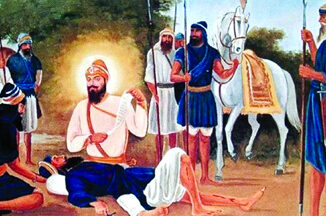
Maghi da Mela is held at the holy city of Sri Muktsar Sahib each year in January or the month of Magh according to Nanakshahi calendar and it is one of the most important melas or fairs of India and the most important of all religiously significant gatherings of the Sikhs.
The tenth Sikh master Guru Gobind Singh Ji chose Maghi as one of the three festivals to be celebrated by Sikhs (the others are Baisakhi and Bandhi Chhor Divas. After the battle of Sri Muktsar Sahib which took place on 8 May 1705, Maghi came to be associated with the forty Sikhs and the battle of Sri Muktsar Sahib.
Maghi is the occasion when Sikhs commemorate the sacrifice of forty Sikhs, who fought for Guru Gobind Singh, the tenth Sikh master. Maghi, Makara Sankranti, the first day of the month of Magh. The eve of Maghi is the common Indian festival of Lohri when bonfires are lit in Hindu homes to greet the birth of sons in the families and alms are distributed. In the morning, people go out for an early-hour dip in nearby tanks.
For Sikhs, Maghi means primarily the festival at Muktsar, a district town of the Punjab, in commemoration of the heroic fight of the Chali Mukte, literally, the Forty Liberated Ones, who laid down their lives warding off an attack by an imperial army marching in pursuit of Guru Gobind Singh.
Etymologically, mukta from Sanskrit mukt means ‘liberated, delivered, emancipated,’ especially from the cycle of birth and death. Mukti (liberation, emancipation) in Sikhism is the highest spiritual goal of human existence, and mukt or mukta is the one who has achieved this state of final beatitude. Mukta, also means a pearl, and the word would thus signify a title or epithet of distinction. It was probably in this sense that the five Sikhs, who on 30 March 1699 received the vows of the Khalsa immediately after the first five Panj Piare, were blessed with the title mukta, plural mukte.
The term Chali Mukte is also used sometimes for the martyrs whom were attacked by a huge army, which had been in pursuit of the 40 Sikhs, their Guru and the two older Sahibzadas since the evacuation of Anandpur by Guru Gobind Singh during the night 5-6 December. Encircled and hopelessly outnumbered at Chamkaur on 7 December, they engaged the enemy in small sorties throughout the day. Two of those sorties were led by their Guru’s two oldest sons the Sahibzadas.
The Guru had previously created the Khalsa making his men his equal. Now Sri Guru Gobind Singh Ji told the survivors of his plan to challenge his attackers the next morning joining his sons, the Sahibzadas, in Sach Khand. The five remaining Singhs were Bhai Dharam Singh, (the two remaining Panj Pyare), Bhai Man Singh, Bhai Sangat Singh and finally Bhai Sant Singh. They begged Guru Ji to escape, they said, “At Kesgarh Sahib we watched you beseeching the five beloved ones to initiate you with Amrit. You had said then, I am of the Khalsa, and the Khalsa is mine. Today we ask in the capacity of the Khalsa beseeching you to leave Chamkaur and escape to a safer place.”
Guru Saheb had no choice now but to accept their demands. It was decided that Guru Ji, Man Singh and the two Panj Pyare would leave the fort and that they would dress Sant Singh to look like Guru Ji because he had an uncanny resemblence to Guru Saheb. Guru Ji killed the few soldiers that were on watch. Then they left in the pitch dark the Guru clapped his hands three times saying “PeerÚ Hind Rahaavat” (“The “Peer” of India is Leaving”).
They all shouted Sat Sri Akal and scattered in different directions. The mughals who couldn’t see where anyone was, ended up killing several of their own while Guru Ji and the three Sikhs escaped.
Wazir Khan, the faujdar of Sirhind, denied the next day of the prize he had so eagerly and treacherously hounded, must have been furious. He would soon release that fury on the Guru’s remaining sons and their grandmother who, betrayed by their old family cook Gangu, soon fell into his hands back at Sirhind.
While there is no unanimity over the names of the martyrs of Sri Muktsar Sahib and Chamkaur Sahib, the five Muktas who comprised the first batch of Sikhs to receive amrit at the hands of the Panj Piare are given in Rahitnama by Bhai Daya Singh as Ram Singh, Fateh Singh, Deva Singh, Tahil Singh and Isar Singh. No other details of these five are available except that an old manuscript of Bhai Prahlad Singh’s Rahitnama is said to contain a note associating Ram Singh and Deva Singh with the village of Bughiana, Tahil Singh and Isar Singh with Dall-Van and Fateh Singh with Kurdpur Mangat.
According to Bhai Chaupa Singh, his Rahitnama or code of conduct was drafted by muktas. The text is said to have received Guru Gobind Singh’s approval on 7 Jeth 1757 Bk / 5 May 1700. It appears that the title of mukta was bestowed subsequently also on persons other than the original five. The number of muktas is recorded variously in old Sikh texts. For instance, Kesar Singh Chhibbar, Bansavallnama Dasan Patshahlan Ka, mentions 14, and Kuir Singh, gurbilas Patshahi X, 25.
But the muktas universally celebrated in the Sikh tradition are the forty martyrs of Sri Muktsar Sahib who earned this title by sacrificing their lives for the Guru and who redeemed their past apostasy of having disowned their Guru and deserted him, when driven to desperation by the prolonged siege of Anandpur by the Rajput hill chiefs and Mughal forces by having their disclaimer torn by the Guru.
Sikhs celebrate the Maghi with an end to end recital of the holy Guru Granth Sahib and religious rituals in all the Sikh Gurudwaras. On the eve of Maghi falls the common Indian festival called the Lohri when bonfires are lighted in Hindu homes and alms are also distributed. . however The largest assembly, however, takes place at Muktsar (Punjab) where big fairs are organized and pilgrims take a holy dip in the sacred waters of sarovar and also visit several shrines. A mahala or big march of pilgrims from the main shrine to gurdwara Tibbi Sahib, sacred to Guru Gobind Singh, concludes the three-day celebration. -

Are dairy products fattening and unhealthy?
In recent times, there has been a growing narrative suggesting that dairy products are fattening and unhealthy. However, it is crucial to dispel these misconceptions as they do not align with scientific evidence. In fact, we need to acknowledge the numerous benefits that dairy brings to our overall health unless one is intolerant or allergic to it. It continues to be a key pillar of a balanced diet.
The Nutritional Value of Dairy Products: Dairy products are rich sources of high-quality proteins crucial for muscle development and the proper functioning of vital organs. A cup of milk provides eight grams of protein. Additionally, dairy products are an excellent source of calcium, playing a pivotal role in strengthening bones and preventing osteoporosis. A glass of milk is rich in potassium and takes care of 50 per cent of your daily vitamin B12 requirement.
Caloric Content: Fat-Free vs Whole Milk Products
Contrary to popular belief, dairy products made from fat-free or low-fat milk are not only nutritious but also have fewer calories compared to their whole milk counterparts. This makes them a suitable option for individuals looking to manage their calorie intake without compromising on essential nutrients. It is important to note that moderate consumption of dairy, especially when opting for low-fat alternatives, can be part of a balanced diet. Studies have shown that dairy in conjunction with a low calorie diet has led to a greater percentage of weight loss while keeping lean muscle intact. A glass of skimmed milk contains just four per cent of the recommended daily calorie allowance, that of whole milk is eight per cent, according to Dairy UK. A 2013 study showed that dairy helped people feel fuller and reduced how much fat they ate overall. Besides, dairy helps prevent the onset of Type 2 diabetes, which again is a trigger for obesity.
Source: The Indian Express -

Mediterranean diet named best diet of 2024: Know all about it
The culinary traditions of the Mediterranean region, including Greece, Italy, Croatia, Turkey, Spain, and Morocco, are renowned for their delectable and nutritious portions.
Probably, that’s why one of the most popular diets known as the Mediterranean diet has been named the healthiest diet of 2024 for the seventh time by a panel of experts, according to the US News & World Report.
While most people living in the Mediterranean region consume a variety of foods, their predominant diet revolves around plant-based elements such as whole grains, beans, nuts, and unsaturated fats from extra-virgin olive oil. Limited lean poultry and abundant seafood also find a place in their meals.
Central to the Mediterranean diet is an emphasis on overall dietary quality rather than a singular nutrient or food group.
Numerous studies affirm its efficacy in reducing the risk of chronic conditions like heart disease and type 2 diabetes, ensuring longevity, and enhancing the overall quality of life.
The Mediterranean diet’s nutritional benefits and health advantages were initially revealed in the Seven Countries Study, a comprehensive investigation spanning from 1958 to 1999 that explored the correlation between diet and heart diseases among approximately 13,000 men.
This study demonstrated that the type of fats – saturated, monounsaturated, or polyunsaturated – plays a more crucial role in cardiovascular health than the total fat intake.
While conventional nutritional advice suggests limiting total calorie intake from fat to 30%, the Mediterranean diet allows up to 40%, provided most fats are unsaturated.
According to the US & World Report, the Mediterranean diet focusses on nutrient-dense foods like fruits, vegetables, whole grains, nuts, seeds, and healthy fats, limiting the intake of saturated fats, added sugars, and sodium. Source: India Today -
Bottled water contains thousands of previously unknown nanoplastics: Study
Bottled water contains tens of thousands of identifiable fragments as well as previously unknown nanoplastics in each container, posing significant health risk, finds a study.
In recent years, there has been rising concern that tiny particles known as microplastics are showing up basically everywhere on Earth — from polar ice to soil, drinking water and food.
However, in the study, published in the journal Proceedings of the National Academy of Sciences, the researchers focussed on nanoplastics — the spawn of microplastics that have broken down even further.
For the first time, the team from the Columbia University in the US could count and identify these minute particles in bottled water using newly-refined technology.
They found that on average, a litre contained some 240,000 detectable plastic fragments — 10 to 100 times greater than previous estimates, which were based mainly on larger sizes.
Nanoplastics are so tiny that, unlike microplastics, they can pass through intestines and lungs directly into the bloodstream and travel from there to organs including the heart and brain.
They can invade individual cells, and cross through the placenta to the bodies of unborn babies. “Previously this was just a dark area, uncharted. Toxicity studies were just guessing what’s in there,” said Beizhan Yan, environmental chemist at Columbia University’s Lamont-Doherty Earth Observatory.
“This opens a window where we can look into a world that was not exposed to us before.”
Using a technique called stimulated Raman scattering microscopy, which involves probing samples with two simultaneous lasers that are tuned to make specific molecules resonate, the researchers tested three popular brands of bottled water sold in the US (they declined to name which ones), analysing plastic particles down to just 100 nanometers in size.
They spotted 110,000 to 370,000 particles in each litre, 90 per cent of which were nanoplastics; the rest were microplastics.
They also determined the specific plastics — polyethylene terephthalate or PET, polyamide — a type of nylon, polystyrene, polyvinyl chloride and polymethyl methacrylate — all used in various industrial processes. While the plastic types the researchers searched for accounted for only about 10 per cent of all the nanoparticles they found in samples; they have no idea what the rest are. Source: IANS -

Spicy Chicken Curry
Ingredients
Onion – 2 (finely chopped), Tomato – 2 (diced or pureed), Oil – 3 tbsp, Bay Leaf – 1, Curry Leaves – 1 sprig, Cumin seeds – ¼ tsp, Coriander leaves (Cilantro) – handful (finely chopped), Salt – to taste
To Marinate
Chicken – 1 kg (2 lbs), Turmeric powder – 1/4, tsp, Lemon juice – 2 tsp, Salt – 1 tsp, To cursh, Ginger – 1″ piece, Garlic – 8 cloves, Shallots – 7, Green Chillies – 3, To roast and powder, Grated Coconut – 1/4 cup, Dry red chillies – 10, Coriander Seeds – 2 tbsp, Black Peppercorns – 2 tsp, Fennel Seeds – 2 tsp, Poppy Seeds – 1 tsp, Curry Leaves – 2 sprigs, Cardamom – 10, Cinnamon – 1” piece, Cloves – 5, Mace – 1 piece, Star anise – 1 piece, Black Stone Flower (Kalpasi) – 1, Kapok Buds (Marathi Moggu) – 1
Method
– Cut the chicken and cut it into medium size pieces. Marinate it with salt, lemon juice and turmeric powder for at least half an hour.
– Dry roast the ingredients under To Roast and Powder on low flame till everything turns golden brown in colour. After it cools make a powder of it and keep aside. Be careful not to burn it.
– Make a paste of the ingredients under To Crush. Keep this aside.
– Heat the oil in a heavy bottomed pan and add the cumin seeds and bay leaf.
– Add the chopped onions and fry till it becomes brown in colour.
– Add the ground paste of shallots, ginger, garlic and green chilies and fry till the raw smell is gone.
– Add the marinated chicken and fry for few minutes. The chicken releases lot of water.
– Now add the tomato puree and the freshly powdered spices, required salt and water.
– Cover and cook for 15-20 minutes. By now the chicken pieces will be completely cooked.
– This is the right time to check for salt and other spices. Adjust anything if needed.
– Cook uncovered till the oil floats on top of the gravy.
– Add the finely chopped cilantro and fresh curry leaves and switch off. Keep the gravy covered till you are ready to serve. -

Beauty and skincare tips on 5 minutes makeup routine
A quick 5-minute makeup routine is perfect for those busy mornings when you want to look put-together without spending too much time. So, we sorted your beauty woes by whipping up a 5-minute makeup routine which is a simple and efficient way to enhance your natural beauty and look polished without spending too much time in front of the mirror. Here’s a simple and efficient routine but feel free to adjust it to your preferences and needs.
Step 1: Moisturizer – Start by applying a lightweight moisturiser to hydrate your skin. This creates a smooth canvas for makeup and keeps your skin looking fresh.
Step 2: Concealer – Use a concealer to cover any blemishes, dark circles or imperfections. Dab a small amount onto the problem areas and blend it in with your finger or a makeup sponge.
Step 3: Foundation or BB Cream – Apply a light layer of foundation or BB cream to even out your skin tone. You can use your fingers, a makeup sponge, or a brush for this step.
Step 4: Eyebrows – Quickly define your eyebrows using a brow pencil, powder, or gel. Fill in any sparse areas and brush them into shape.
Step 5: Mascara – Apply a coat of mascara to your lashes. Wiggle the wand from the base to the tips to add volume and length.
Step 6: Blush – Add a touch of blush to your cheeks for a healthy flush of colour. Smile to locate the apples of your cheeks and apply the blush in a circular motion.
Step 7: Lip Color – Finish off your look with a lip product of your choice. A tinted lip balm, lipstick or lip gloss can quickly enhance your pout. -
Managing your weight gain during pregnancy
A vast majority of women are not achieving a healthy weight during pregnancy. Most women should gain somewhere between 25 and 35 pounds (11.5 to 16 kilograms) during pregnancy. Most will gain 2 to 4 pounds (1 to 2 kilograms) during the first trimester, and then 1 pound (0.5 kilogram) a week for the rest of the pregnancy. The amount of weight gain depends on your situation.
Overweight women need to gain less (10 to 25 pounds or 4 to 11 kilograms or less, depending on their pre-pregnancy weight).
Underweight women will need to gain more (28 to 40 pounds or 13 to 18 kilograms).
You should gain more weight if you are having more than 1 baby. Women having twins need to gain 37 to 54 pounds (16.5 to 24.5 kilograms).
A balanced, nutrient-rich diet, along with exercise, is the basis for a healthy pregnancy. For most pregnant women, the right amount of calories is:
– 1,800 calories per day in the 1st trimester
– 2,200 calories per day in the 2nd trimester
– 2,400 calories per day in the 3rd trimester
What’s Causing the Weight Gain?
Much of the weight that you gain during pregnancy is not fat, but is related to the baby. Here is a breakdown of how 35 pounds (16 kilograms) adds up:
Baby: 8 pounds (3.5 kilograms)
Placenta: 2 to 3 pounds (1 to 1.5 kilograms)
Amniotic fluid: 2 to 3 pounds (1 to 1.5 kilograms)
Breast tissue: 2 to 3 pounds (1 to 1.5 kilograms)
Blood supply: 4 pounds (2 kilograms)
Fat stores: 5 to 9 pounds (2.5 to 4 kilograms)
Uterus growth: 2 to 5 pounds (1 to 2.5 kilograms)
Managing Weight During Pregnancy
Some women are already overweight when they get pregnant. Other women gain weight too quickly during their pregnancy. Either way, a pregnant woman should not go on a diet or try to lose weight during pregnancy.
It is better to focus on eating the right foods and staying active. If you do not gain enough weight during pregnancy, you and your baby may have problems. Still, you can make changes in your diet to get the nutrients you need without gaining too much weight. Talk to your health care provider to get help with planning a healthy diet.
Healthy choices
Fresh fruits and vegetables make good snacks. They are full of vitamins and low in calories and fat.
Eat breads, crackers, and cereals made with whole grains.
Choose reduced-fat dairy products. You need at least 4 servings of milk products every day. However, using skim, 1%, or 2% milk will greatly reduce the amount of calories and fat you eat. Also choose low-fat or fat-free cheese or yogurt.
Foods to avoid
Naturally sweetened is better than foods and drinks with added sugar or artificial sweeteners.
Food and drinks that list sugar or corn syrup as one of the first ingredients are not good choices.
Many sweetened drinks are high in calories. Read the label and watch out for drinks that are high in sugar. Substitute water for sodas and fruit drinks.
Avoid junk-food snacks, such as chips, candy, cake, cookies, and ice cream. The best way to keep from eating junk food or other unhealthy snacks is to not have these foods in your house. Go light on fats. Fats include cooking oils, margarine, butter, gravy, sauces, mayonnaise, regular salad dressings, lard, sour cream, and cream cheese. Try the lower-fat versions of these foods.