Month: June 2024

  • Prashant Kishor slams Nitish for touching PM Modi’s feet

    Prashant Kishor slams Nitish for touching PM Modi’s feet

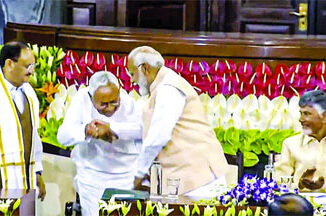
    New Delhi (TIP)- Political strategist-turned-activist Prashant Kishor charged Bihar Chief Minister Nitish Kumar with having “touched the feet” of Prime Minister Narendra Modi to ensure his own continuance in power.
    Kishor, who has been running the ‘Jan Suraaj’ campaign, was addressing a public meeting in Bhagalpur on Friday, June 14. “People ask me why I am now criticising Nitish Kumar, having worked with him in the past. He was a different man back then. His conscience had not been put up for sale,” said Kishor, who had managed the JD (U) president’s election campaign in 2015 and formally joined the party two years later.
    “The leader of a state is the pride of its people. But Nitish Kumar brought shame to Bihar when he touched the feet of Modi,” he alleged, referring to the NDA meeting in Delhi last week.
    Kumar’s JD (U) won 12 seats in Lok Sabha polls to emerge as the second largest ally of the BJP, which failed to get a majority on its own.
    “There is so much talk about Nitish Kumar playing a key role in Modi’s return to power. But how is the Bihar CM leveraging his position? He is not using his clout to ensure benefits for the state. He is touching feet to ensure that he remains in power, with BJP support, even after 2025 assembly polls,” Kishor said.
    Notably, Kishor had first shot into fame in 2014 for handling the spectacularly successful Lok Sabha poll campaign of Modi. By the time he gave up political consultancy in 2021, Kishor had worked for several high-profile politicians, including Mamata Banerjee, Arvind Kejriwal and Jagan Mohan Reddy.

  • 50,000 CAPF men head to J&K

    The Centre has ordered deployment of over 500 companies (approximately 50,000 personnel) of Central Armed Police Forces (CAPFs) in Kashmir in view of Prime Minister Narendra Modi’s visit to the UT on June 21 on International Yoga Day and also keeping in mind the upcoming Amarnath Yatra. The PM plans to perform yoga near the Dal Lake in Srinagar on the occasion.
    According to sources, during a high-level meeting of Home Ministry officials on Thursday, June 14, night, soon after the PM reviewed security in the UT, it was decided that CAPFs be deployed along the route to be taken by the PM as well as on the arduous Amarnath Yatra route.
    Modi’s visit comes just days after the Reasi terror attack, where terrorists had targeted a bus carrying pilgrims, leading to the death of nine persons.
    Significantly, after the recent terror attacks in Kathua, Doda and Reasi, all of which fall under the Jammu division, it has been decided to take action against sympathisers of terrorists and extremists under the stringent Unlawful Activities (Prevention) Act (UAPA) in the district.
    Source: TNS

  • Home minister Amit Shah reviews security in J&K after terror attacks

    Home minister Amit Shah reviews security in J&K after terror attacks

    New Delhi (TIP)- Union home minister Amit Shah on Friday, June 14, reviewed the security in Jammu and Kashmir with the senior officers of his ministry and Intelligence Bureau (IB) in the wake of four terror attacks in the Jammu region since Sunday, in which 10 people, including nine civilians and a Central Reserve Police Force (CRPF) jawan, were killed.
    People familiar with the development said Shah was apprised of the current deployment scenario in the Jammu region, at the Line of Control (LOC) and international border, the status of combing operations by the security forces to locate the terrorists and steps being taken to identify their local supporters.
    The home minister has directed that he will chair a detailed meeting on June 16 in North Block, which will be attended by Lt Governor Manoj Sinha, National Security Adviser (NSA) Ajit Doval, Union home secretary Ajay Kumar Bhalla, senior officers from the army, J&K police, central paramilitary forces and local administration, to discuss further steps to be taken to ensure foolproof security and preparations for Amarnath Yatra.
    “Specific instructions on how to deal with the situation are expected from the home minister on Sunday, particularly after Prime Minister Narendra Modi has already given clear directions to deploy the full spectrum of counterterror capabilities to deal with the spate of attacks,” said an officer, who did not want to be named.
    A decision on whether to send additional companies of paramilitary forces to the affected districts of Rajouri, Kathua, Samba, Jammu and Poonch will also be taken in the June 16 review meeting, said this officer.
    Currently, there are 70 battalions (about 70,000) of central paramilitary forces deployed in Jammu and Kashmir to deal with insurgency and law and order issues. Besides, the Border Security Force (BSF) and army are responsible for maintaining vigil at the border.
    At the entire 3,323-km-long land border with Pakistan, there are currently 675 border outposts (BOPs), while work on 31 more BOPs is expected to be completed by June 2025 and alternative sites are being explored for 30 more such posts. Overall, the forces will have 736 BOPs at the western border. The government has also sanctioned a 2097.646 km fence, out of which 2064.666 km has been completed and the work at the remaining 32.98 km is in progress.
    The intelligence agencies are learnt to have conveyed to the ground forces that infiltration attempts from the LoC and the international border have increased in the past few weeks, with Pakistan trying to foment trouble in the region with the help of proxy outfits of Lashkar-e-Taiba (LeT) and Jaish-e-Mohammad (JeM) among others. Data suggests that overall infiltration has significantly dropped in J&K since 2017, from 419 attempts (136 net infiltrations) to 53 attempts (14 net infiltrations) in 2022 and almost negligible last year. Till June 2023, there were zero infiltration incidents reported in the entire region.
    To contain cross-border infiltration, said a second counter-terrorism official, “we are strengthening border infrastructure, there is multi-tiered deployment along the International Border and LOC, and near the ever-changing infiltration routes”.
    “There is also round-the-clock surveillance and patrolling on the border and establishment of observation posts, increase in number of BSF personnel in sensitive areas, construction of border fencing and floodlighting, and use of advance technological equipment like handheld thermal imager (HHTI), night vision device (NVD), twin telescope, unmanned aerial vehicles (UAV). Subsequently, intelligence setup is regularly upgraded,” the second officer added.
    In four back-to-back terror attacks in Reasi, Kathua and Doda districts since Sunday, highly trained foreign terrorists from Pakistan have targeted civilians and security forces.
    In one attack, a group of three to four militants opened fire on a joint check post of the 4 Rashtriya Rifles and the Jammu & Kashmir Police in Doda’s Chattargala area on the Bhaderwah-Pathankot road at 1.45am on Wednesday. The ensuing gunbattle lasted several hours, leaving five army personnel and a special police officer injured.
    On June 12, evening, officers said the second attack was on in the Kota Top area, 150 km away from Chhattargala, when a second group of terrorists attacked a police team and injured head constable Fareed Ahmed.
    In Kathua another gunbattle began late on Tuesday night and continued into June 12 morning, leaving one CRPF jawan dead, six security personnel and one civilian injured, and two terrorists neutralised.
    The three gunfights came on the heels of an attack on a bus carrying pilgrims in Reasi on June 9 when armed terrorists opened fire on the vehicle, causing it to lose control and plunge into a gorge, with nine people dead and 42 others injured.
    Source: HT

  • Weather halts Pakistan’s progress  in T20  World Cup as US-Ireland game is abandoned

    Weather halts Pakistan’s progress in T20 World Cup as US-Ireland game is abandoned

    By Prabhjot Singh
    • India, USA move to Super 8

    When luck deserts you, nothing helps. And it becomes all the more agonizing and painful when even nature turns against you and wreaks havoc with your hopes and dreams. This is exactly what is happening to Pakistan cricket team playing in the T20 World Cup.
    As a result created a history becoming the first ever debutant side to make the Super 8 round with five points from four games keeping Ireland at the bottom while pushing Pakistan out of contention of the knockout round.
    All Pakistani prayers went unanswered and inevitable has happened. Both Ireland and Pakistan have been knocked out of the tournament and India and USA make it to the Super 8 round from this group. The remaining games in the group would be played as scheduled as they would have no bearing on the Super 8 round.
    While eight matches were played at Nassau County International Cricket Stadium, four games – Nepal vs Sri Lanka (June 11), USA vs Ireland (June 14), Canada vs India (June 15) and  Ireland vs Pakistan (June 16) – were allotted to Central Broward Park & Broward County Stadium, Lauderhill, Florida. Since it is Monsoon season, Florida is known to be hit by thunderstorms and heavy rains during late June and early July months.
    The Lauderhill venue is the most established US cricket venue, having opened in 2007 as an arena dedicated to the sport. It hosted the country’s first T20 international match when New Zealand took on Sri Lanka in 2010. The USA played its first one-day international series here in 2019. The stadium, which was constructed at a cost of $70m, has a capacity of 25,000 people.
    Though Pakistan had no game scheduled for today, eyes of all Pakistani players, officials and fans were glued on the Ireland-USA match. The future of Pakistan in the tournament hinged on the outcome of this game. And things did not work the ways many Pakistanis prayed and wanted. The miracle, they thought would happen, refused to come.
    Pakistan was hoping against hope as the chances of the match to begin were bleak as the state of Florida, where Lauderhill is situated, has been hit by a tropical thunderstorm, leading to incessant rain and flash flooding.
    As ill luck would have it, Florida has been through a series of vagaries of weather for the past few days. Thunderstorms have put the normal life out of gear. Even some teams which were to fly out of Florida had to stay put because of delay or cancellation of flights.
    There were a series of inspections of soggy outfield before the toss to this crucial USA-Ireland crucial Group A T20 World Cup match  could be held. Though the match was scheduled to start at 10.30 am, it had to be abandoned  as all attempts by the organisers, including vacuum sucking of moisture from outfield,  proved insufficient to make the play possible.
    Pakistan was keeping an eye on this match since a defeat for USA would have kept them in hunt for a place in the Super Eight stage. And USA needed only a point to make its historic entry to the Super 8 round thus becoming the first debutant team to qualify for the knockout round.
    Had USA lost then Pakistan would have targeted a  huge win against the Irish side in its last group game to overtake the Americans and progress to the Super Eight stage.
    USA are now  placed second in the points table with five points from four games, while Ireland are placed at the bottom with  an abandoned game and two losses from three games.
    Pakistan are placed third with one win from three games, while India lead the group with an all-win record from three matches.
    Teams that could not take the field
    Ireland: Paul Stirling (c), Mark Adair, Ross Adair, Andrew Balbirnie, Curtis Campher, Gareth Delany, George Dockrell, Graham Hume, Josh Little, Barry McCarthy, Neil Rock, Harry Tector, Lorcan Tucker, Ben White, Craig Young.
    USA: Monank Patel (c), Aaron Jones, Andries Gous, Corey Anderson, Ali Khan, Harmeet Singh, Jessy Singh, Milind Kumar, Nisarg Patel, Nitish Kumar, NoshtushKenjige, Saurabh Nethralvakar, Shadley Van Schalkwyk, Steven Taylor, Shayan Jahangir. Reserve Players: Gajanand Singh, Juanoy Drysdale, Yasir Mohammad.

    (Prabhjot Singh is a senior journalist. He writes with equal aplomb on sports and politics. He can be reached at prabhjot416@gmail.com)

  • Rafael Nadal to miss Wimbledon

    Rafael Nadal to miss Wimbledon

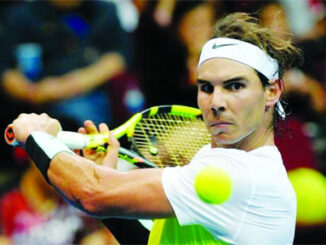
    Rafael Nadal confirmed on Thursday, June 13,  that he will opt out of the upcoming Wimbledon Championships. The Spanish tennis legend stated that he wants to keep himself fit for the upcoming Paris Olympics, which, he also confirmed, will be his last Games. Nadal took to his official X (formerly Twitter account) to announce his withdrawal from the Wimbledon.
    “During my post match press conference at Roland Garros I was asked about my summer calendar and since then I have been practicing on clay. It was announced yesterday that I will play at the summer Olympics in Paris, my last Olympics. “With this goal, we believe that the best for my body is not to change surface and keep playing on clay until then. It’s for this reason that I will miss playing at the Championships this year at Wimbledon. I am saddened not to be able to live this year the great atmosphere of that amazing event that will always be in my heart, and be with all the British fans that always gave me great support. I will miss you all,” wrote Nadal.
    Nadal further wrote that he will take part in the Nordea Open, the clay court tournament in the Bastad city of Sweden.
    “In order to prepare for the Olympic Games, I will play the tournament in Bastad, Sweden. A tournament that I played earlier in my career and where I had a great time both on and off the court. Looking forward to seeing you all there. Thank you,” Nadal further wrote in his statement. Nadal last played at Wimbledon in the 2022 edition, where he reached the semi-finals. He won two titles at the calendar’s only grass-court slam – in 2008 and 2010. 2024 is likely to be Nadal’s final year on the tour, meaning the Spaniard might have already made his last appearance at Wimbledon.

  • Four Superstar Seniors in Washington, D.C., Earn $10,000 Milken Scholars Award

    Four Superstar Seniors in Washington, D.C., Earn $10,000 Milken Scholars Award

    2024 class represents Program’s 35th anniversary developing “Lifelong Leaders for a Better World”

    SANTA MONICA, CA (TIP):  Four outstanding college-bound Washington, D.C., students received an extra dose of good news to close out their high school careers. They are 2024 Milken Scholars! The scholarship Program, a joint initiative of the Milken Institute and the Milken Family Foundation, honors high school seniors in Washington, D.C., New York City and Los Angeles County each year with a $10,000 cash prize and lifelong access to college advising, career counseling, internship assistance, community service opportunities, and a fund to help with graduate school applications, unpaid internships, study abroad programs, and other costs associated with their pursuit of a career.

    The 2024 Washington, D.C., Milken Scholars are  Jonali Gaylor, McKinley Technology High School, Hampton University,   Mekdelawit (Mekdi) Gebreslassie, Parkmont School, Princeton University, Akesh Mallia, School Without Walls Senior High School, University of Wisconsin-Madison, and  Selena Reyes-Flores, Georgetown Visitation School, Yale.

    Established in 1989 by Mike and Lori Milken, the Milken Scholars Program celebrates its 35th anniversary this year. After completing a rigorous nomination, application and interview process, Milken Scholars are selected based on academic performance, community service, leadership, and their ability to persevere in the face of personal challenges. Past recipients include inaugural poet Amanda Gorman; Ruben Harutunian, treasurer of the board of the Binational Fulbright Commission in Egypt and minister-counselor for public diplomacy at the U.S. Embassy in Cairo; Dr. Joelle Simpson, chief of emergency medicine at Children’s National Hospital; and award-winning entrepreneur Emanuel Yekutiel.

    “In its 35th year, as the Milken Scholars Program approaches a total of nearly 600 remarkable young men and women representing more than 80 nations, Lori and I never fail to be amazed and gratified by their achievements,” said Mike Milken.

    This month, the Washington, D.C., Milken Scholars will be celebrated by the Washington, D.C., Milken Scholars community at an annual Recognition Ceremony. In July, they will attend a three-day summit in Los Angeles with over 100 Scholars including new Milken Scholars from New York City and Los Angeles County, as well as undergraduates and alumni facilitators in fields across all industries. Students gain insight and guidance from speakers, panels and activities while discussing the Summit theme Shaping a Shared Future and learning more about the support structure they will receive throughout their college careers and beyond. Access to such resources creates a setting that propels these exceptional youth into a position where they can achieve their personal, academic and professional goals and, in the process, become “Lifelong Leaders for a Better World.”

    Mike and Lori Milken founded the Milken Scholars Program to promote and assist exceptional youth as they navigate the transitions from high school to college and from college to graduate school or the world of work. As of 2024, the program reaches over 575 students representing more than 80 countries of origin since its first 1989 class.

    Milken Scholars embody a variety of ages, backgrounds, and academic and professional interests, and attend some of the top colleges and universities in the country. Twenty-five percent were born outside the U.S. and 78% have parents originating from over 80 countries. More than half are first generation in their family to attend college, while 46% are the first person in their family to attend college in the U.S. The class of 2024 is one of the most diverse yet, representing 16 countries spanning North America, Central America, West Africa, Northeast Africa, the Middle East, Western Europe, East Asia, and South Asia.

    MEET THE 2024 D.C. MILKEN SCHOLARS

    Jonali Gaylor

    Hampton University

    Jonali Gaylor quickly became a leader at McKinley Technology High School (MTHS), where she served as vice president and founder of Hack Club, her school’s first computer science-related club. She completed coding projects, built websites, drew pixel art, coded games and competed in hackathons. Helping freshmen decide which of her school’s three academies to pursue – biotechnology, engineering or information technology – Jonali served as the computer science representative and panelist in her junior and senior years. Passionate about inspiring young students as a Black female in tech, Jonali contributed to the academy’s significant growth and diversity by highlighting the program’s qualities, engaged students’ questions and interests, and participated in the change she wanted to see.

    Jonali is an AP Scholar, College Board National African American Recognition Awardee, and recipient of the Amazon Future Engineer Scholarship. Jonali unleashed her talents as a geographic information systems specialist intern at the D.C. Department of Public Works, where she helped to improve waste collection processes, co-designed a GIS map to navigate the city through its murals, developed an automatic email response system, and redesigned websites. During her software development internship at Indie Co., she helped build a QR code generator and control panel.

    Additionally, Jonali was a decorated varsity athlete at MTHS. Her leadership shined through in her roles as co-captain of both the flag football and soccer teams, and participation on the swimming team. Outside of athletics, Jonali hosted school poetry slams as the Poetry Club’s vice president, participated in the Gardening Club, and volunteered her time at a food pantry and packaging meal boxes for families during COVID.

    Jonali will study computer science at Hampton University and plans a career in software engineering.

    Mekdelawit (Mekdi) Gebreslassie

    Princeton University

    With roots in Ethiopia, Mekdelawit (Mekdi) Gebreslassie is a first-generation immigrant, Amharic translator, tutor, and tenants’ rights advocate. Among these powerful extracurricular pillars of her life, Mekdi maintained an outstanding high school career.

    Mekdi, a graduate of Parkmont School, is a QuestBridge finalist, Posse Foundation finalist, African Diaspora College Access Program finalist, and recipient of fellowships from Civics Unplugged and Climate Innovators. At Parkmont, Mekdi served as a student government meeting leader and helped coordinate school festivals and activities, while also serving as the founder and leader of Culture Club, where she shared her Ethiopian culture with middle and high school students. She is a talented writer and poet with nationally recognized work as a semifinalist at Brave New Voices and locally at the D.C. Public Library’s haiku contest. She is the author of two self-published books entitled “The Amharic Alphabet with Mekdi” and “Thoughts Just for Another Day.” More than ten of her original poems were published with Day Eight in the book “Why We Write.” Furthering her passion for writing and expression, Mekdi served as a reporter and author for DCTRENDING and participated in the 2023 Immersion Cohort in the Emerging Journalists Program at Elon University.

    Continuing to advocate for her community, Mekdi is an English tutor for Ukrainians through ENGin and translates for families through The Platform of Hope and Mary’s Center. She is an editor for the Free Minds Book Club, where she coordinates meetings, assists with curriculum development, and provides feedback on poetry written by incarcerated adults. Additionally, Mekdi lent her talents to the Youth Climate Action Team (YCAT) Inc., Sunrise DC, Sitar Arts Center, and the Takoma Recreation Center.

    Mekdi will study political science at Princeton University and plans a career in law.

    Akesh Mallia

    University of Wisconsin-Madison

    Passionate about “shooting for the stars,” Akesh Mallia was founder and president of his school’s Space Club, where he planned meetings, presented, brought in aerospace industry speakers, and coordinated bottle rocket launches. He led the club at the NASA International Space Apps Challenge, receiving a D.C. Local Impact Award, and at MIT’s Build a CubeSat Challenge at the Beaver Works Summer Institute. He interned at the NASA Goddard Space Flight Center as an instrumentation and payload lead, where he worked on developing cameras and sensors. Akesh shared his love of space through teaching astronomy to middle school students at Carnegie Science’s First Light Astronomy Outreach Program.

    A graduate of School Without Walls Senior High School, Akesh earned an Associate of Arts degree in general studies through George Washington University’s Early College Program. At GWU, he made the Dean’s list, served as councilmember on the Integrity and Conduct Council, and was a calculus undergraduate learning assistant. Akesh is a National Merit Scholar, OSSE Scholar, Posse Scholar, and National Honor Society member. In his internship at the Georgia Gwinnett College School of Science and Technology, he studied the effectiveness of antimalarial drugs, was published in a peer-reviewed journal, and presented at meetings of the American Chemical Society.

    Akesh was team captain of the policy debate team where he placed in debate tournaments and received the Washington Urban Debate League’s Adam J. Rubinson Memorial Award. He spoke at the Cato Institute on economic inequality and published live commentary on the 2024 presidential debates for Newsweek. Additionally, he was the Future Business Leaders of America school chapter vice president, robotics team member, and volunteered with the Japanese Tamago Language and Cultural Learning Program.

    Akesh will study mechanical engineering at the University of Wisconsin-Madison and plans a career in aerospace engineering.

    Selena Reyes-Flores

    Yale

    Selena Reyes-Flores will be the first generation in her family to go to college. With Spanish as her first language, she serves as a translator for not only her own family, but also for Spanish-speaking patients at Children’s National Hospital, where she volunteered greeting visitors, leading activities and shadowing nurses. During a public health internship through Leadership Initiatives, Selena led a team that researched international healthcare, communicated with international health officials, and designed workshops to increase awareness in Bauchi, Nigeria, about acute respiratory tract infection and urinary tract infection.

    Selena is a graduate of Georgetown Visitation School. She is an AP Scholar with Honor, Cloriviere Scholar, and received the College Board National Hispanic Recognition Award, Hispanic Heritage Foundation Youth Award: Blue Region Silver Medal in Healthcare and Science, and the National French Contest Gold Medal. Selena was a member of the Cum Laude Society, National French Honors Society, and served as vice president of Vamos Community Tutoring Club. In this role, she tutored K-10 students in math, reading and Spanish; communicated with families; planned events; designed lesson plans; and fundraised for learning materials. Expanding her tutoring and mentorship skills, Selena volunteered to help students in pre-K through second grade with math, spelling and reading skills at Little Lights Center.

    A founding member of Latinas Unidas, Selena helped plan school celebrations of Latino culture and promoted inclusivity. She performed with the multi-genre dance group, EnVISIon, helped teach choreography to young dancers, and worked on the theater crew as a costume designer and set builder. Selena continued her advocacy for minority youth through volunteer work with her school’s Mental Health Club and after-school academic programs.

    Selena will study chemistry at Yale and plans a career in medicine.

    About the Milken Scholars

    Michael and Lori Milken founded the Milken Scholars in 1989 to honor exceptional young individuals who have demonstrated the potential to make a profound difference in the world. Scholars are chosen while high school seniors on the basis of distinguished academic performance, school and community service, leadership, and evidence of having overcome personal, financial, and/or social obstacles. Milken Scholars receive financial assistance plus a strong support system of resources and networks during their academic and professional careers. For more information, visit www.MilkenScholars.org.


  • IRS warns against scams targeting seniors; joins other federal agencies to recognize special awareness day

    IRS warns against scams targeting seniors; joins other federal agencies to recognize special awareness day

    WASHINGTON, D.C. (TIP): As part of continuing efforts to protect the senior community, the Internal Revenue Service, on June 12, issued a warning about the rising threat of impersonation scams. These scams are targeting older adults by pretending to be government officials, aiming to steal sensitive personal information and money. By posing as representatives from agencies such as the IRS, or other government agencies, these fraudsters use fear and deceit to exploit their victims.

    “Scammers often target seniors, attempting to steal personal information through phone calls, emails or text messages by pretending to be from the IRS or other agencies or businesses,” said IRS Commissioner Danny Werfel. “Preventing these types of scams requires assistance from many different places. By partnering with other federal agencies and others in the tax community, we can reach more seniors and other taxpayers to help protect them against these terrible scams.”

    This is part of a wider effort taking place this week leading up to World Elder Abuse Awareness Day (WEAAD) on Saturday, June 15. WEAAD, observed since June 15, 2006, aims to foster a better understanding of the neglect and abuse faced by millions of older adults, focusing attention on the contributing cultural, social, economic and demographic factors.

    The IRS also has been engaged in long-term efforts to protect against scams and other related schemes, including identity theft. This has been an ongoing focus of the Security Summit partnership between the IRS, state tax agencies and the nation’s tax professional community since 2015.

    Understanding the threats

    The IRS has identified a concerning trend where fraudulent actors are increasingly targeting unsuspecting individuals, particularly senior citizens, by masquerading as IRS agents. Victims are pressured into making immediate payments through unorthodox methods such as gift cards or wire transfers under the pretense of resolving fictitious tax liabilities or securing false refunds.

    These scammers deploy advanced techniques to fabricate a veneer of credibility, including the manipulation of caller IDs to appear legitimate. Here are just a few examples of their schemes:

    Impersonation of known entities: Fraudsters often pose as representatives from government agencies — including the IRS, Social Security Administration and Medicare — others in the tax community or familiar businesses and charities. By spoofing caller IDs, scammers can deceive victims into believing they are receiving legitimate communications.
    Claims of problems or prizes: Scammers frequently fabricate urgent scenarios, such as outstanding debts or promises of significant prize winnings. Victims may be falsely informed that they owe the IRS money, are owed a tax refund, need to verify accounts or must pay fees to claim non-existent lottery winnings.
    Pressure for immediate action: These deceitful actors create a sense of urgency, demanding that victims take immediate action without allowing time for reflection. Common tactics include threats of arrest, deportation, license suspension or computer viruses to coerce quick compliance.
    Specified payment methods: To complicate traceability, scammers insist on unconventional payment methods, including cryptocurrency, wire transfers, payment apps or gift cards, and often require victims to provide sensitive information like gift card numbers.

    Scam precautions and reporting

    If an individual receives an unexpected call from someone alleging to be from the IRS, but they have not been notified by mail about any issues with their IRS account, they should hang up immediately. The call is likely from a scammer.

    Do not return the call using the number provided by the caller or the one displayed on their caller ID. If taxpayers are uncertain about the legitimacy of IRS communications, they can contact IRS customer service for verification at 800-829-1040, or for the hearing impaired, TTY/TDD 800-829-4059.

    To view details about an individual’s tax account, they can set up or check their IRS individual online account on IRS.gov.

    Electronic scams are also on the rise, with scammers sending malicious emails and texts posing as IRS representatives to steal personal information. The IRS reminds taxpayers that it does not initiate contact via email, text, or social media regarding tax bills or refunds.

    Report the call or electronic scam by visiting the Hotline page of the Treasury Inspector General for Tax Administration and using an IRS Impersonation Scam Reporting form or by calling 800-366-4484. Forms to report different types of fraud are available on the Hotline page of Treasury Inspector General for Tax Administration website. Taxpayers can click the appropriate option under “IRS Scams and Fraud” and follow the instructions.

    Key points to remember:

    Individuals should understand how and when the IRS contacts taxpayers to help them verify whether any communication they receive is genuinely from an IRS employee.

    Most IRS communications are initiated through regular mail delivered by the United States Postal Service. However, in certain situations, the IRS may make phone calls or visit homes or businesses. These situations include having an overdue tax bill, an unfiled tax return or missing employment tax deposit.

    Additionally, an IRS employee might review assets or inspect a business as part of a collection investigation, audit or ongoing criminal investigation.

    Remember the following:

    The IRS will never demand immediate payment via prepaid debit cards, gift cards or wire transfers. Typically, if taxes are owed, the IRS will send a bill by mail first.
    The IRS will never threaten to involve local police or other law enforcement agencies.
    The IRS will never demand payment without allowing opportunities to dispute or appeal the amount owed.
    The IRS will never request credit, debit or gift card numbers over the phone.
    Remaining vigilant and informed about these scams can help protect taxpayers from financial loss and identity theft. The IRS and partnering federal agencies urge everyone to be cautious, especially when dealing with unsolicited communications concerning taxes.

    In March 2020, the U.S. Department of Justice introduced the National Elder Fraud Hotline to address fraud targeting elderly Americans and support affected individuals. If an individual has fallen victim to elder fraud, they can contact the National Elder Fraud Hotline at 833-FRAUD-11 (833-372-8311).

    The hotline operates Monday through Friday, from 10 a.m. to 6 p.m. Eastern Time, and services are available in English, Spanish, and other languages.

    More information
    Tax Scams and Consumer Alerts
    Report Phishing and Online Scams
    The IRS Dirty Dozen: Annual list of scams affecting taxpayers
    Federal Trade Commission- How to avoid a government impersonation scam
    Security Summit partnership

  • The US Supreme Court upholds access to a widely available abortion pill

    The US Supreme Court upholds access to a widely available abortion pill

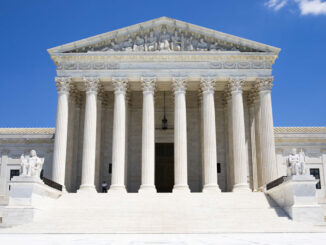
    WASHINGTON, D.C. (TIP): The Supreme Court on Thursday, June 13, maintained access to a widely available abortion pill, rejecting a bid from a group of anti-abortion organizations and doctors to undo the Food and Drug Administration’s approval of the drug.

    In a unanimous decision, written by Justice Brett M. Kavanaugh, the court held that the anti-abortion groups lacked a direct stake in the dispute, a requirement to challenge the F.D.A.’s approval of the pill, mifepristone.

    “The plaintiffs do not prescribe or use mifepristone,” Justice Kavanaugh wrote. “And F.D.A. is not requiring them to do or refrain from doing anything.”

    He added, “A plaintiff ’s desire to make a drug less available for others does not establish standing to sue.”

    The case originally sought to erase the F.D.A.’s approval of mifepristone. But by the time it reached the Supreme Court, the question had been narrowed to whether the agency had acted legally in 2016 and 2021, when it broadened distribution of the pill, eventually including telemedicine and mail options.

    The ruling handed a muted victory to abortion rights groups. Even as they praised the decision for averting severe restrictions on the availability of the pill, they warned that the outcome could be short-lived. Anti-abortion groups vowed to press ahead, promising that the fight was far from over and raising the possibility that other plaintiffs, states in particular, would mount challenges to the drug.

    The ruling did not affect separate restrictions on the pill in more than a dozen states that have passed near-total bans on abortion since the court eliminated a constitutional right to the procedure in Dobbs v. Jackson Women’s Health Organization. (The bans do not distinguish between medication and surgical abortion.)

    Access to abortion remains broadly popular, and ever since the court overturned Roe v. Wade two years ago, prompting some states to swiftly enact bans, the issue has been a major focus of political campaigns. Democrats have succeeded in galvanizing voters to defeat anti-abortion measures and plan to highlight abortion rights in the November elections.

    By dodging a ruling on the substance of the case, the justices avoided delivering a clear, substantive win to either political party or a decision they could use to motivate their base.

    President Biden said in a statement that the “decision does not change the fact that the fight for reproductive freedom continues.”

    He added, “It does not change the fact that the Supreme Court overturned Roe v. Wade two years ago, and women lost a fundamental freedom.”

    The Biden campaign also raised concerns that the ruling would not be enough to protect access to abortion medication if former President Donald J. Trump wins a second term, saying his administration would move to enforce new restrictions through executive action.

    Mr. Trump had wrestled with what position to take on abortion access after the Supreme Court, whose conservative supermajority he appointed, overturned the Roe v. Wade landmark abortion-rights case. Several weeks ago, he said it was up to states to set their own policies.

    His campaign suggested he staked out a similar position on the abortion pill ruling, without addressing how his administration would handle regulation of the drug. “The Supreme Court has unanimously decided 9-0; the matter is settled,” Danielle Alvarez, a Trump spokeswoman, said.

    Abortion rights groups cautioned that the ruling only maintained the status quo.

    “The anti-abortion movement sees how critical abortion pills are in this post-Roe world, and they are hell bent on cutting off access,” Nancy Northup, the president of the Center for Reproductive Rights, said in a statement.

    Erin Hawley, senior counsel for Alliance Defending Freedom, the conservative legal organization that represented the plaintiffs, suggested that the case could be revived through three Republican-led states, Idaho, Kansas and Missouri, which had intervened as plaintiffs at the lower court level.

    “We are grateful that three states stand ready to hold the F.D.A. accountable for jeopardizing the health and safety of women and girls across this country,” Ms. Hawley said in a statement.

    Mifepristone, part of a two-drug regimen, is used in nearly two-thirds of abortions in the United States. Many studies have found the pill to be safe, and years of research have shown that serious complications are rare.

    After the F.D.A. loosened restrictions on the drug’s availability during the pandemic, allowing for it to be prescribed online or sent by mail, its use only increased. A rising number of medication abortions are prescribed by telemedicine. By one count, about one in six abortions, or around 14,000 a month, happened via telehealth from July through September 2023.

    Medication abortion has become a practical form of abortion for women in states where the procedure is banned. Clinicians, protected by so-called shield laws in several states where abortion is legal, have mailed pills to women based in states with bans.

    Justice Kavanaugh focused part of the majority opinion on why the justices disagreed with rulings by lower courts, which all determined the groups had standing to bring the case.

    Citing Justice Antonin Scalia, Justice Kavanaugh wrote that to bring a suit, a plaintiff first must answer a basic question: “What’s it to you?”

    Plaintiffs must show “a predictable chain of events leading from the government action to the asserted injury,” Justice Kavanaugh wrote.

    In this instance, he wrote, the doctors and medical associations trying to challenge F.D.A.’s regulation failed to show an actual injury because the plaintiffs did not include people actually involved with the pill, such as doctors who prescribed mifepristone or pregnant women who took it.

    The plaintiffs’ claims that they have “sincere legal, moral, ideological, and policy objections to mifepristone being prescribed and used by others” do not meet the threshold of standing to sue, Justice Kavanaugh wrote.

    The justices also rejected an argument by the anti-abortion doctors that they had standing to sue because they could be required to provide emergency abortions against their conscience.

    Federal conscience laws already protect doctors from being required to perform abortions or other treatment that violates their consciences, and none of the doctors had shown otherwise, Justice Kavanaugh wrote.

    In a concurring opinion, Justice Clarence Thomas noted that he supported the decision “in full,” but cautioned that the court should take a limited view of when to allow organizations to claim standing on behalf of their members.

    The case returned the issue of abortion to the Supreme Court, even as the conservative majority had declared, in overturning Roe v. Wade, that it would cede the question of access “to the people and their elected representatives.”

    Its decision on Thursday appeared to vindicate that promise, although the court will soon decide another major case on abortion, involving a clash between federal law and tightened state restrictions.

    The abortion pill case, F.D.A. v. Alliance for Hippocratic Medicine, reflected a new front in the fierce fight over abortion.

    In the fall of 2022, an umbrella group of anti-abortion medical organizations, along with several doctors, challenged the F.D.A.’s approval of mifepristone more than two decades ago. In a preliminary ruling, a federal judge in Texas, Matthew J. Kacsmaryk, said that the F.D.A.’s approval of the drug should be suspended, removing mifepristone from the market.

    Judge Kacsmaryk, a Trump appointee, joined the federal bench after years litigating at a conservative religious freedom firm, First Liberty Institute.

    An appeals court, in New Orleans, overturned the part of Judge Kacsmaryk’s ruling that invalidated the F.D.A.’s approval of the pill, but it imposed certain restrictions on its distribution. Those restrictions included prohibiting the medication from being sent by mail or prescribed by telemedicine.
    (Source: New York Times)

  • “Transforming Lives” Tour of Salt and Light of the World Reaches Chicago, IL after Successful New York Performance

    “Transforming Lives” Tour of Salt and Light of the World Reaches Chicago, IL after Successful New York Performance

    CHICAGO, IL (TIP): The Transforming Lives Tour, organized by Salt and Light of the World, made its impactful journey to Chicago following a highly successful program in New York. This inspiring event, held in association with Wheatland Salem Gujarati Service and Emmanuel United Methodist Church Evanston (EUMC), brought together diverse communities for an evening of spiritual rejuvenation and praise.

    Dr. Sam George, the Director of the Global Diaspora Institute at Wheaton College, served as the key speaker for the event. His sermon was both encouraging and uplifting, leaving attendees spiritually enriched and motivated.

    Rev. Zaki L. Zaki, pastor of the host churches Wheatland Salem Church and Wheatland Salem Gujarati Church, along with Rev. Scott Christy from EUMC, collaborated closely with the Salt and Light of the World organization to ensure the event’s success. Their leadership and dedication were instrumental in bringing this transformative experience to Chicago.

    The program was expertly hosted by Irene Christian, who served as the master of ceremonies, guiding the audience through a memorable evening of faith and fellowship.

    The evening featured soul-stirring musical performances by choirs from various churches, including the Gujarati Christian Church of Chicago, Calvary Indian Church Youth Choir of Chicago, Jai Masihi Ki Pakistani Church of Algonquin, EUMC, and Community Presbyterian Church of Mount Prospect. Each choir’s harmonious renditions added a profound dimension to the worship experience.

    Salt and Light of the World, an organization committed to spreading the teachings of Christ and uplifting communities, clearly articulates its vision and mission on its website: “We aim to be the salt of the earth and the light of the world, enriching lives with the message of Christ and illuminating paths with hope and love.”

    Mr. Willy Robinson, Founder and Director of Salt and Light of the World, shared a powerful vision and emphasized the organization’s mission. He encouraged everyone to be the salt that adds flavor to the world and the light that dispels darkness, fostering a community rooted in faith and compassion.

    Willy Robinson, Founder and Director of Salt and Light of the World

    In a particularly moving moment, Mr. Robinson highlighted the inspiring story of Brother Arpan Emmanuel, a keyboard player from India, whose life was profoundly influenced by listening to the songs of renowned gospel singer Thomas Puthoor. Mr. Puthoor, known for his ministry through music for over 33 years, has performed globally in multiple languages, bringing God’s message to diverse audiences.

    As the evening drew to a close, attendees left with a renewed sense of purpose and spiritual vitality. The success of this event in Chicago is a testament to the power of faith, community, and the unwavering commitment of Salt and Light of the World to transform lives.

    Salt and Light of the World extends heartfelt thanks to everyone who worked, prayed, and participated in this event. The organization looks forward to continuing its mission and sharing the light of Christ through future programs.

    The Transforming Lives Tour has been a testament to the power of community and faith, with each stop bringing people closer to their spiritual goals. The tour will continue its journey, with the next stops scheduled in Brampton, Canada; Kathmandu, Nepal; and Ahmedabad, India.
    (Photographs and Press release by Asian Media USA)

  • Supreme Court issues notices to Centre, NTA on petitions seeking CBI probe into ‘irregularities’ in NEET-UG; hearing on July 8

    Supreme Court issues notices to Centre, NTA on petitions seeking CBI probe into ‘irregularities’ in NEET-UG; hearing on July 8

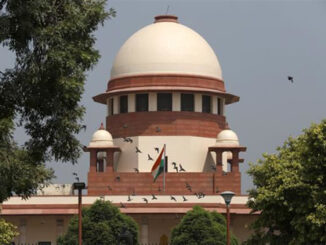
    NEW DELHI (TIP): The Supreme Court on Friday, June 14, issued notices to the Centre and National Testing Agency (NTA) on petitions seeking a CBI probe into alleged paper leak and irregularities in NEET-UG 2024, in which 67 students got a perfect score of 720 out of 720.

    Asking the Centre and NTA to respond to the petitions seeking a CBI probe into alleged paper leak and malpractices in NEET-UG, a Vacation Bench led by Justice Vikram Nath asked them to respond in two weeks and posted the matter for further hearing on July 8 when certain other petitions on the issue would also be taken up.

    As the petitioners’ advocates said it’s a question of lakhs of students and that candidates were committing suicides, the Bench asked them not to make any emotional arguments. It said no ex-parte order could be passed on their plea for a CBI probe without hearing the counsel for the Centre and NTA.

    Besides a CBI probe into alleged paper leak and other irregularities, the petitioners have also sought cancellation of NEET-UG – results of which were declared on June 4.

    The Bench – which also included Justice Sandeep Mehta – also issued notices to various parties on NTA’s petition seeking transfer of cases pending in various high courts on the NEET-UG row to the top court to avoid multiplicity of litigation.

    Now both sets of petitions will be taken up for hearing on July 8.

    The Bench allowed NTA to withdraw three other petitions seeking transfer of cases from high courts to the top court on the issue of grant of grace marks to 1,563 candidates on account of loss of time during the May 5 NEET-UG.

    Amid allegations of paper leak and other malpractices in NEET-UG, the Centre on Thursday scrapped the grace marks given on account of loss of time to 1,563 NEET-UG candidates for admission to MBBS, BDS and other courses.

    These candidates will be given an option to take a retest on June 23 and the results would be declared by June 30, 2024 so that counselling likely to start from July 6, 2024 onwards was not affected, the Centre had said.

    The decision was taken in meetings held by the NTA grievance redressal committee on June 10, 11 and 12 to allay fears of candidates about any possible irregularities.

    However, the top court had to stay the counselling process for admissions to MBBS, BDS, AYUSH and other related courses in more than 700 government and private institutions across India even as it noted that sanctity of the examination had been affected and that it needed answers from NTA.

    Around 22 lakh students appeared for NEET-UG conducted on May 5 by NTA across 4,750 centers in 511 cities and 14 centers abroad for admission to MBBS, BDS, AYUSH and other related courses in more than 700 government and private institutions.

    As many as 67 students got a perfect score of 720 out of 720 and some of the Rank 1 holders had the same sequence of roll numbers which raised suspicion of malpractice and irregularities. The majority of them were from the same examination centers in Rajasthan (11), Tamil Nadu (8), Maharashtra (7), Haryana (6) and four each from Andhra Pradesh and Bihar. In 2019 and 2020, there was one topper each while there were three toppers in 2021, one in 2022, and two in 2023.

    A large number of students protested in Delhi on June 10 demanding a probe into alleged irregularities in NEET-UG. They alleged that grace marks contributed to 67 students sharing the top rank.
    (Source: TNS)

  • Pope Francis becomes first pontiff to address a G7 summit, raises alarm about AI

    Pope Francis becomes first pontiff to address a G7 summit, raises alarm about AI

    BORGO, EGNAZIA (TIP):Pope Francis challenged leaders of the world’s wealthy democracies on Friday, June 14, to keep human dignity foremost in developing and using artificial intelligence, warning that such powerful technology risks turning human relations themselves into mere algorithms, according to a Reuters report

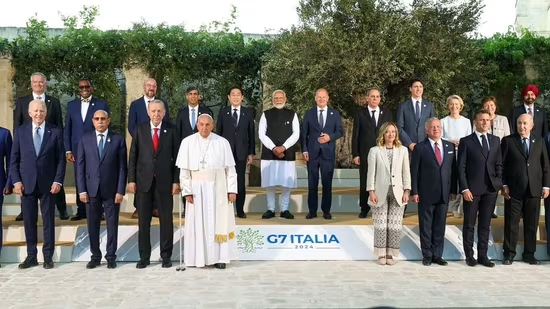
    Francis brought his moral authority to bear on the Group of Seven, invited by host Italy to address a special session at their annual summit on the perils and promises of AI. In doing so, he became the first pope to attend the G7, offering an ethical take on an issue that is increasingly on the agenda of international summits, government policy and corporate boards alike.

    Francis said politicians must take the lead in making AI human-centric, so that human decisions always remain made by humans and not machines.

    “We would condemn humanity to a future without hope if we took away people’s ability to make decisions about themselves and their lives, by dooming them to depend on the choices of machines,” he said. “We need to ensure and safeguard a space for proper human control over the choices made by artificial intelligence programs: Human dignity itself depends on it.” Francis intended to use the occasion to join the chorus of countries and global bodies pushing for stronger guardrails on AI following the boom in generative artificial intelligence kickstarted by OpenAI’s ChatGPT chatbot.

    The Argentine pope used his annual peace message this year to call for an international treaty to ensure AI is developed and used ethically. He argues that a technology lacking human values of compassion, mercy, morality and forgiveness is too perilous to develop unchecked.

    Italian Premier Giorgia Meloni invited Francis and announced his participation, knowing the potential impact of his star power and moral authority on the G7.

    “The Pope is, well, a very special kind of a celebrity,” said John Kirton, a political scientist at the University of Toronto who directs the G7 Research Group think tank.

    Kirton recalled the last summit that had this kind of star power was the 2005 meeting in Gleneagles, Scotland, where members decided to wipe out the USD 40 billion of the debts owed by 18 of the world’s poorest countries to the World Bank and the International Monetary Fund.

    That summit was preceded by a Live 8 concert in London that featured Sting, The Who and a reformed Pink Floyd and drew over a million people in a show of solidarity against hunger and poverty in Africa. “Gleneagles actually hit a home run and for some it’s one of the most successful summits,” Kirton said.

    No such popular pressure is being applied to G7 leaders in the Italian region of Puglia, but Francis can wield his own moral authority to renew his demands for safeguards for AI and highlight the threats to peace and society it poses. Generative AI technology has dazzled the world with its capabilities to produce humanlike-responses, but it’s also sparked fears about AI safety and led to a jumble of global efforts to rein it in.

    Some worry about catastrophic but far off risks to humanity because of its potential for creating new bioweapons and supercharging disinformation. Others fret about its effect on everyday life, through algorithmic bias that results in discrimination or AI systems that eliminate jobs.

    In his peace message, Francis echoed those concerns and raised others. He said AI must keep foremost concerns about guaranteeing fundamental human rights, promoting peace and guarding against disinformation, discrimination and distortion.

    On the regulation front, Francis will in some ways be preaching to the converted as the G7 members have been at the forefront of the debate on AI oversight.

    Japan, which held the G7’s rotating presidency last year, launched its Hiroshima AI process to draw up international guiding principles and a code of conduct for AI developers. Adding to those efforts, Prime Minister Fumio Kishida last month unveiled a framework for global regulation of generative AI, which are systems that can quickly churn out new text, images, video, audio in response to prompts and commands.

    The European Union was one of the first movers with its wide-ranging AI Act that’s set to take effect over the next two years and could act as a global model. The act targets any AI product or service offered in the bloc’s 27 nations, with restrictions based on the level of risk they pose.

    In the United States, President Joe Biden issued an executive order on AI safeguards and called for legislation to strengthen it, while some states like California and Colorado have been trying to pass their own AI bills, with mixed results.

    Antitrust enforcers on both sides of the Atlantic have been scrutinizing big AI companies including Microsoft, Amazon and OpenAI over whether their dominant positions stifle competition.

    Britain kickstarted a global dialogue on reining in AI’s most extreme dangers with a summit last fall. At a follow-up meeting in Seoul, companies pledged to develop the technology safely. France is set to host another meeting in the series early next year. The United Nations has also weighed in with its first resolution on AI.

    On the sidelines of his AI speech, Francis has a full day of bilateral meetings. He had meetings with Ukraine President Volodymyr Zelenskyy, as well as invited leaders from Algeria, Brazil, India, Kenya, Turkiye. He will also meet with G7 members, including Biden, Canadian Prime Minister Justin Trudeau and French President Emmanuel Macron.
    (Agencies)

  • Mohan Bhagwat says Lok Sabha poll campaign by both sides increased ‘social tensions’

    Mohan Bhagwat says Lok Sabha poll campaign by both sides increased ‘social tensions’

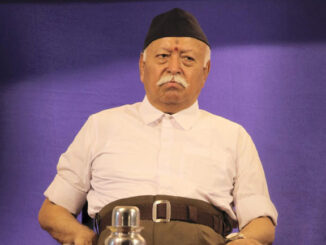
    NAGPUR (TIP): Rashtriya Swayamsevak Sangh (RSS) chief Mohan Bhagwat on Monday, June 10, called for peace in strife-torn Manipur and said campaigning for the Lok Sabha election had increased ”social tensions and suspicion” among people.

    Speaking during an event at the RSS headquarters in Nagpur, Mr. Bhagwat, addressing Sangh workers said that while elections are an essential process of democracy, there ought to be a limit to one’s rhetoric during campaigning.

    “There are two parties. There is competition. Since it is a contest, efforts will be made by both to push oneself forward. But there is a dignity to this process. Lies should not be used. People are being elected to go to Parliament and run our country. They do so by reaching a consensus. That has been our tradition. This [election] contest is not a war,” said the RSS chief.

    “The manner of campaigning was one in which social tensions and suspicion among people would increase and two groups would be divided. Care was not taken to ensure that this did not happen. Without any reason, organizations like the RSS were dragged into this,” added Mr. Bhagwat.

    Mr. Bhagwat said that Manipur has been waiting for peace for a year.

    “The State had been peaceful for 10 years. It had appeared that gun culture had ended. However, who is thinking of dousing the flames that have erupted now? Peace has to be considered on priority basis,” Mr. Bhagwat said.

    The ruling BJP lost the Lok Sabha election in Manipur, with both seats being won by the Congress. The Opposition Congress had accused Mr. Modi of not visiting Manipur while Congress leader Rahul Gandhi had done so, commencing his Bharat Jodo Nyaya Yatra from there.

    He said that while the National Democratic Alliance (NDA) government had come to power and that a number of good things had taken place in the last 10 years, like an improvement in economic conditions and an enhancement of India’s prestige in the world, it did not mean that challenges had ceased.

    “There is a dignity to contesting elections. That dignity was not maintained. It is necessary to do so because the challenges facing our country have not ended…The same government is back to power [NDA]. While it is right that a lot of positive things have happened in last 10 years, it doesn’t mean that we are free of challenges,” Mr. Bhagwat said.

    He also rued the fact that falsehoods were propagated through technology. “Modern technology was used to propagate falsehood. How will a country run like that?” he said.

    Mr. Bhagwat further said that the Opposition should not be considered an adversary. “They are Opposition, revealing one side. Their opinions should also come to light,” he said.
    (With inputs from PTI)

  • G7 leaders commit to transition away from fossil fuels in energy systems

    G7 leaders commit to transition away from fossil fuels in energy systems

    • The document commits to collective effort to reduce methane emissions by 75% by 2030
    • India’s Prime Minister Modi meets with G7 leaders and Pope Francis

    BORGO EGNAZIA (TIP): Leaders of the Group of Seven (G7) developed democracies will commit to accelerating their transition away from fossil fuels during this decade, according to a draft of a statement to be issued at the end of their ongoing summit in Italy, says a Reuters report.

    “We will transition away from fossil fuels in energy systems in a just, orderly, and equitable manner, accelerating actions in this critical decade, to achieve net-zero by 2050 in keeping with the best available science,” said the draft seen by Reuters.

    Other commitments on climate policy in the draft include a pledge “to phase out existing unabated coal power generation in our energy systems during the first half of 2030s.” With the COP29 United Nations climate conference due to start in November, the leaders of the United States, Canada, Japan, Germany, France, Britain and Italy said they would submit “more ambitious” national climate plans, according to the draft.

    The document commits to a collective effort to reduce methane emissions by 75% by 2030 but, in a section likely to upset environment activists, the leaders give a green light to public investments in natural gas, a polluting fossil fuel.

    “In the exceptional circumstance of accelerating the phase-out of our dependency on Russian energy, publicly supported investments in the gas sector can be appropriate as a temporary response, subject to clearly defined national circumstances,” the draft said.

    Meanwhile, India’s Prime Minister Narendra Modi on Friday, June 14, held talks with Ukrainian President Volodymyr Zelenskyy, French President Emmanuel Macron and his British counterpart Rishi Sunak on the sidelines of G7 Summit in Italy’s Apulia region. He also met with Pope Francis who he invited to visit India.

    It is learnt that Ukraine’s Zelenskyy briefed Modi on various aspects of the Russia-Ukraine conflict. Modi had met Zelenskyy on the sidelines of the previous G7 summit in Hiroshima in May last year as well.

    India has been maintaining that the conflict in Ukraine must be resolved through dialogue and diplomacy.

    Modi and French President Macron discussed ways to further strengthen the strategic partnership, including in areas of defense, nuclear and space, and exchanged views on key global and regional issues.

    The two leaders met in the southern resort town of Italy.

    “Taking Strategic Partnership to new levels! PM @narendramodi met President @EmmanuelMacron of France on the sidelines of the 50th G7 Summit in Apulia, Italy,” Ministry of External Affairs spokesperson Randhir Jaiswal posted on X.

    “The two leaders discussed ways to further strengthen the partnership including in areas of defense, nuclear, space, education, climate action, digital public infrastructure, critical technologies, connectivity and culture. They also exchanged views on key global and regional issues,” he wrote.

    It is Prime Minister Modi’s first foreign trip after assuming office for a third time this month. The two leaders last met in January when the French President visited India to attend the 75th Republic Day of India.

    PM Modi’s meeting with his British counterpart Sunak followed his talks with French President Macron. The two leaders greeted each other with a warm hug as they met on the sidelines of the 50th G7 Summit at the luxury resort of Borgo Egnazia in Apulia.

    Modi reaffirmed his commitment to further strengthen the India-UK strategic partnership in the third term of the NDA government and reviewed the progress made in the ongoing FTA negotiations.

    “It was a delight to meet PM @RishiSunak in Italy. I reiterated my commitment to further strengthen the India-UK Comprehensive Strategic Partnership in the third term of the NDA Government,” Modi posted on X soon after their meeting.

    “There is great scope to deepen ties in sectors like semiconductors, technology and trade. We also talked about further cementing ties in the defense sector,” Modi wrote.

    The spokesperson of the Ministry of External Affairs Randhir Jaiswal described the meeting between the two leaders as “fruitful.”

    “The two leaders took stock of bilateral relations in areas of defense and security, trade and economic collaboration, critical and high technology sectors and people to people connect. They discussed implementation of Roadmap 2030 and progress made in ongoing FTA negotiations,” Jaiswal posted on X.

    Sunak and Modi last met in person at the G20 Summit in New Delhi last September, when they had agreed to accelerate the FTA talks with the hope of signing off before India’s general election.

    However, the trade talks are now expected to resume only after a new UK government is elected on July 4.

    The India-UK FTA negotiations, which opened in January 2022, are aimed at significantly enhancing bilateral trade – currently worth around 38.1 billion pounds a year as per official statistics from earlier this year.

    Modi is attending the summit on the invitation of Italian President Georgia Meloni and will address an Outreach session on Artificial Intelligence, Energy, Africa and the Mediterranean alongside leaders of other invited countries and Pope Francis.
    (With inputs from PTI)

  • Delhi LG grants sanction to prosecute Arundhati Roy under UAPA: Officials

    Delhi LG grants sanction to prosecute Arundhati Roy under UAPA: Officials

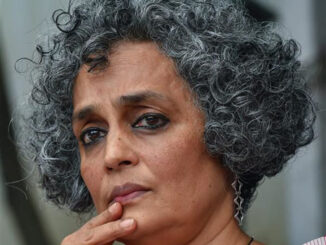
    NEW DELHI (TIP): Delhi Lt Governor V K Saxena has accorded sanction to prosecute author Arundhati Roy and a former professor in Kashmir under the stringent Unlawful Activities (Prevention) Act (UAPA) for allegedly making provocative speeches at an event here in 2010, Raj Niwas officials said on Friday, June 10.

    The FIR against Roy and former Central University of Kashmir professor Sheikh Showkat Hussain was registered following the orders of the Court of Metropolitan Magistrate, New Delhi, they added.

    The FIR in the matter was registered on a complaint made by Sushil Pandit, a social activist from Kashmir, on October 28, 2010.

    Last October, the LG had granted sanction to prosecute them under section 196 of CrPC for commission of offences punishable under different sections of the Indian Penal Code: 153A (promoting enmity between different groups on grounds of religion, race, place of birth, residence, language, etc., and doing acts prejudicial to maintenance of harmony), 153B (imputations, assertions prejudicial to national-integration) and 505 (statements conducing to public mischief).

    Roy and Hussain had allegedly made provocative speeches at a conference organized under the banner of ‘Azadi – The Only Way’ on October 21, 2010 at LTG Auditorium, Copernicus Marg, here.

    “The issues discussed and spoken about at the conference propagated the separation of Kashmir from India,” said the official.

    Those who delivered speeches at the conference included Syed Ali Shah Geelani, SAR Geelani (anchor of the Conference and prime accused in the Parliament attack case), Arundhati Roy, Dr. Sheikh Showkat Hussain and Varavara Rao.

    The complainant filed a complaint under Section 156(3) of CrPC before the Metropolitan Magistrate Court, New Delhi, who disposed the complaint on November 27, 2010 with the directions to register an FIR.

    Accordingly, an FIR was registered and investigation was carried out, they said.
    (Source: PTI)

  • ATLANTIC CITY CARRIES THE N2S TORCH FROM ASBURY PARK

    ATLANTIC CITY CARRIES THE N2S TORCH FROM ASBURY PARK

    B52s (Credit for all : Courtesy NJPAC)
    • By Mabel Pais

    Dozens of much-loved Atlantic City artists will carry the torch from the 2024 Asbury Park Festival by stepping into the spotlight in Atlantic City over two days at the ‘Showcase Stage and Artistic Village,’ a new feature of the ‘Prudential presents North to Shore Festival.’

    The ‘Prudential presents North to Shore Festival’ presents events in Atlantic City June 17-June 23, including performances by headlining artists the B-52’s, Barenaked Ladies, Justin Silva, Eric Roberson and Avery Sunshine and Prince Royce and Wisin. The festival’s full lineup can be found at NorthtoShore.com.

    The Showcase Stage

    From 11 AM to 6 PM on Saturday, June 22, and 11 AM to 5 PM on Sunday, June 23, the ‘Showcase Stage’ will offer a continuous series of FREE performances by some of the city’s most-loved singer-songwriters, DJs, comedians, spoken word poets, a Jazz band, pop punk bands and more.

    This presentation, featuring a cohort of local artists on one stage adjacent to major festival venues, is a new feature of ‘Prudential presents North to Shore,’ the three-week, three-city summer festival of arts and ideas produced by NJPAC, now in its second annual edition.

    “The ‘Showcase Stage’ is our way of spotlighting the talent of Atlantic City’s remarkable creatives while at the same time curating a space where audience members who come out for a headliner show will have a wonderful way to extend their visit and get a genuine sense of the city’s cultural offerings all in one, easy-to-reach spot,” says John Schreiber, President and CEO of NJPAC. 

    The Artist Village

    Performances are just the start of what’s on offer. The ‘Showcase Stage will be the centerpiece of the Artist Village at the Orange Loop Festival Grounds, effectively a festival-within-a-festival within easy walking distance of the Atlantic City boardwalk that will allow visitors to ‘Prudential presents North to Shore’ to hear local Atlantic City and Atlantic County artists perform, and simultaneously take in live demonstrations by and shop the wares of local artisans including photographers, wood carvers and painters.

    OTHER ACTIVITIES

    Hands-on fun activities for children, including a painting wall (that children can decorate with paint on brushes, loaded into water guns, or simply on their hands) and a decorate-your-own-cupcake station, will also be offered. In the event of inclement weather, the festival grounds will be tented to allow the event to continue.

    GRANT BENEFICIARIES

    The majority of the local artists and groups appearing on the ‘Showcase Stage’ are Prudential presents North to Shore Official Selections — performers who applied to perform on the festival and chosen to take part in the event by the festival’s committee of Atlantic City arts professionals and community leaders. Each was given a grant to enable them to appear at the festival.

    Overall, this season the Prudential presents North to Shore Festival granted $355,600 to local artists and organizations in its three host cities: Asbury Park, Atlantic City and Newark.

    “We really wanted to diversify the lineup, to make sure there was something there for everyone. We wanted to be sure there was rock, jazz, pop, punk, blues, hip hop. There will be kid performers, and there will be Angela Burton, who’s a legend in this city. We really curated this for our community members,” says Jon Henderson, founder and CEO of Good Time Tricycle Productions, an Atlantic City event production company that is producing the Showcase Stage event.

    ‘Official Selection’ artists who will be featured at the ‘Showcase Stage’ include:

    Atlantic City actress and comedian Michelle Tomko

    Daille Kettrell and Shianne Ladale, better known as inspirational funk-soul duo Open4Business

    High-energy R&B and jazz group The Cason Express Show Band

    The Children’s Choir of Southern New Jersey, presented by Chicken Bone Beach Historical Foundation

    R&B fusion singer Lem Turner

    Teacher and spoken word poet Paige Washington

    Local ’70s, ’80s and ’90s cover band Village Bridge

    Soul and R&B singer Angela Burton

    These ‘Official Selection’ performers will be joined by a lineup of notable South Jersey performers including dance students from nearby Stockton University, rising pop punk band Jersey Calling, up-and-coming singer-songwriter Jake Thistle, Jersey Shore alt-rockers The Break Plans and Mara Justine, the recent ‘The Voice’ contestant from Galloway Township (who also did well in previous years on talent shows including American Idol and America’s Got Talent).

    Performances will be interspersed with sets by local turntablists including DJ Aiden Scott, DJ Patrice McBride, DJ Rashaun and DJ Vito G.

    On Sunday June 23 only, visitors can be wowed by New Jersey’s immersive WOW Experience mobile activation inside the festival grounds and near the ‘Showcase Stage’.

    VENDORS & ARTISANS

    Participating vendors and artisans in the ‘Artist Village’ include:

    Jay’s Crab Shack – Seafood

    Il Porcelino – Italian Market

    Coley Cakes – DIY cupcakes

    Twisted Lemonade – Lemonade

    Coffee Goddess – Coffee

    East Coast Fairy Hair – Fairy hair

    Heather Hires Art – Face & Body Paint

    Dunes Art Gallery – Brigantine Art Studio

    EXULT LIFE LLC – Handmade Jewelry + Art

    DAVE MASS – Artist / Barber

    Chloe Henderson – Visual Artist

    Bucksco Barrels – Barrel tables & art

    HG Workshops – DIY art studio

    Valerie Feo – Visual Artist

    Aritimi Design Studio – 3D printed Art + Plants

    A. Sullivan Artistry – Visual Artist

    Tuft Broad – Handmade Rugs

    The Escape Plans – Atlantic City Marketing & Events

    In the event of inclement weather, the festival grounds will be tented to allow the fun to continue.

    TICKETS

    Tickets for the ‘Prudential presents North to Shore Festival’ are available at NorthtoShore.com. Get Festival updates most quickly on social media. 

    Follow North to Shore on Instagram, Twitter, Facebook and TikTok.

    The Prudential presents North to Shore Festival

    For the latest updates and new concert listings, visit NorthtoShore.com.

    The New Jersey Performing Arts Center (NJPAC)

     Learn more at NJPAC.org.

    (Stay tuned for information on the next N2S Festival location: Newark).

    (Mabel Pais writes on The Arts and Entertainment, Social Issues, Spirituality, Cuisine, Health & Wellness, Business, and Education)

  • The PM has his work cut out

    The PM has his work cut out

    The govt may have to revisit policy in the light of victory of some separatists in Lok Sabha polls

    “So, in a manner of speaking, the Modi-Shah policy of stern action against anti-nationals may become the trigger for a recurrence of the troubles Punjab faced in the 1980s. Policymakers should keep such factors in mind before taking hard decisions.

    The defeat of moderate leaders like Omar Abdullah and Mehbooba Mufti in Kashmir and the victory of a hardliner like Engineer Rashid are signs that the Modi-Shah duo needs to ponder over. The swift and decisive action they took in the troubled state of Jammu and Kashmir to abrogate Article 370 had the approbation of the BJP’s core supporters in the Hindi heartland and even beyond, but the fallout is becoming alarmingly clear in the aftermath of the 2024 Lok Sabha elections. Muslim voters of Kashmir are turning away from their own mainstream political parties and opting for the more defiant opponents of the Modi regime. This is another cause for concern.”

    By Julio Ribeiro

    The Modi 2.0 government adopted a no-holds-barred stand against individuals who were perceived to be a security threat. The new government led by Narendra Modi may have to revisit this policy in the light of the victory of some separatists in the recent Lok Sabha elections.

    The election of imprisoned Khalistani activist Amritpal Singh from Khadoor Sahib and Indira Gandhi assassin Beant Singh’s son Sarabjeet Singh Khalsa from Faridkot should make the government sit up and take notice. The Surjit Singh Barnala-led Akali government, which worked in close association with the ruling Congress at the Centre in the 1980s, had got the Sikh masses to reject Khalistan. In the early 1990s, Jat Sikh farmers assisted the government in curbing terrorism. Without their active help, terrorism could not have been wiped out.

    The allegations made by Canada regarding the murder of Khalistani separatist Hardeep Singh Nijjar and the US claim about an India-sponsored plot to eliminate Gurpatwant Singh Pannun, a US national spearheading the Khalistan demand in the West, must have influenced the people who voted in favor of Amritpal and Sarabjeet.

    So, in a manner of speaking, the Modi-Shah policy of stern action against anti-nationals may become the trigger for a recurrence of the troubles Punjab faced in the 1980s. Policymakers should keep such factors in mind before taking hard decisions.

    The defeat of moderate leaders like Omar Abdullah and Mehbooba Mufti in Kashmir and the victory of a hardliner like Engineer Rashid are signs that the Modi-Shah duo needs to ponder over. The swift and decisive action they took in the troubled state of Jammu and Kashmir to abrogate Article 370 had the approbation of the BJP’s core supporters in the Hindi heartland and even beyond, but the fallout is becoming alarmingly clear in the aftermath of the 2024 Lok Sabha elections. Muslim voters of Kashmir are turning away from their own mainstream political parties and opting for the more defiant opponents of the Modi regime. This is another cause for concern.

    The election of two Khalistani Sikhs and a radical Kashmiri Muslim to the Lok Sabha underlines the need to consult sage and moderate voices like Gurbachan Jagat and Amarjit Singh Dulat, the latter for dealing with Kashmiri malcontents. Should the elected MPs be allowed to enter and speak in Parliament and vent their feelings instead of silently inciting their co-religionists against the Indian state? Whatever steps the government had taken or planned against these rabble-rousers have not worked. Their respective communities have to be won over to our side.

    Parakala Prabhakar is a thinker who describes matters in befitting words. He doubts if Modi can be convinced to adopt softer policies. Prabhakar reminds us that a wolf that wears sheep’s clothing will continue to be a wolf. In the constitution of his Cabinet and distribution of portfolios, Modi has already shown that he is the sole decision-maker. He continues to rule in the same manner as before.

    Modi should be told that Israeli Prime Minister Benjamin Netanyahu is only creating more terrorists by killing Hamas fighters and bombing hospitals and civilian localities in Gaza. We had that experience in Punjab during our struggle with Khalistani terrorists. Listing and then eliminating culprits only resulted in their replacement, sometimes by two men for the one lost.

    The only way to end terrorism is to deprive the terrorists of the oxygen that is provided by their own co-religionists in the shape of logistical support or even tacit approval of their madness. It is only when the community is won over that you can hope for closure. The experience of the police in Northern Ireland was exactly the same as ours in Punjab. Of course, the figures of civilians and security personnel killed in the war against terrorists were five times larger in Punjab. When I pointed this out to the Chief Constable of Northern Ireland, he, in turn, was kind enough to point out to me that Punjab’s population was five times that of Northern Ireland.

    If the entry of three anti-government MPs into the Lok Sabha is a matter of concern, the re-election of Mahua Moitra from West Bengal will ensure that the proceedings in Parliament will be lively. Smriti Irani will not be around, but Kangana Ranaut could be her replacement. If Mahua and Kangana get into a verbal duel in Parliament, I would hate to miss it.

    The re-election of Shashi Tharoor was most welcome. He has established himself as a seasoned debater in Parliament. And now that Rahul Gandhi has come out of the ‘reluctant politician’ mode, Rahul and Shashi should make a good pair for the Congress in the INDIA bloc. Supriya Sule is a young woman whom I admire for her poise and equanimity. It was gracious of her to call on her vanquished opponent’s mother to soothe ruffled feathers in her own family, now that her cousin, Ajit Pawar, has been cut down to size.

    The inauguration of the new Parliament building was presided over by the Prime Minister and the Speaker last year. Its inauguration for its actual intended use as a place where governance decisions are debated and approved — and sometimes (rarely) discarded — should take precedence over gimmicks. The people of India will be extremely unhappy and disappointed if they do not get to hear and see democracy at play in the new Lok Sabha.

    The way Parliament was run in the 17th Lok Sabha was an insult to democracy. Walkouts, suspensions and adjournments were the norm. Even laws meant to curb crime were passed without a debate. We did not get to learn why the government took radical decisions like demonetization, the nationwide Covid lockdown and even the farm laws — which Modi was forced to repeal — without discussions in Parliament.

    The normal parliamentary procedures of scrutiny of Bills by committees should be restarted now that one party and its supreme leader have been forced to share power with its allies. As Modi himself has admitted, there has to be consensus on critical decisions. Just one man or a cabal does not constitute a democratic decision-making body. If Modi wants the NDA to rule for the next 10 years, he will have to prove Prabhakar wrong.

    If the NDA constituents were not able to influence Modi in the formation of the coalition Cabinet, they should stand firm on contentious issues like the National Register of Citizens and the treatment of minorities.
    (The author is a former governor and a highly decorated retired Indian Police Service (IPS) officer)

  • Reimagining Indian federalism

    Reimagining Indian federalism

    The return of coalition governance to New Delhi offers hope

    Seeking a larger slice of the pie for their own States is self-interest, not federalism.

    By Shashi Tharoor

    On June 4, 2024, the Bharatiya Janata Party (BJP) tripped up short of the majority mark in the Lok Sabha, compelling it to hobble towards power by leaning heavily on its partners in the National Democratic Alliance, all of which are regional parties. Aside from placing fetters on the BJP’s overweening arrogance and decelerating our descent into majoritarian autocracy, the return to New Delhi of coalition governance offers another hope: that of revitalizing India’s beleaguered federal structure, which has sustained countless death blows over the past decade.

    A brand of federalism
    As I argued in the Lok Sabha last year — while opposing the Government of National Capital Territory of Delhi (Amendment) Act, 2023 — what we have repeatedly seen since 2014 is an insidious, inexorable effort to curtail the autonomy of our States. Despite Prime Minister Narendra Modi’s rhetoric of cooperative federalism, all we have seen is the rise of a coercive and combative brand of federalism that seeks to centralize power at the expense of the States.

    This Modi-fied brand of federalism has been manifest in seeking to foist Hindi upon our southern States; deploying independent regulatory and investigative agencies (such as the Enforcement Directorate, the Central Bureau of Investigation and Income-Tax agencies) to clamp down on political opponents from regional parties; using an obscure provision of the Disaster Management Act to impose a nationwide lockdown without consulting the Chief Ministers who had to implement it; creating and misusing the Prime Minister’s Citizen Assistance and Relief in Emergency Situations (PM CARES) Fund, which limited the flow of cash to State-run Chief Minister’s Distress Relief Funds; and robbing Jammu and Kashmir of Statehood and abrogating Article 370 in a manner that sets an ominous precedent for all other States. One must add to this litany the tendency to undermine the careful balance in our fiscal federalism that previous governments had maintained, distributing revenues in a way that left it to our States to pursue their own priorities. This balance has been disturbed using a number of cynical tools, such as levying cess on a large number of items. Unlike tax, cess does not go into the divisible revenue pool and does not need to be shared with States.

    Another shadow hangs over the federal system with the impending lapse of the 91st Amendment in 2026. This guarantees that the share of parliamentary constituencies across States would be based on the 1971 Census, in order not to punish those States that had empowered their women, improved human development indicators and curbed their population. The ruling party has made it clear that they have no intention of renewing this provision and are looking forward with glee to a fresh Census and a new delimitation exercise. The major concern of many federalists is that this could lead — given both demographic realities and the BJP’s own inclinations — to the Hindi-speaking States of the “cow belt” acquiring a two-thirds majority by themselves, in effect disenfranchising the southern States. This would give the BJP a permanent stranglehold on our Parliament and would lead to a severe crisis of our democracy as well as our federalism.

    The BJP’s hyper-nationalist desire for uniformity was already evident in its decision in 2017 to change the terms of reference of the Fifteenth Finance Commission to base allocations on the 2011 Census, instead of 1971’s (following the same rationale) This proved pernicious, sending even more tax money from the south to the north than previously. Commentators spoke of the government rewarding “brute demographic advantage … over a state’s performance,” adding that the Fifteenth Finance Commission decisions were “a stunning rebuke of success”.

    The concerns of the southern States
    Most people in the south are staunch Indian nationalists who recognize full well the need to correct regional imbalances, and for richer States to subsidize poorer ones. But we must ensure that this balancing act does not become financial persecution of our southern States. For, unlike most federal systems, India’s revenues are going disproportionately to its worst-performing States, those with rampant illiteracy, high rates of fertility and population growth, while the high-performing southern States get short shrift. On June 10, 2024, Uttar Pradesh received a whopping ₹25,069 crore of tax devolution, a figure greater than all our five southern States collectively received. Bihar and Madhya Pradesh got the next largest allocations.

    The concerns of our southern States about delimitation are not unfounded: Uttar Pradesh and Bihar are likely to together outweigh them all combined. May we dare hope that one of the BJP’s two crutches, with 16 seats in the Lok Sabha, the Chief Minister of Andhra Pradesh, N. Chandrababu Naidu, will refuse to make the mistake of allowing such a fate to befall South India? Whether he does or does not, the other southern Chief Ministers are bound to be speaking to each other, to ward off the threat of political disenfranchisement. The interests of millions are entwined with the success of this exercise, in which the principles of equitable redistribution and representation should weigh heavily. All States, ultimately, must work together to devise a solution.

    There are no early signs that the large number of regional parties in the NDA might bolster India’s federal structure. Most regional members — chief among them the Telugu Desam Party, Janata Dal (United) and Lok Janshakti Party (Ram Vilas) — have for now contented themselves with securing cabinet births (not even major or pivotal ministries) and greater perquisites for their own States (such as demanding special status for Andhra Pradesh and Bihar). While they may keep the BJP on a relatively short leash, stanching the tide of the Hindutva project and demanding that contentious schemes (such as Agniveer) be reconsidered, they are not necessarily likely to rally around the cause of strengthening cooperative federalism. Seeking a larger slice of the pie for their own States is self-interest, not federalism.

    When he was the Chief Minister of Gujarat, Narendra Modi was an unwavering federalist who championed decentralized policy-making. In his view, in a country as diverse as India, there could never be a universal, Union Government-devised panacea for the ills of all States, so, each should be able to innovate and tailor solutions to their peculiar problems. Each State in India, argued then Chief Minister Modi, ought to forge its own development path, engaging with other States in a spirit of “competitive” federalism, which meant attracting investment and improving governance, and stoutly resisting the encroachment of the central government on States’ rights. And, in many ways, Mr. Modi exemplified these tenets — until he became Prime Minister, that is.

    Revive the Inter-State Council
    Can Opposition-ruled States, especially in the south, leverage the BJP’s reduced majority to the benefit of cooperative federalism? The abolition of the Planning Commission has deprived them of a vital forum. If that cannot be undone, a good starting point would be extracting the Inter-State Council from the throes of desuetude. Though its rationale had long been outlined in Article 263 of the Constitution, it was convened only in the 1990s on the recommendation of the Sarkaria Commission. But, despite having the potential to become a formidable forum of deliberation, the Council has degenerated into a mere appendage of the Ministry of Home Affairs, in whose shadow it scarcely has any authority. So, the Inter-State Council must be overhauled and revived to serve as an independent arena for consultation, decision-making, dispute resolution, and coordination between States and various governmental departments and levels of government on issues that affect the States.

    In a country such as India, whose diversity is held together by a sense of common belonging but whose civic nationalism must accommodate a range of States with divergent levels of development, it is essential that all feel that their common nationhood is a winning proposition for them. In a country where regional, religious, and linguistic tensions are never far from the surface, an answer such as, “We have more people, so we will have more money and power”, risks rupturing the fragile bonds that hold us all together.

    (Shashi Tharoor is the fourth-term Lok Sabha Member of Parliament (Congress) for Thiruvananthapuram, and the Sahitya Akademi award winning author of 25 books, including Ambedkar: A Life)

  • The message in the RSS chief’s speech

    The message in the RSS chief’s speech

    The ‘to whomsoever it may concern’ sermon has virtually laid out a road map for the government and prescribed a model code of conduct

    In a brilliant speech (not the first brilliant speech that the RSS chief has made), Mr. Bhagwat has virtually laid out a road map for the new (old) government and prescribed a model code of conduct, something that people expected the Election Commission of India (ECI) to enforce during the 2024 general election. The similarity between the two lies in what remains unsaid. The ECI put the party on notice; the RSS supremo delivered a sermon to ‘whomsoever it may concern’. Mr. Bhagwat’s message is loud and clear whereas the ECI’s was muted and manicured. Both messages have the potential to hit the target without exposing it.

    By Ashok Lavasa

    Is the much talked about strategic and statesman-like address made by Rashtriya Swayamsevak Sangh (RSS) chief Mohan Bhagwat akin to the recent example of a juvenile justice board in Pune asking a minor offender to write a 300-word essay on road accidents as a part of his bail conditions? But in this case, who is meant to write the essay?

    In a brilliant speech (not the first brilliant speech that the RSS chief has made), Mr. Bhagwat has virtually laid out a road map for the new (old) government and prescribed a model code of conduct, something that people expected the Election Commission of India (ECI) to enforce during the 2024 general election. The similarity between the two lies in what remains unsaid. The ECI put the party on notice; the RSS supremo delivered a sermon to ‘whomsoever it may concern’. Mr. Bhagwat’s message is loud and clear whereas the ECI’s was muted and manicured. Both messages have the potential to hit the target without exposing it.

    The ECI examined complaints made to it, asked the political parties concerned for an explanation and then issued a mild reprimand — either convinced by the merit in the complaint or because it was convulsed by adverse public opinion and wanted to salvage its position. The bitterness in its pill was hidden in a multi-layered coat of saccharine. It could have rejected the complaints, as done in 2019, but it attempted to deliver even-handed justice that might have displeased all. In the process it risked denting its image of impartiality which it perhaps believes has been partially repaired by the efficient conduct of the 2024 general election. Possibly, it is the verdict that may have bailed it out and not just the smooth completion of the process.

    An earthquake in 2024, as it was in 1977

    Mr. Bhagwat’s message, just after the verdict in the general election, is in the nature of a postmortem, needed only when an ‘unnatural’ cause leads to a mishap. Hence, the admission of a ‘mishap’ due to something ‘unnatural’ is implicit in his telling address. The ‘mishap’ could mean losing majority and the ‘unnatural cause’ identified by him could be the violation of decorum in the frenzy of election campaigning. For good measure he said this was done by “both sides” — by the party in power and the Opposition — thereby enlarging the scope of his reach and the onus of the breach, à la the ECI.

    The key words, their import
    The words that stood out in Mr. Bhagwat’s speech were ‘maryada’ and ‘ahankar’. He said “Jo vaastavik sevak hai,…woh maryada se chalta hai. Uss maryada ka paalan karke jo chalta hai, woh karm karta hai lekin karmon mein lipt nahi hota. Usme ahankar nahin aata ki maine kiya (A true worker maintains dignity and does not violate the limits set by tradition while working. He does not have the arrogance to claim credit for himself for the work done”). ‘Maryada’ is an adjective associated with Lord Ram. To the best of my knowledge, Ram is the only Hindu god with whom this attribute is linked as ‘maryada’ relates to the conduct of a person, and not to his thought. Lord Ram represents the right conduct according to the general perception of duty. Being god, he does what he thinks and vice-versa, and is, therefore, a true amalgam of ideal thought and action. In a mundane sense, that is what the model code of conduct is all about.

    ‘Ahankar’ is borne out of self-belief and is reflected in both deed and thought. It may be impossible for a person to be arrogant in action unless he is arrogant in thought. ‘Style is the man’ and arrogance will seep out in utterance if it exists in the mind. It is a leak that springs in a wall, creating damp spots even if the wall is strong.

    The RSS’s website, on a page, “Vision and Mission”, uses an effective metaphor: “Great oaks from little acorns grow”. Although this refers to the growth of the organization that boasts of the number of the shakhas (branches) of the Sangh crossing 57,000, it equally applies to the swayamsevaks (volunteers) who are exhorted to be humble. No acorn should think it is the oak even if an oak is inherent in every acorn.

    The dynamics of political contest
    The other object lesson in Mr. Bhagwat’s message is how to treat one’s opponents in a contest. They are opponents only as long as they are in competition (spardha). Once the contest is over, they should be treated as people occupying the benches earmarked for those who did not qualify to sit on the Treasury benches. Where you sit depends on where you belong, and belonging is only circumscribed by the law of defection; not defined by commitment to an ideology. Be that as it may, together they constitute Parliament. Therefore, all opposition is subsumed in the House, where all members are honorable constituents.

    Mr. Bhagwat has coined an endearing term for the Opposition — ‘pratipaksh’, that is those who represent the ‘other’ side (pehlu), which is the essence of any democratic governance. An elected government is expected to treat the Opposition with the respect and the consideration that it deserves as it represents almost two-thirds of those who voted but did not choose the ruling party as it felt that it did not have the right to govern the country. No principle of democratic governance allows those in authority to ignore the will of those who favored someone else, those who did not or could not vote, and those who do not yet have the right to vote. It is not 272 (the threshold of majority) or 294 (the tally of the BJP and allies, in early June) representatives versus 116 crore Indians. Mr. Bhagwat’s plea is for inclusivity and a call for building consensus (sahmati), the onus of which lies on those who have the responsibility to govern the country.

    India’s diversity cannot be wished away
    Inclusivity, however, is not about an absence of differences. India has been, is and will continue to be a land of diversity. Caste, community, creed, religion, and regions are a part of this diversity. Just as the burden of building consensus is on the ruling party, the onus of diminishing the divisions in society is on those who are in power. It will always be the responsibility of those in the majority to alleviate the apprehensions of those in the minority. Fear is a two-way transaction — those who are scared and those who cause a scare. A democratically-elected government should never support the latter and sharpen existing divisions or exploit them for narrow political gains.

    Communities have survived in our society due to mutual dependence despite differences. The strength of that relationship is the recognition that not only are their customs, rituals and traditions different but that they also understand each other’s culture intimately. Diverse communities have been essential components of our society and the age-old bonds of respect and tolerance have existed among them. Harmony and tension are a part of society’s composite psyche. The occasional tension, which boils over like overheated milk, has subsided with the sprinkling of a few drops of water by sagacious leaders. We can do without those who try to ignite existing tinderboxes by twisting the truth and snapping the dhaga prem ka (the thread of love) by tampering with technology.

    The final exhortation in Mr. Bhagwat’s homily is that no superstructure (shikhar) can be built on a weak base (buniyad), which essentially meant that it is the strength of the foundation on which the stability of the edifice depends, and losing 20% of seats is a sign of the weakening of the base.

    (The author is a former Election Commissioner and a former Finance Secretary of India)

  • TRIBECA CELEBRATES MILESTONE BIRTHDAY OF CO-FOUNDER DE NIRO OVER 3-DAY WEEKEND

    TRIBECA CELEBRATES MILESTONE BIRTHDAY OF CO-FOUNDER DE NIRO OVER 3-DAY WEEKEND

    • By Mabel Pais

    DE NIRO CON is a celebration of 80 years of Robert De Niro. Coinciding with the 2024 Tribeca Festival, this three-day tribute takes place at Spring Studios in New York City from June 14-16. De Niro Con is powered by Webex Events, allowing fans to download an exclusive app to make the most of their Con experience.

    “I can’t think of a better way to celebrate 80 years of Robert De Niro, my dear friend and co-conspirator for the past 35 years, than by throwing a big bash for his fellow New Yorkers,” said Tribeca co-founder and CEO Jane Rosenthal. “From conversations with legends like Martin Scorsese, Quentin Tarantino, and David O. Russell to fan experiences, it is going to be a truly historic weekend as we pay tribute to a great talent.”

    DE NIRO CON SCREENINGS & TALKS

    A Bronx Tale

    The Original One Man Show – World Premiere

    Movie introduction: Chazz Palminteri

    Date: Thursday, June 13

    Time: 7:00 PM

    Location: The Indeed Theater at Spring Studios

    Jackie Brown

    After the movie: A conversation with Quentin Tarantino and Robert De Niro.

    Date: Friday, June 14

    Time: 1:00 PM

    Location: SVA Theatre

    Analyze This

    After the movie: A conversation with Billy Crystal and Robert De Niro, moderated by Whoopi Goldberg.

    Date: Friday, June 14

    Time: 4:00 PM

    Location: The Indeed Theater at Spring Studios

    The Godfather Part II

    Date: Friday, June 14

    Time: 5:00 PM

    Location: AMC 19th St. E 6th

    Silver Linings Playbook

    After the movie: A conversation with David O. Russell

    Date: Friday, June 14

    Time: 7:00 PM

    Location: The Indeed Theater at Spring Studios

    Mean Streets – 50th Anniversary

    After the movie: Martin Scorsese and Robert De Niro in conversation with Nas.

    Date: Saturday, June 15

    Time: 2:00 PM

    Location: Beacon Theatre

    New York, New York

    Movie introduction: Kathrine Narducci

    Date: Saturday, June 15

    Time: 4:00 PM

    Location: The Indeed Theater at Spring Studios

    Raging Bull

    Date: Saturday, June 15

    Time: 6:00 PM

    Location: AMC 19th St. E 6th

    The Good Shepherd

    Movie introduction: John Turturro

    Date: Saturday, June 15

    Time: 8:00 PM

    Location: The Indeed Theater at Spring Studios

    De Niro with Jr. (Credit : tribecafilm.com)

    Robert De Niro in Conversation with JR. Robert De Niro and JR will join in conversation on art, family, and film. These iconoclasts will discuss their previous collaborations.

    Date: 11:00 AM

    Time: Sunday, June 16

    Location: The Indeed Theater at Spring Studios

    Goodfellas

    De Niro in ‘Goodfellas’ (Credit : tribecafilm.com)

    Date: Sunday, June 16

    Time: 1:00 PM

    Location: The Indeed Theater at Spring Studios

    The Deer Hunter

    Movie introduction: Christopher Walken

    Date: Sunday, June 16

    Time: 4:30 PM

    Location: The Indeed Theater at Spring Studios

    Taxi Driver

    After the movie: A special recorded conversation from the 2016 Tribeca Festival celebration of the film’s 40th Anniversary with Martin Scorsese, Robert De Niro, Jodie Foster, Cybill Shepherd, Michael Phillips, and Paul Schrader, moderated by Kent Jones.

    Date: Sunday, June 16

    Time: 6:00 PM

    Location: AMC 19th St. E 6th

    Meet the Parents

    Movie introduction: Ahmed Ahmed

    Date: Sunday, June 16

    Time: 8:30 PM

    Location: The Indeed Theater at Spring Studios

    DE NIRO IS AN ICON: AN EXHIBIT & IMMERSIVE FILM

    Date: June 6-16

    Location: Tribeca Festival Hub at Spring Studios

    De Niro, New York – World Premiere

    Date: June 6-16

    Location: Tribeca Festival Hub at Spring Studios

    DE NIRO CON LOUNGE PANELS

    Panelists: Jay Rinksy, Luke Neher, and Sam Gill.

    Date: Friday, June 14

    Time: 1:00 PM

    Location: Spring Studios, The Indeed Rising Voices Lounge

    Drew Nieporent: Building Restaurants with De Niro

    Panelist: Drew Nieporent

    Date: Friday, June 14

    Time: 3:00 PM

    Location: Spring Studios, AT&T Untold Stories Lounge

    Dressing De Niro

    Date: Saturday, June 15

    Time: 12:00 PM

    Location: Spring Studios, The Indeed Rising Voices Lounge

    The Apalachin Meeting: A Gathering for Fans

    Influencer host: @robertdenirodaily

    Meeting #1

    Date: Saturday, June 15

    Time: 3:00 PM

    Location: Spring Studios, The Indeed Rising Voices Lounge

    Daft Punk & Leiji Matsumoto’s Interstella 5555: The 5tory of the 5ecret 5tar 5ystem (4K Remaster), (France, Japan).

    Date: Friday, June 14

    Time: 8:00 PM

    Location: BMCC

    Meeting #2

    Date: Sunday, June 16

    Time: 2:30 PM

    Location: Spring Studios, AT&T Untold Stories Lounge

    The Missing Movies of Robert De Niro

    Date: Saturday, June 15

    Time: 2:00 PM

    Location: Spring Studios, AT&T Untold Stories Lounge

    De Niro Fan Trivia

    Date: Saturday, June 15

    Time: 5:00 PM

    Location: Spring Studios, AT&T Untold Stories Lounge

    Book Signing With Author Jay Glennie

    Date: Sunday, June 16

    Time: 12:00 PM

    Location: Spring Studios, The Indeed Rising Voices Lounge

    Bobby’s World

    Date: Sunday, June 16

    Time: 5:00 PM

    Location: Spring Studios, AT&T Untold Stories Lounge

    UPDATES & TICKETS

    For the full De Niro Con lineup, updates, and to purchase tickets and passes, visit tribecafilm.com/denirocon.

    Follow @Tribeca and #DeNiroCon on Twitter, Instagram, Facebook, and LinkedIn,

    (Mabel Pais writes on The Arts and Entertainment, Social Issues, Spirituality, Cuisine, Health & Wellness, Business, and Education)

  • Arundhati Roy’s sanctioned Prosecution reflects increasingly repressive environment for dissenting voices in India

    By Prof. Indrajit S. Saluja

    The harassment of social activists in India continues unabated, with the latest development involving the sanctioning of prosecution against renowned writer and social activist Arundhati Roy under the Unlawful Activities (Prevention) Act (UAPA). This move, authorized by the Lieutenant Governor of Delhi, is a troubling reflection of the increasingly repressive environment for dissenting voices in the country.

    The FIR against Roy and another individual, Sheikh Showkat Hussain, was filed following an order from the Court of Metropolitan Magistrate, New Delhi. The charges stem from their alleged participation in a conference titled “Azadi — The Only Way” held in 2010 at the LTG Auditorium on Copernicus Marg, New Delhi. At this conference, the speakers reportedly made provocative speeches that advocated for the separation of Kashmir from India, a highly contentious issue that has long been a flashpoint in Indian politics.

    This case highlights several critical issues concerning freedom of speech and the treatment of activists in India. Firstly, it underscores the misuse of draconian laws like the UAPA to stifle dissent. The UAPA, originally intended to combat terrorism, has increasingly been used to target activists, journalists, and intellectuals whose views diverge from the official narrative. The application of such severe legislation to prosecute a writer and academic for their speech at a public conference raises serious questions about the commitment of Indian authorities to uphold democratic principles and human rights.

    Arundhati Roy, an internationally acclaimed author and outspoken critic of the Indian government’s policies, has faced numerous legal challenges and public attacks for her views, particularly regarding Kashmir. Her participation in the “Azadi — The Only Way” conference is part of her broader engagement with the Kashmir issue, where she has consistently advocated for the right to self-determination for the people of Kashmir. While her stance is controversial and has attracted significant opposition, the use of UAPA against her is disproportionate and suggests a deliberate attempt to silence her voice.

    The charges against Roy and Hussain also bring to light the broader context of shrinking space for civil society in India. In recent years, there has been a noticeable increase in the harassment, intimidation, and arrest of activists, journalists, and scholars. Many have been accused of sedition or terrorism-related charges, often based on flimsy evidence or for merely expressing dissenting opinions. This pattern indicates a worrying trend towards authoritarianism, where dissent is not tolerated, and critical voices are systematically suppressed.

    Additionally, the timing of the FIR and the subsequent prosecution raises questions about the motives behind these actions. The conference in question took place in 2010, and the FIR was filed many years later. This delay suggests that the charges may be politically motivated, aiming to discredit and neutralize critics of the government. It also reflects a broader strategy of using legal harassment as a tool to deter other activists and intellectuals from speaking out.

    The issue of Kashmir remains a highly sensitive and polarizing subject in India. The region has experienced decades of conflict, violence, and political turmoil. While the Indian government maintains that Kashmir is an integral part of India, many Kashmiris and some Indian activists argue for greater autonomy or independence for the region. The government’s response to these calls has often been heavy-handed, involving military action, curfews, and restrictions on civil liberties. The prosecution of Roy and Hussain can be seen as part of this broader strategy to control the narrative on Kashmir and silence those who challenge the official stance.

    It is imperative for the Indian government to recognize that true democracy thrives on diverse opinions and robust debate. The use of draconian laws to stifle dissent only serves to undermine the democratic fabric of the nation. Instead of prosecuting activists like Arundhati Roy and Sheikh Showkat Hussain, the government should engage in constructive dialogue with all stakeholders, including those with differing views on contentious issues like Kashmir.

  • NEET controversy: Ensure quick resolution, restore trust

    The controversy over allegations of paper leak and malpractices in the National Eligibility-cum-Entrance Test-Undergraduate (NEET-UG) needs quick resolution. The Supreme Court may have refused to stay the counselling for admissions to medical colleges, but confusion and anxiety persist. The Bench’s observation that the sanctity of the entrance test has been affected puts the onus on the National Testing Agency (NTA) to come clean. It must answer the litany of questions regarding the alleged irregularities. Over 22 lakh candidates took the test, which is considered a gateway to a career in medicine. Conducting an exercise of such magnitude demands extreme caution and responsibility. The slightest laxity or an error of judgement can affect the fortunes of thousands of candidates. The NTA has to clear doubts, allay fears and restore trust.

    The fairness of the process is the cornerstone of any examination. In the region, a recurring theme is the uncertainty regarding the impartiality of recruitment tests. Haryana, Punjab and Himachal Pradesh have been rocked by cheating scams. In Uttar Pradesh, the police constable recruitment exam had to be cancelled just days after it was conducted in February after confirmation of a paper leak. Stringent legislation has been introduced in some states to deal with paper leaks and recruitment scams, but a strategy of deterrence can only work through firm follow-up action. Having clean, competent officers at the helm is a basic necessity.

    The apex court is yet to take a final decision on the NEET-UG issue, but voices of protest are expected to get shriller. As a four-member committee formed by the NTA looks at the options to defuse the crisis, also expected would be a set of recommendations to ensure there’s no repeat of the fiasco.

  • Long-delayed justice Tag line: Punjab ex-cops jailed for 1993 staged killing

    In a significant verdict on Friday, June 14, a CBI court in Mohali sentenced former Punjab Police DIG Dilbagh Singh to seven years of rigorous imprisonment and ex-DSP Gurbachan Singh to life imprisonment for their roles in the 1993 fake encounter killing of Gulshan Kumar, a fruit vendor. This case, a chilling reminder of the dark days of unbridled police brutality in Punjab, highlights the systemic lapses that had plagued the state. Extrajudicial killings, illegal detentions and staged encounters had become distressingly common. The details of this case are harrowing. On June 22, 1993, Gulshan, along with his father and brothers, was abducted by a police team led by Dilbagh and Gurbachan. While the others were released, Gulshan was kept in illegal custody for a month before being killed in a staged encounter. His body was cremated as ‘unclaimed’, a common practice then to cover up extrajudicial killings. The case, initially overlooked, was taken up by the CBI in 1995 on the Supreme Court’s directive, culminating in the conviction nearly three decades later.

    The law has at last been catching up with rogue cops. In September 2023, three ex-officers received the life sentence for the 1992 fake encounter killing of three youths. A year before that, a retired sub-inspector was sentenced to 10 years in another fake encounter in 1992. These cases reveal a pattern of grave misconduct and long-overdue comeuppance.

    The delivery of justice underscores the resilience of the victims’ families amid numerous challenges, including the death of several accused during the trial and witness attrition. This is crucial for restoring faith in the rule of law and can serve as a deterrent against abuse of power.
    (Tribune, India)

  • Punjabi tadka in Italy as Phagwara-born owner caters to Indian delegation

    Punjabi tadka in Italy as Phagwara-born owner caters to Indian delegation

    BARI, ITALY (TIP): As the Indian restaurant in Apulia’s capital city of Bari basks in the warmth of the G7 Summit being hosted in southern Italy, owner Rupinder Singh drives in a hurry catering to meet the rush of orders to Indians. Rupinder Singh–a native of Punjab’s Phagwara–began his work a year back. Never did he imagine that he would get an opportunity to cater to an event as big as this where the Indian Prime Minister would be visiting Italy along with a delegation.

    Speaking with The Tribune, Singh, the owner of Namaste India restaurant, expressed excitement at the opportunity of serving people from India in Italy.

    “I have orders for Indian cuisine. It’s a great opportunity for me and my team. Dining here would be an exceptional experience for them. Indian food has a different and vibrant flavor and I am happy and excited to serve people from my country,” said Singh.

    Hoshiarpur-born manager, Harsh Dhanda, said: “It is so exciting that we have a chance to make sure that they can get a taste of some authentic Indian flavors away from home.”

    “Our restaurant uses fresh, quality ingredients to ensure that every dish on offer is of the highest standard,” he said. The G7 Summit, being held at the luxury resort of Borgo Egnazia in nearby Fasano, marks Prime Minister Modi’s first foreign visit since winning a third term in the recently concluded general election. Italy chose to host the G7 leaders’ summit in Apulia.
    (Source: TNS)

  • MCA president Amol Kale passes away in New York after watching India-Pakistan match

    MCA president Amol Kale passes away in New York after watching India-Pakistan match

    NEW YORK (TIP): Mumbai Cricket Association (MCA) president Amol Kale has died following a heart attack in New York, United States where he had gone along with some other MCA officials to watch the ICC Men’s T20 World Cup, sources in the organization confirmed to the media on Monday, June 10.
    Kale suffered cardiac arrest after watching the India versus Pakistan match at the Nassau County International Cricket Stadium in New York on Sunday, June 9. He was in New York with MCA secretary Ajinkya Naik and Apex Council member Suraj Samat.
    Kale, a prominent businessman in the state, took over as MCA president in October 2022 and was in the post for 19 months. He is known to be close to former Maharashtra Chief Minister and present Deputy CM Devendra Fadnavis. Though he hails from Nagpur, which is the headquarters of Vidarbha Cricket Association (VCA), Kale was settled in Mumbai for over a decade and was invested in various businesses.
    A BE in Electrical Engineering from Nagpur University, Kale was the Founder and Chief Executive Officer of J K Solutions Private Limited and Arpita Enterprises.
    Though he has not yet completed two years into his tenure as MCA president, Kale was praised by everyone for MCA’s decision to grant the same amount of match fee to Mumbai cricketers that is offered by the BCCI. Under his leadership, MCA has organized many international matches at the Wankhede Stadium including the India v New Zealand Test and the 2023 World Cup matches.

  • Indian American shoots brother dead, injures mother, kills himself

    Indian American shoots brother dead, injures mother, kills himself

    NEW YORK (TIP): An Indian-origin man here shot his brother dead, injured his mother, and then killed himself, according to police. Karamjit Multani, 33, shot his brother Vipanpal, 27, on Sunday in their home in the Richmond Hill neighborhood and went out and turned the gun on himself at a place about two kilometers away, police said. Police said that when they went to their house after getting a call about a shooting, they found Vipanpal “unresponsive” with several gunshot wounds, and their 52-year-old mother with an injury to her stomach. Later, Multani was found dead near a street corner with a gunshot wound to his head and a gun nearby, according to police.
    The mother, who was not identified by name, was taken to a hospital where she was said to be out of danger.
    Richmond Hill has a large concentration of Asians, most of them of Indian descent from India or the Caribbean, accounting for 26 per cent of the area’s population.
    According to the city, “The southern portion of Richmond Hill is home to several tight-knit communities, such as the Punjabi Sikh”.
    Media reported that the men’s father, Bhupinder Multani said that he did not know what set off his older son.
    Asked if the sons had any issues, he said: “Not big problems. Sometimes little disagreements, no problems.”
    He said that the family had settled in for a quiet evening with pizza when Multani opened the door to his brother’s room and shot him without warning. The father said that he ran to the house of a neighbor to seek help. The neighbor said when she entered the house, she found Vipanpal wounded and pleading for help.
    “He told me, ‘Please, don’t let me die’,” the neighbor said, and died later “in my hands”.
    Jaspreet Singh, the brother-in-law of the two men, said that Multani “was one of the nicest, coolest guys, always joking around”.
    “What could be going on in his mind to explode like that,” he wondered.
    A media house reported that, according to his family, Multani was the father of three and was financially sound with no known problems. A neighbor, Alvin Debieen, told the media that they thought it was firecrackers going off when they heard the sound, but when they heard the police sirens, “we kind of just figured someone was shot”.
    “It had to be something really serious, or he just snapped,” Debieen said.
    A neighbor from where Multani’s body was found, told the media that “His body was right there laid out in the open and there was a lot of blood”.
    (Source: IANS)