Salman Khan and his family came together to celebrate the birthday of Iulia Vantur on July 24. A picture featuring Arpita Khan, Aayush Sharma, Alvira Agnihotri, Arhaan Khan, and other members of Salman’s family and their close friends was shared on Instagram Reels by Salman’s brother-in-law, former actor Atul Agnihotri.
The Romanian actor-singer reshared the group picture on Instagram Stories and wrote, “I love you.” She wore a metallic dress for her birthday party.
More inside photos and videos of the birthday girl were shared by singer Mika Singh and other guests from the party that took place in Mumbai.
“Happy birthday to the most beautiful Iulia Vantur. God bless you with lots of happiness and success,” wrote Mika on Instagram Stories alongside a video of himself with the actor from the party.
Singer and music composer Himesh Reshammiya along with wife-actor Sonia Kapur posed with Mika and the birthday girl in another inside photo from the night. Mika wrote, “Thank you for a wonderful party.”
The Romanian singer-actor is often spotted at rumored boyfriend Salman’s parties, which are attended by his close friends and family. She has not yet confirmed her relationship with the Bollywood actor, but has often spoken about him in interviews.
Iulia, who is rumored to be dating Salman since many years, opened up about the pros and cons of being associated with the actor in a 2022 interview. Iulia and Guru Randhawa’s song Main Chala was released in 2022 and in the song’s video, Salman was seen romancing actor Pragya Jaiswal.
Iulia told ETimes at the time, “It is an honor, blessing and joy to work with Salman. He is such a great person first of all and a great actor and experienced in the field. When you are around him, you learn so much. I feel for me, at the moment, I wanted to work on my own identity. I am working on that, especially because people don’t know me so well here and I think it is important to do that.”
Month: July 2024
-

Salman Khan celebrates rumored girlfriend Iulia Vantur’s birthday
-

Aaj Ki Raat: Fans compare Tamannaah’s dance number from Stree 2 to Nora’s Kamariya
The first track from Stree 2 featuring Tamannaah Bhatia was released on July 24. Fans are divided over the dance number on social media. While a section of movie buffs have praised Tamannaah’s screen presence and her moves, others have compared it to Nora Fatehi’s Kamariya from Stree (2018).
The song starts with Tamannaah getting ready for her stage performance as Rajkummar Rao, Pankaj Tripathi, Aparshakti Khurrana and Abhishek Banerjee stare at her. As the actor dances to slow qavvali music, the song catches the pace. Later Rajkummar, Pankaj, Aparshakti and Abhishek also join her as they are mesmerised by the captivating dance.
Tamannaah and Maddock Films shared he song in a joint Instagram post and captioned it as, “#AajKiRaat hogi tabaahi ki raat! (ghost, blast and heart-shaped-eye emojis).” Fatima Sana Shaikh commented, “Hottie.”
A user commented, “Nothing compared to kamariya from stree.” Another user wrote, “Sabse bekar gana.” A user also captioned his comment as, “Totally disaster song bad music and singer and vibe.” While pointing out at the choreography, a user wrote, “what’s wrong with the choreography these days from bad to terrible.”
However, a section of users differed from the negative reviews. A fan commented, “I’m the only one who like this song i mean it’s not that bad (blessings emoji) why half of comment section full of bad song bad songRs ” Another fan wrote, “She ate it! (fire emoji).” While giving reference from the prequel, a fan wrote, “Finally pata chal gaya ki Rudra bhaiya ki shama kaun hain 2018 ka mystery solved.” A fan complemented Tamannaah and wrote, “Woahh !! Tamannah just rocked (heart and fire emojis).” -

Rashtrapati Bhavan sheds 2 more colonial tags, renames halls
Durbar Hall now Ganatantra Mandap, (R) Ashok Hall rechristened Ashok Mandap.
New Delhi (TIP)- Rashtrapati Bhavan’s iconic Durbar Hall and Ashok Hall will now be called Ganatantra Mandap and Ashok Mandap, respectively. President Droupadi Murmu renamed the halls on Thursday, July 25, as she marked the completion of her two years in office. A statement from the President house said the Rashtrapati Bhavan, the office and the residence of the President of India, is a symbol of the nation, and an invaluable heritage of the people and continuous efforts are being made to make it more accessible to people. “There has been a consistent endeavour to make the ambience of the Rashtrapati Bhavan reflective of the Indian cultural values and ethos,” the communique said.
It said the Durbar Hall is the venue of important ceremonies and celebrations such as the presentation of National Awards. “The term ‘Durbar’ refers to courts and assemblies of Indian rulers and the British. It lost relevance after India became a Republic, that is, ‘Ganatantra’. The concept of ‘Ganatantra’ is deeply rooted in Indian society since the ancient times, making ‘Ganatantra Mandap’ an apt name for the venue,” the Rashtrapati Bhavan said as a reason behind rechristening an important feature of the complex.Ashok Hall, the President house said, was originally a ballroom. “The word ‘Ashok’ connotes someone who is ‘free from all sufferings’ or is ‘bereft of any sorrow’. Also, ‘Ashoka’ refers to Emperor Ashok, a symbol of unity and peaceful co-existence. The National Emblem of the Republic of India is the lion capital of Ashok from Sarnath. The word also refers to the Ashok tree, which has a deep significance in Indian religious traditions as well as arts and culture. Renaming ‘Ashok Hall’ as ‘Ashok Mandap’ brings uniformity in language and removes the traces of anglicisation while upholding the key values associated with the word ‘Ashok’,” the President house said.
Last year, the famous Mughal Gardens on the Rashtrapati Bhavan premises was rechristened ‘Amrit Udyan’.
Taking a swipe at the Modi government, Congress general secretary Priyanka Gandhi Vadra said: “There is no concept of ‘durbar’ but a concept of ‘shehanshah’… Interesting.” Party MP Karti Chidambaram termed it BJP government’s “fetish” for changing names, saying by doing so, they thought they were bringing back some past glory. Source: TNS -

Liquor policy case: Delhi court extends Kejriwal’s remand till August 8
A Delhi Court extended judicial custody of Chief Minister Arvind Kejriwal in the CBI case registered in connection with alleged liquor scam till August 8. Hearing the case on Thursday, July 25, the Delhi’s Rouse Avenue Court extended Kejriwal’s judicial custody in the case probed by the Central Bureau of Investigation on the expiry of his remand period. The Aam Aadmi Party leader was produced via video conferencing from Tihar prison.
Earlier, the Supreme Court had granted interim bail to Kejriwal in the money laundering case registered by the Enforcement Directorate in connection with the alleged scam. However, he was not released from prison owing to the CBI case.
The ED arrested Arvind Kejriwal on March 21 in connection with an alleged scam in the scrapped Delhi liquor policy. The CBI arrested him from Tihar prison on June 26 in a prevention of corruption case registered in connection with the alleged scam. The matter relates to alleged corruption and money laundering in the formulation and execution of the Delhi government’s excise policy for 2021-22, which has now been scrapped. -

25th anniversary of Kargil Vijay Diwas
Pak using ‘terrorism, proxy war’ to stay relevant, will be given a tough response: Modi
New Delhi (TIP)- Prime Minister Narendra Modi on Friday, July 26, said Pakistan has failed in all its nefarious attempts in the past but it has has not learned anything from its history. Paying homage to the Kargil war heroes at Kargil War Memorial in Drass to mark the 25th anniversary of India’s victory over Pakistan in 1999, PM Narendra Modi said Pakistan is still trying to keep itself relevant with the help of terrorism and proxy war.
Warning supporters of “terrorism” that they would never be successful, Modi said the “enemy” would be given a tough response.”Today, I am speaking from a place where the masters of terror can hear my voice directly, I want to tell these patrons of terrorism that their nefarious intentions will never succeed. Our soldiers will crush terrorism with full force and the enemy will be given a befitting reply,” Modi said.
The prime minister laid a floral wreath at the Drass War Memorial to pay tributes to officers and soldiers of the armed forces who made the supreme sacrifice in service of the nation.
On July 26, 1999, the Indian Army announced the successful culmination of “Operation Vijay”, declaring victory after a nearly three-month-long battle on the icy heights of Kargil in Ladakh.
The day is observed as ‘Kargil Vijay Diwas’ to commemorate India’s victory over Pakistan in the war.
PM Modi slams Opposition on Agnipath scheme
Speakling on Centre”s Agnipath scheme, PM Narendra Modi said it is also an example of the necessary reforms done by the Indian Army, adding that some people used to think that the Army means saluting politicians, doing parades. “But for us, the Army means the faith of 140 crore countrymen,” he said.
Defending Agnipath, Modi said the goal of the scheme is to make the Indian Army young, to keep the Army continuously fit for war. “Unfortunately, some people have made such a sensitive issue related to national security a subject of politics. These are the same people who weakened our Army by committing scams worth thousands of crores in the Army,” Modi said. -
Have old ties with Russia, free to choose allies: India to US
A day after a top US official, briefing the US Congress, expressed ‘disappointment’ at the timing of Prime Minister Narendra Modi’s visit to Russia, the Ministry of External Affairs on July 25 retorted, saying that India had a longstanding relationship with Moscow and every country had freedom of choice in a multipolar world.
MEA spokesperson Randhir Jaiswal said: “India has a long-standing relationship with Russia that is based on mutuality of interests. In a multipolar world, all countries have the freedom of choice. It is essential for everybody to be mindful of and appreciate such realities.”
On July 24, Assistant Secretary of State for South and Central Asian Affairs in the US, Donald Lu, had expressed “disappointment” over the timing of PM Modi’s visit to Russia and said Washington was holding “tough conversations” with New Delhi on these concerns.
PM Modi, on an official visit to Moscow (July 8-9) recently, had met Russian President Vladimir Putin. Lu’s remarks were not the first sign of irritation at India-Russia ties. US Ambassador to India, Eric Garcetti, had on July 11 warned to “not take the relationship for granted” and went on to say that “there is no such thing as strategic autonomy”.
Reacting to this, the MEA had said India valued its strategic autonomy and had its own views. It also stated that the comprehensive global strategic partnership between the two nations gave them the space “to agree to disagree” on certain issues, while respecting each other’s viewpoints. Source: TNS -

Chinese embassy calls for resuming flights with India
New Delhi (TIP)- The Chinese embassy in India took to social media Thursday to urge New Delhi to restore direct passenger flights between the two neighbouring countries.
Direct passenger flights have not been operating between India and China for the last four years, since the Covid-19 pandemic. Direct cargo flights, however, are continuing.
“Share[d] a video clip made by a Chinese media based on their research and data sources. They cannot help but ask: why is India distancing itself from China?” a spokesperson of the Chinese embassy posted on X.
China has been pressing India to resume direct flights, and the subject was even brought up by former Chinese foreign minister Qin Gang during his meeting with external affairs minister S. Jaishankar in New Delhi in March 2023, on the sidelines of the G20 foreign ministers’ conclave.
New Delhi has remained reluctant to resume direct flights due to the border dispute between the two countries that remains a flashpoint for ties.
While flights were originally cancelled due to the pandemic in March 2020, the Galwan clashes in eastern Ladakh in June that year – the biggest military confrontation between the two neighbours in decades – led to the continued restriction on direct flights between the two countries, according to reports.
After the clashes, India banned a raft of popular Chinese social media applications and restricted visas to Chinese nationals – both tourist and business visas.
According to media reports, India issued around 47,000 business visas to Chinese nationals in 2018 and close to 1,50,000 e-visas. However, by 2023-2024, only about 2,500 business visas and 3,000 e-visas were issued to Chinese companies and workers.
In 2019, a total of 3,39,442 tourist arrivals from China were documented by the Indian ministry of tourism. By 2021, this number dropped to 3,502. In 2022, a total of 11,762 tourist arrivals from China were documented by the ministry. -

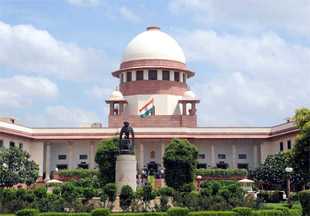
Royalty on minerals not tax; states competent to impose taxes on mineral rights: SC
New Delhi (TIP)- Holding that royalty payable on minerals is not a tax, the Supreme Court on Thursday, July 25, said states have the legislative competence to impose taxes on mineral rights and mineral-bearing land.
“Royalty is not a tax. Royalty is a contractual consideration paid by the mining lessee to the lessor for enjoyment of mineral rights. The liability to pay royalty arises out of the contractual conditions of the mining lease. The payments made to the Government cannot be deemed to be a tax merely because the statute provides for their recovery as arrears,” a nine-judge Constitution Bench led by CJI DY Chandrachud said.
“The legislative power to tax mineral rights vests with the State legislatures. Parliament does not have legislative competence to tax mineral rights under Entry 54 of List I, it being a general entry. Since the power to tax mineral rights is enumerated in Entry 50 of List II, Parliament cannot use its residuary powers with respect to that subject-matter,” the Bench said in an 8:1 verdict.
“The State legislatures have legislative competence under Article 246 read with Entry 49 of List II to tax lands which comprise of mines and quarries. Mineral-bearing land falls within the description of “lands” under Entry 49 of List II,” the majority said. While justices Hrishikesh Roy, Abhay S Oka, JB Pardiwala, Manoj Misra, Ujjal Bhuyan, Satish Chandra Sharma and Augustine George Masih agreed with the CJI, Justice BV Nagarathna dissented to say that states do not have the legislative competence to levy taxes on minerals and mineral-bearing land. She said it “would lead to a breakdown of the federal system envisaged under the Constitution in the context of mineral development and exercise of mineral rights.”
As the Bench pronounced the verdict, senior advocates representing various states urged it to make the verdict operational with retrospective effect to ensure refund of taxes from the Centre even as Solicitor General Tushar Mehta insisted that the verdict should be made effective prospectively. Source: TNS -

Must respect LAC, past pacts, EAM S Jaishankar tells China
New Delhi (TIP)- External Affairs Minister S Jaishankar on Thursday, July 25, underlined the need for “full respect” for the Line of Actual Control (LAC) and said that it is in the “mutual interest” of both India and China to “stabilise” diplomatic ties as he met his Chinese counterpart Wang Yi in Laos.
The two leaders met in Laos’s capital Vientiane to participate in the meetings of the Association of Southeast Asian Nations (ASEAN). It was the second meeting between Jaishankar and Yi within a month.
Jaishankar and Yi also agreed on the need to give “strong guidance” to fulfil the disengagement process following the military standoff in eastern Ladakh in May 2020.
“Met with CPC Politburo member and FM Wang Yi in Vientiane today. Continued our ongoing discussions about our bilateral relationship. The state of the border will necessarily be reflected on the state of our ties. Agreed on the need to give strong guidance to complete the disengagement process. Must ensure full respect for the LAC and past agreements. It is in our mutual interest to stabilise our ties. We should approach the immediate issues with a sense of purpose and urgency,”Jaishankar tweeted.
Wang Yi hoped that the two nations would work together to “actively explore” for the two neighbours to get along with each other, and guide all communities to develop positive perceptions of each other, according to an official statement.
The Chinese Foreign Minister further stated that having the China-India relationship back on track would also be in the interest and “shared aspirations” of countries of the ‘Global South’.
India has been maintaining that its relations with China cannot be normal unless there is peace in the border regions. The Jaishankar-Wang Yi talks came amid the dragging border row in Ladakh that entered its fifth year.
The two leaders last met on July 4 in Kazakhstan’s capital of Astana on the sidelines of the summit of the Shanghai Cooperation Organisation (SCO).
After July 25th meeting, the External Affairs Ministry said in a statement that the talks gave both Jaishankar and Wang Yi an opportunity to review the border situation since their Astana meeting. Also, both sides will hold an early meeting of the Working Mechanism on Consultation and Coordination on India-China Border Affairs (WMCC) to take discussions forward, the statement added.
Both sides must fully abide by relevant bilateral agreements, protocols, and understandings reached between the two governments in the past, the Ministry said in the statement.
India and China have so far engaged in 21 rounds of Corps Commander-level talks to resolve the Ladakh standoff, which marked the most serious military conflict between the two neighbours in decades. India has been pushing for China to disengage from the Depsang and Demchok areas.
The last round of high-level military talks was held in February. Though no breakthrough was reached, both India and China agreed to maintain “peace and tranquillity” on the ground and continue communication on the way ahead. -

This is ‘kursi bachao’ budget: Opposition slams Budget 2024
“Kursi Bachao Budget. Appease Allies: Hollow promises to them at the cost of other states. Appease Cronies: Benefits to AA with no relief for the common Indian. Copy and Paste: Congress manifesto and previous budgets.”
Rahul Gandhi
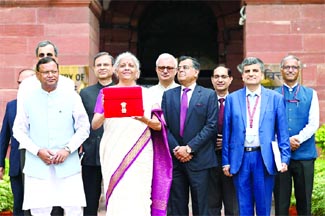
The Opposition on Tuesday slammed the NDA-led Central government for the Budget stating that it has nothing for the poor and more about saving the government. Finance Minister Nirmala Sitharaman today presented the first budget of the Modi 3.0 government.
‘kursi bachao budget’
Taking a dig at the National Democratic Alliance (NDA) government, Trinamool Congress (TMC) MP Kalyan Banerjee said it is a budget for the ruling NDA and not for India. “This is a ‘kursi bachao budget’ (budget to save the chair). This budget is aimed at saving (Prime Minister) Narendra Modi’s position. It is a budget for the NDA, not for India,” Banerjee said.
Banerjee further said, “Last time they gave so many projects to Odisha. Now they (BJP) have won (the Assembly polls in the state), so there is nothing for Odisha. There is also nothing for Bengal.” Samajwadi Party president Akhilesh Yadav claimed that it has ignored the interests of the youth and farmers. Yadav linked Sitharaman’s announcements of several development measures for Bihar and Andhra Pradesh to the BJP’s political compulsion to “save” its government and asked if there was anything for Uttar Pradesh, India’s most populous state.
Yadav said, “‘Sarkaar bachani hai toh acchi baat hai ki Bihar aur Andhra Pradesh ko vishesh yojnao se joda gaya hai’…They have increased unemployment in the last 10 years.”
Congress MP Shashi Tharoor termed it an ‘underwhelming budget’. he said that there is no mention of MNREGA and insufficient mention of steps taken to improve the income of a common person. “I didn’t hear anything about the key issues facing the common man. We have seen far too little from govt on addressing income disparity. On job creation, a token gesture was made. I welcome only one provision which is abolishing of tax on angel investors. I had recommended it to Arun Jaitley more than 5 years ago,” he added.
‘Glad Nirmala Sitharaman read
Congress manifesto’
Congress leader P Chidambaram said, “I am glad to know that the Finance Minister has read the Congress Lok Sabha Manifesto after the election results. I am happy she has virtually adopted the Employment-linked incentive outlined on page 30 of the Congress Manifesto. I am also happy that she has introduced the Apprenticeship scheme along with an allowance to every apprentice spelt out on page 11 of the Congress Manifesto. I wish the FM had copied some other ideas in the Congress Manifesto.”
RJD MP Manoj Kumar Jha said that this Budget is again a disappointment. “The country’s primary concern is unemployment. The organic model should have been introduced. The core sectors like labour, farmers, youth…there is no out-of-the-box thinking for them,” he said.
‘Pradhan Mantri Sarkar Bachao Yojana’
Shiv Sena (UBT) MP Priyanka Chaturvedi termed this Budget as ‘Pradhan Mantri Sarkar Bachao Yojana’. She said, “In an attempt to save their government for five years, they have given a package to their alliance partners in Bihar and Andhra Pradesh. They should be ashamed… they have two alliance partners in Maharashtra. Maharashtra is the biggest tax-paying state, but it has never received funds from the Centre. Don’t we have infrastructure needs?”
Samajwadi Party MP Awadhesh Prasad said that this Budget presented by PM Modi’s minority government aims to save itself and has ignored Uttar Pradesh and Ayodhya. “This will be costly for the BJP,” he added.
CPI(M) General Secretary Sitaram Yechury said, “The issues like increasing unemployment, inflation and food prices were not addressed properly as they should have been. The government expenditure as per GDP has decreased. The economy will contract so the problem of the people will increase… Subsidies have been decreased… The economic activity has to be increased to increase the employment generation… The incentives to the employers will not increase the employment generation opportunities…” -
Bihar, Andhra Pradesh get lion’s share in Budget
Ruling BJP allies — Janata Dal (United) and Telugu Desam Party — emerged top beneficiaries of the Union Budget 2024-25 with Bihar and Andhra Pradesh, where the two respectively rule along with the BJP, taking the cake. Slamming it as a “bribe” to coalition partners, the Opposition said the disproportionate allocation was “critical to the survival of the NDA government led by the BJP”.
Copious mention of Bihar (five times) in Finance Minister Nirmala Sitharaman’s record seventh Budget speech and announcement of generous assistance of Rs 15,000 crore to Andhra Pradesh riled the Opposition MPs, who made it a point to register their protest every time the FM cited Bihar in her 84-minute presentation.
The Budget offered no sops for poll-bound Maharashtra or Jharkhand — the latter found a single mention during the minister’s reference to the new “Purvodaya” scheme aimed at developing all eastern states, while Maharashtra found none. Odisha, Andhra, Bengal also found one mention each in the speech as did Assam, HP, Uttarakhand and Sikkim, which managed assurance of help in the wake of rain and flood fury. Bihar, which the BJP rules in alliance with the JD(U) — a key government partner at the Centre — bagged promises of a whopping Rs 60,000 crore assistance by way of flood control, power generation, highway and heritage conservation projects.
Comprehensive development initiatives for Rajgir (home to a famous Jain Temple) and Nalanda — projects close to Bihar Chief Minister and JD(U) chief Nitish Kumar’s heart — were also announced, besides a Rs 11,500-crore flood control package. “Bihar has frequently suffered from floods, many of these originating outside the country. Plans to build flood control structures in Nepal are yet to progress. Our government, through the Accelerated Irrigation Benefit Programme and other sources, will provide financial support for projects, with an estimated cost of Rs 11,500 crore, such as the Kosi-Mechi intra-state link and 20 other ongoing and new schemes,” Sitharaman said.
For the new Andhra capital, the minister assured Rs 15,000 crore through multilateral development agencies and early completion of the Polavaram Irrigation Project, the lifeline of state’s farmers.
The JD(U) and TDP hailed the Budget, saying “this is the start, more will come as the government runs its full course”. Union Minister and senior JD(U) leader Rajeev Lallan Singh termed the Budget a “Modi googly”. JD(U)’s Sanjay Jha, who had demanded a special category status for Bihar at the Sunday meeting convened by the government, also welcomed it. “We had asked for giving either special status or assistance to Bihar. We have received generous help today. The flood-control package will be a game-changer as thousands of crores are lost annually to floods, which are the principal drivers of migration to Punjab and other states,” Jha told The Tribune.
Slamming the government, TMC’s Sudip Bandopadhyay called it “a Budget to bribe allies”. Punjab Congress MPs led by Amrinder Raja Warring and SAD’s Harsimrat Badal questioned the government over giving nothing to Punjab.
The TMC and BJD even walked out of the RS protesting the laying of the Budget. In the LS earlier, Tamil Nadu MPs asked “what about us” every time Sitharaman mentioned Bihar.
The Communist Party Of India (Marxist) Polit Bureau said the Budget should have focused on expanding economic activities, but instead its proposals are “contractionary and regressive”. This will only impose further miseries on the people and depress the levels of investment and employment generation. “The Budget figures show that the revenue earnings of the government increased by 14.5% while the expenditures grew only by 5.94%. Instead of using these revenues for expanding economic activity, it has been used to reduce the fiscal deficit, to appease International Finance Capital, from 5.8% to 4.9% of the GDP,” the Polit Bureau stated. The party also called the government’s Employment-Linked Incentive a ruse to subsidise the corporates. -

Mobile phones, gold to cost less: What’s cheaper and costlier in Budget 2024
Finance Minister Nirmala Sitharaman presented her seventh Union Budget for the fiscal year 2024-2025 on July 23. The things that will get cheaper after the budget 2024 are mobile phones, chargers after a reduction of 15% custom duty. Finance Minister Nirmala Sitharaman announced that customs duties on cancer medicines and mobile phones will be significantly reduced, leading to lower retail prices for these items. Additionally, the cost of imported gold, silver, leather goods, and seafood is also expected to decrease. The customs duty on gold and silver will be lowered to 6%, while the duty on platinum will be reduced to 6.5%. “To enhance domestic value addition in gold and precious metal jewellery, I propose to reduce customs duties of gold and silver to 6%,” said Finance Minister Nirmala Sitharaman.
Finance Minister Nirmala Sitharaman also said that the government would exempt customs duty on 25 critical minerals.
Which items have become cheaper?
Following the Budget 2024 announcement, several items are set to become more affordable.
Customs duty on mobiles, chargers, and accessories has been reduced to 15%. The duty on gold and silver is now 6%, while platinum is set at 6.4%. Additionally, three cancer treatment medicines are exempt from basic customs duty.
The government has also removed basic customs duties on ferro nickel and blister copper. The Finance Minister has proposed expanding the list of exempted capital goods for solar panel manufacturing.
Customs duties on 25 critical minerals have been fully removed, and duties on shrimp and fish feed have been lowered to 5%.
What will get costlier?
The government plans to increase customs duties, raising the rate on ammonium nitrate by 10% and on non-biodegradable plastics by 25%. Additionally, telecom products will become more expensive due to a rise in the basic customs duty from 10% to 15% on certain telecom equipment.
Plastic products will also see a price increase following a hike in customs duty on these items.
In the previous budget, the Finance Minister reduced import taxes on several components, including camera lenses, to promote mobile phone manufacturing in India.
Additionally, the tax rate on lithium-ion batteries, crucial for phones and electric vehicles, was cut to lower production costs.
According to the Economic Survey 2024, India’s GDP is expected to grow between 6.5% and 7% this year. Retail inflation has also declined to 5.4% in 2023-24, down from 6.7% the previous year. The survey, presented by Finance Minister Nirmala Sitharaman on July 22, 2024, highlighted the importance of service and growth for the economy.
Continuing the trend from previous years, Budget 2024 will be delivered in a paperless form. An Interim Union Budget was presented on February 1, 2024, as the country prepared for general elections.
Overall, the upcoming budget holds promise for making some everyday items cheaper while addressing the expectations of various segments of society. As the Finance Minister prepares to present the budget, all eyes will be on the potential changes and how they will shape the economic future of India.
New Tax Slabs Announced
Standard Deduction limit increased to Rs 75,000 from Rs 50,000 under New Tax Regime
Deduction on family pension for pensioners increased from Rs 15,000 to Rs 25,000 under New Tax Regime
Lowest Slab In New Tax Regime Increased To Rs 3 lakh From Rs 2.5 lakh. -

Key takeaways from Union Budget 2024-25
Focus on employment, skilling, MSME and middle class; tax structure under new regime revised
New Delhi (TIP)- The Union Budget-2024 presented on on Tuesday, July 23, unveiled a concerted jobs push and a raft of schemes for young people ranging from internship guarantees to employment-linked incentives even as it laid out a bouquet of sops for critical allies and attempted to balance the exigencies of running a coalition with maintaining fiscal discipline.
Union finance minister Nirmala Sitharaman’s second-shortest budget speech, and her seventh overall, also focussed on changes in direct and indirect tax regimes – including a hike in long term capital gains tax for listed assets from 10% to 12.5% , the scrapping of indexation (which took inflation into account while calculating asset values) and introduction of a flat 12.5% rate for real-estate , the removal of the angel tax for all investors, and a sharp reduction in customs duties for items such as gold, silver and mobile phones, which will make these items cheaper for consumers.
She announced some tweaks in the new tax regime that will save taxpayers up to Rs 17,500 annually and a review of the income tax act, hinted that the government was moving towards next-generation reforms, and announced that the fiscal deficit stood at 4.9%, keeping India firmly on the fiscal glide path first announced three years ago.
“The #BudgetForViksitBharat ensures inclusive growth, benefiting every segment of society and paving the way for a developed India,” Prime Minister Narendra Modi said.
The budget largely steered away from populist announcements, although chunks of the 85-minute budget speech were devoted to schemes and sops aimed at Bihar and Andhra Pradesh, two states governed by allies Janata Dal (United) and Telugu Desam Party (TDP) whose support is crucial for the survival of the National Democratic Alliance (NDA) government.
Sitharaman announced a cluster of projects and packages – roads and highways, airports, flood control, irrigation schemes, tourist hubs, industrial nodes and power projects – totalling roughly Rs 59,000crore for Bihar, which goes to the polls next year.
For Andhra Pradesh, the finance minister announced Rs 15,000 crore for the construction of the state capital Amaravati and additional funds if required, completion of the Polavaram dam project and two industrial nodes. “Our government has made efforts to fulfil the commitments in the Andhra Pradesh Reorganisation Act. Recognising the state’s need for capital, we will facilitate special financial support through multilateral agencies,” Sitharaman added.
The Opposition flayed the budget, pointing out that not only did it not contain specific schemes for other states but also held little for Maharashtra and Haryana, two states ruled by the Bharatiya Janata Party (BJP) that are slated to go to the polls later this year. The Congress also alleged that two of the five schemes announced for young people were lifted from its manifesto.
“Kursi Bachao [save your chair] Budget. Appease Allies: Hollow promises to them at the cost of other states. Appease Cronies: Benefits to AA with no relief for the common Indian. Copy and Paste: Congress manifesto and previous budgets,” Leader of the Opposition Rahul Gandhi said on X.
But NDA members welcomed the announcements. “From the beginning, we had requested special assistance for Bihar. In response, they have announced help in several areas. We are doing a lot of work, and we will receive additional support in many aspects, which will be beneficial,” said a beaming Bihar chief minister, Nitish Kumar.
This was the first budget presented by the third iteration of the NDA, mere weeks after the BJP suffered a setback in the general elections and failed to garner a simple majority in the Lok Sabha. The party won 240 seats in the 543-member House, giving space to allies to make greater demands for their respective states.
The BJP’s sobering performance was attributed to slipping support among key demographics such as young people, women, marginalised castes and rural poor over bread-and-butter issues such as a crippling lack of jobs.
The budget sought to address this lacunae by unveiling nine priority areas for the government – productivity and resilience in agriculture; employment and skilling; inclusive human resource development and social justice;manufacturing and services; urban development;energy security;infrastructure; innovation, research, and development; and next-generation reforms – while maintaining fiscal prudence.
The sharpest focus was on young people. The government announced five schemes with an aggregate spend of around Rs 2 lakh crore for roughly 41 million people – it will pay one month’s wage up to Rs 15,000 in three instalments to every new person entering the workforce, incentivise employers up to Rs 3,000 a month for two years towards their EPFO contribution for new employees, offer a direct incentive to both employer and employee for their EPFO contribution for the first four four years, skill two million people over five years, and offer internship opportunities at 500 top companies for 10 million people over five years. The focus was on generating employment, a key grassroots grievance that hurt the BJP in the recently concluded polls. In addition to the five schemes listed above, the government also announced upgradation of 1,000 Industrial Training Institutes, government-backed skilling loans up to Rs 7.5 lakh and financial support for loans up to Rs 10 lakh for higher education in domestic institutions, making up its second thrust area – jobs.
Sitharaman made further commitments to women, including working women’s hostels and cheap loans. “For promoting women-led development, the Budget carries an allocation of more than Rs 3 lakh crore for schemes benefitting women and girls,” she said.
A third priority of the budget was maintaining fiscal discipline. It lowered its fiscal deficit target for the current year to 4.9% of the Gross Domestic Product, from the 5.1% target set in the interim budget in February and from 5.6% in the previous year. It lowered its gross borrowing target to Rs 14.01 lakh crore rupees but said it still plans to spend a record Rs 11.11 lakh crore rupees in capital expenditure on long-term infrastructure.
“The fiscal consolidation path announced by me in 2021 has served our economy very well, and we aim to reach a deficit below 4.5% next year. The government is committed to staying the course. From 2026-27 onwards, our endeavour will be to keep the fiscal deficit each year such that the central government debt will be on a declining path as a percentage of GDP,” Sitharaman said.
A revenue windfall this year has boosted the government coffers, giving it ample resources to boost spending while narrowing the fiscal deficit. The Reserve Bank of India paid the government a record Rs 2.1 lakh crore dividend this year, while tax revenues surged on the back of a stronger economy.
Taxes were a fourth key area. The government raised the short-term capital gains tax – on stocks held for less than one year – to 20% from 15%, and the long-term capital gains tax – for stocks held for over one year – to 12.5% from 10%. The step was seen as an effort to arrest the frenzy that has propelled the markets to record highs, a day after the economic survey sounded a word of caution on galloping markets. It caused a temporary slide in India’s benchmark indices but they recovered shortly after and ended the day flat.
Sitharaman reduced customs duties on items ranging from cancer drugs, mobile phones, chargers, seafood, gold, critical minerals and seafood. She also tweaked the new tax regime slabs and raised the standard deduction limit from Rs 50,000 to Rs 75,000. “As a result of these changes, a salaried employee in the new tax regime stands to save up to Rs 17,500 in income tax,” she said.
There were a string of other announcements – more funding for agricultural research, a movement towards small nuclear reactors and solar power for energy security, credit guarantee schemes and cheap loans for micro, small and medium enterprises, expanded urban housing, a new scheme for tribal people, and digitised land records – that hinted that the government was thinking about initiating next-generation reforms and a simplification of the tax framework.
But the four main priorities outlined the government’s immediate and medium-term outlook – resolve the lingering problem around too few new jobs, win back key demographics such as young people disillusioned over bread-and-butter issues, shun populism as much as possible by training focus on fiscal prudence, but also ensure that allies critical to its survival remain in good humor. -

Bangladesh eases nationwide curfew amid ongoing student protests
DHAKA (TIP): Bangladesh further eased a nationwide curfew on July 25 as students weighed the future of their protest campaign against civil service hiring rules that sparked days of deadly unrest last week. Last week’s violence killed at least 191 people including several police officers, according to an AFP count of victims reported by police and hospitals during some of the worst unrest of Prime Minister Sheikh Hasina’s tenure. Thousands of troops are still patrolling cities and a nationwide internet shutdown remains largely in effect, but clashes have subsided since protest leaders announced a temporary halt to new demonstrations.
Hasina’s government ordered another relaxation to the curfew it imposed at the height of the unrest, allowing free movement for seven hours between 10:00 am and 5:00 pm.
Streets in the capital Dhaka, a sprawling megacity of 20 million people, were choked with commuter traffic in the morning, days after ferocious clashes between police and protesters had left them almost deserted.
Banks, government offices and the country’s economically vital garment factories had already reopened on Wednesday after all being shuttered last week.
Student leaders were set to meet later Thursday to decide whether or not to again extend their protest moratorium, which is due to expire on Friday.
Students Against Discrimination, the group responsible for organising this month’s rallies, said it expected a number of concessions from the government.
“We demand an apology from Prime Minister Sheikh Hasina to the nation for the mass murder of students,” Asif Mahmud, one of the group’s coordinators, told AFP.
“We also want the sacking of the home minister and education minister.”
Mahmud added that the estimated toll in the unrest was understated, with his group working on its own list of confirmed deaths. Police have arrested at least 2,500 people since the violence began last week, according to an AFP tally.
Protests began after the June reintroduction of a scheme reserving more than half of government jobs for certain candidates, including nearly a third for descendants of veterans from Bangladesh’s independence war.
With around 18 million young people in Bangladesh out of work, according to government figures, the move deeply upset graduates facing an acute jobs crisis.
Critics say the quota is used to stack public jobs with loyalists to Hasina’s Awami League.
The Supreme Court cut the number of reserved jobs on Sunday but fell short of protesters’ demands to scrap the quotas entirely.
Hasina, 76, has ruled the country since 2009 and won her fourth consecutive election in January after a vote without genuine opposition. Her government is also accused by rights groups of misusing state institutions to entrench its hold on power and stamp out dissent, including the extrajudicial killing of opposition activists. (AFP) -

Japan resumes funding Sri Lanka after debt restructure
COLOMBO (TIP): Japan will resume funding stalled infrastructure projects in Sri Lanka, including the expansion of the main international airport, government officials said July 24, after the bankrupt island nation successfully restructured its foreign debt.
Bilateral lenders including Japan had cut project funding when Sri Lanka defaulted on its $46 billion in foreign borrowings two years ago during an unprecedented economic crisis.
“Japan is the first country to resume financing for the suspended projects,” its ambassador to Sri Lanka Hideaki Mizukoshi told reporters.
A Sri Lankan finance ministry official said Japan will in the coming weeks release the first tranche of about $75 million for 11 projects suspended after Colombo’s sovereign default, including the Colombo airport expansion. Japan’s loan portfolio in Sri Lanka is estimated at $2.3 billion with another $1.1 billion committed for ongoing projects and is to be disbursed in the next five years, Sri Lankan officials said.
The ambassador said Tokyo was satisfied that bilateral debt restructuring had been done in a fair manner with “comparability of treatment” for all creditors.
Japan is the second largest bilateral creditor to Sri Lanka after China.
Colombo clinched a restructuring deal four weeks ago with its bilateral lenders covering up to $10 billion in debt, a critical step towards recovery after its 2022 financial crash.
A collapse in foreign exchange reserves at the time left Sri Lanka unable to import food, fuel and other essentials, leading to months of widespread shortages.
Public anger culminated in a huge crowd storming the home of then-president Gotabaya Rajapaksa, forcing him to temporarily flee abroad, from where he resigned.
His successor Ranil Wickremesinghe sealed a $2.9 billion International Monetary Fund rescue package. He has also hiked taxes and cut generous public subsidies to help restore the nation’s ruined finances. (AFP) -
18 killed as plane slips off runway, crashes at Kathmandu airport; pilot sole survivor
Kathmandu (TIP): A passenger plane carrying 19 people crashed during takeoff in Kathmandu on July 24, killing 18 and leaving the pilot as the sole survivor, police in the Nepali capital told news agency AFP. The plane belongs to the domestic Saurya airline and was en route to the resort town of Pokhara, an important tourism hub in the Himalayan republic. It crashed at around 11:00 am, with police and firefighters engaged in rescue efforts.
The Saurya Airlines flight was carrying a two-member crew and 17 of the company’s staff members for a test flight, Nepali police spokesman Dan Bahadur Karki told AFP.
Police official Basanta Rajauri said authorities have pulled out all 18 bodies. The only survivor was the pilot, who was taken to Kathmandu Medical College Hospital for treatment, said a doctor at the hospital who was not authorised to speak to media. The pilot has injuries to the eyes but is not in any danger, the doctor said, reported News agency AP.
AP also reported that the bodies have been taken to the T.U. Teaching Hospital in Kathmandu for autopsy. The airline manifest showed there were two pilots and 17 passengers on board, among them there was only one female. The crew and 16 passengers were Nepali nationals with one identified as foreigner, a Yemeni national. Images of the aftermath shared by Nepal’s military showed the plane’s fuselage split apart and burnt to a husk.
Around a dozen soldiers in camouflage were standing on top of the wreckage, with the surrounding earth coated in fire retardant. The plane crashed at around 11:15 am (0530 GMT), the military said in a statement, adding that the army’s quick response team had been lending assistance with rescue efforts. News portal Khabarhub reported that the airplane had caught fire after skidding on the runway.
The plane was scheduled to fly on Nepal’s most-trafficked air route between Kathmandu and Pokhara, an important tourism hub in the Himalayan republic.
Saurya Airlines exclusively flies Bombardier CRJ 200 jets, according to its website.
Nepal’s air industry has boomed in recent years, carrying goods and people between hard-to-reach areas as well as foreign trekkers and climbers. But it has been plagued by poor safety due to insufficient training and maintenance—issues compounded by the mountainous republic’s treacherous geography. (Agencies) -

Under Milei, the worst economic crisis in decades puts Argentine ingenuity to test
BUENOS AIRES (TIP) : In the crush of anti-government protests paralyzing downtown Buenos Aires in the last months, some Argentines saw a traffic-induced headache. Others saw a reaction to President Javier Milei’s brutal austerity measures.
Alejandra, a street vendor, saw people with nowhere to urinate. Plazas provided no privacy and cafes insisted on pricey purchases to use the toilet. With little more than a tent and a bucket, Alejandra started a small business that has surged alongside Argentina’s angry rallies and sky-high inflation rate. She charges whatever people are willing to pay.
“I haven’t had a job for a year, it’s now my sole income,” said Alejandra, who declined to give her last name for fear of reprisals from neighbors. Every four or five patrons, she puts on gloves and empties her bucket into the trash. The political establishment’s failure to fix decades of crisis in Argentina explains the tide of popular rage that vaulted the irascible Javier Milei, a self-declared “anarcho-capitalist,” to the presidency.
But it also explains the emergence of a unique society that runs on grit, ingenuity and opportunism — perhaps now more than ever as Argentina undergoes its worst economic crisis since its catastrophic foreign-debt default of 2001.
“It’s the famous resilience of Argentines,” said Gustavo González, a sociologist at University of Buenos Aires. “It’s the result of more than three generations that have grappled with adverse circumstances, great uncertainty and abrupt changes.”
The libertarian leader warned that things would get worse before they got better.
To reverse the decades of reckless spending that brought Argentina infamy for defaulting on its debts, Milei scrapped hundreds of price controls. He slashed subsidies for electricity, fuel and transportation, causing prices to skyrocket in a country that already had one of the world’s highest inflation rates. He laid off over 70,000 public sector workers, cut pensions by 30% and froze infrastructure projects, pushing the country deeper into recession. Supermarket sales fell 10% last month. The International Monetary Fund lowered its 2024 growth outlook for Argentina, projecting a 3.5% contraction.
Poverty now afflicts a staggering 57% of Argentina’s 47 million people, and annual inflation surpasses 270% — a level unseen in a generation.
“Argentina is at a turning point,” Milei said in his Independence Day speech on July 9. “Breaking points in the history of a nation are not moments of peace and tranquility but moments of difficulty and conflict.”
Well-heeled Argentines have responded by stashing stacks of $100 bills in safe-deposit boxes and resorting to cryptocurrency to avoid their country’s chronically depreciating pesos.
Middle-class families — whose energy bills shot up last month by 155% — have pared down comforts they once took for granted: No more eating out. No more travel. No more private school. Public hospitals say they’re overwhelmed.
In a country where barbecued beef, or asado, is not only a national dish but a social ritual, meat consumption has dropped to the lowest level ever recorded, according to the Rosario Board of Trade. (AFP) -

Search continues for possible survivors after Ethiopia landslides kill 229
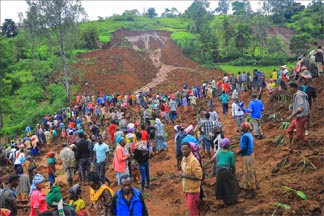
ADDIS ABABA (TIP): Rescuers aided by drones were continuing a desperate search on July 24 for possible survivors of devastating landslides in an isolated area of southern Ethiopia that have killed 229 people and affected thousands more. Humanitarian agencies were also scrambling to rush emergency relief aid to the stricken community, the deadliest such incident recorded in Ethiopia, a country highly vulnerable to climate-related disasters.
About 14,000 people need to be evacuated from the area urgently because of the risk of further landslides, a UN source told AFP. Local residents have been using shovels and their bare hands to dig through the vast mounds of mud to hunt for victims and survivors of the landslides in Kencho Shacha Gozdi, a hard-to-access locality in the regional state of South Ethiopia hundreds of kilometres from the capital Addis Ababa.
So far, 148 men and 81 women are confirmed to have died in the disaster, which struck the remote and mountainous area, the Gofa Zone Communications Affairs Department which covers the locality, said Tuesday. Senait Solomon, head of communications for the South Ethiopia regional government, said eight people had been pulled from the mud alive and taken to medical facilities for treatment.The number of people still missing is not known, but Senait said updated tolls might be issued later Wednesday. “The search for survivors is ongoing and is currently being supported by drones operated by experts from the Information Network Security Administration (INSA),” Firaol Bekele, early warning director at the Ethiopian Disaster Risk Management Commission (EDRMC) told AFP Wednesday.
“The government is addressing urgent needs for food, water, medicine and shelter,” he said.
Officials have said that most of the victims were buried after they rushed to help other residents hit by a first landslide following heavy rains on Sunday.
The UN’s humanitarian response agency OCHA said more than 14,000 people had been affected in the area, which is roughly 450 kilometres (270 miles) from the capital Addis Ababa — about a 10-hour drive.
The UN source told AFP that about 125 people had been displaced, and that the 14,000, including 5,000 pregnant or lactating women and 1,300 children needed to be evacuated fast because of the risk of another landslide.
Children and pregnant women affected
More than 21 million people or about 18 percent of the population rely on humanitarian aid in Ethiopia, the second most populous country in Africa, as a result of conflict and natural disasters such as flooding and drought.
“I am deeply saddened by this terrible loss,” Ethiopian Prime Minister Abiy Ahmed had said on X on Tuesday in his first reaction to the calamity. (AFP) -
France announces major operation against cyber-spying
PARIS (TIP): French authorities have launched a major operation to clean up computers infected by a cyber-espionage programme that has struck millions of users worldwide, a senior prosecutor said on July 25. “On the eve of the Olympics, this operation demonstrates that different players in France and abroad are mobilised to fight against all forms of cybercrime,” Paris chief prosecutor Laure Beccuau said in a statement.
She said investigators were targeting a network of bots suspected of infecting computers with PlugX malware and of stealing data from them “notably for purposes of espionage”.
She said analysts and investigators had managed to take control of a server that was controlling millions of the infected computers and were administering a fix.
They launched the operation on July 18 and it is expected to last several months, having already aided victims in several European countries, the statement said.
It did not cite a specific threat to the Paris Olympics. But separately, the French government’s cyber security agency warned last week that ransomware attacks will be “inevitable” during the Games, which officially open Friday.
(AFP) -
Russian drones attack Ukraine port second night in a row
KYIV (TIP): Russian drones attacked the southern Ukrainian port city of Izmail for a second straight night damaging infrastructure, Kyiv said on July 25, claiming several Russian attack drones entered Romanian airspace. Moscow has targeted ports in the southern Odesa region persistently since it exited an accord last year brokered by the United Nations and Turkey allowing Ukraine to export grain via the Black Sea. Local authorities in Izmail said “port infrastructure facilities were damaged” in the Russian attack and that two civilians were wounded. The Ukrainian Air Force said Russia had launched 38 Iranian-designed attack drones and that air defence systems had downed 25.
“Another three Shaheds were lost after crossing the state border with Romania,” it said.
The governor of the Odesa region, which borders EU and NATO member Romania, said the attack had damaged an administrative building. Three people were wounded in the Russian attack one day earlier on Izmail, local authorities had said. Romania’s military carried out a search for drone debris near the border with Ukraine following the attack on Wednesday, with Romanians reporting hearing explosions. People in 17 cities and villages in Romania’s southeastern Tulcea county got alerts on their mobile phones early July 24 after “several objects” were observed “approaching the northern area” of the county. (AFP) -
Russian missiles kill 31 in Ukraine, gut Kyiv children’s hospital
KYIV (TIP): Russia struck cities across Ukraine on July 23 with a missile barrage that killed 31 people and heavily damaged a Kyiv children’s hospital in an assault condemned as a ruthless attack on civilians. Dozens of volunteers, doctors and rescue workers were digging through debris of a part of Okhmatdyt paediatric hospital in a desperate search for survivors after the rare day-time bombardment, AFP journalists on the scene saw.
The first responders ran for cover when sirens and a explosion sounded after the initial strikes — a repeat attack that left four dead at a maternity hospital in a separate district of Kyiv, emergency services said. President Volodymyr Zelensky said Russian forces fired more than 40 missiles toward at least five major civilian hub, mainly in the south and east of the country, as well as the capital. (AFP) -
Philippine tanker carrying 1.4 mln litres of oil capsizes off Manila
MANILA (TIP): A Philippine-flagged tanker carrying 1.4 million litres of industrial fuel oil capsized and sank off Manila on July 25, authorities said, as they raced to contain a spill.
The MT Terra Nova was heading for the central city of Iloilo when it capsized in Manila Bay, nearly seven kilometres (4.3 miles) off Limay municipality in Bataan province, near the capital, in the early hours.
The vessel went down as heavy rains fuelled by Typhoon Gaemi and the seasonal monsoon have lashed Manila and surrounding regions in recent days.
An oil spill stretching several kilometres has been detected in the busy waterway.
“We are racing against time and we will try to do our best to contain it immediately and stop the fuel from leaking,” Philippine Coast Guard spokesman Rear Admiral Armando Balilo said at a briefing.
He warned that if all the oil in the tanker were to leak, it would be the biggest spill in Philippine history.
“There is a big danger that Manila will be affected, even the shoreline of Manila, if the fuel will leak, because it is within Manila Bay,” Balilo said.
Thousands of fishermen and tour operators are dependent on the waters for their livelihoods. Transport Secretary Jaime Bautista said 16 of the 17 crew members had been rescued from the stricken vessel. A search was underway for the missing crew member, but Bautista said strong winds and high waves were hampering response efforts.
Four of the crew were receiving medical treatment. A photo released by the coast guard showed the MT Terra Nova almost entirely submerged in rough seas.
Investigation ordered
An oil slick stretching about 3.7 kilometres was being carried by a “strong current” in an easterly, north-easterly direction, the coast guard said in a report.
Coast guard Commandant Admiral Ronnie Gavan said he ordered a probe into the incident.
Marine environmental protection personnel have been mobilised to help contain the slick.
“It will definitely affect the marine environment,” Balilo said, describing the amount of oil on the ship as “enormous”.
One of the worst oil spills in the Philippines was in February 2023, when a tanker carrying 800,000 litres of industrial fuel oil sank off the central island of Mindoro.
Diesel fuel and thick oil from that vessel contaminated the waters and beaches along the coast of Oriental Mindoro province, devastating the fishing and tourism industries.
The oil dispersed over hundreds of kilometres of waters famed for having some of the most diverse marine life in the world. (AFP) -

You have officially become Iran’s useful idiots: Netanyahu to protestors
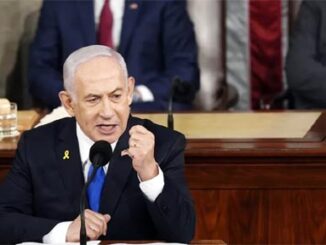
WASHINGTON (TIP): Israeli Prime Minister Benjamin Netanyahu on July 24 slammed Iran for funding and supporting groups against Israel and asserted that defeating the brutal enemies requires both courage and clarity.
For all we know, Iran is funding the anti-Israel protests that are going on right now outside this building not that many, but they’re there and throughout the city.
Well, I have a message for these protesters: When the Tyrants of Tehran, who hang gays from cranes and murder women for not covering their hair, are praising, promoting and funding you, you have officially become Iran’s useful idiots, Netanyahu said.
It’s amazing, absolutely amazing. Some of these protesters hold up signs proclaiming ‘Gays for Gaza’. They might as well hold up signs saying ‘Chickens for KFC’. These protesters chant ‘From the river to the sea’. But many don’t have a clue what river and what sea they’re talking about. They not only get an F in geography, they get an F in history.
They call Israel a colonialist state. Don’t they know that the Land of Israel is where Abraham, Isaac and Jacob prayed, where Isaiah and Jeremiah preached and where David and Solomon ruled? he said.
In his fourth address to the Joint Session of the Congress, the most by any foreign leader, Netanyahu alleged that in the Middle East, Iran is virtually behind all terrorism, turmoil, chaos and killing. And that should come as no surprise.
When he founded the Islamic Republic, Ayatollah Khomeini pledged, We will export our revolution to the entire world.
We will export the Islamic revolution to the entire world.
Now, ask yourself, which country ultimately stands in the way of Iran’s maniacal plans to impose radical Islam on the world? And the answer is clear: It’s America, the guardian of Western civilization and the world’s greatest power. That’s why Iran sees America as its greatest enemy, he said.
Iran, he said, understands that to truly challenge America, it must first conquer the Middle East. And for this it uses its many proxies, including the Houthis, Hezbollah and Hamas.
Yet in the heart of the Middle East, standing in Iran’s way, is one proud pro-American democracy my country, the State of Israel, he said.
Asserting that victory is in site, Netanyahu said the day after they defeat Hamas, a new Gaza can emerge. My vision for that day is of a demilitarized and deradicalized Gaza. Israel does not seek to resettle Gaza.
But for the foreseeable future, we must retain overriding security control there to prevent the resurgence of terror, to ensure that Gaza never again poses a threat to Israel, he said.
Gaza should have a civilian administration run by Palestinians who do not seek to destroy Israel. That’s not too much to ask. It’s a fundamental thing that we have a right to demand and to receive. A new generation of Palestinians must no longer be taught to hate Jews but rather to live in peace with us. Those twin words, demilitarization and deradicalization, those two concepts were applied to Germany and Japan after World War II, and that led to decades of peace, prosperity and security, he added. (AP) -

Three Indian American lawmakers endorse Kamala Harris for president
WASHINGTON, D.C. (TIP): All five Indian American lawmakers have hailed President Joe Biden’s decision to withdraw from the presidential race and three of them threw their weight behind Vice President Kamala Harris as the Democratic Party’s likely presidential nominee.
Biden, 81, announced on Sunday that he had decided to give up running for re-election as president of the United States and endorsed his deputy Harris to be the presidential nominee of the Democratic Party—with just 107 days left until the November 5 elections.
There are five Indian American lawmakers in the current House of Representatives — Raja Krishnamoorthi, Ro Khanna, Shri Thanedar, Pramila Jayapal and Ami Bera. They all are Democrats.
Three of them – Khanna, Thanedar and Jayapal — have endorsed Harris, 59, so far. Harris is the first-ever Indian American to be elected as the vice president of the country.
Congresswoman Jayapal was the first of the five Indian American lawmakers to endorse Harris to be the presidential nominee. “Kamala Harris for President. Let’s beat Donald Trump and make history,” Jayapal said in a post on social media throwing her full support to Harris.
The two spoke over the phone as well.
“Vice President Kamala Harris just called me, and I told her I am 1,000 per cent in for her to be our President! She has the smarts, the experience, the accomplishments and the agenda to lead us to victory in November. Let’s go!” Jayapal said.
The four-term lawmaker, Jayapal is the first Indian American woman to be elected to the House of Representatives. Over the last few years, she has emerged as a powerful voice in the party and is considered one of the most influential Democratic lawmakers.
“I am proud to endorse Kamala Harris as our nominee. Her trailblazing candidacy as the first African American woman and first Asian-American will be a jolt of energy in our party. Our party can now run on a message of hope and a vision for the future,” Khanna said.
Khanna said Biden would be remembered as an extraordinary President for starting to reverse 40-plus years of economic policy that has devastated working-class communities.
“He showed us what it means to put country first to save American democracy and now he is putting our country ahead of self-interest,” he said.
Thanedar in a statement said he had no doubt that President Biden would have beaten Trump.
“But I respect his decision and fully support and echo his endorsement of Vice President Kamala Harris. She would be a fantastic nominee and would be an amazing President. I look forward to another four years of a Democratic presidency that puts people first,” Thanedar said.
“President Biden’s policy achievements have already established his place as one of the most consequential presidents in American history,” Congressman Krishnamoorthi said.
“Through his decision today, Joe Biden has demonstrated the true and selfless nature of a life committed to putting the country, and his fellow Americans first,” he said in a statement.
Congressman Bera said Biden is the most consequential and effective president of his lifetime.
“From passing historic investments in infrastructure to restoring American leadership on the world stage, I am proud of what we’ve been able to accomplish under his leadership. Thank you for your 50-plus years of unwavering service and dedication to our great nation,” he said.
Virginia State Senator Suhas Subramanyam also announced his endorsement.
“I’m proud to endorse Vice President Harris as our standard-bearer this year. Kamala Harris is the right leader at the right time to get the job done. But, we won’t be able to accomplish anything next year if we don’t win the House and the Senate,” he said.
“With President Biden’s announcement that he will no longer seek the Democratic Party’s nomination, I am beyond proud and excited to endorse Vice President Kamala Harris for this historic opportunity,” said Neil Makhija, Montgomery County Commissioner.
“In the coming weeks and months, I will be hosting fundraising events for Kamala Harris in Pennsylvania and New York and across the country,” he said.
Ashwin Ramaswami, candidate for Georgia State Senate, offered his full support for Harris as the Democratic nominee for President of the United States. Ramaswami would be the first Gen Z Indian American state legislator in the country. “Vice President Harris would make history as the first Indian American President of the United States,” said Ramaswami.
“This would be a major step forward for Indian American and AAPI representation in this country and is an inspiration to young people such as me. And just like Kamala Harris’s mother, Shyamala Gopalan Harris, my mother is from Besant Nagar, Chennai, which makes this incredibly special for me,” he said. -

Harris’ endorsement as presidential nominee created burst of energy in Democratic Party: Krishnamoorthi
WASHINGTON, D.C. (TIP): President Joe Biden’s decision to endorse Kamala Harris as the presidential nominee has generated a burst of energy and enthusiasm within the party and it now has the chance to win back the White House, prominent Indian-American Congressman Raja Krishnamoorthi has said. Over the weekend, Vice President Harris was endorsed by Biden, who announced his decision to drop out of the race for the White House. On Wednesday, July 24, he told the nation that he did this to unite the party. Following Biden’s dismal performance at the debate against Donald Trump, the Republican presidential nominee, there was a sense of disappointment in the party. “It’s exciting. I mean, I think there’s no other word for it. It’s exciting. It created a burst of energy and enthusiasm, positivity within the Democratic Party,” Congressman Raja Krishnamoorthi told PTI in an interview.
Krishnamoorthi, a 51-year-old Democratic Party lawmaker from Illinois, said he plans to campaign for Harris in the key battleground state of Wisconsin on Saturday.
“She’s hit the ground running, been greeted by boisterous crowds. I think that people feel like, nothing’s a guarantee, but we have a shot. We have a chance now to win back the White House, and we need somebody who can take the case to Donald Trump. I can’t think of someone else better than Kamala Harris to do that right now,” Krishnamurthi said.
In three days after she became the party’s likely presidential candidate, Harris’ campaign has raised over USD 130 million.
“If you do this every three days, it’s going to be a pretty tremendous amount of money at some point. It’s actually a fabulous sum as it is. All that being said, we’re up against forces that can tap into unlimited amounts of money. So, it’s significant that she’s able to raise that much money from so many people. Remember, these are grassroots supporters who are putting in money, and I think that’s a big deal,” he said.
Responding to a question on the rise of Indian Americans in politics, Krishnamoorthi, who serves as a member of the House Permanent Select Committee on Intelligence and the Committee On Oversight And Reform, said they are following a well-worn path that various immigrants have taken in this country.
“There’s this old saying in Washington DC, if you don’t have a seat at the table, you’re on the menu. Now, I think Indian Americans in a big way are pulling up the proverbial seat to the table and making sure that their issues are addressed, that their concerns are met, and that they are also contributing back to society as a whole and paying it forward,” he said.
Over the next 100 days, he said there’s going to be a constant requirement to continue to raise resources, but there’s also a requirement to set forth a message, to be disciplined in talking about priorities, making sure those priorities are ones that resonate with everyday people and families who are watching carefully to see whether the person in the White House or the next person in the White House is going to be fighting for them.
Responding to a question, Krishnamoorthi said the next president is going to have a lot on his or her plate.
“I think the next president is going to need to both deal with certain issues which the electorate is very concerned about right now, such as, for instance, protecting reproductive freedom, making sure that we take care of the border and the immigration system which is really tied together. We have to solve our legal immigration system problems which are a mess and deal with the border simultaneously,” he said.
“They also want an elected official who’s going to look forward. What are the challenges of the future? How do you defeat the Chinese Communist Party in this global technological competition that we have? How do we make sure that we continue to raise our standard of living so that our children are better off than we are? Those are the types of questions that she’s going to need to face going into the Oval Office,” he said.
(Source: PTI)