Month: July 2024

  • Trudeau visits Dosanjh’s sold-out concert, says “Canada’s a great country where a guy from Punjab can make history and sell out stadiums”

    Trudeau visits Dosanjh’s sold-out concert, says “Canada’s a great country where a guy from Punjab can make history and sell out stadiums”

    TORONTO (TIP): Punjabi actor-singer Diljit Dosanjh had a special guest during the rehearsals of his concert as Canada’s Prime Minister Justin Trudeau dropped at his “sold-out” show in Rogers Centre, a stadium in Downtown Toronto, Ontario. In a video, Diljit is seen greeting PM Trudeau with folded hands.

    Sharing the video, the singer wrote, “Diversity is Canada’s strength. Prime Minister @justinpjtrudeau came to check out history in the making: we sold out the Rogers Centre!”

    As soon as the video was shared, fans and industry friends chimed in the comment section.
    Singer Harshdeep Kaur wrote, “Legend.”
    One of the users wrote, “@diljitdosanjh thank you for representing each one of us on this level.”

    Impressed by Diljit Dosanjh’s presence in the country, the Canadian PM took to X handle and shared pictures from his visit to the venue where the singer performed live. He captioned the post, which read, “Stopped by the Rogers Centre to wish @diljitdosanjh good luck before his show. Canada is a great country — one where a guy from Punjab can make history and sell out stadiums. Diversity isn’t just our strength. It’s a superpower.”

  • Trump’s running mate J D Vance promises to fight for working-class Americans in VP acceptance speech

    Trump’s running mate J D Vance promises to fight for working-class Americans in VP acceptance speech

    MILWAUKEE (TIP): US Republican vice presidential nominee J D Vance praised former president Donald Trump and promised to fight for working-class Americans “cast aside and forgotten” by the Democrats, as he made his debut at the Republican National Convention.

    Vance, 39, formally accepted the Republican vice-presidential nomination on the third day of the convention on Wednesday, making him among the youngest Americans to ever fill that role.

    Introducing himself to millions of Americans, the Ohio Senator channeled his humble roots in the Midwest as he assailed politicians like President Joe Biden.

    Trump and his running mate Vance will challenge President Biden and his Vice-President Kamala Harris from the Democratic Party in the November 5 presidential election.

    Vance said for the last eight years, President Trump has given everything he has to fight for the people of our country. Trump didn’t need politics, but the country needed him, he said.

    “Prior to running for president, he was one of the most successful businessmen in the world. He had everything anyone could ever want in life. And yet, instead of choosing the easy path, he chose to endure abuse, slander, and persecution,” he said.

    The author of the best-selling memoir Hillbilly Elegy, about his impoverished family, said “America’s ruling class” had destroyed communities like his hometown with trade agreements and foreign wars.

    “From Iraq to Afghanistan, from the financial crisis to the Great Recession, from open borders to stagnating wages, the people who govern this country have failed and failed again,” he said.

    Trump represents America’s last best hope to restore what – if lost – may never be found again, he said.

    “I pledge to every American, no matter your party, I will give everything I have,” Vance said. “To serve you and to make this country a place where every dream you have for yourself, your family and your country will be possible once again.” He accused “career politicians” like President Biden, 81, of destroying communities like his with ill-fated trade policies and foreign wars.

    “When I was in the fourth grade, a career politician by the name of Joe Biden supported the North American Free Trade Agreement, a bad trade deal that sent countless good American manufacturing jobs to Mexico. When I was a sophomore in high school, a career politician by the name of Joe Biden gave China a sweetheart trade deal that destroyed even more good middle-class jobs. And when I was a senior in high school, Joe Biden supported the disastrous invasion of Iraq,” he said.

    “And at each step of the way, in small towns like mine in Ohio, or next door in Pennsylvania, or in Michigan and other states across our country, jobs were sent overseas and children were sent to war. Somehow, a real estate developer from New York by the name of Donald Trump was right on all of these issues while Joe Biden was wrong. Donald Trump knew, even then, that we needed leaders who would put America First,” he said.

    Vance said Trump’s vision is simple: “We won’t cater to Wall Street, we’ll commit to the Working man. We won’t import foreign labor; we’ll fight for American citizens.”

    The United States under the leadership of Trump will protect the wages of American workers and stop the Chinese Communist Party from building their middle class on the backs of hard-working American citizens.

    He said Biden and the other out-of-touch politicians in Washington gave Americans a country that was flooded with cheap Chinese goods, cheap foreign labor and deadly Chinese fentanyl.

    “Joe Biden screwed up, and my community paid the price,” Vance alleged.

    Vance said never in his wildest imagination would he have believed that he could be standing here tonight.

    Vance said the country needs Trump as the president.

    “Some people tell me I’ve lived the American Dream, and they are right. But the American Dream that always counted most was not starting a business or becoming a senator or even being here with you fine people, it was becoming a good husband and a good dad, and giving my family the things I never had as a kid.,” he said.

    In the speech, he charted his journey from a difficult childhood in small-town Ohio to the US Marines, Yale Law School, and finally the US Senate. Describing the evening as “a night of hope” and promising change, Vance threaded a sense of optimism throughout his speech.

    One emotional moment came when Vance introduced his mother, Beverly, who struggled with drugs during his childhood but who he said had been sober for nearly a decade. He also lavished praise on his wife Usha.

    “I am married to the daughter of South Asian immigrants to this country, incredible people, people who genuinely have enriched the country in so many ways,” Vance said.

    “And of course, I’m biased because I love my wife, but I believe that it’s true. When I proposed to my wife, we were in law school, and I said, Honey, I come with USD 120,000 worth of law school debt and a cemetery plot on a mountainside in eastern Kentucky,” he said.

  • Global Tech Outage Grounds Flights and Hits Businesses

    Global Tech Outage Grounds Flights and Hits Businesses

    Airlines, banks and broadcasters were among the companies around the world reporting disruptions, citing technical issues.

    NEW YORK (TIP): CrowdStrike, the cybersecurity firm that services numerous industries, was down across parts of the world on Friday morning, halting news broadcasts and grounding flights.

    At least three major U.S. airlines, American, United and Delta, grounded all flights, according to the Federal Aviation Administration. In Australia, the New South Wales Police Force said on social media that it was aware of a system outage. Problems persisted at Sydney Airport, one Australia’s largest and busiest transportation hubs, just as the weekend was getting underway for many.

    “A global technical outage has impacted some airplane operations and terminal services,” the airport said on social media. “Flights are currently arriving and departing, however there may be some delays throughout the evening.”

    The airport said it had activated its contingency plan and deployed additional staff to the terminals.

    Representatives for CrowdStrike did not respond to a request for comment on Friday.

    The round of severe disruptions on Friday comes after Frontier Airlines briefly grounded flights on Thursday evening because of a major outage in Microsoft networks. Some low-cost carriers like Allegiant Air and Sun Country Airlines were also affected. Microsoft said the problem had affected multiple systems for customers in the central United States.

  • Dr. Hari and Kirti Shukla host a community reception to Indian Consul General Binaya Srikanta Pradhan

    Dr. Hari and Kirti Shukla host a community reception to Indian Consul General Binaya Srikanta Pradhan

    Consul General Pradhan was presented a robe of honor by the Shuklas

    JAMAICA, NY (TIP): Eminent Pediatrician Dr. Hari Shukla and his social activist wife Kirti hosted on July 10 a community reception to the Indian Consul General Binaya Srikanta Pradhan and Mrs. Pradhan. New York State Senator Toby Ann Stavisky and Assemblyman David Weprin , old friends of Shuklas were guests of honor. The invited guests included community organization leaders.
    Speaking on the occasion, Consul General Pradhan touched upon various issues, from the working of the Consulate and consular services to the India-US relationship at various levels, emphasizing repeatedly the contribution of the Indian American Diaspora.
    “ Whether you look at our political relationship, our strategic partnership, people to people contact, cultural relationships; it’s all primarily driven by the Indian American community”, Mr. Pradhan said.

    Senator Stavisky presented a robe of honor to Dr. Shukla on behalf of the community.

    Dr. Hari Shukla spoke about his pioneering research on insertion of life line catheter in sick children. He said he created a mathematical equation for insertion of life line catheter in sick infants in 1986. Currently 65% of all hospitals in USA use this formula while taking care of sick infants. He gave a power point presentation.
    In fact, Dr. Shukla was recently honored by the New York Senate for his work with the Liberty Award, which, according to Senator Stavisky, is conferred on people who have rendered meritorious services or have made remarkable achievements.
    Senator Stavisky and Assemblyman Weprin also spoke on the occasion and related their close affinity and friendly relationship with the Indian American community. Earlier, guests introduced themselves.

    Mr. & Mrs. Pradhan, Senator Stavisky, Assemblyman Weprin, Hari and Kirti Shukla with guests.
  • Budget must aim for inclusive development

    Budget must aim for inclusive development

    Policymakers would do well to maintain the steep rise in capital expenditure

    “The new government, thus, has an enormous task ahead as it prepares the Budget, even though GDP growth has reached moderately high levels over the past two years. It needs to ensure that growth is inclusive so that all segments of society can reap the benefits. The recent elections have shown that aspirations are rising all over the country. Social welfare policies are clearly welcome in the short term, but they must make way for sustainable development in the long run.”

    By Sushma Ramachandran

    The first Budget of the new government is being prepared in the backdrop of continuing tensions in the geopolitical arena. The Russia-Ukraine war and the Israel-Hamas conflict show no signs of abating. The domestic economy may be growing in a sustained manner at around 8 per cent, but the outlook may alter, depending on the stability of the external environment. Finance Minister Nirmala Sitharaman must be hoping that global oil prices would remain subdued and that Western economies emerge from recessionary trends that have affected export growth. Keeping international ocean lanes free from strife will also be critical to avoiding an undue rise in costs of inbound or outbound trade. Clearly, the external headwinds have the potential of playing spoilsport with the India growth story. It is, therefore, essential that the Budget keep the focus on strengthening key sectors like infrastructure and services while supporting agriculture and the rural economy in equal measure. Social welfare policies are clearly welcome in the short term, but they must make way for sustainable development in the long run.

    On the infrastructure front, policymakers would do well to maintain the steep rise in capital expenditure recorded over the past few years. The 2024-25 Interim Budget scaled down the earlier 30 per cent rise in capex to about 16.9 per cent, but a higher increase is warranted, given the vast infrastructure gap in the country. Though this may not create a huge number of skilled jobs immediately, it will undoubtedly have a long-term impact on employment creation. The fact that the Reserve Bank of India has transferred Rs 2.11 lakh crore to the Central Government exchequer gives it considerable cushion to continue in this direction during the current fiscal as well.

    The Budget will also need to move towards creating an easier climate for private investment, which has been lagging behind the public sector. While policies already in place — such as the production-linked incentive schemes — will give a boost to manufacturing, procedures need to be further streamlined. The regulatory environment has certainly come a long way since the 1991 economic reforms. But comparisons with the past are no longer relevant. Comparisons now need to be made with other emerging economies. Countries like Vietnam and Indonesia are offering simpler and easier investment regimes, an attraction for multinationals to set up base there. India, in contrast, is not looking so appealing.

    Domestic investors have to contend with higher capital and logistics costs. Yet, the main hurdle for both domestic and foreign investors remains the plethora of clearances needed to set up new projects. These issues are now largely at the level of the states or even local municipalities. Bringing the ease of doing business down to this level needs to be part of next-generation reforms.

    An indication that this is already being considered lies in the economic statement issued with the 2024-25 Interim Budget in February. It referred to improving governance at the block, district and village levels. A one-time loan to states, amounting to Rs 75,000 crore, was also offered for growth and development-oriented reforms. The focus areas were identified as health, education, skilling and land acquisition.

    The only snag in this plan is that not all states will cooperate despite the availability of loans to carry out reforms. BJP-ruled states are bound to comply with directives from the Centre, but the same response may not be forthcoming from other states. The aim of kickstarting next-generation reforms may, thus, be only partially successful. At the same time, some states, especially in the southern region, already seem to have streamlined regulatory processes. The result is that investors are making a beeline for them. For instance, tech giants like Apple and Microsoft are locating new projects primarily in Tamil Nadu, Karnataka and Andhra Pradesh. Policies adopted by these states need to be studied and replicated in others.

    In this context, budgetary provisions need to be made for the critical segment of education and skilling. While job creation is bound to be high on the government agenda, the fact is that many sectors are facing a shortage of skilled personnel. There is also a mismatch between the type of education and the specific skills needed by industry. Long-term policy prescriptions should be formulated to resolve this issue but, in the short run, the upcoming Budget can provide adequate allocations for skilling institutes.

    In addition, education needs to be given greater attention. This is a country with excellent higher education institutes like the IITs and IIMs, but primary and secondary education are in a dismal state. Here, too, the Centre and the states need to work together to ensure that our large, youthful population is well equipped to enter the workforce.

    The Finance Ministry also needs to give more support to services like travel and tourism, both in terms of their contribution to the GDP as well as employment creation. The hospitality industry is seeking infrastructure status for hotels to enable it to access better financing options and attract more investment. This sector is rebounding strongly from the Covid-induced collapse, but some targeted support would expand employment opportunities.

    As for the agricultural policy, there is an urgent need to establish agro-linked industries in rural areas. Along with incentives to set them up, systems are needed to be established so that farmers can access retail markets in a more direct way. The creation of more income generation avenues as well as basic infrastructure in rural areas must be taken up on an urgent basis. Otherwise, the urban-rural divide will continue to widen in the coming years.

    The new government, thus, has an enormous task ahead as it prepares the Budget, even though GDP growth has reached moderately high levels over the past two years. It needs to ensure that growth is inclusive so that all segments of society can reap the benefits. The recent elections have shown that aspirations are rising all over the country. Social welfare policies are clearly welcome in the short term, but they must make way for sustainable development in the long run.
    (The author is a Senior Financial Journalist)

  • Subtle seizure of Russian assets by West limits diplomatic solution

    Subtle seizure of Russian assets by West limits diplomatic solution

    The seizure of Russian assets will make the global financial transaction system subservient to international political currents.

    “The seizure of the Russian assets will make the international financial transaction system untrustworthy and subservient to global political currents. Russia is already holding Western countries responsible for initiating and prolonging the war. Adding another dimension to the war will expand it to a new level, limiting the possibility of a diplomatic solution.”

    By Amarjit Bhullar

    The Western bloc, including more than two dozen countries, is fighting a proxy war against Russia by providing weaponry and strategic, financial and logistical support to Ukraine. It has also attempted to destabilize Russia’s financial situation through economic, financial and trade sanctions. In March 2022, the European Union (EU), Japan and the Group of Seven (G7) froze some 300 billion euros ($323 billion) of Russian central bank assets to retaliate against Moscow’s invasion of Ukraine.

    Now, they have initiated a new battle by subtly seizing frozen Russian assets. The US and other G7 countries have agreed to provide Ukraine with a $50-billion loan to help it acquire weapons and begin rebuilding damaged infrastructure. The loan will be repaid in about 30 years, using the interest earned on frozen Russian assets.

    The rationale for utilizing the interest income earned from Russian assets is based on the international legal doctrine of reprisals. However, this doctrine is truly applicable when a state inflicts harm on another, and the injured and specially affected party can undertake proportional counter-measures against the offender. Ukraine, being directly involved in the war, rightly exercised this right and seized about $880 million in Russian-owned property and businesses within its borders in May 2022. Surprisingly, this doctrine is also being applied by the parties that are not directly affected by the Russian invasion in Ukraine. It weakens the rules-based order that Western governments claim to be defending all the time.

    This measure had been taken under duress as Western leaders are fearing difficulties in future funding to Ukraine and seeking alternative solutions.

    The G7 nations and their allies are convinced that the Western aid to Ukraine is morally, legally and strategically urgent. But the foreign aid to fund the Ukraine war has remained politically entangled for a long time in both the EU and American politics. The EU leaders met a few times in 2023 to secure additional funding for Ukraine. In December 2023, Hungarian Prime Minister Viktor Orban vetoed the proposal of 50-billion euro ($54 billion) aid to Ukraine. Since then, the EU has been attempting to bring Hungary in line with this issue. In February this year, Hungary finally agreed to the proposal after a coordinated, behind-the-scenes pressure created by other member countries. Hungary holds the rotating presidency of the Council of EU this year and Viktor Orban may create hurdles in future funding to Ukraine.

    The US also faced a political challenge for further funding as House Republicans insisted on new border security policies that President Biden was unwilling to support, creating a political stalemate. Biden’s proposal to provide $61.5 billion to Ukraine was passed in April after months of hard-right resistance.

    Ukraine faces significant threats to its ability to continue its fight and is now losing ground. The US has vehemently proposed the one-time seizure of the total Russian assets parked in the EU and the US to finance the war. But most of the frozen Russian assets are in the Brussels-based depository Euroclear and other European financial institutions. However, the European allies did not agree to this and chose an alternative approach that they suppose is milder. But it is essentially an indirect seizure.

    Undoubtedly, this measure will lock Russian assets for 30 years. But it will not affect Russia economically in a significant way. Russia has had a substantial current account as well as trade surplus in the last three years that has helped it to replenish a substantial portion of the frozen assets. Sacrificing the interest on the assets parked outside will have insignificant additional effects. But it will have a profound impact on the global financial system and diplomacy.

    Biden did release the frozen Iranian assets in exchange for five US hostages in September last year. Likewise, the unlocked Russia’s frozen assets could have been potentially utilized as a bargaining tool during negotiations to end the war. But that negotiating leverage is almost gone now. Even if the frozen assets are used as a bargaining chip, Russia will demand back the interest earned from the frozen assets, and who will pay that? Even if Russia gets $300 billion after 30 years, its present value is just $50 billion (as calculated by using the economics tool ‘time value of money’ assuming 6 per cent discount rate and annual compounding).

    In 2023, Ukrainian Ambassador to Canada Yuliya Kovaliv, while hailing the proposed legislation for seizing foreign assets, in a message to the Canadian Institute for the Administration of Justice’s annual conference in Ottawa, wrote, “You need to remember, most of these assets are corrupt assets, are assets of Russian oligarchs that got their huge fortune by being close to the Putin regime, by using the taxpayers’ money for their personal interests or the interests of their companies.”

    The US and its allies agreed with this narrative and acted in a veiled manner to acquire Russian companies’ assets (along with state assets), holding them responsible for Putin’s actions. Similarly, Russia can acquire public and private property belonging to its opponent states and their citizens as a countermeasure.

    The US and its allies are trying to end the war by exerting economic pressure on Russia. The policy is to destabilize Russia through economic and financial sanctions along with the continuous arming of Ukraine, virtually giving a go-away to diplomacy to contain the war. Economist Jeffrey Sachs puts it like this: “There has been a complete collapse of the diplomacy between US and Russia — instead of focusing on the policy, Biden focuses on personal vis-à-vis President Vladimir Putin. Recently, he referred to President Putin as ‘a crazy SOB’.” In the press conference following the NATO summit in Washington, Biden described Putin “a murderous madman on the march”.

    The seizure of the Russian assets will make the international financial transaction system untrustworthy and subservient to global political currents. Russia is already holding Western countries responsible for initiating and prolonging the war. Adding another dimension to the war will expand it to a new level, limiting the possibility of a diplomatic solution.
    (The author is Ex-Professor, University of Northern British Columbia)

  • Vance candidacy: Trump’s surprise pick may energize campaign

    Senator James David Vance of Ohio was once an acerbic Donald Trump critic, calling him an idiot, a potential Hitler and ‘cultural heroin’. Trump’s pick for his running mate for the US presidential election in November has metamorphosed into his most ardent defender. The connection seems to be born of personal affinity and not just cold political calculation. Soon after the attempt to assassinate Trump, Vance said the moral responsibility lay with President Joe Biden, since the central premise of his campaign is that Trump is an authoritarian fascist who must be stopped at all costs. Vance, a first-time Senator, is 39. His candidacy for Vice-President is likely to provide a youthful counterpoint to both presidential candidates. The Trump camp will be hoping that it brings fresh energy to the Republican campaign. A close friend of Trump’s eldest son, Vance is being seen as his potential heir, the one most likely to carry his ideological legacy beyond a potential second term.

    A Marine Corps veteran, an alumnus of Yale Law School, a successful venture capitalist — Vance is a man of many parts. He is a leading light of the New Right, a populist conservatism that rejects many traditional Republican views. For Trump, Vance’s background — he described a childhood consumed by poverty and abuse in his best-selling 2016 memoir Hillbilly Elegy — gives him a genuine connection to the White working-class voters, especially those in the Rust Belt battleground states of Wisconsin, Michigan and Pennsylvania. Vance is also uniquely positioned to attract Silicon Valley donors.

    Former Republican presidential hopeful Vivek Ramaswamy, Vance’s classmate at Yale, said this could be the single-most formidable political ticket of his lifetime. Another Yale graduate, Vance’s wife Usha Chilukuri, the daughter of Indian immigrants, would agree.
    (Tribune, India)

  • Violence has become a part of US polity

    Violence has become a part of US polity

    Political consequences of assassination attempt on ex-President Trump will be huge

    “The reality is that violence has become a part of American political life. The courts have not helped by loosening controls on the availability and ownership of guns. An attempt to ban assault weapons like the Colt AR-15 that was used to target Trump lasted just 10 years and faced repeated challenges in court. Currently, certain states ban such weapons through their own legislation; Pennsylvania, where the incident occurred, is not among them. It is largely with such weapons that mass shootings are carried out; in July, there has already been one other shooting, leading to five deaths. In 2023, there were 604 shootings, leaving 754 people dead and nearly 2,500 injured. To say that the US Supreme Court has been unhelpful here would be an understatement.”

    By Manoj Joshi

    The political consequences of the assassination attempt on former US President Donald Trump will be huge and they will benefit him immensely. Of great import is Trump’s instinctive and combative response to the attack. As he was encircled by Secret Service agents, with blood streaking down his face, he raised his right fist, shouting “Fight. Fight. Fight”.

    Images of a bloodied and angry Trump with a fist clenched, and an American flag fluttering behind him, have gone viral and will become iconic in the campaign. The presidential contest had already been plunged into turmoil just two weeks ago when Joe Biden’s performance in the presidential debate raised questions about his ability to run an effective campaign.

    It has been Trump’s signature approach to put himself across as a martyr and victim of persecution on account of the legal cases against him. Now, his close shave with death will add to the notion of martyrdom.

    By seizing the news cycle, the Trump assassination attempt could have the inadvertent effect of stilling the campaign for the removal of Biden as the Democratic nominee following the debate debacle. The Trump campaign would like nothing better than that.

    The shooting will complicate the Biden campaign. In the past week, the President said he would now focus directly on Trump and his view was that he remained the best candidate to beat him. Indeed, his rhetoric that “it’s time to put Trump in a bullseye” is now being retailed by some Republicans as a call to violence against their candidate. JD Vance, a potential vice-presidential candidate for the Republicans, posted that this was not an isolated incident but the inevitable consequence of the Democratic rhetoric that Trump was “an authoritarian fascist who must be stopped at all costs”.

    The reality is that violence has become a part of American political life. The courts have not helped by loosening controls on the availability and ownership of guns. An attempt to ban assault weapons like the Colt AR-15 that was used to target Trump lasted just 10 years and faced repeated challenges in court. Currently, certain states ban such weapons through their own legislation; Pennsylvania, where the incident occurred, is not among them. It is largely with such weapons that mass shootings are carried out; in July, there has already been one other shooting, leading to five deaths. In 2023, there were 604 shootings, leaving 754 people dead and nearly 2,500 injured. To say that the US Supreme Court has been unhelpful here would be an understatement.

    In recent years, violence has dogged the US election process since the January 6, 2021, Capitol riot, when Trump’s supporters sought to overturn the result of the election that was won by Biden. Nine people died in the mayhem before the insurrection was suppressed and for which Trump faces charges.

    The current American polity is deeply divided. A Pew Research Centre poll has found that nearly two-thirds in each party believe that those in the other are immoral, dishonest and close-minded.

    That Trump’s rhetoric is incendiary is no secret. In an interview in March, he declared that there would be a ‘bloodbath’ if he lost in November; later at a rally, he repeated: “Now if I don’t get elected… it’s going to be a bloodbath for the country.” In March 2023, he had warned of “potential death and destruction” if he was charged by the Manhattan district attorney for the case in which he was later convicted. There are numerous instances of his threats that “there will be riots in the streets”, “bedlam in the country” if he was wronged. His followers have spoken of violence against migrants, foreigners and people of non-White races. Indeed, after his May conviction on 34 felony counts, pro-Trump websites were flooded with calls for riots, revolution and violent retribution.

    There has been a political pattern in the violence of recent years. In 2017, Steve Scalise, Republican House Majority Whip, was shot at during a baseball game by an anti-Republican gunman, who was shot dead. In 2018, a Florida man mailed pipe bombs to critics of then President Trump. Among those targeted were Barack Obama, Hillary Clinton and Kamala Harris. Two years later, six persons were convicted of a plot to kidnap Michigan Governor Gretchen Whitmer and make her stand ‘trial’ for treason before the 2020 elections. In 2022, former Speaker Nancy Pelosi was targeted; her husband was seriously injured in an attack. The far-right assailant had planned to take Pelosi hostage.

    In these circumstances, the average American is bound to be disheartened and dispirited. The way they see it is that the extreme wings of both parties are holding sway, leaving little room for the bipartisanship that characterized American polity in the past.

    In the coming days and weeks, we will see the unfolding of the consequences of recent events — the Biden debate fiasco and, layered upon it, the assassination attempt on Trump. While most right-thinking people will be hoping that the shock impact of the attack will bring a certain calmness in its wake, there is no guarantee of it. A Pandora’s box has been priced open by social media and already the evils of disinformation, hyperbole, extremism, racism, polarization and distrust are swirling about cyberworld, with the Russians and Chinese adding their bit.

    A great deal depends on how Trump handles the situation. He could choose to use the assassination attempt to attack the Democrats and deepen divisions or take the high road and seek to heal the partisan rifts. But grievance and retribution have long been Trump themes, and though his immediate response has been cool and sober, all bets are off on which direction he could take in the coming days.
    ( The author is a Distinguished Fellow, Observer Research Foundation, New Delhi)


  • America at a Crossroads: Navigating Polarization and Presidential Choices

    By Prof. Indrajit S Saluja

    America stands at a crucial juncture, marked by significant political polarization and an impending presidential election that has many citizens expressing disillusionment with their choices. Over 60% of Americans identify as either Democrats or Republicans, while more than 30% remain independent, aligning loosely with either party. Despite the diversity within each party, certain demographic trends are evident, particularly within the Republican Party, which predominantly consists of White Christians. This composition does not negate the presence of other races and faiths within the party but highlights a noticeable demographic trend. In contrast, the Democratic Party boasts greater racial, religious, and cultural diversity.

    Independent voters, making up more than 30% of the electorate, play a pivotal role in determining election outcomes. Their votes are less influenced by party loyalty and more swayed by the candidates’ programs and visions. As such, these voters hold the key to the final outcome of presidential elections. In recent weeks, sentiments from both common citizens and opinion makers have echoed a profound dissatisfaction with the current presidential candidates. The criticism leveled against them is sharp and revealing.

    One candidate is criticized for evasiveness, dishonesty, and a questionable record of personal and professional conduct. The other candidate faces scrutiny for perceived infirmity, which some argue impairs his ability to communicate effectively. Both have served as one-term presidents, and the general public sentiment leans towards a desire for better choices. Many Americans lament the apparent decline in the caliber of presidential candidates, reminiscing about the days when figures like Abraham Lincoln, George Washington, Franklin D. Roosevelt, Theodore Roosevelt, Dwight D. Eisenhower, Harry S. Truman, Thomas Jefferson, John F. Kennedy, Ronald Reagan, and Barack Obama graced the political stage.

    Despite their perceived inadequacies, both candidates are fervently pursuing the presidency of the United States, a position of immense global significance. Many Americans wish they had the power to disqualify both candidates, seeking instead leaders who truly embody the values and capabilities required for such a critical role. Given that disqualification is not a feasible option, another scenario comes into play, particularly concerning the current Democratic candidate, Joe Biden.

    Joe Biden, the incumbent president, faces increasing calls to withdraw from the race. His recent bout with COVID-19 has kept him in isolation and away from campaigning, further fueling concerns about his health and ability to serve another term. By stepping down, Biden could secure his legacy as a dedicated lawmaker who served the nation admirably for 50 years, first as a senator and then as president. Such a move would not only endear him to the Democratic Party and its supporters but also bolster the chances of a Democrat succeeding him in the presidency.

    Donald Trump, the Republican contender, is not universally beloved within his own party and certainly not favored by many independent voters. A Biden withdrawal could potentially pave the way for a more viable Democratic candidate, thereby diminishing Trump’s chances of reclaiming the presidency. This scenario hinges on Biden recognizing the broader implications of his candidacy for the Democratic Party and the nation. Americans hope Biden has not yet been afflicted with senility so as not to see what lies ahead for him, for Democratic Party and for America, the Greatest Nation on the Earth.

  • Heavy rains kill at least 35 in eastern Afghanistan: official

    KABUL (TIP): At least 35 people were killed and 230 injured on July 17 after heavy rain in eastern Afghanistan, a local official said. “On Monday evening, rain caused by thunderstorms killed 35 people and injured 230 others in Jalalabad and certain districts of Nangarhar” province, Quraishi Badloon, head of the department of information and culture, told AFP. The casualties were caused by heavy storms and rains that collapsed trees, walls and roofs of people’s houses, Badloon said. “There is a possibility that casualties might rise,” he went on, adding that the wounded as well as victims’ bodies were brought to Nangarhar regional hospital and Fatima-tul-Zahra hospital. Images shared by Badloon’s department showed medical personnel wearing white and blue uniforms giving treatment to the wounded.
    “We share the grief of the families of the victims,” said Zabihullah Mujahid, a spokesman for the Taliban government.
    “The relevant institutions of the Islamic Emirate have been directed to go to the affected areas as soon as possible,” Mujahid wrote on X, adding they would provide shelter, food and medicine to displaced families.
    The tragedy comes after flash floods killed hundreds of people in Afghanistan in May and swamped agricultural lands in the country, where 80 percent of the population depends on farming to survive. Among the poorest countries in the world, Afghanistan is particularly exposed to the effects of climate change. (AFP)

  • Pakistan government to ban jailed ex-PM Imran Khan’s party, says information minister

    ISLAMABAD (TIP): The Pakistan government will ban jailed former prime minister Imran Khan’s Pakistan Tehreek-e-Insaf party for its alleged involvement in anti-state activities, it was announced on July 17.
    Information Minister Attaullah Tarar announced that the federal government has decided to ban the Pakistan Tehreek-e-Insaf (PTI), alleging that the former ruling party was involved in anti-state activities, The News International reported. Khan, 71, has been lodged at the Adiala Jail in Rawalpindi on account of multiple cases against him. Tarar said that clear evidence was available to impose restrictions on the Pakistan Tehreek-e-Insaf (PTI), and the government would initiate proceedings against the party.
    The government’s decision comes on the heels of relief given to the PTI by the Supreme Court in the reserved seats case as well as to Khan in the illegal marriage case. (PTI)

  • 40 dead as heavy rains pound eastern Afghanistan, destroying houses and cutting power

    ISLAMABAD (TIP): Heavy rains in eastern Afghanistan have killed at least 40 people and injured nearly 350 others, Taliban officials said July 17. Among the dead in Monday’s storm were five members of the same family when the roof of their house collapsed in Surkh Rod district, according to provincial spokesperson Sediqullah Quraishi.Four other family members were injured.
    Sharafat Zaman Amar, a spokesperson for the Public Health Ministry, said the 347 injured people had been brought for treatment to the regional hospital in Nangarhar from Jalalabad, the capital of Nangarhar province, and nearby districts.
    About 400 houses and 60 electricity poles were destroyed across Nangarhar, Quraishi said.Power was cut in many areas and there were limited communications in Jalalabad city, he said. The damage was still being assessed.
    Abdul Wali, 43, said much of the damage occurred within an hour. “The winds were so strong that they blew everything into the air. That was followed by heavy rain,” he said. His 4-year-old daughter received minor injuries, he said. Aid organizations rushed supplies and mobile teams. (TIP)

  • Bangladesh students reject PM’s olive branch after deadly protests

    DHAKA (TIP): Bangladesh students vowed on July 18 to continue nationwide protests against civil service hiring rules, rebuffing an olive branch from Prime Minister Sheikh Hasina who pledged justice for seven killed in the demonstrations.
    Hasina’s government has ordered schools and universities to close indefinitely and stepped up efforts to contain weeks of rallies demanding equal access to public sector jobs.
    Riot police have fired tear gas and rubber bullets to disperse crowds while protesters and students allied to the premier’s ruling Awami League have battled on the streets with bricks and bamboo rods.
    Hasina condemned the “murder” of protesters in a televised address to the nation and vowed that those responsible will be punished regardless of their political affiliation.
    But Students Against Discrimination, the main group behind this month’s rallies, said her words were insincere and urged supporters to press on.
    “It did not reflect the murders and mayhem carried out by her party activists,” Asif Mahmud, one of the coordinators of the protests, told AFP.
    The group called on Bangladeshis to observe a nationwide shutdown on July 18, by keeping shops closed and staying at home ahead of fresh protests planned for later in the day.
    The call was widely observed in the capital Dhaka, with barely any vehicles seen on the city’s usually traffic-choked roads.
    Dhaka residents reported widespread mobile internet outages on Thursday, two days after internet providers cut off access to Facebook — the protest campaign’s key organising tool.
    Police on July 18 announced the death of a seventh protester the previous evening, conceding that police weaponry had killed the 18-year-old.
    “He was hit by rubber bullets,” police inspector Bacchu Mia told AFP. “He was brought to the hospital but died before he was admitted.”
    More than 500 others were injured in clashes around the country on Wednesday, while six people were killed on Tuesday. Hasina’s speech did not assign responsibility for the deaths, but descriptions from hospital authorities and students given to AFP earlier suggest at least some of the victims died when police used supposedly non-lethal weapons on demonstrations.
    Rights group Amnesty International said video evidence from clashes this week showed that Bangladeshi security forces had used unlawful force. (AFP)

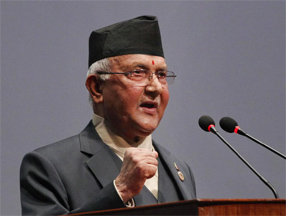
  • Nepal PM Oli to seek vote of confidence on July 21: Report

    Nepal PM Oli to seek vote of confidence on July 21: Report

    KATHMANDU (TIP): Nepal’s newly appointed Prime Minister K P Sharma Oli will take a vote of confidence in Parliament on July 21, as required by the Constitution, a media report quoted the chief whip of his party as saying on July 17. The 72-year-old veteran leader was sworn in on Monday as the Himalayan nation’s prime minister for the fourth time.Prime Minister Oli decided to take a vote of confidence on Sunday, MyRepublica news portal reported, quoting Communist Party of Nepal-Unified Marxist Leninist (CPN-UML) Chief Whip Mahesh Bertaula. According to Nepal’s Constitution, Oli needs to secure a vote of confidence from Parliament within 30 days of appointment, which he is likely to secure easily, as the minimum number to form a government in the 275-strong House of Representatives (HoR) is just 138.
    The leader of Nepal’s largest communist party was appointed as prime minister on Sunday by President Ram Chandra Paudel to lead the coalition government with the Nepali Congress (NC), the largest party in Parliament, apart from other smaller parties.
    Oli succeeds Pushpa Kamal Dahal ‘Prachanda,’ who lost the vote of confidence in the HoR last week, leading to the formation of the new government.
    The CPN-UML Chairman now leads the new coalition government that faces the daunting challenge of providing political stability in the Himalayan nation.
    Nepal has faced frequent political turmoil as the country has seen 14 governments in the past 16 years after the introduction of the Republican system.
    Within hours of Oli’s swearing-in, three advocates — Deepak Adhikari, Khagendra Prasad Chapagain and Shailendra Kumar Gupta ? filed a writ petition in the Supreme Court of Nepal challenging his appointment arguing that it was unconstitutional and sought its annulment.
    The advocates argued that the president should call for forming a new government under Article 76 (3) if a government formed as per Article 76 (2) fails the floor test in the House of Representatives. The apex court has set July 21 as the date for a preliminary hearing in the case — the same day Oli will take the floor test in the Parliament. (PTI)

  • Bedwetting, nightmares, shaking; War in Gaza takes a mental health toll, especially on children

    DEIR AL-BALAH (TIP): Nabila Hamada gave birth to twin boys in Gaza early in the war, in a hospital reeking of decaying bodies and full of displaced people. When Israeli forces threatened the hospital, she and her husband fled with only one of the babies, as medical staff said the other was too weak to leave. Soon after, Israeli forces raided the hospital, Gaza’s largest, and she never saw the boy again.
    The trauma of losing one twin left the 40-year-old Hamada so scared of losing the other that she became frozen and ill-equipped to deal with the daily burden of survival.
    “I’m unable to take care of my other, older children or give them the love they need,” she said. She is among hundreds of thousands of Palestinians struggling with mental health after nine months of war. (AP)

  • Far-right Israeli minister visits sensitive Jerusalem holy site, imperiling Gaza cease-fire talks

    JERUSALEM (TIP): Israel’s far-right national security minister visited Jerusalem’s most sensitive holy site on July 18 morning, threatening to disrupt Gaza cease-fire talks.
    Itamar Ben-Gvir, an ultranationalist settler leader, said he had gone up to the contested Jerusalem hilltop compound of Al Aqsa Mosque to pray for the return of the hostages “but without a reckless deal.”
    Ben-Gvir said he was pressuring Netanyahu not to give in to international pressure and to continue with the military campaign in Gaza.
    The move threatens to disrupt sensitive talks aimed at reaching a cease-fire in the 9-month-old Israel-Hamas war. Israeli negotiators landed in Cairo on Wednesday to continue talks.
    Ben-Gvir’s visit also came just days before Prime Minister Benjamin Netanyahu leaves for a trip to the United States, where he will address Congress. Ben-Gvir last visited the site in May, to protest countries unilaterally recognizing Palestinian statehood.
    Jews and Muslims both claim the Jerusalem hilltop compound, which is considered the holiest site for Jews.
    Palestinians consider the mosque a national symbol and view such visits as provocative, though Ben-Gvir has frequently visited the site, revered by Jews as the Temple Mount, during tense periods. Tensions over the compound have fueled past rounds of violence. (AP)

  • Russia downed 33 Ukrainian drones in Crimea, 10 naval drones

    MOSCOW(TIP): Russia downed 33 Ukrainian aerial drones overnight over Crimea and 10 naval drones that were heading for the peninsula, Moscow’s defence ministry said on July 18.
    “Air defence systems on duty destroyed and intercepted 33 aerial drones over… Crimea,” the ministry said in a Telegram post, adding that forces “in the Black Sea destroyed 10 naval drones that were heading towards the Crimean peninsula”.
    Sevastopol governor Mikhail Razvozhayev said earlier on Thursday that loud noises heard in the Crimean city were linked to the Russian army retaliating “against an attempted attack by a surface drone”.
    Late last month, Moscow accused Ukraine of carrying out a deadly strike in Crimea using US missiles, killing at least four people, including two children, and injuring more than 150, according to the local authorities installed by Russia.
    Two drones were also neutralised overnight in the Bryansk region of western Russia, according to the Russian defence ministry.
    “There were no casualties or damage,” local governor Alexander Bogomaz said on Telegram Thursday.
    Ukraine has stepped up its attacks on Russian territory this year, targeting both energy sites that it says supply the Russian army, as well as towns and villages just across the border and in Crimea. (AFP)

  • Uncertainty is the winner and incumbents the losers so far in a year of high-stakes global elections

    LONDON (TIP): Discontented, economically squeezed voters have turned against sitting governments on both right and left during many of the dozens of elections held this year, as global power blocs shift and political certainties crumble. From India to South Africa to Britain, voters dealt blows to long-governing parties. Elections to the European Parliament showed growing support for the continent’s far right, while France’s centrist president scrambled to fend off a similar surge at home.
    If there’s a global trend, Eurasia Group president Ian Bremmer said at a summit in Canada in June, it’s that “people are tired of the incumbents.”
    More than 40 countries have held elections already this year. More uncertainty awaits — nations home to over half the world’s population are going to the polls in 2024. The world is already anxiously turning to November’s presidential election in the US, where an acrimonious campaign was dealt a shocking blow by an assassination attempt against Republican nominee and former president, Donald Trump.
    Aftershocks from the COVID-19 pandemic, conflicts in Africa, Europe and the Middle East, and spiking prices for food and fuel have left dissatisfied voters eager for change. (AP)

  • Paris mayor dips into the Seine River to showcase its improved cleanliness before Olympic events

    Paris mayor dips into the Seine River to showcase its improved cleanliness before Olympic events

    PARIS (TIP): After months of anticipation, Paris Mayor Anne Hidalgo took a dip in the long-polluted Seine River on July 17, fulfilling a promise to show the river was clean enough to host open swimming competitions during the 2024 Olympics — and the opening ceremony on the river nine days away. Clad in a wetsuit and goggles, Hidalgo plunged into the river near the imposing-looking City Hall, her office, and the Notre Dame Cathedral. Paris 2024 chief Tony Estanguet and the top government official for the Paris region, Marc Guillaume, joined her, along with swimmers from local swimming clubs.
    “The Seine is exquisite,” said Hidalgo from the water. After emerging, she continued to rave, “The water is very, very good. A little cool, but not so bad.” She also said today was “a dream” and a “testimony that we have achieved a lot of work,” referencing the city’s “swimming plan” that was launched in 2015.
    They swam down the river for about 100 meters, switching between crawl and breaststroke.
    “After twenty years of doing sports in the river, I find it admirable that we are trying to clean it up,” said Estanguet, who has three Olympic gold medals in canoeing.
    It’s part of a broader effort to showcase the river’s improved cleanliness ahead of the Summer Games which will kick off July 26 with a lavish open-air ceremony that includes an athletes’ parade on boats on the Seine. Daily water quality tests in early June indicated unsafe levels of E. coli bacteria, followed by recent improvements.
    Swimming in the Seine has been banned for over a century. Since 2015, organizers have invested $1.5 billion to prepare the Seine for the Olympics and to ensure Parisians have a cleaner river after the Games. The plan included constructing a giant underground water storage basin in central Paris, renovating sewer infrastructure, and upgrading wastewater treatment plants.
    Originally planned for June, Hidalgo’s swim was postponed due to snap parliamentary elections in France. On the initial date, the hashtag ”jechiedanslaSeine” (“I’m pooping in the Seine”) trended on social media as some threatened to protest the Olympics by defecating upstream.
    That didn’t deter Hidalgo, who carefully entered the river Wednesday using a ladder on an artificial pond, set up for the event. Seven security boats were deployed for the occasion.
    They swam down the river for about 100 meters, switching between crawl and breaststroke.
    The upper banks were crowded with curious spectators.
    “I wouldn’t have missed that for anything in the world,” said Lucie Coquereau, who woke up early to get the best view of Hidalgo’s up from the Pont de Sully bridge that oversees the swimming site.
    Enzo Gallet, a competitive swimmer who has taken part in France’s national open-water championship, was among athletes invited to test the Seine alongside the Paris mayor. (AP)

  • Fire at shopping mall in southwest China kills 16 people

    Fire at shopping mall in southwest China kills 16 people

    BEIJING (TIP): At least 16 people were killed after a fire broke out at a shopping mall in southwest China’s Sichuan Province. The incident occurred on July 17 around 6 pm at the 14-story building, located in a high-tech zone in the city of Zigong, Sichuan province, according to Chinese state media. Dramatic images and videos showed a huge column of black smoke billowing from the building. Several people were also seen gathered on a balcony.The rescue operation was completed on Thursday.
    Around 75 people who were trapped inside the building were evacuated, the local fire department said. A total of 16 people have been killed, and the rest were evacuated from the building, state-run Xinhua news agency reported. According to the preliminary investigations, the fire was caused by construction work, the report added.
    China’s Ministry of Emergency Management and National Fire and Rescue Administration said it has dispatched a working team to investigate the incident.
    Fire experts from across the country will also be sent to participate in the accident investigation, the Ministry said.
    China continues to witness major fire accidents despite the directives from President Xi Jinping to implement strict preventive measures for provincial governments.
    Officials say the number of fire accidents in public places like hotels and restaurants was due to faulty electrical and gas pipelines.
    Thirty-nine people were killed when a fire broke out in a commercial building in the Chinese province of Jiangxi in January this year. Fifteen people were killed in a fire at a residential building in Nanjing city in the following month. (PTI)

  • A police officer has been wounded in a knife attack in Paris. The attacker was killed by police

    A police officer has been wounded in a knife attack in Paris. The attacker was killed by police

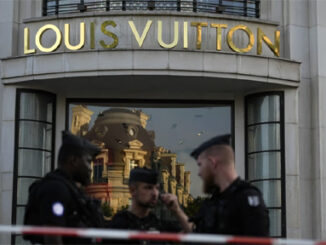
    PARIS (TIP): A police officer was wounded in a knife attack in Paris on July 18 in the high-end Champs-Elysees neighborhood and the assailant was shot and died of his injuries, authorities said, just days before the opening ceremony of the Summer Olympics.
    Paris police chief Laurent Nunez said the attack did not appear linked to the Olympics and no terrorist motive was suspected.
    French Interior Minister Gerald Darmanin posted on X that the attack happened in the 8th arrondissement of Paris while police were “responding to a call from officers securing a store.” Security agents at the flagship Louis Vuitton store on the Champs-Elysees contacted police after noticing “suspicious behavior” by a man outside the store, according to a police official.
    Speaking in front of the Louis Vuitton store after the stabbing, Paris police chief Laurent Nunez said the assailant ‘’pulled out a knife and threatened them (the officers), tried to stab them multiple times and succeeded in stabbing.’’
    He defended the police response as “totally proportionate. They were facing an assailant who was threatening their lives.”
    The suspect died of his injuries after being shot, the Paris prosecutor’s office said. An investigation was opened into attempted murder of a police officer, the prosecutor’s office said. The police officer was hospitalized but not in life-threatening condition.
    The area was thronging with tourists and Parisians when the attack happened around the corner from the Louis Vuitton boutique. Some took photos as police cordoned off the area, while others continued their dining in nearby sidewalk cafes.
    Associated Press journalists saw police reinforcements rushing in after the stabbing. At a luxury hotel nearby, guests arriving in a taxi had to pass under police tape to enter their hotel, as a porter wheeled their baggage under the cordon.
    The Louis Vuitton store often has long lines outside and is among the biggest draws on an avenue packed with luxury boutiques. Louis Vuitton parent company LVMH did not comment on what happened.
    Thursday’s knife attack comes just days after a man stabbed and wounded a French soldier patrolling Paris on Monday outside the Gare de l’Est train station in eastern Paris. The man was taken to a psychiatric hospital, according to French prosecutors.
    France is under its highest security alert before the start of the Paris Games on July 26. Paris police imposed strict new security measures in the center of town starting Thursday to prepare for the exceptional opening ceremony, which will be held in the open all along the Seine River instead of in a closed stadium.
    Darmanin is staying on in a caretaker role at the interior ministry until a new government is formed in the wake of a legislative election earlier this month. (AP)

  • Ursula von der Leyen re-elected to a second 5-year term as European Commission president

    STRASBOURG (TIP): Lawmakers at the European Parliament on July 18 re-elected Ursula von der Leyen to a second 5-year term as president of the European Union’s executive commission.
    The re-election ensures leadership continuity for the 27-nation bloc as it wrestles with crises ranging from the war in Ukraine to climate change, migration and housing shortages.
    A majority in the 720-seat legislature voted for the German Christian Democrat after a speech in which she pledged to be a strong leader for Europe in a time of crisis and polarization. “I will never let the extreme polarization of our societies become accepted. I will never accept that demagogues and extremists destroy our European way of life. And I stand here today ready to lead the fight with all the Democratic forces in this house,” von der Leyen had said.
    In a speech that sought to shore up support from across the political spectrum, von der Leyen pledged to strengthen the EU economy, its police and border agencies, tackle migration and pursue policies tackling climate change while also helping farmers who have staged protests against what they call stifling EU bureaucracy and environmental rules.
    She also took a swipe at Hungarian Prime Minister Viktor Orbán and his recent visit to Russia shortly after his country took over the rotating six-month EU presidency.
    “This so-called peace mission was nothing but an appeasement mission,” von der Leyen said as she vowed that Europe would remain shoulder-to-shoulder with Ukraine.
    One radical right lawmaker, Diana Iovanovici-Sosoaca of Romania, was escorted out of the parliament’s chamber for heckling a speaker during the debate following von der Leyen’s speech. Iovanovici-Sosoaca briefly wore what appeared to be a muzzle and held up religious icons before being led out of the room.
    Over the past five years, von der Leyen has steered the bloc through a series of crises, including Britain’s exit from the EU, the COVID-19 pandemic and Russia’s invasion of Ukraine. She has also pushed a Green Deal aiming to make the EU climate-neutral by 2050.
    As the debate ended, she told lawmakers: “I hope to have your trust and confidence for the next years. Long live Europe.”
    Von der Leyen’s election came as newly elected U.K. Prime Minister Keir Starmer was welcoming some 45 heads of government to discuss migration, energy security and the threat from Russia as he seeks to restore relations between the U.K. and its European neighbors. (AP)

  • New York City Mayor Eric Adams Inaugurates AAPI’s 1st Ever World Health Congress

    New York City Mayor Eric Adams Inaugurates AAPI’s 1st Ever World Health Congress

    NEW YORK CITY (TIP): New York City Mayor Eric Adams inaugurated the first ever World Health Congress of Physicians, a Maga Convention of physicians of Indian Origin with the cutting of the Ribbon and a powerful and memorable inaugural address at the Marriott Marquis on Times Square in New York City on July 18th, 2024.
    In his brief inaugural address, Adams lauded the contributions of Indian American physicians across the United States, especially during the Covid pandemic. “When you look at the 1000s of physicians across the country, you walk into any hospital, the emergency rooms, especially during COVID, you were present. You were there, and you sacrificed your own health to make sure of the health of this entire country. Your contributions are so rare.”
    Recalling his past visit to India, Mayor Adams said, “When I was in India, the home of Gandhi and I saw the steps, his last few steps that he took before the assassin took his life. It is our obligation and responsibility, no matter what field we are in, to ensure that we live out the dreams of Gandhi and we live out the dreams of those steps,” Adams said. “As we mark, the image of unity here, throughout the United States of America, we believe in the fundamentals and the foundation for the family. You believe in public service, and you believe in our children, and you are a real partner in doing so,” Mayor Adam told Indian American physicians.
    “I want to extent a very warm welcome to AAPI delegates from around the world to first ever World Congress of Physicians, being held here from July 18th-22, 2024 in New York City, organized by the American Association of Physicians of Indian origin (AAPI) at the prestigious Marriott Marquis on Times Square, at the heart of the most popular city in the world,” Dr. Anjana Samadder, President of AAPI said in her welcome address.
    Sri Brahmrishi SiddhGuru Gurudev, embodying compassion, love, humility, and simplicity, adhering to ancient Indian spiritual practices, while bestowing his blessings on the organizers and the AAPI delegates called the Indian American Physicians “the best” in the world, because “they give their best to the world.” He lauded them for their virtues of “learning, earning and returning” that makes them stand out across the globe.
    Others who addressed the audience e during the inaugural session included, Dilip Chauhan, Deputy Commissioner for Trade, Investment and Innovation, and Jenifer Rajkumar, a lawyer, professor, and government leader who made history as the first South Asian-American woman ever to be elected to a state office in New York, whom Mayor Adams praised for her contributions to the society and urged the community to support her in her efforts to be the first person of Indian origin to run for statewide office in New York.
    Some of the key speakers invited to be at the Congress include Dr. Mehmet Oz, American television personality, Physician, Author, and Professor Emeritus of cardiothoracic surgery at Columbia University; Smriti Zubin Irani, an Indian politician and former actress, fashion model, and television producer. She has been Minister of Women and Child Development since 2019, and also Minister of Minority Affairs since 2022; Mansukh Laxmanbhai Mandaviya is an Indian politician currently serving as the Minister of Health and Family Welfare and Chemicals and Fertilizers of India. He is also a Rajya Sabha member from Gujarat; Dr. Jesse Menachem Ehrenfeld, President of the American Medical Association and Professor of Anesthesiology at the Medical College of Wisconsin.; and, Dr. Vivek Hallegere Murthy, a vice admiral in the United States Public Health Service Commissioned Corps who has served as the 19th and 21st Surgeon General of the United States under Presidents Barack Obama, Donald Trump, and Joe Biden.
    “We want to welcome you to the AAPI’s inaugural World Congress of Physicians in the world’s capital city, New York,” Dr. Achintya Moulik, Chair of AAPI Convention 2024 said. “We have convened a fantastic group of dedicated organizers to meet the needs of the 2024 convention and are very excited about this year. Please reach out to any one of the representatives from the New York Tri-State team with questions or comments.”
    Dr. Sumul Raval, current Secretary of AAPI, “We have an event that is full of fun-filled, research-filled, and learning-filled activities.” Outlining other features of the event, Dr. Raval said “There is something for everyone, including the younger generation, the teenagers, and children, making it a family event. “We have amazing food for all the many days — from Moghul catering from New Jersey, and many more activities throughout the five days,” Raval said.
    According to the organizers, some of the major themes at the convention include Yoga and Meditation practices, a Welcome kit with books & self-care supplies, A Personal Reflexology Session, Take home wellness routine, yoga therapy sessions, a workshop on Spiritual well-being, Book talk with Yoga Gurus, including on the science of Yoga & Lifestyle medicine, and several wellness sessions.
    The World Congress has, among many others, sessions on cutting-edge research and CMEs, promoting business relationships, and displaying ethnic items. Artificial Intelligence (AI) is the prime focus of our World Health Congress. There will be entertainment features for children, performances by singer Atul Purohit and a comedy show by Kapil Sharma, Live entertainment by Javed Ali and Atif Aslam, Traditional Garba, Bollywood Film Festival, and a fashion show.
    AAPI’s World Health Congress offers an exciting venue to interact with leading physicians, health professionals, academicians, and scientists of Indian origin. The physicians and healthcare professionals from across the country will convene and participate in the scholarly exchange of medical advances, to develop health policy agendas, and to encourage legislative priorities in the coming year.
    In addition to colorful entertainment, and exquisite authentic Indian cuisine, esteemed health industry leaders, world-renowned speakers, and experts will be sharing their wisdom and expertise in the industry, offering enlightening sessions to the delegates.
    Amit Chakrabarty, Vice President of AAPI said, “AAPI’s mission has evolved in the past 42 years. “Today, AAPI is strong representing over 120,000 Indian American physicians, 130 local Chapters, who make up 10% of total physicians in the US and nearly 50% of International Medical Graduates, rooted in every corner of the nation, who serve every 7th patient in the US. We are proud of our achievements and our contributions to the healthcare industry and the millions of people we serve.” “The annual convention offers extensive academic presentations, recognition of achievements and achievers, and professional networking at the alumni and evening social events,” Dr. Samadder added.

    For more details on AAPI and the 1st World Congress, please visit: AAPI World Health Congress  and www.aapiusa.org
    (Based on a press release issued by Ajay Ghosh, Media Coordinator, American Association of Physicians of Indian Origin)

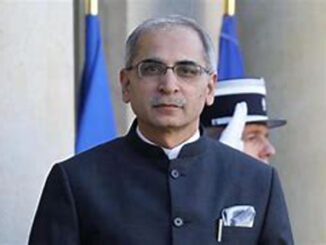
  • Vinay Mohan Kwatra nominated as India’s next Ambassador to the US

    Vinay Mohan Kwatra nominated as India’s next Ambassador to the US

    WASHINGTON, D.C. (TIP): India has nominated retired diplomat Vinay Kwatra as its next ambassador to the United States. The Ministry of External Affairs has not commented on the appointment, but an announcement is anticipated soon after the necessary formalities in the US are completed. The appointment comes just months before the US elections.

    The position of India’s ambassador to the US has been vacant since Taranjit Singh Sandhu completed his tenure in January.
    Vinay Mohan Kwatra, born on December 15, 1962, is a retired Indian Foreign Service (IFS) diplomat with a career spanning nearly 32 years. He recently retired as India’s 34th Foreign Secretary, serving from May 2022 until July 14, 2024, succeeding Harsh Vardhan Shringla.
    Kwatra’s immediate priority will be to engage with officials who could influence India-related policy in the next US administration, especially as both countries brace for possible changes following the November US elections.
    Throughout his career, Kwatra has held various key positions, including serving in China, the US, the Prime Minister’s Office as Joint Secretary, and as Minister (Commerce) at the Indian Embassy in Washington D.C. from May 2010 to July 2013. His expertise in policy planning and research and his experience in the Americas Division of the Ministry of External Affairs position him well to navigate the complexities of India-US relations.
    Kwatra holds a B.Sc. in Agriculture and Animal Husbandry (Hons.) and an M.Sc., and is multilingual, speaking French, Hindi, and English. He also has a diploma in International Relations from the Graduate Institute of International and Development Studies.
    He is married to Pooja Kwatra, and they have two sons.

  • Trump makes a forward-looking speech as he accepts GOP nomination

    Trump makes a forward-looking speech as he accepts GOP nomination

    The day 4 of the Republican Convention marked the climax and conclusion of a massive pep rally that drew thousands of conservative activists

    MILWAUKEE, WI (TIP): A defiant and bandaged Donald Trump accepted the GOP presidential nomination on July 18 at the Republican National Convention in a speech that largely ignored his most divisive plans and focused instead on uniting his party and the nation just five days after an assassination attempt that could have ended his life, an AP report says.

    The 78-year-old former President, known best for his bombast and aggressive rhetoric, offered a softer and more personal message that draws on his brush with death.
    “The discord and division in our society must be healed. We just heal it quickly. As Americans, we are bound together by a single fate and a shared destiny. We rise together. Or we fall apart,” Trump said. “I am running to be president for all of America, not half of America, because there is no victory in winning for half of America.”

    He made no direct mention of Democratic rivals, President Joe Biden or Vice President Kamala Harris, referring only generally to their administration. The speech also avoided any direct reference to his more controversial governing plans and favorite topics, including the 2020 election, the “deep state,” the Jan. 6 attack on the Capitol and his plans to deport millions of immigrants in the country illegally.

    Trump’s forward-looking speech marks the climax and conclusion of a massive four-day Republican pep rally that drew thousands of conservative activists and elected officials to swing-state Wisconsin as voters weigh an election that currently features two deeply unpopular candidates. Sensing political opportunity in the wake of his near-death experience, the often bombastic Republican leader embraced a new tone he hopes will help generate even more momentum in an election that appears to be shifting in his favor.

    While Trump offered a gentler tone than usual on Thursday, July 18 night, the crowded speaking program of the convention’s final day was also designed to project strength in an implicit rebuke of Biden. It was decidedly more masculine than it has been for much of the week.

    Ultimate Fighting Championship President Dana White called Trump “a real American bad ass.” Kid Rock performed a song with the chorus, “Fight, fight!” And wrestling icon Hulk Hogan described the former president as “an American hero.”

    Hogan drew a raucous response when, standing on the main stage, he ripped off his shirt to reveal a red Trump-Vance “Make America Great Again” shirt.

    “As an entertainer I try to stay out of politics,” Hogan said as he briefly broke character. “I can no longer stay silent.”

    Like many speakers during the convention, Mr. Carlson also suggested that recent events were divinely inspired and that he wondered “if something bigger is going on.”

    “I think it changed him,” Mr. Carlson said of the shooting, praising Trump for not lashing out in anger afterward. “He did his best to bring the country together,” Mr. Carlson added. “This is the most responsible, unifying behavior from a leader I’ve ever seen.”

    Former first lady Melania Trump and Ivanka Trump, the president’s elder daughter and former senior adviser, joined Trump in the convention hall ahead of his speech, making their first appearances there. But neither woman was scheduled to speak.

    Trump entered the hall about two hours before he was scheduled to speak, wearing a large white bandage on his right ear, as he has all week, to cover a wound he sustained in the Saturday shooting. Some of his supporters were sporting American flag-themed bandages on the convention floor Thursday.

    The convention has showcased a Republican Party reshaped by Trump since he shocked the GOP establishment and won over the party’s grassroots on his way to the party’s 2016 nomination. Rivals Trump has vanquished — including Sens. Ted Cruz of Texas and Marco Rubio of Florida, former U.N. Ambassador Nikki Haley and Florida Gov. Ron DeSantis — put aside their past criticisms and gave him their unqualified support.

    Even his vice presidential pick, Ohio Sen. JD Vance, Trump’s choice to carry his movement into the next generation, was once a fierce critic who suggested in a private message since made public that Trump could be “America’s Hitler.”

    Security was a major focus in Milwaukee in the wake of Trump’s near-assassination. But after nearly four full days, there were no serious incidents inside the convention hall or the large security perimeter that surrounded it.

    The Secret Service, backed by hundreds of law enforcement officers from across the nation, had a large and visible presence. And during Trump’s appearances each night, he was surrounded by a wall of protective agents wherever he went.

    Meanwhile, Trump and his campaign have not released information about his injury or the treatment he received. “The assassin’s bullet came within a quarter of an inch of taking my life,” Trump says. “Despite such a heinous attack, we unite this evening more determined than ever.”
    (Agencies)