Month: August 2024

  • Sriniketan Foundation Organizes a Musical Performance in Celebration of Guru Purnima

    Sriniketan Foundation Organizes a Musical Performance in Celebration of Guru Purnima

    Narinder Mani Kapur gives the opening remarks and offers traditional prayers

    FLUSHING, NY (TIP): Sriniketan Foundation celebrated Guru Purnima in fashion with scintillating performances of dance and music at Ganesha Mandir in Flushing on July 28.
    The artists excelled in their performances to the joy of the gathered audience who all were lovers of Indian classical music.

    The artists who performed included Pranab Kumar Biswas – an internationally renowned vocalist , a disciple of Ustad Rashid Khan, Pandit Rajan & Sajan Mishra. He has sung in 18 Bollywood movies. He was accompanied on Tabla by a renowned tabla player Aditya Narayan Banerjee and on harmonium by Sri Rohan Prabhu Desai.

    Thakur Chakrapani Singh, an excellent slide guitarist from India, gave a spellbinding performance. He was accompanied on Tabla by Rabi Sankar Bhattacharya.

    Narsinha Kamath played Flute. Raj Dhingra sang bhajans Suresh Ketwaroe sang devotional songs which were superb. Smt. Purnimaji sang two devotional songs and spoke about the importance of Music as one of the greatest therapies and the supreme form of Yoga.

    Lamp lighting

    The finale was a mesmerizing and greatly appreciated Manipuri dance by Sanjib Bhattacharya ji. The dance performance was dedicated to all Gurus in the universe. The dance was based on “Guru Ashtakam” and “Kabir Vani” and presented “Guru Tattva” to celebrate Guru Purnima in the most befitting manner. The Sriniketan Foundation arranged mouth-watering. refreshments and dinner (Prasad) after the performances.

    Thakur Chakrapani Singh plays slide guitar. He is accompanied on Tabla by Rabi Sankar Bhattacharya.

    The Guests of Honor were Professor Indrajit Saluja, Chief Editor of The Indian Panorama, Minesh Chimanbhai Patel of Bhartiya Vidya Bhavan USA & Baldev Grewal, publisher of Shere-e- Punjab.

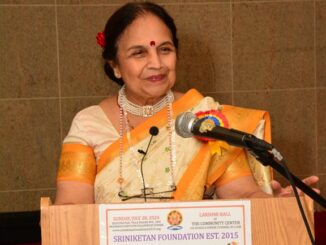
    Smt. Purnima A. Desai, Founder/ President of Sriniketan Foundation, who is also a Vidushi and a Reiki Grand Master Thanked the artists and guests for their presence and participation.

  • Gov. Hochul announces $350 million in financial assistance for low-income families

    Gov. Hochul announces $350 million in financial assistance for low-income families

    NEW YORK (TIP): Thousands of low-income families across the state will soon be receiving as much as $350 per child as part of the Empire State Child Credit Program, according to Gov. Kathy Hochul. The governor announced Tuesday, July 30, that a total of $350 million in supplemental payments will be distributed to low-income and moderate-income families statewide, granting $350 per child, beginning Thursday, Aug. 1.

    State officials say eligible taxpayers who received an Empire State Child Credit of at least $100 on their 2023 state tax return will receive a check automatically in the mail.

    The latest benefit for low-income families is part of a state initiative to expand child tax credits and increase access to childcare, Hochul said.

    “We’re putting money back in the pockets of more than a million New Yorkers because this administration delivers for working families,” Hochul said, referring to the initiative. “Our work is far from over.” Hochul’s announcement follows a multifaceted effort across the city to address the cost of living for low-income families, including the legislative efforts of Queens Assemblymember Andrew Hevesi.

    As Chair of the Assembly Standing Committee on Children and Families, Hevesi has spearheaded numerous initiatives, both in Albany and his district, that aim to bring vital resources to the greater Queens community.

    Hevesi extended his appreciation to his fellow legislators for helping successfully enact and expand the Empire State Tax Credit. “This historic investment in New York’s working class was made possible through the unwavering efforts of our advocate partners who stood with us every step of the way,” Hevesi said.

    Last year, eligibility for the Empire State Child Credit was expanded to include children under the age of four, covering an estimated 600,000 children per year.

    Hevesi, alongside state Sen. Andrew Gounardes from Brooklyn, had been working to get the Working Families Tax Credit bill passed, which would have provided credits for more families. The pair failed to get it passed this year.

    The Working Families Tax Credit bill, introduced in both the Senate and Assembly chambers, aimed to expand the existing tax credits to include 17-year-old minors and extend the benefits to families regardless of citizenship status. Additionally, the bill aimed to streamline the wait time for lower-income families to receive the maximum benefits allotted.

    The legislators attempted to include the bill in this year’s State budget negotiations but did not succeed. However, Hochul’s announcement adopted much of what the Working Families Tax Credit aimed to achieve with the expansion of beneficiaries.

    In July, Hevesi shared numerous legislative victories that, if Hochul signs them into law, will provide more financial support and resources for New York families.

    One of Hevesi’s bills that is awaiting Hochul’s signature includes the Adoption Assistance Bill. This bill would ensure that children with disabilities who are adopted out of foster care continue to receive government funding, even if an adoptive relationship is disrupted.
    (Source: QNS)

  • AAPI President is keen on forging unity in the faction-ridden organization

    AAPI President is keen on forging unity in the faction-ridden organization

    DAYTON, OHIO (TIP): Dr. Satheesh Kathula, President of AAPI, in his first public statement has said that he would foster unity within AAPI through his unwavering commitment to people, optimism and integrity.

    “I aim to foster unity within AAPI through my unwavering commitment to people, optimism, and integrity,” says Dr. Satheesh Kathula, President of the American Association of Physicians of Indian Origin (AAPI), who has assumed charge of the largest ethnic medical association in the United States. “My vision for AAPI centers on professionalization of the organization and advocacy for critical issues affecting physicians and patients alike, including addressing the physician shortage and regulatory burdens,”

    In an official communication sent out to the members of the AAPI’s General Body, Dr. Kathula stated: “According to the current bylaws (Article VI) the current Executive Committee (EC) term is one year which ended on July 8, 2024. The new Executive Committee’s term started on July 9, 2024.”

    Dr. Kathula, a board-certified hematologist and oncologist from Dayton, Ohio, practicing Medicine for over two decades, said: “I want to take this opportunity to thank past leadership, along with the executive committee, Board of Trustees, and chairs of all standing committees, for their year of dedicated service. Let us continue to support each other, innovate, and strive for excellence. The challenges we overcome today will pave the way for a brighter and more prosperous future for all.”

    While elaborating on his broader agenda as the 43rd President of AAPI, Dr. Kathula, an eminent physician of over 25 years’ standing in Ohio, an admirable community leader and philanthropist with a stellar record of serving in several leadership roles in AAPI, says, “I will collaborate with legislative bodies and medical associations such as the AMA, ACP, and FSMB, in our efforts to amplify our impact.”

    Dr. Kathula, who graduated from Siddhartha Medical College, Vijayawada, Andhra Pradesh, India in 1992 is a clinical professor of medicine at Wright State University-Boonshoft School of Medicine, Dayton, Ohio. Dr. Kathula is a Diplomate of the American Board of Lifestyle Medicine. He has authored several papers and articles in medical journals and is in the process of writing a book, describing his journey as an immigrant physician. “For the past 22 years, I’ve been proudly serving as a Hematologist and Oncologist in the Dayton community, considering it my home:”

    He strongly believes acquiring new knowledge is crucial for professionals, especially for the physicians in a changing healthcare environment. Recently, Dr. Kathula acquired a certificate from Stanford University in Artificial Intelligence in Healthcare. He graduated in May 2024 from Harvard University completing a “Global Healthcare Leaders Program.”

    Recalling his long association with AAPI, which he has come to call his 2nd family, Dr. Kathula says, “My first experience with medical conventions occurred at the AAPI annual convention in 1995, graced by then-President Bill Clinton. Inspired, I formally joined AAPI in 2002, though my active involvement commenced in 2009, assuming the role of the governing body member of AAPI. Later on, I won all four national elections I contested, supported by esteemed AAPI members.”

    Dr. Kathula has served AAPI in various capacities. He served as the President and founding member of the Association of Indian Physicians from Ohio, President of the Miami Valley Association of Physicians of Indian Origin as well as the President of the ATMGUSA (Association of Telugu Medical Graduates in USA). In addition, he has worked with the Ohio State Medical Association on various issues. He was the Regional Director and a member of the Board of Trustees. He was elected overwhelmingly by AAPI members as the national Treasurer, Secretary, and Vice President of AAPI, and has served as the President-Elect of AAPI during the year 2023-34.

    In his inaugural note, Dr. Kathula assured all AAPI members and all physicians of Indian origin that “I will sincerely work for the betterment of our beloved organization, AAPI.”

    “My priority is to engage the second-generation physicians and foster mentorship to ensure AAPI’s continued relevance and vitality.” As the leader of AAPI, who has been entrusted with the task of leading AAPI, Dr. Kathula says, “My goals for AAPI have been very clear. I want to focus on education, communication, and legislation, involving the younger generation. Increasing the membership, creating benefits for members, and making AAPI financially stronger are some of my objectives. I will work hand in hand with the entire executive committee, and board of trustees, to make AAPI stronger and more viable.”

    Dr. Kathula has laid out his vision for AAPI on his website:

    • Promote AAPI’s mission of education, excellence in patient care, research, and professionalism.
    • Increase membership of AAPI and enhance membership benefits. Engage the younger generation more.
    • Collaborate with major physician organizations in the US.
    • Fast-tracking of Green Cards process for Physicians
    • Leverage the strength of 120,000 Indian American Doctors through Legislative endeavors.

    Dr. Kathula has been an educator and mentor for dozens of high school students in the community with an interest in attending Medical Schools. He is a Clinical Professor of Internal Medicine at Wright State University in Dayton. He has been part of the program offering teaching/mentoring to medical students, residents and fellows for two decades. He has presented CME (Continuing medical education) lectures at national and international conferences and published articles in peer-reviewed medical journals.

    He has been actively involved in community service locally, nationally, and internationally for the last two decades. Dr. Kathula was instrumental in raising funds for the construction of the Om Shanti Hindu Cultural Center in Dayton. He is also the President and Founding Member of the Association of Indian Physicians from Ohio. He has served on several non-profit boards, dedicating his time, skills, and resources for the greater good of the larger community. Dr. Kathula served on the Board of Trustees of the Leukemia and Lymphoma Society (Dayton chapter) and has raised more than $200,000 for some of its initiatives. The society conferred on him the Man of the Year Award in 2010. Dr. Kathula received Hind Rattan Award in 2010, given by the NRI Welfare Society of India for his outstanding contributions. He was awarded ‘Man of the Year – 2018’ by the Leukemia and Lymphoma Society.

    Dr Kathula’s love for his motherland has manifested in him setting up humanitarian and medical projects in India. The most important of them is establishing a state-of-the-art pharmacy college in Warangal in Telangana, where he grew up. Named Pathfinder Institute of Pharmacy and Educational Research (PIPER), the non-profit with Dr Kathula as the Chairman provides quality education and has already graduated over 750 students who are now working in different parts of India and abroad. He conducted several medical camps close to his native place and donated a defibrillator, water purification plant, and library to his native place. He also served as the chair of the Oncology track for several Global Health Summits in India.

    Not satisfied with his personal and professional achievements, Dr. Kathula has been active in the Indian community. Intending to enable Physicians of Indian Origin to give back to their motherland, India, he is planning the next edition of the Global Healthcare Summit in New Delhi, India in October this year.

    Dr. Kathula gives credit to several mentors who have helped shape his outlook on life. “My life’s journey has been enriched by countless mentors and inspirations from all walks of life, each contributing to my personal and professional growth.”

    Sharing about his family, Dr. Kathula says, “My wife is a homemaker, while both my sons have pursued careers in medicine—the elder as a resident in Anesthesiology and the younger currently in his third year of medical school.” Beyond a professional career, Dr. Kathula finds joy in music, writing, photography, travel, cricket, and golf, “indulging in these passions whenever time allows.”

    While urging all the members of AAPI “to actively participate in AAPI’s endeavors, emphasizing inclusivity and innovation,” Dr. Kathula says, “Each Chapter of AAPI serves as a vital conduit between local and national initiatives, embodying AAPI’s ethos of collaboration and service. By fostering cooperation between the Executive Committee and Board of Trustees, we can optimize AAPI’s effectiveness and uphold our shared objectives.”

    “AAPI represents over 120,000 physicians of Indian origin—a distinction I will humbly uphold as the organization’s president,” Dr. Kathula states. “I attribute this honor to the diligent efforts of my predecessors who have cultivated AAPI into a preeminent Indian American institution over its 43-year legacy. Drawing from my leadership experience in various non-profit organizations, despite our members’ diverse backgrounds, I want to emphasize our shared goals to foster cohesion within AAPI,” Dr. Kathula says, adding emphatically, “With unity, I believe we can surmount any challenge and achieve our collective aspirations.”

    The growing influence of physicians of Indian heritage is evident, as increasingly physicians of Indian origin hold critical positions in healthcare, academic, research, and administrative positions across the nation. We the physicians of Indian origin are proud of our great achievements and contributions to our motherland, India, our adopted land, the US, and in a very significant way to the transformation of Indo-US relations.

    Serving 1 in every 7 patients in the US, AAPI members care for millions of patients every day, while several of them have risen to hold high-flying jobs, shaping the policies, programs, and inventions that shape the landscape of healthcare in the US and around the world.

    Since its inception in 1982, AAPI has been at the forefront, representing a conglomeration of practicing Indian-origin physicians in the United States, seeking to be the united voice for physicians of Indian heritage. Dr. Satheesh Kathula says, “We will continue the noble mission and strengthen our efforts to make AAPI reach greater heights.” For more details about AAPI, please visit: www.appiusa.org

    (Based on a press release issued by Ajay Ghosh, Media Coordinator, AAPI)


  • Wayanad calamity: Landslides expose lapses on ecological front

    A massive rescue operation is in progress in Kerala’s Wayanad district, which has been ravaged by a series of landslides triggered by heavy rain. The death toll has crossed 150, even as the immediate priority is to evacuate and rehabilitate as many people as possible. Though it is being conveniently described as a natural calamity, the impact of factors such as climate change, an eco-sensitive terrain and the loss of forest cover cannot be discounted.
    As per the landslide atlas released by the Indian Space Research Organisation’s National Remote Sensing Centre last year, 10 out of the 30 most landslide-prone districts in India are in Kerala, with Wayanad ranked 13th. According to a 2021 study, all landslide hotspots in Kerala are in the Western Ghats region, concentrated in Idukki, Ernakulam, Kottayam, Wayanad, Kozhikode and Malappuram districts. Leader of the Opposition in the Lok Sabha and former Wayanad MP Rahul Gandhi has asked the Central Government to prepare an action plan to address the growing frequency of natural disasters in the ecologically fragile region of the Western Ghats. No less important is the need to assess the preparedness of various states and work out ways to make them better equipped to handle such catastrophes. The loss of lives and property can be minimized through an efficient early warning system, which doesn’t seem to have happened in Kerala’s case.
    India’s approach to disaster management has improved from reactive to proactive as well as pre-emptive in recent years, but there are still some gaps to be plugged. A major stumbling block is the unwillingness of state governments, industries and local communities to pay heed to experts’ warnings about the ramifications of infrastructure development and promotion of tourism in ecologically sensitive zones. As the nation extends support to a battered Wayanad, there should be a renewed commitment to using natural resources judiciously and sustainably.
    (Tribune, India)

  • America needs to review its policy on supporting regimes given to violating human rights

    Prof. Indrajit S. Saluja

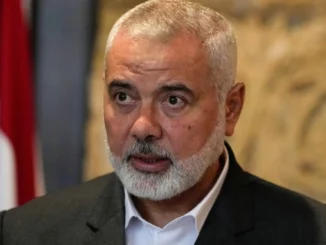
    The assassination of Hamas leader Ismail Haniyeh in Iran, where he was a guest of the Iranian government for the swearing-in ceremony of the Iranian president, demands universal condemnation. This act is not only a gross violation of human rights but also a blatant infringement on the sovereignty of a nation. Israel, in its relentless pursuit to eliminate its enemies, both real and perceived, has continuously disregarded international norms and laws. This recent incident is part of a broader pattern of Israeli actions that defy legal and ethical boundaries.

    Israel’s actions over the decades have been marked by numerous violations of international law. Here is a chronological overview of some of the notable incidents.

    1956 Suez Crisis: Israel, alongside the UK and France, invaded Egypt to regain control of the Suez Canal. This invasion was condemned by the international community and marked the beginning of a pattern of aggressive Israeli military actions.

    1967 Six-Day War: Israel launched preemptive strikes against Egypt, Jordan, and Syria, occupying the Sinai Peninsula, Gaza Strip, West Bank, and Golan Heights. The occupation of these territories continues to be a point of contention and a violation of numerous UN resolutions.

    1982 Lebanon War: Israel invaded Lebanon to drive out the PLO, resulting in the deaths of thousands of Lebanese and Palestinian civilians. The Sabra and Shatila massacre, where Israeli-allied militia killed hundreds of civilians, remains a dark chapter in this conflict.

    2006 Lebanon War: Israel’s bombardment of Lebanon in response to Hezbollah’s capture of two Israeli soldiers led to significant civilian casualties and widespread destruction of infrastructure, drawing criticism for disproportionate use of force.

    2008-2009 Gaza War: Operation Cast Lead resulted in over 1,400 Palestinian deaths, many of them civilians, and extensive destruction in Gaza. The UN and human rights organizations condemned Israel for excessive and indiscriminate use of force.

    2014 Gaza War: Operation Protective Edge caused over 2,200 Palestinian deaths, including many women and children, and left tens of thousands homeless. The UN Human Rights Council accused both Israel and Hamas of possible war crimes.

    2021 Gaza Conflict: The eleven-day conflict in May resulted in over 250 Palestinian deaths, including 67 children, and severe damage to Gaza’s infrastructure. The international community criticized Israel for its heavy-handed response.

    These incidents illustrate a pattern of Israeli actions that not only violate international law but also inflict severe humanitarian crises on the affected populations.

    Israel’s audacious actions are significantly bolstered by unwavering support from the United States. The US has provided Israel with extensive military aid, diplomatic backing, and political support, enabling Israel to carry out its operations with relative impunity. The US has consistently vetoed UN Security Council resolutions critical of Israel, shielding it from international accountability.

    The US provides Israel with approximately $3.8 billion annually in military aid, ensuring that Israel maintains a qualitative military edge in the region. This aid includes advanced weaponry, missile defense systems like Iron Dome, and funding for military research and development.

    In the UN, the US has vetoed numerous resolutions aimed at holding Israel accountable for its actions. For instance, in 2018, the US vetoed a resolution calling for the protection of Palestinians in Gaza and the West Bank.

    Successive US administrations have maintained strong political ties with Israel, often at the expense of a balanced approach to the Israeli-Palestinian conflict. The Trump administration’s recognition of Jerusalem as Israel’s capital and the relocation of the US embassy to Jerusalem exemplify this bias.

    The human toll of Israeli actions on Palestinians has been devastating. Thousands of Palestinians have been killed, many of them civilians, including women and children. Hundreds of thousands have been rendered homeless due to the destruction of homes and infrastructure. The blockade of Gaza has led to a humanitarian crisis, with severe shortages of food, medicine, and essential services.

    The international community, including human rights organizations, has repeatedly condemned the Israeli occupation and its treatment of Palestinians. Reports by organizations such as Amnesty International and Human Rights Watch have documented widespread violations of human rights, including unlawful killings, arbitrary detention, and collective punishment.

    It is imperative for the United States, as a leading global power, to reassess its unwavering support for Israel. The US must uphold the principles enshrined in its Constitution, including the promotion of human rights, justice, and the rule of law. Supporting a nation that consistently violates these principles undermines America’s credibility and moral standing in the world.

    The US should lead by example in advocating for peace and justice. This includes holding Israel accountable for its actions, supporting legitimate peace efforts, and ensuring that US aid is not used to perpetuate conflict and human suffering.

    History will not judge the US kindly if it continues to support policies and actions that result in widespread human suffering and violations of international law. It is time to stop this war and all wars. The US should focus on addressing its own domestic challenges rather than acting as the world’s policeman.
    God bless America!

  • Politics at Vantage Point

    Politics at Vantage Point

    The last 10 years, Modi ruled as a despot with socialist narrative and a capitalist approach. Everything was Modified. Schemes, government programs, media, even Stadiums.

    “Indian politics is seeing a generational shift. Younger blood is not just taking interest in politics but is ready to be groomed for it as well. Prodigies, if through merit, are no devils. Some have shown great acumen as politicians. The presence of Gaurav Gogoi, Jyotiraditya Sindhya, Deependra Hooda, Jaiveer Gill, Alka Lamba, Sachin Pilot, Tejaswi Yadav, Chirag Paswan, Tejaswi Surya and many more bring youthfulness of ideas and energy to the aging politics of the country. These are changing times and should be welcomed. The only condition being that democracy hails and we stand one and strong as a nation.”

    By Priti Prakash

    History is witness to politics standing at vantage points. Elections 2024 was one of them. Interestingly the maths in Parliament and Indian politics had an element of paradox. The descendance of Modi and BJP with a near halfway mark of 240 seats in Lok Sabha and the ascendence of Rahul Gandhi and Congress with mere 99 seats, although up from its lowest number a decade back, was hope inducing. The last 10 years, Modi ruled as a despot with socialist narrative and a capitalist approach. Everything was Modified. Schemes, government programs, media, even Stadiums.

    The grand old party at its lowest with no full time President for the first time since Independence, was on crutches. Rahul Gandhi was derided all the time. From Pappu to Shahzada, to Khan market gang he graduated to Balak Buddhi (in the words of Modi). He too was a reluctant part time politician. Whatever he did or tried to do as Congress President was called as his casual approach. In these 10 years Congress lost many state elections, won some too. His ‘personality’ was more a subject of discussion amongst the rich and poor alike.

    In the run up to the general election 2024, came the Bharat Jodo yatra that saw Rahul Gandhi on road with common people. They wept their souls out to him and he touched their hearts as someone who would listen to an aam aadmi’s plight. It was a learning curve for him too. Happening much before the General Elections, although it was said to be nonpolitical, the yatra quite did the groundwork for Rahul Gandhi’s politics.

    The second Bharat Jodo Yatra, from East to West on the eve of elections was a much closer call. It embedded Rahul Gandhi in the minds and hearts of the rest of India. These two Yatras were the inflection point. Congress won 99 seats in the Lok Sabha elections, almost 100 percent more than the last tally. This was a huge jump for Congress and the image of Rahul Gandhi. Rahul now looked to be a serious full-time politician. He addressed multiple rallies each day taking BJP & PM Modi head on. The transformation that was the result of his thousands of kilometers yatra on foot crisscrossing India was evident.

    His crescendo moment was his speech in the Parliament on the opening day of the first session after elections. Elected as the Leader of Opposition and the 11 Allies of INDIA alliance, speaking as the LoP he unabashedly attacked the Modi government and BJP on basic issues people and country at large were facing with special emphasis on NEET scam. So, in these times when he talks of unemployment, crony capitalism, Manipur violence, Inflation and Hindutva politics, for people he is the Hero.

    No one can deny the fact that all these years it was Rahul Gandhi who only dared Modi & his governance challenging his priorities, particularly naming Adani and Ambani as the blue-eyed boys of the Prime Minister. The past decade has seen him take a pivotal position in shaping the political landscape of India. I would attribute much of it to the yatras followed by the Election campaigning.

    It will be worth reminding here that the lineage of a Rahul Gandhi does not afford him the liberty of choosing to be in politics or not. It is a cross that he has to bear. Unlike other political kids he has been witness to his grandmother’s, then his father’s murder. In the toxic world of politics he has survived yet, got up, dusted himself and pitched himself against the cruelest of systems.

    Whether as Pappu or a part time politician his influence and presence can be felt across various facets of Indian political discourse, making him a central figure in both the Congress Party and the broader national arena. His recent speech (July 23, 2024) at the Budget session crafted around the Farm Bill brought by the BJP in its last tenure put the government in the dock. PM Modi outside Parliament appeared down and defensive, almost complaining that the Opposition in Parliament is throttling the voice of the Prime Minister. He has forgotten the times when the microphones of the opposition were switched off intermittently, when 142 members were suspended on raising questions and demanding the PM speak in the house on important matters and when elected Chief Ministers and other ministers were put in jail, are still there for months even with lack of any credible evidence.

    So how is Rahul Gandhi changing Indian politics?

    Unlike many traditional politicians who maintain a distant and formal approach, Rahul seems to be emphasizing a more accessible and grassroots-oriented style. As seen lately his actively engaging with citizens, particularly youth and marginalized communities (the loco drivers or the daily wagers), through direct interactions, town hall meetings (with students or party workers), and social media platforms has bridged the gap between the political elite and the common people, making politics more inclusive and participatory.

    The Gandhi scion is championing issues that resonate with the masses. His emphasis on social justice, minority rights, and economic equality, empowering women and ensuring education for all is what’s striking people’s imagination. That has galvanized support from diverse sections of society and has positioned him as a leader who is at least addressing peoples’ most pressing issues.

    As for Congress party, Rahul Gandhi’s efforts have sought to rejuvenate the party’s appeal among voters, especially the younger demographic.

    Despite facing criticism and challenges, Rahul Gandhi’s impact is undeniable. Beyond his role as a leader of the Congress Party and now the Leader of the Opposition in Parliament, he is reshaping political discourse and priorities in the country.

    Indian politics is seeing a generational shift. Younger blood is not just taking interest in politics but is ready to be groomed for it as well. Prodigies, if through merit, are no devils. Some have shown great acumen as politicians. The presence of Gaurav Gogoi, Jyotiraditya Sindhya, Deependra Hooda, Jaiveer Gill, Alka Lamba, Sachin Pilot, Tejaswi Yadav, Chirag Paswan, Tejaswi Surya and many more bring youthfulness of ideas and energy to the aging politics of the country. These are changing times and should be welcomed. The only condition being that democracy hails and we stand one and strong as a nation.
    (The author is a Delhi based Senior Independent Journalist and Travel Blogger. She can be reached at p.priti65@gmail.com)


  • India’s Wealth Gap: The Rich are getting Richer at the Expense of over 70% of Poor Indians

    India’s Wealth Gap: The Rich are getting Richer at the Expense of over 70% of Poor Indians

    In 2021, Oxfam reported that the top 1% of India’s population held 42.5% of the national wealth, while the bottom 50% held just 2.8%. In 2023, Oxfam report, “Survival of the Richest: The India story”, also says that between 2012-2021, just 5 per cent of Indians own more than 60 per cent of the country’s wealth, while the bottom 50 per cent of the population possess only 3 per cent of the wealth. The combined wealth of India’s 100 richest has touched $660 billion.  Oxfam also adds that India has the world’s highest number of poor at 228.9 million.

    By Dave Makkar

    Since gaining independence in 1947, India has experienced significant economic and infrastructure growth, yet rising inequality has become a persistent issue. While the country suffers from multiple crises such as poverty, hunger, illiteracy, unemployment, health calamities, and inflation, India’s billionaires continue to thrive by stealing public wealth. Besides the business tycoons getting rich, another story of rags to riches involves the politicians and high-ranking bureaucrats of India. They are getting rich by helping the billionaires steal or pay minimum for the public wealth.

    India’s elite world-famous Billionaires, part of the 56 million filthy rich Indians,  are living side by side with almost a billion poor and treat them as sub- humans who are a  burden for the country.

    It looks like Indian Leadership- political, religious and business- rather than being ashamed of this, are proud to have more than 800 million Indians living under extreme poverty & inhuman conditions. They have the insanity to say, “India is shining”.

    A former diplomat, politician, author and thinker Pavan Varma wrote in his book “Being Indian” that in the Indian elite “there is a remarkable tolerance for inequality, filth and human suffering”. He adds that “concern for the deprived and the suffering is not a prominent feature of the Indian personality. The rich in India have always lived a life quite oblivious to the ocean of poverty around them”. Less than 10-15 minutes from every slum in any major city of India there are very expansive heavily guarded residential areas with houses,  rather mini palaces,  costing few million dollars to $2 Billion. Mukesh Ambani’s palacial house “Antilia” in Mumbai is one of the most expensive private residences in the world. One city: two universes.

    Meanwhile, the poor in India are unable to afford even basic food to survive. In India, approximately 81.35 crore (810.3 million) people are receiving subsidized food under the Pradhan Mantri Garib Kalyan Anna Yojana (PMGKAY), “Prime Minister’s Food Security Scheme for the Poor.” This scheme provides free food grains, including rice, wheat, and coarse grains, to the beneficiaries barely enough just to keep them alive. Each eligible individual receives 5 kg of whole food grains per month, that they have to get it milled except for rice.. The scheme, which started during the COVID-19 pandemic in 2020, has been extended for five more years starting from January 1, 2024. The government has committed to spending approximately Rs. 11.80 lakh crore ($143.90 Billion) over this period to ensure the continued distribution of these food grains. Additionally, under the National Food Security Act (NFSA) of 2013, which forms the basis for many of these subsidies, about 75% of the rural population and 50% of the urban population are legally entitled to receive subsidized food grains at highly reduced prices​.

    The number of hungry Indians increased to 350 million in 2022 from 190 million in 2018. In 2023, India ranked 111 out of 125 countries on the Global Hunger Index (GHI), with the highest child-wasting rate in the world at 18.7 per cent, reflecting undernutrition and malnutrition. It indicates a “serious” level of hunger in the country. India’s GHI score was 28.7, showing minimal improvement since 2015. In 2014 India used to rank 55th on GHI. According to the Modi government’s own admission in the Supreme Court, widespread hunger resulted in 65 percent of the deaths among children under the age of 5 in 2022. Besides the growing child malnutrition during the Modi decade, India now has the world’s third highest number of children unvaccinated for measles in 2023, with 16 lakhs missing the vaccine, trailing only Nigeria and Democratic Republic of Congo, according to WHO-UNICEF estimates. India is among 10 countries contributing to 55% unvaccinated children globally.

    In contrast, in 2024, India’s richest man, Mukesh Ambani, spent an estimated $500 million on the wedding of his younger son Anant with Radhika Merchant. The festivities lasted over six months and were attended by the wealthiest individuals, TV & film celebrities, famous artists, sports celebrities, social media influencers and politicians from around the world and India. This wedding was nothing but a circus with the main performers of course being the Ambani family, supported by Merchant family, Bollywood and Hollywood stars & singers, and watched by the rich business tycoons, CEO’s, famous artists, sports celebrities and politicians including PM Modi of India and the world. The social media influencers were posting 1-1/2 minutes of video showcasing the priced jewels, ultra luxury watches and outfits with price tags flaunted by women of Ambani family and the groom. It is being termed as the most expensive wedding by an individual citizen in the world. At the same time, Ambani’s vulgar display of wealth, unconstitutional power and misuse of his control over state and central governments are seen as an insult to the poor of India.

    After independence, India pursued socialist policies aimed at reducing disparities. However, economic liberalization in the 1990s along with legalization and personification of crony capitalism and criminalization of politics, accelerated growth while exacerbating income inequality. Since 2014, under PM Modi, this trend intensified with supersonic speed by setting new records of inequality every day and has fueled wealth accumulation among the rich only. In 1991 there was  1 billionaire, in 2014 that number stood at 56 and as of 2024, India has 271 billionaires, making it the country with the third-highest number of billionaires in the world, after China and the United States (Forbes India)​​, reflecting the concentration of wealth within a small elite group.

    Since 2014, Modi’s policies of selling even profit-making public sector units (PSUs), existing public properties/infrastructure like airports, railway stations, and heritage properties like Lal Qila, along with new infrastructure development and digitalization initiatives, have been done at a bargain to his crony capitalist friends. This approach has propelled economic progress by bypassing marginalized communities. The COVID-19 pandemic further deepened the gap, with billionaires’ wealth surging even as millions faced job losses and poverty. Modi’s economic policies promoting business growth, while necessary, have not been accompanied by adequate social safety nets, increased spending on education, employment, affordable healthcare, and affordable housing for the 80% of Indians. This has created widening disparities such as social inequality, education inequality, healthcare inequality, employment inequality and housing inequality, in addition to the burgeoning income/financial inequality.

    India’s neighbor China with the same population as India’s has per Capita GDP of $12,720.00 against India’s $2,240.00 and its population has much better standard of living than in India. At present the real rate of 6.1% at which Indian economy is growing  will take more than 28.8 years for India to match China’s current per capita GDP. In the 1970s, both China and India shared several similarities, particularly in terms of their economic status and development strategies. China’s economic transformation began in earnest in 1976, that transformed China into the world’s second-largest economy, lifting hundreds of millions of people out of poverty and making it a significant global economic power.

    In 2021, Oxfam reported that the top 1% of India’s population held 42.5% of the national wealth, while the bottom 50% held just 2.8%. In 2023, Oxfam report, “Survival of the Richest: The India story”, also says that between 2012-2021, just 5 per cent of Indians own more than 60 per cent of the country’s wealth, while the bottom 50 per cent of the population possess only 3 per cent of the wealth. The combined wealth of India’s 100 richest has touched $660 billion.  Oxfam also adds that India has the world’s highest number of poor at 228.9 million.

    According to “Income and Wealth Inequality in India, 1922-2023: The Rise of Billionaire Raj” in 2022-23, 22.6% of national income went to just the top 1%, the highest level recorded in our series since 1922, higher than even during the inter-war colonial period”. This monstrous income inequality has reached and even exceeded levels prevailing during the British Colonial Raj. This is the tragedy of an India under the “Billionaire Raj,” governed by “Billionaire’s” appointed Viceroy aka Prime Minister, Narendra Modi.

    Oxfam India has said that the failure to tax rich people and corporations fairly exacerbates inequality as governments then resort to taxing the rest of society more. Heavy reliance on consumption taxes increases inequality and is regressive in nature because poor people pay a larger share of their incomes”. The bottom 50 per cent of the population at an All-India level pays six times more on indirect taxation as a percentage of income compared to top 10 per cent, it has said. Of the total taxes collected from these food and non-food items, 64.3 per cent of the total tax is coming from the bottom 50 per cent. A little less than two-thirds of the total GST is coming from the bottom 50 per cent, as per estimates, one-third from middle 40 per cent and only three to four per cent from the top 10 per cent.

    To address the severe inequality causing untold miseries to over 70% of Indians, the country must balance growth with inclusive policies that ensure equitable access to resources and opportunities for all citizens, bridging the gap between the affluent and the impoverished. It must address income inequality, social inequality, healthcare inequality, education inequality, gender inequality, and housing inequality before wasting money to boost the personal egos of the current rulers, who only cater to the rich in India. Rather than focusing on bullet trains, temples, statues, and the unnecessary demolition of existing public buildings like the administrative buildings near the old Parliament House to cement his legacy as the maker of a new Hindu India by building a new Parliament and new residences for the Prime Minister, Vice President, and President at a cost of $2.64 billion, Modi should have prioritized educational institutes, hospitals, better public transport, housing for the poor, and better and cheaper rail services for the poor. India can land on the uncharted side of the moon but cannot abolish manual scavenging, which is nothing but the most insulting and heinous practice against human beings. Modi’s ill-conceived logic of creating his legacy with temples and statues to create Hindu supremacy rather a religious divide and infrastructure projects for the rich,  has become a symbol of apathy and neglect towards the human sufferings of the poor and the minorities of India.

    (Dave Makkar,  a social activist,  writes on politics and social issues. He is a regular contributor to The Indian Panorama. He can be reached at davemakkar@yahoo.com)


  • The Killing of a Hamas Leader is Part of a Larger War

    The Killing of a Hamas Leader is Part of a Larger War

    The time is late, but it is essential now for President Biden to finally apply real pressure to stop this war, by halting the supply of offensive arms, facilitating the return of hostages to Israel and enabling the provision of desperately needed humanitarian aid into Gaza. The United States must state loudly and clearly that the country will no longer support this war. And then show that it means it.

    By Matthew Duss and Nancy Oka

    The assassination of the Hamas political leader Ismail Haniyeh in Tehran on Tuesday, July 30, – presumably carried out by Israel — has likely halted Gaza cease-fire talks and a hostage deal for the time being. It has also brought the region one step closer to an all-out conflagration. Indeed, within hours, Iran’s supreme leader, Ayatollah Ali Khamenei, declared his intention to attack Israel.

    The almost certain escalation from the Haniyeh assassination signals a fundamental flaw in President Biden’s Gaza policy: the hope that the Gaza war could be contained to Gaza. The possibility of regional conflict has always been Mr. Biden’s real red line. But for months, the war has already been spreading — to Yemen, Lebanon, Syria, Iraq and now, to Iran. The fact that it hasn’t yet erupted into even more widespread and intense conflict is the result of both diplomatic skill and a lot of luck, the latter of which appears to be running out.

    Some in the U.S. foreign policy establishment argue that since neither the United States nor Iran desires full-scale war, cooler heads will prevail. But once uncorked, this kind of violence usually cannot be controlled. It’s important to understand that even if we are able to step back from the brink now, as we all must hope, this policy is both a moral and strategic failure, with consequences and costs in human lives, to U.S. credibility and to the so-called rules-based order we haven’t begun to comprehend.

    The current precarious moment is the result of a series of false assumptions that U.S. policy was built on since well before the war began. On Oct. 6, the United States was heavily focused on stitching up an agreement between Israel and Saudi Arabia, premised in part on the idea that the Palestinian people could simply be caged in perpetuity, with a few upgrades here and there to the military occupation they have endured for nearly six decades, and a few nominal commitments to someday, maybe, end that occupation. The Oct. 7 attacks showed this to be a fantasy.

    In the months after, the Biden administration delayed calls for a cease-fire, in the face of large-scale global and domestic protest and internal government dissent, while emboldening Israel’s right-wing government with both the sale of arms and political support. At the same time, regional conflict steadily spread.

    Rocket fire from Lebanon began almost immediately after Oct. 7, driving tens of thousands of Israelis from their homes in the north and leaving some 60,000 internally displaced with no prospect of when they might return. Attacks by Yemen’s Houthi forces on shipping routes in the Red Sea imposed a burden on the global economy as freight costs more than doubled in January. Attacks by Iran-backed militias in Syria and Iraq on U.S. interests culminated in a drone attack on an American base in Jordan that killed three U.S. service members at the beginning of the year, to which the United States retaliated with strikes of its own.

    An Israeli strike on an Iranian diplomatic facility in Damascus, Syria, in April resulted in an Iranian drone and missile attack on central Israel in retaliation. Thankfully almost all of those drones and missiles were intercepted via a skillful U.S.-coordinated regional defense effort (a 7-year-old girl was seriously injured), but it was impossible to miss the significance of Iran directly striking inside Israel for the first time. Last month, a Houthi drone penetrated Israel’s air defenses and hit downtown Tel Aviv — to which Israel responded by striking Yemen for the first time.

    On July 27, a rocket strike on the town of Majdal Shams in the Golan Heights, which Israel blamed on Hezbollah, killed 12 children and teenagers, to which Israel responded with an airstrike on southern Beirut, killing Hezbollah’s senior military commander and further widening the circle of conflict.

    With each new red line crossed, the risk of escalation increases, and Washington should not underestimate either the willingness of Prime Minister Benjamin Netanyahu of Israel to drag the United States into a disastrous war, nor the potential for Iran to engage militarily or worse, to finally decide to commit fully to developing a nuclear deterrent.

    And yet, rather than see a series of desperately close calls as evidence of the urgency to end the Gaza war, Washington chose to view it as proof of its ability to contain escalation. The Biden administration has consistently refused to leverage its continuing supply of arms to Israel to bring the fighting to a halt, even appearing to sidestep U.S. law to continue doing so.

    Mr. Biden’s announcement in late May of a permanent cease-fire proposal was an important effort to try to secure a war-ending agreement, but that gambit was undermined by his continuing refusal to offer an ultimatum to Mr. Netanyahu. The Republican Party’s recent stunt of inviting the prime minister to address Congress, with which the Democratic congressional leadership irresponsibly cooperated, predictably further emboldened Mr. Netanyahu to continue stalling a cease-fire.

    It is also essential to underscore that, as with previous assassinations of militant leaders in Lebanon, the precision with which Mr. Haniyeh was apparently dispatched shows that targeting Hamas leadership in Gaza might have benefited from an entirely different military strategy. While the effort to rout Hamas militants was of a broader scale, surely it could have been carried out without devastatingly widespread casualties and mass destruction of houses, schools, hospitals and basic infrastructure that will require a generation or more to rebuild.

    It remains to be seen what the long-term consequences of the Gaza war will be. It’s already clear, however, that this catastrophe was enabled by Washington’s false belief in its ability to manage and control the spread of violence. Shattering this dangerous illusion is an essential step in crafting a U.S. foreign policy fit for this historical moment

    At the time of this writing, a ground war in Lebanon and devastating, sustained missile barrages may still be staved off, but to do so will require deft, immediate diplomacy and actionable changes on the pipeline of arms to Israel. That will necessitate more action than we have seen in the last 10 months, leading us to worry that the conflagration may occur as much as the Americans would like to wish it away.

    The time is late, but it is essential now for President Biden to finally apply real pressure to stop this war, by halting the supply of offensive arms, facilitating the return of hostages to Israel and enabling the provision of desperately needed humanitarian aid into Gaza. The United States must state loudly and clearly that the country will no longer support this war. And then show that it means it.
    (Matthew Duss is the executive vice president of the Center for International Policy. He was a foreign policy adviser to Senator Bernie Sanders. Nancy Okail is the president and chief executive of the Center for International Policy)
    (Source: New York Times)

  • August 2 New York & Dallas E – Edition

    [vc_row][vc_column][vc_custom_heading text=”E-Edition” font_container=”tag:h2|text_align:center” google_fonts=”font_family:Istok%20Web%3Aregular%2Citalic%2C700%2C700italic|font_style:700%20bold%20regular%3A700%3Anormal” css=”” link=”url:https%3A%2F%2Fwww.theindianpanorama.news%2Fwp-content%2Fuploads%2F2024%2F08%2FTIP-August-2-E-Edition.pdf”][vc_single_image image=”168429″ img_size=”full” alignment=”center” onclick=”custom_link” css=”” link=”https://www.theindianpanorama.news/wp-content/uploads/2024/08/TIP-August-2-E-Edition.pdf”][/vc_column][/vc_row][vc_row][vc_column width=”2/3″][vc_custom_heading text=”Lead Stories This Week” google_fonts=”font_family:Istok%20Web%3Aregular%2Citalic%2C700%2C700italic|font_style:700%20bold%20regular%3A700%3Anormal” css=”” link=”url:https%3A%2F%2Fwww.theindianpanorama.news%2F”][vc_wp_posts number=”5″ show_date=”1″][/vc_column][vc_column width=”1/3″][vc_single_image image=”82828″ img_size=”medium” alignment=”center” onclick=”custom_link” css=”” link=” https://www.theindianpanorama.news/advertising-media-kit-portal-indian-panorama/”][vc_single_image image=”82829″ img_size=”medium” alignment=”center” onclick=”custom_link” css=”” link=” https://www.theindianpanorama.news/advertising-media-kit-portal-indian-panorama/”][/vc_column][/vc_row]

  • Tom Suozzi (D-NY) and Congressman Morgan Luttrell (R-TX) launch Bipartisan effort to address Border Security and Immigration

    Tom Suozzi (D-NY) and Congressman Morgan Luttrell (R-TX) launch Bipartisan effort to address Border Security and Immigration

    Hold Roundtable in DC with over 100 Advocates Representing Broad National Coalition of “Business, Badges and The Bible”

    WASHINGTON (TIP): Last week, Congressman Tom Suozzi (D-NY) and Texas Republican Congressman Morgan Luttrell (R-TX) brought together a broad, national coalition of stakeholders to a roundtable at the U.S. Capitol to focus on Bipartisan Common-Sense Solutions for Border Security and Immigration. Over 50 people attended in person, with over 70 more joined by Zoom to kick off a coalition of “Business, Badges, and the Bible” to join with immigration advocates.

    Suozzi sought out conservative Texas Republican Luttrell, a former U.S. Navy SEAL who survived a deadly helicopter crash during his service, to join the effort. Luttrell, who serves on Homeland Security, stated, “We are working together to find the best way forward for our country on these important border security and immigration issues.”

    Suozzi was recently appointed to the Homeland Security Committee, where he met Luttrell, and serves as Chair of the Democrats for Border Security Task Force. “The U.S. faces an immigration crisis because too many politicians have spent too many years ‘weaponizing’ immigration policy-fighting across the aisle—but haven’t done a thing to fix it,” Suozzi declared.

    “The goal of our new coalition is to introduce bipartisan legislation that will 1) secure the border, 2) fix the broken asylum system, and 3) modernize legal immigration,” he stated.

    Suozzi and Luttrell face a daunting challenge: finding common ground with Democrats and Republicans in a bitterly divided Congress in an election year.

    “Business, Badges, and The Bible”- is a unique coalition to push Congress for solutions.

    Suozzi explained this unique partnership by saying:
    “‘Businesses’ have a huge stake in immigration reform. Farmers, hospitals, construction, hospitality, and manufacturers all need an immigration fix to better plan the future of our nation’s economic health. Immigrant workers have become essential to the U.S. workforce, contributing across sectors and playing a noteworthy role in our country’s economy.”

    “‘Badges’ represent our country’s law enforcement community and must focus on community policing, not immigration law. They need ‘order at the border’ to better protect our communities.”

    “By using ‘The Bible,’ I refer to those fundamental values, both religious and secular, that Americans have embraced –that all men and women are created equal and are entitled to human respect and dignity. Spiritual and secular leaders of all kinds can join hands to practice what they preach: the golden rule, human dignity, and the worth of all people.”

    As a Member of Congress, Suozzi has visited the southern border three times, meeting with border patrol agents, local law enforcement officials, mayors, businesses, and nonprofits. “It’s clearly not working,” he stated.

    “The present immigration system is hopelessly outdated. The original asylum process was created during the ‘Cold War.’ In the United States Refugee Act of 1980, America was happy to provide a safe haven to individuals fleeing persecution in the Soviet Union, Cuba, and other communist and authoritarian regimes,” he explained.

    “But today, organized crime ‘coyotes’ and cartels are mercilessly scamming the system by instructing migrants on the language necessary to access the asylum process and coaching them to give falsified stories claiming ‘credible fear” in their own countries. These migrants automatically gain access to our country until a hearing can take place, sometimes as long as six years later,” Suozzi added.

    Recent statistics show that just 18% of those ‘credible fear’ claims are eventually accepted. Immigration courts have a backlog of more than 3.5 million cases.

    When Suozzi realized that Congress would not pass the Senate bipartisan immigration reform bill earlier this year, he joined with Republican Congressman Brian Fitzpatrick and, on May 8, 2024, called on President Biden to use his Executive Authority to “help bring order to the border and expand our tax-paying labor force by extending legal work permits to the 1.1 million immigrant spouses married to U.S. citizens.”

    A month later, Suozzi stood at the White House when the President announced his executive actions to bar migrants who cross our southern border unlawfully from receiving asylum.

    Suozzi, who won February’s congressional special election by “leaning into” the immigration issue during the campaign,” gave Democrats a much-needed dose of election-year optimism and a model for navigating one of their most significant political liabilities: the migrant influx overwhelming the southern border.

    The New York Times said, “Mr. Suozzi may have just helped write a playbook” for his party by forcefully taking on the immigration issue.

    Suozzi is a first-generation American whose father came to America as a young boy and was awarded the Distinguished Flying Cross and the Air Medal with three Clusters during WWII. He attended Harvard Law School on the G.I. bill and became a Judge, rising to the courts of the New York State Appellate Division. “My father’s immigrant story is a big part of who I am. For my family, it was the classic American Dream. It saddens me now to see how the very word -immigration- has taken on such a negative connotation,” Suozzi revealed. “Only bipartisan, common-sense solutions will fix what’s broken,” Suozzi said. “Democrats and Republicans in Washington must work together to pass bipartisan immigration reform legislation to firmly secure our borders and establish clear, legal paths to citizenship,” Suozzi asserted.

  • NYC HEALTH + HOSPITALS LAUNCHES FREE, MONTHLY PRODUCE BOXES FOR PATIENTS OF LIFESTYLE MEDICINE PROGRAM

    NYC HEALTH + HOSPITALS LAUNCHES FREE, MONTHLY PRODUCE BOXES FOR PATIENTS OF LIFESTYLE MEDICINE PROGRAM

    • Patients of the program will receive six home deliveries of seasonal, fresh produce
    • The program provides patients with the tools to make healthy lifestyle changes, including access to plant-based diet resources and one-on-one counseling

    NEW YORK (TIP): NYC Health + Hospitals announced on August 31 the launch of free produce boxes to patients enrolled in its nationally recognized Lifestyle Medicine Program. Patients of the program will receive six free monthly deliveries of seasonal, fresh produce delivered to their home. Patients will work with dietitians to learn about incorporating fruits and vegetables into their diet across culinary traditions and skill levels. Delicious and healthy recipes developed by the team’s dietitians will accompany each produce box. A recent produce box included broccoli, bok choy, tomatoes, potatoes, peaches, and fennel. The majority of the produce is sourced from local or regional farms, and the boxes are packaged and delivered by Farm to People.

    The Lifestyle Medicine Program at NYC Health + Hospitals is a nine-month program to support patients in making evidence-based lifestyle changes, including a healthful plant-based diet, increased physical activity, improved sleep habits, stress reduction, avoidance of substance use, and stronger social connections. Adults living with prediabetes, type 2 diabetes, high blood pressure, heart disease, or health concerns related to excess weight are eligible to enroll. The program is now available at seven sites and can serve approximately 4,000 patients each year. The care team includes physicians, nurse practitioners, a certified nurse midwife (Woodhull location), a dietitian, a health coach, a program coordinator, a psychologist, community health workers, and an exercise trainer. Current patients of NYC Health + Hospitals can get a referral to the program from their provider, and people who are not yet patients of NYC Health + Hospitals can see if they qualify to enroll in the program by contacting 347-507-3695.

    “I know first-hand how important a good, affordable diet is for long-term health,” said New York City Mayor Eric Adams. “By delivering free, healthy, monthly produce boxes to patients in our city’s Lifestyle Medicine Program, we will be able to help even more New Yorkers access fresh fruits and vegetables, combat chronic disease, and lead happier, healthier lives.”

    “Treating and preventing chronic disease starts with putting fresh, nutritious foods on our plates,” said Kate MacKenzie, Executive Director of the Mayor’s Office of Food Policy. “By partnering with Farm to People to provide patients enrolled in lifestyle medicine programs with fresh produce boxes, we aim to remove some of the barriers these patients face in sourcing nutritious foods. Thanks to this partnership, patients will be able to fully take advantage of the program’s benefits, including incorporating nutritionist-recommended meals into their diets.”

    “We want to inspire our patients to add more produce to their plates in ways that are flavorful, nourishing, and culturally relevant,” said Michelle McMacken, MD, FACP, DipABLM, Executive Director of Nutrition and Lifestyle Medicine at NYC Health + Hospitals. “The patients in our Lifestyle Medicine Program can now receive free boxes of produce delivered to their homes, making it easier to access high-quality fruits and vegetables and apply the lessons learned during the program’s nutrition education and counseling.”

    “We’re thrilled to work with NYC Health + Hospitals on such a transformative program,” said Farm to People Chief Operating Officer Felix Dechant. “Our mission at Farm to People has always been to conveniently provide the highest quality food to our community. This program couldn’t be more aligned with our core values. Our entire team is laser-focused on providing exceptional service to every patient: from our sourcing team working with sustainable farms on offering the freshest nutrient-dense produce, to our warehouse team packing each box with recipes tailored to the box contents and language of the participants, to our fleet of drivers delivering across all five boroughs just a few hours after the boxes have been packed. Everyone at Farm to People understands the importance of this work, and plays a key role in exceeding expectations with every delivery. We hope that our work will make this program convenient, healthy, and delicious for every patient.”

    The nine-month lifestyle medicine program provides every patient with the following resources:

    Six to nine one-on-one counseling sessions: Patients will have two to three visits each with a physician, nurse practitioner or certified nurse midwife, a dietitian, and a health coach to develop and implement a personalized care plan.

    14 weekly group classes: Topics will include reading nutrition labels, grocery shopping, meal planning and preparation, and sleep and stress management techniques.

    Eight weekly exercise classes: Patients will work with an exercise trainer and take home a resistance band for strength training. Six free, monthly deliveries of seasonal fresh produce: Patients will work with dietitians to learn about incorporating fruits and vegetables into their diet across culinary traditions and skill levels. Delicious and healthy recipes developed by the team’s dietitians will accompany each produce box.

    Health Bucks. Patients will have access to Health Bucks, which are $2 coupons that can be used to purchase fresh fruits and vegetables at NYC farmers markets. Five of the seven program sites have farmers’ markets on their campus.

    Culinary skills videos. Patients can learn cooking skills through short videos developed by the Lifestyle Medicine team in partnership with an online culinary school, Rouxbe. The videos will feature healthy cooking across various culinary traditions, including Caribbean, South American, Central American, and South Asian, and will be translated into Spanish, Mandarin, Bengali, and Haitian Creole.

    A plant-based cookbook: Each patient receives a cookbook on plant-based eating for overall health or specifically for type 2 diabetes.

    Support accessing benefits: Community health workers and food navigator referrals help patients access free or low-cost nutrition resources and, for those eligible, Supplemental Nutrition Assistance Program benefits.

    The Lifestyle Medicine Program is now available at the following sites:

    Bronx

    NYC Health + Hospitals/Jacobi

    NYC Health + Hospitals/Lincoln

    Brooklyn

    NYC Health + Hospitals/Kings County

    NYC Health + Hospitals/Woodhull

    Manhattan

    NYC Health + Hospitals/Bellevue

    Queens

    NYC Health + Hospitals/Elmhurst

    Staten Island

    NYC Health + Hospitals/Gotham Health, Vanderbilt

    Particular attention has been placed on ensuring that the program’s group visit curriculum is relevant for patients from diverse backgrounds and experiences. For example, the Spanish-language curriculum reflects cultural adaptations, not simply a translation of the English-language version. Moreover, individual visits with the medical providers, dietitian, and health coach allow for tailored behavior change recommendations based on each patient’s social, financial, cultural, and family context.

    Formal evaluations of the Bellevue pilot program revealed a successful implementation process, extremely high demand for services (more than 850 patients requested to enroll in the first few months), and positive health outcomes including clinically and statistically significant improvements in weight, glycemic control, and diastolic blood pressure.

  • Kamala Harris seals her Democratic presidential nomination

    Kamala Harris seals her Democratic presidential nomination

    The lone Democrat to qualify for presidential race, as many as 3,923 delegates petitioned to put Harris on the ballot for the Democratic nomination

    WASHINGTON, D.C. (TIP): Vice President Kamala Harris has sealed her Democratic presidential nomination. She has emerged as the only candidate to qualify for virtual roll call votes from the party’s delegates from across the country.
    As many as 3,923 delegates from across the country petitioned to put Harris, 59, on the ballot for the Democratic nomination, and she secured the support of 99 per cent of the participating delegates, the Democratic Party announced Tuesday, July 30 night, after the official deadline.
    In a joint statement, Democratic National Committee (DNC) Chair Jaime Harrison and the Democratic National Convention Committee (DNCC) Chair Minyon Moore said no other candidate met the threshold of 300 delegate signatures to qualify for the ballot.
    The chairs said that voting on the virtual roll call – the process through which Harris will officially become the Democratic nominee – will begin on August 1 and end on August 5.
    “Democratic delegates from across the nation made their voices heard, overwhelmingly backing Vice President Kamala Harris as the Democratic Party’s presumptive nominee…,” the chairs said.
    (Source: PTI )

  • Historic Prisoner Swap with Russia brings home 3 Americans

    Historic Prisoner Swap with Russia brings home 3 Americans

    WASHINGTON, D.C. (TIP): The United States and Russia completed their biggest prisoner swap in post-Soviet history on Thursday, August 1, with Moscow releasing journalist Evan Gershkovich and fellow American Paul Whelan, along with dissidents including Vladimir Kara-Murza, in a multinational deal that set two dozen people free, says an AP report.

    Gershkovich, Whelan and Alsu Kurmasheva, a journalist with dual U.S.-Russia citizenship, arrived on American soil shortly before midnight for a joyful reunion with their families. President Joe Biden and Vice President Kamala Harris were also there to greet them and dispense hugs all around.

    The trade unfolded despite relations between Washington and Moscow being at their lowest point since the Cold War after Russian President Vladimir Putin’s February 2022 invasion of Ukraine. Negotiators in backchannel talks at one point explored an exchange involving Russian opposition leader Alexei Navalny, but after his death in February ultimately stitched together a 24-person deal that required significant concessions from European allies, including the release of a Russian assassin, and secured freedom for a cluster of journalists, suspected spies, political prisoners and others.

    Biden trumpeted the exchange, by far the largest in a series of swaps with Russia, as a diplomatic feat while welcoming families of the returning Americans to the White House. But the deal, like others before it, reflected an innate imbalance: The U.S. and allies gave up Russians charged or convicted of serious crimes in exchange for Russia releasing journalists, dissidents and others imprisoned by the country’s highly politicized legal system on charges seen by the West as trumped-up.
    “Deals like this one come with tough calls,” Biden said, He added: “There’s nothing that matters more to me than protecting Americans at home and abroad.”

    Under the deal, Russia released Gershkovich, a reporter for The Wall Street Journal who was jailed in 2023 and convicted in July of espionage charges that he and the U.S. government vehemently denied. His family said in a statement released by the newspaper that “we can’t wait to give him the biggest hug and see his sweet and brave smile up close.” The paper’s editor-in-chief, Emma Tucker, called it a “joyous day.”

    “While we waited for this momentous day, we were determined to be as loud as we could be on Evan’s behalf. We are so grateful for all the voices that were raised when his was silent. We can finally say, in unison, ‘Welcome home, Evan,’” she wrote in a letter posted online.

    Also released was Whelan, a Michigan corporate security executive jailed since 2018, also on espionage charges he and Washington have denied, and Kurmasheva, a Radio Free Europe/Radio Liberty journalist convicted in July of spreading false information about the Russian military, accusations her family and employer have rejected.

    The dissidents released included Kara-Murza, a Kremlin critic and Pulitzer Prize-winning writer serving 25 years on charges of treason widely seen as politically motivated, as well as multiple associates of Navalny. Freed Kremlin critics included Oleg Orlov, a veteran human rights campaigner convicted of discrediting the Russian military, and Ilya Yashin, imprisoned for criticizing the war in Ukraine.

    The Russian side got Vadim Krasikov, who was convicted in Germany in 2021 and sentenced to life in prison for killing a former Chechen rebel in a Berlin park two years earlier, apparently on the orders of Moscow’s security services. Throughout the negotiations, Moscow had been persistent in pressing for his release, with Putin himself raising it.

    At the time of Navalny’s death, officials were discussing a possible exchange involving Krasikov. But with that prospect erased, senior U.S. officials, including national security adviser Jake Sullivan, made a fresh push to encourage Germany to release Krasikov. In the end, a handful of the prisoners Russia released were either German nationals or dual German-Russian nationals.

    Russia also received two alleged sleeper agents jailed in Slovenia, as well as three men charged by federal authorities in the U.S., including Roman Seleznev, a convicted computer hacker and the son of a Russian lawmaker, and Vadim Konoshchenok, a suspected Russian intelligence operative accused of providing American-made electronics and ammunition to the Russian military. Norway returned an academic arrested on suspicions of being a Russian spy; Poland sent back a man it detained on espionage charges.

    “Today is a powerful example of why it’s vital to have friends in this world,” Biden said.

    All told, six countries released at least one prisoner and a seventh — Turkey — participated by hosting the location for the swap, in Ankara.

    Biden placed securing the release of Americans held wrongfully overseas at the top of his foreign policy agenda for the six months before he leaves office. In an Oval Office address discussing his decision to drop his bid for a second term, Biden said, “We’re also working around the clock to bring home Americans being unjustly detained all around the world.”

    The Biden administration has now brought home more than 70 Americans detained in other countries as part of deals that have required the U.S. to give up a broad array of convicted criminals, including for drug and weapons offenses. The swaps, though celebrated with fanfare, have spurred criticism that they incentivize future hostage-taking and give adversaries leverage over the U.S. and its allies.

    The U.S. government’s top hostage negotiator, Roger Carstens, has sought to defend the deals by saying the number of wrongfully detained Americans has actually gone down even as swaps have increased.

    Tucker, the Journal’s editor-in-chief, acknowledged the debate, writing in a letter: “We know the U.S. government is keenly aware, as are we, that the only way to prevent a quickening cycle of arresting innocent people as pawns in cynical geopolitical games is to remove the incentive for Russia and other nations that pursue the same detestable practice.”

    Though she called for a change to the dynamic, “for now,” she wrote, “we are celebrating the return of Evan.”

    Thursday’s swap of 24 prisoners surpassed a deal involving 14 people that was struck in 2010. In that exchange, Washington freed 10 Russians living in the U.S. as sleepers, while Moscow deported four Russians, including Sergei Skripal, a double agent working with British intelligence. He and his daughter in 2018 were nearly killed in Britain by nerve agent poisoning blamed on Russian agents.

    Speculation had mounted for weeks that a swap was near because of a confluence of unusual developments, including a startingly quick trial for Gershkovich, which Washington regarded as a sham. He was sentenced to 16 years in a maximum-security prison.

    In a trial that concluded in two days in secrecy in the same week as Gershkovich’s, Kurmasheva was convicted on charges of spreading false information about the Russian military that her family, employer and U.S. officials rejected. Also in recent days, several other figures imprisoned in Russia for speaking out against the war in Ukraine or over their work with Navalny were moved from prison to unknown locations.

    Gershkovich was arrested March 29, 2023, while on a reporting trip to the Ural Mountains city of Yekaterinburg. Authorities claimed, without offering any evidence, that he was gathering secret information for the U.S. The son of Soviet emigres who settled in New Jersey, he moved to Russia in 2017 to work for The Moscow Times newspaper before being hired by the Journal in 2022.

    Gershkovich was designated as wrongfully detained, as was Whelan, who was detained in December 2018 after traveling to Russia for a wedding.

    Whelan, who was serving a 16-year prison sentence, had been excluded from prior high-profile deals involving Russia, including the April 2022 swap by Moscow of imprisoned Marine veteran Trevor Reed for Konstantin Yaroshenko, a Russian pilot convicted in a drug trafficking conspiracy. That December, the U.S. released notorious arms trafficker Viktor Bout in exchange for WNBA star Brittney Griner, who’d been jailed on drug charges.

    “Paul Whelan is free. Our family is grateful to the United States government for making Paul’s freedom a reality,” his family said in a statement.

  • Calls for revenge echo at Haniyeh’s funeral; Tehran vows ‘punishment’

    Calls for revenge echo at Haniyeh’s funeral; Tehran vows ‘punishment’

    TEHERAN (TIP): Iran held a funeral ceremony on August 1 with calls for revenge after the killing in Tehran of Hamas political chief Ismail Haniyeh in a strike blamed on Israel.

    Thousands of mourners paid respects to Haniyeh as the Israeli military confirmed that an air strike in Gaza last month killed the Hamas military chief, Mohammed Deif.

    Iran’s Supreme Leader Ayatollah Ali Khamenei led prayers for Haniyeh ahead of his burial in Qatar, having earlier threatened a “harsh punishment” for his killing.

    In Tehran’s city center, crowds, including women shrouded in black, carried posters of Haniyeh and Palestinian flags in a procession and ceremony that began at Tehran University.

    Iran’s Revolutionary Guards announced the day before that Haniyeh and a bodyguard were killed in a pre-dawn strike on Wednesday, July 31, on their accommodation in Tehran.

    It came just hours after Israel killed a top Hezbollah commander, Fuad Shukr, in a retaliatory strike in the south of Lebanon’s capital Beirut, raising fears of a wider regional conflict as the Israel-Hamas war in Gaza continues.

    Senior Iranian officials including President Masoud Pezeshkian and the Islamic Revolutionary Guard Corps chief, General Hossein Salami, attended the ceremony for Haniyeh, state TV showed. Qatar-based Haniyeh had been visiting Tehran for Mr. Pezeshkian’s inauguration ceremony on Tuesday. Khalil al-Hayya, Hamas’s foreign relations chief, vowed during the funeral ceremony that Haniyeh’s message will live on and “we will pursue Israel until it is uprooted from the land of Palestine”.

    Mr. Pezeshkian later told Mr. Hayya that Iran “will continue to support with firmer determination on the Axis of Resistance”, Iran-aligned regional groups that include Hamas, the official IRNA news agency said.

    Iran’s parliamentary speaker Mohammad Bagher Ghalibaf said, “It is our duty to respond at the right time and in the right place.” UN Secretary-General Antonio Guterres said the strikes in Tehran and Beirut represented a “dangerous escalation”.

    All efforts, he said, should be “leading to a ceasefire” in Gaza and the release of hostages taken during Hamas’s October 7 attack on southern Israel.

    US Secretary of State Antony Blinken also said Wednesday, March 31, that a ceasefire in Gaza was still the “imperative”, with White House National Security Council spokesman John Kirby later adding that the twin killings “don’t help” regional tensions.

    The killings come with regional tensions already inflamed by the war in Gaza, a conflict that has drawn in Iran-backed militant groups in Syria, Lebanon, Iraq and Yemen.

    One of those groups, Yemen’s Huthi rebels, “declared three days of mourning” for Haniyeh, with political leader Mahdi al-Mashat expressing “condolences to the Palestinian people and Hamas” over his killing, according to the group’s Saba news agency.

    Saudi Foreign Minister Prince Faisal bin Farhan, meanwhile, spoke by phone after the attack with his acting Iranian counterpart Ali Bagheri to discuss “the latest developments in the region”.

    The UN Security Council also convened an emergency meeting Wednesday, March 31 at Iran’s request to discuss the strike, with Tehran’s envoy Amir Saeid Iravani urging members to take “immediate action to ensure accountability for these violations of international law”.

    Hamas has for months been indirectly negotiating a truce and hostage-prisoner exchange deal with Israel, with Egypt, Qatar and the United States facilitating the talks.

    Analysts told AFP that Haniyeh was a moderating influence within the Islamist group, and that while he would be replaced, the dynamics within Hamas could change.

    Israeli Prime Minister Benjamin Netanyahu has vowed to destroy Hamas in retaliation for the October 7 attack that ignited war in Gaza.

    That attack resulted in the deaths of 1,197 people, mostly civilians, according to an AFP tally based on official Israeli figures.

    Militants also seized 251 hostages, 111 of whom are still held captive in Gaza, including 39 the military says are dead.

    Israel’s retaliatory campaign against Hamas has killed at least 39,445 people in Gaza, according to the Hamas-run territory’s health ministry.

    The prime minister of key ceasefire broker Qatar said Haniyeh’s killing had thrown the whole mediation process into doubt. “How can mediation succeed when one party assassinates the negotiator on the other side?” Sheikh Mohammed bin Abdulrahman Al-Thani said in a post on social media site X.
    (Source: AFP)

  • Lakshmi Puri speaks about her novel “Swallowing the Sun” at the United Nations

    Lakshmi Puri speaks about her novel “Swallowing the Sun” at the United Nations

    The dignitaries with the book “Swallowing the Sun”

    NEW YORK (TIP): In an event at the United Nations on July 27, Lakshmi Murdeshwar Puri, a former ASG at the United Nations spoke about her novel “Swallowing the Sun” .
    The one-and-a-half-hour event at ECOSOC Chamber was led by the Permanent Mission of St Lucia, and co-sponsored by the Diwali Foundation USA , UNAOC and UN Women. The Permanent Mission of India supported the event.

    Lakshmi Puri signs the book for Prof. Indrajit s Saluja, Editor of The Indian Panorama

    ‘Swallowing the Sun’ tells the story of Malati, a young girl growing up in Maharashtra caught up in the freedom movement’s fervor, and how she navigates sisterhood, friendships and revolution.
    As a young girl, Malati fights and defeats the school bully of her village school in Maharashtra. From then onwards, backed by her progressive father, she and her sister Kamala push the boundaries constantly. After an eventful girlhood, the sisters become the first women in their family to go to college.

    I am tempted to carry here Rajiv Dogra’s critique of the book before I return to the description of the event. The canvas Lakshmi sketches on is large, with multiple players. Yet, there is no distraction in its gripping narrative. Its plot transports us back to the times between the early and the mid-20th century.

    It was an age when feudals were still the lords of all that they survey, and the poor were in the depths of misery. This was also the time of shuttered dreams; of a nation in chains, of vast masses in slotted misery from birth and of the girl child whose dreams died young. This in effect was a time of stasis, where no movement and contentment confusedly merged into each other.

    The British rule was all-pervasive and so was the fear of its retribution. In a long- delayed response by the Indian people (after 1857, of course), the first faltering attempts at revolt began to incubate. It fired at least some of the young with rage, often singeing them with the consequences of being found out by the system. Against this background, Lakshmi Puri’s novel is about the eeriness of transformative change. ‘Swallowing the Sun’ transports us back to this era when despite the odds, a few dared to break new ground.

    Lakshmi Puri poses for a photograph with the gathered admirers

    The first among these was Baba, a simple peasant with lofty ideas and loftier courage, who dreams big for his three daughters. The eldest Surekha is one of the most eligible among young girls in Ratnagiri. Naturally then, there is no shortage of suitors and it is just a matter of time before she is married to Malak Vilas Rao, the finance minister in Vaishali Maharaja’s court. When, after their marriage, Baba and his other two daughters are about to depart from the opulence of Malak’s palace, Surekha implores, “Baba, you all will go back and I will have to stay and sort out the illusion from reality.”

    Remarks like this illuminate the narrative and shake you up with their unexpectedness. And, as later events reveal, Surekha largely sails through life successfully, with dignity and aplomb.

    Malak comes across as a self-assured and dignified aristocrat who stands by her and her family like a rock. But in this cast of strong characters, it is Baba who impresses the most with his courage while facing dacoits, with his pioneering spirit in transforming a barren land and above all, by defying the conservative society and sending off his two younger daughters, Kamala and Malati, to Ahilya Ashram, a boarding school for orphans.

    Lakshmi Puri speaks with the media

    This is followed by another bold step when Baba takes them to Bombay for admission into the male-dominated Elphinstone College. Even more daringly, he puts them up as paying guests with a couple. Bombay becomes their karmabhoomi, the cause of their agony and ecstasy in life. It is here that the impetuous Malati flowers into adulthood. Lakshmi is at her descriptive best. Again and again, details come back reframed or reanimated, as the reader becomes one with Malati, admiring her for her gumption, decisiveness and her conviction that she had chosen the man she wanted to live with.

    The Sutradhar, as Lakshmi Puri described Ravi Batra, the master of Ceremonies, in a post on X (All photos / Jay Mandal-on assignment)

    Kamala and Malati had already broken society’s glass ceilings by going to a boarding school and then to college in big Bombay. But there is more. Malati’s teaching spell at Banaras Hindu University, her brush with the revolutionaries and the descriptions of the hauntingly charming Banaras pockmarked with filth remind the reader of an ancient but flawed city. The many splendored book is epic in proportion, spread over 412 pages. Yet, there is not an extra word, nor an unnecessary twist to the narrative. In fact, the characters stay with you long after you have read about them.

    The book brings forth subtly the trials of a nation in bondage, and reveals the human side of the families who otherwise seem to be blessed with plenty. Above all, it is a story about Malati, who dared to dream. That Lakshmi Puri should have used a rancorless pen to write this magnificent book is only to be expected. And that she should have written about women breaking glass ceilings was also natural. After all, she herself has broken many, including when she went on to lead ‘UN Women’.

    Swallowing the Sun is an epic feat of remembering and storytelling. Through the eyes of its feisty young heroine, Malati, the novel recreates one of the most tumultuous periods in modern Indian history—the struggle for Independence. Malati’s steeliness and fearlessness enable her to defy the constricting patriarchal traditions of her time and take on all those who try to cow her down. As a young girl, Malati fights and defeats the school bully of her village school in Maharashtra. From then onwards, backed by her progressive father, she and her sister Kamala push the boundaries constantly. After an eventful girlhood, the sisters become the first women in their family to go to college. They end up in Bombay, a hotbed of political ferment, where, even as she is whirled along by the irresistible current and excitement of the battle for Independence, she negotiates the small and big aspects of everyday life—love, loss, failure, and compromise.

    Coming back to the event, Lakshmi Puri sat with Muhammad Naciri of UN Women to answer a couple of questions.

    The dignitaries who spoke on the occasion included President, General Assembly Dennis Francis, Amb. Rambally, PR of St. Lucia, Paula Narvaez Ojeda, President of ECOSOC, Amb. Mher Margaryan, PR of Armenia , Amb. R. Ravindra, Cd’A, PMI, and Ranju Batra, Chair the Diwali Foundation USA. DSG Amina J. Mohammed, Minister Miguel Angel Moratinos, Head of UNAOC, and Amb. Sima Bahous, ED, UN Women addressed via video.
    Attendees included many diplomats and guests from various walks of life.

  • Indian-origin 22-year-old daycare worker arrested in Alpharetta for molesting 4-year-old

    Indian-origin 22-year-old daycare worker arrested in Alpharetta for molesting 4-year-old

    ATLANTA, GA (TIP): Tulsi Patel, a 22-year-old daycare worker, was arrested by the Alpharetta Police Department for allegedly molesting a 4-year-old at Kids R Kids on Webb Bridge Road. The incident came to light on July 25th when the dad of the 4-year-old victim went to pick her up last Thursday and she was upset, complaining of pain, as per a report. So, he went to the staff at the school. The victim reportedly pointed toward Patel as the one who did it.
    Later, blood was discovered in the little victim’s underwear, following which she was taken to the hospital. Patel was arrested the next day and charged with child molestation.
    “This behavior is completely unacceptable and goes against everything we stand for as an educational institution with a mission of ensuring every child in our care feels safe, loved, and inspired. We take that responsibility, and the trust that each family places in us, very seriously,” a statement released by Kids R Kids said on Monday.
    The statement also alludes to the fact that there might have been more victims.
    “Kids R Kids has cooperated fully with the authorities, providing all available video evidence to the police and contacting the Department of Family and Children Services (DFCS) to self-report the matter. The affected families were notified, and all parents within the school community were informed of the situation.”
    The school is prioritizing the safety and well-being of the children and families impacted by this incident. Counseling and support services have been made available to assist those involved.
    The statement also addressed potential concerns about the safety of the children in their care, assuring parents that comprehensive measures are being taken to prevent future incidents. A thorough review of policies and procedures is already underway to strengthen safeguards and ensure a secure environment for all students, the statement said.
    According to Patel’s LinkedIn profile, she is an alumna of Georgia State University, holding a BA in Psychology. She has expressed aspirations of becoming a social science teacher or school counselor in secondary schools.

  • Indian-origin UK schoolgirl wins silver for Team India at European Informatics Olympiad

    Indian-origin UK schoolgirl wins silver for Team India at European Informatics Olympiad

    LONDON (TIP): A 17-year-old schoolgirl from London has won a silver medal for Team India in the European Girls’ Olympiad in Informatics (EGOI) in the Netherlands, where the Indian squad registered its best-ever performance with 2 bronze medals and one honorable mention.

    Aanya Goyal, a pupil at Alleyn’s School in Dulwich, was up against the top coders from across 50 countries at the prestigious international competition for young women interested in computer science which concluded in Veldhoven over the weekend.

    The mathematics enthusiast used her problem-solving mindset to come up with innovative solutions to crack a series of challenges set for the teams.
    “I feel very proud to have won a silver medal for India at the Girls’ Olympiad in Informatics at a time when competitive programming is emerging as one of the most popular sports all over the world, but especially in India,” said Goyal.

    “The contest consisted of two sessions of five hours each and in each session, we were given four problems to solve ndash; each containing several sub-tasks. The problems are complex algorithmic design and coding implementation challenges. Five hours go by very quickly and is not quite enough time,” she shared.

    As per the EGOI rules, the implemented code has to get through a set of sub-tasks within two to four seconds. This means the participants must be really good at math, and creative in problem design and solutions to deliver super-efficient coding while operating at an incredibly fast pace.

    “Once I made the team, I was fortunate to be part of the best team in the world. My teammates ndash; two Nehas and Mansi, and our team leader Sonia ma’am ndash; are the most amazing people,” said Goyal, who dedicated her medal to Team India’s coaching and support staff.

    The team was mentored by Paras Kasmalkar, an International Olympiad in Informatics (IOI) silver medalist. “When you have such support, then there is no choice but to prepare well and to fight for the full 10 hours, from the first minute to the last,” added Goyal.

    A problem solver at heart who loves crosswords, Kakuro puzzles and chess, the schoolgirl first tasted Olympiad success with mathematics but has also participated in the Linguistics Olympiad.

    She trained for many years to be able to solve the hardest combinatorics and number theory problems and to decipher all kinds of languages applying the same problem-solving mindset. With EGOI, she felt ready for a new challenge that went beyond problem-solving to problem design and implementation.

    “I want to study mathematics and computer science at university. While math remains the primary interest, computing and other applications of math offer an opportunity to use my problem-solving skills to make the world a better place,” she said of her future plans.

    “That is serious business for me and not a cliche. I am keen to have a career where I can utilize my skills to make a real impact. I also feel a certain weight of responsibility as a girl doing well in math and computing Olympiads because sadly when it comes to elite competitions in these subjects, men still comprise 95 per cent of the field; that needs to change,” she added.

    The math and computer whiz strongly believes that more girls should be involved in designing the technologies of the future and hopes to be role models to help override unconscious societal bias. As a “proud Indian” living in the UK, she turns to tunes like ‘Chak De India’ and ‘Ziddi Dil’ from sporty Bollywood biopics ‘Chak De! India’ and ‘Mary Kom’ have motivated her through her competitive journey.
    With her silver medal in the bag, she is now keen to see Team India double their medals haul at the ongoing Paris Olympics 2024. “People can dismiss me as being over-optimistic but if you cannot dream big, then you cannot win big,” she declared.

  • Indian American philanthropist acquires 500 acres for Hindu temple and center of excellence in Georgia

    Indian American philanthropist acquires 500 acres for Hindu temple and center of excellence in Georgia

    WARRENTON, GA (TIP):  Shashi Bhushan Mocherla, an Indian-origin US citizen and the Founder, Trustee, and CEO of Siddhashram of North America, has secured 500 acres of land in Warrenton, Georgia to preserve and promote Sanatana Dharma. This expansive project aims to establish a Hindu Temple and Center of Excellence.

    Mocherla’s vision includes the construction of a 108-foot-tall statue of Jagadguru Adi Shankaracharya, along with 108 havan kunds (sacred fire pits), Vedic farming, gurukuls (traditional educational institutions), a Vedic library, a Gaushala (cow shelter), and various other facilities.

    The statue of Adi Shankaracharya is expected to be a major attraction, symbolizing human equality and the teachings of the revered philosopher. The statue’s construction is estimated to cost around 200 crore rupees (approximately $27 million), and research is underway to ensure its successful completion.
    The Siddhashram of North America (Shangri-La) aims to be a world-class Spiritual Retreat Center, guiding individuals on the path of righteousness through mantra sadhana, meditation, Ayurveda, yoga, ancient sciences, wellness, and spiritual retreats, according to its website. With the blessings of His Holiness Paramahamsa Parivrajakacharya Courtallam Sankaracharya Sri Sri Sri Siddheswarananda Bharati MahaSwamiji and Her Holiness Sri Sakthi Peethadeeswari Mantra Maheshwari Mataji Sri Sri Sri Ramyananda Bharati Swamini, the center aspires to preserve, propagate, and promote Sanatana Dharma.
    The project includes temples, yoga centers, traditional agricultural fields, healthcare facilities, a museum promoting ancient wisdom, and Vedic educational institutions. The vision extends to creating a self-sufficient energy farm utilizing geo-thermal, wind, and solar sources, along with commercial retail shops, tools workshops, and storage.
    This initiative is expected to generate full-time employment for a minimum of 150 individuals, supply natural energy to Washington EMC or other distributing entities, and contribute significantly to the socio-economic development goals of Warrenton, Warren County, and the State of Georgia.
    The project, estimated to cost up to 40 million, aims to build an eco-friendly, carbon-neutral, and environmentally safe ashram.

    Adi Shankaracharya, revered as an incarnation of Lord Shiva, left an indelible mark on Indian philosophy and spirituality. His teachings on Advaita (non-dualism) and his efforts to unify diverse schools of thought have had a lasting impact. The establishment of the 108-foot statue and the accompanying cultural and educational facilities will serve as a tribute to his legacy, promoting the timeless principles of Sanatana Dharma.
    The project has reportedly received good cooperation from the US government and aims to involve Indian residents in the US, Americans, and other nationals. The organizers hope to hold the grand celebration of the project’s completion in the presence of spiritual leaders, prime ministers, and national leaders.
    Sri Shashi Bhushan Mocherla’s efforts and knowledge in Mantra Shastra, ancient scriptures, astrology, and Vaastu reflect his dedication to his guru’s mission of preserving Sanatana Dharma, says his bio on the center’s website. “His passion for seva (selfless service) and spiritual guidance has inspired many to contribute to this monumental project, making it a beacon of spiritual and cultural enlightenment in the United States.”

  • India American financial executive Akhil Shrivastava named Estée Lauder Executive VP and CFO

    India American financial executive Akhil Shrivastava named Estée Lauder Executive VP and CFO

    NEW YORK (TIP): Indian American financial executive Akhil Shrivastava has been appointed Executive Vice President and Chief Financial Officer, of cosmetics major Estée Lauder Companies Inc effective November 1.
    Shrivastava, a Delhi University alumnus, will report to William P. Lauder, Executive Chairman, and Fabrizio Freda, President and Chief Executive Officer, according to a company press release.
    “With over 25 years of extensive financial and leadership experience, Akhil is an exceptional and capable leader whose financial and strategic expertise and insights have been important in supporting the Company over the past several years, and he will be instrumental in driving forward our strategic direction and decisions,” said Fabrizio Freda. “I look forward to partnering with Akhil as we continue to rebuild stronger, more sustainable profitability and sales growth acceleration across the business.”
    In his new role as Chief Financial Officer, Shrivastava will be responsible for the Company’s Global Finance, Accounting, Tax, Treasury, Investor Relations and New Business Development organizations, according to the release. He will lead ELC’s Global Finance & Strategy (F&S) organization and will continue to cultivate and strengthen the tremendously talented Finance & Strategy Team, continuing to imbue agility and consumer-focus across the organization to drive sustainable value creation, governance, and strategic business objectives and priorities for the long-term.
    Since joining ELC in 2015, Shrivastava has held several senior finance roles within the Company. He was recently named ELC’s Senior Vice President, Corporate Controller, a role that oversees Corporate Accounting and Financial Planning & Analysis, the International and Online Finance organizations, Pricing and Value Chain Finance, serving on both the Finance & Strategy Leadership Team and Executive Leadership Team.
    He also oversees the Operational Excellence pillar as part of the Profit Recovery and Growth Plan focused on driving strong inventory, cash, and cost improvements for the Company. Prior to his current role, he was Senior Vice President, Treasurer, where he was responsible for core Treasury functions, the Enterprise Risk Program, Real Estate, and oversight of the Company’s retirement funds.
    Shrivastava will serve as a member of several of ELC’s senior management leadership groups including the Executive Leadership Team, Investment Development Committee, Fiduciary Investment Committee, and Corporate Risk Management Committee. In some cases, his membership will continue, and, in others, he will be a new member.
    “Akhil has demonstrated his capabilities as a transformational, visionary, and collaborative leader who combines finance and strategy with an appreciation for the creativity within our business and our brands with consumers at the heart,” said William P. Lauder. “He also has a keen ability to cultivate high-performing teams and organizations and will continue to strengthen the tremendously talented Finance & Strategy organization, which will be instrumental in continuing to drive our strategic business objectives and priorities for the long term.”
    Shrivastava first joined ELC in 2015 as Vice President of Global Finance & Strategy for the Estée Lauder brand and was then appointed to the role of Senior Vice President of global Finance & Strategy for Jane Hertzmark Hudis’ Brand Cluster in January 2019, where he provided strategic leadership and financial guidance while maximizing business and transformational opportunities across the brand cluster. Specifically, he helped allocate resources to support and promote the best growth opportunities from a consumer, sub-category, geography, and channel perspective.
    He has also served as a valued member of many key enterprise initiatives at the Company, providing strategic financial direction for projects which include transforming ELC’s planning processes and capabilities to support the end-to-end business from consumer demand to delivery.
    “With its leading portfolio of iconic brands, extensive global reach, and impressively talented people, I am honored to lead the Global Finance team,” said Akhil Shrivastava. “I look forward to helping to advance the Company’s multiple engines of growth to rebuild stronger, more sustainable profitability and support sales growth acceleration across brands, product categories, and regions while evolving the business for the future.”
    Before joining The Estée Lauder Companies, Shrivastava spent eighteen years at Procter & Gamble, where he served in several finance and leadership roles across Asia, North America, and global businesses, including Finance Director for Gillette, North America.
    Shrivastava is a graduate of Engineering College in Rewa, India and has a master’s degree in finance and Control from Delhi University.


  • Indian American scientist Mani Skaria, the Lime King of Texas, has a new mission to revolutionize India’s citrus industry

    Indian American scientist Mani Skaria, the Lime King of Texas, has a new mission to revolutionize India’s citrus industry

    HARGILL, TX (TIP): Growing up in the 1970s in Amayannor, a small village in Kerala’s Kottayam district in southern India, Mani Skaria aspired to be a civil servant, like many bright students of his generation. However, a teaching job in the Kingdom of Jordan after his master’s degree in botany set him on a serendipitous journey that ultimately established him as a revolutionary figure in Texas’s citrus industry.
    Today, Skaria oversees a citrus orchard spanning hundreds of acres in Hargill, Texas, spearheading changes in the Lone Star State’s citrus industry through innovative crop production and protection. U.S. Citrus Company, which he founded in Hargill more than a decade ago, runs the largest operation of specialty citrus crops in Texas.
    His production practices are based on organic principles, respecting mother nature and honoring the next generation of fruit growers.
    Hargill is located in the southernmost region of Texas in the Rio Grande Valley, roughly 35 miles north of the U.S.-Mexican border, separated by the Rio Grande River. The region is known for its fertile agricultural land, including citrus orchards, vegetable farms, and sugarcane fields.
    Skaria introduced pioneering micro-budding technology, which accelerates fruit production and increases fruit yield per acre, resulting in record-breaking yields in less than half the conventional time. “My innovations and technologies produce citrus fruit quickly and with a higher yield,” he says.
    Skaria is also credited with establishing the clean citrus program in Texas. His decades-long career is marked by high-impact contributions, such as his 2010 discovery of Sweet Orange Scab (SOS), the first in the nation, and the discovery of the Diaprepes root weevil in 2000, which had a $15 billion impact on Texas agriculture as per the Texas Department of Agriculture.
    The US Citrus Company
    Skaria started the US Citrus Company in 2012, a year before he retired from Texas A&M University-Kingsville. It took several years to build the infrastructure on about 550 acres of land the company purchased in Hargill.
    He built the citrus enterprise through innovations in tree production, planting density, and soil and water conservation.
    One of his pioneering innovations was the micro-budding technology for higher-density planting, inspired by a conversation with Fucik about increasing profitability in citrus orchards.
    The technology helped US Citrus become the nation’s largest domestic producer of limes and Skaria earn the moniker “Lime King of Texas.”

  • Indian American technocrat Dr. Naga Chandrasekaran to lead Intel foundry manufacturing and supply chain

    Indian American technocrat Dr. Naga Chandrasekaran to lead Intel foundry manufacturing and supply chain

    SANTA CLARA, CA(TIP) : Indian American technocrat Dr. Naga Chandrasekaran is joining leading computer component maker Intel Corporation as chief global operations officer, executive vice president, and general manager of its Foundry Manufacturing and Supply Chain organization on Aug 12.
    The Madras University alumnus Chandrasekaran joins Intel from Micron, where he served as senior vice president for Technology Development. He will be a member of Intel’s executive leadership team and report to CEO Pat Gelsinger, according to a company press release.
    Chandrasekaran succeeds Keyvan Esfarjani, who is retiring from Intel after nearly 30 years of service. He will remain with Intel through the end of the year to ensure a seamless transition.

    Chandrasekaran will be responsible for Intel Foundry’s worldwide manufacturing operations, including Fab Sort Manufacturing, Assembly Test Manufacturing, strategic planning for Intel Foundry, corporate quality assurance and supply chain.
    “Naga is a highly accomplished executive whose deep semiconductor manufacturing and technology development expertise will be a tremendous addition to our team,” Gelsinger said.
    “As we continue to build a globally resilient semiconductor supply chain and create the world’s first systems foundry for the AI era, Naga’s leadership will help us to accelerate our progress and capitalize on the significant long-term growth opportunities ahead.”

    During more than 20 years at Micron, Chandrasekaran served in various senior leadership roles. Most recently, he led Micron’s global technology development and engineering efforts related to the scaling of current memory technologies, advanced packaging technology and emerging technology solutions. Previously, he served as Micron’s senior vice president of Process R&D and Operations.
    His experience spans the breadth of semiconductor manufacturing and R&D, including process and equipment development, device technology, mask technology and more.
    Chandrasekaran earned a bachelor’s degree in mechanical engineering from the University of Madras; both a master’s and a doctorate degree in mechanical engineering from Oklahoma State University; a master’s degree in information and data science from the University of California, Berkeley; and dual executive MBAs from the University of California, Los Angeles (UCLA-Anderson School of Management) and the National University of Singapore.
    The Intel Foundry business encompasses Intel’s technology development, global manufacturing, and foundry customer service and ecosystem operations, according to the release.
    It brings together all the critical components that fabless customers need to design and manufacture chips for a new era of AI-driven computing.
    Chandrasekaran will work closely with the other Intel Foundry leaders: Dr. Ann Kelleher, executive vice president and general manager, Foundry Technology Development; Kevin O’Buckley, senior vice president and general manager of Foundry Services; and Lorenzo Flores, chief financial officer of Intel Foundry. Together, this team brings a breadth of foundry business and technical leadership experience that will help Intel achieve its goal of creating the first systems foundry for the AI era.