A captain of the Indian Army from the 48 Rashtriya Rifles was killed, and four terrorists were believed to be gunned down during an ongoing encounter in Jammu and Kashmir’s Doda district on Wednesday, August 14.
According to officials, the captain was leading the charge at Shivgarh Dhar in Assar in Doda.
The encounter broke out around 7:30 am in a thickly forested area during a cordon and search operation (CASO) launched by a joint team to track down a group of foreign terrorists hiding in the Shivgarh-Assar belt, reported PTI, citing officials. The terrorists, who are holed up in a riverine in Assar, crossed into Doda from a forest near Patnitop in adjacent Udhampur district after a brief exchange of fire with the security forces.
The encounter first began around 6 pm in Udhampur on Tuesday. It was paused after a while and a cordon was established overnight, officials said.
However, the search operation resumed on Wednesday.
The security forces have recovered four blood-soaked rucksacks and M-4 carbines from the encounter site.
Month: August 2024
-
Doda encounter: Indian Army captain killed in J-K, operations underway
-

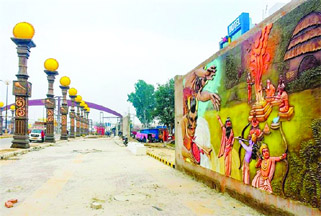
Lights worth over Rs 50 lakh installed on Ayodhya’s Bhakti Path and Ram Path stolen
Ayodhya (TIP)- As many as 3,800 bamboo and 36 projector lights worth over Rs 50 lakh installed on Bhakti Path and Ram Path, located in a high-security area in Ayodhya, were allegedly stolen, according to police. An FIR was lodged at the Ram Janmabhoomi police station following a complaint on August 9 from a representative of the firm—Yash Enterprises and Krishna Automobiles—which set up the lights under a contract awarded by the Ayodhya Development Authority, police said on Tuesday, August 13.
“As many as 6,400 bamboo lights were installed on Rampath and 96 projector lights were installed on Bhakti Path. Till 19 March, all the lights were there but after an inspection on May 9, it was found that some lights were missing.
“Till now around 3,800 bamboo lights and 36 projector lights have been stolen by some unknown thieves,” Shekhar Sharma, a representative of the firm, said in the complaint. According to the FIR, the firm became aware of the theft in May but filed the complaint on August 9. The police said that an FIR has been registered in the matter and a probe is on. Ayodhya was refurbished under a major project ahead of the January 22 Ram temple consecration ceremony in the holy city. Source: PTI -
India confident of working with whoever will be next US President: Jaishankar
As the US presidential election draws near, External Affairs Minister S. Jaishankar on Tuesday, August 13, expressed confidence that India will successfully work with the next President of the United States, regardless of who occupies the Oval Office. Responding to a question during a panel discussion at an event in New Delhi, Jaishankar remarked, “We generally don’t comment on other people’s elections, because we also hope others don’t comment on ours.”
“But, the American system will throw up its verdict, and I am not saying just as a formality, but if you look at the last 20 odd years, maybe a little bit more, for us, we have every confidence that we will be able to work with the President of the United States, whoever he or she will be,” PTI quoted Jaishankar as saying.
When asked how he views the current global situation, predicting a “very grim forecast, for the next five years,” Jaishankar stated, “If you ask me my view of the world, I am an optimistic person and generally tend to think of the solutions to problems rather than problems which come out of solutions. But, I would say with a great deal of sobriety that we are going through an exceptionally difficult period.”
The Minister highlighted various global challenges, including ongoing issues in the Middle East, Ukraine, South East Asia, and East Asia, as well as the lingering impact of COVID-19.
He also noted economic difficulties, trade issues, foreign exchange shortages, and disruptions like those seen in the Red Sea. -

India’s achievements at 78
From a primarily an agrarian economy, India has transformed into one of the world’s largest and fastest-growing economies. The IT and service sectors, in particular, have positioned India as a global leader in technology and innovation. Significant improvements in education have led to a dramatic rise in literacy rates. Initiatives like the Right to Education Act have made education accessible to millions of children across the country. India has made considerable progress in healthcare, with improvements in life expectancy and reductions in infant mortality rates. The country’s pharmaceutical industry is now a major player on the global stage. The Indian Space Research Organization (ISRO) has achieved notable successes, including the Chandrayaan and Mangalyaan missions, showcasing India’s capabilities in space exploration. Modern infrastructure projects, such as the construction of highways, airports, and metro systems, have bolstered connectivity and economic growth.
Economy
The economy of India is a developing mixed economy with a notable public sector in strategic sectors. It is the world’s fifth-largest economy by nominal GDP and the third-largest by purchasing power parity (PPP); on a per capita income basis, India ranked 136th by GDP (nominal) and 125th by GDP (PPP).
From independence in 1947 until 1991, successive governments followed the Soviet model and promoted protectionist economic policies, with extensive Sovietization, state intervention, demand-side economics, natural resources, bureaucrat driven enterprises and economic regulation. This is characterized as dirigism, in the form of the License Raj. The end of the Cold War and an acute balance of payments crisis in 1991 led to the adoption of a broad economic liberalisation in India and indicative planning. Since the start of the 21st century, annual average GDP growth has been 6% to 7%., India has about 1,900 public sector company, Indian state has complete control and ownership of railways, highways; majority control and stake in banking, insurance, farming, dairy, fertilizers & chemicals, airports, nuclear, mining, digitization, defense, steel, rare earths, water, electricity, oil and gas industries and power plants, and has substantial control over digitalization, Broadband as national infrastructure, telecommunication, supercomputing, space, port and shipping industries, among other industries, were effectively nationalized in the mid-1950s.
Nearly 70% of India’s GDP is driven by domestic consumption; country remains the world’s fourth-largest consumer market. Apart from private consumption, India’s GDP is also fueled by government spending, investments, and exports. In 2022, India was the world’s 10th-largest importer and the 8th-largest exporter. India has been a member of the World Trade Organization since 1 January 1995. It ranks 63rd on the Ease of doing business index and 40th on the Global Competitiveness Index. India has one of the world’s highest number of billionaires and extreme income inequality. Economists and social scientists often consider India a welfare state. India is officially declared a socialist state as per the constitution. With 586 million workers, the Indian labor force is the world’s second-largest.
According to HSBC Flash India PMI report, business activity surged in April to its highest level in about 14 years as well as sustained robust demand. The composite index reached 62.2, indicating continuous expansion since August 2021, alongside positive job growth and decreased input inflation, affirming India’s status as the fastest-growing major economy.
As of July 5, 2024, India’s foreign exchange reserves stood at US$ 657.15 billion.
In May 2024, India saw a total of US$ 6.9 billion in PE-VC investments.
Merchandise exports in June 2024 stood at US$ 35.20 billion, with total merchandise exports of US$ 109.96 billion during the period of April 2024 to June 2024.
India was also named as the 48th most innovative country among the top 50 countries, securing 40th position out of 132 economies in the Global Innovation Index 2023. India rose from 81st position in 2015 to 40th position in 2023. India ranks 3rd position in the global number of scientific publications.
In June 2024, the gross Goods and Services Tax (GST) stood at highest monthly revenue collection at Rs. 1.74 lakh crore (US$ 20.83 billion) vs Rs. 1.73 lakh crore (US$ 20.71 billion)
Between April 2000–March 2024, cumulative FDI equity inflows to India stood at US$ 97 billion.
In May 2024, the overall IIP (Index of Industrial Production) stood at 154.2. The Indices of Industrial Production for the mining, manufacturing and electricity sectors stood at 136.5, 149.7 and 229.3, respectively, in May 2024.
According to data released by the Ministry of Statistics & Programme Implementation (MoSPI), India’s Consumer Price Index (CPI) based retail inflation reached 5.08% (Provisional) for June 2024.
Foreign Institutional Investors (FII) inflows between April-July (2023-24) were close to Rs. 80,500 crore (US$ 9.67 billion), while Domestic Institutional Investors (DII) sold Rs. 4,500 crore (US$ 540.56 million) in the same period. As per depository data, Foreign Portfolio Investors (FPIs) invested (US$ 13.89 billion) in India during January- (up to 15th July) 2024.
The wheat procurement during Rabi Marketing Season (RMS) 2024-25 (till May) was estimated to be 266 lakh metric tonnes (LMT) and the rice procured in Kharif Marketing Season (KMS) 2024-25 was 400 LMT.India remains world’s fastest growing major economy globally: World Bank
The World Bank on June 11, 2024, predicted that India is set to remain the fastest-growing major economy globally, though its growth rate is expected to slow. The June ‘Global Economic Prospects’ report maintained the GDP growth forecast for India at 6.6 per cent for FY25.
“This moderation is mainly due to a slowdown in investment from a high base. However, investment growth is still expected to be stronger than previously envisaged and remain robust over the forecast period, with strong public investment accompanied by private investment,” the report said.
In April, the global agency increased its projection for India’s GDP growth by 20 basis points to 6.6 per cent for the current financial year.
After a robust performance in FY24, the World Bank projected an average growth rate of 6.7 per cent (6.7 per cent in FY26 and 6.8 per cent in FY27) annually over the three fiscal years starting from FY25, as outlined in its Global Economic Prospects for June 2024.
In the January-March quarter, India’s GDP growth surpassed expectations, reaching 7.8 per cent, although this was a decline from 8.4 per cent in the third quarter. For the entire fiscal year 2023-24, GDP growth has been revised upwards to 8.2 per cent from the second advance estimate of 7.6 per cent, according to the Ministry of Statistics and Programme Implementation data released on May 31.
India, the largest economy in South Asia, has significantly contributed to regional growth, particularly through its manufacturing and services sectors, the World Bank report noted. The country’s growth rate for FY24 is estimated at 8.2 per cent, a notable increase of 1.9 percentage points from earlier projections, the report said.
India’s economic growth has been driven by its industrial and services sectors, which have offset a slowdown in agricultural production caused by monsoon disruptions. Domestic demand remains strong, buoyed by infrastructure investments, even as post-pandemic pent-up consumption demand eases, the World Bank report noted. Inflation in India has remained within the Reserve Bank’s target range of 2-6 per cent since September 2023, contributing to a stable economic environment, the report added. -

Infrastructure development in India
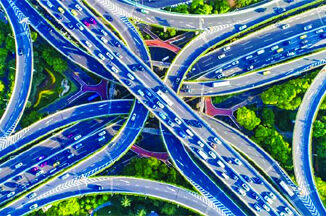
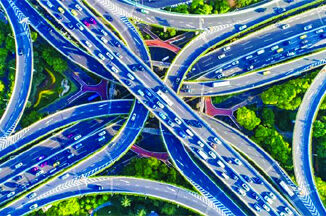
The Government of India has embarked on an ambitious journey to revolutionize the country’s infrastructure landscape, aiming to bolster economic growth, enhance connectivity, and improve the quality of life for its citizens. With a focus on modernizing transportation networks, upgrading urban amenities, and expanding digital infrastructure, the government has launched several transformative initiatives. From the development of highways, railways, and airports to the promotion of waterways and ropeway systems, these efforts are aimed at fostering inclusive and sustainable development across the nation. India has achieved significant milestones in infrastructure development, including the inauguration of the world’s longest highway tunnel, the Atal Tunnel, and the construction of the world’s highest railway bridge, the Chenab Bridge. Additionally, India has set records by unveiling iconic landmarks like the Statue of Unity – the world’s tallest statue and embarked on transformative projects like the Zojila Tunnel, Asia’s longest tunnel, for all-weather connectivity in Ladakh. Further, from the architectural excellence of the Atal Setu in Mumbai, Bogibeel Bridge over Brahmaputra, Jaiswal Bridge and Dhola- Sadiya Bridge in the northeast, the infrastructure landscape in New India is reaching unprecedented heights.
REVOLUTIONIZING INDIA’S ROADWAYS
Revolutionizing India’s roadways entails a comprehensive overhaul of the country’s transportation infrastructure, encompassing modernization, expansion, and connectivity. Through strategic planning and substantial investments, India is transforming its road network into a robust and efficient system.
EXPANDING NH NETWORK
The progress of national highways in India has been remarkable in the last 10 years, reflecting a significant increase in budget allocation and construction pace. Since 2014, there has been a 500% increase in the road transport and highway budget allocation, leading to a substantial enhancement in infrastructure development. The speed of highway construction reached an impressive 37 km/day in 2020-21, marking a record for the fastest highway construction in India.
Moreover, the National Highway (NH) network has expanded by 60% from 91,287 km in 2014 to 1,46,145 km by the year 2023. The length of 4-laned NH has increased by 2.5 times, from 18,387 km in 2014 to 46,179 km, as of November 2023. The average pace of NH construction has also seen a remarkable increase, rising by 143% to 28.3 km/day from the baseline 12.1 km/day in 2014.
With a comprehensive network spanning 1,46,145 km, national highways play a crucial role in connecting regions and spurring economic growth across the country, complementing the extensive state highways spanning 1,79,535 km and other road infrastructure spanning 65,45,403 km.
TRANSFORMING RURAL
CONNECTIVITY THROUGH PMGSY
India has witnessed significant progress in rural road infrastructure, with an impressive 3.74 lakh km of roads constructed since 2014 under the Pradhan Mantri Gram Sadak Yojana (PMGSY). This achievement has resulted in over 99% of rural habitations being connected, demonstrating the government’s commitment to enhancing accessibility and connectivity in rural areas. As of now, a staggering 7.55 lakh km of rural roads have been completed as compared to 3.81 lakh km of roads in 2013-14.
BHARATMALA: EXTENSIVE ROAD INFRASTRUCTURE DEVELOPMENT
The Bharatmala Pariyojana was launched with the primary focus on optimizing the efficiency of the movement of goods and people across the country. The key components of the Pariyojana are Economic corridor development, Inter-corridor and feeder routes development, National Corridors Efficiency Improvement, Border, and International Connectivity Roads, Coastal and Port Connectivity Roads and Expressways. 25 Greenfield high-speed corridors have been envisaged for development under Bharatmala Pariyojana. Out of which, 20 are completed or under various stages of implementation. 34,800 km of National Highway length was planned for development under Phase-I of Bharatmala Pariyojana. As of Dec-2023, 26,418 km (i.e., 76% of 34,800 km) have been awarded for construction with completion of about 15,549 km.
ADVANCEMENTS IN INDIA’S RAIL NETWORK
India’s railway development reflects a remarkable stride towards modernization and improved connectivity, showcasing the Government’s commitment to enhancing transportation infrastructure for the nation’s progress. The Vande Bharat trains represent a significant advancement in India’s railway infrastructure, boasting enhanced safety features, faster acceleration, and improved passenger amenities. Equipped with Automatic Plug Doors, Reclining Ergonomic Seats, and Mobile charging sockets for every seat, these trains offer a comfortable and convenient travel experience. As of January 31, 2024, more than 100 Vande Bharat train services are operational across the Indian Railways, with an impressive overall occupancy rate of 96.62% during 2022-23.
Further, on March 12, 2024, Prime Minister flagged off 10 new Vande Bharat trains. During his address, he informed that that not only most of the states have got Vande Bharat trains but the century of Vande Bharat Trains has also been hit.
INDIA’S METRO RAIL EXPANSION
The expansion of India’s Metro Rail system has revolutionized urban commuting, with the network set to increase from 248 km in 2014 to an impressive 945 km by 2024. This significant growth reflects the vital role of Metro Rail in providing ease of transportation to urban populations, with approximately 1 crore passengers benefiting from the system daily. From just 5 cities in 2014, the Metro Rail network has expanded to serve 21 cities across the country, with 919 km of lines under construction in 26 additional cities. Additionally, the introduction of India’s first State of Art Namo Bharat train, operating on the Delhi-Meerut RRTS (Regional Rapid Transit System) corridor, further underscores the nation’s commitment to enhancing regional connectivity and modernizing its transportation infrastructure.
ENHANCING INDIA’S AVIATION LANDSCAPE
India’s aviation landscape tranformed with the launch of UDAN Scheme and the operationalization of greenfield airports, contributing to enhanced connectivity and accessibility across the country. India’s aviation sector has witnessed significant expansion with 545 routes operationalised under the Ude Desh ka Aam Nagrik (UDAN), aimed at improving air connectivity to underserved regions. Alongside route expansion, 21 Greenfield Airports have been identified for development in the country, out of which 12 have been operationalised reflecting the government’s commitment to enhancing air travel infrastructure. With 158 operational Airports and the construction of 84 airports over the last decade, India’s aviation network is rapidly evolving and over 1.36 crore people have already travelled till March 13, 2024.
HARNESSING INDIA’S WATERWAYS
India’s waterways have seen significant development, with 111 waterways designated as National Waterways (NW) under the National Waterways Act, 2016, showcasing the nation’s commitment to enhancing inland water transportation infrastructure. This recognition aims to boost connectivity, promote trade, and facilitate smoother transportation of goods and passengers across diverse regions of the country. -

Achievements of India in science and technology
Advancements in technology have been the major cause for the development of a country as well as human civilization. India, recognised globally for its scientific rigour and potential, has been contributing to the fields of science and technology since ancient times as evident from the discovery of zero to the research in particle physics. Continuing striving towards science and technology in ancient and medieval times, India has been able to gain pace in scientific discoveries and innovations after independence. Indian scientists have won the most prestigious Nobel prize in all three areas of Science.
Today, India is making progress in more advanced technology such as tokamak, neutrino, gravitational waves, scramjets, sending human missions into space, and emerging technologies.
At the dawn of the twentieth century, great strides were made by Indian scientists. The innate ability to perform creatively in science came to be backed by institutional setups and strong state support after the country’s independence in 1947.
India’s Contribution to Physics
Since the early 20th century, many physicists of India have contributed to Physics.
Jagdish Chandra Bose: He pioneered the study of radio and microwave optics, and electro-physiology. He was the first person to detect radio signals, thus demonstrating wireless communication for the first time. He invented the crescograph, through which he measured plant response to various stimuli and hypothesised that plants can feel pain, understand affection, etc.
CV Raman: He is known for his work on the scattering effect of light. His finding is called ‘Raman Effect’ for which he received the Nobel Prize in Physics, in 1930.
Subrahmanyan Chandrasekhar: He was an Indian-American astrophysicist awarded the 1983 Nobel Prize for Physics for his theoretical studies of the structure and evolution of the stars.
Satyendra Nath Bose: He was an Indian physicist specialising in quantum mechanics and provided a new derivation of Planck’s law. He is best known for providing the foundation of Bose-Einstein statistics and developing the theory of Bose-Einstein condensates.
Contribution to particle physics:
International Neutrino Observatory (INO): The INO project broadly aims to create an outstanding underground laboratory in India for non-accelerator-based high energy and nuclear physics research. CERN’s: Indian scientists at CERN contributed to the construction of a large hadron collider and other experiments such as ALICE and CMS experiment.
Laser Interferometer Gravitational-Wave Observatory (LIGO) – India: It is a mega-science project in Astronomy and the scientific goals of the project are in the area of fundamental physics.
India’s Contribution to Chemistry
Prafulla Chandra Ray: He was regarded as the ‘Father of Chemical Science in India and contributed to inorganic and organic nitrites and organic thio compounds.
Sir Shanti Swaroop Bhatnagar: He played an immense role in the constitution of the Council of Scientific and Industrial Research (CSIR) and did considerable work in applied and industrial chemistry. CNR Rao: He is well-known for his work in structural and solid-state chemistry. He has made contributions in chemical spectroscopy, surface chemistry, molecular structure and high-temperature superconductivity.India’s Contribution to Life Sciences
Cell Biology: Work at the cellular level using modern molecular genetic tools started in India with the initiation of Molecular Biology at the Tata Institute of Fundamental Research.
Several model systems such as E. coli, fruit fly (Drosophila), and C. elegans, had been established, to significantly enhance knowledge of complex biological problems. The most outstanding contributions were the discovery of exotoxins and the atomic structural model of collagen. DNA Fingerprinting: DNA fingerprinting in India came into existence in 1988. Centre for Cellular and Molecular Biology scientists developed the technique and made it available for use, making India the third country to develop its own DNA fingerprinting probe.
Famous personalities:
Har Gobind Khorana: He was a Nobel Prize-winning Indian American biochemist who showed the order of nucleotides in nucleic acids, which carry the genetic code of the cell and control the cell’s synthesis of proteins.
G.N Ramachandran: He contributed to molecular biophysics, particularly in the field of protein structure research. He created a three-dimensional picture of organic material which is known as the Ramachandran plot. His discovery of collagen’s triple helical structure was important for the understanding of peptide structure.
Venkataraman Ramakrishnan: He is a Nobel Prize-winning biochemist who works on the atomic structure of the ribosome as well as the structure of chromatin and histone. He demonstrated how ribosomes react to various chemicals using a 3D technique.
Achievements of India in Space
India’s space journey started with the establishment of the Indian National Committee for Space Research (INCOSPAR) in 1962, later renamed the Indian Space Research Organisation (ISRO) in 1969. Key highlights of India’s space endeavours:
First Satellite: Aryabhata was India’s first satellite which was launched on April 19th, 1975 using Russia’s Kosmos-3M launch vehicle.
Launch Vehicles: Satellite Launch Vehicle-3 was India’s first experimental satellite launch vehicle, launched in 1980. Its success paved the way for advanced launch vehicle projects including the Augmented Satellite Launch Vehicle (ASLV), Polar Satellite Launch Vehicle (PSLV), Geosynchronous Satellite Launch Vehicle (GSLV), and LVM3.
Chandrayaan Missions:
Chandrayaan-1 was India’s first moon mission, launched in 2008.
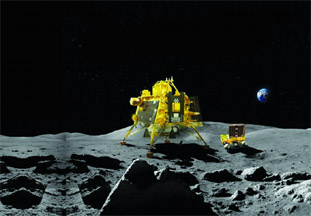
Chandrayaan-2 was India’s first attempt to soft-land on the Moon which was launched in 2019 by GSLV MkIII-M1. With the successful launch of Chandrayaan-3 in 2023, India became the first country to successfully land a spacecraft near the lunar south pole.
Mars Orbiter Mission: MoM, India’s first interplanetary mission, was launched in 2013.
After Roscosmos, NASA, and the European Space Agency, India became the fourth space agency in the world to reach Mars orbit.It also made India the first country in the world to reach Martian orbit in its maiden attempt.
104 Satellites in a single flight: PSLV-C37 successfully launched the 714 kg Cartosat-2 Series Satellite along with 103 co-passenger satellites in 2017.
Aditya-L1 Mission: In September 2023 India launched the Aditya-L1 mission, the first space-based Indian mission to study the Sun. Gaganyaan: The Gaganyaan Mission is an ongoing project in India to send a three-person crew to a 400 km Low Earth Orbit (LEO).
Reusable Launch Vehicle – Technology Demonstrator (RLV-TD): It is one of ISRO’s most technologically challenging projects aimed at developing critical technologies for a fully reusable launch vehicle to enable low-cost access to space.
Cryogenic Technology: In 2003, the Indian space agency successfully tested its first cryogenic engine. India is now one of only six countries to have developed their own cryogenic engines.
Scramjet Engines: A scramjet engine is an improvement over the ramjet engine as it efficiently operates at hypersonic speeds and allows supersonic combustion. -

India fast emerging as a defense powerhouse
The Indian Armed Forces are under the management of the Ministry of Defence of the Government of India. With strength of over 1.4 million active personnel, it is the world’s second-largest military force and has the world’s largest volunteer army.
Post-independence in 1947, India restructured its defense system. The partition of India led to the creation of Pakistan, and both nations inherited a divided armed force. India established the Indian Armed Forces, consisting of the Indian Army, Indian Navy, and Indian Air Force. This period marked the inception of a comprehensive and autonomous defense structure.
Defence Setup and Structure:
Indian Army: The Indian Army, with its extensive infantry, artillery, and armored regiments, is one of the largest in the world. It is primarily responsible for land-based military operations and safeguarding India’s borders.
Indian Navy: The Indian Navy secures the maritime interests of the nation, safeguarding coastal borders and ensuring maritime security. It operates surface ships, submarines, and aircraft carriers.
Indian Air Force: The Indian Air Force is responsible for aerial defense, protecting Indian airspace and supporting ground operations. It operates fighter planes, transport aircraft, and helicopters.
Defence Reforms in India
Over the years, India has undertaken various defense reforms to modernize its armed forces, incorporating sophisticated weaponry, technology, and training programs. The establishment of defense research institutions, such as the Defence Research and Development Organisation (DRDO), is aimed at indigenous development and innovation in defense technology.
Contemporary Defence Challenges
India faces multiple defense challenges, including territorial disputes, cross-border conflicts, terrorism, and internal security threats. The complex geopolitical landscape in the region, especially the border issues with Pakistan and China, demands a robust and responsive defense mechanism.
International Defence Collaborations of India
India has entered into strategic partnerships and defence agreements with various countries to enhance its defense capabilities. The country engages in joint military exercises, technology collaborations, and military exchanges with several nations globally.
The history of India’s defense system reflects a continuous evolution from ancient times to a modern, independent nation. The defense apparatus has significantly evolved to adapt to various geopolitical changes, technological advancements, and national security challenges. India continues to fortify its defense system by adopting progressive reforms, modernizing its armed forces, and fostering international collaborations to ensure its territorial integrity and national security.
The journey of India’s defense system is an amalgamation of historical legacies, colonial influences, and contemporary advancements, shaping a robust structure committed to securing the nation’s sovereignty and integrity.
The Indian Armed Forces have been engaged in a number of major military operations, including: the Indo-Pakistani wars of 1947, 1965 and 1971, the Portuguese-Indian War, the Sino-Indian War, the 1967 Cho La incident, the 1987 Sino-Indian skirmish, the Kargil War, and the Siachen conflict among others. India honors its armed forces and military personnel annually on Armed Forces Flag Day, 7 December. Armed with the nuclear triad, the Indian armed forces are steadily undergoing modernization, with investments in areas such as futuristic soldier systems and missile defense systems.
The Department of Defense Production of the Ministry of Defense is responsible for the indigenous production of equipment used by the Indian Armed Forces. It comprises 16 Defense PSUs. India remains one of the largest importer of defense equipment with Russia, Israel, France and the United States being the top foreign suppliers of military equipment. The Government of India, as part of the Make in India initiative, seeks to indigenise manufacturing and reduce dependence on imports for defense.Boosting defence exports and enhancing Atmanirbharta
Previously, India was known as an arms importer. However, the country has now risen from its comfort zone, securing a place among the top 25 arms-exporting nations. Just 7-8 years ago, defence exports barely touched Rs 1,000 crore. Today, they have surged to Rs 16,000 crore.
Projections suggest that by 2028-29, annual defence production will reach Rs 300,000 crore, with defence exports hitting Rs 50,000 crore.
While the government supports major corporations, it also encourages young minds to join the defence sector through startups, considering it a crucial step for the long term. Recent measures, including liberalising procurement from startups, payment terms, and eligibility criteria, were adopted during a Defence Acquisition Council meeting.
The Department of Defence Production issues authorisations for exporting Munitions List items covered in Category-6 of Special Chemicals, Organisms, Materials, Equipment, and Technologies (SCOMET), following Standard Operating Procedures (SOP) issued by the DDP.
Major defence equipment exported in the last five years includes weapon simulators, tear gas launchers, torpedo loading mechanisms, alarm monitoring and control systems, night vision monoculars and binoculars, lightweight torpedoes, fire control systems, armoured protection vehicles, weapons locating radar, high-frequency radios, and coastal surveillance radar systems, among others.
India’s Nuclear Doctrine
India has possessed Nuclear Weapons. The first nuclear test was carried out in 1974, under the operation named “Smiling Buddha”. Once again India tested Nuclear weapons in the year 1998, under the name “Operation Shakti”. It would not be right to call India a Nuclear superpower as 90% of the worlds’ nuclear weapons are in the possession of Russia and USA.
What type of Nuclear bomb
does India have?
India has neutron, fission and thermonuclear weapons which yields up to 200 Kilotons. Pokhran-II had 5 detonations, one was a fusion bomb and the remaining 4 were fission bombs. The bombs can be launched via land, air and sea, thus making India to be one of the few nations of the world who are nuclear triads.
How many land-based Nuclear Missiles does India have?
Strategic Forces Command controls and deploys 68 nuclear warheads (estimated) of land-based nuclear weapons of the country. It uses both vehicles and launching silos varieties.
How will the air-based missiles be launched?
In addition to their ground-attack role, it is believed that the Dassault Mirage 2000s and SEPECAT Jaguars are able to provide a secondary nuclear-strike role. The SEPECAT Jaguar was designed to be able to carry and deploy nuclear weapons. -

Development of education in India
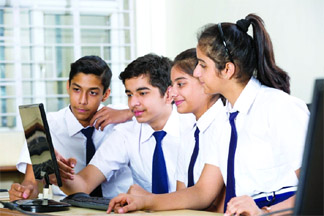
Since gaining independence, India has placed significant emphasis on education as a means of fostering national development, social progress, and economic growth. Post-independence educational policies have aimed to expand access, promote equity, and enhance the quality of education across the country. India, a land steeped in rich cultural heritage, has a vibrant history of imparting knowledge and education dating back to ancient times. This nation has witnessed a massive transformation in its education system, evolving from traditional Gurukuls to modern schools and now to online colleges.
The first education system in India, dating back to 5000 BC, was the ‘Gurukula’ system. In this model, a student (shishya) would approach a teacher (Guru) for admission. If accepted, the student would stay with the Guru, assisting with household chores while learning practical skills, science, mathematics, philosophy, and metaphysics. This holistic education system emphasizes the development of human values and the practical implementation of knowledge to solve real-world problems.
However, the Gurukula system was eventually replaced by the modern school system introduced to India in 1830 by Lord Thomas Babington Macaulay. This system prioritized science and mathematics, with less emphasis on philosophy, ethics, moral values, and metaphysics. The medium of communication was also changed to English.
Current State of Education
in India: Facts & Figures
Under the 2020 amendment to India’s Right to Education Act, free and compulsory education is ensured for every child aged 3-18. Here are some statistics related to India’s education system:
26% of the Indian population, approximately 1.39 billion, falls within the primary education sector (0-14 years).
18% of the Indian population, roughly 500 million, fall within the secondary and higher education sector (15-24 years). The adult (15+ years) literacy rate in India is 69.3%, with male literacy at 78.8% and female at 59.3%.
Kerala boasts the highest literacy rate in India. University of Delhi is the most popular higher education institution in India, followed by IIT Bombay.
In the 2019 English Proficiency Index, India ranked 34th among 100 nations.
Future Prospects for India’s
Education System
India’s future aims for its education system are ambitious and progressive. Initiatives such as the United Nation’s E9 Initiative, launched in April 2021, aim to encourage digital learning, specifically targeting marginalized groups, particularly girls. The Union Budget of 2021-22 allocated $7.56 billion for school education and $5.28 billion for higher education. It is estimated that by 2030, more than 20 Indian higher education universities will rank among the top 200 universities globally.
In 2022, the degree of literacy in India was about 76.32 percent, with the majority of literate Indians being men. It is estimated that the global literacy rate for people aged 15 and above is about 86 percent. The overall prediction of literacy rate in 2024 is 85.95%.
Higher Education in Post Independence India
This period has witnessed the establishment of universities, colleges, and specialized institutions, the diversification of academic disciplines, and the implementation of policies aimed at democratizing higher education opportunities for all citizens.
Key Developments in Higher Education
Expansion of Higher Education Institutions: Post-independence India has witnessed a significant expansion of higher education institutions, including universities, colleges, and technical institutes. The establishment of institutions such as the Indian Institutes of Technology (IITs), Indian Institutes of Management (IIMs), and central universities has played a crucial role in promoting excellence in higher education and research.
Diversification of Academic Disciplines: Higher education in post-independent India has witnessed the diversification of academic disciplines, with the introduction of new fields of study and interdisciplinary approaches. Alongside traditional disciplines such as arts, science, and commerce, emerging areas such as engineering, management, information technology, and biotechnology have gained prominence. Promotion of Science and Technology: Recognizing the importance of scientific and technological advancements for national development, post-independent India has invested in the establishment of research institutions, engineering colleges, and scientific laboratories. Initiatives such as the Council of Scientific and Industrial Research (CSIR) and the Department of Science and Technology (DST) have played a pivotal role in fostering innovation and human capital development.
Affirmative Action and Social Inclusion: Post-independent India has implemented affirmative action policies such as reservations and scholarships to promote social inclusion and equity in higher education. Initiatives aimed at providing opportunities to historically marginalized communities, including Scheduled Castes (SC), Scheduled Tribes (ST), and Other Backward Classes (OBC), have contributed to increased access and representation in higher education.
Internationalization and Global Collaboration: Higher education institutions in post-independent India have increasingly embraced internationalization, forging collaborations with foreign universities, research institutions, and industry partners. International student exchanges, joint research projects, and academic partnerships have enriched the learning experience, promoted cross-cultural understanding, and facilitated knowledge transfer.
Challenges and Reforms
Despite significant progress, higher education in post-independent India faces several challenges, including issues related to access, quality assurance, curriculum relevance, employability, and equity. Reforms focusing on infrastructure development, faculty training, curriculum revision, research funding, and industry-academia collaboration are essential to address these challenges and enhance the effectiveness and relevance of higher education in India.
In conclusion, post-independence education in India has undergone significant transformations, driven by the goals of equity, access, and quality. While considerable progress has been made in expanding educational opportunities and improving literacy rates, persistent challenges remain, including disparities in access, unequal educational outcomes, and curriculum relevance. By addressing these challenges through inclusive policies, innovative pedagogies, and strategic investments, India can realize its vision of a robust and equitable education system that empowers individuals, fosters social cohesion, and drives sustainable development. -

India’s struggle for Independence
India is preparing to commemorate its 78th Independence Day on August 15, 2024, which will represent an important turning point in its history. Independence Day is celebrated with great fanfare throughout the country and among Indians worldwide. It serves as a reminder of the efforts that led to our freedom from British colonial domination after nearly two centuries, as well as the sacrifices made by leaders and freedom fighters who sacrificed their lives to achieve an independent India.
Independence Day is celebrated annually on 15 August as a public holiday in India commemorating the nation’s independence from the United Kingdom on 15 August 1947, the day when the provisions of the Indian Independence Act, which transferred legislative sovereignty to the Indian Constituent Assembly, came into effect. India retained King George VI as head of state until its transition to a republic, when the Constitution of India came into effect on 26 January 1950 (celebrated as Indian Republic Day) and replaced the dominion prefix, Dominion of India, with the enactment of the sovereign law Constitution of India. India attained independence following the independence movement noted for largely non-violent resistance and civil disobedience led by Indian National Congress under the leadership of Mahatma Gandhi.
Independence coincided with the partition of India, in which British India was divided into the Dominions of India and Pakistan; the partition was accompanied by violent riots and mass casualties, and the displacement of nearly 15 million people due to religious violence. On 15 August 1947, the first Prime Minister of India, Jawaharlal Nehru raised the Indian national flag above the Lahori Gate of the Red Fort in Delhi. On each subsequent Independence Day, the incumbent Prime Minister customarily raises the flag and gives an address to the nation.
The Indian Independence Movement was a series of historic events in South Asia with the ultimate aim of ending British colonial rule. It lasted until 1947, when the Indian Independence Act 1947 was passed.
In ancient times, people from all over the world were keen to come to India. The Persians followed by the Iranians and Parsis immigrated to India. Then came the Moghuls and they too settled down permanently in India. Chengis Khan, the Mongolian, invaded and looted India many times. Alexander the Great too, came to conquer India but went back after a battle with Porus. He-en Tsang from China came in pursuit of knowledge and to visit the ancient Indian universities of Nalanda and Takshila. Columbus wanted to come to India, but instead landed on the shores of America. Vasco da Gama from Portugal came to trade his country’s goods in return for Indian spices. The French came and established their colonies in India.
Lastly, the Britishers came and ruled over India for nearly 200 years. After the battle of Plassey in 1757, the British achieved political power in India. And their paramountcy was established during the tenure of Lord Dalhousie, who became the Governor- General in 1848.
He annexed Punjab, Peshawar and the Pathan tribes in the north-west of India. And by 1856, the British conquest and its authority were firmly established. And while the British power gained its heights during the middle of the 19th century, the discontent of the local rulers, the peasantry, the intellectuals, common masses as also of the soldiers who became unemployed due to the disbanding of the armies of various states that were annexed by the British, became widespread. This soon broke out into a revolt which assumed the dimensions of the 1857 Mutiny.
The Indian Mutiny of 1857
The conquest of India, which could be said to have begun with the Battle of Plassey (1757), was practically completed by the end of Dalhousie’s tenure in 1856. It had been by no means a smooth affair as the simmering discontent of the people manifested itself in many localized revolt during this period. However, the Mutiny of 1857, which began with a revolt of the military soldiers at Meerut, soon became widespread and posed a grave challenge to the British rule. Even though the British succeeded in crushing it within a year, it was certainly a popular revolt in which the Indian rulers, the masses and the militia participated so enthusiastically that it came to be regarded as the First War of Indian Independence.
Introduction of zamindari system by the British, where the peasants were ruined through exorbitant charges made from them by the new class of landlords. The craftsmen were destroyed by the influx of the British manufactured goods. The religion and the caste system which formed the firm foundation of the traditional Indian society was endangered by the British administration. The Indian soldiers as well as people in administration could not rise in hierarchy as the senior jobs were reserved for the Europeans. Thus, there was all-round discontent and disgust against the British rule, which burst out in a revolt by the ‘sepoys’ at Meerut whose religious sentiments were offended when they were given new cartridges greased with cow and pig fat, whose covering had to be stripped out by biting with the mouth before using them in rifles. The Hindu as well as the Muslim soldiers, who refused to use such cartridges, were arrested which resulted in a revolt by their fellow soldiers on May 9, 1857.
The rebel forces soon captured Delhi and the revolt spread to a wider area and there was uprising in almost all parts of the country. The most ferocious battles were fought in Delhi, Awadh, Rohilkhand, Bundelkhand, Allahabad, Agra, Meerut and western Bihar. The rebellious forces under the commands of Kanwar Singh in Bihar and Bakht Khan in Delhi gave a stunning blow to the British. In Kanpur, Nana Sahib was proclaimed as the Peshwa and the brave leader Tantya Tope led his troops. Rani Lakshmibai was proclaimed the ruler of Jhansi who led her troops in the heroic battles with the British. The Hindus, the Muslims, the Sikhs and all the other brave sons of India fought shoulder to shoulder to throw out the British. The revolt was controlled by the British within one year, it began from Meerut on 10 May 1857 and ended in Gwalior on 20 June 1858.
End of the East India Company
Consequent to the failure of the Revolt of 1857 rebellion, one also saw the end of the East India Company’s rule in India and many important changes took place in the British Government’s policy towards India which sought to strengthen the British rule through winning over the Indian princes, the chiefs and the landlords. Queen Victoria’s Proclamation of November 1, 1858 declared that thereafter India would be governed by and in the name of the British Monarch through a Secretary of State.
Non-Cooperation Movement
The Non-Cooperation Movement was pitched in under leadership of Mahatma Gandhi and the Indian National Congress from September 1920 to February 1922, marking a new awakening in the Indian Independence Movement. After a series of events including the Jallianwala Bagh Massacre, Gandhiji realised that there was no prospect of getting any fair treatment at the hands of British, so he planned to withdraw the nation’s co-operation from the British Government, thus launching the Non-Cooperation Movement and thereby marring the administrative set up of the country. This movement was a great success as it got massive encouragement to millions of Indians.
Quit India Movement
In August 1942, Gandhiji started the ‘Quit India Movement’ and decided to launch a mass civil disobedience movement ‘Do or Die’ call to force the British to leave India. The movement was followed, nonetheless, by large-scale violence directed at railway stations, telegraph offices, government buildings, and other emblems and institutions of colonial rule. There were widespread acts of sabotage, and the government held Gandhi responsible for these acts of violence, suggesting that they were a deliberate act of Congress policy. However, all the prominent leaders were arrested, the Congress was banned and the police and army were brought out to suppress the movement.
Meanwhile, Netaji Subhash Chandra Bose, who stealthily ran away from the British detention in Calcutta, reached foreign lands and organized the Indian National Army (INA) to overthrow the British from India.
The Second World War broke out in September of 1939 and without consulting the Indian leaders, India was declared a warring state (on behalf of the British) by the Governor General. Subhash Chandra Bose, with the help of Japan, preceded fighting the British forces and not only freed Andaman and Nicobar Islands from the Britishers but also entered the north-eastern border of India. But in 1945 Japan was defeated and Netaji proceeded from Japan through an aeroplane to a place of safety but met with an accident and it was given out that he died in that air-crash itself.
“Give me blood and I shall give you freedom” – was one of the most popular statements made by him, where he urges the people of India to join him in his freedom movement.
Partition of India and Pakistan
At the conclusion of the Second World War, the Labour Party, under Prime Minister Clement Richard Attlee, came to power in Britain. The Labour Party was largely sympathetic towards Indian people for freedom. A Cabinet Mission was sent to India in March 1946, which after a careful study of the Indian political scenario, proposed the formation of an interim Government and convening of a Constituent Assembly comprising members elected by the provincial legislatures and nominees of the Indian states. An interim Government was formed headed by Jawaharlal Nehru. However, the Muslim League refused to participate in the deliberations of the Constituent Assembly and pressed for the separate state for Pakistan. Lord Mountbatten, the Viceroy of India, presented a plan for the division of India into India and Pakistan, and the Indian leaders had no choice but to accept the division, as the Muslim League was adamant.
Thus, India became free at the stroke of midnight, on August 14, 1947. (Since then, every year India celebrates its Independence Day on 15th August). Jawaharlal Nehru became the first Prime Minster of free India and continued his term till 1964. Giving voice to the sentiments of the nation, Prime Minister, Pandit Jawaharlal Nehru said,
Long years ago we made a tryst with destiny, and now the time comes when we will redeem our pledge, not wholly or in full measure, but very substantially. At the stroke of the midnight hour, when the world sleeps, India will awake to life and freedom. A moment comes, which comes but rarely in history, when we step out from the old to the new, when an age ends and when the soul of a nation, long suppressed, finds utterance…. We end today a period of ill fortune, and India discovers herself again.
Earlier, a Constituent Assembly was formed in July 1946, to frame the Constitution of India and Dr. Rajendra Prasad was elected its President. The Constitution of India which was adopted by the Constituent Assembly on 26th November 1949. On January 26, 1950, the Constitution was came into force and Dr. Rajendra Prasad was elected the first President of India. -

Evolution in health & development
The trajectory of India’s development in health and well-being from 1947 to 2023 showcases a remarkable evolution. The nation’s endeavours to tackle some of the deadliest diseases and enhance the quality of life for its citizens reflect a story of transformation and growth.
A triumph in death rate reduction
One of the most remarkable accomplishments India has achieved post-independence is the substantial reduction in death rate. In 1947, the average life expectancy for an Indian citizen was a mere 32 years. Fast forward to 2024, and this figure has risen significantly to an impressive 70.62 years, a 0.29% increase from 2023. This transformation, endorsed by the World Health Organization (WHO), underscores the progress in human development.
Infant mortality and child health:
A striking improvement
The United Nations’ data sheds light on India’s commendable strides in child health. The infant mortality rate, which stood at 145.6 per 1000 live births in 1947, has seen a remarkable improvement and dropped to 27.695 per 1000 live births in 2023. This splendid improvement underscores the nation’s commitment to ensuring a healthier start for its youngest citizens.
National initiatives and disease eradication
India’s post-independence journey has been punctuated by the initiation of numerous national-level campaigns aimed at combatting various diseases. From AIDS to tuberculosis and malaria, the Indian government has championed initiatives that have not only saved lives but also demonstrated the nation’s proactive approach to public health challenges.
Empowering health through national schemes
The launch of transformative schemes such as the National Health Mission and the National Rural Health Mission has bolstered India’s commitment to enhancing child and maternal health. These initiatives have played a pivotal role in ensuring accessible healthcare services and reducing health disparities across different regions of the country.
India’s progress in the field of medical education is another testament to its journey of transformation. There were mere 28 medical colleges in the 1950s but the current count of 612 medical colleges speaks volumes about the nation’s dedication to nurturing a skilled healthcare workforce. India’s evolution in the realm of health and development over the years serves as an inspiring example for developing nations across the globe.
Healthcare has become one of India’s largest sectors, both in terms of revenue and employment. Healthcare comprises hospitals, medical devices, clinical trials, outsourcing, telemedicine, medical tourism, health insurance and medical equipment. The Indian healthcare sector is growing at a brisk pace due to its strengthening coverage, services, and increasing expenditure by public as well as private players.
India’s healthcare delivery system is categorised into two major components – public and private. The government, i.e., the public healthcare system, comprises limited secondary and tertiary care institutions in key cities and focuses on providing basic healthcare facilities in the form of Primary Healthcare Centers (PHCs) in rural areas. The private sector provides the majority of secondary, tertiary, and quaternary care institutions with a major concentration in metros, tier-I, and tier-II cities.
India’s competitive advantage lies in its large pool of well-trained medical professionals. India is also cost-competitive compared to its peers in Asia and Western countries. The cost of surgery in India is about one-tenth of that in the US or Western Europe. The low cost of medical services has resulted in a rise in the country’s medical tourism, attracting patients from across the world. Moreover, India has emerged as a hub for R&D activities for international players due to its relatively low cost of clinical research.
n the past few decades, India’s healthcare sector has undergone significant transformations marked by advancements in infrastructure, technology, and accessibility. This journey towards enhancing public health has been propelled by focused efforts to meet Sustainable Development Goals (SDGs) and a commitment to bolstering healthcare infrastructure. While commendable achievements have been made, challenges persist, including fragmentation across various dimensions of healthcare delivery. However, concerted efforts by the Government of India, supported by state governments and various stakeholders, have successfully addressed many of these challenges.
Strategic government-led initiatives like the National Health Policy, which aims to shape the country’s health systems through government interventions, the Ayushman Bharat-Pradhan Mantri Jan Arogya Yojana (PM-JAY), providing a sum insured of INR 5 lakh per family for secondary and tertiary care hospitalization to 104 million beneficiary families, and the Ayushman Bharat Digital Mission, aiming to develop an integrated and interoperable digital health infrastructure, have played a pivotal role in shaping the healthcare landscape. Digital healthcare initiatives such as CoWIN, e-Sanjeevani, Arogya Setu, e-Hospital, etc. have accelerated progress, enhancing healthcare accessibility and delivery.
These initiatives aim to build robust healthcare ecosystem and ensure healthcare reaches every doorstep. Additionally, regulatory reforms and supportive policies have boosted the pharmaceutical and medical technology sectors, driving economic growth and innovation. These efforts are enhanced by collaborations with the private sector, non-profits, healthcare startups, and international partners. They have been pivotal in expanding access to advanced medical services, fostering innovation in healthcare delivery, and promoting health equity nationwide. The fragmentation in health service financing has been substantially reducing over the years because of increased penetration of government health insurance scheme and other social security initiatives. The transition from the Rashtriya Swasthya Bima Yojana (RSBY) to PM-JAY has been particularly impactful, contributing to a significant reduction in out-of-pocket expenditure (OOPE) from 64.2% in 2013-14 to 47.1% in 2019-20. This improvement signifies enhanced affordability and accessibility of healthcare services for the population.
Key achievements
Improving health indicators: The remarkable progress and achievement of National Health Policy targets of key health indicators such as infant mortality, maternal mortality and neonatal mortality rates is a testament to India’s efforts in enhancing healthcare delivery and maternal and child health services. These improvements signify a brighter future for generations to come, with better health outcomes and reduced disparities.
Healthcare financing: India’s recognition of the importance of healthcare funding is evident from the upward trend of healthcare expenditure as a percentage of GDP, reaching 2.1% in 2022-23 from 1.2% in 2014-15. This trend signifies a positive step towards fulfilling the recommendation of the Fifteenth Finance Commission, which proposed that public health expenditure of Union and State Governments together should be increased in a progressive manner to reach 2.5% of the GDP by 2025. -

Proposed Display of Replica of Ram Mandir in Ayodhya in the India Day Parade on August 18 Prompts Hate-Filled Bigotry
NEW YORK CITY (TIP): Four Decade Old Annual celebration of New York City – the 42nd Annual India Day Parade NYC has been targeted with Hate-Filled Bigotry for including Ram Mandir (Hindu Religion’s place of worship) miniature float, says Ankur Vaidya, Chairman of Federation of Indian Organizations NYNJCTNE (FIA).
Mr. Vaidya expressed his anguish in a statement released to the media that as a five-decade-old, 100% volunteer-run non-profit, we find ourselves under heavy scrutiny for organizing a peaceful community celebration that our dedicated volunteers have worked tirelessly to prepare. This malicious and hate-filled scrutiny, spread on social media, has resulted in the loss of sponsorships—the lifeblood of our event—and in fear-mongering, causing law-abiding citizens to worry about potential unruly conduct due to the hateful messages circulating online.
Ironically, the theme for this year, set long before the inclusion of the Ram Mandir float was decided, was “Vasudhaiva Kutumbakam,” which translates to “the world is one family”, the note said. For over four decades, the parade has been a celebration of community, growing due to its display of inclusion and diversity, allowing participants to display their expressions respectfully and peacefully without diminishing or disrespecting others. Despite our longstanding tradition of celebrating diversity, we are now the target of communal hate and bigotry.
Efforts are being made to dissuade the Mayor’s and Governor’s offices from attending or supporting the celebration, and harmful rhetoric is being spread on social media platforms. Our inclusion of a float that celebrates inauguration of a sacred landmark, significant to hundreds of millions of Hindus has been insulted by derogatory name calling and the officials and the mainstream is radio silent. I respectfully ask, would such name-calling be tolerated if directed at any other community’s place of worship? The answer is unequivocally no.
Mr. Vaidya urged the entire Hindu community to peacefully yet resolutely oppose the bigotry displayed by distorting facts, misleading the public, and creating a hateful distraction for reasons unknown. As we celebrate what we consider a vital aspect of our faith through the celebration of this landmark, we unequivocally reject violence and hate in any form, including any damage to any religion’s place of worship. We stand for peaceful coexistence and encourage everyone to embrace this value.
Let us avail ourselves of the opportunities this great nation, the United States of America, has generously provided—cherish the freedom to peacefully express ourselves, practice our religion, and uphold the value of mutual respect. We invite you to join us in a celebration that fosters peaceful harmony and coexistence among diverse cultures, religions, genders, and more. Let us embody the values championed by Dr. Martin Luther King Jr. and be recognized by the content of our character, not by the color of our skin or the faith we follow.
A proud American from the proud origins of my native motherland of India who proudly practices the Hindu faith while loving, caring and being respectful towards all religions and faith.
The Indian Panorama spoke with a number of Indian Americans following different faiths about the situation and all invariably condemned the false narrative being floated on the social media.