SINGAPORE (TIP) : A 52-year-old Indian national has been sentenced to 14 months of jail for molesting a teenage girl from a known family.
For molesting a child aged below 14, an offender can be jailed for up to five years, fined, caned or receive any combination of such punishments. The man cannot be caned as he is over 50.
The man, who cannot be named due to a gag order to protect the girl’s identity, pleaded guilty to a molestation charge, said a media report. The 13-year-old girl trusted him enough to go on a motorcycle ride with him one evening in October 2022, when he molested her near a playground in Sembawang, northern Singapore, Deputy Public Prosecutor Suriya Prakash told the court.
HOUSTON, TX (TIP): A 21-year-old Nepali student was fatally shot in her Houston apartment during an alleged robbery. The suspect, identified as 52-year-old Indian American Bobby Sinh Shah, has been arrested and charged with murder, according to the Houston Police Department.
The victim, Muna Pandey, a student at Houston Community College, was found dead in her apartment on Monday evening with multiple gunshot wounds. Staff at her apartment complex contacted authorities after receiving an anonymous call about a body inside. Emergency responders declared her dead at the scene.
Further details have emerged as part of the investigation. According to court documents, Pandey’s cell phone was missing from her apartment, and calls to her number went straight to voicemail. One of her friends told police that Pandey’s phone had been set to “Do Not Disturb.” This friend had planned to meet her for a birthday party on Saturday night and texted her when she didn’t show up. Pandey’s manager at a phone store, where she worked, also noted it was unusual for her not to respond on Sunday.
A neighbor reported hearing “loud thumping” sounds between 8:30 p.m. and 9 p.m. on Saturday night. On Tuesday, investigators accessed Pandey’s home security system and obtained footage from outside her apartment door on Saturday night. The video captured Pandey and Shah approaching her door around 8:40 p.m. Pandey was carrying a shoe box, shopping bag, black jacket, and purse, while Shah was holding a black pistol. Shah can be heard repeatedly ordering Pandey to open the door, and at one point, he racked the slide of his pistol, according to police reports.
Once Pandey opened the door, Shah allegedly forced her inside and locked the door behind them. About an hour later, security footage showed Shah leaving the apartment, believed to be carrying the black purse Pandey was holding earlier.
On Wednesday, police released a security image of the suspect. A former employer of Pandey, who owns a local restaurant, reported that another individual recognized Shah as a frequent patron of the establishment. This individual had been in discussions with Shah about starting a business and provided police with Shah’s Texas driver’s license and phone number.
Another tip came from a woman who recognized Shah after seeing his image on the “Grizzy’s Hood News” Facebook page, leading to further confirmation of his identity.
Shah was arrested later that same day during a traffic stop and remains in custody. Investigators are continuing their inquiries. Community members are organizing a fundraiser to help Pandey’s mother, who remains in Nepal, travel to the U.S. to attend her daughter’s funeral and perform the final rites.
Shah has been charged with murder, and further court proceedings are pending.
SAN FRANCISCO, CA (TIP): : Cobalt, a leader in the Pentest as a Service (PtaaS) sector and a provider of advanced offensive security solutions, has appointed Indian American Sonali Shah as its new Chief Executive Officer, the company announced on Thursday, August 29. Shah, a seasoned cybersecurity executive and member of Cobalt’s board, steps into her new role during a period of significant growth and innovation for the firm.
Hailing from Potomac, MD, and currently residing in Boston, Shah brings over two decades of experience in the tech industry, notably in scaling high-growth technology firms. A former investment banker with Credit Suisse, her prior roles include pioneering work at Bitsight Security Ratings, where she developed the first cybersecurity risk rating platform, and significant contributions to evolving application security technologies at Veracode and Invicti.
“Cobalt is uniquely positioned to help enterprises manage the risk of their expanding attack surfaces with efficient and continuous offensive security programs,” Shah stated. “I am excited to work with Cobalt’s excellent team to usher in the next phase of the company’s growth—one that will focus relentlessly on providing maximum value to customers as their offensive security needs continue to evolve.”
Shah succeeds Chris Manton-Jones, who has led Cobalt since April 2022. Under his leadership, the company expanded into new areas of offensive security, achieving significant growth in revenue and profitability.
Gajan Rajanathan, Partner at Highland Europe and a member of Cobalt’s board, praised Shah’s strategic vision and deep expertise in cybersecurity as critical for Cobalt’s future. “Sonali brings the right experience to this team,” Rajanathan remarked. “Our entire board looks forward to working with her, and we thank Chris for his contributions to Cobalt.”
Shah, who earned her MBA from the Wharton School and a master’s in economics from the London School of Economics, is also a Board member at Shibumi and an advisor on the Board of ThreatX. She is passionate about supporting educational non-profits through her involvement with Hestia and the GreenLight Fund and offers guidance to entrepreneurs through Springboard Enterprises and Astia.
“I am thrilled to join the amazing team at Cobalt,” she said. “As the company that pioneered PtaaS and is revolutionizing the field of offensive security testing, Cobalt enables companies of all sizes to quickly and efficiently reduce risk. I look forward to bringing my cybersecurity knowledge and operational experience to Cobalt, contributing to its journey, and exploring new frontiers together.”
Shah is the second member of her immediate family to hold a CEO position. Her husband, Praveen Tipirneni, is the CEO of Morphic Therapeutic, recently acquired by Eli Lilly in July. Shah is the daughter of prominent Indian American urologist Dr. Navin C. Shah, who is a co-founder of the American Association of Physicians of Indian Origin (AAPI).
NEW YORK (TIP) Former PepsiCo CEO Indra Nooyi is slated to deliver the keynote address at ITServe Alliance’s Synergy 2024, the flagship annual conference set for October 29-30 at Caesars Palace in Las Vegas, the event organizers announced. The conference, known for its rich history of providing pivotal business insights and networking opportunities for the IT services and solutions sector, will host over 3,000 attendees this year.
Synergy 2024 will convene under the theme “Join, Collaborate, Accelerate,” emphasizing the event’s role in fostering strategic relationships and promoting innovation within the technology industry. Suresh Potluri, Director of Synergy 2024, highlighted the importance of the conference in connecting industry leaders and developing solutions tailored to the unique challenges of the IT sector.
“[With] an esteemed panel of keynote speakers, industry experts, and thought leaders, who will share their insights and best practices on a diverse range of topics, Synergy 2024 will focus on developing strategic relationships with our partner organizations, sponsors, and supporters, to work for a better technology environment by building greater understanding,” said Potluri.
Nooyi, who led PepsiCo through a transformative era, will share her extensive experience in driving growth and innovation at one of the world’s leading food and beverage companies. The Indian American executive, credited with redefining PepsiCo by focusing on healthier alternatives and sustainable practices, grew the company’s revenues by 80 percent during her tenure. Her keynote is expected to provide valuable insights into strategic leadership and market adaptation.
The conference will feature a series of panel discussions critical to IT entrepreneurs, covering topics such as immigration, mergers and acquisitions, financial strategies, and startup incubation. These sessions aim to equip IT business leaders with knowledge and strategies to thrive in a competitive market.
As Synergy 2024 approaches, ITServe Alliance invites IT professionals across the nation to join in Las Vegas for a chance to network, learn, and be inspired. With a lineup of esteemed speakers and a comprehensive agenda tailored to the contemporary IT landscape, the conference promises to be a pivotal event for professionals looking to navigate the complexities of the tech industry.
For more information on Synergy 2024 and to register, visit ITServe’s official website, www.itserve.org.
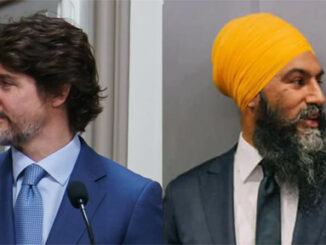
OTTAWA (TIP): Canadian Prime Minister Justin Trudeau suffered an unexpected blow on Wednesday, September 4, when the small party helping keep his minority Liberal government in power withdrew its automatic support, forcing him to attempt new alliances to govern, says a Reuters report.
Promising to continue governing and pushing through social programs, Trudeau dismissed talk of early elections after the left-leaning New Democratic Party’s leader Jagmeet Singh said he was “ripping up” a deal struck between the two men in 2022.
But the move leaves Trudeau reliant on support from other opposition lawmakers to survive confidence votes in the lower chamber of parliament at a time when polls show he will lose badly if an election were held now. An election must be held by the end of October 2025 under Canadian law.
“An election will come in the coming year, hopefully not until next fall, because in the meantime, we’re going to deliver for Canadians,” Trudeau told reporters at a school where he had arrived to talk about expanding lunch programs.
“I really hope the NDP stays focused on how we can deliver for Canadians, as we have over the past years, rather than focusing on politics.”
Trudeau, 52, first took office in November 2015 but has over the last two years struggled to fend off attacks from the opposition center-right Conservatives, who blame him for high inflation and a housing crisis.
With the NDP’s support, his government has pushed through social programs designed to address the cost of living.
But the NDP’s Singh had expressed growing frustration with Trudeau in recent months, especially over what he said was the Liberals’ failure to deal with high prices at grocery stores.
“Justin Trudeau has proven again and again he will always cave to corporate greed,” Singh said in a video posted on social media where he also declared that he would run for prime minister in the next election. “Liberals have led people down – they don’t deserve another chance.”
Establishing independence
Polls indicate the same voter fatigue plaguing Trudeau has also spread to the NDP, which despite successfully pushing the Liberals to introduce measures such as a national dental program is languishing far behind in third place. Under the 2022 deal, the NDP agreed to keep Trudeau in power until mid-2025 in return for more social spending.
Conservative leader Pierre Poilievre reiterated his call for an early election to break up what he called a Liberal-NDP coalition driving up prices for Canadians.
The House of Commons resumes work on Sept. 16, after which the Conservatives will have the ability to propose a vote of confidence. Trudeau’s Liberals could still survive if the NDP abstained on such a vote.
A statement from the NDP said the party would decide on an issue-by-issue basis whether to support the Liberals on confidence votes, suggesting it may continue to prop up Trudeau if his fate hung in the balance.
A key moment for Trudeau’s government will be its budget update later this year, which, if voted down by legislators would trigger a new election.
A senior journalist Prabhjot Singh, in a report filed late Thursday night, says Immediate Battle is for by- and not Federal elections. While Elmwood-Transcona and LaSalle-Emard-Verdun to vote on September 16, two more- Cloverdale-Langley City and Halifax – wait for the by-election.
In less than 24 hours of the death of the NDP-Liberal deal, politics in Canada have taken a turn, putting the nation back on two prestigious, by-elections scheduled to coincide with the next sitting of the House of Commons on September 16.
Interestingly, Jagmeet Singh of NDP, who ripped the NDP-Liberal deal yesterday, looks more focused on two by-elections scheduled for September 16 than forcing the federal elections for which the leader of Opposition and Conservative party chief, Pierre Poilievre, has been instigating him to vote out minority Liberal government.
In a message to his party workers and volunteers on Thursday, Jagmeet Singh, said, “I am pretty sure you know this by now, but I am deeply committed to defeating Conservatives in the next election.
“But it doesn’t happen all at once. It happens one riding, one volunteer shift, and one phone call at a time.
“The by-election in Elmwood-Transcona is a crucial step on our path to defeating Conservatives. Will you commit to walking that path with me?” asks Jagmeet Singh.
The Elmwood-Transcona was held by his party’s Daniel Blaikie who quit the House of Commons riding on March 31 this year. The NDP has now put up Leila Dance in a field of six contestants. Others in the fray are Sarah Couture (People’s Party of Canada), Nicolas Gaddert (Green Party), Ian McIntyre (Liberal), Colin Reynolds (Conservative) and Zbig Strycharz (Canadian Future Party).
Another riding going to poll on September 16 is LaSalle-Emard-Verdun in Quebec. The incumbent David Lametti resigned on February 1 this year to force this by-election. As of today, there are 90 candidates, 80 of them Independent or non-affiliated in the run besides nominees of all major parties like Liberals, Green, Conservatives, Canadian Future Party, Christian Heritage Party of Canada, NDP, Bloc Quebecois, People’s Party of Canada and Marxist-Leninist Party of Canada.
The situation is intriguing. On one hand, the main opposition party, Conservatives, is working overtime to force an early Federal election, while on the other, no party is taking any chances with the September 16 by-elections, winners of which may hardly get any fruitful time to sit in the lower House of Canadian Parliament.
By-elections are primarily a litmus test for the popularity of a government. In the eight by-elections during the current term of the House of Commons, the Liberals could retain only three of four seats it held earlier while the Conservatives extended their hold from four to five seats.
Two more by-elections – Cloverdale-Langley City and Halifax – are also in the offing. Experts, on the other hand, hold that though the Liberal-NDP deal is dead, it does not necessarily mean a fall election. Yesterday’s development puts PM Trudeau in a tight spot. Still, everything is not over for him as he has options.
No doubt the Liberal government is now on shakier ground. It cannot now rely with certainty on the NDP to prop it up on confidence votes in a Parliament where it has been reduced to a minority of the seats.
The rapidly changing political environment does not mean the government would soon collapse on a confidence vote as the Liberals could still convince NDP or Bloc Quebecois MPs for support on issues that PM Trudeau feels are “important for Canadians.”
Focus on by-elections is yet another indication that NDP is not as keen as Conservatives are to force a no-confidence motion at the earliest possible opportunity.
The liberals could still engage in some horse-trading with the NDP or one of the other opposition parties to cobble together enough votes to get its legislation through Parliament and stave off an election. An opposition party could support the government’s agenda piecemeal, and not through a formal agreement like the one that was ripped up today.
Whatever the thinking of major political parties, the Liberal government’s future is on a knife’s edge — it could be brought down at any time through a non-confidence vote when Parliament returns later this month. video saying he ‘ripped up’ NDP deal with Liberals
Under Canada’s Westminster system of parliamentary democracy, the Prime Minister and his government must enjoy the confidence of a majority of MPs to remain in office.
This can be tested through a confidence vote. The government can designate any vote as a confidence vote, while any bill related to the government’s budget is usually regarded as a confidence vote. An individual MP can also table a motion of non-confidence at any time to try and topple the government.
If the Liberal government wants to win those votes, Trudeau and his cabinet will have to convince at least one of the major opposition parties to vote their way.
Conservative Leader Pierre Poilievre has signaled he will not back the government — riding high in the polls, he wants an election sooner rather than later. He tabled a non-confidence motion in the spring but it was defeated.
The NDP may not go all out with the Conservatives in toppling the minority government as it still wants to get more out of the Liberal government before the next election.
That means the NDP could offer limited support on confidence votes in this sitting of Parliament in exchange for some more policy commitments. It already has pushed the government to enlarge the social safety net through new pharma care and dental programs. It wants more.
NEW DELHI (TIP): On the occasion of the National Teachers’ Day, President Droupadi Murmu conferred National Awards on 82 educators, including 50 teachers, on Thursday, September 5. In addition, 16 teachers each from the Department of Higher Education and the Ministry of Skill Development and Entrepreneurship were also awarded. The President said teachers had to prepare such citizens, who are not only educated but also sensitive, honest and enterprising.
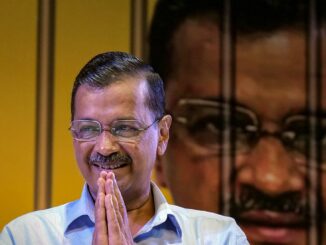
NEW DELHI (TIP): The Supreme Court on Thursday, September 5, 2024, reserved judgment on Delhi Chief Minister Arvind Kejriwal’s petitions for bail and quashing of arrest by the Central Bureau of Investigation (CBI) in the excise policy case, shrugging off the Central agency’s pitch that he must first knock on the doors of the trial court.
The apex court reminded the CBI of a comment made in a recent judgment granting bail to Mr. Kejriwal’s former deputy, Manish Sisodia, in the same liquor policy case. The court, in that judgment, had concluded that asking Mr. Sisodia to go back to the trial court for bail would be like “making him play a game of snakes and ladders”. It had after all taken Mr. Sisodia 17 months and multiple trips up and down the court hierarchy to finally get bail.
Justice Ujjal Bhuyan, part of the Bench headed by Justice Surya Kant, clarified to the CBI that the ‘snakes-and-ladders’ remark in the August 9 judgment allowing Mr. Sisodia bail was not meant as a “charitable observation” about the prosecution in the excise policy case.
In fact, grounds like prolonged incarceration, no possibility of completion of trial in the near future, and “process becoming the punishment” were cited as grounds for grant of bail to Bharat Rashtra Samithi (BRS) leader K. Kavitha and Mr. Sisodia in the excise policy case. The court further did not take kindly to the CBI’s claim that bail to the Chief Minister would “demoralize” the Delhi High Court. The High Court had, on August 5, upheld his arrest and told him to knock on the doors of the trial court for bail.
Justice Kant asked the probe agency, represented by Additional Solicitor General S.V. Raju, to not second guess what the Supreme Court would do. “Whatever we do in this case, be sure it would not be to the detriment of the institution,” Justice Kant told Mr. Raju.
Senior advocate A.M. Singhvi, for Mr. Kejriwal, said his case was “unique”. He had secured bail thrice in the money-laundering case linked to the excise policy ‘scam’ — twice from the Supreme Court and once in the trial court.
Mr. Singhvi questioned the need for the CBI to arrest the Chief Minister on June 26 when he was already in judicial custody at the time on money laundering charges. “He was the most captive interrogatee,” the senior advocate said.
He said the CBI’s sole justification for arresting a Chief Minister was that he appeared “evasive and non-cooperative” to them when confronted with evidence.
“But does he not have a fundamental right against self-incrimination? When they say he was not cooperating, they actually meant he was not declaring himself guilty,” the senior lawyer argued.
Mr. Singhvi said the High Court was only required to employ the triple test in Mr. Kejriwal’s case for bail.
The Chief Minister was a constitutional functionary and hardly a “flight risk”. Besides, he had been an undertrial for a “sufficiently long time” since his arrest by the Directorate of Enforcement (ED) in March. Thirdly, there was no question of tampering as “lakhs of documents” relevant to the case were already filed in court, many in electronic form. Mr. Raju countered that an agency’s power to arrest was part of its power to investigate.
He submitted that Mr. Kejriwal was arrested by the CBI on the basis of permission given by the trial court. He said the application made by the CBI for permission to arrest Mr. Kejriwal was never challenged by him. The procedure for his arrest was duly followed. He was given the grounds for his arrest in writing and was represented by a legal counsel. The Supreme Court could intervene only if a constitutional right was violated. Mr. Sisodia and Ms. Kavitha had done the grind of the trial courts before appealing to the Supreme Court for bail. Mr. Kejriwal could not act like a “privileged person”, Mr. Raju said.
The Additional Solicitor General said persons linked to the Assembly election in Goa, where the excise policy pay-offs were allegedly laundered, had come forward as witnesses. “If the court gives him (Kejriwal) relief now, they will all turn hostile. At least some time should be given for their statements to be recorded,” he urged.
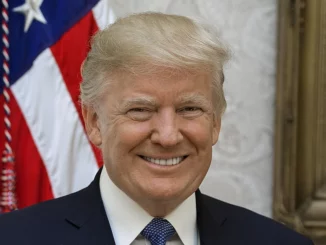
WASHINGTON, D.C. (TIP): Donald Trump pleaded not guilty on Thursday, September 5, 2024, to criminal charges in a revised federal indictment accusing the former U.S. President of attempting to overturn his defeat in the 2020 election. Trump’s lawyers entered the plea on his behalf at the start of a court hearing in Washington focused on how the case should proceed after the U.S. Supreme Court ruled that former Presidents have broad immunity from criminal prosecution.
Trump, the Republican candidate in the Nov. 5 presidential election, is not attending the hearing.
The new indictment, brought in August, included the same four charges as the one obtained last year by Special Counsel Jack Smith, but dropped allegations the Supreme Court found could not remain part of the case.
U.S. District Judge Tanya Chutkan is expected to consider dueling proposals from Smith, who is seeking to press the case forward, and Trump, who is pushing to delay action until after the election. The Supreme Court directed Chutkan to decide whether any other portions of the case must be tossed out.
Trump faces four criminal charges that accuse him of using false claims of voter fraud to undermine the election results and thwart certification of his defeat to Democratic President Joe Biden.
The case had been delayed for months while Trump pursued his immunity claim and is virtually certain not to go to trial before Trump faces Democratic Vice President Kamala Harris in the election.
Trump has argued that the prosecution as well as other legal cases against him are politically motivated attempts to undermine his presidential campaign.
The Supreme Court ruled in a 6-3 decision in July that former Presidents are presumed to be immune from criminal prosecution for actions taken as part of their official responsibilities as president.
Mr. Smith has argued that all the remaining allegations are not covered by the immunity ruling and can proceed to trial. Prosecutors have said that they are prepared to file court papers laying out their argument “at any time the court deems appropriate.”
Trump’s lawyers, meanwhile, have suggested that Judge Chutkan should not begin weighing the impact of the immunity ruling until December, after the election.
If Trump wins the election, he is expected to direct the Justice Department to drop the charges.
Trump has proposed that his lawyers first move to dismiss the case based on an argument that Smith was unlawfully appointed as special counsel under the U.S. Constitution.
Trump used the same argument to convince a federal judge in Florida who was appointed by Trump to throw out a second criminal case, also brought by Mr. Smith, accusing him of illegally holding onto classified documents after leaving office. Smith’s office is appealing that decision. The federal appeals court in Washington has previously upheld the authority of special counsels to handle certain sensitive investigations.
ATLANTA, GA (TIP): A 14-year-old boy killed two fellow students and two teachers and wounded nine others in a shooting at a Georgia high school on Wednesday, September 4, jolting the United States with the first mass campus shooting since the start of the school year.
The suspect, who had been interviewed by law enforcement last year over online threats about committing a school shooting, was taken into custody shortly after the shooting at Apalachee High School in Winder, Georgia, investigators said.
He was identified as Colt Gray, 14, and will be charged and tried as an adult, Chris Hosey, director of the Georgia Bureau of Investigation, told a press conference.
Barrow County Sheriff Jud Smith said the gunman, armed with an “AR platform style weapon,” or semiautomatic rifle, was quickly confronted by deputies assigned to the school and that the suspect immediately got on the ground and surrendered. Once under arrest the suspect was speaking with investigators, who believe he was acting alone, but they declined to say if they knew what motivated him.
Officials identified those killed as two 14-year-old students, Mason Schermerhorn and Christian Angulo, and two teachers, Richard Aspinwall, 39, and Christina Irimie, 53. All nine of those hospitalized were expected to recover, Smith told reporters.
“Pure evil did what happened today,” Smith said.
The Federal Bureau of Investigation later issued a statement revealing that it had investigated online threats to commit a school shooting in 2023 and local law enforcement interviewed a 13-year-old subject and his father in nearby Jackson County. The statement did not identify the teen, but Georgia officials said the statement was in connection to the subject in custody.
“The father stated he had hunting guns in the house, but the subject did not have unsupervised access to them. The subject denied making the threats online. Jackson County alerted local schools for continued monitoring of the subject,” the FBI said, adding that there was no probable cause to make an arrest.
The shooting revived both the national debate about gun control and the outpouring of grief that follows in a country where such outbursts occur with some regularity.
People in Winder, a city of 18,000 some 50 miles (80 km) northeast of Atlanta, gathered in a park for a prayer vigil later Wednesday night.
Some leaned on each other or bowed their heads in prayer, while others lit candles to honor the dead.
“We are all hurting. Because when something affects one of us it affects us all,” said Power Evans, a city councilman who addressed the gathering. “I know that here tonight, all of are going to come together. We’re going to love on one another. …We’re all family. We’re all neighbors.”
The White House said in a statement that President Joe Biden had been briefed on the shooting “and his administration will continue coordinating with federal, state, and local officials as we receive more information.”
“Jill and I are mourning the deaths of those whose lives were cut short due to more senseless gun violence and thinking of all of the survivors whose lives are forever changed,” Biden said in a statement, calling on Republicans to work with Democrats to pass “common-sense gun safety legislation.” Vice President Kamala Harris, the Democratic Party nominee for president, called the shooting a “senseless tragedy.” “We’ve gotta stop it. We have to end this epidemic of gun violence,” Harris said at the start of a campaign event in New Hampshire.
Former President Donald Trump, the Republican nominee for president, wrote on social media that “Our hearts are with the victims and loved ones of those affected by the tragic event in Winder, GA. These cherished children were taken from us far too soon by a sick and deranged monster.”
Georgia’s Republican Governor Brian Kemp, asked at a press conference what could be done to prevent shootings, said, “Today is not the day for politics or policy. Today is the day for an investigation, to mourn these precious Georgians that we have lost.”
The shooting was the first “planned attack” at a school this fall, said David Riedman, who runs the K-12 School Shooting Database. Apalachee students returned to school last month; many other students in the US are returning this week.
The US has seen hundreds of shootings inside schools and colleges in the past two decades, with the deadliest resulting in over 30 deaths at Virginia Tech in 2007. The carnage has intensified the pitched debate over gun laws and the US Constitution’s Second Amendment, which enshrines the right “to keep and bear arms.”
(Agencies)
The 79th session of the United Nations General Assembly (UNGA) is set to convene on September 10, 2024, at a time when the Israeli-Palestinian conflict remains one of the most pressing international concerns. This ongoing conflict has cast a long shadow over the Middle East for decades, and now, in 2024, it is yet again a focal point of global diplomatic discourse. While the world grapples with numerous other challenges, from climate change to nuclear proliferation, the Israeli-Palestinian conflict continues to stand out due to its longevity, complexity, and the scale of human suffering involved.
The conflict, which has spanned over a century, has evolved through various phases, with efforts at peace frequently derailed by renewed hostilities. As we approach the 31st anniversary of the historic agreement between Israel and the Palestine Liberation Organization (PLO) on September 13, 1993, it is disheartening to observe how little progress has been made toward lasting peace. At that time, the world witnessed a landmark moment, as Israel and the PLO recognized each other’s right to exist. This event symbolized a new hope for an eventual resolution to the conflict, which had deeply divided Arabs and Jews in the Middle East for generations. However, three decades later, that promise of peace remains unfulfilled, with both sides locked in an increasingly destructive and violent cycle.
The human toll of the Israeli-Palestinian conflict is staggering. In the past few years, particularly since the escalation of hostilities in 2021, the situation has deteriorated further, with a dramatic rise in civilian casualties, particularly in Gaza, where the population lives under severe blockade conditions imposed by Israel. The world has increasingly taken note of the suffering of the Palestinian people, with many human rights organizations and international observers raising concerns about what they describe as disproportionate and excessive use of force by Israel.
The 2024 conflict between Israel and Hamas in Gaza has drawn renewed attention to the humanitarian crisis in the region. Israeli airstrikes have devastated entire neighborhoods in Gaza, leaving thousands of Palestinians dead, including women and children. The United Nations Office for the Coordination of Humanitarian Affairs (OCHA) has documented severe shortages of food, water, and medical supplies in Gaza, which is home to over two million people, many of whom live in refugee camps. The blockade has been in place for over 16 years, creating what the UN has described as an “open-air prison,” where basic human rights are routinely violated.
As the 79th session of the UNGA approaches, the world waits anxiously to see if the assembly can finally play a pivotal role in finding a lasting solution to this painful and repetitive conflict. For decades, various peace plans, initiatives, and international interventions have sought to broker a resolution, but the conflict persists, leaving devastation in its wake.
The diplomacy of nations is on trial, as leaders from across the globe convene to address this enduring crisis. The UNGA, as the foremost forum for international diplomacy, has the opportunity to reignite peace talks and push for a comprehensive resolution. However, achieving consensus among member states, particularly those with vested interests in the region, will be a monumental challenge. The world is watching to see if, after decades of failure, the 79th session can chart a new course that might finally bring justice, peace, and dignity to both Israelis and Palestinians.
For now, the question remains: Will the UNGA rise to the occasion, or will the world continue to witness the cycle of violence, destruction, and despair? Time will tell, but the stakes could not be higher.
The recent killings in Haryana, allegedly at the hands of cow vigilantes, have reignited a critical debate on the dangerous interplay of religious fervor and law enforcement in India. In two incidents within a span of a few days in the state, a student of Class XII, Aryan Mishra, was gunned down and a 26-year-old migrant worker, Sabir Malik, beaten to death by self-appointed protectors of the cow. Aryan was out with friends when they were chased by a group of cow vigilantes, who mistook them for cattle smugglers. The group was relentlessly pursued for 30 km before Aryan was shot dead in Faridabad. In the other tragic loss to senseless violence, Sabir, suspected of eating beef, was lured to a bus stand and then lynched by the vigilantes in Charkhi Dadri.
These incidents are a part of a broader and disturbing trend that has taken root. Cow vigilantism, which ostensibly aims to protect an animal considered sacred in Hinduism, has increasingly become a pretext for extrajudicial violence, mostly targeting a minority community. Efforts have been made to curb it, including arrests and legal proceedings, Supreme Court directives for stricter enforcement and pressure on governments to act. However, inconsistent implementation and the political influence of vigilante groups hinder progress, leaving members of the minority community vulnerable to violence.
The rise of cow vigilante mobs correlates with the growing influence of Hindu hardliners in the past decade. These groups operate with alarming impunity, often sidestepping law enforcement and judicial processes. The fact that several of their leaders have found success in local politics in the past seven years raises troubling questions about the erosion of democratic principles and the protection of minority rights. The government must act decisively to curb this menace before it further destabilizes social harmony.
(Tribune, India)
The people of India deserve answers, and they deserve leadership that upholds the values of honesty, transparency, and accountability. It is time for Modi to prove that his anti-corruption stance was not just an electoral slogan, but a guiding principle for his governance
By Indrajit Saluja
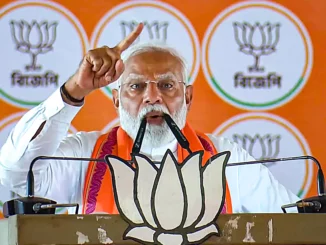
In 2014, when Narendra Modi was sworn in as the Prime Minister of India, his rise to the country’s highest office was accompanied by a firm promise to end corruption. Modi’s bold declaration—”Na khaoonga, na khane doonga” (neither will I indulge in corruption, nor allow anyone else to indulge in it)—resonated with millions of Indians fed up with systemic corruption and graft. This promise, combined with his image as a strong, decisive leader, catapulted Modi and his Bharatiya Janata Party (BJP) to victory.
However, more than a decade later, critics argue that Modi’s tenure has been marked not by a reduction in corruption, but by a culture of selective governance where perceived favoritism, lack of transparency, and the alleged shielding of corrupt officials have become the new normal. Several political parties and civil society organizations have raised concerns about the government’s inaction in addressing corruption among those close to power. These concerns raise questions about whether Modi has truly lived up to his promise.
Allegations of Favoritism and Billionaire Connections
Since his rise to power, opposition parties have frequently accused Modi of maintaining close relationships with a select group of billionaires in India. The most notable of these names include industrialists like Gautam Adani and Mukesh Ambani, whose businesses have grown exponentially during Modi’s tenure. The opposition alleges that these businessmen have benefited from government policies that favor their interests, enabling them to amass wealth and power while ordinary Indians struggle with economic difficulties.
While there is no concrete evidence directly linking Modi to any wrongdoing, the opposition claims that the use of state resources has primarily benefited these billionaires, with little regard for equitable economic growth. A key example cited is the meteoric rise of the Adani Group, which has expanded its reach into various industries, including airports, ports, and energy, during Modi’s tenure. These claims of crony capitalism have fueled criticism of Modi’s leadership, with detractors arguing that his anti-corruption rhetoric now rings hollow.
Allegations of Suppressing Dissent and Misusing Investigative Agencies
Another significant criticism leveled against Modi is the alleged misuse of investigative agencies such as the Central Bureau of Investigation (CBI), the Enforcement Directorate (ED), and the Income Tax Department to target political rivals. Opposition leaders, including Congress’s Rahul Gandhi, Trinamool Congress’s Mamata Banerjee, and Aam Aadmi Party’s Arvind Kejriwal, have frequently accused the government of using these agencies as political tools to suppress dissent.
These agencies have been accused of disproportionately targeting leaders from opposition parties while turning a blind eye to corruption and irregularities involving those aligned with the ruling BJP. For example, in 2023, Rahul Gandhi was disqualified from parliament after being convicted of defamation, a move widely seen as politically motivated. Similarly, leaders like Delhi’s chief minister Arvind Kejriwal, and deputy chief minister Manish Sisodia have been arrested on corruption charges that their parties argue are baseless and a form of political vendetta.
Beyond political figures, civil society movements have also faced government suppression. The 2020-2021 farmers’ protest, one of the largest in India’s history, saw sustained opposition to three farm laws that many argued favored corporate interests over the rights of small farmers. Despite peaceful protests by millions, the government’s response was often heavy-handed, with crackdowns, internet shutdowns, and the branding of protestors as anti-national. Similar concerns arose with the wrestlers’ protest in 2023, when athletes demanded action against the Wrestling Federation of India’s chief, who faced allegations of sexual exploitation. His connections to the BJP were seen as a reason for the delayed response and lack of government action.
The Treatment of Minorities
Modi’s government has also come under intense scrutiny for its treatment of religious minorities, particularly Muslims. The rise of Hindu nationalism under the BJP’s leadership has coincided with a series of violent incidents and discriminatory policies that have marginalized Muslim communities. From mob lynchings over allegations of cow slaughter to the revocation of Jammu and Kashmir’s special status, critics argue that Modi’s government has enabled a climate of intolerance and hate.
According to a report by Human Rights Watch, there has been a marked increase in hate crimes and physical violence against Muslims since 2014. Although Modi has condemned some of these attacks in public statements, his government has been accused of turning a blind eye to those responsible, many of whom belong to right-wing Hindu groups.
SEBI Chairperson Controversy: A Symptom of Deeper Corruption?
Perhaps the most striking example of perceived complicity between the government and its favored officials is the recent controversy surrounding the Securities and Exchange Board of India (SEBI) Chairperson, Madhabi Puri Buch. SEBI is tasked with regulating India’s $5.54 trillion stock market, a key driver of the nation’s economic growth. As such, the integrity of the SEBI Chairperson is paramount to safeguarding the interests of investors and ensuring transparency in the market.
Madhabi Puri Buch, the Chairperson of the Securities and Exchange Board of India (SEBI), has been embroiled in multiple allegations centered around conflict of interest and potential breaches of regulatory policies. These claims, although denied by Buch, raise significant concerns about her impartiality and adherence to SEBI’s ethical standards.
One of the most serious allegations involves her financial ties to ICICI Bank, where she previously held executive roles. The Congress Party has accused Buch of receiving substantial benefits from ICICI Bank, including salary and stock options, well after her retirement in 2013. The party claimed that these payments were inconsistent in both frequency and amount, suggesting that her ongoing financial relationship with ICICI Bank may have influenced her role as the SEBI Chairperson, a position that requires impartial regulation of the financial markets. ICICI Bank, however, has denied these claims, stating that any payments to Buch were part of her retirement package and not linked to her tenure at SEBI.
Further allegations have emerged from Hindenburg Research, which has accused Buch of having indirect financial interests in entities under investigation by SEBI. According to the research, Buch and her husband had stakes in consultancy firms linked to offshore funds associated with the Adani Group, which is under scrutiny for market irregularities. This raises concerns about a conflict of interest, as Buch may have had indirect financial exposure to entities she was responsible for investigating. Buch has denied these allegations, asserting that she had fully disclosed her holdings and that the firms were managed by her husband post his retirement.
Another critical issue is Buch’s continued association with Agora Advisory, a consultancy firm in which she held a 99% stake even during her tenure with SEBI. Although she claimed that her shares were transferred to her husband in 2022, public records indicate that she still had financial ties to the firm until at least 2024. This situation has led to allegations of breaching SEBI’s 2008 policy that prohibits officials from earning income from professional activities outside of their regulatory roles. Critics, including former SEBI officials, have voiced concerns over this arrangement, labeling it a serious breach of regulatory ethics.
These controversies have led to increasing calls for Buch’s resignation, although her defenders, including some in the government, have dismissed the allegations as politically motivated. Nonetheless, these issues raise critical questions about transparency, governance, and the independence of India’s financial market regulator. Despite the serious nature of these allegations, the government has remained conspicuously silent.
What is particularly troubling is that the appointment of the SEBI Chairperson is directly overseen by the Prime Minister and the Home Minister. Critics argue that the silence from Modi, Finance Minister Nirmala Sitharaman, and Home Minister Amit Shah on the matter speaks volumes about the lack of accountability in the government. Opposition leaders have demanded an explanation and called for Buch’s removal if the allegations are substantiated, yet no action has been taken.
This controversy has raised questions about the Modi government’s commitment to its own anti-corruption promises. If the person responsible for overseeing the stock market—arguably one of the most critical institutions in the country—can be implicated in corruption and misconduct, what does this say about the state of governance in India?
Modi’s Hollow Promise: “Na Khaoonga, Na Khane Doonga”
While Modi’s anti-corruption rhetoric was a key pillar of his 2014 and 2019 election campaigns, the realities of his governance tell a different story. From allegations of crony capitalism and selective justice to the suppression of dissent and questionable appointments, it appears that Modi’s promise of “na khaoonga, na khane doonga” has become a distant memory.
Opposition leaders like Rahul Gandhi have repeatedly called on Modi to “come clean” on these issues. They argue that the government’s failure to address allegations of corruption and favoritism undermines the very foundation of Indian democracy. Meanwhile, civil society organizations and ordinary citizens are increasingly demanding transparency and accountability from a government that promised to end corruption but now seems to protect its own.
Prime Minister Modi faces a critical test. If he truly believes in his promise of rooting out corruption, he must act decisively—not just against political opponents, but also against those within his own government and the bureaucratic machinery. The people of India deserve answers, and they deserve leadership that upholds the values of honesty, transparency, and accountability. It is time for Modi to prove that his anti-corruption stance was not just an electoral slogan, but a guiding principle for his governance.
(With inputs from agencies and newspapers)
(The author is editor of The Indian Panorama. He can be reached at salujaindra@gmail.com)
With its announcement of ending its governance agreement with the Liberals, the NDP has put the minority Liberal government’s survival at stake besides setting in motion an animated debate over advancing federal elections scheduled otherwise, for October 2025.
In a campaign-style social media video, NDP Leader Jagmeet Singh announced that he has ended his party’s supply-and-confidence agreement (CASA) with Prime Minister Justin Trudeau’s Liberal government. The first federal deal ensured the Liberal minority government’s survival.
The CASA was reached between the two parties in March 2022. Through this, the NDP committed itself to supporting the Liberal government on confidence votes in exchange for legislative commitments on NDP priorities. It was to continue till June 2025. The snapping of CASA leaves the separatist Bloc Québécois and the NDP as possible Liberal dance partners in the coming months.
The Liberals hold 154 of the 338 seats in Parliament. To get to a majority of 169 MPs, the Liberals need either the NDP (24 MPs) or the Bloc (32 MPs) to stand with them. The Green Party holds just two seats. It is not much of a factor in confidence votes.
Prime Minister Justin Trudeau, while reacting to Jagmeet Singh’s announcement online that he was ending his party’s supply-and-confidence agreement with the Liberals, said he hoped that the NDP would ‘stay focused’ on delivering for Canadians rather than politics.
Trudeau held he was not angling for an election any time soon. He, however, urged the NDP leaders to support policies the two progressive parties have been backing for the last two years.
“I will let other parties focus on politics. I am focused on actually delivering the things Canadians told me this summer they need,” Trudeau said.
“I certainly hope that the NDP will stay true to its fundamental values, which is making sure that Canadians get the support they need and keeping away the austerity cuts and the damage that will be done by Conservatives if they get the chance.” “Justin Trudeau has proven again and again that he will always cave to corporate greed. The Liberals have let people down. They don’t deserve another chance from Canadians,” Singh said in the video.
“There is another, even bigger battle ahead. The threat of Pierre Poilievre and Conservative cuts. From workers, from retirees, from young people, from patients, from families — he will cut to give more to big corporations and wealthy CEOs.”
Singh said the Liberals will not stand up to corporate interests and he will be running in the next election to “stop Conservative cuts.”
Leader of the Opposition (Conservative) Pierre Poilievre called Singh’s announcement a “stunt” and criticized him for not saying whether he would vote non-confidence in the government.
“He came out and claimed that he was wrong, that the coalition was a bad, costly idea, but he refuses to commit to voting for a carbon tax election,” Poilievre told reporters. to
Poilievre asked Jagmeet Singh to commit to voting for an election at the earliest opportunity when the House of Commons returns.
“Right now, we don’t have a calendar to indicate when we can put forward a motion,” he said. “After Sellout Singh did this stunt today, he is going to have to vote on whether he keeps Justin Trudeau’s costly government in power, or whether he triggers a carbon tax election.”
In a media release accompanying his announcement, Singh said “the NDP is ready for an election, and voting non-confidence will be on the table with every confidence measure.”
Last week, Poilievre called on Singh to pull out of the agreement. In response to Poilievre, Peter Julian, the NDP’s House leader, said, “leaving the deal is always on the table for Jagmeet Singh.”
A spokesperson for the NDP revealed that the plan to end the agreement had been under active consideration for the past two weeks. It was kept under wraps so as not to inform the Liberal government of its decision until an hour before the video was scheduled to go live online.
Within 10 minutes of informing the Prime Minister’s Office about the NDP’s decision to pull the plug, Jagmeet Singh posted the video on social media shortly before 1 pm on Wednesday.
Justin Trudeau hoped the next election would not happen “until next fall” so that his government has time to move forward on pharma care, dental care and school food programs.
“The contrast with a Conservative leader that wants to cut … the programs that Canadians are relying on to get through this difficult time, well, that will be a political decision that Canadians get to take in an election,” he said.
Liberals House of Commons Leader Karina Gould, who only last week said she was confident the agreement would last until June, said that Singh’s decision was “a big surprise.”
“There were no signs in the relationship that the NDP was going to do this. It came as a big surprise to all of us today,” she told media. “Mr. Singh has just decided that this is better for him politically and he’s putting at risk all of the successful programs that we have put in place over the last three years.”
Jagmeet Singh has decided to ‘put his own personal, political interest ahead of that of Canadians,’ she added.
Trudeau said his government is more focused on tackling the affordability crisis and climate change.
“These are the things that we’re focused on. I’ll let others focus on politics,” Trudeau said.
“I really hope the NDP stays focused on how we can deliver for Canadians, as we have over the past years, rather than focusing on politics.”
Through the CASA, the NDP kept the minority Liberal government in power in exchange for movement on key priorities such as dental care benefits, one-time rental supplements for low-income tenants and a temporary doubling of the GST rebate. Some of the promises the Liberal government made to the NDP, however, have yet to be fully realized. Pharmacare legislation hasn’t passed the Senate and a bill to implement Elections Act changes is still before the House. A promised Safe Long-Term Care Act has yet to be tabled.
While the Liberals and NDP have started to roll out a pharma care plan by agreeing to provide free contraception and diabetes treatments, the federal government was yet to complete deals with provincial governments to actually deliver those benefits. Even the new federal dental care program won’t be fully implemented until early next year.
Many feel that the end of CASA doesn’t necessarily mean an immediate election. The Liberals could seek the support of the Bloc Québécois or try to continue negotiating with the NDP on a case-by-case basis.
Only yesterday, NDP labor critic Matthew Green said the NDP has been re-evaluating the deal since Labor Minister Steve MacKinnon directed the Canada Industrial Relations Board to impose binding arbitration less than 24 hours after Canadian Pacific Kansas City and Canadian National Railway locked out their workers after failing to reach a deal at the bargaining table.
In a message to his followers, Jagmeet Singh said “We wanted to make sure you saw this today. This is an important moment for our movement and our country to announce the end of the supply and confidence agreement with Trudeau’s Liberals. They don’t deserve another chance to let people down. “It’s going to be up to New Democrats to show Canadians the path to fight Pierre Poilievre’s division and hate with unity and hope.
“What happens between now and the election will be the fight of our lives. It will put to the test what kind of country we want to be:
“One that takes care of our neighbors, or one that caves to the interests of big corporations and their rich CEOs?
“Canadians will have a chance to choose between hope and despair. We choose hope,” he added.
(END OF BOX)
Prime Minister Justin Trudeau, in his message to party followers, said, “It is a disappointing day for Canadians.
Last week Pierre Poilievre called on Jagmeet Singh to rip up our supply and confidence agreement that has delivered so much progress for Canadians.
“Today Singh did as he was told, abandoning progressive policies and putting important programs at risk of Conservative cuts.
“Together, over the past two and a half years, our Liberal team has worked with the NDP in a divided minority parliament to build homes at a pace we haven’t seen in more than 50 years, deliver dental care for 500,000 Canadians, deliver free contraceptive and life-saving diabetes medication for 9 million Canadians through National Universal Pharmacare, build an economy that works for everyone, and so much more.
“In March 2022, when the agreement was reached, I said that we couldn’t let our differences stand in the way of delivering what Canadians deserve and need. But clearly, Jagmeet Singh and the NDP disagree. While they put politics over progress, we’ll keep moving forward for everyone.
“This time next year we could be days into a national campaign. With Jagmeet Singh turning his back on our agreement to deliver for Canadians and Pierre Poilievre and his Conservatives itching for an election, we need to be ready for one that can now be called at any moment. So much is at stake,” he added.
(The author is a senior journalist. He can be reached at prabhjot416@gmail.com)
The surge in deadly attacks by the Balochistan Liberation Army in Pakistan’s largest province has deep historical roots and is driven by demands for independence and control over resources
By Prabhu Dayal
Pakistan’s Balochistan province is again seeing a surge in deadly attacks, fueled by demands for independence and control over local resources. The most recent attacks, which took place on August 26, resulted in at least 70 deaths. The coordinated assaults targeted police stations, railway lines and highways. The Balochistan Liberation Army (BLA) has claimed responsibility for these deadly attacks. Significantly, the attacks coincided with a visit to Islamabad by General Li Qiaoming, Commander of the Ground Forces of the People’s Liberation Army of China. Who are these rebels and what is the conflict all about?
The Baloch are a Sunni Muslim ethnic group who live on both sides of the Iran-Pakistan border, and also in parts of southern Afghanistan. For decades, efforts for autonomy or independence have been met with violent suppression on both sides of the border. In Pakistan, such efforts are viewed as attempts to fragment the nation, while in Iran, the situation is further complicated by the Baloch being a Sunni Muslim minority in a predominantly Shiite country. Balochistan is the most sparsely populated province of Pakistan. Although it occupies 44 per cent of the land area, its population is just 7 per cent of Pakistan’s population. Balochistan is rich in mineral resources. Coal, Sulphur, chromite, iron ore, barite, marble, quartzite, and limestone are all abundant in the province. Balochistan has significant oil and natural gas reserves, and also considerable quantities of copper and gold.
Baloch separatism is deep rooted in history. Balochistan consisted of four princely states under the British Raj — Kalat, Makran, Las Bela and Kharan. In 1947, the Khan of Kalat, the ruler of the largest of these princely states chose independence, which was an option given to all the 535 princely states of British India. The other Balochi chiefs also expressed their preference for a separate identity. However, Pakistan sent in its army which forced the Khan of Kalat to give up his independence. The Khan signed the instrument of accession on March 27, 1948, over seven months after the formation of Pakistan. Even after the accession of Kalat to Pakistan, Baloch separatism has continued to rear its menacing head from time to time. Major conflicts between Baloch separatists and the Pakistan army have taken place regularly.
I was posted as Consul in Karachi in the early 1980, and I had travelled to Balochistan a few times. I had observed that the Balochis nursed grievances that they are being exploited by the Punjabi-dominated ruling elite which includes the army, the political class and their business interests. Their resentment has only grown over time and taken more and more militant forms. The Balochistan Liberation Army (BLA) is the most well-known Baloch separatist group. Other separatist groups include Lashkar-e-Balochistan and the Balochistan Liberation Front. These separatist groups argue that the local population does not receive a fair share of the profits from the resources of the province, and that as a result poverty is rife there.
The BLA is the largest Baloch militant group and has been fighting an insurgency against the Pakistani government for decades, seeking independence for Balochistan. It is now allied with the Pakistan Taliban, and both target the Pakistan security forces. Chinese cooperation with the Pakistan government is seen by the BLA as a threat to their cause. The region of Balochistan is a major focus of the China-Pakistan-Economic-Corridor(CPEC). The Balochistan Liberation Army (BLA) opposes the Chinese investments in the province, saying they do not benefit the local people. The influx of Chinese nationals for developing the CPEC has caused conflicts with the Balochistan Liberation Army and other separatist groups which perceive China as a joint oppressor. The Balochistan Liberation Army has severely criticized China for ignoring its warnings not to enter into deals and agreements with Pakistan regarding Balochistan. They also accuse Beijing of exploiting their resources and land, and fear that the influx of Chinese investments and workers might further marginalize the Baloch people. A large number of Chinese are working in Gwadar, the port in the restive Balochistan province which is being linked to China’s Xinjiang province as part of the USD 65 billion CPEC.
Attacks by the militants from the BLA, and also from the Pakistan Taliban, targeting Chinese nationals had occurred earlier too but they increased sharply since 2018 after construction work on the CPEC projects picked up steam. Chinese nationals have been the victims of terror attacks more commonly in Pakistan than in any other country. In Nov 2018, the Chinese consulate in Karachi was attacked by the militants of BLA. Two police officers were killed in the attack. In 2020, the Balochistan Liberation Army also took responsibility for attacks on the Pakistan Stock Exchange, calling it an attack against “Chinese exploitative plans in Balochistan”. In July 2021, a bus carrying Chinese engineers was hit by another bus which was carrying explosives, killing 13 people, including 9 Chinese engineers. In August 2021, a suicide bomber from the BLA targeted a vehicle carrying Chinese nationals in Gwadar. Two children were killed. In April 2022, a female suicide bomber killed three Chinese teachers in Karachi. The BLA claimed to have carried this attack through its “first female suicide bomber.” In August 2023, a convoy of vehicles carrying Chinese engineers working on the Beijing-financed Gwadar Port in Pakistan was attacked by the militants of the Balochistan Liberation Army. The BLA has said it is conducting attacks to get Chinese-backed projects out of the province and to establish an independent Baloch government.
A large number of Balochi guerrilla fighters and civilians have been killed in the operations conducted by the Pakistan army. Thousands of Balochis have also disappeared after they were abducted by Pakistani security forces. The Voice for Baloch Missing Persons, a non-profit organization representing family members of those who disappeared in Balochistan, says approximately 7,000 cases have been registered with them since 2004. Another risk is whether the BLA attacks will spark Pakistani cross-border raids into Iran to target BLA positions. It may be recalled that on January 18, Pakistan conducted retaliatory missile attacks in Iran, asserting that it had targeted militants of the Balochistan Liberation Army and the Balochistan Liberation Front in the southeastern Iranian province of Sistan and Baluchistan. These strikes were perceived as a retaliation for the Iranian missile strikes in Pakistan which took place two days earlier. Iran asserted that it had targeted militants of the Baloch separatist group Jaish ul-Adl in the Pakistani province of Balochistan.
In his Independence Day speech in 2016, Prime Minister Narendra Modi had said that Pakistan must be held accountable for the atrocities committed in Balochistan, and that India would continue to highlight the Balochistan problem. His remarks were met with angry reactions from Islamabad. The Pakistani government accused India of bankrolling the “Free Balochistan” advertisement campaign in Europe and the US. Pakistan also alleged that India is supporting the BLA. What Pakistani leaders fail to realize is that unnecessary finger pointing at India is not the answer, and that long term peace is not possible without meeting the legitimate aspirations and demands of the people of Balochistan.
(First published in Millennium Post : https://www. millenniumpost.in/opinion/echoes-of-rebellion-578512)
(The author is a retired Indian diplomat and had previously served as Consul General in New York)
“I was mesmerized by your profound, sparkling insights !”
– Mahesh Bhatt , Indian film director, producer and screenwriter
“Absolutely brilliant! Still laughing at some of your jokes.”
– Neha Dhupia | Indian actress and beauty queen
Enjoy an evening of laughter witnessing world-known comedian Amit Tandon connecting with the audience at the New Jersey Performing Arts Center (NJPAC) on Saturday, September 21, 2024 at 7 pm.
Amit’s brand of observational humor is refreshing and contemporary and has hit a chord with audiences across India. Amit had made his mark with a super relatable style of narrative that makes him connect instantaneously with audiences. His viral videos have crossed the sacred mark of a whopping 100 million views across the social media platforms.
Watch some of Amit’s videos –
(Women & Men)- youtu.be/2UZG4AcZauE
(Traffic in Delhi) – youtu.be/xKLl7vo4jcY
(Women & their Handbags) – youtu.be/4DbInxr2MAE
One of the first three Indian comedians on Netflix, Amit took the stage by storm in the mega-hit comedy events series ‘Comedians of the World’ on Netflix in January 2019. This international platform had a select set of 47 comics from across the world.
His comedy has crossed boundaries and has become global with over 200 international shows across 25 countries including USA, UK, Australia, Canada, Dubai and Singapore. Overall, Amit has completed performing a mind boggling number of 1400 shows. As a professional comedian, Amit has scaled new heights with the launch of ‘Grandmasters of Comedy’. This unique platform is a testament to his commitment to comedy as it strives to introduce comedy in the corporate world.
Amit was also instrumental in launching ‘Fight Comic’ in India, a popular comedy face-off show from Singapore. An MBA and Engineer by qualification, Amit was running his own company in HR Consulting and started his journey in comedy as a hobby. Comedy became serious business when he was featured on Rising Stars of Comedy on NDTV and later ‘CEO’s Got Talent’, aired on CNBC TV18. His rapport with TV continued as a host of ‘New Year Show’ on Doordarshan in 2014 and he also dabbled with radio, hosting a Punjabi show Saanu Kee for over an year. Learn more at tandonamit.com.
TICKETS
For tickets, visit njpac.org/event/amit-tandon-hamare-zamane-mein or the NJPAC Box Office or call 888.GO.NJPAC (888.466.5722).
The New Jersey Performing Arts Center (NJPAC)
NJPAC, located in downtown Newark, N.J., is America’s most diverse performing arts center, and the artistic, cultural, educational and civic center of New Jersey – where great performances and events enhance and transform lives every day. NJPAC brings diverse communities together, providing access to all and showcasing the state’s and the world’s best artists while acting as a leading catalyst in the revitalization of its home city. Through its extensive Arts Education programs, which have reached almost 2 million children, NJPAC is shaping the next generation of artists and arts enthusiasts. NJPAC has attracted more than 10 million visitors since opening its doors in 1997, and nurtures meaningful and lasting relationships with each of its constituents.
Follow NJPAC Online:
Website: njpac.org
Twitter: @NJPAC
Instagram: @NJPAC
Hashtag: #NJPAC
Facebook: facebook.com/NJPAC
YouTube: NJPACtv
Follow NJPAC’s Standing in Solidarity Series Online:
Website: njpac.org/takeastand
Hashtag: #NJPACTakeAStand
Youtube: Standing in Solidarity playlist
(Mabel Pais writes on The Arts and Entertainment, Social Issues, Spirituality, Cuisine, Health & Wellness, Business, and Education)
The Jaipur Literature Festival (jlflitfest.org), celebrating books, ideas, and dialogue, — described as “the greatest literary show on Earth” by Tina Brown: journalist, editor-in-chief of ‘The Daily Beast’ (tinabrownmedia.com) — returns to New York in September 2024, presenting a series of conversations and performances examining the human experience through the imaginations of some of the world’s leading authors, thinkers, and performers. The event takes place on Monday, September 9, 2024 at Jayaram Studios @ 6 pm @ 54 W 21st St, New York, NY 10010.
The Festival opens with ‘Women in Culture Conclave’, an evening of conversations/readings/fireside chats with culture makers, writers and ideators, contemplating women’s role in history & narrative as both disruptors and transmitters of culture. Curated by Myna Mukherjee the event is presented by ‘Engendered’ in association with the JLF as an opening event for JLF NY on Monday, September 9th, 2024.
Partners in New York
Other partners include The South Asia Institute, The Culture Tree, Jayaram Studios, Tagmo & others.
Featuring:
2024 JLF Women Authors, Opening Night (Credit: jlflitfest.org)
VIDYA SHAH, an Indian classical singer, musician and composer, & winner of the Charles Wallace Award. She will present a musical excerpt from her project collaboration with the Ford Foundation called Women on Record, and her book Jalsa highlighting the contributions of the forgotten women performers of the gramophone era.
MARILYN HACKER, eminent poet, translator & critic and a feminist. Recipient of Lambda Literary Award and other numerous honors, including the Bernard F. Conners Prize from The Paris Review, the John Masefield Memorial Award of the Poetry Society of America, the PEN Voelcker Award, the Argana International Poetry Prize from the Beit as-Shir/House of Poetry in Morocco, and fellowships from the Guggenheim Foundation, the Ingram Merrill Foundation, and the National Endowment for the Arts. She is also the Professor of English emerita at the City College of New York and was elected as Chancellor of the Academy of American Poets in 2008.
BUSHRA REHMAN, an award-winning novelist & poet, and author of the New York Times and New Yorker Editor’s Choice of the year ‘Roses in The Mouth of a Lion’, a modern classic about what it means to be Muslim and queer in a Pakistani-American community.
ANU SEHGAL, children’s author and founder of ‘The Culture Tree’, a cultural literacy and language education company that focuses on South Asia. Anu has written 5 books that represent stories and languages of India. Anu’s books have been selected at the World Literature Festival at NYPL, Brooklyn Museum’s annual Children’s Literature Festival and Asia Society’s AAPI Literature Festival.
RAAKHEE MIRCHANDANI, journalist, children’s book author, activist, also co-author of ‘She Persisted’ with Chelsea Clinton and her latest upcoming book ‘Kamala Raised Her Hand’.
AROON SHIVDASANI, founder, former executive & artistic director of the Indo-American Arts Council, NYC, and recipient of the Minnie Untermeyer Award for Excellence in the Arts, 2023.
SUNITA IQBAL, senior advisor in private and public arts philanthropy. She has worked with major arts funders including the Ford Foundation, Mellon Foundation, New York State Council on the Arts in partnership with the Regional and Economic Development Council’s Arts and Culture Initiatives and Capital Improvement Funds, the Nathan Cummings Foundation, and DanceNYC.
MYNA MUKHERJEE, listed as India’s top 5 curators and Open Magazine’s ‘Top 50 Open Minds 2024’. She is a cultural curator, producer and director of ‘Engendered’, a transnational arts & human rights organization New Delhi/New York.
The Jaipur Literary Festival (JLF)
The city of Jaipur in 2006 hosted the first book festival with 18 authors and about 100 attendees. In January 2024 the Jaipur Literature Festival had 300 speakers and 500,000 attendees.
In between, JLF has become what Tina Brown (tinabrownmedia.com) calls “the greatest literary show on Earth,” attracting almost every major author from around the planet and making breakout stars of authors unheard of. Programmed by Namita Gokhale and William Dalrymple and produced by Sanjoy Roy and Suraj Dhingra of Teamwork Arts, JLF has become similar to Oprah’s book club. And Oprah made it in 2012, drawing large crowds.
For about a decade, JLF editions have also taken place outside India, including Boulder, Colorado; Houston, Texas; New York City, the UK, Spain, Maldives, Australia, the Middle East and elsewhere seamlessly merging the rich multilingual literary traditions of South Asia with the unique essence of the host regions.
This September, JLF USA (jlflitfest.org) is going to the next level, adding new editions in five cities:
Houston: September 6-8
New York: September 9-11
Boulder: September 14-15
Seattle: September 20-22
Raleigh/Chapel Hill: September 27-28
Partners in the USA
Digimentors (digimentors.group) and Sreenath Sreenivasan have partnered with JLF USA to work on programming, outreach and more. For more information, email jlfusa@digimentors.group. Learn more at jlflitfest.org.
RSVP & TICKETS
RSVP is required @ rsvp.engendered@gmail.com or WhatsApp @ +91 987 306 1430 by September 8 at 6 pm. Purchase tickets at theculturetree.com.
JLF New York
JLF-USA-NY, Banner (Credit: jlflitfest.org)
In February 2024, the 17th edition of the Jaipur Literature Festival took place in the Pink City of Jaipur, Rajasthan. It was a magnificent success, affirming the power of words and ideas through a remarkable line-up of speakers and sessions. The Festival’s indomitable and inspiring spirit reached the festival’s audiences, both digitally and in-person.
This year, the vibrant energy of the Jaipur Festival makes its return to New York. The 8th edition of the festival is taking place September 9-11, 2024.
Through 2021-2022, virtual versions of JLF kept the spirit of creative conversations alive during the Covid years. Writers, thinkers, poets, artists, and filmmakers engaged in captivating discussions.
In 2023, JLF successfully held another on ground edition of JLF New York, following two successful virtual editions in collaboration with the Consulate General of India – New York, Asia Society, The National Arts Club, The Centre for Fiction, and Sundaram Tagore Gallery.
This year, JLF returns to celebrate the cosmopolitanism and liveliness of New York City. JLF once again brings forth its signature camaraderie, a caravan of ideas, and the enchanting flow of conversations that make our festival truly incredible!
(Mabel Pais writes on The Arts and Entertainment, Social Issues, Spirituality, Cuisine, Health & Wellness, Business, and Education)
The next chapter of the Oscar-winning Spider-Verse saga and the highly anticipated sequel ‘Spider-Man™: Across the Spider-Verse Live in Concert’ makes its landing at the New Jersey Performing Arts Center (NJPAC) on Sunday, September 22 at 3 pm.
The films have become a sensation for their incredible and ground-breaking soundtracks which have been heralded for their unique mix of orchestral and electronic music, and scratch DJ’ing.
In ‘Spider-Man™: Across the Spider-Verse’ Live in Concert audiences will see the film presented on a huge HD screen, accompanied by a range of musicians and instrumentalists performing music from the film’s score and soundtrack live to picture. This will include an orchestra, a scratch DJ on turntables, percussion and electronic instruments.
The score for the film was created by Emmy-winning and Academy Award® and Golden Globe®-nominated composer, Daniel Pemberton, known for his work on movies such as ‘Ferrari’, ‘The Man From U.N.C.L.E.,’ ‘Oceans 8’, ‘Enola Holmes’, ‘The Bad Guys’ and ‘Steve Jobs’.
Pemberton took influence for both Spider-Verse film scores from growing up amid the London rave scene in the 90s, where he regularly immersed himself in ambient and techno nights. Daniel also drew inspiration from the scratch DJ’s at ‘The Blue Note Club’ in East London, where he first witnessed scratching vinyl being used in an artistic form. This, coupled with heavy-drumming and punk guitars, gives the soundtrack its unique sound, fusing genres to make something bold and unparalleled which will be brought to life in an exhilarating style in these live concerts.
“Across The Spider-Verse is probably the most exciting, groundbreaking and impactful score I’ve written,” says Pemberton. “I’ve always believed that there should be no barriers to music, but it’s rare to get the opportunity that you get within the Spider-Verse – where else could you have powerful orchestral themes side by side with punk drum solos, virtuoso record scratching next to twisted electronics, off-kilter whistling next to hip-hop beats?”
The film’s soundtrack was curated by Metro Boomin, and features the likes of Future, Nas, Swae Lee, James Blake, Lil Wayne, Lil Uzi Vert, and more.
Pemberton says, “Watching the film with the live band performing in a huge room of people is one of the most thrilling ways to experience it and it’s a huge honor to know that audiences are going to get a show that delivers a unique emotional hit they will hopefully remember for a long, long time after.”
Miles Morales (Spider-Man) returns for the next chapter of the Oscar®-winning Spider-Verse saga, ‘Spider-Man: Across the Spider-Verse’. After reuniting with Gwen Stacy (Spider-Gwen), Brooklyn’s full-time, friendly neighborhood Spider-Man is catapulted across the Multiverse, where he encounters the Spider Society, a team of Spider-People charged with protecting the Multiverse’s very existence. But when the heroes clash on how to handle a new threat, Miles finds himself pitted against the other Spiders and must set out on his own to save those he loves most. Anyone can wear the mask – it’s how you wear it that makes you a hero.
TICKETS
To get immersed into ‘Spider-Man: Across the Spider-Verse’! reserve tickets by visiting NJPAC.org or the NJPAC Box Office or calling 888.GO.NJPAC (888.466.5722).
Sony Pictures Animation/Columbia Pictures (Key Credits)
Sony Pictures Animation/Columbia Pictures’ ‘Spider-Man: Across the Spider-Verse’ was directed by Joaquim Dos Santos, Kemp Powers and Justin K. Thompson. It was written by Phil Lord & Chris Miller & David Callaham, based on the MARVEL COMICS. Phil Lord, Christopher Miller, Amy Pascal, Avi Arad and Christina Steinberg served as producers with Bob Persichetti, Peter Ramsey, Rodney Rothman, Aditya Sood and Brian Michael Bendis serving as executive producers. The film features the voices of Shameik Moore, Hailee Steinfeld, Brian Tyree Henry, Luna Lauren Velez, Jake Johnson, Jason Schwartzman, Issa Rae, Karan Soni, with Daniel Kaluuya and Oscar Isaac.
Awards
Spider-Man Across the Spider-Verse. (Photo: Courtesy njpac.org)
‘Spider-Man™: Across the Spider-Verse’ is a critically acclaimed and box office smash hit, grossing $690.9 million worldwide, making it Sony Pictures Animation’s highest-grossing film of all-time. The film was named among AFI Awards 2023 top 10 best films of the year, winner of the Critics Choice Award, Hollywood Critics Association Astra Award and National Board of Review Honor for Best Animated Film, winner of seven Annie Awards including Best Feature, winner of the Producers Guild Awards and was nominated for multiple others including the Academy Awards® and the Golden Globe Awards®.
Senbla
Senbla is part of Sony Music Entertainment and operates both nationally and internationally across music, performing arts and entertainment concert touring, festivals family entertainment, theater and experiential. Senbla operates in some of the most prestigious venues in the world and works with some of the world’s leading artists in their fields as well as some of the biggest entertainment companies and Movie Studios. In recent years Senbla has brought leading artists such as Michael Buble, My Chemical Romance, Duran Duran, Lionel Riche, Diana Ross, and more to unique outdoor venues across the UK as well as bringing IP such as ‘Spider-Man: Into The Spider-Verse’ and ‘Avatar: The last Airbender’ to over 200 venues throughout the world. Senbla promotes and produces over 500 concerts a year throughout the world. Learn more at sonymusicmasterworks.com. ‘Spider-Man™: Across the Spider-Verse’ is available to buy & watch at home from your favorite digital platform.
Daniel Pemberton
Learn more at daniel-pemberton.com.
The New Jersey Performing Arts Center (NJPAC)
Learn more at NJPAC.org.
(Mabel Pais writes on The Arts and Entertainment, Social Issues, Spirituality, Cuisine, Health & Wellness, Business, and Education)
Bengaluru (TIP)- Apple is tying up with India’s Airtel to offer the telecom firm’s premium customers its music and video streaming services for free, potentially giving the US firm access to thousands of consumers in a price-sensitive market. The move comes as competition tightens in India’s $28-billion entertainment market and an $8.5-billion merger of the Indian media assets of Reliance and Walt Disney faces close scrutiny from regulators.
“Apple TV+ will come bundled with premium Airtel WiFi and Postpaid plans,” Airtel said in a statement on Tuesday, though the companies did not disclose a deal value for the partnership or information on costs.
With mostly English-language content, Apple TV+ is a small player in the Indian market, where its rivals include Netflix , Amazon Prime Video, Disney+ Hotstar and billionaire Mukesh Ambani’s JioCinema. Apple is following competitors in bundling streaming services with telecom plans to grow its audience more quickly.
Premium users of Airtel’s broadband and postpaid services can access Apple TV+ and Apple Music later this year as part of their plans. Airtel will shut its music app Wynk in this process, two sources with direct knowledge of the matter said, speaking on condition of anonymity. Airtel has about 281 million subscribers for its India telecom offerings, while its top rival, Ambani’s Reliance Jio, has about 489 million.
Ambani announces suite of AI tools called ‘Jio Brain’
Reliance Jio is developing a suite of tools and applications that span the entire artificial intelligence (AI) lifecycle called ‘JioBrain,’ Reliance Industries’ Chairman Mukesh Ambani said during the conglomerate’s 47th Annual General Meeting (AGM) on Thursday, August 29.
The company will set AI-ready data centres at Jamnagar, in Gujarat powered by the company’s green energy, said Ambani. “We are also starting to use JioBrain to drive a similar transformation across other Reliance operating companies, and to fast-track their AI journey as well,” Ambani said.
“I anticipate that by perfecting JioBrain within Reliance, we will create a powerful AI service platform that we can offer to other enterprises as well,” he added.
JioBrain integrates 5G’s high speed, and low latency with machine learning capabilities such as anomaly detection, predictive forecasting and automation. The platform can train and apply machine learning (ML) models at the network edge and in the service provider cloud.
“This enables CSPs (cloud service providers) to apply machine learning to not only the network but also to a wide range of 5G services and industrial applications including image and video AI at the edge, probing at the edge, healthcare, education, gaming, and entertainment use cases,” as per Jio Brain’s website.
NEW YORK (TIP): “ITServe Alliance’s annual signature event, Synergy 2024 is a thrilling tech conference planned to be held at Caesars Palace, Las Vegas from October 29th and 30th, 2024,” Suresh Potluri, Director of Synergy 2024 announced. “At Synergy, you’ll get to network with peers, learn from experts, and discover new and exciting developments in the IT Industry. Don’t miss the chance to hear from inspiring speakers who will show us how to conquer the upcoming challenges and opportunities in information technology.” According to the Synergy Organizing Team, packed with educational and entertainment sessions, Synergy is a unique event that caters to one’s body, soul, and mind. “As you invest time to build your thought leadership, you can unwind from your daily stress at the breakout sessions. Synergy 2024 is a promising two-day event for the entire IT community in the US. The floor at the event has fun and entertainment packed for the participants. They can add more fun to their productive experience with an extended stay in Caesars Palace, Las Vegas.” At Synergy 2024, an esteemed panel of industry leaders and visionaries will share their invaluable insights and share their expertise on ways to navigate the rapidly evolving landscape of technology and business. Participants will hear from influential figures and leaders from various sectors, providing unique perspectives and actionable strategies for driving innovation and growth.
“Synergy continues to add prominent speakers, valuable sponsorships, and help grow a community network of industry professionals across the country,” said Amar Varada, ITServe’s Governing Board Chair. “Participants at Synergy 2024 will have a platform for IT company heads to come together to hear industry leaders speak, engage in discussions with lawmakers, participate in interactive breakout sessions, and deliberate on the latest trends, challenges, and opportunities in the world of IT Staffing and Technology.”
Past speakers at Synergy included President Bill Clinton, President George W. Bush, Hillary Clinton, 67th United States Secretary of State, Nikki Haley, the first female governor of South Carolina, Steve Forbes, Chairman & Editor-in-Chief of Forbes Media, Sheila Bair, Former Chair of FDIC, Kevin O’leary, Venture Capitalist & Star of ABC’s Shark Tank, Zack Kass, Technology Futurist, Specialist in Generative AI Solutions, Yuvraj Singh, International Cricketer Entrepreneur & Philanthropist, Sadhguru J V, Founder of ISHA foundation, Jason McCann, Co-Founder & CEO Vari, and, Verne Harnish, Founder, Author & CEO Scaling Up.
“Synergy 2024 is a unique venue for the collision of brilliance, a networking supernova, and a tech safari all rolled into one,” said Jagadeesh Mosali, National President of ITServe Alliance. “As you are aware, ITServe Alliance’s Synergy is the only one-of-a-kind conference delivering innovative strategies, unique insights, and proven tactics for success, exclusively for IT service companies and individuals.”
Synergy 2024 will focus on developing strategic relationships with partner organizations, sponsors, and supporters, to work for a better technology environment by building greater understanding. Breakout Sessions are other unique ways for every member to dive deep into specific topics and explore practical solutions to common challenges faced by executives in today’s competitive market, with interactive sessions tailored to your professional interests and expertise.
With Panel Discussions that are vital to the ITServe members, who are entrepreneurs, Synergy 2024 will be packed with sessions on Startup Cube Panel, CIO/CTO Panel, Financial Panel, Workforce & Contingency, Staffing Panel, Contracts & Litigations Panel, Mergers & Acquisitions Panel (M&A), Immigration Panel & Federal Contracting.
Networking and connecting with fellow CEOs and CxOs from leading organizations gives participants a platform to exchange ideas, forge new relationships, and uncover potential opportunities for collaboration and expansion in an environment designed to foster growth and success.
At the dozens of Business Expo Booths, Synergy delegates can explore a dynamic marketplace featuring a diverse range of vendors and service providers, offering unparalleled opportunities for networking, collaboration, and strategic partnerships.
It’s crucial to stay informed about financial trends, budgeting strategies, and navigating fund crises, especially when dealing with delayed payments. Being part of and attending a financial panel at Synergy is a great opportunity to learn from experts in the field.
Understanding Mergers and Acquisitions tactics is essential for strategic growth, successful integrations, and maximizing business value. By attending our Mergers and Acquisitions panel, one will gain valuable insights from industry leaders.
In addition, participants will have opportunities to discover cutting-edge solutions and innovative technologies from ITServe’s trusted partners, designed to optimize their business operations, enhance efficiency, and drive sustainable growth.
Summarizing the mission of ITServe Alliance and Synergy 2024, Anju Vallbhaneni, President-Elect of ITServe said, “We believe in developing strategic relationships with our partner organizations to work for a better technology environment by building greater understanding. Come and join us on our journey. Let us be your voice when it comes to Information Technology.”
Synergy 2024 will provide a platform for 3,000+ CXOs from hundreds of multi-national companies to come together to hear industry leaders speak, engage in discussions with lawmakers, participate in interactive breakout sessions, deliberate on the latest trends, challenges, and opportunities in the world of IT Staffing and Technology.
Founded in 2010, ITServe Alliance is the largest association of Information Technology Services organizations functioning across the United States. Established to be the voice of all prestigious Information Technology companies functioning with similar interests across the United States, ITServe Alliance has evolved as a resourceful and respected platform to collaborate and initiate measures in the direction of protecting common interests and ensuring collective success.
Over the years, ITServe Alliance has established a name for itself as the center point of information for its members, covering various topics ranging from immigration, technology, economy, and much more. ITServe Alliance now has 22 Chapters in several states across the United States, bringing the Synergy Conference to every part of this innovation country. “Want to deepen your knowledge in these critical areas? Purchase your pass at a reduced price of $1000 and join us at the event. Don’t miss out on this invaluable opportunity!”
For more information, please visit: www.itserve.org
Signup to our Newsletter!
Don’t miss out on all the happenings around the world