Bitcoin’s record rally fizzled out towards the end of 2024, dropping for the first time since August of that year, Bloomberg reported. The cryptocurrency’s price dropped 0.55% or by $513.65, reaching $93,200.38, according to Bloomberg data.
Over the December month, it fell 3.2% after US investors started cashing their profits after Republican candidate Donald Trump’s victory in the US elections pushed it to its all-time high of $108,315 by mid-December.
This is because Trump is a huge supporter of cryptocurrencies. However, the rally has now cooled after expectations of an interest-rate cut from the Federal Reserve waned, which reduced investor appetite for riskier assets like cryptocurrency.
After December 19, a group of Bitcoin exchange-traded funds in the US saw a net outflow of around $1.8 billion, according to the report.
Open interest or outstanding contracts for Bitcoin futures hosted by Chicago-based CME Group Inc, also fell nearly 20% from its December peak.
Despite this current setback, Bitcoin did gain a total of 120% in 2024, completely outperforming gold and global equities.
Month: January 2025
-
Bitcoin slips from December peak as investors cash in on record run
-

Wall Street rattled by rough start to New Year
Major US benchmarks extended a selloff for a fifth day, shaving more than a trillion dollars from share prices. A pair of deadly attacks compounded market angst, starting the first trading day of the year on a dour note.
An early rally collapsed driving the Nasdaq 100 down more than 1%. The tech-heavy gauge and the S&P 500 clawed back losses to end Thursday down 0.2%. Tesla Inc.’s post-Christmas slump swelled to nearly 20% after its annual vehicle sales dropped, dragging on the indexes.
Treasury yields steadied following a choppy session. The rate on the benchmark 10-year was nearly 20 basis points above the level prior to Jerome Powell’s hawkish turn at a Dec. 18 Federal Reserve meeting. Big moves have proliferated across asset classes after Powell’s board expressed waning enthusiasm for interest-rate cuts. The Cboe Volatility Index climbed for the fourth time in five days.
Tesla sagged after the electronic vehicle-marker’s fourth-quarter deliveries missed estimates and annual sales dropped for the first time in over a decade. The stock registered its worst five-day drop in more than two years.
For corporate earnings, 2025 will be a “show-me year,” according to Lisa Shalett at Morgan Stanley Wealth Management, who warned that the dominance of the Magnificent Seven — the big technology stocks responsible for the bulk of last year’s gains — was teetering. “This idea that they as a group can trade together and lead the market may falter in 2025,” she said. It’s a call echoed by others on Wall Street, including Bank of America Corp.’s Savita Subramanian. As for the grim slide in the final days of 2024, it’s “too soon to call it a bad omen,” Shalett told Bloomberg Television. While the notable absence of a Santa Rally has previously led to a rebound in stocks for the month of January, the year’s first trading day doesn’t offer a great signal for the whole 12-month period. Over the past four years, for example, it has actually been a contrarian indicator, Deutsche Bank notes. The S&P 500 ended the year inversely of how it started.
Extending that analysis back to 1928, the year’s first trading day and the SPX’s annual performance have a poor correlation and have only moved in tandem 50% of the time.
Treasuries erased gains after a reading of weekly jobless claims fell to an eight-month low. A Bloomberg gauge of the dollar’s strength traded at a more than two-year peak.
Goldman Sachs economists led by Jan Hatzius noted that “seasonal adjustment challenges can make jobless claims readings particularly volatile around the holiday season.”
US stocks had been straining to snap a losing streak that took some shine off the S&P 500’s best two-year run dating back to the late 1990s. The index has surged more than 50% since the start of 2023, driven by gains in the tech megacaps amid enthusiasm about the boost to profits from artificial intelligence.
An attack on revelers celebrating New Year’s in New Orleans thrust US domestic security back into the spotlight less than a month before Donald Trump is sworn in as president. The Federal Bureau of Investigation is probing that incident as well as the deadly explosion of a Tesla Cybertruck outside of Trump’s hotel in Las Vegas.
A shooting overnight at a nightclub in New York City only added to the anxiety, while authorities said it wasn’t related to terrorism. Source: Bloomberg -

WhatsApp Web to soon help users detect misleading info with ‘Reverse Image Search’ feature
WhatsApp is taking significant steps to curb misinformation by launching a reverse image search feature, now available for users on WhatsApp Web Beta. This new tool, developed in collaboration with Google, aims to help users verify the authenticity of images they receive within the app. The feature is designed to help detect whether an image has been manipulated or taken out of context, making it easier for users to identify fake content.
How the Reverse Image Search Works
The reverse image search can be accessed directly through WhatsApp without requiring users to download the image. By simply selecting an option to search the image on the web, WhatsApp will upload it to Google’s reverse image search, with the user’s permission. The search will then be conducted through the user’s default web browser. WhatsApp ensures that it does not have access to the content of the image during this process, with all actions managed by Google.
This new feature comes amid WhatsApp’s ongoing efforts to enhance privacy and security for its users. The company recently launched several updates for iOS users, including new augmented reality (AR) effects and filters for video calls and photos. The latest update, version 24.25.93, introduces AR effects such as confetti, star windows, and underwater scenes, which can be accessed through the camera’s image wand icon. Users can also enjoy new document scanning tools, which include colour, grayscale, and black-and-white filters, along with an auto-shutter feature for improved scanning. WhatsApp has also shared a significant update regarding its safety efforts in India. The platform banned 73.6 million accounts throughout the year, with 13.7 million of those accounts being removed proactively between January and October. WhatsApp has long prioritised privacy and security, with major features like end-to-end encryption (2016), Face ID and Touch ID unlock (2019), disappearing messages (2020), and the Private Audience Selector (2023). -

How can you protect your privacy while using AI tools?
The adoption of AI tools and products is growing at a steady pace. Today, companies are rolling out AI chatbots to serve almost every need of users. There are AI chatbots that can write an essay, role-play as your partner, remind you to brush your teeth, take down notes during meetings, and more. These AI tools are mostly in the form of large language models (LLMs) such as OpenAI’s ChatGPT.
However, the LLMs that are being developed and deployed everywhere could threaten users’ privacy as they are trained on large amounts of data gathered by indiscriminately scraping the information that is available online. Yet, many users remain unaware of the privacy and data protection risks that come with LLMs as well as other generative AI tools.
Over 70 per cent of users interact with AI tools without fully understanding the dangers of sharing personal information, according to a recent survey. It also found that at least 38 per cent of users unknowingly revealed sensitive details to AI tools, putting themselves at risk of identity theft and fraud.
Feeding in the right prompts could also cause LLMs to “regurgitate” personal user data as they are likely trained on data pulled from every nook and corner of the internet.
Beware of social media trends
Recently, a trend that went viral on social media urged users to ask an AI chatbot to “Describe my personality based on what you know about me”. Users were further encouraged to share sensitive data like their birth date, hobbies, or workplace. However, this information can be pieced together, leading to identity theft or account recovery scams. Risky Prompt: “I was born on December 15th and love cycling—what does that say about me?”
Safer Prompt: “What might a December birthday suggest about someone’s personality?”
Do not share identifiable personal data
According to experts from TRG Datacenters, users should frame their queries or prompts to AI chatbots more broadly to protect their privacy.
Risky Prompt: “I was born on November 15th—what does that say about me?”
Safer Prompt: “What are traits of someone born in late autumn?”
Avoid disclosing sensitive information about your children
Parents can unintentionally share sensitive details such as their child’s name, school, or routine while interacting with an AI chatbot. This information can be exploited to target children.
Risky Prompt: “What can I plan for my 8-year-old at XYZ School this weekend?”
Safer Prompt: “What are fun activities for young children on weekends?”
Never share financial details
Over 32 per cent of identity theft cases stem from online data sharing, including financial information, according to a report by the US Federal Trade Commission (FTC).
Risky Prompt: “I save $500 per month. How much should I allocate to a trip?”
Safer Prompt: “What are the best strategies for saving for a vacation?”
Refrain from sharing personal health information
Since health data is frequently exploited in data breaches, avoid sharing personal medical histories or genetic risks with AI chatbots:
Risky Prompt: “My family has a history of [condition]; am I at risk?”
Safer Prompt: “What are common symptoms of [condition]?” -
NASA probe safely completes closest-ever approach to the Sun
NASA’s Parker Solar Probe successfully made the closest-ever approach to the Sun, as per news agency Reuters, coming within 3.8 million miles (6.1 million kilometers) of its surface.
The probe endured scorching temperatures of up to 1,800 degrees Fahrenheit (982 degrees Celsius) as it ventured into the Sun’s outer atmosphere, called the corona. It reached speeds of up to 430,000 mph (692,000 kph), making it the fastest human-made object.
After receiving an all-clear message, NASA confirmed on Friday that the probe is safe and functioning normally. The signal, known as a beacon tone, was received by the operations team at the Johns Hopkins Applied Physics Laboratory in Maryland late Thursday, indicating the spacecraft’s status.
The spacecraft, which was launched in 2018, is on a mission to study the Sun, with scientists hoping that the data collected by the probe will help them better understand why the sun’s outer atmosphere is hundreds of times hotter than its surface.
“This mission allows us to get closer to the Sun than ever before, helping scientists understand how the solar wind forms, why the Sun’s outer layer heats up to millions of degrees, and how energetic particles accelerate near light speed,” NASA explained.The data might also contribute to answering what drives the solar wind — the supersonic stream of charged particles which constantly blast away from the sun.
-

Vitamin B12 deficiency causes tingling in hands and feet, low HB levels
A new study has shed light on the effects of vitamin B12 deficiency, highlighting its impact on both physical and neurological health. The research, published in the peer-reviewed journal Cureus, found that men were slightly more affected, making up 58.3% of the study’s participants in India.
The two-year study was carried out at K. J. Somaiya Medical College and Hospital, Mumbai and included 180 patients aged 18 to 70 years. These patients had low haemoglobin levels (below 13 g/dL for men and 12 g/dL for women) and vitamin B12 levels below 250 pg/mL.
Doctors collected detailed information about the patients, including their health history and blood test results. Each patient was given six vitamin B12 injections every week for six weeks. The researchers monitored blood health improvements by regularly checking key markers like haemoglobin levels and red blood cell size.
The results were analysed to understand how well patients responded to the treatment and whether there was a clear link between the severity of anaemia and vitamin B12 levels.
Common health issues among the participants included high blood pressure (33.3%) and diabetes (25%). However, the most frequently reported symptom was persistent fatigue, affecting 66.7% of the patients.
Neurological problems, such as tingling and numbness in the hands and feet, were also common, reported by over half of the participants.
Blood tests revealed a condition called macrocytic anaemia, where red blood cells are larger than normal. On average, participants had low haemoglobin levels of 9.7 g/dL and an elevated mean corpuscular volume (MCV) of 104.7 fL, both indicators of poor blood health.
After six weeks of vitamin B12 supplementation, significant improvements were observed. Haemoglobin levels increased to 12.6 g/dL, MCV dropped to 91.3 fL, and reticulocyte count—a marker of new red blood cell production—rose to 2.1%.
The study also found a strong link between higher haemoglobin levels and improved vitamin B12 levels in the blood.
Vitamin B12 deficiency is known to cause a range of health problems, from tiredness and weakness to more severe nerve damage. This study confirms that proper vitamin B12 supplementation can effectively reverse these issues, improving both blood health and neurological symptoms.
Researchers recommend routine screening for vitamin B12 deficiency, especially among older adults and vegetarians, who are at higher risk due to dietary restrictions. Early detection and supplementation can prevent long-term complications. -

Study links coffee, tea consumption to lower risk of head, neck cancer
Recent research has suggested that drinking coffee and tea may lower the risk of developing head and neck cancer, a group of cancers that includes cancers of the mouth, throat, and larynx.
The findings, published in the peer-reviewed journal CANCER by the American Cancer Society, offer new insights into the potential protective effects of these popular beverages.
A new pooled analysis combining data from 14 studies has revealed promising results for coffee and tea drinkers.
The research, conducted by the International Head and Neck Cancer Epidemiology Consortium, examined over 9,500 patients with head and neck cancer and more than 15,700 cancer-free controls.
The findings suggest that individuals who consume coffee and tea regularly may experience a reduced risk of developing head and neck cancers.
The study found that individuals who drank more than four cups of caffeinated coffee daily had 17 per cent lower odds of developing head and neck cancer compared to non-coffee drinkers.
Furthermore, regular coffee drinkers showed a 30 per cent reduced risk of oral cavity cancer and a 22 per cent lower risk of throat cancer.
Specifically, consuming 3-4 cups of caffeinated coffee daily was associated with a significant 41 per cent reduction in the risk of hypopharyngeal cancer, a type of cancer located at the bottom of the throat.
Even decaffeinated coffee appeared to have a protective effect. Drinking decaf coffee was associated with a 25 per cent lower risk of developing oral cavity cancer.
In addition, tea consumption was linked with a 29 per cent lower risk of hypopharyngeal cancer. The study also found that drinking one cup or fewer of tea daily was associated with a 9 per cent reduced risk of head and neck cancer overall, and a 27 per cent lower risk of hypopharyngeal cancer. Source: ANI -

Surging oestrogen levels could drive women to ‘binge-drink’
Drinking alcohol when oestrogen levels are surging could compel women to hit the bottle harder, thereby possibly driving them to ‘binge-drink’, researchers said after they found that female mice drank much more on days when the sex hormone’s levels were high.
The study, published in the journal Nature Communications, is the first to find that a higher oestrogen level in the body promotes ‘binge-drinking’ behaviour in women by contributing to sex-specific differences, researchers said.
Binge-drinking is said to intensify alcohol’s harmful effects, with women being more vulnerable to the negative health effects, compared to men.
Researchers, led by those at Weill Cornell Medicine, US, previously showed that neurons in a brain region called ‘bed nucleus of the stria terminalis’, or BNST, were more excitable in female mice, compared to male ones.
Sometimes referred to as ‘extended amygdala’, the BNST is a central hub for regulating stress-related brain activity, including mood, anxiety and depression.
The enhanced activity in BNST correlated with the female mice’s binge drinking behaviour, the researchers said.
“Oestrogen has such powerful effects on so many behaviours, particularly in females. So, it makes sense that it would also modulate drinking,” senior author Kristen Pleil, associate professor of pharmacology at Weill Cornell Medicine, said.
In the latest study, the researchers monitored ‘oestrogen’ hormone levels throughout the oestrous cycle of female mice — the equivalent of menstrual cycle in women — following which, the mice were served alcohol.
The team found that on days when a female mouse had high levels of oestrogen circulating in the body, it drank more, compared to days with low levels.
“We found that female mice displayed greater binge alcohol drinking and reduced avoidance when oestrogen was high during the oestrous cycle than when it was low,” the authors said. Source: PTI -

Anti-ageing myths we need to stop believing
Green juices are blood cleansers that can help your face glow and having a certain quantity of water will help you attain clean skin are some of the anti-aging myths that people are following blindly.
– A daily green juice is essential to get glowing skin: Green juices are blood cleansers which help in giving glowing and radiant skin. It is one of the best things to follow in a beauty regime to help your skin look youthful, but it is not necessarily the only thing one has to do get glowing skin. CTM (Cleansing, toning, moisturising) routine, using a sunscreen, exercising, having a balanced diet are essential too. It is about the complete lifestyle and not one particular habit.
– Water is the fountain of youth and three litres is essential for everyone: Water helps keep your body and skin hydrated and helps release toxins in your body. Having three litres of water is good for us but then again it’s more than just consuming water that our body needs.
– A moisturiser will help eliminate all wrinkles: A moisturiser helps hydrate your skin from the outside. A nourished skin works longer to keep skin youthful, but to reduce appearance of wrinkles one needs the correct day or night creams, serums, oils in terms of cosmetics and a healthy lifestyle.
– You should start using anti-ageing products as a teen: One should start anti-ageing products as you see the signs. First signs being dull and dehydrated skin which results in loss of elasticity or wrinkles. Ideally, the age when one sees the need to use anti-ageing products is 30+, but then it may vary by skin type and lifestyles of people.
– You don’t need sunscreen when its cloudy: One needs to wear sunscreen when there is light, i.e. day time, because UV rays are present when there’s day light/sun light even if its cloudy.
– Ageing is linked to our genes: Not necessarily, if your parents/grand parents lead a healthy lifestyle and you do not, your skin age will be different than theirs. Climate, pollution, stress, skin care, lifestyle are the factors governing your skin age.– The more expensive a product, the better the results: Not necessarily, stress more on the ingredients and quality than the price range. Sometimes expensive products have rich ingredients which might be the reason for its higher price, but not always.
– Frowning or smiling gives you wrinkles: Frowning and Smiling are just facial exercises, in no way can they give someone wrinkles. Being stressed, smoking, dry skin, dehydration can be some of the reasons that can give you wrinkles.
– Your diet is the cause of how much you age: Your overall lifestyle, including your diet of course, but also exercising, stress, etc., are responsible. -

For weight loss, diet more important
For those planning to hit the gym to lose weight, take note. A new study suggests that diet is far more important than physical activity including walking, fidgeting and formal exercise. The reason is because exercising increases appetite especially with prolonged endurance exercise or with weight lifting that can ultimately sabotage the best of intentions.
People who lose weight gradually (about 1 to 2 pounds or upto 1 kg per week) are more successful at keeping weight off, according to the US Centers for Disease Control and Prevention. About 10% of our calories are burned digesting the food we eat and roughly 10% to 30% are lost through physical activity, the study said.
“It could not be more true. What you omit from your diet is so much more important than how much you exercise,” nutritionist Lisa Drayer was quoted as saying to CNN. All of your “calories in” come from the food you eat and the beverages you drink, but only a portion of your “calories out” are lost through exercise, according to Drayer.
The average person — excluding professional athletes —burns 5% to 15% of their daily calories through exercise, said Alexxai Kravitz, Investigator at the National Institute of Diabetes and Digestive and Kidney Diseases in the US. It is not nearly equal to food intake, which accounts for 100% of the energy intake of the body, said Kravitz.
All this is not to say that exercise does not have its place. It is certainly important for building strength and muscle mass and flexibility and can help manage diseases, including heart disease and diabetes. But although exercise can help with weight loss, diet is a much more important lifestyle factor, Drayer noted.
Foods to Eat for Weight Loss
Avocados are rich in monounsaturated fatty acids, dietary fiber, potassium and phytochemicals. People who eat avocados tend to have lower BMI, body weight and waist circumference than people who skip this green superfood, per a study in Nutrition Journal. While avocados are higher in calories than other fruits and vegetables, their satisfying fat and fiber combo may help you slim down. Add some to your salad, sandwich or taco night for a burst of creaminess and flavor. -

Cashew chicken fried rice
Ingredients
1 lb. chicken breasts, cut into cubes 3 tablespoons vegetable oil, divided 2 eggs, beaten with a dash of soy sauce 1 1/2 cups cubed fresh or canned pineapple 1 large red bell pepper, diced 1/2 cup frozen peas, defrosted 3 green onions, green and white parts, thinly sliced 2 cloves garlic, finely minced 1 tablespoon finely chopped fresh ginger 1/2 cup chopped raw, unsalted cashews 2 cups cooked and chilled rice, white or brown 1 tablespoon plus 2 teaspoons reduced-sodium tamari or soy sauce 1 to 2 teaspoons chili garlic sauce 1 small lime, juiced 1/4 cup fresh cilantro leaves, finely chopped
Method
– Marinate chicken in 2 teaspoons of soy sauce and freshly ground black pepper and refrigerate for at least 30 minutes.
– Heat one tablespoon of oil in a large skillet or wok over medium high heat. Add the chicken to the pan and cook until the chicken is no longer pink, about 7 to 8 minutes. Remove from pan and set aside.
– In the same pan, add a teaspoon of oil and gently scramble the eggs. Scoop the eggs into a bowl and set aside.
– Add one tablespoon of oil to the pan and add the pineapple and red pepper. Cook, stirring constantly, until the pineapple is caramelized on the edges and the red pepper has softened, about 3 to 5 minutes. Then add the green onion, peas, ginger and garlic. Cook, while stirring constantly, until fragrant, about 30 seconds or longer. Transfer the contents of the pan to your bowl of eggs.
– Add the remaining two teaspoons of oil to the pan. Pour in the cashews and toast them, stirring constantly, until the cashews smell fragrant and have turned golden brown, about 30 seconds. Add the rice to the pan and stir to combine. Cook, stirring occasionally, until the rice is hot, about 3 minutes.
– Pour the cooked vegetables and eggs back into the pan with the rice and stir to combine. Season with soy sauce, chili garlic sauce, and lime juice. Taste and adjust seasoning as necessary. Garnish with fresh cilantro. -
Light white dosa
Ingredients
1 cup soaked rice (soaked for at least 3 hrs), 1/2 cup grated coconut, 1/2 tsp salt, 5 cups water, 1 tbsp oilMethod
– Grind rice and coconut to a very fine paste then add 5 cups water and salt, Heat a non-stick pan and pour a small amount of batter in the pan, Lower the heat and cover pan for 1/2 a minute or so, Then dribble a few drops of oil around the dosa and serve. -

Angelina Jolie shares heartbreaking update after Brad Pitt divorce settlement
Angelina Jolie took to Instagram Stories on Wednesday to share a deeply emotional message following the end of her eight-year-long divorce battle with Brad Pitt. The Oscar-winning actress, known for her humanitarian work, used the platform to highlight the plight of millions of Syrians in need of aid, shifting the attention away from her personal life.
In a heartfelt Instagram Story post, the Maria actress shared an image from nrc_norway featuring a war-ravaged country along with a poignant message aimed at raising awareness for Syria’s ongoing crisis.
“Syria: over 17 million people in need of aid. Syria has been decimated by almost 14 years of conflict, displacement, and economic deterioration,” she wrote. “While the recent change in government brings about a chance of a fresh start, millions still need help, and critical needs continue to be unmet.”
Jolie has long been recognised for her tireless humanitarian work, with a focus on “conservation, education, and women’s rights.” As a Special Envoy for the United Nations High Commissioner for Refugees, she has dedicated much of her time to advocating for refugees around the world.
In a recent post, Jolie captured the efforts of the Norwegian Refugee Council (NRC), an organisation she strongly supports, which works to champion the rights of displaced people globally. She previously collaborated with the NRC in regions like Jordan and Yemen as a leading global advocate for refugees.
The actress broke her social media silence days after her ‘ugly’ legal feud with her ex-husband Brad Pitt came to an end. Her lawyer James Simone told PEOPLE, “More than eight years ago, Angelina filed for divorce from Mr. Pitt. She and the children left all of the properties they had shared with Mr. Pitt, and since that time she has focused on finding peace and healing for their family.” -

Jennifer Garner reacts to ‘getting back’ with ex Ben Affleck amid JLO’s ‘real villain’ claims
Jennifer Garner and Ben Affleck may have shared a few holiday moments recently, but don’t expect a romantic reunion anytime soon. Despite rumours of rekindled love following Ben’s split from Jennifer Lopez, insiders confirm that the former couple is focused solely on their co-parenting dynamic.
“Jen laughs off those rumors,” a source reveals, noting that while it might be the Hollywood ending fans dream of, real life tells a different story.
Garner has quietly been dating businessman John Miller for a few years now, though the duo share an on-and-off relationship. The idea of marriage was definitely on the table, as reported earlier. However, as the Batman actor reentered the picture and was spotted frequently spending time with his ex-wife and kids, including during the holiday season amid his divorce from Jennifer Lopez, rumors circulated about whether the exes would get back together. ‘They’re not getting back together,’ an insider told InTouch.
Speaking about Jen and Ben’s current relationship status, the insider added, “Jen is still dating John and Ben is very supportive of that,” the source continues. “Ben’s single and just taking life one day at a time. They’re far from perfect, but Jen and Ben are a great example of how co-parenting should work.” The exes who were married for over a decade share three kids together Violet, Fin, and Samuel. -

Jennifer Aniston offers to help Selena Gomez in wedding planning: Report
As Selena Gomez prepares to get married to Benny Blanco, a new report claims that the singer-actor has been seeking guidance from her close friend, Jennifer Aniston. It is believed that Jennifer is reportedly offering Selena a valuable set of advice on how to navigate the challenges of married life.
According to In Touch, Jennifer will be at the front at the wedding celebrations along with other best friends including Taylor Swift, Meryl Streep, Cara Delevingne, and Ariana Grande.
“Jennifer treats Selena like a younger sister. She’s very excited for her and has already sent flowers and a card offering to help out however she can. She’s planned a couple of weddings herself, so she knows a whole lot about the process and has a lot of advice to share,” said a source.
The source added, “No doubt Selena will be happy to have her guidance. It’s hard enough planning a wedding, but a celebrity one is on a different level so any help she can get will be appreciated.”
Jennifer, 55, and Selena, share the same manager. They have been close friends since the two met in a bathroom at a Vanity Fair event. -

Ileana D’Cruz drops hint of 2nd pregnancy in NY post
Ileana D’Cruz posted a video to wish her fans a happy New Year while hinting that she might be pregnant again. The actor showed fans how her 2024 went and held up a positive pregnancy stick for October. Congratulatory messages have been pouring in for the actor.
“Love. Peace. Kindness. Here’s hoping 2025 is all that and so much more,” wrote Ileana giving a glimpse of her domestic bliss with husband Michael Dolan and their child Koa Phoenix Dolan. The video shows her and Michael bringing up their son lovingly as she counts the months. In October, an emotional Ileana holds a positive pregnancy stick up to the camera briefly before the video moves on to the next months.
But eagle-eyed fans were quick to spot the pregnancy stick she held up, with one fan commenting, “Second Baby is coming in 2025? or we misunderstands.” Another fan wrote, “Wait…October…congratulations again!!” Many left congratulatory messages like, “Congratulations again!!!!!! Happy New Year,” and “October. Congratulations.” Numerous fans also commented with heart emojis, congratulating her on the news.
In April 2023, Ileana posted a picture of a onesie while announcing the news of her first pregnancy on Instagram. She wrote, “Coming soon. Can’t wait to meet you my little darling.” She posted a picture of her bump in May and announced the birth of her son in August, writing, “No words could explain how happy we are to welcome our darling boy to the world. Heart’s beyond full.” In March 2024, she penned a long note about being a ‘sleep-deprived’ mother getting candid about how difficult motherhood was. Ileana and Michael married in a hush-hush ceremony in 2023.
Ileana was last seen in Tera Kya Hoga Lovely and Do Aur Do Pyaar in 2024. She is yet to announce her upcoming projects. -

Baby John Pushpa 2, Mufasa outshine Varun Dhawan film
Varun Dhawan’s action-thriller Baby John failed to draw audiences to cinemas even on the New Year holiday. The film, released on Christmas, opened with Rs 11.25 crore but has seen a steady decline in box office collections. On January 1, it managed to earn only Rs 2.75 crore.
Industry tracker Sacnilk reported that Baby John had a total Hindi occupancy of just 22.38 per cent, with the highest footfall during afternoon shows. After eight days, the total box office collection of Baby John in India stands at Rs 35.40 crore.
In contrast, Pushpa 2, starring Allu Arjun and Rashmika Mandanna, outperformed Baby John despite being in theatres for 28 days. On Wednesday alone, Pushpa 2 earned Rs 13.15 crore, with Rs 9.5 crore coming from its Hindi version. The Sukumar-directed mass actioner has a staggering total nett collection of Rs 1184.65 crore in India.
Similarly, Disney’s family entertainer Mufasa: The Lion King attracted more viewers than Baby John. The film collected Rs 9.4 crore on Wednesday, with Rs 3.5 crore from the Hindi-speaking market. After 13 days of release, its total nett collection in India stands at Rs 122.1 crore.
Baby John, produced by Atlee, is already fading out of theatres and is expected to conclude its theatrical run soon. It is likely to become the lowest-grossing film in Varun Dhawan’s filmography. -

Sikandar teaser: Salman Khan gears up for high-octane action on Eid 2025
After keeping their fans on their toes for long, the teaser of Salman Khan’s Sikandar is finally out. Directed by AR Murugadoss, the film also stars Rashmika Mandanna and Kajal Aggarwal in key roles. Sikandar will release in theatres on Eid 2025. Salman is all set to surprise fans on the big screen, with the teaser promising an action-packed extravaganza filled with thrilling stunts and sequences. The actor’s character makes a dramatic entrance in a hyper-stylised sequence.
In the teaser, Salman is seen battling what appear to be machine-like humans as he walks past a cabinet filled with high-tech guns. His voice is heard saying, “Bahut log mere peeche pade hain, bas mere mudne ki der hai(Many people are after me, it’s just a matter of me turning around). The video is elevated by an electrifying background score composed by Santosh Narayanan, whose music perfectly complements the intensity of the video.
With jaw-dropping scenes and high-octane action, Sikandar promises to be a visual spectacle.
The makers released the first poster of Salman’s upcoming film, Sikandar on December 26. In the poster, which is nothing short of a tease, a suited Salman is seen carrying a spear, standing tall in an area shrouded in mystery.
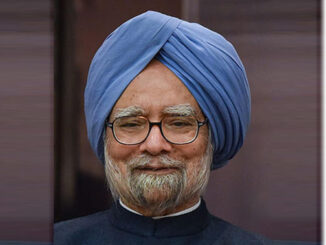
The teaser was earlier scheduled to release on Salman’s 59th birthday, December 27. However, with the death of former Indian Prime Minister Manmohan Singh, the makers postponed it to December 28. -

No direction to break Dallewal’s fast, only concerned about his health, says Supreme Court of India
NEW DELHI (TIP): As farmers’ leader Jagjit Singh Dallewal, who has been on fast-unto-death since November 26, 2024, refused to receive medical help, the Supreme Court on Thursday, January 2, took strong exception to a “deliberate attempt” to create an impression that it wanted him to break his fast.
Shifting (him) to the hospital does not mean he will not continue his fast. There are medical facilities which will ensure that no harm is caused to his life. That is our only concern. His life is precious as a farm leader. Justice Surya Kant
“There is a deliberate attempt in the media by your state government officers to give the impression that the court is pressuring him to break the fast. Our direction was not to break his fast. We only said let his health be taken care of and he can continue his peaceful protest even when he is hospitalized. You have to persuade him from this angle,” a Bench of Justice Surya Kant and Justice Ujjal Bhuyan told Punjab Advocate General Gurminder Singh.
“Shifting (him) to the hospital does not mean he will not continue his fast. There are medical facilities which will ensure that no harm is caused to his life. That is our only concern. His life is precious as a farm leader. He is not aligned to any political ideologies and he is taking care of only the farmers’ cause,” Justice Kant said.
“Once Dallewal’s health is taken care of, he can continue on fast… Of course, with the support of medical aid. Once we are satisfied that his life is not in danger, the role of the committee (appointed by the court) becomes easier,” the top court said while hearing Labh Singh’s petition seeking contempt of court action against the Punjab Chief Secretary and Director General of Police for failing to implement its order on shifting Dallewal to a hospital.
“Your attitude is that there should be no conciliation. That is the whole problem,” Justice Kant told Singh who sought to clarify that the Punjab Government was all for conciliation.
“We have tried to convince him (Dallewal) to take medical aid as per your Lordships’ directions. Our people are on the site. He is of the firm opinion that he will definitely accept medical help subject to some intervention (by the Centre),” the Advocate General submitted. “Mr Advocate General, not even a single time your officers have gone there… Your ministers have gone there… Please don’t force us to say many things. Have you ever told them that we have constituted a committee for this purpose?” the Bench asked.
Stating that protesting farmers have been told about the court-constituted panel, Singh told the Bench that the committee has called them for talks on Friday.
“There are people who are making irresponsible statements… What are their bona fides is a matter to be looked into,” the Bench said. It also questioned the Centre for not making a statement that it would consider genuine demands of protesting farmers.
“Mr Mehta, you have been there for all these days, why your client (Centre) cannot make a statement that you will consider the genuine (demands) and we are open to consider genuine grievances of farmers… Our doors are open… Why can’t the Central Government also make a statement?” Justice Bhuyan asked the Solicitor General.
“Your Lordships are perhaps not aware of several factors which are weighing in. Therefore, right now we are confining (ourselves) to one person’s health,” Mehta replied. It also asked the Centre to respond to a petition filed by Dallewal’s friend Guninder Kaur Gill seeking implementation of the commitments made to farmers by the Centre.
As the Advocate General said officers were on the ground to take all steps required in the matter, the Bench asked it to file a compliance affidavit and posted the matter for further hearing on January 6.
(Source: TNS) -

2 sites shortlisted for Dr. Manmohan Singh Memorial
NEW DELHI (TIP): The government has shortlisted two locations for allotment of land to build a memorial to late Prime Minister Manmohan Singh. Union Urban Affairs Minister Manohar Lal Khattar on Thursday said the two sites, near the Rajghat memorial complex area, were.
The government has shortlisted two locations for allotment of land to build a memorial to late Prime Minister Manmohan Singh.Union Urban Affairs Minister Manohar Lal Khattar on Thursday said the two sites, near the Rajghat memorial complex area, were located at the same place where other former PMs’ memorials had earlier been built. Khattar said the family of Dr Singh was being consulted and their decision would be final on the location of the memorial site.
Union Housing and Urban Affairs Secretary Katikithala Srinivas is learnt to have met the family of the former PM in the national capital today to convey the location of the shortlisted sites. The family will now get back to the government about the spot that they finalize.
Khattar said once the family takes a call, a trust would be formed and the selected land would be allotted to the trust for Re 1 and the trust would build the memorial.
“In the case of late PM AB Vajpayee, land had been similarly allotted to a trust… That trust had built Sadaiv Atal, the Atal memorial in the Rashtriya Smriti Sthal near the Raj Ghat area,” the minister said, adding that the trust that would be allotted the land would not be a government trust and would be an institution of the family’s choice.
The Tribune has learnt that the two shortlisted memorial sites are likely located at the Ekta Sthal Samadhi Complex where memorials of former Presidents Giani Zail Singh, Shankar Dayal Sharma, KR Narayanan and R Venkatraman and those of former PM Chandrashekhar, IK Gujral and PV Narasimha Rao are located.
Ekta Sthal is learnt to have space for two more memorials as of today.
(Source: TNS) -

ISRO launches SpaDeX mission for space docking
With the mission, ISRO aims to exhibit technologies needed for spacecraft rendezvous, docking, and undocking using two small satellites which have been mastered by only an elite group of spacefaring nations
SRIHARIKOTA (TIP): The Indian Space Research Organisation (ISRO) successfully launched the Space Docking Experiment (SpaDeX) mission on Monday , December 30, 2024.
The PSLV C60 rocket carrying two small satellites, SDX01 (Chaser) and SDX02 (Target), along with 24 payloads, lifted off from the first launchpad of the Satish Dhawan Space Centre in Sriharikota at 10 p.m. About 15 minutes after liftoff, the two small spacecraft weighing about 220 kg each were launched into a 475-km circular orbit as intended.
“The rocket has placed the satellites in the right orbit which is into a 475-km circular orbit. The spacecraft’s solar panels have been deployed successfully. The two SpaDeX satellites have moved one behind another so over a period of time it will pick up travel further distance, the distance will increase by 20 km over the next few days and then the rendezvous and docking process will start. The docking process can happen in another one week; the nominal time will be approximately January 7,” said ISRO Chairman S Somanth.
With the SpaDeX mission, ISRO aims to exhibit technologies needed for spacecraft rendezvous, docking, and undocking using two small satellites which have been mastered by only an elite group of spacefaring nations.
The demonstration of this technology is essential for futuristic missions such as sending an Indian astronaut on the Moon, sample return from the Moon, the building and operation of the Indian Space Station.
ISRO said that the demonstrated precision of the PSLV vehicle will be utilized to give a small relative velocity between the Target and Chaser spacecraft at the time of separation from the launch vehicle.
GSLV mission planned in January would be 100th launch from Sriharikota: ISRO chief
“This incremental velocity will allow the Target spacecraft to build a 10-20 km inter-satellite separation with respect to the Chaser within a day. At this point, the relative velocity between the Target will be compensated using the propulsion system of the Target spacecraft,” ISRO said.
ISRO added that at the end of this drift arrest maneuver, Target and Chaser will be in the same orbit with identical velocity but separated by about 20 km, known as Far Rendezvous.
“With a similar strategy of introducing and then compensating for a small relative velocity between the two spacecraft, the Chaser will approach the Target with progressively reduced inter-satellite distances of 5 km, 1.5 km, 500 m, 225 m, 15 m, and 3 m, ultimately leading to the docking of the two spacecraft,” it added.
U R Rao Satellite Centre Director M. Sanakaran said the docking is expected between January 7 and 10.
Twenty-four PS4-Orbital Experiment Module (POEM-4) payloads will also onboard the PSLV-C60 SpaDeX mission.
-

Biden Plans to Block Takeover Bid of U.S. Steel by Japan’s Nippon
The president’s announcement of the fate of the iconic Pennsylvania-based company, which became a contentious political issue in an election year, is expected as soon as Friday.
WASHINGTON, D.C. (TIP): President Biden has decided to block the $14 billion takeover of U.S. Steel by Nippon Steel of Japan in an announcement expected as soon as Friday based on grounds that the sale poses a threat to national security, according to people familiar with the matter, a New York Times report says.
The decision would be an extraordinary use of executive power, particularly for a president who is just weeks from leaving office. It is also a departure from America’s long-established culture of open investment, one that could have wide-ranging implications for the U.S. economy.
Mr. Biden’s move to stop the transaction could cause foreign investors to rethink the wisdom of acquiring American firms in sensitive industries that are based in politically important states. It could also roil relations with Japan, a close ally of the United States and one of America’s largest sources of foreign investment.
The president’s decision to block the deal came after a federal committee reviewing the transaction opted to not make a formal recommendation about whether the takeover should be allowed to proceed, according to letters sent to the companies and the White House last month.
The Committee of Foreign Investment in the United States, which is made up of agencies including the departments of Treasury and Justice, expressed reservations about the deal to the companies in a letter last month. CFIUS (pronounced SIFF-ee-yuhs) voiced concerns that the transaction could pose a national security threat to the United States by potentially leading to a decline in American steel production. The officials suggested that Nippon’s other global business considerations could in the future outweigh its pledges to invest in U.S. Steel.
The lack of a formal recommendation cleared the way for Mr. Biden, barring an unexpected change of heart, to end a transaction that became ensnared in election-year politics. But that decision could face challenges in court. Nippon had indicated that it was prepared to take legal action if the deal was blocked.
Nippon sent a letter to CFIUS last month that accused the White House of “impermissible influence” in the process. Nippon said the concerns raised by CFIUS were “littered with factual inaccuracies and omissions, misleading and incomplete statements, conjecture and hypotheticals that have no basis in fact and are plainly illogical.”
U.S. Steel has also continued to push for the deal. After CFIUS failed to make a formal recommendation, the company issued a statement saying that the deal “is the best way, by far, to ensure that U.S. Steel, including its employees, communities and customers, will thrive well into the future.”
CBS News reported earlier that a decision could come as early as Friday.
The politics of Mr. Biden’s decision were clear: U.S. Steel is based in the crucial swing state of Pennsylvania, and its powerful union vehemently opposed the proposed takeover, in part over concerns that Nippon would not honor its commitments to invest in plants and preserve the pensions of workers. The public debate over the acquisition emerged as a key issue ahead of the 2024 presidential election, and Mr. Biden, Vice President Kamala Harris and President-elect Donald J. Trump all publicly said that U.S. Steel should remain American-owned.
Before the election, the Biden administration granted the companies an additional three months to try to address concerns about the deal. By December, however, it was clear that the deal was most likely doomed when CFIUS told Nippon that federal agencies were divided over whether it should proceed, and after Mr. Trump declared that he would block it upon taking office.
“As President, I will block this deal from happening,” Mr. Trump said on social media. “Buyer Beware!!!”
Despite his opposition to the steel deal, Mr. Trump last month welcomed a $100 billion investment in the United States pledged by SoftBank, a Japanese technology company, that will focus on technology and artificial intelligence over the next four years.
The bid by Nippon faced political opposition from the moment it was announced in December 2023. Democratic senators including Sherrod Brown of Ohio and Bob Casey of Pennsylvania, along with Senator JD Vance, the Ohio Republican who is now the vice president-elect, urged Mr. Biden to review the proposed sale to guard against lost steel production and jobs. Both Mr. Brown and Mr. Casey lost their seats to Republican challengers in November.
Shortly before last Christmas, the Biden administration appeared to bend to the concerns being voiced by lawmakers, with Lael Brainard, the director of the National Economic Council, issuing a statement saying that the transaction “appears to deserve serious scrutiny in terms of its potential impact on national security and supply chain reliability.”
While U.S. Steel shareholders approved the deal in April, the likelihood that it would happen dimmed as the presidential election grew closer.
U.S. Steel, which was founded in 1901, has for years faced financial struggles amid the changing dynamics of global metal markets and rapidly evolving technology, which the company was often slow to adopt. The company, whose metal has been used to build some of the nation’s most famous bridges and buildings — such as the Willis Tower in Chicago and the United Nations building in New York — employed 340,000 workers at its peak in the 1940s but now has around 20,000 workers overall, with about 4,000 in Pennsylvania.
A post-pandemic boost to the steel market, which stemmed from a combination of shortages and demand spurred by federal infrastructure investments, had been showing signs of cooling amid worries of a global economic slowdown. In 2023, a U.S. Steel rival, the Ohio-based Cleveland-Cliffs, made an unsolicited offer to buy its competitor. That set off a bidding war that Nippon won.
(Source: New York Times) -

Guru Gobind Singh’s Spiritual Teachings and Philosophy
Guru Gobind Singh, the tenth and final Guru of Sikhism, was not only a great warrior and leader but also a profound spiritual guide. His teachings and philosophy shaped the core beliefs of Sikhism, making him one of the most influential spiritual figures in history. This section explores his spiritual insights, the development of Sikh practices, and the theological underpinnings of his teachings.
Guru’s Vision of Sikhism
The Guru’s Role in Sikhism:
– Guru Gobind Singh’s vision for Sikhism was rooted in the idea of unity, equality, and devotion to one God.
– He emphasized the importance of the Guru Granth Sahib as the eternal Guru, and after his death, Sikhs were instructed to look to the sacred scripture for spiritual guidance.
– Guru Gobind Singh’s teachings were meant to transcend ritualistic practices, encouraging followers to focus on inner spirituality, self-discipline, and service to humanity.
Spiritual Equality:
– A hallmark of Guru Gobind Singh’s philosophy was his commitment to equality. He worked tirelessly to break the social barriers of caste, gender, and creed, teaching that all individuals are equal in the eyes of God.
– His creation of the Khalsa, a brotherhood of spiritually committed warriors, symbolized this equality. The Khalsa was open to individuals from all walks of life, reinforcing the idea that one’s spiritual standing is not determined by birth or social status but by devotion to God and righteous living.
Teachings
Oneness of God (Ik Onkar):
– Guru Gobind Singh reiterated the Sikh belief in the oneness of God, a central tenet of Sikhism.
– He taught that God is formless, eternal, and transcendent, and is present in all aspects of creation. This teaching is encapsulated in the Sikh phrase Ik Onkar, which means “There is only One God.”
– His spiritual teachings emphasized the importance of devotion to this One God, without the need for intermediaries or rituals.
Equality and Brotherhood:
– The creation of the Khalsa in 1699 was a revolutionary act that consolidated the principles of equality and brotherhood.
– Guru Gobind Singh preached that all Sikhs, regardless of their background, should see each other as equals, bound by a shared commitment to the divine and to justice.
– He rejected the caste system, asserting that all Sikhs, whether high or low, rich or poor, were spiritually equal.
Selflessness and Service (Seva):
– Guru Gobind Singh emphasized the importance of Seva, or selfless service, as a means of attaining spiritual enlightenment.
– He believed that the ultimate goal of life was not personal gain but service to others, particularly to the downtrodden and oppressed.
– His teachings on selflessness extended beyond mere charity; he encouraged Sikhs to serve society and fight for justice, even if it meant making personal sacrifices.
Rejection of Superstition:
– Guru Gobind Singh was a staunch opponent of superstitions, rituals, and idol worship.
– He emphasized that true spirituality comes from devotion to the One God and through the practice of honesty, humility, and service.
– In his teachings, he denounced the rituals of priesthood and the worship of idols, which he saw as distractions from the true path of devotion.
The Guru Granth Sahib as the Eternal Guru:
– One of the most significant aspects of Guru Gobind Singh’s legacy was his decision to declare the Guru Granth Sahib as the eternal Guru after his passing.
– He stated that no human Guru would succeed him, ensuring that Sikhs would have a constant source of divine wisdom in the form of the scripture.
– This marked the culmination of the Guru lineage, with the Guru Granth Sahib becoming the ultimate spiritual guide for all Sikhs.
The Rejection of Ritualism in Favor of Inner Spirituality:
– Guru Gobind Singh’s teachings stressed that spiritual truth was to be found through meditation on the divine name (Naam) and through selfless action.
– He rejected the idea of asceticism, stating that one could attain spiritual liberation by living an active life in the world, while maintaining a strong connection to the divine.
Living a Righteous Life:
– Guru Gobind Singh’s spiritual philosophy stressed the importance of personal morality.
– He taught that living a righteous life required cultivating virtues such as honesty, humility, compassion, and self-control.
The Battle Against Intolerance:
– Guru Gobind Singh fought not only physical battles but also intellectual and spiritual battles against religious intolerance.
– He rejected sectarianism, bigotry, and injustice, emphasizing the need for a world where all individuals could practice their faith freely and live in harmony.
Legacy of Guru Gobind Singh’s
Spiritual Teachings
Influence on Sikh Identity:
– Guru Gobind Singh’s spiritual teachings became the bedrock of Sikh identity.
– His insistence on equality, justice, and personal devotion shaped the Sikh community into a force for good, which continues to be active in social, political, and spiritual matters today.
The Universal Appeal of His Philosophy:
– Guru Gobind Singh’s teachings transcended the boundaries of religion and culture, offering a universal message of peace, justice, and the importance of standing up for righteousness.
– Sikhs worldwide continue to draw inspiration from his spiritual philosophy, applying his teachings to everyday life.
Moral and Ethical Teachings
Equality and Justice:
– One of Guru Gobind Singh’s core teachings was the principle of equality. He vehemently opposed any form of social discrimination based on caste, gender, or social status.
– Guru Gobind Singh stressed the importance of justice and fairness. His commitment to equality was demonstrated in the formation of the Khalsa, where all initiates were given the same rights and responsibilities, regardless of their background.
– In his teachings, Guru Gobind Singh explicitly rejected the caste system, emphasizing that all Sikhs, whether rich or poor, high or low, were equal in the eyes of God.
– Guru Gobind Singh also taught that one’s actions, rather than birth or social status, determine a person’s worth.
Selflessness and Service:
– Guru Gobind Singh taught the value of selflessness and seva (service). His life was an embodiment of these principles, as he dedicated his entire existence to the welfare of others.
– He encouraged his followers to engage in seva not only for spiritual growth but also to contribute to the greater good of society.
– Through selfless service, Sikhs were to cultivate humility, compassion, and a sense of responsibility toward others.
Bravery and the Warrior Spirit:
– Guru Gobind Singh was known for his warrior spirit. However, his teachings regarding bravery were not about glorifying violence but about defending truth, justice, and righteousness.
– He encouraged Sikhs to be brave and fearless in the face of tyranny and injustice, to protect the weak, and to stand up for what is right.
– The creation of the Khalsa was a way to empower Sikhs to be spiritually and physically strong, ready to face any challenges that might arise in their quest for justice. -

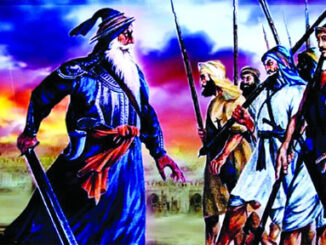
Transformation of Sikhism into a Warrior Faith
Guru Gobind Singh’s leadership marked the transformation of Sikhism from a primarily spiritual movement into a martial and political force. This transition was not merely about militarization but represented a comprehensive restructuring of the Sikh faith to respond to the socio-political realities of the time. This section explores the evolution of Sikhism under Guru Gobind Singh, the principles of saint-soldierhood, key battles, and the enduring legacy of the warrior ethos in Sikhism.
Context of Transformation: Historical Challenges
Religious Persecution in India:
– The late 17th century saw widespread persecution under Mughal Emperor Aurangzeb, who sought to impose Islamic orthodoxy.
– Sikhs, Hindus, and other non-Muslim communities faced forced conversions, destruction of places of worship, and suppression of cultural practices.
Legacy of Guru Hargobind:
– Guru Gobind Singh inherited the ideology of Miri-Piri established by Guru Hargobind, blending spiritual enlightenment with temporal strength.
– Guru Hargobind had already begun the militarization of Sikhism by creating the Akal Sena (army) to protect the oppressed.
Martyrdom of Guru Tegh Bahadur:
– The execution of Guru Gobind Singh’s father, Guru Tegh Bahadur, for defending religious freedom served as a turning point.
– It reinforced the need for Sikhs to adopt a defensive and proactive stance against oppression.
Rise of Banditry and Local Tyranny:
– Beyond Mughal persecution, local chieftains and landlords often exploited peasants and lower-caste groups.
– Guru Gobind Singh envisioned Sikhism as a force to liberate society from these injustices.
Philosophy of Saint-Soldierhood
Guru Gobind Singh introduced the concept of the Sant-Sipahi, or saint-soldier, emphasizing a balance between spiritual devotion and martial readiness.
Spiritual Foundation:
– Sikhs were encouraged to meditate on Naam (God’s Name) and uphold the principles of humility, compassion, and selflessness.
– The warrior ethos was rooted in the defense of righteousness and justice, not in aggression or conquest.
Martial Responsibility:
– Every Sikh was taught to see themselves as a protector of the weak and a defender of the faith.
– Martial training, including the use of swords, bows, and horses, became integral to Sikh life.
Equality and Justice:
– The saint-soldier was also a social reformer, challenging caste-based discrimination and advocating for human rights.
Inspiration from Mythology and History:
– Guru Gobind Singh drew inspiration from Hindu epics like the Mahabharata and Ramayana, and Islamic traditions of chivalry, blending these influences into a unique Sikh warrior philosophy.
Formation of the Khalsa
The founding of the Khalsa in 1699 was central to the transformation of Sikhism into a warrior faith.
Institutionalizing Martial Training:
– The Khalsa order emphasized discipline, bravery, and self-sacrifice.
– Initiates were trained in the art of war and imbued with spiritual teachings.
Democratic Leadership:
– The concept of the Panj Pyare (Five Beloved Ones) reflected Guru Gobind Singh’s commitment to collective decision-making.
– The Khalsa was a brotherhood bound by shared principles, transcending caste and class divisions.
Code of Conduct (Rehat Maryada):
– Khalsa Sikhs were required to wear the Five Ks, embodying spiritual and martial values.
– They pledged to fight against tyranny and protect the oppressed, regardless of religion or background.
Military Campaigns of Guru Gobind Singh
Guru Gobind Singh personally led numerous military campaigns to defend Sikhism and resist Mughal oppression.
Battle of Bhangani (1688):
– The first major battle fought by Guru Gobind Singh against local hill chieftains who resented his growing influence.
– It established his reputation as a capable military leader.
Battle of Nadaun (1691):
– Guru Gobind Singh allied with Raja Bhim Chand of Bilaspur to defeat Mughal forces.
Defensive Strategies at Anandpur Sahib:
– Anandpur Sahib became a fortress of resistance, symbolizing Sikh resilience.
– Guru Gobind Singh repelled multiple attacks by combined Mughal and hill chieftain forces.
Battle of Chamkaur (1704):
– A pivotal moment in Sikh history, where Guru Gobind Singh and his forces valiantly defended against overwhelming Mughal forces.
– The Guru’s two elder sons, Ajit Singh and Jujhar Singh, were martyred in this battle, epitomizing the spirit of sacrifice.
Battle of Muktsar (1705):
– The Guru’s forces, though outnumbered, achieved a symbolic victory, demonstrating their unyielding spirit.
– The battle is commemorated as a testament to Sikh valor and unity.
Transformation of Sikh Institutions
Guru Gobind Singh restructured Sikh institutions to reflect the warrior ethos and ensure the community’s self-sufficiency.
Fortification of Sikh Centers:
– Anandpur Sahib and other towns were developed into centers of spiritual learning and martial training.
Economic Self-Reliance:
– Sikhs were encouraged to contribute to the community treasury, enabling the establishment of langars (community kitchens) and the maintenance of armed forces.
Appointment of Successors:
– Before his death, Guru Gobind Singh declared the Guru Granth Sahib as the eternal Guru of the Sikhs, ensuring spiritual continuity.
– Leadership was decentralized, with the Khalsa assuming collective responsibility.
Enduring Legacy of the Warrior Faith
Guru Gobind Singh’s transformation of Sikhism into a warrior faith has left a lasting legacy.
– The martial ethos inspired later Sikh leaders, including Banda Singh Bahadur and Maharaja Ranjit Singh, in their struggles against tyranny.
– Sikh soldiers played crucial roles in global conflicts, earning respect for their bravery and discipline.
Modern Relevance:
– The principles of saint-soldierhood guide Sikhs in addressing contemporary challenges, from social injustice to humanitarian crises.
Cultural Identity:
– The warrior spirit is celebrated through Sikh festivals, martial arts like Gatka, and the continued reverence for the Five Ks.
Guru Gobind Singh’s Military Strategy
Guerrilla Warfare:
– The Guru employed hit-and-run tactics, using the terrain to his advantage.
– He avoided direct confrontations with larger forces, striking strategically to weaken the enemy.
Use of Fortresses:
– Fortresses like Anandpur Sahib and Lohgarh were strategically located and well-fortified to withstand prolonged sieges.
Unity and Morale:
– Guru Gobind Singh fostered a sense of brotherhood and shared purpose among his warriors.
– His personal involvement in battles inspired loyalty and courage. -

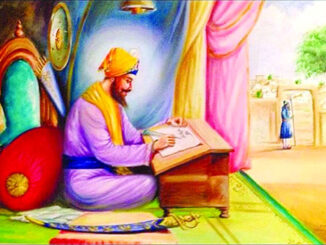
Literary Contributions of Guru Gobind Singh
Guru Gobind Singh’s writings form a significant part of Sikh literature and philosophy. Although most of his works are compiled in the Dasam Granth, his compositions extend beyond the text, offering profound insights into spirituality, ethics, and leadership.
Jaap Sahib
– A hymn of praise, Jaap Sahib glorifies the infinite attributes of God.
– Written in Braj and Sanskrit, it emphasizes the omnipresence, omnipotence, and formlessness of the divine.
– The rhythmic and poetic structure inspires devotion and courage, making it integral to Sikh daily prayers.
Akal Ustat
– Translated as “Praise of the Eternal,” this composition celebrates the unity and universality of God.
– Guru Gobind Singh denounces caste discrimination and religious fanaticism, promoting equality and harmony.
Bachittar Natak
– Often regarded as Guru Gobind Singh’s autobiographical account, it narrates his divine mission and struggles.
– It provides a historical perspective on the socio-political challenges of his time.
Chandi di Var
– A poetic retelling of the Hindu mythological tale of Goddess Durga’s battles with demons.
– This work symbolizes the fight against evil and oppression, resonating with the Guru’s mission to empower the oppressed.
Zafarnama
– A Persian epistle written to Mughal Emperor Aurangzeb, Zafarnama is a masterpiece of diplomacy and moral admonishment.
– In it, Guru Gobind Singh condemns Aurangzeb’s deceitful practices and upholds the ideals of truth and justice.
Sarab Loh Granth
– This text focuses on the concept of Sarab Loh (All-Steel), symbolizing strength and resilience.
– It emphasizes the virtues of the Khalsa and the eternal battle between good and evil.
Shabad Hazare
– A collection of hymns that reflect Guru Gobind Singh’s spiritual depth.
– These compositions encourage self-discipline and devotion to God.
Philosophical Themes in
Guru Gobind Singh’s Writings
The Guru’s literary works encapsulate his vision for a society rooted in justice, equality, and spirituality. Key philosophical themes include:
Oneness of God:
– Guru Gobind Singh reinforced the Sikh belief in the singular, formless, and eternal nature of God. His writings often describe God as beyond human comprehension yet accessible through devotion and righteous actions.
Equality and Justice
– He rejected casteism, gender inequality, and religious exclusivism. In works like Akal Ustat, he highlighted the equality of all human beings, urging them to rise above divisions.
Empowerment and Courage
– Through compositions like Chandi di Var, the Guru inspired his followers to embrace courage and fight against tyranny. The symbolism of divine battles in his writings resonated with the Sikh struggle for justice.
Devotion and Discipline
– The Guru emphasized the importance of a disciplined life rooted in devotion, humility, and service. His poetic expressions of love for God inspire Sikhs to remain steadfast in their faith.
Moral Integrity
– Works like Zafarnama underscore the importance of truth and moral integrity, even in the face of adversity. Guru Gobind Singh’s unwavering principles became a moral compass for his followers.
Languages and Styles
Guru Gobind Singh’s mastery of multiple languages allowed him to address diverse audiences and articulate complex ideas effectively.
Multilingual Proficiency:
– His compositions include a blend of Punjabi, Braj, Sanskrit, and Persian, reflecting his cosmopolitan outlook.
– This linguistic versatility made his works accessible to people of different backgrounds.
Poetic and Rhythmic Style
– The Guru used metaphors, similes, and allegories to convey profound spiritual truths.
– The rhythmic quality of his hymns, particularly in Jaap Sahib, enhances their recitation and memorability.
Symbolism
– His use of mythological references, such as Durga in Chandi di Var, served as metaphors for the eternal struggle between good and evil.
Significance of the Dasam Granth
The Dasam Granth, a compilation of Guru Gobind Singh’s writings, holds a central place in Sikh literature.
Structure of the Granth:
– Divided into various sections, including Jaap Sahib, Bachittar Natak, and Chandi di Var.
– Each section addresses different aspects of spirituality, ethics, and governance.
Controversies and Debates
– The Dasam Granth has been subject to scholarly debates regarding its authorship and authenticity.
– However, its spiritual and philosophical contributions remain undisputed among Sikhs.
Practical Applications:
– The teachings of the Dasam Granth continue to inspire Sikhs in their daily lives, encouraging devotion, courage, and self-discipline.
Guru Gobind Singh as a Visionary Poet
Guru Gobind Singh’s literary contributions extend beyond religious texts. His works reflect a profound understanding of human psychology, social dynamics, and the principles of governance.
Empowering the Oppressed
– His writings instilled a sense of dignity and self-worth among the oppressed, inspiring them to challenge societal injustices.
Guidance for Leadership
– The Guru’s teachings on leadership emphasize humility, moral integrity, and a commitment to the welfare of others.
Relevance in Modern Times
– The themes of equality, justice, and resilience in his works remain relevant in addressing contemporary social and political challenges.
Legacy of Guru Gobind
Singh’s Literary Works
The Guru’s writings have left an indelible mark on Sikhism and world literature.
Inspiration for Sikh Practices
– His compositions form the basis of Sikh prayers and rituals, fostering a sense of unity and devotion among followers.
– Scholars and spiritual leaders worldwide acknowledge the literary and philosophical depth of Guru Gobind Singh’s works.
– Efforts to preserve and translate his writings have made them accessible to diverse audiences, ensuring their continued relevance.
Guru Gobind Singh’s literary contributions reflect his multifaceted personality as a spiritual leader, warrior, and poet. His works, rich in philosophy and poetic brilliance, continue to inspire millions, guiding them toward a life of righteousness, courage, and devotion. By blending spirituality with social and political ideals, the Guru redefined the role of literature as a powerful tool for transformation.