Month: January 2025

  • Guru Gobind Singh: The Founder of Khalsa Panth

    Guru Gobind Singh: The Founder of Khalsa Panth

    The establishment of the Khalsa Panth by Guru Gobind Singh Ji on 13 April 1699 (Baisakhi) marked a transformative moment in Sikh history. It was a revolutionary initiative aimed at empowering the Sikh community, uniting them under a common identity, and preparing them to confront religious persecution and social injustices. This section explores the events leading to the formation of the Khalsa, its rituals and significance, and its impact on Sikhism and society.
    Context Leading to the Creation of the Khalsa
    The political and religious environment in India during Guru Gobind Singh’s time was rife with oppression. The Mughal Emperor Aurangzeb pursued aggressive policies to enforce Islamic supremacy, resulting in widespread persecution of non-Muslims.
    – Religious Oppression: The Mughal administration imposed jizya (religious tax) on Hindus and sought to convert them forcibly. Temples were destroyed, and religious practices were restricted.
    – Guru Tegh Bahadur’s Sacrifice: The execution of Guru Gobind Singh’s father, Guru Tegh Bahadur, for defending the rights of Hindus and Sikhs, was a pivotal moment. It underscored the need for a community prepared to resist tyranny.
    – Internal Challenges: The Sikh community faced fragmentation and lacked a unified identity. Guru Gobind Singh recognized the need to strengthen their spiritual and martial resolve.
    Preparations for the Khalsa
    Guru Gobind Singh spent years preparing the Sikh community for the creation of the Khalsa. Anandpur Sahib became a center for spiritual and martial training, attracting followers from various regions.
    – Building Unity: Through teachings, hymns, and discourses, the Guru instilled a sense of equality, courage, and devotion among his followers.
    – Martial Training: Sikhs were encouraged to learn combat skills, ensuring they were prepared to defend themselves and others.
    – Symbolism of Equality: The Guru emphasized the oneness of humanity, rejecting caste-based discrimination and promoting social justice.
    The First Baisakhi of the Khalsa
    The historic event took place on 13 April 1699 at Anandpur Sahib. Guru Gobind Singh organized a grand congregation, inviting Sikhs from across India.
    – The Sword and the Call for Sacrifice: The Guru stood before the assembled crowd, holding a sword, and asked, “Who is willing to give their head for the faith?”
    – After an initial moment of hesitation, Daya Ram (later Bhai Daya Singh) stepped forward, offering his life. The Guru took him into a tent and later emerged with a blood-stained sword. This process was repeated with four more volunteers: Dharam Das, Himmat Rai, Mohkam Chand, and Sahib Chand.
    – The Five Beloved Ones (Panj Pyare): These five men, from diverse backgrounds and castes, were the first initiates of the Khalsa. They became known as the Panj Pyare, symbolizing the elimination of caste and social distinctions.
    The Initiation Ceremony: Amrit Sanchar
    Guru Gobind Singh introduced the Amrit Sanchar (baptism) ceremony, where the Panj Pyare were initiated into the Khalsa.
    – Preparation of Amrit: The Guru stirred water and sugar crystals in an iron bowl using a double-edged sword (Khanda) while reciting five sacred hymns from Sikh scripture.
    – Initiation Process: The initiates drank the Amrit, symbolizing their commitment to the Khalsa ideals, and were sprinkled with it five times on their hair and eyes.
    – Code of Conduct: The Guru instructed the Khalsa to adhere to a strict moral and spiritual code, including daily prayers, ethical conduct, and readiness for self-defense.
    The Five Ks (Panj Kakkars)
    Guru Gobind Singh mandated that every Khalsa Sikh adopt five articles of faith, known as the Five Ks. These symbols served as a constant reminder of their commitment to the Guru’s teachings.
    – Kesh (uncut hair): Symbolizing spirituality and acceptance of God’s will.
    – Kangha (wooden comb): Representing cleanliness and discipline.
    – Kara (iron bracelet): Signifying unity with God and restraint in actions.
    – Kirpan (sword): Denoting courage and the responsibility to protect the weak.
    – Kachera (cotton undergarments): Symbolizing modesty and self-control.
    The New Identity: Singh and Kaur
    Guru Gobind Singh bestowed a new identity upon his followers, erasing distinctions of caste, class, and gender.
    – Singh and Kaur: Men were given the surname Singh (lion), and women were given Kaur (princess). This affirmed their equality and regal dignity.
    – Transformation of the Individual: The Khalsa was envisioned as a saint-soldier, combining spiritual wisdom with martial prowess.
    Guru Gobind Singh’s Own Initiation
    In a remarkable act of humility, Guru Gobind Singh asked the Panj Pyare to initiate him into the Khalsa. This act emphasized the equality of all members of the Khalsa and demonstrated his commitment to the principles he had established.
    Objectives of the Khalsa
    The creation of the Khalsa was not merely a religious initiative but a socio-political revolution aimed at empowering the oppressed.
    – Defense of Dharma: The Khalsa was tasked with protecting the rights and freedoms of all people, regardless of religion or caste.
    – Promotion of Equality: By erasing social distinctions, the Khalsa fostered unity and brotherhood.
    – Spiritual Discipline: Members were encouraged to live righteous lives, adhering to the principles of Sikhism.
    Impact of the Khalsa on Sikhism
    The establishment of the Khalsa had a profound and lasting impact on Sikhism.
    – Unity and Strength: The Khalsa provided a unified identity and a sense of purpose to the Sikh community.
    – Resistance to Oppression: The Khalsa became a formidable force, challenging Mughal tyranny and inspiring other oppressed communities.
    – Legacy of Leadership: The principles and institutions established by the Khalsa continue to guide Sikhs worldwide.
    Challenges and Sacrifices
    The formation of the Khalsa brought with it significant challenges. Members faced persecution and had to endure immense sacrifices to uphold their principles. However, their resilience and dedication became a source of inspiration for generations to come.

    The establishment of the Khalsa by Guru Gobind Singh was a defining moment in Sikh history, symbolizing the union of spirituality and courage. By creating the Khalsa, the Guru empowered his followers to stand against injustice and to live with dignity and purpose. The Khalsa remains a cornerstone of Sikh identity, embodying the values of equality, justice, and selfless service.
    Guru Gobind Singh: Literary Contributions and Philosophy
    Guru Gobind Singh was not only a spiritual leader and warrior but also a prolific scholar and poet. His literary works, composed in multiple languages including Punjabi, Braj, Persian, and Sanskrit, reflect his philosophical depth, spiritual wisdom, and vision for a just society. This section delves into the Guru’s literary contributions, their themes, and their enduring significance.

  • Guru Gobind Singh: The Warrior Saint and Spiritual Luminary

    Guru Gobind Singh: The Warrior Saint and Spiritual Luminary

    Guru Gobind Singh Ji, the tenth Sikh Guru, was born as Gobind Rai on 22 December 1666 in Patna, Bihar. His early life is a blend of extraordinary spiritual growth, intellectual development, and moments of deep tragedy that profoundly shaped his later contributions as a spiritual leader and warrior. This section explores his family background, formative years, education, and the events that set the stage for his lifelong mission to protect dharma and human rights.
    Birth and Family Background
    Gobind Rai was born to Guru Tegh Bahadur, the ninth Sikh Guru, and Mata Gujri Ji, a devout and wise woman who played an essential role in shaping his character. His birthplace, Patna Sahib, is now revered as one of the five Takhts (seats of authority) in Sikhism. The political and social climate during his birth was fraught with tension, as Mughal Emperor Aurangzeb was actively enforcing Islamic conversion policies, leading to oppression of Hindus and Sikhs alike.
    Guru Tegh Bahadur was a spiritual leader and warrior who traveled extensively to spread the teachings of Sikhism and protect religious freedom. His wife, Mata Gujri, was a pillar of support, ensuring Gobind Rai grew up in an environment imbued with spirituality, discipline, and resilience. Gobind Rai was their only child, making him the center of their attention and guidance.
    The Significance of Patna in His Early Years
    While Guru Tegh Bahadur was away on his missionary journeys, Mata Gujri and Gobind Rai stayed in Patna. The town became a hub for the Sikh community during their stay. Gobind Rai’s early interactions with the local people of diverse faiths and backgrounds allowed him to develop a deep respect for cultural and religious diversity.
    Even as a child, Gobind Rai exhibited signs of spiritual wisdom and bravery. It is said that his aura was so radiant that visitors often remarked on his extraordinary presence. Despite being born during a period of religious persecution, his childhood was marked by an innate curiosity about the world and an unwavering connection to the divine.
    Guru Tegh Bahadur’s Influence
    on Gobind Rai
    One of the most significant influences in Gobind Rai’s life was his father, Guru Tegh Bahadur. Known as the “Protector of Humanity” (Hind Di Chadar), Guru Tegh Bahadur embodied the principles of selflessness and courage.
    – Missionary Work: Guru Tegh Bahadur’s travels to Punjab, Assam, and Bengal brought him into contact with various communities, teaching Gobind Rai the importance of inclusivity.
    – Sacrifices: The Guru’s willingness to stand against injustice, even at great personal cost, left a lasting impression on his son.
    Guru Tegh Bahadur’s teachings laid the groundwork for Gobind Rai’s future role as a defender of human rights and a leader who would unify his community under the banner of equality and justice.
    Formative Years and Education
    Gobind Rai was not only raised as a spiritual seeker but also as a warrior and intellectual. His upbringing emphasized a holistic approach to leadership, balancing spiritual enlightenment with physical strength.
    – Training in Martial Arts: Gobind Rai was trained in horse riding, archery, swordsmanship, and other forms of combat. This training prepared him to lead his people during tumultuous times.
    – Study of Scriptures: He studied Sikh scriptures and other religious texts, including Hindu epics like the Mahabharata and Ramayana, gaining insights into dharma (righteousness) and leadership.
    – Language Proficiency: Gobind Rai was proficient in multiple languages, including Punjabi, Sanskrit, Persian, and Braj, enabling him to connect with diverse communities and articulate his vision effectively.
    His education was not limited to religious studies; it also included lessons in statecraft and diplomacy, which proved invaluable in his later dealings with hill chieftains and Mughal authorities.
    Early Signs of Leadership
    Even as a child, Gobind Rai demonstrated remarkable leadership qualities. He was known for his courage, intelligence, and ability to inspire others. Anecdotes from his childhood highlight his innate sense of justice and fairness.
    – Incident of the Broken Toy Bow: A popular story recounts how young Gobind Rai refused to cry when his toy bow broke, stating that a true warrior does not mourn over minor losses. This incident symbolized his resilience and readiness to face challenges.
    – Interactions with Saints and Scholars: Gobind Rai often engaged in discussions with visiting saints, absorbing their wisdom and demonstrating his deep understanding of spiritual concepts.
    Martyrdom of Guru Tegh Bahadur
    A defining moment in Gobind Rai’s early life was the martyrdom of his father. In 1675, Guru Tegh Bahadur was executed by Aurangzeb for refusing to convert to Islam and defending the religious freedom of Kashmiri Pandits.
    – The Turning Point: At the age of nine, Gobind Rai witnessed the brutal consequences of tyranny. This event solidified his resolve to fight oppression and protect the rights of the marginalized.
    – Acceptance of Guruship: Following his father’s death, Gobind Rai was formally installed as the tenth Guru of the Sikhs. Despite his young age, he took on the immense responsibility of leading his community through a period of crisis.
    The sacrifice of Guru Tegh Bahadur became a rallying cry for Sikhs, and Gobind Rai’s leadership ensured that his father’s legacy of resistance and justice would endure.
    Anandpur Sahib: A Hub of
    Spiritual and Martial Training
    After becoming the Guru, Gobind Rai established Anandpur Sahib, which became the epicenter of Sikhism under his guidance. It was here that he began to organize the Sikh community into a cohesive force, blending spirituality with martial discipline.
    – Community Building: Anandpur Sahib attracted Sikhs from all over India, creating a sense of unity and purpose.
    – Preparation for Future Battles: Gobind Rai encouraged the Sikhs to train in martial arts and self-defense, anticipating the need to resist future aggression.
    Legacy of His Early Life
    Gobind Rai’s early life was marked by a unique combination of spiritual wisdom, intellectual growth, and exposure to the harsh realities of life under an oppressive regime. These formative years laid the foundation for his later contributions as Guru Gobind Singh, the warrior-saint who would transform Sikhism and inspire generations to come.
    – Spiritual Resilience: His connection to the divine and commitment to justice were evident from a young age.
    – Leadership Qualities: His ability to inspire and lead others became apparent during his childhood.

  • Guru Gobind Singh’s Contributions to Global Humanism

    Guru Gobind Singh’s Contributions to Global Humanism

    Guru Gobind Singh’s philosophy was grounded in a commitment to humanism and the well-being of all. His teachings transcended geographical, cultural, and religious boundaries, presenting a universal message of peace, equality, and justice. In a world often divided by religious conflict and social hierarchies, Guru Gobind Singh’s vision was a call to transcend these divisions and live a life based on moral integrity and the universal principles of righteousness.
    His advocacy for justice, equality, and religious freedom provided a moral framework that resonates not only with Sikhs but also with people of all faiths and ideologies. Guru Gobind Singh’s egalitarian principles laid the foundation for modern concepts of human rights, emphasizing that every individual, regardless of race, caste, gender, or religion, has inherent dignity and worth. His rejection of social hierarchies and focus on community service and the collective good offers a model for social justice that remains relevant in contemporary discussions on equality and rights.
    The Relevance of Guru Gobind Singh’s Teachings in Modern Times
    In the contemporary world, where global issues such as inequality, injustice, and religious intolerance are prevalent, the teachings of Guru Gobind Singh continue to resonate deeply. His emphasis on spiritual freedom, righteousness, and selfless service provides a timely reminder that spiritual growth is intrinsically linked to one’s commitment to social justice. Guru Gobind Singh’s vision for a just society, where everyone has the right to live in dignity, echoes in the modern world’s fight for civil rights, gender equality, and social reform.
    The Khalsa, with its focus on bravery, equality, and community service, continues to be a guiding light for individuals who seek to stand against oppression and stand up for truth. In a world that often seems divided by conflicts of identity, belief, and social divisions, Guru Gobind Singh’s message of unity, tolerance, and the universal oneness of humanity remains more relevant than ever.
    Guru Gobind Singh’s Enduring Legacy in Sikh Community and Beyond
    Guru Gobind Singh’s legacy is not just confined to the history books but is lived every day by millions of Sikhs across the world. His teachings have shaped the Sikh community’s response to challenges and continue to guide their spiritual and social lives. The Gurdwaras, Sikh organizations, and Khalsa camps remain active centers of education, spiritual growth, and social service, embodying the ideals that Guru Gobind Singh set forth for his followers.
    The impact of Guru Gobind Singh extends beyond the Sikh community, as his message of equality, justice, and selfless service resonates with people of all cultures and backgrounds. His courage, leadership, and unwavering commitment to truth have inspired leaders, activists, and thinkers throughout history. From the struggles for independence in India to the global fight for human rights, Guru Gobind Singh’s influence is woven into the fabric of global history.
    The Eternal Guru
    The life of Guru Gobind Singh is a testament to the power of vision, courage, and unshakable faith. His teachings continue to light the way for those seeking justice, equality, and spiritual enlightenment. Guru Gobind Singh did not merely live for his time; his vision for humanity transcends time and space, inspiring future generations to stand tall in the face of adversity, uphold truth, and serve humanity with selflessness.
    Guru Gobind Singh’s life was not just about the political and military struggles he faced, but about his commitment to the eternal truths of life-equality, justice, service, and devotion to the Divine. His legacy remains not only in the Khalsa but in the hearts and minds of people worldwide who continue to draw strength and inspiration from his profound teachings.
    As Sikhs continue to follow the path that Guru Gobind Singh set forth, they are reminded that the battle for justice, equality, and truth is eternal, and each individual’s role in this struggle is sacred. Guru Gobind Singh’s message will continue to resonate, providing guidance, strength, and inspiration for generations to come, long after his physical presence left this world. His legacy is indeed one that transcends time, echoing through history as a beacon of hope, justice, and universal love.

  • Guru Gobind Singh: Epitome of Sacrifice

    Guru Gobind Singh: Epitome of Sacrifice

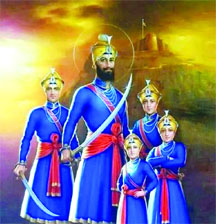
    Guru Gobind Singh’s life is a remarkable tapestry of sacrifice, courage, and devotion to the principles of justice and righteousness. Among the numerous sacrifices he made, the most heart-wrenching was the loss of all four of his sons—known as the “Sahibzade”—in the struggle to uphold the values of Sikhism and protect the oppressed. This narrative encapsulates the essence of his ultimate sacrifice and the legacy it left behind.
    The Four Sahibzade
    The four sons of Guru Gobind Singh-Ajit Singh, Jujhar Singh, Zorawar Singh, and Fateh Singh-are collectively known as the Sahibzade. They were raised in an environment imbued with Sikh values of bravery, compassion, and unwavering faith in the divine. Despite their young ages, each Sahibzada exhibited remarkable courage and dedication to the ideals of Sikhism, becoming immortalized as symbols of sacrifice and resilience.
    Ajit Singh (1687-1704)
    Ajit Singh, the eldest son of Guru Gobind Singh, was born on January 26, 1687, in Paonta Sahib. As a young boy, he displayed extraordinary intelligence, physical prowess, and a keen sense of responsibility. His upbringing in the Guru’s household prepared him to be a fearless warrior and a compassionate leader.
    Ajit Singh’s first significant contribution to the Sikh cause came during the Battle of Nirmohgarh in 1702, where he led a group of warriors against the Mughal forces. His bravery earned him admiration and respect among his peers. However, his ultimate sacrifice came during the Battle of Chamkaur in December 1704. At just 17 years old, Ajit Singh led a small group of Sikh warriors against the vast Mughal army, fighting valiantly until his last breath. His fearless sacrifice inspired his younger brother, Jujhar Singh, to follow in his footsteps.
    Jujhar Singh (1691-1704)
    Jujhar Singh, the second son of Guru Gobind Singh, was born on March 14, 1691, in Anandpur Sahib. Like his elder brother, Jujhar Singh was trained in martial arts, weaponry, and the teachings of Sikhism. His unwavering faith and courage made him a natural leader among his peers.
    During the Battle of Chamkaur, Jujhar Singh, then only 14 years old, witnessed his elder brother’s martyrdom. Undeterred, he sought his father’s permission to join the fight. Guru Gobind Singh, though heartbroken, blessed his son and encouraged him to uphold the principles of righteousness. Jujhar Singh led a charge against the Mughal forces, fighting with unmatched bravery until he too attained martyrdom. His sacrifice is remembered as a shining example of youthful valor and devotion to a higher cause.
    Zorawar Singh (1696-1705) and Fateh Singh (1699-1705)
    The younger Sahibzade, Zorawar Singh and Fateh Singh, were born in Anandpur Sahib. Zorawar Singh, born on November 17, 1696, and Fateh Singh, born on February 25, 1699, were brought up with the same values as their elder brothers. Despite their tender ages, they exhibited wisdom and courage beyond their years.
    In 1705, when the Guru’s family was forced to evacuate Anandpur Sahib under the Mughal siege, the younger Sahibzade were separated from Guru Gobind Singh. Accompanied by their grandmother, Mata Gujri, they were betrayed by a trusted servant and handed over to Wazir Khan, the governor of Sirhind.
    Wazir Khan attempted to break their spirit by offering them wealth, titles, and safety in exchange for converting to Islam. However, Zorawar Singh and Fateh Singh remained steadfast in their faith, refusing to bow to tyranny. Their unwavering resolve enraged Wazir Khan, who ordered them to be bricked alive. The boys faced their execution with unshakable courage, reciting Sikh hymns and reaffirming their commitment to their beliefs. Mata Gujri, imprisoned in a freezing tower, passed away upon hearing of her grandsons’ martyrdom.
    The Legacy of the Sahibzade’s Sacrifice
    The sacrifice of the four Sahibzade is unparalleled in history. Their martyrdom exemplifies the highest ideals of faith, courage, and selflessness. The Sahibzade chose death over compromise, leaving behind a legacy that continues to inspire Sikhs and non-Sikhs alike.
    Their sacrifices are commemorated annually during the “Shaheedi Jor Mela”, held in Fatehgarh Sahib, Punjab. The event draws thousands of devotees who come to pay homage to the Sahibzade and reflect on their enduring legacy. Their story is also a cornerstone of Sikh education, ensuring that future generations understand the values of sacrifice and resistance against oppression.
    The story of the Sahibzade is a testament to the power of faith and the strength of the human spirit. Despite their youth, they displayed remarkable courage and an unwavering commitment to righteousness. Guru Gobind Singh’s sons gave their lives to uphold the principles of Sikhism, becoming eternal symbols of sacrifice and resilience. Their legacy serves as a source of inspiration, reminding humanity of the importance of standing firm in the face of injustice and oppression.

  • North Brunswick Train Station Reaches New Design Milestone

    North Brunswick Train Station Reaches New Design Milestone

    MIDDLESEX COUNTY, NJ (TIP): The North Brunswick Train Station is advancing under the management of Middlesex County Improvement Authority (MCIA) with a recent announcement of 30% design approval and funding agreement with NJ TRANSIT for the final design phase of the project. The project now is moving towards 60% design completion with the construction drawings covering items such as passenger platforms, the overhead pedestrian bridges, foundation elements, steel connections, methods of structural support and DEP approval process.

    “These milestones are important as the design phase now moves from the conceptual stage to actual construction drawings,” said Executive Director H. James Polos. “We are eagerly completing the necessary foundational work to move full steam ahead with construction of the new train station in the very near future.”

    Under a unique partnership established in 2020 with NJ TRANSIT, the MCIA is managing the North Brunswick Train Station project. The agreement permits the MCIA to serve as the project manager overseeing the design and construction of the project. Under the agreement, the MCIA coordinates input from NJ TRANSIT, AMTRAK, New Jersey Department of Transportation (NJDOT), the township of North Brunswick, and Middlesex County.

    “The MCIA has streamlined what is normally a cumbersome process,” said Middlesex County Commissioner Director Ronald G. Rios. “Collaboration amongst all agencies through regular design team meetings has been a major benefit in moving this project forward expeditiously.”

    “The North Brunswick Train Station is a vital component of Middlesex County’s Destination 2040 strategic economic plan which will make Middlesex County a thriving, attractive destination to live, work, and play for generations to come,” said Chairman of the MCIA James Nolan. “Additionally, we expect the station to help manage traffic congestion along the Route 1 corridor and provide a more sustainable way to travel and commute.”

    “We remain grateful to our partners at the MCIA for managing this effort and celebrate the steady progress for the train station we have sought, and which is now approaching 60% design completion,” said North Brunswick Mayor Francis M. Womack.

    “Progressing to this design phase of the North Brunswick Train Station is a key milestone in our efforts to enhance mobility along the Northeast Corridor and support economic development in the region,” said NJ TRANSIT President & CEO Kevin S. Corbett. “Our funding agreement and strong partnership with the MCIA underscore our shared commitment to delivering a modern, accessible, and efficient train station that will benefit North Brunswick and the surrounding communities for decades to come.”

    Funding for the project has been provided by the New Jersey Transportation Trust Fund (NJTTF) in the amount of $50 million. WSP USA is the contracted design and engineering firm managed by MCIA. The MCIA will also manage the design and construction of the New Brunswick Train Station renovations performed by AECOM.

    MIDDLESEX COUNTY, NJ

    Middlesex County is bettering the lives of residents and providing economic growth opportunities to business and industry. It is home to numerous Fortune 500 companies, three universities, 19 County parks, and world-class healthcare and research facilities, making it one of the nation’s most dynamic regions and a leader in life sciences, transportation, the arts, and food innovation. As one of the most diverse populations in the country, Middlesex County is home to over 860,000 residents living throughout 25 municipalities. The County’s award-winning Middlesex County Magnet Schools system and two-year Middlesex College uphold its position as #1 in the state for education and workforce development. Conveniently located between New York and Philadelphia, Middlesex County is a leading destination for businesses and residents alike to live, work, and play – and has been since the 17th century. For more information, visit middlesexcountynj.gov and find us on Facebook, Instagram, and LinkedIn.

  • Close ranks to fortify the republic

    Close ranks to fortify the republic

    The collective will of people is needed to safeguard India’s interests

    “A deviation from this basic constitutional proposition will damage India’s capability to successfully navigate the enormous strategic challenges that are growing because of the technological changes underway in a turbulent global environment. The regional situation, too, presents difficulties that can be ignored only at the peril of hurting national interests. And, for India, the key country connecting its regional and global challenges is China.”

    By Vivek Katju

    With the onset of the year in which the Indian republic will celebrate 75 years of its establishment, the fervent hope of the majority of its citizens is for social peace and harmony. This can only be achieved if there is a realization that the path to right the ‘wrongs of history’ lies through cementing a common nationhood that is respectful of the traditions and faiths of all Indians. That acceptance and respect are also the premise and promise of the republic’s foundational principle, so eloquently expressed in the Constitution.

    A deviation from this basic constitutional proposition will damage India’s capability to successfully navigate the enormous strategic challenges that are growing because of the technological changes underway in a turbulent global environment. The regional situation, too, presents difficulties that can be ignored only at the peril of hurting national interests. And, for India, the key country connecting its regional and global challenges is China.

    China’s threat goes far beyond the border issue. A process of ‘normalizing’ the relationship, which was acutely impaired by China’s actions in eastern Ladakh in the summer of 2020, may now have begun. The Ministry of External Affairs’ readout of the Narendra Modi-Xi Jinping meeting on the sidelines of the BRICS summit in October last year noted, “The two leaders affirmed that stable, predictable and amicable bilateral relations between India and China, as two neighbors and the two largest nations on earth, will have a positive impact on regional and global peace and prosperity. It will also contribute to a multipolar Asia and a multipolar world”. However, whatever China may agree to during formal summit-level meetings, it is working for, at least, a bipolar world order and is assiduously seeking a unipolar Asia in which its power and influence prevail. And, the backbone of both these quests lies not only in its economic success and growing military power but also its undoubted and deep advances in the areas of science and high technology.

    In 2018, Tim Cook, CEO of Apple, had said, “The popular conception is that companies come to China because of low labor costs. I’m not sure what part of China they go to, but the truth is that China stopped being the low-labor-cost country years ago. And that is not the reason to come to China from a supply point of view. The reason is because of the skill, and the quantity of skill in one location and the type of skill…” He went on to say that the products that were Apple’s requirement needed advanced tooling capable of working with state-of-the-art material. He added, “That tooling skill is very deep here. In the US, you could have a meeting of tooling engineers and I’m not sure we could fill the room. In China, you could fill multiple football fields…”

    That was over six years ago. China’s drive to develop human capital in the areas of frontier manufacturing continues relentlessly. It is, however, not satisfied with becoming the factory of the world. It is now seeking to reach US and Western European levels in design and innovation in large frontier technology sectors, including artificial intelligence (AI).

    Till recently, it was commonly and correctly believed that in AI, the US excelled in ‘technical innovation’ while Chinese companies were competent at ‘application innovation’. There was generally a gap of one or two years before the application occurred. However, the Chinese are now realizing that there is a fundamental difference between ‘technical innovation’ and thereafter applying it. Hence, Chinese companies like DeepSeek have come up; they are going rapidly ahead in ‘technical innovation’. They do not wish to be followers anymore. This will pose a challenge to US supremacy in AI, which is destined to change the world. The US will pose impediments in China’s path, but will it succeed? It is difficult to predict how deep and extensive will be the transformation of individual lives and international power equations, but it is certain that this will happen, and that too early.

    Where does India stand in all this and other frontier and emerging areas of science and technology (S&T)? The truth is that while India’s economic growth has led it to become the fifth largest global economy, there is a wide and perhaps growing gap in S&T not only with the West but also with China. Jawaharlal Nehru was acutely aware that European domination of the world, beginning with the 18th and 19th centuries that led to all the horrors of colonialism in Asia, Africa and South America, had occurred because of its Industrial Revolution. Hence, his determination that India should catch up in S&T, both in terms of human capital and industrialization. In this context, it is good to become aware of the advances Indians had made in S&T in ancient times and convey that to the world, but is that really the path to becoming a strong and powerful country — a genuine pole in a multipolar world?

    The answer is obvious. All the digging out of glories from our ancient past, which was ravaged by invaders, will not help us meet the challenges of today. They may satisfy emotional urges of certain sections of the people, and their long-standing feelings of hurt and anguish may be addressed too, but they will not address the strategic threat that the country faces from China. In the current year and beyond, China’s involvement in India’s immediate neighborhood will only increase. Its intrusion in India’s western neighborhood, substantial for decades, will continue. The situation in Bangladesh is ripe for its pernicious intervention and it will increase its presence in the Indian Ocean Region.

    In such circumstances, it is the collective will of cohesive people — shedding prejudices, not dwelling on the past but taking India forward to become a leader in S&T innovation and applications and strong in defense — that is needed to safeguard India’s interests.
    (The author is a former Ambassador)

  • Jill Biden gets $20,000 diamond from PM Modi, priciest gift from any foreign leader

    Jill Biden gets $20,000 diamond from PM Modi, priciest gift from any foreign leader

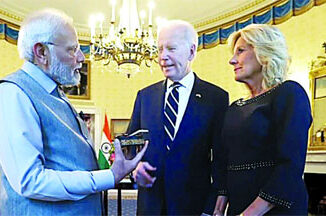
    Washington (TIP)- President Joe Biden and his family were given tens of thousands of dollars in gifts from foreign leaders in 2023, with Jill Biden receiving the single most expensive present: a USD 20,000 diamond from Indian Prime Minister Narendra Modi.
    The 7.5-carat diamond from Modi was easily the most costly gift presented to any member of the first family in 2023, although she also received a brooch valued at USD 14,063 from the Ukrainian ambassador to the United States and a bracelet, brooch and photograph album worth USD 4,510 from the president and first lady of Egypt, according to an annual accounting published by the State Department on Thursday, January 2.
    The USD 20,000 diamond was retained for official use in the White House East Wing, according to a State Department document, while the other gifts to the president and first lady were sent to the archives. The first lady’s office didn’t immediately respond to a request for comment about the diamond’s use.
    The US president himself received a number of expensive presents, including a commemorative photo album valued at USD 7,100 from South Korea’s recently impeached President Suk Yeol Yoon, a USD 3,495 statue of Mongolian warriors from the Mongolian prime minister, a USD 3,300 silver bowl from the sultan of Brunei, a USD 3,160 sterling silver tray from the president of Israel, and a collage worth USD 2,400 from Ukrainian President Volodymyr Zelenskyy.
    Federal law requires executive branch officials to declare gifts they receive from foreign leaders and counterparts that have an estimated value of more than USD 480. Many of the gifts that meet that threshold are relatively modest, and the more expensive ones are typically – but not always – transferred to the National Archives or put on official displays.
    Recipients also have the option to purchase the gift from the US government at its market value, although that is rare, particularly with high-end items.
    According to the State Department’s Office of Protocol, which compiles the list that will be published in Friday’s edition of the Federal Register, several employees of the CIA reported receiving lavish gifts of watches, perfume and jewellery, nearly all of which were destroyed. Of the gifts destroyed, they were worth more than USD 132,000 combined.
    CIA Director William Burns received a USD 18,000 astrograph, which is a telescope and astrological camera, from a foreign source whose identity is classified. That is being transferred to the General Services Administration. But Burns reported receiving and destroying an USD 11,000 Omega watch, while numerous others did the same with luxury timepieces.
    Below the rank of director, the CIA employees who reported gifts are not identified, but one of them logged an Omega Seamaster Aqua Terra watch, a ladies Omega Constellation watch, a diamond necklace, earring bracelet, and a ring that were valued together at USD 65,100.
    All of those were destroyed, according to the report, as was a USD 30,000 women’s jewellery set from the Libyan jeweller Al Grew consisting of a necklace, bracelet, ring and earrings received by another CIA employee.
    Another CIA employee reported receiving a men’s Yacht Master II Rolex Oyster Perpetual watch worth USD 18,700, another reported getting a lady’s Rolex Oyster Datejust watch valued at USD 12,500, and one other got a USD 7,450 Rolex Air King watch. All three of the watches were destroyed, according to the list. Source: AP

  • Diljit Dosanjh slammed by farmers for meeting PM Modi: ‘Why not Sambhu border?’

    Diljit Dosanjh slammed by farmers for meeting PM Modi: ‘Why not Sambhu border?’

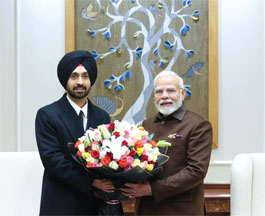
    New Delhi (TIP)- Punjabi singer and actor Diljit Dosanjh’s meeting with Prime Minister Narendra Modi on New Year’s Day has faced sharp criticism from protesting farmer leaders, The Times of India reported.
    Expressing disappointment over Diljit Dosanjh’s meeting, who earlier extended support to the farmers’ movement, the farmers questioned the singer’s commitment to the cause. Diljit Dosanjh described his meeting with Modi as a “fantastic start” to the New Year, while the prime minister praised his rise from “humble beginnings to international stardom”. “If Diljit truly cared about farmers, he would have come and joined us in solidarity with Dallewal Ji at Sambhu Border, listened to our concerns, and stood by his earlier statements. Instead, meeting PM Modi raises doubts about his intentions,” ToI quoted as a farmer leader at the border as saying. In 2020, Diljit Dosanjh expressed his support for the farmers’ protest, urging the Centre to meet their demands and advocating for their cause.
    The same year, Diljit Dosanjh posted in support of the farmers on Instagram: “25 September. We all will stand with the farmer community. Every single person of all age groups from Punjab is standing with the farmers. Everyone who is defending the bill, at least try to talk to the farmers. Punjabi language has been eradicated from Government languages in Jammu and Kashmir. What is happening?”
    The farmers have reiterated that their struggle will continue until their demands are addressed.

  • NIA court convicts 28 for murder during 2018 Kasganj Tiranga Yatra

    NIA court convicts 28 for murder during 2018 Kasganj Tiranga Yatra

    New Delhi (TIP)- A special NIA court here has convicted 28 persons in connection with the murder of Chandan Gupta, who was shot dead in a communal clash that broke out during a 2018 Tiranga Yatra in Kasganj.
    Special judge Vivekanand Sharan Tripathi said that the sentence will be announced on Friday. The accused were convicted on charges of murder, attempted murder, rioting and insulting the national flag on Thursday, January 2. The case has drawn significant attention after Chandan Gupta’s death sparked riots in the region.
    The National Investigation Agency (NIA) court also acquitted Nasiruddin and Asim Qureshi, citing a lack of sufficient evidence to convict them.
    On the morning of January 26, 2018, Chandan Gupta and his brother Vivek Gupta took part in a Tiranga Yatra. When the procession reached near the Government Girls Inter College gate on the Tehsil Road, a group, including Salim, Wasim and Naseem, allegedly blocked the road and stopped the procession, a government counsel said.
    When Chandan objected, the situation escalated and stone-pelting began from the side of the accused, the lawyer said.
    Salim, one of the main accused, shot Chandan, seriously injuring him, he said. Despite the grave injury, Vivek and their companions managed to rush Chandan to the Kasganj police station, from where he was immediately transferred to the district hospital where he was declared dead shortly after arrival.
    The murder of Chandan led to widespread riots in Kasganj for three days, fuelling communal tensions in the region. Chandan’s father Sushil Gupta lodged a murder complaint.
    In September 2019, the Kasganj Sessions Court framed charges against 23 individuals. Later, in November 2019, charges were framed against an additional seven persons.

  • BSF allowing infiltration to destabilize Bengal: Mamata

    Firing a salvo at Union Home Minister Amit Shah, West Bengal Chief Minister Mamata Banerjee on Thursday, January 2, accused the BSF of allowing infiltration from Bangladesh to destabilise the state, calling it the Centre’s “nefarious blueprint”.
    The CM said during an administrative meeting that the Border Security Force (BSF), which guards West Bengal’s border with Bangladesh, was allowing infiltration into the state. Banerjee’s remarks follow Union Home Minister Amit Shah’s charge made earlier saying “infiltration from Bangladesh” was disrupting peace in Bengal.
    Mamata Banerjee said, “The BSF is allowing infiltration from different areas into Bengal. The TMC is not guarding the borders. The border is not in our hands, so if someone accuses the TMC of permitting infiltration, it must be pointed out that it was the BSF’s responsibility”.
    Banerjee said she would write a strong letter to the Centre regarding the BSF allowing infiltration from Bangladesh. Stating that it is important to maintain peace in West Bengal and also have good relations with Bangladesh, Mamata Banerjee said, “We have no enmity, but goons are being allowed here. They commit crimes and return across the border. BSF is enabling this, and the Centre has a role in it.”
    Slamming Banerjee for the remarks, BJP leader Sukanta Majumdar said she “has reached the ultimate level of delusion”. The Union Minister and BJP West Bengal chief said in a post on X (formerly Twitter), “Despite not providing land to set up outposts for border surveillance, she used to blame the Border Security Force for illegal infiltration. But now, crossing all limits of accusations, she has started blaming her own administration’s officials! According to her, the incompetent DMs and SPs under her administration are allowing foreign criminals to infiltrate the border to murder the elected representatives of her party.”
    Arvind Kejriwal also questioned the BJP on the issue. Kejriwal asked, “Is the Centre deliberately allowing infiltration from the Bangladesh border or is the BJP government failing to protect the border?”

  • India unlikely to respond to Hasina extradition call

    India unlikely to respond to Hasina extradition call

    Patna (TIP)- India is unlikely to respond to Bangladesh’s request to extradite former premier Shiekh Hasina, people familiar with the matter said, pointing out that Dhaka has not completed key formalities needed to take forward such an issue. The extradition request was made in the form of a note verbale, or unsigned diplomatic correspondence, sent by the Bangladesh high commission in New Delhi to the external affairs ministry on December 23. The move came amid unprecedented strain in bilateral ties since the formation of Bangladesh’s interim government led by Nobel laureate Muhammad Yunus.
    A note verbale is among the lowest levels of diplomatic exchanges, and not typically used for matters as sensitive as extradition requests, the people said on condition of anonymity.
    Hasina, 77, has been in India since she stepped down in the face of nationwide protests led by student groups and fled Dhaka. Yunus and other leaders of the caretaker administration have pointed to Hasina’s presence in India and her comments while in exile, describing them as a source of tension.
    The extradition demand is being seen in some quarters in New Delhi as “public posturing” by Bangladesh’s interim government to satisfy domestic constituencies, especially student groups that have gained in influence and are clamouring for the former premier to be brought back to the country, the people cited above said.
    “Extradition is not some simple process and both parties making and receiving such a request have certain obligations. The person who is the subject of an extradition request also has options. Those options are yet to be exercised,” one of the people said.
    The people noted that the person whose extradition has been sought has the right to mount a legal challenge and this option has not been taken up.
    Besides, the India-Bangladesh extradition treaty of 2013 includes provisions under which an extradition request can be turned down. Article 6 of the treaty, or the “Political Offence Exception”, states extradition “may be refused if the offence of which it is requested is an offence of a political character”.
    Article 8, which lists grounds for refusing extradition, states a person may not be extradited if an accusation is not “made in good faith in the interests of justice”.
    MEA spokesperson Randhir Jaiswal had on December 23 confirmed that the Indian side received a note verbale from the Bangladeshi side in connection with the extradition request, but declined to comment further.
    The people also pointed out that the Indian side had highlighted the way forward in bilateral relations during foreign secretary Vikram Misri’s visit to Dhaka last month.
    An official statement issued at the end of Misri’s day-long visit on December 9 said that he highlighted India’s “willingness to build a positive and constructive relationship” with Bangladesh based on mutual trust and mutual sensitivity to each other’s concerns. While extending India’s support for a democratic, stable and inclusive Bangladesh, Misri told his interlocutors that bilateral engagements in areas such as connectivity, trade and energy were “geared towards the benefit of the people of Bangladesh”.
    While India continues to have concerns about the targeting of Hindus and other minorities in Bangladesh, there have been signs that the power centres in Dhaka could be softening their approach towards India. Hasina’s presence in India and Bangladesh’s extradition request didn’t figure in an extensive interview of Bangladesh Army chief Gen Waker-Uz-Zaman published by a leading Bengali newspaper on Wednesday.
    Zaman said Bangladesh is dependent in many ways on India, an “important neighbour”, and will not do anything that goes against New Delhi’s strategic interests. India has an interest in Bangladesh’s stability and the two sides share a give-and-take relationship that “must be based on fairness”, he said. Bangladesh’s de facto foreign minister Touhid Hossain also spoke on Wednesday about the need to balance the extradition request and other issues. “This [extradition] is one of the issues and the two countries have many bilateral issues… We will advance with all these issues side by side,” he told reporters in response to a question on the possible impact of India turning down the extradition request.
    Source: HT

  • UP mosque survey report given to court

    Court Commissioner Ramesh Singh Raghav on Thursday, January 2, submitted a 40-page survey report in a sealed envelope to the Chandausi District Court on the Jama Masjid-Harihar Temple dispute in Sambhal. However, further actions will depend on instructions from the Supreme Court or the High Court.
    The Court Commissioner said that the delay in filing the survey report in court was due to his ill health.
    On November 19, eight litigants, including Mahant Rishiraj Giri of Kaila Devi Temple and Harishankar Jain, filed a suit in the court of Senior Division Civil Judge in Chandausi, Sambhal district, claiming that the Shahi Jama Masjid was originally the Harihar Temple.
    The court appointed advocate Ramesh Singh Raghav as the Court Commissioner on the same day and ordered him to conduct a survey.
    The Court Commissioner carried out the survey on the same day under tight security and in the presence of top officials of the district.
    On November 24, when the Court Commissioner went to conduct the survey again under the protection of the DM and SP, there was a huge protest leading to violence in which five people lost their lives and many police personnel sustained injuries.
    The survey report was initially scheduled to be presented in the court on November 29 but the court granted the Court Commissioner an additional 10 days to submit the report. The survey report was to be filed in a sealed envelope on December 9. The Court Commissioner had requested more time, citing ill health and stating that the survey report was not yet ready. The advocate from the Jama Masjid side, Shakeel Ahmed Warsi, had filed an objection to granting additional time.
    Around 4.30 pm on Thursday, Court Commissioner Ramesh Singh Raghav reached the courtroom of Senior Division Civil Judge, Chandausi, Aditya Kumar Singh, and filed the survey report in a yellow sealed envelope. Court Commissioner Ramesh Singh Raghav submitted an application along with the survey report in a sealed envelope in the court in which he cited the dates of the survey and ill health as the reasons for not filing the report on time. The Court Commissioner said that he has presented a 43-page survey report in the court regarding the evidence found in the Shahi Jama Masjid during his survey. Besides, about 60 photographs have also been submitted to the court along with the survey report in support of the facts discovered.
    Advocate Shakeel Ahmed Warsi, who is representing the case on behalf of the Shahi Jama Masjid, said that they had received information about the filing of the survey report in the court.

  • Trump’s threats portend turbulence

    Trump’s threats portend turbulence

    • US President-elect’s stand on tariffs has caused consternation among friends and foes

    “The assumption that the Trump administration will not be a problem for India needs to be taken with a pinch of salt, especially when it comes to trade, tariffs and immigration. During Trump’s first term, tough immigration policies affected Indian tech professionals adversely and India lost its GSP status. Having some of the highest tariffs in the world and a trade surplus with the US, India could be a target for US action. Differences over Iran and Russia could still cloud the India-US picture.”

    By Manoj Joshi

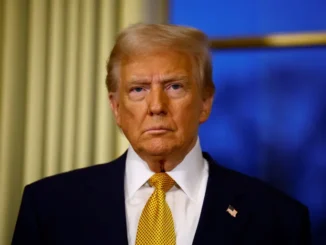
    The year 2025 is going to be eventful. On January 20, Donald Trump will be sworn in as the President of the richest and militarily most powerful country in the world. In itself, it would not mean much; after all, more than a dozen men have held that office since the US achieved premier status in the wake of World War II. But Trump’s policies aim to end the liberal international order that the US established, based on the solidarity of democracies, a US-led global military alliance system, concern for human rights, free trade and the setting up of the UN system.

    Taken together with separate but parallel revisionist efforts by Russia and China, the world could witness a wild rollercoaster ride in the coming year. As it is, with US backing, Israel has made a huge hole in the rules-based international order by its use of massive and disproportionate military force in Gaza.

    Till now, Russia and China were countries that the US defined as revisionists, wanting radical changes in the global order. These countries have seen the liberal international order with its solidarity of democratic states as a major threat and have had no hesitation in challenging its fundamental tenet – territorial sovereignty – in Ukraine, Taiwan, India and the South China Sea.

    Now, Trump is also keen on territorial revision and wants the Panama Canal back. He also wants to buy Greenland and pull the US out of the World Health Organisation and several other UN organizations and blow up the global trading system and climate change agreements.

    Trump’s threats on tariffs have caused consternation among friends and foes. America’s neighbors like Mexico and Canada are reeling from the prospect of facing 25 per cent tariffs. Others are bracing for a tariff war. Trump wants to withdraw the US from its NATO commitments if the allies do not “pay their bills”, but this time he seems fine with regard to South Korea and Japan, no doubt because of Russia, North Korea and China.

    A world where three of its principal powers are revisionist is bound to be a turbulent one because there is nothing common in the issues on which they want a change. Russia, much reduced as a military and economic power, is really in a defensive mode. But as the case of Ukraine shows, it is willing to inflict great damage and destruction in an effort to recreate its erstwhile dominance of eastern Europe till the 1990s. The Europeans understand this and are rightly apprehensive. It was not for nothing that long-standing neutrals like Sweden and Finland hastily joined NATO in the wake of Russia’s invasion of Ukraine.

    As for China, after its ‘Century of Humiliation’, it sees itself as a global power again and wants the world to acknowledge it. So, it wants to revise the law of the sea as per its needs, demands an international system that is not based on ideology (i.e. democracy), sees economic development as more important than political freedom and wants changes in the governance structures of international bodies such as the International Monetary Fund and the World Bank.

    The Chinese military posture, too, is defensive in relation to the US. But in the process of countering America, China has built a formidable military machine. The recent displays of two advanced fighters and the launch of what is the world’s largest and most modern amphibious assault ships are manifestations of this approach.

    China may be undergoing a serious economic slowdown, but that is unlikely to affect its military buildup that involves significant investments in boosting technological self-sufficiency and advanced manufacturing. Alarmingly, the Chinese People’s Liberation Army has continued with its rapid nuclear buildup. The US estimates that China now has more than 600 operational warheads and is heading for a total of 1,000 by 2030.

    For India, this situation offers both an opportunity and a threat. The broad contours of the Indian response to Russia and China have been visible for a while. India continues to deal with Russia and seek opportunities, whether in buying oil at a discount or promoting trade that the Russians are trying to shift in a southerly direction through economic realignment and infrastructure development.

    As for China, India is seeking a mini-détente based on resolving border tensions that arose in 2020 and restoring normal trade and investment links.

    The assumption that the Trump administration will not be a problem for India needs to be taken with a pinch of salt, especially when it comes to trade, tariffs and immigration. During Trump’s first term, tough immigration policies affected Indian tech professionals adversely and India lost its GSP status. Having some of the highest tariffs in the world and a trade surplus with the US, India could be a target for US action. Differences over Iran and Russia could still cloud the India-US picture.

    Even so, there can be gains from a potential easing of tensions between Russia and the US. Aggressive US policies against China could accelerate the China+1 strategy of Western companies and lead to increased FDI in India, assuming Delhi makes itself more attractive to foreign investment.

    But when it comes to Trump, nothing is simple. The assumption that the US would look favorably towards India on account of China could be undermined by Trump’s instinct to avoid external conflict. Further, his advisers such as Musk are keen for even ties with China because of business reasons. Don’t forget that in January 2020, Trump signed a major trade deal with China. Never mind that it didn’t work then, but it could be the template for a new arrangement that might undermine the rationale of the India-US connection.

    (Manoj Joshi is Senior Journalist & Distinguished Fellow, Observer Research Foundation)

  • NRI’s Winter clothes drive to benefit low-income household high school students and their families in California

    NRI’s Winter clothes drive to benefit low-income household high school students and their families in California

    • Parminder Aujla

    SACRAMENTO (TIP): In a remarkable act of community service at Sacramento – the capital of California State – USA, Suvidha International Foundation (https://suvidhainternational.org/), in collaboration with the Rotary E-Club of Silicon Valley Health & Wellness and the Rotary Club of Rancho Cordova, successfully collected and distributed over 500 jackets and sweaters, along with winter essentials such as socks, jeans, and scarves. These items were provided to the students and families experiencing economic hardship from Kinney High School in Rancho Cordova, California, on Wednesday, December 11, 2024. This heartwarming initiative ensured that more than 200 beneficiaries, including Kinney High School students and their families, were well-prepared to face the cold winter months. The winter clothing drive provided significant benefits to the students and families of Kinney High School, ensuring they were well-prepared to face the colder months. Many students and families at Kinney High come from underprivileged backgrounds, and access to essential winter clothing—jackets, sweaters, socks, scarves, and jeans—offered much-needed relief.

    The drive alleviated financial stress on families of Kinney High School who might otherwise struggle to afford adequate winter attire. With proper clothing, students could attend school comfortably and confidently, improving their focus and participation in educational activities. For families, donations helped reduce health risks associated with cold weather, such as seasonal illnesses.

    The campaign, originally initiated by the Rotary Club of Rancho Cordova, gained momentum when Suvidha International Foundation, at the request of City Mayor Siri Pulipati, took the lead with support from the Rotary E-Club of Silicon Valley Health & Wellness. The drive was powered by the unwavering dedication of 22 youth volunteers and their parents from Rotary Clubs and Granite Bay High School.

    Under the exemplary leadership of youth volunteers Pranil Raichura and Naman Raichura, participants from the Rotary E-Club of Silicon Valley Health & Wellness—including Devika Eby, Atharv Singh, Kavya Singh, Charandeep Killamsetti, Yahaan Killamsetti, Aanya Siri Edara, Vaibhav Sanu, Vihaan Sanu, Vibha Sanu, Neha Vegesna, Nithya Vegesna, Vedanshi Charan, Esha Charan, Deshna Samal, Arya Taneja, Aariv Sharma, and Reyaan Sharma—played a vital role in the success of the winter clothing drive. Additionally, dedicated volunteers from Granite Bay High School, including Arjun Dhulipala, Sriram Vempati, Rahul Veluru, and Rishab Kharait, contributed significantly.

    The campaign also received crucial support from City of Rancho Cordova Rotary Club members, including Mike Passof and Lorianne Carl, as well as other adult and youth participants. Together, this collective effort demonstrated the power of community collaboration in making a meaningful impact.

    The adult volunteers of the service initiative included Bhaskar Vempati, President of Suvidha International Foundation; Prachi Raichura, member of the Rotary E-Club of Silicon Valley Health & Wellness; Vandna Sharma, CFO of Suvidha International Foundation; and the parents of youth volunteers. These dedicated individuals worked tirelessly to organize, collect, sort, and distribute winter clothing to those in need. Their collective efforts were instrumental in the campaign’s success, showcasing the power of community collaboration and the vital role of youth engagement in meaningful service projects.

    This initiative exemplified the spirit of giving and the impact of teamwork in addressing critical community needs. Beyond its practical benefits, the initiative fostered a sense of community and support, showing students and families that they are cared for and valued. It met immediate needs while also contributing to resilience and well-being within the Kinney High School community.

    On behalf of Kinney High School, Emma Falcon – Community Schools Facilitator expressed her deepest gratitude to Suvidha International Foundation, the Rotary E-Club of Silicon Valley Health & Wellness, and the Rotary Club of Rancho Cordova. She highlighted the organizations’ incredible generosity, emphasizing that the donations had a profound impact on the students by addressing their winter needs and beyond. Falcon noted that the support not only fulfilled immediate necessities but also fostered a sense of community and care, uplifting the students. She concluded by acknowledging the immense value of the donors’ kindness and the far-reaching effects of their contributions.

    As a proud member of the Rotary E-Club of Silicon Valley Health & Wellness, Prachi Raichura is thrilled to highlight the outstanding efforts of their nineteen youth members, led by Pranil Raichura and Naman Raichura, along with the support of their dedicated parents, in making the recent winter drive a tremendous success. Together, they collected, organized, and distributed jackets and sweaters, along with other essential items such as socks, scarves, and jeans, to those in need. Deep gratitude goes to Suvidha International Foundation and its President, Bhaskar Vempati, for including the Rotary E-Club in this noble cause. The club eagerly looks forward to collaborating with Suvidha International Foundation on future community initiatives to continue making a positive impact.

    Suvidha International Foundation President Bhaskar Vempati shared that the original target for the winter drive was to raise 100 jackets to support the cause. However, with the involvement of the Rotary E-Club, the initiative surpassed all expectations, collecting and distributing 500 jackets and sweaters along with additional winter essentials. Bhaskar expressed heartfelt gratitude to the Rotary E-Club of Silicon Valley Health & Wellness for their incredible support, to Granite Bay High School students and their parents for their efforts, to the City Mayor for initiating the request for this cause, and to the City of Rancho Cordova Rotary Club for their valuable contributions.

    He also acknowledged the unwavering dedication of 22 volunteers who worked together to assist 200 families of Kinney High School students and their loved ones. This initiative truly exemplified the power of community and compassion, bringing much-needed warmth and comfort during the winter season. Bhaskar extended his deepest appreciation to everyone who contributed to making this drive a meaningful and impactful effort, emphasizing that together, they have made a real difference in the lives of many families.

    For more information or to get involved in upcoming initiatives, contact Suvidha International Foundation at contact@suvidhainternational.org. Together, we can continue to bring warmth and hope to those who need it most.

    Pictures of Winter Clothes Drive: https://tinyurl.com/winter-clothes-drive

    About Suvidha International Foundation: 

    Suvidha International Foundation (https://suvidhainternational.org/) is a dedicated nonprofit organization committed to empowering underprivileged students by providing comprehensive educational support. With a strong focus on fostering opportunities for female students, the foundation ensures they can pursue higher education and professional degrees. Currently, more than 80 students benefit from its initiatives, with many enrolled in professional courses such as Engineering, Medicine, Pharmacy, and Nursing, while others are in higher secondary or school-level education.

    The financial assistance provided by Suvidha International Foundation ranges from ₹40,000 to ₹1,00,000 per student, tailored to cover essential needs like tuition fees, college expenses, and hostel accommodations. This support alleviates financial barriers, enabling students to concentrate on their studies and achieve academic success in their chosen fields.

    Beyond financial aid, the foundation distributes educational resources such as stationery and sports equipment to over 1,000 students, ensuring they have the tools needed for a well-rounded education. Additionally, specialized educational training is offered to more than 100 students, enriching their learning experiences and fostering both academic and personal growth.

    Suvidha International Foundation also provides career guidance, combining mentorship with financial support to help students successfully navigate their educational and professional journeys. By addressing these multifaceted needs, the foundation plays a transformative role in shaping the lives of young individuals, particularly girls, and empowering them for a brighter future.

    In the United States, the foundation extends its mission through educational programs like speech and debate training, robotics and AI camps, summer camps, and coding classes. It also actively engages youth volunteers in community service initiatives, including winter clothing drives, park cleanups, and supporting local community events. Through these activities, Suvidha International Foundation not only promotes learning but also instills a sense of social responsibility in the next generation.

    Suvidha International Foundation is a certified PVSA (Presidential Volunteer Service Award) nominator and recommends eligible volunteers for this prestigious recognition, honoring their outstanding commitment to community service.

    (Based on a Press Release)

  • AIR INDIA BEGINS FLAGSHIP A350-900 FLIGHTS BETWEEN NEWARK AND DELHI

    AIR INDIA BEGINS FLAGSHIP A350-900 FLIGHTS BETWEEN NEWARK AND DELHI

    • All Air India flights between New York region and Delhi now operated by A350-900

    NEW YORK (TIP) : Air India, India’s leading global airline, today began operating its flagship A350-900 aircraft on non-stop flights between Newark’s Liberty International Airport (EWR) and Delhi. This follows Air India’s A350 service from New York (JFK) to Delhi inaugurated on November 1, 2024.

    With this, Air India now serves all non-stop flights between the New York region and India’s capital city with its A350 aircraft, offering its all-new cabin interiors, award-winning new Inflight Entertainment (IFE) system, complimentary Wi-Fi internet connectivity on board, enhanced catering, and new service ware.

    Air India is the only non-stop carrier between the U.S. and India to offer private suites in Business Class. The airline’s A350 aircraft also features a dedicated, upscale Premium Economy cabin.

    Air India’s A350 aircraft offer travelers brand-new cabin interiors, an award-winning new Inflight Entertainment (IFE) system, complimentary on-board WiFi internet connectivity, enhanced catering, and new service ware.
    The aircraft features a Business Class cabin with 28 private suites in a 1-2-1 configuration, each accommodating a fully flat bed. Each suite offers direct aisle access, sliding privacy doors, and a personal wardrobe.
    Air India is the only non-stop carrier between the United States and India to offer private suites in Business Class.
    The A350 deployment brings Air India’s Premium Economy experience on all flights between Delhi and the New York region, offering 24 extra-legroom seats in a 2-4-2 configuration in a dedicated, upscale cabin.
    Passengers on Air India’s A350 flights can enjoy WiFi internet connectivity on board and stay connected. The service is currently complimentary for all passengers.
    The full suite of the new IFE content on Air India’s A350 flights features over 3000 hours of entertainment content across formats and genres, including 1400 hours of movies, 850 hours of TV, and 1000 hours of audio.

    About Air India group

    The Air India group – comprising of full-service global airline Air India and low-cost regional carrier Air India Express – is spearheading a new era of Indian aviation. The Air India story began in 1932 when JRD Tata piloted the airline’s inaugural flight and opened the skies for aviation in India. Today, Air India group employs more than 30,000 people, operates over 300 aircraft and carries customers to 55 domestic and 48 international destinations across five continents.

    In pictures: Air India’s cabin crew recreated iconic New York City moments and visited popular movie locations to celebrate new Air India’s arrival in New York.

    Returning to the Tata Sons in 2022 following 70 years under Government ownership, Air India group is in the midst of a five-year transformation program, Vihaan.AI. As part of the transformation, Air India placed the then largest-ever order for 470 new aircraft in 2023. In 2024, sister airlines Air Asia India and Vistara were successfully merged into Air India Express and Air India respectively, and the Airline opened South Asia’s largest aviation training academy. A new flying school is scheduled to open in 2025, and construction of a greenfield maintenance base, to be operational in 2026, is underway. In addition to receiving new aircraft, all existing aircraft are progressively undergoing a full interior refit.

    With transformation underway across all facets of the business and India’s rich legacy of hospitality, Air India is committed to being a world class global airline with an Indian heart.

    In celebration of the launch, Air India’s cabin crew went on a cinematic journey in New York City to recreate iconic moments and in search of some of the city’s landmarks featured in Hollywood movies. Donning their new Manish Malhotra-designed uniforms, here is how they strolled through the city, expressing their excitement and pride for the ‘new Air India experience’ arriving in New York.

    Reliving a piece of history, Air India cabin crew members recreated one of the most influential photographs of all time, the iconic ‘Lunch Atop a Skyscraper’ photograph from 1932. The photograph showed ironworkers taking a casual lunch break on a towering skyscraper beam during the construction of 30 Rockefeller Plaza. Air India’s crew took a moment to capture the spirit of innovation and adventure embodied in the striking photograph, atop Rockefeller Plaza.

    The serene beauty and lush greenery around the picturesque Gapstow Bridge in Central Park has made the bridge a popular choice among filmmakers across generations. This is where Kevin McCallister first encounters the pigeon lady in Home Alone 2: Lost in New York, and it is also where the ‘Runway Jungle’ photo shoot takes place in The Devil Wears Prada.

    The grand staircase of The Met that leads up to the museum’s entrance is a striking architectural feature, and where numerous TV shows and films have been shot. The Met steps were a regular backdrop for popular drama series, Gossip Girl, as well as for much of the popular heist movie, Ocean’s 8. And in When Harry Met Sally, the funny “pecan pie” sequence, in which Harry and Sally are in a museum and they talk about ‘too much pepper on paprikash’, was filmed here.

    The Air India crew strolled the busy sidewalks under bright neon lights of Times Square, as the highly popular tourist attraction has featured in numerous Bollywood and Hollywood movies. Whether it is the subliminal imagery in Tom Cruise’s Vanilla Sky that shows him running alone through Times Square, the flashmob scene in Friends with Benefits, or Preity Zinta’s happy dance in the Bollywood movie Kal Ho Naa Ho, Times Square dazzles anywhere one sees it, on the silver screen and in real life.

    The iconic yellow taxis in New York have become a staple in countless movies set in the city. They often serve as more than just transportation, symbolizing the hustle and bustle of urban life and even playing active roles in plots. Whether it’s a quick cameo or a central element, the New York taxis are a cinematic icon.

    The iconic scene from Scent of a Woman, in which Frank (Al Pacino) and Donna (Gabrielle Anwar) tangoed was filmed at The Pierre, providing the perfect backdrop for the passionate dance and making it one of the most memorable moments in the film. Air India crew stopped by in the stunning Rotunda Room at The Pierre hotel in Manhattan to remember the iconic film.

    The 1979 Woody Allen classic, Manhattan, known for being a glorious celebration of New York, was another inspiration for the cabin crew members. The Air India crew found the exact spot and recreated the profound scene in which Isaac Davis (Woody Allen) and Mary Wilkie (Diane Keaton) sit underneath Queensboro Bridge, admiring it and talking until dawn. An image of the scene also became the film’s iconic poster.

  • Guru Gobind Singh: The Timeless Torchbearer of Courage and Compassion

    By Prof. Indrajit S Saluja
    By Prof. Indrajit S Saluja

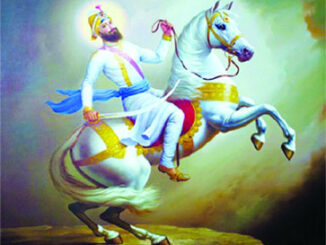
    As the world commemorates the 358th birth anniversary of Guru Gobind Singh on January 6, 2025, it is an opportune moment to delve into the life, philosophy, and enduring legacy of this extraordinary figure. Guru Gobind Singh, the tenth and last Sikh Guru, not only shaped the course of Sikhism but also left an indelible mark on humanity with his principles of courage, equality, and compassion. His teachings resonate profoundly even in modern times, inspiring millions worldwide to lead lives of purpose and selflessness.

    Guru Gobind Singh was born as Gobind Rai on December 22, 1666, in Patna, Bihar, to Guru Tegh Bahadur, the ninth Sikh Guru, and Mata Gujri. From an early age, he exhibited an exceptional blend of spiritual depth, intellectual sharpness, and martial valor. These qualities became even more pronounced after the martyrdom of his father, Guru Tegh Bahadur, who sacrificed his life to protect the religious freedoms of the Hindus against the oppressive policies of the Mughal Emperor Aurangzeb.

    Ascending to the Guruship at the tender age of nine, Guru Gobind Singh’s leadership was defined by his unwavering commitment to justice and human dignity. Recognizing the need for unity and resilience among the oppressed, he founded the Khalsa in 1699—a brotherhood dedicated to upholding righteousness and protecting the downtrodden. This transformative event marked a watershed moment in Sikh history, reinforcing the community’s collective identity and purpose.

    Guru Gobind Singh’s teachings epitomize a harmonious blend of spirituality and practical action. He emphasized devotion to God, ethical living, and selfless service. His philosophy was deeply rooted in the principles of equality and universal brotherhood, transcending barriers of caste, creed, and gender. This inclusive outlook was revolutionary in a society fractured by rigid hierarchies and discrimination.

    The Guru’s declaration that “Khalsa Akal Purakh Ki Fauj” (“The Khalsa is the army of the Divine”) underscored the spiritual foundation of his mission. He envisioned the Khalsa as a collective committed to justice, courage, and altruism. In his writings, particularly in the Dasam Granth, Guru Gobind Singh extolled the virtues of bravery and righteousness, asserting that true strength lies in protecting the weak and standing up against tyranny.

    Guru Gobind Singh’s life is a testament to unparalleled sacrifice. He dedicated not just his personal comforts but also his entire family to the cause of justice. His four sons—Ajit Singh, Jujhar Singh, Zorawar Singh, and Fateh Singh—embraced martyrdom, demonstrating extraordinary courage in the face of adversity. His wife, Mata Gujri, and mother also faced immense trials, enduring hardship and ultimate sacrifice with unshakable faith.

    Despite these profound personal losses, Guru Gobind Singh remained steadfast in his mission. His resolve to challenge the oppressive Mughal regime and protect the weak was unwavering, inspiring his followers to prioritize principles over personal gain. His life serves as a poignant reminder that true leadership involves selflessness and an unyielding commitment to the greater good.

    Guru Gobind Singh’s teachings are remarkably relevant in today’s world, characterized by social inequities, conflicts, and moral dilemmas. His humanistic approach and emphasis on courage, compassion, and equality provide a blueprint for addressing contemporary challenges.

    Courage to Confront Injustice: Guru Gobind Singh’s legacy inspires individuals and communities to stand up against oppression and injustice. His life underscores the importance of moral courage, urging people to challenge exploitation and discrimination in all forms.

    Universal Brotherhood and Equality: In an era marked by divisions along lines of religion, race, and class, Guru Gobind Singh’s vision of universal brotherhood serves as a powerful antidote. His advocacy for equality reminds us of the shared humanity that binds us all.

    Selfless Service and Charity: Guru Gobind Singh’s declaration that true bravery lies in helping others continues to inspire acts of selflessness and philanthropy. His followers, known for their generosity and community service, embody this principle, contributing to social welfare across the globe.

    Resilience and Adaptability: Guru Gobind Singh’s establishment of the Khalsa demonstrated the importance of resilience and adaptability in the face of adversity. His teachings encourage individuals to embrace change with courage and determination.

    The influence of Guru Gobind Singh extends far beyond the Sikh community. With a global following of approximately 30 million, Sikhs are recognized for their industriousness, integrity, and commitment to social justice. From providing humanitarian aid in disaster-stricken regions to contributing significantly to fields such as medicine, technology, and education, Sikhs continue to exemplify the Guru’s teachings in their daily lives.

    The concept of “Langar”—a free community kitchen—is a shining example of Guru Gobind Singh’s ethos of service and equality. Today, gurdwaras worldwide serve millions of meals to people of all backgrounds, reinforcing the values of generosity and inclusion. Similarly, the Sikh tradition of “Seva” (selfless service) manifests in myriad forms, from providing healthcare and education to supporting marginalized communities.

    Guru Gobind Singh’s life and philosophy are a timeless source of inspiration. His courage, compassion, and commitment to justice resonate as profoundly today as they did centuries ago. As we celebrate his 358th birth anniversary, it is imperative to reflect on his teachings and strive to embody his principles in our lives.

    In a world yearning for compassion and courage, Guru Gobind Singh’s legacy serves as a guiding light, urging us to rise above narrow self-interest and work toward the collective good. His vision of a just, equitable, and harmonious society remains a beacon of hope, inspiring generations to uphold the values of bravery, selflessness, and universal brotherhood.
    Happy 358th birth anniversary of the Timeless Torchbearer of Courage and Compassion Guru Gobind Singh, the Founder of the Khalsa!

  • The man who made the middle class affluent

    The man who made the middle class affluent

    The average income of the middle class more than tripled in the 10 years that Manmohan Singh was PM. This was the golden period for the professional & managerial class in India.

    “The Rao-Manmohan market reforms completely changed the ideological terrain. Now, the middle class became a facilitator of corporate profits. Its job was to maximize profits by increasing productivity in businesses. And, for that, it got a share of the returns to capital — much higher salaries than its previous ‘babu’ avatar could have got them. The post-liberalization middle class, therefore, imbibed the values of capitalism — pro-market and consumerist.”

    By Aunindyo Chakravarty

    Soon after Manmohan Singh became Finance Minister, the term multinational corporation, or MNC, entered our daily lexicon. I heard it first when a distant relative left a public sector job to join an MNC for a salary of Rs 30,000 per month. This was unheard of back then in middle-class families like ours.

    But this was just the beginning. Soon, every young person around me was looking for a private sector job. MNCs had radically altered the white-collar job market by offering fabulous pay packages. Domestic companies had to follow suit. The middle class could now aspire to a lifestyle that it wouldn’t even have dared to dream of earlier.

    Manmohan Singh, along with the then Prime Minster PV Narasimha Rao, made it possible. They unleashed policies that gave rise to a new affluent middle class.

    First, let me explain what I mean by the term middle class. It is nowhere in the middle when it comes to India’s population. In fact, it sits right at the top — between the 96th and 99th percentile in terms of income. Its ‘middle-ness’ comes from where it stands in the economic system — as an intermediary between owners of capital and blue-collar workers.

    Before liberalization gave the private sector control over the ‘commanding heights’ of the economy and set market forces to decide how resources would be allocated, it was largely controlled by the state and run by a bureaucratic-managerial-intellectual class. That was the old middle class, even smaller than it is now.

    The old pre-liberalization middle class was ideologically oriented towards state intervention — what we have come to know as ‘Nehruvian socialism’. This was because its job was to implement policy decisions that were taken by the government and other arms of the state. Salaries were low, but jobs were secure. The middle class in its own self-image was constructed as a group of ‘nation builders’.

    The Rao-Manmohan market reforms completely changed the ideological terrain. Now, the middle class became a facilitator of corporate profits. Its job was to maximize profits by increasing productivity in businesses. And, for that, it got a share of the returns to capital — much higher salaries than its previous ‘babu’ avatar could have got them. The post-liberalization middle class, therefore, imbibed the values of capitalism — pro-market and consumerist.

    By the time Manmohan Singh’s first tryst with government ended in 1996, white-collar salaries in the private sector compared favorably with corporate jobs in the developed West, especially when purchasing power parity was taken into account. Sons and daughters of government servants began earning more in a month than their parents did in an entire year.

    They bought cars, microwave ovens, washing machines and spring mattresses, retiled their bathrooms and took vacations to Phuket. They bought computers, invested in the stock markets and bought health insurance plans. Their kids now enrolled in schools with better infrastructure. When they fell sick, they went to new hospitals with private rooms that could put PSU-run hotels to shame.

    And, the rise of the corporate executive in the 1990s and its changed spending habits had a multiplier effect on the entire middle class. Bankers, stock brokers, tax advisers, doctors, architects, interior decorators, chefs, fashion designers, all flourished in the new economic environment.

    When Manmohan Singh became Prime Minister in 2004, the average income of those in the 96th-99th percentile had risen from roughly Rs 3,500 per month in 1991 to Rs Rs 16,000 per month.

    Even in real, inflation-adjusted terms, it had nearly doubled in 13 years. To understand what that means, compare it to the 13 years before liberalization, when the average real incomes of the ‘middle class’ had increased by just 17 per cent.

    This immense rise in middle class affluence was still nothing compared to what was to come in the UPA years. The average income of those in the 96th-to-99th percentile more than tripled in the 10 years that Manmohan Singh was PM. This was the golden period for

    the professional-managerial class in India and its standard of living rose manifold. Middle-class families bought premium cars and flatscreen TV sets, ate at five-star hotels, holidayed in Europe and gated themselves into the toniest parts of India’s metros.

    Manmohan Singh was only partly responsible for this. The first thrust of white-collar prosperity came from the credit-driven financial boom of the 2000s, which would ultimately end in the global financial crisis of 2008. Where the Manmohan-led UPA made a difference was in providing a massive fiscal stimulus to keep India out of a recession.

    Much of it came in the form of the Sixth Pay Commission, which was implemented in August 2008, with retrospective effect from July 2006. Government servants got a lumpsum of arrears at one go, which they spent on buying cars, renovating their homes and sustaining the overall consumption in the economy when the corporate sector had taken a beating.

    But corporate profits didn’t recover. The CMIE’s database shows that in the last five years of the Manmohan kaal, corporate earnings grew just six per cent annually, while inflation was 10 per cent. On the other hand, the corporate wage bill rose at 19 per cent per year.

    The result was that from the second half of the 2010s, the corporate sector began cutting white-collar jobs and asking people to take pay cuts, to expand its profit margins. The net result is a rise in corporate profits, while ‘middle-class’ incomes have stagnated. Between 2018-19 and 2022-23, corporate profits increased at a real, inflation-adjusted rate of 53 per cent while the real income of the professional-managerial class has increased at just three per cent per year.

    This is the inevitable result of the very market-friendly policies that created the affluent Indian middle class. It dramatically increased income and wealth inequality and, ultimately, created a shortage of demand for goods and services. That, in turn, caused corporate profits to fall, which made companies cut back on their wage bills, including what they paid their white-collar managerial staff. What would Dr Singh have done today to deal with the decimation of the middle class he helped create? We will no longer know.

  • Purdue names Indian American Ananth Grama Distinguished Professor of Computer Science

    Purdue names Indian American Ananth Grama Distinguished Professor of Computer Science

    WASHINGTON, D.C. (TIP): : Recognizing Indian American professor Ananth Grama’s distinguished career as a researcher and educator, Purdue University Board of Trustees has appointed him as Distinguished Professor of Computer Science. Throughout his tenure at Purdue Computer Science, Grama has made impactful contributions to the development of software systems and methodologies for resource management and the execution of complex scientific applications across a range of platforms—from small, embedded controllers to large-scale cloud-powered data centers, according to a media release.

    Grama is also known for authoring widely used textbooks and materials that have become foundational references within the computing community.

    Grama’s extensive accolades include serving on editorial boards for prominent journals such as Parallel Computing and IEEE Transactions on Parallel and Distributed Computing. He has been an active member of program committees for leading conferences and has chaired study sections for the National Institutes of Health, as well as review and advisory boards for the National Science Foundation and Department of Energy. A fellow of the American Association for the Advancement of Science, Grama’s honors include a National Science Foundation CAREER Award, Purdue’s Faculty Scholar Award, College of Science Outstanding Teacher Award, and College of Science Distinguished Research Award. Additionally, he has been recognized as a University of Minnesota Distinguished Alumnus and received the Amazon Research Award, among other distinctions.

    “Professor Ananth Grama’s numerous contributions to parallel and distributed computing encompass architectures, algorithms, and software, with broad applications in data science and machine learning,” said Petros Drineas, professor and head of the Department of Computer Science.

    “His dedication to research and education shapes the future of Purdue’s Department of Computer Science and enhances our global reputation. We are very proud to celebrate his appointment as a Distinguished Professor of Computer Science.”

    Founded in 1962, the Department of Computer Science at Purdue University was created to be an innovative base of knowledge in the emerging field of computing as the first degree-awarding program in the United States, according to the release.

  • Indian-origin ‘unsung heroes’ on King Charles’ 2025 New Year Honors List

    Indian-origin ‘unsung heroes’ on King Charles’ 2025 New Year Honors List

    LONDON (TIP) : Community leaders, campaigners, academics and medics are among over 30 Indian-origin professionals to be  recognized in King Charles’ 2025 New Year Honors List released in London in time for New Year’s Eve. Ranil Malcolm Jayawardena, a Conservative member of Parliament of Sri Lankan and Indian heritage, has been conferred a Knighthood for political and public service along with recently resigned England men’s football team manager Gareth Southgate, for services to the game

    London Mayor Sadiq Khan and former West Midlands Mayor Andy Street are also among those receiving Knighthoods among more than 1,200 recipients on the 2025 honors list released on Monday night across all sectors, with commendation to role models in sport, healthcare, academia and voluntary service.

    “Every day, ordinary people go out and do extraordinary things for their communities,” UK Prime Minister Keir Starmer said.

    “They represent the very best of the UK and that core value of service which I put at the center of everything this government does. The New Year Honors List celebrates more of these unsung heroes, and I thank them for their incredible contribution,” he said.

    The list, released annually by the Cabinet Office in the name of the British monarch, includes Commanders of the Order of the British Empire (CBEs) for Satwant Kaur Deol for services to further education, Charles Pritam Singh Dhanowa OBE for services to Competition Law, and surgeon Professor Sneh Khemka for services to healthcare, science and innovation and technology.

    Others of Indian heritage receiving CBEs include Leena Nair, Global Chief Executive Officer of Chanel, for services to the retail and consumer sector; Mayank Prakash, President of the British Computing Society, for services to the advancement of technology professionals; and Purnima Murthy Tanuku OBE, chief executive of the National Day Nurseries Association, for services to early years’ education.

    Among the 2025 Indian-origin Officers of the Order of the British Empire (OBEs) include cardiologist Professor Sanjay Arya for services to black and minority ethnic doctors and healthcare in north-west England; Nandini Das, Professor of Early Modern Literature and Culture and Tutorial Fellow at Exeter College, University of Oxford, for services to interdisciplinary research in the humanities and to public engagement; Tarsem Singh Dhaliwal, CEO of Iceland Foods, for services to the Welsh economy, retail and charity; Jasmine Dotiwala for services to broadcasting, music, equality, diversity and inclusion; Monica Kohli, President of Women’s International Shipping and Trading Association UK and Chair of the Indian Maritime Association UK, for services to promoting diversity in the maritime industry; and Soumya Majumdar from the Crown Prosecution Service (CPS) for services to law and order.

    Others making the cut for OBEs include Seema Misra for her campaign in favor of scandal-hit sub postmasters, Prime Minister’s diary manager Ushma Manhar Patel MBE, mental health campaigner Gian Singh Power and Sravya Rao from the Department for Business and Trade for Public Service.

    Philanthropist Mandeep Kaur Sanghera, UK Ministry of Defense professional Savraj Singh Sidhu, and fashion industry professional Smruti Sriram also received OBEs for their public service contributions.

    The 2025 list of Members of the Order of the British Empire (MBEs) and Medalists of the Order of the British Empire (BEMs) also includes a cross-section of British Indians including MBEs for tech expert Dalim Kumar Basu, nursing chief Marimouttou Coumarassamy, rheumatologist Professor Bhaskar Dasgupta, and pediatric hematologist Professor Ajay Jaikishore Vora.

    The BEM recipients include community workers Sanjib Bhattacharjee and Jagrupe Binnig, postal worker Hemandra Hindocha, and charity worker Jaswinder Kumar.

    Musician Balbir Singh Khanpur Bhujhangy also received a BEM for services to Bhangra music and Punjabi culture in the West Midlands region of England.

    Companion of Honor, of which there are only 65 recipients at any time, goes to author and screenwriter Sir Kazuo Ishiguro – the Japanese-British Nobel Prize winner for services to literature.

    Meanwhile, well-known English actor, broadcaster, comedian, director, narrator and writer Stephen Fry receives a Knighthood for his work on mental health awareness.

    The UK government said it is committed to ensuring that honors are awarded to outstanding people from across the whole of the UK and the system reflects the best of society.

    Cabinet Office Minister Pat McFadden said: “This year’s New Year Honors List celebrates the unsung heroes who contribute selflessly to their communities across the UK. I send them all my congratulations for their achievements.”

    “Our honors system uniquely recognizes the generous contributions of individuals across our nation. If you know someone in your community who has done something extraordinary, nominate them for an honor so the nation can recognize their achievements.”

    According to the Cabinet Office, in this edition of New Year Honors 54 per cent of the recipients have undertaken outstanding work in their communities, either in a voluntary or paid capacity, and 12 per cent of the successful candidates belong to an ethnic minority background.

  • Indian American executive Ishpreet Singh named Black Duck Software CIO

    Indian American executive Ishpreet Singh named Black Duck Software CIO

    BURLINGTON, MA (TIP) : Black Duck Software, Burlington, Massachusetts-based leader in application security, has named Indian American tech executive Ishpreet Singh as chief information officer (CIO) to lead the organization’s technology strategy.

    As the global CIO at Black Duck, Ishpreet Singh is responsible for aligning technological initiatives with business objectives, driving the company’s digital transformation, and implementing innovative solutions. This includes a robust AI strategy to enhance growth and scalability.

    A key part of Singh’s role is overseeing enterprise security, ensuring the development and maintenance of a resilient cybersecurity framework to protect the company’s assets and data while maintaining compliance with industry standards, according to a company release.

    Under his leadership, Black Duck is focused on optimizing business processes, improving operational efficiency, and building secure, future-ready infrastructures that support long-term profitability and innovation.

    Ishpreet Singh brings a 20-year track record of developing a strategic vision aligned with business objectives and implementing cutting-edge solutions to enhance operational efficiency to foster innovation.

    A seasoned leader with deep roots in enterprise tech industry leadership, he most recently served as global CIO at Qualys, and on the Evanta CIO Governing Body, in addition to being a member of CNBC’s Executive Technology Council.

    “Black Duck is in a unique position as a newly independent organization with an impressive track record, the broadest portfolio in the market, and rapid growth potential,” said Ishpreet Singh.

    “I’m thrilled to join a team in which such exciting potential stands ahead to craft a strong vision through robust IT solutions. Software truly enables innovation, and it is my mission to ensure we take our business and the needs of our customers to new heights when it comes to building trust in software at the speed businesses demand.”

    “As a proven leader in the software security industry, it’s imperative that we at Black Duck deliver solutions that further accelerate our mission to support our customers in protecting their bottom line by building trust in their software,” said Jason Schmitt, CEO of Black Duck.

    “Appointing proven leaders to continually heighten Black Duck’s information technology and information security strategies is essential for us to bolster our organization’s innovation and stability.” Black Duck, formerly known as the Synopsys Software Integrity Group, helps organizations around the world secure their software quickly, integrate security efficiently in their development environments, and safely innovate with new technologies.

  • Indian American OpenAI whistleblower, Suchir Balaji, autopsy reveals ‘murder’ not suicide

    Indian American OpenAI whistleblower, Suchir Balaji, autopsy reveals ‘murder’ not suicide

    SAN FRANCISCO (TIP) : The parents of Indian American techie Suchir Balaji, who was found dead in his San Francisco apartment on December 14, 2024, have rejected the official suicide ruling, alleging that their son was murdered. Suchir, a former OpenAI employee, had made headlines for his whistleblowing revelations about the ethical concerns surrounding generative AI.

    In an interview with NDTV, his parents claim that the second autopsy report indicates “signs of struggle,” including a head injury and trauma, which contradict the suicide verdict by the medical examiner’s office.

    Suchir’s mother, Poornima Ramarao, expressed disbelief at the suicide ruling, citing the absence of a suicide note and the findings of the second autopsy. “We have facts with the second autopsy — head trauma and signs of struggle. This is not suicide; it’s a murder,” she stated.

    His father, Balaji Ramamurthi, recounted their last conversation on December 22, when Suchir returned from a trip to Los Angeles in good spirits.

    “He seemed happy,” he said.

    When asked if Suchir picked up another job, his mother said, “No, he didn’t. They (OpenAI) probably threatened him. They didn’t allow him to work somewhere else. He also consulted a copyright attorney and figured out that he was not doing anything wrong and they were just suppressing him. That made him give the New York Times interview and resulted in his death.” “He was working in the core group of the ChatGPT; he was kind of an architect of the whole thing. He knows a lot of information about ChatGPT. There were some restrictions on him to not work in other AI companies,” the father added.

    His mother mentioned that Suchir was working on personal research which he wanted to get published, in which he explains that “modulated answer is not exactly as the information pegged to ChatGPT, giving an example of a black and white cat coming out as a colored cat.”

    “Additionally, the work of artists and journalists were all stolen, which is unethical. This is what we talked about the last time I met him,” she mentioned.

    The parents are demanding an FBI investigation to uncover the truth. “There was a struggle; he did not take his life. Now, who and why need to be explored,” Poornima said, urging the Indian government to support their cause.

    They also welcomed Elon Musk’s support but said they had not reached out to him. Describing Suchir as a caring and brilliant individual, his parents said his death is a “loss to humanity and the tech industry.”

    Suchir had worked at OpenAI for nearly four years before resigning over ethical concerns.

    In an October post on X, he criticized the misuse of copyrighted materials in generative AI, stating, “Fair use seems like a pretty implausible defense for a lot of generative AI products.”

    An OpenAI spokesperson expressed condolences, “We are devastated to learn of this incredibly sad news today. Our hearts go out to Suchir’s loved ones during this difficult time.”

    Suchir, a University of California, Berkeley graduate, was a prominent figure in the tech industry, with his whistleblowing revelations sparking global discussions on AI ethics.

  • YOUTH MUSICIANS IN PEACE CONCERT PERFORM ON INSTRUMENTS  RESTORED FROM HOLOCAUST

    YOUTH MUSICIANS IN PEACE CONCERT PERFORM ON INSTRUMENTS RESTORED FROM HOLOCAUST

    By Mabel Pais

    Wharton Arts’ musicians will present A Concert for Peace with ‘Violins of Hope,’ a poignant tribute to human resilience and the power of music, on Sunday, January 12, 2025 at 3:00 p.m. at the New Jersey Performing Arts Center (NJPAC) in Newark.

    Led by Artistic Director and Principal Conductor Helen H. Cha-Pyo, this special concert showcases the extraordinary ‘Violins of Hope,’ precious stringed instruments that survived the Holocaust. These instruments, some of which were played by prisoners of ghettos and death camps, have been meticulously restored by Israeli luthiers Amnon and Avshi Weinstein. Today, they serve as symbols of survival and perseverance, bringing hope to audiences worldwide. Join us for an unforgettable performance of remembrance, reflection, and renewal as we commemorate the resilience of the human spirit and honor the legacy of those who perished in the Holocaust.

    The New Jersey Youth Symphony (NJYS) will perform works by Felix Mendelssohn, Paul Frucht, David Winkler, and Leonard Bernstein. During the rise of Hitler’s Third Reich in the twentieth century, Mendelssohn’s music was banned by the Nazis and his statue in Leipzig was destroyed (now rebuilt). Two ensembles of the New Jersey Youth Chorus, Coriste and Camerata, along with the Harmonium Choral Society, will join NJYS on stage, along with guest artists Asi Matathias and GRAMMY winner Ranaan Meyer.

    “The Concert for Peace with Violins of Hope is more than just a performance—it’s a profound tribute to the enduring stories of human resilience, carried by these precious violins,” said Helen H. Cha-Pyo, Artistic Director and Principal Conductor. “Through the voices of Wharton Arts youth musicians, a combined intergenerational chorus, and newly composed works performed alongside award-winning soloists, we bring these stories to life, ensuring their legacy inspires and uplifts generations to come.”

    Wharton Arts Trustee Courtney Pantirer said, “Each instrument comes with a history of its owner which is an incredible way to share their story, the story of European Jewry, and to keep their memories alive. Now more than ever it is important to educate and teach this new generation. We are so excited to bring this incredible concert to our communities in New Jersey and be able to educate about the Holocaust while looking to the future.”

    TICKETS & MORE INFORMATION

    For Tickets and more information, visit WhartonArts.org 

    Ticket holders are invited to a free pre-concert talk with luthier Avshi Weinstein and display of Violins of Hope at 1:30 p.m.

    A roundtable talk with a display of the instruments will take place on January 11 at 6:30 p.m. Pre-registration is required at WhartonArts.org.

    Wharton Arts

    Learn more at WhartonArts.org 

    ———————————————

    THIBAUDET PLAYS RAVEL WITH  NEW JERSEY SYMPHONY AND EDUSEI CONDUCTS

    THIBAUDET (Credit: njpac.org)
    • By Mabel Pais

    JEAN-YVES THIBAUDET is set to perform with the New Jersey Symphony this January 9-12. Kevin John Edusei will conduct the four performances. The performances will take place at New Jersey locations, January 9-12 (see program below).

    The program begins with Donghoon Shin’s ‘Of Rats and Men,’ which draws inspiration from two short stories: Franz Kafka’s ‘Josefine, die Sängerin oder Das Volk der Mäuse’ (‘Josephine the Singer, or the Mouse Folk’) and the Chilean writer Roberto Bolaño’s ‘Police Rat.’ Shin’s piece makes use of the entire orchestra’s instrumentation while maintaining a transparency that allows different layers of sound to emerge.

    The first half of the program closes with Ravel’s Piano Concerto in G, a work built upon broad musical influences. The sprightly outer movements feature jazz and blues influences, while Ravel drew inspiration from Mozart’s Clarinet Quintet for the central, beautifully simple slow movement.

    The second half of the program features Sibelius’ Symphony No. 2, which was composed between 1901 and 1902. Arguably Sibelius’ best-known work, the Second Symphony is known for its unconventional first movement form and the stirring nationalistic hymn that forms the main thrust of the finale.

     PROGRAM

    Jean-Yves Thibaudet Plays Ravel

    New Jersey Symphony Classical

    Kevin John Edusei conductor

    Jean-Yves Thibaudet piano

    New Jersey Symphony

    Newark – Thursday, January 9, 1:30 pm, New Jersey Performing Arts Center

    Princeton – Friday, January 10, 8 pm, Richardson Auditorium

    Newark – Saturday, January 11, 8 pm, New Jersey Performing Arts Center

    New Brunswick – Sunday, January 12, 3 pm, State Theatre New Jersey

    Donghoon Shin Of Rats and Men

    Maurice Ravel Piano Concerto in G

    Jean Sibelius Symphony No. 2

     For more information on concerts and tickets, visit njsymphony.org/events.

    Kevin John Edusei

    EDUSEI (Credit: kevinjohnedusei.com)

    Highlights of Kevin John Edusei’s 2024–25 season include debuts with the New York Philharmonic, Konzerthausorchester Berlin, Bournemouth Symphony Orchestra, Taiwan Philharmonic Orchestra and at the Musikverein with the Vienna Radio Symphony Orchestra.

    A strong advocate of contemporary music, Edusei’s carefully curated programs across the 2024–25 season include premieres of works by Hannah Kendall, Thomas Larcher, Samy Moussa, Brian Nabors, Derrick Skye and Gabriella Smith.

    Learn more at kevinjohnedusei.com, X: @kevinjohnedusei & Facebook: facebook.com/kevinjohnedusei.conductor

    Jean-Yves Thibaudet

    Over three decades, through elegant musicality and an insightful approach to contemporary and established repertoire, Jean-Yves Thibaudet has earned a reputation as one of the world’s finest pianists. He is especially known for his diverse interests beyond the classical world, including numerous collaborations in film, fashion and visual art. He is a devoted educator and the first-ever artist-in-residence at the Colburn School, which awards several scholarships in his name.

    A prolific recording artist, Thibaudet has appeared on more than 70 albums and six film scores; his extensive catalog has received two GRAMMY nominations, two ECHO Awards, the Preis der deutschen Schallplattenkritik, the Diapason d’Or, the CHOC du Monde de la Musique, the Edison Prize and Gramophone awards.

    Learn more at jeanyvesthibaudet.com

    The New Jersey Symphony

    New Jersey Symphony is a GRAMMY and Emmy Award-winning orchestra. Under the direction of the Music Director Xian Zhang, the Symphony performs more than 60 concerts at mainstage venues across the state, including Newark, Princeton, New Brunswick, Red Bank and Morristown as well as schools and public spaces statewide.

    Programming at the Symphony reflects an unwavering commitment to diversity, equity and inclusion while providing students across the state unparalleled opportunities to achieve musical excellence through its Youth Orchestra and other outreach programs.

    In 2024, the Symphony announced it would continue to deliver its statewide activities from a new, permanent office, rehearsal and concert space in Jersey City, set to open in 2026.

    Connect with NJ Symphony

    Follow NJ Symphony on Facebook, Instagram, TikTok, X and YouTube

    (Mabel Pais writes on The Arts and Entertainment, Business, Social Issues, Spirituality, Cuisine, Health & Wellness, and Education)

  • Devika Patel to Organize and Sponsor Artificial Limb Fitment Camp in Gujarat in Memory of BRUHUD Founder Shashikant Patel

    Harsh Vardhan Shringla to be  a Special  Guest

    BRUHUD New York Seniors Founder Late Shashikant Patel

    NEW YORK (TIP): BRUHUD New York Seniors, founded in 2009 by the late Shashikant Patel, has become one of the largest organizations for seniors in the tri-state area. The organization hosts annual events such as health fairs, Independence Day celebrations, Garba, and the Diwali Gala, among other functions, with these events typically attracting 500 to 800 participants.

    After the passing of its founder, Shashikant Patel, his son Ajay Patel has taken charge, continuing his father’s legacy and ensuring the smooth execution of all BRUHUD initiatives. Ajay Patel, who serves as the President of BRUHUD, is also an office bearer of Jaipur Foot USA, the U.S.-based arm of Bhagwan Mahaveer Viklang Sahayta Samiti (BMVSS), India. BMVSS is globally recognized as one of the largest organizations for differently-abled individuals (Divyang), renowned for its prosthetic limb, the “Jaipur Foot.”

    Inspired by the humanitarian efforts of Jaipur Foot, Shashikant Patel’s 21-year-old granddaughter, Devika Patel, proposed organizing and sponsoring a free artificial limb fitment camp in Gujarat in memory of her grandfather. The five-day camp, scheduled to take place from January 27 to 31, 2025, at the Mahudi Jain Temple in Mahudi town, Mansa Taluka, Gandhinagar district, Gujarat, will provide prosthetic limbs (Jaipur Foot), calipers, crutches, and wheelchairs to those in need.

    Good Samaritans. L to R: Ajay Patel ( President (BRUHUD), Prem Bhandari (President RANA), and Devika Patel ( Organizer and Sponsor of Artificial Limb Fitment Camp in Gujarat in Memory of her grandfather Shashikant Patel)

    In a press release, Jaipur Foot USA announced that the Ahmedabad center of BMVSS, led by Vice Chairman Lalit Jain, would provide full support for the camp, including sending a mobile van to assist on-site. Registrations for beneficiaries have already begun through the Ahmedabad center.

    Jaipur Foot USA’s parent organization, BMVSS, was founded in 1975 by Padma Bhushan Dr. D.R. Mehta in Jaipur, India. Since its inception, BMVSS has benefited over 2.2 million differently-abled individuals across 42 countries through 114 international camps. Notably, 31 of these camps were conducted under the Ministry of External Affairs, Government of India’s India for Humanity initiative, launched to commemorate Mahatma Gandhi’s 150th birth anniversary. These camps have supported individuals in Asia, Africa, and Latin America.

    Prem Bhandari, Chairman of Jaipur Foot USA, announced that Harsh Vardhan Shringla, former Foreign Secretary, G-20 Chief Coordinator, and a steadfast supporter of Jaipur Foot, will attend the Gujarat camp as a special guest. Additionally, the founder and Chief Patron of BMVSS, Dr. D.R. Mehta, will also be present.

    A View of the Gathering at the well-attended event. L to R: Ravi Jargarh (Secretary RANA), Ashok Sancheti (Advisor, Jaipur Foot USA), Prem Bhandari (President RANA) , Pragya Singh, Consul, Indian Consulate, New York, and Mohan Nannapaneni (Founder Team Aid)

    Ajay Patel, his wife Kinnari Patel, and their daughter Devika Patel will travel from New York to participate in the camp. Prem Bhandari, who will also attend the camp from New York, expressed his gratitude to Prime Minister Narendra Modi for inaugurating the first Jaipur Foot USA-BMVSS mega camp in April 2016. This camp, held in Mhow, Indore, marked the 125th birth anniversary of Bharat Ratna Babasaheb Dr. Bhimrao Ambedkar at his birthplace. Later that year, another mega camp was organized at Diksha Bhoomi in Nagpur, the historic site of Dr. Ambedkar’s conversion to Buddhism.

    Bhandari further credited Prime Minister Modi’s unwavering support and blessings for enabling BMVSS to partner in the India for Humanity initiative, resulting in 31 fully sponsored international camps, with 11 more planned. He also highlighted the upcoming inauguration of BMVSS’s first international Jaipur Foot center in Malawi, announced during the recent visit of the President of India to Malawi.

    Another view of the gathering.
  • RING IN THE YEAR OF THE SNAKE WITH NJ SYMPHONY

    RING IN THE YEAR OF THE SNAKE WITH NJ SYMPHONY

    By Mabel Pais

    The New Jersey Symphony will present a special performance for the 2025 Lunar New Year Celebration ringing in the Year of the Snake. Music Director Xian Zhang will conduct the performance on Saturday, January 25, 2025, at 7:30 pm at the New Jersey Performing Arts Center.

    The orchestral Celebration Concert will then feature a program that blends Eastern and Western musical traditions. Xian Zhang will conduct the New Jersey Symphony, who will be joined by pianist Min Kwon, tenor Michael Fabiano, the Peking University Alumni and Starry Arts Children’s Choruses and the Edison Chinese School Lion Dance Team.

    First developed by Zhang in 2019, the Lunar New Year Celebration weaves together the best in classical music from the East and the West. Zhang leads a program that includes Li Huanzhi’s ‘Spring Festival Overture,’ selections from Mozart’s Piano Concerto No. 23, ‘Arirang,’ ‘Yuan Ri,’ ‘The Red Dragonfly’ arranged by Nicholas Hersh and Puccini’s ‘E Lucevan le stelle’ from ‘Tosca’ and selections from ‘Turandot.’

    Min Kwon and Michael Fabiano are set to perform, with special appearances from Starry Arts Children’s Chorus and Peking University (PKU) Alumni Chorus, which consists of former members of PKU’s student choir alongside singers from the Chinese community in New York and New Jersey. The evening will also feature a performance by the Edison Chinese School Lion Dance Team.

    Earlier this year, the Symphony held a composition competition and invited New Jersey-based composers of all backgrounds, ages and ability levels to submit their own solo piano arrangement of the Korean folk song ‘Arirang.’ Patricio Molina, the winner of the competition, will have his arrangement performed at the concert by pianist Min Kwon. Leading up to the performance, Molina will also participate in at least one workshop with Kwon.

    PROGRAM

    All ticket holders are invited to attend a pre-concert Cultural Exchange Festival in the Prudential Hall lobby that will feature artisans and performers from Prince Kung’s Palace Museum in Beijing. Gates will open at 6 pm.

    2025 Lunar New Year Celebration with Xian Zhang

    Celebration of the Year of the Snake

    Xian Zhang conductor

    Min Kwon piano

    Michael Fabiano tenor

    Peking University Alumni Chorus

    Starry Arts Children’s Chorus | Rebecca Shen, director

    Edison Chinese School Lion Dance Team

    New Jersey Symphony

    Newark – Saturday, January 25, 7:30 pm, New Jersey Performing Arts Center

    Li Huanzhi Spring Festival Overture

    Wolfgang Amadeus Mozart Selections from Piano Concerto No. 23

    Traditional arr. Patricio Molina Arirang

    Traditional ‘Yuan Ri’

    Traditional arr. Nicholas Hersh ‘The Red Dragonfly’

    Giacomo Puccini ‘E Lucevan le stelle’ from ‘Tosca’

    Giacomo Puccini Selections from ‘Turandot’

    For more information and updates on concerts and tickets, visit njsymphony.org/events.

    TICKETS

    To purchase tickets to the Concert, visit my.njsymphony.org.

    Concert Tickets

    Saturday, January 25 – Gates Open at 6 pm

    Cultural Exchange Festival

    Welcome the Year of the Snake with a cultural exchange.

    The event commences with a Cultural Exchange Festival in a tradition that invites all audience members to a celebration of community and cultural exchange before the concert. This year’s event will feature artisans and performers from Prince Kung’s Palace Museum in Beijing.

    7:30 pm: Celebration Concert in Prudential Hall

    VIP tickets

    5:30 pm: Cultural Exchange Festival & VIP Reception

    VIP ticket holders will receive early access to the festival before it opens to the public.

    VIPs will sip cocktails and savor a tasty dinner buffet at the VIP reception, which overlooks the lobby festival and performances.

    To purchase VIP Tickets, visit njsymphony.org/events/detail/2025-lunar-new-year-celebration-vip-event

    SPONSORSHIP

    For sponsorship details, visit njsymphony.org/assets/doc/LNY25-Sponsorship-Brochure-121323-2-d6f122b47b.pdf

    Xian Zhang

    Zhang has an exceptional ear for balance, as well as the ability to draw the softest, most transparent tones imaginable from the orchestra….With such skills and obvious audience appeal, Zhang should prove a valuable addition to the Met’s conduction staff.” – New York Classical Review.

    2024–25 marks the GRAMMY and Emmy Award-winning conductor Xian Zhang’s ninth season as music director of the New Jersey Symphony. Starting in 2025–26, Zhang will also hold the role of music director at Seattle Symphony. Zhang holds the position of conductor emeritus of Orchestra Sinfonica di Milano, having previously held the position of music director between 2009–2016.

    The 2024–25 season sees Zhang return to the Metropolitan Opera in New York to conduct David McVicar’s acclaimed production of Puccini’s Tosca.

    Zhang is in high demand as a guest conductor, appearing regularly with Philadelphia Orchestra and Los Angeles Philharmonic, returning to both in 2024–25. Her recording with Philadelphia Orchestra and Time for Three, Letters for The Future (released 2022 on Deutsche Grammophon), won multiple GRAMMY Awards in the Best Contemporary Classical Composition (Kevin Puts’ Contact) and Best Classical Instrumental Solo categories.

    Zhang previously served as principal guest conductor of the BBC National Orchestra & Chorus of Wales, the first female conductor to hold a titled role with a BBC orchestra and principal guest conductor of Melbourne Symphony Orchestra. In 2002, she won first prize in the Maazel-Vilar Conductor’s Competition. She was appointed New York Philharmonic’s assistant conductor in 2002, subsequently becoming their associate conductor and the first holder of the Arturo Toscanini Chair. Learn more at xianzhangconductor.com.

    Min Kwon (Credit : NJ Symphony)

    Min Kwon

    “To say the audience was thrilled with the performance would be an understatement of high order…..a truly grand performance. – The Daily Performance.”

    Korean-born American pianist Min Kwon excels in a versatile career that encompasses concerti, solo recitals and chamber music appearances, while in high demand around the world as pedagogue, arts advocate and administrator. She has held professional engagements in over 60 countries on seven continents and all 50 US states.

    Professor of piano at Mason Gross School of the Arts, Rutgers University since 2002, Dr. Kwon is also the founder and director of the Center for Musical Excellence (CME), a non-profit dedicated to mentoring and supporting gifted young musicians. As artistic director of ‘Music Made Here,’ a concert series inaugurated in 2018 and ‘CME in Harding Homes,’ Kwon brings world class talent to intimate venues.

    As soloist, Kwon has performed extensively in Europe, North and South America and Asia, with such orchestras as Philadelphia, North Carolina, Atlanta, New Jersey and Fort Worth and more. Among the distinguished conductors with whom she has collaborated are James Conlon, Stanislaw Skrowaczewski, Alan Gilbert, Vaktang Jordania, Gerhardt Zimmerman and Xian Zhang.

    As recitalist, Kwon has performed at Carnegie’s Weill Recital Hall, where she returns each year as artistic director of critically acclaimed, themed concerts featuring Rutgers pianists.

    An avid chamber musician, she has performed in numerous duo and chamber recitals around the world including recent appearances in New York, Madrid, Rome, Curaçao, Malaysia, Vienna, Prague, Luxembourg and Serbia.

    With her sister, violinist Yoon Kwon (first violin at the Metropolitan Opera Orchestra), she has given over 200 recitals on Community Concert Tours (CAMI).

    In addition to her collaboration with Yoon Kwon on concert tours, the duo made a recording for RCA Red Seal/BMG in 1996 as the first Koreans to do so in the Company’s 100-year history.

    A recent release, ‘CME Presents: Piano Celebration’—for which she was producer, artistic director and performer—celebrates composers and pianists from 17 countries.

    Kwon holds Doctor of Musical Arts and Master of Music degrees from The Juilliard School and a Bachelor of Music degree from The Curtis Institute of Music, completing post-doctoral studies in Salzburg. From 2015–2018, she served on the Juilliard Council as the first and only alumnus/a to be invited. She counts among her teachers and mentors Eleanor Sokoloff, Martin Canin, Leon Fleisher, Hans Leygraf, Dorothy DeLay, Jerome Lowenthal and Leif Ove Andsnes. Kwon is a Steinway Artist.

    Michael Fabiano

    Born in Montclair, New Jersey, this tenor of Italian descent attended the University of Michigan and the Academy of Vocal Arts in Philadelphia. He was the recipient of the 2014 Beverly Sills Artist Award and the 2014 Richard Tucker Award, Fabiano is the first singer to win both awards in the same year. Learn more at michaelfabianotenor.com.

    Peking University Alumni Chorus

    Peking University (PKU) Alumni Chorus was founded in 2014. It consists of former members of PKU Student Choir and seasoned singers from the Chinese community in the Greater New York area. In the past nine years, the ensemble has performed at every Chinese New Year Concert organized by PKU Alumni Association of Greater New York, as well as made appearances at major stages in the New York area such as Carnegie Hall, Alice Tully Hall at Lincoln Center and Merkin Hall at Kaufman Music Center. In 2019, the chorus performed Beethoven’s Symphony No. 9 with other choruses at the Church of St. Paul the Apostle and Carnegie Hall. In February 2019, the chorus appeared in the New Jersey Symphony’s first Lunar New Year concert. This year marks the seventh consecutive year of collaboration between the chorus and the NJ Symphony.

    Conductor and pianist Conrad Chu has served as the chorus’ conductor since 2016 being well-versed in opera, orchestral and choral repertoire, with a strong affinity for contemporary styles.  Learn more at english.pku.edu.cn.

    Starry Arts Children’s Chorus

    In 2015, violin educator and experienced children’s choir conductor Rebecca Xiaoxing Shen founded the Starry Arts Group Children’s Chorus. The chorus regularly performs at a variety of community events, including at libraries, nursing homes, care centers and multicultural festivals, earning widespread praise. From 2019 to 2023, the chorus was invited to collaborate with the New Jersey Symphony for five consecutive years, performing at the Lunar New Year Celebration Concert at NJPAC, where it received enthusiastic applause at each performance. In September 2023, it was invited to perform as part of a thousand-person choir at the “World Culture Festival” in Washington, DC Most recently, the chorus won first place in the group competition at the Global Elite Talent Competition, which concluded in January 2024.

    Edison Chinese School Lion Dance Team

    Lunar New Year, Lion Dance Team (Credit : NJ Symphony)

    The Edison Chinese School Lion Dance Team was founded in 2014 by Peter Shen with the goal of using lion dance as a cultural ambassador to share Chinese traditions with the community. Combining both dance and martial arts, the team regularly performs at significant events such as Chinese New Year celebrations, National Day, and other important occasions.

    The team’s coach, David Shen, is a professional dancer and martial artist. He has choreographed many pieces for the young performers, tailoring each to fit the specific event and the needs of the group.

    Over the years, the team has performed at a variety of venues, including libraries, parks, schools, senior centers and other locations, bringing the rich Chinese cultural heritage to diverse audiences.

    The New Jersey Symphony

    New Jersey Symphony is a GRAMMY and Emmy Award-winning orchestra. Under the direction of the Music Director Xian Zhang, the Symphony performs more than 60 concerts at mainstage venues across the state, including Newark, Princeton, New Brunswick, Red Bank and Morristown as well as schools and public spaces statewide.

    Programming at the Symphony reflects an unwavering commitment to diversity, equity and inclusion while providing students across the state unparalleled opportunities to achieve musical excellence through its Youth Orchestra and other outreach programs.

    In 2024, the Symphony announced it would continue to deliver its statewide activities from a new, permanent office, rehearsal and concert space in Jersey City, set to open in 2026. For more information about the New Jersey Symphony, visit the website at njsymphony.org or the newsroom for press releases and photos.

     Connect with NJ Symphony

    Follow NJ Symphony on Facebook, Instagram, TikTok, X and YouTube

    (Mabel Pais writes on The Arts and Entertainment, Business, Social Issues, Spirituality, Cuisine, Health & Wellness, and Education)