Month: January 2025

  • Indian Embassy, in collaboration with AAPI-CF and El Salvador Ministry of Health and Ministry of Foreign Affairs holds Medical camp

    Indian Embassy, in collaboration with AAPI-CF and El Salvador Ministry of Health and Ministry of Foreign Affairs holds Medical camp

    Over 500 receive free health checkup and medical treatment

    GUATEMALA CITY (TIP): The Embassy of India, in collaboration with the American Association of Physicians of Indian Origin Charitable Foundation (AAPI-CF), the Ministry of Health, and the Ministry of Foreign Affairs in El Salvador, successfully organized medical camps at Zacamil National Hospital. This event, held on January 10-11, 2025, aimed to provide healthcare services to underserved communities in the region, enhancing access to quality medical consultations, treatments, and essential medicines. The camp was a significant humanitarian initiative, underscoring the strong bilateral relations between India and El Salvador, and was supported by generous donations from Caplin Point Laboratories and AAPI-CF.
    Over 500 plus individuals from various localities in and around San Salvador were provided with free medical consultations and treatments. A team of volunteer doctors and healthcare professionals from AAPI conducted medical assessments, diagnosed illnesses, and provided consultations in various specialties, including internal medicine, cardiology, oncology, otorhinolaryngology, surgery, gastroenterology, and gynecology. The generous donation of medicines from Caplin Point Laboratories and AAPI-CF ensured that patients received necessary medications for a range of health issues, from chronic conditions like hypertension and diabetes to acute infections and ailments. This donation was instrumental in offering long-term relief to the community. In addition to medical consultations, healthcare professionals from both AAPI and El Salvador engaged with the community to provide valuable health education. Topics included hygiene practices, nutrition, the importance of regular health check-ups, and the prevention of common diseases.

    The inauguration ceremony was graced by Vice Minister of Foreign Affairs, H.E. Adriana Mira, who underlined the growing partnership between India and El Salvador, calling it a testament to the shared commitment to improving the lives of the Salvadoran people. She highlighted the importance of collaboration in healthcare as a bridge for stronger bilateral relations. Vice Minister of Health Carlos Gabriel Alvarenga Cardoza also delivered remarks, expressing his excitement for the medical camp and its potential to address critical healthcare needs in the region. He highlighted how India has emerged as a valuable partner for El Salvador, particularly in the healthcare sector, through initiatives like this one.


    Dr. Manoj Mohapatra, Ambassador of India, in his opening remarks, emphasized India’s capability to contribute meaningfully to global healthcare needs. He added that in the wake of the recent storm that severely impacted El Salvador, the government of India, in a gesture of solidarity and humanitarian support, provided a substantial donation of medicines and medical devices to assist in the ongoing relief and recovery efforts. This timely contribution was aimed at addressing the increased healthcare needs arising from the storm’s aftermath, which left many people injured and vulnerable to waterborne diseases and other health issues. The support from India is a testament to the strong bilateral ties between the two nations and underscores India’s commitment to standing by El Salvador during times of crisis, ensuring that the affected communities receive the necessary medical care and resources for their recovery. Medical assistance has been instrumental in alleviating the strain on local healthcare facilities, enabling them to provide better care to storm victims and accelerate the recovery process.

    Doctors from American Association of Physicians of Indian Origin Charitable Foundation (AAPI-CF) examining the patients at the health camp at Zacamil National Hospital.

    Dr. Ajeet Raj Singhvi, representing AAPI-CF, applauded the Salvadoran government for its proactive support in organizing the medical camps. He reaffirmed the foundation’s commitment to expanding its outreach in Central America. “This initiative is part of our long-standing mission to bring quality healthcare to those in need. We look forward to continuing this journey in collaboration with India and El Salvador,” he said. Dr. Singhvi also highlighted the foundation’s previous successes in Guatemala, which served as a model for the current initiative.

    A generous donation of medicines from Caplin Point Laboratories at the health camp. Vice Minister of Foreign Affairs, H.E. Adriana Mira and Vice Minister of Health Mr. Carlos Gabriel Alvarenga Cardoza receiving the medicines in the presence of Dr. Manoj Mohapatra, Ambassador of India.

    The success of the medical camps at Zacamil National Hospital reflects the power of collaboration between governments, charitable organizations, and local stakeholders in creating a lasting impact on communities. This initiative showcases India’s dedication to fostering meaningful relationships with countries in Central America, using healthcare as a cornerstone for building trust and goodwill. It also aligns with India’s broader commitment to South-South cooperation, ensuring that developing nations work together to address shared challenges. The Embassy of India and AAPI-CF have expressed their willingness to organize similar initiatives in other parts of El Salvador, further solidifying the partnership between the two nations.
    (Based on a press release issued by Ramesh Khulbey)

  • Sikh History This Week- 10 January to 16 January

    10th January
    1770 Sikhs attack Delhi from Panipat side.
    1943 Harbans Singh Babbar of Sirhala was arrested.

    11th January


    1666: Guru Tegh Bahadur Ji released from prison.
    1843: A friendship treaty was signed between Maharaja Sher Singh and Amir Dost Mohamed Khan, ruler of Kabul. This treat was signed during Mohamed Khan’s visit to Lahore.

    12th January
    1758 Baba Aalla Singh attacked Abdul Samand Khan of Sirhind and reached a mutual agreement.
    1797 Shah Zaman lost 20,000 soldiers against Sikhs in a battle in Amritsar during his 3rd invassion. In a reckless hand-to-hand fighting at Amritsar, Shah Zaman lost 20,000 of his choicest solidiers against 15,000 Sikhs. During his 3rd invassion, Shah Zaman reached Peshawar in Nov. 1796 and entered Lahore in Jan. 1797. Sikh Sardars vacated Lahore and assembled at Amritsar to face Shah Zaman. Shah Zaman was defeated at Amritsar and returned to Lahore. The Sikhs pusued the retreating Afghans upto the outskirts of Lahore. Ranjit Singh with his 9000 troops was made responsible for security of the holy city. This marked the begining of the rise of Ranjit Singh. Sikhs cut off his supply lines and forced Shah Zaman to returned back.

    1922 British government announced its decision to finally withdraw from the management of the Drabar Sahib at Amritsar. The British government announced its decision to finally withdraw from the management of Sri Darbar Sahib at Amritsar and leave the administration in the hands of the Sikh community. The government had mistakingly belived that the Sikh community wanted to use the Gurudwara resources for political purposes. Despite its intense efforts, it found no Sikh willing to accept the office of Sarbrah at its hands. Finally, the government was left with no option but to negotiate with the SGPC, conceding the demands of Baba Kharak Singh, the uncrowned King of the Sikhs.
    1922 The Akalis under Mula Singh Bahowal took control of Anandpur Sahib.
    1922 The militant Akalis under Kishan Singh Garhgaj helped capture the Gurudwara of Kiratpur Sahib. Akalis forcibly captured the Kirtapur Gurdwara, despite the SGPC’s disapproval of such measures. The Akalis were helped by the Chakravarti Jatha under the leadership of Kishan Singh Garhgaj.
    1923 Letters of the solidiers published in Babbar Akalis Doaba newspaper. These letters expressed the gist of their talks with District Commissioner of Jalandhar.
    1982 Harsimran Singh, Chief organizer of Dal Khalsa, arrested. Harsimran Singh, Mukh Panch (chief Organiser) of the Dal Khalsa was arrested from Mohali near Chandigarh. The Dal Khalsa leaders believed that that was possible because of a conspiracy by some member of the Organisation. Harsimran Singh was tortured by the police and forced to read out a written statement if he wanted to save his life. The police told him that they had the permission of the Government to kill him in a fake encounter near the Indo-Pakistan border. Such atrocities were perpetrated on various Sikhs arrested during that period.
    13th January
    1588: Foundation stone of Sri Darbar Sahib, Amritsar, laid by Sain Mia Mir.
    Foundation stone of Sri Harmandir Sahib, Amritsar, was laid down by the renowned Sufi Saint of Qadiry order, Mir Mohamed Khan, popularly known as Hazarat Mian Mir of Lahore. Sri Harimandir Sahib, unlike any other place of worship, was built at a lower level than the surrounding area. It has doors on all four sides, signifying both humanity and universalism and that it was open to people of all the denominations.
    1761: Janam Din Akali Phula Singh Ji.
    PHULA SINGH AKALI was son of Siha village (Bangar) resident Eshwar Singh. After being introduced to amrit through Nihangh Singh (of Naena Singh Shaheedhi misl), he assumed the name Phula Singh. He was one of the precious flowers of Kalgidhar’s Akali garden. He led the Akali movement in restoration of our Gurudwaras and general improvement of the whole Panth. He traveled extensively in pursuit of Gurudwara reforms. However, he maintained his residence in Amritsar. Even today there is a “burgh” and an establishment, named after him, in Amritsar. Akali Phula Singh helped Maharaja Ranjit Singh fight and successfully win numerous wars. He was so true to his faith and strong in his principles that he did not hesitate in pointing Maharaja Ranjit Singh’s lapses in public forums. Further he actively sought appropriate punishment (Tankha) for such lapses.
    1764: Conquest of Sirhind by the Khalsa Dal.
    Sirhind was attacked and successfully conquered by the Khalsa Dal. The city was plundered and the walls of the fort were pulled down. Sirhind is the place where the younger sahibzadas, Baba Zorawar Singh Ji and Fateh Singh Ji, were bricked alive at this place. Ahmed Shah Abdali’s proclation to blow up Sri Harminder Sahib was answered by the total demolition of Sirhind.
    1849: Battle of ChellianWala fought between Khalsa Army and East India Company resulting in tremendous loss of lives on both sides.
    1913: Walls of the Gurudwara RakabGanj forcibly demolished by the British Government.
    1974: Harbhajan Singh Yogi was honored with the title of “Bhai Sahib” at Sri Akal Takhat, Amritsar. He had been honored for his contributions for the American Sikh movement that accounted for 500,000 of American decent.
    14th January
    1553: Guru Amar Das visits Kurukshetra.
    The solar eclipse of “Abijit Nakshatra (recurring after about 25 years) brought Guru Amar Das and his Sikhs to Kurukshetra for preaching Guru Nanak’s mission to the vast multitude. It led to discussions with yogis, naked ascetics, sanyasis and the followers of all the six schools of Hindu philosophy. The earlier solar eclipse had taken Guru Nanak to Kurukshetra, known as a big centre for pilgrimage on such an occasion.

    1705: Mela Maaghi (Muktsar) in remembrance of 40 Muktas.
    Mela is observed every year at Muktsar. Guru Gobind Singh cast off the blue dress that he used for his escape at Dhilmi. He then moved on to Talwandi and was at Rohi when a group of 40 Sikhs from Majha, accompanied by Mata Bhag Kaur, visited him. They were visiting to convey their condolences at the death of his four sons and his mother, and also to offer their services to mediate a compromise between the Guru and the Mughal authorities. However, the Guru put them on the defensive by narrating the series of Mughal atrocities from Guru Arjan’s martyrdom through Guru Hargobind’s incarceration for several years at Gawalior, Guru Tegh Bahadhur’s martyrdom to the laying of the seige of Anandpur.
    1761: Abdali destoyed Panipat but the Sikhs faced him in Goindwal and rescued their honor.
    15th January
    1350: Bhagat Namdev Ji passed away. Annual mela observations are held in village Ghumaan, district Gurdaspur.

    16th January
    1766: Sirdar Chadat Singh Sukarchakia killed Hameed Khan and captured Gujrawala.

    1841: Chand Kaur defended Lahore against Sher Singh’s attack with the help of Gulab Singh. Fort was well defended by Gulab Singh and Gardner. Dhian Singh returned to Lahore. Sher Singh lost about 5000 men. And Gulab Singh left fort and Lahore and carried away great wealth.
    1923: First abortive attempt is made to kill Arjan Singh Patwari of Haripur. He was alledged to be responsible for Master Mota Singh’s arrest.

  • Birthday Horoscope-January 20, 2025 to January 26, 2025

    Birthday Horoscope-January 20, 2025 to January 26, 2025

    • By Astrologer Chirag Daruwalla

    January 20

    Ganesha says You enjoy reading to expand your knowledge, but you need to learn to control your desire when you are shy, cocky, or moody. Children can provide immense happiness and success in their chosen careers. Going on a distant journey or pilgrimage may be high on your agenda. Asset sales, rental income, dividends, and interest payments all result in a financial gain to the seller. Long-term investments and speculative ventures are also beneficial at this time.

    January 21

    Ganesha says today you should work on controlling your reckless and stubborn behavior at times. Entrepreneurs can diversify their businesses and pursue new, lucrative opportunities. If you are in the real estate business, you can do incredibly well, but you can expect some partner rivalry. You may be happy to hear some exciting news from your children later today. Make the most of your new romance, which may be new to you. Meditation and yoga should be practiced for both spiritual and physical benefits.

    January 22

    Ganesha says starting new businesses is encouraged in times to come. Earlier sluggish projects can gain momentum. If there is any difference, it can be resolved, due to which you can feel relieved. Due to your competitive nature, you may always try to outperform others and be liked by your classmates. Friends can be cooperative but unpleasant. A love affair with colleagues is likely to develop, but it may be very fleeting.

    January 23 

    Ganesha says at this time you can have a lot of energy and if you use it well then you can achieve great achievements. At the end of the year, there is a possibility of a long journey to attend some important event. It is not advisable to rely on friends and family as they may not be friendly. Financially, this appears to be an excellent time to buy equity and real estate, but all purchases should be made with the long term in mind.

    January 24 

    Ganesha says the financial condition of many people may improve today and some may inherit family property. Progress in business and financial gain can increase your confidence. Both academically and athletically, students can do incredibly well. People with high blood pressure or piles should be careful about their health. Legal issues running in your mind can be resolved to your satisfaction. For some, there are chances of promotion and increment.

    January 25 

    Ganesha says to be aware of your tendency to be impulsive and hasty. To improve your productivity, take the initiative to adapt the workplace environment to your needs. You can target meetings with well-known delegates from around the world. You can be able to start saving for the future now. You can appreciate your partner being around. You have deep faith in God, and you may visit many holy places soon. Your attention can be drawn toward interior design and construction.

    January 26 

    Ganesha says people may look at you with respect and reverence. You have the patience to handle any situation. You can become a famous person who attracts everyone’s attention due to your originality and well-planned work. Your short temper and eccentric nature can keep you away from social gatherings. Due to your powerful nature, you may have to lose your credibility. You can take matrimonial vows soon. Be patient, as it may take some more time to resolve your legal challenges.

  • Weekly Horoscope-January 20, 2025 to January 26, 2025

    Weekly Horoscope-January 20, 2025 to January 26, 2025

    • By Astrologer Chirag Daruwalla

     Aries

    Ganesha says this week your energy and confidence will be at their peak. You will use your full potential in new ideas and plans. There will be harmony in the family and positive changes will be seen in relationships as well. Some new responsibilities may be given in the work field, reflecting your hard work and dedication. But there is also a need to rest occasionally, so do not forget to take care of your health. Spending time with your spouse or loved one will improve your emotional health. This is the right time to resolve some old issues. This week is a sign of a new beginning for you, so maintain a positive attitude and move forward. Overall, this week will be full of enthusiasm and possibilities for you. Keep moving towards your goals and listen to your inner voice.

    Taurus

    Ganesha says this week may bring you a lot of important opportunities. You will start getting the fruits of your hard work, which will increase your confidence. Challenges may come in terms of work, but with your patience and perseverance, you will overcome them easily. New relationships will also be established in social life. Meeting old friends will make you happy. Spending time with family will also give you mental peace. In terms of health, practicing yoga and meditation will prove beneficial to keep the mental state stable. This week is for you to move towards self-reflection and new objectives. Be careful in money matters; think well before making any major financial decisions. This week, positive energy will be all around you; accept it and make the most of it!

    Gemini

    Ganesha says this week, new possibilities are opening up for Gemini in the social and professional sphere. Your communication skills will come in handy, and you will be able to express your ideas effectively. It is time to spend quality time with your friends and family. Your creativity will be at its peak this week, allowing you to come up with innovative ideas for a project. Do not hesitate to share your ideas, as your exchanges can lead to positive results. In terms of health, minor symptoms need attention. Yoga and meditation will help improve your mental health. Be careful in financial matters, especially while investing. It is better to take advice from friends and colleagues. This weekend, you may show activeness in a new hobby or activity, which will improve your mood. Accept all the changes with an open mind and move forward.

    Cancer

    Ganesha says many new possibilities are going to open up for you this week. Try to balance your personal and professional life. This is the time to spend with your loved ones, which will give you emotional support and love. Your creativity is going to be at its peak this week. Success is expected in studies or works related to art. Also, do not hesitate to express your thoughts clearly, as what you say can have a deep impact on others. Be careful in matters of health. You may feel the need for rest and meditation. Give priority to your mental health, as it is important to avoid mental stress amid busyness. Positive changes can come in social life. You may make new friends or get an opportunity to strengthen old relationships. This week, move ahead with proper planning and patience so that you can get better results in the future. Listen to your heart and understand your instincts—this will help you move in the right direction.

    Leo

    Ganesha says there is a lot of positive energy and possibilities for Leo natives. You will get many opportunities to excel in your personal and professional life. The leadership potential within you will emerge, and you will be successful in motivating others. This week, be alert at your workplace. Your hard work and dedication will be appreciated. Maintain good relations with colleagues, as it will give a new direction to your career. You may get an opportunity to work on an important project that will highlight your talent. These days will be very favorable in personal relationships as well. Your charm will touch everyone’s heart, which is likely to lead to new friendships and love relationships. This is a golden opportunity to spend time with family. Moments spent with your loved ones will give you happiness and satisfaction. In terms of health, take a little caution. Do yoga and meditation to reduce mental stress. If you channel your energy in the right direction, this week will prove to be extremely beneficial for you. This week, stay confident and keep moving towards your goals. Success is at your feet, just need to recognize it.

    Virgo

    Ganesha says this week, many important changes and opportunities will come up for Virgo natives. Your analytical abilities will help you face challenges, but keep in mind that sometimes thinking too much can make it difficult for you to make decisions. Listen to your inner voice and maintain balance in any matter. At work, your hard work and dedication will be appreciated. Collaboration with colleagues will increase, and this is the time to share your ideas. Your leadership ability in a project can lead you to more responsibilities. In personal life, your relationship with family and friends will be strong. Mutual understanding and support will give you mental peace. If you are in a relationship, this is a good time to have a sincere conversation. In terms of health, try to keep yourself active. Yoga and meditation will not only improve your physical health but will also strengthen your mental state. In summary, move forward with balance, cooperation, and honesty this week. The fruits of your dedication will be visible this week.

    Libra

    Ganesha says this week is a time of balance and harmony for Libra natives. Your inner energy will give you positivity. Supportive relationships will be formed at work, which will sweeten the fruits of your hard work. There will be an atmosphere of peace and love in the family, which will keep your mind happy. Try to stay away from any kind of controversial situation. In terms of health, focus on regular exercise and proper diet. A little peace and meditation can improve your mental health. Participating in social activities will allow you to add new knowledge and friends. This week try to bring out your art and talents. Remember that your balance and harmony are your strengths. Move forward with a positive attitude and enjoy this week.

    Scorpio

    Ganesha says this week, new possibilities will begin for Scorpio natives. You will be aware of your emotions by immersing yourself in the depths of them. This is the time to recognize your inner strength and use it in a positive direction. Be careful in communication; your words can have a deep impact. This week you may feel a new wave of energy, which will help you move faster towards your goals. Collaboration with colleagues in the professional field can yield great results. Meeting an old friend or relative can further strengthen your relationship. Maintain balance in personal life and keep everyone’s point of view in mind. Be a little cautious in terms of health, it is especially important to pay attention to mental health. Meditation can be beneficial for you. Overall, this week is a good time for self-reflection and clarity of your intentions. Be ready to start new activities and move forward with positive energy.

    Sagittarius

    Ganesha says this week brings the principle of new possibilities and opportunities for Sagittarius natives. Your confidence will increase, and you will find the motivation to move forward towards your goals. Some new challenges may come your way in the workplace, but your positive thinking and adaptability will lead you to success. Some new meetings are also possible in social life, which can open new avenues of friendship and cooperation for you. Reuniting with an old friend will give you mental peace. In your personal life, you will get a chance to spend time with family members. This time of communication and discussions with them will further strengthen the brotherhood. In terms of health, it is important to pay attention to routine. A little exercise and healthy food will keep your body and mind fresh. This week, consider reading new books or attending online courses to enhance your knowledge. This will prove to be beneficial for your personal and professional growth. Maintain a positive attitude and try to give your best in whatever you do. This week will prove to be a symbol of growth and new possibilities for you.

    Capricorn

    Ganesha says this week, it is time for Capricorn natives to focus on their goals. You may see the fruits of your efforts made in the past with your hard work and dedication. Colleagues at your workplace will support your ideas, which will allow you to get involved in new projects. Some positive changes will also come in social life. Time spent with friends and family will make you happy. Meeting an important person can prove beneficial for you, which will allow you to build new relationships. Special care is needed in terms of health. Even a little negligence can create problems. Try to maintain harmony and stay away from mental stress. The end of this week will be a time for you to clear your thoughts. It is the right time to understand your feelings and make necessary decisions. Listen to your inner voice and move forward with self-confidence.

    Aquarius

    Ganesha says this week may open the door to new possibilities for Aquarius natives. Your creativity and sense of freedom will help you reach new heights this week. Colleagues at work will appreciate your ideas, so be active in communication and do not hesitate to express your opinion. Harmony will prevail in personal relationships but try to spend time with your loved ones. This is the time to share emotions, which will strengthen your relationship. It is important to be health conscious. Take care of regular exercise and proper nutrition. Do not ignore mental health as well, for this practice meditation or yoga. This week may remain normal from the financial point of view but try to take advantage of sudden opportunities. In short, this week is indicating new beginnings and positive changes for you.

    Pisces

    Ganesha says this week you need to pay attention to your emotional aspects. You may feel a little sensitive yourself, and you must accept and understand your feelings. Your conscience will guide you in the right direction, so trust your intuition. On the work front, this week is indicating new possibilities and collaborations. Focus on new projects and work with a dedicated approach. Give importance to communication to maintain good relations with your colleagues. In your personal life, this is the time to increase love and affection. The company of your loved ones will excite you and strengthen your relationship. If there is any old misunderstanding, then this is the right time to clear it. In terms of health, pay special attention to mental health. Yoga and meditation can provide you with peace and balance. Keep yourself away from negativity and include positive thoughts in your life. Be active in your social life, meet new friends, and share your thoughts. This week is an opportunity for you to stay balanced and happy.

  • India gears up to celebrate R-Day

    India gears up to celebrate R-Day

    Indonesian President Prabowo Subianto to be chief guest at India’s 76th Republic Day

    NEW DELHI (TIP): As India gears up to celebrate its 76th Republic Day on January 26, 2025, the preparations in Delhi for the national festival celebration are in full swing. The event, held annually at Kartavya Path (formerly Rajpath), is a showcase of India’s cultural diversity, military prowess, and technological advancements. The air is filled with the sounds of rehearsals for cultural programs, the fluttering of tricolors, and the anticipation of grand parades.

    Indonesian President Prabowo Subianto is all set to be the chief guest for India’s 76th Republic Day celebrations. This visit marks a significant milestone in the enduring relationship between India and Indonesia as President Subianto will undertake his first state visit to India after assuming office in October 2024.

    The invitation for this state visit was extended by Indian Prime Minister Narendra Modi, and the Indonesian President is scheduled to visit India from January 25-26, 2025. The visit not only celebrates the warm and friendly ties between the two nations but also commemorates the 75th anniversary of diplomatic relations between India and Indonesia.

    One of the key moments during the visit will be President Subianto’s ceremonial welcome by Indian President Droupadi Murmu at the Rashtrapati Bhavan. Following this, he will meet with Prime Minister Modi at Hyderabad House on January 25, 2025, for discussions aimed at enhancing ties across multiple sectors, including defense, health, education, culture, maritime safety, and traditional medicine.

    On the final day of the visit, January 26, President Subianto will attend the Republic Day celebrations at Kartavya Path as the chief guest. His participation marks the fourth time an Indonesian President has been invited to grace India’s Republic Day parade. Additionally, 352 Indonesian military personnel will participate in the parade, adding to the historical significance of this year’s celebrations.

    The Ministry of Defense has announced that the Republic Day 2025 tableaux will be themed “Swarnim Bharat: Virasat aur Vikas” (Golden India: Heritage and Development). This annual display on Kartavya Path includes creative and cultural exhibits from states, union territories, and federal ministries.

    Due to time constraints in the Republic Day Parade, only 15 states and union territories-Andhra Pradesh, Bihar, Chandigarh, Dadra and Nagar Haveli & Daman and Diu, Goa, Gujarat, Haryana, Jharkhand, Karnataka, Madhya Pradesh, Punjab, Tripura, Uttarakhand, Uttar Pradesh, and West Bengal- were chosen.

    During the march, 11 Union ministries and departments will also display their tableaux. States and Union Territories who were not chosen for the Kartavya Path can showcase their exhibitions at Bharat Parv, which will be held at the Red Fort from January 26 to 31, 2025.

    Schoolchildren from across the country are rehearsing tirelessly to put on vibrant cultural performances. These performances will highlight traditional dance forms and patriotic themes, showcasing India’s unity in diversity. The choreography and costumes promise to be as spectacular as ever.

    The Republic Day Parade will take place at Kartavya Path in New Delhi beginning at 10:00 a.m. The parade features a diverse array of performances, including marching contingents from the three wings of the Indian Armed Forces, colorful tableaux depicting the rich cultural heritage of different states and union territories, and thrilling fly pasts by the Indian Air Force.

    In order to boost ‘Jan Bhagidari’ in national-level events, around 10,000 VIP guests have been invited to attend the 76th Republic Day Parade at Kartavya Path. These architects of ‘Swarnim Bharat’ come from diverse backgrounds and include top performers in many disciplines as well as individuals who have made the best use of the government’s policies.

  • Grand spiritual gatherings, unprecedented devotion mark the Mahakumbh at Prayagraj

    Grand spiritual gatherings, unprecedented devotion mark the Mahakumbh at Prayagraj

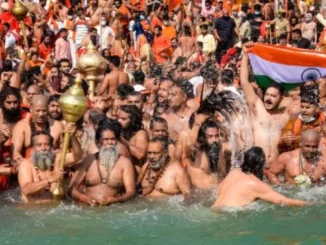
    PRAYAGRAJ (TIP): The first three days of the Mahakumbh Mela 2025 have witnessed a massive influx of devotees, spiritual fervor, and meticulous organization in the holy city of Prayagraj. The event, which only occurs once every twelve years, has already set the stage for a grand display of devotion, with millions making the sacred journey to the banks of the confluence of the Ganges, Yamuna, and mythical Saraswati rivers.

    Arrival and Inauguration

    The grand opening of the Mahakumbh Mela on January 14, 2025, saw an overwhelming crowd of devotees and tourists, all eager to immerse themselves in the spiritual significance of the event. The day began with a ceremonial bathing procession led by religious leaders and saints, setting the tone for the vast spiritual celebration to follow.

    Authorities reported the arrival of approximately 3 million pilgrims on the first day, all partaking in the ritual baths and praying at the temporary tented settlements that have sprung up along the riverbanks. As the day unfolded, the mesmerizing sight of pilgrims offering prayers and taking a holy dip in the Sangam resonated deeply with both locals and visitors. Special arrangements, including security and healthcare services, were put in place to ensure the safety and well-being of all attendees.

    An aerial view of the mammoth gathering of devotees at the Mahakumbh.

    The First Shahi Snan

    January 15 marked the first Shahi Snan (royal bath) of the Mahakumbh, a key moment in the Mela where ascetics, saints, and spiritual leaders take their ceremonial dips. This day attracted an estimated 5 million pilgrims, including thousands of Naga sadhus, the naked ascetics renowned for their fierce devotion. The sight of the Naga sadhus leading the procession to the river’s edge added a dramatic and powerful element to the event.

    The sacred bath is believed to purify the soul and cleanse sins, a tradition followed by millions who gathered from across the country and abroad. Many pilgrims were seen traveling on foot, some barefoot, through miles of sacred paths to reach the river. Several prominent spiritual leaders and gurus addressed the crowd, reinforcing the deep religious and cultural significance of the Mahakumbh Mela.

    Spiritual discourses and cultural celebrations

    On January 16, the crowd remained steady as devotees continued to arrive in large numbers. Temples and makeshift pandals (tents) filled with spiritual discourses, cultural performances, and religious activities offered a space for reflection and celebration. Pilgrims engaged in yoga sessions, meditation, and group chants, underscoring the spiritual essence of the Mela.

    In addition to the religious rituals, several cultural programs were organized throughout the day. Traditional dance, music, and art performances brought the vibrant cultural heritage of India to the forefront, adding to the sense of unity and collective spirituality. Many local artists and craftsmen also set up stalls to showcase their work, contributing to the lively atmosphere of the event.

    Infrastructure and logistics

    Authorities have made extensive arrangements to handle the massive crowds, with a focus on ensuring safety and comfort for the pilgrims. Over 50,000 police officers, paramedics, and volunteers are deployed to maintain order and provide assistance where needed. Special trains, buses, and temporary accommodation facilities have been set up to cater for the millions of visitors arriving daily. Clean drinking water, food stalls, and medical camps are also available across the venue.

    The Naga Sadhus in thousands descend at the Mahakumbh.

    With ongoing health and safety measures, including sanitation facilities, temperature checks, and COVID-19 monitoring, the administration is striving to provide a safe environment amidst the heavy footfall.

    The Mahakumbh Mela 2025 is expected to continue its spiritual and cultural momentum in the coming weeks, with several more significant bathing days and religious activities scheduled. The Mela will culminate with the final Shahi Snan on the auspicious day of Mauni Amavasya, expected to draw the largest crowd.

    For millions, the Mahakumbh is more than just an event—it is a journey of faith, purification, and renewal. As the first three days have shown, it is a living testament to India’s rich spiritual heritage, drawing people from all walks of life to experience a profound connection with the divine.

  • Biden Says He Ratified New Constitutional Amendment, Despite Opposition

    Biden Says He Ratified New Constitutional Amendment, Despite Opposition

    WASHINGTON, D.C. (TIP): President Joe Biden on January 17 announced that the Equal Rights Amendment (ERA) is the “law of the land,” despite the U.S. archivist recently saying the president could not ratify the constitutional amendment.

    “It is long past time to recognize the will of the American people,” Biden said in a statement. “In keeping with my oath and duty to Constitution and country, I affirm what I believe and what three-fourths of the states have ratified: the 28th Amendment is the law of the land, guaranteeing all Americans equal rights and protections under the law regardless of their sex.”
    Biden pointed to how Virginia in 2020 became the 38th state to ratify the ERA, which would prohibit discrimination on the basis of gender.

    The U.S. archivist and U.S. deputy archivist said in late 2024 that the president could not ratify the amendment because the amendment did not receive the required support from three-fourths of the states by the deadline Congress imposed, which was June 30, 1982.
    The Department of Justice’s Office of Legal Counsel in 2020, while Donald Trump was president, and in 2022, after Biden took office, also said that ratification cannot occur unless Congress or the courts extend or remove the ratification deadline. However, the American Bar Association (ABA) is among the organizations that have offered a different view: that Virginia’s ratification was sufficient to meet the three-quarters requirement, and the deadline is not relevant.

    “I agree with the ABA and with leading legal constitutional scholars that the Equal Rights Amendment has become part of our Constitution,” Biden said.

    Democrat lawmakers had been urging Biden to ratify the amendment and expressed support after his announcement on Friday.

    “The President is right: the Equal Rights Amendment is the law of the land. Today is one step closer to full dignity for women and every American,” Rep. Mark Takano (D-Calif.) said in a post on social media platform X.
    Republicans had called on Biden not to ratify the amendment.

    “The ERA of 1972 failed to gain the necessary support from the states before its deadline, and no court has since held that the deadline can be retroactively disregarded,” Alabama Attorney General Steve Marshall told Biden in a recent letter.

    The U.S. Constitution states that an amendment can be proposed by a two-thirds vote of both houses of Congress or if two-thirds of states request one in a special convention. The proposed amendment must be ratified by three-fourths of states.

    Some lawmakers have proposed waiving the deadline, but none of those proposals have passed. There is no precedent for waiving such a deadline after it has passed, according to New York University’s Brennan Center for Justice.
    The courts could end up deciding the matter, Brennan Center experts said.

    The last amendment to the Constitution was ratified by enough states in 1992 that the archivist at the time certified the ratification, and Congress then approved the amendment.

  • Israel govt approves Gaza ceasefire and hostage accord, due to take effect Sunday

    Israel govt approves Gaza ceasefire and hostage accord, due to take effect Sunday

    With the accord bitterly opposed by some Israeli cabinet hardliners, reports say 24 ministers in Netanyahu’s coalition government voted in favor of the deal while 8 opposed it

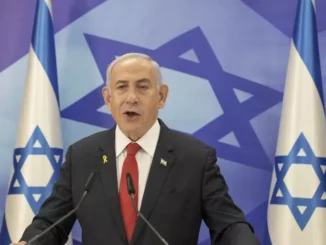
    NEW YORK (TIP): Israel’s cabinet approved a deal with Palestinian militant group Hamas for a ceasefire and release of hostages in the Gaza Strip, Prime Minister Benjamin Netanyahu’s office said on Saturday, January 17, a day ahead of the agreement’s scheduled start, says a Jerusalem/Cairo datelined Reuters report.

    In the early hours of Saturday after meeting for more than six hours, the government ratified the agreement that could pave the way for an end to the 15-month-old war in the Palestinian enclave, which Hamas controls.

    “The Government has approved the framework for the return of the hostages. The framework for the hostages’ release will come into effect on Sunday,” Netanyahu’s office said in a brief statement.

    In Gaza itself, Israeli warplanes have kept up heavy attacks since the ceasefire deal was agreed. Medics in Gaza said an Israeli airstrike early on Saturday killed five people in a tent in the Mawasi area west of Khan Younis in the enclave’s south.

    This brought to 119 the number of Palestinians killed by Israeli bombardment since the accord was announced on Wednesday.

    After the Israeli cabinet approval, lead US negotiator Brett McGurk said the plan was moving forward on track. The White House expects the ceasefire to start on Sunday morning, with three female hostages to be released to Israel on Sunday afternoon through the Red Cross.

    “We have locked down every single detail in this agreement. We are quite confident… it is ready to be implemented on Sunday,” McGurk said on CNN from the White House.

    Under the deal, the three-stage ceasefire starts with an initial six-week phase when hostages held by Hamas will be exchanged for prisoners detained by Israel.

    Thirty-three of the 98 remaining Israeli hostages, including women, children, and men over 50, were due to be freed in this phase. Israel will release all Palestinian women and children under 19 in Israeli jails by the end of the first phase.

    The names of 95 Palestinian prisoners to be turned over on Sunday were announced by the Israeli Justice Ministry on Friday. After Sunday’s hostage release, McGurk said the accord called for four more female hostages to be released after seven days followed by the release of three further hostages every seven days thereafter.

    With the accord bitterly opposed by some Israeli cabinet hardliners, media reports said 24 ministers in Netanyahu’s coalition government voted in favor of the deal while eight opposed it.

    The opponents said the ceasefire agreement represented a capitulation to Hamas. National Security Minister Itamar Ben-Gvir threatened to resign if it was approved and urged other ministers to vote against it. However, he said he would not bring down the government.

    His fellow hardliner, Finance Minister Bezalel Smotrich, also threatened to quit the government if it does not go back to war to defeat Hamas after the first six-week phase of the ceasefire.

    After a last-minute delay on Thursday that Israel blamed on Hamas, the Israeli security cabinet voted on Friday in favor of the ceasefire accord, the first of two approvals required.

    Israel began its assault on Gaza after Hamas attacks on Israel on October 7, 2023 during which some 1,200 people were killed and 250 were taken hostage, according to Israeli tallies.

    The war between Israeli forces and Hamas has razed much of heavily urbanized Gaza, killed more than 46,000 people and displaced most of the enclave’s pre-war population of 2.3 million several times over, according to local authorities.

    If successful, the ceasefire could also ease hostilities in the Middle East, where the Gaza war spread to include Iran and its proxies – Lebanon’s Hezbollah, Yemen’s Houthis and armed groups in Iraq as well as the occupied West Bank.

    Gaza civilians have faced a humanitarian crisis due to hunger, cold and sickness. The ceasefire agreement calls for a surge in assistance, and international organizations have aid trucks lined up on Gaza’s borders to bring in food, fuel, medicine and other vital supplies.

    Palestinian relief agency UNRWA said on Friday that it has 4,000 truckloads of aid, half of which are food, ready to enter the coastal strip.

    Palestinians waiting for food in the southern Gaza Strip on Friday said they hoped a truce will mean an end to hours of queuing to fill one plate.

    “I hope it will happen so we’ll be able to cook in our homes and make whatever food we want, without having to go to soup kitchens and exhaust ourselves for three or four hours trying to get (food) – sometimes not even making it home,” displaced Palestinian Reeham Sheikh al-Eid said.
    (Source: Reuters)

  • Memorial Service held for India’s former Prime Minister Dr. Manmohan Singh

    Memorial Service held for India’s former Prime Minister Dr. Manmohan Singh

    Rich tributes paid by a cross section of society

    FORDS, NJ (TIP): The Indian Overseas Congress (IOC) USA, in collaboration with its New Jersey Chapter, organized a heartfelt memorial service and tribute on Saturday, January 11, 2025, at Royal Albert’s Palace to honor the extraordinary contributions of the late Hon. Dr. Manmohan Singh, former Prime Minister of India and one of the world’s most esteemed economists.

    The event brought together over 600 distinguished guests, including former New Jersey Governor James E. McGreevey, Senator Owen Henry, leaders of the Indian Overseas Congress, as well as elected officials, community leaders, social activists, and other prominent figures, all united to honor Dr. Singh’s extraordinary legacy.

    The ceremony began with a warm welcome by Mr. Qayam Masumi and Ms. Arjumand Juveria and Pomposh Sheikh who extended heartfelt greetings to the esteemed attendees.

    Pradip (Peter) Kothari officially inaugurated the event alongside Mr. Harkesh Thakur, Anil Patel, Mahesh Patel, and Manmit Singh Vasdev, Rajesh Desai, and Harvendar Singh.

    Mr. Pradip (Peter) Kothari, President of the Indian Overseas Congress New Jersey Chapter, officially inaugurated the event alongside Mr. Harkesh Thakur, Chairman of the New Jersey Chapter. They were joined by IOC NJ Chapter Vice Presidents Anil Patel, Mahesh Patel, and Manmit Singh Vasdev, Treasurer Rajesh Desai, and Public Relations Officer Harvendar Singh.

    Mr. Peter Kothari introduced the National President of IOC USA, Mr. Mohinder Singh Gilzian, and Working President, Mr. Pardip Samla. Mohinder Singh delivered a moving speech, highlighting Dr. Singh’s achievements during his decade-long tenure as Prime Minister. Quoting Singh’s humility and statesmanship, he remarked, “Wo aasman tha, par sir jhuka kar chalta tha” (He was as vast as the sky yet walked with humility).

    A special video message from Mr. Sam Pitroda, Global and USA Chairman of the Indian overseas Congress, set the tone for the event, reflecting on Dr. Singh’s visionary leadership and profound impact on India’s economic transformation.

    Paying Tributes to Dr. Manmohan Singh.

    Other prominent speakers who shared their personal experiences and insights about Dr. Singh included:

    • Mr. Harbachan Singh, Secretary-General of IOC USA, who emphasized the simplicity and integrity of Dr. Singh.
    • Former New Jersey Governor James E. McGreevey, who paid homage and highlighted the universal respect Dr. Singh commanded.
    • Senator Owen Henry, representing New Jersey’s 12th legislative district, who praised Dr. Singh’s contributions as a global statesman.
    • Councilman Viru Patel, who recounted his experiences, and the profound impact Dr. Singh had on the Indian diaspora.
    • Councilman Mr. Rajesh Mehta, a community leader, who emphasized Dr. Singh’s enduring legacy and contributions to India’s growth.

    The event welcomed an impressive lineup of attendees, from different parts of the USA including IOC USA Chapter Presidents, Vice Presidents, and community leaders from across the nation. Notable attendees included:

    • John Joseph, Vice President, IOC USA
    • Rajiv Gowda, President, Karnataka Chapter
    • Gurmeet Singh Gill, President, Punjab Chapter
    • Rejeshwar Reddy, President, Telangana Chapter
    • Srinivasarao Bhimineni, President, Andhra Pradesh Chapter

    These leaders, along with several other eminent personalities, gathered to celebrate Dr. Singh’s legacy and his transformative role in shaping modern India.

    In a unique segment, a series of video messages from esteemed Indian journalists such as Punya Prasoon Bajpai, Ashok Vankhede, Vinod Sharma, Deepak Sharma, Abhisar Sharma, and others, were screened, sharing their insights and personal encounters with Dr. Singh.

    Arjumand Juveria, Joint Secretary of the IOC, narrated a memorable incident where Dr. Singh responded to a parliamentary debate in poetic style, showcasing his intellect and grace.

    Asif Rajab Ali, Mr. Prakash Parmar, Ms. Rajni Mishra, Ranjit Shripali, Bharat Patel, Hardik Patel, and Prince Patel sang a soulful bhajan (Photos : N & M Photography)

    The event featured a soulful bhajan program that created a serene and reflective ambiance, enhancing the atmosphere of the proceedings. The musical tribute was performed by a talented group of artists, including Mr. Asif Rajab Ali, Mr. Prakash Parmar, Ms. Rajni Mishra, Mr. Ranjit Shripali, Mr. Bharat Patel, Hardik Patel on keyboard, and Prince Patel. Their devotional songs resonated deeply with the audience, adding a profound spiritual dimension to the event.

    The ceremony concluded with a vote of thanks by Mr. Mukesh Kashiwala, accompanied by Mr. Peter Kothari. Their gratitude extended to all attendees, volunteers, and contributors who made the event a grand success.

    Mr. Pradip (Peter) Kothari, in his closing remarks, expressed the IOC’s commitment to preserving Dr. Singh’s legacy, stating, “It is our responsibility to honor and perpetuate the values Dr. Manmohan Singh stood for, as a leader, economist, and human being.”

    About Indian Overseas Congress USA

    The Indian Overseas Congress USA is dedicated to fostering unity among the Indian diaspora, preserving India’s rich cultural heritage, and promoting the principles of democracy and inclusivity. The New Jersey Chapter continues to organize meaningful events that honor India’s legacy and inspire future generations.

    (Based on a press release issued by Pradip (Peter) Kothari)

  • Centennial Tribute to Raj Kapoor and Dedication to Late Shobhna Patel Draw over 450 Attendees

    Centennial Tribute to Raj Kapoor and Dedication to Late Shobhna Patel Draw over 450 Attendees

    Late Shobhana Patel

    PRINCETON, NJ (TIP): On Sunday, January 12, 2025, a sold-out audience of more than 450 music enthusiasts gathered at Royal Albert’s Palace in Fords, NJ, for a remarkable Centennial Tribute to the legendary Showman of Indian Cinema, Raj Kapoor, and a dedication to Late Shobhna Patel on her first death anniversary. This extraordinary event featured over 25 singers performing a blend of solo and duet renditions, totaling 50 timeless songs, in a captivating four-hour program.
    Participants from diverse backgrounds and professions came together to honor Raj Kapoor’s iconic contributions to Indian cinema and to share their passion for music. Kapoor, who began acting at the age of 11 and ventured into filmmaking at 24, is celebrated for classics such as Aag, Barsaat, Awara, Shree 420, and his deeply personal masterpiece Mera Naam Joker. His illustrious career earned him the Padma Bhushan in 1971 and the Dada Saheb Phalke Award in 1987.

    Remembering Late Shobhna Patel on her first death anniversary.

    The event also paid tribute to the late Shobhna Patel, an extraordinary woman who dedicated her life to preserving Indian culture in the United States. As an organizer of Miss India NJ, Miss Teen NJ, and numerous other cultural celebrations, Patel’s legacy remains a cornerstone of cultural heritage preservation in the region. The evening marked her first death anniversary since her passing on January 12, 2024. Edison Township Mayor Sam Joshi attended the event to show his support for the cause and addressed the audience, highlighting the progress in Edison and the significant contributions made by the Indian community.

    A Section of attendees

    The program was hosted by AUM Events and South Asian Culture, Heritage & Arts (SACHA), a non-profit organization led by Jayesh Mehta. Dr. Tushar Patel, a noted community activist and music enthusiast, lent his expertise as Master of Ceremonies, ensuring the event’s smooth flow. Renowned singer Sanjay Shah, along with Raj Macwan, Mukesh Kashiwala, and Pinakin Pathak, also contributed their support to this meaningful occasion.
    The evening concluded with special recognitions of outstanding performers. Rising star Neel Nadkarni and veteran singer Foram Shah were honored as Best Male and Female Singers, respectively, for their exceptional contributions to the musical tapestry in the USA. This heartfelt tribute underscored the enduring legacy of Raj Kapoor and Shobhna Patel, leaving attendees inspired and immersed in the rich cultural heritage of Indian cinema and traditions.

    (Based on a press release by Tushar B Patel)

    Organizers and performers (Photos: AUM Events / Jayesh Mehta)
  • Suozzi Welcomes Ceasefire-Hostage Release Deal

    Suozzi Welcomes Ceasefire-Hostage Release Deal

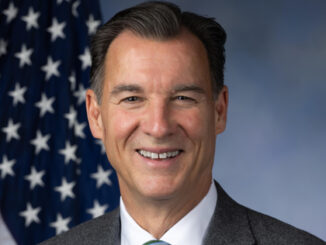
    WASHINGTON, D.C. (TP): Congressman Tom Suozzi (D – Long Island, Queens) released the following statement regarding the ceasefire-hostage deal between Israel and Hamas:

    “Today’s news of a six-week ceasefire deal between Israel and Hamas is bittersweet. While I am overjoyed about the potential release of some hostages, I am heartbroken that my constituent Omer Neutra, and so many others, will not return home alive. The Neutra family’s advocacy helped make this deal possible. May his memory continue to be a blessing.

    I applaud President Biden, President-elect Trump, and their teams for working together to finally get a deal done to release hostages from Gaza. Their collaboration put politics aside to save precious lives.

    I will continue to advocate for the return of all hostages, and to ensure Gaza is no longer ruled by a terrorist group. Am Yisrael Chai!”

  • America’s Oligarchy: A Threat to Democracy

    By Prof. Indrajit S Saluja
    By Prof. Indrajit S Saluja

    In his farewell address, President Joe Biden warned Americans about the growing threat of oligarchy in the United States, signaling the necessity to safeguard the middle class from its clutches. This stark acknowledgment comes amid the increasing concentration of wealth and power in the hands of a few billionaires, a trend that has been exacerbated by the rise of populist leaders, particularly Donald Trump. In fact, the idea that America is heading toward an oligarchic state has been articulated by various commentators, including Prof. Indrajit S. Saluja, editor of The Indian Panorama, who in his December 10, 2024 article (https://www.theindianpanorama.news/opinion/perspective/united-states-on-the-way-to-becoming-an-oligarchic-state/) highlighted the alarming trajectory of the U.S. toward becoming an oligarchic society.

    Over the past few decades, the United States has witnessed a disturbing shift in its political and economic landscape. Once celebrated as the world’s foremost democracy, the country now faces the growing dominance of a small, powerful elite whose influence threatens to undermine the democratic foundations that once defined its governance. This concentration of wealth and political power, often referred to as oligarchy, presents a significant challenge to the country’s middle class, which has long been the backbone of American society.

    A key indicator of the increasing oligarchic tendencies in the U.S. is the dramatic rise in economic inequality. According to a 2023 report by Oxfam, the top 1% of Americans now control approximately 34% of the nation’s wealth. In stark contrast, the bottom 50% collectively own just 2.5% of the wealth. This concentration of wealth is not only a result of market forces but also of deliberate policy choices that have disproportionately benefited the ultra-wealthy.

    Billionaires like Elon Musk, Jeff Bezos, Warren Buffett, and others not only dominate the U.S. economy but also exert significant influence over its political machinery. Through their vast financial resources, they are able to fund political campaigns and lobby for policies that protect and expand their wealth. The most glaring example of this is the 2017 Tax Cuts and Jobs Act, which reduced the corporate tax rate from 35% to 21%. Proponents argued that the cuts would stimulate economic growth, but an analysis by the Institute on Taxation and Economic Policy found that the primary beneficiaries were large corporations and the wealthiest Americans. Meanwhile, the middle and lower classes saw little to no tangible benefit.

    The pandemic further exacerbated this divide. While millions of Americans lost their jobs, saw their businesses shuttered, and faced economic hardship, U.S. billionaires collectively saw their wealth increase by more than $1 trillion between March 2020 and March 2021. This stark contrast underscores the growing divide between the economic elite and the rest of the population, providing clear evidence of an oligarchic power structure in the making.

    Economic power alone is not enough to cement oligarchic rule; it must be accompanied by political influence. In the United States, the influence of billionaires over political outcomes has increased dramatically in recent years. The landmark 2010 Supreme Court decision in Citizens United v. FEC opened the floodgates for unlimited corporate and individual spending in elections. This decision allowed the ultra-wealthy to dominate the political process by funding Super PACs and other political action committees.

    During the 2020 election cycle, for instance, billionaire Sheldon Adelson and his wife Miriam contributed more than $218 million to Republican candidates and causes. On the other hand, former New York City Mayor Michael Bloomberg spent nearly $1 billion of his own fortune on his presidential campaign and to support Democratic candidates. This concentration of political spending in the hands of a few individuals raises critical questions about the integrity of American democracy. Elected officials may increasingly be more accountable to their deep-pocketed donors than to their constituents.

    Moreover, the rise of Super PACs and dark money groups has led to a situation where political campaigns are no longer primarily funded by small donations from ordinary citizens. Instead, the wealthiest Americans can effectively buy influence and shape policy outcomes, undermining the democratic principle of equal representation. As a result, the political system becomes increasingly skewed in favor of the interests of the rich and powerful, contributing to a sense of alienation and disillusionment among the general public.

    Another hallmark of an oligarchic system is the revolving door between the public and private sectors, where individuals move seamlessly between powerful positions in government and influential roles in business. This phenomenon ensures that policies remain favorable to corporate interests, reinforcing the power of the economic elite.

    For example, the appointment of former Goldman Sachs executives to key positions in government is a prime illustration of this revolving door. These appointments raise concerns about whether public policies are being shaped to serve the needs of the public or the interests of Wall Street. The influence of business executives in government not only perpetuates oligarchic rule but also erodes trust in public institutions, making it more difficult for ordinary citizens to believe that their government represents their interests.

    The election of Donald Trump brought another dimension to the growing oligarchic tendencies in the U.S. His administration was marked by the centralization of power in a small, exclusive circle of friends, family members, and loyalists. These figures, often lacking the necessary qualifications for public office, were nonetheless appointed to high-ranking government positions based on personal loyalty rather than merit.

    This pattern of appointing unqualified individuals to key positions undermines public trust in the democratic process and reinforces the idea of an oligarchic system where power is concentrated in the hands of a few individuals and their allies. For example, Trump’s appointment of his daughter Ivanka and his son-in-law Jared Kushner to influential positions in his administration exemplified a shift toward a more personalized form of governance, which is reminiscent of oligarchic rule.

    The United States has faced oligarchic tendencies in the past, notably during the Gilded Age of the late 19th and early 20th centuries, when industrial magnates like John D. Rockefeller, Andrew Carnegie, and J.P. Morgan amassed enormous fortunes and wielded significant political influence. However, the Progressive Era that followed brought important reforms, including antitrust laws, labor protections, and campaign finance regulations, aimed at curbing the excesses of oligarchy.

    Unfortunately, many of these safeguards have been eroded in recent years. The weakening of campaign finance laws, the rollback of antitrust enforcement, and the decline of labor unions have all contributed to the resurgence of oligarchic power in the U.S. As a result, the country is now at risk of repeating the mistakes of the past, with wealth and power becoming increasingly concentrated in the hands of a few individuals and corporations.

    The United States stands at a crossroads. The concentration of economic and political power in the hands of a wealthy few threatens to undermine the democratic principles upon which the nation was founded. While the challenges are formidable, history offers hope that meaningful reform is possible. By addressing the root causes of oligarchic influence, the United States can reaffirm its commitment to democracy and ensure that power truly resides with the people.

  • Turbulence awaits India in Trump zone

    Turbulence awaits India in Trump zone

    There is uncertainty over whether his MAGA push will help Make India Great Again

    “Faced with such transactionalism, it would seem, India has hedged its bets by stabilizing relations with both Russia and China. Some analysts have expressed the hope that Trump may improve relations with Russia and that would in turn enable India to retain that relationship while continuing to deal with China. Whatever the facts, the point is that it will take time before some stability returns to the US-India relationship. Indeed, this would be true even for US relations with key allies and neighbors. Everyone is waiting and watching to see how much of Trumpism is bluff and bluster and how much he means business.”

    By Sanjaya Baru

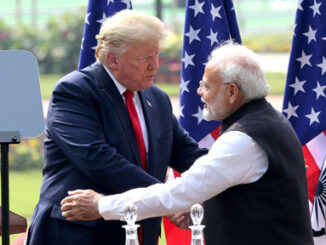
    During the US presidential election campaign, the commentariat in India was generally of the opinion that a second Trump presidency would be beneficial for India. Much hope was invested in the so-called personal chemistry and bonhomie between Prime Minister Narendra Modi and President Donald Trump. As events have unfolded over the past few weeks, it would appear that New Delhi now awaits Trump a bit nervously.

    Much has been made of Trump’s early invitation to Chinese President Xi Jinping to attend his inauguration. It took some diplomatic effort on External Affairs Minister S Jaishankar’s part to ensure that at least he received an invitation. More worrying, however, are Trump’s remarks about trade, tariffs and immigration. Along with the rest of the world, India is getting prepared for a period of turbulence in the bilateral relationship as well as in global geopolitics.

    Evan Feigenbaum, vice-president of Washington DC-based think tank Carnegie Endowment for International Peace, and a former member of the George W Bush administration, warns that Asian governments and markets should be prepared for Trump-induced turbulence. “Geopolitically, Asian governments, firms and especially markets should prepare to face a whirlwind of strategic turbulence,” says Feigenbaum.

    Jaishankar’s last air dash to Washington helped get the outgoing national security adviser, Jake Sullivan, to New Delhi. That visit sought to inject new energy into a sagging affair. During his proposed visit to Washington DC this weekend, the foreign minister will seek to inject even more energy into the relationship. Such activism draws attention to the concern with anticipated turbulence.

    In recent weeks, many within the ruling establishment in India have complained about the anti-India stratagems of the so-called American ‘deep state’, including influential individuals like George Soros. This kind of talk emanating from within the Sangh Parivar betrays nervousness in New Delhi despite the confidence exuded by diplomats and officials. At least one reason for this would be the uncertainty about the answer to a simple question — will MAGA help MIGA?

    Trump’s promise for his second presidency is primarily to Make America Great Again (MAGA). Modi’s promise to India has been MIGA — Make India Great Again. In the past, especially in the early years of the US-India strategic partnership during the tenures of President George W Bush and Prime Ministers Atal Bihari Vajpayee and Manmohan Singh, the template was that it would be in US interest to help India’s rise. It is this view, especially on the part of President Bush and his advisers that facilitated the US-India civil nuclear agreement. This view had to contend with doubts within the American establishment as to where India stood on matters of interest to the US. Doubts regarding the latter were renewed after India played footsie with Vladimir Putin following Russia’s invasion of Ukraine.

    In the United States, three schools of thought contend with each other on the US-India relationship. These can be classified as ideological, realist and transactional. The ideological school, never a decisive voice, has always placed great emphasis on the fact that India is a democracy and that its rise as a plural democracy is in the interests of the US. The West fought Soviet communism during the Cold War and now responds to Chinese authoritarianism. In both battles, the empowerment of a democratic India was viewed as a global public good.

    The realist view situates US-India relations within a global balance of power perspective that sees a stronger India as a helpful balancer against an aggressive and assertive China, at least within Asia. The fact is that US-India ties have improved over the past two decades against the backdrop of China’s rise.

    Hence, both the ideological and the realist views have contributed to an improvement in US-India relations, with the American establishment viewing India’s rise as being in its own interest and a positive development in itself. Making India Great Again suited US interests as long as India was viewed as an emerging counterforce to China.

    By contrast, the purely transactional view that Trump opted for during his first tenure has insistently asked the question, ‘what’s in it for me?’ Entering his second term Trump now asks that question with renewed vigor and force and the question is asked of the world as a whole, India included.

    The rise of transactionalism over realism means India has to show what it can do to MAGA for the US to do something to MIGA. Even though such transactionalism is associated with the first Trump presidency, it found new takers within the Biden administration after India went along with Russia in the wake of the Ukraine war. A growing number of officials within the Biden administration also became transactional and kept ticking off points as to what India was doing for or against US interests. Expect more of that going forward.

    Faced with such transactionalism, it would seem, India has hedged its bets by stabilizing relations with both Russia and China. Some analysts have expressed the hope that Trump may improve relations with Russia and that would in turn enable India to retain that relationship while continuing to deal with China. Whatever the facts, the point is that it will take time before some stability returns to the US-India relationship. Indeed, this would be true even for US relations with key allies and neighbors. Everyone is waiting and watching to see how much of Trumpism is bluff and bluster and how much he means business.

    Even as India hopes to stabilize and improve its relationship with the US, it has to be prepared for the anticipated turbulence. After all, Trump’s basic and fundamental policy objective will remain America First. The US is determined to retain its dominant global position, secure control over the trans-Atlantic alliance and ensure that allies spend more on their defense so that it can focus its resources on making its own economy more globally competitive and dominant.

    (Sanjaya Baru is a political commentator and policy analyst)

  • Has US become a most unreliable nation?

    Has US become a most unreliable nation?

    Perhaps the middle powers could take a leaf from Qatar’s book and play the mediating role to make things happen

    “As these things go, the shift of global power will have to play out before countries agree to talk — after the great powers test the limits of what they can achieve through aggression, or aggressive posturing. That is when a new modus vivendi might be thrashed out. One assumes China will manage to push the US back in the Western Pacific but not push it out altogether, and Russia will get what it seeks: a near-abroad as its zone of influence. Whether this will be a stable arrangement depends on the answers to key questions: Who will come in place of today’s rulers; can the great powers agree to live and let live; and what roles the middle powers will play?”

    By TN Ninan
    By TN Ninan

    As Donald Trump assumes office again as US President, the world is caught amidst seminal change. Since World War II, even the most powerful countries were willing to limit national sovereignty, in that they agreed for the most part to abide by global rules and cooperative action. Such rules were framed on a wide range of subjects. Not just trade and tariffs, but also nuclear arms, the law of the sea and the sanctity of national borders.

    This has changed, for two reasons. The first is the rise of China, and the accompanying shift of global power. China is not a status quo power, so it wants to shake things up and challenge the US. The second is the rise of strongmen as rulers in the great-power countries: Vladimir Putin, Xi Jinping and now Trump.

    These two developments have revived something that had more or less died out after World War II — wars of choice by the great powers, aimed at territorial conquest. The US war on Iraq served advance notice of what was to come. Three years ago, Putin invaded Ukraine. Xi seems to be preparing a Chinese assault on Taiwan. And Trump now threatens the use of force to acquire the Panama Canal and Greenland.

    This has been accompanied by other changes. A preference for unilateral action over multilateralism. A diminished role and utility for the United Nations and the World Trade Organisation, and for action to meet climate change targets. Geopolitics was always about power, but increasingly it is about power unrestrained by rules. That’s true in the South China Sea, genocide in Gaza, a huge new dam upstream of the Brahmaputra in Tibet and economic sanctions that affect non-combatant third countries.

    Underlying these is a change in mindset, from seeing interdependence and trade networks as an advantage to viewing them as vulnerability. So, we see a movement away from more than half a century of trade liberalization. Out, therefore, with globalization, in with ‘my country first’. Out with networked economies, in with self-reliance. Out with market efficiency, in with national security. This approach didn’t work well the last time it was tried, a century ago, but the lessons of history don’t seem to hold much sway.

    Perhaps the most important change is that the country that originated much of the rule-making of the past, the United States, is now the most unreliable nation on earth. A Financial Times columnist asked the other day whether America had become a rogue state. No one knows what it will do next, least of all its allies. All of this makes the world a more turbulent place, with many more uncertainties and risks than before.

    Laws and agreements reflect pre-existing power structures, and the cooperative agendas that were hammered out since World War II were made possible by the pre-eminence of a Western paradigm. And put in place by the most powerful country to emerge from the war. If that world order, so to speak, is now breaking down, we have to go back to the root cause: The threat posed to the West by the rise of China, at a speed and on a scale without precedent. The Western response — fueled by perceptions that China has not played by accepted trade rules, systematically worked to de-industrialize the West and also stolen Western technologies — has been trade sanctions, tariffs, technology denials and such.

    These may have come too late in the day. China’s industrial pre-eminence will remain unchallenged. Last year, it produced 12.6 times as much steel as the US, 22 times as much cement and three times as many cars — with whose electric models it now threatens to overwhelm the Japanese and German car markets. China’s shipyards also accounted for over half the ship output. By 2030, China’s manufacturing sector is projected to be bigger than that of the entire Western world. It is already far and away the global leader in every sunrise industry.

    These strengths are useful only if China can continue to access world markets, which are progressively sought to be denied. Yet China enjoyed a record trade surplus in 2024, approaching a trillion dollars. In several areas, it is now ahead of the West in technology. To be sure, the Chinese economy now faces serious structural problems that could undermine its continued rise. But one could argue that it is dealing with them at least as successfully as Western countries with structural problems, like the UK and Germany, even the US.

    The reality to be dealt with is that the more the West feels threatened, the quicker it has abandoned whatever rules it once played by. In the new world, it is every country for itself, and might is right. Indeed, every country’s defense budget is being raised, and one must hope that does not spur wider conflict. Even if this is avoided, the old world isn’t coming back. But can the new world agree to new rules?

    As these things go, the shift of global power will have to play out before countries agree to talk — after the great powers test the limits of what they can achieve through aggression, or aggressive posturing. That is when a new modus vivendi might be thrashed out. One assumes China will manage to push the US back in the Western Pacific but not push it out altogether, and Russia will get what it seeks: a near-abroad as its zone of influence. Whether this will be a stable arrangement depends on the answers to key questions: Who will come in place of today’s rulers; can the great powers agree to live and let live; and what roles the middle powers will play?

    Reform of today’s global institutions like the Security Council will have to be addressed. Ideally, the Council should abolish the veto and adopt the weighted voting that prevails in the European Union, the International Monetary Fund and the World Bank. This should make today’s veto countries more responsive to international opinion, and reflect the new global power reality. In trade, plurilateral arrangements are more likely than fully global trading rules. A new global compact on how to help African countries, home to most of the world’s poorest, will be essential. None of this will be easy, or the outcomes certain. Perhaps the middle powers could take a leaf from Qatar’s book and play the mediating role to make things happen.

  • An indictment of the sad state of New York government

    The former U.S. attorney for the Southern District of New York makes the case for real government reforms. Campaign finance, term limits, and efficiency standards in the government need a thorough review, according to Williams.

    “Unlike so much of today’s politics, this indictment of the status quo isn’t partisan. As I see it, the most meaningful divide in New York is not between Democrats and Republicans. It’s between the insiders who thrive in our broken system and the outsiders who are fed up and know we must fundamentally change it – from root to branch – so that government can finally address our most acute problems.”

    By Damian Williams

    From 2021 to 2024, I served as the U.S. attorney for the Southern District of New York. During my tenure, the Southern District brought some of the most significant enforcement actions in America. We fought corruption on Wall Street and in our government. We protected the country from national security threats. We brought sex traffickers to justice. We advanced civil rights.

    We dismantled violent gangs. We attacked every level of the fentanyl crisis, from Chinese companies that supply the precursor chemicals, to Mexican cartel leaders who manufacture the drug, to the local dealers who distribute the poison in our communities.

    By any measure, the Southern District has been historically productive. We achieved these results by matching innovative approaches with time-tested values. By investigating with urgency. By rewarding creativity and collaboration. By respecting dissent and rejecting partisan bias. By being disciplined with a limited budget – and then returning billions of dollars to the public through our work.

    I’m naturally proud of what the Southern District has achieved, but our record of success demonstrates something more important, especially at this moment in history: It shows that government can work. Government can be energetic, efficient and effective. This shouldn’t be remarkable. But as every New Yorker knows, excellence in government has become all too rare.

    The timing couldn’t be worse. Now more than ever, it is essential for state and local governments to put their best foot forward. New York, unfortunately, isn’t ready to meet the moment.

    Let’s review the sad state of things and why it doesn’t have to be this way.

    The public reporting alone paints a picture of New York City in deep crisis. America’s most vital city is being led with a broken ethical compass. All this while New Yorkers deal with a declining quality of life – high housing costs, a too-often-unsafe subway and a general sense of disorder.

    Albany is hardly in better shape. Its entrenched culture of corruption, which the Southern District has long sought to address, is only rivaled by its knack for inaction and incrementalism. Albany is wired in every way for insiders, with the predictable result that the problems affecting most New Yorkers are either deprioritized or the responses so diluted by special interests that very little changes. A glaring example is the cost of living. It’s so egregiously expensive to live in New York that working people are voting with their feet and fleeing the state altogether.

    Lawmakers have belatedly begun to take action, but the problem should never have been allowed to mushroom into a crisis. Similarly, the Metropolitan Transportation Authority – the lifeblood of business and work in greater New York City – has been dysfunctional and wasteful for decades. But because of its byzantine governance structure, accountability is spread so thin that it barely exists. On these problems and others, Albany has been chronically asleep at the switch. And New Yorkers can sense it.

    From housing costs to health care, to education, to crime, to transportation, it’s difficult to identify a single area where New York’s government has clearly succeeded. This pervasive underperformance has led to pervasive public dissatisfaction. The people are in a foul mood, and they have every reason to be. But they also have been conditioned to believe that this is as good as it gets. And that our government is destined to be sclerotic, scandal-plagued and systematically broken.

    The truth is that my party – the Democratic Party – has grown too comfortable with the way things are in New York. Reform – the kind of big, structural change necessary to meet our challenges head-on – is rarely pursued with sufficient urgency and imagination. And the measure of success too often appears to be whether we hold power on Election Day instead of whether we wield power on behalf of everyday people. For their part, Republicans – though largely locked out of power in New York City and in Albany – aren’t offering anything like the reforms we need.

    Unlike so much of today’s politics, this indictment of the status quo isn’t partisan. As I see it, the most meaningful divide in New York is not between Democrats and Republicans. It’s between the insiders who thrive in our broken system and the outsiders who are fed up and know we must fundamentally change it – from root to branch – so that government can finally address our most acute problems.

    For years, reformers have proposed commonsense, structural solutions for returning power to the people and making government more effective. But without elected officials willing to disrupt the status quo, progress has been nonexistent. That needs to change.

    Take campaign finance. At a bare minimum, no politician should be permitted to raise money from individuals or entities with business before the state. It reeks of pay-to-play corruption and is offensive to most New Yorkers. And yet the practice has persisted for generations, fattening the coffers of elected officials while feeding the justifiable perception that politicians – and the taxpayer funds they control – are for sale. We also need to establish a truly transformative public financing system for state elections to minimize the toxic influence of special interest money. (The state’s new matching funds program is woefully inadequate, a fig leaf meant to resemble reform without actually achieving much of it.) The goal should be empowering anyone with good ideas and leadership chops – teachers, nurses, veterans, homemakers and young people – to run for office, regardless of their access to donors. The ability to raise obscene sums of money for a campaign is precisely the wrong bottleneck to elected office.

    Term limits should be enacted. Yes, there are potential drawbacks. But surely, we can agree, as a starting point, that our statewide elected officials shouldn’t be able to serve in perpetuity. Four years is a long time. Eight years is an eternity. Who exactly benefits from New York’s permanent ruling class? It thwarts generational change and shuts out new ideas. It also promotes timidity – the next election is always just around the corner, after all – when boldness is what the moment requires. Dynamic institutions, including the Southern District, embrace churn and renewal. That’s how new thinking emerges, dogma is challenged and vitality is maintained.

    The New York government needs a thorough efficiency review. No matter your partisan leanings, it’s clear that our government is far too inefficient. New York’s taxes are the highest in the country. Yet our roads are among the nation’s worst. And, in New York City, 1 in 4 children live in poverty and 1 in 8 public school children are homeless. The government needs to examine whether it’s using taxpayer dollars responsibly and whether it can do more to optimize outcomes. There’s nothing progressive about bloat, nothing liberal about endless roadblocks that grind infrastructure development to a crawl. It makes the government slow and dysfunctional when it needs it to be nimble and productive. Democrats rightly defend democracy, and to succeed in that effort we need to ensure that government by the people actually serves the people.

    Despite our challenges, and there are many, I’m confident we can do better. Change is a choice. New Yorkers can reclaim power and achieve necessary systemic reform if they band together and demand it – loudly enough that politicians finally listen. That kind of transformation is hard, but in New York, it’s long overdue.

    (Damian Williams served as the U.S. attorney for the Southern District of New York from 2021 until 2024. Follow him on Bluesky @damian-williams.bsky.social)

  • India dominate Bhutan by 37 points, secure quarter-final spot in Kho Kho WC 2025

    India dominate Bhutan by 37 points, secure quarter-final spot in Kho Kho WC 2025

    India continued their impressive run in the Kho Kho World Cup 2025, securing a commanding 71-34 victory over Bhutan at the IG Indoor Stadium on Thursday, Jan 16. The win guarantees India’s position at the top of Group A and a place in the quarter-finals.
    The hosts set the tone early in the first turn, displaying exceptional attacking prowess to accumulate 32 points. The Indian team’s skydiving skills were particularly noteworthy, with players demonstrating remarkable agility throughout the match, according to a release from Kho Kho World Cup 2025.
    In the second turn, India showcased their defensive expertise, effectively containing Bhutan’s attacks. Despite Bhutan’s speed, they managed only 18 points across three batches, thanks to India’s strategic play and clever opposition management.
    The third turn saw India return to attack mode with renewed vigour. Nikhil emerged as a standout performer with his exceptional skydiving abilities, helping the team secure 36 points. The Indians demonstrated excellent coordination in their Khos, combining running touches and skydives effectively.
    Bhutan struggled in their final attacking turn, managing just 9 points in more than half the allocated time. India’s overall performance included an impressive tally of 18 skydives, 2 post-dive points, and 8 running touchpoints across their attacking turns.
    The 39-point victory margin reflects India’s dominance in the match, as they continue their unbeaten streak in the tournament. Having previously defeated Nepal, India looks well-positioned heading into the knockout stages of the competition.
    Meanwhile, In a masterclass of strategy and skill, the Indian women’s kho kho team crushed Malaysia with a commanding victory. Starting with a spectacular Dream Run by defenders Bhilar Opinaben and Monika, Team India dominated across all four turns, securing an emphatic 80-point win. The victory cemented India’s position atop Group A with a massive score difference, setting up a quarterfinal clash with Bangladesh.

  • BCCI lays out strict guidelines for players after Australia debacle

    BCCI lays out strict guidelines for players after Australia debacle

    The Board of Control for Cricket in India (BCCI) has introduced a comprehensive 10-point policy aimed at addressing the “star culture” within the Indian cricket team and fostering a sense of unity and discipline. Announced on Thursday, January 16, these measures follow a series of disappointing performances, including a 3-0 loss against New Zealand and the recent surrender of the Border-Gavaskar Trophy to Australia.
    New guidelines set out for players
    The new guidelines require players to maintain discipline on and off the field, with specific restrictions on family presence during tours and the banning of personal endorsements during ongoing series. This policy stems from a review meeting with head coach Gautam Gambhir, who voiced concerns over the team’s approach to preparation and professionalism.
    Mandatory Participation in Domestic Cricket
    The BCCI has made it compulsory for players to participate in domestic cricket matches. This move is designed to ensure that players stay connected with the domestic cricket ecosystem, helping maintain match fitness, develop talent, and strengthen the overall domestic structure. Any exceptions will require approval from chairman of selectors, Ajit Agarkar. The policy highlights the growing concern over the lack of participation from top players in Ranji Trophy matches. Notable players like Virat Kohli and Rohit Sharma have not featured in the tournament for years, a trend the BCCI aims to reverse.
    Approval Required for Family Stays on Tour
    The BCCI has introduced strict guidelines regarding family visits during overseas tours. Players must obtain approval from both the head coach and the chairman of selectors for any relaxation, including the duration of family stays. Families will only be allowed to stay for up to two weeks during overseas tours that exceed 45 days. This policy is aimed at promoting discipline and team cohesion.
    Traveling with the Team
    To ensure unity, players are now expected to travel with the team for all matches and practice sessions. Separate travel arrangements, particularly with families, are discouraged. Any exceptions to this rule must be pre-approved by the head coach and the chairman of selectors. The BCCI is enforcing this rule after a few players, including a prominent star, were seen traveling separately during tours, including the South Africa assignment and the recent Australia tour.
    Excess Baggage Regulations
    The new policy also imposes a limit on the amount of baggage players can carry during long tours. The weight limit for baggage has been set at 150 kg. Any additional baggage costs will now be borne by the players themselves. This regulation was introduced after several players were found to be carrying excess baggage, often including the bags of family members and personal staff.
    Restrictions on Personal Staff
    The BCCI has also placed restrictions on the presence of personal staff, such as managers, chefs, assistants, and security, during tours and series. Only those staff members who are explicitly approved by the BCCI will be allowed to travel with the team. This rule follows incidents where players, including Gautam Gambhir, had brought personal staff members into the team setup without prior approval. The move is intended to keep the team environment streamlined and focused.
    Coordination for Equipment
    and Personal Items
    Players are now required to coordinate with the team management when sending their equipment and personal items to the Centre of Excellence in Bengaluru. Any additional costs incurred due to separate arrangements will be the responsibility of the players. Some senior players have previously been criticized for sending their equipment ahead of their arrival, leading to unapproved excess costs.
    Staying for Entire Practice Sessions
    A key component of the new policy is ensuring that players remain committed to their training. All players are mandated to stay for the full duration of scheduled practice sessions. The new rule will prevent any player from leaving early, a habit previously adopted by some star players who would leave the nets early in a separate car. This regulation aims to foster a strong work ethic within the team.
    Prohibition on Personal
    Commercial Endorsements
    The BCCI has banned players from engaging in personal commercial endorsements or shoots during an ongoing series or tour. This restriction aims to eliminate distractions and ensure that players stay focused on their cricketing responsibilities. The board has also emphasized that players must prioritize team functions and official shoots, even if a series or match ends prematurely.
    End of Series, Staying with the Team
    Players are now required to remain with the team even if a series or match concludes early. This is part of an effort to maintain team spirit and commitment to the overall goals of the team, ensuring players are present and engaged until the very end of a tour or series.

  • Discover Assam: The Jewel of Northeast India

    Discover Assam: The Jewel of Northeast India

    Assam, nestled in the heart of Northeast India, is a land of unparalleled beauty and cultural richness. Renowned for its vibrant tea gardens, unique wildlife, and the mighty Brahmaputra River, Assam offers an eclectic mix of experiences for travelers. Whether you are a nature lover, history enthusiast, or someone seeking spiritual tranquility, Assam has something to enthrall you.
    A Glimpse into Assam’s Cultural Tapestry
    Home to diverse communities, Assam boasts a rich cultural heritage. The state is famous for its traditional dance forms like Bihu and Sattriya and its handwoven textiles like Muga silk, often referred to as the “golden fiber.” The festivals, particularly Bihu, Rongali Bihu, and Durga Puja, are celebrated with much fervor and showcase the state’s cultural vibrancy.
    How to Reach Assam
    Assam is well-connected to major cities in India and neighboring countries.
    – By Air: Lokpriya Gopinath Bordoloi International Airport in Guwahati is the primary gateway, with flights to and from major cities like Delhi, Kolkata, and Mumbai.
    – By Train: Assam’s railway network connects it to many parts of India. Guwahati Railway Station is the central hub.
    – By Road: The state has a well-maintained road network, with national highways linking it to neighboring states.
    Best Time to Visit
    The ideal time to visit Assam is between October and April, when the weather is pleasant, and the landscape is lush from post-monsoon greenery. This period also aligns with major festivals and offers opportunities for wildlife spotting.
    Top Places to Visit in Assam
    Kaziranga National Park
    A UNESCO World Heritage Site, Kaziranga is synonymous with the one-horned rhinoceros. Spread over 430 sq km, the park is a haven for wildlife enthusiasts. Apart from rhinos, you can spot elephants, tigers, wild water buffalo, and numerous bird species. Jeep safaris and elephant rides offer close encounters with the park’s inhabitants.
    Manas National Park
    Another UNESCO World Heritage Site, Manas National Park, is renowned for its biodiversity and stunning landscapes. Nestled at the foothills of the Himalayas, it is home to rare species like the golden langur and pygmy hog. Adventure seekers can also enjoy river rafting and birdwatching here.
    Majuli Island
    The world’s largest river island, Majuli, is a cultural treasure. Located on the Brahmaputra River, Majuli is known for its Satras (Vaishnavite monasteries) that preserve traditional art, dance, and music. Visitors can explore the island’s serene landscapes, interact with local tribes, and witness pottery-making.
    Guwahati
    As Assam’s largest city, Guwahati offers a mix of urban life and cultural heritage. Key attractions include:
    – Kamakhya Temple: A revered Shakti Peeth dedicated to Goddess Kamakhya.
    – Umananda Temple: Situated on Peacock Island in the Brahmaputra River.
    – Assam State Museum: Showcasing artifacts from Assam’s history and culture.
    – Pobitora Wildlife Sanctuary: Known for its high density of one-horned rhinoceroses.
    Sivasagar
    A historical town, Sivasagar was the capital of the Ahom dynasty. The town is dotted with architectural marvels, including:
    – Rang Ghar: Asia’s oldest amphitheater.
    – Talatal Ghar: A multi-storied palace with underground tunnels.
    – Shivadol: An iconic Shiva temple surrounded by lush greenery.
    Tezpur
    Known as the “City of Eternal Romance,” Tezpur is steeped in mythology and natural beauty. Key attractions include:
    – Agnigarh Hill: Associated with the legend of Usha and Aniruddha.
    – Cole Park: A picturesque spot with fountains and sculptures.
    – Bhalukpong: A gateway to Arunachal Pradesh, offering river rafting and trekking.
    Jorhat
    Often called the “Tea Capital of Assam,” Jorhat is a hub for tea plantations and Assamese culture. Must-visit spots include:
    – Hoollongapar Gibbon Sanctuary: A haven for the hoolock gibbon.
    – Tocklai Tea Research Institute: A center for tea research and development.
    Haflong
    Assam’s only hill station, Haflong, is a paradise for nature lovers. Surrounded by rolling hills and serene lakes, it offers activities like trekking and birdwatching. Don’t miss the picturesque Haflong Lake and the Maibong ruins nearby.
    Dibrugarh
    Known as the “Tea City of India,” Dibrugarh offers a unique blend of natural beauty and modernity. Visitors can explore vast tea estates, take a cruise on the Brahmaputra, and enjoy local cuisine.
    Silchar
    Located in southern Assam, Silchar is known for its scenic beauty and vibrant Barak Valley culture. The town’s highlights include:
    – Khaspur Ruins: Remnants of the ancient Dimasa kingdom.
    – Maniharan Tunnel: A site of mythological importance.
    Unique Experiences in Assam
    Tea Tourism
    Assam’s tea estates offer immersive experiences where visitors can learn about tea cultivation, processing, and tasting. Popular estates like Mancotta and Ethelwold in Dibrugarh provide guided tours.
    River Cruises on the Brahmaputra
    Luxury cruises on the Brahmaputra River offer breathtaking views of the surrounding landscapes. These cruises often include cultural performances, wildlife spotting, and visits to riverside villages.

  • Bhanu Saptami: A Celebration of the Sun God

    Bhanu Saptami: A Celebration of the Sun God

    Bhanu Saptami, also known as Surya Jayanti, is a significant Hindu festival dedicated to the Sun God, Surya. Observed on the seventh day (Saptami) of the Shukla Paksha (waxing phase of the moon) in the Hindu month of Magha, this auspicious occasion celebrates the divine energy and life-giving force of the sun.
    Mythological Significance
    According to Hindu mythology, Bhanu Saptami marks the day when Lord Surya, the celestial source of light and energy, manifested in his full glory to illuminate the universe. The word Bhanu translates to “sun,” and the festival is a tribute to the sun’s role as the sustainer of life on Earth. Lord Surya is considered one of the Navagrahas (nine celestial planets) and is revered as a symbol of health, vitality, and prosperity.
    The Sun God is often depicted riding a chariot driven by seven horses, symbolizing the seven colors of the spectrum and the seven days of the week. This imagery signifies Surya’s control over time and his ability to dispel darkness and ignorance.
    Rituals and Practices
    Surya Puja
    Devotees wake up early on Bhanu Saptami and take a holy bath, often in sacred rivers, lakes, or water bodies, to purify their body and soul. They then perform Surya Puja, offering water, red flowers, rice, and other sacred items to the rising sun. Chanting the Aditya Hridayam or other Surya mantras is a common practice during the puja.
    Fasting
    Many devotees observe a fast on Bhanu Saptami to seek the blessings of Lord Surya. The fast is typically broken in the evening with sattvic (pure) food.
    Charity
    Acts of charity hold special significance on this day. Donating food, clothes, or money to the needy is believed to bring prosperity and spiritual merit.
    Special Offerings
    Devotees prepare special dishes as offerings to Lord Surya. Traditional items include jaggery, wheat, and red-colored fruits or sweets, as these are considered auspicious and symbolic of the sun’s energy.
    Spiritual and Health Benefits
    Bhanu Saptami holds great spiritual and health significance. The rituals performed on this day are believed to:
    – Promote good health: Surya is associated with vitality and healing. Sun salutations (Surya Namaskar) and exposure to sunlight are emphasized for their physical and mental benefits.
    – Enhance spiritual growth: Offering prayers to the Sun God helps devotees connect with cosmic energy and attain inner peace.
    – Remove obstacles: Worshipping Surya on Bhanu Saptami is said to eliminate negativity and bring prosperity and success.
    Regional Observances
    Bhanu Saptami is celebrated with great fervor across India, particularly in states like Uttar Pradesh, Bihar, Rajasthan, Maharashtra, and Tamil Nadu. In South India, the festival is often observed as Ratha Saptami, where the focus is on Surya’s chariot and his journey through the cosmos.
    Temples dedicated to Lord Surya, such as the Konark Sun Temple in Odisha and the Suryanar Kovil in Tamil Nadu, witness grand celebrations, attracting devotees from far and wide.
    Bhanu Saptami is more than just a religious observance; it is a celebration of the sun’s life-sustaining energy and its profound impact on our existence. By honoring Lord Surya, devotees express gratitude for the blessings of health, vitality, and prosperity. This vibrant festival serves as a reminder of the sun’s eternal presence and its pivotal role in our spiritual and physical well-being.
    Legend of Surya
    The Sun God, Surya, is a central figure in Vedic traditions, symbolizing light, knowledge, and life force. He is often depicted riding a golden chariot drawn by seven horses, representing the seven colors of light and the seven days of the week. The significance of Surya in Bhanu Saptami lies in his role as the eternal source of energy and vitality.
    According to Hindu mythology, Surya is the son of sage Kashyapa and his wife Aditi, and he is considered one of the Adityas (celestial deities). The Rig Veda and other scriptures praise Surya as the illuminator of the universe and the dispeller of darkness.
    The Bhanu Saptami Story
    Bhanu Saptami is believed to mark the day when Surya Deva first began illuminating the world with his brilliance. On this day, devotees honor the Sun God for his life-sustaining energy.
    One popular legend relates to Lord Krishna’s son, Samba, who was cursed with leprosy due to his arrogance. Samba undertook a rigorous penance to please Surya, bathing in the Chandrabhaga River (now Konark, Odisha) and offering prayers to the Sun God. Surya, impressed by Samba’s devotion, cured him of his disease. This story highlights Surya’s role as a healer and protector, making Bhanu Saptami a day of reverence for health and vitality.
    Symbolism
    Bhanu Saptami is not just a festival of rituals; it symbolizes the triumph of light over darkness and the nurturing role of nature. It serves as a reminder to respect and harmonize with natural forces, fostering gratitude for the Sun’s blessings.

  • Asian stocks gain after US core inflation cools

    Asian stocks gain after US core inflation cools

    Shares in Asia followed Wall Street higher on Thursday, January 16, as easing US core inflation kept alive the prospect of Federal Reserve rate cuts this year. Benchmarks in Australia, Japan and South Korea all notched gains. The S&P 500 closed Wednesday 1.8% higher, the benchmark’s best day since the November election, which erased its 2025 decline. The tech-heavy Nasdaq 100 climbed 2.3%.
    Treasuries were little changed on Thursday after a rally in the previous session pushed 10-year yields 14 basis points lower. An index of the dollar steadied. The yen edged higher after climbing 0.9% against the greenback on Wednesday, its strongest showing since November, while the South Korean won strengthened as the central bank unexpectedly left interest rates unchanged.
    The moves centered upon US core consumer price index data for December that rose less than forecast, reinvigorating bets the Fed will cut rates sooner than previously thought. Swap traders are back to fully pricing in a rate cut by July — a quick shift after Friday’s hot jobs data spurred bets officials would only be able to resume policy easing in September or October.
    “We’re in a goldilocks scenarios where growth is holding up,” Suresh Tantia, a strategist for UBS Wealth Management, said on Bloomberg Television. “We do expect the earnings of tech companies in Asia to rise substantially this year, especially in the AI space.”
    The gains spread across asset classes and supported some of the most speculative corners of financial markets. Bitcoin traded around $100,000 and Goldman Sachs Group Inc.’s basket of money-losing tech companies rose 3.2%. The CBOE VIX index slumped the most this year and a Bloomberg measurement of the “Magnificent Seven” megacaps rallied 3.7%.
    A gauge of commodity prices hit the highest level in almost two years against a mixed geopolitical backdrop as sanctions on Russia began to hit crude flows while a cease-fire between Israel and Hamas eased concerns over intensifying conflict.
    Oil extended a powerful early-year advance on mounting risks to global supplies, and as commercial crude inventories in the US posted their longest run of declines since 2021. Gold slipped after climbing in the previous two sessions.
    The Australian dollar rose after data showed the unemployment rate remained low in December as the economy extended a streak of hiring gains.
    Later Thursday, Jan 16, the European Central Bank will release its meeting minutes while US data to be released includes initial jobless claims and retail sales, providing investors with a broader picture of the health of the world’s largest economy.
    The Canadian dollar edged higher after a report stated the country has drawn up a list of US goods it would hit with tariffs if President-elect Donald Trump decides to levy tariffs on Canadian goods.
    The so-called US core consumer price index — which excludes food and energy costs — increased 0.2% in December. That marked the first stepdown in the rate in six months. From a year ago, it rose 3.2%. That’s still above the Fed’s 2% target.
    Source: Bloomberg

  • US-based short-seller Hindenburg shuts down

    US-based short-seller Hindenburg shuts down

    Hindenburg Research, a US investment research firm known for short-selling, and whose reports resulted in wiping out billions of dollars of Indian billionaire Gautam Adani and his companies, has been shut down, its founder Nate Anderson announced on Wednesday, January 15.
    “As I’ve shared with family, friends and our team since late last year, I have made the decision to disband Hindenburg Research. The plan has been to wind up after we finished the pipeline of ideas we were working on. And as of the last Ponzi cases we just completed and are sharing with regulators, that day is today,” Anderson announced.
    In the last few years, Hindenburg Research had launched a campaign against the Adani group. Its reports published since 2023 had resulted in billions of dollars of loss for the Indian billionaire. All the charges were denied by Adani and his companies.
    The sudden and surprising announcement by Anderson comes within days of a Republican Congressman, a member of the House Judiciary Committee, asking the Department of Justice to preserve all the documents and communications related to the investigations of Adani and his companies.
    Anderson did not give a specific reason for disbanding his organization, which is less than a week before the end of the four-year term of the Biden Administration and the swearing-in of Donald Trump as the 47th President of the United States on January 20.
    “So, why disband now? There is not one specific thing—no particular threat, no health issue, and no big personal issue. Someone once told me that at a certain point a successful career becomes a selfish act. Early on, I felt I needed to prove some things to myself. I have now finally found some comfort with myself, probably for the first time in my life,” he said.
    “I probably could have had it all along had I let myself, but I needed to put myself through a bit of hell first. The intensity and focus has come at the cost of missing a lot of the rest of the world and the people I care about. I now view Hindenburg as a chapter in my life, not a central thing that defines me,” he said.
    In an interview to The Wall Street Journal, Anderson said he looks forward to taking up hobbies, travelling and spending time with his fiancée and their child, adding that he has earned enough money to provide for them in the future. He said he plans to invest his money in index funds and other low-stress investments.
    Anderson said for now, he will be focused on making sure everyone on his team lands where they want to be next.
    “Some are going to start their own research firm, which I will strongly and publicly encourage, even as I will have no personal involvement. There are others on our team who are now free agents—so feel free to reach out to me if you have a need for anyone who is brilliant, focused, and easy to work with, as they all are,” he said. Source: PTI

  • India’s fiscal conditions to limit credit strength in 2025: Moody’s

    India’s fiscal conditions will continue to constrain its credit strength in 2025, although tension in US-China relations could benefit the Indian economy, Moody’s Ratings said on Wednesday, January 15. In its report on Asia Pacific Sovereigns, Moody’s Ratings said growth and inflation are levelling out, with strong domestic demand bolstered by modest easing in global and regional financial conditions.
    But proposed trade restrictions by the US would weaken economic output across the region.
    “India’s fiscal conditions will continue to constrain its credit strength in 2025. We expect only gradual fiscal consolidation, and debt to remain significantly higher than the Baa-rated peer median of around 57 per cent,” Moody’s said.
    “Despite gains in revenue in recent years, we also expect debt affordability to remain much weaker than rated peers,” it added.
    It said politics and social unrest pose significant economic and fiscal risks. In APAC, geopolitical risks will persist in 2025, flowing from tensions in the US-China relationship and around regional hotspots.
    Moody’s assesses a low likelihood of military conflict in the Taiwan Strait or Korean Peninsula, and tensions will remain elevated, particularly driven by US-China relations.

  • Google makes Gemini AI free to use in Gmail and Docs

    Google makes Gemini AI free to use in Gmail and Docs

    If youve been shelling out extra cash for Googles Gemini-powered AI features in Workspace apps, heres some good news: its now free. Google has announced that starting this week, all its AI tools formerly locked behind the Rs 1,500 per month Gemini Business plan are included in standard Workspace Business and Enterprise subscriptions. The move aims to make AI capabilities more accessible as Google races against Microsoft and OpenAI.
    Before you celebrate too much, theres a small caveat. Google is hiking the price of all Workspace plans to cover these new features. Most businesses will now pay about Rs 125 more per user per month. For context, the base subscription that previously cost Rs 900 ($12) will now be priced at Rs 1,050 ($14). Its not exactly a bank-breaker, but its a notable shift for companies managing large teams.
    With Googles Workspace AI suite, you get tools like email summaries in Gmail, automated meeting notes in Meet, spreadsheet design help in Sheets, and AI writing assistants in Docs. The Gemini bot, Googles flagship AI, acts as a personal assistant capable of summarizing emails, finding data, and even brainstorming ideas.
    Theres also NotebookLM Plus, a research assistant designed to break down complex topics. It lets users upload documents, extract insights, and share customised notebooks for collaboration.
    Googles decision to scrap the extra fee for Gemini seems strategic. The AI race is heating up, and rival Microsoft recently made its own AI features part of standard subscriptions for certain Microsoft 365 plans. Google is betting that by removing the financial barrier, it can convince more businesses to try its AI tools.
    Googles move to make AI a core part of its Workspace plans signals a shift in how businesses approach productivity. The company plans to keep rolling out new AI features over the next year, ensuring its tools remain at the forefront of workplace innovation.
    For users, the message is clear: AI isnt an optional add-on anymoreits the future of work. Whether youre excited or skeptical, one thing is certain: Googles Gemini is here to stay, and its now a standard part of doing business in the digital age.

  • Elon Musk’s SpaceX Starship explodes in flight test

    Elon Musk’s SpaceX Starship explodes in flight test

    A SpaceX Starship rocket broke up in space minutes after launching from Texas on Thursday, forcing airline flights over the Gulf of Mexico to alter course to avoid falling debris and setting back Elon Musk’s flagship rocket program. SpaceX mission control lost contact with the newly upgraded Starship, carrying its first test payload of mock satellites but no crew, eight minutes after liftoff from its South Texas rocket facilities at 5:38 pm EST (2238 GMT).
    Video shot by Reuters showed orange balls of light streaking across the sky over the Haitian capital of Port-au-Prince, leaving trails of smoke behind.
    “We did lose all communications with the ship – that is essentially telling us we had an anomaly with the upper stage,” SpaceX Communications Manager Dan Huot said, confirming minutes later that the ship was lost.

  • Microsoft to end support for Office apps on Windows 10 in October

    Microsoft to end support for Office apps on Windows 10 in October

    Microsoft has announced that it will end support for Microsoft Office apps on Windows 10 devices after the operating system reaches its end of support on October 14, 2025. Users will need to upgrade to Windows 11 to continue using Microsoft 365 apps without potential issues, the tech giant stated on Tuesday.
    Microsoft 365 Apps will no longer be supported after October 14, 2025, on Windows 10 devices. To use Microsoft 365 Applications on your device, you will need to upgrade to Windows 11, the company explained.
    This announcement also affects standalone Office versions, including Office 2024, Office 2021, Office 2019, and Office 2016, meaning these versions will no longer receive updates or technical support on Windows 10 devices.
    While the applications will still function beyond the support cutoff, Microsoft cautioned users about potential performance and reliability problems. We strongly recommend upgrading to Windows 11 to avoid performance and reliability issues over time, the company advised in a separate support document.
    Microsoft has been urging users to migrate to Windows 11 since its launch in October 2021, even dubbing 2025 the year of the Windows 11 PC refresh. However, adoption has been slow, with only 35 per cent of Windows users worldwide running Windows 11 as of now, according to Statcounter Global data. Meanwhile, Windows 10 remains the dominant version, powering 62 per cent of all Windows systems globally.
    A key barrier to Windows 11 adoption has been Microsofts stringent hardware requirements, particularly the need for TPM (Trusted Platform Module) 2.0. The feature, which Microsoft claims enhances resistance to tampering and cyberattacks, has been labelled non-negotiable for Windows 11 installations. Many users with older hardware have found the requirement difficult to meet, prompting the creation of workarounds to bypass it.
    In light of the challenges, Microsoft has offered some leeway for users unwilling or unable to upgrade. Home users can delay the switch to Windows 11 for an additional year by purchasing Extended Security Updates (ESU) for $30. Certain enterprise and specialised systems, including those using Long-Term Servicing Branch (LTSB) and Long-Term Servicing Channel (LTSC) editions, will continue to receive updates beyond the October 2025 cutoff.
    Although users can keep using their Windows 10 PCs and Office apps after support ends, they will no longer receive security updates, exposing them to increased risks over time. Microsoft has also reiterated that the free upgrade to Windows 11 remains available, provided users meet the minimum system requirements.
    Margaret Farmer, a representative for Microsoft, emphasised this point: You need to confirm that your computer meets the minimum system requirements for the update, she stated.
    The clock is ticking for the millions still on Windows 10. While the operating systems popularity has endured, Microsofts move to cut off Office app support adds another incentive for users to transition. For those who rely heavily on Microsoft 365 or other Office products, the decision to upgrade sooner rather than later is becoming increasingly pressing.