Month: January 2025

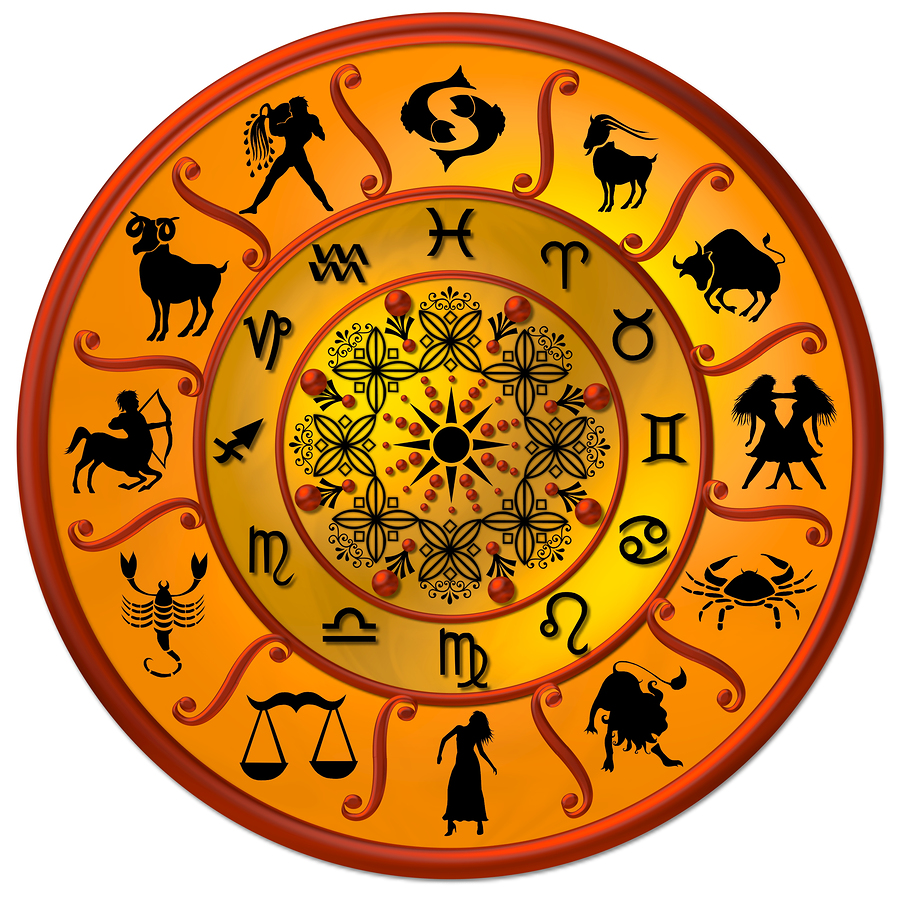
  • Weekly Horoscope- January 13, 2025 to January 19, 2025

    Weekly Horoscope- January 13, 2025 to January 19, 2025

    • By Astrologer Chirag Daruwalla 

    Aries

    Ganesha says this week can be a big time for Aries natives. This time will indicate new beginnings and positive changes for you. With mental strength and proactiveness, you will be able to achieve most of your goals. Relationships with colleagues and partners will improve in work life. This week will help establish harmony not only on the professional front but also in your personal life. Time spent with family members will further strengthen your relationship. In terms of health, you need to take special care of your body. You can increase your freshness and energy by adopting regular exercise and proper diet. On the financial front, it will be important to control expenses. You can think about a new investment somewhere but proceed thoughtfully while making any decision. This week, getting into the habit of self-analysis and meditation will help in improving your mental state. Keep in mind that expressing your emotions is also important to enhance your personality. This week is to increase your positivity and look for new opportunities.

    Taurus

    Ganesha says this week, you are likely to come across many opportunities. Your goals and desires can be fulfilled faster with your hard work. It will be important to maintain harmony and cooperation with colleagues at the workplace, as your positive energy can inspire others. There will be an atmosphere of happiness and peace in your family as well. You can make relationships even stronger by paying attention to small matters at home. This is a perfect time to spend time with your loved ones. It is important to avoid harmful situations in terms of health. A little caution will help you feel better. Focusing on yoga and meditation will strengthen your mental health. Financial matters will remain stable this week. However, pay attention to all aspects before making big investments. Do not forget to spend time on your hobbies and favorite things; this can give a new experience to your creativity. This week, just trust your intuition and decide on your options carefully.

    Gemini

    Ganesha says this week, you may have a wave of activities in your social life. People around you will be ready to understand and adopt your ideas and ideologies. This is the time to spend more time with your friends and family. Conversation and exchange of ideas will strengthen your relationships. In the workplace, this week can bring new opportunities for you. The unique creativity of your ideas and communication skills will help you play an important role in the team. Present your ideas with clarity, and establish good relations with colleagues. In terms of health, this week needs a little attention in your routine. A little exercise and a proper diet will help maintain your energy level. For mental health, practicing meditation and yoga will be beneficial. Keep in mind, your curiosity and creativity can take you to new heights this week. Move forward with positive thinking and welcome new experiences.

    Cancer

    Ganesha says this week will start well for Cancer natives. Your relationship with your family and friends will deepen. At this time, you can have exciting conversations with people around you, which will boost your morale. There may be some challenges in the work area, but your hard work and patience will make you successful. Try to express your ideas clearly, this will create better coordination with your colleagues. This week is likely to be mixed from the financial point of view. Try to control expenses. It is time to invest wisely, which can give you good results in the coming time. In terms of health, focus on a balanced diet and regular exercise. Spend time on your favorite activities to stay away from mental stress. This week, stay focused on your goals and maintain a positive attitude to fulfill your dreams.

    Leo

    Ganesha says this week, you may come across some new opportunities that will prove beneficial for you. Leo born in August, your self-confidence will increase, and you will move forward effectively in your field of work. This time is right for you to start new projects, or improve existing tasks. There are also signs of change in your personal life. You may meet an old friend or family member, which will refresh old memories. Strengthen relationships through communication and express your feelings clearly. Be cautious in investments and financial matters. You may have to make some important decisions, so it will be extremely important to take steps thoughtfully. For health, try yoga and meditation. This will not only improve your physical condition but will also provide mental peace. The main mantra of this week is to build self-confidence and balance. Focus on your goals and face any challenge with patience and courage.

    Virgo

    Ganesha says this week you will feel motivated to move forward with your plans. A new energy is going to be added to your actions, which can result in significant achievements. Health needs to be taken care of; make proper diet and exercise a priority. Positive changes will come in your social life, and you may experience new relationships. Reuniting with an old friend is also possible, which will make you happy. This is a good time to share your thoughts and feelings, so express them openly. Make decisions thoughtfully in financial matters, and avoid any impulsive decisions. Emotionally, it is important to create balance this week. Take care of your mental health and rest when needed. This week is an opportunity for you to grow and exchange creativity. Move forward with confidence and keep moving towards your goals.

    Libra

    Ganesha says this week is a period of new opportunities and positive changes for Libra natives. You will be quite active in your social life, which can lead to new friendships and relationships. As the week progresses, you will get inspiration from the people around you. Your hard work will pay off in the work area and you will get to see the fruits of your efforts. Your relationship with colleagues will get stronger. This is the right time to share your ideas and work with the team. In your personal life, you will also feel sweetness in love relationships. Try to spend time with your loved ones, as it will keep you mentally happy and balanced. Relationships will become even stronger with mutual understanding and cooperation. In terms of health, pay a little attention. Give priority to regular exercise and a balanced diet. Resort to meditation and yoga for mental peace. This week is going to bring balance and harmony for you. Instead of denying your feelings, accept them and work to improve your life.

    Scorpio

    Ganesha says your relationships will strengthen and the time spent with your loved ones will make you happy. You can plan a trip somewhere far away, which will refresh your mind. In terms of health, it is important to stay away from stress. Yoga and meditation will help in improving your mental state. Try to fill yourself with positivity. In the career field, your efforts are going to be rewarded, but be patient. Work carefully and move towards your goals with determination. In financial matters, be thoughtful while making some business decisions. There may be sudden gains or losses. This week, try to maintain mental balance and trust your inner voice. This is the time to understand yourself and move forward towards your goals.

    Sagittarius

    Horoscope for this week for Sagittarius: Your enthusiasm will be the main source of your energy this week. You will be motivated to achieve new successes. You will get cooperation and support in the workplace, which will ensure that your projects are completed on time. In your personal life, this is a great week to spend time with family and friends. Your positivity and wisdom will attract other people, and your relationships will strengthen. In terms of health, participate in sports activities to keep yourself active. It will be beneficial for both your mind and body. You need to welcome new experiences and adopt new ideas. Keep exploring this week, as it will prove beneficial for your growth. Keep your perspective open, and be prepared for positive changes.

    Capricorn

    Ganesha says this week is a sign of new beginnings for you. People will appreciate you for your hard work and dedication. You will develop good relations with colleagues at work, which will open the way for you to move forward. Thus, leaving behind the stress that has been going on for some time, now is the time for success for you. The atmosphere at home will be happy, but be a little careful, as a family matter can make you worried. It is necessary to control your emotions during this time. In terms of health, focus on yoga and meditation. This will not only give you mental peace but will also improve physical health. This week you will get time to self-analyze. You will get an opportunity to reconsider your plans, which will help you make better decisions in the coming days. Remember, only with your confidence and hard work can you touch the heights of success. Stay positive and take advantage of opportunities.

    Aquarius

    Ganesha says this week’s forecast for Aquarius points to positivity and change. You will move forward with new ideas and plans, which will unleash your creativity. This is the right time to expand your social network, as new relationships and friends can make a positive impact on your life. On the work front, your hard work and dedication will soon bring fruit. If you are working on a project, success is indicated in it. Keep in mind that collaborating with the team will be beneficial for you. In personal life, some turmoil is possible in relationships. It is important to communicate and make your feelings clear. Do not ignore your partner’s needs. In terms of health, try to adopt a healthy lifestyle. Regular exercise and a balanced diet will keep your energy levels up. This week, have faith in yourself and stick to your goal. You will overcome whatever obstacles come your way with your wisdom. Trust your insight and keep positivity in your life.

    Pisces

    Ganesha says this week, most of the time will be pleasant and positive for Pisces. The sensitivity and empathy within you can add a new dimension to your relationship with others. This is the time to spend quality time with your loved ones. You will be able to understand their feelings and support them. On the work front, your creativity will be at its peak. It is the right time to work on new projects or ideas. Your actions will receive support from others, which will help you move faster towards your goals. In terms of health, take care of your mental health. Meditation and yoga may prove beneficial for you. Indulge in activities that give you mental peace. Lastly, this week is all about pursuing your passion and enjoying new experiences. Accept new opportunities and don’t be afraid to bring out your hidden abilities. There are signs of positive changes in your life.

  • Makar Sankranti: A celebration of harvest and renewal

    Makar Sankranti: A celebration of harvest and renewal

    Makar Sankranti, one of the most celebrated festivals in India, marks the transition of the Sun into the zodiac sign of Capricorn (“Makara” in Sanskrit). This celestial event signifies the end of the winter solstice and the beginning of longer days. Observed annually on January 14th or 15th, depending on the solar calendar, Makar Sankranti is deeply rooted in agricultural traditions, astronomical significance, and cultural diversity. Across the country, this festival is celebrated with varied customs, rituals, and regional names, reflecting the rich tapestry of India’s heritage.
    The Astronomical and Agricultural Significance of Makar Sankranti
    Makar Sankranti is an astronomically significant day as it marks the Sun’s northward journey, known as “Uttarayana.” This transition heralds the end of the darkest nights and the arrival of longer days, symbolizing enlightenment, prosperity, and new beginnings. Uttarayana is considered highly auspicious in Hinduism, and many believe it to be a time when divine interventions are more accessible.
    Agriculturally, Makar Sankranti is a harvest festival. It is a time to thank nature and the Sun for a bountiful harvest and pray for future prosperity. This festival is particularly important in agrarian societies where the rabi crop (winter crop) is ready for harvesting. Farmers celebrate the fruits of their labor with joy and gratitude, making it a period of communal festivity.
    Regional Variations in Celebration
    Makar Sankranti is celebrated under various names and with unique customs across India. Despite the differences, the underlying themes of gratitude, renewal, and community bonding remain consistent.
    Pongal in Tamil Nadu
    In Tamil Nadu, Makar Sankranti coincides with the four-day harvest festival of Pongal. Each day has a unique significance:
    – Bhogi: The first day is dedicated to cleaning and discarding old belongings, symbolizing a fresh start.
    – Thai Pongal: The second day, Thai Pongal, involves boiling freshly harvested rice with milk and jaggery in clay pots. This dish, also called Pongal, is offered to the Sun God as a gesture of gratitude.
    – Mattu Pongal: On the third day, cows and bulls, which play a vital role in agriculture, are honored and decorated.
    – Kaanum Pongal: The final day is dedicated to family reunions and social gatherings.
    Lohri in Punjab
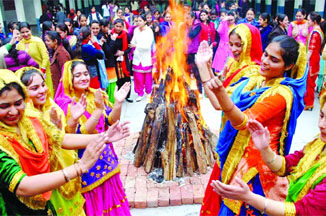
    In Punjab, Makar Sankranti is celebrated as Lohri, a festival primarily associated with the harvesting of sugarcane. The evening before Makar Sankranti, people light bonfires, sing traditional songs, and dance to the beats of dhol. The bonfire symbolizes the burning of negativity, and offerings of sesame seeds, jaggery, and popcorn are made to the fire as a gesture of gratitude.
    Uttarayan in Gujarat
    Gujarat celebrates Makar Sankranti as Uttarayan, a festival known for its vibrant kite-flying tradition. The skies are filled with colorful kites, symbolizing freedom and joy. The International Kite Festival, held in Ahmedabad, attracts participants from around the globe. Special dishes like “undhiyu” (a mixed vegetable dish) and “jalebi” are prepared to mark the occasion.
    Sankranti in Karnataka and Andhra Pradesh
    In Karnataka and Andhra Pradesh, Makar Sankranti is a three-day festival:
    – Bhogi: Similar to Tamil Nadu, Bhogi marks the cleaning of homes and the burning of unwanted items.
    – Sankranti: The main day involves offering prayers, preparing special dishes like “ellu-bella” (a mixture of sesame seeds, jaggery, coconut, and peanuts), and exchanging these with friends and family.
    – Kanuma: On the third day, cattle are honored, and agricultural tools are worshipped.
    Magh Bihu in Assam
    In Assam, Makar Sankranti is celebrated as Magh Bihu or Bhogali Bihu. It is a harvest festival marked by feasting, bonfires, and traditional games. People build temporary huts called “meji” and “bhelaghar” using bamboo and straw, where community feasts are held. The meji is later burned as a ritual to mark the end of the celebrations.
    Poush Sankranti in Bengal
    In West Bengal, Makar Sankranti is known as Poush Sankranti. Devotees take holy dips in the Ganges and other rivers to purify their souls. The famous Ganga Sagar Mela, held at the confluence of the Ganges and the Bay of Bengal, attracts millions of pilgrims. Traditional sweets made from date palm jaggery and coconut, such as “pithe” and “patishapta,” are integral to the celebrations.
    Other Regional Variations
    – Maharashtra: People exchange sweets made of sesame seeds and jaggery, saying, “Tilgul ghya, god god bola” (Take sesame and jaggery, and speak sweetly).
    – Odisha: Makar Sankranti is observed with offerings of rice, jaggery, and sugarcane to deities, and kite flying is a popular activity.
    – Bihar and Jharkhand: People prepare “dahi-chura” (flattened rice with yogurt) and “tilkut” (sesame sweet) to celebrate.
    – Himachal Pradesh: Known as Magha Saaji, this day is marked by community feasts and traditional dances.
    Rituals and Symbolism
    The rituals of Makar Sankranti are steeped in symbolism, reflecting the spiritual and cultural ethos of Indian society.
    Holy Baths and Pilgrimages
    Taking a holy dip in rivers like the Ganges, Yamuna, Godavari, or Krishna is believed to cleanse sins and purify the soul. Pilgrimages to sacred sites such as Ganga Sagar and Prayagraj hold special significance.
    Worship and Offerings
    Devotees offer prayers to the Sun God (Surya) and express gratitude for life-sustaining energy. Special offerings include sesame seeds, jaggery, sugarcane, and rice.
    Charity (Daan)
    Charitable acts are considered highly meritorious during Makar Sankranti. People donate food, clothes, and money to the needy, embodying the spirit of sharing and compassion.
    Kite Flying
    Kite flying, a prominent activity during Makar Sankranti, is a metaphor for soaring aspirations and freedom. It’s also a way to enjoy the outdoors and bask in the Sun’s energy.
    Bonfires
    Lighting bonfires is a tradition observed in northern India. It symbolizes the destruction of evil and the warmth of community bonding.
    Culinary Delights
    Food plays a central role in Makar Sankranti celebrations. Traditional dishes vary by region but often feature sesame seeds, jaggery, and rice. These ingredients are not only nutritious but also hold symbolic significance:
    – Sesame Seeds (Til): Represent warmth and togetherness.
    – Jaggery (Gur): Symbolizes sweetness and prosperity.
    – Rice: Represents fertility and abundance.
    Popular dishes
    – Tilgul Ladoo (Maharashtra): Sweet balls made from sesame seeds and jaggery.
    – Pongal (Tamil Nadu): A sweet or savory rice dish.
    – Pithe (Bengal): Rice flour pancakes stuffed with coconut and jaggery.
    – Undhiyu (Gujarat): A mixed vegetable dish cooked with spices.
    The Global Appeal of Makar Sankranti
    While deeply rooted in Indian traditions, Makar Sankranti’s themes of gratitude, renewal, and community resonate universally. The festival is celebrated by Indian diaspora communities worldwide, bringing together people of diverse backgrounds to share in the joy of the harvest.Makar Sankranti is more than just a festival; it is a celebration of life, nature, and the cosmic order. It bridges the gap between the physical and spiritual, the individual and the community, and the past and the future. As the Sun begins its northward journey, Makar Sankranti serves as a reminder to embrace change, express gratitude, and spread joy. In its myriad forms, this festival captures the essence of India’s unity in diversity, offering a timeless message of hope and renewal.

  • Celebrating Lohri: A night of bonfires, joy and togetherness

    Celebrating Lohri: A night of bonfires, joy and togetherness

    Lohri, one of the most cherished festivals in Northern India, marks the culmination of winter and the onset of the harvest season. Celebrated predominantly in Punjab, Haryana, Himachal Pradesh, and parts of Jammu and Kashmir, this vibrant festival holds immense cultural, social, and spiritual significance. With roots tracing back to agrarian traditions and ancient folklore, Lohri is a joyous occasion that unites communities, honors nature, and celebrates life.
    The Historical and Mythological
    Roots of Lohri
    The origins of Lohri are steeped in history, mythology, and folklore. While the precise genesis of the festival is debated, several narratives offer insights into its rich heritage.
    Agrarian Significance
    Lohri is primarily a harvest festival, celebrated to mark the end of the winter solstice and the beginning of longer days. The festival coincides with the harvesting of rabi crops, particularly sugarcane, wheat, and mustard. Farmers rejoice in the bounty of nature and express gratitude to the Sun God for blessing their fields with abundance.
    Dulla Bhatti’s Heroic Legacy:
    A prominent legend associated with Lohri is that of Dulla Bhatti, a 16th-century folk hero who symbolized resistance against Mughal oppression. Known as the “Robin Hood of Punjab,” Dulla Bhatti was celebrated for his bravery and acts of kindness. He stood up against the injustices of the Mughal empire, particularly the abduction and exploitation of young women.
    Dulla Bhatti is most famously remembered for rescuing girls from being forcibly taken and arranging their marriages. He provided dowries for these girls, ensuring their dignity and safety. Songs sung during Lohri celebrations often honor his deeds. A popular Punjabi Lohri song goes as follows:
    “Sunder mundriye ho!
    Tera kaun vichara ho!
    Dulla Bhatti wala ho!
    Dulle di dhee vyahi ho!
    Ser shakkar payi ho!”
    This song narrates the tale of Dulla Bhatti, highlighting his role in saving young women and arranging their marriages. His legacy is a reminder of the importance of justice, compassion, and community support.
    Mythological Connections
    Some believe that Lohri is linked to tales from Hindu mythology, including the story of Prahlada and Holika. Though primarily associated with Holi, this tale underscores the triumph of devotion and righteousness over evil-values that resonate with Lohri’s spirit.
    The Significance of Fire
    in Lohri Celebrations
    Central to Lohri is the communal bonfire, symbolizing warmth, light, and togetherness. As families and friends gather around the crackling flames, they perform rituals steeped in meaning:
    Gratitude to the Sun God:
    The bonfire is a tribute to Agni (the fire deity) and Surya (the sun deity). Offerings of til (sesame seeds), gur (jaggery), popcorn, and peanuts are made to express gratitude and seek blessings for prosperity.
    Burning Away Negativity
    The fire represents purification, burning away past hardships and negativity while welcoming new beginnings.
    Community Bonding
    Singing traditional songs, dancing, and sharing stories around the bonfire foster a sense of unity and belonging. The ambiance radiates warmth, much like the values Lohri celebrates.
    The Joyful Customs and Traditions of Lohri
    Lohri is not merely a festival but an experience that encapsulates the essence of Punjabi culture. From vibrant attire to foot-tapping music, every aspect of the celebration is steeped in tradition.
    Traditional Attire
    Men don kurta-pajamas paired with colorful turbans, while women wear vibrant salwar suits or lehengas adorned with traditional Phulkari embroidery. The attire reflects the colorful spirit of the festival.
    Folk Music and Dance
    The rhythmic beats of the dhol (drum) set the stage for exuberant performances of Bhangra and Gidda. These dances, characterized by energetic movements and synchronized steps, are expressions of joy and gratitude.
    Singing Lohri Songs
    Children and adults alike sing traditional Lohri songs, many of which pay homage to Dulla Bhatti. Groups visit homes, singing and receiving sweets, grains, and money in return-a practice akin to caroling.
    Festive Delicacies
    A Lohri feast is incomplete without its iconic dishes. Sarson ka saag (mustard greens) and makki di roti (cornbread) take center stage, accompanied by sweets like rewri, gajak, and pinnis. These delicacies celebrate the harvest and the culinary heritage of Punjab.
    Lohri and the Celebration
    of New Beginnings
    Lohri holds special significance for families celebrating new milestones. For newlyweds, the festival marks their first major celebration together, symbolizing the beginning of a prosperous life. Similarly, the birth of a child is celebrated with grandeur, as Lohri embodies fertility, growth, and abundance.
    Regional Variations and Similar Festivals
    While Lohri is predominantly celebrated in Punjab and its neighboring regions, its essence transcends geographical boundaries. Similar festivals are observed across India, each with unique customs and names:
    – Makar Sankranti (celebrated in most parts of India) marks the transition of the sun into Capricorn.
    – Pongal in Tamil Nadu honors the Sun God and includes the boiling of freshly harvested rice.
    – Bihu in Assam celebrates the harvest with dance and music.
    – Uttarayan in Gujarat is marked by kite flying.
    Despite regional differences, these festivals share a common theme of gratitude, renewal, and community.
    The First Lohri
    Lohri, the bonfire harvest festival of Punjab celebrated in the month of Magh, is symbolic of new beginnings. The first time Lohris are especially celebrated with pomp and grandeur. Friends and relatives gather around the fire and perform Gidda and Bhangra to the beat of Dhol, the drums of Punjab.
    The First Lohri of a Bride
    The celebration takes place in the in-law’s house with a grand feast for family and friends. The bride dresses in traditional attire with solah sringar, 16 things that a bride generally wears. The new bride and groom sit in a central place together as people approach them with wishes and gifts. The parents-in-law present the bride with new clothes and jewellery.
    The First Lohri of a New-born
    The first Lohri of a new-born is of immense significance where the family and friends participate to bless the child with a prosperous and a healthy future.
    Many conduct an elaborate get-together at the paternal home, where invitation cards are sent in advance.Family and friends bring along gifts for the child as well as the new mother. The maternal and paternal grandparents shower the child with gifts.
    Lohri Rituals
    Lohri is primarily the harvest festival of the Punjabis. This festival denotes the harvesting of the Rabi crops and hence all the farmers get together in order to thank god for giving them such a wonderful harvest.
    The rituals related to Lohri symbolize the attachment of the people with Mother Nature. A few days before the festival, youngsters get together in groups and go round their localities singing folk songs.
    Doing this they also collect firewood and money for the bonfire that is scheduled on the night of Lohri. On the special day, offerings of phulley (popcorn), moongphali (peanuts) and rewri (a sweet delicacy made out of jaggery and sesame seed) are offered to the fire
    The men and women go round the fire and bow before it in reverence. Lohri holds special importance when there is a special occasion in the family like marriage or childbirth.
    Lohri Traditions
    Lohri is primarily the harvest festival of the Punjabis. This festival denotes the harvesting of the Rabi crops and hence all the farmers get together in order to thank god for giving them such a wonderful harvest.
    The rituals related to Lohri symbolize the attachment of the people with Mother Nature.
    A few days before the festival, youngsters get together in groups and go round their localities singing folk songs.
    Doing this they also collect firewood and money for the bonfire that is scheduled on the night of Lohri. On the special day, offerings of phulley (popcorn), moongphali (peanuts) and rewri (a sweet delicacy made out of jaggery and sesame seed) are offered to the fire.
    The men and women go round the fire and bow before it in reverence. Lohri holds special importance when there is a special occasion in the family like marriage or childbirth.
    Lohri Legends
    Like all Indian festivals, Lohri also has some legends and lore attached to it.
    One of the many interesting legends has it that in a place that lies between Gujaranwala and Sialkot, there was a thick forest known as Rakh.
    The forest was the home of Dulla Bhatti, a dacoit who was considered as the Robin Hood of Punjab. This brave and generous man was always helpful to the needy.
    During the reign of Mughal Emperor Jahangir, a jealous Hindu spread a rumour that his niece was very beautiful and would do credit to the Muslim harem.
    On hearing this, the Mughal officers wanted to carry her off forcibly. The girl’s father was extremely worried and sought the protection of Dulla Bhatti.
    Dulla at once got her married to a young Hindu boy at a simple ceremony in the forest. He lit the sacred fire in keeping with the Hindu custom. Since there was no priest to chant the holy mantras, he broke into a hilarious song composed extempore to add cheer to the occasion. This song is sung even today on the occasion.
    The best way of celebrations in this chilly whether could be to sit around a bonfire and enjoy. Well, Lohri Celebrations would be the best festival to celebrate and spread the warmth of love and happiness among all your near and dear ones in this chilly weather. Lohri is majorly celebrated in Punjab and north Indian states on 13th January and is considered to be the harvesting festival of Punjab. Lohri is not just a festival for people of Punjab but it is a symbol of life. Several hopes of farmers are associated with this festival of Lohri as the fields promise a golden yield to the farmers.
    Newly wed couples and all those couples who have a newborn baby celebrate Lohri but nowadays it is seen that most of the people celebrate this festival of Lohri as an occasion of get together, to spend some time with their near and dear ones and enjoy the celebrations.
    Children start collecting firewoods and wooden twigs one week before the festival that are used for burning Lohri .
    On the Lohri day all the firewoods are arranged in a circular manner in such a way that it makes a huge bonfire.
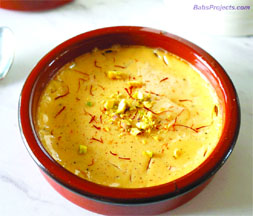
    Children visit each and every house of their locality inviting all he people for the Lohri celebrations and asking for their contributions. While visiting every house children sing a Lohri song, making everyone feel that the festival of Lohri is around the corner. The traditional food cooked on the Lohri day is sarson ka saag and makki ki roti and rau di kheer is served as a dessert.
    People dress themselves in new clothes and in the night they gather around the bonfire to light it. People pray in front of the burning bonfire and put til (gingelly), moongphali (peanuts), popcorns and chirwa (beaten rice) in it, as all these eatables are considered as the Lohri prasad.People greet each other wishing a very happy Lohri and spread the feeling of love and happiness all around.
    Lohri in Modern Times
    In today’s fast-paced world, Lohri has evolved while retaining its traditional essence. Urban celebrations often include elaborate parties with a mix of traditional and contemporary elements. The festival has also gained recognition on a global scale, with Punjabi communities around the world celebrating Lohri with zeal, bringing a slice of their culture to international shores.
    Environmental Consciousness and Lohri
    As awareness about environmental conservation grows, many communities are rethinking traditional practices associated with Lohri. Eco-friendly celebrations include using sustainable materials for bonfires, reducing waste, and promoting tree planting to counter deforestation.
    The Universal Message of Lohri
    Beyond its cultural and regional significance, Lohri embodies values that resonate universally. It reminds us to cherish our roots, embrace community, and express gratitude for the blessings of life. In a world often divided by differences, Lohri’s message of unity and togetherness serves as a beacon of hope.
    Lohri is more than a festival; it is a celebration of life, heritage, and the eternal bond between humanity and nature. Its customs and traditions are a testament to the resilience and vibrancy of Punjabi culture. Whether through the warmth of the bonfire, the joyous beats of the dhol, or the shared laughter of loved ones, Lohri captures the spirit of a community that knows how to celebrate with heart and soul. As we light the bonfires and sing traditional songs, we honor the past, celebrate the present, and look forward to a future filled with hope, prosperity, and joy.

  • Relevance of Swami Vivekananda as Youth Icon in Modern Time

    Relevance of Swami Vivekananda as Youth Icon in Modern Time

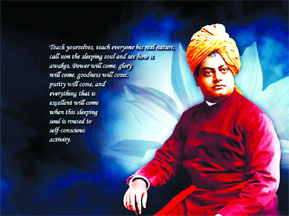
    Swami Vivekananda, a spiritual leader, had a deep insight into modern education and spiritual learning; in simple words, he emphasized the blending of modern education with Indian spirituality.
    Vivekananda was a firm believer in education as a tool for human advancement. His speeches and writings are replete with references to the plight of the masses as a result of the denial of literacy and education to them. He was particularly shocked by the degree of ignorance and superstition prevalent in rural regions due to a lack of literacy and education. He was also harshly critical of the educational system, citing its western slant and a lack of focus on the development of mental capacity and moral character in its students. In addition, he advocated for the universalization of literacy, development, and mass education. He desired a comprehensive reorientation of the educational system to make it an integrated man-making and character-building system, with a focus on national pride, love for the masses, self-confidence, strength, and will power, and cultivation of the intellect rather than simple recollection.
    Swami Vivekananda’s scheme of youth education is comprehensive education that aims to develop body, mind and soul from a socio-economic perspective, which destroys inequality between men and women, casteism and communalism, ethnic and sub-national, regionalism and national differences. When he speaks of ‘body’, he lays stress on physical training, good living conditions, a balanced diet, in a word, complete satisfaction of all physical hunger. All of this is possible only when the youth are employed and earning a stable income. For this, youth need to develop agriculture with the help of Western technology, and the promotion of small-scale and cottage industries with the use of financial assistance from the state to become “Atmanirbhar”.
    Youth must have sound mental health, “Be strong my young friends, that is my advice to you. You will be nearer to heaven through football than through the study of the Gita”. This line reflects a story when a young lad visited Swamiji and asked him to teach meditation. He says, go and play, do some physical exercise, and then I will teach you. He always promotes the physical well-being of youth, as it’s a focus proverb – healthy mind stays in a healthy body. He wants youth to be as soft as Krishna playing the flute and as masculine as Hanuman.
    Vivekananda believes in the dispersion of positive thoughts and values among the youths; he says: “If you can give them positive thoughts, then people will grow up to be a man and learn to stand on their own legs”.
    That’s why in the present time, it is necessary to empower the weakest, most neglected and degraded societies’ youth so that they can contribute to nation-building. Only positive education can do that; however, if seen in the name of empowerment, youths are divided into all sorts of instruments that promote negative thought processes (hatred and enmity between different groups) that are baked inside the universities and schools. As a result, it creates disharmony and conflict, so youth must try to believe in solidarity and cohesion.
    Swamiji says, “Religion deals with the truths of the metaphysical world just as chemistry, and the other natural sciences deal with the truths of the physical world”. Youth should try to read and learn basics from ‘The book of Nature’, i.e. Chemistry and Physics. In modern times youth are often ignorant of technological sciences too as they are busy reading the wrong book, i.e. ‘The book of passing marks’. At the same time, techno-geek youth are often ignorant of religion and its dimensions. They too read the wrong books, i.e. ‘The book without interior knowledge’. The book from which religiosity can be learned is the youth’s mind and heart.
    While speaking of ‘mind’, Swamiji laid stress on discipline, fearlessness, passion for helping others, commitment to human and social values and a continuous effort to realise oneself through social service and meditation. The final stage of education lies in the elevation of the body and mind up to the ‘soul’ when there is the realization of ‘Universal Unity’. So physical and mental stages of the educational curriculum end in the spiritual step. This spiritualism is the final identity of a layman and woman and not that of a monk and seer only. So it is ‘Practical Vedanta’. We notice a two-way dynamic process here: One, is essentially inward, and the other is entirely social. This blending of the two in a harmonious fashion has been possible through a synthesis of religion and philosophy.
    Character Education
    Education is a building block of character. It is not gathering or absorbing knowledge; it is the encapsulation of good values. Character imparts wisdom which results in attaining enlightenment. And the goal of life should be unselfishness and living for others. Life is all about sacrifice. He always connects to youths by: “This life is short, the vanities of the world are transient, but they alone live who live for others, the rest are more dead than alive”. Our life is merely a collection of good or bad habits; these habits enterprise characters as a personality that societies continuously monitor and reflect an impression of oneself. In the 21st century, the modern economic and education system has created an environment of stress, so inculcating one good thought and habit, rather than having dozens of thoughts, and trying to implement it in one’s own life is the best method of achieving enlightenment.
    Right Education
    Right education is critical for youths, as we have been colonised for more than 200 years, creating a mindset of slavery. Swamiji says during his interaction: “Getting by heart the thoughts of others in a foreign language and stuffing your brain with them and taking some universities degree, you consider yourself educated”. As rote learning and sluggish thinking do not produce the mind that a developing nation requires. Such educated youth are a burden on society. They even cannot earn a decent living for themselves and their family. Unskilled youth start depending on the government dole, and the process of man-making gets hampered.
    Science and Religion
    Swami Vivekananda always mentions that: “Science is nothing but the finding of unity”. Once science reaches the state of unity, further progress would stop as it would have reached its goal. ‘Chemistry’ would not progress further when it has discovered a single element out of which others can be made. Progress of ‘Physics’ stops when it finds a single source of energy out of which all the others are made; the manifestation of science and religion becomes unity when the manifestation of unity will discover the ‘God’; who is the only ‘divine’, living in the universe of mortals. The one who is constant in a mortal and ever-changing world is only “Him”. The One “Him” who is the only soul out of which all souls are made the concept of universal religion takes place. Any mischievous manifestations of “Him” will be disastrous for youth and the nation.
    After accumulating the above-mentioned qualities comes a part of religion. Once a youth is physically strong and emotionally intense, then they can preserve the realisation of universal religion where Vedanta and the evolution of peaceful religion can be promoted. This religion is distinct from dogmas, rituals and misconceptions of knowledge. Swamiji believes in religious pluralism with scientific temperament, where Western understanding of science is taught in college and religion at home, society and religious institutions. However, he never wants youth to convert to another religion, and practice the path of Dharma from the eyes of Vedanta.
    Thus, education is a man-making process rather than a life-destroying enterprise; with the right education, characters are built, which help to counter bad habits. For youth, education is not only the development of character but also develops leadership qualities and personalities.
    The youth must advocate for the entire development of physical, mental, emotional, leadership qualities and religiosity which was once the idea of the education system of Vishwaguru. The principle of ‘Vasudhaiva Kutumbakam’, with the blending of modern technology and man-making, must be focused on youth to contribute to nation-building.
    Source: Indica Today

  • Swami Vivekananda: A Visionary Leader and Spiritual Luminary

    Swami Vivekananda: A Visionary Leader and Spiritual Luminary

    SWAMI VIVEKANANDA’S BIRTHDAY FALLS ON JANUARY 12 AND IS CELEBRATED AS NATIONAL YOUTH DAY ACROSS INDIA

    Swami Vivekananda, born Narendranath Datta, was a towering figure in the world of spirituality, philosophy, and Indian nationalism. A disciple of the revered mystic Sri Ramakrishna Paramahamsa, Vivekananda played a pivotal role in introducing Indian philosophies such as Vedanta and Yoga to the Western world. His eloquence, charisma, and vision of a united humanity have left an indelible mark on both the East and the West.
    Early Life and Education
    Swami Vivekananda was born on January 12, 1863, in Calcutta (now Kolkata), India, to Vishwanath Datta, an attorney, and Bhuvaneshwari Devi, a devout homemaker. Narendranath was the couple’s sixth child, and from an early age, he displayed prodigious intelligence and a deep spiritual inclination.
    Education and Early Influences
    Narendranath attended Ishwar Chandra Vidyasagar’s Metropolitan Institution and later pursued a bachelor’s degree in arts from the General Assembly’s Institution (now known as Scottish Church College). He excelled in various subjects, including philosophy, history, and literature. His academic brilliance was complemented by a keen interest in music, gymnastics, and debating.
    During his formative years, he was deeply influenced by the spiritual texts of Hinduism, particularly the Upanishads and the Bhagavad Gita. However, he harbored a skeptical mind and sought logical explanations for religious beliefs, often questioning traditional practices.
    Meeting Sri Ramakrishna
    Narendranath’s life took a profound turn when he met Sri Ramakrishna at the Dakshineswar Kali Temple in 1881. The young seeker was initially skeptical of Ramakrishna’s spiritual experiences and teachings. Nevertheless, he was drawn to the mystic’s simplicity, profound love, and unwavering devotion to the Divine Mother.
    Sri Ramakrishna recognized Narendranath’s potential and saw in him the future leader of his spiritual mission. Under Ramakrishna’s guidance, Narendranath experienced states of deep meditation and spiritual ecstasy. Ramakrishna’s teachings of universal love, harmony among religions, and selfless service became the bedrock of Vivekananda’s philosophy.
    Transformation into Swami Vivekananda
    After Ramakrishna’s passing in 1886, Narendranath renounced worldly life and took the vows of a sannyasi, assuming the name Swami Vivekananda. Along with a group of dedicated disciples, he established a monastic order in Baranagar, near Calcutta. The order became the nucleus of the Ramakrishna Math, dedicated to spiritual practice and the propagation of Ramakrishna’s teachings.
    Journey to the West
    In 1893, Swami Vivekananda traveled to the United States to participate in the Parliament of the World’s Religions in Chicago. His address on September 11, 1893, began with the iconic words, “Sisters and Brothers of America,” which drew a standing ovation from the audience. Vivekananda spoke passionately about the universality of religion, the need for interfaith harmony, and the spiritual wisdom of India.
    Impact of the Chicago Address
    Vivekananda’s speech catapulted him to international fame. He became a sought-after speaker, delivering lectures on Vedanta, Yoga, and the synthesis of science and spirituality. His presence in the West marked the beginning of a cultural exchange that introduced Indian spirituality to a global audience.
    Founding the Ramakrishna Mission
    In 1897, Swami Vivekananda returned to India and founded the Ramakrishna Mission, an organization dedicated to social welfare and spiritual upliftment. The mission’s work encompassed education, healthcare, disaster relief, and the promotion of interfaith harmony.
    Core Ideals
    The Ramakrishna Mission is guided by the principles of selfless service, spiritual practice, and the teachings of Vedanta. Vivekananda emphasized the importance of “service to man as service to God,” advocating for the upliftment of the poor and marginalized.
    Teachings and Philosophy
    Swami Vivekananda’s teachings are a harmonious blend of spirituality, rationality, and practicality. Key aspects of his philosophy include:
    – Universal Religion: Vivekananda believed in the underlying unity of all religions and promoted interfaith dialogue.
    – Vedantic Philosophy: He emphasized the teachings of Advaita Vedanta, which proclaim the oneness of the individual soul (Atman) and the universal soul (Brahman).
    – Karma Yoga: Vivekananda advocated for selfless action as a means of spiritual realization.
    – Education: He stressed the need for holistic education that fosters character development and self-reliance.
    – Empowerment of Women: Vivekananda championed the empowerment of women, viewing them as the cornerstone of a strong society.
    Legacy
    Swami Vivekananda passed away on July 4, 1902, at the young age of 39. Despite his short lifespan, his impact on spirituality, education, and social reform has been immense.
    Influence on Indian Nationalism
    Vivekananda’s call for spiritual awakening and national pride inspired several leaders of the Indian independence movement, including Mahatma Gandhi, Subhas Chandra Bose, and Bal Gangadhar Tilak.
    Global Recognition
    Today, Swami Vivekananda is revered as a global spiritual icon. His teachings continue to inspire millions, and his birthday is celebrated as National Youth Day in India.
    The young monk and his teachings have been an inspiration to many, and his words have become goals of self-improvement especially for the youth of the country.
    National Youth Day (Yuva Diwas or Swami Vivekananda Birthday) is celebrated with the great joy and enthusiasm in India every year on 12th of January. It is celebrated to commemorate the birthday of Swami Vivekananda, maker of the modern India. It was first declared by the Government of India in the year 1984 to celebrate the birthday of Swami Vivekananda as the National Youth Day. Since then (1985), it is started celebrating as the National Youth Day all over the country.
    Swami Vivekananda’s life and teachings transcend the boundaries of time, culture, and geography. He envisioned a world where humanity could rise above narrow divisions and work collectively toward the realization of its highest potential. Through his profound spirituality, unwavering commitment to service, and visionary leadership, Swami Vivekananda has left an indelible legacy that continues to illuminate the path for generations to come.

  • I was ‘poisoned’ in the hotel: Novak Djokovic claims his food was contaminated in Australian Open 2022

    I was ‘poisoned’ in the hotel: Novak Djokovic claims his food was contaminated in Australian Open 2022

    Novak Djokovic set eyes rolling before the Australian Open 2025 by claiming that he was “poisoned” by lead and mercury in his food while being detained in Melbourne in 2022, just before his deportation on the eve of that year’s Australian Open. The former world number one had his visa revoked and was ultimately expelled from the country due to his refusal to get vaccinated against Covid-19. He spent time in a detention hotel as he unsuccessfully fought a legal battle to stay in Australia.
    “My stance is exactly the same today as it was a few years ago,” Djokovic, 37, shared in an extensive interview with GQ magazine published on Thursday. “I’m not pro-vaccine. I’m not anti-vax. I am pro-freedom to choose what is right for you and your body. So when somebody takes away my right to choose what I should be taking for my body, I don’t think that’s correct.” After being expelled from Australia, Djokovic boarded a private plane back to Spain, where his family was staying. On the way, he says, they rerouted his flight to Serbia. “Why? Because they had information through lawyers that if I land in Spain, I’ll probably go through the same thing as in Australia,” he said.
    And so he and his family met up in Serbia instead.
    When he got home, he said, “I had some health issues. And I realized that in that hotel in Melbourne, I was fed with some food that poisoned me.”
    The revelation comes days after he had claimed the Melbourne episode had sent him into depression.
    He added, “I had some discoveries when I came back to Serbia. I never told this to anybody publicly, but discoveries that I had a really high level of heavy metal. I had lead, a very high level of lead and mercury.”
    When asked whether he thought his food had been contaminated, Djokovic responded, “That’s the only way.”
    A representative from Australia’s Department of Home Affairs stated that it could not comment on specific cases “for privacy reasons.” However, the department noted that the lease agreement with the Park Hotel, where Djokovic was held, ensures that detainees receive freshly prepared, individually portioned lunches and dinners.
    All catering staff have undertaken food safety certifications, it says.
    As of December 31, 2021, the hotel had been providing the contractor responsible for detention services with samples of the food provided to detainees at each meal.
    Australia says detainees had access to a variety of nutritious, culturally appropriate food and drink that satisfied specific medical or dietary requirements.
    They were also offered breakfast items such as bread, cereal, noodles, tea and coffee at any time of the day or night.
    Djokovic does not hold any grudges
    Djokovic will be bidding for an 11th Australian Open title and a record-setting 25th major when the season’s first Grand Slam event gets underway on Sunday, Jan 12.
    He insists that he does not hold “any grudge over the Australian people” despite the 2022 controversy. A year later, he returned to Melbourne where he swept to the title.
    “A lot of Australian people that I meet in Australia the last few years or elsewhere in the world, have come up to me, apologising to me for the treatment I received because they were embarrassed by their own government at that point,” he said.

  • Hero-worshipping reason behind India’s generational slump in Tests: Manjrekar

    Hero-worshipping reason behind India’s generational slump in Tests: Manjrekar

    Former India cricketer Sanjay Manjrekar has blamed the culture of hero-worshipping behind India’s awful slump in Test cricket. In his recent column in Hindustan Times, Manjrekar wrote that the slump that the Indian team is facing is nothing new. The former player highlighted that India faced a similar slump back in 2011-12 as well, losing 0-8 to England and Australia under the leadership of MS Dhoni.
    Manjrekar termed the current lapse in form under the captaincy of Rohit Sharma, a generational slump. India lost two back to back series under the leadership of Rohit Sharma. First India lost their first ever home series against New Zealand (0-3) at home and then fell to Australia 1-3 away. Manjrekar pointed out the reason behind the losses and said that the icon-players were dragging the Indian team.
    “India are a sought-after cricket team that the world wants to eagerly host. They play a lot of matches in SENA (South Africa, England, New Zealand, Australia) countries, so it is fair to be judged to the highest standards. This ‘generational slump’ is inevitable for all teams. It’s what we know as the transition phase and among the best teams in the world, I believe it affects India the most,” Manjrekar wrote in his column.
    “The one foremost reason behind this is the icon culture we have in India and the hero worship of certain players. Be it 2011-12 or now, it’s the same scenario that gets played out — iconic players featuring prominently doing the opposite of what they did their entire careers, thereby dragging the team down with their diminished performances,” he added.
    Manjrekar cited the examples of Sachin Tendulkar and VVS Laxman, who had failed in the transition period of 2011-12, and compared their fortuned with Virat Kohli and Rohit Sharma, who simply have not turned up in the last 2 series for India.
    “When India lost 0-8 to England and Australia, Tendulkar averaged 35, Sehwag 19.91 and Laxman 21.06. Only Dravid stood out and got runs in England (he averaged 76.83) but in Australia he too was given a harsh reality check (he averaged 24.25),” Manjrekar said. “Thing is, when it comes to the big players, we as a country are just not able to stay rational. Emotions run high and those in positions to take decisions on these players are influenced by this climate. Cricketing logic goes out of the window and then the selectors hope the player leaves on his own so that they don’t look like the villains who brutally ended the career of a great who millions of fans worship. They just fear the backlash,” the former batter concluded on the matter.

  • Messi planning a Barcelona reunion by signing contract with Inter Miami: Report

    Messi planning a Barcelona reunion by signing contract with Inter Miami: Report

    Inter Miami are planning to extend Lionel Messi’s stay in the MLS for another year as they are set to offer a new contract to the Argentine great. Messi has brought a lot of attention to MLS with his arrival at the Inter Miami in 2023. He boosted the sport’s popularity in the US as they are set to host the 2026 FIFA World Cup. Messi’s existing contract is set to expire after next season, but Inter Miami is in no mood to let him go so early.
    According to a report on Marca, Messi is working on signing a new contract with Miami, which will allow him to play in Europe. The 37-year-old is planning to extend his stay with the Argentine team for the 2026 World Cup to help them defend their crown. To get himself ready for the big challenge in 2026, Messi might return to Europe in his potential contract extension; there will be a clause allowing him to play in Europe at the end of 2025 and the start of 2026. It might allow a Barcelona reunion, his former club, which is still very close to his heart.

  • Mahakumbh of Prayagraj 2025: A confluence of spirituality, legends and traditions

    Mahakumbh of Prayagraj 2025: A confluence of spirituality, legends and traditions

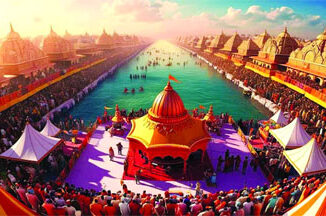
    The Mahakumbh Mela, set to unfold in Prayagraj on January 13, 2025, stands as one of the world’s largest and most profound gatherings of faith. Held every 12 years at the sacred Triveni Sangam-the confluence of the Ganga, Yamuna, and the mystical Saraswati rivers-this event transcends religious boundaries and showcases the rich spiritual and cultural heritage of India.
    The Legend Behind the Mahakumbh
    The origin of the Kumbh Mela is rooted in the Puranic story of the Samudra Manthan (churning of the ocean) by the devas (gods) and asuras (demons). According to Hindu mythology, during the churning, a pot (kumbh) of amrita (nectar of immortality) emerged. To prevent the nectar from falling into the hands of the asuras, the devas carried it away. In the ensuing chase, drops of amrita fell at four places: Prayagraj, Haridwar, Ujjain, and Nashik. These locations became sanctified, and the Kumbh Mela is celebrated to commemorate this divine event. Prayagraj holds a special place among these sites as it is where the three sacred rivers meet, symbolizing unity and purification.
    Traditions and Rituals of the Mahakumbh
    The Mahakumbh Mela is marked by a range of spiritual practices that draw millions of devotees, sadhus, and pilgrims from all corners of the globe. Key rituals and traditions include:
    – Shahi Snan (Royal Bath): The most significant ritual of the Mahakumbh, the Shahi Snan, involves taking a dip in the holy waters of the Sangam. This act is believed to cleanse the soul of sins and pave the way for moksha (liberation).
    – Akharas and Sadhus: The Akharas, or monastic orders of ascetics, play a vital role in the Kumbh Mela. Naga sadhus (naked ascetics), Urdhwavahurs (those who practice severe austerities), and Parivrajakas (wandering monks) showcase their spiritual discipline and lead the processions to the Sangam.
    – Ganga Aarti: The mesmerizing Ganga Aarti, performed at the banks of the river, is a visual and spiritual treat. Devotees light lamps and chant hymns, creating a divine atmosphere.
    – Spiritual Discourses and Cultural Programs: The Mahakumbh serves as a platform for spiritual leaders, scholars, and artists to share wisdom and perform, fostering an exchange of ideas and cultural expressions.
    Origins and Evolution
    The Kumbh Mela’s documented history dates back to ancient scriptures such as the Rigveda, which mentions river confluences as sacred. The significance of Prayagraj as a tirtha (pilgrimage site) is highlighted in texts like the Mahabharata and the Puranas. Over centuries, the Kumbh Mela evolved from a localized festival into a global phenomenon. It was institutionalized during the reign of Emperor Harsha in the 7th century CE and gained prominence under the guidance of Adi Shankaracharya, who united various ascetic orders to participate in the event.
    Mahakumbh 2025: A Global Phenomenon
    The Mahakumbh of 2025 is expected to be a grand spectacle, with advanced preparations to accommodate millions of devotees. The government and local authorities are working tirelessly to ensure infrastructure, sanitation, and safety measures are in place. With technology integration, live streaming, and mobile apps, the event aims to reach a global audience while preserving its traditional essence.
    Maha Kumbh Mela: Astrological and Cultural Significance
    The Maha Kumbh Mela is based on different astrological conditions at each place, which are determined by the position of the Sun, Moon, and Jupiter. The festival is celebrated when the position of these planets attains perfection, which is considered a very holy time in Hinduism. The Kumbh Mela is a wonderful amalgamation of astronomy, astrology, spirituality, ritual traditions and socio-cultural customs, making the event a symbol of profound knowledge. The Kumbh Mela attracts people from all religions, including sadhus, Naga sadhus, sanyasis and common devotees. Naga sadhus and sanyasis follow intense sadhana and spiritual discipline and come into public life only during the Kumbh Mela. At the same time, spiritualists and common people who follow Hinduism also attend the fair in large numbers.
    There are many special events in the Kumbh Mela. The traditional procession of the Akharas, called ‘Peshwai’, is taken out with elephants, horses and chariots. The performance of Naga sadhus during the ‘Shahi Snan’, their gleaming swords and traditional rituals, besides several cultural activities attract lakhs of devotees to the fair.
    The Mahakumbh Mela of Prayagraj is more than a religious event; it is a celebration of humanity’s quest for the divine. It brings together faith, tradition, and community, offering a unique opportunity for spiritual rejuvenation and cultural immersion. As the world converges at the sacred Sangam in 2025, the Mahakumbh promises to be a beacon of hope, unity, and timeless wisdom.

  • Jodhpur: The Gateway to Thar

    Jodhpur: The Gateway to Thar

    Nestled in the heart of Rajasthan, Jodhpur, popularly known as the “Blue City,” is a mesmerizing blend of history, culture, and vibrant traditions. This city, with its azure-hued houses and imposing forts, invites travelers to step back in time and experience the grandeur of India’s royal past. Whether you’re a history enthusiast, a culture seeker, or an adventure lover, Jodhpur has something for everyone.
    Jodhpur is the second largest city in the state of Rajasthan, India. It is called the Gateway to Thar, as it is literally on the edge of the Thar desert. It is also called the Sun City as the sun shines (very bright and hot) almost every day of the year.
    Udai Mandir
    Udai Mandir is an architectural beauty. If you are an appreciator of architectural brilliance and quality then this place is for you. Half of the temple entrance gate is made from the carved sandstone (Jodhpur is the hub of sandstone). The main temple stands on a huge raised platform and is supported by 102 pillars.
    Inside Udai Mandir there are beautiful wall paintings with 84 Yogasanas and the pictures of Nath Yogis made up with gold.
    The temple has a Garbh Griha. The upper portion of the Garbh Griha is kept covered with cloth and is surrounded by gold pots. The gold polishing in Udai Mandir still has its original shine and quality.
    Siddhanth Shiv Temple
    Siddhanth Shiv temple is situated between Takhat Sagar hills and Kalyana Lake. Its way is on Chopasani Road and it is about 10 Kms away from Jodhpur. You can reach the temple only after crossing the hundreds of stairs made up by cutting rocks.
    Once upon a time the place, exactly where the temple now stands, was completely a deserted area.
    Siddhanth Shiv temple is believed to be built by GauriShanker (also called Nepali Baba, his real name was Veetragi Narain Swami) himself by cutting stones.
    He was a handicapped saint who had only four fingers in each of his hand and foot.
    Masuriya Hill Garden
    Masuria hill garden is located on the Masuria hills of Jodhpur. It has the Asia’s largest TV tower in it. It is green lush garden with full and clear view of Jodhpur. Earlier Mehrangarh fort was proposed to be made on Masuria hills but due to lack of water (at that time) Mehrangarh was made where it is at present.
    Arna Jharna
    Arna-Jharna is a unique to approach to the way museums should be. Instead of being enclosed in a box, it enjoys the open space of the desert. Here you learn by exploring and enjoying with visuals.
    Mehrangarh Fort
    Mehrangarh Fort of Jodhpur is one of the largest and most popular forts in India. The fort is located at the centre of the city and appears to command Jodhpur. Every visit to Mehrangarh is as exciting as before.
    Jaswant Thada
    Jaswant Thada lies to the left of the Mehrangarh fort complex. It is a royal memorial made up of white marble and wonderful architecture piece of art.
    Rao Jodha Desert Rock Park
    Rao Jodha Desert Rock Park was created in 2006 and is situated next to Mehrangarh Fort.
    There are plants in this park that are adapted to growing in arid, rocky areas of the Thar Desert. Rao Jodha Park is open throughout the year from 9 AM to 5:15 PM every day.
    Ram Dwara
    This is a temple of great Hindu god and leader of the epic Ramayana ‘Shree Ram’. It is located in the Chandpole (near Soorsagar) of Jodhpur. Here the sages preach and practice principles of Hindu Dharma.
    Umaid Bhawan Palace
    Umaid Bhawan Palace is one of the world’s largest private residences. Taj Hotels manage a part of the palace.
    It was named after Maharaja Umaid Singh, grandfather of the present Maharaja Gaj Singh II, this monument has 347 rooms and serves as the principal residence of the Jodhpur royal family.
    Ghanta Ghar or Clock Tower
    Ghanta Ghar also known as the clock tower. Beside the tower, there in the Sardar Market that is trusted by tourists for shopping. From this market, you can purchase Rajasthani textiles, clay articles, miniature camels and elephants, marble inlay work and classic silver and gold jewelry.
    Sachiya Mata Temple
    The Sachiya Mata Temple is located in Osian, near Jodhpur. Osian is 60-65 kms from Jodhpur. In this Temple mother goddess Sachiya (Also called Indrani) is worshipped by many castes living in Rajasthan, Madhya Pradesh, and North India.

  • India’s GDP growth to hit 4-yr-low of 6.4% in FY25: Govt estimate

    India’s GDP growth to hit 4-yr-low of 6.4% in FY25: Govt estimate

    The Indian economy is expected to grow at 6.4% in 2024-25, a significant loss of momentum when compared to the 8.2% growth in 2023-24. Driven by a slowdown in investment, this is the lowest this number has been since the pandemic induced a contraction of 5.8% in 2020-21 and is also lower than both the Reserve Bank of India’s and government’s initial forecasts — suggesting that the policy establishment either did not see the slowdown coming or was complacent about headwinds to growth, including those generated by monetary policy.
    How economic policy responds to these numbers will be seen in the Union Budget which is due on February 1 and the next Monetary Policy Committee (MPC) meeting of RBI which is scheduled from February 5-7. The former will decide the broad direction of fiscal policy and the latter will decide whether monetary policy finally makes an effective pivot and starts cutting interest rates. This will provide relief to households with mortgage payments as well as lower the cost of new investment.
    The National Statistical Office (NSO) released the first advanced estimates of GDP for the fiscal year 2024-25 on Tuesday projecting a GDP growth of 6.4% . This number was 7% and 8.2% in 2022-23 and 2023-24. The 2021-22 GDP growth of 9.7% is misleading because it came on the back of a -5.8% number in 2020-21.
    While the latest GDP growth estimate is in line with the 6.4% forecast by a Bloomberg poll of economists, it is significantly lower than institutional forecasts at the beginning of the fiscal year. The 2023-24 Economic Survey — it was presented along with the Union Budget in July 2024 — for example, projected a GDP growth of 6.5% to 7% for 2024-25. RBI’s MPC started with a projection of 7% in its April 2024 resolution, revised it upward to 7.2% until its October resolution and then made a downward revision to 6.6% in the December meeting. Even IMF’s World Economic Outlook projected a 7% GDP growth for India in 2024-25 in October 2024.
    The bottom line from all of these comparisons is the same. Almost everyone overestimated India’s economic momentum in the first half of the fiscal year. India’s quarterly growth rate fell to a four-quarter low of 5.4% in the quarter ending September 2024 according to data released in November 2024, inflicting a huge negative surprise on everyone. RBI’s MPC forecast this number to be 7% in its October 2024 resolution.
    The projected growth rate of 6.4% assumes a growth of 6.7% in the second half (October-March) of the ongoing fiscal year, which is 45 basis points — a basis point is one hundredth of a percentage point — lower than the growth assumed in MPC’s December resolution.
    What has led to this growth slowdown in the Indian economy? From an expenditure side perspective, the culprit seems to be a slowdown in investment rather than consumption. Private Final Consumption Expenditure (PFCE) and Government Final Consumption Expenditure (GFCE) growth is expected to increase from 4% to 7.3% and 2.5% to 4.1% respectively between 2023-24 and 2024-25. Growth in Gross Fixed Capital Formation (GFCF), on the other hand, is expected to fall from 9% to 6.4% during this period. A slowdown in investment basically means subdued expectations of future demand and can therefore set of a vicious cycle of low growth. Source: HT

  • Microsoft to invest $3 bn in India to expand AI ops

    Microsoft will invest $3 billion (about Rs 25,700 crore) to expand its cloud computing and artificial intelligence (AI) capabilities in India, its Chief Executive Officer (CEO) Satya Nadella has said.
    The tech giant will also train 10 million people in AI skills in India by 2030, Nadella said, addressing a conference of start-up founders and executives from technology firms in Bengaluru. Nadella is the latest among tech tycoons to visit India. Chip-maker Nvidia chief Jensen Huang, AMD’s Lia Su and Meta Chief AI Scientist Yann LeCun have also visited India in recent months.
    Nadella said the $3 billion investment in India would be the “single-largest expansion” done in the country. He noted that the diffusion rate of AI in India was exciting, but did not give a time frame for spending the investment.
    At present, Microsoft provides its cloud computing services under the brand name of Azure; and has over 60 Azure regions — comprising more than 300 data centres.
    During his last visit to India in February 2024, Nadella had announced that the company would provide 2 million people in the country with AI skilling opportunities by 2025, focused on training individuals in smaller cities and rural areas.

  • Artificial intelligence, Big Data among top 10 fastest growing jobs by 2030: Report

    Artificial intelligence, Big Data among top 10 fastest growing jobs by 2030: Report

    In the next five years, artificial intelligence (AI), big data and security management specialists will be the fastest-growing jobs, showed the World Economic Forum’s (WEF) Future of Jobs Report 2025.
    The report, released days before the WEF annual meeting in Davos from January 20 to 25, said that the job disruption will equate to 22 per cent of jobs by 2030.
    The study also showed that by 2030, 170 million new jobs will also be created.
    “Technological change, geoeconomics fragmentation, economic uncertainty, demographic shifts and the green transition, individually and in combination, are among the major drivers expected to shape and transform the global labour market by 2030,” the report said.
    The information presented by the Future of Jobs Report 2025 is a result of data gathered from more than 1,000 leading global companies, collectively representing over 14 million workers across 22 industry sectors and 55 economies from across the world.
    It said that 60 per cent of employers expect that the growing digital access will have the most transformative trend on businesses.
    AI and machine learning, software and application developers, and FinTech engineers figured among the fastest growing jobs in percentage terms, the report said.
    Meanwhile, frontline job roles are predicted to witness the largest growth in absolute terms of volume. These include farmworkers, delivery drivers, construction workers, salesperson, food processing workers, care economy jobs like nursing professionals, social work, etc.
    Top 10 Fastest Growing Jobs By 2030
    As per the WEF’s Future of Jobs report 2025, here are the top 10 fastest growing jobs by 2030:
    – Big data specialists
    – FinTech engineers
    – Artificial Intelligence (AI) and machine learning specialists
    – Software and applications developers
    – Security management specialists
    – Data warehousing specialists
    – Autonomous and electric vehicle specialists
    – UI and UX designers
    – Light truck or delivery services drivers
    – Internet of things specialists
    Notably, artificial intelligence is transforming industries across the globe, with half of the employees planning to use it to tap into new opportunities. Of these, 41 per cent are planning to reduce their workforce due to automation and 77 per cent to upskill their workers.

  • ‘Life sprouts in space’, says ISRO after cowpea seeds germinate under microgravity conditions

    ISRO has said the cowpea seeds it had sent to space on board the PSLV-C60 POEM-4 platform have germinated under microgravity conditions within four days of the launch of the mission.
    The space agency sent eight cowpea seeds as part of the Compact Research Module for Orbital Plant Studies (CROPS) experiment conducted by the Vikram Sarabhai Space Centre (VSSC) to study plant growth in microgravity conditions.
    “Life sprouts in space! VSSC’s CROPS experiment onboard PSLV-C60 POEM-4 successfully sprouted cowpea seeds in 4 days. Leaves expected soon,” ISRO said in a post on X. The PSLV-C60 mission placed two SpaDeX satellites in orbit on the night of December 30. The fourth stage of the rocket carrying the POEM-4 platform has been orbiting the earth with 24 onboard experiments at an altitude of 350 km.
    The CROPS experiment aims to understand how plants grow in the unique conditions of space, which is essential for future long-duration space missions.
    The experiment involves growing eight cowpea seeds in a controlled environment with active thermal regulation, simulating conditions that plants might encounter during extended space travel.
    CROPS is envisioned as a multi-phase platform to develop and evolve ISRO’s capabilities for growing and sustaining flora in extra-terrestrial environments.
    Designed as a fully-automated system, a five to seven-day experiment has been planned to demonstrate seed germination and plant sustenance until reaching the two-leaf stage in a microgravity environment.
    The cowpea seeds have been placed in a closed-box environment with active thermal control.
    Passive measurements, including camera imaging, oxygen and carbon dioxide concentrations, relative humidity, temperature, and soil moisture monitoring, are available for plant growth and monitoring, the space agency said.
    ISRO also posted a separate “selfie video” of the chaser satellite of the space docking experiment that is orbiting the earth at an altitude of 470 km.
    The chaser satellite is expected to dock with the target satellite in space on Tuesday, a feat that would make India only the fourth country to master this cutting-edge technology after Russia, the US and China.
    Source: PTI

  • Google Gemini is racing to win the AI crown in 2025

    Google CEO Sundar Pichai acknowledged at the company’s year-end strategy meeting that the AI models powering Google Gemini are behind OpenAI and ChatGPT but promised a real push in 2025 to get Gemini to outpace its rivals, as reported by CNBC.
    Pichai’s directive comes off as more serious than the usual corporate rah-rah; it’s a declaration that Google won’t lose any more ground in a race it once led. Google’s nearly bottomless coffers and enormous infrastructure give it a good chance of coming out on top in 12 months, but only because the company is no longer resting on the laurels it’s been polishing since the early 2000s.
    “In history, you don’t always need to be first, but you have to execute well and really be the best in class as a product,” Pichai said at the meeting. “I think that’s what 2025 is all about.”
    Google CEO Sundar Pichai acknowledged at the company’s year-end strategy meeting that the AI models powering Google Gemini are behind OpenAI and ChatGPT but promised a real push in 2025 to get Gemini to outpace its rivals, as reported by CNBC.
    Pichai’s directive comes off as more serious than the usual corporate rah-rah; it’s a declaration that Google won’t lose any more ground in a race it once led. Google’s nearly bottomless coffers and enormous infrastructure give it a good chance of coming out on top in 12 months, but only because the company is no longer resting on the laurels it’s been polishing since the early 2000s.
    “In history, you don’t always need to be first, but you have to execute well and really be the best in class as a product,” Pichai said at the meeting. “I think that’s what 2025 is all about.”

  • Google’s Gemini AI may come soon to Wear OS smartwatches

    Google’s Gemini AI may come soon to Wear OS smartwatches

    Last year, Gemini made its way to iOS devices through a dedicated app, and now Google is eyeing even bigger opportunities. One of the big announcements at CES 2025 was that Google TV devices will soon get a boost from Gemini. The highlight? You’ll be able to talk to your TV’s virtual assistant without needing to speak into the remote. This is all thanks to an upgraded voice assistant powered by Gemini AI, set to roll out later this year.
    But TVs aren’t the only focus. Wear OS, Google’s smartwatch platform, is also likely to get Gemini support very soon. There’s been speculation that this could happen alongside Google’s March 2025 Pixel Feature Drop. A recent report from 9to5Google pointed out some strong hints about this in the beta version of the Google App (v16.0.5). Buried in the code are references to Gemini as a wearable assistant. One line reads, “Easily talk back and forth to get more done with an assistant on your watch, reimagined with Google AI.” That wording suggests that the assistant on Wear OS will be more natural and conversational than before, allowing for more dynamic back-and-forth chats.
    When Gemini arrives on Wear OS, it’ll likely be through an update to the existing Google Assistant app. The basic way to call up the assistant probably won’t change much — you’ll still use the Hey Google wake word or long-press your watch’s side button. However, there’s also been talk about a new Hey Gemini hot word, which could replace or sit alongside Hey Google. This was spotted in demo videos for Android XR and could make its way to Wear OS as well.
    Google is clearly betting big on Gemini to redefine how we interact with its devices. From TVs to smartwatches, it’s all about making tech feel more human. While we’ll have to wait for exact dates, 2025 looks like it’s going to be another exciting year for Google’s AI-powered ecosystem.
    For the unaware, Google made significant strides with its Gemini AI in 2024, and it seems the momentum will continue going forward. Originally introduced as Bard, Google’s chatbot has since evolved into Gemini, which is gradually being integrated into a variety of the company’s products and services. From smartphones and tablets to Gmail, Google Docs, and Maps, Gemini is becoming a more common presence across Google’s ecosystem.

  • Android phones may soon support iPhone-like MagSafe wireless charging

    After years of waiting, it seems like Android phones are finally catching up with Apple’s MagSafe wireless charging. The Wireless Power Consortium (WPC) has confirmed that Qi2 wireless charging is coming to Android, with Samsung and Google leading the way. The announcement was made at CES 2025, bringing an exciting update for fans who have long wanted the Qi2 wireless charging standard for Android smartphones.
    For the unaware, Qi2 is the next big step in wireless charging, replacing the older Qi standard. It promises faster and more efficient charging, with speeds of up to 15W. The technology uses magnetic rings to align your device perfectly with the charger. This clever design reduces energy loss caused by misalignment, making it a more reliable option than before. While Apple’s MagSafe has been using similar technology since 2023, Android phones have mostly lagged behind — until now.
    Both Samsung and Google have officially committed to the Qi2 standard. Samsung announced that Galaxy phones will start supporting Qi2 later this year. However, it’s still unclear if the upcoming Galaxy S25 series, set to launch this month, will include native Qi2 support. Rumours suggest the S25 might offer Qi2 functionality through special cases, but full integration may have to wait until the Galaxy S26.
    Google’s plans are a bit more mysterious. The company has said it’s playing a major role in advancing the technology, especially with the development of Qi 2.2. Google aims to improve cross-brand compatibility, which has been a pain point for Android users. If successful, this could allow chargers and phones from different manufacturers to take full advantage of Qi2’s faster speeds.

  • Herpes virus likely to have connection with Alzheimer’s: Study

    Herpes virus likely to have connection with Alzheimer’s: Study

    The University of Pittsburgh researchers uncovered a surprising link between Alzheimer’s disease and herpes simplex virus-1 (HSV-1) which suggests that viral infections may play a role in the disease. The study has been published in Cell Reports. It revealed how tau protein, often viewed as harmful in Alzheimer’s, might initially protect the brain from the virus but contribute to brain damage later.
    “Our study challenges the conventional view of tau as solely harmful, showing that it may initially act as part of the brain’s immune defense,” said senior author Or Shemesh, PhD, assistant professor in the Department of Ophthalmology at Pitt.These findings could lead to new treatments targeting infections and the brain’s immune response.
    “These findings emphasize the complex interplay between infections, immune responses and neurodegeneration, offering a fresh perspective and potential new targets for therapeutic development,” added Shemesh.
    The scientists identified forms of HSV-1-related proteins in Alzheimer’s brain samples, with greater amounts of viral proteins co-localized with tangles of phosphorylated tau. It is one of the hallmarks of Alzheimer’s disease pathology in the brain regions which are especially vulnerable to Alzheimer’s across disease stages.
    Further studies on miniature models of human brains in a Petri dish suggested that HSV-1 infection could modulate levels of brain tau protein and regulate its function, a protective mechanism that seemed to decrease post-infection death of human neurons.
    While the precise mechanisms by which HSV-1 influences tau protein and contributes to Alzheimer’s disease are still unknown, Shemesh and his colleagues plan to explore those questions in future research.
    They aim to test potential therapeutic strategies that target viral proteins or fine-tune the brain’s immune response and will try to find its possible connections to other neurodegenerative diseases, such as Parkinson’s disease and ALS. Source: ANI

  • HMPV scare: Symptoms, risks, expert advice – your detailed guide

    HMPV scare: Symptoms, risks, expert advice – your detailed guide

    Signs and symptoms of HMPV
    HMPV typically affects the respiratory system, with common symptoms including sore throat, fever, nasal congestion, cough, and shortness of breath. In severe cases, it can lead to pneumonia or bronchiolitis, requiring hospitalisation and oxygen therapy.
    “HMPV generally affects children below one year of age to under five years. Major symptoms include fever, cough, cold, and respiratory distress. Sometimes the distress may be so severe that breathing support in PICU, like high-flow nasal cannula or CPAP, becomes necessary,” said Dr Saheli Dasgupta, Pediatric Critical Care Head at Peerless Hospital, Kolkata.
    She further emphasised that timely consultation with a pediatrician is critical to prevent complications, as HMPV mostly affects infants.
    In adults, HMPV often affects people over 65 years of age who experience flu-like symptoms such as fever, sore throat, runny nose, and shortness of breath.
    Is HMPV like any other common cold virus?
    While HMPV shares similarities with other respiratory viruses like the flu or RSV (Respiratory Syncytial Virus), it can cause more severe symptoms in vulnerable populations, such as infants, older adults, and those with weakened immune systems.
    Dr Manisha Mendiratta, Associate Director & Head of Pulmonology at Sarvodaya Hospital, stated, “HMPV usually produces mild to moderate flu-like symptoms but can become severe in people with low immunity.”
    Healthcare providers typically rely on nucleic acid amplification tests (NAAT), including RT-PCR, and immunofluorescence or ELISA tests for accurate detection.
    Is HMPV similar to Covid-19 virus?
    HMPV and SARS-CoV-2 (Covid-19 virus) are both respiratory pathogens but differ significantly in virology, transmission, and public health impact.
    Both spread through respiratory droplets and contaminated surfaces and can cause symptoms like fever, cough, and shortness of breath. However, Covid-19 has a broader range of symptoms, including loss of taste and smell, and a higher potential for systemic complications.
    Dr Srivatsa Lokeshwaran, Lead Consultant, Aster Whitefield Hospital, Bengaluru, remarked, “It’s premature to compare HMPV with Covid-19. HMPV has been in circulation for a long time and primarily affects children under five and adults over 65. While any virus can mutate and become more virulent, current data does not indicate pandemic potential for HMPV.”

  • Foods that can naturally help in hair growth

    Foods that can naturally help in hair growth

    Achieving luscious, healthy hair isn’t just about using the right products—it starts with what you put into your body through your diet. A balanced diet rich in essential nutrients can significantly impact hair growth and vitality. Here’s a look at some foods known for their natural ability to promote strong, beautiful hair. Eggs
    Let’s start with a kitchen staple that packs a punch for your hair—eggs. Rich in protein, biotin, and essential nutrients like vitamins A and D, eggs provide the building blocks for strong, healthy hair strands. Protein is crucial for hair structure, while biotin supports keratin production, enhancing hair elasticity and strength. Vitamins A and D nourish the scalp, promoting healthier follicles and preventing dryness.
    Spinach
    Popeye’s favorite superfood isn’t just for muscles—it’s also a powerhouse for your hair. Spinach is loaded with vitamins and minerals like folate, iron, and vitamins A and C. Iron aids in oxygen transport to hair follicles, promoting growth and preventing hair loss. Meanwhile, vitamins A and C support sebum production, keeping the scalp moisturized and enhancing hair growth.
    Fatty fish
    Take a dive into the benefits of fatty fish like salmon, mackerel, and sardines. These fish are rich in omega-3 fatty acids, essential for scalp health. Omega-3s nourish hair follicles, support the production of scalp oils that keep hair hydrated, and contribute to overall hair shine. They also contain vitamin D, which plays a role in hair follicle cycling and growth.
    Sweet potatoesSweet potatoes are not only a delicious addition to your diet but also a powerhouse for promoting healthy hair. The vibrant orange color of sweet potatoes indicates the presence of beta-carotene, a nutrient that is converted into vitamin A in the body. Vitamin A plays a crucial role in promoting cell growth, including the cells that make up our hair strands.
    In addition to supporting hair growth, vitamin A helps in the production of natural scalp oils that keep our hair roots well-conditioned and moisturized. This, in turn, leads to stronger, shinier, and more vibrant hair.
    Avocados
    Avocados are more than just Instagram worthy—they’re also a treasure trove of nutrients for your hair. Rich in healthy fats, vitamins E and C, and biotin, avocados support hair health from the inside out. Vitamin E improves scalp circulation, ensuring hair follicles receive vital nutrients. Vitamin C aids collagen production, strengthening hair strands, while biotin promotes keratin production for increased hair elasticity and resilience. Source: TOI

  • How being single or married affects men, women differently

    The impact of being single or married differs for men and women in various ways, as highlighted by numerous studies. These differences are influenced by factors like societal expectations, emotional well-being, financial stability, and physical health. Below are some key findings:
    Effects on Men
    Health and Longevity:
    – Married men generally live longer and report better physical health compared to single men. Marriage often encourages healthier habits, such as regular medical check-ups and reduced risky behaviors.
    – Single men, particularly those who are divorced or widowed, tend to experience higher rates of cardiovascular diseases and mental health issues.
    Emotional Support:
    – Marriage often provides men with emotional support that they might not seek elsewhere. Wives, in many cases, act as a primary source of emotional connection and stress relief.
    Financial Stability:
    – Married men tend to earn more than single men, possibly due to increased motivation or perceived stability by employers. This is often termed the “marriage wage premium.”
    Social Connections:
    – Single men may have broader social networks, but married men may rely heavily on their spouse for social interaction, potentially leading to isolation if the marriage ends.
    Effects on Women
    Health and Longevity:
    – For women, the health benefits of marriage are less consistent. Some studies suggest that the quality of the marriage significantly affects health outcomes. Unhappy marriages can lead to stress-related illnesses.
    – Single women often experience fewer health declines than single men and may benefit from strong social networks.
    Emotional Well-being:
    – While married women may benefit from companionship, they are often more affected by marital stress and conflict than men. This can lead to higher rates of depression or anxiety in unhappy marriages.
    – Single women often report higher levels of independence and self-satisfaction, especially in cultures where marriage is less central to a woman’s identity.
    Financial Stability:
    – Married women may benefit from combined household income, but they are often financially dependent on their spouse in traditional setups. Single women may face greater economic challenges, especially if they are sole earners.
    Social Expectations:
    – Women, particularly in some societies, face greater societal pressure to marry, which can affect their self-esteem. Single women are sometimes stigmatized more than single men.

  • Mishti doi

    Mishti doi

    Mishti Doi is synonymous with Bengal in East India. The Bengalis are famous for their sweet preparations and Mishti Doi is among their most well-known desserts. Mishti Doi tastes great but is amazingly simple to make.
    Ingredients
    1 liter full cream/ whole milk, 3-4 tablespoons yogurt, 250 grams sugar.
    Method
    – Boil the milk in a heavy-bottomed pan, on a medium flame until it is reduced to half its original volume. Stir frequently to prevent the milk from scorching. When done, cool the milk till it is just lukewarm.
    – Put the sugar in another pan and heat over a low flame to melt. Allow the sugar to caramelize (brown). Remove from the fire when done, add the reduced milk to this caramelized sugar and mix well to blend.
    – When the milk and sugar are thoroughly mixed, add the yogurt to the mixture and stir gently to mix.
    – Pour into the desired container and keep in a warm dark spot for the Mishti Doi to set. The best taste results are achieved by setting the Mishti Doi in an earthenware pot.
    – When the Mishti Doi has set and is firm, chill for a few hours and serve.

  • Selena Gomez wins hearts with graceful reaction to Golden Globes loss to Zoe Saldaña

    Selena Gomez wins hearts with graceful reaction to Golden Globes loss to Zoe Saldaña

    Selena Gomez is garnering widespread praise for her graceful response to losing at the 2025 Golden Globes to her Only Murders in the Building co-star, Zoe Saldaña. Despite being nominated in two categories—Best Supporting Actress for her role in the Netflix musical Emilia Pérez and Best Performance by an Actress in a Television Series – Musical or Comedy for Only Murders—Gomez handled the loss with poise, winning admiration from fans and fellow industry figures alike.
    Gomez lost in the category of Best Supporting Actress to Saldaña who was also defeated by the category favourite Ariana Grande, nominated for her performance in Wicked. While many would have expected the Same Old Love singer to be upset or annoyed over not winning, Gomez proved them wrong as she was overjoyed with Saldaña winning, as reported by The Independent.
    She stood up and jumped up and down with happiness for her co-star as Saldaña graced the stage to receive her award. The viewers of the award show could not get enough of Gomez’s adorable reaction to see her co-star win instead of her.
    Selena Gomez is garnering widespread praise for her graceful response to losing at the 2025 Golden Globes to her Only Murders in the Building co-star, Zoe Saldaña. Despite being nominated in two categories—Best Supporting Actress for her role in the Netflix musical Emilia Pérez and Best Performance by an Actress in a Television Series – Musical or Comedy for Only Murders—Gomez handled the loss with poise, winning admiration from fans and fellow industry figures alike.
    Gomez lost in the category of Best Supporting Actress to Saldaña who was also defeated by the category favourite Ariana Grande, nominated for her performance in Wicked. While many would have expected the Same Old Love singer to be upset or annoyed over not winning, Gomez proved them wrong as she was overjoyed with Saldaña winning, as reported by The Independent.
    She stood up and jumped up and down with happiness for her co-star as Saldaña graced the stage to receive her award. The viewers of the award show could not get enough of Gomez’s adorable reaction to see her co-star win instead of her.

  • Jennifer Lopez,  Ben Affleck finalize divorce after two years of marriage

    Jennifer Lopez, Ben Affleck finalize divorce after two years of marriage

    Jennifer Lopez and Ben Affleck have officially settled the terms of their divorce, bringing an end to their brief two-year marriage. The announcement, confirmed through court documents obtained by E! News on January 6, reveals that both parties have agreed on the terms of the divorce, and the split appears to be amicable.
    The divorce filing, which was submitted by Lopez in August 2024, marks the culmination of their marriage, which began in a Las Vegas ceremony in 2022.
    According to the settlement, both Jennifer Lopez and Ben Affleck will retain the earnings they individually acquired during their time together.
    Neither party will be required to pay spousal support, and Lopez will revert to using her maiden name, “Lopez,” after having changed it to “Affleck” following their wedding, as per E! News.
    Lopez had filed for divorce on August 20, 2024, citing the couple’s separation as having occurred on April 26, 2024.
    Speculation about their relationship had been mounting in the months leading up to the filing.
    Lopez’s solo appearance at the 2024 Met Gala and various promotional events added fuel to the fire.
    As per E! News, in a candid interview with comedian Nikki Glaser, Lopez opened up about the emotional toll the breakup took on her, describing how her “whole f–king world exploded” after the separation, adding, “You have to be complete if you want something that’s more complete.”

  • Zendaya, Tom Holland engaged, say family sources

    Zendaya, Tom Holland engaged, say family sources

    Zendaya and Tom Holland are reportedly engaged. A source close to the couple told TMZ that Tom proposed at one of Zendaya’s family homes during the holiday season. The source said, “Tom went down on one knee in a very intimate setting in one of Zendaya’s family homes in the United States. We’re told Tom didn’t make a huge show of the engagement – it wasn’t a big, over-the-top proposal – instead, it was very romantic and intimate.”
    Another source told PEOPLE that everyone close to the couple was aware an engagement was imminent, but no one knew exactly when it would happen. According to the source, Tom Holland had been eager to propose for some time. “He’s always been crazy about her. He always knew she was the one. They have something very special,” the source said, adding that the actor shared the exciting news with friends around New Year.
    As for their wedding plans, the couple intends to take their time. “They will just enjoy things for now and won’t rush a wedding,” the source shared. “They are both busy with work projects. Tom has always had this sweet way of letting the world know that Zendaya is his. Now, it’s official – she really is!” the source concluded.
    ICYDK, Zendaya sparked engagement rumours at the 82nd edition of the Golden Globe Awards, after appearing on the red carpet with a diamond ring on her left hand. The actress, nominated for Best Performance by a Female Actor in a Motion Picture Musical or Comedy for Challengers, stunned in a custom burnt orange satin gown by Louis Vuitton paired with matching pointed-toe pumps.
    Styled by her longtime collaborator Law Roach, Zendaya accessorised the ensemble with a choker necklace and high-end Bulgari jewellery, including a platinum High Jewelry necklace featuring an oval paraiba tourmaline and over 48 carats of diamonds, a matching ring and diamond stud earrings. But it wasn’t the Bulgari pieces that had fans talking – many noticed a potential engagement ring on her left ring finger.
    Zendaya and Tom Holland have been romantically linked since 2021. The couple first worked together on Spider-Man: Homecoming in 2017 and Spider-Man: No Way Home in 2021.
    On the work front, the couple is set to star together in Christopher Nolan’s upcoming film, an adaptation of Homer’s The Odyssey, slated for release in 2026, alongside Anne Hathaway and Matt Damon.